EP3961386B1 - Vorrichtung und verfahren zur ausführung einer anwendung - Google Patents
Vorrichtung und verfahren zur ausführung einer anwendung Download PDFInfo
- Publication number
- EP3961386B1 EP3961386B1 EP21202293.3A EP21202293A EP3961386B1 EP 3961386 B1 EP3961386 B1 EP 3961386B1 EP 21202293 A EP21202293 A EP 21202293A EP 3961386 B1 EP3961386 B1 EP 3961386B1
- Authority
- EP
- European Patent Office
- Prior art keywords
- memo
- input
- electronic device
- controller
- application
- Prior art date
- Legal status (The legal status is an assumption and is not a legal conclusion. Google has not performed a legal analysis and makes no representation as to the accuracy of the status listed.)
- Active
Links
Images














Classifications
-
- G—PHYSICS
- G06—COMPUTING OR CALCULATING; COUNTING
- G06F—ELECTRIC DIGITAL DATA PROCESSING
- G06F9/00—Arrangements for program control, e.g. control units
- G06F9/06—Arrangements for program control, e.g. control units using stored programs, i.e. using an internal store of processing equipment to receive or retain programs
- G06F9/44—Arrangements for executing specific programs
- G06F9/4401—Bootstrapping
- G06F9/4403—Processor initialisation
-
- G—PHYSICS
- G06—COMPUTING OR CALCULATING; COUNTING
- G06F—ELECTRIC DIGITAL DATA PROCESSING
- G06F9/00—Arrangements for program control, e.g. control units
- G06F9/06—Arrangements for program control, e.g. control units using stored programs, i.e. using an internal store of processing equipment to receive or retain programs
- G06F9/44—Arrangements for executing specific programs
- G06F9/4401—Bootstrapping
- G06F9/4405—Initialisation of multiprocessor systems
-
- G—PHYSICS
- G06—COMPUTING OR CALCULATING; COUNTING
- G06F—ELECTRIC DIGITAL DATA PROCESSING
- G06F1/00—Details not covered by groups G06F3/00 - G06F13/00 and G06F21/00
- G06F1/26—Power supply means, e.g. regulation thereof
- G06F1/32—Means for saving power
- G06F1/3203—Power management, i.e. event-based initiation of a power-saving mode
- G06F1/3206—Monitoring of events, devices or parameters that trigger a change in power modality
-
- G—PHYSICS
- G06—COMPUTING OR CALCULATING; COUNTING
- G06F—ELECTRIC DIGITAL DATA PROCESSING
- G06F1/00—Details not covered by groups G06F3/00 - G06F13/00 and G06F21/00
- G06F1/26—Power supply means, e.g. regulation thereof
- G06F1/32—Means for saving power
- G06F1/3203—Power management, i.e. event-based initiation of a power-saving mode
- G06F1/3234—Power saving characterised by the action undertaken
- G06F1/3287—Power saving characterised by the action undertaken by switching off individual functional units in the computer system
-
- G—PHYSICS
- G06—COMPUTING OR CALCULATING; COUNTING
- G06F—ELECTRIC DIGITAL DATA PROCESSING
- G06F2200/00—Indexing scheme relating to G06F1/04 - G06F1/32
- G06F2200/16—Indexing scheme relating to G06F1/16 - G06F1/18
- G06F2200/163—Indexing scheme relating to constructional details of the computer
- G06F2200/1632—Pen holder integrated in the computer
-
- G—PHYSICS
- G06—COMPUTING OR CALCULATING; COUNTING
- G06F—ELECTRIC DIGITAL DATA PROCESSING
- G06F3/00—Input arrangements for transferring data to be processed into a form capable of being handled by the computer; Output arrangements for transferring data from processing unit to output unit, e.g. interface arrangements
- G06F3/01—Input arrangements or combined input and output arrangements for interaction between user and computer
- G06F3/03—Arrangements for converting the position or the displacement of a member into a coded form
- G06F3/033—Pointing devices displaced or positioned by the user, e.g. mice, trackballs, pens or joysticks; Accessories therefor
- G06F3/0354—Pointing devices displaced or positioned by the user, e.g. mice, trackballs, pens or joysticks; Accessories therefor with detection of two-dimensional [2D] relative movements between the device, or an operating part thereof, and a plane or surface, e.g. 2D mice, trackballs, pens or pucks
- G06F3/03545—Pens or stylus
-
- G—PHYSICS
- G06—COMPUTING OR CALCULATING; COUNTING
- G06F—ELECTRIC DIGITAL DATA PROCESSING
- G06F3/00—Input arrangements for transferring data to be processed into a form capable of being handled by the computer; Output arrangements for transferring data from processing unit to output unit, e.g. interface arrangements
- G06F3/01—Input arrangements or combined input and output arrangements for interaction between user and computer
- G06F3/048—Interaction techniques based on graphical user interfaces [GUI]
- G06F3/0487—Interaction techniques based on graphical user interfaces [GUI] using specific features provided by the input device, e.g. functions controlled by the rotation of a mouse with dual sensing arrangements, or of the nature of the input device, e.g. tap gestures based on pressure sensed by a digitiser
- G06F3/0488—Interaction techniques based on graphical user interfaces [GUI] using specific features provided by the input device, e.g. functions controlled by the rotation of a mouse with dual sensing arrangements, or of the nature of the input device, e.g. tap gestures based on pressure sensed by a digitiser using a touch-screen or digitiser, e.g. input of commands through traced gestures
- G06F3/04883—Interaction techniques based on graphical user interfaces [GUI] using specific features provided by the input device, e.g. functions controlled by the rotation of a mouse with dual sensing arrangements, or of the nature of the input device, e.g. tap gestures based on pressure sensed by a digitiser using a touch-screen or digitiser, e.g. input of commands through traced gestures for inputting data by handwriting, e.g. gesture or text
Definitions
- the present disclosure relates to a device and method for executing an application.
- User devices enter a low-power state to regulate some functions thereof, and thereby efficiently manage power consumption.
- an input for executing the application has to be generated after the user device is released from the low-power state. In this case, satisfactory execution time for the application may not be provided to a user.
- WO2014104593 A1 concerns a method of controlling a portable device based on variation of a magnetic field by a detachable pen attached to the portable device and a portable device thereof.
- the method includes detecting variation of a magnetic field due to at least one of an attaching, a detaching, and a rotation of the pen, determining whether there is a control operation corresponding to the variation of the magnetic field, and performing the control operation corresponding to the variation of the magnetic field when there is the control operation.
- an aspect of the present disclosure is to provide a device and method for improving the execution time of an application.
- Another aspect of the present disclosure is to provide a non-transitory, computer readable recording medium that has a program recorded therein for controlling a processor to execute a method for improving the execution time of an application.
- an electronic device is provided according to claim 1.
- the expression “have”, “may have”, “include”, or “may include” refers to the existence of a corresponding feature (e.g., numeral, function, operation, or constituent element such as component), and does not exclude one or more additional features.
- the expression “A or B”, “at least one of A or/and B”, or “one or more of A or/and B” may include all possible combinations of the items listed.
- the expression “A or B”, “at least one of A and B”, or “at least one of A or B” refers to all of (1) including at least one A, (2) including at least one B, and (3) including all of at least one A and at least one B.
- a first”, “a second”, “the first”, or “the second” used in various embodiments of the present disclosure may modify various components regardless of the order and/or the importance, but does not limit the corresponding components.
- a first user device and a second user device indicate different user devices although both of them are user devices.
- a first element may be termed a second element, and similarly, a second element may be termed a first element without departing from the scope of the present disclosure.
- the expression “configured to” used in the present disclosure may be exchanged with, for example, “suitable for”, “having the capacity to”, “designed to”, “adapted to”, “made to”, or “capable of” according to the situation.
- the term “configured to” may not necessarily imply “specifically designed to” in hardware.
- the expression “device configured to” may be understood to imply that the device, together with other devices or components, “is able to” perform.
- the phrase “processor adapted (or configured) to perform A, B, and C” may mean a dedicated processor (e.g. embedded processor) for performing only the corresponding operations, or a generic-purpose processor (e.g., central processing unit (CPU) or application processor (AP)) that can perform the corresponding operations by executing one or more software programs stored in a memory device.
- a dedicated processor e.g. embedded processor
- a generic-purpose processor e.g., central processing unit (CPU) or application processor (AP)
- An electronic device may include at least one of, for example, a smart phone, tablet personal computer (PC), mobile phone, video phone, electronic book reader (e-book reader), desktop PC, laptop PC, netbook computer, workstation, server, personal digital assistant (PDA), portable multimedia player (PMP), Moving Picture Experts Group (MPEG-1 or MPEG-2) audio layer-3 (MP3) player, mobile medical device, camera, and wearable device.
- PC personal computer
- PDA personal digital assistant
- PMP portable multimedia player
- MPEG-1 or MPEG-2 Moving Picture Experts Group
- MP3 audio layer-3
- the wearable device may include at least one of an accessory type (e.g., a watch, ring, bracelet, anklet, necklace, glasses, contact lens, or head-mounted device (HMD)), a fabric or clothing integrated type (e.g., an electronic clothing), a body-mounted type (e.g., a skin pad, or tattoo), and a bio-implantable type (e.g., an implantable circuit).
- an accessory type e.g., a watch, ring, bracelet, anklet, necklace, glasses, contact lens, or head-mounted device (HMD)
- a fabric or clothing integrated type e.g., an electronic clothing
- a body-mounted type e.g., a skin pad, or tattoo
- a bio-implantable type e.g., an implantable circuit
- the electronic device may be a home appliance.
- the home appliance may include at least one of, for example, a television (TV), digital versatile disc (DVD) player, audio player, refrigerator, air conditioner, vacuum cleaner, oven, microwave oven, washing machine, air cleaner, set-top box, home automation control panel, security control panel, TV box (e.g., Samsung HomeSync TM , Apple TV TM , or Google TV TM ), game console (e.g., Xbox TM and PlayStation TM ), electronic dictionary, electronic key, camcorder, and electronic photo frame.
- TV television
- DVD digital versatile disc
- the electronic device may include at least one of various medical devices (e.g., various portable medical measuring devices (a blood glucose monitoring device, heart rate monitoring device, blood pressure measuring device, body temperature measuring device, etc.), a magnetic resonance angiography (MRA), magnetic resonance imaging (MRI) device, computed tomography (CT) machine, and ultrasonic machine), a navigation device, global positioning system (GPS) receiver, event data recorder (EDR), flight data recorder (FDR), vehicle infotainment devices, electronic devices for a ship (e.g., a navigation device for a ship, and a gyro-compass), avionics, security devices, an automotive head unit, a robot for home or industry, an automatic teller's machine (ATM) in banks, point of sales (POS) in a shop, or an Internet device of things (e.g., a light bulb, various sensors, electric or gas meter, sprinkler device, fire alarm, thermostat, streetlamp, toaster, sporting goods,
- a light bulb
- the electronic device may include at least one of a part of furniture or building/structure, an electronic board, electronic signature receiving device, projector, and various kinds of measuring instruments (e.g., a water meter, electric meter, gas meter, and radio wave meter).
- the electronic device according to various embodiments of the present disclosure may be a combination of one or more of the aforementioned various devices.
- the electronic device according to various embodiments of the present disclosure may be a flexible device.
- an electronic device, according to an embodiment of the present disclosure is not limited to the aforementioned devices and may include a new electronic device according to technological advances.
- the term "user” may refer to a person who uses an electronic device, or a device (e.g., an artificial intelligence electronic device) that uses an electronic device.
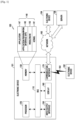
- FIG. 1 illustrates a network environment that includes an electronic device according to various embodiments of the present disclosure.
- the electronic device 101 may include a bus 110, includes a processor 120 and a memory 130, may include an input/output interface 150, includes a display 160, and may include a communication interface 170.
- the bus 110 may include, for example, a circuit that interconnects the elements 110 to 170 and transfers communications (e.g., a control message and/or data) between the elements 110 to 170.
- communications e.g., a control message and/or data
- the processor 120 may include one or more of a CPU, an AP, and a communication processor (CP).
- the processor 120 carries out operations or data processing relating to the control and/or communication of at least one element of the electronic device 101.
- the memory 130 may include a volatile memory and/or a non-volatile memory.
- the memory 130 stores, data and optionally commands relating to at least one element of the electronic device 101.
- the memory 130 may store software and/or a program 140.
- the program 140 may include, for example, a kernel 141, middleware 143, an application programming interface (API) 145, and/or application programs (i.e., "apps" or "applications”) 147.
- At least some of the kernel 141, middleware 143, and API 145 may be referred to as an operating system (OS).
- OS operating system
- the kernel 141 may control or manage, for example, system resources (e.g., the bus 110, processor 120, memory 130, or the like) that are used for performing operations or functions that are implemented in the other programs (e.g., the middleware 143, API 145, or application programs 147). Furthermore, the kernel 141 may provide an interface through which the middleware 143, API 145, or application programs 147 may access the individual elements of the electronic device 101 to control or manage the system resources.
- system resources e.g., the bus 110, processor 120, memory 130, or the like
- the kernel 141 may provide an interface through which the middleware 143, API 145, or application programs 147 may access the individual elements of the electronic device 101 to control or manage the system resources.
- the middleware 143 may function as an intermediary that allows the API 145 or the application programs 147 to exchange data with the kernel 141 through communications.
- the middleware 143 may process one or more task requests, which are received from the application programs 147, according to priorities thereof.
- the middleware 143 may assign a priority for using the system resources (e.g., the bus 110, processor 120, memory 130, or the like) of the electronic device 101 to at least one of the application programs 147.
- the middleware 143 may process the one or more task requests according to the priority assigned to the at least one application program, thereby performing scheduling or loading balancing on the one or more task requests.
- the API 145 is, for example, an interface through which the applications 147 control the functions provided from the kernel 141 or the middleware 143, and may include, for example, at least one interface or function (e.g., instruction) for file control, window control, image processing, text control, or the like.
- interface or function e.g., instruction
- the input/output interface 150 may function as an interface that forwards a command or data input from a user or another external device to the other element(s) of the electronic device 101. Furthermore, the input/output interface 150 may output commands or data received from the other element(s) of the electronic device 101 to the user or other external devices.
- the display 160 may include, for example, a liquid crystal display (LCD), light-emitting diode (LED) display, organic LED (OLED) display, microelectromechanical systems (MEMS) display, or an electronic paper display.
- LCD liquid crystal display
- LED light-emitting diode
- OLED organic LED
- MEMS microelectromechanical systems
- the display 160 displays, various types of contents (e.g., text, image, video, icon, symbol, and the like) to a user.
- the display 160 may include a touch screen, and may receive a touch, gesture, proximity, or hovering input using, for example, an electronic pen or a user's body part.
- the communication interface 170 may set communications between the electronic device 101 and an external device (e.g., a first external electronic device 102, a second external electronic device 104, or a server 106).
- the communication interface 170 may be connected to a network 162 through wireless or wired communication to communicate with the external device (e.g., the second external electronic device 104 or the server 106).
- the wireless communication may use, for example, at least one of long term evolution (LTE), LTE-advanced (LTE-A), code division multiple access (CDMA), wideband CDMA (WCDMA), universal mobile telecommunications system (UMTS), wireless broadband (WiBro), global system for mobile communications (GSM) and the like, for example, as a cellular communication protocol.
- LTE long term evolution
- LTE-A LTE-advanced
- CDMA code division multiple access
- WCDMA wideband CDMA
- UMTS universal mobile telecommunications system
- WiBro wireless broadband
- GSM global system for mobile communications
- the wireless communication may include, for example, short range communication 164.
- the short range communication 164 may include, for example, at least one of Wi-Fi, Bluetooth, near field communication (NFC), global navigation satellite system (GNSS), and the like.
- the GNSS may include, for example, at least one of a GPS, a global navigation satellite system (GLONASS), a BeiDou navigation satellite system (hereinafter, referred to as "BeiDou”), Galileo, and the European global satellite-based navigation system according to a place of usage, bandwidth, or the like.
- GLONASS global navigation satellite system
- BeiDou BeiDou navigation satellite system
- Galileo Galileo
- GPS Global System
- the wired communication may include, for example, at least one of a universal serial bus (USB), high definition multimedia interface (HDMI), recommended standard 232 (RS-232), plain old telephone service (POTS), and the like.
- the network 162 may include a telecommunications network, for example, at least one of a computer network (e.g., a local area network (LAN) or a wide area network (WAN)), the Internet, and a telephone network.
- Each of the first and second external electronic devices 102 and 104 may be of the same, or different type, as the electronic device 101.
- the server 106 may include a group of one or more servers at one or more locations.
- all or some of the operations performed in the electronic device 101 may be performed in another electronic device, or may be performed in a plurality of other electronic devices (e.g., the electronic devices 102 and 104 and/or the server 106).
- the electronic device 101 may request another device (e.g., the electronic device 102 and 104, and/or the server 106) to perform at least some functions relating thereto, instead of autonomously or additionally performing the function or service.
- the other electronic device may perform the requested functions or additional functions, and may transfer the results to the electronic device 101.
- the electronic device 101 may additionally process the received results, or provide the results as is, to provide the requested functions or services.
- cloud computing technology distributed computing technology, or client-server computing technology may be used.
- FIG. 2 is a block diagram of an electronic device according to various embodiments of the present disclosure.
- an electronic device 201 may include, for example, the entire electronic device 101 illustrated in FIG. 1 , or a part thereof.
- the electronic device 201 may include at least one processor 210 (e.g., an AP), a communication module 220, a subscriber identification module (SIM) 224, a memory 230, a sensor module 240, an input device 250, a display 260, an interface 270, an audio module 280, a camera module 291, a power management module 295, a battery 296, an indicator 297, and a motor 298.
- processor 210 e.g., an AP
- SIM subscriber identification module
- the processor 210 may drive, for example, an OS or application programs to control a plurality of hardware or software elements connected thereto and to perform various types of data processing and operations.
- the processor 210 may be embodied, for example, as a system on chip (SoC).
- SoC system on chip
- the processor 210 may further include a graphics processing unit (GPU) and/or an image signal processor.
- the processor 210 may also include at least some (e.g., a cellular module 221) of the elements illustrated in FIG. 2 .
- the processor 210 may load, in a volatile memory, commands or data received from at least one of the elements (e.g., a non-volatile memory) to process the commands or data, and may store various types of data in the non-volatile memory.
- the communication module 220 may have the same or similar configuration as the communication interface 170 of FIG. 1 .
- the communication module 220 may include, for example, the cellular module 221, a Wi-Fi module 223, a Bluetooth module 225, a GNSS module 227 (e.g., a GPS module, GLONASS module, BeiDou module, or Galileo module), an NFC module 228, and a radio frequency (RF) module 229.
- a GNSS module 227 e.g., a GPS module, GLONASS module, BeiDou module, or Galileo module
- RF radio frequency
- the cellular module 221 may provide a voice call, video call, text message service, Internet service, or the like through a communication network.
- the cellular module 221 may distinguish and authenticate the electronic device 201 in the communication network by using the subscriber identification module 224 (e.g., a SIM card).
- the cellular module 221 may perform at least some of the functions that the AP 210 may provide.
- the cellular module 221 may include a CP.
- the Wi-Fi module 223, Bluetooth module 225, GNSS module 227, or NFC module 228 may include, for example, a processor that processes data that is transmitted and received through the corresponding module.
- at least some (i.e., two or more) of the cellular module 221, Wi-Fi module 223, Bluetooth module 225, GNSS module 227, and NFC module 228 may be included in a single integrated chip (IC) or IC package.
- the RF module 229 may transmit/receive, for example, a communication signal (e.g., an RF signal).
- the RF module 229 may include, for example, a transceiver, power amp module (PAM), frequency filter, low noise amplifier (LNA), antenna or the like.
- PAM power amp module
- LNA low noise amplifier
- at least one of the cellular module 221, Wi-Fi module 223, Bluetooth module 225, GNSS module 227, and NFC module 228 may transmit/receive an RF signal through a separate RF module.
- the SIM 224 may include, for example, a card that includes a SIM, and/or an embedded SIM, and may contain unique identification information (e.g., an integrated circuit card identifier (ICCID)) or subscriber information (e.g., an international mobile subscriber identity (IMSI)).
- ICCID integrated circuit card identifier
- IMSI international mobile subscriber identity
- the memory 230 may include, for example, an internal memory 232 or an external memory 234.
- the internal memory 232 may include, for example, at least one of a volatile memory (e.g., a dynamic random access memory (DRAM), static RAM (SRAM), synchronous DRAM (SDRAM), or the like) and a non-volatile memory (e.g., a one time programmable read only memory (OTPROM), PROM, erasable and programmable ROM (EPROM), electrically erasable and programmable ROM (EEPROM), mask ROM, flash ROM, flash memory (e.g., a NAND flash memory, NOR flash memory, or the like), hard disc drive, solid state drive (SSD), or the like).
- a volatile memory e.g., a dynamic random access memory (DRAM), static RAM (SRAM), synchronous DRAM (SDRAM), or the like
- a non-volatile memory e.g., a one time programmable read only memory (OTP
- the external memory 234 may further include a flash drive, for example, a compact flash (CF), secure digital (SD), micro-SD, a mini-SD, extreme digital (xD), multimediacard (MMC), memory stick, or the like.
- CF compact flash
- SD secure digital
- micro-SD micro-SD
- mini-SD mini-SD
- extreme digital (xD) multimediacard
- MMC multimediacard
- the external memory 234 may be functionally and/or physically connected to the electronic device 201 through various interfaces.
- the sensor module 240 may, for example, measure a physical quantity or detect an operating state of the electronic device 201, and may convert the measured or detected information into an electrical signal.
- the sensor module 240 may include, for example, at least one of a gesture sensor 240A, a gyro sensor 240B, an atmospheric pressure sensor 240C, a magnetic sensor 240D, an acceleration sensor 240E, a grip sensor 240F, a proximity sensor 240G, a color sensor 240H (e.g., a red/green/blue (RGB) sensor), a medical or biometric sensor 2401, a temperature-humidity sensor 240J, an illuminance or light sensor 240K, and an ultra violet (UV) sensor 240M.
- a gesture sensor 240A e.g., a gyro sensor 240B
- an atmospheric pressure sensor 240C e.g., a magnetic sensor 240D
- an acceleration sensor 240E e.g., a
- the sensor module 240 may include, for example, an E-nose sensor, electromyography (EMG) sensor, electroencephalogram (EEG) sensor, electrocardiogram (ECG) sensor, infrared (IR) sensor, iris sensor, and/or fingerprint sensor.
- the sensor module 240 may further include a control circuit that controls one or more sensors included therein.
- the electronic device 201 may further include a processor, which is configured to control the sensor module 240, as a part of the processor 210, or separately from the processor 210, in order to control the sensor module 240 to remain active while the processor 210 is in a sleep state.
- the input device 250 may include, for example, a touch panel 252, a (digital) pen sensor 254, a key 256, or an ultrasonic input device 258.
- the touch panel 252 may use, for example, at least one of a capacitive type, resistive type, IR type, and ultrasonic type.
- the touch panel 252 may further include a control circuit.
- the touch panel 252 may further include a tactile layer to provide a tactile reaction to a user.
- the (digital) pen sensor 254 may be a part of the touch panel, or may include a recognition sheet.
- the key 256 may include, for example, a physical button, an optical key, or a keypad.
- the ultrasonic input device 258 may detect ultrasonic waves, which are generated by an input tool, through a microphone (e.g., a microphone 288), and may identify data corresponding to the detected ultrasonic waves.
- the display 260 may include a panel 262, a hologram device 264, or a projector 266.
- the panel 262 may include the same or similar configuration to the display 160 of FIG. 1 .
- the panel 262 may be implemented to be, for example, flexible, transparent, impact-resistant and/or wearable.
- the panel 262, along with the touch panel 252, may also be implemented as a single module.
- the hologram device 264 may show a 3D image in the air by using an interference of light.
- the projector 266 may display images by projecting light to a screen.
- the screen may be located, for example, in the interior or on the exterior of the electronic device 201.
- the display 260 may further include a control circuit that controls the panel 262, hologram device 264, or projector 266.
- the interface 270 may include, for example, an HDMI 272, a USB 274, an optical interface 276, or a D-subminiature (D-sub) 278.
- the interface 270 may be included, for example, in the communication interface 170 illustrated in FIG. 1 .
- the interface 270 may include, for example, a mobile high-definition link (MHL) interface, an SD card/ MMC interface, or an infrared data association (IrDA) standard interface.
- MHL mobile high-definition link
- IrDA infrared data association
- the audio module 280 may convert sound into an electrical signal and vice versa. At least some elements of the audio module 280 may be included, for example, in the input/output interface 150 illustrated in FIG. 1 .
- the audio module 280 may process sound information that is input or output, for example, through a speaker 282, a receiver 284, earphones 286, the microphone 288, or the like.
- the camera module 291 which can take a still image and a moving image, may include one or more image sensors (e.g., a front or rear sensor), a lens, an image signal processor (ISP), or a flash (e.g., an LED, a xenon lamp, or the like) according to an embodiment of the present disclosure.
- image sensors e.g., a front or rear sensor
- ISP image signal processor
- flash e.g., an LED, a xenon lamp, or the like
- the power management module 295 may manage, for example, the power of the electronic device 201.
- the power management module 295 may include a power management IC (PMIC), a charger IC, or a battery 296 or fuel gauge.
- PMIC power management IC
- the PMIC may use a wired and/or wireless charging method.
- the wireless charging method may include, for example, a magnetic resonance method, magnetic induction method, electromagnetic wave method, acoustic wave method, or the like.
- An additional circuit for wireless charging e.g., a coil loop, a resonance circuit, a rectifier, or the like
- the battery gauge may measure, for example, a residual quantity of the battery 296, or a voltage, current, or temperature while charging.
- the battery 296 may include, for example, a rechargeable battery and/or a solar battery.
- the indicator 297 may display a specific state (e.g., a booting state, message state, charging state, or the like) of the electronic device 201 or a part (e.g., the processor 210) thereof.
- the motor 298 may convert an electrical signal into a mechanical vibration and may generate a vibration, haptic effect, or the like.
- the electronic device 201 may include a processing unit (e.g., a GPU) for supporting mobile TV
- the processing unit for supporting mobile TV may process media data according to a standard, such as, for example, digital multimedia broadcasting (DMB), digital video broadcasting (DVB), MediaFLO TM , or the like.
- DMB digital multimedia broadcasting
- DVD digital video broadcasting
- MediaFLO TM MediaFLO
- the electronic device may include at least one of the elements disclosed herein. Some of the elements may be omitted from the electronic device, or the electronic device may include additional elements. Furthermore, some of the elements of the electronic device, according to the various embodiments of the present disclosure, may be integrated into a single entity, and the single entity may perform the functions of the corresponding elements prior to the integration in the same way.
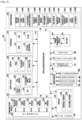
- FIG. 3 is a block diagram of a programming module according to various embodiments of the present disclosure.
- a program module 310 may include an OS that controls resources relating to an electronic device (e.g., the electronic device 101) and/or various applications (e.g., the application programs 147) running on the OS.
- the OS may be, for example, Android, iOS, Windows, Symbian, Tizen, Bada, or the like.
- the program module 310 may include a kernel 320, middleware 330, an API 360, and/or applications 370. At least a part of the program module 310 may be preloaded on the electronic device, or may be downloaded from an external electronic device (e.g., the electronic device 102 or 104, or the server 106).
- an external electronic device e.g., the electronic device 102 or 104, or the server 106.
- the kernel 320 may include, for example, a system resource manager 321 and/or a device driver 323.
- the system resource manager 321 may perform the control, allocation, retrieval, or the like of system resources.
- the system resource manager 321 may include a process management unit, memory management unit, or file system management unit.
- the device driver 323 may include, for example, a display driver, camera driver, Bluetooth driver, shared memory driver, USB driver, keypad driver, Wi-Fi driver, audio driver, or inter-process communication (IPC) driver.
- IPC inter-process communication
- the middleware 330 may provide a function that is commonly required by the applications 370, or may provide various functions to the applications 370 through the API 360 so that the applications 370 can efficiently use limited system resources within the electronic device.
- the middleware 330 e.g., the middleware 143 may include, for example, at least one of a runtime library 335, an application manager 341, a window manager 342, a multimedia manager 343, a resource manager 344, a power manager 345, a database manager 346, a package manager 347, a connectivity manager 348, a notification manager 349, a location manager 350, a graphic manager 351, and a security manager 352.
- the runtime library 335 may include, for example, a library module used by a compiler to add a new function through a programming language while the applications 370 are executed.
- the runtime library 335 may perform input/output management, memory management, functionality for an arithmetic function, or the like.
- the application manager 341 may manage, for example, the life cycle of at least one of the applications 370.
- the window manager 342 may manage GUI resources used for a screen.
- the multimedia manager 343 may determine a format required to reproduce various media files, and may encode or decode a media file by using a codec suitable for the corresponding format.
- the resource manager 344 may manage resources, such as a source code, memory, storage space, and the like, for at least one of the applications 370.
- the power manager 345 may operate together with, for example, a basic input/output system (BIOS) to manage a battery or power, and may provide power information required for the operation of the electronic device.
- the database manager 346 may generate, search, or change a database that is to be used by at least one of the applications 370.
- the package manager 347 may manage the installation or update of an application that is distributed in the form of a package file.
- the connectivity manager 348 may manage a wireless connection, such as, for example, Wi-Fi or Bluetooth.
- the notification manager 349 may display or notify of an event, such as an arrival message, appointment, proximity notification, and the like, in such a manner that a user is not disturbed.
- the location manager 350 may manage location information of the electronic device.
- the graphic manager 351 may manage a graphic effect, which is to be provided to a user, or a user interface (UI) related to the graphic effect.
- the security manager 352 may provide various security functions required for system security, user authentication, or the like. According to an embodiment of the present disclosure, when the electronic device (e.g., the electronic device 101) has a telephone call function, the middleware 330 may further include a telephony manager that manages a voice or video call function of the electronic device.
- the middleware 330 may also or alternately include a middleware module that forms a combination of various functions of the above-described elements.
- the middleware 330 may also or alternately provide a specialized module for each type of OS in order to provide a differentiated function.
- the middleware 330 may dynamically remove some of existing elements, or add new elements or combinations thereof.
- the API 360 (e.g., the API 145) is, for example, a set of API programming functions, and may be provided with different configurations according to OSs. For example, in the case of Android or iOS, one API set may be provided for each platform, and in the case of Tizen, two or more API sets may be provided for each platform.
- the applications 370 may include, for example, one or more applications that can perform functions, such as a home 371, a dialer 372, a short message service (SMS)/multimedia message service (MMS) 373, an instant message (IM) 374, a browser 375, a camera 376, an alarm 377, contacts 378, voice dial 379, e-mail 380, a calendar 381, a media player 382, an album 383, a clock or a watch 384, and health care (e.g., measure exercise quantity or blood sugar), or environment information (e.g., atmospheric pressure, humidity, temperature information or the like).
- SMS short message service
- MMS multimedia message service
- IM instant message
- the applications 370 may include an application (hereinafter, referred to as an "information exchange application" for convenience of description) that supports information exchange between the electronic device (e.g., the electronic device 101) and an external electronic device (e.g., the electronic device 102 or 104).
- the information exchange application may include, for example, a notification relay application for transferring specific information to an external electronic device, or a device management application for managing an external electronic device.
- the notification relay application may include a function of transferring, to an external electronic device (e.g., the electronic device 102 or 104), notification information generated from another application of the electronic device 101 (e.g., an SMS/MMS application, e-mail application, health management application, environmental information application, or the like). Furthermore, the notification relay application may, for example, receive notification information from an external electronic device and provide the received notification information to a user.
- an external electronic device e.g., the electronic device 102 or 104
- notification information generated from another application of the electronic device 101 e.g., an SMS/MMS application, e-mail application, health management application, environmental information application, or the like.
- the notification relay application may, for example, receive notification information from an external electronic device and provide the received notification information to a user.
- the device management application may manage (e.g., install, remove, or update) at least one function of an external electronic device (e.g., the electronic device 102 or 104) that communicates with the electronic device (e.g., a function of turning on/off the external electronic device itself or some components thereof, or a function of adjusting the luminance or resolution of the display), an application that operates in the external electronic device, or a service provided by the external electronic device (e.g., a call service, message service, or the like).
- an external electronic device e.g., the electronic device 102 or 104
- the electronic device e.g., a function of turning on/off the external electronic device itself or some components thereof, or a function of adjusting the luminance or resolution of the display
- a service provided by the external electronic device e.g., a call service, message service, or the like.
- the applications 370 may include applications (e.g., a health care application of a mobile medical appliance, etc.) that are designated according to the attributes of an external electronic device (e.g., the electronic device 102 or 104).
- the applications 370 may include applications that are received from an external electronic device (e.g., the server 106 or the electronic device 102 or 104).
- the applications 370 may include a preloaded application or a third party application that may be downloaded from a server.
- the names of the elements of the program module 310, according to the illustrated embodiment of the present disclosure, may vary depending on the type of OS.
- At least a part of the program module 310 may be implemented by software, firmware, hardware, or a combination of two or more thereof. At least a part of the program module 310 may be implemented (e.g., executed), for example, by a processor (e.g., the processor 210). At least a part of the program module 310 may include, for example, a module, program, routine, set of instructions, process, or the like, that performs one or more functions.
- module may mean, for example, a unit that includes hardware, software, firmware, or a combination of two or more thereof.
- the “module” may be used interchangeably with, for example, the term “unit”, “logic”, “logical block”, “component”, “circuit”, or the like.
- the “module” may be a minimum unit of an integrated component, or a part thereof.
- the “module” may also be a minimum unit that performs one or more functions, or a part thereof.
- the “module” may also be mechanically or electronically implemented.
- the “module” may include at least one of an application-specific IC (ASIC) chip, field-programmable gate arrays (FPGAs), and programmable-logic device that perform operations which are known or to be developed.
- ASIC application-specific IC
- FPGAs field-programmable gate arrays
- At least some of the devices (e.g., modules or functions thereof) or methods (e.g., operations), according to various embodiments of the present disclosure, may be implemented by an instruction stored in a non-transitory, computer-readable storage medium in the form of a programming module.
- a processor e.g., the processor 120
- the one or more processors may execute the functions that correspond to the instructions.
- the computer-readable recoding media may be, for example, the memory 130.
- the computer readable recoding medium may include a hard disc, floppy disc, magnetic media (e.g., a magnetic tape), optical media (e.g., a compact disc ROM (CD-ROM), DVD, magneto-optical media (e.g., a floptical disc)), hardware device (e.g., a ROM, RAM, flash memory, etc.), or the like.
- the program instruction may include a high class language code, which can be executed in a computer by using an interpreter, as well as a machine code.
- the above-described hardware device may be configured to operate as one or more software modules in order to perform the operations of various embodiments of the present disclosure, and vice versa.
- Modules or programming modules may include at least one of the above-described elements, may exclude some of the elements, or may include other additional elements.
- the operations performed by the modules, the programming module, or other elements, according to various embodiments of the present disclosure may be executed in a sequential, parallel, repetitive, or heuristic manner. Furthermore, some operations may be executed in a different order or may be omitted. Alternatively, other operations may be added.
- Various embodiments of the present disclosure disclosed herein are provided merely to describe technical details of the present disclosure and to help with the understanding of the present disclosure, and are not intended to limit the scope of the present disclosure. Therefore, it should be construed that all modifications and changes or various other embodiments of the present disclosure based on the technical idea of the present disclosure fall within the scope of the present disclosure.
- Various proposed embodiments of the present disclosure relate to a display method and device that can display additional images (e.g., virtual images) through the left and right edge portions (e.g., sub-areas of the sides) of an electronic device that has a bended display (e.g., a dual-edge display) while displaying a standard-resolution (e.g., 16:9) image through the main area of the front of the electronic device, thereby making a screen look larger (e.g., 16:10, 16:11, etc.) and making a bezel area look smaller.
- additional images e.g., virtual images
- a bended display e.g., a dual-edge display
- a standard-resolution e.g., 16:9
- the device may include all information and communication devices, multimedia devices, wearable devices, and application devices thereof that use one or more of various processors, such as an AP, CP, GPU, CPU, and the like.
- various processors such as an AP, CP, GPU, CPU, and the like.
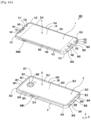
- FIG. 4A is a perspective view that illustrates an electronic device according to an embodiment of the present disclosure.
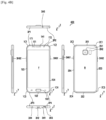
- FIG. 4B is views that illustrate the electronic device according to an embodiment of the present disclosure, when viewed in various directions.
- FIG. 4B includes front, back, left, and right elevational views, and a top and bottom view, for illustrating features therein.
- an electronic device 400 may be substantially rectangular and may include a front cover 1 that forms the front F thereof, and a rear cover 2 that forms the rear B thereof. Further, the electronic device 400 may include a bezel 3 that surrounds a space between the front cover 1 and the rear cover 2. In addition, the electronic device 400 may include a display that is embedded in the space formed by the front cover 1 and the rear cover 2. Here, a screen area of the display may be shown to the outside (i.e., visible from the outside of the device) through the front cover 1.
- the front cover 1 and/or the rear cover 2 may be formed of glass, but embodiments are not limited thereto. Further, the bezel 3 may be formed of metal, non-metal or combination thereof.
- a front F of the electronic device 400 may include a first edge 1E1, a second edge 1E2, a third edge 1E3, and a fourth edge 1E4.
- the first edge 1E1 and the second edge 1E2 may be opposite to each other, and the third edge 1E3 and the fourth edge 1E4 may be opposite to each other.
- the third edge 1E3 may connect one end portion of the first edge 1E1 and one end portion of the second edge 1E2.
- the fourth edge 1E4 may connect the other end portion of the first edge 1E1 and the other end portion of the second edge 1E2.
- the first edge 1E1, the second edge 1E2, the third edge 1E3, or the fourth edge 1E4 may be linear as illustrated in FIGS. 4A and 4B , or may be curvilinear without being limited thereto.
- the front cover 1 may include a first area 1A1 adjacent to the first edge 1E1.
- the front cover 1 may include a second area 1A2 adjacent to the second edge 1E2.
- the first area 1A1 and the second area 1A2 may be symmetrical to each other.
- the front cover 1 may include a third area 1A3 adjacent to the third edge 1E3.
- the front cover 1 may include a fourth area 1A4 adjacent to the fourth edge 1E4.
- the third area 1A3 and the fourth area 1A4 may be symmetrical to each other.
- At least one of the first to fourth areas 1A1, 1A2, 1A3, and 1A4 may include a curved surface.
- the front F of the electronic device 400 may include a central area 1A that is surrounded by the first to fourth areas 1A1, 1A2, 1A3, and 1A4.
- the central area 1A may be a right-angled quadrangle as illustrated, but is not limited thereto.
- the central area 1A may include a flat surface and/or a curved surface.
- the screen area of the display may be overlaid with the central area 1A of the front F of the electronic device 400 and may not overlap with the first to fourth areas 1A1, 1A2, 1A3, and 1A4.
- the bezel 3 may include a first corner portion 1C1 near the point where the first and third edges 1E1 and 1E3 are connected to each other.
- the bezel 3 may include a second corner portion 1C2 near the point where the first and fourth edges 1E1 and 1E4 are connected to each other.
- the bezel 3 may include a first connecting portion 1L1 that connects the first and second corner portions 1C1 and 1C2.
- the bezel 3 may include a third corner portion 1C3 near the point where the second and third edges 1E2 and 1E3 are connected to each other.
- the bezel 3 may include a fourth corner portion 1C4 near the point where the second and fourth edges 1E2 and 1E4 are connected to each other.
- the bezel 3 may include a second connecting portion 1L2 that connects the third and fourth corner portions 1C3 and 1C4, a third connecting portion 1L3 that connects the first and third corner portions 1C1 and 1C3, and a fourth connecting portion 1L4 that connects the second and fourth corner portions 1C2 and 1C4.
- the corner portions 1C1, 1C2, 1C3, and 1C4 may be rounded to be smoothly connected to the connecting portions 1L1, 1L2, 1L3, and 1L4.
- the rear B of the electronic device 400 may include a first edge 2E1, a second edge 2E2, a third edge 2E3, and a fourth edge 2E4.
- the first edge 2E1 and the second edge 2E2 may be opposite to each other, and the third edge 2E3 and the fourth edge 2E4 may be opposite to each other.
- the third edge 2E3 may connect one end portion of the first edge 2E1 and one end portion of the second edge 2E2.
- the fourth edge 2E4 may connect the other end portion of the first edge 2E1 and the other end portion of the second edge 2E2.
- the first edge 2E1, the second edge 2E2, the third edge 2E3, or the fourth edge 2E4 may be linear as illustrated in FIGS. 4A and 4B , or may be curvilinear without being limited thereto.
- the rear cover 2 may include a first area 2A1 adjacent to the first edge 2E1.
- the rear cover 2 may include a second area 2A2 adjacent to the second edge 2E2.
- the first area 2A1 and the second area 2A2 may be symmetrical to each other.
- the rear cover 2 may include a third area 2A3 adjacent to the third edge 2E3.
- the rear cover 2 may include a fourth area 2A4 adjacent to the fourth edge 2E4.
- the third area 2A3 and the fourth area 2A4 may be symmetrical to each other.
- At least one of the first to fourth areas 2A1, 2A2, 2A3, and 2A4 may include a curved surface.
- the rear B of the electronic device 400 may include a central area 2A surrounded by the first to fourth areas 2A1, 2A2, 2A3, and 2A4.
- the central area 2A may be a right-angled quadrangle as illustrated, but is not limited thereto.
- the central area 2A may include a flat surface and/or a curved surface.
- the screen area of the display may be overlaid with the central area 2A of the rear B of the electronic device 400 and may not overlap with the first to fourth areas 2A1, 2A2, 2A3, and 2A4.
- the bezel 3 may include a first corner portion 2C1 near the point where the first and third edges 2E1 and 2E3 are connected to each other.
- the bezel 3 may include a second corner portion 2C2 near the point where the first and fourth edges 2E1 and 2E4 are connected to each other.
- the bezel 3 may include a first connecting portion 2L1 that connects the first and second corner portions 2C1 and 2C2.
- the bezel 3 may include a third corner portion 2C3 near the point where the second and third edges 2E2 and 2E3 are connected to each other.
- the bezel 3 may include a fourth corner portion 2C4 near the point where the second and fourth edges 2E2 and 2E4 are connected to each other.
- the bezel 3 may include a second connecting portion 2L2 that connects the third and fourth corner portions 2C3 and 2C4.
- the bezel 3 may include a third connecting portion 2L3 that connects the first and third corner portions 2C1 and 2C3. Further, the bezel 3 may include a fourth connecting portion 2L4 that connects the second and fourth corner portions 2C2 and 2C4.
- the corner portions 2C1, 2C2, 2C3, and 2C4 may be rounded to be smoothly connected to the connecting portions 2L1, 2L2, 2L3, and 2L4.
- the front cover 1 may have a through-hole 1H1 for supporting a speaker or a receiver that is provided with the electronic device 400. A sound from the speaker or the receiver may be sent out through the through-hole 1H1.
- the front cover 1 may include one or more transparent areas 1T1 and 1T2 for supporting optical components (e.g., an illuminance sensor, an image sensor, a proximity sensor, etc.) that are provided with the electronic device 400. External light may be input to the optical components through the transparent areas 1T1 and 1T2. Further, light from the optical components may be projected to the outside through the transparent areas 1T1 and 1 T2.
- optical components e.g., an illuminance sensor, an image sensor, a proximity sensor, etc.
- the front cover 1 may have a through-hole 1H2 for supporting a button provided with the electronic device 400.
- the button may be exposed to the outside through the through-hole 1H2.
- the rear cover 2 may have a through-hole 2H1 for a camera provided with the electronic device 400.
- the camera may be exposed to the outside through the through-hole 2H1.
- the rear cover 2 may have a through-hole or a transparent area 2H2 for a flash provided with the electronic device 400. Light from the flash may be emitted to the outside through the through-hole or the transparent area 2H2.
- the bezel 3 may have a through-hole 3H1 for supporting a microphone provided with the electronic device 400. An external sound may be input to the microphone through the through-hole 3H1.
- the bezel 3 may have a through-hole 3H2 for supporting a connector (e.g., a USB socket, charging jack, communication jack, ear jack, or the like) that is provided with the electronic device 400.
- a connector e.g., a USB socket, charging jack, communication jack, ear jack, or the like
- An external device may be connected to the connector of the electronic device 400 through the through-hole 3H2.
- the bezel 3 may have a through-hole 3H3 for supporting a speaker (not illustrated) provided with the electronic device 400. A sound from the speaker may be sent out through the through-hole 3H3.
- the bezel 3 may have a through-hole 3H4 for supporting a stylus or electronic pen (hereinafter, referred to as a 'pen').
- the pen may be inserted into, or detached from, the electronic device 400 through the through-hole 3H4.
- the bezel 3 may have a through-hole 3H5 for supporting an ear jack provided with the electronic device 400.
- An ear plug may be coupled to the ear jack through the through-hole 3H5.
- the bezel 3 may have one or more through-holes 3H61 and 3H62 for supporting one or more buttons provided with the electronic device 400.
- the one or more buttons may be exposed to the outside through the through-holes 3H61 and 3H62.
- the bezel 3 may include a plurality of spacers 3P1, 3P2, 3P3, and 3P4.
- the bezel 3 may include a plurality of segments that are divided by the plurality of spacer 3P1, 3P2, 3P3, and 3P4.
- the structure of the bezel 3, which is constituted by the plurality of segments, may help prevent a degradation in the performance of an antenna that is provided in the electronic device 400.
- At least one of the plurality of segments may be used as an antenna radiator that directly receives a current to radiate electric waves.
- At least one of the plurality of segments may also be used as an antenna radiator that indirectly receives a current (e.g., electromagnetically receives a current from a power feed unit) to radiate electric waves.
- a current e.g., electromagnetically receives a current from a power feed unit
- FIG. 5 is a block diagram schematically illustrating a configuration of a device that supports a memo input function according to an embodiment of the present disclosure.
- an electronic device 500 may include a communication unit 510, an input unit 520, an audio processing unit 530, a display unit 540, a storage unit 550, a sensor unit 560, a camera unit 570, and a controller 580.
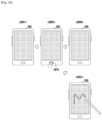
- the electronic device 500 provides a memo area for a handwriting function or a drawing function in at least one activated area of the display unit 540 according to the execution of a memo application 552.
- the electronic device 500 may display, in the memo area, a memo input generated in the memo area.
- the electronic device 500 may display the memo area in various colors.
- the electronic device 500 may display the memo area in black in order to make the display unit 540 appear to be turned off.
- the memo input may be generated by a finger or an electronic pen.
- the memo input may be displayed in a noticeable color in the memo area.
- the memo input may be displayed in white, yellow or similar light color but embodiments are not limited thereto.
- a user may have an experience of actually handwriting on a black writing plane with a pen.
- the electronic device 500 may separate the memo application 552 into modules and may determine whether to preload the modules based on the loading efficiency thereof.
- an input e.g., a first input
- the electronic device 500 preloads one or more modules in a RAM 551.
- an input e.g., a second input
- the electronic device 500 executes the memo application 552 by using the one or more preloaded modules.
- the electronic device 500 provides a memo function by sequentially loading modules other than the preloaded modules.
- the first input may include a change of state of the display unit 540 from a turned-on state to a turned-off state or a low-power state.
- the second input may include a change of state of a pen from a state in which the pen is coupled to the electronic device 500, to a state in which the pen is separated from the electronic device 500.
- the first input may include a change of state of the pen from a state in which the pen is coupled to the electronic device 500, to a state in which the pen is separated from the electronic device 500.
- the second input may include a change of state that is generated by receiving a user input through the display unit 540 by using the pen.
- the communication unit 510 may be configured to support a communication function of the electronic device 500.
- the communication unit 510 may be included, for example, in cases where the electronic device 500 is manufactured in the form of a device that supports a communication function. Accordingly, in cases where the electronic device 500 to which the present disclosure may be applied, does not support a communication function, the communication unit 510 may be excluded from the configuration of the electronic device 500.
- the communication unit 510 may be provided in the form of a mobile communication module in order to support a communication function (e.g., a mobile communication function) of the electronic device 500.
- the communication unit 510 may establish a communication channel with a mobile communication system to support the transmission and reception of signals for the mobile communication function of the electronic device 500.
- the communication unit 510 may establish at least one of a voice service channel, image service channel, and data service channel with the mobile communication system, and may support the transmission and reception of a specific signal according to the corresponding service channel.
- the communication unit 510 may support a function of transmitting, to the outside, a memo file that is created by using the memo application 552, or a function of receiving a memo file.
- the communication unit 510 may also receive state information from a pen device that has a communication unit.
- the input unit 520 may be configured to generate various input signals required for operating the electronic device 500.
- the input unit 520 may include various input units, such as a keyboard, keypad, key button, and the like, according to the compatibility of the electronic device 500.
- the input unit 520 may generate an input for supporting a memo function.
- the audio processing unit 530 may output various types of audio data that is set in a process of operating the electronic device 500, audio data according to the reproduction of audio files stored in the storage unit 550, audio data received from the outside, and the like. Furthermore, the audio processing unit 530 may support a function of collecting audio data. To this end, the audio processing unit 530 may include a speaker SPK and a microphone MIC.
- the audio processing unit 530 may output various sound effects or guide sounds relating to the memo application 552 according to the control of a user or the controller 580. For example, in cases where a memo input is generated in a memo area, the audio processing unit 530 may output a sound effect similar to that when a user writes a memo with an actual writing instrument. The above-described sound effects or guide sounds output by the audio processing unit 530 may be omitted according to a user's setting or a designer's intention.
- the display unit 540 may be configured to provide various screen interfaces required for operating the electronic device 500.
- the display unit 540 may activate at least one area thereof to provide a memo area for the memo application 552.
- the electronic device 540 may display, in the memo area, a memo input that is generated by handwriting in the memo area.
- the display unit 540 may be provided as a touch screen in which a display panel 541 and a touch panel 543 are overlaid with each other. Images and texts that correspond to the above-described various screens may be output on the display panel 541, and at least one of the above-described screen interfaces may be output on the display panel 541. According to the characteristic of a screen output on the display panel 541, the touch panel 543 may set an effective touch area where touch events are normally collected and an invalid touch area where collected touch events are ignored or touch events are not collected. The touch panel 543 may transfer, to the controller 580, touch events generated in the effective touch area. According to an embodiment of the present disclosure, the touch panel 543 may generate an input for supporting a memo function.
- the storage unit 550 may store data or application programs, algorithms, and the like that correspond to various basic OSs required for operating the electronic device 500 and various user functions. According to an embodiment of the present disclosure, the storage unit 550 may store at least one memo application 552 and memo input 553 for supporting a memo function. Further, the storage unit 550 may store a temporarily stored memo input that is generated by a memo function, or a memo input generated in the form of a file.
- the memo application 552 may include an output routine for providing a memo area through the display unit 540 and displaying a memo input, which is received through the memo area, in the memo area. Furthermore, the memo application 552 may include a detection routine for receiving a memo input in a memo area. In addition, the memo application 552 may include a storage routine for storing a memo input. Also, the memo application 552 may include a transmission routine for transmitting a memo input to the outside. Alternatively, the memo application 552 may also include a process routine for transforming a memo input so as to be compatible in another application.
- the storage unit 550 may include the RAM 551.
- the RAM 551 may be used to temporarily load an application and to temporarily store data.
- the sensor unit 560 may detect, distinguish, and measure physical quantities, such as heat, light, temperature, pressure, sound, location, etc., or a change thereof.
- the sensor unit 560 may include a temperature sensor, pressure sensor, magnetic sensor, optical sensor, acoustic sensor, proximity sensor, gravity sensor, acceleration sensor, gyro sensor, fingerprint sensor, or the like.
- the sensor unit 560 may generate an input for supporting a memo function. For example, the sensor unit 560 may generate an input regarding the detachment of a pen from the electronic device 500.
- the camera unit 570 may acquire an image by taking a photo of a subject. According to an embodiment of the present disclosure, the camera unit 570 may generate an input for supporting a memo function.
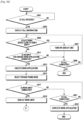
- the controller 580 may preload at least a part of the memo application 552 in the RAM 551 in consideration of an available memory area of the RAM 551 in cases where an input (e.g., a first input) for indicating a user's intention, which is likely to execute the memo application 552, is generated. Further, the controller 580 may execute the memo application 552 by using at least a part of the memo application 552 which has been preloaded in the RAM 551 in cases where an input (e.g., a second input) that indicates the user's intention of driving the memo application 552 is generated after the first input.
- an input e.g., a first input
- the controller 580 may load at least a part of the rest of the memo application 552 in order to execute the memo application 552 after the second input is generated. That, therefore, makes it possible to more rapidly execute the memo application 552, as compared with loading the entire memo application 552 after the second input is generated.
- the controller 580 may preferentially preload one or more modules of the memo application 552, which support a screen configuration, in the RAM 551 based on the loading sequence of a loading Table as shown for example, in FIG. 11 .
- the controller 580 may make a screen for a memo function displayed by using the one or more preloaded modules when the second input is detected.
- the controller 580 may load at least a part of the rest of the memo application 552 on the basis of a loading level and a loading Table, and may use the loaded part of the memo application 552 in the execution of the memo application 552.
- the controller 580 may be configured to control various signal flows, the collection and output of information, and the like, in order to support a memo input function according to an embodiment of the present disclosure.
- the controller 580 may include elements (e.g., a memo application support unit, memory operating unit, user intention identification unit, and input support unit) illustrated in FIG. 6 .
- the electronic device 500 may further include various modules according to the form thereof provided.
- the electronic device 500 may further include unmentioned elements, such as a short-range communication module for short-range communication, an interface for data transmission and reception of the electronic device 500 through a wired or wireless communication method, an Internet communication module that performs an Internet function by communicating with an Internet network, a digital broadcast module that performs a function of receiving and reproducing a digital broadcast, and the like. Since such elements may be variously modified according to the convergence trend of digital devices, the elements cannot all be enumerated.
- the electronic device 500 may include all information and communication devices and multimedia devices, such as a PMP, digital broadcasting player, PDA, music player (e.g., an MP3 player), portable game terminal, smart phone, notebook computer, and handheld PC, and application devices thereof, as well as all mobile communication terminals that operate based on communication protocols that correspond to various communication systems.
- a PMP digital broadcasting player
- PDA digital broadcasting player
- music player e.g., an MP3 player
- portable game terminal e.g., smart phone, notebook computer, and handheld PC
- application devices thereof e.g., portable game terminal, smart phone, notebook computer, and handheld PC, and application devices thereof, as well as all mobile communication terminals that operate based on communication protocols that correspond to various communication systems.
- FIG. 6 is a block diagram illustrating a configuration of a controller according to an embodiment of the present disclosure.
- a controller 580 may include an input support unit 581, a user intention identification unit 583, a memo application support unit 585, and a memory operating unit 587.
- the input support unit 581 may be configured to collect inputs from the input unit 520, touch panel 543, sensor unit 560, communication unit 510, and camera unit 570, and to forward the collected inputs to the user intention identification unit 583.
- the input support unit 581 may collect one or more inputs from the input unit 520.
- the input support unit 581 may allow a touch input to be received under low power consumption by maintaining that at least a part of the input unit 520 is turned on at all times in a low-power state, by maintaining reception sensitivity for receiving an input at a predetermined level or lower, or by periodically switching the input unit 520 to a turned-on state.
- the input support unit 581 may collect a gesture that is generated on the touch panel 543.
- the input support unit 581 may allow a gesture to be generated by maintaining that at least one area of the touch panel 543 is turned on at all times, by maintaining reception sensitivity for receiving an input at a predetermined level or lower, or by periodically switching the touch panel 543 to a turned-on state.
- the input support unit 581 may allow a gesture to be generated by a finger and/or a pen on the touch panel 543.
- the input support unit 581 may allow a gesture to be generated by a touch on the screen of the display unit 540 or by hovering thereover.
- the input support unit 581 may collect information from the sensor unit 560.
- the input support unit 581 may allow the sensor unit 560 to acquire information by maintaining that the sensor unit 560 is turned on at all times in the low-power state, or by periodically switching the sensor unit 560 to a turned-on state.
- the input support unit 581 may collect images from the camera unit 570.
- the input support unit 581 may allow the camera unit 570 to acquire an image by maintaining that the camera unit 570 is turned on at all times in the low-power state, by determining when the camera unit 570 is to be driven based on an input of the sensor unit 560, or by periodically switching the camera unit 570 to a turned-on state.
- the input support unit 581 may collect pen state information related signals from the communication unit 510.
- the input support unit 581 may acquire the pen state information related signals from a pen device that is equipped with a communication unit through the communication unit 510 in the low-power state.
- the user intention identification unit 583 may receive various inputs from the input support unit 581 and may identify whether an input for indicating a user's intention, which is likely to execute the memo application 552, has been generated. Furthermore, the user intention identification unit 583 may receive various inputs from the input support unit 581 and may identify whether an input that indicates the user's intention of driving the memo application 552 has been generated. Alternatively, the user intention identification unit 583 may identify an input that indicates the user's intention regarding a memo function and may transfer the result to the memo application support unit 585 and the memory operating unit 587.
- the memo application support unit 585 may receive, from the user intention identification unit 583, a notification that the input that indicates the user's intention regarding the memo function has been identified, and may support the execution and operation of the memo application 552.
- the memo application support unit 585 may support the memo function of the memo application 552 through at least one area of the display unit 540.
- the memory operating unit 587 may receive, from the user intention identification unit 583, a notification that the input that indicates the user's intention regarding the memo function has been identified, and may support the loading of the memo application 552 according to the state of the RAM 551. Operations of the memory operating unit 587 will be described below in detail with reference to FIGS. 7 to 12 .
- an electronic device may include an input device, a display unit, and a controller.
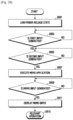
- the controller may identify whether the electronic device is switched to a low-power state. For example, the controller may detect a first input for switching to the low-power state.
- the controller when recognizing a second input in the low-power state, may activate at least one area of the input device and/or at least one area of the display unit.
- the controller may be configured to execute an application associated with a UI for receiving an input of a pen on the activated display unit.
- the second input may be an input that indicates a user's intention of driving the application (e.g., the memo application 552).
- the controller may load, in a memory, at least a part of the application associated with the UI for receiving the input of the pen when the electronic device is switched to the low-power state.
- the controller may be configured to execute the application by using at least a part of the application which has been loaded in the memory.
- the controller may be configured to load the rest of the application in the memory after recognizing the second input.
- the controller may receive a user's third input and may transfer data to the application based on the third input.
- the application may store application data, and the controller may be configured to switch to the low-power state.
- the third input may be, for example, an input of the pen that is to be received through the activated display unit.
- the third input may include a pen input for a memo input when the application is a memo application.
- the third input may also include an input for inducing one or more functions of the application.
- the controller when receiving a call, may store the data of the application and may complete the application.
- the controller may be configured to execute a second application associated with the UI for receiving an input of the pen on the activated display unit when the call is completely received.
- the controller may be configured to display the stored data through the second application.
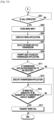
- the controller may be configured to determine a loadable area of the memory and to determine the level of the application associated with the UI for receiving an input of the pen based on the determined loadable area.
- the controller may be configured to load at least a part of the application in the memory based on the determined level.
- the controller may be configured to unload a different loaded application area based on the determined loadable area.
- the controller may make the loaded part of the application invalid.
- the controller may make the loaded part of the application invalid.
- the controller may provide at least one of haptic feedback and sound feedback to inform of the progress of the activating operation.
- the first input may include a time point when entrance to the low-power state is made.
- the first input may include the separation of the pen from the terminal.
- an electronic device may include a housing, a display exposed through one side of the housing, and an input unit detachably attached to or inserted into a part of the housing.
- the electronic device may include a processor that is located in the interior of the housing and is electrically connected to the display.
- the electronic device may include a non-volatile memory electrically connected to the processor to store a first application program.
- the electronic device may include a volatile memory electrically connected to the processor.
- the non-volatile memory stores an instruction that allows the processor, when being executed, to load a first part of the first application program in the volatile memory at least partially, based on a first change of state of the electronic device.
- the non-volatile memory may include an instruction that allows the processor, when being executed, to load a second part of the first application program in the volatile memory at least partially, based on a second change of state of the electronic device, which is associated with the input unit.
- the non-volatile memory may include an instruction that allows the processor, when being executed, to display an image and/or a text generated by the loaded first and/or second part on the display.
- the first change of state may include a change of state of the display from a turned-on state to a turned-off state or to a low-power state.
- the first change of state may include a change to a sleep state.
- the second change of state may include a change of state of the input unit from a state in which the input unit is attached to the housing to a state in which the input unit is detached from the housing.
- the first change of state may include a change of state of the input unit from a state in which the input unit is attached to the housing to a state in which the input unit is detached from the housing.
- the second change of state may include a change of state that is generated by receiving a user input through the display using the input unit.
- the non-volatile memory may further include an instruction that allows the processor to make the loaded first part of the first application program invalid when an input for a different operation is generated without the second change of state while the processor loads the first part of the first application program in the volatile memory at least partially, based on the first change of state.
- the non-volatile memory may further include an instruction that allows the processor to activate at least one area of the display at least partially, based on the second change of state and to make the loaded first and/or second part of the first application program receive an input of a pen on the activated display.
- the non-volatile memory may further include an instruction that allows the processor to display at least one area of the display, where the input of the pen is received, in black.
- the non-volatile memory may further include an instruction that allows the processor to transfer the input of the pen to a second application program that is different from the first application program.
- the non-volatile memory may further include an instruction that allows the processor to determine a loadable area in the volatile memory and to determine the loading level of the first application program based on the determined loadable area. According to various embodiments of the present disclosure, the non-volatile memory may further include an instruction that allows the processor to load the first part of the first application program in the volatile memory based on the determined loading level.
- an electronic device may include a housing and a display exposed through one side of the housing.
- the electronic device may include a processor that is located in the interior of the housing and is electrically connected to the display.
- the electronic device may include a non-volatile memory that is electrically connected to the processor to store a first application program.
- the electronic device may include a volatile memory that is electrically connected to the processor.
- the non-volatile memory stores an instruction that allows the processor, when being executed, to load a first part of the first application program in the volatile memory based on a change of state of the display from a turned-on state to a turned-off state.
- the non-volatile memory may include an instruction that allows the processor, when being executed, to receive a user input for executing the first application program.
- the non-volatile memory may include an instruction that allows the processor, when being executed, to load a second part of the first application program in the volatile memory in response to the user input.
- the non-volatile memory may include an instruction that allows the processor, when being executed, to display an image and/or a text generated by the loaded first and/or second part on the display.
- FIG. 7 is a flowchart illustrating a process of operating a RAM to execute a memo application illustrated in FIG. 5 according to an embodiment of the present disclosure.
- a loading Table as shown for example, in FIG. 11 , may be configured before a memo application, such as memo application 552 is driven.
- the loading Table may be preloaded in a memory.
- the loading Table may designate the sequence of loading one or more modules and/or module groups of the memo application 552.
- the loading Table may be provided when the memo application 552 is loaded in the electronic device 500.
- the loading Table may also be configured, for example, by the controller 580 illustrated in FIG. 5 .
- the memo application 552 may include one or more separated modules.
- the memo application 552 may include one or more module groups into which one or more modules are grouped. The plurality of modules in each module group may be dependent of each other.
- the one or more modules and/or module groups of the memo application 552 may be provided.
- the memo application 552 may be separated into the one or more modules, or may be grouped into the one or more module groups by the controller 580.
- the controller 580 may separate codes and resources in the memo application 552 into one or more modules and may group the modules on the basis of dependency of the separated modules.
- the controller 580 may separate a code and a resource that configure the start screen of the memo application 552, a code and a resource that configure a screen for managing memo files, and a code and a resource that perform a memo input function through handwriting editing into execution units, and may group the modules on the basis of dependency of the separated modules.
- FIG. 8 illustrates module groups that are obtained by separating a memo application into modules and grouping the modules based on mutual dependency thereof according to an embodiment of the present disclosure.
- a controller 580 may distinguish a memo application 552 into one or more code modules and one or more resource modules.
- the one or more code modules 820 may include a starting visual interaction (VI) module 821, a drawing module 822, an interrupt module 823, an ending popup module 824 and the like.
- the one or more middleware modules 840 may include an open graphics library (GL) module 841, an SPen SDK module 842 and the like.
- the one or more kernel modules 850 may include a system resource manager module 851, a pen state module 852, a pen drawing module 853, and the like.
- the one or more resource modules 830 may include a text string resource A module 831, a text string resource B module 832, a starting image module 833, a drawing page image module 834, and the like.
- the controller 580 may group many of the one or more separated code modules and resource modules on the basis of mutual dependency.
- the controller 580 may configure one module group that includes modules that configure a screen for displaying VI.
- the module group that supports the screen configuration for displaying VI may include code modules, such as the starting VI module 821 for displaying starting VI, the open GL module 841 for driving a VI animation, etc.
- the module group that supports the screen configuration for displaying VI may include resource modules, such as the starting image module 833 that configures the VI animation, the text string resource A module 831 that configures texts in the screen, etc.
- FIGS. 9 and 10 are views for illustrating operations of module groups according to various embodiments of the present disclosure.
- a module group A may support the display of a VI animation, which relates to the separation of the pen 910, through an area of a display unit 901 that is adjacent to a port through which the pen 910 enters and exits the electronic device 900.
- the controller 580 may configure one module group that includes modules that configure a screen for processing a pen drawing.
- the module group that supports the screen configuration for processing the pen drawing may include code modules, such as the drawing module 822 that processes a pen event occurring on the screen, the SPen SDK module 842 that processes various functions for a drawing event, etc.
- the module group that supports the screen configuration for processing the pen drawing may include resource modules, such as the drawing page image module 834 that includes a menu, button, background image, and the like, that are associated with the pen drawing, the text string resource B module 832 that includes texts used for the menu, button, and the like, etc.
- a module group B may support the display of a trace according to the drawing input.
- the controller 580 may configure various module groups in addition to the module group that supports the screen configuration for displaying the VI and the module group that supports the screen configuration for processing the pen drawing, which have been described above.
- the controller 580 may determine the loading sequence of the module groups. For example, the controller 580 may measure, in advance, areas, spaces or quantities (hereinafter, referred to as 'memory areas required for module groups') that are required to make the module groups reside in the RAM 551. Furthermore, the controller 580 may measure, in advance, the execution time of the module groups. The controller 580 may designate the loading sequence of the module groups in a descending order of the execution time of the module groups with regard to the memory areas required for module groups. The controller 580 may preferentially load a module group that has a higher priority in the RAM 551 according to the loading sequence.
- the controller 580 may identify whether each module group is used to configure a screen. Alternatively, the controller 580 may also determine the loading sequence by additionally considering whether each module group is used to configure a screen. For example, the controller 580 may designate the loading sequence such that a module group that is used for configuring a screen is preferentially loaded.
- FIG. 11 illustrates a loading Table according to an embodiment of the present disclosure.
- a loading Table obtained by considering memory areas required for module groups, execution time of the module groups, and whether the module groups are used to configure a screen is illustrated.
- the controller 580 may preferentially load a module group that occupies a relatively small area of the RAM 551 and is executed for a longer period of time, based on the loading Table obtained by measuring in advance the memory areas required for the module groups and the execution time of the module groups.
- the controller 580 may preferentially preload a module group that supports screen configuration.
- the controller 580 may set a loading level according to the state of the RAM 551.
- the controller 580 may make a configuration to load one or more module groups in a memory area (hereinafter, referred to as a 'loadable memory area') obtained by subtracting a minimum memory area (hereinafter, referred to as a 'basic necessary memory area') required for the electronic device 500 to operate effectively from a memory area (hereinafter, referred to as a 'currently available memory area') that can be currently used.
- the basic necessary memory area may be diversely changed depending on the OS of the electronic device 500.
- the electronic device 500 may support various OSs, such as Android, iOS, Windows, Symbian, Tizen, Bada, etc.
- the controller 580 may measure a basic necessary memory area for the OS loaded in the electronic device 500.
- the basic necessary memory area may vary depending on the specification of the electronic device 500.
- the display unit 540 may support various resolutions, such as video graphics array (VGA), wide VGA (WVGA), HD, full HD (FHD), ultra HD (UHD), quad HD (QHD), wide QHD (WQHD), etc.
- a resource size may vary depending on the resolution of the display unit 540, and the controller 580 may measure a basic necessary memory area for the display unit 540 that is provided with the electronic device 500.
- FIG. 12 illustrates a Table regarding a basic necessary memory area according to an embodiment of the present disclosure.
- a Table is illustrated that lists basic necessary memory areas of diverse electronic devices that are measured by the controller 580. As described above, the basic necessary memory area may vary depending on the resolution and the OS that are supported by the electronic device.
- the controller 580 may identify whether an input (hereinafter, referred to as the 'first input') that is likely to execute the memo application is generated.
- the controller 580 may detect the first input and may perform operation 705 and operations that follow the operation 705. If the controller 580 does not detect the first input, the controller 580 can repeat operation 705.
- the first input may include a change of state of the display unit 540 from a turned-on state to a turned-off state or a low-power state.
- the first input may include a change of state of a pen from a state in which the pen is coupled (e.g., inserted, press fit, and so forth) to the electronic device 500, to a state in which the pen is separated from the electronic device 500.
- the controller 580 may recognize that the first input has been generated. For example, in cases where a power button or a sleep button is pressed through the input unit 520 of the electronic device 500, when the electronic device 500 enters a standby state (e.g., a low-power state) that entails an operation of switching the display unit 540 from the turned-on state to the turned-off state, the controller 580 may recognize that the first input has been generated. For example, at a time point when a request for switching a low-power release state to a low-power state is received, the controller 580 may recognize that the first input has been generated.
- a standby state e.g., a low-power state
- the controller 580 may also recognize that the first input has been generated.
- the controller 580 may measure the state of a RAM 551. According to an embodiment of the present disclosure, the controller 580 may measure a currently available memory area in the RAM 551.
- the controller 580 may identify whether one or more module groups can be loaded in the RAM 551. According to an embodiment of the present disclosure, the controller 580 may compare the size of the currently available memory area with that of the basic necessary memory area and may identify whether one or more module groups can be preloaded in the RAM 551, based on the comparison result.
- the controller 580 may, in operation 709, preload at least one module group in the loadable memory area of the RAM 551 according to the loading level that is configured in operation 701 according to the state of the RAM 551.
- the controller 580 may preload the first priority module group 'A' and the second priority module group 'B' that can be loaded within the range of 1000 Kbytes on the basis of the loading sequence of the loading Table.
- the controller 580 may perform operation 713.
- the controller 580 may determine whether an ending condition is satisfied. In cases where the ending condition is satisfied, the controller 580 may complete the process of operating the RAM 551 for the execution of the memo application 552. Alternatively, in cases where the ending condition is not satisfied, the controller 580 may repeat operation 705.
- the controller 580 may complete the process of operating the RAM 551 for the execution of the memo application 552.
- the controller 580 may count the number of times that the operation 709 is performed. In cases where the total performance count amounts to a preset number (e.g., once), the controller 580 may complete the process of operating the RAM 551 for the execution of the memo application 552.
- the controller 580 may complete the process of operating the RAM 551 for the execution of the memo application 552.
- the controller 580 may, in operation 708, identify whether data (e.g., at least a part of another application rather than the memo application) can be unloaded from a partial memory area of the RAM 551. In cases where there is no memory area to unload from the RAM 551, the controller 580 may complete the process of operating the RAM 551 for the execution of the memo application 552. Alternatively, in cases where there is a memory area to unload from the RAM 551, the controller 580 may perform operation 711.
- data e.g., at least a part of another application rather than the memo application
- the controller 580 may ensure a loadable memory area by unloading data (e.g., at least a part of another application rather than the memo application) from a partial memory area of the RAM 551.
- the controller 580 may unload data, which was stored by the controller 580 a relatively long time ago, from the memory area of the RAM 551 to ensure the loadable memory area.
- the controller 580 may repeat operation 705 and the operations following operation 705.
- the controller 580 may additionally ensure a loadable memory area by unloading data from a partial memory area of the RAM 551 in operation 711.
- the controller 580 may preload at least a part (e.g., one or more module groups) of the memo application 552 in the loadable memory area of the RAM 551 by repeatedly performing the operation 705 and the operations following operation 705. For example, when the electronic device 500 enters a low-power state, the controller 580 may recognize that the first input has been generated and may preload one or more module groups of the memo application 552 in the RAM 551.
- the controller 580 may recognize that the first input has been generated and may preload one or more module groups of the memo application 552 in the RAM 551.
- the controller 580 may execute the memo application 552 by using at least a part of the memo application 552 which has been preloaded in the RAM 551.
- the second input may include a change of state of a pen from a state in which the pen is coupled to the electronic device 500 to a state in which the pen is separated from the electronic device 500.
- the second input when the first input includes a change of state of the pen from the state in which the pen is coupled to the electronic device 500 to the state in which the pen is separated from the electronic device 500, the second input may include a change of state that is generated by the pen that receives a user input through the display 540.
- the memo application 552 since at least a part of the memo application 552 is preloaded before the second input is generated, only the remainder, or some portion thereof, of the memo application 552 has to be loaded in order to execute the memo application 552 after the second input is generated, which makes it possible to more rapidly execute the memo application 552, as compared with loading the entire memo application 552 after the second input is generated.
- the controller 580 may preferentially preload one or more module groups, which support a screen configuration, in the RAM 551 based on the loading sequence of the loading Table as shown for example, in FIG. 11 , and may complete the screen configuration for the memo function by using the one or more preloaded module groups as soon as the second input is detected. Since the screen for the memo function is provided at substantially the same time as the second input, a user can experience the quick launch of the memo application 552.
- the controller 580 may additionally load the rest of the memo application 552 in a serial order on the basis of the loading level and the loading Table through the operation 705 and the operations following operation 705, and may use the additionally loaded part of the memo application 552 in the execution of the memo application 552.
- the controller 580 may repeatedly perform the operation 705 and the operations following operation 705 until all of the module groups of the memo application 552 are loaded.
- FIG. 13 is a flowchart illustrating an operation of providing a memo function according to an embodiment of the present disclosure.
- FIGS. 14A and 14B are views illustrating an operation of FIG. 13 according to various embodiments of the present disclosure.
- a controller 580 may place an electronic device 500 in a low-power state in response to an input regarding the entrance to the low-power state.
- the low-power state may indicate a state in which at least some functions of the electronic device 500 are disabled or inactive.
- the low-power state may include a sleep state.
- the low-power state may include a state in which at least one area of a display unit 540 is turned off.
- the low-power state may include a state in which at least one area of a touch panel 543 of the display unit 540 and/or at least one area of a display panel 541 is turned off. Accordingly, the screen of the display unit 540 may be displayed in black.
- a screen 1401 illustrates a state in which the entire area of the display unit 540 of the electronic device 500 is turned off in the low-power state.
- the controller 580 may recognize that an input (e.g., a first input) that is likely to execute the memo application 552 has been generated, and may preload at least a part of the memo application 552 in the RAM 551 according to the process of operating the RAM 551 for the execution of the memo application 552, which is illustrated in FIG. 7 .
- the first input may include a change of state of the display unit 540 from a turned-on state, to a turned-off state or a low-power state.
- the controller 580 may detect the second input and perform operation 1305.
- the second input may include a change of state of a pen from a state in which the pen is coupled to the electronic device 500, to a state in which the pen is detached from the electronic device 500.
- the second input may be generated when the pen is separated from the electronic device 500.
- the controller 580 may recognize that the second input has been generated.
- the pen may include a magnet disposed on a portion thereof, and the electronic device 500 may include a sensor (e.g., a Hall sensor) that corresponds to the magnet.
- the sensor may detect a decreasing magnetic force, and the controller 580 may accordingly recognize that the second input has been generated.
- the pen may include an RF identification (RFID) tag disposed on a portion thereof, and the electronic device 500 may include a sensor (e.g., an RFID sensor) that corresponds to the RFID tag.
- RFID RF identification
- the sensor may detect the RFID tag, and the controller 580 may accordingly recognize that the second input has been generated.
- the controller 580 may acquire a user's hand image from the camera unit 570 and may determine, from the image, whether the user holds the pen. In cases where the user holds the pen is identified from the image, which is acquired from the camera unit 570, in the low-power state, the controller 580 may recognize that the second input has been generated.
- the controller 580 may recognize that the second input has been generated.
- the controller 580 may recognize that the second input has been generated. For example, in cases where a gesture of rubbing or touching the screen of the display unit 540 is detected in the low-power state, the controller 580 may recognize that the second input has been generated. In another example, in cases where a gesture of tapping the screen of the display unit 540 a predetermined number of times is detected in the low-power state, the controller 580 may recognize that the second input has been generated.
- the controller 580 may recognize that the second input has been generated. For example, in cases where pre-defined gestures are detected in one or more edge areas of the screen of the display unit 540 in the low-power state, the controller 580 may recognize that the second input has been generated.
- the controller 580 may recognize that the second input has been generated. For example, in cases where a gesture of tapping four corner areas of the rectangular screen of the display unit 540 in a pre-defined sequence is detected in the low-power state, the controller 580 may recognize that the second input has been generated.
- the controller 580 may turn off the display panel 541 of the display unit 540 and may always or periodically turn on at least one area of the touch panel 543 in the low-power state. In cases where the above-described various gestures are detected by using the touch panel 543 in the turned-on state, the controller 580 may recognize that the second input has been generated.
- the above-described various gestures of generating the input may be generated by a finger, pen or stylus, but embodiments are not limited thereto.
- the gestures of generating the second input may be made by using one of a method of contacting the screen of the display unit 540, a hovering method, and a combination thereof.
- the controller 580 may recognize that the second input has been generated.
- the electronic device 500 may provide a plurality of buttons around the screen.
- One button may be disposed on a side of the electronic device 500 to support a volume control function.
- Another button may be disposed on another side of the electronic device 500 to support a power on/off function.
- Another button may be disposed on the front F of the electronic device 500 to support a return function to the home screen.
- the controller 580 may recognize that the second input has been generated.
- the controller 580 may recognize that the second input has been generated. For example, in cases where sensor information regarding the fact that a finger or a pen approaches the screen of the display unit 540 is received in the low-power state, the controller 580 may recognize that the second input has been generated. Alternatively, in cases where sensor information regarding the fact that a user's line of sight is focused on the screen of the display unit 540 is received in the low-power state, the controller 580 may recognize that the second input has been generated.
- the controller 580 may perform operation 1304.
- the controller 580 may detect the input and may perform operation 1306.
- the controller 580 may release the low-power state and perform operation 1308.
- the controller 580 may make at least a part of the memo application 552, which is preloaded in the RAM 551, invalid. For example, the controller 580 may unload the preloaded part of the memo application 552 and perform operation 1310.
- the controller 580 may perform a relevant operation that corresponds to the low-power state release input.
- the controller 580 of the electronic device 500 may provide a home screen 1403.
- the home screen may provide application icons, shortcuts, widget, or the like.
- the controller 580 may execute a security or user recognition and authentication application.
- the controller 580 may support the security application by using a pattern input.
- the controller 580 may provide a pattern input area on at least a part of a screen 1407.
- the controller 580 may complete the security application and may provide a home screen 1409.
- the controller 580 may recognize that the low-power state release input has been generated. For example, in cases where an input that uses one of a volume control button 14011, a power on/off button 14013, and a home button 14015 is generated while the low-power state is maintained, the controller 580 may recognize that the low-power state release input has been generated.
- the controller 580 may recognize that the low-power state release input has been generated. For example, in cases where a pre-defined gesture (e.g., a double tap) using a finger or a pen is generated on the screen 1401 in the low-power state, the controller 580 may recognize that the low-power state release input has been generated. For further example, in cases where a gesture of rubbing or touching the screen 1401 in the low-power state is detected, the controller 580 may recognize that the low-power state release input has been generated. For still further example, in cases where a gesture of tapping the screen 1401 a predetermined number of times, which is in the low-power state, is detected, the controller 580 may recognize that the low-power state release input has been generated.
- a pre-defined gesture e.g., a double tap
- the controller 580 may recognize that the low-power state release input has been generated. For example, in cases where pre-defined gestures are detected in one or more edge areas of the screen 1401 in the low-power state, the controller 580 may recognize that the low-power state release input has been generated.
- the controller 580 may recognize that the low-power state release input has been generated. For example, in cases where a gesture of tapping four corner areas of the rectangular screen 1401 in a pre-defined sequence, which is in the low-power state, is detected, the controller 580 may recognize that the low-power state release input has been generated.
- various gestures of generating the low-power state release input on the screen may be made by using one of a method of contacting the screen, a hovering method, and a combination thereof.
- the above-described various gestures of generating the low-power state release input may be generated by a finger, a pen or stylus, but embodiments are not limited thereto.
- the low-power state release input may include an external interrupt.
- the controller 580 of the electronic device 500 may release the low-power state and provide information (e.g., a contact number) on the received call on screen 1413.
- the external interrupt that is generated while the low-power state is maintained may include receiving a message, an alarm, performing a vehicle mode, or the like, as well as receiving the call.
- the controller 580 may activate at least one area (e.g., the entire area) of an input device (e.g., the touch panel 543 of FIG. 5 ) and/or at least one area of a display (e.g., the display panel 541 of FIG. 5 ) from a turned-off state to a turned-on state and perform operation 1307.
- an input device e.g., the touch panel 543 of FIG. 5
- a display e.g., the display panel 541 of FIG. 5
- the controller 580 may execute the memo application 552.
- the controller 580 may execute the memo application 552 by using at least a part of the memo application 552, which has been preloaded in the RAM 551.
- the controller 580 may additionally load the rest of the memo application 552, which is not preloaded in the RAM 551, in order to execute the memo application 552 after the second input is detected.
- the controller 580 may preferentially preload one or more module groups, which support a screen configuration, in the RAM 551 based on the loading sequence of the loading Table as shown for example, in FIG. 11 , and may complete the screen configuration for the memo function by using the one or more preloaded module groups when the second input is detected. Since the screen for the memo function is provided at substantially the same time as the second input, a user can experience a quick launch of the memo application 552.
- the controller 580 may configure the activated area of the display unit 540 as a memo area where a memo input can be made.
- the memo area may provide a handwriting function or a drawing function by a drag gesture.
- the memo area may also include a colorful memo input layer.
- the memo area is displayed in an initially configured color, but may be changed by a user's environment setting.
- the controller 580 may select a color, or may control a characteristic of the color, such as brightness and saturation, in order to raise the definition of the memo area.
- the controller 580 may control the memo area based on information acquired from the sensor unit 560 while the memo application 552 is executed. For example, the controller 580 may acquire the surrounding brightness from the sensor unit 560 and may control the brightness of the memo area based on the surrounding brightness.
- the controller 580 may also control the size of the memo area while the memo application 552 is executed.
- the controller 580 may control the memo area in order to provide an effect as if the screen of the display unit 540 is turned off while the memo application 552 is executed.
- the controller 580 may display the activated area of the screen of the display unit 540 in a dark color, such as black, etc.
- FIG. 15 is another view illustrating an operation of FIG. 13 according to various embodiments of the present disclosure.
- a screen may be displayed in black, and although the display unit 540 of the electronic device 500 is turned on, the display unit 540 may be shown to be turned off due to the color black as illustrated by screen 1503.
- the controller 580 may display an activated area of a screen 1503 of the display unit 540 in the same or similar color to that of a bezel 3 while the memo application 552 is executed.
- the controller 580 may provide various feedback outputs in order to inform a user that the memo application 552 is being executed. For example, in cases where the second input induced by separating a pen from the electronic device 500 is detected, the controller 580 may acquire the motion information (e.g., the location, moving direction, moving speed, tilt angle, etc.) of the pen from the sensor unit 560 (e.g., a hall sensor, gyro sensor, acceleration sensor, geo-magnetic sensor, etc.) and may provide a VI through the activated area of the screen of the display unit 540 based on the acquired motion information.
- the VI may include an animation in which, for example, the surface of water is rippled when a pen is brought out of the water.
- the controller 580 may provide a VI through the activated area of the screen of the display unit 540 based on the second input.
- the VI may include an animation in which, for example, ink falling from a brush to the surface of water spreads and becomes lighter.
- the controller 580 may provide a VI in which, for example, a shadow falls on a writing plane when the user performs handwriting on the writing plane while holding the pen with his/her hand, through at least one activated area of the screen of the display unit 540 when the second input is detected.
- the controller 580 may also provide haptic feedback, sound feedback, or the like, when the second input is detected.
- the controller 580 may detect the memo input and perform operation 1311.
- the controller 580 may also provide haptic feedback, sound feedback, or the like, based on the motion information of the pen.
- the controller 580 may output a sound effect similar to that when the user writes a memo with an actual writing instrument.
- the controller 580 may induce a vibration similar to that when the user performs handwriting on an actual writing plane with a writing instrument.
- the controller 580 may display a trace according to the memo input in the memo area as illustrated in screen 1505.
- the memo input may be referred to as temporarily stored data.
- the temporarily stored memo input may disappear when the electronic device 500 is powered off.
- the temporarily stored memo input may exist in the storage unit 550 (e.g., a buffer).
- the controller 580 may display the temporarily stored memo input through the memo application 552.
- the existing memo input temporarily stored in the storage unit 550 may be removed, and the new memo input may be temporarily stored in the storage unit 550.
- the temporarily stored memo input may be displayed through one or more pre-defined memo applications 552, but cannot be displayed through another application.
- a memo view-enabled application e.g., a gallery application
- the controller 580 may display the memo input in various colors.
- the controller 580 may display the memo input in an initially set color, or may display the memo input in a color set according to a user's environment setting.
- the controller 580 may raise the definition of the memo input.
- the controller 580 may select the color of the memo input to make the memo input noticeable in the memo area.
- the memo area may be displayed in black, and the memo input may be displayed in white, yellow or similar light color.
- the controller 580 may control the memo input based on information acquired from the sensor unit 560 while the memo application 552 is executed. For example, the controller 580 may acquire the surrounding brightness from the sensor unit 560 and may control the brightness of the memo input based on the surrounding brightness.
- the controller 580 may detect the request and perform operation 1317. Alternatively, in cases where no storage request is generated in operation 1315, the controller 580 may perform operation 1318.
- the controller 580 may recognize that the storage request has been generated.
- the controller 580 may recognize that the storage request has been generated.
- the controller 580 may recognize that the storage request has been generated.
- the controller 580 may recognize that the storage request has been generated.
- the controller 580 may recognize that the storage request has been generated.
- the controller 580 may recognize that the storage request has been generated.
- the controller 580 may store the memo input in the storage unit 550.
- the memo input may be stored in the storage unit 550, as a memo file in one format but embodiments are not limited thereto.
- the memo file may be displayed through a memo view-enabled application.
- the controller 580 may store the memo input as a file and then perform a corresponding operation. For example, the controller 580 may complete the memo application 552. Alternatively, the controller 580 may also switch the electronic device 500 to a low-power state.
- the controller 580 may detect the situation and perform operation 1312.
- the controller 580 may detect the completion request and perform operation 1314. Alternatively, in cases where no completion request is generated in operation 1312, the controller 580 may repeat operation 1309.
- the controller 580 may complete the memo application.
- the controller 580 may recognize that the completion request has been generated.
- the controller 580 may recognize that the completion request has been generated.
- the controller 580 may recognize that the completion request has been generated.
- the controller 580 may recognize that the completion request has been generated.
- the above-described various gestures of generating the completion request may be generated by a finger, pen or stylus, but embodiments are not limited thereto.
- the gestures of generating the completion request may be made by using one of a method of contacting the screen of the display unit 540, a hovering method, and a combination thereof.
- the controller 580 may recognize that the completion request has been generated.
- the controller 580 may recognize that the completion request has been generated. For example, in cases where a finger or a pen is detected to be beyond a critical distance from the screen of the display unit 540, the controller 580 may recognize that the completion request has been generated. Alternatively, in cases where a user is detected not to gaze at the screen of the display unit 540 for a critical time or more, the controller 580 may recognize that the completion request has been generated. Alternatively, in cases where a user does not hold the pen is detected from an image acquired from the camera unit 570, the controller 580 may recognize that the completion request has been generated.
- the controller 580 may recognize that the completion request has been generated.
- the external interrupt may include at least one of receiving a call, an alarm, performing a vehicle mode, or the like.
- the completion request may be generated irrespective of a user's intention.
- the controller 580 may recognize that the completion request has been generated.
- the controller 580 may determine whether the pen is in the interior or on the exterior of the touch panel based on the location information of the pen, and may determine whether a completion request has been generated based on the location information. For instance, when the pen is laid in the interior of the touch panel, the controller 580 may recognize the continuation of an input and maintain operation 1309, and when the pen is laid on the exterior of the touch panel, the controller 580 may recognize that the completion request has been generated.
- the controller 580 may perform a relevant operation that corresponds to the completion request.
- FIG. 16 are other views illustrating an operation of FIG. 13 according to various embodiments of the present disclosure
- the controller 580 may switch the electronic device 500 to the low-power state as illustrated by screen 1603.
- the controller 580 may provide a home screen 1605.
- the controller 580 may execute a security application.
- the controller 580 may support the security application by using a pattern input.
- the controller 580 may provide a pattern input area on at least a part of a screen 1607.
- the controller 580 may complete the security application and may provide a home screen 1609.
- the controller 580 may detect the request and may perform an operation A. Alternatively, in cases where no completion request is generated in operation 1318, the controller 580 may repeat the above-described operation 1309. The generation of the completion request has been described in regard to operation 1312, and therefore the description thereof will be omitted here.
- FIG. 17 is a flowchart illustrating an operation A of FIG. 13 according to an embodiment of the present disclosure.
- FIG. 18 is views illustrating an operation of FIG. 17 according to an embodiment of the present disclosure.
- a controller 580 of an electronic device 500 may temporarily store the memo input in operation 1701.
- the controller 580 may store the memo input as a memo file that has various types of formats.
- the controller 580 may also store the memo input by processing the same into various forms that can be used in other applications.
- the controller 580 may complete the memo application 552.
- the controller 580 may provide a home screen 1803 through a display unit 540.
- the controller 580 may execute another memo application.
- the controller 580 may forward the memo input to the other executed memo application, and may support the other memo application in displaying the memo input as illustrated in screen 1803.
- the controller 580 may convert or process the memo input so as to be compatible in the other memo application, and may forward the converted memo input to the other memo application.
- the controller 580 may support a relevant operation while the other memo application is executed.
- the controller 580 may support an operation of receiving a memo input, editing the memo input, storing the memo input, or transmitting the stored memo input to the outside while the other memo application is executed.
- FIG. 19 is a flowchart illustrating an operation A of FIG. 13 according to an embodiment of the present disclosure.
- FIG. 20 is views illustrating an operation of FIG. 19 according to an embodiment of the present disclosure.
- a controller 580 of an electronic device 500 may temporarily store the memo input in operation 1901.
- the controller 580 may store the memo input as a memo file that has various types of formats.
- the controller 580 may also store the memo input by processing the same into various forms that can be used in other applications.
- the controller 580 may complete the memo application 552.
- the controller 580 may provide a home screen 2003 through the display unit 540.
- the controller 580 provides a notification regarding the temporarily stored memo input (hereinafter, referred to as the 'temporarily stored memo') to a user through the display unit 540 as illustrated by screen 2005.
- the notification may request the user to display the temporarily stored memo by using another memo application.
- the controller 580 may detect the request and may perform operation 1913.
- the controller 580 may execute an application that can process the temporarily stored memo.
- the application that can process the temporarily stored memo may be a different memo application from the memo application that has been executed in operation 1307 of FIG. 13 .
- the application that can process the temporarily stored memo may be a memo related editor that is different from the memo application that has been executed in operation 1307 of FIG. 13 .
- the application that can process the temporarily stored memo may also be the memo application that has been executed in operation 1307 of FIG. 13 .
- the controller 580 may forward the memo to the executed application (e.g., the different application or editor).
- the executed application may display the temporarily stored memo that has been forwarded from the controller 580 as illustrated by screen 2007.
- the controller 580 may convert or process the temporarily stored memo so as to be compatible in the different memo application or editor, and may forward the converted memo to the different memo application.
- the application that can process the temporarily stored memo may also be the memo application that has been executed in operation 1307 of FIG. 13 .
- the controller 580 may execute the memo application and display the temporarily stored memo through the executed memo application by performing the operations 1305 and 1307 of FIG. 13 .
- the executed memo application may provide a black memo area through the activated area of the display.
- the executed memo application may display the temporarily stored memo through the black memo area.
- the screen of the display unit 540 may be switched from the home screen provided in operation 1905 to the screen provided by the re-executed memo application.
- the controller 580 may support a relevant operation while the application is executed.
- the controller 580 may detect an additional memo input made by a user input (e.g., a touch input or a pen input) and may display the additional memo input through the screen provided by the executed application.
- the executed application may display the temporarily stored memo and the additional memo input together.
- the controller 580 may detect memo editing made by a user input and may modify at least a part of the temporarily stored memo.
- the memo editing made by the user input may be displaying the color of the temporarily stored memo, erasing a part of the temporarily stored memo, or the like.
- the controller 580 may detect a storage request made by a user input and may store the temporarily stored memo and/or the additional memo input, which is currently displayed, as a memo file that has various types of formats.
- the controller 580 may detect a transmission request made by a user input and may transmit the temporarily stored memo and/or the additional memo input, which is currently displayed, to an external device.
- the controller 580 may perform operation 1911.
- the controller 580 may remove the temporarily stored memo input.
- the controller 580 may provide the home screen.
- the controller 580 may store the temporarily stored memo input by converting or processing the same so as to be compatible in the different memo application.
- FIG. 21 is a flowchart illustrating an operation A of FIG. 13 according to an embodiment of the present disclosure.
- FIG. 22 is views illustrating an operation of FIG. 21 according to an embodiment of the present disclosure.
- a controller 580 of an electronic device 500 may temporarily store the memo input in operation 2101.
- the controller 580 may store the memo input as a memo file that has various types of formats.
- the controller 580 may also store the memo input by processing the same into various forms that can be used in other applications.
- the controller 580 may complete the memo application 552.
- the controller 580 may provide a lock screen through the display unit 540 as illustrated by screen 2203.
- the controller 580 may execute a security application.
- the security application may provide a pattern input area on at least a part of the screen.
- the controller 580 may detect the effective unlock input and perform operation 2111. For example, when an effective pattern input is generated in a pattern input area provided on the screen 2203, the controller 580 may detect the effective pattern input and perform operation 2111. Alternatively, in cases where no effective unlock input is generated in operation 2107, the controller 580 may perform operation 2109.
- the controller 580 may execute an application that can process the temporarily stored memo.
- the application that can process the temporarily stored memo may be a different memo application from the memo application that has been executed in operation 1307 of FIG. 13 .
- the application that can process the temporarily stored memo may be a memo related editor that is different from the memo application that has been executed in operation 1307 of FIG. 13 .
- the application that can process the temporarily stored memo may also be the memo application that has been executed in operation 1307 of FIG. 13 .
- the controller 580 may forward the memo to the executed application (e.g., the different application or editor).
- the executed application may display the temporarily stored memo that has been forwarded from the controller 580 as illustrated by screen 2205.
- the controller 580 may convert or process the temporarily stored memo so as to be compatible in the different memo application or editor, and may forward the converted memo to the different memo application.
- the application that can process the temporarily stored memo may also be the memo application that has been executed in operation 1307 of FIG. 13 .
- the controller 580 may execute the memo application and display the temporarily stored memo through the executed memo application by performing the operations 1305 and 1307 of FIG. 13 .
- the executed memo application may provide a black memo area through the activated area of the display.
- the executed memo application may display the temporarily stored memo through the black memo area.
- the screen of the display unit 540 may be switched from the lock screen provided in operation 2105 to the screen provided by the re-executed memo application.
- the controller 580 may support a relevant operation while the application is executed.
- the controller 580 may detect an additional memo input made by a user input (e.g., a touch input or a pen input) and may display the additional memo input through the screen provided by the executed application.
- the executed application may display the temporarily stored memo and the additional memo input together.
- the controller 580 may detect memo editing made by a user input and may modify at least a part of the temporarily stored memo.
- the memo editing made by the user input may be displaying the color of the temporarily stored memo, erasing a part of the temporarily stored memo, or the like.
- the controller 580 may detect a storage request made by a user input and may store the temporarily stored memo and/or the additional memo input, which is currently displayed, as a memo file that has various types of formats.
- the controller 580 may detect a transmission request made by a user input and may transmit the temporarily stored memo and/or the additional memo input, which is currently displayed, to an external device.
- the controller 580 may perform operation 2109.
- the controller 580 may repeat operation 2107. Alternatively, in cases where an effective unlock input is not generated within the preset number of times in operation 2109, the controller 580 may restrict the use of the electronic device 500 for a predetermined period of time, or may switch the electronic device 500 to a low-power state. In another case, when no input is generated for a predetermined period of time, the controller 580 may also switch the electronic device 500 to a low-power state.
- FIG. 23 is a flowchart illustrating an operation A of FIG. 13 according to an embodiment of the present disclosure.
- FIG. 24 is views illustrating an operation of FIG. 23 according to an embodiment of the present disclosure.
- a controller 580 of an electronic device 500 may temporarily store the memo input in operation 2301.
- the controller 580 may store the memo input as a memo file that has various types of formats.
- the controller 580 may also store the memo input by processing the same into various forms that can be used in other applications.
- the controller 580 may complete the memo application 552.
- the controller 580 may provide a lock screen through a display unit 540 as illustrated by screen 2403.
- the controller 580 may execute a security application.
- the security application may provide a pattern input area on at least a part of the screen.
- the controller 580 may detect the effective unlock input and may perform operation 2311. For example, when an effective pattern input is generated in a pattern input area provided on the screen 2403, the controller 580 may detect the effective pattern input and may perform operation 2311. Alternatively, in cases where no effective unlock input is generated in operation 2307, the controller 580 may perform operation 2309.
- the controller 580 may provide a home screen 2405.
- the controller 580 may provide a notification regarding the temporarily stored memo input to a user through the display unit 540 as illustrated by screen 2407.
- the notification may request the user to display the temporarily stored memo by using an application that can process the temporarily stored memo.
- the controller 580 may detect the request and perform operation 2319. Alternatively, in cases where the display of the temporarily stored memo input is not requested in operation 2135, the controller 580 may perform operation 2317.
- the controller 580 may execute an application that can process the temporarily stored memo.
- the application that can process the temporarily stored memo may be a different memo application from the memo application that has been executed in operation 1307 of FIG. 13 .
- the application that can process the temporarily stored memo may be a memo related editor that is different from the memo application that has been executed in operation 1307 of FIG. 13 .
- the application that can process the temporarily stored memo may also be the memo application that has been executed in operation 1307 of FIG. 13 .
- the controller 580 may forward the memo to the executed application (e.g., the different application or editor).
- the executed application may display the temporarily stored memo forwarded from the controller 580 as illustrated by screen 2409.
- the controller 580 may convert or process the temporarily stored memo so as to be compatible in the different memo application or editor and may forward the converted memo to the different memo application.
- the application that can process the temporarily stored memo may also be the memo application that has been executed in operation 1307 of FIG. 13 .
- the controller 580 may execute the memo application and display the temporarily stored memo through the executed memo application by performing the operations 1305 and 1307 of FIG. 13 .
- the executed memo application may provide a black memo area through the activated area of the display.
- the executed memo application may display the temporarily stored memo through the black memo area.
- the screen of the display unit 540 may be switched from the home screen provided in operation 2311 to the screen provided by the re-executed memo application.
- the controller 580 may support a relevant operation while the application is executed.
- the controller 580 may detect an additional memo input made by a user input (e.g., a touch input or a pen input) and may display the additional memo input through the screen provided by the executed application.
- the executed application may display the temporarily stored memo and the additional memo input together.
- the controller 580 may detect memo editing made by a user input and may modify at least a part of the temporarily stored memo.
- the memo editing made by the user input may be displaying the color of the temporarily stored memo, erasing a part of the temporarily stored memo, or the like.
- the controller 580 may detect a storage request made by a user input and may store the temporarily stored memo and/or the additional memo input, which is currently displayed, as a memo file that has various types of formats.
- the controller 580 may detect a transmission request made by a user input and may transmit the temporarily stored memo and/or the additional memo input, which is currently displayed, to an external device.
- the controller 580 may perform the operation 2307 again.
- the controller 580 may restrict the use of the electronic device 500 for a predetermined period of time, or may switch the electronic device 500 to a low-power state.
- the controller 580 may switch the electronic device 500 to a low-power state.
- the controller 580 may perform operation 2317.
- the controller 580 may remove the temporarily stored memo input.
- the controller 580 may provide the home screen.
- the controller 580 may store the temporarily stored memo input by converting or processing the same so as to be compatible in the different memo application.
- FIG. 25 is a flowchart illustrating an operation between operations of FIG. 13 according to an embodiment of the present disclosure.
- FIGS. 26 and 27 are views illustrating examples of operations of FIG. 25 according to various embodiments of the present disclosure.
- a controller 580 of an electronic device 500 may perform user recognition and authentication in operation 2501. Operations 2501 through 2509 may be performed, for example, between operations 1303 and 1307 of FIG. 13 .
- the controller 580 may execute a user recognition and authentication application.
- the user recognition and authentication application When executed, the use of at least some functions of the electronic device 500 may be restricted.
- the user recognition and authentication application may support an unlocking operation using a fingerprint input.
- the fingerprint input may be generated through a fingerprint recognition sensor provided with a home button 2610 of an electronic device 500 as illustrated by screens 2601, 2603 and 2605, and may provide a notification to a user through a display unit 540 and an audio processing unit 530 of the electronic device 500.
- the user recognition and authentication application may support an unlocking operation using a pattern input.
- controller 580 of an electronic device 500 may provide a pattern input area on at least a part of a screen 2703.
- the controller 580 may detect the effective input and perform operation 2507, and if not, the controller 580 may perform operation 2509.
- the controller 580 may complete the user recognition and authentication application. Alternatively, the controller 580 may perform the operation 2509 and operations following operation 2509 by using the user recognition and authentication information.
- the controller 580 may complete the lock application and may switch to a screen 2705 where a memo input is possible.
- the controller 580 may perform the operation 1309 of FIG. 13 and the operations following operation 1309 by using effective user information that matches the fingerprint input.
- the controller 580 may store the temporarily stored file for the memo input along with the user information.
- the controller 580 may provide the home screen based on the user authentication information without an unlock input.
- the controller 580 may support the memo input and the display of the memo input in operation 2509.
- the controller 580 may support only the memo input and the display of the memo through a screen 2607.
- the controller 580 may switch the electronic device 500 to a low-power state in operation 2509 as illustrated by screen 2707.
- FIG. 28 is a flowchart illustrating an operation of providing a memo function according to an embodiment of the present disclosure.
- FIG. 29 is views illustrating an operation of FIG. 28 according to an embodiment of the present disclosure.
- a controller 580 may release an electronic device 500 from a low-power state in response to an input regarding the release of the low-power state. At least one area of a display unit 540 may be turned on in the low-power release state. For example, the controller 580 may provide a home screen 2901 through the display unit 540 in the low-power release state. Alternatively, the controller 580 may also provide content (e.g., a web page, a call screen, etc.) of another executed application through the display unit 540 in the low-power release state.
- content e.g., a web page, a call screen, etc.
- the controller 580 may detect the input and perform operation 2805. In cases where the controller 580 does not detect the input, the controller 580 may repeat operation 2803.
- an input e.g., a first input
- the controller 580 may repeat operation 2803.
- the controller 580 may recognize that the first input has been generated as illustrated by screen 2903.
- the pen 2900 may include a magnet that is disposed on a portion thereof, and the electronic device 500 may include a sensor (e.g., a Hall sensor) that corresponds to the magnet.
- the sensor may detect a decreasing magnetic force, and the controller 580 may accordingly recognize that the first input has been generated.
- the pen 2900 may include an RFID tag disposed on a portion thereof, and the electronic device 500 may include a sensor (e.g., an RFID sensor) that corresponds to the RFID tag.
- the sensor may detect the RFID tag, and the controller 580 may accordingly recognize that the first input has been generated.
- the controller 580 may acquire a user's hand image from the camera unit 570 and may determine, from the image, whether the user holds the pen 2900. In cases where the user holds the pen is identified from the image, which is acquired from the camera unit 570, in the low-power release state, the controller 580 may recognize that the first input has been generated.
- the controller 580 may recognize that the first input has been generated.
- the controller 580 may preload at least a part of the memo application 552 in the RAM 551 according to the process of operating the RAM 551 for the execution of the memo application 552, which is illustrated in FIG. 7 .
- the controller 580 may provide various feedback outputs.
- the controller 580 may detect the first input and may provide visual feedback, haptic feedback, sound feedback, or the like.
- the controller 580 may provide a user convenience function.
- the controller 580 when detecting the first input, may provide a popup menu that includes a menu for executing an application associated with a UI that can receive an input of the pen 2900.
- the controller 580 may detect the input and perform operation 2807. In cases where the controller 580 does not detect the input, the controller 580 may repeat operation 2805.
- the controller 580 may recognize that the second input has been generated.
- the controller 580 may recognize that the second input has been generated. For example, in cases where a pre-defined gesture (e.g., a double tap) using a finger or the pen 2900 is generated on a screen on which content is being displayed, the controller 580 may recognize that the second input has been generated. In another example, in cases where a gesture of rubbing or touching the screen in the low-power release state is detected, the controller 580 may recognize that the second input has been generated. In yet another example, in cases where a gesture of tapping the screen in the low-power release state a predetermined number of times is detected, the controller 580 may recognize that the second input has been generated.
- a pre-defined gesture e.g., a double tap
- the controller 580 may recognize that the second input has been generated. For example, in cases where pre-defined gestures are detected in one or more edge areas of the screen in the low-power release state, the controller 580 may recognize that the second input has been generated.
- the controller 580 may recognize that the second input has been generated. For example, in cases where a gesture of tapping four corner areas of a rectangular screen in the low-power release state in a pre-defined sequence is detected, the controller 580 may recognize that the second input has been generated.
- various gestures of generating the second input on the screen may be made by using one of a method of contacting the screen, a hovering method, and a combination thereof.
- the above-described various gestures of inducing the input (e.g., the second input) that indicates the user's intention of driving the memo application 552 may be generated by a finger or a pen.
- the controller 580 may recognize that the second input has been generated.
- the controller 580 may recognize that the second input has been generated.
- the controller 580 may recognize that the second input has been generated.
- buttons e.g., a volume control button, a power on/off button, a home button, etc.
- the controller 580 may recognize that the second input has been generated. For example, in cases where sensor information regarding the fact that the pen 2900 approaches the screen is received in the low-power release state, the controller 580 may recognize that the second input has been generated.
- the controller 580 may execute the memo application 552. For example, as soon as the input (e.g., the second input) that indicates the user's intention of driving the memo application 552 is detected, the controller 580 may execute the memo application 552 by using at least a part of the memo application 552, which has been preloaded in the RAM 551. Alternatively, the controller 580 may additionally load the rest of the memo application 552, which is not preloaded in the RAM 551, in order to execute the memo application 552 after the second input is detected.
- the input e.g., the second input
- the controller 580 may additionally load the rest of the memo application 552, which is not preloaded in the RAM 551, in order to execute the memo application 552 after the second input is detected.
- the controller 580 may preferentially preload one or more module groups, which support a screen configuration, in the RAM 551 based on the loading sequence of the loading Table as shown for example, in FIG. 11 , and may complete the screen configuration for the memo function by using the one or more preloaded module groups as soon as the second input is detected. Since the screen for the memo function is provided at substantially the same time as the second input, the user can experience a quick launch of the memo application 552.
- a memo area 2907-1 where a memo input is possible, may be provided on a screen 2907 on which content is currently displayed by the executed memo application 552.
- the controller 580 may detect the memo input and perform operation 2811. In cases where the memo input is generated in the memo area 2907-1, the controller 580 may also provide haptic feedback, sound feedback, or the like, based on the motion information of the pen. For example, in cases where the memo input is generated in the memo area 2907-1, the controller 580 may output a sound effect similar to that when the user writes a memo with an actual writing instrument. For further example, in cases where the memo input is generated in the memo area, the controller 580 may induce a vibration similar to that when the user writes a memo on an actual writing plane with a writing instrument. In cases where the controller 580 does not detect the memo input, the controller 580 may repeat operation 2809.
- the controller 580 may display a trace according to the memo input in the memo area 2909-1 as illustrated by screen 2909.
- the memo input may be referred to as temporarily stored data.
- the controller 580 may display the memo input in various colors.
- the controller 580 may display the memo input in an initially set color, or may display the memo input in a color set according to the user's environment setting.
- the controller 580 may perform operations according to various requests.
- the controller 580 may store the memo input as a memo file of one format in the storage unit 550.
- the storage request may be induced by a pre-defined gesture on the screen of the display unit 540.
- the storage request may be induced when there is a user selection on a menu provided on the screen of the display unit 540.
- the storage request may also be induced by one or more buttons of the input unit 520.
- the storage request may also be induced by the button 2910 provided with the pen 2900.
- the controller 580 may also transmit the memo input to the outside when a transmission request is generated.
- FIG. 30 is a flowchart illustrating an operation of providing a memo function according to an embodiment of the present disclosure.
- FIG. 31 is views illustrating an operation of FIG. 30 according to an embodiment of the present disclosure.
- a controller 580 of an electronic device 500 may detect the call and may perform operation 3003. In cases where the controller 580 does not detect the call, the controller 580 may repeat operation 3001.
- the controller 580 may display the call information (e.g., a counterpart's contact number, etc.). For example, in cases where a call is received in a low-power state as illustrated by screen 3101, the controller 580 may activate at least a part of a display unit 540 and may display the call information in the activated area as illustrated by screen 3103.
- the call information e.g., a counterpart's contact number, etc.
- the controller 580 may detect that the electronic device 500 is close to a user's body, and may perform operation 3007. For example, based on information acquired from the sensor unit 560 (e.g., a proximity sensor), the controller 580 may detect the close approach of the electronic device 500 to the user's body.
- the sensor unit 560 e.g., a proximity sensor
- the controller 580 may turn the display unit 540 off.
- the controller 580 may detect the completion of the call and may complete the operation flow. In cases where the call is not completed in operation 3009, the controller 580 may repeat operation 3005.
- the controller 580 may detect that the electronic device 500 is not close to the user's body. Alternatively, when the electronic device 500 is detected not to be close to the user's body, the controller 580 may recognize that an input (e.g., a first input) for indicating the user's intention, which is likely to execute the memo application 552, has been generated. In response to the first input, the controller 580 may preload at least a part of the memo application 552 in the RAM 551 according to the process of operating the RAM 551 for the execution of the memo application 552, which is illustrated in FIG. 7 .
- an input e.g., a first input
- the controller 580 may preload at least a part of the memo application 552 in the RAM 551 according to the process of operating the RAM 551 for the execution of the memo application 552, which is illustrated in FIG. 7 .
- the controller 580 may detect the input and perform operation 3013, and if not, the controller 580 may perform operation 3009.
- the controller 580 may also recognize that the second input has been generated as illustrated by screen 3105.
- the controller 580 may recognize that the second input has been generated.
- the controller 580 may execute the memo application 552. For example, when the input (e.g., the second input) that indicates the user's intention of driving the memo application 552 is detected, the controller 580 may execute the memo application 552 by using at least a part of the memo application 552 which has been preloaded in the RAM 551. Alternatively, the controller 580 may additionally load the rest of the memo application 552, which is not preloaded in the RAM 551, in order to execute the memo application 552 after the second input is detected.
- the input e.g., the second input
- the controller 580 may additionally load the rest of the memo application 552, which is not preloaded in the RAM 551, in order to execute the memo application 552 after the second input is detected.
- the controller 580 may preferentially preload one or more module groups, which support a screen configuration, in the RAM 551 based on the loading sequence of the loading Table, and may complete the screen configuration for the memo function by using the one or more preloaded module groups as soon as the second input is detected. Since the screen for the memo function is provided at substantially the same time as the second input, the user can experience a quick launch of the memo application 552.
- a memo area where a memo input is possible may be provided by the executed memo application 552.
- the memo area may occupy the entire screen of the display unit 540 as illustrate by screen 3107, or may occupy a part of the screen of the display unit 540.
- the controller 580 may select a telephone call mode.
- the controller 580 may switch from a general call mode to a speaker phone call mode.
- the general call mode may be suitable for a method in which a user makes a call while holding the electronic device 500 close to his/her head.
- an external device e.g., earphones, a Bluetooth speaker, etc.
- the controller 580 may select the general call mode in cases where an external device (e.g., earphones, a Bluetooth speaker, etc.) relating to the call is connected to the electronic device 500.
- the controller 580 may detect the memo input and may perform operation 3019 as illustrated by screen 3107.
- the controller 580 may display a trace according to the memo input in the memo area as illustrated by screen 3109.
- the memo input may be referred to as temporarily stored data.
- the controller 580 may detect the fact and perform operation 3021.
- the controller 580 may detect the completion of the call in operation 3021 and may perform operation 3023. In cases where the call is not completed, the controller 580 may repeat operation 3017.
- the controller 580 may complete the memo application 552.
- FIG. 30 may be omitted or combined, or the sequence of the operations of FIG. 30 may be changed.
- FIG. 32 is a flowchart illustrating an operation after displaying a memo input in FIG. 30 according to an embodiment of the present disclosure.
- operations 3201 through 3217 may be performed, for example, after operation 3019 of FIG. 30 .
- a controller 580 of an electronic device 500 may detect the completion of the call and perform operation 3203.
- the controller 580 may store the memo input in the storage unit 550 as a memo file that has one format.
- the controller 580 may complete the memo application 552.
- the controller 580 may select a network suitable for transmitting the memo file to the call counterpart's contact number. For example, the controller 580 may select a network in consideration of a charging policy, transmission rate, current network settings, or the like.
- the controller 580 may prompt the user to execute a transmission application for transmitting the memo file to the call counterpart's contact number.
- the controller 580 may detect the user input and perform operation 3213, and if not, the controller 580 may complete the operation flow.
- the controller 580 may execute the transmission application.
- the controller 580 may detect the user input and perform operation 3217. In cases where a user input is not generated in operation 3215, the controller 580 may repeat operation 3215.
- the controller 580 may transmit the memo file to the counterpart's contact number through the selected network by using the transmission application.
- FIG. 32 may be omitted, or the sequence of the operations of FIG. 32 may be changed.
- FIG. 33 is a flowchart illustrating an operation of providing a memo function according to an embodiment of the present disclosure.
- FIGS. 34 and 35 are views illustrating operations of FIG. 33 according to various embodiments of the present disclosure.
- a controller 580 of an electronic device 500 may display content through a screen of a display unit 540 in operation 3301.
- the controller 580 displays the content of the currently executed application (e.g., a web page) on a screen 3401.
- the controller 580 may detect the input. According to an embodiment of the present disclosure, when a pen 3400 is detected to be separated from the electronic device 500, the controller 580 may recognize that the first input has been generated as illustrated by screen 3403. In cases where an input is not generated in operation 3303, the controller 580 may repeat operation 3303.
- the controller 580 may preload at least a part of the memo application 552 in the RAM 551 according to the process of operating the RAM 551 for the execution of the memo application 552, which is illustrated in FIG. 7 .
- the controller 580 may detect the input and perform operation 3307. In cases where an input is not generated in operation 3305, the controller 580 may repeat operation 3305.
- the controller 580 may recognize that the second input has been generated.
- the controller 580 may recognize that the second input has been generated. For example, in cases where a pre-defined gesture (e.g., a double tap) using a finger or the pen 3400 is generated on the screen 3405 on which the content is being displayed, the controller 580 may recognize that the second input has been generated. In another example, in cases where a gesture of rubbing or touching the screen 3405 on which the content is being displayed is detected, the controller 580 may recognize that the second input has been generated. In yet another example, in cases where a gesture of tapping the screen 3405 a predetermined number of times where the content is being displayed, is detected, the controller 580 may recognize that the second input has been generated.
- a pre-defined gesture e.g., a double tap
- the controller 580 may recognize that the second input has been generated. For example, in cases where pre-defined gestures are detected in one or more edge areas of the screen 3405 on which the content is being displayed, the controller 580 may recognize that the second input has been generated.
- the controller 580 may recognize that the second input has been generated. For example, in cases where a gesture of tapping four corner areas of the screen 3405 in a pre-defined sequence where the content is being displayed, is detected, the controller 580 may recognize that the second input has been generated.
- various gestures of generating the second input on the screen may be made by using one of a method of contacting the screen, a hovering method, and a combination thereof.
- the above-described various gestures of inducing the input (e.g., the second input) that indicates the user's intention of driving the memo application 552 may be generated by a finger or a pen.
- the controller 580 may recognize that the second input has been generated.
- the controller 580 may recognize that the second input has been generated.
- buttons e.g., a volume control button, a power on/off button 503, a home button, etc.
- the controller 580 may recognize that the second input has been generated. For example, in cases where sensor information regarding the fact that the pen 3400 approaches the screen 3405 is received in a low-power release state, the controller 580 may recognize that the second input has been generated.
- the controller 580 executes the memo application 552. For example, as soon as the input (e.g., the second input) that indicates the user's intention of driving the memo application 552 is detected, the controller 580 may execute the memo application 552 by using at least a part of the memo application 552, which has been preloaded in the RAM 551. Alternatively, the controller 580 may additionally load the rest of the memo application 552, which is not preloaded in the RAM 551, in order to execute the memo application 552 after the second input is detected.
- the input e.g., the second input
- the controller 580 may additionally load the rest of the memo application 552, which is not preloaded in the RAM 551, in order to execute the memo application 552 after the second input is detected.
- the controller 580 may preferentially preload one or more module groups, which support a screen configuration, in the RAM 551 based on the loading sequence of the loading Table as shown for example, in FIG. 11 , and may complete the screen configuration for the memo function by using the one or more preloaded module groups as soon as the second input is detected. Since the screen for the memo function is provided at substantially the same time as the second input, the user can experience a quick launch of the memo application 552.
- a memo area where a memo input is possible may be provided on a screen 3407 on which content is being displayed by the executed memo application 552.
- the controller 580 separates the screen 3407 into an area 3407-1 where content is displayed and an area where a memo area 3407-2 is provided.
- the area 3407-1, where content is displayed may be re-configured to be smaller than before the memo application 552 is executed.
- the sizes of the two areas 3407-1 and 3407-2 may be relatively adjusted by moving a divider 3407-3 between the area 3407-1 where content is displayed and the memo area 3407-2.
- the controller 580 also provides a transparent layer that provides a handwriting function or a drawing function on the screen 3405 where the content is being displayed as illustrated by screen 3407.
- the controller 580 may detect the memo input and perform operation 3311 as illustrated by screens 3407 and 3411. In cases where an input memo is not generated in operation 3309, the controller 580 may repeat operation 3309.
- the controller 580 may display a trace according to the memo input in the memo area as illustrated by screens 3409 and 3413.
- the memo input may be displayed to be overlaid with the currently displayed content.
- the controller 580 may detect the request and perform operation 3315.
- the storage request may be induced by a pre-defined gesture on the screen of the display unit 540.
- the storage request may be induced when there is a user selection on a menu provided on the screen of the display unit 540.
- the storage request may also be induced by one or more buttons of the input unit 520.
- the storage request may also be induced by the button 3410 provided with the pen 3400.
- the controller 580 may repeat operation 3313.
- the controller 580 may store the memo input in the storage unit 550 as a memo file that has one format.
- the controller 580 may store an image obtained by capturing the entire area of the screen 3409 or 3413, where the content and the memo input are being displayed together, as a memo file.
- the controller 580 may select a partial area from the entire area of the screen 3409 or 3413, where the content and the memo input are being displayed together, based on a user input and may also store the image obtained by capturing the selected partial area, as a memo file.
- the controller 580 may manage memo files altogether.
- the stored memo files may be provided in the form of a thumbnail through a screen 3501 of an electronic device 500.
- an enlarged view thereof may be displayed through the screen 3501.
- a method of operating an electronic device may include loading a first part of a first application program in a volatile memory of the electronic device at least partially, based on a first change of state of the electronic device.
- the method of operating the electronic device may include loading a second part of the first application program in the volatile memory at least partially, based on a second change of state of the electronic device, which is associated with an input unit that is detachably attached to, or inserted into, the electronic device.
- the method of operating the electronic device may include displaying an image and/or a text generated by the loaded first and/or second part on a display of the electronic device.
- the first change of state of the electronic device may include a first input that indicates a user's intention, which is likely to execute a memo application.
- the second change of state of the electronic device may include a second input that indicates the user's intention of driving the memo application.
- the first change of state may include a change of state of the display from a turned-on state to a turned-off state or to a low-power state.
- the second change of state may include a change of state of the input unit from a state in which the input unit is attached to the electronic device to a state in which the input unit is detached from the electronic device.
- the first change of state may include a change of state of the input unit from a state in which the input unit is attached to the electronic device to a state in which the input unit is detached from the electronic device.
- the second change of state may include a change of state that is generated by receiving a user input through the display using the input unit.
- a method of operating the electronic device may further include making the loaded first part of the first application program invalid when an input for a different operation is generated without the second change of state while the first part of the first application program is loaded in the volatile memory at least partially, based on the first change of state.
- the displaying of the image and/or the text generated by the loaded first and/or second part on the display of the electronic device may include activating at least one area of the display at least partially, based on the second change of state and receiving an input of a pen on the activated display.
- the method of operating the electronic device may further include displaying at least one area of the display, where the input of the pen is received, in black.
- the method of operating the electronic device may further include transferring the input of the pen to a second application program that is different from the first application program.
- the loading of the first part of the first application program in the volatile memory of the electronic device at least partially, based on the first change of state of the electronic device may include determining a loadable area in the volatile memory, determining the loading level of the first application program based on the determined loadable area, and loading the first part of the first application program in the volatile memory based on the determined loading level.
- the apparatuses and methods of the disclosure can be implemented in hardware, and in part as firmware or via the execution of software or computer code in conjunction with hardware that is stored on a non-transitory machine readable medium such as a CD ROM, a RAM, a floppy disk, a hard disk, or a magneto-optical disk, or computer code downloaded over a network originally stored on a remote recording medium or a non-transitory machine readable medium and stored on a local non-transitory recording medium for execution by hardware such as a processor, so that the methods described herein are loaded into hardware such as a general purpose computer, or a special processor or in programmable or dedicated hardware, such as an ASIC or FPGA.
- a non-transitory machine readable medium such as a CD ROM, a RAM, a floppy disk, a hard disk, or a magneto-optical disk, or computer code downloaded over a network originally stored on a remote recording medium or a non-transitory machine readable medium and stored on
- the computer, processor, microprocessor controller or programmable hardware include memory components, e.g., RAM, ROM, flash, etc., that may store or receive software or computer code that when accessed and executed by the computer, processor or hardware, implement the processing methods described herein.
- memory components e.g., RAM, ROM, flash, etc.
- the execution of the code transforms the general purpose computer into a special purpose computer for executing the process shown herein.
- a "processor”, "microprocessor", “controller”, or “control unit” constitute hardware in the claimed disclosure that contain circuitry that is configured for operation.
- unit or “module” as referred to herein are to be understood as constituting hardware circuitry such as a charge-coupled device (CCD), complementary metal-oxide-semiconductor (CMOS), SoC, ASIC, FPGA, at least one processor or microprocessor (e.g. a controller or control unit) configured for a certain desired functionality, or a communication module containing hardware such as transmitter, receiver or transceiver, or a non-transitory medium comprising machine executable code that is loaded into and executed by hardware for operation, in accordance with statutory subject matter under 35 U.S.C. ⁇ 101 and do not constitute software per se.
- the image processor in the present disclosure, and any references to an input unit and/or an output unit both comprise hardware circuitry configured for operation.
Landscapes
- Engineering & Computer Science (AREA)
- Software Systems (AREA)
- Theoretical Computer Science (AREA)
- General Engineering & Computer Science (AREA)
- Physics & Mathematics (AREA)
- General Physics & Mathematics (AREA)
- Computer Security & Cryptography (AREA)
- User Interface Of Digital Computer (AREA)
- Human Computer Interaction (AREA)
- Telephone Function (AREA)
- External Artificial Organs (AREA)
Claims (13)
- Elektronische Vorrichtung (101), umfassend:ein Gehäuse, das konfiguriert ist, sodass ein Stift (910) ablösbar angebracht oder in das Gehäuse eingeführt ist;eine Anzeige (160), die durch einen Abschnitt des Gehäuses betrachtet wird;zumindest einen Speicher (130) in dem Gehäuse, der konfiguriert ist, um Anweisungen zu speichern; undzumindest einen Prozessor (120) in dem Gehäuse, der konfiguriert ist, um die Anweisungen zu Folgendem auszuführen:während die Anzeige (160) in einem inaktiven Zustand oder Energiesparzustand ist und die elektronische Vorrichtung in einem Sperrzustand ist, Erfassen einer Ablösung des Stiftes (910), wobei der Sperrzustand ein Zustand ist, der Funktionalität der elektronischen Vorrichtung (101) einschränkt, um nur einen Teil von Funktionen auszuführen, die durch die elektronische Vorrichtung (101) unterstützbar sind,als Reaktion auf die Erfassung Ausführen einer Memo-Anwendung (552), die in der elektronischen Vorrichtung (101) installiert ist, in dem Sperrzustand,Empfangen von zumindest einer Memo-Eingabe unter Verwendung der Memo-Anwendung in dem Sperrzustand,temporäres Speichern der Memo-Eingabe in dem Sperrzustand,Empfangen einer Entsperreingabe und Bestimmen, ob die Entsperreingabe wirksam ist, in dem Sperrzustand, undin Fällen, in denen die Entsperreingabe wirksam ist, Anzeigen einer Benachrichtigung bezüglich der temporär gespeicherten Memo-Eingabe in einem Entsperrzustand, undwährend die elektronische Vorrichtung (101) in dem Entsperrzustand ist und Inhalt einer aktuell ausgeführten Anwendung auf der Anzeige (160) angezeigt wird, Erfassen einer Ablösung des Stiftes (910) und Ausführen der Memo-Anwendung (552), undTrennen der Anzeige (160) in einen Bereich (3407-1), in dem der Inhalt angezeigt wird, und einen Memo-Bereich (3407-2), oder Bereitstellen einer transparenten Schicht, die eine Handschriftfunktion für den Inhalt der aktuell ausgeführten Anwendung bereitstellt.
- Elektronische Vorrichtung (101) nach Anspruch 1,
wobei der zumindest eine Prozessor (120) konfiguriert ist, um die Anweisungen auszuführen, um als Reaktion auf das temporäre Speichern der Memo-Eingabe einen Sperrbildschirm durch die Anzeige (160) in dem Sperrzustand anzuzeigen. - Elektronische Vorrichtung (101) nach Anspruch 1, wobei der zumindest eine Prozessor (120) ferner konfiguriert ist, um die Anweisungen zu Folgendem auszuführen:Empfangen einer Anforderung zum Anzeigen der temporär gespeicherten Memo-Eingabe, undals Reaktion auf die Anforderung zum Anzeigen der temporär gespeicherten Memo-Eingabe Ausführen der Memo-Anwendung (552) und Anzeigen der temporär gespeicherten Memo-Eingabe durch Verwenden der Memo-Anwendung (552).
- Elektronische Vorrichtung (101) nach Anspruch 1, wobei der zumindest eine Prozessor (120) konfiguriert ist, um die Anweisungen zu Folgendem auszuführen:Empfangen einer Anforderung zum Speichern der Memo-Eingabe, undals Reaktion auf die Anforderung zum Speichern der Memo-Eingabe nicht-temporäres Speichern der Memo-Eingabe.
- Elektronische Vorrichtung (101) nach Anspruch 1, wobei der zumindest eine Prozessor (120) konfiguriert ist, um zumindest eine Region der Anzeige (160) als schwarzen Bildschirm anzuzeigen, der die Memo-Eingabe empfängt.
- Elektronische Vorrichtung (101) nach Anspruch 1, wobei der zumindest eine Prozessor ferner konfiguriert ist, um die Anweisungen auszuführen, um Daten in Bezug auf die Memo-Eingabe an eine andere Anwendung zu übertragen, die sich von der Memo-Anwendung (552) unterscheidet.
- Elektronische Vorrichtung (101) nach Anspruch 1, wobei der zumindest eine Prozessor (120) ferner konfiguriert ist, um die Anweisungen zu Folgendem auszuführen:während ein Teil der Memo-Anwendung (552) auf den Speicher (130) geladen ist, Erfassen der Ablösung des Stiftes (910) in dem Sperrzustand,als Reaktion auf die Erfassung vollständiges Laden der Memo-Anwendung (552) in den Speicher (130).
- Nichtflüchtiges computerlesbares Speichermedium, das ein oder mehrere Programme speichert, wobei das eine oder die mehreren Programme Anweisung umfassen, die, wenn die durch eine elektronische Vorrichtung (101) mit einem Gehäuse, das konfiguriert ist, sodass ein Stift (910) ablösbar angebracht oder in das Gehäuse eingeführt ist, einer Anzeige (160), die durch einen Abschnitt des Gehäuses betrachtet wird, zumindest einem Speicher (130) in dem Gehäuse, der konfiguriert ist, um Anweisungen zu speichern, und zumindest einem Prozessor (120) in dem Gehäuse ausgeführt werden, die elektronische Vorrichtung (101) zu Folgendem veranlasst:während die Anzeige in einem inaktiven Zustand oder Energiesparzustand ist und die elektronische Vorrichtung (101) in einem Sperrzustand ist, Erfassen einer Ablösung des Stiftes (910), wobei der Sperrzustand ein Zustand ist, der Funktionalität der elektronischen Vorrichtung (101) einschränkt, um nur einen Teil von Funktionen auszuführen, die durch die elektronische Vorrichtung (101) unterstützbar sind,als Reaktion auf die Erfassung Ausführen einer Memo-Anwendung (552), die in der elektronischen Vorrichtung (101) installiert ist, in dem Sperrzustand,Empfangen von zumindest einer Memo-Eingabe unter Verwendung der Memo-Anwendung (552) in dem Sperrzustand,temporäres Speichern der Memo-Eingabe in dem Sperrzustand,Empfangen einer Entsperreingabe und Bestimmen, ob die Entsperreingabe wirksam ist, in dem Sperrzustand, undin Fällen, in denen die Entsperreingabe wirksam ist, Anzeigen einer Benachrichtigung bezüglich der temporär gespeicherten Memo-Eingabe in einem Entsperrzustand, undwährend die elektronische Vorrichtung (101) in dem Entsperrzustand ist und Inhalt einer aktuell ausgeführten Anwendung auf der Anzeige (160) angezeigt wird, Erfassen einer Ablösung des Stiftes (910) und Ausführen der Memo-Anwendung (552), undTrennen der Anzeige (160) in einen Bereich (3407-1), in dem der Inhalt angezeigt wird, und einen Memo-Bereich (3407-2), oder Bereitstellen einer transparenten Schicht, die eine Handschriftfunktion für den Inhalt der aktuell ausgeführten Anwendung bereitstellt.
- Nichtflüchtiges computerlesbares Speichermedium nach Anspruch 8, wobei das eine oder die mehreren Programme Anweisungen umfassen, die, wenn sie durch die elektronische Vorrichtung (101) ausgeführt werden, die elektronische Vorrichtung (101) dazu veranlassen, als Reaktion auf temporäres Speichern der Memo-Eingabe einen Sperrbildschirm durch die Anzeige in dem Sperrzustand anzuzeigen.
- Nichtflüchtiges computerlesbares Speichermedium nach Anspruch 8, wobei das eine oder die mehreren Programme Anweisungen umfassen, die, wenn sie durch die elektronische Vorrichtung (101) ausgeführt werden, die elektronische Vorrichtung (101) zu Folgendem veranlassen:Empfangen einer Anforderung zum Anzeigen der temporär gespeicherten Memo-Eingabe, undals Reaktion auf die Anforderung zum Anzeigen der temporär gespeicherten Memo-Eingabe Ausführen der Memo-Anwendung (552) und Anzeigen der temporär gespeicherten Memo-Eingabe durch Verwenden der Memo-Anwendung (552).
- Verfahren, das in einer elektronischen Vorrichtung (101) mit einem Gehäuse, das konfiguriert ist, sodass ein Stift (910) ablösbar angebracht oder in das Gehäuse eingeführt ist, einer Anzeige (160), die durch einen Abschnitt des Gehäuses betrachtet wird, zumindest einem Speicher (130) in dem Gehäuse, der konfiguriert ist, um Anweisungen zu speichern, und zumindest einem Prozessor (120) in dem Gehäuse ausgeführt wird, wobei das Verfahren Folgendes umfasst:während die Anzeige (160) in einem inaktiven Zustand oder Energiesparzustand ist und die elektronische Vorrichtung (101) in einem Sperrzustand ist, Erfassen einer Ablösung des Stiftes (910), wobei der Sperrzustand ein Zustand ist, der Funktionalität der elektronischen Vorrichtung (101) einschränkt, um nur einen Teil von Funktionen auszuführen, die durch die elektronische Vorrichtung (101) unterstützbar sind,als Reaktion auf die Erfassung Ausführen einer Memo-Anwendung (552), die in der elektronischen Vorrichtung (101) installiert ist, in dem Sperrzustand;Empfangen von zumindest einer Memo-Eingabe unter Verwendung der Memo-Anwendung (552) in dem Sperrzustand;temporäres Speichern der Memo-Eingabe in dem Sperrzustand;Empfangen einer Entsperreingabe und Bestimmen, ob die Entsperreingabe wirksam ist, in dem Sperrzustand, undin Fällen, in denen die Entsperreingabe wirksam ist, Anzeigen einer Benachrichtigung bezüglich der temporär gespeicherten Memo-Eingabe in einem Entsperrzustand, undwährend die elektronische Vorrichtung (101) in dem Entsperrzustand ist und Inhalt einer aktuell ausgeführten Anwendung auf der Anzeige (160) angezeigt wird, Erfassen einer Ablösung des Stiftes (910) und Ausführen der Memo-Anwendung (552), undTrennen der Anzeige (160) in einen Bereich (3407-1), in dem der Inhalt angezeigt wird, und einen Memo-Bereich (3407-2), oder Bereitstellen einer transparenten Schicht, die eine Handschriftfunktion für den Inhalt der aktuell ausgeführten Anwendung bereitstellt.
- Verfahren nach Anspruch 11, ferner umfassend:
als Reaktion auf das temporäre Speichern der Memo-Eingabe Anzeigen eines Sperrbildschirms durch die Anzeige (160) in dem Sperrzustand. - Verfahren nach Anspruch 11, ferner umfassend:Empfangen einer Anforderung zum Anzeigen der temporär gespeicherten Memo-Eingabe; undals Reaktion auf die Anforderung zum Anzeigen der temporär gespeicherten Memo-Eingabe Ausführen der Memo-Anwendung (552) und Anzeigen der temporär gespeicherten Memo-Eingabe durch Verwenden der Memo-Anwendung (552).
Applications Claiming Priority (3)
| Application Number | Priority Date | Filing Date | Title |
|---|---|---|---|
| KR1020150114064A KR102443069B1 (ko) | 2015-08-12 | 2015-08-12 | 어플리케이션을 실행하기 위한 장치 및 방법 |
| PCT/KR2016/007770 WO2017026682A1 (en) | 2015-08-12 | 2016-07-18 | Device and method for executing application |
| EP16835323.3A EP3335095B1 (de) | 2015-08-12 | 2016-07-18 | Vorrichtung und verfahren zur ausführung einer anwendung |
Related Parent Applications (1)
| Application Number | Title | Priority Date | Filing Date |
|---|---|---|---|
| EP16835323.3A Division EP3335095B1 (de) | 2015-08-12 | 2016-07-18 | Vorrichtung und verfahren zur ausführung einer anwendung |
Publications (2)
| Publication Number | Publication Date |
|---|---|
| EP3961386A1 EP3961386A1 (de) | 2022-03-02 |
| EP3961386B1 true EP3961386B1 (de) | 2024-02-28 |
Family
ID=57984230
Family Applications (2)
| Application Number | Title | Priority Date | Filing Date |
|---|---|---|---|
| EP16835323.3A Active EP3335095B1 (de) | 2015-08-12 | 2016-07-18 | Vorrichtung und verfahren zur ausführung einer anwendung |
| EP21202293.3A Active EP3961386B1 (de) | 2015-08-12 | 2016-07-18 | Vorrichtung und verfahren zur ausführung einer anwendung |
Family Applications Before (1)
| Application Number | Title | Priority Date | Filing Date |
|---|---|---|---|
| EP16835323.3A Active EP3335095B1 (de) | 2015-08-12 | 2016-07-18 | Vorrichtung und verfahren zur ausführung einer anwendung |
Country Status (5)
| Country | Link |
|---|---|
| US (2) | US10310866B2 (de) |
| EP (2) | EP3335095B1 (de) |
| KR (1) | KR102443069B1 (de) |
| CN (1) | CN107924314B (de) |
| WO (1) | WO2017026682A1 (de) |
Families Citing this family (22)
| Publication number | Priority date | Publication date | Assignee | Title |
|---|---|---|---|---|
| CN105930058A (zh) * | 2016-04-21 | 2016-09-07 | 青岛海信移动通信技术股份有限公司 | 一种移动终端应用启动方法、装置及移动终端 |
| CN107122214B (zh) * | 2017-04-28 | 2020-08-04 | Oppo广东移动通信有限公司 | 应用程序的预处理方法、装置及终端 |
| KR102348693B1 (ko) * | 2017-10-24 | 2022-01-10 | 삼성전자주식회사 | 어플리케이션 프로그램을 제어하는 전자 장치 및 그 제어 방법 |
| US11369865B2 (en) * | 2017-12-22 | 2022-06-28 | Gilson MARTINS VIEIRA FILHO | Microprocessed electronic device for producing special effects by controlling and synchronizing light and sound |
| CN108595228B (zh) | 2018-05-10 | 2021-03-12 | Oppo广东移动通信有限公司 | 应用程序预测模型建立方法、装置、存储介质及移动终端 |
| CN108595227A (zh) | 2018-05-10 | 2018-09-28 | Oppo广东移动通信有限公司 | 应用程序预加载方法、装置、存储介质及移动终端 |
| CN108710513B (zh) | 2018-05-15 | 2020-07-21 | Oppo广东移动通信有限公司 | 应用程序启动方法、装置、存储介质及终端 |
| CN108762839B (zh) * | 2018-05-22 | 2020-12-18 | 北京小米移动软件有限公司 | 应用程序的界面显示方法及装置 |
| CN108829456A (zh) * | 2018-05-29 | 2018-11-16 | Oppo广东移动通信有限公司 | 应用程序预加载方法、装置、存储介质及终端 |
| CN108804157A (zh) | 2018-06-05 | 2018-11-13 | Oppo广东移动通信有限公司 | 应用程序预加载方法、装置、存储介质及终端 |
| CN111417929A (zh) * | 2018-12-29 | 2020-07-14 | 深圳市大疆创新科技有限公司 | 界面显示方法及控制终端 |
| CN109782576B (zh) * | 2018-12-30 | 2021-12-10 | 淮北中易光电科技有限公司 | 智能手表 |
| KR102759001B1 (ko) * | 2019-11-18 | 2025-01-23 | 삼성전자주식회사 | 어플리케이션을 프리로드하는 방법 및 이를 지원하는 전자 장치 |
| CN111124247A (zh) * | 2019-12-26 | 2020-05-08 | 上海传英信息技术有限公司 | 控制界面显示方法、移动终端及存储介质 |
| CN114116083A (zh) * | 2020-08-25 | 2022-03-01 | 北京珠穆朗玛移动通信有限公司 | 一种分屏显示方法、分屏显示装置、编解码器及存储装置 |
| CN112162796A (zh) * | 2020-10-10 | 2021-01-01 | Oppo广东移动通信有限公司 | 应用启动的方法、装置、终端设备以及存储介质 |
| KR102947548B1 (ko) | 2020-10-26 | 2026-04-02 | 삼성전자주식회사 | 사용자 인터페이스를 제공하는 전자 장치 |
| CN113225428A (zh) * | 2021-05-07 | 2021-08-06 | 乐视致新信息技术(武汉)有限公司 | 影像临摹处理方法、装置、设备和计算机可读存储介质 |
| CN113794833B (zh) * | 2021-08-16 | 2023-05-26 | 维沃移动通信(杭州)有限公司 | 拍摄方法、装置和电子设备 |
| TWI883425B (zh) * | 2022-04-12 | 2025-05-11 | 仁寶電腦工業股份有限公司 | 電子裝置及視角調整方法 |
| CN117411931A (zh) * | 2023-03-14 | 2024-01-16 | Tcl移动通信科技(宁波)有限公司 | 消息处理方法、装置、计算机设备及计算机可读存储介质 |
| JP7474363B1 (ja) * | 2023-04-21 | 2024-04-24 | レノボ・シンガポール・プライベート・リミテッド | 情報処理システム |
Family Cites Families (53)
| Publication number | Priority date | Publication date | Assignee | Title |
|---|---|---|---|---|
| US6226665B1 (en) | 1996-09-19 | 2001-05-01 | Microsoft Corporation | Application execution environment for a small device with partial program loading by a resident operating system |
| US6910106B2 (en) | 2002-10-04 | 2005-06-21 | Microsoft Corporation | Methods and mechanisms for proactive memory management |
| US7577925B2 (en) | 2005-04-08 | 2009-08-18 | Microsoft Corporation | Processing for distinguishing pen gestures and dynamic self-calibration of pen-based computing systems |
| KR101156209B1 (ko) | 2005-08-03 | 2012-06-18 | 삼성전자주식회사 | 휴대용 단말기의 통화중 데이터 입력/검색 방법 |
| US7977443B2 (en) | 2005-08-10 | 2011-07-12 | Mitsui Chemicals, Inc. | Copolymer rubber, rubber composition and rubber molded product |
| US20070232739A1 (en) | 2006-03-30 | 2007-10-04 | General Electric Company | Thermoplastic polycarbonate compositions with improved mechanical properties, articles made therefrom and method of manufacture |
| US9674176B2 (en) * | 2007-12-26 | 2017-06-06 | Intel Deutschland Gmbh | Radio communication device and method for booting a radio communication device |
| TWI461045B (zh) * | 2008-05-02 | 2014-11-11 | Htc Corp | 手持電子裝置與開啟應用程式方法及數位儲存媒體 |
| KR101513025B1 (ko) | 2008-05-08 | 2015-04-17 | 엘지전자 주식회사 | 이동 단말기 및 이동 단말기의 정보 알림 방법 |
| KR101507840B1 (ko) | 2008-10-23 | 2015-04-03 | 엘지전자 주식회사 | 이동통신 단말기 및 터치 스크린 제어방법 |
| KR101582919B1 (ko) | 2009-05-27 | 2016-01-07 | 삼성전자 주식회사 | 전자장치 및 그 부팅방법 |
| KR101487176B1 (ko) | 2009-07-30 | 2015-02-02 | 에스케이플래닛 주식회사 | 분리 실행 기반의 컨텐츠용 코드 블록 제공 시스템, 그 방법 및 그 방법이 기록된 컴퓨터로 판독 가능한 기록매체 |
| KR101772453B1 (ko) | 2010-03-24 | 2017-08-30 | 엘지전자 주식회사 | 이동 단말기 및 그 제어방법 |
| JP2011253272A (ja) | 2010-06-01 | 2011-12-15 | Panasonic Corp | 携帯情報端末 |
| KR101672212B1 (ko) | 2010-06-15 | 2016-11-04 | 엘지전자 주식회사 | 휴대 단말기 및 그 동작 방법 |
| US8811948B2 (en) | 2010-07-09 | 2014-08-19 | Microsoft Corporation | Above-lock camera access |
| KR101453743B1 (ko) | 2010-08-16 | 2014-10-21 | 에스케이플래닛 주식회사 | 웹 어플리케이션을 위한 사전 캐싱 방법 및 이를 적용한 단말 장치 |
| CN102063251B (zh) * | 2010-12-02 | 2014-04-23 | 中兴通讯股份有限公司 | 一种移动终端及其快捷功能方法 |
| KR101169693B1 (ko) | 2010-12-30 | 2012-08-02 | 연희연 | 지우개 찌꺼기 제거장치 |
| US9201520B2 (en) | 2011-02-11 | 2015-12-01 | Microsoft Technology Licensing, Llc | Motion and context sharing for pen-based computing inputs |
| KR101239103B1 (ko) | 2011-04-19 | 2013-03-06 | 주식회사 동부하이텍 | 차동 신호 처리를 이용한 터치스크린 컨트롤러 |
| KR101892638B1 (ko) | 2012-03-27 | 2018-08-28 | 엘지전자 주식회사 | 이동 단말기 |
| EP2527968B1 (de) | 2011-05-24 | 2017-07-05 | LG Electronics Inc. | Mobiles Endgerät |
| KR20130008096A (ko) | 2011-06-22 | 2013-01-22 | 삼성코닝정밀소재 주식회사 | 디스플레이 장치용 광학필름 및 이를 구비하는 디스플레이 장치 |
| US9116698B2 (en) | 2011-06-07 | 2015-08-25 | Google Inc. | Intelligent selection of operating state upon change of power state |
| KR101819980B1 (ko) | 2011-09-09 | 2018-01-19 | 삼성전자주식회사 | 광센싱 장치 및 그 구동 방법, 광센싱 장치를 포함하는 광터치 스크린 장치 |
| KR101871711B1 (ko) | 2011-11-14 | 2018-06-27 | 엘지전자 주식회사 | 휴대 단말기 및 그 제어 방법 |
| EP2592548B1 (de) | 2011-11-14 | 2017-06-21 | LG Electronics Inc. | Mobiles endgerät und steuerungsverfahren dafür |
| US9343036B2 (en) * | 2011-12-12 | 2016-05-17 | Htc Corporation | Electronic apparatus and operation method thereof |
| US9354748B2 (en) | 2012-02-13 | 2016-05-31 | Microsoft Technology Licensing, Llc | Optical stylus interaction |
| KR20130123794A (ko) | 2012-05-03 | 2013-11-13 | 삼성전자주식회사 | 메모용 어플리케이션 |
| KR101921161B1 (ko) | 2012-05-15 | 2018-11-22 | 삼성전자 주식회사 | 메모 기능 수행을 위한 단말의 제어 방법 및 그 단말 |
| US9009630B2 (en) * | 2012-06-05 | 2015-04-14 | Microsoft Corporation | Above-lock notes |
| KR101966695B1 (ko) * | 2012-06-22 | 2019-04-08 | 삼성전자 주식회사 | 휴대단말기의 통화중 메모 처리장치 및 방법 |
| KR20140010593A (ko) | 2012-07-16 | 2014-01-27 | 삼성전자주식회사 | 전자펜 장탈착 인식 구조를 이용한 소모전류 감소 장치 및 방법 |
| CN102890613A (zh) * | 2012-08-21 | 2013-01-23 | 深圳天珑无线科技有限公司 | 移动终端快速记录信息的方法和移动终端 |
| KR102078180B1 (ko) * | 2012-10-27 | 2020-04-07 | 삼성전자주식회사 | 무선 단말에서의 동작 모드 제어장치 및 방법 |
| KR20140076261A (ko) | 2012-12-12 | 2014-06-20 | 삼성전자주식회사 | 펜을 이용한 사용자 인터페이스 제공 단말 및 방법 |
| KR20150098649A (ko) | 2012-12-22 | 2015-08-28 | 퀄컴 인코포레이티드 | 비-휘발성 메모리의 이용을 통한 휘발성 메모리의 전력 소비 감소 |
| KR102010957B1 (ko) * | 2012-12-24 | 2019-08-14 | 삼성전자 주식회사 | 휴대 장치 제어 방법 및 그 휴대 장치 |
| KR20140095290A (ko) | 2013-01-24 | 2014-08-01 | 주식회사 제이아이테크 | 터치스크린이 구비된 휴대단말기용 스타일러스 펜 |
| KR102068564B1 (ko) | 2013-03-15 | 2020-01-21 | 엘지전자 주식회사 | 이동 단말기 및 그 제어방법 |
| KR20140114145A (ko) | 2013-03-18 | 2014-09-26 | 박철 | 터치패널을 갖는 개인휴대단말기의 작동방법 |
| KR101441511B1 (ko) | 2013-07-03 | 2014-09-17 | 주식회사 더한 | 모니터 절전 제어 장치 |
| EP2824246B1 (de) * | 2013-07-12 | 2018-10-10 | Amfag S.R.L. | Ausziehbarer Wasserauslass mit magnetischer Kupplung sowie Wasserhahn mit einem solchen Auslass |
| KR20150025594A (ko) | 2013-08-29 | 2015-03-11 | 삼성전자주식회사 | 멀티 이미지 레이어 컴포지트 방법 |
| KR20150026424A (ko) * | 2013-09-03 | 2015-03-11 | 삼성전자주식회사 | 디스플레이 제어 방법 및 그 전자 장치 |
| US20150006209A1 (en) * | 2013-09-19 | 2015-01-01 | Amadeus S.A.S. | Method and system for building event based travel |
| KR102157858B1 (ko) * | 2013-11-18 | 2020-09-21 | 삼성전자주식회사 | 전력 소모를 줄일 수 있는 전자 장치 및 방법 |
| KR102227440B1 (ko) * | 2013-12-24 | 2021-03-12 | 삼성전자주식회사 | 전자 장치 및 그 동작 방법 |
| CN104156143A (zh) * | 2014-07-31 | 2014-11-19 | 天津三星通信技术研究有限公司 | 一种快速调用手写笔功能菜单的方法、装置以及移动终端 |
| KR20160046668A (ko) * | 2014-10-21 | 2016-04-29 | 삼성전자주식회사 | 기능 실행 방법 및 이를 구현한 전자장치 |
| US10038775B2 (en) * | 2015-04-13 | 2018-07-31 | Microsoft Technology Licensing, Llc | Inputting data using a mobile apparatus |
-
2015
- 2015-08-12 KR KR1020150114064A patent/KR102443069B1/ko active Active
-
2016
- 2016-07-15 US US15/211,761 patent/US10310866B2/en active Active
- 2016-07-18 CN CN201680044987.4A patent/CN107924314B/zh active Active
- 2016-07-18 EP EP16835323.3A patent/EP3335095B1/de active Active
- 2016-07-18 WO PCT/KR2016/007770 patent/WO2017026682A1/en not_active Ceased
- 2016-07-18 EP EP21202293.3A patent/EP3961386B1/de active Active
-
2019
- 2019-04-18 US US16/388,180 patent/US11614948B2/en active Active
Also Published As
| Publication number | Publication date |
|---|---|
| CN107924314B (zh) | 2021-11-02 |
| EP3335095B1 (de) | 2021-10-13 |
| US10310866B2 (en) | 2019-06-04 |
| WO2017026682A1 (en) | 2017-02-16 |
| EP3335095A4 (de) | 2018-07-25 |
| EP3335095A1 (de) | 2018-06-20 |
| EP3961386A1 (de) | 2022-03-02 |
| KR20170019789A (ko) | 2017-02-22 |
| US11614948B2 (en) | 2023-03-28 |
| US20170046171A1 (en) | 2017-02-16 |
| US20190243661A1 (en) | 2019-08-08 |
| KR102443069B1 (ko) | 2022-09-14 |
| CN107924314A (zh) | 2018-04-17 |
Similar Documents
| Publication | Publication Date | Title |
|---|---|---|
| US11614948B2 (en) | Device and method for executing a memo application in response to detachment of a stylus | |
| US10466830B2 (en) | Electronic device and method of controlling electronic device | |
| EP3441844B1 (de) | Flexible vorrichtung und betriebsverfahren dafür | |
| EP3118730B1 (de) | Verfahren zum betrieb einer elektronischen vorrichtung sowie elektronische vorrichtung | |
| US9952711B2 (en) | Electronic device and method of processing screen area of electronic device | |
| US10386927B2 (en) | Method for providing notification and electronic device thereof | |
| EP3336666A1 (de) | Elektronische vorrichtung zur detektion des öffnens und schliessens einer deckelvorrichtung und verfahren zum betrieb davon | |
| US20170255812A1 (en) | Electronic device for measuring biometric information and method of operating same | |
| EP3436919B1 (de) | Verfahren zur umschaltung einer anwendung und elektronische vorrichtung dafür | |
| KR102369126B1 (ko) | 메모 기능을 제공하는 전자 장치 및 그 방법 | |
| EP3107087B1 (de) | Vorrichtung zur unabhängigen steuerung mehrerer bereiche einer anzeige und verfahren dafür | |
| US20180024656A1 (en) | Method and apparatus for operation of an electronic device | |
| US10719209B2 (en) | Method for outputting screen and electronic device supporting the same | |
| EP3023861B1 (de) | Elektronische vorrichtung und verfahren zum anzeigen eines bildschirms der elektronischen vorrichtung | |
| US9949064B2 (en) | Electronic device and operating method thereof | |
| US10139932B2 (en) | Electronic device and control method therefor | |
| US20170235409A1 (en) | Wearable device and method of operating wearable device | |
| EP3410283B1 (de) | Verfahren zur auswahl von inhalt und elektronische vorrichtung dafür |
Legal Events
| Date | Code | Title | Description |
|---|---|---|---|
| PUAI | Public reference made under article 153(3) epc to a published international application that has entered the european phase |
Free format text: ORIGINAL CODE: 0009012 |
|
| STAA | Information on the status of an ep patent application or granted ep patent |
Free format text: STATUS: THE APPLICATION HAS BEEN PUBLISHED |
|
| AC | Divisional application: reference to earlier application |
Ref document number: 3335095 Country of ref document: EP Kind code of ref document: P |
|
| AK | Designated contracting states |
Kind code of ref document: A1 Designated state(s): AL AT BE BG CH CY CZ DE DK EE ES FI FR GB GR HR HU IE IS IT LI LT LU LV MC MK MT NL NO PL PT RO RS SE SI SK SM TR |
|
| STAA | Information on the status of an ep patent application or granted ep patent |
Free format text: STATUS: REQUEST FOR EXAMINATION WAS MADE |
|
| 17P | Request for examination filed |
Effective date: 20220328 |
|
| RBV | Designated contracting states (corrected) |
Designated state(s): AL AT BE BG CH CY CZ DE DK EE ES FI FR GB GR HR HU IE IS IT LI LT LU LV MC MK MT NL NO PL PT RO RS SE SI SK SM TR |
|
| STAA | Information on the status of an ep patent application or granted ep patent |
Free format text: STATUS: EXAMINATION IS IN PROGRESS |
|
| 17Q | First examination report despatched |
Effective date: 20220725 |
|
| GRAP | Despatch of communication of intention to grant a patent |
Free format text: ORIGINAL CODE: EPIDOSNIGR1 |
|
| STAA | Information on the status of an ep patent application or granted ep patent |
Free format text: STATUS: GRANT OF PATENT IS INTENDED |
|
| INTG | Intention to grant announced |
Effective date: 20231009 |
|
| RAP3 | Party data changed (applicant data changed or rights of an application transferred) |
Owner name: SAMSUNG ELECTRONICS CO., LTD. |
|
| GRAS | Grant fee paid |
Free format text: ORIGINAL CODE: EPIDOSNIGR3 |
|
| GRAA | (expected) grant |
Free format text: ORIGINAL CODE: 0009210 |
|
| STAA | Information on the status of an ep patent application or granted ep patent |
Free format text: STATUS: THE PATENT HAS BEEN GRANTED |
|
| AC | Divisional application: reference to earlier application |
Ref document number: 3335095 Country of ref document: EP Kind code of ref document: P |
|
| AK | Designated contracting states |
Kind code of ref document: B1 Designated state(s): AL AT BE BG CH CY CZ DE DK EE ES FI FR GB GR HR HU IE IS IT LI LT LU LV MC MK MT NL NO PL PT RO RS SE SI SK SM TR |
|
| REG | Reference to a national code |
Ref country code: GB Ref legal event code: FG4D |
|
| REG | Reference to a national code |
Ref country code: CH Ref legal event code: EP |
|
| REG | Reference to a national code |
Ref country code: DE Ref legal event code: R096 Ref document number: 602016086114 Country of ref document: DE |
|
| REG | Reference to a national code |
Ref country code: IE Ref legal event code: FG4D |
|
| REG | Reference to a national code |
Ref country code: LT Ref legal event code: MG9D |
|
| PG25 | Lapsed in a contracting state [announced via postgrant information from national office to epo] |
Ref country code: IS Free format text: LAPSE BECAUSE OF FAILURE TO SUBMIT A TRANSLATION OF THE DESCRIPTION OR TO PAY THE FEE WITHIN THE PRESCRIBED TIME-LIMIT Effective date: 20240628 |
|
| REG | Reference to a national code |
Ref country code: NL Ref legal event code: MP Effective date: 20240228 |
|
| PG25 | Lapsed in a contracting state [announced via postgrant information from national office to epo] |
Ref country code: LT Free format text: LAPSE BECAUSE OF FAILURE TO SUBMIT A TRANSLATION OF THE DESCRIPTION OR TO PAY THE FEE WITHIN THE PRESCRIBED TIME-LIMIT Effective date: 20240228 |
|
| PG25 | Lapsed in a contracting state [announced via postgrant information from national office to epo] |
Ref country code: GR Free format text: LAPSE BECAUSE OF FAILURE TO SUBMIT A TRANSLATION OF THE DESCRIPTION OR TO PAY THE FEE WITHIN THE PRESCRIBED TIME-LIMIT Effective date: 20240529 |
|
| PG25 | Lapsed in a contracting state [announced via postgrant information from national office to epo] |
Ref country code: HR Free format text: LAPSE BECAUSE OF FAILURE TO SUBMIT A TRANSLATION OF THE DESCRIPTION OR TO PAY THE FEE WITHIN THE PRESCRIBED TIME-LIMIT Effective date: 20240228 Ref country code: RS Free format text: LAPSE BECAUSE OF FAILURE TO SUBMIT A TRANSLATION OF THE DESCRIPTION OR TO PAY THE FEE WITHIN THE PRESCRIBED TIME-LIMIT Effective date: 20240528 Ref country code: NL Free format text: LAPSE BECAUSE OF FAILURE TO SUBMIT A TRANSLATION OF THE DESCRIPTION OR TO PAY THE FEE WITHIN THE PRESCRIBED TIME-LIMIT Effective date: 20240228 |
|
| PG25 | Lapsed in a contracting state [announced via postgrant information from national office to epo] |
Ref country code: ES Free format text: LAPSE BECAUSE OF FAILURE TO SUBMIT A TRANSLATION OF THE DESCRIPTION OR TO PAY THE FEE WITHIN THE PRESCRIBED TIME-LIMIT Effective date: 20240228 |
|
| PG25 | Lapsed in a contracting state [announced via postgrant information from national office to epo] |
Ref country code: RS Free format text: LAPSE BECAUSE OF FAILURE TO SUBMIT A TRANSLATION OF THE DESCRIPTION OR TO PAY THE FEE WITHIN THE PRESCRIBED TIME-LIMIT Effective date: 20240528 Ref country code: NO Free format text: LAPSE BECAUSE OF FAILURE TO SUBMIT A TRANSLATION OF THE DESCRIPTION OR TO PAY THE FEE WITHIN THE PRESCRIBED TIME-LIMIT Effective date: 20240528 Ref country code: NL Free format text: LAPSE BECAUSE OF FAILURE TO SUBMIT A TRANSLATION OF THE DESCRIPTION OR TO PAY THE FEE WITHIN THE PRESCRIBED TIME-LIMIT Effective date: 20240228 Ref country code: LT Free format text: LAPSE BECAUSE OF FAILURE TO SUBMIT A TRANSLATION OF THE DESCRIPTION OR TO PAY THE FEE WITHIN THE PRESCRIBED TIME-LIMIT Effective date: 20240228 Ref country code: IS Free format text: LAPSE BECAUSE OF FAILURE TO SUBMIT A TRANSLATION OF THE DESCRIPTION OR TO PAY THE FEE WITHIN THE PRESCRIBED TIME-LIMIT Effective date: 20240628 Ref country code: HR Free format text: LAPSE BECAUSE OF FAILURE TO SUBMIT A TRANSLATION OF THE DESCRIPTION OR TO PAY THE FEE WITHIN THE PRESCRIBED TIME-LIMIT Effective date: 20240228 Ref country code: GR Free format text: LAPSE BECAUSE OF FAILURE TO SUBMIT A TRANSLATION OF THE DESCRIPTION OR TO PAY THE FEE WITHIN THE PRESCRIBED TIME-LIMIT Effective date: 20240529 Ref country code: FI Free format text: LAPSE BECAUSE OF FAILURE TO SUBMIT A TRANSLATION OF THE DESCRIPTION OR TO PAY THE FEE WITHIN THE PRESCRIBED TIME-LIMIT Effective date: 20240228 Ref country code: ES Free format text: LAPSE BECAUSE OF FAILURE TO SUBMIT A TRANSLATION OF THE DESCRIPTION OR TO PAY THE FEE WITHIN THE PRESCRIBED TIME-LIMIT Effective date: 20240228 Ref country code: BG Free format text: LAPSE BECAUSE OF FAILURE TO SUBMIT A TRANSLATION OF THE DESCRIPTION OR TO PAY THE FEE WITHIN THE PRESCRIBED TIME-LIMIT Effective date: 20240228 |
|
| PG25 | Lapsed in a contracting state [announced via postgrant information from national office to epo] |
Ref country code: PL Free format text: LAPSE BECAUSE OF FAILURE TO SUBMIT A TRANSLATION OF THE DESCRIPTION OR TO PAY THE FEE WITHIN THE PRESCRIBED TIME-LIMIT Effective date: 20240228 Ref country code: PT Free format text: LAPSE BECAUSE OF FAILURE TO SUBMIT A TRANSLATION OF THE DESCRIPTION OR TO PAY THE FEE WITHIN THE PRESCRIBED TIME-LIMIT Effective date: 20240628 |
|
| REG | Reference to a national code |
Ref country code: AT Ref legal event code: MK05 Ref document number: 1661857 Country of ref document: AT Kind code of ref document: T Effective date: 20240228 |
|
| PG25 | Lapsed in a contracting state [announced via postgrant information from national office to epo] |
Ref country code: SE Free format text: LAPSE BECAUSE OF FAILURE TO SUBMIT A TRANSLATION OF THE DESCRIPTION OR TO PAY THE FEE WITHIN THE PRESCRIBED TIME-LIMIT Effective date: 20240228 Ref country code: PT Free format text: LAPSE BECAUSE OF FAILURE TO SUBMIT A TRANSLATION OF THE DESCRIPTION OR TO PAY THE FEE WITHIN THE PRESCRIBED TIME-LIMIT Effective date: 20240628 Ref country code: PL Free format text: LAPSE BECAUSE OF FAILURE TO SUBMIT A TRANSLATION OF THE DESCRIPTION OR TO PAY THE FEE WITHIN THE PRESCRIBED TIME-LIMIT Effective date: 20240228 Ref country code: LV Free format text: LAPSE BECAUSE OF FAILURE TO SUBMIT A TRANSLATION OF THE DESCRIPTION OR TO PAY THE FEE WITHIN THE PRESCRIBED TIME-LIMIT Effective date: 20240228 |
|
| PG25 | Lapsed in a contracting state [announced via postgrant information from national office to epo] |
Ref country code: DK Free format text: LAPSE BECAUSE OF FAILURE TO SUBMIT A TRANSLATION OF THE DESCRIPTION OR TO PAY THE FEE WITHIN THE PRESCRIBED TIME-LIMIT Effective date: 20240228 |
|
| PG25 | Lapsed in a contracting state [announced via postgrant information from national office to epo] |
Ref country code: SM Free format text: LAPSE BECAUSE OF FAILURE TO SUBMIT A TRANSLATION OF THE DESCRIPTION OR TO PAY THE FEE WITHIN THE PRESCRIBED TIME-LIMIT Effective date: 20240228 |
|
| PG25 | Lapsed in a contracting state [announced via postgrant information from national office to epo] |
Ref country code: EE Free format text: LAPSE BECAUSE OF FAILURE TO SUBMIT A TRANSLATION OF THE DESCRIPTION OR TO PAY THE FEE WITHIN THE PRESCRIBED TIME-LIMIT Effective date: 20240228 Ref country code: CZ Free format text: LAPSE BECAUSE OF FAILURE TO SUBMIT A TRANSLATION OF THE DESCRIPTION OR TO PAY THE FEE WITHIN THE PRESCRIBED TIME-LIMIT Effective date: 20240228 |
|
| PG25 | Lapsed in a contracting state [announced via postgrant information from national office to epo] |
Ref country code: AT Free format text: LAPSE BECAUSE OF FAILURE TO SUBMIT A TRANSLATION OF THE DESCRIPTION OR TO PAY THE FEE WITHIN THE PRESCRIBED TIME-LIMIT Effective date: 20240228 |
|
| PG25 | Lapsed in a contracting state [announced via postgrant information from national office to epo] |
Ref country code: SK Free format text: LAPSE BECAUSE OF FAILURE TO SUBMIT A TRANSLATION OF THE DESCRIPTION OR TO PAY THE FEE WITHIN THE PRESCRIBED TIME-LIMIT Effective date: 20240228 |
|
| PG25 | Lapsed in a contracting state [announced via postgrant information from national office to epo] |
Ref country code: SM Free format text: LAPSE BECAUSE OF FAILURE TO SUBMIT A TRANSLATION OF THE DESCRIPTION OR TO PAY THE FEE WITHIN THE PRESCRIBED TIME-LIMIT Effective date: 20240228 Ref country code: SK Free format text: LAPSE BECAUSE OF FAILURE TO SUBMIT A TRANSLATION OF THE DESCRIPTION OR TO PAY THE FEE WITHIN THE PRESCRIBED TIME-LIMIT Effective date: 20240228 Ref country code: RO Free format text: LAPSE BECAUSE OF FAILURE TO SUBMIT A TRANSLATION OF THE DESCRIPTION OR TO PAY THE FEE WITHIN THE PRESCRIBED TIME-LIMIT Effective date: 20240228 Ref country code: EE Free format text: LAPSE BECAUSE OF FAILURE TO SUBMIT A TRANSLATION OF THE DESCRIPTION OR TO PAY THE FEE WITHIN THE PRESCRIBED TIME-LIMIT Effective date: 20240228 Ref country code: DK Free format text: LAPSE BECAUSE OF FAILURE TO SUBMIT A TRANSLATION OF THE DESCRIPTION OR TO PAY THE FEE WITHIN THE PRESCRIBED TIME-LIMIT Effective date: 20240228 Ref country code: CZ Free format text: LAPSE BECAUSE OF FAILURE TO SUBMIT A TRANSLATION OF THE DESCRIPTION OR TO PAY THE FEE WITHIN THE PRESCRIBED TIME-LIMIT Effective date: 20240228 Ref country code: AT Free format text: LAPSE BECAUSE OF FAILURE TO SUBMIT A TRANSLATION OF THE DESCRIPTION OR TO PAY THE FEE WITHIN THE PRESCRIBED TIME-LIMIT Effective date: 20240228 |
|
| REG | Reference to a national code |
Ref country code: DE Ref legal event code: R097 Ref document number: 602016086114 Country of ref document: DE |
|
| PG25 | Lapsed in a contracting state [announced via postgrant information from national office to epo] |
Ref country code: IT Free format text: LAPSE BECAUSE OF FAILURE TO SUBMIT A TRANSLATION OF THE DESCRIPTION OR TO PAY THE FEE WITHIN THE PRESCRIBED TIME-LIMIT Effective date: 20240228 |
|
| PG25 | Lapsed in a contracting state [announced via postgrant information from national office to epo] |
Ref country code: IT Free format text: LAPSE BECAUSE OF FAILURE TO SUBMIT A TRANSLATION OF THE DESCRIPTION OR TO PAY THE FEE WITHIN THE PRESCRIBED TIME-LIMIT Effective date: 20240228 |
|
| PLBE | No opposition filed within time limit |
Free format text: ORIGINAL CODE: 0009261 |
|
| STAA | Information on the status of an ep patent application or granted ep patent |
Free format text: STATUS: NO OPPOSITION FILED WITHIN TIME LIMIT |
|
| 26N | No opposition filed |
Effective date: 20241129 |
|
| PG25 | Lapsed in a contracting state [announced via postgrant information from national office to epo] |
Ref country code: MC Free format text: LAPSE BECAUSE OF FAILURE TO SUBMIT A TRANSLATION OF THE DESCRIPTION OR TO PAY THE FEE WITHIN THE PRESCRIBED TIME-LIMIT Effective date: 20240228 |
|
| REG | Reference to a national code |
Ref country code: CH Ref legal event code: PL |
|
| PG25 | Lapsed in a contracting state [announced via postgrant information from national office to epo] |
Ref country code: LU Free format text: LAPSE BECAUSE OF NON-PAYMENT OF DUE FEES Effective date: 20240718 |
|
| GBPC | Gb: european patent ceased through non-payment of renewal fee |
Effective date: 20240718 |
|
| PG25 | Lapsed in a contracting state [announced via postgrant information from national office to epo] |
Ref country code: LU Free format text: LAPSE BECAUSE OF NON-PAYMENT OF DUE FEES Effective date: 20240718 |
|
| PG25 | Lapsed in a contracting state [announced via postgrant information from national office to epo] |
Ref country code: SI Free format text: LAPSE BECAUSE OF FAILURE TO SUBMIT A TRANSLATION OF THE DESCRIPTION OR TO PAY THE FEE WITHIN THE PRESCRIBED TIME-LIMIT Effective date: 20240228 Ref country code: BE Free format text: LAPSE BECAUSE OF NON-PAYMENT OF DUE FEES Effective date: 20240731 Ref country code: CH Free format text: LAPSE BECAUSE OF NON-PAYMENT OF DUE FEES Effective date: 20240731 |
|
| PG25 | Lapsed in a contracting state [announced via postgrant information from national office to epo] |
Ref country code: FR Free format text: LAPSE BECAUSE OF NON-PAYMENT OF DUE FEES Effective date: 20240731 |
|
| PG25 | Lapsed in a contracting state [announced via postgrant information from national office to epo] |
Ref country code: GB Free format text: LAPSE BECAUSE OF NON-PAYMENT OF DUE FEES Effective date: 20240718 |
|
| REG | Reference to a national code |
Ref country code: BE Ref legal event code: MM Effective date: 20240731 |
|
| PG25 | Lapsed in a contracting state [announced via postgrant information from national office to epo] |
Ref country code: IE Free format text: LAPSE BECAUSE OF NON-PAYMENT OF DUE FEES Effective date: 20240718 |
|
| PGFP | Annual fee paid to national office [announced via postgrant information from national office to epo] |
Ref country code: DE Payment date: 20250624 Year of fee payment: 10 |
|
| PG25 | Lapsed in a contracting state [announced via postgrant information from national office to epo] |
Ref country code: CY Free format text: LAPSE BECAUSE OF FAILURE TO SUBMIT A TRANSLATION OF THE DESCRIPTION OR TO PAY THE FEE WITHIN THE PRESCRIBED TIME-LIMIT; INVALID AB INITIO Effective date: 20160718 |
|
| PG25 | Lapsed in a contracting state [announced via postgrant information from national office to epo] |
Ref country code: HU Free format text: LAPSE BECAUSE OF FAILURE TO SUBMIT A TRANSLATION OF THE DESCRIPTION OR TO PAY THE FEE WITHIN THE PRESCRIBED TIME-LIMIT; INVALID AB INITIO Effective date: 20160718 |