EP3958994B1 - Chromatografiesystem - Google Patents
Chromatografiesystem Download PDFInfo
- Publication number
- EP3958994B1 EP3958994B1 EP20719999.3A EP20719999A EP3958994B1 EP 3958994 B1 EP3958994 B1 EP 3958994B1 EP 20719999 A EP20719999 A EP 20719999A EP 3958994 B1 EP3958994 B1 EP 3958994B1
- Authority
- EP
- European Patent Office
- Prior art keywords
- column
- chromatography system
- pressure
- efficiency
- chromatography
- Prior art date
- Legal status (The legal status is an assumption and is not a legal conclusion. Google has not performed a legal analysis and makes no representation as to the accuracy of the status listed.)
- Active
Links
Images




Classifications
-
- G—PHYSICS
- G01—MEASURING; TESTING
- G01N—INVESTIGATING OR ANALYSING MATERIALS BY DETERMINING THEIR CHEMICAL OR PHYSICAL PROPERTIES
- G01N30/00—Investigating or analysing materials by separation into components using adsorption, absorption or similar phenomena or using ion-exchange, e.g. chromatography or field flow fractionation
- G01N30/02—Column chromatography
- G01N30/86—Signal analysis
- G01N30/8658—Optimising operation parameters
-
- B—PERFORMING OPERATIONS; TRANSPORTING
- B01—PHYSICAL OR CHEMICAL PROCESSES OR APPARATUS IN GENERAL
- B01D—SEPARATION
- B01D15/00—Separating processes involving the treatment of liquids with solid sorbents; Apparatus therefor
- B01D15/08—Selective adsorption, e.g. chromatography
- B01D15/10—Selective adsorption, e.g. chromatography characterised by constructional or operational features
- B01D15/20—Selective adsorption, e.g. chromatography characterised by constructional or operational features relating to the conditioning of the sorbent material
- B01D15/206—Packing or coating
-
- G—PHYSICS
- G01—MEASURING; TESTING
- G01N—INVESTIGATING OR ANALYSING MATERIALS BY DETERMINING THEIR CHEMICAL OR PHYSICAL PROPERTIES
- G01N30/00—Investigating or analysing materials by separation into components using adsorption, absorption or similar phenomena or using ion-exchange, e.g. chromatography or field flow fractionation
- G01N30/02—Column chromatography
- G01N30/86—Signal analysis
-
- G—PHYSICS
- G01—MEASURING; TESTING
- G01N—INVESTIGATING OR ANALYSING MATERIALS BY DETERMINING THEIR CHEMICAL OR PHYSICAL PROPERTIES
- G01N30/00—Investigating or analysing materials by separation into components using adsorption, absorption or similar phenomena or using ion-exchange, e.g. chromatography or field flow fractionation
- G01N30/02—Column chromatography
- G01N30/86—Signal analysis
- G01N30/8624—Detection of slopes or peaks; baseline correction
- G01N30/8631—Peaks
-
- G—PHYSICS
- G01—MEASURING; TESTING
- G01N—INVESTIGATING OR ANALYSING MATERIALS BY DETERMINING THEIR CHEMICAL OR PHYSICAL PROPERTIES
- G01N30/00—Investigating or analysing materials by separation into components using adsorption, absorption or similar phenomena or using ion-exchange, e.g. chromatography or field flow fractionation
- G01N30/02—Column chromatography
- G01N30/86—Signal analysis
- G01N30/8651—Recording, data aquisition, archiving and storage
-
- G—PHYSICS
- G01—MEASURING; TESTING
- G01N—INVESTIGATING OR ANALYSING MATERIALS BY DETERMINING THEIR CHEMICAL OR PHYSICAL PROPERTIES
- G01N30/00—Investigating or analysing materials by separation into components using adsorption, absorption or similar phenomena or using ion-exchange, e.g. chromatography or field flow fractionation
- G01N30/02—Column chromatography
- G01N2030/022—Column chromatography characterised by the kind of separation mechanism
- G01N2030/027—Liquid chromatography
-
- G—PHYSICS
- G01—MEASURING; TESTING
- G01N—INVESTIGATING OR ANALYSING MATERIALS BY DETERMINING THEIR CHEMICAL OR PHYSICAL PROPERTIES
- G01N30/00—Investigating or analysing materials by separation into components using adsorption, absorption or similar phenomena or using ion-exchange, e.g. chromatography or field flow fractionation
- G01N30/02—Column chromatography
- G01N30/26—Conditioning of the fluid carrier; Flow patterns
- G01N30/38—Flow patterns
- G01N30/46—Flow patterns using more than one column
Definitions
- the present invention relates to a liquid chromatography system configured to operate with at least one column for purification of a sample comprising a target product when feeding the liquid chromatography system with the sample.
- the invention relates to a method for the preparation and qualification of packed columns and column efficiency testing.
- the binding capacity directly influences the productivity and cost of the chromatography step.
- the binding capacity is defined either in terms of dynamic/breakthrough capacity or as the maximum binding capacity.
- the dynamic capacity depends on the conditions at which the solution flows through a column packed with chromatography medium and may be represented as a ratio between column volume and feed flow rate, a so-called residence time.
- the maximum binding capacity represents a breakthrough capacity of the column if the residence time was infinitely long.
- the columns in continuous chromatography have to be identical, or almost identical. The same applies when replacing the column a single chromatography column that is used in a validated process. If the column performance differs too much, the process will operate outside the validated performance range.
- Continuous chromatography is an example of periodic counter current process, because periodically all the chromatography columns comprising the system are simultaneously moved in the direction opposite to the sample flow. The apparent movement of the columns is realized by appropriate redirections of inlet and outlet stream to/from the columns.
- An object of the present disclosure is to provide methods and devices configured to execute methods and computer programs which seek to mitigate, alleviate, or eliminate one or more of the above-identified deficiencies in the art and disadvantages singly or in any combination.
- a chromatography system is designed for purification of target products (such as proteins, biomolecules from cell culture/fermentation, natural extracts) using at least one packed column of resin, to create a purification step.
- target products such as proteins, biomolecules from cell culture/fermentation, natural extracts
- Each column is switched between loading and non-loading steps, such as wash and elution.
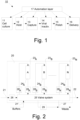
- FIG 1 an overview of a bioprocess purification system 10, configured to purify a target product using a separation process is shown.
- the bioprocess purification system comprises a number of steps related to Cell culture 11, Hold 12, Capture 13, Viral inactivation 14, Polish 15 and Delivery 16.
- the cell culture step 11 may be a perfusion type culture which comprises continuous addition of nutrients for cell growth in perfusion culture and continuous removal of product and waste through drain and filtration, e.g. using an Alternate Tangential Filtration (ATF) filter setup.
- the step may comprise process control for viable cell density (VCD), and the next step in the process starts when VCD reaches a pre-determined value.
- VCD viable cell density
- the VCD may be controlled by adapting the components of the cell culture media fed to the culture or by addition of certain components directly to the culture.
- the cell culture is of batch type.
- the sample containing the target product is exploited in a cell free extraction process, e.g. by filtration, centrifugation or another technique.
- the hold step 12 is an optional step depending on process needs, e.g. if a filter is in-line before capture step 13.
- the step may comprise process control on weight, and the next step in the process starts when a pre-determined volume value is reached, or alternatively after a certain time period or when a pre-determined mass is reached.
- the hold step may be used both for collecting a volume of filtered feed from a perfusion cell culture or from a batch culture.
- the capture step 13 comprises at least one chromatography column that may have a filter in-line before the capture step.
- the capture step 13 may comprise a continuous chromatography setup, as illustrated in figure 2 , which may be run e.g. as periodic counter current chromatography with a continuous feed of sample from the cell culture step 11, directly or via the hold step 12, containing the target product.
- the capture step comprises one or more batch elutions, and process control using in-line UV-sensors handles variation in feed concentration and resin capacity.
- the next step starts when a pre-determined amount value (e.g. volume, mass or time) is reached.
- a pre-determined amount value e.g. volume, mass or time
- viral inactivation step 14 different options for virus inactivation is available depending on process needs.
- One option is to use batch mode with low pH for 30-60 minutes in a hold up tank.
- the step may comprise process control on volume, time, temperature and pH.
- the next step starts when a pre-determined time is reached.
- the polish step 15 may be straight through processing (STP) with a connected batch step or continuous chromatography with a continuous load step, or a combination thereof.
- STP straight through processing
- the flow rate is adjusted to a perfusion rate required by producer cells, which means that the flow rate is determined by the preceding step.
- the step may comprise process control for UV, flow and volume, and the next step starts when a pre-determined volume and amount is reached, alternatively when a timeout is reached.
- the delivery step 16 may comprise a virus removal step, e.g. a viral filter, before an ultra-filtration step.
- the delivery step may be used as concentration step for batch addition of sample from polish step.
- the delivery step may comprise continuous or batch delivery of product and may comprise continuous or batch removal of waste.
- the step may comprise process control for pH, conductivity, absorbance, volume and pressure, and delivery is achieved when a pre-determined product concentration in a pre-defined environment is reached.
- An automation layer 17 is used for handling decision points for the next step in the process.
- Different types of sensors (not shown), both in-line sensors and off-line sensors, are integrated into the process flow to monitor different parameters that may be used for providing the automation layer 17 with data that could be used to handle the decision points.
- Sensors include but are not limited to only measure flow, VCD, weight, pressure, UV, volume, pH, conductivity, absorbance, etc.
- UV absorption is an example of a parameter that could be monitored to detect the composition of the sample being purified.
- other parameters may be used operating in other frequency ranges, such as IR, fluorescence, x-rays, etc.
- the capture step 13 may comprise a continuous chromatography setup 20, as illustrated in figure 2 , or a single column 240, as illustrated in figure 4 .
- Continuous chromatography supports process intensification by reducing footprint and improving productivity.
- continuous chromatography is especially suited for purification of unstable molecules, as the short process time helps to ensure stability of the target product.
- sample containing the target product is fed into the continuous chromatography 20 via inlet 21 and the eluted target product is available at outlet 22.
- the continuous chromatography 20 comprises multiple columns A, B, N, and each column is provided with a column inlet 23 and column outlet 24.
- the column inlet 23 and column outlet 24 of each column is connected to a valve system 25 configured to connect the columns cyclically to the inlet 21 and the outlet 22 to achieve continuous purification of the target product.
- Example of a system configuration having three columns is described in connection with figure 3a-3c .
- the continuous chromatography 20 is further provided with buffer inlet 26 and waste outlet 27 in order to be able to perform the required operations.
- An in-line sensor 28 may be provided after the column outlet 24 of each column or be assigned to the process flow and integrated into the valve system 25. Important parameters, such as UV, are measured to control the process, as described below.
- Another in-line sensor 28' may be provided before the column inlet 23 of each column in order to be able to directly evaluate performance of each column.
- An in-line inlet sensor 26 may also be provided to monitor the composition of the sample fed into the continuous chromatography 20.
- the continuous chromatography may also comprise off-line sensors 29, which are designed to extract material from the process and thereafter evaluate selected parameters before the material is disposed of as waste.
- the continuous chromatography comprises at least two, such as at least three, columns and the principle of operations in a three columns (3C) setup is described in connection with figures 3a-3c .
- the 3C setup features two parallel flows: one for loading of the two columns in the loading zone, and one for the non-loading steps, e.g. elution and regeneration of the third column.
- step 2 the overloaded column A is switched and column B becomes the first column and column C becomes the second column in the loading zone.
- the overloaded column A will now be subjected to the non-loading steps, such as elution and regeneration in a parallel workflow.
- step 3 the overloaded column B in the loading zone is switched. Now column C becomes the first column and column A the second column in the loading zone, while column B is subjected to elution and regeneration in the parallel workflow. These three steps are repeated in a cyclic manner until required target product volume, mass or amount is reached (or until resin lifetime is reached and columns needs to be repacked or exchanged).
- the continuous chromatography setup illustrated in figure 2 may utilize more than three columns, and in a four column (4C) setup, the same principle applies.
- the non-loading steps can become limiting in a 3C setup, and the non-loading steps can be split on two columns and run in parallel utilizing a third flow path in the 4C setup.
- the 4C setup allows for balancing the loading and non-loading steps. More columns will lead to a more flexible system, while the complexity of the valve system 25 becomes increasingly complicated. However, some continuous chromatography have sixteen or more columns.
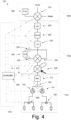
- Fig 4 schematically shows one embodiment of a chromatography system 190 comprising two 3 - way input- valves 160 and 161, arranged to select the input fluid from fluid sources Al, A2, Bl, B2 for two system pumps 150 and 151.
- the chromatography system 190 may further comprise:
- the system further comprises:
- the system further comprises:
- the chromatography system of figure 4 represents a general example of how a single column chromatography system may be designed, and other embodiments may be of different design comprising two or more of some components and potentially lack some of the components. E.g. components corresponding to Hold 12, Viral inactivation 14 and polish 15 as illustrated in figure 1 .
- Figure 5 is a simplified flow chart for a liquid chromatography system 190 according to figure 4 .
- the flow path has been straightened out and some components have been removed to achieve a more simplistic view.
- the system controller is shown connected only to the pump 150, the pressure sensor 200, the pre-column pressure sensor 235 and the post-column pressure sensor 236, but it may be connected to other components as discussed above.
- the system comprises both the pre-column pressure sensor 235 and the post-column pressure sensor 236, whereby the column pressure is directly measured by the pre-column sensor 235, and the delta-column pressure by subtracting the pressure registered by the post-column sensor 236 from the column-pressure.
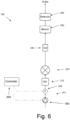
- Figure 6 is a simplified flow chart of such a liquid chromatography system 190 with one single pressure sensor 200 for registering the system pressure.
- the pressure control in such a system only relies on the registered system pressure, by sensor 200.
- Figure 7 is a simplified flow chart of a liquid chromatography system according to one embodiment of the present invention, wherein the controller 300 is arranged to estimate the pre-column pressure based on the registered system pressure, the characteristics of the flow path, and the viscosity and flow-rate of the liquid in the system.
- the estimated pre-column pressure may be referred to as a "virtual pressure sensor" schematically shown in fig. 7 by faint dotted lines.
- the calculation of the virtual pressure signal may be based on Bernoulli's formula for pressure drop in a flow channel.
- Flow channel ⁇ P MPa 0.000000000679 ⁇ L ⁇ Q ⁇ V / D ⁇ 4 >
- the system controller By providing length and diameter of the flow path, and the viscosity of the liquid in the system, to the system controller, it may be arranged to calculate the pressure drop caused by the flow path up to the column at the current flow rate.
- the length and size of the flow path between the system pressure sensor 200 and the column 240 may be standardized, so that the predefined parameters may be used for the calculations.
- the flow path between components in the chromatography system is user defined, whereby a user of the system has to enter the parameters using by a user interface.
- the major part of the flow path between the system pressure sensor 200 and the column 240 may be comprised of capillary tubing of the same diameter, then the flow path characteristics may be estimated as the total length of the tubing, thus excluding contributions from other components, like valves or the like from the calculations.
- the contribution from valves or the like in the flow path are taken into consideration and may be system defined, whereas, tubing or the like is user defined.
- the flow path comprises sections of different size (e.g. tubing of different inner diameter)
- the pressure drop over each section has to be calculated individually and eventually added together to provide the total pressure drop.
- the virtual Pre-column pressure is calculated by subtracting the pressure drop from the system pressure registered by system pressure sensor 200.
- the viscosity of the liquid is unknown and it is assumed to be water, but it has a higher viscosity, then the estimated value for flow path ⁇ P becomes too low. Then the calculated value for the virtual pressure signal becomes higher than the actual value whereby a pressure alarm will trigger before the actual pressure becomes too high for the column. This is also the case if other components in the flow path (mixer, valves etc.) generate some back pressure. Consequently, for liquids with viscosity lower than water, the estimation will give a virtual pre-column pressure that is lower than the actual pressure.
- the system is arranged to estimate the delta-column pressure by using the same principles for the flow path after the column a virtual post- column pressure may be estimated and used to calculate a virtual delta-column pressure.
- the virtual pre-column pressure and the delta-column pressure may be used to control the operation of the chromatography system, e.g. by monitoring the pressures with respect to predefined or user-defined pressure limits, or by running the chromatographic system at a predefined column pressure or the like.
- the disclosure illustrates a chromatography process configured to operate with at least one column and configured for purification of a sample comprising a target product using a predefined process.
- the predefined process may be a generic process, a validated process or a special process, and can be predefined from the manufacturer or generated by the end-user.
- Fig. 9 illustrates data flow in a system adapted for manufacturing columns and a liquid chromatography system.
- column data is generated during manufacturing of columns and is stored in a database dB accessible to the chromatography system 90.
- Data flow is indicated by dotted lines, and control signals by dashed lines.
- the liquid chromatography system comprises a controller 91 configured to control the operation of the chromatography system to run the predefined process, retrieve column data accessible from a data storage dB, the column data being specific to each column, and adapt at least one process parameter of the predefined process for each column based on column data, whereby the predefined process is adapted to each column to obtain the target product and maintain the performance of the liquid chromatography system.
- the data storage may be a database (integrated in the chromatography system or accessible from a source outside the chromatography system, such as a cloud based implementation).
- Another alternative is to store column data on individual column, e.g. as a memory chip and communication with the chromatography system via RFID.
- the process parameter comprises: pressure over each column, flow of sample into the column, flow of residue out from the column and/or processed volume of sample/time period (column volume/hour).
- the liquid chromatography system is configured to operate with a single column for purification of the sample, and according to some embodiments the liquid chromatography system is configured to operate with at least three columns for continuous purification of the sample.
- Figure 8 illustrates the concept of assigning the columns to a type 400 (also referred to as family).
- Each individual column 401-1, 401-2, 401-n belongs in this example to a specific type 400 having predetermined production parameters related to the column.
- the production parameters defines a range of different physical properties of the used column components and different process properties used to manufacture the column.
- the column comprises a vessel for holding a resin and filters
- column components may include hardware specific properties, physical dimensions of the vessel (such as height of the vessel), material properties of the resin, such as grain size and distribution, physical properties of the filter, etc.
- Process properties relates to the manufacturing process of the column, such as height of resin bed, pressure boundaries, flow specification, etc.
- the height of the resin bed may be the actual height or the height of the vessel.
- the production parameters may further comprise actual volume of resin in each column.
- the liquid chromatography system further comprises sensors 92a, 92b adapted to read sensor parameters, wherein the adaptation of the at least one process parameters further is based on sensor readings.
- the sensor readings comprise any of: UV, Flow and Pressure.
- the production parameters further comprise actual volume of resin in each column.
- the database which is accessible by the system may comprise historic data for each individual column and/or columns belonging to the same specific type (i.e. the same family) previously used in the liquid chromatography system for purification of the sample.
- Historic data information from the controller is stored in the database for this purpose.
- Fig. 10 is a flow chart illustrating a method for manufacturing a column for a liquid chromatography system.
- the disclosure also comprises a method for manufacturing a column for a liquid chromatography system, the column having an inlet and an outlet and comprises a vessel for holding a resin.
- the method comprises:
- the column further comprises hardware in the form of a top filter arranged between the inlet and the resin bed, and the method further comprises selecting the top filter based on the type of column, the top filter having top filter properties, and determining production parameters based further on the top filter properties to define the column data.
- the column further comprises hardware in the form of a bottom filter arranged between the outlet and the resin bed, and the method further comprises selecting the bottom filter based on the type of column, the bottom filter having bottom filter properties, and determining production parameters based further on the bottom filter properties to define the column data.
- the disclosure also comprises a column for a liquid chromatography system, the column having an inlet and an outlet and comprises a vessel for holding a resin, wherein the column is manufactured according to the method mentioned above.
- a system for manufacturing the columns is illustrated in Fig. 9 , where the output from the system is columns and column data, which is stored in a database dB accessible to the chromatography system.
- the column further comprises hardware in the form of a data storage, e.g. a data chip, configured to store column data, and a communication device configured to communicate the column data to the liquid chromatography system.
- a data storage e.g. a data chip
- a communication device configured to communicate the column data to the liquid chromatography system.
- the communication device is configured to communicate with the liquid chromatography system using RFID.
- Fig. 11 is a flow chart illustrating a method for controlling a liquid chromatography system configured to operate with at least one column.
- the disclosure also comprises a method for controlling a liquid chromatography system configured to operate with at least one column and configured for purification of a sample comprising a target product using a predefined process, wherein the method comprises:
- the predefined process is adapted to each column to obtain the target product and maintain the performance of the liquid chromatography system from a sample.
- each column is of a specific type and the data storage comprises historic data for each column and/or columns belonging to the same specific type previously used in the liquid chromatography system for purification of the sample, wherein the method comprises further adapting the at least one process parameter of the predefined process based on the historic data, step S13a.
- the data storage comprises column data related to production parameters when producing each column, the production parameters comprises, height of resin bed, pressure boundaries, flow specification, material properties, hardware specific properties, filter properties, and physical dimensions of the vessel, wherein the method comprises further adapting the at least one process parameter of the predefined process based on the production parameters, step S 13b.
- the liquid chromatography system further comprises sensors adapted to read sensor parameters, wherein the method further comprises further adapting the at least one process parameters based on sensor readings, step S14a.
- the sensor readings may comprise any of: UV, Flow and Pressure.
- the data storage may be selected to be a database, which may be integrated in the liquid chromatography system.
- An alternative is to integrate the data storage in each column.
- Efficiency testing is the analysis of the residence time distribution for a tracer substance passing through the column.
- Typical test signals applied to the column are pulse or step signals.
- tracer substance and eluent conditions are selected such that chemical interactions with the medium and disturbances of the fluid flow are avoided.
- the most common type of test signal applied is a pulse function. A small volume of a tracer substance is added to the liquid flow close to the column inlet and the broadening of this pulse is analyzed when measured as a chromatographic peak at the column outlet.
- Peak broadening is typically described as plate number N or as height equivalent to a theoretical plate (HETP). This concept is equivalent to a tanks-in-series model reflecting the number of equilibrium stages represented by the column.
- a widely used method for evaluating a pulse test involves the measurement of peak width at half of the maximum peak height.
- This approach is an alternative to numerical curve integration when applying the method of moments, where the first moment is the average and the second moment is the variance of the retention volume/time.
- the pulse response is plotted against time or eluted volume and the peak width at half peak height is measured and related to the elution time or, preferably, the eluted volume at maximum peak height.
- the retention time or retention volume measured at the maximum peak height corresponds to the average residence time or volume found at a symmetric (Gaussian) peak shape.
- a dimensionless and thus convenient parameter for efficiency characterization is the reduced plate height h. This parameter facilitates the comparison of column efficiency irrespective of column length and particle diameter of the medium.
- Optimal column efficiency typically corresponds to an experimentally determined reduced plate height of h ⁇ 3 for the porous media employed in bioprocess chromatography. This efficiency is achieved when testing a well-packed bed with an optimized set-up of column and system under optimal test conditions.
- the chromatography system is arranged to perform automated column efficiency testing to determine efficiency parameters such as h and A s and to further provided guidance to the user with respect to column efficiency.
- the automated test here presented gives all the possible data to calculate the reduced plate height since the software automatically uses the specific parameters for the given column and resin to calculate the efficiency of the column. This give the possibility to directly know if the given column is good enough for application use or not. If not, the user will be informed so that a more appropriate column can be used. A suitable cleaning procedure can be applied, the column can be repacked, a the column can be replaced by a new column or any other necessary action can be taken. This gives a more secure and robust procedure for the liquid chromatography step since the efficiency of the column can be guaranteed.
- the chromatography system is arranged to automatically determine one or more efficiency parameters, such as reduced plate height h and A s and based on the result guide a user of the system to a relevant action or alternatively, the system may be configured to initiate some or all relevant actions automatically based on the efficiency parameters.
- system may be configured to automatically or semi-automatically initiate one or more of the following actions in order to improve column efficiency:
- the system is preferably configured to automatically determine one or more efficiency parameters and to verify the improved efficiency.
- system may be configured to repeat one or more of the above actions two or more times in case the desired result is not reached.
- the system may further be configured to escalate to a higher level after a predetermined attempt at one level.
- the above ranges for the different levels may be different depending on the resin type and column type.
- the ranges may also be different depending on the chromatographic process step that the column will be used in. for example a column that is prepared for a capture step may have a higher h compared to a column prepared for an intermediate or a polishing step.
- the chromatography system may be arranged to retrieve the particle size data for the determination of the efficiency parameters either from a predefined standard data file in a database or from measurement data of the particle size of the specific resin lot used.
- the lot specific particle size data may be determined by a separate or interconnected measurement unit or alternatively retrieved from a database comprising lot specific particle size data -e.g. a cloud-based database.
- the automated column verification further comprises determination of the column delta pressure to verify the column packing performance. In case the determined delta pressure is determined to be too low there is an increased risk for gap building whereas in case the delta pressure is determined to be too high, it may fall outside of the system pressure range.
- the relevant ranges for delta pressure may be retrieved from the column database and or the system settings.
- the disclosure further comprises a computer program for controlling a liquid chromatography system, comprising instructions which, when executed on at least one processor, cause the at least one processor to carry out the method according to method mentioned above.
- the disclosure further comprises a computer-readable storage medium carrying a computer program for controlling a liquid chromatography system as defined above.
Landscapes
- Chemical & Material Sciences (AREA)
- Analytical Chemistry (AREA)
- Physics & Mathematics (AREA)
- Health & Medical Sciences (AREA)
- Life Sciences & Earth Sciences (AREA)
- Biochemistry (AREA)
- General Health & Medical Sciences (AREA)
- General Physics & Mathematics (AREA)
- Immunology (AREA)
- Pathology (AREA)
- Chemical Kinetics & Catalysis (AREA)
- Treatment Of Liquids With Adsorbents In General (AREA)
Claims (11)
- Chromatographiesystem (10), welches angeordnet ist, um automatisierte Effizienztests einer Chromatographiesäule für eine spezifische Säule durchzuführen, um Effizienzparameter wie die Säulendruckplattenhöhe (h) und einen Peakasymmetriefaktor (As) zu bestimmen und optional weitere Leitlinien für einen Benutzer in Bezug auf die Säuleneffizienz bereitzustellen, wobei das System eine Steuereinheit (91, 300) aufweist, welche angeordnet ist, um automatisch auf Daten zuzugreifen, um die Berechnung der Säulendruckplattenhöhe (h) zu ermöglichen, wobei die Daten aus zumindest gespeicherten Parametern der spezifischen Säule (240) und einem Harz, welches in dieser Säule (240) zu verwenden ist, abgeleitet werden, um dadurch die Effizienz der Säule (240) zu berechnen, wobei das Chromatographiesystem (10) weiter betreibbar ist, um auf Basis der Säulendruckplattenhöhe (h) zu bestimmen, ob die spezifische Säule (240) zur Verwendung geeignet ist oder nicht zur Verwendung darin geeignet ist.
- Chromatographiesystem (10) nach Anspruch 1, wobei die Steuereinheit (91, 300) angeordnet ist, um:i) einen Vorsäulendruck unter Verwendung eines virtuellen Drucksensors zu schätzen;ii) wo Viskosität nicht bekannt ist, anzunehmen, dass Wasser verwendet wird, und die Viskosität für verschiedene Temperaturen unter Verwendung der Gleichung zu schätzen:
 iii) einen Delta-Säulendruck unter Verwendung derselben Prinzipien für einen Strömungsweg nach der Säule zu schätzen, um einen virtuellen Nachsäulendruck zu schätzen, und den virtuellen Nachsäulendruck zu verwenden, um einen virtuellen Delta-Säulendruck zu berechnen;iv) einen Pulstest auszuwerten, um eine Bodenzahl (N) durch Messung von Peakbreite bei halber maximaler Peakhöhe zu bestimmen; und/oderv) die Bodenhöhe (h) aus einer Retentionszeit oder einem Retentionsvolumen zu bestimmen, welche bei einer maximalen Peakhöhe gemessen werden, welche einer (-m) durchschnittlichen Verweildauer oder -volumen entspricht, welche(s) bei einer symmetrischen, z.B. Gaußschen, Peakform gefunden wird, und optional zu bestimmen, dass die spezifische Säule (240) für die Verwendung in dem Chromatographiesystem (10) geeignet ist, wenn die Plattenhöhe h ≤ 3 ist.
 - Chromatographiesystem (10) nach Anspruch 1 oder Anspruch 2, wobei, wenn bestimmt wird, dass die Säule (240) nicht geeignet ist, ein geeignetes Verfahren zum Neupacken der Säule eingeleitet wird.
- Chromatographiesystem (10) nach einem der vorstehenden Ansprüche, welches weiter eine Benutzerschnittstelle beinhaltet, und wobei das Chromatographiesystem (10) angeordnet ist, um automatisch einen oder mehrere Effizienzparameter zu bestimmen, und basierend auf dem Ergebnis auf der Benutzerschnittstelle eine relevante Aktion zu präsentieren, oder das System (10) alternativ konfiguriert sein kann, um einige oder alle relevanten Aktionen automatisch basierend auf den Effizienzparametern zu initiieren.
- Chromatographiesystem (10) nach einem der vorstehenden Ansprüche, wobei das System (10) konfiguriert ist, um automatisch oder halbautomatisch eine oder mehrere der folgenden Aktionen zu initiieren, um die Säuleneffizienz zu verbessern:- ein Standard-Säulenreinigungsverfahren, z.B. NaOH 0,5M, wenn 3 < h < 3,5 auf Stufe 1;- ein intensives Säulenreinigungsverfahren, z.B. NaOH 1M, Säure, und/oder Isopropanol, wenn 3,5 < h < 5 auf Stufe 2;- ein Verfahren zum Neupacken der Säule, wenn 5 < h < 7 auf Stufe 3;- Prozess abbrechen und Benutzer anweisen, das Harz auszutauschen, wenn h > 7 auf Stufe 4.
- Chromatographiesystem (10) nach Anspruch 5, wobei das System (10) nach Abschluss einer oder mehrerer der Aktionen konfiguriert ist, um automatisch einen oder mehrere Effizienzparameter zu bestimmen und jede verbesserte Effizienz zu überprüfen.
- Chromatographiesystem (10) nach Anspruch 5 oder 6, wobei das System (10) konfiguriert ist, um eine oder mehrere der vorherigen Aktionen zwei- oder mehrmals zu wiederholen, wenn ein Effizienzparameter nicht erreicht wird, oder nach einem vorbestimmt Versuch auf einer niedrigeren Stufe auf einer höheren Stufe zu wiederholen.
- Chromatographiesystem (10) nach einem der vorstehenden Ansprüche, wobei die automatisierte Säulenüberprüfung weiter Bestimmen des Säulendeltadrucks umfasst, um die Säulenpackleistung zu überprüfen.
- Chromatographiesystem (10) nach Anspruch 8, wobei, wenn bestimmt wird, dass der bestimmte Deltadruck zu niedrig ist, dem Benutzer mitgeteilt wird, dass ein erhöhtes Risiko zur Bildung von Lücken besteht, während in dem Fall, dass der Deltadruck als zu hoch bestimmt wird, dem Benutzer mitgeteilt wird, dass der Deltadruck aus dem Systemdruckbereich fallen kann, wobei die relevanten Bereiche für den Deltadruck optional aus einer Säulendatenbank (dB) und/oder den Systemeinstellungen abgerufen werden können.
- Chromatographiesystem (10) nach einem der vorstehenden Ansprüche, wobei die Steuereinheit (91, 300) weiter konfiguriert ist, um:den Betrieb des Chromatographiesystems (10) zu steuern, um einen vordefinierten Prozess auszuführen,Säulendaten abzurufen, auf welche aus einem Datenspeicher zugegriffen werden kann, wobei die Säulendaten für jede Säule (240) spezifisch sind, undzumindest einen Prozessparameter des vordefinierten Prozesses für jede Säule (240) basierend auf Säulendaten anzupassen,wodurch der vordefinierte Prozess an jede Säule (240) angepasst ist, um das Zielprodukt zu erhalten und die Leistung des Flüssigkeitschromatographiesystems aufrechtzuerhalten.
- Verfahren zur Verwendung in dem Chromatographiesystem (10) nach einem vorstehenden Anspruch, welches angeordnet ist, um automatisierte Effizienztests einer Chromatographiesäule für eine spezifische Säule (240) durchzuführen, um Effizienzparameter wie h und As zu bestimmen und um optional weitere Leitlinien für den Benutzer in Bezug auf die Säuleneffizienz bereitzustellen, wobei das Verfahren die Schritte umfasst zum:a) Bereitstellen einer Systemsteuereinheit (91, 300),b) Konfigurieren der Steuereinheit (91, 300), um automatisch auf Daten zuzugreifen, um die Steuereinheit in die Lage zu versetzen, eine Säulendruckplattenhöhen zu berechnen, wobei die Daten aus zumindest gespeicherten Parametern der spezifischen Säule und dem Harz, welches in dieser Säule zu verwenden ist, abgeleitet werden, um dadurch die Effizienz der Säule zu berechnen, und optional einen oder mehrere der zusätzlichen Schritte auszuführen zum:c) Konfigurieren der Steuereinheit (91, 300), um zu bestimmen, ob die spezifische Säule zur Verwendung geeignet oder zur Verwendung ungeeignet ist;d) Durchführen eines Neupackvorgangs, wenn bestimmt wird, dass die Säule (240) ungeeignet ist;e) weiter Bereitstellen einer Benutzerschnittstelle und Konfigurieren des Systems (10), um automatisch einen oder mehrere Effizienzparameter zu bestimmen und auf der Benutzerschnittstelle eine empfohlene relevante Aktion basierend auf dieser Bestimmung zu präsentieren;f) Konfigurieren des Systems (10), um automatisch oder halbautomatisch eine oder mehrere der folgenden Aktionen zu initiieren, um die Säuleneffizienz zu verbessern:- ein Standard-Säulenreinigungsverfahren, z.B. NaOH 0,5M wenn 3 < h < 3,5 auf Stufe 1;- ein intensives Säulenreinigungsverfahren, z.B. NaOH 1M, Säure, und/oder Isopropanol, wenn 3,5 < h < 5 auf Stufe 2;- ein Verfahren zum Neupacken der Säule, wenn 5 < h < 7 auf Stufe 3;- Abbrechen eines Prozesses und Anweisen des Austauschs des Säulenharzes, wenn h >7 auf Stufe 4.
Applications Claiming Priority (2)
| Application Number | Priority Date | Filing Date | Title |
|---|---|---|---|
| GBGB1905886.6A GB201905886D0 (en) | 2019-04-26 | 2019-04-26 | Method in liquid chromatography |
| PCT/EP2020/060651 WO2020216666A1 (en) | 2019-04-26 | 2020-04-16 | A chromatography system |
Publications (2)
| Publication Number | Publication Date |
|---|---|
| EP3958994A1 EP3958994A1 (de) | 2022-03-02 |
| EP3958994B1 true EP3958994B1 (de) | 2024-03-13 |
Family
ID=66809258
Family Applications (1)
| Application Number | Title | Priority Date | Filing Date |
|---|---|---|---|
| EP20719999.3A Active EP3958994B1 (de) | 2019-04-26 | 2020-04-16 | Chromatografiesystem |
Country Status (6)
| Country | Link |
|---|---|
| US (1) | US12188911B2 (de) |
| EP (1) | EP3958994B1 (de) |
| JP (1) | JP7640169B2 (de) |
| CN (1) | CN113747958A (de) |
| GB (1) | GB201905886D0 (de) |
| WO (1) | WO2020216666A1 (de) |
Families Citing this family (1)
| Publication number | Priority date | Publication date | Assignee | Title |
|---|---|---|---|---|
| GB201915488D0 (en) * | 2019-10-25 | 2019-12-11 | Ge Healthcare Bio Sciences Ab | Testing of filtration device |
Family Cites Families (19)
| Publication number | Priority date | Publication date | Assignee | Title |
|---|---|---|---|---|
| US4802981A (en) * | 1987-11-04 | 1989-02-07 | Oros Systems Limited | Automatic chromatography apparatus |
| JP3870367B2 (ja) * | 2001-11-19 | 2007-01-17 | ▲たけ▼徳 谷村 | 調製クロマトグラフィ装置およびそれを用いた分離・精製方法 |
| US7686959B2 (en) * | 2004-05-05 | 2010-03-30 | Biotage Ab | Control system and method for flash separation |
| US7435350B2 (en) * | 2005-04-04 | 2008-10-14 | Millipore Corporation | Intelligent system and method for automated packing of chromatography columns |
| US9597610B2 (en) * | 2007-03-09 | 2017-03-21 | Ge Healthcare Bioprocess R&D Ab | Packing system and method for chromatography columns |
| GB0704603D0 (en) | 2007-03-09 | 2007-04-18 | Ge Healthcare Bio Sciences Ab | Packing system and method for chromatography columns |
| CA2712732C (en) * | 2008-01-25 | 2018-11-27 | Biogen Idec Ma Inc. | Automated system and method for monitoring chromatography column performance, and applications thereof |
| JP5002530B2 (ja) | 2008-05-23 | 2012-08-15 | 株式会社日立ハイテクノロジーズ | 液体クロマトグラフの測定メソッド変換方法および液体クロマトグラフ装置 |
| JP5675593B2 (ja) | 2008-05-30 | 2015-02-25 | ジーイー・ヘルスケア・バイオサイエンス・アクチボラグ | 自動式カラムパッキング方法 |
| CN102150041B (zh) | 2008-09-08 | 2014-07-09 | 安捷伦科技有限公司 | 考虑到偏离理想行为的流体设备之间的方法转化 |
| EP2488267B1 (de) | 2009-10-13 | 2017-04-19 | Pall Corporation | Umwandlung von festbett-flüssigchromatografieverfahren in verfahren mit simuliertem beweglichem bett |
| KR101152036B1 (ko) * | 2010-04-27 | 2012-06-08 | (주)셀트리온 | 컬럼 순환 및 시료 연속주입법을 이용한 단백질 a 크로마토그래피 정제 방법 |
| US20140149050A1 (en) | 2011-07-08 | 2014-05-29 | Shimadzu Corporation | Data processing system for chromatograph |
| JP5966007B2 (ja) * | 2012-08-23 | 2016-08-10 | 株式会社日立ハイテクノロジーズ | 液体クロマトグラフ |
| JP6317745B2 (ja) | 2012-08-24 | 2018-04-25 | ジーイー・ヘルスケア・バイオサイエンス・アクチボラグ | 液体クロマトグラフィーシステムを制御するためのシステム及び方法 |
| CN107110835B (zh) | 2014-11-12 | 2019-07-26 | 通用电气健康护理生物科学股份公司 | 用于确定实验参数对液相色谱协议的影响的方法和系统 |
| BE1025162B9 (fr) | 2016-12-06 | 2019-01-07 | Glaxosmithkline Biologicals Sa | Procede de purification pour les polysaccharides capsulaires |
| GB201622342D0 (en) * | 2016-12-29 | 2017-02-15 | Ge Healthcare Bio Sciences Ab | Method in continuos chromatography |
| GB201803129D0 (en) * | 2018-02-27 | 2018-04-11 | Ge Healthcare Bio Sciences Ab | Method in liquid chiromatorgraphy |
-
2019
- 2019-04-26 GB GBGB1905886.6A patent/GB201905886D0/en not_active Ceased
-
2020
- 2020-04-16 US US17/602,701 patent/US12188911B2/en active Active
- 2020-04-16 JP JP2021563359A patent/JP7640169B2/ja active Active
- 2020-04-16 WO PCT/EP2020/060651 patent/WO2020216666A1/en not_active Ceased
- 2020-04-16 EP EP20719999.3A patent/EP3958994B1/de active Active
- 2020-04-16 CN CN202080031211.5A patent/CN113747958A/zh active Pending
Also Published As
| Publication number | Publication date |
|---|---|
| GB201905886D0 (en) | 2019-06-12 |
| EP3958994A1 (de) | 2022-03-02 |
| US20220163493A1 (en) | 2022-05-26 |
| JP7640169B2 (ja) | 2025-03-05 |
| CN113747958A (zh) | 2021-12-03 |
| JP2022530131A (ja) | 2022-06-27 |
| WO2020216666A1 (en) | 2020-10-29 |
| US12188911B2 (en) | 2025-01-07 |
Similar Documents
| Publication | Publication Date | Title |
|---|---|---|
| US12019058B2 (en) | Apparatus, method, and computer program product for adapting a predefined liquid chromatography process | |
| EP3563148B1 (de) | Reinigungssystem und reinigungsverfahren für bioprozess | |
| US20260061337A1 (en) | Method in Continuous Chromatography | |
| EP3563150B1 (de) | Leistungsüberwachung in kontinuierlicher chromatographie | |
| CN107249709B (zh) | 基于压力探测的自动化层析柱切换控制 | |
| JP2014501911A (ja) | ガードカラムを備えるクロマトグラフィーシステム | |
| US12188911B2 (en) | Chromatography system | |
| CN114651176A (zh) | 生物过程纯化系统中的方法 | |
| CN105688442B (zh) | 一种柱层析与膜过滤集成系统 | |
| EP3781280B1 (de) | Verfahren zur trennung mit einem simulierten beweglichen bett | |
| US20160074774A1 (en) | Chromatography method and system | |
| CN120195302A (zh) | 一种地下温泉水中阴阳离子的监测方法及系统 | |
| CN114585902A (zh) | 过滤装置的测试 |
Legal Events
| Date | Code | Title | Description |
|---|---|---|---|
| STAA | Information on the status of an ep patent application or granted ep patent |
Free format text: STATUS: UNKNOWN |
|
| STAA | Information on the status of an ep patent application or granted ep patent |
Free format text: STATUS: THE INTERNATIONAL PUBLICATION HAS BEEN MADE |
|
| PUAI | Public reference made under article 153(3) epc to a published international application that has entered the european phase |
Free format text: ORIGINAL CODE: 0009012 |
|
| STAA | Information on the status of an ep patent application or granted ep patent |
Free format text: STATUS: REQUEST FOR EXAMINATION WAS MADE |
|
| 17P | Request for examination filed |
Effective date: 20211007 |
|
| AK | Designated contracting states |
Kind code of ref document: A1 Designated state(s): AL AT BE BG CH CY CZ DE DK EE ES FI FR GB GR HR HU IE IS IT LI LT LU LV MC MK MT NL NO PL PT RO RS SE SI SK SM TR |
|
| DAV | Request for validation of the european patent (deleted) | ||
| DAX | Request for extension of the european patent (deleted) | ||
| P01 | Opt-out of the competence of the unified patent court (upc) registered |
Effective date: 20230526 |
|
| GRAP | Despatch of communication of intention to grant a patent |
Free format text: ORIGINAL CODE: EPIDOSNIGR1 |
|
| STAA | Information on the status of an ep patent application or granted ep patent |
Free format text: STATUS: GRANT OF PATENT IS INTENDED |
|
| GRAJ | Information related to disapproval of communication of intention to grant by the applicant or resumption of examination proceedings by the epo deleted |
Free format text: ORIGINAL CODE: EPIDOSDIGR1 |
|
| STAA | Information on the status of an ep patent application or granted ep patent |
Free format text: STATUS: REQUEST FOR EXAMINATION WAS MADE |
|
| INTG | Intention to grant announced |
Effective date: 20231020 |
|
| GRAP | Despatch of communication of intention to grant a patent |
Free format text: ORIGINAL CODE: EPIDOSNIGR1 |
|
| STAA | Information on the status of an ep patent application or granted ep patent |
Free format text: STATUS: GRANT OF PATENT IS INTENDED |
|
| INTC | Intention to grant announced (deleted) | ||
| INTG | Intention to grant announced |
Effective date: 20231122 |
|
| GRAS | Grant fee paid |
Free format text: ORIGINAL CODE: EPIDOSNIGR3 |
|
| GRAA | (expected) grant |
Free format text: ORIGINAL CODE: 0009210 |
|
| STAA | Information on the status of an ep patent application or granted ep patent |
Free format text: STATUS: THE PATENT HAS BEEN GRANTED |
|
| AK | Designated contracting states |
Kind code of ref document: B1 Designated state(s): AL AT BE BG CH CY CZ DE DK EE ES FI FR GB GR HR HU IE IS IT LI LT LU LV MC MK MT NL NO PL PT RO RS SE SI SK SM TR |
|
| REG | Reference to a national code |
Ref country code: GB Ref legal event code: FG4D |
|
| REG | Reference to a national code |
Ref country code: CH Ref legal event code: EP |
|
| REG | Reference to a national code |
Ref country code: DE Ref legal event code: R096 Ref document number: 602020027165 Country of ref document: DE |
|
| REG | Reference to a national code |
Ref country code: IE Ref legal event code: FG4D |
|
| PG25 | Lapsed in a contracting state [announced via postgrant information from national office to epo] |
Ref country code: LT Free format text: LAPSE BECAUSE OF FAILURE TO SUBMIT A TRANSLATION OF THE DESCRIPTION OR TO PAY THE FEE WITHIN THE PRESCRIBED TIME-LIMIT Effective date: 20240313 |
|
| REG | Reference to a national code |
Ref country code: LT Ref legal event code: MG9D |
|
| PG25 | Lapsed in a contracting state [announced via postgrant information from national office to epo] |
Ref country code: GR Free format text: LAPSE BECAUSE OF FAILURE TO SUBMIT A TRANSLATION OF THE DESCRIPTION OR TO PAY THE FEE WITHIN THE PRESCRIBED TIME-LIMIT Effective date: 20240614 |
|
| REG | Reference to a national code |
Ref country code: NL Ref legal event code: MP Effective date: 20240313 |
|
| PG25 | Lapsed in a contracting state [announced via postgrant information from national office to epo] |
Ref country code: RS Free format text: LAPSE BECAUSE OF FAILURE TO SUBMIT A TRANSLATION OF THE DESCRIPTION OR TO PAY THE FEE WITHIN THE PRESCRIBED TIME-LIMIT Effective date: 20240613 Ref country code: HR Free format text: LAPSE BECAUSE OF FAILURE TO SUBMIT A TRANSLATION OF THE DESCRIPTION OR TO PAY THE FEE WITHIN THE PRESCRIBED TIME-LIMIT Effective date: 20240313 |
|
| PG25 | Lapsed in a contracting state [announced via postgrant information from national office to epo] |
Ref country code: ES Free format text: LAPSE BECAUSE OF FAILURE TO SUBMIT A TRANSLATION OF THE DESCRIPTION OR TO PAY THE FEE WITHIN THE PRESCRIBED TIME-LIMIT Effective date: 20240313 |
|
| PG25 | Lapsed in a contracting state [announced via postgrant information from national office to epo] |
Ref country code: RS Free format text: LAPSE BECAUSE OF FAILURE TO SUBMIT A TRANSLATION OF THE DESCRIPTION OR TO PAY THE FEE WITHIN THE PRESCRIBED TIME-LIMIT Effective date: 20240613 Ref country code: NO Free format text: LAPSE BECAUSE OF FAILURE TO SUBMIT A TRANSLATION OF THE DESCRIPTION OR TO PAY THE FEE WITHIN THE PRESCRIBED TIME-LIMIT Effective date: 20240613 Ref country code: LT Free format text: LAPSE BECAUSE OF FAILURE TO SUBMIT A TRANSLATION OF THE DESCRIPTION OR TO PAY THE FEE WITHIN THE PRESCRIBED TIME-LIMIT Effective date: 20240313 Ref country code: HR Free format text: LAPSE BECAUSE OF FAILURE TO SUBMIT A TRANSLATION OF THE DESCRIPTION OR TO PAY THE FEE WITHIN THE PRESCRIBED TIME-LIMIT Effective date: 20240313 Ref country code: GR Free format text: LAPSE BECAUSE OF FAILURE TO SUBMIT A TRANSLATION OF THE DESCRIPTION OR TO PAY THE FEE WITHIN THE PRESCRIBED TIME-LIMIT Effective date: 20240614 Ref country code: FI Free format text: LAPSE BECAUSE OF FAILURE TO SUBMIT A TRANSLATION OF THE DESCRIPTION OR TO PAY THE FEE WITHIN THE PRESCRIBED TIME-LIMIT Effective date: 20240313 Ref country code: ES Free format text: LAPSE BECAUSE OF FAILURE TO SUBMIT A TRANSLATION OF THE DESCRIPTION OR TO PAY THE FEE WITHIN THE PRESCRIBED TIME-LIMIT Effective date: 20240313 Ref country code: BG Free format text: LAPSE BECAUSE OF FAILURE TO SUBMIT A TRANSLATION OF THE DESCRIPTION OR TO PAY THE FEE WITHIN THE PRESCRIBED TIME-LIMIT Effective date: 20240313 |
|
| REG | Reference to a national code |
Ref country code: AT Ref legal event code: MK05 Ref document number: 1665219 Country of ref document: AT Kind code of ref document: T Effective date: 20240313 |
|
| PG25 | Lapsed in a contracting state [announced via postgrant information from national office to epo] |
Ref country code: SE Free format text: LAPSE BECAUSE OF FAILURE TO SUBMIT A TRANSLATION OF THE DESCRIPTION OR TO PAY THE FEE WITHIN THE PRESCRIBED TIME-LIMIT Effective date: 20240313 Ref country code: LV Free format text: LAPSE BECAUSE OF FAILURE TO SUBMIT A TRANSLATION OF THE DESCRIPTION OR TO PAY THE FEE WITHIN THE PRESCRIBED TIME-LIMIT Effective date: 20240313 |
|
| PG25 | Lapsed in a contracting state [announced via postgrant information from national office to epo] |
Ref country code: NL Free format text: LAPSE BECAUSE OF FAILURE TO SUBMIT A TRANSLATION OF THE DESCRIPTION OR TO PAY THE FEE WITHIN THE PRESCRIBED TIME-LIMIT Effective date: 20240313 |
|
| PG25 | Lapsed in a contracting state [announced via postgrant information from national office to epo] |
Ref country code: NL Free format text: LAPSE BECAUSE OF FAILURE TO SUBMIT A TRANSLATION OF THE DESCRIPTION OR TO PAY THE FEE WITHIN THE PRESCRIBED TIME-LIMIT Effective date: 20240313 |
|
| PG25 | Lapsed in a contracting state [announced via postgrant information from national office to epo] |
Ref country code: IS Free format text: LAPSE BECAUSE OF FAILURE TO SUBMIT A TRANSLATION OF THE DESCRIPTION OR TO PAY THE FEE WITHIN THE PRESCRIBED TIME-LIMIT Effective date: 20240713 |
|
| PG25 | Lapsed in a contracting state [announced via postgrant information from national office to epo] |
Ref country code: SM Free format text: LAPSE BECAUSE OF FAILURE TO SUBMIT A TRANSLATION OF THE DESCRIPTION OR TO PAY THE FEE WITHIN THE PRESCRIBED TIME-LIMIT Effective date: 20240313 Ref country code: PT Free format text: LAPSE BECAUSE OF FAILURE TO SUBMIT A TRANSLATION OF THE DESCRIPTION OR TO PAY THE FEE WITHIN THE PRESCRIBED TIME-LIMIT Effective date: 20240715 |
|
| PG25 | Lapsed in a contracting state [announced via postgrant information from national office to epo] |
Ref country code: EE Free format text: LAPSE BECAUSE OF FAILURE TO SUBMIT A TRANSLATION OF THE DESCRIPTION OR TO PAY THE FEE WITHIN THE PRESCRIBED TIME-LIMIT Effective date: 20240313 Ref country code: CZ Free format text: LAPSE BECAUSE OF FAILURE TO SUBMIT A TRANSLATION OF THE DESCRIPTION OR TO PAY THE FEE WITHIN THE PRESCRIBED TIME-LIMIT Effective date: 20240313 |
|
| PG25 | Lapsed in a contracting state [announced via postgrant information from national office to epo] |
Ref country code: AT Free format text: LAPSE BECAUSE OF FAILURE TO SUBMIT A TRANSLATION OF THE DESCRIPTION OR TO PAY THE FEE WITHIN THE PRESCRIBED TIME-LIMIT Effective date: 20240313 |
|
| PG25 | Lapsed in a contracting state [announced via postgrant information from national office to epo] |
Ref country code: PL Free format text: LAPSE BECAUSE OF FAILURE TO SUBMIT A TRANSLATION OF THE DESCRIPTION OR TO PAY THE FEE WITHIN THE PRESCRIBED TIME-LIMIT Effective date: 20240313 |
|
| PG25 | Lapsed in a contracting state [announced via postgrant information from national office to epo] |
Ref country code: SK Free format text: LAPSE BECAUSE OF FAILURE TO SUBMIT A TRANSLATION OF THE DESCRIPTION OR TO PAY THE FEE WITHIN THE PRESCRIBED TIME-LIMIT Effective date: 20240313 |
|
| PG25 | Lapsed in a contracting state [announced via postgrant information from national office to epo] |
Ref country code: SM Free format text: LAPSE BECAUSE OF FAILURE TO SUBMIT A TRANSLATION OF THE DESCRIPTION OR TO PAY THE FEE WITHIN THE PRESCRIBED TIME-LIMIT Effective date: 20240313 Ref country code: SK Free format text: LAPSE BECAUSE OF FAILURE TO SUBMIT A TRANSLATION OF THE DESCRIPTION OR TO PAY THE FEE WITHIN THE PRESCRIBED TIME-LIMIT Effective date: 20240313 Ref country code: RO Free format text: LAPSE BECAUSE OF FAILURE TO SUBMIT A TRANSLATION OF THE DESCRIPTION OR TO PAY THE FEE WITHIN THE PRESCRIBED TIME-LIMIT Effective date: 20240313 Ref country code: PT Free format text: LAPSE BECAUSE OF FAILURE TO SUBMIT A TRANSLATION OF THE DESCRIPTION OR TO PAY THE FEE WITHIN THE PRESCRIBED TIME-LIMIT Effective date: 20240715 Ref country code: PL Free format text: LAPSE BECAUSE OF FAILURE TO SUBMIT A TRANSLATION OF THE DESCRIPTION OR TO PAY THE FEE WITHIN THE PRESCRIBED TIME-LIMIT Effective date: 20240313 Ref country code: IS Free format text: LAPSE BECAUSE OF FAILURE TO SUBMIT A TRANSLATION OF THE DESCRIPTION OR TO PAY THE FEE WITHIN THE PRESCRIBED TIME-LIMIT Effective date: 20240713 Ref country code: EE Free format text: LAPSE BECAUSE OF FAILURE TO SUBMIT A TRANSLATION OF THE DESCRIPTION OR TO PAY THE FEE WITHIN THE PRESCRIBED TIME-LIMIT Effective date: 20240313 Ref country code: CZ Free format text: LAPSE BECAUSE OF FAILURE TO SUBMIT A TRANSLATION OF THE DESCRIPTION OR TO PAY THE FEE WITHIN THE PRESCRIBED TIME-LIMIT Effective date: 20240313 Ref country code: AT Free format text: LAPSE BECAUSE OF FAILURE TO SUBMIT A TRANSLATION OF THE DESCRIPTION OR TO PAY THE FEE WITHIN THE PRESCRIBED TIME-LIMIT Effective date: 20240313 |
|
| REG | Reference to a national code |
Ref country code: CH Ref legal event code: PL |
|
| PG25 | Lapsed in a contracting state [announced via postgrant information from national office to epo] |
Ref country code: IT Free format text: LAPSE BECAUSE OF FAILURE TO SUBMIT A TRANSLATION OF THE DESCRIPTION OR TO PAY THE FEE WITHIN THE PRESCRIBED TIME-LIMIT Effective date: 20240313 |
|
| PG25 | Lapsed in a contracting state [announced via postgrant information from national office to epo] |
Ref country code: LU Free format text: LAPSE BECAUSE OF NON-PAYMENT OF DUE FEES Effective date: 20240416 |
|
| REG | Reference to a national code |
Ref country code: DE Ref legal event code: R097 Ref document number: 602020027165 Country of ref document: DE |
|
| REG | Reference to a national code |
Ref country code: BE Ref legal event code: MM Effective date: 20240430 |
|
| PG25 | Lapsed in a contracting state [announced via postgrant information from national office to epo] |
Ref country code: LU Free format text: LAPSE BECAUSE OF NON-PAYMENT OF DUE FEES Effective date: 20240416 Ref country code: IT Free format text: LAPSE BECAUSE OF FAILURE TO SUBMIT A TRANSLATION OF THE DESCRIPTION OR TO PAY THE FEE WITHIN THE PRESCRIBED TIME-LIMIT Effective date: 20240313 |
|
| PG25 | Lapsed in a contracting state [announced via postgrant information from national office to epo] |
Ref country code: MC Free format text: LAPSE BECAUSE OF FAILURE TO SUBMIT A TRANSLATION OF THE DESCRIPTION OR TO PAY THE FEE WITHIN THE PRESCRIBED TIME-LIMIT Effective date: 20240313 |
|
| PG25 | Lapsed in a contracting state [announced via postgrant information from national office to epo] |
Ref country code: DK Free format text: LAPSE BECAUSE OF FAILURE TO SUBMIT A TRANSLATION OF THE DESCRIPTION OR TO PAY THE FEE WITHIN THE PRESCRIBED TIME-LIMIT Effective date: 20240313 |
|
| PG25 | Lapsed in a contracting state [announced via postgrant information from national office to epo] |
Ref country code: BE Free format text: LAPSE BECAUSE OF NON-PAYMENT OF DUE FEES Effective date: 20240430 |
|
| PLBE | No opposition filed within time limit |
Free format text: ORIGINAL CODE: 0009261 |
|
| STAA | Information on the status of an ep patent application or granted ep patent |
Free format text: STATUS: NO OPPOSITION FILED WITHIN TIME LIMIT |
|
| PG25 | Lapsed in a contracting state [announced via postgrant information from national office to epo] |
Ref country code: MC Free format text: LAPSE BECAUSE OF FAILURE TO SUBMIT A TRANSLATION OF THE DESCRIPTION OR TO PAY THE FEE WITHIN THE PRESCRIBED TIME-LIMIT Effective date: 20240313 Ref country code: DK Free format text: LAPSE BECAUSE OF FAILURE TO SUBMIT A TRANSLATION OF THE DESCRIPTION OR TO PAY THE FEE WITHIN THE PRESCRIBED TIME-LIMIT Effective date: 20240313 Ref country code: BE Free format text: LAPSE BECAUSE OF NON-PAYMENT OF DUE FEES Effective date: 20240430 Ref country code: CH Free format text: LAPSE BECAUSE OF NON-PAYMENT OF DUE FEES Effective date: 20240430 |
|
| 26N | No opposition filed |
Effective date: 20241216 |
|
| PG25 | Lapsed in a contracting state [announced via postgrant information from national office to epo] |
Ref country code: IE Free format text: LAPSE BECAUSE OF NON-PAYMENT OF DUE FEES Effective date: 20240416 |
|
| PG25 | Lapsed in a contracting state [announced via postgrant information from national office to epo] |
Ref country code: SI Free format text: LAPSE BECAUSE OF FAILURE TO SUBMIT A TRANSLATION OF THE DESCRIPTION OR TO PAY THE FEE WITHIN THE PRESCRIBED TIME-LIMIT Effective date: 20240313 |
|
| PGFP | Annual fee paid to national office [announced via postgrant information from national office to epo] |
Ref country code: DE Payment date: 20250428 Year of fee payment: 6 |
|
| PGFP | Annual fee paid to national office [announced via postgrant information from national office to epo] |
Ref country code: FR Payment date: 20250424 Year of fee payment: 6 |
|
| PG25 | Lapsed in a contracting state [announced via postgrant information from national office to epo] |
Ref country code: CY Free format text: LAPSE BECAUSE OF FAILURE TO SUBMIT A TRANSLATION OF THE DESCRIPTION OR TO PAY THE FEE WITHIN THE PRESCRIBED TIME-LIMIT; INVALID AB INITIO Effective date: 20200416 |
|
| PG25 | Lapsed in a contracting state [announced via postgrant information from national office to epo] |
Ref country code: HU Free format text: LAPSE BECAUSE OF FAILURE TO SUBMIT A TRANSLATION OF THE DESCRIPTION OR TO PAY THE FEE WITHIN THE PRESCRIBED TIME-LIMIT; INVALID AB INITIO Effective date: 20200416 |
|
| PGFP | Annual fee paid to national office [announced via postgrant information from national office to epo] |
Ref country code: GB Payment date: 20260223 Year of fee payment: 7 |