EP3953262B1 - Thin wall container made with a recycled material - Google Patents
Thin wall container made with a recycled material Download PDFInfo
- Publication number
- EP3953262B1 EP3953262B1 EP20716838.6A EP20716838A EP3953262B1 EP 3953262 B1 EP3953262 B1 EP 3953262B1 EP 20716838 A EP20716838 A EP 20716838A EP 3953262 B1 EP3953262 B1 EP 3953262B1
- Authority
- EP
- European Patent Office
- Prior art keywords
- container
- pet
- reference volume
- recycled
- container according
- Prior art date
- Legal status (The legal status is an assumption and is not a legal conclusion. Google has not performed a legal analysis and makes no representation as to the accuracy of the status listed.)
- Active
Links
Images

Classifications
-
- B—PERFORMING OPERATIONS; TRANSPORTING
- B65—CONVEYING; PACKING; STORING; HANDLING THIN OR FILAMENTARY MATERIAL
- B65D—CONTAINERS FOR STORAGE OR TRANSPORT OF ARTICLES OR MATERIALS, e.g. BAGS, BARRELS, BOTTLES, BOXES, CANS, CARTONS, CRATES, DRUMS, JARS, TANKS, HOPPERS, FORWARDING CONTAINERS; ACCESSORIES, CLOSURES, OR FITTINGS THEREFOR; PACKAGING ELEMENTS; PACKAGES
- B65D1/00—Rigid or semi-rigid containers having bodies formed in one piece, e.g. by casting metallic material, by moulding plastics, by blowing vitreous material, by throwing ceramic material, by moulding pulped fibrous material or by deep-drawing operations performed on sheet material
- B65D1/02—Bottles or similar containers with necks or like restricted apertures, designed for pouring contents
- B65D1/0207—Bottles or similar containers with necks or like restricted apertures, designed for pouring contents characterised by material, e.g. composition, physical features
-
- B—PERFORMING OPERATIONS; TRANSPORTING
- B29—WORKING OF PLASTICS; WORKING OF SUBSTANCES IN A PLASTIC STATE IN GENERAL
- B29C—SHAPING OR JOINING OF PLASTICS; SHAPING OF MATERIAL IN A PLASTIC STATE, NOT OTHERWISE PROVIDED FOR; AFTER-TREATMENT OF THE SHAPED PRODUCTS, e.g. REPAIRING
- B29C49/00—Blow-moulding, i.e. blowing a preform or parison to a desired shape within a mould; Apparatus therefor
- B29C49/02—Combined blow-moulding and manufacture of the preform or the parison
- B29C49/06—Injection blow-moulding
-
- B—PERFORMING OPERATIONS; TRANSPORTING
- B65—CONVEYING; PACKING; STORING; HANDLING THIN OR FILAMENTARY MATERIAL
- B65D—CONTAINERS FOR STORAGE OR TRANSPORT OF ARTICLES OR MATERIALS, e.g. BAGS, BARRELS, BOTTLES, BOXES, CANS, CARTONS, CRATES, DRUMS, JARS, TANKS, HOPPERS, FORWARDING CONTAINERS; ACCESSORIES, CLOSURES, OR FITTINGS THEREFOR; PACKAGING ELEMENTS; PACKAGES
- B65D1/00—Rigid or semi-rigid containers having bodies formed in one piece, e.g. by casting metallic material, by moulding plastics, by blowing vitreous material, by throwing ceramic material, by moulding pulped fibrous material or by deep-drawing operations performed on sheet material
- B65D1/02—Bottles or similar containers with necks or like restricted apertures, designed for pouring contents
- B65D1/0223—Bottles or similar containers with necks or like restricted apertures, designed for pouring contents characterised by shape
-
- B—PERFORMING OPERATIONS; TRANSPORTING
- B65—CONVEYING; PACKING; STORING; HANDLING THIN OR FILAMENTARY MATERIAL
- B65D—CONTAINERS FOR STORAGE OR TRANSPORT OF ARTICLES OR MATERIALS, e.g. BAGS, BARRELS, BOTTLES, BOXES, CANS, CARTONS, CRATES, DRUMS, JARS, TANKS, HOPPERS, FORWARDING CONTAINERS; ACCESSORIES, CLOSURES, OR FITTINGS THEREFOR; PACKAGING ELEMENTS; PACKAGES
- B65D1/00—Rigid or semi-rigid containers having bodies formed in one piece, e.g. by casting metallic material, by moulding plastics, by blowing vitreous material, by throwing ceramic material, by moulding pulped fibrous material or by deep-drawing operations performed on sheet material
- B65D1/40—Details of walls
-
- B—PERFORMING OPERATIONS; TRANSPORTING
- B29—WORKING OF PLASTICS; WORKING OF SUBSTANCES IN A PLASTIC STATE IN GENERAL
- B29C—SHAPING OR JOINING OF PLASTICS; SHAPING OF MATERIAL IN A PLASTIC STATE, NOT OTHERWISE PROVIDED FOR; AFTER-TREATMENT OF THE SHAPED PRODUCTS, e.g. REPAIRING
- B29C49/00—Blow-moulding, i.e. blowing a preform or parison to a desired shape within a mould; Apparatus therefor
- B29C49/02—Combined blow-moulding and manufacture of the preform or the parison
- B29C2049/023—Combined blow-moulding and manufacture of the preform or the parison using inherent heat of the preform, i.e. 1 step blow moulding
-
- B—PERFORMING OPERATIONS; TRANSPORTING
- B29—WORKING OF PLASTICS; WORKING OF SUBSTANCES IN A PLASTIC STATE IN GENERAL
- B29K—INDEXING SCHEME ASSOCIATED WITH SUBCLASSES B29B, B29C OR B29D, RELATING TO MOULDING MATERIALS OR TO MATERIALS FOR MOULDS, REINFORCEMENTS, FILLERS OR PREFORMED PARTS, e.g. INSERTS
- B29K2067/00—Use of polyesters or derivatives thereof, as moulding material
- B29K2067/003—PET, i.e. poylethylene terephthalate
-
- B—PERFORMING OPERATIONS; TRANSPORTING
- B29—WORKING OF PLASTICS; WORKING OF SUBSTANCES IN A PLASTIC STATE IN GENERAL
- B29L—INDEXING SCHEME ASSOCIATED WITH SUBCLASS B29C, RELATING TO PARTICULAR ARTICLES
- B29L2031/00—Other particular articles
- B29L2031/712—Containers; Packaging elements or accessories, Packages
- B29L2031/7158—Bottles
Definitions
- the invention concerns thin wall containers made with recycled PET.
- the containers present a low coloration.
- PET Polyethylene terephtalate
- PET recycled by mechanical routes is known. This material has been used in bottles containers usually mixed with virgin PET. Some bottles made with 100% of rPET have also been commercialized. Using recycled PET allows a preservation of the environment. However, rPET and containers made therewith are not as transparent as virgin PET and present a somewhat grey un-wanted or un-appreciated coloration. For this reason, bottles made of 100% rPET have been used so far for containing non-transparent liquids, such as non-transparent beverages. Such beverages thus mask the container coloration that is un-appreciated by some consumers.
- US 2011/256331 A1 and JP 2014 080594 A disclose examples of products obtained from a resin comprising recycled material.
- the invention addresses at least one of the problems or needs mentioned above, with a thin wall container for being filled with a liquid reference volume, made with polyethylene terephtalate (PET), comprising a neck and a wall, wherein:
- PET polyethylene terephtalate
- the container further presents the following feature: Feature b) the container is a blow molded container, and has a planar stretch ratio of from 12.0 to 27.0.
- the container further presents the following feature: Feature c) the container has a ratio between the container weight and the liquid reference volume of
- the coloration due the rPET is found to be surprisingly low and adapted for transparent liquids such as water.
- the container is a thin wall container made with polyethylene terephtalate (PET), comprising a neck and a wall. It can be filled with a liquid. In other words, the container can comprise a liquid. Examples of containers include bottles having a neck, a sidewall and a bottom. Other shapes or forms of containers are also encompassed.
- PET polyethylene terephtalate
- the liquid is typically present in a reference volume, filling all the container, with the exception of an optional head space.
- the container filled with the liquid is typically sealed, typically with a closure.
- the closure can be any type of closure, for example a cap or a flexible lid.
- the closure can be for example a threaded cap or a snap cap.
- the container can be opened by removing the closure or by at least partially piercing the closure.
- the container is a thin wall container, having a body and a neck as opening.
- the body is comprised of the wall.
- the wall typically comprises a bottom portion, a side portion, and a shoulder portion.
- the opening can be a neck provided on the shoulder portion opposite to the bottom portion.
- the body, or wall, or parts thereof has a low average thickness on at least a portion, preferably at least a portion representing at least 50% as length or surface of the body, preferably at least 80%, preferably all the body.
- the bottom and/or the shoulder can present higher average thicknesses, up to 100% more than the average thickness of the rest of the body.
- the wall comprises a bottom portion, a side portion, and a shoulder portion, wherein the thin portion is at least the side portion.
- the container presents at least feature a). In one embodiment the container presents features a) and b). In one embodiment the container presents features a) and c). In one embodiment the container presents features a) and b) and c).
- the average thickness of the wall is of from from 50 ⁇ m to 150 ⁇ m, for example from 50 ⁇ m to 75 ⁇ m or from 75 ⁇ m to 100 ⁇ m or from 100 ⁇ m to 125 ⁇ m or from 125 ⁇ m to 150 ⁇ m.
- the average thickness of the body can be for example of from 50 ⁇ m to 150 ⁇ m, for example from 50 ⁇ m to 75 ⁇ m or from 75 ⁇ m to 100 ⁇ m or from 100 ⁇ m to 125 ⁇ m or from 125 ⁇ m to 150 ⁇ m.
- the side portion can comprise a straight portion, that is to say that the side portion presents a cylindrical shape, and preferably a circular cylindrical shape.
- the side portion can be slightly convex.
- the side portion presents a griping portion, as a recess, having concave parts.
- the thickness of the side portion is low and allows a deformation.
- the thickness of the side portion can be of from 50 ⁇ m to 150 ⁇ m, for example from 50 ⁇ m to 75 ⁇ m or from 75 ⁇ m to 100 ⁇ m or from 100 ⁇ m to 125 ⁇ m or from 125 ⁇ m to 150 ⁇ m.
- the side portion is free of ridge, edge, groove, or rib.
- the side portion comprises at least one ridge, edge, groove and/or rib.
- the bottom portion can present a shape allowing the container to stand, for example a substantially flat, optionally ribbed shape, or a petaloid shape. Such shapes are known for bottles.
- the bottom portion presents a hemispheric shape.
- the thickness of the bottom portion can be for example of from 105 ⁇ m to 275 ⁇ m, preferably from 125 ⁇ m to 225 ⁇ m, for example for example from 125 ⁇ m to 150 ⁇ m or from 150 ⁇ m to 175 ⁇ m or from 175 ⁇ m to 200 ⁇ m or from 200 ⁇ m to 225 ⁇ m.
- the bottom portion is free of ridge, edge, groove, or rib.
- the bottom portion comprises at least one ridge, edge, groove and/or rib.
- the shoulder portion is typically an intermediate portion between the neck a side portion.
- the shoulder portion presents a hemispheric shape.
- the thickness of the shoulder portion can be for example of from 105 ⁇ m to 275 ⁇ m, preferably from 125 ⁇ m to 225 ⁇ m, for example for example from 125 ⁇ m to 150 ⁇ m or from 150 ⁇ m to 175 ⁇ m or from 175 ⁇ m to 200 ⁇ m or from 200 ⁇ m to 225 ⁇ m.
- the shoulder portion is free of ridge, edge, groove, or rib.
- the shoulder portion comprises at least one ridge, edge, groove and/or rib.
- ridges, edges, grooves and/or ribs that might be present on the sidewall, bottom and/or shoulder of the container modify the visual impression provided by the container, for example by generating some reflections that can modify the impression of transparency.
- the unwanted coloration can be perceived to a higher extend in portions that are free of such features.
- lowering the unwanted coloration is more useful in portions that are free of ridges, edges, grooves and/or ribs, and is more of a challenge.
- the bottom portion and shoulder portion present a similar shape, and preferably, the bottom portion and shoulder portion present the same hemispheric shape. Consequently, when considering that the side portion is a circular cylinder, the container is symmetrical (except for the neck portion) and can be handled similarly in an upright or upside-down position. Containers with such hemispherical shapes and straight or slightly convex side portions are particularly visually attractive and/or otherwise visually differentiating for consumers. Besides these features have been found to allow some manufacturing and/or usage advantages such as an easier process of manufacturing, as being close to the natural shape upon blowing before, with low constrains upon conforming with the mold, during a blow molding process.
- the container can be free of any label, such as a banderole or laminate adhered to the sidewall. These can cover at least partially the unwanted coloration, but constitute more packaging elements, which is expensive and/or contribute to complexify recycling and/or to lower the purity of recycled streams.
- the liquid is typically comprised or filled in the container. It is typically to be released out of the container, via the neck. It is preferably a drinkable, potable, liquid. Examples of such liquids include waters and beverages.
- waters include tap water, purified and/or sterilized waters, such as distillated waters, well waters, spring waters, and mineral waters.
- the waters can be supplemented with some additives such as salts, minerals, electrolytes.
- the waters can be supplemented with some functional additives such as vitamins.
- the waters can be acidic, neutral or alkaline waters.
- the waters can be still waters or sparkling waters, for example carbonated, for example naturally carbonated, artificially carbonated or partially naturally carbonated.
- beverages include alcoholic or non-alcoholic beverages, flavored waters, aquadrinks, optionally flavored milks, for example milks form animal origin such as cow milk or vegetal substitutes such as soy milk, almond milk, cashew milk, oat milk, rice milk, coconut milk, fermented beverages such as drinking yogurts or vegetal substitutes, kefirs, kombuchas, infused beverages, ready to use coffees, ready to use teas, ready to use creamers, fruit juices or nectars, carbonated soft drinks such as colas or sodas.
- the non-alcoholic beverages can for example comprise sugar, sweeteners and/or fruit or vegetable or their extracts.
- the liquid is a transparent liquid.
- transparent liquids include waters, as described above.
- the container is made with a PET plastic material.
- the material and the container structural features, such as the thickness and the shape, can be such that the container has at least a deformable, flexible, part when it is empty.
- Feature a), b), c) provide such deformable, flexible parts.
- PET and rPET are for example available in various grades or compositions, for example packaging grades or compositions, for example bottles grades or compositions. PET is especially appropriate for waters. Waters are very sensitive to taste modification, and PET has been found not to alter the waters' taste over storage periods of at least 3 months, preferably at least 6 months, preferably at least 12 months, preferably at least 24 months.
- rPET is known and commercially available. According to the invention it has been recycled by post-consumer (PC) recycling, where the container is recycled from waste streams after use by a consumer and disposal by a user or consumer.
- PC post-consumer
- the recycling typically involves sorting waste streams, to recover a stream of the selected material, and processing the stream with steps such as refining, washing and/or grinding.
- PET can be sorted from waste streams, and then processed according to various routes.
- the mechanical route involves refining, washing and/or grinding to recover a rPET polymer.
- the recovered rPET polymer can be subjected to a solid-state polymerization to re-increase its molecular weight, for example to re-increase its Intrinsic Viscosity (IV).
- IV Intrinsic Viscosity
- the unwanted coloration of post-consumer rPET is significantly much higher than rPET obtained by post-industrial recycling where clean articles or parts of articles are recycled from production sites.
- the later are high purity streams, with lower amounts of impurities coming from other materials and generating some coloration.
- lowering the unwanted coloration is more useful for post-consumer rPET and is more of a challenge.
- the PET can for example be a 100% recycled PET (rPET), or comprise an amount of R% by weight of rPET and an amount of 100-R% of a virgin PET, wherein R is of at least 50% or at least 60% or at least 70%, or at least 80%, or at least 90%.
- rPET 100% recycled PET
- the PET material of the container comprises at least 50% by weight of a PET recycled by a mechanical route (rPET).
- the rest of the PET can virgin PET, prepared for monomers, and or PET recycled by chemical or microbiological routes.
- the PET material comprises at least 50%, preferably at least 80%; by weight of rPET and at most 50%, preferably at most 20%, by weight of virgin PET and/or PET recycled by chemical or microbiological routes.
- the PET is a mixture of rPET and virgin PET.
- the mixture can be implemented as several layers, or by mixing pellets of rPET and virgin PET, before or upon melting for forming the container or a preform, or by mixing and melting rPET and virgin PET for forming pellets.
- Such mixtures or mixing procedures are known by the one skilled in the art.
- the PET essentially consists of the recycled PET.
- the container is a 100% by weight rPET.
- PET is recyclable, for example by the mechanical route, a chemical route and/or a microbiological route.
- the chemical route involves depolymerizing to recover monomers.
- the monomers can be re-polymerized to obtain a recycled fresh polymer.
- PET or rPET can be depolymerized by hydrolysis, methanolysis, glycloysis, ammonolysis or aminolysis to obtain recycled terephthalic acid or a diester thereof and recycled monoethylene glycol.
- the recycled terephthalic acid or diester and/or the recycled monoethylene glycol can be repolymerized, optionally with adding some virgin terephthalic acid or diester and/or the monoethylene glycol.
- the microbiological route involves treating the stream of material by micro-organisms to obtain de-polymerized oligomers or monomers, and then repolymerizing said monomers or oligomers, optionally with adding some virgin monomers or oligomers.
- the PET can comprise some additives, known by the one skilled in the art, such as stabilizers, lubricants etc...
- the PET comprises coloring agents such as pigments or optical modifiers.
- the PET is substantially free of coloring agents.
- the container can be formed from the PET by a molding process, such as a blow molding process, for example an Extrusion Blow Molding process or an Injection Blow Molding process, for example an Injection Stretch Blow Molding process.
- a molding process such as a blow molding process, for example an Extrusion Blow Molding process or an Injection Blow Molding process, for example an Injection Stretch Blow Molding process.
- Injection (Stretch) Blow Molding processes is especially suitable for the PET. They involve forming a PET preform by injection, heating the preform, placing the preform in a mold, and blowing a gas, usually air, in the heated preform to blow the material in the mold and conform the material with the mold.
- a gas usually air
- the preform can be a monolayer preform, to obtain a monolayer container.
- the preform is a monolayer PET.
- the container can be a monolayer PET container.
- the preform can be multilayer preform, to obtain multilayer container.
- the preform can have a layer of virgin PET and a layer of rPET, preferably as an external at least partial layer.
- the container can have a layer of virgin PET and a layer of rPET, preferably as an external at least partial layer.
- the container has typically a reference volume, defined as the maximum volume when the container is not deformed.
- the container reference volume can be of at least 0.1L, for example at least 0.5L, for example at least 1.0 L, for example at least 3.0 L for example at least 4.0 L, for example at least 5.0 L.
- the container can have a reference volume of at most 22.0 L, for example at most 16.L, for example at most 11.0 L, for example at most 5.5L, for example at most 3.3 L, for example at most 1.1 L.
- the container can have a reference volume of from 0.1 to 0.55L or from 0.5 to 1.1L or from 1.0 L to 3.3 L or from 3.0 to 4.4 L or from 4.0 to 5.5 L, or from 5.0 to 6.6 L, or from 6.0 to 7.7 L, or from 7.0 to 8.8 L, or from 8.0 to 9.9 L, or from 9.0 L to 11.0 L; or from 10.0 L to 16.0 L or from 16.0 L to 22.0 L.
- the container is typically filled with a reference volume of the liquid and sealed.
- the liquid reference volume is the maximum amount of liquid comprised in the container, before release.
- the liquid reference volume is typically slightly lower than the container reference volume, as the filled and closed container typically presents a head space (part or the container that is not filled).
- the head space is preferably of from 0% to 10% of the liquid reference volume, for example from 1% to 10% or from 1% to 5%.
- the liquid reference volume can be of from of at least 0.1L, for example at least 0.5L, for example at least 1.0 L, for example at least 3.0 L for example at least 4.0 L, for example at least 5.0 L.
- the liquid reference volume can be of at most 20.0 L, for example at most 15.L, for example at most 10.0 L for example at most 5.0L, for example at most 3.0 L, for example at most 1.0 L.
- the liquid reference volume can be of from 0.1 L to 0.5L or from 0.5 L to 1.0 L or from 1.0 L to 3.0 L or from 3.0 to 4.0 L or from 4.0 to 5.0 L, or from 5.0 to 6.0 L, or from 6.0 to 7.0 L, or from 7.0 to 8.0 L, or from 8.0 to 9.0 L, or from 9.0 L to 10.0 L, or from 10.0 to 15.0 L, or from 15.0 to 20.0 L.
- the liquid reference volume can be of from 4.9 L to 5.1 L.
- the thickness of the blown container can be managed by adapting, for a given container reference volume, the preform, in particular its shape and wall thickness, and by adapting the stretching parameters. It is mentioned that the geometry of the preform, such as its length, its diameter, and its bottom shape, determine, together with the neck, the weight of the preform and thus the weight of the container.
- the stretching can be described by the following parameters:
- the planar stretch ratio is of from 12.0 to 27.0, preferably from 15.0 to 20.0.
- the axial stretch ratio can be for example of from 3.0 to 4.5, preferably from 3.3 to 4.0.
- the hoop stretch ratio can be for example of from 4.0 to 6.0, preferably from 4.5 to 5.5.
- the container presents a packaging efficacy, determined as ratio between the container weight and the liquid reference volume, of from 5.27 g/L to 9.33 g/L, preferably of from 5.27 g/L to 7.33 g/L, preferably form 5.80 g/L to 7.00 g/L.
- the liquid reference volume can be preferably of from 2.0 L to 10.0 L.
- the container presents a packaging efficacy, determined as ratio between the container weight and the liquid reference volume, of from 4.0 g/L to less than 5.27 g/L with the proviso that the liquid reference volume is of at least 10.0 L, for example higher than 10.0 L.
- the packaging efficacy can be of from 4.0 g/L to less than 5.00 g/L with the proviso that the liquid reference volume is of at least 12.0 L.
- the container presents a packaging efficacy, determined as ratio between the container weight and the liquid reference volume, of from 4 more than 9.33 g/L to 20.0 g/L, with the proviso that the liquid reference volume is of at most 2.0 L, for example lower than 2.0L.
- the packaging efficacy can be of from more than 9.33 g/L to 15.0 g/L, with the proviso that the liquid reference volume is of from 0.5 L to 2.0 L.
- the packaging efficacy can be of from more than 15.0 g/L to 20.0 g/L, with the proviso that the liquid reference volume is of at from 0.1 L to less than 0.5 L.
- the container can present a surface density, determined as the ratio between the surface of the body and the container weight, of from 100 to 200 g/m2, for example from 100 to 120 g/m2 or form 120 to 140 g/m2, or form 140 to 160 g/m2, or from 160 to 180 g/m2, or from 180 to 200 g/m2.
- ratio between the surface of the body and the weight of the body is of from 100 to 200 g/m2, for example from 100 to 120 g/m2 or form 120 to 140 g/m2, or form 140 to 160 g/m2, or from 160 to 180 g/m2, or from 180 to 200 g/m2.
- Extra light containers presenting feature a), b), and/or c) require less PET, and thus are especially suitable for economic and/or environmental reasons.
- the container when filled with the liquid reference volume and sealed presents a top load resistance of at least 10 daN for at least 5 mm deformation and/or a lateral load resistance of at least 5 daN for at least 2.5 mm deformation.
- a 100% rPET container of 5.0 L of water (reference volume) is implemented.
- the container is prepared by Injection Stretch Blow Molding the preform represented on figure 1 , where dimensions are in mm, to obtain the container represented on figure 2 , where dimensions are in mm.
- the main parameters and features are reported on table 1 below.
- the container is filled with 5.0 L of water, and sealed with a screw cap.
- a rPET container of 5.0 L of water (reference volume) is implemented.
- the container is prepared by Injection Stretch Blow Molding the preform represented on figure 3 , where dimensions are in mm, to obtain the container represented on figure 4 , where dimensions are in mm.
- the main parameters and features are reported on table 2 below.
- the container is filled with 5.0 L of water, and sealed with a screw cap.
- CIE L*a*b* color tests are performed under to same protocol on 3 empty containers.
- the protocol involves, for each cxtntainer, over sereval samples, measuring the thickness at at least 7 points regularly spaced along the container body and measuring the L* component at the same points.
- Component L* is representative of lightness: the lower L* is, the darker the coloration is.
- the average thickness and the average L* component are reported as averages on the measurements at the at least 7 points.
- Container 1 is a control virgin PET bottle shape container.
- Container 2 is a comparative rPET container having a shape identical to container 1.
- Container 3 corresponds to the container described on Example 2.
- the letter c stands for a comparative example.
- Table 3 shows inter alia that the loss of lightness, per ⁇ m of material, due to the use of rPET instead of virgin PET is much lower with the container of the invention (container 3 of example 2).
Landscapes
- Engineering & Computer Science (AREA)
- Mechanical Engineering (AREA)
- Ceramic Engineering (AREA)
- Manufacturing & Machinery (AREA)
- Containers Having Bodies Formed In One Piece (AREA)
- Blow-Moulding Or Thermoforming Of Plastics Or The Like (AREA)
Description
- The invention concerns thin wall containers made with recycled PET. The containers present a low coloration.
- Polyethylene terephtalate (PET) is widely used for packaging beverages. "Crystal" grades of PET, free of coloring agents, present a high transparency, and containers made therewith also present a high transparency. Transparent containers, such as bottles, are especially appreciated for packaging transparent liquids such as waters.
- PET recycled by mechanical routes (rPET) is known. This material has been used in bottles containers usually mixed with virgin PET. Some bottles made with 100% of rPET have also been commercialized. Using recycled PET allows a preservation of the environment. However, rPET and containers made therewith are not as transparent as virgin PET and present a somewhat grey un-wanted or un-appreciated coloration. For this reason, bottles made of 100% rPET have been used so far for containing non-transparent liquids, such as non-transparent beverages. Such beverages thus mask the container coloration that is un-appreciated by some consumers.
US 2011/256331 A1 andJP 2014 080594 A - There is a need for containers comprising rPET adapted to package transparent liquids such as waters.
- The invention addresses at least one of the problems or needs mentioned above, with a thin wall container for being filled with a liquid reference volume, made with polyethylene terephtalate (PET), comprising a neck and a wall, wherein:
- the PET comprises at least 50% by weight of a PET recycled by a mechanical route (rPET) by post-consumer (PC) recycling, and,
- the container presents at least the following feature:
Feature a) the wall has a thin portion having an average thickness of from 50 µm to 150 µm. - In one embodiment, the container further presents the following feature:
Feature b) the container is a blow molded container, and has a planar stretch ratio of from 12.0 to 27.0. - In one embodiment, the container further presents the following feature:
Feature c) the container has a ratio between the container weight and the liquid reference volume of - from 5.27 g/L to 9.33 g/L, or
- from 4.0 g/L to less than 5.27 g/L with the proviso that the liquid reference volume is of at least 10.0 L, or
- from more than 9.33 g/L to 20.0 g/L, with the proviso that the liquid reference volume is of at most 2.0 L.
- In the containers according to the invention as set out in claim 1, the coloration due the rPET is found to be surprisingly low and adapted for transparent liquids such as water.
-
-
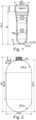
Figure 1 represents a PET preform of 32 g, for forming a 5 L container. Dimensions are in mm. -
Figure 2 represents a PET 5 L container of 32 g, formed from the preform ofFigure 1 . Dimensions are in mm. -
Figure 3 represents a PET preform of 32 g, for forming a 5 L container. Dimensions are in mm. -
Figure 4 represents a PET 5 L container of 32 g, formed from the preform ofFigure 3 . Dimensions are in mm. - The container is a thin wall container made with polyethylene terephtalate (PET), comprising a neck and a wall. It can be filled with a liquid. In other words, the container can comprise a liquid. Examples of containers include bottles having a neck, a sidewall and a bottom. Other shapes or forms of containers are also encompassed.
- The liquid is typically present in a reference volume, filling all the container, with the exception of an optional head space. The container filled with the liquid is typically sealed, typically with a closure. The closure can be any type of closure, for example a cap or a flexible lid. The closure can be for example a threaded cap or a snap cap. The container can be opened by removing the closure or by at least partially piercing the closure.
- Containers presenting a neck and a wall are known. The container is a thin wall container, having a body and a neck as opening. The body is comprised of the wall. The wall typically comprises a bottom portion, a side portion, and a shoulder portion. The opening can be a neck provided on the shoulder portion opposite to the bottom portion. To allow a deformation, and to allow plastic saving, the body, or wall, or parts thereof has a low average thickness on at least a portion, preferably at least a portion representing at least 50% as length or surface of the body, preferably at least 80%, preferably all the body. The bottom and/or the shoulder can present higher average thicknesses, up to 100% more than the average thickness of the rest of the body. In one embodiment the wall comprises a bottom portion, a side portion, and a shoulder portion, wherein the thin portion is at least the side portion.
- The container presents at least feature a). In one embodiment the container presents features a) and b). In one embodiment the container presents features a) and c). In one embodiment the container presents features a) and b) and c).
- According to feature a) The average thickness of the wall is of from from 50 µm to 150 µm, for example from 50 µm to 75 µm or from 75 µm to 100 µm or from 100 µm to 125 µm or from 125 µm to 150 µm.
- The average thickness of the body can be for example of from 50 µm to 150 µm, for example from 50 µm to 75 µm or from 75 µm to 100 µm or from 100 µm to 125 µm or from 125 µm to 150 µm.
- The side portion can comprise a straight portion, that is to say that the side portion presents a cylindrical shape, and preferably a circular cylindrical shape. In an embodiment the side portion can be slightly convex. In an embodiment the side portion presents a griping portion, as a recess, having concave parts. The thickness of the side portion is low and allows a deformation. For example, the thickness of the side portion can be of from 50 µm to 150 µm, for example from 50 µm to 75 µm or from 75 µm to 100 µm or from 100 µm to 125 µm or from 125 µm to 150 µm. In one embodiment the side portion is free of ridge, edge, groove, or rib. In one embodiment the side portion comprises at least one ridge, edge, groove and/or rib.
- The bottom portion can present a shape allowing the container to stand, for example a substantially flat, optionally ribbed shape, or a petaloid shape. Such shapes are known for bottles. In one embodiment the bottom portion presents a hemispheric shape. The thickness of the bottom portion can be for example of from 105 µm to 275 µm, preferably from 125 µm to 225 µm, for example for example from 125 µm to 150 µm or from 150 µm to 175 µm or from 175 µm to 200 µm or from 200 µm to 225 µm. In one embodiment the bottom portion is free of ridge, edge, groove, or rib. In one embodiment the bottom portion comprises at least one ridge, edge, groove and/or rib.
- The shoulder portion is typically an intermediate portion between the neck a side portion. In one embodiment the shoulder portion presents a hemispheric shape. The thickness of the shoulder portion can be for example of from 105 µm to 275 µm, preferably from 125 µm to 225 µm, for example for example from 125 µm to 150 µm or from 150 µm to 175 µm or from 175 µm to 200 µm or from 200 µm to 225 µm. In one embodiment the shoulder portion is free of ridge, edge, groove, or rib. In one embodiment the shoulder portion comprises at least one ridge, edge, groove and/or rib.
- Features such as ridges, edges, grooves and/or ribs that might be present on the sidewall, bottom and/or shoulder of the container modify the visual impression provided by the container, for example by generating some reflections that can modify the impression of transparency. The unwanted coloration can be perceived to a higher extend in portions that are free of such features. Thus lowering the unwanted coloration is more useful in portions that are free of ridges, edges, grooves and/or ribs, and is more of a challenge.
- In one embodiment the bottom portion and shoulder portion present a similar shape, and preferably, the bottom portion and shoulder portion present the same hemispheric shape. Consequently, when considering that the side portion is a circular cylinder, the container is symmetrical (except for the neck portion) and can be handled similarly in an upright or upside-down position. Containers with such hemispherical shapes and straight or slightly convex side portions are particularly visually attractive and/or otherwise visually differentiating for consumers. Besides these features have been found to allow some manufacturing and/or usage advantages such as an easier process of manufacturing, as being close to the natural shape upon blowing before, with low constrains upon conforming with the mold, during a blow molding process.
- It is mentioned that the container can be free of any label, such as a banderole or laminate adhered to the sidewall. These can cover at least partially the unwanted coloration, but constitute more packaging elements, which is expensive and/or contribute to complexify recycling and/or to lower the purity of recycled streams.
- The liquid is typically comprised or filled in the container. It is typically to be released out of the container, via the neck. It is preferably a drinkable, potable, liquid. Examples of such liquids include waters and beverages.
- Examples of waters include tap water, purified and/or sterilized waters, such as distillated waters, well waters, spring waters, and mineral waters. The waters can be supplemented with some additives such as salts, minerals, electrolytes. The waters can be supplemented with some functional additives such as vitamins. The waters can be acidic, neutral or alkaline waters. The waters can be still waters or sparkling waters, for example carbonated, for example naturally carbonated, artificially carbonated or partially naturally carbonated.
- Examples of beverages include alcoholic or non-alcoholic beverages, flavored waters, aquadrinks, optionally flavored milks, for example milks form animal origin such as cow milk or vegetal substitutes such as soy milk, almond milk, cashew milk, oat milk, rice milk, coconut milk, fermented beverages such as drinking yogurts or vegetal substitutes, kefirs, kombuchas, infused beverages, ready to use coffees, ready to use teas, ready to use creamers, fruit juices or nectars, carbonated soft drinks such as colas or sodas. The non-alcoholic beverages can for example comprise sugar, sweeteners and/or fruit or vegetable or their extracts.
- In a preferred embodiment the liquid is a transparent liquid. Examples of transparent liquids include waters, as described above.
- The container is made with a PET plastic material. The material and the container structural features, such as the thickness and the shape, can be such that the container has at least a deformable, flexible, part when it is empty. Feature a), b), c) provide such deformable, flexible parts.
- PET and rPET are for example available in various grades or compositions, for example packaging grades or compositions, for example bottles grades or compositions. PET is especially appropriate for waters. Waters are very sensitive to taste modification, and PET has been found not to alter the waters' taste over storage periods of at least 3 months, preferably at least 6 months, preferably at least 12 months, preferably at least 24 months.
- rPET is known and commercially available. According to the invention it has been recycled by post-consumer (PC) recycling, where the container is recycled from waste streams after use by a consumer and disposal by a user or consumer. The recycling typically involves sorting waste streams, to recover a stream of the selected material, and processing the stream with steps such as refining, washing and/or grinding. For example, PET can be sorted from waste streams, and then processed according to various routes. The mechanical route involves refining, washing and/or grinding to recover a rPET polymer. The recovered rPET polymer can be subjected to a solid-state polymerization to re-increase its molecular weight, for example to re-increase its Intrinsic Viscosity (IV). The unwanted coloration of post-consumer rPET is significantly much higher than rPET obtained by post-industrial recycling where clean articles or parts of articles are recycled from production sites. The later are high purity streams, with lower amounts of impurities coming from other materials and generating some coloration. Thus lowering the unwanted coloration is more useful for post-consumer rPET and is more of a challenge.
- The PET can for example be a 100% recycled PET (rPET), or comprise an amount of R% by weight of rPET and an amount of 100-R% of a virgin PET, wherein R is of at least 50% or at least 60% or at least 70%, or at least 80%, or at least 90%.
- The PET material of the container comprises at least 50% by weight of a PET recycled by a mechanical route (rPET). The rest of the PET can virgin PET, prepared for monomers, and or PET recycled by chemical or microbiological routes. For example, the PET material comprises at least 50%, preferably at least 80%; by weight of rPET and at most 50%, preferably at most 20%, by weight of virgin PET and/or PET recycled by chemical or microbiological routes.
- In one embodiment the PET is a mixture of rPET and virgin PET. The mixture can be implemented as several layers, or by mixing pellets of rPET and virgin PET, before or upon melting for forming the container or a preform, or by mixing and melting rPET and virgin PET for forming pellets. Such mixtures or mixing procedures are known by the one skilled in the art.
- In one embodiment the PET essentially consists of the recycled PET. In other words, the container is a 100% by weight rPET.
- It is mentioned that PET (either virgin PET or rPET) is recyclable, for example by the mechanical route, a chemical route and/or a microbiological route. The chemical route involves depolymerizing to recover monomers. The monomers can be re-polymerized to obtain a recycled fresh polymer. For example, PET or rPET can be depolymerized by hydrolysis, methanolysis, glycloysis, ammonolysis or aminolysis to obtain recycled terephthalic acid or a diester thereof and recycled monoethylene glycol. The recycled terephthalic acid or diester and/or the recycled monoethylene glycol can be repolymerized, optionally with adding some virgin terephthalic acid or diester and/or the monoethylene glycol. Similarly, the microbiological route involves treating the stream of material by micro-organisms to obtain de-polymerized oligomers or monomers, and then repolymerizing said monomers or oligomers, optionally with adding some virgin monomers or oligomers.
- The PET can comprise some additives, known by the one skilled in the art, such as stabilizers, lubricants etc... In one embodiment the PET comprises coloring agents such as pigments or optical modifiers. In one embodiment the PET is substantially free of coloring agents.
- The container can be formed from the PET by a molding process, such as a blow molding process, for example an Extrusion Blow Molding process or an Injection Blow Molding process, for example an Injection Stretch Blow Molding process. Injection (Stretch) Blow Molding processes is especially suitable for the PET. They involve forming a PET preform by injection, heating the preform, placing the preform in a mold, and blowing a gas, usually air, in the heated preform to blow the material in the mold and conform the material with the mold. Upon blowing the PET stretches, becomes thinner, and gets resistance by strain hardening and/or strain induced crystallization phenomenon(s). Such processes are well known. Equipments and materials, virgin or recycled, are commercially available.
- The preform can be a monolayer preform, to obtain a monolayer container. For example, the preform is a monolayer PET. For example, the container can be a monolayer PET container. The preform can be multilayer preform, to obtain multilayer container. For example, the preform can have a layer of virgin PET and a layer of rPET, preferably as an external at least partial layer. For example, the container can have a layer of virgin PET and a layer of rPET, preferably as an external at least partial layer.
- The container has typically a reference volume, defined as the maximum volume when the container is not deformed.
- The container reference volume can be of at least 0.1L, for example at least 0.5L, for example at least 1.0 L, for example at least 3.0 L for example at least 4.0 L, for example at least 5.0 L. The container can have a reference volume of at most 22.0 L, for example at most 16.L, for example at most 11.0 L, for example at most 5.5L, for example at most 3.3 L, for example at most 1.1 L. The container can have a reference volume of from 0.1 to 0.55L or from 0.5 to 1.1L or from 1.0 L to 3.3 L or from 3.0 to 4.4 L or from 4.0 to 5.5 L, or from 5.0 to 6.6 L, or from 6.0 to 7.7 L, or from 7.0 to 8.8 L, or from 8.0 to 9.9 L, or from 9.0 L to 11.0 L; or from 10.0 L to 16.0 L or from 16.0 L to 22.0 L.
- The container is typically filled with a reference volume of the liquid and sealed. The liquid reference volume is the maximum amount of liquid comprised in the container, before release. The liquid reference volume is typically slightly lower than the container reference volume, as the filled and closed container typically presents a head space (part or the container that is not filled). The head space is preferably of from 0% to 10% of the liquid reference volume, for example from 1% to 10% or from 1% to 5%. The liquid reference volume can be of from of at least 0.1L, for example at least 0.5L, for example at least 1.0 L, for example at least 3.0 L for example at least 4.0 L, for example at least 5.0 L. The liquid reference volume can be of at most 20.0 L, for example at most 15.L, for example at most 10.0 L for example at most 5.0L, for example at most 3.0 L, for example at most 1.0 L. The liquid reference volume can be of from 0.1 L to 0.5L or from 0.5 L to 1.0 L or from 1.0 L to 3.0 L or from 3.0 to 4.0 L or from 4.0 to 5.0 L, or from 5.0 to 6.0 L, or from 6.0 to 7.0 L, or from 7.0 to 8.0 L, or from 8.0 to 9.0 L, or from 9.0 L to 10.0 L, or from 10.0 to 15.0 L, or from 15.0 to 20.0 L. For example, the liquid reference volume can be of from 4.9 L to 5.1 L.
- The thickness of the blown container can be managed by adapting, for a given container reference volume, the preform, in particular its shape and wall thickness, and by adapting the stretching parameters. It is mentioned that the geometry of the preform, such as its length, its diameter, and its bottom shape, determine, together with the neck, the weight of the preform and thus the weight of the container. The stretching can be described by the following parameters:
- Axial Stretch ratio (ratio between length of container under neck and the length of the preform under neck);
- Hoop Stretch ratio (ratio between the diameter of container and the diameter of the preform, at half length);
- Planar Stretch ratio: Axial Stretch Ratio X Hoop Stretch Ratio.
- According to feature b) the planar stretch ratio is of from 12.0 to 27.0, preferably from 15.0 to 20.0. The axial stretch ratio can be for example of from 3.0 to 4.5, preferably from 3.3 to 4.0. The hoop stretch ratio can be for example of from 4.0 to 6.0, preferably from 4.5 to 5.5.
- In one embodiment, according to feature c), the container presents a packaging efficacy, determined as ratio between the container weight and the liquid reference volume, of from 5.27 g/L to 9.33 g/L, preferably of from 5.27 g/L to 7.33 g/L, preferably form 5.80 g/L to 7.00 g/L. In this embodiment the liquid reference volume can be preferably of from 2.0 L to 10.0 L.
- In one embodiment, according to feature c), the container presents a packaging efficacy, determined as ratio between the container weight and the liquid reference volume, of from 4.0 g/L to less than 5.27 g/L with the proviso that the liquid reference volume is of at least 10.0 L, for example higher than 10.0 L. The packaging efficacy can be of from 4.0 g/L to less than 5.00 g/L with the proviso that the liquid reference volume is of at least 12.0 L.
- In one embodiment, according to feature c), the container presents a packaging efficacy, determined as ratio between the container weight and the liquid reference volume, of from 4 more than 9.33 g/L to 20.0 g/L, with the proviso that the liquid reference volume is of at most 2.0 L, for example lower than 2.0L. The packaging efficacy can be of from more than 9.33 g/L to 15.0 g/L, with the proviso that the liquid reference volume is of from 0.5 L to 2.0 L. The packaging efficacy can be of from more than 15.0 g/L to 20.0 g/L, with the proviso that the liquid reference volume is of at from 0.1 L to less than 0.5 L.
- The container can present a surface density, determined as the ratio between the surface of the body and the container weight, of from 100 to 200 g/m2, for example from 100 to 120 g/m2 or form 120 to 140 g/m2, or form 140 to 160 g/m2, or from 160 to 180 g/m2, or from 180 to 200 g/m2. In one embodiment ratio between the surface of the body and the weight of the body is of from 100 to 200 g/m2, for example from 100 to 120 g/m2 or form 120 to 140 g/m2, or form 140 to 160 g/m2, or from 160 to 180 g/m2, or from 180 to 200 g/m2.
- Extra light containers presenting feature a), b), and/or c) require less PET, and thus are especially suitable for economic and/or environmental reasons.
- Advantageously, the container when filled with the liquid reference volume and sealed presents a top load resistance of at least 10 daN for at least 5 mm deformation and/or a lateral load resistance of at least 5 daN for at least 2.5 mm deformation.
- In one embodiment:
- the average thickness is of from 50 µm to 75 µm or from 75 µm to 100 µm or from 100 µm to 125 µm or from 125 µm to 150 µm, and
- the PET comprises at least 80% by weight of the recycled PET.
- In one embodiment:
- the container the average thickness is of from 50 µm to 75 µm or from 75 µm to 100 µm or from 100 µm to 125 µm or from 125 µm to 150 µm, and
- the PET comprises at least 80% by weight of the recycled PET, and
- the recycled PET by a (rPET) has been recycled by mechanical route by post-consumer (PC) recycling.
- In one embodiment:
- the average thickness is of from 50 µm to 75 µm or from 75 µm to 100 µm or from 100 µm to 125 µm or from 125 µm to 150 µm, and
- the PET essentially consists of the recycled PET.
- In one embodiment:
- the container presents feature a) and the average thickness is of from 50 µm to 75 µm or from 75 µm to 100 µm or from 100 µm to 125 µm or from 125 µm to 150 µm, and
- the PET essentially consists of the recycled PET, and
- the recycled PET by a (rPET) has been recycled by mechanical route by post-consumer (PC) recycling.
- In one embodiment:
- the container presents feature b) and the planar stretch ratio is of from 12.0 to 27.0 or from 15.0 to 20.0, and
- the PET comprises at least 80% by weight of the recycled PET.
- In one embodiment:
- the container presents feature b) and the planar stretch ratio is of from 12.0 to 27.0 or from 15.0 to 20.0, and
- the PET comprises at least 80% by weight of the recycled PET, and
- the recycled PET by a (rPET) has been recycled by mechanical route by post-consumer (PC) recycling.
- In one embodiment:
- the container presents feature b) and the planar stretch ratio is of from 12.0 to 27.0 or from 15.0 to 20.0, and
- the PET essentially consists of the recycled PET, and
- the recycled PET by a (rPET) has been recycled by mechanical route by post-consumer (PC) recycling.
- In one embodiment:
- the container presents feature b) and the container has an axial stretch ratio of from 3.0 to 4.5, preferably from 3.3 to 4.0, and/or the container has a hoop stretch ratio can be for of from 4.0 to 6.0, preferably from 4.5 to 5.5, and
- the PET comprises at least 80% by weight of the recycled PET.
- In one embodiment:
- the container presents feature b) and the container has an axial stretch ratio of from 3.0 to 4.5, preferably from 3.3 to 4.0, and/or the container has a hoop stretch ratio can be for of from 4.0 to 6.0, preferably from 4.5 to 5.5, and
- the PET comprises at least 80% by weight of the recycled PET, and
- the recycled PET by a (rPET) has been recycled by mechanical route by post-consumer (PC) recycling.
- In one embodiment:
- the container presents feature b) and the container has an axial stretch ratio of from 3.0 to 4.5, preferably from 3.3 to 4.0, and/or the container has a hoop stretch ratio can be for of from 4.0 to 6.0, preferably from 4.5 to 5.5, and
- the PET essentially consists of the recycled PET.
- In one embodiment:
- the container presents feature b) and the container has an axial stretch ratio of from 3.0 to 4.5, preferably from 3.3 to 4.0, and/or the container has a hoop stretch ratio can be for of from 4.0 to 6.0, preferably from 4.5 to 5.5, and
- the PET essentially consists of the recycled PET, and
- the recycled PET by a (rPET) has been recycled by mechanical route by post-consumer (PC) recycling.
- In one embodiment:
- the container presents feature c) and has a ratio between the container weight and the liquid reference volume of from 5.27 g/L to 9.33 g/L or from 5.80 g/L to 7.00 g/L, and
- the PET comprises at least 80% by weight of the recycled PET.
- In one embodiment:
- the container presents feature c) and has a ratio between the container weight and the liquid reference volume of from 5.27 g/L to 9.33 g/L or from 5.80 g/L to 7.00 g/L, and
- the PET comprises at least 80% by weight of the recycled PET, and
- the recycled PET by a (rPET) has been recycled by mechanical route by post-consumer (PC) recycling.
- In one embodiment:
- the container presents feature c) and has a ratio between the container weight and the liquid reference volume of from 5.27 g/L to 9.33 g/L or 5.80 g/L to 7.00 g/L, and
- the PET essentially consists of the recycled PET.
- In one embodiment:
- the container presents feature c) and has a ratio between the container weight and the liquid reference volume of from 5.27 g/L to 9.33 g/L or 5.80 g/L to 7.00 g/L, and
- the PET essentially consists of the recycled PET, and
- the recycled PET by a (rPET) has been recycled by mechanical route by post-consumer (PC) recycling.
- In one embodiment:
- the container presents feature c) and has a ratio between the container weight and the liquid reference volume of from 4.0 g/L to less than 5.27 g/L with the proviso that the liquid reference volume is of at least 10.0 L, and
- the PET comprises at least 80% by weight of the recycled PET.
- In one embodiment:
- the container presents feature c) and has a ratio between the container weight and the liquid reference volume of - from 4.0 g/L to less than 5.27 g/L with the proviso that the liquid reference volume is of at least 10.0 L, and
- the PET comprises at least 80% by weight of the recycled PET, and
- the recycled PET by a (rPET) has been recycled by mechanical route by post-consumer (PC) recycling.
- In one embodiment:
- the container presents feature c) and has a ratio between the container weight and the liquid reference volume of - from 4.0 g/L to less than 5.27 g/L with the proviso that the liquid reference volume is of at least 10.0 L, and
- the PET essentially consists of the recycled PET.
- In one embodiment:
- the container presents feature c) and has a ratio between the container weight and the liquid reference volume of - from 4.0 g/L to less than 5.27 g/L with the proviso that the liquid reference volume is of at least 10.0 L, and
- the PET essentially consists of the recycled PET, and
- the recycled PET by a (rPET) has been recycled by mechanical route by post-consumer (PC) recycling.
- In one embodiment:
- the container presents feature c) and has a ratio between the container weight and the liquid reference volume of from more than 9.33 g/L to 20.0 g/L, with the proviso that the liquid reference volume is of at most 2.0 L, and
- the PET comprises at least 80% by weight of the recycled PET.
- In one embodiment:
- the container presents feature c) and has a ratio between the container weight and the liquid reference volume of from more than 9.33 g/L to 20.0 g/L, with the proviso that the liquid reference volume is of at most 2.0 L, and
- the PET comprises at least 80% by weight of the recycled PET, and
- the recycled PET by a (rPET) has been recycled by mechanical route by post-consumer (PC) recycling.
- In one embodiment:
- the container presents feature c) and has a ratio between the container weight and the liquid reference volume of from more than 9.33 g/L to 20.0 g/L, with the proviso that the liquid reference volume is of at most 2.0 L, and
- the PET essentially consists of the recycled PET.
- In one embodiment:
- the container presents feature c) and has a ratio between the container weight and the liquid reference volume of from more than 9.33 g/L to 20.0 g/L, with the proviso that the liquid reference volume is of at most 2.0 L, and
- the PET essentially consists of the recycled PET, and
- the recycled PET by a (rPET) has been recycled by mechanical route by post-consumer (PC) recycling.
- Other details or advantages of the invention will appear in the following non-limiting example(s).
- A 100% rPET container of 5.0 L of water (reference volume) is implemented.
- The container is prepared by Injection Stretch Blow Molding the preform represented on
figure 1 , where dimensions are in mm, to obtain the container represented onfigure 2 , where dimensions are in mm. The main parameters and features are reported on table 1 below. The container is filled with 5.0 L of water, and sealed with a screw cap.Table 1 Material and weight (Preform weight) 32 g rPET Weight under Neck (g) 27,49 Preform body external diameter (mm) 31,32 Preform body internal diameter (mm) 26 Preform body thickness (mm) 2,66 Preform length under neck (mm) 92 Container diameter (mm) 157,0 Container length under neck (mm) 322,5 Shoulder curve radius (mm) 78,5 Bottom curve radius (mm) 78,5 Container Reference (cm3) 5191 Container Surface under neck (cm2) 1576.96 Axial stretch ratio 3, 57 Hoop stretch ratio 5 Planar stretch ratio 17,85 Thickness at shoulder (µm) 167 Thickness at sidewall (µm) 89,5 Thickness at bottom (µm) 167 g/m2 under neck 161.83g/m2 Packaging efficacy (g/L) 6.4 Blowing Equipment type One blow Preform blowing temperature 85°C Blowing pressures 8 bars pre-blow 30 bars blow Blowing time (s) 1,7 Mold Temperature 25°C - A rPET container of 5.0 L of water (reference volume) is implemented.
- The container is prepared by Injection Stretch Blow Molding the preform represented on
figure 3 , where dimensions are in mm, to obtain the container represented onfigure 4 , where dimensions are in mm. The main parameters and features are reported on table 2 below. The container is filled with 5.0 L of water, and sealed with a screw cap.Table 2 Preform Material rPET - EcoPet CB 0C 78 supplied by FPR Preform weight (g) 32 Preform neck type: diameter including threads - internal diameter (mm) 34-29 Weight under Neck (g) 27.36 Preform body external diameter (mm) 31.02 Preform body internal diameter (mm) 25.7 Preform body thickness (mm) 2.66 Preform length under neck (mm) 92 Container diameter (mm) 157.0 Container length under neck (mm) 324.25 Shoulder curve radius (mm) 78.5 Bottom curve radius (mm) 78.5 Container Reference (cm3) 5177 Container Surface under neck (cm2) 1613 Axial stretch ratio 3.52 Hoop stretch ratio 5.06 Planar stretch ratio 17.81 Thickness at shoulder (µm) 155 Thickness at sidewall (µm) 100 Thickness at bottom (µm) 155 g/m2 under neck 169.62 Packaging efficacy (g/L) 6.4 Blowing Equipment type 1 blow Preform blowing temperature 85°C Blowing pressures 8 bars pre-blow 30 bars blow Blowing time (s) 1.7 Mold Temperature 15°C - CIE L*a*b* color tests are performed under to same protocol on 3 empty containers. The protocol involves, for each cxtntainer, over sereval samples, measuring the thickness at at least 7 points regularly spaced along the container body and measuring the L* component at the same points. Component L* is representative of lightness: the lower L* is, the darker the coloration is. The average thickness and the average L* component are reported as averages on the measurements at the at least 7 points.
- Container 1 is a control virgin PET bottle shape container.
- Container 2 is a comparative rPET container having a shape identical to container 1.
- Container 3 corresponds to the container described on Example 2. The letter c stands for a comparative example.
- Details and results are provided on table 3.
Table 3 Example 3.1 Example 3.2 Container 3.3 Container description Container 1 Container 2 Container of Example 2 Bottle Shape Bottle Shape Neck 34-29 Neck 34-39 Shape represented on Figure 4 Neck 34-29 Liquid reference volume (L) 1.5 1.5 5.0 Material Virgin PET rPET - EcoPet CB 0C 78 supplied by FPR rPET - EcoPet CB 0C 78 supplied by FPR Weight (g) 34 32 32 Planar Stretch ratio about 8 about 8 17.81 Average thickness of the body e1 = 193 µm e2 = 157 µm e3 = 124 µm Average L* L*1 = 97.10 L*2 = 94.67 L*3 = 96.35 Loss of lightness L*1- L*2 = 2.43 L*1- L*3 = 0.76 Loss of lightness to thickness (L*1- L*2)/e2 = 0.0154 (L*1- L*3)/e3 = 0.0061 - Table 3 shows inter alia that the loss of lightness, per µm of material, due to the use of rPET instead of virgin PET is much lower with the container of the invention (container 3 of example 2).
Claims (16)
- A thin wall container for being filled with a liquid reference volume, made with polyethylene terephtalate (PET), comprising a neck and a wall, wherein:- the PET comprises at least 50% by weight of a PET recycled by a mechanical route (rPET) by post-consumer (PC) recycling, and,- the container presents at least the following feature:
Feature a) the wall has a thin portion having an average thickness of from 50 µm to 150 µm. - A container according to claim 1, wherein the average thickness is of from 50 µm to 75 µm or from 75 µm to 100 µm or from 100 µm to 125 µm or from 125 µm to 150 µm.
- A container according to any one of the preceding claims, wherein the container further presents the following feature:
Feature b) the container is a blow molded container and has a planar stretch ratio of from 12.0 to 27.0. - A container according to claim 3, wherein the planar stretch ratio of is from 15.0 to 20.0.
- A container according to any one of the preceding claims, wherein the container further presents the following feature:
Feature c) the container has a ratio between the container weight and the liquid reference volume of:- from 5.27 g/L to 9.33 g/L, or- from 4.0 g/L to less than 5.27 g/L with the proviso that the liquid reference volume is of at least 10.0 L, or- from more than 9.33 g/L to 20.0 g/L, with the proviso that the liquid reference volume is of at most 2.0 L. - A container according to claim 5, wherein the ratio between the container weight and the liquid reference volume is of- from 5.80 g/L to 7.00 g/L, or- from 4.0 g/L to less than 5.00 g/L with the proviso that the liquid reference volume is of at least 12.0 L, or- from more than 9.33 g/L to 15.0 g/L, with the proviso that the liquid reference volume is of from 0.5 L to 2.0 L, or- from more than 15.0 g/L to 20.0 g/L, with the proviso that the liquid reference volume is of at from 0.1 L to less than 0.5 L.
- A container according to any one of the preceding claims, wherein the PET comprises at least 80% by weight of the recycled PET (rPET).
- A container according to any of the preceding claims, wherein the PET essentially consists of the recycled PET (rPET).
- A container according to any of the preceding claims, wherein the post-consumer (PC) recycling is a recycling where the container is recycled from waste streams after use by a consumer and disposal by a user or consumer.
- A container according to any one of the preceding claims, wherein the container is an injection blow molded container.
- A container according to any one of the preceding claims, wherein, the wall comprises a bottom portion, a side portion, and a shoulder portion, wherein the thin portion is at least the side portion.
- A container according to claim 11, wherein the side portion comprises a straight portion.
- A container according to any one of the preceding claims, wherein the side portion is free of ridge, edge, groove and/or rib.
- A container according to any one of the preceding claims, wherein the PET is substantially free of coloring agents.
- A container according to any one of the preceding claims, wherein the container is filled with a transparent liquid.
- A container according to clam 15, wherein the transparent liquid is water.
Priority Applications (1)
| Application Number | Priority Date | Filing Date | Title |
|---|---|---|---|
| EP24161543.4A EP4353610A3 (en) | 2019-04-12 | 2020-04-10 | Thin wall container made with a recycled material |
Applications Claiming Priority (2)
| Application Number | Priority Date | Filing Date | Title |
|---|---|---|---|
| EP19305476.4A EP3722219B1 (en) | 2019-04-12 | 2019-04-12 | Thin wall container made with a recycled material |
| PCT/EP2020/060346 WO2020208243A1 (en) | 2019-04-12 | 2020-04-10 | Thin wall container made with a recycled material |
Related Child Applications (1)
| Application Number | Title | Priority Date | Filing Date |
|---|---|---|---|
| EP24161543.4A Division EP4353610A3 (en) | 2019-04-12 | 2020-04-10 | Thin wall container made with a recycled material |
Publications (3)
| Publication Number | Publication Date |
|---|---|
| EP3953262A1 EP3953262A1 (en) | 2022-02-16 |
| EP3953262C0 EP3953262C0 (en) | 2024-03-06 |
| EP3953262B1 true EP3953262B1 (en) | 2024-03-06 |
Family
ID=66334319
Family Applications (3)
| Application Number | Title | Priority Date | Filing Date |
|---|---|---|---|
| EP19305476.4A Active EP3722219B1 (en) | 2019-04-12 | 2019-04-12 | Thin wall container made with a recycled material |
| EP20716838.6A Active EP3953262B1 (en) | 2019-04-12 | 2020-04-10 | Thin wall container made with a recycled material |
| EP24161543.4A Pending EP4353610A3 (en) | 2019-04-12 | 2020-04-10 | Thin wall container made with a recycled material |
Family Applications Before (1)
| Application Number | Title | Priority Date | Filing Date |
|---|---|---|---|
| EP19305476.4A Active EP3722219B1 (en) | 2019-04-12 | 2019-04-12 | Thin wall container made with a recycled material |
Family Applications After (1)
| Application Number | Title | Priority Date | Filing Date |
|---|---|---|---|
| EP24161543.4A Pending EP4353610A3 (en) | 2019-04-12 | 2020-04-10 | Thin wall container made with a recycled material |
Country Status (8)
| Country | Link |
|---|---|
| US (2) | US12420977B2 (en) |
| EP (3) | EP3722219B1 (en) |
| JP (1) | JP7545382B2 (en) |
| CN (1) | CN113631483A (en) |
| AR (1) | AR118661A1 (en) |
| ES (1) | ES2977183T3 (en) |
| MX (1) | MX2021004519A (en) |
| WO (1) | WO2020208243A1 (en) |
Families Citing this family (8)
| Publication number | Priority date | Publication date | Assignee | Title |
|---|---|---|---|---|
| US20220312802A1 (en) * | 2021-03-24 | 2022-10-06 | David Murray Melrose | Containers for liquid beverages and methods of forming and processing these containers |
| EP3470195A1 (en) | 2017-10-12 | 2019-04-17 | The Procter & Gamble Company | Blow molded article with visual effects |
| EP3722219B1 (en) | 2019-04-12 | 2024-11-27 | Société Anonyme des Eaux Minérales d'Evian et en Abrégé "S.A.E.M.E" | Thin wall container made with a recycled material |
| JP7442649B2 (en) | 2020-01-08 | 2024-03-04 | ザ プロクター アンド ギャンブル カンパニー | Blow molded multilayer article with color gradation |
| US20210316493A1 (en) * | 2020-04-10 | 2021-10-14 | The Procter & Gamble Company | Multilayer thermoplastic article with unique visual effects and a core containing recycled thermoplastic material |
| DE102020123166A1 (en) | 2020-09-04 | 2022-03-10 | Krones Aktiengesellschaft | Device and method for heating plastic preforms with spatially resolved temperature detection |
| CN116888051A (en) * | 2020-11-23 | 2023-10-13 | 达能日尔维公司 | PET cup container and manufacturing method thereof |
| EP4219626A1 (en) * | 2022-01-27 | 2023-08-02 | Carlsberg Breweries A/S | Collapsible beverage container and method of manufacture |
Citations (59)
| Publication number | Priority date | Publication date | Assignee | Title |
|---|---|---|---|---|
| US3733309A (en) | 1970-11-30 | 1973-05-15 | Du Pont | Biaxially oriented poly(ethylene terephthalate)bottle |
| US5628957A (en) | 1992-07-07 | 1997-05-13 | Continental Pet Technologies, Inc. | Method of forming multilayer container with polyethylene naphthalalte (pen) |
| JPH1095903A (en) | 1996-09-20 | 1998-04-14 | Kyodo Printing Co Ltd | Thin plastic bottle, blow molding method thereof, and composite container |
| WO1998048994A1 (en) | 1997-04-25 | 1998-11-05 | Eastman Chemical Company | Lightweight bottles and method for making same |
| US6168041B1 (en) | 1996-11-01 | 2001-01-02 | Colgate-Palmolive Company | Injection stretch blow molded tubular containers |
| JP2001122237A (en) | 1999-10-27 | 2001-05-08 | Aoki Technical Laboratory Inc | Ultrathin-walled bottle formed by extendable blow molding method |
| US20010009951A1 (en) | 1997-12-05 | 2001-07-26 | Schmidt Steven L. | Process for making pen/pet blends and transparent articles therefrom |
| WO2001083193A1 (en) | 2000-04-28 | 2001-11-08 | Advanced Plastics Technologies, Ltd. | Bottles and preforms having a crystalline neck |
| EP1167214A2 (en) | 1994-12-14 | 2002-01-02 | Continental Pet Technologies, Inc. | Oxygen scavenging composition for multilayer preform and container |
| US6355319B1 (en) | 1998-09-30 | 2002-03-12 | Mitsui Chemicals Inc | Polyester resin composition and hollow molded container made therefrom |
| JP2002080021A (en) | 2000-06-23 | 2002-03-19 | Frontier:Kk | Biaxially stretched blow molded container made of plastic and its manufacturing method |
| JP2002103429A (en) | 2000-09-26 | 2002-04-09 | Marubeni Techno-Systems Corp | Plastic bottle |
| JP2002104362A (en) | 2000-09-29 | 2002-04-10 | Taisei Kako Co Ltd | Laminated resin bottle and manufacturing method for laminated resin molded product |
| US20020061371A1 (en) | 1996-03-07 | 2002-05-23 | Steven L. Schmidt | Multilayer container resistant to elevated temperatures and pressures, and method of making the same |
| WO2003033361A2 (en) | 2001-10-12 | 2003-04-24 | Nestle Waters Management & Technology | Container for a flowable product, process of manufacture and the use thereof |
| WO2003047841A1 (en) | 2001-11-30 | 2003-06-12 | E.I. Du Pont De Nemours And Company | Process for producing an oriented shaped article |
| JP2003191319A (en) | 2001-10-16 | 2003-07-08 | Toyo Seikan Kaisha Ltd | Bottle-shaped container and manufacturing method thereof |
| JP2004148616A (en) | 2002-10-30 | 2004-05-27 | Toyo Seikan Kaisha Ltd | Preform and biaxially stretched container manufactured using the same |
| JP2004160670A (en) | 2002-11-08 | 2004-06-10 | Tahara:Kk | Hollow molded product made of recovered polyester resin, molding method therefor and hollow molding machine therefor |
| JP2004160669A (en) | 2002-11-08 | 2004-06-10 | Tahara:Kk | Multi-layer hollow molded product made of recovered polyester resin, molding method and hollow molding machine |
| EP1468930A1 (en) | 2003-04-15 | 2004-10-20 | Nestlé Waters Management & Technology | Thin-walled container |
| EP1527999A1 (en) | 2003-10-31 | 2005-05-04 | Nestlé Waters Management & Technology | A container for product with less packaging material |
| EP1543939A2 (en) | 2003-12-19 | 2005-06-22 | PepsiCo, Inc. | Method for manufacturing a dispensing package and the dispensing package |
| WO2005066027A1 (en) | 2003-12-24 | 2005-07-21 | Graham Packaging Pet Technologies Inc. | Preform assembly, lightweight container and method of manufacture |
| WO2005102667A2 (en) | 2004-04-16 | 2005-11-03 | Advanced Plastics Technologies Luxembourg S.A. | Preforms, bottles and methods of manufacturing the preforms and the bottles |
| US20060127615A1 (en) | 2002-10-30 | 2006-06-15 | Toyo Seikan Kaisha, Ltd. | Preform, process for producing the same, and biaxially stretched container obtained from the preform |
| JP2006232317A (en) | 2005-02-24 | 2006-09-07 | Kureha Corp | Recyclable container and recycling method |
| MXPA06004623A (en) | 2003-10-31 | 2006-10-17 | Nestle Waters Management & Technology | A container for product with less packaging material |
| US7226648B2 (en) | 2001-07-16 | 2007-06-05 | Cobarr, S.P.A. | Flexible bottles of polyester resin |
| EP1815960A1 (en) | 2006-02-02 | 2007-08-08 | Ricoh Company, Ltd. | Method of molding toner bottle and toner bottle |
| DE102007049750A1 (en) | 2007-10-16 | 2009-04-23 | Krones Ag | Pouch bottle |
| JP4290823B2 (en) | 1999-09-30 | 2009-07-08 | 日精エー・エス・ビー機械株式会社 | Bag in box |
| US20100000962A1 (en) | 2006-10-27 | 2010-01-07 | Sidel Participations | Container, particularly a bottle, made of a thermoplastic material |
| US20110031243A1 (en) | 2009-08-05 | 2011-02-10 | Joseph Craig Lester | Container for Bottle-In-Box Package |
| WO2011110660A1 (en) | 2010-03-11 | 2011-09-15 | Sa Des Eaux Minerales D'evian Saeme | Method for producing plastic containers by stretch blow molding, preform, container and use of such a container |
| US20110256331A1 (en) | 2010-04-14 | 2011-10-20 | Dak Americas Llc | Ultra-high iv polyester for extrusion blow molding and method for its production |
| EP2423120A2 (en) | 2010-08-25 | 2012-02-29 | Paccor Deutschland GmbH | Container |
| WO2012065162A1 (en) | 2010-11-12 | 2012-05-18 | Jay Clarke Hanan | Preform extended finish for processing light weight bottles |
| WO2013080926A1 (en) | 2011-11-28 | 2013-06-06 | ライオン株式会社 | Plastic bottle |
| US20140033654A1 (en) | 2012-08-06 | 2014-02-06 | The Procter & Gamble Company | Methods of Making Flexible Containers |
| JP2014080594A (en) | 2012-09-27 | 2014-05-08 | Toyobo Co Ltd | Polyester film |
| WO2014101956A1 (en) | 2012-12-28 | 2014-07-03 | Sa Des Eaux Minerales D'evian Saeme | Self collapsible blow moulded plastic thin-walled container |
| JP2014198422A (en) | 2013-03-29 | 2014-10-23 | 株式会社 資生堂 | Injection stretch blow molded bottle and method for manufacturing the same |
| EP2933201A1 (en) | 2007-05-16 | 2015-10-21 | Plastipak Packaging, Inc. | Lightweight plastic container |
| WO2015160902A1 (en) | 2014-04-17 | 2015-10-22 | S. C. Johnson & Son, Inc. | Molded article formed from post consumer recycled material |
| WO2015180094A1 (en) | 2014-05-29 | 2015-12-03 | The Procter & Gamble Company | Glossy article |
| WO2016005493A1 (en) | 2014-07-10 | 2016-01-14 | Nestec S.A. | Method for processing polyethylene terephthalate |
| WO2016200653A1 (en) | 2015-06-11 | 2016-12-15 | E I Du Pont De Nemours And Company | Enhanced barrier performance via blends of poly(ethylene furandicarboxylate) and poly(ethylene terephthalate) |
| EP2660165B1 (en) | 2010-12-27 | 2017-08-09 | Kao Corporation | Package |
| WO2017136584A1 (en) | 2016-02-02 | 2017-08-10 | Niagara Bottling, Llc | Preform extended finish for processing light weight ecologically beneficial bottles |
| US20170233161A1 (en) | 2014-10-29 | 2017-08-17 | Alpla Werke Alwin Lehner Gmbh & Co. Kg | Stretch blow-molded plastic container, in particular plastic bottle, for compensating volume changes of the filling material, and preform |
| WO2017183048A1 (en) | 2016-04-20 | 2017-10-26 | Suntory Holdings Limited | A preform manufacturing device |
| JP2017203116A (en) | 2016-05-12 | 2017-11-16 | 北海製罐株式会社 | Polyethylene terephthalate resin composition, polyethylene terephthalate resin bottle and method for producing the same |
| WO2017199146A2 (en) | 2016-05-17 | 2017-11-23 | Moreno Barel | Process for making a bottle of a polymeric material |
| JP2018154355A (en) | 2017-03-16 | 2018-10-04 | 大日本印刷株式会社 | container |
| US10150241B2 (en) | 2015-02-27 | 2018-12-11 | Dr Pepper/Seven Up, Inc. | High stretch ratio preforms and related containers and methods |
| WO2018224652A1 (en) | 2017-06-08 | 2018-12-13 | Alpla Werke Alwin Lehner Gmbh & Co. Kg | Recycled pet barrier bottle |
| WO2019041205A1 (en) | 2017-08-31 | 2019-03-07 | The Procter & Gamble Company | Rigid articles having a well-defined corner |
| EP3722219A1 (en) | 2019-04-12 | 2020-10-14 | Societe Anonyme des Eaux Minerales d'Evian Et en Abrege "S.A.E.M.E" | Thin wall container made with a recycled material |
Family Cites Families (17)
| Publication number | Priority date | Publication date | Assignee | Title |
|---|---|---|---|---|
| JPS6359513A (en) * | 1986-08-30 | 1988-03-15 | Toyo Seikan Kaisha Ltd | Manufacture of hollow polyester molded body |
| EP0653982B2 (en) * | 1992-07-07 | 2001-01-03 | Continental Pet Technologies, Inc. | Method of forming container with high-crystallinity sidewall and low-clystallinity base |
| JP3595571B2 (en) * | 1993-05-07 | 2004-12-02 | 日精エー・エス・ビー機械株式会社 | Double wall bottle and method and apparatus for molding the same |
| US6166991A (en) | 1999-11-03 | 2000-12-26 | Cypress Semiconductor Corp. | Circuit, architecture and method for reducing power consumption in a synchronous integrated circuit |
| JP4014356B2 (en) | 2000-06-29 | 2007-11-28 | 三井化学エンジニアリング株式会社 | How to recycle plastic bottles |
| JP2002248675A (en) | 2001-02-23 | 2002-09-03 | Toyo Seikan Kaisha Ltd | Multilayer preform and method of manufacturing the same |
| JP4599900B2 (en) * | 2004-06-17 | 2010-12-15 | 東洋製罐株式会社 | Preform and blow molded container comprising the preform |
| JP4771204B2 (en) | 2005-05-19 | 2011-09-14 | 東洋紡績株式会社 | Polyester resin composition |
| US9277932B2 (en) | 2009-05-22 | 2016-03-08 | Slatr Surgical Holdings Llc | Endoscopic scissors instrument with friction enhancing tissue stops |
| NL2003132C2 (en) * | 2009-07-03 | 2011-01-04 | Heineken Supply Chain Bv | Container, preform assembly and method and apparatus for forming containers. |
| NL1037897C2 (en) * | 2010-04-19 | 2011-10-20 | Bolidt Mij Tot Exploitatie Van Kunststoffen En Bouwwerken B V | METHOD AND TIME FOR MANUFACTURING A PART OF A VESSEL. |
| NL2009802C2 (en) * | 2012-11-13 | 2014-05-14 | Heineken Supply Chain Bv | Container, preform assembly and method and apparatus for forming containers. |
| JP5949478B2 (en) | 2012-11-13 | 2016-07-06 | トヨタ自動車株式会社 | Laminated ring and laminated ring manufacturing method |
| DE102014011678A1 (en) | 2014-08-05 | 2016-02-11 | Bwf Tec Gmbh & Co. Kg | Filter candle element with metal foam reinforcement |
| US20160101888A1 (en) * | 2014-10-09 | 2016-04-14 | The Procter & Gamble Company | Glossy Container |
| US11261292B2 (en) * | 2018-09-06 | 2022-03-01 | Alpek Polyester, S.A. De C.V. | Pet composition, pet preform, refillable pet bottle and methods for making the same |
| WO2022167679A1 (en) * | 2021-02-08 | 2022-08-11 | Alpla Werke Alwin Lehner Gmbh & Co. Kg | Method for producing an rpet plastic material for use in a thin wall injection molding process and hollow body produced in the thin wall injection molding process |
-
2019
- 2019-04-12 EP EP19305476.4A patent/EP3722219B1/en active Active
-
2020
- 2020-04-10 CN CN202080004164.5A patent/CN113631483A/en active Pending
- 2020-04-10 EP EP20716838.6A patent/EP3953262B1/en active Active
- 2020-04-10 EP EP24161543.4A patent/EP4353610A3/en active Pending
- 2020-04-10 US US17/268,885 patent/US12420977B2/en active Active
- 2020-04-10 MX MX2021004519A patent/MX2021004519A/en unknown
- 2020-04-10 JP JP2021505804A patent/JP7545382B2/en active Active
- 2020-04-10 ES ES20716838T patent/ES2977183T3/en active Active
- 2020-04-10 WO PCT/EP2020/060346 patent/WO2020208243A1/en not_active Ceased
- 2020-04-13 AR ARP200101038A patent/AR118661A1/en active IP Right Grant
-
2025
- 2025-08-15 US US19/300,672 patent/US20250368377A1/en active Pending
Patent Citations (70)
| Publication number | Priority date | Publication date | Assignee | Title |
|---|---|---|---|---|
| US3733309B1 (en) | 1970-11-30 | 1985-09-03 | ||
| US3733309A (en) | 1970-11-30 | 1973-05-15 | Du Pont | Biaxially oriented poly(ethylene terephthalate)bottle |
| US5628957A (en) | 1992-07-07 | 1997-05-13 | Continental Pet Technologies, Inc. | Method of forming multilayer container with polyethylene naphthalalte (pen) |
| EP1167214A2 (en) | 1994-12-14 | 2002-01-02 | Continental Pet Technologies, Inc. | Oxygen scavenging composition for multilayer preform and container |
| US20020061371A1 (en) | 1996-03-07 | 2002-05-23 | Steven L. Schmidt | Multilayer container resistant to elevated temperatures and pressures, and method of making the same |
| JPH1095903A (en) | 1996-09-20 | 1998-04-14 | Kyodo Printing Co Ltd | Thin plastic bottle, blow molding method thereof, and composite container |
| US6168041B1 (en) | 1996-11-01 | 2001-01-02 | Colgate-Palmolive Company | Injection stretch blow molded tubular containers |
| WO1998048994A1 (en) | 1997-04-25 | 1998-11-05 | Eastman Chemical Company | Lightweight bottles and method for making same |
| US20010009951A1 (en) | 1997-12-05 | 2001-07-26 | Schmidt Steven L. | Process for making pen/pet blends and transparent articles therefrom |
| US6355319B1 (en) | 1998-09-30 | 2002-03-12 | Mitsui Chemicals Inc | Polyester resin composition and hollow molded container made therefrom |
| JP4290823B2 (en) | 1999-09-30 | 2009-07-08 | 日精エー・エス・ビー機械株式会社 | Bag in box |
| JP2001122237A (en) | 1999-10-27 | 2001-05-08 | Aoki Technical Laboratory Inc | Ultrathin-walled bottle formed by extendable blow molding method |
| WO2001083193A1 (en) | 2000-04-28 | 2001-11-08 | Advanced Plastics Technologies, Ltd. | Bottles and preforms having a crystalline neck |
| JP2002080021A (en) | 2000-06-23 | 2002-03-19 | Frontier:Kk | Biaxially stretched blow molded container made of plastic and its manufacturing method |
| JP2002103429A (en) | 2000-09-26 | 2002-04-09 | Marubeni Techno-Systems Corp | Plastic bottle |
| JP2002104362A (en) | 2000-09-29 | 2002-04-10 | Taisei Kako Co Ltd | Laminated resin bottle and manufacturing method for laminated resin molded product |
| US7226648B2 (en) | 2001-07-16 | 2007-06-05 | Cobarr, S.P.A. | Flexible bottles of polyester resin |
| WO2003033361A2 (en) | 2001-10-12 | 2003-04-24 | Nestle Waters Management & Technology | Container for a flowable product, process of manufacture and the use thereof |
| EP1436203B1 (en) | 2001-10-12 | 2009-02-18 | Nestlé Waters Management & Technology | Container for a flowable product, process of manufacture and the use thereof |
| JP2003191319A (en) | 2001-10-16 | 2003-07-08 | Toyo Seikan Kaisha Ltd | Bottle-shaped container and manufacturing method thereof |
| WO2003047841A1 (en) | 2001-11-30 | 2003-06-12 | E.I. Du Pont De Nemours And Company | Process for producing an oriented shaped article |
| US20060127615A1 (en) | 2002-10-30 | 2006-06-15 | Toyo Seikan Kaisha, Ltd. | Preform, process for producing the same, and biaxially stretched container obtained from the preform |
| JP2004148616A (en) | 2002-10-30 | 2004-05-27 | Toyo Seikan Kaisha Ltd | Preform and biaxially stretched container manufactured using the same |
| JP2004160670A (en) | 2002-11-08 | 2004-06-10 | Tahara:Kk | Hollow molded product made of recovered polyester resin, molding method therefor and hollow molding machine therefor |
| JP2004160669A (en) | 2002-11-08 | 2004-06-10 | Tahara:Kk | Multi-layer hollow molded product made of recovered polyester resin, molding method and hollow molding machine |
| EP1468930A1 (en) | 2003-04-15 | 2004-10-20 | Nestlé Waters Management & Technology | Thin-walled container |
| US20130213922A1 (en) | 2003-04-15 | 2013-08-22 | Nestle Waters Management & Technology | Container for product with thin wall |
| EP1527999B1 (en) * | 2003-10-31 | 2007-06-27 | Nestlé Waters Management & Technology | A container for product with less packaging material |
| EP1527999A1 (en) | 2003-10-31 | 2005-05-04 | Nestlé Waters Management & Technology | A container for product with less packaging material |
| MXPA06004623A (en) | 2003-10-31 | 2006-10-17 | Nestle Waters Management & Technology | A container for product with less packaging material |
| EP1543939A2 (en) | 2003-12-19 | 2005-06-22 | PepsiCo, Inc. | Method for manufacturing a dispensing package and the dispensing package |
| WO2005066027A1 (en) | 2003-12-24 | 2005-07-21 | Graham Packaging Pet Technologies Inc. | Preform assembly, lightweight container and method of manufacture |
| US20050158495A1 (en) | 2003-12-24 | 2005-07-21 | Nahill Thomas E. | Lightweight container and method of manufacture |
| WO2005102667A2 (en) | 2004-04-16 | 2005-11-03 | Advanced Plastics Technologies Luxembourg S.A. | Preforms, bottles and methods of manufacturing the preforms and the bottles |
| JP2006232317A (en) | 2005-02-24 | 2006-09-07 | Kureha Corp | Recyclable container and recycling method |
| EP1815960A1 (en) | 2006-02-02 | 2007-08-08 | Ricoh Company, Ltd. | Method of molding toner bottle and toner bottle |
| US20100000962A1 (en) | 2006-10-27 | 2010-01-07 | Sidel Participations | Container, particularly a bottle, made of a thermoplastic material |
| EP2933201A1 (en) | 2007-05-16 | 2015-10-21 | Plastipak Packaging, Inc. | Lightweight plastic container |
| DE102007049750A1 (en) | 2007-10-16 | 2009-04-23 | Krones Ag | Pouch bottle |
| US20110031243A1 (en) | 2009-08-05 | 2011-02-10 | Joseph Craig Lester | Container for Bottle-In-Box Package |
| WO2011110660A1 (en) | 2010-03-11 | 2011-09-15 | Sa Des Eaux Minerales D'evian Saeme | Method for producing plastic containers by stretch blow molding, preform, container and use of such a container |
| EP2544874B1 (en) | 2010-03-11 | 2014-11-19 | Sa Des Eaux Minerales D'evian Saeme | Method for producing plastic containers by stretch blow molding, preform, container and use of such a container |
| US20110256331A1 (en) | 2010-04-14 | 2011-10-20 | Dak Americas Llc | Ultra-high iv polyester for extrusion blow molding and method for its production |
| EP2423120A2 (en) | 2010-08-25 | 2012-02-29 | Paccor Deutschland GmbH | Container |
| WO2012065162A1 (en) | 2010-11-12 | 2012-05-18 | Jay Clarke Hanan | Preform extended finish for processing light weight bottles |
| EP2660165B1 (en) | 2010-12-27 | 2017-08-09 | Kao Corporation | Package |
| WO2013080926A1 (en) | 2011-11-28 | 2013-06-06 | ライオン株式会社 | Plastic bottle |
| US20140033654A1 (en) | 2012-08-06 | 2014-02-06 | The Procter & Gamble Company | Methods of Making Flexible Containers |
| JP2014080594A (en) | 2012-09-27 | 2014-05-08 | Toyobo Co Ltd | Polyester film |
| US9828166B2 (en) | 2012-12-28 | 2017-11-28 | SOCIETE ANONYME DES EAUX MINERALES D'EVIAN et en abrégé “S.A.E.M.E.” | Self collapsible blow moulded plastic thin-walled containers and a dispensing method using same |
| US20150321826A1 (en) | 2012-12-28 | 2015-11-12 | Societe Anonyme Des Eaux Minerales D'evian S.A.E.M.E. | Self collapsable blow moulded plastic thin-walled containers, their manufacturing process and their applications in water dispensing units |
| WO2014101956A1 (en) | 2012-12-28 | 2014-07-03 | Sa Des Eaux Minerales D'evian Saeme | Self collapsible blow moulded plastic thin-walled container |
| JP2014198422A (en) | 2013-03-29 | 2014-10-23 | 株式会社 資生堂 | Injection stretch blow molded bottle and method for manufacturing the same |
| WO2015160902A1 (en) | 2014-04-17 | 2015-10-22 | S. C. Johnson & Son, Inc. | Molded article formed from post consumer recycled material |
| US20150298852A1 (en) | 2014-04-17 | 2015-10-22 | S.C. Johnson & Son, Inc. | Molded article formed from post consumer recycled material |
| EP3131822B1 (en) | 2014-04-17 | 2020-02-26 | S.C. Johnson & Son, Inc. | Molded article formed from post consumer recycled material |
| WO2015180094A1 (en) | 2014-05-29 | 2015-12-03 | The Procter & Gamble Company | Glossy article |
| WO2016005493A1 (en) | 2014-07-10 | 2016-01-14 | Nestec S.A. | Method for processing polyethylene terephthalate |
| US20170233161A1 (en) | 2014-10-29 | 2017-08-17 | Alpla Werke Alwin Lehner Gmbh & Co. Kg | Stretch blow-molded plastic container, in particular plastic bottle, for compensating volume changes of the filling material, and preform |
| US10150241B2 (en) | 2015-02-27 | 2018-12-11 | Dr Pepper/Seven Up, Inc. | High stretch ratio preforms and related containers and methods |
| WO2016200653A1 (en) | 2015-06-11 | 2016-12-15 | E I Du Pont De Nemours And Company | Enhanced barrier performance via blends of poly(ethylene furandicarboxylate) and poly(ethylene terephthalate) |
| WO2017136584A1 (en) | 2016-02-02 | 2017-08-10 | Niagara Bottling, Llc | Preform extended finish for processing light weight ecologically beneficial bottles |
| WO2017183048A1 (en) | 2016-04-20 | 2017-10-26 | Suntory Holdings Limited | A preform manufacturing device |
| JP2017203116A (en) | 2016-05-12 | 2017-11-16 | 北海製罐株式会社 | Polyethylene terephthalate resin composition, polyethylene terephthalate resin bottle and method for producing the same |
| WO2017199146A2 (en) | 2016-05-17 | 2017-11-23 | Moreno Barel | Process for making a bottle of a polymeric material |
| JP2018154355A (en) | 2017-03-16 | 2018-10-04 | 大日本印刷株式会社 | container |
| WO2018224652A1 (en) | 2017-06-08 | 2018-12-13 | Alpla Werke Alwin Lehner Gmbh & Co. Kg | Recycled pet barrier bottle |
| WO2019041205A1 (en) | 2017-08-31 | 2019-03-07 | The Procter & Gamble Company | Rigid articles having a well-defined corner |
| EP3722219A1 (en) | 2019-04-12 | 2020-10-14 | Societe Anonyme des Eaux Minerales d'Evian Et en Abrege "S.A.E.M.E" | Thin wall container made with a recycled material |
| WO2020208243A1 (en) | 2019-04-12 | 2020-10-15 | Société Anonyme Des Eaux Minérales D'evian Et En Abrégé "S.A.E.M.E" | Thin wall container made with a recycled material |
Non-Patent Citations (81)
| Title |
|---|
| "Blasformen von Kunststoffhohlkörpern", 1 January 2006, CARL HANSER VERLAG , München , ISBN: 978-3-446-22671-5, article MICHAEL THIELEN KLAUS HARTWIG PETER GUST: "Streckblasformen, Chapter 3", pages: 149 - 208, XP055256608 |
| "Blasformen von Kunststoffhohlkörpern", 1 January 2006, CARL HANSER VERLAG , München , ISBN: 978-3-446-22671-5, article THIELEN, MICHAEL; HARTWIG, KLAUS; GUST, PETER : "Chapter 7: Recycling", pages: 281 - 298, XP009559321 |
| "Polyester", 26 September 2012, INTECH , ISBN: 978-953-51-0770-5, article VENKATACHALAM S., G. SHILPA, V. JAYPRAKASH, R. PRASHANT, RAO KRISHNA, K. ANIL: "Degradation and Recyclability of Poly (Ethylene Terephthalate)", XP093246745, DOI: 10.5772/48612 |
| AL-SALEM, S.M. ; LETTIERI, P. ; BAEYENS, J.: "Recycling and recovery routes of plastic solid waste (PSW): A review", WASTE MANAGEMENT., ELSEVIER, NEW YORK, NY., US, vol. 29, no. 10, 1 October 2009 (2009-10-01), US , pages 2625 - 2643, XP026437374, ISSN: 0956-053X |
| AMAZONAS MARCIO, FISHER GREG, ZHANG WEI: "Research Shows Which PET Water Bottle Design Attributes Impact Recycling", PTI, XP093246712, Retrieved from the Internet <URL:https://www.plastictechnologies.com/wp-content/uploads/2018/07/Research-Shows-Which-PET-Water-Bottle-Design-Attributes-Impact-Recycling.pdf> |
| ANONYMOUS: "Blueprint for plastics packaging waste: Quality sorting & recycling ", DELOITTE SUSTAINABILITY - FINAL REPORT, XP093246732, Retrieved from the Internet <URL:https://www2.deloitte.com/content/dam/Deloitte/my/Documents/risk/my-risk-blueprint-plastics-packaging-waste-2017.pdf> |
| ANONYMOUS: "Five grams for 500 millilitres: KHS & Husky collaborate for super-light PET bottle", KHS, XP093246704, Retrieved from the Internet <URL:https://packagingeurope.com/five-grams-for-500-millilitres-khs-and-husky-collaborate-for-super-light-pet-bottle/3335.article> |
| ANONYMOUS: "Minimum thickness of plastic bottles to be recycled – research findings", WRAP; FINAL REPORT; PROJECT CODE: RCY125-002, 1 October 2018 (2018-10-01), XP093246718 |
| ANONYMOUS: "Minimum thickness of plastic bottles to be recycled - research summary ", WRAP, XP093246810, Retrieved from the Internet <URL:https://www.wrap.ngo/sites/default/files/2020-11/WRAP-Minimum%20thickness%20of%20plastic%20bottles%20to%20be%20recycled%20summary%20report.pdf> |
| ANONYMOUS: "Nestlé Pure Life launches bottle made from 100% rPET ", BEVERAGE INDUSTRY - BEVERAGE NEWS, XP093246731, Retrieved from the Internet <URL: https://www.bevindustry.com/articles/print/90931-nestl%C3%A9-pure-life-launches-bottle-made-from-100-rpet> |
| ANONYMOUS: "PET bottle recycling", WIKIPEDIA, XP093246697, Retrieved from the Internet <URL:https://en.wikipedia.org/w/index.php?title=PET_bottle_recycling&oldid=891225689> |
| ANONYMOUS: "PET COLLECTION AND RECYCLING RATES IN EUROPE SIGNIFICANTLY INCREASED IN 2016", XP093246735, Retrieved from the Internet <URL:https://www.petcore-europe.org/news-events/110-pet-collection-recycling-rates-europe-significantly-2016.html> |
| ANONYMOUS: "Plastic bottles: Turning Back the Plastic Tide", HOUSE OF COMMONS ENVIRONMENTAL AUDIT COMMITTEE - FIRST REPORT OF SESSION 2017–19, XP093246809, Retrieved from the Internet <URL:https://publications.parliament.uk/pa/cm201719/cmselect/cmenva ud/339/339.pdf> |
| ANONYMOUS: "STUDY CONFIRMS THE EXCELLENT CARBON FOOTPRINT OF RECYCLED PET ", ALPLA, XP093246720, Retrieved from the Internet <URL:https://www.alpla.com/en/pressrelease/2017/08/study-confirms-excellent-carbon-footprint-recycled-pet> |
| ANONYMOUS: "Study on an increased mechanical recycling target for plastics", PLASTICS RECYCLERS EUROPE; FINAL REPORT, 30 August 2013 (2013-08-30), XP093246741 |
| ANONYMOUS: "Transmission (Physik)", WIKIPEDIA, XP093246725, Retrieved from the Internet <URL:https://de.wikipedia.org/w/index.php?title=Transmission_(Physik)&oldid=250416532> |
| ANONYMOUS: "Transparenz (Physik)", WIKIPEDIA, XP093246722, Retrieved from the Internet <URL:https://de.wikipedia.org/w/index.php?title=Transparenz_(Physik)&oldid=240412413> |
| ANONYMOUS: "Vital, top-quality water supply ", KHS (ACCESSED VIA THE WAYBACK MACHINE), XP093246702, Retrieved from the Internet <URL:https://web.archive.org/web/20181107020416/https://www.khs.com/en/water/ > |
| ANONYMOUS: "Wie entsteht eine PET-Flasche? ", ACCESSED VIA THE WAYBACK MACHINE, XP093246691, Retrieved from the Internet <URL:https://web.archive.org/web/20160524095822/https://befootec.de/wie-entsteht-eine-pet-flasche/> |
| AWAJA, F. PAVEL, D.: "Recycling of PET", EUROPEAN POLYMER JOURNAL, PERGAMON PRESS LTD OXFORD, GB, vol. 41, no. 7, 1 July 2005 (2005-07-01), GB , pages 1453 - 1477, XP004871122, ISSN: 0014-3057, DOI: 10.1016/j.eurpolymj.2005.02.005 |
| CABALLERO MARTIN: "Study Finds Recyclability Issues In Weight, Labels for PET Bottles", ENSO PLASTICS BLOG (ACCESSED VIA THE WAYBACK MACHINE), XP093246707, Retrieved from the Internet <URL:https://web.archive.org/web/20180709000306/http://ensoplastics.com:80/theblog/?p=2914> |
| CLARK DAVID: "Processing PCR: How It's Done at a Leading PET Bottle Maker ", PLASTICSTECHNOLOGY (ACCESSED VIA THE WAYBACK MACHINE), XP093246816, Retrieved from the Internet <URL:https://web.archive.org/web/20110704194854/https:/www.ptonline.com/articles/processing-pcr-how-its-done-at-a-leading-pet-bottle-maker> |
| D100 - Prioritätsanmeldung |
| D116 - Spezifikation einer PET-Wasserflasche mit Nr. 4836 von dessen Hersteller, Alpla-Werke mit Datum 03.12.2018 |
| D117 - Zertifikat der EuCertPlast fur PET to PET Recycling Osterreich GmbH vom 28. Mai 2019 von Daten aufgenommen zwischen 1. April 2018 und 31.3.2019 |
| D118 - Spezifikation einer PET-Wasserflasche mit Nr. 4766 von dessen Hersteller, Alpla-Werke mit Datum 09.11.2018 |
| D138 - consolidated list of prior art documents cited by the other opponents |
| D141 - Edition 5/2015 of journal "recovery, Recycling Technology Worldwide" |
| D17 - MONTCALM press release October 2010 |
| D18 - MONTCALM advertisement October 2010 |
| D19 - Hors série LSA March 2011 - MONTCALM |
| D20 - USINE NOUVELLE - Montcalm tout en RPET Novembre 2010 |
| D21 - Preforms data sheet - 1500S097 -103606 |
| D22 - Preform Drawing - 1500S097 from Plastipak |
| D23a - Plastipak LuxPET Invoice 2013 |
| D23b - Plastipak LuxPET Invoice 2014 |
| D23c - Plastipak LuxPET Invoice 2015 |
| D24 - Plastipak Preform Food Compliance Certificate 2015 |
| D25 - Montcalm 100% rPET Bottle Food Compliance Certificate 2015 |
| D26 - Sidel Drawing 11065353 |
| D27 - MONTCALM bottle photo |
| D28 - MONTCALM bottle measurements |
| D29 - MONTCALM Bottle stretch-ratio document |
| D30 - ATTESTATION de Monsieur Christophe WiLLIAME du 15.11.2024 |
| D31 - Dix ans de rPET chez Roxpet |
| D32 - Deux fois plus de rPET pour Roxane |
| D33 - Evian se met au RPET |
| D34 - Une bulle pour l’hydratation à la maison |
| D35 - Douze marques s'engagent pour le rPET |
| D36 - Montcalm tout en RPET |
| D37 - FPR_EFSA Scientific Opinion Journal 2014 |
| D38 - news-42112-note-opecst-limites-recyclage-plastique |
| D39 - Mechanical vs Chemical Recycling |
| D40 - ISO 15270:2008-06 |
| D43 - Datenblatt EcoPet (without date) |
| D48 - Vösslauer „Erste PET-Flasche aus 100 Prozent PET-Rezyklat" (RECYCLING magazin 12 | 2018, p.11) |
| D49 - Press release "Plastic Waste: a European strategy to protect the planet, defend our citizens and empower our industries" |
| D50 - Directive (EU) 2018/852 of the European parliament and of the council |
| D70 - Pressinformation: Vöslauer Mineralwasser ist PET Recycling Champion |
| D73 - Magazin KHS Competence – Das Magazin für die Getränkeindustrue, Ausgabe 01.2019 (D31) |
| D75 - 09.04.2018 PETplanet 04.18 |
| D76 - 10.12.2018 PETplanet 12.18 |
| D78 - 01.11.2010 PETplanet 11.10 |
| D79 - 08.06.2015 PETplanet 06.15 |
| D80a - 16.03.2016 Ice River Green Web Archive |
| D80b - 20.03.2019 Ice River Clear Web Archive |
| D81 - 04.03.2019 PETplanet 03.19 |
| D82 - 13.12.2018 Package Vending Specifications Web Archive |
| D89 - 17.05.2010 PETplanet 05.10 |
| D90 - 23.05.2011 PETplanet 05.11 |
| D95 - COCA-COLA FEMSA INTEGRATED REPORT 2017 von https://coca- colafemsa.com/reportes/kof2017/pdf/KOF17_english.pdf |
| D95a - Screenshot von der Website https://coca- colafemsa.com/reportes/kof2017/downloads.html, von der der Bericht nach D14 stammt und aus der hervorgeht, dass dieser bereits im Jahr 2018 öffentlich zugänglich war (vgl. Screenshot unten) |
| D96 - „Ciel presenta botella hecha 100% de otras botellas" vom 7. Februar 2018 |
| HANAN JAY C, ALLAHKARAMI MASOUD, AHMED REAJ U, BANDLA SUDHEER, : "Thickness Measuring Methods Aiding Lightweighting of PET Bottles", RESEARCHGATE, XP093246706, Retrieved from the Internet <URL:https://www.researchgate.net/profile/Masoud_Allahkarami/publication/265601655_Thickness_Measuring_Methods_Aiding_Lightweighting_of_PET_Bottles/links/554a7b200cf29752ee7c1ada.pdf?__cf_chl_tk=L15Pj.Jo_I8OuqPyXPG5JofcdCslGvRFC2SkOtCl.Vc-1738742941-1.0.1.1-F5ffGXhLOUmd7K_.CawyPQcJchyn5sYc_KZLHLiTcQE> |
| J. HOPEWELL, R. DVORAK, E. KOSIOR: "Plastics recycling: challenges and opportunities", PHILOSOPHICAL TRANSACTIONS. ROYAL SOCIETY OF LONDON. B: BIOLOGICAL SCIENCES., ROYAL SOCIETY, LONDON., GB, vol. 364, no. 1526, 27 July 2009 (2009-07-27), GB , pages 2115 - 2126, XP055487662, ISSN: 0962-8436, DOI: 10.1098/rstb.2008.0311 |
| M. CHANDA & S. K. ROY: "Plastics Technology Handbook, 4th Edition", 1 January 2006, CRC PRESS, Boca Raton, FL, USA, ISBN: 0-8493-7039-6, article M. CHANDA; S. K. ROY: "3.5 Optical Properties", pages: 3 - 3-83, XP009560915, DOI: 10.1201/9781420006360 |
| MICHAEL THIELEN, KLAUS HARTWIG, PETER GUST: "BLASFORMEN VON KUNSTSTOFF HOHLKÖRPERN", 1 January 2006, HANSER VERLAG, DE, ISBN: 3-446-22671-0, article THIELEN, MICHAEL; HARTWIG, KLAUS; GUST, PETER: "A1 Formeln und Kurzzeichen", pages: 299 - 302, XP009559322 |
| MOMANY TRACY: "The Impact of Recycled PET Content on PET Hot-Fill Containers", PTI, XP093246806, Retrieved from the Internet <URL:https://www.plastictechnologies.com/wp-content/uploads/2018/07/The-Impact-of-Recycled-PET-Content-on-PET-Hot-Fill-Containers.pdf> |
| OTTMAR BRANDAU: "Stretch Blow Molding, 3rd Edition", 2017, ELSEVIER, ISBN: 978-0-323-46177-1, pages: 5-8, 14-21, 49-50, 81-84, 91-100, 131-133, 135-148, 189-196, 200-201, 210-217, 246, 249, 265-266, 270-273, 277-280, 282-284 |
| SCACCABAROZZI DIEGO, SAGGIN BORTOLINO, CORNOLTI LUCA, TARABINI MARCO, GIBERTI HERMES: "Contactless measurement of PET bottles’ thickness ", 4TH IMEKO TC10 WORKSHOP TECHNICAL DIAGNOSTICS NEW PERSPECTIVES IN MEASUREMENTS, TOOLS AND TECHNIQUES FOR SYSTEM'S RELIABILITY, MAINTAINABILITY AND SAFETY, 27 June 2016 (2016-06-27) - 28 June 2016 (2016-06-28), XP093246820 |
| WELLE FRANK: "Recycling von Kunststoffverpackungen – PET Getränkeflaschen und andere Anwendungen", 9. BFR FORUM VERBRAUCHERSCHUTZ, 28 October 2010 (2010-10-28), XP093246693 |
Also Published As
| Publication number | Publication date |
|---|---|
| JP2022531034A (en) | 2022-07-06 |
| EP3722219A1 (en) | 2020-10-14 |
| EP3722219C0 (en) | 2024-11-27 |
| EP3953262C0 (en) | 2024-03-06 |
| ES2977183T3 (en) | 2024-08-20 |
| BR112021005040A2 (en) | 2021-10-26 |
| EP4353610A3 (en) | 2024-08-14 |
| US20250368377A1 (en) | 2025-12-04 |
| US20220017254A1 (en) | 2022-01-20 |
| JP7545382B2 (en) | 2024-09-04 |
| WO2020208243A1 (en) | 2020-10-15 |
| MX2021004519A (en) | 2021-06-15 |
| AR118661A1 (en) | 2021-10-20 |
| EP3722219B1 (en) | 2024-11-27 |
| US12420977B2 (en) | 2025-09-23 |
| CN113631483A (en) | 2021-11-09 |
| BR112021005040A8 (en) | 2021-11-09 |
| EP3953262A1 (en) | 2022-02-16 |
| EP4353610A2 (en) | 2024-04-17 |
Similar Documents
| Publication | Publication Date | Title |
|---|---|---|
| EP3953262B1 (en) | Thin wall container made with a recycled material | |
| EP1877237B1 (en) | Overmolded containers and methods of manufacture | |
| EP1282569B1 (en) | Pasteurizable wide-mouth container | |
| US5251424A (en) | Method of packaging products in plastic containers | |
| US20040173565A1 (en) | Pasteurizable wide-mouth container | |
| KR19990028447A (en) | Molded plastic container for food and drink and its manufacturing method | |
| US20220017353A1 (en) | System for dispensing liquid | |
| US20200247103A1 (en) | Polymeric blends and uses thereof for making transparent rigid and heat-resistant thermoplastic workpieces | |
| BR112021005040B1 (en) | THIN-WALLED CONTAINER TO BE FILLED WITH A REFERENCE VOLUME OF LIQUID | |
| US20240002098A1 (en) | Pet cup containers and process of making the same |
Legal Events
| Date | Code | Title | Description |
|---|---|---|---|
| STAA | Information on the status of an ep patent application or granted ep patent |
Free format text: STATUS: UNKNOWN |
|
| STAA | Information on the status of an ep patent application or granted ep patent |
Free format text: STATUS: THE INTERNATIONAL PUBLICATION HAS BEEN MADE |
|
| PUAI | Public reference made under article 153(3) epc to a published international application that has entered the european phase |
Free format text: ORIGINAL CODE: 0009012 |
|
| STAA | Information on the status of an ep patent application or granted ep patent |
Free format text: STATUS: REQUEST FOR EXAMINATION WAS MADE |
|
| 17P | Request for examination filed |
Effective date: 20210413 |
|
| AK | Designated contracting states |
Kind code of ref document: A1 Designated state(s): AL AT BE BG CH CY CZ DE DK EE ES FI FR GB GR HR HU IE IS IT LI LT LU LV MC MK MT NL NO PL PT RO RS SE SI SK SM TR |
|
| DAV | Request for validation of the european patent (deleted) | ||
| DAX | Request for extension of the european patent (deleted) | ||
| GRAP | Despatch of communication of intention to grant a patent |
Free format text: ORIGINAL CODE: EPIDOSNIGR1 |
|
| STAA | Information on the status of an ep patent application or granted ep patent |
Free format text: STATUS: GRANT OF PATENT IS INTENDED |
|
| INTG | Intention to grant announced |
Effective date: 20231002 |
|
| GRAS | Grant fee paid |
Free format text: ORIGINAL CODE: EPIDOSNIGR3 |
|
| GRAA | (expected) grant |
Free format text: ORIGINAL CODE: 0009210 |
|
| STAA | Information on the status of an ep patent application or granted ep patent |
Free format text: STATUS: THE PATENT HAS BEEN GRANTED |
|
| AK | Designated contracting states |
Kind code of ref document: B1 Designated state(s): AL AT BE BG CH CY CZ DE DK EE ES FI FR GB GR HR HU IE IS IT LI LT LU LV MC MK MT NL NO PL PT RO RS SE SI SK SM TR |
|
| REG | Reference to a national code |
Ref country code: CH Ref legal event code: EP |
|
| REG | Reference to a national code |
Ref country code: DE Ref legal event code: R096 Ref document number: 602020026802 Country of ref document: DE |
|
| REG | Reference to a national code |
Ref country code: IE Ref legal event code: FG4D |
|
| U01 | Request for unitary effect filed |
Effective date: 20240403 |
|
| U07 | Unitary effect registered |
Designated state(s): AT BE BG DE DK EE FI FR IT LT LU LV MT NL PT SE SI Effective date: 20240411 |
|
| PG25 | Lapsed in a contracting state [announced via postgrant information from national office to epo] |
Ref country code: GR Free format text: LAPSE BECAUSE OF FAILURE TO SUBMIT A TRANSLATION OF THE DESCRIPTION OR TO PAY THE FEE WITHIN THE PRESCRIBED TIME-LIMIT Effective date: 20240607 |
|
| PG25 | Lapsed in a contracting state [announced via postgrant information from national office to epo] |
Ref country code: RS Free format text: LAPSE BECAUSE OF FAILURE TO SUBMIT A TRANSLATION OF THE DESCRIPTION OR TO PAY THE FEE WITHIN THE PRESCRIBED TIME-LIMIT Effective date: 20240606 Ref country code: HR Free format text: LAPSE BECAUSE OF FAILURE TO SUBMIT A TRANSLATION OF THE DESCRIPTION OR TO PAY THE FEE WITHIN THE PRESCRIBED TIME-LIMIT Effective date: 20240306 |
|
| PG25 | Lapsed in a contracting state [announced via postgrant information from national office to epo] |
Ref country code: RS Free format text: LAPSE BECAUSE OF FAILURE TO SUBMIT A TRANSLATION OF THE DESCRIPTION OR TO PAY THE FEE WITHIN THE PRESCRIBED TIME-LIMIT Effective date: 20240606 Ref country code: NO Free format text: LAPSE BECAUSE OF FAILURE TO SUBMIT A TRANSLATION OF THE DESCRIPTION OR TO PAY THE FEE WITHIN THE PRESCRIBED TIME-LIMIT Effective date: 20240606 Ref country code: HR Free format text: LAPSE BECAUSE OF FAILURE TO SUBMIT A TRANSLATION OF THE DESCRIPTION OR TO PAY THE FEE WITHIN THE PRESCRIBED TIME-LIMIT Effective date: 20240306 Ref country code: GR Free format text: LAPSE BECAUSE OF FAILURE TO SUBMIT A TRANSLATION OF THE DESCRIPTION OR TO PAY THE FEE WITHIN THE PRESCRIBED TIME-LIMIT Effective date: 20240607 |
|
| U20 | Renewal fee for the european patent with unitary effect paid |
Year of fee payment: 5 Effective date: 20240703 |
|
| REG | Reference to a national code |
Ref country code: ES Ref legal event code: FG2A Ref document number: 2977183 Country of ref document: ES Kind code of ref document: T3 Effective date: 20240820 |
|
| PG25 | Lapsed in a contracting state [announced via postgrant information from national office to epo] |
Ref country code: IS Free format text: LAPSE BECAUSE OF FAILURE TO SUBMIT A TRANSLATION OF THE DESCRIPTION OR TO PAY THE FEE WITHIN THE PRESCRIBED TIME-LIMIT Effective date: 20240706 |
|
| PG25 | Lapsed in a contracting state [announced via postgrant information from national office to epo] |
Ref country code: SM Free format text: LAPSE BECAUSE OF FAILURE TO SUBMIT A TRANSLATION OF THE DESCRIPTION OR TO PAY THE FEE WITHIN THE PRESCRIBED TIME-LIMIT Effective date: 20240306 |
|
| PG25 | Lapsed in a contracting state [announced via postgrant information from national office to epo] |
Ref country code: CZ Free format text: LAPSE BECAUSE OF FAILURE TO SUBMIT A TRANSLATION OF THE DESCRIPTION OR TO PAY THE FEE WITHIN THE PRESCRIBED TIME-LIMIT Effective date: 20240306 |
|
| PG25 | Lapsed in a contracting state [announced via postgrant information from national office to epo] |
Ref country code: PL Free format text: LAPSE BECAUSE OF FAILURE TO SUBMIT A TRANSLATION OF THE DESCRIPTION OR TO PAY THE FEE WITHIN THE PRESCRIBED TIME-LIMIT Effective date: 20240306 |
|
| PG25 | Lapsed in a contracting state [announced via postgrant information from national office to epo] |
Ref country code: SK Free format text: LAPSE BECAUSE OF FAILURE TO SUBMIT A TRANSLATION OF THE DESCRIPTION OR TO PAY THE FEE WITHIN THE PRESCRIBED TIME-LIMIT Effective date: 20240306 |
|
| PG25 | Lapsed in a contracting state [announced via postgrant information from national office to epo] |
Ref country code: SM Free format text: LAPSE BECAUSE OF FAILURE TO SUBMIT A TRANSLATION OF THE DESCRIPTION OR TO PAY THE FEE WITHIN THE PRESCRIBED TIME-LIMIT Effective date: 20240306 Ref country code: SK Free format text: LAPSE BECAUSE OF FAILURE TO SUBMIT A TRANSLATION OF THE DESCRIPTION OR TO PAY THE FEE WITHIN THE PRESCRIBED TIME-LIMIT Effective date: 20240306 Ref country code: RO Free format text: LAPSE BECAUSE OF FAILURE TO SUBMIT A TRANSLATION OF THE DESCRIPTION OR TO PAY THE FEE WITHIN THE PRESCRIBED TIME-LIMIT Effective date: 20240306 Ref country code: PL Free format text: LAPSE BECAUSE OF FAILURE TO SUBMIT A TRANSLATION OF THE DESCRIPTION OR TO PAY THE FEE WITHIN THE PRESCRIBED TIME-LIMIT Effective date: 20240306 Ref country code: IS Free format text: LAPSE BECAUSE OF FAILURE TO SUBMIT A TRANSLATION OF THE DESCRIPTION OR TO PAY THE FEE WITHIN THE PRESCRIBED TIME-LIMIT Effective date: 20240706 Ref country code: CZ Free format text: LAPSE BECAUSE OF FAILURE TO SUBMIT A TRANSLATION OF THE DESCRIPTION OR TO PAY THE FEE WITHIN THE PRESCRIBED TIME-LIMIT Effective date: 20240306 |
|
| REG | Reference to a national code |
Ref country code: DE Ref legal event code: R026 Ref document number: 602020026802 Country of ref document: DE |
|
| PLBI | Opposition filed |
Free format text: ORIGINAL CODE: 0009260 |
|
| PLBI | Opposition filed |
Free format text: ORIGINAL CODE: 0009260 |
|
| PLAX | Notice of opposition and request to file observation + time limit sent |
Free format text: ORIGINAL CODE: EPIDOSNOBS2 |
|
| 26 | Opposition filed |
Opponent name: MINERALBRUNNEN RHOENSPRUDEL GMBH Effective date: 20241204 Opponent name: MEG WEISSENFELS GMBH & CO. KG Effective date: 20241203 Opponent name: SOCIETE D'EXPLOITATION DES SOURCES ROXANE Effective date: 20241129 |
|
| PG25 | Lapsed in a contracting state [announced via postgrant information from national office to epo] |
Ref country code: MC Free format text: LAPSE BECAUSE OF FAILURE TO SUBMIT A TRANSLATION OF THE DESCRIPTION OR TO PAY THE FEE WITHIN THE PRESCRIBED TIME-LIMIT Effective date: 20240306 |
|
| 26 | Opposition filed |
Opponent name: CAMULON LTD Effective date: 20241206 Opponent name: SIDEL PARTICIPATIONS Effective date: 20241206 Opponent name: PETERSEN, FRANK Effective date: 20241206 Opponent name: SOCIETE DES PRODUITS NESTLE S.A. Effective date: 20241206 Opponent name: RIEDER'S QUELLEN-BETRIEBE GMBH Effective date: 20241206 Opponent name: S. SPITZ GMBH / GASTEINER MINERALWASSERGESELLSCHAFT M.B.H. Effective date: 20241206 Opponent name: THE COCA-COLA COMPANY Effective date: 20241206 Opponent name: VOESLAUER MINERALWASSER GMBH Effective date: 20241206 Opponent name: KHS GMBH Effective date: 20241206 Opponent name: RAUCH FRUCHTSAEFTE GMBH & CO OG Effective date: 20241206 Opponent name: ALPLA WERKE ALWIN LEHNER GMBH & CO KG Effective date: 20241206 Opponent name: PATENT BOUTIQUE LLP Effective date: 20241205 Opponent name: KRONES AG Effective date: 20241205 |
|
| PG25 | Lapsed in a contracting state [announced via postgrant information from national office to epo] |
Ref country code: MC Free format text: LAPSE BECAUSE OF FAILURE TO SUBMIT A TRANSLATION OF THE DESCRIPTION OR TO PAY THE FEE WITHIN THE PRESCRIBED TIME-LIMIT Effective date: 20240306 |
|
| PLAF | Information modified related to communication of a notice of opposition and request to file observations + time limit |
Free format text: ORIGINAL CODE: EPIDOSCOBS2 |
|
| U20 | Renewal fee for the european patent with unitary effect paid |
Year of fee payment: 6 Effective date: 20250310 |
|
| PG25 | Lapsed in a contracting state [announced via postgrant information from national office to epo] |
Ref country code: IE Free format text: LAPSE BECAUSE OF NON-PAYMENT OF DUE FEES Effective date: 20240410 |
|
| PGFP | Annual fee paid to national office [announced via postgrant information from national office to epo] |
Ref country code: GB Payment date: 20250306 Year of fee payment: 6 |
|
| PLBB | Reply of patent proprietor to notice(s) of opposition received |
Free format text: ORIGINAL CODE: EPIDOSNOBS3 |
|
| PGFP | Annual fee paid to national office [announced via postgrant information from national office to epo] |
Ref country code: ES Payment date: 20250508 Year of fee payment: 6 |
|
| PGFP | Annual fee paid to national office [announced via postgrant information from national office to epo] |
Ref country code: CH Payment date: 20250501 Year of fee payment: 6 |
|
| PG25 | Lapsed in a contracting state [announced via postgrant information from national office to epo] |
Ref country code: CY Free format text: LAPSE BECAUSE OF FAILURE TO SUBMIT A TRANSLATION OF THE DESCRIPTION OR TO PAY THE FEE WITHIN THE PRESCRIBED TIME-LIMIT; INVALID AB INITIO Effective date: 20200410 |
|
| PG25 | Lapsed in a contracting state [announced via postgrant information from national office to epo] |
Ref country code: HU Free format text: LAPSE BECAUSE OF FAILURE TO SUBMIT A TRANSLATION OF THE DESCRIPTION OR TO PAY THE FEE WITHIN THE PRESCRIBED TIME-LIMIT; INVALID AB INITIO Effective date: 20200410 |
|
| PLAB | Opposition data, opponent's data or that of the opponent's representative modified |
Free format text: ORIGINAL CODE: 0009299OPPO |
|
| R26 | Opposition filed (corrected) |
Opponent name: MEG WEISSENFELS GMBH & CO. KG Effective date: 20241203 |