EP3951738A2 - Vorrichtung und verfahren zur kommunikation mit einem vakuumgerät - Google Patents
Vorrichtung und verfahren zur kommunikation mit einem vakuumgerät Download PDFInfo
- Publication number
- EP3951738A2 EP3951738A2 EP21214055.2A EP21214055A EP3951738A2 EP 3951738 A2 EP3951738 A2 EP 3951738A2 EP 21214055 A EP21214055 A EP 21214055A EP 3951738 A2 EP3951738 A2 EP 3951738A2
- Authority
- EP
- European Patent Office
- Prior art keywords
- interface element
- communication device
- vacuum
- vacuum device
- interface
- Prior art date
- Legal status (The legal status is an assumption and is not a legal conclusion. Google has not performed a legal analysis and makes no representation as to the accuracy of the status listed.)
- Granted
Links
Images


Classifications
-
- G—PHYSICS
- G08—SIGNALLING
- G08C—TRANSMISSION SYSTEMS FOR MEASURED VALUES, CONTROL OR SIMILAR SIGNALS
- G08C19/00—Electric signal transmission systems
-
- F—MECHANICAL ENGINEERING; LIGHTING; HEATING; WEAPONS; BLASTING
- F04—POSITIVE - DISPLACEMENT MACHINES FOR LIQUIDS; PUMPS FOR LIQUIDS OR ELASTIC FLUIDS
- F04D—NON-POSITIVE-DISPLACEMENT PUMPS
- F04D19/00—Axial-flow pumps
- F04D19/02—Multi-stage pumps
- F04D19/04—Multi-stage pumps specially adapted to the production of a high vacuum, e.g. molecular pumps
-
- F—MECHANICAL ENGINEERING; LIGHTING; HEATING; WEAPONS; BLASTING
- F04—POSITIVE - DISPLACEMENT MACHINES FOR LIQUIDS; PUMPS FOR LIQUIDS OR ELASTIC FLUIDS
- F04D—NON-POSITIVE-DISPLACEMENT PUMPS
- F04D27/00—Control, e.g. regulation, of pumps, pumping installations or pumping systems specially adapted for elastic fluids
-
- G—PHYSICS
- G08—SIGNALLING
- G08C—TRANSMISSION SYSTEMS FOR MEASURED VALUES, CONTROL OR SIMILAR SIGNALS
- G08C17/00—Arrangements for transmitting signals characterised by the use of a wireless electrical link
-
- G—PHYSICS
- G08—SIGNALLING
- G08C—TRANSMISSION SYSTEMS FOR MEASURED VALUES, CONTROL OR SIMILAR SIGNALS
- G08C2201/00—Transmission systems of control signals via wireless link
- G08C2201/40—Remote control systems using repeaters, converters, gateways
-
- G—PHYSICS
- G08—SIGNALLING
- G08C—TRANSMISSION SYSTEMS FOR MEASURED VALUES, CONTROL OR SIMILAR SIGNALS
- G08C2201/00—Transmission systems of control signals via wireless link
- G08C2201/90—Additional features
- G08C2201/93—Remote control using other portable devices, e.g. mobile phone, PDA, laptop
Definitions
- the invention relates to a device and a method for communicating with a vacuum device.
- a device for communication with a vacuum device comprising a first interface element which is designed to communicate with a communication device which is designed separately from the device, a second interface element which is designed to communicate with the vacuum device, a memory element and a processor element that is designed to provide data from the communication device to the storage element via the first interface element and to provide data from the storage element to the vacuum device via the second interface element.
- the processor element is designed to provide data from the vacuum device to the storage element via the second interface element and to provide data from the storage element to the communication device via the first interface element.
- a vacuum device is a device or device that is used in connection with a vacuum application, in particular a vacuum generating device can also be called vacuum pump is used.
- a vacuum device is a component of a vacuum pump, in particular a rotary vane pump, a diaphragm pump, a scroll pump, a screw pump, a Roots pump or a turbomolecular pump.
- the device according to the invention comprises a first interface element.
- the first interface element is used for communication with a communication device, in particular via a first communication protocol.
- a communication device is a device or device that is separate from the device according to the invention.
- the communication device can be, for example, a commercially available PC or laptop, a smartphone or a tablet that has a communication interface.
- the device according to the invention further comprises a second interface element.
- the second interface element is used for communication with the vacuum device, in particular via a second communication protocol.
- the second communication protocol under which the device according to the invention communicates via the second interface element, can be the same communication protocol as the first communication protocol. In particular, however, the second communication protocol differs from the first communication protocol.
- the device according to the invention further comprises a memory element.
- the memory element includes a memory, in particular a non-volatile memory, which can also be called persistent memory or permanent memory, such as a flash memory, in particular a NAND memory, an EEPROM memory and/or an SSD memory.
- the memory element can also include a volatile memory, such as a RAM memory, in particular a DRAM memory or an SRAM memory.
- the device according to the invention also comprises a processor element.
- the processor element can be designed to provide data from the communication device to the storage element via the first interface element and to provide data from the storage element to the vacuum device via the second interface element.
- This type of provision can in particular be referred to as a transmission channel, forward channel or upload channel.
- the processor element can be designed to provide data from the vacuum device to the storage element via the second interface element and to provide data from the storage element to the communication device via the first interface element.
- This type of provision can in particular be referred to as a reception channel, return channel or download channel.
- data means in particular a data stream, for example one or more files or information.
- data in the generic plural designates a logical one or a logical zero.
- the provision can take place on the initiative of the communication device, the vacuum device and/or the device according to the invention itself.
- providing includes, for example, reading data from the communication device and writing data to the memory element.
- Provision also includes reading data from the memory element and writing data to the vacuum device.
- the provision includes reading data from the vacuum device and writing data to the memory element. Provision also includes reading data from the memory element and writing data to the communication device.
- the provision of the data from the communication device to the memory element of the device according to the invention and the provision of the data from the memory element of the device according to the invention to the vacuum device can be initiated by the communication device, the device according to the invention itself or the vacuum device.
- the provision of the data from the vacuum device to the memory element of the device according to the invention and the provision of the data from the memory element of the device according to the invention to the communication device can be initiated by the communication device, the device according to the invention itself or the vacuum device.
- Provisioning can also be referred to as provisioning process.
- the storage element is used in particular as a temporary store in order to temporarily store the data from the communication device and/or the data from the vacuum device for further provision to the other device in each case.
- the memory element can also be used to store the code that the processor executes to perform its functions.
- Files that are provided in particular by the communication device via the device according to the invention to the vacuum device are, for example, updates, in particular software or firmware updates, function activations or parameter information to be used for the vacuum device.
- Files that are provided in particular by the vacuum device via the device according to the invention to the communication device are, for example, information about the vacuum device, for example a software, hardware and/or firmware version, a device type installed in the vacuum device, an accessory used or a current one Parameter information set in the vacuum device.
- the device according to the invention enables a particularly simple communication between a communication device and a vacuum device.
- information can be played onto the vacuum device and/or information can be retrieved from the vacuum device.
- the device according to the invention makes it possible to dispense with a special configuration device, the installation of special drivers and/or the provision of special interfaces on a commercially available laptop or smartphone.
- the device according to the invention thus makes it possible to connect vacuum devices by means of commercially available components.
- the device is separate from the vacuum device.
- the device according to the invention is an independent device that is designed separately from both the communication device and the vacuum device.
- separate means that the device does not have any components in common with the communication device or the vacuum device and/or is not spatially connected to the communication device or the vacuum device.
- the device is integrated into the vacuum device.
- integrated means that the device according to the invention has common components, such as a housing, with the vacuum device.
- the invention thus also relates to a vacuum device with an integrated device according to the invention.
- the first interface element comprises a wired interface.
- wired means wired.
- the first interface element has a wired interface that matches the communication device.
- the first interface element is wired, particularly trouble-free and fast communication with the communication device is made possible.
- the first interface element is designed to communicate with the communication device using the USB standard.
- the first interface element is designed to communicate with the communication device using the Ethernet standard.
- standard means the plug shape and/or the transmission protocol.
- the first interface element is designed as a USB-A, USB-B and/or USB-C connector.
- the first interface element is designed as an RJ-45 connector.
- the first interface element operates a USB 1.1, USB 2.0 and/or USB 3.2 protocol.
- the first interface element serves 10 Mbit Ethernet, 100 Mbit Ethernet and/or Gigabit Ethernet.
- the first interface element can also have two or more identical or different plug shapes and/or protocols or use them.
- the first interface element can have both a USB-C connector and an RJ-45 connector and/or be subject to its transmission protocol.
- the first interface element is subject to a USB and/or Ethernet standard, a particularly high degree of connectivity with widespread standards, protocols and/or connector types of communication devices is made possible.
- the device according to the invention can thus communicate simply by cable with a particularly large number of different communication devices.
- the first interface element comprises a wireless interface.
- wireless means wireless and not wired.
- the first interface element has a wireless interface that matches the communication device.
- the first interface element can have a wireless, a wired or a wireless and a wired interface.
- the first interface element is designed to be wireless, particularly flexible communication with the communication device is made possible.
- the first interface element is designed to communicate with the communication device using the Bluetooth standard.
- the first interface element is designed to communicate with the communication device using the WiFi standard.
- the first interface element operates a Bluetooth 3.0, Bluetooth 4.0 and/or Bluetooth 5.0 protocol.
- the first interface element serves 10 Mbit Ethernet, 100 Mbit Ethernet and/or Gigabit Ethernet.
- the first interface element is subject to a Bluetooth and/or WiFi standard, a particularly high level of connectivity with widespread standards or protocols of communication devices is made possible.
- the device according to the invention can thus easily communicate wirelessly with a particularly large number of different communication devices.
- the second interface element comprises a wired interface.
- wired means wired.
- the second interface element has a wired interface that matches the vacuum device.
- the second interface element is designed with a cable, particularly trouble-free and fast communication with the vacuum device is made possible.
- the second interface element comprises a screw thread.
- the screw thread can be designed either as an internal thread or as an external thread.
- the second interface element can be an M5, M8 or M12 plug with a screw thread.
- the second interface element includes a screw thread enables particularly secure and secure communication with the vacuum device.
- the second interface element is designed to communicate with the vacuum device using the CAN bus standard.
- the CAN bus standard includes, in particular, standards under the ISO 11898 and/or the SAE J2284 standard.
- the second interface element is designed to communicate with the vacuum device using the EIA-485 standard.
- the second interface element is subject to a CAN bus and/or EIA 485 standard, a particularly high degree of connectivity with widespread standards, protocols and/or connector types of vacuum devices is made possible.
- the device according to the invention can thus easily communicate with a particularly large number of different vacuum devices.
- the second interface element is designed to communicate with the vacuum device using the Ethernet standard.
- standard means the plug shape and/or the transmission protocol.
- the second interface element is designed as an RJ-45 connector.
- the second interface element serves 10 Mbit Ethernet, 100 Mbit Ethernet and/or Gigabit Ethernet.
- the second interface element is subject to an Ethernet standard, a particularly high level of connectivity with widespread standards, protocols and/or connector types with vacuum devices is made possible.
- the device according to the invention can thus communicate simply by cable with a particularly large number of different vacuum devices.
- the second interface element comprises a wireless interface.
- wireless means wireless and not wired.
- the first interface element has a wireless interface that matches the vacuum device.
- the second interface element can have a wireless, a wired or a wireless and a wired interface.
- the second interface element is designed to be wireless, particularly flexible communication with the vacuum device is made possible.
- the second interface element is designed to communicate with the vacuum device using the Bluetooth standard.
- the second interface element is designed to communicate with the vacuum device using the WiFi standard.
- the second interface element operates a Bluetooth 3.0, Bluetooth 4.0 and/or Bluetooth 5.0 protocol. Again, for example, that serves first interface element 10 Mbit Ethernet, 100 Mbit Ethernet and/or Gigabit Ethernet.
- the second interface element is subject to a Bluetooth and/or WiFi standard, a particularly high level of connectivity with widespread standards or protocols with vacuum devices is made possible.
- the device according to the invention can thus easily communicate wirelessly with a particularly large number of different vacuum devices.
- the processor element is further configured to provide the data from the communication device to the storage element via the first interface element after the first interface element has been connected to the communication device, and to provide the data from the storage element to the vacuum device via the second interface element after the first interface element has been separated from the communication device.
- connected means that there is a communication connection, wireless and/or wired.
- disconnected means that a communication link, wireless and/or wired, does not exist.
- the device according to the invention is first connected to the communication device, for example by plugging a plug into the device according to the invention and into the communication device or by wireless connection, and after the wired or wireless connection has been established, data is then sent from the communication device via the first interface element the memory element of the device according to the invention is provided.
- This can be done, for example, in a room where the vacuum device is not located, such as an office or a server room.
- the device according to the invention can be separated from the communication device, for example by removing the plug or by removing it outside of the range of the wireless connection and brought to the vacuum device will. There, the device according to the invention can then be connected to the vacuum device via the second interface element and data can be transmitted via this from the storage element to the vacuum device.
- the processor element can also be further configured to provide the data from the vacuum device via the second interface element to the storage element after the second interface element has been connected to the vacuum device, and to provide the data from the storage element via the first interface element to the communication device after the second Interface element has been disconnected from the vacuum device.
- the device according to the invention prefferably connected to the vacuum device by plugging a plug into the device according to the invention and into the vacuum device, and after the wired connection has been established, data is then made available from the vacuum device via the second interface element to the memory element of the device according to the invention will.
- This can take place, for example, in a room in which the communication device is not arranged, such as a work or machine room in which a respective vacuum application involving the vacuum device is carried out.
- the device according to the invention can be separated from the vacuum device, for example by unplugging the plug, and brought to the communication device will. There, the device according to the invention can then be connected to the communication device via the first interface element and data about this can be made available from the memory element to the communication device.
- the processor element is further designed to create a file based on the data stored on the memory element and to provide data based on the created file or the file itself via the first interface element to the communication device.
- the processor element is further developed to provide data based on the created file or the file itself via the second interface element to the vacuum device.
- the processor element is designed to create a file based both on data that were previously provided by the communication device to the storage element and based on data that were previously provided by the communication device to the storage element.
- the processor element is designed to create a parameter set for the vacuum device based on data provided by the vacuum device and using data provided by the communication device. For example, the processor element can first retrieve and based on the current parameter status of the vacuum device to adapt to new parameter information it has retrieved from the communication device. This new parameter status can then be provided to the vacuum device in order to replace the parameter status stored there. In return, the processor element can report the successfully adjusted parameter status back to the communication device.
- a particularly self-sufficient device according to the invention is thus made possible.
- this makes it possible to dispense with manual file creation and backup on the communication device.
- the processor element is further configured to create a file on the storage element, to change the file based on data stored on the storage element, and to send data based on the changed file or the changed file itself via the first interface element to the provide communication device.
- the processor element is further developed to provide data based on the modified file or the modified file itself via the second interface element to the vacuum device.
- the processor element is designed to create a raw file, for example in the correct or readable format for the vacuum device, and then to fill it with data that was previously provided by the communication device and/or the vacuum device to the storage element.
- This filled file can then be provided to the vacuum device and optionally also to the communication device, for example for backup and/or verification purposes.
- the processor element is further developed to provide the modified file to the vacuum device via the second interface element.
- the processor element is designed to create a raw file, for example in the correct or readable format for the communication device, and then to fill it with data that was previously provided by the communication device and/or the vacuum device to the storage element. This filled file can then be provided to the communication device.
- a particularly self-sufficient device according to the invention is thus made possible.
- the processor element is further designed to create an evaluation based on the data stored on the memory element and to provide data based on the evaluation or the evaluation itself to the communication device via the first interface element.
- the processor element is further designed to provide data based on the evaluation or the evaluation itself via the second interface element to the vacuum device.
- the processor element is designed to call up raw data such as key operating figures from the vacuum device and to statistically evaluate them in order to provide this evaluation to the communication device.
- a particularly self-sufficient device according to the invention is thus made possible.
- the processor element is further designed to detect a number of supply processes from the storage element to the vacuum device and to prevent further supply processes if a predetermined number is exceeded.
- the processor element is further designed to detect a number of provision processes from the communication device to the memory element and to prevent further provision processes when a predetermined number is exceeded.
- certain data such as updates
- the predetermined number can in particular be present in encrypted form on the storage element, so that a user or operator cannot see it.
- the predetermined number can also be in particular write-protected and/or persistent on the memory element, so that a user or operator cannot change it.
- a particularly integral device is thus provided. In particular, it can thus be prevented that the user or operator plays or installs more than the paid number of updates on vacuum pumps.
- the processor element is further configured to compare a key of the device with a key present in one of the data and to prevent a provision process from the memory element to the vacuum device if the key of the device does not match the key present in one of the data .
- a key means in particular a combination of numbers and/or letters.
- the key of the device and the key of the vacuum device must match so that a deployment process can be initiated or executed.
- the key of the device can be provided by the communication device to the memory element of the device or be stored in the device, in particular persistently.
- the key of the vacuum device can be provided by the vacuum device to the memory element of the device and can thus be compared with the key of the device.
- a particularly integral device is thus made possible.
- this makes it possible for data to be made available to the vacuum device only if it has been released for this purpose.
- the processor element is further designed to detect a property of the vacuum device and only carry out a provision process from the storage element to the vacuum device if the property deviates from a predetermined property.
- a property of the vacuum device is, for example, a software, hardware and/or firmware version, a device type installed in the vacuum device, an accessory used or parameter information currently set in the vacuum device. This can then be compared to a predetermined property will.
- the predetermined property can be provided by the communication device to the memory element of the device or be stored in the device, in particular persistently.
- a particularly integral device is thus made possible.
- this makes it possible for an update to be installed only if an installed version, a built-in device type or parameter information currently set in the vacuum device is also compatible with or suitable for this update.
- the processor element is further designed to provide data from the storage element via a third interface element of the communication device to an evaluation device that is remote from the communication device.
- the communication device has a further interface element which is designed to communicate with an evaluation device.
- the evaluation device is remote from the communication device and in particular also from the device according to the invention and/or the vacuum device.
- the evaluation device is, for example, a remote server located in a data center.
- the processor element is designed to gain access to the third interface element of the communication device, in particular via the first interface element, further in particular after the first interface element has been connected to the communication device, and to use this third interface element to communicate with the remote evaluation device.
- the processor element is designed to make data stored on the memory element of the device according to the invention available to the remote evaluation device.
- the data can be data provided by the vacuum device to the storage element and/or data provided by the communication device to the storage element.
- the data can also be a file and/or evaluation created by the processor element on the memory element and/or a file modified by the processor element on the memory element.
- the communication element acts in particular as a proxy.
- a particularly communicative device is thus made possible.
- the processor element is further designed to provide data from the evaluation device to the memory element via the third interface element.
- the data can be data that was created at the remote location on the evaluation device, in particular taking into account data previously provided by the processor element to the evaluation device, such as in particular a property of the vacuum device, and thus tailored for the vacuum device are.
- a particularly communicative device is thus made possible.
- the processor element is designed to carry out or control the functions described above automatically, without any user input.
- the processor element can be designed to carry out the functions without an input to the communication device, without an input to the device according to the invention and/or without an input to the vacuum device.
- the functions that the processor element can execute without further user input can in particular be all of the properties or functions previously described in the context of the processor element, both individually and collectively.
- the processor element can be designed to provide data from the communication device to the storage element via the first interface element, to provide data from the storage element to the vacuum device via the second interface element, to provide data from the vacuum device to the storage element via the second interface element and/or to provide data from provide the storage element to the communication device via the first interface element without receiving user input.
- the processor element can be designed to create a file based on the data stored on the storage element and/or to provide the file via the first interface element to the communication device and/or via the second interface element to the vacuum device, without a receive user input.
- the processor element may be configured to previously modify the created file based on the data stored on the memory element without receiving user input.
- the processor element can be designed to create an evaluation based on the data stored on the memory element and/or to provide the evaluation via the first interface element to the communication device and/or via the second interface element to the vacuum device, without a receive user input.
- the processor element can be designed to record a number of provision processes from the storage element to the vacuum device and/or from the communication device to the storage element and/or to prevent further provision processes if a predetermined number is exceeded without receiving a user input.
- the processor element can be designed to compare a key of the device with a key present in one of the data and/or to prevent a provision process from the memory element to the vacuum device if the key of the device does not match the key present in one of the data matches without receiving user input.
- the processor element can be designed to detect a property of the vacuum device and/or to prevent a provision process from the storage element to the vacuum device if the property deviates from a predetermined property without receiving a user input.
- the processor element can be designed to provide data from the memory element via a third interface element of the communication device to an evaluation device remote from the communication device and/or data from the evaluation device via the third interface element to the storage element without receiving user input.
- a particularly self-sufficient device is thus made possible.
- a person who is not familiar with the technology of the device and/or the communication device and in particular also not with the technology of the vacuum device can still use the device.
- a non-specialist can successfully apply updates to the vacuum device and/or call up parameter information and in particular update it without being familiar with the vacuum device or the technology behind it.
- the processor element can also be designed to detect when the device or the first and/or second interface element is connected to the communication device and/or the vacuum device or when a connection has been successfully established.
- the processor element can be configured, in response to a connection to the communication device and/or the vacuum device having been successfully established, to create a diagnostic file and to store this in the memory element.
- the processor element can be designed to recognize when the device or the first and/or second interface element is separated from the communication device and/or the vacuum device or when a connection has been terminated.
- the processor element can be configured to create an error file in response to the fact that a connection to the communication device and/or the vacuum device has been broken and to store this in the memory element.
- a particularly self-sufficient device is thus made possible, in particular in connection with the previously described automatic control of one or more functions of the processor element.
- functions can be performed that would alternatively have required user input because the device itself can recognize a communication status.
- the device according to the invention has a status indication element.
- the status indication element can include one or more LEDs, for example.
- the status indication element is designed to display a status of the device.
- the status indication element can be a multi-colored LED or can include several different-colored LEDs.
- a status of the device here includes in particular a state such as performing a function described above and/or completing a function described above.
- the status indication element can be designed to indicate that a provisioning process is being carried out, for example by an LED flashing several times, and to indicate the completion of a provisioning process, for example by permanently switching on or off an LED.
- the status indication element can also be designed to indicate a successful connection of the device or the first and/or second interface element to the communication device and/or the vacuum device and/or a separation, in particular a safe separation of the device or the first and/or second Display interface element of the communication device and / or the vacuum device.
- the self-sufficiency of the device is also supported by this further development. It is therefore possible for a person who is not familiar with the technology of the device and/or the communication device and, in particular, not with the technology of the vacuum device, to use the device correctly and safely, in particular only then to connect the device to the vacuum device manually disconnects again when a certain function has ended, for example an update process has been completed.
- the device further includes an operating element that is designed to control one of the functions of the processor element.
- a control element is, for example, an input element, such as one or more buttons or knobs, which can be actuated by a user and thus can receive user input.
- the operating element can be embodied as a touch screen or can include one on which a user can enter a touch input.
- the device according to the invention can also display information about the data present on the storage element, the vacuum device and/or the communication device to the user at the same time.
- the touchscreen can also be designed to display a status of the device and thus also include a previously described status indication element.
- a user By actuating one or more operating elements of the device, a user can thus be able to initiate or also end individual or all functions of the processor element.
- This provides a particularly interactive device according to the invention.
- a user can actively control and influence the provision process from the communication device to the vacuum device and/or from the vacuum device to the communication device.
- the object mentioned at the outset is also achieved by a method for communicating with a vacuum device, comprising providing an embodiment of a previously described device, providing data from the communication device via the first interface element to the storage element and providing data from the storage element via the second interface element the vacuum device.
- the method includes providing data from the vacuum device to the storage element via the second interface element and providing data from the storage element to the communication device via the first interface element.
- the method comprises connecting the first interface element to the communication device before providing data from the communication device via the first interface element to the storage element and disconnecting the first interface element from the communication device before providing data from the storage element via the second interface element to the vacuum device.
- the vacuum device can be a vacuum pump, for example.
- the device 100 initially has a first interface element 110 which is designed to communicate with a communication device 300 which is designed separately from the device 100 .
- the communication device 300 has an interface element 310 that corresponds to the first interface element 110 .
- the communication device 300 can be a commercially available laptop or smartphone, for example.
- the device 100 also has a second interface element 120 which is designed to communicate with the vacuum device 200 .
- the vacuum device has an interface element 220 that corresponds to the second interface element 120 .
- the device 100 also includes a memory element 130 and a processor element 140 .
- the processor element 140 is designed to transmit data from the communication device 300 via the first interface element 110 to the memory element 130 to provide data from the storage element 130 via the second interface element 120 to the vacuum device 200 to provide data from the vacuum device 200 via the second interface element 120 to the storage element 130 and to provide data from the storage element 130 via the first interface element 110 to the communication device 300 .
- Processor element 140 is further designed to create a file based on the data stored on memory element 130 and to transmit the data based on the file via first interface element 110 to communication device 300 and/or via second interface element 120 to vacuum device 200 to provide.
- the processor element 140 is also further configured to modify the previously created file based on the data stored on the storage element 130 .
- Processor element 140 is also further configured to create an evaluation based on the data stored on memory element 130 and to transmit data based on this evaluation to communication device 300 via first interface element 110 and/or to communication device 300 via second interface element 120 Provide vacuum device 200.
- the processor element 140 is also further designed to detect a number of provision processes from the storage element 130 to the vacuum device 200 and/or from the communication device 300 to the storage element 130 and to prevent further provision processes if a predetermined number is exceeded.
- the processor element 140 is also further configured to compare a key of the device 100 with a key present in one of the data to prevent a provision process from the memory element 130 to the vacuum device 200 if the key of the device 100 does not match the key present in one of the data key matches.
- the processor element 140 is also further designed to detect a property of the vacuum device 200 and to prevent a provision process from the storage element 130 to the vacuum device 200 if the property deviates from a predetermined property.
- the device 100 of the vacuum device 200 is formed separately. In an alternative embodiment that is not shown, the device is integrated into the vacuum device 200 .
- the first interface element 110 and the second interface element 120 are in 1 shown as wired interfaces as an example. In an embodiment that is not shown, the first interface element 110 and/or the second interface element 120 is wireless.
- the first interface element 110 is in 1 exemplarily depicted as a USB 2.0 connector and can communicate with the communication device 300 under the USB standard.
- the first interface element 110 is designed, for example, as a male USB connector and the corresponding interface element 310 of the communication device 300 as a female USB connector receptacle.
- the second interface element 120 is in 1 shown as an example as an external screw thread and can communicate with the vacuum device 200 under the CAN bus standard.
- the corresponding interface element indicates this 220 of the vacuum device 200 has an internal screw thread corresponding to the external screw thread, which is also located on an in 1 not shown cable can be formed.
- the device 100 also has a power element 150, via which the processor element 140, the memory element 130 and other components of the device 100 are supplied with current or voltage.
- the power element 150 can include a voltage source such as a battery or an accumulator. Alternatively or additionally, the power element 150 can also be fed from a wired power supply with the vacuum device 200 and/or the communication device 300 .
- the device 100 also has a status indication element 160 configured to indicate a status of the device 100 .
- the device 100 also has an operating element 170 which is designed to control one of the functions of the processor element.
- the device 100 can also have other, in 1 include elements not shown, such as one or more interface controls and/or other memory elements.
- the processor element 140 is also further designed to provide data from the storage element 130 via a third interface element 320 of the communication device 300 to an evaluation device 400 remote from the communication device 300 .
- the remote evaluation device has an interface element 420 that corresponds to the third interface element 320 .
- the processor element 140 is also further designed to provide data from the evaluation device 400 to the memory element 130 via the third interface element 320 .
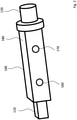
- FIG 2 shows an external perspective view of an embodiment of a device 100 for communication with a vacuum device, as in FIG 1 shown.
- the device 100 has, as in this 2 to see a housing element 180, in which the first interface element 110 and the second interface element 120 are integrated.
- the status indication element 160 and the operating element 170 are also integrated into the housing element 180.
- the device 100 has particularly compact dimensions, for example the device 100 is less than 10 cm long, less than 5 cm high and less than 5 cm wide. In particular, the device 100 is less than 5 cm long, less than 2 cm high and less than 2 cm wide. This results in particularly good mobility of the device 100.
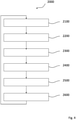
- FIG. 10 shows a flowchart of an embodiment of a method 1000 for communicating with a vacuum device.
- the method 1000 begins with step 1100, in which a device for communication with a vacuum device is provided. This is in particular a device as in the 1 and/or 2 shown.
- the device has a first interface element, a second interface element, a memory element and a processor element.
- the device is connected to a communication device, either wirelessly or wired.
- step 1300 data are provided by the communication device to the storage element via the first interface element.
- step 1400 the device is disconnected from the communication device.
- the device is connected to the vacuum device, either wirelessly or by wire.
- step 1600 data are provided from the storage element to the vacuum device via the second interface element.
- step 1600 the method ends and can start again at step 1100.
- the method 2000 begins with step 2100, in which a device for communication with a vacuum device is provided.
- a device for communication with a vacuum device is provided.
- This is in particular a device as in the 1 and/or 2 shown.
- the device has a first interface element, a second interface element, a memory element and a processor element.
- the device is connected to the vacuum device, either wirelessly or wired.
- step 2300 data from the vacuum device are provided to the storage element via the second interface element.
- step 2400 the device is separated from the vacuum device.
- the device is connected to a communication device, either wirelessly or wired.
- step 2600 data are provided from the storage element to the communication device via the first interface element.
- step 2600 the method ends and can start again at step 2100.
- step 2600 can be executed before, after or at the same time as step 1300 .
- step 2300 can also be executed before, after or at the same time as step 1600 .
Landscapes
- Engineering & Computer Science (AREA)
- Physics & Mathematics (AREA)
- General Physics & Mathematics (AREA)
- Mechanical Engineering (AREA)
- General Engineering & Computer Science (AREA)
- Computer Networks & Wireless Communication (AREA)
- Compressors, Vaccum Pumps And Other Relevant Systems (AREA)
- Communication Cables (AREA)
- Manipulator (AREA)
- Electric Cable Installation (AREA)
- Telephone Function (AREA)
Abstract
Description
- Die Erfindung betrifft eine Vorrichtung und ein Verfahren zur Kommunikation mit einem Vakuumgerät.
- Vorrichtungen zur Kommunikation mit Industriekomponenten, wie beispielsweise Vakuumgeräten, sind allgemein bekannt.
- Es ist daher eine Aufgabe der vorliegenden Erfindung, eine verbesserte Vorrichtung und ein verbessertes Verfahren zur Kommunikation mit einem Vakuumgerät bereitzustellen.
- Diese Aufgabe wird gelöst durch eine Vorrichtung zur Kommunikation mit einem Vakuumgerät, umfassend ein erstes Schnittstellenelement, das ausgebildet ist, mit einem von der Vorrichtung getrennt ausgebildeten Kommunikationsgerät zu kommunizieren, ein zweites Schnittstellenelement, das ausgebildet ist, mit dem Vakuumgerät zu kommunizieren, ein Speicherelement und ein Prozessorelement, das ausgebildet ist, Daten von dem Kommunikationsgerät über das erste Schnittstellenelement an das Speicherelement bereitzustellen und Daten von dem Speicherelement über das zweite Schnittstellenelement an das Vakuumgerät bereitzustellen. Alternativ oder zusätzlich ist das Prozessorelement ausgebildet, Daten von dem Vakuumgerät über das zweite Schnittstellenelement an das Speicherelement bereitzustellen und Daten von dem Speicherelement über das erste Schnittstellenelement an das Kommunikationsgerät bereitzustellen.
- Ein Vakuumgerät ist ein Gerät oder eine Vorrichtung, die im Zusammenhang mit einer Vakuumanwendung, insbesondere einem Vakuumerzeugungsgerät, das auch Vakuumpumpe genannt werden kann, verwendet wird. Beispielsweise ist ein Vakuumgerät eine Komponente einer Vakuumpumpe, insbesondere einer Drehschieberpumpe, einer Membranpumpe, einer Scrollpumpe, einer Schraubenpumpe, einer Wälzkolbenpumpe oder einer Turbomolekularpumpe.
- Die erfindungsgemäße Vorrichtung umfasst ein erstes Schnittstellenelement. Das erste Schnittstellenelement dient der Kommunikation mit einem Kommunikationsgerät, insbesondere über ein erstes Kommunikationsprotokoll. Ein Kommunikationsgerät ist ein Gerät oder eine Vorrichtung, die von der erfindungsgemäßen Vorrichtung getrennt ausgebildet ist. Das Kommunikationsgerät kann beispielsweise ein handelsüblicher PC oder Laptop, ein Smartphone oder ein Tablet sein, das eine Kommunikationsschnittstelle aufweist.
- Die erfindungsgemäße Vorrichtung umfasst weiter ein zweites Schnittstellenelement. Das zweite Schnittstellenelement dient der Kommunikation mit dem Vakuumgerät, insbesondere über ein zweites Kommunikationsprotokoll. Das zweite Kommunikationsprotokoll, unter dem die erfindungsgemäße Vorrichtung über das zweite Schnittstellenelement kommuniziert, kann das gleiche Kommunikationsprotokoll sein wie das erste Kommunikationsprotokoll. Insbesondere ist das zweite Kommunikationsprotokoll jedoch von dem ersten Kommunikationsprotokoll verschieden.
- Die erfindungsgemäße Vorrichtung umfasst weiter ein Speicherelement. Das Speicherelement umfasst einen Speicher, insbesondere einen nichtflüchtigen Speicher, der auch persistenter Speicher oder Dauerspeicher genannt werden kann, wie beispielsweise einen Flash-Speicher, insbesondere einen NAND-Speicher, einen EEPROM-Speicher und/oder einen SSD-Speicher. Alternativ oder zusätzlich kann das Speicherelement auch einen flüchtigen Speicher umfassen, wie beispielsweise einen RAM-Speicher, insbesondere einen DRAM-Speicher oder einen SRAM-Speicher.
- Die erfindungsgemäße Vorrichtung umfasst auch ein Prozessorelement. Das Prozessorelement kann dabei ausgebildet sein, Daten von dem Kommunikationsgerät über das erste Schnittstellenelement an das Speicherelement bereitzustellen und Daten von dem Speicherelement über das zweite Schnittstellenelement an das Vakuumgerät bereitzustellen. Diese Art von Bereitstellung kann Insbesondere als Sendekanal, Hinkanal oder Uploadkanal bezeichnet werden.
- Das Prozessorelement kann alternativ oder zusätzlich ausgebildet sein, Daten von dem Vakuumgerät über das zweite Schnittstellenelement an das Speicherelement bereitzustellen und Daten von dem Speicherelement über das erste Schnittstellenelement an das Kommunikationsgerät bereitzustellen. Diese Art von Bereitstellung kann insbesondere als Empfangskanal, Rückkanal oder Downloadkanal bezeichnet werden.
- Daten meint vorliegend insbesondere einen Datenstrom, beispielsweise eine oder mehrere Dateien oder Informationen. In der einfachsten Form bezeichnet Daten im generischen Plural eine logische Eins oder eine logische Null.
- Bereitstellen meint vorliegend insbesondere ein Kopieren, Ausschneiden und/oder Einfügen von Daten, insbesondere Dateien. Dabei kann das Bereitstellen auf Initiative des Kommunikationsgeräts, des Vakuumgeräts und/oder der erfindungsgemäßen Vorrichtung selbst erfolgen.
- Ein Bereitstellen umfasst dabei beispielsweise ein Lesen von Daten von dem Kommunikationsgerät und ein Schreiben von Daten auf das Speicherelement. Ebenso umfasst ein Bereitstellen ein Lesen von Daten von dem Speicherelement und ein Schreiben von Daten auf das Vakuumgerät.
- Alternativ oder zusätzlich umfasst das Bereitstellen ein Lesen von Daten von dem Vakuumgerät und ein Schreiben von Daten auf das Speicherelement. Ebenso umfasst ein Bereitstellen ein Lesen von Daten von dem Speicherelement und ein Schreiben von Daten auf das Kommunikationsgerät.
- Beispielsweise kann das Bereitstellen der Daten von dem Kommunikationsgerät an das Speicherelement der erfindungsgemäßen Vorrichtung und das Bereitstellen der Daten von dem Speicherelement der erfindungsgemäßen Vorrichtung an das Vakuumgerät von dem Kommunikationsgerät, der erfindungsgemäßen Vorrichtung selbst oder dem Vakuumgerät veranlasst werden.
- Wieder beispielsweise kann das Bereitstellen der Daten von dem Vakuumgerät an das Speicherelement der erfindungsgemäßen Vorrichtung und das Bereitstellen der Daten von dem Speicherelement der erfindungsgemäßen Vorrichtung an das Kommunikationsgerät von dem Kommunikationsgerät, der erfindungsgemäßen Vorrichtung selbst oder dem Vakuumgerät veranlasst werden.
- Das Bereitstellen kann auch als Bereitstellungsvorgang bezeichnet werden.
- Das Speicherelement dient dabei insbesondere als Zwischenspeicher, um die Daten von dem Kommunikationsgerät und/oder die Daten von dem Vakuumgerät für eine weitere Bereitstellung an das jeweils andere Gerät zwischen zu speichern. Das Speicherelement kann auch dazu dienen, den Code, den der Prozessor zur Durchführung seiner Funktionen ausführt, zu speichern.
- Dateien, die insbesondere von dem Kommunikationsgerät über die erfindungsgemäße Vorrichtung an das Vakuumgerät bereitgestellt werden, sind beispielsweise Updates, insbesondere Software- oder Firmware-Updates, Funktionsfreischaltungen oder zu verwendende Parameterinformationen für das Vakuumgerät.
- Dateien, die insbesondere von dem Vakuumgerät über die erfindungsgemäße Vorrichtung an das Kommunikationsgerät bereitgestellt werden, sind beispielsweise Informationen über das Vakuumgerät, beispielsweise eine Software-, Hardware und/oder Firmware-Version, ein in dem Vakuumgerät verbauter Gerätetyp, ein verwendetes Zubehör oder eine derzeit in dem Vakuumgerät eingestellte Parameterinformation.
- Durch die erfindungsgemäße Vorrichtung wird eine besonders einfache Kommunikation zwischen einem Kommunikationsgerät und einem Vakuumgerät ermöglicht. Insbesondere können mit der erfindungsgemäßen Vorrichtung Informationen auf das Vakuumgerät gespielt werden und/oder Informationen von dem Vakuumgerät abgerufen werden. Insbesondere kann durch die erfindungsgemäße Vorrichtung auf ein speziellen Konfigurationsgerät, auf die Installation von speziellen Treibern und/oder das Bereitstellen von speziellen Schnittstellen auf einem handelsüblichen Laptop oder Smartphone verzichtet werden. Die erfindungsgemäße Vorrichtung ermöglicht es somit, mittels handelsüblicher Komponenten mit Vakuumgeräten in Verbindung zu treten.
- In einer Ausführungsform ist die Vorrichtung von dem Vakuumgerät getrennt ausgebildet.
- In dieser Ausführungsform ist die erfindungsgemäße Vorrichtung eine eigenständige Vorrichtung, die sowohl von dem Kommunikationsgerät als auch von dem Vakuumgerät getrennt ausgebildet ist. Getrennt meint vorliegend, dass die Vorrichtung keine gemeinsamen Bauteile mit dem Kommunikationsgerät oder dem Vakuumgerät aufweist und/oder nicht räumlich mit dem Kommunikationsgerät oder dem Vakuumgerät verbunden ist.
- Dadurch wird eine mobile Vorrichtung ermöglicht, die auf einfache Weise gehandhabt werden und die insbesondere eine Person mit sich führen kann.
- In einer alternativen Ausführungsform ist die Vorrichtung in das Vakuumgerät integriert.
- Integriert meint vorliegend, dass die erfindungsgemäße Vorrichtung gemeinsame Bauteile, wie beispielsweise ein Gehäuse, mit dem Vakuumgerät aufweist.
- Dadurch wird eine besonders kompakte Anordnung aus einem Vakuumgerät und einer erfindungsgemäßen Vorrichtung erreicht.
- Die Erfindung betrifft somit auch ein Vakuumgerät mit einer integrierten erfindungsgemäßen Vorrichtung.
- In einer Ausführungsform umfasst das erste Schnittstellenelement eine kabelgebundene Schnittstelle.
- Kabelgebunden meint vorliegend drahtgebunden. Dabei weist das erste Schnittstellenelement eine zu dem Kommunikationsgerät passende, kabelgebundene Schnittelle auf.
- Dadurch, dass das erste Schnittstellenelement kabelgebunden ausgebildet ist, wird eine besonders störungsfreie und schnelle Kommunikation mit dem Kommunikationsgerät ermöglicht.
- In einer Ausführungsform ist das erste Schnittstellenelement ausgebildet, unter dem USB-Standard mit dem Kommunikationsgerät zu kommunizieren.
- Alternativ oder zusätzlich ist das erste Schnittstellenelement ausgebildet, unter dem Ethernet-Standard mit dem Kommunikationsgerät zu kommunizieren.
- Standard meint vorliegend die Steckerform und/oder das Übertragungsprotokoll. Beispielsweise ist das erste Schnittstellenelement als USB-A-, USB-B- und/oder USB-C-Stecker ausgebildet. Wieder beispielsweise ist das erste Schnittstellenelement als RJ-45-Stecker ausgebildet. Beispielsweise bedient das erste Schnittstellenelement ein USB-1.1-, USB-2.0 und/oder USB 3.2-Protokoll. Wieder beispielsweise bedient das erste Schnittstellenelement 10-Mbit-Ethernet, 100-Mbit-Ethernet und/oder Gigabit-Ethernet.
- Das erste Schnittstellenelement kann auch zwei oder mehr gleiche oder verschiedene Steckerformen und/oder Protokolle aufweisen bzw. diese bedienen. Beispielsweise kann das erste Schnittstellenelement sowohl einen USB-C-Stecker als auch einen RJ-45 Stecker aufweisen und/oder sich dessen Übertragungsprotokoll unterwerfen.
- Dadurch, dass das erste Schnittstellenelement einem USB- und/oder Ethernet-Standard unterworfen ist, wird eine besonders hohe Konnektivität mit weit verbreiteten Standards, Protokollen und/oder Steckerformen von Kommunikationsgeräten ermöglicht. Die erfindungsgemäße Vorrichtung kann so mit besonders vielen verschiedenen Kommunikationsgeräten einfach kabelgebunden kommunizieren.
- In einer Ausführungsform umfasst das erste Schnittstellenelement eine drahtlose Schnittstelle.
- Drahtlos meint vorliegend kabellos und nicht kabelgebunden. Dabei weist das erste Schnittstellenelement eine zu dem Kommunikationsgerät passende, drahtlose Schnittelle auf.
- Dabei kann das erste Schnittstellenelement eine drahtlose, eine drahtgebundene oder eine drahtlose und eine drahtgebundene Schnittstelle aufweisen.
- Dadurch, dass das erste Schnittstellenelement drahtlos ausgebildet ist, wird eine besonders flexible Kommunikation mit dem Kommunikationsgerät ermöglicht.
- In einer Ausführungsform ist das erste Schnittstellenelement ausgebildet, unter dem Bluetooth-Standard mit dem Kommunikationsgerät zu kommunizieren.
- Alternativ oder zusätzlich ist das erste Schnittstellenelement ausgebildet, unter dem WiFi-Standard mit dem Kommunikationsgerät zu kommunizieren.
- Beispielsweise bedient das erste Schnittstellenelement ein Bluetooth-3.0-, Bluetooth 4.0- und/oder Bluetooth-5.0-Protokoll. Wieder beispielsweise bedient das erste Schnittstellenelement 10-Mbit-Ethernet, 100-Mbit-Ethernet und/oder Gigabit-Ethernet.
- Dadurch, dass das erste Schnittstellenelement einem Bluetooth- und/oder WiFi-Standard unterworfen ist, wird eine besonders hohe Konnektivität mit weit verbreiteten Standards oder Protokollen von Kommunikationsgeräten ermöglicht. Die erfindungsgemäße Vorrichtung kann so mit besonders vielen verschiedenen Kommunikationsgeräten einfach drahtlos kommunizieren.
- In einer Ausführungsform umfasst das zweite Schnittstellenelement eine kabelgebundene Schnittstelle. Kabelgebunden meint vorliegend drahtgebunden. Dabei weist das zweite Schnittstellenelement eine zu dem Vakuumgerät passende, kabelgebundene Schnittelle auf.
- Dadurch, dass das zweite Schnittstellenelement kabelgebunden ausgebildet ist, wird eine besonders störungsfreie und schnelle Kommunikation mit dem Vakuumgerät ermöglicht.
- In einer Ausführungsform umfasst das zweite Schnittstellenelement ein Schraubgewinde.
- Das Schraubgewinde kann entweder als Innengewinde oder als Außengewinde ausgebildet sein. Insbesondere kann es sich bei dem zweiten Schnittstellenelement um einen M5, M8 oder M12 Stecker mit Schraubgewinde handeln.
- Dadurch, dass das zweite Schnittstellenelement ein Schraubgewinde umfasst, wird eine besonders zugfeste und sichere Kommunikation mit dem Vakuumgerät ermöglicht.
- In einer Ausführungsform ist das zweite Schnittstellenelement ausgebildet, unter dem CAN-Bus-Standard mit dem Vakuumgerät zu kommunizieren. Der CAN-Bus-Standard umfasst vorliegend insbesondere Standards unter dem ISO 11898- und/oder dem SAE J2284-Standard.
- Alternativ oder zusätzlich ist das zweite Schnittstellenelement ausgebildet, unter dem EIA-485-Standard mit dem Vakuumgerät zu kommunizieren.
- Dadurch, dass das zweite Schnittstellenelement einem CAN-Bus- und/oder EIA-485-Standard unterworfen ist, wird eine besonders hohe Konnektivität mit weit verbreiteten Standards, Protokollen und/oder Steckerformen von Vakuumgeräten ermöglicht. Die erfindungsgemäße Vorrichtung kann so mit besonders vielen verschiedenen Vakuumgeräten einfach kommunizieren.
- In einer Ausführungsform ist das zweite Schnittstellenelement ausgebildet, unter dem Ethernet-Standard mit dem Vakuumgerät zu kommunizieren.
- Standard meint vorliegend die Steckerform und/oder das Übertragungsprotokoll. Beispielsweise ist das zweite Schnittstellenelement als RJ-45-Stecker ausgebildet.
- Beispielsweise bedient das zweite Schnittstellenelement 10-Mbit-Ethernet, 100-Mbit-Ethernet und/oder Gigabit-Ethernet.
- Dadurch, dass das zweite Schnittstellenelement einem Ethernet-Standard unterworfen ist, wird eine besonders hohe Konnektivität mit weit verbreiteten Standards, Protokollen und/oder Steckerformen mit Vakuumgeräten ermöglicht. Die erfindungsgemäße Vorrichtung kann so mit besonders vielen verschiedenen Vakuumgeräten einfach kabelgebunden kommunizieren.
- In einer Ausführungsform umfasst das zweite Schnittstellenelement eine drahtlose Schnittstelle.
- Drahtlos meint vorliegend kabellos und nicht kabelgebunden. Dabei weist das erste Schnittstellenelement eine zu dem Vakuumgerät passende, drahtlose Schnittelle auf.
- Dabei kann das zweite Schnittstellenelement eine drahtlose, eine drahtgebundene oder eine drahtlose und eine drahtgebundene Schnittstelle aufweisen.
- Dadurch, dass das zweite Schnittstellenelement drahtlos ausgebildet ist, wird eine besonders flexible Kommunikation mit dem Vakuumgerät ermöglicht.
- In einer Ausführungsform ist das zweite Schnittstellenelement ausgebildet, unter dem Bluetooth-Standard mit dem Vakuumgerät zu kommunizieren.
- Alternativ oder zusätzlich ist das zweite Schnittstellenelement ausgebildet, unter dem WiFi-Standard mit dem Vakuumgerät zu kommunizieren.
- Beispielsweise bedient das zweite Schnittstellenelement ein Bluetooth-3.0-, Bluetooth 4.0- und/oder Bluetooth-5.0-Protokoll. Wieder beispielsweise bedient das erste Schnittstellenelement 10-Mbit-Ethernet, 100-Mbit-Ethernet und/oder Gigabit-Ethernet.
- Dadurch, dass das zweite Schnittstellenelement einem Bluetooth- und/oder WiFi-Standard unterworfen ist, wird eine besonders hohe Konnektivität mit weit verbreiteten Standards oder Protokollen mit Vakuumgeräten ermöglicht. Die erfindungsgemäße Vorrichtung kann so mit besonders vielen verschiedenen Vakuumgeräten einfach drahtlos kommunizieren.
- In einer Ausführungsform ist das Prozessorelement weiter ausgebildet, die Daten von dem Kommunikationsgerät über das erste Schnittstellenelement an das Speicherelement bereitzustellen, nachdem das erste Schnittstellenelement mit dem Kommunikationsgerät verbunden wurde, und die Daten von dem Speicherelement über das zweite Schnittstellenelement an das Vakuumgerät bereitzustellen, nachdem das erste Schnittstellenelement von dem Kommunikationsgerät getrennt wurde.
- Verbunden bedeutet vorliegend, dass eine Kommunikationsverbindung, drahtlos und/oder drahtgebunden existiert. Getrennt bedeutet im Gegenzug, dass eine Kommunikationsverbindung, drahtlos und/oder drahtgebunden, nicht existiert.
- Beispielsweise wird die erfindungsgemäße Vorrichtung zunächst mit dem Kommunikationsgerät verbunden, beispielsweise durch Einstecken eines Steckers in die erfindungsgemäße Vorrichtung und in das Kommunikationsgerät oder durch drahtloses Verbinden, und, nach Herstellung der drahtgebundenen oder drahtlosen Verbindung, werden dann Daten von dem Kommunikationsgerät über das erste Schnittstellenelement an das Speicherelement der erfindungsgemäßen Vorrichtung bereitgestellt. Dies kann beispielsweise in einem Raum erfolgen, in dem das Vakuumgerät nicht angeordnet ist, wie einem Büro oder einem Serverraum.
- In einem nächsten Schritt kann dann, insbesondere sobald die Bereitstellung der Daten von dem Kommunikationsgerät an das Speicherelement abgeschlossen ist, die erfindungsgemäße Vorrichtung von dem Kommunikationsgerät getrennt werden, beispielsweise durch Abziehen des Steckers oder durch Entfernen außerhalb einer Reichweite der drahtlosen Verbindung und zu dem Vakuumgerät gebracht werden. Dort kann die erfindungsgemäße Vorrichtung dann über das zweite Schnittstellenelement mit dem Vakuumgerät verbunden werden und Daten hierüber von dem Speicherelement an das Vakuumgerät übertragen werden.
- Das Prozessorelement kann auch weiter ausgebildet sein, die Daten von dem Vakuumgerät über das zweite Schnittstellenelement an das Speicherelement bereitzustellen, nachdem das zweite Schnittstellenelement mit dem Vakuumgerät verbunden wurde, und die Daten von dem Speicherelement über das erste Schnittstellenelement an das Kommunikationsgerät bereitzustellen, nachdem das zweite Schnittstellenelement von dem Vakuumgerät getrennt wurde.
- So ist es möglich, dass die erfindungsgemäße Vorrichtung zunächst mit dem Vakuumgerät durch Einstecken eines Steckers in die erfindungsgemäße Vorrichtung und in das Vakuumgerät verbunden wird, und nach Herstellung der drahtgebundenen Verbindung sodann Daten von dem Vakuumgerät über das zweite Schnittstellenelement an das Speicherelement der erfindungsgemäßen Vorrichtung bereitgestellt werden. Dies kann beispielsweise in einem Raum erfolgen, in dem das Kommunikationsgerät nicht angeordnet ist, wie einem Arbeits- oder Maschinenraum, in welchem eine jeweilige, das Vakuumgerät einbeziehende Vakuumanwendung durchgeführt wird.
- In einem nächsten Schritt kann dann, insbesondere sobald die Bereitstellung der Daten von dem Vakuumgerät an das Speicherelement abgeschlossen ist, die erfindungsgemäße Vorrichtung von dem Vakuumgerät getrennt werden, beispielsweise durch Abziehen des Steckers, und zu dem Kommunikationsgerät gebracht werden. Dort kann die erfindungsgemäße Vorrichtung dann über das erste Schnittstellenelement mit dem Kommunikationsgerät verbunden werden und Daten hierüber von dem Speicherelement an das Kommunikationsgerät bereitgestellt werden.
- Somit ist es möglich, Daten von dem Kommunikationsgerät auf das Vakuumgerät und/oder von dem Vakuumgerät auf das Kommunikationsgerät zu übertragen, ohne dass das Kommunikationsgerät und das Vakuumgerät direkt miteinander verbunden sein müssen oder sich in der Nähe von einander befinden müssen. Es wird somit eine besonders flexible Vorrichtung erreicht.
- In einer Ausführungsform ist das Prozessorelement weiter ausgebildet, eine Datei basierend auf den Daten, die auf dem Speicherelement gespeichert sind, zu erstellen und Daten basierend auf der erstellten Datei oder die Datei selbst über das erste Schnittstellenelement an das Kommunikationsgerät bereitzustellen.
- Alternativ oder zusätzlich ist das Prozessorelement weiter ausgebildet, Daten basierend auf der erstellten Datei oder die Datei selbst über das zweite Schnittstellenelement an das Vakuumgerät bereitzustellen.
- Dabei ist das Prozessorelement ausgebildet, eine Datei basierend sowohl auf Daten, die zuvor von dem Kommunikationsgerät auf das Speicherelement bereitgestellt wurden, als auch basierend auf Daten, die zuvor von dem Kommunikationsgerät auf das Speicherelement bereitgestellt wurden, zu erstellen.
- Beispielsweise ist das Prozessorelement ausgebildet, basierend auf Daten, die von dem Vakuumgerät bereitgestellt wurden, und unter Hinzunahme von Daten, die von dem Kommunikationsgerät bereitgestellt wurden, einen Parametersatz für das Vakuumgerät zu erstellen. Beispielsweise kann das Prozessorelement zunächst den aktuellen Parameterstand von dem Vakuumgerät abrufen und basierend auf neuen Parameterinformationen, die es von dem Kommunikationsgerät abgerufen hat, anzupassen. Dieser neue Parameterstand kann dann an das Vakuumgerät bereitgestellt werden, um den dort gespeicherten Parameterstand zu ersetzen. Im Gegenzug kann das Prozessorelement den erfolgreich angepassten Parameterstand an das Kommunikationsgerät zurückmelden.
- Somit wird eine besonders autarke erfindungsgemäße Vorrichtung ermöglicht. Insbesondere ist es so möglich, auf eine manuelle Dateierstellung und -sicherung auf dem Kommunikationsgerät zu verzichten.
- In einer Ausführungsform ist das Prozessorelement weiter ausgebildet, eine Datei auf dem Speicherelement zu erstellen, die Datei basierend auf Daten, die auf dem Speicherelement gespeichert sind, zu ändern und Daten basierend auf der geänderten Datei oder die geänderte Datei selbst über das erste Schnittstellenelement an das Kommunikationsgerät bereitzustellen.
- Alternativ oder zusätzlich ist das Prozessorelement weiter ausgebildet, Daten basierend auf der geänderten Datei oder die geänderte Datei selbst über das zweite Schnittstellenelement an das Vakuumgerät bereitzustellen.
- Beispielsweise ist das Prozessorelement ausgebildet, eine Rohdatei, beispielsweise in dem für das Vakuumgerät korrekten bzw. lesbaren Format, zu erstellen und diese dann mit Daten, die zuvor von dem Kommunikationsgerät und/oder von dem Vakuumgerät an das Speicherelement bereitgestellt wurden, zu füllen. Diese gefüllte Datei kann dann an das Vakuumgerät bereitgestellt werden und optional auch an das Kommunikationsgerät, beispielsweise zu Zwecken der Sicherung und/oder Überprüfung.
- Alternativ oder zusätzlich ist das Prozessorelement weiter ausgebildet, die geänderte Datei über das zweite Schnittstellenelement an das Vakuumgerät bereitzustellen.
- Beispielsweise ist das Prozessorelement ausgebildet, eine Rohdatei, beispielsweise in dem für das Kommunikationsgerät korrekten bzw. lesbaren Format, zu erstellen und diese dann mit Daten, die zuvor von dem Kommunikationsgerät und/oder von dem Vakuumgerät an das Speicherelement bereitgestellt wurden, zu füllen. Diese gefüllte Datei kann dann an das Kommunikationsgerät bereitgestellt werden.
- Somit wird eine besonders autarke erfindungsgemäße Vorrichtung ermöglicht. Insbesondere ist es so möglich, Dateien für das Vakuumgerät und/oder das Kommunikationsgerät direkt durch das Prozessorelement erstellen und anpassen zu lassen.
- In einer Ausführungsform ist das Prozessorelement weiter ausgebildet, eine Auswertung basierend auf den Daten, die auf dem Speicherelement gespeichert sind, zu erstellen und Daten basierend auf der Auswertung oder die Auswertung selbst über das erste Schnittstellenelement an das Kommunikationsgerät bereitzustellen.
- Alternativ oder zusätzlich ist das Prozessorelement weiter ausgebildet, Daten basierend auf der Auswertung oder die Auswertung selbst über das zweite Schnittstellenelement an das Vakuumgerät bereitzustellen.
- Beispielsweise ist das Prozessorelement ausgebildet, Rohdaten wie Betriebskennzahlen von dem Vakuumgerät abzurufen und diese statistisch auszuwerten, um diese Auswertung an das Kommunikationsgerät bereitzustellen.
- Somit wird eine besonders autarke erfindungsgemäße Vorrichtung ermöglicht. Insbesondere ist es so möglich, Auswertungen des Vakuumgeräts direkt durch das Prozessorelement erstellen zu lassen.
- In einer Ausführungsform ist das Prozessorelement weiter ausgebildet, eine Anzahl an Bereitstellungsvorgängen von dem Speicherelement an das Vakuumgerät zu erfassen und weitere Bereitstellungsvorgänge zu verhindern, wenn eine vorbestimmte Anzahl überschritten ist.
- Alternativ oder zusätzlich ist das Prozessorelement weiter ausgebildet, eine Anzahl an Bereitstellungsvorgängen von dem Kommunikationsgerät an das Speicherelement zu erfassen und weitere Bereitstellungsvorgänge zu verhindern, wenn eine vorbestimmte Anzahl überschritten ist.
- Beispielsweise ist auf dem Speicherelement vorgegeben, dass bestimmte Daten, wie beispielsweise Updates, nur in einer begrenzten Anzahl, beispielsweise fünf Mal, von einem Kommunikationsgerät und/oder auf ein Vakuumgerät kopiert werden dürfen. Dies kann beispielsweise dann der Fall sein, wenn der Benutzer oder Betreiber von mehreren Vakuumgeräten lediglich eine begrenzte Anzahl an Updates, wieder beispielsweise fünf Updates, käuflich erworben hat. Die vorbestimmte Anzahl kann dabei insbesondere verschlüsselt auf dem Speicherelement vorliegen, sodass sie ein Benutzer oder Betreiber nicht einsehen kann. Die vorbestimmte Anzahl kann weiter insbesondere schreibgeschützt und/oder persistent auf dem Speicherelement vorliegen, sodass ein Benutzer oder Betreiber sie nicht ändern kann.
- Es wird somit eine besonders integre Vorrichtung bereitgestellt. Insbesondere kann somit verhindert werden, dass der Benutzer oder Betreiber mehr als die bezahlte Anzahl an Updates auf Vakuumpumpen spielt bzw. installiert.
- In einer Ausführungsform ist das Prozessorelement weiter ausgebildet, einen Schlüssels der Vorrichtung mit einem in einer der Daten vorhandenen Schlüssel zu vergleichen und einen Bereitstellungsvorgang von dem Speicherelement an das Vakuumgerät zu verhindern, wenn der Schlüssel der Vorrichtung nicht mit dem in einer der Daten vorhandenen Schlüssel übereinstimmt.
- Ein Schlüssel meint vorliegend insbesondere eine Zahlen- und/oder Buchstabenkombination. Der Schlüssel der Vorrichtung und der Schlüssel des Vakuumgeräts müssen dabei übereinstimmen, damit ein Bereitstellungsvorgang initiiert bzw. ausgeführt werden kann.
- Der Schlüssel der Vorrichtung kann dabei von dem Kommunikationsgerät an das Speicherelement der Vorrichtung bereitgestellt werden oder in der Vorrichtung, insbesondere persistent, gespeichert sein. Der Schlüssel des Vakuumgeräts kann dabei von dem Vakuumgerät an das Speicherelement der Vorrichtung bereitgestellt werden und so mit dem Schlüssel der Vorrichtung verglichen werden.
- Somit wird eine besonders integre Vorrichtung ermöglicht. Insbesondere wird so ermöglicht, dass Daten nur dann an das Vakuumgerät bereitgestellt werden, wenn diese hierfür freigegeben sind.
- In einer Ausführungsform ist das Prozessorelement weiter ausgebildet, eine Eigenschaft des Vakuumgeräts zu erfassen und einen Bereitstellungsvorgang von dem Speicherelement an das Vakuumgerät nur dann durchzuführen, wenn die Eigenschaft von einer vorbestimmten Eigenschaft abweicht.
- Eine Eigenschaft des Vakuumgeräts ist beispielsweise eine Software-, Hardware- und/oder Firmware-Version, ein in dem Vakuumgerät verbauter Gerätetyp, ein verwendetes Zubehör oder eine derzeit in dem Vakuumgerät eingestellte Parameterinformation. Dies kann dann mit einer vorbestimmten Eigenschaft verglichen werden. Die vorbestimmte Eigenschaft kann dabei von dem Kommunikationsgerät an das Speicherelement der Vorrichtung bereitgestellt werden oder in der Vorrichtung, insbesondere persistent, gespeichert sein.
- Somit wird eine besonders integre Vorrichtung ermöglicht. Insbesondere wird so ermöglicht, dass ein Update nur dann installiert wird, wenn eine installierte Version, ein verbauter Gerätetyp oder eine derzeit in dem Vakuumgerät eingestellte Parameterinformation mit diesem Update auch kompatibel bzw. dafür geeignet ist.
- In einer Ausführungsform ist das Prozessorelement weiter ausgebildet, Daten von dem Speicherelement über ein drittes Schnittstellenelement des Kommunikationsgeräts an ein von dem Kommunikationsgerät entferntes Auswertungsgerät bereitzustellen.
- Dazu weist das Kommunikationsgerät ein weiteres Schnittstellenelement auf, das ausgebildet ist, mit einem Auswertungsgerät zu kommunizieren. Das Auswertungsgerät ist dabei von dem Kommunikationsgerät und insbesondere auch von der erfindungsgemäßen Vorrichtung und/oder dem Vakuumgerät entfernt.
- Entfernt meint in diesem Kontext räumlich entfernt, insbesondere mindestens mehrere Meter, weiter insbesondere Kilometer. Das Auswertungsgerät ist beispielsweise ein entfernter Server, der in einem Rechenzentrum steht.
- Das Prozessorelement ist dazu ausgebildet, sich Zugang zu dem dritten Schnittstellenelement des Kommunikationsgeräts zu verschaffen, insbesondere über das erste Schnittstellenelement, weiter insbesondere nachdem das erste Schnittstellenelement mit dem Kommunikationsgerät verbunden wurde, und dieses dritte Schnittstellenelement zur Kommunikation mit dem entfernten Auswertungsgerät zu nutzen.
- Dazu ist das Prozessorelement ausgebildet, Daten, die auf dem Speicherelement der erfindungsgemäßen Vorrichtung gespeichert sind, an das entfernte Auswertungsgerät bereitzustellen. Die Daten können dabei Daten sein, die von dem Vakuumgerät an das Speicherelement bereitgestellt wurden, und/oder Daten, die von dem Kommunikationsgerät an das Speicherelement bereitgestellt wurden. Die Daten können auch eine von dem Prozessorelement auf dem Speicherelement erstellte Datei und/oder Auswertung sein und/oder eine von dem Prozessorelement auf dem Speicherelement geänderte Datei. Das Kommunikationselement fungiert dabei insbesondere als Proxy.
- Somit wird eine besonders kommunikative Vorrichtung ermöglicht. Insbesondere ist es so möglich, das Vakuumgerät fernzuwarten und Auswertungen an den Hersteller des Vakuumgeräts bereitzustellen, insbesondere ohne dass der Betreiber des Vakuumgeräts dabei eingreifen kann.
- In einer Ausführungsform ist das Prozessorelement weiter ausgebildet, Daten von dem Auswertungsgerät über das dritte Schnittstellenelement an das Speicherelement bereitzustellen.
- Beispielsweise kann es sich bei den Daten um Daten handeln, die an dem entfernten Ort auf dem Auswertungsgerät erstellt wurden, insbesondere unter Berücksichtigung von beispielsweise zuvor von dem Prozessorelement an das Auswertungsgerät bereitgestellten Daten, wie insbesondere einer Eigenschaft des Vakuumgeräts, und so für das Vakuumgerät konfektioniert sind.
- Somit wird eine besonders kommunikative Vorrichtung ermöglicht. Insbesondere ist es so möglich, das Vakuumgerät fernzuwarten und beispielsweise Parametersätze von dem Hersteller des Vakuumgeräts an das Vakuumgerät bereitzustellen, insbesondere ohne dass der Betreiber des Vakuumgeräts dabei eingreifen kann.
- Insbesondere ist das Prozessorelement ausgebildet, die zuvor beschriebenen Funktionen selbsttätig, ohne eine Benutzereingabe durchzuführen oder zu steuern. Beispielsweise kann das Prozessorelement ausgebildet sein, die Funktionen ohne eine Eingabe an dem Kommunikationsgerät, ohne eine Eingabe an der erfindungsgemäßen Vorrichtung und/oder ohne eine Eingabe an dem Vakuumgerät durchzuführen.
- Bei den Funktionen, die das Prozessorelement ohne weitere Benutzereingabe ausführen kann, kann es sich insbesondere um sämtliche zuvor im Rahmen des Prozessorelements beschriebenen Eigenschaften oder Funktionen handeln, sowohl einzeln als auch kollektiv.
- Beispielsweise kann das Prozessorelement ausgebildet sein, Daten von dem Kommunikationsgerät über das erste Schnittstellenelement an das Speicherelement bereitzustellen, Daten von dem Speicherelement über das zweite Schnittstellenelement an das Vakuumgerät bereitzustellen, Daten von dem Vakuumgerät über das zweite Schnittstellenelement an das Speicherelement bereitzustellen und/oder Daten von dem Speicherelement über das erste Schnittstellenelement an das Kommunikationsgerät bereitzustellen, ohne eine Benutzereingabe zu empfangen.
- Weiter beispielsweise kann das Prozessorelement ausgebildet sein, eine Datei basierend auf den Daten, die auf dem Speicherelement gespeichert sind, zu erstellen und/oder die Datei über das erste Schnittstellenelement an das Kommunikationsgerät und/oder über das zweite Schnittstellenelement an das Vakuumgerät bereitzustellen, ohne eine Benutzereingabe zu empfangen.
- Weiter beispielsweise kann das Prozessorelement ausgebildet sein, die erstellte Datei basierend auf den Daten, die auf dem Speicherelement gespeichert sind, vorher zu ändern, ohne eine Benutzereingabe zu empfangen.
- Weiter beispielsweise kann das Prozessorelement ausgebildet sein, eine Auswertung basierend auf den Daten, die auf dem Speicherelement gespeichert sind, zu erstellen und/oder die Auswertung über das erste Schnittstellenelement an das Kommunikationsgerät und/oder über das zweite Schnittstellenelement an das Vakuumgerät bereitzustellen, ohne eine Benutzereingabe zu empfangen.
- Weiter beispielsweise kann das Prozessorelement ausgebildet sein, eine Anzahl an Bereitstellungsvorgängen von dem Speicherelement an das Vakuumgerät und/oder von dem Kommunikationsgerät an das Speicherelement zu erfassen und/oder weitere Bereitstellungsvorgänge zu verhindern, wenn eine vorbestimmte Anzahl überschritten ist, ohne eine Benutzereingabe zu empfangen.
- Weiter beispielsweise kann das Prozessorelement ausgebildet sein, einen Schlüssel der Vorrichtung mit einem in einer der Daten vorhandenen Schlüssel zu vergleichen und/oder einen Bereitstellungsvorgang von dem Speicherelement an das Vakuumgerät zu verhindern, wenn der Schlüssel der Vorrichtung nicht mit dem in einer der Daten vorhandenen Schlüssel übereinstimmt, ohne eine Benutzereingabe zu empfangen.
- Weiter beispielsweise kann das Prozessorelement ausgebildet sein, eine Eigenschaft des Vakuumgeräts zu erfassen und/oder einen Bereitstellungsvorgang von dem Speicherelement an das Vakuumgerät zu verhindern, wenn die Eigenschaft von einer vorbestimmten Eigenschaft abweicht, ohne eine Benutzereingabe zu empfangen.
- Weiter beispielsweise kann das Prozessorelement ausgebildet sein, Daten von dem Speicherelement über ein drittes Schnittstellenelement des Kommunikationsgeräts an ein von dem Kommunikationsgerät entferntes Auswertungsgerät bereitzustellen und/oder Daten von dem Auswertungsgerät über das dritte Schnittstellenelement an das Speicherelement bereitzustellen, ohne eine Benutzereingabe zu empfangen.
- Somit wird eine besonders autarke Vorrichtung ermöglicht. Insbesondere ist es so möglich, dass eine Person, die nicht mit der Technik der Vorrichtung und/oder des Kommunikationsgeräts und insbesondere auch nicht mit der Technik des Vakuumgeräts vertraut ist, dennoch die Vorrichtung einsetzen kann. Insbesondere kann so ein Fachfremder erfolgreich Updates auf das Vakuumgerät spielen und/oder Parameterinformationen abrufen und insbesondere aktualisieren, ohne sich mit dem Vakuumgerät oder der dahinterstehenden Technologie auszukennen.
- Das Prozessorelement kann auch ausgebildet sein, zu erkennen, wenn die Vorrichtung bzw. das erste und/oder zweite Schnittstellenelement mit dem Kommunikationsgerät und/oder dem Vakuumgerät verbunden wird bzw. wenn eine Verbindung erfolgreich hergestellt wurde.
- Insbesondere kann das Prozessorelement ausgebildet sein, in Erwiderung darauf, dass eine Verbindung mit dem Kommunikationsgerät und/oder dem Vakuumgerät erfolgreich hergestellt worden ist, eine Diagnosedatei zu erstellen und diese in dem Speicherelement speichern.
- Alternativ oder zusätzlich kann das Prozessorelement ausgebildet sein, zu erkennen, wenn die Vorrichtung bzw. das erste und/oder zweite Schnittstellenelement von dem Kommunikationsgerät und/oder dem Vakuumgerät getrennt wird bzw. wenn eine Verbindung beendet wurde.
- Insbesondere kann das Prozessorelement ausgebildet sein, in Erwiderung darauf, dass eine Verbindung mit dem Kommunikationsgerät und/oder dem Vakuumgerät getrennt worden ist, eine Fehlerdatei zu erstellen und diese in dem Speicherelement speichern.
- Somit ist, insbesondere im Zusammenhang mit der zuvor beschriebenen selbsttätigen Steuerung einer oder mehrerer Funktionen des Prozessorelements, eine besonders autarke Vorrichtung ermöglicht. Insbesondere können so Funktionen ausgeführt werden, die alternativ eine Benutzereingabe erfordert hätten, weil die Vorrichtung selbst einen Kommunikationsstatus erkennen kann.
- In einer Ausführungsform weist die erfindungsgemäße Vorrichtung ein Statusindikationselement auf.
- Das Statusindikationselement kann beispielsweise eine oder mehrere LEDs umfassen. Dabei ist das Statusindikationselement ausgebildet, einen Status der Vorrichtung anzuzeigen. Beispielsweise kann das Statusindikationselement eine mehrfarbige LED sein oder mehrere verschiedenfarbige LEDs umfassen.
- Ein Status der Vorrichtung umfasst hier insbesondere einen Zustand wie beispielsweise das Durchführen einer oben beschriebenen Funktion und/oder das Abschließen einer oben beschriebenen Funktion. Beispielsweise kann das Statusindikationselement ausgebildet sein, das Durchführen eines Bereitstellungsvorgangs anzuzeigen, beispielsweise durch mehrmaliges Blinken einer LED, und das Abschließen eines Bereitstellungsvorgangs anzuzeigen, beispielsweise durch dauerhaftes Anschalten oder Ausschalten einer LED.
- Insbesondere kann das Statusindikationselement auch ausgebildet sein, eine erfolgreiche Verbindung der Vorrichtung bzw. des ersten und/oder zweiten Schnittstellenelements mit dem Kommunikationsgerät und/oder dem Vakuumgerät und/oder eine Trennung, insbesondere eine sichere Trennung der Vorrichtung bzw. des ersten und/oder zweiten Schnittstellenelements von dem Kommunikationsgerät und/oder dem Vakuumgerät anzuzeigen.
- Auch durch diese Weiterbildung wird die Autarkie der Vorrichtung unterstützt. Somit ist es möglich, dass eine Person, die nicht mit der Technik der Vorrichtung und/oder des Kommunikationsgeräts und insbesondere auch nicht mit der Technik des Vakuumgeräts vertraut ist, die Vorrichtung korrekt und sicher einsetzt, insbesondere die Verbindung der Vorrichtung mit dem Vakuumgerät erst dann wieder manuell trennt, wenn eine bestimmte Funktion beendet ist, beispielsweise ein Updatevorgang abgeschlossen ist.
- In einer Ausführungsform umfasst die Vorrichtung weiter ein Bedienelement, das ausgebildet ist, eine der Funktionen des Prozessorelements zu steuern.
- Ein Bedienelement ist beispielsweise ein Eingabeelement, wie ein oder mehrere Taster oder Knöpfe, die von einem Benutzer betätigt werden können und somit eine Benutzereingabe empfangen können. Weiter beispielsweise kann das Bedienelement als ein Touchscreen ausgebildet sein oder einen solchen umfassen, auf dem ein Benutzer eine Berührungseingabe eingeben kann. In diesem Fall kann die erfindungsgemäße Vorrichtung dem Benutzer auch gleichzeitig Informationen über die auf dem Speicherelement, dem Vakuumgerät und/oder dem Kommunikationsgerät vorhandenen Daten anzeigen. In diesem Fall kann der Touchscreen auch ausgebildet sein, einen Status der Vorrichtung anzuzeigen und somit auch ein zuvor beschriebenes Statusindikationselement umfassen.
- Durch Betätigen eines oder mehrerer Bedienelemente der Vorrichtung kann ein Benutzer so in der Lage sein, einzelne oder sämtliche Funktionen des Prozessorelements zu initiieren oder auch zu beenden.
- Dadurch wird eine besonders interaktive erfindungsgemäße Vorrichtung bereitgestellt. Insbesondere kann ein Benutzer so den Bereitstellungsprozess von dem Kommunikationsgerät auf das Vakuumgerät und/oder von dem Vakuumgerät auf das Kommunikationsgerät aktiv steuern und beeinflussen.
- Die eingangs genannte Aufgabe wird auch gelöst durch ein Verfahren zur Kommunikation mit einem Vakuumgerät, umfassend Bereitstellen einer Ausführungsform einer zuvor beschriebenen Vorrichtung, Bereitstellen von Daten von dem Kommunikationsgerät über das erste Schnittstellenelement an das Speicherelement und Bereitstellen von Daten von dem Speicherelement über das zweite Schnittstellenelement an das Vakuumgerät.
- Alternativ oder zusätzlich umfasst das Verfahren Bereitstellen von Daten von dem Vakuumgerät über das zweite Schnittstellenelement an das Speicherelement und Bereitstellen von Daten von dem Speicherelement über das erste Schnittstellenelement an das Kommunikationsgerät.
- In einer Ausführungsform umfasst das Verfahren Verbinden des ersten Schnittstellenelements mit dem Kommunikationsgerät vor dem Bereitstellen von Daten von dem Kommunikationsgerät über das erste Schnittstellenelement an das Speicherelement und Trennen des ersten Schnittstellenelements von dem Kommunikationsgerät vor dem Bereitstellen von Daten von dem Speicherelement über das zweite Schnittstellenelement an das Vakuumgerät.
- Bezüglich der Ausführungsformen des erfindungsgemäßen Verfahrens und der diesbezüglichen Vorteile wird auch die zuvor genannten Ausführungsformen und deren Vorteile der Vorrichtung verwiesen.
- Ausführungsformen der Erfindung werden nun unter Bezugnahme auf die folgenden Figuren näher erläutert. Es zeigen:
- Fig. 1
- eine schematische Ansicht einer Ausführungsform einer Vorrichtung zur Kommunikation mit einem Vakuumgerät;
- Fig. 2
- eine perspektivische Ansicht einer Ausführungsform einer Vorrichtung zur Kommunikation mit einem Vakuumgerät gemäß
Fig. 1 ; - Fig. 3
- ein Ablaufdiagramm einer Ausführungsform eines Verfahrens zur Kommunikation mit einem Vakuumgerät; und
- Fig. 4
- ein Ablaufdiagramm einer weiteren Ausführungsform eines Verfahrens zur Kommunikation mit einem Vakuumgerät.
- Dabei bezeichnen gleiche Bezugszeichen gleiche oder ähnliche Merkmale.
-
Fig. 1 zeigt eine schematische Ansicht einer Ausführungsform einer Vorrichtung 100 zur Kommunikation mit einem Vakuumgerät 200. Das Vakuumgerät kann beispielsweise eine Vakuumpumpe sein. - Die Vorrichtung 100 weist zunächst ein erstes Schnittstellenelement 110 auf, das ausgebildet ist, mit einem von der Vorrichtung 100 getrennt ausgebildeten Kommunikationsgerät 300 zu kommunizieren. Dazu weist das Kommunikationsgerät 300 ein zu dem ersten Schnittstellenelement 110 korrespondierendes Schnittstellenelement 310 auf. Das Kommunikationsgerät 300 kann dabei ein beispielsweise ein handelsübliches Laptop oder Smartphone sein.
- Die Vorrichtung 100 weist weiter ein zweites Schnittstellenelement 120 auf, das ausgebildet ist, mit dem Vakuumgerät 200 zu kommunizieren. Dazu weist das Vakuumgerät eine zu dem zweiten Schnittstellenelement 120 korrespondierendes Schnittstellenelement 220 auf.
- Die Vorrichtung 100 weist auch ein Speicherelement 130 und ein Prozessorelement 140 auf. Dabei ist das Prozessorelement 140 ausgebildet, Daten von dem Kommunikationsgerät 300 über das erste Schnittstellenelement 110 an das Speicherelement 130 bereitzustellen, Daten von dem Speicherelement 130 über das zweite Schnittstellenelement 120 an das Vakuumgerät 200 bereitzustellen, Daten von dem Vakuumgerät 200 über das zweite Schnittstellenelement 120 an das Speicherelement 130 bereitzustellen und Daten von dem Speicherelement 130 über das erste Schnittstellenelement 110 an das Kommunikationsgerät 300 bereitzustellen.
- Das Prozessorelement 140 ist weiter ausgebildet eine Datei basierend auf den Daten, die auf dem Speicherelement 130 gespeichert sind, zu erstellen und die Daten basierend auf der Datei über das erste Schnittstellenelement 110an das Kommunikationsgerät 300 und/oder über das zweite Schnittstellenelement 120 an das Vakuumgerät 200 bereitzustellen.
- Das Prozessorelement 140 ist auch weiter ausgebildet, die zuvor erstellte Datei basierend auf den Daten, die auf dem Speicherelement 130 gespeichert sind, zu ändern.
- Das Prozessorelement 140 ist auch weiter ausgebildet, eine Auswertung basierend auf den Daten, die auf dem Speicherelement 130 gespeichert sind, zu erstellen und Daten basierend auf dieser Auswertung über das erste Schnittstellenelement 110 an das Kommunikationsgerät 300 und/oder über das zweite Schnittstellenelement 120 an das Vakuumgerät 200 bereitzustellen.
- Das Prozessorelement 140 ist auch weiter ausgebildet, eine Anzahl von Bereitstellungsvorgängen von dem Speicherelement 130 an das Vakuumgerät 200 und/oder von dem Kommunikationsgerät 300 an das Speicherelement 130 zu erfassen und weitere Bereitstellungsvorgänge zu verhindern, wenn eine vorbestimmte Anzahl überschritten ist.
- Das Prozessorelement 140 ist auch weiter ausgebildet, einen Schlüssel der Vorrichtung 100 mit einem in einer der Daten vorhandenen Schlüssel zu vergleichen einen Bereitstellungsvorgang von dem Speicherelement 130 an das Vakuumgerät 200 zu verhindern, wenn der Schlüssel der Vorrichtung 100 nicht mit dem in einer der Daten vorhandenen Schlüssel übereinstimmt.
- Das Prozessorelement 140 ist auch weiter ausgebildet, eine Eigenschaft des Vakuumgeräts 200 zu erfassen und einen Bereitstellungsvorgang von dem Speicherelement 130 an das Vakuumgerät 200 zu verhindern, wenn die Eigenschaft von einer vorbestimmten Eigenschaft abweicht.
- Dabei ist in der in
Fig. 1 gezeigten Ausführungsform die Vorrichtung 100 von dem Vakuumgerät 200 getrennt ausgebildet. In einer alternativen, nicht gezeigten Ausführungsform ist die Vorrichtung in das Vakuumgerät 200 integriert. - Das erste Schnittstellenelement 110 und das zweite Schnittstellenelement 120 sind in
Fig. 1 beispielhaft als kabelgebundene Schnittstellen dargestellt. In einer nicht gezeigten Ausführungsform ist das erste Schnittstellenelement 110 und/oder das zweite Schnittstellenelement 120 drahtlos ausgebildet. - Das erste Schnittstellenelement 110 ist in
Fig. 1 beispielhaft als ein USB-2.0-Stecker abgebildet und kann unter dem USB-Standard mit dem Kommunikationsgerät 300 kommunizieren. Insbesondere ist das erste Schnittstellenelement 110 beispielhaft als männlicher USB-Stecker ausgebildet und das korrespondierende Schnittstellenelement 310 des Kommunikationsgeräts 300 als weibliche USB-Steckeraufnahme. - Das zweite Schnittstellenelement 120 ist in
Fig. 1 beispielhaft als ein Außen-Schraubgewinde abgebildet und kann unter dem CAN-Bus-Standard mit dem Vakuumgerät 200 kommunizieren. Dazu weist das korrespondierende Schnittstellenelement 220 des Vakuumgeräts 200 ein zu dem Außen-Schraubgewinde korrespondierendes Innen-Schraubgewinde auf, das auch an einem inFig. 1 nicht gezeigten Kabel ausgebildet sein kann. - Die Vorrichtung 100 weist weiter ein Leistungselement 150 auf, über das das Prozessorelement 140, das Speicherelement 130 und weitere Komponenten der Vorrichtung 100 mit Strom bzw. Spannung versorgt werden. Das Leistungselement 150 kann dabei eine Spannungsquelle, wie eine Batterie oder einen Akkumulator umfassen. Alternativ oder zusätzlich kann das Leistungselement 150 auch aus einer kabelgebundenen Stromversorgung mit dem Vakuumgerät 200 und/oder dem Kommunikationsgerät 300 gespeist werden.
- Die Vorrichtung 100 weist auch ein Statusindikationselement 160 auf, das ausgebildet ist, einen Status der Vorrichtung 100 anzuzeigen.
- Die Vorrichtung 100 weist weiter ein Bedienelement 170 auf, das ausgebildet ist, eine der Funktionen des Prozessorelements zu steuern.
- Die Vorrichtung 100 kann auch weitere, in
Fig. 1 nicht gezeigte Elemente umfassen, wie beispielsweise ein oder mehrere Schnittstellensteuerelemente und/oder weitere Speicherelemente. - Das Prozessorelement 140 ist auch weiter ausgebildet, Daten von dem Speicherelement 130 über ein drittes Schnittstellenelement 320 des Kommunikationsgeräts 300 an ein von dem Kommunikationsgerät 300 entferntes Auswertungsgerät 400 bereitzustellen. Dazu weist das entfernte Auswertungsgerät ein zu dem dritten Schnittstellenelement 320 korrespondierendes Schnittstellenelement 420 auf.
- Das Prozessorelement 140 ist auch weiter ausgebildet, Daten von dem Auswertungsgerät 400 über das dritte Schnittstellenelement 320 an das Speicherelement 130 bereitzustellen.
-
Fig. 2 zeigt eine perspektivische Außenansicht einer Ausführungsform einer Vorrichtung 100 zur Kommunikation mit einem Vakuumgerät, wie inFig. 1 gezeigt. - Die Vorrichtung 100 weist, wie in dieser
Fig. 2 zu sehen, ein Gehäuseelement 180 auf, in das das erste Schnittstellenelement 110 und das zweite Schnittstellenelement 120 integriert sind. - In das Gehäuseelement 180 integriert sind auch das Statusindikationselement 160 und das Bedienelement 170.
- Die weiteren, in
Fig. 1 gezeigten Elemente, insbesondere das Prozessorelement, das Speicherelement und das Leistungselement, sind im Inneren des Gehäuseelements 180 angeordnet. - Wie in
Fig. 2 zu sehen ist, weist die Vorrichtung 100 insbesondere kompakte Ausmaße auf, beispielsweise ist die Vorrichtung 100 weniger als 10 cm lang, weniger als 5 cm hoch und weniger als 5 cm breit. Insbesondere ist die Vorrichtung 100 weniger als 5 cm lang, weniger als 2 cm hoch und weniger als 2 cm breit. Hierdurch ergibt sich eine besonders gute Mobilität der Vorrichtung 100. -
Fig. 3 zeigt ein Ablaufdiagramm einer Ausführungsform eines Verfahrens 1000 zur Kommunikation mit einem Vakuumgerät. - Das Verfahren 1000 beginnt mit dem Schritt 1100, in dem eine Vorrichtung zur Kommunikation mit einem Vakuumgerät bereitgestellt wird. Dabei handelt es sich insbesondere um eine Vorrichtung wie in den
Fig. 1 und/oder 2 gezeigt. Die Vorrichtung weist dabei ein erstes Schnittstellenelement, ein zweites Schnittstellenelement, ein Speicherelement und ein Prozessorelement auf. - In einem weiteren Schritt 1200 wird die Vorrichtung mit einem Kommunikationsgerät verbunden, entweder drahtlos oder drahtgebunden.
- In einem weiteren Schritt 1300 werden Daten von dem Kommunikationsgerät über das erste Schnittstellenelement an das Speicherelement bereitgestellt.
- In einem weiteren Schritt 1400 wird die Vorrichtung von dem Kommunikationsgerät getrennt.
- In einem weiteren Schritt 1500 wird die Vorrichtung mit dem Vakuumgerät verbunden, entweder drahtlos oder drahtgebunden.
- In einem weiteren Schritt 1600 werden Daten von dem Speicherelement über das zweite Schnittstellenelement an das Vakuumgerät bereitgestellt.
- Nach diesem Schritt 1600 endet das Verfahren und kann erneut beim Schritt 1100 beginnen.
- Das Verfahren 2000 beginnt mit dem Schritt 2100, in dem eine Vorrichtung zur Kommunikation mit einem Vakuumgerät bereitgestellt wird. Dabei handelt es sich insbesondere um eine Vorrichtung wie in den
Fig. 1 und/oder 2 gezeigt. Die Vorrichtung weist dabei ein erstes Schnittstellenelement, ein zweites Schnittstellenelement, ein Speicherelement und ein Prozessorelement auf. - In einem weiteren Schritt 2200 wird die Vorrichtung mit dem Vakuumgerät verbunden, entweder drahtlos oder drahtgebunden.
- In einem weiteren Schritt 2300 werden Daten von dem Vakuumgerät über das zweite Schnittstellenelement an das Speicherelement bereitgestellt.
- In einem weiteren Schritt 2400 wird die Vorrichtung von dem Vakuumgerät getrennt.
- In einem weiteren Schritt 2500 wird die Vorrichtung mit einem Kommunikationsgerät verbunden, entweder drahtlos oder drahtgebunden.
- In einem weiteren Schritt 2600 werden Daten von dem Speicherelement über das erste Schnittstellenelement an das Kommunikationsgerät bereitgestellt.
- Nach diesem Schritt 2600 endet das Verfahren und kann erneut beim Schritt 2100 beginnen.
- Es versteht sich, dass das Verfahren wie in
Fig. 3 gezeigt auch mit dem Verfahren wie inFig. 4 gezeigt kombiniert werden kann. Insbesondere kann vor, nach oder gleichzeitig mit dem Schritt 1300 der Schritt 2600 ausgeführt werden. Ebenso kann vor, nach oder gleichzeitig mit dem Schritt 1600 der Schritt 2300 ausgeführt werden. -
- 100
- Vorrichtung
- 110
- erstes Schnittstellenelement der Vorrichtung
- 120
- zweites Schnittstellenelement der Vorrichtung
- 130
- Speicherelement
- 140
- Prozessorelement
- 150
- Leistungselement
- 160
- Statusindikationselement
- 170
- Bedienelement
- 180
- Gehäuseelement
- 200
- Vakuumgerät
- 220
- korrespondierendes Schnittstellenelement des Vakuumgeräts
- 300
- Kommunikationsgerät
- 310
- korrespondierendes Schnittstellenelement des Kommunikationsgerät
- 320
- drittes Schnittstellenelement
- 400
- entferntes Auswertungsgerät
- 420
- korrespondierendes Schnittstellenelement des entfernten Auswertungsgeräts
- 1000
- Verfahren
- 1100
- Verfahrensschritt
- 1200
- Verfahrensschritt
- 1300
- Verfahrensschritt
- 1400
- Verfahrensschritt
- 1500
- Verfahrensschritt
- 1600
- Verfahrensschritt
- 2000
- Verfahren
- 2100
- Verfahrensschritt
- 2200
- Verfahrensschritt
- 2300
- Verfahrensschritt
- 2400
- Verfahrensschritt
- 2500
- Verfahrensschritt
- 2600
- Verfahrensschritt
Claims (15)
- Vorrichtung (100) zur Kommunikation mit einem Vakuumgerät (200), umfassend:ein erstes Schnittstellenelement (110), das ausgebildet ist, mit einem von der Vorrichtung getrennt ausgebildeten Kommunikationsgerät (300) zu kommunizieren;ein zweites Schnittstellenelement (120), das ausgebildet ist, mit dem Vakuumgerät (200) zu kommunizieren;ein Speicherelement (130); undein Prozessorelement (140), das ausgebildet ist, die folgenden Funktionen auszuführen:- Bereitstellen von Daten von dem Kommunikationsgerät (300) über das erste Schnittstellenelement (110) an das Speicherelement (130); und- Bereitstellen von Daten von dem Speicherelement (130) über das zweite Schnittstellenelement (120) an das Vakuumgerät (200); und/oder- Bereitstellen von Daten von dem Vakuumgerät (200) über das zweite Schnittstellenelement (120) an das Speicherelement (130); und- Bereitstellen von Daten von dem Speicherelement (130) über das erste Schnittstellenelement (110) an das Kommunikationsgerät (300).
- Vorrichtung (100) nach dem vorhergehenden Anspruch,
wobei die Vorrichtung (100) von dem Vakuumgerät (200) getrennt ausgebildet ist. - Vorrichtung (100) nach einem der vorhergehenden Ansprüche, wobei das erste Schnittstellenelement (110) ausgebildet ist, unter dem USB-Standard und/oder dem Ethernet-Standard und/oder dem Bluetooth-Standard und/oder dem WiFi-Standard mit dem Kommunikationsgerät (300) zu kommunizieren.
- Vorrichtung (100) nach einem der vorhergehenden Ansprüche, wobei das zweite Schnittstellenelement (120) ausgebildet ist, unter dem CAN-Bus-Standard und/oder dem EIA-485-Standard und/oder dem Bluetooth-Standard und/oder dem WiFi-Standard und/oder dem Ethernet-Standard mit dem Vakuumgerät (200) zu kommunizieren.
- Vorrichtung (100) nach einem der vorhergehenden Ansprüche, wobei das Prozessorelement (140) ausgebildet ist, die Daten von dem Kommunikationsgerät (300) über das erste Schnittstellenelement (110) an das Speicherelement (130) bereitzustellen, nachdem das erste Schnittstellenelement (110) mit dem Kommunikationsgerät (300) verbunden wurde, und die Daten von dem Speicherelement (130) über das zweite Schnittstellenelement (120) an das Vakuumgerät (200) bereitzustellen, nachdem das erste Schnittstellenelement (110) von dem Kommunikationsgerät (300) getrennt wurde.
- Vorrichtung (100) nach einem der vorhergehenden Ansprüche, wobei das Prozessorelement (140) weiter ausgebildet ist, die folgenden Funktionen auszuführen:- Erstellen einer Datei basierend auf den Daten, die auf dem Speicherelement (130) gespeichert sind; und- Bereitstellen von Daten basierend auf der Datei über das erste Schnittstellenelement (110) an das Kommunikationsgerät (300) und/oder Bereitstellen von Daten basierend auf der Datei über das zweite Schnittstellenelement (120) an das Vakuumgerät (200).
- Vorrichtung (100) nach einem der vorhergehenden Ansprüche, wobei das Prozessorelement (140) weiter ausgebildet ist, die folgenden Funktionen auszuführen:- Erstellen einer Datei auf dem Speicherelement (130);- Ändern der Datei basierend auf den Daten, die auf dem Speicherelement (130) gespeichert sind; und- Bereitstellen von Daten basierend auf der Datei über das erste Schnittstellenelement (110) an das Kommunikationsgerät (300) und/oder Bereitstellen von Daten basierend auf der Datei über das zweite Schnittstellenelement (120) an das Vakuumgerät (200).
- Vorrichtung (100) nach einem der vorhergehenden Ansprüche, wobei das Prozessorelement (140) weiter ausgebildet ist, die folgenden Funktionen auszuführen:- Erstellen einer Auswertung basierend auf den Daten, die auf dem Speicherelement (130) gespeichert sind; und- Bereitstellen von Daten basierend auf der Auswertung über das erste Schnittstellenelement (110) an das Kommunikationsgerät (300) und/oder Bereitstellen von Daten basierend auf der Auswertung über das zweite Schnittstellenelement (120) an das Vakuumgerät (200).
- Vorrichtung (100) nach einem der vorhergehenden Ansprüche, wobei das Prozessorelement (140) weiter ausgebildet ist, die folgenden Funktionen auszuführen:- Erfassen der Anzahl der Bereitstellungsvorgänge von dem Speicherelement (130) an das Vakuumgerät (200) und/oder von dem Kommunikationsgerät (300) an das Speicherelement (130); und- Verhindern weiterer Bereitstellungsvorgänge, wenn eine vorbestimmte Anzahl überschritten ist.
- Vorrichtung (100) nach einem der vorhergehenden Ansprüche, wobei das Prozessorelement (140) weiter ausgebildet ist, die folgenden Funktionen auszuführen:- Vergleichen eines Schlüssels der Vorrichtung (100) mit einem in einer der Daten vorhandenen Schlüssel; und- Verhindern eines Bereitstellungsvorgangs von dem Speicherelement (130) an das Vakuumgerät (200), wenn der Schlüssel der Vorrichtung (100) nicht mit dem in einer der Daten vorhandenen Schlüssel übereinstimmt.
- Vorrichtung (100) nach einem der vorhergehenden Ansprüche, wobei das Prozessorelement (140) weiter ausgebildet ist, die folgenden Funktionen auszuführen:- Erfassen einer Eigenschaft des Vakuumgeräts (200); und- Verhindern eines Bereitstellungsvorgangs von dem Speicherelement (130) an das Vakuumgerät (200), wenn die Eigenschaft von einer vorbestimmten Eigenschaft abweicht.
- Vorrichtung (100) nach einem der vorhergehenden Ansprüche, wobei das Prozessorelement (140) weiter ausgebildet ist, die folgenden Funktionen auszuführen:- Bereitstellen von Daten von dem Speicherelement (130) über ein drittes Schnittstellenelement (320) des Kommunikationsgeräts (300) an ein von dem Kommunikationsgerät (300) entferntes Auswertungsgerät (400), wobei das Prozessorelement (140) insbesondere weiter ausgebildet ist, die folgenden Funktionen auszuführen:- Bereitstellen von Daten von dem Auswertungsgerät (400) über das dritte Schnittstellenelement (320) an das Speicherelement (130).
- Vorrichtung (100) nach einem der vorhergehenden Ansprüche, weiter umfassend ein Bedienelement (170), das ausgebildet ist, eine der Funktionen des Prozessorelements (140) zu steuern.
- Verfahren zur Kommunikation mit einem Vakuumgerät (200), umfassend die Schritte:- Bereitstellen einer Vorrichtung (100) nach einem der vorhergehenden Ansprüche 1 bis 13;- Bereitstellen von Daten von dem Kommunikationsgerät (300) über das erste Schnittstellenelement (110) an das Speicherelement (130); und- Bereitstellen von Daten von dem Speicherelement (130) über das zweite Schnittstellenelement (120) an das Vakuumgerät (200); und/oder- Bereitstellen von Daten von dem Vakuumgerät (200) über das zweite Schnittstellenelement (120) an das Speicherelement (130); und- Bereitstellen von Daten von dem Speicherelement (130) über das erste Schnittstellenelement (110) an das Kommunikationsgerät (300).
- Verfahren nach dem vorhergehenden Anspruch 14, weiter umfassend die Schritte:- Verbinden des ersten Schnittstellenelements (110) mit dem Kommunikationsgerät (300) vor dem Bereitstellen von Daten von dem Kommunikationsgerät (300) über das erste Schnittstellenelement (110) an das Speicherelement (130); und- Trennen des ersten Schnittstellenelements (110) von dem Kommunikationsgerät (300) vor dem Bereitstellen von Daten von dem Speicherelement (130) über das zweite Schnittstellenelement (120) an das Vakuumgerät (200).
Priority Applications (1)
| Application Number | Priority Date | Filing Date | Title |
|---|---|---|---|
| EP21214055.2A EP3951738B2 (de) | 2021-12-13 | 2021-12-13 | Vorrichtung und verfahren zur kommunikation mit einem vakuumgerät |
Applications Claiming Priority (1)
| Application Number | Priority Date | Filing Date | Title |
|---|---|---|---|
| EP21214055.2A EP3951738B2 (de) | 2021-12-13 | 2021-12-13 | Vorrichtung und verfahren zur kommunikation mit einem vakuumgerät |
Publications (4)
| Publication Number | Publication Date |
|---|---|
| EP3951738A2 true EP3951738A2 (de) | 2022-02-09 |
| EP3951738A3 EP3951738A3 (de) | 2022-07-06 |
| EP3951738B1 EP3951738B1 (de) | 2023-12-13 |
| EP3951738B2 EP3951738B2 (de) | 2026-05-20 |
Family
ID=79554213
Family Applications (1)
| Application Number | Title | Priority Date | Filing Date |
|---|---|---|---|
| EP21214055.2A Active EP3951738B2 (de) | 2021-12-13 | 2021-12-13 | Vorrichtung und verfahren zur kommunikation mit einem vakuumgerät |
Country Status (1)
| Country | Link |
|---|---|
| EP (1) | EP3951738B2 (de) |
Cited By (1)
| Publication number | Priority date | Publication date | Assignee | Title |
|---|---|---|---|---|
| EP4071364B1 (de) * | 2022-06-30 | 2026-02-11 | Pfeiffer Vacuum Technology AG | Kommunikationssystem umfassend ein vakuumgerät und eine auswertungsvorrichtung, sowie verfahren zum betreiben des kommunikationssystems |
Family Cites Families (9)
| Publication number | Priority date | Publication date | Assignee | Title |
|---|---|---|---|---|
| US6902378B2 (en) | 1993-07-16 | 2005-06-07 | Helix Technology Corporation | Electronically controlled vacuum pump |
| US7711790B1 (en) | 2000-08-24 | 2010-05-04 | Foundry Networks, Inc. | Securing an accessible computer system |
| US7016751B2 (en) | 2001-07-13 | 2006-03-21 | Helix Technology Corporation | Vacuum system central control information server |
| DE102006045024A1 (de) * | 2006-09-23 | 2008-03-27 | Pfeiffer Vacuum Gmbh | Anordnung mit Vakuumgerät |
| DE102006045022B4 (de) * | 2006-09-23 | 2026-04-23 | Pfeiffer Vacuum Gmbh | Anordnung mit Vakuumgerät und Verfahren zu derem Betrieb |
| WO2008137645A1 (en) | 2007-05-04 | 2008-11-13 | Entegris, Inc. | Network interface device |
| DE102017131460A1 (de) * | 2017-06-08 | 2018-12-13 | Festool Gmbh | Konfigurationsvorrichtung für ein System mit Werkzeugmaschine und Staubsauger |
| US11635216B2 (en) | 2018-08-23 | 2023-04-25 | Texas Capitol Semiconductor, Inc. | Semiconductor turbine reset |
| EP3620661B1 (de) * | 2019-08-30 | 2021-10-06 | Pfeiffer Vacuum Gmbh | Anschlussvorrichtung, system und verfahren zum betreiben einer anschlussvorrichtung |
-
2021
- 2021-12-13 EP EP21214055.2A patent/EP3951738B2/de active Active
Cited By (1)
| Publication number | Priority date | Publication date | Assignee | Title |
|---|---|---|---|---|
| EP4071364B1 (de) * | 2022-06-30 | 2026-02-11 | Pfeiffer Vacuum Technology AG | Kommunikationssystem umfassend ein vakuumgerät und eine auswertungsvorrichtung, sowie verfahren zum betreiben des kommunikationssystems |
Also Published As
| Publication number | Publication date |
|---|---|
| EP3951738B2 (de) | 2026-05-20 |
| EP3951738A3 (de) | 2022-07-06 |
| EP3951738B1 (de) | 2023-12-13 |
Similar Documents
| Publication | Publication Date | Title |
|---|---|---|
| DE102015204362A1 (de) | Stromtankstelle und Elektrofahrzeug | |
| DE102009022156A1 (de) | Endoskopsystem | |
| EP3600948A1 (de) | Verfahren zum aufbau einer kommunikationsverbindung, fahrzeug- kommunikationsvorrichtung und ladestations-kommunikationsvorrichtung | |
| DE112014001456T5 (de) | Verfahren, Systeme und Vorrichtungen zur Integration von Reifendrucküberwachungssensoren mit einem Reifendrucküberwachungssystem | |
| EP3032366A1 (de) | Automatisierungsgerät, anschlussmodul für ein automatisierungsgerät und verfahren zum betreiben eines automatisierungsgeräts | |
| DE202008015406U1 (de) | Transportabler Datenträger zum Übertragen von Konfigurationsdaten von einem externen Rechner auf einen Sensor | |
| DE102010061188A1 (de) | Abschlussschaltung für einen aktiven Bus eines Controller Area Networks | |
| DE102017106946A1 (de) | Intercom-Steckverbinder für Audio-Verbindungen | |
| EP3951738B1 (de) | Vorrichtung und verfahren zur kommunikation mit einem vakuumgerät | |
| EP3639095A1 (de) | Feldgerät der automatisierungstechnik | |
| DE102016116168B4 (de) | Fahrzeug, System und Verfahren zur Aktualisierung der Firmware einer Fahrzeugkomponente | |
| DE102013012998B3 (de) | Verfahren zur Bereitstellung einer Funktion in einem Rechnersystem eines Fahrzeugs | |
| EP2063356A1 (de) | Transportabler Datenträger und Verfahren zum Übertragen von Konfigurationsdaten | |
| DE102014217561B4 (de) | Verfahren und Anordnung zum Test eines Multimediagerätes | |
| DE102020122650B4 (de) | Verfahren sowie Anordnung zum Aufbau einer drahtlosen Verbindung zwischen einer Vorrichtung und einem bluetoothfähigen Endgerät | |
| DE102016212244A1 (de) | Verfahren und Systemanordnung zum Planen eines elektrischen Ladevorgangs | |
| EP3328681A1 (de) | System und verfahren zur energieversorgung eines elektrischen verbrauchers sowie eine energiestation | |
| EP3107272A1 (de) | Verfahren zur verwaltung einer kopplung eines mobilen elektronischen zubehörgerätes, insbesondere eines headsets, mit einem elektronischen endgerät | |
| DE102015206134A1 (de) | Verfahren zur Fehlerdiagnose für ein Kraftfahrzeug | |
| DE102024137008A1 (de) | Dualband-instrumentenkommunikation für eine hohe bandbreite und eine geringe latenz | |
| DE102019112841A1 (de) | Ladestation zum Laden von Elektrofahrzeugen | |
| EP4718674A1 (de) | Verfahren zum konfigurieren und/oder aktualisieren eines akkumulators | |
| DE102022131885A1 (de) | Tragbares Peripheriegerät, Feldgerät, Verfahren sowie Kommunikationssystem | |
| EP0567858A2 (de) | Verfahren zum Laden einer für den Betrieb einer programmgesteuerten elektrischen Einrichtung erforderlichen Betriebs-Steuerbefehlsfolge | |
| DE102005022229B3 (de) | Anordnung mit einem Funkmodul und einer Port-Erweiterungseinheit und Verfahren zum Betreiben einer solchen |
Legal Events
| Date | Code | Title | Description |
|---|---|---|---|
| PUAI | Public reference made under article 153(3) epc to a published international application that has entered the european phase |
Free format text: ORIGINAL CODE: 0009012 |
|
| STAA | Information on the status of an ep patent application or granted ep patent |
Free format text: STATUS: THE APPLICATION HAS BEEN PUBLISHED |
|
| AK | Designated contracting states |
Kind code of ref document: A2 Designated state(s): AL AT BE BG CH CY CZ DE DK EE ES FI FR GB GR HR HU IE IS IT LI LT LU LV MC MK MT NL NO PL PT RO RS SE SI SK SM TR |
|
| PUAL | Search report despatched |
Free format text: ORIGINAL CODE: 0009013 |
|
| AK | Designated contracting states |
Kind code of ref document: A3 Designated state(s): AL AT BE BG CH CY CZ DE DK EE ES FI FR GB GR HR HU IE IS IT LI LT LU LV MC MK MT NL NO PL PT RO RS SE SI SK SM TR |
|
| RIC1 | Information provided on ipc code assigned before grant |
Ipc: G08C 17/00 20060101ALI20220530BHEP Ipc: F04D 27/00 20060101ALI20220530BHEP Ipc: F04D 25/06 20060101ALI20220530BHEP Ipc: F04D 19/04 20060101ALI20220530BHEP Ipc: G08C 19/00 20060101AFI20220530BHEP |
|
| STAA | Information on the status of an ep patent application or granted ep patent |
Free format text: STATUS: REQUEST FOR EXAMINATION WAS MADE |
|
| 17P | Request for examination filed |
Effective date: 20221229 |
|
| RBV | Designated contracting states (corrected) |
Designated state(s): AL AT BE BG CH CY CZ DE DK EE ES FI FR GB GR HR HU IE IS IT LI LT LU LV MC MK MT NL NO PL PT RO RS SE SI SK SM TR |
|
| STAA | Information on the status of an ep patent application or granted ep patent |
Free format text: STATUS: EXAMINATION IS IN PROGRESS |
|
| 17Q | First examination report despatched |
Effective date: 20230307 |
|
| GRAP | Despatch of communication of intention to grant a patent |
Free format text: ORIGINAL CODE: EPIDOSNIGR1 |
|
| STAA | Information on the status of an ep patent application or granted ep patent |
Free format text: STATUS: GRANT OF PATENT IS INTENDED |
|
| INTG | Intention to grant announced |
Effective date: 20230922 |
|
| GRAS | Grant fee paid |
Free format text: ORIGINAL CODE: EPIDOSNIGR3 |
|
| GRAA | (expected) grant |
Free format text: ORIGINAL CODE: 0009210 |
|
| STAA | Information on the status of an ep patent application or granted ep patent |
Free format text: STATUS: THE PATENT HAS BEEN GRANTED |
|
| AK | Designated contracting states |
Kind code of ref document: B1 Designated state(s): AL AT BE BG CH CY CZ DE DK EE ES FI FR GB GR HR HU IE IS IT LI LT LU LV MC MK MT NL NO PL PT RO RS SE SI SK SM TR |
|
| REG | Reference to a national code |
Ref country code: GB Ref legal event code: FG4D Free format text: NOT ENGLISH |
|
| REG | Reference to a national code |
Ref country code: CH Ref legal event code: EP |
|
| REG | Reference to a national code |
Ref country code: DE Ref legal event code: R096 Ref document number: 502021002173 Country of ref document: DE |
|
| REG | Reference to a national code |
Ref country code: IE Ref legal event code: FG4D Free format text: LANGUAGE OF EP DOCUMENT: GERMAN |
|
| PG25 | Lapsed in a contracting state [announced via postgrant information from national office to epo] |
Ref country code: GR Free format text: LAPSE BECAUSE OF FAILURE TO SUBMIT A TRANSLATION OF THE DESCRIPTION OR TO PAY THE FEE WITHIN THE PRESCRIBED TIME-LIMIT Effective date: 20240314 |
|
| REG | Reference to a national code |
Ref country code: LT Ref legal event code: MG9D |
|
| PG25 | Lapsed in a contracting state [announced via postgrant information from national office to epo] |
Ref country code: LT Free format text: LAPSE BECAUSE OF FAILURE TO SUBMIT A TRANSLATION OF THE DESCRIPTION OR TO PAY THE FEE WITHIN THE PRESCRIBED TIME-LIMIT Effective date: 20231213 |
|
| REG | Reference to a national code |
Ref country code: NL Ref legal event code: MP Effective date: 20231213 |
|
| PG25 | Lapsed in a contracting state [announced via postgrant information from national office to epo] |
Ref country code: ES Free format text: LAPSE BECAUSE OF FAILURE TO SUBMIT A TRANSLATION OF THE DESCRIPTION OR TO PAY THE FEE WITHIN THE PRESCRIBED TIME-LIMIT Effective date: 20231213 |
|
| PG25 | Lapsed in a contracting state [announced via postgrant information from national office to epo] |
Ref country code: LT Free format text: LAPSE BECAUSE OF FAILURE TO SUBMIT A TRANSLATION OF THE DESCRIPTION OR TO PAY THE FEE WITHIN THE PRESCRIBED TIME-LIMIT Effective date: 20231213 Ref country code: GR Free format text: LAPSE BECAUSE OF FAILURE TO SUBMIT A TRANSLATION OF THE DESCRIPTION OR TO PAY THE FEE WITHIN THE PRESCRIBED TIME-LIMIT Effective date: 20240314 Ref country code: ES Free format text: LAPSE BECAUSE OF FAILURE TO SUBMIT A TRANSLATION OF THE DESCRIPTION OR TO PAY THE FEE WITHIN THE PRESCRIBED TIME-LIMIT Effective date: 20231213 Ref country code: BG Free format text: LAPSE BECAUSE OF FAILURE TO SUBMIT A TRANSLATION OF THE DESCRIPTION OR TO PAY THE FEE WITHIN THE PRESCRIBED TIME-LIMIT Effective date: 20240313 |
|
| PG25 | Lapsed in a contracting state [announced via postgrant information from national office to epo] |
Ref country code: NL Free format text: LAPSE BECAUSE OF FAILURE TO SUBMIT A TRANSLATION OF THE DESCRIPTION OR TO PAY THE FEE WITHIN THE PRESCRIBED TIME-LIMIT Effective date: 20231213 |
|
| PG25 | Lapsed in a contracting state [announced via postgrant information from national office to epo] |
Ref country code: SE Free format text: LAPSE BECAUSE OF FAILURE TO SUBMIT A TRANSLATION OF THE DESCRIPTION OR TO PAY THE FEE WITHIN THE PRESCRIBED TIME-LIMIT Effective date: 20231213 Ref country code: RS Free format text: LAPSE BECAUSE OF FAILURE TO SUBMIT A TRANSLATION OF THE DESCRIPTION OR TO PAY THE FEE WITHIN THE PRESCRIBED TIME-LIMIT Effective date: 20231213 Ref country code: NO Free format text: LAPSE BECAUSE OF FAILURE TO SUBMIT A TRANSLATION OF THE DESCRIPTION OR TO PAY THE FEE WITHIN THE PRESCRIBED TIME-LIMIT Effective date: 20240313 Ref country code: NL Free format text: LAPSE BECAUSE OF FAILURE TO SUBMIT A TRANSLATION OF THE DESCRIPTION OR TO PAY THE FEE WITHIN THE PRESCRIBED TIME-LIMIT Effective date: 20231213 Ref country code: LV Free format text: LAPSE BECAUSE OF FAILURE TO SUBMIT A TRANSLATION OF THE DESCRIPTION OR TO PAY THE FEE WITHIN THE PRESCRIBED TIME-LIMIT Effective date: 20231213 Ref country code: HR Free format text: LAPSE BECAUSE OF FAILURE TO SUBMIT A TRANSLATION OF THE DESCRIPTION OR TO PAY THE FEE WITHIN THE PRESCRIBED TIME-LIMIT Effective date: 20231213 |
|
| PG25 | Lapsed in a contracting state [announced via postgrant information from national office to epo] |
Ref country code: IS Free format text: LAPSE BECAUSE OF FAILURE TO SUBMIT A TRANSLATION OF THE DESCRIPTION OR TO PAY THE FEE WITHIN THE PRESCRIBED TIME-LIMIT Effective date: 20240413 |
|
| PG25 | Lapsed in a contracting state [announced via postgrant information from national office to epo] |
Ref country code: SK Free format text: LAPSE BECAUSE OF FAILURE TO SUBMIT A TRANSLATION OF THE DESCRIPTION OR TO PAY THE FEE WITHIN THE PRESCRIBED TIME-LIMIT Effective date: 20231213 |
|
| PG25 | Lapsed in a contracting state [announced via postgrant information from national office to epo] |
Ref country code: SM Free format text: LAPSE BECAUSE OF FAILURE TO SUBMIT A TRANSLATION OF THE DESCRIPTION OR TO PAY THE FEE WITHIN THE PRESCRIBED TIME-LIMIT Effective date: 20231213 Ref country code: SK Free format text: LAPSE BECAUSE OF FAILURE TO SUBMIT A TRANSLATION OF THE DESCRIPTION OR TO PAY THE FEE WITHIN THE PRESCRIBED TIME-LIMIT Effective date: 20231213 Ref country code: RO Free format text: LAPSE BECAUSE OF FAILURE TO SUBMIT A TRANSLATION OF THE DESCRIPTION OR TO PAY THE FEE WITHIN THE PRESCRIBED TIME-LIMIT Effective date: 20231213 Ref country code: IS Free format text: LAPSE BECAUSE OF FAILURE TO SUBMIT A TRANSLATION OF THE DESCRIPTION OR TO PAY THE FEE WITHIN THE PRESCRIBED TIME-LIMIT Effective date: 20240413 Ref country code: EE Free format text: LAPSE BECAUSE OF FAILURE TO SUBMIT A TRANSLATION OF THE DESCRIPTION OR TO PAY THE FEE WITHIN THE PRESCRIBED TIME-LIMIT Effective date: 20231213 |
|
| PG25 | Lapsed in a contracting state [announced via postgrant information from national office to epo] |
Ref country code: PL Free format text: LAPSE BECAUSE OF FAILURE TO SUBMIT A TRANSLATION OF THE DESCRIPTION OR TO PAY THE FEE WITHIN THE PRESCRIBED TIME-LIMIT Effective date: 20231213 Ref country code: PT Free format text: LAPSE BECAUSE OF FAILURE TO SUBMIT A TRANSLATION OF THE DESCRIPTION OR TO PAY THE FEE WITHIN THE PRESCRIBED TIME-LIMIT Effective date: 20240415 |
|
| PG25 | Lapsed in a contracting state [announced via postgrant information from national office to epo] |
Ref country code: LU Free format text: LAPSE BECAUSE OF NON-PAYMENT OF DUE FEES Effective date: 20231213 |
|
| REG | Reference to a national code |
Ref country code: BE Ref legal event code: MM Effective date: 20231231 |
|
| PG25 | Lapsed in a contracting state [announced via postgrant information from national office to epo] |
Ref country code: PT Free format text: LAPSE BECAUSE OF FAILURE TO SUBMIT A TRANSLATION OF THE DESCRIPTION OR TO PAY THE FEE WITHIN THE PRESCRIBED TIME-LIMIT Effective date: 20240415 Ref country code: PL Free format text: LAPSE BECAUSE OF FAILURE TO SUBMIT A TRANSLATION OF THE DESCRIPTION OR TO PAY THE FEE WITHIN THE PRESCRIBED TIME-LIMIT Effective date: 20231213 Ref country code: LU Free format text: LAPSE BECAUSE OF NON-PAYMENT OF DUE FEES Effective date: 20231213 |
|
| REG | Reference to a national code |
Ref country code: DE Ref legal event code: R026 Ref document number: 502021002173 Country of ref document: DE |
|
| PLBI | Opposition filed |
Free format text: ORIGINAL CODE: 0009260 |
|
| PLAB | Opposition data, opponent's data or that of the opponent's representative modified |
Free format text: ORIGINAL CODE: 0009299OPPO |
|
| PLAX | Notice of opposition and request to file observation + time limit sent |
Free format text: ORIGINAL CODE: EPIDOSNOBS2 |
|
| PG25 | Lapsed in a contracting state [announced via postgrant information from national office to epo] |
Ref country code: MC Free format text: LAPSE BECAUSE OF FAILURE TO SUBMIT A TRANSLATION OF THE DESCRIPTION OR TO PAY THE FEE WITHIN THE PRESCRIBED TIME-LIMIT Effective date: 20231213 |
|
| 26 | Opposition filed |
Opponent name: EDWARDS LIMITED Effective date: 20240905 |
|
| REG | Reference to a national code |
Ref country code: IE Ref legal event code: MM4A |
|
| PG25 | Lapsed in a contracting state [announced via postgrant information from national office to epo] |
Ref country code: IE Free format text: LAPSE BECAUSE OF NON-PAYMENT OF DUE FEES Effective date: 20231213 |
|
| PG25 | Lapsed in a contracting state [announced via postgrant information from national office to epo] |
Ref country code: DK Free format text: LAPSE BECAUSE OF FAILURE TO SUBMIT A TRANSLATION OF THE DESCRIPTION OR TO PAY THE FEE WITHIN THE PRESCRIBED TIME-LIMIT Effective date: 20231213 |
|
| PG25 | Lapsed in a contracting state [announced via postgrant information from national office to epo] |
Ref country code: BE Free format text: LAPSE BECAUSE OF NON-PAYMENT OF DUE FEES Effective date: 20231231 |
|
| R26 | Opposition filed (corrected) |
Opponent name: EDWARDS LIMITED Effective date: 20240905 |
|
| PG25 | Lapsed in a contracting state [announced via postgrant information from national office to epo] |
Ref country code: SI Free format text: LAPSE BECAUSE OF FAILURE TO SUBMIT A TRANSLATION OF THE DESCRIPTION OR TO PAY THE FEE WITHIN THE PRESCRIBED TIME-LIMIT Effective date: 20231213 |
|
| PG25 | Lapsed in a contracting state [announced via postgrant information from national office to epo] |
Ref country code: SI Free format text: LAPSE BECAUSE OF FAILURE TO SUBMIT A TRANSLATION OF THE DESCRIPTION OR TO PAY THE FEE WITHIN THE PRESCRIBED TIME-LIMIT Effective date: 20231213 Ref country code: IE Free format text: LAPSE BECAUSE OF NON-PAYMENT OF DUE FEES Effective date: 20231213 Ref country code: DK Free format text: LAPSE BECAUSE OF FAILURE TO SUBMIT A TRANSLATION OF THE DESCRIPTION OR TO PAY THE FEE WITHIN THE PRESCRIBED TIME-LIMIT Effective date: 20231213 Ref country code: BE Free format text: LAPSE BECAUSE OF NON-PAYMENT OF DUE FEES Effective date: 20231231 |
|
| PG25 | Lapsed in a contracting state [announced via postgrant information from national office to epo] |
Ref country code: FR Free format text: LAPSE BECAUSE OF NON-PAYMENT OF DUE FEES Effective date: 20240213 |
|
| PLBB | Reply of patent proprietor to notice(s) of opposition received |
Free format text: ORIGINAL CODE: EPIDOSNOBS3 |
|
| PG25 | Lapsed in a contracting state [announced via postgrant information from national office to epo] |
Ref country code: FR Free format text: LAPSE BECAUSE OF NON-PAYMENT OF DUE FEES Effective date: 20240213 |
|
| PG25 | Lapsed in a contracting state [announced via postgrant information from national office to epo] |
Ref country code: FI Free format text: LAPSE BECAUSE OF FAILURE TO SUBMIT A TRANSLATION OF THE DESCRIPTION OR TO PAY THE FEE WITHIN THE PRESCRIBED TIME-LIMIT Effective date: 20231213 |
|
| PG25 | Lapsed in a contracting state [announced via postgrant information from national office to epo] |
Ref country code: CY Free format text: LAPSE BECAUSE OF FAILURE TO SUBMIT A TRANSLATION OF THE DESCRIPTION OR TO PAY THE FEE WITHIN THE PRESCRIBED TIME-LIMIT; INVALID AB INITIO Effective date: 20211213 |
|
| REG | Reference to a national code |
Ref country code: CH Ref legal event code: PL |
|
| PLAB | Opposition data, opponent's data or that of the opponent's representative modified |
Free format text: ORIGINAL CODE: 0009299OPPO |
|
| R26 | Opposition filed (corrected) |
Opponent name: EDWARDS LIMITED Effective date: 20240905 |
|
| PG25 | Lapsed in a contracting state [announced via postgrant information from national office to epo] |
Ref country code: CH Free format text: LAPSE BECAUSE OF NON-PAYMENT OF DUE FEES Effective date: 20241231 |
|
| PG25 | Lapsed in a contracting state [announced via postgrant information from national office to epo] |
Ref country code: TR Free format text: LAPSE BECAUSE OF FAILURE TO SUBMIT A TRANSLATION OF THE DESCRIPTION OR TO PAY THE FEE WITHIN THE PRESCRIBED TIME-LIMIT Effective date: 20231213 |
|
| PGFP | Annual fee paid to national office [announced via postgrant information from national office to epo] |
Ref country code: GB Payment date: 20251219 Year of fee payment: 5 |
|
| PGFP | Annual fee paid to national office [announced via postgrant information from national office to epo] |
Ref country code: AT Payment date: 20260113 Year of fee payment: 5 |
|
| PGFP | Annual fee paid to national office [announced via postgrant information from national office to epo] |
Ref country code: IT Payment date: 20251223 Year of fee payment: 5 |
|
| PGFP | Annual fee paid to national office [announced via postgrant information from national office to epo] |
Ref country code: CZ Payment date: 20251210 Year of fee payment: 5 |
|
| PGFP | Annual fee paid to national office [announced via postgrant information from national office to epo] |
Ref country code: DE Payment date: 20260224 Year of fee payment: 5 |
|
| PUAH | Patent maintained in amended form |
Free format text: ORIGINAL CODE: 0009272 |
|
| STAA | Information on the status of an ep patent application or granted ep patent |
Free format text: STATUS: PATENT MAINTAINED AS AMENDED |
|
| REG | Reference to a national code |
Ref country code: CH Ref legal event code: M12 Free format text: ST27 STATUS EVENT CODE: U-0-0-M10-M12 (AS PROVIDED BY THE NATIONAL OFFICE) Effective date: 20260423 |
|
| PG25 | Lapsed in a contracting state [announced via postgrant information from national office to epo] |
Ref country code: HU Free format text: LAPSE BECAUSE OF FAILURE TO SUBMIT A TRANSLATION OF THE DESCRIPTION OR TO PAY THE FEE WITHIN THE PRESCRIBED TIME-LIMIT; INVALID AB INITIO Effective date: 20211213 |
|
| 27A | Patent maintained in amended form |
Effective date: 20260520 |
|
| AK | Designated contracting states |
Kind code of ref document: B2 Designated state(s): AL AT BE BG CH CY CZ DE DK EE ES FI FR GB GR HR HU IE IS IT LI LT LU LV MC MK MT NL NO PL PT RO RS SE SI SK SM TR |
|
| REG | Reference to a national code |
Ref country code: DE Ref legal event code: R102 Ref document number: 502021002173 Country of ref document: DE |
|
| PG25 | Lapsed in a contracting state [announced via postgrant information from national office to epo] |
Ref country code: CH Free format text: THE PATENT HAS BEEN ANNULLED BY A DECISION OF A NATIONAL AUTHORITY Effective date: 20241231 |