EP3946471B1 - Poröse hohlfasermembran und verfahren zur verwendung davon zur auswahl von immuncheckpoint-inhibitor - Google Patents
Poröse hohlfasermembran und verfahren zur verwendung davon zur auswahl von immuncheckpoint-inhibitor Download PDFInfo
- Publication number
- EP3946471B1 EP3946471B1 EP20784022.4A EP20784022A EP3946471B1 EP 3946471 B1 EP3946471 B1 EP 3946471B1 EP 20784022 A EP20784022 A EP 20784022A EP 3946471 B1 EP3946471 B1 EP 3946471B1
- Authority
- EP
- European Patent Office
- Prior art keywords
- cells
- immune
- immune checkpoint
- tumor
- cancer
- Prior art date
- Legal status (The legal status is an assumption and is not a legal conclusion. Google has not performed a legal analysis and makes no representation as to the accuracy of the status listed.)
- Active
Links
Images


Classifications
-
- G—PHYSICS
- G01—MEASURING; TESTING
- G01N—INVESTIGATING OR ANALYSING MATERIALS BY DETERMINING THEIR CHEMICAL OR PHYSICAL PROPERTIES
- G01N33/00—Investigating or analysing materials by specific methods not covered by groups G01N1/00 - G01N31/00
- G01N33/48—Biological material, e.g. blood, urine; Haemocytometers
- G01N33/50—Chemical analysis of biological material, e.g. blood, urine; Testing involving biospecific ligand binding methods; Immunological testing
- G01N33/5005—Chemical analysis of biological material, e.g. blood, urine; Testing involving biospecific ligand binding methods; Immunological testing involving human or animal cells
- G01N33/5008—Chemical analysis of biological material, e.g. blood, urine; Testing involving biospecific ligand binding methods; Immunological testing involving human or animal cells for testing or evaluating the effect of chemical or biological compounds, e.g. drugs, cosmetics
- G01N33/5011—Chemical analysis of biological material, e.g. blood, urine; Testing involving biospecific ligand binding methods; Immunological testing involving human or animal cells for testing or evaluating the effect of chemical or biological compounds, e.g. drugs, cosmetics for testing antineoplastic activity
-
- G—PHYSICS
- G01—MEASURING; TESTING
- G01N—INVESTIGATING OR ANALYSING MATERIALS BY DETERMINING THEIR CHEMICAL OR PHYSICAL PROPERTIES
- G01N33/00—Investigating or analysing materials by specific methods not covered by groups G01N1/00 - G01N31/00
- G01N33/48—Biological material, e.g. blood, urine; Haemocytometers
- G01N33/50—Chemical analysis of biological material, e.g. blood, urine; Testing involving biospecific ligand binding methods; Immunological testing
- G01N33/5005—Chemical analysis of biological material, e.g. blood, urine; Testing involving biospecific ligand binding methods; Immunological testing involving human or animal cells
- G01N33/5008—Chemical analysis of biological material, e.g. blood, urine; Testing involving biospecific ligand binding methods; Immunological testing involving human or animal cells for testing or evaluating the effect of chemical or biological compounds, e.g. drugs, cosmetics
- G01N33/5082—Supracellular entities, e.g. tissue, organisms
-
- A—HUMAN NECESSITIES
- A61—MEDICAL OR VETERINARY SCIENCE; HYGIENE
- A61K—PREPARATIONS FOR MEDICAL, DENTAL OR TOILETRY PURPOSES
- A61K49/00—Preparations for testing in vivo
- A61K49/0004—Screening or testing of compounds for diagnosis of disorders, assessment of conditions, e.g. renal clearance, gastric emptying, testing for diabetes, allergy, rheuma, pancreas functions
-
- A—HUMAN NECESSITIES
- A61—MEDICAL OR VETERINARY SCIENCE; HYGIENE
- A61K—PREPARATIONS FOR MEDICAL, DENTAL OR TOILETRY PURPOSES
- A61K49/00—Preparations for testing in vivo
- A61K49/0004—Screening or testing of compounds for diagnosis of disorders, assessment of conditions, e.g. renal clearance, gastric emptying, testing for diabetes, allergy, rheuma, pancreas functions
- A61K49/0008—Screening agents using (non-human) animal models or transgenic animal models or chimeric hosts, e.g. Alzheimer disease animal model, transgenic model for heart failure
-
- A—HUMAN NECESSITIES
- A61—MEDICAL OR VETERINARY SCIENCE; HYGIENE
- A61P—SPECIFIC THERAPEUTIC ACTIVITY OF CHEMICAL COMPOUNDS OR MEDICINAL PREPARATIONS
- A61P35/00—Antineoplastic agents
-
- B—PERFORMING OPERATIONS; TRANSPORTING
- B01—PHYSICAL OR CHEMICAL PROCESSES OR APPARATUS IN GENERAL
- B01D—SEPARATION
- B01D67/00—Processes specially adapted for manufacturing semi-permeable membranes for separation processes or apparatus
- B01D67/0002—Organic membrane manufacture
- B01D67/0004—Organic membrane manufacture by agglomeration of particles
- B01D67/00042—Organic membrane manufacture by agglomeration of particles by deposition of fibres, nanofibres or nanofibrils
-
- B—PERFORMING OPERATIONS; TRANSPORTING
- B01—PHYSICAL OR CHEMICAL PROCESSES OR APPARATUS IN GENERAL
- B01D—SEPARATION
- B01D69/00—Semi-permeable membranes for separation processes or apparatus characterised by their form, structure or properties; Manufacturing processes specially adapted therefor
- B01D69/08—Hollow fibre membranes
-
- B—PERFORMING OPERATIONS; TRANSPORTING
- B01—PHYSICAL OR CHEMICAL PROCESSES OR APPARATUS IN GENERAL
- B01D—SEPARATION
- B01D69/00—Semi-permeable membranes for separation processes or apparatus characterised by their form, structure or properties; Manufacturing processes specially adapted therefor
- B01D69/08—Hollow fibre membranes
- B01D69/087—Details relating to the spinning process
- B01D69/088—Co-extrusion; Co-spinning
-
- C—CHEMISTRY; METALLURGY
- C12—BIOCHEMISTRY; BEER; SPIRITS; WINE; VINEGAR; MICROBIOLOGY; ENZYMOLOGY; MUTATION OR GENETIC ENGINEERING
- C12N—MICROORGANISMS OR ENZYMES; COMPOSITIONS THEREOF; PROPAGATING, PRESERVING, OR MAINTAINING MICROORGANISMS; MUTATION OR GENETIC ENGINEERING; CULTURE MEDIA
- C12N5/00—Undifferentiated human, animal or plant cells, e.g. cell lines; Tissues; Cultivation or maintenance thereof; Culture media therefor
- C12N5/06—Animal cells or tissues; Human cells or tissues
- C12N5/0602—Vertebrate cells
- C12N5/0634—Cells from the blood or the immune system
-
- C—CHEMISTRY; METALLURGY
- C12—BIOCHEMISTRY; BEER; SPIRITS; WINE; VINEGAR; MICROBIOLOGY; ENZYMOLOGY; MUTATION OR GENETIC ENGINEERING
- C12N—MICROORGANISMS OR ENZYMES; COMPOSITIONS THEREOF; PROPAGATING, PRESERVING, OR MAINTAINING MICROORGANISMS; MUTATION OR GENETIC ENGINEERING; CULTURE MEDIA
- C12N5/00—Undifferentiated human, animal or plant cells, e.g. cell lines; Tissues; Cultivation or maintenance thereof; Culture media therefor
- C12N5/06—Animal cells or tissues; Human cells or tissues
- C12N5/0602—Vertebrate cells
- C12N5/0693—Tumour cells; Cancer cells
-
- D—TEXTILES; PAPER
- D01—NATURAL OR MAN-MADE THREADS OR FIBRES; SPINNING
- D01D—MECHANICAL METHODS OR APPARATUS IN THE MANUFACTURE OF ARTIFICIAL FILAMENTS, THREADS, FIBRES, BRISTLES OR RIBBONS
- D01D5/00—Formation of filaments, threads, or the like
- D01D5/0007—Electro-spinning
-
- D—TEXTILES; PAPER
- D01—NATURAL OR MAN-MADE THREADS OR FIBRES; SPINNING
- D01D—MECHANICAL METHODS OR APPARATUS IN THE MANUFACTURE OF ARTIFICIAL FILAMENTS, THREADS, FIBRES, BRISTLES OR RIBBONS
- D01D5/00—Formation of filaments, threads, or the like
- D01D5/0007—Electro-spinning
- D01D5/0015—Electro-spinning characterised by the initial state of the material
- D01D5/003—Electro-spinning characterised by the initial state of the material the material being a polymer solution or dispersion
- D01D5/0038—Electro-spinning characterised by the initial state of the material the material being a polymer solution or dispersion the fibre formed by solvent evaporation, i.e. dry electro-spinning
-
- D—TEXTILES; PAPER
- D01—NATURAL OR MAN-MADE THREADS OR FIBRES; SPINNING
- D01D—MECHANICAL METHODS OR APPARATUS IN THE MANUFACTURE OF ARTIFICIAL FILAMENTS, THREADS, FIBRES, BRISTLES OR RIBBONS
- D01D5/00—Formation of filaments, threads, or the like
- D01D5/24—Formation of filaments, threads, or the like with a hollow structure; Spinnerette packs therefor
-
- D—TEXTILES; PAPER
- D04—BRAIDING; LACE-MAKING; KNITTING; TRIMMINGS; NON-WOVEN FABRICS
- D04H—MAKING TEXTILE FABRICS, e.g. FROM FIBRES OR FILAMENTARY MATERIAL; FABRICS MADE BY SUCH PROCESSES OR APPARATUS, e.g. FELTS, NON-WOVEN FABRICS; COTTON-WOOL; WADDING ; NON-WOVEN FABRICS FROM STAPLE FIBRES, FILAMENTS OR YARNS, BONDED WITH AT LEAST ONE WEB-LIKE MATERIAL DURING THEIR CONSOLIDATION
- D04H1/00—Non-woven fabrics formed wholly or mainly of staple fibres or like relatively short fibres
- D04H1/70—Non-woven fabrics formed wholly or mainly of staple fibres or like relatively short fibres characterised by the method of forming fleeces or layers, e.g. reorientation of fibres
- D04H1/72—Non-woven fabrics formed wholly or mainly of staple fibres or like relatively short fibres characterised by the method of forming fleeces or layers, e.g. reorientation of fibres the fibres being randomly arranged
- D04H1/728—Non-woven fabrics formed wholly or mainly of staple fibres or like relatively short fibres characterised by the method of forming fleeces or layers, e.g. reorientation of fibres the fibres being randomly arranged by electro-spinning
-
- G—PHYSICS
- G01—MEASURING; TESTING
- G01N—INVESTIGATING OR ANALYSING MATERIALS BY DETERMINING THEIR CHEMICAL OR PHYSICAL PROPERTIES
- G01N33/00—Investigating or analysing materials by specific methods not covered by groups G01N1/00 - G01N31/00
- G01N33/48—Biological material, e.g. blood, urine; Haemocytometers
- G01N33/50—Chemical analysis of biological material, e.g. blood, urine; Testing involving biospecific ligand binding methods; Immunological testing
- G01N33/5005—Chemical analysis of biological material, e.g. blood, urine; Testing involving biospecific ligand binding methods; Immunological testing involving human or animal cells
- G01N33/5008—Chemical analysis of biological material, e.g. blood, urine; Testing involving biospecific ligand binding methods; Immunological testing involving human or animal cells for testing or evaluating the effect of chemical or biological compounds, e.g. drugs, cosmetics
- G01N33/5044—Chemical analysis of biological material, e.g. blood, urine; Testing involving biospecific ligand binding methods; Immunological testing involving human or animal cells for testing or evaluating the effect of chemical or biological compounds, e.g. drugs, cosmetics involving specific cell types
-
- G—PHYSICS
- G01—MEASURING; TESTING
- G01N—INVESTIGATING OR ANALYSING MATERIALS BY DETERMINING THEIR CHEMICAL OR PHYSICAL PROPERTIES
- G01N33/00—Investigating or analysing materials by specific methods not covered by groups G01N1/00 - G01N31/00
- G01N33/48—Biological material, e.g. blood, urine; Haemocytometers
- G01N33/50—Chemical analysis of biological material, e.g. blood, urine; Testing involving biospecific ligand binding methods; Immunological testing
- G01N33/5005—Chemical analysis of biological material, e.g. blood, urine; Testing involving biospecific ligand binding methods; Immunological testing involving human or animal cells
- G01N33/5008—Chemical analysis of biological material, e.g. blood, urine; Testing involving biospecific ligand binding methods; Immunological testing involving human or animal cells for testing or evaluating the effect of chemical or biological compounds, e.g. drugs, cosmetics
- G01N33/5044—Chemical analysis of biological material, e.g. blood, urine; Testing involving biospecific ligand binding methods; Immunological testing involving human or animal cells for testing or evaluating the effect of chemical or biological compounds, e.g. drugs, cosmetics involving specific cell types
- G01N33/5047—Cells of the immune system
-
- A—HUMAN NECESSITIES
- A01—AGRICULTURE; FORESTRY; ANIMAL HUSBANDRY; HUNTING; TRAPPING; FISHING
- A01K—ANIMAL HUSBANDRY; AVICULTURE; APICULTURE; PISCICULTURE; FISHING; REARING OR BREEDING ANIMALS, NOT OTHERWISE PROVIDED FOR; NEW BREEDS OF ANIMALS
- A01K2207/00—Modified animals
- A01K2207/12—Animals modified by administration of exogenous cells
-
- A—HUMAN NECESSITIES
- A01—AGRICULTURE; FORESTRY; ANIMAL HUSBANDRY; HUNTING; TRAPPING; FISHING
- A01K—ANIMAL HUSBANDRY; AVICULTURE; APICULTURE; PISCICULTURE; FISHING; REARING OR BREEDING ANIMALS, NOT OTHERWISE PROVIDED FOR; NEW BREEDS OF ANIMALS
- A01K2207/00—Modified animals
- A01K2207/20—Animals treated with compounds which are neither proteins nor nucleic acids
-
- A—HUMAN NECESSITIES
- A01—AGRICULTURE; FORESTRY; ANIMAL HUSBANDRY; HUNTING; TRAPPING; FISHING
- A01K—ANIMAL HUSBANDRY; AVICULTURE; APICULTURE; PISCICULTURE; FISHING; REARING OR BREEDING ANIMALS, NOT OTHERWISE PROVIDED FOR; NEW BREEDS OF ANIMALS
- A01K2227/00—Animals characterised by species
- A01K2227/10—Mammal
- A01K2227/105—Murine
-
- A—HUMAN NECESSITIES
- A01—AGRICULTURE; FORESTRY; ANIMAL HUSBANDRY; HUNTING; TRAPPING; FISHING
- A01K—ANIMAL HUSBANDRY; AVICULTURE; APICULTURE; PISCICULTURE; FISHING; REARING OR BREEDING ANIMALS, NOT OTHERWISE PROVIDED FOR; NEW BREEDS OF ANIMALS
- A01K2267/00—Animals characterised by purpose
- A01K2267/03—Animal model, e.g. for test or diseases
- A01K2267/0331—Animal model for proliferative diseases
-
- A—HUMAN NECESSITIES
- A61—MEDICAL OR VETERINARY SCIENCE; HYGIENE
- A61K—PREPARATIONS FOR MEDICAL, DENTAL OR TOILETRY PURPOSES
- A61K39/00—Medicinal preparations containing antigens or antibodies
- A61K2039/505—Medicinal preparations containing antigens or antibodies comprising antibodies
-
- C—CHEMISTRY; METALLURGY
- C07—ORGANIC CHEMISTRY
- C07K—PEPTIDES
- C07K16/00—Immunoglobulins [IGs], e.g. monoclonal or polyclonal antibodies
- C07K16/18—Immunoglobulins [IGs], e.g. monoclonal or polyclonal antibodies against material from animals or humans
- C07K16/28—Immunoglobulins [IGs], e.g. monoclonal or polyclonal antibodies against material from animals or humans against receptors, cell surface antigens or cell surface determinants
- C07K16/2803—Immunoglobulins [IGs], e.g. monoclonal or polyclonal antibodies against material from animals or humans against receptors, cell surface antigens or cell surface determinants against the immunoglobulin superfamily
- C07K16/2818—Immunoglobulins [IGs], e.g. monoclonal or polyclonal antibodies against material from animals or humans against receptors, cell surface antigens or cell surface determinants against the immunoglobulin superfamily against CD28 or CD152
-
- C—CHEMISTRY; METALLURGY
- C12—BIOCHEMISTRY; BEER; SPIRITS; WINE; VINEGAR; MICROBIOLOGY; ENZYMOLOGY; MUTATION OR GENETIC ENGINEERING
- C12N—MICROORGANISMS OR ENZYMES; COMPOSITIONS THEREOF; PROPAGATING, PRESERVING, OR MAINTAINING MICROORGANISMS; MUTATION OR GENETIC ENGINEERING; CULTURE MEDIA
- C12N2502/00—Coculture with; Conditioned medium produced by
- C12N2502/11—Coculture with; Conditioned medium produced by blood or immune system cells
-
- C—CHEMISTRY; METALLURGY
- C12—BIOCHEMISTRY; BEER; SPIRITS; WINE; VINEGAR; MICROBIOLOGY; ENZYMOLOGY; MUTATION OR GENETIC ENGINEERING
- C12N—MICROORGANISMS OR ENZYMES; COMPOSITIONS THEREOF; PROPAGATING, PRESERVING, OR MAINTAINING MICROORGANISMS; MUTATION OR GENETIC ENGINEERING; CULTURE MEDIA
- C12N2502/00—Coculture with; Conditioned medium produced by
- C12N2502/30—Coculture with; Conditioned medium produced by tumour cells
-
- C—CHEMISTRY; METALLURGY
- C12—BIOCHEMISTRY; BEER; SPIRITS; WINE; VINEGAR; MICROBIOLOGY; ENZYMOLOGY; MUTATION OR GENETIC ENGINEERING
- C12N—MICROORGANISMS OR ENZYMES; COMPOSITIONS THEREOF; PROPAGATING, PRESERVING, OR MAINTAINING MICROORGANISMS; MUTATION OR GENETIC ENGINEERING; CULTURE MEDIA
- C12N2533/00—Supports or coatings for cell culture, characterised by material
- C12N2533/90—Substrates of biological origin, e.g. extracellular matrix, decellularised tissue
Definitions
- the present invention relates to an evaluation of effectiveness of an immune checkpoint inhibitor. Particularly, the present invention pertains to identification of an effective immune checkpoint inhibitor using an electrospinning fiber tube.
- PD-1 Another important immune checkpoint receptor is PD-1 which is expressed on T-cells after activation, is highly expressed on Tregs, and is expressed on other activated cells including B-cells and natural killer (NK) cells. Similar to CTLA-4, PD-1 is considered to act as an inhibitory molecule and a "brake" on the immune response.
- the first clinical successes of agents that modulate cancer immunity have validated cancer immunotherapy as a novel path to obtain durable and long-lasting clinical responses in cancer patients.
- the first such agent, ipilimumab (Yervoy, BMS) that obtained marketing approval for treatment of metastatic melanoma is an antibody blocking the CTLA4 receptor, an immune checkpoint protein.
- Further immune checkpoint inhibitors under development are antibodies that block the interaction between the PD-1 receptor and its ligands PD-L1 and PD-L2.
- Several antibodies targeting the PD-1 pathway are currently in clinical development for treatment of melanoma, renal cell cancer, non-small cell lung cancer, diffuse large B cell lymphoma and other tumors.
- treatment with immune checkpoint blockade has a lower response rate.
- Immunotherapeutic evaluation faces many challenges from the earliest stages of drug development. Many in vitro assays have been developed to screen and evaluate the efficacy of immune cell-mediated killing. However, there is a great gap between the in vitro assay results and the clinical outcomes. Moreover, a number of in vivo animal models are developed to evaluate the effectiveness of immune checkpoint inhibitors. However, it normally takes a long time, needs specific mice (such as immunodeficient animals and humanized mice) and a number of laboratory mice to complete an in vivo assay.
- US 5,676,924 provides a method of determining the effectiveness of a cancer treatment by sealing tumor cells in segments of semipermeable membrane hollow fibers, implanting the sealed fiber segments in a mammal, treating the mammal with a cancer treatment, and evaluating the effect of the cancer treatment on the cells in the hollow fiber segments.
- the method disclosed in US 5,676,924 is not appropriate in evaluation of a compound in immune response.
- Tseng et al, Materials, 12(4), 569, 2019 disclose microtube array membranes as a cancer cell substrate suitable for anticancer drug screening.
- the present disclosure provides a method of selecting an immune checkpoint inhibitor in vivo, comprising (a) in vitro co-culturing adherent tumor cells and suspension immune cells within lumens of microtube array membrane (MTAM), wherein the MTAM comprises one or more layers of electrospun fiber assembly having highly aligned and closely packed hollow fibers with nano-size; (b) transplanting the membrane into a non-human animal; and (c) administering an immune checkpoint inhibitor to the non-human animal; (d) separating the tumor cells and the immune cells; and (e) determining a cell viability of the tumor cells or the activity of the immune cells or determining immune checkpoint protein expression in the tumor or immune cells; wherein the immune checkpoint inhibitor has an anti-tumor effect if the cell viability of the tumor cells is significantly lower than that of the control or the activity of the immune cells is significantly higher than that of the control; or if the immune checkpoint protein expression in the tumor or immune cells is changed relative to the control.
- MTAM microtube array membrane
- the fibers have nanoscale hair like structures extended from inner surface thereof.
- the hairy like structure has a length ranging from 100 nm to 1 ⁇ m or the hairy like structure has an aspect ratio of up to 15:1.
- the surface coverage of the hair-like structure is about 10% to about 80%.
- the adherent tumor cells or the suspension immune cells are seeded at a concentration of about 1 x 10 4 cells/ ⁇ l to 1 x 10 7 cells/ ⁇ l.
- Certain embodiments of the adherent tumor cells comprise cells of hepatocellular carcinoma, colorectal carcinoma, glioblastoma, gastric cancer, esophageal cancer, non-small cell lung cancer (NSCLC), pancreatic cancer, renal cell carcinoma, benign prostate hyperplasia, prostate cancer, ovarian cancer, melanoma, breast cancer, chronic lymphocytic leukemia (CLL), Merkel cell carcinoma, small cell lung cancer (SCLC), Non-Hodgkin lymphoma, acute myeloid leukemia (AML), gallbladder cancer and cholangiocarcinoma, urinary bladder cancer, and uterine cancer.
- Certain embodiments of the suspension immune cells comprise peripheral blood mononuclear cells (PBMCs), lymphocytes, T lymphocytes, T cells, T helper cells, monocytes, natural killer (
- non-human animal comprise a rodent (such as murine), a rabbit, a dog, a pig and a monkey.
- the immune checkpoint inhibitor comprises an antibody (e.g., a monoclonal antibody, chimeric antibody, humanized antibody and human antibody), an engineered binding protein, a soluble receptor, an aptamer, a peptide, or a small molecule that binds to an immune checkpoint protein.
- an antibody e.g., a monoclonal antibody, chimeric antibody, humanized antibody and human antibody
- an engineered binding protein e.g., a monoclonal antibody, chimeric antibody, humanized antibody and human antibody
- an engineered binding protein e.g., a soluble receptor, an aptamer, a peptide, or a small molecule that binds to an immune checkpoint protein.
- the in vitro co-culturing of step (a) takes about 1 to about 2 days.
- the administration of an immune checkpoint inhibitor in step (c) is conducted after about 1 to about 3 days of the transplantation of step (b).
- the cell viability of tumor cells or the activity of immune cells or the immune checkpoint protein expression is determined after about 8 to about 15 days of the administration of step (c).
- the present disclosure further provides a method of selecting an immune checkpoint inhibitor in vitro, comprising (a) in vitro co-culturing adherent tumor cells and suspension immune cells within lumens of fibers of the MTAM; (b) adding an immune checkpoint inhibitor to the membrane; (c) separating the tumor cells and the immune cells and determining a cell viability of the tumor cells or the activity of the immune cells or determining immune checkpoint protein expression in the tumor or immune cells; wherein the immune checkpoint inhibitor has an anti-tumor effect if the cell viability of the tumor cells is significantly lower than that of the control or the activity of the immune cells is significantly higher than that of the control; or if the immune checkpoint protein expression in the tumor or immune cells is changed relative to the control.
- an element means one element or more than one element.
- microtube array membrane refers to a film or membrane comprising electrospun fiber assembly having highly aligned and closely packed hollow fibers with nano-size.
- antibody refers to a protein, or polypeptide sequence derived from an immunoglobulin molecule which specifically binds with an antigen.
- Antibodies can be polyclonal or monoclonal, multiple or single chain, or intact immunoglobulins, and may be derived from natural sources or from recombinant sources. Antibodies can be tetramers of immunoglobulin molecules.
- anti-cancer effect refers to a biological effect which can be manifested by various means, including but not limited to, e.g., a decrease in tumor volume, a decrease in the number of cancer cells, a decrease in the number of metastases, an increase in life expectancy, decrease in cancer cell proliferation, decrease in cancer cell survival, or amelioration of various physiological symptoms associated with the cancerous condition.
- An "anti-cancer effect” can also be manifested by the ability of the peptides, polynucleotides, cells and antibodies in prevention of the occurrence of cancer in the first place.
- anti-tumor effect refers to a biological effect which can be manifested by various means, including but not limited to, e.g., a decrease in tumor volume, a decrease in the number of tumor cells, a decrease in tumor cell proliferation, or a decrease in tumor cell survival.
- an effective amount or “therapeutically effective amount” are used interchangeably herein, and refer to an amount of a compound, formulation, material, or composition, as described herein effective to achieve a particular biological result.
- an “immune response” refers to the action of a cell of the immune system (for example, T lymphocytes, B lymphocytes, natural killer (NK) cells, macrophages, eosinophils, mast cells, dendritic cells and neutrophils) and soluble macromolecules produced by any of these cells or the liver (including antibodies, cytokines, and complement) that results in selective targeting, binding to, damage to, destruction of, and/or elimination from a vertebrate's body of invading pathogens, cells or tissues infected with pathogens, cancerous or other abnormal cells, or, in cases of autoimmunity or pathological inflammation, normal human cells or tissues.
- a cell of the immune system for example, T lymphocytes, B lymphocytes, natural killer (NK) cells, macrophages, eosinophils, mast cells, dendritic cells and neutrophils
- soluble macromolecules produced by any of these cells or the liver including antibodies, cytokines, and complement
- immune checkpoint protein is known in the art. Within the known meaning of this term it will be clear to the skilled person that on the level of “immune checkpoint proteins” the immune system provides inhibitory signals to its components in order to balance immune reactions.
- Known immune checkpoint proteins may comprise CTLA-4, PD1 and its ligands PD-L1 and PD-L2 and in addition LAG-3, BTLA, B7H3, B7H4, TIM3, MR.
- LAG3, BTLA, B7H3, B7H4, TIM3, and MR are recognized in the art to constitute immune checkpoint pathways similar to the CTLA-4 and PD-1 dependent pathways (see e.g. Pardoll, 2012. Nature Rev Cancer 12:252-264 ; Mellman et al., 2011. Nature 480:480-489 ).
- cancer refers a broad group of various diseases characterized by the uncontrolled growth of abnormal cells in the body. Unregulated cell division and growth results in the formation of malignant tumors that invade neighboring tissues and may also metastasize to distant parts of the body through the lymphatic system or bloodstream.
- a “cancer” or “cancer tissue” can include a tumor.
- Dosing interval means the amount of time that elapses between multiple doses of a formulation disclosed herein being administered to a subject. Dosing interval can thus be indicated as ranges.
- Dosing frequency refers to the frequency of administering doses of a formulation disclosed herein in a given time. Dosing frequency can be indicated as the number of doses per a given time, e.g., once a week or once in two weeks.
- biomaterial refers to any natural or man-made material, that is composed of or is derived from, in whole or in part, living matter which performs, augments, or replaces a natural function, such as a polymer scaffolding perfused with cells or cell extracts.
- cell line refers to cells of a particular type that can be maintained and grown in culture.
- Cell lines typically are homogeneous and well characterized, and can be stored (e.g. cryopreserved) for long periods of time. Certain cell lines may have a finite life span, while others may divide indefinitely.
- in vivo refers to experiments methods or processes that are performed or occur within the body of an organism, such as in animals in human clinical trials or treatments.
- electrospun fibers refers to a technology which produces nano-sized fibers referred to as electrospun fibers from a solution using interactions between fluid dynamics and charged surfaces.
- formation of the electrospun fiber involves providing a solution to an orifice in a body in electric communication with a voltage source, wherein electric forces assist in forming fine fibers that are deposited on a surface that may be grounded or otherwise at a lower voltage than the body.
- electrospinning a polymeric solution or melt provided from one or more needles, slots or other orifices is charged to a high voltage relative to a collection grid. Electrical forces overcome surface tension and cause a fine jet of the polymeric solution or melt to move towards the grounded or oppositely charged collection grid.
- polymer refers to and generally includes, but is not limited to, homopolymers, copolymers, such as, for example, block, graft, random and alternating copolymers, terpolymers, etc. and blends and modifications thereof.
- it can include, but are not limited to, polylactides, polylactic acids, polyolefins, polyacrylonitrile, polyurethane, polycarbonate, polycaprolactone, polyvinyl alcohol (PVA), cellulose, chitosan nylon (e.g., nylon 6, nylon 406, nylon 6-6, etc.), polystyrene, proteins, and the like, or combinations thereof.
- polymer is intended to include all possible geometrical configurations of the material. These configurations include, but are not limited to, isotactic, syndiotactic and random symmetries.
- Suitable solvents for each polymer can be selected from solvents known to those skilled in the art, including, but not limited to, sulfuric acid, formic acid, chloroform, tetrahydrofuran, dimethyl formamide, water, acetone, and combinations thereof.
- nano-sized fibers or “nanofibers” refers to very small diameter fibers having an average diameter not greater than about 1500 nanometers (nm). Nanofibers are generally understood to have a fiber diameter range of about 10 to about 1500 nm, more specifically about 10 to about 1000 nm, more specifically still about 20 to about 500 nm, and most specifically about 20 to about 400 nm. Other exemplary ranges include about 50 to about 500 nm, about 100 to 500 nm, or about 40 to about 200 nm.
- the average diameter of a nanofiber can be measured using known techniques (e.g., image analysis tools coupled with electro microscopy), but excluding the portions of a fiber that are substantially enlarged by the presence of added particles relative to the particle free portions of the fiber.
- oriented fibers indicates that substantially all fibers in a specific structure or array are arranged parallel to each other in a longitudinal direction (“unidirectionally oriented") or in a well-defined three-dimensional network (“three-dimensionally oriented”). In other words, the fibers are not randomly spatially arranged with respect to each other. In most instances, the fibers described herein grow in a generally perpendicular direction relative to the supporting substrate surface and there is very minimal, if any, branching of individual fiber strands.
- single layer of material or “single-layered material” refers to a material composed of a single layer which can be variable in thickness.
- pluricity of layers or “multi-layered material” refers to a “stack" of single-layered materials.
- the present invention provides a method of selecting an immune checkpoint inhibitor in vivo, comprising (a) in vitro co-culturing adherent tumor cells and suspension immune cells within lumens of microtube array membrane (MTAM), wherein the MTAM comprises electrospun fiber assembly having highly aligned and closely packed hollow fibers with nano-size; (b) transplanting the membrane into a non-human animal; and (c) administering an immune checkpoint inhibitor to the non-human animal; (d) separating the tumor cells and the immune cells; and (e) determining a cell viability of the tumor cells or the activity of the immune cells or determining immune checkpoint protein expression in the tumor or immune cells; wherein the immune checkpoint inhibitor has an anti-tumor effect if the cell viability of the tumor cells is significantly lower than that of the control or the activity of the immune cells is significantly higher than that of the control; or if the immune checkpoint protein expression in the tumor or immune cells is changed relative to the control.
- MTAM microtube array membrane
- the adherent tumor cells or the suspension immune cells are seeded at a concentration of about 1 x 10 4 cells/ ⁇ l to 1 x 10 7 cells/ ⁇ l. In some embodiments, the adherent tumor cells or the suspension immune cells are seeded at a concentration of about 1 x 10 4 cells/ ⁇ l to about 1 x 10 6 cells/ ⁇ l, about 1 x 10 4 cells/ ⁇ l to about 1 x 10 5 cells/ ⁇ l, about 1 x 10 5 cells/ ⁇ l to about 1 x 10 7 cells/ ⁇ l, about 1 x 10 5 cells/ ⁇ l to about 1 x 10 6 cells/ ⁇ l, about 2 x 10 4 cells/ ⁇ l to about 2 x 10⁷ cells/ ⁇ l, about 2 x 10 4 cells/ ⁇ l to about 2 x 10 6 cells/ ⁇ l, bout 2 x 10 4 cells/ ⁇ l to about 2 x 10 5 cells/ ⁇ l, about 2 x 10 5 cells/ ⁇ l to about 2 x 10 7 cells/ ⁇ l or about 2 x 10 5 cells//
- the adherent tumor cells include, but are not limited to, cells of hepatocellular carcinoma, colorectal carcinoma, glioblastoma, gastric cancer, esophageal cancer, non-small cell lung cancer (NSCLC), pancreatic cancer, renal cell carcinoma, benign prostate hyperplasia, prostate cancer, ovarian cancer, melanoma, breast cancer, chronic lymphocytic leukemia (CLL), Merkel cell carcinoma, small cell lung cancer (SCLC), Non-Hodgkin lymphoma, acute myeloid leukemia (AML), gallbladder cancer and cholangiocarcinoma, urinary bladder cancer, or uterine cancer.
- NSCLC non-small cell lung cancer
- CLL chronic lymphocytic leukemia
- SCLC Non-Hodgkin lymphoma
- AML acute myeloid leukemia
- gallbladder cancer cholangiocarcinoma
- urinary bladder cancer or uterine cancer.
- the suspension immune cells include, but are not limited to, peripheral blood mononuclear cells (PBMCs), lymphocytes, T lymphocytes (such as CD8-positive T lymphocytes), T cells such as CD4-positive T-cell, CD8-positive T cells, CD4-positive helper T cells, CD4-positive-helper-T cells and CD8-positive cytotoxic T cells), T helper cells, monocytes, natural killer (NK) cells, macrophages, or granulocytes (such as neutrophils, basophils, and eosinophils).
- PBMCs peripheral blood mononuclear cells
- lymphocytes such as CD8-positive T lymphocytes
- T cells such as CD4-positive T-cell, CD8-positive T cells, CD4-positive helper T cells, CD4-positive-helper-T cells and CD8-positive cytotoxic T cells
- T helper cells monocytes, natural killer (NK) cells, macrophages, or granulocytes (such as neutrophil
- the membrane comprising the adherent tumor cells and suspension immune cells are transplanted into a non-human animal.
- any type of animal can be used in selection of an immune checkpoint inhibitor in vivo.
- a common laboratory rat or mice can be used in the method of the invention to select an immune checkpoint inhibitor in a pre-clinical assay and an immunodeficient animal or a humanized mice is unnecessary.
- the non-human animal is a rodent (such as murine), a rabbit, a dog, a pig or a monkey. In some embodiments, the non-human animal is a murine such as rat and mice.
- An interested immune checkpoint inhibitor is administered to the non-human animal for selection.
- the immune checkpoint inhibitor is administered after 24 hours of the transplantation of step (b).
- an immune checkpoint inhibitor is any compound inhibiting the function of an immune checkpoint protein. Inhibition includes reduction of function and full blockade.
- the immune checkpoint protein is a human immune checkpoint protein.
- the immune checkpoint inhibitor preferably is an inhibitor of a human immune checkpoint protein.
- the immune checkpoint inhibitor includes, but is not limited to, an antibody (e.g., a monoclonal antibody, chimeric antibody, humanized antibody and human antibody), an engineered binding protein, a soluble receptor, an aptamer, a peptide, or a small molecule that binds to an immune checkpoint protein.
- the immune checkpoint inhibitor comprises an antagonist of an inhibitory receptor. In some embodiments, the immune checkpoint inhibitor inhibits the PD1 pathway or the CTLA4 pathway. In some embodiments, the immune checkpoint inhibitor binds to PD1, PD-L1 or PD-L2. In some embodiments, the immune checkpoint inhibitor binds to CTLA4.
- Preferred immune checkpoint protein inhibitors are compounds or antibodies that specifically recognize immune checkpoint proteins.
- a number of CTLA-4, PD1, PDL-1, PD-L2, LAG-3, BTLA, B7H3, B7H4, TIM3 and MR inhibitors are known and in analogy of these known immune checkpoint protein inhibitors, alternative immune checkpoint inhibitors may be developed in the future.
- ipilimumab is a fully human CTLA-4 blocking antibody presently marketed under the name Yervoy (Bristol-Myers Squibb).
- a second CTLA-4 inhibitor is tremelimumab.
- PD-1 inhibitors include without limitation humanized antibodies blocking human PD-1 such as lambrolizumab, or pidilizumab, as well as fully human antibodies such as nivolumab.
- Other PD-1 inhibitors may include presentations of soluble PD-1 ligand including without limitation PD-L2 Fc fusion protein also known as B7-DC-Ig or AMP-244 and other PD-1 inhibitors presently under investigation and/or development for use in therapy.
- immune checkpoint inhibitors may include without limitation humanized or fully human antibodies blocking PD-L1 such as MEDI-4736 and MIH1 and other PD-L1 inhibitors presently under investigation.
- an immune checkpoint inhibitor is preferably selected from a CTLA-4, PD-1 or PD-L1 inhibitor.
- Known inhibitors of these immune checkpoint proteins may be used as such or analogues may be used, in particular chimerized, humanized or human forms of antibodies.
- the tumor cells and the immune cells are separated.
- the pore size of the porous hollow fiber blocks cells from passing in to and out from the fiber. Due to the adherent property of the tumor cells and the suspension property of the immune cells, the tumor cells can be easily separated from the immune cells.
- an immune checkpoint inhibitor the cell viability of the tumor cells or the activity of the immune cells is determined.
- an immune checkpoint inhibitor is determined as having an anti-tumor effect.
- the in vitro co-culturing of step (a) takes about 1 to about 2 days. Particularly, the in vitro co-culturing of step (a) takes about 1 day.
- the administration of an immune checkpoint inhibitor in step (c) is conducted after about 1 to about 3 days of the transplantation of step (b). In a further embodiment, the administration of an immune checkpoint inhibitor in step (c) is conducted after about 2 days of the transplantation of step (b).
- the cell viability of tumor cells or the activity of immune cells or the immune checkpoint protein expression is determined after about 8 to about 15 days of the administration of step (c). In a further embodiment, the cell viability of tumor cells or the activity of immune cells or the immune checkpoint protein expression is determined after about 8 days of step (c).
- the total time from step (b) to step (d) takes about 9 days to 18 days. In a further embodiment, the total time from step (b) to step (d) takes about 10 days.
- the cell viability of tumor cells or the activity of immune cells is determined in accordance with a method known in the art.
- the cell viability can be determined by MTT assay.
- the MTAM comprises one or more layers of a highly aligned and closely packed electrospun fiber assembly disclosed in US 2011264235 .
- the MTAM comprises the highly aligned and closely packed electrospun fiber assembly wherein at least five (5) electrospun fibers are packed together to form a single layer and an orientation of the electro spun fibers is no greater than +/-5° relative to a longitudinal axis of the assembly, wherein the electrospun fibers are connected so that the electrospun fibers are aligned and closely packed to form the single layer, and wherein the alignment of the fibers is in the orientation no greater than +/-5°.
- the fiber assembly is composed of a polymer selected from a group consisting of ethylene oxide, polyethylene oxide, ethylene glycol, polyethylene glycol, poly(lactic acid) (PLA), poly(glycolic acid) (PGA), poly(ethylene oxide) (PEO), nylon, polyesters, polyamides, poly(amino acids), polyimides, polyethers, polyketones, polyurethanes, polycaprolactones, polyacrylonitriles, polyaramides, conjugated polymers, poly(2-methoxy, 5 ethyl (2' hexyloxy) para-phenylene vinylene) (MEH-PPV), polyphenylenevinylenes, polyarylene-vinylenes, polythienolene-vinylenes, polypyrrolo-vinylenes, polyheteroarylene-vinylenes, polyanilines, polyphenylenes, polyarylenes, polythiophenes, polypyrroles, polyheteroarylenes, polyanilines, poly
- an average wall thickness of each fiber is about 1 to about 5 ⁇ m. In some embodiment, at least 20 fibers are packed together to form the single layer. In further embodiment, at least 50 fibers pack together to form the single layer. In some embodiment, a L/d of each fiber is larger than about 100. In some embodiment, a LId of each fiber is larger than about 1,000. In some embodiment, a LId of each fiber is about 20 to about 10,000. In some embodiment, an average wall thickness of each fiber is about 1 to about 3 ⁇ m.
- the fibers of the hollow electrospinning fiber assembly and the MTAM have a hairy like structure which extends from inner surface of the fibers.
- the hair like structure grows from the inner surface of the fibers.
- the surface coverage ratio of the hair-like structure is about 10% to about 80%, about 10% to about 70%, about 10% to about 60%, about 10% to about 50%, about 10% to about 40%, about 10% to about 30%, about 20% to about 80%, about 20% to about 70%, about 20% to about 60%, about 20% to about 50%, about 30% to about 80%, about 30% to about 70%, about 30% to about 60%, about 40% to about 80%, about 40% to about 70%, about 50% to about 80%, or about 60% to about 80%.
- the surface coverage ratio can be estimated based on the TEM images.
- the hairy like structure in the fibers provide larger surface area and are easily scalable so that less fibers are used in various applications and thus the cost can be reduced.
- the "hair” has an aspect ratio of up to 20:1.
- Embodiments of the aspect ratio of the hairy like structure include, but are not limited to, up to 15:1, up to 10:1, at least 1:1, at least 3:1 or at least 5:1, from 1:1 to 20:1.
- the fibers of the MTAM-hairy are prepared in a two-fluid coxial electrospinning process, using a polymeric core solution comprising about 5 wt% to about 40 wt % polymeric solution dissolved in a solvent at a ratio of about 7: about 2 to about 9: about 1; and a polymeric shell solution comprising about 5 wt% to about 40 wt % polymeric solution dissolved in a solvent at a ratio of about 7: about 2 to about 9: about 1.
- the solvent is a co-solvent of dichloromethane:dimethylformaldehyde (DCM:DMF).
- a flow rate of 3 to 10 mL (core solution) and 2 to 12 mL (shell solution) and/or about 80 to about 120 rpm of collection speed of the drum collector is used in the method of the present disclosure.
- Embodiments of polymers used as core solution or shell solution include, but are not limited to, ethylene oxide, polyethylene oxide (PEO), ethylene glycol, polyethylene glycol (PEG), poly(lactic acid) (PLA), poly(glycolic acid) (PGA), poly(ethylene oxide) (PEO), nylon, polyesters, polyamides, poly(amic acids), polyimides, polyethers, polyketones, polyurethanes, polycaprolactones, polyacrylonitriles, polyaramides, conjugated polymers such as the electroluminescent polymer, poly(2-methoxy, 5 ethyl (2' hexyloxy) para-phenylene vinylene) (MEH-PPV), polyphenylenevinylenes, polyarylene-vinylenes, polythienolene-vinylenes, polypyrrolo-vinylenes, polyheteroarylene-vinylenes, polyanilines, polyphenylenes, polyarylenes, polythiophenes, poly
- the polymer is a biodegradable and/or bioabsorbable polymer such as polyglycolide (PGA) and its random copolymer poly(glycolide-co-lactide) (PGA-co-PLA), polyhydroxyalkyl methacrylates including ethylmethacrylate, and hydrogels such as polyvinylpyrrolidone, polyacrylamides, collagen, gelatin, alginic acid, chitin, chitosan, fibrin, hyaluronic acid, dextran and polyamino acids, or a mixture thereof.
- the solution is a mixture of PLA, PEO and PEG.
- the "pores" on the surface of the fibers have a size ranging from about 5 nm to about 1 ⁇ m. In some embodiments, the pore size ranges from about 20 nm to about 500 nm, about 20 nm to about 400 nm, about 20 nm to about 300 nm, about 20 nm to about 200 nm, about 20 nm to about 100 nm, about 20 nm to about 80 nm, about 20 nm to about 70 nm or about 20 nm to about 60 nm.
- the density of the pores on the surface ranges from about 0.1% to about 30% In some embodiments, the density is from about 0.1% to about 25%, about 0.1% to about 20%, about 0.1% to about 15%, about 0.1% to about 10%, about 0.1% to about 5%, about 0.1% to about 15%, about 1% to about 30%, about 1% to about 25%, about 1% to about 20%, about 1% to about 15%, about 1% to about 10%, about 1% to about 5%, about 5% to about 30%, about 5% to about 25%, about 5% to about 20%, about 5% to about 15%, about 5% to about 10%, about 10% to about 30%, about 15% to about 25%, about or 15% to about 20%..
- the fibers are hollow and have pores on the inner surface. In one embodiment, the fibers are hollow and have pores on both inner and outer surfaces. Having pores on the surface(s) of the fibers, the fiber assembly is deemed having a "sponge-like" appearance.
- the MTAM comprises at least two layers of the fiber assembly.
- the MTAM has a structure wherein the layers of fiber assembly are alternatively arranged, called alternating layers.
- the term "alternatively” or “alternating layers” used herein means that layers of the fibers are stacked closely and are not completely aligned in the z-direction of the layers.
- the layers of fibers in a two-layered membrane may have an "A-B" configuration when observed through the z-direction.
- the layers of fibers may have an "A-B-A" or "A-B-C" configuration when observed through the z-direction.
- MTMA- al the term “perpendicularly” or “perpendicular layers” used herein means that layers of the fibers are stacked closely and are completely aligned in the z-direction of the layers.
- MTMA- al the term “MTMA- al”
- MTMA-dl-al the term “MTMA-dl-al”
- MTMA-alternating layers may exhibit following characteristics or benefits: wastage of area minimized, higher packing density, potentially additional tubes can reduce intra system pressure, etc.
- the MTAM has a structure wherein the layers of fiber assembly are perpendicularly arranged, called perpendicular layers. That is, MTMA has the multiple layers of fibers which are aligned in the z-direction (the direction perpendicular to the membrane plane). For example, the MTMA having two layers of fibers aligned in the z-direction is expressed by "MTMA- dl "; the MTMA having three layers of fibers aligned in the z-direction is expressed by "MTMA-tl"; etc. MTMA having more layers of fibers can also be provided. MTMA-perpendicular layers may exhibit following characteristics or benefits: larger packing density, enhanced mechanical properties, easy manipulation due to string backbone, etc.
- the MTAM having the multiple layers of fibers which are aligned in the z-direction is prepared by a shell-fluid coxial electrospinning process, using a shell solution comprising about 15 wt% to about 25 wt% polymeric solution under a flow rate large than 10 mL/hr and a voltage of about 8 kV to about 11 kV, while maintaining a spinneret height of about 1-3 cm.
- the polymeric solution is PSF/PVP solved in a co-solvent of THF and DMAC.
- the preparation of the MTAM- dl-al with multiple layer structures comprises in a shell-fluid coxial electrospinning process, using a shell solution comprising about 15 wt% to about 25 wt% polymeric solution under a flow rate large than 10 mL/hr and a voltage of about 8 kV to about 11 kV.
- the polymeric solution is PSF/PVP solved in a co-solvent of THF and DMAC.
- the MTAM can be enclosed in a pocket.
- the pocket provide protection to the MTAM and enable the MTAM operated easily.
- the present disclosure also provides a method of selecting an immune checkpoint inhibitor in vitro, comprising (a) in vitro co-culturing adherent tumor cells and suspension immune cells within lumens of porous hollow fibers membrane of the invention; (b) adding an immune checkpoint inhibitor to the membrane; (c) separating the tumor cells and the immune cells and determining a cell viability of the tumor cells or the activity of the immune cells or determining immune checkpoint protein expression in the tumor or immune cells; wherein the immune checkpoint inhibitor has an anti-tumor effect if the cell viability of the tumor cells is significantly lower than that of the control or the activity of the immune cells is significantly higher than that of the control; or if the immune checkpoint protein expression in the tumor or immune cells is changed relative to the control.
- the in vitro co-culturing of step (a) takes about 1 to about 2 days. Particularly, the in vitro co-culturing of step (a) takes about 1 day.
- step (b) the addition of an immune checkpoint inhibitor in step (b) is conducted after about 1 to about 3 days of the transplantation of step (a). In a further embodiment, the administration of an immune checkpoint inhibitor in step (b) is conducted after about 2 days of the transplantation of step (a).
- the cell viability of tumor cells or the activity of immune cells or the immune checkpoint protein expression is determined after about 8 to about 15 days of the administration of step (b). In a further embodiment, the cell viability of tumor cells or the activity of immune cells or the immune checkpoint protein expression is determined after about 8 days of step (b).
- the total time from step (b) to step (c) takes about 9 days to 18 days. In a further embodiment, the total time from step (b) to step (c) takes about 10 days.
- the embodiments of the immune checkpoint inhibitor, MTAM, adherent tumor cells, suspension immune cell, cell viability assay and administration etc. are described herein.
- the methods of the present disclosure can improve the accuracy of evaluating anti-cancer drugs and establish a rapid, reliable and low-cost anti-cancer drug screening platform.
- the method of present disclosure is a feasible animal model for screening immune checkpoint inhibitor and provides advantages such as rapid, low cost and high take care.
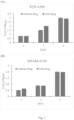
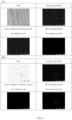
- Figures 1 (A) and (B) the cell viability of A549 cells cultured in TCP and membrane lumens increases depending on culture days and the addition of the anti-PD-1 drug did not affect cell viability (p > 0.05).
- Figures 1 (C) and (D) the cell viability of PBMC cells cultured in TCP and membrane lumens decreases depending on culture days and the addition of the anti-PD-1 drug did not affect cell viability (p > 0.05).
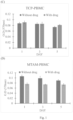
- Figures 1 (E) and (F) show that A549 cells and inactivated T cells were co-cultured in TCP and the growth thereof is similar to that of the control.
- the cell viability of the co-culture on the fifth day reduces by 8% (no addition of anti-PD-1 drug) and 12% (addition of anti-PD-1 drug) in comparison with the culture comprising one type of cells.
- the addition of anti-PF-1 has no significant difference.
- A549 cells and inactivated T cells co-cultured in the membrane exhibit similar results.
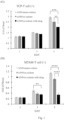
- Figures 1 (G) and (H) show that A549 cells and activated T cells were co-cultured in TCP and the growth thereof is similar to that of the control (one type of cell).
- the cell viability of the co-culture on the fifth day reduces by around 14% (no addition of anti-PD-1 drug) and around 31% (addition of anti-PD-1 drug) in comparison with the control.
- the addition of anti-PF-1 exhibits significant difference.
- A549 cells and activated T cells co-cultured in the membrane exhibit reduced cell viability by around 19% (no addition of anti-PD-1 drug) and around 70% (addition of anti-PD-1 drug), respectively.
- the MTAM-hairy was also used in the in vitro study as mentioned above. It was found that A549 cells and activated T cells co-cultured in the MTAM exhibit reduced cell viability.
- A549 cells (1 x 10 5 cells/5 ⁇ l) and PBMC (2 x 10 5 cells/5 ⁇ l) were transplanted into the lumens of the fibers of the MTAMs as disclosed in US 2011264235 and the two ends of the membrane were sealed to avoid cells from passing out the fibers.
- the membrane was cultured in a culture dish with the RPMI-1640 medium. After 24 hours, the tumor cells were adhered to the fiber inner wall.
- BALA/c mice (7 weeks old) were used in the animal study.
- the above resulting membrane was transplanted into the back of the mice.
- an anti-PD-1 drug 200 ⁇ g/mice
- the membranes were taken from the mice at 6, 9, 12 and 15 days to observe the angiogenesis.
- the membranes were put in MTT (0.5%; Sigma, USA) solution (1,000 ⁇ l PBS+200 ⁇ l MTT). After 30 minutes, the membranes were taken and centrifuged at 670 g for 10 minutes to isolate and collect PBMC. After the centrifugation, the suspension sample was taken and put in the slide. The slide and the membrane were stained by fluorescent and then observed by fluorescence microscope.
- the adherent tumor cells (A549) were stayed on the inner wall of the fibers of the membrane and suspension cells (PBMC) were isolated. Then, the membranes were put in 500 ⁇ l DMSO solution; after 24 hours, 100 ⁇ l of the solution sample of each membrane was put in 96-well plate and the absorbance (570 nm) was measured by ELISA reader.
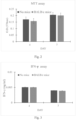
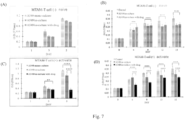
- Figures 7 (A) to (D) show cancer cell co-culture with naive of activate PBMC treated with anti-PD1 antibody.
- the MTAM-hairy was also used in the in vivo animal study as mentioned above. It was found that the MTAM-hairy exhibited good effect in selection of an anti-tumor drug.
Landscapes
- Health & Medical Sciences (AREA)
- Engineering & Computer Science (AREA)
- Life Sciences & Earth Sciences (AREA)
- Biomedical Technology (AREA)
- Chemical & Material Sciences (AREA)
- Immunology (AREA)
- Hematology (AREA)
- Urology & Nephrology (AREA)
- Cell Biology (AREA)
- Biotechnology (AREA)
- Bioinformatics & Cheminformatics (AREA)
- Molecular Biology (AREA)
- General Health & Medical Sciences (AREA)
- Microbiology (AREA)
- Biochemistry (AREA)
- Pathology (AREA)
- Toxicology (AREA)
- Zoology (AREA)
- Organic Chemistry (AREA)
- Medicinal Chemistry (AREA)
- Genetics & Genomics (AREA)
- Wood Science & Technology (AREA)
- Food Science & Technology (AREA)
- General Physics & Mathematics (AREA)
- Analytical Chemistry (AREA)
- Physics & Mathematics (AREA)
- Tropical Medicine & Parasitology (AREA)
- Textile Engineering (AREA)
- Mechanical Engineering (AREA)
- General Engineering & Computer Science (AREA)
- Chemical Kinetics & Catalysis (AREA)
- Veterinary Medicine (AREA)
- Animal Behavior & Ethology (AREA)
- Public Health (AREA)
- Epidemiology (AREA)
- Gastroenterology & Hepatology (AREA)
- Rheumatology (AREA)
- Diabetes (AREA)
- Endocrinology (AREA)
- Oncology (AREA)
Claims (15)
- Verfahren zur Auswahl eines Immun-Checkpoint-Inhibitors in vivo, umfassend (a) in vitro Co-Kultivierung von adhärenten Tumorzellen und Suspensions-Immunzellen innerhalb von Lumen einer Mikroröhrchen-Array-Membran (MTAM), wobei die MTAM eine elektrogesponnene Faseranordnung mit hoch ausgerichteten und dicht gepackten Hohlfasern mit Nanogröße umfasst; (b) Transplantation der Membran in ein nicht menschliches Tier; und (c) Verabreichung eines Immun-Checkpoint-Inhibitors an das nicht menschliche Tier; (d) Trennen der Tumorzellen und der Immunzellen; und (e) Bestimmen der Zelllebensfähigkeit der Tumorzellen oder der Aktivität der Immunzellen oder Bestimmen der Immun-Checkpoint-Protein-Expression in den Tumor- oder Immunzellen; wobei der Immun-Checkpoint-Inhibitor eine Antitumor-Wirkung hat, wenn die Zelllebensfähigkeit der Tumorzellen signifikant niedriger als die der Kontrolle ist oder die Aktivität der Immunzellen signifikant höher als die der Kontrolle ist; oder wenn die Immun-Checkpoint-Protein-Expression in den Tumor- oder Immunzellen relativ zur Kontrolle verändert ist.
- Verfahren nach Anspruch 1, wobei die adhärenten Tumorzellen oder die Suspensionsimmunzellen in einer Konzentration von etwa 1 x 10⁴ Zellen/ µl bis 1 x 10⁷ Zellen/µl ausgesät werden.
- Verfahren nach Anspruch 1, wobei es sich bei den adhärenten Tumorzellen um Zellen folgender Typen handelt: Leberzellkarzinom, kolorektales Karzinom, Glioblastom, Magenkrebs, Speiseröhrenkrebs, nicht-kleinzelliges Lungenkarzinom (NSCLC), Bauchspeicheldrüsenkrebs, Nierenkarzinom, gutartige Prostatahyperplasie, Prostatakrebs, Eierstockkrebs, Melanom, Brustkrebs, chronische lymphatische Leukämie (CLL), Merkelzellkarzinom, kleinzelliger Lungenkrebs (SCLC), Non-Hodgkin-Lymphom, akute myeloische Leukämie (AML), Gallenblasenkrebs und Gallenblasenkarzinom, Harnblasenkrebs oder Gebärmutterkrebs.
- Verfahren nach Anspruch 1, wobei die Suspensionsimmunzellen unter anderem periphere mononukleäre Blutzellen (PBMCs), Lymphozyten, T-Lymphozyten (wie CD8-positive T-Lymphozyten), T-Zellen wie CD4-positive T-Zellen, CD8-positive T-Zellen, CD4-positive T-Helferzellen, CD4-positive T-Helferzellen und CD8-positive zytotoxische T-Zellen), T-Helferzellen, Monozyten, natürliche Killerzellen (NK), Makrophagen oder Granulozyten beinhalten.
- Verfahren nach Anspruch 1, wobei das nicht menschliche Tier ein Nagetier (wie z.B. eine Maus), ein Kaninchen, ein Hund, ein Schwein oder ein Affe ist, wobei das nicht menschliche Tier vorzugsweise mausartig ist, wie z.B. eine Ratte oder eine Maus.
- Verfahren nach Anspruch 1, wobei der Immun-Checkpoint-Inhibitor den PD1-Stoffwechselweg oder den CTLA4-Stoffwechselweg hemmt, wobei der Immun-Checkpoint-Inhibitor vorzugsweise an PD1, PD-L1, PD-L2 oder CTLA4 bindet.
- Verfahren nach Anspruch 6, wobei der Immun-Checkpoint-Inhibitor ein Antikörper (z.B. ein monoklonaler Antikörper, ein chimärer Antikörper, ein humanisierter Antikörper und ein menschlicher Antikörper), ein technisch hergestelltes Bindungsprotein, ein löslicher Rezeptor, ein Aptamer, ein Peptid oder ein kleines Molekül ist, das an ein Immun-Checkpoint-Protein bindet.
- Verfahren nach Anspruch 1, wobei die in vitro Co-Kultivierung von Schritt (a) etwa 1 bis etwa 2 Tage, vorzugsweise 1 Tag dauert.
- Verfahren nach Anspruch 1, wobei die Verabreichung eines Immun-Checkpoint-Inhibitors in Schritt (c) nach etwa 1 bis etwa 3 Tagen nach der Transplantation von Schritt (b) durchgeführt wird.
- Verfahren nach Anspruch 1, wobei die Zellviabilität von Tumorzellen oder die Aktivität von Immunzellen oder die Expression von Immun-Checkpoint-Proteinen nach etwa 8 bis etwa 15 Tagen nach der Verabreichung von Schritt (c) bestimmt wird.
- Verfahren nach Anspruch 1, wobei die Gesamtzeit von Schritt (b) bis Schritt (d) etwa 9 Tage bis 18 Tage, vorzugsweise etwa 10 Tage, beträgt.
- Verfahren nach Anspruch 1, wobei das MTAM eine oder mehrere Schichten einer hoch ausgerichteten und dicht gepackten elektrogesponnenen Faseranordnung umfasst, wobei mindestens fünf (5) elektrogesponnene Fasern zusammen gepackt sind, um eine einzelne Schicht zu bilden, und eine Ausrichtung der elektrogesponnenen Fasern nicht größer als +/-5° relativ zu einer Längsachse der Anordnung ist, wobei die elektrogesponnenen Fasern so verbunden sind, dass die elektrogesponnenen Fasern ausgerichtet und dicht gepackt sind, um die einzelne Schicht zu bilden, und wobei die Ausrichtung der Fasern in der Orientierung nicht mehr als +/-5° beträgt.
- Verfahren nach Anspruch 1, wobei das MTAM eine oder mehrere Schichten aus hohlen elektrogesponnenen Fasern aufweist, wobei die Fasern haarähnliche Strukturen im Nanobereich aufweisen, die sich von ihrer inneren Oberfläche aus erstrecken, wobei das MTAM vorzugsweise mindestens zwei Schichten der Faseranordnung umfasst, wobei die Schichten der Faseranordnung vorzugsweise abwechselnd oder senkrecht angeordnet sind.
- Verfahren nach Anspruch 1, wobei das MTAM in einer Tasche enthalten ist.
- Verfahren zur Auswahl eines Immun-Checkpoint-Inhibitors in vitro, umfassend (a) in vitro Co-Kultivierung von adhärenten Tumorzellen und Suspensions-Immunzellen innerhalb von Lumen einer porösen Hohlfasermembran der Erfindung; (b) Zugabe eines Immun-Checkpoint-Inhibitors zu der Membran; (c) Trennen der Tumorzellen und der Immunzellen und Bestimmen der Zelllebensfähigkeit der Tumorzellen oder der Aktivität der Immunzellen oder Bestimmen der Immun-Checkpoint-Protein-Expression in den Tumor- oder Immunzellen; wobei der Immun-Checkpoint-Inhibitor eine Antitumor-Wirkung hat, wenn die Zelllebensfähigkeit der Tumorzellen signifikant niedriger ist als die der Kontrolle oder die Aktivität der Immunzellen signifikant höher ist als die der Kontrolle; oder wenn die Immun-Checkpoint-Protein-Expression in dem Tumor oder den Immunzellen im Vergleich zur Kontrolle verändert ist.
Applications Claiming Priority (2)
| Application Number | Priority Date | Filing Date | Title |
|---|---|---|---|
| US201962826677P | 2019-03-29 | 2019-03-29 | |
| PCT/CN2020/082194 WO2020200180A1 (en) | 2019-03-29 | 2020-03-30 | Porous hollow fiber membrane and methods of using it to select immune checkpoint inhibitor |
Publications (4)
| Publication Number | Publication Date |
|---|---|
| EP3946471A1 EP3946471A1 (de) | 2022-02-09 |
| EP3946471A4 EP3946471A4 (de) | 2023-05-10 |
| EP3946471C0 EP3946471C0 (de) | 2024-05-15 |
| EP3946471B1 true EP3946471B1 (de) | 2024-05-15 |
Family
ID=72667614
Family Applications (1)
| Application Number | Title | Priority Date | Filing Date |
|---|---|---|---|
| EP20784022.4A Active EP3946471B1 (de) | 2019-03-29 | 2020-03-30 | Poröse hohlfasermembran und verfahren zur verwendung davon zur auswahl von immuncheckpoint-inhibitor |
Country Status (11)
| Country | Link |
|---|---|
| US (1) | US12474325B2 (de) |
| EP (1) | EP3946471B1 (de) |
| JP (1) | JP2022528240A (de) |
| KR (1) | KR20220052857A (de) |
| CN (1) | CN114728081A (de) |
| AU (1) | AU2020255706B2 (de) |
| CA (1) | CA3135048A1 (de) |
| IL (1) | IL286778A (de) |
| SG (1) | SG11202110686XA (de) |
| TW (1) | TWI843836B (de) |
| WO (1) | WO2020200180A1 (de) |
Families Citing this family (3)
| Publication number | Priority date | Publication date | Assignee | Title |
|---|---|---|---|---|
| KR20210139464A (ko) * | 2019-03-29 | 2021-11-22 | 엠티에이엠테크 아이엔씨. | 고도로 정렬되고 패킹된 중공 섬유 어셈블리 |
| CN113832611B (zh) * | 2021-10-27 | 2023-02-24 | 中国药科大学 | 一种用于表皮脱敏治疗的相变同轴纳米纤维膜及其制备方法和应用 |
| US20240423928A1 (en) * | 2023-06-20 | 2024-12-26 | Taipei Medical University | Pharmaceutical Composition and Method for Treating Neurodegenerative Disorders Utilising the Pharmaceutical Composition |
Family Cites Families (7)
| Publication number | Priority date | Publication date | Assignee | Title |
|---|---|---|---|---|
| JP3252361B2 (ja) * | 1991-10-02 | 2002-02-04 | ミルトン・エイチ・リプスキー | インビボにおける癌の治療のアッセイ |
| JP4866162B2 (ja) * | 2006-07-06 | 2012-02-01 | 倉敷紡績株式会社 | 抗がん作用の評価方法 |
| US9139935B2 (en) * | 2010-04-21 | 2015-09-22 | Taipei Medical University | Electrostatic-assisted fiber spinning method and production of highly aligned and packed hollow fiber assembly and membrane |
| US9713521B2 (en) * | 2010-04-21 | 2017-07-25 | Taipei Medical University | Electrostatic-assisted fiber spinning method and production of highly aligned and packed hollow fiber assembly and membrane |
| CN109503718B (zh) * | 2017-11-14 | 2020-02-21 | 拜西欧斯(北京)生物技术有限公司 | 包含免疫检查点抑制剂的融合物及其制备方法和应用 |
| CN109504606A (zh) * | 2018-11-14 | 2019-03-22 | 苏州致诺优生物医学有限公司 | 单细胞中空纤维反应器的用途 |
| CN109504659A (zh) * | 2018-11-14 | 2019-03-22 | 苏州致诺优生物医学有限公司 | 抗乳腺癌肿瘤药物的筛选模型 |
-
2020
- 2020-03-30 TW TW109110903A patent/TWI843836B/zh active
- 2020-03-30 WO PCT/CN2020/082194 patent/WO2020200180A1/en not_active Ceased
- 2020-03-30 CN CN202080026175.3A patent/CN114728081A/zh active Pending
- 2020-03-30 CA CA3135048A patent/CA3135048A1/en active Pending
- 2020-03-30 JP JP2021558536A patent/JP2022528240A/ja active Pending
- 2020-03-30 US US17/599,531 patent/US12474325B2/en active Active
- 2020-03-30 KR KR1020217035268A patent/KR20220052857A/ko active Pending
- 2020-03-30 EP EP20784022.4A patent/EP3946471B1/de active Active
- 2020-03-30 AU AU2020255706A patent/AU2020255706B2/en active Active
- 2020-03-30 SG SG11202110686XA patent/SG11202110686XA/en unknown
-
2021
- 2021-09-29 IL IL286778A patent/IL286778A/en unknown
Also Published As
| Publication number | Publication date |
|---|---|
| AU2020255706B2 (en) | 2025-02-27 |
| EP3946471A1 (de) | 2022-02-09 |
| IL286778A (en) | 2021-12-01 |
| EP3946471A4 (de) | 2023-05-10 |
| WO2020200180A1 (en) | 2020-10-08 |
| TWI843836B (zh) | 2024-06-01 |
| KR20220052857A (ko) | 2022-04-28 |
| AU2020255706A1 (en) | 2021-10-28 |
| EP3946471C0 (de) | 2024-05-15 |
| CN114728081A (zh) | 2022-07-08 |
| US12474325B2 (en) | 2025-11-18 |
| US20220155283A1 (en) | 2022-05-19 |
| SG11202110686XA (en) | 2021-10-28 |
| JP2022528240A (ja) | 2022-06-09 |
| TW202113071A (zh) | 2021-04-01 |
| CA3135048A1 (en) | 2020-10-08 |
Similar Documents
| Publication | Publication Date | Title |
|---|---|---|
| Sylvestre et al. | Progress on modulating tumor‐associated macrophages with biomaterials | |
| EP3946471B1 (de) | Poröse hohlfasermembran und verfahren zur verwendung davon zur auswahl von immuncheckpoint-inhibitor | |
| Qian et al. | Molecular-targeted immunotherapeutic strategy for melanoma via dual-targeting nanoparticles delivering small interfering RNA to tumor-associated macrophages | |
| Bahmani et al. | Targeted delivery of immune therapeutics to lymph nodes prolongs cardiac allograft survival | |
| Ramirez et al. | Extracellular vesicles: mediators and biomarkers of pathology along CNS barriers | |
| Hayder et al. | Phosphorus-based dendrimer ABP treats neuroinflammation by promoting IL-10-producing CD4+ T cells | |
| Robbins et al. | Tunable leuko-polymersomes that adhere specifically to inflammatory markers | |
| Zeng et al. | Neutrophil nanodecoys inhibit tumor metastasis by blocking the interaction between tumor cells and neutrophils | |
| Mohammadi et al. | Biohybrid nanoparticles to negotiate with biological barriers | |
| Luo et al. | Perfluorotributylamine-loaded albumin nanoparticles downregulate platelet-derived TGFβ to inhibit tumor metastasis | |
| Basak et al. | Immunocyte derived exosomes: insight into the potential chemo-immunotherapeutic nanocarrier targeting the tumor microenvironment | |
| Ayer et al. | Biotin–NeutrAvidin mediated immobilization of polymer micro-and nanoparticles on T lymphocytes | |
| Wang et al. | TLR4 blockade using Docosahexaenoic acid restores vulnerability of drug-tolerant tumor cells and prevents breast cancer metastasis and postsurgical relapse | |
| US9777279B2 (en) | Methods and compositions for treating autoimmune disorders by targeting Kv1.3 ion channels with functionalized lipid-derived nanovesicles | |
| Ke et al. | Capture and lyase-triggered release of circulating tumor cells using a disposable microfluidic chip embedded with core/shell nylon-6/Ca (ii)-alginate immunofiber mats | |
| Davis | The Effect of a Novel Heparan Sulfate Mimetic on Inflammatory Migration Across the Blood-Brain Barrier Endothelium | |
| Biswas et al. | Nanobiotechnology for Therapeutic Targeting of Circulating Tumor Cells in the Blood | |
| Mohammadi | Exosomes secreted by mesenchymal stem cell to treat autoimmune disorders | |
| Prakash | Polymer Micropatches as Cell Engagers for Cancer Immunotherapy | |
| Rosenberg | Revealing T-Cell Signaling States by 4-Dimensional Lattice Light-Sheet Microscopy of Receptor Dynamics | |
| Guo | The impact of the P. aeruginosa lectin LecB on wound healing processes with a particular focus on the immune response | |
| Kim | 4.1 Small molecule-based targeting of CAF | |
| Mustafa | Discovery of Anti-CD47 Peptides for Cancer Immunotherapy and CD-47 Mimicking Peptides that Inhibit Phagocytic Clearance of Nanoparticles | |
| Hernáez Estrada | The Use of Mesenchymal Stromal Cells and Tissue-Engineered Blood Vessels for Seamless Implant Integration | |
| Liu et al. | A nano-immuno-cruise delivery system encapsulated lipid-integrated bilayer ameliorate acute lung injury by interfering neutrophil infiltration |
Legal Events
| Date | Code | Title | Description |
|---|---|---|---|
| STAA | Information on the status of an ep patent application or granted ep patent |
Free format text: STATUS: THE INTERNATIONAL PUBLICATION HAS BEEN MADE |
|
| PUAI | Public reference made under article 153(3) epc to a published international application that has entered the european phase |
Free format text: ORIGINAL CODE: 0009012 |
|
| STAA | Information on the status of an ep patent application or granted ep patent |
Free format text: STATUS: REQUEST FOR EXAMINATION WAS MADE |
|
| 17P | Request for examination filed |
Effective date: 20211021 |
|
| AK | Designated contracting states |
Kind code of ref document: A1 Designated state(s): AL AT BE BG CH CY CZ DE DK EE ES FI FR GB GR HR HU IE IS IT LI LT LU LV MC MK MT NL NO PL PT RO RS SE SI SK SM TR |
|
| DAV | Request for validation of the european patent (deleted) | ||
| DAX | Request for extension of the european patent (deleted) | ||
| A4 | Supplementary search report drawn up and despatched |
Effective date: 20230406 |
|
| RIC1 | Information provided on ipc code assigned before grant |
Ipc: G01N 33/50 20060101ALI20230331BHEP Ipc: D01D 5/24 20060101ALI20230331BHEP Ipc: D01D 5/00 20060101ALI20230331BHEP Ipc: C07K 16/28 20060101ALI20230331BHEP Ipc: B01D 69/08 20060101ALI20230331BHEP Ipc: B01D 67/00 20060101ALI20230331BHEP Ipc: A61P 35/00 20060101ALI20230331BHEP Ipc: A61K 39/00 20060101ALI20230331BHEP Ipc: C12N 5/078 20100101ALI20230331BHEP Ipc: A61K 35/13 20150101ALI20230331BHEP Ipc: A61K 49/00 20060101AFI20230331BHEP |
|
| GRAP | Despatch of communication of intention to grant a patent |
Free format text: ORIGINAL CODE: EPIDOSNIGR1 |
|
| STAA | Information on the status of an ep patent application or granted ep patent |
Free format text: STATUS: GRANT OF PATENT IS INTENDED |
|
| RIC1 | Information provided on ipc code assigned before grant |
Ipc: G01N 33/50 20060101ALI20231124BHEP Ipc: D01D 5/24 20060101ALI20231124BHEP Ipc: D01D 5/00 20060101ALI20231124BHEP Ipc: C07K 16/28 20060101ALI20231124BHEP Ipc: B01D 69/08 20060101ALI20231124BHEP Ipc: B01D 67/00 20060101ALI20231124BHEP Ipc: A61K 39/00 20060101ALI20231124BHEP Ipc: C12N 5/078 20100101ALI20231124BHEP Ipc: A61K 35/13 20150101ALI20231124BHEP Ipc: A61K 49/00 20060101AFI20231124BHEP Ipc: A61P 35/00 20060101ALI20231124BHEP |
|
| INTG | Intention to grant announced |
Effective date: 20231218 |
|
| GRAS | Grant fee paid |
Free format text: ORIGINAL CODE: EPIDOSNIGR3 |
|
| GRAA | (expected) grant |
Free format text: ORIGINAL CODE: 0009210 |
|
| STAA | Information on the status of an ep patent application or granted ep patent |
Free format text: STATUS: THE PATENT HAS BEEN GRANTED |
|
| AK | Designated contracting states |
Kind code of ref document: B1 Designated state(s): AL AT BE BG CH CY CZ DE DK EE ES FI FR GB GR HR HU IE IS IT LI LT LU LV MC MK MT NL NO PL PT RO RS SE SI SK SM TR |
|
| REG | Reference to a national code |
Ref country code: CH Ref legal event code: EP |
|
| REG | Reference to a national code |
Ref country code: IE Ref legal event code: FG4D |
|
| REG | Reference to a national code |
Ref country code: DE Ref legal event code: R096 Ref document number: 602020031008 Country of ref document: DE |
|
| U01 | Request for unitary effect filed |
Effective date: 20240607 |
|
| U07 | Unitary effect registered |
Designated state(s): AT BE BG DE DK EE FI FR IT LT LU LV MT NL PT SE SI Effective date: 20240620 |
|
| PG25 | Lapsed in a contracting state [announced via postgrant information from national office to epo] |
Ref country code: IS Free format text: LAPSE BECAUSE OF FAILURE TO SUBMIT A TRANSLATION OF THE DESCRIPTION OR TO PAY THE FEE WITHIN THE PRESCRIBED TIME-LIMIT Effective date: 20240915 |
|
| PG25 | Lapsed in a contracting state [announced via postgrant information from national office to epo] |
Ref country code: HR Free format text: LAPSE BECAUSE OF FAILURE TO SUBMIT A TRANSLATION OF THE DESCRIPTION OR TO PAY THE FEE WITHIN THE PRESCRIBED TIME-LIMIT Effective date: 20240515 |
|
| PG25 | Lapsed in a contracting state [announced via postgrant information from national office to epo] |
Ref country code: GR Free format text: LAPSE BECAUSE OF FAILURE TO SUBMIT A TRANSLATION OF THE DESCRIPTION OR TO PAY THE FEE WITHIN THE PRESCRIBED TIME-LIMIT Effective date: 20240816 |
|
| PG25 | Lapsed in a contracting state [announced via postgrant information from national office to epo] |
Ref country code: ES Free format text: LAPSE BECAUSE OF FAILURE TO SUBMIT A TRANSLATION OF THE DESCRIPTION OR TO PAY THE FEE WITHIN THE PRESCRIBED TIME-LIMIT Effective date: 20240515 |
|
| PG25 | Lapsed in a contracting state [announced via postgrant information from national office to epo] |
Ref country code: PL Free format text: LAPSE BECAUSE OF FAILURE TO SUBMIT A TRANSLATION OF THE DESCRIPTION OR TO PAY THE FEE WITHIN THE PRESCRIBED TIME-LIMIT Effective date: 20240515 |
|
| PG25 | Lapsed in a contracting state [announced via postgrant information from national office to epo] |
Ref country code: PL Free format text: LAPSE BECAUSE OF FAILURE TO SUBMIT A TRANSLATION OF THE DESCRIPTION OR TO PAY THE FEE WITHIN THE PRESCRIBED TIME-LIMIT Effective date: 20240515 Ref country code: NO Free format text: LAPSE BECAUSE OF FAILURE TO SUBMIT A TRANSLATION OF THE DESCRIPTION OR TO PAY THE FEE WITHIN THE PRESCRIBED TIME-LIMIT Effective date: 20240815 Ref country code: IS Free format text: LAPSE BECAUSE OF FAILURE TO SUBMIT A TRANSLATION OF THE DESCRIPTION OR TO PAY THE FEE WITHIN THE PRESCRIBED TIME-LIMIT Effective date: 20240915 Ref country code: HR Free format text: LAPSE BECAUSE OF FAILURE TO SUBMIT A TRANSLATION OF THE DESCRIPTION OR TO PAY THE FEE WITHIN THE PRESCRIBED TIME-LIMIT Effective date: 20240515 Ref country code: GR Free format text: LAPSE BECAUSE OF FAILURE TO SUBMIT A TRANSLATION OF THE DESCRIPTION OR TO PAY THE FEE WITHIN THE PRESCRIBED TIME-LIMIT Effective date: 20240816 Ref country code: ES Free format text: LAPSE BECAUSE OF FAILURE TO SUBMIT A TRANSLATION OF THE DESCRIPTION OR TO PAY THE FEE WITHIN THE PRESCRIBED TIME-LIMIT Effective date: 20240515 Ref country code: RS Free format text: LAPSE BECAUSE OF FAILURE TO SUBMIT A TRANSLATION OF THE DESCRIPTION OR TO PAY THE FEE WITHIN THE PRESCRIBED TIME-LIMIT Effective date: 20240815 |
|
| PG25 | Lapsed in a contracting state [announced via postgrant information from national office to epo] |
Ref country code: CZ Free format text: LAPSE BECAUSE OF FAILURE TO SUBMIT A TRANSLATION OF THE DESCRIPTION OR TO PAY THE FEE WITHIN THE PRESCRIBED TIME-LIMIT Effective date: 20240515 |
|
| PG25 | Lapsed in a contracting state [announced via postgrant information from national office to epo] |
Ref country code: SK Free format text: LAPSE BECAUSE OF FAILURE TO SUBMIT A TRANSLATION OF THE DESCRIPTION OR TO PAY THE FEE WITHIN THE PRESCRIBED TIME-LIMIT Effective date: 20240515 Ref country code: RO Free format text: LAPSE BECAUSE OF FAILURE TO SUBMIT A TRANSLATION OF THE DESCRIPTION OR TO PAY THE FEE WITHIN THE PRESCRIBED TIME-LIMIT Effective date: 20240515 |
|
| PG25 | Lapsed in a contracting state [announced via postgrant information from national office to epo] |
Ref country code: SM Free format text: LAPSE BECAUSE OF FAILURE TO SUBMIT A TRANSLATION OF THE DESCRIPTION OR TO PAY THE FEE WITHIN THE PRESCRIBED TIME-LIMIT Effective date: 20240515 |
|
| PG25 | Lapsed in a contracting state [announced via postgrant information from national office to epo] |
Ref country code: SM Free format text: LAPSE BECAUSE OF FAILURE TO SUBMIT A TRANSLATION OF THE DESCRIPTION OR TO PAY THE FEE WITHIN THE PRESCRIBED TIME-LIMIT Effective date: 20240515 Ref country code: SK Free format text: LAPSE BECAUSE OF FAILURE TO SUBMIT A TRANSLATION OF THE DESCRIPTION OR TO PAY THE FEE WITHIN THE PRESCRIBED TIME-LIMIT Effective date: 20240515 Ref country code: RO Free format text: LAPSE BECAUSE OF FAILURE TO SUBMIT A TRANSLATION OF THE DESCRIPTION OR TO PAY THE FEE WITHIN THE PRESCRIBED TIME-LIMIT Effective date: 20240515 Ref country code: CZ Free format text: LAPSE BECAUSE OF FAILURE TO SUBMIT A TRANSLATION OF THE DESCRIPTION OR TO PAY THE FEE WITHIN THE PRESCRIBED TIME-LIMIT Effective date: 20240515 |
|
| REG | Reference to a national code |
Ref country code: DE Ref legal event code: R097 Ref document number: 602020031008 Country of ref document: DE |
|
| PLBE | No opposition filed within time limit |
Free format text: ORIGINAL CODE: 0009261 |
|
| STAA | Information on the status of an ep patent application or granted ep patent |
Free format text: STATUS: NO OPPOSITION FILED WITHIN TIME LIMIT |
|
| 26N | No opposition filed |
Effective date: 20250218 |
|
| U20 | Renewal fee for the european patent with unitary effect paid |
Year of fee payment: 6 Effective date: 20250327 |
|
| PG25 | Lapsed in a contracting state [announced via postgrant information from national office to epo] |
Ref country code: MC Free format text: LAPSE BECAUSE OF FAILURE TO SUBMIT A TRANSLATION OF THE DESCRIPTION OR TO PAY THE FEE WITHIN THE PRESCRIBED TIME-LIMIT Effective date: 20240515 |
|
| REG | Reference to a national code |
Ref country code: CH Ref legal event code: H13 Free format text: ST27 STATUS EVENT CODE: U-0-0-H10-H13 (AS PROVIDED BY THE NATIONAL OFFICE) Effective date: 20251023 |
|
| GBPC | Gb: european patent ceased through non-payment of renewal fee |
Effective date: 20250330 |