EP3944980B1 - Triebwagengruppe aus einer lokomotive und einem tender, entsprechendes verfahren - Google Patents
Triebwagengruppe aus einer lokomotive und einem tender, entsprechendes verfahren Download PDFInfo
- Publication number
- EP3944980B1 EP3944980B1 EP21187595.0A EP21187595A EP3944980B1 EP 3944980 B1 EP3944980 B1 EP 3944980B1 EP 21187595 A EP21187595 A EP 21187595A EP 3944980 B1 EP3944980 B1 EP 3944980B1
- Authority
- EP
- European Patent Office
- Prior art keywords
- locomotive
- roof line
- switching device
- tender
- traction
- Prior art date
- Legal status (The legal status is an assumption and is not a legal conclusion. Google has not performed a legal analysis and makes no representation as to the accuracy of the status listed.)
- Active
Links
Images
Classifications
-
- B—PERFORMING OPERATIONS; TRANSPORTING
- B60—VEHICLES IN GENERAL
- B60L—PROPULSION OF ELECTRICALLY-PROPELLED VEHICLES; SUPPLYING ELECTRIC POWER FOR AUXILIARY EQUIPMENT OF ELECTRICALLY-PROPELLED VEHICLES; ELECTRODYNAMIC BRAKE SYSTEMS FOR VEHICLES IN GENERAL; MAGNETIC SUSPENSION OR LEVITATION FOR VEHICLES; MONITORING OPERATING VARIABLES OF ELECTRICALLY-PROPELLED VEHICLES; ELECTRIC SAFETY DEVICES FOR ELECTRICALLY-PROPELLED VEHICLES
- B60L5/00—Current collectors for power supply lines of electrically-propelled vehicles
- B60L5/18—Current collectors for power supply lines of electrically-propelled vehicles using bow-type collectors in contact with trolley wire
- B60L5/20—Details of contact bow
-
- B—PERFORMING OPERATIONS; TRANSPORTING
- B60—VEHICLES IN GENERAL
- B60L—PROPULSION OF ELECTRICALLY-PROPELLED VEHICLES; SUPPLYING ELECTRIC POWER FOR AUXILIARY EQUIPMENT OF ELECTRICALLY-PROPELLED VEHICLES; ELECTRODYNAMIC BRAKE SYSTEMS FOR VEHICLES IN GENERAL; MAGNETIC SUSPENSION OR LEVITATION FOR VEHICLES; MONITORING OPERATING VARIABLES OF ELECTRICALLY-PROPELLED VEHICLES; ELECTRIC SAFETY DEVICES FOR ELECTRICALLY-PROPELLED VEHICLES
- B60L50/00—Electric propulsion with power supplied within the vehicle
- B60L50/50—Electric propulsion with power supplied within the vehicle using propulsion power supplied by batteries or fuel cells
- B60L50/51—Electric propulsion with power supplied within the vehicle using propulsion power supplied by batteries or fuel cells characterised by AC-motors
-
- B—PERFORMING OPERATIONS; TRANSPORTING
- B60—VEHICLES IN GENERAL
- B60L—PROPULSION OF ELECTRICALLY-PROPELLED VEHICLES; SUPPLYING ELECTRIC POWER FOR AUXILIARY EQUIPMENT OF ELECTRICALLY-PROPELLED VEHICLES; ELECTRODYNAMIC BRAKE SYSTEMS FOR VEHICLES IN GENERAL; MAGNETIC SUSPENSION OR LEVITATION FOR VEHICLES; MONITORING OPERATING VARIABLES OF ELECTRICALLY-PROPELLED VEHICLES; ELECTRIC SAFETY DEVICES FOR ELECTRICALLY-PROPELLED VEHICLES
- B60L50/00—Electric propulsion with power supplied within the vehicle
- B60L50/50—Electric propulsion with power supplied within the vehicle using propulsion power supplied by batteries or fuel cells
- B60L50/53—Electric propulsion with power supplied within the vehicle using propulsion power supplied by batteries or fuel cells in combination with an external power supply, e.g. from overhead contact lines
-
- B—PERFORMING OPERATIONS; TRANSPORTING
- B60—VEHICLES IN GENERAL
- B60L—PROPULSION OF ELECTRICALLY-PROPELLED VEHICLES; SUPPLYING ELECTRIC POWER FOR AUXILIARY EQUIPMENT OF ELECTRICALLY-PROPELLED VEHICLES; ELECTRODYNAMIC BRAKE SYSTEMS FOR VEHICLES IN GENERAL; MAGNETIC SUSPENSION OR LEVITATION FOR VEHICLES; MONITORING OPERATING VARIABLES OF ELECTRICALLY-PROPELLED VEHICLES; ELECTRIC SAFETY DEVICES FOR ELECTRICALLY-PROPELLED VEHICLES
- B60L53/00—Methods of charging batteries, specially adapted for electric vehicles; Charging stations or on-board charging equipment therefor; Exchange of energy storage elements in electric vehicles
- B60L53/10—Methods of charging batteries, specially adapted for electric vehicles; Charging stations or on-board charging equipment therefor; Exchange of energy storage elements in electric vehicles characterised by the energy transfer between the charging station and the vehicle
- B60L53/14—Conductive energy transfer
-
- B—PERFORMING OPERATIONS; TRANSPORTING
- B60—VEHICLES IN GENERAL
- B60L—PROPULSION OF ELECTRICALLY-PROPELLED VEHICLES; SUPPLYING ELECTRIC POWER FOR AUXILIARY EQUIPMENT OF ELECTRICALLY-PROPELLED VEHICLES; ELECTRODYNAMIC BRAKE SYSTEMS FOR VEHICLES IN GENERAL; MAGNETIC SUSPENSION OR LEVITATION FOR VEHICLES; MONITORING OPERATING VARIABLES OF ELECTRICALLY-PROPELLED VEHICLES; ELECTRIC SAFETY DEVICES FOR ELECTRICALLY-PROPELLED VEHICLES
- B60L53/00—Methods of charging batteries, specially adapted for electric vehicles; Charging stations or on-board charging equipment therefor; Exchange of energy storage elements in electric vehicles
- B60L53/20—Methods of charging batteries, specially adapted for electric vehicles; Charging stations or on-board charging equipment therefor; Exchange of energy storage elements in electric vehicles characterised by converters located in the vehicle
- B60L53/22—Constructional details or arrangements of charging converters specially adapted for charging electric vehicles
-
- B—PERFORMING OPERATIONS; TRANSPORTING
- B60—VEHICLES IN GENERAL
- B60L—PROPULSION OF ELECTRICALLY-PROPELLED VEHICLES; SUPPLYING ELECTRIC POWER FOR AUXILIARY EQUIPMENT OF ELECTRICALLY-PROPELLED VEHICLES; ELECTRODYNAMIC BRAKE SYSTEMS FOR VEHICLES IN GENERAL; MAGNETIC SUSPENSION OR LEVITATION FOR VEHICLES; MONITORING OPERATING VARIABLES OF ELECTRICALLY-PROPELLED VEHICLES; ELECTRIC SAFETY DEVICES FOR ELECTRICALLY-PROPELLED VEHICLES
- B60L55/00—Arrangements for supplying energy stored within a vehicle to a power network, i.e. vehicle-to-grid [V2G] arrangements
-
- B—PERFORMING OPERATIONS; TRANSPORTING
- B60—VEHICLES IN GENERAL
- B60L—PROPULSION OF ELECTRICALLY-PROPELLED VEHICLES; SUPPLYING ELECTRIC POWER FOR AUXILIARY EQUIPMENT OF ELECTRICALLY-PROPELLED VEHICLES; ELECTRODYNAMIC BRAKE SYSTEMS FOR VEHICLES IN GENERAL; MAGNETIC SUSPENSION OR LEVITATION FOR VEHICLES; MONITORING OPERATING VARIABLES OF ELECTRICALLY-PROPELLED VEHICLES; ELECTRIC SAFETY DEVICES FOR ELECTRICALLY-PROPELLED VEHICLES
- B60L9/00—Electric propulsion with power supply external to the vehicle
- B60L9/02—Electric propulsion with power supply external to the vehicle using DC motors
- B60L9/08—Electric propulsion with power supply external to the vehicle using DC motors fed from AC supply lines
-
- B—PERFORMING OPERATIONS; TRANSPORTING
- B60—VEHICLES IN GENERAL
- B60L—PROPULSION OF ELECTRICALLY-PROPELLED VEHICLES; SUPPLYING ELECTRIC POWER FOR AUXILIARY EQUIPMENT OF ELECTRICALLY-PROPELLED VEHICLES; ELECTRODYNAMIC BRAKE SYSTEMS FOR VEHICLES IN GENERAL; MAGNETIC SUSPENSION OR LEVITATION FOR VEHICLES; MONITORING OPERATING VARIABLES OF ELECTRICALLY-PROPELLED VEHICLES; ELECTRIC SAFETY DEVICES FOR ELECTRICALLY-PROPELLED VEHICLES
- B60L9/00—Electric propulsion with power supply external to the vehicle
- B60L9/16—Electric propulsion with power supply external to the vehicle using AC induction motors
- B60L9/30—Electric propulsion with power supply external to the vehicle using AC induction motors fed from different kinds of power-supply lines
-
- B—PERFORMING OPERATIONS; TRANSPORTING
- B61—RAILWAYS
- B61C—LOCOMOTIVES; MOTOR RAILCARS
- B61C17/00—Arrangement or disposition of parts; Details or accessories not otherwise provided for; Use of control gear and control systems
- B61C17/06—Power storing devices
-
- B—PERFORMING OPERATIONS; TRANSPORTING
- B61—RAILWAYS
- B61C—LOCOMOTIVES; MOTOR RAILCARS
- B61C3/00—Electric locomotives or railcars
- B61C3/02—Electric locomotives or railcars with electric accumulators
-
- B—PERFORMING OPERATIONS; TRANSPORTING
- B61—RAILWAYS
- B61C—LOCOMOTIVES; MOTOR RAILCARS
- B61C9/00—Locomotives or motor railcars characterised by the type of transmission system used; Transmission systems specially adapted for locomotives or motor railcars
- B61C9/38—Transmission systems in or for locomotives or motor railcars with electric motor propulsion
-
- B—PERFORMING OPERATIONS; TRANSPORTING
- B60—VEHICLES IN GENERAL
- B60L—PROPULSION OF ELECTRICALLY-PROPELLED VEHICLES; SUPPLYING ELECTRIC POWER FOR AUXILIARY EQUIPMENT OF ELECTRICALLY-PROPELLED VEHICLES; ELECTRODYNAMIC BRAKE SYSTEMS FOR VEHICLES IN GENERAL; MAGNETIC SUSPENSION OR LEVITATION FOR VEHICLES; MONITORING OPERATING VARIABLES OF ELECTRICALLY-PROPELLED VEHICLES; ELECTRIC SAFETY DEVICES FOR ELECTRICALLY-PROPELLED VEHICLES
- B60L2200/00—Type of vehicles
- B60L2200/26—Rail vehicles
-
- B—PERFORMING OPERATIONS; TRANSPORTING
- B60—VEHICLES IN GENERAL
- B60L—PROPULSION OF ELECTRICALLY-PROPELLED VEHICLES; SUPPLYING ELECTRIC POWER FOR AUXILIARY EQUIPMENT OF ELECTRICALLY-PROPELLED VEHICLES; ELECTRODYNAMIC BRAKE SYSTEMS FOR VEHICLES IN GENERAL; MAGNETIC SUSPENSION OR LEVITATION FOR VEHICLES; MONITORING OPERATING VARIABLES OF ELECTRICALLY-PROPELLED VEHICLES; ELECTRIC SAFETY DEVICES FOR ELECTRICALLY-PROPELLED VEHICLES
- B60L2200/00—Type of vehicles
- B60L2200/28—Trailers
-
- Y—GENERAL TAGGING OF NEW TECHNOLOGICAL DEVELOPMENTS; GENERAL TAGGING OF CROSS-SECTIONAL TECHNOLOGIES SPANNING OVER SEVERAL SECTIONS OF THE IPC; TECHNICAL SUBJECTS COVERED BY FORMER USPC CROSS-REFERENCE ART COLLECTIONS [XRACs] AND DIGESTS
- Y02—TECHNOLOGIES OR APPLICATIONS FOR MITIGATION OR ADAPTATION AGAINST CLIMATE CHANGE
- Y02E—REDUCTION OF GREENHOUSE GAS [GHG] EMISSIONS, RELATED TO ENERGY GENERATION, TRANSMISSION OR DISTRIBUTION
- Y02E60/00—Enabling technologies; Technologies with a potential or indirect contribution to GHG emissions mitigation
-
- Y—GENERAL TAGGING OF NEW TECHNOLOGICAL DEVELOPMENTS; GENERAL TAGGING OF CROSS-SECTIONAL TECHNOLOGIES SPANNING OVER SEVERAL SECTIONS OF THE IPC; TECHNICAL SUBJECTS COVERED BY FORMER USPC CROSS-REFERENCE ART COLLECTIONS [XRACs] AND DIGESTS
- Y02—TECHNOLOGIES OR APPLICATIONS FOR MITIGATION OR ADAPTATION AGAINST CLIMATE CHANGE
- Y02T—CLIMATE CHANGE MITIGATION TECHNOLOGIES RELATED TO TRANSPORTATION
- Y02T10/00—Road transport of goods or passengers
- Y02T10/60—Other road transportation technologies with climate change mitigation effect
- Y02T10/70—Energy storage systems for electromobility, e.g. batteries
-
- Y—GENERAL TAGGING OF NEW TECHNOLOGICAL DEVELOPMENTS; GENERAL TAGGING OF CROSS-SECTIONAL TECHNOLOGIES SPANNING OVER SEVERAL SECTIONS OF THE IPC; TECHNICAL SUBJECTS COVERED BY FORMER USPC CROSS-REFERENCE ART COLLECTIONS [XRACs] AND DIGESTS
- Y02—TECHNOLOGIES OR APPLICATIONS FOR MITIGATION OR ADAPTATION AGAINST CLIMATE CHANGE
- Y02T—CLIMATE CHANGE MITIGATION TECHNOLOGIES RELATED TO TRANSPORTATION
- Y02T10/00—Road transport of goods or passengers
- Y02T10/60—Other road transportation technologies with climate change mitigation effect
- Y02T10/7072—Electromobility specific charging systems or methods for batteries, ultracapacitors, supercapacitors or double-layer capacitors
-
- Y—GENERAL TAGGING OF NEW TECHNOLOGICAL DEVELOPMENTS; GENERAL TAGGING OF CROSS-SECTIONAL TECHNOLOGIES SPANNING OVER SEVERAL SECTIONS OF THE IPC; TECHNICAL SUBJECTS COVERED BY FORMER USPC CROSS-REFERENCE ART COLLECTIONS [XRACs] AND DIGESTS
- Y02—TECHNOLOGIES OR APPLICATIONS FOR MITIGATION OR ADAPTATION AGAINST CLIMATE CHANGE
- Y02T—CLIMATE CHANGE MITIGATION TECHNOLOGIES RELATED TO TRANSPORTATION
- Y02T30/00—Transportation of goods or passengers via railways, e.g. energy recovery or reducing air resistance
-
- Y—GENERAL TAGGING OF NEW TECHNOLOGICAL DEVELOPMENTS; GENERAL TAGGING OF CROSS-SECTIONAL TECHNOLOGIES SPANNING OVER SEVERAL SECTIONS OF THE IPC; TECHNICAL SUBJECTS COVERED BY FORMER USPC CROSS-REFERENCE ART COLLECTIONS [XRACs] AND DIGESTS
- Y02—TECHNOLOGIES OR APPLICATIONS FOR MITIGATION OR ADAPTATION AGAINST CLIMATE CHANGE
- Y02T—CLIMATE CHANGE MITIGATION TECHNOLOGIES RELATED TO TRANSPORTATION
- Y02T90/00—Enabling technologies or technologies with a potential or indirect contribution to GHG emissions mitigation
- Y02T90/10—Technologies relating to charging of electric vehicles
- Y02T90/14—Plug-in electric vehicles
-
- Y—GENERAL TAGGING OF NEW TECHNOLOGICAL DEVELOPMENTS; GENERAL TAGGING OF CROSS-SECTIONAL TECHNOLOGIES SPANNING OVER SEVERAL SECTIONS OF THE IPC; TECHNICAL SUBJECTS COVERED BY FORMER USPC CROSS-REFERENCE ART COLLECTIONS [XRACs] AND DIGESTS
- Y04—INFORMATION OR COMMUNICATION TECHNOLOGIES HAVING AN IMPACT ON OTHER TECHNOLOGY AREAS
- Y04S—SYSTEMS INTEGRATING TECHNOLOGIES RELATED TO POWER NETWORK OPERATION, COMMUNICATION OR INFORMATION TECHNOLOGIES FOR IMPROVING THE ELECTRICAL POWER GENERATION, TRANSMISSION, DISTRIBUTION, MANAGEMENT OR USAGE, i.e. SMART GRIDS
- Y04S10/00—Systems supporting electrical power generation, transmission or distribution
- Y04S10/12—Monitoring or controlling equipment for energy generation units, e.g. distributed energy generation [DER] or load-side generation
- Y04S10/126—Monitoring or controlling equipment for energy generation units, e.g. distributed energy generation [DER] or load-side generation the energy generation units being or involving electric vehicles [EV] or hybrid vehicles [HEV], i.e. power aggregation of EV or HEV, vehicle to grid arrangements [V2G]
Definitions
- the present invention relates to locomotives of the single-current, dual-current, tri-current or more types, operating by capturing at least one electrical power, alternating or direct.
- a dual-current locomotive is capable of sensing either a first electrical power, in particular single-phase, by means of a first dedicated pantograph, or a second electrical power, in particular continuous, by means of a second dedicated pantograph.
- Such energy storage means are, for example, batteries, supercapacitors, fuel cells, etc.
- Locomotives are known to be equipped with on-board energy storage means. However, these means are integrated from the design of the locomotive, in its power circuit and/or have a reduced capacity/autonomy.
- the document EP 2 810 813 A1 discloses a traction assembly comprising a locomotive, the locomotive comprising a roof line, electrically connected to at least one pantograph, a control system and a feeler circuit, the control system being capable of controlling, as a function of the instantaneous properties of a voltage on the roof line detected by the feeler circuit, the open or closed state of at least one switch device placed between the roof line and a power supply circuit of the traction motors of the locomotive.
- This document also discloses the carrying on board the locomotive of energy storage means. These are connected to the common DC bus of the power supply circuit of the traction motors of the locomotive.
- the document EP 1 977 948 A2 plans, without further details, to place a battery in a passenger car, different from the locomotive.
- the document EP 2 810 813 A1 discloses an assembly resulting from the coupling of a locomotive and a tender, the tender integrating an electrical energy storage system connected to the common DC bus of the power supply circuit of the traction motors of the locomotive. In braking mode, the system recovers part of the energy generated by the motors and, in traction mode, supplies the motors with all or part of the energy necessary for traction.
- the aim of the invention is therefore to address this problem, in particular by proposing a simple solution to implement which allows modernization of existing locomotives at low cost.
- the invention relates to a traction assembly and a method for selecting an electrical power source according to the appended claims.
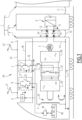
- FIG. 1 represents a train 1 consisting of the coupling of a traction unit 2 with one or more wagons 3, such as passenger cars.
- the train includes a control system 40 capable of controlling the various equipment on board the train.
- This control system 40 is notably called a TCMS system for “train control and management system”.
- the traction assembly 2 itself consists of the coupling of a locomotive 4, for example of the dual-current type, and a tender 6.
- a tender is an auxiliary wagon placed after a locomotive and which contains a reserve of fuel necessary for supplying it.
- the tender 6 carries energy storage means, generally referenced by the number 8, capable of delivering a direct electric current.
- energy storage means capable of delivering a direct electric current.
- These means 8 are for example constituted by a source (such as batteries, supercapacitors, fuel cells, mixed (fuel cell/battery), or any device known to those skilled in the art) and a current converter, such as a direct-direct converter or alternatively a direct-alternating converter.
- the energy storage means 8 comprise a first terminal 12 and a second terminal 13. The latter is advantageously electrically connected to a point of the tender 6 brought to a reference potential.
- Locomotive 4 has a power circuit 20 for supplying the electric traction motors of locomotive 4. On the figure 1 , only one engine 5 is shown, but a locomotive usually has two or four.
- Circuit 20 allows current to be captured from an overhead line, such as a catenary (not shown in the figure 1 ).
- a dual-current locomotive is shown and circuit 20 therefore makes it possible to pick up either a single-phase current or a direct current from a point of contact with a power source, such as a catenary.
- the power circuit 20 comprises an earth line 19, electrically connected to a point brought to a reference potential.
- the power circuit 20 comprises, on the roof of the locomotive 4, a first pantograph dedicated to the capture of a single-phase current, or AC pantograph 21, and advantageously a second pantograph dedicated to the capture of a direct current, or DC pantograph 22.
- the power circuit comprises only one of the first and second pantographs or more than two pantographs and the power circuit is adapted accordingly.
- Each pantograph 21, 22 is electrically connected to a roof line 23.
- Roof line 23 extends along the roof of locomotive 4 between two end points A and D.
- a sensing device 24 is electrically connected to the roof line 23, for example at the front end point A. This device has the function of detecting, at each instant, the properties of the potential to which the roof line 23 is brought and to transmit this information to the control system 40.
- control system 40 controls the state of the various equipment, in particular the opening or closing of isolation devices 31 and 32 presented below in detail, to properly route the electrical power to the motors.
- the roof line 23 is electrically connected, through a single-phase isolation device - AC 31, to a point F constituting a first terminal of the primary of a transformer 25.
- the second terminal of the primary of transformer 25 is electrically connected to the earth line 19.
- the secondary of transformer 25 is connected to the input of a single-phase - DC converter 26.
- the direct current delivered at the output of the converter 26 is applied to a first input of a filtering device 27.
- the filtered direct current delivered at the output of the filtering device 27 is applied to the input of an inverter 28.
- the function of the inverter 28 is then to convert a filtered direct current into a three-phase current suitable for supplying the motor 5.
- the locomotive having several motors, it has as many conversion chains, each conversion chain being made up of a single-phase - DC converter (connected to the secondary of transformer 25), a filtering device and an inverter as described above.
- the roof line 23 is electrically connected, through a continuous isolation device - DC 32, to a point G constituting a second input of each of the filtering devices 27 of the locomotive power supply chains.
- an inductance 37 is interposed between the DC isolation device 32 and the point G.
- the direct current delivered at the output of a filtering device 27 is then applied to the input of the inverter 28 in order to be transformed into a three-phase current supplying the corresponding motor 5.
- the AC 31 isolation device comprises a single-phase isolation contactor - AC 33 and a single-phase circuit breaker - AC 35, connected in parallel to each other.
- one terminal of the AC 33 isolation contactor and one terminal of the AC 35 circuit breaker are connected to a point B of the roof line 23 and the other terminal of the AC 33 isolation contactor and the other terminal of AC 35 circuit breaker are connected to point F.
- the control system 40 is capable of controlling the open or closed state of the AC circuit breaker 35 depending on the type (alternating/direct) and the voltage level detected by the sensing circuit 24 at the line 23.
- the control system 40 is capable of controlling the closing of the AC circuit breaker 35 if the sensing circuit detects an alternating voltage of 25kV.
- the AC 33 isolation contactor which is suitable for bringing the roof line 23 to earth potential is intended to be controlled, preferably manually, between its closed state and its open state.
- the AC 33 isolation contactor is in particular intended to be controlled manually in the closed earthing state via a handling key, during an earthing operation of the line 23.
- the DC 32 isolation device comprises, in series, a continuous isolation contactor - DC 34 and a continuous circuit breaker - DC 36.
- one terminal of the DC isolating contactor 34 is connected to a point C of the roof line 23 and the other terminal of the DC isolating contactor 34 is connected to an intermediate point E.
- One terminal of the DC circuit breaker 36 is connected to the intermediate point E and the other terminal of the DC circuit breaker 36 is connected to the inductor 37.
- the control system 40 is capable of controlling the open or closed state of the DC circuit breaker 36 depending on the type (AC/DC) and the voltage level detected by the sensing circuit 24 at the line 23.
- the control system 40 is capable of controlling the closing of the DC circuit breaker 36 if the sensing circuit detects a DC voltage of 1.5 kV.
- control system 40 is capable of controlling the open or closed state of the DC isolation contactor 34 when a direct voltage is supplied on the line 23.
- the driver for example, at an interface with the control system 40, senses that he is on a portion of track with a direct power supply and the control system 40 controls the closing of the DC isolation contactor 34.
- Other equipment may be provided, such as lightning protection devices, means of isolating pantographs, systems for measuring the captured power, etc.
- the tender 6 is mechanically coupled to the locomotive 4 by a coupling link 10.
- the tender 6 is furthermore electrically coupled to the locomotive 4 so that the energy storage means 8 can supply electrical power to the traction motors 5 of the locomotive 4.
- dedicated connectors 14 and 15 are provided on a front face of the body of the tender 6. They are respectively electrically connected to the first terminal 12 and to the second terminal 13 of the means 8.
- the tender comprises a safety circuit breaker between the terminal 12 and the connector 14.
- Dedicated connectors 44 and 45 are also provided on the locomotive body 4, for example on each of the end faces of the locomotive body, in order to be able to electrically connect the tender to the locomotive regardless of the direction of the locomotive (turning).
- the electrical connection between the tender 6 and the locomotive 4 is made by a first electrical cable 54, coupled on the one hand to the connector 14 of the tender and on the other hand to the connector 44 of the locomotive, and by a second electrical cable 55 coupled on the one hand to the connector 15 of the tender and on the other hand to the connector 45 of the locomotive.
- one or more high-voltage cables 46 connect the connector 44 to the roof line 23.
- the high-voltage cable 46 is advantageously connected to the intermediate point E so that it can be isolated or connected to the roof line 23 depending on the open or closed state of the DC isolation contactor 34.
- the cable 46 is advantageously connected to the input of the single-phase circuit breaker 35 and an isolating contactor is for example provided between the roof line 23 and the single-phase circuit breaker 35.
- the high-voltage cable 46 runs outside the body of the locomotive 4, on the roof of the locomotive. It can, depending on the configuration of the engine, be installed inside the locomotive.
- One or more earth cables 47 connect the connector 45 to the earth line 19 of the locomotive 4. As a result, the tender and the locomotive share the same reference potential.
- the information corresponding to the state of the selector 60, and consequently to the operating mode selected by the driver, is transmitted to the control system 40 which is capable of controlling the movement of the pantographs and/or configuring the power circuit 20 as a function of this information.
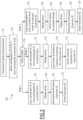
- control system 40 is programmed to implement the method of selecting an electrical power source shown in the figure 2 when changing the operating mode.
- the method 100 begins when, at step 110, the driver modifies the current operating mode, i.e. the power source to be used for powering the traction motors, by selecting a new operating mode using the selector 60.
- the control system 40 and the tender therefore receive information indicative of the new operating mode.
- step 120 the AC and DC pantographs are lowered and the circuit breakers 35, 36 and the isolating contactor 34 are switched to the open state.
- step 130 the value of the new operating mode is tested.
- step 141 the AC pantograph is raised so as to be brought into contact with a catenary delivering a single-phase current.
- the DC pantograph is then blocked in the lowered position and the contactor 34 is in an isolating position in which it isolates the intermediate point E from the potential of the roof line 23.
- the circuit breaker 36 is advantageously maintained in the open state.
- the sensing circuit 24 detects that the roof line 23 is brought to a single-phase potential, within an acceptable voltage range.
- control system 40 authorizes the closing of the AC circuit breaker 35, while keeping the DC circuit breaker 36 open.
- the contactor 34 is also kept in its isolation position.
- step 147 the AC circuit breaker 35 is closed. Under these conditions, the single-phase current captured by the AC pantograph 21 is applied, via the transformer 25, to the input of each of the power supply chains.
- step 151 the DC pantograph 22 is placed in the raised position so as to be brought into contact with a catenary delivering a direct current and the contactor 34 is moved to the closed state electrically connecting the point E to the potential of the roof line 23. The AC pantograph is then blocked in the lowered position and the circuit breaker 35 is maintained in the open state.
- step 153 the sensing circuit 24 detects the presence of a direct current on the roof line 23.
- step 155 the control system 40 authorizes the closing of the DC circuit breaker 36, while keeping the AC circuit breaker 35 open.
- step 157 the DC circuit breaker 36 is closed. Under these conditions, the direct current captured by the DC pantograph 22 is applied, via the filtering device 27, directly to the input of the inverter 28 of each of the power supply chains.
- step 161 the AC pantographs 21 and DC 22 are forced into their lowered position and the contactor 34 is moved to the closed state electrically connecting the point E to the potential of the roof line 23.
- the sensing circuit 24 does not detect any voltage on the roof line 23, since the AC pantographs 21 and DC pantographs 22 are forced into their lowered position and the circuit breakers 35, 36 are open.
- control system 40 activates the energy storage means 8 so as to supply the lines 54 and 46. This has the consequence of applying the voltage from terminal 12 of the energy storage means 8 to the roof line 23 via the switch 34.
- the sensing circuit 24 detects a DC voltage on the roof line 23.
- step 165 the control system 40 authorizes the closing of the DC circuit breaker 36, while keeping the AC circuit breaker 35 open.
- step 167 the DC circuit breaker 36 is closed. Under these conditions, the direct current delivered by the energy storage means 8 is applied, via the filtering device 27, directly to the input of the inverter 28 of each of the power supply chains.
- the traction assembly according to the invention makes it possible to simply modernize a locomotive of the type by current capture.
- the connection by a high-voltage cable of the energy storage means on board the tender directly to the roof line is easy to achieve in practice.
- the storage means The energy sources on board the tender are chosen to deliver a current adapted to the locomotive's power circuit.
- this component is reused to protect the energy storage means when the roof line is brought to a single-phase voltage. Furthermore, while the roof line is brought to a direct voltage in the second operating mode by capture, the captured current can advantageously be used to recharge the energy storage means of the tender, via the isolation contactor 34.
- the locomotive is not dual-current but tri-current or more, being able to capture for example several types of single-phase currents and/or several types of direct currents by means of its pantographs.
- the locomotive is single-current even if the preferred embodiment described above is a dual-current locomotive.
Landscapes
- Engineering & Computer Science (AREA)
- Transportation (AREA)
- Mechanical Engineering (AREA)
- Power Engineering (AREA)
- Life Sciences & Earth Sciences (AREA)
- Sustainable Development (AREA)
- Sustainable Energy (AREA)
- Automation & Control Theory (AREA)
- Chemical & Material Sciences (AREA)
- Combustion & Propulsion (AREA)
- Electric Propulsion And Braking For Vehicles (AREA)
- Current-Collector Devices For Electrically Propelled Vehicles (AREA)
Claims (10)
- Triebwagengruppe (2), aufweisend eine Lokomotive (4), wobei die Lokomotive Triebwagenmotoren (5) der Lokomotive, einen Versorgungskreis der Triebwagenmotoren (5) der Lokomotive, eine Dachleitung (23), die elektrisch mit mindestens einem Stromabnehmer verbunden ist, mindestens einen Schalter (31, 32), der zwischen der Dachleitung (23) und dem Versorgungskreis der Triebwagenmotoren (5) der Lokomotive platziert ist, ein Steuersystem (40) und eine Abtastschaltung (24) aufweist, wobei das Steuersystem (40) geeignet ist, in Abhängigkeit von den momentanen Eigenschaften einer Spannung auf der Dachleitung (23), die von der Abtastschaltung erfasst werden, den offenen oder geschlossenen Zustand der mindestens einer Schaltervorrichtung (31, 32) zu steuern, wobei die Triebwagengruppe (2) dadurch gekennzeichnet ist, dass sie ferner einen Tender (6) umfasst, der mechanisch an der Lokomotive (4) angekuppelt ist, wobei der Tender (6) Energiespeichermittel (8) mitführt, die geeignet sind, einen Strom zur Versorgung der Triebwagenmotoren (5) bereitzustellen, wobei die Energiespeichermittel einen ersten Anschluss (12) und einen zweiten Anschluss (13) aufweisen, und dass der Tender (6) elektrisch mit der Lokomotive (4) verbunden ist, so dass der erste Anschluss direkt mit der Dachleitung (23) der Lokomotive (4) mittels eines Hochspannungskabels (46) verbunden ist und dass der zweite Anschluss (13) mit einem Punkt der Lokomotive verbunden ist, der auf ein Bezugspotential gebracht wird.
- Triebwagengruppe (2) nach Anspruch 1, wobei die mindestens eine Schaltervorrichtung eine Gleichstromschaltvorrichtung (32) umfasst, die in Reihe eine erste Gleichstromumschaltvorrichtung (34) zwischen einem Punkt der Dachleitung (23) und einem Verbindungspunkt (E) und eine zweite Gleichstromumschaltvorrichtung (36) zwischen dem Zwischenpunkt und einem Punkt, der einen Eingang des Stromkreises zur Versorgung der Triebwagenmotoren bildet, umfasst, wobei der erste Anschluss (12) der Energiespeichermittel mit dem Zwischenpunkt verbunden ist, so dass er über die erste Gleichstromumschaltvorrichtung (34) mit der Dachleitung verbunden ist.
- Triebwagengruppe (2) nach Anspruch 1, wobei die Dachleitung (23) elektrisch mit einem Einphasen-Stromabnehmer (21), der geeignet ist, einen Einphasenstrom abzunehmen, und mit einem Gleichstrom-Stromabnehmer (22), der geeignet ist, einen Gleichstrom abzunehmen, verbunden ist, wobei das Steuersystem (40) geeignet ist, in Abhängigkeit von den momentanen Eigenschaften der Spannung auf der Dachleitung (23), die von der Abtastschaltung (24) erfasst werden, den offenen oder geschlossenen Zustand einer Einphasen-Schaltervorrichtung (31) zu steuern, die zwischen der Dachleitung (23) und einem Einphasen-Stromversorgungskreis der Triebwagenmotoren (5) der Lokomotive (4) platziert ist, und den offenen oder geschlossenen Zustand einer Gleichstrom-Schaltervorrichtung (32) zu steuern, die sich zwischen der Dachleitung (23) und einem Gleichstromversorgungskreis der Triebwagenmotoren (5) der Lokomotive befindet.
- Triebwagengruppe (2) nach Anspruch 3, wobei der Einphasen-Versorgungsstromkreis nacheinander einen Transformator (25), einen Einphasen-Gleichstrom-Wandler (26), eine erste Filtervorrichtung und einen Wechselrichter (28) umfasst, der mit mindestens einem Triebwagenmotor (5) verbunden ist, und wobei der Gleichstromversorgungskreis nacheinander eine zweite Filtervorrichtung und den Wechselrichter (28) umfasst, wobei die erste und zweite Filtervorrichtung unterschiedliche Eingänge, sich gemeinsame Komponenten teilen, und einen gemeinsamen Ausgang zum Wechselrichter (28) haben.
- Triebwagengruppe (2) nach einem der Ansprüche 1 bis 4, wobei die Lokomotive (4), vorzugsweise in der Kabine, einen Wahlschalter (60) aufweist, mit dem eine Betriebsart ausgewählt werden kann aus : einem Stromabnahmemodus, der der Nutzung einer vom Stromabnehmer abgenommenen Einphasen- oder Gleichstromleistung entspricht, und einem Autonomiemodus, der der Nutzung einer von den Energiespeichermitteln (8) des Tenders (6) gelieferten Gleichstromleistung entspricht, wobei der Wahlschalter geeignet ist, dem Steuersystem (40) eine Information zu übermitteln, die den ausgewählten Betriebsmodus anzeigt, der zu berücksichtigen ist, um den offenen oder geschlossenen Zustand der oder jeder Schaltervorrichtung zu steuern.
- Triebwagengruppe (2) nach einem der Ansprüche 1 bis 5, wobei:- der Tender (6) mit einem Paar erster Verbinder ausgestattet ist, die jeweils elektrisch mit dem ersten Anschluss (12) und dem zweiten Anschluss (13) der Energiespeichermittel (8) verbunden sind;- die Lokomotive (4) mit einem Paar zweiter Verbinder ausgestattet ist, wobei das Hochspannungskabel (46) einen der zweiten Verbinder (44) mit der Dachleitung (23) verbindet und ein Erdungskabel (47) den anderen der zweiten Verbinder (45) mit dem Bezugspotential der Lokomotive (4) verbindet,und wobei eine elektrische Verbindung zwischen dem Tender (6) und der Lokomotive (4) durch ein erstes und ein zweites elektrisches Kabel (54, 55) hergestellt wird, die zwischen dem ersten und dem zweiten Verbinder verbunden sind.
- Triebwagengruppe (2) nach Anspruch 6, wobei das Paar zweiter Verbinder (44, 45) an einer oder jeder Endfläche der Lokomotive (4) vorgesehen ist und das Hochspannungskabel (46) entlang des Kastens der Lokomotive (4) verläuft, um das Dach der Lokomotive (4) zu erreichen.
- Triebwagengruppe (2) nach einem der Ansprüche 1 bis 7, wobei die Energiespeichermittel (8) geeignet sind, einen Gleichstrom zwischen 1,5 kV DC und 3 kV DC zu liefern.
- Triebwagengruppe (2) nach einem der Ansprüche 1 bis 8, wobei die Energiespeichermittel (8) geeignet sind, durch eine elektrische Leistung aufgeladen zu werden, die von mindestens einen Stromabnehmer aufgenommen wird.
- Triebwagengruppe (2) nach Anspruch 2, umfassend ein Steuersystem (40) der Triebwagengruppe (2), das so konfiguriert ist, dass bei der Auswahl einer Betriebsart, die der Nutzung einer von den Energiespeichermitteln (8) des Tenders (6) gelieferten Gleichstromleistung entspricht:- der Stromabnehmer in der abgesenkten Position blockiert (161) und die ersten Gleichstromumschaltvorrichtung (34) geschlossen wird;- eine Nullspannung auf der Dachleitung (23) erfasst wird (162);- die Energiespeichermittel (8) aktiviert werden (163), um eine Gleichspannung an die Dachleitung zu liefern;- eine Spannung innerhalb eines vorbestimmten Wertebereichs auf der Dachleitung (23) erfassen (164) wird; und,- die zweite Gleichstromumschaltvorrichtung (36) geschlossen (167) wird.
Applications Claiming Priority (1)
| Application Number | Priority Date | Filing Date | Title |
|---|---|---|---|
| FR2007880A FR3112728B1 (fr) | 2020-07-27 | 2020-07-27 | Ensemble de traction constitué d’une locomotive et d’un tender ; procédé associé. |
Publications (2)
| Publication Number | Publication Date |
|---|---|
| EP3944980A1 EP3944980A1 (de) | 2022-02-02 |
| EP3944980B1 true EP3944980B1 (de) | 2024-10-16 |
Family
ID=73013659
Family Applications (1)
| Application Number | Title | Priority Date | Filing Date |
|---|---|---|---|
| EP21187595.0A Active EP3944980B1 (de) | 2020-07-27 | 2021-07-26 | Triebwagengruppe aus einer lokomotive und einem tender, entsprechendes verfahren |
Country Status (5)
| Country | Link |
|---|---|
| US (1) | US12145634B2 (de) |
| EP (1) | EP3944980B1 (de) |
| CN (1) | CN113978266A (de) |
| ES (1) | ES3003985T3 (de) |
| FR (1) | FR3112728B1 (de) |
Families Citing this family (6)
| Publication number | Priority date | Publication date | Assignee | Title |
|---|---|---|---|---|
| CN115140104B (zh) * | 2022-08-12 | 2024-05-17 | 中车大同电力机车有限公司 | 氢燃料电池混合动力机车组 |
| EP4328108A1 (de) * | 2022-08-23 | 2024-02-28 | Stadler Rail AG | Schienenfahrzeug umfassend ein powerpack mit einer brennstoffzelle und einem brennstofftank |
| DE102023203044A1 (de) | 2023-03-31 | 2024-10-02 | Siemens Mobility GmbH | Speisung eines Schienenfahrzeugs mit Traktionsbatterie |
| EP4470817A1 (de) * | 2023-06-02 | 2024-12-04 | Stadler Rail AG | Schienenfahrzeug, ladestation, verfahren zum laden eines schienenfahrzeuges sowie ladesystem |
| CN117719544A (zh) * | 2023-12-20 | 2024-03-19 | 中车大连机车车辆有限公司 | 一种纯动力电池机车动力源选择方法 |
| US12370896B1 (en) * | 2025-01-07 | 2025-07-29 | Voltify Inc | Dual source battery locomotive and dual source battery tender |
Citations (2)
| Publication number | Priority date | Publication date | Assignee | Title |
|---|---|---|---|---|
| US20020177929A1 (en) * | 2001-03-27 | 2002-11-28 | General Electric Company | Hybrid energy power management system and method |
| US10065511B2 (en) * | 2013-07-02 | 2018-09-04 | Mitsubishi Electric Corporation | Hybrid drive system |
Family Cites Families (18)
| Publication number | Priority date | Publication date | Assignee | Title |
|---|---|---|---|---|
| JPH09261803A (ja) * | 1996-03-26 | 1997-10-03 | Toshiba Transport Eng Kk | 交直両用電気車の制御装置 |
| FR2822764B1 (fr) * | 2001-03-29 | 2003-05-16 | Alstom | Procede et dispositif de pilotage de l'alimentation en energie d'un vehicule a traction electrique destine a fonctionner en mode d'alimentation externe ou en mode d'alimentation autonome |
| EP1288060A1 (de) * | 2001-08-31 | 2003-03-05 | Alstom Belgium S.A. | Mehrfachspannungsversorgung für Schienenfahrzeuge |
| RU69458U1 (ru) * | 2007-03-30 | 2007-12-27 | Открытое Акционерное Общество "Российские Железные Дороги" | Состав скоростного пассажирского электропоезда |
| FR2954863B1 (fr) * | 2009-12-30 | 2014-11-28 | Alstom Transport Sa | Equipement electrique dispose en toiture d'un vehicule ferroviaire a traction electrique |
| JP5295470B1 (ja) * | 2012-01-30 | 2013-09-18 | 三菱電機株式会社 | 電気車の推進制御装置およびその制御方法 |
| KR101555799B1 (ko) * | 2012-01-30 | 2015-09-24 | 미쓰비시덴키 가부시키가이샤 | 전기차 주회로 시스템 |
| WO2013138734A1 (en) * | 2012-03-15 | 2013-09-19 | Bright Energy Storage Technologies, Llp | Auxiliary power unit assembly and method of use |
| CN103401433A (zh) * | 2013-06-24 | 2013-11-20 | 北京千驷驭电气有限公司 | 适用多供电模式的混合动力动车组牵引变流器 |
| CN107148739B (zh) * | 2015-05-20 | 2019-04-16 | 三菱电机株式会社 | 电力变换装置和应用该电力变换装置的车辆驱动系统 |
| CN105438188A (zh) * | 2015-12-01 | 2016-03-30 | 唐山轨道客车有限责任公司 | 内燃高速动车组 |
| FR3050699B1 (fr) * | 2016-04-28 | 2018-04-27 | Sncf Mobilites | Systeme de pantographe a supraconducteur, et vehicule ferroviaire comprenant ledit systeme |
| FR3061094B1 (fr) * | 2016-12-28 | 2019-05-24 | Commissariat A L'energie Atomique Et Aux Energies Alternatives | Procede et systeme de gestion de la charge de modules de stockage d'energie electrique employes dans un systeme de transport a energie electrique |
| CN107554313B (zh) * | 2017-09-22 | 2019-10-11 | 中车唐山机车车辆有限公司 | 轨道车辆牵引系统及轨道车辆 |
| CN109318720B (zh) * | 2017-12-13 | 2022-02-11 | 中车长春轨道客车股份有限公司 | 一种多制式动车组高压供电系统及列车 |
| JP2020058105A (ja) * | 2018-09-28 | 2020-04-09 | 公益財団法人鉄道総合技術研究所 | 電源車用電気連結回路、電源車、編成車両用電気連結回路、編成車両および制御方法 |
| CN209191700U (zh) * | 2018-12-05 | 2019-08-02 | 中车长春轨道客车股份有限公司 | 一种多制式供电的动车牵引系统 |
| CN110077240A (zh) * | 2019-05-17 | 2019-08-02 | 中车资阳机车有限公司 | 一种多动力源交流传动机车电路拓扑结构 |
-
2020
- 2020-07-27 FR FR2007880A patent/FR3112728B1/fr active Active
-
2021
- 2021-07-20 US US17/443,069 patent/US12145634B2/en active Active
- 2021-07-21 CN CN202110824105.9A patent/CN113978266A/zh active Pending
- 2021-07-26 ES ES21187595T patent/ES3003985T3/es active Active
- 2021-07-26 EP EP21187595.0A patent/EP3944980B1/de active Active
Patent Citations (2)
| Publication number | Priority date | Publication date | Assignee | Title |
|---|---|---|---|---|
| US20020177929A1 (en) * | 2001-03-27 | 2002-11-28 | General Electric Company | Hybrid energy power management system and method |
| US10065511B2 (en) * | 2013-07-02 | 2018-09-04 | Mitsubishi Electric Corporation | Hybrid drive system |
Also Published As
| Publication number | Publication date |
|---|---|
| US12145634B2 (en) | 2024-11-19 |
| FR3112728B1 (fr) | 2022-09-09 |
| EP3944980A1 (de) | 2022-02-02 |
| FR3112728A1 (fr) | 2022-01-28 |
| CN113978266A (zh) | 2022-01-28 |
| ES3003985T3 (en) | 2025-03-11 |
| US20220024496A1 (en) | 2022-01-27 |
Similar Documents
| Publication | Publication Date | Title |
|---|---|---|
| EP3944980B1 (de) | Triebwagengruppe aus einer lokomotive und einem tender, entsprechendes verfahren | |
| EP3303045B1 (de) | Einheit bestehend aus einem elektrischen fahrzeug und aus einem stationären aufladungsystem durch stromleitung; verbundene system, einrichtung, fahrzeug und verfahren | |
| CA2778162C (fr) | Procede d'alimentation electrique d'un vehicule ferroviaire, systeme d'alimentation en station, systeme de stockage d'energie embarque et vehicule ferroviaire associes | |
| KR101423858B1 (ko) | 전기차의 추진 제어 장치, 및 철도 차량 시스템 | |
| EP1245432B1 (de) | Verfahren und Vorrichtung zur Steuerung der elektrischen Energieversorgung eines elektrisch angetriebenen Fahrzeuges, bestimmt zum Betrieb in externem oder autonomen Mode | |
| EP2859641B1 (de) | Ladevorrichtung mit adaptativem eingang und ladeverfahren | |
| EP0968873B1 (de) | Öffentliches Verkehrsnetz mit elektrischen Fahrzeugen | |
| WO2015110669A2 (fr) | Système de transport ferroviaire autonome en énergie électrique | |
| CA2145966A1 (fr) | Installation de transport a cable tracteur et a moteur embarque | |
| FR3013165A1 (fr) | Dispositif de charge compact pour vehicule electrique | |
| EP0657321B1 (de) | Mehrfachstromversorgungssystem mit hoher Verfügbarkeit für eine Lokomotive | |
| EP3587210A1 (de) | Fahrzeug, insbesondere schienenfahrzeug, mit zwei stromversorgungsquellen | |
| WO2024126102A1 (fr) | Procédé de fin de charge et de diagnostic d'interrupteurs d'un système de charge pour véhicule électrique ou hybride | |
| EP3545589B1 (de) | Sicheres elektrisches anschluss-system | |
| EP3377366A1 (de) | Verfahren und system zum elektrischen aufladen eines elektrofahrzeugs | |
| EP4043272A1 (de) | Triebfahrzeug mit speichervorrichtung für elektrische energie | |
| EP3875302B1 (de) | Verfahren zum durchfahren einer neutralen zone eines stromversorgungssystems durch ein elektrofahrzeug, das aus mindestens zwei einheiten besteht, und entsprechendes elektrofahrzeug | |
| FR3001666A1 (fr) | Tramway electrique et reseau de transport associe | |
| WO2020002820A1 (fr) | Système de stockage d'énergie embarqué | |
| EP3915822A1 (de) | Verfahren zur stromversorgung einer anordnung von fahrmotoren an bord eines fahrzeugs, elektronische vorrichtung zur leistungssteuerung und entsprechende anordnung von fahrmotoren | |
| FR2897018A1 (fr) | Rame de metro. | |
| FR3019111A1 (fr) | Procede de securisation d'un vehicule hybride en cas d’accident, pour vider les condensateurs de puissance |
Legal Events
| Date | Code | Title | Description |
|---|---|---|---|
| PUAI | Public reference made under article 153(3) epc to a published international application that has entered the european phase |
Free format text: ORIGINAL CODE: 0009012 |
|
| STAA | Information on the status of an ep patent application or granted ep patent |
Free format text: STATUS: THE APPLICATION HAS BEEN PUBLISHED |
|
| STAA | Information on the status of an ep patent application or granted ep patent |
Free format text: STATUS: REQUEST FOR EXAMINATION WAS MADE |
|
| AK | Designated contracting states |
Kind code of ref document: A1 Designated state(s): AL AT BE BG CH CY CZ DE DK EE ES FI FR GB GR HR HU IE IS IT LI LT LU LV MC MK MT NL NO PL PT RO RS SE SI SK SM TR |
|
| 17P | Request for examination filed |
Effective date: 20220124 |
|
| RBV | Designated contracting states (corrected) |
Designated state(s): AL AT BE BG CH CY CZ DE DK EE ES FI FR GB GR HR HU IE IS IT LI LT LU LV MC MK MT NL NO PL PT RO RS SE SI SK SM TR |
|
| STAA | Information on the status of an ep patent application or granted ep patent |
Free format text: STATUS: EXAMINATION IS IN PROGRESS |
|
| 17Q | First examination report despatched |
Effective date: 20230504 |
|
| P01 | Opt-out of the competence of the unified patent court (upc) registered |
Effective date: 20230823 |
|
| RAP1 | Party data changed (applicant data changed or rights of an application transferred) |
Owner name: ALSTOM HOLDINGS |
|
| GRAP | Despatch of communication of intention to grant a patent |
Free format text: ORIGINAL CODE: EPIDOSNIGR1 |
|
| STAA | Information on the status of an ep patent application or granted ep patent |
Free format text: STATUS: GRANT OF PATENT IS INTENDED |
|
| INTG | Intention to grant announced |
Effective date: 20240607 |
|
| GRAS | Grant fee paid |
Free format text: ORIGINAL CODE: EPIDOSNIGR3 |
|
| GRAA | (expected) grant |
Free format text: ORIGINAL CODE: 0009210 |
|
| STAA | Information on the status of an ep patent application or granted ep patent |
Free format text: STATUS: THE PATENT HAS BEEN GRANTED |
|
| AK | Designated contracting states |
Kind code of ref document: B1 Designated state(s): AL AT BE BG CH CY CZ DE DK EE ES FI FR GB GR HR HU IE IS IT LI LT LU LV MC MK MT NL NO PL PT RO RS SE SI SK SM TR |
|
| REG | Reference to a national code |
Ref country code: GB Ref legal event code: FG4D Free format text: NOT ENGLISH |
|
| REG | Reference to a national code |
Ref country code: CH Ref legal event code: EP Ref country code: DE Ref legal event code: R096 Ref document number: 602021020254 Country of ref document: DE |
|
| REG | Reference to a national code |
Ref country code: IE Ref legal event code: FG4D Free format text: LANGUAGE OF EP DOCUMENT: FRENCH |
|
| REG | Reference to a national code |
Ref country code: NL Ref legal event code: FP |
|
| REG | Reference to a national code |
Ref country code: LT Ref legal event code: MG9D |
|
| REG | Reference to a national code |
Ref country code: ES Ref legal event code: FG2A Ref document number: 3003985 Country of ref document: ES Kind code of ref document: T3 Effective date: 20250311 |
|
| PG25 | Lapsed in a contracting state [announced via postgrant information from national office to epo] |
Ref country code: PT Free format text: LAPSE BECAUSE OF FAILURE TO SUBMIT A TRANSLATION OF THE DESCRIPTION OR TO PAY THE FEE WITHIN THE PRESCRIBED TIME-LIMIT Effective date: 20250217 Ref country code: IS Free format text: LAPSE BECAUSE OF FAILURE TO SUBMIT A TRANSLATION OF THE DESCRIPTION OR TO PAY THE FEE WITHIN THE PRESCRIBED TIME-LIMIT Effective date: 20250216 Ref country code: HR Free format text: LAPSE BECAUSE OF FAILURE TO SUBMIT A TRANSLATION OF THE DESCRIPTION OR TO PAY THE FEE WITHIN THE PRESCRIBED TIME-LIMIT Effective date: 20241016 |
|
| PG25 | Lapsed in a contracting state [announced via postgrant information from national office to epo] |
Ref country code: FI Free format text: LAPSE BECAUSE OF FAILURE TO SUBMIT A TRANSLATION OF THE DESCRIPTION OR TO PAY THE FEE WITHIN THE PRESCRIBED TIME-LIMIT Effective date: 20241016 |
|
| PG25 | Lapsed in a contracting state [announced via postgrant information from national office to epo] |
Ref country code: BG Free format text: LAPSE BECAUSE OF FAILURE TO SUBMIT A TRANSLATION OF THE DESCRIPTION OR TO PAY THE FEE WITHIN THE PRESCRIBED TIME-LIMIT Effective date: 20241016 |
|
| PG25 | Lapsed in a contracting state [announced via postgrant information from national office to epo] |
Ref country code: NO Free format text: LAPSE BECAUSE OF FAILURE TO SUBMIT A TRANSLATION OF THE DESCRIPTION OR TO PAY THE FEE WITHIN THE PRESCRIBED TIME-LIMIT Effective date: 20250116 |
|
| PG25 | Lapsed in a contracting state [announced via postgrant information from national office to epo] |
Ref country code: LV Free format text: LAPSE BECAUSE OF FAILURE TO SUBMIT A TRANSLATION OF THE DESCRIPTION OR TO PAY THE FEE WITHIN THE PRESCRIBED TIME-LIMIT Effective date: 20241016 Ref country code: GR Free format text: LAPSE BECAUSE OF FAILURE TO SUBMIT A TRANSLATION OF THE DESCRIPTION OR TO PAY THE FEE WITHIN THE PRESCRIBED TIME-LIMIT Effective date: 20250117 |
|
| PG25 | Lapsed in a contracting state [announced via postgrant information from national office to epo] |
Ref country code: PL Free format text: LAPSE BECAUSE OF FAILURE TO SUBMIT A TRANSLATION OF THE DESCRIPTION OR TO PAY THE FEE WITHIN THE PRESCRIBED TIME-LIMIT Effective date: 20241016 |
|
| PG25 | Lapsed in a contracting state [announced via postgrant information from national office to epo] |
Ref country code: RS Free format text: LAPSE BECAUSE OF FAILURE TO SUBMIT A TRANSLATION OF THE DESCRIPTION OR TO PAY THE FEE WITHIN THE PRESCRIBED TIME-LIMIT Effective date: 20250116 |
|
| PG25 | Lapsed in a contracting state [announced via postgrant information from national office to epo] |
Ref country code: SM Free format text: LAPSE BECAUSE OF FAILURE TO SUBMIT A TRANSLATION OF THE DESCRIPTION OR TO PAY THE FEE WITHIN THE PRESCRIBED TIME-LIMIT Effective date: 20241016 |
|
| PG25 | Lapsed in a contracting state [announced via postgrant information from national office to epo] |
Ref country code: DK Free format text: LAPSE BECAUSE OF FAILURE TO SUBMIT A TRANSLATION OF THE DESCRIPTION OR TO PAY THE FEE WITHIN THE PRESCRIBED TIME-LIMIT Effective date: 20241016 |
|
| REG | Reference to a national code |
Ref country code: DE Ref legal event code: R097 Ref document number: 602021020254 Country of ref document: DE |
|
| PG25 | Lapsed in a contracting state [announced via postgrant information from national office to epo] |
Ref country code: EE Free format text: LAPSE BECAUSE OF FAILURE TO SUBMIT A TRANSLATION OF THE DESCRIPTION OR TO PAY THE FEE WITHIN THE PRESCRIBED TIME-LIMIT Effective date: 20241016 |
|
| PG25 | Lapsed in a contracting state [announced via postgrant information from national office to epo] |
Ref country code: RO Free format text: LAPSE BECAUSE OF FAILURE TO SUBMIT A TRANSLATION OF THE DESCRIPTION OR TO PAY THE FEE WITHIN THE PRESCRIBED TIME-LIMIT Effective date: 20241016 |
|
| PG25 | Lapsed in a contracting state [announced via postgrant information from national office to epo] |
Ref country code: SK Free format text: LAPSE BECAUSE OF FAILURE TO SUBMIT A TRANSLATION OF THE DESCRIPTION OR TO PAY THE FEE WITHIN THE PRESCRIBED TIME-LIMIT Effective date: 20241016 |
|
| PG25 | Lapsed in a contracting state [announced via postgrant information from national office to epo] |
Ref country code: CZ Free format text: LAPSE BECAUSE OF FAILURE TO SUBMIT A TRANSLATION OF THE DESCRIPTION OR TO PAY THE FEE WITHIN THE PRESCRIBED TIME-LIMIT Effective date: 20241016 |
|
| PG25 | Lapsed in a contracting state [announced via postgrant information from national office to epo] |
Ref country code: IT Free format text: LAPSE BECAUSE OF FAILURE TO SUBMIT A TRANSLATION OF THE DESCRIPTION OR TO PAY THE FEE WITHIN THE PRESCRIBED TIME-LIMIT Effective date: 20241016 |
|
| PGFP | Annual fee paid to national office [announced via postgrant information from national office to epo] |
Ref country code: NL Payment date: 20250721 Year of fee payment: 5 |
|
| PLBE | No opposition filed within time limit |
Free format text: ORIGINAL CODE: 0009261 |
|
| STAA | Information on the status of an ep patent application or granted ep patent |
Free format text: STATUS: NO OPPOSITION FILED WITHIN TIME LIMIT |
|
| PG25 | Lapsed in a contracting state [announced via postgrant information from national office to epo] |
Ref country code: SE Free format text: LAPSE BECAUSE OF FAILURE TO SUBMIT A TRANSLATION OF THE DESCRIPTION OR TO PAY THE FEE WITHIN THE PRESCRIBED TIME-LIMIT Effective date: 20241016 |
|
| 26N | No opposition filed |
Effective date: 20250717 |
|
| PGFP | Annual fee paid to national office [announced via postgrant information from national office to epo] |
Ref country code: ES Payment date: 20250827 Year of fee payment: 5 |
|
| PGFP | Annual fee paid to national office [announced via postgrant information from national office to epo] |
Ref country code: DE Payment date: 20250722 Year of fee payment: 5 |
|
| PGFP | Annual fee paid to national office [announced via postgrant information from national office to epo] |
Ref country code: AT Payment date: 20251020 Year of fee payment: 5 Ref country code: FR Payment date: 20250725 Year of fee payment: 5 |