EP3943826A1 - Machine learning device for determining operation condition of precooling operation or preheating operation of air conditioner - Google Patents
Machine learning device for determining operation condition of precooling operation or preheating operation of air conditioner Download PDFInfo
- Publication number
- EP3943826A1 EP3943826A1 EP20774451.7A EP20774451A EP3943826A1 EP 3943826 A1 EP3943826 A1 EP 3943826A1 EP 20774451 A EP20774451 A EP 20774451A EP 3943826 A1 EP3943826 A1 EP 3943826A1
- Authority
- EP
- European Patent Office
- Prior art keywords
- precooling
- machine learning
- preheating
- unit
- reward
- Prior art date
- Legal status (The legal status is an assumption and is not a legal conclusion. Google has not performed a legal analysis and makes no representation as to the accuracy of the status listed.)
- Withdrawn
Links
Images



Classifications
-
- F—MECHANICAL ENGINEERING; LIGHTING; HEATING; WEAPONS; BLASTING
- F24—HEATING; RANGES; VENTILATING
- F24F—AIR-CONDITIONING; AIR-HUMIDIFICATION; VENTILATION; USE OF AIR CURRENTS FOR SCREENING
- F24F11/00—Control or safety arrangements
- F24F11/62—Control or safety arrangements characterised by the type of control or by internal processing, e.g. using fuzzy logic, adaptive control or estimation of values
- F24F11/63—Electronic processing
- F24F11/64—Electronic processing using pre-stored data
-
- F—MECHANICAL ENGINEERING; LIGHTING; HEATING; WEAPONS; BLASTING
- F24—HEATING; RANGES; VENTILATING
- F24F—AIR-CONDITIONING; AIR-HUMIDIFICATION; VENTILATION; USE OF AIR CURRENTS FOR SCREENING
- F24F11/00—Control or safety arrangements
- F24F11/30—Control or safety arrangements for purposes related to the operation of the system, e.g. for safety or monitoring
- F24F11/48—Control or safety arrangements for purposes related to the operation of the system, e.g. for safety or monitoring prior to normal operation, e.g. pre-heating or pre-cooling
-
- G—PHYSICS
- G05—CONTROLLING; REGULATING
- G05D—SYSTEMS FOR CONTROLLING OR REGULATING NON-ELECTRIC VARIABLES
- G05D23/00—Control of temperature
- G05D23/19—Control of temperature characterised by the use of electric means
- G05D23/1917—Control of temperature characterised by the use of electric means using digital means
-
- G—PHYSICS
- G06—COMPUTING OR CALCULATING; COUNTING
- G06N—COMPUTING ARRANGEMENTS BASED ON SPECIFIC COMPUTATIONAL MODELS
- G06N3/00—Computing arrangements based on biological models
- G06N3/02—Neural networks
- G06N3/08—Learning methods
- G06N3/092—Reinforcement learning
-
- F—MECHANICAL ENGINEERING; LIGHTING; HEATING; WEAPONS; BLASTING
- F24—HEATING; RANGES; VENTILATING
- F24F—AIR-CONDITIONING; AIR-HUMIDIFICATION; VENTILATION; USE OF AIR CURRENTS FOR SCREENING
- F24F2110/00—Control inputs relating to air properties
- F24F2110/10—Temperature
-
- F—MECHANICAL ENGINEERING; LIGHTING; HEATING; WEAPONS; BLASTING
- F24—HEATING; RANGES; VENTILATING
- F24F—AIR-CONDITIONING; AIR-HUMIDIFICATION; VENTILATION; USE OF AIR CURRENTS FOR SCREENING
- F24F2110/00—Control inputs relating to air properties
- F24F2110/10—Temperature
- F24F2110/12—Temperature of the outside air
-
- F—MECHANICAL ENGINEERING; LIGHTING; HEATING; WEAPONS; BLASTING
- F24—HEATING; RANGES; VENTILATING
- F24F—AIR-CONDITIONING; AIR-HUMIDIFICATION; VENTILATION; USE OF AIR CURRENTS FOR SCREENING
- F24F2130/00—Control inputs relating to environmental factors not covered by group F24F2110/00
- F24F2130/10—Weather information or forecasts
-
- F—MECHANICAL ENGINEERING; LIGHTING; HEATING; WEAPONS; BLASTING
- F24—HEATING; RANGES; VENTILATING
- F24F—AIR-CONDITIONING; AIR-HUMIDIFICATION; VENTILATION; USE OF AIR CURRENTS FOR SCREENING
- F24F2130/00—Control inputs relating to environmental factors not covered by group F24F2110/00
- F24F2130/20—Sunlight
-
- F—MECHANICAL ENGINEERING; LIGHTING; HEATING; WEAPONS; BLASTING
- F24—HEATING; RANGES; VENTILATING
- F24F—AIR-CONDITIONING; AIR-HUMIDIFICATION; VENTILATION; USE OF AIR CURRENTS FOR SCREENING
- F24F2140/00—Control inputs relating to system states
-
- F—MECHANICAL ENGINEERING; LIGHTING; HEATING; WEAPONS; BLASTING
- F24—HEATING; RANGES; VENTILATING
- F24F—AIR-CONDITIONING; AIR-HUMIDIFICATION; VENTILATION; USE OF AIR CURRENTS FOR SCREENING
- F24F2140/00—Control inputs relating to system states
- F24F2140/20—Heat-exchange fluid temperature
-
- F—MECHANICAL ENGINEERING; LIGHTING; HEATING; WEAPONS; BLASTING
- F24—HEATING; RANGES; VENTILATING
- F24F—AIR-CONDITIONING; AIR-HUMIDIFICATION; VENTILATION; USE OF AIR CURRENTS FOR SCREENING
- F24F2140/00—Control inputs relating to system states
- F24F2140/60—Energy consumption
-
- G—PHYSICS
- G06—COMPUTING OR CALCULATING; COUNTING
- G06N—COMPUTING ARRANGEMENTS BASED ON SPECIFIC COMPUTATIONAL MODELS
- G06N3/00—Computing arrangements based on biological models
- G06N3/02—Neural networks
- G06N3/08—Learning methods
Definitions
- the present disclosure relates to a machine learning apparatus for determining an operation condition of a precooling operation or preheating operation of an air conditioner.
- Patent Literature 1 Japanese Patent No. 6270996 discloses absence control for controlling an air conditioner during the time when a user is absent in an air-conditioning-target space.
- the absence control is performed in order to improve comfortableness at the time when the user is back to the air-conditioning-target space.
- the absence control in order to determine the length of time for operating the air conditioner and the load processing amount of the air conditioner, the length of an absent time, framework performance of a building including the air-conditioning-target space, and an air conditioning load at the start of occupancy are referred to.
- a machine learning apparatus determines an operation condition of a precooling operation or preheating operation of an air conditioner.
- the machine learning apparatus includes an acquisition unit and a learning unit.
- the acquisition unit acquires room temperature data at the time of the precooling operation or preheating operation, set temperature data, and outside air temperature data as state variables.
- the learning unit learns the operation condition of the precooling operation or preheating operation on the basis of the state variables, a room temperature after start of the precooling operation or preheating operation, and a set temperature.
- the operation condition of the precooling operation or preheating operation is derived by machine learning.
- the user's comfortableness or energy saving effect is increased.
- a machine learning apparatus is the machine learning apparatus according to the first aspect, in which the operation condition of the precooling operation or preheating operation includes an operation start time.
- a machine learning apparatus is the machine learning apparatus according to the first or second aspect, in which the air conditioner includes a utilization heat exchanger, a utilization fan, and a compressor.
- the operation condition of the precooling operation or preheating operation includes at least one of a temperature of the utilization heat exchanger, a number of rotations of the utilization fan, and a number of rotations of the compressor.
- a machine learning apparatus is the machine learning apparatus according to the third aspect, in which the acquisition unit further acquires, as the state variables, at least one of data regarding a heat processing amount of the air conditioner, data of a framework surrounding a space, air of which is conditioned by a utilization unit of the air conditioner, outside air temperature data before the precooling operation or preheating operation, solar radiation data before the precooling operation or preheating operation, weather data before the precooling operation or preheating operation, and a season or month at the time of the precooling operation or preheating operation.
- a machine learning apparatus is the machine learning apparatus according to the fourth aspect, in which the data regarding the heat processing amount of the air conditioner includes at least one of the number of rotations of the compressor, the temperature of the utilization heat exchanger, and a suction temperature measured at a suction side of the utilization heat exchanger.
- a machine learning apparatus is the machine learning apparatus according to the fourth or fifth aspect, in which the data of the framework includes at least one of an age of the framework, a heat insulating property of the framework, window specifications of the framework, a size of a room constituted by the framework, a ventilation amount of the framework, an orientation of the framework, and air-conditioner operation information of a room adjacent to the room constituted by the framework.
- a machine learning apparatus is the machine learning apparatus according to any one of the first to sixth aspects, in which the learning unit further includes a reward setting unit.
- the reward setting unit determines a reward on the basis of the room temperature after the start of the precooling operation or preheating operation and the set temperature.
- the learning unit learns the operation condition of the precooling operation or prehearing operation on the basis of the state variables and the reward.
- a machine learning apparatus is the machine learning apparatus according to the seventh aspect, in which the reward setting unit determines the reward further on the basis of an electric energy required until a time after the start of the precooling operation or preheating operation.
- a machine learning apparatus is the machine learning apparatus according to the eighth aspect, in which the time after the start of the precooling operation or preheating operation is an end time of the precooling operation or preheating operation.
- a machine learning apparatus is the machine learning apparatus according to the eighth or ninth aspect, in which the reward setting unit increases the reward if a difference between the room temperature at the end time of the precooling operation or preheating operation and the set temperature is small, or increases the reward if the electric energy is small.
- a machine learning apparatus is the machine learning apparatus according to any one of the seventh to tenth aspects, in which the learning unit further includes an action value function holding unit that holds an action value function, and an action value function updating unit that updates the action value function.
- the action value function indicates an expected value of the reward that is expected to be received with respect to the operation condition.
- the action value function updating unit updates the action value function on the basis of the reward that is actually obtained.
- Fig. 1 illustrates a machine learning apparatus 100.
- the machine learning apparatus 100 includes an air conditioner 10.
- the air conditioner 10 includes a heat source unit 10a and a utilization unit 10b.
- the air conditioner 10 is installed in a room R that is an air conditioning target.
- the machine learning apparatus 100 can perform absence control.
- the absence control is control of the air conditioner 10 performed while a user is absent in an air-conditioning-target space (the room R).
- a cooling operation performed in the absence control is referred to as a precooling operation.
- a heating operation performed in the absence control is referred to as a preheating operation.
- the air conditioner 10 conditions air in the room R.
- Fig. 2 illustrates the configuration of the air conditioner 10.
- the air conditioner 10 includes a compressor 11, a four-way switching valve 12, a heat-source heat exchanger 13, a heat-source fan 14, an expansion valve 15, a utilization heat exchanger 16, a utilization fan 17, and a control unit 40.
- the air conditioner 10 further includes an outside air temperature sensor 19a, a room temperature sensor 19b, a heat-source heat exchanger temperature sensor 19c, a utilization heat exchanger temperature sensor 19d, a compressor suction temperature sensor 19e, a compressor discharge temperature sensor 19f, a pressure sensor, which is not illustrated, and the like.
- refrigerant circulates in the direction of the solid arrows.
- refrigerant circulates in the direction of the broken arrows.
- the single heat source unit 10a and the single utilization unit 10b are connected.
- a configuration in which a plurality of utilization units 10b are connected to the single heat source unit 10a may be employed.
- the control unit 40 may be mounted on any of the heat source unit 10a and the utilization unit 10b.
- the control unit 40 may be mounted on both the heat source unit 10a and the utilization unit 10b separately.
- Fig. 3 is a block diagram of the control unit 40.
- the control unit 40 is, for example, a microcomputer. By executing a dedicated program, the control unit 40 functions as an air-conditioner control unit 41, an occupancy information acquiring unit 44, and an operation detail determining unit 45.
- the air-conditioner control unit 41 controls the air conditioner 10. Specifically, as illustrated in Fig. 2 , the air-conditioner control unit 41 controls the compressor 11, the four-way switching valve 12, the heat-source fan 14, the expansion valve 15, and the utilization fan 17. Furthermore, the air-conditioner control unit 41 acquires temperature information from the temperature sensors 19a to 19f. Furthermore, the air-conditioner control unit 41 stores set temperature data Ts that is input by a user. Furthermore, the air-conditioner control unit 41 obtains power consumption of the air conditioner 10.
- the occupancy information acquiring unit 44 illustrated in Fig. 3 acquires information about the time at which the user goes out of the room R and the time at which the user is back to the room R on the basis of, for example, statistical results of output of a human detecting sensor.
- the occupancy information acquiring unit 44 may receive, by manual input, the information about the time at which the user goes out of the room R and the time at which the user is back to the room R.
- the operation detail determining unit 45 synthetically determines how to operate each of the air conditioner 10 during a precooling operation or preheating operation to be performed.
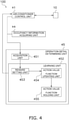
- Fig. 4 is a block diagram of the machine learning apparatus 100.
- the operation detail determining unit 45 includes an acquisition unit 451 and a learning unit 452.
- the acquisition unit 451 acquires, as state variables, output of the temperature sensors 19a to 19f of the air conditioner 10, output of the occupancy information acquiring unit 44, and other signals. For example, on the basis of output of the room temperature sensor 19b and the outside air temperature sensor 19a, the acquisition unit 451 acquires room temperature data and outside air temperature data, respectively, as state variables. The acquisition unit 451 further acquires the set temperature data Ts held by the air-conditioner control unit 41 as a state variable. Furthermore, on the basis of output of the occupancy information acquiring unit 44, the acquisition unit 451 acquires the time until the user is back to the room R as a state variable.
- the acquisition unit 451 may acquire, as a state variable, at least one of:
- the learning unit 452 learns an operation condition of the precooling operation or preheating operation.
- the operation condition herein may include an operation start time of the precooling operation or preheating operation.
- the operation condition may include at least one of the temperature of the utilization heat exchanger 16, the number of rotations of the utilization fan 17, and the number of rotations of the compressor 11.
- the learning unit 452 includes a reward setting unit 453, an action value function updating unit 454, and an action value function holding unit 455.
- the reward setting unit 453 calculates a reward on the basis of the following values when a precooling operation or preheating operation is performed.
- the reward setting unit 453 gives a large reward when "(A) Difference” is small, and gives a small reward when "(A) Difference” is large.
- the reward setting unit 453 gives large reward when "(B) Electric energy” is small, and gives a small reward when "(B) Electric energy” is large.
- the action value function holding unit 455 holds a function (action value function) for calculating how to control the precooling operation or preheating operation.
- the function herein includes numerical values (action value table) expressed in the form of a table.
- the function may indicate an expected value of the reward that is expected to be received with respect to the operation condition.
- the action value function updating unit 454 updates an action value function held by the action value function holding unit 455.
- the learning unit 452 learns the operation condition of the precooling operation or preheating operation on the basis of the state variables and the reward.
- the learning unit 452 may update the action value function in real time.
- the learning unit 452 may compute the state variables acquired from the acquisition unit 451 by multilayer neural network for updating. At this time, the learning unit 452 preferably performs reinforcement learning.
- the operation detail determining unit 45 determines operation details of the air conditioner 10.
- the operation details of the air conditioner 10 herein may include an operation start time of the air conditioner 10.
- the operation conditions may include at least one of the temperature of the utilization heat exchanger 16, the number of rotations of the utilization fan 17, and the number of rotations of the compressor 11.
- Fig. 5 is a flowchart illustrating processing in the machine learning apparatus 100.
- An initial value of "action" in reinforcement learning may be selected at random.
- control parameters for the air conditioner 10 are selected at random.
- step S2 the acquisition unit 451 acquires state variables.
- the state variables include output of at least part of the temperature sensors 19a to 19f of the air conditioner 10, output of the occupancy information acquiring unit 44, and other signals.
- the state variables include the room temperature, the outside air temperature, power consumption of the air conditioner 10, at the time of step S2, the time until the user is back to the room R, and the like.
- step S3 the reward setting unit 453 determines whether the difference between the room temperature and the set temperature at the time the user is back to the room R is less than a predetermined value when a precooling operation or preheating operation is performed. If it is determined that the difference is less than the predetermined value, in step S4, the reward setting unit 453 increases the reward. On the other hand, if it is determined that the difference is greater than or equal to the predetermined value, in step S5, the reward setting unit 453 reduces the reward.
- step S6 the reward setting unit 453 determines that the electric energy required for the precooling operation or preheating operation is less than a predetermined value when the precooling operation or preheating operation is performed, in step S7, the reward setting unit 453 increases the reward. On the other hand, if it is determined that the electric energy is greater than or equal to the predetermined value, in step S8, the reward setting unit 453 reduces the reward.
- step S9 on the basis of the state variables and the reward, the action value function updating unit 454 updates the function (action value function) for calculating control parameters.
- step S10 it is determined whether a determination condition is satisfied.
- the determination condition may be input of a command by a user. Alternatively, the determination condition may be an event that a predetermined relational expression is satisfied. If the determination condition is satisfied, the processing advances to step S11. If the determination condition is not satisfied, the process returns to step S2.
- step S11 on the basis of the function, the action value function updating unit 454 determines control parameters for a precooling operation or preheating operation by which a greatest reward is to be obtained.
- the operation condition of a precooling operation or preheating operation is derived by machine learning. Thus, the user's comfortableness or energy saving effect is increased.
- Patent Literature 1 Japanese Patent No. 6270996
Landscapes
- Engineering & Computer Science (AREA)
- General Engineering & Computer Science (AREA)
- Physics & Mathematics (AREA)
- Mechanical Engineering (AREA)
- Combustion & Propulsion (AREA)
- Chemical & Material Sciences (AREA)
- Signal Processing (AREA)
- Mathematical Physics (AREA)
- General Physics & Mathematics (AREA)
- Fuzzy Systems (AREA)
- Theoretical Computer Science (AREA)
- Automation & Control Theory (AREA)
- Biophysics (AREA)
- Computing Systems (AREA)
- Molecular Biology (AREA)
- General Health & Medical Sciences (AREA)
- Software Systems (AREA)
- Evolutionary Computation (AREA)
- Data Mining & Analysis (AREA)
- Computational Linguistics (AREA)
- Biomedical Technology (AREA)
- Artificial Intelligence (AREA)
- Life Sciences & Earth Sciences (AREA)
- Health & Medical Sciences (AREA)
- Air Conditioning Control Device (AREA)
Abstract
Description
- The present disclosure relates to a machine learning apparatus for determining an operation condition of a precooling operation or preheating operation of an air conditioner.
- Patent Literature 1 (
Japanese Patent No. 6270996 - The above patent literature does not refer to machine learning.
- A machine learning apparatus according to a first aspect determines an operation condition of a precooling operation or preheating operation of an air conditioner. The machine learning apparatus includes an acquisition unit and a learning unit. The acquisition unit acquires room temperature data at the time of the precooling operation or preheating operation, set temperature data, and outside air temperature data as state variables. The learning unit learns the operation condition of the precooling operation or preheating operation on the basis of the state variables, a room temperature after start of the precooling operation or preheating operation, and a set temperature.
- According to this configuration, the operation condition of the precooling operation or preheating operation is derived by machine learning. Thus, the user's comfortableness or energy saving effect is increased.
- A machine learning apparatus according to a second aspect is the machine learning apparatus according to the first aspect, in which the operation condition of the precooling operation or preheating operation includes an operation start time.
- A machine learning apparatus according to a third aspect is the machine learning apparatus according to the first or second aspect, in which the air conditioner includes a utilization heat exchanger, a utilization fan, and a compressor. The operation condition of the precooling operation or preheating operation includes at least one of a temperature of the utilization heat exchanger, a number of rotations of the utilization fan, and a number of rotations of the compressor.
- A machine learning apparatus according to a fourth aspect is the machine learning apparatus according to the third aspect, in which the acquisition unit further acquires, as the state variables, at least one of data regarding a heat processing amount of the air conditioner, data of a framework surrounding a space, air of which is conditioned by a utilization unit of the air conditioner, outside air temperature data before the precooling operation or preheating operation, solar radiation data before the precooling operation or preheating operation, weather data before the precooling operation or preheating operation, and a season or month at the time of the precooling operation or preheating operation.
- A machine learning apparatus according to a fifth aspect is the machine learning apparatus according to the fourth aspect, in which the data regarding the heat processing amount of the air conditioner includes at least one of the number of rotations of the compressor, the temperature of the utilization heat exchanger, and a suction temperature measured at a suction side of the utilization heat exchanger.
- A machine learning apparatus according to a sixth aspect is the machine learning apparatus according to the fourth or fifth aspect, in which the data of the framework includes at least one of an age of the framework, a heat insulating property of the framework, window specifications of the framework, a size of a room constituted by the framework, a ventilation amount of the framework, an orientation of the framework, and air-conditioner operation information of a room adjacent to the room constituted by the framework.
- A machine learning apparatus according to a seventh aspect is the machine learning apparatus according to any one of the first to sixth aspects, in which the learning unit further includes a reward setting unit. The reward setting unit determines a reward on the basis of the room temperature after the start of the precooling operation or preheating operation and the set temperature. The learning unit learns the operation condition of the precooling operation or prehearing operation on the basis of the state variables and the reward.
- A machine learning apparatus according to an eighth aspect is the machine learning apparatus according to the seventh aspect, in which the reward setting unit determines the reward further on the basis of an electric energy required until a time after the start of the precooling operation or preheating operation.
- A machine learning apparatus according to a ninth aspect is the machine learning apparatus according to the eighth aspect, in which the time after the start of the precooling operation or preheating operation is an end time of the precooling operation or preheating operation.
- A machine learning apparatus according to a tenth aspect is the machine learning apparatus according to the eighth or ninth aspect, in which the reward setting unit increases the reward if a difference between the room temperature at the end time of the precooling operation or preheating operation and the set temperature is small, or increases the reward if the electric energy is small.
- A machine learning apparatus according to an eleventh aspect is the machine learning apparatus according to any one of the seventh to tenth aspects, in which the learning unit further includes an action value function holding unit that holds an action value function, and an action value function updating unit that updates the action value function. The action value function indicates an expected value of the reward that is expected to be received with respect to the operation condition. The action value function updating unit updates the action value function on the basis of the reward that is actually obtained.
-
-
Fig. 1 is a schematic diagram illustrating the configuration of amachine learning apparatus 100. -
Fig. 2 is a schematic diagram illustrating the configuration of anair conditioner 10. -
Fig. 3 is a block diagram of acontrol unit 40. -
Fig. 4 is a block diagram of themachine learning apparatus 100. -
Fig. 5 is a flowchart illustrating processing in themachine learning apparatus 100. -
Fig. 1 illustrates amachine learning apparatus 100. Themachine learning apparatus 100 includes anair conditioner 10. Theair conditioner 10 includes aheat source unit 10a and autilization unit 10b. Theair conditioner 10 is installed in a room R that is an air conditioning target. - The
machine learning apparatus 100 can perform absence control. The absence control is control of theair conditioner 10 performed while a user is absent in an air-conditioning-target space (the room R). A cooling operation performed in the absence control is referred to as a precooling operation. A heating operation performed in the absence control is referred to as a preheating operation. - The
air conditioner 10 conditions air in the room R.Fig. 2 illustrates the configuration of theair conditioner 10. Theair conditioner 10 includes acompressor 11, a four-way switching valve 12, a heat-source heat exchanger 13, a heat-source fan 14, anexpansion valve 15, autilization heat exchanger 16, autilization fan 17, and acontrol unit 40. Theair conditioner 10 further includes an outsideair temperature sensor 19a, aroom temperature sensor 19b, a heat-source heatexchanger temperature sensor 19c, a utilization heatexchanger temperature sensor 19d, a compressorsuction temperature sensor 19e, a compressordischarge temperature sensor 19f, a pressure sensor, which is not illustrated, and the like. In a case of a cooling operation, refrigerant circulates in the direction of the solid arrows. In a case of a heating operation, refrigerant circulates in the direction of the broken arrows. - In the configuration in
Fig. 2 , the singleheat source unit 10a and thesingle utilization unit 10b are connected. Instead, a configuration in which a plurality ofutilization units 10b are connected to the singleheat source unit 10a may be employed. Thecontrol unit 40 may be mounted on any of theheat source unit 10a and theutilization unit 10b. Alternatively, thecontrol unit 40 may be mounted on both theheat source unit 10a and theutilization unit 10b separately. -
Fig. 3 is a block diagram of thecontrol unit 40. Thecontrol unit 40 is, for example, a microcomputer. By executing a dedicated program, thecontrol unit 40 functions as an air-conditioner control unit 41, an occupancyinformation acquiring unit 44, and an operationdetail determining unit 45. - The air-
conditioner control unit 41 controls theair conditioner 10. Specifically, as illustrated inFig. 2 , the air-conditioner control unit 41 controls thecompressor 11, the four-way switching valve 12, the heat-source fan 14, theexpansion valve 15, and theutilization fan 17. Furthermore, the air-conditioner control unit 41 acquires temperature information from thetemperature sensors 19a to 19f. Furthermore, the air-conditioner control unit 41 stores set temperature data Ts that is input by a user. Furthermore, the air-conditioner control unit 41 obtains power consumption of theair conditioner 10. - The occupancy
information acquiring unit 44 illustrated inFig. 3 acquires information about the time at which the user goes out of the room R and the time at which the user is back to the room R on the basis of, for example, statistical results of output of a human detecting sensor. Alternatively, the occupancyinformation acquiring unit 44 may receive, by manual input, the information about the time at which the user goes out of the room R and the time at which the user is back to the room R. - The operation
detail determining unit 45 synthetically determines how to operate each of theair conditioner 10 during a precooling operation or preheating operation to be performed. -
Fig. 4 is a block diagram of themachine learning apparatus 100. The operationdetail determining unit 45 includes anacquisition unit 451 and alearning unit 452. - The
acquisition unit 451 acquires, as state variables, output of thetemperature sensors 19a to 19f of theair conditioner 10, output of the occupancyinformation acquiring unit 44, and other signals. For example, on the basis of output of theroom temperature sensor 19b and the outsideair temperature sensor 19a, theacquisition unit 451 acquires room temperature data and outside air temperature data, respectively, as state variables. Theacquisition unit 451 further acquires the set temperature data Ts held by the air-conditioner control unit 41 as a state variable. Furthermore, on the basis of output of the occupancyinformation acquiring unit 44, theacquisition unit 451 acquires the time until the user is back to the room R as a state variable. Theacquisition unit 451 may acquire, as a state variable, at least one of: - Data regarding a heat processing amount of the air conditioner 10 (e.g., the number of rotations of the
compressor 11, the temperature of theutilization heat exchanger 16, a suction temperature measured at a suction side of the utilization heat exchanger 16 (i.e., room temperature)), - Data of a framework surrounding the space (the room R) the air of which is conditioned by the
utilization unit 10b of the air conditioner 10 (e.g., the age of the framework, a heat insulating property of the framework, window specifications of the framework, the size of the room constituted by the framework, a ventilation amount of the framework, the orientation of the framework, air-conditioner operation information of a room adjacent to the room R constituted by the framework), - Outside air temperature data before the precooling operation or preheating operation,
- Solar radiation data before the precooling operation or preheating operation,
- Weather data before the precooling operation or preheating operation, and
- A season or month at the time of the precooling operation or preheating operation.
- On the basis of a training data set consisted of the state variables, the room temperature data at a certain time after start of the precooling operation or preheating operation, and the set temperature data Ts, the
learning unit 452 learns an operation condition of the precooling operation or preheating operation. The operation condition herein may include an operation start time of the precooling operation or preheating operation. Alternatively, the operation condition may include at least one of the temperature of theutilization heat exchanger 16, the number of rotations of theutilization fan 17, and the number of rotations of thecompressor 11. - The
learning unit 452 includes areward setting unit 453, an action valuefunction updating unit 454, and an action valuefunction holding unit 455. Thereward setting unit 453 calculates a reward on the basis of the following values when a precooling operation or preheating operation is performed. - (A) Difference between the room temperature and the set temperature at the time the user is back to the room R
- (B) Electric energy required until a certain time after start of the precooling operation or preheating operation (e.g., until the end of the precooling operation or preheating operation)
- Specifically, the
reward setting unit 453 gives a large reward when "(A) Difference" is small, and gives a small reward when "(A) Difference" is large. In addition, thereward setting unit 453 gives large reward when "(B) Electric energy" is small, and gives a small reward when "(B) Electric energy" is large. - The action value
function holding unit 455 holds a function (action value function) for calculating how to control the precooling operation or preheating operation. The function herein includes numerical values (action value table) expressed in the form of a table. The function may indicate an expected value of the reward that is expected to be received with respect to the operation condition. - On the basis of the state variables acquired by the
acquisition unit 451 and the reward calculated by thereward setting unit 453, the action valuefunction updating unit 454 updates an action value function held by the action valuefunction holding unit 455. - In this manner, the
learning unit 452 learns the operation condition of the precooling operation or preheating operation on the basis of the state variables and the reward. Thelearning unit 452 may update the action value function in real time. Furthermore, thelearning unit 452 may compute the state variables acquired from theacquisition unit 451 by multilayer neural network for updating. At this time, thelearning unit 452 preferably performs reinforcement learning. - The operation
detail determining unit 45 determines operation details of theair conditioner 10. The operation details of theair conditioner 10 herein may include an operation start time of theair conditioner 10. Alternatively, the operation conditions may include at least one of the temperature of theutilization heat exchanger 16, the number of rotations of theutilization fan 17, and the number of rotations of thecompressor 11. -
Fig. 5 is a flowchart illustrating processing in themachine learning apparatus 100. An initial value of "action" in reinforcement learning may be selected at random. In step S1, control parameters for theair conditioner 10 are selected at random. - In step S2, the
acquisition unit 451 acquires state variables. Herein, the state variables include output of at least part of thetemperature sensors 19a to 19f of theair conditioner 10, output of the occupancyinformation acquiring unit 44, and other signals. Specifically, the state variables include the room temperature, the outside air temperature, power consumption of theair conditioner 10, at the time of step S2, the time until the user is back to the room R, and the like. - In step S3, the
reward setting unit 453 determines whether the difference between the room temperature and the set temperature at the time the user is back to the room R is less than a predetermined value when a precooling operation or preheating operation is performed. If it is determined that the difference is less than the predetermined value, in step S4, thereward setting unit 453 increases the reward. On the other hand, if it is determined that the difference is greater than or equal to the predetermined value, in step S5, thereward setting unit 453 reduces the reward. - If, in step S6, the
reward setting unit 453 determines that the electric energy required for the precooling operation or preheating operation is less than a predetermined value when the precooling operation or preheating operation is performed, in step S7, thereward setting unit 453 increases the reward. On the other hand, if it is determined that the electric energy is greater than or equal to the predetermined value, in step S8, thereward setting unit 453 reduces the reward. - In step S9, on the basis of the state variables and the reward, the action value
function updating unit 454 updates the function (action value function) for calculating control parameters. - In step S10, it is determined whether a determination condition is satisfied. The determination condition may be input of a command by a user. Alternatively, the determination condition may be an event that a predetermined relational expression is satisfied. If the determination condition is satisfied, the processing advances to step S11. If the determination condition is not satisfied, the process returns to step S2.
- In step S11, on the basis of the function, the action value
function updating unit 454 determines control parameters for a precooling operation or preheating operation by which a greatest reward is to be obtained. - The operation condition of a precooling operation or preheating operation is derived by machine learning. Thus, the user's comfortableness or energy saving effect is increased.
- Instead of
- (A) Difference between the room temperature and the set temperature at the time the user is back to the room R,
- (C) Time difference between the time the user is back to the room R and the time the room temperature actually reaches the set temperature may be used for processing.
- Although the embodiment of the present disclosure has been described above, it should be understood that various changes can be made on the forms and details without departing from the spirit and scope of the present disclosure described in the scope of claims.
-
- 10
- air conditioner
- 11
- compressor
- 13
- heat-source heat exchanger
- 14
- heat-source fan
- 15
- expansion valve
- 16
- utilization heat exchanger
- 17
- utilization fan
- 19a
- outside air temperature sensor
- 19b
- room temperature sensor
- 40
- control unit
- 100
- machine learning apparatus
- 451
- acquisition unit
- 452
- learning unit
- 453
- reward setting unit
- 454
- action value function updating unit
- 455
- action value function holding unit
- R
- room
- Ts
- set temperature data
- Patent Literature 1:
Japanese Patent No. 6270996
Claims (11)
- A machine learning apparatus (100) for determining an operation condition of a precooling operation or preheating operation of an air conditioner (10), the machine learning apparatus (100) comprising:an acquisition unit (451) that acquires room temperature data at a time of the precooling operation or preheating operation, set temperature data, and outside air temperature data as state variables; anda learning unit (452) that learns the operation condition of the precooling operation or preheating operation based on the state variables, a room temperature after start of the precooling operation or preheating operation, and a set temperature.
- The machine learning apparatus according to claim 1,
wherein the operation condition of the precooling operation or preheating operation includes an operation start time. - The machine learning apparatus according to claim 1 or 2,wherein the air conditioner includesa utilization heat exchanger (16),a utilization fan (17), anda compressor (11), andwherein the operation condition of the precooling operation or preheating operation includes at least one ofa temperature of the utilization heat exchanger,a number of rotations of the utilization fan, anda number of rotations of the compressor.
- The machine learning apparatus according to claim 3,
wherein the acquisition unit further acquires, as the state variables, at least one ofdata regarding a heat processing amount of the air conditioner,data of a framework surrounding a space, air of which is conditioned by a utilization unit of the air conditioner,outside air temperature data before the precooling operation or preheating operation,solar radiation data before the precooling operation or preheating operation,weather data before the precooling operation or preheating operation, anda season or month at the time of the precooling operation or preheating operation. - The machine learning apparatus according to claim 4,
wherein the data regarding the heat processing amount of the air conditioner includes at least one ofthe number of rotations of the compressor,the temperature of the utilization heat exchanger, anda suction temperature measured at a suction side of the utilization heat exchanger. - The machine learning apparatus according to claim 4 or 5, wherein the data of the framework includes at least one ofan age of the framework,a heat insulating property of the framework,window specifications of the framework,a size of a room constituted by the framework,a ventilation amount of the framework,an orientation of the framework, andair-conditioner operation information of a room adjacent to the room constituted by the framework.
- The machine learning apparatus according to any one of Claims 1 to 6,wherein the learning unit further includesa reward setting unit (453) that determines a reward on the basis of the room temperature after the start of the precooling operation or preheating operation and the set temperature, andwherein the learning unit learns the operation condition of the precooling operation or prehearing operation on the basis of the state variables and the reward.
- The machine learning apparatus according to claim 7,
wherein the reward setting unit determines the reward further on the basis of an electric energy required until a time after the start of the precooling operation or preheating operation. - The machine learning apparatus according to claim 8,
wherein the time after the start of the precooling operation or preheating operation is an end time of the precooling operation or preheating operation. - The machine learning apparatus according to claim 8 or 9,wherein the reward setting unitincreases the reward if a difference between the room temperature at the end time of the precooling operation or preheating operation and the set temperature is small, orincreases the reward if the electric energy is small.
- The machine learning apparatus according to any one of Claims 7 to 10,wherein the learning unit further includesan action value function holding unit (455) that holds an action value function, andan action value function updating unit (454) that updates the action value function,wherein the action value function indicates an expected value of the reward that is expected to be received with respect to the operation condition, andwherein the action value function updating unit updates the action value function on the basis of the reward that is actually obtained.
Applications Claiming Priority (2)
| Application Number | Priority Date | Filing Date | Title |
|---|---|---|---|
| JP2019049521A JP7173907B2 (en) | 2019-03-18 | 2019-03-18 | A machine learning device that determines operating conditions for precooling or prewarming of air conditioners |
| PCT/JP2020/011038 WO2020189544A1 (en) | 2019-03-18 | 2020-03-13 | Machine learning device for determining operation condition of precooling operation or preheating operation of air conditioner |
Publications (2)
| Publication Number | Publication Date |
|---|---|
| EP3943826A1 true EP3943826A1 (en) | 2022-01-26 |
| EP3943826A4 EP3943826A4 (en) | 2022-05-04 |
Family
ID=72519398
Family Applications (1)
| Application Number | Title | Priority Date | Filing Date |
|---|---|---|---|
| EP20774451.7A Withdrawn EP3943826A4 (en) | 2019-03-18 | 2020-03-13 | MACHINE LEARNING DEVICE FOR DETERMINING THE OPERATING CONDITION OF A PRE-COOLING OR PRE-HEATING OPERATION OF AN AIR CONDITIONING SYSTEM |
Country Status (5)
| Country | Link |
|---|---|
| US (1) | US11885520B2 (en) |
| EP (1) | EP3943826A4 (en) |
| JP (1) | JP7173907B2 (en) |
| CN (1) | CN113508268A (en) |
| WO (1) | WO2020189544A1 (en) |
Families Citing this family (3)
| Publication number | Priority date | Publication date | Assignee | Title |
|---|---|---|---|---|
| JP7112037B2 (en) * | 2019-06-24 | 2022-08-03 | 三菱電機株式会社 | Air conditioners and air conditioning systems |
| JPWO2022097225A1 (en) * | 2020-11-05 | 2022-05-12 | ||
| JP7827218B1 (en) * | 2024-09-11 | 2026-03-10 | 三菱電機株式会社 | Air conditioning control device |
Family Cites Families (30)
| Publication number | Priority date | Publication date | Assignee | Title |
|---|---|---|---|---|
| JPS60142136A (en) | 1983-12-28 | 1985-07-27 | Fujitsu Ltd | Advanced operation controlling system of air- conditioning equipment |
| JPH0694942B2 (en) * | 1985-07-06 | 1994-11-24 | ダイキン工業株式会社 | Air conditioner |
| JPH06270996A (en) | 1993-03-17 | 1994-09-27 | Tokico Ltd | Engine oil exchanger |
| JP3456590B2 (en) | 1993-05-20 | 2003-10-14 | 三菱化学株式会社 | Method of removing adhered polymer from manufacturing equipment surface |
| JP2953317B2 (en) | 1994-07-21 | 1999-09-27 | 日立プラント建設株式会社 | Air conditioning heat load prediction system |
| JPH08210689A (en) | 1995-02-07 | 1996-08-20 | Hitachi Plant Eng & Constr Co Ltd | Air conditioning heat load prediction system |
| JP2001021198A (en) * | 1999-07-12 | 2001-01-26 | Mitsubishi Heavy Ind Ltd | Air conditioner |
| CN100595490C (en) * | 2008-04-03 | 2010-03-24 | 东南大学 | Chiller and its air treatment method based on heat and humidity independent treatment |
| JP2012083001A (en) | 2010-10-07 | 2012-04-26 | Shimizu Corp | Air conditioning control device, and air conditioning control method |
| CA2818696C (en) * | 2010-12-31 | 2020-07-28 | Nest Labs, Inc. | Flexible functionality partitioning within intelligent-thermostat-controlled hvac systems |
| WO2014017316A1 (en) | 2012-07-23 | 2014-01-30 | 三菱電機株式会社 | Air conditioner and method for controlling air conditioner |
| WO2015079502A1 (en) | 2013-11-26 | 2015-06-04 | 三菱電機株式会社 | Control device for air conditioner |
| US9568201B2 (en) * | 2014-03-28 | 2017-02-14 | Google Inc. | Environmental control system retrofittable with multiple types of boiler-based heating systems |
| JP6270996B2 (en) | 2014-05-12 | 2018-01-31 | 三菱電機株式会社 | Air conditioner |
| US10012406B2 (en) * | 2014-05-15 | 2018-07-03 | Samsung Electronics Co., Ltd. | Method and apparatus for controlling temperature |
| JP2016061487A (en) | 2014-09-18 | 2016-04-25 | 三菱電機エンジニアリング株式会社 | Optimal start control device for air conditioning system and optimal start control method for air conditioning system |
| US10465931B2 (en) * | 2015-01-30 | 2019-11-05 | Schneider Electric It Corporation | Automated control and parallel learning HVAC apparatuses, methods and systems |
| KR102424689B1 (en) | 2015-05-15 | 2022-07-26 | 삼성전자 주식회사 | Method and apparatus of heating ventilation air conditioning for controlling start |
| JP6059375B1 (en) | 2016-02-09 | 2017-01-11 | ファナック株式会社 | Production control system and integrated production control system |
| JP2018048750A (en) | 2016-09-20 | 2018-03-29 | 株式会社東芝 | Air conditioning control device, air conditioning control method, and air conditioning control program |
| US20180100662A1 (en) | 2016-10-11 | 2018-04-12 | Mitsubishi Electric Research Laboratories, Inc. | Method for Data-Driven Learning-based Control of HVAC Systems using High-Dimensional Sensory Observations |
| JP2018071853A (en) * | 2016-10-27 | 2018-05-10 | インフォグリーン株式会社 | Learning device, control device, learning method, control method, learning program, and control program |
| KR102393418B1 (en) | 2017-03-30 | 2022-05-03 | 삼성전자주식회사 | Data learning server and method for generating and using thereof |
| US11274849B2 (en) * | 2017-04-28 | 2022-03-15 | Johnson Controls Tyco IP Holdings LLP | Smart thermostat with model predictive control and demand response integration |
| JP7053180B2 (en) | 2017-07-11 | 2022-04-12 | 株式会社東芝 | Information processing equipment, information processing methods, programs, and information processing systems |
| US20190101302A1 (en) * | 2017-10-03 | 2019-04-04 | Michael Rainone | Air pressure controller for air ventilation devices |
| US10852023B2 (en) * | 2018-05-15 | 2020-12-01 | Johnson Controls Technology Company | Building management autonomous HVAC control using reinforcement learning with occupant feedback |
| US10908564B2 (en) * | 2018-06-08 | 2021-02-02 | Smithgroup, Inc. | Intelligent building management systems |
| WO2020070794A1 (en) * | 2018-10-02 | 2020-04-09 | 三菱電機株式会社 | Information processing device and air-conditioning system provided with same |
| US11592199B2 (en) * | 2019-01-28 | 2023-02-28 | Enerallies, Inc. | Energy efficiency and comfort optimization through extreme weather adaptivity and AI |
-
2019
- 2019-03-18 JP JP2019049521A patent/JP7173907B2/en active Active
-
2020
- 2020-03-13 EP EP20774451.7A patent/EP3943826A4/en not_active Withdrawn
- 2020-03-13 CN CN202080018090.0A patent/CN113508268A/en active Pending
- 2020-03-13 WO PCT/JP2020/011038 patent/WO2020189544A1/en not_active Ceased
- 2020-03-13 US US17/437,773 patent/US11885520B2/en active Active
Also Published As
| Publication number | Publication date |
|---|---|
| CN113508268A (en) | 2021-10-15 |
| WO2020189544A1 (en) | 2020-09-24 |
| US11885520B2 (en) | 2024-01-30 |
| EP3943826A4 (en) | 2022-05-04 |
| US20220154962A1 (en) | 2022-05-19 |
| JP7173907B2 (en) | 2022-11-16 |
| JP2020153530A (en) | 2020-09-24 |
Similar Documents
| Publication | Publication Date | Title |
|---|---|---|
| CN106556099B (en) | Control method of electronic expansion valve of indoor unit of multi-line air conditioning system | |
| CN109373656B (en) | Compressor output control method and device and air conditioner | |
| US20150075192A1 (en) | Air conditioning system and defrosting operation method | |
| US11885520B2 (en) | Machine learning apparatus for determining operation condition of precooling operation or preheating operation of air conditioner | |
| EP2375178A1 (en) | Load handling balance setting device | |
| CN113218045B (en) | Method for correcting compressor frequency control logic, air conditioner and storage medium | |
| CN115540245B (en) | Air conditioning refrigeration control method, air conditioner and computer readable storage medium | |
| CN109357369A (en) | Air conditioner and refrigerant recovery control method thereof | |
| JP2013130384A (en) | Air conditioner | |
| JPWO2021033231A1 (en) | Information processing device | |
| CN111442481A (en) | Compressor frequency control method and control device of multi-split air conditioner | |
| CN112378055A (en) | Air conditioner control method and device, air conditioner indoor unit, air conditioner system and storage medium | |
| EP3943823B1 (en) | Operation condition determination system of pre-cooling operation and pre-warming operation of air conditioner | |
| US10691423B2 (en) | Testing systems and methods for performing HVAC zone airflow adjustments | |
| KR101858747B1 (en) | Air conditioner and method of controlling the same | |
| CN109373528A (en) | Heat exchanger control method and device, air conditioner, computer equipment, storage medium | |
| WO2020035913A1 (en) | Air-conditioning device, control device, air-conditioning method, and program | |
| WO2020035911A1 (en) | Air-conditioning device, control device, air-conditioning method, and program | |
| WO2020035910A1 (en) | Air-conditioning device, control device, air-conditioning method, and program | |
| US11852367B2 (en) | Control device for air conditioning apparatus, air conditioning system, control method for air conditioning apparatus, and program | |
| JP4731370B2 (en) | AIR CONDITIONER, CONTROL METHOD AND CONTROL PROGRAM FOR AIR CONDITIONER | |
| JP7393613B2 (en) | Operating condition determination system for pre-cooling or pre-warming operation of air conditioners | |
| JP2005257166A (en) | Air conditioner control system and air conditioner control method | |
| WO2019198277A1 (en) | Air conditioning system | |
| CN120669787A (en) | Control method and device of temperature control equipment and temperature control equipment |
Legal Events
| Date | Code | Title | Description |
|---|---|---|---|
| STAA | Information on the status of an ep patent application or granted ep patent |
Free format text: STATUS: THE INTERNATIONAL PUBLICATION HAS BEEN MADE |
|
| PUAI | Public reference made under article 153(3) epc to a published international application that has entered the european phase |
Free format text: ORIGINAL CODE: 0009012 |
|
| STAA | Information on the status of an ep patent application or granted ep patent |
Free format text: STATUS: REQUEST FOR EXAMINATION WAS MADE |
|
| 17P | Request for examination filed |
Effective date: 20211006 |
|
| AK | Designated contracting states |
Kind code of ref document: A1 Designated state(s): AL AT BE BG CH CY CZ DE DK EE ES FI FR GB GR HR HU IE IS IT LI LT LU LV MC MK MT NL NO PL PT RO RS SE SI SK SM TR |
|
| A4 | Supplementary search report drawn up and despatched |
Effective date: 20220331 |
|
| RIC1 | Information provided on ipc code assigned before grant |
Ipc: G06N 3/08 20060101ALN20220325BHEP Ipc: F24F 130/10 20180101ALI20220325BHEP Ipc: F24F 130/00 20180101ALI20220325BHEP Ipc: F24F 110/12 20180101ALI20220325BHEP Ipc: F24F 11/64 20180101ALI20220325BHEP Ipc: F24F 11/48 20180101AFI20220325BHEP |
|
| DAV | Request for validation of the european patent (deleted) | ||
| DAX | Request for extension of the european patent (deleted) | ||
| RAP3 | Party data changed (applicant data changed or rights of an application transferred) |
Owner name: DAIKIN INDUSTRIES, LTD. |
|
| STAA | Information on the status of an ep patent application or granted ep patent |
Free format text: STATUS: THE APPLICATION IS DEEMED TO BE WITHDRAWN |
|
| 18D | Application deemed to be withdrawn |
Effective date: 20221103 |