EP3943468A1 - Filler, molded body, heat dissipating material - Google Patents
Filler, molded body, heat dissipating material Download PDFInfo
- Publication number
- EP3943468A1 EP3943468A1 EP19922074.0A EP19922074A EP3943468A1 EP 3943468 A1 EP3943468 A1 EP 3943468A1 EP 19922074 A EP19922074 A EP 19922074A EP 3943468 A1 EP3943468 A1 EP 3943468A1
- Authority
- EP
- European Patent Office
- Prior art keywords
- filler
- molded body
- particle diameter
- resin composition
- thermal conductivity
- Prior art date
- Legal status (The legal status is an assumption and is not a legal conclusion. Google has not performed a legal analysis and makes no representation as to the accuracy of the status listed.)
- Pending
Links
- 239000000945 filler Substances 0.000 title claims abstract description 86
- 239000000463 material Substances 0.000 title claims abstract description 13
- 239000011164 primary particle Substances 0.000 claims abstract description 35
- 239000011342 resin composition Substances 0.000 claims abstract description 28
- 229920005989 resin Polymers 0.000 claims abstract description 25
- 239000011347 resin Substances 0.000 claims abstract description 25
- 239000011163 secondary particle Substances 0.000 claims abstract description 23
- 239000000919 ceramic Substances 0.000 claims abstract description 18
- 239000008187 granular material Substances 0.000 claims abstract description 18
- 239000000843 powder Substances 0.000 claims abstract description 12
- 238000012360 testing method Methods 0.000 claims abstract description 11
- 238000004438 BET method Methods 0.000 claims abstract description 6
- HBMJWWWQQXIZIP-UHFFFAOYSA-N silicon carbide Chemical compound [Si+]#[C-] HBMJWWWQQXIZIP-UHFFFAOYSA-N 0.000 claims description 16
- 229910010271 silicon carbide Inorganic materials 0.000 claims description 13
- 229920001971 elastomer Polymers 0.000 abstract description 6
- 229920003023 plastic Polymers 0.000 abstract description 6
- 239000004033 plastic Substances 0.000 abstract description 6
- 239000005060 rubber Substances 0.000 abstract description 6
- 238000005245 sintering Methods 0.000 description 26
- 239000002245 particle Substances 0.000 description 17
- 230000000052 comparative effect Effects 0.000 description 14
- 239000011230 binding agent Substances 0.000 description 5
- 238000000034 method Methods 0.000 description 5
- 238000000465 moulding Methods 0.000 description 5
- 239000002994 raw material Substances 0.000 description 5
- 238000001878 scanning electron micrograph Methods 0.000 description 5
- XKRFYHLGVUSROY-UHFFFAOYSA-N Argon Chemical compound [Ar] XKRFYHLGVUSROY-UHFFFAOYSA-N 0.000 description 4
- 239000013078 crystal Substances 0.000 description 4
- 238000005469 granulation Methods 0.000 description 4
- 230000003179 granulation Effects 0.000 description 4
- 238000002441 X-ray diffraction Methods 0.000 description 3
- 230000008878 coupling Effects 0.000 description 3
- 238000010168 coupling process Methods 0.000 description 3
- 238000005859 coupling reaction Methods 0.000 description 3
- 230000000694 effects Effects 0.000 description 3
- 238000005259 measurement Methods 0.000 description 3
- 239000002002 slurry Substances 0.000 description 3
- 229920001187 thermosetting polymer Polymers 0.000 description 3
- 229920000178 Acrylic resin Polymers 0.000 description 2
- 239000004925 Acrylic resin Substances 0.000 description 2
- IJGRMHOSHXDMSA-UHFFFAOYSA-N Atomic nitrogen Chemical compound N#N IJGRMHOSHXDMSA-UHFFFAOYSA-N 0.000 description 2
- 239000004952 Polyamide Substances 0.000 description 2
- 229910052581 Si3N4 Inorganic materials 0.000 description 2
- VYPSYNLAJGMNEJ-UHFFFAOYSA-N Silicium dioxide Chemical compound O=[Si]=O VYPSYNLAJGMNEJ-UHFFFAOYSA-N 0.000 description 2
- 239000000654 additive Substances 0.000 description 2
- 229910021431 alpha silicon carbide Inorganic materials 0.000 description 2
- JLDSOYXADOWAKB-UHFFFAOYSA-N aluminium nitrate Chemical compound [Al+3].[O-][N+]([O-])=O.[O-][N+]([O-])=O.[O-][N+]([O-])=O JLDSOYXADOWAKB-UHFFFAOYSA-N 0.000 description 2
- 238000004458 analytical method Methods 0.000 description 2
- 229910052786 argon Inorganic materials 0.000 description 2
- 230000001186 cumulative effect Effects 0.000 description 2
- 238000009826 distribution Methods 0.000 description 2
- 239000003822 epoxy resin Substances 0.000 description 2
- 238000010304 firing Methods 0.000 description 2
- 230000001788 irregular Effects 0.000 description 2
- 239000000395 magnesium oxide Substances 0.000 description 2
- CPLXHLVBOLITMK-UHFFFAOYSA-N magnesium oxide Inorganic materials [Mg]=O CPLXHLVBOLITMK-UHFFFAOYSA-N 0.000 description 2
- AXZKOIWUVFPNLO-UHFFFAOYSA-N magnesium;oxygen(2-) Chemical compound [O-2].[Mg+2] AXZKOIWUVFPNLO-UHFFFAOYSA-N 0.000 description 2
- 239000011812 mixed powder Substances 0.000 description 2
- 239000000203 mixture Substances 0.000 description 2
- TWNQGVIAIRXVLR-UHFFFAOYSA-N oxo(oxoalumanyloxy)alumane Chemical compound O=[Al]O[Al]=O TWNQGVIAIRXVLR-UHFFFAOYSA-N 0.000 description 2
- RVTZCBVAJQQJTK-UHFFFAOYSA-N oxygen(2-);zirconium(4+) Chemical compound [O-2].[O-2].[Zr+4] RVTZCBVAJQQJTK-UHFFFAOYSA-N 0.000 description 2
- 229920002647 polyamide Polymers 0.000 description 2
- 239000004417 polycarbonate Substances 0.000 description 2
- 229920000515 polycarbonate Polymers 0.000 description 2
- 229920000647 polyepoxide Polymers 0.000 description 2
- -1 polyethylene Polymers 0.000 description 2
- 238000007873 sieving Methods 0.000 description 2
- HQVNEWCFYHHQES-UHFFFAOYSA-N silicon nitride Chemical compound N12[Si]34N5[Si]62N3[Si]51N64 HQVNEWCFYHHQES-UHFFFAOYSA-N 0.000 description 2
- 229910052814 silicon oxide Inorganic materials 0.000 description 2
- 238000005728 strengthening Methods 0.000 description 2
- 239000000126 substance Substances 0.000 description 2
- 229920005992 thermoplastic resin Polymers 0.000 description 2
- 229910001928 zirconium oxide Inorganic materials 0.000 description 2
- BNGXYYYYKUGPPF-UHFFFAOYSA-M (3-methylphenyl)methyl-triphenylphosphanium;chloride Chemical compound [Cl-].CC1=CC=CC(C[P+](C=2C=CC=CC=2)(C=2C=CC=CC=2)C=2C=CC=CC=2)=C1 BNGXYYYYKUGPPF-UHFFFAOYSA-M 0.000 description 1
- PIGFYZPCRLYGLF-UHFFFAOYSA-N Aluminum nitride Chemical compound [Al]#N PIGFYZPCRLYGLF-UHFFFAOYSA-N 0.000 description 1
- PZNSFCLAULLKQX-UHFFFAOYSA-N Boron nitride Chemical compound N#B PZNSFCLAULLKQX-UHFFFAOYSA-N 0.000 description 1
- 229920000877 Melamine resin Polymers 0.000 description 1
- CERQOIWHTDAKMF-UHFFFAOYSA-N Methacrylic acid Chemical compound CC(=C)C(O)=O CERQOIWHTDAKMF-UHFFFAOYSA-N 0.000 description 1
- 229920002845 Poly(methacrylic acid) Polymers 0.000 description 1
- 229920002319 Poly(methyl acrylate) Polymers 0.000 description 1
- 239000004698 Polyethylene Substances 0.000 description 1
- 239000004642 Polyimide Substances 0.000 description 1
- 239000004743 Polypropylene Substances 0.000 description 1
- 239000004793 Polystyrene Substances 0.000 description 1
- 229920002396 Polyurea Polymers 0.000 description 1
- 239000004372 Polyvinyl alcohol Substances 0.000 description 1
- 229920002125 Sokalan® Polymers 0.000 description 1
- GWEVSGVZZGPLCZ-UHFFFAOYSA-N Titan oxide Chemical compound O=[Ti]=O GWEVSGVZZGPLCZ-UHFFFAOYSA-N 0.000 description 1
- XLOMVQKBTHCTTD-UHFFFAOYSA-N Zinc monoxide Chemical compound [Zn]=O XLOMVQKBTHCTTD-UHFFFAOYSA-N 0.000 description 1
- XECAHXYUAAWDEL-UHFFFAOYSA-N acrylonitrile butadiene styrene Chemical compound C=CC=C.C=CC#N.C=CC1=CC=CC=C1 XECAHXYUAAWDEL-UHFFFAOYSA-N 0.000 description 1
- 229920000122 acrylonitrile butadiene styrene Polymers 0.000 description 1
- 239000004676 acrylonitrile butadiene styrene Substances 0.000 description 1
- 229920001893 acrylonitrile styrene Polymers 0.000 description 1
- XAGFODPZIPBFFR-UHFFFAOYSA-N aluminium Chemical compound [Al] XAGFODPZIPBFFR-UHFFFAOYSA-N 0.000 description 1
- 229910052782 aluminium Inorganic materials 0.000 description 1
- 239000003795 chemical substances by application Substances 0.000 description 1
- 229920001577 copolymer Polymers 0.000 description 1
- 238000007561 laser diffraction method Methods 0.000 description 1
- 238000004519 manufacturing process Methods 0.000 description 1
- 239000000155 melt Substances 0.000 description 1
- 238000012986 modification Methods 0.000 description 1
- 230000004048 modification Effects 0.000 description 1
- 229910052757 nitrogen Inorganic materials 0.000 description 1
- 239000005011 phenolic resin Substances 0.000 description 1
- 230000000704 physical effect Effects 0.000 description 1
- 229920001485 poly(butyl acrylate) polymer Polymers 0.000 description 1
- 229920001490 poly(butyl methacrylate) polymer Polymers 0.000 description 1
- 229920001483 poly(ethyl methacrylate) polymer Polymers 0.000 description 1
- 229920003229 poly(methyl methacrylate) Polymers 0.000 description 1
- 239000004584 polyacrylic acid Substances 0.000 description 1
- 229920000728 polyester Polymers 0.000 description 1
- 229920000120 polyethyl acrylate Polymers 0.000 description 1
- 229920000573 polyethylene Polymers 0.000 description 1
- 229920001721 polyimide Polymers 0.000 description 1
- 239000004926 polymethyl methacrylate Substances 0.000 description 1
- 229920001155 polypropylene Polymers 0.000 description 1
- 229920002223 polystyrene Polymers 0.000 description 1
- 229920002635 polyurethane Polymers 0.000 description 1
- 239000004814 polyurethane Substances 0.000 description 1
- 229920002451 polyvinyl alcohol Polymers 0.000 description 1
- 229920000036 polyvinylpyrrolidone Polymers 0.000 description 1
- 239000001267 polyvinylpyrrolidone Substances 0.000 description 1
- 235000013855 polyvinylpyrrolidone Nutrition 0.000 description 1
- SCUZVMOVTVSBLE-UHFFFAOYSA-N prop-2-enenitrile;styrene Chemical compound C=CC#N.C=CC1=CC=CC=C1 SCUZVMOVTVSBLE-UHFFFAOYSA-N 0.000 description 1
- 238000010526 radical polymerization reaction Methods 0.000 description 1
- 239000012758 reinforcing additive Substances 0.000 description 1
- 239000012779 reinforcing material Substances 0.000 description 1
- 238000010079 rubber tapping Methods 0.000 description 1
- 238000000790 scattering method Methods 0.000 description 1
- 239000007787 solid Substances 0.000 description 1
- 239000002904 solvent Substances 0.000 description 1
- 239000007921 spray Substances 0.000 description 1
- 229920006337 unsaturated polyester resin Polymers 0.000 description 1
- XLYOFNOQVPJJNP-UHFFFAOYSA-N water Substances O XLYOFNOQVPJJNP-UHFFFAOYSA-N 0.000 description 1
Images


Classifications
-
- C—CHEMISTRY; METALLURGY
- C09—DYES; PAINTS; POLISHES; NATURAL RESINS; ADHESIVES; COMPOSITIONS NOT OTHERWISE PROVIDED FOR; APPLICATIONS OF MATERIALS NOT OTHERWISE PROVIDED FOR
- C09K—MATERIALS FOR MISCELLANEOUS APPLICATIONS, NOT PROVIDED FOR ELSEWHERE
- C09K5/00—Heat-transfer, heat-exchange or heat-storage materials, e.g. refrigerants; Materials for the production of heat or cold by chemical reactions other than by combustion
- C09K5/08—Materials not undergoing a change of physical state when used
- C09K5/14—Solid materials, e.g. powdery or granular
-
- C—CHEMISTRY; METALLURGY
- C01—INORGANIC CHEMISTRY
- C01B—NON-METALLIC ELEMENTS; COMPOUNDS THEREOF; METALLOIDS OR COMPOUNDS THEREOF NOT COVERED BY SUBCLASS C01C
- C01B32/00—Carbon; Compounds thereof
- C01B32/90—Carbides
- C01B32/914—Carbides of single elements
- C01B32/956—Silicon carbide
-
- C—CHEMISTRY; METALLURGY
- C08—ORGANIC MACROMOLECULAR COMPOUNDS; THEIR PREPARATION OR CHEMICAL WORKING-UP; COMPOSITIONS BASED THEREON
- C08K—Use of inorganic or non-macromolecular organic substances as compounding ingredients
- C08K3/00—Use of inorganic substances as compounding ingredients
- C08K3/10—Metal compounds
- C08K3/14—Carbides
-
- C—CHEMISTRY; METALLURGY
- C01—INORGANIC CHEMISTRY
- C01P—INDEXING SCHEME RELATING TO STRUCTURAL AND PHYSICAL ASPECTS OF SOLID INORGANIC COMPOUNDS
- C01P2002/00—Crystal-structural characteristics
- C01P2002/70—Crystal-structural characteristics defined by measured X-ray, neutron or electron diffraction data
-
- C—CHEMISTRY; METALLURGY
- C01—INORGANIC CHEMISTRY
- C01P—INDEXING SCHEME RELATING TO STRUCTURAL AND PHYSICAL ASPECTS OF SOLID INORGANIC COMPOUNDS
- C01P2004/00—Particle morphology
- C01P2004/60—Particles characterised by their size
- C01P2004/61—Micrometer sized, i.e. from 1-100 micrometer
-
- C—CHEMISTRY; METALLURGY
- C01—INORGANIC CHEMISTRY
- C01P—INDEXING SCHEME RELATING TO STRUCTURAL AND PHYSICAL ASPECTS OF SOLID INORGANIC COMPOUNDS
- C01P2004/00—Particle morphology
- C01P2004/60—Particles characterised by their size
- C01P2004/62—Submicrometer sized, i.e. from 0.1-1 micrometer
-
- C—CHEMISTRY; METALLURGY
- C01—INORGANIC CHEMISTRY
- C01P—INDEXING SCHEME RELATING TO STRUCTURAL AND PHYSICAL ASPECTS OF SOLID INORGANIC COMPOUNDS
- C01P2006/00—Physical properties of inorganic compounds
- C01P2006/12—Surface area
-
- C—CHEMISTRY; METALLURGY
- C08—ORGANIC MACROMOLECULAR COMPOUNDS; THEIR PREPARATION OR CHEMICAL WORKING-UP; COMPOSITIONS BASED THEREON
- C08K—Use of inorganic or non-macromolecular organic substances as compounding ingredients
- C08K2201/00—Specific properties of additives
- C08K2201/001—Conductive additives
-
- C—CHEMISTRY; METALLURGY
- C08—ORGANIC MACROMOLECULAR COMPOUNDS; THEIR PREPARATION OR CHEMICAL WORKING-UP; COMPOSITIONS BASED THEREON
- C08K—Use of inorganic or non-macromolecular organic substances as compounding ingredients
- C08K2201/00—Specific properties of additives
- C08K2201/002—Physical properties
- C08K2201/003—Additives being defined by their diameter
-
- C—CHEMISTRY; METALLURGY
- C08—ORGANIC MACROMOLECULAR COMPOUNDS; THEIR PREPARATION OR CHEMICAL WORKING-UP; COMPOSITIONS BASED THEREON
- C08K—Use of inorganic or non-macromolecular organic substances as compounding ingredients
- C08K2201/00—Specific properties of additives
- C08K2201/002—Physical properties
- C08K2201/005—Additives being defined by their particle size in general
-
- C—CHEMISTRY; METALLURGY
- C08—ORGANIC MACROMOLECULAR COMPOUNDS; THEIR PREPARATION OR CHEMICAL WORKING-UP; COMPOSITIONS BASED THEREON
- C08K—Use of inorganic or non-macromolecular organic substances as compounding ingredients
- C08K2201/00—Specific properties of additives
- C08K2201/002—Physical properties
- C08K2201/006—Additives being defined by their surface area
Definitions
- the present invention relates to a filler, a molded body, and a heat dissipating material.
- a filler is added to the resin composition in some cases.
- PTL 1 discloses a filler increasing the thermal conductivity of a molded body of a resin composition.
- the molded body of the resin composition has been required to further improve the thermal conductivity in some cases.
- a filler according to one aspect of the present invention contains secondary particles which are sintered bodies of powder containing primary particles of ceramic, in which the specific surface area measured by the BET method is 0.25 m 2 /g or less and the granule strength measured by a microcompression test is 45 MPa or more.
- a molded body according to another aspect of the present invention is a molded body of a resin composition containing the filler according to one aspect described above and a resin.
- a heat dissipating material according to a still another aspect of the present invention contains the molded body according to another aspect described above.
- the filler of the present invention can increase the thermal conductivity of a molded body of a resin composition obtained by being blended in resins, such as plastics, curable resins, or rubbers.
- resins such as plastics, curable resins, or rubbers.
- the molded body and the heat dissipating material of the present invention have high thermal conductivity.
- a filler in this embodiment contains secondary particles which are sintered bodies of powder containing primary particles of ceramic.
- the specific surface area measured by the BET method is 0.25 m 2 /g or less and the granule strength measured by a microcompression test is 45 MPa or more.
- the filler of this embodiment having such a configuration can form a resin composition by being blended in resins, such as plastics, curable resins, or rubbers.
- the resin composition contains the filler of this embodiment and a resin but may contain only the filler of this embodiment and a resin or may contain a blend of the filler of this embodiment and a resin with other components, such as reinforcing materials and additives.
- a molded body molded from the resin composition containing the filler of this embodiment has high thermal conductivity and mechanical strength due to the action of the filler of this embodiment, and thus can be used as a heat dissipating material, for example.
- the heat dissipating material may contain only the molded body of the resin composition containing the filler of this embodiment or may contain the molded body and other components.
- the shape and a molding method of the molded body are not particularly limited.
- the filler of this embodiment contains sintered bodies (secondary particles) of powder containing primary particles of ceramic.
- the filler of this embodiment can be manufactured by granulating and sintering the powder containing the primary particles of the ceramic.
- the powder containing the primary particles of the ceramic may contain only the primary particles of the ceramic or may contain the primary particles of the ceramic and particles of other components, such as additives.
- the additives include, for example, sintering aids and resins serving as binders for granulation.
- thermoplastic resins examples include, for example, polyvinyl alcohol, polyvinyl pyrrolidone, an acrylonitrile-styrene copolymer, an acrylonitrile-butadiene-styrene copolymer, an isobutylene-maleic anhydride copolymer, an acrylic resin, polycarbonate, polyamide, and the like.
- thermosetting resins include, for example, an epoxy resin, a phenol resin, a melamin resin, an unsaturated polyester resin, and the like.
- Examples of the type of the ceramic include, but are not particularly limited to, silicon carbide (SiC), silicon nitride (Si 3 N 4 ), silicon oxide (SiO 2 ), aluminum nitride (AlN), aluminum oxide (Al 2 O 3 ), zirconium oxide (ZrO 2 ), titanium oxide (TiO 2 ), boron nitride (BN), zinc oxide (ZnO), and magnesium oxide (MgO), for example.
- silicon carbide SiC
- silicon nitride Si 3 N 4
- silicon oxide SiO 2
- AlN aluminum nitride
- Al 2 O 3 aluminum oxide
- titanium oxide (TiO 2 ) boron nitride
- BN boron nitride
- ZnO zinc oxide
- MgO magnesium oxide
- silicon carbide is particularly preferable.
- the average particle diameter of the primary particles (average primary particle diameter) of the ceramic serving as a raw material of the filler in this embodiment is not particularly limited and may be set to 0.1 ⁇ m or more and 50 ⁇ m or less.
- the average primary particle diameter of the primary particles of the ceramic can be measured by an electrical resistance method, for example.
- the specific surface area of the filler of this embodiment measured by the BET method needs to be 0.25 m 2 /g or less.
- the fact that the specific surface area of the filler exceeds 0.25 m 2 /g means that necking between the primary particles in granulation is insufficient, and thus there is a risk that the effect of increasing the thermal conductivity and the mechanical strength of the molded body of the resin composition is not sufficiently exhibited due to an increase in the interfacial resistance of the filler.
- the granule strength of the filler of this embodiment measured by the microcompression test needs to be 45 MPa or more.
- the filler is broken in molding of the resin composition, so that the interfacial resistance increases, and therefore there is a risk that the effect of increasing the thermal conductivity and the mechanical strength of the molded body of the resin composition is not sufficiently exhibited. Further, there is a risk that the melt viscosity of the resin composition increases in molding, resulting in reduced moldability.
- a microcompression testing device capable of measuring the granule strength of the filler in this embodiment a microcompression testing device MCT-200 manufactured by Shimadzu Corporation is mentioned, for example.
- the average particle diameter (average secondary particle diameter) of the filler in this embodiment is not particularly limited and may be set to 1 ⁇ m or more and 200 ⁇ m or less.
- the average secondary particle diameter of the filler is less than 1 ⁇ m, there is a risk that the interfacial resistance of the filler increases, so that the thermal conductivity of the molded body of the resin composition is lowered. Further, there is a risk that the moldability of the resin composition is lowered.
- the average secondary particle diameter of the filler exceeds 200 ⁇ m, the particle diameter of the filler, in the case of molding a sheet as the molded body of the resin composition, increases relative to the thickness of the sheet, and therefore there is a risk that inconvenience of difficulty in molding the sheet arises.
- the average secondary particle diameter of the filler can be measured by a laser diffraction/scattering method, for example.
- the ratio between the average primary particle diameter of the ceramic and the average secondary particle diameter of the filler is preferably 1:5 to 1:200 in terms of ease of granulation.
- the granule strength of the filler is more preferably 750 MPa or more and the specific surface area of the filler is more preferably 0.16 m 2 /g or less from the viewpoint of thermal conductivity.
- the granule strength of the filler is more preferably 30 MPa or more and 100 MPa or less and the specific surface area of the filler is more preferably 0.2 m 2 /g or more and 0.5 m 2 /g or less and still more preferably 0.2 m 2 /g or more and 0.4 m 2 /g or less from the viewpoint of thermal conductivity.
- the irregular shape (fractal dimension) of the surface of the filler in this embodiment is preferably larger because the irregular shape has an action of increasing the thermal conductivity of the molded body of the resin composition by increasing contact points between the fillers.
- the number per unit mass or unit volume of the fillers contained in the resin composition is preferably larger.
- the number per unit mass or unit volume of the fillers is larger, the number of contact points between the fillers is larger, and thus the thermal conductivity of the molded body of the resin composition is higher.
- the filler of this embodiment may be subjected to coupling treatment.
- a coupling treatment agent used for the coupling treatment is not particularly limited insofar as it is a material increasing the bondability between the filler and the resin and the wettability.
- examples of the material improving the bondability include methacrylic acid strengthening the bond between an acrylic resin and the filler by radical polymerization.
- an epoxy resin strengthening the bond by thermosetting is mentioned.
- Examples of the type of the resins serving as a raw material of the resin composition include, but are not particularly limited to, plastics, curable resins, rubbers, and the like. Specific examples include polyacrylic acid, polymethacrylic acid, polymethyl acrylate, polymethyl methacrylate, polyethyl acrylate, polyethyl methacrylate, polybutyl acrylate, polybutyl methacrylate, polyethylene, polypropylene, polystyrene, polyester, polyamide, polyimide, polyurethane, polyurea, polycarbonate, and the like. These resins may be used alone or in combination of two or more types thereof.
- Primary particles of silicon carbide and a sintering aid were mixed to give powder as a raw material.
- silicon carbide powder having a particle size #40000 (model number: GC40000) was used as the primary particles of the silicon carbide.
- the primary particle diameter D50 of the silicon carbide powder is 0.26 ⁇ m.
- the primary particle diameter D50 means the particle diameter at which the cumulative frequency from the small particle diameter side is 50% in the cumulative particle diameter distribution on a volume basis of the powder.
- the sintering aid aluminum nitrate 9-hydrate (Al(NO 3 ) 3 ⁇ 9H 2 O) powder was used.
- the used amount of the sintering aid was set to 30% by mass of the used amount of the primary particles of the silicon carbide (2.16% by mass in terms of aluminum).
- the primary particles of the silicon carbide and the sintering aid were dispersed in a solvent, such as water, to give a slurry.
- the solid concentration of the slurry is 16.3% by mass.
- This slurry was fed to a disc type spray dryer L-8i model manufactured by OHKAWARA KAKOHKI CO., LTD., to be granulated to give a granulated substance of mixed powder of the primary particles of the silicon carbide and the sintering aid.
- the granulated substance of the mixed powder of the primary particles of the silicon carbide and the sintering aid was sintered using a sintering furnace to manufacture sintered bodies (secondary particles).
- the operating conditions of the sintering furnace were as follows: atmosphere of argon; sintering temperature of 1900°C; and sintering time of 4 hours.
- the sintered bodies are bonded in some cases. Therefore, when bonded, the sintered bodies are crushed using a high-speed rotary mill (pin mill). The crushed sintered bodies were classified using a jet classifier, and sintered bodies having small particle diameters are removed. Thereafter, the particle size was adjusted using a vibrating sieving machine capable of sieving out particles having a particle diameter of 25 ⁇ m or more and 53 ⁇ m or less. Thus, a filler containing sintered bodies (secondary particles) having a particle diameter of 30 ⁇ m or more and 60 ⁇ m or less was obtained.
- a filler of Example 2 was manufactured in the same manner as in Example 1, except for using silicon carbide powder having a particle size #2000 (model number: GC#2000, primary particle diameter D50: 6.7 ⁇ m) as the primary particles of the silicon carbide, obtaining powder serving as a raw material by mixing primary particles of silicon carbide, a sintering aid, and a resin binder, and the operating conditions of the sintering furnace.
- silicon carbide powder having a particle size #2000 model number: GC#2000, primary particle diameter D50: 6.7 ⁇ m
- the operating conditions of the sintering furnace are as follows. More specifically, in Example 2, pre-firing for removing the binder is performed prior to sintering. In detail, first, the pre-firing is performed under the conditions of an atmosphere of nitrogen, a sintering temperature of 800°C, and a sintering time of 0.5 hour, followed by sintering under the conditions of an atmosphere of argon, a sintering temperature of 1900°C, and a sintering time of 4 hours.
- a filler of Example 3 was manufactured in the same manner as in Example 1, except that the sintering temperature was 1850°C.
- a filler of Example 4 was manufactured in the same manner as in Example 1, except that the sintering temperature was 1800°C.
- a filler of Example 5 was manufactured in the same manner as in Example 2, except that the sintering temperature was 1850°C.
- a filler of Comparative Example 1 was manufactured in the same manner as in Example 1, except that no sintering aid was used and powder serving as a raw material contained only primary particles of silicon carbide.
- the surfaces and the cut surfaces were observed using a scanning electron microscope (SEM) and SEM images were photographed and crystal structure analysis by an X-ray diffraction method was performed.
- the average secondary particle diameter D50, the specific surface area, and the granule strength of the fillers of Examples 1 to 5 and Comparative Example 1 were measured.
- resin compositions each containing a mixture of each filler and a resin were molded to give molded bodies, and the thermal conductivity of the molded bodies was measured.
- the average secondary particle diameter D50 of the fillers of Examples 1 to 5 and Comparative Example 1 was measured using a laser diffraction/scattering particle diameter distribution analyzer LA-300 manufactured by HORIBA, Ltd. The results are shown in Table 1.
- Table 1 D50 of primary particles ( ⁇ m) Sintering aid Binder D50 of secondary particles ( ⁇ m) Specific surface area (m 2 /g) Granule strength (MPa) Thermal conductivity (W/(m ⁇ K)) Ex. 1 0.26 Used Not used 42.5 0.12 767 0.295 Ex. 2 6.7 Used Used 42.1 0.24 45 0.273 Ex. 3 0.26 Used Not used 39.7 0.16 920 0.295 Ex. 4 0.26 Used Not used 39.4 0.13 992 0.269 Ex. 5 6.7 Used Used 45.8 0.24 56 0.249 Comp. Ex. 1 0.26 Not used Not used 43.2 0.98 22 0.230
- the specific surface area of the fillers of Examples 1 to 5 and Comparative Example 1 was measured using a fully automatic BET specific surface area analyzer Macsorb (Registered Trademark) manufactured by MOUNTECH Co., LTD. The results are shown in Table 1 and the graph of FIG. 1 .
- the granule strength of the fillers of Examples 1 to 5 and Comparative Example 1 was measured using a microcompression testing device MCT-200 manufactured by Shimadzu Corporation.
- a microcompression testing method is as follows. Ten particles having a secondary particle diameter of about D50 were randomly selected, the granule strength of each particle was measured using a microcompression testing device, and then the average value of these measurement values was used as the granule strength of the filler.
- the measurement conditions are a loading rate of 12.96 mN/sec and a load holding time of 1 sec. The results are shown in Table 1 and the graph of FIG. 2 .
- the SEM images of the surfaces and the cut surfaces of the fillers were photographed at magnifications of 2,000x and 5,000x, respectively. The results are collectively shown in FIG. 4 .
- the SEM images of the surfaces of the fillers photographed at a magnification of 5,000x show that, for the fillers of Examples 1, 2, the primary particles of the silicon carbide constituting the fillers have a shape derived from a hexagonal crystal ( ⁇ -SiC) due to crystal growth.
- the crystal structure analysis of the fillers of Examples 1, 2 was performed using an automated multipurpose X-ray diffractometer Ultima IV manufactured by Rigaku Corporation. The X-ray diffraction results showed that the fillers of Examples 1, 2 were free from ⁇ -SiC and contained ⁇ -SiC.
- the thermal conductivity of the fillers of Examples 1 to 5 and Comparative Example 1 was measured using a thermal conductivity meter QTM-500 manufactured by KYOTO ELECTRONICS MANUFACTURING CO., LTD.
- a method for measuring the thermal conductivity is a heat ray method. As pretreatment of a measurement sample, the sample was dried for 30 minutes or more in a constant temperature thermostat bath adjusted to 105°C. Thereafter, the sample is allowed to naturally cool in a desiccator having a relative humidity of 25% or less for 1 hour or more. Then, the sample was charged into a measuring cell, and 100 mL or more of the sample was spread while tapping the measuring cell.
Landscapes
- Chemical & Material Sciences (AREA)
- Organic Chemistry (AREA)
- Chemical Kinetics & Catalysis (AREA)
- Engineering & Computer Science (AREA)
- Physics & Mathematics (AREA)
- Polymers & Plastics (AREA)
- Health & Medical Sciences (AREA)
- Medicinal Chemistry (AREA)
- Combustion & Propulsion (AREA)
- Thermal Sciences (AREA)
- Materials Engineering (AREA)
- Inorganic Chemistry (AREA)
- Compositions Of Macromolecular Compounds (AREA)
Abstract
Description
- The present invention relates to a filler, a molded body, and a heat dissipating material.
- For the purpose of imparting thermal conductivity to a molded body of a resin composition containing resins, such as plastics, curable resins, or rubbers, a filler is added to the resin composition in some cases. For example,
PTL 1 discloses a filler increasing the thermal conductivity of a molded body of a resin composition. However, the molded body of the resin composition has been required to further improve the thermal conductivity in some cases. -
- Patent Literature
- PTL 1:
JP 2019-1849 A - It is an object of the present invention to provide a filler capable of increasing the thermal conductivity of a molded body of a resin composition obtained by being blended in resins, such as plastics, curable resins, or rubbers, and a molded body and a heat dissipating material having high thermal conductivity.
- A filler according to one aspect of the present invention contains secondary particles which are sintered bodies of powder containing primary particles of ceramic, in which the specific surface area measured by the BET method is 0.25 m2/g or less and the granule strength measured by a microcompression test is 45 MPa or more.
- A molded body according to another aspect of the present invention is a molded body of a resin composition containing the filler according to one aspect described above and a resin.
- A heat dissipating material according to a still another aspect of the present invention contains the molded body according to another aspect described above.
- The filler of the present invention can increase the thermal conductivity of a molded body of a resin composition obtained by being blended in resins, such as plastics, curable resins, or rubbers. The molded body and the heat dissipating material of the present invention have high thermal conductivity.
-
-
FIG. 1 is a graph showing the specific surface area of fillers in Examples and Comparative Example; -
FIG. 2 is a graph showing the granule strength of the fillers in Examples and Comparative Example; -
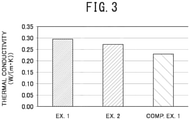
FIG. 3 is a graph showing the thermal conductivity of molded bodies of resin compositions containing the fillers in Examples and Comparative Example; and -
FIG. 4 illustrate SEM images of the surfaces and the cut surfaces of the fillers of Examples and Comparative Example. - One embodiment of the present invention will now be described in detail. The following embodiment illustrates an example of the present invention, and the present invention is not limited to this embodiment. The following embodiment can be variously altered or modified, and embodiments including such alternations or modifications can also be included in the present invention.
- A filler in this embodiment contains secondary particles which are sintered bodies of powder containing primary particles of ceramic. As the physical properties of the filler in this embodiment, the specific surface area measured by the BET method is 0.25 m2/g or less and the granule strength measured by a microcompression test is 45 MPa or more.
- The filler of this embodiment having such a configuration can form a resin composition by being blended in resins, such as plastics, curable resins, or rubbers. The resin composition contains the filler of this embodiment and a resin but may contain only the filler of this embodiment and a resin or may contain a blend of the filler of this embodiment and a resin with other components, such as reinforcing materials and additives.
- A molded body molded from the resin composition containing the filler of this embodiment has high thermal conductivity and mechanical strength due to the action of the filler of this embodiment, and thus can be used as a heat dissipating material, for example. The heat dissipating material may contain only the molded body of the resin composition containing the filler of this embodiment or may contain the molded body and other components. The shape and a molding method of the molded body are not particularly limited.
- Hereinafter, the filler of this embodiment, the resin composition, the molded body, and the heat dissipating material are described in more detail.
- The filler of this embodiment contains sintered bodies (secondary particles) of powder containing primary particles of ceramic. The filler of this embodiment can be manufactured by granulating and sintering the powder containing the primary particles of the ceramic. The powder containing the primary particles of the ceramic may contain only the primary particles of the ceramic or may contain the primary particles of the ceramic and particles of other components, such as additives. Examples of the additives include, for example, sintering aids and resins serving as binders for granulation.
- Examples of the binders include thermoplastic resins and thermosetting resins. Examples of the thermoplastic resins include, for example, polyvinyl alcohol, polyvinyl pyrrolidone, an acrylonitrile-styrene copolymer, an acrylonitrile-butadiene-styrene copolymer, an isobutylene-maleic anhydride copolymer, an acrylic resin, polycarbonate, polyamide, and the like. Examples of the thermosetting resins include, for example, an epoxy resin, a phenol resin, a melamin resin, an unsaturated polyester resin, and the like.
- Examples of the type of the ceramic include, but are not particularly limited to, silicon carbide (SiC), silicon nitride (Si3N4), silicon oxide (SiO2), aluminum nitride (AlN), aluminum oxide (Al2O3), zirconium oxide (ZrO2), titanium oxide (TiO2), boron nitride (BN), zinc oxide (ZnO), and magnesium oxide (MgO), for example. Among the ceramic above, silicon carbide is particularly preferable.
- The average particle diameter of the primary particles (average primary particle diameter) of the ceramic serving as a raw material of the filler in this embodiment is not particularly limited and may be set to 0.1 µm or more and 50 µm or less. When the average primary particle diameter is less than 0.1 µm, there is a risk that the secondary particles which are sintered bodies becomes excessively dense. In contrast, when the average primary particle diameter exceeds 50 µm, there is a risk that granulation become difficult, making it difficult to obtain the secondary particles which are sintered bodies. The average primary particle diameter of the primary particles of the ceramic can be measured by an electrical resistance method, for example.
- The specific surface area of the filler of this embodiment measured by the BET method needs to be 0.25 m2/g or less. The fact that the specific surface area of the filler exceeds 0.25 m2/g means that necking between the primary particles in granulation is insufficient, and thus there is a risk that the effect of increasing the thermal conductivity and the mechanical strength of the molded body of the resin composition is not sufficiently exhibited due to an increase in the interfacial resistance of the filler.
- The granule strength of the filler of this embodiment measured by the microcompression test needs to be 45 MPa or more. When the granule strength of the filler is less than 45 MPa, the filler is broken in molding of the resin composition, so that the interfacial resistance increases, and therefore there is a risk that the effect of increasing the thermal conductivity and the mechanical strength of the molded body of the resin composition is not sufficiently exhibited. Further, there is a risk that the melt viscosity of the resin composition increases in molding, resulting in reduced moldability. As a microcompression testing device capable of measuring the granule strength of the filler in this embodiment, a microcompression testing device MCT-200 manufactured by Shimadzu Corporation is mentioned, for example.
- The average particle diameter (average secondary particle diameter) of the filler in this embodiment is not particularly limited and may be set to 1 µm or more and 200 µm or less. When the average secondary particle diameter of the filler is less than 1 µm, there is a risk that the interfacial resistance of the filler increases, so that the thermal conductivity of the molded body of the resin composition is lowered. Further, there is a risk that the moldability of the resin composition is lowered. In contrast, when the average secondary particle diameter of the filler exceeds 200 µm, the particle diameter of the filler, in the case of molding a sheet as the molded body of the resin composition, increases relative to the thickness of the sheet, and therefore there is a risk that inconvenience of difficulty in molding the sheet arises. The average secondary particle diameter of the filler can be measured by a laser diffraction/scattering method, for example.
- The ratio between the average primary particle diameter of the ceramic and the average secondary particle diameter of the filler is preferably 1:5 to 1:200 in terms of ease of granulation.
- In the filler in which the ratio between the average primary particle diameter of the ceramic and the average secondary particle diameter of the filler is 1:100 to 1:200, the granule strength of the filler is more preferably 750 MPa or more and the specific surface area of the filler is more preferably 0.16 m2/g or less from the viewpoint of thermal conductivity.
- In the filler in which the ratio between the average primary particle diameter of the ceramic and the average secondary particle diameter of the filler is 1:5 to 1:20, the granule strength of the filler is more preferably 30 MPa or more and 100 MPa or less and the specific surface area of the filler is more preferably 0.2 m2/g or more and 0.5 m2/g or less and still more preferably 0.2 m2/g or more and 0.4 m2/g or less from the viewpoint of thermal conductivity.
- The irregular shape (fractal dimension) of the surface of the filler in this embodiment is preferably larger because the irregular shape has an action of increasing the thermal conductivity of the molded body of the resin composition by increasing contact points between the fillers.
- The number per unit mass or unit volume of the fillers contained in the resin composition is preferably larger. When the number per unit mass or unit volume of the fillers is larger, the number of contact points between the fillers is larger, and thus the thermal conductivity of the molded body of the resin composition is higher.
- The filler of this embodiment may be subjected to coupling treatment. A coupling treatment agent used for the coupling treatment is not particularly limited insofar as it is a material increasing the bondability between the filler and the resin and the wettability. For example, examples of the material improving the bondability include methacrylic acid strengthening the bond between an acrylic resin and the filler by radical polymerization. In addition thereto, an epoxy resin strengthening the bond by thermosetting is mentioned.
- Examples of the type of the resins serving as a raw material of the resin composition include, but are not particularly limited to, plastics, curable resins, rubbers, and the like. Specific examples include polyacrylic acid, polymethacrylic acid, polymethyl acrylate, polymethyl methacrylate, polyethyl acrylate, polyethyl methacrylate, polybutyl acrylate, polybutyl methacrylate, polyethylene, polypropylene, polystyrene, polyester, polyamide, polyimide, polyurethane, polyurea, polycarbonate, and the like. These resins may be used alone or in combination of two or more types thereof.
- The present invention is more specifically described below by illustration of Examples and Comparative Example.
- Primary particles of silicon carbide and a sintering aid were mixed to give powder as a raw material. As the primary particles of the silicon carbide, silicon carbide powder having a particle size #40000 (model number: GC40000) was used. The primary particle diameter D50 of the silicon carbide powder is 0.26 µm. The primary particle diameter D50 means the particle diameter at which the cumulative frequency from the small particle diameter side is 50% in the cumulative particle diameter distribution on a volume basis of the powder.
- As the sintering aid, aluminum nitrate 9-hydrate (Al(NO3)3·9H2O) powder was used. The used amount of the sintering aid was set to 30% by mass of the used amount of the primary particles of the silicon carbide (2.16% by mass in terms of aluminum).
- Next, the primary particles of the silicon carbide and the sintering aid were dispersed in a solvent, such as water, to give a slurry. The solid concentration of the slurry is 16.3% by mass. This slurry was fed to a disc type spray dryer L-8i model manufactured by OHKAWARA KAKOHKI CO., LTD., to be granulated to give a granulated substance of mixed powder of the primary particles of the silicon carbide and the sintering aid.
- Next, the granulated substance of the mixed powder of the primary particles of the silicon carbide and the sintering aid was sintered using a sintering furnace to manufacture sintered bodies (secondary particles). The operating conditions of the sintering furnace were as follows: atmosphere of argon; sintering temperature of 1900°C; and sintering time of 4 hours.
- Some of the obtained sintered bodies are bonded in some cases. Therefore, when bonded, the sintered bodies are crushed using a high-speed rotary mill (pin mill). The crushed sintered bodies were classified using a jet classifier, and sintered bodies having small particle diameters are removed. Thereafter, the particle size was adjusted using a vibrating sieving machine capable of sieving out particles having a particle diameter of 25 µm or more and 53 µm or less. Thus, a filler containing sintered bodies (secondary particles) having a particle diameter of 30 µm or more and 60 µm or less was obtained.
- A filler of Example 2 was manufactured in the same manner as in Example 1, except for using silicon carbide powder having a particle size #2000 (model number: GC#2000, primary particle diameter D50: 6.7 µm) as the primary particles of the silicon carbide, obtaining powder serving as a raw material by mixing primary particles of silicon carbide, a sintering aid, and a resin binder, and the operating conditions of the sintering furnace.
- The operating conditions of the sintering furnace are as follows. More specifically, in Example 2, pre-firing for removing the binder is performed prior to sintering. In detail, first, the pre-firing is performed under the conditions of an atmosphere of nitrogen, a sintering temperature of 800°C, and a sintering time of 0.5 hour, followed by sintering under the conditions of an atmosphere of argon, a sintering temperature of 1900°C, and a sintering time of 4 hours.
- A filler of Example 3 was manufactured in the same manner as in Example 1, except that the sintering temperature was 1850°C.
- A filler of Example 4 was manufactured in the same manner as in Example 1, except that the sintering temperature was 1800°C.
- A filler of Example 5 was manufactured in the same manner as in Example 2, except that the sintering temperature was 1850°C.
- A filler of Comparative Example 1 was manufactured in the same manner as in Example 1, except that no sintering aid was used and powder serving as a raw material contained only primary particles of silicon carbide.
- For the obtained fillers of Examples 1 to 5 and Comparative Example 1, the surfaces and the cut surfaces were observed using a scanning electron microscope (SEM) and SEM images were photographed and crystal structure analysis by an X-ray diffraction method was performed. In addition, the average secondary particle diameter D50, the specific surface area, and the granule strength of the fillers of Examples 1 to 5 and Comparative Example 1 were measured. Further, resin compositions each containing a mixture of each filler and a resin were molded to give molded bodies, and the thermal conductivity of the molded bodies was measured.
- The average secondary particle diameter D50 of the fillers of Examples 1 to 5 and Comparative Example 1 was measured using a laser diffraction/scattering particle diameter distribution analyzer LA-300 manufactured by HORIBA, Ltd. The results are shown in Table 1.
[Table 1] D50 of primary particles (µm) Sintering aid Binder D50 of secondary particles (µm) Specific surface area (m2/g) Granule strength (MPa) Thermal conductivity (W/(m·K)) Ex. 1 0.26 Used Not used 42.5 0.12 767 0.295 Ex. 2 6.7 Used Used 42.1 0.24 45 0.273 Ex. 3 0.26 Used Not used 39.7 0.16 920 0.295 Ex. 4 0.26 Used Not used 39.4 0.13 992 0.269 Ex. 5 6.7 Used Used 45.8 0.24 56 0.249 Comp. Ex. 1 0.26 Not used Not used 43.2 0.98 22 0.230 - The specific surface area of the fillers of Examples 1 to 5 and Comparative Example 1 was measured using a fully automatic BET specific surface area analyzer Macsorb (Registered Trademark) manufactured by MOUNTECH Co., LTD. The results are shown in Table 1 and the graph of
FIG. 1 . - The granule strength of the fillers of Examples 1 to 5 and Comparative Example 1 was measured using a microcompression testing device MCT-200 manufactured by Shimadzu Corporation. A microcompression testing method is as follows. Ten particles having a secondary particle diameter of about D50 were randomly selected, the granule strength of each particle was measured using a microcompression testing device, and then the average value of these measurement values was used as the granule strength of the filler. The measurement conditions are a loading rate of 12.96 mN/sec and a load holding time of 1 sec. The results are shown in Table 1 and the graph of
FIG. 2 . - The SEM images of the surfaces and the cut surfaces of the fillers were photographed at magnifications of 2,000x and 5,000x, respectively. The results are collectively shown in
FIG. 4 . The SEM images of the surfaces of the fillers photographed at a magnification of 5,000x show that, for the fillers of Examples 1, 2, the primary particles of the silicon carbide constituting the fillers have a shape derived from a hexagonal crystal (α-SiC) due to crystal growth. - The crystal structure analysis of the fillers of Examples 1, 2 was performed using an automated multipurpose X-ray diffractometer Ultima IV manufactured by Rigaku Corporation. The X-ray diffraction results showed that the fillers of Examples 1, 2 were free from β-SiC and contained α-SiC.
- The thermal conductivity of the fillers of Examples 1 to 5 and Comparative Example 1 was measured using a thermal conductivity meter QTM-500 manufactured by KYOTO ELECTRONICS MANUFACTURING CO., LTD. A method for measuring the thermal conductivity is a heat ray method. As pretreatment of a measurement sample, the sample was dried for 30 minutes or more in a constant temperature thermostat bath adjusted to 105°C. Thereafter, the sample is allowed to naturally cool in a desiccator having a relative humidity of 25% or less for 1 hour or more. Then, the sample was charged into a measuring cell, and 100 mL or more of the sample was spread while tapping the measuring cell.
- The results are shown in Table 1 and the graph of
FIG. 3 . As is understood from Table 1 and the graphs ofFIGS. 1, 2 ,3 , the fillers of Examples 1 to 5 had thermal conductivity higher than that of the filler of Comparative Example 1 because the specific surface area of the fillers was 0.25 m2/g or less and the granule strength was 45 MPa or more.
Claims (5)
- A filler comprising:secondary particles which are sintered bodies of powder containing primary particles of ceramic, whereina specific surface area measured by a BET method is 0.25 m2/g or less, andgranule strength measured by a microcompression test is 45 MPa or more.
- The filler according to claim 1, whereinthe specific surface area measured by the BET method is 0.16 m2/g or less,the granule strength measured by the microcompression test is 750 MPa or more, anda ratio between an average primary particle diameter of the primary particles of the ceramic and an average secondary particle diameter of the secondary particles is 1:100 to 1:200.
- The filler according to claim 1 or claim 2, wherein
the ceramic is silicon carbide. - A molded body comprising:
a resin composition containing the filler according to any one of claims 1 to 3 and a resin. - A heat dissipating material comprising:
the molded body according to claim 4.
Applications Claiming Priority (2)
| Application Number | Priority Date | Filing Date | Title |
|---|---|---|---|
| JP2019055197 | 2019-03-22 | ||
| PCT/JP2019/051341 WO2020194974A1 (en) | 2019-03-22 | 2019-12-26 | Filler, molded body, heat dissipating material |
Publications (2)
| Publication Number | Publication Date |
|---|---|
| EP3943468A1 true EP3943468A1 (en) | 2022-01-26 |
| EP3943468A4 EP3943468A4 (en) | 2022-10-05 |
Family
ID=72610777
Family Applications (1)
| Application Number | Title | Priority Date | Filing Date |
|---|---|---|---|
| EP19922074.0A Pending EP3943468A4 (en) | 2019-03-22 | 2019-12-26 | Filler, molded body, heat dissipating material |
Country Status (5)
| Country | Link |
|---|---|
| US (1) | US20220186102A1 (en) |
| EP (1) | EP3943468A4 (en) |
| JP (1) | JP7509749B2 (en) |
| CN (1) | CN113677648A (en) |
| WO (1) | WO2020194974A1 (en) |
Families Citing this family (4)
| Publication number | Priority date | Publication date | Assignee | Title |
|---|---|---|---|---|
| CN112630110B (en) * | 2020-12-14 | 2023-04-25 | 百尔罗赫塑料添加剂(江苏)有限公司 | Zinc oxide powder particle size testing method and application |
| CN112645713B (en) * | 2020-12-23 | 2022-07-08 | 宁波伏尔肯科技股份有限公司 | High-strength and high-toughness ceramic composite material and preparation method thereof |
| CN113105269B (en) * | 2021-05-07 | 2022-09-20 | 中国石油化工股份有限公司 | Pore filler for ceramic heat transfer element, method for filling pores in ceramic heat transfer element, and ceramic heat transfer element |
| JP7640426B2 (en) * | 2021-09-30 | 2025-03-05 | 株式会社フジミインコーポレーテッド | Silicon carbide powder and method for producing compact |
Family Cites Families (13)
| Publication number | Priority date | Publication date | Assignee | Title |
|---|---|---|---|---|
| JP4111478B2 (en) * | 2000-02-29 | 2008-07-02 | 東海カーボン株式会社 | Method for producing silicon carbide microspheres |
| JP2010195668A (en) * | 2008-04-04 | 2010-09-09 | Toto Ltd | Boron carbide silicon carbide silicon composite material |
| KR101545776B1 (en) * | 2010-01-29 | 2015-08-19 | 가부시끼가이샤 도꾸야마 | Process for production of spherical aluminum nitride powder, and spherical aluminum nitride powder produced by the process |
| JP2011241115A (en) * | 2010-05-18 | 2011-12-01 | Shinano Denki Seiren Kk | Noncohesive silicon carbide fine powder |
| JP5706671B2 (en) * | 2010-11-15 | 2015-04-22 | 独立行政法人産業技術総合研究所 | Silicon carbide powder for producing silicon carbide single crystal by sublimation recrystallization method and method for producing the same |
| CN105164179B (en) * | 2013-03-06 | 2017-09-08 | Dic株式会社 | Epoxy resin composition, cured product, heat dissipation material and electronic member |
| WO2014199650A1 (en) * | 2013-06-14 | 2014-12-18 | 三菱電機株式会社 | Thermosetting resin composition, method for producing thermally conductive sheet, and power module |
| JP6245602B2 (en) * | 2013-10-21 | 2017-12-13 | 国立研究開発法人産業技術総合研究所 | Silicon nitride filler, resin composite, insulating substrate, semiconductor encapsulant, method for producing silicon nitride filler |
| JP6794613B2 (en) * | 2014-02-05 | 2020-12-02 | 三菱ケミカル株式会社 | Boron Nitride Agglomerated Particles, Method for Producing Boron Nitride Aggregated Particles, Boron Nitride Agglomerated Particle-Containing Resin Composition, and Mold |
| JP6375140B2 (en) * | 2014-04-30 | 2018-08-15 | 日東電工株式会社 | Thermally conductive polymer composition and thermally conductive molded body |
| JP6345533B2 (en) * | 2014-08-12 | 2018-06-20 | 株式会社トクヤマ | Aluminum nitride particles and method for producing the same |
| JP6626333B2 (en) * | 2015-11-20 | 2019-12-25 | 小林 博 | Method for producing molded body comprising a collection of ceramic particles having metal or alloy properties |
| JP6901327B2 (en) * | 2017-06-12 | 2021-07-14 | 株式会社フジミインコーポレーテッド | Fillers, moldings, and heat dissipation materials |
-
2019
- 2019-12-26 US US17/441,083 patent/US20220186102A1/en not_active Abandoned
- 2019-12-26 EP EP19922074.0A patent/EP3943468A4/en active Pending
- 2019-12-26 WO PCT/JP2019/051341 patent/WO2020194974A1/en not_active Ceased
- 2019-12-26 CN CN201980094465.9A patent/CN113677648A/en active Pending
- 2019-12-26 JP JP2021508778A patent/JP7509749B2/en active Active
Also Published As
| Publication number | Publication date |
|---|---|
| JP7509749B2 (en) | 2024-07-02 |
| US20220186102A1 (en) | 2022-06-16 |
| WO2020194974A1 (en) | 2020-10-01 |
| JPWO2020194974A1 (en) | 2020-10-01 |
| EP3943468A4 (en) | 2022-10-05 |
| CN113677648A (en) | 2021-11-19 |
Similar Documents
| Publication | Publication Date | Title |
|---|---|---|
| EP3943468A1 (en) | Filler, molded body, heat dissipating material | |
| KR102079972B1 (en) | Boron nitride agglomerates, method for the production thereof and use thereof | |
| EP2511091B1 (en) | Method for preparing a sintered spherical boron nitride powder | |
| EP2868641B1 (en) | Sintered spherical bn particles with concave part, method for producing same, and polymer material comprising them | |
| EP3904310A1 (en) | Inorganic powder for heat-dissipating resin composition, heat-dissipating resin composition using same, and methods for producing same | |
| JP2026016795A (en) | Boron nitride agglomerated powder, heat dissipation sheet and semiconductor device | |
| EP3560890B1 (en) | Hexagonal boron nitride powder and method for producing same | |
| WO2019017451A1 (en) | Aluminum nitride powder and production method therefor | |
| EP4566995A1 (en) | Ceramic powder, resin composition and method for producing ceramic powder | |
| CN116235296A (en) | Magnesium oxide powder, filler composition, resin composition and heat dissipation part | |
| EP4269346A1 (en) | Magnesium oxide powder, thermally conductive filler, resin composition, and production method for magnesium oxide powder | |
| JP3533532B2 (en) | Large particle size aluminum nitride powder and method for producing the same | |
| JP2023065458A (en) | Aluminum nitride based powder and method for producing the same | |
| JP4392088B2 (en) | Boron nitride-coated spherical borate particles, mixed powder containing the same, and methods for producing them | |
| JP3458196B2 (en) | High thermal conductive resin composition | |
| JP3685629B2 (en) | Borate particles, method for producing inorganic powder containing the particles, and use thereof | |
| KR102584925B1 (en) | Manufacturing method of spherical aluminum nitride powder | |
| EP4502104A1 (en) | Thermally conductive filler, method for manufacturing thermally conductive filler, and thermally conductive resin composition | |
| KR102936873B1 (en) | Magnesium oxide powder and method for producing the same | |
| JP7853385B1 (en) | Hexagonal boron nitride powder | |
| RU2784621C1 (en) | Method for manufacturing composite boron-containing neutron-protective structural material | |
| WO2024048377A1 (en) | Method for producing sheet, and sheet | |
| JP2025112957A (en) | Boron nitride agglomerated powder, resin composition, heat dissipation sheet and semiconductor device | |
| JP2025142797A (en) | Boron nitride agglomerated particles, boron nitride agglomerated powder, composite material composition, heat dissipation component, semiconductor device | |
| JPS5891057A (en) | Non-oxide ceramic sintered body |
Legal Events
| Date | Code | Title | Description |
|---|---|---|---|
| STAA | Information on the status of an ep patent application or granted ep patent |
Free format text: STATUS: THE INTERNATIONAL PUBLICATION HAS BEEN MADE |
|
| PUAI | Public reference made under article 153(3) epc to a published international application that has entered the european phase |
Free format text: ORIGINAL CODE: 0009012 |
|
| STAA | Information on the status of an ep patent application or granted ep patent |
Free format text: STATUS: REQUEST FOR EXAMINATION WAS MADE |
|
| 17P | Request for examination filed |
Effective date: 20210921 |
|
| AK | Designated contracting states |
Kind code of ref document: A1 Designated state(s): AL AT BE BG CH CY CZ DE DK EE ES FI FR GB GR HR HU IE IS IT LI LT LU LV MC MK MT NL NO PL PT RO RS SE SI SK SM TR |
|
| DAV | Request for validation of the european patent (deleted) | ||
| DAX | Request for extension of the european patent (deleted) | ||
| A4 | Supplementary search report drawn up and despatched |
Effective date: 20220905 |
|
| RIC1 | Information provided on ipc code assigned before grant |
Ipc: C08K 3/14 20060101ALI20220830BHEP Ipc: C09K 5/14 20060101ALI20220830BHEP Ipc: C08L 101/00 20060101ALI20220830BHEP Ipc: C08K 3/34 20060101ALI20220830BHEP Ipc: C04B 35/569 20060101AFI20220830BHEP |