EP3942622B1 - Batteriekasten, traktionsbatterie mit diesem batteriekasten und fahrzeug mit dieser traktionsbatterie - Google Patents
Batteriekasten, traktionsbatterie mit diesem batteriekasten und fahrzeug mit dieser traktionsbatterie Download PDFInfo
- Publication number
- EP3942622B1 EP3942622B1 EP20718560.4A EP20718560A EP3942622B1 EP 3942622 B1 EP3942622 B1 EP 3942622B1 EP 20718560 A EP20718560 A EP 20718560A EP 3942622 B1 EP3942622 B1 EP 3942622B1
- Authority
- EP
- European Patent Office
- Prior art keywords
- battery case
- battery
- stiffening
- housing
- case according
- Prior art date
- Legal status (The legal status is an assumption and is not a legal conclusion. Google has not performed a legal analysis and makes no representation as to the accuracy of the status listed.)
- Active
Links
Images

Classifications
-
- B—PERFORMING OPERATIONS; TRANSPORTING
- B60—VEHICLES IN GENERAL
- B60K—ARRANGEMENT OR MOUNTING OF PROPULSION UNITS OR OF TRANSMISSIONS IN VEHICLES; ARRANGEMENT OR MOUNTING OF PLURAL DIVERSE PRIME-MOVERS IN VEHICLES; AUXILIARY DRIVES FOR VEHICLES; INSTRUMENTATION OR DASHBOARDS FOR VEHICLES; ARRANGEMENTS IN CONNECTION WITH COOLING, AIR INTAKE, GAS EXHAUST OR FUEL SUPPLY OF PROPULSION UNITS IN VEHICLES
- B60K1/00—Arrangement or mounting of electrical propulsion units
- B60K1/04—Arrangement or mounting of electrical propulsion units of the electric storage means for propulsion
-
- H—ELECTRICITY
- H01—ELECTRIC ELEMENTS
- H01M—PROCESSES OR MEANS, e.g. BATTERIES, FOR THE DIRECT CONVERSION OF CHEMICAL ENERGY INTO ELECTRICAL ENERGY
- H01M50/00—Constructional details or processes of manufacture of the non-active parts of electrochemical cells other than fuel cells, e.g. hybrid cells
- H01M50/20—Mountings; Secondary casings or frames; Racks, modules or packs; Suspension devices; Shock absorbers; Transport or carrying devices; Holders
- H01M50/204—Racks, modules or packs for multiple batteries or multiple cells
-
- H—ELECTRICITY
- H01—ELECTRIC ELEMENTS
- H01M—PROCESSES OR MEANS, e.g. BATTERIES, FOR THE DIRECT CONVERSION OF CHEMICAL ENERGY INTO ELECTRICAL ENERGY
- H01M50/00—Constructional details or processes of manufacture of the non-active parts of electrochemical cells other than fuel cells, e.g. hybrid cells
- H01M50/20—Mountings; Secondary casings or frames; Racks, modules or packs; Suspension devices; Shock absorbers; Transport or carrying devices; Holders
- H01M50/218—Mountings; Secondary casings or frames; Racks, modules or packs; Suspension devices; Shock absorbers; Transport or carrying devices; Holders characterised by the material
- H01M50/22—Mountings; Secondary casings or frames; Racks, modules or packs; Suspension devices; Shock absorbers; Transport or carrying devices; Holders characterised by the material of the casings or racks
- H01M50/222—Inorganic material
- H01M50/224—Metals
-
- H—ELECTRICITY
- H01—ELECTRIC ELEMENTS
- H01M—PROCESSES OR MEANS, e.g. BATTERIES, FOR THE DIRECT CONVERSION OF CHEMICAL ENERGY INTO ELECTRICAL ENERGY
- H01M50/00—Constructional details or processes of manufacture of the non-active parts of electrochemical cells other than fuel cells, e.g. hybrid cells
- H01M50/20—Mountings; Secondary casings or frames; Racks, modules or packs; Suspension devices; Shock absorbers; Transport or carrying devices; Holders
- H01M50/244—Secondary casings; Racks; Suspension devices; Carrying devices; Holders characterised by their mounting method
-
- H—ELECTRICITY
- H01—ELECTRIC ELEMENTS
- H01M—PROCESSES OR MEANS, e.g. BATTERIES, FOR THE DIRECT CONVERSION OF CHEMICAL ENERGY INTO ELECTRICAL ENERGY
- H01M50/00—Constructional details or processes of manufacture of the non-active parts of electrochemical cells other than fuel cells, e.g. hybrid cells
- H01M50/20—Mountings; Secondary casings or frames; Racks, modules or packs; Suspension devices; Shock absorbers; Transport or carrying devices; Holders
- H01M50/271—Lids or covers for the racks or secondary casings
- H01M50/273—Lids or covers for the racks or secondary casings characterised by the material
- H01M50/276—Inorganic material
-
- B—PERFORMING OPERATIONS; TRANSPORTING
- B60—VEHICLES IN GENERAL
- B60K—ARRANGEMENT OR MOUNTING OF PROPULSION UNITS OR OF TRANSMISSIONS IN VEHICLES; ARRANGEMENT OR MOUNTING OF PLURAL DIVERSE PRIME-MOVERS IN VEHICLES; AUXILIARY DRIVES FOR VEHICLES; INSTRUMENTATION OR DASHBOARDS FOR VEHICLES; ARRANGEMENTS IN CONNECTION WITH COOLING, AIR INTAKE, GAS EXHAUST OR FUEL SUPPLY OF PROPULSION UNITS IN VEHICLES
- B60K1/00—Arrangement or mounting of electrical propulsion units
- B60K1/04—Arrangement or mounting of electrical propulsion units of the electric storage means for propulsion
- B60K2001/0405—Arrangement or mounting of electrical propulsion units of the electric storage means for propulsion characterised by their position
- B60K2001/0438—Arrangement under the floor
-
- B—PERFORMING OPERATIONS; TRANSPORTING
- B60—VEHICLES IN GENERAL
- B60Y—INDEXING SCHEME RELATING TO ASPECTS CROSS-CUTTING VEHICLE TECHNOLOGY
- B60Y2306/00—Other features of vehicle sub-units
- B60Y2306/01—Reducing damages in case of crash, e.g. by improving battery protection
-
- H—ELECTRICITY
- H01—ELECTRIC ELEMENTS
- H01M—PROCESSES OR MEANS, e.g. BATTERIES, FOR THE DIRECT CONVERSION OF CHEMICAL ENERGY INTO ELECTRICAL ENERGY
- H01M2220/00—Batteries for particular applications
- H01M2220/20—Batteries in motive systems, e.g. vehicle, ship, plane
-
- Y—GENERAL TAGGING OF NEW TECHNOLOGICAL DEVELOPMENTS; GENERAL TAGGING OF CROSS-SECTIONAL TECHNOLOGIES SPANNING OVER SEVERAL SECTIONS OF THE IPC; TECHNICAL SUBJECTS COVERED BY FORMER USPC CROSS-REFERENCE ART COLLECTIONS [XRACs] AND DIGESTS
- Y02—TECHNOLOGIES OR APPLICATIONS FOR MITIGATION OR ADAPTATION AGAINST CLIMATE CHANGE
- Y02E—REDUCTION OF GREENHOUSE GAS [GHG] EMISSIONS, RELATED TO ENERGY GENERATION, TRANSMISSION OR DISTRIBUTION
- Y02E60/00—Enabling technologies; Technologies with a potential or indirect contribution to GHG emissions mitigation
- Y02E60/10—Energy storage using batteries
Definitions
- the invention relates to a battery box for a traction battery, with a housing lower part which has housing side walls and a housing base, with a housing cover which is designed to be tightly sealable and detachable from the housing lower part, with a stiffening structure with stiffening profiles, wherein the stiffening structure is provided between the housing base and the housing cover and is non-detachably connected to the housing cover.
- a battery box is known to have a stiffening structure made of stiffening profiles permanently attached to the housing cover. This stiffening structure is provided between the housing cover and the housing base of the lower housing section or a support structure attached to the lower housing section - and is designed to absorb lateral forces caused by a crash. Surprisingly, it has been found that the crash behavior properties that can be achieved due to the stiffened housing cover depend on the connection of the stiffening profiles to the housing cover.
- the invention therefore has the task of further improving the crash behaviour of the battery box while keeping its weight comparatively low.
- the invention solves the problem by the features of claim 1.
- the stiffening profiles are firmly bonded to the housing cover, a housing cover with particularly high mechanical strength can be created in order to better absorb deformation forces in the event of a crash - and thus protect the battery modules accommodated in the battery box.
- the weight of the battery box remains low.
- the battery box according to the invention can therefore be characterized by improved crash behavior compared to known battery boxes, despite its low weight.
- the crash behavior with low weight on the battery box can be further improved if the stiffening profiles form closed first hollow profiles together with the housing cover.
- This can be achieved above all by the closed hollow profiles according to the invention, formed by the respective stiffening profiles together with the housing cover, and the resulting comparatively high mechanical rigidity.
- This can lead to a housing cover that is particularly mechanically resilient in order to better absorb deformation forces in the event of a crash - so that the battery modules accommodated by the battery box are protected.
- this structural design of the hollow profiles is carried out in a comparatively material-saving manner by means of materially bonded parts, namely stiffening profiles and housing cover - which in turn keeps the weight of the mechanically particularly resilient housing cover and subsequently also of the battery box low.
- the permanent bond between the housing cover and the hollow profiles can be easily increased in strength if the stiffening profiles are firmly connected to the housing cover via a discontinuous welded connection, for example in the form of weld points.
- a further increase in the mechanical characteristics of the battery box can be achieved if at least a first hollow profile has a bead in the housing cover.
- the bead is preferably closed and/or straight - which can further facilitate the manufacture of the housing cover with the aforementioned advantage.
- the bead is preferably directed inwards.
- stiffening profiles have a hat profile shape, the respective legs of which are integrally connected to the housing cover, production can be simplified - which means that the costs for a rectangular hollow profile can be reduced even further.
- the stiffening profiles run parallel to each other in order to even out the mechanical load capacity across the housing cover by means of such more symmetrical relationships.
- a particularly resilient stiffening of the housing cover can be achieved if the stiffening profiles run parallel to a respective side wall of the housing base. In this way, the mechanical load-bearing capacity of the housing cover can be further increased.
- the rigidity of the battery box can be further increased if the battery box has a support structure for mounting battery modules of the traction battery, whereby the support structure is attached to the lower part of the housing.
- stiffening profiles are provided directly above, in particular above longitudinal or transverse beams, the supporting structure, for example in the area of Mounting points of the battery modules to stiffen the battery box in addition to the supporting structure. This can further improve the protection of the battery modules against damage in the event of a crash.
- the stiffening structure can also contribute to the secure mounting of the battery modules. This can further improve the stability of the traction battery.
- the housing base has a circumferential flange on which the housing cover rests, a particularly torsion-resistant housing can be provided, which can also seal the battery modules in a simple and secure manner.
- the torsional rigidity of the battery box can be further increased if the housing cover has a closed second hollow profile on the outside in the area of the flange.
- the stiffening profiles protrude into the lower part of the housing at least in some areas, which contributes to further stiffening the battery box.
- the mechanical requirements for the supporting structure in the lower part of the housing can thus be reduced - which can be beneficial for freedom of assembly.
- the stiffening profiles extend outside the housing base in order to avoid damage to the battery modules accommodated in the housing base in the event of deformations on the housing cover caused by a crash, for example.
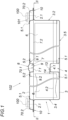
- FIG. 1 For example, a battery box 1 for a traction battery 102 of a vehicle 100 is shown.
- the battery box 1 has a housing cover 2 and a trough-shaped housing base 3 - housing cover 2 and housing base 3 are made from a formed sheet metal, for example sheet steel. It is conceivable to form the sheet metal by deep drawing in order to form the housing cover 2 and/or the housing base 2. It is also conceivable to form the sheet metal by folding in order to shape the housing base 2 and/or the housing cover 2.
- the housing cover 2 tightly closes the housing base 3, but is detachably connected to this housing base 3 via the first screw connections 2.1 shown in the illustration.
- a supporting structure 4 which is firmly connected to it, namely via a continuous welded connection 5.1, namely a weld seam, and is made up of firmly connected longitudinal and transverse beams 4.1, 4.2
- the support structure 4 attached to the housing base 3 stiffens the housing base 3 and also serves to attach battery modules 6 of the traction battery 102 in the battery box 1.
- the battery box 1 has a stiffening structure 7 with stiffening profiles 7.1, 7.2.
- This stiffening structure 7 is provided between the support structure 4 and the housing cover 2 and is permanently connected to the housing cover 2 via a continuous welded connection 5.1, namely a weld seam.
- the battery modules 6 - or also called cell modules - preferably have lithium-ion cells.
- a battery module 6 is understood to be an interconnected package of several battery cells, which battery cells are surrounded by a preferably closed housing.
- the stiffening profiles 7.1, 7.2 are firmly connected to the housing cover 2 via a welded connection 5.2, which significantly increases the rigidity of the housing cover 2. This is all the more so because the stiffening profiles 7.1, 7.2 together with the housing cover 2 form closed first hollow profiles 70.1 - which has a particularly advantageous influence on the torsional rigidity of the housing cover 2 in order to be able to withstand a comparatively high crash-related force input.
- the battery box 1 can therefore protect the battery modules 6 accommodated particularly well against damage.
- the stiffening profiles 7.1, 7.2 run lengthwise and crosswise of the battery box 1.
- the manufacture of the housing cover 2 is simplified by the stiffening profiles 7.1, 7.2 being firmly connected to the housing cover 2 via a discontinuous welded connection 5.2 in the form of welding points arranged in a row and spaced apart from one another - which is particularly advantageous in the Fig. 2 can be recognized.
- an adhesive joint preferably a discontinuous one, is conceivable.
- a first hollow profile has a closed, straight and outwardly curved bead 8 in the housing cover 2.
- This bead 8 has a stiffening effect on the housing cover 2 and additionally increases the buckling resistance of the hollow profile 70.1.
- the stiffening profiles 7.1, 7.2 have a hat profile shape 9.
- the stiffening profile 7.1, 7.2 is integrally connected to the housing cover 2 via the two legs 9.1, 9.2 on the hat profile shape 9 - which facilitates the manufacture of the stiffening structure 7 and thus reduces the manufacturing costs of the battery box 1.
- stiffening profiles 7.1 and 7.2 run parallel to the respective side walls 3.1, 3.3 and 3.2, 3.4 of the housing base 3 - as in Fig. 2
- these stiffening profiles 7.1 and 7.2 are provided above the longitudinal and transverse beams 4.1, 4.2 of the supporting structure 4 - see Fig. 1 , in which it is shown that the stiffening profiles 7.1, 7.2 are arranged from the bottom of the housing lower part 3 towards the housing cover 2 directly above the longitudinal and transverse beams 4.1, 4.2, i.e. not offset laterally. In this way, the spaces between the battery modules 6 are used specifically to mechanically stiffen the battery box 1.
- the housing base 3 also has a circumferential flange 10 on which the housing cover rests. In this area, namely in the area of the flange 10, the housing cover 2 has a closed second hollow profile 70.2 on the outside, which makes the battery box 1 particularly stable against crash loads.
- the stiffening profiles are located outside the housing base 3 - the first hollow profile 70.1 is above the Housing side wall 3.1 to 3.4. In the event of deformation of the housing cover 2 due to a crash, the risk of damage to the battery modules 6 is therefore reduced.
- the battery box 1 is also arranged below the body floor 101 of a vehicle 100, as in Fig. 1 indicated.
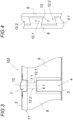
- a battery box 11 is partially shown, which is different from the battery box 1 of the Figure 2 in that the battery modules 6 with their lateral mounting flanges 12.1, 12.2, which rest on the longitudinal beam 4.1 of the housing base 3, are held down by the stiffening profile 7.1.
- the stiffening profile 7.1, 7.2 is designed to clamp the mounting flange 12.1, 12.2 of a battery module 6 resting on the support structure 4. The assembly effort on the traction battery 102 is thereby significantly reduced.
- - screw connections 13 detachably connect the cover 6, the battery modules 6 and the housing base 3, which further increases the assembly safety.
- the mounting flanges 12.1, 12.2 of the battery modules 6 have a dovetail shape. This additionally secures the battery modules 6 in the mounting position and, due to an interlocking design, also opens up a wide support surface for the stiffening profile 7.1, which contributes to improving the mechanical stability.
Landscapes
- Chemical & Material Sciences (AREA)
- Chemical Kinetics & Catalysis (AREA)
- Electrochemistry (AREA)
- General Chemical & Material Sciences (AREA)
- Inorganic Chemistry (AREA)
- Engineering & Computer Science (AREA)
- Combustion & Propulsion (AREA)
- Transportation (AREA)
- Mechanical Engineering (AREA)
- Battery Mounting, Suspending (AREA)
Description
- Die Erfindung betrifft einen Batteriekasten für eine Traktionsbatterie, mit einem Gehäuseunterteil, das Gehäuseseitenwände und einen Gehäuseboden aufweist, mit einem Gehäusedeckel, der das Gehäuseunterteil dicht verschließbar und von diesem lösbar ausgebildet ist, mit einer Versteifungsstruktur mit Versteifungsprofilen, wobei die Versteifungsstruktur zwischen Gehäuseboden und Gehäusedeckel vorgesehenen und mit dem Gehäusedeckel unlösbar verbunden ist.
- Aufgrund einer vergleichsweise bodennahen Einbauposition von Batteriekästen für Traktionsbatterien bedarf es im Falle eines Crashs eines erhöhten Schutzes der von den Batteriekästen aufgekommenen Batteriemodule. Beispielsweise ist aus der
DE102017105709A1 ein Batteriekasten bekannt, an dessen Gehäusedeckel eine Versteifungsstruktur aus Versteifungsprofilen unlösbar angebunden ist. Diese Versteifungsstruktur ist zwischen Gehäusedeckel und dem Gehäuseboden des Gehäuseunterteils bzw. einer am Gehäuseunterteil befestigten Tragstruktur vorgesehen - und dazu ausgebildet, crashbedingte Seitenkräfte aufzunehmen. Überraschend hat sich herausgestellt, dass die erreichbaren Eigenschaften im Crashverhalten aufgrund des versteiften Gehäusedeckels von der Anbindung der Versteifungsprofile am Gehäusedeckel abhängen. - Ein Stand der Technik in Anlehnung an den Oberbegriff des Anspruchs 1 ist in der
CN208093637U undCN108258165A bekannt. - Die Erfindung hat sich daher die Aufgabe gestellt, bei vergleichswiese geringem Gewicht am Batteriekasten dessen Crashverhalten weiter zu verbessern.
- Die Erfindung löst die gestellte Aufgabe dadurch, durch die Merkmale des Anspruchs 1.
- Sind die Versteifungsprofile mit dem Gehäusedeckel stoffschlüssig verbunden, kann ein mechanische besonders belastbarer Gehäusedeckel geschaffen werden, um im Falle eines Crashs Verformungskräfte verbessert aufzunehmen - und damit die vom Batteriekasten aufgenommen Batteriemodule zu schützen. Im Gegensatz zu anderen Arten der unlösbaren Anbindung, beispielsweise Stauch-Press-Verbindungen, bleibt damit das Gewicht des Batteriekastens gering. Der erfindungsgemäße Batteriekastens kann sich daher bei geringem Gewicht durch ein verbessertes Crashverhalten gegenüber bekannten Batteriekästen auszeichnen.
- Das Crashverhalten bei geringem Gewicht am Batteriekasten ist weiter verbesserbar, wenn die Versteifungsprofile jeweils zusammen mit dem Gehäusedeckel geschlossene erste Hohlprofile ausbilden. Dies ist vor allem auch durch die erfindungsgemäßen geschlossenen Hohlprofile, ausgebildet von den jeweiligen Versteifungsprofilen zusammen mit dem Gehäusedeckel, und der sich daraus ergebenden vergleichsweise hohen mechanischen Steifigkeit erreichbar. Dies kann zu einem mechanisch besonders belastbaren Gehäusedeckel führen, um im Falle eines Crashs Verformungskräfte verbessert aufzunehmen - damit die vom Batteriekasten aufgenommen Batteriemodule geschützt werden. Zudem ist diese konstruktive Ausbildung der Hohlprofile durch stoffschlüssig verbundene Teile, nämlich Versteifungsprofile und Gehäusedeckel, vergleichsweise materialsparend ausgeführt - was wiederum das Gewicht des mechanisch besonders belastbaren Gehäusedeckels und in weiterer Folge auch des Batteriekastens geringhält.
- Der unlösbare Verbund zwischen Gehäusedeckel und Hohlprofilen kann in seiner Festigkeit auf einfache Weise erhöht werden, wenn die Versteifungsprofile mit dem Gehäusedeckel über eine diskontinuierliche Schweißverbindung, beispielsweise in Form von Schweißpunkten, stoffschlüssig verbunden sind.
- Eine weitere Steigerung der mechanischen Kennwerte am Batteriekasten ist erreichbar, wenn mindestens ein erstes Hohlprofil eine Sicke im Gehäusedeckel aufweist. Vorzugsweise läuft die Sicke geschlossen und/oder gerade - was die Herstellung des Gehäusedeckels bei dem genannten Vorteil weiter erleichtern kann. Die Sicke ist vorzugsweise nach innen gerichtet.
- Weisen die Versteifungsprofile eine Hutprofilform auf, deren jeweilige Schenkel mit dem Gehäusedeckel stoffschlüssig verbunden sind, kann die Herstellung vereinfacht werden - womit die Kosten für ein rechteckiges Hohlprofil noch weiter reduzierbar sind.
- Vorzugsweise verlaufen die Versteifungsprofile zueinander parallel, um durch derartige symmetrischere Verhältnisse die mechanische Belastbarkeit über den Gehäusedeckel zu vergleichmäßigen.
- Eine besonders belastbare Versteifung des Gehäusedeckels kann erreicht werden, wenn die Versteifungsprofile parallel zu einer jeweiligen Seitenwand des Gehäuseunterteils verlaufen. Derart ist die mechanische Belastbarkeit des Gehäusedeckels weiter zu erhöhen.
- Die Steifigkeit des Batteriekasten kann weiter erhöht werden, wenn der Batteriekasten eine Tragstruktur zur Montage von Batteriemodulen der Traktionsbatterie aufweist, wobei die Tragstruktur am Gehäuseunterteil befestigt ist.
- Vorzugsweise sind Versteifungsprofile direkt über, insbesondere über Längs- oder Querträger, der Tragstruktur vorgesehen, um beispielswiese im Bereich der Montagepunkte der Batteriemodule den Batteriekasten zusätzlich zur Tragstruktur zu versteifen. Dies kann den Schutz der Batteriemodule vor Beschädigungen im Falle eines Crashs zusätzlich verbessern.
- Ist mindestens ein Versteifungsprofil zum Klemmen eines auf der Tragstruktur aufliegenden Montageflanschs eines Batteriemoduls ausgebildet, kann die Versteifungsstruktur auch zur sicheren Halterung der Batteriemodule beitragen. Dies kann die Standfestigkeit der Traktionsbatterie weiter verbessern.
- Weist das Gehäuseunterteil einen umlaufenden Flansch auf, auf dem der Gehäusedeckel aufliegt, kann ein besonders verwindungssteifes Gehäuse zur Verfügung gestellt werden, welches zudem die aufgenommenen Batteriemodule auf einfache und sichere Weise dicht abschließen kann.
- Die Verwindungssteifigkeit des Batteriekastens ist weiter erhöhbar, wenn der Gehäusedeckel im Bereich des Flansches außenliegend ein geschlossenes zweites Hohlprofil aufweist.
- Die Versteifungsprofile ragen zumindest bereichsweise in den Gehäuseunterteil ein, was zur weiteren Versteifung des Batteriekastens beiträgt. Die mechanischen Anforderungen an die Tragstruktur im Gehäuseunterteil können damit verringert werden - was einer Montagefreiheit förderlich sein kann.
- Vorzugsweise erstrecken sich die Versteifungsprofile außerhalb des Gehäuseunterteils, um beispielsweise bei crashbedingten Deformationen am Gehäusedeckel eine Beschädigung der vom Gehäuseunterteils aufgenommenen Batteriemodule zu vermeiden.
- Die genannten Vorteile sind besonders bei einem Fahrzeug realisierbar, welches einen erfindungsgemäßen Batteriekasten aufweist welcher unterhalb des Karosseriebodens angeordnet ist.
- In den Figuren ist beispielsweise der Erfindungsgegenstand anhand mehrere Ausführungsvarianten näher dargestellt. Es zeigen
- Fig. 1
- eine aufgerissene Seitenansicht eines Batteriekastens,
- Fig. 2
- eine Schnittansicht nach II-II des nach
Fig. 1 dargestellten Batteriekastens, - Fig. 3
- eine aufgerissene Seitenansicht auf einen teilweise dargestellten Batteriekasten nach einem zweiten Ausführungsbeispiel und
- Fig. 4
- eine Draufsicht auf den teilweise dargestellten Gehäuseunterteil des Batteriekastens nach
Fig. 3 . - Nach
Fig. 1 wird beispielsweise ein Batteriekasten 1 für eine Traktionsbatterie 102 eines Fahrzeugs 100 gezeigt. - Der Batteriekasten 1 weist einen Gehäusedeckel 2 und ein wannenförmiges Gehäuseunterteil 3 auf - Gehäusedeckel 2 und Gehäuseunterteil 3 werden aus einem umgeformten Blech, beispielsweise Stahlblech, hergestellt. Es ist vorstellbar, das Blech durch Tiefziehen umzuformen, um Gehäusedeckel 2 und/oder Gehäuseunterteil 2 umzuformen. Ebenso ist vorstellbar, hierfür das Blech durch Falten umzuformen, um den Gehäuseunterteil 2 und/oder den Gehäusedeckel 2 in Form zu bringen.
- Der Gehäusedeckel 2 verschließt das Gehäuseunterteil 3 dicht, ist mit diesem Gehäuseunterteil 3 jedoch - über angedeutet dargestellte erste Schraubverbindungen 2.1 - lösbar verbunden.
- Im Gehäuseunterteil 3 ist eine mit diesem fest verbundene, nämlich über eine kontinuierliche Schweißverbindung 5.1, nämlich Schweißnaht, unlösbar verbundene, Tragstruktur 4 aus miteinander fest verbundenen Längs- und Querträgern 4.1, 4.2 vorgesehen. Die am Gehäuseunterteil 3 befestigte Tragstruktur 4 versteift das Gehäuseunterteil 3 und dient auch der Befestigung von Batteriemodulen 6 der Traktionsbatterie 102 im Batteriekasten 1.
- Zudem weist der Batteriekasten 1 eine Versteifungsstruktur 7 mit Versteifungsprofilen 7.1, 7.2 auf. Diese Versteifungsstruktur 7 ist zwischen Tragstruktur 4 und Gehäusedeckel 2 vorgesehenen und mit dem Gehäusedeckel 2 unlösbar über eine kontinuierliche Schweißverbindung 5.1, nämlich Schweißnaht, verbunden.
- Die Batteriemodule 6 -bzw. auch Zellmodule genannt- weisen vorzugsweise Lithium-Ionen-Zellen auf. Bekanntermaßen wird unter einem Batteriemodul 6 ein zusammengeschaltetes Paket aus mehreren Batteriezellen verstanden, welche Batteriezellen von einem, vorzugsweise geschlossenen, Gehäuse umgeben sind.
- Erfindungsgemäß sind die Versteifungsprofile 7.1, 7.2 mit dem Gehäusedeckel 2 über eine Schweißverbindung 5.2 stoffschlüssig verbunden, was die Steifigkeit des Gehäusedeckels 2 erheblich erhöht. Dies umso mehr, da die Versteifungsprofile 7.1, 7.2 zusammen mit dem Gehäusedeckel 2 geschlossene erste Hohlprofile 70.1 ausbilden - was einen besonderen vorteilhaften Einfluss auf die Verwindungssteifigkeit des Gehäusedeckels 2 hat, um einem vergleichsweise hohen crashbedingten Krafteintrag widerstehen zu können. Der Batteriekasten 1 kann daher die aufgenommenen Batteriemodule 6 besonders gut vor Beschädigungen schützen.
- Vorzugsweise verlaufen die Versteifungsprofile 7.1, 7.2 längs und quer des Batteriekastens 1.
- Die Herstellung des Gehäusedeckels 2 wird vereinfacht, indem die Versteifungsprofile 7.1, 7.2 mit dem Gehäusedeckel 2 über eine diskontinuierliche Schweißverbindung 5.2 in Form von in Reihe und voneinander beabstandeten Schweißpunkten stoffschlüssig verbunden sind - was insbesondere in der
Fig. 2 zu erkennen ist. - Alternativ zur Schweißverbindung 5.2 ist eine, vorzugsweise diskontinuierliche, Klebstoffverbindung vorstellbar.
- Wie zudem in den
Figuren 1 und2 erkennbar, weist ein erstes Hohlprofil eine geschlossene, gerade und nach außen gewölbte Sicke 8 im Gehäusedeckel 2 auf. Diese Sicke 8 wirkt versteifend auf den Gehäusedeckel 2 und erhöht zusätzlich die Beulsteifigkeit des Hohlprofils 70.1. - Die Versteifungsprofile 7.1, 7.2 weisen eine Hutprofilform 9 auf. Über die beiden Schenkel 9.1, 9.2 an der Hutprofilform 9 ist das Versteifungsprofil 7.1, 7.2 mit dem Gehäusedeckel 2 stoffschlüssig verbunden - was die Herstellung der Versteifungsstruktur 7 erleichtert und damit die Herstellungskosten des Batteriekastens 1 reduziert.
- Die Versteifungsprofile 7.1 bzw. 7.2 verlaufen parallel zur jeweiligen Seitenwand 3.1, 3.3 bzw. 3.2, 3.4 des Gehäuseunterteils 3 - wie in
Fig. 2 erkennbar. Zudem sind diese Versteifungsprofile 7.1 bzw. 7.2 über den Längs- bzw. Querträgern 4.1, 4.2 der Tragstruktur 4 vorgesehen - siehe hierzuFig. 1 , in welcher dargestellt ist, dass die Versteifungsprofile 7.1, 7.2 vom Boden des Gehäuseunterteils 3 Richtung Gehäusedeckel 2 direkt über den Längs- und Querträgern 4.1, 4.2, also nicht seitlich versetzt, angeordnet sind. Auf diese Weise werden die Zwischenräume zwischen den Batteriemodulen 6 gezielt genutzt, um den Batteriekasten 1 mechanisch zu versteifen. - Das Gehäuseunterteil 3 weist zudem einen umlaufenden Flansch 10 auf, auf welchem der Gehäusedeckel aufliegt. In diesem Bereich, nämlich im Bereich des Flansches 10, weist der Gehäusedeckel 2 außenliegend ein geschlossenes zweites Hohlprofil 70.2 auf, was den Batteriekasten 1 besonders standfest gegenüber Crashbelastungen macht.
- Zudem ist in der
Fig. 1 zu erkennen, dass sich die Versteifungsprofile außerhalb des Gehäuseunterteils 3 befinden - das erste Hohlprofil 70.1 also oberhalb der Gehäuseseitenwand 3.1 bis 3.4 angeordnet ist. Bei crashbedingter Deformation des Gehäusedeckels 2 ist daher die Gefahr einer Beschädigung der Batteriemodule 6 verringert. - Der Batteriekasten 1 ist zudem unterhalb des Karosseriebodens 101 eines Fahrzeugs 100 angeordnet, wie in
Fig. 1 angedeutet. - Nach
Fig. 3 und 4 wird ein Batteriekasten 11 teilweise dargestellt, der sich vom Batteriekasten 1 derFigur 2 dahingehend unterscheidet, dass die Batteriemodule 6 mit ihren seitlichen Montageflanschen 12.1, 12.2, die auf dem Längsträger 4.1 des Gehäuseunterteils 3 aufliegen, von dem Versteifungsprofil 7.1 niedergehalten werden. Dies sichert die Batteriemodule 6 im Batteriekasten 1 und kann, das Vorsehen der, inFig. 2 dargestellten Schraubverbindungen 13 zwischen den einzelnen Flanschen 14 und den Längsträger 4.2 vermeiden. Dies insbesondere dadurch, dass das Versteifungsprofil 7.1, 7.2 zum Klemmen des auf der Tragstruktur 4 aufliegenden Montageflansches 12.1, 12.2 eines Batteriemoduls 6 ausgebildet ist. Der Montageaufwand an der Traktionsbatterie 102 ist dadurch erheblich vermindert. - Zudem können damit -wie in
Fig. 3 und 4 zu erkennen- Schraubverbindungen 13 den Deckel 6, die Batteriemodule 6 und den Gehäuseunterteil 3 lösbar miteinander verbinden, was die Montagesicherheit weiter erhöht. - Die Montageflansche 12.1, 12.2 der Batteriemodule 6 weisen eine Schwalbenschwanzform auf. Dies sichert die Batteriemodule 6 zusätzlich in der Montageposition und eröffnet auch aufgrund einer ineinandergreifenden Ausführung eine breite Auflagefläche für das Versteifungsprofil 7.1, was zur Verbesserung der mechanischen Stabilität beiträgt.
Claims (14)
- Batteriekasten für eine Traktionsbatterie (102), mit einem Gehäuseunterteil (3), das Gehäuseseitenwände (3.1, 3.2, 3.3, 3.4) und einen Gehäuseboden (2.5) aufweist, mit einem Gehäusedeckel (2), der das Gehäuseunterteil (3.5) dicht verschließbar und von diesem lösbar ausgebildet ist, mit einer Versteifungsstruktur (7) mit Versteifungsprofilen (7.1, 7.2), wobei die Versteifungsstruktur (7) zwischen Gehäuseboden (2.5) und Gehäusedeckel (2) vorgesehenen und mit dem Gehäusedeckel (2) unlösbar verbunden ist, wobei die Versteifungsprofile (7.1, 7.2) mit dem Gehäusedeckel (2) stoffschlüssig verbunden sind, dadurch gekennzeichnet, dass die Versteifungsprofile (7.1, 7.2) jeweils zusammen mit dem Gehäusedeckel (2) geschlossene erste Hohlprofile (70.1) ausbilden.
- Batteriekasten nach Anspruch 1, dadurch gekennzeichnet, dass die Versteifungsprofile (7.1, 7.2) mit dem Gehäusedeckel (2) über eine, insbesondere diskontinuierliche, Schweißverbindung (5.2), insbesondere Schweißpunkte, stoffschlüssig verbunden sind.
- Batteriekasten nach einem der Ansprüche 1 bis 2, dadurch gekennzeichnet, dass mindestens ein erstes Hohlprofil (70.1) eine, insbesondere geschlossene und/oder gerade verlaufende, Sicke (8) im Gehäusedeckel (2) aufweist.
- Batteriekasten nach einem der Ansprüche 1 bis 3, dadurch gekennzeichnet, dass die Versteifungsprofile (7.1, 7.2) eine Hutprofilform aufweisen, deren jeweilige Schenkel (9.1, 9.2) mit dem Gehäusedeckel (2) stoffschlüssig verbunden sind.
- Batteriekasten nach einem der Ansprüche 1 bis 4, dadurch gekennzeichnet, dass die Versteifungsprofile (7.1, 7.2) zueinander parallel verlaufen.
- Batteriekasten nach einem der Ansprüche 1 bis 5, dadurch gekennzeichnet, dass Versteifungsprofile (7.1 bzw. 7.2) parallel zur einer Seitenwand (3.1, 3.3 bzw. 3.2, 3.4) des Gehäuseunterteils (3) verlaufen.
- Batteriekasten nach einem der Ansprüche 1 bis 6, dadurch gekennzeichnet, dass der Batteriekasten (1) eine Tragstruktur (4) zur Montage von Batteriemodulen (6) der Traktionsbatterie (102) aufweist, wobei die Tragstruktur (4) am Gehäuseunterteil (3) befestigt ist.
- Batteriekasten nach Anspruch 7, dadurch gekennzeichnet, dass Versteifungsprofile (7.1, 7.2) direkt über, insbesondere über Längs- und/oder Querträger (4.1, 4.2), der Tragstruktur (4) vorgesehen sind.
- Batteriekasten nach Anspruch 7 oder 8, dadurch gekennzeichnet, dass mindesten ein Versteifungsprofil (7.1, 7.2) zum Klemmen eines auf der Tragstruktur (4) aufliegenden Montageflansches (12.1, 12.2) eines Batteriemoduls (6) ausgebildet ist.
- Batteriekasten nach einem der Ansprüche 1 bis 9, dadurch gekennzeichnet, dass das Gehäuseunterteil (3) einen umlaufenden Flansch (10) aufweist, auf dem der Gehäusedeckel (2) aufliegt.
- Batteriekasten nach Anspruch 10, dadurch gekennzeichnet, dass der Gehäusedeckel (2) im Bereich des Flansches (10) außenliegend ein geschlossenes zweites Hohlprofil (70.2) aufweist.
- Batteriekasten nach einem der Ansprüche 1 bis 11, dadurch gekennzeichnet, dass die Versteifungsprofile (7.1, 7.2) zumindest bereichsweise in den Gehäuseunterteil (3) einragen oder dass sich die Versteifungsprofile (7.1, 7.2) außerhalb des Gehäuseunterteils (3) erstrecken.
- Traktionsbatterie mit einem Batteriekasten (1) nach einem der Ansprüche 1 bis 12.
- Fahrzeug mit einem Karosserieboden (101) und mit einem Batteriekasten (1) nach einem der Ansprüche 1 bis 12, dadurch gekennzeichnet, dass der Batteriekasten (1) unterhalb des Karosseriebodens (101) angeordnet ist.
Applications Claiming Priority (2)
| Application Number | Priority Date | Filing Date | Title |
|---|---|---|---|
| EP19164734 | 2019-03-22 | ||
| PCT/EP2020/057852 WO2020193426A1 (de) | 2019-03-22 | 2020-03-20 | Batteriekasten, traktionsbatterie mit diesem batteriekasten und fahrzeug mit dieser traktionsbatterie |
Publications (3)
| Publication Number | Publication Date |
|---|---|
| EP3942622A1 EP3942622A1 (de) | 2022-01-26 |
| EP3942622B1 true EP3942622B1 (de) | 2025-01-08 |
| EP3942622C0 EP3942622C0 (de) | 2025-01-08 |
Family
ID=65911010
Family Applications (1)
| Application Number | Title | Priority Date | Filing Date |
|---|---|---|---|
| EP20718560.4A Active EP3942622B1 (de) | 2019-03-22 | 2020-03-20 | Batteriekasten, traktionsbatterie mit diesem batteriekasten und fahrzeug mit dieser traktionsbatterie |
Country Status (2)
| Country | Link |
|---|---|
| EP (1) | EP3942622B1 (de) |
| WO (1) | WO2020193426A1 (de) |
Families Citing this family (3)
| Publication number | Priority date | Publication date | Assignee | Title |
|---|---|---|---|---|
| CN214254601U (zh) * | 2021-02-22 | 2021-09-21 | 蜂巢能源科技有限公司 | 电池包下壳体 |
| US11951847B2 (en) | 2021-06-30 | 2024-04-09 | Ford Global Technologies, Llc | Lightweight battery box for electric vehicles |
| FR3162924A1 (fr) * | 2024-06-03 | 2025-12-05 | Stellantis Auto Sas | Module de batterie comprenant une entretoise |
Family Cites Families (7)
| Publication number | Priority date | Publication date | Assignee | Title |
|---|---|---|---|---|
| JP6520808B2 (ja) * | 2016-04-21 | 2019-05-29 | トヨタ自動車株式会社 | 車両のバッテリ搭載構造 |
| DE102017105709A1 (de) | 2017-03-16 | 2018-09-20 | Thyssenkrupp Ag | Batterieaufnahme mit Verstärkungsstruktur und Verwendung |
| CN206598716U (zh) * | 2017-03-27 | 2017-10-31 | 新乡市新能电动汽车有限公司 | 一种轻量化电动汽车用电池箱 |
| CN207038568U (zh) * | 2017-08-23 | 2018-02-23 | 江西捷控新能源科技有限公司 | 一种新型标准电池b箱 |
| CN207368020U (zh) * | 2017-10-26 | 2018-05-15 | 常州市曙光车业有限公司 | 卡车电瓶箱盖 |
| CN108258165B (zh) * | 2018-01-22 | 2024-05-07 | 华霆(合肥)动力技术有限公司 | 电池箱、电池箱制造方法及电池系统 |
| CN208093637U (zh) * | 2018-05-10 | 2018-11-13 | 中航锂电技术研究院有限公司 | 一种梯形结构电池箱 |
-
2020
- 2020-03-20 WO PCT/EP2020/057852 patent/WO2020193426A1/de not_active Ceased
- 2020-03-20 EP EP20718560.4A patent/EP3942622B1/de active Active
Also Published As
| Publication number | Publication date |
|---|---|
| WO2020193426A1 (de) | 2020-10-01 |
| EP3942622C0 (de) | 2025-01-08 |
| EP3942622A1 (de) | 2022-01-26 |
Similar Documents
| Publication | Publication Date | Title |
|---|---|---|
| EP2729348B1 (de) | Bodenstruktur für ein fahrzeug | |
| EP1490256B1 (de) | Kraftfahrzeug | |
| EP3824502B1 (de) | Batterieträger und fahrzeug mit diesem batterieträger | |
| WO2018153880A1 (de) | Batteriegehäuse für eine fahrzeugbatterie und fahrgestell für ein elektrofahrzeug | |
| EP3942622B1 (de) | Batteriekasten, traktionsbatterie mit diesem batteriekasten und fahrzeug mit dieser traktionsbatterie | |
| DE3722696C2 (de) | ||
| DE102008020694A1 (de) | Kraftfahrzeugrahmen | |
| DE102016121254A1 (de) | Batterieträger mit Toleranzausgleichselement | |
| EP1954550B1 (de) | Montageträger in hybridstruktur | |
| WO2020038996A1 (de) | Batteriegehäuse | |
| DE102015203309B4 (de) | Fahrzeug-Karosseriestruktur | |
| DE102011115796A1 (de) | Kraftfahrzeug, insbesondere Personenkraftwagen | |
| WO2020182897A1 (de) | Batteriekasten für eine traktionsbatterie, traktionsbatterie sowie fahrzeug mit solch einem batteriekasten | |
| WO2016045864A1 (de) | Fahrwerksrahmen mit federtopf | |
| EP1839959B1 (de) | Aufnehmerelement zum Lagern eines Pralldämpfers | |
| EP1839924B1 (de) | Tragstruktur mit zwei Lagerelementen zum Lagern einer Antriebsmaschine | |
| EP4494908B1 (de) | Batterieträger | |
| WO2020083703A1 (de) | Federlenker in blechkonstruktion | |
| DE102020202883A1 (de) | Unterbaustruktur für ein Fahrzeug | |
| DE102007053355B4 (de) | Fahrzeugkarosserie | |
| DE102018222171B3 (de) | Anordnung einer Schutzstruktur für einen Montageträger in einem Vorderwagen eines Kraftfahrzeuges | |
| DE102008009292A1 (de) | Versteifungsstruktur für ein rohrförmiges Bauteil | |
| DE19547241A1 (de) | Trägeranordnung | |
| DE102012108699A1 (de) | Schottplattenelement und System aus einem Schottplattenelement und einem Hohlprofilträger | |
| DE102020100035B4 (de) | Untere Karosseriestruktur |
Legal Events
| Date | Code | Title | Description |
|---|---|---|---|
| STAA | Information on the status of an ep patent application or granted ep patent |
Free format text: STATUS: UNKNOWN |
|
| STAA | Information on the status of an ep patent application or granted ep patent |
Free format text: STATUS: THE INTERNATIONAL PUBLICATION HAS BEEN MADE |
|
| PUAI | Public reference made under article 153(3) epc to a published international application that has entered the european phase |
Free format text: ORIGINAL CODE: 0009012 |
|
| STAA | Information on the status of an ep patent application or granted ep patent |
Free format text: STATUS: REQUEST FOR EXAMINATION WAS MADE |
|
| 17P | Request for examination filed |
Effective date: 20211022 |
|
| AK | Designated contracting states |
Kind code of ref document: A1 Designated state(s): AL AT BE BG CH CY CZ DE DK EE ES FI FR GB GR HR HU IE IS IT LI LT LU LV MC MK MT NL NO PL PT RO RS SE SI SK SM TR |
|
| DAV | Request for validation of the european patent (deleted) | ||
| DAX | Request for extension of the european patent (deleted) | ||
| P01 | Opt-out of the competence of the unified patent court (upc) registered |
Effective date: 20230515 |
|
| REG | Reference to a national code |
Ref country code: DE Ref legal event code: R079 Free format text: PREVIOUS MAIN CLASS: H01M0002100000 Ipc: H01M0050204000 Ref document number: 502020010153 Country of ref document: DE |
|
| GRAP | Despatch of communication of intention to grant a patent |
Free format text: ORIGINAL CODE: EPIDOSNIGR1 |
|
| STAA | Information on the status of an ep patent application or granted ep patent |
Free format text: STATUS: GRANT OF PATENT IS INTENDED |
|
| RIC1 | Information provided on ipc code assigned before grant |
Ipc: B60K 1/04 20190101ALI20240916BHEP Ipc: H01M 50/276 20210101ALI20240916BHEP Ipc: H01M 50/244 20210101ALI20240916BHEP Ipc: H01M 50/224 20210101ALI20240916BHEP Ipc: H01M 50/204 20210101AFI20240916BHEP |
|
| INTG | Intention to grant announced |
Effective date: 20241002 |
|
| GRAS | Grant fee paid |
Free format text: ORIGINAL CODE: EPIDOSNIGR3 |
|
| GRAA | (expected) grant |
Free format text: ORIGINAL CODE: 0009210 |
|
| STAA | Information on the status of an ep patent application or granted ep patent |
Free format text: STATUS: THE PATENT HAS BEEN GRANTED |
|
| AK | Designated contracting states |
Kind code of ref document: B1 Designated state(s): AL AT BE BG CH CY CZ DE DK EE ES FI FR GB GR HR HU IE IS IT LI LT LU LV MC MK MT NL NO PL PT RO RS SE SI SK SM TR |
|
| REG | Reference to a national code |
Ref country code: GB Ref legal event code: FG4D Free format text: NOT ENGLISH |
|
| RIN1 | Information on inventor provided before grant (corrected) |
Inventor name: HASLMAYR, MICHAEL Inventor name: LANKSWEIRT, JOCHEN |
|
| REG | Reference to a national code |
Ref country code: CH Ref legal event code: EP |
|
| REG | Reference to a national code |
Ref country code: DE Ref legal event code: R096 Ref document number: 502020010153 Country of ref document: DE |
|
| REG | Reference to a national code |
Ref country code: IE Ref legal event code: FG4D Free format text: LANGUAGE OF EP DOCUMENT: GERMAN |
|
| P04 | Withdrawal of opt-out of the competence of the unified patent court (upc) registered |
Free format text: CASE NUMBER: APP_7103/2025 Effective date: 20250211 |
|
| U01 | Request for unitary effect filed |
Effective date: 20250210 |
|
| U07 | Unitary effect registered |
Designated state(s): AT BE BG DE DK EE FI FR IT LT LU LV MT NL PT RO SE SI Effective date: 20250214 |
|
| U20 | Renewal fee for the european patent with unitary effect paid |
Year of fee payment: 6 Effective date: 20250327 |
|
| PG25 | Lapsed in a contracting state [announced via postgrant information from national office to epo] |
Ref country code: RS Free format text: LAPSE BECAUSE OF FAILURE TO SUBMIT A TRANSLATION OF THE DESCRIPTION OR TO PAY THE FEE WITHIN THE PRESCRIBED TIME-LIMIT Effective date: 20250408 |
|
| PG25 | Lapsed in a contracting state [announced via postgrant information from national office to epo] |
Ref country code: PL Free format text: LAPSE BECAUSE OF FAILURE TO SUBMIT A TRANSLATION OF THE DESCRIPTION OR TO PAY THE FEE WITHIN THE PRESCRIBED TIME-LIMIT Effective date: 20250108 |
|
| PG25 | Lapsed in a contracting state [announced via postgrant information from national office to epo] |
Ref country code: ES Free format text: LAPSE BECAUSE OF FAILURE TO SUBMIT A TRANSLATION OF THE DESCRIPTION OR TO PAY THE FEE WITHIN THE PRESCRIBED TIME-LIMIT Effective date: 20250108 |
|
| PG25 | Lapsed in a contracting state [announced via postgrant information from national office to epo] |
Ref country code: IS Free format text: LAPSE BECAUSE OF FAILURE TO SUBMIT A TRANSLATION OF THE DESCRIPTION OR TO PAY THE FEE WITHIN THE PRESCRIBED TIME-LIMIT Effective date: 20250508 Ref country code: NO Free format text: LAPSE BECAUSE OF FAILURE TO SUBMIT A TRANSLATION OF THE DESCRIPTION OR TO PAY THE FEE WITHIN THE PRESCRIBED TIME-LIMIT Effective date: 20250408 |
|
| PG25 | Lapsed in a contracting state [announced via postgrant information from national office to epo] |
Ref country code: HR Free format text: LAPSE BECAUSE OF FAILURE TO SUBMIT A TRANSLATION OF THE DESCRIPTION OR TO PAY THE FEE WITHIN THE PRESCRIBED TIME-LIMIT Effective date: 20250108 |
|
| PG25 | Lapsed in a contracting state [announced via postgrant information from national office to epo] |
Ref country code: GR Free format text: LAPSE BECAUSE OF FAILURE TO SUBMIT A TRANSLATION OF THE DESCRIPTION OR TO PAY THE FEE WITHIN THE PRESCRIBED TIME-LIMIT Effective date: 20250409 |
|
| PG25 | Lapsed in a contracting state [announced via postgrant information from national office to epo] |
Ref country code: SM Free format text: LAPSE BECAUSE OF FAILURE TO SUBMIT A TRANSLATION OF THE DESCRIPTION OR TO PAY THE FEE WITHIN THE PRESCRIBED TIME-LIMIT Effective date: 20250108 |
|
| PG25 | Lapsed in a contracting state [announced via postgrant information from national office to epo] |
Ref country code: MC Free format text: LAPSE BECAUSE OF FAILURE TO SUBMIT A TRANSLATION OF THE DESCRIPTION OR TO PAY THE FEE WITHIN THE PRESCRIBED TIME-LIMIT Effective date: 20250108 |
|
| PG25 | Lapsed in a contracting state [announced via postgrant information from national office to epo] |
Ref country code: CZ Free format text: LAPSE BECAUSE OF FAILURE TO SUBMIT A TRANSLATION OF THE DESCRIPTION OR TO PAY THE FEE WITHIN THE PRESCRIBED TIME-LIMIT Effective date: 20250108 |
|
| REG | Reference to a national code |
Ref country code: CH Ref legal event code: H13 Free format text: ST27 STATUS EVENT CODE: U-0-0-H10-H13 (AS PROVIDED BY THE NATIONAL OFFICE) Effective date: 20251023 |
|
| PG25 | Lapsed in a contracting state [announced via postgrant information from national office to epo] |
Ref country code: SK Free format text: LAPSE BECAUSE OF FAILURE TO SUBMIT A TRANSLATION OF THE DESCRIPTION OR TO PAY THE FEE WITHIN THE PRESCRIBED TIME-LIMIT Effective date: 20250108 |
|
| PLBE | No opposition filed within time limit |
Free format text: ORIGINAL CODE: 0009261 |
|
| STAA | Information on the status of an ep patent application or granted ep patent |
Free format text: STATUS: NO OPPOSITION FILED WITHIN TIME LIMIT |
|
| 26N | No opposition filed |
Effective date: 20251009 |
|
| GBPC | Gb: european patent ceased through non-payment of renewal fee |
Effective date: 20250408 |
|
| PG25 | Lapsed in a contracting state [announced via postgrant information from national office to epo] |
Ref country code: GB Free format text: LAPSE BECAUSE OF NON-PAYMENT OF DUE FEES Effective date: 20250408 |
|
| PG25 | Lapsed in a contracting state [announced via postgrant information from national office to epo] |
Ref country code: CH Free format text: LAPSE BECAUSE OF NON-PAYMENT OF DUE FEES Effective date: 20250331 |
|
| PG25 | Lapsed in a contracting state [announced via postgrant information from national office to epo] |
Ref country code: IE Free format text: LAPSE BECAUSE OF NON-PAYMENT OF DUE FEES Effective date: 20250320 |