EP3940370B1 - Verfahren zur extraktion von spektralinformationen eines zu erfassenden objekts - Google Patents
Verfahren zur extraktion von spektralinformationen eines zu erfassenden objekts Download PDFInfo
- Publication number
- EP3940370B1 EP3940370B1 EP20928567.5A EP20928567A EP3940370B1 EP 3940370 B1 EP3940370 B1 EP 3940370B1 EP 20928567 A EP20928567 A EP 20928567A EP 3940370 B1 EP3940370 B1 EP 3940370B1
- Authority
- EP
- European Patent Office
- Prior art keywords
- spectral
- under test
- substance
- object under
- reflection region
- Prior art date
- Legal status (The legal status is an assumption and is not a legal conclusion. Google has not performed a legal analysis and makes no representation as to the accuracy of the status listed.)
- Active
Links
Images

Classifications
-
- G—PHYSICS
- G06—COMPUTING OR CALCULATING; COUNTING
- G06V—IMAGE OR VIDEO RECOGNITION OR UNDERSTANDING
- G06V10/00—Arrangements for image or video recognition or understanding
- G06V10/40—Extraction of image or video features
- G06V10/58—Extraction of image or video features relating to hyperspectral data
-
- G—PHYSICS
- G01—MEASURING; TESTING
- G01N—INVESTIGATING OR ANALYSING MATERIALS BY DETERMINING THEIR CHEMICAL OR PHYSICAL PROPERTIES
- G01N21/00—Investigating or analysing materials by the use of optical means, i.e. using sub-millimetre waves, infrared, visible or ultraviolet light
- G01N21/17—Systems in which incident light is modified in accordance with the properties of the material investigated
- G01N21/25—Colour; Spectral properties, i.e. comparison of effect of material on the light at two or more different wavelengths or wavelength bands
- G01N21/255—Details, e.g. use of specially adapted sources, lighting or optical systems
-
- G—PHYSICS
- G01—MEASURING; TESTING
- G01B—MEASURING LENGTH, THICKNESS OR SIMILAR LINEAR DIMENSIONS; MEASURING ANGLES; MEASURING AREAS; MEASURING IRREGULARITIES OF SURFACES OR CONTOURS
- G01B11/00—Measuring arrangements characterised by the use of optical techniques
-
- G—PHYSICS
- G01—MEASURING; TESTING
- G01J—MEASUREMENT OF INTENSITY, VELOCITY, SPECTRAL CONTENT, POLARISATION, PHASE OR PULSE CHARACTERISTICS OF INFRARED, VISIBLE OR ULTRAVIOLET LIGHT; COLORIMETRY; RADIATION PYROMETRY
- G01J3/00—Spectrometry; Spectrophotometry; Monochromators; Measuring colours
- G01J3/28—Investigating the spectrum
- G01J3/2803—Investigating the spectrum using photoelectric array detector
-
- G—PHYSICS
- G01—MEASURING; TESTING
- G01J—MEASUREMENT OF INTENSITY, VELOCITY, SPECTRAL CONTENT, POLARISATION, PHASE OR PULSE CHARACTERISTICS OF INFRARED, VISIBLE OR ULTRAVIOLET LIGHT; COLORIMETRY; RADIATION PYROMETRY
- G01J3/00—Spectrometry; Spectrophotometry; Monochromators; Measuring colours
- G01J3/28—Investigating the spectrum
- G01J3/2823—Imaging spectrometer
-
- G—PHYSICS
- G01—MEASURING; TESTING
- G01J—MEASUREMENT OF INTENSITY, VELOCITY, SPECTRAL CONTENT, POLARISATION, PHASE OR PULSE CHARACTERISTICS OF INFRARED, VISIBLE OR ULTRAVIOLET LIGHT; COLORIMETRY; RADIATION PYROMETRY
- G01J3/00—Spectrometry; Spectrophotometry; Monochromators; Measuring colours
- G01J3/28—Investigating the spectrum
- G01J3/42—Absorption spectrometry; Double beam spectrometry; Flicker spectrometry; Reflection spectrometry
-
- G—PHYSICS
- G01—MEASURING; TESTING
- G01N—INVESTIGATING OR ANALYSING MATERIALS BY DETERMINING THEIR CHEMICAL OR PHYSICAL PROPERTIES
- G01N21/00—Investigating or analysing materials by the use of optical means, i.e. using sub-millimetre waves, infrared, visible or ultraviolet light
- G01N21/17—Systems in which incident light is modified in accordance with the properties of the material investigated
- G01N21/25—Colour; Spectral properties, i.e. comparison of effect of material on the light at two or more different wavelengths or wavelength bands
-
- G—PHYSICS
- G01—MEASURING; TESTING
- G01N—INVESTIGATING OR ANALYSING MATERIALS BY DETERMINING THEIR CHEMICAL OR PHYSICAL PROPERTIES
- G01N21/00—Investigating or analysing materials by the use of optical means, i.e. using sub-millimetre waves, infrared, visible or ultraviolet light
- G01N21/17—Systems in which incident light is modified in accordance with the properties of the material investigated
- G01N21/25—Colour; Spectral properties, i.e. comparison of effect of material on the light at two or more different wavelengths or wavelength bands
- G01N21/27—Colour; Spectral properties, i.e. comparison of effect of material on the light at two or more different wavelengths or wavelength bands using photo-electric detection ; circuits for computing concentration
-
- G—PHYSICS
- G01—MEASURING; TESTING
- G01N—INVESTIGATING OR ANALYSING MATERIALS BY DETERMINING THEIR CHEMICAL OR PHYSICAL PROPERTIES
- G01N21/00—Investigating or analysing materials by the use of optical means, i.e. using sub-millimetre waves, infrared, visible or ultraviolet light
- G01N21/17—Systems in which incident light is modified in accordance with the properties of the material investigated
- G01N21/25—Colour; Spectral properties, i.e. comparison of effect of material on the light at two or more different wavelengths or wavelength bands
- G01N21/31—Investigating relative effect of material at wavelengths characteristic of specific elements or molecules, e.g. atomic absorption spectrometry
-
- G—PHYSICS
- G01—MEASURING; TESTING
- G01N—INVESTIGATING OR ANALYSING MATERIALS BY DETERMINING THEIR CHEMICAL OR PHYSICAL PROPERTIES
- G01N21/00—Investigating or analysing materials by the use of optical means, i.e. using sub-millimetre waves, infrared, visible or ultraviolet light
- G01N21/17—Systems in which incident light is modified in accordance with the properties of the material investigated
- G01N21/55—Specular reflectivity
-
- G—PHYSICS
- G06—COMPUTING OR CALCULATING; COUNTING
- G06N—COMPUTING ARRANGEMENTS BASED ON SPECIFIC COMPUTATIONAL MODELS
- G06N3/00—Computing arrangements based on biological models
- G06N3/02—Neural networks
- G06N3/08—Learning methods
-
- G—PHYSICS
- G06—COMPUTING OR CALCULATING; COUNTING
- G06T—IMAGE DATA PROCESSING OR GENERATION, IN GENERAL
- G06T7/00—Image analysis
- G06T7/90—Determination of colour characteristics
-
- G—PHYSICS
- G06—COMPUTING OR CALCULATING; COUNTING
- G06V—IMAGE OR VIDEO RECOGNITION OR UNDERSTANDING
- G06V10/00—Arrangements for image or video recognition or understanding
- G06V10/10—Image acquisition
- G06V10/12—Details of acquisition arrangements; Constructional details thereof
- G06V10/14—Optical characteristics of the device performing the acquisition or on the illumination arrangements
- G06V10/143—Sensing or illuminating at different wavelengths
-
- G—PHYSICS
- G06—COMPUTING OR CALCULATING; COUNTING
- G06V—IMAGE OR VIDEO RECOGNITION OR UNDERSTANDING
- G06V10/00—Arrangements for image or video recognition or understanding
- G06V10/20—Image preprocessing
- G06V10/25—Determination of region of interest [ROI] or a volume of interest [VOI]
-
- H—ELECTRICITY
- H04—ELECTRIC COMMUNICATION TECHNIQUE
- H04N—PICTORIAL COMMUNICATION, e.g. TELEVISION
- H04N23/00—Cameras or camera modules comprising electronic image sensors; Control thereof
- H04N23/10—Cameras or camera modules comprising electronic image sensors; Control thereof for generating image signals from different wavelengths
-
- G—PHYSICS
- G01—MEASURING; TESTING
- G01J—MEASUREMENT OF INTENSITY, VELOCITY, SPECTRAL CONTENT, POLARISATION, PHASE OR PULSE CHARACTERISTICS OF INFRARED, VISIBLE OR ULTRAVIOLET LIGHT; COLORIMETRY; RADIATION PYROMETRY
- G01J3/00—Spectrometry; Spectrophotometry; Monochromators; Measuring colours
- G01J3/28—Investigating the spectrum
- G01J3/2823—Imaging spectrometer
- G01J2003/2826—Multispectral imaging, e.g. filter imaging
-
- G—PHYSICS
- G01—MEASURING; TESTING
- G01N—INVESTIGATING OR ANALYSING MATERIALS BY DETERMINING THEIR CHEMICAL OR PHYSICAL PROPERTIES
- G01N21/00—Investigating or analysing materials by the use of optical means, i.e. using sub-millimetre waves, infrared, visible or ultraviolet light
- G01N21/17—Systems in which incident light is modified in accordance with the properties of the material investigated
- G01N2021/1765—Method using an image detector and processing of image signal
-
- G—PHYSICS
- G01—MEASURING; TESTING
- G01N—INVESTIGATING OR ANALYSING MATERIALS BY DETERMINING THEIR CHEMICAL OR PHYSICAL PROPERTIES
- G01N21/00—Investigating or analysing materials by the use of optical means, i.e. using sub-millimetre waves, infrared, visible or ultraviolet light
- G01N21/17—Systems in which incident light is modified in accordance with the properties of the material investigated
- G01N21/55—Specular reflectivity
- G01N2021/555—Measuring total reflection power, i.e. scattering and specular
-
- G—PHYSICS
- G01—MEASURING; TESTING
- G01N—INVESTIGATING OR ANALYSING MATERIALS BY DETERMINING THEIR CHEMICAL OR PHYSICAL PROPERTIES
- G01N21/00—Investigating or analysing materials by the use of optical means, i.e. using sub-millimetre waves, infrared, visible or ultraviolet light
- G01N21/17—Systems in which incident light is modified in accordance with the properties of the material investigated
- G01N21/55—Specular reflectivity
- G01N2021/556—Measuring separately scattering and specular
-
- G—PHYSICS
- G01—MEASURING; TESTING
- G01N—INVESTIGATING OR ANALYSING MATERIALS BY DETERMINING THEIR CHEMICAL OR PHYSICAL PROPERTIES
- G01N21/00—Investigating or analysing materials by the use of optical means, i.e. using sub-millimetre waves, infrared, visible or ultraviolet light
- G01N21/17—Systems in which incident light is modified in accordance with the properties of the material investigated
- G01N21/55—Specular reflectivity
- G01N2021/557—Detecting specular reflective parts on sample
-
- G—PHYSICS
- G01—MEASURING; TESTING
- G01N—INVESTIGATING OR ANALYSING MATERIALS BY DETERMINING THEIR CHEMICAL OR PHYSICAL PROPERTIES
- G01N2201/00—Features of devices classified in G01N21/00
- G01N2201/12—Circuits of general importance; Signal processing
- G01N2201/129—Using chemometrical methods
-
- G—PHYSICS
- G01—MEASURING; TESTING
- G01N—INVESTIGATING OR ANALYSING MATERIALS BY DETERMINING THEIR CHEMICAL OR PHYSICAL PROPERTIES
- G01N2201/00—Features of devices classified in G01N21/00
- G01N2201/12—Circuits of general importance; Signal processing
- G01N2201/129—Using chemometrical methods
- G01N2201/1296—Using chemometrical methods using neural networks
Definitions
- the present application relates to the field of hyperspectral analysis, particularly to a method for extracting spectral information of a substance under test.
- Hyperspectral imaging (HSI) technology can obtain image information and spectral information at the same time. It can perform spectral analysis depending on the spectrum while identifying an object using a machine vision technology, which is a new promising technology.
- the spectral analysis capability of hyperspectral imaging technology comes from the fact that hyperspectral images collect spectral information emitted by a substance at different wavelengths, and the spectral information directly reflect information such as the physical and chemical composition of the substance. Combined with information such as image recognition, region selection, etc., the HSI technology can realize complete automation from target detection, composition determination, to result output.
- Spectral analysis can quickly and non-destructively obtain the composition information of a substance, and provide efficient and inexpensive solutions for process control and quality inspection. It is an important cornerstone of systems such as industrial automation, Internet of things, etc.
- the components of a substance will absorb, reflect and scatter light, thereby changing the spectral lineshape of the reflected or transmitted light. Different components interacts differently with light, resulting in that substances of different composition have different spectral lineshapes.
- Spectral analysis is to infer the physical properties and chemical composition of a substance by analyzing the spectral lineshape of the substance.
- Hyperspectral analysis relies on accurate spectral information of a substance, but the collected original spectrum or spectral image contains three kinds of information: spectrum of the substance (reflectance of the substance), geometrical information of the photographing scene, and spectrum of the light source (spectral irradiance of the light source).
- spectrum of the substance reflectance of the substance
- geometrical information of the photographing scene spectral information of the photographing scene
- spectrum of the light source spectral irradiance of the light source
- HSI applications there are two common ways to obtain the spectrum of the light source: to memorize the spectrum of the light source of the device, or to use a reference light path.
- the former refers to directly importing saved spectral information of the light source obtained before leaving the factory during data analysis. Since the spectrum of the light source may change with the use environment, use time, etc., this method is low in accuracy.
- the latter is to install an additional mechanical structure to measure the spectrum of the light source in real time.
- this method requires additional optical-electromechanical structure in the design of the device, making it complex and difficult to maintain. Either way complicates the process of data analysis and reduces the efficiency of analysis.
- HSI-based spectral analysis method which can take into account simple hardware design, a simple process of extracting spectral information of a substance under test, and high-accuracy measurement.
- Common hyperspectral analysis methods mainly include collection of a sample spectrum, collection of a reference spectrum, and extraction of the spectral information of a substance under test.
- it is necessary to acquire the spectral information of the light source of the scene in advance, which inevitably intricates the data analysis process, complicates the optical-electromechanical structure of the photographing device, or decreases the accuracy of analysis.
- US Patent application number 2007/239315 A1 describes a method for extracting spectral reflectance information of a substance at a surface of an object under test from a spectral (RGB) image of the object and recognizing the substance based on the extracted spectral reflectance information.
- the method makes use of a dichromatic reflection model that expresses spectral light reflected from the object as a sum of a spectral specular reflectance component and a spectral diffuse reflectance component.
- An image of the object is separated into a diffuse reflected region and a specular reflected region.
- a diffuse reflectance parameter K d is estimated based on information of the diffuse reflected region and, using the diffuse reflectance parameter K d and information of the specular reflected region, a specular reflectance parameter K s is estimated, K d and K s being spectral invariants, i.e., independent of spectral information of illumination.
- the substance is recognized by comparing the reflectance parameters with reflectance parameters of known substances stored in a database, using, e.g., a Support Vector Machine (SVM).
- SVM Support Vector Machine
- Zhao Liu and Josiane Zerubia disclose a method for diagnosing melanoma by extracting spectral reflectance information of skin from a spectral image of the skin.
- specular reflection is separated from diffuse reflection in the image by specular pixel localization and B-spline image interpolation.
- the resulting diffuse image is then decomposed into a base layer and a detail layer, wherein the base layer has low-frequency illumination and shading effects and is approximated by polynomial curve fitting, and the detail layer, a spectral invariant, contains high-frequency chromophore (melanin, hemoglobin) reflectance and is calculated by subtracting the base layer from the diffuse spectral band in a logarithmic form.
- the base layer has low-frequency illumination and shading effects and is approximated by polynomial curve fitting
- the detail layer a spectral invariant, contains high-frequency chromophore (melanin, hemoglobin) reflectance and is calculated by subtracting the base layer from the diffuse spectral band in a logarithmic form.
- an embodiment of the present application provides a method for extracting spectral information of a substance under test to solve the above-mentioned problems.
- a method for extracting spectral information of a substance at a surface of an object under test comprising the following steps:
- the first spectral invariant obtained by the method can eliminate the influence of the spectrum of the light source.
- the method further comprises the following step: S4: performing linear transformation processing on the first spectral invariant C( ⁇ ) to obtain a second spectral invariant R( ⁇ ), the second spectral invariant R( ⁇ ) being used for spectral analysis.
- the first spectral invariant eliminates the influence of the light source and omits additional spectral information of the light source, so that the second spectral invariant obtained by normalizing the first spectral invariant can further remove the influence of factors such as the spectrum of the light source, the photographing environment, etc.
- a first region selection method is used to identify the object under test and select the pixel region A(x, y), the first region selection method comprising manual labeling, a machine vision algorithm, spectral angle mapping or a deep learning algorithm. These methods can efficiently distinguish the object under test in the hyperspectral image from the background, identify the object under test, and obtain the pixel data of the object under test in the hyperspectral image.
- step S2 comprises:
- the representative spectra of the two different regions can represent the spectra of most pixels in the two regions.
- the second region selection method comprises principal component analysis, k-means, orthogonal projection, or a region selection based on geometric shapes.
- the second region selection method can be used to obtain the specular reflection region and the diffuse reflection region, making it convenient to calculate spectral data of the two regions respectively.
- a method for calculating the representative spectrum I q ( ⁇ ) of the specular reflection region A q and the representative spectrum I r ( ⁇ ) of the diffuse reflection region A r comprises taking the average, taking a brightness weighted average, or a gray world algorithm. With these methods, spectral data of most pixels representing the specular reflection region and the diffuse reflection region can be calculated respectively.
- the average spectra of all pixels in the specular reflection region A q and the diffuse reflection region A r are calculated respectively according to the specular reflection region A q and the diffuse reflection region A r , and are considered the representative spectrum I q ( ⁇ ) and the representative spectrum I r ( ⁇ ):
- I q ⁇ 1 N q ⁇ x a y b ⁇ A q i x a y a ⁇
- I r ⁇ 1 N r ⁇ x a y b ⁇ A r i x a y a ⁇
- N q and N r respectively represent numbers of pixels in the specular reflection region A q and the diffuse reflection region A r
- i(x a , y a , ⁇ ) represents the spectrum of pixel at a position (x a , y a )
- ⁇ is the wavelength dimension in the expression i(x a , y a , ⁇ ).
- the method for calculating the first spectral invariant C( ⁇ ) in step S3 comprises finite element decomposition, spectral angle separation or division.
- step S4 comprises:
- the first spectral invariant is corrected and normalized by SNV to obtain the second spectral invariant, which further eliminates the influence of factors such as the photographing environment.
- the chemometric model comprises a partial least-square regression, an artificial neural network or a support vector machine. Spectral analysis can be performed using these methods to predict composition of the substance.
- the hyperspectral image maintains a unchanged pixel region A(x, y) occupied by the object under test in each wavelength band during photographing, and the object under test occupies a reasonable proportion in the hyperspectral image.
- hyperspectral images taken under aforementioned requirements analysis can be performed by the presented method using one single hyperspectral image, which avoids errors from changes in the spectrum of the light source, baseline drift of the acquisition device, etc.
- an embodiment of the present application proposes a hyperspectral imager, comprising: a lens, a wavelength splitter, an imaging device, and a data storage and processing device.
- Light emitted from a light source is reflected at the surface of an object under test, reaching the imaging device after passing through the lens and the wavelength splitter, further converted by the data storage and processing device into electrical signal and digital signal at different wavelengths.
- the digital signal is spectral image data comprising spectral information of the light source and spectral information of substances at the surface of the object under test.
- the data storage and processing device is configured to process the spectral image data by the method for extracting spectral information of a substance at a surface of an object under test according to the first aspect so as to obtain substance properties of the object under test.
- spectral image data yields composition properties of the object.
- An embodiment of the present application discloses a method for extracting spectral information of a substance under test.
- the method extracts a specular reflection region and a diffuse reflection region from the pixel region of the object under test, and calculate representative spectra of the two regions respectively, so as to calculate a light source-independent first spectral invariant, and a second spectral invariant that is independent of the spectrum of the light source, the scene, etc. Since no additional light source spectral information is needed, the part of collecting a reference spectrum can be omitted, which simplifies the analysis process, and reduces the data collection time, thus improves the analysis efficiency.
- an embodiment of the present application provides a method for extracting spectral information of a substance under test, comprising the following steps:
- the representative spectrum I q ( ⁇ ) of the specular reflection region A q contains the spectral information of the substance and the light source information from specular reflection, while the representative spectrum I r ( ⁇ ) of the diffuse reflection region A r only contains the substance spectral information of the object.
- the aforementioned first spectral invariant C( ⁇ ) eliminates the influence of the spectrum of the light source by taking advantage of the characteristic that the specular reflection region and the diffuse reflection region contain the same diffuse reflection component but different specular reflection components (i.e. light source components).
- C( ⁇ ) does not change as long as the distance of photographing and the position of the light source do not change.
- C( ⁇ ) can be used directly as the basis of subsequent spectral analysis, thereby effectively eliminating dependence on the light source information.
- hyperspectral imaging technology is used to quickly predict the sweetness, acidity, hardness, etc. of the apple.
- the first step is to perform data collection to obtain the hyperspectral image data of an apple under test.
- the second step is to acquire the substance spectral information of the object, that is, to extract the substance spectral information of the apple from the hyperspectral data.
- the third step is to perform analysis of the acquired spectrum of the substance to obtain information such as sweetness, acidity and hardness of the apple, and finally present said information to the user.
- the method used in the embodiment of the present application is mainly applied in the second step.
- step S1 the object under test is identified and the pixel region A(x, y) is selected by the first region selection method.
- the first region selection method includes manual labeling, machine vision algorithm, spectral angle mapping or depth learning algorithm. In other optional embodiments, other methods may also be used to identify the object under test. Obtained hyperspectral image is denoted as I(x,y, ⁇ ), where x, y and ⁇ respectively represent the width, height and wavelength of the hyperspectral image, and the first region selection method is used to identify the object under test and select the pixel region A(x, y).
- the acquired hyperspectral image needs to meet two requirements.
- the hyperspectral image should meet the following two requirements: 1. the pixel region A(x, y) occupied by the object under test remains unchanged in every wavelength upon photographing; 2. the object under test occupies a reasonable proportion in the hyperspectral image.
- Requirement 1 can be realized in the following two ways. The first is to keep the object under test and the camera unchanged during photographing; since without any change, the correspondence between each pixel and its spatial position in each image of a different wavelength is unchanged. The second is to register the pixels in each image using image registration methods such as optical flow, which may be adopted in cases where the camera or the object to be photographed is not static. Requirement 2 requires that the object under test is not far away from the camera lens upon photographing.
- a three-dimensional matrix I(x, y, ⁇ ) is used to represent the HSI, where x, y and ⁇ represent the width, height and wavelength of the hyperspectral image respectively, and each element i(x a , y a , ⁇ b ) in the matrix represents the light intensity obtained by the pixel at the position (x a , y a ) of the image at the wavelength ⁇ b . Therefore, the spectrum can be presented as the vector composed of light intensity data at different wavelengths, for example, i(x a , y a , ⁇ b ) represents the spectrum of the pixel at (x a , y a ).
- the pixel region A(x, y) occupied by the object under test is selected in the acquired hyperspectral image by the first region selection method.
- the first region selection method includes manual labeling, machine vision, and spectral angle mapping or deep learning.
- Other feasible image recognition technologies may also be used.
- the image recognition technology is very mature at present, thus the object under test can be identified from the hyperspectral image conveniently and accurately, which is also a relatively mature part of the current hyperspectral imaging analysis technology.
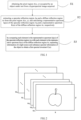
- object recognition is performed through deep learning, so as to identify the apple under test in FIG. 2 and find the pixel region A(x, y) occupied by the apple.
- step S2 comprises:
- the second region selection method may include principal component analysis, K-means, matrix orthogonal projection, or region selection based on geometric shapes.
- K-means clustering method is used. With two cluster centers specified, pixels in A(x, y) are grouped into two categories according to the spectral lineshape. Since the apple surface is spherical and has on average low reflectance, the average brightness of the specular reflection region is relatively high. Therefore, the category with high average brightness is marked as the specular reflection region A q , and the category with low average brightness is marked as the diffuse reflection region A r .
- the method for extracting representative spectra I q ( ⁇ ) and I r ( ⁇ ) from A q and A r may include taking the average, taking a brightness weighted average, or a gray world algorithm, etc.
- a method for calculating an average spectrum is used to calculate the average spectra of all pixels in the specular reflection region A q and the diffuse reflection region A r respectively according to the specular reflection region A q and the diffuse reflection region A r as the representative spectrum I q ( ⁇ ) and the representative spectrum I r ( ⁇ ):
- I q ⁇ 1 N q ⁇ x a y b ⁇ A q i x a y a ⁇
- I r ⁇ 1 N r ⁇ x a y b ⁇ A r i x a y a ⁇
- N q and N r respectively represent the numbers of pixels in the specular reflection region A q and the diffuse reflection region A r , and i(
- each element in the representative spectrum I q ( ⁇ ) of the specular reflection region A q is divided by each element in the representative spectrum I r ( ⁇ ) of the diffuse reflection region A r to obtain the first spectral invariant C( ⁇ ) .
- the method for calculating the first spectral invariant C( ⁇ ) in step S3 includes finite element decomposition, spectral angle separation or division. In other optional embodiments, other suitable calculation methods may also be used.
- S4 performing linear transformation processing on the first spectral invariant C( ⁇ ) to obtain a second spectral invariant R( ⁇ ), the second spectral invariant R( ⁇ ) being used for spectral analysis.
- step S4 includes:
- the chemometric model includes a partial least square regression, an artificial neural network or a support vector machine. Therefore, a chemometric model that has been trained such as a partial least square regression (PLS), an artificial neural network (ANN) or a support vector machine (SVM) can be used to predict contents of the components of an apple and feed them back to the user. Specific steps of this part are not the focus of the present application, and hence will not be described in detail.
- the above method can simplify the hyperspectral analysis process, simplify the hardware structure, making the hardware of related products simpler and more compact. It can be carried out by means of one single hyperspectral image, which avoids errors resulting from many aspects such as changes in the spectrum of the light source, the baseline drift of the acquisition device, etc.
- An embodiment of the present application further proposes a hyperspectral imager, as shown in FIG. 5 , comprising a lens 1, a wavelength splitter 2, an imaging device 3, and a data storage and processing device 4.
- a hyperspectral imager comprising a lens 1, a wavelength splitter 2, an imaging device 3, and a data storage and processing device 4.
- Light emitted from a light source is reflected at the surface (including the shallow interior) of the object under test, reaching the imaging device 3 after passing through the lens 1 and the wavelength splitter 2, further converted by the data storage and processing device 4 into an electrical signal and a digital signal at different wavelengths.
- the digital signal is spectral image data comprising spectral information of the light source and substance spectral information at the surface of the object under test.
- spectral image data yields composition properties of the object.
- the uniqueness of the method for extracting spectral information of a substance under test mentioned above is that there is no need to separately record the spectral information of the light source, and the substance spectral information, i.e. the spectral invariant, of the surface of the object under test can be obtained just through the spectral image data of the object under test. Since the spectral invariant reflects the spectral information of the surface (including the immediate interior) of the object under test, it can be used to calculate the substance properties of the surface (including the immediate interior) of the object under test. Taking the apple in the present application as an example, the spectral invariant can be used to calculate the sweetness, acidity, hardness, etc. of the apple.
- An embodiment of the present application discloses a method for extracting spectral information of a substance under test.
- the method extracts a specular reflection region and a diffuse reflection region from the pixel region of the object under test, and calculate representative spectra of the two regions respectively, so as to calculate a light source-independent first spectral invariant and a second spectral invariant that is independent of the spectrum of the light source, the scene, etc. Since no additional light source spectral information is needed, the part of collecting a reference spectrum can be omitted, which simplifies the analysis process, and reduces the data collection time, thus improves the analysis efficiency.
- the optical-electromechanical device of this part can be omitted, leaving hardware of the related product simpler and more compact.
- Implementation of this method requires one single hyperspectral image, therefore avoids errors resulting from many aspects such as changes in the spectrum of the light source, the baseline drift of the acquisition device, etc., increasing the accuracy of analysis.
Landscapes
- Physics & Mathematics (AREA)
- Spectroscopy & Molecular Physics (AREA)
- General Physics & Mathematics (AREA)
- Engineering & Computer Science (AREA)
- General Health & Medical Sciences (AREA)
- Life Sciences & Earth Sciences (AREA)
- Health & Medical Sciences (AREA)
- Pathology (AREA)
- Immunology (AREA)
- Biochemistry (AREA)
- Analytical Chemistry (AREA)
- Chemical & Material Sciences (AREA)
- Theoretical Computer Science (AREA)
- Multimedia (AREA)
- Mathematical Physics (AREA)
- Signal Processing (AREA)
- Biomedical Technology (AREA)
- General Engineering & Computer Science (AREA)
- Software Systems (AREA)
- Computing Systems (AREA)
- Molecular Biology (AREA)
- Evolutionary Computation (AREA)
- Data Mining & Analysis (AREA)
- Computational Linguistics (AREA)
- Biophysics (AREA)
- Artificial Intelligence (AREA)
- Computer Vision & Pattern Recognition (AREA)
- Investigating Or Analysing Materials By Optical Means (AREA)
Claims (13)
- ein Verfahren zum Extrahieren von spektralen Informationen eines Stoffes an einer Oberfläche eines untersuchten Objekts, das folgende Schritte umfasst:S1: Identifizierung eines vom Testobjekt besetzten Pixelbereichs a(x, y) aus einem erfassten hyperspektralen Bild;S2: Extrahieren eines spekulären Reflexionsbereichs a q und eines diffusen Reflexionsbereichs a r aus dem Pixelbereich a (x, y) und Berechnen eines repräsentativen Spektrums i q(ω) des spekulären Reflexionsbereichs a q bzw. eines repräsentativen Spektrums um i r(ω) des diffusen Reflexionsbereichs a r;S3: durch Vergleich jedes Element im vorstehenden Spektrum i q(ω) des spekulären Reflexionsbereichs a q mit jedem entsprechenden Element im repräsentativen Spektrum i r(ω) des diffusen Reflexionsbereichs a r, trennen die spektralen Informationen einer Lichtquelle von den spektralen Informationen des Stoffes an der Oberfläche des untersuchten Objekts, um eine erste spektrale Invariante c (ω) zu erhalten.
- Das Verfahren zum Extrahieren von spektralen Informationen eines Stoffes an einer Oberfläche eines untersuchten Objekts gemäß Anspruch 1, wobei die Methode weiterhin folgenden Schritt umfasst:
S4: Bilden Sie eine lineare Transformationsverarbeitung an der ersten spektralen Invariante c(ω), um eine zweite spektrale Invariante r(ω) zu erhalten, wobei die zweite spektrale Invariante r(ω) für die spektrale Analyse verwendet wird. - das Verfahren zum Extrahieren spektraler Informationen eines Stoffes an einer Oberfläche eines untersuchten Objekts gemäß Anspruch 1, wobei in Schritt s1 ein erstes Regionsauswahlverfahren verwendet wird, um das untersuchte Objekt zu identifizieren und den Pixelbereich a(x, y) auszuwählen, wobei das erste Regionsauswahlverfahren manuelle Markierung, ein Maschinenvisionalgorithmus, ein Spektralwinkelabbildung oder einen Deep Learning-Algorithmus umfasst.
- das Verfahren zum Extrahieren von spektralen Informationen eines Stoffes an der Oberfläche eines untersuchten Objekts gemäß Anspruch 1, wobei Schritt s2:S21: Extrahieren des spekulären Reflexionsbereichs a q und des diffusen Reflexionsbereichs a r aus dem Pixelbereich a(x, y) durch Verwendung eines zweiten Bereichsauswahlverfahrens;S22: Erhalt des repräsentativen Spektrums i q(ω) gemäß dem spekulären Reflexionsbereich a q und Erhalt des repräsentativen Spektrums i r(ω) gemäß dem diffusen Reflexionsbereich a r.
- das Verfahren zum Extrahieren von spektralen Informationen eines Stoffes an einer Oberfläche eines untersuchten Objekts gemäß Anspruch 4, wobei das zweite Regionsauswahlverfahren Hauptkomponentenanalyse, ein k-Mean-Verfahren, orthogonale Projektion oder eine Regionsauswahl auf der Grundlage geometrischer Formen umfasst.
- Das Verfahren zum Extrahieren von spektralen Informationen eines Stoffes an einer Oberfläche eines untersuchten Objekts gemäß Anspruch 4, wobei ein Verfahren zur Berechnung des repräsentativen Spektrums i q(ω) des spekulären Reflexionsbereichs a q und des repräsentativen Spektrums i r(ω) des diffusen Reflexionsbereichs a r das Abnehmen des Mittelwerts, das Abnehmen eines Helligkeitsgewichteten Mittelwerts oder eines Grauweltalgorithmus umfasst.
- das Verfahren zum Extrahieren von spektralen Informationen eines Stoffes an einer Oberfläche eines untersuchten Objekts gemäß Anspruch 6, wobei die durchschnittlichen Spektren aller Pixel in der spekulären Reflexionszone a q bzw. der diffusen Reflexionszone a r bzw. der diffusen Reflexionszone a r als repräsentatives Spektrum i q(ω) bzw. des repräsentativen Spektrums i r(ω) berechnet werden:


- das Verfahren zum Extrahieren von spektralen Informationen eines Stoffes an einer Oberfläche eines untersuchten Objekts gemäß Anspruch 1, wobei ein Verfahren zur Berechnung der ersten spektralen Invarianten c(ω) in Schritt s3 eine Finite-Elemente-Zerlegung, ein spektrales Winkel-s Eparat oder Teilung umfasst.
- das Verfahren zum Extrahieren von spektralen Informationen eines Stoffes an einer Oberfläche eines untersuchten Objekts gemäß Anspruch 8, wobei jedes Element im repräsentativen Spektrum i q(ω) des spekulären Reflexionsbereichs a q durch jedes entsprechende Element im repräsentativen Spektrum i r(ω) des diffusen Reflexionsbereichs a r geteilt wird, um die erste spektrale Invariante c (ω) zu erhalten.
- Das Verfahren zum Extrahieren von spektralen Informationen eines Stoffes an einer Oberfläche eines untersuchten Objekts gemäß Anspruch 2, wobei Schritt s4:S41: Durchführung einer Standardnormalvariatentransformation an der ersten spektralen Invariante c(ω), um die zweite spektrale Invariante r(ω) zu erhalten:
 Wobei einen Durchschnittswert von c(ω) in einer Wellenlängendimension darstellt; 〈C(ω)〉 ωS42: Verwendung der zweiten spektralen Invariante r(ω) als Eingabe eines chemometrischen Modells zur spektralen Analyse des Stoffes.
 - das Verfahren zum Extrahieren von spektralen Informationen eines Stoffes an einer Oberfläche eines untersuchten Objekts gemäß Anspruch 10, wobei das chemometrische Modell eine partielle Regression der kleinsten Quadrate, ein künstliches neuronales Netzwerk oder eine Supportvektormaschine umfasst.
- das Verfahren zum Extrahieren von spektralen Informationen eines Stoffes an einer Oberfläche eines untersuchten Objekts gemäß Anspruch 1, wobei das hyperspektrale Bild während der Aufnahme einen vom untersuchten Objekt belegten Pixelbereich a(x, y) in jedem Wellenlängenband unverändert behält und das untersuchte Objekt einen bestimmten Anteil im hyperspektralen Bild einnimmt.
- Ein hyperspektraler Bildgerät, der: eine Linse, einen Wellenlängenspalter, eine Bildgerät und eine Datenspeicher- und Verarbeitungsgerät umfasst, wobei das Licht einer Lichtquelle von einer Oberfläche eines getesteten Objekts zurückreflektiert wird, die nach Durchgang der Linse und des Wellenlängenspalters die Bildgerät erreicht und von der Datenspeicher- und Verarbeitungsgerät in ein elektrisches Signal und ein digitales Signal in unterschiedlichen Wellenlängen umgewandelt wird, wobei das digitale Signal spektrale Bilddaten ist, die spektrale Informationen der Lichtquelle und substanzielle spektrale Informationen des Objekts auf der Oberfläche des getesteten Objekts enthalten, Die Datenspeicher- und Verarbeitungsvorrichtung ist so konfiguriert, dass die Spektralbilddaten durch das Verfahren zum Extrahieren von Spektralinformationen eines untersuchten Stoffes nach Anspruch 1 verarbeitet werden, um Stoffeigenschaften eines untersuchten Stoffes zu erhalten.
Applications Claiming Priority (1)
| Application Number | Priority Date | Filing Date | Title |
|---|---|---|---|
| PCT/CN2020/081962 WO2021195817A1 (zh) | 2020-03-30 | 2020-03-30 | 一种提取待测物质的光谱信息的方法 |
Publications (4)
| Publication Number | Publication Date |
|---|---|
| EP3940370A1 EP3940370A1 (de) | 2022-01-19 |
| EP3940370A4 EP3940370A4 (de) | 2022-11-30 |
| EP3940370B1 true EP3940370B1 (de) | 2024-11-13 |
| EP3940370C0 EP3940370C0 (de) | 2024-11-13 |
Family
ID=77229245
Family Applications (1)
| Application Number | Title | Priority Date | Filing Date |
|---|---|---|---|
| EP20928567.5A Active EP3940370B1 (de) | 2020-03-30 | 2020-03-30 | Verfahren zur extraktion von spektralinformationen eines zu erfassenden objekts |
Country Status (6)
| Country | Link |
|---|---|
| US (1) | US12106543B2 (de) |
| EP (1) | EP3940370B1 (de) |
| JP (1) | JP7533966B2 (de) |
| KR (1) | KR102727706B1 (de) |
| CN (1) | CN113272639B (de) |
| WO (1) | WO2021195817A1 (de) |
Families Citing this family (3)
| Publication number | Priority date | Publication date | Assignee | Title |
|---|---|---|---|---|
| CN113887543B (zh) * | 2021-12-07 | 2022-03-18 | 深圳市海谱纳米光学科技有限公司 | 一种基于高光谱特征的箱包鉴伪方法与光谱采集装置 |
| CN116634130A (zh) * | 2023-05-11 | 2023-08-22 | 盛泰光电科技股份有限公司 | 一种光谱摄像头模组的测试方法及系统 |
| CN117784721B (zh) * | 2023-11-14 | 2024-05-28 | 东莞德芳油墨科技有限公司 | 一种生产水性环保油墨智能控制系统 |
Family Cites Families (17)
| Publication number | Priority date | Publication date | Assignee | Title |
|---|---|---|---|---|
| JP4756148B2 (ja) * | 2001-09-06 | 2011-08-24 | 独立行政法人情報通信研究機構 | 光沢・色再現システム、光沢・色再現プログラム |
| CN101890720B (zh) | 2004-07-13 | 2012-01-11 | 松下电器产业株式会社 | 物品保持系统、机器人以及机器人控制方法 |
| EP2202688B1 (de) * | 2007-02-13 | 2013-11-20 | Panasonic Corporation | System, Verfahren und Vorrichtung zur Bildverarbeitung und Bildformat |
| JP4917959B2 (ja) * | 2007-05-09 | 2012-04-18 | 日本電信電話株式会社 | 知覚的な鏡面・拡散反射画像推定方法とその装置、及びプログラムと記憶媒体 |
| WO2009024978A2 (en) * | 2007-08-21 | 2009-02-26 | Camtek Ltd. | Method and system for low cost inspection |
| US9087266B2 (en) * | 2009-09-03 | 2015-07-21 | National Ict Australia Limited | Illumination spectrum recovery |
| US8553975B2 (en) * | 2009-09-21 | 2013-10-08 | Boston Scientific Scimed, Inc. | Method and apparatus for wide-band imaging based on narrow-band image data |
| US8611674B1 (en) * | 2010-01-18 | 2013-12-17 | Disney Enterprises, Inc. | System and method for invariant-based normal estimation |
| EP2561482B1 (de) * | 2010-04-21 | 2020-10-14 | National ICT Australia Limited | Wiederherstellung von formen und fotometrischen invarianzen aus polarisationsbildern |
| WO2014203453A1 (ja) * | 2013-06-19 | 2014-12-24 | 日本電気株式会社 | 照明推定装置、照明推定方法および照明推定プログラム |
| CN104700109B (zh) | 2015-03-24 | 2018-04-10 | 清华大学 | 高光谱本征图像的分解方法及装置 |
| WO2017217261A1 (ja) * | 2016-06-15 | 2017-12-21 | シャープ株式会社 | 分光測定装置 |
| CN106841118A (zh) * | 2017-01-24 | 2017-06-13 | 清华大学 | 光谱测量系统及测量方法 |
| JP7027807B2 (ja) * | 2017-10-30 | 2022-03-02 | 富士フイルムビジネスイノベーション株式会社 | 表示装置、スキャナ、表示システム及びプログラム |
| WO2020025684A1 (en) * | 2018-07-31 | 2020-02-06 | Deutsches Krebsforschungszentrum Stiftung des öffentlichen Rechts | Method and system for augmented imaging in open treatment using multispectral information |
| CN109444082B (zh) * | 2018-12-21 | 2024-06-07 | 天津九光科技发展有限责任公司 | 漫反射光谱测量装置及测量方法 |
| JP7334458B2 (ja) * | 2019-04-24 | 2023-08-29 | 富士フイルムビジネスイノベーション株式会社 | 画像処理装置及び画像処理プログラム |
-
2020
- 2020-03-30 CN CN202080007936.0A patent/CN113272639B/zh active Active
- 2020-03-30 EP EP20928567.5A patent/EP3940370B1/de active Active
- 2020-03-30 WO PCT/CN2020/081962 patent/WO2021195817A1/zh not_active Ceased
- 2020-03-30 US US17/603,318 patent/US12106543B2/en active Active
- 2020-03-30 KR KR1020227014109A patent/KR102727706B1/ko active Active
- 2020-03-30 JP JP2021553116A patent/JP7533966B2/ja active Active
Also Published As
| Publication number | Publication date |
|---|---|
| CN113272639B (zh) | 2023-10-27 |
| WO2021195817A1 (zh) | 2021-10-07 |
| EP3940370C0 (de) | 2024-11-13 |
| KR20220066168A (ko) | 2022-05-23 |
| EP3940370A1 (de) | 2022-01-19 |
| US12106543B2 (en) | 2024-10-01 |
| EP3940370A4 (de) | 2022-11-30 |
| CN113272639A (zh) | 2021-08-17 |
| JP2022539281A (ja) | 2022-09-08 |
| US20220207856A1 (en) | 2022-06-30 |
| KR102727706B1 (ko) | 2024-11-06 |
| JP7533966B2 (ja) | 2024-08-14 |
Similar Documents
| Publication | Publication Date | Title |
|---|---|---|
| CN105021529B (zh) | 融合光谱和图像信息的作物病虫害识别和区分方法 | |
| CN102831400B (zh) | 一种多光谱人脸识别方法及其系统 | |
| Ghazal et al. | Automated framework for accurate segmentation of leaf images for plant health assessment | |
| US12475555B2 (en) | Artificial intelligence-based hyperspectrally resolved detection of anomalous cells | |
| Narang et al. | Face recognition in the SWIR band when using single sensor multi-wavelength imaging systems | |
| CN112462349A (zh) | 一种光谱共焦位移传感器波长计算方法、系统、服务器及存储介质 | |
| WO2018223267A1 (en) | Method and system for hyperspectral light field imaging | |
| US12106543B2 (en) | Method for extracting spectral information of a substance under test | |
| US20250146933A1 (en) | Spatially resolved nir spectrometer | |
| KR20260038265A (ko) | 초분광 이미지 분석에 기반한 컬러 및 두께 상태를 판정하는 시스템 및 방법 | |
| CN119780119A (zh) | 基于多光谱成像的电子元器件外观缺陷检测方法及系统 | |
| CN119540746A (zh) | 基于高光谱影像从单木至区域森林碳储量计量方法及系统 | |
| JP2019190927A (ja) | 解析システム、撮像装置、および、プログラム | |
| CN120689881A (zh) | 一种文物霉菌检测方法 | |
| CN114152621A (zh) | 一种处理方法及处理装置、处理系统 | |
| CN120577240A (zh) | 一种基于高光谱成像的烟叶产地鉴别方法和装置 | |
| US20120242858A1 (en) | Device and method for compensating for relief in hyperspectral images | |
| CN117911688A (zh) | 一种烟叶脉络的识别方法 | |
| CN117838061A (zh) | 基于光谱相机进行面部皮肤结构演化的方法及系统 | |
| CN117893793A (zh) | 目标检测分类方法、系统及存储介质 | |
| JP2018156208A (ja) | 解析装置、撮像装置、解析方法、および、プログラム | |
| Jütte et al. | High-resolution imaging system for integration into intelligent noncontact total body scanner | |
| CN113887543A (zh) | 一种基于高光谱特征的箱包鉴伪方法与光谱采集装置 | |
| KR102939864B1 (ko) | Rgb 이미지를 이용한 개별 대마의 칸나비노이드 함량 비파괴 예측 장치 및 방법 | |
| CN120404612A (zh) | 融合视觉和光谱特性的高光谱脑脊液物质检测方法及系统 |
Legal Events
| Date | Code | Title | Description |
|---|---|---|---|
| STAA | Information on the status of an ep patent application or granted ep patent |
Free format text: STATUS: THE INTERNATIONAL PUBLICATION HAS BEEN MADE |
|
| PUAI | Public reference made under article 153(3) epc to a published international application that has entered the european phase |
Free format text: ORIGINAL CODE: 0009012 |
|
| STAA | Information on the status of an ep patent application or granted ep patent |
Free format text: STATUS: REQUEST FOR EXAMINATION WAS MADE |
|
| 17P | Request for examination filed |
Effective date: 20211014 |
|
| AK | Designated contracting states |
Kind code of ref document: A1 Designated state(s): AL AT BE BG CH CY CZ DE DK EE ES FI FR GB GR HR HU IE IS IT LI LT LU LV MC MK MT NL NO PL PT RO RS SE SI SK SM TR |
|
| RAP3 | Party data changed (applicant data changed or rights of an application transferred) |
Owner name: SHENZHEN HYPERNANO OPTICS TECHNOLOGY CO., LTD |
|
| A4 | Supplementary search report drawn up and despatched |
Effective date: 20221031 |
|
| RIC1 | Information provided on ipc code assigned before grant |
Ipc: G01N 21/17 20060101ALN20221025BHEP Ipc: G01N 21/31 20060101ALI20221025BHEP Ipc: G01N 21/55 20140101AFI20221025BHEP |
|
| DAV | Request for validation of the european patent (deleted) | ||
| DAX | Request for extension of the european patent (deleted) | ||
| GRAP | Despatch of communication of intention to grant a patent |
Free format text: ORIGINAL CODE: EPIDOSNIGR1 |
|
| STAA | Information on the status of an ep patent application or granted ep patent |
Free format text: STATUS: GRANT OF PATENT IS INTENDED |
|
| RIC1 | Information provided on ipc code assigned before grant |
Ipc: G01N 21/17 20060101ALN20240512BHEP Ipc: G01N 21/31 20060101ALI20240512BHEP Ipc: G01N 21/55 20140101AFI20240512BHEP |
|
| INTG | Intention to grant announced |
Effective date: 20240604 |
|
| GRAS | Grant fee paid |
Free format text: ORIGINAL CODE: EPIDOSNIGR3 |
|
| GRAA | (expected) grant |
Free format text: ORIGINAL CODE: 0009210 |
|
| STAA | Information on the status of an ep patent application or granted ep patent |
Free format text: STATUS: THE PATENT HAS BEEN GRANTED |
|
| AK | Designated contracting states |
Kind code of ref document: B1 Designated state(s): AL AT BE BG CH CY CZ DE DK EE ES FI FR GB GR HR HU IE IS IT LI LT LU LV MC MK MT NL NO PL PT RO RS SE SI SK SM TR |
|
| REG | Reference to a national code |
Ref country code: GB Ref legal event code: FG4D |
|
| REG | Reference to a national code |
Ref country code: CH Ref legal event code: EP |
|
| REG | Reference to a national code |
Ref country code: IE Ref legal event code: FG4D |
|
| REG | Reference to a national code |
Ref country code: DE Ref legal event code: R096 Ref document number: 602020041495 Country of ref document: DE |
|
| U01 | Request for unitary effect filed |
Effective date: 20241212 |
|
| U07 | Unitary effect registered |
Designated state(s): AT BE BG DE DK EE FI FR IT LT LU LV MT NL PT RO SE SI Effective date: 20241223 |
|
| PG25 | Lapsed in a contracting state [announced via postgrant information from national office to epo] |
Ref country code: IS Free format text: LAPSE BECAUSE OF FAILURE TO SUBMIT A TRANSLATION OF THE DESCRIPTION OR TO PAY THE FEE WITHIN THE PRESCRIBED TIME-LIMIT Effective date: 20250313 Ref country code: HR Free format text: LAPSE BECAUSE OF FAILURE TO SUBMIT A TRANSLATION OF THE DESCRIPTION OR TO PAY THE FEE WITHIN THE PRESCRIBED TIME-LIMIT Effective date: 20241113 |
|
| PG25 | Lapsed in a contracting state [announced via postgrant information from national office to epo] |
Ref country code: ES Free format text: LAPSE BECAUSE OF FAILURE TO SUBMIT A TRANSLATION OF THE DESCRIPTION OR TO PAY THE FEE WITHIN THE PRESCRIBED TIME-LIMIT Effective date: 20241113 |
|
| PG25 | Lapsed in a contracting state [announced via postgrant information from national office to epo] |
Ref country code: NO Free format text: LAPSE BECAUSE OF FAILURE TO SUBMIT A TRANSLATION OF THE DESCRIPTION OR TO PAY THE FEE WITHIN THE PRESCRIBED TIME-LIMIT Effective date: 20250213 |
|
| PG25 | Lapsed in a contracting state [announced via postgrant information from national office to epo] |
Ref country code: GR Free format text: LAPSE BECAUSE OF FAILURE TO SUBMIT A TRANSLATION OF THE DESCRIPTION OR TO PAY THE FEE WITHIN THE PRESCRIBED TIME-LIMIT Effective date: 20250214 |
|
| PG25 | Lapsed in a contracting state [announced via postgrant information from national office to epo] |
Ref country code: PL Free format text: LAPSE BECAUSE OF FAILURE TO SUBMIT A TRANSLATION OF THE DESCRIPTION OR TO PAY THE FEE WITHIN THE PRESCRIBED TIME-LIMIT Effective date: 20241113 |
|
| PG25 | Lapsed in a contracting state [announced via postgrant information from national office to epo] |
Ref country code: RS Free format text: LAPSE BECAUSE OF FAILURE TO SUBMIT A TRANSLATION OF THE DESCRIPTION OR TO PAY THE FEE WITHIN THE PRESCRIBED TIME-LIMIT Effective date: 20250213 |
|
| U20 | Renewal fee for the european patent with unitary effect paid |
Year of fee payment: 6 Effective date: 20250325 |
|
| PG25 | Lapsed in a contracting state [announced via postgrant information from national office to epo] |
Ref country code: SM Free format text: LAPSE BECAUSE OF FAILURE TO SUBMIT A TRANSLATION OF THE DESCRIPTION OR TO PAY THE FEE WITHIN THE PRESCRIBED TIME-LIMIT Effective date: 20241113 |
|
| PG25 | Lapsed in a contracting state [announced via postgrant information from national office to epo] |
Ref country code: SK Free format text: LAPSE BECAUSE OF FAILURE TO SUBMIT A TRANSLATION OF THE DESCRIPTION OR TO PAY THE FEE WITHIN THE PRESCRIBED TIME-LIMIT Effective date: 20241113 |
|
| PG25 | Lapsed in a contracting state [announced via postgrant information from national office to epo] |
Ref country code: CZ Free format text: LAPSE BECAUSE OF FAILURE TO SUBMIT A TRANSLATION OF THE DESCRIPTION OR TO PAY THE FEE WITHIN THE PRESCRIBED TIME-LIMIT Effective date: 20241113 |
|
| PLBE | No opposition filed within time limit |
Free format text: ORIGINAL CODE: 0009261 |
|
| STAA | Information on the status of an ep patent application or granted ep patent |
Free format text: STATUS: NO OPPOSITION FILED WITHIN TIME LIMIT |
|
| PG25 | Lapsed in a contracting state [announced via postgrant information from national office to epo] |
Ref country code: MC Free format text: LAPSE BECAUSE OF FAILURE TO SUBMIT A TRANSLATION OF THE DESCRIPTION OR TO PAY THE FEE WITHIN THE PRESCRIBED TIME-LIMIT Effective date: 20241113 |
|
| 26N | No opposition filed |
Effective date: 20250814 |
|
| REG | Reference to a national code |
Ref country code: CH Ref legal event code: H13 Free format text: ST27 STATUS EVENT CODE: U-0-0-H10-H13 (AS PROVIDED BY THE NATIONAL OFFICE) Effective date: 20251023 |
|
| GBPC | Gb: european patent ceased through non-payment of renewal fee |
Effective date: 20250330 |
|
| PG25 | Lapsed in a contracting state [announced via postgrant information from national office to epo] |
Ref country code: GB Free format text: LAPSE BECAUSE OF NON-PAYMENT OF DUE FEES Effective date: 20250330 |
|
| PG25 | Lapsed in a contracting state [announced via postgrant information from national office to epo] |
Ref country code: CH Free format text: LAPSE BECAUSE OF NON-PAYMENT OF DUE FEES Effective date: 20250331 |
|
| PG25 | Lapsed in a contracting state [announced via postgrant information from national office to epo] |
Ref country code: IE Free format text: LAPSE BECAUSE OF NON-PAYMENT OF DUE FEES Effective date: 20250330 |
|
| U20 | Renewal fee for the european patent with unitary effect paid |
Year of fee payment: 7 Effective date: 20260326 |