EP2561482B1 - Wiederherstellung von formen und fotometrischen invarianzen aus polarisationsbildern - Google Patents
Wiederherstellung von formen und fotometrischen invarianzen aus polarisationsbildern Download PDFInfo
- Publication number
- EP2561482B1 EP2561482B1 EP11771405.5A EP11771405A EP2561482B1 EP 2561482 B1 EP2561482 B1 EP 2561482B1 EP 11771405 A EP11771405 A EP 11771405A EP 2561482 B1 EP2561482 B1 EP 2561482B1
- Authority
- EP
- European Patent Office
- Prior art keywords
- wavelength
- polarisation
- angle
- index
- scene
- Prior art date
- Legal status (The legal status is an assumption and is not a legal conclusion. Google has not performed a legal analysis and makes no representation as to the accuracy of the status listed.)
- Not-in-force
Links
Images



Classifications
-
- G—PHYSICS
- G06—COMPUTING OR CALCULATING; COUNTING
- G06T—IMAGE DATA PROCESSING OR GENERATION, IN GENERAL
- G06T17/00—Three-dimensional [3D] modelling for computer graphics
-
- G—PHYSICS
- G01—MEASURING; TESTING
- G01B—MEASURING LENGTH, THICKNESS OR SIMILAR LINEAR DIMENSIONS; MEASURING ANGLES; MEASURING AREAS; MEASURING IRREGULARITIES OF SURFACES OR CONTOURS
- G01B11/00—Measuring arrangements characterised by the use of optical techniques
- G01B11/24—Measuring arrangements characterised by the use of optical techniques for measuring contours or curvatures
-
- G—PHYSICS
- G01—MEASURING; TESTING
- G01N—INVESTIGATING OR ANALYSING MATERIALS BY DETERMINING THEIR CHEMICAL OR PHYSICAL PROPERTIES
- G01N21/00—Investigating or analysing materials by the use of optical means, i.e. using sub-millimetre waves, infrared, visible or ultraviolet light
- G01N21/17—Systems in which incident light is modified in accordance with the properties of the material investigated
- G01N21/21—Polarisation-affecting properties
-
- G—PHYSICS
- G01—MEASURING; TESTING
- G01N—INVESTIGATING OR ANALYSING MATERIALS BY DETERMINING THEIR CHEMICAL OR PHYSICAL PROPERTIES
- G01N21/00—Investigating or analysing materials by the use of optical means, i.e. using sub-millimetre waves, infrared, visible or ultraviolet light
- G01N21/17—Systems in which incident light is modified in accordance with the properties of the material investigated
- G01N21/25—Colour; Spectral properties, i.e. comparison of effect of material on the light at two or more different wavelengths or wavelength bands
-
- G—PHYSICS
- G01—MEASURING; TESTING
- G01N—INVESTIGATING OR ANALYSING MATERIALS BY DETERMINING THEIR CHEMICAL OR PHYSICAL PROPERTIES
- G01N21/00—Investigating or analysing materials by the use of optical means, i.e. using sub-millimetre waves, infrared, visible or ultraviolet light
- G01N21/17—Systems in which incident light is modified in accordance with the properties of the material investigated
- G01N21/25—Colour; Spectral properties, i.e. comparison of effect of material on the light at two or more different wavelengths or wavelength bands
- G01N21/27—Colour; Spectral properties, i.e. comparison of effect of material on the light at two or more different wavelengths or wavelength bands using photo-electric detection ; circuits for computing concentration
-
- G—PHYSICS
- G01—MEASURING; TESTING
- G01N—INVESTIGATING OR ANALYSING MATERIALS BY DETERMINING THEIR CHEMICAL OR PHYSICAL PROPERTIES
- G01N21/00—Investigating or analysing materials by the use of optical means, i.e. using sub-millimetre waves, infrared, visible or ultraviolet light
- G01N21/17—Systems in which incident light is modified in accordance with the properties of the material investigated
- G01N21/25—Colour; Spectral properties, i.e. comparison of effect of material on the light at two or more different wavelengths or wavelength bands
- G01N21/29—Colour; Spectral properties, i.e. comparison of effect of material on the light at two or more different wavelengths or wavelength bands using visual detection
-
- G—PHYSICS
- G01—MEASURING; TESTING
- G01N—INVESTIGATING OR ANALYSING MATERIALS BY DETERMINING THEIR CHEMICAL OR PHYSICAL PROPERTIES
- G01N21/00—Investigating or analysing materials by the use of optical means, i.e. using sub-millimetre waves, infrared, visible or ultraviolet light
- G01N21/17—Systems in which incident light is modified in accordance with the properties of the material investigated
- G01N21/25—Colour; Spectral properties, i.e. comparison of effect of material on the light at two or more different wavelengths or wavelength bands
- G01N21/31—Investigating relative effect of material at wavelengths characteristic of specific elements or molecules, e.g. atomic absorption spectrometry
-
- G—PHYSICS
- G01—MEASURING; TESTING
- G01N—INVESTIGATING OR ANALYSING MATERIALS BY DETERMINING THEIR CHEMICAL OR PHYSICAL PROPERTIES
- G01N21/00—Investigating or analysing materials by the use of optical means, i.e. using sub-millimetre waves, infrared, visible or ultraviolet light
- G01N21/17—Systems in which incident light is modified in accordance with the properties of the material investigated
- G01N21/25—Colour; Spectral properties, i.e. comparison of effect of material on the light at two or more different wavelengths or wavelength bands
- G01N21/31—Investigating relative effect of material at wavelengths characteristic of specific elements or molecules, e.g. atomic absorption spectrometry
- G01N21/314—Investigating relative effect of material at wavelengths characteristic of specific elements or molecules, e.g. atomic absorption spectrometry with comparison of measurements at specific and non-specific wavelengths
- G01N21/3151—Investigating relative effect of material at wavelengths characteristic of specific elements or molecules, e.g. atomic absorption spectrometry with comparison of measurements at specific and non-specific wavelengths using two sources of radiation of different wavelengths
-
- G—PHYSICS
- G06—COMPUTING OR CALCULATING; COUNTING
- G06T—IMAGE DATA PROCESSING OR GENERATION, IN GENERAL
- G06T7/00—Image analysis
- G06T7/50—Depth or shape recovery
-
- G—PHYSICS
- G06—COMPUTING OR CALCULATING; COUNTING
- G06T—IMAGE DATA PROCESSING OR GENERATION, IN GENERAL
- G06T7/00—Image analysis
- G06T7/50—Depth or shape recovery
- G06T7/507—Depth or shape recovery from shading
-
- G—PHYSICS
- G06—COMPUTING OR CALCULATING; COUNTING
- G06T—IMAGE DATA PROCESSING OR GENERATION, IN GENERAL
- G06T7/00—Image analysis
- G06T7/50—Depth or shape recovery
- G06T7/514—Depth or shape recovery from specularities
-
- G—PHYSICS
- G06—COMPUTING OR CALCULATING; COUNTING
- G06T—IMAGE DATA PROCESSING OR GENERATION, IN GENERAL
- G06T7/00—Image analysis
- G06T7/50—Depth or shape recovery
- G06T7/55—Depth or shape recovery from multiple images
- G06T7/586—Depth or shape recovery from multiple images from multiple light sources, e.g. photometric stereo
-
- G—PHYSICS
- G06—COMPUTING OR CALCULATING; COUNTING
- G06T—IMAGE DATA PROCESSING OR GENERATION, IN GENERAL
- G06T7/00—Image analysis
- G06T7/97—Determining parameters from multiple pictures
-
- G—PHYSICS
- G06—COMPUTING OR CALCULATING; COUNTING
- G06T—IMAGE DATA PROCESSING OR GENERATION, IN GENERAL
- G06T2200/00—Indexing scheme for image data processing or generation, in general
- G06T2200/08—Indexing scheme for image data processing or generation, in general involving all processing steps from image acquisition to 3D model generation
-
- G—PHYSICS
- G06—COMPUTING OR CALCULATING; COUNTING
- G06T—IMAGE DATA PROCESSING OR GENERATION, IN GENERAL
- G06T2207/00—Indexing scheme for image analysis or image enhancement
- G06T2207/10—Image acquisition modality
- G06T2207/10016—Video; Image sequence
-
- G—PHYSICS
- G06—COMPUTING OR CALCULATING; COUNTING
- G06T—IMAGE DATA PROCESSING OR GENERATION, IN GENERAL
- G06T2207/00—Indexing scheme for image analysis or image enhancement
- G06T2207/10—Image acquisition modality
- G06T2207/10141—Special mode during image acquisition
- G06T2207/10144—Varying exposure
Definitions
- the disclosure concerns processing of electronic images, such as hyperspectral, or multispectral images.
- a method, software and computer for estimating shape information or a photometric invariant of a location of image of a scene. Examples of processing the image using the estimates include material recognition, shape recovery, recolouring and re-shading of objects represented in the image.
- Fig. 1(a) illustrates a scene 100 comprising an object 101 having an object surface 102, and a surface normal vector 103.
- the object surface 102 is illuminated by a light source 110 causing diffuse reflection 111 and specular reflection 112 that are both observed by camera 120.
- Fig. 1(a) also shows a zenith angle 130 and an azimuth angle 131.
- the light source 110 is shown as a wave that oscillates in the two-dimensional plane of the drawing of Fig. 1(a) . If a light source consists of only such a wave, it is referred to as parallel-polarised.
- the wave of the light source 110 may oscillate in a plane perpendicular to the two-dimensional plane of the drawing. In that case, the light source is referred to as perpendicular-polarised.
- the wave of the light source 110 may also be a superposition of a parallel and a perpendicular polarised wave.
- Fig. 1(b) illustrates such a light wave 150 viewed in the direction in which the light travels.
- the light wave 150 is a superposition of a parallel-polarised wave 151 and a perpendicular-polarised light wave 152.
- the resulting light wave 150 is therefore tilted by a polarisation angle 153.
- the ratio of magnitudes of the parallel- and the perpendicular-polarized waves determine the polarisation angle 153.
- the parallel-polarised light wave 151 and the perpendicular polarised light wave 152 have the same wavelength and no phase shift between each other. In other words, the parallel component and the perpendicular component of the light wave 150 are perfectly correlated.
- the wave may also be unpolarised light, which means that two components are completely uncorrelated and a representation as in Fig 1(b) is not suitable in that a polarisation angle cannot be determined.
- the ratio of polarised light to unpolarised light determines a degree of polarisation.
- the transmitted light is reflected several times internally before it is finally emitted through surface 102 to the outside of object 101. Due to the irregular structure of the object, the light emitted from the object 101 is distributed over all directions. This is referred to as diffuse reflection 111.
- the light source 110 emits unpolarised light and the surface 102 only shows diffuse reflection 111 and no specular reflection 112 as the surface is completely matte.
- the unpolarised light from light source 110 is transmitted through the surface 102, the light within the structure of the object 101 is still unpolarised. Just before the light of the diffuse reflection is emitted, the light passes through the surface 102 of the object 101.
- the Fresnel Equations more parallel-polarised light reaches the outside of the object than perpendicular-polarised light. As a result, the light that reaches camera 120 is no longer partially polarised in the direction parallel to the two-dimensional plane of the drawing.
- the object surface 102 is tilted as indicated by the azimuth angle 131, the direction of polarisation of the light that reaches the camera not anymore parallel to the two-dimensional plane of the drawing but rotated by a polarisation angle 153.
- the polarisation angle 153 is equal to the azimuth 131 of the surface.
- the azimuth 131 of the surface 102 can be determined by determining the angle of polarisation 153.
- the degree of polarisation changes with the zenith angle 130.
- the zenith angle 130 can be determined by determining the degree of polarisation.
- the azimuth 131 and zenith 130 angles completely define the normal vector 103 of the surface 102. Knowing the normal vector 103 at all points of the surface 102 allows the reconstruction of the shape of the object 101. However, direct measurement of the polarisation angle 150 is inaccurate and the Fresnel Equations are also dependent on the refractive index of the surface, which is unknown in most real world applications.
- ATKINSON G A et al (Recovery of surface orientation from diffuse polarization, IEEE Transactions on Image Processing, IEEE Service Center, PISCATAWAY, NJ, US, vol. 15, no. 6, 1 June 2006 (2006-06-01), pages 1653-1664, XP002604501, ISSN: 1057-7149, DOI: 10.1109/TIP.2006.871114 ) is concerned with exploiting polarization by surface reflection, using images of smooth dielectric objects, to recover surface normals and, hence, height.
- a computer implemented method to estimate shape information including a zenith angle of a surface normal at a location of a scene and one or more photometric invariants of the location of the scene, the scene being represented in a hyperspectral or multispectral image data, the image data indexed by wavelength and polarisation filter angle, the method comprising:
- the method may further comprise step (e) estimating the azimuth angle of a surface normal of the scene at the location based on the estimated polarisation angle for each wavelength index, and estimating the shape information based on the estimated azimuth. That is, the spectral variation of the phase of polarisation is used to estimate the azimuth angle.
- Step (a) may comprise optimising a difference between intensity information of the image data and a function of the filter angle to estimate the polarisation angle for each wavelength index and determine a residual error for each wavelength index, and step (e) may further comprise estimating the azimuth based on the polarisation angles for each wavelength index weighted by the residual error for each wavelength index.
- the degree of polarisation may be for example maximum and minimum, of the function with reference to the estimated polarisation angle for that wavelength index. That is the wavelength indexed degree of polarisation is based on the Fresnel equation.
- Steps (c) and (d) may further comprise optimising a difference between a model and the estimated degree of polarisation for each wavelength index, wherein the model parameters include the zenith and photometric invariant parameters. It is an advantage that the zenith and photometric invariant can be determined simultaneously and that the method does not rely on a predefined value of the photometric invariant.
- Optimising the difference between a model and the estimated degree of polarisation for each wavelength index may comprise determining co-efficient of a dispersion equation.
- Estimating the photometric invariants may be further based on a constraint over the wavelength index for the photometric invariant. That is, enforcing a wavelength dependent dispersion equation on the photometric invariant makes the problem well posed.
- the photometric invariant may be the refractive index.
- the method is repeated from each location in the scene represented in the image data.
- a location is represented in the image data as one or more pixels.
- the image data may taken from a single view point and/or using an unpolarised light source.
- the shape information may comprise a surface normal.
- the wavelength index may be comprised of one or more wavelengths used in the image.
- a computer system to estimate shape information including a zenith angle of a surface normal at a location of a scene and one or more photometric invariants of a location of the scene, the scene being represented in a hyperspectral or multispectral image data, the image data being indexed by wavelength and polarisation filter angle
- the system comprising: a processor configured to (a) estimate for each wavelength index a polarisation angle from the image data by fitting intensity information of the image data to a function of the filter angle, (b) estimate for each wavelength index a degree of polarisation based on intensity values of the function with reference to the estimated polarisation angle for that wavelength index, (c) estimate the zenith angle of a surface normal of the scene at the location based on the estimated degree of polarisation for each wavelength index and (d) estimate the one or more photometric invariants based on the estimated polarisation angle for each wavelength index.
- the computer may be local to a sensor that captures the image data.
- the optional features of the method described above similarly apply to the computer system.
- Fig. 2 illustrates the principle of a polarising filter 200.
- a light wave 201 propagates in direction 202 and enters the filter 200.
- the light wave 201 comprises a parallel-polarised light wave 203 and a perpendicular-polarised light wave 204.
- the filter is rotatable by filter angle ⁇ 211 and the light exits the filter 200 as output light wave 220.
- a camera 230 captures the output light wave 220.
- the filter 200 may be seen as an arrangement of vertical slots.
- the parallel-polarised light wave 203 is transmitted through filter 200 and exits the filter 200 as parallel-polarised output light wave 220.
- the filter 200 When the filter 200 is gradually rotated by filter angle 211 the parallel-polarised light wave 203 is gradually attenuated by the filter 200 and the perpendicular-polarised light wave 204 will be gradually transmitted. At a filter angle of 90 degrees, the parallel-polarised light wave 203 is completely blocked while the perpendicular-polarised light wave 204 is fully transmitted.
- the intensity between the maximum and the minimum can be described by a cosine function as shown in Fig. 4 .
- the offset of the cosine function is the mean of I max and I min , ( I max + I min )/2, and the amplitude is half the difference between I max and I min , ( I max - I min )/2 .
- the period of the cosine is 4 ⁇ /2 or 180°.
- the dominant component of the input light wave may not be exactly parallel-polarised or perpendicular-polarised but rotated by an angle ⁇ .
- the aim is to determine the three unknowns I min , I max and ⁇ from multiple measurements of I at known filter angles ⁇ .
- the cosine function can be fitted to the measured intensities using a numerical nonlinear least square fitting algorithm. This method is, however, not efficient and especially in case of a large number of pixels this leads to a high computational cost since the optimisation has to be performed per pixel.
- these parameters can be obtained making use of the method in [2], where three images at 0°, 45° and 90° with respect to a reference axis are acquired so as to compute the phase shift ⁇ , intensity I and degree of polarisation ⁇ .
- the method in [2] is susceptible to noise corruption since it employs only three images.
- Equation (3) is well-constrained since the number of equations N ⁇ 3 is no less than the number of unknowns. Moreover, the coefficient matrix A depends solely on the filter angle which allows for an efficient solution of (3). Solving (3) means minimising the difference between the measured intensity I of the image data and the cosine function
- the result of the above method depends on the wavelength ⁇ of the light.
- the same image is captured at the same filter angle ⁇ for multiple wavelengths in a multispectral image.
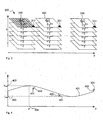
- Fig. 3 illustrates wavelength-indexed image data 300 of a scene comprising a teddy bear.
- the image data comprises multiple images 310, 320 and 330. Each of the images 310, 320 and 330 are captured at a different filter angle ⁇ .
- Each image comprises multiple sub-images indexed by the wavelength ⁇ .
- a sub-image is segmented into points, such as pixels. This is shown only for the top sub-image of image 310 but also applies to all other sub-images.
- Each pixel has an associated pixel location u within each sub-image.
- One pixel 311 at location u 1 in the top sub-image of image 310 is highlighted.
- At the same location u 1 in the top sub-image of image 320 and 330 are highlighted pixels 321 and 331 respectively.
- the following method determines the azimuth ⁇ or zenith ⁇ of the surface normal vector or the refractive index for one pixel location u .
- the method will be explained in one example of pixel location u 1 .
- the method is simply repeated independently for all other pixel locations.
- Fig. 4 illustrates the step of determining the polarisation angle for one pixel location u 1 and one wavelength ⁇ 1 .
- the figure shows the intensity values I and filter angles ⁇ of three measurements 411, 421 and 431 of pixels 311, 321 and 331 (of Fig. 3 ), respectively, obtained by camera 120 in Fig. 1(a) .
- more than three images are taken at different filter angles resulting in more than three intensity values but only three are shown here for simplicity of description.
- a cosine function 401 is fitted to the measurements 411, 421 and 431.
- the fitting usually results in differences 412, 422 and 432 for each of the measurements 411, 421 and 431 respectively. Based on these differences, a residual error ⁇ is determined.
- a maximal intensity I max 402 a minimal intensity I min 403 and the polarisation angle ⁇ 404 are determined. Note that these values cannot be determined directly from the measurements 411, 421 and 431 since the measurements most likely do not fall exactly onto the maximum or minimum points.
- Fig. 5 illustrates a wavelength-indexed data structure 500 after the above method has been performed for each pixel location u and each wavelength ⁇ independently.
- a weighted average of the wavelength-indexed polarisation angles ⁇ is computed, such that an polarisation angle associated with a larger residual error ⁇ is assigned a smaller weight ⁇ than an polarisation angle ⁇ associated with a smaller residual error ⁇ .
- the zenith ⁇ angle can be determined by the degree of polarisation detected by the camera.
- ⁇ ( u ) is the zenith ⁇ angle of the surface normal at location u
- n ( u , ⁇ ) is the material dependent refractive index of the same location at wavelength ⁇
- F ⁇ ( u , ⁇ ) and F ⁇ (u, ⁇ ) are the perpendicular and parallel Fresnel reflection coefficients respectively.
- the only unknowns in (6) are the azimuth ⁇ and the refractive index n ( u , ⁇ ). Since the refractive index n ( u , ⁇ ) is different for each wavelength, ⁇ and n cannot be determined by fitting (6) to the image data captured for different wavelengths.
- Each layer of data sub-structure 503 in Fig. 5 for wavelength ⁇ i introduces another unknown variable n (u, ⁇ i ).
- This dispersion equation relates the refractive index to the wavelength with coefficients C k ( u ), k ⁇ ⁇ 1, ..., M ⁇ that are characteristic for the material.
- the cost function E ( u ) in (7) can be reparameterised as a function of M +1 variables, including the zenith ⁇ and the dispersion coefficients C k ( u ), k ⁇ ⁇ 1, ..., M ⁇ .
- the non-linear least square problem can be solved numerically by standard line-search or trust-region methods in order minimise the difference in equation (7) between the model of equation (6) and the estimated wavelength-indexed degree of polarisation.
- the shape under study can be recovered by means of a surface integration method such as in [3].
- the refractive index can be recovered from the dispersion equation using the dispersion coefficients C k ( u ) and (8).
- Fig. 6 illustrates the result data 600 from the above method.
- the result data 600 comprises values for the azimuth ⁇ 601, values for the zenith ⁇ 602 and wavelength-dependent expressions for the refractive index n( ⁇ ) 603.
- the pixel location u 1 is highlighted at 604, 605 and 606 for the values for the azimuth ⁇ 601, values for the zenith ⁇ 602 and expressions for the refractive index n 603 respectively.
- the refractive index is dependent on the wavelength, it is shown as only one layer 603 in Fig. 6 . This is because the proposed method determines an analytical expression (see equation (8)) for the refractive index for each wavelength. As a result, the refractive index is determined not only for the wavelengths for which the image data was captured but also for all wavelengths in between.
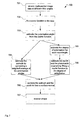
- Fig. 7 illustrates a method 700 to estimate shape information or photometric invariants of a point location of image data of a scene.
- the photometric invariants may be the refractive index or the dispersion coefficients.
- multispectral wavelength-indexed image data is retrieved 701 for different filter angles ⁇ .
- the image data comprises intensity values I for the different filter angles ⁇ .
- the next step is to fit 702 a cosine function to these intensity values I . From the cosine function the polarisation angle ⁇ is estimated 703. Steps 702 and 703 are performed for each wavelength resulting in a wavelength-indexed polarisation angle ⁇ and from the fitting process also resulting in a wavelength-indexed residual error ⁇ .
- an azimuth is estimated 704 by computing a weighted average of the wavelength-indexed polarisation angles for that point.
- the weight associated with each polarisation angle ⁇ is based on the respective residual error ⁇ .
- the degree of polarisation ⁇ is estimated 705. This is also performed for each wavelength resulting in a wavelength-indexed degree of polarisation ⁇ ( ⁇ ). A model function is then fitted 706 to the wavelength indexed degree of polarisation ⁇ ( ⁇ ).
- the model function is a Fresnel Equation where the refractive index n is replaced by Cauchy's Dispersion Equation.
- the method 700 then combines 706 the azimuth ⁇ and zenith ⁇ to form a surface normal.
- the surface normal of all pixel locations is then integrated to recover 707 the shape.
- Fig. 8 we have an image of a teddy bear on a table and we want to automatically determine the shape and the refractive index of the teddy bear.
- This computer system comprises a sensor 800, a rotatable polarisation filter 801 and a computer 802.
- the sensor 800 is a hyperspectral sensor that is able to capture an image of a scene 804, in this case the teddy bear sitting on a table illuminated by an unpolarised light source (not shown).
- the sensor 800 may have a number of bands that balances computational costs with accuracy.
- the sensor 800 may have as low as four bands and as high as hundreds.
- the rotation of the polarisation filter 801 is controlled by computer 802 such that multiple images are captured for different filter angles, such as three to ten, and that each image is associated with the respective filter angle.
- the received images and filter angles are stored in local memory 808(b) by the processor 810.
- the images may be stored and used in this method in the compact representation form as described in WO 2009/152583 .
- the processor 810 uses the software stored in memory 808(a) to perform the method shown in Fig. 7 . In this sense the processor performs the method of a solver to estimate parameters of a cosine function, the method of computing a weighted average and the method of a solver of a model for the degree of polarisation for the image.
- the software provides a user interface that can be presented to the user on a monitor 812.
- the user interface is able to accept input from the user (i.e. touch screen), such as the number of images to be taken for different filter angles or the number of parameters of the model for the refractive index.
- the monitor 812 displays to the user the shape information recovered by the processor performing the method. In one example, the shape information is displayed as a three-dimensional model. The monitor 812 also displays information about the refractive index.
- the user input is provided to the input/out port 806 by the monitor 812.
- the selected image is stored in memory 808(b) by the processor 810.
- the memory 808(b) is local to the computer 802, but alternatively could be remote to the computer 802.
- the estimated surface information and photometric invariants of an image can be used in pre and post processing of the image data.
- Processing of the image includes, but is not limited to:
- the data from sensor 800 is processed by computer 802
- the sensor 800, the processor 810 and the memory 808 may be integrated within a camera.
- the monitor 812 may be arranged at the back of that integrated camera.
- the integrated camera may be connected to the Internet and the shape information or the photometric invariants may be transmitted from a remote camera location to a user via the Internet.
- the method for estimating the shape information or photometric invariants may also be directly implemented in hardware, such as an application specific integrated circuit or a field programmable gate array. This hardware may even be integrated with the sensor 800 into a single integrated circuit.
- the spectral image can be converted to a colour band representation, such as RGB (Red, Green, Blue), and in that sense the methods described here can be used to generate colour images.
- RGB Red, Green, Blue
- Suitable computer readable media may include volatile (e.g. RAM) and/or non-volatile (e.g. ROM, disk) memory, carrier waves and transmission media.
- Exemplary carrier waves may take the form of electrical, electromagnetic or optical signals conveying digital data steams along a local network or a publically accessible network such as the internet.
Landscapes
- Physics & Mathematics (AREA)
- Engineering & Computer Science (AREA)
- General Physics & Mathematics (AREA)
- Theoretical Computer Science (AREA)
- Computer Vision & Pattern Recognition (AREA)
- Spectroscopy & Molecular Physics (AREA)
- Health & Medical Sciences (AREA)
- Immunology (AREA)
- Life Sciences & Earth Sciences (AREA)
- Chemical & Material Sciences (AREA)
- Analytical Chemistry (AREA)
- Biochemistry (AREA)
- General Health & Medical Sciences (AREA)
- Pathology (AREA)
- Geometry (AREA)
- Computer Graphics (AREA)
- Software Systems (AREA)
- Mathematical Physics (AREA)
- Toxicology (AREA)
- Investigating Or Analysing Materials By Optical Means (AREA)
Claims (8)
- Computerimplementiertes Verfahren (700) zum Schätzen einer Forminformation einschließlich eines Zenitwinkels (θ) einer Oberflächennormale an einem Ort einer Szene und einer oder mehr photometrischer Invarianten des Orts der Szene, die in hyperspektralen oder multispektralen Bilddaten (300), die durch Wellenlänge (λ) und Polarisationsfilterwinkel (ϑ) indiziert sind, dargestellt ist, mit:(a) für jeden Wellenlängen-(λ)-Index, Schätzen (703) eines Polarisationswinkels (φ) aus den Bilddaten durch Anpassen einer Intensitätsinformation der Bilddaten (300) an eine Funktion des Filterwinkels;(b) für jeden Wellenlängen-(λ)-Index, Schätzen (705) eines Polarisationsgrads basierend auf Intensitätswerten der Funktion in Bezug auf den geschätzten Polarisationswinkel (φ) für jenen Wellenlängen-(λ)-Index;(c) Schätzen des Zenitwinkels (θ) einer Oberflächennormale der Szene an dem Ort basierend auf dem geschätzten Polarisationsgrad für jeden Wellenlängen-(λ)-Index, und(d) Schätzen der einen oder mehr photometrischen Invarianten basierend auf dem geschätzten Polarisationsgrad für jeden Wellenlängen-(λ)-Index.
- Computerimplementiertes Verfahren von Anspruch 1, ferner mit:
(e) Schätzen des Azimutwinkels (α) einer Oberflächennormale der Szene an dem Ort basierend auf dem geschätzten Polarisationswinkel für jeden Wellenlängenindex, und Schätzen der Form basierend auf dem geschätzten Azimutwinkel. - Computerimplementiertes Verfahren von Anspruch 2, bei dem Schritt (a) ein Optimieren einer Differenz zwischen einer Intensitätsinformation der Bilddaten (300) und der Funktion des Filterwinkels zum Schätzen des Polarisationswinkels (φ) für jeden Wellenlängenindex (φ) und ein Bestimmen eines Restfehlers (ε) für jeden Wellenlängenindex aufweist, und Schritt (e) ferner ein Schätzen des Azimutwinkels (α) basierend auf den Polarisationswinkeln für jeden Wellenlängenindex gewichtet durch den Restfehler für jeden Wellenlängenindex aufweist.
- Computerimplementiertes Verfahren eines der vorhergehenden Ansprüche, bei dem die Schritte (c) und (d) ferner ein Optimieren (706) einer Differenz zwischen einem Modell und dem geschätzten Polarisationsgrad für jeden Wellenlängenindex (λ) aufweisen, bei dem die Modellparameter den Zenitwinkel (θ) und die eine oder mehr photometrischen Invarianten umfassen.
- Computerimplementiertes Verfahren nach Anspruch 4, bei dem ein Optimieren (706) der Differenz zwischen einem Modell und dem geschätzten Polarisationsgrad für jeden Wellenlängenindex (λ) ein Bestimmen von Koeffizienten einer Dispersionsgleichung umfasst.
- Computerimplementiertes Verfahren eines der vorhergehenden Ansprüche, bei dem ein Schätzen der einen oder mehr photometrischen Invarianten ferner auf einer Einschränkung über den Wellenlängenindex für die photometrische Invariante basiert.
- Computersystem zum Schätzen einer Forminformation einschließlich eines Zenitwinkels (θ) einer Oberflächennormale an einem Ort einer Szene und einer oder mehr photometrischer Invarianten des Orts der Szene, die in hyperspektralen oder multispektralen Bilddaten (300), die durch Wellenlänge (λ) und Polarisationsfilterwinkel (φ) indiziert sind, dargestellt ist, mit:
einem Prozessor (810), der dazu ausgebildet ist, (a) für jeden Wellenlängen-(λ)-Index einen Polarisationswinkel (φ) aus den Bilddaten durch Anpassen einer Intensitätsinformation der Bilddaten an eine Funktion des Filterwinkels zu schätzen (703), (b) für jeden Wellenlängen-(λ)-Index einen Polarisationsgrad basierend auf Intensitätswerten für die Funktion in Bezug auf den geschätzten Polarisationswinkel (ϑ) für jenen Wellenlängen-(λ)-Index zu schätzen (705), (c) den Zenitwinkel (θ) einer Oberflächennormale der Szene an dem Ort basierend auf dem geschätzten Polarisationsgrad für jeden Wellenlängen-(λ)-Index zu schätzen und (d) die eine oder mehr photometrischen Invarianten basierend auf dem geschätzten Polarisationsgrad für jeden Wellenlängen-(λ)-Index zu schätzen. - Software, die, wenn sie auf einem Computer installiert ist, den Computer dazu veranlasst, das Verfahren eines oder mehr der Ansprüche 1 bis 6 durchzuführen.
Applications Claiming Priority (2)
| Application Number | Priority Date | Filing Date | Title |
|---|---|---|---|
| AU2010901672A AU2010901672A0 (en) | 2010-04-21 | Shape and Refractive Index Recovery from Single-View Polarisation Images | |
| PCT/AU2011/000458 WO2011130793A1 (en) | 2010-04-21 | 2011-04-20 | Shape and photometric invariants recovery from polarisation images |
Publications (3)
| Publication Number | Publication Date |
|---|---|
| EP2561482A1 EP2561482A1 (de) | 2013-02-27 |
| EP2561482A4 EP2561482A4 (de) | 2016-11-16 |
| EP2561482B1 true EP2561482B1 (de) | 2020-10-14 |
Family
ID=44833559
Family Applications (1)
| Application Number | Title | Priority Date | Filing Date |
|---|---|---|---|
| EP11771405.5A Not-in-force EP2561482B1 (de) | 2010-04-21 | 2011-04-20 | Wiederherstellung von formen und fotometrischen invarianzen aus polarisationsbildern |
Country Status (4)
| Country | Link |
|---|---|
| US (1) | US9373052B2 (de) |
| EP (1) | EP2561482B1 (de) |
| AU (1) | AU2011242408B2 (de) |
| WO (1) | WO2011130793A1 (de) |
Families Citing this family (15)
| Publication number | Priority date | Publication date | Assignee | Title |
|---|---|---|---|---|
| AU2015218184B2 (en) * | 2014-02-14 | 2019-08-01 | Commonwealth Scientific And Industrial Research Organisation | Processing hyperspectral or multispectral image data |
| JP6456156B2 (ja) * | 2015-01-20 | 2019-01-23 | キヤノン株式会社 | 法線情報生成装置、撮像装置、法線情報生成方法および法線情報生成プログラム |
| JP6524794B2 (ja) * | 2015-05-21 | 2019-06-05 | 日本電気株式会社 | 物体同定装置、物体同定システム、物体同定方法および物体同定プログラム |
| US9866816B2 (en) * | 2016-03-03 | 2018-01-09 | 4D Intellectual Properties, Llc | Methods and apparatus for an active pulsed 4D camera for image acquisition and analysis |
| CN107067377B (zh) * | 2017-03-02 | 2019-10-29 | 中国科学院遥感与数字地球研究所 | 一种高光谱图像的阴影检测与光谱恢复的方法及装置 |
| JP7147784B2 (ja) * | 2017-12-21 | 2022-10-05 | ソニーグループ株式会社 | 画像処理装置と画像処理方法およびプログラム |
| CN111292279B (zh) * | 2020-01-17 | 2022-07-29 | 中国科学院上海技术物理研究所 | 一种基于彩色图像融合的偏振图像可视化方法 |
| CN113272639B (zh) * | 2020-03-30 | 2023-10-27 | 深圳市海谱纳米光学科技有限公司 | 一种提取待测物质的光谱信息的方法 |
| CN113554575B (zh) * | 2020-04-23 | 2022-10-11 | 华东交通大学 | 一种基于偏振原理的高反物体表面高光去除方法 |
| CN111738941B (zh) * | 2020-06-05 | 2023-08-29 | 大连海事大学 | 融合光场和偏振信息的水下图像优化方法 |
| FR3113162B1 (fr) * | 2020-07-30 | 2022-07-29 | Orphie | Procédé et dispositif d’imagerie sous-marine |
| CN112907472B (zh) * | 2021-02-09 | 2024-08-09 | 大连海事大学 | 一种基于场景深度信息的偏振水下图像优化方法 |
| CN113340793B (zh) * | 2021-06-03 | 2022-09-23 | 北京理工大学 | 微粒子偏光显微成像的三维重建方法和系统 |
| CN114972653B (zh) * | 2022-06-14 | 2023-06-30 | 陕西师范大学 | 基于天顶角定位的单目偏振三维重构成像方法 |
| CN121298771B (zh) * | 2025-12-12 | 2026-03-20 | 上海帆声图像科技有限公司 | 一种基于余弦拟合与rmse可靠度加权的反斑点调制度估计方法 |
Family Cites Families (7)
| Publication number | Priority date | Publication date | Assignee | Title |
|---|---|---|---|---|
| US5028138A (en) * | 1989-05-23 | 1991-07-02 | Wolff Lawrence B | Method of and apparatus for obtaining object data by machine vision form polarization information |
| US6987566B1 (en) * | 2002-11-27 | 2006-01-17 | Itt Manufacturing Enterprises, Inc. | Methods and apparatus for analyzing mirror reflectance |
| US7742168B2 (en) * | 2003-04-29 | 2010-06-22 | Surfoptic Limited | Measuring a surface characteristic |
| WO2006103663A1 (en) * | 2005-03-29 | 2006-10-05 | Yoel Arieli | Spectral imaging camera and applications |
| JP3955616B2 (ja) * | 2005-09-01 | 2007-08-08 | 松下電器産業株式会社 | 画像処理方法、画像処理装置及び画像処理プログラム |
| JP2011524578A (ja) * | 2008-06-20 | 2011-09-01 | ナショナル・アイシーティ・オーストラリア・リミテッド | 反射率スペクトルのコンパクト表現 |
| US8025408B2 (en) * | 2008-07-08 | 2011-09-27 | Panasonic Corporation | Method, apparatus and program for image processing and method and apparatus for image synthesizing |
-
2011
- 2011-04-20 EP EP11771405.5A patent/EP2561482B1/de not_active Not-in-force
- 2011-04-20 US US13/642,463 patent/US9373052B2/en not_active Expired - Fee Related
- 2011-04-20 AU AU2011242408A patent/AU2011242408B2/en not_active Ceased
- 2011-04-20 WO PCT/AU2011/000458 patent/WO2011130793A1/en not_active Ceased
Non-Patent Citations (1)
| Title |
|---|
| None * |
Also Published As
| Publication number | Publication date |
|---|---|
| EP2561482A1 (de) | 2013-02-27 |
| WO2011130793A1 (en) | 2011-10-27 |
| US9373052B2 (en) | 2016-06-21 |
| AU2011242408B2 (en) | 2016-12-15 |
| EP2561482A4 (de) | 2016-11-16 |
| US20130202214A1 (en) | 2013-08-08 |
Similar Documents
| Publication | Publication Date | Title |
|---|---|---|
| US9373052B2 (en) | Shape and photometric invariants recovery from polarisation images | |
| AU2011242408A1 (en) | Shape and photometric invariants recovery from polarisation images | |
| US11354779B2 (en) | Point cloud denoising systems and methods | |
| Huynh et al. | Shape and refractive index recovery from single-view polarisation images | |
| US11810272B2 (en) | Image dehazing and restoration | |
| US10557705B2 (en) | Methods and apparatus for enhancing depth maps with polarization cues | |
| Smith et al. | Height-from-polarisation with unknown lighting or albedo | |
| US11068700B2 (en) | Polarization imaging for facial recognition enhancement system and method | |
| US11010606B1 (en) | Cloud detection from satellite imagery | |
| US8478067B2 (en) | Processing of remotely acquired imaging data including moving objects | |
| US8149268B1 (en) | System and method for determining three-dimensional information from two-dimensional images | |
| CN101558282B (zh) | 图像处理系统、方法、装置、以及图像格式 | |
| US10891721B2 (en) | Method for reconstructing hyperspectral image using prism and system therefor | |
| Finlayson | Colour and illumination in computer vision | |
| US20220366668A1 (en) | Image processing apparatus, image processing method, and image processing program | |
| Guo et al. | Haze and thin cloud removal using elliptical boundary prior for remote sensing image | |
| CN106940887B (zh) | 一种gf-4卫星序列图像云与云下阴影检测方法 | |
| EP3084725B1 (de) | Reflexionsgradbestimmung bei bildern | |
| AU2010291852A1 (en) | Illumination spectrum recovery | |
| CN104484670A (zh) | 基于伪彩色和支持向量机的遥感图像云检测方法 | |
| Wang et al. | Specular reflection removal of ocean surface remote sensing images from UAVs | |
| Voronin et al. | A block-based method for the remote sensing images cloud detection and removal | |
| CN109377476A (zh) | 遥感影像云检测特征参数的动态阈值获取方法及装置 | |
| Bartlett et al. | Anomaly detection of man-made objects using spectropolarimetric imagery | |
| Karaca et al. | Ground-based panoramic stereo hyperspectral imaging system with multiband stereo matching |
Legal Events
| Date | Code | Title | Description |
|---|---|---|---|
| PUAI | Public reference made under article 153(3) epc to a published international application that has entered the european phase |
Free format text: ORIGINAL CODE: 0009012 |
|
| 17P | Request for examination filed |
Effective date: 20121120 |
|
| AK | Designated contracting states |
Kind code of ref document: A1 Designated state(s): AL AT BE BG CH CY CZ DE DK EE ES FI FR GB GR HR HU IE IS IT LI LT LU LV MC MK MT NL NO PL PT RO RS SE SI SK SM TR |
|
| DAX | Request for extension of the european patent (deleted) | ||
| RA4 | Supplementary search report drawn up and despatched (corrected) |
Effective date: 20161013 |
|
| RIC1 | Information provided on ipc code assigned before grant |
Ipc: G01N 21/31 20060101ALI20161007BHEP Ipc: G01N 21/21 20060101ALI20161007BHEP Ipc: G06T 17/00 20060101ALI20161007BHEP Ipc: G06T 17/30 20060101ALI20161007BHEP Ipc: G01N 21/27 20060101ALI20161007BHEP Ipc: G06T 7/00 20060101AFI20161007BHEP Ipc: G06K 9/46 20060101ALI20161007BHEP Ipc: G01N 21/29 20060101ALI20161007BHEP Ipc: G01N 21/25 20060101ALI20161007BHEP |
|
| STAA | Information on the status of an ep patent application or granted ep patent |
Free format text: STATUS: EXAMINATION IS IN PROGRESS |
|
| 17Q | First examination report despatched |
Effective date: 20190821 |
|
| GRAP | Despatch of communication of intention to grant a patent |
Free format text: ORIGINAL CODE: EPIDOSNIGR1 |
|
| STAA | Information on the status of an ep patent application or granted ep patent |
Free format text: STATUS: GRANT OF PATENT IS INTENDED |
|
| INTG | Intention to grant announced |
Effective date: 20200424 |
|
| GRAS | Grant fee paid |
Free format text: ORIGINAL CODE: EPIDOSNIGR3 |
|
| GRAA | (expected) grant |
Free format text: ORIGINAL CODE: 0009210 |
|
| STAA | Information on the status of an ep patent application or granted ep patent |
Free format text: STATUS: THE PATENT HAS BEEN GRANTED |
|
| AK | Designated contracting states |
Kind code of ref document: B1 Designated state(s): AL AT BE BG CH CY CZ DE DK EE ES FI FR GB GR HR HU IE IS IT LI LT LU LV MC MK MT NL NO PL PT RO RS SE SI SK SM TR |
|
| REG | Reference to a national code |
Ref country code: GB Ref legal event code: FG4D |
|
| REG | Reference to a national code |
Ref country code: AT Ref legal event code: REF Ref document number: 1324325 Country of ref document: AT Kind code of ref document: T Effective date: 20201015 Ref country code: CH Ref legal event code: EP |
|
| REG | Reference to a national code |
Ref country code: DE Ref legal event code: R096 Ref document number: 602011068942 Country of ref document: DE |
|
| REG | Reference to a national code |
Ref country code: IE Ref legal event code: FG4D |
|
| REG | Reference to a national code |
Ref country code: AT Ref legal event code: MK05 Ref document number: 1324325 Country of ref document: AT Kind code of ref document: T Effective date: 20201014 |
|
| REG | Reference to a national code |
Ref country code: NL Ref legal event code: MP Effective date: 20201014 |
|
| PG25 | Lapsed in a contracting state [announced via postgrant information from national office to epo] |
Ref country code: PT Free format text: LAPSE BECAUSE OF FAILURE TO SUBMIT A TRANSLATION OF THE DESCRIPTION OR TO PAY THE FEE WITHIN THE PRESCRIBED TIME-LIMIT Effective date: 20210215 Ref country code: NL Free format text: LAPSE BECAUSE OF FAILURE TO SUBMIT A TRANSLATION OF THE DESCRIPTION OR TO PAY THE FEE WITHIN THE PRESCRIBED TIME-LIMIT Effective date: 20201014 Ref country code: NO Free format text: LAPSE BECAUSE OF FAILURE TO SUBMIT A TRANSLATION OF THE DESCRIPTION OR TO PAY THE FEE WITHIN THE PRESCRIBED TIME-LIMIT Effective date: 20210114 Ref country code: FI Free format text: LAPSE BECAUSE OF FAILURE TO SUBMIT A TRANSLATION OF THE DESCRIPTION OR TO PAY THE FEE WITHIN THE PRESCRIBED TIME-LIMIT Effective date: 20201014 Ref country code: RS Free format text: LAPSE BECAUSE OF FAILURE TO SUBMIT A TRANSLATION OF THE DESCRIPTION OR TO PAY THE FEE WITHIN THE PRESCRIBED TIME-LIMIT Effective date: 20201014 Ref country code: GR Free format text: LAPSE BECAUSE OF FAILURE TO SUBMIT A TRANSLATION OF THE DESCRIPTION OR TO PAY THE FEE WITHIN THE PRESCRIBED TIME-LIMIT Effective date: 20210115 |
|
| REG | Reference to a national code |
Ref country code: LT Ref legal event code: MG4D |
|
| PG25 | Lapsed in a contracting state [announced via postgrant information from national office to epo] |
Ref country code: LV Free format text: LAPSE BECAUSE OF FAILURE TO SUBMIT A TRANSLATION OF THE DESCRIPTION OR TO PAY THE FEE WITHIN THE PRESCRIBED TIME-LIMIT Effective date: 20201014 Ref country code: PL Free format text: LAPSE BECAUSE OF FAILURE TO SUBMIT A TRANSLATION OF THE DESCRIPTION OR TO PAY THE FEE WITHIN THE PRESCRIBED TIME-LIMIT Effective date: 20201014 Ref country code: SE Free format text: LAPSE BECAUSE OF FAILURE TO SUBMIT A TRANSLATION OF THE DESCRIPTION OR TO PAY THE FEE WITHIN THE PRESCRIBED TIME-LIMIT Effective date: 20201014 Ref country code: ES Free format text: LAPSE BECAUSE OF FAILURE TO SUBMIT A TRANSLATION OF THE DESCRIPTION OR TO PAY THE FEE WITHIN THE PRESCRIBED TIME-LIMIT Effective date: 20201014 Ref country code: IS Free format text: LAPSE BECAUSE OF FAILURE TO SUBMIT A TRANSLATION OF THE DESCRIPTION OR TO PAY THE FEE WITHIN THE PRESCRIBED TIME-LIMIT Effective date: 20210214 Ref country code: BG Free format text: LAPSE BECAUSE OF FAILURE TO SUBMIT A TRANSLATION OF THE DESCRIPTION OR TO PAY THE FEE WITHIN THE PRESCRIBED TIME-LIMIT Effective date: 20210114 Ref country code: AT Free format text: LAPSE BECAUSE OF FAILURE TO SUBMIT A TRANSLATION OF THE DESCRIPTION OR TO PAY THE FEE WITHIN THE PRESCRIBED TIME-LIMIT Effective date: 20201014 |
|
| PG25 | Lapsed in a contracting state [announced via postgrant information from national office to epo] |
Ref country code: HR Free format text: LAPSE BECAUSE OF FAILURE TO SUBMIT A TRANSLATION OF THE DESCRIPTION OR TO PAY THE FEE WITHIN THE PRESCRIBED TIME-LIMIT Effective date: 20201014 |
|
| REG | Reference to a national code |
Ref country code: DE Ref legal event code: R097 Ref document number: 602011068942 Country of ref document: DE |
|
| PG25 | Lapsed in a contracting state [announced via postgrant information from national office to epo] |
Ref country code: LT Free format text: LAPSE BECAUSE OF FAILURE TO SUBMIT A TRANSLATION OF THE DESCRIPTION OR TO PAY THE FEE WITHIN THE PRESCRIBED TIME-LIMIT Effective date: 20201014 Ref country code: RO Free format text: LAPSE BECAUSE OF FAILURE TO SUBMIT A TRANSLATION OF THE DESCRIPTION OR TO PAY THE FEE WITHIN THE PRESCRIBED TIME-LIMIT Effective date: 20201014 Ref country code: SK Free format text: LAPSE BECAUSE OF FAILURE TO SUBMIT A TRANSLATION OF THE DESCRIPTION OR TO PAY THE FEE WITHIN THE PRESCRIBED TIME-LIMIT Effective date: 20201014 Ref country code: SM Free format text: LAPSE BECAUSE OF FAILURE TO SUBMIT A TRANSLATION OF THE DESCRIPTION OR TO PAY THE FEE WITHIN THE PRESCRIBED TIME-LIMIT Effective date: 20201014 Ref country code: EE Free format text: LAPSE BECAUSE OF FAILURE TO SUBMIT A TRANSLATION OF THE DESCRIPTION OR TO PAY THE FEE WITHIN THE PRESCRIBED TIME-LIMIT Effective date: 20201014 Ref country code: CZ Free format text: LAPSE BECAUSE OF FAILURE TO SUBMIT A TRANSLATION OF THE DESCRIPTION OR TO PAY THE FEE WITHIN THE PRESCRIBED TIME-LIMIT Effective date: 20201014 |
|
| PLBE | No opposition filed within time limit |
Free format text: ORIGINAL CODE: 0009261 |
|
| STAA | Information on the status of an ep patent application or granted ep patent |
Free format text: STATUS: NO OPPOSITION FILED WITHIN TIME LIMIT |
|
| PG25 | Lapsed in a contracting state [announced via postgrant information from national office to epo] |
Ref country code: DK Free format text: LAPSE BECAUSE OF FAILURE TO SUBMIT A TRANSLATION OF THE DESCRIPTION OR TO PAY THE FEE WITHIN THE PRESCRIBED TIME-LIMIT Effective date: 20201014 |
|
| 26N | No opposition filed |
Effective date: 20210715 |
|
| PG25 | Lapsed in a contracting state [announced via postgrant information from national office to epo] |
Ref country code: AL Free format text: LAPSE BECAUSE OF FAILURE TO SUBMIT A TRANSLATION OF THE DESCRIPTION OR TO PAY THE FEE WITHIN THE PRESCRIBED TIME-LIMIT Effective date: 20201014 Ref country code: IT Free format text: LAPSE BECAUSE OF FAILURE TO SUBMIT A TRANSLATION OF THE DESCRIPTION OR TO PAY THE FEE WITHIN THE PRESCRIBED TIME-LIMIT Effective date: 20201014 |
|
| PG25 | Lapsed in a contracting state [announced via postgrant information from national office to epo] |
Ref country code: MC Free format text: LAPSE BECAUSE OF FAILURE TO SUBMIT A TRANSLATION OF THE DESCRIPTION OR TO PAY THE FEE WITHIN THE PRESCRIBED TIME-LIMIT Effective date: 20201014 Ref country code: SI Free format text: LAPSE BECAUSE OF FAILURE TO SUBMIT A TRANSLATION OF THE DESCRIPTION OR TO PAY THE FEE WITHIN THE PRESCRIBED TIME-LIMIT Effective date: 20201014 |
|
| PG25 | Lapsed in a contracting state [announced via postgrant information from national office to epo] |
Ref country code: LU Free format text: LAPSE BECAUSE OF NON-PAYMENT OF DUE FEES Effective date: 20210420 |
|
| REG | Reference to a national code |
Ref country code: BE Ref legal event code: MM Effective date: 20210430 |
|
| PG25 | Lapsed in a contracting state [announced via postgrant information from national office to epo] |
Ref country code: LI Free format text: LAPSE BECAUSE OF NON-PAYMENT OF DUE FEES Effective date: 20210430 Ref country code: CH Free format text: LAPSE BECAUSE OF NON-PAYMENT OF DUE FEES Effective date: 20210430 |
|
| PG25 | Lapsed in a contracting state [announced via postgrant information from national office to epo] |
Ref country code: IE Free format text: LAPSE BECAUSE OF NON-PAYMENT OF DUE FEES Effective date: 20210420 |
|
| PGFP | Annual fee paid to national office [announced via postgrant information from national office to epo] |
Ref country code: GB Payment date: 20220330 Year of fee payment: 12 |
|
| PG25 | Lapsed in a contracting state [announced via postgrant information from national office to epo] |
Ref country code: IS Free format text: LAPSE BECAUSE OF FAILURE TO SUBMIT A TRANSLATION OF THE DESCRIPTION OR TO PAY THE FEE WITHIN THE PRESCRIBED TIME-LIMIT Effective date: 20210214 |
|
| PG25 | Lapsed in a contracting state [announced via postgrant information from national office to epo] |
Ref country code: BE Free format text: LAPSE BECAUSE OF NON-PAYMENT OF DUE FEES Effective date: 20210430 |
|
| PGFP | Annual fee paid to national office [announced via postgrant information from national office to epo] |
Ref country code: FR Payment date: 20220420 Year of fee payment: 12 Ref country code: DE Payment date: 20220419 Year of fee payment: 12 |
|
| REG | Reference to a national code |
Ref country code: GB Ref legal event code: 732E Free format text: REGISTERED BETWEEN 20221124 AND 20221130 |
|
| REG | Reference to a national code |
Ref country code: DE Ref legal event code: R081 Ref document number: 602011068942 Country of ref document: DE Owner name: COMMONWEALTH SCIENTIFIC AND INDUSTRIAL RESEARC, AU Free format text: FORMER OWNER: NATIONAL ICT AUSTRALIA LIMITED, EVELEIGH, AU |
|
| PG25 | Lapsed in a contracting state [announced via postgrant information from national office to epo] |
Ref country code: HU Free format text: LAPSE BECAUSE OF FAILURE TO SUBMIT A TRANSLATION OF THE DESCRIPTION OR TO PAY THE FEE WITHIN THE PRESCRIBED TIME-LIMIT; INVALID AB INITIO Effective date: 20110420 Ref country code: CY Free format text: LAPSE BECAUSE OF FAILURE TO SUBMIT A TRANSLATION OF THE DESCRIPTION OR TO PAY THE FEE WITHIN THE PRESCRIBED TIME-LIMIT Effective date: 20201014 |
|
| P01 | Opt-out of the competence of the unified patent court (upc) registered |
Effective date: 20230524 |
|
| REG | Reference to a national code |
Ref country code: DE Ref legal event code: R119 Ref document number: 602011068942 Country of ref document: DE |
|
| GBPC | Gb: european patent ceased through non-payment of renewal fee |
Effective date: 20230420 |
|
| PG25 | Lapsed in a contracting state [announced via postgrant information from national office to epo] |
Ref country code: GB Free format text: LAPSE BECAUSE OF NON-PAYMENT OF DUE FEES Effective date: 20230420 |
|
| PG25 | Lapsed in a contracting state [announced via postgrant information from national office to epo] |
Ref country code: GB Free format text: LAPSE BECAUSE OF NON-PAYMENT OF DUE FEES Effective date: 20230420 Ref country code: FR Free format text: LAPSE BECAUSE OF NON-PAYMENT OF DUE FEES Effective date: 20230430 Ref country code: DE Free format text: LAPSE BECAUSE OF NON-PAYMENT OF DUE FEES Effective date: 20231103 |
|
| PG25 | Lapsed in a contracting state [announced via postgrant information from national office to epo] |
Ref country code: MK Free format text: LAPSE BECAUSE OF FAILURE TO SUBMIT A TRANSLATION OF THE DESCRIPTION OR TO PAY THE FEE WITHIN THE PRESCRIBED TIME-LIMIT Effective date: 20201014 |
|
| PG25 | Lapsed in a contracting state [announced via postgrant information from national office to epo] |
Ref country code: MT Free format text: LAPSE BECAUSE OF FAILURE TO SUBMIT A TRANSLATION OF THE DESCRIPTION OR TO PAY THE FEE WITHIN THE PRESCRIBED TIME-LIMIT Effective date: 20201014 |
|
| PG25 | Lapsed in a contracting state [announced via postgrant information from national office to epo] |
Ref country code: TR Free format text: LAPSE BECAUSE OF FAILURE TO SUBMIT A TRANSLATION OF THE DESCRIPTION OR TO PAY THE FEE WITHIN THE PRESCRIBED TIME-LIMIT Effective date: 20201014 |