EP3939689A1 - A process for catalytic reduction of oxygen to a sub-ppmv level in a gas - Google Patents
A process for catalytic reduction of oxygen to a sub-ppmv level in a gas Download PDFInfo
- Publication number
- EP3939689A1 EP3939689A1 EP20185952.7A EP20185952A EP3939689A1 EP 3939689 A1 EP3939689 A1 EP 3939689A1 EP 20185952 A EP20185952 A EP 20185952A EP 3939689 A1 EP3939689 A1 EP 3939689A1
- Authority
- EP
- European Patent Office
- Prior art keywords
- oxygen
- gas
- process according
- reductant
- sub
- Prior art date
- Legal status (The legal status is an assumption and is not a legal conclusion. Google has not performed a legal analysis and makes no representation as to the accuracy of the status listed.)
- Withdrawn
Links
Images
Classifications
-
- B—PERFORMING OPERATIONS; TRANSPORTING
- B01—PHYSICAL OR CHEMICAL PROCESSES OR APPARATUS IN GENERAL
- B01D—SEPARATION
- B01D53/00—Separation of gases or vapours; Recovering vapours of volatile solvents from gases; Chemical or biological purification of waste gases, e.g. engine exhaust gases, smoke, fumes, flue gases, aerosols
- B01D53/34—Chemical or biological purification of waste gases
- B01D53/74—General processes for purification of waste gases; Apparatus or devices specially adapted therefor
- B01D53/86—Catalytic processes
- B01D53/8671—Removing components of defined structure not provided for in B01D53/8603 - B01D53/8668
-
- C—CHEMISTRY; METALLURGY
- C10—PETROLEUM, GAS OR COKE INDUSTRIES; TECHNICAL GASES CONTAINING CARBON MONOXIDE; FUELS; LUBRICANTS; PEAT
- C10L—FUELS NOT OTHERWISE PROVIDED FOR; NATURAL GAS; SYNTHETIC NATURAL GAS OBTAINED BY PROCESSES NOT COVERED BY SUBCLASSES C10G OR C10K; LIQUIFIED PETROLEUM GAS; USE OF ADDITIVES TO FUELS OR FIRES; FIRE-LIGHTERS
- C10L3/00—Gaseous fuels; Natural gas; Synthetic natural gas obtained by processes not covered by subclass C10G, C10K; Liquefied petroleum gas
- C10L3/06—Natural gas; Synthetic natural gas obtained by processes not covered by C10G, C10K3/02 or C10K3/04
- C10L3/10—Working-up natural gas or synthetic natural gas
- C10L3/101—Removal of contaminants
-
- C—CHEMISTRY; METALLURGY
- C12—BIOCHEMISTRY; BEER; SPIRITS; WINE; VINEGAR; MICROBIOLOGY; ENZYMOLOGY; MUTATION OR GENETIC ENGINEERING
- C12M—APPARATUS FOR ENZYMOLOGY OR MICROBIOLOGY; APPARATUS FOR CULTURING MICROORGANISMS FOR PRODUCING BIOMASS, FOR GROWING CELLS OR FOR OBTAINING FERMENTATION OR METABOLIC PRODUCTS, i.e. BIOREACTORS OR FERMENTERS
- C12M47/00—Means for after-treatment of the produced biomass or of the fermentation or metabolic products, e.g. storage of biomass
- C12M47/18—Gas cleaning, e.g. scrubbers; Separation of different gases
-
- B—PERFORMING OPERATIONS; TRANSPORTING
- B01—PHYSICAL OR CHEMICAL PROCESSES OR APPARATUS IN GENERAL
- B01D—SEPARATION
- B01D2251/00—Reactants
- B01D2251/20—Reductants
- B01D2251/202—Hydrogen
-
- B—PERFORMING OPERATIONS; TRANSPORTING
- B01—PHYSICAL OR CHEMICAL PROCESSES OR APPARATUS IN GENERAL
- B01D—SEPARATION
- B01D2251/00—Reactants
- B01D2251/20—Reductants
- B01D2251/21—Organic compounds not provided for in groups B01D2251/206 or B01D2251/208
-
- B—PERFORMING OPERATIONS; TRANSPORTING
- B01—PHYSICAL OR CHEMICAL PROCESSES OR APPARATUS IN GENERAL
- B01D—SEPARATION
- B01D2255/00—Catalysts
- B01D2255/10—Noble metals or compounds thereof
- B01D2255/102—Platinum group metals
- B01D2255/1021—Platinum
-
- B—PERFORMING OPERATIONS; TRANSPORTING
- B01—PHYSICAL OR CHEMICAL PROCESSES OR APPARATUS IN GENERAL
- B01D—SEPARATION
- B01D2255/00—Catalysts
- B01D2255/10—Noble metals or compounds thereof
- B01D2255/102—Platinum group metals
- B01D2255/1023—Palladium
-
- B—PERFORMING OPERATIONS; TRANSPORTING
- B01—PHYSICAL OR CHEMICAL PROCESSES OR APPARATUS IN GENERAL
- B01D—SEPARATION
- B01D2255/00—Catalysts
- B01D2255/10—Noble metals or compounds thereof
- B01D2255/102—Platinum group metals
- B01D2255/1025—Rhodium
-
- B—PERFORMING OPERATIONS; TRANSPORTING
- B01—PHYSICAL OR CHEMICAL PROCESSES OR APPARATUS IN GENERAL
- B01D—SEPARATION
- B01D2255/00—Catalysts
- B01D2255/10—Noble metals or compounds thereof
- B01D2255/102—Platinum group metals
- B01D2255/1026—Ruthenium
-
- B—PERFORMING OPERATIONS; TRANSPORTING
- B01—PHYSICAL OR CHEMICAL PROCESSES OR APPARATUS IN GENERAL
- B01D—SEPARATION
- B01D2255/00—Catalysts
- B01D2255/10—Noble metals or compounds thereof
- B01D2255/104—Silver
-
- B—PERFORMING OPERATIONS; TRANSPORTING
- B01—PHYSICAL OR CHEMICAL PROCESSES OR APPARATUS IN GENERAL
- B01D—SEPARATION
- B01D2255/00—Catalysts
- B01D2255/10—Noble metals or compounds thereof
- B01D2255/106—Gold
-
- B—PERFORMING OPERATIONS; TRANSPORTING
- B01—PHYSICAL OR CHEMICAL PROCESSES OR APPARATUS IN GENERAL
- B01D—SEPARATION
- B01D2255/00—Catalysts
- B01D2255/20—Metals or compounds thereof
- B01D2255/207—Transition metals
- B01D2255/20723—Vanadium
-
- B—PERFORMING OPERATIONS; TRANSPORTING
- B01—PHYSICAL OR CHEMICAL PROCESSES OR APPARATUS IN GENERAL
- B01D—SEPARATION
- B01D2255/00—Catalysts
- B01D2255/20—Metals or compounds thereof
- B01D2255/207—Transition metals
- B01D2255/2073—Manganese
-
- B—PERFORMING OPERATIONS; TRANSPORTING
- B01—PHYSICAL OR CHEMICAL PROCESSES OR APPARATUS IN GENERAL
- B01D—SEPARATION
- B01D2255/00—Catalysts
- B01D2255/20—Metals or compounds thereof
- B01D2255/207—Transition metals
- B01D2255/20738—Iron
-
- B—PERFORMING OPERATIONS; TRANSPORTING
- B01—PHYSICAL OR CHEMICAL PROCESSES OR APPARATUS IN GENERAL
- B01D—SEPARATION
- B01D2255/00—Catalysts
- B01D2255/20—Metals or compounds thereof
- B01D2255/207—Transition metals
- B01D2255/20761—Copper
-
- B—PERFORMING OPERATIONS; TRANSPORTING
- B01—PHYSICAL OR CHEMICAL PROCESSES OR APPARATUS IN GENERAL
- B01D—SEPARATION
- B01D2255/00—Catalysts
- B01D2255/20—Metals or compounds thereof
- B01D2255/207—Transition metals
- B01D2255/20769—Molybdenum
-
- B—PERFORMING OPERATIONS; TRANSPORTING
- B01—PHYSICAL OR CHEMICAL PROCESSES OR APPARATUS IN GENERAL
- B01D—SEPARATION
- B01D2255/00—Catalysts
- B01D2255/20—Metals or compounds thereof
- B01D2255/207—Transition metals
- B01D2255/20776—Tungsten
-
- B—PERFORMING OPERATIONS; TRANSPORTING
- B01—PHYSICAL OR CHEMICAL PROCESSES OR APPARATUS IN GENERAL
- B01D—SEPARATION
- B01D2255/00—Catalysts
- B01D2255/20—Metals or compounds thereof
- B01D2255/207—Transition metals
- B01D2255/20784—Chromium
-
- B—PERFORMING OPERATIONS; TRANSPORTING
- B01—PHYSICAL OR CHEMICAL PROCESSES OR APPARATUS IN GENERAL
- B01D—SEPARATION
- B01D2255/00—Catalysts
- B01D2255/90—Physical characteristics of catalysts
- B01D2255/904—Multiple catalysts
-
- B—PERFORMING OPERATIONS; TRANSPORTING
- B01—PHYSICAL OR CHEMICAL PROCESSES OR APPARATUS IN GENERAL
- B01D—SEPARATION
- B01D2256/00—Main component in the product gas stream after treatment
- B01D2256/24—Hydrocarbons
-
- B—PERFORMING OPERATIONS; TRANSPORTING
- B01—PHYSICAL OR CHEMICAL PROCESSES OR APPARATUS IN GENERAL
- B01D—SEPARATION
- B01D2256/00—Main component in the product gas stream after treatment
- B01D2256/24—Hydrocarbons
- B01D2256/245—Methane
-
- B—PERFORMING OPERATIONS; TRANSPORTING
- B01—PHYSICAL OR CHEMICAL PROCESSES OR APPARATUS IN GENERAL
- B01D—SEPARATION
- B01D2257/00—Components to be removed
- B01D2257/10—Single element gases other than halogens
- B01D2257/104—Oxygen
-
- B—PERFORMING OPERATIONS; TRANSPORTING
- B01—PHYSICAL OR CHEMICAL PROCESSES OR APPARATUS IN GENERAL
- B01D—SEPARATION
- B01D2258/00—Sources of waste gases
- B01D2258/05—Biogas
-
- C—CHEMISTRY; METALLURGY
- C10—PETROLEUM, GAS OR COKE INDUSTRIES; TECHNICAL GASES CONTAINING CARBON MONOXIDE; FUELS; LUBRICANTS; PEAT
- C10L—FUELS NOT OTHERWISE PROVIDED FOR; NATURAL GAS; SYNTHETIC NATURAL GAS OBTAINED BY PROCESSES NOT COVERED BY SUBCLASSES C10G OR C10K; LIQUIFIED PETROLEUM GAS; USE OF ADDITIVES TO FUELS OR FIRES; FIRE-LIGHTERS
- C10L2290/00—Fuel preparation or upgrading, processes or apparatus therefore, comprising specific process steps or apparatus units
- C10L2290/54—Specific separation steps for separating fractions, components or impurities during preparation or upgrading of a fuel
- C10L2290/542—Adsorption of impurities during preparation or upgrading of a fuel
-
- C—CHEMISTRY; METALLURGY
- C10—PETROLEUM, GAS OR COKE INDUSTRIES; TECHNICAL GASES CONTAINING CARBON MONOXIDE; FUELS; LUBRICANTS; PEAT
- C10L—FUELS NOT OTHERWISE PROVIDED FOR; NATURAL GAS; SYNTHETIC NATURAL GAS OBTAINED BY PROCESSES NOT COVERED BY SUBCLASSES C10G OR C10K; LIQUIFIED PETROLEUM GAS; USE OF ADDITIVES TO FUELS OR FIRES; FIRE-LIGHTERS
- C10L2290/00—Fuel preparation or upgrading, processes or apparatus therefore, comprising specific process steps or apparatus units
- C10L2290/54—Specific separation steps for separating fractions, components or impurities during preparation or upgrading of a fuel
- C10L2290/545—Washing, scrubbing, stripping, scavenging for separating fractions, components or impurities during preparation or upgrading of a fuel
-
- Y—GENERAL TAGGING OF NEW TECHNOLOGICAL DEVELOPMENTS; GENERAL TAGGING OF CROSS-SECTIONAL TECHNOLOGIES SPANNING OVER SEVERAL SECTIONS OF THE IPC; TECHNICAL SUBJECTS COVERED BY FORMER USPC CROSS-REFERENCE ART COLLECTIONS [XRACs] AND DIGESTS
- Y02—TECHNOLOGIES OR APPLICATIONS FOR MITIGATION OR ADAPTATION AGAINST CLIMATE CHANGE
- Y02E—REDUCTION OF GREENHOUSE GAS [GHG] EMISSIONS, RELATED TO ENERGY GENERATION, TRANSMISSION OR DISTRIBUTION
- Y02E50/00—Technologies for the production of fuel of non-fossil origin
- Y02E50/30—Fuel from waste, e.g. synthetic alcohol or diesel
Definitions
- the present invention relates to a process for catalytic reduction of oxygen to a sub-ppmv level in a gas.
- oxygen is either a poison, or it may lead to degradation of process equipment, catalysts, reactants or products.
- Biogases, landfill gases and digester gases all contain oxygen impurities from air ingress, which can amount to several vol-% of oxygen being present in the gas, and which can never be tolerated for upgraded gas qualities such as renewable or substitute natural gas.
- natural gas, reduced gases, pyrolysis gases, gasification gases or reforming gases often cannot tolerate oxygen for their downstream processing.
- These gases normally also contain sulfur compounds, such as hydrogen sulfide, sulfur dioxide, carbonyl sulfide etc. in the ppmv range.
- the present invention solves the problem of sulfur-tolerant removal of oxygen in industrial gases down to ppmv and sub-ppmv levels of O 2 at low or no stoichiometric excess reductant without combusting methane contained in the gas.
- scavengers and reductants such as dissolved sulfites or ascorbates
- Adsorption of components on high-surface area activated carbon or other high-surface area materials is another well-known method for removal of oxygen but, typically, activated carbon is sensitive to oxygen and gets degraded over time, and the high-surface area material will also adsorb many components of higher molecular weight and small polar components, like H 2 O, in preference of O 2 .
- oxygen-conducting electrochemical cells can be used to remove O 2 down to sub-ppmv levels with an electrical current at a significant over-potential. This is, however, only possible with gases which do not contain combustible components, and compounds containing sulfur cannot be tolerated.
- WO 2008/107709 describes a process for reducing free oxygen in a gaseous hydrocarbon stream, where the gaseous hydrocarbon stream is passed over a material comprising a metal selected from Ni, Co, Cu, Fe, Mn or Ag in a reduced state, so that oxygen present in said stream reacts with the metal.
- the metal in the reduced state is formed by (i) withdrawing a portion of the hydrocarbon stream, (ii) forming a gas mixture containing hydrogen from the hydrocarbon portion, and (iii) passing the gas mixture containing hydrogen over the material containing the metal in reducible form.
- US 2014/0012060 describes a process and a catalyst for removing oxygen from hydrocarbon streams.
- the catalyst comprises from 0.01 to 0.5 wt% of platinum, based on the catalyst, and optionally tin, with the weight ratio of Sn:Pt being from 0 to 10, on zeolite A as support.
- WO 2017/009243 describes a process for removing oxygen from a gas mixture comprising a hydrocarbon and oxygen, wherein the oxygen is at least partly converted in the presence of a catalyst to CO 2 and H 2 O.
- the catalyst used is an eggshell catalyst composed of a catalyst support in the form of a shaped body with an outer shell comprising Au and one or more precious metals selected from Pa, Pt, Rh, Ir and Ru, each of which may independently be in metallic form, in the form of an alloy or in the form of salts and not comprising any alkali metals or alkali metal salts.
- US 5,446,232 discloses a method for removing oxygen from hydrogen, a hydrocarbon or a halogenated hydrocarbon gas which contains about 0.01-10 mole% oxygen.
- the oxygen removal is accomplished by contacting the gas with a Hop-calyte catalyst (a mixture of copper and manganese oxides) at a temperature of about 100-300°C.
- a process for reducing free oxygen in a gaseous nitrogen stream comprises the steps of reforming a hydrocarbon to generate a gas mixture containing hydrogen and carbon oxides, mixing the gas mixture with a nitrogen stream containing free oxygen, and passing the resulting nitrogen gas mixture over a conversion catalyst that converts at least a portion of the free oxygen present in the nitrogen to steam, wherein the hydrocarbon reforming step includes oxidation of a hydrocarbon using an oxygen-containing gas.
- the above-mentioned ScavengOx TM catalyst is preferably based on a monolithic substrate material, or it is a pelletized material.
- the ScavengOx TM catalyst is based on a sulfur-tolerant support material, such as the oxides of alumina, titania, silica or ceria, or high surface area carbon, preferably - but not exclusively - TiO 2 or SiO 2 .
- the active phase and the promotors are based on one or more of the following: Iron, vanadium, tungsten, chromium, copper, manganese, molybdenum, platinum, palladium, rhodium, ruthenium, gold or silver in metallic or metal oxide form.
- a preferred version of the ScavengOx TM catalyst comprises a metal selected among vanadium, tungsten, chromium, copper, manganese, molybdenum, platinum, palladium, rhodium and ruthenium in metallic or metal oxide form supported on a carrier selected from alumina, titania, silica and ceria.
- the oxygen reduction is conducted in two consecutive catalytic steps instead of one, i.e. first with a main reductant and then with H 2 as a secondary reductant.
- the novelty is based on Applicant's recent finding that typical biogases, landfill gases and digester gases will lie inside the thermodynamic limits of carbon formation on the catalyst at temperatures below 500°C, if a carbonaceous reductant is used in excess of the amount necessary for complete O 2 conversion to CO 2 and H 2 O. Any operation inside this carbon limit will eventually lead to catalyst deactivation by carbon laydown.
- excess carbonaceous reductant is on the other hand necessary to furnish low-ppmv and sub-ppmv levels of O 2 at acceptable contact times in the catalytic reactor. Deactivation and carbon formation have been observed at higher stoichiometric excesses of added reductant.
- the invention concerns a process for catalytic reduction of oxygen to sub-ppmv level in a gas, wherein the oxygen reduction is conducted in two consecutive catalytic steps, first with a main reductant and then with H 2 as a secondary reductant.
- H 2 added to the gas, produced in situ in the gas or already present in the gas is reacted with O 2 , furnishing reduction of O 2 at any level and down to sub-ppmv levels.
- the main reductant in the first catalytic step is methanol. It is further preferred that the last minor amount of oxygen remaining after the first catalytic step is reacted with H 2 to H 2 O using ScavengOx TM as catalyst at a stoichiometric H 2 excess between 0 and 2.5%.
- the O 2 minimization is conducted in two consecutive catalytic steps: The first step by injecting a sub-stoichiometric amount of a suitable carbon-containing reductant, or usinng one already present in the gas, to remove most of the O 2 in the gas as CO 2 and H 2 O, and the second step by injecting below 2.5% and preferably down to 0% of a stoichiometric excess of H 2 as reductant and removing the remaining O 2 from the first step, or using H 2 already in or generated in the first step in the gas, or by reacting a sub-stoichiometric amount of H 2 to achieve a certain O 2 concentration in the gas.
- H 2 as reductant
- the stoichiometric excess of reductant can be lowered, and the reductant used cannot lead to carbon formation as no carbon atoms are contained in it.
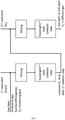
- FIG. 1 is a flow sheet which shows a two-step O 2 minimization with use of a main first reductant (in the first catalytic step) and a second reductant, H 2 (in the second catalytic step) to obtain a very low O 2 level in the gas.
- a gas feed of 976 ppmv O 2 , 2 vol-% of H 2 O and balance N 2 was mixed with 1940-2000 ppmv H 2 .
- the mixing length was more than 100 times the diameter.
- the mixed gas feed was heated to reaction temperatures from 250 to 300°C and reacted over a ScavengOx TM catalyst.
- the ratio of normalized flow volume to reactor volume was 2400 Nm 3 /h/m 3 .
- 0.3 ppmv to 0.7 ppmv O 2 at ⁇ 0.2 ppmv O 2 accuracy was always measured in the catalyst effluent.
Landscapes
- Chemical & Material Sciences (AREA)
- Engineering & Computer Science (AREA)
- Organic Chemistry (AREA)
- Life Sciences & Earth Sciences (AREA)
- Health & Medical Sciences (AREA)
- Oil, Petroleum & Natural Gas (AREA)
- Bioinformatics & Cheminformatics (AREA)
- Biomedical Technology (AREA)
- Chemical Kinetics & Catalysis (AREA)
- Wood Science & Technology (AREA)
- Zoology (AREA)
- Biotechnology (AREA)
- General Chemical & Material Sciences (AREA)
- Environmental & Geological Engineering (AREA)
- Sustainable Development (AREA)
- Genetics & Genomics (AREA)
- General Health & Medical Sciences (AREA)
- Analytical Chemistry (AREA)
- General Engineering & Computer Science (AREA)
- Biochemistry (AREA)
- Microbiology (AREA)
- Catalysts (AREA)
Abstract
In a process for catalytic reduction of oxygen to sub-ppmv level in an oxygen-containing gas, the oxygen reduction is conducted in two consecutive catalytic steps, first with a main reductant and then with H<sub>2</sub> as a secondary reductant. The main reductant is preferably methanol.
Description
- The present invention relates to a process for catalytic reduction of oxygen to a sub-ppmv level in a gas.
- In a range of technical gases and gas-upgrading applications, it is important or even necessary to remove oxygen down to very low levels. In many chemical and catalytic processes, oxygen is either a poison, or it may lead to degradation of process equipment, catalysts, reactants or products. Biogases, landfill gases and digester gases all contain oxygen impurities from air ingress, which can amount to several vol-% of oxygen being present in the gas, and which can never be tolerated for upgraded gas qualities such as renewable or substitute natural gas. In addition, natural gas, reduced gases, pyrolysis gases, gasification gases or reforming gases often cannot tolerate oxygen for their downstream processing. These gases normally also contain sulfur compounds, such as hydrogen sulfide, sulfur dioxide, carbonyl sulfide etc. in the ppmv range.
- Industrial gases, such as acid gases and CO2-containing off-gases, cannot be valorized or separated if there is too much oxygen is present. It is therefore necessary to minimize the level of oxygen found, depending on the intended further processing and valorization of these gases. The industrial solutions presently applied are sensitive to the sulfur compounds and often poisoned thereby, thus hampering their applicability.
- The present invention solves the problem of sulfur-tolerant removal of oxygen in industrial gases down to ppmv and sub-ppmv levels of O2 at low or no stoichiometric excess reductant without combusting methane contained in the gas.
- The standard solution in the field is to use certain solid absorbers (scavengers) which can remove oxygen down to a level below 0.01 vol% in air. However, such absorbers must be changed once their capacities are spent. Such solid scavengers are typically used in small scale or food grade technical applications.
- Various scavengers and reductants, such as dissolved sulfites or ascorbates, can be added in order to reduce oxygen dissolved in water. This is often the case in, e.g., boiler feed- water or the like. Adsorption of components on high-surface area activated carbon or other high-surface area materials is another well-known method for removal of oxygen but, typically, activated carbon is sensitive to oxygen and gets degraded over time, and the high-surface area material will also adsorb many components of higher molecular weight and small polar components, like H2O, in preference of O2.
- For high-temperature (>600°C) purposes, oxygen-conducting electrochemical cells can be used to remove O2 down to sub-ppmv levels with an electrical current at a significant over-potential. This is, however, only possible with gases which do not contain combustible components, and compounds containing sulfur cannot be tolerated.
- Cryogenic distillations are extensively used to separate air into pure N2/O2 technical gas, but this technique is energy intensive and generally undesired if only minor O2 amounts are to be removed from a gas and the O2 itself is considered useless.
- A few catalytic process solutions for oxygen removal by reduction have been developed. However, these solutions all consider using reductants already present in the gas to remove the oxygen as CO2 and H2O.
-
WO 2008/107709 describes a process for reducing free oxygen in a gaseous hydrocarbon stream, where the gaseous hydrocarbon stream is passed over a material comprising a metal selected from Ni, Co, Cu, Fe, Mn or Ag in a reduced state, so that oxygen present in said stream reacts with the metal. The metal in the reduced state is formed by (i) withdrawing a portion of the hydrocarbon stream, (ii) forming a gas mixture containing hydrogen from the hydrocarbon portion, and (iii) passing the gas mixture containing hydrogen over the material containing the metal in reducible form. - The use of a copper catalyst to remove small amounts of oxygen from a gas stream containing primarily hydrogen and carbon monoxide, but also small amounts of acetylene and ethylene, is described in
US 4,034,062 . -
US 2014/0012060 describes a process and a catalyst for removing oxygen from hydrocarbon streams. The catalyst comprises from 0.01 to 0.5 wt% of platinum, based on the catalyst, and optionally tin, with the weight ratio of Sn:Pt being from 0 to 10, on zeolite A as support. -
WO 2017/009243 describes a process for removing oxygen from a gas mixture comprising a hydrocarbon and oxygen, wherein the oxygen is at least partly converted in the presence of a catalyst to CO2 and H2O. The catalyst used is an eggshell catalyst composed of a catalyst support in the form of a shaped body with an outer shell comprising Au and one or more precious metals selected from Pa, Pt, Rh, Ir and Ru, each of which may independently be in metallic form, in the form of an alloy or in the form of salts and not comprising any alkali metals or alkali metal salts. -
US 5,446,232 discloses a method for removing oxygen from hydrogen, a hydrocarbon or a halogenated hydrocarbon gas which contains about 0.01-10 mole% oxygen. The oxygen removal is accomplished by contacting the gas with a Hop-calyte catalyst (a mixture of copper and manganese oxides) at a temperature of about 100-300°C. - In
US 2010/0229466 , a process for reducing free oxygen in a gaseous nitrogen stream is described, which comprises the steps of reforming a hydrocarbon to generate a gas mixture containing hydrogen and carbon oxides, mixing the gas mixture with a nitrogen stream containing free oxygen, and passing the resulting nitrogen gas mixture over a conversion catalyst that converts at least a portion of the free oxygen present in the nitrogen to steam, wherein the hydrocarbon reforming step includes oxidation of a hydrocarbon using an oxygen-containing gas.
In a recent patent application by Applicant's landfill gas group, published asUS 2019/0126201 , a one-step catalytic process is described, in which oxygen removal is furnished by injecting different reductants into the gas and reacting them with available oxygen over Applicant's ScavengOx™ catalyst. These catalytic solutions, however, can only reduce the O2 levels to low-ppmv or sub-ppmv levels if an excess of reductant, whether added to the gas or already present in the gas, is used. - The above-mentioned ScavengOx™catalyst is preferably based on a monolithic substrate material, or it is a pelletized material. The ScavengOx™ catalyst is based on a sulfur-tolerant support material, such as the oxides of alumina, titania, silica or ceria, or high surface area carbon, preferably - but not exclusively - TiO2 or SiO2. The active phase and the promotors are based on one or more of the following: Iron, vanadium, tungsten, chromium, copper, manganese, molybdenum, platinum, palladium, rhodium, ruthenium, gold or silver in metallic or metal oxide form.
- A preferred version of the ScavengOx™ catalyst comprises a metal selected among vanadium, tungsten, chromium, copper, manganese, molybdenum, platinum, palladium, rhodium and ruthenium in metallic or metal oxide form supported on a carrier selected from alumina, titania, silica and ceria.
- In the method of the invention, the oxygen reduction is conducted in two consecutive catalytic steps instead of one, i.e. first with a main reductant and then with H2 as a secondary reductant. The novelty is based on Applicant's recent finding that typical biogases, landfill gases and digester gases will lie inside the thermodynamic limits of carbon formation on the catalyst at temperatures below 500°C, if a carbonaceous reductant is used in excess of the amount necessary for complete O2 conversion to CO2 and H2O. Any operation inside this carbon limit will eventually lead to catalyst deactivation by carbon laydown. However, excess carbonaceous reductant is on the other hand necessary to furnish low-ppmv and sub-ppmv levels of O2 at acceptable contact times in the catalytic reactor. Deactivation and carbon formation have been observed at higher stoichiometric excesses of added reductant.
- So the invention concerns a process for catalytic reduction of oxygen to sub-ppmv level in a gas, wherein the oxygen reduction is conducted in two consecutive catalytic steps, first with a main reductant and then with H2 as a secondary reductant.
- Also, H2 added to the gas, produced in situ in the gas or already present in the gas is reacted with O2, furnishing reduction of O2 at any level and down to sub-ppmv levels.
- Preferably, the main reductant in the first catalytic step is methanol. It is further preferred that the last minor amount of oxygen remaining after the first catalytic step is reacted with H2 to H2O using ScavengOx™ as catalyst at a stoichiometric H2 excess between 0 and 2.5%.
- Thus, the O2 minimization is conducted in two consecutive catalytic steps: The first step by injecting a sub-stoichiometric amount of a suitable carbon-containing reductant, or usinng one already present in the gas, to remove most of the O2 in the gas as CO2 and H2O, and the second step by injecting below 2.5% and preferably down to 0% of a stoichiometric excess of H2 as reductant and removing the remaining O2 from the first step, or using H2 already in or generated in the first step in the gas, or by reacting a sub-stoichiometric amount of H2 to achieve a certain O2 concentration in the gas. By using H2 as reductant, the stoichiometric excess of reductant can be lowered, and the reductant used cannot lead to carbon formation as no carbon atoms are contained in it.
- Furthermore, it has been found that SO2 present in the gas has not reacted with the reductant and does not lower the reaction rate prohibitively for the catalytic process to occur.
- By conducting the O2 reduction in two consecutive catalytic steps, several advantages can be obtained: Most of the O2 is reacted to CO2 and H2O with a cheap and easy-to-dose reductant (such as methanol) without the risk of carbon formation and deactivation in the first step. The last minor amount of O2 is reacted with H2 to H2O, which is possible with the ScavengOx™ catalyst at a stoichiometric H2 excess between 0 and 2.5%, thus avoiding solid carbon formation and deactivation by the reductant in the second step. Furthermore, economical oxygen reduction by stoichiometric or very low excess reductant furnishes low-ppmv and sub-ppmv levels of O2.
- The process according to the invention for catalytic reduction of oxygen to sub-ppmv level in an oxygen-containing gas is illustrated in the figure, which is a flow sheet which shows a two-step O2 minimization with use of a main first reductant (in the first catalytic step) and a second reductant, H2 (in the second catalytic step) to obtain a very low O2 level in the gas.
- The method of the invention is illustrated in the example which follows.
- A gas feed of 976 ppmv O2, 2 vol-% of H2O and balance N2 was mixed with 1940-2000 ppmv H2. The mixing length was more than 100 times the diameter.
- The mixed gas feed was heated to reaction temperatures from 250 to 300°C and reacted over a ScavengOx™ catalyst. The ratio of normalized flow volume to reactor volume was 2400 Nm3/h/m3. At a stoichiometric H2 excess from 0.0% to 2.5%, 0.3 ppmv to 0.7 ppmv O2 at ± 0.2 ppmv O2 accuracy was always measured in the catalyst effluent.
- An addition of 400 ppmv SO2 to the feed gas did not markedly alter the conversion of the O2 (only 0.1 ppmv extra O2 was measured in the effluent from the catalyst).
Claims (10)
- A process for catalytic reduction of oxygen to sub-ppmv level in an oxygen-containing gas, wherein the oxygen reduction is conducted in two consecutive catalytic steps, first with a main reductant and then with H2 as a secondary reductant.
- Process according to claim 1, wherein the oxygen-containing gas is selected from industrial gases, biogases, landfill gases and digester gases.
- Process according to claim 1 or 2, wherein the main reductant in the first catalytic step is methanol.
- Process according to claim 1, wherein the last minor amount of oxygen remaining after the first catalytic step is reacted with H2 to H2O using ScavengOx™ as catalyst at a stoichiometric H2 excess between 0 and 5%, preferably between 0 and 2.5%.
- Process according to claim 4, wherein the ScavengOx™ catalyst comprises a metal selected among vanadium, tungsten, chromium, copper, manganese, molybdenum, platinum, palladium, rhodium and ruthenium in metallic or metal oxide form.
- Process according to claim 4, wherein the ScavengOx™ catalyst is supported on a carrier selected from alumina, titania, silica and ceria.
- Process according to any of the preceding claims, wherein H2 is in the gas and is partly converted in step 1.
- Process according to any of the preceding claims, wherein O2 conversion is furnished partly or completely with H2 in a gas that has thermodynamic potential for elemental carbon formation.
- Process according to any of the preceding claims, wherein O2 reduction is only partly furnished by addition of a sub-stoichiometric amount of H2.
- Process according to any of the preceding claims, wherein O2 reduction is furnished by H2 formed in situ by reactions of other components in the gas.
Priority Applications (1)
| Application Number | Priority Date | Filing Date | Title |
|---|---|---|---|
| EP20185952.7A EP3939689A1 (en) | 2020-07-15 | 2020-07-15 | A process for catalytic reduction of oxygen to a sub-ppmv level in a gas |
Applications Claiming Priority (1)
| Application Number | Priority Date | Filing Date | Title |
|---|---|---|---|
| EP20185952.7A EP3939689A1 (en) | 2020-07-15 | 2020-07-15 | A process for catalytic reduction of oxygen to a sub-ppmv level in a gas |
Publications (1)
| Publication Number | Publication Date |
|---|---|
| EP3939689A1 true EP3939689A1 (en) | 2022-01-19 |
Family
ID=71846151
Family Applications (1)
| Application Number | Title | Priority Date | Filing Date |
|---|---|---|---|
| EP20185952.7A Withdrawn EP3939689A1 (en) | 2020-07-15 | 2020-07-15 | A process for catalytic reduction of oxygen to a sub-ppmv level in a gas |
Country Status (1)
| Country | Link |
|---|---|
| EP (1) | EP3939689A1 (en) |
Citations (11)
| Publication number | Priority date | Publication date | Assignee | Title |
|---|---|---|---|---|
| US4034062A (en) | 1975-03-20 | 1977-07-05 | Borden, Inc. | Removal of oxygen from gas stream with copper catalyst |
| US5204075A (en) * | 1991-05-30 | 1993-04-20 | The Boc Group, Inc. | Process for the purification of the inert gases |
| US5446232A (en) | 1994-02-14 | 1995-08-29 | Occidental Chemical Corporation | Removing oxygen from hydrocarbon gases |
| WO2008107709A1 (en) | 2007-03-05 | 2008-09-12 | Johnson Matthey Plc | Oxygen removal |
| US20100196833A1 (en) * | 2007-07-25 | 2010-08-05 | Osaka Gas Co., Ltd. | Combustible Gas Processing System and Combustible Gas Processing Method |
| US20100229466A1 (en) | 2006-06-19 | 2010-09-16 | Oxygen Removal | Oxygen removal |
| US20140012060A1 (en) | 2012-07-03 | 2014-01-09 | Basf Se | Catalyst and process for removing oxygen from hydrocarbon streams |
| US20150283503A1 (en) * | 2012-10-25 | 2015-10-08 | L'air Liquide, Societe Anonyme Pour L'etude Et L'exploitation Des Procedes Georges Claude | Method and unit for removing oxygen from a gas flow comprising co2 |
| WO2017009243A1 (en) | 2015-07-13 | 2017-01-19 | Wacker Chemie Ag | Process for removing oxygen from a gas mixture comprising hydrocarbon and oxygen |
| US20190126201A1 (en) | 2016-05-24 | 2019-05-02 | Haldor Topsøe A/S | Method for the removal of oxygen from an industrial gas |
| US20190126199A1 (en) * | 2016-05-24 | 2019-05-02 | Haldor Topsøe A/S | A process for the purifying of a raw gas stream containing mainly c1-c5 hydrocarbons and carbon dioxide, and impurities of organic and inorganic sulfur compounds, halogenated and non-halogenated volatile organic compounds and oxygen |
-
2020
- 2020-07-15 EP EP20185952.7A patent/EP3939689A1/en not_active Withdrawn
Patent Citations (11)
| Publication number | Priority date | Publication date | Assignee | Title |
|---|---|---|---|---|
| US4034062A (en) | 1975-03-20 | 1977-07-05 | Borden, Inc. | Removal of oxygen from gas stream with copper catalyst |
| US5204075A (en) * | 1991-05-30 | 1993-04-20 | The Boc Group, Inc. | Process for the purification of the inert gases |
| US5446232A (en) | 1994-02-14 | 1995-08-29 | Occidental Chemical Corporation | Removing oxygen from hydrocarbon gases |
| US20100229466A1 (en) | 2006-06-19 | 2010-09-16 | Oxygen Removal | Oxygen removal |
| WO2008107709A1 (en) | 2007-03-05 | 2008-09-12 | Johnson Matthey Plc | Oxygen removal |
| US20100196833A1 (en) * | 2007-07-25 | 2010-08-05 | Osaka Gas Co., Ltd. | Combustible Gas Processing System and Combustible Gas Processing Method |
| US20140012060A1 (en) | 2012-07-03 | 2014-01-09 | Basf Se | Catalyst and process for removing oxygen from hydrocarbon streams |
| US20150283503A1 (en) * | 2012-10-25 | 2015-10-08 | L'air Liquide, Societe Anonyme Pour L'etude Et L'exploitation Des Procedes Georges Claude | Method and unit for removing oxygen from a gas flow comprising co2 |
| WO2017009243A1 (en) | 2015-07-13 | 2017-01-19 | Wacker Chemie Ag | Process for removing oxygen from a gas mixture comprising hydrocarbon and oxygen |
| US20190126201A1 (en) | 2016-05-24 | 2019-05-02 | Haldor Topsøe A/S | Method for the removal of oxygen from an industrial gas |
| US20190126199A1 (en) * | 2016-05-24 | 2019-05-02 | Haldor Topsøe A/S | A process for the purifying of a raw gas stream containing mainly c1-c5 hydrocarbons and carbon dioxide, and impurities of organic and inorganic sulfur compounds, halogenated and non-halogenated volatile organic compounds and oxygen |
Similar Documents
| Publication | Publication Date | Title |
|---|---|---|
| CN107250106B (en) | Integrated process for the production of formaldehyde-stabilized urea | |
| JP5127115B2 (en) | Method for desulfurizing hydrocarbons by partial oxidation | |
| US7906098B2 (en) | Method for making hydrogen using a gold containing water-gas shift catalyst | |
| EP1993719B9 (en) | Oxygen removal | |
| EP1175372A1 (en) | Process for converting carbon monoxide and water in a reformate stream and apparatus therefor | |
| US7138101B2 (en) | Two-stage catalytic process for recovering sulfur from an H2S-containing gas stream | |
| CN107428650A (en) | Process for the production of formaldehyde | |
| US20060090398A1 (en) | Pre-processing assembly for pre-processing fuel feedstocks for use in a fuel cell system | |
| JP2004527367A (en) | Gas purification | |
| US9284189B2 (en) | Oxygen removal | |
| KR960015912B1 (en) | Steam Reforming of Hydrocarbons | |
| JPH1186892A (en) | Carbon monoxide removal system and carbon monoxide removal method | |
| EP1476246B2 (en) | Process for the selective removal of sulphur compounds from synthesis gas | |
| US20100028229A1 (en) | Oxygen removal | |
| KR100460433B1 (en) | Catalyst for Purifying Reformate Gas and Process for Selectively Removing Carbon Monoxide Contained in Hydrogen-enriched Reformate Gas Using the Same | |
| Cheng | Selective CO oxidation in presence of H2 over Cu/Cr/Ba catalysts | |
| US8877674B2 (en) | Selective CO methanation catalysis | |
| RU2211081C1 (en) | Method of treating hydrogen-containing gas mixture to remove carbon monoxide | |
| KR100505032B1 (en) | Catalyst for selectively removing carbon monoxide contained in reformate gas and process for removing carbon monoxide using the same | |
| KR100440907B1 (en) | Process for Selectively Removing Carbon Monoxide Contained in Hydrogen-enriched Reformate Gas Using Natural Manganese Ore | |
| US20040220052A1 (en) | Water gas shift reaction catalysts | |
| JP4886416B2 (en) | Carbon monoxide reduction device, carbon monoxide reduction method, hydrogen production device, and fuel cell power generation system | |
| RU2359741C2 (en) | Method of hydrogenous gas mixture cleaning from carbon oxide (versions) | |
| JP2001220109A (en) | Method and catalyst for reducing carbon monoxide in hydrogen-containing gas | |
| JP2001302205A (en) | Method and catalyst for reducing carbon monoxide in hydrogen-containing gas |
Legal Events
| Date | Code | Title | Description |
|---|---|---|---|
| PUAI | Public reference made under article 153(3) epc to a published international application that has entered the european phase |
Free format text: ORIGINAL CODE: 0009012 |
|
| STAA | Information on the status of an ep patent application or granted ep patent |
Free format text: STATUS: THE APPLICATION HAS BEEN PUBLISHED |
|
| AK | Designated contracting states |
Kind code of ref document: A1 Designated state(s): AL AT BE BG CH CY CZ DE DK EE ES FI FR GB GR HR HU IE IS IT LI LT LU LV MC MK MT NL NO PL PT RO RS SE SI SK SM TR |
|
| STAA | Information on the status of an ep patent application or granted ep patent |
Free format text: STATUS: THE APPLICATION HAS BEEN WITHDRAWN |
|
| 18W | Application withdrawn |
Effective date: 20220119 |