EP3936406B1 - Sleeve and locking mechanism for changeable-gauge wheel set - Google Patents
Sleeve and locking mechanism for changeable-gauge wheel set Download PDFInfo
- Publication number
- EP3936406B1 EP3936406B1 EP20827095.9A EP20827095A EP3936406B1 EP 3936406 B1 EP3936406 B1 EP 3936406B1 EP 20827095 A EP20827095 A EP 20827095A EP 3936406 B1 EP3936406 B1 EP 3936406B1
- Authority
- EP
- European Patent Office
- Prior art keywords
- sleeve
- barrel
- gauge
- cover
- cover body
- Prior art date
- Legal status (The legal status is an assumption and is not a legal conclusion. Google has not performed a legal analysis and makes no representation as to the accuracy of the status listed.)
- Active
Links
Images


Classifications
-
- B—PERFORMING OPERATIONS; TRANSPORTING
- B61—RAILWAYS
- B61F—RAIL VEHICLE SUSPENSIONS, e.g. UNDERFRAMES, BOGIES OR ARRANGEMENTS OF WHEEL AXLES; RAIL VEHICLES FOR USE ON TRACKS OF DIFFERENT WIDTH; PREVENTING DERAILING OF RAIL VEHICLES; WHEEL GUARDS, OBSTRUCTION REMOVERS OR THE LIKE FOR RAIL VEHICLES
- B61F7/00—Rail vehicles equipped for use on tracks of different width
-
- B—PERFORMING OPERATIONS; TRANSPORTING
- B60—VEHICLES IN GENERAL
- B60B—VEHICLE WHEELS; CASTORS; AXLES FOR WHEELS OR CASTORS; INCREASING WHEEL ADHESION
- B60B17/00—Wheels characterised by rail-engaging elements
-
- B—PERFORMING OPERATIONS; TRANSPORTING
- B60—VEHICLES IN GENERAL
- B60B—VEHICLE WHEELS; CASTORS; AXLES FOR WHEELS OR CASTORS; INCREASING WHEEL ADHESION
- B60B35/00—Axle units; Parts thereof ; Arrangements for lubrication of axles
- B60B35/02—Dead axles, i.e. not transmitting torque
- B60B35/10—Dead axles, i.e. not transmitting torque adjustable for varying track
- B60B35/1036—Dead axles, i.e. not transmitting torque adjustable for varying track operated with power assistance
- B60B35/1045—Dead axles, i.e. not transmitting torque adjustable for varying track operated with power assistance electrically
-
- B—PERFORMING OPERATIONS; TRANSPORTING
- B60—VEHICLES IN GENERAL
- B60B—VEHICLE WHEELS; CASTORS; AXLES FOR WHEELS OR CASTORS; INCREASING WHEEL ADHESION
- B60B35/00—Axle units; Parts thereof ; Arrangements for lubrication of axles
- B60B35/02—Dead axles, i.e. not transmitting torque
- B60B35/10—Dead axles, i.e. not transmitting torque adjustable for varying track
- B60B35/1072—Dead axles, i.e. not transmitting torque adjustable for varying track by transversally movable elements
- B60B35/1081—Dead axles, i.e. not transmitting torque adjustable for varying track by transversally movable elements the element is a wheel
-
- B—PERFORMING OPERATIONS; TRANSPORTING
- B61—RAILWAYS
- B61F—RAIL VEHICLE SUSPENSIONS, e.g. UNDERFRAMES, BOGIES OR ARRANGEMENTS OF WHEEL AXLES; RAIL VEHICLES FOR USE ON TRACKS OF DIFFERENT WIDTH; PREVENTING DERAILING OF RAIL VEHICLES; WHEEL GUARDS, OBSTRUCTION REMOVERS OR THE LIKE FOR RAIL VEHICLES
- B61F15/00—Axle-boxes
- B61F15/20—Details
- B61F15/26—Covers; Sealing thereof
-
- B—PERFORMING OPERATIONS; TRANSPORTING
- B60—VEHICLES IN GENERAL
- B60Y—INDEXING SCHEME RELATING TO ASPECTS CROSS-CUTTING VEHICLE TECHNOLOGY
- B60Y2200/00—Type of vehicle
- B60Y2200/30—Railway vehicles
Definitions
- the present application relates to the technical field of rail vehicle for variable gauge, and in particular to a sleeve and a locking mechanism for a gauge-changing wheelset.
- variable track gauge especially locking mechanisms are all passive have complex installation structures, which is in sliding fit with an axle, so as to be used in variable track gauge, and the operation for changing track gauge of the wheels need to be performed with an external auxiliary facility, which causes low efficiency and high investment cost.
- CN108909355A discloses a wheel set used for a variable gauge bogie and the bogie, the wheel set comprising wheels, an axle and variable gauge mechanisms, wherein the variable gauge mechanisms comprise a fixing sleeve, a locking pin, a mitigation sleeve and an unlocking disc.
- the wheels are slidably disposed at two ends of the axle, and the variable gauge mechanisms are respectively disposed on the inner side axles of the wheels.
- the unlocking disc is pushed to drive the locking pin to move upwards, so that the fixing sleeve is unlocked from the mitigation sleeve.
- the present application is intended to address at least one of the technical problems existing in the prior art or related art.
- the present application is intended to provide a sleeve and a locking mechanism of a gauge-changing wheelset, so as to solve the problems that the locking mechanisms in the traditional structure for variable gauge are all passive and have complicated installation structures.
- an embodiment of the present application provides a sleeve of a gauge-changing wheelset, including a sleeve body, and the sleeve body includes:
- the outer wall of the second barrel is provided with insulating rubber, the chips are provided on the insulating rubber, and adjacent chips are separated by the insulating rubber.
- an outer surface of each of the chips is flush with an outer surface of the insulating rubber.
- annular cover body is provided with a hanger for fixing the position of the annular cover body.
- the dust cover has a split structure, and includes a first cover body and a second cover body.
- the first cover body and the second cover body are butted to form the dust cover, and connecting blocks extending outward are provided at both ends of the first cover body and the second cover body, respectively, and provided with connecting holes; and the first cover body and the second cover body are connected by a connector.
- the electric brushes are two pairs of electric brushes
- the chips are two pairs of chips
- a pair of the electric brushes are provided on the first cover and another pair of the electric brushes are provided on the second cover and the two pairs of electric brushes are adjacent and staggered.
- the embodiment of the present application also provides a locking mechanism of a gauge-changing wheelset, including a traction electromagnet and a locking pin, and the above-mentioned sleeve of a gauge-changing wheelset.
- the traction electromagnet is fixed at an inner side wall of the second end cover, the traction electromagnet includes a traction coil and a movable core being controlled to move by turning on and off of the traction coil, and the locking pin is fixedly connected to an end of the movable core away from the traction coil and the movable core is configured to drive the locking pins to penetrate through the through hole and insert into or remove from the locking hole to lock or unlock the wheels.
- the traction electromagnet further includes a housing being fixed on the inner side wall of the second end cover; and the traction electromagnet further comprises chuck coils provided on opposite sides of the movable core, respectively, and a lock pin fitting with each of the chuck coils, two annular lock grooves are provided on the movable core at intervals in an axial direction of the movable core and the lock pin is configured to be inserted into one of the annular lock grooves to fix the movable core in an unlocked position or a locked position.
- the locking mechanism is easy to mount and simple in structure by the arrangement of the sleeve.
- the locking mechanism includes traction electromagnets and locking pins, the movable iron is controlled based on turning on and off of the traction electromagnets and thus the locking pins are driven to extend or contract, thereby locking and unlocking the wheels.
- the wheels can be locked and unlocked directly without an external apparatus such that the ground apparatus for variable gauge becomes simpler.
- signals for variable gauge are output by a vehicle control system which improves the reliability and efficiency of operations for changing tracks, and also saves the layout cost of external apparatuses.
- orientation or positional relationships indicated by terms such as “center”, “longitudinal”, “lateral”, “upper”, “lower”, “front”, “rear”, “left”, “right”, “vertical”, “horizontal”, “top”, “bottom”, “inside”, “outside”, etc. are based on the orientation or positional relationship shown in the drawings, and are merely for the convenience of describing the present application and simplifying the description, rather than indicating or implying that the device or component stated must have a particular orientation, is constructed and operated in a particular orientation, and thus is not to be construed as limiting the application.
- the terms “installed/mounted”, “connected with,” and “connected” shall be understood broadly, for example, it may be either fixedly connected or detachably connected, or can be integrated; it may be mechanically connected, or electrically connected; it may be directly connected, or indirectly connected through an intermediate medium and the communication between the interior of two elements.
- installed/mounted shall be understood broadly, for example, it may be either fixedly connected or detachably connected, or can be integrated; it may be mechanically connected, or electrically connected; it may be directly connected, or indirectly connected through an intermediate medium and the communication between the interior of two elements.
- an embodiment of the present application provides a sleeve of a gauge-changing wheelset, including a sleeve body 31, and the sleeve body 31 includes:
- the dust cover 6 includes an annular cover body 65 and retaining rings 66 provided at both ends of the annular cover body 65 in an axial direction, at least one pair of electric brushes 61 are provided at an inner wall of the annular cover body, chips 62 corresponding to the electric brushes 61 one by one are provided at an outer wall of the second barrel, a pair of annular mounting grooves surrounding the outer circumference of the second barrel are provided at intervals in an axial direction of the second barrel, and inner circumferences of the retaining rings 66 are respectively mounted in the annular mounting groove, the electric brushes 61 are in contact with the chips 62 and the sleeve body is rotated such that the chips 62 rub against the electric brushes61 to form an electrical connection, thereby forming a power supply circuit.
- the outer wall of the second barrel is provided with insulating rubber 63, the chips 62 are mounted on the insulating rubber 63, and adjacent chips 62 are separated by the insulating rubber 63 so as to avoid mutual interference between adjacent chips 62.
- the insulating rubber 63 has a ring shape matching the outer circumference of the sleeve body 31, and the chips 62 are annular.
- the outer surface of the insulating rubber 63 is provided with a plurality of annular grooves arranged at intervals.
- the annular grooves are provided around the outer circumference of the insulating rubber 63, and the chips 62 are respectively mounted in the annular grooves, so that the adjacent chips 62 are separated by the insulating rubber 63, and a certain thickness of insulating rubber is provided between the sleeve body 31 and the chips 62 such that the loop current on the wheels and axles will not be transmitted to the chips 62.
- an outer surface of each of the chips 62 is flush with an outer surface of the insulating rubber 63, that is, only one side of each of the chips 62 that matches with the electric brushes 61 is left.
- annular cover body 65 is provided with a hanger 64 for fixing the position of the annular cover body 65.
- the hanger 64 is used to be fitted with a boom connected to an end beam of the vehicle body to prevent the dust cover 6 from rotating with the sleeve body 31 under the friction force of the sleeve body 31.
- the dust cover 6 has a split structure, and includes a first cover body and a second cover body.
- the first cover body and the second cover body are butted to form the dust cover 6, and connecting blocks 67 extending outward are provided at both ends of the first cover body and the second cover body, respectively, and provided with connecting holes; and the first cover body and the second cover body are connected by a connector.
- the retaining ring of the first cover body is first clamped in the annular mounting groove of the sleeve body 31, and then the retaining ring of the second cover body is clamped in the annular mounting groove of the sleeve body 31.
- Bolts and other connectors are used to penetrate through connecting holes on the connecting block 67 of the first cover body and the second cover body so as to connect the first cover body and the second cover body to form an integral dust cover 6, and the dust cover 6 is mounted on the outer circumference of the sleeve body 31.
- the electric brushes 61 are two pairs of the electric brushes
- the chips 62 are two pairs of chips
- a pair of the electric brushes 61 are provided on the first cover and another pair of the electric brushes 62 are provided on the second cover and the two pairs of the electric brushes 61 are adjacent and staggered and a pair of electric brushes 61 corresponds to a pair of chips 62 respectively.
- an embodiment of the present application further provides a locking mechanism 3 for a gauge-changing wheelset, including a traction electromagnet 32 and a locking pin 33, and the above sleeve of a gauge-changing wheelset.
- the traction electromagnet 32 is fixed at an inner side wall of the second end cover, the traction electromagnet 32 includes a traction coil 32-1 and a movable core 32-2 being controlled to move by turning on and off the traction coil 32-1, the traction coil 32-1 has a fixed position, and the movable core 32-2 points to the position where one of the locking holes 41 is located, and each of the locking pins 33 is fixedly connected to an end of the movable core 32-2 away from the traction coil 32-1 and the movable core 32-2 drives the locking pins 33 to penetrate through the through hole and insert into or remove from the locking holes 41 to lock or unlock the wheels.
- the traction electromagnet 32 further includes a housing fixed on the inner side wall of the second end cover.
- the traction electromagnet further includes chuck coils provided on opposite sides of the movable core 32-2, respectively, and a lock pin 35 fitting with each of the chuck coils.
- Two annular lock grooves are provided on the movable core at intervals in an axial direction of the movable core and the lock pin is configured to be inserted into one of the annular lock grooves to fix the movable core in an unlocked position or a locked position. That is, after the movable core 32-2 is inserted into the through hole and the locking holes 41, the lock pin 35 is inserted into the corresponding annular lock groove to fix the movable core 32-2 in a locking position, and thus the locking reliability can be improved.
- the lock pin 35 is inserted into the corresponding annular lock groove to fix the movable core 32-2 in an unlocking position, which improves the unlocking reliability and avoids the mis-operation of the movable core 32-2.
- the two pairs of electric brushes 61 are respectively connected to a power supply unit, and the power supply unit is connected to a control mechanism.
- the control mechanism is configured to control the power supply unit to supply power to the traction coil 32-1 and/or the chuck coil 34.
- the control mechanism may be a control mechanism for the train itself.
- the axis of the movable core 32-2 is coaxially arranged with the axes of the locking holes 41 and the movable core 32-2 may drive the locking pins 33 to extend into or out of the corresponding locking hole 41.
- the locking pin 33 is located in the locking hole 41 corresponding to a gauge, and locked to each other.
- the wheel 4 should be unlocked first.
- the traction coil 32-1 is energized, and the movable core 32-2 is moved closer to the traction coil 32-1 under the influence of the magnetic field force of the traction coil 32-1, and the movable core 32-2 is retracted and thus exits from the locking hole 41 to be unlocked.
- the wheels 4 are locked and unlocked directly by the traction electromagnet 32 without a structure for assisting locking and unlocking on a ground apparatus for variable gauge, and thus the structure of the ground apparatus for variable gauge is simplified and becomes relatively simple and more reliable and the cost is saved.
- the traction coil 32-1 is arranged in the housing; one end of the movable core 32-2 passes through the traction coil 32-1, the other end of the movable core 32-2 is fixedly connected to the locking pins 33, and the locking pins 33 may be fixedly connected to the end of the movable core 32-2 away from the traction coil 32-1 by connecting parts such as bolts and screws; through the movable core 32-2, the locking pins 33 are driven to pass through the through hole and be located in the locking holes 41 corresponding to the gauge such that the wheels 4 are locked, and through the movable core 32-2, the locking pins 33 are driven to exit the locking holes 41 such that the wheels 4 are unlocked.
- the wheels are easily locked and unlocked and have high locking and unlocking reliability.
- the inner hub of the wheel 4 is provided with a plurality of rows of the locking holes 41 in the circumferential direction, and each row of the locking holes 41 includes a plurality of the locking holes 41 arranged at intervals in the axial direction, and a distance between two adjacent locking holes 41 is equal to a half of the gauge to be changed.
- the gauge is changed, two wheels 4 move simultaneously, the two wheels 4 each move a half of the gauge to be changed, that is, the total moving distance is the gauge to be changed. For example, changing from a standard gauge to a narrow gauge or wide gauge; or changing from a narrow gauge or wide track gauge to a standard gauge, which may be selected according to specific needs.
- the traction electromagnets are multiple, a plurality of the traction electromagnets 32 are distributed along the inner side wall of the second end cover in a circumferential direction, and the plurality of the traction electromagnets 32 correspond to a plurality of rows of the locking holes 41 one by one, that is, each traction electromagnet 32 corresponds to a row of locking holes 41.
- the lock pin 35 is T-shaped, and a cavity for accommodating the large end of the lock pin 35 is provided at a position where the chuck coil 34 is provided with the lock pin 35 and the cavity is provided with a gap for the lock pin 35 to move in the axial direction and the size of the gap may be 3-4mm, preferably 3 mm.
- An end of the lock pin 35 outside the cavity is provided with an annular boss, the lock pin 35 is connected with a first spring having one end abutting against the annular boss and other end abutting against the outer side of the cavity.
- the lock pin 35 When the chuck coil 34 is energized, the lock pin 35 is attracted by a magnetic force of the chuck coil 34 to overcome elastic force of the first spring, and moves in the direction away from the movable core 32-2 until it exits from the movable core 32-2. At this time, the movable core 32-2 may perform an unlocking or locking operation. When the unlocking or locking operation is completed, the chuck coil 34 is de-energized, the lock pin 35 is re-inserted into the corresponding annular lock groove under the restoring force of the first spring, and the movable core 32-2 is positioned in the unlocked or locked state.
- a second spring is connected with one end of the movable core 32-2 outside the housing, one end of the second spring abuts against the outside of the housing, and the other end of the second spring abuts against an annular flange at the end of the movable core 32-2.
- the second spring facilitates the movable core 32-2 to be quickly reset after the traction coil 32-1 is de-energized.
- the traction electromagnet 32 is operated as follows: first, the chuck coil 34 is energized, and the lock pin 35 is attracted to overcome the spring force such that the lock pin 35 extends exit from the annular lock groove of the movable core 32-2.
- the lock pin 35 extends into the annular groove of the movable core 32-2 by 3mm, that is, the attraction surface of the lock pin 35 is 3mm away from the chuck, and a miniature chuck may be used since the magnetic force in the air gap of 3mm is relatively large. Then, the traction coil 32-1 is energized, and the movable core 32-2 drives the locking pin 33 to move toward outside of the locking hole 41, and then the wheel 4 is unlocked.
- the chuck coil 34 is powered off first, and the lock pin 35 is clipped in the annular lock groove at the lower end of the movable core 32-2 to keep the movable core 32-2 in the unlocked position of the wheel 4, and then the traction coil 32-1 is de-energized, which may prevent the coil from being burned due to being energized for a long time.
- the chuck coil 34 is energized, the movable core 32-2 is unlocked, moves downward under a restoring force of the second spring, and drives the locking pin 33 to move down to the locking hole 41 on the hub of wheel 4, the wheel 4 is locked again.
- the chuck coil 34 is de-energized, and the movable core 32-2 is clipped by the locking pin 35 to prevent that the locking pin 35drives the locking pin 33 and the wheel 4 to move radially under the centrifugal force and thus the wheel 4 is unlocked.
- DC electromagnet Since the operating voltage of the AC electromagnet is generally AC 220V, the temperature rises during operation, when the movable core 32-2 is clipped, the electromagnet is easily burned out due to excessive current and thus has a short service life.
- DC electromagnet generally adopts 24V DC voltage, and generally will not be burnt out since the movable core 32-2 is clipped. They are small in size and have a long service life and smaller start-up power than AC electromagnets. Because the required starting power is not large here, DC power supply is adopted.
- a gauge-changing wheelset is provided with the locking mechanism 3, including wheels 4 and an axle 5.
- the wheels 4 are provided at both ends of the axle 5 and connected to the axle 5 through splines.
- the inner circumference of each of the wheels 4 is provided with an inner spline
- the axle 5 is provided with an outer spline
- the wheels 4 and the axle 5 are in fit connection through the inner spline and the outer spline to evenly distribute torques on the inner circumferences of the wheels 4 which not only convenient to transmit torque, but also convenient for the wheels 4 to slide along the axle 5 to change the gauge.
- both ends of the axle 5 located outside the wheels 4 are respectively supported in an axle box body 7 providing support for the wheelset.
- the hub of each of the wheels 4 extends outside of the wheels 4 and inside of the wheels 4, and thus an outer hub and an inner hub are formed to facilitate the installation of components matched therewith.
- the gauge-changing wheelset in order to facilitate the change in the gauges, includes a locking mechanism 3 provided on the inner side of each of the wheels 4, respectively and a lateral drive mechanism 1 provided on the outer side of each of the wheels 4, respectively.
- the lateral drive mechanism 1 is fixed on the axle box body 7.
- the lateral drive mechanism 1 includes an electric cylinder 11, and the protruding end of the electric cylinder 11 is used to push or pull the unlocked wheels 4 to change the gauge of the wheel 4.
- the traction coil 32-1 is de-energized, the magnetic field force of the traction coil 32-1 on the movable core 32-2 disappears, and the movable core 32-2 moves in a direction away from the traction coil 32-1 under the external force. That is, it moves toward the direction closer to the locking hole 41, and is inserted into the locking holes 41 to be locked again.
- Wheels 4 are pushed or pulled by the electric cylinder 11 of the lateral drive mechanism 1 to provide the lateral movement of the wheels 4, so that the lateral movement of the wheels 4 is more stable, the wear between the wheels and the axles may be reduced, and the reliability of the locking mechanism of the gauge-changing wheelset is improved.
- the lateral drive mechanism 1 further includes a movable disc 8 including a disc body provided with a central through hole and a bearing fixedly mounted in the central through hole, preferably a four-point angular contact ball bearing 9.
- An inner ring of the bearing is fixed around the outer hub of each of the wheels 4 to ensure that the disc body remains relatively stationary when the axle 5 is rotated.
- the disc body is provided with connecting holes 82 connected with the extension end of the electric cylinder 11, and the extension end of the electric cylinder 11 is fixedly connected to the connecting holes, so that the extension end of the electric cylinder 11 may drive the wheels 4 to move synchronously when it moves.
- the bearing here needs to withstand large bidirectional axial force, but basically does not withstand radial force, the four-point angular contact ball bearing 9 is preferably used.
- the limiting speed of the four-point angular contact ball bearing 9 should not be less than 4 ⁇ 10 8 60 ⁇ D (r/min), where D is the diameter of each of the wheels 4 (unit: mm).
- a (axial) width of the four-point angular contact ball bearing 9 should be kept at about 45mm, and a (radial) thickness thereof should be as small as possible under the premise of meeting the conditions.
- the four-point angular contact ball bearing 9 does not have an axial internal clearance.
- the four-point angular contact ball bearing 9 mainly bears two-way axial forces, so two-way retaining rings should be provided at the inner and outer sides. Accordingly, the movable disc retaining ring 81 is provided at an outer ring of the bearing corresponding to the movable disc 8.
- each of the lateral drive mechanisms 1 includes two electric cylinders 11 fixed in parallel on the axle box body 7 and separately provided on both sides of the hubs of the wheels 4, the opposite ends of the disc body are respectively provided with the connecting holes, the extension end of each of the electric cylinders 11 penetrates through the connecting holes 82, and is fixedly connected with the connecting holes through fasteners.
- Two connecting holes are arranged symmetrically with respect to the center through hole of the disc body to ensure that the forces applied on the wheels 4 at both sides are equal and the forces on the wheels are balanced.
- the electric cylinder 11 is a planetary roller screw pair electric cylinder having characteristics of a large cross-sectional area of rolling element for bearing force, simultaneous being loaded at any time and no cyclic alternating stress. Due to space constraints, an integrated planetary roller screw electric cylinder is adopted here. A screw extension end of the planetary roller screw electric cylinder is provided with a positioning boss and an external thread. In order to prevent vibration from affecting the planetary roller screw electric cylinder, each of the connecting holes is provided with a rubber node, but the rubber node cannot protrude outside of the connecting holes, to prevent from affecting the accuracy of the electric cylinder 11 in the lateral direction.
- the screw extension end penetrates through the rubber nodes and the positioning boss abuts against one end surface of each of the connecting holes, and is screwed on the external thread using a nut 12 so that the nut 12 abuts against the other end surface of each of the connecting holes so that both are connected firmly to ensure that after the screw extension end is connected with each of the connecting holes, no relative displacement exists between the electric cylinder 11 and the movable disc 8 and thus the wheels 4 move accurately.
- the electric cylinder 11 pushes the movable disc 8 to move away from the axle box body 7, and the movable disc 8 drives the wheels 4 to move at the same time, thereby a wide gauge being changed into a narrow gauge.
- the electric cylinder 11 pulls the movable disc 8 to move towards the axle box body 7, and the movable disc 8 drives the wheels 4 to move at the same time, thereby changing into a wide gauge from a narrow gauge.
- the movable disc in a rhombus-like shape, and top corners of the rhombus-like shape are constructed as arcs that are transitionally connected to adjacent sides.
- a pair of the connecting holes are respectively provided in a pair of opposite top corners on the movable disk. Since no connecting holes are provided in the other pair of top corners, the other pair of top corners may be configured as arc surfaces matching the outer circumference of the central through hole of the movable disc so as to further reduce the weight of the movable disc 8 and save materials and installation space of the movable disc 8.
- the wheels 4 In order to avoid scratches of the axle 5 when the wheels 4 move, and the force required for the movement of the wheels 4, that is, the output power of the drive mechanism is decreased, the wheels 4 is unloaded here by supporting a support rail at the axle box. Therefore, a set of support rails needs be mounted on both sides of the ground rail.
- the support rail appears first, and a steel rail for a narrow-track-gauge and the support rail coexist for a section; then, the steel rail disappears, and only the support rail is used for supporting, and the change of the gauge is completed in this section.
- a steel rail for a wide-track-gauge and the support rail coexist for a section.
- the support rail gradually descends, disappears, and enters a wide-track-gauge rail line.
- the height from a support surface of the support rail to a horizontal plane is the same as the height from the bottom of the axle box to the horizontal plane, two ends have small heights such that the loading/unloading process proceeds slowly and the occurrence of impact is avoided.
- Side stoppers are provided outside to prevent the train from moving laterally and slipping out of the support surface.
- the gauge change process has five steps, i.e., unloading, unlocking, laterally moving, locking, and loading of the wheels 4.
- the gauge changing from a standard gauge of 1435mm to wide gauge of 1520mm is taken as an example to illustrate the gauge change process of the active gauge change solution.
- the wheels 4 are unloaded: when the train runs from the gauge of 1435mm to a gauge changing section, the speed is decreased to 15m/s, and then as the train advances, the support track gradually rises, and the support track is in contact with the axle box body 7 and runs for a short distance, the standard steel track disappears, and the wheels 4 is completely unloaded.
- the wheel 4 is unlocked: an apparatus installed in the ground support rail sends a signal indicating the wheels 4 are unloaded.
- the control mechanism supplies power to the locking mechanism 3, and in the traction electromagnet 32, the chuck coil 34 and the traction coil 32-1 are energized in sequence, the movable core 32-2 is unlocked and drives locking pin 33 to be retracted, and the wheels 4 are unlocked.
- the traction electromagnet 32 detects that the movable core 32-2 is in the retracted position, a signal indicating the wheels 4 are unlocked is sent out, and the control mechanism de-energizes the chuck coil 34 and the traction coil 32-1 in turn to prevent the coil from being burnt when it is energized for a long time.
- the movable core 32-2 is clipped in the unlocked position of the wheel 4 by the lock pin 35.
- the gauge is changed: after the control mechanism receives the signal indicating the wheels 4 are unlocked, it de-energizes the chuck coil 34 and the traction coil 32-1 in turn, and energizes the planetary roller screw electric cylinder (having an energizing direction opposite to a previous energizing direction, that is, the reverse direction is energized last time, and the forward direction is energized this time).
- the electric cylinder 11 pushes/pulls the movable disc 8 to make the wheels 4 reach a new gauge position.
- the wheels 4 are locked: after the electric cylinder 11 reaches the gauge position, a signal indicating the gauge change is completed is sent out, and then the chuck coil 34 of the traction electromagnet 32 is energized, and the movable core 32-2 is unlocked and the locking pin 33 is driven by the spring restoring force to extend out.
- a detection device detects that the movable core 32-2 is in the extended-out position, a signal indicating the wheels 4 are locked is sent out, the chuck coil 34 is de-energized, and the lock pin 35 locks the movable core 32-2 and the locking pin 33 at a locked position of the wheels 4 to prevent it from moving under the centrifugal force.
- wheels 4 are loaded: the steel rail for the gauge of 1520mm appears, the support track gradually drops, and the wheels 4 are reloaded; the entire gauge change process is finished.
- the active structure for variable gauge is provided, and the movable core is controlled to be extended or retracted based on the turning on or turning off of the traction electromagnet and thus the wheels are locked or unlocked directly without the external apparatus such that the ground apparatus for variable gauge becomes simpler and has reduced cost.
- signals for variable gauge are output by a vehicle control system which improves the reliability and efficiency of actions for variable gauge.
Landscapes
- Engineering & Computer Science (AREA)
- Mechanical Engineering (AREA)
- Motorcycle And Bicycle Frame (AREA)
- Rolling Contact Bearings (AREA)
- Handcart (AREA)
Description
- The present application claims priority to
Chinese Application No. 2019105411671 filed on June 21, 2019 - The present application relates to the technical field of rail vehicle for variable gauge, and in particular to a sleeve and a locking mechanism for a gauge-changing wheelset.
- In order to meet the transportation requirements between tracks with different gauges in neighboring countries, generally, bogies with different wheelset inner pitch are replaced at a border between countries, but such solution is costly and time-consuming. Bogies for variable track gauge have been invented in Spain and then in Japan to enable continuous running of trains on tracks with different gauges.
- However, traditional structures for variable track gauge, especially locking mechanisms are all passive have complex installation structures, which is in sliding fit with an axle, so as to be used in variable track gauge, and the operation for changing track gauge of the wheels need to be performed with an external auxiliary facility, which causes low efficiency and high investment cost.
-
CN108909355A discloses a wheel set used for a variable gauge bogie and the bogie, the wheel set comprising wheels, an axle and variable gauge mechanisms, wherein the variable gauge mechanisms comprise a fixing sleeve, a locking pin, a mitigation sleeve and an unlocking disc. The wheels are slidably disposed at two ends of the axle, and the variable gauge mechanisms are respectively disposed on the inner side axles of the wheels. The unlocking disc is pushed to drive the locking pin to move upwards, so that the fixing sleeve is unlocked from the mitigation sleeve. - The present application is intended to address at least one of the technical problems existing in the prior art or related art.
- The present application is intended to provide a sleeve and a locking mechanism of a gauge-changing wheelset, so as to solve the problems that the locking mechanisms in the traditional structure for variable gauge are all passive and have complicated installation structures.
- In order to solve the above technical problems, an embodiment of the present application provides a sleeve of a gauge-changing wheelset, including a sleeve body, and the sleeve body includes:
- a first sleeve including a first end cover and a first barrel, the first barrel extending toward an axial side of the first end cover in a circumferential direction of the first end cover, the first end cover being provided with an axial through hole;
- a second sleeve being connected with the first sleeve, and the second sleeve including a second end cover integrally connected with the first barrel in a circumferential direction of the first barrel and a second barrel extending toward the same side as that the first barrel extending toward in a circumferential direction of the second end cover;
- wherein the first end cover is arranged to be securely fixed around an axle of the gauge-changing wheelset, and located inside of wheels of the gauge-changing wheel set, and an inner hub of each of the wheels is configured to extend into the first barrel and be in sliding fit with the first barrel, and a side wall of the first barrel is provided with a through hole for being fit with a locking hole on the inner hub of each of the wheels;
- a dust cover is fixed around an outer circumference of the second barrel;
- the dust cover includes an annular cover body and retaining rings provided at both ends of the annular cover body in an axial direction, wherein at least one pair of electric brushes are provided at an inner wall of the annular cover body, chips corresponding to the electric brushes one by one are provided at an outer wall of the second barrel, a pair of annular mounting grooves surrounding the outer circumference of the second barrel are provided at intervals in an axial direction of the second barrel, and inner circumferences of the retaining rings are respectively mounted in the annular mounting groove and the sleeve body is rotated such that the chips rub is against the electric brushes to form an electrical connection.
- In an embodiment, the outer wall of the second barrel is provided with insulating rubber, the chips are provided on the insulating rubber, and adjacent chips are separated by the insulating rubber.
- In an embodiment, an outer surface of each of the chips is flush with an outer surface of the insulating rubber.
- In an embodiment, an outer wall of the annular cover body is provided with a hanger for fixing the position of the annular cover body.
- In an embodiment, the dust cover has a split structure, and includes a first cover body and a second cover body. The first cover body and the second cover body are butted to form the dust cover, and connecting blocks extending outward are provided at both ends of the first cover body and the second cover body, respectively, and provided with connecting holes; and the first cover body and the second cover body are connected by a connector.
- In an embodiment, the electric brushes are two pairs of electric brushes, the chips are two pairs of chips, a pair of the electric brushes are provided on the first cover and another pair of the electric brushes are provided on the second cover and the two pairs of electric brushes are adjacent and staggered.
- The embodiment of the present application also provides a locking mechanism of a gauge-changing wheelset, including a traction electromagnet and a locking pin, and the above-mentioned sleeve of a gauge-changing wheelset. The traction electromagnet is fixed at an inner side wall of the second end cover, the traction electromagnet includes a traction coil and a movable core being controlled to move by turning on and off of the traction coil, and the locking pin is fixedly connected to an end of the movable core away from the traction coil and the movable core is configured to drive the locking pins to penetrate through the through hole and insert into or remove from the locking hole to lock or unlock the wheels.
- In an embodiment, the traction electromagnet further includes a housing being fixed on the inner side wall of the second end cover; and
the traction electromagnet further comprises chuck coils provided on opposite sides of the movable core, respectively, and a lock pin fitting with each of the chuck coils, two annular lock grooves are provided on the movable core at intervals in an axial direction of the movable core and the lock pin is configured to be inserted into one of the annular lock grooves to fix the movable core in an unlocked position or a locked position. - Compared with the prior art, the present application has the following advantages.
- In the sleeve and the locking mechanism of a gauge-changing wheelset according to the present application, the locking mechanism is easy to mount and simple in structure by the arrangement of the sleeve. The locking mechanism includes traction electromagnets and locking pins, the movable iron is controlled based on turning on and off of the traction electromagnets and thus the locking pins are driven to extend or contract, thereby locking and unlocking the wheels. The wheels can be locked and unlocked directly without an external apparatus such that the ground apparatus for variable gauge becomes simpler. Moreover, signals for variable gauge are output by a vehicle control system which improves the reliability and efficiency of operations for changing tracks, and also saves the layout cost of external apparatuses.
-
-
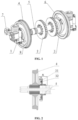
FIG. 1 is a three-dimensional schematic diagram of a gauge-changing wheelset according to an embodiment of the present application; -
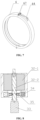
FIG. 2 is an axial cross-sectional schematic diagram showing a locking mechanism according to an embodiment of the present application; -
FIG. 3 is a partial enlarged view of A inFIG.2 ; -
FIG. 4 is an axial cross-sectional schematic diagram showing a lateral drive mechanism according to an embodiment of the present application; -
FIG. 5 is a three-dimensional schematic diagram of a dust cover according to an embodiment of the present application; -
FIG. 6 is a three-dimensional schematic diagram of a dust cover according to an embodiment of the present application viewed from another perspective; -
FIG. 7 is a three-dimensional schematic diagram of a wheel of a gauge-changing wheelset according to an embodiment of the present application; -
FIG. 8 is a schematic diagram of a traction electromagnet in a locking mechanism according to an embodiment of the present application; - Reference number: 1 lateral drive mechanism; 11 electric cylinder; 12 nut; 2 brake disc; 3: locking mechanism; 31 sleeve body; 311 first sleeve; 3111 first end cover; 3112 first barrel; 312 second sleeve; 3121 second end cover; 3122 second barrel; 32 traction electromagnet; 32-1 traction coil; 32-2 movable core; 33 locking pin; 34 chuck coil; 35 lock pin; 4: wheel; 41: locking hole; 5: axle; 6 dust cover; 61 electric brush; 62 chip; 63 insulating rubber; 64 hanger; 65 annular cover body; 66 retaining ring; 67 connecting block; 7 axle box body; 8 movable disc; 81 movable disc retaining ring; 9 four-point angular contact ball bearing; 91 bearing retaining ring.
- The specific embodiments of the present application are further described in detail below with reference to the drawings and embodiments. The following embodiments are intended to illustrate the application, but are not intended to limit the scope of the application.
- In the description of the present application, it is to be noted that the orientation or positional relationships indicated by terms such as "center", "longitudinal", "lateral", "upper", "lower", "front", "rear", "left", "right", "vertical", "horizontal", "top", "bottom", "inside", "outside", etc. are based on the orientation or positional relationship shown in the drawings, and are merely for the convenience of describing the present application and simplifying the description, rather than indicating or implying that the device or component stated must have a particular orientation, is constructed and operated in a particular orientation, and thus is not to be construed as limiting the application.
- In the description of the present application, it is to be noted that unless explicitly stated and defined otherwise, the terms "installed/mounted", "connected with," and "connected" shall be understood broadly, for example, it may be either fixedly connected or detachably connected, or can be integrated; it may be mechanically connected, or electrically connected; it may be directly connected, or indirectly connected through an intermediate medium and the communication between the interior of two elements. The specific meanings of the terms above in the present application can be understood by a person skilled in the art in accordance with specific conditions.
- Further, in the description of the present application, "multiple", "a plurality of', and "multiple groups" mean two or more unless otherwise specified.
- As shown in
FIGS. 2 to 4 , an embodiment of the present application provides a sleeve of a gauge-changing wheelset, including asleeve body 31, and thesleeve body 31 includes: - a
first sleeve 311 including afirst end cover 3111 and afirst barrel 3112, thefirst barrel 3112 extending toward an axial side of thefirst end cover 3111 in a circumferential direction of thefirst end cover 3111, thefirst end cover 3111 being provided with an axial through hole; - a
second sleeve 312 being connected with thefirst sleeve 311, and thesecond sleeve 312 including asecond end cover 3121 integrally connected with thefirst barrel 3112 in a circumferential direction of thefirst barrel 3112 and asecond barrel 3122 extending toward the same side as that of thefirst barrel 3112 extending toward in a circumferential direction of thesecond end cover 3121; - wherein the first end cover is securely fixed around an axle of the gauge-changing wheelset by an axial through hole, and is located inside of wheels 4 of the gauge-changing wheelset. That is, the first end cover has an interference fit with an axle, and an inner hub of each of the wheels 4 is configured to extend into the first barrel and be in sliding fit with the first barrel, and a side wall of the first barrel is provided with a through hole for being fit with a
locking hole 41 on the inner hub of each of the wheels and the number of thelocking hole 41 is at least two. Specifically, in the present embodiment, the axis of the through hole is located on a plane where the axes of the at least twolocking holes 41 are located. Onelocking hole 41 on the inner hubs of the wheel 4 is corresponding to the position of the through hole. When the wheels 4 move laterally, the inner hub of the wheels 4 moves relative to the first sleeve body until anotherlocking hole 41 corresponds to the position of the through hole. Of course, it can be understood that, the "onelocking hole 41" and the "anotherlocking hole 41" correspond to the gauge. - As shown in
FIGS. 6-7 ,a a dust cover 6 is fixed around the outer circumference of the second barrel, and thedust cover 6 may prevent foreign matter from entering into thesleeve body 31. - The
dust cover 6 includes anannular cover body 65 andretaining rings 66 provided at both ends of theannular cover body 65 in an axial direction, at least one pair ofelectric brushes 61 are provided at an inner wall of the annular cover body,chips 62 corresponding to theelectric brushes 61 one by one are provided at an outer wall of the second barrel, a pair of annular mounting grooves surrounding the outer circumference of the second barrel are provided at intervals in an axial direction of the second barrel, and inner circumferences of theretaining rings 66 are respectively mounted in the annular mounting groove, theelectric brushes 61 are in contact with thechips 62 and the sleeve body is rotated such that thechips 62 rub against the electric brushes61 to form an electrical connection, thereby forming a power supply circuit. - In an embodiment, in order to prevent short circuits, the outer wall of the second barrel is provided with insulating
rubber 63, thechips 62 are mounted on the insulatingrubber 63, andadjacent chips 62 are separated by the insulatingrubber 63 so as to avoid mutual interference betweenadjacent chips 62. - The insulating
rubber 63 has a ring shape matching the outer circumference of thesleeve body 31, and thechips 62 are annular. In order to facilitate the mounting of thechips 62, the outer surface of the insulatingrubber 63 is provided with a plurality of annular grooves arranged at intervals. The annular grooves are provided around the outer circumference of the insulatingrubber 63, and thechips 62 are respectively mounted in the annular grooves, so that theadjacent chips 62 are separated by the insulatingrubber 63, and a certain thickness of insulating rubber is provided between thesleeve body 31 and thechips 62 such that the loop current on the wheels and axles will not be transmitted to thechips 62. - In an embodiment, an outer surface of each of the
chips 62 is flush with an outer surface of the insulatingrubber 63, that is, only one side of each of thechips 62 that matches with the electric brushes 61 is left. - In an embodiment, an outer wall of the
annular cover body 65 is provided with ahanger 64 for fixing the position of theannular cover body 65. Thehanger 64 is used to be fitted with a boom connected to an end beam of the vehicle body to prevent thedust cover 6 from rotating with thesleeve body 31 under the friction force of thesleeve body 31. - In an embodiment, the
dust cover 6 has a split structure, and includes a first cover body and a second cover body. The first cover body and the second cover body are butted to form thedust cover 6, and connectingblocks 67 extending outward are provided at both ends of the first cover body and the second cover body, respectively, and provided with connecting holes; and the first cover body and the second cover body are connected by a connector. During installation, the retaining ring of the first cover body is first clamped in the annular mounting groove of thesleeve body 31, and then the retaining ring of the second cover body is clamped in the annular mounting groove of thesleeve body 31. Bolts and other connectors are used to penetrate through connecting holes on the connectingblock 67 of the first cover body and the second cover body so as to connect the first cover body and the second cover body to form anintegral dust cover 6, and thedust cover 6 is mounted on the outer circumference of thesleeve body 31. - In an embodiment, the electric brushes 61 are two pairs of the electric brushes, the
chips 62 are two pairs of chips, a pair of the electric brushes 61 are provided on the first cover and another pair of the electric brushes 62 are provided on the second cover and the two pairs of the electric brushes 61 are adjacent and staggered and a pair ofelectric brushes 61 corresponds to a pair ofchips 62 respectively. - As shown in
FIGS. 2 to 3 , an embodiment of the present application further provides alocking mechanism 3 for a gauge-changing wheelset, including atraction electromagnet 32 and alocking pin 33, and the above sleeve of a gauge-changing wheelset. Thetraction electromagnet 32 is fixed at an inner side wall of the second end cover, thetraction electromagnet 32 includes a traction coil 32-1 and a movable core 32-2 being controlled to move by turning on and off the traction coil 32-1, the traction coil 32-1 has a fixed position, and the movable core 32-2 points to the position where one of the locking holes 41 is located, and each of the locking pins 33 is fixedly connected to an end of the movable core 32-2 away from the traction coil 32-1 and the movable core 32-2 drives the locking pins 33 to penetrate through the through hole and insert into or remove from the locking holes 41 to lock or unlock the wheels. - In an embodiment, the
traction electromagnet 32 further includes a housing fixed on the inner side wall of the second end cover. - The traction electromagnet further includes chuck coils provided on opposite sides of the movable core 32-2, respectively, and a
lock pin 35 fitting with each of the chuck coils. Two annular lock grooves are provided on the movable core at intervals in an axial direction of the movable core and the lock pin is configured to be inserted into one of the annular lock grooves to fix the movable core in an unlocked position or a locked position. That is, after the movable core 32-2 is inserted into the through hole and the locking holes 41, thelock pin 35 is inserted into the corresponding annular lock groove to fix the movable core 32-2 in a locking position, and thus the locking reliability can be improved. After the movable core 32-2 exits from the corresponding lockinghole 41, thelock pin 35 is inserted into the corresponding annular lock groove to fix the movable core 32-2 in an unlocking position, which improves the unlocking reliability and avoids the mis-operation of the movable core 32-2. - The two pairs of
electric brushes 61 are respectively connected to a power supply unit, and the power supply unit is connected to a control mechanism. The control mechanism is configured to control the power supply unit to supply power to the traction coil 32-1 and/or thechuck coil 34. The control mechanism may be a control mechanism for the train itself. - Further, the axis of the movable core 32-2 is coaxially arranged with the axes of the locking holes 41 and the movable core 32-2 may drive the locking pins 33 to extend into or out of the corresponding locking
hole 41. Specifically, when the vehicle is running normally, the lockingpin 33 is located in the lockinghole 41 corresponding to a gauge, and locked to each other. When the gauge needs to be changed, the wheel 4 should be unlocked first. At this time, the traction coil 32-1 is energized, and the movable core 32-2 is moved closer to the traction coil 32-1 under the influence of the magnetic field force of the traction coil 32-1, and the movable core 32-2 is retracted and thus exits from the lockinghole 41 to be unlocked. - In the present embodiment, the wheels 4 are locked and unlocked directly by the
traction electromagnet 32 without a structure for assisting locking and unlocking on a ground apparatus for variable gauge, and thus the structure of the ground apparatus for variable gauge is simplified and becomes relatively simple and more reliable and the cost is saved. - The traction coil 32-1 is arranged in the housing; one end of the movable core 32-2 passes through the traction coil 32-1, the other end of the movable core 32-2 is fixedly connected to the locking pins 33, and the locking pins 33 may be fixedly connected to the end of the movable core 32-2 away from the traction coil 32-1 by connecting parts such as bolts and screws; through the movable core 32-2, the locking pins 33 are driven to pass through the through hole and be located in the locking holes 41 corresponding to the gauge such that the wheels 4 are locked, and through the movable core 32-2, the locking pins 33 are driven to exit the locking holes 41 such that the wheels 4 are unlocked. The wheels are easily locked and unlocked and have high locking and unlocking reliability.
- In an embodiment of the present application, as shown in
FIG. 5 , in order to improve reliability, the inner hub of the wheel 4 is provided with a plurality of rows of the locking holes 41 in the circumferential direction, and each row of the locking holes 41 includes a plurality of the locking holes 41 arranged at intervals in the axial direction, and a distance between two adjacent locking holes 41 is equal to a half of the gauge to be changed. When the gauge is changed, two wheels 4 move simultaneously, the two wheels 4 each move a half of the gauge to be changed, that is, the total moving distance is the gauge to be changed. For example, changing from a standard gauge to a narrow gauge or wide gauge; or changing from a narrow gauge or wide track gauge to a standard gauge, which may be selected according to specific needs. - Correspondingly, the traction electromagnets are multiple, a plurality of the
traction electromagnets 32 are distributed along the inner side wall of the second end cover in a circumferential direction, and the plurality of thetraction electromagnets 32 correspond to a plurality of rows of the locking holes 41 one by one, that is, eachtraction electromagnet 32 corresponds to a row of locking holes 41. - In an embodiment of the present application, as shown in
FIG. 8 , thelock pin 35 is T-shaped, and a cavity for accommodating the large end of thelock pin 35 is provided at a position where thechuck coil 34 is provided with thelock pin 35 and the cavity is provided with a gap for thelock pin 35 to move in the axial direction and the size of the gap may be 3-4mm, preferably 3 mm. An end of thelock pin 35 outside the cavity is provided with an annular boss, thelock pin 35 is connected with a first spring having one end abutting against the annular boss and other end abutting against the outer side of the cavity. When thechuck coil 34 is energized, thelock pin 35 is attracted by a magnetic force of thechuck coil 34 to overcome elastic force of the first spring, and moves in the direction away from the movable core 32-2 until it exits from the movable core 32-2. At this time, the movable core 32-2 may perform an unlocking or locking operation. When the unlocking or locking operation is completed, thechuck coil 34 is de-energized, thelock pin 35 is re-inserted into the corresponding annular lock groove under the restoring force of the first spring, and the movable core 32-2 is positioned in the unlocked or locked state. - A second spring is connected with one end of the movable core 32-2 outside the housing, one end of the second spring abuts against the outside of the housing, and the other end of the second spring abuts against an annular flange at the end of the movable core 32-2. The second spring facilitates the movable core 32-2 to be quickly reset after the traction coil 32-1 is de-energized. During changing the gauge, the
traction electromagnet 32 is operated as follows: first, thechuck coil 34 is energized, and thelock pin 35 is attracted to overcome the spring force such that thelock pin 35 extends exit from the annular lock groove of the movable core 32-2. Thelock pin 35 extends into the annular groove of the movable core 32-2 by 3mm, that is, the attraction surface of thelock pin 35 is 3mm away from the chuck, and a miniature chuck may be used since the magnetic force in the air gap of 3mm is relatively large. Then, the traction coil 32-1 is energized, and the movable core 32-2 drives the lockingpin 33 to move toward outside of the lockinghole 41, and then the wheel 4 is unlocked. Furthermore, before the wheel 4 moves laterally, thechuck coil 34 is powered off first, and thelock pin 35 is clipped in the annular lock groove at the lower end of the movable core 32-2 to keep the movable core 32-2 in the unlocked position of the wheel 4, and then the traction coil 32-1 is de-energized, which may prevent the coil from being burned due to being energized for a long time. Finally, when changing gauge is completed, thechuck coil 34 is energized, the movable core 32-2 is unlocked, moves downward under a restoring force of the second spring, and drives the lockingpin 33 to move down to the lockinghole 41 on the hub of wheel 4, the wheel 4 is locked again. Thechuck coil 34 is de-energized, and the movable core 32-2 is clipped by the lockingpin 35 to prevent that the locking pin 35drives the lockingpin 33 and the wheel 4 to move radially under the centrifugal force and thus the wheel 4 is unlocked. - Since the operating voltage of the AC electromagnet is generally AC 220V, the temperature rises during operation, when the movable core 32-2 is clipped, the electromagnet is easily burned out due to excessive current and thus has a short service life. DC electromagnet generally adopts 24V DC voltage, and generally will not be burnt out since the movable core 32-2 is clipped. They are small in size and have a long service life and smaller start-up power than AC electromagnets. Because the required starting power is not large here, DC power supply is adopted.
- As shown in
FIG. 1 , in an embodiment of the present application, a gauge-changing wheelset is provided with thelocking mechanism 3, including wheels 4 and anaxle 5. The wheels 4 are provided at both ends of theaxle 5 and connected to theaxle 5 through splines. Specifically, the inner circumference of each of the wheels 4 is provided with an inner spline, theaxle 5 is provided with an outer spline, and the wheels 4 and theaxle 5 are in fit connection through the inner spline and the outer spline to evenly distribute torques on the inner circumferences of the wheels 4 which not only convenient to transmit torque, but also convenient for the wheels 4 to slide along theaxle 5 to change the gauge. Both ends of theaxle 5 located outside the wheels 4 are respectively supported in anaxle box body 7 providing support for the wheelset. In the present embodiment, the hub of each of the wheels 4 extends outside of the wheels 4 and inside of the wheels 4, and thus an outer hub and an inner hub are formed to facilitate the installation of components matched therewith. - As shown in
FIGS. 2-4 in conjunction withFIG. 1 , in the present embodiment, in order to facilitate the change in the gauges, the gauge-changing wheelset includes alocking mechanism 3 provided on the inner side of each of the wheels 4, respectively and alateral drive mechanism 1 provided on the outer side of each of the wheels 4, respectively. - Further, the
lateral drive mechanism 1 is fixed on theaxle box body 7. Thelateral drive mechanism 1 includes anelectric cylinder 11, and the protruding end of theelectric cylinder 11 is used to push or pull the unlocked wheels 4 to change the gauge of the wheel 4. After the gauge is changed, the traction coil 32-1 is de-energized, the magnetic field force of the traction coil 32-1 on the movable core 32-2 disappears, and the movable core 32-2 moves in a direction away from the traction coil 32-1 under the external force. That is, it moves toward the direction closer to the lockinghole 41, and is inserted into the locking holes 41 to be locked again. - Wheels 4 are pushed or pulled by the
electric cylinder 11 of thelateral drive mechanism 1 to provide the lateral movement of the wheels 4, so that the lateral movement of the wheels 4 is more stable, the wear between the wheels and the axles may be reduced, and the reliability of the locking mechanism of the gauge-changing wheelset is improved. - In an embodiment of the present application, as shown in
FIG. 4 , in order to facilitate the connection betweenelectric cylinders 11 and the wheels 4, thelateral drive mechanism 1 further includes amovable disc 8 including a disc body provided with a central through hole and a bearing fixedly mounted in the central through hole, preferably a four-point angularcontact ball bearing 9. An inner ring of the bearing is fixed around the outer hub of each of the wheels 4 to ensure that the disc body remains relatively stationary when theaxle 5 is rotated. The disc body is provided with connecting holes 82 connected with the extension end of theelectric cylinder 11, and the extension end of theelectric cylinder 11 is fixedly connected to the connecting holes, so that the extension end of theelectric cylinder 11 may drive the wheels 4 to move synchronously when it moves. - It should be noted that, since the bearing here needs to withstand large bidirectional axial force, but basically does not withstand radial force, the four-point angular
contact ball bearing 9 is preferably used. - In order to reach the train speed of 400km/h, the limiting speed of the four-point angular
contact ball bearing 9 should not be less than
contact ball bearing 9 should be kept at about 45mm, and a (radial) thickness thereof should be as small as possible under the premise of meeting the conditions. The four-point angularcontact ball bearing 9 does not have an axial internal clearance. In addition, the four-point angularcontact ball bearing 9 mainly bears two-way axial forces, so two-way retaining rings should be provided at the inner and outer sides. Accordingly, the movabledisc retaining ring 81 is provided at an outer ring of the bearing corresponding to themovable disc 8. - In an embodiment of the present application, in order to ensure the force balance of the wheels 4, each of the
lateral drive mechanisms 1 includes twoelectric cylinders 11 fixed in parallel on theaxle box body 7 and separately provided on both sides of the hubs of the wheels 4, the opposite ends of the disc body are respectively provided with the connecting holes, the extension end of each of theelectric cylinders 11 penetrates through the connecting holes 82, and is fixedly connected with the connecting holes through fasteners. Two connecting holes are arranged symmetrically with respect to the center through hole of the disc body to ensure that the forces applied on the wheels 4 at both sides are equal and the forces on the wheels are balanced. - In an embodiment of the present application, the
electric cylinder 11 is a planetary roller screw pair electric cylinder having characteristics of a large cross-sectional area of rolling element for bearing force, simultaneous being loaded at any time and no cyclic alternating stress. Due to space constraints, an integrated planetary roller screw electric cylinder is adopted here. A screw extension end of the planetary roller screw electric cylinder is provided with a positioning boss and an external thread. In order to prevent vibration from affecting the planetary roller screw electric cylinder, each of the connecting holes is provided with a rubber node, but the rubber node cannot protrude outside of the connecting holes, to prevent from affecting the accuracy of theelectric cylinder 11 in the lateral direction. The screw extension end penetrates through the rubber nodes and the positioning boss abuts against one end surface of each of the connecting holes, and is screwed on the external thread using anut 12 so that thenut 12 abuts against the other end surface of each of the connecting holes so that both are connected firmly to ensure that after the screw extension end is connected with each of the connecting holes, no relative displacement exists between theelectric cylinder 11 and themovable disc 8 and thus the wheels 4 move accurately. - When the gauge changes from wide to narrow, the
electric cylinder 11 pushes themovable disc 8 to move away from theaxle box body 7, and themovable disc 8 drives the wheels 4 to move at the same time, thereby a wide gauge being changed into a narrow gauge. - When the gauge changes from narrow to wide, the
electric cylinder 11 pulls themovable disc 8 to move towards theaxle box body 7, and themovable disc 8 drives the wheels 4 to move at the same time, thereby changing into a wide gauge from a narrow gauge. - In an embodiment of the present application, as shown in
FIG. 1 , in order to reduce the weight, the movable disc is in a rhombus-like shape, and top corners of the rhombus-like shape are constructed as arcs that are transitionally connected to adjacent sides. A pair of the connecting holes are respectively provided in a pair of opposite top corners on the movable disk. Since no connecting holes are provided in the other pair of top corners, the other pair of top corners may be configured as arc surfaces matching the outer circumference of the central through hole of the movable disc so as to further reduce the weight of themovable disc 8 and save materials and installation space of themovable disc 8. - In order to avoid scratches of the
axle 5 when the wheels 4 move, and the force required for the movement of the wheels 4, that is, the output power of the drive mechanism is decreased, the wheels 4 is unloaded here by supporting a support rail at the axle box. Therefore, a set of support rails needs be mounted on both sides of the ground rail. - In the track section in which the gauge is changed, the support rail appears first, and a steel rail for a narrow-track-gauge and the support rail coexist for a section; then, the steel rail disappears, and only the support rail is used for supporting, and the change of the gauge is completed in this section. Next, a steel rail for a wide-track-gauge and the support rail coexist for a section. Finally, the support rail gradually descends, disappears, and enters a wide-track-gauge rail line.
- The height from a support surface of the support rail to a horizontal plane is the same as the height from the bottom of the axle box to the horizontal plane, two ends have small heights such that the loading/unloading process proceeds slowly and the occurrence of impact is avoided. Side stoppers are provided outside to prevent the train from moving laterally and slipping out of the support surface.
- The gauge change process has five steps, i.e., unloading, unlocking, laterally moving, locking, and loading of the wheels 4. Here, the gauge changing from a standard gauge of 1435mm to wide gauge of 1520mm is taken as an example to illustrate the gauge change process of the active gauge change solution.
- In the first step, the wheels 4 are unloaded: when the train runs from the gauge of 1435mm to a gauge changing section, the speed is decreased to 15m/s, and then as the train advances, the support track gradually rises, and the support track is in contact with the
axle box body 7 and runs for a short distance, the standard steel track disappears, and the wheels 4 is completely unloaded. - In the second step, the wheel 4 is unlocked: an apparatus installed in the ground support rail sends a signal indicating the wheels 4 are unloaded. The control mechanism supplies power to the
locking mechanism 3, and in thetraction electromagnet 32, thechuck coil 34 and the traction coil 32-1 are energized in sequence, the movable core 32-2 is unlocked anddrives locking pin 33 to be retracted, and the wheels 4 are unlocked. When thetraction electromagnet 32 detects that the movable core 32-2 is in the retracted position, a signal indicating the wheels 4 are unlocked is sent out, and the control mechanism de-energizes thechuck coil 34 and the traction coil 32-1 in turn to prevent the coil from being burnt when it is energized for a long time. At this time, the movable core 32-2 is clipped in the unlocked position of the wheel 4 by thelock pin 35. - In the third step, the gauge is changed: after the control mechanism receives the signal indicating the wheels 4 are unlocked, it de-energizes the
chuck coil 34 and the traction coil 32-1 in turn, and energizes the planetary roller screw electric cylinder (having an energizing direction opposite to a previous energizing direction, that is, the reverse direction is energized last time, and the forward direction is energized this time). Theelectric cylinder 11 pushes/pulls themovable disc 8 to make the wheels 4 reach a new gauge position. - In the fourth step, the wheels 4 are locked: after the
electric cylinder 11 reaches the gauge position, a signal indicating the gauge change is completed is sent out, and then thechuck coil 34 of thetraction electromagnet 32 is energized, and the movable core 32-2 is unlocked and the lockingpin 33 is driven by the spring restoring force to extend out. When a detection device detects that the movable core 32-2 is in the extended-out position, a signal indicating the wheels 4 are locked is sent out, thechuck coil 34 is de-energized, and thelock pin 35 locks the movable core 32-2 and the lockingpin 33 at a locked position of the wheels 4 to prevent it from moving under the centrifugal force. - In the fifth step, wheels 4 are loaded: the steel rail for the gauge of 1520mm appears, the support track gradually drops, and the wheels 4 are reloaded; the entire gauge change process is finished.
- From the embodiments mentioned above, the active structure for variable gauge is provided, and the movable core is controlled to be extended or retracted based on the turning on or turning off of the traction electromagnet and thus the wheels are locked or unlocked directly without the external apparatus such that the ground apparatus for variable gauge becomes simpler and has reduced cost. Moreover, signals for variable gauge are output by a vehicle control system which improves the reliability and efficiency of actions for variable gauge.
- The embodiments above are only the preferred embodiments of the present application, and are not intended to limit the application. The scope of protection is defined by the appended claims.
Claims (8)
- A sleeve for a gauge-changing wheelset, comprising a sleeve body (31), the sleeve body (31) comprising:a first sleeve (311) including a first end cover (3111) and a first barrel (3112), the first barrel (3112) extending toward an axial side of the first end cover (3111) in a circumferential direction of the first end cover (3111), the first end cover (3111) having an axial through hole;a second sleeve (312) connected with the first sleeve (311), the second sleeve (312) including a second end cover (3121) integrally connected with the first barrel (3112) in a circumferential direction of the first barrel (3112) and a second barrel (3122) extending toward the same side as that of the first barrel (3112) extending toward in a circumferential direction of the second end cover (3121);wherein the first end cover (3111) is arranged to be securely fixed around an axle (5) of the gauge-changing wheelset, and located inside of wheels (4) of the gauge-changing wheelset, and an inner hub of each of the wheels (4) is configured to extend into the first barrel (3112) and be in sliding fit with the first barrel (3112), and a side wall of the first barrel (3112) has a through hole for being fit with a locking hole (41) on the inner hub of each of the wheels (4);a dust cover (6) is connected with an outer circumference of the second barrel (3122);the dust cover (6) comprises an annular cover body (65) and retaining rings (66) disposed at both ends of the annular cover body (65) in an axial direction, at least one pair of electric brushes (61) being disposed at an inner wall of the annular cover body (65); wherein chips (62) corresponding to the electric brushes (61) one by one are provided at an outer wall of the second barrel, a pair of annular mounting grooves surrounding the outer circumference of the second barrel (3122) are provided at intervals in an axial direction of the second barrel (3122), and inner circumferences of the retaining rings (66) are respectively mounted in the annular mounting grooves and the sleeve body (31) is rotated such that the chips (62) rub against the electric brushes (61) to form an electrical connection.
- The sleeve of claim 1, characterized in that the outer wall of the second barrel (3122) is provided with insulating rubber (63), the chips (62) are mounted on the insulating rubber (63), and adjacent chips (62) are separated by the insulating rubber (63).
- The sleeve of claim 2, characterized in that an outer surface of each of the chips (62) is flush with an outer surface of the insulating rubber (63).
- The sleeve of claim 1, characterized in that an outer wall of the annular cover body (65) is provided with a hanger (64) for fixing the position of the annular cover body (65).
- The sleeve of claim 1, characterized in that the dust cover (6) has a split structure, and comprises a first cover body and a second cover body, the first cover body and the second cover body are butted to form the dust cover (6), and connecting blocks (67) extending outward are provided at both ends of the first cover body and the second cover body, respectively, and the connecting blocks (67) have connecting holes; and the first cover body and the second cover body are connected by a connector.
- The sleeve of claim 5, characterized in that the electric brushes (61) comprise two pairs of electric brushes (61), the chips (62) comprise two pairs of chips, a pair of the electric brushes (61) are disposed on the first cover and another pair of the electric brushes (61) are disposed on the second cover and the two pairs of electric brushes (61) are adjacent and staggered.
- A locking mechanism (3) for a gauge-changing wheelset, comprising a traction electromagnet (32) and a locking pin (33), and the sleeve for the gauge-changing wheelset of any one of claims 1 to 6, wherein the traction electromagnet (32) is fixed at an inner side wall of the second end cover (3121), the traction electromagnet (32) includes a traction coil (32-1) and a movable core (32-2) being controlled to move by turning on and off the traction coil (32-1), and the locking pin (33) is fixedly connected to an end of the movable core (32-2) away from the traction coil (32-1) and the movable core (32-2) is configured to drive the locking pins (33) to penetrate through the through hole and insert into or remove from the locking hole (41) to lock or unlock the wheels (4).
- The locking mechanism (3) of claim 7, characterized in that the traction electromagnet (32) further comprises a housing fixed on the inner side wall of the second end cover (3121); and
the traction electromagnet (32) further comprises chuck coils (34) disposed on opposite sides of the movable core (32-2), respectively, and a lock pin (35) fitting with each of the chuck coils (34), wherein two annular lock grooves are disposed on the movable core (32-2) at intervals in an axial direction of the movable core (32-2) and the lock pin (35) is configured to insert into one of the annular lock grooves to fix the movable core (32-2) in an unlocked position or a locked position.
Applications Claiming Priority (2)
| Application Number | Priority Date | Filing Date | Title |
|---|---|---|---|
| CN201910541167.1A CN110228493B (en) | 2019-06-21 | 2019-06-21 | Sleeve and locking mechanism for variable gauge wheelset |
| PCT/CN2020/090816 WO2020253439A1 (en) | 2019-06-21 | 2020-05-18 | Sleeve and locking mechanism for changeable-gauge wheel set |
Publications (3)
| Publication Number | Publication Date |
|---|---|
| EP3936406A1 EP3936406A1 (en) | 2022-01-12 |
| EP3936406A4 EP3936406A4 (en) | 2022-04-20 |
| EP3936406B1 true EP3936406B1 (en) | 2024-06-05 |
Family
ID=67857212
Family Applications (1)
| Application Number | Title | Priority Date | Filing Date |
|---|---|---|---|
| EP20827095.9A Active EP3936406B1 (en) | 2019-06-21 | 2020-05-18 | Sleeve and locking mechanism for changeable-gauge wheel set |
Country Status (3)
| Country | Link |
|---|---|
| EP (1) | EP3936406B1 (en) |
| CN (1) | CN110228493B (en) |
| WO (1) | WO2020253439A1 (en) |
Families Citing this family (7)
| Publication number | Priority date | Publication date | Assignee | Title |
|---|---|---|---|---|
| CN110228493B (en) * | 2019-06-21 | 2020-11-24 | 中车青岛四方机车车辆股份有限公司 | Sleeve and locking mechanism for variable gauge wheelset |
| CN110228499B (en) * | 2019-06-21 | 2020-08-07 | 中车青岛四方机车车辆股份有限公司 | A remove dish subassembly for becoming gauge wheel pair |
| CN110228497A (en) * | 2019-06-21 | 2019-09-13 | 中车青岛四方机车车辆股份有限公司 | Gauge-changeable wheelsets transversal driving mechanism and gauge-changeable wheelsets |
| ES2956392T3 (en) * | 2019-06-21 | 2023-12-20 | Crrc Qingdao Sifang Co Ltd | Locking mechanism for track-adjustable wheel set, track-adjustable wheel set and track-adjustable bogie |
| CN111152811B (en) * | 2019-11-12 | 2021-02-05 | 中车株洲电力机车有限公司 | Gear hub of track-pitch-variable bogie |
| CN112644551B (en) * | 2020-12-16 | 2022-02-22 | 太原科技大学 | Novel movable variable-gauge wheel pair of magnetic-liquid combined type |
| CN116534070B (en) * | 2023-04-12 | 2024-08-23 | 中铁隧道局集团有限公司 | Quick mounting and dismounting carrying device for tunnel health information acquisition |
Family Cites Families (24)
| Publication number | Priority date | Publication date | Assignee | Title |
|---|---|---|---|---|
| US114979A (en) * | 1871-05-16 | Improvement in self-adjusting car-wheel gears | ||
| GB363901A (en) * | 1931-02-23 | 1931-12-31 | Karrier Motors Ltd | Improvements in or relating to railway vehicles |
| FR1507265A (en) * | 1966-11-15 | 1967-12-29 | Creusot Forges Ateliers | Locomotive axle control transmission, allowing lateral displacement of the axle |
| JP3265024B2 (en) * | 1993-01-12 | 2002-03-11 | 財団法人鉄道総合技術研究所 | Rail-to-rail variable bogies for railway vehicles |
| CN202334086U (en) * | 2011-10-28 | 2012-07-11 | 浙江正田电机制造有限公司 | Dustproof device for automotive generator collecting ring |
| CN102426898A (en) * | 2011-12-02 | 2012-04-25 | 孙祖桐 | Lockable electromagnet |
| CN103192843B (en) * | 2013-04-19 | 2015-08-19 | 西南交通大学 | For the catch gear of gauge-changeable bogie |
| EP3031693B1 (en) * | 2014-12-11 | 2018-11-21 | Vossloh High Speed Grinding GmbH | Forcibly spread frame for a rail vehicle and rail vehicle with such a frame |
| CN106740964B (en) * | 2016-12-07 | 2019-05-03 | 中车株洲电力机车有限公司 | A track gauge wheelset and its locking mechanism |
| CN206727777U (en) * | 2017-05-09 | 2017-12-08 | 中国长江航运集团电机厂 | A kind of inside labyrinth dustproof construction of high speed coiling motor |
| CN107187461B (en) * | 2017-05-24 | 2018-10-30 | 西南交通大学 | A kind of fishing rod formula variable rail gauge retaining mechanism |
| CN207469936U (en) * | 2017-11-13 | 2018-06-08 | 深圳市宗泰电机有限公司 | Self-locking lock construction and lockset |
| CN108791352B (en) * | 2018-06-12 | 2019-10-15 | 吉林大学 | Active track changing device and method for track changing bogie |
| CN108909355B (en) * | 2018-06-29 | 2020-05-19 | 中车青岛四方机车车辆股份有限公司 | Wheel set for variable-gauge bogie and bogie |
| CN109455040B (en) * | 2019-01-03 | 2020-11-17 | 中车齐齐哈尔车辆有限公司 | Wheel set structure, bogie and vehicle |
| CN109895557B (en) * | 2019-03-15 | 2024-02-13 | 合肥工业大学 | Running gear with wheel tread flexible adjustment mechanism |
| CN110228494B (en) * | 2019-06-21 | 2021-02-09 | 中车青岛四方机车车辆股份有限公司 | A track gauge wheelset |
| CN110228492B (en) * | 2019-06-21 | 2020-09-22 | 中车青岛四方机车车辆股份有限公司 | Traction electromagnet for track gauge wheelset and locking mechanism for track gauge wheelset |
| CN110228495B (en) * | 2019-06-21 | 2021-02-02 | 中车青岛四方机车车辆股份有限公司 | Locking mechanism for track-pitch-variable wheel set and track-pitch-variable wheel set |
| CN110228498B (en) * | 2019-06-21 | 2020-11-06 | 中车青岛四方机车车辆股份有限公司 | Locking mechanism's for gauge-variable wheel pair shield and gauge-variable wheel pair |
| CN110228496B (en) * | 2019-06-21 | 2021-02-02 | 中车青岛四方机车车辆股份有限公司 | Variable-gauge wheel set and variable-gauge bogie |
| CN110228497A (en) * | 2019-06-21 | 2019-09-13 | 中车青岛四方机车车辆股份有限公司 | Gauge-changeable wheelsets transversal driving mechanism and gauge-changeable wheelsets |
| CN110228499B (en) * | 2019-06-21 | 2020-08-07 | 中车青岛四方机车车辆股份有限公司 | A remove dish subassembly for becoming gauge wheel pair |
| CN110228493B (en) * | 2019-06-21 | 2020-11-24 | 中车青岛四方机车车辆股份有限公司 | Sleeve and locking mechanism for variable gauge wheelset |
-
2019
- 2019-06-21 CN CN201910541167.1A patent/CN110228493B/en active Active
-
2020
- 2020-05-18 EP EP20827095.9A patent/EP3936406B1/en active Active
- 2020-05-18 WO PCT/CN2020/090816 patent/WO2020253439A1/en not_active Ceased
Also Published As
| Publication number | Publication date |
|---|---|
| WO2020253439A1 (en) | 2020-12-24 |
| EP3936406A1 (en) | 2022-01-12 |
| EP3936406A4 (en) | 2022-04-20 |
| CN110228493A (en) | 2019-09-13 |
| CN110228493B (en) | 2020-11-24 |
Similar Documents
| Publication | Publication Date | Title |
|---|---|---|
| EP3936406B1 (en) | Sleeve and locking mechanism for changeable-gauge wheel set | |
| EP3988421B1 (en) | Changeable-gauge wheel set comprising a wheel and a movable disc assembly | |
| CN110228492B (en) | Traction electromagnet for track gauge wheelset and locking mechanism for track gauge wheelset | |
| CN110228496B (en) | Variable-gauge wheel set and variable-gauge bogie | |
| CN110228495B (en) | Locking mechanism for track-pitch-variable wheel set and track-pitch-variable wheel set | |
| CN110228497A (en) | Gauge-changeable wheelsets transversal driving mechanism and gauge-changeable wheelsets | |
| EP3778341B1 (en) | Ground rail switch structure for gauge-changeable bogie | |
| CN110228498B (en) | Locking mechanism's for gauge-variable wheel pair shield and gauge-variable wheel pair | |
| CN110228494B (en) | A track gauge wheelset | |
| CN110702432A (en) | Variable gauge wheelset test device and test method | |
| CN111137320B (en) | Variable-track-pitch bogie and track pitch changing method thereof | |
| EP3778342A1 (en) | Gauge-changeable wheelset | |
| EP3936405B1 (en) | Locking mechanism for gauge-changeable wheel set, gauge-changeable wheel set and gauge-changeable bogie | |
| WO2020077689A1 (en) | Bogie and rail vehicle | |
| US20200266685A1 (en) | Rail car axle generator | |
| CN113428181B (en) | Vehicle bogie and heavy-load transport vehicle | |
| RU2775099C1 (en) | Bushing and locking mechanism for variable track wheels | |
| RU2786596C1 (en) | Blocking mechanism for a variable gauge wheelset, variable gauge wheelset, and variable gauge bogie | |
| CN115959001B (en) | Power conversion turntable with RGV unilateral track and power conversion station | |
| CN117601917A (en) | A kind of variable gauge bogie wheelset | |
| CN115195346A (en) | Bogie wheel pair for changing track gauge | |
| CN111152811B (en) | Gear hub of track-pitch-variable bogie | |
| CN120716783A (en) | Railway vehicle gauge-changing bogie and railway vehicle | |
| CN120663964A (en) | Variable track gauge bogie locking device, bogie and railway vehicle | |
| CN120942384A (en) | A ground-based variable gauge device for variable gauge bogies |
Legal Events
| Date | Code | Title | Description |
|---|---|---|---|
| STAA | Information on the status of an ep patent application or granted ep patent |
Free format text: STATUS: THE INTERNATIONAL PUBLICATION HAS BEEN MADE |
|
| PUAI | Public reference made under article 153(3) epc to a published international application that has entered the european phase |
Free format text: ORIGINAL CODE: 0009012 |
|
| STAA | Information on the status of an ep patent application or granted ep patent |
Free format text: STATUS: REQUEST FOR EXAMINATION WAS MADE |
|
| 17P | Request for examination filed |
Effective date: 20211006 |
|
| AK | Designated contracting states |
Kind code of ref document: A1 Designated state(s): AL AT BE BG CH CY CZ DE DK EE ES FI FR GB GR HR HU IE IS IT LI LT LU LV MC MK MT NL NO PL PT RO RS SE SI SK SM TR |
|
| A4 | Supplementary search report drawn up and despatched |
Effective date: 20220322 |
|
| RIC1 | Information provided on ipc code assigned before grant |
Ipc: B61F 15/26 20060101ALI20220316BHEP Ipc: B60B 35/10 20060101ALI20220316BHEP Ipc: B61F 7/00 20060101AFI20220316BHEP |
|
| DAV | Request for validation of the european patent (deleted) | ||
| DAX | Request for extension of the european patent (deleted) | ||
| GRAP | Despatch of communication of intention to grant a patent |
Free format text: ORIGINAL CODE: EPIDOSNIGR1 |
|
| STAA | Information on the status of an ep patent application or granted ep patent |
Free format text: STATUS: GRANT OF PATENT IS INTENDED |
|
| INTG | Intention to grant announced |
Effective date: 20240131 |
|
| RIN1 | Information on inventor provided before grant (corrected) |
Inventor name: LI, ZHONGYUAN Inventor name: WANG, XU Inventor name: CAO, HONGYONG Inventor name: HUANG, YUNHUA Inventor name: WANG, YUTAO |
|
| GRAS | Grant fee paid |
Free format text: ORIGINAL CODE: EPIDOSNIGR3 |
|
| GRAA | (expected) grant |
Free format text: ORIGINAL CODE: 0009210 |
|
| STAA | Information on the status of an ep patent application or granted ep patent |
Free format text: STATUS: THE PATENT HAS BEEN GRANTED |
|
| AK | Designated contracting states |
Kind code of ref document: B1 Designated state(s): AL AT BE BG CH CY CZ DE DK EE ES FI FR GB GR HR HU IE IS IT LI LT LU LV MC MK MT NL NO PL PT RO RS SE SI SK SM TR |
|
| REG | Reference to a national code |
Ref country code: CH Ref legal event code: EP |
|
| REG | Reference to a national code |
Ref country code: DE Ref legal event code: R096 Ref document number: 602020032090 Country of ref document: DE |
|
| REG | Reference to a national code |
Ref country code: IE Ref legal event code: FG4D |
|
| REG | Reference to a national code |
Ref country code: LT Ref legal event code: MG9D |
|
| PG25 | Lapsed in a contracting state [announced via postgrant information from national office to epo] |
Ref country code: BG Free format text: LAPSE BECAUSE OF FAILURE TO SUBMIT A TRANSLATION OF THE DESCRIPTION OR TO PAY THE FEE WITHIN THE PRESCRIBED TIME-LIMIT Effective date: 20240605 |
|
| REG | Reference to a national code |
Ref country code: NL Ref legal event code: MP Effective date: 20240605 |
|
| PG25 | Lapsed in a contracting state [announced via postgrant information from national office to epo] |
Ref country code: HR Free format text: LAPSE BECAUSE OF FAILURE TO SUBMIT A TRANSLATION OF THE DESCRIPTION OR TO PAY THE FEE WITHIN THE PRESCRIBED TIME-LIMIT Effective date: 20240605 Ref country code: FI Free format text: LAPSE BECAUSE OF FAILURE TO SUBMIT A TRANSLATION OF THE DESCRIPTION OR TO PAY THE FEE WITHIN THE PRESCRIBED TIME-LIMIT Effective date: 20240605 |
|
| PG25 | Lapsed in a contracting state [announced via postgrant information from national office to epo] |
Ref country code: ES Free format text: LAPSE BECAUSE OF FAILURE TO SUBMIT A TRANSLATION OF THE DESCRIPTION OR TO PAY THE FEE WITHIN THE PRESCRIBED TIME-LIMIT Effective date: 20240605 |
|
| PG25 | Lapsed in a contracting state [announced via postgrant information from national office to epo] |
Ref country code: LV Free format text: LAPSE BECAUSE OF FAILURE TO SUBMIT A TRANSLATION OF THE DESCRIPTION OR TO PAY THE FEE WITHIN THE PRESCRIBED TIME-LIMIT Effective date: 20240605 |
|
| PG25 | Lapsed in a contracting state [announced via postgrant information from national office to epo] |
Ref country code: NO Free format text: LAPSE BECAUSE OF FAILURE TO SUBMIT A TRANSLATION OF THE DESCRIPTION OR TO PAY THE FEE WITHIN THE PRESCRIBED TIME-LIMIT Effective date: 20240905 Ref country code: LV Free format text: LAPSE BECAUSE OF FAILURE TO SUBMIT A TRANSLATION OF THE DESCRIPTION OR TO PAY THE FEE WITHIN THE PRESCRIBED TIME-LIMIT Effective date: 20240605 Ref country code: HR Free format text: LAPSE BECAUSE OF FAILURE TO SUBMIT A TRANSLATION OF THE DESCRIPTION OR TO PAY THE FEE WITHIN THE PRESCRIBED TIME-LIMIT Effective date: 20240605 Ref country code: FI Free format text: LAPSE BECAUSE OF FAILURE TO SUBMIT A TRANSLATION OF THE DESCRIPTION OR TO PAY THE FEE WITHIN THE PRESCRIBED TIME-LIMIT Effective date: 20240605 Ref country code: ES Free format text: LAPSE BECAUSE OF FAILURE TO SUBMIT A TRANSLATION OF THE DESCRIPTION OR TO PAY THE FEE WITHIN THE PRESCRIBED TIME-LIMIT Effective date: 20240605 Ref country code: BG Free format text: LAPSE BECAUSE OF FAILURE TO SUBMIT A TRANSLATION OF THE DESCRIPTION OR TO PAY THE FEE WITHIN THE PRESCRIBED TIME-LIMIT Effective date: 20240605 Ref country code: RS Free format text: LAPSE BECAUSE OF FAILURE TO SUBMIT A TRANSLATION OF THE DESCRIPTION OR TO PAY THE FEE WITHIN THE PRESCRIBED TIME-LIMIT Effective date: 20240905 |
|
| PG25 | Lapsed in a contracting state [announced via postgrant information from national office to epo] |
Ref country code: NL Free format text: LAPSE BECAUSE OF FAILURE TO SUBMIT A TRANSLATION OF THE DESCRIPTION OR TO PAY THE FEE WITHIN THE PRESCRIBED TIME-LIMIT Effective date: 20240605 |
|
| REG | Reference to a national code |
Ref country code: AT Ref legal event code: MK05 Ref document number: 1692266 Country of ref document: AT Kind code of ref document: T Effective date: 20240605 |
|
| PG25 | Lapsed in a contracting state [announced via postgrant information from national office to epo] |
Ref country code: NL Free format text: LAPSE BECAUSE OF FAILURE TO SUBMIT A TRANSLATION OF THE DESCRIPTION OR TO PAY THE FEE WITHIN THE PRESCRIBED TIME-LIMIT Effective date: 20240605 |
|
| PG25 | Lapsed in a contracting state [announced via postgrant information from national office to epo] |
Ref country code: PT Free format text: LAPSE BECAUSE OF FAILURE TO SUBMIT A TRANSLATION OF THE DESCRIPTION OR TO PAY THE FEE WITHIN THE PRESCRIBED TIME-LIMIT Effective date: 20241007 |
|
| PG25 | Lapsed in a contracting state [announced via postgrant information from national office to epo] |
Ref country code: PT Free format text: LAPSE BECAUSE OF FAILURE TO SUBMIT A TRANSLATION OF THE DESCRIPTION OR TO PAY THE FEE WITHIN THE PRESCRIBED TIME-LIMIT Effective date: 20241007 |
|
| PG25 | Lapsed in a contracting state [announced via postgrant information from national office to epo] |
Ref country code: PL Free format text: LAPSE BECAUSE OF FAILURE TO SUBMIT A TRANSLATION OF THE DESCRIPTION OR TO PAY THE FEE WITHIN THE PRESCRIBED TIME-LIMIT Effective date: 20240605 |
|
| PG25 | Lapsed in a contracting state [announced via postgrant information from national office to epo] |
Ref country code: EE Free format text: LAPSE BECAUSE OF FAILURE TO SUBMIT A TRANSLATION OF THE DESCRIPTION OR TO PAY THE FEE WITHIN THE PRESCRIBED TIME-LIMIT Effective date: 20240605 |
|
| PG25 | Lapsed in a contracting state [announced via postgrant information from national office to epo] |
Ref country code: AT Free format text: LAPSE BECAUSE OF FAILURE TO SUBMIT A TRANSLATION OF THE DESCRIPTION OR TO PAY THE FEE WITHIN THE PRESCRIBED TIME-LIMIT Effective date: 20240605 Ref country code: IS Free format text: LAPSE BECAUSE OF FAILURE TO SUBMIT A TRANSLATION OF THE DESCRIPTION OR TO PAY THE FEE WITHIN THE PRESCRIBED TIME-LIMIT Effective date: 20241005 |
|
| PG25 | Lapsed in a contracting state [announced via postgrant information from national office to epo] |
Ref country code: CZ Free format text: LAPSE BECAUSE OF FAILURE TO SUBMIT A TRANSLATION OF THE DESCRIPTION OR TO PAY THE FEE WITHIN THE PRESCRIBED TIME-LIMIT Effective date: 20240605 |
|
| PG25 | Lapsed in a contracting state [announced via postgrant information from national office to epo] |
Ref country code: SK Free format text: LAPSE BECAUSE OF FAILURE TO SUBMIT A TRANSLATION OF THE DESCRIPTION OR TO PAY THE FEE WITHIN THE PRESCRIBED TIME-LIMIT Effective date: 20240605 Ref country code: RO Free format text: LAPSE BECAUSE OF FAILURE TO SUBMIT A TRANSLATION OF THE DESCRIPTION OR TO PAY THE FEE WITHIN THE PRESCRIBED TIME-LIMIT Effective date: 20240605 |
|
| PG25 | Lapsed in a contracting state [announced via postgrant information from national office to epo] |
Ref country code: SM Free format text: LAPSE BECAUSE OF FAILURE TO SUBMIT A TRANSLATION OF THE DESCRIPTION OR TO PAY THE FEE WITHIN THE PRESCRIBED TIME-LIMIT Effective date: 20240605 |
|
| PG25 | Lapsed in a contracting state [announced via postgrant information from national office to epo] |
Ref country code: SM Free format text: LAPSE BECAUSE OF FAILURE TO SUBMIT A TRANSLATION OF THE DESCRIPTION OR TO PAY THE FEE WITHIN THE PRESCRIBED TIME-LIMIT Effective date: 20240605 Ref country code: SK Free format text: LAPSE BECAUSE OF FAILURE TO SUBMIT A TRANSLATION OF THE DESCRIPTION OR TO PAY THE FEE WITHIN THE PRESCRIBED TIME-LIMIT Effective date: 20240605 Ref country code: RO Free format text: LAPSE BECAUSE OF FAILURE TO SUBMIT A TRANSLATION OF THE DESCRIPTION OR TO PAY THE FEE WITHIN THE PRESCRIBED TIME-LIMIT Effective date: 20240605 Ref country code: PL Free format text: LAPSE BECAUSE OF FAILURE TO SUBMIT A TRANSLATION OF THE DESCRIPTION OR TO PAY THE FEE WITHIN THE PRESCRIBED TIME-LIMIT Effective date: 20240605 Ref country code: IS Free format text: LAPSE BECAUSE OF FAILURE TO SUBMIT A TRANSLATION OF THE DESCRIPTION OR TO PAY THE FEE WITHIN THE PRESCRIBED TIME-LIMIT Effective date: 20241005 Ref country code: EE Free format text: LAPSE BECAUSE OF FAILURE TO SUBMIT A TRANSLATION OF THE DESCRIPTION OR TO PAY THE FEE WITHIN THE PRESCRIBED TIME-LIMIT Effective date: 20240605 Ref country code: CZ Free format text: LAPSE BECAUSE OF FAILURE TO SUBMIT A TRANSLATION OF THE DESCRIPTION OR TO PAY THE FEE WITHIN THE PRESCRIBED TIME-LIMIT Effective date: 20240605 Ref country code: AT Free format text: LAPSE BECAUSE OF FAILURE TO SUBMIT A TRANSLATION OF THE DESCRIPTION OR TO PAY THE FEE WITHIN THE PRESCRIBED TIME-LIMIT Effective date: 20240605 |
|
| PG25 | Lapsed in a contracting state [announced via postgrant information from national office to epo] |
Ref country code: IT Free format text: LAPSE BECAUSE OF FAILURE TO SUBMIT A TRANSLATION OF THE DESCRIPTION OR TO PAY THE FEE WITHIN THE PRESCRIBED TIME-LIMIT Effective date: 20240605 |
|
| REG | Reference to a national code |
Ref country code: DE Ref legal event code: R097 Ref document number: 602020032090 Country of ref document: DE |
|
| PLBE | No opposition filed within time limit |
Free format text: ORIGINAL CODE: 0009261 |
|
| STAA | Information on the status of an ep patent application or granted ep patent |
Free format text: STATUS: NO OPPOSITION FILED WITHIN TIME LIMIT |
|
| PG25 | Lapsed in a contracting state [announced via postgrant information from national office to epo] |
Ref country code: DK Free format text: LAPSE BECAUSE OF FAILURE TO SUBMIT A TRANSLATION OF THE DESCRIPTION OR TO PAY THE FEE WITHIN THE PRESCRIBED TIME-LIMIT Effective date: 20240605 |
|
| PGFP | Annual fee paid to national office [announced via postgrant information from national office to epo] |
Ref country code: FR Payment date: 20250305 Year of fee payment: 6 |
|
| 26N | No opposition filed |
Effective date: 20250306 |
|
| PGFP | Annual fee paid to national office [announced via postgrant information from national office to epo] |
Ref country code: DE Payment date: 20250519 Year of fee payment: 6 |
|
| PG25 | Lapsed in a contracting state [announced via postgrant information from national office to epo] |
Ref country code: SE Free format text: LAPSE BECAUSE OF FAILURE TO SUBMIT A TRANSLATION OF THE DESCRIPTION OR TO PAY THE FEE WITHIN THE PRESCRIBED TIME-LIMIT Effective date: 20240605 |
|
| REG | Reference to a national code |
Ref country code: CH Ref legal event code: H13 Free format text: ST27 STATUS EVENT CODE: U-0-0-H10-H13 (AS PROVIDED BY THE NATIONAL OFFICE) Effective date: 20251223 |
|
| PG25 | Lapsed in a contracting state [announced via postgrant information from national office to epo] |
Ref country code: LU Free format text: LAPSE BECAUSE OF NON-PAYMENT OF DUE FEES Effective date: 20250518 |
|
| PG25 | Lapsed in a contracting state [announced via postgrant information from national office to epo] |
Ref country code: CH Free format text: LAPSE BECAUSE OF NON-PAYMENT OF DUE FEES Effective date: 20250531 |
|
| GBPC | Gb: european patent ceased through non-payment of renewal fee |
Effective date: 20250518 |
|
| REG | Reference to a national code |
Ref country code: BE Ref legal event code: MM Effective date: 20250531 |
|
| PG25 | Lapsed in a contracting state [announced via postgrant information from national office to epo] |
Ref country code: MC Free format text: LAPSE BECAUSE OF FAILURE TO SUBMIT A TRANSLATION OF THE DESCRIPTION OR TO PAY THE FEE WITHIN THE PRESCRIBED TIME-LIMIT Effective date: 20240605 |
|
| PG25 | Lapsed in a contracting state [announced via postgrant information from national office to epo] |
Ref country code: GB Free format text: LAPSE BECAUSE OF NON-PAYMENT OF DUE FEES Effective date: 20250518 |
|
| PG25 | Lapsed in a contracting state [announced via postgrant information from national office to epo] |
Ref country code: IE Free format text: LAPSE BECAUSE OF NON-PAYMENT OF DUE FEES Effective date: 20250518 |
|
| PG25 | Lapsed in a contracting state [announced via postgrant information from national office to epo] |
Ref country code: BE Free format text: LAPSE BECAUSE OF NON-PAYMENT OF DUE FEES Effective date: 20250531 |