EP3929653A1 - A method and system for retarding the progression of myopia - Google Patents
A method and system for retarding the progression of myopia Download PDFInfo
- Publication number
- EP3929653A1 EP3929653A1 EP21180977.7A EP21180977A EP3929653A1 EP 3929653 A1 EP3929653 A1 EP 3929653A1 EP 21180977 A EP21180977 A EP 21180977A EP 3929653 A1 EP3929653 A1 EP 3929653A1
- Authority
- EP
- European Patent Office
- Prior art keywords
- zone
- defocusing
- correcting
- zones
- lens
- Prior art date
- Legal status (The legal status is an assumption and is not a legal conclusion. Google has not performed a legal analysis and makes no representation as to the accuracy of the status listed.)
- Pending
Links
Images

Classifications
-
- G—PHYSICS
- G02—OPTICS
- G02C—SPECTACLES; SUNGLASSES OR GOGGLES INSOFAR AS THEY HAVE THE SAME FEATURES AS SPECTACLES; CONTACT LENSES
- G02C7/00—Optical parts
- G02C7/02—Lenses; Lens systems ; Methods of designing lenses
- G02C7/04—Contact lenses for the eyes
- G02C7/041—Contact lenses for the eyes bifocal; multifocal
- G02C7/044—Annular configuration, e.g. pupil tuned
-
- A—HUMAN NECESSITIES
- A61—MEDICAL OR VETERINARY SCIENCE; HYGIENE
- A61F—FILTERS IMPLANTABLE INTO BLOOD VESSELS; PROSTHESES; DEVICES PROVIDING PATENCY TO, OR PREVENTING COLLAPSING OF, TUBULAR STRUCTURES OF THE BODY, e.g. STENTS; ORTHOPAEDIC, NURSING OR CONTRACEPTIVE DEVICES; FOMENTATION; TREATMENT OR PROTECTION OF EYES OR EARS; BANDAGES, DRESSINGS OR ABSORBENT PADS; FIRST-AID KITS
- A61F2/00—Filters implantable into blood vessels; Prostheses, i.e. artificial substitutes or replacements for parts of the body; Appliances for connecting them with the body; Devices providing patency to, or preventing collapsing of, tubular structures of the body, e.g. stents
- A61F2/02—Prostheses implantable into the body
- A61F2/14—Eye parts, e.g. lenses or corneal implants; Artificial eyes
-
- G—PHYSICS
- G02—OPTICS
- G02C—SPECTACLES; SUNGLASSES OR GOGGLES INSOFAR AS THEY HAVE THE SAME FEATURES AS SPECTACLES; CONTACT LENSES
- G02C7/00—Optical parts
- G02C7/02—Lenses; Lens systems ; Methods of designing lenses
- G02C7/04—Contact lenses for the eyes
- G02C7/041—Contact lenses for the eyes bifocal; multifocal
- G02C7/042—Simultaneous type
-
- G—PHYSICS
- G02—OPTICS
- G02C—SPECTACLES; SUNGLASSES OR GOGGLES INSOFAR AS THEY HAVE THE SAME FEATURES AS SPECTACLES; CONTACT LENSES
- G02C2202/00—Generic optical aspects applicable to one or more of the subgroups of G02C7/00
- G02C2202/24—Myopia progression prevention
-
- G—PHYSICS
- G02—OPTICS
- G02C—SPECTACLES; SUNGLASSES OR GOGGLES INSOFAR AS THEY HAVE THE SAME FEATURES AS SPECTACLES; CONTACT LENSES
- G02C7/00—Optical parts
- G02C7/02—Lenses; Lens systems ; Methods of designing lenses
- G02C7/06—Lenses; Lens systems ; Methods of designing lenses bifocal; multifocal ; progressive
Definitions
- the present invention relates to a method and system for retarding the progression of myopia.
- Shortsightedness or myopia is a common refractive disorder of human eyes. Objects beyond a distance from a myopic person are focused in front of the retina and is perceived as blurry images. Common myopia develops when the eye grows excessively longer than the combined focal length of the optical elements of the eye. Myopia usually progresses in human eyes over time and is typically managed by regularly renewed prescriptions of corrective spectacles and contact lens. Those lenses provide clear vision but do not retard progression of myopia. Undesirable sight-threatening eye diseases are also associated with high myopia. Therefore, there is a need for new technology to reduce the economical and social burden produced by common myopia by providing clear vision and a retardation function at the same time.
- US patent 7,025,460 [Smith ] teaches a method to introduce peripheral (off-axis) myopic defocus relative to central (on-axis) focused image to control the progression of myopia. It teaches against projections of defocus on central retina to provide clear vision correction. The method may not be able to achieve optimal effectiveness for retarding myopia progression.
- PCT application PCT/US2007/070419 [Holden ]. Holden teaches that the peripheral optical zone producing defocus be substantially outside the normal pupil diameter of the patient.
- a similar problem is also evident in the disclosure of US patent application 60/584894 [Phillips ]. Phillips suggests a non-concentric design to degrade optical quality.
- WO 2006/034652 [To ] teaches the use of concentric multi-zone bifocal lenses in which myopic defocus is induced both axially and peripherally for visual objects of all viewing distances. Those teachings have been shown to be effective in both animal study and human clinical trial for retarding myopia progression. However, minor problems have been identified in the clinical trial and is waiting to be improved. The use of bifocal lens taught projects a secondary single homogeneous defocused image, which is sometimes perceived as a bright "ghost" image causing discomfort to the patient.
- US 6,045,578 discloses a method manipulating spherical aberration for myopia control.
- longitudinal aberration describes the extent where marginal rays are bent more than or less than the paraxial rays. It is different from optical defocus which describes the distance an image is away from the reference image plane (retina in eye). Unlike the case of defocus, it has not gained support from scientific literature and there is no identified report that manipulating spherical aberration has any effect on retarding myopia progression.
- a method for retarding the progression of myopia in a human eye comprising:
- the lens may be in the form of a contact lens and its optical surface includes 2 to 40 alternating correcting and defocusing zones.
- the lens may have a central zone that is a circular first correcting zone having a diameter smaller than the pupil of the eye under photopic lighting.
- the first correcting zone may be immediately surrounded by a first defocusing zone having an annular shape.
- the first defocusing zone may be immediately surrounded by a second correcting zone having an annular shape.
- the second correcting zone may be surrounded by additional defocusing zones and correcting zones in an alternating manner.
- the lens may have a central zone that is a circular first defocusing zone having a diameter smaller than the pupil of the eye under photopic lighting.
- the first defocusing zone may be immediately surrounded by a first correcting zone having an annular shape.
- the first correcting zone may be immediately surrounded by a second defocusing zone having an annular shape.
- the second defocusing zone may be surrounded by additional defocusing zones and correcting zones in an alternating manner.
- the maximal difference between the power of the at least one correcting zone and the peak power of the at least one defocusing zone may be between about 0.5 to 10.0 diopters.
- the method may further comprise:
- the diameter of the central zone may be about 2.0mm to 4.5mm.
- At least part of the at least one defocusing zone and at least a part of the correcting zone may overly the pupil at the same time.
- the method may further comprise using a range of powers for the at least one defocusing zone.
- the power profile of the at least one defocusing zone may be progressive causing transitions between adjacent curves to become progressive.
- the progressive power profile may be generated by adjusting the radius of curvature of the anterior refractive surface of the lens or by adjusting the posterior curvature or the refractive index of the lens.
- the method may further comprise using an integrated progressive transition curve between adjacent zones of the lens.
- the method may further comprise maintaining the same single homogeneous power over the at least one correcting zone.
- the lens may have seven correcting zones and six defocusing zones to maintain a relatively stable area ratio between the correcting zones and defocusing zones for a range of pupil sizes and lighting conditions.
- the lens may have two correcting zones and one defocusing zone.
- a system for retarding the progression of myopia in a human eye comprising:
- a method for retarding the progression of myopia in a human eye comprising:
- a concentric multi-zone multifocal lens having a characteristic partial sinusoidal power profile comprising:
- the method for treating progression of myopia in a human eye includes producing at least one focused image on a retina of the human eye and at least one non-homogenous defocused images (or referred to as heterogeneous defocused image) in front of the retina to generate myopic defocus.
- the method for treating progression of myopia in a human eye includes providing a concentric annular multi-zone lens having correcting zones and defocusing zones.
- the correcting zones provide a refractive power to correct the refractive error of the eye.
- the defocusing zones include a range of less negative refractive powers for generating defocus.
- the concentric annular multi-zone lens are provided in the form of contact lenses.
- contact lenses are highly suitable for myopic children and young adults whose pupils are relatively large.
- the method for treating progression of myopia in a human eye includes generating defocus on the entire retina including both axial retina and peripheral retina in order to achieve maximal effectiveness.
- the multi-zone lens of the present invention has both correcting zones and defocusing zones which overlie the pupil so that axial rays originated from objects in the central vision field are intercepted by both zones to project a sharp image on the retina and a defocused image or defocused images in front of the retina at the same time.
- the progressive transition curve is integrated in the progressive power profile of the defocusing zones.
- the progressive (for example, sinusoidal) power profile of the defocusing zones is preferably achieved by manipulating the radius of curvature of the anterior refractive surface of the lens. It is also possible to achieve a progressive power profile for each defocusing zone by manipulating the posterior curvature or the refractive index of the lens.
- the central first correcting/defocusing zone is smaller than the pupil as measured under photopic lighting condition. It has been found that the pupil sizes of the target population range between 4.0mm to 5.0mm under photopic conditions, and between 6.0mm to 7.8mm under dim lighting conditions. Although it is desirable for lenses to be custom-made for individuals using measured parameters, it is possible to estimate appropriate zone widths using population averages based on age and ethnicity to facilitate mass production of lenses.
- the apparatuses used to practice this method alter the defocus equilibrium of the eye to influence dimensional eye growth in a direction towards emmetropia.
- myopic defocus is induced in the eye to retard the progression of myopia.
- the myopic defocus can be introduced by various ways and apparatuses, for example, by spectacle lens, spectacle lens add-on, contact lens, corneal or intraocular implant. It is important that myopic defocus is introduced when normal vision is maintained throughout the treatment. That means that a focused homogenous image must be maintained at the central retina during the treatment. A concentric bifocal lens splits incoming light rays and focuses them into two images. Therefore, it is an effective means for simultaneously providing clear vision and myopic defocus. An important next step is to reduce undesirable visual disturbance caused by the homogenous defocused image overlapping on the focused retina image while achieving optimal retarding effect.
- a treatment method is provided to introduce multiple defocused images in front of the retina and a single homogeneous focused image on the retina. This is preferably achieved using a concentric multi-zone multifocal lens having a characteristic partial sinusoidal power profile.
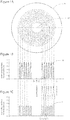
- a 13-zone contact lens 9 is provided as a concentric multi-zone multifocal lens having a characteristic partial sinusoidal power profile.
- a central correcting zone 12 has a diameter of 2.8mm, which is smaller than the typical pupil size of children and young adults (4.0-5.0mm). Therefore, a few consecutive annular defocusing and correcting zones always overlies on the pupil and introduce a defocused image on the retina including the central on-axis region.
- each annular zone of alternating functions is 0.3mm. All seven correcting zones share the same power to neutralize the pre-existing myopia (for example, distance prescription) of a wearer. For example, if the wearer has 3D of myopia, the power of the correcting zone may be -3D.
- the homogenous power profile in the correcting zones ensure that the image formed is homogenous and of high optical quality for good vision.
- each of the six defocusing zones comprises a range of less negative powers.
- the progressive (for example, sinusoidal or multiple stepwise) power profile 10 of the defocusing zones does not introduce a homogenous secondary defocused image but non- homogenous multiple defocused images that are slightly separated from each others and of lower intensity. This is in contrast to a square power profile 11 of the lens of the prior art,
- the 5D power differences between correcting zones and defocusing zones ensure that the defocus generated is potent enough to achieve optimal retarding effect.
- the power of each of the defocusing zone ranges between -3 to +2D to introduce myopic defocus, if the wearer has 3D of myopia.
- An extra benefit from the sinusoidal power profile of the defocusing zones is that the transitions between adjacent curves become progressive and do not create undesirable diffraction as created by the sudden power change 13 in the square power profile of prior art designs.
- a progressive transition curve occurs where the power change across adjacent zone is continuous.
- There are many possible shapes which can be regarded as progressive transition including but not limited to: sigmoidal, polynomial, sinusoidal, conical, parabolic. In the described embodiment, the method is described with reference to an example using a partial sinusoidal shape for the overall power profile of the lens.
- the edge of the lens 9 is made of a non-optical zone for lens stabilization purpose.
- the total diameter of the lens 9 in the example is 13.6mm. It is preferred that the alternating sinusoidal power profile be achieved by manipulating the radius of curvature of the anterior surface of the lens 9, and leaving the posterior surface for toric manipulations to correct astigmatism.
- each defocusing zone is progressive and is like a sinusoidal pattern.
- the prior art shows that the power profile of each defocusing zone is homogenous, and that this square power profile of the lens causes a sudden power change 13.
- a 3-zone contact lens 19 is provided as a concentric multi-zone multifocal lens having a characteristic partial sinusoidal power profile.
- the central correcting zone 22 has a diameter of 3mm, which is smaller than the typical pupil size of children and young adults (4.0mm to 5.0mm). Therefore, the immediate surrounding annular first defocusing zone 23 always overlies with the pupil, introducing a defocused image on the retina (including the central on-axis region of the retina).
- the defocusing zone 23 has an annular width of 1.5mm and is surrounding by a second correcting zone 24 having an annular width of 2.0mm.
- both of the two correcting zones 22, 24 share the same homogeneous power to neutralize the pre-existing myopia (for example, distance prescription) of the wearer.
- the power of the correcting zones 22, 24 may be -4D.
- the homogenous power profile in the correcting zones 22, 24 ensure that the image formed is homogenous and of high optical quality for good vision.
- the defocusing zone 23 comprises a range of less negative powers.
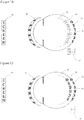
- the sinusoidal power profiles 20 of the defocusing zone introduces multiple defocused images that are slightly separated from each others and of lower intensity as shown in Figure 3A .
- the 6D power differences between correcting zones and defocusing zones ensure that defocus generated is potent enough to achieve optimal retarding effect.
- the power of each of the defocusing zones ranges between -4 to +2D to introduce myopic defocus, if the wearer has 4D of myopia.
- the edge of the lens is made of a non-optic zone for lens stabilization purpose.
- the total lens diameter in this example is 13.6mm.
- the square power profile 21 of the prior art introduces a homogenous secondary defocused image. Furthermore, the prior art does not integrate any progressive transition curve as part of the power profile. Thus the power change across adjacent zones is non-continuous, abrupt, sudden, and stepwise.
- a homogeneous focused image 33, 35 projected by a common object 32 is formed on the retina 29 to provide good vision.
- a myopic eye fitted with a concentric multi-zone multi-defocusing lens 30 has a partial sinusoidal power profile.
- the multiple non homogeneous defocused images 34 produced by the present multi-defocusing lens 30 are non-homogeneous and are dim compared to the focused image 33 on the retina 29. Therefore, it does not serve as a significant source of visual disturbance while a therapeutic range of myopic defocus 37 may be maintained across the retina 29.
- a common object 32 is projected as a homogenous focused image 33 on the retina 29, and as multiple non homogeneous defocused images 34 in front of the retina 29.
- a range of defocus 37 is induced over the retina 29 both axially and peripherally as the focal planes 39 extend across the entire retina 29.
- a myopic eye fitted with a prior art concentric multi-zone bifocal lens 31 has a square power profile.
- the secondary defocused image 36 produced by the bifocal lens 31 is quite homogeneous compared to the homogenous focused image 35 on retina 29. Although a therapeutic dose of myopic defocus 38 is maintained across the retina 29, the homogeneous defocused image 36 serves as a source of visual disturbance.
- a common object 32 is projected as a homogenous focused image 35 on the retina 29, and as another homogenous defocused image 36 in front of the retina 29.
- a homogeneous magnitude of defocus 38 is induced in front of the retina 29 both axially and peripherally as the focal plane 28 extends across the entire retina 29.
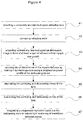
- a concentric annular multi-zone refractive lens is provided (41).
- the lens has at least one correcting zone of optical power for correcting (42) refractive error.
- correcting zone When the refractive error is corrected by the correcting zone, clear vision is provided for objects at all distances and natural ocular accommodation is used for near tasks.
- the lens also has at least one defocusing zone for projecting (43) at least one non-homogenous defocused image in front of at least a part of retina to inhibit myopic eye growth.
- a non-homogenous myopic defocus is introduced on the retina using the defocusing zones at all times regardless of viewing distance.
- the at least one defocusing zone has at least one less negative power.
- the visual disturbance of the myopic defocus is reduced (44) by making it non-homogenous using a progressive power profile of the defocusing zones.
- the correcting and defocusing zones are alternated (45) in the lens.
- the correcting and defocusing zones are connected (46) to each other through integrated progressive transition curves. This improves optical performance by reducing (47) light scattering at transitions between zones.
- the present invention may be used in other applications such as preventing pathological myopic degeneration of the eye.
Landscapes
- Health & Medical Sciences (AREA)
- Ophthalmology & Optometry (AREA)
- Physics & Mathematics (AREA)
- General Health & Medical Sciences (AREA)
- Optics & Photonics (AREA)
- General Physics & Mathematics (AREA)
- Vascular Medicine (AREA)
- Heart & Thoracic Surgery (AREA)
- Biomedical Technology (AREA)
- Life Sciences & Earth Sciences (AREA)
- Animal Behavior & Ethology (AREA)
- Engineering & Computer Science (AREA)
- Public Health (AREA)
- Veterinary Medicine (AREA)
- Transplantation (AREA)
- Oral & Maxillofacial Surgery (AREA)
- Cardiology (AREA)
- Eyeglasses (AREA)
- Prostheses (AREA)
Priority Applications (1)
| Application Number | Priority Date | Filing Date | Title |
|---|---|---|---|
| EP21180977.7A EP3929653A1 (en) | 2010-09-13 | 2010-09-13 | A method and system for retarding the progression of myopia |
Applications Claiming Priority (3)
| Application Number | Priority Date | Filing Date | Title |
|---|---|---|---|
| PCT/CN2010/076839 WO2012034265A1 (en) | 2010-09-13 | 2010-09-13 | Method and system for retarding progression of myopia |
| EP21180977.7A EP3929653A1 (en) | 2010-09-13 | 2010-09-13 | A method and system for retarding the progression of myopia |
| EP10857121.7A EP2616876B1 (en) | 2010-09-13 | 2010-09-13 | System for retarding progression of myopia |
Related Parent Applications (1)
| Application Number | Title | Priority Date | Filing Date |
|---|---|---|---|
| EP10857121.7A Division EP2616876B1 (en) | 2010-09-13 | 2010-09-13 | System for retarding progression of myopia |
Publications (1)
| Publication Number | Publication Date |
|---|---|
| EP3929653A1 true EP3929653A1 (en) | 2021-12-29 |
Family
ID=45830916
Family Applications (2)
| Application Number | Title | Priority Date | Filing Date |
|---|---|---|---|
| EP21180977.7A Pending EP3929653A1 (en) | 2010-09-13 | 2010-09-13 | A method and system for retarding the progression of myopia |
| EP10857121.7A Revoked EP2616876B1 (en) | 2010-09-13 | 2010-09-13 | System for retarding progression of myopia |
Family Applications After (1)
| Application Number | Title | Priority Date | Filing Date |
|---|---|---|---|
| EP10857121.7A Revoked EP2616876B1 (en) | 2010-09-13 | 2010-09-13 | System for retarding progression of myopia |
Country Status (4)
| Country | Link |
|---|---|
| EP (2) | EP3929653A1 (enExample) |
| JP (1) | JP2013537317A (enExample) |
| CN (1) | CN103097940B (enExample) |
| WO (1) | WO2012034265A1 (enExample) |
Families Citing this family (56)
| Publication number | Priority date | Publication date | Assignee | Title |
|---|---|---|---|---|
| SG172303A1 (en) | 2008-12-22 | 2011-07-28 | Wisconsin Med College Inc | Method and apparatus for limiting growth of eye length |
| JP5747279B2 (ja) * | 2011-04-28 | 2015-07-15 | 東海光学株式会社 | 視力矯正用レンズの設計方法 |
| TWI588560B (zh) | 2012-04-05 | 2017-06-21 | 布萊恩荷登視覺協會 | 用於屈光不正之鏡片、裝置、方法及系統 |
| US9201250B2 (en) | 2012-10-17 | 2015-12-01 | Brien Holden Vision Institute | Lenses, devices, methods and systems for refractive error |
| EP2908773B1 (en) * | 2012-10-17 | 2024-01-03 | Brien Holden Vision Institute | Lenses, devices, methods and systems for refractive error |
| WO2014184399A1 (es) * | 2013-05-15 | 2014-11-20 | Tiedra Farmacéutica, S.L. | Lente de contacto blanda correctora-estabilizadora de la miopía |
| US9638936B2 (en) | 2014-08-20 | 2017-05-02 | Johnson & Johnson Vision Care, Inc. | High plus treatment zone lens design for preventing and/or slowing myopia progression |
| US20170115509A1 (en) * | 2014-08-20 | 2017-04-27 | Johnson & Johnson Vision Care, Inc. | High plus center treatment zone lens design and method for preventing and/or slowing myopia progression |
| US9977257B2 (en) * | 2016-03-22 | 2018-05-22 | Johnson & Johnson Vision Care, Inc. | Multifocal lens design and method for preventing and/or slowing myopia progression |
| SG11201900867UA (en) | 2016-08-01 | 2019-02-27 | Jay Neitz | Ophthalmic lenses for treating myopia |
| CN110785149B (zh) * | 2017-04-28 | 2022-10-04 | 华柏恩视觉研究中心有限公司 | 用于控制近视进展的系统、方法和装置 |
| EP3625620B1 (en) | 2017-05-08 | 2025-09-10 | SIGHTGLASS VISION, Inc. | Methods for making contact lenses for reducing myopia |
| JP7002413B2 (ja) | 2017-06-23 | 2022-01-20 | 星歐光學股▲ふん▼有限公司 | コンタクトレンズ及びその製品 |
| CN109116576A (zh) * | 2017-06-23 | 2019-01-01 | 星欧光学股份有限公司 | 隐形眼镜及其产品 |
| CN111683629B (zh) * | 2017-12-11 | 2024-07-12 | 香港理工大学 | 抑制眼睛的屈光不正的进展的方法、装置和系统 |
| US11768386B2 (en) | 2018-01-22 | 2023-09-26 | Johnson & Johnson Vision Care, Inc. | Ophthalmic lens with an optically non-coaxial zone for myopia control |
| US10901237B2 (en) * | 2018-01-22 | 2021-01-26 | Johnson & Johnson Vision Care, Inc. | Ophthalmic lens with an optically non-coaxial zone for myopia control |
| US11789292B2 (en) | 2018-01-22 | 2023-10-17 | Johnson & Johnson Vision Care, Inc. | Ophthalmic lens with an optically non-coaxial zone for myopia control |
| US10884264B2 (en) | 2018-01-30 | 2021-01-05 | Sightglass Vision, Inc. | Ophthalmic lenses with light scattering for treating myopia |
| EP3759545B1 (en) * | 2018-03-01 | 2023-12-20 | Essilor International | Lens element |
| BR202019004173Y1 (pt) | 2018-03-01 | 2024-02-20 | Essilor International | Dispositivo óptico |
| CA3098241C (en) | 2018-04-26 | 2025-04-01 | Essilor International | LENS ELEMENT |
| TWI774968B (zh) | 2018-07-12 | 2022-08-21 | 美商賽特眼鏡視光有限公司 | 用於減低孩童近視的方法及裝置 |
| US12416818B2 (en) | 2019-03-01 | 2025-09-16 | Sightglass Vision, Inc. | Ophthalmic lenses for reducing myopic progression and methods of making the same |
| US12377622B2 (en) | 2019-04-05 | 2025-08-05 | Amo Groningen B.V. | Systems and methods for vergence matching with an optical profile and using refractive index writing |
| US11678975B2 (en) | 2019-04-05 | 2023-06-20 | Amo Groningen B.V. | Systems and methods for treating ocular disease with an intraocular lens and refractive index writing |
| US11564839B2 (en) | 2019-04-05 | 2023-01-31 | Amo Groningen B.V. | Systems and methods for vergence matching of an intraocular lens with refractive index writing |
| US12357509B2 (en) | 2019-04-05 | 2025-07-15 | Amo Groningen B.V. | Systems and methods for improving vision from an intraocular lens in an incorrect position and using refractive index writing |
| US11583388B2 (en) | 2019-04-05 | 2023-02-21 | Amo Groningen B.V. | Systems and methods for spectacle independence using refractive index writing with an intraocular lens |
| US11529230B2 (en) | 2019-04-05 | 2022-12-20 | Amo Groningen B.V. | Systems and methods for correcting power of an intraocular lens using refractive index writing |
| US11583389B2 (en) | 2019-04-05 | 2023-02-21 | Amo Groningen B.V. | Systems and methods for correcting photic phenomenon from an intraocular lens and using refractive index writing |
| US11944574B2 (en) | 2019-04-05 | 2024-04-02 | Amo Groningen B.V. | Systems and methods for multiple layer intraocular lens and using refractive index writing |
| CN111830731B (zh) * | 2019-04-23 | 2021-12-17 | 刘梁 | 预防及减缓近视眼发展的眼镜片 |
| KR102828470B1 (ko) | 2019-04-23 | 2025-07-03 | 사이트글래스 비전 인코포레이티드 | 근시 진행을 완화시키기 위한 다이내믹 광학 특성을 구비하는 안과용 렌즈 |
| JP7657519B2 (ja) * | 2019-06-25 | 2025-04-07 | ホヤ レンズ タイランド リミテッド | 眼鏡レンズおよびその設計方法 |
| US20220404639A1 (en) * | 2019-09-12 | 2022-12-22 | The Hong Kong Polytechnic University | Lens and method for retarding myopia progression |
| WO2021055162A1 (en) * | 2019-09-19 | 2021-03-25 | The Uab Research Foundation | Multi-spectral and multi-focal control of myopia |
| US12271057B1 (en) * | 2019-12-20 | 2025-04-08 | The Uab Research Foundation | Chromatic aberration tuning ophthalmic corrector lens methods |
| CA3175465A1 (en) * | 2020-03-31 | 2021-10-07 | Essilor International | Lens element |
| GB2584546B (en) * | 2020-04-06 | 2021-09-01 | Novasight Ltd | Method and device for treating vision impairment |
| JP7541882B2 (ja) * | 2020-09-18 | 2024-08-29 | ホヤ レンズ タイランド リミテッド | 眼鏡レンズ及びその設計方法 |
| US12019311B2 (en) * | 2020-11-04 | 2024-06-25 | Bausch & Lomb Ireland Limited | Ophthalmic lens including a peripheral zone having an add-power offset and a spatially-modulated optical parameter |
| TWI741902B (zh) * | 2020-12-07 | 2021-10-01 | 春秋光學股份有限公司 | 用於減緩或預防近視進展之鏡片 |
| TWI763344B (zh) * | 2021-03-03 | 2022-05-01 | 永勝光學股份有限公司 | 隱形眼鏡鏡片 |
| CN115032813B (zh) * | 2021-03-03 | 2024-07-12 | 永胜光学股份有限公司 | 隐形眼镜镜片 |
| CN113267904B (zh) * | 2021-06-02 | 2025-02-14 | 欧普康视科技股份有限公司 | 一种多焦点软性接触镜的光学区设计方法 |
| WO2023005211A1 (zh) * | 2021-07-28 | 2023-02-02 | 香港理工大学 | 用于控制近视加深的环焦眼镜片及其制造方法 |
| EP4163705A1 (en) | 2021-10-05 | 2023-04-12 | Essilor International | Lens element with improved visual performance |
| EP4163706A1 (en) | 2021-10-05 | 2023-04-12 | Essilor International | Lens element |
| JP2023114018A (ja) * | 2022-02-04 | 2023-08-17 | 東海光学株式会社 | 眼鏡用レンズ |
| WO2023203244A1 (en) | 2022-04-21 | 2023-10-26 | Essilor International | Lens with improved visual performance |
| CN114967179A (zh) * | 2022-06-22 | 2022-08-30 | 珠海博爱之光科技有限公司 | 眼镜结构、隐形眼镜及眼镜 |
| CN115167008B (zh) * | 2022-08-15 | 2025-07-29 | 上海艾康特医疗科技有限公司 | 光学镜片 |
| CN115494658A (zh) * | 2022-09-21 | 2022-12-20 | 珠海博爱之光科技有限公司 | 软性接触镜 |
| CN120390687A (zh) * | 2022-12-29 | 2025-07-29 | 视窗视觉公司 | 具有光学散射区域的眼科镜片 |
| CN116400518B (zh) * | 2023-03-27 | 2024-01-05 | 温州明辉视光科技有限公司 | 镜片结构 |
Citations (8)
| Publication number | Priority date | Publication date | Assignee | Title |
|---|---|---|---|---|
| US6045578A (en) | 1995-11-28 | 2000-04-04 | Queensland University Of Technology | Optical treatment method |
| US6752499B2 (en) | 2001-07-11 | 2004-06-22 | Thomas A. Aller | Myopia progression control using bifocal contact lenses |
| US20050068494A1 (en) * | 2000-09-08 | 2005-03-31 | Griffin Richard A. | Ophthalmic lenses with induced aperture and redundant power regions |
| WO2006034652A1 (en) | 2004-09-30 | 2006-04-06 | The Hong Kong Polytechnic University | Method of optical treatment |
| US7025460B2 (en) | 2003-11-19 | 2006-04-11 | The Vision Crc Limited | Methods and apparatuses for altering relative curvature of field and positions of peripheral, off-axis focal positions |
| WO2007041796A1 (en) * | 2005-10-12 | 2007-04-19 | Carl Zeiss Vision Australia Holdings Limited | Ophthalmic lens element for myopia correction |
| EP1967892A1 (en) * | 2007-03-09 | 2008-09-10 | Auckland Uniservices Limited | Contact lens and method of preventing or slowing myopia progression |
| US20100036489A1 (en) * | 2008-08-11 | 2010-02-11 | Joseph Michael Lindacher | Lens design and method for preventing or slowing the progression of myopia |
Family Cites Families (13)
| Publication number | Priority date | Publication date | Assignee | Title |
|---|---|---|---|---|
| US4890913A (en) * | 1982-10-13 | 1990-01-02 | Carle John T De | Zoned multi-focal contact lens |
| BR8807089A (pt) | 1987-06-01 | 1989-10-17 | Valdemar Portney | Lente oftalmica e processo para formar a mesma |
| AU6978991A (en) * | 1989-12-07 | 1991-07-18 | Leonard Seidner | Corneal contact lenses |
| US5112351A (en) * | 1990-10-12 | 1992-05-12 | Ioptex Research Inc. | Multifocal intraocular lenses |
| GB2295686B (en) * | 1994-11-30 | 1998-05-06 | Carle John Trevor De | Bifocal contact lenses |
| US5835192A (en) | 1995-12-21 | 1998-11-10 | Johnson & Johnson Vision Products, Inc. | Contact lenses and method of fitting contact lenses |
| EP0822439A4 (en) * | 1996-02-21 | 2007-01-31 | Seiko Epson Corp | MULTIFOCALE CONTACT LENS |
| US6030077A (en) | 1998-03-11 | 2000-02-29 | Menicon Co., Ltd. | Multifocal ocular lens having intermediate region with continuously varying optical power |
| US6536899B1 (en) * | 1999-07-14 | 2003-03-25 | Bifocon Optics Gmbh | Multifocal lens exhibiting diffractive and refractive powers |
| NZ573194A (en) * | 2006-06-08 | 2011-12-22 | Vision Crc Ltd | A non-multifocal contact lens comprising a central optical zone and a peripheral optical zone |
| US7637612B2 (en) * | 2007-05-21 | 2009-12-29 | Johnson & Johnson Vision Care, Inc. | Ophthalmic lenses for prevention of myopia progression |
| FR2936879B1 (fr) | 2008-10-07 | 2011-03-11 | Essilor Int | Verre ophtalmique corrigeant la vision foveale et la vision peripherique. |
| WO2011049642A1 (en) * | 2009-10-22 | 2011-04-28 | Coopervision International Holding Company, Lp | Contact lens sets and methods to prevent or slow progression of myopia or hyperopia |
-
2010
- 2010-09-13 WO PCT/CN2010/076839 patent/WO2012034265A1/en not_active Ceased
- 2010-09-13 EP EP21180977.7A patent/EP3929653A1/en active Pending
- 2010-09-13 JP JP2013527440A patent/JP2013537317A/ja active Pending
- 2010-09-13 CN CN201080069081.0A patent/CN103097940B/zh active Active
- 2010-09-13 EP EP10857121.7A patent/EP2616876B1/en not_active Revoked
Patent Citations (8)
| Publication number | Priority date | Publication date | Assignee | Title |
|---|---|---|---|---|
| US6045578A (en) | 1995-11-28 | 2000-04-04 | Queensland University Of Technology | Optical treatment method |
| US20050068494A1 (en) * | 2000-09-08 | 2005-03-31 | Griffin Richard A. | Ophthalmic lenses with induced aperture and redundant power regions |
| US6752499B2 (en) | 2001-07-11 | 2004-06-22 | Thomas A. Aller | Myopia progression control using bifocal contact lenses |
| US7025460B2 (en) | 2003-11-19 | 2006-04-11 | The Vision Crc Limited | Methods and apparatuses for altering relative curvature of field and positions of peripheral, off-axis focal positions |
| WO2006034652A1 (en) | 2004-09-30 | 2006-04-06 | The Hong Kong Polytechnic University | Method of optical treatment |
| WO2007041796A1 (en) * | 2005-10-12 | 2007-04-19 | Carl Zeiss Vision Australia Holdings Limited | Ophthalmic lens element for myopia correction |
| EP1967892A1 (en) * | 2007-03-09 | 2008-09-10 | Auckland Uniservices Limited | Contact lens and method of preventing or slowing myopia progression |
| US20100036489A1 (en) * | 2008-08-11 | 2010-02-11 | Joseph Michael Lindacher | Lens design and method for preventing or slowing the progression of myopia |
Also Published As
| Publication number | Publication date |
|---|---|
| WO2012034265A1 (en) | 2012-03-22 |
| CN103097940B (zh) | 2016-02-03 |
| EP2616876A4 (en) | 2015-04-01 |
| EP2616876A1 (en) | 2013-07-24 |
| JP2013537317A (ja) | 2013-09-30 |
| CN103097940A (zh) | 2013-05-08 |
| EP2616876B1 (en) | 2021-06-23 |
Similar Documents
| Publication | Publication Date | Title |
|---|---|---|
| US9829722B2 (en) | Method and system for retarding the progression of myopia | |
| EP2616876B1 (en) | System for retarding progression of myopia | |
| US12271059B2 (en) | Contact lenses for myopic eyes and methods of treating myopia | |
| AU2011223499B2 (en) | Corneal remodelling contact lenses and methods of treating refractive error using corneal remodelling | |
| EP2762953B1 (en) | Asymmetric lens design and method for preventing and/or slowing myopia progression | |
| JP5866696B2 (ja) | レンズ及びその製造方法 | |
| CN101090686A (zh) | 光学治疗方法 | |
| CN115145052B (zh) | 眼科镜片和具有其的框架眼镜 | |
| HK40063760A (en) | Lens and method for retarding myopia progression | |
| HK1176686B (en) | Corneal remodelling contact lenses | |
| HK1176124B (en) | Contact lenses for myopic eyes and methods of treating myopia |
Legal Events
| Date | Code | Title | Description |
|---|---|---|---|
| PUAI | Public reference made under article 153(3) epc to a published international application that has entered the european phase |
Free format text: ORIGINAL CODE: 0009012 |
|
| STAA | Information on the status of an ep patent application or granted ep patent |
Free format text: STATUS: REQUEST FOR EXAMINATION WAS MADE |
|
| 17P | Request for examination filed |
Effective date: 20210622 |
|
| AC | Divisional application: reference to earlier application |
Ref document number: 2616876 Country of ref document: EP Kind code of ref document: P |
|
| AK | Designated contracting states |
Kind code of ref document: A1 Designated state(s): AL AT BE BG CH CY CZ DE DK EE ES FI FR GB GR HR HU IE IS IT LI LT LU LV MC MK MT NL NO PL PT RO SE SI SK SM TR |
|
| B565 | Issuance of search results under rule 164(2) epc |
Effective date: 20211130 |
|
| STAA | Information on the status of an ep patent application or granted ep patent |
Free format text: STATUS: EXAMINATION IS IN PROGRESS |
|
| 17Q | First examination report despatched |
Effective date: 20240516 |