EP3929263A1 - Verfahren zur herstellung einer hitzebeständigen strukturellen epoxidklebstoffzusammensetzung mit schlagfestigkeit und strukturelle epoxidklebstoffzusammensetzung damit - Google Patents
Verfahren zur herstellung einer hitzebeständigen strukturellen epoxidklebstoffzusammensetzung mit schlagfestigkeit und strukturelle epoxidklebstoffzusammensetzung damit Download PDFInfo
- Publication number
- EP3929263A1 EP3929263A1 EP20785014.0A EP20785014A EP3929263A1 EP 3929263 A1 EP3929263 A1 EP 3929263A1 EP 20785014 A EP20785014 A EP 20785014A EP 3929263 A1 EP3929263 A1 EP 3929263A1
- Authority
- EP
- European Patent Office
- Prior art keywords
- epoxy
- resistant
- component
- monomer
- adhesive composition
- Prior art date
- Legal status (The legal status is an assumption and is not a legal conclusion. Google has not performed a legal analysis and makes no representation as to the accuracy of the status listed.)
- Granted
Links
Images
Classifications
-
- C—CHEMISTRY; METALLURGY
- C08—ORGANIC MACROMOLECULAR COMPOUNDS; THEIR PREPARATION OR CHEMICAL WORKING-UP; COMPOSITIONS BASED THEREON
- C08G—MACROMOLECULAR COMPOUNDS OBTAINED OTHERWISE THAN BY REACTIONS ONLY INVOLVING UNSATURATED CARBON-TO-CARBON BONDS
- C08G59/00—Polycondensates containing more than one epoxy group per molecule; Macromolecules obtained by polymerising compounds containing more than one epoxy group per molecule using curing agents or catalysts which react with the epoxy groups
- C08G59/18—Macromolecules obtained by polymerising compounds containing more than one epoxy group per molecule using curing agents or catalysts which react with the epoxy groups ; e.g. general methods of curing
- C08G59/20—Macromolecules obtained by polymerising compounds containing more than one epoxy group per molecule using curing agents or catalysts which react with the epoxy groups ; e.g. general methods of curing characterised by the epoxy compounds used
- C08G59/32—Epoxy compounds containing three or more epoxy groups
- C08G59/3227—Compounds containing acyclic nitrogen atoms
-
- C—CHEMISTRY; METALLURGY
- C08—ORGANIC MACROMOLECULAR COMPOUNDS; THEIR PREPARATION OR CHEMICAL WORKING-UP; COMPOSITIONS BASED THEREON
- C08G—MACROMOLECULAR COMPOUNDS OBTAINED OTHERWISE THAN BY REACTIONS ONLY INVOLVING UNSATURATED CARBON-TO-CARBON BONDS
- C08G59/00—Polycondensates containing more than one epoxy group per molecule; Macromolecules obtained by polymerising compounds containing more than one epoxy group per molecule using curing agents or catalysts which react with the epoxy groups
- C08G59/14—Polycondensates modified by chemical after-treatment
- C08G59/1433—Polycondensates modified by chemical after-treatment with organic low-molecular-weight compounds
- C08G59/1477—Polycondensates modified by chemical after-treatment with organic low-molecular-weight compounds containing nitrogen
-
- C—CHEMISTRY; METALLURGY
- C08—ORGANIC MACROMOLECULAR COMPOUNDS; THEIR PREPARATION OR CHEMICAL WORKING-UP; COMPOSITIONS BASED THEREON
- C08G—MACROMOLECULAR COMPOUNDS OBTAINED OTHERWISE THAN BY REACTIONS ONLY INVOLVING UNSATURATED CARBON-TO-CARBON BONDS
- C08G59/00—Polycondensates containing more than one epoxy group per molecule; Macromolecules obtained by polymerising compounds containing more than one epoxy group per molecule using curing agents or catalysts which react with the epoxy groups
- C08G59/18—Macromolecules obtained by polymerising compounds containing more than one epoxy group per molecule using curing agents or catalysts which react with the epoxy groups ; e.g. general methods of curing
- C08G59/40—Macromolecules obtained by polymerising compounds containing more than one epoxy group per molecule using curing agents or catalysts which react with the epoxy groups ; e.g. general methods of curing characterised by the curing agents used
- C08G59/4007—Curing agents not provided for by the groups C08G59/42 - C08G59/66
- C08G59/4014—Nitrogen containing compounds
- C08G59/4021—Ureas; Thioureas; Guanidines; Dicyandiamides
-
- C—CHEMISTRY; METALLURGY
- C08—ORGANIC MACROMOLECULAR COMPOUNDS; THEIR PREPARATION OR CHEMICAL WORKING-UP; COMPOSITIONS BASED THEREON
- C08G—MACROMOLECULAR COMPOUNDS OBTAINED OTHERWISE THAN BY REACTIONS ONLY INVOLVING UNSATURATED CARBON-TO-CARBON BONDS
- C08G59/00—Polycondensates containing more than one epoxy group per molecule; Macromolecules obtained by polymerising compounds containing more than one epoxy group per molecule using curing agents or catalysts which react with the epoxy groups
- C08G59/18—Macromolecules obtained by polymerising compounds containing more than one epoxy group per molecule using curing agents or catalysts which react with the epoxy groups ; e.g. general methods of curing
- C08G59/40—Macromolecules obtained by polymerising compounds containing more than one epoxy group per molecule using curing agents or catalysts which react with the epoxy groups ; e.g. general methods of curing characterised by the curing agents used
- C08G59/4007—Curing agents not provided for by the groups C08G59/42 - C08G59/66
- C08G59/4014—Nitrogen containing compounds
- C08G59/4028—Isocyanates; Thioisocyanates
-
- C—CHEMISTRY; METALLURGY
- C08—ORGANIC MACROMOLECULAR COMPOUNDS; THEIR PREPARATION OR CHEMICAL WORKING-UP; COMPOSITIONS BASED THEREON
- C08G—MACROMOLECULAR COMPOUNDS OBTAINED OTHERWISE THAN BY REACTIONS ONLY INVOLVING UNSATURATED CARBON-TO-CARBON BONDS
- C08G59/00—Polycondensates containing more than one epoxy group per molecule; Macromolecules obtained by polymerising compounds containing more than one epoxy group per molecule using curing agents or catalysts which react with the epoxy groups
- C08G59/18—Macromolecules obtained by polymerising compounds containing more than one epoxy group per molecule using curing agents or catalysts which react with the epoxy groups ; e.g. general methods of curing
- C08G59/40—Macromolecules obtained by polymerising compounds containing more than one epoxy group per molecule using curing agents or catalysts which react with the epoxy groups ; e.g. general methods of curing characterised by the curing agents used
- C08G59/50—Amines
- C08G59/5033—Amines aromatic
-
- C—CHEMISTRY; METALLURGY
- C08—ORGANIC MACROMOLECULAR COMPOUNDS; THEIR PREPARATION OR CHEMICAL WORKING-UP; COMPOSITIONS BASED THEREON
- C08G—MACROMOLECULAR COMPOUNDS OBTAINED OTHERWISE THAN BY REACTIONS ONLY INVOLVING UNSATURATED CARBON-TO-CARBON BONDS
- C08G59/00—Polycondensates containing more than one epoxy group per molecule; Macromolecules obtained by polymerising compounds containing more than one epoxy group per molecule using curing agents or catalysts which react with the epoxy groups
- C08G59/18—Macromolecules obtained by polymerising compounds containing more than one epoxy group per molecule using curing agents or catalysts which react with the epoxy groups ; e.g. general methods of curing
- C08G59/40—Macromolecules obtained by polymerising compounds containing more than one epoxy group per molecule using curing agents or catalysts which react with the epoxy groups ; e.g. general methods of curing characterised by the curing agents used
- C08G59/66—Mercaptans
-
- C—CHEMISTRY; METALLURGY
- C08—ORGANIC MACROMOLECULAR COMPOUNDS; THEIR PREPARATION OR CHEMICAL WORKING-UP; COMPOSITIONS BASED THEREON
- C08G—MACROMOLECULAR COMPOUNDS OBTAINED OTHERWISE THAN BY REACTIONS ONLY INVOLVING UNSATURATED CARBON-TO-CARBON BONDS
- C08G59/00—Polycondensates containing more than one epoxy group per molecule; Macromolecules obtained by polymerising compounds containing more than one epoxy group per molecule using curing agents or catalysts which react with the epoxy groups
- C08G59/18—Macromolecules obtained by polymerising compounds containing more than one epoxy group per molecule using curing agents or catalysts which react with the epoxy groups ; e.g. general methods of curing
- C08G59/68—Macromolecules obtained by polymerising compounds containing more than one epoxy group per molecule using curing agents or catalysts which react with the epoxy groups ; e.g. general methods of curing characterised by the catalysts used
- C08G59/686—Macromolecules obtained by polymerising compounds containing more than one epoxy group per molecule using curing agents or catalysts which react with the epoxy groups ; e.g. general methods of curing characterised by the catalysts used containing nitrogen
-
- C—CHEMISTRY; METALLURGY
- C08—ORGANIC MACROMOLECULAR COMPOUNDS; THEIR PREPARATION OR CHEMICAL WORKING-UP; COMPOSITIONS BASED THEREON
- C08G—MACROMOLECULAR COMPOUNDS OBTAINED OTHERWISE THAN BY REACTIONS ONLY INVOLVING UNSATURATED CARBON-TO-CARBON BONDS
- C08G73/00—Macromolecular compounds obtained by reactions forming a linkage containing nitrogen with or without oxygen or carbon in the main chain of the macromolecule, not provided for in groups C08G12/00 - C08G71/00
- C08G73/06—Polycondensates having nitrogen-containing heterocyclic rings in the main chain of the macromolecule
- C08G73/0622—Polycondensates containing six-membered rings, not condensed with other rings, with nitrogen atoms as the only ring hetero atoms
- C08G73/0638—Polycondensates containing six-membered rings, not condensed with other rings, with nitrogen atoms as the only ring hetero atoms with at least three nitrogen atoms in the ring
- C08G73/065—Preparatory processes
-
- C—CHEMISTRY; METALLURGY
- C08—ORGANIC MACROMOLECULAR COMPOUNDS; THEIR PREPARATION OR CHEMICAL WORKING-UP; COMPOSITIONS BASED THEREON
- C08G—MACROMOLECULAR COMPOUNDS OBTAINED OTHERWISE THAN BY REACTIONS ONLY INVOLVING UNSATURATED CARBON-TO-CARBON BONDS
- C08G75/00—Macromolecular compounds obtained by reactions forming a linkage containing sulfur with or without nitrogen, oxygen, or carbon in the main chain of the macromolecule
- C08G75/02—Polythioethers
- C08G75/04—Polythioethers from mercapto compounds or metallic derivatives thereof
- C08G75/045—Polythioethers from mercapto compounds or metallic derivatives thereof from mercapto compounds and unsaturated compounds
-
- C—CHEMISTRY; METALLURGY
- C09—DYES; PAINTS; POLISHES; NATURAL RESINS; ADHESIVES; COMPOSITIONS NOT OTHERWISE PROVIDED FOR; APPLICATIONS OF MATERIALS NOT OTHERWISE PROVIDED FOR
- C09D—COATING COMPOSITIONS, e.g. PAINTS, VARNISHES OR LACQUERS; FILLING PASTES; CHEMICAL PAINT OR INK REMOVERS; INKS; CORRECTING FLUIDS; WOODSTAINS; PASTES OR SOLIDS FOR COLOURING OR PRINTING; USE OF MATERIALS THEREFOR
- C09D11/00—Inks
- C09D11/02—Printing inks
- C09D11/08—Printing inks based on natural resins
-
- C—CHEMISTRY; METALLURGY
- C09—DYES; PAINTS; POLISHES; NATURAL RESINS; ADHESIVES; COMPOSITIONS NOT OTHERWISE PROVIDED FOR; APPLICATIONS OF MATERIALS NOT OTHERWISE PROVIDED FOR
- C09J—ADHESIVES; NON-MECHANICAL ASPECTS OF ADHESIVE PROCESSES IN GENERAL; ADHESIVE PROCESSES NOT PROVIDED FOR ELSEWHERE; USE OF MATERIALS AS ADHESIVES
- C09J11/00—Features of adhesives not provided for in group C09J9/00, e.g. additives
- C09J11/02—Non-macromolecular additives
- C09J11/06—Non-macromolecular additives organic
-
- C—CHEMISTRY; METALLURGY
- C09—DYES; PAINTS; POLISHES; NATURAL RESINS; ADHESIVES; COMPOSITIONS NOT OTHERWISE PROVIDED FOR; APPLICATIONS OF MATERIALS NOT OTHERWISE PROVIDED FOR
- C09J—ADHESIVES; NON-MECHANICAL ASPECTS OF ADHESIVE PROCESSES IN GENERAL; ADHESIVE PROCESSES NOT PROVIDED FOR ELSEWHERE; USE OF MATERIALS AS ADHESIVES
- C09J163/00—Adhesives based on epoxy resins; Adhesives based on derivatives of epoxy resins
-
- C—CHEMISTRY; METALLURGY
- C09—DYES; PAINTS; POLISHES; NATURAL RESINS; ADHESIVES; COMPOSITIONS NOT OTHERWISE PROVIDED FOR; APPLICATIONS OF MATERIALS NOT OTHERWISE PROVIDED FOR
- C09J—ADHESIVES; NON-MECHANICAL ASPECTS OF ADHESIVE PROCESSES IN GENERAL; ADHESIVE PROCESSES NOT PROVIDED FOR ELSEWHERE; USE OF MATERIALS AS ADHESIVES
- C09J179/00—Adhesives based on macromolecular compounds obtained by reactions forming in the main chain of the macromolecule a linkage containing nitrogen, with or without oxygen, or carbon only, not provided for in groups C09J161/00 - C09J177/00
- C09J179/04—Polycondensates having nitrogen-containing heterocyclic rings in the main chain; Polyhydrazides; Polyamide acids or similar polyimide precursors
Definitions
- the present disclosure relates to an adhesive composition that implements high adhesive strength and at the same time has properties of impact-resistance and thermal-resistance. More specifically, the present disclosure relates to an epoxy structural adhesive composition which has both of high adhesive strength and thermal-resistant properties exhibited due to a thermal-resistant epoxy intermediate prepared according to the present disclosure, and in which polymer particles are uniformly dispersed in an appropriate thermal-resistant epoxy monomer to exhibit excellent impact-resistance properties, and a monomer having a vinyl group at an end thereof and a monomer having a thiol group at an end thereof are simultaneously introduced to realize high adhesive strength and fast curable properties, and which is thus useful for bonding eco-friendly automobile parts and industrial parts.
- An epoxy adhesive composition is a reactive adhesive composition that includes an epoxy resin, a curing agent, and usually a latent curing accelerator. Upon heating the adhesive, an epoxy group of the epoxy resin reacts with the curing agent that connects an epoxy resin compound via polyaddition reaction to obtain a cured product.
- the latent curing accelerator has a function of accelerating the curing reaction to shorten a curing time and lower a curing temperature.
- the cured product has high adhesive strength and excellent corrosion resistance, and thus tis widely used as a base for a structural adhesive. Because of these properties of the epoxy-based adhesive composition, the composition is useful for automotive and industrial parts that must meet stringent mechanical requirements. However, a conventionally used epoxy adhesive composition is vulnerable to an impact at low and room temperature due to rigidity of epoxy, and has adhesion rapidly reduced at a temperature of 120°C or higher.
- Korean Patent No. 10-1693605 discloses an epoxy adhesive composition including a polythiol curing agent and a method for preparing the same.
- Korean Patent No. 10-1693605 by applies a curing agent including a thiol-based polymer to control low-temperature fast-curable performance to provide a polythiol curing agent composition for an epoxy adhesive.
- Korean Patent Application Publication No. 1997-0010919 relates to an epoxy resin adhesive composition, and has an purpose of providing an epoxy resin adhesive composition that has improved impact-resistance while maintaining advantages of epoxy resin.
- Korea Patent Application Publication No. 1997-0010919 discloses an epoxy resin adhesive composition with improved impact-resistance which is composed of 100 parts by weight of tetraglycidyl ether diaminodiphenyl methane as a tetrafunctional epoxy resin, 20 to 50 parts by weight of diaminodiphenyl methane as an aromatic amine curing agent for curing am epoxy group, and 10 to 30 parts by weight of polyethersulfone as a thermoplastic resin for modification of an epoxy resin; and discloses an epoxy resin adhesive composition with improved impact-resistance which is composed of 100 parts by weight of tetraglycidyl ether diaminodiphenyl methane as a tetrafunctional epoxy resin, 20 to 50 parts by weight of diaminodiphenyl methane as
- the above patent documents disclose techniques for one-component heated thermal-resistant epoxy adhesive composition.
- the above patent documents fail to disclose schemes for a fast-curable thermal-resistant epoxy composition that exhibits high shear adhesive strength such as 30 MPa or greater at room temperature or 28 MPa or greater at 150°C to maintain thermal-resistant properties and high shear adhesive strength while exhibiting high impact-resistance at the same time.
- a purpose of the present disclosure is to provide an epoxy composition that simultaneously exhibits both of high adhesive strength and thermal-resistant properties due to a thermal-resistant epoxy intermediate.
- a purpose of the present disclosure is to provide an epoxy composition in which polymer particles are uniformly dispersed in a thermal-resistant epoxy monomer to exhibit excellent impact-resistance properties.
- a purpose of the present disclosure is to provide a fast-curable thermal-resistant epoxy composition in which a monomer having a vinyl group at an end thereof and a monomer having a thiol group at an end thereof are simultaneously introduced to realize high adhesive strength and fast curable property, thereby exhibiting high shear adhesive strength while maintaining thermal-resistant properties while at the same time exhibiting high impact-resistance properties.
- a purpose of the present disclosure is to solve a problem of liquid cyanate ester which has excellent thermal-resistance but has poor storage properties for use as a component of a one-component adhesive and thus to provide an epoxy structural adhesive composition having increased storage and having maintained adhesion and thermal-resistance.
- a purpose of the present disclosure is to provide a thermal-resistant epoxy structural adhesive composition with excellent adhesion and thermal-resistance by integrating an epoxy-cyanate ester intermediate and a core-shell rubber with each other.
- a purpose of the present disclosure is to provide a thermal-resistant epoxy structural adhesive composition with excellent adhesion by mixing and introducing a phosphate capable of realizing nano-toughening properties with and to a core-shell rubber to compensate for low adhesion.
- a purpose of the present disclosure is to provide a thermal-resistant epoxy structural adhesive composition having excellent adhesion in which a monomer having a vinyl group at an end thereof and a monomer having a thiol group at an end thereof are simultaneously introduced to realize high adhesive strength and fast curable property, and in particular, a monomer with a multifunctional thiol group has nano-toughening properties and high adhesive properties, and have excellent effects even when used in a small amount such that the thermal resistance is maintained at the same level.
- An impact-resistant and thermal-resistant epoxy structural adhesive composition according to the present disclosure includes:
- a method for preparing an impact-resistant and thermal-resistant epoxy structural adhesive composition according to the present disclosure includes:
- the present disclosure may provide an epoxy composition that simultaneously exhibits both of high adhesive strength and thermal-resistant properties due to a thermal-resistant epoxy intermediate.
- the present disclosure may provide an epoxy composition in which polymer particles are uniformly dispersed in a thermal-resistant epoxy monomer to exhibit excellent impact-resistance properties.
- the present disclosure may provide a fast-curable thermal-resistant epoxy composition in which a monomer having a vinyl group at an end thereof and a monomer having a thiol group at an end thereof are simultaneously introduced to realize high adhesive strength and fast curable property, thereby exhibiting high shear adhesive strength while maintaining thermal-resistant properties while at the same time exhibiting high impact-resistance properties.
- a purpose of the present disclosure is to solve a problem of liquid cyanate ester which has excellent thermal-resistance but has poor storage properties for use as a component of a one-component adhesive and thus to provide an epoxy structural adhesive composition having increased storage and having maintained adhesion and thermal-resistance.
- the present disclosure may provide a thermal-resistant epoxy structural adhesive composition with excellent adhesion and thermal-resistance by dispersing core-shell rubber (CSR) particles in a process of preparing the epoxy-cyanate ester intermediate such that the epoxy-cyanate ester intermediate is integrated with the core-shell rubber via a bonding reaction between a vinyl group present in a portion on a surface of the core-shell rubber and the cyanate ester.
- CSR core-shell rubber
- the present disclosure may provide a thermal-resistant epoxy structural adhesive composition with excellent adhesion by mixing and introducing a phosphate capable of realizing nano-toughening properties with and to a core-shell rubber to compensate for low adhesion resulting from introducing of a tetrafunctional epoxy monomer as a high thermal-resistant epoxy monomer.
- the present disclosure may provide a thermal-resistant epoxy structural adhesive composition having excellent adhesion in which a monomer having a vinyl group at an end thereof and a monomer having a thiol group at an end thereof are simultaneously introduced to realize high adhesive strength and fast curable property, and in particular, a monomer with a multifunctional thiol group has nano-toughening properties and high adhesive properties, and have excellent effects even when used in a small amount such that the thermal resistance is maintained at the same level.
- An impact-resistant and thermal-resistant epoxy structural adhesive composition includes: (a) a first component including an epoxy-cyanate ester intermediate and core-shell rubber particles; (b) a second component including a flame retardant and core-shell rubber particles dispersed in a tetrafunctional epoxy monomer; and (c) a third component including two types of monomers respectively having a vinyl group and a multifunctional thiol group at ends thereof.
- the first component includes the epoxy-cyanate ester intermediate and the core-shell rubber particles that bind to cyanate ester.
- the epoxy-cyanate ester intermediate is prepared by dispersing the core-shell rubber particles in an intermediate process of preparing the epoxy-cyanate ester intermediate and then bonding the vinyl group present on the surface of the core-shell rubber particles with the cyanate ester.
- the epoxy-cyanate ester intermediate may employ cyanate ester as a monomer, and may include bisphenol-A, bisphenol-C, bisphenol-E, bisphenol-F, bisphenol-M and novolak-type cyanate ester, which may be used alone or in a mixed form.
- the cyanate ester monomer may be represented by a structural formula of a following Chemical Formula 1: Chemical Formula 1 R-O-C ⁇ N
- R denotes a chain having 1 to 18 carbon atoms.
- cyanate ester monomer may be represented by a structural formula of a following Chemical Formula 2:
- R denotes a chain having 1 to 18 carbon atoms.
- cyanate ester monomer may be specifically represented as following Chemical Formula 3 to Chemical Formula 9:
- a content of the epoxy-cyanate ester intermediate is preferably in a range of 20 to 60% by weight based on a total weight of the composition.
- the content of the intermediate is smaller than 20% by weight, the effect of adding the intermediate is poor.
- the content of the intermediate exceeds 60% by weight, mechanical properties are deteriorated. Thus, it is preferable to meet the above condition.
- cyanate monomer when cyanate monomer is used alone, thermal-resistance is excellent, but adhesion and impact-resistance are significantly reduced.
- the cyanate monomer when used for a one-component heating adhesive, it causes a problem of deterioration in storage properties.
- the epoxy resin used for the epoxy-cyanate ester intermediate preparation is liquid and solid bisphenol A, bisphenol F, and epichlorohydrin alone or a mixture thereof, and the epoxy equivalent is preferably 100 to 800 based on the bisphenol A.
- the epoxy equivalent is smaller than 100, there is a problem of mechanical property degradation.
- the epoxy equivalent exceeds 800, there is a problem of thermal-resistant degradation. Thus, it is preferable to meet the above condition.
- the content of the epoxy resin is preferably 40 to 80% by weight based on a weight of the intermediate composition.
- the content of the epoxy resin is smaller than 40% by weight, it is undesirable because it causes a decrease in the storage properties of the intermediate.
- it exceeds 80% by weight it is not preferable because it causes a decrease in thermal-resistant performance.
- the core-shell rubber (CSR) particles are added and dispersed to impart impact-resistance in the epoxy-cyanate ester intermediate preparation.
- the core-shell rubber particles may be selected from commercial products that may be mixed with the epoxy resin, and a typical product thereof as used is Rom & Haas CSR particles.
- the core-shell rubber particles are incorporated in the synthesis process of the epoxy-cyanate intermediate.
- the cyanate ester may be bonded to the vinyl group or carboxyl group present in the portion on the surface of the core-shell rubber particles to allow the intermediate to be chemically bonded to an interface of the core-shell rubber particle. Excellent impact-resistance property and adhesion improvement effect may be expected due to the bonding at the interface between thermal-resistant and rigid resin or monomer and the core-shell rubber particle.
- the content of the core-shell rubber particles is preferably 10 to 25% by weight based on a weight of the intermediate composition.
- the content of the core-shell rubber particles is smaller than 10% by weight, the impact-resistance property of the intermediate is deteriorated, which is undesirable.
- it exceeds 25% by weight the viscosity of the intermediate increases excessively and thus the thermal-resistant performance is lowered.
- polyether monoamine in the first component.
- the polyether monoamine together with the core-shell rubber particles acts as a toughening agent in the synthesis of the epoxy-cyanate ester polymer, and at the same time, the PEA includes hydrophilic and lipophilic groups in a main chain thereof and thus has a function of spraying the core-shell rubber particles using polarity balance.
- the polyether monoamine has a weight average molecular weight of 500 to 5,000 and includes ethylene oxide and propylene oxide chains in the main chain. Because the polyether monoamine includes an amine group at an end thereof, it participates in the curing reaction to allow a branched chain to be formed after the curing reaction. Thus, the branched chain plays a toughening role.
- the polyether monoamine is preferably in an amount of 2 to 10 wt% based on the total weight of the composition.
- the toughening role may be poor.
- the polyether monoamine exceeds 10% by weight, the thermal and mechanical properties of the prepared adhesive may be deteriorated. Thus, it is preferable to meet the above condition.
- the polyether monoamine may be at least one compound selected from a group consisting of compounds represented by a following Chemical Formula 10 and a following Table 1:
- R H, CH3, and X is 1 to 10.
- the polyether monoamine may be at least one compound selected from a group consisting of compounds represented by Chemical Formulas shown in the following Table 1: Table 1 Structure x/y ratio Molecular Weight CH 3 -[OCH 2 CH 2 ] x -[OCH 2 CH(CH 3 )] y -NH 2 1/9 600 6/29 2,000 19/3 1,000 41/4 2,000 33/10 2,000 58/8 3,000 C 9 H 19 - ⁇ -[OCH 2 CH(CH 3 )] 12.5 -OCH 2 CH(CH 3 )-NH 2 - 1,000
- the second component preferably includes flame retardant and core-shell rubber particles dispersed in a tetrafunctional epoxy monomer.
- the tetrafunctional epoxy monomer is used alone as the second component, the thermal-resistance is excellent, but the adhesiveness and the impact-resistance are remarkably deteriorated, which is not preferable.
- a content of the tetrafunctional epoxy monomer is preferably 20 to 60% by weight based on the total weight of the composition.
- the content of the intermediate is smaller than 20% by weight, the adhesion improvement effect is poor and undesirable.
- it exceeds 60% by weight mechanical properties and thermal-resistance are deteriorated. Thus, it is preferable to meet the above condition.
- the tetrafunctional epoxy monomer is preferably tetraglycidyl methylenedianiline (TGDDM) represented by a following Chemical Formula 11:
- TGDDM tetraglycidyl methylenedianiline
- the flame retardant is preferably phosphate, and more specifically, may be tri-m-cresyl phosphate (hereinafter, TCP) represented by a following Chemical Formula 12.
- TCP tri-m-cresyl phosphate
- the TCP is a liquid mono-molecule, and is mixed with the tetrafunctional epoxy monomer.
- the TCP forms a three-dimensional structure to achieve a nano-toughening effect, and has a dispersant function in the process of dispersing the core-shell rubber particles, and thus is very useful in the present disclosure. That is, the TCP and the core-shell rubber particles provide a nano-sized hybrid toughener function.
- TCP Tri-m-cresyl phosphate
- a content of the liquid TCP is preferably 2 to 10% by weight based on a wight of the tetrafunctional epoxy monomer.
- the content of the liquid TCP is smaller than 2% by weight, it is undesirable because it causes a decrease in the surface adhesive property of the composition.
- it exceeds 10% by weight it causes a decrease in the mechanical properties of the composition. Thus, it is preferable to meet the above condition.
- a content of the core-shell rubber particles of the second component is preferably 10 to 25% by weight based on a weight of the tetrafunctional epoxy monomer.
- the content of the core-shell rubber particles is smaller than 10% by weight, it is undesirable to cause a decrease in the impact-resistance property of the intermediate prepared in the second component.
- it exceeds 25% by weight the viscosity of the intermediate increases excessively, which is undesirable because it causes deterioration of thermal-resistant performance.
- the third component includes two types of monomers respectively having a vinyl group (Trimethylolpropane triacrylate (TMPTA)/Divinyl ester) and a multifunctional thiol group (Pentaerythritol tetrakis (3-mercaptopropionate, PEMP)/Dipentaerythritol hexakis (3-mercaptopropionate, DPMP)) at ends thereof.
- the monomer having a thermal-resistant vinyl group (RIPOXY H600, H630 of Showa Denko Co., Ltd.) at the end thereof is an acrylate monomer, and preferably has a molecular weight smaller than 1,000. There is no particular limitation on a chemical structure thereof and the number of functional groups thereof.
- a main chain or a chain branch has a benzene ring.
- the monomer having the multifunctional thiol group at the end thereof is preferably a monomer having 3 to 6-functional thiol groups (LECAD803, 804, 806 of SC Organic Chemical). There is no particular limitation on the chemical structure thereof.
- the molecular weight of the monomer including the thiol group is preferably smaller than 1,000.
- a content of the acrylate monomer is preferably 2 to 10% by weight based on the total weight of the composition.
- the content of the acrylate monomer is smaller than 2% by weight, the fast-curable effect is poor, which is not preferable.
- it exceeds 10% by weight it is not preferable because the mechanical properties of the composition are deteriorated.
- the content of the monomer including the thiol group is preferably 2 to 10% by weight based on the total weight of the composition.
- the content of the monomer including the thiol group is smaller than 2% by weight, the effect of improving the fast-curable ability and the adhesive strength is poor, which is not preferable.
- it exceeds 10% by weight it is not preferable because it causes deterioration of the mechanical properties of the composition.
- the acrylate and the monomer including the thiol group in order to realize the fast curable property and high adhesive property.
- the monomer combination may simultaneously realize the fast curable property and high adhesive property and may minimize degradation of the mechanical properties.
- the first component and the second component are essential.
- the first component and the second component may be used in an amount of 20 wt% to 70 wt% based on the total weight of the composition.
- the physical properties of the adhesive composition may be easily controlled. Therefore, the first component and the second component may be prepared in various composition ratios while maintaining the content of the core-shell rubber particles to be constant based on the total weight of the adhesive composition in consideration of the physical properties of the adhesive composition.
- the mixture between the first component, second component and third component may further include a heat-activated latent curing accelerator.
- the heat-activated latent curing accelerator may include at least one selected from dicyandiamide (hereinafter DICY), diaminodiphenylsulfone (hereinafter DDS), and imidazole. Further, the heat-activated latent curing accelerator may include at least one selected from an inorganic filler, a silane-based coupling agent, fumed silica, and mixtures thereof.
- the DICY and DDS selected as the curing accelerator are preferably used in combination with each other rather than alone, thereby achieving adhesion and thermal-resistance.
- the DICY exhibits strong adhesive performance.
- the DDS is advantageous in thermal-resistant implementation due to its short chain structure. Although DDS is used alone in most of thermal-resistant adhesive compositions, both DICY and DDS may be used together to maximize adhesive performance and thermal-resistance at the same time in accordance with the present disclosure.
- a content of the DICY as the curing accelerator is preferably 2 to 6% by weight based on the total weight of the composition.
- the DICY curing accelerator content is smaller than 2% by weight, the adhesive strength effect is poor, which is not preferable.
- it exceeds 6% by weight it is not preferable because the thermal-resistant property of the composition is deteriorated.
- a content of the DDS as the curing accelerator is preferably 2 to 12% by weight based on the total weight of the composition.
- the DDS curing accelerator content is smaller than 2% by weight, the thermal-resistant property improvement effect is poor, which is not preferable.
- it exceeds 12% by weight it is not preferable because the adhesive strength of the composition is deteriorated.
- the mixing ratio of DICY and DDS is preferably 1:4 to 1:1, so that the total content of the curing accelerator is 8 to 15% by weight based on the total weight of the adhesive composition.
- DICY and DDS are respectively represented by following Chemical Formula 13 and Chemical Formula 14:
- DDS diaminodiphenylsulfone
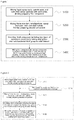
- FIG. 1 and FIG. 2 shows a flowchart of a method for preparing the composition according to the present disclosure.
- the core-shell rubber particles are mixed with the epoxy-cyanate ester intermediate prepared by heating the liquid epoxy resin and cyanate ester at 80°C for 30 minutes, a resulting mixture is stirred at 100°C for 3 hours, and then is cooled down at room temperature to prepare the first component.
- the formation amount of the main chain of the epoxy-cyanate ester intermediate may be poor.
- the temperature exceeds 80°C the main chain of the epoxy-cyanate ester intermediate may be broken. Thus, it is preferable to meet the above condition.
- the heating of the liquid epoxy resin and cyanate ester is carried out at 80°C for a duration smaller than 30 minutes in the first step (S100), the formation amount of the main chain of the epoxy-cyanate ester intermediate may be poor.
- the duration exceeds 30 minutes, there is a risk of deformation of the epoxy-cyanate ester intermediate. Because the epoxy-cyanate ester intermediate is unstable and is sensitive to the temperature and the time duration, it is preferable to meet the above condition.
- the core-shell rubber particles are mixed with the epoxy-cyanate ester intermediate and then the stirring of the mixture is carried out at a temperature than 100°C, the dispersion of the core-shell rubber particles is poor, and the binding reaction between the vinyl group present in the portion on the surface of the core-shell rubber particles and the cyanate ester is poor.
- the temperature exceeds 100°C, the epoxy-cyanate ester intermediate may be deformed. Thus, it is preferable to meet the above condition.
- the core-shell rubber particles are mixed with the epoxy-cyanate ester intermediate and then the mixture is stirred at 100°C for a duration smaller than 3 hours, the dispersion of the core-shell rubber particles may be poor.
- the duration is larger than 3 hours, the core-shell rubber particles may be denatured. Thus, it is preferable to meet the above condition.
- the epoxy-cyanate ester intermediate may employ cyanate ester as a monomer.
- Bisphenol-A, bisphenol-C, bisphenol-E, bisphenol-F, bisphenol-M and novolak type cyanate ester may be employed and may be used alone or in combination with each other.
- the cyanate ester monomer may be represented by at least one of the structural formulas of Chemical Formula 1 to Chemical Formula 9.
- a content of the epoxy-cyanate ester intermediate is preferably 20 to 60% by weight based on the total weight of the composition.
- the epoxy resin may include liquid and solid bisphenol A, bisphenol F, and epichlorohydrin along or a mixture thereof, and the epoxy equivalent weight is preferably 130 to 800 based on bisphenol A. Further, in the preparation of the epoxy-cyanate ester intermediate preparation, the content of the epoxy resin is preferably 40 to 80% by weight based on a weight of the intermediate composition.
- the core-shell rubber (CSR) particles are mixed and dispersed to impart impact-resistance in the epoxy-cyanate ester intermediate preparation.
- the core-shell rubber particles may be selected from commercial products that may be mixed with the epoxy resin, and a typical product thereof as used is Rom & Haas CSR particles.
- the core-shell rubber particles are incorporated in the synthesis process of the epoxy-cyanate intermediate.
- the cyanate ester may be bonded to the vinyl group or carboxyl group present in the portion on the surface of the core-shell rubber particles to allow the intermediate to be chemically bonded to an interface of the core-shell rubber particle.
- Excellent impact-resistance property and adhesion improvement effect may be expected due to the bonding at the interface between thermal-resistant and rigid resin or monomer and the core-shell rubber particle.
- the content of the core-shell rubber particles is preferably 10 to 25% by weight based on a weight of the intermediate composition.
- a first-first step (S110) is performed.
- polyether monoamine (PEA) is mixed with the first component cooled to room temperature in the first step (S100) and then, a resulting mixture is stirred.
- the PEA includes hydrophilic and lipophilic groups in a main chain thereof and thus has a function of spraying the core-shell rubber particles using polarity balance.
- the polyether monoamine has a weight average molecular weight of 500 to 5,000 and includes ethylene oxide and propylene oxide chains in the main chain. Because the polyether monoamine includes an amine group at an end thereof, it participates in the curing reaction to allow a branched chain to be formed after the curing reaction. Thus, the branched chain plays a toughening role.
- the polyether monoamine is not inserted into the main chain of the first component, but only affects the side chain thereof.
- PEA acts as a dispersing and toughening agent.
- the polyether monoamine may be at least one compound selected from a group consisting of compounds represented by the Chemical Formula 10 and the Table 1:
- the polyether monoamine is preferably added to the first component and the mixture is stirred.
- the viscosity increases and the temperature increases. Therefore, after the polyether monoamine is added thereto, the temperature must be maintained at 60°C or lower. Further, before mixing the polyether monoamine therewith, the first component must be cooled to room temperature and stirred to prevent deformation or denaturation of the first component.
- Adding the polyether monoamine thereto in the first-first step (S110) is intended to maintain the thermal-resistance and strength. Since nano sized portions of the polyether monoamine overlap each other, other compounds in a form of a polymer may not be used.
- the content of the polyether monoamine is preferably 2 to 10 wt% based on the total weight of the composition.
- the flame retardant is mixed with the tetrafunctional epoxy monomer and a resulting mixture is stirred at 80°C for 30 minutes. Then, the core-shell rubber particles are mixed with the mixture which, in turn, is stirred at 80°C for 30 minutes, and then slowly cooled to room temperature to prepare the second component.
- the flame retardant in the second step (S200), when the flame retardant is mixed with the tetrafunctional epoxy monomer and the stirring of the mixture is carried out at a temperature lower than 80° C, the flame retardant forms a side chain on the tetrafunctional epoxy monomer such that the side chain formation is poor.
- the temperature exceeds 80°C, the formed side chain may be broken or the three-dimensional structure of the flame retardant may be denatured. Thus, it is preferable to meet the above condition.
- the flame retardant when the flame retardant is mixed with the tetrafunctional epoxy monomer and then the mixture is stirred at 80° C for a duration smaller than 30 minutes, the flame retardant forms a side chain on the tetrafunctional epoxy monomer such that the side chain formation may be poor.
- the duration exceeds 30 minutes, there is a risk that the three-dimensional structure of the flame retardant may be denatured. Thus, it is preferable to meet the above condition.
- the core-shell rubber particles are mixed with the mixture of the flame retardant and the tetrafunctional epoxy monomer to produce the further mixture, and then the further mixture is stirred at a temperature lower than 80° C, the dispersion of the core-shell rubber particles may be poor.
- the temperature is higher than 80°C, there is a risk that the tetrafunctional epoxy monomer and the flame retardant mixture may be denatured. Thus, it is preferable to meet the above condition.
- the core-shell rubber particles are mixed with the mixture of the flame retardant and the tetrafunctional epoxy monomer to produce the further mixture, and then the further mixture is stirred at 80° C for a duration smaller than 30 minutes, the dispersion of the core-shell rubber particles may be poor. When the duration is larger than 30 minutes, the core-shell rubber particles may be denatured. Thus, it is preferable to meet the above condition.
- the thermal-resistance is excellent, but the adhesiveness and the impact-resistance are remarkably deteriorated, which is not preferable.
- the content of the tetrafunctional epoxy monomer is preferably 20 to 60% by weight based on the total weight of the composition.
- the tetrafunctional epoxy monomer is preferably tetraglycidyl methylenedianiline (TGDDM) represented by the above Chemical Formula 11.
- the flame retardant is preferably phosphate, and more specifically, may be tri-m-cresyl phosphate (hereinafter, TCP) represented by a following Chemical Formula 12.
- TCP tri-m-cresyl phosphate
- the TCP is a liquid mono-molecule, and is mixed with the tetrafunctional epoxy monomer.
- the TCP forms a three-dimensional structure to achieve a nano-toughening effect, and has a dispersant function in the process of dispersing the core-shell rubber particles, and thus is very useful in the present disclosure. That is, the TCP and the core-shell rubber particles provide a nano-sized hybrid toughener function.
- a content of the liquid TCP is preferably 2 to 10% by weight based on a weight of the tetrafunctional epoxy monomer.
- the content of the core-shell rubber particles of the second component is preferably 10 to 25% by weight based on a weight of the tetrafunctional epoxy monomer.
- the third step (S300) provides the third component including two types of monomers respectively having a vinyl group and a multifunctional thiol group at ends thereof.
- the monomer having a thermal-resistant vinyl group at the end thereof is an acrylate monomer, and preferably has a molecular weight smaller than 1,000.
- a chemical structure thereof and the number of functional groups thereof it is more preferable that a main chain or a chain branch has a benzene ring.
- the monomer having the multifunctional thiol group at the end thereof is preferably a monomer having 3 to 6-functional thiol groups.
- the molecular weight of the monomer including the thiol group is preferably smaller than 1,000.
- the content of the acrylate monomer is preferably 2 to 10% by weight based on the total weight of the composition. Further, the content of the monomer including the thiol group is preferably 2 to 10% by weight based on the total weight of the composition.
- the acrylate and the monomer including the thiol group it is preferable to use a combination of the acrylate and the monomer including the thiol group to realize the fast curable property and high adhesive property.
- the monomer combination may simultaneously realize the fast curable property and high adhesive property and may minimize degradation of the mechanical properties.
- the method includes the fourth step (S400) of mixing the first component and the second component at room temperature for 10 minutes and then adding and mixing the third component and a curing accelerator into and with a resulting mixture, and then stirring a further resulting mixture for 30 minutes and then slowly cooling the further resulting mixture to room temperature.
- S400 fourth step of mixing the first component and the second component at room temperature for 10 minutes and then adding and mixing the third component and a curing accelerator into and with a resulting mixture, and then stirring a further resulting mixture for 30 minutes and then slowly cooling the further resulting mixture to room temperature.
- the mixing of the first component and the second component are carried out for a duration smaller than 10 minutes at room temperature, the mixing is poor and the mixing of the TCP is poor, such that there is a risk of lowering the surface adhesion due to the TCP.
- the mixing is carried out at room temperature for a duration larger than 10 minutes, the epoxy-cyanate ester intermediate may be broken. Thus, it is preferable to meet the above condition.
- the mixing of the third component and the curing accelerator with the mixture of the first component and the second component is carried out for a duration smaller than 30 minutes, so that the mixing of the third component is poor, so that the fast curable property and high adhesive effect may be poor.
- the mixing is carried out for a duration larger than 30 minutes, the first component, second component, and third component may be broken as the temperature is increased due to the curing accelerator. Thus, it is preferable to meet the above condition.
- the heat-activated latent curing accelerator may include at least one selected from dicyandiamide (hereinafter DICY), diaminodiphenylsulfone (hereinafter DDS), and imidazole. Further, the heat-activated latent curing accelerator may include at least one selected from an inorganic filler, a silane-based coupling agent, fumed silica, and mixtures thereof.
- DICY dicyandiamide
- DDS diaminodiphenylsulfone
- imidazole imidazole
- the heat-activated latent curing accelerator may include at least one selected from an inorganic filler, a silane-based coupling agent, fumed silica, and mixtures thereof.
- the DICY and DDS selected as the curing accelerator are preferably used in combination with each other rather than alone, thereby achieving adhesion and thermal-resistance.
- the DICY exhibits strong adhesive performance.
- the DDS is advantageous in thermal-resistant implementation due to its short chain structure. Although DDS is used alone in most of thermal-resistant adhesive compositions, both DICY and DDS may be used together to maximize adhesive performance and thermal-resistance at the same time in accordance with the present disclosure.
- a content of the DICY as the curing accelerator is preferably 2 to 6% by weight based on the total weight of the composition.
- a content of the DDS as the curing accelerator is preferably 2 to 12% by weight based on the total weight of the composition.
- the mixing ratio of DICY and DDS is preferably 1:4 to 1:1, so that the total content of the curing accelerator is 8 to 15% by weight based on the total weight of the adhesive composition.
- the DICY and DDS are respectively represented by the Chemical Formula 13 and Chemical Formula 14.
- a formulated adhesive 1 was applied evenly to a surface of the specimen at room temperature.
- a formulated adhesive 2 was prepared in a shape of a tape and cut to fit the shape of the specimen and then applied thereto.
- the applied adhesive was cured by heating the same in an electric oven at 160°C for 30 minutes or 120°C for 60 minutes.
- the curing temperature is adjustable. the lower the temperature, the longer the curing time.
- the effect of the epoxy structural adhesive composition prepared according to the present disclosure was verified based on a measuring result of shear adhesive strength and fracture toughness using the adhesive applied specimen.
- the specimen was maintained at room temperature 23°C for 16 minutes. Then, a shear adhesive strength test according to ASTM D1002 was performed. Thus, the measurement results are shown in Table 2 below.
- the fracture toughness mode I was measured according to ASTM D5045, and the measurement results are shown in Table 2 below.
- Table 2 Examples Shear adhesive strength (MPa) Fracture toughness mode I(G IC )(J/m 2 ) Comparative example 1 18.4 (Measuring environment: 25°C) 147 0.3 (Measuring environment: 150°C) - Comparative example 2 24.8 (Measuring environment: 25°C) 28 23.1 (Measuring environment: 150°C) - Comparative example 3 26.2 (Measuring environment: 25°C) 158 18.5 (Measuring environment: 150°C) - Comparative example 4 25.3 (Measuring environment: 25°C) 284 2.9 (Measuring environment: 150°C) - Present example 1 32.1 (Measuring environment: 25°C) 410 28.0 (Measuring environment: 150°C) - Present example 2 32.8 (Measuring environment: 25°C
- the technical effects of the disclosure are as follows.
- the present disclosure may provide an epoxy composition that simultaneously exhibits both of high adhesive strength and thermal-resistant properties due to a thermal-resistant epoxy intermediate.
- the present disclosure may provide an epoxy composition in which polymer particles are uniformly dispersed in a thermal-resistant epoxy monomer to exhibit excellent impact-resistance properties.
- the present disclosure may provide a fast-curable thermal-resistant epoxy composition in which a monomer having a vinyl group at an end thereof and a monomer having a thiol group at an end thereof are simultaneously introduced to realize high adhesive strength and fast curable property, thereby exhibiting high shear adhesive strength while maintaining thermal-resistant properties while at the same time exhibiting high impact-resistance properties.
- a purpose of the present disclosure is to solve a problem of liquid cyanate ester which has excellent thermal-resistance but has poor storage properties for use as a component of a one-component adhesive and thus to provide an epoxy structural adhesive composition having increased storage and having maintained adhesion and thermal-resistance.
- the present disclosure may provide a thermal-resistant epoxy structural adhesive composition with excellent adhesion and thermal-resistance by dispersing core-shell rubber (CSR) particles in a process of preparing the epoxy-cyanate ester intermediate such that the epoxy-cyanate ester intermediate is integrated with the core-shell rubber via a bonding reaction between a vinyl group present in a portion on a surface of the core-shell rubber and the cyanate ester.
- CSR core-shell rubber
- the present disclosure may provide a thermal-resistant epoxy structural adhesive composition with excellent adhesion by mixing and introducing a phosphate capable of realizing nano-toughening properties with and to a core-shell rubber to compensate for low adhesion resulting from introducing of a tetrafunctional epoxy monomer as a high thermal-resistant epoxy monomer.
- the present disclosure may provide a thermal-resistant epoxy structural adhesive composition having excellent adhesion in which a monomer having a vinyl group at an end thereof and a monomer having a thiol group at an end thereof are simultaneously introduced to realize high adhesive strength and fast curable property, and in particular, a monomer with a multifunctional thiol group has nano-toughening properties and high adhesive properties, and have excellent effects even when used in a small amount such that the thermal resistance is maintained at the same level.
Landscapes
- Chemical & Material Sciences (AREA)
- Organic Chemistry (AREA)
- Chemical Kinetics & Catalysis (AREA)
- Health & Medical Sciences (AREA)
- Medicinal Chemistry (AREA)
- Polymers & Plastics (AREA)
- Materials Engineering (AREA)
- Life Sciences & Earth Sciences (AREA)
- Engineering & Computer Science (AREA)
- Wood Science & Technology (AREA)
- General Chemical & Material Sciences (AREA)
- Adhesives Or Adhesive Processes (AREA)
- Epoxy Resins (AREA)
Applications Claiming Priority (2)
| Application Number | Priority Date | Filing Date | Title |
|---|---|---|---|
| KR1020190039924A KR102133123B1 (ko) | 2019-04-05 | 2019-04-05 | 내충격성을 갖는 내열성 에폭시 구조용 접착제 조성물 제조방법 및 이를 이용한 에폭시 구조용 접착제 조성물 |
| PCT/KR2020/001544 WO2020204342A1 (ko) | 2019-04-05 | 2020-01-31 | 내충격성을 갖는 내열성 에폭시 구조용 접착제 조성물 제조방법 및 이를 이용한 에폭시 구조용 접착제 조성물 |
Publications (3)
| Publication Number | Publication Date |
|---|---|
| EP3929263A1 true EP3929263A1 (de) | 2021-12-29 |
| EP3929263A4 EP3929263A4 (de) | 2022-11-23 |
| EP3929263B1 EP3929263B1 (de) | 2023-07-05 |
Family
ID=71571013
Family Applications (1)
| Application Number | Title | Priority Date | Filing Date |
|---|---|---|---|
| EP20785014.0A Active EP3929263B1 (de) | 2019-04-05 | 2020-01-31 | Verfahren zur herstellung einer hitzebeständigen strukturellen epoxidklebstoffzusammensetzung mit schlagfestigkeit und strukturelle epoxidklebstoffzusammensetzung damit |
Country Status (3)
| Country | Link |
|---|---|
| EP (1) | EP3929263B1 (de) |
| KR (1) | KR102133123B1 (de) |
| WO (1) | WO2020204342A1 (de) |
Families Citing this family (4)
| Publication number | Priority date | Publication date | Assignee | Title |
|---|---|---|---|---|
| CN118684860B (zh) * | 2024-07-22 | 2025-09-26 | 江苏特丽亮新材料科技有限公司 | 一种多官能团环氧树脂的制备方法及在导电胶上的应用 |
| CN118834641A (zh) * | 2024-08-15 | 2024-10-25 | 中微龙图电子科技无锡有限责任公司 | 一种耐高温型环氧树脂粘接剂及其制备方法 |
| KR102798128B1 (ko) | 2025-02-06 | 2025-04-22 | 주식회사 대림산업 | 냄새 없는 기능성 접착제 제조방법 및 이에 의해 제조된 접착제 |
| KR102798129B1 (ko) | 2025-02-06 | 2025-04-22 | 주식회사 대림산업 | 기능성 우레탄 접착제 제조방법 및 이에 의해 제조된 우레탄 접착제 |
Family Cites Families (9)
| Publication number | Priority date | Publication date | Assignee | Title |
|---|---|---|---|---|
| JPS6032872A (ja) * | 1983-07-30 | 1985-02-20 | Dainippon Printing Co Ltd | 粘着剤用組成物 |
| KR970010919A (ko) | 1995-08-29 | 1997-03-27 | 강박광 | 에폭시 수지 접착제 조성물 |
| JP4021711B2 (ja) * | 2002-06-12 | 2007-12-12 | 富士通株式会社 | 配電設備図作成装置、配電設備図作成方法、及びその方法をコンピュータに行わせるコンピュータ・プログラム |
| CA2766859A1 (en) * | 2009-07-08 | 2011-01-13 | Henkel Ag & Co. Kgaa | Electrically conductive adhesives |
| BR112015021037A2 (pt) * | 2013-03-15 | 2017-07-18 | Blue Cube Ip Llc | composição de resina curável, processo para preparar uma composição de resina curável, composição de resina curada e artigo |
| WO2015088943A1 (en) * | 2013-12-13 | 2015-06-18 | Dow Global Technologies Llc | Epoxy composition containing core-shell rubber |
| KR101588717B1 (ko) * | 2014-02-20 | 2016-01-26 | 부산대학교 산학협력단 | 극성과 흐름성이 조절되는 내충격성 에폭시 접착제 조성물 |
| KR101693605B1 (ko) | 2015-02-10 | 2017-01-17 | 한국생산기술연구원 | 폴리티올 경화제를 포함하는 에폭시 접착제 조성물 및 이의 제조방법 |
| CN111212863A (zh) * | 2017-09-20 | 2020-05-29 | Ppg工业俄亥俄公司 | 包括多硫醇的粘结层组合物 |
-
2019
- 2019-04-05 KR KR1020190039924A patent/KR102133123B1/ko active Active
-
2020
- 2020-01-31 WO PCT/KR2020/001544 patent/WO2020204342A1/ko not_active Ceased
- 2020-01-31 EP EP20785014.0A patent/EP3929263B1/de active Active
Also Published As
| Publication number | Publication date |
|---|---|
| EP3929263B1 (de) | 2023-07-05 |
| WO2020204342A1 (ko) | 2020-10-08 |
| KR102133123B1 (ko) | 2020-07-13 |
| EP3929263A4 (de) | 2022-11-23 |
Similar Documents
| Publication | Publication Date | Title |
|---|---|---|
| EP3929263B1 (de) | Verfahren zur herstellung einer hitzebeständigen strukturellen epoxidklebstoffzusammensetzung mit schlagfestigkeit und strukturelle epoxidklebstoffzusammensetzung damit | |
| EP1081205B1 (de) | Harzzusammensetzungen | |
| KR101467609B1 (ko) | 온도 변화에 대한 민감도가 매우 낮은 충돌 내구성 에폭시 접착제 | |
| KR102217397B1 (ko) | 유연성 에폭시 수지 조성물 | |
| CA2527099C (en) | Use of urea derivatives as accelerators for epoxy resins | |
| JP3193106B2 (ja) | エポキシ樹脂組成物の硬化方法および硬化物 | |
| US7226976B2 (en) | Latent curing agent for epoxy resin, and curable epoxy resin composition | |
| US20120238653A1 (en) | Latent curing agent and epoxy compositions containing the same | |
| EP0547905A1 (de) | Durch Polysulfid modifizierte Epoxyharze | |
| US10190028B2 (en) | Epoxy two-part formulations | |
| US9163170B2 (en) | Epoxy resin composition including silica and core-shell polymer particles | |
| JP7508502B2 (ja) | 尿素末端ブタジエンポリマーおよびブタジエンアクリロニトリルコポリマー | |
| AU639168B2 (en) | Acrylic-modified epoxy resin adhesive compositions with improved rheological control | |
| JPS62236879A (ja) | エポキシ樹脂系接着剤組成物 | |
| KR20170014277A (ko) | 변성 에폭시 수지 및 그 제조방법 | |
| JP3569467B2 (ja) | 一液型エポキシ樹脂組成物 | |
| JP2023552957A (ja) | 一液型構造接着剤 | |
| KR101588717B1 (ko) | 극성과 흐름성이 조절되는 내충격성 에폭시 접착제 조성물 | |
| EP0982366B1 (de) | Einkomponent-Epoxydharzzusammensetzung | |
| JP7682382B2 (ja) | 二液型構造接着剤 | |
| EP4496787B1 (de) | Thiol-oxamid-verbindungen und zusammensetzungen | |
| EP4658700A1 (de) | Klebstoffformulierung | |
| BR112021007419A2 (pt) | composição de resina epóxi termoendurecível com baixa temperatura de cura e boa estabilidade de armazenamento | |
| JP2023178052A (ja) | 熱硬化性樹脂組成物、接着剤、硬化物及び接合体 | |
| BR112021007419B1 (pt) | Composição de resina epóxi termoendurecível, seu uso, processo para a ligação de substratos estáveis ao calor e artigo ligado por adesivo |
Legal Events
| Date | Code | Title | Description |
|---|---|---|---|
| STAA | Information on the status of an ep patent application or granted ep patent |
Free format text: STATUS: THE INTERNATIONAL PUBLICATION HAS BEEN MADE |
|
| PUAI | Public reference made under article 153(3) epc to a published international application that has entered the european phase |
Free format text: ORIGINAL CODE: 0009012 |
|
| STAA | Information on the status of an ep patent application or granted ep patent |
Free format text: STATUS: REQUEST FOR EXAMINATION WAS MADE |
|
| 17P | Request for examination filed |
Effective date: 20210903 |
|
| AK | Designated contracting states |
Kind code of ref document: A1 Designated state(s): AL AT BE BG CH CY CZ DE DK EE ES FI FR GB GR HR HU IE IS IT LI LT LU LV MC MK MT NL NO PL PT RO RS SE SI SK SM TR |
|
| DAV | Request for validation of the european patent (deleted) | ||
| DAX | Request for extension of the european patent (deleted) | ||
| A4 | Supplementary search report drawn up and despatched |
Effective date: 20221021 |
|
| RIC1 | Information provided on ipc code assigned before grant |
Ipc: C09J 179/04 20060101ALI20221017BHEP Ipc: C08G 75/045 20160101ALI20221017BHEP Ipc: C08G 59/66 20060101ALI20221017BHEP Ipc: C08L 21/00 20060101ALI20221017BHEP Ipc: C08L 63/00 20060101ALI20221017BHEP Ipc: C08G 59/50 20060101ALI20221017BHEP Ipc: C08G 59/17 20060101ALI20221017BHEP Ipc: C08G 59/42 20060101ALI20221017BHEP Ipc: C08G 59/40 20060101ALI20221017BHEP Ipc: C09J 11/08 20060101ALI20221017BHEP Ipc: C09J 11/06 20060101ALI20221017BHEP Ipc: C09J 163/00 20060101AFI20221017BHEP |
|
| RIC1 | Information provided on ipc code assigned before grant |
Ipc: C09J 179/04 20060101ALI20221130BHEP Ipc: C08G 75/045 20160101ALI20221130BHEP Ipc: C08G 59/66 20060101ALI20221130BHEP Ipc: C08L 21/00 20060101ALI20221130BHEP Ipc: C08L 63/00 20060101ALI20221130BHEP Ipc: C08G 59/50 20060101ALI20221130BHEP Ipc: C08G 59/17 20060101ALI20221130BHEP Ipc: C08G 59/42 20060101ALI20221130BHEP Ipc: C08G 59/40 20060101ALI20221130BHEP Ipc: C09J 11/08 20060101ALI20221130BHEP Ipc: C09J 11/06 20060101ALI20221130BHEP Ipc: C09J 163/00 20060101AFI20221130BHEP |
|
| GRAP | Despatch of communication of intention to grant a patent |
Free format text: ORIGINAL CODE: EPIDOSNIGR1 |
|
| STAA | Information on the status of an ep patent application or granted ep patent |
Free format text: STATUS: GRANT OF PATENT IS INTENDED |
|
| INTG | Intention to grant announced |
Effective date: 20230316 |
|
| GRAS | Grant fee paid |
Free format text: ORIGINAL CODE: EPIDOSNIGR3 |
|
| GRAA | (expected) grant |
Free format text: ORIGINAL CODE: 0009210 |
|
| STAA | Information on the status of an ep patent application or granted ep patent |
Free format text: STATUS: THE PATENT HAS BEEN GRANTED |
|
| AK | Designated contracting states |
Kind code of ref document: B1 Designated state(s): AL AT BE BG CH CY CZ DE DK EE ES FI FR GB GR HR HU IE IS IT LI LT LU LV MC MK MT NL NO PL PT RO RS SE SI SK SM TR |
|
| REG | Reference to a national code |
Ref country code: CH Ref legal event code: EP |
|
| REG | Reference to a national code |
Ref country code: AT Ref legal event code: REF Ref document number: 1584843 Country of ref document: AT Kind code of ref document: T Effective date: 20230715 |
|
| REG | Reference to a national code |
Ref country code: DE Ref legal event code: R096 Ref document number: 602020013422 Country of ref document: DE |
|
| REG | Reference to a national code |
Ref country code: IE Ref legal event code: FG4D |
|
| REG | Reference to a national code |
Ref country code: LT Ref legal event code: MG9D |
|
| REG | Reference to a national code |
Ref country code: NL Ref legal event code: MP Effective date: 20230705 |
|
| REG | Reference to a national code |
Ref country code: AT Ref legal event code: MK05 Ref document number: 1584843 Country of ref document: AT Kind code of ref document: T Effective date: 20230705 |
|
| PG25 | Lapsed in a contracting state [announced via postgrant information from national office to epo] |
Ref country code: NL Free format text: LAPSE BECAUSE OF FAILURE TO SUBMIT A TRANSLATION OF THE DESCRIPTION OR TO PAY THE FEE WITHIN THE PRESCRIBED TIME-LIMIT Effective date: 20230705 |
|
| PG25 | Lapsed in a contracting state [announced via postgrant information from national office to epo] |
Ref country code: GR Free format text: LAPSE BECAUSE OF FAILURE TO SUBMIT A TRANSLATION OF THE DESCRIPTION OR TO PAY THE FEE WITHIN THE PRESCRIBED TIME-LIMIT Effective date: 20231006 |
|
| PGFP | Annual fee paid to national office [announced via postgrant information from national office to epo] |
Ref country code: GB Payment date: 20231227 Year of fee payment: 5 |
|
| PG25 | Lapsed in a contracting state [announced via postgrant information from national office to epo] |
Ref country code: ES Free format text: LAPSE BECAUSE OF FAILURE TO SUBMIT A TRANSLATION OF THE DESCRIPTION OR TO PAY THE FEE WITHIN THE PRESCRIBED TIME-LIMIT Effective date: 20230705 |
|
| PG25 | Lapsed in a contracting state [announced via postgrant information from national office to epo] |
Ref country code: IS Free format text: LAPSE BECAUSE OF FAILURE TO SUBMIT A TRANSLATION OF THE DESCRIPTION OR TO PAY THE FEE WITHIN THE PRESCRIBED TIME-LIMIT Effective date: 20231105 |
|
| PG25 | Lapsed in a contracting state [announced via postgrant information from national office to epo] |
Ref country code: SE Free format text: LAPSE BECAUSE OF FAILURE TO SUBMIT A TRANSLATION OF THE DESCRIPTION OR TO PAY THE FEE WITHIN THE PRESCRIBED TIME-LIMIT Effective date: 20230705 Ref country code: RS Free format text: LAPSE BECAUSE OF FAILURE TO SUBMIT A TRANSLATION OF THE DESCRIPTION OR TO PAY THE FEE WITHIN THE PRESCRIBED TIME-LIMIT Effective date: 20230705 Ref country code: PT Free format text: LAPSE BECAUSE OF FAILURE TO SUBMIT A TRANSLATION OF THE DESCRIPTION OR TO PAY THE FEE WITHIN THE PRESCRIBED TIME-LIMIT Effective date: 20231106 Ref country code: NO Free format text: LAPSE BECAUSE OF FAILURE TO SUBMIT A TRANSLATION OF THE DESCRIPTION OR TO PAY THE FEE WITHIN THE PRESCRIBED TIME-LIMIT Effective date: 20231005 Ref country code: LV Free format text: LAPSE BECAUSE OF FAILURE TO SUBMIT A TRANSLATION OF THE DESCRIPTION OR TO PAY THE FEE WITHIN THE PRESCRIBED TIME-LIMIT Effective date: 20230705 Ref country code: LT Free format text: LAPSE BECAUSE OF FAILURE TO SUBMIT A TRANSLATION OF THE DESCRIPTION OR TO PAY THE FEE WITHIN THE PRESCRIBED TIME-LIMIT Effective date: 20230705 Ref country code: IS Free format text: LAPSE BECAUSE OF FAILURE TO SUBMIT A TRANSLATION OF THE DESCRIPTION OR TO PAY THE FEE WITHIN THE PRESCRIBED TIME-LIMIT Effective date: 20231105 Ref country code: HR Free format text: LAPSE BECAUSE OF FAILURE TO SUBMIT A TRANSLATION OF THE DESCRIPTION OR TO PAY THE FEE WITHIN THE PRESCRIBED TIME-LIMIT Effective date: 20230705 Ref country code: GR Free format text: LAPSE BECAUSE OF FAILURE TO SUBMIT A TRANSLATION OF THE DESCRIPTION OR TO PAY THE FEE WITHIN THE PRESCRIBED TIME-LIMIT Effective date: 20231006 Ref country code: FI Free format text: LAPSE BECAUSE OF FAILURE TO SUBMIT A TRANSLATION OF THE DESCRIPTION OR TO PAY THE FEE WITHIN THE PRESCRIBED TIME-LIMIT Effective date: 20230705 Ref country code: ES Free format text: LAPSE BECAUSE OF FAILURE TO SUBMIT A TRANSLATION OF THE DESCRIPTION OR TO PAY THE FEE WITHIN THE PRESCRIBED TIME-LIMIT Effective date: 20230705 Ref country code: AT Free format text: LAPSE BECAUSE OF FAILURE TO SUBMIT A TRANSLATION OF THE DESCRIPTION OR TO PAY THE FEE WITHIN THE PRESCRIBED TIME-LIMIT Effective date: 20230705 |
|
| PG25 | Lapsed in a contracting state [announced via postgrant information from national office to epo] |
Ref country code: PL Free format text: LAPSE BECAUSE OF FAILURE TO SUBMIT A TRANSLATION OF THE DESCRIPTION OR TO PAY THE FEE WITHIN THE PRESCRIBED TIME-LIMIT Effective date: 20230705 |
|
| REG | Reference to a national code |
Ref country code: DE Ref legal event code: R097 Ref document number: 602020013422 Country of ref document: DE |
|
| PG25 | Lapsed in a contracting state [announced via postgrant information from national office to epo] |
Ref country code: SM Free format text: LAPSE BECAUSE OF FAILURE TO SUBMIT A TRANSLATION OF THE DESCRIPTION OR TO PAY THE FEE WITHIN THE PRESCRIBED TIME-LIMIT Effective date: 20230705 Ref country code: RO Free format text: LAPSE BECAUSE OF FAILURE TO SUBMIT A TRANSLATION OF THE DESCRIPTION OR TO PAY THE FEE WITHIN THE PRESCRIBED TIME-LIMIT Effective date: 20230705 Ref country code: EE Free format text: LAPSE BECAUSE OF FAILURE TO SUBMIT A TRANSLATION OF THE DESCRIPTION OR TO PAY THE FEE WITHIN THE PRESCRIBED TIME-LIMIT Effective date: 20230705 Ref country code: DK Free format text: LAPSE BECAUSE OF FAILURE TO SUBMIT A TRANSLATION OF THE DESCRIPTION OR TO PAY THE FEE WITHIN THE PRESCRIBED TIME-LIMIT Effective date: 20230705 Ref country code: CZ Free format text: LAPSE BECAUSE OF FAILURE TO SUBMIT A TRANSLATION OF THE DESCRIPTION OR TO PAY THE FEE WITHIN THE PRESCRIBED TIME-LIMIT Effective date: 20230705 Ref country code: SK Free format text: LAPSE BECAUSE OF FAILURE TO SUBMIT A TRANSLATION OF THE DESCRIPTION OR TO PAY THE FEE WITHIN THE PRESCRIBED TIME-LIMIT Effective date: 20230705 |
|
| PLBE | No opposition filed within time limit |
Free format text: ORIGINAL CODE: 0009261 |
|
| STAA | Information on the status of an ep patent application or granted ep patent |
Free format text: STATUS: NO OPPOSITION FILED WITHIN TIME LIMIT |
|
| PG25 | Lapsed in a contracting state [announced via postgrant information from national office to epo] |
Ref country code: IT Free format text: LAPSE BECAUSE OF FAILURE TO SUBMIT A TRANSLATION OF THE DESCRIPTION OR TO PAY THE FEE WITHIN THE PRESCRIBED TIME-LIMIT Effective date: 20230705 |
|
| 26N | No opposition filed |
Effective date: 20240408 |
|
| PG25 | Lapsed in a contracting state [announced via postgrant information from national office to epo] |
Ref country code: SI Free format text: LAPSE BECAUSE OF FAILURE TO SUBMIT A TRANSLATION OF THE DESCRIPTION OR TO PAY THE FEE WITHIN THE PRESCRIBED TIME-LIMIT Effective date: 20230705 |
|
| PG25 | Lapsed in a contracting state [announced via postgrant information from national office to epo] |
Ref country code: MC Free format text: LAPSE BECAUSE OF FAILURE TO SUBMIT A TRANSLATION OF THE DESCRIPTION OR TO PAY THE FEE WITHIN THE PRESCRIBED TIME-LIMIT Effective date: 20230705 |
|
| PG25 | Lapsed in a contracting state [announced via postgrant information from national office to epo] |
Ref country code: MC Free format text: LAPSE BECAUSE OF FAILURE TO SUBMIT A TRANSLATION OF THE DESCRIPTION OR TO PAY THE FEE WITHIN THE PRESCRIBED TIME-LIMIT Effective date: 20230705 |
|
| PG25 | Lapsed in a contracting state [announced via postgrant information from national office to epo] |
Ref country code: LU Free format text: LAPSE BECAUSE OF NON-PAYMENT OF DUE FEES Effective date: 20240131 |
|
| PG25 | Lapsed in a contracting state [announced via postgrant information from national office to epo] |
Ref country code: LU Free format text: LAPSE BECAUSE OF NON-PAYMENT OF DUE FEES Effective date: 20240131 |
|
| PG25 | Lapsed in a contracting state [announced via postgrant information from national office to epo] |
Ref country code: BE Free format text: LAPSE BECAUSE OF NON-PAYMENT OF DUE FEES Effective date: 20240131 |
|
| PG25 | Lapsed in a contracting state [announced via postgrant information from national office to epo] |
Ref country code: BE Free format text: LAPSE BECAUSE OF NON-PAYMENT OF DUE FEES Effective date: 20240131 |
|
| REG | Reference to a national code |
Ref country code: BE Ref legal event code: MM Effective date: 20240131 |
|
| PG25 | Lapsed in a contracting state [announced via postgrant information from national office to epo] |
Ref country code: BG Free format text: LAPSE BECAUSE OF FAILURE TO SUBMIT A TRANSLATION OF THE DESCRIPTION OR TO PAY THE FEE WITHIN THE PRESCRIBED TIME-LIMIT Effective date: 20230705 |
|
| PG25 | Lapsed in a contracting state [announced via postgrant information from national office to epo] |
Ref country code: BG Free format text: LAPSE BECAUSE OF FAILURE TO SUBMIT A TRANSLATION OF THE DESCRIPTION OR TO PAY THE FEE WITHIN THE PRESCRIBED TIME-LIMIT Effective date: 20230705 |
|
| PG25 | Lapsed in a contracting state [announced via postgrant information from national office to epo] |
Ref country code: IE Free format text: LAPSE BECAUSE OF NON-PAYMENT OF DUE FEES Effective date: 20240131 |
|
| PG25 | Lapsed in a contracting state [announced via postgrant information from national office to epo] |
Ref country code: IE Free format text: LAPSE BECAUSE OF NON-PAYMENT OF DUE FEES Effective date: 20240131 |
|
| PG25 | Lapsed in a contracting state [announced via postgrant information from national office to epo] |
Ref country code: CY Free format text: LAPSE BECAUSE OF FAILURE TO SUBMIT A TRANSLATION OF THE DESCRIPTION OR TO PAY THE FEE WITHIN THE PRESCRIBED TIME-LIMIT; INVALID AB INITIO Effective date: 20200131 |
|
| PG25 | Lapsed in a contracting state [announced via postgrant information from national office to epo] |
Ref country code: HU Free format text: LAPSE BECAUSE OF FAILURE TO SUBMIT A TRANSLATION OF THE DESCRIPTION OR TO PAY THE FEE WITHIN THE PRESCRIBED TIME-LIMIT; INVALID AB INITIO Effective date: 20200131 |
|
| GBPC | Gb: european patent ceased through non-payment of renewal fee |
Effective date: 20250131 |
|
| PG25 | Lapsed in a contracting state [announced via postgrant information from national office to epo] |
Ref country code: GB Free format text: LAPSE BECAUSE OF NON-PAYMENT OF DUE FEES Effective date: 20250131 |
|
| PG25 | Lapsed in a contracting state [announced via postgrant information from national office to epo] |
Ref country code: TR Free format text: LAPSE BECAUSE OF FAILURE TO SUBMIT A TRANSLATION OF THE DESCRIPTION OR TO PAY THE FEE WITHIN THE PRESCRIBED TIME-LIMIT Effective date: 20230705 |
|
| REG | Reference to a national code |
Ref country code: CH Ref legal event code: U11 Free format text: ST27 STATUS EVENT CODE: U-0-0-U10-U11 (AS PROVIDED BY THE NATIONAL OFFICE) Effective date: 20260206 |
|
| PGFP | Annual fee paid to national office [announced via postgrant information from national office to epo] |
Ref country code: DE Payment date: 20260206 Year of fee payment: 7 |
|
| PGFP | Annual fee paid to national office [announced via postgrant information from national office to epo] |
Ref country code: FR Payment date: 20260206 Year of fee payment: 7 |
|
| PGFP | Annual fee paid to national office [announced via postgrant information from national office to epo] |
Ref country code: CH Payment date: 20260206 Year of fee payment: 7 |