EP3908604B1 - Galectin-7-spezifische monovalente antikörper und deren verwendungen - Google Patents
Galectin-7-spezifische monovalente antikörper und deren verwendungen Download PDFInfo
- Publication number
- EP3908604B1 EP3908604B1 EP20738736.6A EP20738736A EP3908604B1 EP 3908604 B1 EP3908604 B1 EP 3908604B1 EP 20738736 A EP20738736 A EP 20738736A EP 3908604 B1 EP3908604 B1 EP 3908604B1
- Authority
- EP
- European Patent Office
- Prior art keywords
- seq
- amino acid
- acid sequence
- sequence
- monovalent antibody
- Prior art date
- Legal status (The legal status is an assumption and is not a legal conclusion. Google has not performed a legal analysis and makes no representation as to the accuracy of the status listed.)
- Active
Links
Images


Classifications
-
- A—HUMAN NECESSITIES
- A61—MEDICAL OR VETERINARY SCIENCE; HYGIENE
- A61P—SPECIFIC THERAPEUTIC ACTIVITY OF CHEMICAL COMPOUNDS OR MEDICINAL PREPARATIONS
- A61P27/00—Drugs for disorders of the senses
- A61P27/02—Ophthalmic agents
-
- A—HUMAN NECESSITIES
- A61—MEDICAL OR VETERINARY SCIENCE; HYGIENE
- A61P—SPECIFIC THERAPEUTIC ACTIVITY OF CHEMICAL COMPOUNDS OR MEDICINAL PREPARATIONS
- A61P35/00—Antineoplastic agents
-
- C—CHEMISTRY; METALLURGY
- C07—ORGANIC CHEMISTRY
- C07K—PEPTIDES
- C07K16/00—Immunoglobulins [IG], e.g. monoclonal or polyclonal antibodies
- C07K16/18—Immunoglobulins [IG], e.g. monoclonal or polyclonal antibodies against material from animals or humans
- C07K16/28—Immunoglobulins [IG], e.g. monoclonal or polyclonal antibodies against material from animals or humans against receptors, cell surface antigens or cell surface determinants
- C07K16/2851—Immunoglobulins [IG], e.g. monoclonal or polyclonal antibodies against material from animals or humans against receptors, cell surface antigens or cell surface determinants against the lectin superfamily, e.g. CD23, CD72
-
- G—PHYSICS
- G01—MEASURING; TESTING
- G01N—INVESTIGATING OR ANALYSING MATERIALS BY DETERMINING THEIR CHEMICAL OR PHYSICAL PROPERTIES
- G01N33/00—Investigating or analysing materials by specific methods not covered by groups G01N1/00 - G01N31/00
- G01N33/48—Biological material, e.g. blood, urine; Haemocytometers
- G01N33/50—Chemical analysis of biological material, e.g. blood, urine; Testing involving biospecific ligand binding methods; Immunological testing
- G01N33/53—Immunoassay; Biospecific binding assay; Materials therefor
- G01N33/531—Production of immunochemical test materials
- G01N33/532—Production of labelled immunochemicals
- G01N33/533—Production of labelled immunochemicals with fluorescent label
-
- G—PHYSICS
- G01—MEASURING; TESTING
- G01N—INVESTIGATING OR ANALYSING MATERIALS BY DETERMINING THEIR CHEMICAL OR PHYSICAL PROPERTIES
- G01N33/00—Investigating or analysing materials by specific methods not covered by groups G01N1/00 - G01N31/00
- G01N33/48—Biological material, e.g. blood, urine; Haemocytometers
- G01N33/50—Chemical analysis of biological material, e.g. blood, urine; Testing involving biospecific ligand binding methods; Immunological testing
- G01N33/53—Immunoassay; Biospecific binding assay; Materials therefor
- G01N33/575—Immunoassay; Biospecific binding assay; Materials therefor for cancer
- G01N33/57505—Immunoassay; Biospecific binding assay; Materials therefor for cancer of the blood, e.g. leukaemia
-
- G—PHYSICS
- G01—MEASURING; TESTING
- G01N—INVESTIGATING OR ANALYSING MATERIALS BY DETERMINING THEIR CHEMICAL OR PHYSICAL PROPERTIES
- G01N33/00—Investigating or analysing materials by specific methods not covered by groups G01N1/00 - G01N31/00
- G01N33/48—Biological material, e.g. blood, urine; Haemocytometers
- G01N33/50—Chemical analysis of biological material, e.g. blood, urine; Testing involving biospecific ligand binding methods; Immunological testing
- G01N33/53—Immunoassay; Biospecific binding assay; Materials therefor
- G01N33/575—Immunoassay; Biospecific binding assay; Materials therefor for cancer
- G01N33/5751—Immunoassay; Biospecific binding assay; Materials therefor for cancer of the skin, e.g. melanoma
-
- G—PHYSICS
- G01—MEASURING; TESTING
- G01N—INVESTIGATING OR ANALYSING MATERIALS BY DETERMINING THEIR CHEMICAL OR PHYSICAL PROPERTIES
- G01N33/00—Investigating or analysing materials by specific methods not covered by groups G01N1/00 - G01N31/00
- G01N33/48—Biological material, e.g. blood, urine; Haemocytometers
- G01N33/50—Chemical analysis of biological material, e.g. blood, urine; Testing involving biospecific ligand binding methods; Immunological testing
- G01N33/53—Immunoassay; Biospecific binding assay; Materials therefor
- G01N33/575—Immunoassay; Biospecific binding assay; Materials therefor for cancer
- G01N33/57515—Immunoassay; Biospecific binding assay; Materials therefor for cancer of the breast
-
- G—PHYSICS
- G01—MEASURING; TESTING
- G01N—INVESTIGATING OR ANALYSING MATERIALS BY DETERMINING THEIR CHEMICAL OR PHYSICAL PROPERTIES
- G01N33/00—Investigating or analysing materials by specific methods not covered by groups G01N1/00 - G01N31/00
- G01N33/48—Biological material, e.g. blood, urine; Haemocytometers
- G01N33/50—Chemical analysis of biological material, e.g. blood, urine; Testing involving biospecific ligand binding methods; Immunological testing
- G01N33/53—Immunoassay; Biospecific binding assay; Materials therefor
- G01N33/575—Immunoassay; Biospecific binding assay; Materials therefor for cancer
- G01N33/57545—Immunoassay; Biospecific binding assay; Materials therefor for cancer of the ovaries
-
- G—PHYSICS
- G01—MEASURING; TESTING
- G01N—INVESTIGATING OR ANALYSING MATERIALS BY DETERMINING THEIR CHEMICAL OR PHYSICAL PROPERTIES
- G01N33/00—Investigating or analysing materials by specific methods not covered by groups G01N1/00 - G01N31/00
- G01N33/48—Biological material, e.g. blood, urine; Haemocytometers
- G01N33/50—Chemical analysis of biological material, e.g. blood, urine; Testing involving biospecific ligand binding methods; Immunological testing
- G01N33/53—Immunoassay; Biospecific binding assay; Materials therefor
- G01N33/575—Immunoassay; Biospecific binding assay; Materials therefor for cancer
- G01N33/5758—Immunoassay; Biospecific binding assay; Materials therefor for cancer involving compounds serving as markers for tumours, cancers or neoplasias, e.g. cellular determinants, receptors, heat shock/stress proteins, A-protein, oligosaccharides or metabolites
-
- C—CHEMISTRY; METALLURGY
- C07—ORGANIC CHEMISTRY
- C07K—PEPTIDES
- C07K2317/00—Immunoglobulins specific features
- C07K2317/20—Immunoglobulins specific features characterized by taxonomic origin
- C07K2317/22—Immunoglobulins specific features characterized by taxonomic origin from camelids, e.g. camel, llama or dromedary
-
- C—CHEMISTRY; METALLURGY
- C07—ORGANIC CHEMISTRY
- C07K—PEPTIDES
- C07K2317/00—Immunoglobulins specific features
- C07K2317/50—Immunoglobulins specific features characterized by immunoglobulin fragments
- C07K2317/56—Immunoglobulins specific features characterized by immunoglobulin fragments variable (Fv) region, i.e. VH and/or VL
- C07K2317/569—Single domain, e.g. dAb, sdAb, VHH, VNAR or nanobody®
-
- C—CHEMISTRY; METALLURGY
- C07—ORGANIC CHEMISTRY
- C07K—PEPTIDES
- C07K2317/00—Immunoglobulins specific features
- C07K2317/70—Immunoglobulins specific features characterized by effect upon binding to a cell or to an antigen
- C07K2317/76—Antagonist effect on antigen, e.g. neutralization or inhibition of binding
-
- C—CHEMISTRY; METALLURGY
- C07—ORGANIC CHEMISTRY
- C07K—PEPTIDES
- C07K2317/00—Immunoglobulins specific features
- C07K2317/90—Immunoglobulins specific features characterized by (pharmaco)kinetic aspects or by stability of the immunoglobulin
- C07K2317/92—Affinity (KD), association rate (Ka), dissociation rate (Kd) or EC50 value
-
- C—CHEMISTRY; METALLURGY
- C07—ORGANIC CHEMISTRY
- C07K—PEPTIDES
- C07K2317/00—Immunoglobulins specific features
- C07K2317/90—Immunoglobulins specific features characterized by (pharmaco)kinetic aspects or by stability of the immunoglobulin
- C07K2317/94—Stability, e.g. half-life, pH, temperature or enzyme-resistance
-
- G—PHYSICS
- G01—MEASURING; TESTING
- G01N—INVESTIGATING OR ANALYSING MATERIALS BY DETERMINING THEIR CHEMICAL OR PHYSICAL PROPERTIES
- G01N2333/00—Assays involving biological materials from specific organisms or of a specific nature
- G01N2333/435—Assays involving biological materials from specific organisms or of a specific nature from animals; from humans
- G01N2333/46—Assays involving biological materials from specific organisms or of a specific nature from animals; from humans from vertebrates
- G01N2333/47—Assays involving proteins of known structure or function as defined in the subgroups
- G01N2333/4701—Details
- G01N2333/4724—Lectins
-
- G—PHYSICS
- G01—MEASURING; TESTING
- G01N—INVESTIGATING OR ANALYSING MATERIALS BY DETERMINING THEIR CHEMICAL OR PHYSICAL PROPERTIES
- G01N2800/00—Detection or diagnosis of diseases
- G01N2800/16—Ophthalmology
- G01N2800/164—Retinal disorders, e.g. retinopathy
Definitions
- galectin-specific inhibitors Another obstacle to the development of galectin-specific inhibitors is the fact that very little is currently known about the three-dimensional features of less-well known galectins, such as GAL-14. So far, most of the inhibitors that have been developed until now are targeting the GBS and exclusively focus on GAL-1 and GAL-3. Moreover, there is recent evidence that some galectins do not always accomplish their function via their GBS. This should come as no surprise because we have known for a long time that lectin can bind non-carbohydrate ligands, often exhibiting higher affinities than their 'natural' saccharide ligands [reviewed by Komath et al., 2006].
- monovalent antibody refers to an antibody that comprises a single monomeric variable antibody domain, and thus a single set of complementary determining regions (CDRs).
- monovalent antibodies include single-domain antibodies (sdAbs, also called nanobodies), camelid antibodies (e.g ., from dromedaries, camels, llamas, alpacas), V H H fragments and V NAR fragments.
- the monovalent antibody is a nanobody.
- Single domain antibodies may be derived from any species including mouse, human, camel, llama, goat, rabbit, and bovine.
- hGAL-7 has attracted more interest in cancer because its preferential expression in epithelial tissues and carcinoma, it is found in the nucleus of many cancer cells, including hypopharyngeal (HSCCs) and laryngeal (LSCCs) squamous cell carcinomas tissues, colon carcinoma cells (DLD-1), cervical adenocarcinoma (HeLa), epithelial ovarian cancer tissues and oral epithelial dysplasia tissues ( Saussez S et al. Histopathology 52: 483-493, 2008 .; Kuwabara I et al. J Biol Chem 277: 3487-3497, 2002 ; Kim HJ et al.
- GAL-7 was also described as a key element in aggressive metastasis following its overexpression in breast carcinomas ( Demers M, et al., Am J Pathol. 2010; 176:3023-3031 ), and thus represents a potential therapeutic target. GAL-7 has also been shown in the neovascularization process in the eye ( Cao et al., Arch Ophthalmol.
- the monovalent antibody comprises one of the following combinations of complementarity determining regions (CDRs):
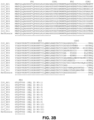
- the single-domain antibody has a CDR1, CDR2 and a CDR3 as shown in combination in FIG. 3B , and conservative sequence variants thereof.
- a single-domain antibody according to the present disclosure preferably comprises the CDR1 and the CDR2 and the CDR3 shown in FIG. 3B .
- conservative sequence variants of the CDR1, CDR2 and CDR3 combinations as disclosed in FIG. 3B are also included.
- amino acid changes can typically be made without altering the biological activity, function, or other desired property of the antibody, such as its affinity or its specificity for antigen.
- single amino acid substitutions in nonessential regions of an antibody do not substantially alter biological activity.
- substitutions of amino acids that are similar in structure or function are less likely to disrupt the antibody's biological activity.
- One or more of the CDRs may be mutated to increase the affinity and/or specificity of the monovalent antibody for hGAL-7, e.g. , to generate an affinity-matured monovalent antibody.
- the monovalent antibody comprises one of the following combinations of CDRs:
- the monovalent antibody comprises the combination of CDRs defined in item (f), (g), (i) or (k) above. In an embodiment, the monovalent antibody comprises the combination of CDRs defined in item (f) above. In an embodiment, the monovalent antibody comprises the combination of CDRs defined in item (k) above.
- the monovalent antibody comprises or consists of an amino acid sequence having at least 80%, 85%, 90%, 95%, 96%, 97%, 98% or 99% identity with one of the sequences set forth in FIG. 3B (SEQ ID Nos: 1-10, 52 or 53).
- the monovalent antibody of the invention comprises one of the sequences set forth in SEQ ID Nos: 6, 7, 9 and 52, in particular the sequences set forth in SEQ ID No:6 or 52.
- the monovalent antibody comprises or consists of one of the sequences set forth in FIG. 3B (SEQ ID Nos: 1-10, 52 or 53).
- the monovalent antibody of the invention comprises the sequences set forth in SEQ ID Nos: 6, 7, 9 and 52, in particular the sequences set forth in SEQ ID No:6 or 52.
- Variations in the monovalent antibody described herein can be made, for example, using any of the techniques and guidelines for conservative and non-conservative mutations set forth, for instance, in U.S. Patent No. 5,364,934 .
- Variations may be a substitution, deletion or insertion of one or more codons encoding the monovalent antibody that results in a change in the amino acid sequence as compared with the native sequence antibody.
- the variation is by substitution of at least one amino acid with any other amino acid (including naturally occurring amino acids as well as amino acid analogs) in one or more of the domains of the monovalent antibody.
- Amino acid substitutions can be the result of replacing one amino acid with another amino acid having similar structural and/or chemical properties, such as the replacement of a leucine with a serine, i.e., conservative amino acid replacements. Insertions or deletions may optionally be in the range of about 1 to 5 amino acids. The variation allowed may be determined by systematically making insertions, deletions or substitutions of amino acids in the sequence and testing the resulting monovalent antibody variants for activity exhibited by the "native" (or reference) monovalent antibody.
- Identity refers to sequence identity between two polypeptides. Identity can be determined by comparing each position in the aligned sequences. Methods of determining percent identity are known in the art, and several tools and programs are available to align amino acid sequences and determine a percentage of identity including EMBOSS Needle, ClustalW, SIM, DIALIGN, etc. As used herein, a given percentage of identity with respect to a specified subject sequence, or a specified portion thereof, may be defined as the percentage of amino acids in the candidate derivative sequence identical with the amino acids in the subject sequence (or specified portion thereof), after aligning the sequences and introducing gaps, if necessary to achieve the maximum percent sequence identity, as generated by the Smith Waterman algorithm ( Smith & Waterman, J. Mol. Biol.
- a "% identity value” is determined by the number of matching identical amino acids divided by the sequence length for which the percent identity is being reported.
- the one or more mutations is in one or more of the CDRs disclosed herein.
- the test monovalent antibody comprises 15 mutations or less relative to the parent monovalent antibody.
- the test monovalent antibody comprises 10 mutations or less relative to the parent monovalent antibody.
- the test monovalent antibody comprises 9, 8, 7, 6, or 5 mutations or less relative to the parent monovalent antibody.
- the affinity of the affinity-matured monovalent antibody for hGAL-7 is at least 2-fold that of the parent monovalent antibody.
- the affinity of the affinity-matured monovalent antibody for hGAL-7 is at least 5-, 10-, 20-, 50- or 100-fold that of the parent monovalent antibody.
- V H domain may comprise C or N-terminal extensions or deletions.
- C-terminal extensions can be added to the C terminal end of a V H domain.
- Additional C or N-terminal residues can be linkers that are used to conjugate the monovalent antibodies of the disclosure to another moiety, or tags that facilitate the detection of the molecule (hGAL-7).
- tags are well known in the art and include for example polyhistidine tags (His-tags), polyarginine tags, polyaspartate tags, polycysteine tags, polyphenylalanine tags, glutathione S -transferase (GST) tags, Maltose binding protein (MBP) tags, calmodulin binding peptide (CBP) tags, Streptavidin/Biotin-based tags, HaloTag ® , Profinity eXact ® tags, epitope tags (such as FLAG, hemagglutinin (HA), HSV, S/S1, c-myc, KT3, T7, V5, E2, and Glu-Glu epitope tags), reporter tags such as ⁇ -galactosidase ( ⁇ -gal), alkaline phosphatase (AP
- the Fc fragment comprises or consists of the CH 2 domain and CH 3 domain of a human antibody, preferably a human IgG such as IgG1.
- a human antibody preferably a human IgG such as IgG1.
- the presence of an Fc domain on the monovalent antibody may promote antibody-dependent cellular cytotoxicity (ADCC), i.e. the cytotoxic killing of cells bound by the monovalent antibody (e.g ., GAL-7-expressing tumor cells).
- ADCC antibody-dependent cellular cytotoxicity
- the monovalent antibody may be used to target hGAL-7 expressing cells (e.g ., cancer cells), or may be used to detect hGAL-7 and/or cells expressing hGAL-7, in diagnostic, prognostic, disease monitoring and medical imaging applications (see, e.g ., Jailkhani et al., PNAS, 116(28): 14181-14190 ; Hu et al. (2017), Front. Immunol. 8:1442 ; Virant et al., (2016) 9 :930).
- hGAL-7 expressing cells e.g ., cancer cells
- diagnostic, prognostic, disease monitoring and medical imaging applications see, e.g ., Jailkhani et al., PNAS, 116(28): 14181-14190 ; Hu et al. (2017), Front. Immunol. 8:1442 ; Virant et al., (2016) 9 :930).
- the monovalent antibody according to the present disclosure is conjugated to one or more therapeutic or active agents (e.g. , a drug), and thus may also be used therapeutically to deliver the therapeutic agent(s) (e.g. , anti-tumor agent or any other agent useful for the treatment of the disease or condition or for relieving one or more symptoms) into a cell or tissue, such as a tumor.
- therapeutic agent(s) e.g. , anti-tumor agent or any other agent useful for the treatment of the disease or condition or for relieving one or more symptoms
- Any method known in the art for conjugating the monovalent antibody thereof to another moiety e.g ., detectable moiety, active agent
- Hermanson, Bioconjugate Techniques, 3rd edition, 2013, Academic Press, Inc., San Diego Hermanson, Bioconjugate Techniques, 3rd edition, 2013, Academic Press, Inc., San Diego ).
- a further aspect of the present disclosure discloses nucleic acids encoding the monovalent antibody according to the present disclosure.
- the isolated nucleic acid may be a synthetic DNA, a non-naturally occurring mRNA, or a cDNA, for example.
- the nucleic acid may be inserted within a plasmid, vector, or transcription or expression cassette.
- the nucleic acids encoding the monovalent antibody according to the present disclosure may be made and the expressed antibodies may be tested using conventional techniques well known in the art.
- the present disclosure describes a cell, for example a recombinant host cell, comprising the above-noted nucleic acids and expressing the monovalent antibody according to the present disclosure.
- Methods of preparing monovalent antibodies comprise expressing the encoding nucleic acid(s) in a host cell under conditions to produce the antibodies, and recovering the antibodies.
- the process of recovering the antibodies may comprise isolation and/or purification of the antibodies.
- the method of production may comprise formulating the antibodies into a composition including at least one additional component, such as a pharmaceutically acceptable excipient.
- host cell is intended to refer to a cell into which exogenous DNA has been introduced. It should be understood that such terms are intended to refer not only to the particular subject cell, but, to the progeny of such a cell. Because certain modifications may occur in succeeding generations due to either mutation or environmental influences, such progeny may not, in fact, be identical to the parent cell, but are still included within the scope of the term "host cell” as used herein.
- host cells include prokaryotic and eukaryotic cells selected from any of the Kingdoms of life. Preferred enkaryotic cells include protist, fungal, plant and animal cells.
- the host cell is an immune cell.
- the anti-hGAL-7 monovalent antibody described herein may be used as a chimeric antigen receptor (CAR) to produce CAR T cells, CAR NK cells, etc.
- CAR combines a ligand-binding domain (e.g . antibody or antibody fragment) that provides specificity for a desired antigen (e.g. , hGAL-7) with an activating intracellular domain (or signal transducing domain) portion, such as a T cell or NK cell activating domain, providing a primary activation signal.
- Nanobodies capable of binding to molecules expressed by tumor cells are commonly used as CAR.
- the present disclosure provides a host cell, preferably an immune cell such as a T cell or NK cell, expressing the monovalent antibody described herein.
- the artificially designed transmembrane domain is a polypeptide mainly comprising hydrophobic residues such as leucine and valine. It is preferable that a triplet of phenylalanine, tryptophan and valine is found at each end of the synthetic transmembrane domain.
- the transmembrane domain is derived from CD28 or CD8, which give good receptor stability.
- Preferred examples of signal transducing domain for use in a CAR can be the cytoplasmic sequences of the T cell receptor and co-receptors that act in concert to initiate signal transduction following antigen receptor engagement, as well as any derivate or variant of these sequences and any synthetic sequence that has the same functional capability.
- Signal transduction domain comprises two distinct classes of cytoplasmic signaling sequence, those that initiate antigen-dependent primary activation, and those that act in an antigen-independent manner to provide a secondary or co-stimulatory signal.
- Primary cytoplasmic signaling sequence can comprise signaling motifs which are known as immunoreceptor tyrosine-based activation motifs of ITAMs.
- ITAMs are well defined signaling motifs found in the intracytoplasmic tail of a variety of receptors that serve as binding sites for Syk/ZAP70 class tyrosine kinases.
- Examples of ITAM used in the invention can include as non-limiting examples those derived from TCRzeta, FcRgamma, FcRbeta, FcRepsilon, CD3gamma, CD3delta, CD3epsilon, CD5, CD22, CD79a, CD79b and CD66d.
- the CAR of the present disclosure may also comprise one or more co-stimulatory domains such as human CD28, 4-1BB (CD137), ICOS-1, CD27, OX40 (CD137), DAP10, and GITR (AITR).
- the CAR is a third generation and comprises two costimulating domains such as CD28 and 4-1BB.
- vector is intended to refer to a nucleic acid molecule capable of transporting another nucleic acid to which it has been linked.
- plasmid refers to a circular double stranded DNA loop into which additional DNA segments may be ligated.
- viral vector Another type of vector, wherein additional DNA segments may be ligated into the viral genome.
- nucleic acids into a host cell can be accomplished using techniques well known in the art.
- suitable techniques may include calcium phosphate transfection, DEAE-Dextran, electroporation, liposome-mediated transfection, and transduction using retroviruses or other viruses, for example.
- suitable techniques may include calcium chloride transformation, electroporation, and transfection using bacteriophage.
- the introduction may be followed by causing or allowing expression from the nucleic acid, e.g. by culturing host cells under conditions for expression of the gene.
- the nucleic acid is integrated into the genome, e.g., chromosome, of the host cell. Integration may be promoted by inclusion of sequences that promote recombination with the genome, in accordance with standard techniques.
- Suitable host cells include bacteria, mammalian cells, plant cells, insect cells, fungi, yeast and transgenic plants and animals.
- Mammalian cell lines available in the art for expression of a heterologous polypeptide include Chinese hamster ovary (CHO) cells, HeLa cells, baby hamster kidney cells, mouse melanoma cells, rat myeloma cells, human embryonic kidney cells, e.g., HEK293 cells, human embryonic retina cells, and many others.
- the expression of antibodies and antibody fragments in prokaryotic cells, such as E. coli is well established in the art.
- the present disclosure provides a composition (e.g. , a pharmaceutical composition) comprising the above-mentioned monovalent antibody.
- the composition further comprises one or more pharmaceutically acceptable carriers, excipient, and/or diluents.
- the invention relates to a composition as defined in claim 13.
- pharmaceutically acceptable refers to materials characterized by the absence of (or limited) toxic or adverse biological effects in vivo. It refers to those compounds, compositions, and/or dosage forms which are, within the scope of sound medical judgment, suitable for use in contact with the biological fluids and/or tissues and/or organs of a subject ( e.g. , human, animal) without excessive toxicity, irritation, allergic response, or other problem or complication, commensurate with a reasonable benefit/risk ratio.
- pharmaceutically acceptable carriers, excipient, and/or diluents refers to additives commonly used in the preparation of pharmaceutical compositions and includes, for example, solvents, dispersion media, saline solutions, surfactants, solubilizing agents, lubricants, emulsifiers, coatings, antibacterial and antifungal agents, chelating agents, pH-modifiers, soothing agents, buffers, reducing agents, antioxidants, isotonic agents, absorption delaying agents or the like.
- the carrier/excipient can be suitable for administration of the antibody by any conventional administration route, for example, for oral, intravenous, parenteral, subcutaneous, intramuscular, intracranial, intraorbital, ophthalmic, intraventricular, intracapsular, intraspinal, intrathecal, epidural, intracisternal, intraperitoneal, intranasal or pulmonary ( e.g. , aerosol) administration.
- the carrier/excipient is adapted for administration of the antibody by the intravenous or subcutaneous route.
- the carriers/excipients are adapted for administration of the antibody by the intravenous route.
- the carriers/excipients are adapted for administration of the antibody thereof by the subcutaneous route.
- composition may also comprise one or more additional active agents for the treatment the targeted disease/condition or for the management of one or more symptoms of the targeted disease/condition (e.g., pain killers, anti-nausea agents, etc.), as described in more detail below.
- additional active agents for the treatment the targeted disease/condition or for the management of one or more symptoms of the targeted disease/condition (e.g., pain killers, anti-nausea agents, etc.), as described in more detail below.
- the monovalent antibody of the present disclosure may be used to inhibit any biological, physiological and/or pathological process that involves GAL-7 activity, for example GAL-7 activity associated with homodimerization.
- the present disclosure describes a method ( in vitro ) for binding to GAL-7, said method comprising contacting said GAL-7 with the monovalent antibody or the composition described herein.
- the above-mentioned method is for binding to GAL-7 in a cell or in the extracellular space (since prototypic galectins such as GAL-7 are released by cells via a non-classical secretory pathway).
- the present disclosure also describes the in vitro use of the monovalent antibody or the composition described herein for binding to GAL-7.
- the in vitro method or use for binding to GAL-7 may be useful in diagnostic, disease monitoring, prognostic, notably to detect GAL-7, to identify and/or target GAL-7-expressing cells ( e.g., by CAR cells), to deliver molecules (e.g ., cytotoxic agents) to GAL-7-expressing cells.
- diagnostic, disease monitoring, prognostic notably to detect GAL-7, to identify and/or target GAL-7-expressing cells (e.g., by CAR cells), to deliver molecules (e.g ., cytotoxic agents) to GAL-7-expressing cells.
- the present disclosure describes a method ( in vitro ) for inhibiting the dimerization of GAL-7, said method comprising contacting said GAL-7 with the monovalent antibody or the composition described herein.
- the above-mentioned method is for inhibiting the dimerization of GAL-7 in a cell or in the extracellular space (since prototypic galectins such as GAL-7 are released by cells via a non-classical secretory pathway).
- the present disclosure also describes the in vitro use of the monovalent antibody or the composition described herein for inhibiting the dimerization of GAL-7.
- the present disclosure describes an in vitro method for inhibiting GAL-7-mediated apoptosis in a cell, said method comprising contacting said cell with the monovalent antibody or the composition described herein.
- the present disclosure also provides the in vitro use of the monovalent antibody or the composition described herein for inhibiting GAL-7-mediated apoptosis in a cell.
- the above-mentioned cell is an immune cell, such as a T lymphocyte or a monocyte.
- the invention relates to a monovalent antibody of the invention or a composition of the invention for use in the treatment of a galectin-7-expressing cancer (e.g ., inhibiting tumor growth and/or metastasis) in a subject, as define in claim 14.
- GAL-7-expressing or GAL-7-overexpressing cancers include various carcinomas such as breast cancer (including triple-negative breast cancer), head and neck squamous cell carcinoma, cervical adeno-carcinoma, bladder squamous cell carcinoma, ovarian cancer and thyroid cancer, lymphomas and melanomas.
- the monovalent antibody reduces or inhibits the binding of GAL-7 to glycosylated residues on cell surface receptors of tumor cells.
- the GAL-7-expressing cancer is of epithelial origin. In another embodiment, the GAL-7-expressing cancer is a breast cancer, a melanoma, an ovarian cancer or a lymphoma. In a further embodiment, the GAL-7-expressing cancer is a breast cancer. In another embodiment, the GAL-7-expressing cancer is an ovarian cancer. In another embodiment, the GAL-7-expressing cancer is a lymphoma. In another embodiment, the cancer is a cancer of neural cells, for example a medulloblastoma.
- the monovalent antibody could be used to treat other diseases or conditions in which GAL-7 activity may play a role in the etiology of the disease/condition, for example infectious diseases or diseases/injury of the skin, where GAL-7 is normally expressed ( Gendronneau et al., Mol Biol Cell. 2008 Dec;19(12):5541-9 ; Gendronneau et al., PLoS One. 2015 Mar 5; 10(3): e0119031 ), in graft rejection ( Luo et al., Transplant Proc. 2013 Mar;45(2):630-4 ), asthma ( Yin et al., Zhonghua Er Ke Za Zhi.
- neovascularization ocular neovascularization
- trachoma corneal ulcers
- keratoconjunctivitis e.g ., phlyctenular keratoconjunctivitis
- keratitis e.g.
- rosacea keratitis rosacea keratitis, interstitial keratitis, sclerosing keratitis
- burns e.g., chemical burns
- ocular histoplasmosis pathologic myopia
- proliferative diabetic retinopathy age-related macular degeneration (AMD)
- AMD age-related macular degeneration
- retinopathy of prematurity retinopathy of prematurity
- the amount of the monovalent antibody which is effective for the above-noted activities/therapeutic uses will depend on several factors including the nature and severity of the disease, the chosen prophylactic/therapeutic regimen, the target site of action, the patient's weight, special diets being followed by the patient, concurrent medications being used, the administration route and other factors that will be recognized by those skilled in the art.
- the dosage will be adapted by the clinician in accordance with conventional factors such as the extent of the disease and different parameters from the patient. Typically, 0.001 to 1000 mg/kg of body weight/day will be administered to the subject.
- a daily dose range of about 0.01 mg/kg to about 500 mg/kg, in a further embodiment of about 0.1 mg/kg to about 200 mg/kg, in a further embodiment of about 1 mg/kg to about 100 mg/kg, in a further embodiment of about 10 mg/kg to about 50 mg/kg, may be used.
- the dose administered to a patient, in the context of the present disclosure should be sufficient to effect/induce a beneficial prophylactic and/or therapeutic response in the patient over time (in the case of a cancer, a decrease in tumor size, inhibition of tumor cell proliferation, increased survival time, etc.).
- the size of the dose also will be determined by the existence, nature, and extent of any adverse side-effects that accompany the administration.
- the term "subject” is taken to mean warm blooded animals such as mammals, for example, cats, dogs, mice, guinea pigs, horses, bovine cows, sheep and humans.
- the subject is a mammal, and more particularly a human.
- the aliphatic index represents the relative volume occupied by side chains of aliphatic residues (alanine, valine, isoleucine, leucine) in a given amino acid protein sequence. It was estimated according to the method described in Ikai, A. 1980 Thermostability and aliphatic index of globular proteins. J Biochem. 88(6): 1895-1898 .
Landscapes
- Health & Medical Sciences (AREA)
- Life Sciences & Earth Sciences (AREA)
- Immunology (AREA)
- Engineering & Computer Science (AREA)
- Chemical & Material Sciences (AREA)
- Molecular Biology (AREA)
- Hematology (AREA)
- Urology & Nephrology (AREA)
- Biomedical Technology (AREA)
- General Health & Medical Sciences (AREA)
- Medicinal Chemistry (AREA)
- Biochemistry (AREA)
- Cell Biology (AREA)
- General Physics & Mathematics (AREA)
- Physics & Mathematics (AREA)
- Analytical Chemistry (AREA)
- Food Science & Technology (AREA)
- Microbiology (AREA)
- Biotechnology (AREA)
- Pathology (AREA)
- Organic Chemistry (AREA)
- Biophysics (AREA)
- Genetics & Genomics (AREA)
- Proteomics, Peptides & Aminoacids (AREA)
- Nuclear Medicine, Radiotherapy & Molecular Imaging (AREA)
- General Chemical & Material Sciences (AREA)
- Chemical Kinetics & Catalysis (AREA)
- Pharmacology & Pharmacy (AREA)
- Animal Behavior & Ethology (AREA)
- Public Health (AREA)
- Veterinary Medicine (AREA)
- Ophthalmology & Optometry (AREA)
- Bioinformatics & Cheminformatics (AREA)
- Peptides Or Proteins (AREA)
- Medicines Containing Antibodies Or Antigens For Use As Internal Diagnostic Agents (AREA)
- Oncology (AREA)
- Medicines That Contain Protein Lipid Enzymes And Other Medicines (AREA)
- Pharmaceuticals Containing Other Organic And Inorganic Compounds (AREA)
Claims (15)
- Monovalenter Antikörper, der spezifisch an menschliches Galectin-7 (hGAL-7) bindet, wobei der monovalente Antikörper eine der folgenden Kombinationen von komplementaritätsbestimmenden Regionen (CDRs) umfasst:(a) eine CDR1, die die Aminosäuresequenz RYSRIEI (SEQ ID N0:27) umfasst; eine CDR2, die die Aminosäuresequenz STPSSNE (SEQ ID N0:28) umfasst; und eine CDR3, die die Aminosäuresequenz RWDWHSWDT (SEQ ID N0:29) umfasst;(b) eine CDR1, die die Aminosäuresequenz STSYSST (SEQ ID N0:30) umfasst; eine CDR2, die die Aminosäuresequenz FDGTSKP (SEQ ID N0:31) umfasst; und eine CDR3, die die Aminosäuresequenz AGEWEALMWPPVHDFWIY (SEQ ID N0:32) umfasst;(c) eine CDR1, die die Aminosäuresequenz STSYGET (SEQ ID N0:36) umfasst; eine CDR2, die die Aminosäuresequenz YYSTRKP (SEQ ID N0:37) umfasst; und eine CDR3, die die Aminosäuresequenz IVAYIADGVRGYHQKID (SEQ ID N0:38) umfasst ; und(d) eine CDR1, die die Aminosäuresequenz TYSSIEV (SEQ ID N0:42) umfasst; eine CDR2, die die Aminosäuresequenz FEPNEFA (SEQ ID N0:43) umfasst; und eine CDR3, die die Aminosäuresequenz SSVEWRQNGKPNTAS (SEQ ID N0:44) umfasst.
- Monovalenter Antikörper nach Anspruch 1, der die folgende CDR-Kombination umfasst:(a) eine CDR1, die die Sequenz RYSRIEI (SEQ ID N0:27) umfasst; eine CDR2, die die Sequenz STPSSNE (SEQ ID N0:28) umfasst; und eine CDR3, die die Sequenz RWDWHSWDT (SEQ ID N0:29) umfasst.
- Monovalenter Antikörper nach Anspruch 1, der die folgende CDR-Kombination umfasst:
(b) eine CDR1, die die Aminosäuresequenz STSYSST (SEQ ID N0:30) umfasst; eine CDR2, die die Aminosäuresequenz FDGTSKP (SEQ ID N0:31) umfasst; und eine CDR3, die die Aminosäuresequenz AGEWEALMWPPVHDFWIY (SEQ ID N0:32) umfasst. - Monovalenter Antikörper nach Anspruch 1, der die folgende CDR-Kombination umfasst:
(c) eine CDR1, die die Aminosäuresequenz STSYGET (SEQ ID NO:36) umfasst; eine CDR2, die die Aminosäuresequenz YYSTRKP (SEQ ID NO:37) umfasst; und eine CDR3, die die Aminosäuresequenz IVAYIADGVRGYHQKID (SEQ ID NO:38) umfasst. - Monovalenter Antikörper nach Anspruch 1, der die folgende CDR-Kombination umfasst:
(d) eine CDR1, die die Aminosäuresequenz TYSSIEV (SEQ ID NO:42) umfasst; eine CDR2, die die Aminosäuresequenz FEPNEFA (SEQ ID NO:43) umfasst; und eine CDR3, die die Aminosäuresequenz SSVEWRQNGKPNTAS (SEQ ID NO:44) umfasst. - Monovalenter Antikörper nach einem der Ansprüche 1 bis 5, wobei der monovalente Antikörper ein Einzeldomänenantikörper ist.
- Monovalenter Antikörper nach einem der Ansprüche 1 bis 6, der folgendes umfasst:(i) eine Rahmenregion (FR) 1 mit einer Aminosäuresequenz, die zu mindestens 50 % mit der Sequenz MAEVQLQASGGFVQPGGSLRLSCAASG (SEQ ID NO:48) identisch ist;(ii) eine FR2 mit einer Aminosäuresequenz, die zu mindestens 50 % mit der Sequenz MGWFRQAPGKEREFVSAIS (SEQ ID NO:49) identisch ist;(iii) eine FR3, die eine Aminosäuresequenz umfasst oder daraus besteht,
die zu mindestens 50 % mit der Sequenz 31, vorzugsweise der Sequenz YYADSVKGRFTISRDNSKNTVYLQMNSLRAEDTATYYCA (SEQ ID NO:50) identisch ist;(iv) eine FR4 mit einer Aminosäuresequenz, die zu mindestens 50 % mit der Sequenz YWGQGTQVTVSS (SEQ ID NO:51) identisch ist; oder(v) eine beliebige Kombination der Punkte i) bis iv). - Monovalenter Antikörper nach Anspruch 7, der Folgendes umfasst:(i) - eine FR1, die die Sequenz MAEVQLQASGGFVQPGGSLRLSCAASG (SEQ ID NO:48) umfasst;(ii) eine FR2, die die Sequenz MGWFRQAPGKEREFVSAIS (SEQ ID NO:49) umfasst;(iii) - eine FR3, die die Sequenz YYADSVKGRFTISRDNSKNTVYLQMNSLRAEDTATYYCA (SEQ ID NO:50) umfasst;(iv) eine FR4, die die Sequenz YWGQGTQVTVSS (SEQ ID NO:51) umfasst; oder (v) eine beliebige Kombination der Punkte (i) bis (iv).
- Monovalenter Antikörper nach Anspruch 1 mit einer Aminosäuresequenz, die in einer der SEQ ID NO:6, 7, 9 und 52 dargestellt ist.
- Monovalenter Antikörper nach Anspruch 1 mit einer Aminosäuresequenz, die in SEQ ID NO:6 oder 52 dargestellt ist.
- Monovalenter Antikörper nach einem der Ansprüche 1 bis 10, wobei der Antikörper mit einer Markierung, einem Nanopartikel, einem Arzneimittel, einem Peptid, einer Nukleinsäure, einem Toxin, einem Enzym, einem Radioisotop, einer konstanten Domäne eines Antikörpers oder einem Fragment davon oder einer die Halbwertszeit verlängernden Fraktion konjugiert ist.
- Monovalenter Antikörper nach Anspruch 11, wobei der Antikörper mit einer kristallisierbaren Domäne von Fragmenten (Fc) eines humanen IgG-Antikörpers konjugiert ist.
- Pharmazeutische Zusammensetzung, die den monovalenten Antikörper gemäß der Definition in einem der Ansprüche 1 bis 12 und einen oder mehrere pharmazeutisch akzeptable Träger, Hilfsstoffe und/oder Verdünnungsmittel umfasst.
- Monovalenter Antikörper nach einem der Ansprüche 1 bis 12 oder eine Zusammensetzung nach Anspruch 13 zur Verwendung bei der Behandlung von Galectin-7 exprimierendem Krebs oder einer Augenkrankheit oder -erkrankung, die mit pathologischer Neovaskularisation oder Angiogenese einhergeht, ausgewählt aus Trachom, Hornhautgeschwüren, Keratokonjunktivitis, Keratitis, Verbrennungen, okulärer Histoplasmose, pathologischer Myopie, proliferativer diabetischer Retinopathie, altersbedingter Makuladegeneration (AMD) und Frühgeborenenretinopathie, in einem menschlichen Individuum.
- Monovalenter Antikörper oder Zusammensetzung zur Verwendung nach Anspruch 14, wobei der Galectin-7-exprimierende Krebs Brustkrebs, ein Melanom, Eierstockkrebs oder ein Lymphom ist.
Applications Claiming Priority (2)
| Application Number | Priority Date | Filing Date | Title |
|---|---|---|---|
| US201962790197P | 2019-01-09 | 2019-01-09 | |
| PCT/CA2020/050024 WO2020142847A1 (en) | 2019-01-09 | 2020-01-09 | Galectin-7-specific monovalent antibodies and uses thereof |
Publications (3)
| Publication Number | Publication Date |
|---|---|
| EP3908604A1 EP3908604A1 (de) | 2021-11-17 |
| EP3908604A4 EP3908604A4 (de) | 2022-09-21 |
| EP3908604B1 true EP3908604B1 (de) | 2024-07-03 |
Family
ID=71521883
Family Applications (1)
| Application Number | Title | Priority Date | Filing Date |
|---|---|---|---|
| EP20738736.6A Active EP3908604B1 (de) | 2019-01-09 | 2020-01-09 | Galectin-7-spezifische monovalente antikörper und deren verwendungen |
Country Status (4)
| Country | Link |
|---|---|
| US (1) | US12195541B2 (de) |
| EP (1) | EP3908604B1 (de) |
| CA (2) | CA3279395A1 (de) |
| WO (1) | WO2020142847A1 (de) |
Families Citing this family (2)
| Publication number | Priority date | Publication date | Assignee | Title |
|---|---|---|---|---|
| EP4334345A4 (de) * | 2021-05-05 | 2025-05-07 | Institut National De La Recherche Scientifique | Galectin-1-spezifische monovalente antikörper und verwendungen davon |
| EP4615877A1 (de) * | 2022-11-08 | 2025-09-17 | Institut National De La Recherche Scientifique | Monovalente, für galectine spezifische antikörper und verwendungen davon |
Family Cites Families (3)
| Publication number | Priority date | Publication date | Assignee | Title |
|---|---|---|---|---|
| US5206161A (en) | 1991-02-01 | 1993-04-27 | Genentech, Inc. | Human plasma carboxypeptidase B |
| US10519239B2 (en) | 2015-05-28 | 2019-12-31 | Institut National De La Recherche Scientifique | Inhibitors of prototypic galectin dimerization and uses thereof |
| TWI730450B (zh) | 2018-10-15 | 2021-06-11 | 中央研究院 | 抗體,包含該抗體的套組,以及其用途 |
-
2020
- 2020-01-09 CA CA3279395A patent/CA3279395A1/en active Pending
- 2020-01-09 WO PCT/CA2020/050024 patent/WO2020142847A1/en not_active Ceased
- 2020-01-09 CA CA3125203A patent/CA3125203C/en active Active
- 2020-01-09 US US17/421,476 patent/US12195541B2/en active Active
- 2020-01-09 EP EP20738736.6A patent/EP3908604B1/de active Active
Also Published As
| Publication number | Publication date |
|---|---|
| CA3125203A1 (en) | 2020-07-16 |
| CA3279395A1 (en) | 2026-03-02 |
| EP3908604A4 (de) | 2022-09-21 |
| US12195541B2 (en) | 2025-01-14 |
| CA3125203C (en) | 2025-11-25 |
| WO2020142847A1 (en) | 2020-07-16 |
| US20220089746A1 (en) | 2022-03-24 |
| EP3908604A1 (de) | 2021-11-17 |
Similar Documents
| Publication | Publication Date | Title |
|---|---|---|
| US11827712B2 (en) | IL13Rα2 binding agents and use thereof | |
| RU2725811C1 (ru) | Антитела против 4-1bb человека и их применение | |
| JP7479435B2 (ja) | 癌治療および判断ターゲットとしてのly75 | |
| CN105143266B (zh) | 包含dll3结合试剂的癌症的治疗和诊断靶标 | |
| KR102610592B1 (ko) | 당화 pd-l1에 특이적인 항체 및 그의 사용 방법 | |
| JP2019092512A (ja) | C1orf32抗体およびがんの治療のためのその使用 | |
| US20090070890A1 (en) | Product | |
| JP2019515646A (ja) | Pd−l1に対する結合メンバー | |
| KR20160142849A (ko) | Tnf 알파에 대한 결합 구성원 | |
| JP2021533203A (ja) | Cd137とpd−l1に特異的な新規融合タンパク質 | |
| NZ724649A (en) | Monoclonal antibodies to growth and differentiation factor 15 (gdf-15), and uses thereof for treating cancer cachexia and cancer | |
| US20210198366A1 (en) | B7-h7-binding agents and methods of use thereof | |
| WO2021262597A9 (en) | Lair-1-binding agents and methods of use thereof | |
| US12195541B2 (en) | Galectin-7-specific monovalent antibodies and uses thereof | |
| JP2017511314A (ja) | 癌の処置におけるアクチビン受容体様キナーゼ1(alk−1)アンタゴニストの使用 | |
| US20230331846A1 (en) | Canine PD-1-Binding Polypeptides and Uses Thereof | |
| KR20230060527A (ko) | Pd-1 폴리펩티드 변이체 | |
| HK40064354B (en) | Galectin-7-specific monovalent antibodies and uses thereof | |
| HK40064354A (en) | Galectin-7-specific monovalent antibodies and uses thereof | |
| US20240228627A1 (en) | Galectin-1-specific monovalent antibodies and uses thereof | |
| WO2024098142A1 (en) | Monovalent antibodies specific for galectins and uses thereof | |
| HK40092400A (zh) | 用於治疗claudin相关疾病的抗体和方法 | |
| HK40113788A (zh) | 抗cd39抗体及其用途 | |
| HK40124330A (zh) | 抗cd39抗体及其用途 | |
| HK40124330B (zh) | 抗cd39抗体及其用途 |
Legal Events
| Date | Code | Title | Description |
|---|---|---|---|
| STAA | Information on the status of an ep patent application or granted ep patent |
Free format text: STATUS: THE INTERNATIONAL PUBLICATION HAS BEEN MADE |
|
| PUAI | Public reference made under article 153(3) epc to a published international application that has entered the european phase |
Free format text: ORIGINAL CODE: 0009012 |
|
| STAA | Information on the status of an ep patent application or granted ep patent |
Free format text: STATUS: REQUEST FOR EXAMINATION WAS MADE |
|
| 17P | Request for examination filed |
Effective date: 20210805 |
|
| AK | Designated contracting states |
Kind code of ref document: A1 Designated state(s): AL AT BE BG CH CY CZ DE DK EE ES FI FR GB GR HR HU IE IS IT LI LT LU LV MC MK MT NL NO PL PT RO RS SE SI SK SM TR |
|
| DAV | Request for validation of the european patent (deleted) | ||
| DAX | Request for extension of the european patent (deleted) | ||
| REG | Reference to a national code |
Ref country code: HK Ref legal event code: DE Ref document number: 40064354 Country of ref document: HK |
|
| REG | Reference to a national code |
Ref legal event code: R079 Free format text: PREVIOUS MAIN CLASS: C07K0016180000 Ref country code: DE Ref legal event code: R079 Ref document number: 602020033343 Country of ref document: DE Free format text: PREVIOUS MAIN CLASS: C07K0016180000 Ipc: C07K0016280000 |
|
| A4 | Supplementary search report drawn up and despatched |
Effective date: 20220822 |
|
| RIC1 | Information provided on ipc code assigned before grant |
Ipc: G01N 33/574 20060101ALI20220816BHEP Ipc: C12N 15/13 20060101ALI20220816BHEP Ipc: C07K 16/46 20060101ALI20220816BHEP Ipc: A61P 35/00 20060101ALI20220816BHEP Ipc: A61P 27/02 20060101ALI20220816BHEP Ipc: A61K 51/10 20060101ALI20220816BHEP Ipc: A61K 49/00 20060101ALI20220816BHEP Ipc: A61K 47/68 20170101ALI20220816BHEP Ipc: A61K 39/44 20060101ALI20220816BHEP Ipc: A61K 39/395 20060101ALI20220816BHEP Ipc: C07K 16/18 20060101ALI20220816BHEP Ipc: C07K 16/28 20060101AFI20220816BHEP |
|
| P01 | Opt-out of the competence of the unified patent court (upc) registered |
Effective date: 20230530 |
|
| GRAP | Despatch of communication of intention to grant a patent |
Free format text: ORIGINAL CODE: EPIDOSNIGR1 |
|
| STAA | Information on the status of an ep patent application or granted ep patent |
Free format text: STATUS: GRANT OF PATENT IS INTENDED |
|
| INTG | Intention to grant announced |
Effective date: 20240214 |
|
| GRAS | Grant fee paid |
Free format text: ORIGINAL CODE: EPIDOSNIGR3 |
|
| GRAA | (expected) grant |
Free format text: ORIGINAL CODE: 0009210 |
|
| STAA | Information on the status of an ep patent application or granted ep patent |
Free format text: STATUS: THE PATENT HAS BEEN GRANTED |
|
| AK | Designated contracting states |
Kind code of ref document: B1 Designated state(s): AL AT BE BG CH CY CZ DE DK EE ES FI FR GB GR HR HU IE IS IT LI LT LU LV MC MK MT NL NO PL PT RO RS SE SI SK SM TR |
|
| REG | Reference to a national code |
Ref country code: CH Ref legal event code: EP |
|
| REG | Reference to a national code |
Ref country code: DE Ref legal event code: R096 Ref document number: 602020033343 Country of ref document: DE |
|
| REG | Reference to a national code |
Ref country code: LT Ref legal event code: MG9D |
|
| REG | Reference to a national code |
Ref country code: NL Ref legal event code: MP Effective date: 20240703 |
|
| PG25 | Lapsed in a contracting state [announced via postgrant information from national office to epo] |
Ref country code: PT Free format text: LAPSE BECAUSE OF FAILURE TO SUBMIT A TRANSLATION OF THE DESCRIPTION OR TO PAY THE FEE WITHIN THE PRESCRIBED TIME-LIMIT Effective date: 20241104 |
|
| REG | Reference to a national code |
Ref country code: AT Ref legal event code: MK05 Ref document number: 1699756 Country of ref document: AT Kind code of ref document: T Effective date: 20240703 |
|
| PG25 | Lapsed in a contracting state [announced via postgrant information from national office to epo] |
Ref country code: NL Free format text: LAPSE BECAUSE OF FAILURE TO SUBMIT A TRANSLATION OF THE DESCRIPTION OR TO PAY THE FEE WITHIN THE PRESCRIBED TIME-LIMIT Effective date: 20240703 |
|
| PG25 | Lapsed in a contracting state [announced via postgrant information from national office to epo] |
Ref country code: PT Free format text: LAPSE BECAUSE OF FAILURE TO SUBMIT A TRANSLATION OF THE DESCRIPTION OR TO PAY THE FEE WITHIN THE PRESCRIBED TIME-LIMIT Effective date: 20241104 Ref country code: NL Free format text: LAPSE BECAUSE OF FAILURE TO SUBMIT A TRANSLATION OF THE DESCRIPTION OR TO PAY THE FEE WITHIN THE PRESCRIBED TIME-LIMIT Effective date: 20240703 |
|
| PG25 | Lapsed in a contracting state [announced via postgrant information from national office to epo] |
Ref country code: NO Free format text: LAPSE BECAUSE OF FAILURE TO SUBMIT A TRANSLATION OF THE DESCRIPTION OR TO PAY THE FEE WITHIN THE PRESCRIBED TIME-LIMIT Effective date: 20241003 |
|
| PG25 | Lapsed in a contracting state [announced via postgrant information from national office to epo] |
Ref country code: GR Free format text: LAPSE BECAUSE OF FAILURE TO SUBMIT A TRANSLATION OF THE DESCRIPTION OR TO PAY THE FEE WITHIN THE PRESCRIBED TIME-LIMIT Effective date: 20241004 Ref country code: PL Free format text: LAPSE BECAUSE OF FAILURE TO SUBMIT A TRANSLATION OF THE DESCRIPTION OR TO PAY THE FEE WITHIN THE PRESCRIBED TIME-LIMIT Effective date: 20240703 Ref country code: FI Free format text: LAPSE BECAUSE OF FAILURE TO SUBMIT A TRANSLATION OF THE DESCRIPTION OR TO PAY THE FEE WITHIN THE PRESCRIBED TIME-LIMIT Effective date: 20240703 |
|
| PG25 | Lapsed in a contracting state [announced via postgrant information from national office to epo] |
Ref country code: BG Free format text: LAPSE BECAUSE OF FAILURE TO SUBMIT A TRANSLATION OF THE DESCRIPTION OR TO PAY THE FEE WITHIN THE PRESCRIBED TIME-LIMIT Effective date: 20240703 |
|
| PG25 | Lapsed in a contracting state [announced via postgrant information from national office to epo] |
Ref country code: LV Free format text: LAPSE BECAUSE OF FAILURE TO SUBMIT A TRANSLATION OF THE DESCRIPTION OR TO PAY THE FEE WITHIN THE PRESCRIBED TIME-LIMIT Effective date: 20240703 |
|
| PG25 | Lapsed in a contracting state [announced via postgrant information from national office to epo] |
Ref country code: AT Free format text: LAPSE BECAUSE OF FAILURE TO SUBMIT A TRANSLATION OF THE DESCRIPTION OR TO PAY THE FEE WITHIN THE PRESCRIBED TIME-LIMIT Effective date: 20240703 Ref country code: IS Free format text: LAPSE BECAUSE OF FAILURE TO SUBMIT A TRANSLATION OF THE DESCRIPTION OR TO PAY THE FEE WITHIN THE PRESCRIBED TIME-LIMIT Effective date: 20241103 |
|
| PG25 | Lapsed in a contracting state [announced via postgrant information from national office to epo] |
Ref country code: HR Free format text: LAPSE BECAUSE OF FAILURE TO SUBMIT A TRANSLATION OF THE DESCRIPTION OR TO PAY THE FEE WITHIN THE PRESCRIBED TIME-LIMIT Effective date: 20240703 Ref country code: CZ Free format text: LAPSE BECAUSE OF FAILURE TO SUBMIT A TRANSLATION OF THE DESCRIPTION OR TO PAY THE FEE WITHIN THE PRESCRIBED TIME-LIMIT Effective date: 20240703 |
|
| PG25 | Lapsed in a contracting state [announced via postgrant information from national office to epo] |
Ref country code: RS Free format text: LAPSE BECAUSE OF FAILURE TO SUBMIT A TRANSLATION OF THE DESCRIPTION OR TO PAY THE FEE WITHIN THE PRESCRIBED TIME-LIMIT Effective date: 20241003 Ref country code: ES Free format text: LAPSE BECAUSE OF FAILURE TO SUBMIT A TRANSLATION OF THE DESCRIPTION OR TO PAY THE FEE WITHIN THE PRESCRIBED TIME-LIMIT Effective date: 20240703 |
|
| PG25 | Lapsed in a contracting state [announced via postgrant information from national office to epo] |
Ref country code: RS Free format text: LAPSE BECAUSE OF FAILURE TO SUBMIT A TRANSLATION OF THE DESCRIPTION OR TO PAY THE FEE WITHIN THE PRESCRIBED TIME-LIMIT Effective date: 20241003 Ref country code: PL Free format text: LAPSE BECAUSE OF FAILURE TO SUBMIT A TRANSLATION OF THE DESCRIPTION OR TO PAY THE FEE WITHIN THE PRESCRIBED TIME-LIMIT Effective date: 20240703 Ref country code: NO Free format text: LAPSE BECAUSE OF FAILURE TO SUBMIT A TRANSLATION OF THE DESCRIPTION OR TO PAY THE FEE WITHIN THE PRESCRIBED TIME-LIMIT Effective date: 20241003 Ref country code: LV Free format text: LAPSE BECAUSE OF FAILURE TO SUBMIT A TRANSLATION OF THE DESCRIPTION OR TO PAY THE FEE WITHIN THE PRESCRIBED TIME-LIMIT Effective date: 20240703 Ref country code: IS Free format text: LAPSE BECAUSE OF FAILURE TO SUBMIT A TRANSLATION OF THE DESCRIPTION OR TO PAY THE FEE WITHIN THE PRESCRIBED TIME-LIMIT Effective date: 20241103 Ref country code: HR Free format text: LAPSE BECAUSE OF FAILURE TO SUBMIT A TRANSLATION OF THE DESCRIPTION OR TO PAY THE FEE WITHIN THE PRESCRIBED TIME-LIMIT Effective date: 20240703 Ref country code: GR Free format text: LAPSE BECAUSE OF FAILURE TO SUBMIT A TRANSLATION OF THE DESCRIPTION OR TO PAY THE FEE WITHIN THE PRESCRIBED TIME-LIMIT Effective date: 20241004 Ref country code: FI Free format text: LAPSE BECAUSE OF FAILURE TO SUBMIT A TRANSLATION OF THE DESCRIPTION OR TO PAY THE FEE WITHIN THE PRESCRIBED TIME-LIMIT Effective date: 20240703 Ref country code: ES Free format text: LAPSE BECAUSE OF FAILURE TO SUBMIT A TRANSLATION OF THE DESCRIPTION OR TO PAY THE FEE WITHIN THE PRESCRIBED TIME-LIMIT Effective date: 20240703 Ref country code: CZ Free format text: LAPSE BECAUSE OF FAILURE TO SUBMIT A TRANSLATION OF THE DESCRIPTION OR TO PAY THE FEE WITHIN THE PRESCRIBED TIME-LIMIT Effective date: 20240703 Ref country code: BG Free format text: LAPSE BECAUSE OF FAILURE TO SUBMIT A TRANSLATION OF THE DESCRIPTION OR TO PAY THE FEE WITHIN THE PRESCRIBED TIME-LIMIT Effective date: 20240703 Ref country code: AT Free format text: LAPSE BECAUSE OF FAILURE TO SUBMIT A TRANSLATION OF THE DESCRIPTION OR TO PAY THE FEE WITHIN THE PRESCRIBED TIME-LIMIT Effective date: 20240703 |
|
| REG | Reference to a national code |
Ref country code: DE Ref legal event code: R097 Ref document number: 602020033343 Country of ref document: DE |
|
| PG25 | Lapsed in a contracting state [announced via postgrant information from national office to epo] |
Ref country code: DK Free format text: LAPSE BECAUSE OF FAILURE TO SUBMIT A TRANSLATION OF THE DESCRIPTION OR TO PAY THE FEE WITHIN THE PRESCRIBED TIME-LIMIT Effective date: 20240703 Ref country code: SM Free format text: LAPSE BECAUSE OF FAILURE TO SUBMIT A TRANSLATION OF THE DESCRIPTION OR TO PAY THE FEE WITHIN THE PRESCRIBED TIME-LIMIT Effective date: 20240703 Ref country code: RO Free format text: LAPSE BECAUSE OF FAILURE TO SUBMIT A TRANSLATION OF THE DESCRIPTION OR TO PAY THE FEE WITHIN THE PRESCRIBED TIME-LIMIT Effective date: 20240703 |
|
| PG25 | Lapsed in a contracting state [announced via postgrant information from national office to epo] |
Ref country code: EE Free format text: LAPSE BECAUSE OF FAILURE TO SUBMIT A TRANSLATION OF THE DESCRIPTION OR TO PAY THE FEE WITHIN THE PRESCRIBED TIME-LIMIT Effective date: 20240703 |
|
| PG25 | Lapsed in a contracting state [announced via postgrant information from national office to epo] |
Ref country code: IT Free format text: LAPSE BECAUSE OF FAILURE TO SUBMIT A TRANSLATION OF THE DESCRIPTION OR TO PAY THE FEE WITHIN THE PRESCRIBED TIME-LIMIT Effective date: 20240703 Ref country code: SK Free format text: LAPSE BECAUSE OF FAILURE TO SUBMIT A TRANSLATION OF THE DESCRIPTION OR TO PAY THE FEE WITHIN THE PRESCRIBED TIME-LIMIT Effective date: 20240703 |
|
| PLBE | No opposition filed within time limit |
Free format text: ORIGINAL CODE: 0009261 |
|
| STAA | Information on the status of an ep patent application or granted ep patent |
Free format text: STATUS: NO OPPOSITION FILED WITHIN TIME LIMIT |
|
| 26N | No opposition filed |
Effective date: 20250404 |
|
| REG | Reference to a national code |
Ref country code: CH Ref legal event code: PL |
|
| PG25 | Lapsed in a contracting state [announced via postgrant information from national office to epo] |
Ref country code: SE Free format text: LAPSE BECAUSE OF FAILURE TO SUBMIT A TRANSLATION OF THE DESCRIPTION OR TO PAY THE FEE WITHIN THE PRESCRIBED TIME-LIMIT Effective date: 20240703 |
|
| PG25 | Lapsed in a contracting state [announced via postgrant information from national office to epo] |
Ref country code: LU Free format text: LAPSE BECAUSE OF NON-PAYMENT OF DUE FEES Effective date: 20250109 Ref country code: MC Free format text: LAPSE BECAUSE OF FAILURE TO SUBMIT A TRANSLATION OF THE DESCRIPTION OR TO PAY THE FEE WITHIN THE PRESCRIBED TIME-LIMIT Effective date: 20240703 |
|
| PG25 | Lapsed in a contracting state [announced via postgrant information from national office to epo] |
Ref country code: BE Free format text: LAPSE BECAUSE OF NON-PAYMENT OF DUE FEES Effective date: 20250131 |
|
| PG25 | Lapsed in a contracting state [announced via postgrant information from national office to epo] |
Ref country code: CH Free format text: LAPSE BECAUSE OF NON-PAYMENT OF DUE FEES Effective date: 20250131 |
|
| REG | Reference to a national code |
Ref country code: BE Ref legal event code: MM Effective date: 20250131 |
|
| PGFP | Annual fee paid to national office [announced via postgrant information from national office to epo] |
Ref country code: GB Payment date: 20251230 Year of fee payment: 7 |
|
| PG25 | Lapsed in a contracting state [announced via postgrant information from national office to epo] |
Ref country code: IE Free format text: LAPSE BECAUSE OF NON-PAYMENT OF DUE FEES Effective date: 20250109 |
|
| PGFP | Annual fee paid to national office [announced via postgrant information from national office to epo] |
Ref country code: DE Payment date: 20260112 Year of fee payment: 7 |
|
| PGFP | Annual fee paid to national office [announced via postgrant information from national office to epo] |
Ref country code: FR Payment date: 20260119 Year of fee payment: 7 |