EP3908252B1 - Peptide und zusammensetzungen zur verwendung in kosmetika - Google Patents
Peptide und zusammensetzungen zur verwendung in kosmetika Download PDFInfo
- Publication number
- EP3908252B1 EP3908252B1 EP20700237.9A EP20700237A EP3908252B1 EP 3908252 B1 EP3908252 B1 EP 3908252B1 EP 20700237 A EP20700237 A EP 20700237A EP 3908252 B1 EP3908252 B1 EP 3908252B1
- Authority
- EP
- European Patent Office
- Prior art keywords
- substituted
- peptide
- unsubstituted
- skin
- seq
- Prior art date
- Legal status (The legal status is an assumption and is not a legal conclusion. Google has not performed a legal analysis and makes no representation as to the accuracy of the status listed.)
- Active
Links
Images



Classifications
-
- A—HUMAN NECESSITIES
- A61—MEDICAL OR VETERINARY SCIENCE; HYGIENE
- A61K—PREPARATIONS FOR MEDICAL, DENTAL OR TOILETRY PURPOSES
- A61K8/00—Cosmetics or similar toiletry preparations
- A61K8/18—Cosmetics or similar toiletry preparations characterised by the composition
- A61K8/30—Cosmetics or similar toiletry preparations characterised by the composition containing organic compounds
- A61K8/64—Proteins; Peptides; Derivatives or degradation products thereof
-
- A—HUMAN NECESSITIES
- A61—MEDICAL OR VETERINARY SCIENCE; HYGIENE
- A61Q—SPECIFIC USE OF COSMETICS OR SIMILAR TOILETRY PREPARATIONS
- A61Q19/00—Preparations for care of the skin
- A61Q19/08—Anti-ageing preparations
-
- C—CHEMISTRY; METALLURGY
- C07—ORGANIC CHEMISTRY
- C07K—PEPTIDES
- C07K14/00—Peptides having more than 20 amino acids; Gastrins; Somatostatins; Melanotropins; Derivatives thereof
- C07K14/435—Peptides having more than 20 amino acids; Gastrins; Somatostatins; Melanotropins; Derivatives thereof from animals; from humans
- C07K14/46—Peptides having more than 20 amino acids; Gastrins; Somatostatins; Melanotropins; Derivatives thereof from animals; from humans from vertebrates
- C07K14/47—Peptides having more than 20 amino acids; Gastrins; Somatostatins; Melanotropins; Derivatives thereof from animals; from humans from vertebrates from mammals
-
- C—CHEMISTRY; METALLURGY
- C07—ORGANIC CHEMISTRY
- C07K—PEPTIDES
- C07K7/00—Peptides having 5 to 20 amino acids in a fully defined sequence; Derivatives thereof
- C07K7/04—Linear peptides containing only normal peptide links
- C07K7/06—Linear peptides containing only normal peptide links having 5 to 11 amino acids
Definitions
- the skin is the largest organ in humans and due to its location, in the body interface, is subject to intrinsic (chronologic) aging and extrinsic aging, the latter being caused by environmental factors (such as, for example, UV radiation, smoking or pollution).
- intrinsic (chronologic) aging and extrinsic aging the latter being caused by environmental factors (such as, for example, UV radiation, smoking or pollution).
- environmental factors such as, for example, UV radiation, smoking or pollution.
- proteoglycans are categorised as heparan sulphate proteoglycans (for example, perlecan), chondroitin sulphate proteoglycans (for example, aggrecan), dermatan sulphate proteoglycans (for example, versican) and keratan sulphate proteoglycans (for example, lumican).
- proteoglycans one that has shown to have a central role in the maintenance and functioning of the ECM is versican (Uniprot reference number: P13611 (CSPG2_HUMAN); SEQ ID NO: 1).
- Said protein is a large chondroitin sulphate proteoglycan, which is transcribed from a single gene localized on chromosome 5q 12-14 in the human genome and extends over 90 kb. The gene comprises 15 exons.
- Versican comprises at least four variants (V0, V1, V2 and V3) resulting from the alternative splicing of versican's mRNA.
- All variants comprise an amino terminal G1 domain, which interacts with the glycosaminoglycan hyaluronan (for example, that present in the ECM), and a carboxyl terminal domain called G3 domain which comprises a C-type lectin binding domain, two epidermal growth factor repeats and a complement regulatory region.
- G1 domain which interacts with the glycosaminoglycan hyaluronan (for example, that present in the ECM)
- G3 domain carboxyl terminal domain which comprises a C-type lectin binding domain, two epidermal growth factor repeats and a complement regulatory region.
- the difference between the four variants can be found in the core region, which contains the glycosaminoglycan binding domains.
- V0 contains the ⁇ and ⁇ domains, V1 the ⁇ domain, V2 the ⁇ domain and V3 none.
- versican has been shown to be, as already mentioned above, an important component of the ECM. It has a structural and biomechanical role, as it binds to hyaluronan, fibrillin-microfibrils and elastin, linking elastic fibres to the ground matter, but also a cell biological role influencing multiple cellular events such as cell migration and cell proliferation ( Wight, T.N., Versican: a versatile extracellular matrix proteoglycan in cell biology (2002) Current Opinion in Cell Biology, 14: 617-623 ).
- retinoic acid which is nowadays the 'gold-standard' for the induction of synthesis of several molecules of the ECM (for example, collagen, fibronectin or laminin; Varani J., Mitra R.S., Gibbs D., Phan S.H., Dixit V.M., Mitra R., Wang T., Siebert K.J., Nickoloff B.J., Voorhees J.J., All-Trans Retinoic Acid Stimulates Growth and Extracellular Matrix Production in Growth-Inhibited Cultured Human Skin Fibroblasts (1990) The Journal of Investigative Dermatology, 94, 717-723 ).
- retinoic acid has been considered one of the most powerful compounds to treat the signs of aging, as it can significantly improve the clinical appearance of facial wrinkles by up-regulating the transcription and synthesis of proteins of the ECM such as collagen and fibronectin, and the inhibition of matrix metalloproteinases (hereinafter, MMP) ( Varani J., Mitra R.S., Gibbs D., Phan S.H., Dixit V.M., Mitra R., Wang T., Siebert K.J., Nickoloff B.J., Voorhees J.J., All-Trans Retinoic Acid Stimulates Growth and Extracellular Matrix Production in Growth-Inhibited Cultured Human Skin Fibroblasts (1990) The Journal of Investigative Dermatology, 94, 717-723 ).
- MMP matrix metalloproteinases
- Antioxidants are also used in order to reduce the concentration of free radicals in the skin and, therefore, counteract collagen degradation.
- An example of said antioxidants is ascorbic acid (also known as Vitamin C).
- Ascorbic acid in addition to its antioxidant effect, induces the synthesis of proteins from the ECM (collagen I and III and elastin) while promoting epidermal differentiation and inhibiting MMP1, among others.
- ECM collagen I and III and elastin
- MMP1 epidermal differentiation and inhibiting MMP1
- ascorbic acid is extremely unstable and undergoes oxidation especially at high temperatures, aerobic conditions, high pH and/or when exposed to light ( Manela-Azulay M., Azulay V., Aguinaga F., Issa M.C., Vitamins and other Antioxidants (2017) Daily Routine in Cosmetic Dermatology, 1-13 ).
- Hyaluronic acid due to its viscoelastic properties and its capacity to retain water, has also been used in the cosmetic industry to keep skin hydrated, maintain elasticity and treat wrinkles by improving the roughness or even used as a dermal filler.
- hyaluronic acid is obtained from several sources, such as rooster combs or bacterial extracts and, consequently, these products can contain impurities and need to be characterized thoroughly ( Kogan G., Soltés L., Stern R. and Gemeiner P., Hyaluronic acid: a natural biopolymer with a broad range of biomedical and industrial applications (2007) Biotechnological Letters 29, 17-25 ).
- peptides can also be incorporated in cosmetic formulas to improve the signs of skin aging. Examples for this include the following patent applications: WO 2010/091893 A1 , FR 3 052 453 A1 and KR 2014 0074527 A .
- Bioactive peptides can imitate body's own molecules and influence processes such as collagen synthesis, with the advantage that they have much better tolerability and stability.
- chemistries and indications can be developed for them ( Zhang L. and Falla T.J., Cosmeceuticals and peptides (2009) Clinics in dermatology, 27, 485-494 ).
- the inventors of the present invention after extensive and exhaustive research, have surprisingly found small peptides of six amino acids derived from the signalling peptide sequence in the N-terminal region of versican (SEQ ID NO: 1), and derivatives or variations of said peptides as claimed, which show activities directly related with the maintenance and production of ECM (as demonstrated in the examples included below).
- said peptides of the present invention are useful for the prevention and/or reduction of signs of skin aging; and/or for skin firming.
- said peptides are useful in cosmetics to improve the viscoelastic and firming characteristics of the skin and, hence, are useful to prevent and/or reduce the signs of skin aging related with alterations or deficiencies in the ECM by directly acting in various aspects related with the structural integrity of the ECM.
- the present invention refers to a group of peptides effective at improving viscoelastic and firming characteristics of the skin, as it is directly derivable from the experimental results included below. Therefore, said peptides are useful in preventing and/or reducing the signs of skin aging.
- the present invention refers to the use as a cosmetic of the peptides or the cosmetic compositions of the present invention.
- non-cyclic aliphatic group and its plural, as used herein, have the common meaning given in the state of the art to said terms. Therefore, these terms refer to, for example and not restricted to, linear or branched alkyl, alkenyl and alkynyl groups.
- the alkyl groups can be optionally substituted by one or more substituents, such as, halo, hydroxy, alkoxy, carboxy, carbonyl, cyano, acyl, alkoxy-carbonyl, amino, nitro, mercapto and alkoxythio.
- substituents such as, halo, hydroxy, alkoxy, carboxy, carbonyl, cyano, acyl, alkoxy-carbonyl, amino, nitro, mercapto and alkoxythio.
- alkynyl group and its plural, as used herein, refer to a linear or branched group which has between 2 and 24, preferably between 2 and 16, more preferably between 2 and 14, even more preferably between 2 and 12, even more preferably still 2, 3, 4, 5 or 6 carbon atoms, with one or more carbon-carbon triple bonds, preferably with 1, 2 or 3 carbon-carbon triple bonds, conjugated or unconjugated, which is bound to the rest of the molecule through a single bond, including, for example and not restricted to, the ethinyl group, 1-propinyl, 2-propinyl, 1-butinyl, 2-butinyl, 3-butinyl, pentinyl, such as 1-pentinyl and similar groups.
- alicyclic group and its plural, as used herein, have the common meaning given in the state of the art to said terms. Hence, these terms are used to refer to, for example and not restricted to, cycloalkyl or cycloalkenyl or cycloalkynyl groups.
- cycloalkyl and its plural, as used herein, refer to a saturated mono- or polycyclic aliphatic group which has between 3 and 24, preferably between 3 and 16, more preferably between 3 and 14, even more preferably between 3 and 12, even more preferably still 3, 4, 5 or 6 carbon atoms and which is bound to the rest of the molecule through a single bond, including, for example and not limited to, cyclopropyl, cyclobutyl, cyclopentyl, cyclohexyl, cycloheptyl, methyl cyclohexyl, dimethyl cyclohexyl, octahydroindene, decahydronaphthalene, dodecahydro-phenalene, adamantyl and similar, and that can optionally be substituted by one or more groups, such as, alkyl, halo, hydroxy, alkoxy, carboxy, carbonyl, cyano, acyl, alkoxy-carbonyl, amino,
- cycloalkenyl and its plural, as used herein, refer to a non-aromatic mono- or polycyclic aliphatic group which has between 5 and 24, preferably between 5 and 16, more preferably between 5 and 14, even more preferably between 5 and 12, even more preferably still 5 or 6 carbon atoms, with one or more carbon-carbon double bonds, preferably with 1, 2 or 3 carbon-carbon double bonds, conjugated or unconjugated, which is bound to the rest of the molecule through a single bond, including, for example and not restricted to, the cyclopent-1-en-1-yl group and similar groups, and that can optionally be substituted by one or more groups, such as, alkyl, halo, hydroxy, alkoxy, carboxy, carbonyl, cyano, acyl, alkoxy-carbonyl, amino, nitro, mercapto and alkoxythio.
- aryl group and its plural, as used herein, refer to an aromatic group which has between 6 and 30, preferably between 6 and 18, more preferably between 6 and 10, even more preferably 6 or 10 carbon atoms, which comprises 1, 2, 3 or 4 aromatic rings, bound by a carbon-carbon bond or fused, and which is bound to the rest of the molecule through a single bond, including, for example and not restricted to, phenyl, naphthyl, diphenyl, indenyl, phenanthryl or anthranyl among others.
- aralkyl group and its plural, as used herein, refer to an alkyl group substituted by an aromatic group, with between 7 and 24 carbon atoms and including, for example and not restricted to, -(CH 2 )1-6-phenyl, -(CH 2 )1-6-(1-naphtyl), -(CH 2 )1-6-(2-naphtyl), -(CH 2 )1-6-CH(phenyl) 2 and similar.
- heteroarylalkyl group refers to an alkyl group substituted with a substituted or unsubstituted aromatic heterocyclyl group, the alkyl group having from 1 to 6 carbon atoms and the aromatic heterocyclyl group between 2 and 24 carbon atoms and from 1 to 3 atoms other than carbon and including, for example and not restricted to, -(CH 2 )1-6-imidazolyl, -(CH 2 )1-6-triazolyl, -(CH 2 )1-6-thienyl, -(CH 2 )1-6-furyl, -(CH 2 )1-6-pyrrolidinyl and similar.
- halo or halogen, as used in the present document, refer to fluorine, chlorine, bromine or iodine, and its anions are referred to as halides.
- salt and its plurals refer to any type of salt from among those known in the state of the art, for example, halide salts, hydroxy acid salts (such as oxyacid salts, acid salts, basic salts and double salts), hydroxo salts, mixed salts, oxy salts or other hydrated salts.
- This term comprises both cosmetically acceptable salts and cosmetically unacceptable salts, since the latter may be useful in the preparation of cosmetically acceptable salts.
- the term "isomer” and its plural refer to optical isomers, enantiomers, stereoisomers or diastereoisomers.
- the individual enantiomers or diastereoisomers, as well as their mixtures, may be separated by conventional techniques known in the state of the art.
- solvate and its plural refer to any solvate known in the state of the art, such as polar, apolar or amphiphilic solvates, and include any cosmetically acceptable solvate which, when administered or applied to the interested subject (directly or indirectly) provides the compound of interest (the peptide or peptides of the present invention).
- the solvate is a hydrate, a solvate with an alcohol such as methanol, ethanol, propanol or isopropanol, a solvate with an ester such as ethyl acetate, a solvate with an ether such as methyl ether, ethyl ether or THF (tetrahydrofuran) or a solvate with DMF (dimethylformamide), and more preferably a hydrate or a solvate with an alcohol such as ethanol.
- an alcohol such as methanol, ethanol, propanol or isopropanol
- a solvate with an ester such as ethyl acetate
- a solvate with an ether such as methyl ether, ethyl ether or THF (tetrahydrofuran) or a solvate with DMF (dimethylformamide)
- a hydrate or a solvate with an alcohol such as ethanol.
- amino acid and its plural include the amino acids codified by the genetic code as well as uncodified amino acids, whether they are natural or not and whether they are D- and L-amino acids.
- uncodified amino acids are, without restriction, citrulline, ornithine, sarcosine, desmosine, norvaline, 4-aminobutyric acid, 2-aminobutyric acid, 2-aminoisobutyric acid, 6-aminohexanoic acid, 1-naphthylalanine, 2-naphthylalanine, 2-aminobenzoic acid, 4 aminobenzoic acid, 4-chlorophenylalanine, 2,3-diaminopropionic acid, 2,4 diaminobutyric acid, cycloserine, carnitine, cysteine, penicillamine, pyroglutamic acid, thienylalanine, hydroxyproline, allo-isole
- the "percentage of identity” regarding peptides, polypeptides and proteins, as used herein, has the meaning commonly attributed in the state of the art and, hence, relates to the percentage of amino acids which are identical between two amino acid sequences which are compared after an optimal alignment of these sequences, where said percentage is merely statistical and the differences between the two amino acid sequences are randomly distributed throughout the sequence.
- "Optimal alignment” is understood as that alignment of amino acid sequences giving rise to a greater percentage of identity.
- the percentage of identity is calculated by determining the number of identical positions in which an amino acid is identical in the two compared sequences, dividing the number of identical positions by the number of compared positions and multiplying the result obtained by 100 to obtain the percentage of identity between the two sequences.
- the sequence comparisons between two amino acid sequences can be carried out manually or by means of computer programs known in the state of the art, such as the BLAST (Basic Local Alignment Search Tool) algorithm.
- the present invention refers to peptides of formula (I): R 1 -(X) m -AA 1 -AA 2 -AA 3 -AA 4 -AA 5 -(Y) n -R 2 (I) their cosmetically acceptable isomers, salts, solvates and mixtures thereof, wherein:
- amino acids used or present in the peptides of the present invention are L-amino acids, D-amino acids or combinations thereof.
- amino acids used or present in the peptides of the present invention are L-amino acids.
- the isomers mentioned above are stereoisomers. It is contemplated that said stereoisomers are enantiomers or diastereoisomers.
- the peptide is a racemic mixture, a diastereomeric mixture, a pure enantiomer or a pure diastereoisomer.
- peptides with conservative substitutions with regard to the peptides of formula (I) of the present invention are peptides which are substantially homologous to the peptides of formula (I) of the present invention, which have at least a 75%, preferably 80%, preferably 85%, preferably 90%, more preferably 95% and even more preferably 99% percentage of identity with a peptide of formula (I) of the present invention as disclosed herein, and which show one or more of the activities and effects disclosed herein for the peptides of the present invention, preferably all the activities and effects disclosed herein for the peptides of the present invention.
- n is 0.
- n is 1 and, preferably, m is 0.
- R 1 is selected from H or Rs-CO-, wherein R 5 is selected from the group formed by substituted or unsubstituted C 1 -C 24 alkyl radical, substituted or unsubstituted C 2 -C 24 alkenyl, substituted or unsubstituted C 2 -C 24 alkynyl, substituted or unsubstituted C 3 -C 24 cycloalkyl, substituted or unsubstituted C 5 -C 24 cycloalkenyl, substituted or unsubstituted C 8 -C 24 cycloalkynyl, substituted or unsubstituted C 6 -C 30 aryl, substituted or unsubstituted C 7 -C 24 aralkyl, substituted or unsubstituted heterocyclyl ring of 3 to 10 members, and substituted or unsubstituted heteroarylalkyl of 2 to 24 carbon atoms and 1 to 3 atoms other than carbon and an al
- R 1 is selected from H, acetyl (hereinafter, Ac), tert-butanoyl, hexanoyl, 2-methylhexanoyl, cyclohexanecarboxyl, octanoyl, decanoyl, lauroyl myristoyl, palmitoyl, stearoyl, oleoyl and linoleoyl. Even more preferably, R 1 is H, Ac, lauroyl, myristoyl or palmitoyl. In an even more preferred embodiment, R 1 is Ac or myristoyl.
- R 2 is H or NH 2 , more preferably NH 2 .
- R 1 is Ac or myristoyl and R 2 is H or NH 2 , more preferably NH 2 .
- the peptide of formula (I) is:
- peptide of formula (I) is:
- the peptide of formula (I) is: R 1 -Ala-Leu-His-Lys-Val-Lys-R 2 (R 1 -SEQ ID NO: 3-R 2 ), even more preferably Ac-Ala-Leu-His-Lys-Val-Lys-NH 2 (Ac-SEQ ID NO: 3-NH 2 ).
- the peptide of formula (I) is: R 1 -Leu-His-Lys-Val-Lys-Val-R 2 (R 1 -SEQ ID NO: 2-R 2 ), even more preferably Myristoyl-Leu-His-Lys-Val-Lys-Val-NH 2 (Myristoyl-SEQ ID NO: 2-NH 2 ).
- peptides which are substantially homologous to R 1 -SEQ ID NO:2-R 2 and R 1 -SEQ ID NO: 3-R 2 , which have at least a 75%, preferably 80%, preferably 85%, preferably 90%, more preferably 95% and even more preferably 99% percentage of identity with R 1 -SEQ ID NO:2-R 2 or R 1 -SEQ ID NO: 3-R 2 and which keep one or more of the activities described herein for the peptides of the present invention, more preferably all of the activities described herein for the peptides of the present invention.
- R 1 and R 2 are as explained and disclosed above.
- the peptides of the present invention can be produced or synthesized in accordance with any of the methods known in the state of the art, for example, by chemical synthesis, biofermentation or transgenic production. More preferably, the peptides of the present invention are produced by means of chemical synthesis.
- the activities of the peptides of the present invention demonstrate, as already stated above, that said peptides (and peptides derived thereof) and compositions comprising them are suitable to be used as or in cosmetic formulations aimed at improving the viscoelastic and firming characteristics of the skin of a subject and, hence, they are useful at preventing and/or reducing the signs of skin aging (for example, wrinkles, roughness and/or sagginess).
- Topical application of said peptides improves the viscoelasticity and firmness of the dermis because, as it can be directly derived from the examples included below:
- the peptides of the present invention and peptides derived thereof) and compositions comprising them provide for an improved quality of the firmness of the skin (for example, by improving the recovery of the skin to external stimuli or aggressions), preferably of the face skin.
- the peptides of the present invention solve the above-mentioned technical problem present in the state of the art.
- the present invention refers to a composition comprising a peptide of the present invention, as disclosed herein.
- the composition is a cosmetic composition which provides for the prevention and/or reduction of signs of skin aging, including chronological and/or environmental aging.
- the cosmetic composition of the present invention improves viscoelasticity and firmness of the skin due to the above-mentioned features of the peptides of the present invention.
- the cosmetic composition of the present invention comprises one peptide of the present invention or a combination or mixture of the peptides of the present invention.
- the cosmetic composition disclosed above comprises 0.1%-0.0001% (mass/volume; this is, mg/ml) of a peptide of the present invention or a combination of peptides of the present invention. More preferably, said composition comprises 0.05%-0.001% (m/v) of a peptide of the present invention or a combination of peptides of the present invention.
- the cosmetic composition of the present invention also comprises additional cosmetic ingredients.
- additional cosmetic ingredients comprise those usually used in the state of the art as, for example, adjuvants such as stabilizer, solubilizer, vitamin, colorant and perfumery; carriers; and/or other cosmetic active ingredients.
- Said additional cosmetic ingredients must be physically and chemically compatible with the rest of the components of the composition and, especially, with the peptides of the present invention comprised in the composition of the present invention. Likewise, the nature of said additional cosmetic ingredients must not unacceptably alter the benefits of the compounds of the present invention.
- Said additional cosmetic ingredients may be of a synthetic or natural origin, such as, for example, plant extracts, or they can be derived from a biofermentation process (see, for example, CTFA Cosmetic Ingredient Handbook, Eleventh Edition (2006 )).
- the additional cosmetic ingredients mentioned above comprise those ingredients commonly used in compositions for caring for and/or cleaning skin and/or hair such as, for example, agents inhibiting melanin synthesis, whitening or depigmenting agents, anti-aging agents, agents inhibiting NO-synthase, antioxidants, anti-atmospheric pollution and/or free radical trapping agents, anti-glycation agents, emulsifying agents, emollients, organic solvents, liquid propellants, skin conditioners such as for example wetting agents, moisture retaining substances, alpha hydroxy acids, moisturizers, vitamins, pigments or colorants, dyes, gelling polymers, thickeners, surfactants, softeners, other anti-wrinkle agents, agents capable of reducing or eliminating bags under the eyes, exfoliating agents, antimicrobial agents, antifungal agents, bactericides, agents stimulating dermal or epidermal macromolecule synthesis and/or capable of preventing or inhibiting their degradation, such as for example agents stimulating collagens synthesis,
- At least one of the additional cosmetic ingredients is a cosmetic active principle or substance which may exert the same, similar, complementary or different cosmetic activities as those disclosed above for the peptides of the present invention.
- the cosmetic composition of the present invention comprises other anti-aging agents, for example, agents stimulating the expression and/or synthesis of collagen I, III, IV and/or VI and laminin; agents stimulating the synthesis of glycosaminoglycans or hyaluronic acid; agents stimulating the expression and/or synthesis of elastin and other elastic fibers-related proteins; agents inhibiting collagen and/or elastic fibers degradation; agents stimulating the expression and/or synthesis of mitochondria-related proteins (for example, sirtuins and aconitase); agents stimulating the expression and/or synthesis of focal adhesion proteins; agents stimulating keratinocytes and/or fibroblasts proliferation and/or differentiation; antioxidants; anti-atmospheric pollution and/or free radical trapping agents; anti-glycation agents; detoxifying agents; agents decreasing chronological; environmental aging and inflammaging; and agents decreasing melanin production and/or inhibiting tyrosinase and/or agents stimulating lipid synthesis and synthesis of components
- the cosmetic composition of the present invention can be formulated as any form usually used in the state of the art as, for example, solution, suspension, emulsion, paste, gel, cream, powder, spray, lotion, oil, liniment, serum, mousse, ointment, bar or pencil including "leave on” and "rinse-off” formulations.
- the cosmetic composition of the present invention can also be incorporated by means of techniques known in the state of the art to different types of solid accessories such as towelettes, hydrogels, adhesive (or non-adhesive) patches or face masks, or it could be incorporated to different make-up line products such as concealers, make-up foundations, lotions or make-up removal lotions, among others.
- the cosmetic composition of the present invention or the peptide of the present invention, both as disclosed herein can also be incorporated in cosmetic sustained release systems and/or carriers such as liposomes, milliparticles, microparticles and nanoparticles, as well as in sponges, vesicles, micelles, millispheres, microspheres, nanospheres, lipospheres, millicapsules, microcapsules and nanocapsules, as well as in microemulsions and nanoemulsions, for the purpose of obtaining greater penetration of the active ingredient.
- cosmetic sustained release systems and/or carriers such as liposomes, milliparticles, microparticles and nanoparticles, as well as in sponges, vesicles, micelles, millispheres, microspheres, nanospheres, lipospheres, millicapsules, microcapsules and nanocapsules, as well as in microemulsions and nanoemulsions, for the purpose of obtaining greater penetration of the active ingredient.
- the cosmetic composition of the present invention is suited or adapted to be applied topically, in the face and/or the body of a subject, more preferably in the face, neck and/or double chin of a human.
- the present invention relates to the use as a cosmetic of the peptides or the cosmetic compositions of the present invention to prevent and/or reduce the signs of skin aging and/or for skin firming in a subject.
- the peptide alone or within the composition of the present invention, is used in a cosmetically effective amount. More preferably, said cosmetically effective amount is of 0.1% - 0.0001% (m/v), even more preferably, said cosmetically effective amount is of 0.05%-0.001% (m/v).
- skin aging is chronological and/or environmental aging.
- the signs of skin aging are wrinkles, roughness and/or sagginess.
- the above-mentioned use as a cosmetic of the peptides or cosmetic compositions of the present invention is to prevent and/or reduce signs of skin aging (including chronological and/or environmental aging), more preferably wrinkles, roughness and sagginess.
- the use as a cosmetic of the peptides or cosmetic compositions of the present invention is for skin firming, more preferably for improving the quality of the firmness of the skin (preferably, facial skin), even more preferably, for improving the recovery of the skin to external stimuli or aggressions.
- the subject is a human.
- the peptide or the composition of the present invention is used in combination with one or more additional active principles and/or compositions.
- Said one or more active principles and/or compositions may be used before, together or after the peptide or composition of the present invention.
- the peptide and/or the cosmetic composition of the present invention is applied topically, in the face and/or body of the subject, more preferably in the face, neck and/or double chin of a human.
- the present invention refers to the cosmetic use of the peptides or the cosmetic compositions of the present invention, as described above, to prevent, and/or reduce the signs of skin aging and/or for skin firming in a subject.
- the peptide alone or within the composition of the present invention, is used in a cosmetically effective amount. More preferably, said cosmetically effective amount is of 0.1% - 0.0001% (m/v), even more preferably, said cosmetically effective amount is of 0.05%-0.001% (m/v).
- skin aging is chronological and/or environmental aging.
- the signs of skin aging are wrinkles, roughness and/or sagginess.
- the subject is a human.
- the peptide or the composition of the present invention is used in combination with one or more additional active principles and/or compositions.
- Said one or more active principles and/or compositions may be used before, together or after the peptide or composition of the present invention.
- the peptide and/or the cosmetic composition of the present invention is applied topically, in the face and/or body of the subject, more preferably in the face, neck and/or double chin of a human.
- the present invention refers to a method to prevent and/or reduce the signs of skin aging in a subject in need thereof, characterized in that it comprises the use of a peptide or a cosmetic composition of the present invention.
- the peptide alone or within the composition of the present invention, is used in a cosmetically effective amount. More preferably, said cosmetically effective amount is of 0.1% - 0.0001% (m/v), even more preferably, said cosmetically effective amount is of 0.05%-0.001% (m/v).
- skin aging is chronological and/or environmental aging.
- the signs of skin aging are wrinkles, roughness and/or sagginess.
- the subject is a human.
- the peptide or composition of the present invention is used in the method of the present invention by direct application to the zone of the skin of the human body.
- the peptide or composition of the present invention is applied in the form of solution, suspension, emulsion, paste, gel, cream, powder, spray, lotion, oil, liniment, serum, mousse, ointment, bar or pencil including "leave on” and “rinse-off” formulations.
- the peptide or composition of the present invention can also be incorporated by means of techniques known in the state of the art to different types of solid accessories such as towelettes, hydrogels, adhesive (or non-adhesive) patches or face masks, or it can be incorporated to different make-up line products such as concealers, make-up foundations, lotions or make-up removal lotions, among others; and, hence used in any of said forms in the method of the present invention.
- the method disclosed above is a cosmetic method with cosmetic effect.
- the peptide or the composition of the present invention is used in combination with one or more additional active principles and/or compositions.
- Said one or more active principles and/or compositions may be used before, together or after the peptide or composition of the present invention.
- the peptide and/or the cosmetic composition of the present invention is applied topically, in the face and/or body of the subject, more preferably in the face, neck and/or double chin of a human.
- the present invention refers to a method for skin firming in a subject in need thereof, characterized in that it comprises the use of a peptide or a composition of the present invention.
- the method for skin firming of the present invention includes both, prevention of the loss of firmness (and viscoelasticity) of the skin, as well as treatment or correction of the loss of firmness (and viscoelasticity) of the skin.
- the peptide alone or within the composition of the present invention, is used in a cosmetically effective amount. More preferably, said cosmetically effective amount is of 0.1% - 0.0001% (m/v), even more preferably, said cosmetically effective amount is of 0.05%-0.001% (m/v).
- skin aging is chronological and/or environmental aging.
- the subject is a human.
- the peptide or composition of the present invention is used in the method of the present invention by direct application to the zone of the skin of the human body.
- the peptide or composition of the present invention is applied in the form of solution, suspension, emulsion, paste, gel, cream, powder, spray, lotion, oil, liniment, serum, mousse, ointment, bar or pencil including "leave on” and “rinse-off” formulations.
- the peptide or composition of the present invention can also be incorporated by means of techniques known in the state of the art to different types of solid accessories such as towelettes, hydrogels, adhesive (or non-adhesive) patches or face masks, or it can be incorporated to different make-up line products such as concealers, make-up foundations, lotions or make-up removal lotions, among others; and, hence used in any of said forms in the method of the present invention.
- the method disclosed above is a cosmetic method with cosmetic effect.
- the peptide or the composition of the present invention is used in combination with one or more additional active principles and/or compositions.
- Said one or more active principles and/or compositions may be used before, together or after the peptide or composition of the present invention.
- the peptide and/or the cosmetic composition of the present invention is applied topically, in the face and/or body of the subject, more preferably in the face, neck and/or double chin of a human.
- the peptides of the present invention (and, hence, also the cosmetic compositions of the present invention) have shown a wide spectrum of activities related with the maintenance and production of the ECM. Therefore, said peptides are suited to be used in cosmetics for skin firming and/or prevention, reductions and/or removal of signs of skin aging.
- Figure 1 shows the percentage of elastase inhibition (and, hence, the protective role against extracellular matrix degradation) of the peptides of the present invention in comparison with the positive control (this is, stablishing the percentage of elastase inhibition of the positive control sample as 100% and then performing the comparison with the rest of the samples).
- Figure 1 (A) shows the result of percentage of elastase inhibition obtained for the treatment with peptide Myristoyl-SEQ ID NO: 2-NH 2 in the three concentrations tested.
- FIGs from left to right in the x-axis positive control of inhibition (Phenylmethanesulfonyl (PMSF)), 0.001 mg/ml, 0.005 mg/ml and 0.01 mg/ml of the peptide of the present invention.
- figure 1 (B) shows the result of percentage of elastase inhibition obtained for the treatment with peptide Ac-SEQ ID NO: 3-NH 2 in the three concentrations tested.
- the y axis shows the percentage of elastase activity inhibition (with regard to the positive control sample).
- Figure 2 shows the modulation of versican synthesis by Ac-SEQ ID NO: 3-NH 2 .
- This is shown by means of the quantity of versican (secreted and intracellular) in the tested sample in comparison with the quantity of versican in the basal control (untreated cells), wherein the quantity of versican in the basal control is set to 100% and then the comparison with the rest of the samples is performed.
- Columns from left to right in the x-axis refer to: basal control, sample treated with 0.1 ⁇ M retinoic acid (positive control) and samples treated with different concentrations of Ac-SEQ ID NO: 3-NH 2 (0.01 mg/ml, 0.05 mg/ml and 0.1 mg/ml, respectively).
- the y axis shows the percentage of versican synthesis with regard to the basal control.
- Figure 3 shows the modulation of tropoelastin synthesis by Ac-SEQ ID NO: 3-NH 2 . This is shown by means of the quantity of tropoelastin (secreted and intracellular) in the tested sample in comparison with the quantity of tropoelastin in the basal control (untreated cells), wherein the quantity of tropoelastin in the basal control is set as 100% and then the comparison with the rest of the samples is performed.
- Columns from left to right in the x-axis refer to: basal control and samples treated with different concentrations of Ac-SEQ ID NO: 3-NH 2 (0.01 mg/ml, 0.05 mg/ml, 0.1 mg/ml and 0.5 mg/ml, respectively).
- the y axis shows the percentage of tropoelastin synthesis with regard to the basal control.
- Figure 4 shows the modulation of fibrillin-1 synthesis by Ac-SEQ ID NO: 3-NH 2 . This is shown by means of the quantity of secreted fibrillin-1 in the tested sample in comparison with the quantity of fibrillin-1 in the basal control (untreated cells), wherein the quantity of fibrillin-1 in the basal control is set as 100% and then the comparison with the rest of the samples is performed.
- Columns from left to right in the x-axis refer to: basal control and samples treated with different concentrations of Ac-SEQ ID NO: 3-NH 2 (0.01 mg/ml, 0.05 mg/ml and 0.1 mg/ml, respectively).
- the y axis shows the percentage of fibrillin-1 synthesis with regard to the basal control.
- Figure 5 shows the modulation of hyaluronic acid synthesis by Ac-SEQ ID NO: 3-NH 2 . This is shown by means of the quantity of secreted hyaluronic acid in the tested sample in comparison with the quantity of hyaluronic acid in the basal control (untreated cells), wherein the quantity of hyaluronic acid in the basal control is set as 100% and then the comparison with the rest of the samples is performed.
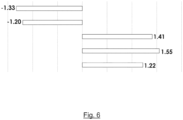
- Figure 6 shows the effect of Ac-SEQ ID NO: 3-NH 2 peptide on the gene expression profile of HDFa cells after 6-hour treatment with a peptide concentration of 0.05 mg/ml (for Fibrillin-1 and Versican) and 0.1 mg/ml (for Fibronectin 1 and metalloproteinases 1 and 3). Changes in gene expression levels are represented as a positive or negative fold-change with regard to the basal control (untreated cells).
- Bars from top to bottom in the y axis refer to: Metalloproteinase-1 (MMP1), Metalloproteinase-3 (MMP3), Fibronectin 1 (FN1), Fibrillin-1 (FBN1) and Versican (VCAN) genes, and x axis refers to fold change vs basal control. Negative fold change means that the corresponding gene is downregulated; and a positive fold change means that the corresponding gene is upregulated.
- MMP1 Metalloproteinase-1
- MMP3 Metalloproteinase-3
- FN1 Fibronectin 1
- FBN1 Fibrillin-1
- VCAN Versican
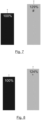
- Figure 7 shows the modulation of versican synthesis by 0.005 mg/ml of Ac-SEQ ID NO: 3-NH 2 after its topical application in a cosmetic formulation at 1% (m/v) from a stock solution at 0.05 % (m/v) on human skin explants.
- This is shown by means of the quantity of skin surface (epidermis and dermis) occupied by versican protein in comparison with the quantity of skin surface occupied by versican in the basal control (non-treated skin explants), wherein the quantity of skin surface occupied by versican in the basal control is set to 100% and then the comparison with the skin explant treated with Ac-SEQ ID NO: 3-NH 2 is performed.
- Figure 8 shows the modulation of fibrillin-1 synthesis by 0.005 mg/ml of Ac-SEQ ID NO: 3-NH 2 after its topical application in a cosmetic formulation at 1% (m/v) from a stock solution at 0.05% (m/v) on human skin explants. This is shown by means of the quantity of skin surface (epidermis and dermis) occupied by fibrillin-1 protein in comparison with the quantity of skin surface occupied by fibrillin-1 in the basal control (non-treated skin explants), wherein the quantity of skin surface occupied by fibrillin-1 in the basal control is set to 100% and then the comparison with the skin explant treated with Ac-SEQ ID NO: 3-NH 2 is performed.
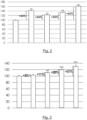
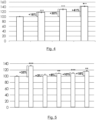
- Figure 9 shows the efficacy of Ac-SEQ ID NO: 3-NH 2 after its topical application on female Caucasian volunteers.
- a cosmetic formulation comprising 3% (m/v) of Ac-SEQ ID NO: 3-NH 2 peptide from a stock at 0.05% (m/v) or a placebo were applied each on one half of the face (cheek) and on each volunteer.
- the groups of three columns each corresponds to: day 7, day 14 and day 56 all from the beginning of the treatment, respectively.
- the columns, from left to right correspond to: volunteers treated with a cosmetic formulation (placebo), with the same formulation but also comprising 0.015 mg/ml of Ac-SEQ ID NO: 3-NH 2 and responsive volunteers only (from those treated with the cosmetic formulation comprising 0.015 mg/ml of Ac-SEQ ID NO: 3-NH 2 ).
- the y axis shows the percentage of volume variations versus initial time for average of the corresponding treatment group or responsive volunteers.
- the groups of three columns each corresponds to: day 7, day 14 and day 56 all from the beginning of the treatment, respectively.
- the columns in each of the three groups of columns, the columns, from left to right correspond to: volunteers treated with a cosmetic formulation (placebo), with the same formulation but also containing 0.015 mg/ml of Ac-SEQ ID NO: 3-NH 2 and responsive volunteers only (from those treated with the cosmetic formulation comprising 0.015 mg/ml of Ac-SEQ ID NO: 3-NH 2 ).
- the y- axis shows the percentage of area variations versus initial time for average of the corresponding treatment group or responsive volunteers.
- the groups of three columns each corresponds to: day 7, day 14 and day 56 all from the beginning of the treatment, respectively.
- the columns, from left to right correspond to: volunteers treated with a cosmetic formulation (placebo), with the same formulation but also comprising 0.015 mg/ml of Ac-SEQ ID NO: 3-NH 2 and responsive volunteers only (from those treated with the cosmetic formulation comprising 0.015 mg/ml of Ac-SEQ ID NO: 3-NH 2 ).
- the y- axis shows the percentage of depth variations versus initial time for average of the corresponding treatment group or responsive volunteers.
- the percentage noted with the indication "vol” refers to the percentage of responsive volunteers regarding the total number of volunteers treated with the cosmetic formulation comprising the peptide of the present invention.
- 2-CITrt 2-chlorotrityl
- Example 1 Synthesis and preparation of the peptides of the present invention.
- Example 2 Removal of Fmoc N-Terminal protective group of the peptides synthesized in accordance with Example 1.
- the N-terminal Fmoc group of the peptidyl resins was deprotected with 20% piperidine in DMF (1 ⁇ 1 min+2 ⁇ 10 min) ( Lloyd Williams P. et al. (1997) “Chemical Approaches to the Synthesis of Peptides and Proteins” CRC, Boca Raton (Fla., USA )).
- the peptidyl resins were washed with DMF (5 ⁇ 1 min), DCM (4 ⁇ 1 min), and dried under vacuum.
- Example 3 Process for introducing the R 1 Acetyl group onto the peptidyl resins obtained in accordance with Example 2.
- Example 4 Process for introducing the R 1 Myristoyl Group onto the Peptidyl Resins Obtained in Example 2
- Example 5 Cleavage process from the polymeric support of the peptidyl resins obtained in accordance with Example 2, 3 and 4
- HPLC analysis of the peptides obtained in accordance with example 5 was carried out with a Shimadzu equipment (Kyoto, Japan) using a reverse-phase column (150x4.6 mm, XBridge Peptide BEH C18, 3.5 ⁇ m, Waters, USA) in gradients of MeCN (+0.036% TFA) in H 2 O (+0.045% TFA) at a flow rate of 1.25 mL/min and detection was carried out at 220 nm. All peptides showed a purity exceeding 80%. The identity of the peptides obtained was confirmed by ESI-MS in a Water ZQ 4000 detector using MeOH as the mobile phase and a flow rate of 0.2 mL/min.
- Example 7 Measurement of elastase activity inhibition.
- Peptide Ac-SEQ ID NO: 3-NH 2 was diluted in H 2 O to a concentration of 0.005 mg/ml, 0.01 mg/ml and 0.05 mg/ml and peptide Myristoyl-SEQ ID NO: 2-NH 2 was diluted to a concentration of 0.001 mg/ml, 0.005 mg/ml and 0.01 mg/ml. Peptide dilutions were then incubated with elastase enzyme in controlled conditions. TRIS buffer and Phenylmethanesulfonyl (hereinafter, PMSF) were used as negative and positive controls for the inhibition of elastase activity, respectively.
- PMSF Phenylmethanesulfonyl
- Example 8 Modulation of versican synthesis in a cell culture.
- HDFa cells were seeded in 96-well plates at 1 ⁇ 10 4 cells/well in fibroblasts growth media and maintained for 24 hours at standard culture conditions (37 °C, 95% humidity, 5% CO 2 ). After the aforementioned incubation, medium was removed and new medium containing the non-cytotoxic concentrations of Ac-SEQ ID NO: 3-NH 2 peptide of: 0.01 mg/ml, 0.05 mg/ml and 0.1 mg/ml was added and incubated for 24 hours. 0.1 ⁇ M retinoic acid was included as positive control for versican stimulation and untreated cells were included as basal control. Cell culture media and cell lysate were collected from all wells at the end of the experiment and stored at -80°C. Ex-novo synthesis of versican was measured by means of sandwich ELISA following manufacturer's instructions.
- retinoic acid was used as positive control for the induction of the synthesis of versican.
- Example 9 Modulation of tropoelastin synthesis in a cell culture.
- HDFa were put in culture at a density of 1 ⁇ 10 4 cells/well in 96-well plates and incubated for 24 hours with non-cytotoxic increasing concentrations of Ac-SEQ ID NO: 3-NH 2 peptide (0.01 mg/ml, 0.05 mg/ml, 0.1 mg/ml and 0.5 mg/ml). Untreated cells were included as basal control. At the end of the monitored experimental time cell culture media and cell lysates were extracted from all wells and stored at -80°C. Ex- novo synthesis of tropoelastin was measured by means of sandwich ELISA following manufacturer's instructions.
- Example 10 Modulation of fibrilin-1 synthesis in a cell culture.
- HDFa were seeded in 96-well plates at a density of 1 ⁇ 10 4 cells/well and they were put in contact with three non-cytotoxic concentrations of Ac-SEQ ID NO: 3-NH 2 peptide: 0.01 mg/ml, 0.05 mg/ml and 0.1 mg/ml for 48 hours. Untreated cells were included as basal control. At the end of the monitored experiment, cell culture media were extracted from all wells and stored at -80°C. Modulation on fibrillin-1 levels was analyzed by means of sandwhich ELISA following manufacturer's instructions.
- Example 11 Modulation of Hyaluronic acid synthesis in a cell culture.
- HDFa were seeded in 96-well plates at a density of 1 ⁇ 10 4 cells/well and, then, incubated with non-cytotoxic concentrations of Ac-SEQ ID NO: 3-NH 2 peptide, this is 0.01 mg/ml, 0.05 mg/ml, 0.1 mg/ml and 0.5 mg/ml, for 48 hours.
- 0.1 ⁇ M retinoic acid was included as positive control and untreated cells were included as basal control.
- cell culture media were extracted from all wells and stored at -80°C. Ex-novo synthesis of hyaluronic acid was measured by means of competitive ELISA following manufacturer's instructions.
- Figure 5 shows the results obtained in this experiment for the modulation of hyaluronic acid synthesis by Ac-SEQ ID NO: 3-NH 2 peptide in vitro and in comparison with the basal control.
- Ac-SEQ ID NO: 3-NH 2 peptide induced a dose response increase of 3%, 8%, 10% and 18% in hyaluronic acid production, which is statistically significant in the three higher concentrations.
- HDFa cells were seeded in duplicate in 6-well plates at a density of 4 ⁇ 10 5 cells/well and they were maintained at standard culture conditions (37°C, 95% humidity, 5% CO 2 ) for 24 hours. Then, cells were treated with Ac-SEQ ID NO: 3-NH 2 peptide at the non-cytotoxic concentration of 0.05 and 0.1 mg/ml for additional 6 hours. Untreated cells were used as basal control. Cells were then lysed for RNA extraction with a RNA purification commercial kit following manufacturer instructions (RNeasy mini kit - Qiagen, Netherlands).
- RNA was then quantified by nanodrop, adjusted in concentration and processed for retrotranscription to cDNA using a commercially available kit (High-Capacity cDNA Reverse Transcription kit - Thermofisher Scientific, USA). Resulting cDNA was used to perform a RTqPCR (Real Time Quantitative Polymerase Chain Reaction) using taqman technology and a panel of probes designed to target specific genes related to extracellular matrix components and structure.
- RTqPCR Real Time Quantitative Polymerase Chain Reaction
- Example 13 Modulation of versican synthesis on human skin explants.
- Versican immunostaining was performed with a polyclonal anti-versican antibody (OriGene) diluted at 1/1000 in PBS-BSA 0.3% (m/v) -Tween 20 at 0.05% (v/v) for 1h at room temperature, amplified using a biotin/ streptavidin system (RTU, Kit vector) and revealed by VIP, a substrate of peroxidase (Vector).
- the immunostaining was performed using an automated slide-processing system (Dako, AutostainerPlus). The staining was assessed by microscopical observation and image analysis.
- Example 14 Modulation of fibrilin-1 synthesis on human skin explants.
- Fibrillin-1 immunostaining was realized on frozen sections with a monoclonal anti-fibrillin-1 antibody (Novus biologicals) diluted at 1/500 in PBS-BSA 0.3% (m/v) -Tween 20 at 0.05% (v/v) for 1h at room temperature, amplified using a biotin/ streptavidin system (RTU, Kit vector) and revealed by FITC (Invitrogen). The nuclei were counterstained using propidium iodide. The immunostaining was performed using an automated slide-processing system (Dako, AutostainerPlus). The staining was assessed by microscopical observation and image analysis.
- a Dynaskin device was used on each volunteer in order to measure the firmness quality of the skin according to three parameters: volume (mm 3 ), area (mm 2 ) and depth (mm).
- Dynaskin uses an air beam projection onto the cheek area causing a deformation of the skin. This deformation magnitude is measured by means of a specific software collecting data of the above three parameters for each volunteer and on each hemiface.
Landscapes
- Health & Medical Sciences (AREA)
- Life Sciences & Earth Sciences (AREA)
- Chemical & Material Sciences (AREA)
- General Health & Medical Sciences (AREA)
- Organic Chemistry (AREA)
- Veterinary Medicine (AREA)
- Public Health (AREA)
- Animal Behavior & Ethology (AREA)
- Genetics & Genomics (AREA)
- Biochemistry (AREA)
- Molecular Biology (AREA)
- Epidemiology (AREA)
- Birds (AREA)
- Proteomics, Peptides & Aminoacids (AREA)
- Gerontology & Geriatric Medicine (AREA)
- Dermatology (AREA)
- Medicinal Chemistry (AREA)
- Biophysics (AREA)
- Gastroenterology & Hepatology (AREA)
- Zoology (AREA)
- Toxicology (AREA)
- Cosmetics (AREA)
- Peptides Or Proteins (AREA)
- Medicines That Contain Protein Lipid Enzymes And Other Medicines (AREA)
Claims (13)
- Peptid der Formel (I):
R1-(X)mAA1-AA2-AA3-AA4-AA5-(Y)n-R2 (I)
deren kosmetisch verträgliche Isomere, Salze und/oder Solvate und Gemische davon, wobei:X Ala ist;AA1 Leu ist;AA2 His ist;AA3 Lys ist;AA4 Val ist;AA5 Lys ist;Y Val ist;n und m unabhängig voneinander aus 0 und 1 ausgewählt sind;R1 ausgewählt ist aus H, substituiertem oder unsubstituiertem nicht-cyclischem Aliphat, substituiertem oder unsubstituiertem Alicyclyl, substituiertem oder unsubstituiertem Heterocyclyl, substituiertem oder unsubstituiertem Heteroarylalkyl, substituiertem oder unsubstituiertem Aryl, substituiertem oder unsubstituiertem Aralkyl und R5-CO-, wobei R5 ausgewählt ist aus der Gruppe bestehend aus substituiertem oder unsubstituiertem C1-C24-Alkylrest, substituiertem oder unsubstituiertem C2-C24-Alkenyl, substituiertem oder unsubstituiertem C2-C24-Alkynyl, substituiertem oder unsubstituiertem C3-C24-Cycloalkyl, substituiertem oder unsubstituiertem C5-C24-Cycloalkenyl, substituiertem oder unsubstituiertem C8-C24-Cycloalkynyl, substituiertem oder unsubstituiertem C6-C30-Aryl, substituiertem oder unsubstituiertem C7-C24-Aralkyl, einem substituierten oder unsubstituierten Heterocyclylring mit 3 bis 10 Gliedern und substituiertem oder unsubstituiertem Heteroarylalkyl mit 2 bis 24 Kohlenstoffatomen und 1 bis 3 Nichtkohlenstoffatomen und einer Alkylkette mit 1 bis 6 Kohlenstoffatomen undR2 ausgewählt ist aus H, -NR3R4- , -ORs und -SR3-, wobei R3 und R4 unabhängig voneinander ausgewählt sind aus H, substituierter oder unsubstituierter nicht-cyclischer aliphatischer Gruppe, substituiertem oder unsubstituiertem Alicyclyl, substituiertem oder unsubstituiertem Heterocyclyl, substituiertem oder unsubstituiertem Heteroarylalkyl, substituiertem oder unsubstituiertem Aryl und substituiertem oder unsubstituiertem Aralkyl. - Peptid gemäß Anspruch 1, dadurch gekennzeichnet, dass die Aminosäuren L-Aminosäuren sind.
- Peptid gemäß Anspruch 1 oder 2, dadurch gekennzeichnet, dass m 1 ist und n 0 ist.
- Peptid gemäß Anspruch 1 oder 2, dadurch gekennzeichnet, dass m 0 ist und n 1 ist.
- Peptid gemäß einem der Ansprüche 1 bis 4, dadurch gekennzeichnet, dass R1 Acetyl (Ac) oder Myristoyl ist.
- Peptid gemäß einem der Ansprüche 1 bis 5, dadurch gekennzeichnet, dass R2 H oder NH2 ist.
- Peptid gemäß einem der Ansprüche 1 bis 6, dadurch gekennzeichnet, dass das Peptid der Formel (I) Folgendes ist:R1-Leu-His-Lys-Val-Lys-Val-R2 (R1-SEQ ID NO: 2-R2); oderR1-Ala-Leu-His-Lys-Val-Lys-R2 (Ri-SEQ ID NO: 3-R2).
- Peptid gemäß Anspruch 7, dadurch gekennzeichnet, dass das Peptid der Formel (I) Folgendes ist:Myristoyl-Leu-His-Lys-Val-Lys-Val-NH2 (Myristoyl-SEQ ID NO: 2-NH2); oderAc-Ala-Leu-His-Lys-Val-Lys-NH2 (Ac-SEQ ID NO: 3-NH2).
- Kosmetische Zusammensetzung, umfassend ein Peptid gemäß einem der Ansprüche 1 bis 8.
- Verwendung als ein Kosmetikum des Peptids gemäß einem der Ansprüche 1 bis 8 oder einer kosmetischen Zusammensetzung gemäß Anspruch 9, um die Zeichen der Hautalterung zu verhindern und/oder zu reduzieren und/oder die Haut eines Individuums zu straffen.
- Kosmetische Verwendung eines Peptids gemäß einem der Ansprüche 1 bis 8 oder einer kosmetischen Zusammensetzung gemäß Anspruch 9, um die Zeichen der Hautalterung zu verhindern und/oder zu reduzieren und/oder die Haut eines Individuums zu straffen.
- Kosmetisches Verfahren zum Verhindern und/oder Reduzieren der Zeichen der Hautalterung bei einem Individuum, das dessen bedarf, dadurch gekennzeichnet, dass es die Verwendung eines Peptids gemäß einem der Ansprüche 1 bis 8 oder einer Zusammensetzung gemäß Anspruch 9 umfasst.
- Kosmetisches Verfahren zur Hautstraffung bei einem Individuum, das dessen bedarf, dadurch gekennzeichnet, dass es die Verwendung eines Peptids gemäß einem der Ansprüche 1 bis 8 oder einer kosmetischen Zusammensetzung gemäß Anspruch 9 umfasst.
Applications Claiming Priority (2)
| Application Number | Priority Date | Filing Date | Title |
|---|---|---|---|
| EP19382011 | 2019-01-08 | ||
| PCT/EP2020/050070 WO2020144109A1 (en) | 2019-01-08 | 2020-01-03 | Peptides and compositions for use in cosmetics |
Publications (3)
| Publication Number | Publication Date |
|---|---|
| EP3908252A1 EP3908252A1 (de) | 2021-11-17 |
| EP3908252B1 true EP3908252B1 (de) | 2024-12-18 |
| EP3908252C0 EP3908252C0 (de) | 2024-12-18 |
Family
ID=65228486
Family Applications (1)
| Application Number | Title | Priority Date | Filing Date |
|---|---|---|---|
| EP20700237.9A Active EP3908252B1 (de) | 2019-01-08 | 2020-01-03 | Peptide und zusammensetzungen zur verwendung in kosmetika |
Country Status (9)
| Country | Link |
|---|---|
| US (1) | US12011499B2 (de) |
| EP (1) | EP3908252B1 (de) |
| JP (1) | JP7560131B2 (de) |
| KR (1) | KR20210113604A (de) |
| CN (1) | CN113271920B (de) |
| AU (1) | AU2020206415B2 (de) |
| ES (1) | ES3014384T3 (de) |
| PL (1) | PL3908252T3 (de) |
| WO (1) | WO2020144109A1 (de) |
Families Citing this family (5)
| Publication number | Priority date | Publication date | Assignee | Title |
|---|---|---|---|---|
| EP4000595A1 (de) * | 2020-11-17 | 2022-05-25 | The Boots Company plc | Tetrapeptid und zusammensetzungen mit tetrapeptiden |
| EP4140473A1 (de) * | 2021-08-27 | 2023-03-01 | The Boots Company plc | Kosmetische zusammensetzungen |
| CN121057574A (zh) | 2023-05-18 | 2025-12-02 | 威诺药妆私人有限公司 | 用于预防和/或治疗皮肤色素沉着的组合物和方法 |
| KR20250054872A (ko) * | 2023-10-16 | 2025-04-24 | (주)케어젠 | 피부 상태 개선 활성을 갖는 펩타이드 및 이의 용도 |
| KR20250054869A (ko) * | 2023-10-16 | 2025-04-24 | (주)케어젠 | 펩타이드를 유효성분으로 포함하는 피부 상태 개선용 조성물 |
Family Cites Families (7)
| Publication number | Priority date | Publication date | Assignee | Title |
|---|---|---|---|---|
| JP4030067B2 (ja) | 2005-03-22 | 2008-01-09 | ロート製薬株式会社 | 新規ペプチド |
| ES2349972B1 (es) * | 2009-02-16 | 2011-11-24 | Lipotec, S.A. | Péptidos útiles en el tratamiento y/o cuidado de la piel, mucosas y/o cuero cabelludo y su uso en composiciones cosméticas o farmacéuticas. |
| JP2010195733A (ja) | 2009-02-26 | 2010-09-09 | Rohto Pharmaceut Co Ltd | 新規ペプチド |
| KR101285259B1 (ko) | 2011-08-04 | 2013-07-11 | (주)케어젠 | Wnt 계열 유래 펩타이드 및 이의 용도 |
| KR101437237B1 (ko) * | 2012-12-10 | 2014-10-30 | 미원상사주식회사 | 피부노화 방지용 테트라펩타이드 및 이를 함유하는 화장료 조성물 |
| JP6336781B2 (ja) | 2013-03-27 | 2018-06-06 | ロート製薬株式会社 | 新規ペプチド |
| FR3052453B1 (fr) * | 2016-06-14 | 2018-05-18 | Sederma | Peptide, composition le comprenant et utilisations notamment cosmetiques |
-
2020
- 2020-01-03 JP JP2021539869A patent/JP7560131B2/ja active Active
- 2020-01-03 EP EP20700237.9A patent/EP3908252B1/de active Active
- 2020-01-03 US US17/297,749 patent/US12011499B2/en active Active
- 2020-01-03 AU AU2020206415A patent/AU2020206415B2/en active Active
- 2020-01-03 ES ES20700237T patent/ES3014384T3/es active Active
- 2020-01-03 WO PCT/EP2020/050070 patent/WO2020144109A1/en not_active Ceased
- 2020-01-03 KR KR1020217020365A patent/KR20210113604A/ko active Pending
- 2020-01-03 CN CN202080008233.XA patent/CN113271920B/zh active Active
- 2020-01-03 PL PL20700237.9T patent/PL3908252T3/pl unknown
Also Published As
| Publication number | Publication date |
|---|---|
| PL3908252T3 (pl) | 2025-04-28 |
| CN113271920B (zh) | 2023-08-01 |
| AU2020206415B2 (en) | 2026-01-08 |
| WO2020144109A1 (en) | 2020-07-16 |
| AU2020206415A1 (en) | 2021-06-17 |
| US12011499B2 (en) | 2024-06-18 |
| EP3908252A1 (de) | 2021-11-17 |
| JP7560131B2 (ja) | 2024-10-02 |
| CN113271920A (zh) | 2021-08-17 |
| JP2022516961A (ja) | 2022-03-03 |
| KR20210113604A (ko) | 2021-09-16 |
| EP3908252C0 (de) | 2024-12-18 |
| ES3014384T3 (en) | 2025-04-22 |
| US20220062145A1 (en) | 2022-03-03 |
Similar Documents
| Publication | Publication Date | Title |
|---|---|---|
| EP3908252B1 (de) | Peptide und zusammensetzungen zur verwendung in kosmetika | |
| JP6525433B2 (ja) | 皮膚の処置および/またはケアにおいて有用な化合物ならびにその美容的または薬学的組成物 | |
| JP5647995B2 (ja) | 新規な抗老化ペプチド、並びにそれを含む化粧品及び/または製薬組成物 | |
| JP5247676B2 (ja) | 皮膚のトリートメントにおいて有用な合成ペプチド類および化粧品または皮膚薬剤組成物中でのその用途 | |
| WO2024170606A1 (en) | Cyclic peptides with anti-aging efficacy | |
| US8530622B2 (en) | Proteasome-activating anti-aging peptides and compositions containing same | |
| CN118574838B (zh) | 美容品用肽和组合物 | |
| JP5858482B2 (ja) | スルビビンを調節する新規の抗加齢ペプチドおよびこれを含む組成物 | |
| US12161745B2 (en) | Peptides and compositions for use in cosmetics | |
| HK40048117A (en) | Peptides and compositions for use in cosmetics | |
| HK40048117B (zh) | 用於化妆品的肽和组合物 | |
| EP3831358B1 (de) | Peptide und zusammensetzungen zur verwendung in kosmetika und arzneimitteln | |
| HK40052617A (en) | Peptides and compositions for use in cosmetics | |
| HK40052617B (zh) | 用於化妆品的肽和组合物 | |
| HK40073324B (zh) | 用於化妆品和药物的肽和组合物 |
Legal Events
| Date | Code | Title | Description |
|---|---|---|---|
| STAA | Information on the status of an ep patent application or granted ep patent |
Free format text: STATUS: UNKNOWN |
|
| STAA | Information on the status of an ep patent application or granted ep patent |
Free format text: STATUS: THE INTERNATIONAL PUBLICATION HAS BEEN MADE |
|
| PUAI | Public reference made under article 153(3) epc to a published international application that has entered the european phase |
Free format text: ORIGINAL CODE: 0009012 |
|
| STAA | Information on the status of an ep patent application or granted ep patent |
Free format text: STATUS: REQUEST FOR EXAMINATION WAS MADE |
|
| 17P | Request for examination filed |
Effective date: 20210526 |
|
| AK | Designated contracting states |
Kind code of ref document: A1 Designated state(s): AL AT BE BG CH CY CZ DE DK EE ES FI FR GB GR HR HU IE IS IT LI LT LU LV MC MK MT NL NO PL PT RO RS SE SI SK SM TR |
|
| DAV | Request for validation of the european patent (deleted) | ||
| DAX | Request for extension of the european patent (deleted) | ||
| GRAP | Despatch of communication of intention to grant a patent |
Free format text: ORIGINAL CODE: EPIDOSNIGR1 |
|
| STAA | Information on the status of an ep patent application or granted ep patent |
Free format text: STATUS: GRANT OF PATENT IS INTENDED |
|
| GRAS | Grant fee paid |
Free format text: ORIGINAL CODE: EPIDOSNIGR3 |
|
| RIC1 | Information provided on ipc code assigned before grant |
Ipc: C07K 7/06 20060101ALI20241004BHEP Ipc: A61Q 19/08 20060101ALI20241004BHEP Ipc: A61K 8/64 20060101AFI20241004BHEP |
|
| GRAA | (expected) grant |
Free format text: ORIGINAL CODE: 0009210 |
|
| STAA | Information on the status of an ep patent application or granted ep patent |
Free format text: STATUS: THE PATENT HAS BEEN GRANTED |
|
| INTG | Intention to grant announced |
Effective date: 20241025 |
|
| AK | Designated contracting states |
Kind code of ref document: B1 Designated state(s): AL AT BE BG CH CY CZ DE DK EE ES FI FR GB GR HR HU IE IS IT LI LT LU LV MC MK MT NL NO PL PT RO RS SE SI SK SM TR |
|
| REG | Reference to a national code |
Ref country code: CH Ref legal event code: EP |
|
| REG | Reference to a national code |
Ref country code: DE Ref legal event code: R096 Ref document number: 602020043294 Country of ref document: DE |
|
| REG | Reference to a national code |
Ref country code: IE Ref legal event code: FG4D |
|
| U01 | Request for unitary effect filed |
Effective date: 20241218 |
|
| U07 | Unitary effect registered |
Designated state(s): AT BE BG DE DK EE FI FR IT LT LU LV MT NL PT RO SE SI Effective date: 20250102 |
|
| U20 | Renewal fee for the european patent with unitary effect paid |
Year of fee payment: 6 Effective date: 20250103 |
|
| REG | Reference to a national code |
Ref country code: GR Ref legal event code: EP Ref document number: 20240403032 Country of ref document: GR Effective date: 20250211 |
|
| PG25 | Lapsed in a contracting state [announced via postgrant information from national office to epo] |
Ref country code: HR Free format text: LAPSE BECAUSE OF FAILURE TO SUBMIT A TRANSLATION OF THE DESCRIPTION OR TO PAY THE FEE WITHIN THE PRESCRIBED TIME-LIMIT Effective date: 20241218 |
|
| PGFP | Annual fee paid to national office [announced via postgrant information from national office to epo] |
Ref country code: ES Payment date: 20250205 Year of fee payment: 6 |
|
| REG | Reference to a national code |
Ref country code: ES Ref legal event code: FG2A Ref document number: 3014384 Country of ref document: ES Kind code of ref document: T3 Effective date: 20250422 |
|
| PG25 | Lapsed in a contracting state [announced via postgrant information from national office to epo] |
Ref country code: NO Free format text: LAPSE BECAUSE OF FAILURE TO SUBMIT A TRANSLATION OF THE DESCRIPTION OR TO PAY THE FEE WITHIN THE PRESCRIBED TIME-LIMIT Effective date: 20250318 |
|
| PGFP | Annual fee paid to national office [announced via postgrant information from national office to epo] |
Ref country code: CH Payment date: 20250201 Year of fee payment: 6 |
|
| PG25 | Lapsed in a contracting state [announced via postgrant information from national office to epo] |
Ref country code: RS Free format text: LAPSE BECAUSE OF FAILURE TO SUBMIT A TRANSLATION OF THE DESCRIPTION OR TO PAY THE FEE WITHIN THE PRESCRIBED TIME-LIMIT Effective date: 20250318 |
|
| PG25 | Lapsed in a contracting state [announced via postgrant information from national office to epo] |
Ref country code: SM Free format text: LAPSE BECAUSE OF FAILURE TO SUBMIT A TRANSLATION OF THE DESCRIPTION OR TO PAY THE FEE WITHIN THE PRESCRIBED TIME-LIMIT Effective date: 20241218 |
|
| PG25 | Lapsed in a contracting state [announced via postgrant information from national office to epo] |
Ref country code: IS Free format text: LAPSE BECAUSE OF FAILURE TO SUBMIT A TRANSLATION OF THE DESCRIPTION OR TO PAY THE FEE WITHIN THE PRESCRIBED TIME-LIMIT Effective date: 20250418 |
|
| PG25 | Lapsed in a contracting state [announced via postgrant information from national office to epo] |
Ref country code: SK Free format text: LAPSE BECAUSE OF FAILURE TO SUBMIT A TRANSLATION OF THE DESCRIPTION OR TO PAY THE FEE WITHIN THE PRESCRIBED TIME-LIMIT Effective date: 20241218 |
|
| PG25 | Lapsed in a contracting state [announced via postgrant information from national office to epo] |
Ref country code: CZ Free format text: LAPSE BECAUSE OF FAILURE TO SUBMIT A TRANSLATION OF THE DESCRIPTION OR TO PAY THE FEE WITHIN THE PRESCRIBED TIME-LIMIT Effective date: 20241218 |
|
| PG25 | Lapsed in a contracting state [announced via postgrant information from national office to epo] |
Ref country code: MC Free format text: LAPSE BECAUSE OF FAILURE TO SUBMIT A TRANSLATION OF THE DESCRIPTION OR TO PAY THE FEE WITHIN THE PRESCRIBED TIME-LIMIT Effective date: 20241218 |
|
| PLBE | No opposition filed within time limit |
Free format text: ORIGINAL CODE: 0009261 |
|
| STAA | Information on the status of an ep patent application or granted ep patent |
Free format text: STATUS: NO OPPOSITION FILED WITHIN TIME LIMIT |
|
| REG | Reference to a national code |
Ref country code: CH Ref legal event code: L10 Free format text: ST27 STATUS EVENT CODE: U-0-0-L10-L00 (AS PROVIDED BY THE NATIONAL OFFICE) Effective date: 20251029 |
|
| 26N | No opposition filed |
Effective date: 20250919 |
|
| PGFP | Annual fee paid to national office [announced via postgrant information from national office to epo] |
Ref country code: GB Payment date: 20251217 Year of fee payment: 7 |
|
| PGFP | Annual fee paid to national office [announced via postgrant information from national office to epo] |
Ref country code: GR Payment date: 20251230 Year of fee payment: 7 |
|
| PG25 | Lapsed in a contracting state [announced via postgrant information from national office to epo] |
Ref country code: IE Free format text: LAPSE BECAUSE OF NON-PAYMENT OF DUE FEES Effective date: 20250103 |
|
| U20 | Renewal fee for the european patent with unitary effect paid |
Year of fee payment: 7 Effective date: 20251218 |
|
| PGFP | Annual fee paid to national office [announced via postgrant information from national office to epo] |
Ref country code: PL Payment date: 20251215 Year of fee payment: 7 |
|
| REG | Reference to a national code |
Ref country code: CH Ref legal event code: U11 Free format text: ST27 STATUS EVENT CODE: U-0-0-U10-U11 (AS PROVIDED BY THE NATIONAL OFFICE) Effective date: 20260201 |