EP3905798A1 - Verfahren und vorrichtung zur aktualisierung eines zeitvorlaufs - Google Patents
Verfahren und vorrichtung zur aktualisierung eines zeitvorlaufs Download PDFInfo
- Publication number
- EP3905798A1 EP3905798A1 EP19912692.1A EP19912692A EP3905798A1 EP 3905798 A1 EP3905798 A1 EP 3905798A1 EP 19912692 A EP19912692 A EP 19912692A EP 3905798 A1 EP3905798 A1 EP 3905798A1
- Authority
- EP
- European Patent Office
- Prior art keywords
- timing advance
- terminal
- critical value
- transmission delay
- delay variation
- Prior art date
- Legal status (The legal status is an assumption and is not a legal conclusion. Google has not performed a legal analysis and makes no representation as to the accuracy of the status listed.)
- Pending
Links
Images




Classifications
-
- H—ELECTRICITY
- H04—ELECTRIC COMMUNICATION TECHNIQUE
- H04B—TRANSMISSION
- H04B7/00—Radio transmission systems, i.e. using radiation field
- H04B7/14—Relay systems
- H04B7/15—Active relay systems
- H04B7/185—Space-based or airborne stations; Stations for satellite systems
- H04B7/1851—Systems using a satellite or space-based relay
- H04B7/18513—Transmission in a satellite or space-based system
-
- H—ELECTRICITY
- H04—ELECTRIC COMMUNICATION TECHNIQUE
- H04W—WIRELESS COMMUNICATION NETWORKS
- H04W56/00—Synchronisation arrangements
- H04W56/004—Synchronisation arrangements compensating for timing error of reception due to propagation delay
- H04W56/005—Synchronisation arrangements compensating for timing error of reception due to propagation delay compensating for timing error by adjustment in the receiver
-
- H—ELECTRICITY
- H04—ELECTRIC COMMUNICATION TECHNIQUE
- H04W—WIRELESS COMMUNICATION NETWORKS
- H04W56/00—Synchronisation arrangements
- H04W56/001—Synchronization between nodes
-
- H—ELECTRICITY
- H04—ELECTRIC COMMUNICATION TECHNIQUE
- H04W—WIRELESS COMMUNICATION NETWORKS
- H04W56/00—Synchronisation arrangements
- H04W56/004—Synchronisation arrangements compensating for timing error of reception due to propagation delay
- H04W56/0045—Synchronisation arrangements compensating for timing error of reception due to propagation delay compensating for timing error by altering transmission time
-
- H—ELECTRICITY
- H04—ELECTRIC COMMUNICATION TECHNIQUE
- H04B—TRANSMISSION
- H04B7/00—Radio transmission systems, i.e. using radiation field
- H04B7/14—Relay systems
- H04B7/15—Active relay systems
- H04B7/185—Space-based or airborne stations; Stations for satellite systems
- H04B7/1851—Systems using a satellite or space-based relay
- H04B7/18519—Operations control, administration or maintenance
-
- H—ELECTRICITY
- H04—ELECTRIC COMMUNICATION TECHNIQUE
- H04B—TRANSMISSION
- H04B7/00—Radio transmission systems, i.e. using radiation field
- H04B7/14—Relay systems
- H04B7/15—Active relay systems
- H04B7/185—Space-based or airborne stations; Stations for satellite systems
- H04B7/1853—Satellite systems for providing telephony service to a mobile station, i.e. mobile satellite service
- H04B7/18569—Arrangements for system physical machines management, i.e. for construction operations control, administration, maintenance
- H04B7/18573—Arrangements for system physical machines management, i.e. for construction operations control, administration, maintenance for operations control, administration or maintenance
-
- H—ELECTRICITY
- H04—ELECTRIC COMMUNICATION TECHNIQUE
- H04W—WIRELESS COMMUNICATION NETWORKS
- H04W84/00—Network topologies
- H04W84/02—Hierarchically pre-organised networks, e.g. paging networks, cellular networks, WLAN [Wireless Local Area Network] or WLL [Wireless Local Loop]
- H04W84/04—Large scale networks; Deep hierarchical networks
- H04W84/06—Airborne or Satellite Networks
Definitions
- Embodiments of this application relate to the field of communications technologies, and in particular, to a timing advance update method and device.
- the receive end may be a network device such as a base station.
- Timing Advance In a current technology, uplink synchronization is implemented by using a timing advance (Timing Advance, TA).
- the timing advance is determined based on a round-trip delay between a terminal and a base station, and there are two procedures for the timing advance: determining an initial timing advance and updating the timing advance.
- a base station determines an initial timing advance based on a random access preamble sent by a terminal, and sends, to the terminal, a random access response carrying the initial timing advance.
- the initial timing advance is no longer applicable, and the timing advance needs to be updated.
- the base station sends a timing advance command to the terminal, where the timing advance command includes adjustment information; and the terminal updates the timing advance based on the adjustment information.
- Embodiments of this application provide a timing advance update method and device, to improve update efficiency of a timing advance.
- an embodiment of this application provides a timing advance update method, including:
- a terminal obtains a transmission delay variation, where the transmission delay variation is a delay variation of transmission between the terminal and a network device.
- the transmission delay variation is a variation of a round-trip transmission delay between the terminal and the network device.
- the variation may be understood as a variation between a current round-trip transmission delay and a previous round-trip transmission delay.
- the terminal determines a new timing advance based on the transmission delay variation, a current timing advance, and a timing advance critical value, where the timing advance of the terminal is not greater than the timing advance critical value.
- the new timing advance of the terminal is not greater than the timing advance critical value.
- the timing advance critical value may be a critical value in a time unit of a subframe, a slot, a symbol, or the like; or may be a critical value in a time unit of a millisecond, a microsecond, or the like.
- the terminal performs uplink transmission based on the new timing advance.
- the terminal may update the new timing advance by itself. Because the new timing advance is actively updated by the terminal, the new timing advance does not need to be determined based on a timing advance command sent by the network device, so that efficiency of the timing advance is improved.
- that the terminal determines a new timing advance based on the transmission delay variation, a current timing advance, and a timing advance critical value includes:
- the new timing advance is determined based on the candidate timing advance and the timing advance critical value, to prevent the candidate timing advance from being greater than the timing advance critical value, thereby ensuring normal data transmission of the terminal.
- that the terminal determines the new timing advance based on the candidate timing advance and the timing advance critical value includes:
- the new timing advance may be determined based on the candidate timing advance and the timing advance critical value, so that the terminal can update the timing advance by itself, thereby improving update efficiency of the timing advance.
- the new timing advance is determined based on the difference between the candidate timing advance and the timing advance critical value.
- the timing advance continuously updated by the terminal is always within one slot, and does not occupy more slots, so that resources on a terminal side are saved, and it is ensured that uplink transmission of the terminal does not interfere with other operation of the terminal.
- a terminal obtains a transmission delay variation includes:
- the downlink signal is specifically one of the following: a primary synchronization signal, a secondary synchronization signal, or a pilot signal.
- the terminal can quickly and accurately determine the transmission delay variation by receiving the downlink signal periodically sent by the network device.
- the method further includes:
- the terminal When a change in the round-trip transmission delay exactly exceeds a critical point of two slots, the terminal receives the timing advance command sent by the network device, and determines the new timing advance based on the timing advance command, so that an accurate timing advance can be obtained under a critical condition.
- the timing advance critical value is an integer multiple of a slot length. Because the timing advance critical value is the integer multiple of the slot length, that is, provided that the timing advance does not exceed the timing advance critical value, the timing advance may be updated through one update, and does not need to be updated for a plurality of times, thereby improving update efficiency of the timing advance.
- the network device is a satellite.
- an embodiment of this application provides a timing advance update method, including:
- a network device obtains a transmission delay variation and a candidate timing advance update amount of a terminal, where the transmission delay variation is a delay variation of transmission between the terminal and the network device.
- the candidate timing advance update amount may be determined based on uplink transmission of the terminal.
- the network device determines a timing advance update amount of the terminal based on the transmission delay variation, the candidate timing advance update amount, and a timing advance critical value, where the timing advance update amount is not greater than the timing advance critical value.
- the network device sends a timing advance command to the terminal, where the timing advance command indicates the timing advance update amount.
- the timing advance critical value is one slot is used for description. The timing advance continuously updated by the terminal is always within one slot, and does not occupy more slots, so that resources on a terminal side are saved, and it is ensured that uplink transmission of the terminal does not interfere with another operation of the terminal.
- the network device is a satellite
- that a network device obtains a transmission delay variation includes: The satellite determines the transmission delay variation based on a correspondence between a transmission delay and an elevation angle.
- the timing advance critical value is an integer multiple of a slot length.
- the timing advance critical value is one slot, and a length of the timing advance command is 12 bits.
- an embodiment of this application provides a timing advance update apparatus, including:
- the processing module is further configured to:
- the processing module is further configured to:
- the receiving module is specifically configured to:
- the downlink signal is specifically one of the following: a primary synchronization signal, a secondary synchronization signal, or a pilot signal.
- the receiving module is further configured to receive a timing advance command sent by the network device, where the timing advance command indicates a timing advance update amount, and the timing advance update amount indicated by the timing advance command is not greater than the timing advance critical value.
- the processing module is further configured to determine the new timing advance based on the timing advance command and the current timing advance.
- the timing advance critical value is an integer multiple of a slot length.
- the network device is a satellite.
- an embodiment of this application provides a timing advance update apparatus, including:
- the processing module is further specifically configured to: if a difference between the transmission delay variation and the candidate timing advance update amount is equal to the timing advance critical value, determine the candidate timing advance update amount as the timing advance update amount of the terminal.
- the processing module is further specifically configured to: determine, by the satellite, the transmission delay variation based on a correspondence between a transmission delay and an elevation angle.
- the timing advance critical value is an integer multiple of a slot length.
- the timing advance critical value is one slot, and a length of the timing advance command is 12 bits.
- an embodiment of this application provides a terminal, including a memory, a processor, and a computer program.
- the computer program is stored in the memory, and the processor runs the computer program to perform the method according to the first aspect or the possible designs of the first aspect.
- an embodiment of this application provides a storage medium.
- the storage medium includes a computer program, and the computer program is used for implementing the method according to the first aspect or the possible designs of the first aspect.
- an embodiment of this application provides a computer program product.
- the computer program product includes computer program code, and when the computer program code is run on a computer, the computer is enabled to perform the method according to the first aspect or the possible designs of the first aspect.
- an embodiment of this application provides a chip, including a memory and a processor.
- the memory is configured to store a computer program
- the processor is configured to invoke the computer program from the memory and run the computer program, so that a communications device on which the chip is installed performs the method according to the first aspect or the possible designs of the first aspect.
- an embodiment of this application provides a network device, including a memory, a processor, and a computer program.
- the computer program is stored in the memory, and the processor runs the computer program to perform the method according to the second aspect or the possible designs of the second aspect.
- an embodiment of this application provides a storage medium.
- the storage medium includes a computer program, and the computer program is used for implementing the method according to the second aspect or the possible designs of the second aspect.
- an embodiment of this application provides a computer program product.
- the computer program product includes computer program code, and when the computer program code is run on a computer, the computer is enabled to perform the method according to the second aspect or the possible designs of the second aspect.
- an embodiment of this application provides a chip, including a memory and a processor.
- the memory is configured to store a computer program
- the processor is configured to invoke the computer program from the memory and run the computer program, so that a communications device on which the chip is installed performs the method according to the second aspect or the possible designs of the second aspect.
- the terminal obtains the transmission delay variation, and the terminal can actively determine the new timing advance based on the transmission delay variation, the current timing advance, and the timing advance critical value, where the timing advance of the terminal is not greater than the timing advance critical value.
- the terminal performs uplink transmission based on the new timing advance. Because the new timing advance is actively updated by the terminal, the new timing advance does not need to be determined based on the timing advance command sent by the network device, thereby improving efficiency of the timing advance.
- the network device obtains the transmission delay variation and the candidate timing advance update amount of the terminal, and the network device determines the timing advance update amount of the terminal based on the transmission delay variation, the candidate timing advance update amount, and the timing advance critical value.
- the network device sends, to the terminal, the timing advance command used to indicate the timing advance update amount. Because the timing advance critical value is set, a range of the timing advance update amount is extended, and efficiency of updating the TA of the terminal by the network device is improved.
- a network architecture and a service scenario described in the embodiments of this application are intended to describe the technical solutions in the embodiments of this application more clearly, and do not constitute a limitation on the technical solutions provided in the embodiments of this application.
- a person of ordinary skill in the art may learn that: With evolution of the network architecture and emergence of new service scenarios, the technical solutions provided in the embodiments of this application are also applicable to similar technical problems.
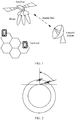
- FIG. 1 is a schematic architectural diagram of a satellite mobile communications system according to an embodiment of this application.
- the satellite mobile communications system includes a satellite, a terminal, and a ground station.
- the satellite As an access point of a ground terminal, the satellite is similar to a network device in a ground mobile communications system, and the satellite provides a wide-area coverage communications service for the ground terminal.
- the satellite communicates with the terminal by using a radio signal.
- a communications protocol may be any one of terrestrial mobile communications protocols or a variant of the terrestrial mobile communications protocol.
- the communications protocol may be, for example, a long term evolution (Long Term Evolution, LTE) protocol or a new radio (New Radio, NR) protocol.
- LTE Long Term Evolution
- NR new Radio
- the satellite usually forms a plurality of beams, and each beam is similar to a cell or a sector in a terrestrial mobile communications system.
- the satellite is also wirelessly connected to the ground station.
- the link is usually referred to as a feeder link and provides data backhaul.
- the terminal may be a wireless terminal.
- the wireless terminal may refer to a device that provides a user with voice and/or other service data connectivity, a handheld device with a wireless connection function, or the like.
- the wireless terminal may be a mobile terminal, for example, a mobile phone (or referred to as a "cellular" phone); a computer having a mobile terminal, for example, may be a portable, pocket-sized, handheld, computer built-in, or vehicle-mounted mobile apparatus; and the like.
- An implementation of the wireless terminal is not particularly limited in this embodiment.
- the uplink synchronization technology is mainly used for the terminal to perform uplink transmission based on a timing advance, and timing advances of different terminals may be different based on distances between the terminals and satellite.
- a base station determines an initial timing advance based on a random access preamble sent by a terminal, and sends, to the terminal, a random access response carrying the initial timing advance.
- Timing Advance Command TAC
- TAC Timing Advance Command
- TA old is a current timing advance
- TA new is a new timing advance.
- an implementation of the initial timing advance may be the same as that in an NR or LTE communications system.
- a round-trip delay changes as a satellite moves, and a timing update procedure in NR or LTE is no longer applicable.
- uplink synchronization is described by using an example in which a satellite mobile communications system is a time division duplex (Time-Division Duplex, TDD) system.
- TDD Time-Division Duplex
- a communications signal is divided into several slots of a specific length in terms of time, and each slot may be used for uplink transmission or downlink transmission. It is impossible for a satellite to simultaneously send and receive a signal in a specific slot.
- uplink synchronization is used not only to avoid interference between terminals, but also to align uplink and downlink frames to avoid uplink and downlink interference. That is, it ensures that the satellite is in the receiving state when the uplink frame arrives at the satellite.
- a timing advance of each terminal in the satellite communications system may be determined according to a timing criterion, and the timing criterion ensures that a time period in which the terminal arrives at the satellite is exactly an integer multiple of a slot length.
- a round-trip delay RTD
- Timing Advance T S
- FIG. 2 is a schematic diagram of satellite movement according to an embodiment of this application.
- FIG. 3 is a schematic diagram of a relationship between an elevation angle of a satellite and a round-trip delay according to an embodiment of this application.
- FIG. 2 shows a low-orbit satellite with an orbital altitude of 707 km, flying from a position 1 (with an elevation angle of 10°) to a position 2 (with an elevation angle of 90°). It can be seen from FIG. 3 that a round-trip delay is reduced from about 14 ms to about 5 ms. To meet the foregoing timing criterion, the terminal needs to continuously update the TA.
- N1 and N2 are positive integers
- ⁇ RTD is a round-trip transmission delay variation
- ⁇ TA is a timing advance variation.
- the TA update duration is approximately equal to a slot length. If a TA update manner in NR or LTE is used, a maximum update duration is 16.7 us each time. For one TA update requiring one slot, if 16.7 us is used, a plurality of updates are required, and update efficiency is low.
- FIG. 4 is a schematic diagram of an uplink delay according to an embodiment of this application.
- FIG. 5 is a schematic diagram of uplink synchronization according to an embodiment of this application.
- a terminal 1 and a terminal 2 are in a same cell, but delays for the terminal 1 and the terminal 2 to arrive at a satellite are different. Therefore, an uplink synchronization mechanism is required to ensure that there is no interference between the terminal 1 and the terminal 2.
- a distance between the terminal 1 and the satellite is 1086 kilometers (km), and a one-way transmission delay is 3.62 ms.
- a distance between the terminal 2 and the satellite is 1308 km, and a one-way transmission delay is 4.4 ms.
- the timing advance of the terminal 1 and the terminal 2 refer to FIG. 5 .
- times for the terminal 1 and the terminal 2 to arrive at the satellite are exactly an integer multiple of a slot length.
- the satellite needs to perform uplink reception in two consecutive slots.
- the wireless communications system mentioned in the embodiments of this application includes but is not limited to a narrowband internet of things (Narrow Band-Internet of Things, NB-IoT) system, a global system for mobile communications (Global System for Mobile Communications, GSM), an enhanced data rate for GSM evolution (Enhanced Data rate for GSM Evolution, EDGE) system, a wideband code division multiple access (Wideband Code Division Multiple Access, WCDMA), a code division multiple access 2000 (Code Division Multiple Access, CDMA2000) system, a time division-synchronous code division multiple access (Time Division-Synchronization Code Division Multiple Access, TD-SCDMA), a long term evolution (Long Term Evolution, LTE) system, and a new radio (New Radio, NR) mobile communications system in 5th generation (the 5th Generation, 5G for short) mobile communication.
- NB-IoT narrowband internet of things
- GSM Global System for Mobile Communications
- EDGE Enhanced Data rate for GSM Evolution
- WCDMA Wideband Code Division Multiple Access
- a network device in the following embodiments may be the foregoing satellite, or may be a base transceiver station (Base Transceiver Station, BTS for short) in a global system for mobile communications (Global System of Mobile communication, GSM for short) or code division multiple access (Code Division Multiple Access, CDMA for short), a NodeB (NodeB, NB for short) in wideband code division multiple access (Wideband Code Division Multiple Access, WCDMA for short), an evolved NodeB (Evolved NodeB, eNB or eNodeB for short) in long term evolution (Long Term Evolution, LTE for short), a relay station or an access point, a network side device (for example, a base station) in a future 5G network, a network device in a future evolved public land mobile network (Public Land Mobile Network, PLMN), or the like. This is not limited herein.
- BTS Base Transceiver Station
- GSM Global System of Mobile communication
- CDMA Code Division Multiple Access
- NodeB No
- the satellite communications system is used and the network device is a satellite.
- the terminal updates the TA of the terminal by itself and the satellite updates the TA of the terminal, thereby improving TA update efficiency.
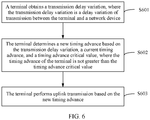
- FIG. 6 is a schematic flowchart of a timing advance update method according to an embodiment of this application.
- a terminal updates a timing advance by itself, and does not need to receive a timing advance command from a network device, so that the timing advance can be updated in a timely and effective manner.
- the method includes the following steps.
- the terminal obtains a transmission delay variation, where the transmission delay variation is a delay variation of transmission between the terminal and the network device.
- the terminal may obtain the transmission delay variation when the transmission delay changes, or may periodically obtain the transmission delay variation, where the transmission delay variation is a variation of a round-trip transmission delay between the terminal and the network device.
- the transmission delay variation may be understood as a variation between a current transmission delay and a previous transmission delay.
- the terminal may obtain a distance between the terminal and the network device based on a location of the terminal and a location of the network device, and obtain the transmission delay between the terminal and the network device based on the distance and a transmission medium.
- the terminal may obtain the transmission delay variation based on the current transmission delay and the previous transmission delay. Alternatively, the terminal may obtain the transmission delay variation in another manner. Details are not described herein in this embodiment.
- the terminal determines a new timing advance based on the transmission delay variation, a current timing advance, and a timing advance critical value, where the timing advance of the terminal is not greater than the timing advance critical value.
- a critical value of the timing advance of the terminal is specified, and is referred to as the timing advance critical value.
- the timing advance of the terminal is not greater than the timing advance critical value.
- the timing advance of the terminal herein may be a timing advance in a procedure of updating the timing advance, or may be a timing advance in an initial procedure of determining the timing advance.
- the timing advance critical value may be a critical value in a time unit of a subframe, a slot, a symbol, or the like; or may be a critical value in a time unit of a millisecond, a microsecond, or the like.
- a time unit used for the timing advance critical value is not particularly limited in this embodiment.
- the timing advance critical value is an integer multiple of a slot length or half a slot length.
- the timing advance critical value may be one slot length, two slot lengths, or the like.
- the timing advance critical value has is the same for the terminal and the network device.
- the timing advance critical value may be preconfigured for the terminal and the network device.
- the timing advance critical value may be determined based on the distance between the terminal and the network device.
- a candidate timing advance can be determined based on the transmission delay variation and the current timing advance.
- the candidate timing advance may be obtained according to the following formula 6.
- TA new TA old + ⁇ RTD
- TA new is the candidate timing advance
- TA old is the current timing advance
- ⁇ RTD is the transmission delay variation.
- the candidate timing advance is used as the new timing advance.
- a preset timing advance less than the timing advance critical value may be used as the new timing advance; or a timing advance command sent by the network device may be received, the current timing advance is updated by using a timing advance update amount in the timing advance command, and the new timing advance is obtained.
- the terminal performs uplink transmission based on the new timing advance.
- the terminal After determining the new timing advance, the terminal performs uplink transmission by using the new timing advance.
- the uplink transmission may be, for example, uplink transmission of a physical uplink control channel (Physical Uplink Control Channel, PUCCH), a physical uplink shared channel (Physical Uplink Shared Channel, PUSCH for short), a sounding reference signal (Sounding Reference Signal, SRS), and the like. Specific uplink transmission is not particularly limited in this embodiment.
- the terminal obtains the transmission delay variation, and the terminal can actively determine the new timing advance based on the transmission delay variation, the current timing advance, and the timing advance critical value, where the timing advance of the terminal is not greater than the timing advance critical value.
- the terminal performs uplink transmission based on the new timing advance. Because the new timing advance is actively updated by the terminal, the new timing advance does not need to be determined based on the timing advance command sent by the network device, thereby improving efficiency of the timing advance.
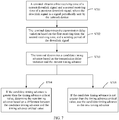
- FIG. 7 is a flowchart of a timing advance update method according to an embodiment of this application. As shown in FIG. 6 , the method includes the following steps.
- a terminal obtains a first receiving time of a current downlink signal and a second receiving time of a previous downlink signal, where the downlink signal is a signal periodically sent by the network device.
- the terminal determines the transmission delay variation based on the first receiving time, the second receiving time, and a sending periodicity of the downlink signal.
- the network device periodically sends the downlink signal to the terminal, and the terminal may determine the transmission delay variation based on the periodic downlink signal.
- the periodic downlink signal may be one of a primary synchronization signal, a secondary synchronization signal, or a pilot signal.
- a primary synchronization signal (Primary Synchronization Signal, PSS) and a secondary synchronization signal (Secondary Synchronization Signal, SSS) need to be transmitted in a downlink.
- PSS Primary Synchronization Signal
- SSS Secondary Synchronization Signal
- the secondary synchronization signal indicates a cell group identifier
- the primary synchronization signal indicates a cell identifier.
- a specific cell identifier may be determined based on both the secondary synchronization signal and the primary synchronization signal.
- the primary synchronization signal is used as an example, and other signals are similar. Details are not described herein in this embodiment.
- a transmission periodicity of the primary synchronization signal may be, for example, 20 ms, 40 ms, 80 ms, or 160 ms.
- the sending periodicity of the PSS may be preconfigured for the terminal, or may be indicated by the network device to the terminal by using indication information, or may be determined by the terminal based on another configuration parameter.
- An implementation in which the terminal obtains the PSS periodicity is not particularly limited in this embodiment.
- the sending periodicity of the PSS may change according to a system configuration, where the system configuration may be, for example, orbit information and a subcarrier spacing.
- Different orbit information causes different changes in a round-trip transmission delay.
- Different subcarriers correspond to different numerologies (numerology), and different numerologies correspond to different cyclic prefix lengths.
- a shorter cyclic prefix indicates a shorter TA adjustment periodicity and a shorter PSS update periodicity.
- Table 1 shows a possible example. Table 1 shows a correspondence between a numerology and a PSS periodicity when an altitude of a satellite is 707 kilometers (km).
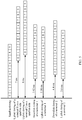
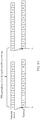
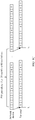
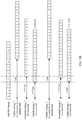
- FIG. 8A , FIG. 8B , and FIG. 8C are schematic diagrams of periodic transmission of a primary synchronization signal according to an embodiment of this application.
- t 0 is a receiving time at which the terminal receives the first PSS
- t 1 is a receiving time at which the terminal receives the second PSS.
- the terminal obtains the first receiving time t 1 of the current downlink signal, and obtains the second receiving time t 0 of the previous downlink signal from a buffer.
- the transmission delay variation may be obtained according to the following formula 7.
- ⁇ RTD t 1 ⁇ t 0 ⁇ T p ⁇ 2
- t 1 indicates the receiving time of the current downlink signal
- t 0 indicates the receiving time of the previous downlink signal
- T p indicates the sending periodicity of the downlink signal.
- the network device periodically sends a PSS.
- a time interval between any two adjacent PSSs sent by the network device is always one sending periodicity, that is, 20 ms, 40 ms, 80 ms, or 160 ms.
- a transmission delay changes, and downlink timing of receiving PSSs by the terminal is not unique. Therefore, a time interval between any two adjacent PSSs received by the terminal varies as the distance between the terminal and the network device changes.
- a one-way transmission delay variation may be obtained according to t 1 - t 0 - T p , and a round-trip transmission delay variation may be obtained according to the formula 7.
- the primary synchronization signal is used as an example for description.
- the pilot signal may also be referred to as a reference signal.
- the pilot signal may have functions such as downlink channel quality measurement and downlink channel estimation, and is used for coherent detection and demodulation of the terminal.
- a periodicity of the pilot signal is relatively short.
- the periodicity of the pilot signal is 224 us. Therefore, the TA update periodicity is short, and real-time update can be implemented.
- a plurality of ⁇ RTD may be obtained and then an average value is calculated; or for another example, a result is optimized through a plurality of times of measurement filtering.
- the terminal determines a candidate timing advance based on the transmission delay variation and the current timing advance.
- FIG. 9A is a schematic diagram of uplink synchronization according to an embodiment of this application. Descriptions are provided with reference to FIG. 9A and Table 2. Table 2 RTD 1 (ms) TA 1 (ms) RTD 2 (ms) TA 2 (ms) ⁇ RTD ⁇ TA Example 1 7.99 0.99 8.01 0.01 0.02 -0.98 Example 2 8.01 0.01 7.99 0.99 -0.02 0.98
- timing 1 occurs earlier than timing 2.
- the timing 1 occurs first, and then the timing 2 occurs.
- the round-trip transmission delay RTD 1 corresponding to the timing 1 is 7.99 ms
- uplink timing 1 of the terminal is in the fourth slot (marked as 3 in the figure)
- uplink timing 1 of a terminal on a satellite side is aligned with the eighth slot (marked as 7 in the figure).
- the candidate timing advance is 1.01
- the candidate timing advance is greater than the timing advance critical value TA c .
- the TA 2 corresponding to the timing 2 of the terminal is 0.01
- the uplink timing 2 of the terminal is still in the fourth slot
- the timing of the terminal on the satellite side is aligned with the ninth slot.
- timing 2 occurs earlier than timing 1.
- the timing 2 occurs first, and then the timing 1 occurs.
- the round-trip transmission delay RTD 1 corresponding to the timing 2 is 8.01 ms
- the uplink timing 2 of the terminal is in the fourth slot, and the uplink timing 2 of the terminal on the satellite side is aligned with the ninth slot.
- the TA 2 corresponding to the timing 1 of the terminal is 0.99
- the uplink timing 1 of the terminal is still in the fourth slot
- the uplink timing of the terminal on the satellite side is aligned with the eighth slot.
- the uplink timing of the terminal on the satellite side is aligned with the eighth slot and the ninth slot. That is, the network device needs to perform uplink reception in two consecutive slots.
- a quantity of consecutive slots used by the network device to perform uplink reception is greater than a quantity of slots corresponding to the timing advance critical value. For example, when the timing advance critical value is one slot, the quantity of consecutive slots used by the network device to perform uplink reception is 2.
- the timing advance critical value may be set to one slot.
- FIG. 9B is a schematic diagram of uplink synchronization according to an embodiment of this application. Descriptions are provided with reference to FIG. 9B and Table 3. Table 3 RTD 1 (ms) TA 1 (ms) RTD 2 (ms) TA 2 (ms) ⁇ RTD ⁇ TA Example 3 7.86 0.86 7.43 0.43 -0.43 -0.43 Example 4 7.43 0.43 7.86 0.86 0.43 0.43
- timing 3 occurs earlier than timing 4.
- the round-trip transmission delay RTD 1 corresponding to the timing 3 is 7.86 ms
- uplink timing 1 of the terminal is in the fourth slot
- uplink timing 1 of a terminal on a satellite side is aligned with the eighth slot.
- the candidate timing advance is 0.43, and the candidate timing advance is less than the timing advance critical value TA c . In this case, the candidate timing advance is used as the new timing advance.
- timing 4 occurs earlier than timing 3.
- the timing 4 occurs first, and then the timing 3 occurs.
- the uplink timing 4 of the terminal is in the fourth slot, and the uplink timing 4 of the terminal on the satellite side is aligned with the eighth slot.
- the candidate timing advance is 0.86, and the candidate timing advance is less than the timing advance critical value TA c . In this case, the candidate timing advance is used as the new timing advance.
- the terminal obtains the first receiving time of the current downlink signal and the second receiving time of the previous downlink signal.
- the terminal determines the transmission delay variation based on the first receiving time, the second receiving time, and the sending periodicity of the periodically sent downlink signal.
- the terminal may quickly and accurately obtain the transmission delay variation based on the receiving time of the signal, so that the candidate timing advance is determined based on the transmission delay variation and the current timing advance, and the new timing advance may be determined based on the candidate timing advance and the timing advance critical value, so that the terminal can update the timing advance by itself, thereby improving update efficiency of the timing advance.
- the new timing advance is determined based on the difference between the candidate timing advance and the timing advance critical value.
- the timing advance continuously updated by the terminal is always within one slot, and does not occupy more slots, so that resources on a terminal side are saved, and it is ensured that uplink transmission of the terminal does not interfere with another operation of the terminal.
- the network device may also synchronously determine a timing advance update amount, and then send the timing advance update amount to the terminal; and the terminal updates the timing advance based on the timing advance update amount.
- FIG. 10 is a signaling flowchart of a timing advance update method according to an embodiment of this application. As shown in FIG. 10 , the method includes the following steps.
- a network device obtains a transmission delay variation and a candidate timing advance update amount of a terminal, where the transmission delay variation is a delay variation of transmission between the terminal and the network device.
- the satellite may obtain the transmission delay variation based on orbit information of the satellite. For example, the satellite obtains the transmission delay variation based on the correspondence between an elevation angle and a transmission delay variation shown in FIG. 3 .
- the transmission delay variation is a round-trip delay variation of transmission between the terminal and the network device.
- the network device may determine the candidate timing advance update amount of the terminal based on uplink transmission of the terminal. Theoretically, the network device may estimate the timing advance update amount of the terminal provided that the terminal performs uplink transmission.
- the uplink transmission may be transmission of any signal sent by the terminal, for example, a sounding reference signal (Sounding Reference Signal, SRS), or a demodulation reference signal (De-Modulation Reference Signal, DMRS), or the uplink transmission may be transmission of a channel quality indicator (Channel Quality Indicator, CQI), an ACK, a NACK, a physical uplink shared channel (Physical Uplink Shared Channel, PUSCH), or the like, where all the foregoing may be used by the network device to obtain the timing advance update amount.
- a sounding reference signal Sounding Reference Signal
- DMRS demodulation reference signal
- the network device determines the timing advance update amount of the terminal based on the transmission delay variation, the candidate timing advance update amount, and a timing advance critical value, where the timing advance update amount is not greater than the timing advance critical value.
- the timing advance update amount is determined according to the critical condition.
- the network device may perform no processing, and the terminal may update the TA by itself by using the embodiment shown in FIG. 6 or FIG. 7 ; or the network device updates the TA in a manner in LTE or NR.
- the candidate timing advance update amount is determined as the timing advance update amount of the terminal.
- the transmission delay variation ⁇ RTD is 0.02
- the determined candidate timing advance update amount ⁇ TA is -0.98.
- the transmission delay variation ⁇ RTD is -0.02
- the determined candidate timing advance update amount ⁇ TA is 0.98.
- the candidate timing advance update amount is used as the timing advance update amount, it is determined that an absolute value of the transmission delay variation is less than a preset threshold.
- a preset threshold is, for example, half a slot.
- the network device sends a timing advance command to the terminal, where the timing advance command indicates the timing advance update amount.
- the terminal receives the timing advance command sent by the network device, where the timing advance command indicates the timing advance update amount, and the timing advance update amount indicated by the timing advance command is not greater than the timing advance critical value.
- the terminal determines a new timing advance based on the timing advance command and a current timing advance.
- the terminal performs uplink transmission based on the new timing advance.
- ⁇ TA ⁇ RTD ⁇ NT S
- N an integer greater than or equal to 1
- Ts is one slot.
- an update range of ⁇ TA includes [- NT S , + NT S ]. Because the update range of ⁇ TA changes, a length of the timing advance command changes.
- the length of the timing advance command may be implemented according to the following formula 8: 2 M + 6 ⁇ 2 M + 5 ⁇ 1 ⁇ NT S 16 ⁇ 64 / 2 ⁇ ⁇ T C
- M is the length of the timing advance command
- T c is a time unit
- T c 1/(480000 ⁇ 4096)
- a value of ⁇ is determined by a numerology (numerology).
- the TAC command may be transmitted by using a timing advance command media access control layer control element (Timing Advance Command MAC control element, TAC MAC CE).
- TAC MAC CE timing advance command media access control layer control element
- a TAC field has 12 bits in total, that is, 6 bits are extended on the basis of existing 6 bits.
- the TAC MAC CE may further include a timing advance group identifier (Timing Advance Group Identification, TAG ID).
- TAC MAC CE further includes a reserved bit.
- the terminal After obtaining the new timing advance, the terminal performs uplink transmission based on the new timing advance.
- the new timing advance obtained by the terminal according to formula 9 does not exceed the timing advance critical value (for example, as shown in Table 2). That is, uplink transmission of the timing advance performed by the terminal is always in a same slot, and another operation of the terminal is not affected.
- the network device obtains the transmission delay variation and the candidate timing advance update amount of the terminal, and the network device determines the timing advance update amount of the terminal based on the transmission delay variation, the candidate timing advance update amount, and the timing advance critical value.
- the network device sends, to the terminal, the timing advance command used to indicate the timing advance update amount. Because the timing advance critical value is set, a range of the timing advance update amount is extended, and efficiency of updating the TA of the terminal by the network device is improved.
- whether the network device updates the timing advance of the terminal may be determined through negotiation between the network device and the terminal.
- the terminal may be negotiated that the terminal performs uplink transmission based on the new timing advance that is not greater than the timing advance critical value.
- the terminal does not perform S704 in the embodiment in FIG. 7 , and the network device sends the timing advance command to the terminal to update the timing advance of the terminal.
- the terminal may be negotiated that the terminal completes update of the timing advance (for example, by using the method shown in FIG. 7 ), and the network device does not send the timing advance command to the terminal.
- the terminal determines the new timing advance by itself (for example, by using the method shown in FIG. 7 ) based on the timing advance critical value.
- the network device sends the timing advance update amount to the terminal.
- the terminal updates the TA based on the timing advance update amount sent by the network device.
- a specific timing advance is used for uplink transmission may be determined through negotiation.
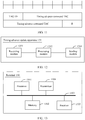
- FIG. 12 is a schematic structural diagram of a timing advance update apparatus according to an embodiment of this application. As shown in FIG. 12 , the timing advance update apparatus 120 includes:
- the timing advance update apparatus provided in this embodiment of this application is configured to perform the method embodiment shown in FIG. 6 .
- An implementation principle and a technical effect of the timing advance update apparatus are similar to those of the method embodiment. Details are not described herein again in this embodiment.
- processing module 1202 is specifically configured to:
- processing module 1202 is specifically configured to:
- the receiving module 1201 is specifically configured to:
- the downlink signal is specifically one of the following: a primary synchronization signal, a secondary synchronization signal, or a pilot signal.
- the receiving module 1201 is further configured to receive a timing advance command sent by the network device, where the timing advance command indicates a timing advance update amount, and the timing advance update amount indicated by the timing advance command is not greater than the timing advance critical value.
- the processing module 1202 is further configured to determine the new timing advance based on the timing advance command and the current timing advance.
- the timing advance critical value is an integer multiple of a slot length.
- the network device is a satellite.
- the timing advance update apparatus provided in this embodiment of this application is configured to perform the method embodiment shown in FIG. 7 .
- An implementation principle and a technical effect of the timing advance update apparatus are similar to those of the method embodiment. Details are not described herein again in this embodiment.
- the processing module in this embodiment may be integrated into a processor for implementation, the sending module may be integrated into a transmitter for implementation, and the receiving module may be integrated into a receiver for implementation.
- FIG. 13 is a schematic diagram of a hardware structure of a terminal according to an embodiment of this application. As shown in FIG. 13 , the terminal 130 includes:
- the memory 1302 may be independent, or may be integrated with the processor 1301.
- the terminal 130 may further include a bus 1303 for connecting the memory 1302 and the processor 1301.
- the terminal shown in FIG. 13 may further include a transmitter 1304 and a receiver 1305.
- the receiver 1305 may, for example, receive a downlink signal periodically sent by a network device, and the processor 1301 may determine a transmission delay variation based on the received periodic downlink signal.
- the terminal provided in this embodiment may be configured to perform the method performed by the terminal in the foregoing embodiment.
- An implementation principle and a technical effect of the terminal are similar to those of the foregoing embodiment. Details are not described herein again in this embodiment.
- FIG. 14 is a schematic structural diagram of a timing advance update apparatus according to an embodiment of this application. As shown in FIG. 14 , the timing advance update apparatus 140 includes:
- the processing module 1401 is further specifically configured to: if a difference between the transmission delay variation and the candidate timing advance update amount is equal to the timing advance critical value, determine the candidate timing advance update amount as the timing advance update amount of the terminal.
- the processing module 1401 is further specifically configured to: determine the transmission delay variation based on a correspondence between a transmission delay and an elevation angle.
- the timing advance critical value is an integer multiple of a slot length.
- the timing advance critical value is one slot, and a length of the timing advance command is 12 bits.
- the timing advance update apparatus provided in this embodiment of this application is configured to perform the method performed by the foregoing network device. An implementation principle and a technical effect of the timing advance update apparatus are similar. Details are not described herein again in this embodiment.
- the processing module in this embodiment may be integrated into a processor for implementation, and the sending module may be integrated into a transmitter for implementation.
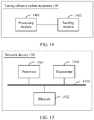
- FIG. 15 is a schematic diagram of a hardware structure of a network device according to an embodiment of this application.
- the network device 150 in this embodiment includes a processor 1501 and a memory 1502, where
- the memory 1502 may be independent, or may be integrated with the processor 1501.
- the network device 150 may further include a bus 1503 for connecting the memory 1502 and the processor 1501.
- the network device shown in FIG. 15 may further include a transmitter 1504, configured to send a timing advance command and the like.
- the network device provided in this embodiment may be configured to perform the method performed by the network device in the foregoing embodiment.
- An implementation principle and a technical effect of the network device are similar to those of the foregoing embodiment. Details are not described herein again in this embodiment.
- An embodiment of this application further provides a storage medium.
- the storage medium includes a computer program, and the computer program is used for implementing the method according to the first aspect or the possible designs of the first aspect.
- An embodiment of this application further provides a computer program product.
- the computer program product includes computer program code, and when the computer program code is run on a computer, the computer is enabled to perform the method according to the first aspect or the possible designs of the first aspect.
- An embodiment of this application further provides a chip, including a memory and a processor.
- the memory is configured to store a computer program
- the processor is configured to invoke the computer program from the memory and run the computer program, so that a communications device on which the chip is installed performs the method according to the first aspect or the possible designs of the first aspect.
- An embodiment of this application further provides a storage medium.
- the storage medium includes a computer program, and the computer program is used for implementing the method according to the second aspect or the possible designs of the second aspect.
- An embodiment of this application further provides a computer program product.
- the computer program product includes computer program code, and when the computer program code is run on a computer, the computer is enabled to perform the method according to the second aspect or the possible designs of the second aspect.
- An embodiment of this application further provides a chip, including a memory and a processor.
- the memory is configured to store a computer program
- the processor is configured to invoke the computer program from the memory and run the computer program, so that a communications device on which the chip is installed performs the method according to the second aspect or the possible designs of the second aspect.
- the disclosed device and method may be implemented in other manners.
- the described device embodiments are merely examples.
- division into the modules is merely logical function division and may be other division in actual implementation.
- a plurality of modules may be combined or integrated into another system, or some features may be ignored or not performed.
- the displayed or discussed mutual couplings or direct couplings or communication connections may be implemented through some interfaces.
- the indirect couplings or communication connections between the apparatuses or modules may be implemented in electric, mechanical, or other forms.
- modules described as separate parts may or may not be physically separate, and parts displayed as modules may or may not be physical units, may be located in one position, or may be distributed on a plurality of network units. Some or all of the modules may be selected based on actual needs to achieve the objectives of the solutions of the embodiments.
- modules in the embodiments of this application may be integrated into one processing unit, or each of the modules may exist alone physically, or two or more modules are integrated into one unit.
- the unit integrated from the modules may be implemented in a form of hardware, or may be implemented in a form of hardware in addition to a software functional unit.
- the integrated module may be stored in a computer-readable storage medium.
- the software functional module is stored in a storage medium and includes several instructions for instructing a computer device (which may be a personal computer, a server, a network device, or the like) or a processor (English: processor) to perform some of the steps of the methods described in the embodiments of this application.
- the processor may be a central processing unit (English: Central Processing Unit, CPU for short), or may be another general-purpose processor, a digital signal processor (English: Digital Signal Processor, DSP for short), an application-specific integrated circuit (English: Application Specific Integrated Circuit, ASIC for short), or the like.
- the general-purpose processor may be a microprocessor, or the processor may be any conventional processor or the like. The steps of the methods disclosed with reference to this application may be directly performed and completed by a hardware processor, or performed and completed by a combination of hardware and a software module in the processor.
- the memory may include a high-speed RAM memory, and may further include a nonvolatile memory NVM, for example, at least one magnetic disk storage, or may be a USB flash drive, a removable hard disk, a read-only memory, a magnetic disk, an optical disc, or the like.
- NVM nonvolatile memory
- the bus may be an industry standard architecture (Industry Standard Architecture, ISA) bus, a peripheral component interconnect (Peripheral Component, PCI) bus, an extended industry standard architecture (Extended Industry Standard Architecture, EISA) bus, or the like.
- ISA Industry Standard Architecture
- PCI peripheral component interconnect
- EISA Extended Industry Standard Architecture
- the bus may be classified into an address bus, a data bus, a control bus, and the like.
- the bus in the accompanying drawings of this application is not limited to only one bus or only one type of bus.
- the storage medium may be implemented by any type of volatile or nonvolatile storage device or a combination thereof, such as a static random access memory (SRAM), an electrically erasable programmable read-only memory (EEPROM), an erasable programmable read-only memory (EPROM), a programmable read-only memory (PROM), a read-only memory (ROM), a magnetic memory, a flash memory, a magnetic disk, or an optical disc.
- SRAM static random access memory
- EEPROM electrically erasable programmable read-only memory
- EPROM erasable programmable read-only memory
- PROM programmable read-only memory
- ROM read-only memory
- magnetic memory a magnetic memory
- flash memory a flash memory
- magnetic disk a magnetic disk
- optical disc optical disc
- a storage medium is coupled to a processor, so that the processor can read information from the storage medium or write information into the storage medium.
- the storage medium may alternatively be a component of the processor.
- the processor and the storage medium may be located in an application-specific integrated circuit (Application Specific Integrated Circuits, ASIC for short).
- ASIC Application Specific Integrated Circuits
- the processor and the storage medium may alternatively exist in the device as discrete components.
Landscapes
- Engineering & Computer Science (AREA)
- Computer Networks & Wireless Communication (AREA)
- Signal Processing (AREA)
- Physics & Mathematics (AREA)
- Astronomy & Astrophysics (AREA)
- Aviation & Aerospace Engineering (AREA)
- General Physics & Mathematics (AREA)
- Mobile Radio Communication Systems (AREA)
Applications Claiming Priority (2)
| Application Number | Priority Date | Filing Date | Title |
|---|---|---|---|
| CN201910105796.XA CN111526576B (zh) | 2019-02-01 | 2019-02-01 | 定时提前的更新方法、装置、设备与存储介质 |
| PCT/CN2019/130763 WO2020156015A1 (zh) | 2019-02-01 | 2019-12-31 | 定时提前的更新方法及设备 |
Publications (2)
| Publication Number | Publication Date |
|---|---|
| EP3905798A1 true EP3905798A1 (de) | 2021-11-03 |
| EP3905798A4 EP3905798A4 (de) | 2022-03-02 |
Family
ID=71840706
Family Applications (1)
| Application Number | Title | Priority Date | Filing Date |
|---|---|---|---|
| EP19912692.1A Pending EP3905798A4 (de) | 2019-02-01 | 2019-12-31 | Verfahren und vorrichtung zur aktualisierung eines zeitvorlaufs |
Country Status (4)
| Country | Link |
|---|---|
| US (1) | US12035267B2 (de) |
| EP (1) | EP3905798A4 (de) |
| CN (1) | CN111526576B (de) |
| WO (1) | WO2020156015A1 (de) |
Families Citing this family (16)
| Publication number | Priority date | Publication date | Assignee | Title |
|---|---|---|---|---|
| US12261796B2 (en) * | 2019-08-16 | 2025-03-25 | Qualcomm Incorporated | Air-to-ground communication scheduling |
| CN114337772B (zh) * | 2020-10-09 | 2023-06-20 | 展讯半导体(南京)有限公司 | 数据传输方法和装置 |
| CN115918128A (zh) * | 2020-10-16 | 2023-04-04 | Oppo广东移动通信有限公司 | 无线通信的方法和终端设备 |
| WO2022120638A1 (zh) * | 2020-12-08 | 2022-06-16 | 北京小米移动软件有限公司 | 一种定时提前量确定方法及设备 |
| EP4256864A4 (de) * | 2021-01-15 | 2024-09-25 | ZTE Corporation | Systeminformationsanpassung für nicht terrestrische netzwerke |
| EP4278737A4 (de) * | 2021-01-18 | 2024-07-17 | Telefonaktiebolaget LM Ericsson (publ) | Verfahren und vorrichtung für zeitvorlauf |
| CN114828197B (zh) * | 2021-01-19 | 2023-10-13 | 维沃移动通信有限公司 | 时间信息发送方法、终端及网络侧设备 |
| CN113079536A (zh) * | 2021-04-07 | 2021-07-06 | Tcl通讯(宁波)有限公司 | 一种定时提前量的更新方法、装置及移动终端 |
| US11979919B2 (en) * | 2021-09-17 | 2024-05-07 | Qualcomm Incorporated | Flexible random access channel configurations |
| CN116647906A (zh) * | 2022-02-15 | 2023-08-25 | 大唐移动通信设备有限公司 | 一种通信方法及装置 |
| KR20250003914A (ko) * | 2022-04-27 | 2025-01-07 | 엘지전자 주식회사 | 무선 통신 시스템에서 상향링크 송수신을 수행하는 방법 및 장치 |
| CN115276775B (zh) * | 2022-08-08 | 2024-01-30 | 北京九天微星科技发展有限公司 | 卫星通信系统中的数据传输方法及装置 |
| GB2627491A (en) * | 2023-02-24 | 2024-08-28 | Airspan Ip Holdco Llc | Timing advance calculation |
| CN118573314A (zh) * | 2023-02-28 | 2024-08-30 | 华为技术有限公司 | 一种定时提前量的确定方法及装置 |
| CN119907085A (zh) * | 2023-10-19 | 2025-04-29 | 中兴通讯股份有限公司 | 时间提前量估算方法、设备及存储介质 |
| WO2025096394A1 (en) * | 2023-10-30 | 2025-05-08 | Interdigital Patent Holdings, Inc. | Methods, architectures, apparatuses and systems for timing advance prediction in artificial intelligence / machine learning (aiml) systems |
Family Cites Families (14)
| Publication number | Priority date | Publication date | Assignee | Title |
|---|---|---|---|---|
| CN102833844B (zh) * | 2008-04-30 | 2016-01-20 | 电信科学技术研究院 | 一种实现上行发送定时提前的方法和装置 |
| US8526420B2 (en) * | 2010-07-16 | 2013-09-03 | Blackberry Limited | Method and apparatus for autonomous uplink timing advance maintenance |
| EP3018938B1 (de) * | 2014-11-07 | 2020-09-16 | Panasonic Intellectual Property Corporation of America | System für LTE-lizensierten, unterstützten Zugriff in unlizensierten Bändern |
| WO2016153176A1 (ko) | 2015-03-20 | 2016-09-29 | 엘지전자 주식회사 | 무선 통신 시스템에서 상향링크 동기화를 수행하는 방법 및 이를 위한 장치 |
| CN115835367A (zh) * | 2016-08-10 | 2023-03-21 | 交互数字专利控股公司 | 降低等待时间的系统中的定时提前和处理能力 |
| EP3297343A3 (de) * | 2016-09-19 | 2018-06-20 | ASUSTek Computer Inc. | Verfahren und vorrichtung zur handhabung des zeitvorlaufs für uplink-übertragung in einem drahtloskommunikationssystem |
| CN108282198B (zh) | 2017-01-06 | 2021-11-19 | 华为技术有限公司 | 一种信号传输方法和装置 |
| EP3582572A4 (de) * | 2017-02-09 | 2020-12-30 | LG Electronics Inc. -1- | Verfahren zum senden und empfangen von uplink-signalen zwischen einem endgerät und einer basisstation in einem drahtloskommunikationssystem und vorrichtung zur unterstützung davon |
| CN107197517B (zh) * | 2017-08-02 | 2020-11-06 | 电子科技大学 | 基于ta分组的lte卫星上行链路同步方法 |
| CN107333241B (zh) * | 2017-08-02 | 2020-07-07 | 电子科技大学 | 基于lte体制的卫星移动通信上行发射端定时调整方法 |
| US10314012B2 (en) * | 2017-09-22 | 2019-06-04 | Qualcomm Incorporated | Carrier selection for position measurement |
| US10939400B2 (en) * | 2017-12-19 | 2021-03-02 | Qualcomm Incorporated | Time synchronization techniques for wireless communications |
| JP7074195B2 (ja) * | 2018-01-10 | 2022-05-24 | 富士通株式会社 | 上りリンク送信タイミングアドバンスの取得方法、装置及び通信システム |
| US11082941B2 (en) * | 2018-08-09 | 2021-08-03 | Qualcomm Incorporated | Timing offset techniques in wireless communications |
-
2019
- 2019-02-01 CN CN201910105796.XA patent/CN111526576B/zh active Active
- 2019-12-31 WO PCT/CN2019/130763 patent/WO2020156015A1/zh not_active Ceased
- 2019-12-31 EP EP19912692.1A patent/EP3905798A4/de active Pending
-
2021
- 2021-07-30 US US17/390,317 patent/US12035267B2/en active Active
Also Published As
| Publication number | Publication date |
|---|---|
| US12035267B2 (en) | 2024-07-09 |
| US20210360556A1 (en) | 2021-11-18 |
| WO2020156015A1 (zh) | 2020-08-06 |
| EP3905798A4 (de) | 2022-03-02 |
| CN111526576B (zh) | 2021-10-26 |
| CN111526576A (zh) | 2020-08-11 |
Similar Documents
| Publication | Publication Date | Title |
|---|---|---|
| US12035267B2 (en) | Timing advance update method and device for uplink transmission in wireless communication | |
| US11792758B2 (en) | Method and device for determining timing advance | |
| CN111565472B (zh) | 一种确定定时提前量的方法及设备 | |
| US12213093B2 (en) | System and method for using a time gap | |
| US20220400459A1 (en) | Uplink timing adjustment with multiple numerologies | |
| EP3157296B1 (de) | Verbesserungen von long term evolution (lte)-luft-boden-kommunikation im zusammenhang mit uplink-synchronisierung | |
| EP2750458A1 (de) | Kommunikationsverfahren, benutzergerät und basisstation | |
| WO2022027230A1 (en) | Method and apparatus for timing advance compensation | |
| WO2021098066A1 (en) | A system and method of downlink-uplink timing relationship | |
| US12593352B2 (en) | Systems and methods for random access channel resource determination | |
| EP4044748A1 (de) | Verfahren und vorrichtung für satellitenkommunikationen | |
| CN117044321A (zh) | 用于有效时间的指示的系统和方法 | |
| JP4944195B2 (ja) | ハンドオーバ後に移動先セル内のユーザ装置によって使用される移動先タイムアラインメント値の計算法 | |
| EP3900447B1 (de) | Verfahren zur schätzung des zeitvorlaufs in einer grossen zellfläche | |
| EP4443766A1 (de) | Netzwerkunterstützter demodulationsreferenzsignalbündelungsrahmen | |
| US20230199729A1 (en) | Method and apparatus for slot format indication in ntn system | |
| CN114303428A (zh) | 确定时间戳的方法、终端设备、接入网节点、核心网设备 | |
| KR20250039431A (ko) | 비지상 네트워크에서의 커버리지 향상을 위한 시스템 및 방법 | |
| US20240163823A1 (en) | Method and apparatus for determining timing advance value | |
| EP3963756A1 (de) | Zeitbasierte benutzergerätemobilität für transparente satelliten |
Legal Events
| Date | Code | Title | Description |
|---|---|---|---|
| STAA | Information on the status of an ep patent application or granted ep patent |
Free format text: STATUS: THE INTERNATIONAL PUBLICATION HAS BEEN MADE |
|
| PUAI | Public reference made under article 153(3) epc to a published international application that has entered the european phase |
Free format text: ORIGINAL CODE: 0009012 |
|
| STAA | Information on the status of an ep patent application or granted ep patent |
Free format text: STATUS: REQUEST FOR EXAMINATION WAS MADE |
|
| 17P | Request for examination filed |
Effective date: 20210727 |
|
| AK | Designated contracting states |
Kind code of ref document: A1 Designated state(s): AL AT BE BG CH CY CZ DE DK EE ES FI FR GB GR HR HU IE IS IT LI LT LU LV MC MK MT NL NO PL PT RO RS SE SI SK SM TR |
|
| A4 | Supplementary search report drawn up and despatched |
Effective date: 20220128 |
|
| RIC1 | Information provided on ipc code assigned before grant |
Ipc: H04B 7/185 20060101ALI20220124BHEP Ipc: H04W 56/00 20090101AFI20220124BHEP |
|
| DAV | Request for validation of the european patent (deleted) | ||
| DAX | Request for extension of the european patent (deleted) | ||
| STAA | Information on the status of an ep patent application or granted ep patent |
Free format text: STATUS: EXAMINATION IS IN PROGRESS |
|
| 17Q | First examination report despatched |
Effective date: 20240813 |