EP3905476B1 - Power supply device and method, and electronic device - Google Patents
Power supply device and method, and electronic device Download PDFInfo
- Publication number
- EP3905476B1 EP3905476B1 EP19921764.7A EP19921764A EP3905476B1 EP 3905476 B1 EP3905476 B1 EP 3905476B1 EP 19921764 A EP19921764 A EP 19921764A EP 3905476 B1 EP3905476 B1 EP 3905476B1
- Authority
- EP
- European Patent Office
- Prior art keywords
- battery
- voltage
- power supply
- charging
- module
- Prior art date
- Legal status (The legal status is an assumption and is not a legal conclusion. Google has not performed a legal analysis and makes no representation as to the accuracy of the status listed.)
- Active
Links
Images


Classifications
-
- H—ELECTRICITY
- H01—ELECTRIC ELEMENTS
- H01M—PROCESSES OR MEANS, e.g. BATTERIES, FOR THE DIRECT CONVERSION OF CHEMICAL ENERGY INTO ELECTRICAL ENERGY
- H01M10/00—Secondary cells; Manufacture thereof
- H01M10/42—Methods or arrangements for servicing or maintenance of secondary cells or secondary half-cells
- H01M10/425—Structural combination with electronic components, e.g. electronic circuits integrated to the outside of the casing
-
- H—ELECTRICITY
- H01—ELECTRIC ELEMENTS
- H01M—PROCESSES OR MEANS, e.g. BATTERIES, FOR THE DIRECT CONVERSION OF CHEMICAL ENERGY INTO ELECTRICAL ENERGY
- H01M10/00—Secondary cells; Manufacture thereof
- H01M10/05—Accumulators with non-aqueous electrolyte
- H01M10/052—Li-accumulators
- H01M10/0525—Rocking-chair batteries, i.e. batteries with lithium insertion or intercalation in both electrodes; Lithium-ion batteries
-
- H—ELECTRICITY
- H01—ELECTRIC ELEMENTS
- H01M—PROCESSES OR MEANS, e.g. BATTERIES, FOR THE DIRECT CONVERSION OF CHEMICAL ENERGY INTO ELECTRICAL ENERGY
- H01M10/00—Secondary cells; Manufacture thereof
- H01M10/42—Methods or arrangements for servicing or maintenance of secondary cells or secondary half-cells
- H01M10/44—Methods for charging or discharging
- H01M10/441—Methods for charging or discharging for several batteries or cells simultaneously or sequentially
-
- H—ELECTRICITY
- H01—ELECTRIC ELEMENTS
- H01M—PROCESSES OR MEANS, e.g. BATTERIES, FOR THE DIRECT CONVERSION OF CHEMICAL ENERGY INTO ELECTRICAL ENERGY
- H01M10/00—Secondary cells; Manufacture thereof
- H01M10/42—Methods or arrangements for servicing or maintenance of secondary cells or secondary half-cells
- H01M10/48—Accumulators combined with arrangements for measuring, testing or indicating the condition of cells, e.g. the level or density of the electrolyte
- H01M10/482—Accumulators combined with arrangements for measuring, testing or indicating the condition of cells, e.g. the level or density of the electrolyte for several batteries or cells simultaneously or sequentially
-
- H—ELECTRICITY
- H01—ELECTRIC ELEMENTS
- H01M—PROCESSES OR MEANS, e.g. BATTERIES, FOR THE DIRECT CONVERSION OF CHEMICAL ENERGY INTO ELECTRICAL ENERGY
- H01M4/00—Electrodes
- H01M4/02—Electrodes composed of, or comprising, active material
- H01M4/36—Selection of substances as active materials, active masses, active liquids
- H01M4/38—Selection of substances as active materials, active masses, active liquids of elements or alloys
- H01M4/386—Silicon or alloys based on silicon
-
- H—ELECTRICITY
- H01—ELECTRIC ELEMENTS
- H01M—PROCESSES OR MEANS, e.g. BATTERIES, FOR THE DIRECT CONVERSION OF CHEMICAL ENERGY INTO ELECTRICAL ENERGY
- H01M4/00—Electrodes
- H01M4/02—Electrodes composed of, or comprising, active material
- H01M4/36—Selection of substances as active materials, active masses, active liquids
- H01M4/58—Selection of substances as active materials, active masses, active liquids of inorganic compounds other than oxides or hydroxides, e.g. sulfides, selenides, tellurides, halogenides or LiCoFy; of polyanionic structures, e.g. phosphates, silicates or borates
- H01M4/583—Carbonaceous material, e.g. graphite-intercalation compounds or CFx
- H01M4/587—Carbonaceous material, e.g. graphite-intercalation compounds or CFx for inserting or intercalating light metals
-
- H—ELECTRICITY
- H02—GENERATION; CONVERSION OR DISTRIBUTION OF ELECTRIC POWER
- H02J—ELECTRIC POWER NETWORKS; CIRCUIT ARRANGEMENTS OR SYSTEMS FOR SUPPLYING OR DISTRIBUTING ELECTRIC POWER; SYSTEMS FOR STORING ELECTRIC ENERGY
- H02J7/00—Circuit arrangements for charging or discharging batteries or for supplying loads from batteries
- H02J7/485—Circuit arrangements for charging or discharging batteries or for supplying loads from batteries with provisions for charging different types of batteries
-
- H—ELECTRICITY
- H02—GENERATION; CONVERSION OR DISTRIBUTION OF ELECTRIC POWER
- H02J—ELECTRIC POWER NETWORKS; CIRCUIT ARRANGEMENTS OR SYSTEMS FOR SUPPLYING OR DISTRIBUTING ELECTRIC POWER; SYSTEMS FOR STORING ELECTRIC ENERGY
- H02J7/00—Circuit arrangements for charging or discharging batteries or for supplying loads from batteries
- H02J7/50—Circuit arrangements for charging or discharging batteries or for supplying loads from batteries acting upon multiple batteries simultaneously or sequentially
- H02J7/52—Circuit arrangements for charging or discharging batteries or for supplying loads from batteries acting upon multiple batteries simultaneously or sequentially for charge balancing, e.g. equalisation of charge between batteries
-
- H—ELECTRICITY
- H02—GENERATION; CONVERSION OR DISTRIBUTION OF ELECTRIC POWER
- H02J—ELECTRIC POWER NETWORKS; CIRCUIT ARRANGEMENTS OR SYSTEMS FOR SUPPLYING OR DISTRIBUTING ELECTRIC POWER; SYSTEMS FOR STORING ELECTRIC ENERGY
- H02J7/00—Circuit arrangements for charging or discharging batteries or for supplying loads from batteries
- H02J7/90—Regulation of charging or discharging current or voltage
- H02J7/96—Regulation of charging or discharging current or voltage in response to battery voltage
-
- H—ELECTRICITY
- H01—ELECTRIC ELEMENTS
- H01M—PROCESSES OR MEANS, e.g. BATTERIES, FOR THE DIRECT CONVERSION OF CHEMICAL ENERGY INTO ELECTRICAL ENERGY
- H01M4/00—Electrodes
- H01M4/02—Electrodes composed of, or comprising, active material
- H01M2004/026—Electrodes composed of, or comprising, active material characterised by the polarity
- H01M2004/027—Negative electrodes
-
- H—ELECTRICITY
- H01—ELECTRIC ELEMENTS
- H01M—PROCESSES OR MEANS, e.g. BATTERIES, FOR THE DIRECT CONVERSION OF CHEMICAL ENERGY INTO ELECTRICAL ENERGY
- H01M10/00—Secondary cells; Manufacture thereof
- H01M10/42—Methods or arrangements for servicing or maintenance of secondary cells or secondary half-cells
- H01M10/425—Structural combination with electronic components, e.g. electronic circuits integrated to the outside of the casing
- H01M2010/4271—Battery management systems including electronic circuits, e.g. control of current or voltage to keep battery in healthy state, cell balancing
-
- H—ELECTRICITY
- H02—GENERATION; CONVERSION OR DISTRIBUTION OF ELECTRIC POWER
- H02J—ELECTRIC POWER NETWORKS; CIRCUIT ARRANGEMENTS OR SYSTEMS FOR SUPPLYING OR DISTRIBUTING ELECTRIC POWER; SYSTEMS FOR STORING ELECTRIC ENERGY
- H02J2207/00—Details of circuit arrangements for charging or discharging batteries or supplying loads from batteries
- H02J2207/20—Charging or discharging characterised by the power electronics converter
-
- Y—GENERAL TAGGING OF NEW TECHNOLOGICAL DEVELOPMENTS; GENERAL TAGGING OF CROSS-SECTIONAL TECHNOLOGIES SPANNING OVER SEVERAL SECTIONS OF THE IPC; TECHNICAL SUBJECTS COVERED BY FORMER USPC CROSS-REFERENCE ART COLLECTIONS [XRACs] AND DIGESTS
- Y02—TECHNOLOGIES OR APPLICATIONS FOR MITIGATION OR ADAPTATION AGAINST CLIMATE CHANGE
- Y02E—REDUCTION OF GREENHOUSE GAS [GHG] EMISSIONS, RELATED TO ENERGY GENERATION, TRANSMISSION OR DISTRIBUTION
- Y02E60/00—Enabling technologies; Technologies with a potential or indirect contribution to GHG emissions mitigation
- Y02E60/10—Energy storage using batteries
Definitions
- This application relates to the field of charging, and more particularly to an apparatus and a method for power supply and an electronic device.
- Lithium ion batteries are commonly used for power supplying and energy storage in devices, such as intelligent terminals and electric cars.
- Lithium ion batteries with graphite negative electrodes are the most commonly used, such as a lithium ion secondary battery including a positive-electrode active material and a carbon material such as graphite as a negative-electrode active material disclosed in EP2983000A1 .
- Lithium ion batteries with graphite negative electrodes have lots of advantages such as low cost and low lithium intercalation potential.
- users' demands have also been further increased. For example, wireless internet access, high speed data transmission, blue tooth connected to smart home, higher camera requirements and the adoption of 5G networks, all put higher requirements on a battery life of an electronic device.
- the energy density of the most commonly used Lithium ion battery with graphite negative electrode is 500 Wh/L ⁇ 700Wh/L, and charge rate is about 0.5C-3C.
- this kind of Lithium ion battery cannot meet users' demand of endurance of an electronic device.
- the factor such as the energy density and the specific capacity of the negative electrode , will affect the endurance of an electronic device.
- the battery In order to improve endurance of a battery, the battery needs to be improved.
- An object of the present disclosure is to propose an apparatus and a method for power supply and an electronic device.
- claim 1 provides an apparatus according to the present invention
- claim 10 provides a method according to the present invention.
- Energy density that is energy stored in an unit weight or an unit volume, is an important performance index of a battery.
- the key to improve energy density of a battery is to improve positive electrode materials and negative electrode materials, especially negative electrode materials.
- the common positive electrode materials of a lithium ion battery is metallic oxide, whereas negative electrode materials is graphite.
- a lithium ion battery with silicon negative electrode is used as a power supply battery.
- the operating voltage range of a graphite negative lithium ion battery is 3.4 ⁇ 4.45V
- the operating voltage range of a silicon negative lithium ion battery is 2.5 ⁇ 4.45V or 3.0 ⁇ 4.45V.
- a discharging cut-off voltage of a graphite negative lithium ion battery is commonly set as 3.4V
- a discharging cut-off voltage of a silicon negative lithium ion battery can be set as any voltage values between 2.5V to 3.0V.
- a shutdown protection voltage is set as about 3.4V so that the intelligent terminal can work well.
- a silicon negative lithium ion battery is used in an intelligent terminal and the shutdown protection voltage is set as 3.4V, power of the silicon negative lithium ion battery cannot be used effectively, as the discharging cut-off voltage of the silicon negative lithium ion battery is 2.5 ⁇ 3.0V.
- the system of the electronic device may be adjusted to match voltage range of the silicon negative lithium ion battery in order to make full use of the power of the silicon negative lithium ion battery.
- a boost circuit for example, a DC-DC converter
- voltage of the silicon negative lithium ion battery can be raised to 3.4V to supply to the system when voltage of the silicon negative lithium ion battery is below 3.4V
- the silicon negative lithium ion battery can continue to supply power to the system when voltage is between 2.5 ⁇ 3.4V.
- a silicon negative lithium ion battery and an additional battery are used, which will improve charging speed comparing with just one battery is used, and can improve battery energy density comparing with a graphite negative lithium ion battery is used.
- the apparatus for power supply 100 includes a first battery B1 and a second battery B2 connected in series, a control module 20 and a first step-down module 222 .
- the first battery B 1 is a silicon negative lithium ion battery.
- the control module 20 is configured to control a power supply process of the first battery and the second battery connected in series based on charging demand of the first battery and the second battery connected in series, and to control the power supply process of the first battery and the second battery connected in series in response to receive a power supply instruction.
- the charging demand includes charging voltage demand and charging current demand.
- current and voltage of a battery can be detected by a voltameter, thereby charging demand of the battery can be determined.
- the control module controlling the power supply process of the first battery and the second battery includes controlling the power supply process to start or to stop, optionally controlling charging voltage and current during the power supply process, or optionally controlling charging duration of the power supply process.
- modules such as a switch module and a boost-buck module can be configured on the charging path between a charging interface and the first battery and the second battery connected in series. Through controlling these modules, the control module can control the power supply process.
- the first battery B1 and the second battery B2 can also be connected with a battery protection plate to ensure safety of the batteries' charging process and discharging process.
- the battery protection plate can include a controller, which can achieve over-charging protection, over-discharging protection, over-current protection, short circuit protection, output short circuit protection and so on.
- the control module 20 can be connected with the controller in the battery protection board to achieve the controlling of the charging and discharging process of the battery.
- the first battery B1 and the second battery B2 are used to supply power to power-demanding systems.
- Power-demanding systems include a processor, a display, a sound player device and other modules or systems which need power to drive in order to work normally.
- the power-demanding systems can include an disclosure processor, a camera module, a radio frequency module, a display screen and other modules which need power supplying.
- the control module 20 can control the power supply process based on the first battery B1 and the second battery B2 to start.
- power supply demand instructions will be generated when the camera module of the intelligent terminal is turned on, the display screen is turned on or call function is turned on by a user.
- Power demand instructions can be generated by the disclosure processor and be sent to the control module 20.
- the control module 20 controls the power supply process of the first battery B1 and the second battery B2 to stop.
- the control module 20 is used to control the first step-down module to step down voltage of the first battery and the second battery connected in series according to the power supply demand during the power supply process.
- the second battery is a graphite negative lithium ion battery.
- the negative materials of the silicon negative lithium ion battery is at least one of the following materials: Si, SiC or SiO.
- the negative materials of the silicon negative lithium ion battery (i.e. the first battery B1) is made from at least one of Si, SiC or SiO mixed with graphite, wherein the content of Si is greater than 0% and less than 100%.
- the apparatus for power supply includes a battery module 200, the first step-down module 22, a second step-down module 203, a balance module 204, a step-up module 205, power demanding systems 206, a control module 207 and a charging interface 211.
- the battery module 200 contains the first battery B1 and the second battery B2 connected in series.
- the apparatus for power supply 100 can be connected with the power supply device 21 through the charging interface 211.
- the power supply device 21 is configured to supply power to the apparatus for power supply 100.
- the power supply device 21 can be a device which can supply power, such as a power adapter, a power bank or a car charger and so on.
- the apparatus for power supply 100 includes at least one of the following charging paths: a directly charging path 208, a step-up charging path 209 or a step-down charging path 210.
- the control module 207 controls the directly charging path 208 to be turned on, when the charging voltage provided by the power supply device 21 can meet the charging demand of the battery module 200. Thereof, the charging voltage provided by the power supply device 21 can enter into the battery module 200 directly.
- the directly charging path 208 can be a wire. In an embodiment, a switch can be configured on the wire to implement a turn-on or turn-off state of the directly charging path 208.
- the step-up module 205 is configured on the step-up charging path 209, and is configured to step up the input voltage provided by the power supply device 21, to satisfy the charging voltage demand of the battery module 200.
- the control module 207 controls the step-up charging path 209 to be turned on. In this way, input charging voltage provided by the power supply device 21 can be stepped up by the step-up module 205, and then be provided to the battery module 200.
- the second step-down module 203 such as a Buck circuit, a charge pump, etc.
- the control module 207 is configured to control the step-down charging path 210 to be turned on.
- step-up charging path 209 and the step-down charging path 210 can also be combined into one charging path.
- a buck-boost module such as a Buck-Boost circuit, can be configured on the combined charging path, to achieve step-up charging or step-down charging.
- the power supply module 100 may be configured in an electronic device, which may be an intelligent terminal, a notebook computer, a drone, an e-book, a notebook computer, a tablet computer, an electronic cigarette, a smart electronic device (for example, a watch, a bracelet, a smart glasses, a sweeping robots, etc.), and other electronic products (for example, wireless headsets, Bluetooth speakers, electric toothbrushes, rechargeable wireless mice, etc.).
- an electronic device may be an intelligent terminal, a notebook computer, a drone, an e-book, a notebook computer, a tablet computer, an electronic cigarette, a smart electronic device (for example, a watch, a bracelet, a smart glasses, a sweeping robots, etc.), and other electronic products (for example, wireless headsets, Bluetooth speakers, electric toothbrushes, rechargeable wireless mice, etc.).
- the electronic device and the power supply device 21 can perform two-way communication (for example, the electronic device can implement a wired communication with the power supply device 21 through a data line in the charging interface 211 of the electronic device, or the electronic device can communicate with the power supply device 21 through a wireless communication module).
- the electronic device can detect a voltage and a current of each battery in the battery module 200 and feed them back to the power supply device 21. Therefore, in order to meet the changing demands of the electronic device, the power supply device 21 can adjust output charging voltage and current according to voltage and current of the battery fed back by the electronic device.
- the information fed back by the electronic device is not limited to the voltage and the current of the battery, but may also be information such as battery capacity information and temperature information which can be used to determine charging voltage and current.
- the electronic device and the power supply device 21 can communicate with each other to determine which one of the above three charging paths is used for charging.
- the power supply device 21 can send charging voltage information it can provide to the electronic device. Therefore, the electronic device can determine to use which charging paths according to the charging voltage information provided by the power supply device and charging voltage requirements of the battery module 200.
- the power supply device 21 can send specific information to the electronic device, for example, model information of the power supply device 21. The specific information corresponds to charging voltage that can be provided by the power supply device 21. Therefore, the electronic device can determine which charging path should be turned on according to the specific information.
- the electronic device can also actively detect the power supply device 21 to determine charging voltage that can be provided by the power supply device 21. For example, if the power supply device 21 is a computer, through a protocol interaction, the electronic device can determine that the power supply device 21 is a computer and can only provide a charging voltage of 5V. Therefore, the step-up charging path 209 needs to be turned on for charging.
- step 301 the above-mentioned method is adopted to determine which charging path is used. After the charging path is determined, the power supply device 21 outputs voltage and current to charge the battery module 200.
- the method before charging the first battery and the second battery connected in series, in step 302, the method includes detecting voltage of the first battery B1 and voltage of the second battery B2. When voltage of the first battery B1 and voltage of the second battery B2 are different, in step 303, the method includes controlling the balance module 204 to balance voltage of the first battery B 1 and voltage of the second battery B2. When voltage of the first battery B1 and voltage of the second battery B2 are the same, in step 304, the method includes controlling a charging process for charging the first battery B 1 and the second battery B2 to start.
- voltage of the two batteries may be detected first. If voltage of the two batteries are different, the balance module 204 is used to balance to make voltage of the two batteries the same. Alternatively, in some embodiments, the battery with a low voltage may be charged first until voltage of the two batteries are the same, and then the two batteries are charged in series.
- the lithium ion battery with silicon negative and the lithium ion battery with graphite negative can withstand different charge rates.
- the charge rate of a graphite negative lithium ion battery can be 0.5-3C, and the charge rate of a silicon negative lithium ion battery can be 1C. Therefore, during the charging process, the charging rate should not be set higher than 1C.
- voltage of the silicon negative lithium ion battery and voltage of the graphite negative lithium ion battery are detected, and when voltage of any battery reaches its corresponding charging cut-off voltage, the charging process is stopped.
- the charging cut-off voltage of the constant current charging stage can be set to Vs.
- the balance module 204 is used to balance voltage between the silicon negative lithium ion battery and the graphite negative lithium ion battery by means of power transfer.
- the balance module 204 can adopt an active balance method to transfer power between the two batteries.
- the balance module 204 can be a CUK balance circuit, a voltage regulator type balance circuit, and the like.
- the balance module 204 may also adopt a passive balance method, for example, a method in which a resistor is used to consume power.
- the charging process enters into a constant voltage charging stage from the constant current charging stage.
- constant charging voltage can be at a voltage value of Vs or less, until a charging stop condition is met, the charging process is stopped.
- the charging stop condition may be that the charging current is less than a preset value or the time for charging with the constant charging voltage reaches a preset time value.
- the charging process of the battery module 200 may include one or more of a trickle charging phase, a constant current charging phase, and a constant voltage charging phase.
- the charging voltage and the charging current can be controlled to shorten the charging duration of the constant voltage charging phase, or the constant voltage charging phase can be eliminated.
- the charging cut-off voltage of the constant current charging stage may be set to a value of Vn which is higher than the preset cut-off voltage of a graphite negative lithium ion battery or a silicon negative lithium ion battery.
- the preset value is related to the system of a battery and the used materials of a battery.
- the preset cut-off voltage is about 4.2V to 4.4V.
- Vn can be a value increased by any value between 0.05V and 0.1V on the basis of the preset cut-off voltage.
- the charge cut-off voltage can be set to 4.45V
- the charging path of the battery which reaches its charging cut-off voltage can be disconnected, and the battery that has not reached the preset cut-off voltage or a limit voltage can be continuously charged, so that voltage of the two batteries can reach the charging cut-off voltage respectively.
- charging voltage can be increased (charging voltage can be set greater than or equal to a sum of required voltages of the two batteries), thus charging speed can be increased compared with using a silicon negative lithium ion battery alone.
- the first step-down module 22 is configured on the power supply path that is used to supply power to the power demand systems from the battery module 200.
- the first step-down module 22 is used to step down voltage of the battery module 200 according to voltage demand of the power demand systems 206 to supply power to the power demand systems 206.
- the first step-down module 22 can be a half-voltage circuit, a Buck circuit, or the like.
- the battery B1 and the battery B2 are connected in series, so discharging current of the two batteries are the same during discharging process. That is, the two batteries discharge a same amount of electricity at the same time.
- the discharge cut-off voltage of the battery module 200 can be set to the discharge cut-off voltage of the graphite negative lithium ion battery. That is, stopping supply power to the power demanding system 206, when voltage of the graphite negative lithium ion battery reaches its discharge cut-off voltage.
- voltage of the silicon negative lithium ion battery (i.e., the battery B2) will drop faster when the same capacity is released.
- voltage of a graphite negative lithium ion battery is 3.4V
- voltage of a silicon negative electrode lithium ion battery is about 3.2V
- voltage of the graphite negative lithium ion battery reaches its discharging cut-off voltage.
- the highest voltage that the battery module 200 can provide during power supply process is, for example, 8.9V Voltage provided by the battery module 200 is reduced by the first step-down module 22 to supply to the power demanding systems 206.
- voltage of the battery B1 reaches its discharge cut-off voltage (for example, 3.4V), stop supply power to the power demanding systems 206.
- the discharging cut-off voltage can be set based on actual use conditions, and the embodiment of the present disclosure does not limit this.
- the discharge cut-off voltage can be set to 3.0V
- the balance module 204 can also balance voltage of the two batteries by means of power transfer, so that voltage of the two batteries are the same.
- the balance module 204 may not be used for balancing.
- the discharge cut-off voltage is the discharging cut-off voltage of the battery B1
- voltage of the silicon negative lithium ion battery is lower than that of voltage of the graphite negative lithium ion battery.
- the balance module 204 When the battery module 200 is charged, voltage of the batteries are detected firstly, and voltage of the two batteries are balanced by the balance module 204 when voltage of the two batteries are different to make voltage of the two batteries the same, or the battery with lower voltage is charged firstly until voltage of the two batteries are the same.
- the silicon negative lithium ion battery can also be replaced by an Sn negative lithium ion battery.
- the power supply voltage can be the sum of voltage of the two batteries, thereby it is not need to adjust the system architecture or add a boost circuit. Due to the high energy density of silicon negative lithium ion battery, when connected in series with other battery, the same amount of electricity is released, voltage of the silicon negative lithium ion battery drops more rapidly. Therefore, when voltage of the graphite negative lithium ion battery is 3.4V, voltage of the silicon negative lithium ion battery is lower than 3.4V, which can be about 3.2V Voltage of the silicon negative lithium ion battery can be fully used.
- FIG. 4 is a flowchart of a method for power supply according to an embodiment of the present disclosure.
- the method for power supply can be applied to an electronic device, and the electronic device includes a first battery B1 and a second battery B2 connected in series.
- the method includes the followings.
- step 401 during a power supply process, the method includes controlling the first voltage step-down module to step down voltage of the first battery and the second battery which are connected in series to supply power, based on power supply demand.
- the method further includes controlling the balance module to balance voltage of the first battery B 1 and the second battery B2, so that voltage of the first battery B1 and the second battery B2 are the same during the charging process and the power supply process.
- a discharge cut-off voltage of the first battery B 1 is lower than a discharge cut-off voltage of the second battery B2. Therefore, when voltage of the second battery reaches its discharge cut-off voltage, the power supply process is controlled to stop.
- the method further includes detecting voltage of the first battery and voltage of the second battery before the first battery and the second battery connected in series are charged; controlling the balance module to balance voltage of the first battery and voltage of the second battery in response to voltage of the first battery and voltage of the second battery are different; and controlling a charging process of the first battery and the second battery to start in response to voltage of the first battery and voltage of the second battery are the same.
- the method further includes: detecting voltage of the first battery and voltage of the second battery before the first battery and the second battery connected in series are charged; controlling a charging process of the battery with lower voltage to start to charge the battery with lower voltage; and controlling a charging process of the first battery and the second battery connected in series to start in response to voltage of the first battery and voltage of the second battery are the same.
- the present disclosure also provides a storage medium that stores an executable program, and when the executable program is executed by a processor, the foregoing method for power supply is implemented.
- implementation may be made in whole or in part in software, hardware, firmware or any combination thereof.
- software When implemented by software, they can be implemented in the form of a computer program product in whole or in part.
- the computer program product includes one or more computer instructions.
- the computer program instructions When the computer program instructions are loaded and executed on a computer, the processes or functions described in the embodiments of the present disclosure are provided in whole or in part.
- the computer may be a general purpose computer, an disclosure specific computer, a computer network, or any other programmable device.
- the computer instructions may be stored in a computer-readable storage medium or transmitted from one computer readable storage medium to another.
- the computer instructions may be transmitted from one website, computer, server, or data center to another via a wired (such as coaxial cable, optical fiber, Digital Subscriber Line (DSL)) or wireless (such as infrared, wireless, microwave, etc.) connection.
- the computer readable storage medium may be any usable medium that can be accessed by a computer or a data storage device such as a server or a data center integrated with one or more usable medium.
- the usable medium may be a magnetic medium (for example, a floppy disk, a hard disk, a magnetic tape), an optical medium (for example, a Digital Video Disc (DVD)), or a semiconductor medium (for example, a Solid State Disk (SSD)), etc.
- the usable medium may be a magnetic medium (for example, a floppy disk, a hard disk, a magnetic tape), an optical medium (for example, a Digital Video Disc (DVD)), or a semiconductor medium (for example, a Solid State Disk (SSD)), etc.
- a magnetic medium for example, a floppy disk, a hard disk, a magnetic tape
- an optical medium for example, a Digital Video Disc (DVD)
- DVD Digital Video Disc
- SSD Solid State Disk
- the system, apparatuses and methods disclosed in several embodiments provided by the present disclosure can be implemented in any other ways.
- the apparatus embodiments described above can be merely exemplary.
- the units are merely divided based on logic functions.
- the units can be divided in other manners.
- multiple units or components can be combined or integrated into another system, or some features can be omitted or not executed.
- mutual coupling or direct coupling or communication connection described or discussed can be achieved via some interfaces, and indirect coupling or communication connection between apparatuses or units may be electrical, mechanical or of other forms.
- the units illustrated as separate components can be or not be separated physically, and components described as display units can be or not be physical units, i.e., can be located at one position, or can be distributed onto multiple network units. It is possible to select some or all of the units according to actual needs, for achieving the objective of embodiments of the present disclosure.
- respective functional units in respective embodiments of the present disclosure can be integrated into one processing unit, or can be present as separate physical entities. It is also possible to integrate two or more units into one unit.
Landscapes
- Engineering & Computer Science (AREA)
- Chemical & Material Sciences (AREA)
- Chemical Kinetics & Catalysis (AREA)
- Electrochemistry (AREA)
- General Chemical & Material Sciences (AREA)
- Manufacturing & Machinery (AREA)
- Power Engineering (AREA)
- Microelectronics & Electronic Packaging (AREA)
- Materials Engineering (AREA)
- Inorganic Chemistry (AREA)
- Charge And Discharge Circuits For Batteries Or The Like (AREA)
- Secondary Cells (AREA)
Description
- This application relates to the field of charging, and more particularly to an apparatus and a method for power supply and an electronic device.
- Lithium ion batteries are commonly used for power supplying and energy storage in devices, such as intelligent terminals and electric cars. Lithium ion batteries with graphite negative electrodes are the most commonly used, such as a lithium ion secondary battery including a positive-electrode active material and a carbon material such as graphite as a negative-electrode active material disclosed in
EP2983000A1 . Lithium ion batteries with graphite negative electrodes have lots of advantages such as low cost and low lithium intercalation potential. However, with the continuous improvement of functions of intelligent terminals and electric cars in recent years, users' demands have also been further increased. For example, wireless internet access, high speed data transmission, blue tooth connected to smart home, higher camera requirements and the adoption of 5G networks, all put higher requirements on a battery life of an electronic device. - The energy density of the most commonly used Lithium ion battery with graphite negative electrode is 500 Wh/L ~700Wh/L, and charge rate is about 0.5C-3C. However, this kind of Lithium ion battery cannot meet users' demand of endurance of an electronic device.
- The factor, such as the energy density and the specific capacity of the negative electrode , will affect the endurance of an electronic device. In order to improve endurance of a battery, the battery needs to be improved.
- An object of the present disclosure is to propose an apparatus and a method for power supply and an electronic device.
- The invention is set out in the appended set of claims, wherein claim 1 provides an apparatus according to the present invention, and claim 10 provides a method according to the present invention.
-
-
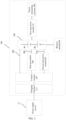
FIG. 1 is a schematic diagram of an apparatus for power supply in accordance with an embodiment of the present disclosure; -
FIG. 2 is a schematic diagram of an apparatus for power supply in accordance with another embodiment of the present disclosure; -
FIG.3 is a flowchart of charging process in accordance with an embodiment of the present disclosure; -
FIG.4 is a flowchart of a method for power supply in accordance with an embodiment of the present disclosure. - Technical schemes in embodiments of the present disclosure will be clearly and completely described below in conjunction with the drawings in the embodiments of the present disclosure. It may be understood that the specific embodiments described herein are only intended to explain the relevant disclosure, not limit the present disclosure.
- Energy density, that is energy stored in an unit weight or an unit volume, is an important performance index of a battery. The key to improve energy density of a battery is to improve positive electrode materials and negative electrode materials, especially negative electrode materials. The common positive electrode materials of a lithium ion battery is metallic oxide, whereas negative electrode materials is graphite.
- In an embodiment of the present disclosure, in order to improve the energy density of a battery, a lithium ion battery with silicon negative electrode is used as a power supply battery. The operating voltage range of a graphite negative lithium ion battery is 3.4~4.45V, and the operating voltage range of a silicon negative lithium ion battery is 2.5~4.45V or 3.0~4.45V. Thereof, a discharging cut-off voltage of a graphite negative lithium ion battery is commonly set as 3.4V, a discharging cut-off voltage of a silicon negative lithium ion battery can be set as any voltage values between 2.5V to 3.0V.
- Take an intelligent terminal as an example, as the minimum working voltage of software in the intelligent terminal are set as about 3.2V, a shutdown protection voltage is set as about 3.4V so that the intelligent terminal can work well.
- If a silicon negative lithium ion battery is used in an intelligent terminal and the shutdown protection voltage is set as 3.4V, power of the silicon negative lithium ion battery cannot be used effectively, as the discharging cut-off voltage of the silicon negative lithium ion battery is 2.5~3.0V.
- In some embodiment, the system of the electronic device may be adjusted to match voltage range of the silicon negative lithium ion battery in order to make full use of the power of the silicon negative lithium ion battery. In other words, it is necessary to modify system software and circuits of electronic device, so that the minimum working voltage of the system can be reduced, for example, to 3.0 V. In other embodiments, on the discharge path of a silicon negative lithium ion battery, a boost circuit (for example, a DC-DC converter) may be used, so that voltage of the silicon negative lithium ion battery can be raised to 3.4V to supply to the system when voltage of the silicon negative lithium ion battery is below 3.4V Thus, the silicon negative lithium ion battery can continue to supply power to the system when voltage is between 2.5~3.4V.
- Through the above two ways, power of the silicon negative lithium ion battery can be effectively used and endurance of an electronic device can be improved. However, it also brings the following problems. Through the way of modifying voltage range of the system to match voltage range of the silicon negative lithium ion battery, the whole system architectures need to be modified and the power supply system of electronic device need to be adjusted, which will bring high disclosure cost. Through the way of modifying circuits, which is based on a single silicon negative lithium ion battery, the terminal's endurance capacity can be improved. However, due to the poor charging rate performance of the silicon negative lithium ion battery and an additional boost circuit is needed, it will lead to energy waste.
- In an embodiment of the present disclosure, a silicon negative lithium ion battery and an additional battery are used, which will improve charging speed comparing with just one battery is used, and can improve battery energy density comparing with a graphite negative lithium ion battery is used.
- Referring to
FIG. 1 , which is a schematic diagram of an apparatus for power supply in an embodiment of the present disclosure. The apparatus forpower supply 100 includes a first battery B1 and a second battery B2 connected in series, acontrol module 20 and a first step-down module 222 . Wherein, the first battery B 1 is a silicon negative lithium ion battery. Thecontrol module 20 is configured to control a power supply process of the first battery and the second battery connected in series based on charging demand of the first battery and the second battery connected in series, and to control the power supply process of the first battery and the second battery connected in series in response to receive a power supply instruction. - In an embodiment of the present disclosure, the charging demand includes charging voltage demand and charging current demand. In some embodiment, current and voltage of a battery can be detected by a voltameter, thereby charging demand of the battery can be determined. The control module controlling the power supply process of the first battery and the second battery includes controlling the power supply process to start or to stop, optionally controlling charging voltage and current during the power supply process, or optionally controlling charging duration of the power supply process. For example, modules such as a switch module and a boost-buck module can be configured on the charging path between a charging interface and the first battery and the second battery connected in series. Through controlling these modules, the control module can control the power supply process. Furthermore, the first battery B1 and the second battery B2 can also be connected with a battery protection plate to ensure safety of the batteries' charging process and discharging process. The battery protection plate can include a controller, which can achieve over-charging protection, over-discharging protection, over-current protection, short circuit protection, output short circuit protection and so on. The
control module 20 can be connected with the controller in the battery protection board to achieve the controlling of the charging and discharging process of the battery. - In an embodiment of the present disclosure, the first battery B1 and the second battery B2 are used to supply power to power-demanding systems. Power-demanding systems include a processor, a display, a sound player device and other modules or systems which need power to drive in order to work normally. Taking an intelligent terminal as an example, the power-demanding systems can include an disclosure processor, a camera module, a radio frequency module, a display screen and other modules which need power supplying. When the power-demanding systems need power, corresponding power supply demand instructions are generated by these systems. The
control module 20 can control the power supply process based on the first battery B1 and the second battery B2 to start. For example, power supply demand instructions will be generated when the camera module of the intelligent terminal is turned on, the display screen is turned on or call function is turned on by a user. Power demand instructions can be generated by the disclosure processor and be sent to thecontrol module 20. When the power supply demand is stopped, or when voltage of the first battery B1 or the second battery B2 reaches its discharge cut-off voltage, thecontrol module 20 controls the power supply process of the first battery B1 and the second battery B2 to stop. - When the first battery B1 and the second battery B2 are in a state of supplying power, voltage of the first battery B 1 and the second battery B2 connected in series can be stepped down according to a voltage demand of the power-demanding systems. The
control module 20 is used to control the first step-down module to step down voltage of the first battery and the second battery connected in series according to the power supply demand during the power supply process. - The second battery is a graphite negative lithium ion battery.
- In an embodiment of the present disclosure, the negative materials of the silicon negative lithium ion battery (i.e. the first battery B1) is at least one of the following materials: Si, SiC or SiO. In another embodiment of the present disclosure, the negative materials of the silicon negative lithium ion battery (i.e. the first battery B1) is made from at least one of Si, SiC or SiO mixed with graphite, wherein the content of Si is greater than 0% and less than 100%.
- Referring to
FIG.2 , which is a schematic diagram of an apparatus for power supply in accordance with another embodiment of the present disclosure. The apparatus for power supply includes abattery module 200, the first step-down module 22, a second step-down module 203, a balance module 204, a step-up module 205, power demanding systems 206, acontrol module 207 and acharging interface 211. Thebattery module 200 contains the first battery B1 and the second battery B2 connected in series. - The apparatus for
power supply 100 can be connected with thepower supply device 21 through the charginginterface 211. Thepower supply device 21 is configured to supply power to the apparatus forpower supply 100. The power supply device 21can be a device which can supply power, such as a power adapter, a power bank or a car charger and so on. - Referring to
FIG.2 , the apparatus forpower supply 100 includes at least one of the following charging paths: a directly chargingpath 208, a step-up chargingpath 209 or a step-downcharging path 210. - The
control module 207 controls the directly chargingpath 208 to be turned on, when the charging voltage provided by thepower supply device 21 can meet the charging demand of thebattery module 200. Thereof, the charging voltage provided by thepower supply device 21 can enter into thebattery module 200 directly. The directly chargingpath 208 can be a wire. In an embodiment, a switch can be configured on the wire to implement a turn-on or turn-off state of the directly chargingpath 208. - In an embodiment of the present disclosure, the step-up
module 205 is configured on the step-up chargingpath 209, and is configured to step up the input voltage provided by thepower supply device 21, to satisfy the charging voltage demand of thebattery module 200. - Since the
battery module 200 includes a silicon negative lithium ion battery 201 and a graphite negative lithium ion battery 202 connected in series, when the charging voltage provided by thepower supply device 21 cannot satisfy the charging voltage demand of thebattery module 200, thecontrol module 207 controls the step-up chargingpath 209 to be turned on. In this way, input charging voltage provided by thepower supply device 21 can be stepped up by the step-upmodule 205, and then be provided to thebattery module 200. - In an embodiment of the present disclosure, the second step-down module 203, such as a Buck circuit, a charge pump, etc., can be configured on the step-down
charging path 210 to step down charging voltage provided by thepower supply device 21 to provide to thebattery module 200. Thecontrol module 207 is configured to control the step-downcharging path 210 to be turned on. - In addition, the step-up charging
path 209 and the step-downcharging path 210 can also be combined into one charging path. A buck-boost module, such as a Buck-Boost circuit, can be configured on the combined charging path, to achieve step-up charging or step-down charging. - The
power supply module 100 may be configured in an electronic device, which may be an intelligent terminal, a notebook computer, a drone, an e-book, a notebook computer, a tablet computer, an electronic cigarette, a smart electronic device (for example, a watch, a bracelet, a smart glasses, a sweeping robots, etc.), and other electronic products (for example, wireless headsets, Bluetooth speakers, electric toothbrushes, rechargeable wireless mice, etc.). - When the
battery module 200 is charged through thedirect charging path 208 of the above three charging paths, since the charging voltage provided by thepower supply device 21 can directly enter into the battery without being stepped down or stepped up, energy loss and heat which are generated by a step-down or a step-up processing can be solved. When thebattery module 200 is charged in this way, the electronic device and thepower supply device 21 can perform two-way communication (for example, the electronic device can implement a wired communication with thepower supply device 21 through a data line in the charginginterface 211 of the electronic device, or the electronic device can communicate with thepower supply device 21 through a wireless communication module). The electronic device can detect a voltage and a current of each battery in thebattery module 200 and feed them back to thepower supply device 21. Therefore, in order to meet the changing demands of the electronic device, thepower supply device 21 can adjust output charging voltage and current according to voltage and current of the battery fed back by the electronic device. - It should be understood that the information fed back by the electronic device is not limited to the voltage and the current of the battery, but may also be information such as battery capacity information and temperature information which can be used to determine charging voltage and current.
- In an embodiment of the present disclosure, the electronic device and the
power supply device 21 can communicate with each other to determine which one of the above three charging paths is used for charging. For example, thepower supply device 21 can send charging voltage information it can provide to the electronic device. Therefore, the electronic device can determine to use which charging paths according to the charging voltage information provided by the power supply device and charging voltage requirements of thebattery module 200. In some embodiments, thepower supply device 21 can send specific information to the electronic device, for example, model information of thepower supply device 21. The specific information corresponds to charging voltage that can be provided by thepower supply device 21. Therefore, the electronic device can determine which charging path should be turned on according to the specific information. - In some embodiments, the electronic device can also actively detect the
power supply device 21 to determine charging voltage that can be provided by thepower supply device 21. For example, if thepower supply device 21 is a computer, through a protocol interaction, the electronic device can determine that thepower supply device 21 is a computer and can only provide a charging voltage of 5V. Therefore, the step-up chargingpath 209 needs to be turned on for charging. - Referring to
FIG. 3 , which is a flowchart of charging process in accordance with an embodiment of the present disclosure. Instep 301, the above-mentioned method is adopted to determine which charging path is used. After the charging path is determined, thepower supply device 21 outputs voltage and current to charge thebattery module 200. - In an embodiment, before charging the first battery and the second battery connected in series, in
step 302, the method includes detecting voltage of the first battery B1 and voltage of the second battery B2. When voltage of the first battery B1 and voltage of the second battery B2 are different, instep 303, the method includes controlling the balance module 204 to balance voltage of the first battery B 1 and voltage of the second battery B2. When voltage of the first battery B1 and voltage of the second battery B2 are the same, instep 304, the method includes controlling a charging process for charging the first battery B 1 and the second battery B2 to start. - In some other embodiments of the present disclosure, before starting the charging process, voltage of the two batteries may be detected first. If voltage of the two batteries are different, the balance module 204 is used to balance to make voltage of the two batteries the same. Alternatively, in some embodiments, the battery with a low voltage may be charged first until voltage of the two batteries are the same, and then the two batteries are charged in series.
- The lithium ion battery with silicon negative and the lithium ion battery with graphite negative can withstand different charge rates. The charge rate of a graphite negative lithium ion battery can be 0.5-3C, and the charge rate of a silicon negative lithium ion battery can be 1C. Therefore, during the charging process, the charging rate should not be set higher than 1C. In addition, during the charging process, voltage of the silicon negative lithium ion battery and voltage of the graphite negative lithium ion battery are detected, and when voltage of any battery reaches its corresponding charging cut-off voltage, the charging process is stopped.
- When the
battery module 200 is charged in a CC-CV (constant current-constant voltage) mode, the charging cut-off voltage of the constant current charging stage can be set to Vs. During the charging process, the balance module 204 is used to balance voltage between the silicon negative lithium ion battery and the graphite negative lithium ion battery by means of power transfer. The balance module 204 can adopt an active balance method to transfer power between the two batteries. For example, the balance module 204 can be a CUK balance circuit, a voltage regulator type balance circuit, and the like. In some embodiments, the balance module 204 may also adopt a passive balance method, for example, a method in which a resistor is used to consume power. - When voltage of any battery reaches Vs, the charging process enters into a constant voltage charging stage from the constant current charging stage. In the constant voltage charging stage, constant charging voltage can be at a voltage value of Vs or less, until a charging stop condition is met, the charging process is stopped. The charging stop condition may be that the charging current is less than a preset value or the time for charging with the constant charging voltage reaches a preset time value. In an embodiment of the present disclosure, the charging process of the
battery module 200 may include one or more of a trickle charging phase, a constant current charging phase, and a constant voltage charging phase. - In an embodiment of the present disclosure, in order to increase a charging speed, the charging voltage and the charging current can be controlled to shorten the charging duration of the constant voltage charging phase, or the constant voltage charging phase can be eliminated. For example, in some embodiment, the charging cut-off voltage of the constant current charging stage may be set to a value of Vn which is higher than the preset cut-off voltage of a graphite negative lithium ion battery or a silicon negative lithium ion battery. The preset value is related to the system of a battery and the used materials of a battery. For example, for a graphite negative lithium ion battery, the preset cut-off voltage is about 4.2V to 4.4V. Vn can be a value increased by any value between 0.05V and 0.1V on the basis of the preset cut-off voltage. For example, the charge cut-off voltage can be set to 4.45V
- When charging a silicon negative lithium ion battery and a graphite negative lithium ion battery connected in series, it is necessary to monitor whether voltage of each cell reaches the charging cut-off voltage. When voltage of any battery reaches the charging cut-off voltage, it is necessary to perform a switching operation of the charging phase. Alternatively, in some embodiment, the charging path of the battery which reaches its charging cut-off voltage can be disconnected, and the battery that has not reached the preset cut-off voltage or a limit voltage can be continuously charged, so that voltage of the two batteries can reach the charging cut-off voltage respectively.
- In the embodiments of this disclosure, by using a silicon negative lithium ion battery connected in series with other batteries, charging voltage can be increased (charging voltage can be set greater than or equal to a sum of required voltages of the two batteries), thus charging speed can be increased compared with using a silicon negative lithium ion battery alone.
- Referring to
FIG. 2 , in an embodiment of the present disclosure, the first step-downmodule 22 is configured on the power supply path that is used to supply power to the power demand systems from thebattery module 200. The first step-downmodule 22 is used to step down voltage of thebattery module 200 according to voltage demand of the power demand systems 206 to supply power to the power demand systems 206. In some embodiment, the first step-downmodule 22 can be a half-voltage circuit, a Buck circuit, or the like. - The battery B1 and the battery B2 are connected in series, so discharging current of the two batteries are the same during discharging process. That is, the two batteries discharge a same amount of electricity at the same time.
- As mentioned above, when the graphite negative lithium ion battery and the silicon negative lithium ion battery are all fully charged, voltage of the two batteries are the same, for example, both are 4.45V. Therefore, when the graphite negative lithium ion battery and the silicon negative lithium ion battery discharge at the same time to supply power to the power demand systems 206, since the discharge cut-off voltage of the graphite negative lithium ion battery is higher than that of the silicon negative lithium ion battery, the discharge cut-off voltage of the
battery module 200 can be set to the discharge cut-off voltage of the graphite negative lithium ion battery. That is, stopping supply power to the power demanding system 206, when voltage of the graphite negative lithium ion battery reaches its discharge cut-off voltage. - According to the discharge characteristics of the silicon negative lithium ion battery and the graphite negative lithium ion battery, voltage of the silicon negative lithium ion battery (i.e., the battery B2) will drop faster when the same capacity is released. For example, when voltage of a graphite negative lithium ion battery is 3.4V, voltage of a silicon negative electrode lithium ion battery is about 3.2V At this time, voltage of the graphite negative lithium ion battery reaches its discharging cut-off voltage.
- When both batteries are fully charged, the highest voltage that the
battery module 200 can provide during power supply process is, for example, 8.9V Voltage provided by thebattery module 200 is reduced by the first step-downmodule 22 to supply to the power demanding systems 206. When voltage of the battery B1 reaches its discharge cut-off voltage (for example, 3.4V), stop supply power to the power demanding systems 206. - It should be understood that the discharging cut-off voltage can be set based on actual use conditions, and the embodiment of the present disclosure does not limit this. For example, when the
battery module 200 is used in an electronic device, the discharge cut-off voltage can be set to 3.0V - During the power supply process, the balance module 204 can also balance voltage of the two batteries by means of power transfer, so that voltage of the two batteries are the same.
- In some embodiment, during the power supply process, the balance module 204 may not be used for balancing. In this case, as the discharge cut-off voltage is the discharging cut-off voltage of the battery B1, when the
battery module 200 stops supplying power to the power demand systems 206, voltage of the silicon negative lithium ion battery is lower than that of voltage of the graphite negative lithium ion battery. When thebattery module 200 is charged, voltage of the batteries are detected firstly, and voltage of the two batteries are balanced by the balance module 204 when voltage of the two batteries are different to make voltage of the two batteries the same, or the battery with lower voltage is charged firstly until voltage of the two batteries are the same. - It should be understood that, in the embodiment of the present disclosure, the silicon negative lithium ion battery can also be replaced by an Sn negative lithium ion battery.
- In the embodiments of the present disclosure, by using the silicon negative lithium ion battery connected in series with other batteries, the power supply voltage can be the sum of voltage of the two batteries, thereby it is not need to adjust the system architecture or add a boost circuit. Due to the high energy density of silicon negative lithium ion battery, when connected in series with other battery, the same amount of electricity is released, voltage of the silicon negative lithium ion battery drops more rapidly. Therefore, when voltage of the graphite negative lithium ion battery is 3.4V, voltage of the silicon negative lithium ion battery is lower than 3.4V, which can be about 3.2V Voltage of the silicon negative lithium ion battery can be fully used.
- Referring to
FIG. 4 , which is a flowchart of a method for power supply according to an embodiment of the present disclosure. The method for power supply can be applied to an electronic device, and the electronic device includes a first battery B1 and a second battery B2 connected in series. The method includes the followings. - In
step 401, during a power supply process, the method includes controlling the first voltage step-down module to step down voltage of the first battery and the second battery which are connected in series to supply power, based on power supply demand. - During a charging process and a power supply process, the method further includes controlling the balance module to balance voltage of the first battery B 1 and the second battery B2, so that voltage of the first battery B1 and the second battery B2 are the same during the charging process and the power supply process. In one embodiment, a discharge cut-off voltage of the first battery B 1 is lower than a discharge cut-off voltage of the second battery B2. Therefore, when voltage of the second battery reaches its discharge cut-off voltage, the power supply process is controlled to stop.
- The method further includes detecting voltage of the first battery and voltage of the second battery before the first battery and the second battery connected in series are charged; controlling the balance module to balance voltage of the first battery and voltage of the second battery in response to voltage of the first battery and voltage of the second battery are different; and controlling a charging process of the first battery and the second battery to start in response to voltage of the first battery and voltage of the second battery are the same. The method further includes: detecting voltage of the first battery and voltage of the second battery before the first battery and the second battery connected in series are charged; controlling a charging process of the battery with lower voltage to start to charge the battery with lower voltage; and controlling a charging process of the first battery and the second battery connected in series to start in response to voltage of the first battery and voltage of the second battery are the same.
- Correspondingly, the present disclosure also provides a storage medium that stores an executable program, and when the executable program is executed by a processor, the foregoing method for power supply is implemented.
- In the above embodiments, implementation may be made in whole or in part in software, hardware, firmware or any combination thereof. When implemented by software, they can be implemented in the form of a computer program product in whole or in part. The computer program product includes one or more computer instructions. When the computer program instructions are loaded and executed on a computer, the processes or functions described in the embodiments of the present disclosure are provided in whole or in part. The computer may be a general purpose computer, an disclosure specific computer, a computer network, or any other programmable device. The computer instructions may be stored in a computer-readable storage medium or transmitted from one computer readable storage medium to another. For example, the computer instructions may be transmitted from one website, computer, server, or data center to another via a wired (such as coaxial cable, optical fiber, Digital Subscriber Line (DSL)) or wireless (such as infrared, wireless, microwave, etc.) connection. The computer readable storage medium may be any usable medium that can be accessed by a computer or a data storage device such as a server or a data center integrated with one or more usable medium. The usable medium may be a magnetic medium (for example, a floppy disk, a hard disk, a magnetic tape), an optical medium (for example, a Digital Video Disc (DVD)), or a semiconductor medium (for example, a Solid State Disk (SSD)), etc. The usable medium may be a magnetic medium (for example, a floppy disk, a hard disk, a magnetic tape), an optical medium (for example, a Digital Video Disc (DVD)), or a semiconductor medium (for example, a Solid State Disk (SSD)), etc.
- It can be appreciated by those skilled in the art that the units and the steps of the algorithm of examples described in combination with the embodiments disclosed herein may be implemented in electronic hardware or a combination of computer software and electronic hardware. Whether these functions are executed in hardware or software depends on specific disclosures and design constraint conditions of technical solutions. For each specific disclosure, professionals and technicians can use different methods to implement the described functions, but such implementation should not be considered beyond the scope of the present disclosure.
- In several embodiments provided by the present disclosure, it is to be understood that, the system, apparatuses and methods disclosed in several embodiments provided by the present disclosure can be implemented in any other ways. For example, the apparatus embodiments described above can be merely exemplary. For example, the units are merely divided based on logic functions. In practical implementation, the units can be divided in other manners. For example, multiple units or components can be combined or integrated into another system, or some features can be omitted or not executed. In addition, mutual coupling or direct coupling or communication connection described or discussed can be achieved via some interfaces, and indirect coupling or communication connection between apparatuses or units may be electrical, mechanical or of other forms.
- The units illustrated as separate components can be or not be separated physically, and components described as display units can be or not be physical units, i.e., can be located at one position, or can be distributed onto multiple network units. It is possible to select some or all of the units according to actual needs, for achieving the objective of embodiments of the present disclosure.
- In addition, respective functional units in respective embodiments of the present disclosure can be integrated into one processing unit, or can be present as separate physical entities. It is also possible to integrate two or more units into one unit.
- The embodiments of the present disclosure are described in detail above with reference to the accompanying drawings. However, the present disclosure is not limited to the specific details in the foregoing embodiments. Within the scope of the technical concept of the present disclosure, many simple modifications can be made to the technical solutions of the present disclosure.
- In addition, it should be noted that the various specific technical features described in the above-mentioned specific embodiments can be combined in any suitable manner without contradiction. In order to avoid unnecessary repetition, this disclosure provides various possible combinations. The combination method will not be explained separately.
- In addition, various different implementations of this disclosure can also be combined arbitrarily, as long as they do not violate the idea of this disclosure, they should also be regarded as the content disclosed in this disclosure.
- Any change or replacement within the technical scope disclosed by the present disclosure that can be easily conceived by a technical person familiar with the technical field of the present disclosure should fall in the scope of the present disclosure, which is defined only by the claims as attached.
Claims (14)
- An apparatus for supplying power, comprising:a first battery (B 1) which is a silicon negative lithium ion battery;a second battery (B2) which is a graphite negative lithium ion battery connected in series with the first battery;a voltage step-down module (22) configured to step down a voltage of the first battery and the second battery connected in series; anda control module (20) configured to control the voltage step-down module to step down the voltage of the first battery and the second battery connected in series to supply power based on power supply demands, during a power supply process;wherein a discharge cut-off voltage of the first battery is lower than a discharge cut-off voltage of the second battery; and the control module is configured to control the power supply process to stop discharge in response to a voltage of the second battery reaching the discharge cut-off voltage of the second battery.
- The apparatus according to claim 1, characterized in that the apparatus further comprises:
a balance module (204), configured to balance the voltage of the first battery and the voltage of the second battery, so that the voltage of the first battery and voltage of the second battery are the same during the power supply process. - The apparatus according to claim 1 or 2, characterized in that the control module is further configured to control the balance module to balance the voltage of the first battery and the voltage of the second battery, so that the voltage of the first battery and the voltage of the second battery are the same, after the power supply process is stopped.
- The apparatus according to claim 2, characterized in that the apparatus further comprises:
a charging interface (211), wherein the control module is further configured to control voltage and current inputted into the charging interface to directly load on the first battery and the second battery connected in series, to charge the first battery and the second battery. - The apparatus according to claim 4, characterized in that the apparatus further comprises:a step-up module (205) configured to step up a received charging voltage to charge the first battery and the second battery connected in series; ora second voltage step-down module (203) configured to step down a received charging voltage to charge the first battery and the second battery connected in series.
- The apparatus according to claim 4 or 5, characterized in that the control module is further configured to:detect the voltage of the first battery and the voltage of the second battery before the first battery and the second battery connected in series are charged; control the balance module to balance the voltage of the first battery and the voltage of the second battery in response to the voltage of the first battery and the voltage of the second battery being different; and control a charging process of the first battery and the second battery to start after the voltage of the first battery and the voltage of the second battery are the same; ordetect the voltage of the first battery and the voltage of the second battery before the first battery and the second battery connected in series are charged; control a charging process of the battery with a lower voltage to start in response to the voltage of the first battery and the voltage of the second battery being different; and control a charging process of the first battery and the second battery connected in series to start after the voltage of the first battery and the voltage of the second battery are the same.
- The apparatus according to claim 1, characterized in that the voltage step-down module is a half-voltage circuit or a Buck circuit.
- The apparatus according to claim 1, characterized in that an energy density of the first battery and an energy density of the second battery are different, and the energy density of the first battery is higher than the energy density of the second battery.
- The apparatus according to claim 1, characterized in that the negative material of the silicon negative lithium ion battery is at least one of the following materials: Si, SiC or SiO; or
the negative material of the silicon negative lithium ion battery is made from at least one of Si, SiC or SiO mixed with graphite, wherein the percentage of Si is greater than 0% and less than 100%. - A method for power supply, applied to an electronic device, wherein the electronic device comprises a first battery (B1) and a second battery (B2) connected in series, the first battery is a silicon negative lithium ion battery, the second battery is a graphite negative lithium ion battery, and the method comprises:during a power supply process, (401) controlling a voltage step-down module (22) to step down a voltage of the first battery and the second battery connected in series to supply power based on power supply demands;wherein a discharge cut-off voltage of the first battery is lower than a discharge cut-off voltage of the second battery; and the method further comprises: controlling the power supply process to stop discharge in response to a voltage of the second battery reaches the discharge cut-off voltage of the second battery.
- The method according to claim 10, characterized in that the method further comprises:
controlling a balance module to balance the voltage of the first battery and the voltage of the second battery, so that a voltage of the first battery and a voltage of the second battery are the same during the power supply process. - The method according to claim 10, characterized in that further comprises:detecting (302) a voltage of the first battery and a voltage of the second battery before the first battery and the second battery connected in series are charged; controlling (303) the balance module to balance the voltage of the first battery and the voltage of the second battery in response to the voltage of the first battery and the voltage of the second battery being different; and controlling (304) a charging process of the first battery and the second battery connected in series to start after the voltage of the first battery and the voltage of the second battery are the same; ordetecting the voltage of the first battery and the voltage of the second battery before the first battery and the second battery connected in series are charged; controlling a charging process of the battery with a lower voltage to start to charge the battery with the lower voltage; and controlling a charging process of the first battery and the second battery connected in series to start after the voltage of the first battery and the voltage of the second battery are the same.
- An electronic device, characterized in that the electronic device comprises an apparatus for supplying power of any one of claims 1 to 9.
- A storage medium storing an executable program, characterized in that the executable program, when executed by a processor, implements the method for power supply of any one of claims 10 to 12.
Applications Claiming Priority (1)
| Application Number | Priority Date | Filing Date | Title |
|---|---|---|---|
| PCT/CN2019/079322 WO2020191541A1 (en) | 2019-03-22 | 2019-03-22 | Power supply device and method, and electronic device |
Publications (3)
| Publication Number | Publication Date |
|---|---|
| EP3905476A1 EP3905476A1 (en) | 2021-11-03 |
| EP3905476A4 EP3905476A4 (en) | 2022-04-20 |
| EP3905476B1 true EP3905476B1 (en) | 2024-11-06 |
Family
ID=72610408
Family Applications (1)
| Application Number | Title | Priority Date | Filing Date |
|---|---|---|---|
| EP19921764.7A Active EP3905476B1 (en) | 2019-03-22 | 2019-03-22 | Power supply device and method, and electronic device |
Country Status (4)
| Country | Link |
|---|---|
| US (1) | US12125990B2 (en) |
| EP (1) | EP3905476B1 (en) |
| CN (1) | CN113273049A (en) |
| WO (1) | WO2020191541A1 (en) |
Families Citing this family (8)
| Publication number | Priority date | Publication date | Assignee | Title |
|---|---|---|---|---|
| US11652315B2 (en) * | 2018-04-17 | 2023-05-16 | Aptiv Technologies Limited | Electrical power supply device |
| WO2020228026A1 (en) | 2019-05-16 | 2020-11-19 | Oppo广东移动通信有限公司 | Power supply circuit, charging-discharging circuit and intelligent terminal |
| HUE062267T2 (en) * | 2020-12-30 | 2023-10-28 | Contemporary Amperex Technology Co Ltd | Method and apparatus for equalizing a battery module, battery module, and power management controller |
| CN113675926B (en) * | 2021-08-30 | 2024-05-24 | 广东小天才科技有限公司 | A charging and discharging circuit, a charging and discharging method and a terminal |
| CN114336880A (en) * | 2022-01-06 | 2022-04-12 | 揭西县小天使电子电器有限公司 | A battery-powered circuit for an electric piano |
| CN115037011A (en) * | 2022-04-19 | 2022-09-09 | 伏达半导体(合肥)有限公司 | Dual-battery charging device and method and controller thereof |
| US20230344262A1 (en) * | 2022-04-25 | 2023-10-26 | Apple Inc. | System and method for variable discharging techniques of a battery cell |
| CN115051441A (en) * | 2022-06-28 | 2022-09-13 | Oppo广东移动通信有限公司 | Charging and discharging circuit, charging and discharging control method and electronic equipment |
Family Cites Families (11)
| Publication number | Priority date | Publication date | Assignee | Title |
|---|---|---|---|---|
| US7866425B2 (en) * | 2004-06-28 | 2011-01-11 | General Electric Company | Hybrid electric propulsion system and method |
| TW201117516A (en) * | 2009-11-12 | 2011-05-16 | Green Solution Tech Co Ltd | Battery voltage balancing apparatus and battery charging apparatus |
| US8765306B2 (en) * | 2010-03-26 | 2014-07-01 | Envia Systems, Inc. | High voltage battery formation protocols and control of charging and discharging for desirable long term cycling performance |
| CN102222941B (en) * | 2010-04-13 | 2013-09-18 | 登丰微电子股份有限公司 | Battery voltage balancing device and battery charging device |
| CN102185159B (en) * | 2011-04-19 | 2013-08-14 | 吴粤滨 | Basic unit lithium battery pack module, multistage lithium battery pack and charge and discharge equilibrium method |
| CN103794828B (en) * | 2012-10-30 | 2016-05-18 | 中国科学院上海高等研究院 | A kind of lithium ion battery fast charge method and device |
| EP2983000B1 (en) * | 2013-04-01 | 2019-06-05 | Sony Corporation | Electrical storage device, electrical storage system, and electric vehicle |
| CN203690990U (en) | 2013-12-25 | 2014-07-02 | 比亚迪股份有限公司 | Mobile power supply |
| CN104253469B (en) * | 2014-09-24 | 2017-03-15 | 于志章 | Secondary battery management of charging and discharging system |
| CN105634057A (en) * | 2016-01-15 | 2016-06-01 | 北京小米移动软件有限公司 | Battery, mobile terminal and battery control method |
| CN205509556U (en) * | 2016-02-29 | 2016-08-24 | 维沃移动通信有限公司 | Mobile terminal |
-
2019
- 2019-03-22 CN CN201980087608.3A patent/CN113273049A/en active Pending
- 2019-03-22 EP EP19921764.7A patent/EP3905476B1/en active Active
- 2019-03-22 WO PCT/CN2019/079322 patent/WO2020191541A1/en not_active Ceased
-
2021
- 2021-07-26 US US17/385,818 patent/US12125990B2/en active Active
Also Published As
| Publication number | Publication date |
|---|---|
| WO2020191541A1 (en) | 2020-10-01 |
| EP3905476A1 (en) | 2021-11-03 |
| CN113273049A (en) | 2021-08-17 |
| US12125990B2 (en) | 2024-10-22 |
| US20210367278A1 (en) | 2021-11-25 |
| EP3905476A4 (en) | 2022-04-20 |
Similar Documents
| Publication | Publication Date | Title |
|---|---|---|
| US12125990B2 (en) | Apparatus and method for power supply and electronic device | |
| EP4145669B1 (en) | Charging/discharging circuit and electronic device | |
| US20220060038A1 (en) | Charging method and charging device | |
| CN1870346B (en) | Systems and methods incorporating charger regulation in a battery system | |
| US9269333B2 (en) | Terminal and method for charging and discharging thereof | |
| US20250125644A1 (en) | Adaptive power systems and techniques | |
| US11722062B2 (en) | Power supply device, electronic device and power supply method | |
| US11539226B2 (en) | Charging circuit and electronic device | |
| JP2018121516A (en) | Controlling power delivery to battery | |
| TWI842127B (en) | Parallel charging method for electric vehicle batteries | |
| US20130264992A1 (en) | Power pack charging from intermittent sources | |
| US6653814B1 (en) | Method for determining power supply compatibility in a portable device | |
| CN116388324A (en) | Voltage equalization module, method and energy storage device, readable storage medium | |
| CN115800423B (en) | Energy storage system and method for regulating an energy storage system | |
| WO2024139447A1 (en) | Charge-discharge equalization control method and apparatus, system and electronic device | |
| US20220060034A1 (en) | Charging current control method, electronic device, and power supply device | |
| CN116846016A (en) | Overvoltage protection methods, energy storage equipment and battery packs | |
| CN117944525A (en) | Parallel battery charging method for electric vehicle | |
| CN118174393A (en) | Battery pack balancing control circuit, method and terminal device | |
| CN115800422A (en) | Energy storage system and adjustment method for energy storage system | |
| US20220302734A1 (en) | Parallel charger circuit with battery feedback control | |
| CN222897070U (en) | A mobile power supply control circuit and device supporting multiple output ports | |
| CN115800421B (en) | Energy storage system and method for regulating an energy storage system | |
| CN115800420B (en) | Energy storage systems and methods of regulating energy storage systems | |
| US20220037912A1 (en) | Charging and discharging device, charging and discharging method and terminal device |
Legal Events
| Date | Code | Title | Description |
|---|---|---|---|
| STAA | Information on the status of an ep patent application or granted ep patent |
Free format text: STATUS: THE INTERNATIONAL PUBLICATION HAS BEEN MADE |
|
| PUAI | Public reference made under article 153(3) epc to a published international application that has entered the european phase |
Free format text: ORIGINAL CODE: 0009012 |
|
| STAA | Information on the status of an ep patent application or granted ep patent |
Free format text: STATUS: REQUEST FOR EXAMINATION WAS MADE |
|
| 17P | Request for examination filed |
Effective date: 20210730 |
|
| AK | Designated contracting states |
Kind code of ref document: A1 Designated state(s): AL AT BE BG CH CY CZ DE DK EE ES FI FR GB GR HR HU IE IS IT LI LT LU LV MC MK MT NL NO PL PT RO RS SE SI SK SM TR |
|
| A4 | Supplementary search report drawn up and despatched |
Effective date: 20220323 |
|
| RIC1 | Information provided on ipc code assigned before grant |
Ipc: H02J 7/00 20060101AFI20220318BHEP |
|
| DAV | Request for validation of the european patent (deleted) | ||
| DAX | Request for extension of the european patent (deleted) | ||
| STAA | Information on the status of an ep patent application or granted ep patent |
Free format text: STATUS: EXAMINATION IS IN PROGRESS |
|
| 17Q | First examination report despatched |
Effective date: 20240318 |
|
| GRAP | Despatch of communication of intention to grant a patent |
Free format text: ORIGINAL CODE: EPIDOSNIGR1 |
|
| STAA | Information on the status of an ep patent application or granted ep patent |
Free format text: STATUS: GRANT OF PATENT IS INTENDED |
|
| INTG | Intention to grant announced |
Effective date: 20240705 |
|
| GRAS | Grant fee paid |
Free format text: ORIGINAL CODE: EPIDOSNIGR3 |
|
| GRAA | (expected) grant |
Free format text: ORIGINAL CODE: 0009210 |
|
| STAA | Information on the status of an ep patent application or granted ep patent |
Free format text: STATUS: THE PATENT HAS BEEN GRANTED |
|
| AK | Designated contracting states |
Kind code of ref document: B1 Designated state(s): AL AT BE BG CH CY CZ DE DK EE ES FI FR GB GR HR HU IE IS IT LI LT LU LV MC MK MT NL NO PL PT RO RS SE SI SK SM TR |
|
| REG | Reference to a national code |
Ref country code: GB Ref legal event code: FG4D |
|
| REG | Reference to a national code |
Ref country code: CH Ref legal event code: EP |
|
| REG | Reference to a national code |
Ref country code: DE Ref legal event code: R096 Ref document number: 602019061758 Country of ref document: DE |
|
| REG | Reference to a national code |
Ref country code: IE Ref legal event code: FG4D |
|
| REG | Reference to a national code |
Ref country code: LT Ref legal event code: MG9D |
|
| REG | Reference to a national code |
Ref country code: NL Ref legal event code: MP Effective date: 20241106 |
|
| P01 | Opt-out of the competence of the unified patent court (upc) registered |
Free format text: CASE NUMBER: APP_9782/2025 Effective date: 20250226 |
|
| PG25 | Lapsed in a contracting state [announced via postgrant information from national office to epo] |
Ref country code: PT Free format text: LAPSE BECAUSE OF FAILURE TO SUBMIT A TRANSLATION OF THE DESCRIPTION OR TO PAY THE FEE WITHIN THE PRESCRIBED TIME-LIMIT Effective date: 20250306 Ref country code: IS Free format text: LAPSE BECAUSE OF FAILURE TO SUBMIT A TRANSLATION OF THE DESCRIPTION OR TO PAY THE FEE WITHIN THE PRESCRIBED TIME-LIMIT Effective date: 20250306 Ref country code: HR Free format text: LAPSE BECAUSE OF FAILURE TO SUBMIT A TRANSLATION OF THE DESCRIPTION OR TO PAY THE FEE WITHIN THE PRESCRIBED TIME-LIMIT Effective date: 20241106 |
|
| PG25 | Lapsed in a contracting state [announced via postgrant information from national office to epo] |
Ref country code: FI Free format text: LAPSE BECAUSE OF FAILURE TO SUBMIT A TRANSLATION OF THE DESCRIPTION OR TO PAY THE FEE WITHIN THE PRESCRIBED TIME-LIMIT Effective date: 20241106 Ref country code: NL Free format text: LAPSE BECAUSE OF FAILURE TO SUBMIT A TRANSLATION OF THE DESCRIPTION OR TO PAY THE FEE WITHIN THE PRESCRIBED TIME-LIMIT Effective date: 20241106 |
|
| REG | Reference to a national code |
Ref country code: AT Ref legal event code: MK05 Ref document number: 1740463 Country of ref document: AT Kind code of ref document: T Effective date: 20241106 |
|
| PG25 | Lapsed in a contracting state [announced via postgrant information from national office to epo] |
Ref country code: BG Free format text: LAPSE BECAUSE OF FAILURE TO SUBMIT A TRANSLATION OF THE DESCRIPTION OR TO PAY THE FEE WITHIN THE PRESCRIBED TIME-LIMIT Effective date: 20241106 |
|
| PG25 | Lapsed in a contracting state [announced via postgrant information from national office to epo] |
Ref country code: ES Free format text: LAPSE BECAUSE OF FAILURE TO SUBMIT A TRANSLATION OF THE DESCRIPTION OR TO PAY THE FEE WITHIN THE PRESCRIBED TIME-LIMIT Effective date: 20241106 |
|
| PG25 | Lapsed in a contracting state [announced via postgrant information from national office to epo] |
Ref country code: NO Free format text: LAPSE BECAUSE OF FAILURE TO SUBMIT A TRANSLATION OF THE DESCRIPTION OR TO PAY THE FEE WITHIN THE PRESCRIBED TIME-LIMIT Effective date: 20250206 |
|
| PG25 | Lapsed in a contracting state [announced via postgrant information from national office to epo] |
Ref country code: AT Free format text: LAPSE BECAUSE OF FAILURE TO SUBMIT A TRANSLATION OF THE DESCRIPTION OR TO PAY THE FEE WITHIN THE PRESCRIBED TIME-LIMIT Effective date: 20241106 Ref country code: LV Free format text: LAPSE BECAUSE OF FAILURE TO SUBMIT A TRANSLATION OF THE DESCRIPTION OR TO PAY THE FEE WITHIN THE PRESCRIBED TIME-LIMIT Effective date: 20241106 Ref country code: GR Free format text: LAPSE BECAUSE OF FAILURE TO SUBMIT A TRANSLATION OF THE DESCRIPTION OR TO PAY THE FEE WITHIN THE PRESCRIBED TIME-LIMIT Effective date: 20250207 |
|
| PG25 | Lapsed in a contracting state [announced via postgrant information from national office to epo] |
Ref country code: PL Free format text: LAPSE BECAUSE OF FAILURE TO SUBMIT A TRANSLATION OF THE DESCRIPTION OR TO PAY THE FEE WITHIN THE PRESCRIBED TIME-LIMIT Effective date: 20241106 |
|
| PG25 | Lapsed in a contracting state [announced via postgrant information from national office to epo] |
Ref country code: RS Free format text: LAPSE BECAUSE OF FAILURE TO SUBMIT A TRANSLATION OF THE DESCRIPTION OR TO PAY THE FEE WITHIN THE PRESCRIBED TIME-LIMIT Effective date: 20250206 |
|
| PG25 | Lapsed in a contracting state [announced via postgrant information from national office to epo] |
Ref country code: SM Free format text: LAPSE BECAUSE OF FAILURE TO SUBMIT A TRANSLATION OF THE DESCRIPTION OR TO PAY THE FEE WITHIN THE PRESCRIBED TIME-LIMIT Effective date: 20241106 |
|
| PG25 | Lapsed in a contracting state [announced via postgrant information from national office to epo] |
Ref country code: DK Free format text: LAPSE BECAUSE OF FAILURE TO SUBMIT A TRANSLATION OF THE DESCRIPTION OR TO PAY THE FEE WITHIN THE PRESCRIBED TIME-LIMIT Effective date: 20241106 |
|
| PG25 | Lapsed in a contracting state [announced via postgrant information from national office to epo] |
Ref country code: EE Free format text: LAPSE BECAUSE OF FAILURE TO SUBMIT A TRANSLATION OF THE DESCRIPTION OR TO PAY THE FEE WITHIN THE PRESCRIBED TIME-LIMIT Effective date: 20241106 |
|
| PG25 | Lapsed in a contracting state [announced via postgrant information from national office to epo] |
Ref country code: RO Free format text: LAPSE BECAUSE OF FAILURE TO SUBMIT A TRANSLATION OF THE DESCRIPTION OR TO PAY THE FEE WITHIN THE PRESCRIBED TIME-LIMIT Effective date: 20241106 |
|
| PG25 | Lapsed in a contracting state [announced via postgrant information from national office to epo] |
Ref country code: SK Free format text: LAPSE BECAUSE OF FAILURE TO SUBMIT A TRANSLATION OF THE DESCRIPTION OR TO PAY THE FEE WITHIN THE PRESCRIBED TIME-LIMIT Effective date: 20241106 |
|
| PG25 | Lapsed in a contracting state [announced via postgrant information from national office to epo] |
Ref country code: CZ Free format text: LAPSE BECAUSE OF FAILURE TO SUBMIT A TRANSLATION OF THE DESCRIPTION OR TO PAY THE FEE WITHIN THE PRESCRIBED TIME-LIMIT Effective date: 20241106 |
|
| PG25 | Lapsed in a contracting state [announced via postgrant information from national office to epo] |
Ref country code: IT Free format text: LAPSE BECAUSE OF FAILURE TO SUBMIT A TRANSLATION OF THE DESCRIPTION OR TO PAY THE FEE WITHIN THE PRESCRIBED TIME-LIMIT Effective date: 20241106 |
|
| REG | Reference to a national code |
Ref country code: DE Ref legal event code: R097 Ref document number: 602019061758 Country of ref document: DE |
|
| PG25 | Lapsed in a contracting state [announced via postgrant information from national office to epo] |
Ref country code: SE Free format text: LAPSE BECAUSE OF FAILURE TO SUBMIT A TRANSLATION OF THE DESCRIPTION OR TO PAY THE FEE WITHIN THE PRESCRIBED TIME-LIMIT Effective date: 20241106 |
|
| PLBE | No opposition filed within time limit |
Free format text: ORIGINAL CODE: 0009261 |
|
| STAA | Information on the status of an ep patent application or granted ep patent |
Free format text: STATUS: NO OPPOSITION FILED WITHIN TIME LIMIT |
|
| PG25 | Lapsed in a contracting state [announced via postgrant information from national office to epo] |
Ref country code: MC Free format text: LAPSE BECAUSE OF FAILURE TO SUBMIT A TRANSLATION OF THE DESCRIPTION OR TO PAY THE FEE WITHIN THE PRESCRIBED TIME-LIMIT Effective date: 20241106 |
|
| 26N | No opposition filed |
Effective date: 20250807 |
|
| REG | Reference to a national code |
Ref country code: CH Ref legal event code: H13 Free format text: ST27 STATUS EVENT CODE: U-0-0-H10-H13 (AS PROVIDED BY THE NATIONAL OFFICE) Effective date: 20251024 |
|
| PG25 | Lapsed in a contracting state [announced via postgrant information from national office to epo] |
Ref country code: LU Free format text: LAPSE BECAUSE OF NON-PAYMENT OF DUE FEES Effective date: 20250322 |
|
| GBPC | Gb: european patent ceased through non-payment of renewal fee |
Effective date: 20250322 |
|
| REG | Reference to a national code |
Ref country code: BE Ref legal event code: MM Effective date: 20250331 |
|
| PG25 | Lapsed in a contracting state [announced via postgrant information from national office to epo] |
Ref country code: GB Free format text: LAPSE BECAUSE OF NON-PAYMENT OF DUE FEES Effective date: 20250322 |
|
| PG25 | Lapsed in a contracting state [announced via postgrant information from national office to epo] |
Ref country code: FR Free format text: LAPSE BECAUSE OF NON-PAYMENT OF DUE FEES Effective date: 20250331 |
|
| PG25 | Lapsed in a contracting state [announced via postgrant information from national office to epo] |
Ref country code: BE Free format text: LAPSE BECAUSE OF NON-PAYMENT OF DUE FEES Effective date: 20250331 |
|
| PG25 | Lapsed in a contracting state [announced via postgrant information from national office to epo] |
Ref country code: CH Free format text: LAPSE BECAUSE OF NON-PAYMENT OF DUE FEES Effective date: 20250331 |
|
| PG25 | Lapsed in a contracting state [announced via postgrant information from national office to epo] |
Ref country code: IE Free format text: LAPSE BECAUSE OF NON-PAYMENT OF DUE FEES Effective date: 20250322 |
|
| PGFP | Annual fee paid to national office [announced via postgrant information from national office to epo] |
Ref country code: DE Payment date: 20260324 Year of fee payment: 8 |