EP3904597A1 - Tissue paper - Google Patents
Tissue paper Download PDFInfo
- Publication number
- EP3904597A1 EP3904597A1 EP20752793.8A EP20752793A EP3904597A1 EP 3904597 A1 EP3904597 A1 EP 3904597A1 EP 20752793 A EP20752793 A EP 20752793A EP 3904597 A1 EP3904597 A1 EP 3904597A1
- Authority
- EP
- European Patent Office
- Prior art keywords
- tissue paper
- mass
- oil
- machine direction
- paper
- Prior art date
- Legal status (The legal status is an assumption and is not a legal conclusion. Google has not performed a legal analysis and makes no representation as to the accuracy of the status listed.)
- Pending
Links
Images
Classifications
-
- D—TEXTILES; PAPER
- D21—PAPER-MAKING; PRODUCTION OF CELLULOSE
- D21H—PULP COMPOSITIONS; PREPARATION THEREOF NOT COVERED BY SUBCLASSES D21C OR D21D; IMPREGNATING OR COATING OF PAPER; TREATMENT OF FINISHED PAPER NOT COVERED BY CLASS B31 OR SUBCLASS D21G; PAPER NOT OTHERWISE PROVIDED FOR
- D21H27/00—Special paper not otherwise provided for, e.g. made by multi-step processes
- D21H27/002—Tissue paper; Absorbent paper
-
- D—TEXTILES; PAPER
- D21—PAPER-MAKING; PRODUCTION OF CELLULOSE
- D21H—PULP COMPOSITIONS; PREPARATION THEREOF NOT COVERED BY SUBCLASSES D21C OR D21D; IMPREGNATING OR COATING OF PAPER; TREATMENT OF FINISHED PAPER NOT COVERED BY CLASS B31 OR SUBCLASS D21G; PAPER NOT OTHERWISE PROVIDED FOR
- D21H27/00—Special paper not otherwise provided for, e.g. made by multi-step processes
- D21H27/002—Tissue paper; Absorbent paper
- D21H27/004—Tissue paper; Absorbent paper characterised by specific parameters
- D21H27/005—Tissue paper; Absorbent paper characterised by specific parameters relating to physical or mechanical properties, e.g. tensile strength, stretch, softness
-
- A—HUMAN NECESSITIES
- A47—FURNITURE; DOMESTIC ARTICLES OR APPLIANCES; COFFEE MILLS; SPICE MILLS; SUCTION CLEANERS IN GENERAL
- A47K—SANITARY EQUIPMENT; ACCESSORIES THEREFOR, e.g. TOILET ACCESSORIES
- A47K10/00—Body-drying implements; Toilet paper; Holders therefor
- A47K10/16—Paper towels; Toilet paper; Holders therefor
-
- D—TEXTILES; PAPER
- D21—PAPER-MAKING; PRODUCTION OF CELLULOSE
- D21H—PULP COMPOSITIONS; PREPARATION THEREOF NOT COVERED BY SUBCLASSES D21C OR D21D; IMPREGNATING OR COATING OF PAPER; TREATMENT OF FINISHED PAPER NOT COVERED BY CLASS B31 OR SUBCLASS D21G; PAPER NOT OTHERWISE PROVIDED FOR
- D21H27/00—Special paper not otherwise provided for, e.g. made by multi-step processes
- D21H27/30—Multi-ply
Definitions
- the present invention relates to a tissue paper.
- a tissue paper includes a moisturizing tissue in which a moisturizer containing a polyol is imparted to a base paper and a non-moisturizing tissue in which a moisturizer is not imparted to a base paper.
- the non-moisturizing tissue does not increase the amount of water due to hygroscopicity of a polyol, provides a firm feeling and a thick feeling, provides a dry use feeling with less stickiness, and has an advantage that a moisturizer is not transferred onto the skin.
- the non-moisturizing tissue includes a general-purpose type 2-ply tissue having a basis weight of about 12 g/m 2 per ply and placing importance on price, which is called a general-purpose tissue, and a tissue belonging to a product group having a higher basis weight than the general-purpose tissue, having a high price, and considered to be a high-grade product like the moisturizing tissue.
- the latter non-moisturizing tissue paper has reduced the density of paper, and has exhibited a cushioning property particularly in a thickness direction.
- Patent Literature 1 JP 2017-113223 A
- a tissue having a high water content like the moisturizing tissue easily exhibits softness, but reduces such an advantage that the tissue has excellent softness while giving a dry use feeling unique to the non-moisturizing tissue, and also reduces a firm feeling.
- a main object of the present invention is to provide a non-moisturizing tissue paper having better softness and smoothness, also providing a firm feeling, and having a high basis weight.
- a second means is
- a third means is the tissue paper according to the first means, to which a polyol is not externally applied.
- the fourth means is
- the above present invention provides a non-moisturizing tissue paper having better softness and smoothness, also providing a firm feeling, and having a high basis weight.
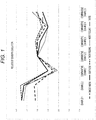
- Fig. 1 is a graph illustrating results of a sensory evaluation in Examples according to the present invention, Comparative Examples, and Conventional Examples.
- the number of plies of a tissue paper according to the present invention is three, and the basis weight thereof per ply is 12.0 g/m 2 or more.
- the basis weight per ply is preferably 13.0 g/m 2 or more.
- the basis weight of a 2-ply product is 14.0 g/m 2 or more per ply, and in particular, the basis weight is often within a range of 14.0 to 17.0 g/m 2 . This is because when the basis weight is less than 14.0 g/m 2 , it is difficult to exhibit a thick feeling and a bulky feeling, and a difference from a low-priced general-purpose product is hardly felt.
- a thick feeling can be provided even when the basis weight is within a range of 12.0 g/m 2 or more, which is lower than 14.0 g/m 2 and corresponds to the range of a general-purpose product in a case of a 2-ply product.
- a gap between two plies is formed to enhance a cushioning property, and a high-grade feeling can be sufficiently provided as compared with a low-priced general-purpose product.
- the higher an upper limit of the basis weight per ply the better the thick feeling.
- the basis weight is excessively high, it is difficult to exhibit softness, although not being necessarily limited.
- the basis weight is 14.6 g/m 2 or less, and more preferably 14.0 g/m 2 or less.
- the 3-ply tissue paper by using the 3-ply tissue paper, a thick feeling and a cushioning property can be provided even if the basis weight is in a slightly low range, unlike a 2-ply tissue paper.
- a firm feeling is enhanced.
- the paper thickness of the 3-ply tissue paper is 200 to 265 ⁇ m. In the above range of basis weight, the density is moderately low, and a cushioning property is easily felt in combination with a gap between the plies.
- the basis weight in the present invention means a value measured according to JIS P 8124 (1998).
- the paper thickness means a value obtained by sufficiently subjecting a test piece to humidity control under conditions of JIS P 8111 (1998), and then measuring the paper thickness using a dial thickness gauge (thickness measuring instrument) "PEACOCK G type" (manufactured by Ozaki MFG. Co., Ltd.) under the same conditions. Specifically, the paper thickness is measured by confirming that there is no rubbish, dust, or the like between a plunger and a measuring table, placing the plunger on the measuring table, moving a scale of the dial thickness gauge to adjust a zero point, then raising the plunger, placing a sample on a test table, lowering the plunger slowly, and reading the current gauge.
- a dial thickness gauge thickness measuring instrument
- a terminal of the plunger is made of metal, and a circular plane thereof with a diameter of 10 mm strikes perpendicularly to a paper plane, and a load is about 70 gf when the paper thickness is measured.
- the paper thickness is an average of values obtained by performing the measurement 10 times.
- the tissue paper according to the present invention has a water content of 4.0 to 9.0% by mass.
- the tissue paper according to the present invention preferably has a water content of 4.0 to 8.0% by mass.
- the water content here is measured as follows. Two sets of samples are taken from a measurement target and are subjected to humidity control for three hours in a constant temperature and humidity room at 23°C and 50%. Each of the samples is put in a weighing bottle, the weighing bottle is sealed, and the mass thereof is measured. Subsequently, the weighing bottle is placed in a dryer adjusted to 105 ⁇ 3°C with a lid of the weighing bottle removed, and the sample is dried for four hours. The weighing bottle is covered with the lid in the dryer, and then removed from the dryer.
- a difference in water content (% by mass) between the two samples is within 1.0% by mass, an average value thereof is adopted as the water content (% by mass) of the sample. Note that the water content is expressed in % with one decimal place. Meanwhile, when the difference in water content between the two sets of samples exceeds 1.0% by mass, the test is performed again.
- the tissue paper according to the present invention has a water content of 4.0 to 9.0% by mass.
- a water content 4.0 to 9.0% by mass.
- the moisturizing tissue generally has a water content of more than 10.0% by mass. If the non-moisturizing tissue in which a moisturizer is not externally applied to a base paper is used, it is easy to set the water content to the above water content.
- the moisturizer is an externally added chemical that enhances the water content due to hygroscopicity of a polyol such as glycerin, 1,3-butylene glycol, propylene glycol, 3-methyl-1,3-butanediol, 1,3-propanediol, or 2-methyl-1,3-propanediol.
- a polyol such as glycerin, 1,3-butylene glycol, propylene glycol, 3-methyl-1,3-butanediol, 1,3-propanediol, or 2-methyl-1,3-propanediol.
- the tissue paper according to the present invention contains no glycerin. It is desirable that glycerin is not contained as an internal additive. Glycerin enhances the water content due to high hygroscopicity thereof, but easily exhibits stickiness when glycerin is contained. Furthermore, it is desirable that the tissue paper according to the present invention does not contain a trivalent or higher valent polyhydric alcohol These compounds are oily components, but exhibit stickiness.
- the tissue paper according to the present invention characteristically contains 0.15 to 0.45% by mass of an oily component to be extracted with diethyl ether.
- the tissue paper preferably contains 0.21 to 0.35% by mass of an oily component.
- the tissue paper more preferably contains 0.23 to 0.30% by mass of an oily component.
- Diethyl ether effectively extracts oil and fat which are low polar substances.
- Pulp which is a main raw material of the tissue paper, does not contain an oily component. Therefore, the oily component according to the present invention is derived from an internal additive, particularly an internally added softener, and contained in the tissue paper.
- tissue paper containing an oily component there is a tissue paper to which an oily component such as silicone or polysiloxane is applied by external addition.
- an oily component such as silicone or polysiloxane is applied by external addition.
- the above range is a range in which it is difficult to uniformly apply the oily component by external addition, and a range in which it is difficult to exhibit an effect in application by external addition.
- the inventors have found that the content of an oily component in the range of 0.15 to 0.45% by mass is a high content not found in a conventional non-moisturizing tissue regardless of whether a tissue paper is a general-purpose type with a low basis weight or a high-grade type with a high basis weight.
- the content of an oily component is less than 0.15% by mass, an effect of improving softness and smoothness is small.
- the content of an oily component exceeds 0.45% by mass, cost is high and manufacturing is difficult.
- the tissue paper according to the present invention contains a large amount of an oily component derived from an internal additive and to be extracted with diethyl ether. That is, the tissue paper according to the present invention contains a large amount of an oily component covering a surface of pulp fibers, and exhibits high smoothness of the surface due to the film of the oily component and high softness due to a strong action of weakening a hydrogen bond between pulp fibers. Furthermore, the tissue paper according to the present invention contains a large amount of an oily component covering a surface of pulp fibers, and therefore retains moisture of pulp by an emollient effect. That is, the oily component itself does not have a hygroscopic effect, but does not impair the effect of retaining moisture absorbed by the pulp fibers themselves, and does not excessively lower moist feeling.
- the addition amount of a softener containing oil and fat may be increased, or the oil and fat in the softener may be increased.
- the oil and fat to be extracted with diethyl ether are low polar substances. Therefore, generally, even if the addition amount of the softener is simply increased, a fixing ratio to the fibers is unlikely to be increased. In addition, an adhesion ratio to a dryer may be reduced and workability may be deteriorated. Therefore, in order to increase the fixing ratio of oil and fat to be extracted with diethyl ether to the fibers, it is preferable to increase chances of contact between pulp and oil and fat.
- a weak cationic acidic softener containing a nonionic activator and a cationic activator it is only required to set the concentration of an active component in a weak cationic acidic softener containing a nonionic activator and a cationic activator to a low concentration of 25 to 35% by mass, to set a viscosity thereof to 500 mPa ⁇ s or less, and to supply the softener in a dispersed state to a paper raw material slurry at appropriate places of papermaking equipment such as a machine chest or a seed box.
- the use amount of the softener is adjusted depending on the kind of the softener, but is about 0.2 to 0.5% by mass with respect to the total weight of the pulp fibers. When the use amount is less than 0.2% by mass, a sufficient softening effect is not be necessarily obtained. When the use amount exceeds 0.5% by mass, a fixing ratio is not necessarily increased.
- the kind of the softener is not necessarily limited, but a combination of a cationic surfactant and a nonionic surfactant is preferable as described above.
- an emollient component such as a higher alcohol, a fatty acid ester, or an acylamino acid ester can be added within a range that does not impair the action and effect of the present invention.
- a small amount of a moisturizer or the like can be added within a range that does not impair the action and effect of the present invention, but the moisturizer or the like does not include an externally added polyol.
- the emollient component include avocado oil, almond oil, olive oil, camellia oil, sesame oil, rice bran oil, safflower oil, soybean oil, corn oil, rapeseed oil, apricot kernel oil, persic oil, peach kernel oil, castor oil, sunflower oil, grape seed oil, cottonseed oil, coconut oil, wheat germ oil, rice germ oil, evening primrose oil, hybrid sunflower oil, macadamia nut oil, meadow foam oil, hazelnut oil, palm kernel oil, palm oil, coconut oil, cocoa butter, shea fat, wood wax, mink oil, turtle oil, egg yolk oil, beef tallow, milk fat, lard, horse oil, jojoba oil, carnauba wax, candela wax, rice bran wax, orange roughy oil, beeswax, shellac, lanolin, montan wax, squalene, squalane, a hydrocarbon such as liquid paraffin, paraffin, microcrystalline wax, petrolatum, soft liquid
- the cationic surfactant can be appropriately selected from a quaternary ammonium salt, an amine salt, an amine, and the like.
- a preferable cationic surfactant is a quaternary ammonium salt, which is preferably used.
- Specific examples of the quaternary ammonium salt include dilauryldimethylammonium chloride, distearyldimethylammonium chloride, dimyristyldimethylammonium chloride, dipalmityldimethylammonium chloride, and distearyldimethylammonium chloride.
- an ester type, an ether type, an ester ether type, an alkanolamide type, an alkyl glycoside, and the like can be used.
- the ester types include a sorbitan fatty acid ester, diethylene glycol monostearate, diethylene glycol monooleate, glyceryl monostearate, glyceryl monooleate, propylene glycol monostearate, N-(3-oleyloxy-2-hydroxypropyl) diethanolamine, polyoxyethylene hydrogenated castor oil, polyoxyethylene sorbit beeswax, polyoxyethylene sorbitan sesquistearate, polyoxyethylene monooleate, and polyoxyethylene monolaurate.
- the ether type include a polyoxyethylene alkyl ether and a polyoxyethylene alkylphenyl ether, and specific examples thereof include polyoxyethylene cetyl ether and polyoxyethylene lauryl ether.
- the ratio of an oily component to be extracted with diethyl ether in the present invention is measured by a quick residual fat extraction device OC-1 manufactured by Intec Co., Ltd. or its equivalent machine or compatible machine.
- a sample is put in an attached test tube having an extraction port at a lower portion thereof, and when a solvent is supplied thereto, an extraction liquid drops from the extraction port into a heated aluminum pan located below, and only the solvent evaporates.
- the mass of an extract is determined from a difference in the mass of the aluminum pan between before and after dropping of the extraction liquid, and an oily component in the sample can be measured quickly and easily. Then, the ratio of the extract can be calculated from the mass of the extract and the mass of the sample.
- the sample two sets of tissue paper in which one set includes three plies are used, and the amount of diethyl ether used is 10 cc. Pushing with a push rod is started 60 seconds after addition of diethyl ether.
- the tissue paper according to the present invention has a bending rigidity of less than 0.006 gf ⁇ cm/cm in machine direction and a bending recovery force of less than 0.005 gf ⁇ cm/cm in machine direction. Values in these ranges are low for a 3-ply non-moisturizing tissue paper having a high basis weight of 12.0 g/m 2 or more per ply.
- the tissue paper according to the present embodiment contains a large amount of an oily component, has a bond between fibers weakened, and therefore exhibits remarkable characteristics in physical properties relating to a paper strength in machine direction of the paper.
- the bending rigidity in machine direction and the bending recoverability in machine direction indicate values when a sample is bent at a right angle to a flow direction of the sample
- a bending rigidity in MD and a bending recoverability in MD indicate values when a sample is bent parallel to a flow direction of the sample.
- the bending rigidity in machine direction and the bending recovery force in machine direction are indicators of bending in a direction orthogonal to a crepe ridge. Therefore, when the bending rigidity in machine direction and the bending recovery force in machine direction are low, the tissue paper is supple and easily gives a feeling of softness.
- the bending rigidity in machine direction and the bending recovery force in machine direction are values measured by a pure bending tester KES-FB2-A manufactured by Kato Tech Co., Ltd., or its equivalent machine or a measuring device having a compatible function therewith.
- the bending rigidity correlates with softness and rigidity felt by a person when the person bends an object. The larger a value of the bending rigidity is, the more rigid a tissue paper is.
- the bending recovery force correlates with recoverability (elasticity) felt by a person when the person bends an object and restores the object to an original state. The larger a value of the bending recovery force, the poorer the recoverability. The smaller a value of the bending recovery force, the poorer the recoverability.
- the tissue paper according to the present invention has a dry tensile strength of 300 to 440 cN in MD and a dry tensile strength of 130 to 200 cN in machine direction.
- a particularly preferable dry tensile strength in machine direction is 150 to 180 cN.
- the dry tensile strength in MD is within a range of 300 to 440 cN, the dry tensile strength is sufficient.
- a 3-ply tissue paper is easily torn during use when the dry tensile strength in machine direction is less than 130 cN. When the dry tensile strength in machine direction exceeds 200 cN, an effect of improving softness is hardly felt.
- the tissue paper according to the present invention has a low dry tensile strength particularly in machine direction.
- the dry tensile strength in MD is a paper strength in a direction in which a crepe is stretched, and therefore the strength is easily adjusted by the crepe.
- a preferable crepe ratio during manufacture of the tissue paper according to the present invention is 15 to 28%.
- the dry tensile strength in machine direction is a paper strength in a direction orthogonal to MD in which the crepe is stretched, and therefore largely depends on a bond between fibers and has an influence on a feeling of softness.
- the dry tensile strength in machine direction according to the present invention is slightly low as a 3-ply tissue paper, and this seems to be because the ratio of an oily component to be extracted with diethyl ether is large and therefore a hydrogen bond between fibers is weakened.
- the dry tensile strength particularly in MD is in a general range, but the dry tensile strength particularly in machine direction is slightly low, and therefore a feeling of softness is easily felt.
- the dry tensile strength according to the present invention refers to a value measured at a sample width of 25 mm on the basis of the tensile test of JIS P 8113 (1998).
- a known dry paper strength agent can be used in the adjustment of the dry tensile strength of the present invention.
- the tissue paper according to the present invention has a weak dry tensile strength in machine direction as a 3-ply non-moisturizing high-grade type tissue paper with a high basis weight.
- the tissue paper according to the present invention has a lower bending rigidity in machine direction and a lower bending recovery force in machine direction than a conventional non-moisturizing high-grade type tissue paper with a high basis weight, and therefore has excellent softness and smoothness.
- pulp fibers in the tissue paper according to the present invention are obtained by blending softwood kraft pulp (NBKP) and hardwood kraft pulp (LBKP).
- Paper strength, softness, and the like can be adjusted by the blending ratio between NBKP and LBKP.
- the tissue paper according to the present invention can contain known fibers such as chemical fibers, kenaf fibers, and cotton fibers within a range that does not impair the effect of the present invention.
- Comparative Examples 2 to 5 are each a 2-ply high-grade type having a basis weight of 14.0 g/m 2 or more per ply.
- Examples 1 and 2 a weak cationic acidic softener containing a nonionic activator and a cationic activator was used as a softener at a low concentration of 25 to 35% by mass and a viscosity of 500 Pa ⁇ s or less so as to increase a fixing ratio.
- the use amounts of the softener in Examples 1 and 2 were 0.35% by mass and 0.40% by mass in terms of pulp mass ratio, respectively.
- Pulp fibers in Examples 1 and 2 are 100% virgin pulp and do not contain used paper pulp.
- Comparative Example 2 which is a commercially available product, was used as a reference sample.
- Comparative Example 1 softness and smoothness were highly evaluated in advance, and the amount of an oily component to be extracted with diethyl ether was the highest among those in Comparative Examples.
- the reference sample was evaluated with 4 points, and the samples in the other examples were evaluated with 1 to 7 points in comparison with the reference sample.
- Fig. 1 illustrates a graph of the results.
- Example 1 Example 2 Comparative Example 1 Comparative Example 2 Comparative Example 3 Comparative Example 4 Comparative Example 5 Quality of product paper Amount of extracted oily component [% by mass] 0.260 0.250 0.200 0.100 0.070 0.066 0.040 Water content [% by mass] 6.8 7.2 4.0 6.5 6.2 6.0 6.4 Number of plies [ply] 3 3 3 2 2 2 2 Basis weight [g/m 2 ] 13.3 13.6 12.8 14.7 16.1 14.9 15.1 Paper thickness (one set) [ ⁇ m] 240 243 274 178 200 161 179 Dry tensile strength (MD) [cN] 370 385 249 286 289 291 239 Dry tensile strength (CD) [cN] 162 168 85 87 98 112 85 Pure bending test B (Bending rigidity) MD [gf ⁇ cm/cm] 0.003 0.005 0.011 0.006 0.006 0.009 0.006 B (Bending rigidity) CD [gf ⁇ cm/cm] 0.00
- Comparative Example 1 the basis weight is slightly low, the paper thickness is higher than that of the present invention, and the density is excessively low.
- the density is excessively low in this way, the dry tensile strength in MD and CD is lowered, but the bending recoverability and the bending rigidity are not sufficiently lowered, and evaluation for softness and smoothness is not enhanced. It is considered that this is because the bending rigidity is increased due to a large influence of the large paper thickness of one sheet of tissue.
- Examples of the present invention have low bending recoverability and bending rigidity, particularly have low bending recoverability in machine direction and low bending rigidity in machine direction, and are significantly highly evaluated in sensory evaluation.
- Comparative Examples 2 to 4 each have two plies, and the total basis weight and the paper thickness are higher in Examples.
- the amount of extracted oil is large, the bending recoverability and the bending rigidity in machine direction are low, and the sensory evaluation is high.
- the dry tensile strength is high.
- the 3-ply tissue paper according to the present invention provides a non-moisturizing tissue paper having better softness and smoothness, also providing a firm feeling and a thick feeling, and having a high basis weight.
Landscapes
- Health & Medical Sciences (AREA)
- Public Health (AREA)
- Engineering & Computer Science (AREA)
- Mechanical Engineering (AREA)
- Paper (AREA)
- Sanitary Thin Papers (AREA)
Abstract
Description
- The present invention relates to a tissue paper.
- A tissue paper includes a moisturizing tissue in which a moisturizer containing a polyol is imparted to a base paper and a non-moisturizing tissue in which a moisturizer is not imparted to a base paper. The non-moisturizing tissue does not increase the amount of water due to hygroscopicity of a polyol, provides a firm feeling and a thick feeling, provides a dry use feeling with less stickiness, and has an advantage that a moisturizer is not transferred onto the skin.
- In addition, the non-moisturizing tissue includes a general-purpose type 2-ply tissue having a basis weight of about 12 g/m2 per ply and placing importance on price, which is called a general-purpose tissue, and a tissue belonging to a product group having a higher basis weight than the general-purpose tissue, having a high price, and considered to be a high-grade product like the moisturizing tissue.
- Conventionally, in order to exhibit softness and smoothness as a high-grade product while having a high basis weight and a large thickness, the latter non-moisturizing tissue paper has reduced the density of paper, and has exhibited a cushioning property particularly in a thickness direction.
- Patent Literature 1:
JP 2017-113223 A - However, when the density of paper is reduced, the cushioning property in the thickness direction is improved, but fibers on a surface are sparse and roughness is also increased. Therefore, it is difficult to further improve softness and smoothness by simply reducing the density of paper. In addition, when the density of paper is excessively reduced, strength tends to be insufficient and a firm feeling tends to be lowered. Furthermore, when a large amount of a bulking agent is used in order to reduce the density of paper, for example, peelability from a dryer during papermaking is likely to deteriorate disadvantageously.
- On the other hand, a tissue having a high water content like the moisturizing tissue easily exhibits softness, but reduces such an advantage that the tissue has excellent softness while giving a dry use feeling unique to the non-moisturizing tissue, and also reduces a firm feeling.
- Therefore, a main object of the present invention is to provide a non-moisturizing tissue paper having better softness and smoothness, also providing a firm feeling, and having a high basis weight.
- A first means for solving the above problem is
- a 3-ply tissue paper, including 0.15 to 0.45% by mass of an oily component to be extracted with diethyl ether,
- wherein the tissue paper has a basis weight per ply of 12.0 g/m2 or more, a paper thickness for three plies of 200 to 265 µm, a water content of 4.0 to 9.0% by mass,
- a bending rigidity of less than 0.006 gf·cm/cm in machine direction, and a bending recovery force of less than 0.005 gf·cm/cm in machine direction.
- A second means is
- the tissue paper according to the first means,
- which has a dry tensile strength of 300 to 440 cN mm in MD (machine direction), and
- having a dry tensile strength of 130 to 200 cN mm in CD.
- A third means is
the tissue paper according to the first means, to which a polyol is not externally applied. - The fourth means is
- the tissue paper according to the first means,
- containing no glycerin.
- The above present invention provides a non-moisturizing tissue paper having better softness and smoothness, also providing a firm feeling, and having a high basis weight.
-
Fig. 1 is a graph illustrating results of a sensory evaluation in Examples according to the present invention, Comparative Examples, and Conventional Examples. - Hereinafter, an embodiment of the present invention will be described.
- The number of plies of a tissue paper according to the present invention is three, and the basis weight thereof per ply is 12.0 g/m2 or more. The basis weight per ply is preferably 13.0 g/m2 or more. As for a non-moisturizing high-grade product, the basis weight of a 2-ply product is 14.0 g/m2 or more per ply, and in particular, the basis weight is often within a range of 14.0 to 17.0 g/m2. This is because when the basis weight is less than 14.0 g/m2, it is difficult to exhibit a thick feeling and a bulky feeling, and a difference from a low-priced general-purpose product is hardly felt. In the present embodiment, by increasing the number of plies to three, a thick feeling can be provided even when the basis weight is within a range of 12.0 g/m2 or more, which is lower than 14.0 g/m2 and corresponds to the range of a general-purpose product in a case of a 2-ply product. In addition, a gap between two plies is formed to enhance a cushioning property, and a high-grade feeling can be sufficiently provided as compared with a low-priced general-purpose product. Here, the higher an upper limit of the basis weight per ply, the better the thick feeling. When the basis weight is excessively high, it is difficult to exhibit softness, although not being necessarily limited. In the case of the 3-ply tissue paper according to the present embodiment, it is desirable that the basis weight is 14.6 g/m2 or less, and more preferably 14.0 g/m2 or less. In the present embodiment, by using the 3-ply tissue paper, a thick feeling and a cushioning property can be provided even if the basis weight is in a slightly low range, unlike a 2-ply tissue paper. In addition, by using the 3-ply tissue paper, a firm feeling is enhanced. The paper thickness of the 3-ply tissue paper is 200 to 265 µm. In the above range of basis weight, the density is moderately low, and a cushioning property is easily felt in combination with a gap between the plies.
- Here, the basis weight in the present invention means a value measured according to JIS P 8124 (1998). The paper thickness means a value obtained by sufficiently subjecting a test piece to humidity control under conditions of JIS P 8111 (1998), and then measuring the paper thickness using a dial thickness gauge (thickness measuring instrument) "PEACOCK G type" (manufactured by Ozaki MFG. Co., Ltd.) under the same conditions. Specifically, the paper thickness is measured by confirming that there is no rubbish, dust, or the like between a plunger and a measuring table, placing the plunger on the measuring table, moving a scale of the dial thickness gauge to adjust a zero point, then raising the plunger, placing a sample on a test table, lowering the plunger slowly, and reading the current gauge. At this time, the plunger is just placed. A terminal of the plunger is made of metal, and a circular plane thereof with a diameter of 10 mm strikes perpendicularly to a paper plane, and a load is about 70 gf when the paper thickness is measured. The paper thickness is an average of values obtained by performing the measurement 10 times.
- On the other hand, the tissue paper according to the present invention has a water content of 4.0 to 9.0% by mass. The tissue paper according to the present invention preferably has a water content of 4.0 to 8.0% by mass. The water content here is measured as follows. Two sets of samples are taken from a measurement target and are subjected to humidity control for three hours in a constant temperature and humidity room at 23°C and 50%. Each of the samples is put in a weighing bottle, the weighing bottle is sealed, and the mass thereof is measured. Subsequently, the weighing bottle is placed in a dryer adjusted to 105 ± 3°C with a lid of the weighing bottle removed, and the sample is dried for four hours. The weighing bottle is covered with the lid in the dryer, and then removed from the dryer. The temperature is caused to naturally drop to room temperature. 15 to 20 minutes later, the mass of the weighing bottle containing the sample is measured. Next, the water content is calculated from a formula of water content (% by mass) = ((mass of weighing bottle + sample before drying) - (mass of weighing bottle + sample after drying))/((mass of weighing bottle + paper before drying) - (mass of weighing bottle))) × 100. Here, when a difference in water content (% by mass) between the two samples is within 1.0% by mass, an average value thereof is adopted as the water content (% by mass) of the sample. Note that the water content is expressed in % with one decimal place. Meanwhile, when the difference in water content between the two sets of samples exceeds 1.0% by mass, the test is performed again.
- The tissue paper according to the present invention has a water content of 4.0 to 9.0% by mass. When the water content is within this range, a high-grade feeling with a thick feeling can be felt while dryness is felt. Here, in order to set the water content to 4.0 to 9.0% by mass, it is desirable to use a non-moisturizing tissue in which a moisturizer is not externally applied to a base paper. The moisturizing tissue generally has a water content of more than 10.0% by mass. If the non-moisturizing tissue in which a moisturizer is not externally applied to a base paper is used, it is easy to set the water content to the above water content. Note that the moisturizer is an externally added chemical that enhances the water content due to hygroscopicity of a polyol such as glycerin, 1,3-butylene glycol, propylene glycol, 3-methyl-1,3-butanediol, 1,3-propanediol, or 2-methyl-1,3-propanediol.
- Furthermore, it is desirable that the tissue paper according to the present invention contains no glycerin. It is desirable that glycerin is not contained as an internal additive. Glycerin enhances the water content due to high hygroscopicity thereof, but easily exhibits stickiness when glycerin is contained. Furthermore, it is desirable that the tissue paper according to the present invention does not contain a trivalent or higher valent polyhydric alcohol These compounds are oily components, but exhibit stickiness.
- The tissue paper according to the present invention characteristically contains 0.15 to 0.45% by mass of an oily component to be extracted with diethyl ether. The tissue paper preferably contains 0.21 to 0.35% by mass of an oily component. The tissue paper more preferably contains 0.23 to 0.30% by mass of an oily component. Diethyl ether effectively extracts oil and fat which are low polar substances. Pulp, which is a main raw material of the tissue paper, does not contain an oily component. Therefore, the oily component according to the present invention is derived from an internal additive, particularly an internally added softener, and contained in the tissue paper. Note that as a tissue paper containing an oily component, there is a tissue paper to which an oily component such as silicone or polysiloxane is applied by external addition. However, the above range is a range in which it is difficult to uniformly apply the oily component by external addition, and a range in which it is difficult to exhibit an effect in application by external addition. The inventors have found that the content of an oily component in the range of 0.15 to 0.45% by mass is a high content not found in a conventional non-moisturizing tissue regardless of whether a tissue paper is a general-purpose type with a low basis weight or a high-grade type with a high basis weight. When the content of an oily component is less than 0.15% by mass, an effect of improving softness and smoothness is small. When the content of an oily component exceeds 0.45% by mass, cost is high and manufacturing is difficult.
- The tissue paper according to the present invention contains a large amount of an oily component derived from an internal additive and to be extracted with diethyl ether. That is, the tissue paper according to the present invention contains a large amount of an oily component covering a surface of pulp fibers, and exhibits high smoothness of the surface due to the film of the oily component and high softness due to a strong action of weakening a hydrogen bond between pulp fibers. Furthermore, the tissue paper according to the present invention contains a large amount of an oily component covering a surface of pulp fibers, and therefore retains moisture of pulp by an emollient effect. That is, the oily component itself does not have a hygroscopic effect, but does not impair the effect of retaining moisture absorbed by the pulp fibers themselves, and does not excessively lower moist feeling.
- Here, in order to obtain a high content of an oily component, the addition amount of a softener containing oil and fat may be increased, or the oil and fat in the softener may be increased. However, the oil and fat to be extracted with diethyl ether are low polar substances. Therefore, generally, even if the addition amount of the softener is simply increased, a fixing ratio to the fibers is unlikely to be increased. In addition, an adhesion ratio to a dryer may be reduced and workability may be deteriorated. Therefore, in order to increase the fixing ratio of oil and fat to be extracted with diethyl ether to the fibers, it is preferable to increase chances of contact between pulp and oil and fat. For example, it is only required to set the concentration of an active component in a weak cationic acidic softener containing a nonionic activator and a cationic activator to a low concentration of 25 to 35% by mass, to set a viscosity thereof to 500 mPa·s or less, and to supply the softener in a dispersed state to a paper raw material slurry at appropriate places of papermaking equipment such as a machine chest or a seed box.
- The use amount of the softener is adjusted depending on the kind of the softener, but is about 0.2 to 0.5% by mass with respect to the total weight of the pulp fibers. When the use amount is less than 0.2% by mass, a sufficient softening effect is not be necessarily obtained. When the use amount exceeds 0.5% by mass, a fixing ratio is not necessarily increased.
- The kind of the softener is not necessarily limited, but a combination of a cationic surfactant and a nonionic surfactant is preferable as described above. In addition, an emollient component such as a higher alcohol, a fatty acid ester, or an acylamino acid ester can be added within a range that does not impair the action and effect of the present invention. In addition, a small amount of a moisturizer or the like can be added within a range that does not impair the action and effect of the present invention, but the moisturizer or the like does not include an externally added polyol.
- Specific examples of the emollient component include avocado oil, almond oil, olive oil, camellia oil, sesame oil, rice bran oil, safflower oil, soybean oil, corn oil, rapeseed oil, apricot kernel oil, persic oil, peach kernel oil, castor oil, sunflower oil, grape seed oil, cottonseed oil, coconut oil, wheat germ oil, rice germ oil, evening primrose oil, hybrid sunflower oil, macadamia nut oil, meadow foam oil, hazelnut oil, palm kernel oil, palm oil, coconut oil, cocoa butter, shea fat, wood wax, mink oil, turtle oil, egg yolk oil, beef tallow, milk fat, lard, horse oil, jojoba oil, carnauba wax, candela wax, rice bran wax, orange roughy oil, beeswax, shellac, lanolin, montan wax, squalene, squalane, a hydrocarbon such as liquid paraffin, paraffin, microcrystalline wax, petrolatum, soft liquid isoparaffin, hydrogenated polyisobutylene, ozokerite, ceresin, α-oleinphine oligomer, polybutene, or polyethylene, lauric acid, myristic acid, palmitic acid, stearic acid, behenic acid, hydroxystearic acid, oleic acid, linoleic acid, ethylhexanoic acid, isostearic acid, isopalmitic acid, isotridecanoic acid, isononanoic acid, pentadecanoic acid, lauryl alcohol, stearyl alcohol, cetearyl alcohol, behenyl alcohol., cetanol, oleyl alcohol, lanolin alcohol, cholesterol, isocholesterol, sitosterol, stigmasterol, isostearyl alcohol, octyldodecanol, hexyldecanol, isopropyl myristate, isopropyl palmitate, butyl stearate, ethyl oleate, cetyl palmitate, myristyl myristate, octyldodecyl myristate, octyldodecyl oleate, cholesteryl stearate, cholesteryl hydroxystearate, tricaprin, trimyristin, trioctanoin, isopropyl isostearate, ethyl isostearate, cetyl ethylhexanoate, stearyl ethylhexanoate, glyceryl triethylhexanoate, glyceryl triethylhexanoate, trimethylolpropane triethylhexanoate, pentaerythryl tetraethylhexanoate, glyceryl triisostearate, trimethylolpropane triisostearate, pentaerythtyl tetraisostearate, pentaerythryl triisostearate, isocetyl isostearate, octyldodecyl dimethyloctanoate, myristyl lactate, cetyl lactate, trioctyldodecyl citrate, and diisostearyl malate. These compounds can be used singly or in combination of two or more kinds thereof.
- The cationic surfactant can be appropriately selected from a quaternary ammonium salt, an amine salt, an amine, and the like. Particularly, a preferable cationic surfactant is a quaternary ammonium salt, which is preferably used. Specific examples of the quaternary ammonium salt include dilauryldimethylammonium chloride, distearyldimethylammonium chloride, dimyristyldimethylammonium chloride, dipalmityldimethylammonium chloride, and distearyldimethylammonium chloride.
- As the nonionic surfactant, an ester type, an ether type, an ester ether type, an alkanolamide type, an alkyl glycoside, and the like can be used. Examples of the ester types include a sorbitan fatty acid ester, diethylene glycol monostearate, diethylene glycol monooleate, glyceryl monostearate, glyceryl monooleate,
propylene glycol monostearate, N-(3-oleyloxy-2-hydroxypropyl) diethanolamine, polyoxyethylene hydrogenated castor oil, polyoxyethylene sorbit beeswax, polyoxyethylene sorbitan sesquistearate, polyoxyethylene monooleate, and polyoxyethylene monolaurate. Examples of the ether type include a polyoxyethylene alkyl ether and a polyoxyethylene alkylphenyl ether, and specific examples thereof include polyoxyethylene cetyl ether and polyoxyethylene lauryl ether. - Here, the ratio of an oily component to be extracted with diethyl ether in the present invention is measured by a quick residual fat extraction device OC-1 manufactured by Intec Co., Ltd. or its equivalent machine or compatible machine. In this device, a sample is put in an attached test tube having an extraction port at a lower portion thereof, and when a solvent is supplied thereto, an extraction liquid drops from the extraction port into a heated aluminum pan located below, and only the solvent evaporates. The mass of an extract is determined from a difference in the mass of the aluminum pan between before and after dropping of the extraction liquid, and an oily component in the sample can be measured quickly and easily. Then, the ratio of the extract can be calculated from the mass of the extract and the mass of the sample. In the present invention, as the sample, two sets of tissue paper in which one set includes three plies are used, and the amount of diethyl ether used is 10 cc. Pushing with a push rod is started 60 seconds after addition of diethyl ether.
- On the other hand, the tissue paper according to the present invention has a bending rigidity of less than 0.006 gf·cm/cm in machine direction and a bending recovery force of less than 0.005 gf·cm/cm in machine direction. Values in these ranges are low for a 3-ply non-moisturizing tissue paper having a high basis weight of 12.0 g/m2 or more per ply. The tissue paper according to the present embodiment contains a large amount of an oily component, has a bond between fibers weakened, and therefore exhibits remarkable characteristics in physical properties relating to a paper strength in machine direction of the paper. The bending rigidity in machine direction and the bending recoverability in machine direction indicate values when a sample is bent at a right angle to a flow direction of the sample, and a bending rigidity in MD and a bending recoverability in MD indicate values when a sample is bent parallel to a flow direction of the sample. The bending rigidity in machine direction and the bending recovery force in machine direction are indicators of bending in a direction orthogonal to a crepe ridge. Therefore, when the bending rigidity in machine direction and the bending recovery force in machine direction are low, the tissue paper is supple and easily gives a feeling of softness. Note that the bending rigidity in machine direction and the bending recovery force in machine direction according to the present invention are values measured by a pure bending tester KES-FB2-A manufactured by Kato Tech Co., Ltd., or its equivalent machine or a measuring device having a compatible function therewith. At the time of measurement, a sample that has been subjected to humidity control for three hours or more in a constant temperature and humidity room at 23°C and 50% is used, the size of the sample is 200 × 200 mm, the number of measurements is N = 5, and an average value thereof is used as a measurement value. The bending rigidity correlates with softness and rigidity felt by a person when the person bends an object. The larger a value of the bending rigidity is, the more rigid a tissue paper is. The smaller a value of the bending rigidity is, the softer a tissue paper is. The bending recovery force correlates with recoverability (elasticity) felt by a person when the person bends an object and restores the object to an original state. The larger a value of the bending recovery force, the poorer the recoverability. The smaller a value of the bending recovery force, the poorer the recoverability.
- Furthermore, it is desirable that the tissue paper according to the present invention has a dry tensile strength of 300 to 440 cN in MD and a dry tensile strength of 130 to 200 cN in machine direction. A particularly preferable dry tensile strength in machine direction is 150 to 180 cN. When the dry tensile strength in MD is within a range of 300 to 440 cN, the dry tensile strength is sufficient. On the other hand, a 3-ply tissue paper is easily torn during use when the dry tensile strength in machine direction is less than 130 cN. When the dry tensile strength in machine direction exceeds 200 cN, an effect of improving softness is hardly felt. The tissue paper according to the present invention has a low dry tensile strength particularly in machine direction. The dry tensile strength in MD is a paper strength in a direction in which a crepe is stretched, and therefore the strength is easily adjusted by the crepe. Note that a preferable crepe ratio during manufacture of the tissue paper according to the present invention is 15 to 28%. Meanwhile, the dry tensile strength in machine direction is a paper strength in a direction orthogonal to MD in which the crepe is stretched, and therefore largely depends on a bond between fibers and has an influence on a feeling of softness. The dry tensile strength in machine direction according to the present invention is slightly low as a 3-ply tissue paper, and this seems to be because the ratio of an oily component to be extracted with diethyl ether is large and therefore a hydrogen bond between fibers is weakened. In the tissue paper according to the present invention, the dry tensile strength particularly in MD is in a general range, but the dry tensile strength particularly in machine direction is slightly low, and therefore a feeling of softness is easily felt. Note that the dry tensile strength according to the present invention refers to a value measured at a sample width of 25 mm on the basis of the tensile test of JIS P 8113 (1998). A known dry paper strength agent can be used in the adjustment of the dry tensile strength of the present invention. As described above, the tissue paper according to the present invention has a weak dry tensile strength in machine direction as a 3-ply non-moisturizing high-grade type tissue paper with a high basis weight. Furthermore, the tissue paper according to the present invention has a lower bending rigidity in machine direction and a lower bending recovery force in machine direction than a conventional non-moisturizing high-grade type tissue paper with a high basis weight, and therefore has excellent softness and smoothness.
- It is desirable that pulp fibers in the tissue paper according to the present invention are obtained by blending softwood kraft pulp (NBKP) and hardwood kraft pulp (LBKP). Particularly, the pulp fibers preferably include only NBKP and LBKP, and a blending ratio is preferably NBKP : LBKP = 20 : 80 to 80 : 20. Particularly, it is desirable that the blending ratio is NBKP : LBKP = 30 : 70 to 60 : 40. Paper strength, softness, and the like can be adjusted by the blending ratio between NBKP and LBKP. In addition, the tissue paper according to the present invention can contain known fibers such as chemical fibers, kenaf fibers, and cotton fibers within a range that does not impair the effect of the present invention.
- Next, for Examples of the tissue paper according to the present invention and Comparative Examples, physical property values were measured, and a sensory test was performed. Composition/physical property values in each example are as illustrated in Table 1 below. A method for measuring each of the physical property values is as described above. In Comparative Example 1, the paper thickness, bending resistance, and bending recovery amount are not within the ranges of the present invention, and the amount of extracted oil is within the range of the present invention. Comparative Examples 2 to 5 are each a 2-ply high-grade type having a basis weight of 14.0 g/m2 or more per ply.
- In Examples 1 and 2, a weak cationic acidic softener containing a nonionic activator and a cationic activator was used as a softener at a low concentration of 25 to 35% by mass and a viscosity of 500 Pa·s or less so as to increase a fixing ratio. The use amounts of the softener in Examples 1 and 2 were 0.35% by mass and 0.40% by mass in terms of pulp mass ratio, respectively. Pulp fibers in Examples 1 and 2 are 100% virgin pulp and do not contain used paper pulp.
- In the sensory test, evaluation was made as follows. The sample in Comparative Example 2, which is a commercially available product, was used as a reference sample. In Comparative Example 1, softness and smoothness were highly evaluated in advance, and the amount of an oily component to be extracted with diethyl ether was the highest among those in Comparative Examples. As an evaluation method, the reference sample was evaluated with 4 points, and the samples in the other examples were evaluated with 1 to 7 points in comparison with the reference sample. Note that as rough criteria, criteria of 1 point: much worse than the reference sample (unfavorable), 2 points: worse than the reference sample (unfavorable), 3 points: slightly worse than the reference sample (unfavorable), 4 points: the same as the reference item, 5 points: slightly better than the reference item (favorable), 6 points: better than the reference item (favorable), and 7 points: much better than the reference item (favorable) were presented to test subjects.
- Regarding evaluation of smoothness, one set of tissue paper was folded in half in cross direction, the half-folded sample was placed on a horizontal table with a smooth surface, and smoothness was judged when an index finger was slid once in machine direction from an end to an end. Softness, moist feeling, and preference were evaluated by free touch to one set of tissues by a test subject. There were 11 test subjects, and each of the numerical values in the table is an average of values obtained from the test subjects. Note that
Fig. 1 illustrates a graph of the results.[Table 1] Example 1 Example 2 Comparative Example 1 Comparative Example 2 Comparative Example 3 Comparative Example 4 Comparative Example 5 Quality of product paper Amount of extracted oily component [% by mass] 0.260 0.250 0.200 0.100 0.070 0.066 0.040 Water content [% by mass] 6.8 7.2 4.0 6.5 6.2 6.0 6.4 Number of plies [ply] 3 3 3 2 2 2 2 Basis weight [g/m2] 13.3 13.6 12.8 14.7 16.1 14.9 15.1 Paper thickness (one set) [µm] 240 243 274 178 200 161 179 Dry tensile strength (MD) [cN] 370 385 249 286 289 291 239 Dry tensile strength (CD) [cN] 162 168 85 87 98 112 85 Pure bending test B (Bending rigidity) MD [gf·cm/cm] 0.003 0.005 0.011 0.006 0.006 0.009 0.006 B (Bending rigidity) CD [gf·cm/cm] 0.002 0.003 0.009 0.007 0.006 0.007 0.007 2HB (Bending recoverability) MD [gf·cm/cm] 0.004 0.004 0.008 0.008 0.008 0.012 0.007 2HB(Bending recoverability) CD [gf·cm/cm] 0.002 0.002 0.008 0.006 0.004 0.005 0.006 Sensory evaluation (N=15) Smoothness 4.2 4.3 2.5 4.0 4.1 3.3 4.1 Softness 5.5 5.3 3.0 4.0 3.8 3.0 3.5 Thick Feeling 5.5 5.6 3.0 4.0 4.2 3.6 4.0 Moist feeling 5.3 5.1 2.3 4.0 3.3 3.0 4.5 Taste 5.5 5.3 2.1 4.0 4.0 3.5 3.5 - As the results are illustrated in Table 1, it can be confirmed that in Examples, the amount of the extracted oily component is large and that the oily component is fixed. Meanwhile, the samples in Examples each have a water content equal to those in Comparative Examples, and are not hygroscopic unlike a polyol. In addition, the physical property value of bending rigidity in machine direction is low, indicating that bending resistance of one sheet of tissue is low. The physical property value of bending recoverability in machine direction is low, indicating that bending recoverability of one sheet of tissue is favorable. The results of the sensory evaluation in Examples are very good not only in comparison with Comparative Example 2 using the reference sample but also in comparison with all the other Comparative Examples.
- In addition, in Comparative Example 1, the basis weight is slightly low, the paper thickness is higher than that of the present invention, and the density is excessively low. When the density is excessively low in this way, the dry tensile strength in MD and CD is lowered, but the bending recoverability and the bending rigidity are not sufficiently lowered, and evaluation for softness and smoothness is not enhanced. It is considered that this is because the bending rigidity is increased due to a large influence of the large paper thickness of one sheet of tissue. When the results in Examples of the present invention are compared with the results in Comparative Example 1, Examples of the present invention have low bending recoverability and bending rigidity, particularly have low bending recoverability in machine direction and low bending rigidity in machine direction, and are significantly highly evaluated in sensory evaluation.
- Furthermore, when Examples are compared with Comparative Examples 2 to 4, Comparative Examples 2 to 4 each have two plies, and the total basis weight and the paper thickness are higher in Examples. However, in Examples, the amount of extracted oil is large, the bending recoverability and the bending rigidity in machine direction are low, and the sensory evaluation is high. Moreover, the dry tensile strength is high.
- As described above, the 3-ply tissue paper according to the present invention provides a non-moisturizing tissue paper having better softness and smoothness, also providing a firm feeling and a thick feeling, and having a high basis weight.
Claims (4)
- A 3-ply tissue paper, comprising 0.15 to 0.45% by mass of an oily component to be extracted with diethyl ether,
wherein the tissue paper has a basis weight per ply of 12.0 g/m2 or more, a paper thickness for three plies of 200 to 265 µm, a water content of 4.0 to 9.0% by mass, a bending rigidity of less than 0.006 gf·cm/cm in machine direction, and a bending recovery force of less than 0.005 gf·cm/cm in machine direction. - The tissue paper according to claim 1, which has a dry tensile strength of 300 to 440 cN in cross direction and a dry tensile strength of 130 to 200 cN in machine direction.
- The tissue paper according to claim 1,
wherein a polyol is not externally applied. - The tissue paper according to claim 1, comprising no glycerin.
Applications Claiming Priority (2)
| Application Number | Priority Date | Filing Date | Title |
|---|---|---|---|
| JP2019018169A JP7123321B2 (en) | 2019-02-04 | 2019-02-04 | tissue paper |
| PCT/JP2020/003437 WO2020162319A1 (en) | 2019-02-04 | 2020-01-30 | Tissue paper |
Publications (2)
| Publication Number | Publication Date |
|---|---|
| EP3904597A1 true EP3904597A1 (en) | 2021-11-03 |
| EP3904597A4 EP3904597A4 (en) | 2022-09-28 |
Family
ID=71946999
Family Applications (1)
| Application Number | Title | Priority Date | Filing Date |
|---|---|---|---|
| EP20752793.8A Pending EP3904597A4 (en) | 2019-02-04 | 2020-01-30 | ABSORBENT PAPER |
Country Status (5)
| Country | Link |
|---|---|
| US (1) | US20220106740A1 (en) |
| EP (1) | EP3904597A4 (en) |
| JP (1) | JP7123321B2 (en) |
| CN (1) | CN113302358A (en) |
| WO (1) | WO2020162319A1 (en) |
Families Citing this family (5)
| Publication number | Priority date | Publication date | Assignee | Title |
|---|---|---|---|---|
| JP7066600B2 (en) * | 2018-11-30 | 2022-05-13 | 大王製紙株式会社 | Tissue paper |
| JP7317775B2 (en) * | 2020-08-26 | 2023-07-31 | 大王製紙株式会社 | film wrapped tissue |
| JP7552980B2 (en) * | 2020-11-30 | 2024-09-18 | 大王製紙株式会社 | Tissue paper and method for manufacturing tissue paper |
| JP2022185815A (en) * | 2021-06-03 | 2022-12-15 | 大王製紙株式会社 | Tissue paper, and manufacturing method of tissue paper |
| JP7857734B2 (en) * | 2021-06-03 | 2026-05-13 | 大王製紙株式会社 | Tissue paper and method for manufacturing tissue paper |
Family Cites Families (25)
| Publication number | Priority date | Publication date | Assignee | Title |
|---|---|---|---|---|
| EP0882157A1 (en) * | 1996-02-23 | 1998-12-09 | Quaker Chemical Corporation | Manufacture of softened cellulose fiber-based products |
| WO1997047809A1 (en) * | 1996-06-14 | 1997-12-18 | The Procter & Gamble Company | Chemically enhanced multi-density paper structure and method for making same |
| JP3297340B2 (en) * | 1997-02-13 | 2002-07-02 | 河野製紙株式会社 | Paper products |
| US6179961B1 (en) * | 1997-10-08 | 2001-01-30 | The Procter & Gamble Company | Tissue paper having a substantive anhydrous softening mixture deposited thereon |
| EP1225276A1 (en) * | 2001-01-19 | 2002-07-24 | SCA Hygiene Products GmbH | Tissue paper |
| MXPA03008050A (en) * | 2001-03-09 | 2004-01-29 | Johnson & Johnson Gmbh | Skin care products with improved skin and material softness. |
| JP4183652B2 (en) * | 2004-03-31 | 2008-11-19 | 大王製紙株式会社 | Water disintegratable sheet |
| JP2006045690A (en) * | 2004-07-30 | 2006-02-16 | Daio Paper Corp | Method for producing sanitary tissue |
| JP4533806B2 (en) * | 2005-06-06 | 2010-09-01 | 大王製紙株式会社 | Water-degradable sanitary paper |
| US7799167B2 (en) * | 2005-06-09 | 2010-09-21 | Kawano Paper Co., Ltd. | Embossed crepe paper and its manufacturing method |
| JP4431995B2 (en) * | 2005-06-09 | 2010-03-17 | 高知県 | Manufacturing method of embossed crepe paper |
| JP4833784B2 (en) * | 2005-06-16 | 2011-12-07 | 大王製紙株式会社 | Sanitary tissue paper |
| ATE441758T1 (en) * | 2006-07-11 | 2009-09-15 | Procter & Gamble | MULTI-LAYER TISSUE ARTICLE WITH A SPECIAL PERFORMANCE OF EMBOSSED RECESSES AND WITH A SOFTENING LOTION |
| US20090191249A1 (en) * | 2008-01-30 | 2009-07-30 | Olufemi Adelakun | Sheet substrates impregnated with aromatic releasing compositions and a method of delivery of aromatic releasing compositions |
| JP4570669B2 (en) * | 2008-03-31 | 2010-10-27 | 大王製紙株式会社 | Sanitary tissue paper |
| CN102686138B (en) * | 2009-12-28 | 2016-02-24 | 大王制纸株式会社 | Tissue paper and method for manufacturing tissue paper |
| JP5455262B2 (en) * | 2012-04-20 | 2014-03-26 | 日本製紙クレシア株式会社 | Tissue paper products |
| JP6582482B2 (en) * | 2015-03-25 | 2019-10-02 | 王子ホールディングス株式会社 | Sanitary paper and manufacturing method thereof |
| JP6210567B2 (en) * | 2015-09-14 | 2017-10-11 | 大王製紙株式会社 | Tissue paper |
| JP6647037B2 (en) | 2015-12-24 | 2020-02-14 | 日本製紙クレシア株式会社 | Manufacturing method of carton with facial tissue products |
| JP6811023B2 (en) * | 2016-03-30 | 2021-01-13 | 日本製紙クレシア株式会社 | Facial Tish, Carton with Facial Tish Product, and How to Make Facial Tish |
| JP6930069B2 (en) * | 2016-04-18 | 2021-09-01 | 王子ホールディングス株式会社 | Sanitary paper |
| JP6207705B1 (en) * | 2016-09-29 | 2017-10-04 | 大王製紙株式会社 | Production method of tissue paper |
| CN106987321A (en) * | 2017-04-14 | 2017-07-28 | 福建广和堂生物科技有限公司 | A kind of natural fruit and vegetables detergent containing shaddock ped, lemon and Semen Coicis extract |
| CN108560322A (en) * | 2018-04-11 | 2018-09-21 | 江苏妙卫纸业有限公司 | A kind of sanitary paper towel |
-
2019
- 2019-02-04 JP JP2019018169A patent/JP7123321B2/en active Active
-
2020
- 2020-01-30 US US17/426,870 patent/US20220106740A1/en not_active Abandoned
- 2020-01-30 EP EP20752793.8A patent/EP3904597A4/en active Pending
- 2020-01-30 CN CN202080009393.6A patent/CN113302358A/en active Pending
- 2020-01-30 WO PCT/JP2020/003437 patent/WO2020162319A1/en not_active Ceased
Also Published As
| Publication number | Publication date |
|---|---|
| WO2020162319A1 (en) | 2020-08-13 |
| CN113302358A (en) | 2021-08-24 |
| JP7123321B2 (en) | 2022-08-23 |
| US20220106740A1 (en) | 2022-04-07 |
| JP2020124339A (en) | 2020-08-20 |
| EP3904597A4 (en) | 2022-09-28 |
Similar Documents
| Publication | Publication Date | Title |
|---|---|---|
| US20220106740A1 (en) | Tissue paper | |
| EP3804592B1 (en) | Tissue paper | |
| JP5912196B1 (en) | Tissue paper | |
| EP3351153B1 (en) | Tissue paper | |
| US11280050B2 (en) | Tissue paper | |
| KR101434855B1 (en) | Cream coated hydrogel mask | |
| JP2019208846A5 (en) | ||
| EP3357385A1 (en) | Tissue paper | |
| EP3279396B1 (en) | Tissue paper | |
| EP4253652A1 (en) | Tissue paper and method for manufacturing tissue paper | |
| EP3437531A1 (en) | Tissue-paper | |
| MXPA06012194A (en) | Fibrous structures comprising a transferable agent. | |
| US20210047781A1 (en) | Lotion treated tissue product | |
| KR20110115063A (en) | Adhesive function gel sheet | |
| JP2002255737A (en) | Sheetlike cosmetic | |
| US20130018343A1 (en) | Lotions Derived From Renewable Resources and Absorbent Articles Comprising Same | |
| EP2943254A1 (en) | Lotions comprising emollients of a renewable resource and an immobilizing agent | |
| JPS6137710A (en) | Emulsified composition | |
| WO2023233916A1 (en) | Moisture retaining tissue paper | |
| KR20250112764A (en) | Coating composition for food | |
| JP6106386B2 (en) | Packaging paper containing sugar alcohol |
Legal Events
| Date | Code | Title | Description |
|---|---|---|---|
| STAA | Information on the status of an ep patent application or granted ep patent |
Free format text: STATUS: THE INTERNATIONAL PUBLICATION HAS BEEN MADE |
|
| PUAI | Public reference made under article 153(3) epc to a published international application that has entered the european phase |
Free format text: ORIGINAL CODE: 0009012 |
|
| STAA | Information on the status of an ep patent application or granted ep patent |
Free format text: STATUS: REQUEST FOR EXAMINATION WAS MADE |
|
| 17P | Request for examination filed |
Effective date: 20210728 |
|
| AK | Designated contracting states |
Kind code of ref document: A1 Designated state(s): AL AT BE BG CH CY CZ DE DK EE ES FI FR GB GR HR HU IE IS IT LI LT LU LV MC MK MT NL NO PL PT RO RS SE SI SK SM TR |
|
| DAV | Request for validation of the european patent (deleted) | ||
| DAX | Request for extension of the european patent (deleted) | ||
| A4 | Supplementary search report drawn up and despatched |
Effective date: 20220825 |
|
| RIC1 | Information provided on ipc code assigned before grant |
Ipc: A47K 10/16 20060101ALI20220819BHEP Ipc: D21H 27/30 20060101AFI20220819BHEP |
|
| STAA | Information on the status of an ep patent application or granted ep patent |
Free format text: STATUS: EXAMINATION IS IN PROGRESS |
|
| 17Q | First examination report despatched |
Effective date: 20250630 |