EP3902870B1 - Bakterielle cellulose-formulierungen, methoden und verwendungen - Google Patents
Bakterielle cellulose-formulierungen, methoden und verwendungen Download PDFInfo
- Publication number
- EP3902870B1 EP3902870B1 EP19856510.3A EP19856510A EP3902870B1 EP 3902870 B1 EP3902870 B1 EP 3902870B1 EP 19856510 A EP19856510 A EP 19856510A EP 3902870 B1 EP3902870 B1 EP 3902870B1
- Authority
- EP
- European Patent Office
- Prior art keywords
- cellulose
- powdered
- bacterial cellulose
- dried
- drying
- Prior art date
- Legal status (The legal status is an assumption and is not a legal conclusion. Google has not performed a legal analysis and makes no representation as to the accuracy of the status listed.)
- Active
Links
Images






Classifications
-
- C—CHEMISTRY; METALLURGY
- C08—ORGANIC MACROMOLECULAR COMPOUNDS; THEIR PREPARATION OR CHEMICAL WORKING-UP; COMPOSITIONS BASED THEREON
- C08L—COMPOSITIONS OF MACROMOLECULAR COMPOUNDS
- C08L1/00—Compositions of cellulose, modified cellulose or cellulose derivatives
- C08L1/02—Cellulose; Modified cellulose
-
- A—HUMAN NECESSITIES
- A23—FOODS OR FOODSTUFFS; TREATMENT THEREOF, NOT COVERED BY OTHER CLASSES
- A23C—DAIRY PRODUCTS, e.g. MILK, BUTTER OR CHEESE; MILK OR CHEESE SUBSTITUTES; MAKING OR TREATMENT THEREOF
- A23C9/00—Milk preparations; Milk powder or milk powder preparations
- A23C9/152—Milk preparations; Milk powder or milk powder preparations containing additives
- A23C9/154—Milk preparations; Milk powder or milk powder preparations containing additives containing thickening substances, eggs or cereal preparations; Milk gels
- A23C9/1544—Non-acidified gels, e.g. custards, creams, desserts, puddings, shakes or foams, containing eggs or thickening or gelling agents other than sugar; Milk products containing natural or microbial polysaccharides, e.g. cellulose or cellulose derivatives; Milk products containing nutrient fibres
-
- A—HUMAN NECESSITIES
- A23—FOODS OR FOODSTUFFS; TREATMENT THEREOF, NOT COVERED BY OTHER CLASSES
- A23L—FOODS, FOODSTUFFS OR NON-ALCOHOLIC BEVERAGES, NOT OTHERWISE PROVIDED FOR; PREPARATION OR TREATMENT THEREOF
- A23L15/00—Egg products; Preparation or treatment thereof
- A23L15/20—Addition of proteins, e.g. hydrolysates, fats, carbohydrates, natural plant hydrocolloids; Addition of animal or vegetable substances containing proteins, fats, or carbohydrates
-
- A—HUMAN NECESSITIES
- A23—FOODS OR FOODSTUFFS; TREATMENT THEREOF, NOT COVERED BY OTHER CLASSES
- A23L—FOODS, FOODSTUFFS OR NON-ALCOHOLIC BEVERAGES, NOT OTHERWISE PROVIDED FOR; PREPARATION OR TREATMENT THEREOF
- A23L29/00—Foods or foodstuffs containing additives; Preparation or treatment thereof
- A23L29/20—Foods or foodstuffs containing additives; Preparation or treatment thereof containing gelling or thickening agents
- A23L29/206—Foods or foodstuffs containing additives; Preparation or treatment thereof containing gelling or thickening agents of vegetable origin
- A23L29/262—Cellulose; Derivatives thereof, e.g. ethers
-
- A—HUMAN NECESSITIES
- A23—FOODS OR FOODSTUFFS; TREATMENT THEREOF, NOT COVERED BY OTHER CLASSES
- A23L—FOODS, FOODSTUFFS OR NON-ALCOHOLIC BEVERAGES, NOT OTHERWISE PROVIDED FOR; PREPARATION OR TREATMENT THEREOF
- A23L29/00—Foods or foodstuffs containing additives; Preparation or treatment thereof
- A23L29/20—Foods or foodstuffs containing additives; Preparation or treatment thereof containing gelling or thickening agents
- A23L29/269—Foods or foodstuffs containing additives; Preparation or treatment thereof containing gelling or thickening agents of microbial origin, e.g. xanthan or dextran
-
- C—CHEMISTRY; METALLURGY
- C08—ORGANIC MACROMOLECULAR COMPOUNDS; THEIR PREPARATION OR CHEMICAL WORKING-UP; COMPOSITIONS BASED THEREON
- C08J—WORKING-UP; GENERAL PROCESSES OF COMPOUNDING; AFTER-TREATMENT NOT COVERED BY SUBCLASSES C08B, C08C, C08F, C08G or C08H
- C08J3/00—Processes of treating or compounding macromolecular substances
- C08J3/12—Powdering or granulating
-
- A—HUMAN NECESSITIES
- A23—FOODS OR FOODSTUFFS; TREATMENT THEREOF, NOT COVERED BY OTHER CLASSES
- A23V—INDEXING SCHEME RELATING TO FOODS, FOODSTUFFS OR NON-ALCOHOLIC BEVERAGES AND LACTIC OR PROPIONIC ACID BACTERIA USED IN FOODSTUFFS OR FOOD PREPARATION
- A23V2002/00—Food compositions, function of food ingredients or processes for food or foodstuffs
-
- C—CHEMISTRY; METALLURGY
- C08—ORGANIC MACROMOLECULAR COMPOUNDS; THEIR PREPARATION OR CHEMICAL WORKING-UP; COMPOSITIONS BASED THEREON
- C08J—WORKING-UP; GENERAL PROCESSES OF COMPOUNDING; AFTER-TREATMENT NOT COVERED BY SUBCLASSES C08B, C08C, C08F, C08G or C08H
- C08J2301/00—Characterised by the use of cellulose, modified cellulose or cellulose derivatives
- C08J2301/02—Cellulose; Modified cellulose
-
- C—CHEMISTRY; METALLURGY
- C08—ORGANIC MACROMOLECULAR COMPOUNDS; THEIR PREPARATION OR CHEMICAL WORKING-UP; COMPOSITIONS BASED THEREON
- C08J—WORKING-UP; GENERAL PROCESSES OF COMPOUNDING; AFTER-TREATMENT NOT COVERED BY SUBCLASSES C08B, C08C, C08F, C08G or C08H
- C08J2301/00—Characterised by the use of cellulose, modified cellulose or cellulose derivatives
- C08J2301/08—Cellulose derivatives
- C08J2301/26—Cellulose ethers
- C08J2301/28—Alkyl ethers
-
- C—CHEMISTRY; METALLURGY
- C08—ORGANIC MACROMOLECULAR COMPOUNDS; THEIR PREPARATION OR CHEMICAL WORKING-UP; COMPOSITIONS BASED THEREON
- C08J—WORKING-UP; GENERAL PROCESSES OF COMPOUNDING; AFTER-TREATMENT NOT COVERED BY SUBCLASSES C08B, C08C, C08F, C08G or C08H
- C08J2401/00—Characterised by the use of cellulose, modified cellulose or cellulose derivatives
- C08J2401/02—Cellulose; Modified cellulose
-
- C—CHEMISTRY; METALLURGY
- C08—ORGANIC MACROMOLECULAR COMPOUNDS; THEIR PREPARATION OR CHEMICAL WORKING-UP; COMPOSITIONS BASED THEREON
- C08J—WORKING-UP; GENERAL PROCESSES OF COMPOUNDING; AFTER-TREATMENT NOT COVERED BY SUBCLASSES C08B, C08C, C08F, C08G or C08H
- C08J2401/00—Characterised by the use of cellulose, modified cellulose or cellulose derivatives
- C08J2401/08—Cellulose derivatives
- C08J2401/26—Cellulose ethers
- C08J2401/28—Alkyl ethers
-
- C—CHEMISTRY; METALLURGY
- C08—ORGANIC MACROMOLECULAR COMPOUNDS; THEIR PREPARATION OR CHEMICAL WORKING-UP; COMPOSITIONS BASED THEREON
- C08L—COMPOSITIONS OF MACROMOLECULAR COMPOUNDS
- C08L2205/00—Polymer mixtures characterised by other features
- C08L2205/02—Polymer mixtures characterised by other features containing two or more polymers of the same C08L -group
- C08L2205/025—Polymer mixtures characterised by other features containing two or more polymers of the same C08L -group containing two or more polymers of the same hierarchy C08L, and differing only in parameters such as density, comonomer content, molecular weight, structure
-
- C—CHEMISTRY; METALLURGY
- C08—ORGANIC MACROMOLECULAR COMPOUNDS; THEIR PREPARATION OR CHEMICAL WORKING-UP; COMPOSITIONS BASED THEREON
- C08L—COMPOSITIONS OF MACROMOLECULAR COMPOUNDS
- C08L2205/00—Polymer mixtures characterised by other features
- C08L2205/03—Polymer mixtures characterised by other features containing three or more polymers in a blend
Definitions
- the present disclosure relates to powdered, rehydratable, bacterial cellulose formulations comprising methods of production and uses thereof.
- the powdered bacterial cellulose formulations of the present disclosure are useful in medicine, cosmetic, food, detergents, polymers and composites industries, among others.
- BC Bacterial cellulose
- Morphologically BC is comprised of randomly assembled ribbon-shaped fibrils less than 100 nm wide and composed of aggregated bundles of elementary nanofibrils; these fibrils have a lateral size of 7-8 nm and several micrometres in length.
- Komagataeibacter microorganisms are mandatory aerobes, under static conditions, BC is synthesized at the air/liquid interface of the culture medium [1-18].
- dried BC formulations offer several advantages over aqueous suspensions, such as a decrease in the size and mass, thus lower storage space and transportation costs, improved storage stability, lower risk of contamination. It is known that, as with plant cellulose, the properties of BC are mostly lost upon drying. As water evaporates, the fine fibres from BC aggregates, establishing hydrogen bonds that are not easily broken upon resuspension in water [19]. Several attempts have been made to prepare dried BC formulations, some of these, addressing the restoration of the cellulose properties after aqueous dispersion, as will be reviewed below.
- glycerine When glycerine was used as a third component, at a mass ratio BC:glycerine of 1:2, a dispersion could be achieved also by first heating the aqueous mixture to 100 °C, for 1 hr. Without heating, glycerine, at 50 times the amount of BC was required to allow obtaining a dispersible product. However, only when glycerine was added at 500 times the amount of BC (or 200 times if previous heating was used), nearly 80% of the initial product viscosity could be recovered. In all these cases, the stability of the dispersed products (as assessed by the precipitation degree following centrifugation) was low. BC was also mixed with carboxymethyl cellulose (CMC) and dried.
- CMC carboxymethyl cellulose
- a mixture composed of a mass ratio of BC:CMC of 1:5 was dispersible, with 71% of the initial product viscosity recovery and 100% stability recovery.
- Other polysaccharides such as dextrin, xanthan, soluble starch
- combinations of polysaccharides and glycerin or polysaccharides and CMC were tested as the "third" component, to be added to BC aqueous suspensions before drying.
- BC:dextrin at 1:1 mass ratio all mixtures required an excess of the third component, to allow for an almost complete viscosity and stability recovery, following aqueous dispersion.
- the "dry” state means a state in which water is present in an amount of about 25% or less on the basis of dry BC mass.
- a BC homogenate (blended at 18.000 Rpm, for 2 min, with a blender) was dried by pouring the BC homogenate into trays and using either air drying, oven drying, infra-red drying; a BC homogenate was also freeze dried and dried under vacuum or in a drum dryer.
- a BC aqueous suspension was prepared by further homogenization of the dried BC, using an ultraturrax (Physcotron), at maximum speed (30.000 Rpm) for 1 min.
- ultraturrax exerts quite a substantial shear stress, thus most likely inducing extensive BC fibre breakdown and/or defibrillation.
- This is further reinforced by a noticeable decrease in the mechanical properties of dried BC sheets that were previously submitted to ultraturrax treatment, as compared to BC that was only ground with a blender (control).
- the authors claim a good recovery of the dispersibility and viscosity of dried BC (to the exception of spray-drying), but the never-dried BC samples (controls) were only submitted to homogenization at 18.000 Rpm for 2 min, not ultraturrax.
- WO 2001005838 A1 discloses a process for drying reticulated (crosslinked) BC without co-agents: this involves dispersing a BC suspension in an organic solvent using high shear mixing and milling, concentrating the dispersion to substantially remove the solvent, and drying.
- the dried material may be ground.
- Exemplary organic solvents useful in this disclosure include hydrocarbons, alkyl alcohols, alkyl sulfoxides, mixtures thereof or aqueous mixtures thereof.
- the cellulose material is dried using a multi-step process comprising alternating drying and grinding processes. As with the previous documents, here too, a strong limitation exists regarding the use of organic solvents.
- the proposed method also presents superfluous unpractical steps for use at industrial scale, namely the addition followed by removal of the organic solvent and the multi-stage drying and grinding.
- co-agents one or more
- xanthan, CMC, sucrose were mixed with dried BC before aqueous dispersion.
- no details on the particle size, required time and energy requirements for dispersion of the dried material (only one example of such document describes the milling of dried BC to 20 mesh size ( ⁇ 850 ⁇ m)).
- a comparison of the properties of the BC before and after drying was not presented.
- redispersible BC formulations some of which claiming the restoration of its properties, as compared to those of the never-dried formulations.
- the redispersion methods involve the use of high energy mixing and/or high temperature and/or long dispersion times and/or the use of excess amounts of third components, still with limited results regarding the recovery of the properties of the original material.
- these energy and time intensive processes represents high capital and operating costs, when considering industrial applications.
- the apparent (macroscopic) BC redispersion or the recovery of a viscosity similar to never dried samples (a complex and potentially misleading property when dealing with heterogeneous systems) does not fully demonstrate the restoration of its properties.
- the technical properties, i.e., the functional properties of BC e.g. the stabilization of multiphasic systems
- the invention is defined by a powdered formulation comprising bacterial cellulose and an additional component as defined in the claims 1-9, the use of powdered bacterial cellulose formulation as defined in claim 10 and a method for producing a bacterial cellulose powdered formulation as defined in claim 11.
- the present disclosure relates to dried powdered and rehydratable bacterial cellulose (BC) formulations, comprising methods of production and uses thereof.
- BC dried powdered and rehydratable bacterial cellulose
- the formulation as a colloid stabilizer, foam stabilizer, or as a thickener, as a reinforcer material (as a filler), a dietary fibre, a foodstuff, a cosmetic or pharmaceutical composition, a composite, among others.
- the present disclosure concerns with the conditions by which dried powdered BC formulations, capable of being dispersed in aqueous media under 5 minutes, at room temperature, using low shear mixing, can be obtained.
- Such formulations preserve the technical properties of the non-dried material, in particular but not only, as a colloid stabilizer.
- the present disclosure concerns with the conditions by which dried powdered BC formulations, capable of being dispersed in aqueous media under 5 minutes, at room temperature (20-25 °C), using low shear mixing (at most 1500 rpm, 1000 rpm), can be obtained.
- Such formulation preserves the technical properties of the non-dried material, in particular, but not only, its performance as a colloid stabilizer. More specifically, the level of grinding involved in the processing of the BC formulations must be controlled in such a way that full redispersion is possible, while not compromising the functional properties. The smaller the particle size, the better the redispersion.
- the comminution conditions required for optimal restoration of the BC technical properties may be achieved at non-optimal conditions concerning redispersion.
- the full restoration of the BC technical properties requires the addition of a third component but may be achieved regardless of the drying technology used or the amount of residual water in the dried formulation.
- the presence of a third component may not always be desired, due to changes in the functional properties of native BC.
- dried BC without the added third component
- a concentrated BC suspension can be prepared, also providing the full redispersion and loss of the functional properties; however, the wet comminution of BC performed before the concentration step must also be controlled in such a way that the technical properties of BC are not compromised.
- This disclosure encompasses the conditions by which dried BC formulations (containing preferably from 0% (w/w) to 30%(w/w) of water) can be obtained.
- the BC formulations disperse quickly in aqueous media, under low shear stress, at room temperature. Once dispersed, the properties of the dried material are equivalent to those of the never dried one.
- BC may be produced from a bacterium.
- the genus of the bacterium may be Acetobacter, Agrobacterium, Gluconacetobacter, Rhizobium, Achromobacter, Alcaligenes, Aerobacter, Azotobacter, Rhizobium, Salmonella, Escherichia and Sarcina.
- BC is obtained using pure strains belonging to the genus Acetobacter or Komagataeibacter (formerly Gluconacetobacter ), as these are the most productive, but any other cellulose-producing microbial strain, natural or mutated, may be used.
- the aerobic fermentation of BC can be done by any know static or agitated/aerated conditions.
- carbon sources may be individual sugars or mixtures thereof, such as glucose and fructose, disaccharides such as sucrose, and mixtures of monosaccharide and disaccharides.
- the carbon source can be supplied as a complex mixture of sugars such as molasses, or plant biomass hydrolysates such as wood hydrolysate, straw hydrolysate, corn stalk hydrolysate, sorghum hydrolysate or other biomass wastes.
- Alternative carbon sources such as ethanol, glycerol or other sugar alcohols, alone or in combination with the previously mentioned, can also be used.
- nitrogen sources organic or inorganic ones, can be used, alone or combined, such as - but not limited to - ammonium sulphate, ammonium chloride, ammonium phosphate, urea, sodium nitrate, yeast extract, corn steep liquor, whey hydrolysate, peptone, casein hydrolysate.
- the effective pH range of the culture media is in the range of 4-6.
- the pH may be controlled using buffer solutions, such as, but not limited to, citrate or 3,3-dimethylglutaric acid, or the addition of base or acid to the medium in sufficient amounts, to maintain the pH within the desired range.
- the temperature for inoculum development and fermentation is in the range of 27-32 °C.
- bacteria and remnants from the fermentation media can be removed by a variety of protocols. These include washing with water, dilute acid and/or alkali, bleaching with sodium hypochlorite or hydrogen peroxide, lysing the bacteria with lytic enzymes such as lysozyme, treatment with surfactants such as sodium lauryl sulphate or sodium deoxycholate. Washing procedures can be done at a temperature range between room temperature and 200 °C, with any combination of the above treatments. Those skilled in the art may optionally select other fermentation and purification conditions.
- BC obtained by any of the means described above, at a concentration in the range between 0.5% (m/v) and 10% solids (BC) preferably between 0.5% and 5% solids, is submitted to the following sequential steps, to yield a dried powdered formulation:
- both wet and dry comminution must be controlled in such a way that full redispersion is possible while not compromising the functional properties.
- the restoration of the BC technical properties may be achieved at non-optimal conditions concerning redispersion. Indeed, the smaller the particle size, the better the redispersion, but the same does not apply to the technical properties.
- the invention as defined in the claims relates with powdered formulations comprising BC dispersible in an aqueous solution, at 20 °C using low shear mixing, and an additional (third) component selected from the following list: carboxymethyl cellulose, xanthan, methylcellulose, hydroxyethyl-cellulose, hydroxypropyl methylcellulose, tylose, or mixture thereof.
- the measurement of the dispersibility of the BC powdered formulation may be carried out in various ways.
- samples are prepared at 0.5% (m/v) in water at room temperature (i.e. within the range of 20 °C).
- a low mechanical shear dispersion using magnetic stirrer plate (Stuart SD162), at 900 Rpm, for up to 10 min.
- the dispersed materials are spread over a petri dish and observed at naked eye.
- Dispersibility of the formulations is classified as follows: 1-sample is homogeneous and no visible particles or aggregates are observable; 2 - sample contains some very small particles or aggregates; 3 - the sample contains some larger particles or aggregates; 4 - the water remains transparent and the well separated particles or aggregates are observed.
- the powdered BC formulation may be dispersed in an aqueous media in at most 10 min; preferably in at most 6 min; more preferably in at most 4 min.
- the powdered BC formulation is dispersed in an aqueous media in at most 2 min; preferably in at most 1 min. In particular, it may use particles of at least 100 ⁇ m.
- the particles may comprise a size between 80 - 400 ⁇ m, more preferably 100-300 ⁇ m. These dimensions are particularly suitable for foodstuff or for use as, more in particular beverages, dairy based beverages, in particular chocolate milk.
- the D50 of the particle is between 50-300 ⁇ m, preferably the D50 of the particle is between 80-300 ⁇ m, more preferably the D50 of the particle is between 100-200 ⁇ m.
- These dimensions are particularly suitable for foodstuff or for use as, more in particular beverages, dairy based beverages, in particular chocolate milk.
- the powdered BC formulation is dispersed in an aqueous media in at most 2 min and wherein the particles comprise a size between 5-100 ⁇ m; more preferably 10-60 ⁇ m. These dimensions are particularly suitable for composite reinforcement.
- the D50 of the particle is between 10-90 ⁇ m, preferably the D50 of the particle is between 20-80 ⁇ m, more preferably the D50 of the particle is between 30-60 ⁇ m. These dimensions are particularly suitable for composite reinforcement.
- the measurement of the particle size may be carried out in various ways, in this disclosure the measurement was carried out on the basis of the standard granulometry analysis by mechanical sieving. In particular concerning the sizes of the particles obtained by the sieves specified: Mat.Mesh:AISI 316 no 1/2871/1 No: 1/2871/1 with an opening of 0.300 mm, Endecotts, Ltd, aperture 212 ⁇ m and Endecotts, Ltd, aperture 106 ⁇ m.
- the additional component (third component) may be selected from a list consisting in: carboxymethyl cellulose, carboxymethyl cellulose and xanthan; carboxymethyl cellulose and hydroxyethyl-cellulose and carboxymethyl cellulose and hydroxypropyl methylcellulose, or mixtures thereof.
- the powdered BC formulation is obtained from a bacterium of the following list: Acetobacter, Agrobacterium, Gluconacetobacter, Achromobacter, Alcaligenes, Aerobacter, Azotobacter, Rhizobium, Salmonella, Escherichia, Sarcina, Komagataeibacter, or combinations thereof.
- Acetobacter, Komagataeibacter, Gluconacetobacter or combinations thereof Preferably Acetobacter, Komagataeibacter, Gluconacetobacter or combinations thereof.
- the particles may comprise a size between 5-500 ⁇ m, preferably between 80-400 ⁇ m, more preferably 100-300 ⁇ m.
- the formulation may be used in foodstuff, more in particular in beverages, dairy base beverages, even more in particular chocolate milk.
- Another aspect of the present invention relates to the use of the powdered BC described in the present disclosure as a reinforcer material, namely as filler.
- a powdered BC formulation wherein the particles comprise a size between 5-100 ⁇ m; more preferably 10-60 ⁇ m.
- Another aspect of the present disclosure relates to a pharmaceutical or a cosmetic composition
- a pharmaceutical or a cosmetic composition comprising at least an active ingredient and the powdered BC formulation described in the present disclosure.
- Another aspect of the present disclosure relates to a dietary fibre or a foodstuff comprising an effective amount of powdered BC formulation.
- Another aspect of the present disclosure relates to a composite comprising an effective amount of powdered BC formulation.
- the step of providing a suspension of BC bundles (i) comprises wet comminution.
- the BC powdered formulation comprises a size between 100-300 ⁇ m.
- the concentration of BC in the ground BC suspension varies between 0.3 - 10 % (wt./v).
- the concentration of BC in the ground BC suspension varies between 0.5-5 % (wt./v).
- the additional (third) component may be selected from a list consisting of: xanthan gum, carboxymethyl cellulose, methylcellulose, hydroxypropylcellulose, ethylcellulose, tylose, or mixture thereof.
- Another aspect of the present invention relates to a method for producing a BC powdered formulation described in the present disclosure comprising the following steps of:
- the concentration of BC in the ground BC suspension may vary between 0.3-10 % (wt./v).
- concentration of BC in the ground bacterial cellulose suspension varies between 0.5-5 % (wt./v).
- the step of homogenizing the BC suspension may comprise wet comminution.
- the present disclosure relates to powdered, methods of production and uses thereof.
- the powdered BC formulation of the present disclosure is useful for use in medicine, food, cosmetic, among others.
- the present disclosure concerns with the conditions by which a dried powdered BC formulation, capable of being dispersed in aqueous media under 5 minutes, at room temperature, using low shear mixing, can be obtained.
- Such formulation preserves the technical properties of the non-dried material, in particular but not only, the potential as a colloid stabilizer.
- Example 1- Wet grinding of bacterial cellulose
- a BC obtained by any means as described in the previous section, in an amount of the range between 0.5% (m/v) and 10% solids (BC) preferably between 0.5% and 5% solids, preferably in the range of 0.7-1% (w/v) was wet ground by three different methods:
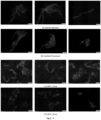
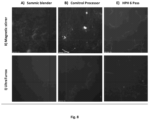
- BC suspensions were spread over petri dishes and observed with a SZ40 Zoom Stereo Microscope (Olympus). Photographs were taken with a camera SONY AVC-D5CE and adapter CMA-D5CE, at a magnification from 0.67x to 5x ( Figure 1 ). BC suspensions were also stained with Calcofluor white and observed in an Olympus BX51 microscope.
- BC suspensions are known to exhibit pronounced aggregation in aqueous media, due to strong interfibrillar hydrogen bonds and Van der Waals attraction, an effect that is concentration dependent. These attractive interactions, in combination with the long aspect ratio of the fibres, cause the formation of extended networks when BC is dispersed in water.
- a ball of threads is obtained irrespective of whether BC is produced in a stirred tank or by static fermentation and then wet grinded.
- These highly heterogeneous dispersions consist of fibre bundles, flocs, and voids spanning tens to hundreds of micrometres depending on concentration and shear homogenization conditions ( Figure 1 and Figure 2 ).
- three BC homogenization methods were used, with increasingly shear stress, from a blade blender (A), to high pressure homogenizer (C).
- Foam and emulsion properties are strongly influenced by the interfacial properties of the emulsifier in the system.
- Polysaccharides (e.g. modified starches) and proteins often play an important role in the formation and stabilization of these colloidal systems. These macromolecules provide the interface with physicochemical and rheological properties (steric hindrance, electrostatic repulsion, viscoelasticity), which determines the resistance to droplet coalescence.
- proteins adsorb on the newly-formed interface, denature and form a "gel” network that traps air bubbles and whose rheological properties govern the stability of the foam.
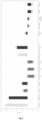
- BC from different sources from K. xylinus strain ATCC 700178 and "nata de coco" from HTK Food CO. Ltd. (Vietnam), ground with a Sammic blender as described in Example 1, were used (code samples: 700178, S; Nata de coco, S. BC from ATCC 700178 was further homogenized with Comitrol and High Pressure Homogenization (Example 1) (code samples: BC Comitrol, BC HPH 1 Pass, BC HPH 6 Pass).
- BC suspensions are known to exhibit pronounced aggregation in aqueous media, due to strong interfibrillar hydrogen bonds and Van der Waals attraction, an effect that is more pronounced as the concentration of BC in aqueous media increases.
- all BC samples were concentrated to 20%(wt/v) solids (code samples: 700178, S-P and Nata de coco, S-P), diluted and redispersped in water, under magnetic stirring at 900 Rpm for 2hr.
- the BC concentrate may be prepared by dehydration with any known means such as a filter press, belt-press, centrifugation, vacuum filtration or any other method know to those of ordinary skill in the art.
- Dried egg whites (12%, wt/v) were dispersed in water and whipped (using a Silvercrest kitchen blender). During whipping, each BC aqueous suspension or any other plant cellulose or hydrocolloid sample, was added to a final concentration of 0.1-0.3% (wt/v). A control was also done using only dried egg whites. The whipped cream's overrun was determined by measuring the volume increase of the whipped cream, relative to the control.
- Example 3 Mixing bacterial cellulose with a third component
- the BC obtained by any of the three different comminution methods described in Example 1 was mixed with either sodium carboxymethyl cellulose, CMC (90 KDa, or 250 KDa or 700 KDa, Sigma), xanthan (Sigma), methylcellulose, MC (Sigma), hydroxyethyl-cellulose, HEC (Sigma), hydroxypropyl methyl cellulose (Sigma), HPMC (Sigma), tylose (Sigma), glycerol (Sigma) and saccharose (Sigma); BC was also mixed with combinations of CMC:Xanthan, CMC:HEC and CMC:HPMC, as described in the following table: Table 1- Combination of bacterial cellulose and third components Mixture Mass ratio BC:CMC 1:1 1:0.75 1:0.25 BC:Xanthan 1:1 BC:MC BC:HEC BC:HPMC BC:Tylose BC:Saccharose BC:Glycerol 1:1.6 1:1.3 BC:CMC:Xanthan 1:0.25:0.75 CB:CMCHEC 1
- the components to be added to BC were first dissolved in water.
- BC as obtained by any of methods A, Band C mentioned above (Example 1)
- Example 1 was used at the same final solids concentration.
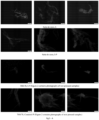
- the dispersed materials were spread over a petri dish and observed at naked eye. Also, fluorescent microscopy was used to better visualize the BC fibres.
- Table 7 and Figure 8 summarize the main observations pertaining to the BC and CMC mixtures. Table 2 - Dispersibility of never-dried mixtures of BC and third components.
- the water-soluble anionic polyelectrolyte CMC plays a determinant role in ensuring the dispersibility of the BC fibres and allowing their stabilization in aqueous media.
- the negative charge of CMC may contribute to the improved dispersion of the BC fibres due to steric hindrance.
- CMC has a strong affinity for water molecules. Non-adsorbed CMC may also prevent the agglomeration of BC fibres due to the creation of a hydration shell in aqueous media, around CMC and BC thus also contributing to the improved dispersibility and stability in aqueous media.
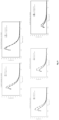
- the BC:CMC samples were further characterized by rheological assays ( Figure 9 ).
- stress-strain curves were obtained using a TA instruments rheometer, model 5332-1179 and a disk geometry.
- Shear rate versus viscosity graphs were drawn in semi-log scale to better visualise the different rheological profiles at low shear rates. From these assays, it may be concluded that the use of higher shear rate stress during wet comminution decreases the dynamic viscosity of the samples (from A to E, Figure 9 ). As previously mentioned, this effect is caused by some fragmentation of the fibres with increasing shear stress.
- the BC was wet ground by three different methods, as described in Example 1 (methods A, B and C).
- the obtained BC was mixed with a third component, as described in Example 3.
- the obtained BC mixtures can be dried by means of any of the available drying processes and equipment, which include spray drying, drum drying, oven drying, vacuum drying, tunnel drying, infra-red drying, freeze drying. Those skilled in the art may select any other proper drying process and/or combination of methods.
- BC mixtures were dried by four methods:
- All dried material was ground (with a High Power Herb Grain Grinder Cereal Mill Powder Grinding Machine Flour 600G) and sieved (Mat.Mesh:AISI 316 no 1/2871/1 No: 1/2871/1 with an opening of 0.300 mm) to a final particle size preferably in the range of ⁇ 300 ⁇ m.
- the dried powders were dispersed at a final solids concentration of 0.5% in water, using:
- Rheological assays were done using a TA instruments rheometer, model 5332-1179 and a disk geometry. Shear rate versus viscosity graphs were drawn in semi-log scale to better visualise the different rheological profiles at low shear rates.
- the dried BC formulations were ground to a particle size ⁇ 300 ⁇ m. It is important, however, to better understand the effect of the particle size in the restoration of the properties of BC mixtures.
- the BC mixtures obtained in the previous example were further ground and sieved to a final particle size ⁇ 200 ⁇ m (Endecotts, Ltd, aperture 212 ⁇ m) and ⁇ 100 ⁇ m (Endecotts, Ltd, aperture 106 ⁇ m). Also, samples were fractioned into the following size ranges: 100 ⁇ x ⁇ 300 ⁇ m, 300 ⁇ x ⁇ 500 ⁇ m.
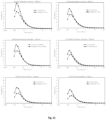
- the dried powders were dispersed to a final solids' concentration of 0.5% in water, evaluated by spreading over a petri dish, fluorescent microscopy and through rheological profile.
- table 4 and Figure 11 summarize the main observations pertaining to the dispersibility and rheological behaviour of BC:CMC 90 KDa. To simplify the demonstration of the results, only those obtained using hot plate drying are shown. The same profile was observed for samples dried in an oven. Table 4 - Dispersibility of BC:CMC mixtures after drying (in a hot plate) and grinding.
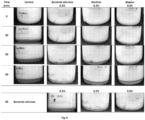
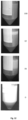
- the suspension stability of water-insoluble solid particles such as cocoa, powdered green tea, and calcium carbonate are important aspects for the development of certain commercial beverages.
- cocoa particles tend to precipitate soon after the initial mixing.
- BC samples were homogenized with ultraturrax (CAT Unidrive 1000D, at 15000 Rpm using a dispersing shaft CAT 20F) for 4 and 30 min before being added to the milk.
- ultraturrax CAT Unidrive 1000D, at 15000 Rpm using a dispersing shaft CAT 20F
- the same test was done using xanthan, carboxymethyl cellulose, colloidal plant celluloses: Avicel (RT 1133, LM 310 and CM 2159, FMC Biopolymers), Novagel (RCN-10 and RCN-15, FMC Biopolymers), Bioplus Fibrils (a microfibrillated cellulose, not used in food applications, American Process Inc.) and plant nanocelluloses: CelluForce NCC, Arbocel B 600, Arbocel BE 600/30 (from Celluforce Inc.).
Landscapes
- Chemical & Material Sciences (AREA)
- Polymers & Plastics (AREA)
- Health & Medical Sciences (AREA)
- Life Sciences & Earth Sciences (AREA)
- Engineering & Computer Science (AREA)
- Food Science & Technology (AREA)
- Nutrition Science (AREA)
- Dispersion Chemistry (AREA)
- Medicinal Chemistry (AREA)
- Chemical Kinetics & Catalysis (AREA)
- Organic Chemistry (AREA)
- Botany (AREA)
- Molecular Biology (AREA)
- Medicinal Preparation (AREA)
- Cosmetics (AREA)
- Jellies, Jams, And Syrups (AREA)
- Coloring Foods And Improving Nutritive Qualities (AREA)
- Non-Alcoholic Beverages (AREA)
- Compositions Of Macromolecular Compounds (AREA)
Claims (11)
- Eine pulverförmige Formulierung, umfassendbakterielle Cellulose;und eine zusätzliche Komponente, ausgewählt aus der folgenden Liste: Carboxymethylcellulose, Xanthan, Methylcellulose, Hydroxyethylcellulose, Hydroxypropylmethylcellulose, Tylose oder Mischungen davon;wobei die pulverförmige Formulierung eine Partikelgröße zwischen 5-500 µm aufweist, mit Verfahren zur Bestimmung der Partikelgröße wie in der Beschreibung offenbart;wobei das Massenverhältnis zwischen der bakteriellen Cellulose und der zusätzlichen Komponente zwischen 1:5 und 1:0,2, bevorzugt 1:2 und 1:0,5 liegt;wobei die pulverförmige Formulierung in einem wässrigen Medium bei 20 °C scherkraftarm dispergierbar ist.
- Die pulverförmige Formulierung nach dem vorangehenden Anspruch, wobei das Mischen scherkraftarm mit höchstens 1500 U/min, bevorzugt mit höchstens 1000 U/min erfolgt.
- Die pulverförmige Formulierung nach einem der vorangehenden Ansprüche, wobei die pulverförmige Formulierung in einem wässrigen Medium höchstens 10 Min., bevorzugt höchstens 6 Min., besonders bevorzugt höchstens 4 Min., ganz besonders bevorzugt höchstens 2 Min., am meisten bevorzugt höchstens 1 Min. dispergiert wird.
- Die pulverförmige Formulierung nach einem der vorangehenden Ansprüche, wobei die Partikel eine Größe zwischen 80-400 µm, besonders bevorzugt 100-300 µm aufweisen.
- Die pulverförmige Formulierung nach Anspruch 4, wobei der D50 des Partikels 50-300 µm, der D50 des Partikels bevorzugt 80-250 µm, der D50 des Partikels besonders bevorzugt 100-200 µm beträgt.
- Die pulverförmige Formulierung nach dem vorangehenden Anspruch 4, wobei der D50 des Partikels 10-90 µm, der D50 des Partikels bevorzugt 20-80 µm, der D50 des Partikels besonders bevorzugt 30-60 µm beträgt.
- Die pulverförmige Formulierung nach dem vorangehenden Anspruch 4, wobei die bakterielle Cellulose höchstens 2 Minuten in einem wässrigen Medium dispergiert wird und wobei die Partikel eine Größe zwischen 5-100 µm, besonders bevorzugt 10-60 µm, umfassen.
- Die pulverförmige Formulierung nach einem der vorangehenden Ansprüche, wobei die zusätzliche Komponente Carboxymethylcellulose, Carboxymethylcellulose und Xanthan; Carboxymethylcellulose und Hydroxyethylcellulose und Carboxymethylcellulose und Hydroxypropylmethylcellulose oder Mischungen davon ist.
- Die pulverförmige Formulierung nach einem der vorangehenden Ansprüche, wobei die pulverförmige bakterielle Cellulose aus einem Bakterium der folgenden Liste gewonnen wird: Acetobacter, Agrobacterium, Gluconacetobacter, Achromobacter, Alcaligenes, Aerobacter, Azotobacter, Rhizobium, Salmonella, Escherichia, Sarcina, Komagataeibacter, oder Kombinationen davon, die pulverförmige bakteriellen Cellulose bevorzugt aus einem Bakterium der folgenden Liste gewonnen wird: Acetobacter, Komagataeibacter, Gluconacetobacter oder Kombinationen davon.
- Verwendung der in einem der vorangehenden Ansprüche beschriebenen pulverförmigen Formulierung aus bakterieller Cellulose als kolloidaler Stabilisator, Schaumstabilisator oder als Verdickungsmittel.
- Ein Verfahren zur Herstellung einer pulverförmigen Formulierung aus bakterieller Cellulose nach einem der vorangehenden Ansprüche 1-9, umfassend die folgenden Schritte:Bereitstellen einer wässrigen Suspension aus gemahlenen bakteriellen Cellulosebündeln mit einer Größe zwischen 20 µm und 2 mm, bevorzugt 100 µm und 1,5 mm, besonders bevorzugt 200 µm und 1 mm;Hinzufügen einer zusätzlichen Komponente bei einer Temperatur zwischen 20-80 °C, wobei die zusätzliche Komponente ausgewählt ist aus Carboxymethylcellulose, Xanthan, Methylcellulose, Hydroxyethylcellulose, Hydroxypropylmethylcellulose, Tylose oder Mischungen davon;Trocknen der bakteriellen Cellulose bis zum Erhalt von mindestens 60% Feststoffen;Mahlen der bakteriellen Cellulose, bis eine Partikelgröße zwischen 5-500 µm erreicht ist; wobei das Massenverhältnis zwischen bakterieller Cellulose und der zusätzlichen Komponente zwischen 1:5 und 1:0,2, bevorzugt zwischen 1:2 und 1:0,5, variiert,wobei die Partikelgröße nach den Verfahren der Beschreibung bestimmt wird.
Applications Claiming Priority (3)
| Application Number | Priority Date | Filing Date | Title |
|---|---|---|---|
| PT11524018 | 2018-12-28 | ||
| PT11547119 | 2019-04-26 | ||
| PCT/IB2019/061452 WO2020136629A1 (en) | 2018-12-28 | 2019-12-30 | Bacterial cellulose formulations, methods and uses thereof |
Publications (3)
| Publication Number | Publication Date |
|---|---|
| EP3902870A1 EP3902870A1 (de) | 2021-11-03 |
| EP3902870C0 EP3902870C0 (de) | 2024-12-04 |
| EP3902870B1 true EP3902870B1 (de) | 2024-12-04 |
Family
ID=69726618
Family Applications (1)
| Application Number | Title | Priority Date | Filing Date |
|---|---|---|---|
| EP19856510.3A Active EP3902870B1 (de) | 2018-12-28 | 2019-12-30 | Bakterielle cellulose-formulierungen, methoden und verwendungen |
Country Status (5)
| Country | Link |
|---|---|
| US (1) | US20220106459A1 (de) |
| EP (1) | EP3902870B1 (de) |
| JP (1) | JP2022517739A (de) |
| CN (1) | CN113272377B (de) |
| WO (1) | WO2020136629A1 (de) |
Families Citing this family (8)
| Publication number | Priority date | Publication date | Assignee | Title |
|---|---|---|---|---|
| US11998023B2 (en) * | 2021-03-18 | 2024-06-04 | Ilola Inc. | Moulded tea composition incorporating microbial cellulose as a binder |
| EP4314312A1 (de) | 2021-03-26 | 2024-02-07 | Cellugy ApS | Bakterienzellulosesuspensionen |
| KR20240009458A (ko) | 2021-05-17 | 2024-01-22 | 아쿠아컬쳐드 푸즈 인크 | 박테리아와 균류의 공동 배양물을 포함하는 식품 |
| DE102021209820B4 (de) | 2021-09-06 | 2025-03-20 | KKF - Gesellschaft UG (haftungsbeschränkt) | Verfahren zur Herstellung eines flüssigen Cellulose-Komposits aus bakterieller Nanocellulose und Carboxymethylcellulose, Cellulose-Komposit und dessen Verwendung |
| CN115836714A (zh) * | 2021-09-18 | 2023-03-24 | 爱发生物科技(大连)有限公司 | 一种悬浮饮料及其制备方法 |
| EP4630484A1 (de) | 2022-12-07 | 2025-10-15 | Cellugy ApS | Redispergierbares bakterielles zellulosepulver |
| JPWO2024171889A1 (de) * | 2023-02-15 | 2024-08-22 | ||
| CN117401929B (zh) * | 2023-09-22 | 2025-09-09 | 华南理工大学 | 一种稳泡剂及其制备方法与应用 |
Family Cites Families (13)
| Publication number | Priority date | Publication date | Assignee | Title |
|---|---|---|---|---|
| US4960763A (en) | 1988-04-18 | 1990-10-02 | Weyerhaeuser Company | Method of using bacterial cellulose as a dietary fiber component |
| JP2873927B2 (ja) * | 1995-04-18 | 1999-03-24 | 株式会社バイオポリマー・リサーチ | バクテリアセルロースの乾燥方法および乾燥物 |
| JP3507604B2 (ja) * | 1995-11-06 | 2004-03-15 | 株式会社中埜酢店 | 食品の分散安定用組成物 |
| JP4061661B2 (ja) * | 1996-05-24 | 2008-03-19 | 味の素株式会社 | バクテリアセルロース濃縮物の処理方法 |
| US6153413A (en) | 1996-06-21 | 2000-11-28 | Bio-Polymer Research Co., Ltd. | Method for processing bacterial cellulose |
| US5962676A (en) | 1997-01-13 | 1999-10-05 | The Thailand Research Fund | Processes for the modification and utilization of bacterial cellulose |
| WO2001005838A1 (en) | 1999-07-15 | 2001-01-25 | Pharmacia Corporation | Process for drying reticulated bacterial cellulose without co-agents |
| US8053216B2 (en) * | 2005-05-23 | 2011-11-08 | Cp Kelco U.S., Inc. | Bacterial cellulose-containing formulations |
| US20100016575A1 (en) | 2008-07-15 | 2010-01-21 | Zhi-Fa Yang | Bacterial cellulose-containing formulations lacking a carboxymethyl cellulose component |
| KR102366460B1 (ko) * | 2013-10-18 | 2022-02-23 | 유니베르시다데 도 미노 | 펩타이드 조성물 및 그 용도 |
| WO2018038055A1 (ja) * | 2016-08-23 | 2018-03-01 | 草野作工株式会社 | 分散性バクテリアセルロース乾燥物の製造方法およびバクテリアセルロース分散液の製造方法 |
| WO2019086673A1 (en) * | 2017-11-06 | 2019-05-09 | Akzo Nobel Chemicals International B.V. | Cellulose powder compositions |
| KR20190052888A (ko) * | 2017-11-09 | 2019-05-17 | 삼성전자주식회사 | 증가된 셀룰로오스 생산능을 갖는 코마가타이박터 속 미생물, 그를 이용하여 셀룰로오스를 생산하는 방법 및 상기 미생물을 생산하는 방법 |
-
2019
- 2019-12-30 CN CN201980086694.6A patent/CN113272377B/zh active Active
- 2019-12-30 WO PCT/IB2019/061452 patent/WO2020136629A1/en not_active Ceased
- 2019-12-30 EP EP19856510.3A patent/EP3902870B1/de active Active
- 2019-12-30 US US17/419,173 patent/US20220106459A1/en not_active Abandoned
- 2019-12-30 JP JP2021538064A patent/JP2022517739A/ja active Pending
Also Published As
| Publication number | Publication date |
|---|---|
| EP3902870A1 (de) | 2021-11-03 |
| WO2020136629A1 (en) | 2020-07-02 |
| EP3902870C0 (de) | 2024-12-04 |
| US20220106459A1 (en) | 2022-04-07 |
| JP2022517739A (ja) | 2022-03-10 |
| CN113272377A (zh) | 2021-08-17 |
| CN113272377B (zh) | 2023-08-11 |
Similar Documents
| Publication | Publication Date | Title |
|---|---|---|
| EP3902870B1 (de) | Bakterielle cellulose-formulierungen, methoden und verwendungen | |
| US5964983A (en) | Microfibrillated cellulose and method for preparing a microfibrillated cellulose | |
| CN1989254B (zh) | 生产纤维寡糖的方法 | |
| EP1575487B1 (de) | Coattrittierte mikrokristalline zellulose hydrokolloid-zusammensetzungen und verfahren zur herstellung | |
| JP4151885B2 (ja) | 水分散性セルロースおよびその製造方法 | |
| JP2873927B2 (ja) | バクテリアセルロースの乾燥方法および乾燥物 | |
| Martins et al. | Dry Bacterial Cellulose and Carboxymethyl Cellulose formulations with interfacial-active performance: processing conditions and redispersion | |
| TW201201709A (en) | Cellulose composite | |
| WO2012075083A2 (en) | Viscosity control in compositions comprising plant fiber materials | |
| EP2414402A1 (de) | Carboxymethylcellulose mit verbesserten eigenschaften | |
| JPH09132601A (ja) | 多孔性セルロース粒子の製造方法 | |
| CN1280461A (zh) | 干形式纤维素微纤维在食品制剂中的用途 | |
| JP3507604B2 (ja) | 食品の分散安定用組成物 | |
| CN111587271B (zh) | 纤维素的处理 | |
| JP2971024B2 (ja) | バクテリアセルロース離解物 | |
| WO2019086673A1 (en) | Cellulose powder compositions | |
| TW201946543A (zh) | 纖維素粉末 | |
| JPH08276126A (ja) | 乳化安定化剤 | |
| EP4448639A1 (de) | Verfahren zur reduzierung von nitrit in mikrokristalliner cellulose | |
| JP2012235759A (ja) | コラーゲンを含有する飲料 | |
| CN114009499A (zh) | 一种酸性乳饮料复配稳定剂及其制备方法和应用 | |
| CN113966347B (zh) | 结构化剂 | |
| Martins | Bacterial cellulose: one material, multiple products | |
| CN116745343A (zh) | 用于制备胶态微晶纤维素的改善方法 | |
| CN114009650A (zh) | 一种复配稳定剂在制备含果粒饮料中的应用 |
Legal Events
| Date | Code | Title | Description |
|---|---|---|---|
| STAA | Information on the status of an ep patent application or granted ep patent |
Free format text: STATUS: UNKNOWN |
|
| STAA | Information on the status of an ep patent application or granted ep patent |
Free format text: STATUS: THE INTERNATIONAL PUBLICATION HAS BEEN MADE |
|
| PUAI | Public reference made under article 153(3) epc to a published international application that has entered the european phase |
Free format text: ORIGINAL CODE: 0009012 |
|
| STAA | Information on the status of an ep patent application or granted ep patent |
Free format text: STATUS: REQUEST FOR EXAMINATION WAS MADE |
|
| 17P | Request for examination filed |
Effective date: 20210709 |
|
| AK | Designated contracting states |
Kind code of ref document: A1 Designated state(s): AL AT BE BG CH CY CZ DE DK EE ES FI FR GB GR HR HU IE IS IT LI LT LU LV MC MK MT NL NO PL PT RO RS SE SI SK SM TR |
|
| DAV | Request for validation of the european patent (deleted) | ||
| DAX | Request for extension of the european patent (deleted) | ||
| STAA | Information on the status of an ep patent application or granted ep patent |
Free format text: STATUS: EXAMINATION IS IN PROGRESS |
|
| 17Q | First examination report despatched |
Effective date: 20221109 |
|
| GRAP | Despatch of communication of intention to grant a patent |
Free format text: ORIGINAL CODE: EPIDOSNIGR1 |
|
| STAA | Information on the status of an ep patent application or granted ep patent |
Free format text: STATUS: GRANT OF PATENT IS INTENDED |
|
| INTG | Intention to grant announced |
Effective date: 20240808 |
|
| GRAS | Grant fee paid |
Free format text: ORIGINAL CODE: EPIDOSNIGR3 |
|
| GRAA | (expected) grant |
Free format text: ORIGINAL CODE: 0009210 |
|
| STAA | Information on the status of an ep patent application or granted ep patent |
Free format text: STATUS: THE PATENT HAS BEEN GRANTED |
|
| AK | Designated contracting states |
Kind code of ref document: B1 Designated state(s): AL AT BE BG CH CY CZ DE DK EE ES FI FR GB GR HR HU IE IS IT LI LT LU LV MC MK MT NL NO PL PT RO RS SE SI SK SM TR |
|
| REG | Reference to a national code |
Ref country code: CH Ref legal event code: EP |
|
| REG | Reference to a national code |
Ref country code: DE Ref legal event code: R096 Ref document number: 602019063119 Country of ref document: DE |
|
| REG | Reference to a national code |
Ref country code: IE Ref legal event code: FG4D |
|
| U01 | Request for unitary effect filed |
Effective date: 20250103 |
|
| U07 | Unitary effect registered |
Designated state(s): AT BE BG DE DK EE FI FR IT LT LU LV MT NL PT RO SE SI Effective date: 20250115 |
|
| U20 | Renewal fee for the european patent with unitary effect paid |
Year of fee payment: 6 Effective date: 20250121 |
|
| PG25 | Lapsed in a contracting state [announced via postgrant information from national office to epo] |
Ref country code: HR Free format text: LAPSE BECAUSE OF FAILURE TO SUBMIT A TRANSLATION OF THE DESCRIPTION OR TO PAY THE FEE WITHIN THE PRESCRIBED TIME-LIMIT Effective date: 20241204 |
|
| PG25 | Lapsed in a contracting state [announced via postgrant information from national office to epo] |
Ref country code: ES Free format text: LAPSE BECAUSE OF FAILURE TO SUBMIT A TRANSLATION OF THE DESCRIPTION OR TO PAY THE FEE WITHIN THE PRESCRIBED TIME-LIMIT Effective date: 20241204 |
|
| PG25 | Lapsed in a contracting state [announced via postgrant information from national office to epo] |
Ref country code: NO Free format text: LAPSE BECAUSE OF FAILURE TO SUBMIT A TRANSLATION OF THE DESCRIPTION OR TO PAY THE FEE WITHIN THE PRESCRIBED TIME-LIMIT Effective date: 20250304 |
|
| PG25 | Lapsed in a contracting state [announced via postgrant information from national office to epo] |
Ref country code: GR Free format text: LAPSE BECAUSE OF FAILURE TO SUBMIT A TRANSLATION OF THE DESCRIPTION OR TO PAY THE FEE WITHIN THE PRESCRIBED TIME-LIMIT Effective date: 20250305 |
|
| PG25 | Lapsed in a contracting state [announced via postgrant information from national office to epo] |
Ref country code: RS Free format text: LAPSE BECAUSE OF FAILURE TO SUBMIT A TRANSLATION OF THE DESCRIPTION OR TO PAY THE FEE WITHIN THE PRESCRIBED TIME-LIMIT Effective date: 20250304 |
|
| PG25 | Lapsed in a contracting state [announced via postgrant information from national office to epo] |
Ref country code: SM Free format text: LAPSE BECAUSE OF FAILURE TO SUBMIT A TRANSLATION OF THE DESCRIPTION OR TO PAY THE FEE WITHIN THE PRESCRIBED TIME-LIMIT Effective date: 20241204 |
|
| PG25 | Lapsed in a contracting state [announced via postgrant information from national office to epo] |
Ref country code: PL Free format text: LAPSE BECAUSE OF FAILURE TO SUBMIT A TRANSLATION OF THE DESCRIPTION OR TO PAY THE FEE WITHIN THE PRESCRIBED TIME-LIMIT Effective date: 20241204 |
|
| PG25 | Lapsed in a contracting state [announced via postgrant information from national office to epo] |
Ref country code: IS Free format text: LAPSE BECAUSE OF FAILURE TO SUBMIT A TRANSLATION OF THE DESCRIPTION OR TO PAY THE FEE WITHIN THE PRESCRIBED TIME-LIMIT Effective date: 20250404 |
|
| PG25 | Lapsed in a contracting state [announced via postgrant information from national office to epo] |
Ref country code: SK Free format text: LAPSE BECAUSE OF FAILURE TO SUBMIT A TRANSLATION OF THE DESCRIPTION OR TO PAY THE FEE WITHIN THE PRESCRIBED TIME-LIMIT Effective date: 20241204 |
|
| PG25 | Lapsed in a contracting state [announced via postgrant information from national office to epo] |
Ref country code: CZ Free format text: LAPSE BECAUSE OF FAILURE TO SUBMIT A TRANSLATION OF THE DESCRIPTION OR TO PAY THE FEE WITHIN THE PRESCRIBED TIME-LIMIT Effective date: 20241204 |
|
| REG | Reference to a national code |
Ref country code: CH Ref legal event code: PL |
|
| PG25 | Lapsed in a contracting state [announced via postgrant information from national office to epo] |
Ref country code: MC Free format text: LAPSE BECAUSE OF FAILURE TO SUBMIT A TRANSLATION OF THE DESCRIPTION OR TO PAY THE FEE WITHIN THE PRESCRIBED TIME-LIMIT Effective date: 20241204 |
|
| PLBE | No opposition filed within time limit |
Free format text: ORIGINAL CODE: 0009261 |
|
| STAA | Information on the status of an ep patent application or granted ep patent |
Free format text: STATUS: NO OPPOSITION FILED WITHIN TIME LIMIT |
|
| PG25 | Lapsed in a contracting state [announced via postgrant information from national office to epo] |
Ref country code: CH Free format text: LAPSE BECAUSE OF NON-PAYMENT OF DUE FEES Effective date: 20241231 |
|
| PG25 | Lapsed in a contracting state [announced via postgrant information from national office to epo] |
Ref country code: IE Free format text: LAPSE BECAUSE OF NON-PAYMENT OF DUE FEES Effective date: 20241230 |
|
| 26N | No opposition filed |
Effective date: 20250905 |
|
| GBPC | Gb: european patent ceased through non-payment of renewal fee |
Effective date: 20250304 |