EP3895550A1 - Method for aging smoking material by using oak barrel, and smoking article manufactured using same - Google Patents
Method for aging smoking material by using oak barrel, and smoking article manufactured using same Download PDFInfo
- Publication number
- EP3895550A1 EP3895550A1 EP20880327.0A EP20880327A EP3895550A1 EP 3895550 A1 EP3895550 A1 EP 3895550A1 EP 20880327 A EP20880327 A EP 20880327A EP 3895550 A1 EP3895550 A1 EP 3895550A1
- Authority
- EP
- European Patent Office
- Prior art keywords
- smoking
- oak barrel
- oak
- tobacco leaves
- aged
- Prior art date
- Legal status (The legal status is an assumption and is not a legal conclusion. Google has not performed a legal analysis and makes no representation as to the accuracy of the status listed.)
- Granted
Links
Images

Classifications
-
- A—HUMAN NECESSITIES
- A24—TOBACCO; CIGARS; CIGARETTES; SIMULATED SMOKING DEVICES; SMOKERS' REQUISITES
- A24B—MANUFACTURE OR PREPARATION OF TOBACCO FOR SMOKING OR CHEWING; TOBACCO; SNUFF
- A24B3/00—Preparing tobacco in the factory
- A24B3/12—Steaming, curing, or flavouring tobacco
-
- A—HUMAN NECESSITIES
- A24—TOBACCO; CIGARS; CIGARETTES; SIMULATED SMOKING DEVICES; SMOKERS' REQUISITES
- A24B—MANUFACTURE OR PREPARATION OF TOBACCO FOR SMOKING OR CHEWING; TOBACCO; SNUFF
- A24B15/00—Chemical features or treatment of tobacco; Tobacco substitutes, e.g. in liquid form
- A24B15/18—Treatment of tobacco products or tobacco substitutes
- A24B15/28—Treatment of tobacco products or tobacco substitutes by chemical substances
- A24B15/30—Treatment of tobacco products or tobacco substitutes by chemical substances by organic substances
-
- A—HUMAN NECESSITIES
- A24—TOBACCO; CIGARS; CIGARETTES; SIMULATED SMOKING DEVICES; SMOKERS' REQUISITES
- A24B—MANUFACTURE OR PREPARATION OF TOBACCO FOR SMOKING OR CHEWING; TOBACCO; SNUFF
- A24B15/00—Chemical features or treatment of tobacco; Tobacco substitutes, e.g. in liquid form
- A24B15/18—Treatment of tobacco products or tobacco substitutes
- A24B15/28—Treatment of tobacco products or tobacco substitutes by chemical substances
- A24B15/30—Treatment of tobacco products or tobacco substitutes by chemical substances by organic substances
- A24B15/301—Treatment of tobacco products or tobacco substitutes by chemical substances by organic substances by aromatic compounds
-
- A—HUMAN NECESSITIES
- A24—TOBACCO; CIGARS; CIGARETTES; SIMULATED SMOKING DEVICES; SMOKERS' REQUISITES
- A24B—MANUFACTURE OR PREPARATION OF TOBACCO FOR SMOKING OR CHEWING; TOBACCO; SNUFF
- A24B15/00—Chemical features or treatment of tobacco; Tobacco substitutes, e.g. in liquid form
- A24B15/18—Treatment of tobacco products or tobacco substitutes
- A24B15/28—Treatment of tobacco products or tobacco substitutes by chemical substances
- A24B15/30—Treatment of tobacco products or tobacco substitutes by chemical substances by organic substances
- A24B15/302—Treatment of tobacco products or tobacco substitutes by chemical substances by organic substances by natural substances obtained from animals or plants
-
- A—HUMAN NECESSITIES
- A24—TOBACCO; CIGARS; CIGARETTES; SIMULATED SMOKING DEVICES; SMOKERS' REQUISITES
- A24B—MANUFACTURE OR PREPARATION OF TOBACCO FOR SMOKING OR CHEWING; TOBACCO; SNUFF
- A24B15/00—Chemical features or treatment of tobacco; Tobacco substitutes, e.g. in liquid form
- A24B15/18—Treatment of tobacco products or tobacco substitutes
- A24B15/28—Treatment of tobacco products or tobacco substitutes by chemical substances
- A24B15/30—Treatment of tobacco products or tobacco substitutes by chemical substances by organic substances
- A24B15/305—Treatment of tobacco products or tobacco substitutes by chemical substances by organic substances of undetermined constitution characterised by their preparation
-
- A—HUMAN NECESSITIES
- A24—TOBACCO; CIGARS; CIGARETTES; SIMULATED SMOKING DEVICES; SMOKERS' REQUISITES
- A24B—MANUFACTURE OR PREPARATION OF TOBACCO FOR SMOKING OR CHEWING; TOBACCO; SNUFF
- A24B15/00—Chemical features or treatment of tobacco; Tobacco substitutes, e.g. in liquid form
- A24B15/18—Treatment of tobacco products or tobacco substitutes
- A24B15/28—Treatment of tobacco products or tobacco substitutes by chemical substances
- A24B15/30—Treatment of tobacco products or tobacco substitutes by chemical substances by organic substances
- A24B15/32—Treatment of tobacco products or tobacco substitutes by chemical substances by organic substances by acyclic compounds
-
- A—HUMAN NECESSITIES
- A24—TOBACCO; CIGARS; CIGARETTES; SIMULATED SMOKING DEVICES; SMOKERS' REQUISITES
- A24B—MANUFACTURE OR PREPARATION OF TOBACCO FOR SMOKING OR CHEWING; TOBACCO; SNUFF
- A24B15/00—Chemical features or treatment of tobacco; Tobacco substitutes, e.g. in liquid form
- A24B15/18—Treatment of tobacco products or tobacco substitutes
- A24B15/28—Treatment of tobacco products or tobacco substitutes by chemical substances
- A24B15/30—Treatment of tobacco products or tobacco substitutes by chemical substances by organic substances
- A24B15/36—Treatment of tobacco products or tobacco substitutes by chemical substances by organic substances containing a heterocyclic ring
- A24B15/40—Treatment of tobacco products or tobacco substitutes by chemical substances by organic substances containing a heterocyclic ring having only oxygen or sulfur as hetero atoms
- A24B15/403—Treatment of tobacco products or tobacco substitutes by chemical substances by organic substances containing a heterocyclic ring having only oxygen or sulfur as hetero atoms having only oxygen as hetero atoms
- A24B15/406—Treatment of tobacco products or tobacco substitutes by chemical substances by organic substances containing a heterocyclic ring having only oxygen or sulfur as hetero atoms having only oxygen as hetero atoms in a five-membered ring
-
- A—HUMAN NECESSITIES
- A24—TOBACCO; CIGARS; CIGARETTES; SIMULATED SMOKING DEVICES; SMOKERS' REQUISITES
- A24B—MANUFACTURE OR PREPARATION OF TOBACCO FOR SMOKING OR CHEWING; TOBACCO; SNUFF
- A24B3/00—Preparing tobacco in the factory
- A24B3/04—Humidifying or drying tobacco bunches or cut tobacco
-
- A—HUMAN NECESSITIES
- A24—TOBACCO; CIGARS; CIGARETTES; SIMULATED SMOKING DEVICES; SMOKERS' REQUISITES
- A24B—MANUFACTURE OR PREPARATION OF TOBACCO FOR SMOKING OR CHEWING; TOBACCO; SNUFF
- A24B3/00—Preparing tobacco in the factory
- A24B3/18—Other treatment of leaves, e.g. puffing, crimpling, cleaning
-
- A—HUMAN NECESSITIES
- A24—TOBACCO; CIGARS; CIGARETTES; SIMULATED SMOKING DEVICES; SMOKERS' REQUISITES
- A24B—MANUFACTURE OR PREPARATION OF TOBACCO FOR SMOKING OR CHEWING; TOBACCO; SNUFF
- A24B5/00—Stripping tobacco; Treatment of stems or ribs
- A24B5/10—Stripping tobacco; Treatment of stems or ribs by crushing the leaves with subsequent separating
-
- A—HUMAN NECESSITIES
- A24—TOBACCO; CIGARS; CIGARETTES; SIMULATED SMOKING DEVICES; SMOKERS' REQUISITES
- A24D—CIGARS; CIGARETTES; TOBACCO SMOKE FILTERS; MOUTHPIECES OF CIGARS OR CIGARETTES; MANUFACTURE OF TOBACCO SMOKE FILTERS OR MOUTHPIECES
- A24D1/00—Cigars; Cigarettes
- A24D1/04—Cigars; Cigarettes with mouthpieces or filter-tips
- A24D1/045—Cigars; Cigarettes with mouthpieces or filter-tips with smoke filter means
-
- A—HUMAN NECESSITIES
- A24—TOBACCO; CIGARS; CIGARETTES; SIMULATED SMOKING DEVICES; SMOKERS' REQUISITES
- A24D—CIGARS; CIGARETTES; TOBACCO SMOKE FILTERS; MOUTHPIECES OF CIGARS OR CIGARETTES; MANUFACTURE OF TOBACCO SMOKE FILTERS OR MOUTHPIECES
- A24D1/00—Cigars; Cigarettes
- A24D1/20—Cigarettes specially adapted for simulated smoking devices
Definitions
- the present disclosure relates to a method of aging smoking materials and a smoking article manufactured using the same, and more particularly, to a method of aging smoking materials, such as tobacco leaves, by utilizing an oak barrel and a smoking article manufactured using the same capable of improving the favorable sensory quality and expressing a differentiated flavor as compared to existing smoking articles.
- the taste of tobacco during smoking is determined by various factors such as the composition of a smoking material portion, a filter portion, and cigarette paper, but basically, the taste of tobacco is determined or affected by the type of composition of tobacco leaves, reconstituted tobacco leaves, etc. as smoking materials constituting the smoking material portion (e.g., combustion portion), additives such as fragrance components, and aging methods thereof.
- the present disclosure is directed to providing a method of aging smoking materials by utilizing an oak barrel and a smoking article manufactured using the same capable of enhancing the taste and flavor of tobacco.
- Some embodiments of the present disclosure provide a method of aging smoking materials, the method including preparing an oak barrel and the smoking materials, putting the smoking materials into an inner space of the oak barrel, and sealing the oak barrel to age the smoking materials.
- the preparing of the smoking materials may include threshing tobacco leaves to obtain threshed tobacco leaves and humidifying the threshed tobacco leaves.
- the humidifying of the threshed tobacco leaves may be performed so that the content of moisture in the threshed tobacco leaves is in a range of 10 wt% to 30 wt%.
- the tobacco leaves may include at least one or more of bright tobacco leaves, burley tobacco leaves, oriental tobacco leaves, cigar tobacco leaves, and Latakia tobacco leaves.
- the tobacco leaves may be true leaves of the bright tobacco leaves or Basma leaves of the oriental tobacco leaves.
- the preparing of the oak barrel may include pouring wine or brandy into the oak barrel, sealing the oak barrel, into which the wine or brandy is poured, to store the oak barrel for a predetermined period, and after the predetermined period elapses, removing the wine or brandy remaining in the oak barrel.
- a weight of the wine or brandy remaining in the oak barrel may be in a range of 93% to 97% of a weight of the wine or brandy poured in the pouring of the wine or brandy.
- the predetermined period and a capacity of the oak barrel may have the relationship of Equation 1
- the predetermined period and the capacity of the oak barrel may have the relationship of Equation 2.
- Equation 1 and Equation 2 P is a value representing the predetermined period in hours
- L represents the capacity of the oak barrel in liters.
- the putting of the smoking materials into the oak barrel may include stacking the smoking materials in the inner space of the oak barrel to form a first smoking material layer, pressing an upper surface of the first smoking material layer, which is formed by stacking the smoking materials, with a pressure in a range of 3 kgf/cm2 to 10 kgf/cm2, forming a first oak piece layer using oak pieces, which consist of at least one of oak sticks, oak chips, oak plates, and oak sawdust, on the pressed upper surface of the first smoking material layer, and stacking the smoking materials to cover the first oak piece layer on the upper surface of the first smoking material layer to form a second smoking material layer.
- the total volume of the smoking materials and the oak pieces put into the oak barrel may be in a range of 85% to 95% of the total capacity of the inner space of the oak barrel.
- the oak pieces may be toasted using far infrared rays.
- an exterior of the oak barrel may be wrapped with a packing material to seal the oak barrel so that air and moisture inside the packing material do not communicate with the outside of the packing material, and the aging of the smoking materials may be performed under a temperature in a range of 50 °C to 90 °C. Meanwhile, the aging of the smoking materials may be performed for a period in a range of 7 days to 24 months.
- some embodiments of the present disclosure provide an aged tobacco leaf that is aged using the above-described aging method.
- a weight of at least one of 3-furaldehyde and 5-methyl furfural contained in the aged tobacco leaf may be larger than a weight of trans-geranylacetone contained in the aged tobacco leaf.
- a weight of at least one of solanone, beta-damascone, beta-damascenone, neophytadiene, and megastigmatrienone contained in the aged tobacco leaf may be 2 times to 150 times larger than a weight of 6-methyl-5-heptene-2-one contained in the aged tobacco leaf.
- some embodiments of the present disclosure provide a smoking article including a smoking material portion which includes the aged tobacco leaf aged using the above-described aging method and a filter portion which is disposed downstream of the smoking material portion.
- a weight of the aged tobacco leaf included in the smoking material portion may be in a range of 0.5% to 100% of the total weight of the smoking material portion.
- the quality of flavoring components of smoking materials can be improved in a desired way, and it is possible to simultaneously enhance the taste of tobacco and reduce the time and costs required for aging the smoking materials.
- the oak barrel into which the smoking materials are put is sealed by a packing material, which blocks the movement of air and moisture, in order to perform the aging process, loss of inherent flavoring components expressed inside and/or outside the oak barrel can be prevented and the spread of the flavoring components to tobacco leaves can be maximized in the aging process.
- a smoking material portion of a smoking article contains aged tobacco leaves manufactured by utilizing an oak barrel
- the smoking article has sensory advantages such as a decrease in off-taste and irritation and an increase in softness during smoking, and further, the smoking article can simultaneously minimize the addition of additional flavoring materials and express an inherent deep flavor of tobacco and a specific favorable flavor.
- smoking article may refer to anything capable of generating an aerosol, such as tobacco (cigarette) and cigars.
- the smoking article may include an aerosol-generating material or an aerosol-forming substrate.
- the smoking article may include a solid material based on tobacco raw materials, such as reconstituted tobacco leaves, shredded tobacco, and reconstituted tobacco.
- a smoking material may include a volatile compound.
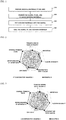
- FIG. 1 is a flowchart illustrating a method of aging smoking materials according to some embodiments of the present disclosure.
- the method of aging smoking materials may include preparing smoking materials to be aged (S10), preparing an oak barrel to be used in aging the smoking materials (S20), putting the prepared smoking materials into an inner space of the prepared oak barrel (S30), and sealing the oak barrel to age the smoking materials (S40).
- the smoking materials may be materials for constituting at least a portion of a cigarette medium portion, e.g., tobacco leaves or products of tobacco leaves.
- the preparing of the smoking materials may include: i) threshing tobacco leaves to obtain threshed tobacco leaves; and ii) humidifying the threshed tobacco leaves.
- the content of moisture in the threshed tobacco leaves may be in a range of about 10 wt% to 30 wt%, and more preferably, in a range of 15 wt% to 25 wt% (for example, 20 wt%).
- the tobacco leaves being used may be one or more tobacco leaves selected from bright tobacco leaves (for example, true leaves), burley tobacco leaves, oriental tobacco leaves (for example, Basma leaves), cigar tobacco leaves, and Latakia tobacco leaves, but of course, the tobacco leaves being used may also be other general leaves or special leaves, and the type of tobacco leaves being used is not limited.
- the oak barrel being used may be any one of a barrel used to age wine (wine barrel), a barrel used to age brandy (brandy barrel), or a barrel not used to age an alcoholic beverage (new barrel).
- new oak barrel there is an advantage in that the spread of an inherent flavor of the oak barrel to the smoking materials may be maximized, and when the wine oak barrel or brandy oak barrel is used, there is an advantage in that not only the inherent flavor of the oak barrel but also the wine or brandy component immersed in the oak barrel organically acts in the process of aging the smoking materials.
- the oak barrel may be a barrel made of any type of oak, preferably, a sweet oak barrel, and an inner side surface of the oak barrel may be toasted using far infrared rays.
- the internal capacity of the oak barrel to be used is not limited, but the internal capacity of the oak barrel may be in a range of about 50 L to 500 L (for example, 100 L, 225 L, or the like).
- the preparing of the oak barrel (S20) may include: i) pouring wine or brandy into the oak barrel; ii) sealing the oak barrel, into which the wine or brandy is poured, to store the oak barrel for a predetermined period; and iii) after the predetermined period elapses, removing the wine or brandy remaining in the oak barrel.
- a weight of the wine or brandy remaining in the oak barrel after the storing of the oak barrel for the predetermined period may be in a range of about 90% to 99%, preferably, about 93% to 97%, of a weight of the wine or brandy initially poured into the oak barrel.
- the wine or brandy reduced during the storage period may be immersed into the oak barrel through the inner side surface of the oak barrel.
- the storage period may vary according to the type of alcoholic beverage to be stored in the oak barrel or according to the internal capacity of the oak barrel. For example, in oak barrels of the same capacity, the storage period of wine may be longer than the storage period of brandy.
- a storage period (P) of wine may be determined according to Equation 1 below, and a storage period (P) of brandy may be determined according to Equation 2 below.
- P is a value representing the storage period in hours
- L represents the capacity of the inner space of the oak barrel in liters.
- the smoking materials to be used and the oak barrel are prepared, the smoking materials are put into an inner space of the oak barrel (S30).
- the smoking materials may be stacked to form a plurality of smoking material layers, and a plurality of oak piece layers, which are made of oak pieces (e.g., oak sticks, oak chips, oak plates, oak sawdust, and the like), may be formed between the plurality of smoking material layers. That is, the plurality of smoking material layers and the plurality of oak piece layers may be alternately stacked. Also, each smoking material layer constituting the plurality of smoking material layers may be formed as the smoking materials are put into the inner space of the oak barrel and then pressed with a predetermined pressure. In this way, the process of aging the smoking materials using the oak barrel may be more efficiently performed.
- oak piece layers which are made of oak pieces (e.g., oak sticks, oak chips, oak plates, oak sawdust, and the like)
- each smoking material layer constituting the plurality of smoking material layers may be formed as the smoking materials are put into the inner space of the oak barrel and then pressed with a predetermined pressure. In this way, the process of aging the smoking materials using the oak barrel
- a predetermined amount of smoking materials into the inner space of the oak barrel and pressing upper surfaces of the smoking materials with a predetermined pressure for example, a pressure in a range of about 3 kgf/cm2 to 10 kgf/cm2 to form a first smoking material layer
- a predetermined pressure for example, a pressure in a range of about 3 kgf/cm2 to 10 kgf/cm2
- a predetermined pressure for example, a pressure in a range of about 3 kgf/cm2 to 10 kgf/cm2
- a predetermined pressure for example, a pressure in a range of about 3 kgf/cm2 to 10 kgf/cm2
- the oak piece layer may completely cover the smoking material layer formed therebelow, the oak piece layer may also be formed so that portions of the upper surface of the smoking material layer formed therebelow are exposed between the oak pieces. Meanwhile, in order to improve the efficiency of aging the smoking materials, the oak pieces may be pieces that are toasted using far infrared rays.
- an open upper surface of the oak barrel may be physically sealed by an oak barrel cover.
- the total volume of the smoking materials (and the oak pieces) put into the oak barrel may be in a range of about 85% to 95% of the total capacity of the inner space of the oak barrel. That is, some areas at an upper side of the inner space of the oak barrel may be filled with air necessary for the aging process.
- the sealing of the oak barrel to age the smoking materials (S40) may include: i) sealing the oak barrel with a packing material; and ii) storing the oak barrel, which is sealed with the packing material, under a predetermined temperature (for example, a temperature in a range of about 50 °C to 90 °C, preferably, in a range of 65 °C to 75 °C) for a period in a range of about 7 days to 24 months (for example, in a range of about 2 weeks to 4 weeks).
- the packing material may be a large vinyl bag or the like that accommodates the entire oak barrel and prevents air and moisture inside the packing material from communicating with the outside of the packing material during the storage period. Since the oak barrel is sealed by the packing material as described above, loss of inherent flavoring components expressed inside and/or outside the oak barrel may be prevented and the spread of the flavoring components to tobacco leaves may be maximized in the aging process.
- the aged tobacco leaves obtained by completing the above-described aging process may be mixed in a process of manufacturing a smoking material portion 120, which will be described below with reference to FIG. 6 .
- a smoking article including the smoking material portion 120 has sensory advantages such as a decrease in off-taste and irritation and an increase in softness, and further, the smoking article may express an inherent deep flavor of tobacco and a specific favorable flavor during smoking even without the addition of artificial flavoring components.
- Bright tobacco leaves (true leaves) were threshed and then stored at room temperature for about 2 weeks.
- HMT heat moisture treatment
- Bright tobacco leaves identical to those of Comparative Example 1 were threshed and put into a 225-L wine oak barrel, in which wine was aged for about a week, an exterior of the oak barrel was sealed with a packing material, and then the oak barrel was stored for about 2 weeks under conditions including a temperature of 72 °C and a tobacco leaf moisture content of 20% in order to manufacture aged tobacco leaves.
- Bright tobacco leaves identical to those of Comparative Example 1 were threshed and put into a 225-L brandy oak barrel, in which brandy was aged for about a week, an exterior of the oak barrel was sealed with a packing material, and then the oak barrel was stored for about 2 weeks under conditions including a temperature of 72 °C and a tobacco leaf moisture content of 20% in order to manufacture aged tobacco leaves.
- Oriental tobacco leaves (Basma leaves) were threshed and then stored at room temperature for about 2 weeks.
- Oriental tobacco leaves identical to those of Comparative Example 3 were threshed and put into a HMT container for aging, and then the HMT container was stored for about 2 weeks under conditions including a temperature of 72 °C and a tobacco leaf moisture content of 20% in order to manufacture aged tobacco leaves.
- Oriental tobacco leaves identical to those of Comparative Example 3 were threshed and put into a new 225-L oak barrel, an exterior of the oak barrel was sealed with a packing material, and then the oak barrel was stored for about 2 weeks under conditions including a temperature of 72 °C and a tobacco leaf moisture content of 20% in order to manufacture aged tobacco leaves.
- Flavoring components in the aged tobacco leaves according to the examples of the present disclosure were analyzed using a gas chromatography-mass spectrometry (GC-MS) measurement method.
- the result of analysis of the bright tobacco leaves is shown in Table 1, and the result of analysis of the oriental tobacco leaves is shown in Table 2.
- the numerical values of each component in Tables 1 and 2 represent peak area values (relative values) analyzed according to the GC-MS measurement.
- 3-furaldehyde and 5-methyl furfural are flavoring components which were also detected in the component analysis of the oak barrel itself, and at least some of 3-furaldehyde and 5-methyl furfural detected in the aged tobacco leaves seem to have been spread from the oak barrel in the aging process. Further, in view of the high rate of increase of the components, it can be seen that the increase is significantly due to the synergistic effect caused by the decomposition of respective components contained in the oak barrel and the aged tobacco leaves in the oak barrel or by the synthesis of the components.
- the content (e.g., weight) of at least one of 3-furaldehyde and 5-methyl furfural contained in the aged tobacco leaves was found to be larger than the content (e.g., weight) of trans-geranylacetone contained in the aged tobacco leaves.
- the weight of at least one of solanone, beta-damascone, beta-damascenone, neophytadiene, and megastigmatrienone contained in the aged tobacco leaves was larger than a weight of 6-methyl-5-heptene-2-one contained in the aged tobacco leaves by a factor of 2 to 150.
- Example 4 in which aging was performed using an oak barrel, unlike in Comparative Example 4 in which aging was performed using HMT, the content of solanone contained in the aged tobacco leaves was larger than the content of 6-methyl-5-heptene-2-one by a factor of about 15, the content of isovaleric acid contained in the aged tobacco leaves was larger than the content of phenylethyl alcohol, and the content of 3-methyl valeric acid contained in the aged tobacco leaves was larger than the content of phenylethyl alcohol. Also, referring to the result shown in Table 2, significant increases due to aging tobacco leaves were also observed in the contents of 6-methyl-5-heptene-2-one and benzyl alcohol, unlike in Examples 1 to 3 in which no significant change was observed therefor.
- a smoking material portion was removed from a regular cigarette manufactured for testing of examples, shredded tobacco was manufactured using the aged tobacco leaves (bright tobacco leaves) of Comparative Example 2, and then the smoking material portion was filled with the shredded tobacco to manufacture a smoking article.
- a smoking article was manufactured in the same way as in Comparative Example 5 except that the shredded tobacco was manufactured using the tobacco leaves (bright tobacco leaves) aged using the new oak barrel of Example 1, instead of using the aged tobacco leaves of Comparative Example 2, and then the smoking material portion was filled with the shredded tobacco.
- a smoking article was manufactured in the same way as in Comparative Example 5 except that the shredded tobacco was manufactured using the tobacco leaves (bright tobacco leaves) aged using the wine oak barrel of Example 2, instead of using the aged tobacco leaves of Comparative Example 2, and then the smoking material portion was filled with the shredded tobacco.
- a smoking article was manufactured in the same way as in Comparative Example 5 except that the shredded tobacco was manufactured using the tobacco leaves (bright tobacco leaves) aged using the brandy oak barrel of Example 3, instead of using the aged tobacco leaves of Comparative Example 2, and then the smoking material portion was filled with the shredded tobacco.
- a smoking material portion was removed from a regular cigarette manufactured for testing of examples, shredded tobacco was manufactured using the aged tobacco leaves (oriental tobacco leaves) of Comparative Example 4, and then the smoking material portion was filled with the shredded tobacco to manufacture a smoking article.
- a smoking article was manufactured in the same way as in Comparative Example 6 except that the shredded tobacco was manufactured using the tobacco leaves (oriental tobacco leaves) aged using the new oak barrel of Example 4, instead of using the aged tobacco leaves of Comparative Example 4, and then the smoking material portion was filled with the shredded tobacco.
- Sensory evaluation was performed with respect to tobacco smoke taste intensity, irritation, flavor intensity, satisfaction with the flavor, off-taste, refreshingness of aftertaste, and overall tobacco taste of the smoking articles.
- the sensory evaluation was performed by a panel of twenty-seven evaluators using the smoking articles manufactured according to the examples, based on a scale of 7 points.
- FIG. 2 is a view illustrating a comparison of results of sensory evaluation of smoking articles manufactured according to Example 5 and Comparative Example 5
- FIG. 3 is a view illustrating a comparison of results of sensory evaluation of smoking articles manufactured according to Example 6 and Comparative Example 5
- FIG. 4 is a view illustrating a comparison of results of sensory evaluation of smoking articles manufactured according to Example 7 and Comparative Example 5.
- FIG. 5 is a view illustrating a comparison of results of sensory evaluation of smoking articles manufactured according to Example 8 and Comparative Example 6.
- Example 8 in which the tobacco leaves (oriental tobacco leaves) aged using the new oak barrel were used, irritation and off-taste decreased and flavor intensity, satisfaction with the flavor, refreshingness of aftertaste, and overall tobacco taste increased as compared to Comparative Example 6.
- FIG. 6 is a view illustrating an exemplary configuration of a smoking article 100 including tobacco leaves aged according to some embodiments of the present disclosure.
- the smoking article 100 is a combustion-type cigarette
- the present disclosure is not limited thereto, and the smoking article 100 may also be a heating-type cigarette or the like that is used together with an aerosol generation device (not illustrated) such as an electronic cigarette device.
- upstream or upstream direction refers to a direction moving away from an oral region of a user smoking the smoking article 100
- downstream or “downstream direction” refers to a direction approaching the oral region of the user smoking the smoking article 100.
- the smoking material portion 120 is disposed upstream or in an upstream direction from a filter portion 110.
- the smoking article 100 may include the filter portion 110 wrapped by a filter wrapper 110a, the smoking material portion 120 wrapped by a smoking material wrapper 120a, and tipping paper 130 configured to combine the filter portion 110 and the smoking material portion 120.
- the filter portion 110 may be disposed downstream of the smoking material portion 120 and may be a region through which an aerosol material generated in the smoking material portion 120 passes right before being inhaled by the user.
- the filter portion 110 may be made of various materials.
- the filter portion 110 may be a cellulose acetate filter.
- the filter portion 110 may be a cellulose acetate filter not flavored with a flavoring material, but the present disclosure is not limited thereto.
- the filter portion 110 may also be a transfer jet nozzle system (TJNS) filter flavored with a flavoring material.
- TJNS transfer jet nozzle system
- the filter portion 110 may be a tubular structure including a hollow formed therein.
- the filter portion 110 may also be manufactured by inserting structures such as films or tubes made of the same or different materials thereinto (for example, into the hollow).
- a hardness of the filter portion 110 may be adjusted by controlling the content of plasticizer during manufacture of the filter portion 110.
- Triacetin may be applied as a plasticizer, but the type and content of the plasticizer are not limited and may be properly adjusted as necessary.
- the filter portion 110 of the present embodiment is illustrated as a mono filter formed of a single filter, but the present disclosure is not limited thereto.
- the filter portion 110 may, of course, be provided as a dual filter which includes two acetate filters, a triple filter, or the like in order to increase filter efficiency.
- a capsule (not illustrated) may be included inside the filter portion 110.
- the capsule may have a structure in which a liquid filled therein including a flavoring is wrapped by a film.
- the capsule may have a spherical or cylindrical shape.
- Materials forming the film of the capsule may be a natural material, starch, and/or a gellant.
- a film made of a natural material may be composed of agar, pectin, sodium alginate, glycerin, and the like. Gellan gum or gelatin may be used as the gellant.
- a gelation auxiliary agent may be further used as a material forming the film of the capsule.
- the gelation auxiliary agent for example, calcium chloride may be used.
- a plasticizer may be further used as a material forming the film of the capsule.
- glycerin and/or sorbitol may be used.
- a coloring agent may be further used as a material forming the film of the capsule.
- a solvent of the flavoring included in the liquid filled in the capsule for example, a medium chain fatty acid triglyceride (MCTG) may be used.
- the liquid may also contain other additives such as coloring matter, an emulsifier, and a thickener.
- a flavoring such as menthol and essential oil of plants may be included in the liquid filled in the capsule, but the present disclosure is not limited thereto.
- the filter portion 110 is disposed downstream of the smoking material portion 120 to serve as a filter through which an aerosol material generated in the smoking material portion 120 passes right before being inhaled by the user.
- the filter portion 110 may be wrapped by the filter wrapper 110a.
- the filter wrapper 110a may be manufactured using grease-resistant wrapping paper.
- the filter wrapper 110a may be manufactured using grease-resistant wrapping paper.
- an aluminum foil may be further included at an inner surface of the filter wrapper 110a.
- the smoking material portion 120 may be wrapped by the smoking material wrapper 120a.
- glycerin and a combustion improver such as K-citrate and/or Nacitrate, which is configured to promote complete combustion of a smoking material by catalytic action or the like, may be added to the smoking material wrapper 120a, and further, fillers such as calcium carbonate, titanium dioxide, and magnesium oxide may be included in the smoking material wrapper 120a.
- the smoking material wrapper 120a may have a double wrapping paper structure.
- the smoking material wrapper 120a may include an inner wrapper that comes in contact with the smoking material portion 120 and wraps around the smoking material portion 120 and an outer wrapper that comes in contact with the inner wrapper and surrounds the outside of the inner wrapper.
- the smoking material wrapper 120a may be low ignition propensity (LIP) cigarette paper having one or more LIP bands (not illustrated) formed therein.
- LIP low ignition propensity
- An LIP band may lower the porosity of the smoking material wrapper 120a, and accordingly, when combustion of tobacco reaches the LIP band, an amount of oxygen entering the smoking material portion 120 may decrease, and the smoking article 100, which is burning, may be extinguished.
- the LIP band may be a coating layer formed on an inner side surface and/or an outer side surface of the smoking material wrapper 120a.
- the filter portion 110 wrapped by the filter wrapper 110a and the smoking material portion 120 wrapped by the smoking material wrapper 120a may be wrapped together by the tipping paper 130. That is, the tipping paper 130 may wrap around at least a portion (for example, a partial downstream region) of the smoking material wrapper 120a and an outer periphery of the filter wrapper 110a. Meanwhile, the tipping paper 130 may include an incombustible material and prevent a phenomenon in which, as the smoking material portion 120 is combusted, the filter portion 110 is also combusted.
- the smoking material portion 120 may be filled with raw tobacco leaves, reconstituted tobacco leaves, or a mixture of tobacco leaves and reconstituted tobacco leaves.
- the mixture may be filled in the form of a sheet or shredded tobacco in the smoking material portion 120.
- the smoking material portion 120 may have the form of a longitudinally extending rod which may have various lengths, circumferences, and diameters.
- the smoking material portion 120 may include at least one aerosol-generating material among glycerin, propylene glycol, ethylene glycol, dipropylene glycol, diethylene glycol, triethylene glycol, tetraethylene glycol, and oleyl alcohol.
- the smoking material portion 120 may contain other additives such as a flavoring agent, a wetting agent, and/or an acetate compound.
- the flavoring agent may include licorice, saccharose, fructose syrup, isosweet, cocoa, lavender, cinnamon, cardamom, celery, fenugreek, cascarilla, white sandalwood, bergamot, geranium, honey essence, rose oil, vanilla, lemon oil, orange oil, mint oil, cinnamon, caraway, cognac, jasmine, chamomile, menthol, cinnamon, ylang-ylang, sage, spearmint, ginger, cilantro, coffee, or the like.
- the wetting agent may include glycerin, propylene glycol, or the like.
- the smoking material portion 120 may include a reconstituted tobacco material which is formed in the shape of a rod or the like by grinding raw tobacco leaves and reconstituted tobacco leaves, mixing a solvent and various additives therewith to produce a slurry, drying the slurry to form a sheet, and then processing the sheet.
- the smoking material portion 120 may include a plurality of reconstituted tobacco material strands, and each strand may have a length in a range of about 10 mm to 14 mm (for example, 12 mm), a width in a range of about 0.8 mm to 1.2 mm (for example, 1 mm), and a thickness in a range of about 0.08 mm to 0.12 mm (for example, 0.1 mm), but the present disclosure is not limited thereto.
- the taste of tobacco during smoking is mostly determined or affected by the type of smoking materials constituting the smoking material portion 120, whether fragrance components or the like are added, and an aging method thereof.
- research has been carried out in various ways on technologies for diversifying the taste of tobacco or technologies for adding a flavor to an aerosol provided from cigarettes.
- the types of tobacco leaves used in cigarettes are somewhat limited, and the contents of fragrance components that may be added to cigarettes are also inevitably limited by various factors such as the limited size of tobacco and some legal regulations.
- the smoking material portion 120 of the present disclosure includes the tobacco leaves aged by the above-described aging methods using an oak barrel, and in this way, it is possible to simultaneously realize the taste of tobacco suitable for smokers' preferences and express a specific favorable flavor.
- the tobacco leaves aged using an oak barrel that are manufactured according to examples of the present disclosure may be filled at various mixing ratios in the smoking material portion 120.
- the tobacco leaves aged using an oak barrel that are cut in the form of shredded tobacco may be filled in the smoking material portion 120 without being mixed with other smoking materials.
- the tobacco leaves aged using an oak barrel may be mixed with other smoking materials, such as tobacco leaves aged using materials other than oak, non-aged tobacco leaves, reconstituted tobacco leaves, toasted tobacco leaves, expanded shredded tobacco, and expanded tobacco midribs, and filled in the smoking material portion 120.
- a weight of the tobacco leaves aged using an oak barrel that are included in the smoking material portion 120 may be in a range of about 0.5% to 100% of the total weight of the smoking material portion, but the present disclosure is not limited thereto.
Landscapes
- Health & Medical Sciences (AREA)
- General Health & Medical Sciences (AREA)
- Toxicology (AREA)
- Chemical & Material Sciences (AREA)
- Chemical Kinetics & Catalysis (AREA)
- General Chemical & Material Sciences (AREA)
- Life Sciences & Earth Sciences (AREA)
- Agronomy & Crop Science (AREA)
- Botany (AREA)
- Manufacture Of Tobacco Products (AREA)
Abstract
Description
- The present disclosure relates to a method of aging smoking materials and a smoking article manufactured using the same, and more particularly, to a method of aging smoking materials, such as tobacco leaves, by utilizing an oak barrel and a smoking article manufactured using the same capable of improving the favorable sensory quality and expressing a differentiated flavor as compared to existing smoking articles.
- The taste of tobacco during smoking is determined by various factors such as the composition of a smoking material portion, a filter portion, and cigarette paper, but basically, the taste of tobacco is determined or affected by the type of composition of tobacco leaves, reconstituted tobacco leaves, etc. as smoking materials constituting the smoking material portion (e.g., combustion portion), additives such as fragrance components, and aging methods thereof.
- Meanwhile, types of tobacco leaves used in cigarettes are somewhat limited, and the contents of flavoring materials that may be added to cigarettes are inevitably limited due to various factors such as the limited size of tobacco and some legal regulations.
- Thus, in order to realize the taste of tobacco suitable for smokers' preferences and to effectively deliver fragrance components, a new method of aging smoking materials is required.
- The present disclosure is directed to providing a method of aging smoking materials by utilizing an oak barrel and a smoking article manufactured using the same capable of enhancing the taste and flavor of tobacco.
- Objectives of the present disclosure are not limited to the above-mentioned objectives, and other unmentioned objectives should be clearly understood by those of ordinary skill in the art to which the present disclosure pertains from the description below.
- Some embodiments of the present disclosure provide a method of aging smoking materials, the method including preparing an oak barrel and the smoking materials, putting the smoking materials into an inner space of the oak barrel, and sealing the oak barrel to age the smoking materials.
- In some embodiments, the preparing of the smoking materials may include threshing tobacco leaves to obtain threshed tobacco leaves and humidifying the threshed tobacco leaves. Here, the humidifying of the threshed tobacco leaves may be performed so that the content of moisture in the threshed tobacco leaves is in a range of 10 wt% to 30 wt%.
- Meanwhile, the tobacco leaves may include at least one or more of bright tobacco leaves, burley tobacco leaves, oriental tobacco leaves, cigar tobacco leaves, and Latakia tobacco leaves. Preferably, the tobacco leaves may be true leaves of the bright tobacco leaves or Basma leaves of the oriental tobacco leaves.
- In some embodiments, the preparing of the oak barrel may include pouring wine or brandy into the oak barrel, sealing the oak barrel, into which the wine or brandy is poured, to store the oak barrel for a predetermined period, and after the predetermined period elapses, removing the wine or brandy remaining in the oak barrel.
- In the removing of the wine or brandy, a weight of the wine or brandy remaining in the oak barrel may be in a range of 93% to 97% of a weight of the wine or brandy poured in the pouring of the wine or brandy.
- In some embodiments, when the wine is poured into the oak barrel, the predetermined period and a capacity of the oak barrel may have the relationship of
Equation 1, and when the brandy is poured into the oak barrel, the predetermined period and the capacity of the oak barrel may have the relationship ofEquation 2. InEquation 1 andEquation 2, P is a value representing the predetermined period in hours, and L represents the capacity of the oak barrel in liters.

- In some embodiments, the putting of the smoking materials into the oak barrel may include stacking the smoking materials in the inner space of the oak barrel to form a first smoking material layer, pressing an upper surface of the first smoking material layer, which is formed by stacking the smoking materials, with a pressure in a range of 3 kgf/cm2 to 10 kgf/cm2, forming a first oak piece layer using oak pieces, which consist of at least one of oak sticks, oak chips, oak plates, and oak sawdust, on the pressed upper surface of the first smoking material layer, and stacking the smoking materials to cover the first oak piece layer on the upper surface of the first smoking material layer to form a second smoking material layer.
- Meanwhile, the total volume of the smoking materials and the oak pieces put into the oak barrel may be in a range of 85% to 95% of the total capacity of the inner space of the oak barrel. Here, the oak pieces may be toasted using far infrared rays.
- In some embodiments, in the sealing of the oak barrel, an exterior of the oak barrel may be wrapped with a packing material to seal the oak barrel so that air and moisture inside the packing material do not communicate with the outside of the packing material, and the aging of the smoking materials may be performed under a temperature in a range of 50 °C to 90 °C. Meanwhile, the aging of the smoking materials may be performed for a period in a range of 7 days to 24 months.
- Also, some embodiments of the present disclosure provide an aged tobacco leaf that is aged using the above-described aging method.
- In some embodiments, a weight of at least one of 3-furaldehyde and 5-methyl furfural contained in the aged tobacco leaf may be larger than a weight of trans-geranylacetone contained in the aged tobacco leaf. Also, a weight of at least one of solanone, beta-damascone, beta-damascenone, neophytadiene, and megastigmatrienone contained in the aged tobacco leaf may be 2 times to 150 times larger than a weight of 6-methyl-5-heptene-2-one contained in the aged tobacco leaf.
- Further, some embodiments of the present disclosure provide a smoking article including a smoking material portion which includes the aged tobacco leaf aged using the above-described aging method and a filter portion which is disposed downstream of the smoking material portion. Here, a weight of the aged tobacco leaf included in the smoking material portion may be in a range of 0.5% to 100% of the total weight of the smoking material portion.
- According to a method of aging smoking materials by utilizing an oak barrel according to some embodiments of the present disclosure, the quality of flavoring components of smoking materials can be improved in a desired way, and it is possible to simultaneously enhance the taste of tobacco and reduce the time and costs required for aging the smoking materials.
- Also, through threshing and moisture content adjustment as a pretreatment process for aging using an oak barrel, it is possible to address a problem in that a movement amount of components through direct and indirect contact between the inside of the oak barrel and threshed tobacco leaves decreases in the process of aging using the oak barrel, or it is possible to optimize the amount of oxygen absorbed into the oak barrel and the binding promotion amounts of alcohol and organic acid. In this way, the efficiency of aging using the oak barrel can be improved.
- Further, when putting smoking materials into an oak barrel, since a plurality of smoking material layers and a plurality of oak piece layers are alternately stacked, the process of aging the smoking materials using the oak barrel can be performed more efficiently.
- Also, since the oak barrel into which the smoking materials are put is sealed by a packing material, which blocks the movement of air and moisture, in order to perform the aging process, loss of inherent flavoring components expressed inside and/or outside the oak barrel can be prevented and the spread of the flavoring components to tobacco leaves can be maximized in the aging process.
- Since a smoking material portion of a smoking article according to embodiments of the present disclosure contains aged tobacco leaves manufactured by utilizing an oak barrel, the smoking article has sensory advantages such as a decrease in off-taste and irritation and an increase in softness during smoking, and further, the smoking article can simultaneously minimize the addition of additional flavoring materials and express an inherent deep flavor of tobacco and a specific favorable flavor.
-
-
FIG. 1 is a flowchart illustrating a method of aging smoking materials according to some embodiments of the present disclosure. -
FIG. 2 is a view illustrating a comparison of results of sensory evaluation of smoking articles manufactured according to Example 5 and Comparative Example 5. -
FIG. 3 is a view illustrating a comparison of results of sensory evaluation of smoking articles manufactured according to Example 6 and Comparative Example 5. -
FIG. 4 is a view illustrating a comparison of results of sensory evaluation of smoking articles manufactured according to Example 7 and Comparative Example 5. -
FIG. 5 is a view illustrating a comparison of results of sensory evaluation of smoking articles manufactured according to Example 8 and Comparative Example 6. -
FIG. 6 is a view illustrating an exemplary configuration of a smoking article including tobacco leaves aged according to some embodiments of the present disclosure. - Hereinafter, exemplary embodiments of the present disclosure will be described in detail with reference to the accompanying drawings. Advantages and features of the present disclosure and a method of achieving the same should become clear with embodiments described in detail below with reference to the accompanying drawings. However, the present disclosure is not limited to the embodiments disclosed below and may be implemented in various other forms. The embodiments make the disclosure of the present disclosure complete and are provided to completely inform those of ordinary skill in the art to which the present disclosure pertains of the scope of the invention. The scope of the present disclosure is defined only by the scope of the claims. Like reference numerals refer to like elements throughout.
- Unless otherwise defined, all terms including technical or scientific terms used herein have the same meaning as commonly understood by those of ordinary skill in the art to which the present disclosure pertains. Terms defined in commonly used dictionaries should not be construed in an idealized or overly formal sense unless expressly so defined herein.
- Also, in the specification, a singular expression includes a plural expression unless the context clearly indicates otherwise. The terms "comprises" and/or "comprising" used herein do not preclude the presence of or the possibility of adding one or more elements, steps, operations, and/or devices other than those mentioned.
- Terms including ordinals such as "first" or "second" used herein may be used to describe various elements, but the elements are not limited by the terms. The terms are only used for the purpose of distinguishing one element from another element.
- Throughout the specification, "smoking article" may refer to anything capable of generating an aerosol, such as tobacco (cigarette) and cigars. The smoking article may include an aerosol-generating material or an aerosol-forming substrate. Also, the smoking article may include a solid material based on tobacco raw materials, such as reconstituted tobacco leaves, shredded tobacco, and reconstituted tobacco. A smoking material may include a volatile compound.
-
FIG. 1 is a flowchart illustrating a method of aging smoking materials according to some embodiments of the present disclosure. - Referring to
FIG. 1 , the method of aging smoking materials may include preparing smoking materials to be aged (S10), preparing an oak barrel to be used in aging the smoking materials (S20), putting the prepared smoking materials into an inner space of the prepared oak barrel (S30), and sealing the oak barrel to age the smoking materials (S40). - In the preparing of the smoking materials to be aged (S10), the smoking materials may be materials for constituting at least a portion of a cigarette medium portion, e.g., tobacco leaves or products of tobacco leaves.
- More specifically, the preparing of the smoking materials may include: i) threshing tobacco leaves to obtain threshed tobacco leaves; and ii) humidifying the threshed tobacco leaves.
- In some embodiments, in the humidifying of the threshed tobacco leaves, the content of moisture in the threshed tobacco leaves may be in a range of about 10 wt% to 30 wt%, and more preferably, in a range of 15 wt% to 25 wt% (for example, 20 wt%). In a case in which the content of moisture in the threshed tobacco leaves is below the above range, a movement amount of components through direct and indirect contact between the inside of the oak barrel and the threshed tobacco leaves decreases in the process of aging using the oak barrel, and in a case in which the content of moisture in the threshed tobacco leaves is above the above range, the amount of oxygen absorbed into the oak barrel and the binding promotion amounts of alcohol and organic acid are decreased, and thus the efficiency of aging using the oak barrel is decreased.
- Meanwhile, the tobacco leaves being used may be one or more tobacco leaves selected from bright tobacco leaves (for example, true leaves), burley tobacco leaves, oriental tobacco leaves (for example, Basma leaves), cigar tobacco leaves, and Latakia tobacco leaves, but of course, the tobacco leaves being used may also be other general leaves or special leaves, and the type of tobacco leaves being used is not limited.
- In the preparing of the oak barrel to be used in aging the smoking materials (S20), the oak barrel being used may be any one of a barrel used to age wine (wine barrel), a barrel used to age brandy (brandy barrel), or a barrel not used to age an alcoholic beverage (new barrel). When the new oak barrel is used, there is an advantage in that the spread of an inherent flavor of the oak barrel to the smoking materials may be maximized, and when the wine oak barrel or brandy oak barrel is used, there is an advantage in that not only the inherent flavor of the oak barrel but also the wine or brandy component immersed in the oak barrel organically acts in the process of aging the smoking materials.
- In some embodiments, the oak barrel may be a barrel made of any type of oak, preferably, a sweet oak barrel, and an inner side surface of the oak barrel may be toasted using far infrared rays. The internal capacity of the oak barrel to be used is not limited, but the internal capacity of the oak barrel may be in a range of about 50 L to 500 L (for example, 100 L, 225 L, or the like).
- In a case in which the wine barrel or brandy barrel is used as the oak barrel, the preparing of the oak barrel (S20) may include: i) pouring wine or brandy into the oak barrel; ii) sealing the oak barrel, into which the wine or brandy is poured, to store the oak barrel for a predetermined period; and iii) after the predetermined period elapses, removing the wine or brandy remaining in the oak barrel. Here, a weight of the wine or brandy remaining in the oak barrel after the storing of the oak barrel for the predetermined period may be in a range of about 90% to 99%, preferably, about 93% to 97%, of a weight of the wine or brandy initially poured into the oak barrel. The wine or brandy reduced during the storage period may be immersed into the oak barrel through the inner side surface of the oak barrel.
- Meanwhile, the storage period may vary according to the type of alcoholic beverage to be stored in the oak barrel or according to the internal capacity of the oak barrel. For example, in oak barrels of the same capacity, the storage period of wine may be longer than the storage period of brandy.
- More specifically, a storage period (P) of wine may be determined according to
Equation 1 below, and a storage period (P) of brandy may be determined according toEquation 2 below. Here, P is a value representing the storage period in hours, and L represents the capacity of the inner space of the oak barrel in liters.

- For example, when stored in a 225-L oak barrel, wine may be stored for about two weeks (337.5[h]=1.5[h/L]×225[L]), and brandy may be stored for about a week (168.75[h]=0.75[h/L]×225[L]).
- When the smoking materials to be used and the oak barrel are prepared, the smoking materials are put into an inner space of the oak barrel (S30).
- In the putting of the smoking materials into the oak barrel (S30), the smoking materials may be stacked to form a plurality of smoking material layers, and a plurality of oak piece layers, which are made of oak pieces (e.g., oak sticks, oak chips, oak plates, oak sawdust, and the like), may be formed between the plurality of smoking material layers. That is, the plurality of smoking material layers and the plurality of oak piece layers may be alternately stacked. Also, each smoking material layer constituting the plurality of smoking material layers may be formed as the smoking materials are put into the inner space of the oak barrel and then pressed with a predetermined pressure. In this way, the process of aging the smoking materials using the oak barrel may be more efficiently performed.
- For example, in the putting of the smoking materials into the oak barrel (S30), i) putting a predetermined amount of smoking materials into the inner space of the oak barrel and pressing upper surfaces of the smoking materials with a predetermined pressure (for example, a pressure in a range of about 3 kgf/cm2 to 10 kgf/cm2) to form a first smoking material layer; ii) forming a first oak piece layer on an upper surface of the first smoking material layer; and iii) putting smoking materials to cover the first oak piece layer and then pressing the smoking materials with the above pressure to form a second smoking material layer maybe repeatedly performed.
- Here, although the oak piece layer may completely cover the smoking material layer formed therebelow, the oak piece layer may also be formed so that portions of the upper surface of the smoking material layer formed therebelow are exposed between the oak pieces. Meanwhile, in order to improve the efficiency of aging the smoking materials, the oak pieces may be pieces that are toasted using far infrared rays.
- After the putting of the smoking materials (and the oak pieces) into the oak barrel is completed, an open upper surface of the oak barrel may be physically sealed by an oak barrel cover. Here, the total volume of the smoking materials (and the oak pieces) put into the oak barrel may be in a range of about 85% to 95% of the total capacity of the inner space of the oak barrel. That is, some areas at an upper side of the inner space of the oak barrel may be filled with air necessary for the aging process.
- The sealing of the oak barrel to age the smoking materials (S40) may include: i) sealing the oak barrel with a packing material; and ii) storing the oak barrel, which is sealed with the packing material, under a predetermined temperature (for example, a temperature in a range of about 50 °C to 90 °C, preferably, in a range of 65 °C to 75 °C) for a period in a range of about 7 days to 24 months (for example, in a range of about 2 weeks to 4 weeks). For example, the packing material may be a large vinyl bag or the like that accommodates the entire oak barrel and prevents air and moisture inside the packing material from communicating with the outside of the packing material during the storage period. Since the oak barrel is sealed by the packing material as described above, loss of inherent flavoring components expressed inside and/or outside the oak barrel may be prevented and the spread of the flavoring components to tobacco leaves may be maximized in the aging process.
- The aged tobacco leaves obtained by completing the above-described aging process may be mixed in a process of manufacturing a
smoking material portion 120, which will be described below with reference toFIG. 6 . In this way, a smoking article including thesmoking material portion 120 has sensory advantages such as a decrease in off-taste and irritation and an increase in softness, and further, the smoking article may express an inherent deep flavor of tobacco and a specific favorable flavor during smoking even without the addition of artificial flavoring components. - Hereinafter, the configurations of the present disclosure and the advantageous effects according thereto will be described in more detail using examples and comparative examples. However, the examples are merely for describing the present disclosure in more detail, and the scope of the present disclosure is not limited by the examples.
- Bright tobacco leaves (true leaves) were threshed and then stored at room temperature for about 2 weeks.
- Bright tobacco leaves identical to those of Comparative Example 1 were threshed and put into a heat moisture treatment (HMT) container for aging, and then the HMT container was stored for about 2 weeks under conditions including a temperature of 72 °C and a tobacco leaf moisture content of 20% in order to manufacture aged tobacco leaves.
- Bright tobacco leaves identical to those of Comparative Example 1 were threshed and put into a new 225-L oak barrel, an exterior of the oak barrel was sealed with a packing material, and then the oak barrel was stored for about 2 weeks under conditions including a temperature of 72 °C and a tobacco leaf moisture content of 20% in order to manufacture aged tobacco leaves.
- Bright tobacco leaves identical to those of Comparative Example 1 were threshed and put into a 225-L wine oak barrel, in which wine was aged for about a week, an exterior of the oak barrel was sealed with a packing material, and then the oak barrel was stored for about 2 weeks under conditions including a temperature of 72 °C and a tobacco leaf moisture content of 20% in order to manufacture aged tobacco leaves.
- Bright tobacco leaves identical to those of Comparative Example 1 were threshed and put into a 225-L brandy oak barrel, in which brandy was aged for about a week, an exterior of the oak barrel was sealed with a packing material, and then the oak barrel was stored for about 2 weeks under conditions including a temperature of 72 °C and a tobacco leaf moisture content of 20% in order to manufacture aged tobacco leaves.
- Oriental tobacco leaves (Basma leaves) were threshed and then stored at room temperature for about 2 weeks.
- Oriental tobacco leaves identical to those of Comparative Example 3 were threshed and put into a HMT container for aging, and then the HMT container was stored for about 2 weeks under conditions including a temperature of 72 °C and a tobacco leaf moisture content of 20% in order to manufacture aged tobacco leaves.
- Oriental tobacco leaves identical to those of Comparative Example 3 were threshed and put into a new 225-L oak barrel, an exterior of the oak barrel was sealed with a packing material, and then the oak barrel was stored for about 2 weeks under conditions including a temperature of 72 °C and a tobacco leaf moisture content of 20% in order to manufacture aged tobacco leaves.
- Flavoring components in the aged tobacco leaves according to the examples of the present disclosure were analyzed using a gas chromatography-mass spectrometry (GC-MS) measurement method. The result of analysis of the bright tobacco leaves is shown in Table 1, and the result of analysis of the oriental tobacco leaves is shown in Table 2. The numerical values of each component in Tables 1 and 2 represent peak area values (relative values) analyzed according to the GC-MS measurement.
[Table 1] Classification Comparative Example 1 Comparative Example 2 Example 1 Example 2 Example 3 n-Pentyl alcohol 25 - 9 82 119 3-Furaldehyde 37 51 514 596 574 4-Methyl-1 -hepten-4-ol 13 21 165 149 144 5-Methyl furfural 21 74 304 311 312 Methyl - phenylacetate 10 47 91 84 76 trans-Geranylacetone 42 97 45 54 53 2,3-Dipyridyl 19 60 60 74 59 Methyl phenyl acetate 10 47 91 84 85 6-Methyl-5-heptene-2-one 37 15 11 13 12 Solanone 138 457 862 749 663 beta-Damascone 6 12 24 25 23 beta-Damascenone 15 109 174 171 150 Neophytadiene 584 932 1153 1220 960 Benzyl Alcohol 109 69 85 63 64 Phenylethyl Alcohol 161 108 198 291 280 2-Acetylpyrrole 31 237 239 157 160 1-Methyl-3-pyrrolin-2-one 6 32 36 31 28 Megastigmatrienone 16 132 177 168 183 [Table 2] Classification Comparative Example 3 Comparative Example 4 Example 4 6-Methyl-5-heptene-2-one 45 76 95 Solanone 661 815 1537 beta-Damascone 19 18 25 beta-Damascenone 39 51 164 Neophytadiene 269 630 819 Benzyl Alcohol 83 102 113 Phenylethyl Alcohol 312 210 419 2-Acetylpyrrole 35 135 146 1-Methyl-3-pyrrolin-2-one 31 38 31 Megastigmatrienone 90 114 267 Valeric acid 4 19 25 Isovaleric acid 35 152 850 3-methyl valeric acid 50 201 2432 - Referring to Tables 1 and 2, in all of Examples 1 to 4 in which aging was performed using an oak barrel, as compared to Comparative Examples 2 to 4 in which aging was performed for the same period in an existing HMT container, changes were observed in numerical values of components of the aged tobacco leaves. In particular, changes in numerical values were prominent for 3-furaldehyde, 5-methyl furfural, solanone, beta-damascone, beta-damascenone, neophytadiene, and megastigmatrienone among the flavoring components.
- Specifically, it can be seen that, when aging was performed using an oak barrel, numerical values of 3-furaldehyde and 5-methyl furfural increased by a factor of about 15 as compared to Comparative Example 1 in which aging was not performed and increased by a factor of about 10 as compared to Comparative Example 2 in which aging was performed using HMT. In addition, it can be seen that numerical values of solanone, beta-damascone, beta-damascenone, neophytadiene, and megastigmatrienone also significantly increased as compared to when aging was performed using the existing HMT. Meanwhile, 3-furaldehyde and 5-methyl furfural are flavoring components which were also detected in the component analysis of the oak barrel itself, and at least some of 3-furaldehyde and 5-methyl furfural detected in the aged tobacco leaves seem to have been spread from the oak barrel in the aging process. Further, in view of the high rate of increase of the components, it can be seen that the increase is significantly due to the synergistic effect caused by the decomposition of respective components contained in the oak barrel and the aged tobacco leaves in the oak barrel or by the synthesis of the components.
- Referring to Table 1, although significant changes were not observed in numerical values of 6-methyl-5-heptene-2-one and benzyl alcohol, which are flavoring components generally detected in tobacco leaves, in the aging process itself, significant changes were observed in numerical values of 3-furaldehyde, 5-methyl furfural, solanone, beta-damascone, beta-damascenone, neophytadiene, and megastigmatrienone. In particular, in all of Examples 1 to 3 in which aging was performed using an oak barrel, unlike in Comparative Example 2 in which aging was performed using HMT, the content (e.g., weight) of at least one of 3-furaldehyde and 5-methyl furfural contained in the aged tobacco leaves was found to be larger than the content (e.g., weight) of trans-geranylacetone contained in the aged tobacco leaves. Also, it can be seen that the weight of at least one of solanone, beta-damascone, beta-damascenone, neophytadiene, and megastigmatrienone contained in the aged tobacco leaves was larger than a weight of 6-methyl-5-heptene-2-one contained in the aged tobacco leaves by a factor of 2 to 150.
- Referring to the result shown in Table 2, it can be seen that, in Example 4 in which aging was performed using an oak barrel, unlike in Comparative Example 4 in which aging was performed using HMT, the content of solanone contained in the aged tobacco leaves was larger than the content of 6-methyl-5-heptene-2-one by a factor of about 15, the content of isovaleric acid contained in the aged tobacco leaves was larger than the content of phenylethyl alcohol, and the content of 3-methyl valeric acid contained in the aged tobacco leaves was larger than the content of phenylethyl alcohol. Also, referring to the result shown in Table 2, significant increases due to aging tobacco leaves were also observed in the contents of 6-methyl-5-heptene-2-one and benzyl alcohol, unlike in Examples 1 to 3 in which no significant change was observed therefor.
- Through the improvement of the quality of flavoring components of aged tobacco leaves as described above, it is predicted that a smoking article containing tobacco leaves aged using an oak barrel will have an effect of improving sensory characteristics during smoking and an effect of expressing a specific favorable flavor.
- Meanwhile, in Experimental Example 1, in addition to the examples in which the aging process was performed for about 2 weeks, there were examples in which aging was performed for about 4 weeks for each case. However, since significant changes were not observed in the sensory characteristics and the flavoring components according to whether the aging period was 2 weeks or 4 weeks, the examples have been omitted. As a result, it was also found that an aging period in a range of about 5 days to 20 days is most efficient.
- Also, in Experimental Example 1, in addition to the examples in which the oak barrel with an internal capacity of 225 L was used, there were examples in which an oak barrel with an internal capacity of about 100 L was used for each case. However, since significant changes were not observed in the sensory characteristics and the flavoring components according to a difference in the internal capacity of the oak barrel, the examples have been omitted. That is, the scope of the present disclosure is not limited to oak barrels having the above-mentioned internal capacities.
- A smoking material portion was removed from a regular cigarette manufactured for testing of examples, shredded tobacco was manufactured using the aged tobacco leaves (bright tobacco leaves) of Comparative Example 2, and then the smoking material portion was filled with the shredded tobacco to manufacture a smoking article.
- A smoking article was manufactured in the same way as in Comparative Example 5 except that the shredded tobacco was manufactured using the tobacco leaves (bright tobacco leaves) aged using the new oak barrel of Example 1, instead of using the aged tobacco leaves of Comparative Example 2, and then the smoking material portion was filled with the shredded tobacco.
- A smoking article was manufactured in the same way as in Comparative Example 5 except that the shredded tobacco was manufactured using the tobacco leaves (bright tobacco leaves) aged using the wine oak barrel of Example 2, instead of using the aged tobacco leaves of Comparative Example 2, and then the smoking material portion was filled with the shredded tobacco.
- A smoking article was manufactured in the same way as in Comparative Example 5 except that the shredded tobacco was manufactured using the tobacco leaves (bright tobacco leaves) aged using the brandy oak barrel of Example 3, instead of using the aged tobacco leaves of Comparative Example 2, and then the smoking material portion was filled with the shredded tobacco.
- A smoking material portion was removed from a regular cigarette manufactured for testing of examples, shredded tobacco was manufactured using the aged tobacco leaves (oriental tobacco leaves) of Comparative Example 4, and then the smoking material portion was filled with the shredded tobacco to manufacture a smoking article.
- A smoking article was manufactured in the same way as in Comparative Example 6 except that the shredded tobacco was manufactured using the tobacco leaves (oriental tobacco leaves) aged using the new oak barrel of Example 4, instead of using the aged tobacco leaves of Comparative Example 4, and then the smoking material portion was filled with the shredded tobacco.
- Sensory evaluation was performed with respect to tobacco smoke taste intensity, irritation, flavor intensity, satisfaction with the flavor, off-taste, refreshingness of aftertaste, and overall tobacco taste of the smoking articles. The sensory evaluation was performed by a panel of twenty-seven evaluators using the smoking articles manufactured according to the examples, based on a scale of 7 points.
- Although the sensory evaluations of Examples 5 to 7 were performed together, for clarity of description, the results thereof are separately illustrated in
FIGS. 2 to 4 .FIG. 2 is a view illustrating a comparison of results of sensory evaluation of smoking articles manufactured according to Example 5 and Comparative Example 5,FIG. 3 is a view illustrating a comparison of results of sensory evaluation of smoking articles manufactured according to Example 6 and Comparative Example 5, andFIG. 4 is a view illustrating a comparison of results of sensory evaluation of smoking articles manufactured according to Example 7 and Comparative Example 5. - Referring to
FIGS. 2 to 4 , it can be seen that, in all of Examples 5 to 7, irritation and off-taste decreased and all of flavor intensity, satisfaction with the flavor, refreshingness of aftertaste, and overall tobacco taste increased as compared to Comparative Example 5. - In particular, it was found that the smoking articles of Examples 5 and 6, in which the tobacco leaves (bright tobacco leaves) aged using either the wine oak barrel or the new oak barrel were used, were the best in terms of the effect of reducing irritation and off-taste, and it was found that the smoking article of Example 7, in which the tobacco leaves (bright tobacco leaves) aged using the brandy oak barrel were used, was the best in terms of the effect of improving flavor intensity and satisfaction with the flavor.
-
FIG. 5 is a view illustrating a comparison of results of sensory evaluation of smoking articles manufactured according to Example 8 and Comparative Example 6. - Referring to
FIG. 5 , it can be seen that, in Example 8 in which the tobacco leaves (oriental tobacco leaves) aged using the new oak barrel were used, irritation and off-taste decreased and flavor intensity, satisfaction with the flavor, refreshingness of aftertaste, and overall tobacco taste increased as compared to Comparative Example 6. - Comparing the sensory characteristics according to the type of tobacco leaves, it can be seen that irritation and off-taste decreased and flavor intensity, satisfaction with the flavor, and refreshingness of aftertaste relatively increased in the smoking article of Example 8, in which the aged oriental tobacco leaves were used, as compared to the smoking articles of Examples 5 to 7, in which the aged bright tobacco leaves were used. Such results are predicted to be due to an increase in the contents of inherent flavoring components such as valeric acid and isovaleric acid due to aging using an oak barrel. In view of such results, the oriental tobacco leaves (for example, Basma leaves) aged using an oak barrel are predicted to be able to express a sufficient flavor even when only a relatively small amount thereof is mixed in a smoking material portion.
-
FIG. 6 is a view illustrating an exemplary configuration of asmoking article 100 including tobacco leaves aged according to some embodiments of the present disclosure. - In the specification, a case in which the
smoking article 100 is a combustion-type cigarette is described as an example. However, the present disclosure is not limited thereto, and thesmoking article 100 may also be a heating-type cigarette or the like that is used together with an aerosol generation device (not illustrated) such as an electronic cigarette device. - Meanwhile, "upstream" or "upstream direction" refers to a direction moving away from an oral region of a user smoking the
smoking article 100, and "downstream" or "downstream direction" refers to a direction approaching the oral region of the user smoking thesmoking article 100. For example, in thesmoking article 100 illustrated inFIG. 6 , thesmoking material portion 120 is disposed upstream or in an upstream direction from afilter portion 110. - Referring to
FIG. 6 , thesmoking article 100 may include thefilter portion 110 wrapped by afilter wrapper 110a, thesmoking material portion 120 wrapped by asmoking material wrapper 120a, and tippingpaper 130 configured to combine thefilter portion 110 and thesmoking material portion 120. - The
filter portion 110 may be disposed downstream of thesmoking material portion 120 and may be a region through which an aerosol material generated in thesmoking material portion 120 passes right before being inhaled by the user. - The
filter portion 110 may be made of various materials. For example, thefilter portion 110 may be a cellulose acetate filter. - In some embodiments, the
filter portion 110 may be a cellulose acetate filter not flavored with a flavoring material, but the present disclosure is not limited thereto. Thefilter portion 110 may also be a transfer jet nozzle system (TJNS) filter flavored with a flavoring material. - In some embodiments, the
filter portion 110 may be a tubular structure including a hollow formed therein. Thefilter portion 110 may also be manufactured by inserting structures such as films or tubes made of the same or different materials thereinto (for example, into the hollow). - Meanwhile, a hardness of the
filter portion 110 may be adjusted by controlling the content of plasticizer during manufacture of thefilter portion 110. Triacetin may be applied as a plasticizer, but the type and content of the plasticizer are not limited and may be properly adjusted as necessary. - The
filter portion 110 of the present embodiment is illustrated as a mono filter formed of a single filter, but the present disclosure is not limited thereto. For example, thefilter portion 110 may, of course, be provided as a dual filter which includes two acetate filters, a triple filter, or the like in order to increase filter efficiency. - Further, although not illustrated, a capsule (not illustrated) may be included inside the
filter portion 110. The capsule may have a structure in which a liquid filled therein including a flavoring is wrapped by a film. For example, the capsule may have a spherical or cylindrical shape. Materials forming the film of the capsule may be a natural material, starch, and/or a gellant. For example, a film made of a natural material may be composed of agar, pectin, sodium alginate, glycerin, and the like. Gellan gum or gelatin may be used as the gellant. Also, a gelation auxiliary agent may be further used as a material forming the film of the capsule. As the gelation auxiliary agent, for example, calcium chloride may be used. Also, a plasticizer may be further used as a material forming the film of the capsule. Here, as the plasticizer, glycerin and/or sorbitol may be used. Also, a coloring agent may be further used as a material forming the film of the capsule. - In some embodiments, as a solvent of the flavoring included in the liquid filled in the capsule, for example, a medium chain fatty acid triglyceride (MCTG) may be used. The liquid may also contain other additives such as coloring matter, an emulsifier, and a thickener. A flavoring such as menthol and essential oil of plants may be included in the liquid filled in the capsule, but the present disclosure is not limited thereto.
- The
filter portion 110 is disposed downstream of thesmoking material portion 120 to serve as a filter through which an aerosol material generated in thesmoking material portion 120 passes right before being inhaled by the user. - The
filter portion 110 may be wrapped by thefilter wrapper 110a. In some embodiments, thefilter wrapper 110a may be manufactured using grease-resistant wrapping paper. In order to prevent the liquid filled in the capsule, which is released to the outside of the capsule due to the smoker crushing the capsule, from passing through thefilter wrapper 110a, thefilter wrapper 110a may be manufactured using grease-resistant wrapping paper. In some embodiments, an aluminum foil may be further included at an inner surface of thefilter wrapper 110a. - Meanwhile, the
smoking material portion 120 may be wrapped by thesmoking material wrapper 120a. - In some embodiments, glycerin and a combustion improver such as K-citrate and/or Nacitrate, which is configured to promote complete combustion of a smoking material by catalytic action or the like, may be added to the
smoking material wrapper 120a, and further, fillers such as calcium carbonate, titanium dioxide, and magnesium oxide may be included in thesmoking material wrapper 120a. - In some embodiments, the
smoking material wrapper 120a may have a double wrapping paper structure. Specifically, thesmoking material wrapper 120a may include an inner wrapper that comes in contact with thesmoking material portion 120 and wraps around thesmoking material portion 120 and an outer wrapper that comes in contact with the inner wrapper and surrounds the outside of the inner wrapper. - Further, the
smoking material wrapper 120a may be low ignition propensity (LIP) cigarette paper having one or more LIP bands (not illustrated) formed therein. - An LIP band may lower the porosity of the
smoking material wrapper 120a, and accordingly, when combustion of tobacco reaches the LIP band, an amount of oxygen entering thesmoking material portion 120 may decrease, and thesmoking article 100, which is burning, may be extinguished. Here, the LIP band may be a coating layer formed on an inner side surface and/or an outer side surface of thesmoking material wrapper 120a. - The
filter portion 110 wrapped by thefilter wrapper 110a and thesmoking material portion 120 wrapped by thesmoking material wrapper 120a may be wrapped together by the tippingpaper 130. That is, the tippingpaper 130 may wrap around at least a portion (for example, a partial downstream region) of thesmoking material wrapper 120a and an outer periphery of thefilter wrapper 110a. Meanwhile, the tippingpaper 130 may include an incombustible material and prevent a phenomenon in which, as thesmoking material portion 120 is combusted, thefilter portion 110 is also combusted. - The
smoking material portion 120 may be filled with raw tobacco leaves, reconstituted tobacco leaves, or a mixture of tobacco leaves and reconstituted tobacco leaves. The mixture may be filled in the form of a sheet or shredded tobacco in thesmoking material portion 120. Thesmoking material portion 120 may have the form of a longitudinally extending rod which may have various lengths, circumferences, and diameters. - Also, the
smoking material portion 120 may include at least one aerosol-generating material among glycerin, propylene glycol, ethylene glycol, dipropylene glycol, diethylene glycol, triethylene glycol, tetraethylene glycol, and oleyl alcohol. - Also, the
smoking material portion 120 may contain other additives such as a flavoring agent, a wetting agent, and/or an acetate compound. For example, the flavoring agent may include licorice, saccharose, fructose syrup, isosweet, cocoa, lavender, cinnamon, cardamom, celery, fenugreek, cascarilla, white sandalwood, bergamot, geranium, honey essence, rose oil, vanilla, lemon oil, orange oil, mint oil, cinnamon, caraway, cognac, jasmine, chamomile, menthol, cinnamon, ylang-ylang, sage, spearmint, ginger, cilantro, coffee, or the like. Also, the wetting agent may include glycerin, propylene glycol, or the like. - In some embodiments, the
smoking material portion 120 may include a reconstituted tobacco material which is formed in the shape of a rod or the like by grinding raw tobacco leaves and reconstituted tobacco leaves, mixing a solvent and various additives therewith to produce a slurry, drying the slurry to form a sheet, and then processing the sheet. For example, thesmoking material portion 120 may include a plurality of reconstituted tobacco material strands, and each strand may have a length in a range of about 10 mm to 14 mm (for example, 12 mm), a width in a range of about 0.8 mm to 1.2 mm (for example, 1 mm), and a thickness in a range of about 0.08 mm to 0.12 mm (for example, 0.1 mm), but the present disclosure is not limited thereto. - Meanwhile, the taste of tobacco during smoking is mostly determined or affected by the type of smoking materials constituting the
smoking material portion 120, whether fragrance components or the like are added, and an aging method thereof. Thus, in recent years, research has been carried out in various ways on technologies for diversifying the taste of tobacco or technologies for adding a flavor to an aerosol provided from cigarettes. However, the types of tobacco leaves used in cigarettes are somewhat limited, and the contents of fragrance components that may be added to cigarettes are also inevitably limited by various factors such as the limited size of tobacco and some legal regulations. - Thus, the
smoking material portion 120 of the present disclosure includes the tobacco leaves aged by the above-described aging methods using an oak barrel, and in this way, it is possible to simultaneously realize the taste of tobacco suitable for smokers' preferences and express a specific favorable flavor. - Meanwhile, the tobacco leaves aged using an oak barrel that are manufactured according to examples of the present disclosure may be filled at various mixing ratios in the
smoking material portion 120. For example, only the tobacco leaves aged using an oak barrel that are cut in the form of shredded tobacco may be filled in thesmoking material portion 120 without being mixed with other smoking materials. Alternatively, the tobacco leaves aged using an oak barrel may be mixed with other smoking materials, such as tobacco leaves aged using materials other than oak, non-aged tobacco leaves, reconstituted tobacco leaves, toasted tobacco leaves, expanded shredded tobacco, and expanded tobacco midribs, and filled in thesmoking material portion 120. In this case, a weight of the tobacco leaves aged using an oak barrel that are included in thesmoking material portion 120 may be in a range of about 0.5% to 100% of the total weight of the smoking material portion, but the present disclosure is not limited thereto. - Those of ordinary skill in the art related to the present embodiments should understand that the present disclosure may be implemented in modified forms within the scope not departing from essential characteristics of the above description. Therefore, the methods disclosed herein should be considered as illustrative rather than limiting. The scope of the present disclosure is defined by the claims below rather than by the above description, and all differences within the scope equivalent to the claims should be interpreted as falling within the scope of the present disclosure.
Claims (18)
- A method of aging smoking materials for constituting at least a portion of a smoking material portion of a smoking article, the method comprising:preparing an oak barrel and the smoking materials;putting the smoking materials into an inner space of the oak barrel; andsealing the oak barrel to age the smoking materials.
- The method of claim 1, wherein the preparing of the smoking materials includes:threshing tobacco leaves to obtain threshed tobacco leaves; andhumidifying the threshed tobacco leaves.
- The method of claim 2, wherein the humidifying of the threshed tobacco leaves is performed so that the content of moisture in the threshed tobacco leaves is in a range of 10 wt% to 30 wt%.
- The method of claim 2, wherein the tobacco leaves include at least one or more of bright tobacco leaves, burley tobacco leaves, oriental tobacco leaves, cigar tobacco leaves, and Latakia tobacco leaves.
- The method of claim 4, wherein the tobacco leaves are true leaves of the bright tobacco leaves or Basma leaves of the oriental tobacco leaves.
- The method of claim 1, wherein the preparing of the oak barrel includes:pouring wine or brandy into the oak barrel;sealing the oak barrel, into which the wine or brandy is poured, to store the oak barrel for a predetermined period; andafter the predetermined period elapses, removing the wine or brandy remaining in the oak barrel.
- The method of claim 6, wherein, in the removing of the wine or brandy, a weight of the wine or brandy remaining in the oak barrel is in a range of 93% to 97% of a weight of the wine or brandy poured in the pouring of the wine or brandy.
- The method of claim 6, wherein:when the wine is poured into the oak barrel, the predetermined period and a capacity of the oak barrel have the relationship of Equation 1; andwhen the brandy is poured into the oak barrel, the predetermined period and the capacity of the oak barrel have the relationship of Equation 2,


- The method of claim 1, wherein the putting of the smoking materials into the oak barrel includes:stacking the smoking materials in the inner space of the oak barrel to form a first smoking material layer;pressing an upper surface of the first smoking material layer, which is formed by stacking the smoking materials, with a pressure in a range of 3 kgf/cm2 to 10 kgf/cm2;forming a first oak piece layer using oak pieces, which consist of at least one of oak sticks, oak chips, oak plates, and oak sawdust, on the pressed upper surface of the first smoking material layer; andstacking the smoking materials to cover the first oak piece layer on the upper surface of the first smoking material layer to form a second smoking material layer.
- The method of claim 9, wherein the total volume of the smoking materials and the oak pieces put into the oak barrel is in a range of 85% to 95% of the total capacity of the inner space of the oak barrel.
- The method of claim 9, wherein the oak pieces are toasted using far infrared rays.
- The method of claim 1, wherein in the sealing of the oak barrel, an exterior of the oak barrel is wrapped with a packing material to seal the oak barrel so that air and moisture inside the packing material do not communicate with the outside of the packing material; and the aging of the smoking materials is performed under a temperature in a range of 50 °C to 90 °C.
- The method of claim 1, wherein the aging of the smoking materials is performed for a period in a range of 7 days to 24 months.
- An aged tobacco leaf that is aged using the method of any one of claims 1 to 13.
- The aged tobacco leaf of claim 14, wherein a weight of at least one of 3-furaldehyde and 5-methyl furfural contained in the aged tobacco leaf is larger than a weight of trans-geranylacetone contained in the aged tobacco leaf.
- The aged tobacco leaf of claim 14, wherein a weight of at least one of solanone, beta-damascone, beta-damascenone, neophytadiene, and megastigmatrienone contained in the aged tobacco leaf is 2 times to 150 times larger than a weight of 6-methyl-5-heptene-2-one contained in the aged tobacco leaf.
- A smoking article comprising:a smoking material portion which includes the aged tobacco leaf of claim 14; anda filter portion which is disposed downstream of the smoking material portion.
- The smoking article of claim 17, wherein a weight of the aged tobacco leaf included in the smoking material portion is in a range of 0.5% to 100% of the total weight of the smoking material portion.
Applications Claiming Priority (2)
| Application Number | Priority Date | Filing Date | Title |
|---|---|---|---|
| KR1020200021382A KR102413848B1 (en) | 2020-02-21 | 2020-02-21 | Aging method of smoking material using oak barrels and a smoking article manufactured by the same |
| PCT/KR2020/018750 WO2021167225A1 (en) | 2020-02-21 | 2020-12-21 | Method for aging smoking material by using oak barrel, and smoking article manufactured using same |
Publications (3)
| Publication Number | Publication Date |
|---|---|
| EP3895550A1 true EP3895550A1 (en) | 2021-10-20 |
| EP3895550A4 EP3895550A4 (en) | 2022-03-23 |
| EP3895550B1 EP3895550B1 (en) | 2024-10-30 |
Family
ID=77167936
Family Applications (1)
| Application Number | Title | Priority Date | Filing Date |
|---|---|---|---|
| EP20880327.0A Active EP3895550B1 (en) | 2020-02-21 | 2020-12-21 | Method for aging smoking material by using an oak barrel |
Country Status (6)
| Country | Link |
|---|---|
| US (1) | US12317916B2 (en) |
| EP (1) | EP3895550B1 (en) |
| JP (1) | JP7200461B2 (en) |
| KR (2) | KR102413848B1 (en) |
| CN (1) | CN113556946B (en) |
| WO (1) | WO2021167225A1 (en) |
Cited By (3)
| Publication number | Priority date | Publication date | Assignee | Title |
|---|---|---|---|---|
| CN114271529A (en) * | 2022-01-06 | 2022-04-05 | 四川中烟工业有限责任公司 | Microbial solid cycle fermentation method for improving the taste of domestic cigar tobacco leaves |
| WO2023137561A1 (en) * | 2022-01-21 | 2023-07-27 | The Green Organic Dutchman Holdings Ltd. | Aged hash and related compositions and methods |
| WO2023157878A1 (en) * | 2022-02-18 | 2023-08-24 | 日本たばこ産業株式会社 | Method for augmenting amount of solanone in leaf tobacco, method for manufacturing tobacco raw material, and method for extracting solanone |
Families Citing this family (5)
| Publication number | Priority date | Publication date | Assignee | Title |
|---|---|---|---|---|
| KR102571394B1 (en) * | 2020-10-14 | 2023-08-25 | 주식회사 케이티앤지 | Casing and aging method of smoking material and a smoking article manufactured by the same |
| CN114855511A (en) * | 2022-05-31 | 2022-08-05 | 云南中烟工业有限责任公司 | Preparation method and application of functional sheet for cigar maintenance |
| CN117441932A (en) * | 2023-04-24 | 2024-01-26 | 四川中烟工业有限责任公司 | A method for curing finished cigars using blended wine medium |
| KR20240166327A (en) * | 2023-05-17 | 2024-11-26 | 주식회사 케이티앤지 | Smoking articles including cigar expanded tobacco and manufacturing method for the same |
| CN118787127B (en) * | 2024-08-22 | 2025-12-16 | 湖北中烟工业有限责任公司 | Maintenance method for improving cigar oil content |
Family Cites Families (24)
| Publication number | Priority date | Publication date | Assignee | Title |
|---|---|---|---|---|
| US3943832A (en) * | 1974-03-13 | 1976-03-16 | Brown & Williamson Tobacco Corporation | Method and apparatus for the handling of tow in the manufacture of tobacco smoke filters containing particulate material |
| US4192323A (en) * | 1977-09-21 | 1980-03-11 | Gas-Fired Products, Inc. | Apparatus and method for automatically controlling curing conditions in a tobacco curing barn |
| US4730629A (en) * | 1986-03-17 | 1988-03-15 | R. J. Reynolds Tobacco Company | Process for providing tobacco extender material |
| SU1720627A1 (en) | 1990-03-05 | 1992-03-23 | Краснодарский политехнический институт | Tobacco fermentation |
| US20050039767A1 (en) * | 2002-11-19 | 2005-02-24 | John-Paul Mua | Reconstituted tobacco sheet and smoking article therefrom |
| US20050019027A1 (en) * | 2003-03-03 | 2005-01-27 | Peter Warren | Heating of oak wood |
| KR20030063312A (en) | 2003-07-09 | 2003-07-28 | 김명호 | A tobacco containing acorn and manufacturing method thereof |
| CN100526173C (en) * | 2007-04-19 | 2009-08-12 | 红云红河烟草(集团)有限责任公司 | A storage packaging material for tobacco materials and its preparation and use method |
| CN101416773B (en) * | 2007-10-22 | 2011-08-24 | 武汉烟草(集团)有限公司 | Method for increasing the quality of flavoring essences for tobacco using oak |
| CN101496633B (en) * | 2008-02-02 | 2011-11-16 | 红塔辽宁烟草有限责任公司 | Tobacco processing method for promotion of natural original fragrance emission from tobacco |
| CN101554248B (en) * | 2008-04-09 | 2012-06-13 | 湖北中烟工业有限责任公司 | Method for improving quality of tobacco shreds by storing tobacco shreds in oak barrel |
| CN101554247B (en) * | 2008-04-09 | 2012-08-29 | 湖北中烟工业有限责任公司 | Method for improving taste of high-quality tobacco shreds |
| ES2674676T3 (en) | 2012-08-06 | 2018-07-03 | Philip Morris Products S.A. | Method of forming smoking articles with cavities at the end of the side of the mouth |
| MX356657B (en) | 2012-08-28 | 2018-06-06 | Philip Morris Products Sa | Tobacco composition comprising tobacco flower. |
| KR20140077534A (en) | 2012-12-14 | 2014-06-24 | 최준식 | Method of preparing coffee |
| CN103110181A (en) * | 2013-02-22 | 2013-05-22 | 川渝中烟工业有限责任公司 | Barrel-type fermentation method for cigar tobacco leaves |
| US9944891B2 (en) * | 2013-07-18 | 2018-04-17 | Cryovac, Inc. | Process for reducing ethanol loss while developing desirable organoleptics during wooden barrel aging of alcoholic beverage |
| US9364012B2 (en) * | 2013-09-27 | 2016-06-14 | James Jude Pellegrini | Method for aging coffee |
| CN203667231U (en) * | 2013-12-27 | 2014-06-25 | 贵州中烟工业有限责任公司 | Feed liquid medium generator embedded in tobacco shred storage oak barrel |
| WO2017115234A1 (en) * | 2015-12-28 | 2017-07-06 | R. J. Reynolds Tobacco Company | Package for a tobacco-containing material and related packaging method |
| JP6371928B1 (en) * | 2018-02-23 | 2018-08-08 | 株式会社 東亜産業 | Electronic cigarette filling and electronic cigarette cartridge using the same |
| CN108464524B (en) * | 2018-03-29 | 2020-10-23 | 四川中烟工业有限责任公司 | How to make a dark cigar wrapper |
| CN109875108A (en) * | 2019-01-22 | 2019-06-14 | 红云红河烟草(集团)有限责任公司 | A method for improving the storage and fermentation environment of cut tobacco |
| US11903406B2 (en) * | 2019-09-18 | 2024-02-20 | American Snuff Company, Llc | Method for fermenting tobacco |
-
2020
- 2020-02-21 KR KR1020200021382A patent/KR102413848B1/en active Active
- 2020-12-21 WO PCT/KR2020/018750 patent/WO2021167225A1/en not_active Ceased
- 2020-12-21 CN CN202080005386.9A patent/CN113556946B/en active Active
- 2020-12-21 JP JP2021512573A patent/JP7200461B2/en active Active
- 2020-12-21 EP EP20880327.0A patent/EP3895550B1/en active Active
- 2020-12-21 US US17/296,587 patent/US12317916B2/en active Active
-
2022
- 2022-06-16 KR KR1020220073606A patent/KR102593731B1/en active Active
Cited By (4)
| Publication number | Priority date | Publication date | Assignee | Title |
|---|---|---|---|---|
| CN114271529A (en) * | 2022-01-06 | 2022-04-05 | 四川中烟工业有限责任公司 | Microbial solid cycle fermentation method for improving the taste of domestic cigar tobacco leaves |
| CN114271529B (en) * | 2022-01-06 | 2023-01-20 | 四川中烟工业有限责任公司 | Microbial solid circulation fermentation method to improve the taste of domestic cigar tobacco leaves |
| WO2023137561A1 (en) * | 2022-01-21 | 2023-07-27 | The Green Organic Dutchman Holdings Ltd. | Aged hash and related compositions and methods |
| WO2023157878A1 (en) * | 2022-02-18 | 2023-08-24 | 日本たばこ産業株式会社 | Method for augmenting amount of solanone in leaf tobacco, method for manufacturing tobacco raw material, and method for extracting solanone |
Also Published As
| Publication number | Publication date |
|---|---|
| JP2022524250A (en) | 2022-05-02 |
| EP3895550A4 (en) | 2022-03-23 |
| JP7200461B2 (en) | 2023-01-10 |
| KR20220086546A (en) | 2022-06-23 |
| CN113556946B (en) | 2023-04-11 |
| US12317916B2 (en) | 2025-06-03 |
| KR102413848B1 (en) | 2022-06-27 |
| CN113556946A (en) | 2021-10-26 |
| WO2021167225A1 (en) | 2021-08-26 |
| KR20210106655A (en) | 2021-08-31 |
| US20220125096A1 (en) | 2022-04-28 |
| EP3895550B1 (en) | 2024-10-30 |
| KR102593731B1 (en) | 2023-10-24 |
Similar Documents
| Publication | Publication Date | Title |
|---|---|---|
| EP3895550B1 (en) | Method for aging smoking material by using an oak barrel | |
| US20250359586A1 (en) | Method and apparatus for manufacturing aerosol-forming rod | |
| KR102386078B1 (en) | Reconstituted tobacco sheet comprising clove by-products and a smoking article including the same | |
| US20200178591A1 (en) | Sheet of smokeable material | |
| EP4391839A1 (en) | Aerosol-generating material | |
| JP2022543952A (en) | Vanilla scented smoking material wrapper and smoking article containing the same | |
| US12059026B2 (en) | Smoking article filter and smoking article including the same | |
| EP4042883B1 (en) | Method for flavoring and aging smoking material, and smoking item manufactured using same | |
| RU2792425C1 (en) | Method for aging distilling material using oak barrel and distilling product manufactured by this method | |
| RU2798317C1 (en) | Method of flavoring and aging of smoking material, smoking material and smoking product | |
| WO2015032871A1 (en) | Flavour transfer system for tobacco | |
| WO2024153624A1 (en) | Tobacco treatment | |
| KR20250136825A (en) | Tobacco disposal | |
| HK1171626A1 (en) | Tobacco products |
Legal Events
| Date | Code | Title | Description |
|---|---|---|---|
| STAA | Information on the status of an ep patent application or granted ep patent |
Free format text: STATUS: UNKNOWN |
|
| STAA | Information on the status of an ep patent application or granted ep patent |
Free format text: STATUS: THE INTERNATIONAL PUBLICATION HAS BEEN MADE |
|
| PUAI | Public reference made under article 153(3) epc to a published international application that has entered the european phase |
Free format text: ORIGINAL CODE: 0009012 |
|
| STAA | Information on the status of an ep patent application or granted ep patent |
Free format text: STATUS: REQUEST FOR EXAMINATION WAS MADE |
|
| 17P | Request for examination filed |
Effective date: 20210504 |
|
| AK | Designated contracting states |
Kind code of ref document: A1 Designated state(s): AL AT BE BG CH CY CZ DE DK EE ES FI FR GB GR HR HU IE IS IT LI LT LU LV MC MK MT NL NO PL PT RO RS SE SI SK SM TR |
|
| REG | Reference to a national code |
Ref country code: DE Ref legal event code: R079 Free format text: PREVIOUS MAIN CLASS: A24B0003120000 Ipc: A24B0003040000 Ref country code: DE Ref legal event code: R079 Ref document number: 602020040555 Country of ref document: DE Free format text: PREVIOUS MAIN CLASS: A24B0003120000 Ipc: A24B0003040000 |
|
| RIC1 | Information provided on ipc code assigned before grant |
Ipc: A24B 15/30 20060101ALI20220210BHEP Ipc: A24B 3/18 20060101ALI20220210BHEP Ipc: A24B 3/12 20060101ALI20220210BHEP Ipc: A24B 3/04 20060101AFI20220210BHEP |
|
| A4 | Supplementary search report drawn up and despatched |
Effective date: 20220217 |
|
| DAV | Request for validation of the european patent (deleted) | ||
| DAX | Request for extension of the european patent (deleted) | ||
| P01 | Opt-out of the competence of the unified patent court (upc) registered |
Effective date: 20230526 |
|
| STAA | Information on the status of an ep patent application or granted ep patent |
Free format text: STATUS: EXAMINATION IS IN PROGRESS |
|
| 17Q | First examination report despatched |
Effective date: 20240205 |
|
| REG | Reference to a national code |
Ref country code: DE Ref legal event code: R079 Free format text: PREVIOUS MAIN CLASS: A24B0003040000 Ipc: A24B0003120000 Ref country code: DE Ref legal event code: R079 Ref document number: 602020040555 Country of ref document: DE Free format text: PREVIOUS MAIN CLASS: A24B0003040000 Ipc: A24B0003120000 |
|
| GRAP | Despatch of communication of intention to grant a patent |
Free format text: ORIGINAL CODE: EPIDOSNIGR1 |
|
| STAA | Information on the status of an ep patent application or granted ep patent |
Free format text: STATUS: GRANT OF PATENT IS INTENDED |
|
| RIC1 | Information provided on ipc code assigned before grant |
Ipc: A24B 15/30 20060101ALI20240606BHEP Ipc: A24B 3/18 20060101ALI20240606BHEP Ipc: A24B 3/04 20060101ALI20240606BHEP Ipc: A24B 3/12 20060101AFI20240606BHEP |
|
| INTG | Intention to grant announced |
Effective date: 20240625 |
|
| GRAS | Grant fee paid |
Free format text: ORIGINAL CODE: EPIDOSNIGR3 |
|
| GRAA | (expected) grant |
Free format text: ORIGINAL CODE: 0009210 |
|
| STAA | Information on the status of an ep patent application or granted ep patent |
Free format text: STATUS: THE PATENT HAS BEEN GRANTED |
|
| AK | Designated contracting states |
Kind code of ref document: B1 Designated state(s): AL AT BE BG CH CY CZ DE DK EE ES FI FR GB GR HR HU IE IS IT LI LT LU LV MC MK MT NL NO PL PT RO RS SE SI SK SM TR |
|
| REG | Reference to a national code |
Ref country code: GB Ref legal event code: FG4D |
|
| REG | Reference to a national code |
Ref country code: CH Ref legal event code: EP |
|
| REG | Reference to a national code |
Ref country code: DE Ref legal event code: R096 Ref document number: 602020040555 Country of ref document: DE |
|
| REG | Reference to a national code |
Ref country code: IE Ref legal event code: FG4D |
|
| REG | Reference to a national code |
Ref country code: LT Ref legal event code: MG9D |
|
| REG | Reference to a national code |
Ref country code: NL Ref legal event code: MP Effective date: 20241030 |
|
| PG25 | Lapsed in a contracting state [announced via postgrant information from national office to epo] |
Ref country code: PT Free format text: LAPSE BECAUSE OF FAILURE TO SUBMIT A TRANSLATION OF THE DESCRIPTION OR TO PAY THE FEE WITHIN THE PRESCRIBED TIME-LIMIT Effective date: 20250228 Ref country code: HR Free format text: LAPSE BECAUSE OF FAILURE TO SUBMIT A TRANSLATION OF THE DESCRIPTION OR TO PAY THE FEE WITHIN THE PRESCRIBED TIME-LIMIT Effective date: 20241030 Ref country code: IS Free format text: LAPSE BECAUSE OF FAILURE TO SUBMIT A TRANSLATION OF THE DESCRIPTION OR TO PAY THE FEE WITHIN THE PRESCRIBED TIME-LIMIT Effective date: 20250228 |
|
| PG25 | Lapsed in a contracting state [announced via postgrant information from national office to epo] |
Ref country code: FI Free format text: LAPSE BECAUSE OF FAILURE TO SUBMIT A TRANSLATION OF THE DESCRIPTION OR TO PAY THE FEE WITHIN THE PRESCRIBED TIME-LIMIT Effective date: 20241030 Ref country code: NL Free format text: LAPSE BECAUSE OF FAILURE TO SUBMIT A TRANSLATION OF THE DESCRIPTION OR TO PAY THE FEE WITHIN THE PRESCRIBED TIME-LIMIT Effective date: 20241030 |
|
| REG | Reference to a national code |
Ref country code: AT Ref legal event code: MK05 Ref document number: 1736004 Country of ref document: AT Kind code of ref document: T Effective date: 20241030 |
|
| PG25 | Lapsed in a contracting state [announced via postgrant information from national office to epo] |
Ref country code: BG Free format text: LAPSE BECAUSE OF FAILURE TO SUBMIT A TRANSLATION OF THE DESCRIPTION OR TO PAY THE FEE WITHIN THE PRESCRIBED TIME-LIMIT Effective date: 20241030 |
|
| PG25 | Lapsed in a contracting state [announced via postgrant information from national office to epo] |
Ref country code: ES Free format text: LAPSE BECAUSE OF FAILURE TO SUBMIT A TRANSLATION OF THE DESCRIPTION OR TO PAY THE FEE WITHIN THE PRESCRIBED TIME-LIMIT Effective date: 20241030 |
|
| PG25 | Lapsed in a contracting state [announced via postgrant information from national office to epo] |
Ref country code: NO Free format text: LAPSE BECAUSE OF FAILURE TO SUBMIT A TRANSLATION OF THE DESCRIPTION OR TO PAY THE FEE WITHIN THE PRESCRIBED TIME-LIMIT Effective date: 20250130 |
|
| PG25 | Lapsed in a contracting state [announced via postgrant information from national office to epo] |
Ref country code: AT Free format text: LAPSE BECAUSE OF FAILURE TO SUBMIT A TRANSLATION OF THE DESCRIPTION OR TO PAY THE FEE WITHIN THE PRESCRIBED TIME-LIMIT Effective date: 20241030 Ref country code: LV Free format text: LAPSE BECAUSE OF FAILURE TO SUBMIT A TRANSLATION OF THE DESCRIPTION OR TO PAY THE FEE WITHIN THE PRESCRIBED TIME-LIMIT Effective date: 20241030 Ref country code: GR Free format text: LAPSE BECAUSE OF FAILURE TO SUBMIT A TRANSLATION OF THE DESCRIPTION OR TO PAY THE FEE WITHIN THE PRESCRIBED TIME-LIMIT Effective date: 20250131 |
|
| PG25 | Lapsed in a contracting state [announced via postgrant information from national office to epo] |
Ref country code: PL Free format text: LAPSE BECAUSE OF FAILURE TO SUBMIT A TRANSLATION OF THE DESCRIPTION OR TO PAY THE FEE WITHIN THE PRESCRIBED TIME-LIMIT Effective date: 20241030 |
|
| PG25 | Lapsed in a contracting state [announced via postgrant information from national office to epo] |
Ref country code: RS Free format text: LAPSE BECAUSE OF FAILURE TO SUBMIT A TRANSLATION OF THE DESCRIPTION OR TO PAY THE FEE WITHIN THE PRESCRIBED TIME-LIMIT Effective date: 20250130 |
|
| PG25 | Lapsed in a contracting state [announced via postgrant information from national office to epo] |
Ref country code: SM Free format text: LAPSE BECAUSE OF FAILURE TO SUBMIT A TRANSLATION OF THE DESCRIPTION OR TO PAY THE FEE WITHIN THE PRESCRIBED TIME-LIMIT Effective date: 20241030 |
|
| PG25 | Lapsed in a contracting state [announced via postgrant information from national office to epo] |
Ref country code: MC Free format text: LAPSE BECAUSE OF FAILURE TO SUBMIT A TRANSLATION OF THE DESCRIPTION OR TO PAY THE FEE WITHIN THE PRESCRIBED TIME-LIMIT Effective date: 20241030 |
|
| PG25 | Lapsed in a contracting state [announced via postgrant information from national office to epo] |
Ref country code: DK Free format text: LAPSE BECAUSE OF FAILURE TO SUBMIT A TRANSLATION OF THE DESCRIPTION OR TO PAY THE FEE WITHIN THE PRESCRIBED TIME-LIMIT Effective date: 20241030 |
|
| PG25 | Lapsed in a contracting state [announced via postgrant information from national office to epo] |
Ref country code: EE Free format text: LAPSE BECAUSE OF FAILURE TO SUBMIT A TRANSLATION OF THE DESCRIPTION OR TO PAY THE FEE WITHIN THE PRESCRIBED TIME-LIMIT Effective date: 20241030 |
|
| PG25 | Lapsed in a contracting state [announced via postgrant information from national office to epo] |
Ref country code: RO Free format text: LAPSE BECAUSE OF FAILURE TO SUBMIT A TRANSLATION OF THE DESCRIPTION OR TO PAY THE FEE WITHIN THE PRESCRIBED TIME-LIMIT Effective date: 20241030 |
|
| PG25 | Lapsed in a contracting state [announced via postgrant information from national office to epo] |
Ref country code: SK Free format text: LAPSE BECAUSE OF FAILURE TO SUBMIT A TRANSLATION OF THE DESCRIPTION OR TO PAY THE FEE WITHIN THE PRESCRIBED TIME-LIMIT Effective date: 20241030 |
|
| PG25 | Lapsed in a contracting state [announced via postgrant information from national office to epo] |
Ref country code: CZ Free format text: LAPSE BECAUSE OF FAILURE TO SUBMIT A TRANSLATION OF THE DESCRIPTION OR TO PAY THE FEE WITHIN THE PRESCRIBED TIME-LIMIT Effective date: 20241030 |
|
| REG | Reference to a national code |
Ref country code: CH Ref legal event code: PL Ref country code: DE Ref legal event code: R097 Ref document number: 602020040555 Country of ref document: DE |
|
| PG25 | Lapsed in a contracting state [announced via postgrant information from national office to epo] |
Ref country code: LU Free format text: LAPSE BECAUSE OF NON-PAYMENT OF DUE FEES Effective date: 20241221 |
|
| PLBE | No opposition filed within time limit |
Free format text: ORIGINAL CODE: 0009261 |
|
| STAA | Information on the status of an ep patent application or granted ep patent |
Free format text: STATUS: NO OPPOSITION FILED WITHIN TIME LIMIT |
|
| PG25 | Lapsed in a contracting state [announced via postgrant information from national office to epo] |
Ref country code: SE Free format text: LAPSE BECAUSE OF FAILURE TO SUBMIT A TRANSLATION OF THE DESCRIPTION OR TO PAY THE FEE WITHIN THE PRESCRIBED TIME-LIMIT Effective date: 20241030 |
|
| 26N | No opposition filed |
Effective date: 20250731 |
|
| REG | Reference to a national code |
Ref country code: BE Ref legal event code: MM Effective date: 20241231 |
|
| PGFP | Annual fee paid to national office [announced via postgrant information from national office to epo] |
Ref country code: IT Payment date: 20250924 Year of fee payment: 6 Ref country code: TR Payment date: 20250925 Year of fee payment: 6 |
|
| PG25 | Lapsed in a contracting state [announced via postgrant information from national office to epo] |
Ref country code: BE Free format text: LAPSE BECAUSE OF NON-PAYMENT OF DUE FEES Effective date: 20241231 |
|
| PGFP | Annual fee paid to national office [announced via postgrant information from national office to epo] |
Ref country code: FR Payment date: 20250925 Year of fee payment: 6 |
|
| PG25 | Lapsed in a contracting state [announced via postgrant information from national office to epo] |
Ref country code: CH Free format text: LAPSE BECAUSE OF NON-PAYMENT OF DUE FEES Effective date: 20241231 |
|
| PG25 | Lapsed in a contracting state [announced via postgrant information from national office to epo] |
Ref country code: IE Free format text: LAPSE BECAUSE OF NON-PAYMENT OF DUE FEES Effective date: 20241221 |
|
| PGFP | Annual fee paid to national office [announced via postgrant information from national office to epo] |
Ref country code: DE Payment date: 20250922 Year of fee payment: 6 |
|
| PGFP | Annual fee paid to national office [announced via postgrant information from national office to epo] |
Ref country code: GB Payment date: 20251001 Year of fee payment: 6 |