EP3888941B1 - Multi-air-chamber tire, aeration member, method for controlling internal pressure of multi-air-chamber tire, and method for controlling aeration member - Google Patents
Multi-air-chamber tire, aeration member, method for controlling internal pressure of multi-air-chamber tire, and method for controlling aeration member Download PDFInfo
- Publication number
- EP3888941B1 EP3888941B1 EP19889776.1A EP19889776A EP3888941B1 EP 3888941 B1 EP3888941 B1 EP 3888941B1 EP 19889776 A EP19889776 A EP 19889776A EP 3888941 B1 EP3888941 B1 EP 3888941B1
- Authority
- EP
- European Patent Office
- Prior art keywords
- tire
- ventilation
- air
- ventilation member
- air chambers
- Prior art date
- Legal status (The legal status is an assumption and is not a legal conclusion. Google has not performed a legal analysis and makes no representation as to the accuracy of the status listed.)
- Active
Links
Images




Classifications
-
- B—PERFORMING OPERATIONS; TRANSPORTING
- B60—VEHICLES IN GENERAL
- B60C—VEHICLE TYRES; TYRE INFLATION; TYRE CHANGING; CONNECTING VALVES TO INFLATABLE ELASTIC BODIES IN GENERAL; DEVICES OR ARRANGEMENTS RELATED TO TYRES
- B60C5/00—Inflatable pneumatic tyres or inner tubes
- B60C5/20—Inflatable pneumatic tyres or inner tubes having multiple separate inflatable chambers
-
- B—PERFORMING OPERATIONS; TRANSPORTING
- B60—VEHICLES IN GENERAL
- B60C—VEHICLE TYRES; TYRE INFLATION; TYRE CHANGING; CONNECTING VALVES TO INFLATABLE ELASTIC BODIES IN GENERAL; DEVICES OR ARRANGEMENTS RELATED TO TYRES
- B60C23/00—Devices for measuring, signalling, controlling, or distributing tyre pressure or temperature, specially adapted for mounting on vehicles; Arrangement of tyre inflating devices on vehicles, e.g. of pumps or of tanks; Tyre cooling arrangements
- B60C23/001—Devices for manually or automatically controlling or distributing tyre pressure whilst the vehicle is moving
- B60C23/004—Devices for manually or automatically controlling or distributing tyre pressure whilst the vehicle is moving the control being done on the wheel, e.g. using a wheel-mounted reservoir
-
- B—PERFORMING OPERATIONS; TRANSPORTING
- B60—VEHICLES IN GENERAL
- B60C—VEHICLE TYRES; TYRE INFLATION; TYRE CHANGING; CONNECTING VALVES TO INFLATABLE ELASTIC BODIES IN GENERAL; DEVICES OR ARRANGEMENTS RELATED TO TYRES
- B60C19/00—Tyre parts or constructions not otherwise provided for
-
- B—PERFORMING OPERATIONS; TRANSPORTING
- B60—VEHICLES IN GENERAL
- B60C—VEHICLE TYRES; TYRE INFLATION; TYRE CHANGING; CONNECTING VALVES TO INFLATABLE ELASTIC BODIES IN GENERAL; DEVICES OR ARRANGEMENTS RELATED TO TYRES
- B60C23/00—Devices for measuring, signalling, controlling, or distributing tyre pressure or temperature, specially adapted for mounting on vehicles; Arrangement of tyre inflating devices on vehicles, e.g. of pumps or of tanks; Tyre cooling arrangements
- B60C23/02—Signalling devices actuated by tyre pressure
- B60C23/04—Signalling devices actuated by tyre pressure mounted on the wheel or tyre
-
- B—PERFORMING OPERATIONS; TRANSPORTING
- B60—VEHICLES IN GENERAL
- B60C—VEHICLE TYRES; TYRE INFLATION; TYRE CHANGING; CONNECTING VALVES TO INFLATABLE ELASTIC BODIES IN GENERAL; DEVICES OR ARRANGEMENTS RELATED TO TYRES
- B60C23/00—Devices for measuring, signalling, controlling, or distributing tyre pressure or temperature, specially adapted for mounting on vehicles; Arrangement of tyre inflating devices on vehicles, e.g. of pumps or of tanks; Tyre cooling arrangements
- B60C23/02—Signalling devices actuated by tyre pressure
- B60C23/04—Signalling devices actuated by tyre pressure mounted on the wheel or tyre
- B60C23/0408—Signalling devices actuated by tyre pressure mounted on the wheel or tyre transmitting the signals by non-mechanical means from the wheel or tyre to a vehicle body mounted receiver
- B60C23/0484—Detecting an ongoing tyre inflation
-
- B—PERFORMING OPERATIONS; TRANSPORTING
- B60—VEHICLES IN GENERAL
- B60C—VEHICLE TYRES; TYRE INFLATION; TYRE CHANGING; CONNECTING VALVES TO INFLATABLE ELASTIC BODIES IN GENERAL; DEVICES OR ARRANGEMENTS RELATED TO TYRES
- B60C29/00—Arrangements of tyre-inflating valves to tyres or rims; Accessories for tyre-inflating valves, not otherwise provided for
- B60C29/007—Arrangements of tyre-inflating valves to tyres or rims; Accessories for tyre-inflating valves, not otherwise provided for for tyres with segmental sections or for multi-chamber tyres
-
- B—PERFORMING OPERATIONS; TRANSPORTING
- B60—VEHICLES IN GENERAL
- B60C—VEHICLE TYRES; TYRE INFLATION; TYRE CHANGING; CONNECTING VALVES TO INFLATABLE ELASTIC BODIES IN GENERAL; DEVICES OR ARRANGEMENTS RELATED TO TYRES
- B60C5/00—Inflatable pneumatic tyres or inner tubes
- B60C5/20—Inflatable pneumatic tyres or inner tubes having multiple separate inflatable chambers
- B60C5/22—Inflatable pneumatic tyres or inner tubes having multiple separate inflatable chambers the chambers being annular
-
- B—PERFORMING OPERATIONS; TRANSPORTING
- B60—VEHICLES IN GENERAL
- B60C—VEHICLE TYRES; TYRE INFLATION; TYRE CHANGING; CONNECTING VALVES TO INFLATABLE ELASTIC BODIES IN GENERAL; DEVICES OR ARRANGEMENTS RELATED TO TYRES
- B60C19/00—Tyre parts or constructions not otherwise provided for
- B60C2019/004—Tyre sensors other than for detecting tyre pressure
-
- Y—GENERAL TAGGING OF NEW TECHNOLOGICAL DEVELOPMENTS; GENERAL TAGGING OF CROSS-SECTIONAL TECHNOLOGIES SPANNING OVER SEVERAL SECTIONS OF THE IPC; TECHNICAL SUBJECTS COVERED BY FORMER USPC CROSS-REFERENCE ART COLLECTIONS [XRACs] AND DIGESTS
- Y10—TECHNICAL SUBJECTS COVERED BY FORMER USPC
- Y10T—TECHNICAL SUBJECTS COVERED BY FORMER US CLASSIFICATION
- Y10T152/00—Resilient tires and wheels
- Y10T152/10—Tires, resilient
- Y10T152/10495—Pneumatic tire or inner tube
- Y10T152/10522—Multiple chamber
- Y10T152/10576—Annular chambers
- Y10T152/10585—Annular chambers with simultaneous inflating means
-
- Y—GENERAL TAGGING OF NEW TECHNOLOGICAL DEVELOPMENTS; GENERAL TAGGING OF CROSS-SECTIONAL TECHNOLOGIES SPANNING OVER SEVERAL SECTIONS OF THE IPC; TECHNICAL SUBJECTS COVERED BY FORMER USPC CROSS-REFERENCE ART COLLECTIONS [XRACs] AND DIGESTS
- Y10—TECHNICAL SUBJECTS COVERED BY FORMER USPC
- Y10T—TECHNICAL SUBJECTS COVERED BY FORMER US CLASSIFICATION
- Y10T152/00—Resilient tires and wheels
- Y10T152/10—Tires, resilient
- Y10T152/10495—Pneumatic tire or inner tube
- Y10T152/10522—Multiple chamber
- Y10T152/10576—Annular chambers
- Y10T152/10612—Annular chambers with simultaneous inflating means
Definitions
- the present invention relates to a multi air chamber tire, a ventilation member, a method for controlling an internal pressure of a multi air chamber tire, and a method for controlling a ventilation member.
- PTL 1 discloses a tire which incorporates a tube having a plurality of air chambers, thus allowing continuous travel even when air leaks to the outside from any one of the plurality of air chambers at the time of tire failure. Attention is also drawn to disclosures of US4280546A , US2563788A and JPS5042504A .
- each of the plurality of air chambers is independently filled with gas, so adjustment of the internal pressures of the plurality of air chambers requires time and effort. Accordingly, tires having a plurality of air chambers have room for improvement in regard to adjustment of the internal pressures of the plurality of air chambers.
- the present invention has been made under such circumstances, and it is an object of the present invention to provide a multi air chamber tire, a ventilation member, a method for controlling an internal pressure of a multi air chamber tire, and a method for controlling a ventilation member, which can improve convenience of the multi air chamber tire having the plurality of air chambers.
- a multi air chamber tire according to the present invention is provided as claimed in claim 1.
- a ventilation member according to the present invention is used in the above-mentioned multi air chamber tire.
- a method for controlling an internal pressure of a multi air chamber tire includes the steps of: allowing, by the ventilation member, ventilation between the plurality of air chambers when a predetermined condition is satisfied indicating that fluid is being injected into at least one of the plurality of air chambers from outside of a tire; and shutting off, by the ventilation member, the ventilation between the plurality of air chambers when the predetermined condition is not satisfied.
- a method for controlling a ventilation member according to the present invention is a method for controlling the ventilation member of the above-mentioned multi air chamber tire, the method including the steps of: allowing, by the ventilation member, ventilation between the plurality of air chambers when a predetermined condition is satisfied indicating that fluid is being injected into at least one of the plurality of air chambers from outside of a tire; and shutting off, by the ventilation member, the ventilation between the plurality of air chambers when the predetermined condition is not satisfied.
- a multi air chamber tire a ventilation member, a method for controlling an internal pressure of a multi air chamber tire, and a method for controlling a ventilation member, which can improve convenience of the multi air chamber tire having the plurality of air chambers.
- FIG. 1 is a schematic view schematically illustrating a multi air chamber tire 1 (hereinafter also referred to as "tire 1") of one embodiment of the present invention in a state of being mounted on a rim 40.
- the schematic view is a tire width direction cross-sectional view of the tire 1 taken along a tire width direction.
- the tire 1 includes a pair of partition walls 30a and 30b which defines an inner cavity of the tire, the partition walls 30a and 30b being respectively provided to half portions of the tire which are defined with respect to a tire equator plane CL.
- the partition walls 30a and 30b are film members coated with rubber, for example.
- the partition walls 30a and 30b are not limited to the above, and may be any partition walls which prevent leakage of a gas, such as air.
- a gas such as air
- the description will be made by taking air as an example of a gas generally filled into the inner cavity of the tire.
- three air chambers 20a, 20b, and 20c are defined and formed in the tire 1 by the partition walls 30a and 30b.
- Ventilation members 10a and 10b are respectively provided to two partition walls 30a and 30b.
- the ventilation members 10a and 10b are valves, for example.
- the ventilation members 10a and 10b are not limited to valves, and may be any ventilation members which allow ventilation between the air chambers, or can regulate the ventilation.
- the ventilation members 10a and 10b are collectively simply referred to as "ventilation member 10".
- the partition walls 30a and 30b are not particularly distinguished from each other, the partition walls 30a and 30b are collectively simply referred to as "partition wall 30".
- the air chambers 20a, 20b and 20c are not particularly distinguished from each other, the air chambers 20a, 20b and 20c are collectively simply referred to as "air chamber 20".
- the ventilation member 10 regulates ventilation between the air chambers 20 to reduce the amount of leakage of air from the air chamber 20 having no air leakage, thus allowing continuous travel.
- the ventilation member 10 allows ventilation between the air chambers 20, thus allowing portions of air filled into the air chamber 20b from a valve 41 of the rim 40 to reach the air chambers 20a and 20c, for example. Accordingly, air can be filled into the tire 1 from the valve 41 of the rim 40 in the same manner as a tire which does not have a plurality of air chambers.
- FIG. 1 the tire 1 includes two ventilation members 10, two partition walls 30, and three air chambers 20 defined in the tire width direction.
- the numbers and the positions of ventilation members 10, partition walls 30, and air chambers 20 are not limited to the above.
- FIG. 2 is a schematic view schematically illustrating a modification of the multi air chamber tire 1 in a state of being mounted on the rim 40.
- the tire 1 includes one ventilation member 10 and one partition wall 30. Therefore, in the tire 1, two air chambers 20a and 20b can be defined and formed in a tire radial direction by the partition wall 30. Further, in the tire 1, the ventilation member 10 can connect the two air chambers 20a and 20b in a state where ventilation is allowed.
- the number of air chambers 20 formed in the inner cavity of the tire 1 may be suitably designed according to the application of the tire 1.
- ground contact width of the tire a width in the tire width direction of a contact patch which comes into contact with a road surface in a state where the tire is mounted on the applicable rim, the tire is filled with the prescribed internal pressure, and the maximum load is applied to the tire.
- ground contact width of the tire an edge portion in the tire width direction of the ground contact width of the tire is referred to as "ground contact edge”.
- appcable rim indicates an approved rim (Measuring Rim in STANDARDS MANUAL of ETRTO, and Design Rim in YEAR BOOK of TRA) having an applicable size which is described or which will be described in the future in the industrial standards applicable to regions where pneumatic tires are produced and used, including JATMA YEAR BOOK by JATMA (the Japan Automobile Tyre Manufacturers Association) in Japan, STANDARDS MANUAL by ETRTO (The European Tyre and Rim Technical Organisation) in Europe, and YEAR BOOK by TRA (The Tire and Rim Association, Inc.) in the United States of America.
- JATMA YEAR BOOK by JATMA the Japan Automobile Tyre Manufacturers Association
- ETRTO European Tyre and Rim Technical Organisation
- TRA The Tire and Rim Association, Inc.
- appcable rim indicates a rim having a width which corresponds to the bead width of a pneumatic tire.
- the term “applicable rim” also includes a size which may be included in the above-mentioned industrial standard in the future in addition to the current size.
- An example of "size which will be described in the future” includes a size described as “FUTURE DEVELOPMENTS” in ETRTO 2013.
- “prescribed internal pressure” indicates an air pressure (maximum air pressure) which corresponds to the maximum load capability of a single wheel having an applicable size and a ply rating, and which is described in the industrial standard, such as the above-mentioned JATMA YEAR BOOK.
- “prescribed internal pressure” indicates an air pressure (maximum air pressure) which corresponds to the maximum load capability specified for each vehicle on which the tire is mounted.
- “maximum load” indicates a load which corresponds to the maximum load capability of a tire having an applicable size described in the above-mentioned industrial standard.
- “maximum load” indicates a load which corresponds to the maximum load capability specified for each vehicle on which the tire is mounted.
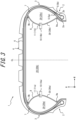
- FIG. 3 is a tire width direction cross-sectional view of the multi air chamber tire 1 according to one embodiment of the present invention (hereinafter also referred to as "tire 1") taken along the tire width direction.
- the tire width direction indicates a direction parallel to the rotation axis of the tire 1.
- the tire width direction is indicated by an arrow W.
- the tire radial direction indicates a direction orthogonal to the rotation axis of the tire 1.
- the tire radial direction is indicated by an arrow R.
- the description will be made assuming that the tire 1 has a symmetrical configuration with respect to the tire equator plane CL.
- the configuration of the tire 1 is not limited to the above.
- the tire 1 may have an asymmetrical configuration with respect to the tire equator plane CL.
- a direction toward the rotation axis of the tire 1 in the tire radial direction is referred to as “inward in the tire radial direction”
- a direction away from the rotation axis of the tire 1 in the tire radial direction is referred to as “outward in the tire radial direction”.
- a direction toward the tire equator plane CL in the tire width direction is referred to as “inward in the tire width direction”
- a direction away from the tire equator plane CL in the tire width direction is referred to as "outward in the tire width direction”.
- the tire 1 includes a pair of bead portions 2, a pair of sidewall portions 3, and a tread portion 4.
- Each sidewall portion 3 extends between the tread portion 4 and the bead portion 2.
- the sidewall portion 3 is located at a position outward of the bead portion 2 in the tire radial direction.
- Each of the pair of bead portions 2 includes a bead core 2a and a bead filler 2b.
- the bead core 2a includes a plurality of bead wires coated with rubber around their peripheries.
- Each bead wire is formed of a steel cord.
- the steel cord may be formed of a steel monofilament or stranded wire, for example.
- the bead filler 2b is made of rubber or the like, and is located at a position outward of the bead core 2a in the tire radial direction. In this embodiment, the thickness of the bead filler 2b reduces toward the outward tire radial direction.
- the tire 1 may have a structure which includes no bead filler 2b.
- Each bead portion 2 is configured to be brought into contact with a rim at a position inward in the tire radial direction and outward in the tire width direction when the tire 1 is mounted on the rim.
- the tire 1 includes a carcass 5.
- the carcass 5 extends in a toroidal shape between the pair of bead cores 2a, thus forming the skeleton of the tire. End portions of the carcass 5 engage with the bead cores 2a.
- the carcass 5 includes a carcass main body portion 5a and carcass fold-back portions 5b.
- the carcass main body portion 5a is disposed between the bead cores 2a.
- Each carcass fold-back portion 5b is provided on the periphery of the bead core 2a, and is obtained by folding back the carcass 5 to extend from a position inward in the tire width direction toward a position outward in the tire width direction.
- a length of the carcass fold-back portion 5b from the position inward in the tire width direction toward the position outward in the tire width direction may be set to a desired length.
- the carcass 5 may have a structure which includes no carcass fold-back portion 5b, or may have a structure where each carcass fold-back portion 5b is wound around the bead core 2a.
- the carcass 5 may be formed of one or more carcass layers.
- the carcass 5 may be formed of two carcass layers arranged in a laminated manner in the tire radial direction in the tire equator plane CL.
- a carcass cord which forms the carcass layer of the carcass 5 is made of polyester, for example.
- the configuration is not limited to the above.
- the carcass cord may be made of an organic fiber, such as nylon, rayon, or aramid, and metal, such as steel.
- the carcass 5 has a radial structure.
- the carcass 5 is not limited to the radial structure, and may have a bias structure.
- a belt 6 and a tread rubber which reinforce the tread portion 4 are provided at positions outward of the carcass 5 in the tire radial direction.
- the belt 6 may be formed of a plurality of belt layers laminated in the tire radial direction, for example.
- a belt cord which forms the belt layer of the belt 6 is made of polyester, for example.
- the belt cord is not limited to polyester, and may be made of an organic fiber, such as nylon, rayon, or aramid, and metal, such as steel, for example.
- the tire 1 includes an inner liner 7.
- the inner liner 7 is disposed such that the inner liner 7 covers the inner wall surface of the tire 1.
- the inner liner 7 may be formed of a plurality of inner liner layers laminated in the tire radial direction in the tire equator plane CL.
- the inner liner 7 is made of butyl-based rubber having low air permeability, for example.
- the butyl-based rubber includes butyl rubber, and halogenated butyl rubber, which is a derivative of butyl rubber, for example.
- the inner liner 7 is not limited to butyl-based rubber, and may be made of other rubber composition, a resin, or elastomer.
- the tire 1 includes a reinforcement layer 8.
- the reinforcement layer 8 is disposed such that the reinforcement layer 8 covers the inner wall surface of the tire 1 at a position inward of the inner liner 7 and the inner wall surface of the tire.
- the reinforcement layer 8 is a film member coated with rubber, for example.
- the reinforcement layer 8 may be any member, such as a film, which has low permeability of gas, such as air. With such a configuration, at least a portion of the reinforcement layer 8 serves as the partition wall 30 which forms the air chamber.
- the reinforcement layer 8 is coupled with the inner liner 7 at first coupling portions 9a and second coupling portions 9b, but is separated from the inner liner 7 between each first coupling portion 9a and each second coupling portion 9b.
- first coupling portions 9a are provided at positions symmetrical with respect to the tire equator plane CL.
- second coupling portions 9b are provided at positions symmetrical with respect to the tire equator plane CL.
- the first coupling portion 9a and the second coupling portion 9b are provided at positions different in the tire radial direction.
- the second coupling portion 9b is located at a position outward of the first coupling portion 9a in the tire radial direction.
- the state where the tire 1 is filled with air indicates a state where the tire 1 is mounted on the applicable rim, and is filled with a predetermined internal pressure.
- the state where the tire 1 is filled with air includes the above-mentioned reference state.
- the air chamber formed in the space located at a position inward of the reinforcement layer 8 in the tire width direction is referred to as "air chamber 20b".
- the air chambers formed in the spaces surrounded by the reinforcement layer 8 and tire inner wall surface of the sidewall portion 3 are respectively referred to as “air chamber 20a" and "air chamber 20c".
- Each of the air chambers 20a, 20b, and 20c is formed in one space continuous in the tire circumferential direction.
- the configuration is not limited to the above.
- each of the air chambers 20a, 20b, and 20c may be formed of a plurality of small air chambers formed by dividing a space in the tire circumferential direction by partition walls or the like provided to extend in a direction intersecting with the tire circumferential direction.
- the reinforcement layer 8 may be formed on the inner wall surface of the tire 1 by a desired method.
- the inner liner 7 and the reinforcement layer 8 may be caused to overlap and adhere with each other in the tire width direction in a state where the reinforcement layer 8 can be released in each region between the first coupling portion 9a and the second coupling portion 9b.
- a release agent such as silicone oil
- the inner liner 7 and the reinforcement layer 8 may be caused to adhere with each other in a state where at least a portion of the reinforcement layer 8 can be released.
- the inner liner 7 and the reinforcement layer 8 may be caused to adhere with each other in a state where at least a portion of the reinforcement layer 8 can be released.
- the release member may be, for example, a knitted member, a woven fabric member, or a cotton member which has stretchability and fine mesh which prevents permeation of rubber during vulcanization, a member obtained by overlapping a plurality of these members, or a resin film.
- each partition wall 30 is formed such that at least a portion of the reinforcement layer 8 is released from the inner liner 7.
- the configuration of the partition wall 30 or the method for forming the partition wall 30 is not limited to the above.
- the partition wall 30 may be formed such that the first coupling portion 9a and the second coupling portion 9b of a suitable sheet-like member having low permeability of gas, such as air, are caused to adhere to the tire inner wall surface.
- the partition wall 30 may be formed such that portions of an outer surface of a suitable hollow ring-like member having low permeability of gas, such as air, are caused to adhere to the tire inner wall surface by using the first coupling portion 9a and the second coupling portion 9b as end portions.
- the reinforcement layer 8 which forms the partition walls 30.
- the reinforcement layer 8 may be a carcass layer which forms a portion of the above-mentioned carcass 5.
- the carcass layer forming the reinforcement layer 8 is coupled with another carcass layer at the first coupling portions 9a and the second coupling portions 9b, but is separated from the other carcass layer in each range between the first coupling portion 9a and the second coupling portion 9b.
- the carcass layer can serve as partition walls which form the air chambers.
- the reinforcement layer 8 may also be an inner liner layer which forms a portion of the above-mentioned inner liner 7.
- the inner liner layer forming the reinforcement layer 8 is coupled with another inner liner layer at the first coupling portion 9a and the second coupling portion 9b, but is separated from another inner liner layer in each range between the first coupling portion 9a and the second coupling portion 9b.
- the inner liner layer can serve as partition walls which form the air chambers.
- the partition wall 30 has strength which prevents expansion and deformation of the partition wall 30 in a state where the air chamber 20a or 20c which faces the partition wall 30 is filled with a predetermined internal pressure.
- the strength of the partition wall 30 may be set to strength which prevents expansion and deformation of the partition wall 30 caused by the internal pressures of the air chambers 20a and 20c when the air chambers 20a and 20c are filled with the prescribed internal pressures in a state where the air chamber 20b is not filled with air.
- strength of the partition wall 30 may be set to strength which allows the air chambers 20a and 20c to support the maximum load or a certain load of less than the maximum load without causing expansion or deformation when the air chambers 20a and 20c are filled with the predetermined internal pressure in a state where the air chamber 20b is not filled with air.
- the partition wall 30 may be, for example, a member which constrains expansion and deformation, such as a member formed by covering an organic fiber, a glass fiber, a steel cord or the like by rubber composition or a resin, or a member made of rubber composition having high hardness.
- the first coupling portions 9a and the second coupling portions 9b of the partition walls 30 can be coupled with the tire inner wall surface at positions where the air chambers 20a and 20c can support the maximum load or a certain load of less than the maximum load when the air chambers 20a and 20c are filled with the predetermined internal pressure in a state where the air chamber 20b is not filled with air.
- each first coupling portion 9a may be coupled with the tire inner wall surface at a position outward of the bead core 2a of the bead portion 2 in the tire radial direction.
- each second coupling portion 9b may be coupled with the tire inner wall surface at a position outward of the ground contact edge of the tread portion 4 in the tire width direction.
- the second coupling portion 9b may also be coupled with the tire inner wall surface at a position inward of the ground contact edge of the tread portion 4 in the tire width direction.
- each second coupling portion 9b is coupled with the tire inner wall surface at a position outward of the maximum width position of the belt 6 in the tire width direction.
- the second coupling portion 9b may also be coupled with the tire inner wall surface at a position inward of the maximum width position of the belt 6 in the tire width direction, preferably, at a position inward of the maximum width position of the belt 6 in the tire width direction by 10 to 20% of the maximum width of the belt.
- the tire 1 further includes the ventilation members 10.
- Each ventilation member 10 connects the plurality of air chambers 20 disposed adjacent to each other in a state where ventilation is allowed.
- the ventilation member 10 is a valve, for example.
- the ventilation member 10 is not limited to a valve, and may be any device, such as a mechanical valve or a solenoid valve, which allows ventilation between the air chambers 20.
- the ventilation member 10 may be disposed at any position on the partition wall 30.
- the ventilation member 10 is disposed between the first coupling portion 9a and the second coupling portion 9b at a position where the ventilation member 10 penetrates through the reinforcement layer 8.
- the partition wall 30a includes one ventilation member 10a
- the partition wall 30b includes one ventilation member 10b.
- the ventilation member 10a connects the air chamber 20a and the air chamber 20b in a state where ventilation is allowed.
- the ventilation member 10b connects the air chamber 20b and the air chamber 20c in a state where ventilation is allowed.
- one ventilation member 10 is disposed on each partition wall 30.
- the number of ventilation members 10 is not limited to the above.
- the desired number of ventilation members 10 may be disposed in the tire 1 according to the application of the tire 1.
- each ventilation member 10 is disposed at a position where the ventilation member 10 connects two air chambers 20, which are defined by the partition wall 30 and disposed adjacent to each other, in a state where ventilation is allowed.
- the configuration is not limited to the above.
- the ventilation member 10 may be disposed at a position where the ventilation member 10 connects three or more air chambers 20, which are defined by the partition walls 30 and disposed adjacent to each other, in a state where ventilation is simultaneously allowed.
- the tire 1 may also include a ventilation member at a position where the ventilation member penetrates through the outer wall surface of the tire.
- the ventilation member may have a configuration identical to the configuration of the above-mentioned ventilation member 10. With such a configuration, the ventilation member can connect any one of the air chambers 20 and the outside of the tire in a state where ventilation is allowed. For example, by disposing the ventilation member at a position where the ventilation member penetrates through the inner liner 7 and the sidewall portion 3, the ventilation member can connect the air chamber 20a or 20c and the outside of the tire in a state where ventilation is allowed.
- Such a configuration allows air to be repeatedly filled into the air chamber 20 directly through the ventilation member without passing through the valve 41 of the rim 40 even in a state where the multi air chamber tire 1 is mounted on the rim 40 and hence, convenience of the multi air chamber tire is improved.
- the ventilation member 10 can regulate ventilation between the plurality of air chambers 20 connected in a state where ventilation is allowed.
- the ventilation member 10 includes, for example, a ventilation passage for connecting the plurality of air chambers 20 in a state where ventilation is allowed.
- the ventilation member 10 can regulate ventilation between the plurality of air chambers 20 based on a predetermined condition.
- the predetermined condition may be a condition indicating that a gas is leaking to the outside of the tire from at least one of the plurality of air chambers 20 due to tire failure, such as a puncture.
- the ventilation member 10 can release the ventilation passage to allow ventilation between the plurality of air chambers 20 in normal conditions, and the ventilation member 10 can close the ventilation passage to shut off ventilation between the plurality of air chambers 20 when the predetermined condition is satisfied.
- the predetermined condition may be a condition indicating that air is being injected into at least one of the plurality of air chambers 20 from the outside of the tire.
- the ventilation member 10 can close the ventilation passage to shut off ventilation between the plurality of air chambers 20 in normal conditions, and the ventilation member 10 can release the ventilation passage to allow ventilation between the plurality of air chambers 20 when the predetermined condition is satisfied.
- the ventilation member 10 can regulate ventilation between the plurality of air chambers 20 by a desired method.
- the ventilation member 10 may be able to allow or shut off ventilation between the air chambers 20, may be able to regulate the flow rate of air between the air chambers 20, or may be able to regulate a flow direction of air between the air chambers 20.
- the ventilation member 10 includes a detection unit 11 which detects whether or not the predetermined condition is satisfied. When the detection unit 11 detects that the predetermined condition is satisfied, the ventilation member 10 can regulate ventilation between the plurality of air chambers 20 disposed adjacent to each other and connected via the ventilation member 10 in a state where ventilation is allowed.
- the ventilation member 10 includes a drive unit which drives the ventilation member 10 when the detection unit 11 detects that the predetermined condition is satisfied.
- the drive unit may be communicably connected with the detection unit 11 by wired or wireless communication. When the drive unit receives, from the detection unit 11, a signal indicating that the predetermined condition is satisfied, the drive unit can drive the ventilation member 10 by a mechanical method or an electric method.
- the drive unit may be a switch which mechanically controls opening and closing of a valve provided in the ventilation passage of the ventilation member 10.
- the drive unit may be an electronic circuit or the like which is communicably connected, by wired or wireless communication, with the valve provided in the ventilation passage of the ventilation member 10, and which transmits a signal for controlling opening and closing of the valve.
- the predetermined condition may be a condition relating to a differential pressure between the air chambers 20 connected via the ventilation member 10 in a state where ventilation is allowed.
- the detection unit 11 may include a pressure sensor.
- the ventilation member 10 can regulate ventilation between the plurality of air chambers 20 connected.
- the predetermined condition may be a condition relating to a flow rate of air flowing through the ventilation member 10.
- the detection unit 11 may include a flowmeter.
- the ventilation member 10 can regulate ventilation between the plurality of air chambers 20 connected.
- the predetermined condition is not limited to the above, and may be any condition relating to the internal pressure of the air chamber 20.
- the detection unit 11 may include a communication means, for example.
- the communication means is a wireless communication antenna, for example.
- the communication means is not limited to the above, and may be any means including equipment or a device which enables wired or wireless communication.
- the ventilation member 10 can regulate ventilation between the plurality of air chambers 20 connected.
- the detection unit 11 included in the ventilation member 10 is integrally formed with the ventilation member 10.
- the configuration is not limited to the above, and the detection unit 11 may be separate from the ventilation member 10.
- the detection unit 11 when the detection unit 11 includes a pressure sensor, the detection unit 11 is separate from the ventilation member 10, and may be installed at a position where the detection unit 11 can measure the internal pressure of the air chamber 20.
- the detection unit 11 when the detection unit 11 includes a flowmeter, the detection unit 11 is separate from the ventilation member 10, and may be installed at a position where the detection unit 11 can measure the flow rate of air flowing through the ventilation passage of the ventilation member 10.
- the detection unit 11 when the detection unit 11 includes a communication means, the detection unit 11 is separate from the ventilation member 10, and can be installed at a position where the detection unit 11 can receive a signal from the outside.
- the detection unit 11 is disposed on each ventilation member 10.
- the number of detection units 11 is not limited to the above. The desired number of detection units 11 may be disposed on the ventilation member 10 according to the application of the ventilation member 10.
- the inner cavity of the multi air chamber tire 1 is defined by the two partition walls 30a and 30b. Therefore, when the tire 1 is mounted on the rim 40, the three air chambers 20a, 20b, and 20c are formed by the partition walls 30a and 30b.
- the ventilation members 10a and 10b are respectively provided to the two partition walls 30a and 30b.
- the air chambers 20a and 20b are connected in a state where ventilation between the air chambers 20a and 20b is allowed via the ventilation member 10a.
- the air chambers 20b and 20c are connected in a state where ventilation between the air chambers 20b and 20c is allowed via the ventilation member 10b.
- the predetermined condition is a condition indicating that air is leaking to the outside of the tire from at least one of the plurality of air chambers 20 due to tire failure, such as a puncture.
- the ventilation member 10 can release the ventilation passage to allow ventilation between the plurality of air chambers 20.
- the ventilation member 10 can close the ventilation passage to regulate ventilation between the plurality of air chambers 20.
- the ventilation member 10 allows ventilation between the air chambers 20 and hence, the three air chambers 20a, 20b, and 20c have substantially the same internal pressure.
- the ventilation member 10 allows ventilation between the air chambers 20 and hence, the three air chambers 20a, 20b, and 20c have substantially the same internal pressure.
- the ventilation member 10 allows ventilation between the air chambers 20 and hence, the three air chambers 20a, 20b, and 20c have substantially the same internal pressure.
- portions of air filled into the air chamber 20b pass through the ventilation members 10a and 10b, and also reach the air chambers 20a and 20c. Accordingly, in the same manner as a tire which does not have a plurality of air chambers, air can be filled into the three air chambers 20a, 20b, and 20c of the tire 1 by filling air from the valve 41 of the
- the ventilation members 10a and 10b allow ventilation between the air chambers 20a, 20b, and 20c. Therefore, when an external pressure applied to the tire 1 changes corresponding to movement of the weight of the vehicle, a change in the state of a road surface or the like, air in the three air chambers 20a, 20b, and 20c moves between the air chambers 20 and hence, internal pressures of the three air chambers 20a, 20b, and 20c are maintained at substantially the same internal pressure.
- a detection unit 11a of the ventilation member 10a detects that the predetermined condition is satisfied due to leakage of air from the air chamber 20a.
- the detection unit 11a can detect a reduction in internal pressure of the air chamber 20a or 20b by a pressure sensor included in the detection unit 11a.
- the detection unit 11a can detect that a flow rate of a predetermined value or more is generated in the ventilation member 10 by a flowmeter included in the detection unit 11a.
- the detection unit 11a can detect, by a communication means included in the detection unit 11a, reception of a signal indicating leakage of air from the air chamber 20a to the outside of the tire.
- the ventilation member 10a regulates ventilation through the ventilation member 10a.
- the ventilation member 10a can shut off ventilation between the air chamber 20a and the air chamber 20b.
- the ventilation member 10a can shut off ventilation from the air chamber 20b to the air chamber 20a while maintaining ventilation from the air chamber 20a to the air chamber 20b. With such a configuration, the ventilation member 10a prevents leakage of air in the air chamber 20b to the outside of the tire.
- the ventilation member 10a shuts off ventilation between the air chambers connected via the ventilation member 10a and hence, the internal pressure of the air chamber 20a reduces to a level lower than the internal pressure of the air chamber 20b.
- the partition wall 30a With such reduction in internal pressure of the air chamber 20a, the partition wall 30a is brought into close contact with the tire inner wall surface on the air chamber 20a side.
- ventilation from the air chamber 20b to the air chamber 20a is shut off by the ventilation member 10a and hence, it is possible to prevent ventilation of a predetermined amount or more from the air chamber 20c to the air chamber 20b via the ventilation member 10b.
- a detection unit 11b of the ventilation member 10b does not detect that the predetermined condition is satisfied due to leakage of air from the air chamber 20a.
- the ventilation member 10b continues to allow ventilation between the air chamber 20b and the air chamber 20c connected via the ventilation member 10b. With such a configuration, even when shapes of the air chambers 20b and 20c are deformed, the internal pressures of the air chamber 20b and the air chamber 20c are maintained at substantially the same internal pressure. Therefore, the air chamber 20b and the air chamber 20c can lessen a reduction in ride comfort of a vehicle and fuel efficiency after a puncture occurs.
- both the detection unit 11a of the ventilation member 10a and the detection unit 11b of the ventilation member 10b detect that the predetermined condition is satisfied due to leakage of air from the air chamber 20b.
- the ventilation member 10a When the detection unit 11a detects that the predetermined condition is satisfied, the ventilation member 10a shuts off ventilation through the ventilation member 10a.
- the ventilation member 10b When the detection unit 11b detects that the predetermined condition is satisfied, the ventilation member 10b shuts off ventilation through the ventilation member 10b.
- the ventilation member 10a prevents leakage of air in the air chamber 20a to the outside of the tire
- the ventilation member 10b prevents leakage of air in the air chamber 20c to the outside of the tire. Therefore, two air chambers 20a and 20c support a vehicle body, thus allowing travel after a puncture occurs. That is, the air chambers 20a and 20c play a role substantially equivalent to the role of the side reinforcing rubber disposed on each sidewall portion of the conventional run flat tire, for example.
- Step S101 The ventilation member 10 allows ventilation between the air chambers 20 connected via the ventilation member 10.
- Step S102 The detection unit 11 of the ventilation member 10 detects that the predetermined condition is satisfied. Assume that the predetermined condition is a condition indicating that air is leaking to the outside of the tire from at least one of the plurality of air chambers 20 due to tire failure, such as a puncture. When it is not detected by the detection unit 11 that the predetermined condition is satisfied (step S102 - No), processing from step S101 is repeated, and the ventilation member 10 maintains a state where the ventilation member 10 allows ventilation between the air chambers 20 connected via the ventilation member 10.
- the predetermined condition is a condition indicating that air is leaking to the outside of the tire from at least one of the plurality of air chambers 20 due to tire failure, such as a puncture.
- Step S 103 When the detection unit 11 detects that the predetermined condition is satisfied (step S102 - Yes), the ventilation member 10 shuts off ventilation between the air chambers 20 connected via the ventilation member 10.
- the inner cavity of the multi air chamber tire 1 is defined by the two partition walls 30a and 30b. Therefore, when the tire 1 is mounted on the rim 40, the three air chambers 20a, 20b, and 20c are formed by the partition walls 30a and 30b.
- the ventilation members 10a and 10b are respectively provided to the two partition walls 30a and 30b.
- the air chambers 20a and 20b are connected in a state where ventilation between the air chambers 20a and 20b is allowed via the ventilation member 10a.
- the air chambers 20b and 20c are connected in a state where ventilation between the air chambers 20b and 20c is allowed via the ventilation member 10b.
- the predetermined condition is a condition indicating that air is being injected into at least one of the plurality of air chambers 20 from the outside of the tire.
- the ventilation member 10 can close the ventilation passage to shut off ventilation between the plurality of air chambers 20.
- the ventilation member 10 can release the ventilation passage to allow ventilation between the plurality of air chambers 20.
- ventilation between the air chamber 20a and the air chamber 20b is shut off by the ventilation member 10a.
- Ventilation between the air chamber 20b and the air chamber 20c is shut off by the ventilation member 10b.
- the three air chambers 20a, 20b, and 20c can serve as air chambers independent from each other.
- the air chambers 20a, 20b, and 20c may have substantially the same internal pressure, or may have different internal pressures.
- the ventilation member 10a shuts off ventilation between the air chamber 20a and the air chamber 20b.
- the air chamber 20a and the air chamber 20b are defined by the partition wall 30a and hence, air does not leak to the outside of the tire from the air chamber 20b and the air chamber 20c. Therefore, the air chamber 20b and the air chamber 20c supports a vehicle body, thus allowing travel after a puncture occurs.
- the ventilation member 10a shuts off ventilation between the air chamber 20a and the air chamber 20b.
- the ventilation member 10b shuts off ventilation between the air chamber 20b and the air chamber 20c.
- the air chamber 20a and the air chamber 20c are defined by the partition wall 30a and the partition wall 30b, thus being separated from the air chamber 20b and hence, air does not leak to the outside of the tire from the air chamber 20a and the air chamber 20c. Therefore, the air chamber 20a and the air chamber 20c supports a vehicle body, thus allowing travel after a puncture occurs.
- the detection units 11a and 11b detect that the predetermined condition is satisfied due to injection of air into the air chamber 20b.
- the detection units 11a and 11b can detect an increase in internal pressure of the air chamber 20b by pressure sensors included in the detection units 11a and 11b.
- the detection units 11a and 11b can detect, by communication means included in the detection units 11a and 11b, a reception of a signal indicating that air is being injected into the air chamber 20b from the outside.
- the ventilation member 10a allows ventilation through the ventilation member 10a.
- the detection unit 11b detects that the predetermined condition is satisfied, the ventilation member 10b allows ventilation through the ventilation member 10b.
- the ventilation member 10b allows ventilation through the ventilation member 10b.
- Step S201 The ventilation member 10 shuts off ventilation between the air chambers 20 connected via the ventilation member 10.
- Step S202 The detection unit 11 of the ventilation member 10 detects that the predetermined condition is satisfied. Assume that the predetermined condition is a condition indicating that air is being injected into at least one of the plurality of air chambers 20 from the outside of the tire. When it is not detected by the detection unit 11 that the predetermined condition is satisfied (step S202 - No), processing from step S201 is repeated, and the ventilation member 10 maintains a state where the ventilation member 10 shuts off ventilation between the air chambers 20 connected via the ventilation member 10.
- the predetermined condition is a condition indicating that air is being injected into at least one of the plurality of air chambers 20 from the outside of the tire.
- Step S203 When the detection unit 11 detects that the predetermined condition is satisfied (step S202 - Yes), the ventilation member 10 allows ventilation between the air chambers 20 connected via the ventilation member 10.
- the multi air chamber tire 1 includes the partition wall 30 configured to define and form the plurality of air chambers 20 disposed adjacent to each other in the inner cavity of the tire, and the ventilation member 10 provided to the partition wall 30, and configured to connect the plurality of air chambers 20 in a state where ventilation is allowed.
- the ventilation member 10 allows ventilation between the plurality of air chambers 20 when the predetermined condition is satisfied indicating that fluid is being injected into at least one of the plurality of air chambers 20 from the outside of the tire, and the ventilation member 10 shuts off the ventilation between the plurality of air chambers 20 when the predetermined condition is not satisfied.
- Such a configuration allows the plurality of air chambers 20 to be separated from each other by the partition wall 30 except for when a gas, such as air, is injected into the tire 1 from the outside. Therefore, when air leaks to the outside of the tire from at least one of the plurality of air chambers 20 due to tire failure, such as a puncture, it is possible to prevent leakage of air from another air chamber 20 having no air leakage without performing control, such as shutting off ventilation via the ventilation member 10, for example. Accordingly, convenience of the multi air chamber tire 1 having the plurality of air chambers 20 is improved.
- the multi air chamber tire 1 according to the present invention include the detection unit 11 configured to detect whether or not the predetermined condition is satisfied.
- the ventilation member 10 to regulate ventilation between the plurality of air chambers 20 based on changes in the state of the plurality of air chambers 20 detected by the detection unit 11 and hence, convenience of the multi air chamber tire 1 having the plurality of air chambers 20 is further improved.
- the detection unit 11 include the pressure sensor.
- the ventilation member 10 to detect a change in the state of the plurality of air chambers 20 based on changes in air pressure and hence, convenience of the multi air chamber tire 1 having the plurality of air chambers 20 is further improved.
- the detection unit 11 includes the flowmeter.
- the ventilation member 10 to detect a change in the state of the plurality of air chambers 20 based on changes in the flow rate of air flowing through the ventilation member 10 and hence, convenience of the multi air chamber tire 1 having the plurality of air chambers 20 is further improved.
- the detection unit 11 include the communication means.
- the ventilation member 10 to detect a change in the state of the plurality of air chambers 20 by receiving a signal from the outside and hence, convenience of the multi air chamber tire 1 having the plurality of air chambers 20 is further improved.
- the ventilation member 10 according to the present invention is used in the above-mentioned multi air chamber tire 1.
- Such a configuration allows the ventilation member 10 to shut off ventilation between the plurality of air chambers 20 when air is leaking to the outside of the tire from at least one of the plurality of air chambers 20 due to tire failure, such as a puncture, or such a configuration allows the ventilation member 10 to allow ventilation between the plurality of air chambers 20 when air is being injected into at least one of the plurality of air chambers 20 from the outside of the tire.
- convenience of the multi air chamber tire 1 having the plurality of air chambers 20 is improved.
- a method for controlling an internal pressure of the multi air chamber tire 1 includes the steps of: allowing, by the ventilation member 10, ventilation between the plurality of air chambers 20 when the predetermined condition is satisfied indicating that fluid is being injected into at least one of the plurality of air chambers 20 from the outside of the tire; and shutting off, by the ventilation member 10, the ventilation between the plurality of air chambers 20 when the predetermined condition is not satisfied.
- Such a configuration allows the ventilation member 10 to shut off ventilation between the plurality of air chambers 20 when air is leaking to the outside of the tire from at least one of the plurality of air chambers 20 due to tire failure, such as a puncture, or such a configuration allows the ventilation member 10 to allow ventilation between the plurality of air chambers 20 when air is being injected into at least one of the plurality of air chambers 20 from the outside of the tire. With such a configuration, convenience of the multi air chamber tire 1 having the plurality of air chambers 20 is improved.
- a method for controlling the ventilation member 10 is a method for controlling the ventilation member 10 of the above-mentioned multi air chamber tire 1, and the method includes the steps of: allowing, by the ventilation member 10, ventilation between the plurality of air chambers 20 when the predetermined condition is satisfied indicating that fluid is being injected into at least one of the plurality of air chambers 20 from the outside of the tire; and shutting off, by the ventilation member 10, the ventilation between the plurality of air chambers 20 when the predetermined condition is not satisfied.
- Such a configuration allows the ventilation member 10 to shut off ventilation between the plurality of air chambers 20 when air is leaking to the outside of the tire from at least one of the plurality of air chambers 20 due to tire failure, such as a puncture, or such a configuration allows the ventilation member 10 to allow ventilation between the plurality of air chambers 20 when air is being injected into at least one of the plurality of air chambers 20 from the outside of the tire. With such a configuration, convenience of the multi air chamber tire 1 having the plurality of air chambers 20 is improved.
- the configuration is not limited to the above.
- one or three or more partition walls 30 may be provided to the tire inner wall surface of the tire 1.
- the tire 1 may be provided with a partition wall 30 which is connected with only another partition wall 30, but is not connected with the tire inner wall surface. In this manner, it is possible to desirably set the number, the volume, and the shape of air chambers 20 formed in the inner cavity of the tire.
- the configuration of the tire 1 is not limited to the above.
- two air chambers 20a and 20c may differ in at least one of volume and shape, the two air chambers 20a and 20c being respectively provided on the tire inner wall surface side of the pair of sidewall portions 3.
- the configuration is not limited to the above.
- the tire 1, that is, the air chamber 20 of the tire 1 may be filled with a gas, such as nitrogen.
- a material filled into the tire 1, that is, the air chamber of the tire 1 is not limited to a gas, and fluid, such as liquid, a gel-like substance, or a granular material may be filled into the tire 1, that is, the air chamber of the tire 1.
- the partition wall 30 may be formed of a member other than the reinforcement layer 8.
- the inner cavity of the tire 1 may be partitioned into a plurality of spaces by the tube.
- the plurality of air chambers 20 can be formed in the tire 1.
- portions of the outer wall of the tube serve as the partition walls 30.
Landscapes
- Engineering & Computer Science (AREA)
- Mechanical Engineering (AREA)
- Tires In General (AREA)
Description
- The present invention relates to a multi air chamber tire, a ventilation member, a method for controlling an internal pressure of a multi air chamber tire, and a method for controlling a ventilation member.
- Conventionally, there are tires which allow safe travel over a certain distance even in a state where the internal pressure of the tire is reduced due to tire failure, such as a puncture. For example, PTL 1 discloses a tire which incorporates a tube having a plurality of air chambers, thus allowing continuous travel even when air leaks to the outside from any one of the plurality of air chambers at the time of tire failure. Attention is also drawn to disclosures of
US4280546A ,US2563788A andJPS5042504A - PTL 1:
Japanese Patent Laid-Open No. 2002-67610 - However, in the above-mentioned conventional multi air chamber tire having the plurality of air chambers, each of the plurality of air chambers is independently filled with gas, so adjustment of the internal pressures of the plurality of air chambers requires time and effort. Accordingly, tires having a plurality of air chambers have room for improvement in regard to adjustment of the internal pressures of the plurality of air chambers.
- The present invention has been made under such circumstances, and it is an object of the present invention to provide a multi air chamber tire, a ventilation member, a method for controlling an internal pressure of a multi air chamber tire, and a method for controlling a ventilation member, which can improve convenience of the multi air chamber tire having the plurality of air chambers.
- A multi air chamber tire according to the present invention is provided as claimed in claim 1.
- A ventilation member according to the present invention is used in the above-mentioned multi air chamber tire.
- A method for controlling an internal pressure of a multi air chamber tire according to the present invention includes the steps of: allowing, by the ventilation member, ventilation between the plurality of air chambers when a predetermined condition is satisfied indicating that fluid is being injected into at least one of the plurality of air chambers from outside of a tire; and shutting off, by the ventilation member, the ventilation between the plurality of air chambers when the predetermined condition is not satisfied.
- A method for controlling a ventilation member according to the present invention is a method for controlling the ventilation member of the above-mentioned multi air chamber tire, the method including the steps of: allowing, by the ventilation member, ventilation between the plurality of air chambers when a predetermined condition is satisfied indicating that fluid is being injected into at least one of the plurality of air chambers from outside of a tire; and shutting off, by the ventilation member, the ventilation between the plurality of air chambers when the predetermined condition is not satisfied.
- According to the present invention, it is possible to provide a multi air chamber tire, a ventilation member, a method for controlling an internal pressure of a multi air chamber tire, and a method for controlling a ventilation member, which can improve convenience of the multi air chamber tire having the plurality of air chambers.
- In the accompanying drawings:
-
FIG. 1 is a schematic view schematically illustrating a multi air chamber tire according to one embodiment of the present invention in a state of being mounted on a rim; -
FIG. 2 is a schematic view schematically illustrating a modification of the multi air chamber tire according to the present invention in a state of being mounted on the rim; -
FIG. 3 is a tire width direction cross-sectional view of the multi air chamber tire according to one embodiment of the present invention; -
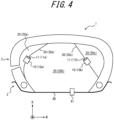
FIG. 4 is a schematic view schematically illustrating one example of a deformed mode of the multi air chamber tire illustrated inFIG. 1 at the time of a puncture; -
FIG. 5 is a schematic view schematically illustrating another example of the deformed mode of the multi air chamber tire illustrated inFIG. 1 at the time of a puncture; -
FIG. 6 is a flowchart illustrating one example of processing performed by a ventilation member according to one embodiment of the present invention; and -
FIG. 7 is a flowchart illustrating another example of processing performed by the ventilation member according to one embodiment of the present invention. - Hereinafter, a multi air chamber tire according to one embodiment of the present invention will be described with reference to drawings. In the respective drawings, identical members and portions are given the same reference symbols.
-
FIG. 1 is a schematic view schematically illustrating a multi air chamber tire 1 (hereinafter also referred to as "tire 1") of one embodiment of the present invention in a state of being mounted on arim 40. The schematic view is a tire width direction cross-sectional view of the tire 1 taken along a tire width direction. InFIG. 1 , the tire 1 includes a pair ofpartition walls partition walls partition walls partition walls rim 40 and is filled with air, threeair chambers partition walls Ventilation members partition walls ventilation members ventilation members ventilation members ventilation members ventilation member 10". When thepartition walls partition walls partition wall 30". When theair chambers air chambers air chamber 20". - When air is leaking to the outside from any one of the
air chambers 20 due to tire failure, theventilation member 10 regulates ventilation between theair chambers 20 to reduce the amount of leakage of air from theair chamber 20 having no air leakage, thus allowing continuous travel. In contrast, when air is filled into the tire 1, theventilation member 10 allows ventilation between theair chambers 20, thus allowing portions of air filled into theair chamber 20b from avalve 41 of therim 40 to reach theair chambers valve 41 of therim 40 in the same manner as a tire which does not have a plurality of air chambers. - In
FIG. 1 , the tire 1 includes twoventilation members 10, twopartition walls 30, and threeair chambers 20 defined in the tire width direction. However, the numbers and the positions ofventilation members 10,partition walls 30, andair chambers 20 are not limited to the above.FIG. 2 is a schematic view schematically illustrating a modification of the multi air chamber tire 1 in a state of being mounted on therim 40. For example, as illustrated inFIG. 2 , the tire 1 includes oneventilation member 10 and onepartition wall 30. Therefore, in the tire 1, twoair chambers partition wall 30. Further, in the tire 1, theventilation member 10 can connect the twoair chambers air chambers 20 formed in the inner cavity of the tire 1 may be suitably designed according to the application of the tire 1. - Next, the configuration of the multi air chamber tire 1 will be described in detail.
- Hereinafter, unless otherwise specified, assume that dimensions of respective elements, the length relationship, the positional relationship and the like are measured in the reference state where a multi air chamber tire serving as a pneumatic tire is mounted on an applicable rim, the multi air chamber tire is filled with a prescribed internal pressure, and no load is applied to the multi air chamber tire. Further, a width in the tire width direction of a contact patch which comes into contact with a road surface in a state where the tire is mounted on the applicable rim, the tire is filled with the prescribed internal pressure, and the maximum load is applied to the tire is referred to as "ground contact width of the tire", and an edge portion in the tire width direction of the ground contact width of the tire is referred to as "ground contact edge".
- In this specification, "applicable rim" indicates an approved rim (Measuring Rim in STANDARDS MANUAL of ETRTO, and Design Rim in YEAR BOOK of TRA) having an applicable size which is described or which will be described in the future in the industrial standards applicable to regions where pneumatic tires are produced and used, including JATMA YEAR BOOK by JATMA (the Japan Automobile Tyre Manufacturers Association) in Japan, STANDARDS MANUAL by ETRTO (The European Tyre and Rim Technical Organisation) in Europe, and YEAR BOOK by TRA (The Tire and Rim Association, Inc.) in the United States of America. In the case of a size not described in these industrial standards, "applicable rim" indicates a rim having a width which corresponds to the bead width of a pneumatic tire. The term "applicable rim" also includes a size which may be included in the above-mentioned industrial standard in the future in addition to the current size. An example of "size which will be described in the future" includes a size described as "FUTURE DEVELOPMENTS" in ETRTO 2013.
- In this specification, "prescribed internal pressure" indicates an air pressure (maximum air pressure) which corresponds to the maximum load capability of a single wheel having an applicable size and a ply rating, and which is described in the industrial standard, such as the above-mentioned JATMA YEAR BOOK. In the case of a size not described in the above-mentioned industrial standard, "prescribed internal pressure" indicates an air pressure (maximum air pressure) which corresponds to the maximum load capability specified for each vehicle on which the tire is mounted. In this specification, "maximum load" indicates a load which corresponds to the maximum load capability of a tire having an applicable size described in the above-mentioned industrial standard. In the case of a size not described in the above-mentioned industrial standard, "maximum load" indicates a load which corresponds to the maximum load capability specified for each vehicle on which the tire is mounted.
-
FIG. 3 is a tire width direction cross-sectional view of the multi air chamber tire 1 according to one embodiment of the present invention (hereinafter also referred to as "tire 1") taken along the tire width direction. In this specification, the tire width direction indicates a direction parallel to the rotation axis of the tire 1. InFIG. 3 , the tire width direction is indicated by an arrow W. Further, the tire radial direction indicates a direction orthogonal to the rotation axis of the tire 1. InFIG. 3 , the tire radial direction is indicated by an arrow R. The description will be made assuming that the tire 1 has a symmetrical configuration with respect to the tire equator plane CL. However, the configuration of the tire 1 is not limited to the above. The tire 1 may have an asymmetrical configuration with respect to the tire equator plane CL. - In this specification, a direction toward the rotation axis of the tire 1 in the tire radial direction is referred to as "inward in the tire radial direction", and a direction away from the rotation axis of the tire 1 in the tire radial direction is referred to as "outward in the tire radial direction". A direction toward the tire equator plane CL in the tire width direction is referred to as "inward in the tire width direction", and a direction away from the tire equator plane CL in the tire width direction is referred to as "outward in the tire width direction".
- As illustrated in
FIG. 3 , the tire 1 includes a pair ofbead portions 2, a pair ofsidewall portions 3, and atread portion 4. Eachsidewall portion 3 extends between thetread portion 4 and thebead portion 2. Thesidewall portion 3 is located at a position outward of thebead portion 2 in the tire radial direction. - Each of the pair of
bead portions 2 includes abead core 2a and abead filler 2b. Thebead core 2a includes a plurality of bead wires coated with rubber around their peripheries. Each bead wire is formed of a steel cord. The steel cord may be formed of a steel monofilament or stranded wire, for example. Thebead filler 2b is made of rubber or the like, and is located at a position outward of thebead core 2a in the tire radial direction. In this embodiment, the thickness of thebead filler 2b reduces toward the outward tire radial direction. The tire 1 may have a structure which includes nobead filler 2b. Eachbead portion 2 is configured to be brought into contact with a rim at a position inward in the tire radial direction and outward in the tire width direction when the tire 1 is mounted on the rim. - The tire 1 includes a
carcass 5. Thecarcass 5 extends in a toroidal shape between the pair ofbead cores 2a, thus forming the skeleton of the tire. End portions of thecarcass 5 engage with thebead cores 2a. Specifically, thecarcass 5 includes a carcassmain body portion 5a and carcass fold-back portions 5b. The carcassmain body portion 5a is disposed between thebead cores 2a. Each carcass fold-back portion 5b is provided on the periphery of thebead core 2a, and is obtained by folding back thecarcass 5 to extend from a position inward in the tire width direction toward a position outward in the tire width direction. A length of the carcass fold-back portion 5b from the position inward in the tire width direction toward the position outward in the tire width direction may be set to a desired length. Thecarcass 5 may have a structure which includes no carcass fold-back portion 5b, or may have a structure where each carcass fold-back portion 5b is wound around thebead core 2a. - The
carcass 5 may be formed of one or more carcass layers. For example, thecarcass 5 may be formed of two carcass layers arranged in a laminated manner in the tire radial direction in the tire equator plane CL. A carcass cord which forms the carcass layer of thecarcass 5 is made of polyester, for example. However, the configuration is not limited to the above. For example, the carcass cord may be made of an organic fiber, such as nylon, rayon, or aramid, and metal, such as steel. In this embodiment, thecarcass 5 has a radial structure. However, thecarcass 5 is not limited to the radial structure, and may have a bias structure. - In the
tread portion 4, abelt 6 and a tread rubber which reinforce thetread portion 4 are provided at positions outward of thecarcass 5 in the tire radial direction. Thebelt 6 may be formed of a plurality of belt layers laminated in the tire radial direction, for example. A belt cord which forms the belt layer of thebelt 6 is made of polyester, for example. However, the belt cord is not limited to polyester, and may be made of an organic fiber, such as nylon, rayon, or aramid, and metal, such as steel, for example. - The tire 1 includes an
inner liner 7. Theinner liner 7 is disposed such that theinner liner 7 covers the inner wall surface of the tire 1. Theinner liner 7 may be formed of a plurality of inner liner layers laminated in the tire radial direction in the tire equator plane CL. Theinner liner 7 is made of butyl-based rubber having low air permeability, for example. The butyl-based rubber includes butyl rubber, and halogenated butyl rubber, which is a derivative of butyl rubber, for example. Theinner liner 7 is not limited to butyl-based rubber, and may be made of other rubber composition, a resin, or elastomer. - The tire 1 includes a
reinforcement layer 8. Thereinforcement layer 8 is disposed such that thereinforcement layer 8 covers the inner wall surface of the tire 1 at a position inward of theinner liner 7 and the inner wall surface of the tire. Thereinforcement layer 8 is a film member coated with rubber, for example. Thereinforcement layer 8 may be any member, such as a film, which has low permeability of gas, such as air. With such a configuration, at least a portion of thereinforcement layer 8 serves as thepartition wall 30 which forms the air chamber. Thereinforcement layer 8 is coupled with theinner liner 7 atfirst coupling portions 9a andsecond coupling portions 9b, but is separated from theinner liner 7 between eachfirst coupling portion 9a and eachsecond coupling portion 9b. In this embodiment, twofirst coupling portions 9a are provided at positions symmetrical with respect to the tire equator plane CL. Twosecond coupling portions 9b are provided at positions symmetrical with respect to the tire equator plane CL. Thefirst coupling portion 9a and thesecond coupling portion 9b are provided at positions different in the tire radial direction. Thesecond coupling portion 9b is located at a position outward of thefirst coupling portion 9a in the tire radial direction. - In this embodiment, when the tire 1 is filled with air, in the inner cavity of the tire, air chambers are formed in spaces surrounded by the
inner liner 7 and thereinforcement layer 8 and in a space located at a position inward of thereinforcement layer 8 in the tire width direction, an internal pressure being applied to the air chambers. Therefore, in this embodiment, portions of thereinforcement layer 8 each of which is located between thefirst coupling portion 9a and thesecond coupling portion 9b respectively serve as the above-mentionedpartition walls partition walls first coupling portions 9a and thesecond coupling portions 9b. Here, the state where the tire 1 is filled with air indicates a state where the tire 1 is mounted on the applicable rim, and is filled with a predetermined internal pressure. For example, the state where the tire 1 is filled with air includes the above-mentioned reference state. The air chamber formed in the space located at a position inward of thereinforcement layer 8 in the tire width direction is referred to as "air chamber 20b". The air chambers formed in the spaces surrounded by thereinforcement layer 8 and tire inner wall surface of thesidewall portion 3 are respectively referred to as "air chamber 20a" and "air chamber 20c". - Each of the
air chambers air chambers - The
reinforcement layer 8 may be formed on the inner wall surface of the tire 1 by a desired method. For example, at the time of forming thereinforcement layer 8, theinner liner 7 and thereinforcement layer 8 may be caused to overlap and adhere with each other in the tire width direction in a state where thereinforcement layer 8 can be released in each region between thefirst coupling portion 9a and thesecond coupling portion 9b. For example, when a release agent, such as silicone oil, is applied to release regions each of which is located between thefirst coupling portion 9a and thesecond coupling portion 9b on the surface of thereinforcement layer 8 located outward in the tire width direction, theinner liner 7 and thereinforcement layer 8 may be caused to adhere with each other in a state where at least a portion of thereinforcement layer 8 can be released. Alternatively, when molding is performed in a state where a release member is sandwiched in each release region between theinner liner 7 and thereinforcement layer 8, a releasing operation can be easily performed, and theinner liner 7 and thereinforcement layer 8 may be caused to adhere with each other in a state where at least a portion of thereinforcement layer 8 can be released. The release member may be, for example, a knitted member, a woven fabric member, or a cotton member which has stretchability and fine mesh which prevents permeation of rubber during vulcanization, a member obtained by overlapping a plurality of these members, or a resin film. With the use of such a forming method, the tire 1 can be manufactured with a simpler manufacturing method and hence, it is possible to prevent an increase in manufacturing costs. - The description has been made for an example where each
partition wall 30 is formed such that at least a portion of thereinforcement layer 8 is released from theinner liner 7. However, the configuration of thepartition wall 30 or the method for forming thepartition wall 30 is not limited to the above. For example, thepartition wall 30 may be formed such that thefirst coupling portion 9a and thesecond coupling portion 9b of a suitable sheet-like member having low permeability of gas, such as air, are caused to adhere to the tire inner wall surface. Alternatively, thepartition wall 30 may be formed such that portions of an outer surface of a suitable hollow ring-like member having low permeability of gas, such as air, are caused to adhere to the tire inner wall surface by using thefirst coupling portion 9a and thesecond coupling portion 9b as end portions. - In this embodiment, at least a portion of another member included in the tire 1 may be used as the
reinforcement layer 8 which forms thepartition walls 30. For example, thereinforcement layer 8 may be a carcass layer which forms a portion of the above-mentionedcarcass 5. In such a case, the carcass layer forming thereinforcement layer 8 is coupled with another carcass layer at thefirst coupling portions 9a and thesecond coupling portions 9b, but is separated from the other carcass layer in each range between thefirst coupling portion 9a and thesecond coupling portion 9b. With such a configuration, the carcass layer can serve as partition walls which form the air chambers. Thereinforcement layer 8 may also be an inner liner layer which forms a portion of the above-mentionedinner liner 7. In such a case, the inner liner layer forming thereinforcement layer 8 is coupled with another inner liner layer at thefirst coupling portion 9a and thesecond coupling portion 9b, but is separated from another inner liner layer in each range between thefirst coupling portion 9a and thesecond coupling portion 9b. With such a configuration, the inner liner layer can serve as partition walls which form the air chambers. - The
partition wall 30 has strength which prevents expansion and deformation of thepartition wall 30 in a state where theair chamber partition wall 30 is filled with a predetermined internal pressure. For example, the strength of thepartition wall 30 may be set to strength which prevents expansion and deformation of thepartition wall 30 caused by the internal pressures of theair chambers air chambers air chamber 20b is not filled with air. For example, strength of thepartition wall 30 may be set to strength which allows theair chambers air chambers air chamber 20b is not filled with air. To increase strength of thepartition wall 30, thepartition wall 30 may be, for example, a member which constrains expansion and deformation, such as a member formed by covering an organic fiber, a glass fiber, a steel cord or the like by rubber composition or a resin, or a member made of rubber composition having high hardness. - The
first coupling portions 9a and thesecond coupling portions 9b of thepartition walls 30 can be coupled with the tire inner wall surface at positions where theair chambers air chambers air chamber 20b is not filled with air. For example, eachfirst coupling portion 9a may be coupled with the tire inner wall surface at a position outward of thebead core 2a of thebead portion 2 in the tire radial direction. Further, for example, eachsecond coupling portion 9b may be coupled with the tire inner wall surface at a position outward of the ground contact edge of thetread portion 4 in the tire width direction. However, thesecond coupling portion 9b may also be coupled with the tire inner wall surface at a position inward of the ground contact edge of thetread portion 4 in the tire width direction. - In
FIG. 3 , eachsecond coupling portion 9b is coupled with the tire inner wall surface at a position outward of the maximum width position of thebelt 6 in the tire width direction. However, the configuration is not limited to the above. Thesecond coupling portion 9b may also be coupled with the tire inner wall surface at a position inward of the maximum width position of thebelt 6 in the tire width direction, preferably, at a position inward of the maximum width position of thebelt 6 in the tire width direction by 10 to 20% of the maximum width of the belt. Such a configuration allows a load applied to theair chambers belt 6 when air is leaking from theair chamber 20b due to tire failure and hence, supporting capacity during tire failure can be further improved. - The tire 1 further includes the
ventilation members 10. Eachventilation member 10 connects the plurality ofair chambers 20 disposed adjacent to each other in a state where ventilation is allowed. Theventilation member 10 is a valve, for example. However, theventilation member 10 is not limited to a valve, and may be any device, such as a mechanical valve or a solenoid valve, which allows ventilation between theair chambers 20. Theventilation member 10 may be disposed at any position on thepartition wall 30. For example, as illustrated inFIG. 3 , in this embodiment, theventilation member 10 is disposed between thefirst coupling portion 9a and thesecond coupling portion 9b at a position where theventilation member 10 penetrates through thereinforcement layer 8. Thepartition wall 30a includes oneventilation member 10a, and thepartition wall 30b includes oneventilation member 10b. With such a configuration, theventilation member 10a connects theair chamber 20a and theair chamber 20b in a state where ventilation is allowed. Theventilation member 10b connects theair chamber 20b and theair chamber 20c in a state where ventilation is allowed. InFIG. 3 , oneventilation member 10 is disposed on eachpartition wall 30. However, the number ofventilation members 10 is not limited to the above. The desired number ofventilation members 10 may be disposed in the tire 1 according to the application of the tire 1. Further, in this embodiment, eachventilation member 10 is disposed at a position where theventilation member 10 connects twoair chambers 20, which are defined by thepartition wall 30 and disposed adjacent to each other, in a state where ventilation is allowed. However, the configuration is not limited to the above. Theventilation member 10 may be disposed at a position where theventilation member 10 connects three ormore air chambers 20, which are defined by thepartition walls 30 and disposed adjacent to each other, in a state where ventilation is simultaneously allowed. - The tire 1 may also include a ventilation member at a position where the ventilation member penetrates through the outer wall surface of the tire. The ventilation member may have a configuration identical to the configuration of the above-mentioned
ventilation member 10. With such a configuration, the ventilation member can connect any one of theair chambers 20 and the outside of the tire in a state where ventilation is allowed. For example, by disposing the ventilation member at a position where the ventilation member penetrates through theinner liner 7 and thesidewall portion 3, the ventilation member can connect theair chamber air chamber 20 directly through the ventilation member without passing through thevalve 41 of therim 40 even in a state where the multi air chamber tire 1 is mounted on therim 40 and hence, convenience of the multi air chamber tire is improved. - The
ventilation member 10 can regulate ventilation between the plurality ofair chambers 20 connected in a state where ventilation is allowed. Theventilation member 10 includes, for example, a ventilation passage for connecting the plurality ofair chambers 20 in a state where ventilation is allowed. For example, theventilation member 10 can regulate ventilation between the plurality ofair chambers 20 based on a predetermined condition. The predetermined condition may be a condition indicating that a gas is leaking to the outside of the tire from at least one of the plurality ofair chambers 20 due to tire failure, such as a puncture. In such a case, theventilation member 10 can release the ventilation passage to allow ventilation between the plurality ofair chambers 20 in normal conditions, and theventilation member 10 can close the ventilation passage to shut off ventilation between the plurality ofair chambers 20 when the predetermined condition is satisfied. Alternatively, the predetermined condition may be a condition indicating that air is being injected into at least one of the plurality ofair chambers 20 from the outside of the tire. In such a case, theventilation member 10 can close the ventilation passage to shut off ventilation between the plurality ofair chambers 20 in normal conditions, and theventilation member 10 can release the ventilation passage to allow ventilation between the plurality ofair chambers 20 when the predetermined condition is satisfied. - The
ventilation member 10 can regulate ventilation between the plurality ofair chambers 20 by a desired method. For example, theventilation member 10 may be able to allow or shut off ventilation between theair chambers 20, may be able to regulate the flow rate of air between theair chambers 20, or may be able to regulate a flow direction of air between theair chambers 20. - The
ventilation member 10 includes adetection unit 11 which detects whether or not the predetermined condition is satisfied. When thedetection unit 11 detects that the predetermined condition is satisfied, theventilation member 10 can regulate ventilation between the plurality ofair chambers 20 disposed adjacent to each other and connected via theventilation member 10 in a state where ventilation is allowed. Theventilation member 10 includes a drive unit which drives theventilation member 10 when thedetection unit 11 detects that the predetermined condition is satisfied. The drive unit may be communicably connected with thedetection unit 11 by wired or wireless communication. When the drive unit receives, from thedetection unit 11, a signal indicating that the predetermined condition is satisfied, the drive unit can drive theventilation member 10 by a mechanical method or an electric method. For example, the drive unit may be a switch which mechanically controls opening and closing of a valve provided in the ventilation passage of theventilation member 10. For example, the drive unit may be an electronic circuit or the like which is communicably connected, by wired or wireless communication, with the valve provided in the ventilation passage of theventilation member 10, and which transmits a signal for controlling opening and closing of the valve. - For example, the predetermined condition may be a condition relating to a differential pressure between the
air chambers 20 connected via theventilation member 10 in a state where ventilation is allowed. In such a case, thedetection unit 11 may include a pressure sensor. When thedetection unit 11 detects that a differential pressure of a predetermined amount or more is generated between theair chambers 20 connected in a state where ventilation is allowed, theventilation member 10 can regulate ventilation between the plurality ofair chambers 20 connected. For example, the predetermined condition may be a condition relating to a flow rate of air flowing through theventilation member 10. In such a case, thedetection unit 11 may include a flowmeter. When thedetection unit 11 detects that a flow rate of air of a predetermined amount or more is generated in theventilation member 10, theventilation member 10 can regulate ventilation between the plurality ofair chambers 20 connected. The predetermined condition is not limited to the above, and may be any condition relating to the internal pressure of theair chamber 20. Thedetection unit 11 may include a communication means, for example. The communication means is a wireless communication antenna, for example. However, the communication means is not limited to the above, and may be any means including equipment or a device which enables wired or wireless communication. When thedetection unit 11 receives a signal notifying that the predetermined condition is satisfied, theventilation member 10 can regulate ventilation between the plurality ofair chambers 20 connected. - In
FIG. 3 , thedetection unit 11 included in theventilation member 10 is integrally formed with theventilation member 10. However, the configuration is not limited to the above, and thedetection unit 11 may be separate from theventilation member 10. For example, when thedetection unit 11 includes a pressure sensor, thedetection unit 11 is separate from theventilation member 10, and may be installed at a position where thedetection unit 11 can measure the internal pressure of theair chamber 20. For example, when thedetection unit 11 includes a flowmeter, thedetection unit 11 is separate from theventilation member 10, and may be installed at a position where thedetection unit 11 can measure the flow rate of air flowing through the ventilation passage of theventilation member 10. Further, for example, when thedetection unit 11 includes a communication means, thedetection unit 11 is separate from theventilation member 10, and can be installed at a position where thedetection unit 11 can receive a signal from the outside. InFIG. 3 , onedetection unit 11 is disposed on eachventilation member 10. However, the number ofdetection units 11 is not limited to the above. The desired number ofdetection units 11 may be disposed on theventilation member 10 according to the application of theventilation member 10. - Hereinafter, one example of the operation of the multi air chamber tire 1 according to one embodiment of the present invention will be described. As illustrated in
FIG. 1 , the inner cavity of the multi air chamber tire 1 is defined by the twopartition walls rim 40, the threeair chambers partition walls ventilation members partition walls air chambers air chambers ventilation member 10a. Theair chambers air chambers ventilation member 10b. In this operation example, assume that the predetermined condition is a condition indicating that air is leaking to the outside of the tire from at least one of the plurality ofair chambers 20 due to tire failure, such as a puncture. - When the predetermined condition is not satisfied, the
ventilation member 10 can release the ventilation passage to allow ventilation between the plurality ofair chambers 20. When the predetermined condition indicating tire failure is satisfied, theventilation member 10 can close the ventilation passage to regulate ventilation between the plurality ofair chambers 20. In a state where there is no puncture or the like, theventilation member 10 allows ventilation between theair chambers 20 and hence, the threeair chambers air chamber 20b from thevalve 41 of therim 40 in a state where the tire 1 is mounted on therim 40, portions of air filled into theair chamber 20b pass through theventilation members air chambers air chambers valve 41 of therim 40. - Further, when a vehicle normally travels in a state where there is no puncture or the like, the
ventilation members air chambers air chambers air chambers 20 and hence, internal pressures of the threeair chambers sidewall portions 3 have side reinforcing rubber, it is possible to lessen a reduction in ride comfort and fuel efficiency. - In contrast, for example, as illustrated in
FIG. 4 , when a puncture or the like occurs in thesidewall portion 3 of the half portion of the tire which theair chamber 20a faces, air in theair chamber 20a leaks to the outside of the tire from the damaged portion where the puncture or the like occurs. At this point, adetection unit 11a of theventilation member 10a detects that the predetermined condition is satisfied due to leakage of air from theair chamber 20a. For example, thedetection unit 11a can detect a reduction in internal pressure of theair chamber detection unit 11a. Alternatively, thedetection unit 11a can detect that a flow rate of a predetermined value or more is generated in theventilation member 10 by a flowmeter included in thedetection unit 11a. Alternatively, thedetection unit 11a can detect, by a communication means included in thedetection unit 11a, reception of a signal indicating leakage of air from theair chamber 20a to the outside of the tire. - When the
detection unit 11a detects that the predetermined condition is satisfied, theventilation member 10a regulates ventilation through theventilation member 10a. For example, theventilation member 10a can shut off ventilation between theair chamber 20a and theair chamber 20b. Alternatively, theventilation member 10a can shut off ventilation from theair chamber 20b to theair chamber 20a while maintaining ventilation from theair chamber 20a to theair chamber 20b. With such a configuration, theventilation member 10a prevents leakage of air in theair chamber 20b to the outside of the tire. - In a state where leakage of air in the
air chamber 20a to the outside of the tire proceeds, theventilation member 10a shuts off ventilation between the air chambers connected via theventilation member 10a and hence, the internal pressure of theair chamber 20a reduces to a level lower than the internal pressure of theair chamber 20b. With such reduction in internal pressure of theair chamber 20a, thepartition wall 30a is brought into close contact with the tire inner wall surface on theair chamber 20a side. However, ventilation from theair chamber 20b to theair chamber 20a is shut off by theventilation member 10a and hence, it is possible to prevent ventilation of a predetermined amount or more from theair chamber 20c to theair chamber 20b via theventilation member 10b. At this point, adetection unit 11b of theventilation member 10b does not detect that the predetermined condition is satisfied due to leakage of air from theair chamber 20a. Theventilation member 10b continues to allow ventilation between theair chamber 20b and theair chamber 20c connected via theventilation member 10b. With such a configuration, even when shapes of theair chambers air chamber 20b and theair chamber 20c are maintained at substantially the same internal pressure. Therefore, theair chamber 20b and theair chamber 20c can lessen a reduction in ride comfort of a vehicle and fuel efficiency after a puncture occurs. - For example, when a puncture or the like occurs in the
tread portion 4 as illustrated inFIG. 5 , air in theair chamber 20b leaks to the outside of the tire from the damaged portion where the puncture or the like occurs. At this point, both thedetection unit 11a of theventilation member 10a and thedetection unit 11b of theventilation member 10b detect that the predetermined condition is satisfied due to leakage of air from theair chamber 20b. - When the
detection unit 11a detects that the predetermined condition is satisfied, theventilation member 10a shuts off ventilation through theventilation member 10a. When thedetection unit 11b detects that the predetermined condition is satisfied, theventilation member 10b shuts off ventilation through theventilation member 10b. With such a configuration, theventilation member 10a prevents leakage of air in theair chamber 20a to the outside of the tire, and theventilation member 10b prevents leakage of air in theair chamber 20c to the outside of the tire. Therefore, twoair chambers air chambers - The description will be made with reference to
FIG. 6 for one example of processing performed by theventilation member 10 including in the multi air chamber tire 1 according to one embodiment of the present invention. - Step S101: The
ventilation member 10 allows ventilation between theair chambers 20 connected via theventilation member 10. - Step S102: The
detection unit 11 of theventilation member 10 detects that the predetermined condition is satisfied. Assume that the predetermined condition is a condition indicating that air is leaking to the outside of the tire from at least one of the plurality ofair chambers 20 due to tire failure, such as a puncture. When it is not detected by thedetection unit 11 that the predetermined condition is satisfied (step S102 - No), processing from step S101 is repeated, and theventilation member 10 maintains a state where theventilation member 10 allows ventilation between theair chambers 20 connected via theventilation member 10. - Step S 103: When the
detection unit 11 detects that the predetermined condition is satisfied (step S102 - Yes), theventilation member 10 shuts off ventilation between theair chambers 20 connected via theventilation member 10. - Hereinafter, another example of the operation of the multi air chamber tire 1 according to one embodiment of the present invention will be described. As illustrated in
FIG. 1 , the inner cavity of the multi air chamber tire 1 is defined by the twopartition walls rim 40, the threeair chambers partition walls ventilation members partition walls air chambers air chambers ventilation member 10a. Theair chambers air chambers ventilation member 10b. In this operation example, assume that the predetermined condition is a condition indicating that air is being injected into at least one of the plurality ofair chambers 20 from the outside of the tire. - When the predetermined condition is not satisfied, the
ventilation member 10 can close the ventilation passage to shut off ventilation between the plurality ofair chambers 20. When the predetermined condition is satisfied indicating that air is being injected from the outside, theventilation member 10 can release the ventilation passage to allow ventilation between the plurality ofair chambers 20. When air is not being injected, ventilation between theair chamber 20a and theair chamber 20b is shut off by theventilation member 10a. Ventilation between theair chamber 20b and theair chamber 20c is shut off by theventilation member 10b. With such a configuration, the threeair chambers air chambers - For example, as illustrated in
FIG. 4 , when a puncture or the like occurs in thesidewall portion 3 of the half portion of the tire which theair chamber 20a faces, air in theair chamber 20a leaks to the outside of the tire from the damaged portion where the puncture or the like occurs. At this point, theventilation member 10a shuts off ventilation between theair chamber 20a and theair chamber 20b. Accordingly, theair chamber 20a and theair chamber 20b are defined by thepartition wall 30a and hence, air does not leak to the outside of the tire from theair chamber 20b and theair chamber 20c. Therefore, theair chamber 20b and theair chamber 20c supports a vehicle body, thus allowing travel after a puncture occurs. At this point, air in theair chamber 20a leaks to the outside of the tire and hence, the internal pressure of theair chamber 20a reduces to a level lower than the internal pressure of theair chamber 20b and hence, thepartition wall 30a is brought into close contact with the tire inner wall surface on theair chamber 20a side. Thepartition wall 30a is brought into close contact with the tire inner wall surface on theair chamber 20a side and hence, leakage of air from the damaged portion may be reduced. - Further, for example, when a puncture or the like occurs in the
tread portion 4 as illustrated inFIG. 5 , air in theair chamber 20b leaks to the outside of the tire from the damaged portion where the puncture or the like occurs. At this point, theventilation member 10a shuts off ventilation between theair chamber 20a and theair chamber 20b. Further, theventilation member 10b shuts off ventilation between theair chamber 20b and theair chamber 20c. Accordingly, theair chamber 20a and theair chamber 20c are defined by thepartition wall 30a and thepartition wall 30b, thus being separated from theair chamber 20b and hence, air does not leak to the outside of the tire from theair chamber 20a and theair chamber 20c. Therefore, theair chamber 20a and theair chamber 20c supports a vehicle body, thus allowing travel after a puncture occurs. - In contrast, for example, when air is being injected into the
air chamber 20b from thevalve 41 of therim 40 in a state where the tire 1 is mounted on therim 40, thedetection units air chamber 20b. For example, thedetection units air chamber 20b by pressure sensors included in thedetection units detection units detection units air chamber 20b from the outside. - When the
detection unit 11a detects that the predetermined condition is satisfied, theventilation member 10a allows ventilation through theventilation member 10a. When thedetection unit 11b detects that the predetermined condition is satisfied, theventilation member 10b allows ventilation through theventilation member 10b. With such a configuration, for example, when air is injected into theair chamber 20b from thevalve 41 of therim 40 in a state where the tire 1 is mounted on therim 40, portions of injected air pass through theventilation members air chambers air chambers valve 41 of therim 40 in the same manner as a tire which does not have a plurality of air chambers. - The description will be made with reference to
FIG. 7 for one example of processing performed by theventilation member 10 included in the multi air chamber tire 1 according to one embodiment of the present invention. - Step S201: The
ventilation member 10 shuts off ventilation between theair chambers 20 connected via theventilation member 10. - Step S202: The
detection unit 11 of theventilation member 10 detects that the predetermined condition is satisfied. Assume that the predetermined condition is a condition indicating that air is being injected into at least one of the plurality ofair chambers 20 from the outside of the tire. When it is not detected by thedetection unit 11 that the predetermined condition is satisfied (step S202 - No), processing from step S201 is repeated, and theventilation member 10 maintains a state where theventilation member 10 shuts off ventilation between theair chambers 20 connected via theventilation member 10. - Step S203: When the
detection unit 11 detects that the predetermined condition is satisfied (step S202 - Yes), theventilation member 10 allows ventilation between theair chambers 20 connected via theventilation member 10. - As has been described above, the multi air chamber tire 1 according to the present invention includes the
partition wall 30 configured to define and form the plurality ofair chambers 20 disposed adjacent to each other in the inner cavity of the tire, and theventilation member 10 provided to thepartition wall 30, and configured to connect the plurality ofair chambers 20 in a state where ventilation is allowed. Theventilation member 10 allows ventilation between the plurality ofair chambers 20 when the predetermined condition is satisfied indicating that fluid is being injected into at least one of the plurality ofair chambers 20 from the outside of the tire, and theventilation member 10 shuts off the ventilation between the plurality ofair chambers 20 when the predetermined condition is not satisfied. Such a configuration allows the plurality ofair chambers 20 to be separated from each other by thepartition wall 30 except for when a gas, such as air, is injected into the tire 1 from the outside. Therefore, when air leaks to the outside of the tire from at least one of the plurality ofair chambers 20 due to tire failure, such as a puncture, it is possible to prevent leakage of air from anotherair chamber 20 having no air leakage without performing control, such as shutting off ventilation via theventilation member 10, for example. Accordingly, convenience of the multi air chamber tire 1 having the plurality ofair chambers 20 is improved. - It is preferable that the multi air chamber tire 1 according to the present invention include the
detection unit 11 configured to detect whether or not the predetermined condition is satisfied. Such a configuration allows theventilation member 10 to regulate ventilation between the plurality ofair chambers 20 based on changes in the state of the plurality ofair chambers 20 detected by thedetection unit 11 and hence, convenience of the multi air chamber tire 1 having the plurality ofair chambers 20 is further improved. - In the multi air chamber tire 1 according to the present invention, it is preferable that the
detection unit 11 include the pressure sensor. Such a configuration allows theventilation member 10 to detect a change in the state of the plurality ofair chambers 20 based on changes in air pressure and hence, convenience of the multi air chamber tire 1 having the plurality ofair chambers 20 is further improved. - In the multi air chamber tire 1 according to the present invention, it is also preferable that the
detection unit 11 includes the flowmeter. Such a configuration allows theventilation member 10 to detect a change in the state of the plurality ofair chambers 20 based on changes in the flow rate of air flowing through theventilation member 10 and hence, convenience of the multi air chamber tire 1 having the plurality ofair chambers 20 is further improved. - In the multi air chamber tire 1 according to the present invention, it is also preferable that the
detection unit 11 include the communication means. Such a configuration allows theventilation member 10 to detect a change in the state of the plurality ofair chambers 20 by receiving a signal from the outside and hence, convenience of the multi air chamber tire 1 having the plurality ofair chambers 20 is further improved. - The
ventilation member 10 according to the present invention is used in the above-mentioned multi air chamber tire 1. Such a configuration allows theventilation member 10 to shut off ventilation between the plurality ofair chambers 20 when air is leaking to the outside of the tire from at least one of the plurality ofair chambers 20 due to tire failure, such as a puncture, or such a configuration allows theventilation member 10 to allow ventilation between the plurality ofair chambers 20 when air is being injected into at least one of the plurality ofair chambers 20 from the outside of the tire. With such a configuration, convenience of the multi air chamber tire 1 having the plurality ofair chambers 20 is improved. - A method for controlling an internal pressure of the multi air chamber tire 1 according to one embodiment of the present invention includes the steps of: allowing, by the
ventilation member 10, ventilation between the plurality ofair chambers 20 when the predetermined condition is satisfied indicating that fluid is being injected into at least one of the plurality ofair chambers 20 from the outside of the tire; and shutting off, by theventilation member 10, the ventilation between the plurality ofair chambers 20 when the predetermined condition is not satisfied. Such a configuration allows theventilation member 10 to shut off ventilation between the plurality ofair chambers 20 when air is leaking to the outside of the tire from at least one of the plurality ofair chambers 20 due to tire failure, such as a puncture, or such a configuration allows theventilation member 10 to allow ventilation between the plurality ofair chambers 20 when air is being injected into at least one of the plurality ofair chambers 20 from the outside of the tire. With such a configuration, convenience of the multi air chamber tire 1 having the plurality ofair chambers 20 is improved. - A method for controlling the
ventilation member 10 according to one embodiment of the present invention is a method for controlling theventilation member 10 of the above-mentioned multi air chamber tire 1, and the method includes the steps of: allowing, by theventilation member 10, ventilation between the plurality ofair chambers 20 when the predetermined condition is satisfied indicating that fluid is being injected into at least one of the plurality ofair chambers 20 from the outside of the tire; and shutting off, by theventilation member 10, the ventilation between the plurality ofair chambers 20 when the predetermined condition is not satisfied. Such a configuration allows theventilation member 10 to shut off ventilation between the plurality ofair chambers 20 when air is leaking to the outside of the tire from at least one of the plurality ofair chambers 20 due to tire failure, such as a puncture, or such a configuration allows theventilation member 10 to allow ventilation between the plurality ofair chambers 20 when air is being injected into at least one of the plurality ofair chambers 20 from the outside of the tire. With such a configuration, convenience of the multi air chamber tire 1 having the plurality ofair chambers 20 is improved. - The present invention has been described based on the drawings and the embodiments. However, note that various variations and modifications may be easily made by those who are skilled in the art based on the present invention. Accordingly, it is noted that these variations and modifications are included in the scope of the present invention. For example, components or functions included in the respective embodiments may be rearranged in a logically consistent manner. Further, the components or the functions included in the respective embodiments may be used in combination with another embodiment. The plurality of components or functions may be combined into one component or function, may be divided, or may be partially omitted.
- For example, in the present invention, the description has been made assuming that the tire 1 includes two
partition walls 30 on the tire inner wall surface. However, the configuration is not limited to the above. For example, one or three ormore partition walls 30 may be provided to the tire inner wall surface of the tire 1. Alternatively, to form anair chamber 20 which is not in contact with the inner wall surface of the tire 1, the tire 1 may be provided with apartition wall 30 which is connected with only anotherpartition wall 30, but is not connected with the tire inner wall surface. In this manner, it is possible to desirably set the number, the volume, and the shape ofair chambers 20 formed in the inner cavity of the tire. - Further, for example, in the present invention, the description has been made assuming that the tire 1 has the symmetrical configuration with respect to the tire equator plane CL. However, the configuration of the tire 1 is not limited to the above. For example, two
air chambers air chambers sidewall portions 3. - Further, for example, in the present invention, the description has been made assuming that the tire 1 is filled with air. However, the configuration is not limited to the above. For example, the tire 1, that is, the
air chamber 20 of the tire 1 may be filled with a gas, such as nitrogen. Further, for example, a material filled into the tire 1, that is, the air chamber of the tire 1 is not limited to a gas, and fluid, such as liquid, a gel-like substance, or a granular material may be filled into the tire 1, that is, the air chamber of the tire 1. - Further, for example, in the present invention, the description has been made assuming that the
reinforcement layer 8 is used as thepartition wall 30. However, the configuration is not limited to the above. For example, thepartition wall 30 may be formed of a member other than thereinforcement layer 8. For example, in the case where the tire 1 includes a tube, the inner cavity of the tire 1 may be partitioned into a plurality of spaces by the tube. For example, by providing one ormore partition walls 30 on the inside of one tube which is brought into close contact with the inner wall surface of the tire 1, the plurality ofair chambers 20 can be formed in the tire 1. Alternatively, by providing a plurality of tubes in the inner cavity of the tire 1, the plurality ofair chambers 20 can be formed in the tire 1. In such a case, portions of the outer wall of the tube serve as thepartition walls 30. -
- 1
- multi air chamber tire
- 2
- bead portion
- 2a
- bead core
- 2b
- bead filler
- 3
- sidewall portion
- 4
- tread portion
- 5
- carcass
- 5a
- carcass main body portion
- 5b
- carcass fold-back portion
- 6
- belt
- 7
- inner liner
- 8
- reinforcement layer
- 9a
- first coupling portion
- 9b
- second coupling portion
- 10 (10a, 10b)
- ventilation member
- 11 (11a, 11b)
- detection unit
- 20 (20a, 20b, 20c)
- air chamber
- 30 (30a, 30b)
- partition wall
- 40
- rim
- 41
- valve
Claims (7)
- A multi air chamber tire (1) comprising:an inner liner (7);a partition wall (30) disposed at a position inward of both the inner liner (7) and an inner wall surface of the tire (1) and configured to define and form a plurality of air chambers (20) disposed adjacent to each other in an inner cavity of the tire (1); anda ventilation member (10) provided to the partition wall (30), and configured to connect the plurality of air chambers (20) in a state where ventilation is allowed,
characterised in thatthe ventilation member (10) is configured to allow ventilation between the plurality of air chambers (20) when a predetermined condition is satisfied indicating that fluid is being injected into at least one of the plurality of air chambers (20) from outside of the tire (1), and the ventilation member (10) is configured to shut off the ventilation between the plurality of air chambers (20) when the predetermined condition is not satisfied,wherein the ventilation member (10) comprises:a detection unit (11) configured to detect whether or not the predetermined condition is satisfied; anda drive unit which drives the ventilation member (10) when the detection unit (11) detects that the predetermined condition is satisfied, andwhen the tire (1) is filled with air, in the inner cavity of the tire (1), the plurality of air chambers (20) are formed in spaces surrounded by the inner liner (7) and the partition wall (30) and in a space located at a position inward of the partition wall (30) in the tire width direction, an internal pressure being applied to the plurality of air chambers (20). - The multi air chamber tire (1) according to claim 1, wherein the detection unit (11) includes a pressure sensor.
- The multi air chamber tire (1) according to claim 1, wherein the detection unit (11) includes a flowmeter.
- The multi air chamber tire (1) according to claim 1, wherein the detection unit (11) includes a communication means.
- A ventilation member (10) comprising:a detection unit (11) configured to detect whether or not a predetermined condition is satisfied; anda drive unit which drives the ventilation member (10) when the detection unit (11) detects that the predetermined condition is satisfied;
said ventilation member (10) being used in the multi air chamber tire (1) according to any one of claims 1 to 4,
wherein the ventilation member (10) is configured to allow ventilation between the plurality of air chambers (20) when the predetermined condition is satisfied indicating that fluid is being injected into at least one of the plurality of air chambers (20) from outside of the tire (1), and
the ventilation member (10) is configured to shut off the ventilation between the plurality of air chambers (20) when the predetermined condition is not satisfied. - A method for controlling an internal pressure of the multi air chamber tire (1) according to any one of claims 1 to 4, the method comprising the steps of:allowing, by the ventilation member (10), ventilation between the plurality of air chambers (20) when a predetermined condition is satisfied indicating that fluid is being injected into at least one of the plurality of air chambers (20) from outside of the tire (1); andshutting off, by the ventilation member (10), the ventilation between the plurality of air chambers (20) when the predetermined condition is not satisfied.
- A method for controlling the ventilation member (10) of the multi air chamber tire (1) according to any one of claims 1 to 4, the method comprising the steps of:allowing, by the ventilation member (10), ventilation between the plurality of air chambers (20) when a predetermined condition is satisfied indicating that fluid is being injected into at least one of the plurality of air chambers (20) from outside of the tire (1); andshutting off, by the ventilation member (10), the ventilation between the plurality of air chambers (20) when the predetermined condition is not satisfied.
Applications Claiming Priority (2)
| Application Number | Priority Date | Filing Date | Title |
|---|---|---|---|
| JP2018225972A JP7213074B2 (en) | 2018-11-30 | 2018-11-30 | Multi-chamber tire, ventilation member, internal pressure control method for multi-chamber tire, and ventilation member control method |
| PCT/JP2019/035544 WO2020110419A1 (en) | 2018-11-30 | 2019-09-10 | Multi-air-chamber tire, aeration member, method for controlling internal pressure of multi-air-chamber tire, and method for controlling aeration member |
Publications (3)
| Publication Number | Publication Date |
|---|---|
| EP3888941A1 EP3888941A1 (en) | 2021-10-06 |
| EP3888941A4 EP3888941A4 (en) | 2022-08-31 |
| EP3888941B1 true EP3888941B1 (en) | 2024-05-22 |
Family
ID=70852780
Family Applications (1)
| Application Number | Title | Priority Date | Filing Date |
|---|---|---|---|
| EP19889776.1A Active EP3888941B1 (en) | 2018-11-30 | 2019-09-10 | Multi-air-chamber tire, aeration member, method for controlling internal pressure of multi-air-chamber tire, and method for controlling aeration member |
Country Status (5)
| Country | Link |
|---|---|
| US (1) | US12109855B2 (en) |
| EP (1) | EP3888941B1 (en) |
| JP (1) | JP7213074B2 (en) |
| CN (1) | CN113165436B (en) |
| WO (1) | WO2020110419A1 (en) |
Families Citing this family (3)
| Publication number | Priority date | Publication date | Assignee | Title |
|---|---|---|---|---|
| JP7146600B2 (en) * | 2018-11-30 | 2022-10-04 | 株式会社ブリヂストン | multi-chamber tire |
| US20220355625A1 (en) * | 2019-08-22 | 2022-11-10 | FineLine Technologies | Chemically treated, rfid equipped mesh tire labels and methods of making and using the same for identification and tracking purposes during and post-tire manufacture |
| CN118514456A (en) * | 2024-07-22 | 2024-08-20 | 比亚迪股份有限公司 | Tire, tire pressure early warning system, control method of tire pressure early warning system and vehicle |
Family Cites Families (29)
| Publication number | Priority date | Publication date | Assignee | Title |
|---|---|---|---|---|
| US564763A (en) * | 1896-07-28 | Anthony pulbrook | ||
| US2433696A (en) * | 1944-02-25 | 1947-12-30 | Joseph J Hruska | Flexible joint |
| US2563788A (en) * | 1947-08-07 | 1951-08-07 | Robert B Romweber | Tubeless pneumatic tire |
| US2925845A (en) * | 1954-09-15 | 1960-02-23 | Curtiss Wright Corp | Tire for vehicles, composed of two concentric annular chambers |
| US2871904A (en) * | 1956-12-05 | 1959-02-03 | Chrysler Corp | Safety pneumatic tire |
| US2898969A (en) * | 1957-03-11 | 1959-08-11 | Fred B Pfeiffer | Stabilizer means |
| FR2087349A5 (en) * | 1970-05-14 | 1971-12-31 | Kleber Colombes | Multi-chamber tyres - with sidewall chamber walls sized for lay-flat lay-up and lined with butyl rubber |
| JPS5042504A (en) * | 1973-08-23 | 1975-04-17 | ||
| US5109905A (en) * | 1977-12-01 | 1992-05-05 | Lambe Donald M | Dual chamber pneumatic tire with the chambers separated by a collapsible partition wall |
| FR2430323A1 (en) * | 1978-07-03 | 1980-02-01 | Uniroyal | COMPOSITE SAFETY TUBE FOR VEHICLE WHEEL AND COMPONENTS THEREOF |
| US4280546A (en) * | 1978-07-27 | 1981-07-28 | Mistretta Victor S | Multi-annular chamber, tubeless safety tire |
| DE3430520A1 (en) * | 1984-08-18 | 1986-02-27 | Rudolf Lampe | Safety tyre |
| JPS62105803U (en) * | 1985-12-25 | 1987-07-06 | ||
| DE19961266A1 (en) * | 1999-12-18 | 2001-07-12 | Juergen Kress | Tire resisting effects of puncturing by longer objects, includes inner ring chamber, annular partition and further subdivisions in outer ring chamber |
| JP2002067610A (en) | 2000-08-24 | 2002-03-08 | Bridgestone Corp | Safe pneumatic tire-rim assembly |
| JP4841938B2 (en) * | 2005-11-17 | 2011-12-21 | 株式会社ブリヂストン | Tire and rim assembly and method for determining abnormal condition thereof |
| JP2007223477A (en) | 2006-02-23 | 2007-09-06 | Bridgestone Corp | Tube for tire |
| JP2008308125A (en) | 2007-06-18 | 2008-12-25 | Bridgestone Corp | Safety tire |
| JP2009107541A (en) | 2007-10-31 | 2009-05-21 | Bridgestone Corp | Safety tire, and assembly of safety tire and rim |
| JP2010042504A (en) | 2009-10-08 | 2010-02-25 | Eagle Kuranpu Kk | Automatic twill line tooth cutting device |
| KR20120088218A (en) * | 2011-01-31 | 2012-08-08 | 김민기 | Safe Tier with multi space structure for vehicle |
| JP2013220747A (en) * | 2012-04-17 | 2013-10-28 | Jtekt Corp | Vehicle state monitoring device |
| JP2015077922A (en) | 2013-10-18 | 2015-04-23 | 株式会社ブリヂストン | Safety tire |
| EP3524447A1 (en) * | 2014-12-03 | 2019-08-14 | Bridgestone Americas Tire Operations, LLC | Rapid tire inflation method |
| CH711160A1 (en) | 2015-06-03 | 2016-12-15 | Generation Concept Stiftung | A pressure safety device for compressed air filled wheels and methods therefor. |
| KR101722973B1 (en) * | 2015-09-21 | 2017-04-05 | 넥센타이어 주식회사 | Run-flat tire |
| JP6697347B2 (en) * | 2016-07-21 | 2020-05-20 | 株式会社Subaru | Vehicular tire air pressure variable device |
| CN106739852B (en) * | 2017-01-09 | 2018-05-04 | 山东理工大学 | A kind of variable running gear of tire pressure |
| JP7146600B2 (en) * | 2018-11-30 | 2022-10-04 | 株式会社ブリヂストン | multi-chamber tire |
-
2018
- 2018-11-30 JP JP2018225972A patent/JP7213074B2/en active Active
-
2019
- 2019-09-10 CN CN201980078627.XA patent/CN113165436B/en active Active
- 2019-09-10 US US17/283,249 patent/US12109855B2/en active Active
- 2019-09-10 EP EP19889776.1A patent/EP3888941B1/en active Active
- 2019-09-10 WO PCT/JP2019/035544 patent/WO2020110419A1/en not_active Ceased
Also Published As
| Publication number | Publication date |
|---|---|
| WO2020110419A1 (en) | 2020-06-04 |
| EP3888941A4 (en) | 2022-08-31 |
| EP3888941A1 (en) | 2021-10-06 |
| CN113165436A (en) | 2021-07-23 |
| JP2020083285A (en) | 2020-06-04 |
| JP7213074B2 (en) | 2023-01-26 |
| US12109855B2 (en) | 2024-10-08 |
| US20210339567A1 (en) | 2021-11-04 |
| CN113165436B (en) | 2023-06-20 |
Similar Documents
| Publication | Publication Date | Title |
|---|---|---|
| US11970030B2 (en) | Multi air chamber tire | |
| EP3888941B1 (en) | Multi-air-chamber tire, aeration member, method for controlling internal pressure of multi-air-chamber tire, and method for controlling aeration member | |
| US6988522B2 (en) | Self-supporting pneumatic tire with a partial inner liner | |
| US11312190B2 (en) | Pneumatic tire | |
| US20200331302A1 (en) | Pneumatic Tire | |
| US12605972B2 (en) | Pneumatic tire | |
| JP2010018123A (en) | Pneumatic tire | |
| US20180264896A1 (en) | Tire for attenuating rolling noise | |
| JP2012086567A (en) | Method of constructing self-inflating tire | |
| US11660914B2 (en) | Pneumatic tire | |
| JP7213073B2 (en) | Multi-chamber tire, ventilation member, internal pressure control method for multi-chamber tire, and ventilation member control method | |
| US20210170808A1 (en) | Pneumatic Tire | |
| EP3978275B1 (en) | Pneumatic tire | |
| US11964521B2 (en) | Pneumatic tire | |
| CN102224025B (en) | Tire | |
| JP6201757B2 (en) | Pneumatic tire and method for manufacturing pneumatic tire | |
| JP2013169826A (en) | Pneumatic tire | |
| US20250018751A1 (en) | Sound absorbing tool and assembly | |
| JP2010179779A (en) | Pneumatic tire | |
| JP2002002238A (en) | Pneumatic radial tire | |
| JP2014091485A (en) | Pneumatic tire | |
| JP2014172585A (en) | Safety tire and production method of the same |
Legal Events
| Date | Code | Title | Description |
|---|---|---|---|
| STAA | Information on the status of an ep patent application or granted ep patent |
Free format text: STATUS: THE INTERNATIONAL PUBLICATION HAS BEEN MADE |
|
| PUAI | Public reference made under article 153(3) epc to a published international application that has entered the european phase |
Free format text: ORIGINAL CODE: 0009012 |
|
| STAA | Information on the status of an ep patent application or granted ep patent |
Free format text: STATUS: REQUEST FOR EXAMINATION WAS MADE |
|
| 17P | Request for examination filed |
Effective date: 20210525 |
|
| AK | Designated contracting states |
Kind code of ref document: A1 Designated state(s): AL AT BE BG CH CY CZ DE DK EE ES FI FR GB GR HR HU IE IS IT LI LT LU LV MC MK MT NL NO PL PT RO RS SE SI SK SM TR |
|
| DAV | Request for validation of the european patent (deleted) | ||
| DAX | Request for extension of the european patent (deleted) | ||
| A4 | Supplementary search report drawn up and despatched |
Effective date: 20220803 |
|
| RIC1 | Information provided on ipc code assigned before grant |
Ipc: B60C 19/12 20060101ALI20220728BHEP Ipc: B60C 29/00 20060101ALI20220728BHEP Ipc: B60C 23/00 20060101ALI20220728BHEP Ipc: B60C 5/00 20060101ALI20220728BHEP Ipc: B60C 5/22 20060101AFI20220728BHEP |
|
| GRAP | Despatch of communication of intention to grant a patent |
Free format text: ORIGINAL CODE: EPIDOSNIGR1 |
|
| STAA | Information on the status of an ep patent application or granted ep patent |
Free format text: STATUS: GRANT OF PATENT IS INTENDED |
|
| INTG | Intention to grant announced |
Effective date: 20231218 |
|
| P01 | Opt-out of the competence of the unified patent court (upc) registered |
Effective date: 20231228 |
|
| GRAS | Grant fee paid |
Free format text: ORIGINAL CODE: EPIDOSNIGR3 |
|
| GRAA | (expected) grant |
Free format text: ORIGINAL CODE: 0009210 |
|
| STAA | Information on the status of an ep patent application or granted ep patent |
Free format text: STATUS: THE PATENT HAS BEEN GRANTED |
|
| AK | Designated contracting states |
Kind code of ref document: B1 Designated state(s): AL AT BE BG CH CY CZ DE DK EE ES FI FR GB GR HR HU IE IS IT LI LT LU LV MC MK MT NL NO PL PT RO RS SE SI SK SM TR |
|
| REG | Reference to a national code |
Ref country code: GB Ref legal event code: FG4D |
|
| REG | Reference to a national code |
Ref country code: CH Ref legal event code: EP |
|
| REG | Reference to a national code |
Ref country code: DE Ref legal event code: R096 Ref document number: 602019052765 Country of ref document: DE |
|
| REG | Reference to a national code |
Ref country code: IE Ref legal event code: FG4D |
|
| REG | Reference to a national code |
Ref country code: LT Ref legal event code: MG9D |
|
| REG | Reference to a national code |
Ref country code: NL Ref legal event code: MP Effective date: 20240522 |
|
| PG25 | Lapsed in a contracting state [announced via postgrant information from national office to epo] |
Ref country code: IS Free format text: LAPSE BECAUSE OF FAILURE TO SUBMIT A TRANSLATION OF THE DESCRIPTION OR TO PAY THE FEE WITHIN THE PRESCRIBED TIME-LIMIT Effective date: 20240922 |
|
| PG25 | Lapsed in a contracting state [announced via postgrant information from national office to epo] |
Ref country code: BG Free format text: LAPSE BECAUSE OF FAILURE TO SUBMIT A TRANSLATION OF THE DESCRIPTION OR TO PAY THE FEE WITHIN THE PRESCRIBED TIME-LIMIT Effective date: 20240522 |
|
| PG25 | Lapsed in a contracting state [announced via postgrant information from national office to epo] |
Ref country code: HR Free format text: LAPSE BECAUSE OF FAILURE TO SUBMIT A TRANSLATION OF THE DESCRIPTION OR TO PAY THE FEE WITHIN THE PRESCRIBED TIME-LIMIT Effective date: 20240522 Ref country code: FI Free format text: LAPSE BECAUSE OF FAILURE TO SUBMIT A TRANSLATION OF THE DESCRIPTION OR TO PAY THE FEE WITHIN THE PRESCRIBED TIME-LIMIT Effective date: 20240522 |
|
| PG25 | Lapsed in a contracting state [announced via postgrant information from national office to epo] |
Ref country code: GR Free format text: LAPSE BECAUSE OF FAILURE TO SUBMIT A TRANSLATION OF THE DESCRIPTION OR TO PAY THE FEE WITHIN THE PRESCRIBED TIME-LIMIT Effective date: 20240823 |
|
| PG25 | Lapsed in a contracting state [announced via postgrant information from national office to epo] |
Ref country code: PT Free format text: LAPSE BECAUSE OF FAILURE TO SUBMIT A TRANSLATION OF THE DESCRIPTION OR TO PAY THE FEE WITHIN THE PRESCRIBED TIME-LIMIT Effective date: 20240923 |
|
| REG | Reference to a national code |
Ref country code: AT Ref legal event code: MK05 Ref document number: 1688477 Country of ref document: AT Kind code of ref document: T Effective date: 20240522 |
|
| PG25 | Lapsed in a contracting state [announced via postgrant information from national office to epo] |
Ref country code: NL Free format text: LAPSE BECAUSE OF FAILURE TO SUBMIT A TRANSLATION OF THE DESCRIPTION OR TO PAY THE FEE WITHIN THE PRESCRIBED TIME-LIMIT Effective date: 20240522 |
|
| PG25 | Lapsed in a contracting state [announced via postgrant information from national office to epo] |
Ref country code: ES Free format text: LAPSE BECAUSE OF FAILURE TO SUBMIT A TRANSLATION OF THE DESCRIPTION OR TO PAY THE FEE WITHIN THE PRESCRIBED TIME-LIMIT Effective date: 20240522 |
|
| PG25 | Lapsed in a contracting state [announced via postgrant information from national office to epo] |
Ref country code: AT Free format text: LAPSE BECAUSE OF FAILURE TO SUBMIT A TRANSLATION OF THE DESCRIPTION OR TO PAY THE FEE WITHIN THE PRESCRIBED TIME-LIMIT Effective date: 20240522 |
|
| PG25 | Lapsed in a contracting state [announced via postgrant information from national office to epo] |
Ref country code: PL Free format text: LAPSE BECAUSE OF FAILURE TO SUBMIT A TRANSLATION OF THE DESCRIPTION OR TO PAY THE FEE WITHIN THE PRESCRIBED TIME-LIMIT Effective date: 20240522 |
|
| PG25 | Lapsed in a contracting state [announced via postgrant information from national office to epo] |
Ref country code: LV Free format text: LAPSE BECAUSE OF FAILURE TO SUBMIT A TRANSLATION OF THE DESCRIPTION OR TO PAY THE FEE WITHIN THE PRESCRIBED TIME-LIMIT Effective date: 20240522 |
|
| PG25 | Lapsed in a contracting state [announced via postgrant information from national office to epo] |
Ref country code: PT Free format text: LAPSE BECAUSE OF FAILURE TO SUBMIT A TRANSLATION OF THE DESCRIPTION OR TO PAY THE FEE WITHIN THE PRESCRIBED TIME-LIMIT Effective date: 20240923 Ref country code: PL Free format text: LAPSE BECAUSE OF FAILURE TO SUBMIT A TRANSLATION OF THE DESCRIPTION OR TO PAY THE FEE WITHIN THE PRESCRIBED TIME-LIMIT Effective date: 20240522 Ref country code: NO Free format text: LAPSE BECAUSE OF FAILURE TO SUBMIT A TRANSLATION OF THE DESCRIPTION OR TO PAY THE FEE WITHIN THE PRESCRIBED TIME-LIMIT Effective date: 20240822 Ref country code: NL Free format text: LAPSE BECAUSE OF FAILURE TO SUBMIT A TRANSLATION OF THE DESCRIPTION OR TO PAY THE FEE WITHIN THE PRESCRIBED TIME-LIMIT Effective date: 20240522 Ref country code: LV Free format text: LAPSE BECAUSE OF FAILURE TO SUBMIT A TRANSLATION OF THE DESCRIPTION OR TO PAY THE FEE WITHIN THE PRESCRIBED TIME-LIMIT Effective date: 20240522 Ref country code: IS Free format text: LAPSE BECAUSE OF FAILURE TO SUBMIT A TRANSLATION OF THE DESCRIPTION OR TO PAY THE FEE WITHIN THE PRESCRIBED TIME-LIMIT Effective date: 20240922 Ref country code: HR Free format text: LAPSE BECAUSE OF FAILURE TO SUBMIT A TRANSLATION OF THE DESCRIPTION OR TO PAY THE FEE WITHIN THE PRESCRIBED TIME-LIMIT Effective date: 20240522 Ref country code: GR Free format text: LAPSE BECAUSE OF FAILURE TO SUBMIT A TRANSLATION OF THE DESCRIPTION OR TO PAY THE FEE WITHIN THE PRESCRIBED TIME-LIMIT Effective date: 20240823 Ref country code: FI Free format text: LAPSE BECAUSE OF FAILURE TO SUBMIT A TRANSLATION OF THE DESCRIPTION OR TO PAY THE FEE WITHIN THE PRESCRIBED TIME-LIMIT Effective date: 20240522 Ref country code: ES Free format text: LAPSE BECAUSE OF FAILURE TO SUBMIT A TRANSLATION OF THE DESCRIPTION OR TO PAY THE FEE WITHIN THE PRESCRIBED TIME-LIMIT Effective date: 20240522 Ref country code: BG Free format text: LAPSE BECAUSE OF FAILURE TO SUBMIT A TRANSLATION OF THE DESCRIPTION OR TO PAY THE FEE WITHIN THE PRESCRIBED TIME-LIMIT Effective date: 20240522 Ref country code: AT Free format text: LAPSE BECAUSE OF FAILURE TO SUBMIT A TRANSLATION OF THE DESCRIPTION OR TO PAY THE FEE WITHIN THE PRESCRIBED TIME-LIMIT Effective date: 20240522 Ref country code: RS Free format text: LAPSE BECAUSE OF FAILURE TO SUBMIT A TRANSLATION OF THE DESCRIPTION OR TO PAY THE FEE WITHIN THE PRESCRIBED TIME-LIMIT Effective date: 20240822 |
|
| PG25 | Lapsed in a contracting state [announced via postgrant information from national office to epo] |
Ref country code: DK Free format text: LAPSE BECAUSE OF FAILURE TO SUBMIT A TRANSLATION OF THE DESCRIPTION OR TO PAY THE FEE WITHIN THE PRESCRIBED TIME-LIMIT Effective date: 20240522 |
|
| PG25 | Lapsed in a contracting state [announced via postgrant information from national office to epo] |
Ref country code: EE Free format text: LAPSE BECAUSE OF FAILURE TO SUBMIT A TRANSLATION OF THE DESCRIPTION OR TO PAY THE FEE WITHIN THE PRESCRIBED TIME-LIMIT Effective date: 20240522 |
|
| PG25 | Lapsed in a contracting state [announced via postgrant information from national office to epo] |
Ref country code: CZ Free format text: LAPSE BECAUSE OF FAILURE TO SUBMIT A TRANSLATION OF THE DESCRIPTION OR TO PAY THE FEE WITHIN THE PRESCRIBED TIME-LIMIT Effective date: 20240522 |
|
| PG25 | Lapsed in a contracting state [announced via postgrant information from national office to epo] |
Ref country code: SK Free format text: LAPSE BECAUSE OF FAILURE TO SUBMIT A TRANSLATION OF THE DESCRIPTION OR TO PAY THE FEE WITHIN THE PRESCRIBED TIME-LIMIT Effective date: 20240522 Ref country code: RO Free format text: LAPSE BECAUSE OF FAILURE TO SUBMIT A TRANSLATION OF THE DESCRIPTION OR TO PAY THE FEE WITHIN THE PRESCRIBED TIME-LIMIT Effective date: 20240522 |
|
| PG25 | Lapsed in a contracting state [announced via postgrant information from national office to epo] |
Ref country code: SM Free format text: LAPSE BECAUSE OF FAILURE TO SUBMIT A TRANSLATION OF THE DESCRIPTION OR TO PAY THE FEE WITHIN THE PRESCRIBED TIME-LIMIT Effective date: 20240522 |
|
| PG25 | Lapsed in a contracting state [announced via postgrant information from national office to epo] |
Ref country code: SM Free format text: LAPSE BECAUSE OF FAILURE TO SUBMIT A TRANSLATION OF THE DESCRIPTION OR TO PAY THE FEE WITHIN THE PRESCRIBED TIME-LIMIT Effective date: 20240522 Ref country code: SK Free format text: LAPSE BECAUSE OF FAILURE TO SUBMIT A TRANSLATION OF THE DESCRIPTION OR TO PAY THE FEE WITHIN THE PRESCRIBED TIME-LIMIT Effective date: 20240522 Ref country code: RO Free format text: LAPSE BECAUSE OF FAILURE TO SUBMIT A TRANSLATION OF THE DESCRIPTION OR TO PAY THE FEE WITHIN THE PRESCRIBED TIME-LIMIT Effective date: 20240522 Ref country code: EE Free format text: LAPSE BECAUSE OF FAILURE TO SUBMIT A TRANSLATION OF THE DESCRIPTION OR TO PAY THE FEE WITHIN THE PRESCRIBED TIME-LIMIT Effective date: 20240522 Ref country code: DK Free format text: LAPSE BECAUSE OF FAILURE TO SUBMIT A TRANSLATION OF THE DESCRIPTION OR TO PAY THE FEE WITHIN THE PRESCRIBED TIME-LIMIT Effective date: 20240522 Ref country code: CZ Free format text: LAPSE BECAUSE OF FAILURE TO SUBMIT A TRANSLATION OF THE DESCRIPTION OR TO PAY THE FEE WITHIN THE PRESCRIBED TIME-LIMIT Effective date: 20240522 |
|
| PG25 | Lapsed in a contracting state [announced via postgrant information from national office to epo] |
Ref country code: IT Free format text: LAPSE BECAUSE OF FAILURE TO SUBMIT A TRANSLATION OF THE DESCRIPTION OR TO PAY THE FEE WITHIN THE PRESCRIBED TIME-LIMIT Effective date: 20240522 |
|
| REG | Reference to a national code |
Ref country code: DE Ref legal event code: R097 Ref document number: 602019052765 Country of ref document: DE |
|
| PLBE | No opposition filed within time limit |
Free format text: ORIGINAL CODE: 0009261 |
|
| STAA | Information on the status of an ep patent application or granted ep patent |
Free format text: STATUS: NO OPPOSITION FILED WITHIN TIME LIMIT |
|
| PG25 | Lapsed in a contracting state [announced via postgrant information from national office to epo] |
Ref country code: MC Free format text: LAPSE BECAUSE OF FAILURE TO SUBMIT A TRANSLATION OF THE DESCRIPTION OR TO PAY THE FEE WITHIN THE PRESCRIBED TIME-LIMIT Effective date: 20240522 Ref country code: SI Free format text: LAPSE BECAUSE OF FAILURE TO SUBMIT A TRANSLATION OF THE DESCRIPTION OR TO PAY THE FEE WITHIN THE PRESCRIBED TIME-LIMIT Effective date: 20240522 |
|
| 26N | No opposition filed |
Effective date: 20250225 |
|
| REG | Reference to a national code |
Ref country code: CH Ref legal event code: PL |
|
| PG25 | Lapsed in a contracting state [announced via postgrant information from national office to epo] |
Ref country code: LU Free format text: LAPSE BECAUSE OF NON-PAYMENT OF DUE FEES Effective date: 20240910 |
|
| GBPC | Gb: european patent ceased through non-payment of renewal fee |
Effective date: 20240910 |
|
| PG25 | Lapsed in a contracting state [announced via postgrant information from national office to epo] |
Ref country code: GB Free format text: LAPSE BECAUSE OF NON-PAYMENT OF DUE FEES Effective date: 20240910 |
|
| REG | Reference to a national code |
Ref country code: BE Ref legal event code: MM Effective date: 20240930 |
|
| PG25 | Lapsed in a contracting state [announced via postgrant information from national office to epo] |
Ref country code: BE Free format text: LAPSE BECAUSE OF NON-PAYMENT OF DUE FEES Effective date: 20240930 |
|
| PG25 | Lapsed in a contracting state [announced via postgrant information from national office to epo] |
Ref country code: CH Free format text: LAPSE BECAUSE OF NON-PAYMENT OF DUE FEES Effective date: 20240930 |
|
| PG25 | Lapsed in a contracting state [announced via postgrant information from national office to epo] |
Ref country code: IE Free format text: LAPSE BECAUSE OF NON-PAYMENT OF DUE FEES Effective date: 20240910 |
|
| PG25 | Lapsed in a contracting state [announced via postgrant information from national office to epo] |
Ref country code: SE Free format text: LAPSE BECAUSE OF FAILURE TO SUBMIT A TRANSLATION OF THE DESCRIPTION OR TO PAY THE FEE WITHIN THE PRESCRIBED TIME-LIMIT Effective date: 20240522 |
|
| PGFP | Annual fee paid to national office [announced via postgrant information from national office to epo] |
Ref country code: DE Payment date: 20250919 Year of fee payment: 7 |
|
| PGFP | Annual fee paid to national office [announced via postgrant information from national office to epo] |
Ref country code: FR Payment date: 20250922 Year of fee payment: 7 |
|
| PG25 | Lapsed in a contracting state [announced via postgrant information from national office to epo] |
Ref country code: CY Free format text: LAPSE BECAUSE OF FAILURE TO SUBMIT A TRANSLATION OF THE DESCRIPTION OR TO PAY THE FEE WITHIN THE PRESCRIBED TIME-LIMIT; INVALID AB INITIO Effective date: 20190910 |
|
| PG25 | Lapsed in a contracting state [announced via postgrant information from national office to epo] |
Ref country code: HU Free format text: LAPSE BECAUSE OF FAILURE TO SUBMIT A TRANSLATION OF THE DESCRIPTION OR TO PAY THE FEE WITHIN THE PRESCRIBED TIME-LIMIT; INVALID AB INITIO Effective date: 20190910 |