EP3885351A2 - Polymerisierbare verbindung, verbindung und verfahren zur herstellung eines boranphosphatoligomers - Google Patents
Polymerisierbare verbindung, verbindung und verfahren zur herstellung eines boranphosphatoligomers Download PDFInfo
- Publication number
- EP3885351A2 EP3885351A2 EP21170140.4A EP21170140A EP3885351A2 EP 3885351 A2 EP3885351 A2 EP 3885351A2 EP 21170140 A EP21170140 A EP 21170140A EP 3885351 A2 EP3885351 A2 EP 3885351A2
- Authority
- EP
- European Patent Office
- Prior art keywords
- formula
- group
- hydrogen atom
- protecting group
- boranophosphate
- Prior art date
- Legal status (The legal status is an assumption and is not a legal conclusion. Google has not performed a legal analysis and makes no representation as to the accuracy of the status listed.)
- Withdrawn
Links
- 0 C*(N=*(N*)NC1=O)=C1N=CNC Chemical compound C*(N=*(N*)NC1=O)=C1N=CNC 0.000 description 6
Images

Classifications
-
- C—CHEMISTRY; METALLURGY
- C07—ORGANIC CHEMISTRY
- C07H—SUGARS; DERIVATIVES THEREOF; NUCLEOSIDES; NUCLEOTIDES; NUCLEIC ACIDS
- C07H1/00—Processes for the preparation of sugar derivatives
-
- C—CHEMISTRY; METALLURGY
- C07—ORGANIC CHEMISTRY
- C07F—ACYCLIC, CARBOCYCLIC OR HETEROCYCLIC COMPOUNDS CONTAINING ELEMENTS OTHER THAN CARBON, HYDROGEN, HALOGEN, OXYGEN, NITROGEN, SULFUR, SELENIUM OR TELLURIUM
- C07F5/00—Compounds containing elements of Groups 3 or 13 of the Periodic Table
- C07F5/02—Boron compounds
-
- C—CHEMISTRY; METALLURGY
- C07—ORGANIC CHEMISTRY
- C07F—ACYCLIC, CARBOCYCLIC OR HETEROCYCLIC COMPOUNDS CONTAINING ELEMENTS OTHER THAN CARBON, HYDROGEN, HALOGEN, OXYGEN, NITROGEN, SULFUR, SELENIUM OR TELLURIUM
- C07F9/00—Compounds containing elements of Groups 5 or 15 of the Periodic Table
- C07F9/02—Phosphorus compounds
- C07F9/547—Heterocyclic compounds, e.g. containing phosphorus as a ring hetero atom
- C07F9/6558—Heterocyclic compounds, e.g. containing phosphorus as a ring hetero atom containing at least two different or differently substituted hetero rings neither condensed among themselves nor condensed with a common carbocyclic ring or ring system
-
- C—CHEMISTRY; METALLURGY
- C07—ORGANIC CHEMISTRY
- C07F—ACYCLIC, CARBOCYCLIC OR HETEROCYCLIC COMPOUNDS CONTAINING ELEMENTS OTHER THAN CARBON, HYDROGEN, HALOGEN, OXYGEN, NITROGEN, SULFUR, SELENIUM OR TELLURIUM
- C07F9/00—Compounds containing elements of Groups 5 or 15 of the Periodic Table
- C07F9/02—Phosphorus compounds
- C07F9/547—Heterocyclic compounds, e.g. containing phosphorus as a ring hetero atom
- C07F9/6564—Heterocyclic compounds, e.g. containing phosphorus as a ring hetero atom having phosphorus atoms, with or without nitrogen, oxygen, sulfur, selenium or tellurium atoms, as ring hetero atoms
- C07F9/6581—Heterocyclic compounds, e.g. containing phosphorus as a ring hetero atom having phosphorus atoms, with or without nitrogen, oxygen, sulfur, selenium or tellurium atoms, as ring hetero atoms having phosphorus and nitrogen atoms with or without oxygen or sulfur atoms, as ring hetero atoms
- C07F9/6584—Heterocyclic compounds, e.g. containing phosphorus as a ring hetero atom having phosphorus atoms, with or without nitrogen, oxygen, sulfur, selenium or tellurium atoms, as ring hetero atoms having phosphorus and nitrogen atoms with or without oxygen or sulfur atoms, as ring hetero atoms having one phosphorus atom as ring hetero atom
-
- C—CHEMISTRY; METALLURGY
- C07—ORGANIC CHEMISTRY
- C07H—SUGARS; DERIVATIVES THEREOF; NUCLEOSIDES; NUCLEOTIDES; NUCLEIC ACIDS
- C07H1/00—Processes for the preparation of sugar derivatives
- C07H1/06—Separation; Purification
-
- C—CHEMISTRY; METALLURGY
- C07—ORGANIC CHEMISTRY
- C07H—SUGARS; DERIVATIVES THEREOF; NUCLEOSIDES; NUCLEOTIDES; NUCLEIC ACIDS
- C07H19/00—Compounds containing a hetero ring sharing one ring hetero atom with a saccharide radical; Nucleosides; Mononucleotides; Anhydro-derivatives thereof
- C07H19/02—Compounds containing a hetero ring sharing one ring hetero atom with a saccharide radical; Nucleosides; Mononucleotides; Anhydro-derivatives thereof sharing nitrogen
- C07H19/04—Heterocyclic radicals containing only nitrogen atoms as ring hetero atom
- C07H19/06—Pyrimidine radicals
- C07H19/073—Pyrimidine radicals with 2-deoxyribosyl as the saccharide radical
-
- C—CHEMISTRY; METALLURGY
- C07—ORGANIC CHEMISTRY
- C07H—SUGARS; DERIVATIVES THEREOF; NUCLEOSIDES; NUCLEOTIDES; NUCLEIC ACIDS
- C07H19/00—Compounds containing a hetero ring sharing one ring hetero atom with a saccharide radical; Nucleosides; Mononucleotides; Anhydro-derivatives thereof
- C07H19/02—Compounds containing a hetero ring sharing one ring hetero atom with a saccharide radical; Nucleosides; Mononucleotides; Anhydro-derivatives thereof sharing nitrogen
- C07H19/04—Heterocyclic radicals containing only nitrogen atoms as ring hetero atom
- C07H19/16—Purine radicals
- C07H19/173—Purine radicals with 2-deoxyribosyl as the saccharide radical
-
- C—CHEMISTRY; METALLURGY
- C07—ORGANIC CHEMISTRY
- C07H—SUGARS; DERIVATIVES THEREOF; NUCLEOSIDES; NUCLEOTIDES; NUCLEIC ACIDS
- C07H21/00—Compounds containing two or more mononucleotide units having separate phosphate or polyphosphate groups linked by saccharide radicals of nucleoside groups, e.g. nucleic acids
-
- C—CHEMISTRY; METALLURGY
- C07—ORGANIC CHEMISTRY
- C07H—SUGARS; DERIVATIVES THEREOF; NUCLEOSIDES; NUCLEOTIDES; NUCLEIC ACIDS
- C07H21/00—Compounds containing two or more mononucleotide units having separate phosphate or polyphosphate groups linked by saccharide radicals of nucleoside groups, e.g. nucleic acids
- C07H21/04—Compounds containing two or more mononucleotide units having separate phosphate or polyphosphate groups linked by saccharide radicals of nucleoside groups, e.g. nucleic acids with deoxyribosyl as saccharide radical
-
- C—CHEMISTRY; METALLURGY
- C07—ORGANIC CHEMISTRY
- C07H—SUGARS; DERIVATIVES THEREOF; NUCLEOSIDES; NUCLEOTIDES; NUCLEIC ACIDS
- C07H23/00—Compounds containing boron, silicon or a metal, e.g. chelates or vitamin B12
-
- C—CHEMISTRY; METALLURGY
- C12—BIOCHEMISTRY; BEER; SPIRITS; WINE; VINEGAR; MICROBIOLOGY; ENZYMOLOGY; MUTATION OR GENETIC ENGINEERING
- C12N—MICROORGANISMS OR ENZYMES; COMPOSITIONS THEREOF; PROPAGATING, PRESERVING, OR MAINTAINING MICROORGANISMS; MUTATION OR GENETIC ENGINEERING; CULTURE MEDIA
- C12N15/00—Mutation or genetic engineering; DNA or RNA concerning genetic engineering, vectors, e.g. plasmids, or their isolation, preparation or purification; Use of hosts therefor
- C12N15/09—Recombinant DNA-technology
- C12N15/11—DNA or RNA fragments; Modified forms thereof; Non-coding nucleic acids having a biological activity
- C12N15/113—Non-coding nucleic acids modulating the expression of genes, e.g. antisense oligonucleotides; Antisense DNA or RNA; Triplex- forming oligonucleotides; Catalytic nucleic acids, e.g. ribozymes; Nucleic acids used in co-suppression or gene silencing
-
- C—CHEMISTRY; METALLURGY
- C12—BIOCHEMISTRY; BEER; SPIRITS; WINE; VINEGAR; MICROBIOLOGY; ENZYMOLOGY; MUTATION OR GENETIC ENGINEERING
- C12N—MICROORGANISMS OR ENZYMES; COMPOSITIONS THEREOF; PROPAGATING, PRESERVING, OR MAINTAINING MICROORGANISMS; MUTATION OR GENETIC ENGINEERING; CULTURE MEDIA
- C12N2310/00—Structure or type of the nucleic acid
- C12N2310/10—Type of nucleic acid
- C12N2310/11—Antisense
-
- C—CHEMISTRY; METALLURGY
- C12—BIOCHEMISTRY; BEER; SPIRITS; WINE; VINEGAR; MICROBIOLOGY; ENZYMOLOGY; MUTATION OR GENETIC ENGINEERING
- C12N—MICROORGANISMS OR ENZYMES; COMPOSITIONS THEREOF; PROPAGATING, PRESERVING, OR MAINTAINING MICROORGANISMS; MUTATION OR GENETIC ENGINEERING; CULTURE MEDIA
- C12N2310/00—Structure or type of the nucleic acid
- C12N2310/30—Chemical structure
- C12N2310/31—Chemical structure of the backbone
-
- C—CHEMISTRY; METALLURGY
- C12—BIOCHEMISTRY; BEER; SPIRITS; WINE; VINEGAR; MICROBIOLOGY; ENZYMOLOGY; MUTATION OR GENETIC ENGINEERING
- C12N—MICROORGANISMS OR ENZYMES; COMPOSITIONS THEREOF; PROPAGATING, PRESERVING, OR MAINTAINING MICROORGANISMS; MUTATION OR GENETIC ENGINEERING; CULTURE MEDIA
- C12N2310/00—Structure or type of the nucleic acid
- C12N2310/30—Chemical structure
- C12N2310/32—Chemical structure of the sugar
- C12N2310/321—2'-O-R Modification
-
- Y—GENERAL TAGGING OF NEW TECHNOLOGICAL DEVELOPMENTS; GENERAL TAGGING OF CROSS-SECTIONAL TECHNOLOGIES SPANNING OVER SEVERAL SECTIONS OF THE IPC; TECHNICAL SUBJECTS COVERED BY FORMER USPC CROSS-REFERENCE ART COLLECTIONS [XRACs] AND DIGESTS
- Y02—TECHNOLOGIES OR APPLICATIONS FOR MITIGATION OR ADAPTATION AGAINST CLIMATE CHANGE
- Y02P—CLIMATE CHANGE MITIGATION TECHNOLOGIES IN THE PRODUCTION OR PROCESSING OF GOODS
- Y02P20/00—Technologies relating to chemical industry
- Y02P20/50—Improvements relating to the production of bulk chemicals
- Y02P20/55—Design of synthesis routes, e.g. reducing the use of auxiliary or protecting groups
Definitions
- the present disclosure relates to a polymerizable compound, a compound, and a method of producing a boranophosphate oligomer.
- An antisense molecule having a complementary base sequence to a target nucleic acid forms a duplex with the target nucleic acid and protein production from the target nucleic acid can be inhibited.
- the antisense molecule receives attention as an effective medicine for gene treatment, since the antisense molecule directly act on a disease related gene, when the disease-related gene is selected as the target nucleic acid.
- the antisense molecule (nucleic acid oligomer) is mainly required to have cell membrane permeability, nuclease resistance, chemical stability in the body (for example, under the environment of pH 7.4), and a property of forming stable duplex with a specific base sequence, from the viewpoint of effectively inhibiting production of target protein.
- an oligomer having a structure in which at least a portion is substituted by a phosphorothioate bond among phosphodiester structures of nucleic acid oligomers for example, an oligomer having a structure in which at least a portion is substituted by a boranophosphate structure (hereinafter, referred to as "boranophosphate oligomer”) among phosphodiester structures of nucleic acid oligomers, and the like are known, and there have been many extensive research examples so far and the oligomers have been put to practical use even as medicine.
- the boranophosphate structure refers to a structure in which one of non-bridging oxygen atoms in a phosphodiester structure is substituted by a borano group (-BH 3 ).
- the boranophosphate oligomer has advantages of having high nuclease resistance, high RNA interference (RNAi) activity, higher affinity for RNA than DNA, a low nonspecific interaction with proteins, and applicability to boron neutron capture therapy (BNCT).
- RNAi RNA interference
- BNCT boron neutron capture therapy
- a conventional method of producing a boranophosphate oligomer may include methods described in J. Am. Chem. Soc. 1990,112,9000 ., Tetrahedron Lett. 1997, 38, 4957 ., J. Am. Chem. Soc. 1998, 120, 9417 ., Tetrahedron Lett. 1998, 39, 3899 ., T. Angew. Chem. Int. Ed. 2009, 48, 496-499 , T. RSC Adv. 2015, 5, 2392-2395 , and Tetrahedron Lett. 2012, 53, 4361-4364 .
- the boranophosphate oligomer contains monomer units which are two kinds of stereoisomers (Rp isomer, Sp isomer) having different properties from each other.
- a method of synthesizing a boranophosphate oligomer described in T. Angew. Chem. Int. Ed. 2009, 48, 496-499 or RSC Adv. 2015, 5, 2392-2395 is useful in that steric control of a phosphorus atom is possible; however, there was a problem in that a side reaction occurred in a base moiety protected by a protecting group upon boronation of a phosphorus atom.
- a boranophosphate oligomer containing a nucleoside having only a thymine (T) structure or a uracil (U) structure as a base is possible, but it was difficult to synthesize a boranophosphate oligomer containing a nucleoside having a base having an amino group (-NH 2 ) such as an adenine (A) structure, a cytosine (C) structure, or a guanine (G) structure.
- T thymine
- U uracil
- stereoselectively synthesizing a boranophosphate oligomer refers to performing synthesis under controlling whether any one of two stereoisomers (Rp isomer or Sp isomer) having the phosphorus atom as an asymmetric center is included for each monomer unit (a nucleotide unit in which one of the non-bridging oxygen atoms of a phosphodiester structure is substituted with a borano group (-BH 3 )).
- the asymmetric auxiliary group has a tertiary carbon atom and a steric hindrance by the asymmetric auxiliary group is large, in order to enable deprotection under acidic conditions.
- the polymerizable compound according to the present disclosure is highly reactive and allows stereoselective synthesis of an oligomer (for example, a boranophosphate oligomer), regardless of whether a base in a nucleoside has an amino group.
- an oligomer for example, a boranophosphate oligomer
- the monomer according to the present disclosure has no tertiary carbon atom described above, is highly reactive due to small steric hindrance, and allows synthesis of a long chain oligomer of, for example, a decamer or higher oligomer. Also, since a protecting group of a base moiety is removed together with an asymmetric auxiliary group of a phosphorus atom, under an acidic condition, for example, in the case of DNA synthesis, the monomer is considered to allow stereoselective synthesis of a boranophosphate oligomer in which each of four base species of A, T, C, and G is freely combined, regardless of whether a base in a nucleoside has an amino group.
- the compound according to the present disclosure is a novel compound which is an intermediate of synthesis of the boranophosphate oligomer.
- a boranophosphate oligomer according to the present disclosure, it has been found that it is possible to synthesize a long chain oligomer of, for example, a decamer or higher oligomer, and also, it is possible to stereoselectively synthesize a boranophosphate oligomer in which a polymerizable compound containing a nucleoside in which a base has an amino group and a polymerizable compound containing a nucleoside in which a base has no amino group are freely combined.
- An object of the present invention is to provide a polymerizable compound which is highly reactive and allows stereoselective synthesis of a boranophosphate oligomer, regardless of whether a base in a nucleoside has an amino group.
- Another object of the present invention is to provide a novel compound.
- Another object of the present invention is to provide a method of producing a boranophosphate oligomer, which has high yield and stereoselectivity, and allows stereoselective synthesis of a boranophosphate oligomer, regardless of whether a base in a nucleoside has an amino group.
- a polymerizable compound which is highly reactive and allows stereoselective synthesis of a boranophosphate oligomer, regardless of whether a base in a nucleoside has an amino group.
- a method of producing a boranophosphate oligomer which has high stereoselectivity and yield, and allows stereoselective synthesis of a boranophosphate oligomer, regardless of whether a base in a nucleoside has an amino group.
- xx to yy herein represents a numerical value including xx and yy.
- step herein is included in the term, not only in the case where the step is an independent step, but also even in the case where the step cannot be clearly distinguished from other steps, when an intended purpose of the step is achieved.
- the polymerizable compound according to the present disclosure is a compound represented by the following Formula A-1 or Formula A-2.
- the polymerizable compound according to the present disclosure is a polymerizable compound for forming a boranophosphate oligomer.
- R 1 represents an electron-donating group
- n represents an integer of 1 to 5
- R 2 represents a hydrogen atom, a halogen atom, or -OR O
- R O represents a hydrogen atom, an alkyl group, or a protecting group of a hydroxy group
- R 3 represents a hydrogen atom or a protecting group of a hydroxy group
- X represents a structure represented by any one of Formula B-1 to Formula B-5.
- R T represents a hydrogen atom, an alkyl group, an alkenyl group, or an alkynyl group
- each of R pC , R pA , and R pG represents a protecting group that is removed under acidic conditions
- R pC2 represents an alkyl group
- R pG2 represents a protecting group
- R pG3 represents a protecting group that is removed under an acidic condition or a hydrogen atom
- a wavy line ( ) represents a binding site to another structure.
- R 1 represents an electron-donating group, and preferably an alkoxy group, -NR N 2 , a hydroxy group, an aryl group, or an alkyl group, more preferably an alkoxy group, still more preferably an alkoxy group having 1 to 4 carbon atoms, and particularly preferably a methoxy group.
- R N each independently represents a hydrogen atom or an alkyl group having 1 to 10 carbon atoms.
- n represents an integer of 1 to 5, preferably an integer of 1 to 3, and more preferably 1.
- n 2 or more, a plurality of R 1 may be identical or different from each other.
- R 2 represents a hydrogen atom, a halogen atom, or - OR O .
- halogen atom of R 2 examples include a fluorine atom, a chlorine atom, a bromine atom, and an iodine atom, and a fluorine atom is preferred.
- R O represents a hydrogen atom, an alkyl group, or a protecting group of a hydroxy group, and as a protecting group of a hydroxy group, for example, it is possible to use a protecting group conventionally known as a protecting group used for protecting the hydroxy group at 2-position of a ribose structure commonly used in the synthesis of RNA or its derivative, reference can be also made to protecting groups described in publications such as Green, et al., Protective Groups in Organic Synthesis, 3rd Edition, 1999, John Wiley & Sons, Inc.
- acetyl group examples include an acetyl group, a phenoxyacetyl group, a pivaloyl group, a benzyl group, a 4-methoxybenzyl group, a benzoyl group, a triphenylmethyl group, a 4,4'-dimethoxytrityl (DMTr) group, a 4-methoxytrityl (MMTr) group, a 9-phenylxanthenyl group, a trimethylsilyl group, a cyanomethoxymethyl group, a 2-(cyanoethoxy)ethyl group, and a cyanoethoxymethyl group, and preferably a 4,4'-dimethoxytrityl (DMTr) group.
- DMTr 4,4'-dimethoxytrityl
- MMTr 4-methoxytrityl
- 9-phenylxanthenyl group a trimethylsilyl group, a cyanomethoxy
- R 3 represents a hydrogen atom or a protecting group of a hydroxy group, and as a protecting group of a hydroxy group, reference can be made to protecting groups described in publications such as Green, et al., Protective Groups in Organic Synthesis, 3rd Edition, 1999, John Wiley & Sons, Inc.
- acetyl group examples include an acetyl group, a phenoxyacetyl group, a pivaloyl group, a benzyl group, a 4-methoxybenzyl group, a benzoyl group, a triphenylmethyl group, a 4,4'-dimethoxytrityl (DMTr) group, a 4-methoxytrityl (MMTr) group, a 9-phenylxanthenyl group, a trimethylsilyl group, a cyanomethoxymethyl group, a 2-(cyanoethoxy)ethyl group, and a cyanoethoxymethyl group, and preferably a 4,4'-dimethoxytrityl (DMTr) group.
- DMTr 4,4'-dimethoxytrityl
- MMTr 4-methoxytrityl
- 9-phenylxanthenyl group a trimethylsilyl group, a cyanomethoxy
- X represents a structure represented by any one of Formula B-1 to Formula B-5
- Formula B-1 corresponds to a thymine structure or uracil structure
- Formula B-2 corresponds to a cytosine structure
- Formula B-3 corresponds to an adenine structure
- Formula B-4 and Formula B-5 correspond to a guanine structure, respectively.
- the thymine structure, the uracil structure, the cytosine structure, the adenine structure, and the guanine structure include each structure having a substituent.
- R T represents a hydrogen atom, an alkyl group, an alkenyl group, or an alkynyl group, and a hydrogen atom, an alkyl group having 1 to 4 carbon atoms, an alkenyl group having 2 to 4 carbon atoms, or an alkynyl group having 2 to 4 carbon atoms is preferred.
- R pC , R pA , and R pG represent a protecting group that is removed under acidic conditions
- a tert-butoxycarbonyl group for example, a tert-butoxycarbonyl group, a benzyloxycarbonyl group, a 4,4'-trimethoxytrityl (TMTr) group, a 4,4'-dimethoxytrityl (DMTr) group, a 4-methoxytrityl (MMTr) group, or 4-methoxybenzyloxycarbonyl (MCBz) group is preferred, and from a viewpoint of reducing steric hindrance and improving reactivity of a monomer, 4-methoxybenzyloxycarbonyl (MCBz) group is more preferred.
- TMTr 4,4'-trimethoxytrityl
- DMTr 4,4'-dimethoxytrityl
- MMTr 4-methoxytrityl
- MMTr 4-methoxybenzyloxycarbonyl
- R pC2 represents an alkyl group, preferably an alkyl group having 1 to 4 carbon atoms, and more preferably a methyl group.
- R pG2 represents a protecting group, and as the protecting group, for example, it is possible to use a known protecting group of a hydroxy group without limitation, reference can be also made to protecting groups described in publications such as Green, et al., Protective Groups in Organic Synthesis, 3rd Edition, 1999, John Wiley & Sons, Inc.
- acetyl group examples include an acetyl group, a phenoxyacetyl group, a pivaloyl group, a benzyl group, a 4-methoxybenzyl group, a benzoyl group, a triphenylmethyl group, a 4,4'-dimethoxytrityl (DMTr) group, a 4-methoxytrityl (MMTr) group, a 9-phenylxanthenyl group, a trimethylsilyl group, a trimethylsilylethyl group, a cyanomethoxymethyl group, a 2-(cyanoethoxy)ethyl group, and a cyanoethoxymethyl group, and preferably a trimethylsilylethyl group.
- DMTr 4,4'-dimethoxytrityl
- MMTr 4-methoxytrityl
- 9-phenylxanthenyl group a trimethylsilyl group, a trimethyl
- R pG2 a protecting group that is removed under an acidic condition is preferred.
- R pG3 represents a protecting group or a hydrogen atom that is removed under acidic conditions in R PG described above, and examples of the protecting group include the same protecting group as those removed under an acidic condition, and the same applies to a preferred embodiment thereof.
- the polymerizable compound according to the present disclosure can be synthesized, for example, according to the following Scheme 1.
- Et 3 N is triethylamine.
- R 1 , n, R 2 , R 3 , and X have the same meaning as R 1 , n, R 2 , R 3 and X in Formula A-1 or Formula A-2, respectively, and the same applies to a preferred embodiment thereof.
- Compound 9a-d in Scheme 1 can be synthesized by using for example, thymidine, uridine, cytidine, adenosine, or guanosine as a raw material.
- Me is a methyl group
- MMTrCl is 4-methoxytrityl chloride
- Et 3 N is triethylamine
- SO 3 -Py is a pyridine-sulfur trioxide complex
- DCA is dichloroacetic acid
- PCl 3 is phosphorus trichloride.
- a method of producing a boranophosphate oligomer according to the present disclosure is a method of producing a boranophosphate oligomer, the method including a step of condensing a polymerizable compound according to the present disclosure (hereinafter, also referred to as "condensation step").
- a condensation step in the present disclosure follows, for example, the following Scheme 3.
- R 1 , n, R 2 , R 3 , and X have the same meaning as R 1 , n, R 2 , R 3 , and X in Formula A-1 or Formula A-2, respectively, and the same applies to a preferred embodiment thereof.
- Z represents a structure represented by any one of Formula B-6 to Formula B-9 described later.
- an oligomer chain is extended by repeating a condensation reaction and deprotection of an asymmetric auxiliary group, a protecting group of a base, and R 3 , using the polymerizable compound and an activator.
- Deprotection of the asymmetric auxiliary group and the protecting group of a base is performed under an acidic condition.
- R 3 By using a protecting group that is removed under acidic conditions as R 3 , it is possible to perform deprotection of R 3 simultaneously with the deprotection of the asymmetric auxiliary group and the protecting group of a base.
- R 1 , n, R 2 , R 3 , and X each independently have the same meaning as R 1 , n, R 2 , R 3 , and X in Formula A-1 or Formula A-2, and the same applies to a preferred embodiment thereof.
- n represents an integer of 0 to 100, preferably an integer of 1 to 100, more preferably an integer of 9 to 100, and still more preferably an integer of 11 to 100.
- TfO represents a triflate anion
- Z represents a structure represented by any one of Formula B-6 to Formula B-9 described later.
- (Rp) or (Sp)-20a-d which is the polymerizable compound according to the present disclosure is bonded to a hydroxy group at 5'-position of a sugar structure at the end of H-phosphonate substituted nucleotide in the presence of an activator 21 and forms an intermediate 28. Thereafter, an asymmetric auxiliary group from the intermediate 28, a protecting group of a base, and R 3 are deprotected to form an oligomer 29. Further, (Rp) or (Sp)-20a-d is bonded to a hydroxy group at 5'-position of a sugar structure at the end of the oligomer 29. This is repeated to extend the oligomer chain.
- the intermediate 28 is a compound including a structural unit represented by the following Formula T-1 and a structural unit represented by the following Formula D-1 or D-2.
- R 2 represents a hydrogen atom, a halogen atom, or -OR O ;
- R O represents a hydrogen atom, an alkyl group, or a protecting group of a hydroxy group;
- Z represents a structure represented by any one of Formula B-6 to Formula B-9; and each of * and ** represents a binding site with another structure.
- R 1 represents an electron-donating group
- n represents an integer of 1 to 5
- R 2 represents a hydrogen atom, a halogen atom, or -OR O
- R O represents a hydrogen atom, an alkyl group, or a protecting group of a hydroxy group
- R 3 represents a hydrogen atom or a protecting group of a hydroxy group
- X represents a structure represented by any one of Formula B-1 to Formula B-5
- TfO represents a triflate anion
- a black circle ( ⁇ ) represents a binding site with another structure.
- R T represents a hydrogen atom, an alkyl group, an alkenyl group, or an alkynyl group
- each of R pC , R pA , and R pG represents a protecting group that is removed under acidic conditions
- R pC2 represents an alkyl group
- R pG2 represents a protecting group
- R pG3 represents a protecting group that is removed under an acidic condition or a hydrogen atom
- a wavy line ( ) represents a binding site to another structure.
- R T represents a hydrogen atom, an alkyl group, an alkenyl group, or an alkynyl group
- R C , R A , and R G represent a hydrogen atom
- a wavy line represents a binding site to another structure.
- R 2 has the same meaning as R 2 in Formula A-1 or Formula A-2, and the same applies to a preferred embodiment thereof.
- * represents a binding site to another structure, and when the synthesis is performed by solid phase synthesis, it is preferred that * represents a binding site to a support.
- Z is preferably a structure represented by any one of Formula B-6 to Formula B-9, and more preferably any one of a thymine structure, a uracil structure, a cytosine structure, an adenine structure, or a guanine structure.
- R 1 , n, R 2 , R 3 , and X have the same meaning as R 1 , n, R 2 , R 3 , and X in Formula A-1 or Formula A-2, and the same applies to a preferred embodiment thereof.
- Formula B-1 to Formula B-5 have the same meaning as Formula B-1 to Formula B-5 in Formula A-1 or Formula A-2 described above, and the same applies to a preferred embodiment thereof.
- both boranophosphate DNA and boranophosphate RNA can be produced, depending on the selection of a polymerizable compound used in the condensation step.
- boranophosphate DNA refers to DNA in which one of non-bridging oxygen atoms in a phosphodiester structure of natural DNA is substituted by a borano group (-BH 3 ).
- boranophosphate RNA refers to RNA in which one of non-bridging oxygen atoms in a phosphodiester structure of natural RNA is substituted by a borano group (-BH 3 ).
- any one of the DNA and RNA it is possible to select the polymerizable compound according to the embodiment so that a base sequence is complementary to a base sequence of a target nucleic acid and perform synthesis.
- the compound may further include any one or both of structural units represented by the following Formula C-1 or Formula C-2.
- the structural unit represented by the following Formula C-1 or Formula C-2 is a structural unit which is increased by one by one cycle of a condensation cycle described in Scheme 4 described above, and may exist in plural.
- the total number of the structural units represented by Formula C-1 or Formula C-2 included in the compound is preferably 9 to 100, and more preferably 11 to 50.
- R 2 represents a hydrogen atom or -OR O ;
- R O represents a hydrogen atom, an alkyl group, or a protecting group of a hydroxy group;
- Z represents a structure represented by any one of Formula B-6 to Formula B-9; and ** and a black circle ( ⁇ ) represent a binding site with another structure.
- R T represents a hydrogen atom, an alkyl group, an alkenyl group, or an alkynyl group
- R C , R A , and R G represent a hydrogen atom
- a wavy line ( ) represents a binding site to another structure.
- Z and R 2 have the same meaning as Z and R 2 in Formula T-1, respectively, and the same applies to a preferred embodiment thereof.
- Formula C-1 or Formula C-2 When a structure represented by Formula C-1 or Formula C-2 exists in plural, a plurality of Z and R 2 in Formula C-1 or Formula C-2 may be the same or different.
- Formula B-6 to Formula B-9 have the same meaning as Formula B-6 to Formula B-9 in Formula T-1 described above, and the same applies to a preferred embodiment thereof.
- the compound may further include a structural unit derived from at least one selected from the group consisting of the polymerizable compound represented by the following Formula E-1 to Formula E-4.
- At least one polymerizable compound selected from the group consisting of the polymerizable compound represented by Formula E-1 to Formula E-4 may be further used as other polymerizable compounds.
- the boranophosphate oligomer produced by the method of producing a boranophosphate oligomer according to the present disclosure may be boranophosphate LNA.
- LNA refers to an RNA derivative having a structure in which an oxygen atom at 2'-position and a carbon atom at 4'-position of a ribose ring are crosslinked via methylene
- boranophosphate LNA refers to LNA in which one of non-bridging oxygen atoms in a phosphodiester structure of LNA is substituted by a borano group (-BH 3 ).
- R 1 , n, R 3 , and X have the same meaning as R 1 , n, R 3 , and X in Formula A-1 or Formula A-2, and the same applies to a preferred embodiment thereof.
- R 4 represents a protecting group of a hydroxy group, and any of those exemplified as the protecting group of a hydroxy group in R 3 described above can be used without limitation.
- R 5 represents a hydrogen atom, a hydroxy group having a protecting group, a halogen atom, or an alkoxy group.
- the method of producing a boranophosphate oligomer according to the present disclosure may further include a step of producing a boranophosphate oligomer (purification step).
- the boranophosphate oligomer is purified by a known purification method such as reverse phase high performance liquid chromatography (reverse phase HPLC), ion exchange HPLC, column chromatography, or recrystallization.
- a known purification method such as reverse phase high performance liquid chromatography (reverse phase HPLC), ion exchange HPLC, column chromatography, or recrystallization.
- the method of producing a boranophosphate oligomer according to the present disclosure is preferably a method of producing a boranophosphate oligomer of a 10-mer to a 100-mer, more preferably a method of producing a boranophosphate oligomer of a 10-mer to a 50-mer, and still more preferably a method of producing a boranophosphate oligomer of a 12-mer to a 50-mer.
- boranophosphate oligomer having improved enzyme resistance.
- the boranophosphate oligomer obtained by the method of producing a boranophosphate oligomer according to the present disclosure can be used as an antisense molecule having excellent duplex formation ability to a target nucleic acid, by designing the boranophosphate oligomer to be complementary to a base sequence of a target nucleic acid.
- the boranophosphate oligomer is preferably used in a medical use such as an antisense drug having high translation inhibition ability.
- BNCT boron neutron capture therapy
- TMS tetramethylsilane
- 31 P-NMR 85% H 3 PO 4 is used as an external standard.
- the crude product (2S)-2 was repeatedly azeotropically dried with toluene and CHCl 3 , and dissolved in CH 2 Cl 2 (250 mL), and Et 3 N (55.75 mL, 400 mmol) and MMTrCl (40.14 g, 130 mmol) were added thereto.
- the reaction mixture was stirred at room temperature for 17 hours, and a saturated aqueous NH 4 Cl solution-concentrated aqueous NH 3 solution (2:1, v/v) (150 mL) was added thereto.
- the organic layer was separated and washed with a saturated aqueous NaHCO 3 solution (3 ⁇ 100 mL), and the collected washing liquid was extracted with CH 2 Cl 2 (100 mL).
- the collected organic layer was dried over anhydrous Na 2 SO 4 , filtered, and concentrated under reduced pressure to obtain (2S)-3 as a crude product. (2S)-3 was used for the next step, without further purification.
- the crude product (2S)-3 was repeatedly azeotropically dried with pyridine, toluene, and CHCl 3 , then dissolved in THF (100 mL). The solution was slowly added to a THF solution (100 mL) of LiAlH 4 (4.93 g, 130 mmol) at 0°C with a dropping funnel. The reaction mixture was stirred at room temperature for 12 hours and cooled to 0°C, and H 2 O (5 mL), a 15% aqueous NaOH solution (5 mL), and H 2 O (15 mL) were sequentially slowly added with a dropping funnel. The reaction mixture was stirred at room temperature for 30 minutes, anhydrous MgSO 4 was added thereto, and the mixture was stirred for another 30 minutes.
- (2R)-5 was synthesized in the same manner as (2S)-5, using D-proline (1) as a starting material.
- the suspension was filtered through Celite and washed with Et 2 O (300 mL).
- the organic layer was separated and washed with saturated aqueous NaHCO 3 solutions (3 ⁇ 100 mL), and the collected washing liquid was extracted with Et 2 O (100 mL).
- the collected organic layer was dried over anhydrous Na 2 SO 4 , filtered, and
- ( ⁇ S,2R)-7 was synthesized in the same manner as ( ⁇ R,2S)-7, using (2R)-5 as a starting material.
- 3',5'-bis-O-benzoyldeoxyguanosine (4) (0.52 g, 1.09 mmol) was dissolved in THF (13.0 mL), DIPEA (0.95 mL, 5.5 mmol) and TMSC1 (0.15 mL, 1.0 mmol) were added thereto, and stirring was performed at room temperature for 1 hour.
- Triphosgene (0.1 g, 0.35 mmol) was added and stirred at 0°C for 1 hour.
- 4-methoxybenzylalcohol (0.17 g, 1.2 mmol) was added at room temperature, and heated to reflux overnight.
- 5'-O-(DMTr)thymidine (9a) (0.86 g, 1.58 mmol) was repeatedly azeotropically dried with pyridine, toluene and THF, then dissolved in THF (8 mL), and Et3N (1.52 mL, 11 mmol) was added thereto.
- the mixed solution was cooled to -78°C and a solution of 0.5 M (4S,5R)-18 in THF (9.5 mL, 4.75 mmol) was slowly added thereto with a syringe.
- the reaction solution was stirred at room temperature for 2 hours, and CHCl 3 (300 mL) and a saturated aqueous NaHCO 3 solution (100 mL) was added thereto.
- (Rp)-20b The crude product of (Rp)-20b was obtained from 9b (1.02 g, 1.47 mmol) and (4S,5R)-18 (0.80 g, 2.94 mmol), by the same method as (Rp)-20a. Purification was performed by silica gel column chromatography [NH-silica gel, toluene-AcOEt (7:3, v/v), Et3N 0.1%] to give (Rp)-20b (0.65 g, 0.70 mmol, 47%) as a colorless foamed material.
- the crude product of (Rp)-20c was obtained from 9c (1.05 g, 1.47 mmol) and (4S,5R)-18 (0.80 g, 2.94 mmol), by the same method as (Rp)-20a. Purification was performed by silica gel column chromatography [NH-silica gel, toluene-AcOEt (8:2, v/v), Et3N 0.1%] to give (Rp)-20c (0.62 g, 0.65 mmol, 44%) as a colorless foamed material.
- (Rp)-20d The crude product of (Rp)-20d was obtained from 9d (0.67 g, 1.00 mmol) and (4S,5R)-18 (1.07 g, 3.95 mmol), by the same method as (Rp)-20a. Purification was performed by silica gel column chromatography [NH-silica gel, toluene-AcOEt (9:1, v/v), Et3N 0.1%] to give (Rp)-20d (0.34 g, 0.38 mmol, 38%) as a colorless foamed material.
- (Sp)-20b The crude product of (Sp)-20b was obtained from 9b (1.01 g, 1.46 mmol) and (4R,5S)-18 (1.00 g, 3.67 mmol), by the same method as (Rp)-20a. Purification was performed by silica gel column chromatography [NH-silica gel, toluene-AcOEt (7:3, v/v), Et 3 N 0.1%] to give (Sp)-20b (0.55 g, 0.59 mmol, 40%) as a colorless foamed material.
- the crude product of (Sp)-20c was obtained from 9c (1.05 g, 1.46 mmol) and (4R,5S)-18 (1.00 g, 3.67 mmol), by the same method as (Rp)-20a. Purification was performed by silica gel column chromatography [NH-silica gel, toluene-AcOEt (8:2, v/v), Et 3 N 0.1%] to give (Sp)-20c (0.67 g, 0.70 mmol, 48%) as a colorless foamed material.
- (Sp)-20d The crude product of (Sp)-20d was obtained from 9d (0.67 g, 1.00 mmol) and (4R,5S)-18 (1.07 g, 3.95 mmol), by the same method as (Rp)-20a. Purification was performed by silica gel column chromatography [NH-silica gel, toluene-AcOEt (9:1, v/v), Et 3 N 0.1%] to give (Sp)-20d (0.34 g, 0.38 mmol, 38%) as a colorless foamed material.
- PB-DNA boranophosphate DNA
- CPG controlled-pore glass
- a sequence of the obtained boranophosphate DNA (PB-DNA), reaction conditions of the boranation (temperature and retention time under a condition of conc. NH 3 -EtOH (3:1, v/v)), a yield, and a stereochemical purity of a dimer are listed in Table 2, respectively.
- description of Rp or Sp indicates whether the absolute configuration of a boranophosphate structure in the oligomer is Sp or Rp.
- the description of all-(Rp) indicates that the absolute configuration of a boranophosphate structure in the oligomer is all Rp
- the description of all-(Sp) indicates that the absolute configuration of a boranophosphate structure in the oligomer is all Sp, respectively.
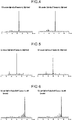
- Fig. 1 is HPLC charts showing results of reverse phase HPLC of (A) a synthesis reaction solution (crude) of (Rp)-T B T [(Rp)-24a] and (B) a synthesis reaction solution (crude) of (Sp)-T B T [(Sp)-24a].
- the measurement conditions of the reverse phase HPLC were as follows.
- Fig. 2 is HPLC charts showing results of reverse phase HPLC of (C) a synthesis reaction solution (crude) of (Rp)-dC B T [(Rp)-24b] and (D) a synthesis reaction solution (crude) of (Sp)-dC B T [(Sp)-24b].
- the measurement conditions of the reverse phase HPLC were as follows.
- Fig. 3 is HPLC charts showing results of reverse phase HPLC of (E) a synthesis reaction solution (crude) of (Rp)-dA B T [(Rp)-24c] and (D) a synthesis reaction solution (crude) of (Sp)-dA B T [(Sp)-24c].
- the measurement conditions of the reverse phase HPLC were as follows.
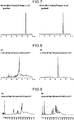
- Fig. 4 is HPLC charts showing results of reverse phase HPLC of (G) a synthesis reaction solution (crude) of (Rp)-dA B T [(Rp)-24c] and (H) a synthesis reaction solution (crude) of (Sp)-dA B T [(Sp)-24c].
- the measurement conditions of the reverse phase HPLC were as follows.
- Fig. 5 is HPLC charts showing results of reverse phase HPLC of (I) a synthesis reaction solution (crude) of (Rp)-dG B T [(Rp)-24d] and (J) a synthesis reaction solution (crude) of (Sp)-dG B T [(Sp)-24d].
- the measurement conditions of the reverse phase HPLC were as follows.
- Fig. 6 is HPLC charts showing results of reverse phase HPLC of (K) a synthesis reaction solution (crude) of all-(Rp)-d (C B A B G B T) [25] and (L) a synthesis reaction solution (crude) of all-(Sp)-d (C B A B G B T) [26].
- the measurement conditions of the reverse phase HPLC were as follows.
- Fig. 7 is HPLC charts showing results of reverse phase HPLC of (K) a purified product of all-(Rp)-d (C B A B G B T) [25] and (L) a purified product of all-(Sp)-d (C B A B G B T) [26].
- the measurement conditions of the reverse phase HPLC were as follows.
- the sequence of the obtained boranophosphate DNA (PB-DNA), the chemical formula [-H + ], the theoretical value of a molecular weight (MS), and the measured value by ESI-MS are shown in Table 3, respectively.
- description of Rp or Sp indicates whether the absolute configuration of a boranophosphate structure in the oligomer is Sp or Rp.
- the description of all-(Rp) indicates that the absolute configuration of a boranophosphate structure in the oligomer is all Rp
- the description of all-(Sp) indicates that the absolute configuration of a boranophosphate structure in the oligomer is all Sp, respectively.
- boranophosphate DNA [27] was synthesized.
- the sequence was all-(Sp)-d(G B T B (A B C B T B ) 3 T).
- a controlled-pore glass (CPG) as a solid support and a glass filter (10 mm ⁇ 50 mm) having a cock at the bottom of a reaction vessel were used.
- the isolated yield was 1.5%.
- Fig. 8 is HPLC charts showing results of reverse phase HPLC of (O) a synthesis reaction solution (crude) of all-(Sp)-d(G B T B (A B C B T B ) 3 T) [27] and (P) a purified product of all-(Sp)-d(G B T B (A B C B T B ) 3 T) [27].
- the measurement conditions of the reverse phase HPLC were as follows.
- boranophosphate DNA [28, 29] was synthesized.
- the sequence was all-(Sp)-d(C B A B G B T B ) 2 (C B A B G B )T [28] or all-(Rp)-d(C B A B G B T B ) 2 (C B A B G B )T [29].
- a controlled-pore glass (CPG) as a solid support and a glass filter (10 mm ⁇ 50 mm) having a cock at the bottom of reaction vessel were used.
- Fig. 9 is HPLC charts showing results of reverse phase HPLC of (Q) a synthesis reaction solution (crude) of all-(Sp)-d(C B A B G B T B ) 2 (C B A B GB)T[28] and (R) a synthesis reaction solution (crude) of all-(Rp)-d(C B A B G B T B ) 2 (C B A B G B )T [29].
- the measurement conditions of the reverse phase HPLC were as follows.
Landscapes
- Chemical & Material Sciences (AREA)
- Organic Chemistry (AREA)
- Health & Medical Sciences (AREA)
- Life Sciences & Earth Sciences (AREA)
- Molecular Biology (AREA)
- Biochemistry (AREA)
- General Health & Medical Sciences (AREA)
- Engineering & Computer Science (AREA)
- Genetics & Genomics (AREA)
- Biotechnology (AREA)
- Biomedical Technology (AREA)
- General Engineering & Computer Science (AREA)
- Bioinformatics & Cheminformatics (AREA)
- Wood Science & Technology (AREA)
- Zoology (AREA)
- Physics & Mathematics (AREA)
- Biophysics (AREA)
- Plant Pathology (AREA)
- Microbiology (AREA)
- Saccharide Compounds (AREA)
- Medicines That Contain Protein Lipid Enzymes And Other Medicines (AREA)
- Addition Polymer Or Copolymer, Post-Treatments, Or Chemical Modifications (AREA)
Applications Claiming Priority (3)
| Application Number | Priority Date | Filing Date | Title |
|---|---|---|---|
| JP2016221656 | 2016-11-14 | ||
| EP17869909.6A EP3539970B1 (de) | 2016-11-14 | 2017-11-09 | Polymerisierbare verbindung, verbindung und verfahren zur herstellung eines boranphosphatoligomers |
| PCT/JP2017/040469 WO2018088491A1 (ja) | 2016-11-14 | 2017-11-09 | 重合性化合物、化合物、及び、ボラノホスフェートオリゴマーの製造方法 |
Related Parent Applications (2)
| Application Number | Title | Priority Date | Filing Date |
|---|---|---|---|
| EP17869909.6A Division EP3539970B1 (de) | 2016-11-14 | 2017-11-09 | Polymerisierbare verbindung, verbindung und verfahren zur herstellung eines boranphosphatoligomers |
| EP17869909.6A Division-Into EP3539970B1 (de) | 2016-11-14 | 2017-11-09 | Polymerisierbare verbindung, verbindung und verfahren zur herstellung eines boranphosphatoligomers |
Publications (2)
| Publication Number | Publication Date |
|---|---|
| EP3885351A2 true EP3885351A2 (de) | 2021-09-29 |
| EP3885351A3 EP3885351A3 (de) | 2021-12-22 |
Family
ID=62109894
Family Applications (2)
| Application Number | Title | Priority Date | Filing Date |
|---|---|---|---|
| EP21170140.4A Withdrawn EP3885351A3 (de) | 2016-11-14 | 2017-11-09 | Polymerisierbare verbindung, verbindung und verfahren zur herstellung eines boranphosphatoligomers |
| EP17869909.6A Active EP3539970B1 (de) | 2016-11-14 | 2017-11-09 | Polymerisierbare verbindung, verbindung und verfahren zur herstellung eines boranphosphatoligomers |
Family Applications After (1)
| Application Number | Title | Priority Date | Filing Date |
|---|---|---|---|
| EP17869909.6A Active EP3539970B1 (de) | 2016-11-14 | 2017-11-09 | Polymerisierbare verbindung, verbindung und verfahren zur herstellung eines boranphosphatoligomers |
Country Status (6)
| Country | Link |
|---|---|
| US (2) | US11542292B2 (de) |
| EP (2) | EP3885351A3 (de) |
| JP (2) | JP7115669B2 (de) |
| CN (2) | CN109937206B (de) |
| ES (1) | ES2881434T3 (de) |
| WO (1) | WO2018088491A1 (de) |
Families Citing this family (1)
| Publication number | Priority date | Publication date | Assignee | Title |
|---|---|---|---|---|
| CN109937206B (zh) | 2016-11-14 | 2022-04-01 | 学校法人东京理科大学 | 聚合性化合物、化合物、及硼烷磷酸酯低聚物的制造方法 |
Family Cites Families (7)
| Publication number | Priority date | Publication date | Assignee | Title |
|---|---|---|---|---|
| WO2005092909A1 (ja) * | 2004-03-25 | 2005-10-06 | Toudai Tlo, Ltd. | 立体規則性の高いリボヌクレオチド類縁体及びデオキシリボヌクレオチド類縁体の製造法 |
| CN102282155B (zh) | 2008-12-02 | 2017-06-09 | 日本波涛生命科学公司 | 磷原子修饰的核酸的合成方法 |
| ES2586683T3 (es) * | 2009-09-16 | 2016-10-18 | Wave Life Sciences Japan, Inc. | Grupo protector novedoso para sintetizar ARN y derivados del mismo |
| JP5847700B2 (ja) * | 2010-03-05 | 2016-01-27 | 株式会社Wave Life Sciences Japan | リボヌクレオシドホスホロチオエートの製造方法 |
| WO2016079183A1 (en) * | 2014-11-19 | 2016-05-26 | Roche Innovation Center Copenhagen A/S | Lna chiral phosphorothioates |
| US10815481B2 (en) * | 2014-12-16 | 2020-10-27 | Roche Innovation Center Copenhagen A/S | Chiral library screen |
| CN109937206B (zh) | 2016-11-14 | 2022-04-01 | 学校法人东京理科大学 | 聚合性化合物、化合物、及硼烷磷酸酯低聚物的制造方法 |
-
2017
- 2017-11-09 CN CN201780070152.0A patent/CN109937206B/zh active Active
- 2017-11-09 EP EP21170140.4A patent/EP3885351A3/de not_active Withdrawn
- 2017-11-09 CN CN202210305317.0A patent/CN114621302A/zh active Pending
- 2017-11-09 US US16/349,438 patent/US11542292B2/en active Active
- 2017-11-09 EP EP17869909.6A patent/EP3539970B1/de active Active
- 2017-11-09 ES ES17869909T patent/ES2881434T3/es active Active
- 2017-11-09 JP JP2018550265A patent/JP7115669B2/ja active Active
- 2017-11-09 WO PCT/JP2017/040469 patent/WO2018088491A1/ja not_active Ceased
-
2022
- 2022-04-04 JP JP2022062631A patent/JP7371829B2/ja active Active
- 2022-10-13 US US17/965,125 patent/US11932666B2/en active Active
Non-Patent Citations (11)
| Title |
|---|
| GREEN ET AL.: "Protective Groups in Organic Synthesis", 1999, JOHN WILEY & SONS, INC. |
| J. AM. CHEM. SOC., vol. 112, 1990, pages 9000 |
| J. AM. CHEM. SOC., vol. 120, no. 9417, 1998, pages 9417 |
| RSC ADV, vol. 5, 2015, pages 2392 - 2395 |
| T. ANGEW. CHEM. INT. ED., vol. 48, 2009, pages 496 - 499 |
| T. RSC ADV., vol. 5, 2015, pages 2392 - 2395 |
| TETRAHEDRON LETT, vol. 38, 1997, pages 4957 |
| TETRAHEDRON LETT, vol. 39, 1998, pages 3899 |
| TETRAHEDRON LETT., vol. 38, 1997, pages 4957 |
| TETRAHEDRON LETT., vol. 39, 1998, pages 3899 |
| TETRAHEDRON LETT., vol. 53, 2012, pages 4361 - 4364 |
Also Published As
| Publication number | Publication date |
|---|---|
| WO2018088491A1 (ja) | 2018-05-17 |
| US20190270765A1 (en) | 2019-09-05 |
| JP7115669B2 (ja) | 2022-08-09 |
| EP3539970A1 (de) | 2019-09-18 |
| CN109937206B (zh) | 2022-04-01 |
| JP2022088625A (ja) | 2022-06-14 |
| EP3539970B1 (de) | 2021-06-09 |
| ES2881434T3 (es) | 2021-11-29 |
| CN114621302A (zh) | 2022-06-14 |
| CN109937206A (zh) | 2019-06-25 |
| JP7371829B2 (ja) | 2023-10-31 |
| US11542292B2 (en) | 2023-01-03 |
| JPWO2018088491A1 (ja) | 2019-10-03 |
| EP3539970A4 (de) | 2019-12-04 |
| US11932666B2 (en) | 2024-03-19 |
| EP3885351A3 (de) | 2021-12-22 |
| US20230108357A1 (en) | 2023-04-06 |
Similar Documents
| Publication | Publication Date | Title |
|---|---|---|
| CN107011400B (zh) | 不对称辅助基团 | |
| JP4865544B2 (ja) | 立体規則性の高いリボヌクレオチド類縁体及びデオキシリボヌクレオチド類縁体の製造法 | |
| EP3351548B1 (de) | Vernetzte nukleinsäure guna, verfahren zu ihrer herstellung und zwischenverbindung | |
| JPH01301691A (ja) | 新規ヌクレオチド誘導体 | |
| KR20160078989A (ko) | 시티딘-5-카르복스아미드 변형된 뉴클레오티드 조성물 및 그와 관련된 방법들 | |
| CN116003496A (zh) | 经修饰的mRNA5`-帽类似物 | |
| EP3825300A1 (de) | Alkoxyphenylderivat, nukleosidprotektor, nukleotidprotektor, verfahren zur herstellung von oligonukleotid und verfahren zum entfernen eines substituenten | |
| KR20230119637A (ko) | 폴리-모르폴리노 올리고뉴클레오티드 갭머 | |
| EP4471140A1 (de) | Zielgerichteter ligand mit n-acetylgalactosamin | |
| WO2022125984A1 (en) | Tau-targeting oligonucleotide gapmers | |
| EP0611075B1 (de) | Modifizierte Oligodeoxyribonukleotide, ihre Herstellung und ihre therapeutische Verwendung | |
| US11932666B2 (en) | Polymerizable compound, compound, and method for producing boranophosphate oligomer | |
| Inde et al. | Synthesis of and triplex formation in oligonucleotides containing 2′-deoxy-6-thioxanthosine | |
| Kolganova et al. | Simple and Stereoselective Preparation of an 4‐(Aminomethyl)‐1, 2, 3‐triazolyl Nucleoside Phosphoramidite | |
| EP1397377B1 (de) | Calix(4)aren-nukleosid- und calix(4)aren-oligonukleotid-hybride | |
| Grasby et al. | Synthesis and applications of oligoribonucleotides containing N 4-methylcytidine | |
| US11358937B2 (en) | Reagents based on a tertiary amine backbone to introduce chemical functionality in nucleic acids and sequence-controlled polymers | |
| Sekine et al. | Synthesis of oligoribonucleotides by use of 4, 4', 4"-tris (acyloxy) trityl groups for protection of the 6-amino group of adenosine. | |
| WO2022194924A1 (en) | Chiral synthons for the synthesis of chiral phosphorothioates | |
| HK1242331A1 (en) | Asymmetric auxiliary group | |
| WO2014022839A1 (en) | Exocylic nitrogen atom protected nucloside and method for producing and using the same | |
| HK1242331B (zh) | 不对称辅助基团 | |
| HK1000191B (en) | Modified oligodeoxyribonucleotides, their preparation and their therapeutic use |
Legal Events
| Date | Code | Title | Description |
|---|---|---|---|
| PUAI | Public reference made under article 153(3) epc to a published international application that has entered the european phase |
Free format text: ORIGINAL CODE: 0009012 |
|
| STAA | Information on the status of an ep patent application or granted ep patent |
Free format text: STATUS: THE APPLICATION HAS BEEN PUBLISHED |
|
| AC | Divisional application: reference to earlier application |
Ref document number: 3539970 Country of ref document: EP Kind code of ref document: P |
|
| AK | Designated contracting states |
Kind code of ref document: A2 Designated state(s): AL AT BE BG CH CY CZ DE DK EE ES FI FR GB GR HR HU IE IS IT LI LT LU LV MC MK MT NL NO PL PT RO RS SE SI SK SM TR |
|
| PUAL | Search report despatched |
Free format text: ORIGINAL CODE: 0009013 |
|
| AK | Designated contracting states |
Kind code of ref document: A3 Designated state(s): AL AT BE BG CH CY CZ DE DK EE ES FI FR GB GR HR HU IE IS IT LI LT LU LV MC MK MT NL NO PL PT RO RS SE SI SK SM TR |
|
| RIC1 | Information provided on ipc code assigned before grant |
Ipc: C07F 9/6558 20060101ALI20211117BHEP Ipc: C07F 9/6584 20060101ALI20211117BHEP Ipc: C07F 5/02 20060101ALI20211117BHEP Ipc: C07H 1/00 20060101ALI20211117BHEP Ipc: C07H 23/00 20060101ALI20211117BHEP Ipc: C07H 21/04 20060101ALI20211117BHEP Ipc: C07H 19/173 20060101ALI20211117BHEP Ipc: C07H 19/073 20060101AFI20211117BHEP |
|
| STAA | Information on the status of an ep patent application or granted ep patent |
Free format text: STATUS: REQUEST FOR EXAMINATION WAS MADE |
|
| 17P | Request for examination filed |
Effective date: 20220621 |
|
| RBV | Designated contracting states (corrected) |
Designated state(s): AL AT BE BG CH CY CZ DE DK EE ES FI FR GB GR HR HU IE IS IT LI LT LU LV MC MK MT NL NO PL PT RO RS SE SI SK SM TR |
|
| STAA | Information on the status of an ep patent application or granted ep patent |
Free format text: STATUS: EXAMINATION IS IN PROGRESS |
|
| 17Q | First examination report despatched |
Effective date: 20240513 |
|
| STAA | Information on the status of an ep patent application or granted ep patent |
Free format text: STATUS: THE APPLICATION HAS BEEN WITHDRAWN |
|
| 18W | Application withdrawn |
Effective date: 20260311 |