EP3877447B1 - Phthalonitrilharz-matrix-zusammensetzung für polymerverbundwerkstoffe, verfahren zu ihrer herstellung, verfahren zur herstellung eines polymerverbundmaterials und nach diesem verfahren hergestelltes material - Google Patents
Phthalonitrilharz-matrix-zusammensetzung für polymerverbundwerkstoffe, verfahren zu ihrer herstellung, verfahren zur herstellung eines polymerverbundmaterials und nach diesem verfahren hergestelltes material Download PDFInfo
- Publication number
- EP3877447B1 EP3877447B1 EP19813197.1A EP19813197A EP3877447B1 EP 3877447 B1 EP3877447 B1 EP 3877447B1 EP 19813197 A EP19813197 A EP 19813197A EP 3877447 B1 EP3877447 B1 EP 3877447B1
- Authority
- EP
- European Patent Office
- Prior art keywords
- bis
- dicyanophenoxy
- mixture
- polymerizable mixture
- total weight
- Prior art date
- Legal status (The legal status is an assumption and is not a legal conclusion. Google has not performed a legal analysis and makes no representation as to the accuracy of the status listed.)
- Active
Links
Classifications
-
- C—CHEMISTRY; METALLURGY
- C08—ORGANIC MACROMOLECULAR COMPOUNDS; THEIR PREPARATION OR CHEMICAL WORKING-UP; COMPOSITIONS BASED THEREON
- C08J—WORKING-UP; GENERAL PROCESSES OF COMPOUNDING; AFTER-TREATMENT NOT COVERED BY SUBCLASSES C08B, C08C, C08F, C08G or C08H
- C08J5/00—Manufacture of articles or shaped materials containing macromolecular substances
- C08J5/24—Impregnating materials with prepolymers which can be polymerised in situ, e.g. manufacture of prepregs
- C08J5/241—Impregnating materials with prepolymers which can be polymerised in situ, e.g. manufacture of prepregs using inorganic fibres
- C08J5/243—Impregnating materials with prepolymers which can be polymerised in situ, e.g. manufacture of prepregs using inorganic fibres using carbon fibres
-
- C—CHEMISTRY; METALLURGY
- C08—ORGANIC MACROMOLECULAR COMPOUNDS; THEIR PREPARATION OR CHEMICAL WORKING-UP; COMPOSITIONS BASED THEREON
- C08G—MACROMOLECULAR COMPOUNDS OBTAINED OTHERWISE THAN BY REACTIONS ONLY INVOLVING UNSATURATED CARBON-TO-CARBON BONDS
- C08G73/00—Macromolecular compounds obtained by reactions forming a linkage containing nitrogen with or without oxygen or carbon in the main chain of the macromolecule, not provided for in groups C08G12/00 - C08G71/00
- C08G73/06—Polycondensates having nitrogen-containing heterocyclic rings in the main chain of the macromolecule
- C08G73/0622—Polycondensates containing six-membered rings, not condensed with other rings, with nitrogen atoms as the only ring hetero atoms
-
- C—CHEMISTRY; METALLURGY
- C08—ORGANIC MACROMOLECULAR COMPOUNDS; THEIR PREPARATION OR CHEMICAL WORKING-UP; COMPOSITIONS BASED THEREON
- C08G—MACROMOLECULAR COMPOUNDS OBTAINED OTHERWISE THAN BY REACTIONS ONLY INVOLVING UNSATURATED CARBON-TO-CARBON BONDS
- C08G73/00—Macromolecular compounds obtained by reactions forming a linkage containing nitrogen with or without oxygen or carbon in the main chain of the macromolecule, not provided for in groups C08G12/00 - C08G71/00
- C08G73/06—Polycondensates having nitrogen-containing heterocyclic rings in the main chain of the macromolecule
- C08G73/0622—Polycondensates containing six-membered rings, not condensed with other rings, with nitrogen atoms as the only ring hetero atoms
- C08G73/0638—Polycondensates containing six-membered rings, not condensed with other rings, with nitrogen atoms as the only ring hetero atoms with at least three nitrogen atoms in the ring
- C08G73/0644—Poly(1,3,5)triazines
-
- C—CHEMISTRY; METALLURGY
- C08—ORGANIC MACROMOLECULAR COMPOUNDS; THEIR PREPARATION OR CHEMICAL WORKING-UP; COMPOSITIONS BASED THEREON
- C08J—WORKING-UP; GENERAL PROCESSES OF COMPOUNDING; AFTER-TREATMENT NOT COVERED BY SUBCLASSES C08B, C08C, C08F, C08G or C08H
- C08J5/00—Manufacture of articles or shaped materials containing macromolecular substances
- C08J5/04—Reinforcing macromolecular compounds with loose or coherent fibrous material
- C08J5/0405—Reinforcing macromolecular compounds with loose or coherent fibrous material with inorganic fibres
- C08J5/042—Reinforcing macromolecular compounds with loose or coherent fibrous material with inorganic fibres with carbon fibres
-
- C—CHEMISTRY; METALLURGY
- C08—ORGANIC MACROMOLECULAR COMPOUNDS; THEIR PREPARATION OR CHEMICAL WORKING-UP; COMPOSITIONS BASED THEREON
- C08J—WORKING-UP; GENERAL PROCESSES OF COMPOUNDING; AFTER-TREATMENT NOT COVERED BY SUBCLASSES C08B, C08C, C08F, C08G or C08H
- C08J5/00—Manufacture of articles or shaped materials containing macromolecular substances
- C08J5/04—Reinforcing macromolecular compounds with loose or coherent fibrous material
- C08J5/06—Reinforcing macromolecular compounds with loose or coherent fibrous material using pretreated fibrous materials
-
- C—CHEMISTRY; METALLURGY
- C08—ORGANIC MACROMOLECULAR COMPOUNDS; THEIR PREPARATION OR CHEMICAL WORKING-UP; COMPOSITIONS BASED THEREON
- C08J—WORKING-UP; GENERAL PROCESSES OF COMPOUNDING; AFTER-TREATMENT NOT COVERED BY SUBCLASSES C08B, C08C, C08F, C08G or C08H
- C08J5/00—Manufacture of articles or shaped materials containing macromolecular substances
- C08J5/24—Impregnating materials with prepolymers which can be polymerised in situ, e.g. manufacture of prepregs
-
- C—CHEMISTRY; METALLURGY
- C08—ORGANIC MACROMOLECULAR COMPOUNDS; THEIR PREPARATION OR CHEMICAL WORKING-UP; COMPOSITIONS BASED THEREON
- C08K—Use of inorganic or non-macromolecular organic substances as compounding ingredients
- C08K5/00—Use of organic ingredients
- C08K5/16—Nitrogen-containing compounds
- C08K5/17—Amines; Quaternary ammonium compounds
-
- C—CHEMISTRY; METALLURGY
- C08—ORGANIC MACROMOLECULAR COMPOUNDS; THEIR PREPARATION OR CHEMICAL WORKING-UP; COMPOSITIONS BASED THEREON
- C08K—Use of inorganic or non-macromolecular organic substances as compounding ingredients
- C08K5/00—Use of organic ingredients
- C08K5/36—Sulfur-, selenium-, or tellurium-containing compounds
- C08K5/41—Compounds containing sulfur bound to oxygen
- C08K5/42—Sulfonic acids; Derivatives thereof
-
- C—CHEMISTRY; METALLURGY
- C08—ORGANIC MACROMOLECULAR COMPOUNDS; THEIR PREPARATION OR CHEMICAL WORKING-UP; COMPOSITIONS BASED THEREON
- C08K—Use of inorganic or non-macromolecular organic substances as compounding ingredients
- C08K5/00—Use of organic ingredients
- C08K5/49—Phosphorus-containing compounds
- C08K5/51—Phosphorus bound to oxygen
- C08K5/52—Phosphorus bound to oxygen only
- C08K5/521—Esters of phosphoric acids, e.g. of H3PO4
- C08K5/523—Esters of phosphoric acids, e.g. of H3PO4 with hydroxyaryl compounds
-
- C—CHEMISTRY; METALLURGY
- C08—ORGANIC MACROMOLECULAR COMPOUNDS; THEIR PREPARATION OR CHEMICAL WORKING-UP; COMPOSITIONS BASED THEREON
- C08L—COMPOSITIONS OF MACROMOLECULAR COMPOUNDS
- C08L79/00—Compositions of macromolecular compounds obtained by reactions forming in the main chain of the macromolecule a linkage containing nitrogen with or without oxygen or carbon only, not provided for in groups C08L61/00 - C08L77/00
- C08L79/04—Polycondensates having nitrogen-containing heterocyclic rings in the main chain; Polyhydrazides; Polyamide acids or similar polyimide precursors
- C08L79/08—Polyimides; Polyester-imides; Polyamide-imides; Polyamide acids or similar polyimide precursors
-
- C—CHEMISTRY; METALLURGY
- C08—ORGANIC MACROMOLECULAR COMPOUNDS; THEIR PREPARATION OR CHEMICAL WORKING-UP; COMPOSITIONS BASED THEREON
- C08J—WORKING-UP; GENERAL PROCESSES OF COMPOUNDING; AFTER-TREATMENT NOT COVERED BY SUBCLASSES C08B, C08C, C08F, C08G or C08H
- C08J2379/00—Characterised by the use of macromolecular compounds obtained by reactions forming in the main chain of the macromolecule a linkage containing nitrogen with or without oxygen, or carbon only, not provided for in groups C08J2361/00 - C08J2377/00
- C08J2379/04—Polycondensates having nitrogen-containing heterocyclic rings in the main chain; Polyhydrazides; Polyamide acids or similar polyimide precursors
- C08J2379/08—Polyimides; Polyester-imides; Polyamide-imides; Polyamide acids or similar polyimide precursors
Definitions
- the invention relates to the field of polymer chemistry and technology of polymer composite materials (PCM) and fiber reinforced plastics, in particular to a composition of a phthalonitrile resin for polymer composite materials, a method for its production, a method for curing of the said resin matrix, method for production of a polymer composite material, and the material obtained via this method.
- PCM polymer composite materials
- the monomer is a linear molecule that contains phthalonitrile (1,2-dicyano-4-phenyl) groups on both ends which are joined through ether bonds with fragment X - a bivalent aromatic, aliphatic, or heteroatomic fragment.
- the polymerization (curing) of matrices containing such monomers occurs via chemical transformation of the terminal phthalonitrile moieties into isoindoline, triazine, and phthalocyanine structures, resulting in formation of a cross-linked three-dimensional network:
- Curing is initiated by a nucleophilic attack of the cyano groups.
- aromatic amines, aromatic diamines, phenols, bisphenols, and other nucleophilic agents are used as curing agents.
- a curing agent 1,3-bis(3-aminophenoxy)-benzene (APB) with formula III was added to the monomer melt at 234 °C to the concentration of 2.1% (w/w). After intensive mixing at 250 °C for 15 minutes, the resin was cooled to room temperature and used to manufacture PCM.
- the obtained pre-polymer had T m ⁇ 80 °C, was soluble in several organic solvents, and had pot-life in standard conditions.
- a prepreg was obtained by solution impregnation process, and a PCM was fabricated. This step consisted in laying up prepreg in 10 plies between two metal plates inside a vacuum bag, after which the assembled bag was put under vacuum and heated up to 250 °C in an autoclave and held at that temperature for 30 minutes, then 1.4 MPa of pressure were applied followed by additional 30 min of high temperature. The final stage of the curing cycle was heating up to 325 °C at the rate of 4°/min, holding at that temperature for 3 hours, followed by cooling at the rate of 4°/min.
- Sheets of prepreg were laid out in a metal mold, degassed under vacuum, and cured under the pressure of 1.4 MPa according to the following procedure: holding at 280 °C for 1 hour, then at 325 °C for 1 hour, at 350 °C for 1 hour, at 375 °C for 8 hours (heating and cooling rates of 3°/min).
- p-BAPS was used the complete curing of the PCM occurred during the final heating step of holding at 375 °C for 8 hours.
- m-APB did not result in any significant changes of mechanical properties.
- a prepreg based on "T-300" carbon fabric was obtained using resin solution in methylethylketone. Sheets of prepreg were dried under vacuum at 60 °C. Then the sheets were laid out in a mold and cured according to the same steps that were used for resin matrix curing. During the study the dependence of PCM properties on the phthalonitrile group content was evaluated, showing a correlation of this parameter with an increase of thermal properties and a degradation of mechanical properties of the composite material.
- thermoplastic-toughened phthalonitrile composites influence on cure reaction and mechanical and thermal properties // Polym. Int. John Wiley & Sons, Ltd, 2015. Vol. 64, 1.
- P. 146-153 described PCM based on an oligomeric phthalonitrile resin matrix. The structures of the oligomers utilized are shown below.
- a solution of resin in THF was used for solution impregnation process with "T-300" carbon fabric, and after drying at 60 °C a prepreg was prepared.
- the prepreg was placed in a metal mold and cured via the following steps: holding at 120 °C for 30 min, then at 150 °C for 1 hour, at 200 °C for 1 hour, at 250 °C for 2 hours, at 300 °C for 3 hours, followed by 4 hours at 330 °C.
- PCM would delaminate, making industrial application of these materials impossible.
- the precured carbon tape composite was taken out of the mold and cured in a muffle furnace according to the following steps: holding at 250 °C for 1 hour, then holding at 285 °C for 1 hour, at 325 °C for 3 hours, at 350 °C for 2 hours, and finally at 375 °C for 8 hours.
- thermal and mechanical properties of the obtained PCM were studied: high thermal and thermooxidative stability were demonstrated along with room temperature tensile and flexural strengths comparable with the previously studied matrices, and a significant change of mechanical properties after temperature elevation to 450 °C.
- the resulting prepreg sheets were laid out in a metal mold, which was followed by precuring under the pressure of 20 MPA and temperature of 160 °C for 2 hours and postcuring according these steps: holding at 180 °C for 2 hours, at 200 °C for 2 hours, at 220 °C for 2 hours, at 240 °C for 2 hours, for 260°C for 2 hours, and at 280 °C for 2 hours.
- the described oligomers exhibit glass transition temperatures as low as 45 °C, hence it is stated that they are appropriate for using with injection methods, although this is not illustrated by examples. Furthermore, when an oligomeric linker is introduces into the bis-phthalonitrile molecule, the matrix hardness is diminished at both room and elevated temperatures thus limiting their structural applications. Young's modulus of the cured matrices based on the oligomers described in documents US8981036 and WO 2016190621 does not exceed 1400 MPa at room temperature and 200 MPa at temperatures above 200 °C, while the melt viscosity is 300 mPa ⁇ s at 150°C.
- the publication provides thermal and mechanical properties of the obtained polymers which indicate that these materials have the same disadvantages as the resins described in RU 2638307 .
- the process for producing the polymers disclosed in this paper is fairly resource-demanding, and a large amount of waste is formed as a result.
- the high-melting monomer tends to crystalize out of the mixed resins containing co-monomers described in this paper, and the mixes also have high viscosities, making their application as matrices for injection methods of PCM fabrication (including vacuum infusion and resin transfer molding (RTM)) troublesome.
- the Young's modulus for the polymer obtained by heating 4,4'-(((((phenyl(methyl)silanediil)bis(oxy))bis(methylene))bis(4,1-phenylene))bis(oxy))diphthalonitrile in the presence of an organic diamine was 2.6 GPa ( B. A. Bulgakov, A. V. Babkin, A. A. Bogolyubov, E. S. Afanasyeva, and A. V. Kepman. Mechanical and physicochemical properties of matrices for fiber reinforced plastics based on lowmelting phthalonitrile monomers. Russian Chemical Bulletin, (1):287-290, 2016 ). Furthermore, synthesis of the silicon-containing bis-phthalonitriles described in document WO2016064298 includes three stages and requires expensive reagents.
- Mendeleev Communications, 27(3):257-259, 2017 discloses the process for producing carbon-reinforced plastics by RTM using a resin containing the following monomers: 1,3-bis(3,4-dicyanophenoxy)benzene, bis(3-(3,4-dicyanophenoxy)phenyl)phenylphosphate, and silicon-containing phthalonitrile from pat. appl. WO 2016064298 , as well as initiator 1,3-bis(4-diaminophenoxy)benzene. Mechanical and fire-resistant properties of the obtained material are shown.
- composition of a phthalonitrile resin matrix that is the closest analog of the proposed invention and is comprised of a diphthalonitrile monomer, a reactive plasticizer (mono-phalonitrile), and an aromatic diamine.
- a composition containing a diphthalonitrile monomer, a non-reactive plasticizer (mono-phthalonitrile), and an aromatic diamine is disclosed.
- this composition cures at temperatures of 220-250 °C, which does not allow to use it for molding composite materials via vacuum infusion as this method is typically used and is optimized for obtaining polymer composite materials based on epoxy resins, and the supplementary materials for infusion are meant to be utilized at temperatures under 200 °C, not above.
- compositions described in this document have high viscosity of 10-50 Pa ⁇ s, which makes them poorly suitable for use in vacuum infusion process for polymer composite materials fabrication. While document US 2016/0168327 does state that the polymer compositions described in it are suitable for vacuum infusion, it does not contain examples proving this statement. Furthermore, one should keep in mind that according to prior art the maximum allowed viscosity value for resin transfer molding and vacuum infusion is 0.8 Pa ⁇ s ( ASM Handbook Volume 21: Composites, Editor: D.B. Miracle and S.L. Donaldson, ASM International, 2001 , chapter Resin Transfer Molding and Structural Reaction Injection Molding by C.D. Rudd, University of Nottingham ), and the viscosity of the compositions disclosed in US 2016/0168327 , as can be noted from this document, exceeds this maximum value.
- the technical purpose of the present invention is to offer new compositions of resins as matrices for polymer composite materials (PCM) which after curing will possess high thermal stability at temperatures up to 450 °C and at the same time the uncured resins will have melting points or glass transition temperatures of no more than 50 °C, preferably of or below 25 °C, exhibit melt viscosity values below 800 mPa ⁇ s in the temperature range from 100 to 180 °C and below 300 mPa ⁇ s in the range from 120 to 180 °C, preferably no more than 300 mPa ⁇ s in the range from 100 to 180 °C and no more than 100 mPa ⁇ s in the range from 120 to 180 °C, to provide new methods for producing such compositions that would require fewer steps and resources compared to analogous processes known from prior art, new composite materials manufactured from the aforementioned resins and possessing high thermal stability as well as methods for obtaining such materials that require fewer resources compared to the analogous processes known from prior art.
- PCM polymer composite materials
- This invention provides a composition of a resin matrix that is intended for production matrices for PCM or prepregs and comprises:
- the obtained degassed material is heated to a temperature in the range of 180 to 190 °C and kept at this temperature for 1 - 12 hours until cured, after which the obtained product is subjected to final curing (post-curing) by heating in a way that avoids resin matrix transition from glass to rubbery state (devitrification) by maintaining the heating temperature at every point at a level below glass transition temperature of the matrix.
- the preferred method of the invention embodiment is to heat up the material at the rate of 10 °C/min - 10 °C/hour to the temperature in the range of 250 to 375 °C and hold it at that temperature for 2 - 12 hours, notably the post curing can be carried out in the mold or without it.
- the object of the invention is a polymer composite material containing a carbon material and a resin matrix, which is distinguished by the fact that it uses the resin matrix composition prepared according to the invention to impregnate the carbon material, the impregnation is carried out at a temperature within the range of 100 to 160 °C, and curing of the resin matrix composition is performed according to the method above. It is preferred to carry out carbon material impregnation by vacuum infusion, to which end N layers (minimum two, the maximum number is not limited and only determined by the volume and structure of the fabricated part and/or mold used) of carbon fabric are placed in a mold, packed in a vacuum bag, and the carbon material is impregnated at a temperature in the range of 100 to 140 °C. Chopped (discrete) carbon fiber, unidirectional carbon tape, carbon fabric with two-dimensional or three-dimensional weaving can be used as the carbon material for this method.
- the invention also includes a polymer composite material obtained using the said resin matrix composition.
- the technical result of the technical decisions proposed in the present application consists in enabling production of resin matrix compositions for polymer composite materials (PCM) which after curing possess high thermal stability at temperatures up to 450 °C, but also have melting points or glass transition temperatures of no more than 50 °C which also allows melt viscosity values below 800 mPa ⁇ s in the temperature range from 100 to 180 °C, and below 300 mPa ⁇ s in the temperature range from 120 to 180 °C, offering new methods for producing such resin matrix compositions that require fewer steps and resources, bringing about new composite materials obtained using aforementioned resins and possessing high thermal stability, and also providing methods for fabricating such materials that require fewer steps and resources than the analogous processes known from prior art.
- PCM polymer composite materials
- Polymer composite materials obtained using resins matrix compositions according to the invention maintain 70% or more of their mechanical properties such as compression strength, tensile strength, Young's modulus, interlaminar shear strength, in-plane shear strength, etc. at temperatures up to 450 °C compared to these parameters at room temperature and possess of LOI ⁇ 70%.
- one aspect of the invention relates to the resin matrix composition meant for production of PCM or prepregs for PCM comprising:
- the polymerizable mixture contains one or more reactive diluents in the amount from 1 to 40 wt% of the total mixture weight or from 10 to 50 wt% of the total mixture weight, or from 10 to 40 wt% of the total mixture weight, or from 20 to 40 wt% of the total mixture weight, or from 20 to 35 wt% of the total mixture weight, or from 20 to 30 wt% of the total mixture weight, preferably from 10 to 40 wt% of the total mixture weight, or from 10 to 30 wt% of the total mixture weight.
- the reactive diluent is selected from one or more compounds from the group consisting of 4-(4-cyanophenoxy)-benzene-1,2-dicarbonitrile, 4-(4-cyanophenoxy)-phthalonitrile, 4-(3-cyanophenoxy)-phthalonitrile, and 4-(4-aminophenoxy)-phthalonitrile, particularly preferably one or more compounds, 4-(4-cyanophenoxy)-benzene-1,2-dicarbonitrile, 4-[3-(dipropargylamino)phenoxy]phthalonitrile, 4-[4-(dipropargylamino)phenoxy]phthalonitrile.
- the aryl is an optionally substituted aryl C 6 -C 20 , preferably aryl C 6 -C 18 , even more preferred is an unsubstituted aryl C 6-10 or a substituted aryl C 6 where the substituent can be a methyl, fluoro, chloro, bromo or trifluoromethyl group, it is preferred if the aryl is a phenyl; the oxyaryl is -O(C 6 -C 20 ), preferably oxyaryl - O(C 6 -C 18 ), most preferably unsubstituted oxyaryl -O(C 6-10 ) or substituted oxyaryl -O(C 6 ) where the substituent can be a methyl, fluoro, chloro, bromo, or trifluoromethyl group, it is preferred if the oxyaryl is an oxyphenyl; the alkyl is a straight-chain or branched-chain alkyl C 1
- the monomer is selected from one or more compounds from the group consisting of 1,3-bis-(3,4-dicyanophenoxy)benzene, 1,3-bis-(3,4-dicyanophenoxy)-2-fluorobenzene, 1,3-bis-(3,4-dicyanophenoxy)-4-fluorobenzene, 1,3-bis-(3,4-dicyanophenoxy)-2-chlorobenzene, 1,3-bis-(3,4-dicyanophenoxy)-4-chlorobenzene, 1,3-bis-(3,4-dicyanophenoxy)-2-bromobenzene, 1,3-bis-(3,4-dicyanophenoxy)-4-bromobenzene, 1,3-bis-(3,4-dicyanophenoxy)-2,4-difluorobenzene, 1,5-bis-(3,4-dicyanophenoxy)-2,4-dichlorobenxene, 1,3-bis-(1,3-bis
- the reactive plasticizer-fire retardant is selected from one or more compounds from the group consisting of bis-(4-cyanophenoxy)-phenylphosphate, bis-(3-(3,4-dicyanophenoxy)-phenylphosphate, bis-(3-(3,4-dicyanophenoxy)-1-naphthylphosphate, bis-(4-cyanophenoxy)-phenylphosphonate, bis-(3-(3,4-dicyanophenoxy)phenyl)-phenylphosphonate, bis-(3-(3,4-dicyanophenoxy)phenyl)-isopropylphosphate, bis-(3-(3,4-dicyanophenoxy)phenyl)-butylphosphate, bis-(3-(3,4-dicyanophenoxy)phenyl)-propargylphosphate, bis-(4-cyanophenyl)phenylphosphate, bis-(3-cyanophenoxy)phenylphosphate, bis-
- the curing agent is selected from the following compounds: or compounds with the general formula where Z stands for H or F, or from the compounds with the general formula where Z stands for H or F, or bisphenols, or more preferably from 1,3-bis-(4-aminophenoxy)benzene, 4,4'-diaminodiphenylsulfone, 3,3'-diaminodiphenylsulfone, 3,3'-[(2,3,5,6-tetrafluorobenz-1,4-diyl)bis(oxy)]dianiline, 4,4'-[(2,3,5,6-tetrafluorobenz-1,4-diyl)bis(oxy)]dianiline, bis[4-(4-aminophenoxy)phenyl]sulfone or bisphenol A, most preferably from 1,3-bis-(4-aminophenoxy)benzene, or bis[4-(4-aminophenoxy)phenyl]sulfone.
- the monomer is used in the amount of 20 - 80 wt% of the polymerizable mixture weight or 30 - 80 wt% of the polymerizable mixture weight, or 20 - 70 wt% of the polymerizable mixture weight, or 30 - 70 wt% of the polymerizable mixture weight, or 40 - 70 wt% of the polymerizable mixture weight, or 40 - 60 wt% of the polymerizable mixture weight, or 40 - 55 wt% of the polymerizable mixture weight, preferably in the amount of 30 - 70 wt% of the polymerizable mixture weight.
- the plasticizer is used in the amount of 5 - 70 wt% of the total polymerizable mixture weight, or in the amount of 5 - 60 wt% of the total polymerizable mixture weight, or in the amount of 20 - 70 wt% of the total polymerizable mixture weight, or in the amount of 20 - 60 wt% of the total polymerizable mixture weight, or in the amount of 25 - 60 wt% of the total polymerizable mixture weight, or in the amount of 25 - 50 wt% of the total polymerizable mixture weight, or in the amount of 30 - 60 wt% of the total polymerizable mixture weight, or in the amount of 30 - 50 wt% of the total polymerizable mixture weight.
- the curing agent is used in the amount from 2 to 20 wt% of the total polymerizable mixture weight, or from 5 to 20 wt% of the total polymerizable mixture weight, or from 5 to 15 wt% of the total polymerizable mixture weight, or preferably from 5 to 10 wt% of the total polymerization mixture weight.
- the prepreg resin matrix composition also contains an inert filler selected from quartz powder, carbon black, barium sulfate, metal phthalocyanides, pyrogenic silica, titanium oxide, and any mixture of at least two of said materials in the amount up to 40 wt% of the total resin matrix weight or in the amount of 9 - 30 wt% of the total resin matrix weight, or in the amount of 9 - 28 wt% of the total resin matrix weight.
- Addition of the filler allows to lower the matrix shrinkage during curing, along with lowering the cost of the prepreg by decreasing the specific share of the polymer.
- Another aspect of the invention relates to a method for obtaining a resin matrix composition for fabrication of a polymer composite material (PCM) according to the invention that includes obtaining in a reactor a polymerizable mixture consisting of:
- one or more active diluents mentioned above are added to the polymerizable mixture in the amount of 1 - 40 wt% of the total mixture weight or 10 - 50 wt% of the total mixture weight, or 10 - 40 wt% of the total mixture weight, or 20 - 40 wt% of the total mixture weight, or 20 - 35 wt% of the total mixture weight, or 20 - 30 wt% of the total mixture weight, preferably from 10 to 40 wt% of the total mixture weight, or in the amount from 10 to 30 wt% of the total mixture weight.
- the reactive diluent is selected from one or more compounds from the group consisting of 4-[4-(dipropargylamino)phenoxy]phthalonitrile, 4-[3-(dipropargylamino)phenoxy]phthalonitrile, 4-(4-cyanophenoxy)-phthalonitrile, 4-(3-cyanophenoxy)-phthalonitrile and 4-(4-aminophenoxy)-phthalonitrile, 4-(3-aminophenoxy)-phthalonitrile, especially preferably from 4-(4-cyanophenoxy)-phthalonitrile, 4-[3-(dipropargylamino)phenoxy]phthalonitrile and 4-(4-aminophenoxy)-phthalonitrile.
- the aryl is an optionally substituted aryl C 6 -C 20 , preferably aryl C 6 -C 18 , more preferably unsubstituted aryl C 6-10 or substituted aryl C 6 , where the substituent can be a methyl, fluoro, chloro, bromo, or trifluoromethyl group, it is preferred if the aryl is a phenyl; the oxyaryl is an oxyaryl -O(C 6 -C 20 ), preferably oxyaryl - O(C 6 -C 18 ), more preferably unsubstituted oxyaryl -O(C 6-10 ) or substituted oxyaryl -O(C 6 ), where the substituent can be a methyl, fluoro, chloro, bromo, or trifluoromethyl group, it is preferred if the oxyaryl is an oxyphenyl; the alkyl is a straight-chain or branched-chain alky
- the monomer is selected from one or more compounds from the group consisting of 1,3-bis-(3,4-dicyanophenoxy) benzene, 1,3-bis-(3,4-dicyanophenoxy)-2-fluorobenzene, 1,3-bis-(3,4-dicyanophenoxy)-4-fluorobenzene, 1,3-bis-(3,4-dicyanophenoxy)-2-chlorobenzene, 1,3-bis-(3,4-dicyanophenoxy)-4-chlorobenzene, 1,3-bis-(3,4-dicyanophenoxy)-2-bromobenzene, 1,3-bis-(3,4-dicyanophenoxy)-4-bromobenzene, 1,3-bis-(3,4-dicyanophenoxy)-2,4-difluorobenzene, 1,5-bis-(3,4-dicyanophenoxy)-2,4-dichlorobenzene, 1,3-bis-(3,4-di
- the reactive plasticizer-fire retardant is selected from one or more compounds from the group consisting of bis-(4-cyanophenoxy)-phenylphosphate, bis-(3-(3,4-dicyanophenoxy)-phenylphosphate, bis-(3-(3,4-dicyanophenoxy)-1-naphthylphosphate, bis-(4-cyanophenoxy)-phenylphosphonate, bis-(3-(3,4-dicyanophenoxy)phenyl)-phenylphosphonate, bis-(3-(3,4-dicyanophenoxy)phenyl)-isopropylphosphate, bis-(3-(3,4-dicyanophenoxy)phenyl)-butylphosphate, bis-(3-(3,4-dicyanophenoxy)phenyl)-propargylphosphate, bis-(4-cyanophenyl)phenylphosphate, bis-(3-cyanophenoxy)phenylphosphate, bis-
- the curing agent is selected from the following compounds: or from the compounds with the general formula where Z stands for H or F, or from the compounds with the general formula where Z stands for H or F, or bisphenols, or more preferably from 1,3-bis-(4-aminophenoxy)benzene, 4,4'-diaminodiphenylsulfone, 3,3'-diaminodiphenylsulfone, 3,3'-[(2,3,5,6-tetrafluorobenz-1,4-diyl)bis(oxy)]dianiline, 4,4'-[(2,3,5,6-tetrafluorobenz-1,4-diyl)bis(oxy)]dianiline, bis[4-(4-aminophenoxy)phenyl]sulfone or bisphenol A, most preferably from 1,3-bis-(4-aminophenoxy)benzene, or bis[4-(4-aminophenoxy)phenyl]sulfone.
- the monomer is used in the amount of 20 - 80 wt% of the polymerizable mixture weight or 30 - 80 wt% of the polymerizable mixture weight, or 20 - 70 wt% of the polymerizable mixture weight, in a more preferable case 30 - 70 wt% of the polymerizable mixture weight, or 40 - 70 wt% of the polymerizable mixture weight, or 40 - 60 wt% of the polymerizable mixture weight, or 40 - 55 wt% of the polymerizable mixture weight, preferably in the amount of 30 - 70 wt% of the polymerizable mixture weight.
- the plasticizer is used in the amount of 5 - 70 wt% of the total polymerizable mixture weight, or in the amount of 5 - 60 wt% of the total polymerizable mixture weight, or in the amount of 20 - 70 wt% of the total polymerizable mixture weight, or in the amount of 20 - 60 w of the total polymerizable mixture weight, or in the amount of 25 - 60 wt% of the total polymerizable mixture weight, or in the amount of 25 - 50 wt% of the total polymerizable mixture weight, or in the amount of 30 - 60 wt% of the total polymerizable mixture weight, or in the amount of 30 - 50 wt% of the total polymerizable mixture weight.
- the curing agent is used in the amount from 2 to 20 wt% of the total polymerizable mixture weight, or from 5 to 20 wt% of the total polymerizable mixture weight, or from 5 to 15 wt% of the total polymerizable mixture weight, or more preferably from 5 to 10 wt% of the total polymerizable mixture weight,
- the polymerizable mixture it is heated to the temperature of 100 - 180 °C, more preferably in the range of 100 - 160 °C, most preferably in the range of 100 - 140 °C.
- the mixture obtained after the addition of initiator to the polymerizable mixture is stirred at the temperature of 100 - 160 °C, more preferably at 100 - 140 °C, more preferably at 100 - 120 °C, for 10 - 180 minutes, more preferably for 10 - 120 minutes, more preferably for 60 - 120 minutes, more preferably for 15 - 45 minutes.
- Another aspect of the invention relates to the method for obtaining resin matrix compositions for producing prepregs as described in the invention, which includes mixing in a reactor a polymerizable mixture comprising:
- the reactive diluent is selected from one or more compounds from the group consisting of 4-[3-(dipropargylamino)phenoxy]phthalonitrile, 4-[4-(dipropargylamino)phenoxy]phthalonitrile, 4-(4-cyanophenoxy)-phthalonitrile, 4-(3-cyanophenoxy)-phthalonitrile and 4-(4-aminophenoxy)-phthalonitrile, 4-(3-aminophenoxy)-phthalonitrile, especially preferably from 4-(4-cyanophenoxy)-phthalonitrile, 4-[4-(dipropargylamino)phenoxy]phthalonitrile, and 4-(4-aminophenoxy)-phthalonitrile.
- the aryl is an optionally substituted aryl C 6 -C 20 , preferably aryl C 6 -C 18 , more preferably unsubstituted aryl C 6-10 or substituted aryl C 6 , where the substituent can be a methyl, fluoro, chloro, bromo, or trifluoromethyl group, it is preferred if the aryl is a phenyl; the oxyaryl is an oxyaryl -O(C 6 -C 20 ), preferably oxyaryl - O(C 6 -C 18 ), more preferably unsubstituted oxyaryl -O(C 6-10 ) or substituted oxyaryl -O(C 6 ), where the substituent can be a methyl, fluoro, chloro, bromo, or trifluoromethyl group, it is preferred if the oxyaryl is an oxyphenyl; the alkyl is a straight-chain or branched-chain alky
- the monomer is selected from one or more compounds from the group consisting of 1,3-bis-(3,4-dicyanophenoxy) benzene, 1,3-bis-(3,4-dicyanophenoxy)-2-fluorobenzene, 1,3-bis-(3,4-dicyanophenoxy)-4-fluorobenzene, 1,3-bis-(3,4-dicyanophenoxy)-2-chlorobenzene, 1,3-bis-(3,4-dicyanophenoxy)-4-chlorobenzene, 1,3-bis-(3,4-dicyanophenoxy)-2-bromobenzene, 1,3-bis-(3,4-dicyanophenoxy)-4-bromobenzene, 1,3-bis-(3,4-dicyanophenoxy)-2,4-difluorobenzene, 1,5-bis-(3,4-dicyanophenoxy)-2,4-dichlorobenzene, 1,3-bis-(3,4-di
- the reactive plasticizer-fire retardant is selected from one or more compounds from the group consisting of bis-(4-cyanophenoxy)-phenylphosphate, bis-(3-(3,4-dicyanophenoxy)-phenylphosphate, bis-(3-(3,4-dicyanophenoxy)-1-naphthylphosphate, bis-(4-cyanophenoxy)-phenylphosphonate, bis-(3-(3,4-dicyanophenoxy)phenyl)-phenylphosphonate, bis-(3-(3,4-dicyanophenoxy)phenyl)-isopropylphosphate, bis-(3-(3,4-dicyanophenoxy)phenyl)-butylphosphate, bis-(3-(3,4-dicyanophenoxy)phenyl)-propargylphosphate, bis-(4-cyanophenyl)phenylphosphate, bis-(3-cyanophenoxy)phenylphosphate, bis-
- the curing agent is selected from the following compounds: or from the compounds with the general formula where Z stands for H or F, or from the compounds with the general formula where Z stands for H or F, or bisphenols, or more preferably from 1,3-bis-(4-aminophenoxy)benzene, 4,4'-diaminodiphenylsulfone, 3,3'-diaminodiphenylsulfone, 3,3'-[(2,3,5,6-tetrafluorobenz-1,4-diyl)bis(oxy)]dianiline, 4,4'-[(2,3,5,6-tetrafluorobenz-1,4-diyl)bis(oxy)]dianiline, bis[4-(4-aminophenoxy)phenyl]sulfone or bisphenol A, most preferably from 1,3-bis-(4-aminophenoxy)benzene, or bis[4-(4-aminophenoxy)phenyl]sulfone.
- the monomer is used in the amount of 20 - 80 wt% of the polymerizable mixture weight or 30 - 80 wt% of the polymerizable mixture weight, or 20 - 70 wt% of the polymerizable mixture weight, in more preferable case 30 - 70 wt% of the polymerizable mixture weight, or 40 - 70 wt% of the polymerizable mixture weight, or 40 - 60 wt% of the polymerizable mixture weight, or 40 - 55 wt% of the polymerizable mixture weight, preferably in the amount of 30 - 70 wt% of the polymerizable mixture weight.
- the plasticizer is used in the amount of 5 - 70 wt% of the total polymerizable mixture weight, or in the amount of 5 - 60 wt% of the total polymerizable mixture weight, or in the amount of 20 - 70 wt% of the total polymerizable mixture weight, or in the amount of 20 - 60 w of the total polymerizable mixture weight, or in the amount of 25 - 60 wt% of the total polymerizable mixture weight, or in the amount of 25 - 50 wt% of the total polymerizable mixture weight, or in the amount of 30 - 60 wt% of the total polymerizable mixture weight, or in the amount of 30 - 50 wt% of the total polymerizable mixture weight.
- one or more reactive diluents mentioned above are added to the polymerizable mixture in the amount from 1 to 40 wt% of the total mixture weight or from 10 to 50 wt% of the total mixture weight, or from 10 to 40 wt% of the total mixture weight, from 20 to 40 wt% of the total mixture weight, or from 20 to 35 wt% of the total mixture weight, or from 20 to 30 wt% of the total mixture weight, preferably from 10 to 40 wt% of the total mixture weight, or in the amount from 10 to 30 wt% of the total mixture weight.
- the curing agent is used in the amount from 2 to 20 wt% of the total polymerizable mixture weight, or from 5 to 20 wt% of the total polymerizable mixture weight, or from 5 to 15 wt% of the total polymerizable mixture weight, or more preferably from 5 to 10 wt% of the total polymerizable mixture weight,
- the polymerizable mixture it is heated to the temperature of 100 - 180 °C, more preferably in the range of 100 - 160 °C, most preferably in the range of 100 - 140 °C.
- the mixture obtained after the addition of initiator to the polymerizable mixture is stirred at the temperature of 100 - 160 °C, more preferably at 100 - 140 °C, more preferably at 100 - 120 °C, for 10 - 180 minutes, more preferably for 10 - 120 minutes, more preferably for 10 - 30 minutes.
- an inert filler selected from quartz powder, carbon black, barium sulfate, metal phthalocyanides, pyrogenic silica, titanium oxide, and any mixture of at least two of said materials is added to the reactor.
- the filler can be added at the stage of polymerizable mixture preparation prior to initiator addition or to the already prepared resin matrix compositions for prepregs prior to cooling of the obtained mixture.
- Another aspect of the proposed invention relates to the method for curing of the said resin matrix composition that includes stages during which the resin is degassed under vacuum while stirring at the pressure of no more than 1333 Pa at the temperature of 100 - 180 °C, the degassed material is heated to the temperature in the range of 180 - 190 °C, and held at that temperature for 1 - 12 hours until cured, after which the product is subjected to final curing (post-curing) by heating in the way that avoids transition of the resin matrix from the glass to rubbery state (devitrification). To this end it is necessary for the matrix glass transition temperature to be above the heating temperature at any point.
- the material is heated at the rate of 10 °C/min - 10 °C/hour to the temperature in the range of 250 - 375 °C and held at that temperature for 2 - 12 hours, notably the post-curing can be carried out in the mold or without it.
- One more aspect of the proposed invention relates to the method for obtaining polymer composite material containing a reinforcing filler selected from carbon, aramid, or glass materials, and a resin matrix, and distinguished by the fact that the resin described in the invention is used to impregnate the reinforcing material at the temperature of 100 - 140 °C and resin matrix is cured via the method described in the invention.
- the reinforcing material impregnation with resin is carried out by vacuum infusion.
- the composite materials can also be obtained by other methods - resin transfer molding (RTM) or winding and using carbon, aramid, or glass materials as reinforcing fillers.
- RTM resin transfer molding
- the method for fabrication of composite materials includes stages during which N layers (at least 2) of carbon fabric are placed in a mold, packed in a vacuum bag, and the reinforcing material is impregnated with the resin at the temperature of 100 - 140 °C.
- the carbon material used is either chopped (discrete) carbon fiber, unidirectional carbon tape, carbon fabric with two-dimensional or three-dimensional weaving.
- One more aspect of the proposed invention is related to the polymer composite material obtained using the resin matrix composition described in the invention.
- the fraction of resin matrix in the obtained carbon fiber reinforced plastics is 30 - 40 wt%.
- the monomers suitable for embodiment of the proposed inventions can be obtained via methods described in, for instance, Liu, Cheng; Wang, Jinyan; Lin, Encheng; Zong, Lishuai; Jian, Xigao. Synthesis and properties of phthalonitrile-terminated oligomeric poly(ether imide)s containing a phthalazinone moiety. Polymer Degradation and Stability (2012), 97(3), 460-468 .
- plasticizers-fire retardants suitable for embodiment of the proposed inventions can be obtained via methods described, for instance, in the document RU 2638307 or in B. A. Bulgakov, A. V. Babkin, P. B. Dzhevakov, A. A. Bogolyubov, A. V. Sulimov, A. V. Kepman, Yu G. Kolyagin, D. V. Guseva, V. Yu Rudyak, and A. V. Chertovich. Low-melting phthalonitrile thermosetting monomers with siloxane- and phosphate bridges.
- the curing agents suitable for embodiment of the proposed inventions are commercially available, for instance, from abcr GmbH, ACES Pharma, Merck KGaA, Ambinter Stock Screening Collection, Aurora Building Blocks, Aurora Screening Library, Sigma Aldrich.
- the reactive diluents suitable for embodiment of the proposed inventions can be obtained via methods analogous to those described in Sheng, Haitong; Peng, Xuegang; Guo, Hui; Yu, Xiaoyan; Naito, Kimiyoshi; Qu, Xiongwei; Zhang, Qingxin. Synthesis of high performance bisphthalonitrile resins cured with self-catalyzed 4-aminophenoxyphthalonitrile.
- Viscosity measurements were carried out using a rheometer MCR 302 according to GOST (Russian National Standard) 57950-2017.
- Thermogravimetric analysis studies were carried out using NETZSCH TG 209 F3 Tarsus. To conduct measurements in argon atmosphere a sample weight (4 - 10 mg) was placed in the instrument in a gold crucible. Weighing precision - 10 -5 g. Measurements were conducted relative to baseline for empty crucible in argon atmosphere, volume flow rate of 150 mL/min. Measurements were conducted in the temperature range from 40 to 900 °C. Heating rate was 10 °C/min.
- Interlaminar shear strength was determined using Tinius Olsen 50ST setup according to GOST (Russian National Standard) 32659-2014.
- 4-(4-(dipropargylamino)phenoxy)phthalonitrile was prepared.
- a triple-neck flask 1000 mL equipped with a reflux condenser and a dropping funnel
- 50 g (0.2 mol) of 4-(4-aminophenoxy)phthalonitrile were dissolved in 450 mL of anhydrous DMAc.
- Potassium carbonate 55 g, 0.4 mol
- potassium bromide 4.75 g, 0.04 mol
- the reaction mixture was heated to 60 °C and left to stir for 12 hours. Then a large excess of water (about 2500 mL) was added to the mixture, mixed, and left undisturbed for more hours. In the course of 2 - 3 hours the target product precipitate formed. The precipitate was filtered off and washed with more portions of hot water, after which the product was placed in an oven. The resulting product - orange-brown powder. Yield - 59.5 g (96%).
- 4-(3-(dipropargylamino)phenoxy)phthalonitrile was obtained according to the method repeating the method for producing 4-(4-(dipropargylamino)phenoxy)phthalonitrile (Example 1), except 4-(3-aminophenoxy)phthalonitrile was used instead of 4-(4-aminophenoxy)phthalonitrile. Yield - 94%.
- the prepreg was produced on an automated line designed by ZAO "INUMIT" (disclosed in RU106897 U1 , 27.07.2011 ).
- the resin matrix composition obtained as described in example 5, 6, 20, 21, or 22 was used.
- the prepared resin was placed in a dispensing container, then the resin was dispensed on siliconized paper using heated rolls by forming a 100 - 110 micrometer thin film in the antiadhesive surface of the paper at paper movement rate of 0.2 m/min.
- the paper with resin was put together with carbon tape (carbon tape IMS65 on 24K fibers laid out in 0 direction) on a rolling press, then covered by a second layer of siliconized paper, and impregnated the fabric with resin matrix by putting through the heated rolling press under pressure.
- the even distribution of prepreg density was ensured by the even pressing of the rolls in the press. After impregnation the top layer of siliconized paper was automatically removed and winded onto a roll. The prepreg is smoothed, cooled, and wound on a spool.
- the temperature of the dispensing container and on the impregnation rolls was preferred for the temperature of the dispensing container and on the impregnation rolls to be between 90 °C and 130 °C in order for optimal results to be obtained.
- the viscosity of the resin is not always sufficient for effective application of film on the siliconized paper and impregnation of carbon tape, and at higher temperatures the value remains the same as that at 90 - 130 °C. Therefore, heating to higher temperatures leads to additional energy costs that do not result in increased process efficiency.
- the resin obtained in example 9 was cured in a metal mold.
- the melt of resin was degassed under vacuum (1 mm Hg (133.32 Pa)) at 160 °C and stirring, then poured into a metal mold treated with an antiadhesive and placed in a programmable convection oven.
- the sample was cured at 180 °C for 6 hours, after which the mold was disassembled, and the material was heated to 375 °C at the rate of 10 °C/h and held at 375 °C for 8 hours.
- the resin obtained in example 3 was cured in a metal mold.
- the melt of resin was degassed under vacuum (1 mm Hg) at 160 °C and stirring, then poured into a metal mold treated with an antiadhesive and placed in a programmable convection oven.
- the sample was heated to 180 °C at the rate of 2 °C/min and cured for 8 hours, then taken out of the metal mold and heated at the rate of 10°C/h to 250 °C and held for 6 hours, then to 300 °C at the rate of 2 °C/min and cured for 4 hours, then heated to 375 °C at the rate of 2 °C/min and held at 375 °C for 8 hours.
- the resin obtained in example 4 was cured in a metal mold.
- the melt of resin was degassed under vacuum (1 mm Hg) at 160 °C and stirring, then poured into a metal mold treated with an antiadhesive and placed in a programmable convection oven and heated to 190 °C for 2 aco B .
- the mold was disassembled, the free sample was heated to 250 °C at the rate of 2 °C/min and cured for 4 hours, then to 300 °C at the rate of 2 °C/min and cured for 4 hours, then the material was heated to 375 °C at the rate of 2 °C/min and held at 375 °C for 8 hours.
- the resin obtained in example 12 was cured in a metal mold.
- the melt of resin was degassed under vacuum (1 mm Hg) at 140 °C and stirring, then poured into a metal mold treated with an antiadhesive and placed in a programmable convection oven.
- the sample was heated to 180 °C at the rate of 5 °C/min and cured for 6 hours, then to 300 °C at the rate of 2 °C/min and cured for 4 hours, then the material was heated to 375 °C at the rate of 2 °C/min and held at 375 °C for 8 hours.
- the resin obtained in example 13 was cured in a metal mold.
- the melt of resin was degassed under vacuum (1 mm Hg) at 120 °C and stirring, then poured into a metal mold treated with an antiadhesive and placed in a programmable convection oven.
- the sample was heated to 180 °C at the rate of 5 °C/min and cured for 6 hours, after which it was taken out of the mold and heated to 330 °C at the rate of 10 °C/h and held at that temperature for 4 hours.
- the resin obtained in example 14 was cured in a metal mold.
- the melt of resin heated to 120 °C under stirring was poured into a metal mold treated with an antiadhesive and placed in a programmable convection oven.
- the sample was heated to 180 °C at the rate of 2 °C/min and cured for 8 hours, after which it was taken out of the metal mold and heated to 350 °C at the rate of 5 °C/h and held at that temperature for 6 hours.
- the resin obtained in example 15 was cured in a metal mold.
- the melt of resin heated to 120 °C under stirring was poured into a metal mold treated with an antiadhesive and placed in a programmable convection oven.
- the sample was heated to 180 °C at the rate of 2 °C/min and cured for 3 hours, after which it was taken out of the metal mold and heated to 300 °C at the rate of 5 °C/h and held at that temperature for 12 hours.
- the resin obtained in example 10 was cured in a metal mold.
- the melt of resin heated to 140 °C under stirring was poured into a metal mold treated with an antiadhesive and placed in a programmable convection oven.
- the sample was heated to 190 °C at the rate of 2 °C/min and cured for 4 hours, after which it was taken out of the metal mold and heated to 375 °C at the rate of 10 °C/h and held at that temperature for 8 hours.
- Table 2 Properties of cured matrices.
- Sample of carbon reinforced plastics were obtained by vacuum infusion.
- the bag was assembled on a stainless-steel mount coated with a silicon antiadhesive.
- Carbon fabric with 2 ⁇ 2 twill weaving and density of 200 g/m 2 (HTA-40 fiber, 3k https://www.teijincarbon.com/ru/produkci%D1%8F/uglerodn%D1%8Be-volokna-tenax%C2%AE/zzgut%D1%8B-tenax%C2%AE/) was cut into 30 ⁇ 30 cm pieces and laid out according to [0] 12 formula. Then the vacuum bag was assembled, placed in an oven and heated to 100 - 140 °C.
- the resin (600 g) was degassed in a glass reactor at the temperature of 100 - 140 °C and lowered pressure, then poured into a metal cup, moved to the oven, a tube connected to the bag was placed into the cup, and impregnation was started. After 10 - 15 minutes the resin matrix was coming out of the bag indicating the completion of the impregnation process. The bag was sealed, the temperature increased to 180 °C - 250°C at the rate of no more than 2 °C/min and held at that temperature for 3 - 12 hours.
- the bag was disassembled, the precured sample was taken out and postcured as a free part according to the following program: heating to 180 °C - 250 °C at the rate of no more than 2 °C/min, holding for 15 - 60 min, heating to the post-curing temperature (300 - 375 °C) at the rate of 2 °C/min - 10 °C/h, holding for 4 - 12 hours.
- the resulting carbon reinforced plastics contained 30 - 40 wt% of resin matrix.
- the interlaminar shear strength ( ⁇ 13 ) was determined according to the ASTM D2344 standard.
- the in-plane shear strength ( ⁇ 12 ) was determined according to the ASTM D3579 standard.
- a sample of carbon reinforced plastic was obtained according to the method shown above.
- a resin obtained according to example 12 was heated to 130 °C, degassed. Impregnation was carried out in an ovenat 130 °C. Upon impregnation completion temperature in the heating cabined was raised to 180 °C and curing was carried out according to the program described in example 30. PCM containing 32 wt% of resin matrix was obtained.
- a sample of carbon reinforced plastic was obtained according to the method described in example 32, but using unsized carbon fabric.
- the resin matrix content was 31 wt%.
- a sample of carbon reinforced plastic was obtained according to the method described above in example 32.
- a resin obtained according to example 3 was heated to 140 °C, degassed. Impregnation was carried out in an oven at 140 °C. Upon impregnation completion temperature in the heating cabined was raised to 180 °C and curing was carried out according to the program described in example 29. PCM containing 34 wt% of resin matrix was obtained.
- a sample of carbon reinforced plastic was obtained according to the method described above.
- a resin obtained according to example 12 was heated to 120 °C, degassed. Impregnation was carried out in an oven at 120 °C. Upon impregnation completion temperature in the heating cabined was raised to 180 °C and curing was carried out according to the program described in example 29. PCM containing 35 wt% of resin matrix was obtained.
- a sample of carbon reinforced plastic was obtained according to the method described above.
- a resin obtained according to example 4 was heated to 140 °C, degassed. Impregnation was carried out in an oven at 140 °C. Upon impregnation completion temperature in the heating cabined was raised to 180 °C and curing was carried out according to the program described in example 28. PCM containing 33 wt% of resin matrix was obtained.
- a sample of carbon reinforced plastic was obtained according to the method described above.
- a resin obtained according to example 15 was heated to 140 °C, degassed. Impregnation was carried out in an oven at 140 °C. Upon impregnation completion temperature in the heating cabined was raised to 180 °C and curing was carried out according to the program described in example 24. PCM containing 34 wt% of resin matrix was obtained.
- a sample of carbon reinforced plastic was obtained according to the method described above.
- a resin obtained according to example 13 was heated to 120 °C, degassed. Impregnation was carried out in an oven at 120 °C. Upon impregnation completion temperature in the heating cabined was raised to 180 °C and curing was carried out according to the program described in example 28. PCM containing 38 wt% of resin matrix was obtained.
- a sample of carbon reinforced plastic was obtained according to the method described above.
- a resin obtained according to example 14 was heated to 120 °C, degassed. Impregnation was carried out in an oven at 100 °C. Upon impregnation completion temperature in the heating cabined was raised to 180 °C and curing was carried out according to the program described in example 30. PCM containing 37 wt% of resin matrix was obtained.
- a sample of carbon reinforced plastic was obtained according to the method described above.
- a resin obtained according to example 18 was heated to 120 °C, degassed. Impregnation was carried out in an oven at 110 °C. Upon impregnation completion temperature in the heating cabined was raised to 180 °C and curing was carried out according to the program described in example 29. PCM containing 40 wt% of resin matrix was obtained.
- Raising the post-curing temperature leads to the decreased composite strength but also increases its operational temperature (the temperature at which the material strength is maintained at a sufficient level, at least 50% of the original value).
- a sample of carbon reinforced plastic was obtained from a resin obtained according to Comparative Example 3. Carbon fabric with 2 ⁇ 2 twill weaving and density of 200 g/m 2 (HTA-40 fiber, 3k) was cut into 30 ⁇ 30 cm pieces and laid out according to [0] 12 formula. Then a vacuum bag was assembled, placed in an oven, heated to 150 °C. The resin (600 g) was degassed in a glass reactor at 160 °C and lowered pressure and then poured into a metal cup, transferred to the heating cabinet, the inlet tube of the bag was placed into it, and the impregnation process was started. After 10 - 15 minutes the resin came out of the bag indicating the completion of impregnation.
- the bag was hermetically sealed, the temperature in the heating cabinet was raised to 200 °C at the rate of 1 °C/min and kept at that temperature for 24 hours. Then the bag was disassembled, the precured sample was taken out and then post-cured free-standing according to the following program: heating to 200 °C - 250 °C at the rate of 2 °C/min, holding for 15 - 60 minutes and heating to the post-curing temperature of 375 °C at the rate of 2 °C/h, holding for 8 hours. A sample containing 37 wt% of resin matrix was obtained.
- a sample of fiberglass reinforced plastic was obtained by vacuum infusion, to which end 12 layers of glass fabric were laid out and impregnation was carried out at 260 °C, then the sample was held in the mold for 1 hour, then heated at the rate of 4 °C/min to 325 °C, held for 8 hours, after which it was held at 375 °C for 8 hours.
- a composite containing 54 vol.% of fiber was obtained.
Landscapes
- Chemical & Material Sciences (AREA)
- Health & Medical Sciences (AREA)
- Chemical Kinetics & Catalysis (AREA)
- Medicinal Chemistry (AREA)
- Polymers & Plastics (AREA)
- Organic Chemistry (AREA)
- Engineering & Computer Science (AREA)
- Materials Engineering (AREA)
- Manufacturing & Machinery (AREA)
- Inorganic Chemistry (AREA)
- Compositions Of Macromolecular Compounds (AREA)
- Organic Low-Molecular-Weight Compounds And Preparation Thereof (AREA)
- Macromolecular Compounds Obtained By Forming Nitrogen-Containing Linkages In General (AREA)
- Reinforced Plastic Materials (AREA)
Claims (46)
- Eine Harzmatrixzusammensetzung zur Herstellung eines Polymerverbundmaterial (PCM) oder Prepregs für PCM, umfassend:(1) eine polymerisierbare Mischung, enthaltend:- ein oder mehrere Bisphthalonitril-Monomere, ausgewählt aus Monomeren der folgenden allgemeinen Formel:
 - einem oder mehreren reaktiven flammhemmenden Weichmachern, ausgewählt aus Verbindungen der folgenden allgemeinen Formel
 wobei sich die Gruppe
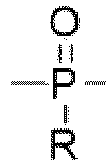 oder aus Verbindungen der folgenden allgemeinen Formel
 wobei R aus Aryl, Oxyaryl, Alkyl oder Oxyalkyl ausgewählt ist,oder der reaktive flammhemmende Weichmacher Bis-(3-(3,4-dicyanophenoxy)phenyl)-propargylphosphat ist, wobei der reaktive flammhemmende Weichmacher 5-80 Gew.-% des Gesamtgewichts der polymerisierbaren Mischung ausmacht, und- ein oder mehrere reaktive Verdünnungsmittel, ausgewählt aus Verbindungen der folgenden allgemeinen Formel
 wobei R in meta- oder para-Stellung relativ zum mit dem Benzolring verbundenen Sauerstoffatom stehen kann und H, CN, NH2 oder N(C3H3)2 darstellt,wobei die reaktive Verdünnungsmittel 1 bis 50 Gew.-% der Mischung ausmachen; und(2) einen Polymerisationsinitiator (Härtungsmittel) in einer Menge von 1 bis 20 Gew.-% des Gesamtgewichts der polymerisierbaren Mischung, ausgewählt aus aromatischen Diaminen oder Bisphenolen mit einem Siedepunkt bei einem Vakuum von 0,1 mmHg von mindestens 180°C,
wobei der Gesamtgehalt der polymerisierbaren Mischung und des Polymerisationsinitiators im Bereich von 60 bis 100 Gew.-% des Gesamtgewichts der Zusammensetzung liegt. - Zusammensetzung nach Anspruch 1, dadurch gekennzeichnet, dass das reaktive Verdünnungsmittel ausgewählt ist aus einer oder mehreren Verbindungen aus der Gruppe bestehend aus 4-[3-(Dipropargylamino)phenoxy]phthalonitril, 4-[4-(Dipropargylamino)phenoxy]phthalonitril, 4-(4-Cyanophenoxy)-benzol-1,2-dicarbonitril, 4-(4-Cyanophenoxy)-phthalonitril, 4-(3-Cyanophenoxy)-phthalonitril und 4-(4-Aminophenoxy)-phthalonitril, besonders bevorzugt aus eine oder mehrere der folgenden Verbindungen: 4-(4-Cyanophenoxy)-benzol-1,2-dicarbonitril, 4-[3-(Dipropargylamino)phenoxy]phthalonitril, 4-[4-(Dipropargylamino)phenoxy]phthalonitril.
- Zusammensetzung nach Anspruch 1 oder 2, dadurch gekennzeichnet, dass das reaktive Verdünnungsmittel in einer Menge von 1 bis 40 Gew.-% des Gesamtgewichts der Mischung oder von 10 bis 50 Gew.-% des Gesamtgewichts der Mischung, oder von 10 bis 40 Gew.-% des Gesamtgewichts der Mischung, oder von 20 bis 40 Gew.-% des Gesamtgewichts der Mischung, oder von 20 bis 35 Gew.-% des Gesamtgewichts der Mischung, oder von 20 bis 30 Gew.-% des Gesamtgewichts der Mischung, vorzugsweise von 10 bis 40 Gew.-% des Gesamtgewichts der Mischung, oder in einer Menge von 10 bis 30 Gew.-% des Gesamtgewichts der Mischung vorhanden ist.
- Zusammensetzung nach einem der Ansprüche 1 bis 3, dadurch gekennzeichnet, dass das Aryl ein gegebenenfalls substituiertes C6-C20-Aryl, vorzugsweise ein C6-C18-Aryl, bevorzugt ein unsubstituiertes C6-C10-Aryl oder ein substituiertes C6-Aryl ist, wobei der Substituent Methyl, Fluor, Chlor, Brom oder Trifluoromethyl sein kann, vorzugsweise das Aryl ein Phenyl ist; das Oxyaryl ein -O(C6-C20)-Oxyaryl, vorzugsweise -O(C6-C18)-Oxyaryl, noch bevorzugter unsubstituiertes -O(C6-C10)-Oxyaryl oder substituiertes -O(C6)-Oxyaryl ist, wobei der Substituent Methyl, Fluor, Chlor, Brom oder Trifluoromethyl sein kann, vorzugsweise das Oxyaryl ein Oxyphenyl ist und das Alkyl ein lineares oder verzweigtes C1-C8-Alkyl, vorzugsweise C2-C6-Alkyl, besonders bevorzugt C3-C4-Alkyl darstellt; und das Oxyalkyl ein lineares oder verzweigtes -O(Ci-Cs)-Oxyalkyl, vorzugsweise -O(C2-C6)-Oxyalkyl, besonders bevorzugt -O(C3-C4)-Oxyalkyl ist.
- Zusammensetzung nach einem der Ansprüche 1 bis 4, dadurch gekennzeichnet, dass das Monomer ausgewählt ist aus einer oder mehreren Verbindungen aus der Gruppe bestehend aus 1,3-Bis-(3,4-dicyanophenoxy)benzol, 1,3-Bis-(3,4-dicyanophenoxy)-2-fluorobenzol, 1,3-Bis-(3,4-dicyanophenoxy)-4-fluorobenzol, 1,3-Bis-(3,4-dicyanophenoxy)-2-chlorbenzol, 1,3-Bis-(3,4-dicyanophenoxy)-4-chlorbenzol, 1,3-Bis-(3,4-dicyanophenoxy)-2-brombenzol, 1,3-Bis-(3,4-dicyanophenoxy)-4-brombenzol, 1,3-Bis-(3,4-dicyanophenoxy)-2,4-difluorobenzol, 1,5-Bis-(3,4-dicyanophenoxy)-2,4-dichlorbenzol, 1,3-Bis-(3,4-dicyanophenoxy)-2-methylbenzol, besonders bevorzugt aus 1,3-Bis-(3,4-dicyanophenoxy)benzol, 1,3-Bis-(3,4-dicyanophenoxy)-2-fluorobenzol, 1,3-Bis-(3,4-dicyanophenoxy)-4-fluorobenzol, 1,3-Bis-(3,4-dicyanophenoxy)-2,4-difluorobenzol, am meisten bevorzugt ist die Verwendung von 1,3-Bis-(3,4-dicyanophenoxy)benzol.
- Zusammensetzung nach einem der Ansprüche 1 bis 5, dadurch gekennzeichnet, dass der reaktive flammhemmende Weichmacher ausgewählt ist aus einer oder mehreren Verbindungen aus der Gruppe bestehend aus Bis-(4-cyanophenoxy)-phenylphosphat, Bis-(3-(3,4-dicyanophenoxy)-phenylphosphat, Bis-(3-(3,4-dicyanophenoxy)-1-naphthylphosphat, Bis-(4-Cyanophenoxy)-phenylphosphonat, Bis-(3-(3,4-dicyanophenoxy)phenyl)-phenylphosphonat, Bis-(3-(3,4-dicyanophenoxy)phenyl)-isopropylphosphat, Bis-(3-(3, 4-dicyanophenoxy)phenyl)-butylphosphat, Bis-(3-(3,4-dicyanophenoxy)phenyl)-propargylphosphat, Bis-(4-cyanophenyl)phenylphosphat, Bis-(3-cyanophenoxy)phenylphosphat und Bis-4-(3,4-dicyanophenoxy)phenyl)-phenylphosphat, bevorzugt aus Bis-(4-cyanophenoxy)-phenylphosphat, Bis-(3-(3,4-dicyanophenoxy)-phenylphosphat, Bis-(3-(3,4-dicyanophenoxy)-phenyl)-isopropylphosphat, Bis-(3-(3,4-dicyanophenoxy)-phenyl)-butylphosphat.
- Zusammensetzung nach einem der Ansprüche 1 bis 6, dadurch gekennzeichnet, dass der Polymerisationsinitiator aus folgenden Verbindungen ausgewählt ist:

 oder aus Verbindungen der folgenden allgemeinen Formel
 wobei Z für H oder F steht,oder aus Verbindungen der folgenden allgemeinen Formel
 wobei Z für H oder F steht,oder aus Bisphenolen, noch bevorzugter aus 1,3-Bis-(4-aminophenoxy)benzol, 4,4'-Diaminodiphenylsulfon, 3,3'-Diaminodiphenylsulfon, 3,3'-[(2,3,5,6-Tetrafluorobenz-1,4-diyl)bis(oxy)]dianilin, 4,4'-[(2,3,5,6-Tetrafluorobenz-1,4-diyl)bis(oxy)]dianilin, Bis[4-(4-Aminophenoxy)phenyl]sulfon oder Bisphenol A, am meisten bevorzugt aus 1,3-Bis-(4-aminophenoxy)benzol oder Bis[4-(4-aminophenoxy)phenyl]sulfon.
- Zusammensetzung nach einem der Ansprüche 1 bis 7, dadurch gekennzeichnet, dass das Monomer in einer Menge von 20 bis 80 Gew.-% bezogen auf das Gewicht der polymerisierbaren Mischung, oder 30 bis 80 Gew.-% bezogen auf das Gewicht der polymerisierbaren Mischung, oder 20 bis 70 Gew.-% bezogen auf das Gewicht der polymerisierbaren Mischung, weiter bevorzugt 30 bis 70 Gew.-% bezogen auf das Gewicht der polymerisierbaren Mischung, oder 40 bis 70 Gew.-% bezogen auf das Gewicht der polymerisierbaren Mischung, oder 40 bis 55 Gew.-% bezogen auf das Gewicht der polymerisierbaren Mischung, weiter bevorzugt in einer Menge von 30 bis 70 Gew.-% bezogen auf das Gewicht der polymerisierbaren Mischung, vorhanden ist.
- Zusammensetzung nach einem der Ansprüche 1 bis 8, dadurch gekennzeichnet, dass der Weichmacher in einer Menge von 5 bis 70 Gew.-% des Gesamtgewichts der polymerisierbaren Mischung oder in einer Menge von 5 bis 60 Gew.-% des Gesamtgewichts der polymerisierbaren Mischung, oder in einer Menge von 20 bis 70 Gew.-% des Gesamtgewichts der polymerisierbaren Mischung, oder in einer Menge von 20 bis 60 Gew.-% des Gesamtgewichts der polymerisierbaren Mischung, oder in einer Menge von 25 bis 60 Gew.-% des Gesamtgewichts der polymerisierbaren Mischung, oder in einer Menge von 25 bis 50 Gew.-% des Gesamtgewichts der polymerisierbaren Mischung, oder in einer Menge von 30 bis 60 Gew.-% des Gesamtgewichts der polymerisierbaren Mischung, oder in einer Menge von 30 bis 50 % des Gesamtgewichts der polymerisierten Mischung vorhanden ist.
- Zusammensetzung nach einem der Ansprüche 1 bis 9, dadurch gekennzeichnet, dass der Polymerisationsinitiator in einer Menge von 2 bis 20 Gew.-% des Gesamtgewichts der polymerisierbaren Mischung, oder von 5 bis 20 Gew.-% des Gesamtgewichts der polymerisierbaren Mischung, oder von 5 bis 15 Gew.-% des Gesamtgewichts der polymerisierbaren Mischung, oder vorzugsweise von 5 bis 10 Gew.-% des Gesamtgewichts der polymerisierbaren Mischung vorhanden ist.
- Zusammensetzung nach einem der Ansprüche 1 bis 10, dadurch gekennzeichnet, dass die Zusammensetzung zur Herstellung von Prepregs für PCM bestimmt ist und zusätzlich einen inerte Füllstoff enthält, ausgewählt aus Quarzmehl, Ruß, Bariumsulfat, Metallphthalocyaniden, pyrogenen Siliziumdioxid, Titanoxid und beliebigen Mischungen von mindestens zwei dieser Stoffe, wobei der Füllstoff in einer Menge von bis zu 40 Gew.-% des Gesamtgewichts der Harzmatrix, oder in einer Menge von 9 bis 30 Gew.-% des Gesamtgewichts der Harzmatrix, oder in einer Menge von 9 bis 28 Gew.-% des Gesamtgewichts der Harzmatrix verwendet wird.
- Verfahren zur Herstellung einer Harzmatrixzusammensetzung nach einem der Ansprüche 1 bis 11, wobei das Verfahren die Herstellung einer polymerisierbaren Mischung in einem Reaktor umfasst, wobei die polymerisierbare Mischung- ein oder mehrere Bisphthalonitril-Monomere, ausgewählt aus Monomeren der folgenden allgemeinen Formel:
 - einem oder mehreren reaktiven flammhemmenden Weichmachern, ausgewählt aus Verbindungen der folgenden allgemeinen Formel
 wobei sich die Gruppe
 oder aus Verbindungen der folgenden allgemeinen Formel
 wobei R aus Aryl, Oxyaryl, Alkyl oder Oxyalkyl ausgewählt ist,oder der reaktive flammhemmende Weichmacher Bis-(3-(3,4-dicyanophenoxy)phenyl)-propargylphosphat ist, wobei der reaktive flammhemmende Weichmacher 5-80 Gew.-% des Gesamtgewichts der polymerisierbaren Mischung ausmacht; und- ein oder mehrere reaktive Verdünnungsmittel, ausgewählt aus Verbindungen der folgenden allgemeinen Formel
 wobei R in meta- oder para-Stellung relativ zum mit dem Benzolring verbundenen Sauerstoffatom stehen kann und H, CN, NH2 oder N(C3H3)2 darstellt,in einer Menge von 1 bis 50 % des Gesamtgewichts der polymerisierbaren Mischung, enthält, und das Verfahren umfasst:setzen des Reaktors unter Vakuum und Erhitzen auf eine Temperatur im Bereich von 100 bis 180 °C bis zur vollständigen Homogenisierung der Mischung;zugaben eines Polymerisationsinitiators zu der erhaltenen homogenen Mischung in einer Menge von 1 bis 20 Gew.-% des Gesamtgewichts der polymerisierbaren Mischung, wobei der Polymerisationsinitiator aus aromatischen Diaminen und Bisphenolen mit einem Siedepunkt von mindestens 180 °C unter Vakuum von 0,1 mmHg ausgewählt ist; undrühren der so erhaltenen Mischung bei einer Temperatur im Bereich von 100 bis 160 °C während 5 - 180 Minuten und Entleeren der erhaltenen Zusammensetzung ohne Kühlung, gefolgt vom Abkühlenlassen der Zusammensetzung.
- Verfahren nach Anspruch 12, dadurch gekennzeichnet, dass das oder die reaktiven Verdünnungsmittel in einer Menge von 1 bis 40 Gew.-% des Gesamtgewichts der Mischung, oder von 10 bis 50 Gew.-% des Gesamtgewichts der Mischung, oder von 10 bis 40 Gew.-% des Gesamtgewichts der Mischung, oder von 20 bis 40 Gew.-% des Gesamtgewichts der Mischung, oder von 20 bis 35 Gew.-% des Gesamtgewichts der Mischung, oder von 20 bis 30 Gew.-% des Gesamtgewichts der Mischung, vorzugsweise von 10 bis 40 Gew.-% des Gesamtgewichts der Mischung, oder in einer Menge von 10 bis 30 Gew.-% des Gesamtgewichts der Mischung zugesetzt wird/werden.
- Verfahren nach Anspruch 13, dadurch gekennzeichnet, dass das reaktive Verdünnungsmittel aus einer oder mehreren Verbindungen aus der Gruppe bestehend aus 4-[3-(Dipropargylamino)phenoxy]phthalonitril, 4-[4-(Dipropargylamino)phenoxy]phthalonitril, 4-(4-Cyanophenoxy)-phthalonitril, 4-(3-Cyanophenoxy)-phthalonitril und 4-(4-Aminophenoxy)-phthalonitril, 4-(3-Aminophenoxy)-phthalonitril, besonders bevorzugt aus 4-(4-Cyanophenoxy)-phthalonitril, 4-[3-(Dipropargylamino)phenoxy]phthalonitril ausgewählt ist.
- Verfahren nach einem der Ansprüche 12 bis 14, dadurch gekennzeichnet, dass das Aryl ein gegebenenfalls substituiertes C6-C20-Aryl, vorzugsweise ein C6-C18-Aryl, besonders bevorzugt ein unsubstituiertes C6-C10-Aryl oder ein substituiertes C6-Aryl ist, wobei der Substituent Methyl, Fluor, Chlor, Brom oder Trifluoromethyl sein kann, vorzugsweise das Aryl ein Phenyl ist; das Oxyaryl ein -O(C6-C20)-Oxyaryl, vorzugsweise ein -O(C6-C18)-Oxyaryl, noch bevorzugter unsubstituiertes -O(C6-C10)-Oxyaryl oder substituiertes -O(C6)-Oxyaryl ist, wobei der Substituent Methyl, Fluor, Chlor, Brom oder Trifluoromethyl sein kann, vorzugsweise das Oxyaryl ein Oxyphenyl ist und das Alkyl ein lineares oder verzweigtes C1-C8-Alkyl, vorzugsweise C2-C6-Alkyl, besonders bevorzugt C3-C4-Alkyl darstellt; wobei das Oxyalkyl ein lineares oder verzweigtes -O(Ci-Cs)-Oxyalkyl, vorzugsweise ein -O(C2-C6)-Oxyalkyl, besonders bevorzugt ein -O(C3-C4)-Oxyalkyl darstellt.
- Verfahren nach einem der Ansprüche 12 bis 15, dadurch gekennzeichnet, dass das Monomer ausgewählt ist aus einer oder mehreren Verbindungen aus der Gruppe bestehend aus 1,3-Bis-(3,4-dicyanophenoxy)benzol, 1,3-Bis-(3,4-dicyanophenoxy)-2-fluorobenzol, 1,3-Bis-(3,4-dicyanophenoxy)-4-fluorobenzol, 1,3-Bis-(3,4-dicyanophenoxy)-2-chlorbenzol, 1,3-Bis-(3,4-dicyanophenoxy)-4-chlorbenzol, 1,3-Bis-(3,4-dicyanophenoxy)-2-brombenzol, 1,3-Bis-(3,4-dicyanophenoxy)-4-brombenzol, 1,3-Bis-(3,4-dicyanophenoxy)-2,4-difluorobenzol, 1,5-Bis-(3,4-dicyanophenoxy)-2,4-dichlorbenzol, 1,3-Bis-(3,4-dicyanophenoxy)-2-methylbenzol, besonders bevorzugt aus 1,3-Bis-(3,4-dicyanophenoxy)benzol, 1,3-Bis-(3,4-dicyanophenoxy)-2-fluorobenzol, 1,3-Bis-(3,4-dicyanophenoxy)-4-fluorobenzol, 1,3-Bis-(3,4-dicyanophenoxy)-2,4-difluorobenzol, am meisten bevorzugt ist die Verwendung von 1,3-Bis-(3,4-dicyanophenoxy)benzol.
- Verfahren nach einem der Ansprüche 12 bis 16, dadurch gekennzeichnet, dass der reaktive flammhemmende Weichmacher ausgewählt ist aus einer oder mehreren Verbindungen aus der Gruppe bestehend aus Bis-(4-cyanophenoxy)-phenylphosphat, Bis-(3-(3,4-dicyanophenoxy)-phenylphosphat, Bis-(3-(3,4-dicyanophenoxy)-1-naphthylphosphat, Bis-(4-cyanophenoxy)-phenylphosphonat, Bis-(3-(3,4-dicyanophenoxy)phenyl)-phenylphosphonat, Bis-(3-(3,4-dicyanophenoxy)phenyl)-isopropylphosphat, Bis-(3-(3,4-dicyanophenoxy)phenyl)-butylphosphat, Bis-(3-(3,4-dicyanophenoxy)phenyl)-propargylphosphat, Bis-(4-cyanophenyl)phenylphosphat, Bis-(3-cyanophenoxy)phenylphosphat und Bis-4-(3,4-dicyanophenoxy)phenyl)-phenylphosphat, bevorzugt aus Bis-(4-cyanophenoxy)-phenylphosphat, Bis-(3-(3,4-dicyanophenoxy)phenylphosphat, Bis-(3-(3,4-dicyanophenoxy)-phenyl)-isopropylphosphat, Bis-(3-(3,4-dicyanophenoxy)-phenyl)-butylphosphat.
- Verfahren nach einem der Ansprüche 12 bis 16, dadurch gekennzeichnet, dass der Polymerisationsinitiator aus folgenden Verbindungen ausgewählt ist:
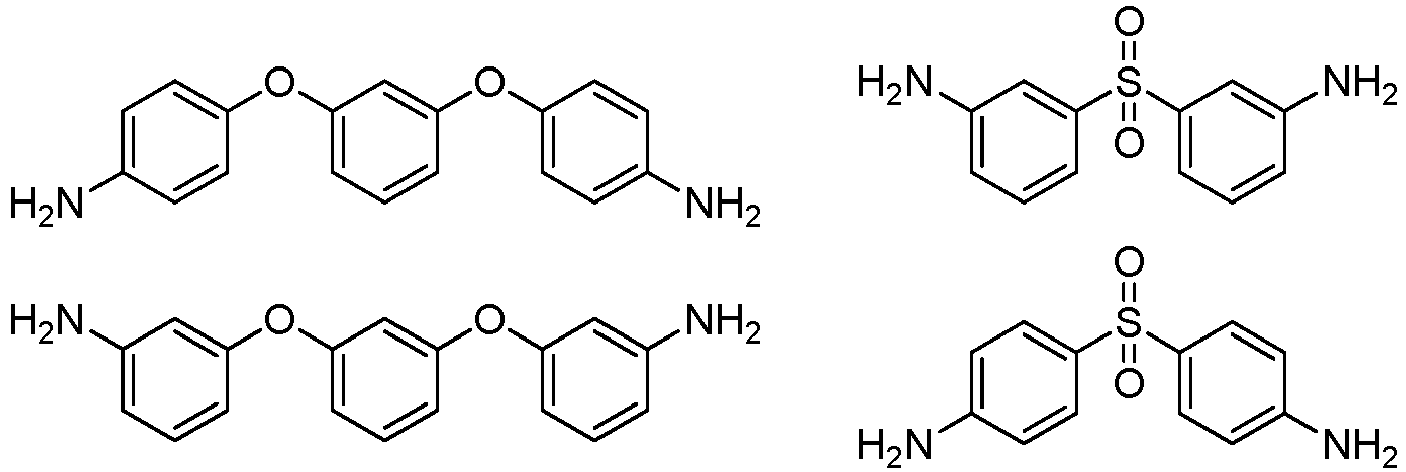
 oder aus Verbindungen der folgenden allgemeinen Formel
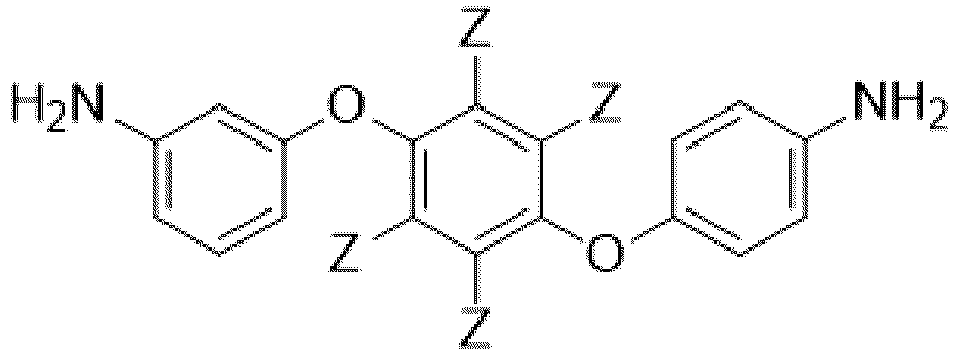 wobei Z für H oder F steht,oder aus Verbindungen der folgenden allgemeinen Formel
 wobei Z für H oder F steht,oder aus Bisphenolen, noch bevorzugter aus 1,3-Bis-(4-aminophenoxy)benzol, 4,4'-Diaminodiphenylsulfon, 3,3'-Diaminodiphenylsulfon, 3,3'-[(2,3,5,6-Tetrafluorobenz-1,4-diyl)bis(oxy)]dianilin, 4,4'-[(2,3,5,6-Tetrafluorobenz-1,4-diyl)bis(oxy)]dianilin, Bis[4-(4-Aminophenoxy)phenyl]sulfon oder Bisphenol A, am meisten bevorzugt aus 1,3-Bis-(4-aminophenoxy)benzol oder Bis[4-(4-aminophenoxy)phenyl]sulfon
- Verfahren nach einem der Ansprüche 12 bis 18, dadurch gekennzeichnet, dass das Monomer in einer Menge von 20 bis 80 Gew.-% der polymerisierbaren Mischung, oder von 30 bis 80 Gew.-% der polymerisierbaren Mischung, oder von 20 bis 70 Gew.-% der polymerisierbaren Mischung, vorzugsweise von 30 bis 70 Gew.-% der polymerisierbaren Mischung, oder von 40 bis 70 Gew.-% der polymerisierbaren Mischung, oder von 40 bis 60 Gew.-% der polymerisierbaren Mischung, oder von 40 bis 55 Gew.-% der polymerisierbaren Mischung, vorzugsweise in einer Menge von 30 bis 70 Gew.-% der polymerisierbaren Mischung verwendet wird.
- Verfahren nach einem der Ansprüche 12 bis 19, dadurch gekennzeichnet, dass der Weichmacher in einer Menge von 5 bis 70 Gew.-% des Gesamtgewichts der polymerisierbaren Mischung, oder in einer Menge von 5 bis 60 Gew.-% des Gesamtgewichts der polymerisierbaren Mischung, oder in einer Menge von 20 bis 70 Gew.-% des Gesamtgewichts der polymerisierbaren Mischung, oder in einer Menge von 20 bis 60 Gew.-% des Gesamtgewichts der polymerisierbaren Mischung, oder in einer Menge von 25 bis 60 Gew.-% des Gesamtgewichts der polymerisierbaren Mischung, oder in einer Menge von 25 bis 50 Gew.-% des Gesamtgewichts der polymerisierbaren Mischung, oder in einer Menge von 30 bis 60 Gew.-% des Gesamtgewichts der polymerisierbaren Mischung, oder in einer Menge von 30 bis 50 Gew.-% des Gesamtgewichts der polymerisierbaren Mischung verwendet wird.
- Verfahren nach einem der Ansprüche 12 bis 20, dadurch gekennzeichnet, dass der Polymerisationsinitiator in einer Menge von 2 bis 20 Gew.-% des Gesamtgewichts der polymerisierbaren Mischung, oder von 5 bis 20 Gew.-% des Gesamtgewichts der polymerisierbaren Mischung, oder von 5 bis 15 Gew.-% des Gesamtgewichts der polymerisierbaren Mischung, oder vorzugsweise von 5 bis 10 % des Gesamtgewichts der polymerisierbaren Mischung verwendet wird.
- Verfahren nach einem der Ansprüche 12 bis 21, dadurch gekennzeichnet, dass die polymerisierbare Mischung zur Homogenisierung auf eine Temperatur im Bereich von 100 bis 180 °C, vorzugsweise von 100 bis 140 °C, erhitzt wird.
- Verfahren nach einem der Ansprüche 12 bis 22, dadurch gekennzeichnet, dass die Mischung, die nach Zugabe des Initiators zur polymerisierbaren Mischung erhalten wird, bei einer Temperatur im Bereich von 100 bis 160 °C, bevorzugt bei einer Temperatur im Bereich von 100 bis 140 °C, noch bevorzugter bei einer Temperatur im Bereich von 100 bis 120 °C, für 10 bis 180 Minuten, bevorzugt für 10 bis 120 Minuten, noch bevorzugter für 60 bis 120 Minuten gerührt wird.
- Verfahren zur Herstellung einer Harzmatrixzusammensetzung nach einem der Ansprüche 1 bis 11 zur Produktion Prepregs für PCM, dadurch gekennzeichnet, dass das Verfahren das Mischen einer polymerisierbaren Mischung in einem Reaktor umfasst, wobei die polymerisierbare Mischung Folgendes enthält- ein oder mehrere Bisphthalonitril-Monomere, ausgewählt aus Monomeren der folgenden allgemeinen Formel:
 - einem oder mehreren reaktiven flammhemmenden Weichmachern, ausgewählt aus Verbindungen der folgenden allgemeinen Formel
 wobei sich die Gruppe
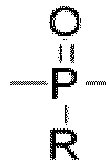 oder aus Verbindungen der folgenden allgemeinen Formel
 wobei R aus Aryl, Oxyaryl, Alkyl oder Oxyalkyl ausgewählt ist,oder der reaktive flammhemmende Weichmacher Bis-(3-(3,4-dicyanophenoxy)phenyl)-propargylphosphat ist, und der reaktive flammhemmende Weichmacher 5-80 Gew.-% der polymerisierbaren Mischung ausmacht, und- ein oder mehrere reaktive Verdünnungsmittel, ausgewählt aus Verbindungen der folgenden allgemeinen Formel
 wobei R in meta- oder para-Stellung relativ zum mit dem Benzolring verbundenen Sauerstoffatom stehen kann und H, CN, NH2 oder N(C3H3)2 darstellt,in einer Menge von 1 bis 50 % des Gesamtgewichts der polymerisierbaren Mischung;wobei zuerst der Weichmacher und das Verdünnungsmittel in den Reaktor gegeben werden, dann der Reaktor auf eine Temperatur im Bereich von 100 bis 140 °C erhitzt wird, bis die Komponenten verflüssigen, anschließend die Mischung gerührt wird und das Monomerpulver so zugegeben wird, dass es sich nicht auflöst, anschließendZugeben eines Polymerisationsinitiators zu der erhaltenen Suspension in einer Menge von 1 bis 20 Gew.-% des Gesamtgewichts der polymerisierbaren Mischung, wobei der Polymerisationsinitiator aus aromatischen Diaminen oder Bisphenolen mit einem Siedepunkt von mindestens 180 °C unter Vakuum von 0,1 mm Hg ausgewählt ist,Rühren der so erhaltenen Mischung bei einer Temperatur im Bereich von 100 bis 160 °C für 5 - 180 Minuten und Austragen der resultierenden Zusammensetzung ohne Kühlung, gefolgt von Abkühlenlassen der Zusammensetzung..
- Verfahren nach Anspruch 24, dadurch gekennzeichnet, dass das oder die reaktiven Verdünnungsmittel in einer Menge von 1 bis 40 Gew.-% des Gesamtgewichts der Mischung, oder von 10 bis 50 Gew.-% des Gesamtgewichts der Mischung, oder von 10 bis 40 Gew.-% des Gesamtgewichts der Mischung, oder von 20 bis 40 Gew.-% des Gesamtgewichts der Mischung, oder von 20 bis 35 Gew.-% des Gesamtgewichts der Mischung, oder von 20 bis 30 Gew.-% des Gesamtgewichts der Mischung, vorzugsweise von 10 bis 40 % des Gesamtgewichts der Mischung oder von 10 bis 30 % des Gesamtgewichts der Mischung zugesetzt werden.
- Verfahren nach Anspruch 24 oder 25, dadurch gekennzeichnet, dass das reaktive Verdünnungsmittel ausgewählt ist aus einer oder mehreren Verbindungen aus der Gruppe bestehend aus 4-[3-(Dipropargylamino)phenoxy]phthalonitril, 4-[4-(Dipropargylamino)phenoxy]phthalonitril, 4-(4-Cyanophenoxy)-phthalonitril, 4-(3-Cyanophenoxy)-phthalonitril und 4-(4-Aminophenoxy)-phthalonitril, 4-(3-Aminophenoxy)-phthalonitril, am meisten bevorzugt sind 4-(4-Cyanophenoxy)-phthalonitril, 4-[3-(Dipropargylamino)-phenoxy]-phthalonitril und 4-(4-Aminophenoxy)-phthalonitril.
- Verfahren nach einem der Ansprüche 24 bis 26, dadurch gekennzeichnet, dass das Aryl ein gegebenenfalls substituiertes C6-C20-Aryl, vorzugsweise ein C6-C18-Aryl, bevorzugt ein unsubstituiertes C6-C10-Aryl oder ein substituiertes C6-Aryl ist, wobei der Substituent Methyl, Fluor, Chlor, Brom oder Trifluoromethyl sein kann, vorzugsweise das Aryl ein Phenyl ist; das Oxyaryl ein -O(C6-C20)-Oxyaryl, vorzugsweise -O(C6-C18)-Oxyaryl, noch bevorzugter unsubstituiertes -O(C6-C10)-Oxyaryl oder substituiertes -O(C6)-Oxyaryl darstellt, wobei der Substituent Methyl, Fluor, Chlor, Brom oder Trifluoromethyl sein kann, vorzugsweise das Oxyaryl ein Oxyphenyl ist und das Alkyl ein lineares oder verzweigtes C1-C8-Alkyl, vorzugsweise C2-C6-Alkyl, besonders bevorzugt C3-C4-Alkyl darstellt; wobei das Oxyalkyl ein lineares oder verzweigtes -O(Ci-Cs)-Oxyalkyl, vorzugsweise -O(C2-C6)-Oxyalkyl, besonders bevorzugt -O(C3-C4)-Oxyalkyl ist.
- Verfahren nach einem der Ansprüche 24 bis 27, dadurch gekennzeichnet, dass das Monomer ausgewählt ist aus einer oder mehreren Verbindungen aus der Gruppe bestehend aus 1,3-Bis-(3,4-dicyanophenoxy)benzol, 1,3-Bis-(3,4-dicyanophenoxy)-2-fluorobenzol, 1,3-Bis-(3,4-dicyanophenoxy)-4-fluorobenzol, 1,3-Bis-(3,4-dicyanophenoxy)-2-chlorbenzol, 1,3-Bis-(3,4-dicyanophenoxy)-4-chlorbenzol, 1,3-Bis-(3,4-dicyanophenoxy)-2-brombenzol, 1,3-Bis-(3,4-dicyanophenoxy)-4-brombenzol, 1,3-Bis-(3,4-dicyanophenoxy)-2,4-difluorobenzol, 1,5-Bis-(3,4-dicyanophenoxy)-2,4-dichlorbenzol, 1,3-Bis-(3,4-dicyanophenoxy)-2-methylbenzol, besonders bevorzugt aus 1,3-Bis-(3,4-dicyanophenoxy)benzol, 1,3-Bis-(3,4-dicyanophenoxy)-2-fluorobenzol, 1,3-Bis-(3,4-dicyanophenoxy)-4-fluorobenzol, 1,3-Bis-(3,4-dicyanophenoxy)-2,4-difluorobenzol, am meisten bevorzugt ist die Verwendung von 1,3-Bis-(3,4-dicyanophenoxy)benzol.
- Verfahren nach einem der Ansprüche 24 bis 28, dadurch gekennzeichnet, dass der reaktive flammhemmende Weichmacher ausgewählt ist aus einer oder mehreren Verbindungen aus der Gruppe bestehend aus Bis-(4-cyanophenoxy)-phenylphosphat, Bis-(3-(3,4-dicyanophenoxy)-phenylphosphat, Bis-(3-(3,4-dicyanophenoxy)-1-naphthylphosphat, Bis-(4-cyanophenoxy)-phenylphosphonat, Bis-(3-(3,4-dicyanophenoxy)phenyl)-phenylphosphonat, Bis-(3-(3,4-dicyanophenoxy)phenyl)-isopropylphosphat, Bis-(3-(3,4-dicyanophenoxy)phenyl)-butylphosphat, Bis-(3-(3,4-dicyanophenoxy)phenyl)-propargylphosphat, Bis-(4-cyanophenyl)phenylphosphat, Bis-(3-cyanophenoxy)phenylphosphat und Bis-4-(3,4-dicyanophenoxy)phenyl)-phenylphosphat, bevorzugt aus Bis-(4-cyanophenoxy)-phenylphosphat, Bis-(3-(3,4-dicyanophenoxy)-phenylphosphat, Bis-(3-(3,4-dicyanophenoxy)-phenyl)-isopropylphosphat, Bis-(3-(3,4-dicyanophenoxy)-phenyl)-butylphosphat.
- Verfahren nach einem der Ansprüche 24 bis 29, dadurch gekennzeichnet, dass der Polymerisationsinitiator aus folgenden Verbindungen ausgewählt ist:

 oder aus Verbindungen der folgenden allgemeinen Formel
 wobei Z für H oder F steht,oder aus Verbindungen der folgenden allgemeinen Formel
 wobei Z für H oder F steht,oder aus Bisphenolen, noch bevorzugter aus 1,3-Bis-(4-aminophenoxy)benzol, 4,4'-Diaminodiphenylsulfon, 3,3'-Diaminodiphenylsulfon, 3,3'-[(2,3,5,6-Tetrafluorobenz-1,4-diyl)bis(oxy)]dianilin, 4,4'-[(2,3,5,6-Tetrafluorobenz-1,4-diyl)bis(oxy)]dianilin, Bis[4-(4-Aminophenoxy)phenyl]sulfon oder Bisphenol A, am meisten bevorzugt aus 1,3-Bis-(4-aminophenoxy)benzol oder Bis[4-(4-aminophenoxy)phenyl]sulfon.
- Verfahren nach einem der Ansprüche 24 bis 30, dadurch gekennzeichnet, dass das das Monomer in einer Menge von 20 bis 80 Gew.-% bezogen auf das Gewicht der polymerisierbaren Mischung, oder 30 bis 80 Gew.-% bezogen auf das Gewicht der polymerisierbaren Mischung, oder 20 bis 70 Gew.-% bezogen auf das Gewicht der polymerisierbaren Mischung, weiter bevorzugt 30 bis 70 Gew.-% bezogen auf das Gewicht der polymerisierbaren Mischung, oder 40 bis 70 Gew.-% bezogen auf das Gewicht der polymerisierbaren Mischung, oder 40 bis 60 Gew.-% bezogen auf das Gewicht der polymerisierbaren Mischung, oder 40 bis 55 Gew.-% bezogen auf das Gewicht der polymerisierbaren Mischung, weiter bevorzugt in einer Menge von 30 bis 70 Gew.-% bezogen auf das Gewicht der polymerisierbaren Mischung, vorhanden ist.
- Verfahren nach einem der Ansprüche 24 bis 31, dadurch gekennzeichnet, dass der Weichmacher in einer Menge von 5 bis 70 Gew.-% des Gesamtgewichts der polymerisierbaren Mischung oder in einer Menge von 5 bis 60 Gew.-% des Gesamtgewichts der polymerisierbaren Mischung, oder in einer Menge von 20 bis 70 Gew.-% des Gesamtgewichts der polymerisierbaren Mischung, oder in einer Menge von 20 bis 60 Gew.-% des Gesamtgewichts der polymerisierbaren Mischung, oder in einer Menge von 25 bis 60 Gew.-%. des Gesamtgewichts der polymerisierbaren Mischung, oder in einer Menge von 25 bis 50 Gew.-% des Gesamtgewichts der polymerisierbaren Mischung, oder in einer Menge von 30 bis 60 Gew.-% des Gesamtgewichts der polymerisierbaren Mischung, oder in einer Menge von 30 bis 50 Gew.-% des Gesamtgewichts der polymerisierten Mischung vorhanden ist.
- Verfahren nach einem der Ansprüche 24 bis 32, dadurch gekennzeichnet, dass der Polymerisationsinitiator in einer Menge von 2 bis 20 Gew.-% des Gesamtgewichts der polymerisierbaren Mischung, oder von 5 bis 20 Gew.-% des Gesamtgewichts der polymerisierbaren Mischung, oder von 5 bis 15 Gew.-% des Gesamtgewichts der polymerisierbaren Mischung, oder vorzugsweise von 5 bis 10 % des Gesamtgewichts der polymerisierbaren Mischung vorhanden ist.
- Verfahren nach einem der Ansprüche 24 bis 33, dadurch gekennzeichnet, dass die polymerisierbare Mischung zur Homogenisierung auf eine Temperatur im Bereich von 100 bis 180 °C, bevorzugter im Bereich von 100 bis 160 °C, am meisten bevorzugt im Bereich von 100 bis 140 °C, erhitzt wird.
- Verfahren nach einem der Ansprüche 24 bis 34, dadurch gekennzeichnet, dass die Mischung, die nach Zugabe des Initiators zur polymerisierbaren Mischung erhalten wird, bei einer Temperatur im Bereich von 100 bis 160 °C, bevorzugt bei einer Temperatur im Bereich von 100 bis 140 °C, noch bevorzugter bei einer Temperatur im Bereich von 100 bis 120 °C, für 10 bis 180 Minuten, bevorzugt für 10 bis 120 Minuten, noch bevorzugter für 10 bis 30 Minuten gerührt wird.
- Verfahren nach einem der Ansprüche 24 bis 35, weiterhin umfassend einen Schritt, bei dem ein inerter Füllstoff, ausgewählt aus Quarzpulver, Ruß, Bariumsulfat, Metallphthalocyaniden, pyrogenen Siliziumdioxid, Titanoxid und einem beliebigen Gemisch aus mindestens zwei der genannten Materialien, dem Komponentengemisch in einer Menge von bis zu 40 Gew.-% des Gesamtgewichts der Harzmatrix, oder in einer Menge von 9 bis 30 Gew.-% des Gesamtgewichts der Harzmatrix, oder in einer Menge von 9 bis 28 Gew.-% des Gesamtgewichts der Harzmatrix zugesetzt wird, wobei der Füllstoff entweder vor der Zugabe des Polymerisationsinitiators oder der Endmischung vor seine Abkühlung zugesetzt wird.
- Verfahren zum Aushärten einer Harzmatrixzusammensetzung nach einem der Ansprüche 1 bis 11, wobei das Verfahren die Schritte umfasst, während derer die Harzmatrix unter Rühren bei einem Druck von nicht mehr als 1333 Pa und einer Temperatur im Bereich von 100 bis 180 °C unter Vakuum entgast wird, das erhaltene entgaste Material bei eine Temperatur im Bereich von 180 bis 190 °C für 1 bis 12 Stunden gehalten wird zum Aushärten, anschließend wird das erhaltene Produkt durch Erhitzen so nachgehärtet, dass der Übergang der Harzmatrix vom glasartigen Zustand in den hochelastischen Entglasungszustand vermieden wird, indem die Erhitzungstemperatur zu jedem Zeitpunkt unterhalb der Glasübergangstemperatur der Matrix gehalten wird.
- Verfahren nach Anspruch 37, dadurch gekennzeichnet, dass das Material mit einer Geschwindigkeit von 10 °C/Minute bis 10 °C/Stunde auf eine Temperatur im Bereich von 250 bis 375 °C erhitzt wird und 2 bis 12 Stunden lang gehalten wird, wobei die Nachhärtung in einer Form oder ohne sie durchgeführt werden kann.
- Verfahren zur Herstellung eines Polymerverbundmaterials, enthaltend eine Harzmatrix und ein Verstärkungsmittel, ausgewählt aus Kohlenstoff-, Aramid- oder Glasmaterialien, dadurch gekennzeichnet, dass eine Harzmatrixzusammensetzung nach einem der Ansprüche 1 bis 11 verwendet wird, um das Verstärkungsmittel zu imprägnieren, wobei die Imprägnierung bei einer Temperatur im Bereich von 100 bis 160 °C durchgeführt wird und die Harzmatrixzusammensetzung durch ein Verfahren nach Anspruch 37 oder 38 gehärtet wird.
- Verfahren nach Anspruch 39, dadurch gekennzeichnet, dass die Imprägnierung des Verstärkungsmittels mit der Harzmatrixzusammensetzung durch Vakuuminfusion durchgeführt wird.
- Verfahren nach Anspruch 39, dadurch gekennzeichnet, dass die Imprägnierung des Verstärkungsmittels mit der Harzmatrixzusammensetzung durch Harztransferformen (RTM) oder Wickeln durchgeführt wird.
- Verfahren nach einem der Ansprüche 39 bis 41, dadurch gekennzeichnet, dass das Kohlenstoffmaterial als Verstärkungsmittel verwendet wird.
- Verfahren nach Anspruch 39, 40 oder 42, das ferner die folgenden Schritte umfasst: Verlegen des Kohlenstoffgewebe in mindestens zwei Lagen, Verpacken in Vakuumbeutel und Imprägnieren des Kohlenstoffmaterials mit der Harzmatrixzusammensetzung bei einer Temperatur im Bereich von 100 bis 140 °C umfasst.
- Verfahren nach einem der Ansprüche 39 bis 43, wobei das verwendete Kohlenstoffmaterial eine geschnittene (diskrete) Kohlenstofffaser, ein unidirektionales Kohlenstoffband oder ein Kohlenstoffgewebe mit zwei- oder dreidimensionaler Bindung ist.
- Polymerverbundmaterial, hergestellt unter Verwendung der Harzmatrixzusammensetzung nach einem der Ansprüche 1 bis 11.
- Material nach Anspruch 45, wobei der Anteil der Harzmatrix 30 bis 40 Gew.-% beträgt.
Applications Claiming Priority (2)
| Application Number | Priority Date | Filing Date | Title |
|---|---|---|---|
| RU2018139428A RU2695606C1 (ru) | 2018-11-08 | 2018-11-08 | Композиция фталонитрильного связующего для полимерных композиционных материалов, способ ее получения, способ получения полимерного композиционного материала и материал, полученный этим способом |
| PCT/RU2019/050210 WO2020096498A1 (en) | 2018-11-08 | 2019-11-07 | Composition of phthalonitrile resin matrix for polymer composite materials, method for fabrication thereof, method for manufacturing of polymer composite material, and material obtained by this method |
Publications (2)
| Publication Number | Publication Date |
|---|---|
| EP3877447A1 EP3877447A1 (de) | 2021-09-15 |
| EP3877447B1 true EP3877447B1 (de) | 2024-07-17 |
Family
ID=67512442
Family Applications (1)
| Application Number | Title | Priority Date | Filing Date |
|---|---|---|---|
| EP19813197.1A Active EP3877447B1 (de) | 2018-11-08 | 2019-11-07 | Phthalonitrilharz-matrix-zusammensetzung für polymerverbundwerkstoffe, verfahren zu ihrer herstellung, verfahren zur herstellung eines polymerverbundmaterials und nach diesem verfahren hergestelltes material |
Country Status (4)
| Country | Link |
|---|---|
| US (1) | US12146037B2 (de) |
| EP (1) | EP3877447B1 (de) |
| RU (1) | RU2695606C1 (de) |
| WO (1) | WO2020096498A1 (de) |
Families Citing this family (4)
| Publication number | Priority date | Publication date | Assignee | Title |
|---|---|---|---|---|
| RU2740286C1 (ru) * | 2019-12-30 | 2021-01-12 | Федеральное государственное бюджетное образовательное учреждение высшего образования "Московский государственный университет имени М.В. Ломоносова" (МГУ) | Безрастворный способ получения фталонитрильного препрега и полимерный композиционный материал на его основе |
| RU2767683C2 (ru) * | 2020-09-09 | 2022-03-18 | Федеральное государственное бюджетное образовательное учреждение высшего образования «Московский государственный университет имени М.В.Ломоносова» (МГУ) | Защитное покрытие на основе фторсодержащих фталонитрильных олигомеров для полимерных композиционных материалов |
| CN114506098B (zh) * | 2022-02-24 | 2023-07-21 | 四川金象赛瑞化工股份有限公司 | 一种覆铜板用树脂基纤维增强复合材料及其制备方法 |
| CN119503774B (zh) * | 2024-12-23 | 2025-07-04 | 中国民用航空飞行学院 | 一种含磷氮双掺杂的高容量树脂基硬碳负极材料及其制备方法 |
Family Cites Families (17)
| Publication number | Priority date | Publication date | Assignee | Title |
|---|---|---|---|---|
| US4056560A (en) | 1974-08-23 | 1977-11-01 | The United States Of America As Represented By The Secretary Of The Navy | N,N'-bis(3,4-dicyanophenyl) alkanediamides |
| US4259471A (en) | 1979-05-24 | 1981-03-31 | The United States Of America As Represented By The Secretary Of The Navy | Polyphenylether-bridged polyphthalocyanine |
| US4587325A (en) | 1985-01-09 | 1986-05-06 | The United States Of America As Represented By The Secretary Of The Navy | Processable and stable conductive polymers from diether-linked bisorthodinitrile monomers |
| US5965268A (en) * | 1998-06-26 | 1999-10-12 | The United States Of America As Represented By The Secretary Of The Navy | Carbon-based composites derived from phthalonitrile resins |
| RU2201423C2 (ru) * | 2000-12-26 | 2003-03-27 | Государственное предприятие "Всероссийский научно-исследовательский институт авиационных материалов" | Полимерное связующее и высокопрочные термостойкие композиционные материалы на его основе |
| RU106897U1 (ru) | 2010-12-23 | 2011-07-27 | Закрытое акционерное общество "Институт новых углеродных материалов и технологий" (ЗАО "ИНУМиТ") | Установка для изготовления препрегов |
| US8981036B2 (en) | 2012-08-02 | 2015-03-17 | The United States Of America, As Represented By The Secretary Of The Navy | Synthesis of and curing additives for phthalonitriles |
| US8921510B1 (en) | 2013-10-03 | 2014-12-30 | The United States Of America, As Represented By The Secretary Of The Navy | Phthalonitrile prepolymer intermediate |
| CN103834008B (zh) * | 2014-03-10 | 2016-09-28 | 中国科学院化学研究所 | 一种邻苯二甲腈树脂及其制备方法 |
| RU2580927C1 (ru) | 2014-10-24 | 2016-04-10 | Закрытое акционерное общество "Институт новых углеродных материалов и технологий" (ЗАО "ИНУМиТ") | Модифицированный кремнийорганическими фрагментами фталонитрильный мономер, способ его получения, связующее на его основе и препрег |
| US9464170B2 (en) * | 2014-12-15 | 2016-10-11 | The United States Of America, As Represented By The Secretary Of The Navy | Controlling crosslinking density and processing parameters of phthalonitriles |
| US9394404B2 (en) | 2014-12-16 | 2016-07-19 | The United States Of America, As Represented By The Secretary Of The Navy | Synthesis and polymerization of oligomeric aliphatic-aromatic based phthalonitriles |
| US9920165B2 (en) | 2015-04-23 | 2018-03-20 | The United States Of America, As Represented By The Secretary Of The Navy | Phthalonitriles derived from polyphenols |
| KR101959463B1 (ko) | 2015-05-22 | 2019-03-18 | 주식회사 엘지화학 | 프탈로니트릴 화합물 |
| US11401364B2 (en) * | 2016-03-31 | 2022-08-02 | 3M Innovative Properties Company | Bisphenol M diphthalonitrile ether resin, bisphenol P diphthalonitrile ether resin, methods of making same, resin blends, and two component systems |
| RU2638307C1 (ru) * | 2016-09-27 | 2017-12-15 | Закрытое акционерное общество "Институт новых углеродных материалов и технологий" (ЗАО "ИНУМиТ") | Модифицированный фосфорорганическими фрагментами мономер фталонитрила, способ его получения, связующее на его основе и препрег |
| CN110461814B (zh) * | 2017-03-23 | 2023-04-14 | 3M创新有限公司 | 含有邻苯二甲腈反应性稀释剂和双邻苯二甲腈树脂的树脂共混物、预浸料和制品 |
-
2018
- 2018-11-08 RU RU2018139428A patent/RU2695606C1/ru active
-
2019
- 2019-11-07 EP EP19813197.1A patent/EP3877447B1/de active Active
- 2019-11-07 US US17/292,348 patent/US12146037B2/en active Active
- 2019-11-07 WO PCT/RU2019/050210 patent/WO2020096498A1/en not_active Ceased
Also Published As
| Publication number | Publication date |
|---|---|
| EP3877447A1 (de) | 2021-09-15 |
| RU2695606C1 (ru) | 2019-07-24 |
| US20220017712A1 (en) | 2022-01-20 |
| WO2020096498A1 (en) | 2020-05-14 |
| US12146037B2 (en) | 2024-11-19 |
Similar Documents
| Publication | Publication Date | Title |
|---|---|---|
| CN104271674B (zh) | 苯并噁嗪树脂组合物、预浸料坯和纤维增强复合材料 | |
| US12146037B2 (en) | Composition of phthalonitrile resin matrix for polymer composite materials, method for fabrication thereof, method for manufacturing of polymer composite material, and material obtained by this method | |
| EP2831052B1 (de) | Benzoxazine und zusammensetzungen damit | |
| CN102348735B (zh) | 纤维增强复合材料用环氧树脂组合物、预浸料坯及纤维增强复合材料 | |
| JP5003827B2 (ja) | 炭素繊維強化複合材料用エポキシ樹脂組成物、プリプレグおよび炭素繊維強化複合材料 | |
| Wang et al. | Phthalonitrile terminated fluorene based copolymer with outstanding thermal and mechanical properties | |
| US4957995A (en) | Low-viscosity epoxy resin, and fiber-reinforced composite material based on m-alkyl triglycidylaminophenols | |
| JP6843152B2 (ja) | フィラーを含むビスフェノールmジフタロニトリルエーテル樹脂ブレンド、及び物品 | |
| WO2016099667A1 (en) | Controlling crosslinking density and processing parameters of phthalonitriles | |
| CN107743508B (zh) | 含有苯并噁嗪环氧共混物的可固化组合物及其用途 | |
| EP3052544A2 (de) | Phthalonitril-präpolymer-zwischenprodukt | |
| CA2977536A1 (en) | Benzoxazine low temperature curable composition | |
| JP2008530309A (ja) | 改良されたフタロニトリル複合材料 | |
| CN113150497A (zh) | 一种高模高强环氧树脂组合物及其制备方法与应用 | |
| JPS63183916A (ja) | 芳香族シアネートエステル,ポリエポキシド化合物及び熱可塑性重合体からなる樹脂組成物及びそれから造られたプレプレグ | |
| JP5729023B2 (ja) | 繊維強化複合材料用エポキシ樹脂組成物、プリプレグおよび繊維強化複合材料 | |
| JPWO2020080474A1 (ja) | プリプレグ、繊維強化複合樹脂成形体、管状成形体の製造方法、エポキシ樹脂組成物、および管状成形体 | |
| EP0455755B1 (de) | Mit polyimid-thermoplastischem harz gehärtete epoxydmatrize | |
| Issazadeh et al. | Investigation of the processability, thermal, mechanical and flame retardant properties of bisoxazoline composites | |
| JP6321391B2 (ja) | 繊維強化複合材料、プリプレグおよびそれらの製造方法 | |
| KR20240134414A (ko) | 탄소섬유 프리커서용 벤조옥사진 섬유 및 그 제조방법 |
Legal Events
| Date | Code | Title | Description |
|---|---|---|---|
| STAA | Information on the status of an ep patent application or granted ep patent |
Free format text: STATUS: UNKNOWN |
|
| STAA | Information on the status of an ep patent application or granted ep patent |
Free format text: STATUS: THE INTERNATIONAL PUBLICATION HAS BEEN MADE |
|
| PUAI | Public reference made under article 153(3) epc to a published international application that has entered the european phase |
Free format text: ORIGINAL CODE: 0009012 |
|
| STAA | Information on the status of an ep patent application or granted ep patent |
Free format text: STATUS: REQUEST FOR EXAMINATION WAS MADE |
|
| 17P | Request for examination filed |
Effective date: 20210426 |
|
| AK | Designated contracting states |
Kind code of ref document: A1 Designated state(s): AL AT BE BG CH CY CZ DE DK EE ES FI FR GB GR HR HU IE IS IT LI LT LU LV MC MK MT NL NO PL PT RO RS SE SI SK SM TR |
|
| DAV | Request for validation of the european patent (deleted) | ||
| DAX | Request for extension of the european patent (deleted) | ||
| STAA | Information on the status of an ep patent application or granted ep patent |
Free format text: STATUS: EXAMINATION IS IN PROGRESS |
|
| 17Q | First examination report despatched |
Effective date: 20220610 |
|
| 17Q | First examination report despatched |
Effective date: 20220615 |
|
| REG | Reference to a national code |
Ref country code: DE Ref legal event code: R079 Free format text: PREVIOUS MAIN CLASS: C08G0073060000 Ipc: C08J0005040000 Ref document number: 602019055443 Country of ref document: DE |
|
| GRAP | Despatch of communication of intention to grant a patent |
Free format text: ORIGINAL CODE: EPIDOSNIGR1 |
|
| STAA | Information on the status of an ep patent application or granted ep patent |
Free format text: STATUS: GRANT OF PATENT IS INTENDED |
|
| INTG | Intention to grant announced |
Effective date: 20240328 |
|
| RIC1 | Information provided on ipc code assigned before grant |
Ipc: C08L 79/04 20060101ALI20240317BHEP Ipc: C08G 73/06 20060101ALI20240317BHEP Ipc: C08J 5/04 20060101AFI20240317BHEP |
|
| GRAS | Grant fee paid |
Free format text: ORIGINAL CODE: EPIDOSNIGR3 |
|
| GRAA | (expected) grant |
Free format text: ORIGINAL CODE: 0009210 |
|
| STAA | Information on the status of an ep patent application or granted ep patent |
Free format text: STATUS: THE PATENT HAS BEEN GRANTED |
|
| AK | Designated contracting states |
Kind code of ref document: B1 Designated state(s): AL AT BE BG CH CY CZ DE DK EE ES FI FR GB GR HR HU IE IS IT LI LT LU LV MC MK MT NL NO PL PT RO RS SE SI SK SM TR |
|
| REG | Reference to a national code |
Ref country code: CH Ref legal event code: EP |
|
| REG | Reference to a national code |
Ref country code: DE Ref legal event code: R096 Ref document number: 602019055443 Country of ref document: DE |
|
| REG | Reference to a national code |
Ref country code: IE Ref legal event code: FG4D |
|
| U01 | Request for unitary effect filed |
Effective date: 20240717 |
|
| REG | Reference to a national code |
Ref country code: LT Ref legal event code: MG9D |
|
| REG | Reference to a national code |
Ref country code: NL Ref legal event code: MP Effective date: 20240717 |
|
| PG25 | Lapsed in a contracting state [announced via postgrant information from national office to epo] |
Ref country code: PT Free format text: LAPSE BECAUSE OF FAILURE TO SUBMIT A TRANSLATION OF THE DESCRIPTION OR TO PAY THE FEE WITHIN THE PRESCRIBED TIME-LIMIT Effective date: 20241118 |
|
| PG25 | Lapsed in a contracting state [announced via postgrant information from national office to epo] |
Ref country code: NL Free format text: LAPSE BECAUSE OF FAILURE TO SUBMIT A TRANSLATION OF THE DESCRIPTION OR TO PAY THE FEE WITHIN THE PRESCRIBED TIME-LIMIT Effective date: 20240717 |
|
| PG25 | Lapsed in a contracting state [announced via postgrant information from national office to epo] |
Ref country code: PT Free format text: LAPSE BECAUSE OF FAILURE TO SUBMIT A TRANSLATION OF THE DESCRIPTION OR TO PAY THE FEE WITHIN THE PRESCRIBED TIME-LIMIT Effective date: 20241118 Ref country code: NL Free format text: LAPSE BECAUSE OF FAILURE TO SUBMIT A TRANSLATION OF THE DESCRIPTION OR TO PAY THE FEE WITHIN THE PRESCRIBED TIME-LIMIT Effective date: 20240717 |
|
| PG25 | Lapsed in a contracting state [announced via postgrant information from national office to epo] |
Ref country code: NO Free format text: LAPSE BECAUSE OF FAILURE TO SUBMIT A TRANSLATION OF THE DESCRIPTION OR TO PAY THE FEE WITHIN THE PRESCRIBED TIME-LIMIT Effective date: 20241017 |
|
| PG25 | Lapsed in a contracting state [announced via postgrant information from national office to epo] |
Ref country code: GR Free format text: LAPSE BECAUSE OF FAILURE TO SUBMIT A TRANSLATION OF THE DESCRIPTION OR TO PAY THE FEE WITHIN THE PRESCRIBED TIME-LIMIT Effective date: 20241018 Ref country code: FI Free format text: LAPSE BECAUSE OF FAILURE TO SUBMIT A TRANSLATION OF THE DESCRIPTION OR TO PAY THE FEE WITHIN THE PRESCRIBED TIME-LIMIT Effective date: 20240717 Ref country code: PL Free format text: LAPSE BECAUSE OF FAILURE TO SUBMIT A TRANSLATION OF THE DESCRIPTION OR TO PAY THE FEE WITHIN THE PRESCRIBED TIME-LIMIT Effective date: 20240717 |
|
| PG25 | Lapsed in a contracting state [announced via postgrant information from national office to epo] |
Ref country code: BG Free format text: LAPSE BECAUSE OF FAILURE TO SUBMIT A TRANSLATION OF THE DESCRIPTION OR TO PAY THE FEE WITHIN THE PRESCRIBED TIME-LIMIT Effective date: 20240717 |
|
| PG25 | Lapsed in a contracting state [announced via postgrant information from national office to epo] |
Ref country code: IS Free format text: LAPSE BECAUSE OF FAILURE TO SUBMIT A TRANSLATION OF THE DESCRIPTION OR TO PAY THE FEE WITHIN THE PRESCRIBED TIME-LIMIT Effective date: 20241117 |
|
| PG25 | Lapsed in a contracting state [announced via postgrant information from national office to epo] |
Ref country code: HR Free format text: LAPSE BECAUSE OF FAILURE TO SUBMIT A TRANSLATION OF THE DESCRIPTION OR TO PAY THE FEE WITHIN THE PRESCRIBED TIME-LIMIT Effective date: 20240717 |
|
| PG25 | Lapsed in a contracting state [announced via postgrant information from national office to epo] |
Ref country code: ES Free format text: LAPSE BECAUSE OF FAILURE TO SUBMIT A TRANSLATION OF THE DESCRIPTION OR TO PAY THE FEE WITHIN THE PRESCRIBED TIME-LIMIT Effective date: 20240717 Ref country code: RS Free format text: LAPSE BECAUSE OF FAILURE TO SUBMIT A TRANSLATION OF THE DESCRIPTION OR TO PAY THE FEE WITHIN THE PRESCRIBED TIME-LIMIT Effective date: 20241017 |
|
| PG25 | Lapsed in a contracting state [announced via postgrant information from national office to epo] |
Ref country code: RS Free format text: LAPSE BECAUSE OF FAILURE TO SUBMIT A TRANSLATION OF THE DESCRIPTION OR TO PAY THE FEE WITHIN THE PRESCRIBED TIME-LIMIT Effective date: 20241017 Ref country code: PL Free format text: LAPSE BECAUSE OF FAILURE TO SUBMIT A TRANSLATION OF THE DESCRIPTION OR TO PAY THE FEE WITHIN THE PRESCRIBED TIME-LIMIT Effective date: 20240717 Ref country code: NO Free format text: LAPSE BECAUSE OF FAILURE TO SUBMIT A TRANSLATION OF THE DESCRIPTION OR TO PAY THE FEE WITHIN THE PRESCRIBED TIME-LIMIT Effective date: 20241017 Ref country code: IS Free format text: LAPSE BECAUSE OF FAILURE TO SUBMIT A TRANSLATION OF THE DESCRIPTION OR TO PAY THE FEE WITHIN THE PRESCRIBED TIME-LIMIT Effective date: 20241117 Ref country code: HR Free format text: LAPSE BECAUSE OF FAILURE TO SUBMIT A TRANSLATION OF THE DESCRIPTION OR TO PAY THE FEE WITHIN THE PRESCRIBED TIME-LIMIT Effective date: 20240717 Ref country code: GR Free format text: LAPSE BECAUSE OF FAILURE TO SUBMIT A TRANSLATION OF THE DESCRIPTION OR TO PAY THE FEE WITHIN THE PRESCRIBED TIME-LIMIT Effective date: 20241018 Ref country code: FI Free format text: LAPSE BECAUSE OF FAILURE TO SUBMIT A TRANSLATION OF THE DESCRIPTION OR TO PAY THE FEE WITHIN THE PRESCRIBED TIME-LIMIT Effective date: 20240717 Ref country code: ES Free format text: LAPSE BECAUSE OF FAILURE TO SUBMIT A TRANSLATION OF THE DESCRIPTION OR TO PAY THE FEE WITHIN THE PRESCRIBED TIME-LIMIT Effective date: 20240717 Ref country code: BG Free format text: LAPSE BECAUSE OF FAILURE TO SUBMIT A TRANSLATION OF THE DESCRIPTION OR TO PAY THE FEE WITHIN THE PRESCRIBED TIME-LIMIT Effective date: 20240717 |
|
| U04 | Request for unitary effect rejected |
Effective date: 20250120 |
|
| PG25 | Lapsed in a contracting state [announced via postgrant information from national office to epo] |
Ref country code: SM Free format text: LAPSE BECAUSE OF FAILURE TO SUBMIT A TRANSLATION OF THE DESCRIPTION OR TO PAY THE FEE WITHIN THE PRESCRIBED TIME-LIMIT Effective date: 20240717 Ref country code: RO Free format text: LAPSE BECAUSE OF FAILURE TO SUBMIT A TRANSLATION OF THE DESCRIPTION OR TO PAY THE FEE WITHIN THE PRESCRIBED TIME-LIMIT Effective date: 20240717 |
|
| REG | Reference to a national code |
Ref country code: DE Ref legal event code: R097 Ref document number: 602019055443 Country of ref document: DE |
|
| PG25 | Lapsed in a contracting state [announced via postgrant information from national office to epo] |
Ref country code: EE Free format text: LAPSE BECAUSE OF FAILURE TO SUBMIT A TRANSLATION OF THE DESCRIPTION OR TO PAY THE FEE WITHIN THE PRESCRIBED TIME-LIMIT Effective date: 20240717 |
|
| PG25 | Lapsed in a contracting state [announced via postgrant information from national office to epo] |
Ref country code: CZ Free format text: LAPSE BECAUSE OF FAILURE TO SUBMIT A TRANSLATION OF THE DESCRIPTION OR TO PAY THE FEE WITHIN THE PRESCRIBED TIME-LIMIT Effective date: 20240717 |
|
| PG25 | Lapsed in a contracting state [announced via postgrant information from national office to epo] |
Ref country code: SK Free format text: LAPSE BECAUSE OF FAILURE TO SUBMIT A TRANSLATION OF THE DESCRIPTION OR TO PAY THE FEE WITHIN THE PRESCRIBED TIME-LIMIT Effective date: 20240717 |
|
| PLBE | No opposition filed within time limit |
Free format text: ORIGINAL CODE: 0009261 |
|
| STAA | Information on the status of an ep patent application or granted ep patent |
Free format text: STATUS: NO OPPOSITION FILED WITHIN TIME LIMIT |
|
| REG | Reference to a national code |
Ref country code: DE Ref legal event code: R119 Ref document number: 602019055443 Country of ref document: DE |
|
| 26N | No opposition filed |
Effective date: 20250422 |
|
| REG | Reference to a national code |
Ref country code: CH Ref legal event code: PL |
|
| PG25 | Lapsed in a contracting state [announced via postgrant information from national office to epo] |
Ref country code: MC Free format text: LAPSE BECAUSE OF FAILURE TO SUBMIT A TRANSLATION OF THE DESCRIPTION OR TO PAY THE FEE WITHIN THE PRESCRIBED TIME-LIMIT Effective date: 20240717 |
|
| PG25 | Lapsed in a contracting state [announced via postgrant information from national office to epo] |
Ref country code: LU Free format text: LAPSE BECAUSE OF NON-PAYMENT OF DUE FEES Effective date: 20241107 |
|
| REG | Reference to a national code |
Ref country code: CH Ref legal event code: PL |
|
| REG | Reference to a national code |
Ref country code: DE Ref legal event code: R119 Ref document number: 602019055443 Country of ref document: DE |
|
| GBPC | Gb: european patent ceased through non-payment of renewal fee |
Effective date: 20241107 |
|
| PG25 | Lapsed in a contracting state [announced via postgrant information from national office to epo] |
Ref country code: CH Free format text: LAPSE BECAUSE OF NON-PAYMENT OF DUE FEES Effective date: 20241130 |
|
| PG25 | Lapsed in a contracting state [announced via postgrant information from national office to epo] |
Ref country code: LV Free format text: LAPSE BECAUSE OF FAILURE TO SUBMIT A TRANSLATION OF THE DESCRIPTION OR TO PAY THE FEE WITHIN THE PRESCRIBED TIME-LIMIT Effective date: 20240717 |
|
| REG | Reference to a national code |
Ref country code: BE Ref legal event code: MM Effective date: 20241130 |
|
| PG25 | Lapsed in a contracting state [announced via postgrant information from national office to epo] |
Ref country code: SE Free format text: LAPSE BECAUSE OF FAILURE TO SUBMIT A TRANSLATION OF THE DESCRIPTION OR TO PAY THE FEE WITHIN THE PRESCRIBED TIME-LIMIT Effective date: 20240717 |
|
| PG25 | Lapsed in a contracting state [announced via postgrant information from national office to epo] |
Ref country code: DE Free format text: LAPSE BECAUSE OF NON-PAYMENT OF DUE FEES Effective date: 20250603 |
|
| PG25 | Lapsed in a contracting state [announced via postgrant information from national office to epo] |
Ref country code: BE Free format text: LAPSE BECAUSE OF NON-PAYMENT OF DUE FEES Effective date: 20241130 Ref country code: GB Free format text: LAPSE BECAUSE OF NON-PAYMENT OF DUE FEES Effective date: 20241107 |
|
| PG25 | Lapsed in a contracting state [announced via postgrant information from national office to epo] |
Ref country code: IE Free format text: LAPSE BECAUSE OF NON-PAYMENT OF DUE FEES Effective date: 20241107 |
|
| PG25 | Lapsed in a contracting state [announced via postgrant information from national office to epo] |
Ref country code: FR Free format text: LAPSE BECAUSE OF NON-PAYMENT OF DUE FEES Effective date: 20241130 |
|
| PG25 | Lapsed in a contracting state [announced via postgrant information from national office to epo] |
Ref country code: IT Free format text: LAPSE BECAUSE OF FAILURE TO SUBMIT A TRANSLATION OF THE DESCRIPTION OR TO PAY THE FEE WITHIN THE PRESCRIBED TIME-LIMIT Effective date: 20240717 |
|
| PG25 | Lapsed in a contracting state [announced via postgrant information from national office to epo] |
Ref country code: HU Free format text: LAPSE BECAUSE OF FAILURE TO SUBMIT A TRANSLATION OF THE DESCRIPTION OR TO PAY THE FEE WITHIN THE PRESCRIBED TIME-LIMIT; INVALID AB INITIO Effective date: 20191107 |
|
| PG25 | Lapsed in a contracting state [announced via postgrant information from national office to epo] |
Ref country code: DK Free format text: LAPSE BECAUSE OF FAILURE TO SUBMIT A TRANSLATION OF THE DESCRIPTION OR TO PAY THE FEE WITHIN THE PRESCRIBED TIME-LIMIT Effective date: 20250510 |
|
| PG25 | Lapsed in a contracting state [announced via postgrant information from national office to epo] |
Ref country code: CY Free format text: LAPSE BECAUSE OF FAILURE TO SUBMIT A TRANSLATION OF THE DESCRIPTION OR TO PAY THE FEE WITHIN THE PRESCRIBED TIME-LIMIT; INVALID AB INITIO Effective date: 20191107 |
|
| PG25 | Lapsed in a contracting state [announced via postgrant information from national office to epo] |
Ref country code: DE Free format text: LAPSE BECAUSE OF NON-PAYMENT OF DUE FEES Effective date: 20250721 |
|
| PG25 | Lapsed in a contracting state [announced via postgrant information from national office to epo] |
Ref country code: TR Free format text: LAPSE BECAUSE OF FAILURE TO SUBMIT A TRANSLATION OF THE DESCRIPTION OR TO PAY THE FEE WITHIN THE PRESCRIBED TIME-LIMIT Effective date: 20240717 |
|
| PG25 | Lapsed in a contracting state [announced via postgrant information from national office to epo] |
Ref country code: SI Free format text: LAPSE BECAUSE OF FAILURE TO SUBMIT A TRANSLATION OF THE DESCRIPTION OR TO PAY THE FEE WITHIN THE PRESCRIBED TIME-LIMIT Effective date: 20240717 |
|
| PG25 | Lapsed in a contracting state [announced via postgrant information from national office to epo] |
Ref country code: LT Free format text: LAPSE BECAUSE OF FAILURE TO SUBMIT A TRANSLATION OF THE DESCRIPTION OR TO PAY THE FEE WITHIN THE PRESCRIBED TIME-LIMIT Effective date: 20240717 |