EP3875974B1 - Batteriediagnosevorrichtung und batteriediagnoseverfahren basierend auf einem stromimpulsverfahren - Google Patents
Batteriediagnosevorrichtung und batteriediagnoseverfahren basierend auf einem stromimpulsverfahren Download PDFInfo
- Publication number
- EP3875974B1 EP3875974B1 EP19878312.8A EP19878312A EP3875974B1 EP 3875974 B1 EP3875974 B1 EP 3875974B1 EP 19878312 A EP19878312 A EP 19878312A EP 3875974 B1 EP3875974 B1 EP 3875974B1
- Authority
- EP
- European Patent Office
- Prior art keywords
- battery
- data
- current
- pulse
- current pulse
- Prior art date
- Legal status (The legal status is an assumption and is not a legal conclusion. Google has not performed a legal analysis and makes no representation as to the accuracy of the status listed.)
- Active
Links
Images







Classifications
-
- G—PHYSICS
- G01—MEASURING; TESTING
- G01R—MEASURING ELECTRIC VARIABLES; MEASURING MAGNETIC VARIABLES
- G01R31/00—Arrangements for testing electric properties; Arrangements for locating electric faults; Arrangements for electrical testing characterised by what is being tested not provided for elsewhere
- G01R31/36—Arrangements for testing, measuring or monitoring the electrical condition of accumulators or electric batteries, e.g. capacity or state of charge [SoC]
- G01R31/367—Software therefor, e.g. for battery testing using modelling or look-up tables
-
- G—PHYSICS
- G01—MEASURING; TESTING
- G01R—MEASURING ELECTRIC VARIABLES; MEASURING MAGNETIC VARIABLES
- G01R31/00—Arrangements for testing electric properties; Arrangements for locating electric faults; Arrangements for electrical testing characterised by what is being tested not provided for elsewhere
- G01R31/36—Arrangements for testing, measuring or monitoring the electrical condition of accumulators or electric batteries, e.g. capacity or state of charge [SoC]
- G01R31/378—Arrangements for testing, measuring or monitoring the electrical condition of accumulators or electric batteries, e.g. capacity or state of charge [SoC] specially adapted for the type of battery or accumulator
-
- G—PHYSICS
- G01—MEASURING; TESTING
- G01R—MEASURING ELECTRIC VARIABLES; MEASURING MAGNETIC VARIABLES
- G01R31/00—Arrangements for testing electric properties; Arrangements for locating electric faults; Arrangements for electrical testing characterised by what is being tested not provided for elsewhere
- G01R31/36—Arrangements for testing, measuring or monitoring the electrical condition of accumulators or electric batteries, e.g. capacity or state of charge [SoC]
- G01R31/382—Arrangements for monitoring battery or accumulator variables, e.g. SoC
- G01R31/3835—Arrangements for monitoring battery or accumulator variables, e.g. SoC involving only voltage measurements
-
- G—PHYSICS
- G01—MEASURING; TESTING
- G01R—MEASURING ELECTRIC VARIABLES; MEASURING MAGNETIC VARIABLES
- G01R31/00—Arrangements for testing electric properties; Arrangements for locating electric faults; Arrangements for electrical testing characterised by what is being tested not provided for elsewhere
- G01R31/36—Arrangements for testing, measuring or monitoring the electrical condition of accumulators or electric batteries, e.g. capacity or state of charge [SoC]
- G01R31/385—Arrangements for measuring battery or accumulator variables
- G01R31/387—Determining ampere-hour charge capacity or SoC
- G01R31/388—Determining ampere-hour charge capacity or SoC involving voltage measurements
-
- G—PHYSICS
- G01—MEASURING; TESTING
- G01R—MEASURING ELECTRIC VARIABLES; MEASURING MAGNETIC VARIABLES
- G01R31/00—Arrangements for testing electric properties; Arrangements for locating electric faults; Arrangements for electrical testing characterised by what is being tested not provided for elsewhere
- G01R31/36—Arrangements for testing, measuring or monitoring the electrical condition of accumulators or electric batteries, e.g. capacity or state of charge [SoC]
- G01R31/389—Measuring internal impedance, internal conductance or related variables
-
- G—PHYSICS
- G01—MEASURING; TESTING
- G01R—MEASURING ELECTRIC VARIABLES; MEASURING MAGNETIC VARIABLES
- G01R31/00—Arrangements for testing electric properties; Arrangements for locating electric faults; Arrangements for electrical testing characterised by what is being tested not provided for elsewhere
- G01R31/36—Arrangements for testing, measuring or monitoring the electrical condition of accumulators or electric batteries, e.g. capacity or state of charge [SoC]
- G01R31/392—Determining battery ageing or deterioration, e.g. state of health
-
- H—ELECTRICITY
- H01—ELECTRIC ELEMENTS
- H01M—PROCESSES OR MEANS, e.g. BATTERIES, FOR THE DIRECT CONVERSION OF CHEMICAL ENERGY INTO ELECTRICAL ENERGY
- H01M10/00—Secondary cells; Manufacture thereof
- H01M10/42—Methods or arrangements for servicing or maintenance of secondary cells or secondary half-cells
- H01M10/4285—Testing apparatus
-
- H—ELECTRICITY
- H01—ELECTRIC ELEMENTS
- H01M—PROCESSES OR MEANS, e.g. BATTERIES, FOR THE DIRECT CONVERSION OF CHEMICAL ENERGY INTO ELECTRICAL ENERGY
- H01M10/00—Secondary cells; Manufacture thereof
- H01M10/42—Methods or arrangements for servicing or maintenance of secondary cells or secondary half-cells
- H01M10/48—Accumulators combined with arrangements for measuring, testing or indicating the condition of cells, e.g. the level or density of the electrolyte
-
- Y—GENERAL TAGGING OF NEW TECHNOLOGICAL DEVELOPMENTS; GENERAL TAGGING OF CROSS-SECTIONAL TECHNOLOGIES SPANNING OVER SEVERAL SECTIONS OF THE IPC; TECHNICAL SUBJECTS COVERED BY FORMER USPC CROSS-REFERENCE ART COLLECTIONS [XRACs] AND DIGESTS
- Y02—TECHNOLOGIES OR APPLICATIONS FOR MITIGATION OR ADAPTATION AGAINST CLIMATE CHANGE
- Y02E—REDUCTION OF GREENHOUSE GAS [GHG] EMISSIONS, RELATED TO ENERGY GENERATION, TRANSMISSION OR DISTRIBUTION
- Y02E60/00—Enabling technologies; Technologies with a potential or indirect contribution to GHG emissions mitigation
- Y02E60/10—Energy storage using batteries
Definitions
- the present invention relates to a battery diagnosis apparatus and a battery diagnosis method based on a current pulse method for making a battery state diagnosis including degradation determination, temperature determination, and the state of charge, for example, lithium-ion batteries (LIBs).
- LIBs lithium-ion batteries
- the SOH is an indicator of the state or health degradation state of a battery.
- examples of the measures of degradation of a battery include a decrease in full charge capacity and an increase in resistance. Therefore, it is known that as the definition of SOH, the rate of the current full charge capacity to decrease from the initial full charge capacity indicates the degradation state (capacity retention rate), or the rate of change from the initial resistance indicates the degradation state (resistance increase rate).
- the SOH indicates the capacity retention rate. That is, the SOH is an indicator of the rate of decrease in capacity, is the capacity retention rate, and indicates a value, namely, the full charge capacity at a certain time point during use ⁇ the initial full charge capacity, as a percentage.
- the capacity may indicate the amount of charge (in units of Ah) or may indicate the amount of work (in units of Wh). For convenience sake, it is assumed in the description given below that the capacity indicates the amount of charge.
- the resistance may be the alternating-current resistance or the direct-current resistance. Therefore, in this case, attention needs to be paid.
- the SOC (State of Charge) is an indicator of the charge state. Full charge is defined as 100% and full discharge is defined as 0%. In general, as the definition of SOC, the full charge state is assumed to be 100%, and a current that flows during discharge is integrated to obtain the SOC. In a case where the SOC is to be measured in a simplified manner, it is understood that the SOC can be roughly calculated by measuring the voltage of the battery and checking the voltage against an SOC-OCV (open circuit voltage) curve.
- SOC-OCV open circuit voltage
- Table 1 Procedure of existing safety evaluation and management technique for secondary batteries 1. Measure the output voltage (OCV) in an open circuit state. 2. Apply a test current and measure a response of the output potential. 3. Evaluate the SOC from the integral of the used current. 4. Apply a sinusoidal wave at a fixed frequency (1 kHz) and measure the impedance response. 5. Measure the temperature during an operation. 6. Estimate the SOC using a Kalman filter (from a response of OCV).
- a diagnostic instrument is commercially available that can be used in an evaluation of lead-acid batteries and in which a diagnosis based on measurement of the direct-current resistance value as illustrated in Table 1 above is made or in which a degradation diagnosis method in which the diagnosis and the impedance value at 1 kHz described in 4 in Table 1 are combined is used.
- this diagnostic instrument is applied to an LIB diagnosis, the precision of diagnosis is not satisfactory.
- the resistance value may change little even when the battery is degraded and the capacity decreases and that the value of the impedance characteristic obtained in a frequency range of 1 kHz mainly reflects a change in the resistance of the electrolyte in the battery and might not reflect a change in the characteristics of an electrode, such as the positive electrode or the negative electrode. That is, the resistance value of the positive electrode or the negative electrode of LIBs generally has a value that is an order of magnitude smaller than the resistance value of the electrolyte, and therefore, it is difficult to observe a change in the resistance value caused by degradation of the electrode. It is often the case that in a case where a change in the resistance value of the electrolyte is observed, the battery has been degraded to a substantially large degree.
- the LIBs are different batteries that differ in, for example, component materials, form, and capacity depending on the manufacturer, and it is not possible to measure the degrees of degradation of various LIBs with a commercially available diagnostic instrument, such as testers for measuring the voltage, current, and resistance. That is, a diagnostic instrument for LIBs is required to include a diagnostic algorithm for each type of LIB.
- the electrical characteristics of a battery reflect some phenomena of an electrochemical reaction inside the battery, and therefore, depend on the temperature during an operation to a large degree. Accordingly, the temperature needs to be corrected.
- a direct-current method is used in which, for example, the output voltage value is measured (that is, a change in the internal resistance is observed), and a large number of techniques are based on measurement of three state diagnosis parameters of voltage, current, and temperature.
- a technique is available in which a discharge pulse of a constant current is applied to a battery in seconds to determine degradation of the battery from the voltage drop characteristics. In this case, the degradation state can be grasped on a per cell basis.
- a transient response to a direct-current pulse includes a factor of the hysteresis phenomenon, but a diagnosis method that takes into consideration the phenomenon has not been disclosed or made public. That is, a highly accurate diagnosis method that takes into consideration the phenomenon has not been available to date. For example, even in a case of a diagnosis based on a Kalman method for onboard use, which is considered to be a diagnosis method using advanced technology, it is often the case that a change in the output voltage is monitored as is and is used as time-series data, the hysteresis phenomenon is not taken into consideration, and therefore, improvement in the accuracy of evaluation of the SOC or SOH of batteries is not achieved.
- the characteristics of LIBs are generally expressed by charge and discharge curves, and there may be a case where the full charge capacity gradually decreases as the characteristics of the component materials inside the battery change over time and a case where the full charge capacity suddenly and significantly changes when degradation occurs, the life cycle ends, and thus the battery becomes not usable any more. Further, although very rare, sudden heat generation or ignition may occur. It is difficult to determine a state of degradation from the external appearance, such as deformation of the battery, and effective means is not available currently.
- markers for determining battery states such as the degradation state and the charge state
- A a change in the internal resistance caused by application of a current or a voltage pulse
- B a change in the open circuit voltage and in the output voltage during an operation
- C observation of a sudden temperature rise during an operation
- measures for expressing the degree of degradation (degradation state) of a battery the amount of change in the open circuit voltage per unit electricity amount discharge and a change in the open circuit voltage value in the full charge state are often used.
- the ratio of (full charge capacity ⁇ initial full charge capacity) has been considered to be an indicator that indicates the degradation state as a parameter indicating the degree of health or the degree of degradation (that is, SOH) of the battery. Further, for example, a decrease in the power density (State of Power: SOP) also serves as the indicator.
- Table 2 A currently available evaluation method for LIBs is illustrated in Table 2. Note that this method is not yet satisfactory, and some issues need to be addressed. These common issues are described below, and solutions for the issues are summarized. [Table 2] Table 2: Existing method for evaluating battery characteristics, namely, degree of degradation (SOH) and charge state (SOC) 1. A change in the output voltage 2. A change in the measurement temperature 3. A change in the direct-current internal resistance 4. A transient response to application of a current or a voltage pulse (including a transient response by an open circuit) 5. A change in the impedance value at a fixed frequency 6. A change in the ratio of (change in open circuit voltage)/(unit discharge electricity amount) 7.
- SOH degree of degradation
- SOC charge state
- the value of the output voltage differs depending on a difference in the component materials of the battery and the charge or discharge direction of the battery operation immediately before potential measurement. That is, even when the SOC is in the same state, a potential difference of several tens of millivolts (mV) arises per LIB depending on the control direction after a charge process or a discharge process, and this factor is involved in a transient response to a direct-current pulse. Therefore, improvement of the diagnosis accuracy is not expected unless the phenomenon is taken into consideration. Accordingly, for the present pulse method, experimental conditions and a verification method for minimizing the effect of the hysteresis phenomenon are devised and employed in the present proposal. For this, experimental conditions for reducing the effect of a thermal change caused by application of a pulse current are employed.
- Table 3 illustrates the summary of the performances of various LIBs that are targets for evaluating the state diagnosis in the present invention.
- Sample cell numbers (1) to (7) respectively indicate a Korean 18650 type, a Japanese 26650 type from company S, a Japanese rectangular type from company P, a Japanese 20700 type from company P, a Japanese rectangular type from company T, a Japanese laminated rectangular type from company A, and a Chinese laminated rectangular type.
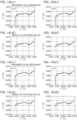
- Fig. 4(a), Fig. 4(b), Fig. 4(c), Fig. 4(d), Fig. 4(e), Fig. 4(f), and Fig. 4(g) illustrate examples of the hysteresis phenomenon observed in LIBs, which are the charge-discharge characteristics of the various general-purpose LIBs illustrated in Table 3 at a low rate (a constant current at a 0.1 C rate (CC mode) and a CV mode) and at a measurement environment temperature of 25.0°C.
- the hysteresis phenomenon causes the following problems in a battery diagnosis.
- one of the points of the present invention is to minimize the effect of the hysteresis phenomenon.
- a temperature change occurs due to heat generation and heat absorption, which may have an effect on the electrode reaction caused by application of a constant-current pulse, and therefore, it is desirable to devise a battery diagnosis apparatus and a battery diagnosis method that can also reduce this effect.
- an expression of, for example, a Nyquist plot obtained by converting direct-current pulse transient response data to an impedance behavior has a non-negligible difference from a Nyquist plot directly obtained from an alternating-current impedance measured for the same battery under measurement conditions of the same environment, and the results of experiments often did not match.
- the causes of this difference are inferred as follows.
- observation data itself includes an error, or changes in various parameter values of a pseudo equivalent circuit used as the evaluation technique are not correctly grasped. That is, it is inferred that the degrees of degradation of batteries are not correctly diagnosed by the existing direct-current pulse method or alternating-current impedance method.
- an object is to realize a battery diagnosis apparatus and a battery diagnosis method based on a current pulse method for making diagnoses of secondary batteries more accurately than before.
- a battery diagnosis apparatus according to claim 1.
- the current pulse that can be handled most easily in terms of analysis is a constant-current pulse.
- a further battery diagnosis apparatus is defined in claim 2.
- one current pulse waveform can be approximately handled as a plurality of successive constant-current pulses.
- the second data processing device be a device in which a diagnostic algorithm that is subjected to machine learning of the correlation is installed. As the first data processing device and the second data processing device, the same data processing device may be used.
- the current pulse is a current pulse that is in a charge direction of the secondary battery, has a current value that changes from a predetermined current value including zero to a predetermined constant current value, and is thereafter interrupted.
- the current pulse is a current pulse that is in a discharge direction of the secondary battery, has a current value that changes from a predetermined current value including zero to a predetermined constant current value, and is thereafter interrupted.
- the battery diagnosis apparatus based on a current pulse method further includes: a noise filter that reduces noise in an input signal of the voltage measuring instrument; and data resampling means for reducing the number of pieces of data input to the first data processing device.
- a diagnostic algorithm is installed, according to claim 6.
- a battery diagnosis method based on a current pulse method according to the present invention is defined in claim 7.
- a battery diagnosis apparatus based on a current pulse method among the above-described battery diagnosis apparatuses based on a current pulse method can be used.
- the same battery or a battery of the same type at the time of data obtainment and at the time of a battery diagnosis.
- the correlation that is obtained from a battery of a type different from the type of the battery diagnosis target can be used to make a battery diagnosis as long as a diagnosis result having an error that is within an allowable range is obtained from the battery diagnosis. In a case where this is allowed, a workload for obtaining data can be reduced.
- Fig. 1 illustrates an example block diagram of a battery diagnosis apparatus that is assumed in the following description.
- a constant-current pulse is mainly assumed below.
- a current pulse source 1 is a constant-current pulse generator for applying a constant-current pulse formed of a single pulse or a series of pulses including a plurality of pulses to a secondary battery, which is a test target battery 2.
- a response voltage to the application is measured by a voltmeter 4 at predetermined time intervals.
- a noise filter 3 is used as necessary.
- output from the voltmeter 4 is digital output, and a digital filter 5 is used as necessary to reduce noise included in the digital output.
- the output from the digital filter 5 is input to a first data processor 6 that performs, for example, resampling, and output from the first data processor 6 is input to a second data processor 7.
- a first data processor 6 that performs, for example, resampling
- output from the first data processor 6 is input to a second data processor 7.
- an algorithm formula obtained by learning part of a database 8 that includes degradation data of secondary batteries prepared in advance and data extracted from the degradation data is installed, and the second data processor 7 is configured to diagnose a battery by using the algorithm formula and output the results.
- Fig. 2 illustrates a flowchart of a battery diagnosis method that is assumed in the following description.
- Fig. 2 is a schematic diagram of the operations of the battery diagnosis apparatus and battery diagnosis method in which a transient response to the pulse of the present invention is expressed by a normalization function, and a diagnostic algorithm obtained by performing machine learning of correlations between values of the normalization function and battery state factors is devised to thereby enable an evaluation of the value of a battery state factor in a short time.
- the battery state factors are factors of SOH, temperature, SOC, SOP, and SOL.
- an apparent transient resistance function (ATRF (t) ) curve calculated from current values and voltage response values before and after application of a constant-current pulse was obtained. This curve was used in calculation of pseudo equivalent circuit parameter values.
- an apparent transient resistance function (ATRF(t) described below) calculated from the current values and the transient response values of the voltage before and after pulse application is used for the transient resistance curve to perform normalization.
- the validity of this method can be verified in such a manner that, for example, Nyquist plot display (including Bode diagram display) of an impedance response obtained as a result of conversion using the uniformity of normalized curves obtained using the transient resistance change function or parameter values of a circuit for analysis calculated by performing simulation least squares method fitting for the obtained curves is performed, errors caused by the least squares method for curve fitting are evaluated, and the accuracy is used to verify the validity.
- Nyquist plot display including Bode diagram display
- Correlation models for (A) raw data (time-series data after down-sampling) of a chronopotentiogram (CP) obtained with a constant-current pulse method, (B) data of various parameter values obtained as a result of an equivalent circuit parameter analysis, and (C) battery state indicating factors (SOH, T, and SOC) are built, and the correlation models are used to estimate, for example, the SOH, T, and SOC.
- a kernel model a machine learning model using a kernel function
- the raw data and the temperature at the time of measurement are assumed as input to the kernel model, for example, the SOH and temperature are assumed as output, and supervised learning is performed.
- the kernel model is linear relative to a parameter to be obtained, and therefore, the solution is analytically obtained by using the least squares method.
- Fig. 4(a), Fig. 4(b), Fig. 4(c), Fig. 4(d), Fig. 4(e), Fig. 4(f), and Fig. 4(g) illustrate the electromotive forces on the charge and discharge paths for cell 1 to cell 7 in Table 3.
- the electromotive force represented by the vertical axis is a voltage in units of V
- the capacity represented by the horizontal axis is the amount of charge during charge and discharge in units of mAh. It is found that in any of the cells, the path during charge and that during discharge are different and hysteresis characteristics are observed.
- the sampling rate for voltage measurement is set to, for example, 100 kS/sec., and sampling is performed for a very short time (10 ⁇ s/sampling). High-speed sampling is thus performed in order to reduce quantized errors on the time axis caused by the sampling. Further, for example, statistical noise is reduced by duplicated measurement, and the S/N ratio is improved by increasing the wave height of the applied constant-current pulse to improve the pulse measurement conditions.
- Noise reduction and resampling of measurement data described above can be implemented by, for example, applying data processing for digital noise reduction.
- resampling for example, resampling from transient response measurement data is performed at 20 points/digit, and simultaneously, the signal is smoothed in a section of the data. These are performed to decrease the noise level of the signal and reduce the data amount.
- the obtained down-sized data is output as a csv-format file with header information added thereto. That is, for example, in a case of measurement data obtained at a sampling rate of 100 kS/s and with a pulse width of 2 s, resampling is performed at regular intervals of 20 points/digit on a logarithmic time axis.
- a transient response waveform formed in response to current pulse application differs depending on the battery temperature (T) at the time of measurement, the wave height (h) and wave width ( ⁇ ) of the applied current pulse, and the number of repetitions.
- an indicator parameter is used. That is, the transient response waveform is normalized by using the apparent transient resistance function that is calculated from current values and voltage response values measured over a certain period from a time point before pulse application to a time point after application to obtain the indicator parameter.
- transient responses obtained under measurement conditions in which the wave height and wave width of the applied current pulse differ can be expressed by specific curves (normalized curves) on the same coordinate axis plane.
- a database of the curves are created. The data in the database is used as raw data (time-series data after down-sampling) to create a correlation model for the SOH, and the model is used to diagnose a battery, that is, estimate the SOH, T, and SOC.
- a pseudo equivalent circuit for simulating a battery reaction is fitted to the normalized curves to obtain various parameters of the pseudo equivalent circuit. This is optimum for analyzing changes in a battery reaction over time, and therefore, a database of the various parameters can be created and used in a diagnosis of, for example, the SOH and SOC of a secondary battery.
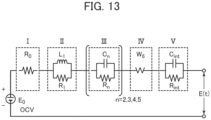
- a pseudo equivalent circuit for analysis and a pseudo equivalent circuit in a case of theoretical expression LIBs are illustrated in Fig. 13 .
- the above-described current pulse method is a direct-current method, and therefore, in this pseudo equivalent circuit, all elements of the pseudo equivalent circuit for analysis illustrated in Fig. 13 start operating at the same time when a constant-current pulse is applied, and the sum of the response voltages of the respective elements is regarded as a transient response voltage and output.
- Fig. 12(a), Fig. 12(b), and Fig. 12(c) are conceptual diagrams illustrating contribution, on the time axis, of element parameters of the pseudo equivalent circuit to the voltage transient response obtained when the constant-current pulse is applied.
- the elements of the pseudo circuit have specific time constants, and therefore, changes in their contribution can be known on the time axis. From Fig. 12(a) , after the L-component response is sufficiently attenuated, responses from the RC circuit group and from the Warburg element are still very small, and therefore, it can be inferred that a time period during which the effects of the responses are negligible exists.
- a frequency response analyzer (FRA) is used, and the technique is such that the sinusoidal amplitude of a current or voltage is applied to the measurement system in the charge direction and in the discharge direction alternately and successively, and therefore, the observed impedance output is induced from an electrochemical phenomenon in a steady state.
- an equivalent circuit model that matches an applied pulse width (time width) considered to be necessary for a pulse transient response analysis and an analysis expression of the equivalent circuit model are calculated.
- a model for the entire frequency range that is measured by using EIS (electrochemical impedance spectroscopy) is to be created.
- EIS electrochemical impedance spectroscopy
- the effect of the hysteresis phenomenon needs to be taken into consideration in an analysis of contribution of a voltage loss in a low frequency range, and therefore, the time period corresponding to the low frequency range ( ⁇ 5 mHz) is excluded in this embodiment, and an experiment and a detailed analysis in the time period are temporarily excluded.
- Fig. 13 illustrates one 1 example of this equivalent circuit.
- the following method is used instead of a technique of a general-purpose CPE (constant phase element).
- the CPE technique uses commercially available software and is widely used in the academic field; however, the physicochemical meaning of a scientific phenomenon in which the coefficient is involved is not clear. Therefore, the CPE technique is not employed here, and a technique for improving the fitting accuracy by increasing or decreasing the number of RC (resistance component and capacitance component) factors is used.
- a transient resistance calculated from the current values and the transient response values of the voltage before and after pulse application is used. Further, the number of pieces of measurement data is extremely large, and therefore, data resampling is performed.
- DB database
- the current-voltage-time curve of the direct current in the equivalent circuit for analysis illustrated in Fig. 13 can be expressed by Math. 1.
- the theoretical expression of the impedance of the equivalent circuit for analysis can be expressed by Math. 2.
- the real part and the imaginary part of Math. 2 are Z' and Z" in Math. 3 respectively, and Math. 4 expresses W6 in Math. 1 and corresponds to the Warburg factor described above.
- the battery characteristics are analyzed and evaluated in detail in accordance with the above-described method to select and clarify a degradation factor associated with the use history of the secondary battery, the temperature at the time of measurement, and a state diagnosis factor. Accordingly, correlations between the degradation, temperature, or state diagnosis factor and various parameter values can be grasped.
- ATRF(t) can be expressed by Math. 6 by using the above Math. 1, which is a theoretical analysis expression.
- ATRF(t) has an advantage that the value is observed as one analysis curve for the same measurement target battery regardless of the experimental conditions of constant-current pulse application, by normalization described below.
- Math. 6 can be extended to an area after the interruption. That is, Math. 7 (which is called "extended ATRF" in a case where Math. 7 needs to be distinguished from Math. 6) is applicable.
- the CP analysis method using Math. 7 also enables data normalization. ATRF t ⁇ E t ⁇ E 0 I t ⁇ I 0 , 0 ⁇ t ⁇ ⁇ ATRF t ⁇ ⁇ ⁇ E t ⁇ E ⁇ I t ⁇ I ⁇ , t > ⁇
- a series of constant-current pulses formed of a plurality of pulses can also be handled by extending Math. 6 to an area after interruption of the pulses.
- (C) selected data selected from the measurement data is normalized to create a DB of the normalized data. Further, (D) the selected data is converted to parameters of component factors of the equivalent circuit for analysis to create a DB. At this time, (E) when the DB of the equivalent circuit parameters is created, the least squares method is applied to fitting of the normalized curve to determine optimum values. (F) The created DBs are used to derive a correlation expression for the time, temperature, degree of charge, and degree of degradation, (G) machine learning is performed based on the correlation expression, and (H) a least squares method error evaluation, which is an evaluation method for the degree of degradation, temperature, and degree of charge, can be made to demonstrate the effectiveness of this technique.
- the use condition range of a secondary battery to which the diagnosis method of the present invention is applicable can be extended.
- Fig. 2 is an example flowchart illustrating creation of a database of the ATRF(t) parameter that is assumed in the following description.
- Fig. 2 is a flowchart of creation of a database of the normalization function (ATRF), creation of the diagnostic algorithm formula (single factor or a plurality of factors among the SOH, temperature, SOC, SOP, and SOL) based on machine learning, and installation of the database and the diagnostic algorithm formula in a diagnostic instrument.
- ATRF normalization function
- diagnostic algorithm formula single factor or a plurality of factors among the SOH, temperature, SOC, SOP, and SOL
- the above-described measurement is performed for a plurality of batteries under the same conditions to verify the reproducibility. Further, measurement target batteries are exposed to various environments (the batteries are used at a high temperature and a low temperature, the batteries are left, and the batteries are used continuously, and the batteries are used at a high rate) to induce degradation of the charge-discharge characteristics, measure the ATRF(t) data and the impedance characteristics of the respective batteries under the conditions, and perform an analysis similar to that described above. Accordingly, the temperature dependence and the degradation pattern dependence (high-temperature history, low-temperature history, and high-rate charge-discharge history) of various parameter values are grasped, and the diagnosis accuracy is increased. Further, a plurality of general-purpose batteries for which a database is created is selected such that the batteries are made of various battery materials, are from various manufacturers, and have various sizes to thereby increase the versatility of the diagnosis method of the present invention.
- a database of the corresponding characteristics of the degradation histories of the secondary batteries under various use environments is created and used to thereby facilitate verification and improvement of the accuracy of the diagnostic algorithm.
- a machine-learning-based diagnosis of the SOH, temperature (T), and SOC using the DB of measurement data can be made by, for example, applying a diagnosis technique using an alternating-current impedance method described in PTL 1 to the present invention.
- a pseudo equivalent circuit for analysis common to both measurement methods namely, a constant-current pulse method and an alternating-current impedance method
- the measurement methods are compared with each other by using a diagnostic algorithm in which equivalent circuit parameters obtained in the measurement methods are used in a degradation diagnosis and by using a diagnostic algorithm obtained by performing machine learning of correlations between a raw database and battery degradation without conversion to pseudo equivalent circuit parameters. Accordingly, it is possible to demonstrate that the degree of degradation can be numerically evaluated quickly with high accuracy.
- PTL 1 an algorithm for a degradation diagnosis based on a machine learning method into which development of the latest information engineering is introduced is used on the basis of information in the database of the impedance values.
- An object of this function is to (A) build a correlation model for CP raw data of a response to a constant-current pulse (time-series data after noise processing and down-sampling and impedance data) and for the SOH, T, and SOC and to (B) estimate the SOH, T, and SOC from the model.
- a kernel model is used as the correlation model. The raw data and the temperature at the time of measurement are assumed as input to the kernel model, the SOH, T, and SOC are assumed as output, and supervised learning is performed.
- the kernel model is linear relative to a parameter to be obtained, and therefore, the solution is analytically obtained by using the least squares method.
- the mathematical expression of the kernel model and the computational expression of learning are omitted here.
- the sampling times of respective pieces of data need to be synchronized.
- the sampling times of the pieces of data are synchronized by smoothing spline interpolation.
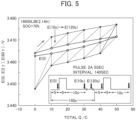
- Fig. 5 illustrates the results from pulse setting conditions in which the pulse width is set to 5 seconds and 10 seconds and the applied current value is 2.00 A (corresponding to 0.67 C rate).
- the pulse width is set to 5 seconds and 10 seconds and the applied current value is 2.00 A (corresponding to 0.67 C rate).
- the applied current value is 2.00 A (corresponding to 0.67 C rate).
- a difference of 1 to 2 mV was observed as a change from the E(0) value after an elapse of 2 minutes since the end of application.
- the behavior of the E(0) value in a case where a pulse is applied in the same direction was similar to a behavior in an experimental result measured in a different battery system.
- Fig. 5 illustrates an actual example of a potential hysteresis phenomenon that represents changes in the OCV value after repeated application of a current pulse in one direction.
- the pulse width is (5.0 s)
- the wave height 2.0 A
- the number of repetitions is five
- the electricity amount: ⁇ 0.95 C the electricity amount: ⁇ 0.95 C
- the wait time is (120 s)
- the measurement temperature is 25°C (18650-type LIB (2200 mAh)).
- Fig. 6 illustrates changes in the OCV value (E(0)) 60 seconds after the end of pulse application in a case where application is performed while reversing of the current pulse direction is repeated. From this experiment, it was found that the voltage fluctuates up and down depending on the pulse direction, and the magnitude of the voltage depends on the pulse height and width.
- Fig. 6 illustrates an actual example of a potential hysteresis phenomenon that represents changes in the OCV value after repeated application of a current pulse (responses in a case where a current pulse is repeated in the charge and discharge directions and when the application time and the applied current value are changed).
- the pulse widths is set to (0.2, 0.5, and 1 s)
- the wave height (1, 2, 3, or 4 A) that is, (the electricity amount is ⁇ 0.2 to ⁇ 3.0 C)
- the wait time 60 s
- the measurement temperature 5.1°C the SOC 50%
- SOH 0.95 26650-type LIB (3000 mAh)
- the value of ATRF(t) gradually decreases as the rate rises. It can be understood that this is caused by the influences of the induced potential hysteresis phenomenon and the temperature on the ATRF(t) term.
- the rate was increased from 5.5 to 11.1 C, the temperature changed such that the temperature rose from 2.0 to 7.0°C after applying for two seconds.
- the decrease rate of the ATRF(t) value at a 5.5 C rate was about 5%, and therefore, it was determined that a current of 5 C rate or less is to be selected as the applied current value.
- Fig. 7 illustrates changes in curves obtained by making an experimental study in which a negative current pulse from a 0.37 C rate to a 11.1 C rate is applied and converting CP responses obtained with the respective applied current values to the ATRF(t) term.
- the applied pulse width is 2 s
- the measurement temperature is 25°C
- the tested cell SOH 1.00
- SOC 100% rectangular-type 5552524 LIB (270 mAh).
- the battery diagnosis apparatus can directly calculate and estimate the degree-of-degradation value by a degree-of-degradation value calculation unit based on the least squares method, which is used as a technique for machine learning.
- machine learning in the present invention conforms to the method described in PTL 1.
- variable in PTL 1 instead of measurement impedance data or data of pseudo equivalent circuit parameter values obtained as a result of analysis of the impedance, time-series normalized data (ATRF(t)) obtained by normalizing, down-sampling, and smoothing an applied pulse transient response or data of pseudo equivalent circuit parameter values obtained as a result of analysis of the transient response is used as the variable.
- ATRF(t) time-series normalized data obtained by normalizing, down-sampling, and smoothing an applied pulse transient response or data of pseudo equivalent circuit parameter values obtained as a result of analysis of the transient response is used as the variable.
- the degree-of-degradation value calculation unit learns a linear coefficient of the degree-of-degradation value by using the least squares method and directly calculates and estimates the degree-of-degradation value.
- y can be approximated by a linear combination of the following one-dimensional kernel function K(x, x i ) (Math. 8 and Math. 9).
- the coefficient ⁇ can be determined from input-output data x, y by learning using the least squares method.
- ⁇ -1 is the inverse matrix of a covariance matrix.
- the learned estimated value ⁇ of the coefficient can be used to estimate the estimated values y k (for example, SOH, T, and SOC) from Math. 12.
- the method has been described above in which a linear coefficient of the degree-of-degradation value is learned by using the least squares method and the degree-of-degradation value is directly calculated and estimated; however, a least squares stochastic classifier including a pattern classification algorithm based on the least squares method, which is used as a technique for machine learning, can also be used in a diagnosis.
- the least squares stochastic classifier for this first calculates and learns an estimated value ⁇ (y) of a Gaussian kernel coefficient for some classification categories from ATRF(t) or from parameters of the equivalent circuit for which the degree-of-degradation value is known for analysis by using a learning algorithm in the processes from G1 to G6 illustrated in Fig. 3 .
- a classification algorithm in which the estimated value ⁇ (y) of the Gaussian kernel coefficient thus obtained is implemented is built.
- This algorithm can be used to calculate the posteriori probability p(ylx) that the measured impedance of a battery for which the degree-of-degradation value is unknown belongs to each classification category and to estimate the classification category y.
- ATRF(t) obtained from the measured CP response in F5 in Fig. 2 or the parameters of the equivalent circuit for analysis can be used to determine degradation of the battery.
- Pulse measurement conditions in an super high-speed range under which resistance values (R 0 and R 1 ) with which the effect of the inductance (L) component is minimized can be calculated were studied.
- Software for extracting a true response signal by removing noise superimposed on a measured pulse transient response was selected and improved, and a data processing method using the software was established.
- the capacity of measurement data becomes excessively large depending on the sampling rate, and therefore, a data resampling method for performing an analysis with high accuracy in a simplified manner was studied.
- a change point detection function and a smoothing function for reducing superimposed noise in a pulse transient response waveform were developed, and a data processing method for extracting a true response signal was established.
- a spline curve based on a spline method was created to perform data processing.
- a program for compressing and smoothing measurement data for which the capacity is excessively large was created. Resampling from transient response measurement data was performed at 20 to 100 points/digit, and simultaneously, the signal was smoothed in a section of the data. These were performed to decrease the noise level of the signal and reduce the data amount.
- the obtained down-sized data is output as a csv-format file with header information added thereto.
- Table 4 Changes in the number of pieces of data obtained by down-sampling (1: Moving average in a window width, 2: Regular intervals for each digit) Transient response 1 Transient response 2 Total Original data 100001 168152 268153 Down-sampling 1 372 440 812 Down-sampling 2 97 48 145
- Fig. 8 is a diagram illustrating example resampling of measurement data, and resampling is performed in this example such that the intervals are equal to each other for the logarithm of the time axis.
- CP pulse transient response
- Fig. 9 illustrates a case where CP transient responses were successively measured with the applied pulse widths of 0.2 seconds to 10 seconds and the wave height of 2 A, and resulting ATRF(t) plots were analyzed and presented on the same ATRF(t) vs. log(t) axis graph. It was found that the measurement results of the both that differ in pulse width by ten times completely matched. From this, it was discovered that the apparent transient resistance function (ATRF(t)) analysis is effective. That is, it was found that various parameter values obtained as a result of analysis of the responses have the same values regardless of the pulse width.
- Fig. 10 illustrates the SOC dependence of the ATRF(t) plot of the LIB illustrated in Fig. 9 . It was found that in the measurement target battery, the ATRF(t) curve significantly changes when the SOC is 0.25 or less.
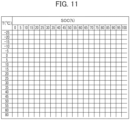
- Test target batteries are exposed to various environments (cyclically used in charge and discharge at a high temperature and a low temperature, cyclically used in charge and discharge at a high rate, and left) to induce degradation of the charge-discharge characteristics and measure the TDRF(t) characteristics of the respective batteries under such conditions with the temperature and SOC conditions illustrated in Fig. 11 to create a database (DB).
- environments cyclically used in charge and discharge at a high temperature and a low temperature, cyclically used in charge and discharge at a high rate, and left
- DB database
- SOH degradation states
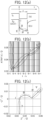
- Fig. 12 (a) is a diagram illustrating a constant-current pulse applied to a battery and a chronopotentiogram (CP) response thereto, (b) is a diagram illustrating conversion of the CP response to a normalized curve (ATRF(t)), and (c) is a diagram illustrating an example Nyquist plot created by using equivalent circuit parameter values obtained as a result of a simulation analysis of ATRF(t). Note that response areas I to V illustrated in (a) and (b) represent main contribution of the equivalent circuit parameters illustrated in Fig. 13 to the CP response.
- Fig. 13 illustrates equivalent circuit modeling (ECM) of an overall electrode reaction mechanism for a battery used in an analysis of the chronopotentiogram (CP). Note that here, a technique called CPE (constant phase element) is not used in fitting.
- ECM equivalent circuit modeling
- the diagrams in the upper rows illustrate the results of plotting (+ signs) from actual measurement data obtained as a result of measurement of the alternating-current impedance and fitting curves of the plots, and those in the lower rows illustrate simulation curves using parameter values obtained by an equivalent circuit analysis of ATRF(t) (pulse measurement conditions; current; 1.00 A, application time; 2.00 seconds). Note that the curves represented by + signs in the lower rows are the same as the curves represented by + signs in the upper rows and are illustrated for a comparison.
- n of RCn is 4 or 5.
- some of the circuit parameter factors differ in resistance value and capacitor value.
- the observation sensitivities for W6, C int , L1, and R0 overlapping with the observation time period of the R n C n parameter differ between the methods, and a generated heat behavior inside the battery differs depending on the strength, width, and form of the external signal. It can be inferred that these affected the value of the R n C n parameter.
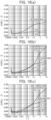
- Fig. 16 illustrates, for the LIB having sample number 1 in Table 3, the temperature dependence (5, 25 and 45°C) of ATRF(t) term curves obtained for a battery that is not yet degraded, a battery that is cycle-history degraded by a low temperature by about 25%, and a battery that is cycle-history degraded by a high temperature by about 25%. It is obvious from the diagrams that the shape of the ATRF(t) curve for each temperature differs depending on the difference in the degradation history. It is found that the difference is significant specifically at a low temperature.
- results are served as data that indicates the possibility of a state diagnosis of battery characteristics based on a machine learning method using a DB of the temperature dependence of ATRF(t), specifically, the possibility of temperature estimation.
- the results of performed estimation will be described below.
- Fig. 16 illustrates the temperature dependence (5 to 45°C) of the CP transient response analysis ATRF(t) term parameter and the SOH dependence of an LIB having an SOH use temperature history (not degraded (left side), degraded by a low temperature (center), and degraded by a high temperature (right side)).
- Fig. 17 illustrates, for the LIB having sample number 1 in Table 3, the dependence characteristics of ATRF(t) for the SOC of 5 to 100%.
- the SOC dependence of ATRF(t) increases when the SOC is 25% or less, and the difference is significant specifically in a time period of 10 milliseconds or longer, and therefore, it is found that the temperature dependence of an equivalent circuit parameter that responds in this time constant range increases.
- results are served as data that indicates the possibility of a state diagnosis of battery characteristics based on a machine learning method using a DB of the SOC dependence of ATRF(t), specifically, the possibility of SOC estimation.
- the results of performed estimation will be described below.
- a kernel model of a machine learning method is used as an input vector, for (1) a case where a database (DB) of the impedance characteristics is used, (2) a case where a DB of equivalent circuit parameters calculated from the impedance characteristics is used, (3) a case where a normalized database (DB) of chronopotentiogram (CP) characteristics obtained using a pulse method is used, and (4) a case where a DB of equivalent circuit parameters calculated from the normalized data is used, the results from the respective cases are studied, and a state evaluation method for, for example, the degree of degradation that is optimum and practical for the high-speed pulse method is selected.
- a correlation model for equivalent circuit parameters obtained by analysis and evaluation and for battery characteristics state factors, such as the SOH, is built, and the value of a factor, such as the SOH, is estimated from the model.
- a kernel model is used as the correlation model.
- equivalent circuit parameters obtained as a result of analysis and the temperature at the time of measurement are assumed as input to the kernel model, the SOH is assumed as output, and supervised learning is performed.
- the kernel model is linear relative to a parameter to be obtained, and therefore, the solution is analytically obtained by using the least squares method.
- the mathematical expression of the kernel model and the computational expression of learning are separately described in Math. 8 to Math. 15. In the above description, the present invention was applied to the LIBs illustrated in Table 3 and was studied.
- a state diagnosis of the characteristics was made, and the results were obtained with substantially the same estimation accuracy. Examples of the results will be illustrated one by one in the following embodiments.
- the root mean square error (RMSE) of an estimation factor is calculated to determine the validity of the technique.
- a reference value based on which this technique is applied or selected is an RMSE of 0.05 or less.
- Table 5 The evaluation results are summarized in Table 5.
- a correlation model for CP raw data for pulses obtained in an experiment time-series data after down-sampling
- corresponding normalized data of the CP raw data and for the SOH is built, and the SOH is estimated from the model.
- a kernel model is used as the correlation model as in the case of using the DB of equivalent circuit parameters. The raw data and the temperature at the time of measurement are assumed as input to the kernel model, the SOH is assumed as output, and supervised learning is performed.
- the kernel model is linear relative to a parameter to be obtained, and therefore, the solution is analytically obtained by using the least squares method.
- the CP raw data used here is time-series data obtained by performing down-sampling processing, smoothing processing, and normalization processing for the measurement data as described above.
- down-sampling processing is performed for raw data and normalized data and where pieces of time-series data obtained as a result of the down-sampling processing are used
- the sampling times of the respective pieces of data need to be synchronized.
- the sampling times of the pieces of data are synchronized by using a smoothing spline interpolation method.
- ATRF(t)
- the examples are the results of estimation of the SOH value for the LIB having sample number 1 in Table 3.
- the RMSE in this case was calculated.
- the RMSEs which are the root mean square errors, were 0.011 and 0.015 for estimation from the raw data at the time of current application and at the time of current interruption respectively. It can be concluded that with the both forms, a technique for enabling a degradation diagnosis of the SOH of a battery with an estimation precision of within 2% (the diagnosis time is within one second) has been established.
- the normalized raw data is assumed as input to the kernel model.
- the results of supervised learning in which the SOH is output were the same regardless of whether or not the temperature at the time of measurement is added as input to the kernel model.
- Table 6 illustrates RMSEs of machine-learning-based SOH estimation in which time-series data obtained by normalizing pulse response CPs (at the time of current application and at the time of current interruption) is used (50 micro;s to 0.5 s, 100 pieces of data are generated at regular intervals on a logarithmic scale, temperature data not used as input, 18650 LIB; having a history of high-temperature degradation and low-temperature degradation with SOH: 1.00 to 0.60, temperature: 5 to 45°C, the total number of pieces of data 347 ⁇ 2; the number of pieces of learning data 173 ⁇ 2 and the number of pieces of evaluation data 174 ⁇ 2).
- [Table 6] Applied area Mean Minimum value Maximum value Current application 0.011 0.007 0.025 Current interruption 0.015 0.010 0.027
- Table 7 illustrates the results of examining influlences on the SOH estimation value when the total number of pieces of data is fixed to 347 and the ratio between the number of pieces of evaluation data and the number of pieces of learning data is changed.
- Learning Evaluation Mean value Minimum value Maximum value 5:5 (173/174) 0.011 0.007 0.027 4:6 (138/209) 0.016 0.011 0.026 3:7 (104/243) 0.016 0.012 0.029 2:8 (69/278) 0.020 0.013 0.061 From the results, it can be determined that the number of pieces of learning data is desirably 100 or more.
- Table 7 illustrates RMSEs of machine-learning-based SOH estimation in which time-series data obtained by normalizing a pulse response CP (at the time of current interruption) is used (50 micro to 0.5 s, 100 pieces of data are generated at regular intervals on a logarithmic scale, temperature data not used as input, when the total number of pieces of data is fixed to 347, and the ratio between the number of pieces of evaluation data and the number of pieces of learning data is changed, changes in the mean value/minimum value/maximum value of RMSE when estimation is performed three times, 18650 LIB; having a history of high-temperature degradation and low-temperature degradation with SOH: 1.00 to 0.60, temperature: 5 to 45°C).
- An object of this function is to build a correlation model for normalized raw data of a CP of a pulse obtained in an experiment and for the temperature at the time of measurement and to estimate the temperature at the time of measurement from the model.
- a kernel model is used as the correlation model.
- the normalized raw data and the temperature at the time of measurement are assumed as input to the kernel model, the temperature at the time of measurement is assumed as output, and supervised learning is performed. Examples of the temperature dependence characteristics of ATRF(t) of a CP transient response are already illustrated in Fig. 16 .
- Table 8 illustrates examples of the results of a study of estimation of the temperature at the time of warm measurement.
- the examples are the results of estimation of the SOH value for the LIB having sample number 1 in Table 3.
- the RMSE in this case was calculated.
- the RMSE error was 1.0°C when expressed as a temperature.
- An example of the error distribution of temperature estimation is illustrated in Fig. 18(b) . It can be concluded that a technique for enabling a temperature diagnosis in which the temperature at the time of measurement of a battery for which the temperature at the time of measurement is 5 to 45°C can be diagnosed with an estimation precision of within 4% (the diagnosis time is within one second) has been established.
- time-series data 50 micros to 1 s/0.5 s, 100 pieces of data were generated at regular intervals on a logarithmic scale and used. From Table 8, it is found that the estimation accuracy increases as the number of pieces of learning increases.
- the ATRF(t) dependence at five points of temperature 5.0, 15.0, 25.0, 35.0, and 45.0°C
- Table 8(a), Fig. 8(b), and Fig. 8(c) illustrate RMSEs of machine-learning-based temperature estimation in which time-series data obtained by normalizing a pulse response CP (at the time of current interruption) is used (50 micros to 0.5 s, 100 pieces of data are generated at regular intervals on a logarithmic scale, temperature data not used as input, when the total number of pieces of data is fixed to 347, and the ratio between the number of pieces of evaluation data and the number of pieces of learning data is changed, changes in the mean value/minimum value/maximum value of RMSE when estimation is performed three times, 18650 LIB; having a history of high-temperature degradation and low-temperature degradation with SOH: 1.00 to 0.60, temperature: 5 to 45°C).
- multiple-output (SOH, temperature, and SOC) estimation can be simultaneously performed.
- An object of this function is to build a correlation model for normalized raw data of a CP of a pulse obtained in an experiment (time-series data after down-sampling) and for the SOH and the temperature at the time of measurement and to estimate the SOH and the temperature at the time of measurement from the model.
- a kernel model is used as the correlation model. The normalized raw data and the temperature at the time of measurement are assumed as input to the kernel model, the SOH and the temperature at the time of measurement are assumed as output, and supervised learning is performed.
- the kernel model is linear relative to a parameter to be obtained, and therefore, the solution is analytically obtained by using the least squares method.
- the results of estimation of the SOH value and the temperature of the LIB having sample number 1 in Table 3 are obtained.
- the RMSE in this case was calculated.
- Table 9 illustrates RMSEs of machine-learning-based simultaneous estimation of the SOH value and the temperature in which time-series data obtained by normalizing a pulse response CP (at the time of current interruption) is used (50 micros to 0.5 s, 100 pieces of data are generated at regular intervals on a logarithmic scale, temperature data not used as input, when the total number of pieces of data is fixed to 347, and the ratio between the number of pieces of evaluation data and the number of pieces of learning data is changed, changes in the mean value/minimum value/maximum value of RMSE when estimation is performed three times, 18650 LIB; having a history of high-temperature degradation and low-temperature degradation with SOH: 1.00 to 0.600, temperature: 5 to 45°C).
- Fig. 17 illustrates an example of the SOC dependence characteristics of ATRF(t) of a CP transient response, and it is found that the SOC dependence characteristics of the battery are significant when the SOC is 30% or less.
- Table 10 illustrates RMSEs of machine-learning-based estimation of the SOC value in which time-series data obtained by normalizing a pulse response CP (at the time of current interruption) is used (50 micros to 0.5 s, 100 pieces of data are generated at regular intervals on a logarithmic scale, temperature data not used as input, when the total number of pieces of data is fixed to 347, the number of pieces of evaluation data is 173, and the number of pieces of learning data is 174, changes in the mean value/minimum value/maximum value of RMSE when estimation is performed three times, 18650 LIB; having a history of high-temperature degradation and low-temperature degradation with SOH: 1.00 to 0.600, temperature: 5 to 45°C).
- Fig. 18(a) illustrates an error distribution of machine learning-based SOH estimation in which normalized raw data of a normalized curve (ATRF(t)) of a pulse response CP (at the time of current application) illustrated in Table 6 is used as time-series data (50 micros to 0.1 s, 100 pieces of data are generated at regular intervals on a logarithmic scale, temperature data not used as input, when estimation is performed three times, 18650 LIB; having a history of high-temperature degradation and low-temperature degradation with SOH: 1.00 to 0.60, temperature: 5 to 45°C, the total number of pieces of data 347; the number of pieces of learning data 173 and the number of pieces of evaluation data 174).
- ATRF(t) normalized curve
- CP pulse response CP
- Fig. 18(b) illustrates an error distribution of machine learning-based temperature estimation in which normalized raw data of a normalized curve (ATRF(t)) of a pulse response CP (at the time of current application) illustrated in Table 8 is used as time-series data (50 micros to 0.1 s, 100 pieces of data are generated at regular intervals on a logarithmic scale, temperature data not used as input, when estimation is performed three times, 18650 LIB; having a history of high-temperature degradation and low-temperature degradation with SOH: 1.00 to 0.60, temperature: 5 to 45°C, the total number of pieces of data 347; the number of pieces of learning data 173 and the number of pieces of evaluation data 174).
- ATRF(t) normalized curve
- CP pulse response CP
- the ratio of (full charge capacity/initial full charge capacity) is obtained.
- the ratio has been considered to be an indicator (SOH) that indicates the state of health of a battery.
- SOH indicator
- the ratio of (full charge capacity/initial full charge capacity) calculated from charge and discharge curves at a medium to high rate can be used as an indicator indicating a decrease in the power density (SOP).
- Fig. 21 illustrates, for a plurality of LIBs (initial capacity: 5.19 Ah) that is used as onboard batteries and that has a negative electrode made of hard carbon, changes in the discharge capacity (observed capacity) relative to the charge-discharge rate value in a constant-current mode of the same value, in the respective batteries for which the degrees of degradation are different. Note that in measurement, the end voltage of charge and that of discharge are set to 4.200 V and 2.500 V respectively.
- the present invention can be adapted to an LIB that is being charged.
- E(t) in Math. 7 has a drift component proportional to time, and ATRF(t) obtained by replacing E(t) with E(t) - ⁇ t ( ⁇ is a factor of proportionality) is used.
- a linear approximate expression of voltage changes caused by charge and discharge is obtained from the time area immediately before pulse application (pre-trigger), and the approximate expression is used to correct a pulse response voltage value, thereby removing the influence of charge and discharge. Accordingly, a net value of the normalization function ATRF(t) from which the influence of charge and discharge is eliminated can be obtained.
- Fig. 19 illustrates example ATRF(t) characteristics in a case where pulse measurement is performed for an LIB that is in a charge operation, and illustrates differences between an ATRF(t) curve for a pulse when charge is stopped (current 0 A) and corrected ATRF(t) curves for a pulse with a charge current of 1 A and 0.5 A.
- a pulse having a wave height of 2 A and a width of 2 s was applied and a transient response was measured. Thereafter, the rate was changed to 0.5 A (equivalent to 1/4 C rate), pulse measurement was similarly performed in five minutes.
- Fig. 20 illustrates an example effect of a voltage correction on a normalization function of a pulse response of an LIB that is being charged, and illustrates the difference (%) between ATRF(t) values before and after correction of a voltage change caused by a charge current.
- the measurement conditions are as follows: the charge current 1 A, pulse wave height 2 A, width 2 s, sampling rate 100 kS/s, measurement temperature: room temperature (25°C), and the test target battery is #397 (18650).
Landscapes
- Physics & Mathematics (AREA)
- General Physics & Mathematics (AREA)
- Engineering & Computer Science (AREA)
- Manufacturing & Machinery (AREA)
- Chemical & Material Sciences (AREA)
- Chemical Kinetics & Catalysis (AREA)
- Electrochemistry (AREA)
- General Chemical & Material Sciences (AREA)
- Secondary Cells (AREA)
- Tests Of Electric Status Of Batteries (AREA)
- Charge And Discharge Circuits For Batteries Or The Like (AREA)
Claims (7)
- Batteriediagnosevorrichtung, die auf einem Stromimpulsverfahren basiert, wobei die Batteriediagnosevorrichtung umfasst:einen Impulsstromgenerator (1), der konfiguriert ist, um einen einzelnen Stromimpuls an eine Sekundärbatterie (2), die ein Messziel ist, anzulegen;ein Spannungsmessgerät (4), das konfiguriert ist, um eine Spannungsantwort zu messen, die als Reaktion auf das Anlegen des einzelnen Stromimpulses erfolgt;eine erste Datenverarbeitungsvorrichtung (6), die konfiguriert ist, um ein Chronopotentiogramm, das eine Änderung der Spannungsantwort über die Zeit angibt, zu erhalten und eine Normalisierung des Chronopotentiogramms durchzuführen; undeine zweite Datenverarbeitungsvorrichtung (7), die konfiguriert ist, um Daten des normalisierten Chronopotentiogramms zu empfangen, wobeidie zweite Datenverarbeitungsvorrichtung konfiguriert ist, um eine Batteriediagnose durchzuführen, bei der die zweite Datenverarbeitungsvorrichtung aus Daten des normalisierten Chronopotentiogramms bezüglich der Sekundärbatterie, die ein Messziel ist, einen den Batteriezustand ausdrückenden Faktor schätzt, der eine Lebensdauer, eine Temperatur oder einen Gesundheitszustand und einen Ladezustand der Sekundärbatterie, die ein Messziel ist, einschließt, indem sie eine Korrelation zwischen normalisierten Daten bezüglich einer Sekundärbatterie zum Extrahieren eines den Batteriezustand ausdrückenden Faktors, wobei die normalisierten Daten im Voraus vorbereitet werden, und einem den Batteriezustand ausdrückenden Faktor verwendet,der Stromimpuls ein konstanter Stromimpuls ist, der in einer bestimmten Zeitspanne einen konstanten Strom liefert,die Sekundärbatterie, die ein Messziel ist, und die Sekundärbatterie zum Extrahieren eines den Batteriezustand ausdrückenden Faktors aus einem Komponentenmaterial mit derselben Zusammensetzung hergestellt sind,sowohl der konstante Strom, der für die Sekundärbatterie, die ein Messziel ist, verwendet wird, als auch der konstante Strom, der für die Sekundärbatterie zum Extrahieren eines den Batteriezustand ausdrückenden Faktors verwendet wird, in einer Laderichtung oder in einer Entladungsrichtung fließen, dadurch gekennzeichnet, dassdie Normalisierung eine Normalisierung ist, bei der eine scheinbare Übergangswiderstandsänderungsfunktion, die aus Stromwerten und Übergangswiderstandswerten einer Spannung vor und nach dem Anlegen eines Impulses berechnet wird, für eine Übergangswiderstandsskurve verwendet wird, und die normalisierten Daten Chronopotentiogrammdaten sind, für die die Normalisierung durchgeführt worden ist, um ein Merkmal der Unterdrückung eines Einflusses eines Hysteresephänomens zu implementieren, das durch einen Unterschied in einer Stromimpulsrichtung in einer Batteriediagnose verursacht wird.
- Batteriediagnosevorrichtung, die auf einem Stromimpulsverfahren basiert, wobei die Batteriediagnosevorrichtung umfasst:einen Impulsstromgenerator (1), der konfiguriert ist, um einen Stromimpuls, der aus einer Vielzahl von Stromimpulsen besteht, an eine Sekundärbatterie (2), die ein Messziel ist, anzulegen;ein Spannungsmessgerät (4), das konfiguriert ist, um eine Spannungsantwort, die als Reaktion auf das Anlegen des Stromimpulses erfolgt, zu messen;eine erste Datenverarbeitungsvorrichtung (6), die konfiguriert ist, um ein Chronopotentiogramm, das eine Änderung der Spannungsantwort über die Zeit angibt und eine Normalisierung des Chronopotentiogramms durchführt, zu erhalten; undeine zweite Datenverarbeitungsvorrichtung (7), die konfiguriert ist, um Daten des normalisierten Chronopotentiogramms zu empfangen, wobeidie zweite Datenverarbeitungsvorrichtung konfiguriert ist, um eine Batteriediagnose durchzuführen, bei der die zweite Datenverarbeitungsvorrichtung aus normalisierten Daten bezüglich der Sekundärbatterie, die ein Messziel ist, einen den Batteriezustand ausdrückenden Faktor schätzt, der eine Lebensdauer, eine Temperatur oder einen Gesundheitszustand und einen Ladezustand der Sekundärbatterie, die ein Messziel ist, einschließt, indem sie eine Korrelation zwischen normalisierten Daten bezüglich einer Sekundärbatterie zum Extrahieren eines den Batteriezustand ausdrückenden Faktors, wobei die normalisierten Daten im Voraus vorbereitet werden, und einem den Batteriezustand ausdrückenden Faktor verwendet,der Stromimpuls ein Konstantstromimpuls ist, der in einem bestimmten Zeitraum einen konstanten Strom liefert,die Sekundärbatterie, die ein Messziel ist, und die Sekundärbatterie zur Extraktion eines den Batteriezustand ausdrückenden Faktors aus demselben Komponentenmaterial bestehen,sowohl der konstante Strom, der für die Sekundärbatterie, die ein Messziel ist, verwendet wird, als auch der konstante Strom, der für die Sekundärbatterie verwendet wird, um einen den Batteriezustand ausdrückenden Faktor zu extraktieren, in einer Laderichtung oder in einer Entladungsrichtung fließen, dadurch gekennzeichnet, dassdie Normalisierung eine Normalisierung ist, bei der eine scheinbare Übergangswiderstandsänderungsfunktion, die aus Stromwerten und Einschwingwerten einer Spannung vor und nach dem Anlegen eines Impulses berechnet wird, für eine Übergangswiderstandskurve verwendet wird, und die normalisierten Daten Chronopentiogrammdaten sind, für die die Normalisierung durchgeführt worden sind, um ein Merkmal zur Unterdrückung des Einflusses eines Hysteresephänomens, das durch einen Unterschied in der Stromimpulsrichtung in einem Batteriediagramm verursacht wird, zu implementieren.
- Batteriediagnosevorrichtung, die auf einem Stromimpulsverfahren basiert, nach Anspruch 1 oder 2, wobei
der Stromimpuls ein Stromimpuls ist, der in einer Laderichtung der Sekundärbatterie (2) liegt, einen Stromwert hat, der sich von einem vorbestimmten Stromwert einschließlich Null auf einen vorbestimmten konstanten Stromwert ändert, und danach unterbrochen wird. - Batteriediagnosevorrichtung, die auf einem Stromimpulsverfahren basiert, nach Anspruch 1 oder 2 basiert, wobei
der Stromimpuls ein Stromimpuls ist, der in einer Entladerichtung der Sekundärbatterie (2) liegt, einen Stromwert hat, der sich von einem vorbestimmten Stromwert einschließlich null auf einen vorbestimmten konstanten Stromwert ändert, und danach unterbrochen wird. - Batteriediagnosevorrichtung, die auf einem Stromimpulsverfahren basiert, nach Anspruch 1 oder 2, ferner umfassend:ein Rauschfilter (3), der konfiguriert ist, um das Rauschen in einem Eingangssignal des Spannungsmessgeräts (4) zu reduzieren; undMittel zur Wiederholung der Datenabtastung, um die Anzahl der in die erste Datenverarbeitungsvorrichtung (6) eingegebenen Daten zu reduzieren.
- Batteriediagnosevorrichtung, die auf einem Stromimpulsverfahren basiert, nach einem der Ansprüche 1 bis 5, wobei in der zweiten Datenverarbeitungseinheit (7) ein Diagnosealgorithmus installiert ist, wobei der Diagnosealgorithmus ein diagnostischer Algorithmus für eine Diagnose ist, in dem als die Korrelation bezüglich des den Batteriezustand ausdrückenden Faktors, der die Temperatur der Sekundärbatterie (2), die ein Messziel ist, einschließt, eine Korrelation verwendet wird, die durch maschinelles Lernen extrahiert wird, und die zweite Datenverarbeitungsvorrichtung konfiguriert ist, um die Temperatur zu diagnostizieren, um zusätzlich zu dem Merkmal ein Merkmal der Unterdrückung eines Einflusses einer Temperaturänderung einer Sekundärbatterie zu implementieren.
- Batteriediagnoseverfahren auf der Basis eines Stromimpulsverfahrens unter Verwendung der Batteriediagnosevorrichtung, die auf einem Stromimpulsverfahren basiert, nach Anspruch 6, wobeibei der Extraktion des den Batteriezustand ausdrückenden Faktors,für eine Operation einschließlich(A1) einen Schritt des Messens des den Batteriezustand ausdrückenden Faktors, und(A2) einen Schritt des Anlegens eines vorbestimmten Stromimpulses an eine Sekundärbatterie zum Extrahieren des den Batteriezustand ausdrückenden Faktors,der Messung der zeitlichen Änderung einer Antwortspannung, die als Reaktion auf das Anlegen mit einem Spannungsmessgerät erhalten wird, undder Normalisierung einer Reihe von Daten eines Chronopotentiogramms, das ein Ergebnis der Messung ist,(A3) für eine Vielzahl von Sekundärbatterien, die unterschiedliche Batteriezustandsausdrucksfaktoren haben, Korrelationen zwischen der Vielzahl von normalisierten Daten, die durch Ausführen der Operation, die den Schritt von A1 und den Schritt von A2 einschließt, erhalten werden, und der Vielzahl von Batteriezustandsausdrucksfaktoren durch maschinelles Lernen extrahiert werden, undbei einer Batteriediagnose,(B1) ein Stromimpuls an eine Sekundärbatterie, die ein Messziel ist, angelegt wird,(B2) ein Chronopotentiogramm erhalten wird, das eine Änderung einer Spannungsantwort über die Zeit anzeigt, die als Reaktion auf das Anlegen des Stromimpulses erfolgt,(B3) das Chronopotentiogramm normalisiert ist und(B4) ein Diagnosealgorithmus, der die Korrelationen verwendet, wird auf die Daten des normalisierten Chronopotentiogramms angewendet, um einen den Batteriezustand ausdrückenden Faktor zu schätzen,um ein Merkmal zur Unterdrückung des Einflusses eines Hysteresephänomens, das durch einen Unterschied in der Stromimpulsrichtung in einem Batteriediagramm verursacht wird, zu implementieren.
Applications Claiming Priority (2)
| Application Number | Priority Date | Filing Date | Title |
|---|---|---|---|
| JP2018204492 | 2018-10-30 | ||
| PCT/JP2019/022129 WO2020090143A1 (ja) | 2018-10-30 | 2019-06-04 | 電流パルス法による電池診断装置及び電池診断方法 |
Publications (3)
| Publication Number | Publication Date |
|---|---|
| EP3875974A1 EP3875974A1 (de) | 2021-09-08 |
| EP3875974A4 EP3875974A4 (de) | 2022-01-12 |
| EP3875974B1 true EP3875974B1 (de) | 2024-10-30 |
Family
ID=70462613
Family Applications (1)
| Application Number | Title | Priority Date | Filing Date |
|---|---|---|---|
| EP19878312.8A Active EP3875974B1 (de) | 2018-10-30 | 2019-06-04 | Batteriediagnosevorrichtung und batteriediagnoseverfahren basierend auf einem stromimpulsverfahren |
Country Status (4)
| Country | Link |
|---|---|
| US (1) | US11422194B2 (de) |
| EP (1) | EP3875974B1 (de) |
| JP (1) | JP6991616B2 (de) |
| WO (1) | WO2020090143A1 (de) |
Families Citing this family (33)
| Publication number | Priority date | Publication date | Assignee | Title |
|---|---|---|---|---|
| FR3076908B1 (fr) * | 2018-01-16 | 2021-01-01 | Renault Sas | Procede de detection d'une cellule defaillante dans une batterie electrique |
| WO2021044635A1 (ja) * | 2019-09-06 | 2021-03-11 | 株式会社 東芝 | 蓄電池評価装置、蓄電池評価方法及び蓄電池評価システム |
| US11498442B2 (en) * | 2019-09-17 | 2022-11-15 | Dr. Ing. H.C. F. Porsche Aktiengesellschaft | Systems and methods for noise cancellation in protective earth resistance check of vehicle onboard battery charger |
| JP7427944B2 (ja) * | 2019-12-06 | 2024-02-06 | 株式会社Gsユアサ | 制御装置、劣化推定システム、制御方法、及びコンピュータプログラム |
| JP2021092404A (ja) * | 2019-12-06 | 2021-06-17 | 株式会社Gsユアサ | 劣化推定装置、劣化推定システム、劣化推定方法、及びコンピュータプログラム |
| JP2022007515A (ja) * | 2020-06-26 | 2022-01-13 | 株式会社デンソー | 電池診断システム |
| KR102759313B1 (ko) * | 2020-10-12 | 2025-01-22 | 주식회사 엘지에너지솔루션 | 배터리 진단 장치 및 방법 |
| KR102657496B1 (ko) * | 2020-12-28 | 2024-04-12 | 주식회사 엘지에너지솔루션 | 배터리 관리 장치 및 방법 |
| KR102858781B1 (ko) * | 2021-01-08 | 2025-09-11 | 주식회사 엘지에너지솔루션 | 배터리 관리 장치 및 방법 |
| KR102620444B1 (ko) * | 2021-03-04 | 2024-01-03 | 한국에너지기술연구원 | 배터리 상태 추정 장치 및 배터리 상태 추정 모델 학습 장치 |
| JP7090949B1 (ja) * | 2021-05-19 | 2022-06-27 | 東洋システム株式会社 | 電池状態判定方法および電池状態判定装置 |
| JP7297339B2 (ja) * | 2021-05-19 | 2023-06-26 | 東洋システム株式会社 | 電池状態判定方法および電池状態判定装置 |
| CN113702783A (zh) * | 2021-08-27 | 2021-11-26 | 陕西省地方电力(集团)有限公司 | 一种电缆局部放电检测方法、系统、设备及介质 |
| CN113917341A (zh) * | 2021-11-25 | 2022-01-11 | 中国汽车工程研究院股份有限公司 | 电动汽车动力电池检测方法、系统及存储介质 |
| CN114260213B (zh) * | 2021-12-27 | 2024-07-16 | 上海洛轲智能科技有限公司 | 锂离子电池一致性的筛选方法及系统 |
| JP7639947B2 (ja) * | 2021-12-28 | 2025-03-05 | 株式会社デンソー | 電池診断システム |
| CN115113075B (zh) * | 2022-01-07 | 2024-12-20 | 长城汽车股份有限公司 | 电池soc值估算方法及相关装置 |
| KR102900640B1 (ko) * | 2022-01-25 | 2025-12-15 | 주식회사 엘지에너지솔루션 | 리튬 이차전지의 저전압 불량 검사방법 및 리튬 이차전지의 제조방법 |
| CN114297904B (zh) * | 2022-03-09 | 2022-05-24 | 四川大学 | 一种基于二次差分温度特征的锂电池健康状态估计方法 |
| JP7385698B2 (ja) * | 2022-03-30 | 2023-11-22 | 本田技研工業株式会社 | バッテリ状態分析システム及びバッテリ状態分析方法 |
| CN114843558B (zh) * | 2022-05-20 | 2023-07-21 | 上海捷氢科技股份有限公司 | 一种燃料电池运行特性确定方法和装置 |
| KR102899099B1 (ko) * | 2022-06-14 | 2025-12-10 | 주식회사 엘지에너지솔루션 | 배터리 파라미터 추정 장치 및 방법 |
| JP7827857B2 (ja) * | 2022-07-14 | 2026-03-10 | 株式会社Subaru | 電池診断装置 |
| CN115389946B (zh) * | 2022-09-20 | 2024-11-19 | 金陵科技学院 | 一种基于等压升能量和改进gru的锂电池健康状态估计方法 |
| CN117991099A (zh) * | 2022-10-28 | 2024-05-07 | 比亚迪股份有限公司 | 参数辩识模型建立方法、装置、计算机设备及存储介质 |
| CN115963420B (zh) * | 2023-01-14 | 2026-03-03 | 中国科学院电工研究所 | 一种电池soh影响因素分析方法 |
| US20240310453A1 (en) * | 2023-03-14 | 2024-09-19 | Toyota Research Institute, Inc. | History-agnostic battery degradation inference |
| WO2024189905A1 (ja) * | 2023-03-16 | 2024-09-19 | 株式会社 東芝 | 蓄電池の診断装置、診断システム及び診断方法 |
| DE102023001210B4 (de) * | 2023-03-29 | 2024-11-28 | Mercedes-Benz Group AG | Verfahren zur Bestimmung der Alterung einer Batterieeinzelzelle sowie Verfahren zur Steuerung einer Batterie |
| WO2025169722A1 (ja) * | 2024-02-07 | 2025-08-14 | 株式会社Kkbテクノロジー | 二次電池の診断装置および活性化装置 |
| CN118171095B (zh) * | 2024-05-14 | 2024-07-23 | 国网山东省电力公司枣庄供电公司 | 一种智能雷达防外破监测数据的高效处理方法 |
| KR102850735B1 (ko) * | 2025-02-04 | 2025-08-26 | 주식회사티엠프라자 | Pulse 충방전기에서 측정되는 전압 노이즈를 저감하기 위한 전압 노이즈 저감 시스템 |
| CN120742110B (zh) * | 2025-07-04 | 2026-02-06 | 东莞市泽远能源有限公司 | 一种电池故障预警与诊断方法、系统、设备及存储介质 |
Family Cites Families (13)
| Publication number | Priority date | Publication date | Assignee | Title |
|---|---|---|---|---|
| JPS55144243A (en) | 1979-04-28 | 1980-11-11 | Toshiba Ceramics Co Ltd | Photomask |
| US20030206021A1 (en) | 1997-07-25 | 2003-11-06 | Laletin William H. | Method and apparatus for measuring and analyzing electrical or electrochemical systems |
| KR100262465B1 (ko) * | 1998-06-25 | 2000-08-01 | 박찬구 | 펄스전류의 전압 응답신호를 이용한 전지용량 측정방법 및 측정장치 |
| US20030184307A1 (en) * | 2002-02-19 | 2003-10-02 | Kozlowski James D. | Model-based predictive diagnostic tool for primary and secondary batteries |
| DE10236958B4 (de) * | 2002-08-13 | 2006-12-07 | Vb Autobatterie Gmbh & Co. Kgaa | Verfahren zur Ermittlung der entnehmbaren Ladungsmenge einer Speicherbatterie und Überwachungseinrichtung für eine Speicherbatterie |
| JP4227814B2 (ja) * | 2003-02-07 | 2009-02-18 | エスペック株式会社 | 電池状態診断装置および電池状態診断方法 |
| US20130069660A1 (en) * | 2010-02-17 | 2013-03-21 | Julien Bernard | Method for in situ battery diagnostic by electrochemical impedance spectroscopy |
| US20120310565A1 (en) * | 2011-05-31 | 2012-12-06 | Laszlo Redey | Apparatus and method for determining battery/cell's performance, age, and health |
| US9989595B1 (en) * | 2013-12-31 | 2018-06-05 | Hrl Laboratories, Llc | Methods for on-line, high-accuracy estimation of battery state of power |
| JP6145824B2 (ja) | 2014-10-31 | 2017-06-14 | エンネット株式会社 | 電池診断装置および電池診断方法 |
| US10379170B2 (en) | 2015-02-24 | 2019-08-13 | The Doshisha | Cell deterioration diagnostic based on integrated value |
| US10302709B2 (en) | 2016-11-30 | 2019-05-28 | Cadex Electronics Inc. | Battery state-of-health determination using multi-factor normalization |
| US10838012B2 (en) * | 2017-03-23 | 2020-11-17 | City University Of Hong Kong | Method of diagnosing an electrical energy storage apparatus, an electronic device for use in an electrical energy storage apparatus and an electrical energy storage apparatus |
-
2019
- 2019-06-04 JP JP2020554753A patent/JP6991616B2/ja active Active
- 2019-06-04 EP EP19878312.8A patent/EP3875974B1/de active Active
- 2019-06-04 US US17/290,346 patent/US11422194B2/en active Active
- 2019-06-04 WO PCT/JP2019/022129 patent/WO2020090143A1/ja not_active Ceased
Also Published As
| Publication number | Publication date |
|---|---|
| EP3875974A1 (de) | 2021-09-08 |
| WO2020090143A1 (ja) | 2020-05-07 |
| JP6991616B2 (ja) | 2022-01-12 |
| JPWO2020090143A1 (ja) | 2021-11-25 |
| US20210382114A1 (en) | 2021-12-09 |
| US11422194B2 (en) | 2022-08-23 |
Similar Documents
| Publication | Publication Date | Title |
|---|---|---|
| EP3875974B1 (de) | Batteriediagnosevorrichtung und batteriediagnoseverfahren basierend auf einem stromimpulsverfahren | |
| Yang et al. | A fractional-order model-based battery external short circuit fault diagnosis approach for all-climate electric vehicles application | |
| CN111965547B (zh) | 一种基于参数辨识法的电池系统传感器故障诊断方法 | |
| US7197487B2 (en) | Apparatus and method for estimating battery state of charge | |
| US9177466B2 (en) | Advanced battery early warning and monitoring system | |
| JP5683175B2 (ja) | 電気化学システムの計測不能な特性を推定する改良された方法 | |
| CN103675702B (zh) | 一种实时评估电池健康状态的方法 | |
| CN113687251B (zh) | 一种基于双模型的锂离子电池组电压异常故障诊断方法 | |
| CN114609523B (zh) | 一种电池容量的在线检测方法、电子设备及存储介质 | |
| CN108535661B (zh) | 一种基于模型误差谱的动力电池健康状态在线估计方法 | |
| CN112485693B (zh) | 一种基于温度概率密度函数的电池健康状态快速评估方法 | |
| CN116774051B (zh) | 考虑时频域多维数据特征的电池容量快速估计方法 | |
| CN114865117A (zh) | 锂离子电池电极嵌锂量检测方法、装置及电池管理系统 | |
| CN111123136A (zh) | 一种锂离子电池健康状态在线测量装置及在线测量方法 | |
| CN119535238B (zh) | 一种基于深度学习的锂电池健康状态评估方法 | |
| Stanciu et al. | Extensive EIS characterization of commercially available lithium polymer battery cell for performance modelling | |
| Zhao et al. | Investigation into impedance measurements for rapid capacity estimation of lithium-ion batteries in electric vehicles | |
| CN118169576A (zh) | 一种磷酸铁锂动力电池轻微过充的检测方法 | |
| Huang et al. | An approach to measurements of electrical characteristics of lithium-ion battery with open-circuit voltage function | |
| CN113125974A (zh) | 一种电池析锂检测方法及装置 | |
| CN115877240A (zh) | 一种锂离子电池全频率电化学阻抗谱在线重构方法 | |
| Cai et al. | D-ukf based state of health estimation for 18650 type lithium battery | |
| CN117741477A (zh) | 检测电池内短路故障的方法及装置 | |
| Hu et al. | On-board analysis of degradation mechanisms of lithium-ion battery using differential voltage analysis | |
| CN112710959B (zh) | 一种锂离子电池的状态评估方法及系统 |
Legal Events
| Date | Code | Title | Description |
|---|---|---|---|
| STAA | Information on the status of an ep patent application or granted ep patent |
Free format text: STATUS: THE INTERNATIONAL PUBLICATION HAS BEEN MADE |
|
| PUAI | Public reference made under article 153(3) epc to a published international application that has entered the european phase |
Free format text: ORIGINAL CODE: 0009012 |
|
| STAA | Information on the status of an ep patent application or granted ep patent |
Free format text: STATUS: REQUEST FOR EXAMINATION WAS MADE |
|
| 17P | Request for examination filed |
Effective date: 20210529 |
|
| AK | Designated contracting states |
Kind code of ref document: A1 Designated state(s): AL AT BE BG CH CY CZ DE DK EE ES FI FR GB GR HR HU IE IS IT LI LT LU LV MC MK MT NL NO PL PT RO RS SE SI SK SM TR |
|
| A4 | Supplementary search report drawn up and despatched |
Effective date: 20211214 |
|
| RIC1 | Information provided on ipc code assigned before grant |
Ipc: G01R 31/389 20190101ALI20211208BHEP Ipc: G01R 31/3835 20190101ALI20211208BHEP Ipc: G01R 31/367 20190101ALI20211208BHEP Ipc: H01M 10/48 20060101ALI20211208BHEP Ipc: G01R 31/392 20190101ALI20211208BHEP Ipc: G01R 31/388 20190101ALI20211208BHEP Ipc: G01R 31/382 20190101AFI20211208BHEP |
|
| DAV | Request for validation of the european patent (deleted) | ||
| DAX | Request for extension of the european patent (deleted) | ||
| RIC1 | Information provided on ipc code assigned before grant |
Ipc: H01M 10/42 20060101ALI20240325BHEP Ipc: G01R 31/389 20190101ALI20240325BHEP Ipc: G01R 31/3835 20190101ALI20240325BHEP Ipc: G01R 31/367 20190101ALI20240325BHEP Ipc: H01M 10/48 20060101ALI20240325BHEP Ipc: G01R 31/392 20190101ALI20240325BHEP Ipc: G01R 31/388 20190101ALI20240325BHEP Ipc: G01R 31/382 20190101AFI20240325BHEP |
|
| GRAP | Despatch of communication of intention to grant a patent |
Free format text: ORIGINAL CODE: EPIDOSNIGR1 |
|
| STAA | Information on the status of an ep patent application or granted ep patent |
Free format text: STATUS: GRANT OF PATENT IS INTENDED |
|
| INTG | Intention to grant announced |
Effective date: 20240604 |
|
| GRAS | Grant fee paid |
Free format text: ORIGINAL CODE: EPIDOSNIGR3 |
|
| GRAA | (expected) grant |
Free format text: ORIGINAL CODE: 0009210 |
|
| STAA | Information on the status of an ep patent application or granted ep patent |
Free format text: STATUS: THE PATENT HAS BEEN GRANTED |
|
| AK | Designated contracting states |
Kind code of ref document: B1 Designated state(s): AL AT BE BG CH CY CZ DE DK EE ES FI FR GB GR HR HU IE IS IT LI LT LU LV MC MK MT NL NO PL PT RO RS SE SI SK SM TR |
|
| REG | Reference to a national code |
Ref country code: GB Ref legal event code: FG4D |
|
| REG | Reference to a national code |
Ref country code: CH Ref legal event code: EP |
|
| REG | Reference to a national code |
Ref country code: DE Ref legal event code: R096 Ref document number: 602019061303 Country of ref document: DE |
|
| REG | Reference to a national code |
Ref country code: IE Ref legal event code: FG4D |
|
| REG | Reference to a national code |
Ref country code: LT Ref legal event code: MG9D |
|
| REG | Reference to a national code |
Ref country code: NL Ref legal event code: MP Effective date: 20241030 |
|
| PG25 | Lapsed in a contracting state [announced via postgrant information from national office to epo] |
Ref country code: HR Free format text: LAPSE BECAUSE OF FAILURE TO SUBMIT A TRANSLATION OF THE DESCRIPTION OR TO PAY THE FEE WITHIN THE PRESCRIBED TIME-LIMIT Effective date: 20241030 Ref country code: PT Free format text: LAPSE BECAUSE OF FAILURE TO SUBMIT A TRANSLATION OF THE DESCRIPTION OR TO PAY THE FEE WITHIN THE PRESCRIBED TIME-LIMIT Effective date: 20250228 Ref country code: IS Free format text: LAPSE BECAUSE OF FAILURE TO SUBMIT A TRANSLATION OF THE DESCRIPTION OR TO PAY THE FEE WITHIN THE PRESCRIBED TIME-LIMIT Effective date: 20250228 |
|
| PG25 | Lapsed in a contracting state [announced via postgrant information from national office to epo] |
Ref country code: NL Free format text: LAPSE BECAUSE OF FAILURE TO SUBMIT A TRANSLATION OF THE DESCRIPTION OR TO PAY THE FEE WITHIN THE PRESCRIBED TIME-LIMIT Effective date: 20241030 Ref country code: FI Free format text: LAPSE BECAUSE OF FAILURE TO SUBMIT A TRANSLATION OF THE DESCRIPTION OR TO PAY THE FEE WITHIN THE PRESCRIBED TIME-LIMIT Effective date: 20241030 |
|
| REG | Reference to a national code |
Ref country code: AT Ref legal event code: MK05 Ref document number: 1737374 Country of ref document: AT Kind code of ref document: T Effective date: 20241030 |
|
| PG25 | Lapsed in a contracting state [announced via postgrant information from national office to epo] |
Ref country code: BG Free format text: LAPSE BECAUSE OF FAILURE TO SUBMIT A TRANSLATION OF THE DESCRIPTION OR TO PAY THE FEE WITHIN THE PRESCRIBED TIME-LIMIT Effective date: 20241030 |
|
| PG25 | Lapsed in a contracting state [announced via postgrant information from national office to epo] |
Ref country code: ES Free format text: LAPSE BECAUSE OF FAILURE TO SUBMIT A TRANSLATION OF THE DESCRIPTION OR TO PAY THE FEE WITHIN THE PRESCRIBED TIME-LIMIT Effective date: 20241030 |
|
| PG25 | Lapsed in a contracting state [announced via postgrant information from national office to epo] |
Ref country code: NO Free format text: LAPSE BECAUSE OF FAILURE TO SUBMIT A TRANSLATION OF THE DESCRIPTION OR TO PAY THE FEE WITHIN THE PRESCRIBED TIME-LIMIT Effective date: 20250130 |
|
| PG25 | Lapsed in a contracting state [announced via postgrant information from national office to epo] |
Ref country code: AT Free format text: LAPSE BECAUSE OF FAILURE TO SUBMIT A TRANSLATION OF THE DESCRIPTION OR TO PAY THE FEE WITHIN THE PRESCRIBED TIME-LIMIT Effective date: 20241030 Ref country code: LV Free format text: LAPSE BECAUSE OF FAILURE TO SUBMIT A TRANSLATION OF THE DESCRIPTION OR TO PAY THE FEE WITHIN THE PRESCRIBED TIME-LIMIT Effective date: 20241030 Ref country code: GR Free format text: LAPSE BECAUSE OF FAILURE TO SUBMIT A TRANSLATION OF THE DESCRIPTION OR TO PAY THE FEE WITHIN THE PRESCRIBED TIME-LIMIT Effective date: 20250131 |
|
| PG25 | Lapsed in a contracting state [announced via postgrant information from national office to epo] |
Ref country code: PL Free format text: LAPSE BECAUSE OF FAILURE TO SUBMIT A TRANSLATION OF THE DESCRIPTION OR TO PAY THE FEE WITHIN THE PRESCRIBED TIME-LIMIT Effective date: 20241030 |
|
| PG25 | Lapsed in a contracting state [announced via postgrant information from national office to epo] |
Ref country code: RS Free format text: LAPSE BECAUSE OF FAILURE TO SUBMIT A TRANSLATION OF THE DESCRIPTION OR TO PAY THE FEE WITHIN THE PRESCRIBED TIME-LIMIT Effective date: 20250130 |
|
| PG25 | Lapsed in a contracting state [announced via postgrant information from national office to epo] |
Ref country code: SM Free format text: LAPSE BECAUSE OF FAILURE TO SUBMIT A TRANSLATION OF THE DESCRIPTION OR TO PAY THE FEE WITHIN THE PRESCRIBED TIME-LIMIT Effective date: 20241030 |
|
| PGFP | Annual fee paid to national office [announced via postgrant information from national office to epo] |
Ref country code: DE Payment date: 20250618 Year of fee payment: 7 |
|
| PG25 | Lapsed in a contracting state [announced via postgrant information from national office to epo] |
Ref country code: DK Free format text: LAPSE BECAUSE OF FAILURE TO SUBMIT A TRANSLATION OF THE DESCRIPTION OR TO PAY THE FEE WITHIN THE PRESCRIBED TIME-LIMIT Effective date: 20241030 |
|
| PGFP | Annual fee paid to national office [announced via postgrant information from national office to epo] |
Ref country code: GB Payment date: 20250618 Year of fee payment: 7 |
|
| PG25 | Lapsed in a contracting state [announced via postgrant information from national office to epo] |
Ref country code: EE Free format text: LAPSE BECAUSE OF FAILURE TO SUBMIT A TRANSLATION OF THE DESCRIPTION OR TO PAY THE FEE WITHIN THE PRESCRIBED TIME-LIMIT Effective date: 20241030 |
|
| PGFP | Annual fee paid to national office [announced via postgrant information from national office to epo] |
Ref country code: FR Payment date: 20250627 Year of fee payment: 7 |
|
| PG25 | Lapsed in a contracting state [announced via postgrant information from national office to epo] |
Ref country code: RO Free format text: LAPSE BECAUSE OF FAILURE TO SUBMIT A TRANSLATION OF THE DESCRIPTION OR TO PAY THE FEE WITHIN THE PRESCRIBED TIME-LIMIT Effective date: 20241030 |
|
| PG25 | Lapsed in a contracting state [announced via postgrant information from national office to epo] |
Ref country code: SK Free format text: LAPSE BECAUSE OF FAILURE TO SUBMIT A TRANSLATION OF THE DESCRIPTION OR TO PAY THE FEE WITHIN THE PRESCRIBED TIME-LIMIT Effective date: 20241030 |
|
| PG25 | Lapsed in a contracting state [announced via postgrant information from national office to epo] |
Ref country code: CZ Free format text: LAPSE BECAUSE OF FAILURE TO SUBMIT A TRANSLATION OF THE DESCRIPTION OR TO PAY THE FEE WITHIN THE PRESCRIBED TIME-LIMIT Effective date: 20241030 |
|
| PG25 | Lapsed in a contracting state [announced via postgrant information from national office to epo] |
Ref country code: IT Free format text: LAPSE BECAUSE OF FAILURE TO SUBMIT A TRANSLATION OF THE DESCRIPTION OR TO PAY THE FEE WITHIN THE PRESCRIBED TIME-LIMIT Effective date: 20241030 |
|
| REG | Reference to a national code |
Ref country code: DE Ref legal event code: R097 Ref document number: 602019061303 Country of ref document: DE |
|
| PLBE | No opposition filed within time limit |
Free format text: ORIGINAL CODE: 0009261 |
|
| STAA | Information on the status of an ep patent application or granted ep patent |
Free format text: STATUS: NO OPPOSITION FILED WITHIN TIME LIMIT |
|
| PG25 | Lapsed in a contracting state [announced via postgrant information from national office to epo] |
Ref country code: SE Free format text: LAPSE BECAUSE OF FAILURE TO SUBMIT A TRANSLATION OF THE DESCRIPTION OR TO PAY THE FEE WITHIN THE PRESCRIBED TIME-LIMIT Effective date: 20241030 |
|
| 26N | No opposition filed |
Effective date: 20250731 |
|
| REG | Reference to a national code |
Ref country code: CH Ref legal event code: H13 Free format text: ST27 STATUS EVENT CODE: U-0-0-H10-H13 (AS PROVIDED BY THE NATIONAL OFFICE) Effective date: 20260127 |
|
| PG25 | Lapsed in a contracting state [announced via postgrant information from national office to epo] |
Ref country code: MC Free format text: LAPSE BECAUSE OF FAILURE TO SUBMIT A TRANSLATION OF THE DESCRIPTION OR TO PAY THE FEE WITHIN THE PRESCRIBED TIME-LIMIT Effective date: 20241030 |
|
| PG25 | Lapsed in a contracting state [announced via postgrant information from national office to epo] |
Ref country code: LU Free format text: LAPSE BECAUSE OF NON-PAYMENT OF DUE FEES Effective date: 20250604 |
|
| REG | Reference to a national code |
Ref country code: BE Ref legal event code: MM Effective date: 20250630 |
|
| PG25 | Lapsed in a contracting state [announced via postgrant information from national office to epo] |
Ref country code: IE Free format text: LAPSE BECAUSE OF NON-PAYMENT OF DUE FEES Effective date: 20250604 |
|
| PG25 | Lapsed in a contracting state [announced via postgrant information from national office to epo] |
Ref country code: BE Free format text: LAPSE BECAUSE OF NON-PAYMENT OF DUE FEES Effective date: 20250630 |
|
| PG25 | Lapsed in a contracting state [announced via postgrant information from national office to epo] |
Ref country code: CH Free format text: LAPSE BECAUSE OF NON-PAYMENT OF DUE FEES Effective date: 20250630 |