EP3872087B1 - Hocheffizientes verfahren zur herstellung genetisch modifizierter zellen - Google Patents
Hocheffizientes verfahren zur herstellung genetisch modifizierter zellen Download PDFInfo
- Publication number
- EP3872087B1 EP3872087B1 EP19877316.0A EP19877316A EP3872087B1 EP 3872087 B1 EP3872087 B1 EP 3872087B1 EP 19877316 A EP19877316 A EP 19877316A EP 3872087 B1 EP3872087 B1 EP 3872087B1
- Authority
- EP
- European Patent Office
- Prior art keywords
- cells
- car
- cell population
- protein
- human
- Prior art date
- Legal status (The legal status is an assumption and is not a legal conclusion. Google has not performed a legal analysis and makes no representation as to the accuracy of the status listed.)
- Active
Links
Images






Classifications
-
- C—CHEMISTRY; METALLURGY
- C07—ORGANIC CHEMISTRY
- C07K—PEPTIDES
- C07K14/00—Peptides having more than 20 amino acids; Gastrins; Somatostatins; Melanotropins; Derivatives thereof
- C07K14/435—Peptides having more than 20 amino acids; Gastrins; Somatostatins; Melanotropins; Derivatives thereof from animals; from humans
- C07K14/705—Receptors; Cell surface antigens; Cell surface determinants
-
- C—CHEMISTRY; METALLURGY
- C12—BIOCHEMISTRY; BEER; SPIRITS; WINE; VINEGAR; MICROBIOLOGY; ENZYMOLOGY; MUTATION OR GENETIC ENGINEERING
- C12N—MICROORGANISMS OR ENZYMES; COMPOSITIONS THEREOF; PROPAGATING, PRESERVING, OR MAINTAINING MICROORGANISMS; MUTATION OR GENETIC ENGINEERING; CULTURE MEDIA
- C12N5/00—Undifferentiated human, animal or plant cells, e.g. cell lines; Tissues; Cultivation or maintenance thereof; Culture media therefor
- C12N5/06—Animal cells or tissues; Human cells or tissues
- C12N5/0602—Vertebrate cells
- C12N5/0634—Cells from the blood or the immune system
- C12N5/0636—T lymphocytes
-
- A—HUMAN NECESSITIES
- A61—MEDICAL OR VETERINARY SCIENCE; HYGIENE
- A61K—PREPARATIONS FOR MEDICAL, DENTAL OR TOILETRY PURPOSES
- A61K40/00—Cellular immunotherapy
- A61K40/10—Cellular immunotherapy characterised by the cell type used
- A61K40/11—T-cells, e.g. tumour infiltrating lymphocytes [TIL] or regulatory T [Treg] cells; Lymphokine-activated killer [LAK] cells
-
- A—HUMAN NECESSITIES
- A61—MEDICAL OR VETERINARY SCIENCE; HYGIENE
- A61K—PREPARATIONS FOR MEDICAL, DENTAL OR TOILETRY PURPOSES
- A61K40/00—Cellular immunotherapy
- A61K40/30—Cellular immunotherapy characterised by the recombinant expression of specific molecules in the cells of the immune system
- A61K40/31—Chimeric antigen receptors [CAR]
-
- A—HUMAN NECESSITIES
- A61—MEDICAL OR VETERINARY SCIENCE; HYGIENE
- A61K—PREPARATIONS FOR MEDICAL, DENTAL OR TOILETRY PURPOSES
- A61K40/00—Cellular immunotherapy
- A61K40/40—Cellular immunotherapy characterised by antigens that are targeted or presented by cells of the immune system
- A61K40/41—Vertebrate antigens
- A61K40/42—Cancer antigens
- A61K40/4202—Receptors, cell surface antigens or cell surface determinants
-
- C—CHEMISTRY; METALLURGY
- C07—ORGANIC CHEMISTRY
- C07K—PEPTIDES
- C07K14/00—Peptides having more than 20 amino acids; Gastrins; Somatostatins; Melanotropins; Derivatives thereof
- C07K14/435—Peptides having more than 20 amino acids; Gastrins; Somatostatins; Melanotropins; Derivatives thereof from animals; from humans
- C07K14/705—Receptors; Cell surface antigens; Cell surface determinants
- C07K14/70503—Immunoglobulin superfamily
- C07K14/7051—T-cell receptor (TcR)-CD3 complex
-
- C—CHEMISTRY; METALLURGY
- C12—BIOCHEMISTRY; BEER; SPIRITS; WINE; VINEGAR; MICROBIOLOGY; ENZYMOLOGY; MUTATION OR GENETIC ENGINEERING
- C12N—MICROORGANISMS OR ENZYMES; COMPOSITIONS THEREOF; PROPAGATING, PRESERVING, OR MAINTAINING MICROORGANISMS; MUTATION OR GENETIC ENGINEERING; CULTURE MEDIA
- C12N15/00—Mutation or genetic engineering; DNA or RNA concerning genetic engineering, vectors, e.g. plasmids, or their isolation, preparation or purification; Use of hosts therefor
- C12N15/09—Recombinant DNA-technology
- C12N15/63—Introduction of foreign genetic material using vectors; Vectors; Use of hosts therefor; Regulation of expression
- C12N15/79—Vectors or expression systems specially adapted for eukaryotic hosts
- C12N15/85—Vectors or expression systems specially adapted for eukaryotic hosts for animal cells
-
- A—HUMAN NECESSITIES
- A61—MEDICAL OR VETERINARY SCIENCE; HYGIENE
- A61K—PREPARATIONS FOR MEDICAL, DENTAL OR TOILETRY PURPOSES
- A61K2239/00—Indexing codes associated with cellular immunotherapy of group A61K40/00
- A61K2239/10—Indexing codes associated with cellular immunotherapy of group A61K40/00 characterized by the structure of the chimeric antigen receptor [CAR]
- A61K2239/17—Hinge-spacer domain
-
- A—HUMAN NECESSITIES
- A61—MEDICAL OR VETERINARY SCIENCE; HYGIENE
- A61K—PREPARATIONS FOR MEDICAL, DENTAL OR TOILETRY PURPOSES
- A61K48/00—Medicinal preparations containing genetic material which is inserted into cells of the living body to treat genetic diseases; Gene therapy
-
- C—CHEMISTRY; METALLURGY
- C07—ORGANIC CHEMISTRY
- C07K—PEPTIDES
- C07K14/00—Peptides having more than 20 amino acids; Gastrins; Somatostatins; Melanotropins; Derivatives thereof
- C07K14/435—Peptides having more than 20 amino acids; Gastrins; Somatostatins; Melanotropins; Derivatives thereof from animals; from humans
- C07K14/52—Cytokines; Lymphokines; Interferons
- C07K14/53—Colony-stimulating factor [CSF]
- C07K14/535—Granulocyte CSF; Granulocyte-macrophage CSF
-
- C—CHEMISTRY; METALLURGY
- C07—ORGANIC CHEMISTRY
- C07K—PEPTIDES
- C07K14/00—Peptides having more than 20 amino acids; Gastrins; Somatostatins; Melanotropins; Derivatives thereof
- C07K14/435—Peptides having more than 20 amino acids; Gastrins; Somatostatins; Melanotropins; Derivatives thereof from animals; from humans
- C07K14/52—Cytokines; Lymphokines; Interferons
- C07K14/54—Interleukins [IL]
- C07K14/5406—IL-4
-
- C—CHEMISTRY; METALLURGY
- C12—BIOCHEMISTRY; BEER; SPIRITS; WINE; VINEGAR; MICROBIOLOGY; ENZYMOLOGY; MUTATION OR GENETIC ENGINEERING
- C12N—MICROORGANISMS OR ENZYMES; COMPOSITIONS THEREOF; PROPAGATING, PRESERVING, OR MAINTAINING MICROORGANISMS; MUTATION OR GENETIC ENGINEERING; CULTURE MEDIA
- C12N2501/00—Active agents used in cell culture processes, e.g. differentation
- C12N2501/20—Cytokines; Chemokines
- C12N2501/22—Colony stimulating factors (G-CSF, GM-CSF)
-
- C—CHEMISTRY; METALLURGY
- C12—BIOCHEMISTRY; BEER; SPIRITS; WINE; VINEGAR; MICROBIOLOGY; ENZYMOLOGY; MUTATION OR GENETIC ENGINEERING
- C12N—MICROORGANISMS OR ENZYMES; COMPOSITIONS THEREOF; PROPAGATING, PRESERVING, OR MAINTAINING MICROORGANISMS; MUTATION OR GENETIC ENGINEERING; CULTURE MEDIA
- C12N2501/00—Active agents used in cell culture processes, e.g. differentation
- C12N2501/20—Cytokines; Chemokines
- C12N2501/23—Interleukins [IL]
- C12N2501/2304—Interleukin-4 (IL-4)
-
- C—CHEMISTRY; METALLURGY
- C12—BIOCHEMISTRY; BEER; SPIRITS; WINE; VINEGAR; MICROBIOLOGY; ENZYMOLOGY; MUTATION OR GENETIC ENGINEERING
- C12N—MICROORGANISMS OR ENZYMES; COMPOSITIONS THEREOF; PROPAGATING, PRESERVING, OR MAINTAINING MICROORGANISMS; MUTATION OR GENETIC ENGINEERING; CULTURE MEDIA
- C12N2501/00—Active agents used in cell culture processes, e.g. differentation
- C12N2501/20—Cytokines; Chemokines
- C12N2501/23—Interleukins [IL]
- C12N2501/2307—Interleukin-7 (IL-7)
-
- C—CHEMISTRY; METALLURGY
- C12—BIOCHEMISTRY; BEER; SPIRITS; WINE; VINEGAR; MICROBIOLOGY; ENZYMOLOGY; MUTATION OR GENETIC ENGINEERING
- C12N—MICROORGANISMS OR ENZYMES; COMPOSITIONS THEREOF; PROPAGATING, PRESERVING, OR MAINTAINING MICROORGANISMS; MUTATION OR GENETIC ENGINEERING; CULTURE MEDIA
- C12N2501/00—Active agents used in cell culture processes, e.g. differentation
- C12N2501/20—Cytokines; Chemokines
- C12N2501/23—Interleukins [IL]
- C12N2501/2315—Interleukin-15 (IL-15)
-
- C—CHEMISTRY; METALLURGY
- C12—BIOCHEMISTRY; BEER; SPIRITS; WINE; VINEGAR; MICROBIOLOGY; ENZYMOLOGY; MUTATION OR GENETIC ENGINEERING
- C12N—MICROORGANISMS OR ENZYMES; COMPOSITIONS THEREOF; PROPAGATING, PRESERVING, OR MAINTAINING MICROORGANISMS; MUTATION OR GENETIC ENGINEERING; CULTURE MEDIA
- C12N2502/00—Coculture with; Conditioned medium produced by
- C12N2502/11—Coculture with; Conditioned medium produced by blood or immune system cells
-
- C—CHEMISTRY; METALLURGY
- C12—BIOCHEMISTRY; BEER; SPIRITS; WINE; VINEGAR; MICROBIOLOGY; ENZYMOLOGY; MUTATION OR GENETIC ENGINEERING
- C12N—MICROORGANISMS OR ENZYMES; COMPOSITIONS THEREOF; PROPAGATING, PRESERVING, OR MAINTAINING MICROORGANISMS; MUTATION OR GENETIC ENGINEERING; CULTURE MEDIA
- C12N2510/00—Genetically modified cells
-
- C—CHEMISTRY; METALLURGY
- C12—BIOCHEMISTRY; BEER; SPIRITS; WINE; VINEGAR; MICROBIOLOGY; ENZYMOLOGY; MUTATION OR GENETIC ENGINEERING
- C12N—MICROORGANISMS OR ENZYMES; COMPOSITIONS THEREOF; PROPAGATING, PRESERVING, OR MAINTAINING MICROORGANISMS; MUTATION OR GENETIC ENGINEERING; CULTURE MEDIA
- C12N2800/00—Nucleic acids vectors
- C12N2800/90—Vectors containing a transposable element
Definitions
- the present invention relates to a method for producing genetically modified cells expressing a chimeric antigen receptor, which is useful in the field of adoptive immunotherapy.
- CAR-T chimeric antigen receptor
- CAR-T chimeric antigen receptor
- Non Patent Literatures 3 and 4 problems associated with safety or facilities have been pointed out as to such production methods using virus vectors.
- the transposon method In order to solve the problems of the conventional CAR therapy using virus vectors, use of a transposon method, one of the genetic modification techniques using non-viral vectors, has been studied.
- the transposon method has low gene introduction efficiency as compared with the virus vector methods, and often requires the step of selecting CAR-expressing cells and/or a long culture period for clinical application (Non Patent Literature 5).
- problems have been pointed out, such as decrease in cell survival rate or cell growth rate caused by the damage of cells in association with gene introduction by electroporation. Since the clinical application of T cell treatment requires T cells on the order of at least 1 ⁇ 10 6 cells/kg in terms of the number of CAR-positive cells, a low expression rate of CAR-T cells makes the clinical application difficult (Non Patent Literature 6).
- Non Patent Literatures 4 and 7 Conventional viral peptide methods exploit, for example, a rapid expansion protocol (REP) using irradiated feeder cells derived from peripheral blood mononuclear cells (PBMCs), and an anti-CD3 antibody (Patent Literature 1), or an approach of nonspecifically stimulating T cells by immobilizing an anti-CD3 antibody or an anti-CD28 antibody onto accessory cells, beads or solid surface (Non Patent Literatures 4 and 7).
- REP rapid expansion protocol
- PBMCs peripheral blood mononuclear cells
- Patent Literature 1 an anti-CD3 antibody
- Patent Literature 1 an approach of nonspecifically stimulating T cells by immobilizing an anti-CD3 antibody or an anti-CD28 antibody onto accessory cells, beads or solid surface
- Patent Literature 2 and Non Patent Literature 9 methods of coculturing cells harboring introduced CAR gene with cells obtained by activating irradiated peripheral blood mononuclear cells (PBMCs) using an anti-CD3 antibody or an anti-CD28 antibody (ATCs method) or by further irradiating with viral peptide pulse (ACE method) as feeder cells have been developed and found effective (Patent Literature 2 and Non Patent Literature 9).
- PBMCs peripheral blood mononuclear cells
- ATCs method anti-CD3 antibody or an anti-CD28 antibody
- ACE method viral peptide pulse
- the present inventors have conducted diligent studies to solve the problems described above. As a result, the present inventors have found a method for producing CAR-T cells, which achieves increase in the number of CAR-expressing cells using much more convenient steps than those of conventional production methods, through the use of cells expressing a substance that binds to CAR contained in human primary cultured cells.
- the present invention relates to the embodiments as characterized in the claims.
- the method for producing genetically modified cells according to the present invention is capable of increasing the number of CAR-expressing cells using much more convenient steps than those of conventional production methods.
- CAR-T cells produced by this method exhibit equivalent or higher efficacy as compared with the conventional production methods.
- cell population is used in the present specification for clearly indicating that a plurality of cells or a plurality of types of cells are included, and may be used interchangeably with “cells”, depending on the context.
- the present invention provides a method for producing genetically modified cells, comprising the steps of:
- the method of the present invention can be applied to a mammal and can be suitably carried out for a mammal, for example, a human, a monkey, a mouse, a rat, a pig, cattle, or a dog.
- the method of the present invention is a method comprising the steps of: introducing a polynucleotide in vitro to cells obtained from a mammal; and culturing the cells, and is an ex vivo method intended to be used for administering the obtained genetically modified cells to the mammal for adoptive immunotherapy.
- a cell population collected, isolated, purified or induced from a body fluid such as blood (peripheral blood, umbilical cord blood, etc.) or bone marrow, a tissue or an organ can be used as the "cell population comprising T cells" according to the present invention.
- a body fluid such as blood (peripheral blood, umbilical cord blood, etc.) or bone marrow, a tissue or an organ
- PBMCs Peripheral blood mononuclear cells
- cells releasing a cytotoxic protein can be used.
- a cell population containing T cells, precursor cells of T cells (hematopoietic stem cells, lymphocyte precursor cells, etc.), or NK-T cells can be used.
- cells capable of differentiating into these cells include various stem cells such as ES cells and iPS cells.
- the T cells include CD8-positive T cells, CD4-positive T cells, regulatory T cells, cytotoxic T cells or tumor-infiltrating lymphocytes.
- the cell population containing T cells and precursor cells of T cells includes PBMCs.
- the cells described above may be collected from a living organism, obtained by the expansion culture of the cells, or established as a cell line.
- a nucleic acid into cells collected from the living organism itself or a living organism of the same species thereas.
- T cells expected to have a sustained antitumor effect can be used as T cells for use in adoptive immunotherapy to which the polynucleotide is to be introduced to produce the genetically modified cells of the present invention.
- the stem cell memory T cells can be analyzed according to a routine method and easily confirmed as described in, for example, Yang Xu, et al., Blood. 2014; 123: 3750-3759 .
- CD45R0-, CD62L+, CD45RA+ and CCR7+ cells can be used as cells to which the polynucleotide described above is to be introduced. More preferably, a cell population containing at least 20% or more of CD45RA+ and CCR7+ cells can be used as cells to which the polynucleotide described above is to be introduced.
- chimeric antigen receptor refers to a modified receptor that can impart its target specificity to cells such as T cells (e.g., T cells such as naive T cells, stem cell memory T cells, central memory T cells, effector memory T cells or a combination thereof).
- T cells e.g., T cells such as naive T cells, stem cell memory T cells, central memory T cells, effector memory T cells or a combination thereof.
- CAR is also known as an artificial T cell receptor, a chimeric T cell receptor or a chimeric immunoreceptor.
- the CAR for use in the method of the present invention has a target binding domain that specifically binds to a target molecule, a transmembrane domain, and an intracellular signal transduction domain.
- domain refers to a region that is within a polypeptide and is folded into a particular structure, independently of other regions.
- the method of the present invention can be applied to the general preparation of genetically modified cells expressing CAR for use in adoptive immunotherapy.
- the molecule targeted by CAR is typically an antigen found to be significantly or markedly expressed in tumor cells compared with other cells. Examples thereof include, but are not limited to, CD19, CD20, GD2, CD22, CD30, CD33, CD44, CEA, Her2/neu, MUC1, MUC4, MUC6, EGFR, VEGFR2, GM-CSFR, IL-11R ⁇ , and IL-13 ⁇ 2.
- the target binding domain of the CAR protein can comprise, for example, a single-chain antibody fragment (scFv) comprising heavy chain (H chain) and light chain (L chain) variable regions of a monoclonal antibody that specifically binds to the target molecule as described above.
- scFv single-chain antibody fragment
- H chain heavy chain
- L chain light chain
- Those skilled in the art can readily produce a monoclonal antibody against a particular antigen and a scFv fragment that can be used in CAR. Alternatively, commercially available products may be used.
- Examples of the target binding domain that may be used in this embodiment can include a scFv fragment that specifically binds to CD 19.
- the targeted antigen is a receptor expressed on tumor cell surface
- the structure of a ligand that specifically binds to the receptor can be used as the target binding domain.
- the target binding domain that may be used in this embodiment can include GM-CSF.
- the method of the present invention requires an endogenous cell population expressing a protein that binds to the CAR protein, aside from the cells to which the polynucleotide encoding the CAR protein is to be introduced.
- This protein may be the same as or different from the target molecule described above as long as the protein binds to the CAR protein.
- the target molecule is preferably a target also expressed on cell membrane surface in endogenous cells other than tumor cells.
- a ligand that specifically binds to the target for example, an affibody, a ligand binding domain derived from a natural receptor, a soluble protein/peptide ligand of a receptor (e.g., on tumor cells), or a peptide may be used as the target binding domain.
- GM-CSF granulocyte-macrophage colony-stimulating factor
- a polypeptide consisting of an amino acid sequence encoded by the open reading frame of human GM-CSF can be used as the target binding domain.
- GM-CSF protein comprising the amino acid sequence of SEQ ID NO: 1 can be used.
- a polypeptide that consists of an amino acid sequence having 90% or higher sequence identity to the amino acid sequence of SEQ ID NO: 1 and has the ability to bind to the human GM-CSF receptor can be used.
- the target binding domain may be a mutant polypeptide (SEQ ID NO: 2) having the substitution of glutamic acid at position 21 in the amino acid sequence represented by SEQ ID NO: 1 with another amino acid, for example, lysine.
- SEQ ID NO: 2 A mutant also having the substitution of other amino acid residue moieties and a fragment of any of these polypeptides, i.e., a binding fragment may be used as long as the mutant or the fragment retains the ability to bind to the human GM-CSF receptor.
- the phrase "having the ability to bind to the human GM-CSF receptor” means that the association constant to the human GM-CSF receptor is, for example, 1 to 1000 nM or less.
- the ability to bind can be relatively weak as compared with antigen-antibody binding ability.
- the target binding domain can also employ, for example, a single-chain antibody fragment (scFv) derived from a monoclonal antibody having the ability to bind to the human GM-CSF receptor.
- scFv single-chain antibody fragment
- the CAR protein can optionally comprise an "extracellular spacer domain" between the target binding domain located extracellularly and the transmembrane domain.
- the extracellular spacer domain is desirably a sequence that promotes the binding of CAR to the antigen and facilitates signal transduction into a cell.
- an Fc fragment of an antibody or a fragment or a derivative thereof, a hinge region of an antibody or a fragment or a derivative thereof, a CH2 region of an antibody, a CH3 region of an antibody, an artificial spacer sequence, or a combination thereof can be used.
- hinge, CH2, and CH3 regions of IgG4, (ii) hinge region of IgG4, (iii) hinge and CH2 of IgG4, (iv) hinge region of CD8a, (v) hinge, CH2 and CH3 regions of IgG1, (vi) hinge region of IgG1, or (vii) hinge and CH2 of IgG1, or a combination thereof can be used as the extracellular spacer domain.
- a region having the following amino acid sequence (SEQ ID NO: 4) encoded by the nucleotide sequence represented by SEQ ID NO: 3 can be suitably used as the hinge region of IgG1, though the extracellular space domain is not limited thereto.
- a region having an amino acid sequence (SEQ ID NO: 6) encoded by the nucleotide sequence represented by SEQ ID NO: 5 and a region having an amino acid sequence (SEQ ID NO: 8) encoded by the nucleotide sequence represented by SEQ ID NO: 7 can be suitably used as the CH2 region and the CH3 region of IgG1, respectively.
- hinge, CH2, and CH3 regions of human IgG1 or a portion thereof can be used as the extracellular spacer domain.
- a human IgG1 hinge region singly, (ii) a combination of a human IgG1 hinge region (SEQ ID NO: 4), CH2 region (SEQ ID NO: 6) and CH3 region (SEQ ID NO: 8), (iii) a combination of a human IgG1 hinge region (SEQ ID NO: 4) and CH3 region (SEQ ID NO: 8), or (iv) a CH3 region (SEQ ID NO: 8) singly can be used as the extracellular spacer domain.
- a spacer sequence represented by the formula (G4S)n can be used as the artificial spacer sequence for use in the extracellular spacer domain.
- the spacer sequence represented by SEQ ID NO: 9 can be suitably used.
- a spacer having such a spacer sequence is also called peptide linker.
- Peptide linkers suitably used in the art can be appropriately used in the present invention. In this case, the configuration and chain length of the peptide linker can be properly selected without impairing the function of the resulting CAR protein.
- a combination of a human IgG1 hinge region (SEQ ID NO: 4) and a spacer sequence (SEQ ID NO: 9) of (G4S)3 can be used as the extracellular spacer domain.
- the extracellular spacer domain can be appropriately selected from those listed above or further modified on the basis of technical knowledge in the art, and used for the present invention.
- Nucleotide sequences encoding the respective amino acid sequences of domains can be linked, inserted into a vector, and expressed in host cells such that the extracellular spacer domain can reside between the target binding domain and the transmembrane domain.
- the extracellular spacer domain may be modified using a polynucleotide encoding a plasmid CAR protein produced in advance as a template.
- the modification of the extracellular spacer domain is useful when, for example, improvement in the CAR gene expression rate of CAR-T cells harboring an introduced polynucleotide encoding CAR in host cells, signal transduction, aging of cells, distribution in tumor, antigen recognition or influence on in vivo activity, is taken into consideration.
- the CAR protein comprises an extracellular domain comprising a target binding domain and optionally an extracellular spacer domain, a transmembrane domain, and intracellular domain comprising an intracellular signal transduction domain and optionally a costimulatory domain.
- the "transmembrane domain” is a domain having affinity to a lipid bilayer constituting a cell membrane, whereas both the extracellular domain and intracellular domain are hydrophilic domains.
- the transmembrane domain is not particularly limited as long as the CAR protein can reside on the cell membrane without impairing the functions of the target binding domain and the intracellular signal transduction domain.
- a polypeptide derived from the same protein as that of a costimulatory domain mentioned later may function as the transmembrane domain.
- a transmembrane domain such as CD28, CD3 ⁇ , CD8 ⁇ , CD3, CD4 or 4-1BB can be used as the transmembrane domain.
- human CD28 (Uniprot No.: P10747 (153-179)) can be used as the transmembrane domain.
- a domain having an amino acid sequence (SEQ ID NO: 11) encoded by the nucleotide sequence represented by SEQ ID NO: 10 (NCBI Accession No.: NM_006139.3 (679-759)) can be suitably used as the transmembrane domain.
- the CAR protein can optionally comprise a "costimulatory domain".
- the costimulatory domain specifically binds to a costimulatory ligand, thereby mediating cellular costimulation response such as growth of CAR-T cells, cytokine production, functional differentiation and cell death of target cells, though the cellular costimulation response is not limited thereto.
- CD27, CD28, 4-1BB (CD137), CD134 (OX40), Dap10, CD27, CD2, CD5, CD30, CD40, PD-1, ICAM-1, LFA-1 (CD11a/CD18), TNFR-1, TNFR-II, Fas, or Lck can be used as the costimulatory domain.
- human CD28 (Uniprot No.: P10747 (180-220)) or 4-1BB (GenBank: U03397.1) can be used as the costimulatory domain.
- a domain having an amino acid sequence (SEQ ID NO: 13) encoded by the nucleotide sequence represented by SEQ ID NO: 12 (NCBI Accession No.: NM_006139.3 (760-882)) can be suitably used as the costimulatory domain.
- the CAR protein comprises an "intracellular signal transduction domain".
- the intracellular signal transduction domain transduces signals required for exerting the effector function of immunocytes.
- a human CD3 ⁇ chain, FcyRIII, Fc ⁇ RI, a cytoplasmic end of Fc receptor, a cytoplasmic receptor having an immunoreceptor tyrosine activation motif (ITAM) or a combination thereof can be used as the intracellular signal transduction domain.
- a human CD3 ⁇ chain e.g., nucleotides 299-637 of NCBI Accession No. NM_000734.3
- a domain having an amino acid sequence (SEQ ID NO: 15) encoded by the nucleotide sequence represented by SEQ ID NO: 14 can be suitably used as the intracellular signal transduction domain.
- the polynucleotide of interest can be easily produced according to a routine method. Nucleotide sequences encoding the respective amino acid sequences of domains can be obtained from NCBI RefSeq ID or GenBank Accession numbers indicating the amino acid sequences.
- the polynucleotide of the present invention can be produced using standard molecular biological and/or chemical procedures. For example, nucleic acids can be synthesized on the basis of these nucleotide sequences. Also, DNA fragments obtained using polymerase chain reaction (PCR) from a cDNA library can be combined to produce the polynucleotide of the present invention.
- PCR polymerase chain reaction
- the polynucleotide encoding the CAR protein can be produced by linking the respective polynucleotides encoding the domains described above. Genetically modified cells can be produced by introducing this polynucleotide to proper cells.
- the CAR protein may be produced by using a polynucleotide encoding an existing CAR protein having the same constituents except for the target binding domain, as a template, and recombining the target binding domain according to a routine method.
- one or more domains for example, the extracellular spacer domain
- iPCR inverse-PCR
- the technique of modifying the extracellular spacer domain is described in, for example, Oncoimmunology, 2016, Vol. 5, No. 12, e1253656 .
- the "polynucleotide” includes, but is not limited to, natural or synthetic DNA and RNA, for example, genomic DNA, cDNA (complementary DNA), mRNA (messenger RNA), rRNA (ribosomal RNA), shRNA (small hairpin RNA), snRNA (small nuclear RNA), snoRNA (small nucleolar RNA), miRNA (microRNA), and/or tRNA.
- encoding means that a predetermined nucleotide sequence has a code for information on the amino acid sequence of a predetermined protein or (poly)peptide, as usually used in the art.
- sense and antisense strands are used herein in the context of "encoding”.
- the introduction of the polynucleotide for preparing genetically modified cells is carried out by a non-viral method based on a transposon method.
- a transposon method a plasmid transposon can be used, and a sleeping beauty transposon system (described in e.g., Huang X, Guo H, et al., Mol Ther. 2008; 16: 580-9 ; Singh H, Manuri PR, et al., Cancer Res. 2008; 68: 2961-71 ; Deniger DC, Yu J, et al., PLoS One. 2015; 10: e0128151 ; Singh H, Moyes JS, et al., Cancer Gene Ther.
- a plasmid carrying a gene encoding piggyBac transposase in the present specification, referred to as a piggyBac plasmid
- a plasmid having a structure where the polynucleotide encoding the CAR protein is flanked by piggyBac inverted repeat sequences are introduced (transfection).
- various approaches such as electroporation, nucleofection, lipofection, and calcium phosphate method can be used.
- Both the plasmids can contain a poly A addition signal sequence, a reporter gene, a selective marker gene, an enhancer sequence, and the like.
- the apparatus for use in electroporation is not limited, and, for example, 4D-Nucleofector (Lonza Japan Ltd.) and NEPA21 (Nepa Gene Co., Ltd.) can be used and operated according to their respective instruction manuals.
- the method described above enables gene introduction in the range of 1 ⁇ 10 6 to 2 ⁇ 10 7 cells.
- the method of the present invention involves providing an endogenous cell population expressing a protein that binds to the CAR expressed by the genetically modified cell population prepared in the step a).
- the method of the present invention involves providing a cell population derived from PBMCs derived from the mammal expressing a protein that binds to the CAR, wherein said cell population is cultured in the presence of one or more cytokines, wherein said cytokine is GM-CSF and/or IL-4 and wherein said derived PBMCs are PBMCs used without inactivation treatment.
- the method of the present invention requires an endogenous cell population to express a protein that binds to the CAR protein.
- the CAR protein is not particularly limited as long as such an endogenous cell population can be obtained.
- the “provision” in this step means that the endogenous cell population to be subjected to coculture in step c) is provided aside from the cell population to which the polynucleotide encoding the CAR is to be introduced in the step a).
- This step not only comprises subjecting an isolated endogenous cell population directly to coculture in step c) but comprises elevating the proportion of cells expressing the protein of interest and/or culturing the cells for maturation (differentiation).
- the "isolation" of the endogenous cell population used in the description above does not mean the isolation of only the cells expressing the protein of interest, and rather means that a cell population that comprises the cells expressing the protein of interest and can be used in the step b) is provided,
- a portion of a cell population derived from the same individual can be used as the "cell population comprising T cells" in the step a), and the remaining portion can be used as the "endogenous cell population” for culture in the step b).
- the cell population in the step a) essentially comprises T cells that are activated when the introduced CAR recognizes the target, while for the cell population in the step b), it is important to be a population that enables CAR-specific stimulation using endogenous cells as a feature of the method of the present invention, not exogenous stimulation used in conventional methods.
- the expression of the protein that binds to the CAR in the endogenous cell population can be easily confirmed by a routine method.
- the CAR protein specifically binds to GM-CSF receptor the expression of the GM-CSF receptor in the endogenous cell population can be confirmed by flow cytometry analysis using an antibody against the GM-CSF receptor.
- the CAR protein specifically binds to CD19 the expression of CD19 in the endogenous cell population can be confirmed by flow cytometry analysis using an anti-CD19 antibody.
- the "endogenous cells” refer to cells originally possessed by a mammal of the same species as the origin of the cells to which the polynucleotide encoding the CAR protein is to be introduced.
- cells collected, isolated, purified or induced from a body fluid such as blood (peripheral blood, umbilical cord blood, etc.) or bone marrow, a tissue or an organ can be used.
- PBMCs Peripheral blood mononuclear cells
- immunocytes dendritic cells, B cells, hematopoietic stem cells, macrophages, monocytes, NK cells or hematopoietic cells (neutrophils and basophils)
- umbilical blood mononuclear cells fibroblasts, preadipocytes, stem cells, skin keratinocytes, mesenchymal cells, fatty liver cells, cancer cells or neural stem cells can be used.
- PBMCs are used as the endogenous cells.
- the endogenous cells can receive CAR-specific stimulation by coculture with the cell population prepared in the step a) and achieve the efficient activation and amplification of T cells.
- the CAR stimulation using the endogenous cells is meant to be different from, for example, nonspecific T cell stimulation using an anti-CD3 antibody or an anti-CD28 antibody coating beads or the like, or artificial CAR-specific stimulation with artificial antigen presenting cells (aAPCs) obtained by forcing a tumor cell line such as K562 to express an antigen molecule that binds to CAR or a costimulatory factor.
- aAPCs artificial antigen presenting cells
- the number of endogenous cells for use in the step b) is appropriately determined from the viewpoint of achieving the activation of T cells by CAR-specific stimulation and suppressing the early exhaustion of T cells by excessive activation. Specific examples are shown in Examples.
- the endogenous cell population used in the present invention can be used without inactivation treatment based on ultraviolet irradiation treatment or the like.
- the endogenous cell population to be provided (isolated and/or cultured) in the step b) is derived from a mammal of the same species as the mammal from which the cell population comprising T cells obtained in the step a) is derived.
- the genetically modified cell population and the endogenous cell population are derived from the same individual.
- a cell population comprising B cells expressing CD19 can be used as the endogenous cell population.
- a cell population comprising monocytes or cells derived from the monocytes expressing the GM-CSF receptor can be used as the endogenous cell population.
- the endogenous cell population comprises cells that are attached to a plate when peripheral blood mononuclear cells (PBMCs) are cultured on the plate.
- PBMCs peripheral blood mononuclear cells
- monocytes examples of such cells.
- the endogenous cell population can be a cell population obtained by culturing PBMCs in vitro.
- the endogenous cell population is preferably cultured in the presence of one or more cytokines in the step b).
- the cytokine is GM-CSF and/or IL-4.
- the GM-CSF and the IL-4 are preferably used at concentrations in the range of, for example, 5 to 20 ng/mL, and, for example, 5 to 20 ng/mL, respectively.
- the culture conditions in the step b) are not particularly limited. For example, culture at 37°C in the range of 0 to 10 days is suitable.
- the method of the present invention comprises the step of coculturing the genetically modified cell population obtained in the step a) and the endogenous cell population obtained in the step b).
- the step c) can be performed in the presence of one or more cytokines.
- the cytokine can be, for example, IL-7 and/or IL-15.
- the IL-7 and the IL-15 are preferably used at concentrations in the range of, for example, 5 to 20 ng/mL, and, for example, 1 to 10 ng/mL, respectively.
- the endogenous cell population can be added in one portion or in a plurality of divided portions to the genetically modified cell population.
- the culture conditions in the step c) are not particularly limited. For example, culture at 37°C for 1 to 14 days is suitable.
- the culture in the step c) may employ a medium supplemented with serum (human serum, fetal bovine serum, artificial serum, etc.).
- serum human serum, fetal bovine serum, artificial serum, etc.
- Autologous serum or artificial serum is desirable from the viewpoint of safety for clinical application.
- artificial serum can be used.
- the artificial serum can be added to the medium under conditions suitable for culture according to a routine method.
- the artificial serum is used at a concentration of, for example, 10% or lower.
- the artificial serum can be used at a concentration in the range of 1 to 5%.
- the serum can be easily obtained (e.g., provided from Cell Science & Technology Institute, Inc.).
- the method of the present invention introduces the polynucleotide by a transposon method without the use of virus vectors and, unlike conventional methods, does not use exogenous stimulation with a viral peptide, a tumor cell line, a monoclonal antibody, beads, or the like. Therefore, the method of the present invention eliminates the need of complicated steps and can also solve safety concerns toward clinical application. Furthermore, the genetically modified cells obtained by the method of the present invention have a high expression rate, also sustain antitumor cell activity for a long period, and have a small proportion of T cells positive to an exhaustion marker PD-1, as compared with conventional methods. The method of the present invention compared with conventional methods has been found to be free from the early exhaustion of T cells associated with cell activation.
- GMR.CAR an illustrated CAR protein targeting GM-CSF receptor
- GMR.CAR-T cells a cell population comprising T cells genetically modified so as to express the CAR protein targeting GM-CSF receptor
- a pSL1190 vector (Amersham plc) was ligated with an anti-CD19 scFv (FMC63; Zola H. et al., Immunol Cell Biol. 1991; 69 (Pt6): 411-412 )-CD28-CD3zeta fragment obtained by double-digesting SFG-CD19.CAR ( Savoldo et al., J Clin Invest 2011; 121 (5): 1822-1826 ) with NcoI and SphI, to produce a pSL1190-CD19.CAR vector.
- the pSL1190-CD19.CAR vector was double-digested with EcoRI and BamHI and then ligated with the cleaved human GM-CSF and IgG1 hinge sequences mentioned above using compatible sites to produce a pSL1 190-GMR. CAR vector. Further, a pIRII-CD19.
- CAR vector Huye et al., Mol Ther 2011; 19 (12): 2239-2248 ) was double-digested with EcoRI and NotI to remove a CD19.CAR fragment, instead of which a fragment obtained by double-digesting the pSL1 190-GMR.CAR vector with EcoRI and NotI was ligated to obtain a GMR.CAR expression plasmid (CAR 001).
- Figure 1 shows the vector map of the produced CAR 001.
- a spacer-modified plasmid in which CH2CH3 was partially deleted and (G4S)3 was inserted was produced by inverse-PCR using CAR 001 produced in Example 1 as a template.
- the PCR primers used in inverse-PCR were designed as given below (SEQ ID NOs: 17 and 18) and synthesized (outsourced to Eurofins Genomics K.K.).
- CAR 001 was prepared at 50 ng/ ⁇ L and used as a template. Each PCR primer was prepared at a concentration of 0.3 ⁇ M in a reaction solution. Inverse-PCR employed KOD-Plus-Mutagenesis Kit (Toyobo Co., Ltd.), and the reaction composition abided by the protocol attached to the kit. The reaction conditions involved (i) 94°C for 2 minutes, (ii) 98°C for 10 seconds, and (iii) 68°C for 7 minutes with 10 cycles of (ii) and (iii).
- Colonies that appeared were further cultured in an LB liquid medium containing 50 ⁇ g/mL ampicillin for approximately 16 hours.
- the plasmid was purified from the culture solution of the cultured E . coli using QIAprep Spin Miniprep Kit (Qiagen N.V.) and sequenced.
- a spacer-modified GMR.CAR expression plasmid confirmed to have the modification of the nucleotide sequence of interest was obtained: CAR 002(GMR.CAR dCH2CH3+(G4S)3).
- the vector map of the produced CAR 002 is shown in Figure 2 .
- a mutant spacer-modified plasmid in which E at position 21 of the GM-CSF polypeptide (SEQ ID NO: 1) was substituted with K was produced by inverse-PCR using CAR 002 produced in Example 2 as a template.
- the PCR primers used in inverse-PCR were designed as given below (SEQ ID NOs: 19 and 20) and synthesized (outsourced to Eurofins Genomics K.K.).
- CAR 002 was prepared at 50 ng/ ⁇ L and used as a template. Each PCR primer was prepared at a concentration of 0.3 ⁇ M in a reaction solution. Inverse-PCR employed KOD-Plus-Mutagenesis Kit (Toyobo Co., Ltd.), and the reaction composition abided by the protocol attached to the kit. The reaction conditions involved (i) 94°C for 2 minutes, (ii) 98°C for 10 seconds, and (iii) 68°C for 7 minutes with 10 cycles of (ii) and (iii).
- CAR 003 E21KGMR.CAR dCH2CH3+(G4S)3
- the vector map of the produced CAR 003 is shown in Figure 3 .
- Plasmid modification was carried out by inserting the sequence of kanamycin resistance gene prepared by PCR to CAR 003 and pCMV-piggyBac by seamless cloning so that the resistance gene as a selection marker was changed from ampicillin to kanamycin (outsourced to MediRidge Co., Ltd.).
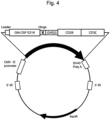
- GMR.CAR expression plasmid confirmed by sequencing to have the modification of the nucleotide sequence of interest and pCMV-piggyBac (kan) were obtained: CAR 004 (E21KGMR.CAR dCH2CH3+(G4S)3 kan).
- the vector map of the produced CAR 004 is shown in Figure 4 .
- Peripheral blood was collected from a healthy adult donor and diluted 2-fold with D-PBS (FUJIFILM Wako Pure Chemical Corp.). Then, the diluted peripheral blood was overlayered on Ficoll-Paque PLUS (GE Healthcare Japan Corp.) using SepMate-50 (STEMCELL Technologies Inc.) and centrifuged at 1200 ⁇ g for 15 minutes to separate PBMCs. The separated PBMCs were washed twice with D-PB S and purified by centrifugation. The purified PBMCs were used as each of ACE feeder cells (4-2), cells for the electrical introduction of vectors (4-3), and cells for OKT3 blast production (4-4).
- Viral peptide pulse was applied to the PBMCs purified in the preceding section 4-1 using PepTivalor peptide pool(R) (Miltenyi Biotec GmbH). Specifically, the PBMCs were suspended at 12 ⁇ 10 6 cells in the peptide pool of 100 ⁇ L of D-PBS supplemented with 2 ⁇ L each of 0.05 ⁇ g/ ⁇ L AdV5 Hexon, CMV pp65, EBVBZLF1 andEBVEBNA-1 (these four types of peptides are collectively referred to as ACE peptides), and treated with viral peptide pulse at 37°C for 30 minutes in a CO 2 incubator.
- the cells thus centrifuged were suspended in ALyS705 (Cell Science & Technology Institute, Inc.) containing 10 ng/mL human IL-7 (Miltenyi Biotec GmbH), 5 ng/mL human IL-15 (Miltenyi Biotec GmbH) and 2% Artificial serum Animal-free (Cell Science & Technology Institute, Inc.), and transferred at 2 ⁇ 10 6 cells/well/2 mL to a 24-well flat-bottomed multiwell plate for cell culture (FALCON).
- Example 3 For gene introduction to 15 ⁇ 10 6 PBMCs purified in the section 4-1, 7.5 ⁇ g each of the CAR 004 plasmid and the pCMV-piggyBac (kan) plasmid produced in Example 3 was added to the cells, which were then suspended in ALyS705 containing 2% Artificial serum Animal-free. The suspended cells were loaded in NEPA Electroporation Cuvettes 2 mm Gap (Nepa Gene Co., Ltd.), and the resistance value of the suspension was measured using a gene introduction apparatus NEPA21 (Nepa Gene Co., Ltd.).
- the amount of the liquid was adjusted using ALyS705 containing 2% Artificial serum Animal-free such that the resistance value fell within a proper range (0.038 to 0.046 k ⁇ ) recommended by the manufacturer. After the adjustment, electrical introduction was carried out within a range settable by NEPA21.
- the total amount of the cells after the electrical introduction was added to the 24-well flat-bottomed multiwell plate for cell culture containing the PBMC ACE feeder cells produced in the section 4-2 in advance to start culture in a CO 2 incubator at 37°C. Mock-T cells electrically stimulated without plasmid addition were similarly cultured. The cells were cultured for 7 days in the 24-well flat-bottomed multiwell plate for cell culture, and during this period, medium replacement and the addition of IL-7 and IL-15 were appropriately performed.
- an anti-human CD3 antibody (Miltenyi Biotec GmbH) and an anti-human CD28 antibody (Miltenyi Biotec GmbH) each adjusted at 1 ⁇ g/mL with D-PBS were added at 500 ⁇ L/well to a 24-well non-treatment flat-bottomed plate (FALCON).
- the plate was left at 37°C for 2 hours in a CO 2 incubator to immobilize the antibodies onto the plate. 2 hours later, the supernatant was discarded to produce an antibody-immobilized plate.
- the PBMCs purified in the section 4-1 were suspended in ALyS705 containing 5 ng/mL human IL-15 and 2% Artificial serum Animal-free.
- the suspended PBMCs were inoculated at 1.5 ⁇ 10 6 cells/well/2 mL to the plate on which the antibodies were immobilized in advance, to start culture while stimulating T cells.
- an antibody-immobilized plate for re-stimulation of OKT3 blast was produced. Specifically, an anti-human CD3 antibody and an anti-human CD28 antibody each adjusted to 1 ⁇ g/mL with D-PBS were added at 500 ⁇ L/well to a 24-well non-treatment flat-bottomed plate and incubated overnight at 4°C to immobilize the antibodies onto the plate.
- OKT3 blast stimulated from Day 0 was transferred to an antibody-unimmobilized 24-well flat-bottomed multiwell plate for cell culture and thereby was not stimulated temporarily.
- OKT3 blast produced in the section 4-4 was subjected to viral peptide pulse with the PepTivator peptide pool and UV irradiation similarly as in the section 4-2 to prepare OKT3 ACE feeder cells.
- OKT3 ACE feeder cells were collected, suspended at 5 ⁇ 10 6 cells in 30 mL of ALyS705 containing 10 ng/mL human IL-7, 5 ng/mL human IL-15 and 2% Artificial serum Animal-free, and transferred to G-Rex 6-well cell culture plate (Wilson Wolf Manufacturing Corporation).
- the total amount of the cells after the electrical introduction in the section 4-3 was transferred to the G-Rex 6-well cell culture plate to which the OKT3 ACE feeder cells were inoculated in the section 4-5.
- the GMR.CAR-T cells were cultured and amplified until Day 14, and during this period, medium replacement and the addition of IL-7 and IL-15 were appropriately performed.
- GMR.CAR-T cells obtained by electrical introduction operation to PBMCs using the expression plasmid CAR 004 and the culture and amplification of T cells were designated as CAR-T 004.
- the GMR.CAR-T cells cultured and amplified until Day 14 were evaluated for the expression rate of GMR.CAR by flow cytometry analysis.
- 100 ⁇ L of the cell culture suspension in the preceding section 4-6 was collected and centrifuged, and the resulting cells were suspended by the addition of 5 ⁇ L of PE Anti-human GM-CSF antibody (Miltenyi Biotec GmbH) and 5 ⁇ L of APC Anti-human CD3 antibody (Miltenyi Biotech GmbH), and subjected to antibody labeling reaction at 4°C for 20 minutes in the dark. 20 minutes later, the cells were washed with D-PBS and precipitated by centrifugation.
- the cells were resuspended in an appropriate amount of D-PBS. This sample was analyzed using FACSCanto II (Becton, Dickinson and Company) and FLOWJO (Becton, Dickinson and Company) to measure the expression rate of GMR.CAR with GM-CSF/CD3 positivity as an index.
- Peripheral blood was collected from the same healthy adult donor as in Example 4 and diluted 2-fold with D-PBS (FUJIFILM Wako Pure Chemical Corp.). Then, the diluted peripheral blood was overlayered on Ficoll-Paque PLUS (GE Healthcare Japan Corp.) using SepMate-50 (STEMCELL Technologies Inc.) and centrifuged at 1200 ⁇ g for 15 minutes to separate PBMCs. The separated PBMCs were washed twice with D-PBS and purified by centrifugation. The purified PBMCs were used as each of cells for the electrical introduction of vectors (5-3), and endogenous cells for CAR stimulation (5-4 and 5-5).
- the PBMCs purified in the section 5-1 were suspended in D-PBS and inoculated at 20 ⁇ 10 6 cells/well/2 mL to a 24-well flat-bottomed multiwell plate for cell culture (FALCON).
- the inoculated cells were left standing at 37°C for 2 hours in a CO 2 incubator. Then, floating cells were recovered together with the culture supernatant, and electrical introduction was carried out as described below in the section 5-3.
- the total amount of the cells after the electrical introduction in the section 5-3 was transferred to the 24-well flat-bottomed multiwell plate for cell culture attached with the endogenous cells for CAR stimulations provided in the section 5-2 in advance to start culture in a CO 2 incubator at 37°C.
- Mock-T cells electrically stimulated without plasmid addition were similarly cultured.
- medium replacement and the addition of IL-7 and IL-15 were appropriately performed.
- the PBMCs purified in the section 5-1 were suspended in ALyS705 containing 10 ng/mL human GM-CSF (Miltenyi Biotec GmbH) and 10 ng/mL human IL-4 (Miltenyi Biotec GmbH) and inoculated at 5 ⁇ 10 6 cells/well/15 mL to G-Rex 6-well cell culture plate (Wilson Wolf Manufacturing Corporation) to start culture in a CO 2 incubator at 37°C. During a culture period of 7 days, the addition of GM-CSF and IL-4 were appropriately performed.
- a supernatant was removed from the G-Rex 6-well cell culture plate incubated for 7 days in the section 5-5, and 30 mL of ALyS705 containing 10 ng/mL human IL-7, 5 ng/mL human IL-15 and 2% Artificial serum Animal-free was added to each well.
- the total amount of the cells cultured for 7 days in the 24-well flat-bottomed multiwell plate for cell culture was further transferred to the G-Rex 6-well cell culture plate to carry out the second CAR stimulation of the cells after the gene introduction. Then, the cells were further cultured and amplified for 6 days and during this period, medium replacement and the addition of IL-7 and IL-15 were appropriately performed.
- GMR.CAR-T cells obtained by the culture and amplification of the GMR.CAR-T cells stimulated with CAR using the endogenous cells and the expression plasmid CAR 004 were designated as CAR-T 004-A.
- the GMR.CAR-T cells cultured and amplified until Day 13 were evaluated for the expression rate of GMR.CAR by flow cytometry analysis.
- 100 ⁇ L of the cell culture suspension in the section 5-6 was collected and centrifuged, and the resulting cells were suspended by the addition of 5 ⁇ L of PE Anti-human GM-CSF antibody (Miltenyi Biotec GmbH) and 5 ⁇ L of APC Anti-human CD3 antibody (Miltenyi Biotech GmbH), and subjected to antibody labeling reaction at 4°C for 20 minutes in the dark. 20 minutes later, the cells were washed with an appropriate amount of D-PBS and precipitated by centrifugation.
- the cells were resuspended in an appropriate amount of D-PBS. This sample was analyzed using FACSCanto II (Becton, Dickinson and Company) and FLOWJO (Becton, Dickinson and Company) to measure the expression rate of GMR.CAR with GM-CSF/CD3 positivity as an index.
- Peripheral blood was collected from the same healthy adult donor as in Examples 4 and 5 and diluted 2-fold with D-PBS (FUJIFILM Wako Pure Chemical Corp.). Then, the diluted peripheral blood was overlayered on Ficoll-Paque PLUS (GE Healthcare Japan Corp.) using SepMate-50 (STEMCELL Technologies Inc.) and centrifuged at 1200 ⁇ g for 15 minutes to separate PBMCs. The separated PBMCs were washed twice with D-PBS and purified by centrifugation. The purified PBMCs were used as each of cells for the electrical introduction of vectors (6-2), and endogenous cells for CAR stimulations (6-3).
- the amount of the liquid was adjusted using ALyS705 containing 2% Artificial serum Animal-free such that the resistance value fell within a proper range (0.038 to 0.046 k ⁇ ) recommended by the manufacturer. After the adjustment, electrical introduction was carried out using the same set value as in Examples 4 and 5.
- the total amount of the cells after the electrical introduction was suspended in 2 mL of ALyS705 containing 10 ng/mL human IL-7 (Miltenyi Biotec GmbH), 5 ng/mL human IL-15 (Miltenyi Biotec GmbH) and 2% Artificial serum Animal-free, inoculated to a 24-well flat-bottomed multiwell plate for cell culture (FALCON), and cultured for 3 days in a CO 2 incubator at 37°C. Mock-T cells electrically stimulated without plasmid addition were similarly cultured.
- ALyS705 containing 10 ng/mL human IL-7 (Miltenyi Biotec GmbH), 5 ng/mL human IL-15 (Miltenyi Biotec GmbH) and 2% Artificial serum Animal-free, inoculated to a 24-well flat-bottomed multiwell plate for cell culture (FALCON), and cultured for 3 days in a CO 2 incubator at 37°C. Mock-T cells electrically stimulated without plasmid addition were similarly culture
- a supernatant was removed from the G-Rex 6-well cell culture plate incubated for 3 days in the section 6-3, and 30 mL of ALyS705 containing 10 ng/mL human IL-7, 5 ng/mL human IL-15 and 2% Artificial serum Animal-free was added to each well.
- the total amount of the cells after the gene introduction of the section 6-2 cultured for 3 days in the 24-well flat-bottomed multiwell plate for cell culture was further transferred to the G-Rex 6-well cell culture plate to carry out the CAR stimulation of the cells after the gene introduction. Then, the cells were further cultured for 7 days and during this period, medium replacement and the addition of IL-7 and IL-15 were appropriately performed.
- GMR.CAR-T cells obtained by the culture and amplification of the GMR.CAR-T cells stimulated with CAR by a more convenient method than that of Example 5 using the endogenous cells and the expression plasmid CAR 004 were designated as CAR-T 004-B.
- the GMR.CAR-T cells cultured and amplified until Day 10 were evaluated for the expression rate of GMR.CAR by flow cytometry analysis.
- 100 ⁇ L of the cell culture suspension in the section 6-4 was collected and centrifuged, and the resulting cells were suspended by the addition of 5 ⁇ L of PE Anti-human GM-CSF antibody (Miltenyi Biotec GmbH) and 5 ⁇ L of APC Anti-human CD3 antibody (Miltenyi Biotech GmbH), and subjected to antibody labeling reaction at 4°C for 20 minutes in the dark. 20 minutes later, the cells were washed with an appropriate amount of D-PBS and precipitated by centrifugation.
- the cells were resuspended in an appropriate amount of D-PBS. This sample was analyzed using FACSCanto II (Becton, Dickinson and Company) and FLOWJO (Becton, Dickinson and Company) to measure the expression rate of GMR.CAR with GM-CSF/CD3 positivity as an index.
- CAR-T cells expected to be effective in adoptive immunotherapy are required to have sustained cytotoxic activity.
- sustained antitumor cell activity was evaluated using CAR-T 004-B produced in Example 6.
- AML tumor cell line THP-1 cells (American Type Culture Collection) were suspended at 2.5 ⁇ 10 5 cells/mL in RPMI 1640 Medium, GlutaMAX Supplement (Thermo Fisher Scientific Inc.) containing 10% FBS (Corning Inc.) and inoculated at 1 mL/well to a 24-well treatment culture plate.
- CAR-T 004-B was suspended at 2.5 ⁇ 10 5 cells/mL in RPMI 1640 Medium, GlutaMAX Supplement containing 10% FBS and inoculated at 1 mL/well, from above, to the 24-well treatment culture plate inoculated with the THP-1 cells in advance. A plurality of such wells were provided, and coculture with the tumor cells was started.
- the cells were resuspended in 450 ⁇ L of D-PBS, and 50 ⁇ L of CountBright absolute counting beads (Invitrogen Corp.) was further added thereto. This sample was analyzed using FACS Canto II (Becton, Dickinson and Company) and FLOWJO (Becton, Dickinson and Company). The number of CD33-positive (CAR-T 004-B) cells and the number of CD33-positive (tumor) cells were evaluated on the basis of the counting beads.
- THP-1 cells prepared at 2.5 ⁇ 10 5 cells/mL with RPMI 1640 Medium, GlutaMAX Supplement containing 10% FBS were added 1 mL/well to start coculture with fresh tumor cells. This series of operations was repeated for a culture period of 4 days or 3 days, and the coculture was terminated at the time when the number of tumor cells was increased as compared with that at the start of coculture.
- Figure 8 shows the results of evaluating antitumor cell activity on days 4, 8, 12, 15, 19, and 23 after the start of coculture. These results indicate that CAR-T 004-B kills THP-1 cells a plurality of times. Thus, CAR-T 004-B was confirmed to have a sustained killing effect.
- Peripheral blood was collected from the same healthy adult donor as in Examples 4, 5 and 6 and diluted 2-fold with D-PBS (FUJIFILM Wako Pure Chemical Corp.). Then, the diluted peripheral blood was overlayered on Ficoll-Paque PLUS (GE Healthcare Japan Corp.) using SepMate-50 (STEMCELL Technologies Inc.) and centrifuged at 1200 ⁇ g for 15 minutes to separate PBMCs. The separated PBMCs were washed twice with D-PBS and purified by centrifugation. The purified PBMCs were used as each of cells for the electrical introduction of vectors (8-2), and endogenous cells for CAR stimulations (8-3).
- the amount of the liquid was adjusted using ALyS705 containing 5% Artificial serum Animal-free such that the resistance value fell within a proper range (0.038 to 0.046 k ⁇ ) recommended by the manufacturer.
- electrical introduction was carried out using the same set value as in Examples 4, 5 and 6.
- the total amount of the cells after the electrical introduction was suspended in 2 mL of ALyS705 containing 10 ng/mL human IL-7 (Miltenyi Biotec GmbH), 5 ng/mL human IL-15 (Miltenyi Biotec GmbH) and 5% Artificial serum Animal-free, inoculated to a 24-well flat-bottomed multiwell plate for cell culture (FALCON), and cultured for 3 days in a CO 2 incubator at 37°C. Mock-T cells electrically stimulated without plasmid addition were similarly cultured.
- the PBMCs purified in the section 8-1 were suspended in ALyS705, inoculated at 5 ⁇ 10 6 cells/well/15 mL to G-Rex 6-well cell culture plate (Wilson Wolf Manufacturing Corporation), and cultured for 3 days in a CO 2 incubator at 37°C.
- a supernatant was removed from the G-Rex 6-well cell culture plate incubated for 3 days in the section 8-3, and 30 mL of ALyS705 containing 10 ng/mL human IL-7, 5 ng/mL human IL-15 and 5% Artificial serum Animal-free was added to each well.
- the total amount of the cells after the gene introduction of the section 8-2 cultured for 3 days in the 24-well flat-bottomed multiwell plate for cell culture was further transferred to the G-Rex 6-well cell culture plate to carry out the CAR stimulation of the cells after the gene introduction. Then, the cells were further cultured for 8 days and during this period, medium replacement and the addition of IL-7 and IL-15 were appropriately performed.
- GMR.CAR-T cells The expression rate of GMR.CAR in the GMR.CAR-T cells cultured and amplified until Day 11 was measured by the method given below. Unlike Example 6, the endogenous cells were cultured without the addition of cytokines such as IL-4 or GM-CSF. GMR.CAR-T cells obtained by the culture and amplification of the GMR.CAR-T cells stimulated with CAR by a more convenient method than that of Example 5 and the expression plasmid CAR 004 were designated as CAR-T 004-C.
- the GMR.CAR-T cells cultured and amplified until Day 11 were evaluated for the expression rate of GMR.CAR by flow cytometry analysis.
- 100 ⁇ L of the cell culture suspension in the section 8-4 was collected and centrifuged, and the resulting cells were suspended by the addition of 5 ⁇ L of PE Anti-human GM-CSF antibody (Miltenyi Biotec GmbH) and 5 ⁇ L of APC Anti-human CD3 antibody (Miltenyi Biotech GmbH), and subjected to antibody labeling reaction at 4°C for 20 minutes in the dark. 20 minutes later, the cells were washed with an appropriate amount of D-PBS and precipitated by centrifugation.
- the cells were resuspended in an appropriate amount of D-PBS. This sample was analyzed using FACSCanto II (Becton, Dickinson and Company) and FLOWJO (Becton, Dickinson and Company) to measure the expression rate of GMR.CAR with GM-CSF/CD3 positivity as an index.
- the cells were washed with an appropriate amount of D-PBS containing 3% FBS and precipitated by centrifugation. After removal of the supernatant, the cells were resuspended in an appropriate amount of D-PBS containing 3% FBS. This sample was measured and analyzed using FACSCelesta (Becton, Dickinson and Company) and FLOWJO (Becton, Dickinson and Company) to evaluate PD-1-positive rate (exhaustion rate) and CD45RA/CCR7-positive rate (proportion of a stem cell memory fraction).
- FACSCelesta Becton, Dickinson and Company
- FLOWJO Becton, Dickinson and Company
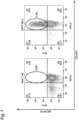
- the PD-1-positive rates of CAR-T 004-A and CAR-T 004-B were 4.2% and 1.82%, respectively.
- the proportion of exhausted cells with CAR stimulation was small.
- the CD45RA/CCR7-positive rates of CAR-T 004-A and CAR-T 004-B were 34.0% and 30.7%, respectively.
Landscapes
- Health & Medical Sciences (AREA)
- Life Sciences & Earth Sciences (AREA)
- Engineering & Computer Science (AREA)
- Genetics & Genomics (AREA)
- Chemical & Material Sciences (AREA)
- Organic Chemistry (AREA)
- General Health & Medical Sciences (AREA)
- Biomedical Technology (AREA)
- Zoology (AREA)
- Wood Science & Technology (AREA)
- Biotechnology (AREA)
- Bioinformatics & Cheminformatics (AREA)
- Immunology (AREA)
- General Engineering & Computer Science (AREA)
- Biochemistry (AREA)
- Public Health (AREA)
- Veterinary Medicine (AREA)
- Animal Behavior & Ethology (AREA)
- Epidemiology (AREA)
- Microbiology (AREA)
- Molecular Biology (AREA)
- Cell Biology (AREA)
- Biophysics (AREA)
- Physics & Mathematics (AREA)
- Hematology (AREA)
- Plant Pathology (AREA)
- Toxicology (AREA)
- Gastroenterology & Hepatology (AREA)
- Medicinal Chemistry (AREA)
- Proteomics, Peptides & Aminoacids (AREA)
- Micro-Organisms Or Cultivation Processes Thereof (AREA)
- Medicines Containing Material From Animals Or Micro-Organisms (AREA)
- Peptides Or Proteins (AREA)
Claims (6)
- Verfahren zur Herstellung von genetisch veränderten Säugerzellen, umfassend die Schritte:a) Einführen eines Polynucleotids, das ein Chimärer-Antigenrezeptor (chimeric antigen receptor, CAR)-Protein codiert, in eine Zellpopulation, die T-Zellen umfasst, die von einem Säuger stammen, durch ein Transposonverfahren, um eine genetisch veränderte Zellpopulation zu erhalten;b) Bereitstellen einer Zellpopulation, die von PBMCs stammt, die von einem Säuger stammen, und ein Protein exprimieren, das an den CAR bindet, wobei die Zellpopulation in der Anwesenheit eines Cytokins oder mehrerer Cytokine gezüchtet wird, wobei das Cytokin GM-CSF und/oder IL-4 ist und wobei die abgeleiteten PBMCs PBMCs sind, die ohne Inaktivierungsbehandlung verwendet werden; undc) Co-Züchten der genetisch veränderten Zellpopulation aus Schritt a) und der Zellpopulation aus Schritt b).
- Verfahren nach Anspruch 1, wobei der Schritt c) in der Anwesenheit eines Cytokins oder mehrerer Cytokine durchgeführt wird.
- Verfahren nach Anspruch 2, wobei das Cytokin im Schritt c) IL-7 und/oder IL-15 ist.
- Verfahren nach einem der Ansprüche 1 bis 3, wobei das Transposonverfahren ein PiggyBac-Verfahren ist.
- Verfahren nach einem der Ansprüche 1 bis 4, wobei die genetisch veränderte Zellpopulation und die Zellpopulation von dem gleichen Individuum stammen.
- Verfahren nach einem der Ansprüche 1 bis 5, wobei das CAR-Protein ein Protein ist, das eine Bindungsdomäne umfasst, die für den humanen Granulozyten-Makrophagen-Kolonie-stimulierenden Faktor (granulocyte-macrophage colony-stimulating factor; GM-CSF)-Rezeptor spezifisch ist, und die endogene Zellpopulation GM-CSF-Rezeptor exprimierende Zellen ist.
Applications Claiming Priority (2)
| Application Number | Priority Date | Filing Date | Title |
|---|---|---|---|
| JP2018202336 | 2018-10-26 | ||
| PCT/JP2019/041878 WO2020085480A1 (ja) | 2018-10-26 | 2019-10-25 | 高効率な遺伝子改変細胞の作製方法 |
Publications (3)
| Publication Number | Publication Date |
|---|---|
| EP3872087A1 EP3872087A1 (de) | 2021-09-01 |
| EP3872087A4 EP3872087A4 (de) | 2022-08-24 |
| EP3872087B1 true EP3872087B1 (de) | 2024-09-25 |
Family
ID=70332140
Family Applications (1)
| Application Number | Title | Priority Date | Filing Date |
|---|---|---|---|
| EP19877316.0A Active EP3872087B1 (de) | 2018-10-26 | 2019-10-25 | Hocheffizientes verfahren zur herstellung genetisch modifizierter zellen |
Country Status (5)
| Country | Link |
|---|---|
| US (1) | US20210388317A1 (de) |
| EP (1) | EP3872087B1 (de) |
| JP (1) | JP7632868B2 (de) |
| TW (1) | TW202031679A (de) |
| WO (1) | WO2020085480A1 (de) |
Families Citing this family (1)
| Publication number | Priority date | Publication date | Assignee | Title |
|---|---|---|---|---|
| JPWO2023234330A1 (de) | 2022-05-31 | 2023-12-07 |
Family Cites Families (11)
| Publication number | Priority date | Publication date | Assignee | Title |
|---|---|---|---|---|
| US5827642A (en) | 1994-08-31 | 1998-10-27 | Fred Hutchinson Cancer Research Center | Rapid expansion method ("REM") for in vitro propagation of T lymphocytes |
| CA3255551A1 (en) | 2010-03-26 | 2025-04-15 | Memorial Sloan-Kettering Cancer Center | MUC16 ANTIBODIES AND METHODS OF USE |
| US20170333480A1 (en) | 2014-11-05 | 2017-11-23 | Board Of Regents, The University Of Texas System | Gene modified immune effector cells and engineered cells for expansion of immune effector cells |
| EP3018200A1 (de) * | 2014-11-07 | 2016-05-11 | Fondazione Matilde Tettamanti e Menotti de Machi Onlus | Verbessertes Verfahren zur Erzeugung von genetisch veränderten Zellen |
| EP4289944A3 (de) | 2015-10-08 | 2024-03-13 | National University Corporation Tokai National Higher Education and Research System | Verfahren zur herstellung genetisch modifizierter, chimären antigenrezeptor exprimierender t-zellen |
| MX2018004503A (es) | 2015-10-15 | 2019-04-15 | Us Health | Receptores de antigeno quimerico anti-cd30. |
| BR112018008442A2 (pt) * | 2015-11-05 | 2018-11-06 | Juno Therapeutics Inc | receptores quiméricos contendo domínios induto-res de traf e composições e métodos relacionados |
| MX2019000180A (es) | 2016-06-28 | 2019-11-05 | Geneius Biotechnology Inc | Composiciones de células t para la inmunoterapia. |
| JP2018202336A (ja) | 2017-06-06 | 2018-12-27 | 宇部興産株式会社 | ガス処理装置、ガス処理方法及びガス処理装置の破過検知方法 |
| CA3105816A1 (en) * | 2018-07-10 | 2020-01-16 | Precigen, Inc. | Ror-1 specific chimeric antigen receptors and uses thereof |
| WO2021019706A1 (ja) * | 2019-07-31 | 2021-02-04 | 国立大学法人信州大学 | Car発現免疫細胞を含む細胞集団の製造方法 |
-
2019
- 2019-10-25 JP JP2020552621A patent/JP7632868B2/ja active Active
- 2019-10-25 EP EP19877316.0A patent/EP3872087B1/de active Active
- 2019-10-25 US US17/286,587 patent/US20210388317A1/en active Pending
- 2019-10-25 WO PCT/JP2019/041878 patent/WO2020085480A1/ja not_active Ceased
- 2019-10-25 TW TW108138689A patent/TW202031679A/zh unknown
Also Published As
| Publication number | Publication date |
|---|---|
| US20210388317A1 (en) | 2021-12-16 |
| JP7632868B2 (ja) | 2025-02-19 |
| WO2020085480A1 (ja) | 2020-04-30 |
| EP3872087A1 (de) | 2021-09-01 |
| JPWO2020085480A1 (ja) | 2021-09-16 |
| EP3872087A4 (de) | 2022-08-24 |
| TW202031679A (zh) | 2020-09-01 |
Similar Documents
| Publication | Publication Date | Title |
|---|---|---|
| KR102614675B1 (ko) | 유전자이식 t 세포 및 키메라 항원 수용체 t 세포 조성물 및 관련 방법 | |
| CN109803983B (zh) | 靶向nkg2dl的特异性嵌合抗原受体t细胞,其制备方法和应用 | |
| CA2945303C (en) | Production of engineered t-cells by sleeping beauty transposon coupled with methotrexate selection | |
| CN112512536A (zh) | 基于干细胞工程化inkt细胞的现成细胞疗法 | |
| KR20200133219A (ko) | 개선된 면역요법을 위한 유전자-조절 조성물 및 방법 | |
| JP2018532426A (ja) | リンパ球における高レベル且つ安定な遺伝子移入のための方法 | |
| EP3303586A1 (de) | Zusammensetzung und verfahren zur regulierung von inhibitorischen wechselwirkungen in gentechnisch veränderten zellen | |
| US10683355B2 (en) | Genetically-modified cells and method for producing same | |
| JP2020536514A (ja) | HPK1を標的とするgRNA及びHPK1遺伝子の編集方法 | |
| US20230181641A1 (en) | Process for producing donor-batched cells expressing a recombinant receptor | |
| JP7296133B2 (ja) | 遺伝子改変細胞及びその作製方法 | |
| JP5911810B2 (ja) | 制御性t細胞の製造方法 | |
| EP3872087B1 (de) | Hocheffizientes verfahren zur herstellung genetisch modifizierter zellen | |
| WO2025031500A1 (zh) | 含有gprc5d抗体的嵌合抗原受体及其应用 | |
| WO2024120506A1 (zh) | 一种修饰的细胞及其用途 | |
| EP3978611A1 (de) | Gegen alk gerichtete chimäre antigen-rezeptor-exprimierende zellen | |
| EP4060038A1 (de) | Verfahren zur einführung eines antigenspezifischen rezeptorgens in das genom einer t-zelle unter verwendung von zyklischer dna | |
| RU2822196C2 (ru) | Способы получения клеток, экспрессирующих химерный антигенный рецептор | |
| CN117165529A (zh) | 一种经过基因修饰的t细胞及其制备方法和应用 | |
| WO2025117773A2 (en) | Compositions and methods for treating neoplasia | |
| WO2025092690A1 (zh) | 一种修饰的细胞及其用途 | |
| WO2026044007A1 (en) | Disruption of mbd6 in t cells to enhance immunotherapy | |
| WO2025199494A1 (en) | Methods of generating populations of therapeutic cells | |
| WO2025235644A1 (en) | T cells with genetically engineered slamf7 signaling | |
| JP2025017424A (ja) | 汎用性の高いcar発現t細胞集団の作製方法 |
Legal Events
| Date | Code | Title | Description |
|---|---|---|---|
| STAA | Information on the status of an ep patent application or granted ep patent |
Free format text: STATUS: THE INTERNATIONAL PUBLICATION HAS BEEN MADE |
|
| PUAI | Public reference made under article 153(3) epc to a published international application that has entered the european phase |
Free format text: ORIGINAL CODE: 0009012 |
|
| STAA | Information on the status of an ep patent application or granted ep patent |
Free format text: STATUS: REQUEST FOR EXAMINATION WAS MADE |
|
| 17P | Request for examination filed |
Effective date: 20210526 |
|
| AK | Designated contracting states |
Kind code of ref document: A1 Designated state(s): AL AT BE BG CH CY CZ DE DK EE ES FI FR GB GR HR HU IE IS IT LI LT LU LV MC MK MT NL NO PL PT RO RS SE SI SK SM TR |
|
| DAV | Request for validation of the european patent (deleted) | ||
| DAX | Request for extension of the european patent (deleted) | ||
| A4 | Supplementary search report drawn up and despatched |
Effective date: 20220722 |
|
| RIC1 | Information provided on ipc code assigned before grant |
Ipc: C12N 15/63 20060101ALI20220718BHEP Ipc: C12N 15/12 20060101ALI20220718BHEP Ipc: C12N 5/10 20060101ALI20220718BHEP Ipc: C12N 5/0783 20100101ALI20220718BHEP Ipc: C07K 14/705 20060101AFI20220718BHEP |
|
| STAA | Information on the status of an ep patent application or granted ep patent |
Free format text: STATUS: EXAMINATION IS IN PROGRESS |
|
| 17Q | First examination report despatched |
Effective date: 20230614 |
|
| GRAP | Despatch of communication of intention to grant a patent |
Free format text: ORIGINAL CODE: EPIDOSNIGR1 |
|
| STAA | Information on the status of an ep patent application or granted ep patent |
Free format text: STATUS: GRANT OF PATENT IS INTENDED |
|
| INTG | Intention to grant announced |
Effective date: 20240417 |
|
| P01 | Opt-out of the competence of the unified patent court (upc) registered |
Free format text: CASE NUMBER: APP_34989/2024 Effective date: 20240611 |
|
| GRAS | Grant fee paid |
Free format text: ORIGINAL CODE: EPIDOSNIGR3 |
|
| GRAA | (expected) grant |
Free format text: ORIGINAL CODE: 0009210 |
|
| STAA | Information on the status of an ep patent application or granted ep patent |
Free format text: STATUS: THE PATENT HAS BEEN GRANTED |
|
| AK | Designated contracting states |
Kind code of ref document: B1 Designated state(s): AL AT BE BG CH CY CZ DE DK EE ES FI FR GB GR HR HU IE IS IT LI LT LU LV MC MK MT NL NO PL PT RO RS SE SI SK SM TR |
|
| REG | Reference to a national code |
Ref country code: GB Ref legal event code: FG4D |
|
| REG | Reference to a national code |
Ref country code: CH Ref legal event code: EP |
|
| REG | Reference to a national code |
Ref country code: DE Ref legal event code: R096 Ref document number: 602019059566 Country of ref document: DE |
|
| REG | Reference to a national code |
Ref country code: IE Ref legal event code: FG4D |
|
| REG | Reference to a national code |
Ref country code: LT Ref legal event code: MG9D |
|
| PG25 | Lapsed in a contracting state [announced via postgrant information from national office to epo] |
Ref country code: NO Free format text: LAPSE BECAUSE OF FAILURE TO SUBMIT A TRANSLATION OF THE DESCRIPTION OR TO PAY THE FEE WITHIN THE PRESCRIBED TIME-LIMIT Effective date: 20241225 |
|
| PG25 | Lapsed in a contracting state [announced via postgrant information from national office to epo] |
Ref country code: GR Free format text: LAPSE BECAUSE OF FAILURE TO SUBMIT A TRANSLATION OF THE DESCRIPTION OR TO PAY THE FEE WITHIN THE PRESCRIBED TIME-LIMIT Effective date: 20241226 Ref country code: FI Free format text: LAPSE BECAUSE OF FAILURE TO SUBMIT A TRANSLATION OF THE DESCRIPTION OR TO PAY THE FEE WITHIN THE PRESCRIBED TIME-LIMIT Effective date: 20240925 |
|
| PG25 | Lapsed in a contracting state [announced via postgrant information from national office to epo] |
Ref country code: BG Free format text: LAPSE BECAUSE OF FAILURE TO SUBMIT A TRANSLATION OF THE DESCRIPTION OR TO PAY THE FEE WITHIN THE PRESCRIBED TIME-LIMIT Effective date: 20240925 |
|
| PG25 | Lapsed in a contracting state [announced via postgrant information from national office to epo] |
Ref country code: LV Free format text: LAPSE BECAUSE OF FAILURE TO SUBMIT A TRANSLATION OF THE DESCRIPTION OR TO PAY THE FEE WITHIN THE PRESCRIBED TIME-LIMIT Effective date: 20240925 |
|
| PG25 | Lapsed in a contracting state [announced via postgrant information from national office to epo] |
Ref country code: RS Free format text: LAPSE BECAUSE OF FAILURE TO SUBMIT A TRANSLATION OF THE DESCRIPTION OR TO PAY THE FEE WITHIN THE PRESCRIBED TIME-LIMIT Effective date: 20241225 |
|
| REG | Reference to a national code |
Ref country code: NL Ref legal event code: MP Effective date: 20240925 |
|
| PG25 | Lapsed in a contracting state [announced via postgrant information from national office to epo] |
Ref country code: RS Free format text: LAPSE BECAUSE OF FAILURE TO SUBMIT A TRANSLATION OF THE DESCRIPTION OR TO PAY THE FEE WITHIN THE PRESCRIBED TIME-LIMIT Effective date: 20241225 Ref country code: NO Free format text: LAPSE BECAUSE OF FAILURE TO SUBMIT A TRANSLATION OF THE DESCRIPTION OR TO PAY THE FEE WITHIN THE PRESCRIBED TIME-LIMIT Effective date: 20241225 Ref country code: LV Free format text: LAPSE BECAUSE OF FAILURE TO SUBMIT A TRANSLATION OF THE DESCRIPTION OR TO PAY THE FEE WITHIN THE PRESCRIBED TIME-LIMIT Effective date: 20240925 Ref country code: GR Free format text: LAPSE BECAUSE OF FAILURE TO SUBMIT A TRANSLATION OF THE DESCRIPTION OR TO PAY THE FEE WITHIN THE PRESCRIBED TIME-LIMIT Effective date: 20241226 Ref country code: FI Free format text: LAPSE BECAUSE OF FAILURE TO SUBMIT A TRANSLATION OF THE DESCRIPTION OR TO PAY THE FEE WITHIN THE PRESCRIBED TIME-LIMIT Effective date: 20240925 Ref country code: BG Free format text: LAPSE BECAUSE OF FAILURE TO SUBMIT A TRANSLATION OF THE DESCRIPTION OR TO PAY THE FEE WITHIN THE PRESCRIBED TIME-LIMIT Effective date: 20240925 |
|
| REG | Reference to a national code |
Ref country code: AT Ref legal event code: MK05 Ref document number: 1726584 Country of ref document: AT Kind code of ref document: T Effective date: 20240925 |
|
| PG25 | Lapsed in a contracting state [announced via postgrant information from national office to epo] |
Ref country code: NL Free format text: LAPSE BECAUSE OF FAILURE TO SUBMIT A TRANSLATION OF THE DESCRIPTION OR TO PAY THE FEE WITHIN THE PRESCRIBED TIME-LIMIT Effective date: 20240925 |
|
| PG25 | Lapsed in a contracting state [announced via postgrant information from national office to epo] |
Ref country code: IS Free format text: LAPSE BECAUSE OF FAILURE TO SUBMIT A TRANSLATION OF THE DESCRIPTION OR TO PAY THE FEE WITHIN THE PRESCRIBED TIME-LIMIT Effective date: 20250125 Ref country code: PT Free format text: LAPSE BECAUSE OF FAILURE TO SUBMIT A TRANSLATION OF THE DESCRIPTION OR TO PAY THE FEE WITHIN THE PRESCRIBED TIME-LIMIT Effective date: 20250127 |
|
| PG25 | Lapsed in a contracting state [announced via postgrant information from national office to epo] |
Ref country code: RO Free format text: LAPSE BECAUSE OF FAILURE TO SUBMIT A TRANSLATION OF THE DESCRIPTION OR TO PAY THE FEE WITHIN THE PRESCRIBED TIME-LIMIT Effective date: 20240925 Ref country code: SM Free format text: LAPSE BECAUSE OF FAILURE TO SUBMIT A TRANSLATION OF THE DESCRIPTION OR TO PAY THE FEE WITHIN THE PRESCRIBED TIME-LIMIT Effective date: 20240925 |
|
| PG25 | Lapsed in a contracting state [announced via postgrant information from national office to epo] |
Ref country code: ES Free format text: LAPSE BECAUSE OF FAILURE TO SUBMIT A TRANSLATION OF THE DESCRIPTION OR TO PAY THE FEE WITHIN THE PRESCRIBED TIME-LIMIT Effective date: 20240925 |
|
| PG25 | Lapsed in a contracting state [announced via postgrant information from national office to epo] |
Ref country code: EE Free format text: LAPSE BECAUSE OF FAILURE TO SUBMIT A TRANSLATION OF THE DESCRIPTION OR TO PAY THE FEE WITHIN THE PRESCRIBED TIME-LIMIT Effective date: 20240925 Ref country code: AT Free format text: LAPSE BECAUSE OF FAILURE TO SUBMIT A TRANSLATION OF THE DESCRIPTION OR TO PAY THE FEE WITHIN THE PRESCRIBED TIME-LIMIT Effective date: 20240925 |
|
| PG25 | Lapsed in a contracting state [announced via postgrant information from national office to epo] |
Ref country code: CZ Free format text: LAPSE BECAUSE OF FAILURE TO SUBMIT A TRANSLATION OF THE DESCRIPTION OR TO PAY THE FEE WITHIN THE PRESCRIBED TIME-LIMIT Effective date: 20240925 Ref country code: PL Free format text: LAPSE BECAUSE OF FAILURE TO SUBMIT A TRANSLATION OF THE DESCRIPTION OR TO PAY THE FEE WITHIN THE PRESCRIBED TIME-LIMIT Effective date: 20240925 |
|
| PG25 | Lapsed in a contracting state [announced via postgrant information from national office to epo] |
Ref country code: IT Free format text: LAPSE BECAUSE OF FAILURE TO SUBMIT A TRANSLATION OF THE DESCRIPTION OR TO PAY THE FEE WITHIN THE PRESCRIBED TIME-LIMIT Effective date: 20240925 Ref country code: SK Free format text: LAPSE BECAUSE OF FAILURE TO SUBMIT A TRANSLATION OF THE DESCRIPTION OR TO PAY THE FEE WITHIN THE PRESCRIBED TIME-LIMIT Effective date: 20240925 |
|
| REG | Reference to a national code |
Ref country code: CH Ref legal event code: PL |
|
| REG | Reference to a national code |
Ref country code: DE Ref legal event code: R097 Ref document number: 602019059566 Country of ref document: DE |
|
| PG25 | Lapsed in a contracting state [announced via postgrant information from national office to epo] |
Ref country code: MC Free format text: LAPSE BECAUSE OF FAILURE TO SUBMIT A TRANSLATION OF THE DESCRIPTION OR TO PAY THE FEE WITHIN THE PRESCRIBED TIME-LIMIT Effective date: 20240925 |
|
| PG25 | Lapsed in a contracting state [announced via postgrant information from national office to epo] |
Ref country code: DK Free format text: LAPSE BECAUSE OF FAILURE TO SUBMIT A TRANSLATION OF THE DESCRIPTION OR TO PAY THE FEE WITHIN THE PRESCRIBED TIME-LIMIT Effective date: 20240925 |
|
| PG25 | Lapsed in a contracting state [announced via postgrant information from national office to epo] |
Ref country code: LU Free format text: LAPSE BECAUSE OF NON-PAYMENT OF DUE FEES Effective date: 20241025 Ref country code: BE Free format text: LAPSE BECAUSE OF NON-PAYMENT OF DUE FEES Effective date: 20241031 |
|
| PG25 | Lapsed in a contracting state [announced via postgrant information from national office to epo] |
Ref country code: CH Free format text: LAPSE BECAUSE OF NON-PAYMENT OF DUE FEES Effective date: 20241031 |
|
| PLBE | No opposition filed within time limit |
Free format text: ORIGINAL CODE: 0009261 |
|
| STAA | Information on the status of an ep patent application or granted ep patent |
Free format text: STATUS: NO OPPOSITION FILED WITHIN TIME LIMIT |
|
| REG | Reference to a national code |
Ref country code: BE Ref legal event code: MM Effective date: 20241031 |
|
| 26N | No opposition filed |
Effective date: 20250626 |
|
| PG25 | Lapsed in a contracting state [announced via postgrant information from national office to epo] |
Ref country code: SE Free format text: LAPSE BECAUSE OF FAILURE TO SUBMIT A TRANSLATION OF THE DESCRIPTION OR TO PAY THE FEE WITHIN THE PRESCRIBED TIME-LIMIT Effective date: 20240925 |
|
| PG25 | Lapsed in a contracting state [announced via postgrant information from national office to epo] |
Ref country code: IE Free format text: LAPSE BECAUSE OF NON-PAYMENT OF DUE FEES Effective date: 20241025 |
|
| PGFP | Annual fee paid to national office [announced via postgrant information from national office to epo] |
Ref country code: DE Payment date: 20251031 Year of fee payment: 7 |
|
| PGFP | Annual fee paid to national office [announced via postgrant information from national office to epo] |
Ref country code: GB Payment date: 20251029 Year of fee payment: 7 |
|
| PG25 | Lapsed in a contracting state [announced via postgrant information from national office to epo] |
Ref country code: HR Free format text: LAPSE BECAUSE OF FAILURE TO SUBMIT A TRANSLATION OF THE DESCRIPTION OR TO PAY THE FEE WITHIN THE PRESCRIBED TIME-LIMIT Effective date: 20240925 |
|
| PGFP | Annual fee paid to national office [announced via postgrant information from national office to epo] |
Ref country code: FR Payment date: 20251027 Year of fee payment: 7 |
|
| PG25 | Lapsed in a contracting state [announced via postgrant information from national office to epo] |
Ref country code: CY Free format text: LAPSE BECAUSE OF FAILURE TO SUBMIT A TRANSLATION OF THE DESCRIPTION OR TO PAY THE FEE WITHIN THE PRESCRIBED TIME-LIMIT; INVALID AB INITIO Effective date: 20191025 |
|
| PG25 | Lapsed in a contracting state [announced via postgrant information from national office to epo] |
Ref country code: HU Free format text: LAPSE BECAUSE OF FAILURE TO SUBMIT A TRANSLATION OF THE DESCRIPTION OR TO PAY THE FEE WITHIN THE PRESCRIBED TIME-LIMIT; INVALID AB INITIO Effective date: 20191025 |