EP3870272B1 - Nerve stimulation for treating migraine and other headache conditions - Google Patents
Nerve stimulation for treating migraine and other headache conditions Download PDFInfo
- Publication number
- EP3870272B1 EP3870272B1 EP19874940.0A EP19874940A EP3870272B1 EP 3870272 B1 EP3870272 B1 EP 3870272B1 EP 19874940 A EP19874940 A EP 19874940A EP 3870272 B1 EP3870272 B1 EP 3870272B1
- Authority
- EP
- European Patent Office
- Prior art keywords
- nerve
- stimulation
- patient
- stimulation signal
- electrical stimulation
- Prior art date
- Legal status (The legal status is an assumption and is not a legal conclusion. Google has not performed a legal analysis and makes no representation as to the accuracy of the status listed.)
- Active
Links
Images









Classifications
-
- A—HUMAN NECESSITIES
- A61—MEDICAL OR VETERINARY SCIENCE; HYGIENE
- A61B—DIAGNOSIS; SURGERY; IDENTIFICATION
- A61B5/00—Measuring for diagnostic purposes; Identification of persons
- A61B5/02—Detecting, measuring or recording for evaluating the cardiovascular system, e.g. pulse, heart rate, blood pressure or blood flow
- A61B5/0205—Simultaneously evaluating both cardiovascular conditions and different types of body conditions, e.g. heart and respiratory condition
-
- A—HUMAN NECESSITIES
- A61—MEDICAL OR VETERINARY SCIENCE; HYGIENE
- A61B—DIAGNOSIS; SURGERY; IDENTIFICATION
- A61B5/00—Measuring for diagnostic purposes; Identification of persons
- A61B5/24—Detecting, measuring or recording bioelectric or biomagnetic signals of the body or parts thereof
- A61B5/316—Modalities, i.e. specific diagnostic methods
- A61B5/369—Electroencephalography [EEG]
- A61B5/372—Analysis of electroencephalograms
-
- A—HUMAN NECESSITIES
- A61—MEDICAL OR VETERINARY SCIENCE; HYGIENE
- A61B—DIAGNOSIS; SURGERY; IDENTIFICATION
- A61B5/00—Measuring for diagnostic purposes; Identification of persons
- A61B5/48—Other medical applications
- A61B5/4848—Monitoring or testing the effects of treatment, e.g. of medication
-
- A—HUMAN NECESSITIES
- A61—MEDICAL OR VETERINARY SCIENCE; HYGIENE
- A61N—ELECTROTHERAPY; MAGNETOTHERAPY; RADIATION THERAPY; ULTRASOUND THERAPY
- A61N1/00—Electrotherapy; Circuits therefor
- A61N1/02—Details
- A61N1/04—Electrodes
- A61N1/0404—Electrodes for external use
- A61N1/0408—Use-related aspects
- A61N1/0456—Specially adapted for transcutaneous electrical nerve stimulation [TENS]
-
- A—HUMAN NECESSITIES
- A61—MEDICAL OR VETERINARY SCIENCE; HYGIENE
- A61N—ELECTROTHERAPY; MAGNETOTHERAPY; RADIATION THERAPY; ULTRASOUND THERAPY
- A61N1/00—Electrotherapy; Circuits therefor
- A61N1/02—Details
- A61N1/04—Electrodes
- A61N1/0404—Electrodes for external use
- A61N1/0472—Structure-related aspects
- A61N1/0476—Array electrodes (including any electrode arrangement with more than one electrode for at least one of the polarities)
-
- A—HUMAN NECESSITIES
- A61—MEDICAL OR VETERINARY SCIENCE; HYGIENE
- A61N—ELECTROTHERAPY; MAGNETOTHERAPY; RADIATION THERAPY; ULTRASOUND THERAPY
- A61N1/00—Electrotherapy; Circuits therefor
- A61N1/02—Details
- A61N1/04—Electrodes
- A61N1/0404—Electrodes for external use
- A61N1/0472—Structure-related aspects
- A61N1/0484—Garment electrodes worn by the patient
-
- A—HUMAN NECESSITIES
- A61—MEDICAL OR VETERINARY SCIENCE; HYGIENE
- A61N—ELECTROTHERAPY; MAGNETOTHERAPY; RADIATION THERAPY; ULTRASOUND THERAPY
- A61N1/00—Electrotherapy; Circuits therefor
- A61N1/02—Details
- A61N1/04—Electrodes
- A61N1/05—Electrodes for implantation or insertion into the body, e.g. heart electrode
- A61N1/0502—Skin piercing electrodes
-
- A—HUMAN NECESSITIES
- A61—MEDICAL OR VETERINARY SCIENCE; HYGIENE
- A61N—ELECTROTHERAPY; MAGNETOTHERAPY; RADIATION THERAPY; ULTRASOUND THERAPY
- A61N1/00—Electrotherapy; Circuits therefor
- A61N1/02—Details
- A61N1/04—Electrodes
- A61N1/05—Electrodes for implantation or insertion into the body, e.g. heart electrode
- A61N1/0551—Spinal or peripheral nerve electrodes
-
- A—HUMAN NECESSITIES
- A61—MEDICAL OR VETERINARY SCIENCE; HYGIENE
- A61N—ELECTROTHERAPY; MAGNETOTHERAPY; RADIATION THERAPY; ULTRASOUND THERAPY
- A61N1/00—Electrotherapy; Circuits therefor
- A61N1/18—Applying electric currents by contact electrodes
- A61N1/32—Applying electric currents by contact electrodes alternating or intermittent currents
- A61N1/36—Applying electric currents by contact electrodes alternating or intermittent currents for stimulation
- A61N1/36014—External stimulators, e.g. with patch electrodes
- A61N1/36017—External stimulators, e.g. with patch electrodes with leads or electrodes penetrating the skin
-
- A—HUMAN NECESSITIES
- A61—MEDICAL OR VETERINARY SCIENCE; HYGIENE
- A61N—ELECTROTHERAPY; MAGNETOTHERAPY; RADIATION THERAPY; ULTRASOUND THERAPY
- A61N1/00—Electrotherapy; Circuits therefor
- A61N1/18—Applying electric currents by contact electrodes
- A61N1/32—Applying electric currents by contact electrodes alternating or intermittent currents
- A61N1/36—Applying electric currents by contact electrodes alternating or intermittent currents for stimulation
- A61N1/36014—External stimulators, e.g. with patch electrodes
- A61N1/36021—External stimulators, e.g. with patch electrodes for treatment of pain
-
- A—HUMAN NECESSITIES
- A61—MEDICAL OR VETERINARY SCIENCE; HYGIENE
- A61N—ELECTROTHERAPY; MAGNETOTHERAPY; RADIATION THERAPY; ULTRASOUND THERAPY
- A61N1/00—Electrotherapy; Circuits therefor
- A61N1/18—Applying electric currents by contact electrodes
- A61N1/32—Applying electric currents by contact electrodes alternating or intermittent currents
- A61N1/36—Applying electric currents by contact electrodes alternating or intermittent currents for stimulation
- A61N1/36014—External stimulators, e.g. with patch electrodes
- A61N1/3603—Control systems
- A61N1/36031—Control systems using physiological parameters for adjustment
-
- A—HUMAN NECESSITIES
- A61—MEDICAL OR VETERINARY SCIENCE; HYGIENE
- A61N—ELECTROTHERAPY; MAGNETOTHERAPY; RADIATION THERAPY; ULTRASOUND THERAPY
- A61N1/00—Electrotherapy; Circuits therefor
- A61N1/18—Applying electric currents by contact electrodes
- A61N1/32—Applying electric currents by contact electrodes alternating or intermittent currents
- A61N1/36—Applying electric currents by contact electrodes alternating or intermittent currents for stimulation
- A61N1/36014—External stimulators, e.g. with patch electrodes
- A61N1/3603—Control systems
- A61N1/36034—Control systems specified by the stimulation parameters
-
- A—HUMAN NECESSITIES
- A61—MEDICAL OR VETERINARY SCIENCE; HYGIENE
- A61N—ELECTROTHERAPY; MAGNETOTHERAPY; RADIATION THERAPY; ULTRASOUND THERAPY
- A61N1/00—Electrotherapy; Circuits therefor
- A61N1/18—Applying electric currents by contact electrodes
- A61N1/32—Applying electric currents by contact electrodes alternating or intermittent currents
- A61N1/36—Applying electric currents by contact electrodes alternating or intermittent currents for stimulation
- A61N1/36036—Applying electric currents by contact electrodes alternating or intermittent currents for stimulation of the outer, middle or inner ear
-
- A—HUMAN NECESSITIES
- A61—MEDICAL OR VETERINARY SCIENCE; HYGIENE
- A61N—ELECTROTHERAPY; MAGNETOTHERAPY; RADIATION THERAPY; ULTRASOUND THERAPY
- A61N1/00—Electrotherapy; Circuits therefor
- A61N1/18—Applying electric currents by contact electrodes
- A61N1/32—Applying electric currents by contact electrodes alternating or intermittent currents
- A61N1/36—Applying electric currents by contact electrodes alternating or intermittent currents for stimulation
- A61N1/3605—Implantable neurostimulators for stimulating central or peripheral nerve system
- A61N1/3606—Implantable neurostimulators for stimulating central or peripheral nerve system adapted for a particular treatment
- A61N1/36071—Pain
- A61N1/36075—Headache or migraine
-
- A—HUMAN NECESSITIES
- A61—MEDICAL OR VETERINARY SCIENCE; HYGIENE
- A61N—ELECTROTHERAPY; MAGNETOTHERAPY; RADIATION THERAPY; ULTRASOUND THERAPY
- A61N1/00—Electrotherapy; Circuits therefor
- A61N1/18—Applying electric currents by contact electrodes
- A61N1/32—Applying electric currents by contact electrodes alternating or intermittent currents
- A61N1/36—Applying electric currents by contact electrodes alternating or intermittent currents for stimulation
- A61N1/3605—Implantable neurostimulators for stimulating central or peripheral nerve system
- A61N1/36128—Control systems
- A61N1/36135—Control systems using physiological parameters
- A61N1/36139—Control systems using physiological parameters with automatic adjustment
-
- A—HUMAN NECESSITIES
- A61—MEDICAL OR VETERINARY SCIENCE; HYGIENE
- A61N—ELECTROTHERAPY; MAGNETOTHERAPY; RADIATION THERAPY; ULTRASOUND THERAPY
- A61N1/00—Electrotherapy; Circuits therefor
- A61N1/18—Applying electric currents by contact electrodes
- A61N1/32—Applying electric currents by contact electrodes alternating or intermittent currents
- A61N1/36—Applying electric currents by contact electrodes alternating or intermittent currents for stimulation
- A61N1/372—Arrangements in connection with the implantation of stimulators
- A61N1/37211—Means for communicating with stimulators
- A61N1/37235—Aspects of the external programmer
- A61N1/37247—User interfaces, e.g. input or presentation means
-
- A—HUMAN NECESSITIES
- A61—MEDICAL OR VETERINARY SCIENCE; HYGIENE
- A61N—ELECTROTHERAPY; MAGNETOTHERAPY; RADIATION THERAPY; ULTRASOUND THERAPY
- A61N1/00—Electrotherapy; Circuits therefor
- A61N1/18—Applying electric currents by contact electrodes
- A61N1/32—Applying electric currents by contact electrodes alternating or intermittent currents
- A61N1/36—Applying electric currents by contact electrodes alternating or intermittent currents for stimulation
- A61N1/372—Arrangements in connection with the implantation of stimulators
- A61N1/37211—Means for communicating with stimulators
- A61N1/37252—Details of algorithms or data aspects of communication system, e.g. handshaking, transmitting specific data or segmenting data
- A61N1/37282—Details of algorithms or data aspects of communication system, e.g. handshaking, transmitting specific data or segmenting data characterised by communication with experts in remote locations using a network
-
- A—HUMAN NECESSITIES
- A61—MEDICAL OR VETERINARY SCIENCE; HYGIENE
- A61N—ELECTROTHERAPY; MAGNETOTHERAPY; RADIATION THERAPY; ULTRASOUND THERAPY
- A61N2/00—Magnetotherapy
- A61N2/002—Magnetotherapy in combination with another treatment
-
- A—HUMAN NECESSITIES
- A61—MEDICAL OR VETERINARY SCIENCE; HYGIENE
- A61N—ELECTROTHERAPY; MAGNETOTHERAPY; RADIATION THERAPY; ULTRASOUND THERAPY
- A61N7/00—Ultrasound therapy
- A61N2007/0004—Applications of ultrasound therapy
- A61N2007/0021—Neural system treatment
- A61N2007/0026—Stimulation of nerve tissue
Definitions
- Embodiments of the invention relate generally to the treatment of migraine, and optionally including cephalgia and headache, and more specifically to systems of treating migraine, and optionally cephalgia, headache, and other headache conditions through noninvasive peripheral nerve stimulation.
- WO 2018/039458 , WO 2018/093765 and US 2015/321000 describe prior art stimulation methods and apparatuses.
- WO 2018/093765 discloses a wearable device for treating migraines using transcutaneous peripheral nerve stimulation, comprising: a peripheral nerve effector configured to be placed on a skin surface proximate a nerve of a patient; and a controller configured to deliver electrical stimulation signal to the patient via the peripheral nerve effector.
- Migraine is a brain disorder of dysregulation of sensory processing associated with autonomic involvement.
- Migraine is a neurovascular disorder with symptoms including unilateral throbbing cranial pain, sensory sensitivity to light, sound, and smell, nausea, and dysfunction of autonomic, cognitive, emotional, and motor systems.
- Migraines can be triggered both internally or externally, including factors like stress, hormonal changes, sleep deprivation, malnourishment, or sensory overload.
- symptoms, such as auras occur prior to the onset of a migraine episode. Up to 16% of the world population suffer from migraines, and they are most common in women, and have a strong genetic component.
- Current treatments are often ineffective or poorly tolerated - preventative pharmacologic medications are effective for only about 50% of patients, and long term effectiveness is poor with benefit only for 25% at 6 months and 14% at 12 months according to some studies.
- the onset of migraines is multifactorial and an episode is thought to be triggered by activation of nociceptors innervating vascular structures of the brain by mechanical, electrical, and/or chemical triggers.
- the nociceptors innervating the vascular structures consist of C-fibers and A-fibers that contain neuropeptides such as substance P and calcitonin gene-related peptide (CGRP).
- the nociceptors originate in the trigeminal ganglion and reach the intracranial structures through the trigeminal nerve.
- the hypothalamus is deeply involved in a migraine attack, including increasing susceptibility, attack triggering, and symptomology.
- the orexins (alternatively called hypocretins) are a pair of hypothalamic neuropeptides synthesized in cell bodies exclusively in the lateral hypothalamus.
- the orexin system is closely integrated with other brain systems involved in migraine pathophysiology, including the trigeminovascular system.
- Orexinergic systems can contribute to altered homeostatic mechanisms that can influence attack susceptibility, premonitory and associated symptoms, and migraine nociception; as such, this system can be a potential therapeutic target for migraine.
- the present invention relates generally to the treatment of migraine, and optionally cephalgia, headache, and other cranial pain, and more specifically to systems and devices for treating migraine, and optionally cephalgia, headache, and other cranial pain through noninvasive peripheral nerve stimulation.
- the first electrical nerve stimulation signal and the second electrical nerve stimulation signal can be configured to balance parasympathetic and sympathetic nervous system activity of the patient.
- the method can also include monitoring sympathetic and parasympathetic activity in the patient.
- the method can also include adjusting the first electrical nerve stimulation signal upon identifying abnormal sympathetic activity in the patient.
- the method can also include adjusting the second electrical nerve stimulation signal upon identifying abnormal parasympathetic activity in the patient.
- Third, fourth and additional signals are used in one embodiment.
- peripheral nerve stimulation can advantageously have the ability to selectively modulate either sympathetic and/or parasympathetic arms of the autonomic nervous system in response to detected sympathetic and/or parasympathetic overactivity.
- peripheral nerve stimulation can advantageously have synergistic effects when combined with pharmacotherapy, including triptans, ergots, or CGRP-inhibitors. The effects can include enhanced response to therapy, a lesser dose of triptans, ergots, or CGRP-inhibitors needed to achieve the effects and thus lower adverse reactions, and the like.
- one or more of norepinephrine, epinephrine, acetylcholine, and/or inflammatory cytokines are reduced post treatment with the devices disclosed herein by at least about 5%, 10-20%, 20-40%, 40-60% or more (including overlapping ranges therein) compared to pre-treatment.
- systems are not configured for only neuromodulating, e.g., stimulating the ventral side of the wrist, rather some configurations may neuromodulate, e.g., deliver stimulation between two or more of the ventral, dorsal, and/or lateral sides of the wrist to target the medial nerve.
- receiving electroencephalogram (EEG) data relating to the patient, and generating parameters of a first burst electrical stimulation signal and/or a second burst electrical stimulation signal at least in part by analyzing the EEG data relating to the patient is particularly advantageous in allowing for customized stimulation based upon the particular aberrant neuron oscillations that can be contributing to the migraine or other headache pathology.
- the EEG data may be recorded with a single channel, 2-channel, 4-channel, 8-channel, 16-channel, 32-channel system, or system with more than 32 channels, with one or more channels positioned over pre-determined regions of interest.
- balancing sympathetic activity by decreasing sympathetic and increasing parasympathetic activity utilizing peripheral neuromodulation is particularly advantageous by restoring balance to the autonomic nervous system, thus reducing the burden of symptoms associated with migraine and other headache conditions.
- transcutaneous nerve neuromodulation at the arm and/or wrist e.g., median, ulnar, and/or radial nerve stimulation
- below the upper arm e.g., distal to the upper arm/elbow
- two or more of the ventral, dorsal, and lateral sides of the arm and/or wrist can be particularly advantageous to inhibit sympathoexcitatory related increases in blood pressure and premotor sympathetic neural firing in the rostral ventrolateral medulla (rVLM).
- the median, ulnar, and/or radial nerves for example, can provide more convergent input into cardiovascular premotor sympathetic neurons in the rVLM.
- the method can include any number of the following: positioning a first nerve effector on a skin surface proximate a median nerve of an arm or wrist of a patient; positioning a second nerve effector on a skin surface proximate a nerve other than the median nerve of the arm or wrist of the patient; receiving data relating to the patient, wherein said data is optionally EEG data; generating parameters of a first neuromodulation signal and a second neuromodulation signal, wherein generating parameters comprises analyzing the data relating to the patient; delivering the first neuromodulation signal to the first nerve effector to modulate the median nerve; and delivering the second neuromodulation signal to the second nerve effector to modulate the nerve other than the median nerve, thereby treating said neurological condition.
- a method for treating a neurological condition comprising any number of the following: positioning a first nerve effector on a patient's skin on an arm or wrist of the patient distal to the upper arm to modulate a first nerve selected from a median nerve, radial nerve, and ulnar nerve of the patient; positioning a second nerve effector on or within the ear of the patient to modulate the auricular branch of the vagus nerve of the patient; delivering a first burst signal to the first nerve effector to modulate the first nerve sufficient to modify at least one brain or spinal cord autonomic feedback loop relating to the neurological condition; and delivering a second burst signal to the second nerve effector to modulate the second nerve sufficient to modify the at least one brain or spinal cord autonomic feedback loop relating to the neurological condition, wherein the first signal and the second signal are configured to balance parasympathetic and sympathetic nervous system activity of the patient.
- a disclosed method can include any number of the following features: wherein said first and/or said second nerve effector is a peripheral nerve effector, wherein said first and/or said second nerve effector is an electrode, wherein said first and/or said second nerve effector delivers stimulating electrical signals, wherein the neurological condition is a headache such as migraine, wherein the neurological condition is a throbbing sensation, wherein the neurological condition is a pulsing sensation, wherein a third, fourth and/or fifth nerve effector is provided, wherein the first signal has a frequency of about or less than about 5 Hz, wherein the second signal has a frequency of about or more than about 5 Hz, and wherein the method does not utilize any implantable components, and only involves transcutaneous neuromodulation.
- a disclosed method for treating migraines using transcutaneous peripheral nerve stimulation can include any number of the following: positioning a first peripheral nerve effector on a skin surface proximate a median nerve of an arm or wrist of a patient; positioning a second peripheral nerve effector on a skin surface proximate a nerve other than the median nerve of the arm or wrist of the patient; transcutaneously delivering the first electrical stimulation signal to the first peripheral nerve effector to stimulate the median nerve; and transcutaneously delivering the second electrical stimulation signal to the second peripheral nerve effector to stimulate a nerve other than the median nerve.
- a method for treating or preventing headaches using transcutaneous peripheral nerve stimulation comprising any number of: positioning a first peripheral nerve effector on a skin surface proximate a first nerve of an arm or wrist of a patient; and transcutaneously delivering the first electrical stimulation signal to the first peripheral nerve effector to stimulate the first nerve.
- a wearable device for treating or preventing headaches using transcutaneous peripheral nerve stimulation comprising any number of a first peripheral nerve effector configured to be placed on a skin surface proximate a median nerve of an arm or wrist of a patient; and a controller configured to: transcutaneously delivering the first electrical stimulation signal to the first peripheral nerve effector to stimulate the median nerve; and transcutaneously delivering the second electrical stimulation signal to the second peripheral nerve effector to stimulate a nerve other than the median nerve.
- a method for treating a neurological condition using neuromodulation, comprising any number of: positioning a first nerve effector on a skin surface proximate a median nerve of an arm or wrist of a patient; positioning a second nerve effector on a skin surface proximate a nerve other than the median nerve of the arm or wrist of the patient; receiving data relating to the patient; generating parameters of a first neuromodulation signal and a second neuromodulation signal, wherein generating parameters comprises analyzing the data relating to the patient; delivering the first neuromodulation signal to the first nerve effector to modulate the median nerve; and delivering the second neuromodulation signal to the second nerve effector to modulate the nerve, thereby treating said neurological condition.
- migraine is a brain disorder of dysregulation of sensory processing associated with autonomic involvement, and triggers can be driven by an imbalance of autonomic activity; that is an imbalance of sympathetic and parasympathetic activity within the autonomic nervous system. This imbalance can arise from overactivity or underactivity of the sympathetic and/or parasympathetic limbs of the autonomic nervous system. Electrical stimulation that affects the autonomic nervous system including systems and methods as disclosed herein (the methods being useful for understanding the invention) can provide therapeutic benefit by restoring balance to the autonomic nervous system, thus reducing the burden of symptoms associated with migraine and other headache conditions.
- migraine can be a disorder of chronic sympathetic dysfunction in an anatomically intact system.
- Sympathetic dysfunction can be related to an imbalance of co-transmitters. Prolonged stimulation of the sympathetic nervous system depletes norepinephrine and increases release of other co-transmitters. Migraine symptoms can be caused by overactivation of the sympathetic nervous system, leading to differential release of co-transmitters. Thalamocortical dysrhythmia can be an underlying cause of migraine, which can be observed with EEG measurements as low frequency cortical oscillations. During interictal periods, resting state EEG of migraineurs tends to shift from alpha range (e.g., 8-12 Hz) to theta range (e.g., 4-8 Hz).
- alpha range e.g. 8-12 Hz
- theta range e.g., 4-8 Hz
- These aberrant neuronal oscillatory patterns can be responsible for the symptoms that accompany migraine both ictally and/or interictally such as photo/phonophobia and vertigo.
- Deprivation of sensory input leads to a thalamocortical column-specific decrease in information processing, which permits the slowing of resting-state thalamocortical activity from alpha to theta frequencies, as less information needs to be processed.
- Median nerve neuromodulation e.g., stimulation
- Patterned or bursting stimulation of the median or other nerves can advantageously modulate the resting state cortical oscillation frequency to a more normal, healthy state, such as from theta range to the alpha range.
- Sympathetic overactivation may be an underlying cause of migraine (see attached slide).
- Patterned or bursting stimulation of the median nerve can reduce sympathetic outflow at both acute timepoints (e.g., about 30 minutes) and chronic timepoints (e.g., about 2 weeks). Therapeutic benefit improves over time with repeated daily usage, so treatment can be used for both symptomatic relief and as a prophylactic.
- Multimodal allodynia and hyperalgesia beyond the locus of migraine headache is mediated by sensitized thalamic neurons that process nociceptive information from the cranial meninges together with sensory information from the skin of the scalp, face, body, and limbs.
- Patterned stimulation of the one or more peripheral nerves that project to the thalamus can attenuate sensitization by providing additional sensory input to disrupt, block, or mediate nociceptive information from the cranial meninges that trigger migraine.
- vagal nerve stimulation can modulate the trigeminal nuclei to inhibit inflammation.
- Hypersensitization of the brainstem trigeminal sensory complex may underlie the primary brain dysfunction in migraine by upregulation of cortical excitability.
- Vagal afferents project to nucleus tractus solitarii (NTS) and spinal trigeminal nucleus (Sp5), regions that modulate trigeminal sensory complex excitability and connectivity with higher brain structures.
- NTS nucleus tractus solitarii
- Sp5 spinal trigeminal nucleus
- Trigeminal sensory nuclei can be involved in neurogenic inflammation during migraine characterized by vasodilation.
- VNS can modulate the trigeminal sensory pathway to ameliorate migraine pathophysiology and reduce headache frequency and severity.
- Increased activation of raphe nuclei and locus coeruleus may inhibit nociceptive processing in the sensory trigeminal nucleus.
- Human skin is well innervated with autonomic nerves and neuromodulation (e.g., stimulation) of nerve or meridian points as disclosed herein can potentially help in treatment of migraine or other headache conditions.
- afferent nerves in the periphery or distal limbs including but not limited to median nerve, are connected by neural circuits to the arcuate nucleus of the hypothalamus.
- median nerve stimulation can regulate the orexinergic pathway for coma, and which is a neural pathway associated with the onset and treatment of migraine. Activation of the orexinergic network can also be used to treat migraine headache.
- antidromic stimulation of autonomic or visceral efferent nerve fibers in the arm, leg, neck, or tragus may modulate sympathetic outflow and/or modulate vagal tone.
- sympathetic afferents and/or efferents can be specifically modulated, e.g., stimulated by targeting c-fibers in the periphery of the body.
- electrical neuromodulation e.g., stimulation of peripheral nerves, either somatic, autonomic, afferent, and/or efferent, can reduce susceptibility to migraine attacks.
- respiratory gated auricular stimulation has been demonstrated to target brain networks involved in migraine and shows therapeutic promise.
- systems for providing neurostimulation of one, two, or more peripheral nerve targets that modulate vagal tone, parasympathetic outflow, vagal brainstem regions, sympathetic outflow, or sympathetically mediated brainstem regions, in which the stimulation is activated in phase with a portion of respiration by measurements of the respiratory cycle.
- the systems can use a detecting device to detect respiration cycles over time.
- a threshold value such as a match, rate of change in activity, or within a predefined range
- a stimulator is instructed to provide stimulation to at least one or more peripheral nerves.
- the stimulation can be advantageously correlated to the detected respiration phase, such as exhalation, providing potential synergistically increased effect of the stimulation and thus improved therapeutic benefit.
- Some embodiments are related to a device and system that provides peripheral nerve stimulation, targeting individual nerves. Some embodiments involve a device and system 10 that allows customization and optimization of electrical treatment to an individual.
- the device 10 described is configured for electrical stimulation of the median, and optionally radial, ulnar, peroneal, saphenous, tibial and/or other nerves or meridians accessible on the limbs for treating migraine and other headache conditions. Targeting those specific nerves and utilizing appropriately customized stimulation results in more effective therapy.
- therapy can reduce or eliminate the number, dose, and/or frequency of medications that a patient may need to take for their chronic migraine or headache condition, advantageously reducing side effects/potential toxicities.
- therapy can have an unexpectedly synergistic effect when combined with one, two, or more pharmacologic agents such as a triptan, ergot, or CGRP-inhibitor.
- a triptan, ergot, or CGRP-inhibitor can be administered orally, intravenously, or another route along with peripheral nerve stimulation protocols such as described herein for an unexpected synergistically beneficial effect in treating migraine or other headache conditions.
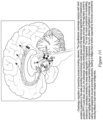
- Afferent nerves in the periphery or distal limbs are connected via neural pathways to sensitized peripheral and central neuron connected to the hypothalamus, as illustrated schematically in FIGS. 1F-1H .
- FIGS. 1A-1E illustrate an embodiment of a device and system 10 that provides transcutaneous peripheral nerve neuromodulation, e.g., stimulation, targeting one, two, three, or more individual nerves, to treat migraines and optionally other headache conditions.
- the device 10 is designed and configured to be worn on the wrist or arm.
- the device 10 is configured for placement below the upper arm/elbow.
- electronics located in a watch-like housing 12 measure heart rate, motion, and/or electrodermal activity, and also generate an electrical stimulation waveform. Electrical contacts in a band 14 and/or housing 12 transmit the stimulation waveform to the disposable electrodes 16.
- the location of the contacts in the band 12 is arranged such that one or more specific nerves are targeted at the wrist, such as the median, radial, and/or ulnar nerves.
- the electronics housing 12 also can have a digital display screen to provide feedback about the stimulation and sensor measurements, derived characteristics and history to the wearer of the device.
- the treatment device 10 is a wrist-worn device that can include, for example, 1) an array of electrodes 16 encircling the wrist, 2) a skin interface to ensure good electrical contact to the person, 3) an electronics box or housing 12 containing the stimulator or pulse generator 18, sensors 20, and other associated electronics such as a controller or processor 22 for executing instructions, memory 24 for storing instructions, a user interface 26 which can include a display and buttons, a communications module 28, a battery 30 that can be rechargeable, and optionally an inductive coil 32 for charging the battery 30, and the like, and/or 4) a band to hold all the components together and securely fasten the device around the wrist of an individual.
- a wrist-worn device can include, for example, 1) an array of electrodes 16 encircling the wrist, 2) a skin interface to ensure good electrical contact to the person, 3) an electronics box or housing 12 containing the stimulator or pulse generator 18, sensors 20, and other associated electronics such as a controller or processor 22 for executing instructions, memory 24 for storing instructions, a user interface 26 which can
- FIG. 3A is a two-part system 310 including a monitor unit 312 that can be wearable in some embodiments and a therapy unit 314.
- the therapy unit 314 can be can be detachable and can be reversibly attached to the wearable monitor unit 312.
- the therapy unit 314 may contain an electrical stimulation signal generator 316, power source 318, and a microprocessor and/or microcontroller 320 to control the stimulation.
- the therapy unit 314 can reversibly connect and communicate directly and/or wirelessly to the wearable monitor 312.
- the therapy unit 314 may remain separate from the wearable monitor unit 312 and can communicate wirelessly with the wearable monitor unit 312.
- the optical heart rate sensor has an adhesive on the side of housing that contacts the wearer's skin to reduce relative motion between the sensor and the target blood vessel.
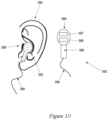
- FIG. 3D illustrates an embodiment of a tragus stimulator 392 with an earbud configuration positioned in the tragus 398 of the ear 390.
- the stimulator 392 can be wired as shown, or wireless in other embodiments.
- the stimulator 392 can include a distal ear receptacle portion 389 that can include a cathode 387 and an anode 388, a hub 386 proximate the receptacle portion 389, and a conduit 388 to a source of electromagnetic energy, such as electrical energy.
- the auricular stimulator 392 includes one or more sensors for measuring parameters relating to stimulation and/or physiologic function as discussed elsewhere herein.
- the auricular stimulator 392 can be unilateral or bilateral (e.g., placed in both ears).
- a system can include a plurality of stimulators that communicate with each other wirelessly and provided a synchronized, patterned stimulation.
- multiple stimulators may be in electrical connection with multiple electrode pairs to stimulate multiple nerves simultaneously.
- a system can include a stimulator on the wrist to target median nerve and a stimulator in the ear to target the ABVN. Each stimulator in the system can communicate with each other via a wired or wireless connection. Multiple stimulators can provide synchronized stimulation to the multiple nerves. Stimulation may be, for example, burst, offset, or alternating between the multiple nerves.
- the patient can enter events related to symptoms, including but not limited to unilateral throbbing cranial pain, sensory sensitivity to light, sound, and smell, nausea events on a mobile device.
- One embodiment of the system could centrally store biological measures from multiple wearers on a server system (e.g., the cloud), along with other relevant demographic data about each user, including age, weight, height, gender, ethnicity, etc.
- Data collected from multiple wearers can be analyzed using standard statistical analysis, machine learning, deep learning, or big data techniques, such as a logistic regression or Naive Bayes classifier (or other classifiers), to improve prediction of migraine or headache attacks by determining correlations between biological measures and other recorded symptom events and migraine or headache events.
- These correlations can be used to set parameters of the stimulation waveform applied by the therapy unit, determine best time to apply stimulation therapy, and/or adapt the stimulation waveform applied by the therapy unit in real time.
- the wearable monitor automatically detects and records the dosage and consumption of medications to (1) track compliance of the patient; (2) combine with the logging of migraine or headache episodes to assess therapeutic effectiveness, and (3) determine or predict migraine or headache attacks.
- the dosage and consumption of medications can be detected and record in multiple ways, including (1) using visual scanner to record a marking on the pill pack or bottle each time medication is consumed, (2) a smart pill cap with force sensors and a wireless transmitter to detect each time the medication is consumed from a pill bottle, (3) an RFID chip that is of similar size and shape as a pill that is consumed with each dosage of medication that is activated by digestion and communicates with the monitor device, (4) an RFID chip embedded in a sugar pill that is consumed with each dosage of medication that is activated by digestion and communicates with the monitor device, (5) a pill with a visual encoding that is scanned and recorded by a camera on the monitor unit each time medication is consumed, or (6) by having the patient logging drug consumption into the device.
- the system can also log the patient satisfaction after each stimulation session or the end of a specified period, like a day or week or month, via an input on the device, which provides another piece of information to help feedback application of therapy.
- a person if a person is satisfied, the therapy is maintained at the current stimulation waveforms and levels. In other cases, this may mean that the stimulation treatment may need to be optimized, for example, by changing stimulation parameters such as waveform frequency or amplitude.
- the wearable monitor can have a visual, auditory, tactile (e.g., squeezing band), or vibrotactile cues to notify the wearer of key events based on analysis of biological measures, including, but not limited to, prediction of migraine or headache attacks, and/or increase in stress level, heart rate, heart rate variability, or other parameters.
- the cuing system could also notify the wearer of other predetermined events or reminders set by the wearer.
- the form of the wearable monitor and/or therapy unit could be a wrist band or watch, a ring, a glove, an arm sleeve or arm band or cuff, knee band, sock, leg sleeve or cuff, an ear piece/headphone, head band, a necklace or neck band, or a compliant patch that conforms to multiple locations on the body.
- the wearable monitor and/or therapy unit is not in the form of a patch.
- the wearable monitor and/or therapy unit extends completely circumferentially around an anatomical location.
- the wearable monitor can have a processing unit and memory that collects, stores, processes, and analyzes the biological measures, along with other data input by the wearer.
- the wearable monitor and/or the therapy unit can connect with other applications, such as calendars and activity logs, to sync and track events or a saved calendar can be saved and stored on the device.
- the wearable monitor and/or the therapy unit can communicate with a variety of computing devices, such as a smart phone, a smart watch, a tablet, a laptop computer, or a desktop computer, for example, that have these applications.
- the wearable monitor can include an ambulatory blood pressure monitor.
- the monitor unit and/or therapy unit can have a GPS or similar device to track the location and assess activity of the wearer. GPS measures can be combined with mapping or location systems to determine context of the wearer's activity (e.g., gym, office, home) or determine changes in elevation during specific activities, such as running or cycling.
- GPS measures can be combined with mapping or location systems to determine context of the wearer's activity (e.g., gym, office, home) or determine changes in elevation during specific activities, such as running or cycling.
- a single monitor unit 412 can be used with a plurality of therapy units 414 having different sizes, shapes, colors, markings and/or capabilities, which includes different battery capacity and power output. Different wearers and usage scenarios may require different amounts of stimulation duration and power, making a smaller or larger therapy unit more desirable and giving the wearer options to meet their needs in different scenarios.
- the therapy units 412 can also have different programming, including different stimulation parameters and/or therapies which can be tailored to different types of treatments.
- the therapy units have a unique charging station that can simultaneously charge multiple therapy units.
- the charging station could have a custom direct electrical connection to the therapy units or could charge the therapy units wirelessly in a close proximity.
- the charging station can charge the monitoring units in a similar manner.
- the therapy unit can use switches or an electrical sensor to detect connection of electrodes: (1) to ensure proper and unique electrodes are being installed (i.e., not using a different or incorrect type of electrode) communicating a unique code, for example via RFID, an encoded EEPROM chip, a resistance or capacitance based ID, a binary identifier, or a surface pattern (2) to regulate the number of uses for each electrode or lifetime of the electrode to prevent over use, and (3) to prevent the usage of the device without an electrode to prevent small shock.
- the therapy unit and/or the monitor unit can have an identifier that can be transmitted to and be received by each other or to an external computing device.
- the identifier can allow one unit to determine the features, capabilities, and/or configuration of the other device, including the electrode configuration described above, so that the appropriate treatment parameters can be used, and also the usage life or expiration of the component, which can be based on voltage measurements, time, number of therapy sessions, or other parameters.
- the features, capabilities, and/or configuration of one device can be transmitted to the other device, either directly from one device to the other device, or through entry into the user interface, or through an external computing device.
- identifiers can encode a variety of information as described herein, as well as predetermined dosing regimens, initialization routines, calibration routines, or specific parameters.
- the identifiers may be associated with a lookup table that stores the encoded information.
- the wearable monitor and/or the therapy unit can communicate with an external computer or device (e.g., tablet, smartphone, smartwatch, or custom base station that includes a charger and communications connection) to store data.
- an external computer or device e.g., tablet, smartphone, smartwatch, or custom base station that includes a charger and communications connection
- Communication between the monitor and external device can be a direct, physical connection, or with a wireless communication connection such as Bluetooth or GSM or cellular.
- the therapy unit has an array of electrodes and one or more sensors, such as pressure sensors, between the therapy unit and the wearer's wrist to measure contact pressure of the skin interface at and/or around the electrodes. Consistent pressure of the skin interface is especially critical for comfort of dry electrode materials.
- This pressure data can be analyzed to determine which electrodes in the array stimulate the appropriate nerves or to detect changes in skin contact due to motion or other conditions and switch stimulation of the electrode array to an optimal location. These methods are used to (1) assess poor contact of electrodes, and (2) adjust amplitude of stimulation based on pressure measurement.
- Increasing contact pressure between the device and the wearer's skin and/or stimulating with electrodes with an adequate contact pressure or above a contact pressure threshold could: (1) increase the surface area of contact, which reduces discomfort, (2) activate deep somatic pain peripheral nerve fibers, which could reduce discomfort from stimulation, which activates superficial pain fibers, (3) reduce the stimulation amplitude needed because it improves stimulation of the targeted nerve (e.g., the electrode is physically closer to the nerve by compression of the surrounding tissue), or (4) reduce the effect of skin motion.
- specific fiber types within a nerve or nerves can be selectively activated (e.g., create action potentials in such specific fiber types) to restore autonomic balance by specifically modulating sympathetic and parasympathetic limbs of the autonomic nervous system (e.g., selectively only one, or more than one of A-alpha, A-beta, A-delta, B, and/or C fibers).
- systems and methods do not stimulate or substantially stimulate A-alpha, A-beta, A-delta, B fibers, or C fibers.
- wearable systems and methods that can utilize transcutaneous sensory stimulation in the form of a burst pattern, e.g., a theta burst pattern to treat migraine or headache conditions, and/or a variety of other conditions, including but not limited to those disclosed herein.
- a burst pattern e.g., a theta burst pattern to treat migraine or headache conditions, and/or a variety of other conditions, including but not limited to those disclosed herein.
- Noninvasive peripheral nerve theta burst stimulation may be effective in some cases in driving cortical or spinal plasticity more efficiently than continuous stimulation to reduce symptoms and improve an individual's quality of life.
- the stimulation involves patterns of electromagnetic stimulation of peripheral nerves.
- the patterned stimulation could be a bursting stimulation, such as an on/off pattern that repeats at regular intervals (e.g., on for 10ms, off for 20ms, etc.), or non-burst patterned stimulation that can be more complex in some embodiments, such as a stochastic pattern or a sinusoidal envelope for example.
- the electromagnetic stimulation could include, for example, electrical energy, mechanical energy (e.g., vibration), magnetic energy, ultrasound energy, radiofrequency energy, thermal energy, light energy (such as infrared or ultraviolet energy for example), and/or microwave energy, or combinations thereof.
- the stimulation is limited to only electrical energy (e.g., no magnetic or other types of energy are applied).
- the peripheral stimulation could include transcutaneous, percutaneous, and/or implanted stimulation.
- the stimulation involves non-invasive transcutaneous electrical patterned or burst stimulation of peripheral nerves, including afferent and/or efferent nerves.
- burst stimulation of peripheral nerves can unexpectedly result in one or more of the following compared with conventional or continuous stimulation: greater efficacy; greater plasticity; increased tolerance or tolerability; reduced effects of habituation; increased comfort; and/or reduced treatment time required to achieve the same beneficial effects.
- Burst stimulation of peripheral nerves, including afferent nerves can in some cases deliver a more efficacious therapy by remotely accelerating plasticity of one or more central nervous system (e.g., brain and/or spinal cord) circuits, in other words creating plasticity in neural circuits for a period of time that is far longer than the duration of the stimulation session, such as, for example, about or at least about 6 hours, 12 hours, 24 hours, 2 days, 3 days, 4 days, 5 days, 6 days, 7 days, 2 weeks, 3 weeks, 1 month, 2 months, 3 months, 4 months, 5 months, 6 months, 9 months, 12 months, 18 months, 24 months, 36 months, or even longer.
- Peripheral stimulation in some cases can be more convenient and comfortable for the user than central stimulation (e.g., transcranial stimulation and/or spinal stimulation) and can be more suitable for home and ambulatory use.
- the burst stimulation includes theta burst stimulation.
- Theta burst stimulation (TBS) is a patterned form of repetitive stimulation that uses high frequency pulses separated by varying inter-burst intervals.
- TBS Theta burst stimulation
- rTMS repetitive magnetic stimulation
- the number of sessions and the spacing interval between individual sessions of stimulation can also have an effect on the duration of the induced response.
- the level of muscle relaxation before or during stimulation can also affect the resulting direction or amplitude of plasticity induction suggesting that homeostatic mechanisms are in place that adjust the threshold for plasticity depending on prior synaptic activity.
- the effective modulation of nervous system plasticity demonstrated with theta burst stimulation can have great potential for the treatment of various neurologic disorders, and can have an effect on other central neural circuits.
- the intraburst frequency could be about or at least about 10 Hz, 20Hz, 30 Hz, 40 Hz, 50 Hz, 100 Hz, 250 Hz, 500 Hz, 1 kHz, or more, or ranges including any two of the foregoing frequencies. In some embodiments, intraburst frequency could vary between about 10 Hz and about 20 kHz. Intraburst frequency can also be varied in a random or pseudorandom fashion during the burst to reduce habituation and/or increase comfort.
- the intraburst frequency can be between about 10 Hz and about 250 Hz, between about 50 Hz and about 150 Hz, between about 10 Hz and about 100 Hz, between about 100 Hz and about 150 Hz, between about 50 Hz and about 250 Hz, less than about 100 Hz, 95 Hz, 90 Hz, 85 Hz, 80 Hz, 75 Hz, 70 Hz, 65 Hz, 60 Hz, 55 Hz, 55, Hz, or between about 50 Hz to about 1000 Hz, or ranges including any two of the frequencies disclosed in this paragraph, in order to maximize therapeutic response, improve comfort, reduce habituation, and/or reduce power consumption of the electrical stimulator device.
- a bursting stimulation is applied to one or more nerves and the interburst frequency can be between about 1 Hz to about 20 Hz, such as between about 4 Hz (250ms between the start of each burst) and about 12 Hz (83 ms), such as between about 4 Hz (250 ms) and about 8 Hz (142 ms) which is generally accepted as the theta band frequency, including about 5 Hz (200 ms), or in some embodiments between about 3.5 Hz and about 7.5 Hz, or between about 6 Hz and about 10 Hz.
- the inter-session frequency can be between about 1 minute and about 12 hours, such as between about 5 minutes and about 120 minutes, between about 5 minutes and about 60 minutes, between about 10 minutes and about 30 minutes, about 5, 10, 15, 20, 25, 30, 35, 40, 45, 50, 55, 60, 75, 90, 120, 180, 240, 300, 360, 420, 480, 540, 600, 660, or 720 minutes, or ranges incorporating any two of the aforementioned values.
- a repetitive patterned stimulation known as quadripulse stimulation could be used, which includes four pulses at a short interval frequency (interstimulus interval of 1.5 ms) repeated at about 0.2 Hz for a period of time, such as about 30 minutes.
- Quadripulse stimulation has been shown to induce prolonged plasticity. Variation of the intraburst frequency using this paradigm can influence the direction of induced plasticity.
- These repetitive small pulses could be anywhere between 2-10 pulses or more.
- burst patterns other than theta burst stimulation can also be used, instead or in addition.
- Some non-limiting examples include delta (0-4 Hz), alpha (8-12 Hz), beta (12-30 Hz), and gamma (30-100 Hz) inter-burst frequencies.
- neuromodulation (e.g., stimulation) with bursting at alpha frequencies can advantageously increase oscillatory frequency.
- neuromodulation (e.g., stimulation) with bursting at theta frequencies can advantageously disrupt low frequency oscillations, which can be associated with migraine pathology.
- neuromodulation (e.g., stimulation) with bursting at beta or gamma frequencies can disrupt increases in surrounding beta/gamma activity.
- an initial calibration and/or periodic or continuous closed-loop adjustment of bursting stimulation frequency can be performed, for example, based on EEG assessment prior to, during, and/or after therapy (e.g., with either in-office assessment or at home assessment, and/or EEG monitoring during resting state ictal or interictal periods to calculate or otherwise determine the dominant oscillatory frequency). Closed-loop adjustments can be made on timescales of seconds, minutes, hours, days, weeks, or months.
- a controller can be configured to vary the bursting frequency between two or more frequencies; ramp, random, Gaussian, and others as disclosed, for example, elsewhere herein.
- a dominant frequency of aberrant neuron oscillations is calculated from EEG data recorded during a resting state (e.g., interictal state).
- the EEG data can be recorded from one or more predetermined regions of interest, including but not limited to Fp1, Fp2, F3, F4, F7, F8, C3, C4, T3, T4, T5, T6, P3, P4, M1, M2, O1, and O2, as shown schematically in FIG. 4E .
- the dominant frequency is then used as a stimulation parameter, such as, for example, limited pattern or burst frequency, stimulation frequency, and/or pulse width.
- the dominant frequency of aberrant neuron oscillations can be calculated from EEG data collected over 1, 2, 3, 4, 5, 10, 15, 20, 25, 30, 60, or 90 minutes.
- the embodiments, the dominant frequency of aberrant neuron oscillations can be re-calculated every 1, 2, 5, 7, 14, 30, 31, 60, or 90 days; 6, 9, or 12 or more months, or ranges incorporating any two of the foregoing values.
- the response to therapy can be observed with EEG assessment after a specified amount of time (e.g., about or no more than about 1, 2, 3, 4, 5, 6, or 7 days; 2, 3, 4 weeks, 1, 2, 3, 4, 5, 6, 7, 8, 9, 10, 11, 12, or more months, or ranges incorporating any two of the foregoing values.
- a first initial EEG assessment can be performed prior to initial therapy.
- a second EEG assessment can be performed during or following a therapy session, and the stimulation parameters adjusted based at least in part of the second EEG assessment.
- the second EEG assessment can be continuous over a period of time during or following a therapy session, and the stimulation parameters adjusted in real time based at least in part of the EEG data received from the second EEG assessment.
- peripheral burst stimulation can include a sinusoidal, square, rectangular, triangular, sawtooth, or other waveforms.
- burst transcutaneous peripheral electrical stimulation can be preferred in some cases over burst transcutaneous peripheral magnetic stimulation.
- transcutaneous peripheral electrical stimulation can be advantageous because magnetic theta burst can require more power and/or be a heavier device. Electrical stimulation can advantageously provide ambulatory home use, and a more precise stimulation of targeted nerves by controlling flow of current between electrodes or by using a percutaneous needle. In some embodiments, stimulation can be provided at a fixed bursting frequency without measuring for/adjusting for a measured frequency of a physiologic or pathologic parameter or symptom associated with a subject.
- the timing of individual sessions of stimulation can be varied in order to prolong the duration of plasticity.
- the intersession interval could be between a lower threshold of approximately 1 minute and an upper threshold of approximately 24 hours.
- Theta burst stimulation intersession interval variation can have a significant effect of varying the spacing intervals between stimulation sessions. Prolongation of the duration of symptom improvement may improve the tolerability of chronic repetitive stimulation.
- the intersession interval can be randomized between a lower threshold and an upper threshold.
- the intersession interval can increase from a lower threshold or value to an upper threshold or value.
- the intersession interval can decrease from an upper threshold or value to a lower threshold or value.
- the intersession interval can be varied according to a predetermined algorithm or schedule.
- the intersession interval can be varied based on feedback based on data from an accelerometer or electromyography. In some embodiments, the intersession interval can be varied based upon feedback based on tracking symptoms and/or measures of autonomic activity (e.g., HRV, EDA).
- the interval could also be optimized using machine learning algorithms, such as deep learning, naive Bayesian networks, neural networks, and/or crowdsourced or otherwise aggregated datasets from multiple users with data (e.g., device usage, symptom tracking, autonomic activity) stored on a remote centralized server (e.g., the cloud).
- alternating stimulation of nerves in the wrist (e.g., radial, median, and/or ulnar nerve) or ear can be performed in a rhythmic pattern or pseudorandom pattern.
- bursting at a rhythmic pattern can improve efficiency of therapeutic benefit by promoting plasticity of corticospinal circuits.
- Rhythmic or pseudorandom bursting patterns can prevent habituation of nerves, which occurs with constant stimulation.
- rhythmic bursting patterns can be synchronized to heart rhythm events detected by heart rate monitors in the system, including but not limited to an electrical phase of the cardiac cycle, such as the P wave, R wave, QRS complex, ST segment, T wave, and the like.
- median, radial, and/or ulnar stimulation can be combined for a synergistic effect at the brachial plexus.
- the median, radial, and ulnar nerves innervate different levels of the spinal cord at the brachial plexus, with pathways that proceed to different target locations and organs.
- Some embodiments can provide timed stimulation, either simultaneously or with a delay, to the median, radial, and/or ulnar nerves to control targeting within the brachial plexus to provide a synergistic effect of neural activation at the brachial plexus, which leads to the stellate ganglia and the sympathetic chain.
- Timing of the stimulation may be simultaneous, or with a delay to account for differences in conduction velocities for the different nerves such that the signals reach the brachial plexus at the same time.
- simultaneous or near simultaneous activation of the brachial plexus can enhance stimulation through neural pathways.
- the average conduction velocities of sensory nerves of radial, median, and ulnar nerves are about 51 m/s, 60 m/s, and 63 m/s respectively.
- the delay in stimulation between a first nerve and a second nerve can be between about 0.3 ms and about 1.7ms, or between about 0.2ms and about 2.0ms, between about 1.2ms and about 2.1ms, or between about 1ms and about 2ms.
- a system could include a nerve conduction velocity measurement by applying a stimulation source on a distal portion of the nerve(s) and a measurement electrode on a proximal portion of the nerve(s) to measure an individual's nerve conduction velocities and modify the timed delay based on the individualized measurements.
- a system could include an electrode configuration to stimulate nerves (e.g., radial, median, and/or ulnar) in an alternating pattern that could be rhythmic or pseudorandom.
- nerves e.g., radial, median, and/or ulnar
- the alternating frequency can be in a range from 1-100 Hz, which has been shown improve efficiency of therapy by promoting plasticity of corticospinal circuits.
- a device embodiment could include an electrode configuration to alternate stimulation of nerves (e.g., radial, median, and/or ulnar) and adjust stimulation parameters (e.g., stimulation frequency, alternating frequency, duration of stimulation, stimulation time of day) based on an assessment of autonomic balance, for example, by measuring heart rate variability (HRV) and analyzing sympathovagal balance as a the ratio of absolute low frequency (LF) to absolute high frequency (HF) power, or LF/HF of measured HRV as noted elsewhere herein.
- HRV heart rate variability
- HF absolute high frequency
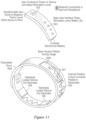
- FIGS. 5A-5I illustrates another embodiment of a two-part therapy system that includes a disposable band 500 and a therapy unit 502 that can be reversibly attached to the disposable band 500.
- the disposable band 500 can have two or more electrodes 504 disposed on a skin facing or inside surface of the band and a receptacle 506 or receiving portion for reversibly receiving the therapy unit 502.
- Within the band 500 are wires and/or conductive traces that form a flexible circuit 505 that runs from the electrodes 504 to the receptacle 506 for electrically connecting the electrodes 504 to the therapy unit 502 when the therapy unit 502 is disposed in the receptacle 506.
- the wires and/or conductive traces of the flexible circuit 505 are arranged in a wave or undulating pattern in order to improve its ability to flex.
- the receptacle 506 can have one or more electrical contact points, such as one or more pin holes 507, for receiving one or more complementary electrical contacts, such as pins 509, from the therapy unit 502.
- the flexible circuit 505 can extend to the pin holes 507 such that an electrical connection is formed when the pins are inserted into the pin holes.
- the receptacle 506 can have a clip, retaining lip, magnet, a snap fit, a twist fit, a hook, a latch, a sliding mechanism, or other securement feature for reversibly securing the therapy unit 502 to the band 500.
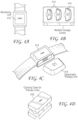
- FIG. 5G illustrates clips 511 that may or may not be spring loaded to form a snap fit around the therapy unit 502.
- FIG. 5H illustrates a flexible lip 513 around the opening of the receptacle that can be used to retain the therapy unit 502 after it is inserted into the receptacle 506.
- FIG. 5I illustrates magnets 515 that can be placed in complementary positions in the therapy unit 502 and the receptacle.
- the clip, magnet, snap fit mechanism, twist fit mechanism, hook, or other securement feature is made of metal or some other conductive material and can be electrically connected to the electrodes via the wires and/or conductive traces.
- the electrodes 504 can be dry electrodes or can be coated with a conductive gel.
- the therapy unit 502 can include a battery, which may be rechargeable, and electronics to deliver electrical stimulation through the electrodes to the patient's nerves.
- the electronics can include a stimulator and a microcontroller, and may also include memory and one or more sensors, such as a blood pressure sensor and/or a sensor to measure heart rate and/or heart rate variability and/or galvanic skin response, or one, two, or more ECG electrodes to measure dyssynchrony.
- the device is able to sense the impedance of the electrodes in order to assess the integrity of the electrode to skin interface.
- there can be an electrical indication (e.g.
- the therapy unit 502 can have one or more LEDs, mini OLED screens, LCS, or indicators 501 that can indicate the status of the therapy unit 502, such as whether the therapy unit 502 is connected to the band 500, the power remaining in the battery of the therapy unit 502, whether a stimulation is being delivered, the stimulation level, whether data is being transmitted, whether a sensor measurement is being taken, whether a calibration routine is being performed, whether the therapy unit 502 is initializing, whether the therapy unit 502 is paired with another device such as a smart watch and/or smart phone, whether the battery is being charged, and the like.
- the therapy unit 502 may also include a user interface 503, such as one or more buttons.
- the band 500 and therapy unit 502 are permanently affixed or integrated together while the smart watch 510 is reversibly attachable to the band 500.
- the smart phone 512 and/or the smart watch 510 can include an application, which may be downloaded through the cloud or a computer, configured to interface with the therapy unit 502.
- FIGS. 5D and 5E illustrate that the wearable two part system can be worn and used throughout the day.
- the therapy unit 502 can be recharged with the charger 508. Charging can be performed at night or whenever the battery is low or when desired.
- the therapy unit can be removed from the band before charging.
- the user can swap a low charge therapy unit with a high charged therapy unit so that the user can always be wearing a therapy unit.
- FIG. 6 illustrates an embodiment of a system for treating migraine and optionally other headache conditions using a wearable therapy device.
- the therapy device may have two parts, a band 500 and therapy unit 502.
- a base station 600 which may replace the charger in the kit described above, can be used to both charge the therapy device and to receive and transmit data to the therapy device and to the cloud 602.
- Communication between the base station 600 and the therapy device can be wireless, such as through Bluetooth and/or Wi-Fi, and communication between the base station 600 and the cloud 602 can be through a cellular network, using a 3G or 4G connection, or through a wired connection to the internet, using DSL or cable or Ethernet, for example.
- the base station 600 is used to receive and transmit relatively large amounts of data that may require a high bandwidth, such as the transmission of raw data from the therapy device, which may be about 10 to 100 Mb/day, or about 10, 20, 30, 40, or 50 Mb/day.
- the data may be stored in memory in the base station 600 and transmitted at another interval, such as weekly or twice weekly, with a scaling up of the bandwidth of transmission.
- the high bandwidth transmission of the raw data can occur daily while the therapy device is being charged, such as at night during a regular charging period.
- the raw data can be processed by the cloud and/or the physician into processed data and sent back to the therapy device.
- the system may optionally include a portable computing device 606, such as a smart phone or tablet, to provide a secondary display and user interface for the patient and to run applications to more easily control the therapy device and view the raw and processed data.
- the portable computing device can be used to make patient or physician adjustments to the therapy device, such as adjusting the stimulation parameters and dosing, and can receive device state data from the therapy device, which includes data relating to the device, such as when the device was used, errors, therapy parameters such as amplitude and when they were set and delivered.
- the portable computing device 606 can receive processed data from the cloud 602 through a cellular network and/or through an internet connection using Wi-Fi, for example.
- the band 702 can have electrodes 724 and may also include memory to store identification information or may include some other form of identifier 726 as described herein.
- the base station 704 can include charging circuitry 728, which may also be inductive and can transmit power to the complementary charging circuitry 714 on the therapy unit 700.
- the base station 704 can also have a processor and memory for storing and executing instructions and programs.
- the base station 704 can further include a communication module 732, which may be cellular, to communicate with the cloud, and another communication module 734, which may be wireless and used to communicate with the therapy unit.
- a stimulator is applied to both wrists/arms or ears to bilaterally stimulate the nerves in the wrist and/or arm, such as median nerves or acu-pressure points, as shown in FIGS. 8A and 8B .
- the device can be worn around the wrist, the forearm, or the upper arm, or the leg below the knee, above the knee, or near the ankle or in the ear or on the tragus.
- the two bilateral devices can be operated simultaneously to stimulate both nerves at the same time.
- the stimulation parameters for each device may be the same, or may differ.
- the two devices may be in communication wirelessly to synchronize or offset the waveforms between to devices.
- the two bilateral devices can be operated in an alternating fashion such that only one device delivers stimulation at a time.
- the alternating devices can alternate stimulation on an hourly, daily, weekly, or monthly basis; and the frequency of the alternation can be modified based on sensor measures.
- the stimulation waveform is biphasic (i.e., positive portion of a pulse is followed, substantially immediately, by a negative portion of the pulse or vice-versa) or monophasic square wave, sine wave, triangle wave, or other shapes. Other embodiments can include curved waveforms where there can be a ramp-up and/or ramp-down period to or from maximum amplitude.
- the stimulation is symmetric or asymmetric.
- the asymmetric waveform can be configured to be charge balanced such that the area under the positive-going pulse can be equal to the area under the negative-going pulse.
- the leading pulse has a positive polarity or a negative polarity.
- references to a structure or feature that is disposed "adjacent" another feature may have portions that overlap or underlie the adjacent feature.
- the device may be otherwise oriented (rotated 90 degrees or at other orientations) and the spatially relative descriptors used herein interpreted accordingly.
- the terms “upwardly”, “downwardly”, “vertical”, “horizontal” and the like are used herein for the purpose of explanation only unless specifically indicated otherwise.
- first and second may be used herein to describe various features/elements (including steps), these features/elements should not be limited by these terms, unless the context indicates otherwise. These terms may be used to distinguish one feature/element from another feature/element. Thus, a first feature/element discussed below could be termed a second feature/element, and similarly, a second feature/element discussed below could be termed a first feature/element without departing from the teachings of the present invention.
- the word “comprise”, and variations such as “comprises” and “comprising” means various components can be co-jointly employed in the methods and articles (e.g., compositions and apparatuses including device and methods).
- the term “comprising” will be understood to imply the inclusion of any stated elements or steps but not the exclusion of any other elements or steps.
- some embodiments can consist or consist essentially of any number of stated elements or steps disclosed herein.
- a numeric value may have a value that is +/- 0.1% of the stated value (or range of values), +/- 1% of the stated value (or range of values), +/- 2% of the stated value (or range of values), +/- 5% of the stated value (or range of values), +/- 10% of the stated value (or range of values), etc.
- Any numerical values given herein should also be understood to include about or approximately that value, unless the context indicates otherwise. For example, if the value "10" is disclosed, then “about 10" is also disclosed. Any numerical range recited herein is intended to include all sub-ranges subsumed therein.
Landscapes
- Health & Medical Sciences (AREA)
- Life Sciences & Earth Sciences (AREA)
- Engineering & Computer Science (AREA)
- General Health & Medical Sciences (AREA)
- Animal Behavior & Ethology (AREA)
- Biomedical Technology (AREA)
- Veterinary Medicine (AREA)
- Public Health (AREA)
- Radiology & Medical Imaging (AREA)
- Nuclear Medicine, Radiotherapy & Molecular Imaging (AREA)
- Biophysics (AREA)
- Heart & Thoracic Surgery (AREA)
- Physiology (AREA)
- Medical Informatics (AREA)
- Cardiology (AREA)
- Surgery (AREA)
- Molecular Biology (AREA)
- Physics & Mathematics (AREA)
- Pathology (AREA)
- Pain & Pain Management (AREA)
- Neurology (AREA)
- Neurosurgery (AREA)
- Psychology (AREA)
- Psychiatry (AREA)
- Otolaryngology (AREA)
- Orthopedic Medicine & Surgery (AREA)
- Pulmonology (AREA)
- Human Computer Interaction (AREA)
- Electrotherapy Devices (AREA)
- Medicines That Contain Protein Lipid Enzymes And Other Medicines (AREA)
Priority Applications (1)
| Application Number | Priority Date | Filing Date | Title |
|---|---|---|---|
| EP25178596.0A EP4616902A3 (en) | 2018-10-24 | 2019-10-23 | Nerve stimulation for treating migraine and other headache conditions |
Applications Claiming Priority (2)
| Application Number | Priority Date | Filing Date | Title |
|---|---|---|---|
| US201862750204P | 2018-10-24 | 2018-10-24 | |
| PCT/US2019/057674 WO2020086726A2 (en) | 2018-10-24 | 2019-10-23 | Nerve stimulation for treating migraine and other headache conditions |
Related Child Applications (2)
| Application Number | Title | Priority Date | Filing Date |
|---|---|---|---|
| EP25178596.0A Division EP4616902A3 (en) | 2018-10-24 | 2019-10-23 | Nerve stimulation for treating migraine and other headache conditions |
| EP25178596.0A Division-Into EP4616902A3 (en) | 2018-10-24 | 2019-10-23 | Nerve stimulation for treating migraine and other headache conditions |
Publications (3)
| Publication Number | Publication Date |
|---|---|
| EP3870272A2 EP3870272A2 (en) | 2021-09-01 |
| EP3870272A4 EP3870272A4 (en) | 2022-07-13 |
| EP3870272B1 true EP3870272B1 (en) | 2025-07-02 |
Family
ID=70332256
Family Applications (2)
| Application Number | Title | Priority Date | Filing Date |
|---|---|---|---|
| EP19874940.0A Active EP3870272B1 (en) | 2018-10-24 | 2019-10-23 | Nerve stimulation for treating migraine and other headache conditions |
| EP25178596.0A Pending EP4616902A3 (en) | 2018-10-24 | 2019-10-23 | Nerve stimulation for treating migraine and other headache conditions |
Family Applications After (1)
| Application Number | Title | Priority Date | Filing Date |
|---|---|---|---|
| EP25178596.0A Pending EP4616902A3 (en) | 2018-10-24 | 2019-10-23 | Nerve stimulation for treating migraine and other headache conditions |
Country Status (8)
| Country | Link |
|---|---|
| US (1) | US20210379374A1 (https=) |
| EP (2) | EP3870272B1 (https=) |
| JP (2) | JP2022505493A (https=) |
| CN (1) | CN113226450A (https=) |
| AU (1) | AU2019364532B2 (https=) |
| CA (1) | CA3117462A1 (https=) |
| IL (1) | IL282615A (https=) |
| WO (1) | WO2020086726A2 (https=) |
Families Citing this family (44)
| Publication number | Priority date | Publication date | Assignee | Title |
|---|---|---|---|---|
| AU2014207265B2 (en) | 2013-01-21 | 2017-04-20 | Cala Health, Inc. | Devices and methods for controlling tremor |
| US12453853B2 (en) | 2013-01-21 | 2025-10-28 | Cala Health, Inc. | Multi-modal stimulation for treating tremor |
| AU2015271774B2 (en) | 2014-06-02 | 2020-04-16 | Cala Health, Inc. | Systems and methods for peripheral nerve stimulation to treat tremor |
| EP4342516A3 (en) | 2015-06-10 | 2024-07-10 | Cala Health, Inc. | Systems and methods for peripheral nerve stimulation to treat tremor with detachable therapy and monitoring units |
| EP3328277A4 (en) | 2015-07-31 | 2019-03-06 | Cala Health, Inc. | SYSTEMS, DEVICES AND METHOD FOR TREATING OSTEOARTHRITIS |
| US10603482B2 (en) | 2015-09-23 | 2020-03-31 | Cala Health, Inc. | Systems and methods for peripheral nerve stimulation in the finger or hand to treat hand tremors |
| AU2017211048B2 (en) | 2016-01-21 | 2022-03-10 | Cala Health, Inc. | Systems, methods and devices for peripheral neuromodulation for treating diseases related to overactive bladder |
| JP7133543B2 (ja) | 2016-08-25 | 2022-09-08 | カラ ヘルス,インコーポレイテッド | 末梢神経刺激による心機能不全の治療のためのシステムおよび方法 |
| US11331480B2 (en) | 2017-04-03 | 2022-05-17 | Cala Health, Inc. | Systems, methods and devices for peripheral neuromodulation for treating diseases related to overactive bladder |
| WO2019143790A1 (en) | 2018-01-17 | 2019-07-25 | Cala Health, Inc. | Systems and methods for treating inflammatory bowel disease through peripheral nerve stimulation |
| US11839583B1 (en) | 2018-09-11 | 2023-12-12 | Encora, Inc. | Apparatus and method for reduction of neurological movement disorder symptoms using wearable device |
| US12318341B2 (en) | 2018-09-11 | 2025-06-03 | Encora, Inc. | Apparatus and method for reduction of neurological movement disorder symptoms using wearable device |
| US11701293B2 (en) | 2018-09-11 | 2023-07-18 | Encora, Inc. | Apparatus and method for reduction of neurological movement disorder symptoms using wearable device |
| US12251560B1 (en) | 2019-08-13 | 2025-03-18 | Cala Health, Inc. | Connection quality determination for wearable neurostimulation systems |
| US11890468B1 (en) | 2019-10-03 | 2024-02-06 | Cala Health, Inc. | Neurostimulation systems with event pattern detection and classification |
| CA3160816A1 (en) * | 2019-11-08 | 2021-05-14 | United Therapeutics Corporation | Nerve stimulation device and method for treating a physiological disorder |
| GB202011523D0 (en) * | 2020-07-24 | 2020-09-09 | Univ London Queen Mary | Neuromodulation for the treatment of critical illness |
| CN112774034B (zh) * | 2021-02-05 | 2025-05-13 | 杭州诺为医疗技术有限公司 | 一种植入式闭环系统中电信号识别处理方法和装置 |
| WO2022203640A1 (en) * | 2021-03-24 | 2022-09-29 | Soranus Arge Ve Danismanlik Hizmetleri Sanayi Ticaret Anonim Sirketi | Systems and methods for transcutaneous posterior tibial nerve stimulation |
| US12357817B2 (en) | 2021-04-06 | 2025-07-15 | Aerin Medical Inc. | Nasal neuromodulation devices and methods |
| FR3124398B1 (fr) | 2021-06-28 | 2023-07-14 | Stimly | Dispositif de neurostimulation électrique transcutanée comprenant des surfaces conductrices et une interface de connexion a un patch d’electrostimulation |
| EP4366820A4 (en) * | 2021-07-09 | 2024-11-20 | Cala Health, Inc. | NEUROSTIMULATIVE SYSTEMS FOR PERSONALIZED THERAPY |
| US20230165502A1 (en) * | 2021-11-30 | 2023-06-01 | Alivecor, Inc. | Multi-lead electrode placement on a wearable electrocardiogram device |
| CN118317810A (zh) * | 2021-12-16 | 2024-07-09 | 纽里韦有限公司 | 利用迷走神经刺激的治疗系统及其应用方法 |
| KR102615035B1 (ko) * | 2021-12-30 | 2023-12-19 | 주식회사 메쥬 | 전기 자극 기능을 포함하는 심전도 모니터링 장치 |
| WO2023235474A1 (en) * | 2022-06-01 | 2023-12-07 | The Board Of Trustees Of The Leland Stanford Junior University | Methods and systems for treatment of systemic inflammatory disorders |
| EP4537184A4 (en) * | 2022-06-07 | 2026-04-01 | Univ California | BIOELECTRICAL NEUROMODULATION METHODS AND SYSTEMS FOR NEUROPATHIC PAIN RELIEF |
| USD1099341S1 (en) | 2022-08-01 | 2025-10-21 | Cala Health, Inc. | Neuromodulator and band set |
| CN115554600A (zh) * | 2022-09-23 | 2023-01-03 | 浙江大学 | 治疗或预防头痛的可穿戴设备 |
| KR102842815B1 (ko) * | 2022-11-30 | 2025-08-06 | 한국전자기술연구원 | 스트레스 케어를 위한 경두개 교류전류 자극 제어 방법 |
| US12194307B2 (en) | 2022-12-20 | 2025-01-14 | Jonathan M Borkum | Methods and apparatuses for activation of Zusanli ST36 acupoint and other acupoints by combined heating and pulsed magnetic activation |
| US11964162B1 (en) | 2022-12-20 | 2024-04-23 | Jonathan M Borkum | Methods and apparatuses for activation of Zusanli ST36 acupoint and other acupoints by combined heating and pulsed magnetic activation |
| WO2024158408A1 (en) * | 2023-01-26 | 2024-08-02 | Relievvr, Llc | System and method for nerve pain treatment |
| JP2026507452A (ja) * | 2023-02-03 | 2026-03-04 | ワシントン・ユニバーシティ | 強化学習のための経皮的耳介迷走神経刺激 |
| CN220989424U (zh) * | 2023-07-14 | 2024-05-24 | 深圳市开颜医疗器械有限公司 | 一种贴片式光疗仪 |
| WO2025050104A1 (en) * | 2023-09-01 | 2025-03-06 | Daming Inc. | Migraine alleviation device |
| WO2025062182A1 (en) * | 2023-09-21 | 2025-03-27 | Kopfwohl GmbH | Peripheral nerve stimulation with random varying of frequency, pulse amplitude, duration and/or pulse width for improved performance |
| TWI882560B (zh) * | 2023-12-05 | 2025-05-01 | 國立清華大學 | 感測刺激裝置 |
| KR102752739B1 (ko) * | 2024-04-08 | 2025-01-13 | (주)디트리플 | 비침습 자극 제공 시스템 |
| CN118078242B (zh) * | 2024-04-29 | 2024-06-18 | 北京大学第三医院(北京大学第三临床医学院) | 一种基于毫米波的交感神经功能监测与调控一体化装置 |
| WO2025227198A1 (en) * | 2024-05-03 | 2025-11-06 | Parasym Ltd | Neuromodulation platform |
| EP4659795A1 (en) * | 2024-06-03 | 2025-12-10 | Larry Kostopoulos | Wrist-worn independent 3-point acupuncture stimulator |
| US12496424B1 (en) * | 2024-06-14 | 2025-12-16 | Richard A. Natrillo | Noninvasive wearable device for remote vital sign monitoring and autonomic nervous system regulation using vibratory and auditory stimulation |
| CN120436662B (zh) * | 2025-05-13 | 2025-12-02 | 西安纳沃信息科技有限公司 | 一种基于大数据分析的冥想效果智能评分方法及系统 |
Family Cites Families (23)
| Publication number | Priority date | Publication date | Assignee | Title |
|---|---|---|---|---|
| US20020138116A1 (en) * | 2001-03-21 | 2002-09-26 | Bertolucci Lawrence E. | Method of relieving migraines or headaches |
| GB0418907D0 (en) * | 2004-08-24 | 2004-09-29 | Univ London | Biofeedback |
| WO2006057734A1 (en) * | 2004-10-21 | 2006-06-01 | Advanced Neuromodulation Systems, Inc. | New stimulation design for neuromodulation |
| US8676330B2 (en) * | 2009-03-20 | 2014-03-18 | ElectroCore, LLC | Electrical and magnetic stimulators used to treat migraine/sinus headache and comorbid disorders |
| US10220207B2 (en) * | 2009-03-20 | 2019-03-05 | Electrocore, Inc. | Nerve stimulation methods for averting imminent onset or episode of a disease |
| AU2010286662B2 (en) * | 2009-08-25 | 2016-08-04 | Argus Neurooptics, Llc | Systems and methods for stimulation of neuronal activity |
| US10279163B2 (en) * | 2011-03-10 | 2019-05-07 | Electrocore, Inc. | Electrical and magnetic stimulators used to treat migraine/sinus headache, rhinitis, sinusitis, rhinosinusitis, and comorbid disorders |
| AU2014207265B2 (en) * | 2013-01-21 | 2017-04-20 | Cala Health, Inc. | Devices and methods for controlling tremor |
| JP2017512606A (ja) * | 2014-03-03 | 2017-05-25 | フィジオキュー インコーポレイテッドPhysiocue, Inc. | 片頭痛と他の頭痛の治療の方法 |
| WO2015179571A1 (en) * | 2014-05-20 | 2015-11-26 | ElectroCore, LLC | Non-invasive nerve stimulation via mobile devices |
| CN106794347B (zh) * | 2014-05-23 | 2020-01-17 | 电核有限责任公司 | 用于迷走神经刺激的系统和方法 |
| AU2015271774B2 (en) | 2014-06-02 | 2020-04-16 | Cala Health, Inc. | Systems and methods for peripheral nerve stimulation to treat tremor |
| JP6759239B2 (ja) * | 2015-01-13 | 2020-09-23 | セラニカ バイオ‐エレクトロニックス リミテッド | 電気刺激による頭痛治療 |
| JP6816033B2 (ja) * | 2015-02-15 | 2021-01-20 | ジヴ ヘルスケア リミテッド | 心拍変動性を改善するためのシステム及び方法 |
| CN107645947A (zh) * | 2015-03-27 | 2018-01-30 | 埃尔瓦有限公司 | 耳朵刺激方法与系统 |
| EP4342516A3 (en) | 2015-06-10 | 2024-07-10 | Cala Health, Inc. | Systems and methods for peripheral nerve stimulation to treat tremor with detachable therapy and monitoring units |
| US10603482B2 (en) | 2015-09-23 | 2020-03-31 | Cala Health, Inc. | Systems and methods for peripheral nerve stimulation in the finger or hand to treat hand tremors |
| US20170165485A1 (en) * | 2015-12-15 | 2017-06-15 | Michael J. Sullivan | Systems and methods for non-invasive treatment of head pain |
| CN109661251A (zh) * | 2016-05-31 | 2019-04-19 | 斯高弗盖斯特实验室公司 | 神经刺激装置和方法 |
| JP7133543B2 (ja) * | 2016-08-25 | 2022-09-08 | カラ ヘルス,インコーポレイテッド | 末梢神経刺激による心機能不全の治療のためのシステムおよび方法 |
| WO2018093765A1 (en) * | 2016-11-15 | 2018-05-24 | Regents Of The University Of California | Methods and apparatuses for improving peripheral nerve function |
| WO2019143790A1 (en) * | 2018-01-17 | 2019-07-25 | Cala Health, Inc. | Systems and methods for treating inflammatory bowel disease through peripheral nerve stimulation |
| EP3813647A4 (en) * | 2018-06-27 | 2022-03-09 | Cala Health, Inc. | MULTIMODAL STIMULATION FOR TREMOR TREATMENT |
-
2019
- 2019-10-23 EP EP19874940.0A patent/EP3870272B1/en active Active
- 2019-10-23 WO PCT/US2019/057674 patent/WO2020086726A2/en not_active Ceased
- 2019-10-23 US US17/287,471 patent/US20210379374A1/en active Pending
- 2019-10-23 AU AU2019364532A patent/AU2019364532B2/en active Active
- 2019-10-23 EP EP25178596.0A patent/EP4616902A3/en active Pending
- 2019-10-23 JP JP2021521756A patent/JP2022505493A/ja active Pending
- 2019-10-23 CN CN201980085655.4A patent/CN113226450A/zh active Pending
- 2019-10-23 CA CA3117462A patent/CA3117462A1/en active Pending
-
2021
- 2021-04-25 IL IL282615A patent/IL282615A/en unknown
-
2025
- 2025-02-07 JP JP2025019185A patent/JP2025069431A/ja active Pending
Also Published As
| Publication number | Publication date |
|---|---|
| CA3117462A1 (en) | 2020-04-30 |
| EP4616902A3 (en) | 2025-12-10 |
| WO2020086726A2 (en) | 2020-04-30 |
| WO2020086726A3 (en) | 2020-07-30 |
| EP3870272A2 (en) | 2021-09-01 |
| EP3870272A4 (en) | 2022-07-13 |
| IL282615A (en) | 2021-06-30 |
| AU2019364532A1 (en) | 2021-05-20 |
| AU2019364532B2 (en) | 2025-01-23 |
| JP2022505493A (ja) | 2022-01-14 |
| US20210379374A1 (en) | 2021-12-09 |
| CN113226450A (zh) | 2021-08-06 |
| JP2025069431A (ja) | 2025-04-30 |
| EP4616902A2 (en) | 2025-09-17 |
Similar Documents
| Publication | Publication Date | Title |
|---|---|---|
| EP3870272B1 (en) | Nerve stimulation for treating migraine and other headache conditions | |
| AU2023200595B2 (en) | Systems and methods for treating cardiac dysfunction through peripheral nerve stimulation | |
| US20260021301A1 (en) | Vibrotactile and ultrasound stimulation for tremor treatment | |
| US20240189594A1 (en) | Auricular device for nerve stimulation and methods of operating same | |
| US11857778B2 (en) | Systems and methods for treating inflammatory bowel disease through peripheral nerve stimulation | |
| AU2025283588A1 (en) | Wearable peripheral nerve stimulation for the treatment of diseases utilizing rhythmic biological processes | |
| WO2020006048A1 (en) | Multi-modal stimulation for treating tremor | |
| CA3058786A1 (en) | Systems, methods and devices for peripheral neuromodulation for treating diseases related to overactive bladder | |
| JP2025535245A (ja) | 神経調節デバイスおよび方法 |
Legal Events
| Date | Code | Title | Description |
|---|---|---|---|
| STAA | Information on the status of an ep patent application or granted ep patent |
Free format text: STATUS: THE INTERNATIONAL PUBLICATION HAS BEEN MADE |
|
| PUAI | Public reference made under article 153(3) epc to a published international application that has entered the european phase |
Free format text: ORIGINAL CODE: 0009012 |
|
| STAA | Information on the status of an ep patent application or granted ep patent |
Free format text: STATUS: REQUEST FOR EXAMINATION WAS MADE |
|
| 17P | Request for examination filed |
Effective date: 20210421 |
|
| AK | Designated contracting states |
Kind code of ref document: A2 Designated state(s): AL AT BE BG CH CY CZ DE DK EE ES FI FR GB GR HR HU IE IS IT LI LT LU LV MC MK MT NL NO PL PT RO RS SE SI SK SM TR |
|
| DAV | Request for validation of the european patent (deleted) | ||
| DAX | Request for extension of the european patent (deleted) | ||
| A4 | Supplementary search report drawn up and despatched |
Effective date: 20220615 |
|
| RIC1 | Information provided on ipc code assigned before grant |
Ipc: A61N 1/04 20060101ALI20220610BHEP Ipc: A61B 5/369 20210101ALI20220610BHEP Ipc: A61N 1/36 20060101AFI20220610BHEP |
|
| STAA | Information on the status of an ep patent application or granted ep patent |
Free format text: STATUS: EXAMINATION IS IN PROGRESS |
|
| 17Q | First examination report despatched |
Effective date: 20230224 |
|
| RAP3 | Party data changed (applicant data changed or rights of an application transferred) |
Owner name: CALA HEALTH, INC. |
|
| GRAP | Despatch of communication of intention to grant a patent |
Free format text: ORIGINAL CODE: EPIDOSNIGR1 |
|
| STAA | Information on the status of an ep patent application or granted ep patent |
Free format text: STATUS: GRANT OF PATENT IS INTENDED |
|
| RIC1 | Information provided on ipc code assigned before grant |
Ipc: A61N 7/00 20060101ALI20250114BHEP Ipc: A61N 2/00 20060101ALI20250114BHEP Ipc: A61N 1/372 20060101ALI20250114BHEP Ipc: A61N 1/05 20060101ALI20250114BHEP Ipc: A61B 5/00 20060101ALI20250114BHEP Ipc: A61B 5/0205 20060101ALI20250114BHEP Ipc: A61B 5/369 20210101ALI20250114BHEP Ipc: A61N 1/04 20060101ALI20250114BHEP Ipc: A61N 1/36 20060101AFI20250114BHEP |
|
| INTG | Intention to grant announced |
Effective date: 20250122 |
|
| GRAS | Grant fee paid |
Free format text: ORIGINAL CODE: EPIDOSNIGR3 |
|
| GRAA | (expected) grant |
Free format text: ORIGINAL CODE: 0009210 |
|
| STAA | Information on the status of an ep patent application or granted ep patent |
Free format text: STATUS: THE PATENT HAS BEEN GRANTED |
|
| AK | Designated contracting states |
Kind code of ref document: B1 Designated state(s): AL AT BE BG CH CY CZ DE DK EE ES FI FR GB GR HR HU IE IS IT LI LT LU LV MC MK MT NL NO PL PT RO RS SE SI SK SM TR |
|
| REG | Reference to a national code |
Ref country code: GB Ref legal event code: FG4D |
|
| REG | Reference to a national code |
Ref country code: CH Ref legal event code: EP |
|
| P01 | Opt-out of the competence of the unified patent court (upc) registered |
Free format text: CASE NUMBER: APP_28703/2025 Effective date: 20250616 |
|
| REG | Reference to a national code |
Ref country code: DE Ref legal event code: R096 Ref document number: 602019072099 Country of ref document: DE |
|
| REG | Reference to a national code |
Ref country code: IE Ref legal event code: FG4D |
|
| PGFP | Annual fee paid to national office [announced via postgrant information from national office to epo] |
Ref country code: GB Payment date: 20250820 Year of fee payment: 7 |
|
| PGFP | Annual fee paid to national office [announced via postgrant information from national office to epo] |
Ref country code: FR Payment date: 20250820 Year of fee payment: 7 |
|
| PGFP | Annual fee paid to national office [announced via postgrant information from national office to epo] |
Ref country code: IE Payment date: 20250821 Year of fee payment: 7 |
|
| REG | Reference to a national code |
Ref country code: NL Ref legal event code: MP Effective date: 20250702 |
|
| PG25 | Lapsed in a contracting state [announced via postgrant information from national office to epo] |
Ref country code: PT Free format text: LAPSE BECAUSE OF FAILURE TO SUBMIT A TRANSLATION OF THE DESCRIPTION OR TO PAY THE FEE WITHIN THE PRESCRIBED TIME-LIMIT Effective date: 20251103 |
|
| PG25 | Lapsed in a contracting state [announced via postgrant information from national office to epo] |
Ref country code: NL Free format text: LAPSE BECAUSE OF FAILURE TO SUBMIT A TRANSLATION OF THE DESCRIPTION OR TO PAY THE FEE WITHIN THE PRESCRIBED TIME-LIMIT Effective date: 20250702 |
|
| REG | Reference to a national code |
Ref country code: AT Ref legal event code: MK05 Ref document number: 1808592 Country of ref document: AT Kind code of ref document: T Effective date: 20250702 |
|
| PG25 | Lapsed in a contracting state [announced via postgrant information from national office to epo] |
Ref country code: IS Free format text: LAPSE BECAUSE OF FAILURE TO SUBMIT A TRANSLATION OF THE DESCRIPTION OR TO PAY THE FEE WITHIN THE PRESCRIBED TIME-LIMIT Effective date: 20251102 |
|
| PGFP | Annual fee paid to national office [announced via postgrant information from national office to epo] |
Ref country code: DE Payment date: 20250821 Year of fee payment: 7 |
|
| PG25 | Lapsed in a contracting state [announced via postgrant information from national office to epo] |
Ref country code: NO Free format text: LAPSE BECAUSE OF FAILURE TO SUBMIT A TRANSLATION OF THE DESCRIPTION OR TO PAY THE FEE WITHIN THE PRESCRIBED TIME-LIMIT Effective date: 20251002 |
|
| REG | Reference to a national code |
Ref country code: LT Ref legal event code: MG9D |
|
| PG25 | Lapsed in a contracting state [announced via postgrant information from national office to epo] |
Ref country code: AT Free format text: LAPSE BECAUSE OF FAILURE TO SUBMIT A TRANSLATION OF THE DESCRIPTION OR TO PAY THE FEE WITHIN THE PRESCRIBED TIME-LIMIT Effective date: 20250702 |
|
| PG25 | Lapsed in a contracting state [announced via postgrant information from national office to epo] |
Ref country code: FI Free format text: LAPSE BECAUSE OF FAILURE TO SUBMIT A TRANSLATION OF THE DESCRIPTION OR TO PAY THE FEE WITHIN THE PRESCRIBED TIME-LIMIT Effective date: 20250702 |
|
| PG25 | Lapsed in a contracting state [announced via postgrant information from national office to epo] |
Ref country code: HR Free format text: LAPSE BECAUSE OF FAILURE TO SUBMIT A TRANSLATION OF THE DESCRIPTION OR TO PAY THE FEE WITHIN THE PRESCRIBED TIME-LIMIT Effective date: 20250702 |
|
| PG25 | Lapsed in a contracting state [announced via postgrant information from national office to epo] |
Ref country code: GR Free format text: LAPSE BECAUSE OF FAILURE TO SUBMIT A TRANSLATION OF THE DESCRIPTION OR TO PAY THE FEE WITHIN THE PRESCRIBED TIME-LIMIT Effective date: 20251003 |
|
| PG25 | Lapsed in a contracting state [announced via postgrant information from national office to epo] |
Ref country code: CZ Free format text: LAPSE BECAUSE OF FAILURE TO SUBMIT A TRANSLATION OF THE DESCRIPTION OR TO PAY THE FEE WITHIN THE PRESCRIBED TIME-LIMIT Effective date: 20250702 Ref country code: SE Free format text: LAPSE BECAUSE OF FAILURE TO SUBMIT A TRANSLATION OF THE DESCRIPTION OR TO PAY THE FEE WITHIN THE PRESCRIBED TIME-LIMIT Effective date: 20250702 |
|
| PG25 | Lapsed in a contracting state [announced via postgrant information from national office to epo] |
Ref country code: LV Free format text: LAPSE BECAUSE OF FAILURE TO SUBMIT A TRANSLATION OF THE DESCRIPTION OR TO PAY THE FEE WITHIN THE PRESCRIBED TIME-LIMIT Effective date: 20250702 |
|
| PG25 | Lapsed in a contracting state [announced via postgrant information from national office to epo] |
Ref country code: BG Free format text: LAPSE BECAUSE OF FAILURE TO SUBMIT A TRANSLATION OF THE DESCRIPTION OR TO PAY THE FEE WITHIN THE PRESCRIBED TIME-LIMIT Effective date: 20250702 Ref country code: PL Free format text: LAPSE BECAUSE OF FAILURE TO SUBMIT A TRANSLATION OF THE DESCRIPTION OR TO PAY THE FEE WITHIN THE PRESCRIBED TIME-LIMIT Effective date: 20250702 |
|
| PG25 | Lapsed in a contracting state [announced via postgrant information from national office to epo] |
Ref country code: RS Free format text: LAPSE BECAUSE OF FAILURE TO SUBMIT A TRANSLATION OF THE DESCRIPTION OR TO PAY THE FEE WITHIN THE PRESCRIBED TIME-LIMIT Effective date: 20251002 |
|
| PG25 | Lapsed in a contracting state [announced via postgrant information from national office to epo] |
Ref country code: ES Free format text: LAPSE BECAUSE OF FAILURE TO SUBMIT A TRANSLATION OF THE DESCRIPTION OR TO PAY THE FEE WITHIN THE PRESCRIBED TIME-LIMIT Effective date: 20250702 |
|
| PG25 | Lapsed in a contracting state [announced via postgrant information from national office to epo] |
Ref country code: RO Free format text: LAPSE BECAUSE OF FAILURE TO SUBMIT A TRANSLATION OF THE DESCRIPTION OR TO PAY THE FEE WITHIN THE PRESCRIBED TIME-LIMIT Effective date: 20250702 |
|
| PG25 | Lapsed in a contracting state [announced via postgrant information from national office to epo] |
Ref country code: SM Free format text: LAPSE BECAUSE OF FAILURE TO SUBMIT A TRANSLATION OF THE DESCRIPTION OR TO PAY THE FEE WITHIN THE PRESCRIBED TIME-LIMIT Effective date: 20250702 |
|
| PG25 | Lapsed in a contracting state [announced via postgrant information from national office to epo] |
Ref country code: DK Free format text: LAPSE BECAUSE OF FAILURE TO SUBMIT A TRANSLATION OF THE DESCRIPTION OR TO PAY THE FEE WITHIN THE PRESCRIBED TIME-LIMIT Effective date: 20250702 |
|
| PG25 | Lapsed in a contracting state [announced via postgrant information from national office to epo] |
Ref country code: IT Free format text: LAPSE BECAUSE OF FAILURE TO SUBMIT A TRANSLATION OF THE DESCRIPTION OR TO PAY THE FEE WITHIN THE PRESCRIBED TIME-LIMIT Effective date: 20250702 |
|
| PG25 | Lapsed in a contracting state [announced via postgrant information from national office to epo] |
Ref country code: SK Free format text: LAPSE BECAUSE OF FAILURE TO SUBMIT A TRANSLATION OF THE DESCRIPTION OR TO PAY THE FEE WITHIN THE PRESCRIBED TIME-LIMIT Effective date: 20250702 Ref country code: EE Free format text: LAPSE BECAUSE OF FAILURE TO SUBMIT A TRANSLATION OF THE DESCRIPTION OR TO PAY THE FEE WITHIN THE PRESCRIBED TIME-LIMIT Effective date: 20250702 |