EP3869839B1 - Drahtlose gegensprechanlage und gruppenpaarungsverfahren für eine drahtlose gegensprechanlage - Google Patents
Drahtlose gegensprechanlage und gruppenpaarungsverfahren für eine drahtlose gegensprechanlage Download PDFInfo
- Publication number
- EP3869839B1 EP3869839B1 EP19886268.2A EP19886268A EP3869839B1 EP 3869839 B1 EP3869839 B1 EP 3869839B1 EP 19886268 A EP19886268 A EP 19886268A EP 3869839 B1 EP3869839 B1 EP 3869839B1
- Authority
- EP
- European Patent Office
- Prior art keywords
- wireless intercom
- group
- intercom
- intercom device
- wireless
- Prior art date
- Legal status (The legal status is an assumption and is not a legal conclusion. Google has not performed a legal analysis and makes no representation as to the accuracy of the status listed.)
- Active
Links
Images





Classifications
-
- H—ELECTRICITY
- H04—ELECTRIC COMMUNICATION TECHNIQUE
- H04M—TELEPHONIC COMMUNICATION
- H04M9/00—Arrangements for interconnection not involving centralised switching
- H04M9/001—Two-way communication systems between a limited number of parties
-
- G—PHYSICS
- G06—COMPUTING OR CALCULATING; COUNTING
- G06K—GRAPHICAL DATA READING; PRESENTATION OF DATA; RECORD CARRIERS; HANDLING RECORD CARRIERS
- G06K7/00—Methods or arrangements for sensing record carriers, e.g. for reading patterns
- G06K7/10—Methods or arrangements for sensing record carriers, e.g. for reading patterns by electromagnetic radiation, e.g. optical sensing; by corpuscular radiation
- G06K7/14—Methods or arrangements for sensing record carriers, e.g. for reading patterns by electromagnetic radiation, e.g. optical sensing; by corpuscular radiation using light without selection of wavelength, e.g. sensing reflected white light
- G06K7/1404—Methods for optical code recognition
- G06K7/1408—Methods for optical code recognition the method being specifically adapted for the type of code
- G06K7/1417—2D bar codes
-
- H—ELECTRICITY
- H04—ELECTRIC COMMUNICATION TECHNIQUE
- H04W—WIRELESS COMMUNICATION NETWORKS
- H04W12/00—Security arrangements; Authentication; Protecting privacy or anonymity
- H04W12/50—Secure pairing of devices
- H04W12/55—Secure pairing of devices involving three or more devices, e.g. group pairing
-
- H—ELECTRICITY
- H04—ELECTRIC COMMUNICATION TECHNIQUE
- H04W—WIRELESS COMMUNICATION NETWORKS
- H04W76/00—Connection management
- H04W76/10—Connection setup
- H04W76/14—Direct-mode setup
-
- H—ELECTRICITY
- H04—ELECTRIC COMMUNICATION TECHNIQUE
- H04W—WIRELESS COMMUNICATION NETWORKS
- H04W84/00—Network topologies
- H04W84/18—Self-organising networks, e.g. ad-hoc networks or sensor networks
- H04W84/20—Leader-follower arrangements
-
- H—ELECTRICITY
- H04—ELECTRIC COMMUNICATION TECHNIQUE
- H04W—WIRELESS COMMUNICATION NETWORKS
- H04W4/00—Services specially adapted for wireless communication networks; Facilities therefor
- H04W4/06—Selective distribution of broadcast services, e.g. multimedia broadcast multicast service [MBMS]; Services to user groups; One-way selective calling services
- H04W4/08—User group management
-
- H—ELECTRICITY
- H04—ELECTRIC COMMUNICATION TECHNIQUE
- H04W—WIRELESS COMMUNICATION NETWORKS
- H04W8/00—Network data management
- H04W8/18—Processing of user or subscriber data, e.g. subscribed services, user preferences or user profiles; Transfer of user or subscriber data
- H04W8/186—Processing of subscriber group data
Definitions
- the present invention relates to wireless intercom techniques.
- a wireless intercom system enables multipoint calls without an operation by a user. Therefore, this system is useful as an effective auxiliary device in activities of various groups.
- a master device and slave devices of the wireless intercom system are paired in groups, that is, a group intercom connection is established once, when some users want to leave the intercom group, or when a specific situation occurs, for example, when an unexpected device disconnection occurs, it is difficult to correct the group intercom connection.
- US 2011/0081860 A1 discloses systems, devices, and methods for performing Bluetooth pairing between a first device and a second device.
- the first device generates a barcode that encodes Bluetooth pairing data for transmission to the second device, wherein the pairing data comprises a Bluetooth address associated with the first device, and wherein the pairing data further comprises a personal identification number usable to complete the Bluetooth pairing, the barcode is transmitted to the second device, and Bluetooth pairing is performed with the second device.
- US 2012/0077438 A1 discloses a Bluetooth headset for a helmet having an inter-communication.
- the Bluetooth headset includes, i.a, a Bluetooth module configured to be accommodated in a headset body of the Bluetooth headset and to perform wireless communication while paired with an external Bluetooth device.
- a group pairing method of a wireless intercom system including: scanning, by a mobile device wirelessly connected to a master wireless intercom device, QR codes displayed on further mobile devices, each wirelessly connected to a corresponding wireless intercom device of a plurality of slave wireless intercom devices to, add the slave wireless intercom devices connected to the further mobile devices to an intercom group as intercom group members; setting a connection order of the intercom group members by using the mobile device wirelessly connected to the master wireless intercom device; and wirelessly chain-connecting the plurality of slave wireless intercom devices to the master wireless intercom device according to the set connection order.
- the group pairing method of a wireless intercom system may further include: if the chain-connection of at least one slave wireless intercom device among the plurality of slave wireless intercom devices is disconnected, searching for at least one slave wireless intercom device that has lost the chain-connection, by using a wireless intercom device that has been connected to the at least one slave wireless intercom device that has lost the chain-connection; and automatically wirelessly connecting the wireless intercom device that has been connected to the at least one slave wireless intercom device that has lost the chain-connection with the searched at least one slave wireless intercom device.
- the step of searching for the at least one slave wireless intercom device that has lost the chain-connection may include: searching for the at least one slave wireless intercom device that has lost the chain-connection using an inquiry response search method.
- the group pairing method of a wireless intercom system may further include: searching for at least one slave wireless intercom device through an inquiry scanning method by the master wireless intercom device, and setting the searched at least one slave wireless intercom device as an intercom group member.
- the group pairing method of a wireless intercom system may further include setting one of the plurality of slave wireless intercom devices as a master wireless intercom device, when the master wireless intercom device requests to leave from the intercom group during group intercom.
- the wireless intercom device may be wirelessly connected to the mobile device and the group intercom connection may be maintained/repaired with the mobile device wirelessly connected to the wireless intercom device, it is possible to improve convenience of a user. In addition, even when an unexpected situation occurs during the group intercom, it is possible to easily maintain/repair the group intercom connection.
- each of the steps may occur differently from the specified order unless a specific order is clearly described in the context. That is, each of the steps may be performed in the same order as the specified order, may be performed substantially simultaneously, or may be performed in the reverse order.
- wordings to be described below are defined in consideration of the functions in the present invention, and may differ depterminating on the intentions of a user or an operator or custom. Accordingly, such wordings should be defined on the basis of the contents of the overall specification.
- a division of the configuration units in the present disclosure is intended for ease of description and divided only by the main function set for each configuration unit. That is, two or more of the configuration units to be described below may be combined into a single configuration unit or formed by two or more of divisions by function into more than a single configuration unit. Further, each of the configuration units to be described below may additionally perform a part or all of the functions among functions set for other configuration units other than being responsible for the main function, and a part of the functions among the main functions set for each of the configuration units may be exclusively taken and certainly performed by other configuration units.
- Each of the configuration units to be described below may be implemented as hardware or software, or may be implemented as a combination of hardware and software.
- FIG. 1 is a view illustrating an embodiment of a wireless intercom system.
- a wireless intercom system 100 may include first to fifth wireless intercom devices 110a to 110e, and first to third mobile devices 120a to 120c.
- the group intercom system 100 shown in FIG. 1 includes five wireless intercom devices 110a to 110e, and three mobile devices 120a to 120c, but this is only for convenience of description, and the number of wireless intercom devices and the number of mobile devices are not particularly limited.
- the first to fifth wireless intercom devices 110a to 110e may be wirelessly chain-connected with each other through group pairing to form an intercom group and perform multipoint calls.
- wireless connections between the respective wireless intercom devices 110a to 110e may be established based on Bluetooth.
- the wireless chain-connection may refer to a connection in which the devices are wirelessly connected in series like a chain.
- the wireless chain-connection may refer to a connection scheme in which a first wireless intercom device 110a is wirelessly connected to a second wireless intercom device 110b, a second wireless intercom device 110b wirelessly connected to the first wireless intercom device 110a is wirelessly connected to a third wireless intercom device 110c, the third wireless intercom device 110c wirelessly connected to the second wireless intercom device 110b is wirelessly connected to a fourth wireless intercom device 110d, and the fourth wireless intercom device 110d wirelessly connected to the third wireless intercom device 110c is wirelessly connected to a fifth wireless intercom device 110e.
- the first to third mobile devices 120a to 120c may be wirelessly connected to the first to third wireless intercom devices 110a to 110c, respectively, using low-power Bluetooth.
- a first mobile device 120a may be Bluetooth connected to the first wireless intercom device 110a
- a second mobile device 120b may be Bluetooth connected to the second wireless intercom device 110b
- a third mobile device 120c may be Bluetooth connected to the third wireless intercom device 110c.
- Each of the mobile devices 120a to 120c may display intercom group information to which the wireless intercom devices 110a to 110c connected to themselves belong, group intercom connection status information of intercom group members and the like.
- Each of the wireless intercom devices 110a, 110b, 110c, 110d, and 110e may operate as a master wireless intercom device or a slave wireless intercom device according to setting of a user.
- the master wireless intercom device may generally control an overall operation of the group intercom, such as modifying an intercom group member, modifying a connection order of the intercom group members, and starting and terminating the group pairing or group intercom.
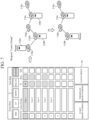
- FIGS. 2 to 5 are views for describing the process of establishing group pairing.
- the first mobile device 120a Bluetooth connected to the first wireless intercom device 110a which is the master wireless intercom device may display an interface screen as shown in FIG. 2 .
- the first mobile device 120a may display intercom group member addition methods that can be selected by the user.
- the first mobile device 120a When the user of the first wireless intercom device 110a selects an object 220, the first mobile device 120a adds an intercom group member through a QR code scanning method, and when the user of the first wireless intercom device 110a selects an object 230, the first mobile device 120a may add an intercom group member through an inquiry scanning method.
- the first mobile device 120a may display an interface screen for scanning a QR code.
- the first mobile device 120a may scan QR codes displayed on the second mobile device 120b wirelessly connected to the second wireless intercom device 110b and the third mobile device 120c wirelessly connected to the third wireless intercom device 110c according to a command from the user to obtain information on the second wireless intercom device 110b and the third wireless intercom device 110c (e.g., name, BDADDR, etc.), and add the second wireless intercom device 110b and the third wireless intercom device 110c to the intercom group.
- information on the second wireless intercom device 110b and the third wireless intercom device 110c e.g., name, BDADDR, etc.
- the first mobile device 120a may generate a wireless intercom search command in the inquiry scanning method and transmit it to the first wireless intercom device 110a.
- the first wireless intercom device 110a may receive the wireless intercom search command in the inquiry scanning method from the first mobile device 120a, and search for the fourth wireless intercom device 110d and the fifth wireless intercom device 110e in an inquiry scanning state to obtain information on the fourth wireless intercom device 110d and the fifth wireless intercom device 110e (e.g., name, BDADDR, etc.), and add the fourth wireless intercom device 110d and the fifth wireless intercom device 110e to the intercom group.
- information on the fourth wireless intercom device 110d and the fifth wireless intercom device 110e e.g., name, BDADDR, etc.
- the first mobile device 120a may display a member list of the intercom group as shown in FIG. 4 , and the user of the first wireless intercom device 110a may add or delete an intercom group member, and/or adjust and set a connection order therebetween using objects 210, 240, 250 and 260.
- the first wireless intercom device 110a may generate a group pairing command and transmit it to the second to fifth wireless intercom devices 110b to 110e, then the second to fifth wireless intercom devices 110b to 110e that have received the group pairing command may be wirelessly chain-connected to the first wireless intercom device 110a according to the set connection order.
- the first mobile device 120a may display an intercom connection status 510 of each of the wireless intercom devices 110a to 110e, a connection status 520 of the mobile devices of each of the wireless intercom devices 110a to 110e, and an inquiry response search status 530 of each of the wireless intercom devices 110a to 110e.
- FIG. 6 is a view for describing a process of terminating the group pairing.
- the first wireless intercom device 110a may generate a group pairing terminating command and transmit it to the second to fifth wireless intercom devices 110b to 110e, then the first wireless intercom device 110a and the second to fifth wireless intercom devices 110b to 110e that have received the group pairing terminating command may disconnect the wireless connection with the wireless intercom devices connected to themselves. Through this, the group pairing may be terminated.
- FIG. 7 is a view for describing a process in which a master wireless intercom device leaves the intercom group.
- the first wireless intercom device 110a may generate a group leave request message (Request "Leave Group") and transmit it to the second to fifth wireless intercom devices 110b to 110e.
- the first wireless intercom device 110a may select one of the wireless intercom devices 110b and 110c Bluetooth connected to the mobile devices 120b and 120c as the master wireless intercom device, then may leave the intercom group.
- FIG. 8 is a view for describing a process in which a slave wireless intercom device leaves the intercom group.
- the third wireless intercom device 110c may generate a group leave request message (Request "Leave Group") and transmit it to the first, second, fourth and fifth wireless intercom devices 110a, 110b, 110d and 110e, then may leave the intercom group.
- a group leave request message Request "Leave Group”
- the wireless connection between the fourth wireless intercom device 110d and the third wireless intercom device 110c and the wireless connection between the third wireless intercom device 110c and the fifth wireless intercom device 110e are disconnected, and the fourth wireless intercom device 110d and the fifth wireless intercom device 110e may be wirelessly connected.
- FIGS. 9 to 12 are views for describing a reconnection process when the chain-connection is disconnected.
- a local master wireless intercom device may be set in the second group which does not include the first wireless intercom device 110a which is the master wireless intercom device.
- the third wireless intercom device 110c connected to the mobile device 120c may be set as the local master wireless intercom device.
- the first mobile device 120a may display an interface screen 910 in which the intercom connection status of the first, second and fourth wireless intercom devices 110a, 110b and 110d, and the connection status of the mobile devices are updated.
- the third mobile device 120c may display an interface screen 920 in which the intercom connection status of the third and fifth wireless intercom devices 110c and 110e, and the connection status of the mobile devices are updated.
- the fourth wireless intercom device 110d of the first group including the first wireless intercom device 110a which is the master wireless intercom device may search for the third wireless intercom device 110c disconnected from itself using an inquiry response method, the first mobile device 120a may display an interface screen 1010 in which the inquiry response search status of the fourth wireless intercom device 110d is updated, and the third mobile device 120c may display an interface screen 1020 in which the inquiry response search status of the third wireless intercom device 110c is updated.
- the fourth wireless intercom device 110d and the third wireless intercom device 110c are automatically wirelessly connected, and the third wireless intercom device 110c that has been set as the local master wireless intercom device may be reset to the slave wireless intercom device again.
- the third wireless intercom device 110c connected to the mobile device 120c may be set as the local master wireless intercom device.
- the process of setting the local master wireless intercom device may be omitted.
- the fourth wireless intercom device 110d of the first group including the first wireless intercom device 110a which is the master wireless intercom device may search for the third wireless intercom device 110c disconnected from itself using the inquiry response method, and when the third wireless intercom device 110c is searched, the fourth wireless intercom device 110d and the third wireless intercom device 110c may be automatically wirelessly connected. Further, the third wireless intercom device 110c that has been set as the local master wireless intercom device may be reset to the slave wireless intercom device again.
- the third wireless intercom device 110c may search for the fifth wireless intercom device 110e disconnected from itself using the inquiry response method.
- third wireless intercom device 110c and the fifth wireless intercom device 110e may be automatically wirelessly connected.
- FIG. 13 is a flowchart illustrating an embodiment of a group pairing method of a wireless intercom system.
- the wireless intercom system may set intercom group members through a QR code scanning method or inquiry scanning method by using a mobile device wirelessly connected to the master wireless intercom device (1310).
- the wireless intercom system may scan a QR code displayed on a mobile device wirelessly connected to a slave wireless intercom device by the mobile device wirelessly connected to the master wireless intercom device to obtain information on the slave wireless intercom device (e.g., name, BDADDR etc.), and add the slave wireless intercom device to the intercom group.
- information on the slave wireless intercom device e.g., name, BDADDR etc.
- the wireless intercom system may search for a slave wireless intercom device in an inquiry scanning state by the master wireless intercom device according to a command from the mobile device wirelessly connected to the master wireless intercom device to obtain information on the searched slave wireless intercom device (e.g., name, BDADDR, etc.), and add the searched slave wireless intercom device to the intercom group.
- information on the searched slave wireless intercom device e.g., name, BDADDR, etc.
- the wireless intercom system may set a connection order of intercom group members (1320).
- the wireless intercom system may wirelessly chain-connect the intercom group members (the master wireless intercom device and the slave wireless intercom devices) according to the set connection order (1330). For example, the wireless intercom system may generate a group pairing command through the master wireless intercom device and transmit it to the slave wireless intercom devices which are the intercom group members, and wirelessly chain-connect the slave wireless intercom devices that have received the group pairing command to the master wireless intercom device according to the set connection order.
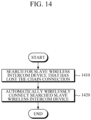
- FIG. 14 is a flowchart illustrating an embodiment of the method of operating a wireless intercom system when the chain-connection is disconnected during the group intercom.
- the wireless intercom system may search for the slave wireless intercom device that has lost the chain-disconnection, by using the wireless intercom device (the master wireless intercom device or the slave wireless intercom device) that has been connected to the slave wireless intercom device that has lost the chain-disconnection (1410).
- the wireless intercom system may search for the third slave wireless intercom device by using the second slave wireless intercom device belonging to the first group.
- the wireless intercom system may use an inquiry response search method.
- the wireless intercom system may automatically wirelessly connect the wireless intercom device (the master wireless intercom device or slave wireless intercom device) that has been connected to the searched slave wireless intercom device with the searched slave wireless intercom device (1420).
- the wireless intercom system may set the slave wireless intercom device that has lost the chain-connection as the local master wireless intercom device.
- the third slave wireless intercom device may be set as the local master wireless intercom device of the second group.
- FIG. 15 is a flowchart illustrating an embodiment of the method of operating a wireless intercom system when there is a request to leave from a wireless intercom device during the group intercom.
- the wireless intercom system may determine whether the wireless intercom device requesting to leave is the master wireless intercom device or the slave wireless intercom device (1510).
- the wireless intercom system may select and set one of the slave wireless intercom devices as the master wireless intercom device (1520), and leave the wireless intercom device requesting to leave from the intercom group (1530).
- the wireless intercom system may leave the wireless intercom device requesting to leave from the intercom group.
- the wireless intercom system may wirelessly chain-connect the wireless intercom devices remaining in the intercom group.
- An aspect of the present invention may be implemented as a computer-readable code in a computer-readable recording medium.
- the codes and code segments, which implement the above program, may be easily deduced by a computer programmer in the art.
- the computer-readable recording medium may include all types of recording devices for storing data that can be read by a computer system. Examples of computer-readable recording medium may include ROM, RAM, CD-ROM, magnetic tape, floppy disk, optical disk and the like. Further, the computer-readable recording medium may be distributed over a computer system connected by a network, and written and implemented in computer-readable code that can be read by the computer in a distributed manner.
Landscapes
- Engineering & Computer Science (AREA)
- Signal Processing (AREA)
- Computer Networks & Wireless Communication (AREA)
- Physics & Mathematics (AREA)
- Computer Security & Cryptography (AREA)
- Health & Medical Sciences (AREA)
- Electromagnetism (AREA)
- General Health & Medical Sciences (AREA)
- Toxicology (AREA)
- Artificial Intelligence (AREA)
- Computer Vision & Pattern Recognition (AREA)
- General Physics & Mathematics (AREA)
- Theoretical Computer Science (AREA)
- Multimedia (AREA)
- Interconnected Communication Systems, Intercoms, And Interphones (AREA)
Claims (5)
- Gruppenpaarungsverfahren für eine drahtlose Gegensprechanlage (100), umfassend:Scannen von QR-Codes (1310), die auf weiteren Mobilvorrichtungen (120b-c) angezeigt werden, die jeweils drahtlos mit einer entsprechenden drahtlosen Gegensprechvorrichtung (110b-c) einer Mehrzahl von drahtlosen Slave-Gegensprechvorrichtungen (110b-e) verbunden sind,durch eine Mobilvorrichtung (120a), die drahtlos mit einer drahtlosen Master-Gegensprechvorrichtung (110a) verbunden ist, um die drahtlosen Slave-Gegensprechvorrichtungen (110b-c), die mit den weiteren Mobilvorrichtungen (120b-c) verbunden sind, zu einer Gegensprechgruppe als Gegensprechgruppenteilnehmer hinzuzufügen:Einstellen einer Verbindungsreihenfolge der Gegensprechgruppenteilnehmer (1320) unter Verwendung der Mobilvorrichtung (120a), die drahtlos mit der drahtlosen Master-Gegensprechvorrichtung (110a) verbunden ist; unddrahtloses Kettenverbinden (1330) der Mehrzahl von drahtlosen Slave-Gegensprechvorrichtungen (110b-c) mit der drahtlosen Master-Gegensprechvorrichtung (110a) entsprechend der eingestellten Verbindungsreihenfolge.
- Gruppenpaarungsverfahren für eine drahtlose Gegensprechanlage (100) nach Anspruch 1, weiterhin umfassend:falls die Kettenverbindung zumindest einer drahtlosen Slave-Gegensprechvorrichtung (110c) aus der Mehrzahl von drahtlosen Slave-Gegensprechvorrichtungen (110b-e) getrennt wird, Suchen nach zumindest einer drahtlosen Slave-Gegensprechvorrichtung (110c), die die Kettenverbindung (1410) verloren hat, unter Verwendung einer drahtlosen Gegensprechvorrichtung (110d), die mit der zumindest einen drahtlosen Slave-Gegensprechvorrichtung (110c), die die Kettenverbindung verloren hat, verbunden worden ist; undautomatisches drahtloses Verbinden der drahtlosen Gegensprechvorrichtung (110d), die mit der zumindest einen drahtlosen Slave-Gegensprechvorrichtung (110c), die die Kettenverbindung verloren hat, verbunden worden ist, mit der gesuchten zumindest einen drahtlosen Slave-Gegensprechvorrichtung (110c).
- Gruppenpaarungsverfahren für eine drahtlose Gegensprechanlage (100) nach Anspruch 2, wobei der Schritt des Suchens nach der zumindest einen drahtlosen Slave-Gegensprechvorrichtung (110c), die die Kettenverbindung (1410) verloren hat, umfasst: Suchen nach der zumindest einen drahtlosen Slave-Gegensprechvorrichtung (110c), die die Kettenverbindung verloren hat, unter Verwendung eines Anfrage-Antwort-Suchverfahrens.
- Gruppenpaarungsverfahren für eine drahtlose Gegensprechanlage (100) nach einem der Ansprüche 1 bis 3, weiterhin umfassend: Suchen nach zumindest einer drahtlosen Slave-Gegensprechvorrichtung (110d-e) mittels eines Anfrage-Scanverfahrens (1310) durch die drahtlose Master-Gegensprechvorrichtung (110a), und Einstellen der gesuchten zumindest einen drahtlosen Slave-Gegensprechvorrichtung (110d-e) als einen Gegensprechgruppenteilnehmer.
- Gruppenpaarungsverfahren für eine drahtlose Gegensprechanlage (100) nach einem der Ansprüche 1 bis 4, weiterhin umfassend das Einstellen einer der Mehrzahl von drahtlosen Slave-Gegensprechvorrichtungen (110b-e) als drahtlose Master-Gegensprechvorrichtung (1520), wenn die drahtlose Master-Gegensprechvorrichtung (110a) während eines Gruppengesprächs das Verlassen der Gegensprechgruppe anfordert.
Applications Claiming Priority (2)
| Application Number | Priority Date | Filing Date | Title |
|---|---|---|---|
| KR1020180143537A KR102079324B1 (ko) | 2018-11-20 | 2018-11-20 | 무선 인터컴 시스템의 그룹 페어링 방법 |
| PCT/KR2019/014545 WO2020105895A1 (ko) | 2018-11-20 | 2019-10-31 | 무선 인터컴 시스템 및 무선 인터컴 시스템의 그룹 페어링 방법 |
Publications (4)
| Publication Number | Publication Date |
|---|---|
| EP3869839A1 EP3869839A1 (de) | 2021-08-25 |
| EP3869839A4 EP3869839A4 (de) | 2022-07-20 |
| EP3869839C0 EP3869839C0 (de) | 2025-01-08 |
| EP3869839B1 true EP3869839B1 (de) | 2025-01-08 |
Family
ID=69669713
Family Applications (1)
| Application Number | Title | Priority Date | Filing Date |
|---|---|---|---|
| EP19886268.2A Active EP3869839B1 (de) | 2018-11-20 | 2019-10-31 | Drahtlose gegensprechanlage und gruppenpaarungsverfahren für eine drahtlose gegensprechanlage |
Country Status (4)
| Country | Link |
|---|---|
| US (1) | US11943394B2 (de) |
| EP (1) | EP3869839B1 (de) |
| KR (1) | KR102079324B1 (de) |
| WO (1) | WO2020105895A1 (de) |
Families Citing this family (4)
| Publication number | Priority date | Publication date | Assignee | Title |
|---|---|---|---|---|
| CN116795310A (zh) | 2022-03-17 | 2023-09-22 | 北京荣耀终端有限公司 | 一种数据传输方法及系统 |
| US12200027B2 (en) * | 2022-11-29 | 2025-01-14 | Prodcom LLC | Selective channel live production system and method |
| IT202300020298A1 (it) | 2023-10-02 | 2025-04-02 | Securesi S R L | Procedura di comunicazione wireless fra sistemi elettronici di veicoli a 2 o 3 ruote e sistemi di sicurezza passiva ed attiva indossati dai conducenti |
| KR20260034921A (ko) * | 2024-09-05 | 2026-03-12 | 주식회사 기도스포츠 | 바이크 전용 무선 인터콤 장치 및 그 통신 방법 |
Family Cites Families (25)
| Publication number | Priority date | Publication date | Assignee | Title |
|---|---|---|---|---|
| US6421754B1 (en) * | 1994-12-22 | 2002-07-16 | Texas Instruments Incorporated | System management mode circuits, systems and methods |
| US6783071B2 (en) * | 2001-06-18 | 2004-08-31 | Symbol Technologies, Inc | Scanner pairing in a bluetooth POS network |
| US20070037568A1 (en) * | 2005-08-15 | 2007-02-15 | Robert Warner | Networked wireless devices for local tracking and interaction |
| US20070076672A1 (en) * | 2005-09-30 | 2007-04-05 | Roberto Gautier | Method and system for controlling ad-hoc membership in wireless networks to improve battery life |
| US20090282130A1 (en) * | 2008-05-12 | 2009-11-12 | Nokia Corporation | Resource sharing via close-proximity wireless communication |
| KR20100053986A (ko) * | 2008-11-13 | 2010-05-24 | 주식회사 케이티테크 | 블루투스 장치와 단말 간의 자동 페어링 방법 및 블루투스 모듈을 포함하는 단말 |
| US8879994B2 (en) | 2009-10-02 | 2014-11-04 | Blackberry Limited | Methods and devices for facilitating Bluetooth pairing using a camera as a barcode scanner |
| KR101033170B1 (ko) * | 2009-10-12 | 2011-05-11 | (주) 에이엠씨 | 양방향 그룹 무선통신 시스템 및 방법 |
| KR101076050B1 (ko) * | 2010-09-29 | 2011-10-26 | 주식회사 세나테크놀로지 | 인터컴 기능을 갖는 헬멧용 블루투스 헤드셋 |
| WO2013010177A2 (en) * | 2011-07-14 | 2013-01-17 | Surfari Inc. | Online groups interacting around common content |
| US20130282912A1 (en) * | 2012-04-24 | 2013-10-24 | Asustek Computer Inc | Connection establishing method between two electronic devices and system applying the same |
| US20140045472A1 (en) * | 2012-08-13 | 2014-02-13 | Qualcomm Incorporated | Provisioning-free memberless group communication sessions |
| US9623319B2 (en) * | 2012-10-10 | 2017-04-18 | Kenneth C. Miller | Games played with robots |
| CN103490991B (zh) * | 2012-12-05 | 2014-12-17 | 腾讯科技(深圳)有限公司 | 通过格式图样加入群组的方法及装置 |
| US10069640B2 (en) | 2012-12-05 | 2018-09-04 | Tencent Technology (Shenzhen) Company Limited | Methods and devices for adding new member to group through barcode scanning |
| KR101981140B1 (ko) * | 2012-12-24 | 2019-05-22 | 삼성전자주식회사 | 블루투스 기기 페어링 방법과 그 블루투스 기기 |
| KR101352459B1 (ko) | 2013-02-18 | 2014-01-17 | (주)소담미디어 | 무선 인터컴 기반의 유연 그룹 페어링 방법 및 유연한 그룹 페어링 구현을 위한 무선 인터컴 시스템 |
| CA2926459C (en) * | 2013-10-07 | 2023-10-03 | Google Inc. | Smart home device facilitating user-friendly setup experience |
| WO2015057116A1 (en) * | 2013-10-15 | 2015-04-23 | Telefonaktiebolaget L M Ericsson (Publ) | Establishing a secure connection between a master device and a slave device |
| JP5892401B1 (ja) | 2015-02-20 | 2016-03-23 | パナソニックIpマネジメント株式会社 | ドアホンシステムおよび通信方法 |
| US10009286B2 (en) * | 2015-05-08 | 2018-06-26 | Ooma, Inc. | Communications hub |
| US20180310033A1 (en) * | 2017-04-20 | 2018-10-25 | Tellybean Oy | Computer implemented method for providing multi-camera live broadcasting service |
| US10716192B1 (en) * | 2017-08-30 | 2020-07-14 | Roman Tsibulevskiy | Charging technologies |
| KR102083564B1 (ko) * | 2019-01-04 | 2020-04-23 | 주식회사 세나테크놀로지 | 무선 인터컴 시스템 및 무선 인터컴 시스템의 그룹 페어링 방법 |
| CN113473551A (zh) * | 2020-03-31 | 2021-10-01 | 博通集成电路(上海)股份有限公司 | 无线扬声器系统 |
-
2018
- 2018-11-20 KR KR1020180143537A patent/KR102079324B1/ko active Active
-
2019
- 2019-10-31 US US17/290,067 patent/US11943394B2/en active Active
- 2019-10-31 WO PCT/KR2019/014545 patent/WO2020105895A1/ko not_active Ceased
- 2019-10-31 EP EP19886268.2A patent/EP3869839B1/de active Active
Also Published As
| Publication number | Publication date |
|---|---|
| WO2020105895A1 (ko) | 2020-05-28 |
| KR102079324B1 (ko) | 2020-02-19 |
| US11943394B2 (en) | 2024-03-26 |
| US20210400145A1 (en) | 2021-12-23 |
| EP3869839A1 (de) | 2021-08-25 |
| EP3869839A4 (de) | 2022-07-20 |
| EP3869839C0 (de) | 2025-01-08 |
Similar Documents
| Publication | Publication Date | Title |
|---|---|---|
| EP3869839B1 (de) | Drahtlose gegensprechanlage und gruppenpaarungsverfahren für eine drahtlose gegensprechanlage | |
| US11102701B2 (en) | Method, device and system of controlling bluetooth networking among physical devices | |
| US8671235B2 (en) | KVM switch with embedded bluetooth module | |
| US9210732B2 (en) | Wireless communication device registration in a wireless network | |
| CN113366439A (zh) | 一种连接蓝牙设备方法及设备 | |
| US10582554B2 (en) | Connection processing method, communication system, and communication device | |
| JP2008182439A (ja) | 情報処理装置、無線通信装置、無線通信システム、無線設定プログラム | |
| US7610410B2 (en) | Method and a system for establishing a connection with identification and group information | |
| CN113872835A (zh) | 用于设备配网的方法及装置、服务器、智能家电设备、终端设备 | |
| JP2016005154A (ja) | ペアリング方法、および端末装置 | |
| JP6361084B2 (ja) | 近距離無線通信システム、通信端末、および通信方法 | |
| CN110601986A (zh) | 一种支持外设控制移动终端设备的路由器、控制方法及装置 | |
| KR102177230B1 (ko) | 시리얼 통신 식별장치 및 방법 | |
| CN205880745U (zh) | 一种电子设备 | |
| US20210048813A1 (en) | Load control methods, mobile platforms, and computer-readable storage media | |
| EP3154243B1 (de) | Kommunikationsvorrichtung und kommunikationssteuerungsverfahren | |
| JP6745935B1 (ja) | スレーブ接続切替装置およびスレーブ接続切替方法 | |
| US20210410217A1 (en) | Wireless intercommunication system and group pairing method of intercommunication system | |
| EP1513327A2 (de) | Tragbares Funkkommunikationsgerät und Verfahren und System zum Freisprechbetrieb | |
| US20130282912A1 (en) | Connection establishing method between two electronic devices and system applying the same | |
| CN104104816B (zh) | 通信设备及其控制方法 | |
| KR20130078389A (ko) | 이종 네트워크 간 통신을 위한 네트워크 연결장치 및 네트워크 연결방법 | |
| JP2009224876A (ja) | 携帯端末装置、そのアクセス方法、およびプログラム | |
| JP2004200807A (ja) | 無線通信の制御方法 | |
| JP2022083426A (ja) | アクセサリ装置構成を用いた通信システム |
Legal Events
| Date | Code | Title | Description |
|---|---|---|---|
| STAA | Information on the status of an ep patent application or granted ep patent |
Free format text: STATUS: THE INTERNATIONAL PUBLICATION HAS BEEN MADE |
|
| PUAI | Public reference made under article 153(3) epc to a published international application that has entered the european phase |
Free format text: ORIGINAL CODE: 0009012 |
|
| STAA | Information on the status of an ep patent application or granted ep patent |
Free format text: STATUS: REQUEST FOR EXAMINATION WAS MADE |
|
| 17P | Request for examination filed |
Effective date: 20210519 |
|
| AK | Designated contracting states |
Kind code of ref document: A1 Designated state(s): AL AT BE BG CH CY CZ DE DK EE ES FI FR GB GR HR HU IE IS IT LI LT LU LV MC MK MT NL NO PL PT RO RS SE SI SK SM TR |
|
| DAV | Request for validation of the european patent (deleted) | ||
| DAX | Request for extension of the european patent (deleted) | ||
| A4 | Supplementary search report drawn up and despatched |
Effective date: 20220615 |
|
| RIC1 | Information provided on ipc code assigned before grant |
Ipc: H04W 84/20 20090101ALN20220611BHEP Ipc: H04W 4/08 20090101ALN20220611BHEP Ipc: H04W 8/18 20090101ALN20220611BHEP Ipc: H04M 9/00 20060101ALI20220611BHEP Ipc: H04W 76/14 20180101AFI20220611BHEP |
|
| REG | Reference to a national code |
Ref country code: DE Ref legal event code: R079 Free format text: PREVIOUS MAIN CLASS: H04W0004080000 Ipc: H04W0076140000 Ref country code: DE Ref legal event code: R079 Ref document number: 602019064739 Country of ref document: DE Free format text: PREVIOUS MAIN CLASS: H04W0004080000 Ipc: H04W0076140000 |
|
| RIC1 | Information provided on ipc code assigned before grant |
Ipc: H04W 84/20 20090101ALN20240716BHEP Ipc: H04W 4/08 20090101ALN20240716BHEP Ipc: H04W 8/18 20090101ALN20240716BHEP Ipc: H04W 12/55 20210101ALI20240716BHEP Ipc: H04M 9/00 20060101ALI20240716BHEP Ipc: H04W 76/14 20180101AFI20240716BHEP |
|
| GRAP | Despatch of communication of intention to grant a patent |
Free format text: ORIGINAL CODE: EPIDOSNIGR1 |
|
| STAA | Information on the status of an ep patent application or granted ep patent |
Free format text: STATUS: GRANT OF PATENT IS INTENDED |
|
| INTG | Intention to grant announced |
Effective date: 20240829 |
|
| GRAS | Grant fee paid |
Free format text: ORIGINAL CODE: EPIDOSNIGR3 |
|
| GRAA | (expected) grant |
Free format text: ORIGINAL CODE: 0009210 |
|
| STAA | Information on the status of an ep patent application or granted ep patent |
Free format text: STATUS: THE PATENT HAS BEEN GRANTED |
|
| AK | Designated contracting states |
Kind code of ref document: B1 Designated state(s): AL AT BE BG CH CY CZ DE DK EE ES FI FR GB GR HR HU IE IS IT LI LT LU LV MC MK MT NL NO PL PT RO RS SE SI SK SM TR |
|
| REG | Reference to a national code |
Ref country code: GB Ref legal event code: FG4D |
|
| REG | Reference to a national code |
Ref country code: CH Ref legal event code: EP |
|
| REG | Reference to a national code |
Ref country code: DE Ref legal event code: R096 Ref document number: 602019064739 Country of ref document: DE |
|
| REG | Reference to a national code |
Ref country code: IE Ref legal event code: FG4D |
|
| U01 | Request for unitary effect filed |
Effective date: 20250206 |
|
| U07 | Unitary effect registered |
Designated state(s): AT BE BG DE DK EE FI FR IT LT LU LV MT NL PT RO SE SI Effective date: 20250212 |
|
| PG25 | Lapsed in a contracting state [announced via postgrant information from national office to epo] |
Ref country code: RS Free format text: LAPSE BECAUSE OF FAILURE TO SUBMIT A TRANSLATION OF THE DESCRIPTION OR TO PAY THE FEE WITHIN THE PRESCRIBED TIME-LIMIT Effective date: 20250408 |
|
| PG25 | Lapsed in a contracting state [announced via postgrant information from national office to epo] |
Ref country code: PL Free format text: LAPSE BECAUSE OF FAILURE TO SUBMIT A TRANSLATION OF THE DESCRIPTION OR TO PAY THE FEE WITHIN THE PRESCRIBED TIME-LIMIT Effective date: 20250108 |
|
| PG25 | Lapsed in a contracting state [announced via postgrant information from national office to epo] |
Ref country code: ES Free format text: LAPSE BECAUSE OF FAILURE TO SUBMIT A TRANSLATION OF THE DESCRIPTION OR TO PAY THE FEE WITHIN THE PRESCRIBED TIME-LIMIT Effective date: 20250108 |
|
| PG25 | Lapsed in a contracting state [announced via postgrant information from national office to epo] |
Ref country code: NO Free format text: LAPSE BECAUSE OF FAILURE TO SUBMIT A TRANSLATION OF THE DESCRIPTION OR TO PAY THE FEE WITHIN THE PRESCRIBED TIME-LIMIT Effective date: 20250408 Ref country code: IS Free format text: LAPSE BECAUSE OF FAILURE TO SUBMIT A TRANSLATION OF THE DESCRIPTION OR TO PAY THE FEE WITHIN THE PRESCRIBED TIME-LIMIT Effective date: 20250508 |
|
| PG25 | Lapsed in a contracting state [announced via postgrant information from national office to epo] |
Ref country code: HR Free format text: LAPSE BECAUSE OF FAILURE TO SUBMIT A TRANSLATION OF THE DESCRIPTION OR TO PAY THE FEE WITHIN THE PRESCRIBED TIME-LIMIT Effective date: 20250108 |
|
| PG25 | Lapsed in a contracting state [announced via postgrant information from national office to epo] |
Ref country code: GR Free format text: LAPSE BECAUSE OF FAILURE TO SUBMIT A TRANSLATION OF THE DESCRIPTION OR TO PAY THE FEE WITHIN THE PRESCRIBED TIME-LIMIT Effective date: 20250409 |
|
| PG25 | Lapsed in a contracting state [announced via postgrant information from national office to epo] |
Ref country code: SM Free format text: LAPSE BECAUSE OF FAILURE TO SUBMIT A TRANSLATION OF THE DESCRIPTION OR TO PAY THE FEE WITHIN THE PRESCRIBED TIME-LIMIT Effective date: 20250108 |
|
| PG25 | Lapsed in a contracting state [announced via postgrant information from national office to epo] |
Ref country code: CZ Free format text: LAPSE BECAUSE OF FAILURE TO SUBMIT A TRANSLATION OF THE DESCRIPTION OR TO PAY THE FEE WITHIN THE PRESCRIBED TIME-LIMIT Effective date: 20250108 |
|
| PG25 | Lapsed in a contracting state [announced via postgrant information from national office to epo] |
Ref country code: SK Free format text: LAPSE BECAUSE OF FAILURE TO SUBMIT A TRANSLATION OF THE DESCRIPTION OR TO PAY THE FEE WITHIN THE PRESCRIBED TIME-LIMIT Effective date: 20250108 |
|
| PLBE | No opposition filed within time limit |
Free format text: ORIGINAL CODE: 0009261 |
|
| STAA | Information on the status of an ep patent application or granted ep patent |
Free format text: STATUS: NO OPPOSITION FILED WITHIN TIME LIMIT |
|
| U20 | Renewal fee for the european patent with unitary effect paid |
Year of fee payment: 7 Effective date: 20251015 |
|
| 26N | No opposition filed |
Effective date: 20251009 |
|
| PGFP | Annual fee paid to national office [announced via postgrant information from national office to epo] |
Ref country code: GB Payment date: 20251022 Year of fee payment: 7 |