EP3869416B1 - Räumliches aufmerksamkeitsmodell für bildunterschrift - Google Patents
Räumliches aufmerksamkeitsmodell für bildunterschrift Download PDFInfo
- Publication number
- EP3869416B1 EP3869416B1 EP21167276.1A EP21167276A EP3869416B1 EP 3869416 B1 EP3869416 B1 EP 3869416B1 EP 21167276 A EP21167276 A EP 21167276A EP 3869416 B1 EP3869416 B1 EP 3869416B1
- Authority
- EP
- European Patent Office
- Prior art keywords
- image
- decoder
- sentinel
- word
- lstm
- Prior art date
- Legal status (The legal status is an assumption and is not a legal conclusion. Google has not performed a legal analysis and makes no representation as to the accuracy of the status listed.)
- Active
Links
Images











Classifications
-
- G—PHYSICS
- G06—COMPUTING OR CALCULATING; COUNTING
- G06V—IMAGE OR VIDEO RECOGNITION OR UNDERSTANDING
- G06V10/00—Arrangements for image or video recognition or understanding
- G06V10/70—Arrangements for image or video recognition or understanding using pattern recognition or machine learning
- G06V10/82—Arrangements for image or video recognition or understanding using pattern recognition or machine learning using neural networks
-
- G—PHYSICS
- G06—COMPUTING OR CALCULATING; COUNTING
- G06F—ELECTRIC DIGITAL DATA PROCESSING
- G06F18/00—Pattern recognition
- G06F18/20—Analysing
- G06F18/24—Classification techniques
- G06F18/241—Classification techniques relating to the classification model, e.g. parametric or non-parametric approaches
- G06F18/2413—Classification techniques relating to the classification model, e.g. parametric or non-parametric approaches based on distances to training or reference patterns
- G06F18/24133—Distances to prototypes
-
- G—PHYSICS
- G06—COMPUTING OR CALCULATING; COUNTING
- G06F—ELECTRIC DIGITAL DATA PROCESSING
- G06F18/00—Pattern recognition
- G06F18/20—Analysing
- G06F18/24—Classification techniques
- G06F18/241—Classification techniques relating to the classification model, e.g. parametric or non-parametric approaches
- G06F18/2415—Classification techniques relating to the classification model, e.g. parametric or non-parametric approaches based on parametric or probabilistic models, e.g. based on likelihood ratio or false acceptance rate versus a false rejection rate
-
- G—PHYSICS
- G06—COMPUTING OR CALCULATING; COUNTING
- G06F—ELECTRIC DIGITAL DATA PROCESSING
- G06F40/00—Handling natural language data
- G06F40/10—Text processing
- G06F40/166—Editing, e.g. inserting or deleting
- G06F40/169—Annotation, e.g. comment data or footnotes
-
- G—PHYSICS
- G06—COMPUTING OR CALCULATING; COUNTING
- G06F—ELECTRIC DIGITAL DATA PROCESSING
- G06F40/00—Handling natural language data
- G06F40/20—Natural language analysis
- G06F40/274—Converting codes to words; Guess-ahead of partial word inputs
-
- G—PHYSICS
- G06—COMPUTING OR CALCULATING; COUNTING
- G06F—ELECTRIC DIGITAL DATA PROCESSING
- G06F40/00—Handling natural language data
- G06F40/30—Semantic analysis
-
- G—PHYSICS
- G06—COMPUTING OR CALCULATING; COUNTING
- G06N—COMPUTING ARRANGEMENTS BASED ON SPECIFIC COMPUTATIONAL MODELS
- G06N3/00—Computing arrangements based on biological models
- G06N3/02—Neural networks
- G06N3/04—Architecture, e.g. interconnection topology
- G06N3/044—Recurrent networks, e.g. Hopfield networks
-
- G—PHYSICS
- G06—COMPUTING OR CALCULATING; COUNTING
- G06N—COMPUTING ARRANGEMENTS BASED ON SPECIFIC COMPUTATIONAL MODELS
- G06N3/00—Computing arrangements based on biological models
- G06N3/02—Neural networks
- G06N3/04—Architecture, e.g. interconnection topology
- G06N3/044—Recurrent networks, e.g. Hopfield networks
- G06N3/0442—Recurrent networks, e.g. Hopfield networks characterised by memory or gating, e.g. long short-term memory [LSTM] or gated recurrent units [GRU]
-
- G—PHYSICS
- G06—COMPUTING OR CALCULATING; COUNTING
- G06N—COMPUTING ARRANGEMENTS BASED ON SPECIFIC COMPUTATIONAL MODELS
- G06N3/00—Computing arrangements based on biological models
- G06N3/02—Neural networks
- G06N3/04—Architecture, e.g. interconnection topology
- G06N3/045—Combinations of networks
- G06N3/0455—Auto-encoder networks; Encoder-decoder networks
-
- G—PHYSICS
- G06—COMPUTING OR CALCULATING; COUNTING
- G06N—COMPUTING ARRANGEMENTS BASED ON SPECIFIC COMPUTATIONAL MODELS
- G06N3/00—Computing arrangements based on biological models
- G06N3/02—Neural networks
- G06N3/04—Architecture, e.g. interconnection topology
- G06N3/0464—Convolutional networks [CNN, ConvNet]
-
- G—PHYSICS
- G06—COMPUTING OR CALCULATING; COUNTING
- G06N—COMPUTING ARRANGEMENTS BASED ON SPECIFIC COMPUTATIONAL MODELS
- G06N3/00—Computing arrangements based on biological models
- G06N3/02—Neural networks
- G06N3/08—Learning methods
- G06N3/082—Learning methods modifying the architecture, e.g. adding, deleting or silencing nodes or connections
-
- G—PHYSICS
- G06—COMPUTING OR CALCULATING; COUNTING
- G06N—COMPUTING ARRANGEMENTS BASED ON SPECIFIC COMPUTATIONAL MODELS
- G06N3/00—Computing arrangements based on biological models
- G06N3/02—Neural networks
- G06N3/08—Learning methods
- G06N3/084—Backpropagation, e.g. using gradient descent
-
- G—PHYSICS
- G06—COMPUTING OR CALCULATING; COUNTING
- G06N—COMPUTING ARRANGEMENTS BASED ON SPECIFIC COMPUTATIONAL MODELS
- G06N3/00—Computing arrangements based on biological models
- G06N3/02—Neural networks
- G06N3/08—Learning methods
- G06N3/0895—Weakly supervised learning, e.g. semi-supervised or self-supervised learning
-
- G—PHYSICS
- G06—COMPUTING OR CALCULATING; COUNTING
- G06N—COMPUTING ARRANGEMENTS BASED ON SPECIFIC COMPUTATIONAL MODELS
- G06N3/00—Computing arrangements based on biological models
- G06N3/02—Neural networks
- G06N3/08—Learning methods
- G06N3/09—Supervised learning
-
- G—PHYSICS
- G06—COMPUTING OR CALCULATING; COUNTING
- G06V—IMAGE OR VIDEO RECOGNITION OR UNDERSTANDING
- G06V10/00—Arrangements for image or video recognition or understanding
- G06V10/40—Extraction of image or video features
- G06V10/44—Local feature extraction by analysis of parts of the pattern, e.g. by detecting edges, contours, loops, corners, strokes or intersections; Connectivity analysis, e.g. of connected components
- G06V10/443—Local feature extraction by analysis of parts of the pattern, e.g. by detecting edges, contours, loops, corners, strokes or intersections; Connectivity analysis, e.g. of connected components by matching or filtering
- G06V10/449—Biologically inspired filters, e.g. difference of Gaussians [DoG] or Gabor filters
- G06V10/451—Biologically inspired filters, e.g. difference of Gaussians [DoG] or Gabor filters with interaction between the filter responses, e.g. cortical complex cells
- G06V10/454—Integrating the filters into a hierarchical structure, e.g. convolutional neural networks [CNN]
-
- G—PHYSICS
- G06—COMPUTING OR CALCULATING; COUNTING
- G06V—IMAGE OR VIDEO RECOGNITION OR UNDERSTANDING
- G06V10/00—Arrangements for image or video recognition or understanding
- G06V10/94—Hardware or software architectures specially adapted for image or video understanding
- G06V10/955—Hardware or software architectures specially adapted for image or video understanding using specific electronic processors
-
- G—PHYSICS
- G06—COMPUTING OR CALCULATING; COUNTING
- G06V—IMAGE OR VIDEO RECOGNITION OR UNDERSTANDING
- G06V20/00—Scenes; Scene-specific elements
- G06V20/35—Categorising the entire scene, e.g. birthday party or wedding scene
-
- G—PHYSICS
- G06—COMPUTING OR CALCULATING; COUNTING
- G06V—IMAGE OR VIDEO RECOGNITION OR UNDERSTANDING
- G06V30/00—Character recognition; Recognising digital ink; Document-oriented image-based pattern recognition
- G06V30/10—Character recognition
- G06V30/19—Recognition using electronic means
- G06V30/191—Design or setup of recognition systems or techniques; Extraction of features in feature space; Clustering techniques; Blind source separation
- G06V30/19173—Classification techniques
-
- G—PHYSICS
- G06—COMPUTING OR CALCULATING; COUNTING
- G06N—COMPUTING ARRANGEMENTS BASED ON SPECIFIC COMPUTATIONAL MODELS
- G06N3/00—Computing arrangements based on biological models
- G06N3/02—Neural networks
- G06N3/04—Architecture, e.g. interconnection topology
- G06N3/045—Combinations of networks
Definitions
- the technology disclosed relates to artificial intelligence type computers and digital data processing systems and corresponding data processing methods and products for emulation of intelligence (i.e., knowledge based systems, reasoning systems, and knowledge acquisition systems); and including systems for reasoning with uncertainty (e.g., fuzzy logic systems), adaptive systems, machine learning systems, and artificial neural networks.
- the technology disclosed generally relates to a novel visual attention-based encoder-decoder image captioning model.
- One aspect of the technology disclosed relates to a novel spatial attention model for extracting spatial image features during image captioning.
- the spatial attention model uses current hidden state information of a decoder long short-term memory (LSTM) to guide attention, rather than using a previous hidden state or a previously emitted word.
- LSTM decoder long short-term memory
- Another aspect of the technology disclosed relates to a novel adaptive attention model for image captioning that mixes visual information from a convolutional neural network (CNN) and linguistic information from an LSTM.
- CNN convolutional neural network
- the adaptive attention model automatically decides how heavily to rely on the image, as opposed to the linguistic model, to emit the next caption word.
- Yet another aspect of the technology disclosed relates to adding a new auxiliary sentinel gate to an LSTM architecture and producing a sentinel LSTM (Sn-LSTM).
- the sentinel gate produces a visual sentinel at each timestep, which is an additional representation, derived from the LSTM's memory, of long and short term visual and linguistic information.
- Image captioning is drawing increasing interest in computer vision and machine learning. Basically, it requires machines to automatically describe the content of an image using a natural language sentence. While this task seems obvious for human-beings, it is complicated for machines since it requires the language model to capture various semantic features within an image, such as objects' motions and actions. Another challenge for image captioning, especially for generative models, is that the generated output should be human-like natural sentences.
- CNN convolutional neural network
- LSTM long short-term memory
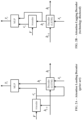
- FIG. 2A shows an attention leading decoder that uses previous hidden state information to guide attention and generate an image caption (prior art).
- Deep neural networks have been successfully applied to many areas, including speech and vision.
- RNNs recurrent neural networks
- a long short-term memory (LSTM) neural network is an extension of an RNN that solves this problem.
- LSTM a memory cell has linear dependence of its current activity and its past activity.
- a forget gate is used to modulate the information flow between the past and the current activities.
- LSTMs also have input and output gates to modulate its input and output.
- LSTMs have been configured to condition their output on auxiliary inputs, in addition to the current input and the previous hidden state.
- LSTMs incorporate external visual information provided by image features to influence linguistic choices at different stages.
- image caption generators LSTMs take as input not only the most recently emitted caption word and the previous hidden state, but also regional features of the image being captioned (usually derived from the activation values of a hidden layer in a convolutional neural network (CNN)).
- CNN convolutional neural network
- the auxiliary input carries auxiliary information, which can be visual or textual. It can be generated externally by another LSTM, or derived externally from a hidden state of another LSTM. It can also be provided by an external source such as a CNN, a multilayer perceptron, an attention network, or another LSTM.
- the auxiliary information can be fed to the LSTM just once at the initial timestep or fed successively at each timestep.
- Attention-based visual neural encoder-decoder models use a convolutional neural network (CNN) to encode an input image into feature vectors and a long short-term memory network (LSTM) to decode the feature vectors into a sequence of words.
- CNN convolutional neural network
- LSTM long short-term memory network
- the LSTM relies on an attention mechanism that produces a spatial map that highlights image regions relevant to for generating words. Attention-based models leverage either previous hidden state information of the LSTM or previously emitted caption word(s) as input to the attention mechanism.
- ⁇ * arg max ⁇ ⁇ I y log p y I ⁇
- ⁇ are the parameters of the model
- I is the image
- y ⁇ y 1 ,... y t ⁇ is the corresponding caption.
- f is a nonlinear function that outputs the probability of y t .
- c t is the visual context vector at time t extracted from image I .
- h t is the current hidden state of the RNN at time t .
- the technology disclosed uses a long short-term memory network (LSTM) as the RNN.
- LSTMs are gated variants of a vanilla RNN and have demonstrated state-of-the-art performance on a variety of sequence modeling tasks.
- x t is the current input at time t and m t- 1 is the previous memory cell state at time t -1.
- Context vector c is an important factor in the neural encoder-decoder framework because it provides visual evidence for caption generation.
- Different ways of modeling the context vector fall into two categories: vanilla encoder-decoder and attention-based encoder-decoder frameworks.
- context vector c is only dependent on a convolutional neural network (CNN) that serves as the encoder.
- CNN convolutional neural network
- the input image I is fed into the CNN, which extracts the last fully connected layer as a global image feature.
- the context vector c t keeps constant, and does not depend on the hidden state of the decoder.
- context vector c t is dependent on both the encoder and the decoder.
- the decoder attends to specific regions of the image and determines context vector c t using the spatial image features from a convolution layer of a CNN. Attention models can significantly improve the performance of image captioning.
- our model uses the current hidden state information of the decoder LSTM to guide attention, instead of using the previous hidden state or a previously emitted word.
- our model supplies the LSTM with a time-invariant global image representation, instead of a progression by timestep of attention-variant image representations.
- the attention mechanism of our model uses current instead of prior hidden state information to guide attention, which requires a different structure and different processing steps.
- the current hidden state information is used to guide attention to image regions and generate, in a timestep, an attention-variant image representation.
- the current hidden state information is computed at each timestep by the decoder LSTM, using a current input and previous hidden state information. Information from the LSTM, the current hidden state, is fed to the attention mechanism, instead of output of the attention mechanism being fed to the LSTM.
- the current input combines word(s) previously emitted with a time-invariant global image representation, which is determined from the encoder CNN's image features.
- the first current input word fed to decoder LSTM is a special start ( ⁇ start>) token.
- the global image representation can be fed to the LSTM once, in a first timestep, or repeatedly at successive timesteps.
- g is the attention function which is embodied in and implemented by the attender of FIG. 4
- V [ v 1 ,... v k ]
- v i ⁇ d comprises the image features v 1 , ... v k produced by the CNN encoder of FIG. 1 .
- Each image feature is a d dimensional representation corresponding to a part or region of the image produced by the CNN encoder.
- h t is the current hidden state of the LSTM decoder at time t , shown in FIG. 2B .
- 1 ⁇ k is a unity vector with all elements set to 1.
- W v , W g ⁇ k ⁇ d , and W h ⁇ k are parameters that are learnt.
- ⁇ ⁇ k is the attention weight over image features v 1 ,... v k in V and ⁇ t denotes an attention map that comprises the attention weights (also referred to herein as the attention probability masses).
- the comparator comprises a single layer neural network and a nonlinearity layer to determine z t .
- the attender comprises the comparator, the attender softmax (also referred to herein as attention probability mass producer), and the convex combination accumulator (also referred to herein as context vector producer or context producer).
- the encoder CNN is a pretrained ResNet.
- a global image feature generator produces a global image feature, as discussed below.
- FIG. 2B shows the disclosed attention lagging decoder which uses current hidden state information h t to guide attention and generate an image caption.
- the attention lagging decoder uses current hidden state information h t to analyze where to look in the image, i.e., for generating the context vector c t .
- the decoder then combines both sources of information h t and c t to predict the next word.
- the generated context vector c embodies the residual visual information of current hidden state h t , which diminishes the uncertainty or complements the informativeness of the current hidden state for next word prediction.
- the current hidden state h t embodies the previous hidden state h t- 1 and the current input x t , which form the current visual and linguistic context.
- the attention lagging decoder attends to the image using this current visual and linguistic context rather than stale, prior context ( FIG. 2A ). In other words, the image is attended after the current visual and linguistic context is determined by the decoder, i.e., the attention lags the decoder. This produces more accurate image captions.
- FIG. 3A depicts a global image feature generator that generates a global image feature for an image by combining image features produced by the CNN encoder of FIG. 1 .
- a g is the preliminary global image feature that is determined by averaging the image features produced by the CNN encoder.
- W a and W b are the weight parameters.
- v g is the global image feature.
- Global image feature v g is time-invariant because it is not sequentially or recurrently produced, but instead determined from non-recurrent, convolved image features.
- FIG. 3B is a word embedder that vectorizes words in a high-dimensional embedding space.
- the technology disclosed uses the word embedder to generate word embeddings of vocabulary words predicted by the decoder.
- w t denotes word embedding of a vocabulary word predicted by the decoder at time t .
- w t -1 denotes word embedding of a vocabulary word predicted by the decoder at time t - 1.
- word embedder generates word embeddings w t -1 of dimensionality d using an embedding matrix E ⁇ d ⁇
- word embedder first transforms a word into a one-hot encoding and then converts it into a continuous representation using the embedding matrix E ⁇ d ⁇
- the word embedder initializes word embeddings using pretrained word embedding models like GloVe and word2vec and obtains a fixed word embedding of each word in the vocabulary.
- word embedder generates character embeddings and/or phrase embeddings.
- FIG. 3C is an input preparer that prepares and provides input to a decoder.
- the input preparer concatenates the word embedding vector w t -1 (predicted by the decoder in an immediately previous timestep) with the global image feature vector v g .
- the concatenation w t ; v g forms the input x, that is fed to the decoder at a current timestep t .
- w t -1 denotes the most recently emitted caption word.
- the input preparer is also referred to herein as concatenator.
- Sentinel LSTM (Sn-LSTM)
- a long short-term memory is a cell in a neural network that is repeatedly exercised in timesteps to produce sequential outputs from sequential inputs.
- the output is often referred to as a hidden state, which should not be confused with the cell's memory.
- Inputs are a hidden state and memory from a prior timestep and a current input.
- the cell has an input activation function, memory, and gates.
- the input activation function maps the input into a range, such as -1 to 1 for a tanh activation function.
- the gates determine weights applied to updating the memory and generating a hidden state output result from the memory.
- the gates are a forget gate, an input gate, and an output gate.
- the forget gate attenuates the memory.
- the input gate mixes activated inputs with the attenuated memory.
- the output gate controls hidden state output from the memory.
- the hidden state output can directly label an input or it can be processed by another component to emit a word or other label or generate a probability distribution over
- auxiliary input can be added to the LSTM that introduces a different kind of information than the current input, in a sense orthogonal to current input. Adding such a different kind of auxiliary input can lead to overfitting and other training artifacts.
- the technology disclosed adds a new gate to the LSTM cell architecture that produces a second sentinel state output from the memory, in addition to the hidden state output. This sentinel state output is used to control mixing between different neural network processing models in a post-LSTM component.
- a visual sentinel for instance, controls mixing between analysis of visual features from a CNN and of word sequences from a predictive language model.
- the new gate that produces the sentinel state output is called "auxiliary sentinel gate”.
- the auxiliary input contributes to both accumulated auxiliary information in the LSTM memory and to the sentinel output.
- the sentinel state output encodes parts of the accumulated auxiliary information that are most useful for next output prediction.
- the sentinel gate conditions current input, including the previous hidden state and the auxiliary information, and combines the conditioned input with the updated memory, to produce the sentinel state output.
- An LSTM that includes the auxiliary sentinel gate is referred to herein as a "sentinel LSTM (Sn-LSTM)".
- the auxiliary information prior to being accumulated in the Sn-LSTM, the auxiliary information is often subjected to a "tanh" (hyperbolic tangent) function that produces output in the range of -1 and 1 (e.g., tanh function following the fully-connected layer of a CNN).
- tanh hyperbolic tangent
- the auxiliary sentinel gate gates the pointwise tanh of the Sn-LSTM's memory cell.
- tanh is selected as the non-linearity function applied to the Sn-LSTM's memory cell because it matches the form of the stored auxiliary information.
- FIG. 8 illustrates one implementation of the disclosed sentinel LSTM (Sn-LSTM) that comprises an auxiliary sentinel gate which produces a sentinel state or visual sentinel.
- the Sn-LSTM receives inputs at each of a plurality of timesteps. The inputs include at least an input for a current timestep x t , a hidden state from a previous timestep h t- 1 , and an auxiliary input for the current timestep a t .
- the Sn-LSTM can run on at least one of the numerous parallel processors.
- the auxiliary input a t is not separately provided, but instead encoded as auxiliary information in the previous hidden state h t- 1 and/or the input x t (such as the global image feature v g ).
- the auxiliary input a t can be visual input comprising image data and the input can be a text embedding of a most recently emitted word and/or character.
- the auxiliary input a t can be a text encoding from another long short-term memory network (abbreviated LSTM) of an input document and the input can be a text embedding of a most recently emitted word and/or character.
- the auxiliary input a t can be a hidden state vector from another LSTM that encodes sequential data and the input can be a text embedding of a most recently emitted word and/or character.
- the auxiliary input a t can be a prediction derived from a hidden state vector from another LSTM that encodes sequential data and the input can be a text embedding of a most recently emitted word and/or character.
- the auxiliary input a t can be an output of a convolutional neural network (abbreviated CNN).
- the auxiliary input a t can be an output of an attention network.
- the Sn-LSTM generates outputs at each of the plurality of timesteps by processing the inputs through a plurality of gates.
- the gates include at least an input gate, a forget gate, an output gate, and an auxiliary sentinel gate. Each of the gates can run on at least one of the numerous parallel processors.
- activation gate also referred to as cell update gate or input transformation gate
- the auxiliary sentinel gate produces a sentinel state or visual sentinel which is a latent representation of what the Sn-LSTM decoder already knows.
- the Sn-LSTM decoder's memory stores both long and short term visual and linguistic information.
- the adaptive attention model learns to extract a new component from the Sn-LSTM that the model can fall back on when it chooses to not attend to the image. This new component is called the visual sentinel.
- the gate that decides whether to attend to the image or to the visual sentinel is the auxiliary sentinel gate.
- the visual and linguistic contextual information is stored in the Sn-LSTM decoder's memory cell.
- W x and W h are weight parameters that are learned
- x t is the input to the Sn-LSTM at timestep t
- aux t is the auxiliary sentinel gate applied to the current memory cell state m t .
- ⁇ is the logistic sigmoid activation.
- the Sn-LSTM can be used as a decoder that receives auxiliary information from another encoder LSTM.
- the encoder LSTM can process an input document to produce a document encoding.
- the document encoding or an alternative representation of the document encoding can be fed to the Sn-LSTM as auxiliary information.
- Sn-LSTM can use its auxiliary sentinel gate to determine which parts of the document encoding (or its alternative representation) are most important at a current timestep, considering a previously generated summary word and a previous hidden state.
- the important parts of the document encoding (or its alternative representation) can then be encoded into the sentinel state.
- the sentinel state can be used to generate the next summary word.
- the Sn-LSTM can be used as a decoder that receives auxiliary information from another encoder LSTM.
- the encoder LSTM can process an input question to produce a question encoding.
- the question encoding or an alternative representation of the question encoding can be fed to the Sn-LSTM as auxiliary information.
- Sn-LSTM can use its auxiliary sentinel gate to determine which parts of the question encoding (or its alternative representation) are most important at a current timestep, considering a previously generated answer word and a previous hidden state.
- the important parts of the question encoding (or its alternative representation) can then be encoded into the sentinel state.
- the sentinel state can be used to generate the next answer word.
- the Sn-LSTM can be used as a decoder that receives auxiliary information from another encoder LSTM.
- the encoder LSTM can process a source language sequence to produce a source encoding.
- the source encoding or an alternative representation of the source encoding can be fed to the Sn-LSTM as auxiliary information.
- Sn-LSTM can use its auxiliary sentinel gate to determine which parts of the source encoding (or its alternative representation) are most important at a current timestep, considering a previously generated translated word and a previous hidden state.
- the important parts of the source encoding (or its alternative representation) can then be encoded into the sentinel state.
- the sentinel state can be used to generate the next translated word.
- the Sn-LSTM can be used as a decoder that receives auxiliary information from an encoder comprising a CNN and an LSTM.
- the encoder can process video frames of a video to produce a video encoding.
- the video encoding or an alternative representation of the video encoding can be fed to the Sn-LSTM as auxiliary information.
- Sn-LSTM can use its auxiliary sentinel gate to determine which parts of the video encoding (or its alternative representation) are most important at a current timestep, considering a previously generated caption word and a previous hidden state.
- the important parts of the video encoding (or its alternative representation) can then be encoded into the sentinel state.
- the sentinel state can be used to generate the next caption word.
- the Sn-LSTM can be used as a decoder that receives auxiliary information from an encoder CNN.
- the encoder can process an input image to produce an image encoding.
- the image encoding or an alternative representation of the image encoding can be fed to the Sn-LSTM as auxiliary information.
- Sn-LSTM can use its auxiliary sentinel gate to determine which parts of the image encoding (or its alternative representation) are most important at a current timestep, considering a previously generated caption word and a previous hidden state.
- the important parts of the image encoding (or its alternative representation) can then be encoded into the sentinel state.
- the sentinel state can be used to generate the next caption word.
- a long short-term memory (LSTM) decoder can be extended to generate image captions by attending to regions or features of a target image and conditioning word predictions on the attended image features.
- attending to the image is only half of the story; knowing when to look is the other half. That is, not all caption words correspond to visual signals; some words, such as stop words and linguistically correlated words, can be better inferred from textual context.
- our adaptive attention encoder-decoder framework can automatically decide how heavily to rely on the image, as opposed to the linguistic model, to emit the next caption word.
- FIG. 10 depicts the disclosed adaptive attention model for image captioning that automatically decides how heavily to rely on visual information, as opposed to linguistic information, to emit a next caption word.
- the sentinel LSTM (Sn-LSTM) of FIG. 8 is embodied in and implemented by the adaptive attention model as a decoder.
- the sentinel gate produces a so-called visual sentinel/sentinel state s t at each timestep, which is an additional representation, derived from the Sn-LSTM's memory, of long and short term visual and linguistic information.
- the visual sentinel s t encodes information that can be relied on by the linguistic model without reference to the visual information from the CNN.
- the visual sentinel s t is used, in combination with the current hidden state from the Sn-LSTM, to generate a sentinel gate mass/gate probability mass ⁇ t that controls mixing of image and linguistic context.
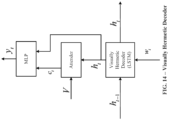
- FIG. 14 is one implementation of the disclosed visually hermetic decoder that processes purely linguistic information and produces captions for an image.
- FIG. 15 shows a spatial attention model that uses the visually hermetic decoder of FIG. 14 for image captioning.
- the spatial attention model is rolled across multiple timesteps.
- a visually hermetic decoder can be used that processes purely linguistic information w , which is not mixed with image data during image captioning.
- This alternative visually hermetic decoder does not receive the global image representation as input. That is, the current input to the visually hermetic decoder is just its most recently emitted caption word w t-1 and the initial input is only the ⁇ start> token.
- a visually hermetic decoder can be implemented as an LSTM, a gated recurrent unit (GRU), or a quasi-recurrent neural network (QRNN). Words, with this alternative decoder, are still emitted after application of the attention mechanism.
- GRU gated recurrent unit
- QRNN quasi-recurrent neural network
- the technology disclosed also provides a system and method of evaluating performance of an image captioning model.
- the technology disclosed generates a spatial attention map of attention values for mixing image region vectors of an image using a convolutional neural network (abbreviated CNN) encoder and a long-short term memory (LSTM) decoder and produces a caption word output based on the spatial attention map.
- the technology disclosed segments regions of the image above a threshold attention value into a segmentation map.
- the technology disclosed projects a bounding box over the image that covers a largest connected image component in the segmentation map.
- the technology disclosed determines an intersection over union (abbreviated IOU) of the projected bounding box and a ground truth bounding box.
- the technology disclosed determines a localization accuracy of the spatial attention map based on the calculated IOU.
- the technology disclosed achieves state-of-the-art performance across standard benchmarks on the COCO dataset and the Flickr30k dataset.
- the technology disclosed presents a system.
- the system includes numerous parallel processors coupled to memory.
- the memory is loaded with computer instructions to generate a natural language caption for an image.
- the instructions when executed on the parallel processors, implement the following actions.
- the encoder can be a convolutional neural network (abbreviated CNN).
- the decoder can be a long short-term memory network (abbreviated LSTM).
- the feed-forward neural network can be a multilayer perceptron (abbreviated MLP).
- System can also include features described in connection with methods disclosed. In the interest of conciseness, alternative combinations of system features are not individually enumerated. Features applicable to systems, methods, and articles of manufacture are not repeated for each statutory class set of base features. The reader will understand how features identified in this section can readily be combined with base features in other statutory classes.
- the system can be a computer-implemented system.
- the system can be a neural network-based system.
- the current hidden state of the decoder can be determined based on a current input to the decoder and a previous hidden state of the decoder.
- the image context vector can be a dynamic vector that determines at each timestep an amount of spatial attention allocated to each image region, conditioned on the current hidden state of the decoder.
- the system can use weakly-supervised localization to evaluate the allocated spatial attention.
- the attention values for the image feature vectors can be determined by processing the image feature vectors and the current hidden state of the decoder through a single layer neural network.
- the system can cause the feed-forward neural network to emit the next caption word at each timestep.
- the feed-forward neural network can produce an output based on the image context vector and the current hidden state of the decoder and use the output to determine a normalized distribution of vocabulary probability masses over words in a vocabulary that represent a respective likelihood that a vocabulary word is the next caption word.
- implementations may include a non-transitory computer readable storage medium storing instructions executable by a processor to perform actions of the system described above.
- the technology disclosed presents a system.
- the system includes numerous parallel processors coupled to memory.
- the memory is loaded with computer instructions to generate a natural language caption for an image.
- the instructions when executed on the parallel processors, implement the following actions.
- the system can be a computer-implemented system.
- the system can be a neural network-based system.
- the current hidden state information can be determined based on a current input to the decoder and previous hidden state information.
- the system can use weakly-supervised localization to evaluate the attention map.
- the encoder can be a convolutional neural network (abbreviated CNN) and the image feature vectors can be produced by a last convolutional layer of the CNN.
- CNN convolutional neural network
- the attention lagging decoder can be a long short-term memory network (abbreviated LSTM).
- LSTM long short-term memory network
- implementations may include a non-transitory computer readable storage medium storing instructions executable by a processor to perform actions of the system described above.
- the technology disclosed presents a system.
- the system includes numerous parallel processors coupled to memory.
- the memory is loaded with computer instructions to generate a natural language caption for an image.
- the instructions when executed on the parallel processors, implement the following actions.
- the encoder can be a convolutional neural network (abbreviated CNN).
- the decoder can be a long short-term memory network (abbreviated LSTM).
- At each timestep using at least a current hidden state of the decoder to determine, from the image feature vectors, an image context vector that determines an amount of attention allocated to regions of the image conditioned on the current hidden state of the decoder.
- the system can be a computer-implemented system.
- the system can be a neural network-based system.
- the system does not supply the global image feature vector to the decoder and processes words through the decoder by beginning at the initial timestep with the start-of-caption token ⁇ start > and continuing in successive timesteps using the most recently emitted caption word w t -1 as input to the decoder.
- the system does not supply the image feature vectors to the decoder, in some implementations.
- the technology disclosed presents a system for machine generation of a natural language caption for an image.
- the system runs on numerous parallel processors.
- the system can be a computer-implemented system.
- the system can be a neural network-based system.
- the system comprises an attention lagging decoder.
- the attention lagging decoder can run on at least one of the numerous parallel processors.
- the attention lagging decoder uses at least current hidden state information to generate an attention map for image feature vectors produced by an encoder from an image.
- the encoder can be a convolutional neural network (abbreviated CNN) and the image feature vectors can be produced by a last convolutional layer of the CNN.
- the attention lagging decoder can be a long short-term memory network (abbreviated LSTM).
- the attention lagging decoder causes generation of an output caption word based on a weighted sum of the image feature vectors, with the weights determined from the attention map.
- implementations may include a non-transitory computer readable storage medium storing instructions executable by a processor to perform actions of the system described above.
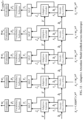
- FIG. 6 illustrates the disclosed spatial attention model for image captioning rolled across multiple timesteps.
- the attention lagging decoder of FIG. 2B is embodied in and implemented by the spatial attention model.
- the technology disclosed presents an image-to-language captioning system that implements the spatial attention model of FIG. 6 for machine generation of a natural language caption for an image.
- the system runs on numerous parallel processors.
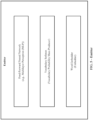
- the system comprises an encoder ( FIG. 1 ) for processing an image through a convolutional neural network (abbreviated CNN) and producing image features for regions of the image.
- the encoder can run on at least one of the numerous parallel processors.
- the system comprises a global image feature generator ( FIG. 3A ) for generating a global image feature for the image by combining the image features.
- the global image feature generator can run on at least one of the numerous parallel processors.
- the system comprises an input preparer ( FIG. 3C ) for providing input to a decoder as a combination of a start-of-caption token ⁇ start > and the global image feature at an initial decoder timestep and a combination of a most recently emitted caption word w t -1 and the global image feature at successive decoder timesteps.
- the input preparer can run on at least one of the numerous parallel processors.
- the system comprises the decoder ( FIG. 2B ) for processing the input through a long short-term memory network (abbreviated LSTM) to generate a current decoder hidden state at each decoder timestep.
- the decoder can run on at least one of the numerous parallel processors.
- the system comprises an attender ( FIG. 4 ) for accumulating, at each decoder timestep, an image context as a convex combination of the image features scaled by attention probability masses determined using the current decoder hidden state.
- the attender can run on at least one of the numerous parallel processors.
- FIG. 4 depicts one implementation of modules of the attender that is part of the spatial attention model disclosed in FIG. 6 .
- the attender comprises the comparator, the attender softmax (also referred to herein as attention probability mass producer), and the convex combination accumulator (also referred to herein as context vector producer or context producer).
- the system comprises a feed-forward neural network (also referred to herein as multilayer perceptron (MLP)) ( FIG. 5 ) for processing the image context and the current decoder hidden state to emit a next caption word at each decoder timestep.
- the feed-forward neural network can run on at least one of the numerous parallel processors.
- the system comprises a controller ( FIG. 25 ) for iterating the input preparer, the decoder, the attender, and the feed-forward neural network to generate the natural language caption for the image until the next caption word emitted is an end-of-caption token ⁇ end > .
- the controller can run on at least one of the numerous parallel processors.
- the system can be a computer-implemented system.
- the system can be a neural network-based system.
- the attender softmax can run on at least one of the numerous parallel processors.
- the comparator can run on at least one of the numerous parallel processors.
- the decoder can further comprise at least an input gate, a forget gate, and an output gate for determining at each decoder timestep the current decoder hidden state based on a current decoder input and a previous decoder hidden state.
- the input gate, the forget gate, and the output gate can each run on at least one of the numerous parallel processors.
- the attender can further comprise a convex combination accumulator ( FIG. 4 ) for producing the image context to identify an amount of spatial attention allocated to each image region at each decoder timestep, conditioned on the current decoder hidden state.
- the convex combination accumulator can run on at least one of the numerous parallel processors.
- the system can further comprise a localizer ( FIG. 25 ) for evaluating the allocated spatial attention based on weakly-supervising localization.
- the localizer can run on at least one of the numerous parallel processors.
- the system can further comprise the feed-forward neural network ( FIG. 5 ) for producing at each decoder timestep an output based on the image context and the current decoder hidden state.
- the system can further comprise a vocabulary softmax ( FIG. 5 ) for determining at each decoder timestep a normalized distribution of vocabulary probability masses over words in a vocabulary using the output.
- the vocabulary softmax can run on at least one of the numerous parallel processors.
- the vocabulary probability masses can identify respective likelihood that a vocabulary word is the next caption word.
- implementations may include a non-transitory computer readable storage medium storing instructions executable by a processor to perform actions of the system described above.
- FIG. 7 depicts one implementation of image captioning using spatial attention applied by the spatial attention model of FIG. 6 .
- the technology disclosed presents a method that performs the image captioning of FIG. 7 for machine generation of a natural language caption for an image.
- the method is a computer-implemented method.
- the method is a a neural network-based method.
- the encoder can be a convolutional neural network (abbreviated CNN), as shown in FIG. 1 .
- the method includes processing words through a decoder ( FIGs. 2B and 6 ) by beginning at an initial timestep with a start-of-caption token ⁇ start > and the global image feature vector v g and continuing in successive timesteps using a most recently emitted caption word w t -1 and the global image feature vector v g as input to the decoder.
- the decoder can be a long short-term memory network (abbreviated LSTM), as shown in FIGs. 2B and 6 .
- ⁇ t denotes an attention map that comprises the attention probability masses [ ⁇ 1 ,... ⁇ k ] .
- the method includes submitting the image context vector c, and the current hidden state of the decoder h t to a feed-forward neural network and causing the feed-forward neural network to emit a next caption word w t .
- the feed-forward neural network can be a multilayer perceptron (abbreviated MLP).
- the method includes repeating the processing of words through the decoder, the using, the applying, and the submitting until the caption word emitted is end-of-caption token ⁇ end >.
- the iterations are performed by a controller, shown in FIG. 25 .
- a non-transitory, computer-readable medium is provided in accordance with claim 12.
- a system that automates a task that is image and/ or video captioning is provided in accordance with claim 5.
- the technology disclosed presents a method of machine generation of a natural language caption for an image.
- the method can be a computer-implemented method.
- the method can be a neural network-based method.
- implementations may include a non-transitory computer readable storage medium (CRM) storing instructions executable by a processor to perform the method described above.
- implementations may include a system including memory and one or more processors operable to execute instructions, stored in the memory, to perform the method described above.
- CRM computer readable storage medium
- the technology disclosed presents a method of machine generation of a natural language caption for an image.
- This method uses a visually hermetic LSTM.
- the method can be a computer-implemented method.
- the method can be a neural network-based method.
- the encoder can be a convolutional neural network (abbreviated CNN).
- the method includes processing words through a decoder by beginning at an initial timestep with a start-of-caption token ⁇ start > and continuing in successive timesteps using a most recently emitted caption word w t- 1 as input to the decoder.
- the decoder can be a visually hermetic long short-term memory network (abbreviated LSTM), shown in FIGs. 14 and 15 .
- the method includes not supplying the image context vector c t to the decoder.
- the method includes submitting the image context vector c t and the current hidden state of the decoder h t to a feed-forward neural network and causing the feed-forward neural network to emit a caption word.
- the method includes repeating the processing of words through the decoder, the using, the not supplying, and the submitting until the caption word emitted is an end-of-caption.
- implementations may include a non-transitory computer readable storage medium (CRM) storing instructions executable by a processor to perform the method described above.
- implementations may include a system including memory and one or more processors operable to execute instructions, stored in the memory, to perform the method described above.
- CRM computer readable storage medium
- FIG. 12 shows the disclosed adaptive attention model for image captioning rolled across multiple timesteps.
- the sentinel LSTM (Sn-LSTM) of FIG. 8 is embodied in and implemented by the adaptive attention model as a decoder.
- FIG. 13 illustrates one implementation of image captioning using adaptive attention applied by the adaptive attention model of FIG. 12 .
- the technology disclosed presents a system that performs the image captioning of FIGs. 12 and 13 .
- the system includes numerous parallel processors coupled to memory.
- the memory is loaded with computer instructions to automatically caption an image.
- the instructions when executed on the parallel processors, implement the following actions.
- the mixing is governed by a gate probability mass/sentinel gate mass ⁇ t determined from a visual sentinel vector s t of the language decoder and a current hidden state vector of the language decoder h t .
- the image encoder can be a convolutional neural network (abbreviated CNN).
- the language decoder can be a sentinel long short-term memory network (abbreviated Sn-LSTM), as shown in FIGs. 8 and 9 .
- the language decoder can be a sentinel bi-directional long short-term memory network (abbreviated Sn-Bi-LSTM).
- the language decoder can be a sentinel gated recurrent unit network (abbreviated Sn-GRU).
- the language decoder can be a sentinel quasi-recurrent neural network (abbreviated Sn-QRNN).
- Determining the results of the language decoder by processing words through the language decoder includes - (1) beginning at an initial timestep with a start-of-caption token ⁇ start > and the global image feature vector v , (2) continuing in successive timesteps using a most recently emitted caption word w t -1 and the global image feature vector v g as input to the language decoder, and (3) at each timestep, generating a visual sentinel vector s t that combines the most recently emitted caption word w t -1 , the global image feature vector v g , a previous hidden state vector of the language decoder h t -1 , and memory contents m t of the language decoder.
- an adaptive context vector ⁇ t as a mix of the image context vector c t and the visual sentinel vector s t according to the gate probability mass/sentinel gate mass ⁇ t .
- the generation of adaptive context vector ⁇ t is embodied in and implemented by the mixer of the adaptive attender, shown in FIGs. 11 and 13 .
- the feed-forward neural network is embodied in and implemented by the emitter, as shown in FIG. 5 .
- the system can be a computer-implemented system.
- the system can be a neural network-based system.
- the visual sentinel vector s t can encode visual sentinel information that includes visual context determined from the global image feature vector v g and textual context determined from previously emitted caption words.
- the gate probability mass/sentinel gate mass/sentinel gate mass ⁇ t being unity can result in the adaptive context vector ⁇ r being equal to the visual sentinel vector s t
- the next caption word w t is emitted only in dependence upon the visual sentinel information.
- the image context vector c t can encode spatial image information conditioned on the current hidden state vector h t of the language decoder.
- the gate probability mass/sentinel gate mass ⁇ t being zero can result in the adaptive context vector ⁇ t being equal to the image context vector c t .
- the next caption word w t is emitted only in dependence upon the spatial image information.
- the gate probability mass/sentinel gate mass ⁇ t can be a scalar value between unity and zero that enhances when the next caption word w t is a visual word and diminishes when the next caption word w t is a non-visual word or linguistically correlated to the previously emitted caption word w t -1.
- the system can further comprise a trainer ( FIG. 25 ), which in turn further comprises a preventer ( FIG. 25 ).
- the preventer prevents, during training, backpropagation of gradients from the language decoder to the image encoder when the next caption word is a non-visual word or linguistically correlated to the previously emitted caption word.
- the trainer and the preventer can each run on at least one of the numerous parallel processors.
- implementations may include a non-transitory computer readable storage medium storing instructions executable by a processor to perform actions of the system described above.
- the technology disclosed presents a method of automatic image captioning.
- the method can be a computer-implemented method.
- the method can be a neural network-based method.
- the method includes mixing ⁇ results of an image encoder ( FIG. 1 ) and a language decoder ( FIGs. 8 and 9 ) to emit a sequence of caption words for an input image I.
- the mixing is embodied in and implemented by the mixer of the adaptive attender of FIG. 11 .
- the mixing is governed by a gate probability mass (also referred to herein as the sentinel gate mass) determined from a visual sentinel vector of the language decoder and a current hidden state vector of the language decoder.
- the image encoder can be a convolutional neural network (abbreviated CNN).
- the language decoder can be a sentinel long short-term memory network (abbreviated Sn-LSTM).
- the language decoder can be a sentinel bi-directional long short-term memory network (abbreviated Sn-Bi-LSTM).
- the language decoder can be a sentinel gated recurrent unit network (abbreviated Sn-GRU).
- the language decoder can be a sentinel quasi-recurrent neural network (abbreviated Sn-QRNN).
- the method includes determining the results of the image encoder by processing the image through the image encoder to produce image feature vectors for regions of the image and computing a global image feature vector from the image feature vectors.
- the method includes determining the results of the language decoder by processing words through the language decoder. This includes - (1) beginning at an initial timestep with a start-of-caption token ⁇ start > and the global image feature vector, (2) continuing in successive timesteps using a most recently emitted caption word w t-1 and the global image feature vector as input to the language decoder, and (3) at each timestep, generating a visual sentinel vector that combines the most recently emitted caption word w t- 1 , the global image feature vector, a previous hidden state vector of the language decoder, and memory contents of the language decoder.
- the method includes, at each timestep, using at least a current hidden state vector of the language decoder to determine unnormalized attention values for the image feature vectors and an unnormalized gate value for the visual sentinel vector.
- the method includes concatenating the unnormalized attention values and the unnormalized gate value and exponentially normalizing the concatenated attention and gate values to produce a vector of attention probability masses and the gate probability mass/sentinel gate mass.
- the method includes applying the attention probability masses to the image feature vectors to accumulate in an image context vector c t a weighted sum of the image feature vectors.
- the method includes determining an adaptive context vector ⁇ t as a mix of the image context vector and the visual sentinel vector s t according to the gate probability mass/sentinel gate mass ⁇ t .
- the method includes submitting the adaptive context vector ⁇ t and the current hidden state of the language decoder h t to a feed-forward neural network (MLP) and causing the feed-forward neural network to emit a next caption word wr .
- MLP feed-forward neural network
- the method includes repeating the processing of words through the language decoder, the using, the concatenating, the applying, the determining, and the submitting until the next caption word emitted is an end-of-caption token ⁇ end> .
- the iterations are performed by a controller, shown in FIG. 25 .
- implementations may include a non-transitory computer readable storage medium (CRM) storing instructions executable by a processor to perform the method described above.
- implementations may include a system including memory and one or more processors operable to execute instructions, stored in the memory, to perform the method described above.
- CRM computer readable storage medium
- the technology disclosed presents an automated image captioning system.
- the system runs on numerous parallel processors.
- the system comprises a convolutional neural network (abbreviated CNN) encoder ( FIG .11 ).
- the CNN encoder can run on at least one of the numerous parallel processors.
- the CNN encoder processes an input image through one or more convolutional layers to generate image features by image regions that represent the image.
- the system comprises a sentinel long short-term memory network (abbreviated Sn-LSTM) decoder ( FIG .8 ).
- Sn-LSTM decoder can run on at least one of the numerous parallel processors.
- the Sn-LSTM decoder processes a previously emitted caption word combined with the image features to emit a sequence of caption words over successive timesteps.
- the system comprises an adaptive attender ( FIG .11 ).
- the adaptive attender can run on at least one of the numerous parallel processors.
- the adaptive attender spatially attends to the image features and produces an image context conditioned on a current hidden state of the Sn-LSTM decoder.
- the adaptive attender extracts, from the Sn-LSTM decoder, a visual sentinel that includes visual context determined from previously processed image features and textual context determined from previously emitted caption words.
- the adaptive attender mixes the image context c t and the visual sentinel s t for next caption word w t emittance.
- the mixing is governed by a sentinel gate mass ⁇ t determined from the visual sentinel s t and the current hidden state of the Sn-LSTM decoder h t .
- the system can be a computer-implemented system.
- the system can be a neural network-based system.
- the adaptive attender enhances attention directed to the image context when a next caption word is a visual word, as shown in FIGs. 16 , 18 , and 19 .
- the adaptive attender enhances attention directed to the visual sentinel when a next caption word is a non-visual word or linguistically correlated to the previously emitted caption word, as shown in FIGs. 16 , 18 , and 19 .
- the system can further comprise a trainer, which in turn further comprises a preventer.
- the preventer prevents, during training, backpropagation of gradients from the Sn-LSTM decoder to the CNN encoder when a next caption word is a non-visual word or linguistically correlated to the previously emitted caption word.
- the trainer and the preventer can each run on at least one of the numerous parallel processors.
- implementations may include a non-transitory computer readable storage medium storing instructions executable by a processor to perform actions of the system described above.
- the technology disclosed presents an automated image captioning system.
- the system runs on numerous parallel processors.
- the system can be a computer-implemented system.
- the system can be a neural network-based system.
- the system comprises an image encoder ( FIG. 1 ).
- the image encoder can run on at least one of the numerous parallel processors.
- the image encoder processes an input image through a convolutional neural network (abbreviated CNN) to generate an image representation.
- CNN convolutional neural network
- the system comprises a language decoder ( FIG. 8 ).
- the language decoder can run on at least one of the numerous parallel processors.
- the language decoder processes a previously emitted caption word combined with the image representation through a recurrent neural network (abbreviated RNN) to emit a sequence of caption words.
- RNN recurrent neural network
- the system comprises an adaptive attender ( FIG. 11 ).
- the adaptive attender can run on at least one of the numerous parallel processors.
- the adaptive attender enhances attention directed to the image representation when a next caption word is a visual word.
- the adaptive attender enhances attention directed to memory contents of the language decoder when the next caption word is a non-visual word or linguistically correlated to the previously emitted caption word.
- implementations may include a non-transitory computer readable storage medium storing instructions executable by a processor to perform actions of the system described above.
- the technology disclosed presents an automated image captioning system.
- the system runs on numerous parallel processors.
- the system can be a computer-implemented system.
- the system can be a neural network-based system.
- the system comprises an image encoder ( FIG. 1 ).
- the image encoder can run on at least one of the numerous parallel processors.
- the image encoder processes an input image through a convolutional neural network (abbreviated CNN) to generate an image representation.
- CNN convolutional neural network
- the system comprises a language decoder ( FIG. 8 ).
- the language decoder can run on at least one of the numerous parallel processors.
- the language decoder processes a previously emitted caption word combined with the image representation through a recurrent neural network (abbreviated RNN) to emit a sequence of caption words.
- RNN recurrent neural network
- the system comprises a sentinel gate mass/gate probability mass ⁇ t .
- the sentinel gate mass can run on at least one of the numerous parallel processors.
- the sentinel gate mass controls accumulation of the image representation and memory contents of the language decoder for next caption word emittance.
- the sentinel gate mass is determined from a visual sentinel of the language decoder and a current hidden state of the language decoder.
- implementations may include a non-transitory computer readable storage medium storing instructions executable by a processor to perform actions of the system described above.
- the technology disclosed presents a system that automates a task.
- the system runs on numerous parallel processors.
- the system can be a computer-implemented system.
- the system can be a neural network-based system.
- the system comprises an encoder.
- the encoder can run on at least one of the numerous parallel processors.
- the encoder processes an input through at least one neural network to generate an encoded representation.
- the system comprises a decoder.
- the decoder can run on at least one of the numerous parallel processors.
- the decoder processes a previously emitted output combined with the encoded representation through at least one neural network to emit a sequence of outputs.
- the system comprises an adaptive attender.
- the adaptive attender can run on at least one of the numerous parallel processors.
- the adaptive attender uses a sentinel gate mass to mix the encoded representation and memory contents of the decoder for emitting a next output.
- the sentinel gate mass is determined from the memory contents of the decoder and a current hidden state of the decoder.
- the sentinel gate mass can run on at least one of the numerous parallel processors.
- the system when the task is text summarization, the system comprises a first recurrent neural network (abbreviated RNN) as the encoder that processes an input document to generate a document encoding and a second RNN as the decoder that uses the document encoding to emit a sequence of summary words.
- RNN first recurrent neural network
- the system when the task is question answering, the system comprises a first RNN as the encoder that processes an input question to generate a question encoding and a second RNN as the decoder that uses the question encoding to emit a sequence of answer words.
- the system when the task is machine translation, the system comprises a first RNN as the encoder that processes a source language sequence to generate a source encoding and a second RNN as the decoder that uses the source encoding to emit a target language sequence of translated words.
- the system when the task is video captioning, the system comprises a combination of a convolutional neural network (abbreviated CNN) and a first RNN as the encoder that process video frames to generate a video encoding and a second RNN as the decoder that uses the video encoding to emit a sequence of caption words.
- CNN convolutional neural network
- the system comprises a CNN as the encoder that process an input image to generate an image encoding and a RNN as the decoder that uses the image encoding to emit a sequence of caption words.
- the system can determine an alternative representation of the input from the encoded representation.
- the system can then use the alternative representation, instead of the encoded representation, for processing by the decoder and mixing by the adaptive attender.
- the alternative representation can be a weighted summary of the encoded representation conditioned on the current hidden state of the decoder.
- the alternative representation can be an averaged summary of the encoded representation.
- implementations may include a non-transitory computer readable storage medium storing instructions executable by a processor to perform actions of the system described above.
- the technology disclosed presents a system for machine generation of a natural language caption for an input image I .
- the system runs on numerous parallel processors.
- the system can be a computer-implemented system.
- the system can be a neural network-based system.
- FIG. 10 depicts the disclosed adaptive attention model for image captioning that automatically decides how heavily to rely on visual information, as opposed to linguistic information, to emit a next caption word.
- the sentinel LSTM (Sn-LSTM) of FIG. 8 is embodied in and implemented by the adaptive attention model as a decoder.
- FIG. 11 depicts one implementation of modules of an adaptive attender that is part of the adaptive attention model disclosed in FIG. 12 .
- the adaptive attender comprises a spatial attender, an extractor, a sentinel gate mass determiner, a sentinel gate mass softmax, and a mixer (also referred to herein as an adaptive context vector producer or an adaptive context producer).
- the spatial attender in turn comprises an adaptive comparator, an adaptive attender softmax, and an adaptive convex combination accumulator.
- the CNN encoder can run on at least one of the numerous parallel processors.
- the system comprises a sentinel long short-term memory network (abbreviated Sn-LSTM) decoder ( FIG. 8 ) for processing a previously emitted caption word w,_, combined with the image features to produce a current hidden state h t of the Sn-LSTM decoder at each decoder timestep.
- Sn-LSTM decoder can run on at least one of the numerous parallel processors.
- the system comprises an adaptive attender, shown in FIG. 11 .
- the adaptive attender can run on at least one of the numerous parallel processors.
- the adaptive attender further comprises an extractor ( FIGs. 11 and 13 ) for extracting, from the Sn-LSTM decoder, a visual sentinel s t at each decoder timestep.
- the visual sentinel s t includes visual context determined from previously processed image features and textual context determined from previously emitted caption words.
- the adaptive attender further comprises mixer ( FIGs. 11 and 13 ) for mixing ⁇ the image context c t and the visual sentinel s t to produce an adaptive context ⁇ t at each decoder timestep.
- the mixing is governed by a sentinel gate mass ⁇ t determined from the visual sentinel s t and the current hidden state h t of the Sn-LSTM decoder.
- the spatial attender, the extractor, and the mixer can each run on at least one of the numerous parallel processors.
- the system comprises an emitter ( FIGs. 5 and 13 ) for generating the natural language caption for the input image I based on the adaptive contexts ⁇ t produced over successive decoder timesteps by the mixer.
- the emitter can run on at least one of the numerous parallel processors.
- the Sn-LSTM decoder can further comprise an auxiliary sentinel gate ( FIG. 8 ) for producing the visual sentinel s t at each decoder timestep.
- the auxiliary sentinel gate can run on at least one of the numerous parallel processors.
- the adaptive attender can further comprise a sentinel gate mass softmax ( FIGs. 11 and 13 ) for exponentially normalizing attention values [ ⁇ 1 ,... ⁇ k ] of the image features and a gate value [ ⁇ t ] of the visual sentinel to produce an adaptive sequence ⁇ of attention probability masses [ ⁇ 1 ,... ⁇ k ] and the sentinel gate mass ⁇ t at each decoder timestep.
- the sentinel gate mass softmax can run on at least one of the numerous parallel processors.
- W s and W g are weight parameters.
- W g can be the same weight parameter as in equation (6).
- W p is the weight parameter that is learnt.
- the adaptive attender can further comprise a sentinel gate mass determiner ( FIGs. 11 and 13 ) for producing at each decoder timestep the sentinel gate mass ⁇ t as a result of interaction between the current decoder hidden state h t and the visual sentinel s t .
- the sentinel gate mass determiner can run on at least one of the numerous parallel processors.
- the adaptive comparator can run on at least one of the numerous parallel processors.
- the spatial attender can further comprise an adaptive attender softmax ( FIGs. 11 and 13 ) for exponentially normalizing the attention values for the image features to produce the attention probability masses at each decoder timestep.
- the adaptive attender softmax can run on at least one of the numerous parallel processors.
- the spatial attender can further comprise an adaptive convex combination accumulator (also referred to herein as mixer or adaptive context producer or adaptive context vector producter) ( FIGs. 11 and 13 ) for accumulating, at each decoder timestep, the image context as a convex combination of the image features scaled by attention probability masses determined using the current decoder hidden state.
- the sentinel gate mass can run on at least one of the numerous parallel processors.
- the system can further comprise a trainer ( FIG. 25 ).
- the trainer in turn further comprises a preventer for preventing backpropagation of gradients from the Sn-LSTM decoder to the CNN encoder when a next caption word is a non-visual word or linguistically correlated to a previously emitted caption word.
- the trainer and the preventer can each run on at least one of the numerous parallel processors.
- the adaptive attender further comprises the sentinel gate mass/gate probability mass ⁇ t for enhancing attention directed to the image context when a next caption word is a visual word.
- the adaptive attender further comprises the sentinel gate mass/gate probability mass ⁇ t for enhancing attention directed to the visual sentinel when a next caption word is a non-visual word or linguistically correlated to the previously emitted caption word.
- the sentinel gate mass can run on at least one of the numerous parallel processors.
- implementations may include a non-transitory computer readable storage medium storing instructions executable by a processor to perform actions of the system described above.
- the technology disclosed presents a recurrent neural network system (abbreviated RNN).
- RNN recurrent neural network system
- the RNN runs on numerous parallel processors.
- the RNN can be a computer-implemented system.
- the RNN comprises a sentinel long short-term memory network (abbreviated Sn-LSTM) that receives inputs at each of a plurality of timesteps.
- the inputs include at least an input for a current timestep, a hidden state from a previous timestep, and an auxiliary input for the current timestep.
- the Sn-LSTM can run on at least one of the numerous parallel processors.
- the RNN generates outputs at each of the plurality of timesteps by processing the inputs through gates of the Sn-LSTM.
- the gates include at least an input gate, a forget gate, an output gate, and an auxiliary sentinel gate. Each of the gates can run on at least one of the numerous parallel processors.
- the RNN stores in a memory cell of the Sn-LSTM auxiliary information accumulated over time from (1) processing of the inputs by the input gate, the forget gate, and the output gate and (2) updating of the memory cell with gate outputs produced by the input gate, the forget gate, and the output gate.
- the memory cell can be maintained and persisted in a database ( FIG 9 ).
- the auxiliary sentinel gate modulates the stored auxiliary information from the memory cell for next prediction.
- the modulation is conditioned on the input for the current timestep, the hidden state from the previous timestep, and the auxiliary input for the current timestep.
- the auxiliary input can be visual input comprising image data and the input can be a text embedding of a most recently emitted word and/or character.
- the auxiliary input can be a text encoding from another long short-term memory network (abbreviated LSTM) of an input document and the input can be a text embedding of a most recently emitted word and/or character.
- LSTM long short-term memory network
- the auxiliary input can be a hidden state vector from another LSTM that encodes sequential data and the input can be a text embedding of a most recently emitted word and/or character.
- the auxiliary input can be a prediction derived from a hidden state vector from another LSTM that encodes sequential data and the input can be a text embedding of a most recently emitted word and/or character.
- the auxiliary input can be an output of a convolutional neural network (abbreviated CNN).
- the auxiliary input can be an output of an attention network.
- the prediction can be a classification label embedding.
- the Sn-LSTM can be further configured to receive multiple auxiliary inputs at a timestep, with at least one auxiliary input comprising concatenated vectors.
- the auxiliary input can be received only at an initial timestep.
- the auxiliary sentinel gate can produce a sentinel state at each timestep as an indicator of the modulated auxiliary information.
- the outputs can comprise at least a hidden state for the current timestep and a sentinel state for the current timestep.
- the RNN can be further configured to use at least the hidden state for the current timestep and the sentinel state for the current timestep for making the next prediction.
- the inputs can further include a bias input and a previous state of the memory cell.
- the Sn-LSTM can further include an input activation function.
- the auxiliary sentinel gate can gate a pointwise hyperbolic tangent (abbreviated tanh) of the memory cell.
- implementations may include a non-transitory computer readable storage medium storing instructions executable by a processor to perform actions of the system described above.
- the technology disclosed presents a sentinel long short-term memory network (abbreviated Sn-LSTM) that processes auxiliary input combined with input and previous hidden state.
- Sn-LSTM runs on numerous parallel processors.
- the Sn-LSTM can be a computer-implemented system.
- the Sn-LSTM comprises an auxiliary sentinel gate that applies on a memory cell of the Sn-LSTM and modulates use of auxiliary information during next prediction.
- the auxiliary information is accumulated over time in the memory cell at least from the processing of the auxiliary input combined with the input and the previous hidden state.
- the auxiliary sentinel gate can run on at least one of the numerous parallel processors.
- the memory cell can be maintained and persisted in a database ( FIG 9 ).
- the auxiliary sentinel gate can produce a sentinel state at each timestep as an indicator of the modulated auxiliary information, conditioned on an input for a current timestep, a hidden state from a previous timestep, and an auxiliary input for the current timestep.
- the auxiliary sentinel gate can gate a pointwise hyperbolic tangent (abbreviated tanh) of the memory cell.
- implementations may include a non-transitory computer readable storage medium storing instructions executable by a processor to perform actions of the system described above.
- the technology disclosed presents a method of extending a long short-term memory network (abbreviated LSTM).
- the method can be a computer-implemented method.
- the method can be a neural network-based method.
- the method includes extending a long short-term memory network (abbreviated LSTM) to include an auxiliary sentinel gate.
- LSTM long short-term memory network
- the auxiliary sentinel gate applies on a memory cell of the LSTM and modulates use of auxiliary information during next prediction.
- the auxiliary information is accumulated over time in the memory cell at least from the processing of auxiliary input combined with current input and previous hidden state.
- the auxiliary sentinel gate can produce a sentinel state at each timestep as an indicator of the modulated auxiliary information, conditioned on an input for a current timestep, a hidden state from a previous timestep, and an auxiliary input for the current timestep.
- the auxiliary sentinel gate can gate a pointwise hyperbolic tangent (abbreviated tanh) of the memory cell.
- implementations may include a non-transitory computer readable storage medium (CRM) storing instructions executable by a processor to perform the method described above.
- implementations may include a system including memory and one or more processors operable to execute instructions, stored in the memory, to perform the method described above.
- CRM computer readable storage medium
- the technology disclosed presents a recurrent neural network system (abbreviated RNN) for machine generation of a natural language caption for an image.
- RNN recurrent neural network system
- the RNN runs on numerous parallel processors.
- the RNN can be a computer-implemented system.
- FIG. 9 shows one implementation of modules of a recurrent neural network (abbreviated RNN) that implements the Sn-LSTM of FIG. 8 .
- RNN recurrent neural network
- the RNN comprises an input provider ( FIG. 9 ) for providing a plurality of inputs to a sentinel long short-term memory network (abbreviated Sn-LSTM) over successive timesteps.
- the inputs include at least an input for a current timestep, a hidden state from a previous timestep, and an auxiliary input for the current timestep.
- the input provider can run on at least one of the numerous parallel processors.
- the RNN comprises a gate processor ( FIG. 9 ) for processing the inputs through each gate in a plurality of gates of the Sn-LSTM.
- the gates include at least an input gate ( FIGs. 8 and 9 ), a forget gate ( FIGs. 8 and 9 ), an output gate ( FIGs. 8 and 9 ), and an auxiliary sentinel gate ( FIGs. 8 and 9 ).
- the gate processor can run on at least one of the numerous parallel processors.
- Each of the gates can run on at least one of the numerous parallel processors.
- the RNN comprises a memory cell ( FIG. 9 ) of the Sn-LSTM for storing auxiliary information accumulated over time from processing of the inputs by the gate processor.
- the memory cell can be maintained and persisted in a database ( FIG 9 ).
- the RNN comprises a memory cell updater ( FIG. 9 ) for updating the memory cell with gate outputs produced by the input gate ( FIGs. 8 and 9 ), the forget gate ( FIGs. 8 and 9 ), and the output gate ( FIGs. 8 and 9 ).
- the memory cell updater can run on at least one of the numerous parallel processors.
- the RNN comprises the auxiliary sentinel gate ( FIGs. 8 and 9 ) for modulating the stored auxiliary information from the memory cell to produce a sentinel state at each timestep.
- the modulation is conditioned on the input for the current timestep, the hidden state from the previous timestep, and the auxiliary input for the current timestep.
- the RNN comprises an emitter ( FIG. 5 ) for generating the natural language caption for the image based on the sentinel states produced over successive timesteps by the auxiliary sentinel gate.
- the emitter can run on at least one of the numerous parallel processors.
- the auxiliary sentinel gate can further comprise an auxiliary nonlinearity layer ( FIG. 9 ) for squashing results of processing the inputs within a predetermined range.
- the auxiliary nonlinearity layer can run on at least one of the numerous parallel processors.
- the Sn-LSTM can further comprise a memory nonlinearity layer ( FIG. 9 ) for applying a nonlinearity to contents of the memory cell.
- the memory nonlinearity layer can run on at least one of the numerous parallel processors.
- the Sn-LSTM can further comprise a sentinel state producer ( FIG. 9 ) for combining the squashed results from the auxiliary sentinel gate with the nonlinearized contents of the memory cell to produce the sentinel state.
- the sentinel state producer can run on at least one of the numerous parallel processors.
- the input provider ( FIG. 9 ) can provide the auxiliary input that is visual input comprising image data and the input is a text embedding of a most recently emitted word and/or character.
- the input provider ( FIG. 9 ) can provide the auxiliary input that is a text encoding from another long short-term memory network (abbreviated LSTM) of an input document and the input is a text embedding of a most recently emitted word and/or character.
- LSTM long short-term memory network
- the input provider ( FIG. 9 ) can provide the auxiliary input that is a hidden state from another LSTM that encodes sequential data and the input is a text embedding of a most recently emitted word and/or character.
- the input provider ( FIG. 9 ) can provide the auxiliary input that is visual input comprising image data and the input is a text embedding of a most recently emitted word and/or character.
- the input provider ( FIG. 9 ) can provide the auxiliary input that is
- the input provider ( FIG. 9 ) can provide the auxiliary input that is a prediction derived from a hidden state from another LSTM that encodes sequential data and the input is a text embedding of a most recently emitted word and/or character.
- the input provider ( FIG. 9 ) can provide the auxiliary input that is an output of a convolutional neural network (abbreviated CNN).
- the input provider ( FIG. 9 ) can provide the auxiliary input that is an output of an attention network.
- the input provider ( FIG. 9 ) can further provide multiple auxiliary inputs to the Sn-LSTM at a timestep, with at least one auxiliary input further comprising concatenated features.
- the Sn-LSTM can further comprise an activation gate ( FIG. 9 ).
- implementations may include a non-transitory computer readable storage medium storing instructions executable by a processor to perform actions of the system described above.
- a visual sentinel vector can represent, identify, and/or embody a visual sentinel.
- a sentinel state vector can represent, identify, and/or embody a sentinel state.
- This application uses the phrases “sentinel gate” and "auxiliary sentinel gate” interchangeable.
- a hidden state vector can represent, identify, and/or embody a hidden state.
- a hidden state vector can represent, identify, and/or embody hidden state information.
- An input vector can represent, identify, and/or embody an input.
- An input vector can represent, identify, and/or embody a current input.
- a memory cell vector can represent, identify, and/or embody a memory cell state.
- a memory cell state vector can represent, identify, and/or embody a memory cell state.
- An image feature vector can represent, identify, and/or embody an image feature.
- An image feature vector can represent, identify, and/or embody a spatial image feature.
- a global image feature vector can represent, identify, and/or embody a global image feature.
- word embedding and “word embedding vector” interchangeably.
- a word embedding vector can represent, identify, and/or embody a word embedding.
- An image context vector can represent, identify, and/or embody an image context.
- a context vector can represent, identify, and/or embody an image context.
- An adaptive image context vector can represent, identify, and/or embody an adaptive image context.
- An adaptive context vector can represent, identify, and/or embody an adaptive image context.
- FIG. 17 illustrates some example captions and spatial attentional maps for the specific words in the caption. It can be seen that our learns alignments that correspond with human intuition. Even in the examples in which incorrect captions were generated, the model looked at reasonable regions in the image.
- FIG. 18 shows visualization of some example image captions, word-wise visual grounding probabilities, and corresponding image/spatial attention maps generated by our model.
- the model successfully learns how heavily to attend to the image and adapts the attention accordingly. For example, for non-visual words such as "of” and “a” the model attends less to the images. For visual words like “red”, “rose”, “doughnuts”, “ woman”, and “snowboard” our model assigns a high visual grounding probabilities (over 0.9). Note that the same word can be assigned different visual grounding probabilities when generated in different contexts. For example, the word “a” typically has a high visual grounding probability at the beginning of a sentence, since without any language context, the model needs the visual information to determine plurality (or not). On the other hand, the visual grounding probability of "a” in the phrase "on a table” is much lower. Since it is unlikely for something to be on more than one table.
- FIG. 19 presents similar results as shown in FIG. 18 on another set of example image captions, word-wise visual grounding probabilities, and corresponding image/spatial attention maps generated using the technology disclosed.
- FIGs. 20 and 21 are example rank-probability plots that illustrate performance of our model on the COCO (common objects in context) and Flickr30k datasets respectively. It can be seen that our model attends to the image more when generating object words like “dishes”, “people”, “cat”, “boat”; attribute words like “giant”, “metal”, “yellow”, and number words like "three". When the word is non-visual, our model learns to not attend to the image such as for "the", “of”, “to” etc. For more abstract words such as "crossing”, “during” etc., our model attends less than the visual words and attends more than the non-visual words. The model does not rely on any syntactic features or external knowledge. It discovers these trends automatically through learning.
- FIG. 22 is an example graph that shows localization accuracy over the generated caption for top 45 most frequent COCO object categories.
- the blue colored bars show localization accuracy of the spatial attention model and the red colored bars show localization accuracy of the adaptive attention model.
- FIG. 22 shows that both models perform well on categories such as “cat”, “bed”, “bus”, and “truck”. On smaller objects, such as “sink”, “surfboard”, “clock”, and “frisbee” both models do not perform well. This is because the spatial attention maps are directly rescaled from a 7x7 feature map, which loses a considerable spatial information and detail.
- FIG. 23 is a table that shows performance of the technology disclosed on the Flicker30k and COCO datasets based on various natural language processing metrics, including BLEU (bilingual evaluation understudy), METEOR (metric for evaluation of translation with explicit ordering), CIDEr (consensus-based image description evaluation), ROUGE-L (recall-oriented understudy for gisting evaluation-longest common subsequence), and SPICE (semantic propositional image caption evaluation).
- the table in FIG. 23 shows that our adaptive attention model significantly outperforms our spatial attention model.
- the CIDEr score performance of our adaptive attention model is 0.531 versus 0.493 for spatial attention model on Flickr30k database.
- CIDEr scores of adaptive attention model and spatial attention model on COCO database are 1.085 and 1.029 respectively.
- FIG. 25 is a simplified block diagram of a computer system that can be used to implement the technology disclosed.
- Computer system includes at least one central processing unit (CPU) that communicates with a number of peripheral devices via bus subsystem.
- peripheral devices can include a storage subsystem including, for example, memory devices and a file storage subsystem, user interface input devices, user interface output devices, and a network interface subsystem.
- the input and output devices allow user interaction with computer system.
- Network interface subsystem provides an interface to outside networks, including an interface to corresponding interface devices in other computer systems.
- At least the spatial attention model, the controller, the localizer ( FIG. 25 ), the trainer (which comprises the preventer), the adaptive attention model, and the sentinel LSTM (Sn-LSTM) are communicably linked to the storage subsystem and to the user interface input devices.
- User interface input devices can include a keyboard; pointing devices such as a mouse, trackball, touchpad, or graphics tablet; a scanner; a touch screen incorporated into the display; audio input devices such as voice recognition systems and microphones; and other types of input devices.
- pointing devices such as a mouse, trackball, touchpad, or graphics tablet
- audio input devices such as voice recognition systems and microphones
- input device is intended to include all possible types of devices and ways to input information into computer system.
- User interface output devices can include a display subsystem, a printer, a fax machine, or non-visual displays such as audio output devices.
- the display subsystem can include a cathode ray tube (CRT), a flat-panel device such as a liquid crystal display (LCD), a projection device, or some other mechanism for creating a visible image.
- the display subsystem can also provide a non-visual display such as audio output devices.
- output device is intended to include all possible types of devices and ways to output information from computer system to the user or to another machine or computer system.
- Storage subsystem stores programming and data constructs that provide the functionality of some or all of the modules and methods described herein. These software modules are generally executed by deep learning processors.
- Deep learning processors can be graphics processing units (GPUs) or field-programmable gate arrays (FPGAs). Deep learning processors can be hosted by a deep learning cloud platform such as Google Cloud Platform TM , Xilinx TM , and Cirrascale TM .
- Google Cloud Platform TM Google Cloud Platform TM
- Xilinx TM Xilinx TM
- Cirrascale TM Cirrascale
- Examples of deep learning processors include Google's Tensor Processing Unit (TPU) TM , rackmount solutions like GX4 Rackmount Series TM , GX8 Rackmount Series TM , NVIDIA DGX-1 TM , Microsoft' Stratix V FPGA TM , Graphcore's Intelligent Processor Unit (IPU) TM , Qualcomm's Zeroth Platform TM with Snapdragon processors TM , NVIDIA's Volta TM , NVIDIA's DRIVE PX TM , NVIDIA's JETSON TX1/TX2 MODULE TM , Intel's Nirvana TM , Movidius VPU TM , Fujitsu DPI TM , ARM's DynamicIQ TM , IBM TrueNorth TM , and others.
- TPU Tensor Processing Unit
- rackmount solutions like GX4 Rackmount Series TM , GX8 Rackmount Series TM , NVIDIA DGX-1 TM , Microsoft' Stratix V
- Memory subsystem used in the storage subsystem can include a number of memories including a main random access memory (RAM) for storage of instructions and data during program execution and a read only memory (ROM) in which fixed instructions are stored.
- a file storage subsystem can provide persistent storage for program and data files, and can include a hard disk drive, a floppy disk drive along with associated removable media, a CD-ROM drive, an optical drive, or removable media cartridges.
- the modules implementing the functionality of certain implementations can be stored by file storage subsystem in the storage subsystem, or in other machines accessible by the processor.
- Bus subsystem provides a mechanism for letting the various components and subsystems of computer system communicate with each other as intended. Although bus subsystem is shown schematically as a single bus, alternative implementations of the bus subsystem can use multiple busses.
- Computer system itself can be of varying types including a personal computer, a portable computer, a workstation, a computer terminal, a network computer, a television, a mainframe, a server farm, a widely-distributed set of loosely networked computers, or any other data processing system or user device. Due to the ever-changing nature of computers and networks, the description of computer system depicted in FIG. 13 is intended only as a specific example for purposes of illustrating the preferred embodiments of the present invention. Many other configurations of computer system are possible having more or less components than the computer system depicted in FIG. 13 . The present invention is defined by the independent claims.
Landscapes
- Engineering & Computer Science (AREA)
- Theoretical Computer Science (AREA)
- Physics & Mathematics (AREA)
- General Physics & Mathematics (AREA)
- Artificial Intelligence (AREA)
- Health & Medical Sciences (AREA)
- General Health & Medical Sciences (AREA)
- Evolutionary Computation (AREA)
- General Engineering & Computer Science (AREA)
- Computational Linguistics (AREA)
- Data Mining & Analysis (AREA)
- Life Sciences & Earth Sciences (AREA)
- Software Systems (AREA)
- Computing Systems (AREA)
- Biomedical Technology (AREA)
- Molecular Biology (AREA)
- Biophysics (AREA)
- Mathematical Physics (AREA)
- Multimedia (AREA)
- Computer Vision & Pattern Recognition (AREA)
- Audiology, Speech & Language Pathology (AREA)
- Bioinformatics & Computational Biology (AREA)
- Evolutionary Biology (AREA)
- Biodiversity & Conservation Biology (AREA)
- Bioinformatics & Cheminformatics (AREA)
- Medical Informatics (AREA)
- Databases & Information Systems (AREA)
- Probability & Statistics with Applications (AREA)
- Image Analysis (AREA)
- Machine Translation (AREA)
- Document Processing Apparatus (AREA)
Claims (12)
- Computerimplementiertes Verfahren zum automatischen Bildbeschriften, wobei das Verfahren Folgendes beinhaltet:Mischen von Ergebnissen eines Bildcodierers und eines Sprachdecodierers, um eine Sequenz von Beschriftungswörtern für ein Eingabebild zu emittieren, wobei das Mischen durch eine Gate-Wahrscheinlichkeitsmasse bestimmt wird, die aus einem visuellen Sentinel-Vektor des Sprachdecodierers und einem aktuellen verborgenen Zustandsvektor des Sprachdecodierers bestimmt wird;Bestimmen der Ergebnisse des Bildcodierers durch Verarbeiten des Bildes durch den Bildcodierer, um Bildmerkmalsvektoren für Bereiche des Bildes zu produzieren, und Berechnen eines globalen Bildmerkmalsvektors aus den Bildmerkmalsvektoren;Bestimmen der Ergebnisse des Sprachdecodierers durch Verarbeiten von Wörtern durch den Sprachdecodierer, einschließlich des Beginnens zu einem anfänglichen Zeitschritt mit einem Beschriftungsstarttoken und dem globalen Bildmerkmalsvektor, Fortsetzen in aufeinanderfolgenden Zeitschritten unter Verwendung eines zuletzt emittierten Beschriftungsworts und des globalen Bildmerkmalsvektors als Eingabe in den Sprachdecodierer, und bei jedem Zeitschritt, Erzeugen eines visuellen Sentinel-Vektors, der das zuletzt emittierte Beschriftungswort, den globalen Bildmerkmalsvektor, einen vorherigen verborgenen Zustandsvektor des Sprachdecodierers und Speicherinhalte des Sprachdecodierers kombiniert;bei jedem Zeitschritt, Verwenden mindestens eines aktuellen verborgenen Zustandsvektors des Sprachdecodierers, um nicht normalisierte Aufmerksamkeitswerte für die Bildmerkmalsvektoren und einen nicht normalisierten Gate-Wert für den visuellen Sentinel-Vektor zu bestimmen;Verketten der nicht normalisierten Aufmerksamkeitswerte und des nicht normalisierten Gate-Werts und exponentielles Normalisieren der verketteten Aufmerksamkeits- und Gate-Werte, um einen Vektor von Aufmerksamkeitswahrscheinlichkeitsmassen und die Gate-Wahrscheinlichkeitsmasse zu produzieren;Anwenden der Aufmerksamkeitswahrscheinlichkeitsmassen auf die Bildmerkmalsvektoren, um in einem Bildkontextvektor eine gewichtete Summe der Bildmerkmalsvektoren zu akkumulieren;Bestimmen eines adaptiven Kontextvektors als eine Mischung des Bildkontextvektors und des visuellen Sentinel-Vektors gemäß der Gate-Wahrscheinlichkeitsmasse;Übermitteln des adaptiven Kontextvektors und des aktuellen verborgenen Zustands des Sprachdecodierers an ein Feed-Forward Neuronales Netzwerk und Bewirken, dass das Feed-Forward Neuronale Netzwerk ein nächstes Beschriftungswort emittiert; undWiederholen des Verarbeitens von Wörtern durch den Sprachdecodierer, des Verwendens, des Verkettens, des Anwendens, des Bestimmens, und des Übermittelns bis das nächste emittierte Beschriftungswort ein Beschriftungsende-Token ist.
- Computerimplementiertes Verfahren nach Anspruch 1, das ferner das Verhindern, während des Trainings, einer Rückausbreitung von Gradienten von dem Sprachdecodierer zu dem Bildcodierer beinhaltet, wenn das nächste Beschriftungswort ein nicht visuelles Wort ist oder linguistisch mit dem zuvor emittierten Beschriftungswort korreliert ist.
- Computerimplementiertes Verfahren nach Anspruch 1, wobei der Bildcodierer ein neuronales Faltungsnetzwerk, CNN, ist.
- Computerimplementiertes Verfahren nach Anspruch 1, wobei der Sprachdecodierer mindestens eines von Folgendem ist:ein langes Kurzzeitgedächtnis-Sentinel-Netzwerk, Sn-LSTM;ein bidirektionales langes Kurzzeitgedächtnis-Sentinel-Netzwerk (kurz Sn-Bi-LSTM);eine gated rekurrente Sentinel-Einheit, Sn-GRU; und ein quasi-rekurrentes neuronales Sentinel-Netzwerk, Sn-QRNN.
- System, das eine Aufgabe automatisiert, bei der es sich um Bild- und/oder Videobeschriftung handelt, wobei das System Folgendes umfasst:einen Codierer, der eine Eingabe durch mindestens ein neuronales Netzwerk verarbeitet, um ein codiertes Bild und/oder eine Videorepräsentation zu erzeugen;einen Decodierer, der eine zuvor emittierte Ausgabe kombiniert mit der codierten Repräsentation durch mindestens ein neuronales Netzwerk verarbeitet, um eine Sequenz von Beschriftungsausgaben zu emittieren; undeinen adaptiven Attender, der eine sentinel Gate-Masse verwendet, um die codierte Repräsentation und den Speicherinhalt des Decodierers zum Emittieren einer nächsten Ausgabe mit der sentinel Gate-Masse zu mischen, die aus dem Speicherinhalt des Decodierers und einem aktuellen verborgenen Zustand des Decodierers bestimmt wird.
- System nach Anspruch 5, wobei die Aufgabe die Videobeschriftung ist, das ferner dazu konfiguriert ist, Folgendes zu umfassen:eine Kombination eines neuronalen Faltungsnetzwerks, CNN, und eines ersten RNN als den Codierer, der Videoframes verarbeitet, um eine Videocodierung zu erzeugen; undein zweites RNN als den Decodierer, der die Videocodierung verwendet, um eine Sequenz von Beschriftungswörtern zu emittieren.
- System nach Anspruch 5, wobei die Aufgabe das Bildbeschriften ist, das ferner Folgendes umfasst:ein CNN als den Codierer, der ein Eingabebild verarbeitet, um eine Bildcodierung zu erzeugen; undein RNN als den Decodierer, der die Bildcodierung verwendet, um eine Sequenz von Beschriftungswörtern zu emittieren.
- System nach Anspruch 5, wobei die Aufgabe das Bildbeschriften ist und das System auf zahlreichen parallelen Prozessoren läuft, wobei das System ferner Folgendes umfasst:einen neuronalen Faltungsnetzwerk-, CNN-, Codierer, der ein Eingabebild durch eine oder mehrere Faltungsschichten verarbeitet, um Bildmerkmale durch Bildbereiche zu erzeugen, die das Bild repräsentieren;einen langen sentinel Kurzeit-Gedächtnisnetzwerk-Decodierer, Sn-LSTM-Decodierer, der ein zuvor emittiertes Beschriftungswort kombiniert mit den Bildmerkmalen verarbeitet, um eine Sequenz von Beschriftungswörtern über aufeinanderfolgende Zeitschritte zu emittieren; undeinen adaptiven Attender, der zu jedem Zeitschritt die Bildmerkmale räumlich bedient und einen Bildkontext produziert, der auf einen aktuellen verborgenen Zustand des Sn-LSTM-Decodierers aufbereitet ist, aus dem Sn-LSTM-Decodierer ein visuelles Sentinel extrahiert, das visuellen Kontext beinhaltet, der aus zuvor verarbeiteten Bildmerkmalen bestimmt wird, und textuellen Kontext, der aus zuvor emittierten Beschriftungswörtern bestimmt wird, und den Bildkontext und das visuelle Sentinel für die nächste Beschriftungswortemittanz mischt, wobei das Mischen durch eine sentinel Gate-Masse bestimmt wird, die aus dem visuellen Sentinel und dem aktuellen verborgenen Zustand des Sn-LSTM-Decodierers bestimmt wird.
- System nach Anspruch 8, wobei der adaptive Attender die Aufmerksamkeit verstärkt, die auf den Bildkontext gerichtet ist, wenn ein nächstes Beschriftungswort ein visuelles Wort ist.
- System nach Anspruch 8, wobei der adaptive Attender die Aufmerksamkeit, die auf den visuellen Sentinel gerichtet ist, verstärkt, wenn ein nächstes Beschriftungswort ein nicht visuelles Wort ist oder linguistisch mit dem zuvor emittierten Beschriftungswort korreliert ist.
- System nach Anspruch 8, das ferner dazu konfiguriert ist, während des Trainings eine Rückausbreitung von Gradienten von dem Sn-LSTM-Decodierer zu dem CNN-Codierer zu verhindern, wenn ein nächstes Beschriftungswort ein nicht visuelles Wort ist oder linguistisch mit dem zuvor emittierten Beschriftungswort korreliert ist.
- Nichtflüchtiges, computerlesbares Medium mit computerausführbaren Anweisungen, die, wenn sie durch einen Computer ausgeführt werden, bewirken, dass der Computer das Verfahren nach Anspruch 1 durchführt.
Applications Claiming Priority (5)
| Application Number | Priority Date | Filing Date | Title |
|---|---|---|---|
| US201662424353P | 2016-11-18 | 2016-11-18 | |
| US15/817,153 US10558750B2 (en) | 2016-11-18 | 2017-11-17 | Spatial attention model for image captioning |
| US15/817,161 US10565305B2 (en) | 2016-11-18 | 2017-11-17 | Adaptive attention model for image captioning |
| EP17821750.1A EP3542314B1 (de) | 2016-11-18 | 2017-11-18 | Räumliches aufmerksamkeitsmodell zur bilduntertitelung |
| PCT/US2017/062433 WO2018094294A1 (en) | 2016-11-18 | 2017-11-18 | Spatial attention model for image captioning |
Related Parent Applications (2)
| Application Number | Title | Priority Date | Filing Date |
|---|---|---|---|
| EP17821750.1A Division EP3542314B1 (de) | 2016-11-18 | 2017-11-18 | Räumliches aufmerksamkeitsmodell zur bilduntertitelung |
| EP17821750.1A Division-Into EP3542314B1 (de) | 2016-11-18 | 2017-11-18 | Räumliches aufmerksamkeitsmodell zur bilduntertitelung |
Publications (2)
| Publication Number | Publication Date |
|---|---|
| EP3869416A1 EP3869416A1 (de) | 2021-08-25 |
| EP3869416B1 true EP3869416B1 (de) | 2025-06-04 |
Family
ID=62147067
Family Applications (2)
| Application Number | Title | Priority Date | Filing Date |
|---|---|---|---|
| EP21167276.1A Active EP3869416B1 (de) | 2016-11-18 | 2017-11-18 | Räumliches aufmerksamkeitsmodell für bildunterschrift |
| EP17821750.1A Active EP3542314B1 (de) | 2016-11-18 | 2017-11-18 | Räumliches aufmerksamkeitsmodell zur bilduntertitelung |
Family Applications After (1)
| Application Number | Title | Priority Date | Filing Date |
|---|---|---|---|
| EP17821750.1A Active EP3542314B1 (de) | 2016-11-18 | 2017-11-18 | Räumliches aufmerksamkeitsmodell zur bilduntertitelung |
Country Status (5)
| Country | Link |
|---|---|
| US (5) | US10558750B2 (de) |
| EP (2) | EP3869416B1 (de) |
| JP (2) | JP6689461B2 (de) |
| CN (1) | CN110168573B (de) |
| CA (2) | CA3040165C (de) |
Families Citing this family (323)
| Publication number | Priority date | Publication date | Assignee | Title |
|---|---|---|---|---|
| WO2016077797A1 (en) | 2014-11-14 | 2016-05-19 | Google Inc. | Generating natural language descriptions of images |
| US10229111B1 (en) * | 2016-02-03 | 2019-03-12 | Google Llc | Sentence compression using recurrent neural networks |
| US10354168B2 (en) * | 2016-04-11 | 2019-07-16 | A2Ia S.A.S. | Systems and methods for recognizing characters in digitized documents |
| US11409791B2 (en) | 2016-06-10 | 2022-08-09 | Disney Enterprises, Inc. | Joint heterogeneous language-vision embeddings for video tagging and search |
| US10552968B1 (en) | 2016-09-23 | 2020-02-04 | Snap Inc. | Dense feature scale detection for image matching |
| US10402658B2 (en) * | 2016-11-03 | 2019-09-03 | Nec Corporation | Video retrieval system using adaptive spatiotemporal convolution feature representation with dynamic abstraction for video to language translation |
| US10467274B1 (en) | 2016-11-10 | 2019-11-05 | Snap Inc. | Deep reinforcement learning-based captioning with embedding reward |
| US10198671B1 (en) * | 2016-11-10 | 2019-02-05 | Snap Inc. | Dense captioning with joint interference and visual context |
| US10558750B2 (en) | 2016-11-18 | 2020-02-11 | Salesforce.Com, Inc. | Spatial attention model for image captioning |
| US10592751B2 (en) * | 2017-02-03 | 2020-03-17 | Fuji Xerox Co., Ltd. | Method and system to generate targeted captions and summarize long, continuous media files |
| WO2018142378A1 (en) * | 2017-02-06 | 2018-08-09 | Deepmind Technologies Limited | Memory augmented generative temporal models |
| JP6791780B2 (ja) * | 2017-02-16 | 2020-11-25 | 株式会社日立製作所 | 文章作成装置 |
| US10387776B2 (en) * | 2017-03-10 | 2019-08-20 | Adobe Inc. | Recurrent neural network architectures which provide text describing images |
| US11250311B2 (en) | 2017-03-15 | 2022-02-15 | Salesforce.Com, Inc. | Deep neural network-based decision network |
| US11042782B2 (en) * | 2017-03-20 | 2021-06-22 | Intel Corporation | Topic-guided model for image captioning system |
| US10963493B1 (en) | 2017-04-06 | 2021-03-30 | AIBrain Corporation | Interactive game with robot system |
| US10839017B2 (en) * | 2017-04-06 | 2020-11-17 | AIBrain Corporation | Adaptive, interactive, and cognitive reasoner of an autonomous robotic system utilizing an advanced memory graph structure |
| US10929759B2 (en) | 2017-04-06 | 2021-02-23 | AIBrain Corporation | Intelligent robot software platform |
| US11151992B2 (en) | 2017-04-06 | 2021-10-19 | AIBrain Corporation | Context aware interactive robot |
| US10810371B2 (en) | 2017-04-06 | 2020-10-20 | AIBrain Corporation | Adaptive, interactive, and cognitive reasoner of an autonomous robotic system |
| US10565318B2 (en) | 2017-04-14 | 2020-02-18 | Salesforce.Com, Inc. | Neural machine translation with latent tree attention |
| US11386327B2 (en) | 2017-05-18 | 2022-07-12 | Salesforce.Com, Inc. | Block-diagonal hessian-free optimization for recurrent and convolutional neural networks |
| US10817650B2 (en) | 2017-05-19 | 2020-10-27 | Salesforce.Com, Inc. | Natural language processing using context specific word vectors |
| US10089556B1 (en) * | 2017-06-12 | 2018-10-02 | Konica Minolta Laboratory U.S.A., Inc. | Self-attention deep neural network for action recognition in surveillance videos |
| US11087211B2 (en) * | 2017-10-05 | 2021-08-10 | Salesforce.Com, Inc. | Convolutional neural network (CNN)-based suggestions for anomaly input |
| WO2019081623A1 (en) * | 2017-10-25 | 2019-05-02 | Deepmind Technologies Limited | SELF-REGRESSIVE NEURAL NETWORK SYSTEMS INCLUDING A SOFTWARE ATTENTION MECHANISM USING SUPPORT DATA CORRECTIVES |
| US11170287B2 (en) | 2017-10-27 | 2021-11-09 | Salesforce.Com, Inc. | Generating dual sequence inferences using a neural network model |
| US11928600B2 (en) | 2017-10-27 | 2024-03-12 | Salesforce, Inc. | Sequence-to-sequence prediction using a neural network model |
| US10592767B2 (en) | 2017-10-27 | 2020-03-17 | Salesforce.Com, Inc. | Interpretable counting in visual question answering |
| US11604956B2 (en) | 2017-10-27 | 2023-03-14 | Salesforce.Com, Inc. | Sequence-to-sequence prediction using a neural network model |
| US10573295B2 (en) | 2017-10-27 | 2020-02-25 | Salesforce.Com, Inc. | End-to-end speech recognition with policy learning |
| US11562287B2 (en) | 2017-10-27 | 2023-01-24 | Salesforce.Com, Inc. | Hierarchical and interpretable skill acquisition in multi-task reinforcement learning |
| US10542270B2 (en) | 2017-11-15 | 2020-01-21 | Salesforce.Com, Inc. | Dense video captioning |
| US11276002B2 (en) | 2017-12-20 | 2022-03-15 | Salesforce.Com, Inc. | Hybrid training of deep networks |
| CN108417217B (zh) * | 2018-01-11 | 2021-07-13 | 思必驰科技股份有限公司 | 说话人识别网络模型训练方法、说话人识别方法及系统 |
| US11501076B2 (en) | 2018-02-09 | 2022-11-15 | Salesforce.Com, Inc. | Multitask learning as question answering |
| US11227218B2 (en) | 2018-02-22 | 2022-01-18 | Salesforce.Com, Inc. | Question answering from minimal context over documents |
| US10929607B2 (en) | 2018-02-22 | 2021-02-23 | Salesforce.Com, Inc. | Dialogue state tracking using a global-local encoder |
| US11714994B2 (en) | 2018-03-09 | 2023-08-01 | Deepmind Technologies Limited | Learning from delayed outcomes using neural networks |
| US10783875B2 (en) | 2018-03-16 | 2020-09-22 | Salesforce.Com, Inc. | Unsupervised non-parallel speech domain adaptation using a multi-discriminator adversarial network |
| US11106182B2 (en) | 2018-03-16 | 2021-08-31 | Salesforce.Com, Inc. | Systems and methods for learning for domain adaptation |
| CN108921811B (zh) * | 2018-04-03 | 2020-06-30 | 阿里巴巴集团控股有限公司 | 检测物品损伤的方法和装置、物品损伤检测器 |
| JP7095376B2 (ja) * | 2018-04-17 | 2022-07-05 | 富士フイルムビジネスイノベーション株式会社 | 情報処理装置及び情報処理プログラム |
| US10621990B2 (en) * | 2018-04-30 | 2020-04-14 | International Business Machines Corporation | Cognitive print speaker modeler |
| CN111727444A (zh) * | 2018-05-18 | 2020-09-29 | 谷歌有限责任公司 | 通用变换器 |
| US11600194B2 (en) | 2018-05-18 | 2023-03-07 | Salesforce.Com, Inc. | Multitask learning as question answering |
| US10909157B2 (en) | 2018-05-22 | 2021-02-02 | Salesforce.Com, Inc. | Abstraction of text summarization |
| US11631009B2 (en) | 2018-05-23 | 2023-04-18 | Salesforce.Com, Inc | Multi-hop knowledge graph reasoning with reward shaping |
| CN108776779B (zh) * | 2018-05-25 | 2022-09-23 | 西安电子科技大学 | 基于卷积循环网络的sar序列图像目标识别方法 |
| CN108898639A (zh) * | 2018-05-30 | 2018-11-27 | 湖北工业大学 | 一种图像描述方法及系统 |
| CN108875807B (zh) * | 2018-05-31 | 2022-05-27 | 陕西师范大学 | 一种基于多注意力多尺度的图像描述方法 |
| CN108829677B (zh) * | 2018-06-05 | 2021-05-07 | 大连理工大学 | 一种基于多模态注意力的图像标题自动生成方法 |
| US10878276B2 (en) * | 2018-06-05 | 2020-12-29 | Hrl Laboratories, Llc | Method and system for detecting change of context in video streams |
| CN108427989B (zh) * | 2018-06-12 | 2019-10-11 | 中国人民解放军国防科技大学 | 一种用于雷达回波外推的深度时空预测神经网络训练方法 |
| CN108985475B (zh) * | 2018-06-13 | 2021-07-23 | 厦门大学 | 基于深度神经网络的网约车召车需求预测方法 |
| US10558761B2 (en) * | 2018-07-05 | 2020-02-11 | Disney Enterprises, Inc. | Alignment of video and textual sequences for metadata analysis |
| CN108875076B (zh) * | 2018-07-10 | 2021-07-20 | 重庆大学 | 一种基于Attention机制和卷积神经网络的快速商标图像检索方法 |
| CN108960338B (zh) * | 2018-07-18 | 2021-10-08 | 苏州科技大学 | 基于注意力反馈机制的图像自动语句标注方法 |
| US11210475B2 (en) | 2018-07-23 | 2021-12-28 | Google Llc | Enhanced attention mechanisms |
| CN109035233B (zh) * | 2018-07-24 | 2021-09-21 | 西安邮电大学 | 视觉注意力网络系统及工件表面缺陷检测方法 |
| CN110851573A (zh) * | 2018-07-27 | 2020-02-28 | 北京京东尚科信息技术有限公司 | 语句处理方法、系统和电子设备 |
| US10721190B2 (en) * | 2018-07-31 | 2020-07-21 | Microsoft Technology Licensing, Llc | Sequence to sequence to classification model for generating recommended messages |
| KR102115483B1 (ko) * | 2018-08-09 | 2020-05-26 | 인하대학교 산학협력단 | 심층 신경망을 이용하여 표적 단백질과 결합하는 후보 압타머를 생성하는 프로그램을 기록한 컴퓨터로 판독할 수 있는 기록 매체 및 후보 압타머를 생성하는 방법 |
| CN109325109B (zh) * | 2018-08-27 | 2021-11-19 | 中国人民解放军国防科技大学 | 基于注意力编码器的抽取式新闻摘要生成装置 |
| CN109165727A (zh) * | 2018-09-04 | 2019-01-08 | 成都品果科技有限公司 | 一种基于循环神经网络的数据预测方法 |
| CN109271483B (zh) * | 2018-09-06 | 2022-03-15 | 中山大学 | 基于递进式多判别器的问题生成方法 |
| US11514293B2 (en) * | 2018-09-11 | 2022-11-29 | Nvidia Corporation | Future object trajectory predictions for autonomous machine applications |
| CN109299717B (zh) * | 2018-09-13 | 2021-08-17 | 网易(杭州)网络有限公司 | 文字识别模型建立及文字识别方法、装置、介质及设备 |
| US11436481B2 (en) | 2018-09-18 | 2022-09-06 | Salesforce.Com, Inc. | Systems and methods for named entity recognition |
| US10970486B2 (en) | 2018-09-18 | 2021-04-06 | Salesforce.Com, Inc. | Using unstructured input to update heterogeneous data stores |
| US20200090035A1 (en) * | 2018-09-19 | 2020-03-19 | International Business Machines Corporation | Encoder-decoder memory-augmented neural network architectures |
| US10804938B2 (en) * | 2018-09-25 | 2020-10-13 | Western Digital Technologies, Inc. | Decoding data using decoders and neural networks |
| US11087177B2 (en) | 2018-09-27 | 2021-08-10 | Salesforce.Com, Inc. | Prediction-correction approach to zero shot learning |
| US11514915B2 (en) | 2018-09-27 | 2022-11-29 | Salesforce.Com, Inc. | Global-to-local memory pointer networks for task-oriented dialogue |
| US11029694B2 (en) | 2018-09-27 | 2021-06-08 | Salesforce.Com, Inc. | Self-aware visual-textual co-grounded navigation agent |
| US11645509B2 (en) | 2018-09-27 | 2023-05-09 | Salesforce.Com, Inc. | Continual neural network learning via explicit structure learning |
| US11308133B2 (en) * | 2018-09-28 | 2022-04-19 | International Business Machines Corporation | Entity matching using visual information |
| CN109447242B (zh) * | 2018-10-10 | 2021-08-20 | 复旦大学 | 基于迭代学习的图像描述重生成系统及方法 |
| US11170257B2 (en) * | 2018-10-15 | 2021-11-09 | Ancestry.Com Operations Inc. | Image captioning with weakly-supervised attention penalty |
| US11741662B2 (en) | 2018-10-29 | 2023-08-29 | Autodesk, Inc. | Shaped-based techniques for exploring design spaces |
| US11380045B2 (en) * | 2018-10-29 | 2022-07-05 | Autodesk, Inc. | Shaped-based techniques for exploring design spaces |
| CN112955892B (zh) * | 2018-10-29 | 2024-09-27 | 欧特克公司 | 用于探索设计空间的基于形状的技术 |
| US11375293B2 (en) | 2018-10-31 | 2022-06-28 | Sony Interactive Entertainment Inc. | Textual annotation of acoustic effects |
| US10977872B2 (en) | 2018-10-31 | 2021-04-13 | Sony Interactive Entertainment Inc. | Graphical style modification for video games using machine learning |
| US11636673B2 (en) * | 2018-10-31 | 2023-04-25 | Sony Interactive Entertainment Inc. | Scene annotation using machine learning |
| CN109220226A (zh) * | 2018-10-31 | 2019-01-18 | 哈尔滨理工大学 | 果实自动识别分类及采摘的果园智能化系统 |
| CN109446326B (zh) * | 2018-11-01 | 2021-04-20 | 大连理工大学 | 基于复制机制的生物医学事件联合抽取方法 |
| US11010560B2 (en) * | 2018-11-08 | 2021-05-18 | International Business Machines Corporation | Multi-resolution convolutional neural networks for sequence modeling |
| US10755099B2 (en) * | 2018-11-13 | 2020-08-25 | Adobe Inc. | Object detection in images |
| US10929392B1 (en) * | 2018-11-16 | 2021-02-23 | Amazon Technologies, Inc. | Artificial intelligence system for automated generation of realistic question and answer pairs |
| CN111178099B (zh) * | 2018-11-28 | 2023-03-10 | 腾讯科技(深圳)有限公司 | 一种文本翻译的方法以及相关装置 |
| US10915572B2 (en) | 2018-11-30 | 2021-02-09 | International Business Machines Corporation | Image captioning augmented with understanding of the surrounding text |
| US10726062B2 (en) * | 2018-11-30 | 2020-07-28 | Sony Interactive Entertainment Inc. | System and method for converting image data into a natural language description |
| CN109635926B (zh) * | 2018-11-30 | 2021-11-05 | 深圳市商汤科技有限公司 | 用于神经网络的注意力特征获取方法、装置及存储介质 |
| CN109359140B (zh) * | 2018-11-30 | 2022-09-09 | 苏州大学 | 一种基于自适应注意力的序列推荐方法及装置 |
| US11544531B2 (en) * | 2018-12-05 | 2023-01-03 | Seoul National University R&Db Foundation | Method and apparatus for generating story from plurality of images by using deep learning network |
| US10963652B2 (en) | 2018-12-11 | 2021-03-30 | Salesforce.Com, Inc. | Structured text translation |
| US11822897B2 (en) | 2018-12-11 | 2023-11-21 | Salesforce.Com, Inc. | Systems and methods for structured text translation with tag alignment |
| CN109803222B (zh) * | 2018-12-13 | 2020-10-16 | 北京市天元网络技术股份有限公司 | 无线小区性能指标预测方法及装置 |
| CN109376804B (zh) * | 2018-12-19 | 2020-10-30 | 中国地质大学(武汉) | 基于注意力机制和卷积神经网络高光谱遥感图像分类方法 |
| CN109711463B (zh) * | 2018-12-25 | 2023-04-07 | 广东顺德西安交通大学研究院 | 基于注意力的重要对象检测方法 |
| CN109711465B (zh) * | 2018-12-26 | 2022-12-06 | 西安电子科技大学 | 基于mll和asca-fr的图像字幕生成方法 |
| CN109726696B (zh) * | 2019-01-03 | 2023-04-07 | 电子科技大学 | 基于推敲注意力机制的图像描述生成系统及方法 |
| CN110096587B (zh) * | 2019-01-11 | 2020-07-07 | 杭州电子科技大学 | 基于注意力机制的lstm-cnn词嵌入的细粒度情感分类模型 |
| US11922323B2 (en) | 2019-01-17 | 2024-03-05 | Salesforce, Inc. | Meta-reinforcement learning gradient estimation with variance reduction |
| CN109857909B (zh) * | 2019-01-22 | 2020-11-20 | 杭州一知智能科技有限公司 | 多粒度卷积自注意力上下文网络解决视频对话任务的方法 |
| CN109871777B (zh) * | 2019-01-23 | 2021-10-01 | 广州智慧城市发展研究院 | 一种基于注意力机制的行为识别系统 |
| CN113330457A (zh) * | 2019-01-23 | 2021-08-31 | 谷歌有限责任公司 | 使用插入操作生成神经网络输出 |
| CN109829049B (zh) * | 2019-01-28 | 2021-06-01 | 杭州一知智能科技有限公司 | 利用知识库渐进时空注意力网络解决视频问答任务的方法 |
| CN109863874B (zh) * | 2019-01-30 | 2021-12-14 | 深圳大学 | 一种基于机器视觉的果蔬采摘方法、采摘装置及存储介质 |
| US11568306B2 (en) | 2019-02-25 | 2023-01-31 | Salesforce.Com, Inc. | Data privacy protected machine learning systems |
| US12014143B2 (en) * | 2019-02-25 | 2024-06-18 | Disney Enterprises, Inc. | Techniques for performing contextual phrase grounding |
| CN109902301B (zh) * | 2019-02-26 | 2023-02-10 | 广东工业大学 | 基于深度神经网络的关系推理方法、装置及设备 |
| CN110119754B (zh) * | 2019-02-27 | 2022-03-29 | 北京邮电大学 | 图像生成描述方法、装置及模型 |
| US11209795B2 (en) | 2019-02-28 | 2021-12-28 | Nanotronics Imaging, Inc. | Assembly error correction for assembly lines |
| US11366969B2 (en) | 2019-03-04 | 2022-06-21 | Salesforce.Com, Inc. | Leveraging language models for generating commonsense explanations |
| US11003867B2 (en) | 2019-03-04 | 2021-05-11 | Salesforce.Com, Inc. | Cross-lingual regularization for multilingual generalization |
| US11087092B2 (en) | 2019-03-05 | 2021-08-10 | Salesforce.Com, Inc. | Agent persona grounded chit-chat generation framework |
| US11580445B2 (en) | 2019-03-05 | 2023-02-14 | Salesforce.Com, Inc. | Efficient off-policy credit assignment |
| US10956474B2 (en) | 2019-03-14 | 2021-03-23 | Microsoft Technology Licensing, Llc | Determination of best set of suggested responses |
| CN109948700B (zh) * | 2019-03-19 | 2020-07-24 | 北京字节跳动网络技术有限公司 | 用于生成特征图的方法和装置 |
| US10902289B2 (en) | 2019-03-22 | 2021-01-26 | Salesforce.Com, Inc. | Two-stage online detection of action start in untrimmed videos |
| CN109977861B (zh) * | 2019-03-25 | 2023-06-20 | 中国科学技术大学 | 离线手写体数学公式识别方法 |
| KR102389439B1 (ko) * | 2019-04-01 | 2022-04-22 | 명지대학교 산학협력단 | 가스절연개폐장치를 위한 딥러닝 기반 부분 방전 진단 장치 및 그 방법 |
| CN110059878B (zh) * | 2019-04-15 | 2021-04-02 | 中国计量大学 | 基于cnn lstm光伏发电功率预测模型及其构建方法 |
| US11281863B2 (en) | 2019-04-18 | 2022-03-22 | Salesforce.Com, Inc. | Systems and methods for unifying question answering and text classification via span extraction |
| CN109874029B (zh) * | 2019-04-22 | 2021-02-12 | 腾讯科技(深圳)有限公司 | 视频描述生成方法、装置、设备及存储介质 |
| CN110084172B (zh) * | 2019-04-23 | 2022-07-29 | 北京字节跳动网络技术有限公司 | 文字识别方法、装置和电子设备 |
| CN110084250B (zh) * | 2019-04-26 | 2024-03-12 | 北京金山数字娱乐科技有限公司 | 一种图像描述的方法及系统 |
| US10885345B2 (en) * | 2019-04-29 | 2021-01-05 | Tencent America LLC | End-to-end video captioning with multi-task reinforcement learning |
| US10713830B1 (en) * | 2019-05-13 | 2020-07-14 | Gyrfalcon Technology Inc. | Artificial intelligence based image caption creation systems and methods thereof |
| CN110209801B (zh) * | 2019-05-15 | 2021-05-14 | 华南理工大学 | 一种基于自注意力网络的文本摘要自动生成方法 |
| US11487939B2 (en) | 2019-05-15 | 2022-11-01 | Salesforce.Com, Inc. | Systems and methods for unsupervised autoregressive text compression |
| US11562251B2 (en) | 2019-05-16 | 2023-01-24 | Salesforce.Com, Inc. | Learning world graphs to accelerate hierarchical reinforcement learning |
| US11620572B2 (en) | 2019-05-16 | 2023-04-04 | Salesforce.Com, Inc. | Solving sparse reward tasks using self-balancing shaped rewards |
| US11604965B2 (en) | 2019-05-16 | 2023-03-14 | Salesforce.Com, Inc. | Private deep learning |
| CN110222840B (zh) * | 2019-05-17 | 2023-05-05 | 中山大学 | 一种基于注意力机制的集群资源预测方法和装置 |
| US11669712B2 (en) | 2019-05-21 | 2023-06-06 | Salesforce.Com, Inc. | Robustness evaluation via natural typos |
| US11775775B2 (en) | 2019-05-21 | 2023-10-03 | Salesforce.Com, Inc. | Systems and methods for reading comprehension for a question answering task |
| US11687588B2 (en) | 2019-05-21 | 2023-06-27 | Salesforce.Com, Inc. | Weakly supervised natural language localization networks for video proposal prediction based on a text query |
| JP7048540B2 (ja) * | 2019-05-22 | 2022-04-05 | 株式会社東芝 | 認識装置、認識方法及びプログラム |
| US11657269B2 (en) | 2019-05-23 | 2023-05-23 | Salesforce.Com, Inc. | Systems and methods for verification of discriminative models |
| CN110188775B (zh) * | 2019-05-28 | 2020-06-26 | 创意信息技术股份有限公司 | 一种基于联合神经网络模型的图像内容描述自动生成方法 |
| CN110232413A (zh) * | 2019-05-31 | 2019-09-13 | 华北电力大学(保定) | 基于gru网络的绝缘子图像语义描述方法、系统、装置 |
| CN110213462B (zh) * | 2019-06-13 | 2022-01-04 | Oppo广东移动通信有限公司 | 图像处理方法、装置、电子设备、图像处理电路及存储介质 |
| US10997503B2 (en) * | 2019-06-20 | 2021-05-04 | Google Llc | Computationally efficient neural network architecture search |
| CN110276396B (zh) * | 2019-06-21 | 2022-12-06 | 西安电子科技大学 | 基于物体显著性和跨模态融合特征的图片描述生成方法 |
| US11156991B2 (en) | 2019-06-24 | 2021-10-26 | Nanotronics Imaging, Inc. | Predictive process control for a manufacturing process |
| CN110288029B (zh) * | 2019-06-27 | 2022-12-06 | 西安电子科技大学 | 基于Tri-LSTMs模型的图像描述方法 |
| US12327173B2 (en) | 2019-07-03 | 2025-06-10 | Honda Motor Co., Ltd. | Sensor fusion |
| US11610125B2 (en) | 2019-07-03 | 2023-03-21 | Honda Motor Co., Ltd. | Sensor fusion |
| US11580365B2 (en) * | 2019-07-03 | 2023-02-14 | Honda Motor Co., Ltd. | Sensor fusion |
| CN110414571A (zh) * | 2019-07-05 | 2019-11-05 | 浙江网新数字技术有限公司 | 一种基于特征融合的网站报错截图分类方法 |
| CN110334654A (zh) * | 2019-07-08 | 2019-10-15 | 北京地平线机器人技术研发有限公司 | 视频预测方法和装置、视频预测模型的训练方法及车辆 |
| CN110570226B (zh) * | 2019-07-10 | 2020-05-22 | 杭州电子科技大学 | 一种联合主题模型和异质信息网络的评分预测方法 |
| CN110348016B (zh) * | 2019-07-15 | 2022-06-14 | 昆明理工大学 | 基于句子关联注意力机制的文本摘要生成方法 |
| CN110334689B (zh) | 2019-07-16 | 2022-02-15 | 北京百度网讯科技有限公司 | 视频分类方法和装置 |
| KR102400568B1 (ko) * | 2019-07-19 | 2022-05-24 | 울산대학교 산학협력단 | 인코더를 이용한 이미지의 특이 영역 분석 방법 및 장치 |
| CN110598713B (zh) * | 2019-08-06 | 2022-05-06 | 厦门大学 | 基于深度神经网络的智能图像自动描述方法 |
| US11615240B2 (en) | 2019-08-15 | 2023-03-28 | Salesforce.Com, Inc | Systems and methods for a transformer network with tree-based attention for natural language processing |
| CN110364010A (zh) * | 2019-08-22 | 2019-10-22 | 三星电子(中国)研发中心 | 一种预测路况的导航方法及系统 |
| CN110309839B (zh) * | 2019-08-27 | 2019-12-03 | 北京金山数字娱乐科技有限公司 | 一种图像描述的方法及装置 |
| CN110598029B (zh) * | 2019-09-06 | 2022-03-22 | 西安电子科技大学 | 基于注意力转移机制的细粒度图像分类方法 |
| CN112465905A (zh) * | 2019-09-06 | 2021-03-09 | 四川大学华西医院 | 基于深度学习的磁共振成像数据的特征脑区定位方法 |
| US11568000B2 (en) | 2019-09-24 | 2023-01-31 | Salesforce.Com, Inc. | System and method for automatic task-oriented dialog system |
| US11599792B2 (en) | 2019-09-24 | 2023-03-07 | Salesforce.Com, Inc. | System and method for learning with noisy labels as semi-supervised learning |
| US11640527B2 (en) | 2019-09-25 | 2023-05-02 | Salesforce.Com, Inc. | Near-zero-cost differentially private deep learning with teacher ensembles |
| IL291346B2 (en) * | 2019-09-25 | 2026-01-01 | Deepmind Tech Ltd | Augmenting attention-based neural networks for selective processing of past inputs |
| CN112580658B (zh) * | 2019-09-29 | 2024-03-12 | 中国移动通信集团辽宁有限公司 | 图像语义描述方法、装置、计算设备及计算机存储介质 |
| CN110672343B (zh) * | 2019-09-29 | 2021-01-26 | 电子科技大学 | 基于多注意力卷积神经网络的旋转机械故障诊断方法 |
| CN110738247B (zh) * | 2019-09-30 | 2020-08-25 | 中国科学院大学 | 一种基于选择性稀疏采样的细粒度图像分类方法 |
| US11063965B1 (en) | 2019-12-19 | 2021-07-13 | Nanotronics Imaging, Inc. | Dynamic monitoring and securing of factory processes, equipment and automated systems |
| US11100221B2 (en) | 2019-10-08 | 2021-08-24 | Nanotronics Imaging, Inc. | Dynamic monitoring and securing of factory processes, equipment and automated systems |
| CN110717345B (zh) * | 2019-10-15 | 2020-07-07 | 内蒙古工业大学 | 一种译文重对齐的循环神经网络跨语言机器翻译方法 |
| CN110750652A (zh) * | 2019-10-21 | 2020-02-04 | 广西大学 | 结合上下文实体词和知识的故事结局生成方法 |
| KR102526263B1 (ko) * | 2019-10-22 | 2023-04-27 | 한국전자기술연구원 | 이미지 다중 캡션 자동 생성 방법 및 시스템 |
| US12165353B2 (en) | 2019-11-06 | 2024-12-10 | Nanotronics Imaging, Inc. | Systems, methods, and media for manufacturing processes |
| WO2021092329A1 (en) * | 2019-11-06 | 2021-05-14 | Nanotronics Imaging, Inc. | Systems, methods, and media for manufacturing processes |
| US12153408B2 (en) | 2019-11-06 | 2024-11-26 | Nanotronics Imaging, Inc. | Systems, methods, and media for manufacturing processes |
| US11620515B2 (en) | 2019-11-07 | 2023-04-04 | Salesforce.Com, Inc. | Multi-task knowledge distillation for language model |
| US11481563B2 (en) * | 2019-11-08 | 2022-10-25 | Adobe Inc. | Translating texts for videos based on video context |
| US11347708B2 (en) | 2019-11-11 | 2022-05-31 | Salesforce.Com, Inc. | System and method for unsupervised density based table structure identification |
| CN110852273B (zh) * | 2019-11-12 | 2023-05-16 | 重庆大学 | 一种基于强化学习注意力机制的行为识别方法 |
| US11334766B2 (en) | 2019-11-15 | 2022-05-17 | Salesforce.Com, Inc. | Noise-resistant object detection with noisy annotations |
| US11288438B2 (en) | 2019-11-15 | 2022-03-29 | Salesforce.Com, Inc. | Bi-directional spatial-temporal reasoning for video-grounded dialogues |
| US11922303B2 (en) | 2019-11-18 | 2024-03-05 | Salesforce, Inc. | Systems and methods for distilled BERT-based training model for text classification |
| US11537899B2 (en) | 2019-11-18 | 2022-12-27 | Salesforce.Com, Inc. | Systems and methods for out-of-distribution classification |
| CN110889361A (zh) * | 2019-11-20 | 2020-03-17 | 北京影谱科技股份有限公司 | 基于图像序列的orb特征视觉里程计学习方法和装置 |
| CN111223071A (zh) * | 2019-11-20 | 2020-06-02 | 智洋创新科技股份有限公司 | 基于深度学习技术的输电线路场景语义理解方法 |
| EP4062285A4 (de) | 2019-11-20 | 2023-12-27 | Nanotronics Imaging, Inc. | Sicherung von industrieller herstellung vor raffinierten angriffen |
| CN110866510A (zh) * | 2019-11-21 | 2020-03-06 | 山东浪潮人工智能研究院有限公司 | 一种基于关键帧检测的视频描述系统和方法 |
| RU2742602C1 (ru) * | 2020-04-06 | 2021-02-09 | Самсунг Электроникс Ко., Лтд. | Распознавание событий на фотографиях с автоматическим выделением альбомов |
| CN110866140B (zh) * | 2019-11-26 | 2024-02-02 | 腾讯科技(深圳)有限公司 | 图像特征提取模型训练方法、图像搜索方法及计算机设备 |
| CN110890985B (zh) * | 2019-11-27 | 2021-01-12 | 北京邮电大学 | 虚拟网络映射方法及其模型训练方法、装置 |
| JP7451156B2 (ja) * | 2019-12-04 | 2024-03-18 | キヤノンメディカルシステムズ株式会社 | 診療支援装置 |
| CN111079084B (zh) * | 2019-12-04 | 2021-09-10 | 清华大学 | 一种基于长短时记忆网络的信息转发概率预测方法及系统 |
| US12086539B2 (en) | 2019-12-09 | 2024-09-10 | Salesforce, Inc. | System and method for natural language processing using neural network with cross-task training |
| US11416688B2 (en) | 2019-12-09 | 2022-08-16 | Salesforce.Com, Inc. | Learning dialogue state tracking with limited labeled data |
| US11640505B2 (en) | 2019-12-09 | 2023-05-02 | Salesforce.Com, Inc. | Systems and methods for explicit memory tracker with coarse-to-fine reasoning in conversational machine reading |
| US11573957B2 (en) | 2019-12-09 | 2023-02-07 | Salesforce.Com, Inc. | Natural language processing engine for translating questions into executable database queries |
| US11487999B2 (en) | 2019-12-09 | 2022-11-01 | Salesforce.Com, Inc. | Spatial-temporal reasoning through pretrained language models for video-grounded dialogues |
| US11256754B2 (en) | 2019-12-09 | 2022-02-22 | Salesforce.Com, Inc. | Systems and methods for generating natural language processing training samples with inflectional perturbations |
| CN111026869B (zh) * | 2019-12-10 | 2020-08-18 | 山东大学 | 一种利用基于多层注意力的序列生成网络进行多罪名预测的方法 |
| JP7422535B2 (ja) * | 2019-12-23 | 2024-01-26 | 日本放送協会 | 変換装置およびプログラム |
| CN111126258B (zh) * | 2019-12-23 | 2023-06-23 | 深圳市华尊科技股份有限公司 | 图像识别方法及相关装置 |
| US10699715B1 (en) * | 2019-12-27 | 2020-06-30 | Alphonso Inc. | Text independent speaker-verification on a media operating system using deep learning on raw waveforms |
| EP4485398B1 (de) * | 2020-01-08 | 2026-03-04 | Google Llc | Übersetzung von in bildern abgebildetem text |
| US11669745B2 (en) | 2020-01-13 | 2023-06-06 | Salesforce.Com, Inc. | Proposal learning for semi-supervised object detection |
| CN111260740B (zh) * | 2020-01-16 | 2023-05-23 | 华南理工大学 | 一种基于生成对抗网络的文本到图像生成方法 |
| CN111310764B (zh) * | 2020-01-20 | 2024-03-26 | 上海商汤智能科技有限公司 | 网络训练、图像处理方法及装置、电子设备和存储介质 |
| CN111275118B (zh) * | 2020-01-22 | 2022-09-16 | 复旦大学 | 基于自我修正式标签生成网络的胸片多标签分类方法 |
| US11562147B2 (en) | 2020-01-23 | 2023-01-24 | Salesforce.Com, Inc. | Unified vision and dialogue transformer with BERT |
| JP7191054B2 (ja) * | 2020-01-29 | 2022-12-16 | Kddi株式会社 | マルチメディアデータからテキストを推論するプログラム、装置及び方法 |
| US20210249104A1 (en) | 2020-02-06 | 2021-08-12 | Salesforce.Com, Inc. | Systems and methods for language modeling of protein engineering |
| KR102905958B1 (ko) * | 2020-02-07 | 2025-12-29 | 삼성전자주식회사 | 오디오 신호 제공 방법 및 장치 |
| CN111275971A (zh) * | 2020-02-18 | 2020-06-12 | 山西交通控股集团有限公司 | 一种高速公路交通流量预测方法 |
| US11086988B1 (en) | 2020-02-28 | 2021-08-10 | Nanotronics Imaging, Inc. | Method, systems and apparatus for intelligently emulating factory control systems and simulating response data |
| CN111368898B (zh) * | 2020-02-28 | 2022-10-25 | 同济大学 | 一种基于长短时记忆网络变体的图像描述生成方法 |
| CN111507101B (zh) * | 2020-03-03 | 2020-12-15 | 杭州电子科技大学 | 一种基于多层次语义胶囊路由的反讽检测方法 |
| CN111414505B (zh) * | 2020-03-11 | 2023-10-20 | 上海爱数信息技术股份有限公司 | 一种基于序列生成模型的快速图像摘要生成方法 |
| CN111368773A (zh) * | 2020-03-12 | 2020-07-03 | 广东小天才科技有限公司 | 数学公式识别方法及装置、终端设备和可读存储介质 |
| US11443168B2 (en) | 2020-03-13 | 2022-09-13 | EMC IP Holding Company LLC | Log analysis system employing long short-term memory recurrent neural net works |
| CN111325751B (zh) * | 2020-03-18 | 2022-05-27 | 重庆理工大学 | 基于注意力卷积神经网络的ct图像分割系统 |
| US11263476B2 (en) | 2020-03-19 | 2022-03-01 | Salesforce.Com, Inc. | Unsupervised representation learning with contrastive prototypes |
| CN111753825B (zh) * | 2020-03-27 | 2024-11-29 | 北京京东尚科信息技术有限公司 | 图像描述生成方法、装置、系统、介质及电子设备 |
| CN111476775B (zh) * | 2020-04-07 | 2021-11-16 | 广州柏视医疗科技有限公司 | Dr征象识别装置和方法 |
| US11328731B2 (en) | 2020-04-08 | 2022-05-10 | Salesforce.Com, Inc. | Phone-based sub-word units for end-to-end speech recognition |
| CN111488486B (zh) * | 2020-04-20 | 2021-08-17 | 武汉大学 | 一种基于多音源分离的电子音乐分类方法及系统 |
| US12127726B2 (en) | 2020-04-30 | 2024-10-29 | Samsung Electronics Co., Ltd. | System and method for robust image-query understanding based on contextual features |
| CN111553290A (zh) * | 2020-04-30 | 2020-08-18 | 北京市商汤科技开发有限公司 | 文本识别方法、装置、设备及存储介质 |
| CN111581961B (zh) * | 2020-05-06 | 2022-06-21 | 首都师范大学 | 一种中文视觉词汇表构建的图像内容自动描述方法 |
| US12299982B2 (en) | 2020-05-12 | 2025-05-13 | Salesforce, Inc. | Systems and methods for partially supervised online action detection in untrimmed videos |
| CN111737458B (zh) * | 2020-05-21 | 2024-05-21 | 深圳赛安特技术服务有限公司 | 基于注意力机制的意图识别方法、装置、设备及存储介质 |
| KR20210145490A (ko) | 2020-05-25 | 2021-12-02 | 삼성전자주식회사 | 어텐션 기반 시퀀스 투 시퀀스 모델의 성능 향상 방법 및 장치 |
| US11625543B2 (en) | 2020-05-31 | 2023-04-11 | Salesforce.Com, Inc. | Systems and methods for composed variational natural language generation |
| US12265909B2 (en) | 2020-06-01 | 2025-04-01 | Salesforce, Inc. | Systems and methods for a k-nearest neighbor based mechanism of natural language processing models |
| US11720559B2 (en) | 2020-06-02 | 2023-08-08 | Salesforce.Com, Inc. | Bridging textual and tabular data for cross domain text-to-query language semantic parsing with a pre-trained transformer language encoder and anchor text |
| US12530560B2 (en) | 2020-06-03 | 2026-01-20 | Salesforce, Inc. | System and method for differential architecture search for neural networks |
| US12554967B2 (en) * | 2020-06-08 | 2026-02-17 | International Business Machines Corporation | Using negative evidence to predict event datasets |
| US20230140634A1 (en) | 2020-06-15 | 2023-05-04 | Universidade Do Porto | Multi-convolutional two-dimensional attention unit for analysis of a multivariable time series three-dimensional input data |
| CN111881739B (zh) * | 2020-06-19 | 2024-06-21 | 安徽清新互联信息科技有限公司 | 一种汽车尾灯状态识别方法 |
| US12620086B2 (en) * | 2020-06-22 | 2026-05-05 | Agfa Healthcare Nv | Domain aware medical image classifier interpretation by counterfactual impact analysis |
| CN111860235B (zh) * | 2020-07-06 | 2021-08-06 | 中国科学院空天信息创新研究院 | 高低层特征融合的注意力遥感图像描述的生成方法及系统 |
| US11763544B2 (en) | 2020-07-07 | 2023-09-19 | International Business Machines Corporation | Denoising autoencoder image captioning |
| US11334769B2 (en) * | 2020-07-07 | 2022-05-17 | International Business Machines Corporation | Mixup image captioning |
| US11651522B2 (en) | 2020-07-08 | 2023-05-16 | International Business Machines Corporation | Adaptive cycle consistency multimodal image captioning |
| CN111949824B (zh) * | 2020-07-08 | 2023-11-03 | 合肥工业大学 | 基于语义对齐的视觉问答方法和系统、存储介质 |
| CN111814468B (zh) * | 2020-07-09 | 2021-02-26 | 前海企保科技(深圳)有限公司 | 一种自适应架构语义分布文本理解方法及系统 |
| CN111813895B (zh) * | 2020-08-07 | 2022-06-03 | 深圳职业技术学院 | 一种基于层次注意力机制和门机制的属性级别情感分析方法 |
| US11625436B2 (en) | 2020-08-14 | 2023-04-11 | Salesforce.Com, Inc. | Systems and methods for query autocompletion |
| US11934952B2 (en) | 2020-08-21 | 2024-03-19 | Salesforce, Inc. | Systems and methods for natural language processing using joint energy-based models |
| EP4189632A4 (de) | 2020-08-25 | 2023-07-05 | Huawei Technologies Co., Ltd. | Entfernungen zwischen verteilungen zur messung des bildes zwischen den einheiten |
| US11934781B2 (en) | 2020-08-28 | 2024-03-19 | Salesforce, Inc. | Systems and methods for controllable text summarization |
| CN112016493B (zh) * | 2020-09-03 | 2024-08-23 | 科大讯飞股份有限公司 | 图像描述方法、装置、电子设备及存储介质 |
| CN112052906B (zh) * | 2020-09-14 | 2024-02-02 | 南京大学 | 一种基于指针网络的图像描述优化方法 |
| CN112116685A (zh) * | 2020-09-16 | 2020-12-22 | 中国石油大学(华东) | 基于多粒度奖励机制的多注意力融合网络的图像字幕生成方法 |
| KR102863037B1 (ko) | 2020-09-18 | 2025-09-19 | 삼성전자주식회사 | 영상 처리 장치 및 그 동작방법 |
| CN112287665B (zh) * | 2020-10-19 | 2024-05-03 | 南京南邮信息产业技术研究院有限公司 | 基于自然语言处理和集成训练的慢病数据分析方法及系统 |
| CN112418012B (zh) * | 2020-11-09 | 2022-06-07 | 武汉大学 | 一种基于时空注意力模型的视频摘要生成方法 |
| US11829442B2 (en) | 2020-11-16 | 2023-11-28 | Salesforce.Com, Inc. | Methods and systems for efficient batch active learning of a deep neural network |
| CN112528989B (zh) * | 2020-12-01 | 2022-10-18 | 重庆邮电大学 | 一种图像语义细粒度的描述生成方法 |
| CN112508096B (zh) * | 2020-12-08 | 2022-03-25 | 电子科技大学 | 一种基于几何自注意力机制的图像自动标注方法 |
| CN112598170B (zh) * | 2020-12-18 | 2022-10-28 | 中国科学技术大学 | 基于多组件融合时间网络的车辆尾气排放预测方法及系统 |
| CN112560454B (zh) * | 2020-12-22 | 2023-06-13 | 广东工业大学 | 双语图像字幕生成方法、系统、储存介质及计算机设备 |
| CN114677259A (zh) * | 2020-12-24 | 2022-06-28 | 英特尔公司 | 用于神经网络中的动态归一化和接力的方法和装置 |
| US11715469B2 (en) * | 2021-02-26 | 2023-08-01 | Walmart Apollo, Llc | Methods and apparatus for improving search retrieval using inter-utterance context |
| US12090672B2 (en) | 2021-03-04 | 2024-09-17 | Google Llc | Joint training of a narrow field of view sensor with a global map for broader context |
| CN113139575B (zh) * | 2021-03-18 | 2022-03-01 | 杭州电子科技大学 | 一种基于条件嵌入预训练语言模型的图像标题生成方法 |
| US12273374B2 (en) * | 2021-03-24 | 2025-04-08 | Mayachitra, Inc. | Malware detection using frequency domain-based image visualization and deep learning |
| WO2022232382A1 (en) * | 2021-04-28 | 2022-11-03 | Neumora Therapeutics, Inc. | Multi-modal input processing |
| CN113205507B (zh) * | 2021-05-18 | 2023-03-10 | 合肥工业大学 | 一种视觉问答方法、系统及服务器 |
| US12087446B2 (en) | 2021-06-02 | 2024-09-10 | Neumora Therapeutics, Inc. | Multimodal dynamic attention fusion |
| CN113327239A (zh) * | 2021-06-10 | 2021-08-31 | 温州大学 | 一种增强注意力区域生成网络的小样本目标检测方法 |
| US11854253B2 (en) * | 2021-06-26 | 2023-12-26 | Intel Corporation | Apparatus, method, and computer-readable medium for robust response to adversarial perturbations using hyperdimensional vectors |
| US11681364B1 (en) * | 2021-06-29 | 2023-06-20 | Amazon Technologies, Inc. | Gaze prediction |
| CN113628288B (zh) * | 2021-07-06 | 2024-05-31 | 上海电力大学 | 一种基于编-解码器结构的可控图像字幕生成优化方法 |
| CN113515951B (zh) * | 2021-07-19 | 2022-07-05 | 同济大学 | 基于知识增强注意力网络和组级语义的故事描述生成方法 |
| CN113673241B (zh) * | 2021-08-03 | 2024-04-09 | 之江实验室 | 一种基于范例学习的文本摘要生成框架系统及方法 |
| CN113609285B (zh) * | 2021-08-09 | 2024-05-14 | 福州大学 | 一种基于依赖门控融合机制的多模态文本摘要系统 |
| CN113625144B (zh) * | 2021-08-11 | 2024-06-25 | 北京信息科技大学 | Igbt故障预测方法和系统 |
| CN113642634B (zh) * | 2021-08-12 | 2024-10-29 | 南京邮电大学 | 一种基于混合注意力的阴影检测方法 |
| US11954144B2 (en) | 2021-08-26 | 2024-04-09 | International Business Machines Corporation | Training visual language grounding models using separation loss |
| CN113792617B (zh) * | 2021-08-26 | 2023-04-18 | 电子科技大学 | 一种结合图像信息和文本信息的图像解译方法 |
| CN113837230A (zh) * | 2021-08-30 | 2021-12-24 | 厦门大学 | 基于自适应注意力机制的图像描述生成方法 |
| CN113688822A (zh) * | 2021-09-07 | 2021-11-23 | 河南工业大学 | 一种时序注意力机制场景图像识别方法 |
| US12530225B2 (en) | 2021-09-13 | 2026-01-20 | International Business Machines Corporation | Utilizing hidden state sharing modules to prevent catastrophic forgetting |
| CN113595637B (zh) * | 2021-09-27 | 2022-01-25 | 清华大学 | 全光感算一体光场智能处理系统及方法 |
| CN113901247B (zh) * | 2021-10-09 | 2024-07-26 | 上海脉衍人工智能科技有限公司 | 一种光学图像目标检测的方法及计算设备 |
| CN114120166B (zh) * | 2021-10-14 | 2023-09-22 | 北京百度网讯科技有限公司 | 视频问答方法、装置、电子设备及存储介质 |
| CN113918754A (zh) * | 2021-11-01 | 2022-01-11 | 中国石油大学(华东) | 基于场景图更新与特征拼接的图像字幕生成方法 |
| US12130888B2 (en) | 2021-11-05 | 2024-10-29 | Raytheon Company | Feature extraction, labelling, and object feature map |
| US12198453B2 (en) * | 2021-11-16 | 2025-01-14 | Salesforce, Inc. | Systems and methods for open vocabulary object detection |
| US20230153607A1 (en) * | 2021-11-17 | 2023-05-18 | Tata Consultancy Services Limited | Method and system for attentive one shot meta imitation learning from visual demonstration |
| CN114239594B (zh) * | 2021-12-06 | 2024-03-08 | 西北工业大学 | 基于注意力机制的自然语言视觉推理方法 |
| CN114399646B (zh) * | 2021-12-21 | 2022-09-20 | 北京中科明彦科技有限公司 | 一种基于Transformer结构的图像描述方法和装置 |
| US20230262237A1 (en) * | 2022-02-15 | 2023-08-17 | Adobe Inc. | System and methods for video analysis |
| US12198224B2 (en) * | 2022-02-15 | 2025-01-14 | Adobe Inc. | Retrieval-based text-to-image generation with visual-semantic contrastive representation |
| CN114550159B (zh) * | 2022-02-28 | 2025-05-13 | 中国石油大学(北京) | 一种图像字幕生成方法、装置、设备及可读存储介质 |
| CN118805207A (zh) | 2022-03-02 | 2024-10-18 | 欧姆龙株式会社 | 信息处理装置、信息处理方法和信息处理程序 |
| CN114782848B (zh) * | 2022-03-10 | 2024-03-26 | 沈阳雅译网络技术有限公司 | 一种应用特征金字塔的图片字幕生成方法 |
| CN114782702A (zh) * | 2022-03-23 | 2022-07-22 | 成都瑞数猛兽科技有限公司 | 一种基于三层lstm推敲网络的图像语义理解算法 |
| CN114691516B (zh) * | 2022-04-11 | 2025-05-27 | 杭州电子科技大学 | 基于自然语言和计算机视觉结合的工业机器人调试方法 |
| CN114743027B (zh) * | 2022-04-11 | 2023-01-31 | 郑州轻工业大学 | 弱监督学习引导的协同显著性检测方法 |
| CN114972774B (zh) * | 2022-04-20 | 2024-07-12 | 平安科技(深圳)有限公司 | 特定区域的图像描述生成方法、装置、设备及存储介质 |
| AU2023260828A1 (en) * | 2022-04-28 | 2024-10-31 | Google Llc | Contrastive captioning neural networks |
| WO2024023884A1 (ja) * | 2022-07-25 | 2024-02-01 | 日本電信電話株式会社 | 画像キャプション生成モデル学習装置、画像キャプション生成装置、画像キャプション生成モデル学習方法、画像キャプション生成方法、プログラム |
| US12525043B2 (en) | 2022-08-03 | 2026-01-13 | Samsung Electronics Co., Ltd. | Method and a system for suggesting at least one caption for an image |
| US12387340B2 (en) * | 2022-08-26 | 2025-08-12 | Salesforce, Inc. | Systems and methods for open vocabulary instance segmentation in unannotated images |
| CN115527201A (zh) * | 2022-10-11 | 2022-12-27 | 中国石油大学(华东) | 基于特征复用和类时序注意力机制的三维场景字幕生成方法 |
| CN115658865B (zh) * | 2022-10-26 | 2026-03-13 | 茅台学院 | 一种基于注意力预训练的图片问答方法 |
| CN115761632B (zh) * | 2022-11-16 | 2026-04-21 | 西安邮电大学 | 一种基于混合注意力行人重识别方法 |
| CN115631285B (zh) * | 2022-11-25 | 2023-05-02 | 北京红棉小冰科技有限公司 | 基于统一驱动的人脸渲染方法、装置、设备及存储介质 |
| CN115984372B (zh) * | 2022-11-25 | 2025-10-14 | 北京工业大学 | 基于多层注意力的视觉定位方法 |
| CN116229584A (zh) * | 2022-12-31 | 2023-06-06 | 重庆傲雄在线信息技术有限公司 | 一种人工智能领域的文本分割识别方法、系统、设备及介质 |
| CN116030318A (zh) * | 2023-01-10 | 2023-04-28 | 北京有竹居网络技术有限公司 | 用于图像编码学习和应用的方法、装置、设备和介质 |
| CN116340857B (zh) * | 2023-01-16 | 2026-02-27 | 宁波力斗智能技术有限公司 | 基于时空注意力孪生网络的风机叶片覆冰检测方法及系统 |
| WO2024157353A1 (ja) * | 2023-01-24 | 2024-08-02 | 日本電信電話株式会社 | 制約語生成装置、制約語生成方法及びプログラム |
| US20240265690A1 (en) * | 2023-02-07 | 2024-08-08 | Nvidia Corporation | Vision-language model with an ensemble of experts |
| KR20240126632A (ko) * | 2023-02-14 | 2024-08-21 | 네이버 주식회사 | 이미지 내 텍스트 검출 방법 및 장치 |
| CN116543289B (zh) * | 2023-05-10 | 2023-11-21 | 南通大学 | 一种基于编码器-解码器及Bi-LSTM注意力模型的图像描述方法 |
| CN116343190B (zh) * | 2023-05-30 | 2023-08-29 | 中国科学技术大学 | 自然场景文字识别方法、系统、设备及存储介质 |
| US20250292574A1 (en) * | 2024-03-13 | 2025-09-18 | International Business Machines Corporation | Scene parsing |
| US12142047B1 (en) | 2024-05-31 | 2024-11-12 | 3Play Media, Inc. | Automated audio description system and method |
Family Cites Families (69)
| Publication number | Priority date | Publication date | Assignee | Title |
|---|---|---|---|---|
| US6892193B2 (en) * | 2001-05-10 | 2005-05-10 | International Business Machines Corporation | Method and apparatus for inducing classifiers for multimedia based on unified representation of features reflecting disparate modalities |
| US8879856B2 (en) * | 2005-09-27 | 2014-11-04 | Qualcomm Incorporated | Content driven transcoder that orchestrates multimedia transcoding using content information |
| US8355550B2 (en) | 2007-05-01 | 2013-01-15 | Siemens Aktiengesellschaft | Methods and apparatus for virtual coronary mapping |
| US8121367B2 (en) | 2007-09-21 | 2012-02-21 | Siemens Aktiengesellschaft | Method and system for vessel segmentation in fluoroscopic images |
| US8385971B2 (en) * | 2008-08-19 | 2013-02-26 | Digimarc Corporation | Methods and systems for content processing |
| US9620108B2 (en) | 2013-12-10 | 2017-04-11 | Google Inc. | Processing acoustic sequences using long short-term memory (LSTM) neural networks that include recurrent projection layers |
| US10181098B2 (en) * | 2014-06-06 | 2019-01-15 | Google Llc | Generating representations of input sequences using neural networks |
| ES2880316T3 (es) | 2014-08-29 | 2021-11-24 | Google Llc | Procesamiento de imágenes mediante redes neuronales profundas |
| US9570069B2 (en) | 2014-09-09 | 2017-02-14 | Disney Enterprises, Inc. | Sectioned memory networks for online word-spotting in continuous speech |
| US10783900B2 (en) | 2014-10-03 | 2020-09-22 | Google Llc | Convolutional, long short-term memory, fully connected deep neural networks |
| WO2016077797A1 (en) | 2014-11-14 | 2016-05-19 | Google Inc. | Generating natural language descriptions of images |
| EP3238015A4 (de) | 2014-12-22 | 2019-01-23 | Robert Bosch GmbH | Auf first-person-kamera basiertes visuelles kontextbewusstes system |
| US9508340B2 (en) * | 2014-12-22 | 2016-11-29 | Google Inc. | User specified keyword spotting using long short term memory neural network feature extractor |
| KR102449837B1 (ko) | 2015-02-23 | 2022-09-30 | 삼성전자주식회사 | 신경망 학습 방법 및 장치, 및 인식 방법 및 장치 |
| US9678664B2 (en) | 2015-04-10 | 2017-06-13 | Google Inc. | Neural network for keyboard input decoding |
| US10909329B2 (en) | 2015-05-21 | 2021-02-02 | Baidu Usa Llc | Multilingual image question answering |
| US20160350653A1 (en) | 2015-06-01 | 2016-12-01 | Salesforce.Com, Inc. | Dynamic Memory Network |
| US11113598B2 (en) * | 2015-06-01 | 2021-09-07 | Salesforce.Com, Inc. | Dynamic memory network |
| US10542961B2 (en) | 2015-06-15 | 2020-01-28 | The Research Foundation For The State University Of New York | System and method for infrasonic cardiac monitoring |
| US20170140240A1 (en) | 2015-07-27 | 2017-05-18 | Salesforce.Com, Inc. | Neural network combined image and text evaluator and classifier |
| US20170032280A1 (en) | 2015-07-27 | 2017-02-02 | Salesforce.Com, Inc. | Engagement estimator |
| CN110688891B (zh) | 2015-08-15 | 2024-05-31 | 硕动力公司 | 采用3d批归一化的三维(3d)卷积 |
| US10133729B2 (en) * | 2015-08-28 | 2018-11-20 | Microsoft Technology Licensing, Llc | Semantically-relevant discovery of solutions |
| US10423874B2 (en) | 2015-10-02 | 2019-09-24 | Baidu Usa Llc | Intelligent image captioning |
| US10395118B2 (en) | 2015-10-29 | 2019-08-27 | Baidu Usa Llc | Systems and methods for video paragraph captioning using hierarchical recurrent neural networks |
| US10013640B1 (en) | 2015-12-21 | 2018-07-03 | Google Llc | Object recognition from videos using recurrent neural networks |
| US10268671B2 (en) * | 2015-12-31 | 2019-04-23 | Google Llc | Generating parse trees of text segments using neural networks |
| US9792534B2 (en) * | 2016-01-13 | 2017-10-17 | Adobe Systems Incorporated | Semantic natural language vector space |
| US9811765B2 (en) * | 2016-01-13 | 2017-11-07 | Adobe Systems Incorporated | Image captioning with weak supervision |
| US9830709B2 (en) | 2016-03-11 | 2017-11-28 | Qualcomm Incorporated | Video analysis with convolutional attention recurrent neural networks |
| US10997233B2 (en) | 2016-04-12 | 2021-05-04 | Microsoft Technology Licensing, Llc | Multi-stage image querying |
| US9760806B1 (en) | 2016-05-11 | 2017-09-12 | TCL Research America Inc. | Method and system for vision-centric deep-learning-based road situation analysis |
| US11409791B2 (en) * | 2016-06-10 | 2022-08-09 | Disney Enterprises, Inc. | Joint heterogeneous language-vision embeddings for video tagging and search |
| KR102805830B1 (ko) * | 2016-06-30 | 2025-05-12 | 삼성전자주식회사 | 메모리 셀 유닛 및 메모리 셀 유닛들을 포함하는 순환 신경망 |
| US10154051B2 (en) | 2016-08-31 | 2018-12-11 | Cisco Technology, Inc. | Automatic detection of network threats based on modeling sequential behavior in network traffic |
| US10565493B2 (en) | 2016-09-22 | 2020-02-18 | Salesforce.Com, Inc. | Pointer sentinel mixture architecture |
| EP3516591B1 (de) * | 2016-09-26 | 2024-07-31 | Google LLC | Neuronale maschinenübersetzungssysteme |
| US20180096267A1 (en) | 2016-09-30 | 2018-04-05 | Salesforce.Com, Inc. | Single model-based behavior predictions in an on-demand environment |
| EP3523702B1 (de) * | 2016-10-05 | 2020-07-01 | Telecom Italia S.p.A. | Verfahren und system zur schätzung der energieerzeugung auf basis der sonneneinstrahlungsvorhersage |
| US11093813B2 (en) * | 2016-10-20 | 2021-08-17 | Google Llc | Answer to question neural networks |
| US10402658B2 (en) * | 2016-11-03 | 2019-09-03 | Nec Corporation | Video retrieval system using adaptive spatiotemporal convolution feature representation with dynamic abstraction for video to language translation |
| US11087199B2 (en) * | 2016-11-03 | 2021-08-10 | Nec Corporation | Context-aware attention-based neural network for interactive question answering |
| US11042796B2 (en) | 2016-11-03 | 2021-06-22 | Salesforce.Com, Inc. | Training a joint many-task neural network model using successive regularization |
| US10963782B2 (en) | 2016-11-04 | 2021-03-30 | Salesforce.Com, Inc. | Dynamic coattention network for question answering |
| US11080595B2 (en) | 2016-11-04 | 2021-08-03 | Salesforce.Com, Inc. | Quasi-recurrent neural network based encoder-decoder model |
| US10558750B2 (en) | 2016-11-18 | 2020-02-11 | Salesforce.Com, Inc. | Spatial attention model for image captioning |
| WO2018094295A1 (en) | 2016-11-18 | 2018-05-24 | Salesforce.Com, Inc. | Adaptive attention model for image captioning |
| US11250311B2 (en) | 2017-03-15 | 2022-02-15 | Salesforce.Com, Inc. | Deep neural network-based decision network |
| US10474709B2 (en) | 2017-04-14 | 2019-11-12 | Salesforce.Com, Inc. | Deep reinforced model for abstractive summarization |
| US10565318B2 (en) | 2017-04-14 | 2020-02-18 | Salesforce.Com, Inc. | Neural machine translation with latent tree attention |
| US10747761B2 (en) | 2017-05-18 | 2020-08-18 | Salesforce.Com, Inc. | Neural network based translation of natural language queries to database queries |
| US11386327B2 (en) | 2017-05-18 | 2022-07-12 | Salesforce.Com, Inc. | Block-diagonal hessian-free optimization for recurrent and convolutional neural networks |
| US10817650B2 (en) | 2017-05-19 | 2020-10-27 | Salesforce.Com, Inc. | Natural language processing using context specific word vectors |
| US12014257B2 (en) | 2017-05-19 | 2024-06-18 | Salesforce, Inc. | Domain specific language for generation of recurrent neural network architectures |
| US11093816B2 (en) | 2017-10-05 | 2021-08-17 | Salesforce.Com, Inc. | Convolutional neural network (CNN)-based anomaly detection |
| US11087211B2 (en) | 2017-10-05 | 2021-08-10 | Salesforce.Com, Inc. | Convolutional neural network (CNN)-based suggestions for anomaly input |
| US20190130896A1 (en) | 2017-10-26 | 2019-05-02 | Salesforce.Com, Inc. | Regularization Techniques for End-To-End Speech Recognition |
| US11562287B2 (en) | 2017-10-27 | 2023-01-24 | Salesforce.Com, Inc. | Hierarchical and interpretable skill acquisition in multi-task reinforcement learning |
| US10573295B2 (en) | 2017-10-27 | 2020-02-25 | Salesforce.Com, Inc. | End-to-end speech recognition with policy learning |
| US11170287B2 (en) | 2017-10-27 | 2021-11-09 | Salesforce.Com, Inc. | Generating dual sequence inferences using a neural network model |
| US11928600B2 (en) | 2017-10-27 | 2024-03-12 | Salesforce, Inc. | Sequence-to-sequence prediction using a neural network model |
| US10592767B2 (en) | 2017-10-27 | 2020-03-17 | Salesforce.Com, Inc. | Interpretable counting in visual question answering |
| US11604956B2 (en) | 2017-10-27 | 2023-03-14 | Salesforce.Com, Inc. | Sequence-to-sequence prediction using a neural network model |
| US10346721B2 (en) | 2017-11-01 | 2019-07-09 | Salesforce.Com, Inc. | Training a neural network using augmented training datasets |
| US10542270B2 (en) | 2017-11-15 | 2020-01-21 | Salesforce.Com, Inc. | Dense video captioning |
| US11276002B2 (en) | 2017-12-20 | 2022-03-15 | Salesforce.Com, Inc. | Hybrid training of deep networks |
| US11501076B2 (en) | 2018-02-09 | 2022-11-15 | Salesforce.Com, Inc. | Multitask learning as question answering |
| US11227218B2 (en) | 2018-02-22 | 2022-01-18 | Salesforce.Com, Inc. | Question answering from minimal context over documents |
| US10929607B2 (en) | 2018-02-22 | 2021-02-23 | Salesforce.Com, Inc. | Dialogue state tracking using a global-local encoder |
-
2017
- 2017-11-17 US US15/817,153 patent/US10558750B2/en active Active
- 2017-11-17 US US15/817,161 patent/US10565305B2/en active Active
- 2017-11-18 EP EP21167276.1A patent/EP3869416B1/de active Active
- 2017-11-18 US US15/817,165 patent/US10565306B2/en active Active
- 2017-11-18 CA CA3040165A patent/CA3040165C/en active Active
- 2017-11-18 CN CN201780071579.2A patent/CN110168573B/zh active Active
- 2017-11-18 JP JP2019526275A patent/JP6689461B2/ja active Active
- 2017-11-18 CA CA3128692A patent/CA3128692A1/en not_active Abandoned
- 2017-11-18 EP EP17821750.1A patent/EP3542314B1/de active Active
-
2019
- 2019-10-23 US US16/661,869 patent/US10846478B2/en active Active
- 2019-10-30 US US16/668,333 patent/US11244111B2/en active Active
-
2020
- 2020-04-07 JP JP2020068779A patent/JP6946508B2/ja active Active
Also Published As
| Publication number | Publication date |
|---|---|
| CA3040165A1 (en) | 2018-05-24 |
| EP3542314A1 (de) | 2019-09-25 |
| CN110168573B (zh) | 2023-09-26 |
| US10558750B2 (en) | 2020-02-11 |
| US10565305B2 (en) | 2020-02-18 |
| US20200117854A1 (en) | 2020-04-16 |
| CA3040165C (en) | 2021-10-05 |
| CA3128692A1 (en) | 2018-05-24 |
| US20180144208A1 (en) | 2018-05-24 |
| US20180143966A1 (en) | 2018-05-24 |
| US20180144248A1 (en) | 2018-05-24 |
| US10846478B2 (en) | 2020-11-24 |
| JP2019537147A (ja) | 2019-12-19 |
| EP3869416A1 (de) | 2021-08-25 |
| US11244111B2 (en) | 2022-02-08 |
| US10565306B2 (en) | 2020-02-18 |
| JP6689461B2 (ja) | 2020-04-28 |
| JP6946508B2 (ja) | 2021-10-06 |
| EP3542314B1 (de) | 2021-05-26 |
| CN110168573A (zh) | 2019-08-23 |
| US20200057805A1 (en) | 2020-02-20 |
| JP2020123372A (ja) | 2020-08-13 |
Similar Documents
| Publication | Publication Date | Title |
|---|---|---|
| US10846478B2 (en) | Spatial attention model for image captioning | |
| WO2018094296A1 (en) | Sentinel long short-term memory | |
| JP6972265B2 (ja) | ポインタセンチネル混合アーキテクチャ | |
| EP3699753B1 (de) | Systeme und verfahren zur virtuellen programmierung durch künstliche intelligenz | |
| JP6873236B2 (ja) | 質問応答のための動的相互注目ネットワーク | |
| CN113268609B (zh) | 基于知识图谱的对话内容推荐方法、装置、设备及介质 | |
| US11481609B2 (en) | Computationally efficient expressive output layers for neural networks | |
| US20230124177A1 (en) | System and method for training a sparse neural network whilst maintaining sparsity | |
| KR20230017578A (ko) | 딥러닝 기반 개체명 인식 기법을 활용한 건설공사 계약사항 키워드 추출 기술 | |
| US11837000B1 (en) | OCR using 3-dimensional interpolation | |
| US20260030451A1 (en) | Computer System, Computer-Implemented Method, And Computer Readable Media For Selecting Functions To Prompt A Large Language Model (LLM) | |
| US20240289619A1 (en) | Gradient-free structured pruning of neural networks |
Legal Events
| Date | Code | Title | Description |
|---|---|---|---|
| PUAI | Public reference made under article 153(3) epc to a published international application that has entered the european phase |
Free format text: ORIGINAL CODE: 0009012 |
|
| STAA | Information on the status of an ep patent application or granted ep patent |
Free format text: STATUS: THE APPLICATION HAS BEEN PUBLISHED |
|
| AC | Divisional application: reference to earlier application |
Ref document number: 3542314 Country of ref document: EP Kind code of ref document: P |
|
| AK | Designated contracting states |
Kind code of ref document: A1 Designated state(s): AL AT BE BG CH CY CZ DE DK EE ES FI FR GB GR HR HU IE IS IT LI LT LU LV MC MK MT NL NO PL PT RO RS SE SI SK SM TR |
|
| STAA | Information on the status of an ep patent application or granted ep patent |
Free format text: STATUS: REQUEST FOR EXAMINATION WAS MADE |
|
| 17P | Request for examination filed |
Effective date: 20220225 |
|
| RBV | Designated contracting states (corrected) |
Designated state(s): AL AT BE BG CH CY CZ DE DK EE ES FI FR GB GR HR HU IE IS IT LI LT LU LV MC MK MT NL NO PL PT RO RS SE SI SK SM TR |
|
| P01 | Opt-out of the competence of the unified patent court (upc) registered |
Effective date: 20230528 |
|
| STAA | Information on the status of an ep patent application or granted ep patent |
Free format text: STATUS: EXAMINATION IS IN PROGRESS |
|
| 17Q | First examination report despatched |
Effective date: 20240117 |
|
| REG | Reference to a national code |
Ipc: G06N0003044000 Ref country code: DE Ref legal event code: R079 Ref document number: 602017089855 Country of ref document: DE Free format text: PREVIOUS MAIN CLASS: G06N0003040000 Ipc: G06N0003044000 |
|
| GRAP | Despatch of communication of intention to grant a patent |
Free format text: ORIGINAL CODE: EPIDOSNIGR1 |
|
| STAA | Information on the status of an ep patent application or granted ep patent |
Free format text: STATUS: GRANT OF PATENT IS INTENDED |
|
| RIC1 | Information provided on ipc code assigned before grant |
Ipc: G06N 3/045 20230101ALN20250213BHEP Ipc: G06N 3/084 20230101ALN20250213BHEP Ipc: G06F 40/30 20200101ALI20250213BHEP Ipc: G06N 3/044 20230101AFI20250213BHEP |
|
| INTG | Intention to grant announced |
Effective date: 20250224 |
|
| GRAS | Grant fee paid |
Free format text: ORIGINAL CODE: EPIDOSNIGR3 |
|
| GRAA | (expected) grant |
Free format text: ORIGINAL CODE: 0009210 |
|
| STAA | Information on the status of an ep patent application or granted ep patent |
Free format text: STATUS: THE PATENT HAS BEEN GRANTED |
|
| AC | Divisional application: reference to earlier application |
Ref document number: 3542314 Country of ref document: EP Kind code of ref document: P |
|
| AK | Designated contracting states |
Kind code of ref document: B1 Designated state(s): AL AT BE BG CH CY CZ DE DK EE ES FI FR GB GR HR HU IE IS IT LI LT LU LV MC MK MT NL NO PL PT RO RS SE SI SK SM TR |
|
| REG | Reference to a national code |
Ref country code: GB Ref legal event code: FG4D |
|
| REG | Reference to a national code |
Ref country code: CH Ref legal event code: EP |
|
| REG | Reference to a national code |
Ref country code: DE Ref legal event code: R096 Ref document number: 602017089855 Country of ref document: DE |
|
| REG | Reference to a national code |
Ref country code: IE Ref legal event code: FG4D |
|
| REG | Reference to a national code |
Ref country code: NL Ref legal event code: MP Effective date: 20250604 |
|
| PG25 | Lapsed in a contracting state [announced via postgrant information from national office to epo] |
Ref country code: ES Free format text: LAPSE BECAUSE OF FAILURE TO SUBMIT A TRANSLATION OF THE DESCRIPTION OR TO PAY THE FEE WITHIN THE PRESCRIBED TIME-LIMIT Effective date: 20250604 Ref country code: FI Free format text: LAPSE BECAUSE OF FAILURE TO SUBMIT A TRANSLATION OF THE DESCRIPTION OR TO PAY THE FEE WITHIN THE PRESCRIBED TIME-LIMIT Effective date: 20250604 |
|
| REG | Reference to a national code |
Ref country code: LT Ref legal event code: MG9D |
|
| PG25 | Lapsed in a contracting state [announced via postgrant information from national office to epo] |
Ref country code: GR Free format text: LAPSE BECAUSE OF FAILURE TO SUBMIT A TRANSLATION OF THE DESCRIPTION OR TO PAY THE FEE WITHIN THE PRESCRIBED TIME-LIMIT Effective date: 20250905 Ref country code: NO Free format text: LAPSE BECAUSE OF FAILURE TO SUBMIT A TRANSLATION OF THE DESCRIPTION OR TO PAY THE FEE WITHIN THE PRESCRIBED TIME-LIMIT Effective date: 20250904 |
|
| PG25 | Lapsed in a contracting state [announced via postgrant information from national office to epo] |
Ref country code: PL Free format text: LAPSE BECAUSE OF FAILURE TO SUBMIT A TRANSLATION OF THE DESCRIPTION OR TO PAY THE FEE WITHIN THE PRESCRIBED TIME-LIMIT Effective date: 20250604 |
|
| PG25 | Lapsed in a contracting state [announced via postgrant information from national office to epo] |
Ref country code: BG Free format text: LAPSE BECAUSE OF FAILURE TO SUBMIT A TRANSLATION OF THE DESCRIPTION OR TO PAY THE FEE WITHIN THE PRESCRIBED TIME-LIMIT Effective date: 20250604 |
|
| PG25 | Lapsed in a contracting state [announced via postgrant information from national office to epo] |
Ref country code: HR Free format text: LAPSE BECAUSE OF FAILURE TO SUBMIT A TRANSLATION OF THE DESCRIPTION OR TO PAY THE FEE WITHIN THE PRESCRIBED TIME-LIMIT Effective date: 20250604 |
|
| PG25 | Lapsed in a contracting state [announced via postgrant information from national office to epo] |
Ref country code: RS Free format text: LAPSE BECAUSE OF FAILURE TO SUBMIT A TRANSLATION OF THE DESCRIPTION OR TO PAY THE FEE WITHIN THE PRESCRIBED TIME-LIMIT Effective date: 20250904 |
|
| PG25 | Lapsed in a contracting state [announced via postgrant information from national office to epo] |
Ref country code: LV Free format text: LAPSE BECAUSE OF FAILURE TO SUBMIT A TRANSLATION OF THE DESCRIPTION OR TO PAY THE FEE WITHIN THE PRESCRIBED TIME-LIMIT Effective date: 20250604 |
|
| PG25 | Lapsed in a contracting state [announced via postgrant information from national office to epo] |
Ref country code: NL Free format text: LAPSE BECAUSE OF FAILURE TO SUBMIT A TRANSLATION OF THE DESCRIPTION OR TO PAY THE FEE WITHIN THE PRESCRIBED TIME-LIMIT Effective date: 20250604 |
|
| PG25 | Lapsed in a contracting state [announced via postgrant information from national office to epo] |
Ref country code: PT Free format text: LAPSE BECAUSE OF FAILURE TO SUBMIT A TRANSLATION OF THE DESCRIPTION OR TO PAY THE FEE WITHIN THE PRESCRIBED TIME-LIMIT Effective date: 20251006 |
|
| REG | Reference to a national code |
Ref country code: AT Ref legal event code: MK05 Ref document number: 1801049 Country of ref document: AT Kind code of ref document: T Effective date: 20250604 |
|
| PG25 | Lapsed in a contracting state [announced via postgrant information from national office to epo] |
Ref country code: IS Free format text: LAPSE BECAUSE OF FAILURE TO SUBMIT A TRANSLATION OF THE DESCRIPTION OR TO PAY THE FEE WITHIN THE PRESCRIBED TIME-LIMIT Effective date: 20251004 |
|
| PGFP | Annual fee paid to national office [announced via postgrant information from national office to epo] |
Ref country code: DE Payment date: 20251010 Year of fee payment: 9 |
|
| PGFP | Annual fee paid to national office [announced via postgrant information from national office to epo] |
Ref country code: GB Payment date: 20251121 Year of fee payment: 9 |
|
| PG25 | Lapsed in a contracting state [announced via postgrant information from national office to epo] |
Ref country code: AT Free format text: LAPSE BECAUSE OF FAILURE TO SUBMIT A TRANSLATION OF THE DESCRIPTION OR TO PAY THE FEE WITHIN THE PRESCRIBED TIME-LIMIT Effective date: 20250604 Ref country code: SM Free format text: LAPSE BECAUSE OF FAILURE TO SUBMIT A TRANSLATION OF THE DESCRIPTION OR TO PAY THE FEE WITHIN THE PRESCRIBED TIME-LIMIT Effective date: 20250604 |
|
| PGFP | Annual fee paid to national office [announced via postgrant information from national office to epo] |
Ref country code: FR Payment date: 20251118 Year of fee payment: 9 |
|
| PG25 | Lapsed in a contracting state [announced via postgrant information from national office to epo] |
Ref country code: CZ Free format text: LAPSE BECAUSE OF FAILURE TO SUBMIT A TRANSLATION OF THE DESCRIPTION OR TO PAY THE FEE WITHIN THE PRESCRIBED TIME-LIMIT Effective date: 20250604 |
|
| PG25 | Lapsed in a contracting state [announced via postgrant information from national office to epo] |
Ref country code: EE Free format text: LAPSE BECAUSE OF FAILURE TO SUBMIT A TRANSLATION OF THE DESCRIPTION OR TO PAY THE FEE WITHIN THE PRESCRIBED TIME-LIMIT Effective date: 20250604 |
|
| PG25 | Lapsed in a contracting state [announced via postgrant information from national office to epo] |
Ref country code: RO Free format text: LAPSE BECAUSE OF FAILURE TO SUBMIT A TRANSLATION OF THE DESCRIPTION OR TO PAY THE FEE WITHIN THE PRESCRIBED TIME-LIMIT Effective date: 20250604 Ref country code: SK Free format text: LAPSE BECAUSE OF FAILURE TO SUBMIT A TRANSLATION OF THE DESCRIPTION OR TO PAY THE FEE WITHIN THE PRESCRIBED TIME-LIMIT Effective date: 20250604 |
|
| PG25 | Lapsed in a contracting state [announced via postgrant information from national office to epo] |
Ref country code: IT Free format text: LAPSE BECAUSE OF FAILURE TO SUBMIT A TRANSLATION OF THE DESCRIPTION OR TO PAY THE FEE WITHIN THE PRESCRIBED TIME-LIMIT Effective date: 20250604 |
|
| REG | Reference to a national code |
Ref country code: DE Ref legal event code: R097 Ref document number: 602017089855 Country of ref document: DE |
|
| REG | Reference to a national code |
Ref country code: DE Ref legal event code: R081 Ref document number: 602017089855 Country of ref document: DE Owner name: SALESFORCE, INC., SAN FRANCISCO, US Free format text: FORMER OWNER: SALESFORCE.COM, INC., SAN FRANCISCO, CA, US |
|
| PLBE | No opposition filed within time limit |
Free format text: ORIGINAL CODE: 0009261 |
|
| STAA | Information on the status of an ep patent application or granted ep patent |
Free format text: STATUS: NO OPPOSITION FILED WITHIN TIME LIMIT |
|
| PG25 | Lapsed in a contracting state [announced via postgrant information from national office to epo] |
Ref country code: DK Free format text: LAPSE BECAUSE OF FAILURE TO SUBMIT A TRANSLATION OF THE DESCRIPTION OR TO PAY THE FEE WITHIN THE PRESCRIBED TIME-LIMIT Effective date: 20250604 |
|
| REG | Reference to a national code |
Ref country code: CH Ref legal event code: L10 Free format text: ST27 STATUS EVENT CODE: U-0-0-L10-L00 (AS PROVIDED BY THE NATIONAL OFFICE) Effective date: 20260416 |
|
| 26N | No opposition filed |
Effective date: 20260305 |