EP3523702B1 - Verfahren und system zur schätzung der energieerzeugung auf basis der sonneneinstrahlungsvorhersage - Google Patents
Verfahren und system zur schätzung der energieerzeugung auf basis der sonneneinstrahlungsvorhersage Download PDFInfo
- Publication number
- EP3523702B1 EP3523702B1 EP16788445.1A EP16788445A EP3523702B1 EP 3523702 B1 EP3523702 B1 EP 3523702B1 EP 16788445 A EP16788445 A EP 16788445A EP 3523702 B1 EP3523702 B1 EP 3523702B1
- Authority
- EP
- European Patent Office
- Prior art keywords
- measured values
- network
- solar irradiance
- solar
- weather
- Prior art date
- Legal status (The legal status is an assumption and is not a legal conclusion. Google has not performed a legal analysis and makes no representation as to the accuracy of the status listed.)
- Active
Links
Images



Classifications
-
- G—PHYSICS
- G01—MEASURING; TESTING
- G01R—MEASURING ELECTRIC VARIABLES; MEASURING MAGNETIC VARIABLES
- G01R21/00—Arrangements for measuring electric power or power factor
- G01R21/133—Arrangements for measuring electric power or power factor by using digital technique
-
- G—PHYSICS
- G05—CONTROLLING; REGULATING
- G05B—CONTROL OR REGULATING SYSTEMS IN GENERAL; FUNCTIONAL ELEMENTS OF SUCH SYSTEMS; MONITORING OR TESTING ARRANGEMENTS FOR SUCH SYSTEMS OR ELEMENTS
- G05B17/00—Systems involving the use of models or simulators of said systems
- G05B17/02—Systems involving the use of models or simulators of said systems electric
-
- G—PHYSICS
- G01—MEASURING; TESTING
- G01W—METEOROLOGY
- G01W1/00—Meteorology
- G01W1/10—Devices for predicting weather conditions
-
- G—PHYSICS
- G06—COMPUTING OR CALCULATING; COUNTING
- G06N—COMPUTING ARRANGEMENTS BASED ON SPECIFIC COMPUTATIONAL MODELS
- G06N3/00—Computing arrangements based on biological models
- G06N3/02—Neural networks
- G06N3/04—Architecture, e.g. interconnection topology
- G06N3/044—Recurrent networks, e.g. Hopfield networks
-
- G—PHYSICS
- G06—COMPUTING OR CALCULATING; COUNTING
- G06N—COMPUTING ARRANGEMENTS BASED ON SPECIFIC COMPUTATIONAL MODELS
- G06N3/00—Computing arrangements based on biological models
- G06N3/02—Neural networks
- G06N3/04—Architecture, e.g. interconnection topology
- G06N3/044—Recurrent networks, e.g. Hopfield networks
- G06N3/0442—Recurrent networks, e.g. Hopfield networks characterised by memory or gating, e.g. long short-term memory [LSTM] or gated recurrent units [GRU]
-
- G—PHYSICS
- G06—COMPUTING OR CALCULATING; COUNTING
- G06N—COMPUTING ARRANGEMENTS BASED ON SPECIFIC COMPUTATIONAL MODELS
- G06N3/00—Computing arrangements based on biological models
- G06N3/02—Neural networks
- G06N3/04—Architecture, e.g. interconnection topology
- G06N3/045—Combinations of networks
-
- G—PHYSICS
- G06—COMPUTING OR CALCULATING; COUNTING
- G06N—COMPUTING ARRANGEMENTS BASED ON SPECIFIC COMPUTATIONAL MODELS
- G06N3/00—Computing arrangements based on biological models
- G06N3/02—Neural networks
- G06N3/04—Architecture, e.g. interconnection topology
- G06N3/045—Combinations of networks
- G06N3/0455—Auto-encoder networks; Encoder-decoder networks
-
- G—PHYSICS
- G06—COMPUTING OR CALCULATING; COUNTING
- G06N—COMPUTING ARRANGEMENTS BASED ON SPECIFIC COMPUTATIONAL MODELS
- G06N3/00—Computing arrangements based on biological models
- G06N3/02—Neural networks
- G06N3/08—Learning methods
-
- G—PHYSICS
- G06—COMPUTING OR CALCULATING; COUNTING
- G06N—COMPUTING ARRANGEMENTS BASED ON SPECIFIC COMPUTATIONAL MODELS
- G06N3/00—Computing arrangements based on biological models
- G06N3/02—Neural networks
- G06N3/08—Learning methods
- G06N3/09—Supervised learning
-
- G—PHYSICS
- G05—CONTROLLING; REGULATING
- G05B—CONTROL OR REGULATING SYSTEMS IN GENERAL; FUNCTIONAL ELEMENTS OF SUCH SYSTEMS; MONITORING OR TESTING ARRANGEMENTS FOR SUCH SYSTEMS OR ELEMENTS
- G05B2219/00—Program-control systems
- G05B2219/20—Pc systems
- G05B2219/25—Pc structure of the system
- G05B2219/25255—Neural network
-
- G—PHYSICS
- G05—CONTROLLING; REGULATING
- G05B—CONTROL OR REGULATING SYSTEMS IN GENERAL; FUNCTIONAL ELEMENTS OF SUCH SYSTEMS; MONITORING OR TESTING ARRANGEMENTS FOR SUCH SYSTEMS OR ELEMENTS
- G05B2219/00—Program-control systems
- G05B2219/20—Pc systems
- G05B2219/25—Pc structure of the system
- G05B2219/25298—System identification
Definitions
- the present invention generally relates to a method and system for forecasting solar irradiance. More particularly, the present invention relates to a method and system for forecasting energy generated by solar systems, such as photovoltaic systems, based on solar irradiance forecasts.
- the forecast of energy generated by a photovoltaic system is usually derived from solar irradiance forecasts.
- NWP models are based upon the analysis of historical data. They include time series auto-regressive models (ARMA families), "Artificial Neural Network” models, wavelet analysis models, etc. NWP models are based on the reproduction of physical information (hereinafter, NWP data) considering satellite data and sky images.
- the estimated irradiance data are used to classify the sky conditions into clear, partly clouded or overcast sky.
- the results are compared with the outcomes of the same classification carried out with the irradiance measured by meteorological stations at two ground based photovoltaic sites.
- NWP data is not easily accessible.
- both the statistical and NWP models are based on the common approach of applying auto-regression on a high number of sequential data to predict future data, the underlying assumption of this approach being that the sequential data contain some intrinsic structure that the models can uncover for formulating the prediction.
- the Applicant has faced the above mentioned issues, and has devised a robust forecasting method for determining reliable solar irradiance forecasts (and hence, for example, reliable forecasts of energy generated by a solar system such as a photovoltaic system) based on freely and easily accessible weather data (including both measured and forecasted values of selected weather parameters).
- an aspect of the present invention relates to a method for estimating energy generated by a solar system installation in a predetermined geographic area.
- the method comprises, at each predetermined time instant:
- said performing and said estimating comprise providing the measured values of at least one weather parameter and of solar irradiance to an encoder network of a sequence-to-sequence neural network, thereby obtaining encoded measured values indicative of said relationship between the at least one weather parameter and the solar irradiance.
- Said forecasting comprises providing said encoded measured values and said forecasted values to a decoder network of the sequence-to-sequence neural network.
- said performing and said estimating comprise:
- said performing and said forecasting comprise providing said weighted combination of the encoded measured values and said forecasted values to a decoder network of the sequence-to-sequence neural network.
- the measured values comprise, for each weather parameter and for the solar irradiance, a plurality of measured values each one related to a respective measure time within said first time slot.
- said retrieving comprises retrieving the measured values and the associated measure times, and more preferably said providing the measured values of the at least one weather parameter and of solar irradiance to an encoder network comprises providing the measured values and the associated measure times to the encoder network.
- At least one of said at least one weather parameter is a categorical variable, each weather parameter other than a categorical variable being a continuous variable.
- Said providing the measured values of the at least one weather parameter and of solar irradiance to an encoder network comprises:
- said continuous space is an Euclidean space.
- said encoder network is a bi-directional recurrent neural network.
- said encoder network is a "Long Short Term Memory” or a “Gated Recurrent Unit” recurrent neural network.
- the attention network comprises a feed-forward network adapted to provide said weighted combination of the encoded measured values according to a current hidden state of the decoder network.
- the decoder network is a unidirectional decoder network.
- the decoder network is a "Long Short Term Memory” or a “Gated Recurrent Unit” recurrent neural network.
- said at least one weather parameter comprises at least one among:
- Another aspect of the present invention relates to a system for estimating energy generated by a solar system installation in a predetermined geographic area.
- the system comprises:
- said second module comprises an encoder network of a sequence-to-sequence neural network, said encoder network preferably providing encoded measured values indicative of said relationship between the at least one weather parameter and the solar irradiance.
- the third module comprises a decoder network of the sequence-to-sequence neural network, the decoder network providing solar irradiance forecasting according to said encoded measured values and said forecasted values.
- Figure 1 illustrates a system 100 according to an embodiment of the present invention.
- the system 100 preferably comprises a satellite 105 (for example, a weather satellite, i.e. a polar orbiting or geostationary satellite that is primarily used to monitor the weather and climate of the Earth) and a satellite transmitter/receiver (transceiver) 110 . Additionally (as herein exemplary illustrated) or alternatively to the satellite 105 , the system 100 may comprise a terrestrial weather station, such as the terrestrial weather station 103 .
- a satellite 105 for example, a weather satellite, i.e. a polar orbiting or geostationary satellite that is primarily used to monitor the weather and climate of the Earth
- a satellite transmitter/receiver transmitter/receiver 110
- the system 100 may comprise a terrestrial weather station, such as the terrestrial weather station 103 .
- the system 100 preferably comprises a weather data system 115 connected or connectable to the satellite transceiver 110 and/or to the terrestrial weather station 103 .
- the weather data system 115 offers a weather web service providing free web "Application Programming Interfaces" (APIs) with basic weather forecasts for 1-3 days ahead.
- the system 100 also comprises an apparatus 120 connected or connectable to the weather data system 115 via a network 125 (including, for example, any combination of public and private networks, wired and wireless networks, and/or any suitable network, e.g., the Internet).
- a network 125 including, for example, any combination of public and private networks, wired and wireless networks, and/or any suitable network, e.g., the Internet.
- the apparatus 120 is generally configured to forecast solar irradiance in a predetermined geographical area, and to estimate energy generation by a solar system 130 according to the forecasted solar irradiance and to one or more parameters of the solar system 130 .
- the solar system 130 may comprise a photovoltaic system for generation of electric energy (e.g., including one or more solar panels for absorbing and converting sunlight into electric energy). Additionally or alternatively, the solar system 130 may comprise a solar thermal collector for generation of thermal energy ( e.g., for residential or industrial water heating).
- the parameters of the solar system 130 may for example comprise efficiency, exposure and size of the photovoltaic system), and the energy generation estimated based on the solar irradiance forecast and on the parameters of the photovoltaic system is for example used for coping with forecasted energy shortfall ( e.g., by preventively generating additional energy and/or by purchasing additional energy from third parties).
- the apparatus 120 is also connected or connectable to the solar system 130 (preferably, as illustrated, via the network 125 ), e.g. for receiving the parameters of the solar system 130 and/or for providing the estimated energy generation.
- the apparatus 120 or one or more components or modules thereof, may be integrated in a processing unit, not shown, of the solar system 130 .
- the satellite 105 periodically provides satellite data to the weather data system 115 via the satellite transceiver 110 , and the weather data system 115 processes the satellite data for one or more predetermined geographical areas and stores corresponding weather data.
- the weather data stored in the weather data system 115 comprises, but is not limited to, measured and forecasted values of weather parameters (the weather parameters comprising, for example, sunrise-time, sunset-time, nearest storm-distance, humidity, dew-point, temperature, feel-like-temperature, atmospheric pressure, general weather information, and cloud-cover), and measured values of solar irradiance (the forecasted values of solar irradiance, and hence the estimate of the energy generated by the solar system 130 , being instead the aim/purpose/target of the apparatus 120 ).
- the weather parameters comprising, for example, sunrise-time, sunset-time, nearest storm-distance, humidity, dew-point, temperature, feel-like-temperature, atmospheric pressure, general weather information, and cloud-cover
- measured values of solar irradiance the forecaste
- the apparatus 120 may be a computing system configured or configurable to perform a forecasting procedure (discussed in the following).
- a block diagram of an example of such a computing system is illustrated in Figure 2 (and denoted by the number reference 200 ).
- the computing system 200 preferably comprises a memory 205 .
- the memory 205 is preferably adapted to store software code means for implementing the forecasting procedure, the weather data from weather data system 115 and/or the parameters from the solar system 130 .
- the computing system 200 preferably comprises one or more central processing units (CPU) 210 for executing software, and a computer-readable media drive 215 for reading information or installing software from tangible computer-readable storage media, such as a floppy disk, a CD-ROM, a DVD, a USB flash drive, and/or other tangible computer-readable storage media.
- CPU central processing units
- computer-readable media drive 215 for reading information or installing software from tangible computer-readable storage media, such as a floppy disk, a CD-ROM, a DVD, a USB flash drive, and/or other tangible computer-readable storage media.
- the computing system 200 also comprises a network connection device 220 for connecting to the network 125 , and hence to the weather data system 115 and to the solar system 130 .
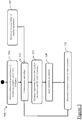
- FIG. 3 it is a flow diagram of a forecasting procedure 300 for forecasting solar irradiance according to an embodiment of the present invention.
- the solar irradiance forecast output by the forecasting procedure 300 is preferably used by the apparatus 120 ( e.g., by exploiting CPU 210 functionalities and/or processing capabilities) to estimate the energy (for example, the electric energy) generated by a solar system (for example, a photovoltaic system).
- the forecasting procedure 300 is arranged for retrieving measured values of selected weather parameters and of solar irradiance (the measured values, hereinfater referred to as historical measured values, being related to a first time slot, hereinfater referred to as past time slot, before said predetermined time instant t, the measured values being thus past measured values), and forecasted values of the selected weather parameters (the forecasted values being forecasted for a second time slot, hereinfater referred to as future time slot, after said predetermined time instant t ), thereafter the forecasting procedure 300 is arranged for estimating, based on an auto-regression analysis of the measured values, a relationship between the selected weather parameters and the solar irradiance ( i.e., a weather model for the solar irradiance), and for forecasting the solar irradiance in the predetermined geographic area based on a regression analysis of the relationship between the selected weather parameters and the solar irradiance,
- the forecasting procedure 300 will be discussed in more detailed in the following with joint reference to Figure 4 , the latter schematically illustrating, in terms of functional modules, a neutral network 400 according to an embodiment of the present invention - in this figure, the historical measured values of the weather parameters and of solar irradiance, the forecasted measured values of the weather parameters and the forecasted values of solar irradiance are denoted by the letters H, F and P, respectively.
- modules may be implemented by software (in which case, the resulting algorithm would be performed by proper software code means included in a computer program, when the program is run on a computing system, such as the computing system 200 ), hardware, and/or a combination thereof.
- the modules may also reflect, at least conceptually, the physical structure of the apparatus 120 (or of at least portions thereof, such as the CPU 210 ).
- the modules may have, by the physical viewpoint, distributed nature, it being understood that, by the logical viewpoint, they are all part of the system, wherever (and in whichever way) their physical implementation takes place.
- a different functionality splitting between the various modules may be envisaged.
- the forecasting procedure 300 starts by retrieving historical measured values of selected weather parameters and of the solar irradiance (step 305 ).
- the historical measured values of each selected weather parameter are retrieved (by the apparatus 120 ) by accessing the weather data system 115 (such as Weather Underground, OpenWeatherMap, or Dark Sky), or more thereof, via the network 125 .
- the weather data system 115 such as Weather Underground, OpenWeatherMap, or Dark Sky
- the selected weather parameters comprise a subset of the weather parameters actually handled by the accessed weather data system 115 .
- the selected weather parameters comprise, among the weather parameters actually handled by the accessed weather data system 115 , those weather parameters being relevant for ( i.e. having a certain relationship with, or affecting to a certain extent) the solar irradiance forecast - just as an example, the nearest storm-distance is a weather parameter having a marginal effect on solar irradiance forecast.
- the selected weather parameters comprise, among the weather parameters actually handled by the accessed weather data system 115 , those relevant weather parameters having a low (or relatively low) mutual correlation - indeed, the weather parameters having a high (or relatively high) mutual correlation (see, for example, the high mutual correlation between humidity and dew-point, or between temperature and feel-like-temperature) are substantially equivalent to each other, so that each weather parameter would provide no additional useful information with respect to the respective correlated relevant weather parameter(s).
- the selected weather parameters comprise, among the weather parameters actually handled by the accessed weather data system 115 , those relevant weather parameters whose historical measured values are available over time with reasonable continuity - just as an example, the atmospheric pressure could be a relevant weather parameter for solar irradiance forecast, however the usual sparse availability of measured values of atmospheric pressure makes it unreliable to this purpose.
- the selected weather parameters comprise at least one among:
- weather parameters can be considered (e.g., sunrise time, sunset time, dew-point, and feel-like-temperature), and/or environmental parameters can be considered (such as city lights, fires, pollution), the parameters to be considered depending on the specific application and being not limiting for the present invention.
- the historical measured values of solar irradiance comprise numerical values indicative of the power per unit area received from the sun in the form of electromagnetic radiation in the wavelength range of a proper measuring instrument.
- the measuring instrument (not shown) is installed in close proximity to the solar system 130 for which energy forecast is required, and the measured values of solar irradiance may be provided through the network 125 either to the weather data system 115 (and, hence, to the apparatus 120 together to the measured values of the selected weather parameters when the apparatus 120 accesses the weather data system 115 ), or directly to the apparatus 120 .
- the historical measured values will denote both the historical measured values of the selected weather parameters and the historical measured values of solar irradiance.
- the retrieved historical measured values comprise, for each selected weather parameter and for the solar irradiance, a plurality of measured values each one related to a respective measure time within the past time slot (the measures times being preferably retrieved by the apparatus 120 together with the associated historical measured values).
- each measure time comprises a time of the day, and the day of the year.
- the time of the day is one of the 24 daily hours: indeed, the "hour” is the usual the time interval with which both measured and forecasted values of the weather parameters and the measured values of the solar irradiance are typically updated at the weather data system 115 , and any time interval smaller than one hour would provide no additional useful contribution (due to the variance in weather forecasts).
- the measure time is described according to UNIX time representation, wherein the instants in time are defined as the number of seconds that have elapsed since 00:00:00 Coordinated Universal Time (UTC), Thursday, 1 January 1970.
- the UNIX time representation is independent of time zones, so that no adjustments are required in the case of weather data system 115 and apparatus 120 located at different time zones.
- the retrieved historical measured values comprise a plurality of measured values each one related to a respective measure time within the past time slot.
- the number of measure times may for example range from 24 to 100 (the number of measure times being for example 72, thus resulting in historical measured values at each hour of past three days from the predetermined time instant t ).
- a different number of measure times may be considered, and/or a different granularity may be envisaged (for example, a granularity of the fraction or of the multiple of an hour may be envisaged).
- the forecasting procedure 300 preferably carries out a dense embedding (step 310 ) of the historical measured values having categorical nature - see the dense embedder 410 in Figure 4 , the dense embedder being for example part of the neural network 400 , as herein assumed, or being external thereto.
- categorical values means discrete ( i.e., not continuous) values.
- the "temperature” weather parameter comprises a numerical value indicative of the temperature (potentially ranging over an unlimited range of values)
- the "humidity” and “cloud-cover” weather parameters are numerical values potentially taking any value between 0 and 1
- the measured values of the "temperature”, “humidity” and “cloud-cover” weather parameters may be regarded as having continuous nature (and the "temperature”, “humidity” and “cloud-cover” weather parameters may be regarded as continuous variables).
- the "summary" weather parameter comprises one among predefined textual general weather information
- the “summary” weather parameter may be regarded as having categorical or discrete nature (and, hence, it may be regarded as a categorical or discrete variable).
- measure time As far as measure time is concerned, it is a continuous value, but in the context of the present invention it is discretized in bins of granularity of the hour. For this reason, according to the preferred embodiment herein discussed (in which the hour of the day takes one of 24 possible values, and the day of the year takes one of the 366 possible values), the measure time is treated or processed as a categorical or discrete variable.
- a dense embedder is a neural network layer that learns how to embed (transform) categorical values into continuous values where the (Euclidean or cosine) distance corresponds to the "actual" learned semantic distance between the categorical variables.
- the dimension of these transformed (i.e., mapped and concatenated) values is a hyper parameter properly chosen by the practitioner. Typically it should reflect the complexity of the categorical values being embedded. Without losing generality, all the three categorical variables (summary-text, hour-of-day, day-of-year) are embedded into n -dimensional spaces (for example, 6-dimensional spaces). According to an embodiment of the present invention, the number n of dimensions of each n -dimensional space may be initially estimated based on the possible values that the considered categorical variable can take (e.g., based on the square root or the binary logarithm of the possible values), and then refined based on proper techniques (such as cross-validation techniques).
- dense embedding 6 coherent continuous variables, i.e. 6 variables whose measured values are coherent and continuous with each other, are obtained.
- This allows optimizing the following training phase (discussed below) with efficient application of "Stochastic Gradient Descent” (SGD) algorithms and/or variants thereof (including, for example, “Momentum”, “AdaGrad”, “RMSprop”, “Nesterov”, and “Adam” algorithms) - in any case, dense embedding may also be omitted in alternative embodiments of the present invention (for example, when no categorical variables are used).
- SGD Stochastic Gradient Descent
- the dense, continuous representation of the historical measured values at each measure time provided by the dense embedder 410 is in the form of a 3-dimensional tensor (hereinafter, embedded tensor) whose shape is:
- the forecasting procedure 300 estimates, based on an auto-regression analysis (i.e., a regression analysis applied to identify autocorrelation of a time series data), a relationship between the weather parameters and the solar irradiance (step 315 ), retrieves the forecasted values of the weather parameters (step 325 ), and forecasts the solar irradiance based on a regression analysis of this relationship and of the forecasted values of the weather parameters (step 330 ).
- an auto-regression analysis i.e., a regression analysis applied to identify autocorrelation of a time series data
- a relationship between the weather parameters and the solar irradiance step 315
- retrieves the forecasted values of the weather parameters step 325
- forecasts the solar irradiance based on a regression analysis of this relationship and of the forecasted values of the weather parameters (step 330 ).
- a Seq2Seq network is an architecture of neural network including an encoder network followed by a decoder network (referred to as RNN encoder-decoder) - see Cho et al., "Learning Phrase Representations using RNN Encoder-Decoder for Statistical Machine Translation” (https://arxiv.org/abs/1406.1078 ). Both encoder and decoder networks are “Recurrent Neural Networks", hereinafter RNN networks.
- An RNN network is a class of artificial neural networks where connections between units form a directed cycle. This creates an internal (hidden) state of the RNN network which allows it to exhibit dynamic temporal behavior. RNN networks can use their internal memory to process arbitrary sequences of inputs.
- the encoder network maps a variable-length source sequence to a fixed-length vector
- the decoder network maps the vector representation back to a variable-length target sequence.
- Encoder and decoder networks are jointly trained ( i.e., they are trained end-to-end, meaning that there is not separate pre-training of the encoder and decoder networks with their later combination, but instead that the training signal is propagated directly from the loss function to all the parameters of the neural network 400 ), so as to maximize the conditional probability of the target sequence given a source sequence.
- the encoder network processes its input sequence, and the final hidden state of the encoder network represents the "compressed" information of the whole sequence - this is a natural feature of RNN networks, wherein their hidden state depends on the current input and the previous hidden state (in other words, RNN networks are auto-regressive). Since the final hidden state of the encoder network is a compressed representation of the whole input sequence, such state is used to initialize the hidden state of the decoder network, in this way the decoder network is conditioned on its own input and the encoder network input by proxy of the hidden state.
- the forecasting procedure 300 estimates, based on a regression analysis, a relationship between the weather parameters and the solar irradiance (step 315 ). As mentioned above, this is preferably achieved by providing the historical measured values (or, the embedded tensor when dense embedding is performed on the historical measured values and on the associated measure times) to an encoder network of a Seq2Seq network (see the encoder network 415 of Figure 4 ).
- the encoder network 415 is a bi-directional encoder network 415, i.e. it comprises two sibling RNN networks: a first RNN network for processing the input sequence as usual, and a second RNN network for processing the same sequence in reverse order (thus, the first and second RNN networks will be referred to as forward and backward RNN networks).
- the forward RNN network uncovers the effects due to some causes occurred in the past, whereas the backward RNN network uncovers the causes of some effects observed in the future.
- the forward and backward RNN networks are independent from each other, and their respective outputs and final hidden states are typically either summed or concatenated.
- the outputs and final hidden states of the forward and backward RNN networks are summed to reduce the number of parameters to train, in fact without reducing the accuracy of the final prediction. Therefore, the result of the encoder network 415 is a single hidden state that sums the final hidden states of the forward and backward RNN networks, and a sequence of output vectors (in the following, output vector sequence), as many as the input sequence length (72 in the example at issue).
- the output vector sequence is preferably indicative of the relationship between the weather parameters and the solar irradiance.
- output vector sequence results from the historical measured values (and the associated measure times) processed by the encoder network 415 , such an output vector sequence will be also referred to as encoded historical measured values - the encoded historical measured values will be assumed to incorporate also the respective (encoded) measure times.
- the encoder network 415 is a "Long Short Term Memory” (LSTM) encoder network or a “Gated Recurrent Unit” (GRU) encoder network.
- LSTM Long Short Term Memory
- GRU Gated Recurrent Unit
- the encoder network 415 is a bi-directional GRU encoder network.
- the forecasting procedure 300 After having determined the relationship between the weather parameters and the solar irradiance (i.e., encoded historical measured values output by the encoder network 415 ), the forecasting procedure 300 preferably introduces an attention model to the encoded historical measure values (step 320 ).
- the attention model is itself a neural network that allows the decoder network to refer back to the input sequence, instead of forcing it to encode all information into one fixed-length vector (as instead is in conventional Seq2Seq networks) - see Dzmitry Bahdanau, Kyunghyun Cho, and Yoshua Bengio 2015, "Neural machine translation by jointly learning to align and translate", Proc. of ICLR. Association for Computational Linguistics .
- the attention model allows the Seq2Seq network to access its internal memory (i.e., the outputs of the encoder network 415 ), such that instead of just using the compressed information of the last hidden state of the encoder network 415 , the decoder network learns to "attend" (focus on) the relevant parts of the whole output sequence of the encoder network.
- the memory access mechanism is soft, which means that the Seq2Seq network retrieves a weighted combination of all memory locations, not a value from a single discrete location. Making the memory access soft has the benefit that the Seq2Seq network can easily be trained end-to-end.
- the attention model can be implemented as a complementary neural network (hereinafter, attention network) 420 that is able to learn to soft-weight the output sequence of the encoder network 415 and that can be jointly trained end-to-end along with the encoder network 415 and the following decoder network (discussed below).
- attention network a complementary neural network
- the attention network 420 comprises a feed-forward network whose input are the output vector sequence (i.e., the sequence of output vectors - or, equivalently, the encoded historical measured values - from the encoder network 415 ) and the current hidden state of the decoder network, and whose output is a weighted combination of said output vector sequence (so as to weight the relative importance of each output vector sequence).
- the output vector sequence i.e., the sequence of output vectors - or, equivalently, the encoded historical measured values - from the encoder network 415
- the current hidden state of the decoder network whose output is a weighted combination of said output vector sequence (so as to weight the relative importance of each output vector sequence).
- said weighted combination (i.e., the relative importance of the output vector sequence) depends on the current hidden state of the decoder network. More preferably, said weighted combination is achieved by applying a soft-max function over the output vector sequence. Even more preferably, the soft-max function values are indicative of the probabilities of said output vector sequence, and advantageously form a soft multimodal distribution (i.e. a distribution having multiple modes, thus one or many "peaks"), it meaning that not only a single output vector of the output vector sequence is rigidly considered relevant (for example, by taking the "one" value whilst all other output vectors of output vector sequence take the "zero" value), but that two or more output vectors of the output vector sequences can be relevant.
- a soft multimodal distribution i.e. a distribution having multiple modes, thus one or many "peaks
- the forecasting procedure 300 then comprises, at step 325 , retrieving the forecasted values of the weather parameters (preferably, a sequence of 24-hour day-ahead forecasted values of one or more weather variables, and more preferably of the same weather parameters whose historical measured values have been retrieved at step 305 ), and providing the retrieved forecasted values of the weather parameters (preferably, as discussed below, a dense embedded version thereof) to a decoder network 430 of the Seq2Seq network, together with the encoded historical measured values (or the weighted combination of the encoded historical measured values in case that an attention model is applied), thereby allowing the decoder network 430 to determine forecasted values of the solar irradiance - step 330 .
- the weather parameters preferably, a sequence of 24-hour day-ahead forecasted values of one or more weather variables, and more preferably of the same weather parameters whose historical measured values have been retrieved at step 305
- the retrieved forecasted values of the weather parameters preferably, as discussed below,
- the sequence of 24-hour day-ahead forecasts is a tensor whose shape is:
- the categorical values of the categorical variables are transformed into continuous values and concatenated with the continuous values of the continuous variables (preferably, again at the dense embedder 410 , as conceptually illustrated in Figure 3 by arrow connection between step 325 and step 310 , and in Figure 4 by the retrieved forecasted values F of the weather parameters input to the dense embedder 410 ), to become the input for the decoder network 430 .
- the decoder network 430 handles the same variables of the encoder network with the exception of the solar irradiance.
- the encoder network 415 is fed with the historical measured values of the solar irradiance, whereas the decoder network 430 output is the forecasted solar irradiance ( e.g., for the day ahead).
- the decoder network 430 is a unidirectional RNN network. Additionally or alternatively, the decoder network 430 is a "Long Short Term Memory” (LSTM) RNN network or a “Gated Recurrent Unit” (GRU) RNN network. In a preferred embodiment of the present invention, the decoder network 430 is a unidirectional GRU RNN network.
- LSTM Long Short Term Memory
- GRU Gated Recurrent Unit
- the hidden state of the decoder network 430 is initialized with the hidden state of the encoder network 415 , with the attention network 420 that, as mentioned above, is conditioned on the current hidden state of the decoder network 430 - this mutual dependency between the attention network 420 and decoder network 430 allows the neural network 400 to learn very complex probability distributions.
- the output of the decoder network 430 is the solar irradiance forecast (denoted by P in the figures), the solar irradiance forecast being for example used by the apparatus 120 ( e.g., by exploiting CPU 210 functionalities and/or processing capabilities) to estimate the energy (for example, the electric energy) generated by a solar system (for example, a photovoltaic system).
- the energy for example, the electric energy
- a solar system for example, a photovoltaic system
- a weather model is trained with a number of past observations (i.e., the historical measured values of the weather parameters and of solar irradiance), and particularly with the most recent past observations), thereafter during inference the trained weather model is fed with weather day-ahead forecasts (i.e., the forecasts of the weather parameters in the immediate future), so as to receive corresponding day-ahead solar irradiance forecasts which are highly reliable.
- day-ahead forecasts are exploited (like a regression problem) and recent past observations are exploited (like an auto-regression problem), with the relative importance / reliability of these two predictors that is preferably combined and weighted (wherein the best combination and weighting is automatically learned by training the neural network).
- the present invention lends itself to be implemented by removing some steps being not essential, or adding further optional steps); moreover, the steps may be performed in different order, concurrently or in an interleaved way (at least partly).
- any component thereof may be separated into several elements, or two or more components may be combined into a single element; in addition, each component may be replicated for supporting the execution of the corresponding operations in parallel. It should also be noted that any interaction between different components generally does not need to be continuous (unless otherwise indicated), and it may be both direct and indirect through one or more intermediaries.
Landscapes
- Engineering & Computer Science (AREA)
- Physics & Mathematics (AREA)
- Theoretical Computer Science (AREA)
- General Physics & Mathematics (AREA)
- Life Sciences & Earth Sciences (AREA)
- Computing Systems (AREA)
- Software Systems (AREA)
- Computational Linguistics (AREA)
- Data Mining & Analysis (AREA)
- Evolutionary Computation (AREA)
- General Health & Medical Sciences (AREA)
- Molecular Biology (AREA)
- Biomedical Technology (AREA)
- General Engineering & Computer Science (AREA)
- Artificial Intelligence (AREA)
- Mathematical Physics (AREA)
- Biophysics (AREA)
- Health & Medical Sciences (AREA)
- Environmental & Geological Engineering (AREA)
- Atmospheric Sciences (AREA)
- Biodiversity & Conservation Biology (AREA)
- Ecology (AREA)
- Environmental Sciences (AREA)
- Power Engineering (AREA)
- Automation & Control Theory (AREA)
- Management, Administration, Business Operations System, And Electronic Commerce (AREA)
Claims (13)
- Verfahren (300) zum Schätzen von Energie, die von einer Solarsystemanlage (130) in einem vorbestimmten geografischen Gebiet erzeugt wird, wobei das Verfahren (300) zu jedem vorbestimmten Zeitmoment Folgendes umfasst:- Abrufen (305) von Messwerten von mindestens einem Wetterparameter und einer Sonnenstrahlung mit Bezug auf das vorbestimmte geografische Gebiet, wobei die Messwerte einen ersten Zeitschlitz vor dem vorbestimmten Zeitmoment betreffen;- Durchführen (315) einer Autoregressionsanalyse der Messwerte;- Schätzen (315) einer Beziehung zwischen dem mindestens einen Wetterparameter und der Sonnenstrahlung auf Basis der Autoregressionsanalyse;- Abrufen (325) von Vorhersagewerten des mindestens einen Wetterparameters mit Bezug auf das vorbestimmte geografische Gebiet, wobei die Vorhersagewerte für einen zweiten Zeitschlitz nach dem vorbestimmten Zeitmoment vorhergesagt werden;- Durchführen (330) einer Regressionsanalyse der Beziehung zwischen dem mindestens einen Wetterparameter und der Sonnenstrahlung sowie der Vorhersagewerte;- Vorhersagen (330) einer Sonnenstrahlung im zweiten Zeitschlitz auf Basis der Regressionsanalyse, und- Schätzen von Energie, die von der Solarsystemanlage (130) im zweiten Zeitschlitz erzeugt wird, gemäß der vorhergesagten Sonnenstrahlung und mindestens einem Solarsystemparameter,wobei:das Durchführen (315) einer Autoregressionsanalyse und das Schätzen (315) einer Beziehung das Bereitstellen (315) der Messwerte von mindestens einem Wetterparameter und von Sonnenstrahlung für ein Codierernetzwerk (415) eines neuronalen Sequenz-zu-Sequenz-Netzwerks (400) umfassen, dadurch Erhalten von codierten Messwerten, die die Beziehung zwischen dem mindestens einen Wetterparameter und der Sonnenstrahlung anzeigen, und wobeidas Vorhersagen (330) das Bereitstellen (330) der codierten Messwerte und der Vorhersagewerte für ein Decodierernetzwerk (430) des neuronalen Sequenz-zu-Sequenz-Netzwerks (400) umfasst.
- Verfahren (300) nach Anspruch 1, wobei
das Durchführen (315) einer Autoregressionsanalyse und das Schätzen (315) einer Beziehung Folgendes umfassen:Bereitstellen (315) der Messwerte von mindestens einem Wetterparameter und von Sonnenstrahlung für ein Codierernetzwerk (415) eines neuronalen Sequenz-zu-Sequenz-Netzwerks (400), dadurch Erhalten von codierten Messwerten, die die Beziehung zwischen dem mindestens einen Wetterparameter und der Sonnenstrahlung anzeigen, undBereitstellen (320) der codierten Messwerte für ein Aufmerksamkeitsnetzwerk (420), dadurch Erhalten einer gewichteten Kombination der codierten Messwerte, und wobeidas Durchführen (330) einer Regressionsanalyse und das Vorhersagen (330) Folgendes umfassen:
Bereitstellen (330) der gewichteten Kombination der codierten Messwerte und der Vorhersagewerte für ein Decodierernetzwerk (430) des neuronalen Sequenz-zu-Sequenz-Netzwerks (400). - Verfahren (300) nach Anspruch 1 oder 2, wobei
die Messwerte für jeden Wetterparameter und für die Sonnenstrahlung eine Vielzahl von Messwerten umfassen, von denen jeder eine jeweilige Messzeit innerhalb des ersten Zeitschlitzes betrifft;
das Abrufen (305) von Messwerten das Abrufen der Messwerte und der verknüpften Messzeiten umfasst und wobei
das Bereitstellen (315) der Messwerte des mindestens einen Wetterparameters und von Sonnenstrahlung für ein Codierernetzwerk (415) das Bereitstellen der Messwerte und der verknüpften Messzeiten für das Codierernetzwerk umfasst. - Verfahren (300) nach einem der vorhergehenden Ansprüche, wobei mindestens einer von dem mindestens einen Wetterparameter eine kategorische Variable ist, wobei jeder Wetterparameter, der keine kategorische Variable ist, eine kontinuierliche Variable ist und wobei das Bereitstellen (315) der Messwerte des mindestens einen Wetterparameters und von Sonnenstrahlung für ein Codierernetzwerk (415) Folgendes umfasst:Zuordnen der Messwerte jeder kategorischen Variable zu Vektoren von Zahlen in einem kontinuierlichen Raum, undVerketten der zugeordneten Messwerte mit den Messwerten jeder kontinuierlichen Variable, dadurch Erhalten von verketteten Messwerten jedes Wetterparameters,Bereitstellen (315) der verketteten Messwerte zusammen mit den Messwerten der Sonnenstrahlung für das Codierernetzwerk (415).
- Verfahren (300) nach Anspruch 4, wobei der kontinuierliche Raum ein euklidischer Raum ist.
- Verfahren (300) nach einem der vorhergehenden Ansprüche, wobei das Codierernetzwerk (315) ein bidirektionales rekurrentes neuronales Netzwerk ist.
- Verfahren (300) nach einem der vorhergehenden Ansprüche, wobei das Codierernetzwerk (315) ein rekurrentes neuronales Netzwerk des Typs "Long Short Term Memory" oder "Gated Recurrent Unit" ist.
- Verfahren (300) nach einem der Ansprüche 2 bis 7, wenn von Anspruch 2 abhängig, wobei das Aufmerksamkeitsnetzwerk (420) ein vorwärtsgekoppeltes Netzwerk umfasst, das angepasst ist, die gewichtete Kombination der codierten Messwerte gemäß einem aktuellen verborgenen Status des Decodierernetzwerks (430) bereitzustellen.
- Verfahren (300) nach einem der vorhergehenden Ansprüche, wobei das Decodierernetzwerk (430) ein unidirektionales Decodierernetzwerk ist.
- Verfahren (300) nach einem der vorhergehenden Ansprüche, wobei das Decodierernetzwerk (430) ein rekurrentes neuronales Netzwerk des Typs "Long Short Term Memory" oder "Gated Recurrent Unit" ist.
- Verfahren (300) nach einem der vorhergehenden Ansprüche, wobei der mindestens eine Wetterparameter mindestens eines von Folgendem umfasst:- textuelle allgemeine Wetterinformationen;- Temperatur;- Feuchtigkeit;- von Wolken verdeckte Himmelsmenge.
- Verfahren nach einem der vorhergehenden Ansprüche, wobei das Solarsystem (130) ein photovoltaisches System (130) ist und wobei die Energie, die vom Solarsystem (130) erzeugt wird, elektrische Energie ist, die vom photovoltaischen System (130) erzeugt wird.
- System (120, 400) zum Schätzen von Energie, die von einer Solarsystemanlage (130) in einem vorbestimmten geografischen Gebiet erzeugt wird, wobei das System (120, 400) Folgendes umfasst:- ein erstes Modul (220), das dazu ausgelegt ist, zu einem vorbestimmten Zeitmoment Messwerte von mindestens einem Wetterparameter und von Sonnenstrahlung mit Bezug auf das vorbestimmte geografische Gebiet abzurufen (305), wobei die Messwerte einen ersten Zeitschlitz vor dem vorbestimmten Zeitmoment betreffen, und Vorhersagewerte des mindestens einen Wetterparameters mit Bezug auf das vorbestimmte geografische Gebiet abzurufen, wobei die Vorhersagewerte für einen zweiten Zeitschlitz nach dem vorbestimmten Zeitmoment vorhergesagt werden;- ein zweites Modul (210, 315), das dazu ausgelegt ist, auf Basis einer Autoregressionsanalyse der Messwerte eine Beziehung zwischen dem mindestens einen Wetterparameter und der Sonnenstrahlung zu schätzen;- ein drittes Modul (210, 330), das dazu ausgelegt ist, auf Basis einer Regressionsanalyse der Beziehung zwischen dem mindestens einen Wetterparameter und der Sonnenstrahlung sowie der Vorhersagewerte eine Sonnenstrahlung im zweiten Zeitschlitz vorherzusagen (330); und- ein viertes Modul (210), das dazu ausgelegt ist, Energie, die von der Solarsystemanlage (130) im zweiten Zeitschlitz erzeugt wird, gemäß der vorhergesagten Sonnenstrahlung und mindestens einem Solarsystemparameter zu schätzen,wobei das zweite Modul (315) ein Codierernetzwerk (415) eines neuronalen Sequenz-zu-Sequenz-Netzwerks umfasst, wobei das Codierernetzwerk (415) codierte Messwerte, die die Beziehung zwischen dem mindestens einen Wetterparameter und der Sonnenstrahlung anzeigen, bereitstellt und wobei das dritte Modul (330) ein Decodierernetzwerk (430) des neuronalen Sequenz-zu-Sequenz-Netzwerks umfasst, wobei das Decodierernetzwerk (430) eine Sonnenstrahlungsvorhersage gemäß den codierten Messwerten und den Vorhersagewerten bereitstellt.
Applications Claiming Priority (1)
| Application Number | Priority Date | Filing Date | Title |
|---|---|---|---|
| PCT/EP2016/073768 WO2018065045A1 (en) | 2016-10-05 | 2016-10-05 | Method and system for estimating energy generation based on solar irradiance forecasting |
Publications (2)
| Publication Number | Publication Date |
|---|---|
| EP3523702A1 EP3523702A1 (de) | 2019-08-14 |
| EP3523702B1 true EP3523702B1 (de) | 2020-07-01 |
Family
ID=57211471
Family Applications (1)
| Application Number | Title | Priority Date | Filing Date |
|---|---|---|---|
| EP16788445.1A Active EP3523702B1 (de) | 2016-10-05 | 2016-10-05 | Verfahren und system zur schätzung der energieerzeugung auf basis der sonneneinstrahlungsvorhersage |
Country Status (3)
| Country | Link |
|---|---|
| US (1) | US11009536B2 (de) |
| EP (1) | EP3523702B1 (de) |
| WO (1) | WO2018065045A1 (de) |
Families Citing this family (34)
| Publication number | Priority date | Publication date | Assignee | Title |
|---|---|---|---|---|
| US12498504B2 (en) * | 2015-08-31 | 2025-12-16 | Green Power Labs Inc. | Method and system for solar power forecasting |
| US10558750B2 (en) | 2016-11-18 | 2020-02-11 | Salesforce.Com, Inc. | Spatial attention model for image captioning |
| US10749594B1 (en) | 2017-08-18 | 2020-08-18 | DeepSig Inc. | Learning-based space communications systems |
| JP7438655B2 (ja) * | 2018-06-05 | 2024-02-27 | 株式会社東芝 | 気象解析装置、気象解析方法、およびプログラム |
| CN112740631B (zh) * | 2018-07-20 | 2024-09-20 | 诺基亚技术有限公司 | 通过接收算法中的参数的更新来在通信系统中学习 |
| CN109541730A (zh) * | 2018-11-23 | 2019-03-29 | 长三角环境气象预报预警中心(上海市环境气象中心) | 一种大气污染物浓度预测的方法及设备 |
| CN110096795B (zh) * | 2019-04-29 | 2023-07-18 | 国网湖南省电力有限公司 | 一种大气雾霾数值预报的校正预报方法及系统 |
| CN116306864A (zh) * | 2019-09-16 | 2023-06-23 | 三峡大学 | 一种对电力系统的深度学习模型进行训练的方法 |
| CN110598854A (zh) * | 2019-09-20 | 2019-12-20 | 国网福建省电力有限公司 | 一种基于gru模型的台区线损率预测方法 |
| CN111667377B (zh) * | 2020-04-24 | 2021-03-09 | 南方电网能源发展研究院有限责任公司 | 一种全自动用电量预测方法及其系统 |
| CN111669123B (zh) * | 2020-05-11 | 2021-12-17 | 国家能源集团新能源技术研究院有限公司 | 用于对光伏组串进行故障诊断的方法和装置 |
| KR102333271B1 (ko) * | 2020-06-10 | 2021-11-30 | 경상국립대학교산학협력단 | 인공 신경망 모델 내 은닉단위의 상관성을 이용한 은닉단위 개수 선정방법 및 이를 이용한 수문기후변수 예측방법 |
| CN112100911B (zh) * | 2020-09-08 | 2023-06-30 | 淮阴工学院 | 一种基于深度bilstm的太阳辐射预测方法 |
| CN112487291B (zh) * | 2020-11-28 | 2022-06-10 | 重庆邮电大学 | 一种基于大数据的个性化新闻推荐方法及装置 |
| CN112651665B (zh) * | 2021-01-14 | 2022-12-20 | 浙江鸿程计算机系统有限公司 | 一种基于图神经网络的地表水水质指标预测方法和装置 |
| KR102897990B1 (ko) * | 2021-03-25 | 2025-12-08 | 서강대학교산학협력단 | 배터리를 활용한 재생에너지 오차 보정 가능한 예측 방법 |
| CN112801427B (zh) * | 2021-04-08 | 2021-08-20 | 国能日新科技股份有限公司 | 基于XGBoost的光伏辐照度预报方法及系统 |
| CN113128762B (zh) * | 2021-04-19 | 2022-05-10 | 中国科学院计算机网络信息中心 | 一种多源异构数据的短期光伏发电功率预测方法及系统 |
| CN113379142B (zh) * | 2021-06-23 | 2023-08-15 | 西安理工大学 | 一种基于风速修正和融合模型的短期风电功率预测方法 |
| CN113311512A (zh) * | 2021-06-24 | 2021-08-27 | 中国气象局公共气象服务中心(国家预警信息发布中心) | 基于卫星辐射产品的光伏电站太阳辐射短期预报方法 |
| US11817816B2 (en) * | 2021-08-09 | 2023-11-14 | Solargik Ltd | Solar energy system and geared drive system |
| CN113780636A (zh) * | 2021-08-26 | 2021-12-10 | 河北工业大学 | 一种基于EMD-GRU-Attention的太阳能辐射预测方法 |
| CN113962440A (zh) * | 2021-09-26 | 2022-01-21 | 国家电投集团综合智慧能源科技有限公司 | 一种融合dpc和gru的光伏预测方法和系统 |
| CN114841397B (zh) * | 2022-03-16 | 2025-08-08 | 中山大学 | 一种深度学习支持下的全天候太阳辐射遥感预报方法 |
| CN114971058B (zh) * | 2022-06-09 | 2023-07-14 | 哈尔滨工业大学 | 基于深度注意力网络和晴空辐射先验融合的光伏预报方法 |
| CN115840740B (zh) * | 2022-09-26 | 2023-11-24 | 中国电建集团贵阳勘测设计研究院有限公司 | 一种用于光伏电站的太阳能资源缺测数据插补方法 |
| CN115760642B (zh) * | 2022-12-07 | 2024-12-10 | 南京林业大学 | 一种用于太阳辐射预测的地基云图修复方法 |
| CN116070676B (zh) * | 2023-03-28 | 2023-06-30 | 南京气象科技创新研究院 | 基于注意力机制和自编码器的高速公路路面温度预报方法 |
| CN116128170B (zh) * | 2023-04-19 | 2023-06-23 | 深圳市峰和数智科技有限公司 | 一种光伏电站功率超短期预测方法、装置及相关设备 |
| CN116451598B (zh) * | 2023-06-20 | 2023-09-05 | 杭州经纬信息技术股份有限公司 | 基于去噪扩散概率模型的太阳辐照度预测方法 |
| CN116777066B (zh) * | 2023-06-26 | 2024-01-23 | 河海大学 | 基于地基云图引导深度分解的光伏功率概率预测方法及装置 |
| CN116933078B (zh) * | 2023-07-18 | 2026-02-27 | 三峡国际能源投资集团有限公司 | 太阳辐照度区间预测方法、装置、计算机设备及存储介质 |
| CN117272002B (zh) * | 2023-11-23 | 2024-02-20 | 中国电建集团西北勘测设计研究院有限公司 | 一种太阳辐射量估计方法、装置、电子设备及存储介质 |
| CN120124015B (zh) * | 2025-05-13 | 2026-03-17 | 北京城市气象研究院 | 基于特征挖掘与Seq2Seq模型的超短期辐照度测算方法 |
Family Cites Families (20)
| Publication number | Priority date | Publication date | Assignee | Title |
|---|---|---|---|---|
| ES2644528T3 (es) * | 2011-12-21 | 2017-11-29 | Siemens Aktiengesellschaft | Método para la determinación asistida por ordenador del uso de energía eléctrica producida por una central de generación de energía, particularmente una central de generación de energía renovable |
| WO2013166510A1 (en) * | 2012-05-04 | 2013-11-07 | Viridity Energy, Inc. | Facilitating revenue generation from wholesale electricity markets using an engineering-based energy asset model |
| US20140278108A1 (en) * | 2013-03-13 | 2014-09-18 | Locus Energy, Llc | Methods and Systems for Optical Flow Modeling Applications for Wind and Solar Irradiance Forecasting |
| US10168448B2 (en) * | 2013-04-30 | 2019-01-01 | International Business Machines Corporation | Machine learning approach for analysis and prediction of cloud particle size and shape distribution |
| US10079317B2 (en) * | 2013-07-15 | 2018-09-18 | Constantine Gonatas | Device for smoothing fluctuations in renewable energy power production cause by dynamic environmental conditions |
| US10133245B2 (en) * | 2013-11-11 | 2018-11-20 | Tmeic Corporation | Method for predicting and mitigating power fluctuations at a photovoltaic power plant due to cloud cover |
| US9921339B2 (en) * | 2014-03-31 | 2018-03-20 | Stc.Unm | Apparatus and method for solar energy resource micro-forecasts for solar generation sources and utilities |
| US9471884B2 (en) * | 2014-05-30 | 2016-10-18 | International Business Machines Corporation | Multi-model blending |
| US10094586B2 (en) * | 2015-04-20 | 2018-10-09 | Green Power Labs Inc. | Predictive building control system and method for optimizing energy use and thermal comfort for a building or network of buildings |
| CN105184404B (zh) * | 2015-08-31 | 2018-12-18 | 中国科学院广州能源研究所 | 适用于光伏系统全生命周期的输出功率分类预测系统 |
| CA2996216C (en) * | 2015-08-31 | 2023-09-26 | Green Power Labs Inc. | Method and system for solar power forecasting |
| US10230241B1 (en) * | 2015-09-30 | 2019-03-12 | The United States Of America, As Represented By The Secretary Of The Navy | Self-optimizing hybrid power system |
| WO2017114810A1 (en) * | 2015-12-31 | 2017-07-06 | Vito Nv | Methods, controllers and systems for the control of distribution systems using a neural network arhcitecture |
| WO2017193153A1 (en) * | 2016-05-11 | 2017-11-16 | Commonwealth Scientific And Industrial Research Organisation | Solar power forecasting |
| US11300707B2 (en) * | 2016-08-02 | 2022-04-12 | International Business Machines Corporation | Solar forecasting using machine learned cloudiness classification |
| AU2017245290B1 (en) * | 2016-11-02 | 2018-05-10 | Yamaha Agriculture, Inc. | Controlling Agricultural Production Areas |
| US11545830B2 (en) * | 2017-01-18 | 2023-01-03 | Board Of Regents, The University Of Texas System | Systems and methods of hierarchical forecasting of solar photovoltaic energy production |
| TWI623890B (zh) * | 2017-07-04 | 2018-05-11 | 台灣電力股份有限公司 | 由多個類神經網路組成的發電量預測系統與其方法 |
| US10732319B2 (en) * | 2017-08-30 | 2020-08-04 | International Business Machines Corporation | Forecasting solar power output |
| JP2019087027A (ja) * | 2017-11-07 | 2019-06-06 | 株式会社東芝 | 需要予測装置、需要予測方法および需要予測プログラム |
-
2016
- 2016-10-05 EP EP16788445.1A patent/EP3523702B1/de active Active
- 2016-10-05 WO PCT/EP2016/073768 patent/WO2018065045A1/en not_active Ceased
- 2016-10-05 US US16/339,240 patent/US11009536B2/en active Active
Non-Patent Citations (1)
| Title |
|---|
| None * |
Also Published As
| Publication number | Publication date |
|---|---|
| US20200041550A1 (en) | 2020-02-06 |
| WO2018065045A1 (en) | 2018-04-12 |
| US11009536B2 (en) | 2021-05-18 |
| EP3523702A1 (de) | 2019-08-14 |
Similar Documents
| Publication | Publication Date | Title |
|---|---|---|
| US11009536B2 (en) | Method and system for estimating energy generation based on solar irradiance forecasting | |
| Carneiro et al. | Review on photovoltaic power and solar resource forecasting: current status and trends | |
| Sivaneasan et al. | Solar forecasting using ANN with fuzzy logic pre-processing | |
| Shakya et al. | Solar irradiance forecasting in remote microgrids using markov switching model | |
| Hatanaka et al. | Diffusion models for high-resolution solar forecasts | |
| Alomari et al. | A predictive model for solar photovoltaic power using the Levenberg-Marquardt and Bayesian regularization algorithms and real-time weather data | |
| Arora et al. | Data normalisation-based solar irradiance forecasting using artificial neural networks | |
| Yao et al. | Very short-term forecasting of distributed PV power using GSTANN | |
| Yang et al. | A novel ARX-based multi-scale spatio-temporal solar power forecast model | |
| JP2006033908A (ja) | 太陽光発電システムの発電量予測方法、装置、およびプログラム | |
| Awad et al. | Predicting the energy production by solar photovoltaic systems in cold-climate regions | |
| Aman et al. | A novel hybrid intelligent approach for solar photovoltaic power prediction considering UV index and cloud cover | |
| Dazhi et al. | The estimation of clear sky global horizontal irradiance at the equator | |
| Yan et al. | Probabilistic PV power forecasting by a multi-modal method using GPT-agent to interpret weather conditions | |
| Kaur et al. | Solar power forecasting using ordinary least square based regression algorithms | |
| Ioakimidis et al. | Solar production forecasting based on irradiance forecasting using artificial neural networks | |
| Rao Kasagani et al. | Modeling of solar photovoltaic power using a two-stage forecasting system with operation and weather parameters | |
| Das et al. | Ultra-short term PV power forecasting under diverse environmental conditions: A case study of Norway | |
| Stoliarov | Efficient electricity generation forecasting from solar power plants using technology: Integration, benefits and prospects | |
| Ramirez-Vergara et al. | Predicting on-site solar energy generation using off-site weather stations and deep neural networks | |
| Tran et al. | Short-term solar power generation forecasting using edge ai | |
| Teta et al. | Long-term solar radiation forecasting based on LSTM and attention mechanism: a case study in Algeria | |
| Ehsan et al. | Artificial neural network predictor for grid-connected solar photovoltaic installations at atmospheric temperature | |
| CN114895380A (zh) | 一种太阳辐射预测方法、装置、设备和介质 | |
| Thomas | Optimisation Method for the clear sky PV forecast using power records from arbitrarily oriented panels |
Legal Events
| Date | Code | Title | Description |
|---|---|---|---|
| STAA | Information on the status of an ep patent application or granted ep patent |
Free format text: STATUS: UNKNOWN |
|
| STAA | Information on the status of an ep patent application or granted ep patent |
Free format text: STATUS: THE INTERNATIONAL PUBLICATION HAS BEEN MADE |
|
| PUAI | Public reference made under article 153(3) epc to a published international application that has entered the european phase |
Free format text: ORIGINAL CODE: 0009012 |
|
| STAA | Information on the status of an ep patent application or granted ep patent |
Free format text: STATUS: REQUEST FOR EXAMINATION WAS MADE |
|
| 17P | Request for examination filed |
Effective date: 20190423 |
|
| AK | Designated contracting states |
Kind code of ref document: A1 Designated state(s): AL AT BE BG CH CY CZ DE DK EE ES FI FR GB GR HR HU IE IS IT LI LT LU LV MC MK MT NL NO PL PT RO RS SE SI SK SM TR |
|
| AX | Request for extension of the european patent |
Extension state: BA ME |
|
| DAV | Request for validation of the european patent (deleted) | ||
| DAX | Request for extension of the european patent (deleted) | ||
| GRAP | Despatch of communication of intention to grant a patent |
Free format text: ORIGINAL CODE: EPIDOSNIGR1 |
|
| STAA | Information on the status of an ep patent application or granted ep patent |
Free format text: STATUS: GRANT OF PATENT IS INTENDED |
|
| INTG | Intention to grant announced |
Effective date: 20200214 |
|
| GRAS | Grant fee paid |
Free format text: ORIGINAL CODE: EPIDOSNIGR3 |
|
| GRAA | (expected) grant |
Free format text: ORIGINAL CODE: 0009210 |
|
| STAA | Information on the status of an ep patent application or granted ep patent |
Free format text: STATUS: THE PATENT HAS BEEN GRANTED |
|
| AK | Designated contracting states |
Kind code of ref document: B1 Designated state(s): AL AT BE BG CH CY CZ DE DK EE ES FI FR GB GR HR HU IE IS IT LI LT LU LV MC MK MT NL NO PL PT RO RS SE SI SK SM TR |
|
| REG | Reference to a national code |
Ref country code: CH Ref legal event code: EP Ref country code: AT Ref legal event code: REF Ref document number: 1286740 Country of ref document: AT Kind code of ref document: T Effective date: 20200715 |
|
| REG | Reference to a national code |
Ref country code: IE Ref legal event code: FG4D |
|
| REG | Reference to a national code |
Ref country code: DE Ref legal event code: R096 Ref document number: 602016039185 Country of ref document: DE |
|
| REG | Reference to a national code |
Ref country code: LT Ref legal event code: MG4D |
|
| PG25 | Lapsed in a contracting state [announced via postgrant information from national office to epo] |
Ref country code: BG Free format text: LAPSE BECAUSE OF FAILURE TO SUBMIT A TRANSLATION OF THE DESCRIPTION OR TO PAY THE FEE WITHIN THE PRESCRIBED TIME-LIMIT Effective date: 20201001 |
|
| REG | Reference to a national code |
Ref country code: NL Ref legal event code: MP Effective date: 20200701 |
|
| REG | Reference to a national code |
Ref country code: AT Ref legal event code: MK05 Ref document number: 1286740 Country of ref document: AT Kind code of ref document: T Effective date: 20200701 |
|
| PG25 | Lapsed in a contracting state [announced via postgrant information from national office to epo] |
Ref country code: FI Free format text: LAPSE BECAUSE OF FAILURE TO SUBMIT A TRANSLATION OF THE DESCRIPTION OR TO PAY THE FEE WITHIN THE PRESCRIBED TIME-LIMIT Effective date: 20200701 Ref country code: LT Free format text: LAPSE BECAUSE OF FAILURE TO SUBMIT A TRANSLATION OF THE DESCRIPTION OR TO PAY THE FEE WITHIN THE PRESCRIBED TIME-LIMIT Effective date: 20200701 Ref country code: PT Free format text: LAPSE BECAUSE OF FAILURE TO SUBMIT A TRANSLATION OF THE DESCRIPTION OR TO PAY THE FEE WITHIN THE PRESCRIBED TIME-LIMIT Effective date: 20201102 Ref country code: HR Free format text: LAPSE BECAUSE OF FAILURE TO SUBMIT A TRANSLATION OF THE DESCRIPTION OR TO PAY THE FEE WITHIN THE PRESCRIBED TIME-LIMIT Effective date: 20200701 Ref country code: ES Free format text: LAPSE BECAUSE OF FAILURE TO SUBMIT A TRANSLATION OF THE DESCRIPTION OR TO PAY THE FEE WITHIN THE PRESCRIBED TIME-LIMIT Effective date: 20200701 Ref country code: GR Free format text: LAPSE BECAUSE OF FAILURE TO SUBMIT A TRANSLATION OF THE DESCRIPTION OR TO PAY THE FEE WITHIN THE PRESCRIBED TIME-LIMIT Effective date: 20201002 Ref country code: SE Free format text: LAPSE BECAUSE OF FAILURE TO SUBMIT A TRANSLATION OF THE DESCRIPTION OR TO PAY THE FEE WITHIN THE PRESCRIBED TIME-LIMIT Effective date: 20200701 Ref country code: CZ Free format text: LAPSE BECAUSE OF FAILURE TO SUBMIT A TRANSLATION OF THE DESCRIPTION OR TO PAY THE FEE WITHIN THE PRESCRIBED TIME-LIMIT Effective date: 20200701 Ref country code: AT Free format text: LAPSE BECAUSE OF FAILURE TO SUBMIT A TRANSLATION OF THE DESCRIPTION OR TO PAY THE FEE WITHIN THE PRESCRIBED TIME-LIMIT Effective date: 20200701 Ref country code: NO Free format text: LAPSE BECAUSE OF FAILURE TO SUBMIT A TRANSLATION OF THE DESCRIPTION OR TO PAY THE FEE WITHIN THE PRESCRIBED TIME-LIMIT Effective date: 20201001 |
|
| PG25 | Lapsed in a contracting state [announced via postgrant information from national office to epo] |
Ref country code: PL Free format text: LAPSE BECAUSE OF FAILURE TO SUBMIT A TRANSLATION OF THE DESCRIPTION OR TO PAY THE FEE WITHIN THE PRESCRIBED TIME-LIMIT Effective date: 20200701 Ref country code: RS Free format text: LAPSE BECAUSE OF FAILURE TO SUBMIT A TRANSLATION OF THE DESCRIPTION OR TO PAY THE FEE WITHIN THE PRESCRIBED TIME-LIMIT Effective date: 20200701 Ref country code: LV Free format text: LAPSE BECAUSE OF FAILURE TO SUBMIT A TRANSLATION OF THE DESCRIPTION OR TO PAY THE FEE WITHIN THE PRESCRIBED TIME-LIMIT Effective date: 20200701 Ref country code: IS Free format text: LAPSE BECAUSE OF FAILURE TO SUBMIT A TRANSLATION OF THE DESCRIPTION OR TO PAY THE FEE WITHIN THE PRESCRIBED TIME-LIMIT Effective date: 20201101 |
|
| PG25 | Lapsed in a contracting state [announced via postgrant information from national office to epo] |
Ref country code: NL Free format text: LAPSE BECAUSE OF FAILURE TO SUBMIT A TRANSLATION OF THE DESCRIPTION OR TO PAY THE FEE WITHIN THE PRESCRIBED TIME-LIMIT Effective date: 20200701 |
|
| REG | Reference to a national code |
Ref country code: DE Ref legal event code: R097 Ref document number: 602016039185 Country of ref document: DE |
|
| PG25 | Lapsed in a contracting state [announced via postgrant information from national office to epo] |
Ref country code: EE Free format text: LAPSE BECAUSE OF FAILURE TO SUBMIT A TRANSLATION OF THE DESCRIPTION OR TO PAY THE FEE WITHIN THE PRESCRIBED TIME-LIMIT Effective date: 20200701 Ref country code: SM Free format text: LAPSE BECAUSE OF FAILURE TO SUBMIT A TRANSLATION OF THE DESCRIPTION OR TO PAY THE FEE WITHIN THE PRESCRIBED TIME-LIMIT Effective date: 20200701 Ref country code: RO Free format text: LAPSE BECAUSE OF FAILURE TO SUBMIT A TRANSLATION OF THE DESCRIPTION OR TO PAY THE FEE WITHIN THE PRESCRIBED TIME-LIMIT Effective date: 20200701 Ref country code: DK Free format text: LAPSE BECAUSE OF FAILURE TO SUBMIT A TRANSLATION OF THE DESCRIPTION OR TO PAY THE FEE WITHIN THE PRESCRIBED TIME-LIMIT Effective date: 20200701 |
|
| PLBE | No opposition filed within time limit |
Free format text: ORIGINAL CODE: 0009261 |
|
| STAA | Information on the status of an ep patent application or granted ep patent |
Free format text: STATUS: NO OPPOSITION FILED WITHIN TIME LIMIT |
|
| PG25 | Lapsed in a contracting state [announced via postgrant information from national office to epo] |
Ref country code: AL Free format text: LAPSE BECAUSE OF FAILURE TO SUBMIT A TRANSLATION OF THE DESCRIPTION OR TO PAY THE FEE WITHIN THE PRESCRIBED TIME-LIMIT Effective date: 20200701 |
|
| REG | Reference to a national code |
Ref country code: CH Ref legal event code: PL |
|
| 26N | No opposition filed |
Effective date: 20210406 |
|
| PG25 | Lapsed in a contracting state [announced via postgrant information from national office to epo] |
Ref country code: LU Free format text: LAPSE BECAUSE OF NON-PAYMENT OF DUE FEES Effective date: 20201005 Ref country code: SK Free format text: LAPSE BECAUSE OF FAILURE TO SUBMIT A TRANSLATION OF THE DESCRIPTION OR TO PAY THE FEE WITHIN THE PRESCRIBED TIME-LIMIT Effective date: 20200701 Ref country code: MC Free format text: LAPSE BECAUSE OF FAILURE TO SUBMIT A TRANSLATION OF THE DESCRIPTION OR TO PAY THE FEE WITHIN THE PRESCRIBED TIME-LIMIT Effective date: 20200701 |
|
| REG | Reference to a national code |
Ref country code: BE Ref legal event code: MM Effective date: 20201031 |
|
| PG25 | Lapsed in a contracting state [announced via postgrant information from national office to epo] |
Ref country code: BE Free format text: LAPSE BECAUSE OF NON-PAYMENT OF DUE FEES Effective date: 20201031 Ref country code: CH Free format text: LAPSE BECAUSE OF NON-PAYMENT OF DUE FEES Effective date: 20201031 Ref country code: SI Free format text: LAPSE BECAUSE OF FAILURE TO SUBMIT A TRANSLATION OF THE DESCRIPTION OR TO PAY THE FEE WITHIN THE PRESCRIBED TIME-LIMIT Effective date: 20200701 Ref country code: LI Free format text: LAPSE BECAUSE OF NON-PAYMENT OF DUE FEES Effective date: 20201031 |
|
| PG25 | Lapsed in a contracting state [announced via postgrant information from national office to epo] |
Ref country code: IE Free format text: LAPSE BECAUSE OF NON-PAYMENT OF DUE FEES Effective date: 20201005 |
|
| PG25 | Lapsed in a contracting state [announced via postgrant information from national office to epo] |
Ref country code: TR Free format text: LAPSE BECAUSE OF FAILURE TO SUBMIT A TRANSLATION OF THE DESCRIPTION OR TO PAY THE FEE WITHIN THE PRESCRIBED TIME-LIMIT Effective date: 20200701 Ref country code: MT Free format text: LAPSE BECAUSE OF FAILURE TO SUBMIT A TRANSLATION OF THE DESCRIPTION OR TO PAY THE FEE WITHIN THE PRESCRIBED TIME-LIMIT Effective date: 20200701 Ref country code: CY Free format text: LAPSE BECAUSE OF FAILURE TO SUBMIT A TRANSLATION OF THE DESCRIPTION OR TO PAY THE FEE WITHIN THE PRESCRIBED TIME-LIMIT Effective date: 20200701 |
|
| PG25 | Lapsed in a contracting state [announced via postgrant information from national office to epo] |
Ref country code: MK Free format text: LAPSE BECAUSE OF FAILURE TO SUBMIT A TRANSLATION OF THE DESCRIPTION OR TO PAY THE FEE WITHIN THE PRESCRIBED TIME-LIMIT Effective date: 20200701 |
|
| P01 | Opt-out of the competence of the unified patent court (upc) registered |
Effective date: 20230528 |
|
| PGFP | Annual fee paid to national office [announced via postgrant information from national office to epo] |
Ref country code: DE Payment date: 20251020 Year of fee payment: 10 |
|
| PGFP | Annual fee paid to national office [announced via postgrant information from national office to epo] |
Ref country code: GB Payment date: 20251029 Year of fee payment: 10 |
|
| PGFP | Annual fee paid to national office [announced via postgrant information from national office to epo] |
Ref country code: IT Payment date: 20251031 Year of fee payment: 10 |
|
| PGFP | Annual fee paid to national office [announced via postgrant information from national office to epo] |
Ref country code: FR Payment date: 20251024 Year of fee payment: 10 |