EP3865584A1 - Verfahren zur erstellung einer sequenzierungsbibliothek - Google Patents
Verfahren zur erstellung einer sequenzierungsbibliothek Download PDFInfo
- Publication number
- EP3865584A1 EP3865584A1 EP19871204.4A EP19871204A EP3865584A1 EP 3865584 A1 EP3865584 A1 EP 3865584A1 EP 19871204 A EP19871204 A EP 19871204A EP 3865584 A1 EP3865584 A1 EP 3865584A1
- Authority
- EP
- European Patent Office
- Prior art keywords
- polynucleotide
- dna
- tail
- substrate
- sequencing
- Prior art date
- Legal status (The legal status is an assumption and is not a legal conclusion. Google has not performed a legal analysis and makes no representation as to the accuracy of the status listed.)
- Withdrawn
Links
Images


Classifications
-
- C—CHEMISTRY; METALLURGY
- C12—BIOCHEMISTRY; BEER; SPIRITS; WINE; VINEGAR; MICROBIOLOGY; ENZYMOLOGY; MUTATION OR GENETIC ENGINEERING
- C12N—MICROORGANISMS OR ENZYMES; COMPOSITIONS THEREOF; PROPAGATING, PRESERVING, OR MAINTAINING MICROORGANISMS; MUTATION OR GENETIC ENGINEERING; CULTURE MEDIA
- C12N15/00—Mutation or genetic engineering; DNA or RNA concerning genetic engineering, vectors, e.g. plasmids, or their isolation, preparation or purification; Use of hosts therefor
- C12N15/09—Recombinant DNA-technology
- C12N15/10—Processes for the isolation, preparation or purification of DNA or RNA
- C12N15/1034—Isolating an individual clone by screening libraries
- C12N15/1093—General methods of preparing gene libraries, not provided for in other subgroups
-
- C—CHEMISTRY; METALLURGY
- C12—BIOCHEMISTRY; BEER; SPIRITS; WINE; VINEGAR; MICROBIOLOGY; ENZYMOLOGY; MUTATION OR GENETIC ENGINEERING
- C12Q—MEASURING OR TESTING PROCESSES INVOLVING ENZYMES, NUCLEIC ACIDS OR MICROORGANISMS; COMPOSITIONS OR TEST PAPERS THEREFOR; PROCESSES OF PREPARING SUCH COMPOSITIONS; CONDITION-RESPONSIVE CONTROL IN MICROBIOLOGICAL OR ENZYMOLOGICAL PROCESSES
- C12Q1/00—Measuring or testing processes involving enzymes, nucleic acids or microorganisms; Compositions therefor; Processes of preparing such compositions
- C12Q1/68—Measuring or testing processes involving enzymes, nucleic acids or microorganisms; Compositions therefor; Processes of preparing such compositions involving nucleic acids
- C12Q1/6806—Preparing nucleic acids for analysis, e.g. for polymerase chain reaction [PCR] assay
Definitions
- the present invention relates to a method and kit for constructing a second-generation high-throughput sequencing library. More particularly, the present invention relates to a method and kit for constructing a high-throughput sequencing library with a sequencing adapter with random bases overhanging at a 3' terminus.
- second-generation sequencing technology Compared with first-generation sequencing technology, second-generation sequencing technology has a faster sequencing speed and higher throughput, which meets the requirements of current scientific and technological development with regard to sequencing.
- second-generation sequencing technology platforms mainly include Hiseq, Miseq, Nextseq and Novaseq from Illumina, and SOLID system, PGM and Proton from Life Technologies, etc.
- the technical concept of second-generation sequencing technology is sequencing by synthesis, namely, a DNA sequence is determined according to signal changes caused by newly synthesized different bases.
- the Illumina sequencing platform detects light signals
- the Life sequencing platform detects current changes caused by acid-base changes. So far, second-generation sequencing technology is the most mature and most extensively used DNA high-throughput sequencing method and plays an important role in large-scale genome sequencing and gene diagnosis and therapy. The clinical application thereof has also become more and more widespread.
- Circulating DNA is also known as free DNA, and is the DNA that exists outside a cell in blood.
- the main source of free DNA is apoptotic cells or bone marrow cells. After being cleaved by nuclease in vivo , DNA released from these cells produces small fragments of DNA with a length of about 166 bp ( Y. M. Dennis Lo, et al., Science Translational Medicine, 2010, 10: 61ra91 ).
- Free DNA is in the state of dynamic equilibrium in vivo , therefore, free DNA can be used as an important parameter for health assessment.
- the clinical application of non-invasive prenatal diagnosis by using free DNA as a molecular marker has obtained approval in all aspects, and many countries have comprehensively promoted the application of this technology.
- the length information of free DNA is also a very important molecular marker.
- the source of these pieces of free DNA can be traced according to these differences, which brings about the dawn of a new era in the fields of the early diagnosis of cancer, organ transplantation and monitoring, etc. ( Matthew W. Snyder et al., Cell, 2016, 1: 57-68 ).
- the traditional construction process for a second-generation high-throughput methylation sequencing library comprises firstly constructing a pre-library, which includes the steps of filling a terminus, phosphorylating a 5' terminus, overhanging A at a 3' terminus and ligation with an adapter; after the pre-library is constructed, the pre-library is treated with hydrosulfite, which can cause a large amount of DNA damage, and finally, the proportion of the template that can be sequenced is less than 10% of the original template (Masahiko Shiraishi et al., 2004, 10: 409-415).
- the process for constructing the methylation sequencing library requires: 1) each step requires purification, and the operation is complicated; 2) the filling step can artificially introduce nucleotides and change the true methylation status; 3) a large amount of a DNA template is destroyed during hydrosulfite treatment and lost after PCR amplification.
- the Swift methylation sequencing library construction method can be used to construct a library more efficiently than traditional methods ( CN 104395480 , see figure 5 ).
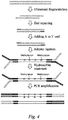
- the construction process comprises firstly performing a hydrosulfite treatment, and then constructing the library, including 3' terminus tailing and adapter ligation, then conducting an extension reaction, and then performing sequencing adapter ligation at the other end on the basis of obtaining a double-stranded deoxypolynucleotide.
- the DNA template contains a large amount of dUTP during the extension reaction, the DNA template is damaged by the hydrosulfite treatment, and only one extension reaction is performed, the efficiency of obtaining complete double-stranded deoxypolynucleotide is low, there are fewer templates that can be used for ligation with the sequencing adapter at the other end, and finally, there are few templates that can be sequenced.
- the present invention provides a method for the adapter ligation of a single-stranded deoxypolynucleotide. Further provided is a method for constructing a second-generation high-throughput sequencing library.
- the method of the present invention is applicable not only to normal DNA, but also to severely damaged samples such as FFPE samples, ancient DNA, and DNA samples treated with hydrosulfite.
- the present invention relates to a method for constructing a library of a deoxypolynucleotide substrate, the method comprising the following steps:
- the primer used in the first linear extension reaction of step (4), is a tail-controlling molecule (that is, a single strand composed of a tail-controlling region and the X region), and in a subsequent extension reaction, the primer used is the linear amplification primer added in step (3).
- fragments of the polynucleotide homopolymer and X region in the tail-controlling component are degraded before the extension reaction of step (4) starts, and the linear extension reaction is carried out on the substrate by using the linear amplification primer added in step (3).
- the linear amplification primer added in step (3) competitively binds to the substrate, and thus, the linear extension reaction is carried out on the substrate by using the added linear amplification primer.
- the present invention further relates to a kit, which can be used to construct a library of a deoxypolynucleotide substrate, and comprises:
- the number of complementary strands of an original single-stranded polynucleotide substrate can be effectively increased.
- a 5' sequencing adapter can be efficiently added to the 3' terminus of a complementary strand of the polynucleotide substrate by designing a 5' sequencing adapter with several overhanging random bases at 3' terminus of one strand.
- the polynucleotide substrate is denatured into a single strand, which, after the tailing of the substrate, is ligated to the linker; the linear amplification of the polynucleotide substrate is then completed to obtain a complementary strand; the 3' end of the complementary strand is ligated to the 5' sequencing adapter; PCR enrichment is then performed to obtain a library which can carry out next-generation sequencing.
- the substrate is methylated, a deoxypolynucleotide substrate template containing a U base is obtained.
- the U base may cause the linear amplification to stop, therefore, the obtained complementary strands vary in length.
- the 5' sequencing adapter with several random bases overhanging at the 3' terminus of one strand is ligated to the complementary strand, the single-stranded polynucleotide, which greatly improves the utilization rate of the complementary strand.
- the present library construction process can be used to construct a whole genome methylation sequencing library from as little as 2 ng of genomic DNA derived from cultured human cells, and obtain efficient sequencing results.
- the terms 3', 3' end and 3' terminus have the same meaning, and the terms 5', 5' end and 5' terminus have the same meaning, and refer to the 3' end or 5' end of a nucleotide sequence, respectively.
- the polynucleotide substrate is a polynucleotide substrate fragment that requires a tailing reaction and library construction.
- the polynucleotide substrate is single-stranded or double-stranded DNA.
- the polynucleotide substrate is a chemically treated nucleotide sequence, including, but not limited to, polynucleotide that has been treated with hydrosulfite.
- the polynucleotide substrate can be of natural origin or synthetic.
- the polynucleotide substrate of natural origin is a polynucleotide sequence derived from prokaryotes or eukaryotes, such as, derived from human, mouse, virus, plant, or bacterium.
- the polynucleotide substrate of the present invention may also be a severely damaged sample, such as an FFPE sample, ancient DNA, and a DNA sample treated with hydrosulfite.
- the polynucleotide substrate is tailed and can be used in assays involving microarrays and to generate a library for next-generation nucleic acid sequencing.
- the tailed polynucleotide substrate can also be used in the efficient cloning of the polynucleotide sequence.
- the polynucleotide substrate is single-stranded or double-stranded and comprises a 3'-end free hydroxyl group. In some aspects, the polynucleotide substrate is double-stranded and comprises a blunt terminus. In other aspects, the double-stranded polynucleotide substrate comprises a 3' recessed terminus.
- the length of a protruding terminus or recessed terminus of the polynucleotide substrate can vary. In various aspects, the length of the protruding terminus or recessed terminus of the polynucleotide substrate is 1, 2, 3, 4, 5, 6, 7, 8, 9, 10 or more nucleotides.
- the length of the polynucleotide substrate is between about 10 and about 5000 nucleotides, or between about 40 and about 2000 nucleotides, or between about 50 and about 1000 nucleotides, or between about 100 and about 500 nucleotides. In additional aspects, the length of the polynucleotide substrate is at least 3 to at most about 50, 100 or 1000 nucleotides.
- DNA dephosphorylation refers to the removal of phosphate groups of first amino acid residues at the 5' end and 3' end of DNA; generally, alkaline phosphatase is used to treat the DNA to achieve the dephosphorylation of the 5'-end and 3'-end residues.
- the dephosphorylation reaction for the deoxypolynucleotide substrate is performed before the deoxypolynucleotide substrate is tailed.
- tailing is interchangeable with the term “controlled tailing”.
- step (2) of the method of the present invention tailing is carried out on the deoxypolynucleotide substrate, and the method is used to add a required number of nucleotides to the 3' end of the polynucleotide substrate in a controlled manner.
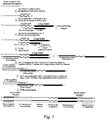
- the tail of the polynucleotide substrate is controlled within a certain length range by adding the tail-controlling component (see figure 1 ).
- the tail-controlling component comprises a polynucleotide homopolymer with a length of 5 to 20 nucleotides, and the tail-controlling component and the newly added homopolymeric nucleotide tail sequence of the substrate form a double-stranded structure, thus, the speed of the polymerization process is reduced and the tail of the polynucleotide substrate is controlled within a certain length range (see figure 1 ).
- the nucleotide added in the tailing reaction is a deoxynucleotide selected from one of dGTP, dCTP, dATP and dTTP, and may be, for example a dGTP solution, or a dCTP solution, or a dATP solution, or a dTTP solution.
- a tail-controlling component containing a poly (dT) homopolymeric nucleotide sequence is used to control the TdT enzyme (terminal deoxynucleotidyl transferase) to add a poly (dA) tail (also known as a homopolymeric nucleotide (dA) tail) to the 3' end of the polynucleotide substrate.
- the homopolymeric tail of the polynucleotide substrate is ligated to a linker of the tail-controlling component to form a 3'-end tailing region of the substrate.
- the tail-controlling component comprises the homopolymer nucleotide sequence with 5-20, preferably 5-13, further preferably 7-10, and more preferably 7-9 identical nucleotides.
- the molar concentration ratio of the polynucleotide substrate to the tail-controlling component ranges from 1 : 1-1 : 100, and preferably 1 : 5-1 : 50.
- the pH of the tailing reaction in step (2) of the method of the present invention ranges from about 5.0 to about 9.0; the molar concentration ratio of the polynucleotide substrate to the single nucleotide ranges from 1 : 10-1 : 20,000, and preferably 1 : 100-1 : 2000; the incubation time is 1 minute to 120 minutes, preferably 0.5-60 minutes, 0.5-30 minutes, 1-20 minutes, 1-15 minutes or 1-10 minutes; the incubation temperature is 20°C-50°C, preferably 25°C-45°C, and more preferably 25°C-37°C.
- the tailing length and efficiency of the polynucleotide substrate are controlled by adding a tail-controlling component.
- the tail-controlling component is composed of a tail-controlling region and an X region, and a linker sequence that can be complementary to the X region (see figure 2 ).
- the tail-controlling component is also known as a "tail-controlling adapter".
- the single strand composed of the tail-controlling region and the X region is referred to as a "tail-controlling molecule".
- the tail-controlling region of the present invention is a polynucleotide homopolymer with a length of 5-20 nucleotides.
- the polynucleotide homopolymer also known as a "poly region" is a polynucleotide strand formed by ligating identical nucleotides.
- the tail-controlling region of the present invention is a homopolymer nucleotide sequence composed of a deoxynucleotide of one of dGTP, dCTP, dATP and dTTP; preferably, the tail-controlling region is a poly (dT) tail-controlling region composed of dTTP.
- the length of the polynucleotide homopolymer of the tail-controlling region of the present invention is 5-20 nucleotides, preferably 7-20, 9-20 nucleotides, and further preferably 5-10 nucleotides, 7-10 nucleotides, and more preferably 7-9 nucleotides.
- the dGTP or dCTP polynucleotide homopolymer with a certain length can effectively control the tailing for the polynucleotide substrate to be about 20 nucleotides.
- the "X region sequence” provides a priming sequence for the amplification or sequencing of nucleic acid fragments, and can also comprise a marker sequence for distinguishing different substrate molecules.
- the marker sequence can comprise 4-16 bases, and is used for next-generation sequencing applications in some aspects.
- the X region sequence can be, but is not limited to, a next-generation sequencing (NGS) adapter sequence which is compatible with an Illumina, Ion Torrent, Roche 454 or SOLiD sequencing platform.
- the X region sequence can be a DNA sequence, an RNA sequence, or a heteropolymeric sequence comprising DNA and RNA.
- linker in the tail-controlling component only the linker that is complementary to the X region sequence is referred to as a "short linker”; a linker sequence that includes an extended primer binding region in addition to the sequence complementary to the X region is referred to as a “long linker”, and is as shown in Table 2.
- a method for deoxypolynucleotide substrate tailing is used, wherein the method is used to add a required number of nucleotides to the 3' end of the polynucleotide substrate in a controlled manner.
- the tail-controlling component comprises a polynucleotide homopolymer with a length of 5-20 nucleotides
- the tail-controlling component is complementary to the newly added homopolymeric nucleotide tail sequence of the substrate, thereby forming a double-stranded structure, thus reducing the speed of the polymerization process
- the tail of the polynucleotide substrate is controlled within a certain length range (see figure 1 ).
- a tail-controlling component containing a poly(dT) homopolymeric nucleotide sequence is used to control the TdT enzyme to add a poly(dA) tail (also known as a homopolymeric nucleotide (dA) tail) to the 3' end of the polynucleotide substrate. Further, the poly (dA) tail of the polynucleotide substrate is ligated to the linker of the tail-controlling component to form the 3'-end tailing region of the substrate.
- the tail-controlling component comprises a blocking group.
- the blocking group used herein is a part that prevents extension by means of an enzyme. If there is no blocking group, the enzyme can synthesize the polynucleotide by adding nucleotides.
- the blocking group includes, but is not limited to, a phosphate group, a carbon 3 spacer, a dideoxynucleotide, a ribonucleotide, an amino and reverse deoxythymidine.
- the linker of the tail-controlling component has a phosphorylation modification at the 5' end and a blocking group at the 3' end; the tail-controlling region has a blocking group at 3'.
- a linear amplification reaction is also known as a “linear extension reaction” or “linear extension”.
- the deoxypolynucleotide substrate is further used as a template to perform a linear amplification reaction.
- the present invention provides a method for the linear amplification of the deoxynucleotide substrate, and the method is used to increase the amount of deoxypolynucleotide substrates in a linear amplification manner (see figure 1 ).
- a linear amplification primer is added; the tailed substrate is used as a template to carry out the extension reaction; the extension reaction may first be an extension reaction that takes place by means of a tail-controlling molecule.
- the linear amplification primer separates the tail-controlling molecule from the substrate polynucleotide substrate by means of competition, and then, the deoxypolynucleotide substrate is used as a template to perform the linear amplification reaction.
- fragments of the polynucleotide homopolymer and X region in the tail-controlling component are degraded before the extension reaction of step (4) starts, and the linear extension reaction is carried out on the substrate by using the linear amplification primer added in step (3).
- the method comprises: after the tailing reaction, the polynucleotide substrate being denatured to a single-stranded state, and adding the linear amplification primer complementary to the 3' linker sequence of the substrate, DNA polymerase and deoxynucleotides to react with the polynucleotide substrate.
- the DNA polymerase can efficiently amplify a deoxypolynucleotide substrate template containing a U base.
- the number of linear amplification cycles is not less than 3, preferably not less than 4, preferably 4-50, further preferably 4-20 and more preferably 4-12 and 8-12.
- the 5' sequencing adapter of the present invention is a deoxypolynucleotide with a partially double-stranded structure; "partially double-stranded” refers to a 5' sequencing adapter with a random number of overhanging bases comprising a single-stranded part and a double-stranded part.
- the 5' sequencing adapter provides a priming sequence for the amplification or sequencing of nucleic acid fragments, and is used for next-generation sequencing applications in some aspects.
- the 5' sequencing adapter with overhanging random bases undergoes a ligation reaction with the complementary strand of the substrate obtained after the linear amplification reaction, and the 5' sequencing adapter with overhanging random bases comprises a single-stranded polynucleotide of random bases at the 3' terminus (see figure 3 ), therefore, the 5' sequencing adapter with overhanging random bases has a partially double-stranded polynucleotide and is of a multi-molecular structure, and the 5' sequencing adapter with overhanging random bases is also referred to as "5' sequencing adapter with overhanging Ns".
- a 5' sequencing adapter with 6 overhanging random bases is also referred to as a "5' sequencing adapter with 6 overhanging Ns", wherein N represents a deoxynucleotide base, that is to say, each of the 6 Ns is a deoxynucleotide base randomly selected from overhanging dGTP, dCTP, dATP and dTTP.
- the "5' sequencing adapter with 6 overhanging Ns" is a mixed molecule by ligating different random bases.
- the number of overhanging random bases in the 5' sequencing adapter of the present invention is 0-50, preferably 2-30, further preferably 2-17, 4-15 and 4-10, and more preferably 7-10 and 7-9.
- the 5' sequencing adapter is formed by annealing two polynucleotide strands.
- a polynucleotide strand without random bases has a phosphorylation modification at the 5' end, and a blocking group at the 3' end;
- a polynucleotide strand containing random bases has a blocking group at the 3' end (see figure 3 ).
- the method is used for the complementing of the 3' end of the complementary strand of the substrate obtained after the linear amplification reaction by the random base single-stranded polynucleotide portion of the 5' sequencing adapter with overhanging random bases to obtain a partially double-stranded structure in addition to the double-stranded portion of the 5' sequencing adapter.
- the 5' end of the polynucleotide strand not containing random bases of the 5' sequencing adapter is ligated to the 3' end of the complementary strand of the polynucleotide substrate (see figure 1 ).
- the complementary strands of the substrate used to ligate with the 5' sequencing adapter are increased, and ligation efficiency is improved.
- the molar concentration ratio of the polynucleotide substrate to the 5' sequencing adapter ranges from 1 : 100-1 : 4000, preferably 1 : 500-1 : 1000.
- the ligase that can be used in the method of the present invention can be DNA ligase and RNA ligase, including, but not limited to, T4 DNA ligase, Escherichia coli DNA ligase, T7 DNA ligase and T4 RNA ligase.
- the ligase of the present invention ligates the linker in the tail-controlling component with tailed polynucleotide of the substrate. In other embodiments, the ligase of the present invention ligates the 5' sequencing adapter to the synthesized single-stranded deoxypolynucleotide, which is the complementary strand of the substrate.
- the polynucleotide product after step (7) of the present invention is purified.
- the purification of the polynucleotide product is carried out by any method known to and understood by those skilled in the art.
- the polynucleotide substrate of the present invention can be purified by adding magnetic beads with carboxy modified surfaces.
- the polynucleotide substrate is purified by means of column purification and precipitation.
- Tail-controlling component with overhanging poly(dT) for constructing a methylation sequencing library Serial number of polynucleotide Structure of adapter 002 001 Phos: Phosphate; C3 Spacer: Carbon 3 Spacer; *: Thio site Table 3.
- 5' sequencing adapters with different numbers of overhanging Ns for example 1 Serial number of polynucleotide Structure of adapter 012 015 007 015 008 015 009 015 010 015 011 015 013 015 014 015 Phos: Phosphate; C3 Spacer: Carbon 3 Spacer; *: Thio site; N: dA, dT, dC or dG nucleotide Table 4.
- Tail-controlling component with overhanging poly (dT) and molecular tag for constructing a methylation sequencing library Serial number of polynucleotide Structure of adapter 006 029 Phos: Phosphate; C3 Spacer: Carbon 3 Spacer; *: Thio site; N: dA, dT, dC or dG nucleotide Table 5.
- "Traditional methylation sequencing adapter" for constructing a methylation sequencing library Serial number of polynucleotide Structure of adapter 016 017 Phos: Phosphate; 5mC: 5-methyl-cytosine deoxynucleotide
- Adapter preparation Polynucleotide pairs (001/002, 007/015, 008/015, 009/015, 010/015, 011/015, 012/015, 013/015, 014/015) were mixed in equimolar amounts, incubated in 1 x annealing buffer at 95°C for 2 minutes, then cooled slowly to room temperature to obtain the tail-controlling adapter (as shown in Table 2) and the 5' sequencing adapters with different numbers of overhanging random bases at the 3' terminus (as shown in Table 3).
- 40 ng of ⁇ -DNA (Takara, Catalog No. 3019) was treated with hydrosulfite by using a hydrosulfite treatment kit.
- step (2) The DNA product of step (2) was fragmented to 300 bp by using a focused ultrasonic apparatus (Covaris, Catalog No. S220), and retained for use.
- a DNA dephosphorylation reaction mixture was prepared as shown in Table 1-1. The reaction mixture was placed in a warm bath at 37°C for 30 minutes, treated at 95°C for 5 minutes, then immediately inserted into ice and incubated for 2 minutes, then retained for use, so that the substrate remained in a single-stranded state.
- the linear amplification product was purified and recovered by using 166 ⁇ l of 1 : 6 diluted Beckman Ampure XP magnetic beads (1 volume of Beckman Ampure XP magnetic beads plus 5 volumes of SB buffer) and 280 ⁇ l of 1.8 : 1 diluted SB buffer (1.8 volume of SB buffer plus 1 volume of enzyme-free water), then eluted by adding 100 ⁇ l of EB buffer. 100 ⁇ l of eluent was divided into 5 ⁇ l/part, with each part being charged into a 200 ⁇ l PCR tube, and 18 parts were separated and used for a next-step reaction.
- Table 1-3 Reaction mixture for linear amplification DNA (from step (5)) 40 ⁇ l Enzyme-free water 29 ⁇ l 5 x Phusion HF buffer 20 ⁇ l 100 ⁇ M linear amplification primer (003) 2 ⁇ l 2.5 mM dNTP 8 ⁇ l Phusion U Hot Start DNA polymerase 1 ⁇ l Total volume 100 ⁇ l Table 1-4 PCR reaction condition Temperature Time Number of cycles 95°C 3 minutes 1 95°C 30 seconds 4 60°C 30 seconds 68°C 1 minute 68°C 5 minutes 1 4 Preservation 1 (7) The 18 parts of DNA in step (6) were reacted at 95°C for 5 minutes, and immediately placed on ice for 2 minutes and retained for use, so that the two strands were melted and maintained as a single strand for use.
- the ligation reaction mixture of the DNA from step (7) and a "5' sequencing adapter" with 2-9 overhanging Ns was prepared as shown in Table 1-5. Two of each type of adapter were in parallel. The reaction mixture was placed in a warm bath at 25°C for 15 minutes. The ligated DNA was recovered by using 17 ⁇ l of Beckman Ampure XP magnetic beads, and then eluted by adding 26 ⁇ l of enzyme-free water to obtain a PCR amplification pre-library.
- KK4808 plus a qPCR forward primer/qPCR reverse primer (005/004, as shown in Table 1, the use concentration thereof being the same as that of the premix primer kit), and during calculation, the size of the fragment of the PCR amplification pre-library was 320 bp.
- concentrations of the PCR amplification pre-libraries constructed by using the "5' sequencing adapters" with 7 overhanging Ns, 8 overhanging Ns and 9 overhanging Ns were substantially the same, at 0.0653 nM, 0.0627 nM and 0.0646 nM, respectively.
- Adapter preparation A tail-controlling adapter (001/002, as shown in Table 2) and a "5' sequencing adapter" with 6 overhanging Ns at the 3' terminus (011/015, as shown in table 3) were prepared according to the adapter preparation method in example 1.
- 24 ng of ⁇ -DNA was treated with hydrosulfite by using a hydrosulfite treatment kit.
- Preparation of linear amplification product The linear amplification product was prepared according to the method described in example 1. During the purification and recovery of the linear amplification product, 31.2 ⁇ l of EB buffer was added for elution.
- Adapter preparation The tail-controlling adapter (001/002, as shown in Table 2) and the "5' sequencing adapter" with 7 overhanging Ns at the 3' terminus (012/015, as shown in Table 3) were prepared according to the adapter preparation method in Example 1.
- 20 ng of ⁇ -DNA was treated with hydrosulfite by using a hydrosulfite treatment kit.
- the DNA product of step (2) was fragmented to 300 bp by using a focused ultrasonic apparatus (Covaris, Catalog No. S220), and retained for use.
- the DNA dephosphorylation reaction mixture was prepared as shown in Table 3-1.
- All the linear amplification product was purified and recovered by using 166 ⁇ l of 1 : 6 diluted Beckman Ampure XP magnetic beads (1 volume of Beckman Ampure XP magnetic beads plus 5 volumes of SB buffer) and 280 ⁇ l of 1.8 : 1 diluted SB buffer (1.8 volume of SB buffer plus 1 volume of enzyme-free water), then eluted by adding 12.5 ⁇ l of EB buffer.
- 12.5 ⁇ l of eluent was divided into 5 ⁇ l/part, with each part being charged into a 200 ⁇ l PCR tube, and 2 parts were separated and used for a next-step reaction.
- Table 3-3 Reaction mixture for linear amplification DNA 10 ⁇ l Enzyme-free water 59 ⁇ l 5 x Phusion HF buffer 20 ⁇ l 100 ⁇ M linear amplification primer (003) 2 ⁇ l 2.5 mM dNTP 8 ⁇ l Phusion U Hot Start DNA polymerase 1 ⁇ l Total volume 100 ⁇ l Table 3-4 Temperature Time Number of cycles 95°C 3 minutes 1 95°C 30 seconds 4 or 6 or 8 or 12 60°C 30 seconds 68°C 1 minute 68°C 5 minutes 1 4°C Preservation 1 (7) The DNA prepared in step (6) was reacted at 95°C for 5 minutes, and immediately placed on ice for 2 minutes for use.
- the four reaction mixtures for the ligation of the "5' sequencing adapter" were prepared as shown in Table 3-5.
- the reaction mixtures were respectively placed in a warm bath at 25°C for 15 minutes.
- the ligated pieces of DNA were respectively recovered by using 17 ⁇ l of Beckman Ampure XP magnetic beads, and then eluted by adding 26 ⁇ l of adding enzyme-free water to obtain the PCR amplification pre-library.
- Adapter preparation The tail-controlling adapter with a random molecular tag (006/029, as shown in Table 4) and the "5' sequencing adapter" with 7 overhanging Ns at the 3' terminus (012/015, as shown in Table 3) were prepared according to the method described in Example 1.
- the methylation sequencing library was constructed according to the method described in Example 3 until the "5' sequencing adapter" ligation reaction was completed; then, the ligated DNA was recovered by using 17 ⁇ l Beckman Ampure XP magnetic beads, and the ligated DNA was then eluted by adding 20 ⁇ l enzyme-free water; 2 ⁇ l of eluent was diluted 10 times in 18 ⁇ l of enzyme-free water to obtain a ten-fold diluent and 2 ⁇ l of the ten-fold diluent was then diluted 10 times in 18 ⁇ l of enzyme-free water to obtain a hundred-fold diluent; and the obtained diluent was diluted sequentially to obtain a ten-thousand-fold diluent.
- the PCR amplification reaction mixture was prepared as shown in Table 4-1 and ran according to the PCR amplification program as shown in Table 4-2.
- the PCR product was recovered by using 80 ⁇ l of Beckman Ampure XP magnetic beads and then eluted by adding 50 ⁇ l enzyme-free water, and then, 50 ⁇ l of the eluted product was recovered by using 40 ⁇ l of Beckman Ampure XP magnetic beads, and the product was finally eluted by adding 25 ⁇ l of EB buffer to obtain the final sequencing library.
- the experimental results are as shown in Table 4-3 below.
- the concentrations of the constructed methylation sequencing libraries are 32.22 nM, 54.90 nM, 134.24 nM and 139.95 nM, respectively.
- the amount of sequenced data shown in high-throughput sequencing results is 4 Mb
- the library construction efficiencies are 30.35%, 48.36%, 70.36%, and 92.63%, respectively, and the variation coefficients are 0.455, 0.275, 0.999 and 0.637, respectively.
- the library is constructed from 1000 template ⁇ -DNA genomes, and finally, an average of 100 unique sequencing fragments is obtained at each ⁇ -DNA genome site by means of sequencing, which is referred to as a library construction efficiency of 10%.
- Statistics are compiled on number of unique sequencing fragments obtained at each ⁇ -DNA genome site, and the average value and standard deviation thereof are calculated; and the "variation coefficient" is obtained by dividing the standard deviation by the average value.
- the variation coefficient represents the uniformity of the method for constructing a library; the lower the variation coefficient, the better the uniformity.
- the library construction efficiency refers to the effectiveness of the method for constructing a library; the higher the library construction efficiency, the better the effectiveness.
- the numbers of linear amplification cycles being 4, 6, 8 and 12 can effectively complete linear amplification, and can be used to construct the methylation sequencing library for DNA treated with hydrosulfite.
- the number of linear amplification cycles is 12, the library construction efficiency is the highest, and reaches 92.63%.
- 10 x end repairing buffer New England Biolabs, Catalog No. B6052S, 50 mM Tris-hydrochloric acid, 10 mM magnesium chloride, 10 mM dithiothreitol, 1 mM adenosine triphosphate, 0.4 mM dATP, 0.4 mM dCTP, 0.4 mM dGTP and 0.4 mM dTTP, pH 7.5
- T4 DNA polymerase Enzymatics, Catalog No. P7080L, 3 U/ ⁇ L
- T4 polynucleotide kinase Enzymatics, Catalog No.
- the DNA dephosphorylation reaction mixture was prepared as shown in Table 5-1.
- the reaction mixture was placed in a warm bath at 37°C for 30 minutes, treated at 95°C for 5 minutes, then immediately inserted in ice and incubated for 2 minutes and retained for use.
- Table 5-1 3DNA dephosphorylation reaction reaction DNA (from step (1-3)) 17 ⁇ l 10 x CutSmart buffer 2 ⁇ l FastAP thermo-sensitive alkaline phosphatase 1 ⁇ l Total volume 20 ⁇ l (1-5)
- the tailing and ligation reaction mixture was prepared as shown in Table 5-2.
- the linear amplification product was purified and recovered by using 166 ⁇ l of 1 : 6 diluted Beckman Ampure XP magnetic beads (1 volume of Beckman Ampure XP magnetic beads plus 5 volumes of SB buffer) and 280 ⁇ l of 1.8 : 1 diluted SB buffer (1.8 volume of SB buffer plus 1 volume of enzyme-free water), then eluted using 6.6 ⁇ l of EB buffer.
- Table 5-3 Reaction mixture for linear amplification DNA (from step (1-5)) 40 ⁇ l Enzyme-free water 29 ⁇ l 5 x Phusion HF buffer 20 ⁇ l 100 ⁇ M linear amplification primer (003) 2 ⁇ l 2.5 mM dNTP 8 ⁇ l Phusion U Hot Start DNA polymerase 1 ⁇ l Total volume 100 ⁇ l Table 5-4 Temperature Time Number of cycles 95°C 3 minutes 1 95°C 30 seconds 12 60°C 30 seconds 68°C 1 minute 68°C 5 minutes 1 4°C Preservation 1 (1-7) The DNA eluent in step (1-6) were reacted at 95°C for 5 minutes, and immediately placed on ice for 2 minutes and retained for use.
- the reaction mixture for the ligation of the "5' sequencing adapter" was prepared as shown in Table 5-5.
- the reaction mixture was placed in a warm bath at 25°C for 15 minutes.
- the ligated DNA was recovered by using 17 ⁇ l of Beckman Ampure XP magnetic beads, and then eluted by adding 100 ⁇ l of enzyme-free water.
- 2 ⁇ l of eluent was diluted 10 times in 18 ⁇ l of enzyme-free water to obtain a ten-fold diluent, then, 2 ⁇ l of the ten-fold diluent was diluted 10 times in 18 ⁇ l of enzyme-free water to obtain a hundred-fold diluent, and the obtained diluent was sequentially diluted to obtain a ten-thousand-fold diluent. 5.34 ⁇ l of the ten-thousand-fold diluent was taken out and retained for use.
- the PCR product was recovered by using 80 ⁇ l of Beckman Ampure XP magnetic beads and then eluted by adding 50 ⁇ l enzyme-free water, and then, 50 ⁇ l of the eluted product was recovered by using 40 ⁇ l of Beckman Ampure XP magnetic beads, and same was finally eluted by adding 25 ⁇ l of EB buffer to obtain the final sequencing library.
- the PCR amplification reaction mixture was prepared as shown in Table 5-11 and ran according to the PCR amplification program as shown in Table 5-12.
- the PCR product was recovered by using 40 ⁇ l of Beckman Ampure XP magnetic beads and then eluted by adding 50 ⁇ l enzyme-free water, and then 50 ⁇ l of the eluted product was recovered by using 40 ⁇ l of Beckman Ampure XP magnetic beads, and same was finally eluted by adding 25 ⁇ l of EB buffer to obtain the final sequencing library.
- PCR amplification reaction mixture DNA (from step (2-6)) 5.34 ⁇ l Enzyme-free water 17.66 ⁇ l 2 x high-fidelity hot start methylation PCR mixture 25 ⁇ l 20 ⁇ M P5 PCR primer (026) 1 ⁇ l 20 ⁇ M P7 PCR tag primer (each library uses primer 027 or 028, and the concentration of each primer is 20 ⁇ M) 1 ⁇ l Total volume 50 ⁇ l Table 5-12 PCR amplification program Temperature Time Number of cycles 98°C 45 seconds 1 98°C 15 seconds 28 62°C 30 seconds 72°C 30 seconds 72°C 2 minutes 1 4°C Preservation 1 (2-8) The method for detecting the library concentration was the same as in Example 4.
- the method of the present invention can be used to efficiently construct a methylation sequencing library of a small amount of genomic DNA, and the library construction efficiency and the uniformity of the method for constructing a library are far superior to those of Swift method and the traditional method.
Landscapes
- Chemical & Material Sciences (AREA)
- Life Sciences & Earth Sciences (AREA)
- Health & Medical Sciences (AREA)
- Organic Chemistry (AREA)
- Genetics & Genomics (AREA)
- Engineering & Computer Science (AREA)
- Zoology (AREA)
- Wood Science & Technology (AREA)
- General Engineering & Computer Science (AREA)
- Bioinformatics & Cheminformatics (AREA)
- Biotechnology (AREA)
- Proteomics, Peptides & Aminoacids (AREA)
- Analytical Chemistry (AREA)
- Microbiology (AREA)
- Biomedical Technology (AREA)
- Biophysics (AREA)
- Biochemistry (AREA)
- Physics & Mathematics (AREA)
- Molecular Biology (AREA)
- General Health & Medical Sciences (AREA)
- Chemical Kinetics & Catalysis (AREA)
- Bioinformatics & Computational Biology (AREA)
- Crystallography & Structural Chemistry (AREA)
- Immunology (AREA)
- Plant Pathology (AREA)
- Measuring Or Testing Involving Enzymes Or Micro-Organisms (AREA)
Applications Claiming Priority (2)
| Application Number | Priority Date | Filing Date | Title |
|---|---|---|---|
| CN201811185409 | 2018-10-11 | ||
| PCT/CN2019/102651 WO2020073748A1 (zh) | 2018-10-11 | 2019-08-26 | 一种测序文库的构建方法 |
Publications (2)
| Publication Number | Publication Date |
|---|---|
| EP3865584A1 true EP3865584A1 (de) | 2021-08-18 |
| EP3865584A4 EP3865584A4 (de) | 2021-12-08 |
Family
ID=70165046
Family Applications (1)
| Application Number | Title | Priority Date | Filing Date |
|---|---|---|---|
| EP19871204.4A Withdrawn EP3865584A4 (de) | 2018-10-11 | 2019-08-26 | Verfahren zur erstellung einer sequenzierungsbibliothek |
Country Status (4)
| Country | Link |
|---|---|
| US (1) | US20220002713A1 (de) |
| EP (1) | EP3865584A4 (de) |
| CN (1) | CN111989406B (de) |
| WO (1) | WO2020073748A1 (de) |
Families Citing this family (2)
| Publication number | Priority date | Publication date | Assignee | Title |
|---|---|---|---|---|
| CN113322523B (zh) * | 2021-06-17 | 2024-03-19 | 翌圣生物科技(上海)股份有限公司 | Rna快速建库方法及其应用 |
| CN113897414B (zh) * | 2021-10-11 | 2025-03-11 | 湖南大地同年生物科技有限公司 | 一种痕量核酸文库构建方法 |
Family Cites Families (7)
| Publication number | Priority date | Publication date | Assignee | Title |
|---|---|---|---|---|
| CA2609218C (en) * | 2005-05-26 | 2016-10-11 | Human Genetic Signatures Pty Ltd | Isothermal strand displacement amplification using primers containing a non-regular base |
| SG11201405669XA (en) * | 2012-03-13 | 2014-10-30 | Swift Biosciences Inc | Methods and compositions for size-controlled homopolymer tailing of substrate polynucleotides by a nucleic acid polymerase |
| CN105525357B (zh) * | 2014-09-30 | 2018-08-21 | 深圳华大基因股份有限公司 | 一种测序文库的构建方法及试剂盒和应用 |
| CN109689872B (zh) * | 2016-11-21 | 2022-12-23 | 深圳华大智造科技股份有限公司 | 一种dna末端修复与加a的方法 |
| US20200263170A1 (en) * | 2017-09-14 | 2020-08-20 | Grail, Inc. | Methods for preparing a sequencing library from single-stranded dna |
| CN108456713A (zh) * | 2017-11-27 | 2018-08-28 | 天津诺禾致源生物信息科技有限公司 | 接头封闭序列、文库构建试剂盒及测序文库的构建方法 |
| CN108004301B (zh) * | 2017-12-15 | 2022-02-22 | 格诺思博生物科技南通有限公司 | 基因目标区域富集方法及建库试剂盒 |
-
2019
- 2019-08-26 CN CN201980013343.2A patent/CN111989406B/zh active Active
- 2019-08-26 WO PCT/CN2019/102651 patent/WO2020073748A1/zh not_active Ceased
- 2019-08-26 EP EP19871204.4A patent/EP3865584A4/de not_active Withdrawn
- 2019-08-26 US US17/284,734 patent/US20220002713A1/en not_active Abandoned
Also Published As
| Publication number | Publication date |
|---|---|
| WO2020073748A1 (zh) | 2020-04-16 |
| CN111989406B (zh) | 2023-02-21 |
| CN111989406A (zh) | 2020-11-24 |
| US20220002713A1 (en) | 2022-01-06 |
| EP3865584A4 (de) | 2021-12-08 |
Similar Documents
| Publication | Publication Date | Title |
|---|---|---|
| US11421269B2 (en) | Target enrichment by single probe primer extension | |
| US12577606B2 (en) | Gene target region enrichment method and kit | |
| US9745614B2 (en) | Reduced representation bisulfite sequencing with diversity adaptors | |
| EP3252174B1 (de) | Zusammensetzungen, verfahren, systeme und kits zur zielnukleinsäureanreicherung | |
| US11702690B2 (en) | Sequencing library, and preparation and use thereof | |
| HK1249133A1 (zh) | 一种用於无创产前检测的文库构建方法及试剂盒 | |
| CN109844137B (zh) | 用于鉴定嵌合产物的条形码化环状文库构建 | |
| EP4330424B1 (de) | Amplifikation von einzelstrang-cdna | |
| JP2023519782A (ja) | 標的化された配列決定の方法 | |
| WO2016181128A1 (en) | Methods, compositions, and kits for preparing sequencing library | |
| EP3995588A1 (de) | Bibliothekserstellungsverfahren und -anwendung | |
| EP3865584A1 (de) | Verfahren zur erstellung einer sequenzierungsbibliothek | |
| US20230374574A1 (en) | Compositions and methods for highly sensitive detection of target sequences in multiplex reactions | |
| EP4015646B1 (de) | Verfahren zur verabreitung von nukleinsäuren, sequenzierungsverfahren und kit | |
| US12091715B2 (en) | Methods and compositions for reducing base errors of massive parallel sequencing using triseq sequencing | |
| JP2022546485A (ja) | 腫瘍高精度アッセイのための組成物および方法 | |
| WO2019090482A1 (zh) | 一种第二代高通量测序文库构建方法 | |
| EP4516903A1 (de) | Sgrna-sequenzierungslinker und verwendung davon | |
| US20240336913A1 (en) | Method for producing a population of symmetrically barcoded transposomes | |
| WO2018009677A1 (en) | Fast target enrichment by multiplexed relay pcr with modified bubble primers | |
| JP2025517399A (ja) | 腫瘍アッセイのための組成物及び方法 | |
| HK40074354A (en) | Nucleic acid sample processing method, sequencing method and kit | |
| HK40074354B (en) | Nucleic acid sample processing method, sequencing method and kit | |
| HK40030372A (en) | Method for highly sensitive dna methylation analysis |
Legal Events
| Date | Code | Title | Description |
|---|---|---|---|
| STAA | Information on the status of an ep patent application or granted ep patent |
Free format text: STATUS: THE INTERNATIONAL PUBLICATION HAS BEEN MADE |
|
| PUAI | Public reference made under article 153(3) epc to a published international application that has entered the european phase |
Free format text: ORIGINAL CODE: 0009012 |
|
| STAA | Information on the status of an ep patent application or granted ep patent |
Free format text: STATUS: REQUEST FOR EXAMINATION WAS MADE |
|
| 17P | Request for examination filed |
Effective date: 20210408 |
|
| AK | Designated contracting states |
Kind code of ref document: A1 Designated state(s): AL AT BE BG CH CY CZ DE DK EE ES FI FR GB GR HR HU IE IS IT LI LT LU LV MC MK MT NL NO PL PT RO RS SE SI SK SM TR |
|
| A4 | Supplementary search report drawn up and despatched |
Effective date: 20211108 |
|
| RIC1 | Information provided on ipc code assigned before grant |
Ipc: C12N 15/10 20060101ALI20211102BHEP Ipc: C40B 50/06 20060101ALI20211102BHEP Ipc: C12Q 1/68 20180101AFI20211102BHEP |
|
| DAV | Request for validation of the european patent (deleted) | ||
| DAX | Request for extension of the european patent (deleted) | ||
| STAA | Information on the status of an ep patent application or granted ep patent |
Free format text: STATUS: EXAMINATION IS IN PROGRESS |
|
| 17Q | First examination report despatched |
Effective date: 20220825 |
|
| STAA | Information on the status of an ep patent application or granted ep patent |
Free format text: STATUS: THE APPLICATION IS DEEMED TO BE WITHDRAWN |
|
| 18D | Application deemed to be withdrawn |
Effective date: 20250701 |