EP3860433B1 - Systems and computer programs for using breath events in sleep staging - Google Patents
Systems and computer programs for using breath events in sleep staging Download PDFInfo
- Publication number
- EP3860433B1 EP3860433B1 EP19783264.5A EP19783264A EP3860433B1 EP 3860433 B1 EP3860433 B1 EP 3860433B1 EP 19783264 A EP19783264 A EP 19783264A EP 3860433 B1 EP3860433 B1 EP 3860433B1
- Authority
- EP
- European Patent Office
- Prior art keywords
- breathing
- subject
- sleep
- physical computer
- computer processors
- Prior art date
- Legal status (The legal status is an assumption and is not a legal conclusion. Google has not performed a legal analysis and makes no representation as to the accuracy of the status listed.)
- Active
Links
Images



Classifications
-
- A—HUMAN NECESSITIES
- A61—MEDICAL OR VETERINARY SCIENCE; HYGIENE
- A61B—DIAGNOSIS; SURGERY; IDENTIFICATION
- A61B5/00—Measuring for diagnostic purposes; Identification of persons
- A61B5/02—Detecting, measuring or recording for evaluating the cardiovascular system, e.g. pulse, heart rate, blood pressure or blood flow
- A61B5/024—Measuring pulse rate or heart rate
- A61B5/02416—Measuring pulse rate or heart rate using photoplethysmograph signals, e.g. generated by infrared radiation
-
- A—HUMAN NECESSITIES
- A61—MEDICAL OR VETERINARY SCIENCE; HYGIENE
- A61B—DIAGNOSIS; SURGERY; IDENTIFICATION
- A61B5/00—Measuring for diagnostic purposes; Identification of persons
- A61B5/02—Detecting, measuring or recording for evaluating the cardiovascular system, e.g. pulse, heart rate, blood pressure or blood flow
- A61B5/024—Measuring pulse rate or heart rate
- A61B5/0245—Measuring pulse rate or heart rate by using sensing means generating electric signals, i.e. ECG signals
-
- A—HUMAN NECESSITIES
- A61—MEDICAL OR VETERINARY SCIENCE; HYGIENE
- A61B—DIAGNOSIS; SURGERY; IDENTIFICATION
- A61B5/00—Measuring for diagnostic purposes; Identification of persons
- A61B5/08—Measuring devices for evaluating the respiratory organs
- A61B5/0816—Measuring devices for examining respiratory frequency
-
- A—HUMAN NECESSITIES
- A61—MEDICAL OR VETERINARY SCIENCE; HYGIENE
- A61B—DIAGNOSIS; SURGERY; IDENTIFICATION
- A61B5/00—Measuring for diagnostic purposes; Identification of persons
- A61B5/08—Measuring devices for evaluating the respiratory organs
- A61B5/085—Measuring impedance of respiratory organs or lung elasticity
-
- A—HUMAN NECESSITIES
- A61—MEDICAL OR VETERINARY SCIENCE; HYGIENE
- A61B—DIAGNOSIS; SURGERY; IDENTIFICATION
- A61B5/00—Measuring for diagnostic purposes; Identification of persons
- A61B5/08—Measuring devices for evaluating the respiratory organs
- A61B5/087—Measuring breath flow
-
- A—HUMAN NECESSITIES
- A61—MEDICAL OR VETERINARY SCIENCE; HYGIENE
- A61B—DIAGNOSIS; SURGERY; IDENTIFICATION
- A61B5/00—Measuring for diagnostic purposes; Identification of persons
- A61B5/08—Measuring devices for evaluating the respiratory organs
- A61B5/091—Measuring volume of inspired or expired gases, e.g. to determine lung capacity
-
- A—HUMAN NECESSITIES
- A61—MEDICAL OR VETERINARY SCIENCE; HYGIENE
- A61B—DIAGNOSIS; SURGERY; IDENTIFICATION
- A61B5/00—Measuring for diagnostic purposes; Identification of persons
- A61B5/103—Measuring devices for testing the shape, pattern, colour, size or movement of the body or parts thereof, for diagnostic purposes
- A61B5/11—Measuring movement of the entire body or parts thereof, e.g. head or hand tremor or mobility of a limb
- A61B5/1102—Ballistocardiography
-
- A—HUMAN NECESSITIES
- A61—MEDICAL OR VETERINARY SCIENCE; HYGIENE
- A61B—DIAGNOSIS; SURGERY; IDENTIFICATION
- A61B5/00—Measuring for diagnostic purposes; Identification of persons
- A61B5/103—Measuring devices for testing the shape, pattern, colour, size or movement of the body or parts thereof, for diagnostic purposes
- A61B5/11—Measuring movement of the entire body or parts thereof, e.g. head or hand tremor or mobility of a limb
- A61B5/113—Measuring movement of the entire body or parts thereof, e.g. head or hand tremor or mobility of a limb occurring during breathing
-
- A—HUMAN NECESSITIES
- A61—MEDICAL OR VETERINARY SCIENCE; HYGIENE
- A61B—DIAGNOSIS; SURGERY; IDENTIFICATION
- A61B5/00—Measuring for diagnostic purposes; Identification of persons
- A61B5/48—Other medical applications
- A61B5/4806—Sleep evaluation
- A61B5/4812—Detecting sleep stages or cycles
-
- A—HUMAN NECESSITIES
- A61—MEDICAL OR VETERINARY SCIENCE; HYGIENE
- A61B—DIAGNOSIS; SURGERY; IDENTIFICATION
- A61B5/00—Measuring for diagnostic purposes; Identification of persons
- A61B5/48—Other medical applications
- A61B5/4806—Sleep evaluation
- A61B5/4818—Sleep apnoea
-
- A—HUMAN NECESSITIES
- A61—MEDICAL OR VETERINARY SCIENCE; HYGIENE
- A61B—DIAGNOSIS; SURGERY; IDENTIFICATION
- A61B5/00—Measuring for diagnostic purposes; Identification of persons
- A61B5/48—Other medical applications
- A61B5/4836—Diagnosis combined with treatment in closed-loop systems or methods
-
- A—HUMAN NECESSITIES
- A61—MEDICAL OR VETERINARY SCIENCE; HYGIENE
- A61B—DIAGNOSIS; SURGERY; IDENTIFICATION
- A61B5/00—Measuring for diagnostic purposes; Identification of persons
- A61B5/48—Other medical applications
- A61B5/486—Biofeedback
-
- A—HUMAN NECESSITIES
- A61—MEDICAL OR VETERINARY SCIENCE; HYGIENE
- A61B—DIAGNOSIS; SURGERY; IDENTIFICATION
- A61B5/00—Measuring for diagnostic purposes; Identification of persons
- A61B5/72—Signal processing specially adapted for physiological signals or for diagnostic purposes
- A61B5/7235—Details of waveform analysis
- A61B5/7264—Classification of physiological signals or data, e.g. using neural networks, statistical classifiers, expert systems or fuzzy systems
-
- A—HUMAN NECESSITIES
- A61—MEDICAL OR VETERINARY SCIENCE; HYGIENE
- A61B—DIAGNOSIS; SURGERY; IDENTIFICATION
- A61B5/00—Measuring for diagnostic purposes; Identification of persons
- A61B5/72—Signal processing specially adapted for physiological signals or for diagnostic purposes
- A61B5/7271—Specific aspects of physiological measurement analysis
- A61B5/7278—Artificial waveform generation or derivation, e.g. synthesizing signals from measured signals
-
- A—HUMAN NECESSITIES
- A61—MEDICAL OR VETERINARY SCIENCE; HYGIENE
- A61B—DIAGNOSIS; SURGERY; IDENTIFICATION
- A61B5/00—Measuring for diagnostic purposes; Identification of persons
- A61B5/72—Signal processing specially adapted for physiological signals or for diagnostic purposes
- A61B5/7271—Specific aspects of physiological measurement analysis
- A61B5/7282—Event detection, e.g. detecting unique waveforms indicative of a medical condition
-
- A—HUMAN NECESSITIES
- A61—MEDICAL OR VETERINARY SCIENCE; HYGIENE
- A61M—DEVICES FOR INTRODUCING MEDIA INTO, OR ONTO, THE BODY; DEVICES FOR TRANSDUCING BODY MEDIA OR FOR TAKING MEDIA FROM THE BODY; DEVICES FOR PRODUCING OR ENDING SLEEP OR STUPOR
- A61M16/00—Devices for influencing the respiratory system of patients by gas treatment, e.g. ventilators; Tracheal tubes
- A61M16/021—Devices for influencing the respiratory system of patients by gas treatment, e.g. ventilators; Tracheal tubes operated by electrical means
- A61M16/022—Control means therefor
- A61M16/024—Control means therefor including calculation means, e.g. using a processor
-
- A—HUMAN NECESSITIES
- A61—MEDICAL OR VETERINARY SCIENCE; HYGIENE
- A61M—DEVICES FOR INTRODUCING MEDIA INTO, OR ONTO, THE BODY; DEVICES FOR TRANSDUCING BODY MEDIA OR FOR TAKING MEDIA FROM THE BODY; DEVICES FOR PRODUCING OR ENDING SLEEP OR STUPOR
- A61M16/00—Devices for influencing the respiratory system of patients by gas treatment, e.g. ventilators; Tracheal tubes
- A61M16/021—Devices for influencing the respiratory system of patients by gas treatment, e.g. ventilators; Tracheal tubes operated by electrical means
- A61M16/022—Control means therefor
- A61M16/024—Control means therefor including calculation means, e.g. using a processor
- A61M16/026—Control means therefor including calculation means, e.g. using a processor specially adapted for predicting, e.g. for determining an information representative of a flow limitation during a ventilation cycle by using a root square technique or a regression analysis
-
- A—HUMAN NECESSITIES
- A61—MEDICAL OR VETERINARY SCIENCE; HYGIENE
- A61B—DIAGNOSIS; SURGERY; IDENTIFICATION
- A61B5/00—Measuring for diagnostic purposes; Identification of persons
- A61B5/08—Measuring devices for evaluating the respiratory organs
- A61B5/087—Measuring breath flow
- A61B5/0871—Peak expiratory flowmeters
-
- A—HUMAN NECESSITIES
- A61—MEDICAL OR VETERINARY SCIENCE; HYGIENE
- A61B—DIAGNOSIS; SURGERY; IDENTIFICATION
- A61B5/00—Measuring for diagnostic purposes; Identification of persons
- A61B5/72—Signal processing specially adapted for physiological signals or for diagnostic purposes
- A61B5/7235—Details of waveform analysis
- A61B5/7264—Classification of physiological signals or data, e.g. using neural networks, statistical classifiers, expert systems or fuzzy systems
- A61B5/7267—Classification of physiological signals or data, e.g. using neural networks, statistical classifiers, expert systems or fuzzy systems involving training the classification device
-
- A—HUMAN NECESSITIES
- A61—MEDICAL OR VETERINARY SCIENCE; HYGIENE
- A61M—DEVICES FOR INTRODUCING MEDIA INTO, OR ONTO, THE BODY; DEVICES FOR TRANSDUCING BODY MEDIA OR FOR TAKING MEDIA FROM THE BODY; DEVICES FOR PRODUCING OR ENDING SLEEP OR STUPOR
- A61M16/00—Devices for influencing the respiratory system of patients by gas treatment, e.g. ventilators; Tracheal tubes
- A61M16/0057—Pumps therefor
- A61M16/0066—Blowers or centrifugal pumps
- A61M16/0069—Blowers or centrifugal pumps the speed thereof being controlled by respiratory parameters, e.g. by inhalation
-
- A—HUMAN NECESSITIES
- A61—MEDICAL OR VETERINARY SCIENCE; HYGIENE
- A61M—DEVICES FOR INTRODUCING MEDIA INTO, OR ONTO, THE BODY; DEVICES FOR TRANSDUCING BODY MEDIA OR FOR TAKING MEDIA FROM THE BODY; DEVICES FOR PRODUCING OR ENDING SLEEP OR STUPOR
- A61M16/00—Devices for influencing the respiratory system of patients by gas treatment, e.g. ventilators; Tracheal tubes
- A61M16/0003—Accessories therefor, e.g. sensors, vibrators, negative pressure
- A61M2016/0027—Accessories therefor, e.g. sensors, vibrators, negative pressure pressure meter
-
- A—HUMAN NECESSITIES
- A61—MEDICAL OR VETERINARY SCIENCE; HYGIENE
- A61M—DEVICES FOR INTRODUCING MEDIA INTO, OR ONTO, THE BODY; DEVICES FOR TRANSDUCING BODY MEDIA OR FOR TAKING MEDIA FROM THE BODY; DEVICES FOR PRODUCING OR ENDING SLEEP OR STUPOR
- A61M16/00—Devices for influencing the respiratory system of patients by gas treatment, e.g. ventilators; Tracheal tubes
- A61M16/0003—Accessories therefor, e.g. sensors, vibrators, negative pressure
- A61M2016/003—Accessories therefor, e.g. sensors, vibrators, negative pressure with a flowmeter
- A61M2016/0033—Accessories therefor, e.g. sensors, vibrators, negative pressure with a flowmeter electrical
-
- A—HUMAN NECESSITIES
- A61—MEDICAL OR VETERINARY SCIENCE; HYGIENE
- A61M—DEVICES FOR INTRODUCING MEDIA INTO, OR ONTO, THE BODY; DEVICES FOR TRANSDUCING BODY MEDIA OR FOR TAKING MEDIA FROM THE BODY; DEVICES FOR PRODUCING OR ENDING SLEEP OR STUPOR
- A61M2205/00—General characteristics of the apparatus
- A61M2205/33—Controlling, regulating or measuring
- A61M2205/3306—Optical measuring means
-
- A—HUMAN NECESSITIES
- A61—MEDICAL OR VETERINARY SCIENCE; HYGIENE
- A61M—DEVICES FOR INTRODUCING MEDIA INTO, OR ONTO, THE BODY; DEVICES FOR TRANSDUCING BODY MEDIA OR FOR TAKING MEDIA FROM THE BODY; DEVICES FOR PRODUCING OR ENDING SLEEP OR STUPOR
- A61M2205/00—General characteristics of the apparatus
- A61M2205/33—Controlling, regulating or measuring
- A61M2205/3331—Pressure; Flow
-
- A—HUMAN NECESSITIES
- A61—MEDICAL OR VETERINARY SCIENCE; HYGIENE
- A61M—DEVICES FOR INTRODUCING MEDIA INTO, OR ONTO, THE BODY; DEVICES FOR TRANSDUCING BODY MEDIA OR FOR TAKING MEDIA FROM THE BODY; DEVICES FOR PRODUCING OR ENDING SLEEP OR STUPOR
- A61M2205/00—General characteristics of the apparatus
- A61M2205/33—Controlling, regulating or measuring
- A61M2205/3368—Temperature
-
- A—HUMAN NECESSITIES
- A61—MEDICAL OR VETERINARY SCIENCE; HYGIENE
- A61M—DEVICES FOR INTRODUCING MEDIA INTO, OR ONTO, THE BODY; DEVICES FOR TRANSDUCING BODY MEDIA OR FOR TAKING MEDIA FROM THE BODY; DEVICES FOR PRODUCING OR ENDING SLEEP OR STUPOR
- A61M2205/00—General characteristics of the apparatus
- A61M2205/35—Communication
- A61M2205/3546—Range
- A61M2205/3553—Range remote, e.g. between patient's home and doctor's office
-
- A—HUMAN NECESSITIES
- A61—MEDICAL OR VETERINARY SCIENCE; HYGIENE
- A61M—DEVICES FOR INTRODUCING MEDIA INTO, OR ONTO, THE BODY; DEVICES FOR TRANSDUCING BODY MEDIA OR FOR TAKING MEDIA FROM THE BODY; DEVICES FOR PRODUCING OR ENDING SLEEP OR STUPOR
- A61M2205/00—General characteristics of the apparatus
- A61M2205/35—Communication
- A61M2205/3576—Communication with non implanted data transmission devices, e.g. using external transmitter or receiver
- A61M2205/3584—Communication with non implanted data transmission devices, e.g. using external transmitter or receiver using modem, internet or Bluetooth®
-
- A—HUMAN NECESSITIES
- A61—MEDICAL OR VETERINARY SCIENCE; HYGIENE
- A61M—DEVICES FOR INTRODUCING MEDIA INTO, OR ONTO, THE BODY; DEVICES FOR TRANSDUCING BODY MEDIA OR FOR TAKING MEDIA FROM THE BODY; DEVICES FOR PRODUCING OR ENDING SLEEP OR STUPOR
- A61M2205/00—General characteristics of the apparatus
- A61M2205/35—Communication
- A61M2205/3576—Communication with non implanted data transmission devices, e.g. using external transmitter or receiver
- A61M2205/3592—Communication with non implanted data transmission devices, e.g. using external transmitter or receiver using telemetric means, e.g. radio or optical transmission
-
- A—HUMAN NECESSITIES
- A61—MEDICAL OR VETERINARY SCIENCE; HYGIENE
- A61M—DEVICES FOR INTRODUCING MEDIA INTO, OR ONTO, THE BODY; DEVICES FOR TRANSDUCING BODY MEDIA OR FOR TAKING MEDIA FROM THE BODY; DEVICES FOR PRODUCING OR ENDING SLEEP OR STUPOR
- A61M2205/00—General characteristics of the apparatus
- A61M2205/50—General characteristics of the apparatus with microprocessors or computers
- A61M2205/502—User interfaces, e.g. screens or keyboards
- A61M2205/505—Touch-screens; Virtual keyboard or keypads; Virtual buttons; Soft keys; Mouse touches
-
- A—HUMAN NECESSITIES
- A61—MEDICAL OR VETERINARY SCIENCE; HYGIENE
- A61M—DEVICES FOR INTRODUCING MEDIA INTO, OR ONTO, THE BODY; DEVICES FOR TRANSDUCING BODY MEDIA OR FOR TAKING MEDIA FROM THE BODY; DEVICES FOR PRODUCING OR ENDING SLEEP OR STUPOR
- A61M2230/00—Measuring parameters of the user
- A61M2230/04—Heartbeat characteristics, e.g. ECG, blood pressure modulation
-
- A—HUMAN NECESSITIES
- A61—MEDICAL OR VETERINARY SCIENCE; HYGIENE
- A61M—DEVICES FOR INTRODUCING MEDIA INTO, OR ONTO, THE BODY; DEVICES FOR TRANSDUCING BODY MEDIA OR FOR TAKING MEDIA FROM THE BODY; DEVICES FOR PRODUCING OR ENDING SLEEP OR STUPOR
- A61M2230/00—Measuring parameters of the user
- A61M2230/08—Other bio-electrical signals
- A61M2230/10—Electroencephalographic signals
-
- A—HUMAN NECESSITIES
- A61—MEDICAL OR VETERINARY SCIENCE; HYGIENE
- A61M—DEVICES FOR INTRODUCING MEDIA INTO, OR ONTO, THE BODY; DEVICES FOR TRANSDUCING BODY MEDIA OR FOR TAKING MEDIA FROM THE BODY; DEVICES FOR PRODUCING OR ENDING SLEEP OR STUPOR
- A61M2230/00—Measuring parameters of the user
- A61M2230/20—Blood composition characteristics
- A61M2230/205—Blood composition characteristics partial oxygen pressure (P-O2)
-
- A—HUMAN NECESSITIES
- A61—MEDICAL OR VETERINARY SCIENCE; HYGIENE
- A61M—DEVICES FOR INTRODUCING MEDIA INTO, OR ONTO, THE BODY; DEVICES FOR TRANSDUCING BODY MEDIA OR FOR TAKING MEDIA FROM THE BODY; DEVICES FOR PRODUCING OR ENDING SLEEP OR STUPOR
- A61M2230/00—Measuring parameters of the user
- A61M2230/30—Blood pressure
-
- A—HUMAN NECESSITIES
- A61—MEDICAL OR VETERINARY SCIENCE; HYGIENE
- A61M—DEVICES FOR INTRODUCING MEDIA INTO, OR ONTO, THE BODY; DEVICES FOR TRANSDUCING BODY MEDIA OR FOR TAKING MEDIA FROM THE BODY; DEVICES FOR PRODUCING OR ENDING SLEEP OR STUPOR
- A61M2230/00—Measuring parameters of the user
- A61M2230/40—Respiratory characteristics
-
- A—HUMAN NECESSITIES
- A61—MEDICAL OR VETERINARY SCIENCE; HYGIENE
- A61M—DEVICES FOR INTRODUCING MEDIA INTO, OR ONTO, THE BODY; DEVICES FOR TRANSDUCING BODY MEDIA OR FOR TAKING MEDIA FROM THE BODY; DEVICES FOR PRODUCING OR ENDING SLEEP OR STUPOR
- A61M2230/00—Measuring parameters of the user
- A61M2230/50—Temperature
-
- A—HUMAN NECESSITIES
- A61—MEDICAL OR VETERINARY SCIENCE; HYGIENE
- A61M—DEVICES FOR INTRODUCING MEDIA INTO, OR ONTO, THE BODY; DEVICES FOR TRANSDUCING BODY MEDIA OR FOR TAKING MEDIA FROM THE BODY; DEVICES FOR PRODUCING OR ENDING SLEEP OR STUPOR
- A61M2230/00—Measuring parameters of the user
- A61M2230/63—Motion, e.g. physical activity
-
- G—PHYSICS
- G16—INFORMATION AND COMMUNICATION TECHNOLOGY [ICT] SPECIALLY ADAPTED FOR SPECIFIC APPLICATION FIELDS
- G16H—HEALTHCARE INFORMATICS, i.e. INFORMATION AND COMMUNICATION TECHNOLOGY [ICT] SPECIALLY ADAPTED FOR THE HANDLING OR PROCESSING OF MEDICAL OR HEALTHCARE DATA
- G16H50/00—ICT specially adapted for medical diagnosis, medical simulation or medical data mining; ICT specially adapted for detecting, monitoring or modelling epidemics or pandemics
- G16H50/20—ICT specially adapted for medical diagnosis, medical simulation or medical data mining; ICT specially adapted for detecting, monitoring or modelling epidemics or pandemics for computer-aided diagnosis, e.g. based on medical expert systems
Definitions
- the present disclosure pertains to systems and computer program components for using breath events in sleep staging determination
- the present disclosure relates to systems and computer program components for determining sleep stages.
- US 2006/111635 discloses a method for diagnosis of a sleep-related condition of a patient.
- the method includes receiving physiological signals from sensors coupled to the thorax of the patient, and analyzing the physiological signals in order to identify sleep stages of the patient.
- US 2006/169282 discloses a sleep stage determination apparatus which comprises respiratory-signal detection means for detecting a variation of a respiratory signal from the body of a human subject, and a sleep-stage determination means for determining a plurality of sleep stages using only the respiratory-signal variation.
- US 2018/116588 discloses a method for monitoring a patient's activity during one or more sleep sessions, and determining a sleep/wake state of the subject using actigraphy data obtained during the monitoring session.
- the sleep staging system comprising: one or more sensors configured to generate output signals conveying information related to one or more breathing parameters of subject; and one or more physical computer processors operatively connected with the one or more sensors, the one or more physical computer processors configured by computer readable instructions to: determine, based on the output signals, one or more breathing features of individual breaths of the subject; determine a distribution of the one or more breathing features over each of a plurality of moving time windows of different pre-determined time lengths, each time window moving between positions centered on the different epochs; determine sleep states of the subject with for each of the epochs with a sleep stage classifier model based upon the distribution of the breathing features and the one or more breathing events; and provide feedback indicating the sleep states.
- Another aspect of the present disclosure provides a computer program component, which, when executed by one or more physical computer processors of the system of the previous aspect, causes the system to perform a method, the method comprising: generating, with one or more sensors, output signals conveying information related to one or more breathing parameters of subject; determining, with one or more physical computer processors, based on the output signals, one or more breathing features of individual breaths of the subject; detecting, with one or more physical computer processors, presence or absence of a breathing event in each of a plurality of epochs of fixed time duration, based on the output signals; determining, with one or more physical computer processors, a distribution of the one or more breathing features over each of a plurality of moving time windows of different pre-determined time lengths, each time window moving between positions centered on the different epochs; determining, with one or more physical computer processors, sleep states of the subject for each of the epochs with a sleep stage classifier model based upon the distribution of the breathing features and the one or
- the word "unitary” means a component is created as a single piece or unit. That is, a component that includes pieces that are created separately and then coupled together as a unit is not a “unitary” component or body.
- the statement that two or more parts or components "engage” one another shall mean that the parts exert a force against one another either directly or through one or more intermediate parts or components.
- the term “number” shall mean one or an integer greater than one (i.e., a plurality).
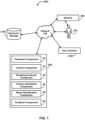
- FIG. 1 illustrates an example of a system 100 for classifying sleep stages for a subject, according to one or more embodiments of the present disclosure.
- System 100 is configured to determine breathing parameters of a subject. Determining the breathing parameters includes detecting individual breaths of the subject.
- System 100 is configured to classify sleep stages of the subject based on breathing features of the individual breaths. The breathing features of each breath may include duration of the breath, duration of inspiration vs expiration of the breath, minimum and/or maximum flow of the breath, and/or tidal volume of the breath.
- the sensors (40) to be described in detail below can be incorporated into a device that interfaces with the subject and obtains output signals (such as those pertain to breathing (flow rate, pressure, tidal volume, etc), cardiovascular (heart rate, blood pressure, etc), and/or other physiological measurements from the subject.
- the sensors (40) can be incorporated in a CPAP machine as well be described in connection with some embodiments.
- Presence of sleep events may have an impact on the sleep architecture of a subject, and/or the characteristics of features used for sleep classification. For example, if a subject is in sleep stage N3 and a central sleep apnea event occurs. central sleep apnea event may cause a change in the respiratory characteristics during the event (no breathing effort during the apnea) and in the period immediately after the event (usually breathing resumes, with higher frequency and amplitude during the hyperpnea). The central apnea event is often followed by an arousal event, which may cause a change in heart rate variability characteristics due to the burst in sympathetic activity during the arousal period.
- the subject After the arousal, the subject enters a period of "lighter" sleep, typically N1 or N2. Without information about the occurrence of this breathing event, and if the cardiac or respiratory features are analyzed in a time window during which the event occurs, the classifier might be unable to detect the N3 period preceding the arousal (typically N3 is characterized by a low sympathetic tone with regular breathing amplitude and frequency). Knowing that an apnea and subsequent arousal occurred, the classifier may easily associate the characteristics of the features to the sequence of sleep stages and may easily infer what the following sleep stage will likely be. Using breath events in the determination of the sleep states provides for an improved sleep classification performance.
- the breathing features are first extracted, and then respiratory characteristics are analyzed using different time windows to characterize a value distribution of the features.
- the respiratory characteristics are analyzed with descriptive using one or more windows (lasting 30, 30, or more seconds) to characterize the value distribution of the breathing features.
- the size of the windows is time based (e.g. 30, 30, 90, 150 seconds, etc.), independently from the number of breaths contained in the window.
- the statistics (meta-features) for a breathing feature describe the shape of a distribution of the feature over one or more time windows (e.g., a median, different percentiles, range, etc.) This is more advantageous than measuring variance or standard deviation of the breathing features in the analysis windows.
- the statistics are then used as input to a sleep stage classifier to classify the sleep stages of the subject during the therapy session.
- This step provides for a good mapping between sleep stages and measured statistics.
- the mapping would not be as robust (which results in a model with lower classification performance) if the sleep stages are mapped directly from breathing features.
- the term "mapping" as used herein should be itself broadly construed to mean determining a sleep state with the model, using the provided inputs into the model.
- the sleep stage classifier uses models that express the likelihood of a state happening based on the observations of that state, what happened in the preceding state, and on the history of states until then.
- the sleep stage classifier uses bidirectional models, where the likelihood of a stage at a given point during the night depends on what happened before, but also what will happen after that point, until the subject finally wakes up in the morning. These models may be more advantageous than models that uses time-shifted input (e.g., Markov) in expressing the likelihood of a current state using memory (e.g., preceding state and history of states until then) to provide context to the current detection.
- time-shifted input e.g., Markov
- Models with memory such as recurrent neural networks, long short term memory, or causal convolutional neural networks, are beneficial to explore the structured nature of sleep, and the changes in the likelihood that a sleep stage occurs after a given history of (detected) sleep stages during the night, until that point. For example, if more than one hour of N3 has been detected, it becomes increasingly less likely that N3 still occurs. Memory-based models can use this information to infer not only the most likely sleep stage at each point in time, but also the most likely sequence of sleep stages throughout the whole night based on what happened until that point. Optionally, and if causal staging is not required (e.g.
- the sleep staging classifier using the BE meta-features, can learn more about the sleep architecture, and will show better classification performances.
- system 100 comprises one or more sensors 40, one or more physical computer processors 30, a user interface 120, electronic storage 130, a network 150, and/or other components.
- Sensor(s) 40 are configured to generate output signals conveying information related to one or more breathing parameters of subject 70.
- the one or more breathing parameters may comprise gas parameters related to pressurized flow of breathable gas provided by device for providing respiratory therapy to the subject (e.g., PAP machine) breathing parameters related to respiration of subject 70, physiological parameters of subject 70, and/or other parameters.
- the one or more gas parameters of the pressurized flow of breathable gas may comprise, for example, one or more of a flow rate, volume, pressure, humidity, temperature, acceleration, velocity, and/or other parameters of the breathable gas.
- sensor(s) 40 can be used.
- such sensors will be or include one or more one or more non EEG type sensors (configured to generate non-EEG signals).
- sensor(s)40 may be one or more PPG sensor(s) that generate photoplethysmogram (PPG) signals.
- PPG is an optically obtained plethysmogram that can be used to detect blood volume changes in the microvascular bed of tissue, changes in chest and/or abdominal volume.
- a PPG may be obtained by using a pulse oximeter, belts around patient's chest and abdomen.
- sensor(s) 40 may be one or more ECG sensor(s) that generate electrocardiography signal.
- An electrocardiogram is a recording of the electrical activity of the heart.
- An ECG may be obtained using electrodes placed on the skin of the patient.
- sensor(s) 40 may be one or more BCG sensors that generate a ballistocardiograph (BCG) signal.
- BCG signal is a graphical representation of repetitive motions of the human body arising from the sudden ejection of blood into the great vessels with each heartbeat.
- BCG can be obtained using noninvasive methods (e.g., from sensors on the surface of the body, or using a sensor in the form of a camera in a non-contact manner.
- sensor(s) 40 may be configured for tracking movement of a chest/abdomen marker by using an infrared camera to measure respiratory effort of the subject.
- PPG, ECG, and/or BCG may be used to determine the subject's respiratory effort.
- Sensor(s)40 may comprise one or more sensors that measure such parameters directly (e.g., through fluid communication with the subject, a subject interface, a respiratory therapy device, etc.)
- sensor(s) 40 may comprise one or more sensors that generate output signals related to the one or more parameters indirectly.
- sensor(s) 40 may comprise one or more sensors configured to generate an output based on an operating parameter of a respiratory therapy device (e.g., subject flow and/or pressure estimations from motor current, voltage, rotational velocity, and/or other operating parameters), and/or other sensors.
- sensor(s) 40 may include one or more of flow, position, volume, pressure, humidity, temperature, heart, motion, acceleration, oximetry, audio, video, photo sensors, and/or other sensors.
- Processor(s) 30 is configured to provide information processing capabilities in system 100.
- processor(s) 30 may include one or more digital processors, one or more analog processor, one or more digital circuits designed to process information, one or more analog circuits designed to process information, a state machine, and/or other mechanisms for electronically processing information.
- Processor(s) 30 is operatively connected to sensors (40).
- processor(s) 30 is shown in FIG. 1 as a single entity, this is for illustrative purposes only. In some implementations, processor(s) 30 includes a plurality of processing units.
- processing units may be physically located within the same device (e.g., sensors (40) or a device that includes sensors (40)), or processor(s) 30 may represent processing functionality of a plurality of devices operating in coordination and located outside of system 100 (e.g., in the Cloud). In some embodiments, processors (30) may represent processing functionality of a plurality of devices located within and/or outside system 100 (e.g., communicatively coupled via a network 150).
- processor(s) 30 is configured to execute one or more computer program components.
- the one or more computer program components may comprise one or more of a parameter component 32, a control component 33, a breathing feature determination component 34, a feature distribution component 33, a sleep classification component 38, a feedback component 39, and/or other components.
- Processor(s) 30 is configured to execute components 32, 33, 34, 33, 38 and 39 by software; hardware; firmware; some combination of software, hardware, and/or firmware; and/or other mechanisms for configuring processing capabilities on Processor(s) 30.
- components 32, 33, 34, 33, 38 and 39 are illustrated in FIG. 1 as being co-located within a single processing unit, in implementations in which Processor(s) 30 comprises multiple processing units, one or more of components 32, 33, 34, 33, 38 and 39 may be located remotely from the other components.
- the description of the functionality provided by the different components 32, 33, 34, 33, 38 and 39 described below is for illustrative purposes, and is not intended to be limiting, as any of components 32, 33, 34, 33, 38 and 39 may provide more or less functionality than is described.
- processor(s) 30 may be configured to execute one or more additional components that may perform some or all of the functionality attributed below to one of components 32, 34, 33, 38 and/or 39.
- Parameter component 32 may be configured to receive, determine and/or obtain one or more parameters within system 100. For example, the one or more parameters may be determined based on the output signals from sensor(s) 40. In some embodiments, parameter component 32 is configured to determine one or more breathing parameters related to respiration of subject 70, one or more parameters of a breathable gas within system 100, (e.g., parameters related to pressurized flow of breathable gas delivered by a respiratory therapy device), one or more physiological parameters of subject 70, and/or other parameters. The breathing parameters related to the respiration of subject 70 may comprise beginning and/or end of individual breaths.
- parameter component 32 is configured to detect breathing events experienced by the subject. Such breathing events include events that disrupt respiration by subject 70. In some embodiments, parameter component may be configured to detect disruptions of the respiration of subject indicative of presence of respiratory events. For example, such breathing events may include one or more of obstructive apneas, central apneas, glottal closures, Cheyne-Stokes respiration, hypopnea, snoring, hyperventilation, arousal, and/or other breathing events. and/or other respiratory events. Parameter component 32 detects such breathing events based on the output signals generated by sensors 40. For example, by monitoring one or more of flow rate, pressure, respiratory airflow, breathing effort, instantaneous tidal volume, and/or other gas parameters at or near the airway of subject 70 (e.g., within a subject interface).
- Control component 33 is configured to control operations of sensors (40).
- control component may be configured to activate/deactivate the one or more sensors based on user input, measurement results, on a request from one or more components within or outside of system 100.
- each breath is then characterized in terms of several of its signal properties. For example, describing its duration, the duration of inspiration vs expiration, minimum and maximum flow values, tidal volume, etc.
- the breath features 208 are post-processed 210 and adopted by a pre-trained machine learning model 211, with memory, to automatically classify sleep stages 212 in pre-defined epochs of 30 seconds based on those features.
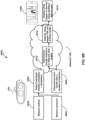
- this information is then fed back to the user in the form of a feedback indicating the sleep state, for example, system 200 may be configured to display the determined sleep stage 212.
- the display may be user interface (described above), an app on his/her smartphone 120, etc.
- the (BE) feature values 207 are used to indicate the category of a detected event 205. This process is illustrated in FIG.3.
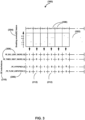
- FIG.3 illustrates an example 300 of a windowing process used to determine the distribution of a given BE feature 302 over time, according to one or more embodiments.
- FIG. 3 describes a distribution 302 of breathing event (BE) feature 304 over time.
- the Y axis of the distribution represents the breathing event (BE) feature values 304.
- the X axis of the distribution represents time centered on 30-second epochs 308, is used in characterization the (BE) feature over the time window 308.
- FIG.3 shows that 15 new meta-features 306 are created, indicating, for each epoch, whether the corresponding event was detected (as indicated by the BE feature 304) inside the window defined by the boundaries of that epoch.
- the corresponding feature 306 (_PE_HYPOPNEA) will have a value of 1 for that epoch. If no events of type 2 were detected for a given epoch, then the feature will have a value of 0. Note that this is the case even if multiple events of the same type are detected in the same epoch, i.e., each epoch will have a flag value of 0 or 1, meaning that one or more events of that type were detected. If multiple events of different types are detected in the same epoch, then all corresponding features will have a flag of 1.
- the sleep state N3 is characterized by longer periods of breathing stability, where for example, Awake is characterized by short transient activity. Sleep is scored within 30 second epochs, so makes sense to use multiples of 30 for window sizes.
- a training process for the classifier
- an optimal set of meta-features is determined.
- the one or more models are configured to determine the current sleep state based on a plurality of sleep states directly preceding the current state.
- the sleep stage classifier uses models that express the likelihood of a state happening based on the observations of that state, what happened in the preceding state, and on the history of states until then.
- the sleep stage classifier uses bidirectional models, where the likelihood of a stage at a given point during the night depends on what happened before, but also what will happen after that point, until the subject finally wakes up in the morning. These models may be more advantageous than models that uses time-shifted input (e.g., Markov) in expressing the likelihood of a current state using memory (e.g., preceding state and history of states until then) to provide context to the current detection.
- time-shifted input e.g., Markov
- Models with memory such as recurrent neural networks, long short term memory, or causal convolutional neural networks, are beneficial to explore the structured nature of sleep, and the changes in the likelihood that a sleep stage occurs after a given history of (detected) sleep stages during the night, until that point. For example, if more than one hour of N3 has been detected, it becomes increasingly less likely that N3 still occurs. Memory-based models can use this information to infer not only the most likely sleep stage at each point in time, but also the most likely sequence of sleep stages throughout the whole night based on what happened until that point.
- Feedback component 39 is configured to provide feedback indicating the current sleep state information.
- feedback can be given to the user regarding the progression of sleep stages throughout his/her sleep, regarding some statistics, such as the number of minutes (or percentage) in import sleep stages such as N3 or REM, the number of awakenings during the night, the sleep efficiency (percentage of time asleep versus amount of time in bed), etc.
- some of the measured sleep statistics can be combined in a single sleep score quantifying the "quality" of the user's sleep, for example using a weighted average of these sleep statistics, normalized by the person's age.
- User interface 120 is configured to provide an interface between system 100 and subject 70 and/or other users through which subject 70 and/or other users may provide information to and receive information from system 100.
- Other users may comprise, for example, a caregiver, a doctor, and/or other users.
- This enables data, cues, results, and/or instructions and any other communicable items, collectively referred to as "information," to be communicated between a user (e.g., subject 70) and one or more of pressure generator 20, Processor(s) 30, and/or other components of system 100.
- sleep stages, sleep duration, breathing feature distribution, therapy information feedback, the breath rate of subject 70, and/or other information may be displayed to a user (e.g., subject 70) via user interface 120.
- user interface 120 may be integrated with a removable storage interface provided by electronic storage 130.
- information may be loaded into system 100 from removable storage (e.g., a smart card, a flash drive, a removable disk, etc.) that enables the user(s) to customize the implementation of system 100.
- removable storage e.g., a smart card, a flash drive, a removable disk, etc.
- Other exemplary input devices and techniques adapted for use with system 100 as user interface 120 comprise, but are not limited to, an RS-232 port, RF link, an IR link, modem (telephone, cable or other).
- any technique for communicating information with system 100 is contemplated by the present disclosure as user interface 120.
- electronic storage 130 comprises electronic storage media that electronically stores information.
- the electronic storage media of electronic storage 130 may comprise one or both of system storage that is provided integrally (i.e., substantially non-removable) with system 100 and/or removable storage that is removably connectable to system 100 via, for example, a port (e.g., a USB port, a firewire port, etc.) or a drive (e.g., a disk drive, etc.).
- a port e.g., a USB port, a firewire port, etc.
- a drive e.g., a disk drive, etc.
- Electronic storage 130 may comprise one or more of optically readable storage media (e.g., optical disks, etc.), magnetically readable storage media (e.g., magnetic tape, magnetic hard drive, floppy drive, etc.), electrical charge-based storage media (e.g., EEPROM, RAM, etc.), solid-state storage media (e.g., flash drive, etc.), and/or other electronically readable storage media.
- Electronic storage 130 may store software algorithms, information determined by Processor(s) 30, information received via user interface 120, and/or other information that enables system 100 to function properly.
- Electronic storage 130 may be (in whole or in part) a separate component within system 100, or electronic storage 130 may be provided (in whole or in part) integrally with one or more other components of system 100 (e.g., user interface 120, Processor(s) 30, etc.)
- Network 150 may include the Internet and/or other networks, Intranets, a PAN (Personal Area Network), a LAN (Local Area Network), a WAN (Wide Area Network), a SAN (Storage Area Network), a MAN (Metropolitan Area Network), near field communication, frequency (RF) link, Bluetooth, Wi-Fi, Li-FI, a cellular communications network, a Public Switched Telephone Network, and/or any type(s) of wired or wireless network(s).
- RF frequency
- Information determined by Processor(s) 30 and/or stored by electronic storage 130 may comprise information related to sensor measurements, respiration of subject 70, sleep states, feedback, and/or other information.
- the information stored by electronic storage 130 may be viewed via user interface 120, by connecting (wired and/or wireless) to a separate computer, and/or other via other methods.
- the information stored by electronic storage 130 may be used, for example, to adjust therapy settings, used by a doctor to make medical decisions, and/or for other uses.
- system 100 may include a wireless transmitter (not shown) and the information determined by Processor(s) 30, the information stored by electronic storage 130, and/or other information may be communicated to a caregiver, for example, over a wireless network.
- the caregiver may receive use information, subject status, and/or other information, allowing the caregiver to remotely track the therapy delivered by system 100.
- processing functionality of system 100 is accomplished locally in a therapy device (e.g., a sensor, a respirator therapy device, etc.) that includes the components of system 100 described above.
- processing functionality of system 100 described herein is accomplished outside of system 100 (e.g., remotely by one or more devices connected to system 100 via network 100.)
- the processing functionality described herein may be a combination of processing functionality executed locally and processing functionality executed remotely.
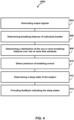
- FIG. 4 illustrates a method 400 for using breathing events in classifying sleep stages for a subject, during a respiratory therapy session with a CPAP device.
- the operations of method 700 presented below are intended to be illustrative. In some embodiments, method 400 may be accomplished with one or more additional operations not described, and/or without one or more of the operations discussed. Additionally, the order in which the operations of method 400 are illustrated in FIG. 4 and described below is not intended to be limiting.
- operation 404 output signals conveying information related to one or more breathing parameters of the subject are generated.
- operation 404 is performed by one or more sensors the same as or similar to sensor(s) 40 (shown in FIG. 1 and described herein).
- operation 406 one or more breathing features of individual breaths of the subject are determined based on the output signals.
- operation 406 is performed by a physical computer processor the same as or similar to Processor(s) 60 (shown in FIG. 1 and described herein).
- operation 406 a distribution of the one or more breathing features over one or more time windows is determined.
- operation 406 is performed by a physical computer processor the same as or similar to Processor(s) 60 (shown in FIG. 1 and described herein).
- Operation 410 one or more breathing events are detected based on the output signals. Operation 410 is performed by a physical computer processor the same as or similar to Processor(s) 60 (shown in FIG. 1 and described herein).
- a sleep state of the subject is determined based upon the distribution of the breathing features and the one or more breathing events. Operation 412 is performed by a physical computer processor the same as or similar to Processor(s) 60 (shown in FIG. 1 and described herein).
- operation 414 feedback indicating the current sleep state information is provided.
- operation 414 is performed by a physical computer processor the same as or similar to Processor(s) 60 (shown in FIG. 1 and described herein).
- the system and methods of the present disclosure may provide users of CPAP therapy an objective feedback about their sleep.
- This feedback maybe used, for example in a coaching app, to improve their education about sleep in general, and the benefits of sleeping with CPAP machine in their specific case, potentially helping to drive up compliance.
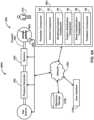
- FIG.6A illustrates a system 600 for classifying sleep stages for a subject during a respiratory therapy session with a CPAP device 10, according to one or more embodiments.
- system 600 is configured to determine breathing parameters of a subject during a respiratory therapy session provided with the CPAP device 10. Determining the breathing parameters includes detecting individual breaths of the subject.
- System 600 is configured to classify sleep stages of the subject during the therapy session based on breathing features of the individual breaths.
- CPAP device comprises one or more of a pressure generator 20, one or more sensors 40 (described in relation to FIG. 1 above), a subject interface 90, one or more physical computer processors 60 (described in relation to FIG.1 above), a user interface 120 (described in relation to FIG. 1 above), electronic storage 130(described in relation to FIG. 1 above), a network 150( described in relation to FIG. 1 above), and/or other components.
- pressure generator 20 is configured to generate a pressurized flow of gas for delivery to the airway of a subject 70.
- Pressure generator 20 may control one or more parameters of the flow of gas (e.g., flow rate, pressure, volume, temperature, gas composition, etc.) for therapeutic purposes, and/or for other purposes.
- pressure generator 20 may be configured to control the flow rate and/or pressure of the flow of gas to provide pressure support to the airway of subject 70.
- pressure generator 20 receives a supply of breathable gas from a gas source and elevates the pressure of that gas for delivery to the airway of a subject.
- Pressure generator 20 may include any device, such as a pump, blower, piston, or bellows that is capable of elevating the pressure of the received breathable gas from the gas source for delivery to the subject.
- pressure generator 20 may be a blower that is driven at a constant speed during the course of a pressure support treatment to produce a constant pressure or flow rate.
- pressure generator 20 may include one or more valves for controlling the pressure, flow rate, flow direction, and/or other parameters of the flow of gas. The present disclosure contemplates controlling the operating speed of the blower, for example, either alone or in combination with one or more valves and/or other devices contained in and/or external to pressure generator 20, to control the pressure and/or flow of gas provided to subject 70.
- the gas source may be atmospheric air drawn into the system by pressure generator 20.
- the gas source may comprise a tank of pressurized gas (such as oxygen, air, or other mixture of breathable gas) in fluid communication with pressure generator 20.
- a separate gas source need not be used, but instead the pressure generator 20 may itself be defined by a canister or tank of pressurized gas, with the pressure delivered to the patient being controlled by a pressure regulator.
- Subject interface 90 is configured to communicate the pressurized flow of breathable gas to the airway of subject 70.
- subject interface 90 comprises conduit 50, interface appliance 80, and/or other components.
- conduit 50 is configured to convey the pressurized flow of gas to interface appliance 80.
- Interface appliance 80 is configured to deliver the flow of gas to the airway of subject 70.
- interface appliance 80 is configured to be non-invasively engaged by subject 70. Non-invasive engagement comprises removably engaging one or more external orifices of the airway of subject 70 (e.g., nostrils and/or mouth) to communicate gas between the airway of subject 70 and interface appliance 80.
- interface appliance 80 is removably coupled to conduit 50. Interface appliance 80 may be removed for cleaning and/or for other purposes.
- conduit 50 is configured as a mouthpiece to be engaged by the mouth of subject 70.
- interface appliance 80 may be configured as interface appliance 80.
- Some examples of interface appliance 80 may comprise, for example, a nasal cannula, a nasal mask, a nasal/oral mask, a full-face mask, a total face mask, or other interface appliances that communicate a flow of gas with an airway of a subject.
- the present disclosure is not limited to these examples and contemplates delivery of the flow of gas to the subject using any interface appliance.
- control component 33 (described in relation to FIG. 1 above) is configured to control operations of CPAP device 10.
- control component 33 is configured to control the pressure generator 20 to generate the flow of gas in accordance with one or more therapy regimes (positive pressure support therapy regime, or other respiratory therapy).
- control component 33 may be configured to control operation of pressure generator 20 based on the output signals from sensor(s) 40, based on information determined by parameter component 32, and/or based on information from one or more components within or outside of system 100.
- positive airway pressure support therapy the pressurized flow of gas generated by pressure generator 20 is controlled to replace and/or compliment a patient's regular breathing.
- Positive airway pressure support therapy may be used to maintain an open airway in a patient so that oxygen and carbon dioxide may be exchanged more easily, requiring little and/or no effort from the patient.
- control component 33 may control pressure generator 20 such that the pressure support provided to the subject via the flow of gas comprises continuous positive airway pressure support (CPAP), bi-level positive airway pressure support (BPAP), proportional positive airway pressure support (PPAP), forced oscillation technique, and/or other types of pressure support therapy.
- CPAP supplies a fixed positive pressure to maintain a continuous level of positive airway pressure in a patient.
- BPAP provides a first inspiratory pressure (IPAP) and a second, typically lower, expiratory pressure (EPAP) for easier exhalation during ventilation.
- IIPAP first inspiratory pressure
- EPAP typically lower, expiratory pressure
- control component 33 may control pressure generator 20 to apply variable pressure support in which the amount of pressure delivered to the patient during inhalation and/or during exhalation is determined and delivered on a breath by breath basis.
- control component 33 may be configured to control pressure generator 20 to temporarily drop the supplied pressure during exhalation (C-Flex) to reduce exhalation effort required by the patent.
- control component 33 is configured to control pressure generator 20 to deliver staged pressure support. In staged pressure support therapy, the pressure delivered by pressure generator 20 gradually increases over time. In some embodiments, control component 33 may control pressure generator 20 to switch therapy modes based on information related to the respiration of subject 70 and/or other information. For example, control component 33 may control pressure generator 20 to change from BPAP to CPAP after a certain number of breaths by subject 70.
- FIG. 5 illustrates an example 500 of a windowing process used to determine distribution of a given breath feature over time, according to one or more embodiments.
- FIG.5 describes a distribution 502 of breathing feature values 504 over time.
- the Y axis of the distribution represents the breathing feature values 504.
- the breathing feature may be a tidal volume of the subject. In this case, the Y axis would represent tidal volume values.
- the X axis of the distribution represents time.
- a sliding window 503, centered on 30-second epochs 508, is used in characterization 510 the breathing feature over the sliding time window 503.
- the sliding window 503 represents the amount of time over which the breathing feature values are analyzed (or characterized). As can be seen, the sliding time window 503 has a length of at least 30s. However, according to the invention, the length of window 503 is of different sizes (e.g., 60, 90, 120, etc.).
- the characterization 510 is performed over a plurality of windows 503 having different sizes (lengths).
- the time windows 503 are independent from the number of breaths contained in the windows. This is better than prior methods where characterization of breathing features is either localized to individual breaths or performed in short sequences of breaths (e.g. five breaths) and where variability (variance or standard deviation) is measured.
- a number of characteristic values 512 are computed over each of the set of breathing feature values (associated, in time, with detected breaths) that occur during each window 503.
- Fig 5 shows the window centered around the current epoch, and thus is using data from both the past and future epochs surrounding the current epoch. In other scenarios where the desire is to implement a purely casual sleep state classifier, the windows could proceed the current epoch, and could also be inclusive of the current epoch.
- processing functionality of system 600 is accomplished locally in a therapy device (e.g., a CPAP device) that includes the components of system 100 described above.
- processing functionality of system 100 described herein is accomplished outside of system 100 (e.g., remotely by one or more devices connected to system 100 via network 100.)
- the processing functionality described herein may be a combination of processing functionality executed locally and processing functionality executed remotely.
- FIG. 6B illustrates an example of a system 600 for classifying sleep stages for a subject during a respiratory therapy session with a CPAP device 10, according to one or more embodiments.
- the system comprises a CPAP device 10 for providing respiratory therapy to the subject.
- the CPAP device 10 comprises the pressure generator 20 (not shown here) for generating a pressurized flow of breathable gas for delivery to the subject.
- System 600 comprises one or more sensors (not shown here) for generating output signals conveying information related to breathing parameters of the subject.
- the one or more sensors may be configured to measure airflow 602, and/or pressure 604.
- System 600 comprises computer processors configured to detect individual breaths 603 of the subject based on the output signals.
- the computer processors may be configured to determine a distribution 608 of the breathing features over one or more-time windows.
- the time windows are of different length 610.
- the computer processors are configured to determine a current sleep state of the subject 612 by mapping the distribution of the breathing features to one or more sleep states using a sleep stage classifier.
- System 600 may provide 614 feedback indicating the current sleep state information, for example, system 600 may be configured to display 613 the determined sleep stage.
- the display may be user interface described above.
- FIG. 7 illustrates a method 700 for classifying sleep stages for a subject, during a respiratory therapy session with a CPAP device.
- the operations of method 700 presented below are intended to be illustrative. In some embodiments, method 700 may be accomplished with one or more additional operations not described, and/or without one or more of the operations discussed. Additionally, the order in which the operations of method 700 are illustrated in FIG. 7 and described below is not intended to be limiting.
- method 700 may be implemented in one or more processing devices (e.g., a digital processor, an analog processor, a digital circuit designed to process information, an analog circuit designed to process information, a state machine, and/or other mechanisms for electronically processing information).
- the one or more processing devices may include one or more devices executing some or all of the operations of method 700 in response to instructions stored electronically on an electronic storage medium.
- the one or more processing devices may include one or more devices configured through hardware, firmware, and/or software to be specifically designed for execution of one or more of the operations of method 700.
- operation 704 output signals conveying information related to one or more breathing parameters of the subject are generated.
- operation 704 is performed by one or more sensors the same as or similar to sensor(s) 40 (shown in FIG. 1 and described herein).
- operation 706 one or more breathing features of individual breaths of the subject are determined based on the output signals.
- operation 706 is performed by a physical computer processor the same as or similar to Processor(s) 60 (shown in FIG. 1 and described herein).
- Operation 708 a distribution of the one or more breathing features over one or more-time windows having a length of at least 60s each is determined. Operation 708 is performed by a physical computer processor the same as or similar to Processor(s) 60 (shown in FIG. 1 and described herein).
- a sleep state of the subject may be determined by mapping the distribution of the breathing features to one or more sleep states using a sleep stage classifier, the sleep stage classifier comprising one or more models configured to determine the current sleep state.
- operation 710 is performed by a physical computer processor the same as or similar to Processor(s) 60 (shown in FIG. 1 and described herein).
- operation 712 feedback indicating the during the respiratory sleep session sleep state information is provided.
- operation 712 is performed by a physical computer processor the same as or similar to Processor(s) 60 (shown in FIG. 1 and described herein).
- any reference signs placed between parentheses shall not be construed as limiting the claim.
- the word “comprising” or “including” does not exclude the presence of elements or steps other than those listed in a claim.
- several of these means may be embodied by one and the same item of hardware.
- the word “a” or “an” preceding an element does not exclude the presence of a plurality of such elements.
- any device claim enumerating several means several of these means may be embodied by one and the same item of hardware.
- the mere fact that certain elements are recited in mutually different dependent claims does not indicate that these elements cannot be used in combination.
Landscapes
- Health & Medical Sciences (AREA)
- Life Sciences & Earth Sciences (AREA)
- Engineering & Computer Science (AREA)
- General Health & Medical Sciences (AREA)
- Veterinary Medicine (AREA)
- Biomedical Technology (AREA)
- Heart & Thoracic Surgery (AREA)
- Public Health (AREA)
- Animal Behavior & Ethology (AREA)
- Physics & Mathematics (AREA)
- Medical Informatics (AREA)
- Surgery (AREA)
- Molecular Biology (AREA)
- Pathology (AREA)
- Biophysics (AREA)
- Physiology (AREA)
- Pulmonology (AREA)
- Artificial Intelligence (AREA)
- Signal Processing (AREA)
- Cardiology (AREA)
- Psychiatry (AREA)
- Computer Vision & Pattern Recognition (AREA)
- Anesthesiology (AREA)
- Hematology (AREA)
- Emergency Medicine (AREA)
- Mathematical Physics (AREA)
- Evolutionary Computation (AREA)
- Fuzzy Systems (AREA)
- Dentistry (AREA)
- Oral & Maxillofacial Surgery (AREA)
- Biodiversity & Conservation Biology (AREA)
- Measurement Of The Respiration, Hearing Ability, Form, And Blood Characteristics Of Living Organisms (AREA)
Applications Claiming Priority (2)
| Application Number | Priority Date | Filing Date | Title |
|---|---|---|---|
| US201862739591P | 2018-10-01 | 2018-10-01 | |
| PCT/EP2019/076662 WO2020070170A1 (en) | 2018-10-01 | 2019-10-01 | Systems and methods for using breath events in sleep staging |
Publications (2)
| Publication Number | Publication Date |
|---|---|
| EP3860433A1 EP3860433A1 (en) | 2021-08-11 |
| EP3860433B1 true EP3860433B1 (en) | 2025-01-29 |
Family
ID=68159095
Family Applications (2)
| Application Number | Title | Priority Date | Filing Date |
|---|---|---|---|
| EP19783264.5A Active EP3860433B1 (en) | 2018-10-01 | 2019-10-01 | Systems and computer programs for using breath events in sleep staging |
| EP19783475.7A Withdrawn EP3860434A1 (en) | 2018-10-01 | 2019-10-01 | Systems and methods for sleep staging |
Family Applications After (1)
| Application Number | Title | Priority Date | Filing Date |
|---|---|---|---|
| EP19783475.7A Withdrawn EP3860434A1 (en) | 2018-10-01 | 2019-10-01 | Systems and methods for sleep staging |
Country Status (5)
| Country | Link |
|---|---|
| US (2) | US11484256B2 (enExample) |
| EP (2) | EP3860433B1 (enExample) |
| JP (2) | JP2022502153A (enExample) |
| CN (2) | CN112788986A (enExample) |
| WO (2) | WO2020070170A1 (enExample) |
Families Citing this family (12)
| Publication number | Priority date | Publication date | Assignee | Title |
|---|---|---|---|---|
| CN111814830B (zh) * | 2020-06-08 | 2024-07-09 | 珠海格力电器股份有限公司 | 睡眠状态检测模型构建、睡眠状态检测方法及装置 |
| CN111759277B (zh) * | 2020-06-16 | 2022-12-09 | 清华大学深圳国际研究生院 | 睡眠呼吸暂停低通气的检测装置、方法、设备及存储介质 |
| WO2022031038A1 (ko) * | 2020-08-04 | 2022-02-10 | 주식회사 에이슬립 | 사용자의 수면 환경에서 측정된 데이터에 기반하여 수면 상태를 예측하기 위한 컴퓨팅 장치 |
| CN117693312A (zh) * | 2021-05-24 | 2024-03-12 | 瑞思迈传感器技术有限公司 | 用于确定个体的睡眠阶段的系统和方法 |
| JP7158641B1 (ja) * | 2022-03-14 | 2022-10-24 | ヘルスセンシング株式会社 | 無呼吸低呼吸指標推定装置、方法およびプログラム |
| EP4385547A1 (en) * | 2022-12-16 | 2024-06-19 | Koninklijke Philips N.V. | Detecting, identifying and alleviating causes for pressure burden using positive airway pressure devices |
| WO2024132661A1 (en) * | 2022-12-23 | 2024-06-27 | Koninklijke Philips N.V. | Cpap therapy adaptation system to mitigate pulmonary hyperinflation and method of operation thereof |
| CN116369917B (zh) * | 2023-01-18 | 2025-10-31 | 西南大学 | 一种识别慢性压力的方法、装置、存储介质及电子设备 |
| CN117138182A (zh) * | 2023-08-17 | 2023-12-01 | 南京舒普思达医疗设备有限公司 | 一种呼吸机智能控制方法及系统 |
| CN117204821B (zh) * | 2023-09-22 | 2024-08-09 | 深圳市震有智联科技有限公司 | 一种基于雷达的睡眠特征事件检测方法及系统 |
| EP4730350A1 (en) | 2024-10-17 | 2026-04-22 | Koninklijke Philips N.V. | Computer implemented method, computer program product, and therapy device to provide sleep disordered breathing therapy |
| CN120753596B (zh) * | 2025-07-04 | 2026-03-17 | 湖南盛世威得科技有限公司 | 一种基于智能手表的睡眠分期检测方法和系统 |
Family Cites Families (36)
| Publication number | Priority date | Publication date | Assignee | Title |
|---|---|---|---|---|
| US7168429B2 (en) | 2001-10-12 | 2007-01-30 | Ric Investments, Llc | Auto-titration pressure support system and method of using same |
| JP2004254827A (ja) * | 2003-02-25 | 2004-09-16 | Matsushita Electric Ind Co Ltd | 睡眠状態判定装置 |
| WO2007040988A2 (en) * | 2003-08-14 | 2007-04-12 | New York University | System and method for diagnosis and treatment of a breathing pattern of a patient |
| US8784324B2 (en) * | 2004-11-02 | 2014-07-22 | University College Dublin, National University Of Ireland | Sleep monitoring system |
| US7578793B2 (en) * | 2004-11-22 | 2009-08-25 | Widemed Ltd. | Sleep staging based on cardio-respiratory signals |
| AU2005318949B2 (en) | 2004-12-23 | 2012-05-10 | ResMed Pty Ltd | Method for detecting and disciminatng breathing patterns from respiratory signals |
| JP4582642B2 (ja) | 2005-04-01 | 2010-11-17 | 株式会社タニタ | 睡眠段階判定装置 |
| KR100927643B1 (ko) * | 2006-02-22 | 2009-11-20 | (주)한별메디텍 | 무구속 수면상태 판단 장치 |
| WO2007143535A2 (en) | 2006-06-01 | 2007-12-13 | Biancamed Ltd. | Apparatus, system, and method for monitoring physiological signs |
| WO2008058328A1 (en) * | 2006-11-13 | 2008-05-22 | Resmed Ltd | Systems, methods, and/or apparatuses for non-invasive monitoring of respiratory parameters in sleep disordered breathing |
| JP4952688B2 (ja) * | 2008-09-01 | 2012-06-13 | トヨタ自動車株式会社 | 睡眠判定装置及び睡眠判定方法 |
| JP5575789B2 (ja) * | 2008-11-19 | 2014-08-20 | インスパイア・メディカル・システムズ・インコーポレイテッド | 睡眠呼吸障害の治療方法 |
| EP3811859B1 (en) * | 2009-07-16 | 2024-12-11 | ResMed Pty Ltd | Detection of sleep condition |
| JP5177293B2 (ja) * | 2009-07-24 | 2013-04-03 | 富士通株式会社 | 睡眠時無呼吸症候群の検査装置及びプログラム |
| US20140213937A1 (en) | 2011-02-15 | 2014-07-31 | The General Hospital Corporation | Systems and methods to monitor and quantify physiological stages |
| EP2753390B1 (en) * | 2011-07-01 | 2016-11-09 | Koninklijke Philips N.V. | System and method for limited flow respiratory therapy |
| TWI462728B (zh) * | 2012-01-10 | 2014-12-01 | Univ Dayeh | 依據歷史資料判斷睡眠階段之系統及其方法 |
| JP6258917B2 (ja) * | 2012-03-28 | 2018-01-10 | コーニンクレッカ フィリップス エヌ ヴェKoninklijke Philips N.V. | 覚醒睡眠検出アラームに対するシステム及び方法 |
| EP3639733B1 (en) * | 2012-05-30 | 2022-10-26 | ResMed Sensor Technologies Limited | Apparatus for monitoring cardio-pulmonary health |
| US11633150B2 (en) | 2012-05-31 | 2023-04-25 | Ben Gurion University Of The Negev Research And Development Authority | Apparatus and method for diagnosing sleep quality |
| JP5969283B2 (ja) * | 2012-06-28 | 2016-08-17 | フクダ電子株式会社 | 生体信号解析装置およびその制御方法 |
| US10495725B2 (en) * | 2012-12-05 | 2019-12-03 | Origin Wireless, Inc. | Method, apparatus, server and system for real-time vital sign detection and monitoring |
| EP2897526B1 (en) * | 2012-09-19 | 2021-03-17 | ResMed Sensor Technologies Limited | System and method for determining sleep stage |
| US10492720B2 (en) | 2012-09-19 | 2019-12-03 | Resmed Sensor Technologies Limited | System and method for determining sleep stage |
| KR20150091120A (ko) * | 2012-11-29 | 2015-08-07 | 도요타 지도샤(주) | 수면 제어 장치 및 수면 제어 방법 |
| EP2986211B1 (en) * | 2013-04-17 | 2019-10-16 | Fisher & Paykel Healthcare Limited | Distinguishing between central and obstructive sleep apnea |
| NZ630770A (en) * | 2013-10-09 | 2016-03-31 | Resmed Sensor Technologies Ltd | Fatigue monitoring and management system |
| CN107106028B (zh) * | 2014-12-18 | 2020-07-21 | 皇家飞利浦有限公司 | 用于心肺睡眠阶段分类的系统和方法 |
| EP4424238A3 (en) * | 2015-05-13 | 2024-10-30 | ResMed Pty Ltd | Systems and methods for screening, diagnosis, and monitoring of sleep-disordered breathing |
| US11298074B2 (en) * | 2015-12-08 | 2022-04-12 | Fisher & Paykel Healthcare Limited | Flow-based sleep stage determination |
| WO2017132726A1 (en) * | 2016-02-02 | 2017-08-10 | Resmed Limited | Methods and apparatus for treating respiratory disorders |
| CN105997003B (zh) * | 2016-06-17 | 2018-12-28 | 美的集团股份有限公司 | 一种确定睡眠分期的方法和装置 |
| US11207021B2 (en) * | 2016-09-06 | 2021-12-28 | Fitbit, Inc | Methods and systems for labeling sleep states |
| US11350874B2 (en) * | 2016-10-11 | 2022-06-07 | ResMed Pty Ltd | Apparatus and methods for screening, diagnosis and monitoring of respiratory disorders |
| CN108309286A (zh) * | 2017-12-15 | 2018-07-24 | 中国人民解放军第二军医大学第二附属医院 | 睡眠障碍检测治疗系统 |
| US11752287B2 (en) * | 2018-10-03 | 2023-09-12 | Covidien Lp | Systems and methods for automatic cycling or cycling detection |
-
2019
- 2019-10-01 US US16/589,181 patent/US11484256B2/en active Active
- 2019-10-01 EP EP19783264.5A patent/EP3860433B1/en active Active
- 2019-10-01 EP EP19783475.7A patent/EP3860434A1/en not_active Withdrawn
- 2019-10-01 US US16/589,191 patent/US12109038B2/en active Active
- 2019-10-01 CN CN201980065154.XA patent/CN112788986A/zh active Pending
- 2019-10-01 JP JP2021516786A patent/JP2022502153A/ja active Pending
- 2019-10-01 WO PCT/EP2019/076662 patent/WO2020070170A1/en not_active Ceased
- 2019-10-01 CN CN201980065147.XA patent/CN112788985B/zh active Active
- 2019-10-01 JP JP2021516795A patent/JP7407806B2/ja active Active
- 2019-10-01 WO PCT/EP2019/076663 patent/WO2020070171A1/en not_active Ceased
Also Published As
| Publication number | Publication date |
|---|---|
| WO2020070171A1 (en) | 2020-04-09 |
| US20200155060A1 (en) | 2020-05-21 |
| WO2020070170A1 (en) | 2020-04-09 |
| US12109038B2 (en) | 2024-10-08 |
| US20200100728A1 (en) | 2020-04-02 |
| CN112788986A (zh) | 2021-05-11 |
| JP7407806B2 (ja) | 2024-01-04 |
| EP3860434A1 (en) | 2021-08-11 |
| JP2022502155A (ja) | 2022-01-11 |
| JP2022502153A (ja) | 2022-01-11 |
| US11484256B2 (en) | 2022-11-01 |
| CN112788985A (zh) | 2021-05-11 |
| CN112788985B (zh) | 2024-09-13 |
| EP3860433A1 (en) | 2021-08-11 |
Similar Documents
| Publication | Publication Date | Title |
|---|---|---|
| EP3860433B1 (en) | Systems and computer programs for using breath events in sleep staging | |
| JP6742377B2 (ja) | 睡眠段階を決定するシステム、方法及び可読媒体 | |
| JP6807746B2 (ja) | 周期性呼吸を検出するプロセッサにおける方法、周期的呼吸を検出する装置、及びコンピュータ可読記憶媒体 | |
| US11179099B2 (en) | Reverse dual positive airway pressure challenges for breathing disorder diagnostics | |
| US20240358945A1 (en) | Methods and apparatus for detecting sleep | |
| CN114450052B (zh) | 检测和治疗copd-osa重叠综合征 | |
| US20260061146A1 (en) | Systems and methods for pulmonary function testing on respiratory therapy devices | |
| WO2026039640A1 (en) | Methods and apparatus for insomnia |
Legal Events
| Date | Code | Title | Description |
|---|---|---|---|
| STAA | Information on the status of an ep patent application or granted ep patent |
Free format text: STATUS: UNKNOWN |
|
| STAA | Information on the status of an ep patent application or granted ep patent |
Free format text: STATUS: THE INTERNATIONAL PUBLICATION HAS BEEN MADE |
|
| PUAI | Public reference made under article 153(3) epc to a published international application that has entered the european phase |
Free format text: ORIGINAL CODE: 0009012 |
|
| STAA | Information on the status of an ep patent application or granted ep patent |
Free format text: STATUS: REQUEST FOR EXAMINATION WAS MADE |
|
| 17P | Request for examination filed |
Effective date: 20210503 |
|
| AK | Designated contracting states |
Kind code of ref document: A1 Designated state(s): AL AT BE BG CH CY CZ DE DK EE ES FI FR GB GR HR HU IE IS IT LI LT LU LV MC MK MT NL NO PL PT RO RS SE SI SK SM TR |
|
| DAV | Request for validation of the european patent (deleted) | ||
| DAX | Request for extension of the european patent (deleted) | ||
| STAA | Information on the status of an ep patent application or granted ep patent |
Free format text: STATUS: EXAMINATION IS IN PROGRESS |
|
| 17Q | First examination report despatched |
Effective date: 20240122 |
|
| GRAP | Despatch of communication of intention to grant a patent |
Free format text: ORIGINAL CODE: EPIDOSNIGR1 |
|
| STAA | Information on the status of an ep patent application or granted ep patent |
Free format text: STATUS: GRANT OF PATENT IS INTENDED |
|
| INTG | Intention to grant announced |
Effective date: 20240827 |
|
| RIN1 | Information on inventor provided before grant (corrected) |
Inventor name: KLEE, MAREIKE Inventor name: VASKO, JR., RAYMOND CHARLES Inventor name: KANE, MICHAEL THOMAS Inventor name: MATTHEWS, GREGORY DELANO Inventor name: GRASSI, ANGELA Inventor name: FERREIRA DOS SANTOS DA FONSECA, PEDRO MIGUEL |
|
| GRAS | Grant fee paid |
Free format text: ORIGINAL CODE: EPIDOSNIGR3 |
|
| GRAA | (expected) grant |
Free format text: ORIGINAL CODE: 0009210 |
|
| STAA | Information on the status of an ep patent application or granted ep patent |
Free format text: STATUS: THE PATENT HAS BEEN GRANTED |
|
| AK | Designated contracting states |
Kind code of ref document: B1 Designated state(s): AL AT BE BG CH CY CZ DE DK EE ES FI FR GB GR HR HU IE IS IT LI LT LU LV MC MK MT NL NO PL PT RO RS SE SI SK SM TR |
|
| REG | Reference to a national code |
Ref country code: GB Ref legal event code: FG4D |
|
| REG | Reference to a national code |
Ref country code: CH Ref legal event code: EP |
|
| REG | Reference to a national code |
Ref country code: DE Ref legal event code: R096 Ref document number: 602019065424 Country of ref document: DE |
|
| REG | Reference to a national code |
Ref country code: IE Ref legal event code: FG4D |
|
| REG | Reference to a national code |
Ref country code: NL Ref legal event code: MP Effective date: 20250129 |
|
| PG25 | Lapsed in a contracting state [announced via postgrant information from national office to epo] |
Ref country code: NL Free format text: LAPSE BECAUSE OF FAILURE TO SUBMIT A TRANSLATION OF THE DESCRIPTION OR TO PAY THE FEE WITHIN THE PRESCRIBED TIME-LIMIT Effective date: 20250129 |
|
| PG25 | Lapsed in a contracting state [announced via postgrant information from national office to epo] |
Ref country code: RS Free format text: LAPSE BECAUSE OF FAILURE TO SUBMIT A TRANSLATION OF THE DESCRIPTION OR TO PAY THE FEE WITHIN THE PRESCRIBED TIME-LIMIT Effective date: 20250429 |
|
| PG25 | Lapsed in a contracting state [announced via postgrant information from national office to epo] |
Ref country code: FI Free format text: LAPSE BECAUSE OF FAILURE TO SUBMIT A TRANSLATION OF THE DESCRIPTION OR TO PAY THE FEE WITHIN THE PRESCRIBED TIME-LIMIT Effective date: 20250129 |
|
| PG25 | Lapsed in a contracting state [announced via postgrant information from national office to epo] |
Ref country code: PL Free format text: LAPSE BECAUSE OF FAILURE TO SUBMIT A TRANSLATION OF THE DESCRIPTION OR TO PAY THE FEE WITHIN THE PRESCRIBED TIME-LIMIT Effective date: 20250129 |
|
| PG25 | Lapsed in a contracting state [announced via postgrant information from national office to epo] |
Ref country code: ES Free format text: LAPSE BECAUSE OF FAILURE TO SUBMIT A TRANSLATION OF THE DESCRIPTION OR TO PAY THE FEE WITHIN THE PRESCRIBED TIME-LIMIT Effective date: 20250129 |
|
| REG | Reference to a national code |
Ref country code: LT Ref legal event code: MG9D |
|
| PG25 | Lapsed in a contracting state [announced via postgrant information from national office to epo] |
Ref country code: NO Free format text: LAPSE BECAUSE OF FAILURE TO SUBMIT A TRANSLATION OF THE DESCRIPTION OR TO PAY THE FEE WITHIN THE PRESCRIBED TIME-LIMIT Effective date: 20250429 Ref country code: IS Free format text: LAPSE BECAUSE OF FAILURE TO SUBMIT A TRANSLATION OF THE DESCRIPTION OR TO PAY THE FEE WITHIN THE PRESCRIBED TIME-LIMIT Effective date: 20250529 |
|
| REG | Reference to a national code |
Ref country code: AT Ref legal event code: MK05 Ref document number: 1762611 Country of ref document: AT Kind code of ref document: T Effective date: 20250129 |
|
| PG25 | Lapsed in a contracting state [announced via postgrant information from national office to epo] |
Ref country code: HR Free format text: LAPSE BECAUSE OF FAILURE TO SUBMIT A TRANSLATION OF THE DESCRIPTION OR TO PAY THE FEE WITHIN THE PRESCRIBED TIME-LIMIT Effective date: 20250129 |
|
| PG25 | Lapsed in a contracting state [announced via postgrant information from national office to epo] |
Ref country code: LV Free format text: LAPSE BECAUSE OF FAILURE TO SUBMIT A TRANSLATION OF THE DESCRIPTION OR TO PAY THE FEE WITHIN THE PRESCRIBED TIME-LIMIT Effective date: 20250129 Ref country code: PT Free format text: LAPSE BECAUSE OF FAILURE TO SUBMIT A TRANSLATION OF THE DESCRIPTION OR TO PAY THE FEE WITHIN THE PRESCRIBED TIME-LIMIT Effective date: 20250529 |
|
| PG25 | Lapsed in a contracting state [announced via postgrant information from national office to epo] |
Ref country code: BG Free format text: LAPSE BECAUSE OF FAILURE TO SUBMIT A TRANSLATION OF THE DESCRIPTION OR TO PAY THE FEE WITHIN THE PRESCRIBED TIME-LIMIT Effective date: 20250129 Ref country code: GR Free format text: LAPSE BECAUSE OF FAILURE TO SUBMIT A TRANSLATION OF THE DESCRIPTION OR TO PAY THE FEE WITHIN THE PRESCRIBED TIME-LIMIT Effective date: 20250430 |
|
| PG25 | Lapsed in a contracting state [announced via postgrant information from national office to epo] |
Ref country code: AT Free format text: LAPSE BECAUSE OF FAILURE TO SUBMIT A TRANSLATION OF THE DESCRIPTION OR TO PAY THE FEE WITHIN THE PRESCRIBED TIME-LIMIT Effective date: 20250129 |
|
| PG25 | Lapsed in a contracting state [announced via postgrant information from national office to epo] |
Ref country code: SE Free format text: LAPSE BECAUSE OF FAILURE TO SUBMIT A TRANSLATION OF THE DESCRIPTION OR TO PAY THE FEE WITHIN THE PRESCRIBED TIME-LIMIT Effective date: 20250129 |
|
| PG25 | Lapsed in a contracting state [announced via postgrant information from national office to epo] |
Ref country code: SM Free format text: LAPSE BECAUSE OF FAILURE TO SUBMIT A TRANSLATION OF THE DESCRIPTION OR TO PAY THE FEE WITHIN THE PRESCRIBED TIME-LIMIT Effective date: 20250129 |
|
| PG25 | Lapsed in a contracting state [announced via postgrant information from national office to epo] |
Ref country code: DK Free format text: LAPSE BECAUSE OF FAILURE TO SUBMIT A TRANSLATION OF THE DESCRIPTION OR TO PAY THE FEE WITHIN THE PRESCRIBED TIME-LIMIT Effective date: 20250129 |
|
| PG25 | Lapsed in a contracting state [announced via postgrant information from national office to epo] |
Ref country code: IT Free format text: LAPSE BECAUSE OF FAILURE TO SUBMIT A TRANSLATION OF THE DESCRIPTION OR TO PAY THE FEE WITHIN THE PRESCRIBED TIME-LIMIT Effective date: 20250129 |
|
| PG25 | Lapsed in a contracting state [announced via postgrant information from national office to epo] |
Ref country code: EE Free format text: LAPSE BECAUSE OF FAILURE TO SUBMIT A TRANSLATION OF THE DESCRIPTION OR TO PAY THE FEE WITHIN THE PRESCRIBED TIME-LIMIT Effective date: 20250129 Ref country code: CZ Free format text: LAPSE BECAUSE OF FAILURE TO SUBMIT A TRANSLATION OF THE DESCRIPTION OR TO PAY THE FEE WITHIN THE PRESCRIBED TIME-LIMIT Effective date: 20250129 |
|
| PG25 | Lapsed in a contracting state [announced via postgrant information from national office to epo] |
Ref country code: RO Free format text: LAPSE BECAUSE OF FAILURE TO SUBMIT A TRANSLATION OF THE DESCRIPTION OR TO PAY THE FEE WITHIN THE PRESCRIBED TIME-LIMIT Effective date: 20250129 |
|
| PG25 | Lapsed in a contracting state [announced via postgrant information from national office to epo] |
Ref country code: SK Free format text: LAPSE BECAUSE OF FAILURE TO SUBMIT A TRANSLATION OF THE DESCRIPTION OR TO PAY THE FEE WITHIN THE PRESCRIBED TIME-LIMIT Effective date: 20250129 |
|
| REG | Reference to a national code |
Ref country code: DE Ref legal event code: R097 Ref document number: 602019065424 Country of ref document: DE |
|
| PLBE | No opposition filed within time limit |
Free format text: ORIGINAL CODE: 0009261 |
|
| STAA | Information on the status of an ep patent application or granted ep patent |
Free format text: STATUS: NO OPPOSITION FILED WITHIN TIME LIMIT |
|
| 26N | No opposition filed |
Effective date: 20251030 |
|
| PGFP | Annual fee paid to national office [announced via postgrant information from national office to epo] |
Ref country code: DE Payment date: 20251028 Year of fee payment: 7 |
|
| PGFP | Annual fee paid to national office [announced via postgrant information from national office to epo] |
Ref country code: FR Payment date: 20251027 Year of fee payment: 7 |