EP3858079B1 - Durchführung eines zweistufigen direktzugriffskanalprozesses - Google Patents
Durchführung eines zweistufigen direktzugriffskanalprozesses Download PDFInfo
- Publication number
- EP3858079B1 EP3858079B1 EP19809139.9A EP19809139A EP3858079B1 EP 3858079 B1 EP3858079 B1 EP 3858079B1 EP 19809139 A EP19809139 A EP 19809139A EP 3858079 B1 EP3858079 B1 EP 3858079B1
- Authority
- EP
- European Patent Office
- Prior art keywords
- random access
- access channel
- step random
- time slot
- channel procedure
- Prior art date
- Legal status (The legal status is an assumption and is not a legal conclusion. Google has not performed a legal analysis and makes no representation as to the accuracy of the status listed.)
- Active
Links
Images



Classifications
-
- H—ELECTRICITY
- H04—ELECTRIC COMMUNICATION TECHNIQUE
- H04W—WIRELESS COMMUNICATION NETWORKS
- H04W76/00—Connection management
- H04W76/10—Connection setup
- H04W76/11—Allocation or use of connection identifiers
-
- H—ELECTRICITY
- H04—ELECTRIC COMMUNICATION TECHNIQUE
- H04L—TRANSMISSION OF DIGITAL INFORMATION, e.g. TELEGRAPHIC COMMUNICATION
- H04L5/00—Arrangements affording multiple use of the transmission path
- H04L5/0091—Signalling for the administration of the divided path, e.g. signalling of configuration information
- H04L5/0094—Indication of how sub-channels of the path are allocated
-
- H—ELECTRICITY
- H04—ELECTRIC COMMUNICATION TECHNIQUE
- H04W—WIRELESS COMMUNICATION NETWORKS
- H04W72/00—Local resource management
- H04W72/04—Wireless resource allocation
- H04W72/044—Wireless resource allocation based on the type of the allocated resource
- H04W72/0446—Resources in time domain, e.g. slots or frames
-
- H—ELECTRICITY
- H04—ELECTRIC COMMUNICATION TECHNIQUE
- H04W—WIRELESS COMMUNICATION NETWORKS
- H04W74/00—Wireless channel access
- H04W74/002—Transmission of channel access control information
- H04W74/004—Transmission of channel access control information in the uplink, i.e. towards network
-
- H—ELECTRICITY
- H04—ELECTRIC COMMUNICATION TECHNIQUE
- H04W—WIRELESS COMMUNICATION NETWORKS
- H04W74/00—Wireless channel access
- H04W74/08—Non-scheduled access, e.g. ALOHA
- H04W74/0833—Random access procedures, e.g. with 4-step access
-
- H—ELECTRICITY
- H04—ELECTRIC COMMUNICATION TECHNIQUE
- H04W—WIRELESS COMMUNICATION NETWORKS
- H04W74/00—Wireless channel access
- H04W74/08—Non-scheduled access, e.g. ALOHA
- H04W74/0833—Random access procedures, e.g. with 4-step access
- H04W74/0836—Random access procedures, e.g. with 4-step access with 2-step access
-
- H—ELECTRICITY
- H04—ELECTRIC COMMUNICATION TECHNIQUE
- H04W—WIRELESS COMMUNICATION NETWORKS
- H04W80/00—Wireless network protocols or protocol adaptations to wireless operation
- H04W80/02—Data link layer protocols
-
- H—ELECTRICITY
- H04—ELECTRIC COMMUNICATION TECHNIQUE
- H04W—WIRELESS COMMUNICATION NETWORKS
- H04W74/00—Wireless channel access
- H04W74/08—Non-scheduled access, e.g. ALOHA
- H04W74/0833—Random access procedures, e.g. with 4-step access
- H04W74/0838—Random access procedures, e.g. with 4-step access using contention-free random access [CFRA]
Definitions
- the subject matter disclosed herein relates generally to wireless communications and more particularly relates to performing a two-step random access channel procedure.
- 3GPP Third Generation Partnership Project
- 5G 5 th Generation
- ACK Positive-Acknowledgment
- AMF Access and Mobility Management Function
- AP Access Point
- BFD Binary Phase Shift Keying
- BSR Buffer Status Report
- BW Bandwidth
- BWP Bandwidth Part
- C-RNTI Carrier Aggregation
- CA Contention-Based Random Access
- CBRA Clear Channel Assessment
- CCA Common Control Channel
- CCCH Common Control Channel
- CCE Control Channel Element
- CCE Cyclic Delay Diversity
- CDMA Code Division Multiple Access
- CE Control Element
- CRA Contention-Free Random Access
- CL Coordinated Multipoint
- CoMP Channel Occupancy
- a RACH procedure may be used.
- the RACH procedure may take longer than desired.
- 3GPP R2-1809661 titled “Discussion of the ambiguity in Msg 2 reception", by ZTE Corporation, 3GPP TSG-RAN WG2 NR AH1807 Meeting, July 2-6, 2018 , provides a discussion on the calculation of RA-RNTI for different types of random access.
- the invention provides a method performed by a user equipment, UE, the method comprising: determining whether to perform a two-step random access channel procedure or a four-step random access channel procedure; and in response to determining to perform the two-step random access channel procedure: in a first step: transmitting a preamble in a first time slot; and transmitting an uplink data transmission via a physical uplink shared channel, PUSCH, in a second time slot different from the first time slot, wherein the second time slot is a time offset later than the first time slot, wherein the time offset corresponds to a subcarrier spacing; and in a second step: receiving a response message corresponding to the first step, wherein the response message comprises a radio network temporary identifier, RNTI, wherein the RNTI for the two-step random access channel procedure is calculated using a first formula, and an RNTI for the four-step random access channel procedure is calculated using a second formula different from the first formula.
- Preferred embodiments of the method of claim 1 are defined
- the invention provides a user equipment, UE, for wireless communication, comprising: at least one memory; and at least one processor (202) coupled with the at least one memory and configured to cause the UE to: determine whether to perform a two-step random access channel procedure or a four- step random access channel procedure, wherein the at least one processor coupled with the at least one memory is further configured to cause the UE to, in response to determining to perform the two-step random access channel procedure: in a first step: transmit a preamble in a first time slot; and transmit an uplink data transmission via a physical uplink shared channel, PUSCH, in a second time slot different from the first time slot, wherein the second time slot is a time offset later than the first time slot, wherein the time offset corresponds to a subcarrier spacing; and in a second step: receive a response message corresponding to the first step, wherein the response message comprises a radio network temporary identifier, RNTI, wherein the RNTI for the two-step random access channel procedure is calculated
- the invention provides a method performed by a base station, the method comprising: receiving a preamble in a first time slot and receiving an uplink data transmission via a physical uplink shared channel, PUSCH, in a second time slot different from the first time slot in response to a determination by a remote unit to perform a two-step random access channel procedure, wherein the second time slot is a time offset later than the first time slot, wherein the time offset corresponds to a subcarrier spacing; and transmitting a response message corresponding to the preamble, wherein the response message comprises a radio network temporary identifier, RNTI, wherein the RNTI for the two-step random access channel procedure is calculated using a first formula, and a RNTI for a four-step random access channel procedure is calculated using a second formula different from the first formula.
- RNTI radio network temporary identifier
- the invention provides a base station for wireless communication, comprising: at least one memory; and at least one processor coupled with the at least one memory and configured to cause the base station to: receive a preamble in a first time slot and receiving an uplink data transmission via a physical uplink shared channel, PUSCH, in a second time slot different from the first time slot in response to a determination by a remote unit to perform a two-step random access channel procedure, wherein the second time slot is a time offset later than the first time slot, wherein the time offset corresponds to a subcarrier spacing; and transmit a response message corresponding to the preamble, wherein the response message comprises a radio network temporary identifier, RNTI, wherein the RNTI for the two-step random access channel procedure is calculated using a first formula, and an RNTI for a four-step random access channel procedure is calculated using a second formula different from the first formula.
- RNTI radio network temporary identifier
- embodiments may be embodied as a system, apparatus, method, or program product. Accordingly, embodiments may take the form of an entirely hardware embodiment, an entirely software embodiment (including firmware, resident software, micro-code, etc.) or an embodiment combining software and hardware aspects that may all generally be referred to herein as a "circuit," "module” or “system.” Furthermore, embodiments may take the form of a program product embodied in one or more computer readable storage devices storing machine readable code, computer readable code, and/or program code, referred hereafter as code. The storage devices may be tangible, non-transitory, and/or non-transmission. The storage devices may not embody signals. In a certain embodiment, the storage devices only employ signals for accessing code.
- modules may be implemented as a hardware circuit comprising custom very-large-scale integration ("VLSI") circuits or gate arrays, off-the-shelf semiconductors such as logic chips, transistors, or other discrete components.
- VLSI very-large-scale integration
- a module may also be implemented in programmable hardware devices such as field programmable gate arrays, programmable array logic, programmable logic devices or the like.
- Modules may also be implemented in code and/or software for execution by various types of processors.
- An identified module of code may, for instance, include one or more physical or logical blocks of executable code which may, for instance, be organized as an object, procedure, or function. Nevertheless, the executables of an identified module need not be physically located together, but may include disparate instructions stored in different locations which, when joined logically together, include the module and achieve the stated purpose for the module.
- a module of code may be a single instruction, or many instructions, and may even be distributed over several different code segments, among different programs, and across several memory devices.
- operational data may be identified and illustrated herein within modules, and may be embodied in any suitable form and organized within any suitable type of data structure. The operational data may be collected as a single data set, or may be distributed over different locations including over different computer readable storage devices.
- the software portions are stored on one or more computer readable storage devices.
- the computer readable medium may be a computer readable storage medium.
- the computer readable storage medium may be a storage device storing the code.
- the storage device may be, for example, but not limited to, an electronic, magnetic, optical, electromagnetic, infrared, holographic, micromechanical, or semiconductor system, apparatus, or device, or any suitable combination of the foregoing.
- a storage device More specific examples (a non-exhaustive list) of the storage device would include the following: an electrical connection having one or more wires, a portable computer diskette, a hard disk, a random access memory (“RAM”), a read-only memory (“ROM”), an erasable programmable read-only memory (“EPROM” or Flash memory), a portable compact disc read-only memory (“CD-ROM”), an optical storage device, a magnetic storage device, or any suitable combination of the foregoing.
- a computer readable storage medium may be any tangible medium that can contain, or store a program for use by or in connection with an instruction execution system, apparatus, or device.
- Code for carrying out operations for embodiments may be any number of lines and may be written in any combination of one or more programming languages including an object oriented programming language such as Python, Ruby, Java, Smalltalk, C++, or the like, and conventional procedural programming languages, such as the "C" programming language, or the like, and/or machine languages such as assembly languages.
- the code may execute entirely on the user's computer, partly on the user's computer, as a stand-alone software package, partly on the user's computer and partly on a remote computer or entirely on the remote computer or server.
- the remote computer may be connected to the user's computer through any type of network, including a local area network (“LAN”) or a wide area network (“WAN”), or the connection may be made to an external computer (for example, through the Internet using an Internet Service Provider).
- LAN local area network
- WAN wide area network
- Internet Service Provider an Internet Service Provider
- the code may also be stored in a storage device that can direct a computer, other programmable data processing apparatus, or other devices to function in a particular manner, such that the instructions stored in the storage device produce an article of manufacture including instructions which implement the function/act specified in the schematic flowchart diagrams and/or schematic block diagrams block or blocks.
- the code may also be loaded onto a computer, other programmable data processing apparatus, or other devices to cause a series of operational steps to be performed on the computer, other programmable apparatus or other devices to produce a computer implemented process such that the code which execute on the computer or other programmable apparatus provide processes for implementing the functions/acts specified in the flowchart and/or block diagram block or blocks.
- each block in the schematic flowchart diagrams and/or schematic block diagrams may represent a module, segment, or portion of code, which includes one or more executable instructions of the code for implementing the specified logical function(s).
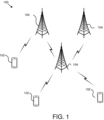
- Figure 1 depicts an embodiment of a wireless communication system 100 for performing a two-step random access channel procedure.
- the wireless communication system 100 includes remote units 102 and network units 104. Even though a specific number of remote units 102 and network units 104 are depicted in Figure 1 , one of skill in the art will recognize that any number of remote units 102 and network units 104 may be included in the wireless communication system 100.
- the remote units 102 may include computing devices, such as desktop computers, laptop computers, personal digital assistants ("PDAs"), tablet computers, smart phones, smart televisions (e.g., televisions connected to the Internet), set-top boxes, game consoles, security systems (including security cameras), vehicle on-board computers, network devices (e.g., routers, switches, modems), aerial vehicles, drones, or the like.
- the remote units 102 include wearable devices, such as smart watches, fitness bands, optical head-mounted displays, or the like.
- the remote units 102 may be referred to as subscriber units, mobiles, mobile stations, users, terminals, mobile terminals, fixed terminals, subscriber stations, UE, user terminals, a device, or by other terminology used in the art.
- the remote units 102 may communicate directly with one or more of the network units 104 via UL communication signals.
- the network units 104 may be distributed over a geographic region.
- a network unit 104 may also be referred to as an access point, an access terminal, a base, a base station, a Node-B, an eNB, a gNB, a Home Node-B, a relay node, a device, a core network, an aerial server, a radio access node, an AP, NR, a network entity, an AMF, a UDM, a UDR, a UDM/UDR, a PCF, a RAN, an NSSF, or by any other terminology used in the art.
- the network units 104 are generally part of a radio access network that includes one or more controllers communicably coupled to one or more corresponding network units 104.
- the radio access network is generally communicably coupled to one or more core networks, which may be coupled to other networks, like the Internet and public switched telephone networks, among other networks. These and other elements of radio access and core networks are not illustrated but are well known generally by those having ordinary skill in the art.
- the wireless communication system 100 is compliant with NR protocols standardized in 3GPP, wherein the network unit 104 transmits using an OFDM modulation scheme on the DL and the remote units 102 transmit on the UL using a SC-FDMA scheme or an OFDM scheme. More generally, however, the wireless communication system 100 may implement some other open or proprietary communication protocol, for example, WiMAX, IEEE 802.11 variants, GSM, GPRS, UMTS, LTE variants, CDMA2000, Bluetooth ® , ZigBee, Sigfoxx, among other protocols. The present disclosure is not intended to be limited to the implementation of any particular wireless communication system architecture or protocol.
- the network units 104 may serve a number of remote units 102 within a serving area, for example, a cell or a cell sector via a wireless communication link.
- the network units 104 transmit DL communication signals to serve the remote units 102 in the time, frequency, and/or spatial domain.
- a remote unit 102 may determine whether to perform a two-step random access channel procedure or a four-step random access channel procedure. In some embodiments, the remote unit 102 may, in response to determining to perform the two-step random access channel procedure: in a first step: transmit a preamble in a first time slot; and transmit an uplink data transmission via a physical uplink shared channel in a second time slot different from the first time slot; and, in a second step, receive a response message corresponding to the first step, wherein the response message comprises a radio network temporary identifier. Accordingly, the remote unit 102 may be used for performing a two-step random access channel procedure.
- a network unit 104 may receive a preamble in a first time slot and receiving an uplink data transmission via a physical uplink shared channel in a second time slot different from the first time slot in response to a determination by a remote unit to perform a two-step random access channel procedure.
- the network unit 104 may transmit a response message corresponding to the preamble and the uplink data transmission, wherein the response message comprises a radio network temporary identifier. Accordingly, the network unit 104 may be used for performing a two-step random access channel procedure.
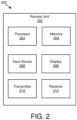
- the processor 202 may include any known controller capable of executing computer-readable instructions and/or capable of performing logical operations.
- the processor 202 may be a microcontroller, a microprocessor, a central processing unit ("CPU"), a graphics processing unit (“GPU”), an auxiliary processing unit, a field programmable gate array (“FPGA”), or similar programmable controller.
- the processor 202 executes instructions stored in the memory 204 to perform the methods and routines described herein.
- the processor 202 may determine whether to perform a two-step random access channel procedure or a four-step random access channel procedure.
- the processor 202 is communicatively coupled to the memory 204, the input device 206, the display 208, the transmitter 210, and the receiver 212.
- the memory 204 in one embodiment, is a computer readable storage medium.
- the memory 204 includes volatile computer storage media.
- the memory 204 may include a RAM, including dynamic RAM (“DRAM”), synchronous dynamic RAM (“SDRAM”), and/or static RAM (“SRAM”).
- the memory 204 includes non-volatile computer storage media.
- the memory 204 may include a hard disk drive, a flash memory, or any other suitable non-volatile computer storage device.
- the memory 204 includes both volatile and non-volatile computer storage media.
- the memory 204 also stores program code and related data, such as an operating system or other controller algorithms operating on the remote unit 102.
- the input device 206 may include any known computer input device including a touch panel, a button, a keyboard, a stylus, a microphone, or the like.
- the input device 206 may be integrated with the display 208, for example, as a touchscreen or similar touch-sensitive display.
- the input device 206 includes a touchscreen such that text may be input using a virtual keyboard displayed on the touchscreen and/or by handwriting on the touchscreen.
- the input device 206 includes two or more different devices, such as a keyboard and a touch panel.
- the display 208 includes one or more speakers for producing sound.
- the display 208 may produce an audible alert or notification (e.g., a beep or chime).
- the display 208 includes one or more haptic devices for producing vibrations, motion, or other haptic feedback.
- all or portions of the display 208 may be integrated with the input device 206.
- the input device 206 and display 208 may form a touchscreen or similar touch-sensitive display.
- the display 208 may be located near the input device 206.
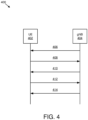
- the UE 402 transmits an uplink transmission on the PUSCH, e.g. connection request message to the gNB 404.
- the gNB 404 transmits a contention resolution message to the UE 402.
- a UE after having sent in a first step of a 2-step RACH procedure a preamble-like signal and an initial uplink transmission (e.g., on PUSCH), monitors for one or more response messages (e.g., in a second step of the 2-step RACH procedure) sent from a gNB.
- the UE may monitor for the one or more response messages during a defined time period (e.g., time window).
- the UE monitors during the time window for a PDCCH identified by an RA-RNTI scheduling PDSCH resources on which the one or more response messages are transmitted.
- an initial uplink transmission transmitted in a first step of the 2-step RACH procedure may include a TB containing at least a UE identifier such as a C-RNTI MAC control element or a UL CCCH SDU.
- the TB may contain data of a data radio bearer or control information such as a BSR or a PHR.
- the response message may include an UL grant field within which a gNB may schedule a retransmission of a transport block transmitted in step-1 of a 2-step RACH procedure or a new initial uplink transmission.
- the gNB may schedule a retransmission of the TB.
- the gNB may decode the TB as soon as possible to resolve a potential contention.
- an UL grant contained within a response message may allocate multiple uplink resources for an initial transmission or retransmission (e.g., for transmissions on an unlicensed cell).
- a response message may contain an ID field echoing the identifier sent in step 1, thereby resolving a potential contention. For example, if an uplink transmission in step 1 containing a C-RNTI MAC CE (e.g., for UEs in an RRC_CONNECTED state having already a C-RNTI allocated) is successfully decoded, the response message may contain a C-RNTI MAC CE set to the same value as the C-RNTI MAC CE sent in step 1.
- the response message may carry a UE contention resolution ID MAC CE (e.g., first 48 bits of the UL CCCH SDU transmitted in step 1).
- a response message may not contain an identifier field (e.g., C-RNTI MAC CE or UE contention resolution ID MAC CE) because the identity of a UE is not known to a gNB.
- a potential contention may not be resolved (e.g., one or more further retransmissions of the uplink transmission of step 1 is required).
- a response message may contain a temporary C-RNTI field that may include an identity assigned by a gNB for further communication.
- the temporary C-RNTI field may only be present in the response message, such as if a TB sent in step 1 of a 2-step RACH procedure is not able to be successfully decoded or if the TB sent in step 1 contains a UL CCCH SDU (e.g., if a UE is in an RRC_IDLE state).
- a C-RNTI field may not be used if the UE already has an assigned C-RNTI that is known to the gNB.
- a temporary C-RNTI field is always present in a response message and a UE may ignore the temporary C-RNTI field upon reception of the response message if the identifier sent in the response message (e.g., temporary C-RNTI MAC CE) matches an ID sent in step 1 of the 2-step RACH procedure.
- certain fields in a MAC RAR identify a response for a 2-step RACH and a legacy random access response.
- a reserved bit in a MAC RAR e.g., see Table 1 may be used to indicate a format of the MAC RAR (e.g., response for 2-step RACH or a legacy RAR - 4-step RACH RAR).
- Table 1 MAC RAR R R Timing Advance Command Timing Advance Command UL Grant UL Grant UL Grant UL Grant UL Grant UL Grant Temporary C-RNTI
- a first reserved bit set to '1' indicates that a response for a 2-step RACH procedure is contained within the MAC RAR.
- a format for a MAC RAR that includes a response for a 2-step RACH procedure may be different than a legacy MAC RAR format.
- a response message for a 2-step RACH may schedule a retransmission of an uplink transmission made in step 1 of the 2-step RACH procedure.
- an indicator that distinguishes between an UL grant for a retransmission and an initial transmission may be contained in the UL grant field.
- a response message for a 2-step RACH procedure may contain a C-RNTI MAC CE or a UE contention resolution ID MAC CE (e.g., depending on a decoding status of a first uplink transmission and a UE RRC state).
- a MAC RAR containing a response for 2-step RACH procedure may have a variable size.
- extension bits may indicate a presence of a C-RNTI MAC CE or a UE contention resolution ID MAC CE.
- a response message for a 2-step RACH procedure may contain a DL allocation (e.g., either a DL TB or DL grant information pointing to PDSCH resources).
- a RNTI used for identifying a response for a 2-step RACH procedure may be calculated differently (e.g., using a different formula) than the RA-RNTI used for a RAR of a legacy RACH procedure (e.g., 4-step RACH procedure).
- a legacy RACH procedure may refer to a 4-step RACH procedure.
- a UE in response to not receiving a response message in step 2 of a 2-step RACH procedure, may repeat step 1 of the 2-step RACH procedure and may send a preamble-like signal together with an uplink transmission.
- a UE that does not successfully receive a response message within a defined time window may assume that a preamble was not detected by a gNB.
- a UE transmits or retransmits a preamble and an uplink transmission sent previously in step 1 of a 2-step RACH procedure with an increased transmission power than a transmission power used for a previous transmission of the preamble and the uplink transmission (e.g., power ramping may be applied to both the preamble and the uplink transmission).
- a UE switches to a legacy 4-step RACH procedure in the absence of a response message during a defined time window.
- a UE if a UE doesn't successfully receive a response message for a 2-step RACH procedure, the UE switches to the legacy 4-step RACH procedure and subsequently transmits only a preamble (e.g., no UL transmission on PUSCH with the preamble).
- a preamble transmission may be transmitted with an increased transmission power as compared to a previous preamble transmission (e.g., power ramping).
- a UE may select a preamble reserved for the 4-step RACH procedure.
- a UE stores a MAC PDU sent in step 1 of a 2-step RACH procedure in a Msg3 buffer if switching to a 4-step RACH procedure.
- a new transmission buffer may be used in which a UE stores a MAC PDU sent in step 1 of a 2-step RACH procedure after generating the MAC PDU.
- storing a MAC PDU generated for step 1 in a separate buffer may enable later retransmissions of the generated MAC PDU (e.g., if contention resolution fails).
- a UE transmits or retransmits a preamble together with an uplink (e.g., UL-SCH) transmission in the absence of a response message.
- the UE may determine whether to apply power ramping (e.g., transmitting with an increased TX power compared to a previous transmission) for both the preamble and the uplink transmission or for only the preamble.
- a UE calculates a required transmission power for both a preamble transmission P preamble using a power control formula specified for preamble transmission thereby assuming an predefined power offset and for an uplink transmission P UL using a power control formula specified for the uplink transmission to account for the predefined power offset.
- the predefined power offset also referred to as Power_Ramping_Stepsize
- the predefined power offset may be separately defined for the preamble transmission and the uplink transmission.
- a sum of a required transmission power for a preamble and an uplink transmission e.g., including power offsets
- power ramping may be applied to both the preamble and the uplink transmission.
- a sum of P Preamble including a power offset and P UL without consideration of a power offset doesn't exceed P cmax,c
- power ramping may only be applied to the preamble transmission.
- P Preamble including a power offset and P UL without consideration of a power offset exceeds P CMAX,f,c ( i )
- a UE may switch to a legacy 4-step RACH procedure.
- a UE transmits a preamble-like signal and an uplink data transmission conveyed by PUSCH (e.g., elements forming step 1 in a 2-step RACH procedure) in different time slots.
- PUSCH e.g., elements forming step 1 in a 2-step RACH procedure
- one benefit of transmitting the preamble-like signal and the uplink data transmission in different time slots may be that a power between the preamble-like signal and the uplink data transmission does not need to be shared so that both transmissions may operate at optimum coverage (e.g., optimal power).
- a network node e.g., gNB
- transmitting the preamble-like signal and the uplink data transmission in different time slots may eliminate and/or reduce the need for precautionary buffering of a received time slot.
- a gNB may configure a time offset that a UE has to observe between a transmission of a preamble-like signal and a transmission of uplink data.
- the configuration may be advertised (e.g., in broadcast information in an SIB because all UEs may observe the same offset).
- an offset may depend on an employed subcarrier spacing (e.g., because a duration of a preamble-like signal may be a function of the subcarrier spacing) even though a required detection time may not scale equally.
- an offset may be 1 slot, and in another subcarrier spacing the offset may be 2 slots.
- an offset can be 0 slots (e.g., implying that a preamble-like signal and an uplink data transmission occur in the same slot).
- this may be beneficial in an unlicensed carrier configuration in which the UE contends for channel access (e.g., where any gap may bear the risk of losing a right to transmit on a channel), or with interference from a hidden node.
- a UE may perform a clear channel assessment before transmission of uplink data. As may be appreciated, this may result in not being able to transmit the uplink data in a designated slot due to a blocked channel.
- a UE repeats a transmission of a preamble-like signal and uplink data for a number of consecutive slots based on an offset value.
- an offset value is n_o
- a UE may transmit and/or repeat a preamble-like signal during n_o slots followed by uplink data transmitted and/or repeated during n_o slots.
- a transmission of a preamble-like signal and uplink data occur in the same slot, available transmit power of a UE may be shared.
- the preamble-like signal may be prioritized over the uplink data signal so that the preamble-like signal is transmitted with a designated power, and the transmit power of the uplink data signal is reduced to not exceed a total available transmit power.
- a good reception quality of the preamble-like signal may be made. Having good reception quality for the preamble-like signa may be more important than good reception quality of the uplink data transmission for the RACH procedure.
- the UE uses the same RS resource index as for a corresponding PRACH transmission.
- PL b,f,c ( q d ) referenceSignalPower - higher layer filtered RSRP, where referenceSignalPower is provided by higher layers and RSRP is defined in [7, TS 38.215] for the reference serving cell and the higher layer filter configuration is defined in [12, TS 38.331] for the reference serving cell.
- BPRE and ⁇ offset PUSCH for each UL BWP b of each carrier f and each serving cell c , are computed as below.
- BPRE O CSI / N RE for CSI transmission in a PUSCH without UL-SCH data
- C is the number of code blocks
- K r is the size for code block r
- O CSI is the number of CSI part 1 bits including CRC bits
- N RE is the number of resource elements determined as where is the number of symbols for PUSCH transmission occasion i on UL BWP b of carrier f of serving cell c , N sc
- data RB i j is a number of subcarriers excluding DM-RS subcarriers in PUSCH symbol j , 0 ⁇ j ⁇ N symb , b , f , c PUSCH
- a UE may defer the uplink data transmission to a later slot if insufficient power is available for transmission of the preamble-like signal and the uplink data in the same slot.
- a UE may defer an uplink data transmission to a next slot after a slot used to transmit a preamble-like signal so that the preamble-like signal and uplink data are transmitted in adjacent slots.
- a gNB performs a blind detection of uplink data at expected resources in the same slot and one or more slots after a detected preamble-like signal.
- a preamble-like signal indicates whether uplink data is transmitted in the same slot, or deferred to a later slot.
- a plurality of preamble-like signals forms two or more sets in which the transmission of a preamble-like signal from a first set indicates that the uplink data is transmitted in the same slot as the preamble-like signal.
- the preamble-like signal is from a second set, this indicates that transmission of the uplink data is deferred to a later slot than the preamble-like signal (e.g., to the next slot).
- partitioning of the preamble-like signals to sets may be defined in a communication system, or configured by a network (e.g., by broadcast in system information or by dedicated configuration signals).
- a UE before it performs transmission of step 1 of a 2-step RACH procedure, may determine which resources may be used for transmitting a preamble and an uplink transmission.
- PRACH resources are determined as in a 4-step RACH procedure (e.g., using RACH-ConfigGeneric parameters broadcasted as part of SIB1 in 5G NR). It should be noted that parameters used to determine PUSCH resources may be broadcast specifically for the purpose of transmitting step 1 of a 2-step RACH procedure. Accordingly, the PUSCH resources to be used by the UE may have a linking to chosen PRACH resources.
- the linking may be accomplished using one or more of the following offsets: 1) frequency offset, O_f: offset of lowest PUSCH transmission occasion in a frequency domain with respective to PRACH resources defined by msg1-FrequencyStart in 5G NR system; and/or 2) time offset, T_f: offset of lowest PUSCH transmission occasion in time domain with respective to PRACH transmission occasion chosen by the UE.
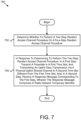
- the method 700 may include determining 702 whether to perform a two-step random access channel procedure or a four-step random access channel procedure.
- the method 700 includes, in response to determining to perform the two-step random access channel procedure: in a first step: transmitting 704 a preamble in a first time slot; and transmitting an uplink data transmission via a physical uplink shared channel in a second time slot different from the first time slot; and, in a second step, receiving a response message corresponding to the first step, wherein the response message comprises a radio network temporary identifier.
- the method 700 further comprises storing the medium access control physical data unit in a buffer.
- the medium access control physical data unit is stored in the buffer in response to switching from the two-step random access channel procedure to the four-step random access channel procedure.
- the method 700 further comprises delaying for an offset time between transmission of the preamble and transmission of the uplink data transmission.
- the offset time corresponds to a subcarrier spacing.
- determining whether to perform the two-step random access channel procedure or the four-step random access channel procedure comprises determining whether to perform the two-step random access channel procedure or the four-step random access channel procedure based on a predetermined factor.
- the predetermined factor comprises a power status.
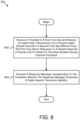
- Figure 8 is a flow chart diagram illustrating another embodiment of a method 800 for performing a two-step random access channel procedure.
- the method 800 is performed by an apparatus, such as the network unit 104.
- the method 800 may be performed by a processor executing program code, for example, a microcontroller, a microprocessor, a CPU, a GPU, an auxiliary processing unit, a FPGA, or the like.
- the method 800 may include receiving 802 a preamble in a first time slot and receiving an uplink data transmission via a physical uplink shared channel in a second time slot different from the first time slot in response to a determination by a remote unit to perform a two-step random access channel procedure.
- the method 800 includes transmitting 804 a response message corresponding to the preamble, wherein the response message comprises a radio network temporary identifier.
- the radio network temporary identifier for the two-step random access channel procedure is calculated using a first formula
- a radio network temporary identifier for a four-step random access channel procedure is calculated using a second formula different from the first formula.
- the uplink data transmission comprises a medium access control physical data unit.
- an offset time delay is between receiving the preamble and receiving the uplink data transmission.
- the offset time corresponds to a subcarrier spacing.
- the method 800 further comprises transmitting information configuring a requirement for performing the two-step random access channel procedure.
- the information indicates that the two-step random access channel procedure is allowed.
- the information indicates that the two-step random access channel procedure is required.
Landscapes
- Engineering & Computer Science (AREA)
- Signal Processing (AREA)
- Computer Networks & Wireless Communication (AREA)
- Mobile Radio Communication Systems (AREA)
Claims (13)
- Verfahren (700), das durch eine Benutzereinrichtung, UE, durchgeführt wird, das Verfahren (700) umfassend:Bestimmen (702), ob ein Direktzugriffskanalverfahren in zwei Schritten oder ein Direktzugriffskanalverfahren in vier Schritten durchgeführt werden soll; undals Reaktion auf das Bestimmen, dass das Direktzugriffskanalverfahren in zwei Schritten durchzuführen ist (704):in einem ersten Schritt:Übertragen einer Präambel in einem ersten Zeitschlitz; undÜbertragen einer Uplink-Datenübertragung über einen gemeinsam genutzten physikalischen Uplink-Kanal, PUSCH, in einem zweiten Zeitschlitz, der sich von dem ersten Zeitschlitz unterscheidet, wobei der zweite Zeitschlitz um einen Zeitversatz später als der erste Zeitschlitz ist, wobei der Zeitversatz einem Unterträgerabstand entspricht; undin einem zweiten Schritt:
Empfangen einer Antwortnachricht, die dem ersten Schritt entspricht, wobei die Antwortnachricht eine temporäre Funknetzkennung, RNTI, umfasst, wobei die RNTI für das Direktzugriffskanalverfahren in zwei Schritten unter Verwendung einer ersten Formel berechnet wird und eine RNTI für das Direktzugriffskanalverfahren in vier Schritten unter Verwendung einer zweiten Formel, die sich von der ersten Formel unterscheidet, berechnet wird. - Verfahren (700) nach Anspruch 1, wobei die Uplink-Datenübertragung eine Medienzugriffskontroll-Protokolldateneinheit, MAC-PDU, umfasst.
- Verfahren (700) nach Anspruch 2, ferner umfassend ein Speichern der MAC-PDU in einem Puffer.
- Verfahren (700) nach Anspruch 3, wobei die MAC-PDU als Reaktion auf ein Umschalten von dem Direktzugriffskanalverfahren in zwei Schritten zu dem Direktzugriffskanalverfahren in vier Schritten in dem Puffer gespeichert wird.
- Verfahren (700) nach Anspruch 1, wobei das Bestimmen, ob das Direktzugriffskanalverfahren in zwei Schritten oder das Direktzugriffskanalverfahren in vier Schritten durchgeführt werden soll, das Bestimmen, ob das Direktzugriffskanalverfahren in zwei Schritten oder das Direktzugriffskanalverfahren in vier Schritten durchgeführt werden soll, basierend auf einem zuvor bestimmten Faktor umfasst.
- Verfahren (700) nach Anspruch 5, wobei der zuvor bestimmten Faktor einen Leistungsstatus umfasst.
- Verfahren (700) nach Anspruch 1, wobei eine Übertrageleistung der Uplink-Datenübertragung in dem ersten Schritt mindestens durch einen ersten Satz von konfigurierten Leistungssteuerungsparametern bestimmt wird, wobei die Übertrageleistung einer zweiten Uplink-Datenübertragung in einem Direktzugriffsverfahren in vier Schritten mindestens durch einen zweiten Satz von konfigurierten Leistungssteuerungsparametern bestimmt wird, wobei sich der erste Satz von konfigurierten Leistungssteuerungsparametern von dem zweiten Satz von konfigurierten Leistungssteuerungsparametern wesentlich unterscheidet.
- Benutzereinrichtung, UE, (200) für eine drahtlose Kommunikation, umfassend:mindestens einen Speicher (204); undmindestens einen Prozessor (202), der mit dem mindestens einen Speicher (204) gekoppelt und konfiguriert ist, um die UE (200) zu veranlassen zum:
Bestimmen, ob ein Direktzugriffskanalverfahren in zwei Schritten oder ein Direktzugriffskanalverfahren in vier Schritten durchgeführt werden soll, wobei der mindestens eine Prozessor (202), der mit dem mindestens einen Speicher (204) gekoppelt ist, ferner konfiguriert ist, um die UE (200) als Reaktion auf das Bestimmen, dass das Direktzugriffskanalverfahren in zwei Schritten durchzuführen ist, zu veranlassen zum:in einem ersten Schritt:Übertragen einer Präambel in einem ersten Zeitschlitz; undÜbertragen einer Uplink-Datenübertragung über einen gemeinsam genutzten physikalischen Uplink-Kanal, PUSCH, in einem zweiten Zeitschlitz, der sich von dem ersten Zeitschlitz unterscheidet, wobei der zweite Zeitschlitz um einen Zeitversatz später als der erste Zeitschlitz ist, wobei der Zeitversatz einem Unterträgerabstand entspricht; undin einem zweiten Schritt:
Empfangen einer Antwortnachricht, die dem ersten Schritt entspricht, wobei die Antwortnachricht eine temporäre Funknetzkennung, RNTI, umfasst, wobei die RNTI für das Direktzugriffskanalverfahren in zwei Schritten unter Verwendung einer ersten Formel berechnet wird und eine RNTI für das Direktzugriffskanalverfahren in vier Schritten unter Verwendung einer zweiten Formel, die sich von der ersten Formel unterscheidet, berechnet wird. - UE (200) nach Anspruch 8, wobei der mindestens eine Prozessor (202), der mit dem mindestens einen Speicher (204) gekoppelt ist, ferner konfiguriert ist, um die UE (200) zu veranlassen zum:
Überwachen, während eines Antwortfensters, auf die Antwortnachricht. - UE (200) nach Anspruch 8, wobei der mindestens eine Prozessor (202), der mit dem mindestens einen Speicher (204) gekoppelt ist, ferner konfiguriert ist, um die UE (200) zu veranlassen zum:
Empfangen von Informationen, die eine Voraussetzung zum Durchführen des Direktzugriffskanalverfahrens in zwei Schritten konfigurieren. - UE (200) nach Anspruch 10, wobei die Informationen angeben, dass das Direktzugriffskanalverfahren in zwei Schritten zulässig ist.
- Verfahren (800), das durch eine Basisstation durchgeführt wird, das Verfahren (800) umfassend:Empfangen (802) einer Präambel in einem ersten Zeitschlitz und Empfangen einer Uplink-Datenübertragung über einen gemeinsam genutzten physikalischen Uplink-Kanal, PUSCH, in einem zweiten Zeitschlitz, der sich von dem ersten Zeitschlitz unterscheidet, als Reaktion auf eine Bestimmung durch eine entfernte Einheit, dass ein Direktzugriffskanalverfahren in zwei Schritten durchzuführen ist, wobei der zweite Zeitschlitz um einen Zeitversatz später als der erste Zeitschlitz ist, wobei der Zeitversatz einem Unterträgerabstand entspricht; undSenden (804) einer Antwortnachricht, die der Präambel entspricht, wobei die Antwortnachricht eine temporäre Funknetzkennung, RNTI, umfasst, wobei die RNTI für das Direktzugriffskanalverfahren in zwei Schritten unter Verwendung einer ersten Formel berechnet wird und eine RNTI für ein Direktzugriffskanalverfahren in vier Schritten unter Verwendung einer zweiten Formel, die sich von der ersten Formel unterscheidet, berechnet wird.
- Basisstation (300) für die drahtlose Kommunikation, umfassend:mindestens einen Speicher (304); undmindestens einen Prozessor (302), der mit dem mindestens einen Speicher (304) gekoppelt und konfiguriert ist, um die Basisstation (300) zu veranlassen zum:Empfangen einer Präambel in einem ersten Zeitschlitz und Empfangen einer Uplink-Datenübertragung über einen gemeinsam genutzten physikalischen Uplink-Kanal, PUSCH, in einem zweiten Zeitschlitz, der sich von dem ersten Zeitschlitz unterscheidet, als Reaktion auf die Bestimmung durch eine entfernte Einheit, dass ein Direktzugriffskanalverfahren in zwei Schritten durchzuführen ist, wobei der zweite Zeitschlitz um einen Zeitversatz später als der erste Zeitschlitz ist, wobei der Zeitversatz einem Unterträgerabstand entspricht; undSenden einer Antwortnachricht, die der Präambel entspricht, wobei die Antwortnachricht eine temporäre Funknetzkennung, RNTI, umfasst, wobei die RNTI für das Direktzugriffskanalverfahren in zwei Schritten unter Verwendung einer ersten Formel berechnet wird und eine RNTI für ein Direktzugriffskanalverfahren in vier Schritten unter Verwendung einer zweiten Formel, die sich von der ersten Formel unterscheidet, berechnet wird.
Applications Claiming Priority (2)
| Application Number | Priority Date | Filing Date | Title |
|---|---|---|---|
| US201862736928P | 2018-09-26 | 2018-09-26 | |
| PCT/IB2019/001052 WO2020065398A1 (en) | 2018-09-26 | 2019-09-26 | Performing a two-step random access channel procedure |
Publications (3)
| Publication Number | Publication Date |
|---|---|
| EP3858079A1 EP3858079A1 (de) | 2021-08-04 |
| EP3858079B1 true EP3858079B1 (de) | 2025-07-02 |
| EP3858079C0 EP3858079C0 (de) | 2025-07-02 |
Family
ID=68655566
Family Applications (1)
| Application Number | Title | Priority Date | Filing Date |
|---|---|---|---|
| EP19809139.9A Active EP3858079B1 (de) | 2018-09-26 | 2019-09-26 | Durchführung eines zweistufigen direktzugriffskanalprozesses |
Country Status (5)
| Country | Link |
|---|---|
| US (3) | US11166319B2 (de) |
| EP (1) | EP3858079B1 (de) |
| CN (2) | CN118488603A (de) |
| ES (1) | ES3035100T3 (de) |
| WO (1) | WO2020065398A1 (de) |
Families Citing this family (57)
| Publication number | Priority date | Publication date | Assignee | Title |
|---|---|---|---|---|
| JP2020109886A (ja) * | 2017-04-28 | 2020-07-16 | シャープ株式会社 | 端末装置および方法 |
| US11259292B2 (en) * | 2018-02-12 | 2022-02-22 | Qualcomm Incorporated | Response-based resource management |
| WO2020003468A1 (ja) * | 2018-06-28 | 2020-01-02 | 株式会社Nttドコモ | ユーザ端末 |
| US20210250985A1 (en) * | 2018-06-28 | 2021-08-12 | Ntt Docomo, Inc. | User terminal |
| WO2020067833A1 (en) | 2018-09-28 | 2020-04-02 | Samsung Electronics Co., Ltd. | Random access method and apparatus in wireless communication system |
| US11632801B2 (en) * | 2018-10-03 | 2023-04-18 | Qualcomm Incorporated | Message 1 of a two-step random access procedure |
| KR102174653B1 (ko) * | 2018-10-24 | 2020-11-05 | 연세대학교 산학협력단 | 무선 통신 시스템의 랜덤 액세스 장치 및 방법 |
| WO2020143471A1 (en) | 2019-01-07 | 2020-07-16 | Telefonaktiebolaget Lm Ericsson (Publ) | Method, terminal device, base station for power control in random access procedure |
| US12464470B2 (en) * | 2019-01-17 | 2025-11-04 | Apple Inc. | System and method for power control for 2-step random access channel (RACH) |
| US11350463B2 (en) * | 2019-01-31 | 2022-05-31 | Qualcomm Incorporated | Random access channel (RACH) procedure power control |
| US11490346B2 (en) * | 2019-02-01 | 2022-11-01 | Qualcomm Incorporated | Open loop timing control for 2-step RACH |
| KR102643247B1 (ko) * | 2019-02-13 | 2024-03-05 | 삼성전자 주식회사 | 무선 통신 시스템에서 2 스텝 랜덤 액세스 절차 중에 msga 재송신을 처리하기 위한 방법 및 장치 |
| WO2020164049A1 (en) * | 2019-02-14 | 2020-08-20 | Zte Corporation | Power control for random access protocols |
| MX2021008835A (es) * | 2019-02-15 | 2021-09-08 | Ericsson Telefon Ab L M | Dispositivo terminal, dispositivo de red y metodos en los mismos. |
| WO2020165498A1 (en) * | 2019-02-15 | 2020-08-20 | Nokia Technologies Oy | Structure of message from user equipment to base station in two-step random access |
| US11452141B2 (en) * | 2019-03-04 | 2022-09-20 | Qualcomm Incorporated | Techniques for formatting random access messages in wireless communications |
| KR20200110201A (ko) * | 2019-03-14 | 2020-09-23 | 한국전자통신연구원 | 통신 시스템에서 단말의 접속 제어 방법 |
| CN119071934A (zh) | 2019-03-14 | 2024-12-03 | 韩国电子通信研究院 | 用于在通信系统中控制终端接入的方法 |
| US11310834B2 (en) * | 2019-03-18 | 2022-04-19 | Qualcomm Incorporated | Priority handling for a random access message that includes a preamble and a payload |
| CN113519202A (zh) * | 2019-03-27 | 2021-10-19 | 株式会社Ntt都科摩 | 用户装置 |
| US11438931B2 (en) * | 2019-03-28 | 2022-09-06 | Ofinno, Llc | Selecting a random access procedure type in a wireless system |
| WO2020198980A1 (en) * | 2019-03-29 | 2020-10-08 | Qualcomm Incorporated | Preamble to demodulation reference signal mapping for random access procedures |
| US11723074B2 (en) * | 2019-04-30 | 2023-08-08 | Zte Corporation | Wireless communication with conflict avoidance |
| WO2020235956A1 (en) * | 2019-05-23 | 2020-11-26 | Lg Electronics Inc. | Method of performing random access (ra) procedure, and transmitting device, apparatus and storage medium therefor, and method and apparatus for transmitting mac pdu of ra procedure |
| KR102838100B1 (ko) * | 2019-07-05 | 2025-07-25 | 삼성전자주식회사 | 무선 통신 시스템에서 랜덤 액세스 절차를 위한 장치 및 방법 |
| EP3888406B1 (de) * | 2019-07-12 | 2024-11-06 | Samsung Electronics Co., Ltd. | Verfahren und vorrichtung zum senden und empfangen von signalen in einem kommunikationssystem |
| WO2021010717A1 (en) * | 2019-07-12 | 2021-01-21 | Samsung Electronics Co., Ltd. | Method and apparatus for transmitting and receiving signal in a communication system |
| KR20210015667A (ko) * | 2019-07-31 | 2021-02-10 | 삼성전자주식회사 | 무선 통신 시스템에서 2단계 랜덤 엑세스 절차를 수행하는 방법 및 장치 |
| WO2021066697A1 (en) * | 2019-09-30 | 2021-04-08 | Telefonaktiebolaget Lm Ericsson (Publ) | Methods, ue and network node for handling prach configurations |
| WO2021062628A1 (en) * | 2019-09-30 | 2021-04-08 | Zte Corporation | Method and system for data transmission in wireless network |
| EP4055916A4 (de) * | 2019-11-04 | 2023-07-19 | Apple Inc. | Strahlausfallverwaltung für benutzergerät aus synchronisation in uplink |
| CN115053622B (zh) | 2020-02-03 | 2025-06-03 | 三星电子株式会社 | 用于在无线通信系统中执行通信的方法和装置 |
| WO2021189202A1 (zh) * | 2020-03-23 | 2021-09-30 | 北京小米移动软件有限公司 | 用于随机接入的通信方法、装置及计算机可读存储介质 |
| KR20210122709A (ko) * | 2020-03-31 | 2021-10-12 | 아서스테크 컴퓨터 인코포레이션 | 무선 통신 시스템에서 소규모 데이터 전송을 위한 랜덤 액세스 프리앰블 분할을 위한 방법 및 장치 |
| EP4111799A4 (de) * | 2020-04-01 | 2023-08-09 | Samsung Electronics Co., Ltd. | Verfahren und vorrichtung für ruhemodusbetrieb in einem drahtloskommunikationssystem |
| US11570808B2 (en) * | 2020-04-08 | 2023-01-31 | Qualcomm Incorporated | Two-step random access procedure in wireless communication |
| WO2021206473A1 (en) | 2020-04-09 | 2021-10-14 | Samsung Electronics Co., Ltd. | Method and device for determining configuration |
| CN113518468B (zh) * | 2020-04-09 | 2025-03-25 | 北京三星通信技术研究有限公司 | 用于确定配置的方法和设备 |
| EP4085725B1 (de) * | 2020-04-28 | 2023-08-30 | Nokia Technologies Oy | Übertragen von berichten eines zufallszugriffsverfahren |
| CN111669822B (zh) * | 2020-06-18 | 2022-06-24 | 河南工学院 | 基于车联网的车辆行驶位置信息的传输方法及系统 |
| US11743951B2 (en) * | 2020-07-28 | 2023-08-29 | Qualcomm Incorporated | Two step RACH based L1/L2 inter-cell mobility |
| WO2022027411A1 (en) * | 2020-08-06 | 2022-02-10 | Apple Inc. | Base station signaling for user equipment direct transmission while inactive |
| WO2022027434A1 (en) | 2020-08-06 | 2022-02-10 | Apple Inc. | User equipment direct transmission while inactive |
| KR102381003B1 (ko) * | 2020-09-23 | 2022-04-01 | 성균관대학교산학협력단 | 무선 네트워크 환경에서 랜덤 빔-스위칭을 이용한 랜덤 액세스 방법 및 장치 |
| CN117320173B (zh) * | 2020-09-29 | 2025-05-16 | Oppo广东移动通信有限公司 | 无线通信的方法和设备 |
| WO2022116093A1 (zh) * | 2020-12-03 | 2022-06-09 | Oppo广东移动通信有限公司 | 无线通信方法和设备 |
| CN114615751B (zh) * | 2020-12-04 | 2024-12-27 | 维沃移动通信有限公司 | 一种随机接入方法、装置及设备 |
| WO2022173221A1 (en) | 2021-02-10 | 2022-08-18 | Samsung Electronics Co., Ltd. | Method and ue for controlling 2-step and 4-step rach procedure in a wireless network |
| US20240049291A1 (en) * | 2021-03-31 | 2024-02-08 | Qualcomm Incorporated | Random access channel type selection and fallback mechanism related to slicing |
| US11979919B2 (en) * | 2021-09-17 | 2024-05-07 | Qualcomm Incorporated | Flexible random access channel configurations |
| CN114205916B (zh) * | 2021-11-12 | 2024-02-27 | 杭州昌泽信息技术有限公司 | 一种两阶段非正交随机接入的方法 |
| CN116931808A (zh) * | 2022-03-29 | 2023-10-24 | 华为技术有限公司 | 数据写入方法和装置 |
| CN114879942B (zh) * | 2022-05-20 | 2023-02-03 | 北京宇信科技集团股份有限公司 | 分布式时间轮分组注册的校验方法、装置、介质和设备 |
| US12016778B2 (en) | 2022-06-06 | 2024-06-25 | Roger D. Dragsdorf | Implantable joint having heating system |
| US12408054B2 (en) * | 2022-06-29 | 2025-09-02 | Verizon Patent And Licensing Inc. | Systems and methods for quality of service monitoring activated by policy control function |
| CN115665880A (zh) * | 2022-09-23 | 2023-01-31 | 网络通信与安全紫金山实验室 | 应用于短波通信系统的随机接入方法和装置 |
| CN119450794B (zh) * | 2024-12-02 | 2025-10-17 | 中山大学 | 一种用于大规模多输入多输出系统的免授权随机接入方法 |
Family Cites Families (23)
| Publication number | Priority date | Publication date | Assignee | Title |
|---|---|---|---|---|
| US10375725B2 (en) * | 2015-03-16 | 2019-08-06 | Lg Electronics Inc. | Method of fast-retransmitting uplink data in wireless communication system and apparatus therefor |
| CN115802513A (zh) * | 2016-09-23 | 2023-03-14 | 中兴通讯股份有限公司 | 一种随机接入方法、装置和设备 |
| US10693605B2 (en) * | 2016-09-30 | 2020-06-23 | Qualcomm Incorporated | RACH transmission using multiple ports |
| KR102384807B1 (ko) * | 2016-10-07 | 2022-04-08 | 삼성전자 주식회사 | 향상된 경쟁 기반 랜덤 액세스 절차를 위한 방법 및 장치 |
| US10433342B2 (en) * | 2016-10-19 | 2019-10-01 | Qualcomm Incorporated | Enhanced random access channel (RACH) procedure |
| US10405342B2 (en) * | 2016-11-01 | 2019-09-03 | Qualcomm Incorporated | Two step random access procedure |
| WO2018085205A1 (en) * | 2016-11-04 | 2018-05-11 | Intel IP Corporation | Two-element random access channel (prach) transmission |
| US11191108B2 (en) * | 2016-11-14 | 2021-11-30 | Qualcomm Incorporated | Two step random-access channel (RACH) procedure in millimeter wave (MMW) |
| US10477592B2 (en) * | 2016-11-16 | 2019-11-12 | Qualcomm Incorporated | UL waveform during RACH procedure and autonomous UL transmission |
| US10568130B2 (en) * | 2016-12-22 | 2020-02-18 | Qualcomm Incorporated | Techniques and apparatuses for multiple types of physical random access channel (PRACH) transmission utilization |
| US10785801B2 (en) * | 2017-01-05 | 2020-09-22 | Telefonaktiebolaget Lm Ericsson (Publ) | Method and apparatus for random access in a wireless communication system |
| WO2018127502A1 (en) * | 2017-01-05 | 2018-07-12 | Sony Corporation | Communications device, infrastructure equipment and methods |
| AU2017391795A1 (en) * | 2017-01-05 | 2019-08-15 | Guangdong Oppo Mobile Telecommunications Corp., Ltd. | Method for random access and terminal device |
| CN108282899B (zh) * | 2017-01-05 | 2020-03-06 | 电信科学技术研究院 | 一种两步竞争随机接入方法和装置 |
| CN108282895B (zh) * | 2017-01-06 | 2019-12-20 | 电信科学技术研究院 | 一种随机接入方法及终端 |
| KR102505734B1 (ko) * | 2017-01-13 | 2023-03-03 | 모토로라 모빌리티 엘엘씨 | 캐리어 주파수에서 경합 기반 랜덤 액세스를 수행하기 위한 방법 및 장치 |
| EP3937587B1 (de) * | 2017-02-28 | 2023-08-02 | Guangdong Oppo Mobile Telecommunications Corp., Ltd. | Fallback von direktzugriffsvorgang |
| US10568007B2 (en) * | 2017-03-22 | 2020-02-18 | Comcast Cable Communications, Llc | Handover random access |
| US11057935B2 (en) * | 2017-03-22 | 2021-07-06 | Comcast Cable Communications, Llc | Random access process in new radio |
| US11477824B2 (en) * | 2017-09-07 | 2022-10-18 | Futurewei Technologies, Inc. | System and method for request multiplexing |
| CN110351878B (zh) * | 2018-04-04 | 2023-07-14 | 华为技术有限公司 | 一种随机接入处理方法和相关设备 |
| US11057938B2 (en) * | 2018-05-23 | 2021-07-06 | Qualcomm Incorporated | Wireless communication including random access |
| EP4255047B1 (de) * | 2018-09-21 | 2026-01-28 | Samsung Electronics Co., Ltd. | Verfahren und vorrichtung zum ausführen von zweischritt-direktzugriffsverfahren |
-
2019
- 2019-09-26 EP EP19809139.9A patent/EP3858079B1/de active Active
- 2019-09-26 CN CN202410650853.3A patent/CN118488603A/zh active Pending
- 2019-09-26 CN CN201980061134.5A patent/CN112771983B/zh active Active
- 2019-09-26 WO PCT/IB2019/001052 patent/WO2020065398A1/en not_active Ceased
- 2019-09-26 ES ES19809139T patent/ES3035100T3/es active Active
- 2019-09-26 US US16/584,249 patent/US11166319B2/en active Active
-
2021
- 2021-11-01 US US17/515,770 patent/US11653391B2/en active Active
-
2023
- 2023-04-05 US US18/296,212 patent/US12336014B2/en active Active
Non-Patent Citations (1)
| Title |
|---|
| ZTE CORPORATION: "Discussion on the ambiguity in Msg2 reception", vol. RAN WG2, no. Montreal, Canada; 20180702 - 20180706, 21 June 2018 (2018-06-21), XP051525508, Retrieved from the Internet <URL:http://www.3gpp.org/ftp/tsg%5Fran/WG2%5FRL2/TSGR2%5FAHs/2018%5F07%5FNR/Docs/R2%2D1809661%2Ezip> [retrieved on 20180621] * |
Also Published As
| Publication number | Publication date |
|---|---|
| US12336014B2 (en) | 2025-06-17 |
| US11166319B2 (en) | 2021-11-02 |
| EP3858079A1 (de) | 2021-08-04 |
| CN112771983A (zh) | 2021-05-07 |
| CN118488603A (zh) | 2024-08-13 |
| US20230239934A1 (en) | 2023-07-27 |
| WO2020065398A1 (en) | 2020-04-02 |
| US11653391B2 (en) | 2023-05-16 |
| CN112771983B (zh) | 2024-06-11 |
| EP3858079C0 (de) | 2025-07-02 |
| US20200100299A1 (en) | 2020-03-26 |
| ES3035100T3 (en) | 2025-08-28 |
| US20220132588A1 (en) | 2022-04-28 |
Similar Documents
| Publication | Publication Date | Title |
|---|---|---|
| US12336014B2 (en) | Performing a two-step random access channel procedure | |
| US11956830B2 (en) | PUSCH transmission using an aggregation factor | |
| US12170964B2 (en) | Uplink power control | |
| EP3949550B1 (de) | Sendeleistung für duale konnektivität | |
| US11991648B2 (en) | Determining a power headroom report | |
| US11224074B2 (en) | Bandwidth part configuration based on a clear channel assessment | |
| US12446113B2 (en) | Medium access control protocol data unit in a message 3 buffer |
Legal Events
| Date | Code | Title | Description |
|---|---|---|---|
| STAA | Information on the status of an ep patent application or granted ep patent |
Free format text: STATUS: UNKNOWN |
|
| STAA | Information on the status of an ep patent application or granted ep patent |
Free format text: STATUS: THE INTERNATIONAL PUBLICATION HAS BEEN MADE |
|
| PUAI | Public reference made under article 153(3) epc to a published international application that has entered the european phase |
Free format text: ORIGINAL CODE: 0009012 |
|
| STAA | Information on the status of an ep patent application or granted ep patent |
Free format text: STATUS: REQUEST FOR EXAMINATION WAS MADE |
|
| 17P | Request for examination filed |
Effective date: 20210210 |
|
| AK | Designated contracting states |
Kind code of ref document: A1 Designated state(s): AL AT BE BG CH CY CZ DE DK EE ES FI FR GB GR HR HU IE IS IT LI LT LU LV MC MK MT NL NO PL PT RO RS SE SI SK SM TR |
|
| DAV | Request for validation of the european patent (deleted) | ||
| DAX | Request for extension of the european patent (deleted) | ||
| STAA | Information on the status of an ep patent application or granted ep patent |
Free format text: STATUS: EXAMINATION IS IN PROGRESS |
|
| 17Q | First examination report despatched |
Effective date: 20230131 |
|
| REG | Reference to a national code |
Ref legal event code: R079 Free format text: PREVIOUS MAIN CLASS: H04W0074080000 Ref country code: DE Ref legal event code: R079 Ref document number: 602019072015 Country of ref document: DE Free format text: PREVIOUS MAIN CLASS: H04W0074080000 Ipc: H04W0074083300 |
|
| GRAP | Despatch of communication of intention to grant a patent |
Free format text: ORIGINAL CODE: EPIDOSNIGR1 |
|
| STAA | Information on the status of an ep patent application or granted ep patent |
Free format text: STATUS: GRANT OF PATENT IS INTENDED |
|
| RIC1 | Information provided on ipc code assigned before grant |
Ipc: H04W 74/0838 20240101ALN20250212BHEP Ipc: H04W 74/0836 20240101ALI20250212BHEP Ipc: H04W 74/0833 20240101AFI20250212BHEP |
|
| INTG | Intention to grant announced |
Effective date: 20250220 |
|
| GRAS | Grant fee paid |
Free format text: ORIGINAL CODE: EPIDOSNIGR3 |
|
| GRAA | (expected) grant |
Free format text: ORIGINAL CODE: 0009210 |
|
| STAA | Information on the status of an ep patent application or granted ep patent |
Free format text: STATUS: THE PATENT HAS BEEN GRANTED |
|
| AK | Designated contracting states |
Kind code of ref document: B1 Designated state(s): AL AT BE BG CH CY CZ DE DK EE ES FI FR GB GR HR HU IE IS IT LI LT LU LV MC MK MT NL NO PL PT RO RS SE SI SK SM TR |
|
| REG | Reference to a national code |
Ref country code: GB Ref legal event code: FG4D |
|
| REG | Reference to a national code |
Ref country code: CH Ref legal event code: EP |
|
| REG | Reference to a national code |
Ref country code: DE Ref legal event code: R096 Ref document number: 602019072015 Country of ref document: DE |
|
| REG | Reference to a national code |
Ref country code: IE Ref legal event code: FG4D |
|
| U01 | Request for unitary effect filed |
Effective date: 20250721 |
|
| U07 | Unitary effect registered |
Designated state(s): AT BE BG DE DK EE FI FR IT LT LU LV MT NL PT RO SE SI Effective date: 20250728 |
|
| REG | Reference to a national code |
Ref country code: ES Ref legal event code: FG2A Ref document number: 3035100 Country of ref document: ES Kind code of ref document: T3 Effective date: 20250828 |
|
| PGFP | Annual fee paid to national office [announced via postgrant information from national office to epo] |
Ref country code: GB Payment date: 20250923 Year of fee payment: 7 |
|
| U20 | Renewal fee for the european patent with unitary effect paid |
Year of fee payment: 7 Effective date: 20250929 |
|
| PG25 | Lapsed in a contracting state [announced via postgrant information from national office to epo] |
Ref country code: IS Free format text: LAPSE BECAUSE OF FAILURE TO SUBMIT A TRANSLATION OF THE DESCRIPTION OR TO PAY THE FEE WITHIN THE PRESCRIBED TIME-LIMIT Effective date: 20251102 |
|
| PG25 | Lapsed in a contracting state [announced via postgrant information from national office to epo] |
Ref country code: NO Free format text: LAPSE BECAUSE OF FAILURE TO SUBMIT A TRANSLATION OF THE DESCRIPTION OR TO PAY THE FEE WITHIN THE PRESCRIBED TIME-LIMIT Effective date: 20251002 |
|
| PG25 | Lapsed in a contracting state [announced via postgrant information from national office to epo] |
Ref country code: HR Free format text: LAPSE BECAUSE OF FAILURE TO SUBMIT A TRANSLATION OF THE DESCRIPTION OR TO PAY THE FEE WITHIN THE PRESCRIBED TIME-LIMIT Effective date: 20250702 |
|
| PG25 | Lapsed in a contracting state [announced via postgrant information from national office to epo] |
Ref country code: GR Free format text: LAPSE BECAUSE OF FAILURE TO SUBMIT A TRANSLATION OF THE DESCRIPTION OR TO PAY THE FEE WITHIN THE PRESCRIBED TIME-LIMIT Effective date: 20251003 |
|
| PG25 | Lapsed in a contracting state [announced via postgrant information from national office to epo] |
Ref country code: CZ Free format text: LAPSE BECAUSE OF FAILURE TO SUBMIT A TRANSLATION OF THE DESCRIPTION OR TO PAY THE FEE WITHIN THE PRESCRIBED TIME-LIMIT Effective date: 20250702 |
|
| PG25 | Lapsed in a contracting state [announced via postgrant information from national office to epo] |
Ref country code: PL Free format text: LAPSE BECAUSE OF FAILURE TO SUBMIT A TRANSLATION OF THE DESCRIPTION OR TO PAY THE FEE WITHIN THE PRESCRIBED TIME-LIMIT Effective date: 20250702 |
|
| PG25 | Lapsed in a contracting state [announced via postgrant information from national office to epo] |
Ref country code: RS Free format text: LAPSE BECAUSE OF FAILURE TO SUBMIT A TRANSLATION OF THE DESCRIPTION OR TO PAY THE FEE WITHIN THE PRESCRIBED TIME-LIMIT Effective date: 20251002 |
|
| PGFP | Annual fee paid to national office [announced via postgrant information from national office to epo] |
Ref country code: ES Payment date: 20251001 Year of fee payment: 7 |