EP3856594B1 - Aide à la conduite automobile - Google Patents
Aide à la conduite automobile Download PDFInfo
- Publication number
- EP3856594B1 EP3856594B1 EP19790800.7A EP19790800A EP3856594B1 EP 3856594 B1 EP3856594 B1 EP 3856594B1 EP 19790800 A EP19790800 A EP 19790800A EP 3856594 B1 EP3856594 B1 EP 3856594B1
- Authority
- EP
- European Patent Office
- Prior art keywords
- motor
- vehicle
- hmv
- automotive
- vehicles
- Prior art date
- Legal status (The legal status is an assumption and is not a legal conclusion. Google has not performed a legal analysis and makes no representation as to the accuracy of the status listed.)
- Active
Links
Images


Classifications
-
- B—PERFORMING OPERATIONS; TRANSPORTING
- B60—VEHICLES IN GENERAL
- B60W—CONJOINT CONTROL OF VEHICLE SUB-UNITS OF DIFFERENT TYPE OR DIFFERENT FUNCTION; CONTROL SYSTEMS SPECIALLY ADAPTED FOR HYBRID VEHICLES; ROAD VEHICLE DRIVE CONTROL SYSTEMS FOR PURPOSES NOT RELATED TO THE CONTROL OF A PARTICULAR SUB-UNIT
- B60W30/00—Purposes of road vehicle drive control systems not related to the control of a particular sub-unit, e.g. of systems using conjoint control of vehicle sub-units
- B60W30/08—Active safety systems predicting or avoiding probable or impending collision or attempting to minimise its consequences
- B60W30/09—Taking automatic action to avoid collision, e.g. braking and steering
-
- B—PERFORMING OPERATIONS; TRANSPORTING
- B60—VEHICLES IN GENERAL
- B60W—CONJOINT CONTROL OF VEHICLE SUB-UNITS OF DIFFERENT TYPE OR DIFFERENT FUNCTION; CONTROL SYSTEMS SPECIALLY ADAPTED FOR HYBRID VEHICLES; ROAD VEHICLE DRIVE CONTROL SYSTEMS FOR PURPOSES NOT RELATED TO THE CONTROL OF A PARTICULAR SUB-UNIT
- B60W30/00—Purposes of road vehicle drive control systems not related to the control of a particular sub-unit, e.g. of systems using conjoint control of vehicle sub-units
- B60W30/08—Active safety systems predicting or avoiding probable or impending collision or attempting to minimise its consequences
- B60W30/095—Predicting travel path or likelihood of collision
- B60W30/0953—Predicting travel path or likelihood of collision the prediction being responsive to vehicle dynamic parameters
-
- B—PERFORMING OPERATIONS; TRANSPORTING
- B60—VEHICLES IN GENERAL
- B60W—CONJOINT CONTROL OF VEHICLE SUB-UNITS OF DIFFERENT TYPE OR DIFFERENT FUNCTION; CONTROL SYSTEMS SPECIALLY ADAPTED FOR HYBRID VEHICLES; ROAD VEHICLE DRIVE CONTROL SYSTEMS FOR PURPOSES NOT RELATED TO THE CONTROL OF A PARTICULAR SUB-UNIT
- B60W30/00—Purposes of road vehicle drive control systems not related to the control of a particular sub-unit, e.g. of systems using conjoint control of vehicle sub-units
- B60W30/08—Active safety systems predicting or avoiding probable or impending collision or attempting to minimise its consequences
- B60W30/095—Predicting travel path or likelihood of collision
- B60W30/0956—Predicting travel path or likelihood of collision the prediction being responsive to traffic or environmental parameters
-
- B—PERFORMING OPERATIONS; TRANSPORTING
- B60—VEHICLES IN GENERAL
- B60W—CONJOINT CONTROL OF VEHICLE SUB-UNITS OF DIFFERENT TYPE OR DIFFERENT FUNCTION; CONTROL SYSTEMS SPECIALLY ADAPTED FOR HYBRID VEHICLES; ROAD VEHICLE DRIVE CONTROL SYSTEMS FOR PURPOSES NOT RELATED TO THE CONTROL OF A PARTICULAR SUB-UNIT
- B60W30/00—Purposes of road vehicle drive control systems not related to the control of a particular sub-unit, e.g. of systems using conjoint control of vehicle sub-units
- B60W30/14—Adaptive cruise control
- B60W30/16—Control of distance between vehicles, e.g. keeping a distance to preceding vehicle
-
- B—PERFORMING OPERATIONS; TRANSPORTING
- B60—VEHICLES IN GENERAL
- B60W—CONJOINT CONTROL OF VEHICLE SUB-UNITS OF DIFFERENT TYPE OR DIFFERENT FUNCTION; CONTROL SYSTEMS SPECIALLY ADAPTED FOR HYBRID VEHICLES; ROAD VEHICLE DRIVE CONTROL SYSTEMS FOR PURPOSES NOT RELATED TO THE CONTROL OF A PARTICULAR SUB-UNIT
- B60W40/00—Estimation or calculation of non-directly measurable driving parameters for road vehicle drive control systems not related to the control of a particular sub unit, e.g. by using mathematical models
- B60W40/02—Estimation or calculation of non-directly measurable driving parameters for road vehicle drive control systems not related to the control of a particular sub unit, e.g. by using mathematical models related to ambient conditions
- B60W40/04—Traffic conditions
-
- G—PHYSICS
- G01—MEASURING; TESTING
- G01S—RADIO DIRECTION-FINDING; RADIO NAVIGATION; DETERMINING DISTANCE OR VELOCITY BY USE OF RADIO WAVES; LOCATING OR PRESENCE-DETECTING BY USE OF THE REFLECTION OR RERADIATION OF RADIO WAVES; ANALOGOUS ARRANGEMENTS USING OTHER WAVES
- G01S19/00—Satellite radio beacon positioning systems; Determining position, velocity or attitude using signals transmitted by such systems
- G01S19/38—Determining a navigation solution using signals transmitted by a satellite radio beacon positioning system
- G01S19/39—Determining a navigation solution using signals transmitted by a satellite radio beacon positioning system the satellite radio beacon positioning system transmitting time-stamped messages, e.g. GPS [Global Positioning System], GLONASS [Global Orbiting Navigation Satellite System] or GALILEO
- G01S19/42—Determining position
-
- G—PHYSICS
- G01—MEASURING; TESTING
- G01S—RADIO DIRECTION-FINDING; RADIO NAVIGATION; DETERMINING DISTANCE OR VELOCITY BY USE OF RADIO WAVES; LOCATING OR PRESENCE-DETECTING BY USE OF THE REFLECTION OR RERADIATION OF RADIO WAVES; ANALOGOUS ARRANGEMENTS USING OTHER WAVES
- G01S19/00—Satellite radio beacon positioning systems; Determining position, velocity or attitude using signals transmitted by such systems
- G01S19/38—Determining a navigation solution using signals transmitted by a satellite radio beacon positioning system
- G01S19/39—Determining a navigation solution using signals transmitted by a satellite radio beacon positioning system the satellite radio beacon positioning system transmitting time-stamped messages, e.g. GPS [Global Positioning System], GLONASS [Global Orbiting Navigation Satellite System] or GALILEO
- G01S19/53—Determining attitude
-
- G—PHYSICS
- G08—SIGNALLING
- G08G—TRAFFIC CONTROL SYSTEMS
- G08G1/00—Traffic control systems for road vehicles
- G08G1/16—Anti-collision systems
- G08G1/161—Decentralised systems, e.g. inter-vehicle communication
- G08G1/163—Decentralised systems, e.g. inter-vehicle communication involving continuous checking
-
- G—PHYSICS
- G08—SIGNALLING
- G08G—TRAFFIC CONTROL SYSTEMS
- G08G1/00—Traffic control systems for road vehicles
- G08G1/16—Anti-collision systems
- G08G1/164—Centralised systems, e.g. external to vehicles
-
- B—PERFORMING OPERATIONS; TRANSPORTING
- B60—VEHICLES IN GENERAL
- B60W—CONJOINT CONTROL OF VEHICLE SUB-UNITS OF DIFFERENT TYPE OR DIFFERENT FUNCTION; CONTROL SYSTEMS SPECIALLY ADAPTED FOR HYBRID VEHICLES; ROAD VEHICLE DRIVE CONTROL SYSTEMS FOR PURPOSES NOT RELATED TO THE CONTROL OF A PARTICULAR SUB-UNIT
- B60W2552/00—Input parameters relating to infrastructure
-
- B—PERFORMING OPERATIONS; TRANSPORTING
- B60—VEHICLES IN GENERAL
- B60W—CONJOINT CONTROL OF VEHICLE SUB-UNITS OF DIFFERENT TYPE OR DIFFERENT FUNCTION; CONTROL SYSTEMS SPECIALLY ADAPTED FOR HYBRID VEHICLES; ROAD VEHICLE DRIVE CONTROL SYSTEMS FOR PURPOSES NOT RELATED TO THE CONTROL OF A PARTICULAR SUB-UNIT
- B60W2554/00—Input parameters relating to objects
- B60W2554/40—Dynamic objects, e.g. animals, windblown objects
- B60W2554/404—Characteristics
- B60W2554/4041—Position
-
- B—PERFORMING OPERATIONS; TRANSPORTING
- B60—VEHICLES IN GENERAL
- B60W—CONJOINT CONTROL OF VEHICLE SUB-UNITS OF DIFFERENT TYPE OR DIFFERENT FUNCTION; CONTROL SYSTEMS SPECIALLY ADAPTED FOR HYBRID VEHICLES; ROAD VEHICLE DRIVE CONTROL SYSTEMS FOR PURPOSES NOT RELATED TO THE CONTROL OF A PARTICULAR SUB-UNIT
- B60W2554/00—Input parameters relating to objects
- B60W2554/40—Dynamic objects, e.g. animals, windblown objects
- B60W2554/404—Characteristics
- B60W2554/4045—Intention, e.g. lane change or imminent movement
-
- B—PERFORMING OPERATIONS; TRANSPORTING
- B60—VEHICLES IN GENERAL
- B60W—CONJOINT CONTROL OF VEHICLE SUB-UNITS OF DIFFERENT TYPE OR DIFFERENT FUNCTION; CONTROL SYSTEMS SPECIALLY ADAPTED FOR HYBRID VEHICLES; ROAD VEHICLE DRIVE CONTROL SYSTEMS FOR PURPOSES NOT RELATED TO THE CONTROL OF A PARTICULAR SUB-UNIT
- B60W2554/00—Input parameters relating to objects
- B60W2554/40—Dynamic objects, e.g. animals, windblown objects
- B60W2554/404—Characteristics
- B60W2554/4046—Behavior, e.g. aggressive or erratic
-
- B—PERFORMING OPERATIONS; TRANSPORTING
- B60—VEHICLES IN GENERAL
- B60W—CONJOINT CONTROL OF VEHICLE SUB-UNITS OF DIFFERENT TYPE OR DIFFERENT FUNCTION; CONTROL SYSTEMS SPECIALLY ADAPTED FOR HYBRID VEHICLES; ROAD VEHICLE DRIVE CONTROL SYSTEMS FOR PURPOSES NOT RELATED TO THE CONTROL OF A PARTICULAR SUB-UNIT
- B60W2556/00—Input parameters relating to data
- B60W2556/45—External transmission of data to or from the vehicle
-
- B—PERFORMING OPERATIONS; TRANSPORTING
- B60—VEHICLES IN GENERAL
- B60W—CONJOINT CONTROL OF VEHICLE SUB-UNITS OF DIFFERENT TYPE OR DIFFERENT FUNCTION; CONTROL SYSTEMS SPECIALLY ADAPTED FOR HYBRID VEHICLES; ROAD VEHICLE DRIVE CONTROL SYSTEMS FOR PURPOSES NOT RELATED TO THE CONTROL OF A PARTICULAR SUB-UNIT
- B60W2556/00—Input parameters relating to data
- B60W2556/45—External transmission of data to or from the vehicle
- B60W2556/65—Data transmitted between vehicles
Definitions
- the invention relates to automotive driver assistance.
- the invention finds application in any type of road motor-vehicles, regardless of whether it is used for the transportation of people, such as a car, a bus, a camper, etc., or for the transportation of goods, such as an industrial vehicle (truck, B-train, trailer truck, etc.) or a light or medium-heavy commercial vehicle (light van, van, pick-up trucks, etc.).
- an industrial vehicle truck, B-train, trailer truck, etc.
- a light or medium-heavy commercial vehicle light van, van, pick-up trucks, etc.
- ADAS advanced driver assistance systems
- the ADASs are one of the most quickly growing segments of the automotive industry.
- the safety features of these systems are designed to avoid collisions and accidents, offering technologies that warn drivers of potential problems, or to avoid collisions through the implementation of safety measures and taking over control of the motor-vehicles.
- the adaptive features can automate the lighting, provide an adaptive cruise control, automate braking, incorporate GPS signals/traffic, connect smartphones, warn drivers of other vehicles of possible dangers, keep drivers in the right lane or show blind spots.
- the ADAS technology is based on vision/camera systems, sensory systems, automotive data networks, Vehicle-to-Vehicle (V2V) communication systems and Vehicle-to-Infrastructure (V2I) communication systems.
- V2V Vehicle-to-Vehicle
- V2I Vehicle-to-Infrastructure
- next generation advanced driver assistance systems will exploit wireless connections to a greater extent, in order to offer an added value to the V2V and V2I communication.
- Advanced driver assistance systems are destined to become much more popular in the next ten years than they are nowadays, as they will help reach the goals set by the European Union for the 2011-2020 decade in terms of reduction of road accidents.
- US 2015/032362 A1 discloses a vehicle collision monitoring method comprising preparing a host vehicle message including information pertaining to a host vehicle including a host vehicle location and a host vehicle heading, receiving a remote vehicle message including information pertaining to a remote vehicle including a remote vehicle location and a remote vehicle heading, and evaluating, using a controller, whether the host vehicle heading and the remote vehicle heading are converging paths.
- the evaluating includes segregating an area surrounding the host vehicle location into a plurality of sectors, determining which of the sectors is a remote vehicle sector including the remote vehicle location, and determining whether the host vehicle heading and the remote vehicle heading are converging paths based on the host vehicle location, the host vehicle heading, the remote vehicle location, the remote vehicle heading and a characteristic relating to the sector that includes the remote vehicle location.
- EP 3 121 802 A1 discloses a motor vehicle alert system based on vehicle dynamics input and comprising a communication module positioned in a host vehicle to receive and send vehicle data in a vehicle mobility data format.
- a list generator in communication with the communication module generates the data of the motor-vehicle as specific vehicle identification data in a track list to distinguish a sensed motor-vehicle and at least another motor-vehicle positioned proximate to the Host Motor-Vehicle.
- a tracker module in communication with the list generator periodically updates the vehicle data for the sensed vehicle and the other vehicle.
- a transient condition data device generates data identifying when a transient condition of the sensed vehicle is present.
- a message standard conformance module receives the data identifying the transient condition and forwards the data identifying the transient condition to the communication module for transmission to at least another vehicle proximate to the host vehicle.
- US 2010/198513 A1 discloses a vehicle awareness system for monitoring remote vehicles relative to a host vehicle.
- the vehicle awareness system includes at least one object sensing device and a vehicle-to-vehicle V2V communication device.
- a data collection module is provided for obtaining a sensor object data map and V2V object data map.
- a fusion module which merges the sensor object data map and V2V object data map for generating a cumulative object data map.
- a tracking module estimates the relative position of the remote vehicles to the host vehicle.
- WO 2018/106757 A1 discloses a system for generating risk indicators, which involves determining a route of a vehicle and routes of external objects.
- the vehicle route is determined using vehicle route data including a vehicle location and a vehicle destination.
- the external object routes are determined using external object route data including external object locations and external object destinations. Based on a comparison between the vehicle route data and the external object route data, external object routes that satisfy a proximity criterion are determined.
- Risk data for the vehicle are generated based on a state of the vehicle and on states of the external objects corresponding to the external object routes that satisfy the proximity criterion.
- at least one risk indicator is generated.
- the Applicant decided to carry out a study aimed at defining an automotive advanced driver assistance system which is capable of simultaneously fulfilling a number of requirements and, in particular: i) complies with the requirements of the family of SAE (Society of Automotive Engineers) standards DSRC J2945-J2735; ii) is potentially capable of fulfilling the ETSI ITS G5 European standard; iii) complies with the American rule (Notice of Proposed RuleMaking" - NPRM - January 2017) established by the National Highway Traffic Safety Administration (NHTSA) for "Federal Motor Vehicle Safety Standards (FMVSS) No. 150: Vehicle-To-Vehicle (V2) Communication Technology for Light Vehicles", Docket No.
- SAE Society of Automotive Engineers
- NHTSA 2016-0126 (based on SAE J2735 and SAE J2945), which provides for all light motor vehicles to be equipped with V2V communication technologies which allow them to send to and receive from other vehicles Basic Safety Messages (BSM), though without requiring the implementation of functionalities; and iv) further provides, as an output, data capable of enabling the following six applications discussed in the SAE J2945/1 standard: Electronic Emergency Brake Lights (EEBL), Forward Collision Warning (FCW), Blind Spot Warning (BSW) / Lane Change Warning (LCW), Intersection Movement Assist (IMA), Left Turn Assist (LTA), and Control Loss Warning (LCW).
- EBL Electronic Emergency Brake Lights
- FCW Forward Collision Warning
- BW Blind Spot Warning
- LCW Lane Change Warning
- IMA Intersection Movement Assist
- LTA Left Turn Assist
- LCW Control Loss Warning
- the study carried out by the Applicant is also aimed at defining an automotive advanced driver assistance system which implements applications based on a V2I communication or on a combined V2V - V2I communication, according to the SAE J2735 standard and, similarly, to the ETSI ITS-G5 standard, which are based on infrastructure and relative messaging services provided for by the state of the art and, in particular, on: warnings of relevant and/or dangerous road events (traffic, weather, still vehicle), dynamic speed limits, information concerning road signs (prohibitory signs, mandatory signs, danger warning signs, suggestion signs), traffic light phases and local maps, in particular at intersections.
- an automotive driver assistance system is provided, as claimed in the appended claims.
- the present invention was developed following the criteria indicated hereinafter: implementing V2X services with a minimum impact on the architecture and on the existing on-vehicle systems, making the invention easy to be scaled and adjusted to different electrical-electronic architectures, taking advantage of the existing prior development and not setting limits to the implementation of the above-mentioned six SAE applications and V2I applications, thus allowing these applications to be freely implementable both in a standalone automotive electronic processing unit, which, for instance, could be the case of specific V2X functionalities, such as the EEBL functionality, and in external automotive electronic control units, which could be the case of the BSW functionality, thus making the automotive electronic processing unit independent, a sort of additional sensor for these external automotive electronic control units.
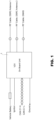
- an automotive advanced driver assistance system schematically shown in Figures 1 and 2 and indicated, as a whole, with reference numeral 1, namely in the form of an automotive standalone on-board unit (OBU) designed so as to be installable on motor-vehicles, hereinafter referred to as Host Motor-Vehicles, and be connectable to automotive on-vehicle systems through wirings that allow the automotive standalone on-board unit 1 to be connectable to a battery, to an ignition switch, to an automotive on-board communication network 2, in the example shown herein a CAN network, through a network interface, to a DSRC (Dedicated Short-Range Communication) antenna 3, which is conveniently in the form of one single transmitting-receiving DSRC antenna, but could also be in the form of separate transmitting and receiving DSRC antennas, to transmit and receive RF signals encoding Basic Safety Messages and Infrastructure Messages, and to a GNSS (Global Navigation Satellite System) antenna 4, as well as, optionally, to
- OFU automotive standalone on-board
- the automotive standalone on-board unit 1 receives input data on the state of the Host Motor-Vehicle on which it is mounted, such as wheel speed, steering angle, brake pump pressure, longitudinal and lateral accelerations, accelerator pedal position, braking state, direction indicator state, etc., as well as Basic Safety Messages and Infrastructure Messages respectively transmitted by Nearby Motor-Vehicles and by the infrastructure (road side units - RSU - installed on road side posts, panels, or traffic lights) and received by the Host Motor-Vehicle through V2V and V2I communication systems.
- the state of the Host Motor-Vehicle on which it is mounted such as wheel speed, steering angle, brake pump pressure, longitudinal and lateral accelerations, accelerator pedal position, braking state, direction indicator state, etc.
- Basic Safety Messages and Infrastructure Messages respectively transmitted by Nearby Motor-Vehicles and by the infrastructure (road side units - RSU - installed on road side posts, panels, or traffic lights) and received by the Host
- the automotive standalone on-board unit 1 is programmed to process the received data to extract information on objects or obstacles present in the space surrounding the Host Motor-Vehicle and that might be a potential threat to the driving safety of the Host Motor-Vehicle, as well as into dynamic V2X information that may be used to manually or automatically affect the manoeuvre of the Host Motor-Vehicle (road events, speed limits, traffic light phases, road local topology).
- the automotive standalone on-board unit 1 is further programmed to dispatch on the CAN, through the same CAN bus from which it receives the input data or through a dedicated CAN bus, depending on the design and load features of the input CAN bus, information representing objects or obstacles present in the space surrounding the Host Motor-Vehicle that can be potential threats to the driving safety of the Host Motor-Vehicle, as well as, if necessary, the aforesaid dynamic V2X information.
- This information may then be used by the automotive on-board systems of the Host Motor-Vehicle to assist the driver of the Host Motor-Vehicle in driving the Host Motor-Vehicle in any driving scenario, for example the one schematically shown in Figure 3 , in which the Host Motor-Vehicle is indicated with HMV and the Nearby Motor-Vehicles are indicated with RMV, so as to increase the safety of all the motor-vehicles involved.
- Basic Safety Messages are safety messages transmitted by motor-vehicles to Nearby Motor-Vehicles in order to provide them with situational information, such as position, direction, speed, etc., which allows them to assess possible threats.
- Basic Safety Messages are especially created for a low-latency, localized V2V broadcast through a DSRC antenna, which has a radio coverage of approximately 1 km, and are not stored on the transmitting motor-vehicle.
- Basic Safety Messages take place according to two criteria: either periodically (Periodic Basic Safety Message Broadcast), every 100 ms, or upon occurrence of an event (Event-Driven Basic Safety Message Broadcast).
- Basic Safety Messages consist of two parts, which contain different information and are transmitted with different frequencies:
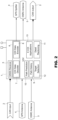
- the automotive standalone on-board unit 1 comprises a number of hardware and software modules comprising, among the other:
- ADAS usually receive inputs from sensors that observe the space surrounding the motor-vehicles and that are limited in terms of detection distance and angle of vision.
- the electronic maps of the automotive global navigation satellite system have been proposed to be used as additional sensor to see beyond curves, and this "map as a sensor" is commonly referred to as electronic horizon, which represents the road network and its attributes in front of the motor-vehicles up to a given calibratable distance in front of the motor-vehicles, which may range, depending on the use, from a few hundred metres to some kilometres.
- the electronic horizon of a motor-vehicle indicates the possible paths along which the motor-vehicle can travel from its current position to up to a given distance in front of the motor-vehicle.
- the latter may include one or more intersections through which the driver may drive the motor-vehicle.
- a probability may be assigned to each possible path identified within the electronic horizon and the probabilities may be based on the manoeuvres that the driver will most likely make at every intersection identified within the electronic horizon.
- Determining the most and least probable paths to be driven by the motor-vehicle at every intersection within the electronic horizon may be based on a predetermined classification of all the possible paths that may be driven at that intersection, taking into account statistic information concerning the road network, such as bending radii of the curves, class of road functions, road signs, and speed limits, or dynamic information, such as direction indicators, driving chronology, driving speed, etc.
- the electric horizon of a motor-vehicle basically is a collection of data identifying the roads and the intersections along which the motor-vehicle may drive from its current position and up to a given distance in front of the motor-vehicle, as well as potential paths that may be driven by the motor-vehicle from its current position.
- Each motor-vehicle provided with an automotive global navigation satellite system may generate its own electronic horizon and supply it to other motor-vehicles or electronic devices designed to receive and process the received electronic horizons.
- the electronic horizons may also be stored in a data storage device as a motor-vehicle. data set.
- Target Selection Module 12 represents the core of the invention and, therefore, its operation will be described more in detail hereinafter.
- the Target Selection Module 12 provides information to enable/show to the driver of the Host Motor-Vehicle suitable warnings or driving indications through an automotive human-machine interface (not shown), whereas, in case the automotive standalone on-board unit 1 is used only as object or obstacle sensor, the Target Selection Module 12 only dispatches on the CAN bus a list of virtual objects containing, as described more in detail below, information obtained through processing of the information contained in the:
- FIG. 5 shows a logic block diagram of the Target Selection Module 12, which is configured to implement the following macro-operations:
- Remote Motor-Vehicles in the communication range of the V2V Communication System of the Host Motor-Vehicle and communicating with the latter through Basic Safety Messages are classified as Nearby Motor-Vehicles or Non-Nearby Motor-Vehicles based on a predefined driving safety criterion and on motor-vehicle position-related, motion-related, and state-related data contained in the received Basic Safety Messages as well as on those of the Host Motor-Vehicle, thus creating a list of Nearby Motor-Vehicles.
- the Remote Motor-Vehicles are classified as Nearby Motor-Vehicles if, based on the predefined driving safety criterion and on the motor-vehicle position-related, motion-related, and state-related data contained in the received Basic Safety Messages as well as on those of the Host Motor-Vehicle, they are deemed to be capable of potentially adversely affecting, in particular of being potential threats for, the driving safety of the Host Motor-Vehicle along one, in particular the most probable one, or more of the possible paths of the Host Motor-Vehicle from its current position, namely those Remote Motor-Vehicles that are moving along paths that may intersect one, in particular the most probable one, or more of the possible paths of the Host Motor-Vehicle from its current position and in directions that are such as to cause the Remote Motor-Vehicles to represent potential obstacles against which the Host Motor-Vehicle could collide.
- the received Infrastructure Messages may conveniently be classified into Infrastructure Messages relating to road events (RSA messages) and Infrastructure Messages relating to road elements, signs, and configurations (MAP messages).
- RSA messages Infrastructure Messages relating to road events
- MAP messages Infrastructure Messages relating to road elements, signs, and configurations
- the list of Nearby Motor-Vehicles is filtered according to a predefined filtering criterion, so as to create a list of Relevant Motor-Vehicles that are relevant to the automotive applications of the Host Motor-Vehicle, in particular for the six above-listed SAE applications, namely Nearby Motor-Vehicles whose Basic Safety Messages received by the Host Motor-Vehicle contain motor-vehicle position-related, motion-related, and state-related data that may be used in the implementation of one or more of the automotive functionalities aimed at assisting the driver in driving the Host Motor-Vehicle, controlling the Host Motor-Vehicle, and informing the driver of the Host Motor-Vehicle on the presence of Relevant Motor-Vehicles deemed to be relevant to the driving safety of the Host Motor-Vehicle along one or more of the possible driving paths of the Host Motor-Veh
- the Target Filtering 15 the list of road events, elements, signs, and configurations indicated in the Infrastructure Messages is filtered in a way that is similar to the one adopted for the list of Nearby Motor-Vehicles, so as to select the road events, elements, signs, and configurations deemed to be relevant to the automotive applications of the Host Motor-Vehicle, in particular for the six above-listed SAE applications, namely road events, elements, signs, and geometries located along one or more of the possible paths of the Host Motor-Vehicle from its current position, and whose data may be used in the implementation of one or more of the automotive functionalities aimed at assisting the driver in driving the Host Motor-Vehicle, controlling the Host Motor-Vehicle, and informing the driver of the Host Motor-Vehicle on the presence of road events, elements, signs, and configurations along one or more of the possible driving paths of the Host Motor-Vehicle from its current position
- the information contained in the Basic Safety Messages transmitted by Relevant Motor-Vehicles are processed and a list of virtual objects is dispatched on the CAN bus of the Host Motor-Vehicle, which list of virtual objects contains information on the Host Motor-Vehicle and on the Relevant Motor-Vehicles, in the example discussed herein to the considered SAE applications, for use by one or more of the automotive functionalities implemented by the electronic control units of the automotive on-board systems of the Host Motor-Vehicle and aimed at assisting the driver in driving the Host Motor-Vehicle, controlling the Host Motor-Vehicle, and informing the driver of the Host Motor-Vehicle on the presence of Relevant Motor-Vehicles deemed to be relevant to the safety of the Host Motor-Vehicle along one or more of the possible driving paths of the Host Motor-Vehicle from its current position.
- the information on the Host Motor-Vehicle and on the Relevant Motor-Vehicles may be completely or partly used by the automotive standalone on-board unit 1 to autonomously implement one or more of the automotive driver assistance functionalities aimed at assisting the driver in driving the Host Motor-Vehicle, controlling the Host Motor-Vehicle, and informing the driver of the Host Motor-Vehicle of the presence of the Relevant Motor-Vehicles deemed to be relevant to the safety of the Host Motor-Vehicle along one or more of the possible driving paths of the Host Motor-Vehicle from its current position.
- the information contained in the Infrastructure Messages are processed and a list of virtual objects is dispatched on the CAN bus of the Host Motor-Vehicle, which list of virtual objects contains information on road events, elements, signs, and configurations along one or more of the possible driving paths of the Host Motor-Vehicle from its current position, and whose relevant data may be used in the implementation of one or more of the automotive functionalities aimed at assisting the driver in driving the Host Motor-Vehicle, controlling the Host Motor-Vehicle, and informing the driver of the Host Motor-Vehicle of road events, elements, signs, and configurations along one or more of the possible driving paths of the Host Motor-Vehicle from its current position.
- the information on road events, elements, signs, and configurations along one or more of the possible paths of the Host Motor-Vehicle from its current position may be completely or partly used by the automotive standalone on-board unit 1 to autonomously implement one or more of the automotive driver assistance functionalities aimed at assisting the driver in driving the Host Motor-Vehicle, controlling the Host Motor-Vehicle, and informing the driver of the Host Motor-Vehicle of road events, elements, signs, and geometries along the possible driving paths of the Host Motor-Vehicle from its current position.
- the entire target selection process is carried out periodically, for example every 100 ms, which is a reasonable amount of time for the frequency of transmission of the Basic Safety Messages, which, as a standard, is typically 10 Hz and may be slowed down up to 1 Hz in congested situations. In this way, operating at the maximum frequency, the scenario around the Host Motor-Vehicle is updated after 100 ms.
- FIG. 6 shows a flowchart of the operations carried out by the Target Selection Module 12 in a challenging scenario in relation to the Remote Motor-Vehicles (RMVs).
- RMVs Remote Motor-Vehicles
- Target Classification 14 basically comprises performing the following operations for each Remote Motor-Vehicle from which Basic Safety Messages are received:
- the relevance areas of the Host Motor-Vehicle may conveniently be parameterized so as to be customizable and to allow the system precision to be definable.
- the relevance areas could, for example, be made dependant on the speed of the Host Motor-Vehicle; for example the front area could have a linear extension proportional to the safety distance.
- the Target Classification 14 reduces the number of Nearby Motor-Vehicles in the front and rear areas of a Host Motor-Vehicle and deemed to be relevant for the SAE applications from some hundreds to a few dozens.
- Target Filtering 15 is designed to filter the list of Nearby Motor-Vehicles, conveniently according to a filtering criterion based on two quantities: time to collision (TTC) and relevant event flags.
- TTC time to collision
- filtering of the list of Nearby Motor-Vehicles basically involves, for each Nearby Motor-Vehicle in the list of Nearby Motor-Vehicles, the following operations:
- the Sensor Objects Dispatching 16 is designed to dispatch information on the CAN bus of the Host Motor-Vehicle conveniently in the following way:
- the allowed maximum number of Relevant Motor-Vehicles is determined during the design phase of the ADAS and depends on limits of the CAN bus and on other factors, the majority of which depend on the possibility to scale the ADAS, in particular the available bandwidth of the CAN bus. In the current state of the art, the bandwidth generally available for automotive CAN buses allows for the management of approximately ten Relevant Motor-Vehicles.
- the Sensor Objects Dispatching 16 is further designed to dispatch on the CAN bus of the Host Motor-Vehicle, in an appropriate data format, virtual objects containing information on the Host Motor-Vehicle and on the Relevant Motor-Vehicles deemed to be relevant to the considered SAE applications and concerning the Relevant Motor-Vehicles listed in the reduced list of Relevant Motor-Vehicles outputted by the Target Filtering 15.
- information dispatched on the CAN bus may comprise, for each Relevant Motor-Vehicle: the timestamp (time elapsed between receipt of the messages), the relative position of the Relevant Motor-Vehicle relative to the Host Motor-Vehicle and the precision confidence, the driving direction, the driving speed, the yaw angle, the acceleration, the light indicator state, the steering angle, the state of the Relevant Motor-Vehicle (parked, moving, in reverse, etc.), and information on the Relevant Motor-Vehicle (length, width).
- Other information may relate to events such as hard braking or ABS activation, traction control loss detected or stability control system activation and the possible activation of functions such as EEBL (electronic emergency light activated) and CLW (control loss warning).
- EEBL electronic emergency light activated
- CLW control loss warning
- path prediction Information on the trajectory of the Relevant Motor-Vehicle described in five position points (path history) and prediction of where the Relevant Motor-Vehicle will be in the future (path prediction), with the associated prediction precision confidence, as well as the target-classification area (position of the Relevant Motor-Vehicle relative to the Host Motor-Vehicle), and the target-classification lane proximity may also be part of the relevant information transmitted.
- the Sensor Objects Dispatching 16 is conveniently designed to dispatch on the CAN bus current information concerning the Host Motor-Vehicle, such as, for example, position accuracy, so that a potential receiving on-board system, for example another electronic processing unit on board the Host Motor-Vehicle, may compare the quality of the computed position information based on the SIS received by the GNSS receiver of the Host Motor-Vehicle.
- Other information concerning the Host Motor-Vehicle may be: timestamp (time of generation of the messages sent), message count (counter which is increased with every BSM sent), driving direction, path prediction confidence (history of the positions of the Host Motor-Vehicle and prediction of the future positions of the Host Motor-Vehicle).
- the ADAS of the invention offers better performances and operating conditions because:
- the ADAS of the invention features the main advantage of being flexible and of facilitating the development of the system in an industrial environment. Indeed, depending on the development needs, the ADAS of the present invention can be easily customized so as to provide information aimed at developing standalone basic application, integrated advanced applications and new applications.
- Standalone signalling applications are functionalities providing warnings exclusively based on V2V communications in all basic scenarios, for example in SAE J2945 for the six applications EEBL, FCW, LCW, IMA, LTA, CLW. These applications are affected by technological limits: complete dependence on the GNSS, decrease of performances in crowded city environments (caused by the urban-canyoning phenomenon because of GNSS and RF problems - multipath GNSS, fading RF).
- Integrated applications improve or extend the functionalities of the aforesaid applications, e.g. EBL, FCW, LCW, IMA, LTA, CLW, as part of the existing functionalities, through the melting of output data of the V2V communication system with the output of other sensors.
- functionalities of the aforesaid applications e.g. EBL, FCW, LCW, IMA, LTA, CLW
- the advanced driver assistance system could also feature the automotive driver assistance functionality for assisting a motor vehicle driver in negotiating a roundabout, which is the subject-matter of international patent application no. WO 2017/098486 of the Applicant, whose content is included herein.
- the invention described herein can also be implemented considering, instead of the SAE J2735 and J2945 standard, the ETSI ITS-G5 communication protocol, which is based on the IEEE 802.11p standard and, hence, can use the same hardware architecture.
- the realization is basically the same, since the information sent through BSM, TIM, RSA, SPAT, MAP is similar to the one sent by the corresponding CAM, DENM (specific type of BSM reserved to events), IVIM (messages including the contents of the road signs as well as the signalling of infrastructures and covering the cases of TIM and RSA), SPaTEM and MAPEM (counterparts of SAE J2735 SPaT and MAP).
- the invention can easily be extended and transferred to other communication protocols which allow for the development of V2X applications and services, such as the emergent cellular technologies Cellular-V2X (C-V2X) and the future 5G, through the interfaces referred to as "PC5" and "Uu" in the state of the art, which are dedicated to the local vehicle-to vehicle and vehicle-to infrastructure communication, respectively.
- V2X applications and services such as the emergent cellular technologies Cellular-V2X (C-V2X) and the future 5G
- PC5 and Uu the interfaces referred to as "PC5" and "Uu" in the state of the art, which are dedicated to the local vehicle-to vehicle and vehicle-to infrastructure communication, respectively.
Landscapes
- Engineering & Computer Science (AREA)
- Automation & Control Theory (AREA)
- Transportation (AREA)
- Mechanical Engineering (AREA)
- Radar, Positioning & Navigation (AREA)
- Remote Sensing (AREA)
- Physics & Mathematics (AREA)
- General Physics & Mathematics (AREA)
- Computer Networks & Wireless Communication (AREA)
- Mathematical Physics (AREA)
- Traffic Control Systems (AREA)
Claims (10)
- Système avancé d'assistance au conducteur automobile (1) pour un véhicule à moteur hôte (HMV) et configuré pour mettre en oeuvre une ou différentes applications V2I automobiles conçues pour assister un conducteur du véhicule à moteur hôte (HMV) sur la base de messages V21 reçus d'une infrastructure;le système avancé d'assistance au conducteur (1) comprend une unité embarquée autonome automobile (1) conçue pour pouvoir être installée sur le véhicule à moteur hôte (HMV) et pour pouvoir être connectée à un réseau de communication embarqué automobile (2) pour communiquer, par le biais du réseau de communication embarqué automobile (2), avec une ou différentes unités de commande électronique automobiles d'un ou différents systèmes embarqués automobiles du véhicule à moteur hôte (HMV) l'unité embarquée autonome automobile (1) est conçue en outre pour pouvoir être connectée à une antenne DSRC (3) conçue pour transmettre et recevoir des signaux RF codant des messages de sécurité de base et des messages d'infrastructure, et à une antenne GNSS (4) conçue pour recevoir des signaux radio dans l'espace transmis par une constellation de satellites d'un système mondial de navigation par satellite (GNSS);l'unité embarquée autonome automobile (1) comprend:- un récepteur GNSS (5) conçu pour pouvoir être connecté à l'antenne GNSS (4) et pour calculer, sur la base des signaux dans l'espace reçus par l'antenne GNSS (4), des données indicatives d'une position absolue du véhicule à moteur hôte (HMV) en termes de latitude, longitude, hauteur, direction et temps; et- un système de communication V2I automobile (6) conçu pour pouvoir être connecté à l'antenne DSRC (3) et pour communiquer, par le biais de l'antenne DSRC (3), avec des systèmes de communication V2I automobiles d'une infrastructure par le biais de messages V2I contenant des données indicatives d'événements, éléments, panneaux et configurations routiers;l'unité embarquée autonome automobile (1) est conçue en outre pour délivrer des données qui permettent à une ou différentes applications V2V automobiles d'être mises en oeuvre ou améliorées, qui sont destinées à assister le conducteur dans la conduite du véhicule à moteur hôte (HMV), à contrôler le véhicule à moteur hôte (HMV) et à informer le conducteur du véhicule à moteur hôte (HMV) de véhicules à moteur pertinents (RMV) considérés comme affectant de manière potentiellement néfaste la sécurité de conduite du véhicule à moteur hôte (HMV) le long d'un ou plusieurs des trajets de conduite possibles du véhicule à moteur hôte (HMV) à partir de sa position actuelle;l'unité embarquée autonome automobile (1) est conçue en outre pour délivrer des données qui permettent à une application V2I automobile d'être mise en oeuvre ou améliorée, qui est destinée à informer le conducteur du véhicule à moteur hôte (HMV) d'événements, éléments, panneaux et configurations routiers le long d'un ou plusieurs des trajets de conduite possibles du véhicule à moteur hôte (HMV) à partir de sa position actuelle;l'unité embarquée autonome automobile (1) est conçue en outre pour:- recevoir des messages V21 de l'infrastructure;- traiter les données contenues dans les messages V2I reçus pour:∘ choisir, sur la base des données contenues dans les messages V2I reçus et de données relatives à la position du véhicule à moteur, relatives au mouvement et relatives à l'état du véhicule à moteur hôte (HMV), des événements, éléments, panneaux et configurations routiers le long d'un ou plusieurs des trajets de conduite possibles du véhicule à moteur hôte (HMV) à partir de sa position actuelle, et dont les données contenues dans les messages V2I reçus sont utilisables dans la mise en oeuvre ou l'amélioration d'applications automobiles destinées à assister le conducteur dans la conduite du véhicule à moteur hôte (HMV), à contrôler le véhicule à moteur hôte (HMV) et à informer le conducteur du véhicule à moteur hôte (HMV) d'événements, éléments, panneaux et configurations routiers le long d'un ou plusieurs des trajets de conduite possibles du véhicule à moteur hôte (HMV) à partir de sa position actuelle; et∘ mettre en oeuvre l'une ou les deux des opérations suivantes:• envoyer sur le réseau de communication embarqué automobile (2) une liste d'objets virtuels contenant des informations sur des événements, éléments, panneaux et configurations routiers le long d'un ou plusieurs des trajets de conduite possibles du véhicule à moteur hôte (HMV) à partir de sa position actuelle; et dans lequel les données correspondantes sont utilisables dans la mise en oeuvre ou l'amélioration d'une ou plusieurs des applications automobiles destinées à assister le conducteur dans la conduite du véhicule à moteur hôte (HMV), à contrôler le véhicule à moteur hôte (HMV) et à informer le conducteur du véhicule à moteur hôte (HMV) d'événements, éléments, panneaux et configurations routiers le long d'un ou plusieurs des trajets de conduite possibles du véhicule à moteur hôte (HMV) à partir de sa position actuelle; et• utiliser les informations sur les événements, éléments, panneaux et configurations routiers le long d'un ou plusieurs des trajets de conduite possibles du véhicule à moteur hôte (HMV) à partir de sa position actuelle dans la mise en oeuvre ou l'amélioration d'une ou plusieurs des applications automobiles destinées à assister le conducteur dans la conduite du véhicule à moteur hôte (HMV), à contrôler le véhicule à moteur hôte (HMV) et à informer le conducteur du véhicule à moteur hôte (HMV) d'événements, éléments, panneaux et configurations routiers le long d'un ou plusieurs des trajets de conduite possibles du véhicule à moteur hôte (HMV) à partir de sa position actuelle.
- Systèmes avancés d'assistance au conducteur automobile (1) selon la revendication 1, configurés en outre pour délivrer la liste d'objets virtuels en:- classant les messages V2I reçus en messages V2I relatifs à des événements routiers et en messages V21 relatifs à des éléments, panneaux et configurations routiers;- filtrant les messages V21 relatifs à des événements routiers et les messages V2I relatifs à des éléments, panneaux et configurations routiers sur la base de l'approche du véhicule à moteur hôte (HMV) par rapport aux événements, éléments, panneaux et configurations routiers pour créer une liste d'événements, éléments, panneaux et configurations routiers le long d'un ou plusieurs des trajets de conduite possibles du véhicule à moteur hôte (HMV) à partir de sa position actuelle; et- envoyer sur le réseau de communication embarqué automobile (2) une liste d'objets virtuels contenant des informations sur les événements, éléments, panneaux et configurations routiers le long d'un ou plusieurs des trajets de conduite possibles du véhicule à moteur hôte (HMV) à partir de sa position actuelle.
- Système avancé d'assistance au conducteur automobile (1) selon la revendication 2, configuré en outre pour créer la liste d'événements, éléments, panneaux et configurations routiers pertinents en:- associant les événements, éléments, panneaux et configurations routiers à des zones de pertinence du véhicule à moteur hôte (HMV), sur la base des messages V2I reçus;- vérifiant si les événements, éléments, panneaux et configurations routiers sont situés à l'intérieur ou à l'extérieur des zones de pertinence associées du véhicule à moteur hôte (HMV); et- ajoutant à la liste d'événements, éléments, panneaux et configurations routiers ceux qui sont situés à l'intérieur des zones de pertinence associées du véhicule à moteur hôte (HMV), et stockant les messages V21 reçus, ainsi que les identifiants associés.
- Système avancé d'assistance au conducteur automobile (1) selon l'une quelconque des revendications précédentes, dans lequel le véhicule à moteur hôte (HMV) est configuré en outre pour mettre en oeuvre une ou différentes applications V2V automobiles conçues pour assister un conducteur du véhicule à moteur hôte (HMV) sur la base de messages V2V reçus de véhicules à moteur distants (RMV);les une ou différentes applications V2V automobiles comprennent les applications V2V automobiles suivantes: feux de freinage d'urgence électroniques (EEBL), avertissement de collision avant (FCW), avertissement d'angle mort (BSW)/avertissement de changement de voie (LCW), assistance au mouvement d'intersection (IMA), assistance au virage à gauche (LTA) et avertissement de perte de contrôle (LCW);l'unité embarquée autonome automobile (1) comprend en outre un système de communication V2V automobile (6) conçu pour pouvoir être connecté à l'antenne DSRC (3) et pour communiquer, par le biais de l'antenne DSRC (3), avec des systèmes de communication V2V automobiles de véhicules à moteur distants (RMV) par le biais de messages V2V contenant des données relatives à la position, relatives au mouvement et relatives à l'état du véhicule à moteur; l'unité embarquée autonome automobile (1) est conçue en outre pour:- recevoir des messages V2V provenant de véhicules à moteur distants (RMV);- traiter les données contenues dans les messages V2V reçus de véhicules à moteur distants (RMV) pour:∘ identifier, parmi les véhicules à moteur distants (RMV) en communication avec le véhicule à moteur hôte (HMV), les véhicules à moteur proches (RMV) considérés comme affectant de manière potentiellement néfaste la sécurité de conduite du véhicule à moteur hôte (HMV) le long d'un ou de plusieurs des trajets de conduite possibles du véhicule à moteur hôte (HMV) à partir de sa position actuelle, sur la base d'un critère de sécurité de conduite et des données relatives à la position du véhicule à moteur, relatives au mouvement et relatives à l'état contenues dans les messages V2V reçus et de données relatives à la position du véhicule à moteur, relatives au mouvement et relatives à l'état du véhicule à moteur hôte (HMV);∘ identifier, parmi les véhicules à moteur proches (RMV), les véhicules à moteur pertinents (RMV) dont les messages V2V reçus par le véhicule à moteur hôte (HMV) contiennent des données relatives à la position du véhicule à moteur, relatives au mouvement et relatives à l'état qui sont utilisables dans la mise en oeuvre ou l'amélioration des applications V2V automobiles; et∘ mettre en oeuvre l'une ou les deux des opérations suivantes:▪ envoyer sur le réseau de communication embarqué automobile (2) une liste d'objets virtuels contenant des informations sur le véhicule à moteur hôte (HMV) et sur les véhicules à moteur pertinents (RMV) à utiliser par les applications V2V automobiles; et▪ utiliser les informations sur le véhicule à moteur hôte (HMV) et sur les véhicules à moteur pertinents (RMV) dans la mise en oeuvre ou l'amélioration des applications V2V automobiles.
- Système avancé d'assistance au conducteur automobile (1) selon la revendication 4, dans lequel les objets virtuels contiennent des informations:- en relation avec chacun des véhicules à moteur pertinents (RMV), un ou plusieurs des temps de réception de messages V2V, de la position relative par rapport au véhicule à moteur hôte (HMV), de la direction et de la vitesse de déplacement, de l'angle de lacet, de l'accélération, de l'état de fonctionnement de l'indicateur de direction, de l'angle de braquage, de l'état de fonctionnement, des dimensions longitudinales et transversales, des freinages importants, de l'activation de l'ABS, de la perte de stabilité ou de contrôle de conduite, et de l'activation possible de fonctions telles que les feux de secours électroniques activés (EEBL) et l'avertissement de perte de contrôle (CLW), l'historique de trajet et la prévision de trajet, la zone de classification cible et la proximité de la voie de classification cible; et- en relation avec le véhicule à moteur hôte (HMV), une ou plusieurs de la précision du calcul de position basé sur des signaux dans l'espace (SIS) reçus du récepteur GNSS (5) du véhicule à moteur hôte (HMV), les temps de génération de messages V2V transmis, le nombre de messages V2V transmis, la direction de déplacement, l'historique de position et les prévisions de position.
- Système avancé d'assistance au conducteur automobile (1) selon la revendication 4 ou 5, configuré en outre pour créer la liste d'objets virtuels en:- créant une liste de véhicules à moteur proches (RMV) en communication avec le véhicule à moteur hôte (HMV), sur la base des messages V2V reçus;- filtrant la liste de véhicules à moteur proches (RMV) pour créer une liste de véhicules à moteur pertinents (RMV) dont les messages V2V contiennent des données relatives à la position du véhicule à moteur, relatives au mouvement et relatives à l'état qui peuvent être utilisées dans la mise en oeuvre ou l'amélioration des applications de sécurité V2V automobiles; et- traitant les données contenues dans les messages V2V reçus des véhicules à moteur pertinents (RMV) pour envoyer sur le réseau de communication embarqué automobile (2) une liste d'objets virtuels représentatifs de données contenues dans les messages V2V reçus des véhicules à moteur pertinents (RMV).
- Système avancé d'assistance au conducteur automobile (1) selon la revendication 6, configuré en outre pour créer la liste de véhicules à moteur proches (RMV) en:- associant des véhicules à moteur distants (RMV) en communication avec le véhicule à moteur hôte (HMV) à des zones de pertinence du véhicule à moteur hôte (HMV), sur la base des messages V2V reçus des véhicules à moteur distants (RMV);- déterminant si les véhicules à moteur distants (RMV) sont situés à l'intérieur ou à l'extérieur des zones de pertinence associées du véhicule à moteur hôte (HMV); et- ajoutant à la liste de véhicules à moteur proches (RMV) les véhicules à moteur distants (RMV) qui sont dans les zones de pertinence associées du véhicule à moteur hôte (HMV), et stockant les messages V2V reçus des véhicules à moteur distants (RMV), ainsi que les identifiants associés.
- Système avancé d'assistance au conducteur automobile (1) selon la revendication 6 ou 7, configuré en outre pour filtrer la liste de véhicules à moteur proches (RMV) sur la base des temps avant collision (TTC) pour que le véhicule à moteur hôte (HMV) entre en collision avec les véhicules à moteur proches (RMV), et d'indicateurs d'événements pertinents.
- Système avancé d'assistance au conducteur automobile (1) selon la revendication 8, configuré en outre pour filtrer la liste de véhicules à moteur proches (RMV) en:- calculant, pour chaque véhicule à moteur proche (RMV), un temps avant collision CTTC) pour que le véhicule à moteur proche (RMV) entre en collision avec le véhicule à moteur hôte (HMV);- comparant le temps avant collision (TTC) à une valeur seuil;- si le temps avant collision (TTC) est supérieur à la valeur seuil, déterminant si les messages V2V reçus du véhicule à moteur proche (RMV) contiennent des indicateurs d'événement; et- ajoutant le véhicule à moteur proche (RMV) à la liste de véhicules à moteur pertinents s'il est déterminé que le temps avant collision (TTC) est inférieur à la valeur seuil ou supérieur à la valeur seuil, mais les messages V2V reçus du véhicule à moteur proche contiennent des indicateurs d'événement.
- Système avancé d'assistance au conducteur automobile (1) selon la revendication 9, configuré en outre pour envoyer la liste d'objets virtuels sur le réseau de communication embarqué automobile (2) en:- triant la liste de véhicules à moteur pertinents (RMV) sur la base de temps avant collision (TTC);- vérifiant si la liste de véhicules à moteur pertinents (RMV) a une longueur supérieure à une longueur maximale autorisée;- dans l'affirmative, retirant de la liste de véhicules à moteur pertinents (RMV) ceux ayant des temps avant collision (TTC) plus élevés jusqu'à ce que la longueur de la liste de véhicules à moteur pertinents (RMV) se réduise à la longueur maximale autorisée; et- envoyant sur le réseau de communication embarqué automobile (2) une liste d'objets virtuels correspondant à la liste de véhicules à moteur pertinents (RMV), dans un format de données conforme à un protocole de communication du réseau de communication embarqué automobile (2).
Applications Claiming Priority (2)
| Application Number | Priority Date | Filing Date | Title |
|---|---|---|---|
| IT201800008871 | 2018-09-24 | ||
| PCT/IB2019/058088 WO2020065525A1 (fr) | 2018-09-24 | 2019-09-24 | Aide à la conduite automobile |
Publications (2)
| Publication Number | Publication Date |
|---|---|
| EP3856594A1 EP3856594A1 (fr) | 2021-08-04 |
| EP3856594B1 true EP3856594B1 (fr) | 2024-12-18 |
Family
ID=64607150
Family Applications (1)
| Application Number | Title | Priority Date | Filing Date |
|---|---|---|---|
| EP19790800.7A Active EP3856594B1 (fr) | 2018-09-24 | 2019-09-24 | Aide à la conduite automobile |
Country Status (4)
| Country | Link |
|---|---|
| US (1) | US11414073B2 (fr) |
| EP (1) | EP3856594B1 (fr) |
| CN (1) | CN111902321B (fr) |
| WO (1) | WO2020065525A1 (fr) |
Families Citing this family (18)
| Publication number | Priority date | Publication date | Assignee | Title |
|---|---|---|---|---|
| EP3856594B1 (fr) * | 2018-09-24 | 2024-12-18 | C.R.F. Società Consortile per Azioni | Aide à la conduite automobile |
| EP3856593B1 (fr) * | 2018-09-24 | 2025-04-16 | C.R.F. Società Consortile per Azioni | Aide à la conduite automobile |
| US11315424B2 (en) * | 2018-09-24 | 2022-04-26 | C.R.F. Societa' Consortile Per Azioni | Automotive driver assistance |
| US11620907B2 (en) * | 2019-04-29 | 2023-04-04 | Qualcomm Incorporated | Method and apparatus for vehicle maneuver planning and messaging |
| DE102020107880A1 (de) * | 2020-03-23 | 2021-09-23 | Ford Global Technologies, Llc | Verfahren zum Steuern eines Geschwindigkeitsregelsystems in einem Kurvenverlauf |
| US11634144B2 (en) * | 2020-09-24 | 2023-04-25 | Zhejiang University | Sensing method and sensing device for human driven vehicles under partial VANET (vehicular ad hoc network) environment |
| US20240105060A1 (en) * | 2021-02-15 | 2024-03-28 | C.R.F. Societa' Consortile Per Azioni | Automotive cooperative map-free lane-level relative localization based on inter-vehicular communication |
| US11804128B2 (en) | 2021-03-31 | 2023-10-31 | Honda Motor Co., Ltd. | Target classification |
| DE102021206656A1 (de) | 2021-06-28 | 2022-12-29 | Robert Bosch Gesellschaft mit beschränkter Haftung | Verfahren für ein Fahrzeug zur Detektion von Hindernissen, Computerprogramm Speichermedium und Fahrassistenzsystem |
| GB2610909B (en) * | 2021-08-09 | 2023-11-08 | Modas Tech Limited | Method and device for controlling in-vehicle signage |
| KR102736944B1 (ko) * | 2021-09-07 | 2024-12-03 | 주식회사 에이치엘클레무브 | 조향 제어 장치 및 방법 |
| JP2023107673A (ja) * | 2022-01-24 | 2023-08-03 | 株式会社Subaru | 車両の運転支援装置 |
| CN116704811A (zh) * | 2022-02-24 | 2023-09-05 | 腾讯科技(深圳)有限公司 | 车辆调度方法及相关产品 |
| CN116935693A (zh) * | 2022-03-31 | 2023-10-24 | 中兴终端有限公司 | 碰撞预警方法、车载终端及存储介质 |
| KR102830850B1 (ko) * | 2022-10-13 | 2025-07-09 | 한국자동차연구원 | 상용차량용 자율주행 시스템 아키텍처 |
| IT202300014271A1 (it) | 2023-07-07 | 2025-01-07 | Fiat Ricerche | Assistenza ad un conducente di un veicolo per l'avviso di semafori basata su comunicazione v2x |
| IT202300014247A1 (it) | 2023-07-07 | 2025-01-07 | Fiat Ricerche | Assistenza ad un conducente di veicoli per l'avviso di ostacoli stradali basata su comunicazione v2x |
| US20250108818A1 (en) * | 2023-09-29 | 2025-04-03 | Ford Global Technologies, Llc | Vulnerable road user identification system |
Citations (1)
| Publication number | Priority date | Publication date | Assignee | Title |
|---|---|---|---|---|
| US20150032362A1 (en) * | 2013-07-26 | 2015-01-29 | Nissan North America, Inc. | Vehicle collision monitoring method |
Family Cites Families (17)
| Publication number | Priority date | Publication date | Assignee | Title |
|---|---|---|---|---|
| US6405128B1 (en) * | 1999-12-20 | 2002-06-11 | Navigation Technologies Corp. | Method and system for providing an electronic horizon in an advanced driver assistance system architecture |
| US6450128B1 (en) * | 2001-05-15 | 2002-09-17 | Mark A. Boyce | Bird training method and apparatus therefor |
| ATE456118T1 (de) * | 2007-10-19 | 2010-02-15 | Fiat Ricerche | System zur dynamischen navigation für ein fahrzeug |
| ATE495516T1 (de) * | 2008-05-20 | 2011-01-15 | Fiat Ricerche | Kooperative geolokalisierung auf basis der kommunikation zwischen fahrzeugen |
| US8229663B2 (en) * | 2009-02-03 | 2012-07-24 | GM Global Technology Operations LLC | Combined vehicle-to-vehicle communication and object detection sensing |
| US8717192B2 (en) | 2010-10-08 | 2014-05-06 | Navteq B.V. | Method and system for using intersecting electronic horizons |
| DE102011117297A1 (de) * | 2011-11-01 | 2013-05-02 | Volkswagen Aktiengesellschaft | Verfahren zum Betreiben eines Fahrerassistenzsystems und dazugehöriges Fahrerassistenzsystem |
| US9959765B2 (en) | 2015-07-20 | 2018-05-01 | Dura Operating Llc | System and method for providing alert to a vehicle or an advanced driver assist system based on vehicle dynamics input |
| EP3179212A1 (fr) | 2015-12-11 | 2017-06-14 | C.R.F. Società Consortile Per Azioni | Assistance de conducteur de véhicule automobile permettant de négocier un rond-point |
| WO2017141788A1 (fr) * | 2016-02-18 | 2017-08-24 | 本田技研工業株式会社 | Dispositif de commande de véhicule, procédé de commande de véhicule, et programme de commande de véhicule |
| US10007854B2 (en) * | 2016-07-07 | 2018-06-26 | Ants Technology (Hk) Limited | Computer vision based driver assistance devices, systems, methods and associated computer executable code |
| CN206125024U (zh) * | 2016-08-30 | 2017-04-26 | 长安大学 | 一种车辆防追尾系统 |
| BR112019011376A2 (pt) * | 2016-12-06 | 2019-10-15 | Nissan North America Inc | alerta de ameaça avançado para veículos autônomos |
| US10252717B2 (en) * | 2017-01-10 | 2019-04-09 | Toyota Jidosha Kabushiki Kaisha | Vehicular mitigation system based on wireless vehicle data |
| EP3856593B1 (fr) * | 2018-09-24 | 2025-04-16 | C.R.F. Società Consortile per Azioni | Aide à la conduite automobile |
| US11315424B2 (en) * | 2018-09-24 | 2022-04-26 | C.R.F. Societa' Consortile Per Azioni | Automotive driver assistance |
| EP3856594B1 (fr) * | 2018-09-24 | 2024-12-18 | C.R.F. Società Consortile per Azioni | Aide à la conduite automobile |
-
2019
- 2019-09-24 EP EP19790800.7A patent/EP3856594B1/fr active Active
- 2019-09-24 CN CN201980022034.1A patent/CN111902321B/zh active Active
- 2019-09-24 US US17/041,537 patent/US11414073B2/en active Active
- 2019-09-24 WO PCT/IB2019/058088 patent/WO2020065525A1/fr not_active Ceased
Patent Citations (1)
| Publication number | Priority date | Publication date | Assignee | Title |
|---|---|---|---|---|
| US20150032362A1 (en) * | 2013-07-26 | 2015-01-29 | Nissan North America, Inc. | Vehicle collision monitoring method |
Also Published As
| Publication number | Publication date |
|---|---|
| WO2020065525A1 (fr) | 2020-04-02 |
| US11414073B2 (en) | 2022-08-16 |
| CN111902321A (zh) | 2020-11-06 |
| CN111902321B (zh) | 2024-03-12 |
| EP3856594A1 (fr) | 2021-08-04 |
| US20210024061A1 (en) | 2021-01-28 |
Similar Documents
| Publication | Publication Date | Title |
|---|---|---|
| EP3856595B1 (fr) | Aide à la conduite automobile | |
| EP3856594B1 (fr) | Aide à la conduite automobile | |
| EP3856593B1 (fr) | Aide à la conduite automobile | |
| US11634154B2 (en) | System and method for driving guide | |
| US8355852B2 (en) | Slow or stopped vehicle ahead advisor with digital map integration | |
| EP3387385B1 (fr) | Assistance de conducteur de véhicule automobile permettant de négocier un rond-point | |
| JP4939564B2 (ja) | 車両用情報提供装置 | |
| US7427929B2 (en) | Method and apparatus for previewing conditions on a highway | |
| US20200092694A1 (en) | Method and system for communicating vehicle position information to an intelligent transportation system | |
| US20190068712A1 (en) | Method and system for autonomously interfacing a vehicle electrical system of a legacy vehicle to an intelligent transportation system and vehicle diagnostic resources | |
| WO2004047047A1 (fr) | Procédé et système de prévention des collisions de la route | |
| CN101165509A (zh) | 辅助倒车运动的防撞系统及方法 | |
| KR20150061752A (ko) | 차량 운행 보조 장치 및 그 장치에 의한 차량 운행 보조 기능의 자동 활성화 방법 | |
| US20240105060A1 (en) | Automotive cooperative map-free lane-level relative localization based on inter-vehicular communication | |
| JP5104372B2 (ja) | 車車間通信システム、車車間通信装置 | |
| JP2005352607A (ja) | 移動体用の警報装置 | |
| US20250196851A1 (en) | Connected vehicle safety condition detection | |
| KR20170111536A (ko) | 자전거와 차량간 충돌 예측 방법 및 시스템 | |
| JP2013050834A (ja) | 移動体通信装置及び走行支援方法 |
Legal Events
| Date | Code | Title | Description |
|---|---|---|---|
| STAA | Information on the status of an ep patent application or granted ep patent |
Free format text: STATUS: UNKNOWN |
|
| STAA | Information on the status of an ep patent application or granted ep patent |
Free format text: STATUS: THE INTERNATIONAL PUBLICATION HAS BEEN MADE |
|
| PUAI | Public reference made under article 153(3) epc to a published international application that has entered the european phase |
Free format text: ORIGINAL CODE: 0009012 |
|
| STAA | Information on the status of an ep patent application or granted ep patent |
Free format text: STATUS: REQUEST FOR EXAMINATION WAS MADE |
|
| 17P | Request for examination filed |
Effective date: 20200813 |
|
| AK | Designated contracting states |
Kind code of ref document: A1 Designated state(s): AL AT BE BG CH CY CZ DE DK EE ES FI FR GB GR HR HU IE IS IT LI LT LU LV MC MK MT NL NO PL PT RO RS SE SI SK SM TR |
|
| DAV | Request for validation of the european patent (deleted) | ||
| DAX | Request for extension of the european patent (deleted) | ||
| STAA | Information on the status of an ep patent application or granted ep patent |
Free format text: STATUS: EXAMINATION IS IN PROGRESS |
|
| 17Q | First examination report despatched |
Effective date: 20230102 |
|
| GRAP | Despatch of communication of intention to grant a patent |
Free format text: ORIGINAL CODE: EPIDOSNIGR1 |
|
| STAA | Information on the status of an ep patent application or granted ep patent |
Free format text: STATUS: GRANT OF PATENT IS INTENDED |
|
| INTG | Intention to grant announced |
Effective date: 20240711 |
|
| GRAS | Grant fee paid |
Free format text: ORIGINAL CODE: EPIDOSNIGR3 |
|
| GRAA | (expected) grant |
Free format text: ORIGINAL CODE: 0009210 |
|
| STAA | Information on the status of an ep patent application or granted ep patent |
Free format text: STATUS: THE PATENT HAS BEEN GRANTED |
|
| AK | Designated contracting states |
Kind code of ref document: B1 Designated state(s): AL AT BE BG CH CY CZ DE DK EE ES FI FR GB GR HR HU IE IS IT LI LT LU LV MC MK MT NL NO PL PT RO RS SE SI SK SM TR |
|
| REG | Reference to a national code |
Ref country code: CH Ref legal event code: EP |
|
| REG | Reference to a national code |
Ref country code: DE Ref legal event code: R096 Ref document number: 602019063717 Country of ref document: DE |
|
| REG | Reference to a national code |
Ref country code: IE Ref legal event code: FG4D |
|
| REG | Reference to a national code |
Ref country code: LT Ref legal event code: MG9D |
|
| PG25 | Lapsed in a contracting state [announced via postgrant information from national office to epo] |
Ref country code: HR Free format text: LAPSE BECAUSE OF FAILURE TO SUBMIT A TRANSLATION OF THE DESCRIPTION OR TO PAY THE FEE WITHIN THE PRESCRIBED TIME-LIMIT Effective date: 20241218 |
|
| PG25 | Lapsed in a contracting state [announced via postgrant information from national office to epo] |
Ref country code: FI Free format text: LAPSE BECAUSE OF FAILURE TO SUBMIT A TRANSLATION OF THE DESCRIPTION OR TO PAY THE FEE WITHIN THE PRESCRIBED TIME-LIMIT Effective date: 20241218 |
|
| PG25 | Lapsed in a contracting state [announced via postgrant information from national office to epo] |
Ref country code: BG Free format text: LAPSE BECAUSE OF FAILURE TO SUBMIT A TRANSLATION OF THE DESCRIPTION OR TO PAY THE FEE WITHIN THE PRESCRIBED TIME-LIMIT Effective date: 20241218 |
|
| PG25 | Lapsed in a contracting state [announced via postgrant information from national office to epo] |
Ref country code: NO Free format text: LAPSE BECAUSE OF FAILURE TO SUBMIT A TRANSLATION OF THE DESCRIPTION OR TO PAY THE FEE WITHIN THE PRESCRIBED TIME-LIMIT Effective date: 20250318 |
|
| REG | Reference to a national code |
Ref country code: NL Ref legal event code: MP Effective date: 20241218 |
|
| PG25 | Lapsed in a contracting state [announced via postgrant information from national office to epo] |
Ref country code: LV Free format text: LAPSE BECAUSE OF FAILURE TO SUBMIT A TRANSLATION OF THE DESCRIPTION OR TO PAY THE FEE WITHIN THE PRESCRIBED TIME-LIMIT Effective date: 20241218 Ref country code: GR Free format text: LAPSE BECAUSE OF FAILURE TO SUBMIT A TRANSLATION OF THE DESCRIPTION OR TO PAY THE FEE WITHIN THE PRESCRIBED TIME-LIMIT Effective date: 20250319 |
|
| PG25 | Lapsed in a contracting state [announced via postgrant information from national office to epo] |
Ref country code: RS Free format text: LAPSE BECAUSE OF FAILURE TO SUBMIT A TRANSLATION OF THE DESCRIPTION OR TO PAY THE FEE WITHIN THE PRESCRIBED TIME-LIMIT Effective date: 20250318 |
|
| PG25 | Lapsed in a contracting state [announced via postgrant information from national office to epo] |
Ref country code: NL Free format text: LAPSE BECAUSE OF FAILURE TO SUBMIT A TRANSLATION OF THE DESCRIPTION OR TO PAY THE FEE WITHIN THE PRESCRIBED TIME-LIMIT Effective date: 20241218 |
|
| REG | Reference to a national code |
Ref country code: AT Ref legal event code: MK05 Ref document number: 1752030 Country of ref document: AT Kind code of ref document: T Effective date: 20241218 |
|
| PG25 | Lapsed in a contracting state [announced via postgrant information from national office to epo] |
Ref country code: SM Free format text: LAPSE BECAUSE OF FAILURE TO SUBMIT A TRANSLATION OF THE DESCRIPTION OR TO PAY THE FEE WITHIN THE PRESCRIBED TIME-LIMIT Effective date: 20241218 |
|
| PG25 | Lapsed in a contracting state [announced via postgrant information from national office to epo] |
Ref country code: PL Free format text: LAPSE BECAUSE OF FAILURE TO SUBMIT A TRANSLATION OF THE DESCRIPTION OR TO PAY THE FEE WITHIN THE PRESCRIBED TIME-LIMIT Effective date: 20241218 |
|
| PG25 | Lapsed in a contracting state [announced via postgrant information from national office to epo] |
Ref country code: ES Free format text: LAPSE BECAUSE OF FAILURE TO SUBMIT A TRANSLATION OF THE DESCRIPTION OR TO PAY THE FEE WITHIN THE PRESCRIBED TIME-LIMIT Effective date: 20241218 |
|
| PG25 | Lapsed in a contracting state [announced via postgrant information from national office to epo] |
Ref country code: IS Free format text: LAPSE BECAUSE OF FAILURE TO SUBMIT A TRANSLATION OF THE DESCRIPTION OR TO PAY THE FEE WITHIN THE PRESCRIBED TIME-LIMIT Effective date: 20250418 |
|
| PG25 | Lapsed in a contracting state [announced via postgrant information from national office to epo] |
Ref country code: PT Free format text: LAPSE BECAUSE OF FAILURE TO SUBMIT A TRANSLATION OF THE DESCRIPTION OR TO PAY THE FEE WITHIN THE PRESCRIBED TIME-LIMIT Effective date: 20250421 |
|
| PG25 | Lapsed in a contracting state [announced via postgrant information from national office to epo] |
Ref country code: EE Free format text: LAPSE BECAUSE OF FAILURE TO SUBMIT A TRANSLATION OF THE DESCRIPTION OR TO PAY THE FEE WITHIN THE PRESCRIBED TIME-LIMIT Effective date: 20241218 |
|
| PG25 | Lapsed in a contracting state [announced via postgrant information from national office to epo] |
Ref country code: RO Free format text: LAPSE BECAUSE OF FAILURE TO SUBMIT A TRANSLATION OF THE DESCRIPTION OR TO PAY THE FEE WITHIN THE PRESCRIBED TIME-LIMIT Effective date: 20241218 Ref country code: AT Free format text: LAPSE BECAUSE OF FAILURE TO SUBMIT A TRANSLATION OF THE DESCRIPTION OR TO PAY THE FEE WITHIN THE PRESCRIBED TIME-LIMIT Effective date: 20241218 |
|
| PG25 | Lapsed in a contracting state [announced via postgrant information from national office to epo] |
Ref country code: SK Free format text: LAPSE BECAUSE OF FAILURE TO SUBMIT A TRANSLATION OF THE DESCRIPTION OR TO PAY THE FEE WITHIN THE PRESCRIBED TIME-LIMIT Effective date: 20241218 |
|
| PG25 | Lapsed in a contracting state [announced via postgrant information from national office to epo] |
Ref country code: CZ Free format text: LAPSE BECAUSE OF FAILURE TO SUBMIT A TRANSLATION OF THE DESCRIPTION OR TO PAY THE FEE WITHIN THE PRESCRIBED TIME-LIMIT Effective date: 20241218 |
|
| PG25 | Lapsed in a contracting state [announced via postgrant information from national office to epo] |
Ref country code: IT Free format text: LAPSE BECAUSE OF FAILURE TO SUBMIT A TRANSLATION OF THE DESCRIPTION OR TO PAY THE FEE WITHIN THE PRESCRIBED TIME-LIMIT Effective date: 20241218 |
|
| PG25 | Lapsed in a contracting state [announced via postgrant information from national office to epo] |
Ref country code: SE Free format text: LAPSE BECAUSE OF FAILURE TO SUBMIT A TRANSLATION OF THE DESCRIPTION OR TO PAY THE FEE WITHIN THE PRESCRIBED TIME-LIMIT Effective date: 20241218 |
|
| REG | Reference to a national code |
Ref country code: DE Ref legal event code: R097 Ref document number: 602019063717 Country of ref document: DE |
|
| PG25 | Lapsed in a contracting state [announced via postgrant information from national office to epo] |
Ref country code: DK Free format text: LAPSE BECAUSE OF FAILURE TO SUBMIT A TRANSLATION OF THE DESCRIPTION OR TO PAY THE FEE WITHIN THE PRESCRIBED TIME-LIMIT Effective date: 20241218 |
|
| PGFP | Annual fee paid to national office [announced via postgrant information from national office to epo] |
Ref country code: DE Payment date: 20250820 Year of fee payment: 7 |
|
| PGFP | Annual fee paid to national office [announced via postgrant information from national office to epo] |
Ref country code: FR Payment date: 20250820 Year of fee payment: 7 |
|
| PLBE | No opposition filed within time limit |
Free format text: ORIGINAL CODE: 0009261 |
|
| STAA | Information on the status of an ep patent application or granted ep patent |
Free format text: STATUS: NO OPPOSITION FILED WITHIN TIME LIMIT |
|
| 26N | No opposition filed |
Effective date: 20250919 |