EP3856583B1 - Balai d'essuie-glace à projection de liquide pour vitre de véhicule automobile, et perfectionnent de l 'étanchéité de ce balai - Google Patents
Balai d'essuie-glace à projection de liquide pour vitre de véhicule automobile, et perfectionnent de l 'étanchéité de ce balai Download PDFInfo
- Publication number
- EP3856583B1 EP3856583B1 EP19768836.9A EP19768836A EP3856583B1 EP 3856583 B1 EP3856583 B1 EP 3856583B1 EP 19768836 A EP19768836 A EP 19768836A EP 3856583 B1 EP3856583 B1 EP 3856583B1
- Authority
- EP
- European Patent Office
- Prior art keywords
- plug
- wiper frame
- longitudinal end
- liquid circulation
- channel
- Prior art date
- Legal status (The legal status is an assumption and is not a legal conclusion. Google has not performed a legal analysis and makes no representation as to the accuracy of the status listed.)
- Active
Links
Images


Classifications
-
- B—PERFORMING OPERATIONS; TRANSPORTING
- B60—VEHICLES IN GENERAL
- B60S—SERVICING, CLEANING, REPAIRING, SUPPORTING, LIFTING, OR MANOEUVRING OF VEHICLES, NOT OTHERWISE PROVIDED FOR
- B60S1/00—Cleaning of vehicles
- B60S1/02—Cleaning windscreens, windows or optical devices
- B60S1/04—Wipers or the like, e.g. scrapers
- B60S1/32—Wipers or the like, e.g. scrapers characterised by constructional features of wiper blade arms or blades
- B60S1/38—Wiper blades
- B60S1/3848—Flat-type wiper blade, i.e. without harness
- B60S1/3886—End caps
- B60S1/3894—End caps having a particular shape
-
- B—PERFORMING OPERATIONS; TRANSPORTING
- B60—VEHICLES IN GENERAL
- B60S—SERVICING, CLEANING, REPAIRING, SUPPORTING, LIFTING, OR MANOEUVRING OF VEHICLES, NOT OTHERWISE PROVIDED FOR
- B60S1/00—Cleaning of vehicles
- B60S1/02—Cleaning windscreens, windows or optical devices
- B60S1/04—Wipers or the like, e.g. scrapers
- B60S1/32—Wipers or the like, e.g. scrapers characterised by constructional features of wiper blade arms or blades
- B60S1/38—Wiper blades
- B60S1/3848—Flat-type wiper blade, i.e. without harness
- B60S1/3886—End caps
- B60S1/3887—Mounting of end caps
-
- B—PERFORMING OPERATIONS; TRANSPORTING
- B60—VEHICLES IN GENERAL
- B60S—SERVICING, CLEANING, REPAIRING, SUPPORTING, LIFTING, OR MANOEUVRING OF VEHICLES, NOT OTHERWISE PROVIDED FOR
- B60S1/00—Cleaning of vehicles
- B60S1/02—Cleaning windscreens, windows or optical devices
- B60S1/46—Cleaning windscreens, windows or optical devices using liquid; Windscreen washers
- B60S1/48—Liquid supply therefor
- B60S1/52—Arrangement of nozzles; Liquid spreading means
- B60S1/522—Arrangement of nozzles; Liquid spreading means moving liquid spreading means, e.g. arranged in wiper arms
- B60S1/524—Arrangement of nozzles; Liquid spreading means moving liquid spreading means, e.g. arranged in wiper arms arranged in wiper blades
-
- B—PERFORMING OPERATIONS; TRANSPORTING
- B60—VEHICLES IN GENERAL
- B60S—SERVICING, CLEANING, REPAIRING, SUPPORTING, LIFTING, OR MANOEUVRING OF VEHICLES, NOT OTHERWISE PROVIDED FOR
- B60S1/00—Cleaning of vehicles
- B60S1/02—Cleaning windscreens, windows or optical devices
- B60S1/04—Wipers or the like, e.g. scrapers
- B60S1/32—Wipers or the like, e.g. scrapers characterised by constructional features of wiper blade arms or blades
- B60S1/38—Wiper blades
- B60S1/3848—Flat-type wiper blade, i.e. without harness
- B60S1/3874—Flat-type wiper blade, i.e. without harness with a reinforcing vertebra
- B60S1/3875—Flat-type wiper blade, i.e. without harness with a reinforcing vertebra rectangular section
- B60S1/3881—Flat-type wiper blade, i.e. without harness with a reinforcing vertebra rectangular section in additional element, e.g. spoiler
Definitions
- the invention relates to a windshield wiper blade, also called a wiper blade, in particular for wiping the exterior surface of a motor vehicle window, which is associated with distribution and/or projection means. a liquid on the surface to be wiped.
- the invention relates more particularly to a windshield wiper blade comprising a liquid distribution and/or projection device comprising at least one liquid circulation channel.
- a motor vehicle is conventionally equipped with windshield wipers, in particular to ensure washing of the exterior surface of the windshield and thus prevent the driver's vision of his environment from being disturbed.
- a windshield wiper generally comprises a drive arm (also called a windshield wiper arm or blade holder), performing a back-and-forth movement, in particular angular, and a wiper blade elongated longitudinally which carries a wiping blade or scraper blade made of an elastic material such as rubber or an elastomeric material.
- a drive arm also called a windshield wiper arm or blade holder
- a wiper blade elongated longitudinally which carries a wiping blade or scraper blade made of an elastic material such as rubber or an elastomeric material.
- the wiper blade rubs against the exterior surface of the windshield and directs water away from the driver's field of vision.
- the windshield wiper blade is made in the form of articulated stirrups which hold the wiper scraper blade in several discrete locations distributed longitudinally by giving it a bend allowing it to match any curvature or curve of the windshield.
- the wiper blade is made in the form of a semi-rigid assembly which maintains the wiping blade over its entire length thanks to one or more bending vertebrae allowing the blade and the wiping blade to be applied to the windshield without having to use stirrups.
- Such a design consists of a structure built around at least one single-piece longitudinal part made up of two functionally distinct parts.
- a first part is a support made of semi-rigid plastic material comprising, on the one hand, a cavity in which is housed a stiffening rod, also called a vertebra and on the other hand a claw carrying the wiping blade made of elastomeric material or made of rubber.
- a second part of the one-piece longitudinal piece is an accessory intended to improve the efficiency and quality of wiping.
- An accessory or component of a device for dispensing/projecting a suitable washing liquid which allows, by combined action with the sweeping movement of the wiping blade, to eliminate certain solid particles which may attach to the windows, may include at least one circulation channel or liquid transport provided with side holes through which the washing liquid is projected against the surface of the window to be wiped.
- the liquid distribution/projection device is combined with an aerodynamic deflector which uses the relative wind of the vehicle to increase the contact force of the wiping blade against the window to be wiped.
- the complex longitudinal part integrating the support functions and at least the liquid distribution/projection device can be obtained by co-extrusion of at least two materials.
- a first material is a semi-rigid plastic material having longitudinal flexibility, intended to carry out the support function itself, while at least one other material, such as an elastomer, is used to carry out at least the liquid projection function. .
- a windshield wiper blade which comprises at least one tip which is arranged at a longitudinal end of the structure and which comprises means for closing the liquid circulation channel.
- the closing means integrated into the end piece make it possible to pressurize the liquid contained in the circulation channel so as to force the passage of the liquid through the side holes of the watering or spraying channel of the glass surface to be wiped.
- the transport channel can be co-extruded with the longitudinal support of the wiper blade or constitute separate parts which are fixed directly to the support by various means such as elastic interlocking, dovetail assembly, etc.
- the at least one liquid circulation channel can also be integrated into the wiper blade, or it can be combined with an aerodynamic deflector of the wiper blade.
- the liquid circulation channel is made inside a profile constituting the aerodynamic deflector, with the advantage of minimum bulk for the distribution/projection device which is then integrated into the design of the deflector.
- the closing means integrated into the end piece comprise a rod whose free end is shaped into a closing plug which is capable of being inserted inside the liquid transport channel.
- WO-A-2009/130183 shows the preamble of claim 1.
- the invention aims to improve the quality and tightness of the closure of the liquid circulation channel.
- the longitudinal axis is oriented from rear to front and it extends generally along the axis or direction of main extension of the wiper blade.
- a wiper blade 10 of the “Flat Blade” type whose structure comprises a longitudinal structural support 12 which is for example made of extruded plastic material.
- the support 12 comprises a cavity which extends over its entire length and which houses a vertebra, metallic or plastic, 14 for stiffening.
- the vertebra 14 is in the form of a flat strip which extends substantially in the horizontal plane and over the entire length of the windshield wiper blade.
- the longitudinal structural support 12 also includes a longitudinal claw 16 which retains the upper heel 18 of a wiping blade 20 made of elastomeric material.
- the wiping blade 20 comprises a lower part 22 which is able to cooperate with an exterior surface of a window to be wiped and which is connected to the upper heel 18 in an articulated manner to be able to pivot in both directions around the longitudinal axis from the whole.
- the accessory 24 is an aerodynamic deflector, of known general design which comprises, arranged laterally along one of these longitudinal edges in the lower part, a channel 26 which extends over the entire length of the aerodynamic deflector 24 to allow circulation of a liquid inside the latter.
- the channel 26 opens freely at both ends of the aerodynamic deflector 24 and in particular here, as can be seen in the figure 2 , on the transverse and vertical face of the front free end 28 of the aerodynamic deflector 24.
- channel 26 is here cylindrical with a circular contour section.
- the channel 26 is pierced with holes or slots distributed along its length in order, for example, to be able to project a washing liquid onto the window to be wiped.
- the windshield wiper also has a tip at each of its longitudinal ends.
- the front end 30 illustrated in figure 1 is a molded part of rigid or semi-rigid plastic material which is in the form of a generally closed hollow shell and which is delimited longitudinally towards the rear by a rear end edge 32 which extends in a vertical plane and transverse.
- the edge 32 of the front end 30 thus delimits an open rear face allowing in particular the axial introduction, in the longitudinal direction, of all the other components 12, 14, 20 and 24, which have been previously assembled, in the internal cavity 31 of the front end 30.
- first sub-assembly comprising the front end 30 and the aerodynamic deflector 24, and to mount this first sub-assembly on a second sub-assembly comprising the longitudinal structural support 12, the vertebra 14 and the wiping blade 20.
- the front end 30 is shaped internally in a manner complementary to the external contour of the profile constituting the aerodynamic deflector 24.
- the front end 30 preferably comprises two stops 34 arranged internally which, in cooperation with a portion facing the transverse face of the front end 28 of the aerodynamic deflector 24, determine the relative longitudinal position of the latter with respect to the front end 30 in the mounted and fixed position of the components.
- the front end 30 also comprises a rod 36 which extends longitudinally and which is delimited by a rear transverse face 38 which, as can be seen in particular in Figure 3 and following, is slightly offset towards the front relative to the transverse plane of the rear edge 32.
- the rod 36 In the assembled position of all the components, the rod 36 is designed to be received axially in the longitudinal direction inside a free front end section 27 of the channel 26 which opens into the transverse front end face 28.
- the external diameter of the rear free end section of the rod 36 which is capable of being received in the front free end section 27 of the channel 26 is greater than the internal diameter of this last section.
- the rod 36 Due to this dimensional difference between the diameters and the length of the rear free end section of the rod 36 which is capable of being received in the front free end section 27 of the channel 26, the rod 36 is inserted axially by force in the channel 26 by elastic deformation of the material constituting here the aerodynamic deflector 24 by causing a radial deformation of the latter, as illustrated in particular in the Figure 6 .
- the front end 30 thus ensures at least partial watertight closure of the front end of the channel 26 which opens into the transverse face of the front end 28.
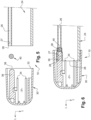
- a sealing plug 40 is provided which is a separate component from the front end 30 so that the latter and the sealing plug 40 together ensure the tightest possible closure or sealing. of the front longitudinal end of the liquid circulation channel 26.
- the closing plug 40 is a spherical ball whose external diameter is greater than the internal diameter of the front free end section 27 of the channel 26 intended to receive the closing plug 40.
- the spherical ball forming a sealing plug 40 is for example made of metal, preferably stainless.
- the spherical ball forming a sealing plug 40 is introduced axially, from left to right, considering the Figure 5 , by force insertion and by elastic deformation of the front free end section 27 of the channel 26 up to, for example, the position illustrated in Figure 6 .
- the installation inside the channel 26 is carried out, at least in part, before the assembly and fixing of the end piece 30.
- the transverse face of the rear end 38 of the rod 36 cooperates in this example with the convex spherical wall of the closing plug 40 to axially “push” the latter further inside the front free end section 27 of the channel 26 .
- welding and/or gluing replaces or completes the axial insertion by force by elastic deformation and ensures the sealing and axial retention of the rear free end section of the rod 36 inside the section of front free end 27 of channel 26.
- Such a bulge can, in whole or in part, be masked by the side wall of the front end 30 and the axial length of the latter can be adapted for this purpose.
- the principle according to the invention consisting of combining the sealing effects resulting from the rod 36 with a distinct additional component lead to a series of possible designs of the sealing plug according to which, preferably, the blanking plug has less a shutter body whose cross section is combined with that of the free end section of said channel, and in particular a shutter body 40 of revolution.
- the closing plug 40 is in the form of a truncated cone of which at least the front part (on the left considering the Figure 7 , the closing plug 40 has an external diameter of the same order of dimension as that of the spherical ball, so as to guarantee its axial insertion by force into the front free end section 27 of the channel 26 of the deflector 24.
- its rear end of smaller diameter is preferably oriented towards the free emerging end of channel 26.
- the frustoconical sealing plug 40 has in its front face 42 a housing (not shown) which can receive the free end of the rod 36 on which it is then pre-positioned as shown on the left side of the Figure 7 .
- the rod 36 thus acts as a support for the closing plug 40.
- the retention of the closing plug 40 on the rear free end of the rod 36 can be temporary and ensured by friction, or permanent for example by gluing or by welding.
- the shutter body of the shutter plug is again frustoconical as what has just been explained with reference to the Figure 7 .
- the shutter body extends axially forward by a stepped rod 44 whose front free end section 46 is received axially in a complementary bore 50 of the rod 36 which, for this purpose, is of tubular design.
- the radial shoulder which delimits the front section 46 of smaller diameter relative to the rear section 48 of larger diameter, cooperates with the annular transverse end face of the rod 36 to determine the axial position of the shutter body relative to at the front end 30, and therefore after assembly, inside the channel 26.
- the invention is not limited to a single channel formed in an aerodynamic deflector.
- the aerodynamic deflector may for example include two parallel side channels.
- the channel is not necessarily lateral, it can also be formed inside the central part forming the body of the aerodynamic deflector.
- the accessory such as an aerodynamic deflector is not necessarily in one piece extending over the entire length of the wiper blade.
- the invention is also not limited to a wiper blade of the “Flat Blade” type, the structure intended to support the wiper blade being able to be an articulated structure, such as a stirrup structure.
Landscapes
- Engineering & Computer Science (AREA)
- Mechanical Engineering (AREA)
- Water Supply & Treatment (AREA)
- Body Structure For Vehicles (AREA)
- Pivots And Pivotal Connections (AREA)
- Nozzles (AREA)
Description
- L'invention concerne un balai d'essuie-glace, aussi appelé balai d'essuyage, notamment pour l'essuyage de la surface extérieure d'une vitre de véhicule automobile, qui est associé à des moyens de distribution et/ou de projection d'un liquide sur la surface à essuyer.
- L'invention concerne plus particulièrement un balai d'essuie-glace comprenant un dispositif de distribution et/ou de projection de liquide comportant au moins un canal de circulation de liquide.
- Un véhicule automobile est classiquement équipé d'essuie-glaces, notamment pour assurer un lavage de la surface extérieure du pare-brise et éviter ainsi que la vision qu'a le conducteur de son environnement ne soit perturbée.
- Un essuie-glace comprend en général un bras d'entraînement (aussi appelé bras d'essuie-glace ou porte-balai), effectuant un mouvement de va-et-vient, notamment angulaire, et un balai d'essuie-glace allongé longitudinalement qui porte une lame d'essuyage ou lame racleuse réalisée en une matière élastique telle que du caoutchouc ou un matériau élastomère.
- La lame d'essuyage frotte contre la surface extérieure du pare-brise et évacue l'eau en l'amenant en dehors du champ de vision du conducteur.
- Dans une version classique, le balai d'essuie-glace est réalisé sous la forme d'étriers articulés qui tiennent la lame racleuse d'essuyage en plusieurs endroits discrets répartis longitudinalement en lui conférant un cintrage lui permettant d'épouser l'éventuelle courbure ou galbe du pare-brise.
- Dans une version plus récente dénommée "Flat Blade" (pour "Balai Plat"), le balai d'essuie-glace est réalisé sous la forme d'un ensemble semi-rigide qui maintient la lame d'essuyage sur toute sa longueur grâce à une ou des vertèbres de cintrage permettant d'appliquer le balai et la lame d'essuyage sur le pare-brise sans avoir à utiliser d'étriers.
- Une telle conception consiste en une structure construite autour d'au moins une pièce longitudinale monobloc constituée de deux parties fonctionnellement distinctes. Une première partie est un support en matériau plastique semi-rigide comportant, d'une part, une cavité dans laquelle est logée une tige de rigidification, aussi appelée vertèbre et d'autre part une griffe portant la lame d'essuyage en matériau élastomère ou en caoutchouc.
- Une deuxième partie de la pièce longitudinale monobloc est un accessoire destiné à améliorer l'efficacité et la qualité de l'essuyage.
- Un accessoire ou composant d'un dispositif de distribution/projection d'un liquide de lavage approprié qui permet, par action conjuguée avec le mouvement de balayage de la lame d'essuyage, d'éliminer certaines particules solides pouvant se fixer sur les vitres, peut comporter au moins un canal de circulation ou transport de liquide muni de trous latéraux à travers lesquels le liquide de lavage est projeté contre la surface de la vitre à essuyer.
- Comme cela est par exemple enseigné par le document
FR-A1-2.920.729 - La pièce longitudinale complexe intégrant les fonctions de support et au moins de dispositif de distribution/projection de liquide peut être obtenue par co-extrusion d'au moins deux matériaux. Un premier matériau est un matériau plastique semi-rigide présentant une flexibilité longitudinale, destiné à réaliser la fonction de support proprement dite, tandis qu'au moins un autre matériau, comme un élastomère, est utilisé pour réaliser au moins la fonction de projection de liquide.
- Ce même document propose un balai d'essuie-glace qui comprend au moins un embout qui est agencé à une extrémité longitudinale de la structure et qui comporte des moyens d'obturation du canal de circulation du liquide.
- Les moyens d'obturation intégrés à l'embout d'extrémité permettent de mettre sous pression le liquide contenu dans le canal de circulation de façon à forcer le passage du liquide à travers les trous latéraux du canal d'arrosage ou d'aspersion de la surface vitrée à essuyer.
- Le canal de transport peut être co-extrudé avec le support longitudinal du balai d'essuie-glace ou constituer des pièces séparées qui sont fixées directement sur le support par divers moyens comme par emboîtement élastique, assemblage en queue d'aronde, etc.
- Le au moins un canal de circulation de liquide peut aussi être intégré à la lame d'essuyage, ou encore il peut être combiné à un déflecteur aérodynamique du balai d'essuyage.
- Comme illustré dans le document
FR-A1-2.920.729 - Comme cela est illustré aux figures 4a et 5a de ce document, les moyens d'obturation intégrés à l'embout comportent une tige dont l'extrémité libre est conformée en un bouchon d'obturation qui est apte à être inséré à l'intérieur du canal de transport de liquide.
WO-A-2009/130183 montre le préambule de la revendication 1. - L'invention vise à améliorer la qualité et l'étanchéité de l'obturation du canal de circulation de liquide.
- L'invention propose un balai d'essuie-glace selon la revendication 1.
Selon d'autres caractéristiques du balai d'essuie-glace : - le bouchon d'obturation comporte au moins un corps d'obturation dont la section transversale est conjuguée de celle du tronçon d'extrémité libre dudit canal ;
- le bouchon comporte un corps d'obturation de révolution, et la section transversale du tronçon d'extrémité longitudinale du canal de circulation de liquide est circulaire ;
- le corps d'obturation du bouchon d'obturation est un corps sphérique ;
- le corps d'obturation du bouchon d'obturation est un tronçon de sphère, de cône, ou de cylindre ;
- le bouchon d'obturation comporte une queue d'insertion qui prolonge axialement le corps d'obturation, en direction de ladite face d'extrémité du dispositif ;
- le bouchon d'obturation de ladite extrémité du canal de circulation de liquide est inséré axialement à l'intérieur dudit tronçon d'extrémité longitudinale dudit canal ;
- la tige est fixée à l'intérieur dudit tronçon d'extrémité longitudinale du canal de circulation de liquide, par collage, soudage ou insertion à force ;
- la tige de l'embout est tubulaire, et la queue d'insertion est reçue dans un alésage complémentaire de la tige tubulaire d'insertion ;
- une extrémité axiale longitudinale de la tige d'insertion est reçue dans un logement complémentaire du bouchon d'obturation ;
- ledit tronçon d'extrémité longitudinale du canal de circulation de liquide appartient à un tronçon d'extrémité longitudinale du dispositif de distribution réalisé à base d'au moins un matériau élastomère ou caoutchouc ;
- le canal de circulation de liquide appartient à un déflecteur aérodynamique du balai d'essuie-glace.
- D'autres caractéristiques et avantages de l'invention apparaitront au cours de la lecture de la description détaillée qui va suivre pour la compréhension de laquelle on se reportera aux dessins annexés dans lesquels :
- la
figure 1 est une vue en perspective d'un tronçon d'extrémité longitudinale d'un balai d'essuie-glace selon l'invention qui est coupé par un plan vertical et transversal ; - la
figure 2 est une vue en perspective du déflecteur aérodynamique du balai d'essuie-glace de lafigure 1 ; - la
figure 3 est une vue en perspective de l'embout du balai d'essuie-glace de lafigure 1 ; - la
figure 4 est une vue en perspective d'une portion supérieure de l'embout de lafigure 3 qui est représenté en coupe par le plan horizontal 4-4 de lafigure 3 ; - la
figure 5 est une vue en coupe par un plan horizontal correspondant au plan 4-4 de lafigure 3 , qui représente, avant leur assemblage, l'embout, le bouchon d'obturation sphérique et le tronçon d'extrémité longitudinale avant du déflecteur aérodynamique ; - la
figure 6 est une vue analogue à celle de lafigure 5 qui illustre les trois composants de lafigure 5 en position assemblée dans laquelle l'embout et le bouchon d'obturation assurent ensemble l'obturation du canal de circulation de liquide ; - la
figure 7 est une vue analogue à celle de lafigure 5 qui illustre une première variante de conception de l'embout et du bouchon qui assurent ensemble l'obturation du canal de circulation de liquide ; - la
figure 8 est une vue analogue à celle de lafigure 5 qui illustre une deuxième variante de conception de l'embout et du bouchon qui assurent ensemble l'obturation du canal de circulation de liquide. - Dans la suite de la description, des éléments présentant une structure identique ou des fonctions analogues seront désignés par des mêmes références.
- Dans la suite de la description, on adoptera de manière non limitative - et sans référence à la gravité terrestre - des orientations longitudinale, verticale et transversale indiquées par le trièdre "L,V,T" des figures. On définit aussi un plan horizontal qui s'étend longitudinalement et transversalement.
- Par convention, l'axe longitudinal est orienté d'arrière vers l'avant et il s'étend globalement selon l'axe ou direction d'extension principale du balai d'essuie-glace.
- On a représenté à la
figure 1 un balai d'essuie-glace 10 du type « Flat Blade » dont la structure comprend un support structurel longitudinal 12 qui est par exemple réalisé en matière plastique extrudée. - Le support 12 comporte une cavité qui s'étend sur toute sa longueur et qui loge une vertèbre, métallique ou en matière plastique, 14 de rigidification.
- La vertèbre 14 se présente sous la forme d'une bande plate qui s'étend sensiblement dans le plan horizontal et sur toute la longueur du balai d'essuie-glace.
- Le support structurel longitudinal 12 comporte aussi une griffe longitudinale 16 qui retient le talon supérieur 18 d'une lame d'essuyage 20 en matériau élastomère.
- La lame d'essuyage 20 comporte une partie inférieure 22 qui est apte à coopérer avec une surface extérieure d'une vitre à essuyer et qui est reliée au talon supérieur 18 de manière articulée pour pouvoir pivoter dans les deux sens autour de l'axe longitudinal de l'ensemble.
- On a aussi représenté à la
figure 1 un accessoire 24 réalisé par extrusion indépendamment du support structurel longitudinal 12, qui est fixé sur ce dernier à sa partie supérieure et qui s'étend lui aussi sensiblement sur toute la longueur du balai d'essuie-glace. - L'accessoire 24 est un déflecteur aérodynamique, de conception générale connue qui comporte, agencé latéralement le long d'un de ces bords longitudinaux en partie inférieure, un canal 26 qui s'étend sur toute la longueur du déflecteur aérodynamique 24 pour permettre la circulation d'un liquide à l'intérieur de ce dernier.
- Le canal 26 débouche librement aux deux extrémités du déflecteur aérodynamique 24 et notamment ici, comme on peut le voir à la
figure 2 , en face transversale et verticale d'extrémité libre avant 28 du déflecteur aérodynamique 24. - A titre non limitatif, le canal 26 est ici cylindrique à section de contour circulaire.
- De manière connue et non visible sur les figures, le canal 26 est percé de trous ou de fentes réparties sur sa longueur afin par exemple de pouvoir projeter un liquide de lavage sur la vitre à essuyer.
- L'essuie-glace comporte aussi un embout à chacune de ses extrémités longitudinales.
- L'embout avant 30 illustré à la
figure 1 est une pièce moulée en matière plastique rigide ou semi rigide qui se présente sous la forme d'une coque creuse globalement fermée et qui est délimitée longitudinalement vers l'arrière par un bord d'extrémité arrière 32 qui s'étend dans un plan vertical et transversal. - Le bord 32 de l'embout avant 30 délimite ainsi une face arrière ouverte permettant notamment l'introduction axiale, selon la direction longitudinale, de l'ensemble des autres composants 12, 14, 20 et 24, qui ont été préalablement assemblés, dans la cavité interne 31 de l'embout avant 30.
- Alternativement, il est possible de pré-assembler un premier sous-ensemble comprenant l'embout avant 30 et le déflecteur aérodynamique 24, et de monter ce premier sous-ensemble sur un deuxième sous-ensemble comprenant le support structurel longitudinal 12, la vertèbre 14 et la lame d'essuyage 20.
- À cet effet, l'embout avant 30 est conformé intérieurement de manière complémentaire du contour externe du profilé constituant le déflecteur aérodynamique 24.
- L'embout avant 30 comporte préférablement deux butées 34 agencées intérieurement qui, en coopération avec une portion en vis-à-vis de la face transversale d'extrémité avant 28 du déflecteur aérodynamique 24 déterminent la position longitudinale relative de ce dernier par rapport à l'embout avant 30 en position montée et fixée des composants.
- À l'intérieur de la cavité 31, l'embout avant 30 comporte aussi une tige 36 qui s'étend longitudinalement et qui est délimitée par une face transversale arrière 38 qui, comme on peut le voir notamment en
figure 3 et suivantes, est légèrement décalée vers l'avant par rapport au plan transversal du bord arrière 32. - En position assemblée de l'ensemble des composants, la tige 36 est conçue pour être reçue axialement selon la direction longitudinale à l'intérieur d'un tronçon d'extrémité libre avant 27 du canal 26 qui débouche dans la face transversale d'extrémité avant 28.
- Le diamètre externe du tronçon d'extrémité libre arrière de la tige 36 qui est apte à être reçu dans le tronçon d'extrémité libre avant 27 du canal 26 est supérieur au diamètre interne de ce dernier tronçon.
- Du fait de cette différence dimensionnelle entre les diamètres et la longueur du tronçon d'extrémité libre arrière de la tige 36 qui est apte à être reçue dans le tronçon d'extrémité libre avant 27 du canal 26, la tige 36 est insérée axialement à force dans le canal 26 par déformation élastique du matériau constitutif ici du déflecteur aérodynamique 24 en provoquant une déformation radiale de ce dernier, tel qu'illustré notamment à la
figure 6 . - L'embout avant 30 assure ainsi une fermeture étanche au moins partielle de l'extrémité avant du canal 26 qui débouche dans la face transversale d'extrémité avant 28.
- Conformément aux enseignements de l'invention, il est prévu un bouchon d'obturation 40 qui est un composant distinct de l'embout avant 30 de manière que ce dernier et le bouchon d'obturation 40 assurent ensemble la fermeture ou obturation la plus étanche possible de l'extrémité longitudinale avant du canal 26 de circulation de liquide.
- Dans le mode de réalisation illustré aux
figures 5 et 6 , le bouchon d'obturation 40 est une bille sphérique dont le diamètre extérieur est supérieur au diamètre interne du tronçon d'extrémité libre avant 27 du canal 26 destiné à recevoir le bouchon d'obturation 40. - A titre non limitatif, la bille sphérique formant bouchon d'obturation 40 est par exemple en métal, de préférence inoxydable.
- Pour un montage étanche, et du fait de la différence des diamètres, la bille sphérique formant bouchon d'obturation 40 est introduite axialement, de la gauche vers la droite en considérant la
figure 5 , par insertion à force et par déformation élastique du tronçon d'extrémité libre avant 27 du canal 26 jusque par exemple la position illustrée à lafigure 6 . - La mise en place à l'intérieur du canal 26 est effectuée, au moins en partie, avant le montage et la fixation de l'embout 30.
- En fonction de la position axiale ou longitudinale qu'occupe alors le bouchon d'obturation 40 à l'intérieur du tronçon d'extrémité libre avant 27 du canal 26, et lors de l'introduction axiale de la tige 36 dans ce dernier, la face transversale d'extrémité arrière 38 de la tige 36 coopère dans cet exemple avec la paroi sphérique convexe du bouchon d'obturation 40 pour « pousser » axialement ce dernier plus loin à l'intérieur du tronçon d'extrémité libre avant 27 du canal 26.
- A titre non limitatif, et pour améliorer encore la qualité de l'étanchéité et la tenue du tronçon d'extrémité libre arrière de la tige 36 de l'embout avant 30 à l'intérieur du tronçon d'extrémité libre avant 27 du canal 26, on peut prévoir un collage ou un soudage complémentaire entre ces éléments.
- En variante, le soudage et/ou le collage remplace ou complète l'insertion axiale à force par déformation élastique et assure l'étanchéité et la tenue axiale du tronçon d'extrémité libre arrière de la tige 36 à l'intérieur du tronçon d'extrémité libre avant 27 du canal 26.
- En position assemblée, et du fait de la déformation élastique de la paroi latérale, et de la déformation du déflecteur vers l'intérieur de la structure, ici sur une demi-circonférence, du déflecteur aérodynamique 24 au droit de la bille sphérique insérée dans le canal 26 pour former un bouchon d'obturation, un renflement localisé peut être visible depuis l'extérieur.
- Un tel renflement peut, pour tout ou partie être masqué par la paroi latérale de l'embout avant 30 et la longueur axiale de cette dernière peut être adaptée à cet effet.
- D'une manière générale, le principe selon l'invention consistant à combiner les effets d'obturation étanche résultant de la tige 36 avec un composant supplémentaire distinct conduisent à une série de conceptions possibles du bouchon d'obturation selon lesquelles, de préférence, le bouchon d'obturation comporte au moins un corps d'obturation dont la section transversale est conjuguée de celle du tronçon d'extrémité libre dudit canal, et notamment un corps d'obturation 40 de révolution.
- Selon une première variante de conception illustrée schématiquement à la
figure 7 , le bouchon d'obturation 40 se présente sous la forme d'un tronc de cône dont au moins la partie avant (A gauche en considérant lafigure 7 , le bouchon d'obturation 40 est d'un diamètre externe du même ordre de dimension que celui de la bille sphérique, de manière à garantir son insertion axiale à force dans le tronçon d'extrémité libre avant 27 du canal 26 du déflecteur 24. - Pour faciliter son montage par insertion axiale, son extrémité arrière de plus petit diamètre est de préférence orientée en direction de l'extrémité libre débouchante du canal 26.
- Pour déterminer cette orientation et faciliter les opérations de montage, le bouchon d'obturation tronconique 40 présente dans sa face avant 42 un logement (non représenté) qui peut recevoir l'extrémité libre de la tige 36 sur laquelle il est alors pré-positionné comme illustré à la partie gauche de la
figure 7 . - La tige 36 fait ainsi fonction de support du bouchon d'obturation 40.
- Le maintien du bouchon d'obturation 40 sur l'extrémité libre arrière de la tige 36 peut être temporaire et assuré par frottement, ou permanent par exemple par collage ou par soudage.
- Selon une deuxième variante illustrée à la
figure 8 , le corps d'obturation du bouchon d'obturation est à nouveau tronconique comme ce qui vient d'être expliqué en référence à lafigure 7 . - Pour assurer son support par l'embout avant 30, le corps d'obturation se prolonge axialement vers l'avant par une tige étagée 44 dont le tronçon d'extrémité libre avant 46 est reçu axialement dans un alésage complémentaire 50 de la tige 36 qui, à cet effet, est de conception tubulaire.
- L'épaulement radial qui délimite le tronçon avant 46 de plus petit diamètre par rapport au tronçon arrière 48 de plus grand diamètre, coopère avec la face transversale annulaire d'extrémité de la tige 36 pour déterminer la position axiale du corps d'obturation par rapport à l'embout avant 30, et donc après assemblage, à l'intérieur du canal 26.
- A titres de variantes non représentées, l'invention n'est pas limitée à un canal unique formé dans un déflecteur aérodynamique.
- Le déflecteur aérodynamique peut par exemple comporter deux canaux latéraux parallèles.
- Le canal n'est pas nécessairement latéral, il peut aussi être formé à l'intérieur de la partie centrale formant corps du déflecteur aérodynamique.
- De plus, l'accessoire tel qu'un déflecteur aérodynamique n'est pas nécessairement en une seule pièce s'étendant sur toute la longueur du balai d'essuie-glace.
- L'invention n'est pas non plus limitée à un balai d'essuie-glace du type « Flat Blade », la structure destinée à supporter la lame d'essuyage pouvant être une structure articulée, telle qu'une structure à étriers.
Claims (9)
- Balai (10) d'essuie-glace comprenant un dispositif de distribution et/ou de projection de liquide comportant :- au moins un canal (26) de circulation de liquide dont une extrémité longitudinale (27) débouche dans une face d'extrémité (28) du dispositif (24) ;- un bouchon (40) d'obturation de ladite extrémité longitudinale (27) du canal (26) de circulation de liquide qui est inséré à l'intérieur d'un tronçon d'extrémité longitudinale (27) dudit canal (26) ;- et un embout (30) agencé en vis-à-vis de ladite face d'extrémité (28) du dispositif (24),le bouchon (40) d'obturation étant un composant distinct de l'embout (30), de manière que l'embout (30) et le bouchon (40) assurent ensemble l'obturation de ladite extrémité longitudinale (27) du canal (26) de circulation de liquide, caractérisé en ce que l'embout (30) comporte une tige (36) qui est reçue à l'intérieur dudit tronçon d'extrémité longitudinale (27) dudit canal (26).
- Balai (10) d'essuie-glace selon la revendication 1, caractérisé en ce que le bouchon (40) d'obturation comporte au moins un corps d'obturation dont la section transversale est conjuguée de celle du tronçon d'extrémité libre (27) dudit canal (26).
- Balai (10) d'essuie-glace selon la revendication 1, caractérisé en ce que le bouchon (40) comporte un corps d'obturation de révolution, et en ce que la section transversale du tronçon d'extrémité longitudinale (27) du canal (26) de circulation de liquide est circulaire.
- Balai (10) d'essuie-glace selon la revendication 3, caractérisé en ce que le corps d'obturation du bouchon (40) d'obturation est un corps sphérique.
- Balai (10) d'essuie-glace selon la revendication 3, caractérisé en ce que le corps d'obturation du bouchon (40) d'obturation est un tronçon de sphère, de cône, ou de cylindre.
- Balai (10) d'essuie-glace selon l'une quelconque des revendications 2 à 5, caractérisé en ce que le bouchon (40) d'obturation comporte une queue (44) d'insertion qui prolonge axialement le corps d'obturation.
- Balai (10) d'essuie-glace selon l'une quelconque des revendications précédentes, caractérisé en ce que le bouchon (40) d'obturation de ladite extrémité du canal (26) de circulation de liquide est inséré axialement à l'intérieur dudit tronçon d'extrémité longitudinale (27) dudit canal (26).
- Balai (10) d'essuie-glace selon l'une des revendications précédentes, caractérisé en ce que la tige (36) est fixée à l'intérieur dudit tronçon d'extrémité longitudinale (27) du canal (26) de circulation de liquide, par collage, soudage ou insertion à force.
- Balai (10) d'essuie-glace selon la revendication 8 prise en combinaison avec la revendication 6, caractérisé en ce que la tige (36) de l'embout (30) est tubulaire, et en ce que la queue (44) d'insertion est reçue dans un alésage complémentaire (50) de la tige (36) tubulaire d'insertion.
Applications Claiming Priority (2)
| Application Number | Priority Date | Filing Date | Title |
|---|---|---|---|
| FR1858994A FR3086617B1 (fr) | 2018-09-28 | 2018-09-28 | Balai d'essuie-glace a projection de liquide pour vitre de vehicule automobile, et perfectionnent de l'etancheite de ce balai |
| PCT/EP2019/074931 WO2020064445A1 (fr) | 2018-09-28 | 2019-09-18 | Balai d'essuie-glace à projection de liquide pour vitre de véhicule automobile, et perfectionnent de l 'étanchéité de ce balai |
Publications (2)
| Publication Number | Publication Date |
|---|---|
| EP3856583A1 EP3856583A1 (fr) | 2021-08-04 |
| EP3856583B1 true EP3856583B1 (fr) | 2024-06-26 |
Family
ID=65443967
Family Applications (1)
| Application Number | Title | Priority Date | Filing Date |
|---|---|---|---|
| EP19768836.9A Active EP3856583B1 (fr) | 2018-09-28 | 2019-09-18 | Balai d'essuie-glace à projection de liquide pour vitre de véhicule automobile, et perfectionnent de l 'étanchéité de ce balai |
Country Status (6)
| Country | Link |
|---|---|
| US (1) | US11623615B2 (fr) |
| EP (1) | EP3856583B1 (fr) |
| JP (1) | JP7210712B2 (fr) |
| CN (1) | CN112752685B (fr) |
| FR (1) | FR3086617B1 (fr) |
| WO (1) | WO2020064445A1 (fr) |
Families Citing this family (3)
| Publication number | Priority date | Publication date | Assignee | Title |
|---|---|---|---|---|
| DE102018251713A1 (de) * | 2018-12-27 | 2020-07-02 | Robert Bosch Gmbh | Wischblattvorrichtung |
| DE102020211424A1 (de) * | 2020-09-11 | 2022-03-17 | Robert Bosch Gesellschaft mit beschränkter Haftung | Wischblatt, insbesondere für ein Kraftfahrzeug |
| DE102021213153A1 (de) * | 2021-11-23 | 2023-05-25 | Robert Bosch Gesellschaft mit beschränkter Haftung | Wischblatt, insbesondere für ein Kraftfahrzeug |
Citations (1)
| Publication number | Priority date | Publication date | Assignee | Title |
|---|---|---|---|---|
| WO2009130183A1 (fr) * | 2008-04-22 | 2009-10-29 | Valeo Systemes D'essuyage | Balai d'essuie-glace et système d'essuie-glace muni d'un tel balai d'essuie-glace |
Family Cites Families (20)
| Publication number | Priority date | Publication date | Assignee | Title |
|---|---|---|---|---|
| US2910715A (en) * | 1954-09-09 | 1959-11-03 | Gerald H Ohrt | Windshield washer |
| US3418676A (en) * | 1967-02-17 | 1968-12-31 | Young Spring & Wire Corp | Windshield wiper and washer system |
| DE3523441A1 (de) * | 1985-06-29 | 1987-01-08 | Swf Auto Electric Gmbh | Scheibenwischeranlage |
| US5826621A (en) | 1996-08-05 | 1998-10-27 | Alaris Medical Systems, Inc. | Valve apparatus |
| DE19706672A1 (de) * | 1997-02-20 | 1998-08-27 | Itt Mfg Enterprises Inc | Scheibenwischblatt, insbesondere für eine Fahrzeugscheibenwischvorrichtung |
| DE19907630A1 (de) * | 1999-02-23 | 2000-08-24 | Bosch Gmbh Robert | Scheibenwischer |
| DE10000373B4 (de) * | 2000-01-07 | 2015-09-10 | Valeo Auto-Electric Wischer Und Motoren Gmbh | Wischblatt zum Reinigen von Scheiben an Fahrzeugen |
| JP3765572B2 (ja) * | 2000-08-18 | 2006-04-12 | 有限会社ジャパン通商 | 床暖房装置、熱サイフォン式ヒートパイプおよびヒートパイプの製造方法 |
| US6766553B2 (en) * | 2002-03-21 | 2004-07-27 | Federal-Mogul World Wide, Inc. | Heavy-duty flat wiper blade assembly |
| BR0305477A (pt) | 2003-12-05 | 2005-08-16 | Globalpack Ind E Com Ltda | Recipiente armazenador e aplicador de produtos lìquidos ou em creme |
| US7575134B2 (en) | 2005-03-17 | 2009-08-18 | Martin James H | Self-sealing nozzle for dispensing apparatus |
| FR2920729B1 (fr) | 2007-09-10 | 2010-02-12 | Valeo Systemes Dessuyage | Balai d'essuyage a projection de liquide pour vitres de vehicule |
| FR2964618B1 (fr) * | 2010-09-09 | 2012-10-12 | Valeo Systemes Dessuyage | Dispositif de solidarisation d'une lampe sur un balai d'essuyage |
| FR2973313B1 (fr) * | 2011-03-31 | 2013-05-03 | Valeo Systemes Dessuyage | Partie primaire et partie secondaire d'un embout d'extremite pour balai d'essuyage |
| FR2973314B1 (fr) * | 2011-03-31 | 2013-10-04 | Valeo Systemes Dessuyage | Embout d'extremite a dispositif d'accrochage d'une lame d'essuyage |
| FR2973759B1 (fr) * | 2011-04-06 | 2016-10-21 | Valeo Systemes Dessuyage | Dispositif de projection de liquide pour balai d'essuyage |
| WO2013080997A1 (fr) * | 2011-12-02 | 2013-06-06 | 株式会社ミツバ | Balai d'essuie-glace |
| DE102012100777B4 (de) * | 2012-01-31 | 2023-06-15 | Valeo Systèmes d'Essuyage | Wischblatt zum Reinigen von Fahrzeugscheiben |
| KR101691426B1 (ko) * | 2015-04-17 | 2016-12-30 | 앨버리 프로덕츠 인코포레이티드 | 윈드쉴드 와이퍼 어셈블리 |
| DE102017223526A1 (de) * | 2017-12-21 | 2019-06-27 | Robert Bosch Gmbh | Wischblattvorrichtung |
-
2018
- 2018-09-28 FR FR1858994A patent/FR3086617B1/fr not_active Expired - Fee Related
-
2019
- 2019-09-18 JP JP2021517234A patent/JP7210712B2/ja active Active
- 2019-09-18 CN CN201980063636.1A patent/CN112752685B/zh active Active
- 2019-09-18 EP EP19768836.9A patent/EP3856583B1/fr active Active
- 2019-09-18 US US17/280,424 patent/US11623615B2/en active Active
- 2019-09-18 WO PCT/EP2019/074931 patent/WO2020064445A1/fr not_active Ceased
Patent Citations (1)
| Publication number | Priority date | Publication date | Assignee | Title |
|---|---|---|---|---|
| WO2009130183A1 (fr) * | 2008-04-22 | 2009-10-29 | Valeo Systemes D'essuyage | Balai d'essuie-glace et système d'essuie-glace muni d'un tel balai d'essuie-glace |
Also Published As
| Publication number | Publication date |
|---|---|
| CN112752685B (zh) | 2023-11-07 |
| FR3086617B1 (fr) | 2021-01-29 |
| US11623615B2 (en) | 2023-04-11 |
| JP2022501260A (ja) | 2022-01-06 |
| EP3856583A1 (fr) | 2021-08-04 |
| WO2020064445A1 (fr) | 2020-04-02 |
| US20220001839A1 (en) | 2022-01-06 |
| JP7210712B2 (ja) | 2023-01-23 |
| CN112752685A (zh) | 2021-05-04 |
| FR3086617A1 (fr) | 2020-04-03 |
Similar Documents
| Publication | Publication Date | Title |
|---|---|---|
| EP3498547B1 (fr) | Balai d'essuyage a projection de liquide pour vitres de vehicule | |
| EP2813404B1 (fr) | Ensemble d'une tête de bras et d'un adaptateur pour un système d'essuyage de pare brise, adaptateur et tête de bras correspondants et système d'essuyage obtenu | |
| EP2709880B1 (fr) | Dispositif de projection de liquide pour balai d'essuyage | |
| FR2973758A1 (fr) | Ensemble d'un embout et d'un dispositif de projection d'un liquide, balai d'essuyage comprenant un tel ensemble, procede de montage d'un dispositif de projection d'un liquide sur un embout | |
| EP3856583B1 (fr) | Balai d'essuie-glace à projection de liquide pour vitre de véhicule automobile, et perfectionnent de l 'étanchéité de ce balai | |
| EP3296167B1 (fr) | Embout d'extrémité de balai d'essuie-glace | |
| EP3165416B1 (fr) | Adaptateur pour un essuie-glace de véhicule automobile | |
| EP2707258B1 (fr) | Dispositif de projection de liquide pour balai d'essuyage | |
| WO2014020283A1 (fr) | Systeme de connexion entre un bras d'essuyage et un balai d'essuyage | |
| EP3437941B1 (fr) | Adaptateur perfectionné pour un essuie-glace de véhicule automobile, et ensemble comportant un tel adaptateur | |
| EP3437940B1 (fr) | Adaptateur pour un essuie-glace de véhicule automobile, et ensemble comportant un tel adaptateur | |
| FR2928887A1 (fr) | Agencement de balai d'essuie-glace pour vehicules automobiles | |
| FR3055860A1 (fr) | Adaptateur constitutif d'un systeme d'essuyage | |
| EP3405368A1 (fr) | Organe pour balai d'essuie-glace comprenant au moins un canal de distribution de liquide lave-glace | |
| EP3042810B1 (fr) | Balai d'essuie-glace | |
| EP3012163B1 (fr) | Dispositif de projection de liquide lave-glace pour un balai d essuyage de système d essuie-glace de véhicule | |
| EP3366531B1 (fr) | Embout d'extremite adaptable pour balai d'essuyage | |
| FR3063949A1 (fr) | Embout d'extremite pour un balai d'essuie-glace et son procede de montage | |
| EP2883762B1 (fr) | Balai d'essuie-glace pour un système d'essuyage d'une vitre de véhicule et son procédé d'assemblage | |
| EP2815934B1 (fr) | Balai d'essuie-glace | |
| EP3600978B1 (fr) | Embout d'extrémité et lame racleuse constitutifs d'un balai d'essuyage | |
| EP3615390B1 (fr) | Embout d'extrémité destine à un balai d'essuyage | |
| FR3048663B1 (fr) | Carenage pour balai plat carene d'essuie-glace | |
| WO2022175417A1 (fr) | Système de connexion d'un balai d'essuyage sur un bras d'un système d'essuyage | |
| FR3123614A1 (fr) | Dispositif de connexion et ensemble d'essuyage pour véhicule automobile |
Legal Events
| Date | Code | Title | Description |
|---|---|---|---|
| STAA | Information on the status of an ep patent application or granted ep patent |
Free format text: STATUS: UNKNOWN |
|
| STAA | Information on the status of an ep patent application or granted ep patent |
Free format text: STATUS: THE INTERNATIONAL PUBLICATION HAS BEEN MADE |
|
| PUAI | Public reference made under article 153(3) epc to a published international application that has entered the european phase |
Free format text: ORIGINAL CODE: 0009012 |
|
| STAA | Information on the status of an ep patent application or granted ep patent |
Free format text: STATUS: REQUEST FOR EXAMINATION WAS MADE |
|
| 17P | Request for examination filed |
Effective date: 20210315 |
|
| AK | Designated contracting states |
Kind code of ref document: A1 Designated state(s): AL AT BE BG CH CY CZ DE DK EE ES FI FR GB GR HR HU IE IS IT LI LT LU LV MC MK MT NL NO PL PT RO RS SE SI SK SM TR |
|
| DAV | Request for validation of the european patent (deleted) | ||
| DAX | Request for extension of the european patent (deleted) | ||
| STAA | Information on the status of an ep patent application or granted ep patent |
Free format text: STATUS: EXAMINATION IS IN PROGRESS |
|
| 17Q | First examination report despatched |
Effective date: 20230217 |
|
| P01 | Opt-out of the competence of the unified patent court (upc) registered |
Effective date: 20230528 |
|
| GRAP | Despatch of communication of intention to grant a patent |
Free format text: ORIGINAL CODE: EPIDOSNIGR1 |
|
| STAA | Information on the status of an ep patent application or granted ep patent |
Free format text: STATUS: GRANT OF PATENT IS INTENDED |
|
| INTG | Intention to grant announced |
Effective date: 20240325 |
|
| GRAS | Grant fee paid |
Free format text: ORIGINAL CODE: EPIDOSNIGR3 |
|
| GRAA | (expected) grant |
Free format text: ORIGINAL CODE: 0009210 |
|
| STAA | Information on the status of an ep patent application or granted ep patent |
Free format text: STATUS: THE PATENT HAS BEEN GRANTED |
|
| AK | Designated contracting states |
Kind code of ref document: B1 Designated state(s): AL AT BE BG CH CY CZ DE DK EE ES FI FR GB GR HR HU IE IS IT LI LT LU LV MC MK MT NL NO PL PT RO RS SE SI SK SM TR |
|
| REG | Reference to a national code |
Ref country code: GB Ref legal event code: FG4D Free format text: NOT ENGLISH |
|
| REG | Reference to a national code |
Ref country code: CH Ref legal event code: EP |
|
| REG | Reference to a national code |
Ref country code: DE Ref legal event code: R096 Ref document number: 602019054243 Country of ref document: DE |
|
| PG25 | Lapsed in a contracting state [announced via postgrant information from national office to epo] |
Ref country code: BG Free format text: LAPSE BECAUSE OF FAILURE TO SUBMIT A TRANSLATION OF THE DESCRIPTION OR TO PAY THE FEE WITHIN THE PRESCRIBED TIME-LIMIT Effective date: 20240626 |
|
| PG25 | Lapsed in a contracting state [announced via postgrant information from national office to epo] |
Ref country code: FI Free format text: LAPSE BECAUSE OF FAILURE TO SUBMIT A TRANSLATION OF THE DESCRIPTION OR TO PAY THE FEE WITHIN THE PRESCRIBED TIME-LIMIT Effective date: 20240626 Ref country code: HR Free format text: LAPSE BECAUSE OF FAILURE TO SUBMIT A TRANSLATION OF THE DESCRIPTION OR TO PAY THE FEE WITHIN THE PRESCRIBED TIME-LIMIT Effective date: 20240626 |
|
| REG | Reference to a national code |
Ref country code: LT Ref legal event code: MG9D |
|
| PG25 | Lapsed in a contracting state [announced via postgrant information from national office to epo] |
Ref country code: GR Free format text: LAPSE BECAUSE OF FAILURE TO SUBMIT A TRANSLATION OF THE DESCRIPTION OR TO PAY THE FEE WITHIN THE PRESCRIBED TIME-LIMIT Effective date: 20240927 |
|
| PG25 | Lapsed in a contracting state [announced via postgrant information from national office to epo] |
Ref country code: LV Free format text: LAPSE BECAUSE OF FAILURE TO SUBMIT A TRANSLATION OF THE DESCRIPTION OR TO PAY THE FEE WITHIN THE PRESCRIBED TIME-LIMIT Effective date: 20240626 |
|
| REG | Reference to a national code |
Ref country code: NL Ref legal event code: MP Effective date: 20240626 |
|
| PG25 | Lapsed in a contracting state [announced via postgrant information from national office to epo] |
Ref country code: NO Free format text: LAPSE BECAUSE OF FAILURE TO SUBMIT A TRANSLATION OF THE DESCRIPTION OR TO PAY THE FEE WITHIN THE PRESCRIBED TIME-LIMIT Effective date: 20240926 Ref country code: LV Free format text: LAPSE BECAUSE OF FAILURE TO SUBMIT A TRANSLATION OF THE DESCRIPTION OR TO PAY THE FEE WITHIN THE PRESCRIBED TIME-LIMIT Effective date: 20240626 Ref country code: HR Free format text: LAPSE BECAUSE OF FAILURE TO SUBMIT A TRANSLATION OF THE DESCRIPTION OR TO PAY THE FEE WITHIN THE PRESCRIBED TIME-LIMIT Effective date: 20240626 Ref country code: GR Free format text: LAPSE BECAUSE OF FAILURE TO SUBMIT A TRANSLATION OF THE DESCRIPTION OR TO PAY THE FEE WITHIN THE PRESCRIBED TIME-LIMIT Effective date: 20240927 Ref country code: FI Free format text: LAPSE BECAUSE OF FAILURE TO SUBMIT A TRANSLATION OF THE DESCRIPTION OR TO PAY THE FEE WITHIN THE PRESCRIBED TIME-LIMIT Effective date: 20240626 Ref country code: BG Free format text: LAPSE BECAUSE OF FAILURE TO SUBMIT A TRANSLATION OF THE DESCRIPTION OR TO PAY THE FEE WITHIN THE PRESCRIBED TIME-LIMIT Effective date: 20240626 Ref country code: RS Free format text: LAPSE BECAUSE OF FAILURE TO SUBMIT A TRANSLATION OF THE DESCRIPTION OR TO PAY THE FEE WITHIN THE PRESCRIBED TIME-LIMIT Effective date: 20240926 |
|
| PG25 | Lapsed in a contracting state [announced via postgrant information from national office to epo] |
Ref country code: NL Free format text: LAPSE BECAUSE OF FAILURE TO SUBMIT A TRANSLATION OF THE DESCRIPTION OR TO PAY THE FEE WITHIN THE PRESCRIBED TIME-LIMIT Effective date: 20240626 |
|
| REG | Reference to a national code |
Ref country code: AT Ref legal event code: MK05 Ref document number: 1697460 Country of ref document: AT Kind code of ref document: T Effective date: 20240626 |
|
| PG25 | Lapsed in a contracting state [announced via postgrant information from national office to epo] |
Ref country code: NL Free format text: LAPSE BECAUSE OF FAILURE TO SUBMIT A TRANSLATION OF THE DESCRIPTION OR TO PAY THE FEE WITHIN THE PRESCRIBED TIME-LIMIT Effective date: 20240626 |
|
| PG25 | Lapsed in a contracting state [announced via postgrant information from national office to epo] |
Ref country code: PT Free format text: LAPSE BECAUSE OF FAILURE TO SUBMIT A TRANSLATION OF THE DESCRIPTION OR TO PAY THE FEE WITHIN THE PRESCRIBED TIME-LIMIT Effective date: 20241028 |
|
| PG25 | Lapsed in a contracting state [announced via postgrant information from national office to epo] |
Ref country code: PT Free format text: LAPSE BECAUSE OF FAILURE TO SUBMIT A TRANSLATION OF THE DESCRIPTION OR TO PAY THE FEE WITHIN THE PRESCRIBED TIME-LIMIT Effective date: 20241028 |
|
| PG25 | Lapsed in a contracting state [announced via postgrant information from national office to epo] |
Ref country code: PL Free format text: LAPSE BECAUSE OF FAILURE TO SUBMIT A TRANSLATION OF THE DESCRIPTION OR TO PAY THE FEE WITHIN THE PRESCRIBED TIME-LIMIT Effective date: 20240626 |
|
| PG25 | Lapsed in a contracting state [announced via postgrant information from national office to epo] |
Ref country code: EE Free format text: LAPSE BECAUSE OF FAILURE TO SUBMIT A TRANSLATION OF THE DESCRIPTION OR TO PAY THE FEE WITHIN THE PRESCRIBED TIME-LIMIT Effective date: 20240626 |
|
| PG25 | Lapsed in a contracting state [announced via postgrant information from national office to epo] |
Ref country code: AT Free format text: LAPSE BECAUSE OF FAILURE TO SUBMIT A TRANSLATION OF THE DESCRIPTION OR TO PAY THE FEE WITHIN THE PRESCRIBED TIME-LIMIT Effective date: 20240626 Ref country code: IS Free format text: LAPSE BECAUSE OF FAILURE TO SUBMIT A TRANSLATION OF THE DESCRIPTION OR TO PAY THE FEE WITHIN THE PRESCRIBED TIME-LIMIT Effective date: 20241026 |
|
| PG25 | Lapsed in a contracting state [announced via postgrant information from national office to epo] |
Ref country code: CZ Free format text: LAPSE BECAUSE OF FAILURE TO SUBMIT A TRANSLATION OF THE DESCRIPTION OR TO PAY THE FEE WITHIN THE PRESCRIBED TIME-LIMIT Effective date: 20240626 |
|
| PG25 | Lapsed in a contracting state [announced via postgrant information from national office to epo] |
Ref country code: RO Free format text: LAPSE BECAUSE OF FAILURE TO SUBMIT A TRANSLATION OF THE DESCRIPTION OR TO PAY THE FEE WITHIN THE PRESCRIBED TIME-LIMIT Effective date: 20240626 Ref country code: SK Free format text: LAPSE BECAUSE OF FAILURE TO SUBMIT A TRANSLATION OF THE DESCRIPTION OR TO PAY THE FEE WITHIN THE PRESCRIBED TIME-LIMIT Effective date: 20240626 |
|
| PG25 | Lapsed in a contracting state [announced via postgrant information from national office to epo] |
Ref country code: ES Free format text: LAPSE BECAUSE OF FAILURE TO SUBMIT A TRANSLATION OF THE DESCRIPTION OR TO PAY THE FEE WITHIN THE PRESCRIBED TIME-LIMIT Effective date: 20240626 Ref country code: SM Free format text: LAPSE BECAUSE OF FAILURE TO SUBMIT A TRANSLATION OF THE DESCRIPTION OR TO PAY THE FEE WITHIN THE PRESCRIBED TIME-LIMIT Effective date: 20240626 |
|
| PG25 | Lapsed in a contracting state [announced via postgrant information from national office to epo] |
Ref country code: SM Free format text: LAPSE BECAUSE OF FAILURE TO SUBMIT A TRANSLATION OF THE DESCRIPTION OR TO PAY THE FEE WITHIN THE PRESCRIBED TIME-LIMIT Effective date: 20240626 Ref country code: SK Free format text: LAPSE BECAUSE OF FAILURE TO SUBMIT A TRANSLATION OF THE DESCRIPTION OR TO PAY THE FEE WITHIN THE PRESCRIBED TIME-LIMIT Effective date: 20240626 Ref country code: RO Free format text: LAPSE BECAUSE OF FAILURE TO SUBMIT A TRANSLATION OF THE DESCRIPTION OR TO PAY THE FEE WITHIN THE PRESCRIBED TIME-LIMIT Effective date: 20240626 Ref country code: PL Free format text: LAPSE BECAUSE OF FAILURE TO SUBMIT A TRANSLATION OF THE DESCRIPTION OR TO PAY THE FEE WITHIN THE PRESCRIBED TIME-LIMIT Effective date: 20240626 Ref country code: IS Free format text: LAPSE BECAUSE OF FAILURE TO SUBMIT A TRANSLATION OF THE DESCRIPTION OR TO PAY THE FEE WITHIN THE PRESCRIBED TIME-LIMIT Effective date: 20241026 Ref country code: ES Free format text: LAPSE BECAUSE OF FAILURE TO SUBMIT A TRANSLATION OF THE DESCRIPTION OR TO PAY THE FEE WITHIN THE PRESCRIBED TIME-LIMIT Effective date: 20240626 Ref country code: EE Free format text: LAPSE BECAUSE OF FAILURE TO SUBMIT A TRANSLATION OF THE DESCRIPTION OR TO PAY THE FEE WITHIN THE PRESCRIBED TIME-LIMIT Effective date: 20240626 Ref country code: CZ Free format text: LAPSE BECAUSE OF FAILURE TO SUBMIT A TRANSLATION OF THE DESCRIPTION OR TO PAY THE FEE WITHIN THE PRESCRIBED TIME-LIMIT Effective date: 20240626 Ref country code: AT Free format text: LAPSE BECAUSE OF FAILURE TO SUBMIT A TRANSLATION OF THE DESCRIPTION OR TO PAY THE FEE WITHIN THE PRESCRIBED TIME-LIMIT Effective date: 20240626 |
|
| PG25 | Lapsed in a contracting state [announced via postgrant information from national office to epo] |
Ref country code: IT Free format text: LAPSE BECAUSE OF FAILURE TO SUBMIT A TRANSLATION OF THE DESCRIPTION OR TO PAY THE FEE WITHIN THE PRESCRIBED TIME-LIMIT Effective date: 20240626 |
|
| REG | Reference to a national code |
Ref country code: DE Ref legal event code: R097 Ref document number: 602019054243 Country of ref document: DE |
|
| PG25 | Lapsed in a contracting state [announced via postgrant information from national office to epo] |
Ref country code: DK Free format text: LAPSE BECAUSE OF FAILURE TO SUBMIT A TRANSLATION OF THE DESCRIPTION OR TO PAY THE FEE WITHIN THE PRESCRIBED TIME-LIMIT Effective date: 20240626 |
|
| PG25 | Lapsed in a contracting state [announced via postgrant information from national office to epo] |
Ref country code: MC Free format text: LAPSE BECAUSE OF FAILURE TO SUBMIT A TRANSLATION OF THE DESCRIPTION OR TO PAY THE FEE WITHIN THE PRESCRIBED TIME-LIMIT Effective date: 20240626 |
|
| REG | Reference to a national code |
Ref country code: CH Ref legal event code: PL |
|
| PLBE | No opposition filed within time limit |
Free format text: ORIGINAL CODE: 0009261 |
|
| STAA | Information on the status of an ep patent application or granted ep patent |
Free format text: STATUS: NO OPPOSITION FILED WITHIN TIME LIMIT |
|
| PG25 | Lapsed in a contracting state [announced via postgrant information from national office to epo] |
Ref country code: LU Free format text: LAPSE BECAUSE OF NON-PAYMENT OF DUE FEES Effective date: 20240918 |
|
| GBPC | Gb: european patent ceased through non-payment of renewal fee |
Effective date: 20240926 |
|
| 26N | No opposition filed |
Effective date: 20250327 |
|
| PG25 | Lapsed in a contracting state [announced via postgrant information from national office to epo] |
Ref country code: GB Free format text: LAPSE BECAUSE OF NON-PAYMENT OF DUE FEES Effective date: 20240926 |
|
| REG | Reference to a national code |
Ref country code: BE Ref legal event code: MM Effective date: 20240930 |
|
| PG25 | Lapsed in a contracting state [announced via postgrant information from national office to epo] |
Ref country code: BE Free format text: LAPSE BECAUSE OF NON-PAYMENT OF DUE FEES Effective date: 20240930 |
|
| PG25 | Lapsed in a contracting state [announced via postgrant information from national office to epo] |
Ref country code: CH Free format text: LAPSE BECAUSE OF NON-PAYMENT OF DUE FEES Effective date: 20240930 |
|
| PG25 | Lapsed in a contracting state [announced via postgrant information from national office to epo] |
Ref country code: IE Free format text: LAPSE BECAUSE OF NON-PAYMENT OF DUE FEES Effective date: 20240918 |
|
| PG25 | Lapsed in a contracting state [announced via postgrant information from national office to epo] |
Ref country code: SE Free format text: LAPSE BECAUSE OF FAILURE TO SUBMIT A TRANSLATION OF THE DESCRIPTION OR TO PAY THE FEE WITHIN THE PRESCRIBED TIME-LIMIT Effective date: 20240626 |
|
| PGFP | Annual fee paid to national office [announced via postgrant information from national office to epo] |
Ref country code: DE Payment date: 20250916 Year of fee payment: 7 |
|
| PGFP | Annual fee paid to national office [announced via postgrant information from national office to epo] |
Ref country code: FR Payment date: 20250929 Year of fee payment: 7 |
|
| PG25 | Lapsed in a contracting state [announced via postgrant information from national office to epo] |
Ref country code: CY Free format text: LAPSE BECAUSE OF FAILURE TO SUBMIT A TRANSLATION OF THE DESCRIPTION OR TO PAY THE FEE WITHIN THE PRESCRIBED TIME-LIMIT; INVALID AB INITIO Effective date: 20190918 |
|
| PG25 | Lapsed in a contracting state [announced via postgrant information from national office to epo] |
Ref country code: HU Free format text: LAPSE BECAUSE OF FAILURE TO SUBMIT A TRANSLATION OF THE DESCRIPTION OR TO PAY THE FEE WITHIN THE PRESCRIBED TIME-LIMIT; INVALID AB INITIO Effective date: 20190918 |