EP3847713B1 - Kühlvorrichtung für zu einem modul zusammengesetzte batteriezellen - Google Patents
Kühlvorrichtung für zu einem modul zusammengesetzte batteriezellen Download PDFInfo
- Publication number
- EP3847713B1 EP3847713B1 EP19787134.6A EP19787134A EP3847713B1 EP 3847713 B1 EP3847713 B1 EP 3847713B1 EP 19787134 A EP19787134 A EP 19787134A EP 3847713 B1 EP3847713 B1 EP 3847713B1
- Authority
- EP
- European Patent Office
- Prior art keywords
- battery cells
- cell
- receptacles
- cooling device
- module
- Prior art date
- Legal status (The legal status is an assumption and is not a legal conclusion. Google has not performed a legal analysis and makes no representation as to the accuracy of the status listed.)
- Active
Links
Images

Classifications
-
- H—ELECTRICITY
- H01—ELECTRIC ELEMENTS
- H01M—PROCESSES OR MEANS, e.g. BATTERIES, FOR THE DIRECT CONVERSION OF CHEMICAL ENERGY INTO ELECTRICAL ENERGY
- H01M10/00—Secondary cells; Manufacture thereof
- H01M10/60—Heating or cooling; Temperature control
- H01M10/65—Means for temperature control structurally associated with the cells
- H01M10/655—Solid structures for heat exchange or heat conduction
- H01M10/6556—Solid parts with flow channel passages or pipes for heat exchange
-
- H—ELECTRICITY
- H01—ELECTRIC ELEMENTS
- H01M—PROCESSES OR MEANS, e.g. BATTERIES, FOR THE DIRECT CONVERSION OF CHEMICAL ENERGY INTO ELECTRICAL ENERGY
- H01M10/00—Secondary cells; Manufacture thereof
- H01M10/60—Heating or cooling; Temperature control
- H01M10/61—Types of temperature control
- H01M10/613—Cooling or keeping cold
-
- H—ELECTRICITY
- H01—ELECTRIC ELEMENTS
- H01M—PROCESSES OR MEANS, e.g. BATTERIES, FOR THE DIRECT CONVERSION OF CHEMICAL ENERGY INTO ELECTRICAL ENERGY
- H01M10/00—Secondary cells; Manufacture thereof
- H01M10/60—Heating or cooling; Temperature control
- H01M10/62—Heating or cooling; Temperature control specially adapted for specific applications
- H01M10/625—Vehicles
-
- H—ELECTRICITY
- H01—ELECTRIC ELEMENTS
- H01M—PROCESSES OR MEANS, e.g. BATTERIES, FOR THE DIRECT CONVERSION OF CHEMICAL ENERGY INTO ELECTRICAL ENERGY
- H01M10/00—Secondary cells; Manufacture thereof
- H01M10/60—Heating or cooling; Temperature control
- H01M10/62—Heating or cooling; Temperature control specially adapted for specific applications
- H01M10/627—Stationary installations, e.g. power plant buffering or backup power supplies
-
- H—ELECTRICITY
- H01—ELECTRIC ELEMENTS
- H01M—PROCESSES OR MEANS, e.g. BATTERIES, FOR THE DIRECT CONVERSION OF CHEMICAL ENERGY INTO ELECTRICAL ENERGY
- H01M10/00—Secondary cells; Manufacture thereof
- H01M10/60—Heating or cooling; Temperature control
- H01M10/65—Means for temperature control structurally associated with the cells
- H01M10/656—Means for temperature control structurally associated with the cells characterised by the type of heat-exchange fluid
- H01M10/6567—Liquids
-
- H—ELECTRICITY
- H01—ELECTRIC ELEMENTS
- H01M—PROCESSES OR MEANS, e.g. BATTERIES, FOR THE DIRECT CONVERSION OF CHEMICAL ENERGY INTO ELECTRICAL ENERGY
- H01M50/00—Constructional details or processes of manufacture of the non-active parts of electrochemical cells other than fuel cells, e.g. hybrid cells
- H01M50/10—Primary casings; Jackets or wrappings
- H01M50/183—Sealing members
-
- H—ELECTRICITY
- H01—ELECTRIC ELEMENTS
- H01M—PROCESSES OR MEANS, e.g. BATTERIES, FOR THE DIRECT CONVERSION OF CHEMICAL ENERGY INTO ELECTRICAL ENERGY
- H01M50/00—Constructional details or processes of manufacture of the non-active parts of electrochemical cells other than fuel cells, e.g. hybrid cells
- H01M50/20—Mountings; Secondary casings or frames; Racks, modules or packs; Suspension devices; Shock absorbers; Transport or carrying devices; Holders
-
- H—ELECTRICITY
- H01—ELECTRIC ELEMENTS
- H01M—PROCESSES OR MEANS, e.g. BATTERIES, FOR THE DIRECT CONVERSION OF CHEMICAL ENERGY INTO ELECTRICAL ENERGY
- H01M50/00—Constructional details or processes of manufacture of the non-active parts of electrochemical cells other than fuel cells, e.g. hybrid cells
- H01M50/20—Mountings; Secondary casings or frames; Racks, modules or packs; Suspension devices; Shock absorbers; Transport or carrying devices; Holders
- H01M50/204—Racks, modules or packs for multiple batteries or multiple cells
-
- H—ELECTRICITY
- H01—ELECTRIC ELEMENTS
- H01M—PROCESSES OR MEANS, e.g. BATTERIES, FOR THE DIRECT CONVERSION OF CHEMICAL ENERGY INTO ELECTRICAL ENERGY
- H01M10/00—Secondary cells; Manufacture thereof
- H01M10/60—Heating or cooling; Temperature control
- H01M10/64—Heating or cooling; Temperature control characterised by the shape of the cells
- H01M10/643—Cylindrical cells
-
- H—ELECTRICITY
- H01—ELECTRIC ELEMENTS
- H01M—PROCESSES OR MEANS, e.g. BATTERIES, FOR THE DIRECT CONVERSION OF CHEMICAL ENERGY INTO ELECTRICAL ENERGY
- H01M10/00—Secondary cells; Manufacture thereof
- H01M10/60—Heating or cooling; Temperature control
- H01M10/65—Means for temperature control structurally associated with the cells
- H01M10/655—Solid structures for heat exchange or heat conduction
- H01M10/6556—Solid parts with flow channel passages or pipes for heat exchange
- H01M10/6557—Solid parts with flow channel passages or pipes for heat exchange arranged between the cells
-
- Y—GENERAL TAGGING OF NEW TECHNOLOGICAL DEVELOPMENTS; GENERAL TAGGING OF CROSS-SECTIONAL TECHNOLOGIES SPANNING OVER SEVERAL SECTIONS OF THE IPC; TECHNICAL SUBJECTS COVERED BY FORMER USPC CROSS-REFERENCE ART COLLECTIONS [XRACs] AND DIGESTS
- Y02—TECHNOLOGIES OR APPLICATIONS FOR MITIGATION OR ADAPTATION AGAINST CLIMATE CHANGE
- Y02E—REDUCTION OF GREENHOUSE GAS [GHG] EMISSIONS, RELATED TO ENERGY GENERATION, TRANSMISSION OR DISTRIBUTION
- Y02E60/00—Enabling technologies; Technologies with a potential or indirect contribution to GHG emissions mitigation
- Y02E60/10—Energy storage using batteries
Definitions
- the invention relates to a cooling device for battery cells assembled into a module, with a base body and an insert which has receptacles for an end section of the battery cells with a recess in the cell head, the insert together with the base body defining a flow channel for a temperature control fluid.
- cooling devices are known from the prior art ( DE 102006010063 A1 ), which have a base body and an insert with receptacles for the individual battery cells, the base body together with the insert delimiting a flow channel for a temperature control fluid.
- the receptacles are designed in such a way that they enclose an end section of the battery cells with a recess in the cell head in each case on the circumferential side.
- the DE 102006010063 A1 provided that only the cell bottom is in direct thermal contact with the temperature control fluid.
- the receptacles on the cell bottom side in the direction of the flow channel have a passage opening for the battery cells inserted therein, so that the cell bottom can be kept at least partially in contact with the temperature control fluid, for example by means of support ribs for the battery cells provided on the flow channel bottom.
- the disadvantage of this is that due to the insert, which is preferably made of high-strength and dimensionally stable plastics, and the support ribs, the battery cells are fixed in the receptacles, so that the depending on the electrical and thermal operating state occurring fluctuations in the cell geometry or the deformations of the cell contour are not compensated and thereby both the battery cells and the
- Cooling device insert can be mechanically damaged. Another disadvantage of such cooling devices is that contact is made with the cell bottom side, and thus in the area of the negative cell pole, directly in contact with the temperature control fluid cylindrical battery cells either via a conductive temperature control fluid or via one that protrudes through the opening of the receptacle and with the negative cell pole contacted electrical conductor must take place.
- the invention is therefore based on the object of designing a cooling device of the type described at the outset in such a way that the battery cells can be safely accommodated with little manufacturing effort and high temperature control without having to take into account manufacturing tolerances of the battery cells in advance.
- the invention achieves the stated problem in that the receptacles form a fluid-tight membrane which surrounds the end section of the battery cells and which is designed to be deformable to compensate for tolerances of the individual battery cells and rests on the cell bottom when the flow channel is filled.
- a reliable tolerance compensation can take place in the case of operationally occurring changes in geometry both with regard to the cell contour fluctuations and with regard to the relative position of the cells held in the receptacles to one another, while the membrane over the receptacle section opposite the cell bottom and in the insertion direction represents a stop limit for the battery cells due to of the set system pressure and the force applied to the membrane by the temperature control fluid on the cell floor.
- the deformable membrane enclosing the end section of the battery cells can be compressed or expanded according to the changes in shape of the cell contour and thus adapt to the cell contour, whereby it is ensured that the end sections of the battery cells in the respective receptacles both on the circumference and above the cell base opposite receiving section are securely held.
- the insert according to the invention can be designed in one piece as a membrane and designed in the sense of a mold carrier having a plurality of receptacles.
- a temperature control of cylindrical battery cells it has also been shown that an at least as efficient temperature control can be achieved by an exclusive heat exchange via the cell bottom or via the cell end section compared to well-known jacket temperature control concepts.
- the membrane is designed to be correspondingly flexible at least in the area of the cell base so that when the flow channel is filled it is applied to the cell base due to the prevailing system pressure.
- the application of the membrane to the cell base takes place in such a way that an optionally located between the membrane and the cell base and as an additional insulator reduces the efficiency of the Cooling device impairing air mass is largely displaced by the membrane.
- the choice of material for the membrane according to the invention can in principle be made so that it shows a plastic-elastic deformation behavior, the conditions are particularly favorable if the membrane is made of elastic materials that are reversible and can be deformed almost hysteresis-free, so that the battery cells with the appropriate Dimensioning of the recordings in this can be kept under tension.
- the membrane can be based on silicone polymers or thermoplastic elastomers, for example, the material thickness having to be selected so that the heat transfer resistance is as low as possible with sufficient mechanical stability. Accordingly, membranes based on such plastics can be additionally added to improve the heat transport properties. Due to the measures according to the invention, it is also possible, on the one hand, to use different temperature control fluids regardless of their electrical conductivity and, on the other hand, to insert the battery cells with the stripped cell jacket into the receptacles so that the negative contact can be made via the recessed cell jacket sections adjoining the insert.
- the cooling device according to the invention can, according to further embodiments, comprise flow guide elements, for example guide ribs, arranged in the flow channel for increasing turbulence.
- module areas can form which are thermally stressed to different degrees, which can subsequently promote the formation of undesirable heat accumulation zones and reduce the overall performance of such modules.
- the individual receptacles have heat resistances that differ from one another. This can be achieved, for example, in that the receptacles have a thermal insulation layer in the area of the cell bottom or that the receptacles, in particular in the case of inserts formed in one piece, have different material thicknesses. Accordingly, module areas with more thermally stressed cells can have receptacles with less material thickness.
- the receptacles can comprise different receptacle depths when the cell bottoms are aligned in the same plane.
- the battery cells which are usually as a cell composite with a constant height and are evenly aligned with regard to their cell head-side contacting plane, are enclosed by the receptacles with their respective cell bottom-side end sections in such a way that the size of the heat transfer surface of the receptacles in contact with the respective cell end sections is different.
- this can be achieved in a simple manner in that the insert forming the membrane is designed as a mold carrier that is essentially concave or convexly curved or linearly rising or falling in sections with respect to the cell head-side contacting plane, the respective curvature course depending on where there are battery cells that are thermally more or less heavily stressed within the module or the cell assembly.
- the battery cells arranged at the edge compared to the battery cells arranged in the center of the cell assembly have a smaller heat transfer surface to their respective receptacles, whereas in the case of a convex curvature this is exactly the opposite.
- the battery cells be glued into the receptacles.
- Particularly favorable conditions arise, for example, when the bonding takes place via an adhesive heat-conducting paste introduced into the receptacles.
- the invention also relates to a carrier for battery cells assembled to form a module with a cooling device according to the invention, the recessed cell sections adjoining the insert being at least partially embedded in a potting compound.
- these constructive measures also result in a more efficient assembly process because the battery cells are inserted into the insert without having to be presorted with regard to the cell geometry beforehand, after which the flow channel is subjected to system pressure and the carrier is then filled with potting compound and thus the recessed cell sections are embedded therein and the battery cells are stabilized in their position.
- a cooling device for individual battery cells 1, 2 assembled to form a module has a base body 3 and an insert 4.
- the insert 4 comprises receptacles 5 for an end section 6 of the battery cells 1, 2, the cell head 7 remaining free. Together with the base body 3, the insert 4 forms a flow channel 8 for a temperature control fluid.
- the receptacles 5 form a fluid-tight membrane 9 which surrounds the end section 6 of the battery cells 1, 2 and is designed to be deformable to compensate for tolerances of the individual battery cells 1, 2.
- the membrane 9 rests against the cell bottom 10 as a result of the prevailing system pressure.
- the insert 4 can be designed in one piece as a membrane 9 having a plurality of receptacles 5 in the sense of a mold carrier.
- the cooling device according to the invention is arranged on a carrier 11 which has a carrier frame 12 through which the battery cells 1, 2 pass.
- the individual battery cells 1, 2 can be contacted, for example, via peeled cell jacket sections 13, that is to say cell jacket sections 13 with a stripped cell jacket, and via a contacting plane 14 on the cell head side.
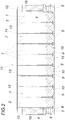
- the receptacles 5 have different receptacle depths with the cell bottoms 10 aligned in the same plane, as shown in FIGS Fig. 1 and 2 emerges.
- This can be achieved, for example, in that the insert 4 forming the membrane 9 is opposite the cell head side Contacting plane 14 is concave or curved convexly with respect to the bottom 15 of the base body 3.
- the battery cells 1 arranged in the middle of the carrier 11 have a larger heat transfer surface of the membrane 4 than the battery cells 2 arranged in the edge regions of the carrier 11, as shown in FIG Fig. 2 can be seen.
- the recessed cell jacket sections 13 of the battery cells 1, 2 adjoining the insert 4 are in the Fig. 1 and 2 Embodiment shown embedded in a potting compound 16.
Landscapes
- Chemical & Material Sciences (AREA)
- Chemical Kinetics & Catalysis (AREA)
- Electrochemistry (AREA)
- General Chemical & Material Sciences (AREA)
- Engineering & Computer Science (AREA)
- Manufacturing & Machinery (AREA)
- Secondary Cells (AREA)
- Battery Mounting, Suspending (AREA)
Description
- Die Erfindung bezieht sich auf eine Kühlvorrichtung für zu einem Modul zusammengesetzte Batteriezellen, mit einem Grundkörper und einem Einsatz, der Aufnahmen für einen Endabschnitt der Batteriezellen unter Aussparung des Zellenkopfes aufweist, wobei der Einsatz gemeinsam mit dem Grundkörper einen Strömungskanal für ein Temperierfluid begrenzt.
- Insbesondere im Zusammenhang mit zylindrische Batteriezellen umfassenden Batteriemodulen sind aus dem Stand der Technik Kühlvorrichtungen bekannt (
DE 102006010063 A1 ), die einen Grundkörper und einen Einsatz mit Aufnahmen für die einzelnen Batteriezellen aufweisen, wobei der Grundkörper gemeinsam mit dem Einsatz einen Strömungskanal für ein Temperierfluid begrenzt. Die Aufnahmen sind dergestalt, dass diese einen Endabschnitt der Batteriezellen unter Aussparung des Zellenkopfes jeweils umfangsseitig umschließen. Damit ein Abführen der betriebsbedingt anfallenden, durch die Batteriezellen generierte Verlustwärme ermöglicht wird, ist in derDE 102006010063 A1 vorgesehen, dass lediglich der Zellenboden in unmittelbarem thermischen Kontakt mit dem Temperierfluid steht. Zu diesem Zweck weisen die Aufnahmen zellenbodenseitig in Richtung Strömungskanal eine Durchtrittsöffnung für die darin eingesetzten Batteriezellen auf, sodass der Zellenboden, beispielsweise mittels am Strömungskanalgrund vorgesehener Abstützrippen für die Batteriezellen, zumindest teilweise in Kontakt mit dem Temperierfluid gehalten werden kann. Nachteilig ist daran allerdings, dass aufgrund des vorzugsweise aus hochfesten und formbeständigen Kunststoffen gefertigten Einsatzes und der Abstützrippen die Batteriezellen in den Aufnahmen festgelegt sind, sodass die in Abhängigkeit des elektrischen und thermischen Betriebszustandes auftretenden Schwankungen in der Zellengeometrie bzw. die Verformungen der Zellenkontur nicht kompensiert werden und dadurch sowohl die Batteriezellen als auch der - Kühlvorrichtungseinsatz mechanisch beschädigt werden können. Ein weiterer Nachteil besteht darin, dass bei derartigen Kühlvorrichtungen eine Kontaktierung der zellenbodenseitig, und damit im Bereich des negativen Zellenpols, unmittelbar in Kontakt mit dem Temperierfluid stehenden zylindrischen Batteriezellen entweder über ein leitfähiges Temperierfluid oder über einen, durch die Durchtrittsöffnung der Aufnahme hindurchragenden und mit dem negativen Zellenpol kontaktierten elektrischen Leiter erfolgen muss.
- Zudem besteht aufgrund veränderlicher Zellenkonturen ein erhöhtes Risiko eines Temperierfluidaustritts aus dem Strömungskanal, weil sich die Passung und damit das Spaltmaß zwischen der Aufnahme und der darin eingesetzten Batteriezelle zufolge der betriebsbedingt auftretenden geometrischen Änderungen so verändern kann, dass das unter Druck stehende Temperierfluid über die Durchtrittsöffnungen aus dem Strömungskanal entweicht. Überhaupt müssen bei derartigen Kühlvorrichtungen zur grundsätzlichen Vermeidung eines Temperierfluidaustrittes aus dem Strömungskanal im Vorfeld Fertigungstoleranzen der Batteriezellen mitberücksichtigt werden, um das Spaltmaß zwischen den Aufnahmen und den darin eingesetzten Batteriezellen möglichst gering halten zu können.
- Der Erfindung liegt somit die Aufgabe zugrunde, eine Kühlvorrichtung der eingangs geschilderten Art so auszugestalten, dass bei geringem Fertigungsaufwand und hoher Temperierleistung eine betriebssichere Aufnahme der Batteriezellen ermöglicht wird, ohne dass im Vorfeld Fertigungstoleranzen der Batteriezellen mitberücksichtigt werden müssten.
- Die Erfindung löst die gestellte Aufgabe dadurch, dass die Aufnahmen eine den Endabschnitt der Batteriezellen umschließende, fluiddichte Membran bilden, die zum Toleranzausgleich der einzelnen Batteriezellen verformbar ausgebildet ist und bei gefülltem Strömungskanal am Zellenboden anliegt.
- Zufolge dieser Merkmale kann ein zuverlässiger Toleranzausgleich bei betriebsbedingt auftretender Geometrieänderung sowohl bezüglich der Zellenkonturschwankungen als auch bezüglich der relativen Lage der in den Aufnahmen gehaltenen Zellen zueinander erfolgen, während sich die Membran über den dem Zellenboden gegenüberliegenden und in Einsetzrichtung eine Anschlagbegrenzung für die Batteriezellen darstellenden Aufnahmeabschnitt aufgrund des eingestellten Systemdrucks und der damit auf die Membran wirkenden Kraftbeaufschlagung durch das Temperierfluid an den Zellenboden anlegt. Die den Endabschnitt der Batteriezellen umschließende, verformbare Membran kann entsprechend der auftretenden Formänderungen der Zellenkontur gestaucht oder gedehnt werden und sich so an die Zellenkontur anpassen, wobei sichergestellt ist, dass die Endabschnitte der Batteriezellen in den jeweiligen Aufnahmen sowohl umfangsseitig, als auch über den dem Zellenboden gegenüberliegenden Aufnahmeabschnitt sicher gehalten werden. Um einfache konstruktive Bedingungen und gleichzeitig eine zusätzliche toleranzausgleichende Verlagerung der Batteriezellen zueinander zu ermöglichen, kann der erfindungsgemäße Einsatz einstückig als Membran ausgebildet und im Sinne eines mehrere Aufnahmen aufweisenden Formenträgers ausgestaltet sein. Im Hinblick auf die Temperierung von zylindrischen Batteriezellen hat sich zudem gezeigt, dass durch einen ausschließlichen Wärmeaustausch über den Zellenboden bzw. über den Zellenendabschnitt im Vergleich zu hinlänglich bekannten Manteltemperierungskonzepten eine mindestens ebenso effiziente Temperierung erreicht werden kann. Um daher einen möglichst guten Wärmeübergang zwischen dem Temperierfluid und den von der fluiddichten Membran umschlossenen Zellenboden zu ermöglichen, ist die Membran wenigstens im Bereich des Zellenbodens entsprechend nachgiebig ausgebildet, damit sich diese bei gefülltem Strömungskanal zufolge des dabei vorherrschenden Systemdrucks am Zellenboden anlegt. Insbesondere erfolgt das Anlegen der Membran an den Zellenboden so, dass eine gegebenenfalls zwischen Membran und Zellenboden liegende und als zusätzlicher Isolator den Wirkungsgrad der Kühlungsvorrichtung beeinträchtigende Luftmasse durch die Membran weitgehend verdrängt wird. Obwohl für die erfindungsgemäße Membran die Materialwahl grundsätzlich so getroffen werden kann, dass diese ein plastisch-elastisches Verformungsverhalten zeigt, ergeben sich besonders günstige Bedingungen, wenn die Membran aus elastischen Materialien gefertigt wird, die reversibel und nahezu hysteresefrei deformierbar sind, sodass die Batteriezellen bei entsprechender Dimensionierung der Aufnahmen in diesen unter Vorspannung gehalten werden können. Gemäß einigen Ausführungsformen kann die Membran beispielsweise auf Silikonpolymeren oder thermoplastischen Elastomeren basieren, wobei die Materialstärke so gewählt werden muss, dass bei ausreichender mechanischer Stabilität der Wärmedurchgangswiderstand möglichst gering ausfällt. Demgemäß können auf derartigen Kunststoffen basierende Membrane zur Verbesserung der Wärmetransporteigenschaften zusätzlich additiviert sein. Aufgrund der erfindungsgemäßen Maßnahmen ist es zudem möglich, einerseits unterschiedliche Temperierfluide ungeachtet deren elektrischen Leitfähigkeit zu verwenden und andererseits die Batteriezellen mit abisoliertem Zellenmantel in die Aufnahmen einzusetzen, sodass die negative Kontaktierung über die an den Einsatz anschließenden, ausgesparten Zellenmantelabschnitte erfolgen kann. Damit im Falle einer über den Zellenboden ausgasenden Batteriezelle ein sicheres Abführen des anfallenden Reaktionsgases sichergestellt werden kann, besteht die Möglichkeit, die erfindungsgemäße Membran im Bereich des Zellbodens so auszugestalten, dass das Reaktionsgas in das Temperierfluid des Strömungskanals geleitet wird, beispielsweise indem die Membran an dieser Stelle eine Sollbruchstelle aufweist. Um die Temperierleistung weiter zu verbessern, kann die erfindungsgemäße Kühlungsvorrichtung gemäß weiteren Ausführungsformen im Strömungskanal angeordnete Strömungsleitelemente, beispielsweise Leitrippen, zur Turbulenzverstärkung umfassen.
- Aufgrund unterschiedlicher elektrischer Betriebszustände sowie aufgrund unterschiedlicher konstruktiver Ausgestaltungen des Moduls können sich Modulbereiche bilden, die thermisch unterschiedlich stark beansprucht werden, was in weiterer Folge die Ausbildung unerwünschter Wärmestauzonen fördern und die Performance derartiger Module insgesamt vermindern kann.
- Um daher die Ausbildung einer gleichmäßigen Temperaturverteilung im Modul zu begünstigen, wird vorgeschlagen, dass die einzelnen Aufnahmen voneinander abweichende Wärmewiderstände aufweisen. Dies kann beispielsweise dadurch erreicht werden, dass die Aufnahmen im Bereich des Zellbodens eine thermische Isolationsschicht aufweisen oder dass die Aufnahmen, insbesondere für den Fall einstückig ausgebildeter Einsätze, unterschiedliche Materialstärken aufweisen. Dementsprechend können Modulbereiche mit thermisch stärker beanspruchten Zellen Aufnahmen mit geringerer Materialstärke aufweisen.
- Um eine konstante Wärmeabfuhr innerhalb des Moduls zu erzielen, können die Aufnahmen bei in gleicher Ebene ausgerichteten Zellenböden unterschiedliche Aufnahmetiefen umfassen. Dies bedeutet, dass die im Regelfall als Zellverbund mit konstanter Höhe und bezüglich ihrer zellkopfseitigen Kontaktierungsebene gleichmäßig ausgerichteten Batteriezellen mit ihren jeweiligen zellenbodenseitigen Endabschnitten so von den Aufnahmen umschlossen werden, dass die Größe der mit den jeweiligen Zellenendabschnitten in Kontakt stehende Wärmeübertragungsfläche der Aufnahmen unterschiedlich ausfällt. Beispielsweise kann dies gemäß einigen Ausführungsformen auf einfache Weise dadurch erreicht werden, dass der die Membran bildende Einsatz als gegenüber der zellkopfseitigen Kontaktierungsebene im Wesentlichen konkav oder konvex gewölbter bzw. abschnittsweise linear ansteigender bzw. abfallender Formenträger ausgestaltet ist, wobei der jeweilige Wölbungsverlauf davon abhängt, wo sich thermisch stärker oder weniger stark beanspruchte Batteriezellen innerhalb des Moduls bzw. des Zellverbunds befinden. Bei konkavem Wölbungsverlauf weisen demnach die randseitig angeordneten gegenüber den im Zellverbund mittig angeordneten Batteriezellen eine geringere Wärmeübertragungsfläche zu ihren jeweiligen Aufnahmen auf, wohingegen dies bei konvexem Wölbungsverlauf genau umgekehrt ist.
- Um eine sichere Positionierung sowie einen sicheren Halt der Batteriezellen in den Aufnahmen zu ermöglichen, wird vorgeschlagen, dass die Batteriezellen in die Aufnahmen eingeklebt sind. Besonders günstige Bedingungen ergeben sich beispielsweise, wenn die Klebung über eine in die Aufnahmen eingebrachte, adhäsive Wärmeleitpaste erfolgt.
- Die Erfindung bezieht sich auch auf einen Träger für zu einem Modul zusammengesetzte Batteriezellen mit einer erfindungsgemäßen Kühlvorrichtung, wobei die an den Einsatz anschließenden, ausgesparten Zellenabschnitte wenigstens teilweise in eine Vergussmasse eingebettet sind. Zufolge dieser Merkmale kann trotz der nachgiebigen Membran der Kühlvorrichtung unabhängig vom vorherrschenden Systemdruck ein sicherer Sitz und eine ausreichende mechanische Stabilität der Batteriezellen bei geringem Fertigungsaufwand erreicht werden. Die ausgesparten Zellenabschnitte werden dabei in ihrer Position innerhalb des Moduls zumindest in radialer Richtung der eingesetzten Batteriezellen so festgelegt, dass sich diese in assemblierten Zustand zueinander nicht verschwenken können. Um dennoch einen Toleranzausgleich der eingebetteten Batteriezellen zu ermöglichen, kann die Vergussmasse in vorteilhafter Weise so gewählt werden, dass diese im ausgehärteten Zustand eine ausreichende Nachgiebigkeit gegenüber den schwankenden Zellenkonturen aufweist. In vorteilhafter Weise ergibt sich zufolge dieser konstruktiven Maßnahmen zudem ein effizienterer Assembliervorgang, weil die Batteriezellen, ohne zuvor hinsichtlich der Zellengeometrie vorsortiert werden zu müssen, in den Einsatz gesteckt werden, wonach der Strömungskanal mit Systemdruck beaufschlagt wird und anschließend der Träger mit Vergussmasse verfüllt und somit die ausgesparten Zellenabschnitte darin eingebettet und die Batteriezellen in ihrer Position stabilisiert werden.
- In der Zeichnung ist der Erfindungsgegenstand beispielsweise dargestellt. Es zeigen
- Fig. 1
- Eine schematische Schnittansicht eines Trägers für zu einem Modul zusammengesetzte Batteriezellen mit einer erfindungsgemäßen Kühlvorrichtung und
- Fig. 2
- einen Schnitt entlang der Linie II - II der
Fig. 1 in einem kleineren Maßstab. - Wege zur Ausführung der Erfindung
- Eine erfindungsgemäße Kühlvorrichtung für einzelne, zu einem Modul zusammengesetzte Batteriezellen 1,2 weist einen Grundkörper 3 und einen Einsatz 4 auf. Der Einsatz 4 umfasst Aufnahmen 5 für einen Endabschnitt 6 der Batteriezellen 1,2, wobei der Zellenkopf 7 ausgespart bleibt. Gemeinsam mit dem Grundkörper 3 bildet der Einsatz 4 einen Strömungskanal 8 für ein Temperierfluid.
- Die Aufnahmen 5 bilden eine den Endabschnitt 6 der Batteriezellen 1,2 umschließende, fluiddichte Membran 9, die zum Toleranzausgleich der einzelnen Batteriezellen 1,2 verformbar ausgebildet ist. Bei gefülltem Strömungskanal 8 legt sich die Membran 9 zufolge des vorherrschenden Systemdrucks am Zellenboden 10 an.
- Gemäß besonders günstiger Ausführungsvarianten kann der Einsatz 4 einstückig als eine mehrere Aufnahmen 5 aufweisende Membran 9 im Sinne eines Formenträgers ausgebildet sein.
- Die erfindungsgemäße Kühlvorrichtung ist auf einem Träger 11 angeordnet, der einen von den Batteriezellen 1, 2 durchsetzten Trägerrahmen 12 aufweist. Die Kontaktierung der einzelnen Batteriezellen 1,2 kann beispielsweise über geschälte Zellmantelabschnitte 13, also Zellmantelabschnitte 13 mit abisoliertem Zellmantel, sowie über eine zellkopfseitige Kontaktierungsebene 14 erfolgen.
- Die Aufnahmen 5 weisen in einer Ausgestaltungsform bei in gleicher Ebene ausgerichteten Zellenböden 10 unterschiedliche Aufnahmetiefen auf, wie dies aus den
Fig. 1 und2 hervorgeht. Dies kann beispielsweise dadurch erreicht werden, dass der die Membran 9 bildende Einsatz 4 gegenüber der zellkopfseitigen Kontaktierungsebene 14 konkav bzw. gegenüber dem Boden 15 des Grundkörpers 3 konvex gewölbt ist. Zufolge dieser Ausgestaltungsvariante des Einsatzes 4 steht den in der Mitte des Trägers 11 angeordneten Batteriezellen 1 eine größere Wärmeübertragungsfläche der Membran 4 zur Verfügung als den in den Randbereichen des Trägers 11 angeordneten Batteriezellen 2, wie dies in derFig. 2 zu erkennen ist. - Die ausgesparten, an den Einsatz 4 anschließenden Zellmantelabschnitte 13 der Batteriezellen 1,2 sind in der in den
Fig. 1 und2 gezeigten Ausführungsform in eine Vergussmasse 16 eingebettet.
Claims (5)
- Kühlvorrichtung für zu einem Modul zusammengesetzte Batteriezellen (1, 2), mit einem Grundkörper (3) und einem Einsatz (4), der Aufnahmen (5) für einen Endabschnitt (6) der Batteriezellen (1, 2) unter Aussparung des Zellenkopfes (7) aufweist, wobei der Einsatz (4) gemeinsam mit dem Grundkörper (3) einen Strömungskanal (8) für ein Temperierfluid begrenzt, dadurch gekennzeichnet, dass die Aufnahmen (5) eine den Endabschnitt (6) der Batteriezellen (1, 2) umschließende, fluiddichte Membran (9) bilden, die zum Toleranzausgleich der einzelnen Batteriezellen (1, 2) verformbar ausgebildet ist und bei gefülltem Strömungskanal (8) am Zellenboden (10) anliegt.
- Kühlvorrichtung nach Anspruch 1, dadurch gekennzeichnet, dass die einzelnen Aufnahmen (5) voneinander abweichende Wärmewiderstände zur Ausbildung einer gleichmäßigen Temperaturverteilung im Modul aufweisen.
- Kühlvorrichtung nach Anspruch 1 oder 2, dadurch gekennzeichnet, dass die Aufnahmen (5) bei in gleicher Ebene ausgerichteten Zellenböden (10) unterschiedliche Aufnahmetiefen umfassen.
- Kühlvorrichtung nach einem der Ansprüche 1 bis 3, dadurch gekennzeichnet, dass die Batteriezellen (1, 2) in die Aufnahmen (5) eingeklebt sind.
- Träger (11) für zu einem Modul zusammengesetzte Batteriezellen (1, 2) mit einer Kühlvorrichtung nach einem der vorangegangenen Ansprüche, dadurch gekennzeichnet, dass die an den Einsatz (4) anschließenden, ausgesparten Zellenabschnitte wenigstens teilweise in eine Vergussmasse (16) eingebettet sind.
Applications Claiming Priority (2)
| Application Number | Priority Date | Filing Date | Title |
|---|---|---|---|
| ATA51006/2018A AT521251B1 (de) | 2018-11-15 | 2018-11-15 | Kühlvorrichtung für zu einem Modul zusammengesetzte Batteriezellen |
| PCT/AT2019/060325 WO2020097638A1 (de) | 2018-11-15 | 2019-10-03 | Kühlvorrichtung für zu einem modul zusammengesetzte batteriezellen |
Publications (2)
| Publication Number | Publication Date |
|---|---|
| EP3847713A1 EP3847713A1 (de) | 2021-07-14 |
| EP3847713B1 true EP3847713B1 (de) | 2021-12-15 |
Family
ID=68242198
Family Applications (1)
| Application Number | Title | Priority Date | Filing Date |
|---|---|---|---|
| EP19787134.6A Active EP3847713B1 (de) | 2018-11-15 | 2019-10-03 | Kühlvorrichtung für zu einem modul zusammengesetzte batteriezellen |
Country Status (5)
| Country | Link |
|---|---|
| US (1) | US11411267B2 (de) |
| EP (1) | EP3847713B1 (de) |
| CN (1) | CN113169389A (de) |
| AT (1) | AT521251B1 (de) |
| WO (1) | WO2020097638A1 (de) |
Families Citing this family (6)
| Publication number | Priority date | Publication date | Assignee | Title |
|---|---|---|---|---|
| GB2566169B (en) * | 2016-04-03 | 2022-10-26 | Brammo Inc | Battery pack and method of manufacture |
| AT522482B1 (de) * | 2019-06-07 | 2020-11-15 | Kreisel Electric Gmbh & Co Kg | Vorrichtung mit einem eine Öffnung zur mantelseitigen Aufnahme einer Batteriezelle aufweisenden Träger |
| AT523635B1 (de) * | 2020-09-18 | 2021-10-15 | Kreisel Electric Gmbh & Co Kg | Temperiervorrichtung für zu einem Modul zusammengesetzte Batteriezellen |
| EP4257391B1 (de) * | 2022-04-06 | 2025-12-10 | Nemak, S.A.B. de C.V. | Einstückiger batterieträger sowie verfahren zum druckgiessen eines einstückigen batterieträgers |
| CN116365110B (zh) * | 2023-05-31 | 2023-08-01 | 苏州精控能源科技有限公司 | 一种电池液冷板设计方法、装置以及电池液冷板 |
| DE102023114478A1 (de) | 2023-06-01 | 2024-12-05 | Hofer Powertrain Innovation Gmbh | Kühlung von Traktionsakkumulatoren mit Rundzellen-Arrays durch Kühlstrukturen mit Platten und Kühlschlangen sowie Vergleichmäßigung des internen Alterungsverhaltens des Traktionsakkumulators |
Family Cites Families (8)
| Publication number | Priority date | Publication date | Assignee | Title |
|---|---|---|---|---|
| US4913985A (en) | 1989-02-21 | 1990-04-03 | Zomeworks Corporation | Battery temperature regulation system |
| DE10223782B4 (de) * | 2002-05-29 | 2005-08-25 | Daimlerchrysler Ag | Batterie mit wenigstens einer elektrochemischen Speicherzelle und einer Kühleinrichtung und Verwendung einer Batterie |
| EP1773587B1 (de) | 2004-07-20 | 2012-04-04 | B.I. Group Plc | Recyclebarer verbundkunststoff und entsprechende herstellungsverfahren |
| DE102005017648B4 (de) * | 2005-04-15 | 2008-01-10 | Daimlerchrysler Ag | Flüssigkeitsgekühlte Batterie und Verfahren zum Betreiben einer solchen |
| DE102006010063B4 (de) | 2006-03-04 | 2021-09-02 | Bbp Kunststoffwerk Marbach Baier Gmbh | Kühleinrichtung für Batterien |
| TWI445233B (zh) * | 2009-10-27 | 2014-07-11 | Ind Tech Res Inst | 具有導熱膠之電池組 |
| US9620830B2 (en) | 2014-12-16 | 2017-04-11 | Xinen Technology Hong Kong Company, Ltd. | Vehicle battery module with cooling and safety features |
| DE102015219280A1 (de) * | 2015-10-06 | 2017-04-06 | Robert Bosch Gmbh | Batteriesystem mit Vergussmasse |
-
2018
- 2018-11-15 AT ATA51006/2018A patent/AT521251B1/de active
-
2019
- 2019-10-03 WO PCT/AT2019/060325 patent/WO2020097638A1/de not_active Ceased
- 2019-10-03 US US17/294,484 patent/US11411267B2/en active Active
- 2019-10-03 EP EP19787134.6A patent/EP3847713B1/de active Active
- 2019-10-03 CN CN201980075058.3A patent/CN113169389A/zh active Pending
Also Published As
| Publication number | Publication date |
|---|---|
| CN113169389A (zh) | 2021-07-23 |
| US11411267B2 (en) | 2022-08-09 |
| EP3847713A1 (de) | 2021-07-14 |
| US20210408623A1 (en) | 2021-12-30 |
| AT521251A4 (de) | 2019-12-15 |
| AT521251B1 (de) | 2019-12-15 |
| WO2020097638A1 (de) | 2020-05-22 |
Similar Documents
| Publication | Publication Date | Title |
|---|---|---|
| AT521251B1 (de) | Kühlvorrichtung für zu einem Modul zusammengesetzte Batteriezellen | |
| DE102007010742B4 (de) | Zellverbund einer Batterie, Batterie und deren Verwendung | |
| EP3220444B1 (de) | Batterie | |
| DE102021131784B3 (de) | Batterie, bevorzugt Traktionsbatterie | |
| DE102008059956B4 (de) | Batterie, insbesondere Fahrzeugbatterie | |
| DE102015225350A1 (de) | Gehäuse zur Aufnahme eines Brennstoffzellen-, Batterie- oder Kondensatorstapels | |
| DE202024101712U1 (de) | Flüssigkeitskühlplatte und Batteriepack | |
| DE102019210197A1 (de) | Energiespeicherzellenstapel | |
| DE102019210191A1 (de) | Energiespeicherzellenstapel | |
| DE102016222630A1 (de) | Kühlvorrichtung und Verfahren zum Herstellen einer Kühlvorrichtung | |
| DE102020104573B4 (de) | Batteriezellenanordnung, Batterie und Kraftfahrzeug | |
| DE102017219928A1 (de) | Modulgehäuse für ein stapelbares Batteriemodul, Batteriemodul sowie Batteriestapel | |
| EP4447198A1 (de) | Batterieanordnung mit variabel einstellbarer puffereinheit | |
| DE102013011892B4 (de) | Kühlvorrichtung für eine Batterie eines Kraftfahrzeugs, Batterie mit einer solchen Kühlvorrichtung sowie Herstellungsverfahren | |
| DE102016222629A1 (de) | Kühlvorrichtung und Verfahren zum Herstellen einer Kühlvorrichtung | |
| EP4095985A1 (de) | Batteriemodul für eine traktionsbatterie eines elektrofahrzeugs, traktionsbatterie für ein elektrofahrzeug und verfahren zum herstellen einer solchen traktionsbatterie | |
| AT514061B1 (de) | Wiederaufladbare Batterie | |
| DE102022127099B4 (de) | Immersions-Temperierungseinrichtung, Kraftfahrzeugbatterie mit einer solchen Temperierungseinrichtung und Kraftfahrzeug | |
| DE102022123968A1 (de) | Batteriegehäuse | |
| DE102015015392A1 (de) | Bipolarplatten-Anordnung, Brennstoffzellensystem und Fahrzeug | |
| DE102017117127B4 (de) | Vorrichtung zur Aufnahme einer elektrischen Energiespeichervorrichtung für ein Kraftfahrzeug | |
| DE102015210988A1 (de) | Batteriemodul mit einer Mehrzahl an Batteriezellen und Batterie mit einem solchen Batteriemodul | |
| WO2018024411A1 (de) | Akkumulatortemperieranordnung | |
| DE102022100744A1 (de) | Batteriezellenanordnung und Kühlelement | |
| EP3857624B1 (de) | Batteriemodul und verfahren zum herstellen desselben |
Legal Events
| Date | Code | Title | Description |
|---|---|---|---|
| STAA | Information on the status of an ep patent application or granted ep patent |
Free format text: STATUS: UNKNOWN |
|
| STAA | Information on the status of an ep patent application or granted ep patent |
Free format text: STATUS: THE INTERNATIONAL PUBLICATION HAS BEEN MADE |
|
| PUAI | Public reference made under article 153(3) epc to a published international application that has entered the european phase |
Free format text: ORIGINAL CODE: 0009012 |
|
| STAA | Information on the status of an ep patent application or granted ep patent |
Free format text: STATUS: REQUEST FOR EXAMINATION WAS MADE |
|
| GRAP | Despatch of communication of intention to grant a patent |
Free format text: ORIGINAL CODE: EPIDOSNIGR1 |
|
| STAA | Information on the status of an ep patent application or granted ep patent |
Free format text: STATUS: GRANT OF PATENT IS INTENDED |
|
| 17P | Request for examination filed |
Effective date: 20210409 |
|
| AK | Designated contracting states |
Kind code of ref document: A1 Designated state(s): AL AT BE BG CH CY CZ DE DK EE ES FI FR GB GR HR HU IE IS IT LI LT LU LV MC MK MT NL NO PL PT RO RS SE SI SK SM TR |
|
| INTG | Intention to grant announced |
Effective date: 20210712 |
|
| GRAS | Grant fee paid |
Free format text: ORIGINAL CODE: EPIDOSNIGR3 |
|
| GRAA | (expected) grant |
Free format text: ORIGINAL CODE: 0009210 |
|
| STAA | Information on the status of an ep patent application or granted ep patent |
Free format text: STATUS: THE PATENT HAS BEEN GRANTED |
|
| AK | Designated contracting states |
Kind code of ref document: B1 Designated state(s): AL AT BE BG CH CY CZ DE DK EE ES FI FR GB GR HR HU IE IS IT LI LT LU LV MC MK MT NL NO PL PT RO RS SE SI SK SM TR |
|
| DAV | Request for validation of the european patent (deleted) | ||
| DAX | Request for extension of the european patent (deleted) | ||
| REG | Reference to a national code |
Ref country code: GB Ref legal event code: FG4D Free format text: NOT ENGLISH Ref country code: CH Ref legal event code: EP |
|
| REG | Reference to a national code |
Ref country code: IE Ref legal event code: FG4D Free format text: LANGUAGE OF EP DOCUMENT: GERMAN Ref country code: DE Ref legal event code: R096 Ref document number: 502019003021 Country of ref document: DE |
|
| REG | Reference to a national code |
Ref country code: AT Ref legal event code: REF Ref document number: 1456167 Country of ref document: AT Kind code of ref document: T Effective date: 20220115 |
|
| REG | Reference to a national code |
Ref country code: LT Ref legal event code: MG9D |
|
| REG | Reference to a national code |
Ref country code: NL Ref legal event code: MP Effective date: 20211215 |
|
| PG25 | Lapsed in a contracting state [announced via postgrant information from national office to epo] |
Ref country code: RS Free format text: LAPSE BECAUSE OF FAILURE TO SUBMIT A TRANSLATION OF THE DESCRIPTION OR TO PAY THE FEE WITHIN THE PRESCRIBED TIME-LIMIT Effective date: 20211215 Ref country code: LT Free format text: LAPSE BECAUSE OF FAILURE TO SUBMIT A TRANSLATION OF THE DESCRIPTION OR TO PAY THE FEE WITHIN THE PRESCRIBED TIME-LIMIT Effective date: 20211215 Ref country code: FI Free format text: LAPSE BECAUSE OF FAILURE TO SUBMIT A TRANSLATION OF THE DESCRIPTION OR TO PAY THE FEE WITHIN THE PRESCRIBED TIME-LIMIT Effective date: 20211215 Ref country code: BG Free format text: LAPSE BECAUSE OF FAILURE TO SUBMIT A TRANSLATION OF THE DESCRIPTION OR TO PAY THE FEE WITHIN THE PRESCRIBED TIME-LIMIT Effective date: 20220315 |
|
| PG25 | Lapsed in a contracting state [announced via postgrant information from national office to epo] |
Ref country code: SE Free format text: LAPSE BECAUSE OF FAILURE TO SUBMIT A TRANSLATION OF THE DESCRIPTION OR TO PAY THE FEE WITHIN THE PRESCRIBED TIME-LIMIT Effective date: 20211215 Ref country code: NO Free format text: LAPSE BECAUSE OF FAILURE TO SUBMIT A TRANSLATION OF THE DESCRIPTION OR TO PAY THE FEE WITHIN THE PRESCRIBED TIME-LIMIT Effective date: 20220315 Ref country code: LV Free format text: LAPSE BECAUSE OF FAILURE TO SUBMIT A TRANSLATION OF THE DESCRIPTION OR TO PAY THE FEE WITHIN THE PRESCRIBED TIME-LIMIT Effective date: 20211215 Ref country code: HR Free format text: LAPSE BECAUSE OF FAILURE TO SUBMIT A TRANSLATION OF THE DESCRIPTION OR TO PAY THE FEE WITHIN THE PRESCRIBED TIME-LIMIT Effective date: 20211215 Ref country code: GR Free format text: LAPSE BECAUSE OF FAILURE TO SUBMIT A TRANSLATION OF THE DESCRIPTION OR TO PAY THE FEE WITHIN THE PRESCRIBED TIME-LIMIT Effective date: 20220316 |
|
| PG25 | Lapsed in a contracting state [announced via postgrant information from national office to epo] |
Ref country code: NL Free format text: LAPSE BECAUSE OF FAILURE TO SUBMIT A TRANSLATION OF THE DESCRIPTION OR TO PAY THE FEE WITHIN THE PRESCRIBED TIME-LIMIT Effective date: 20211215 |
|
| PG25 | Lapsed in a contracting state [announced via postgrant information from national office to epo] |
Ref country code: SM Free format text: LAPSE BECAUSE OF FAILURE TO SUBMIT A TRANSLATION OF THE DESCRIPTION OR TO PAY THE FEE WITHIN THE PRESCRIBED TIME-LIMIT Effective date: 20211215 Ref country code: SK Free format text: LAPSE BECAUSE OF FAILURE TO SUBMIT A TRANSLATION OF THE DESCRIPTION OR TO PAY THE FEE WITHIN THE PRESCRIBED TIME-LIMIT Effective date: 20211215 Ref country code: RO Free format text: LAPSE BECAUSE OF FAILURE TO SUBMIT A TRANSLATION OF THE DESCRIPTION OR TO PAY THE FEE WITHIN THE PRESCRIBED TIME-LIMIT Effective date: 20211215 Ref country code: PT Free format text: LAPSE BECAUSE OF FAILURE TO SUBMIT A TRANSLATION OF THE DESCRIPTION OR TO PAY THE FEE WITHIN THE PRESCRIBED TIME-LIMIT Effective date: 20220418 Ref country code: ES Free format text: LAPSE BECAUSE OF FAILURE TO SUBMIT A TRANSLATION OF THE DESCRIPTION OR TO PAY THE FEE WITHIN THE PRESCRIBED TIME-LIMIT Effective date: 20211215 Ref country code: EE Free format text: LAPSE BECAUSE OF FAILURE TO SUBMIT A TRANSLATION OF THE DESCRIPTION OR TO PAY THE FEE WITHIN THE PRESCRIBED TIME-LIMIT Effective date: 20211215 Ref country code: CZ Free format text: LAPSE BECAUSE OF FAILURE TO SUBMIT A TRANSLATION OF THE DESCRIPTION OR TO PAY THE FEE WITHIN THE PRESCRIBED TIME-LIMIT Effective date: 20211215 |
|
| REG | Reference to a national code |
Ref country code: DE Ref legal event code: R081 Ref document number: 502019003021 Country of ref document: DE Owner name: JOHN DEERE ELECTRIC POWERTRAIN LLC, MOLINE, US Free format text: FORMER OWNER: RAIFFEISENLANDESBANK OBEROESTERREICH AKTIENGESELLSCHAFT, LINZ, AT Ref country code: DE Ref legal event code: R081 Ref document number: 502019003021 Country of ref document: DE Owner name: KREISEL ELECTRIC GMBH & CO KG, AT Free format text: FORMER OWNER: RAIFFEISENLANDESBANK OBEROESTERREICH AKTIENGESELLSCHAFT, LINZ, AT |
|
| PG25 | Lapsed in a contracting state [announced via postgrant information from national office to epo] |
Ref country code: PL Free format text: LAPSE BECAUSE OF FAILURE TO SUBMIT A TRANSLATION OF THE DESCRIPTION OR TO PAY THE FEE WITHIN THE PRESCRIBED TIME-LIMIT Effective date: 20211215 |
|
| REG | Reference to a national code |
Ref country code: DE Ref legal event code: R097 Ref document number: 502019003021 Country of ref document: DE |
|
| PG25 | Lapsed in a contracting state [announced via postgrant information from national office to epo] |
Ref country code: IS Free format text: LAPSE BECAUSE OF FAILURE TO SUBMIT A TRANSLATION OF THE DESCRIPTION OR TO PAY THE FEE WITHIN THE PRESCRIBED TIME-LIMIT Effective date: 20220415 |
|
| PLBE | No opposition filed within time limit |
Free format text: ORIGINAL CODE: 0009261 |
|
| STAA | Information on the status of an ep patent application or granted ep patent |
Free format text: STATUS: NO OPPOSITION FILED WITHIN TIME LIMIT |
|
| PG25 | Lapsed in a contracting state [announced via postgrant information from national office to epo] |
Ref country code: DK Free format text: LAPSE BECAUSE OF FAILURE TO SUBMIT A TRANSLATION OF THE DESCRIPTION OR TO PAY THE FEE WITHIN THE PRESCRIBED TIME-LIMIT Effective date: 20211215 Ref country code: AL Free format text: LAPSE BECAUSE OF FAILURE TO SUBMIT A TRANSLATION OF THE DESCRIPTION OR TO PAY THE FEE WITHIN THE PRESCRIBED TIME-LIMIT Effective date: 20211215 |
|
| 26N | No opposition filed |
Effective date: 20220916 |
|
| REG | Reference to a national code |
Ref country code: DE Ref legal event code: R081 Ref document number: 502019003021 Country of ref document: DE Owner name: JOHN DEERE ELECTRIC POWERTRAIN LLC, MOLINE, US Free format text: FORMER OWNER: KREISEL ELECTRIC GMBH & CO KG, RAINBACH IM MUEHLKREIS, AT |
|
| PG25 | Lapsed in a contracting state [announced via postgrant information from national office to epo] |
Ref country code: MC Free format text: LAPSE BECAUSE OF FAILURE TO SUBMIT A TRANSLATION OF THE DESCRIPTION OR TO PAY THE FEE WITHIN THE PRESCRIBED TIME-LIMIT Effective date: 20211215 Ref country code: IT Free format text: LAPSE BECAUSE OF FAILURE TO SUBMIT A TRANSLATION OF THE DESCRIPTION OR TO PAY THE FEE WITHIN THE PRESCRIBED TIME-LIMIT Effective date: 20211215 |
|
| REG | Reference to a national code |
Ref country code: CH Ref legal event code: PL |
|
| REG | Reference to a national code |
Ref country code: BE Ref legal event code: MM Effective date: 20221031 |
|
| PG25 | Lapsed in a contracting state [announced via postgrant information from national office to epo] |
Ref country code: LU Free format text: LAPSE BECAUSE OF NON-PAYMENT OF DUE FEES Effective date: 20221003 |
|
| P01 | Opt-out of the competence of the unified patent court (upc) registered |
Effective date: 20230526 |
|
| PG25 | Lapsed in a contracting state [announced via postgrant information from national office to epo] |
Ref country code: LI Free format text: LAPSE BECAUSE OF NON-PAYMENT OF DUE FEES Effective date: 20221031 Ref country code: CH Free format text: LAPSE BECAUSE OF NON-PAYMENT OF DUE FEES Effective date: 20221031 |
|
| PG25 | Lapsed in a contracting state [announced via postgrant information from national office to epo] |
Ref country code: BE Free format text: LAPSE BECAUSE OF NON-PAYMENT OF DUE FEES Effective date: 20221031 |
|
| PG25 | Lapsed in a contracting state [announced via postgrant information from national office to epo] |
Ref country code: IE Free format text: LAPSE BECAUSE OF NON-PAYMENT OF DUE FEES Effective date: 20221003 |
|
| PG25 | Lapsed in a contracting state [announced via postgrant information from national office to epo] |
Ref country code: CY Free format text: LAPSE BECAUSE OF FAILURE TO SUBMIT A TRANSLATION OF THE DESCRIPTION OR TO PAY THE FEE WITHIN THE PRESCRIBED TIME-LIMIT Effective date: 20211215 |
|
| PG25 | Lapsed in a contracting state [announced via postgrant information from national office to epo] |
Ref country code: MK Free format text: LAPSE BECAUSE OF FAILURE TO SUBMIT A TRANSLATION OF THE DESCRIPTION OR TO PAY THE FEE WITHIN THE PRESCRIBED TIME-LIMIT Effective date: 20211215 Ref country code: HU Free format text: LAPSE BECAUSE OF FAILURE TO SUBMIT A TRANSLATION OF THE DESCRIPTION OR TO PAY THE FEE WITHIN THE PRESCRIBED TIME-LIMIT; INVALID AB INITIO Effective date: 20191003 |
|
| GBPC | Gb: european patent ceased through non-payment of renewal fee |
Effective date: 20231003 |
|
| PG25 | Lapsed in a contracting state [announced via postgrant information from national office to epo] |
Ref country code: TR Free format text: LAPSE BECAUSE OF FAILURE TO SUBMIT A TRANSLATION OF THE DESCRIPTION OR TO PAY THE FEE WITHIN THE PRESCRIBED TIME-LIMIT Effective date: 20211215 |
|
| PG25 | Lapsed in a contracting state [announced via postgrant information from national office to epo] |
Ref country code: GB Free format text: LAPSE BECAUSE OF NON-PAYMENT OF DUE FEES Effective date: 20231003 |
|
| PG25 | Lapsed in a contracting state [announced via postgrant information from national office to epo] |
Ref country code: GB Free format text: LAPSE BECAUSE OF NON-PAYMENT OF DUE FEES Effective date: 20231003 |
|
| PG25 | Lapsed in a contracting state [announced via postgrant information from national office to epo] |
Ref country code: MT Free format text: LAPSE BECAUSE OF FAILURE TO SUBMIT A TRANSLATION OF THE DESCRIPTION OR TO PAY THE FEE WITHIN THE PRESCRIBED TIME-LIMIT Effective date: 20211215 |
|
| REG | Reference to a national code |
Ref country code: AT Ref legal event code: MM01 Ref document number: 1456167 Country of ref document: AT Kind code of ref document: T Effective date: 20241003 |
|
| PGFP | Annual fee paid to national office [announced via postgrant information from national office to epo] |
Ref country code: DE Payment date: 20251003 Year of fee payment: 7 |
|
| PG25 | Lapsed in a contracting state [announced via postgrant information from national office to epo] |
Ref country code: AT Free format text: LAPSE BECAUSE OF NON-PAYMENT OF DUE FEES Effective date: 20241003 |
|
| PGFP | Annual fee paid to national office [announced via postgrant information from national office to epo] |
Ref country code: FR Payment date: 20251027 Year of fee payment: 7 |
|
| PG25 | Lapsed in a contracting state [announced via postgrant information from national office to epo] |
Ref country code: SI Free format text: LAPSE BECAUSE OF FAILURE TO SUBMIT A TRANSLATION OF THE DESCRIPTION OR TO PAY THE FEE WITHIN THE PRESCRIBED TIME-LIMIT Effective date: 20211215 |
|
| PGFP | Annual fee paid to national office [announced via postgrant information from national office to epo] |
Ref country code: AT Payment date: 20260410 Year of fee payment: 5 |