EP3846535B1 - Zellübergabeverfahren, vorrichtung und lesbares speichermedium - Google Patents
Zellübergabeverfahren, vorrichtung und lesbares speichermedium Download PDFInfo
- Publication number
- EP3846535B1 EP3846535B1 EP18932525.1A EP18932525A EP3846535B1 EP 3846535 B1 EP3846535 B1 EP 3846535B1 EP 18932525 A EP18932525 A EP 18932525A EP 3846535 B1 EP3846535 B1 EP 3846535B1
- Authority
- EP
- European Patent Office
- Prior art keywords
- cell
- synchronization
- handover
- cells
- terminal
- Prior art date
- Legal status (The legal status is an assumption and is not a legal conclusion. Google has not performed a legal analysis and makes no representation as to the accuracy of the status listed.)
- Active
Links
Images



Classifications
-
- H—ELECTRICITY
- H04—ELECTRIC COMMUNICATION TECHNIQUE
- H04W—WIRELESS COMMUNICATION NETWORKS
- H04W12/00—Security arrangements; Authentication; Protecting privacy or anonymity
- H04W12/03—Protecting confidentiality, e.g. by encryption
- H04W12/037—Protecting confidentiality, e.g. by encryption of the control plane, e.g. signalling traffic
-
- H—ELECTRICITY
- H04—ELECTRIC COMMUNICATION TECHNIQUE
- H04W—WIRELESS COMMUNICATION NETWORKS
- H04W12/00—Security arrangements; Authentication; Protecting privacy or anonymity
- H04W12/10—Integrity
- H04W12/106—Packet or message integrity
-
- H—ELECTRICITY
- H04—ELECTRIC COMMUNICATION TECHNIQUE
- H04W—WIRELESS COMMUNICATION NETWORKS
- H04W36/00—Hand-off or reselection arrangements
- H04W36/0005—Control or signalling for completing the hand-off
- H04W36/0055—Transmission or use of information for re-establishing the radio link
- H04W36/0064—Transmission or use of information for re-establishing the radio link of control information between different access points
-
- H—ELECTRICITY
- H04—ELECTRIC COMMUNICATION TECHNIQUE
- H04W—WIRELESS COMMUNICATION NETWORKS
- H04W36/00—Hand-off or reselection arrangements
- H04W36/0005—Control or signalling for completing the hand-off
- H04W36/0055—Transmission or use of information for re-establishing the radio link
- H04W36/0072—Transmission or use of information for re-establishing the radio link of resource information of target access point
-
- H—ELECTRICITY
- H04—ELECTRIC COMMUNICATION TECHNIQUE
- H04W—WIRELESS COMMUNICATION NETWORKS
- H04W36/00—Hand-off or reselection arrangements
- H04W36/0005—Control or signalling for completing the hand-off
- H04W36/0083—Determination of parameters used for hand-off, e.g. generation or modification of neighbour cell lists
- H04W36/00835—Determination of neighbour cell lists
-
- H—ELECTRICITY
- H04—ELECTRIC COMMUNICATION TECHNIQUE
- H04W—WIRELESS COMMUNICATION NETWORKS
- H04W36/00—Hand-off or reselection arrangements
- H04W36/08—Reselecting an access point
- H04W36/087—Reselecting an access point between radio units of access points
-
- H—ELECTRICITY
- H04—ELECTRIC COMMUNICATION TECHNIQUE
- H04W—WIRELESS COMMUNICATION NETWORKS
- H04W56/00—Synchronisation arrangements
- H04W56/001—Synchronization between nodes
-
- H—ELECTRICITY
- H04—ELECTRIC COMMUNICATION TECHNIQUE
- H04W—WIRELESS COMMUNICATION NETWORKS
- H04W76/00—Connection management
- H04W76/10—Connection setup
- H04W76/19—Connection re-establishment
Definitions
- the present disclosure generally relates to the wireless communication technology, and more particularly, to a cell handover.
- the terminal during a connection process between a terminal and a cell, the terminal further performs measurement on other nearby cells and reports the measurement results to a base station corresponding to a currently connected cell.
- the base station determines that the terminal needs a cell handover according to the measurement results reported by the terminal, the base station transmits a handover command to the terminal.
- the handover command indicates a target cell to which the terminal can perform a handover, and the terminal initiates the handover procedure to the target cell according to the handover command.
- a terminal When a terminal receives a handover command indicating at least two target cells from a base station, the terminal also receives a timing sequence relationship indicating whether the at least two target cells are in slot synchronization with each other.
- the terminal in response to initiation of a handover to the first cell and failure of the handover, the terminal may preferentially select a second cell which is in slot synchronization with the first cell, for initiating connection reestablishment.
- the terminal may omit the synchronization step in the reestablishment process to shorten the time required for the reestablishment process, so as to reduce time delay and service interruption caused by the synchronization in the cell handover or the reestablishment process, thereby improving efficiency of the cell handover and system communication performance.
- the embodiments of the present disclosure provide a solution for cell handover, which can be applied to a wireless communication system to implement a fast handover for a terminal from one cell to another cell.
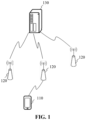
- FIG. 1 illustrates a schematic structural diagram of a wireless communication system according to some exemplary embodiments.
- the wireless communication system may include several terminals 110 and several base stations 120.
- a terminal 110 may be a device that provides voice and/or data connectivity to a user.
- the terminal 110 may communicate with one or more core networks through a Radio Access Network (RAN).
- RAN Radio Access Network
- the terminal 110 may be a mobile terminal, such as a mobile phone (or "cellular" phone) and a computer with a mobile terminal, for example, a mobile device that may be portable, pocket, handheld, computer built-in or vehicle mounted, for example, a STAtion (STA), a subscriber unit, a subscriber station, a mobile station, a mobile, a remote station, an access point, a remote terminal, an access terminal, a user terminal and a user agent, a user device, or a User Equipment (UE).
- the terminal 110 may be a device of an unmanned aerial vehicle.
- the base station 120 may be a network side device in the wireless communication system.
- the wireless communication system may be the 4th Generation (4G) mobile communication system, also known as the Long Term Evolution (LTE) system.
- the wireless communication system may be the 5G system, also known as the New Radio (NR) system.
- the wireless communication system may be the next generation of the 5G system.
- a base station 120 may be an evolved base station (eNB) used in the 4G system.
- the base station 120 may be a base station with a central-distributed architecture (gNB) in the 5G system.
- gNB central-distributed architecture
- the central unit may be configured with a Packet Data Convergence Protocol (PDCP) layer, a Radio Link Control (RLC) layer, and a Media Access Control (MAC) layer.
- PDCP Packet Data Convergence Protocol
- RLC Radio Link Control
- MAC Media Access Control
- the distributed units may be configured with a protocol stack of PHYsical (PHY) layer.
- PHY PHYsical
- a wireless connection between the base station 120 and the terminal 110 may be established via a wireless air interface.
- the wireless air interface may be a wireless air interface based on the 4th generation mobile communication network technology (4G) standard.
- the wireless air interface may be a wireless air interface based on the 5th Generation (5G) mobile communication network technology standard, for example, a New Radio.
- the wireless air interface may also be a wireless air interface based on 5G-based next generation mobile communication network technology standard.
- the wireless communication system may also include a network management device 130.
- the network management device 130 may be a core network device in the wireless communication system.
- the network management device 130 may be a Mobility Management Entity (MME) in an Evolved Packet Core (EPC) network.
- MME Mobility Management Entity
- EPC Evolved Packet Core
- the network management device 130 may be other core network devices, such as a Serving GateWay (SGW), a Public Data Network GateWay (PGW), a Policy and Charging Rules Function (PCRF) unit, or a Home Subscriber Server (HSS).
- SGW Serving GateWay
- PGW Public Data Network GateWay
- PCRF Policy and Charging Rules Function
- HSS Home Subscriber Server
- the aforementioned several base stations 120 may include a first base station and a second base station.
- the terminal 110 When the terminal 110 is moved from an area where the first base station is located to an area where the second base station is located, the terminal may perform a handover from a cell corresponding to the first base station to a cell corresponding to the second base station.
- FIG. 2 a flowchart of a cell handover according to an exemplary embodiment is illustrated.
- the process of a handover for a terminal from one cell to another cell may be as follows.
- the first base station transmits measurement control information to an accessed terminal.
- the first base station may transmit the measurement control information to the terminal.
- the measurement control information may include frequencies at which the measurement is performed, parameters to be measured and the time when the measurement report is reported.
- the frequencies at which the measurement is performed may be configured to indicate frequencies at which the base station performs cell measurement, and the parameters to be measured may include RSRP (Reference Signal Receiving Power), Reference Signal Receiving Quality (RSRQ), and etc..
- RSRP Reference Signal Receiving Power
- RSRQ Reference Signal Receiving Quality
- the terminal measures each cell covering the terminal according to the measurement control information. After receiving the measurement control information transmitted by the first base station, the terminal measures relevant parameters of each of surrounding cells according to the frequencies indicated by the measurement control information, and generates a measurement report.
- the terminal transmits the measurement report to the first base station.
- the terminal may transmit the measurement report generated according to the measurement result to the first base station, and the measurement report may include the measured parameters corresponding to each cell.
- the terminal may transmit the above measurement report on the uplink resource indicated by the first base station.
- the first base station determines that the terminal needs to perform cell handover according to the measurement report transmitted by the terminal. After receiving the measurement report transmitted by the terminal, the first base station may make a handover decision to determine whether the terminal satisfies the conditions for handover to one or more measured cells. If the terminal satisfies the conditions for handover to one or more cells (for example, if the measurements performed by the terminal indicate that the signal quality of the current cell 1 is poor, while the signal quality of another cell 2 is good, it can be considered that the terminal satisfies the conditions for handover from the cell 1 to the cell 2), the first base station may determine that the terminal needs to perform the cell handover.
- the first base station transmits a Handover Request to the second base station corresponding to the cell satisfying the conditions for handover.
- the aforementioned Handover Request may include information related to the terminal, such as service information and other access stratum information related to the terminal.
- the second base station determines to permit the terminal to perform the handover according to the Handover Request. After receiving the Handover Request, the second base station may permit the terminal to access according to the service information carried in the Handover Request, and then perform radio resource configuration.
- the second base station transmits a handover request response to the first base station.
- the second base station may generate the handover request response, which includes an access admission result and radio resource configuration information of the target cell, and transmits the handover request response to the first base station.
- the first station transmits a handover command to the terminal.
- the first base station After receiving the handover request response, the first base station transmits a handover response to the terminal, and the handover response may include the information carried in the handover request response.
- the terminal initiates a handover to the target cell corresponding to the second base station according to the handover command.
- the terminal may initiate synchronization with the target cell indicated by the handover command.
- the terminal may initiate a random access procedure to the target cell. For example, after receiving the handover command, the terminal starts a T304 timer and starts to perform synchronization with the target cell to initiate the random access procedure. If the random access procedure is successful before the T304 timer expires, the terminal may perform a handover from an original cell to the target cell. If the random access procedure is not successful when the T304 timer expires, the terminal may determine the handover fails, and initiate a reestablishment process to the target cell.
- the embodiments of the present disclosure provide an enhanced solution based on the handover process shown in FIG. 2 above, in order to improve the success probability of the cell handover. That is, in the above step 206, the first base station may initiate a handover request to base stations corresponding to a plurality of cells, and prepare a plurality of target cells for the terminal to perform the handover. And in the above step 29, the handover command transmitted to the terminal may carry a plurality of candidate handover target cells, and the terminal may select one cell from the plurality of target cells for handover according to a predetermined selection rule. If the handover fails, the terminal may select another cell from the plurality of target cells to initiate the reestablishment process.
- the terminal In initiating a reestablishment to another target cell, the terminal needs to perform resynchronization with the reestablished target cell.
- the terminal in performing synchronization with the target cell, the terminal needs to read the synchronization signal carried in the radio signal transmitted by the target cell.
- the synchronization signal may include a Primary Synchronization Signal (PSS) and a Secondary Synchronization Signal (SSS); in the 5G NR system, the synchronization signal may include a Synchronization Signal Block (SSB). Since the synchronization signals are periodically transmitted by the base station in time-domain, and the distribution of the synchronization signals in the time-domain is relatively sparse.
- the terminal may take long time to complete the synchronization with the target cell during the handover or reestablishment process between the terminal and the target cell, causing a long time delay and service interruption, and affecting the performance of the cell handover.
- the handover command transmitted to the terminal by the base station not only indicates the plurality of target cells, but also includes information indicating whether a plurality of target cells are in slot synchronization with one another (that is, time-domain resources for the synchronization signals are the same).
- the terminal can use a same synchronization result for performing handover or reestablishment, during the subsequent handover process or the reestablishment process after the failure of the handover. And there is no need to perform the synchronization step during each handover or reestablishment process. Therefore, the time delay and service interruption caused by synchronization during cell handover or reestablishment can be reduced, thereby improving the efficiency of cell handover and system communication performances.
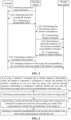
- FIG. 3 illustrates a flowchart of a method for cell handover according to an exemplary embodiment. As shown in FIG. 3 , the method for cell handover is applied in the wireless communication system in FIG. 1 , and is executed by the terminal 110 in FIG. 1 . The method may include the following steps.
- a handover command and a timing sequence relationship is received from a base station.
- the handover command is configured to instruct the terminal to perform a handover to one of at least two target cells
- the timing sequence relationship is configured to indicate whether any two cells of the at least two target cells are in slot synchronization with each other, and the time slot synchronization indicates that time-domain resources for synchronization signals for the two cells are the same.
- step 302 synchronization with a first cell of the at least two target cells is performed.
- a second cell is determined from the at least two target cells.
- the second cell is in slot synchronization with the first cell.
- the aforementioned result of the synchronization may be a resource location of a synchronization signal of a corresponding target cell and a resource location of other information associated with the synchronization signal, such as, a resource location of a broadcast channel and a resource location of a System Information Block (SIB) message.
- SIB System Information Block
- a connection reestablishment to the second cell is initiated according to the result of the synchronization with the first cell.
- the timing sequence relationship may be further configured to indicate whether any two cells of the at least two target cells have a same hyper frame number (HFN).
- the step of initiating the connection reestablishment to the second cell according to the result of the synchronization with the first cell may include acquiring an HFN of the first cell, in response to that the timing sequence relationship indicates that the HFN of the first cell and an HFN of the second cell are the same, where the HFN of the first cell is acquired during a process of performing synchronization with the first cell, and performing encryption and integrity protection for a reconfiguration complete message through the HFN of the first cell, when transmitting the reconfiguration complete message to the second cell.
- the step of determining the second cell from the at least two target cells may include acquiring a set of candidate cells according to the timing sequence relationship, wherein the set of candidate cells comprise one or more cells in the at least two target cells, which are in slot synchronization with the first cell, and to which the terminal has not initiated a connection reestablishment yet, and determining the second cell from the set of candidate cells according to a predetermined selection rule, in response to that the set of candidate cells comprise at least two cells.
- the step of determining the second cell from the set of candidate cells according to the predetermined selection rule may include determining a cell from the set of candidate cells as the second cell randomly, or determining a cell with a strongest signal strength among the set of candidate cells as the second cell, or determining a cell supporting a service type as the same as that corresponding to the terminal among the set of candidate cells as the second cell.
- the step of initiating the connection reestablishment to the second cell according to the result of the synchronization with the first cell may include performing signal measurement on the second cell to acquire a signal measurement result, where the signal measurement result comprises at least one of a reference signal receiving power (RSRP) or a reference signal receiving quality (RSRQ), and initiating the connection reestablishment to the second cell according to the result of the synchronization with the first cell, in response to that the signal measurement result is no lower than a predetermined measurement result threshold.
- RSRP reference signal receiving power
- RSRQ reference signal receiving quality
- the terminal when a terminal receives a handover command indicating at least two target cells from a base station, the terminal also receives a timing sequence relationship indicating whether the at least two target cells are in slot synchronization.
- the terminal in response to initiation of a handover to the first cell and failure of the handover, the terminal may preferentially select a second cell which is in slot synchronization with the first cell, for initiating connection reestablishment.
- the terminal may directly take the result of the synchronization with the first cell as a result of the synchronization with the second cell, and the terminal may directly acquire a message carried in the broadcast channel and the SIB message for accessing the second cell from the signals transmitted by the second cell.
- the terminal may omit the synchronization step in the reestablishment process to shorten the time required for the reestablishment process, so as to reduce time delay and service interruption caused by the synchronization in the cell handover or the reestablishment process, thereby improving efficiency of the cell handover and system communication performance.
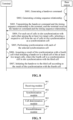
- FIG. 4 illustrates a flowchart of a method for cell handover according to an exemplary embodiment. As shown in FIG. 4 , the method for cell handover is applied in the wireless communication system in FIG. 1 , and is executed by the terminal 110 in FIG. 1 . The method may include the following steps.
- a handover command and a timing sequence relationship are received from a base station.
- the handover command is configured to instruct the terminal to perform a handover to one of at least two target cells
- the timing sequence relationship is configured to indicate whether any two cells of the at least two target cells are in slot synchronization with each other, and the time slot synchronization indicates that time-domain resources for synchronization signals for the two cells are the same.
- step 402 for each set of cells in slot synchronization with each other among the at least two target cells, a respective cell is selected from the set of cells in slot synchronization as a synchronization cell.
- step 403 synchronization with each of the selected synchronization cell is performed.
- step 404 when initiating a handover to a third cell of the at least two target cells, a result of the synchronization with a fourth cell is acquired, where the fourth cell is a synchronization cell in slot synchronization with the third cell.
- step 405 the handover to the third cell is initiated according to the result of the synchronization with the fourth cell.
- the timing sequence relationship may be further configured to indicate whether any two cells of the at least two target cells have a same hyper frame number (HFN).
- the step of initiating the handover to the third cell according to the result of the synchronization with the fourth cell may include acquiring an HFN of the fourth cell, in response to that the timing sequence relationship indicates that an HFN of the third cell and the HFN of the fourth cell are the same, where the HFN of the fourth cell is acquired during a process of performing synchronization with the fourth cell, and performing encryption and integrity protection for a reconfiguration complete message through the HFN of the fourth cell, when transmitting the reconfiguration complete message to the third cell.
- the method further includes determining a fifth cell from the at least two target cells, after initiating the handover to the third cell and failure of the handover, wherein the fifth cell is in slot synchronization with the fourth cell, and initiating a connection reestablishment to the fifth cell according to the result of the synchronization with the fourth cell.
- the terminal when a terminal receives a handover command indicating at least two target cells from a base station, the terminal also receives a timing sequence relationship indicating whether the at least two target cells are in slot synchronization.
- the terminal may perform synchronization with one of the cells; when performing the cell handover, if the terminal selects a third cell for handover, the terminal may directly use a result of the synchronization for a cell in slot synchronization with the third cell, to initiate a handover procedure to the third cell.
- the terminal may omit the synchronization step in the handover process to shorten the time required for the reestablishment process, so as to reduce time delay and service interruption caused by the synchronization in the cell handover or the reestablishment process, thereby improving efficiency of the cell handover and system communication performance.
- FIG. 5 illustrates a flowchart of a method for cell handover according to an example. As shown in FIG. 5 , the method for cell handover is applied in the wireless communication system in FIG. 1 , and is executed by the base station 120 in FIG. 1 . The method may include the following steps.
- a handover command is generated, where the handover command is configured to instruct a terminal to perform a handover to one of at least two target cells.
- a timing sequence relationship is generated, where the timing sequence relationship is configured to indicate whether any two cells of the at least two target cells are in slot synchronization with each other, and the slot synchronization indicates that time-domain resources for synchronization signals for the two cells are the same.
- step 503 the handover command and the timing sequence relationship are transmitted to the terminal.
- the step of generating the timing sequence relationship may include acquiring time-domain resource offset information of each of the at least two target cells, where for each of the at least two target cells, the time-domain resource offset information is configured to indicate a time-domain offset value between time-domain resource for the target cell and time-domain resource for the cell accessed by the terminal currently, and generating the timing sequence relationship according to the time-domain resource offset information of the each of the at least two target cells.
- the timing sequence relationship may be further configured to indicate whether any two cells of the at least two target cells have a same hyper frame number (HFN).
- HFN hyper frame number
- the handover command transmitted to the terminal by the base station not only indicates the plurality of target cells, but also includes the timing sequence relationship indicating whether the plurality of target cells are in slot synchronization.
- the terminal may use a same synchronization result for the handover or the reestablishment.
- delay and service interruption caused by the synchronization in the cell handover or the reestablishment process can be reduced, thereby improving efficiency of the cell handover and system communication performance.
- the present disclosure introduces the schemes shown in FIGS. 3 and 5 above, by taking the terminal omitting the synchronization step in the reestablishment process after the failure of the handover according to the timing sequence relationship of a plurality of target cells as an example.
- FIG. 6 illustrates a flowchart of a method for cell handover according to an exemplary embodiment. As shown in FIG. 6 , the method for cell handover is applied in the wireless communication system in FIG. 6 . The method may include the following steps.
- a base station In step 601, a base station generates a handover command, where the handover command is configured to instruct a terminal to perform a handover to one of at least two target cells.
- the base station may determine several cells satisfying handover conditions according to the measurement results, and transmit a handover request to several base stations, each corresponding to a respective one of the determined several cells respectively.
- the base station may determine the at least two cells that the terminal is permitted to access, indicated by the handover request responses returned by the several base stations, as the at least two target cells.
- the base station may generate a handover command that includes radio resource configuration information of the at least two target cells.
- the base station In step 602, the base station generates a timing sequence relationship, where the timing sequence relationship is configured to indicate whether any two cells of the at least two target cells are in slot synchronization with each other, and the slot synchronization indicates that time-domain resources for synchronization signals for the two cells are the same.
- the base station may further generate a timing sequence relationship configured to indicate whether any two cells of the at least two target cells arein slot synchronization with each other.
- the above slot synchronization may indicate that time-domain resources for synchronization signals in radio signals transmitted by the two cells are the same.
- FIG. 7 a schematic diagram of inter-cell slot synchronization involved in the embodiment of the present disclosure is illustrated.
- the time-frequency resources in diagonal grid regions are configured to carry synchronization signals.
- the diagonal grid regions for cell 1 and cell 2 i.e., the time-frequency resources occupied by the radio signals transmitted by cell 1 and cell 2 are same in time-domain
- the diagonal grid regions for cell 3 and cell 4 i.e., the time-frequency resources occupied by the radio signals transmitted by cell 3 and cell 4 are same in the time-domain.
- the diagonal grid regions for cell 1 and cell 3 i.e., the time-frequency resources occupied by the radio signals transmitted by cell 1 and cell 3 are different in the time-domain. Then, it can be considered that cell 1 and cell 2 are in slot synchronization with each other, cell 3 and cell 4 are in slot synchronization with each other, and cell 1 and cell 3 are not in slot synchronization with each other.
- the base station may acquire time-domain resource offset information of each of the at least two target cells.
- the time-domain resource offset information may be configured to indicate a time-domain offset value between time-domain resources for the each of the at least two target cells and time-domain resources for the cell accessed by the terminal currently.
- the base station may generate the timing sequence relationship according to the time-domain resource offset information of the each of the at least two target cells.
- the base station may directly or indirectly exchange information with other nearby base stations, to obtain, for each of the other nearby base stations, the time-domain offset value between the time-domain resources for a cell controlled by a respective one of the nearby base stations and the time-domain resource for the cell currently accessed by the terminal. And after receiving the handover request responses, the base station may generate the aforementioned timing sequence relationship, according to the target cells indicated by the handover request responses and the time-domain offset values between the time-domain resources for the target cells and the time-domain resource for the cell accessed by the terminal currently. Or, when a base station corresponding to a target cell returns a handover request response to the base station corresponding to the cell currently accessed by the terminal, the handover request response may carry time-domain indication information of the target cell.
- the time-domain indication information may be configured to indicate time-domain positions of the time-frequency resources for the target cell.
- the base station may obtain the time-domain resource offset information for the target cell according to the time-domain indication information carried in the handover request response and the time-domain indication information for the cell currently accessed by the terminal, and thereby generate the aforementioned timing sequence relationship.
- a time-domain offset value between time-domain resources for two cells may refer to a time-domain offset value between start time points of subframes for the two cells.
- the time-domain offset value between the time-domain resources for the two cells may be represented by an offset between the time-domain resources occupied by the synchronization signals in the radio signals respectively transmitted by the two cells.
- cell 1 is the cell currently accessed by the terminal
- cell 2, cell 3, and cell 4 are the target cells that three terminals can perform a handover to access.
- the time-domain offset value between the synchronization signals of cell 1 and cell 2 is 0, while the time-domain offset value between the synchronization signal of cell 3 and the synchronization signal of cell 1 and the time-domain offset value between the synchronization signal of cell 4 and the synchronization signal of cell 1 are the same and is not equal to zero, then the aforementioned timing sequence relationship generated by the base station may indicate that cell 3 is in slot synchronization with cell 4, and cell 2 is not in slot synchronization with cell 3 or cell 4.
- the aforementioned timing sequence relationship may be represented in the form of an array.
- the aforementioned timing sequence relationship may include at least one array, and each of the at least one array may be composed of identifications of the cells that are in slot synchronization, and two cells from two different arrays are not in slot synchronization.
- the timing sequence relationship generated by the base station may include two arrays: ⁇ identification of cell 2 ⁇ , ⁇ identification of cell 3; identification of cell 4 ⁇ .
- the timing sequence relationship may be further configured to indicate whether any two cells of the at least two target cells have the same hyper frame number (HFN).
- HFN hyper frame number
- the above base station may directly or indirectly exchange information with other nearby base stations, to obtain the HFNs of cells controlled by the other nearby base stations. And after receiving the handover request response, the base station may generate the above timing sequence relationship according to the target cells indicated by the handover request responses and the pre-acquired HFNs of the target cells, and the HFN of the cell currently accessed by the terminal. Or, when a base station corresponding to a target cell returns the handover request response to the base station corresponding to the cell currently accessed by the terminal, the HFN of the target cell may be carried in the handover request response. After receiving the handover request response, the base station corresponding to the cell currently accessed by the terminal may generate the above timing sequence relationship, according to the HFNs of the target cells carried in the handover request responses and the HFN of the cell currently accessed by the terminal.
- step 601 and step 602 may be performed at the same time, or the above step 602 may also be performed after the step 601.
- the embodiments of the present disclosure do not limit the execution order of steps 601 and 602.
- the base station transmits the handover command and the timing sequence relationship to the terminal, and the terminal receives the handover command and the timing sequence relationship.
- the base station may include the timing sequence relationship in the handover command, and transmit the handover command to the terminal.
- the base station may transmit the timing sequence relationship through other signaling independent of the handover command.
- the embodiments of the present disclosure do not limit the mode for transmitting the timing sequence relationship and the handover command.
- the terminal performs synchronization with a first cell of the at least two target cells.
- the terminal may select, according to a predetermined cell selection rule, a cell from at least two target cells as the first cell to be switched preferentially. For instance, the terminal may select the first cell randomly.
- the terminal may take the cell with the highest signal strength among the at least two target cells as the first cell, according to the premeasured signal strengths of the cells (corresponding to the signal strengths measured in step 23 in the embodiment shown in FIG. 2 above).
- the terminal may obtain a current service type of the terminal and service types supported by each of at least two target cells, and select one of the at least two target cells that supports the current service type of the terminal as the first cell. For example, the terminal may select the cell with the highest signal strength from the target cells that supports the current service type of the terminal as the first cell.
- the terminal may select a target cell with the highest signal strength and/or a target cell supporting the current service type of the terminal from a set of target cells including the most cells in slot synchronization, as the first cell.
- the embodiments of the present disclosure do not limit the mode in which the terminal selects the first cell.
- step 605 in response to initiation of a handover to the first cell according to a result of the synchronization with the first cell and failure of the handover, the terminal determines a second cell in slot synchronization with the first cell from the at least two target cells.
- the initiation of the handover to the first cell and the failure of the handover may indicate that during a time period of a T304 timer, one of the steps, i.e., the step that the terminal performs synchronization with the first cell to the step that the terminal successfully performs the handover to the first cell, fails.
- the terminal does not receive a Physical Downlink Control CHannel (PDCCH) or other random access messages (such as, msg4) transmitted by the target cells when the T304 timer reaches a predetermined time period.
- PDCCH Physical Downlink Control CHannel
- msg4 random access messages
- the terminal may acquire a set of candidate cells according to the timing sequence relationship.
- the set of candidate cells may include one or more cells, which are in slot synchronization with the first cell and to which the terminal has not initiated a connection reestablishment yet, among the at least two target cells.
- the terminal may determine the second cell from the set of candidate cells according to a predetermined selection rule, in response to that the set of candidate cells include at least two cells.
- the step of determining the second cell from the set of candidate cells according to the predetermined selection rule may include determining a cell from the set of candidate cells as the second cell randomly, or determining a cell with a strongest signal strength among the set of candidate cells as the second cell, or determining a cell supporting a service type as the same as that corresponding to the terminal among the set of candidate cells as the second cell.
- step 606 the terminal performs signal measurement on the second cell to acquire a signal measurement result, wherein the signal measurement result comprises at least one of a reference signal receiving power (RSRP) or a reference signal receiving quality (RSRQ).
- RSRP reference signal receiving power
- RSRQ reference signal receiving quality
- the terminal Since the terminal performs cell measurement and reports the cell, there may be a time period between receiving the handover command and the connection reestablishment after the failure of the handover. During the time period, due to the rapid movement of the terminal and other reasons, the signal quality of the target cells may change, resulting in the deterioration of the signal quality of one or some target cells (for example, the terminal moves out of the coverage of the target cells, or the terminal moves into an underground garage, an elevator, or other locations where the signal is severely blocked). Therefore, before the terminal initiates the connection reestablishment, the terminal may measure the signal of the determined second cell again to obtain the parameters such as RSRP and/or RSRQ of the second cell.
- the terminal may measure the signal of the determined second cell again to obtain the parameters such as RSRP and/or RSRQ of the second cell.
- the terminal initiates the connection reestablishment to the second cell according to the result of the synchronization with the first cell, in response to that the signal measurement result is no lower than a predetermined measurement result threshold.
- the above connection reestablishment may refer to a connection reestablishment of Radio Resource Control (RRC).
- RRC Radio Resource Control
- the terminal may initiate a connection reestablishment to the second cell according to the result of the synchronization with the first cell. Since the second cell is in slot synchronization with the first cell (i.e.
- the terminal may directly take the result of the synchronization with the first cell as a result of the synchronization with the second cell, and then directly acquire a message carried in the broadcast channel and the SIB message for accessing the second cell from the signals transmitted by the second cell.
- the terminal can successfully complete the subsequent steps for the connection reestablishment without the synchronization step.
- the timing sequence relationship may further be configured to indicate whether any two cells of the at least two target cells have a same hyper frame numbers (HFN).
- HFN hyper frame numbers
- the terminal may acquire the HFN of the first cell, where the HFN of the first cell is acquired during a process of performing synchronization with the first cell.
- the terminal may perform encryption and integrity protection for a reconfiguration complete message through the HFN of the first cell, when transmitting the reconfiguration complete message to the second cell.
- the terminal may update an algorithm and key for encryption and integrity protection for a Packet Data Convergence Protocol (PDCP) layer according to the configuration carried in the handover command, and after receiving the reconfiguration complete message generated by a RRC layer at the PDCP layer, the terminal may process the reconfiguration complete message according to the new algorithm for encryption and integrity protection.
- the input parameters for encryption and integrity protection may include DIRECTION, BEARER and COUNT, where DIRECTION represents a direction of data transmission, BEARER represents a radio bearer identifier, and COUNT represents a counter.
- COUNT may be composed of an HFN and a transmission sequence number for the PDCP layer.
- the transmission sequence number will be increased by one.
- the HFN may be configured by system broadcast, and the HFN may be carried in a SIB 1 message in both LTE system and NR system.
- the base station may also indicate whether two target cells have a same HFN according to the timing sequence relationship.
- the terminal may not only omit the step of synchronization with the second cell, but also may perform the encryption and integrity protection for a reconfiguration complete message directly based on the HFN of the first cell obtained during the synchronization with the first cell.
- the terminal when the terminal receives the handover command indicating at least two target cells from the base station, the terminal may also receive the timing sequence relationship indicating whether the at least two target cells are in slot synchronization with each other.
- the terminal in response to initiation of a handover to the first cell and failure of the handover, the terminal may preferentially initiate a reestablishment to a second cell that is in slot synchronization with the first cell.
- the time required for the reestablishment process may be shortened, thereby reducing time delay and service interruption caused by the synchronization in the cell handover or the reestablishment process, thereby improving efficiency of the cell handover and system communication performance.
- the terminal may perform the encryption and integrity protection for a reconfiguration complete message directly based on the HFN of the first cell, to further shorten the time required for the connection reestablishment, thereby improving efficiency of the cell handover and system communication performance.
- the present disclosure introduces the schemes shown in FIG. 4 and FIG. 5 above by taking that an example that the terminal performs the synchronization before the cell handover according to the timing sequence relationship of one or more target cells, and skips the synchronization step during the handover process and the reestablishment process after the failure of the handover.
- FIG. 8 illustrates a flowchart of a cell handover according to an exemplary embodiment. As shown in FIG. 8 , the method for cell handover is applied in the wireless communication system in FIG. 1 , and is executed by the terminal 110 in FIG. 1 . The method may include the following steps.
- a base station In step 801, a base station generates a handover command, where the handover command is configured to instruct a terminal to perform a handover to one of at least two target cells.
- the base station In step 802, the base station generates a timing sequence relationship, where the timing sequence relationship is configured to indicate whether any two cells of the at least two target cells are in slot synchronization with each other, and the slot synchronization indicates that time-domain resources for synchronization signals for the two cells are the same.
- the base station may acquire time-domain resource offset information of each of the at least two target cells.
- the time-domain resource offset information may be configured to indicate a time-domain offset value between time-domain resource for the each of the at least two target cells and time-domain resource for the cell accessed by the terminal currently.
- the base station may generate the timing sequence relationship according to the time-domain resource offset information of the each of the at least two target cells.
- the timing sequence relationship may be further configured to indicate whether any two cells of the at least two target cells have a same hyper frame number (HFN).
- HFN hyper frame number
- step 803 the base station transmits the handover command and the timing sequence relationship to the terminal, and the terminal receives the handover command and the timing sequence relationship.
- step 801 to step 803 for the execution process of the above step 801 to step 803, reference may be made to the description of step 601 to step 603 in the embodiment shown in FIG. 6 , which will not be repeated here.
- step 804 for each set of cells in slot synchronization with each other among the at least two target cells, the terminal selects a cell from the set of cells in slot synchronization with each other as a synchronization cell.
- the terminal may select one cell from the at least one target cell as a synchronization cell.
- the at least two target cells include cell A, cell B and cell C, where cell A is in slot synchronization with cell B, and cell A is not in slot synchronization with cell C
- the terminal may select one of cell A and cell B as a synchronization cell (e.g. Cell A), may further select Cell C to obtain a synchronization cell.
- the terminal may select one of the two or more cells as the synchronization cell randomly, or, the terminal may select a cell with the best signal quality, among the two or more cells, as a synchronization cell.
- step 805 the terminal performs synchronization with each of the selected synchronization cells respectively.
- the terminal Before initiating the handover, the terminal may keep synchronization with all the selected synchronization cells at the same time, where the selected cells in synchronization with the terminal are not in slot synchronization with each other.
- step 806 when the terminal determines to initiate a handover to a third cell of the at least two target cells, the terminal acquires a result of the synchronization with a fourth cell, where the fourth cell is a synchronization cell in slot synchronization with the third cell.
- the terminal firstly determines the target cell to be switched (i.e., the third cell), and determines a cell (i.e., the fourth cell) in slot synchronization the third cell and in synchronization with the terminal; and the terminal acquires a result of the synchronization with the fourth cell and takes the acquired result of the synchronization as a result of the synchronization with the third cell.
- the third cell and the fourth cell may be two different cells; or, the third cell and the fourth cell may be a same cell.
- the terminal keeps the synchronization with both cell A and cell D before the initiation of the handover; if the terminal selects to cell B for initiating the handover, the terminal may directly acquire a result of the synchronization with cell A, and take the acquired result of the synchronization as the result of the synchronization with cell B.
- step 807 the terminal initiates the handover to the third cell according to the result of the synchronization with the fourth cell. For instance, assuming the terminal selects to perform a handover to cell B, and the terminal has performed synchronization with cell A in advance, where cell A is in slot synchronization with cell B, the terminal may initiate the handover to cell B directly according to the result of the synchronization with cell A, without performing synchronization with cell B.
- the timing sequence relationship may be further configured to indicate whether any two cells of the at least two target cells have a same hyper frame numbers (HFN).
- HFN hyper frame numbers
- the terminal may acquire the HFN of the fourth cell, where the HFN of the fourth cell is acquired during a process of performing synchronization with the fourth cell.
- the terminal may perform encryption and integrity protection for a reconfiguration complete message through the HFN of the fourth cell, when transmitting the reconfiguration complete message to the third cell.
- the terminal may determine a fifth cell from the at least two target cells, where the fifth cell is in slot synchronization with the fourth cell.
- the terminal may initiate a connection reestablishment to the fifth cell according to the result of the synchronization with the fourth cell.
- the terminal may preferentially select another cell, which is in slot synchronization with the fourth cell, for the connection reestablishment.
- the terminal keeps the synchronization with cell A in advance; and after initiation of a handover to cell B and failure of the handover, the terminal may preferentially select cell D for the connection reestablishment. Or, after the initiation of the handover to the third cell and the failure of the handover, the terminal may select a cell from the remaining target cells for connection reestablishment according to a predetermined selection manner, for example, signal strength and/or service type.
- the terminal may determine a sixth cell from the at least two target cells, where the sixth cell is any cell among the at least two target cells other than the third cell.
- the terminal may acquire a result of the synchronization with a seventh cell, which is a synchronization cell in slot synchronization with the sixth cell.
- the terminal may initiate a connection reestablishment to the sixth cell according to the result of the synchronization with the seventh cell.
- the terminal when a terminal receives a handover command indicating at least two target cells from a base station, the terminal also receives a timing sequence relationship indicating whether the at least two target cells are in slot synchronization.
- the terminal may perform synchronization with one of the cells; when performing the cell handover, if the terminal selects a third cell for handover, the terminal may directly use a result of the synchronization for a cell in slot synchronization with the third cell, to initiate a handover procedure to the third cell.
- the terminal may omit the synchronization step in the handover process to shorten the time required for the handover process, so as to reduce time delay and service interruption caused by the synchronization in the cell handover or the reestablishment process, thereby improving efficiency of the cell handover and system communication performance.
- the terminal in response to that the third cell and the fourth cell are in slot synchronization with each other and have a same HFN, the terminal may perform encryption and integrity protection for a reconfiguration complete message to be transmitted to the third cell directly based on the HFN of the fourth cell.
- the time required for the connection reestablishment may further be shortened, thereby improving efficiency of the cell handover and system communication performance.
- FIG. 9 illustrates a block diagram of an apparatus for cell handover according to an exemplary embodiment.
- the apparatus for cell handover may be implemented as all or part of the terminal in the implementation environment shown in FIG. 1 through hardware or a combination of software and hardware, so as to perform the steps executed by the terminal in any of the embodiments shown in FIG. 3 or FIG. 6 .
- the apparatus for cell handover may include a receiving module 901 that is configured to receive a handover command and a timing sequence relationship from a base station, wherein the handover command is configured to instruct the terminal to perform a handover to one of at least two target cells, and the timing sequence relationship is configured to indicate whether any two cells of the at least two target cells are in slot synchronization with each other, and the time slot synchronization indicates that time-domain resources for synchronization signals for the two cells are the same.
- the apparatus can further include a synchronization module 902 that is configured to perform synchronization with a first cell of the at least two target cells, a cell determination module 903 that is configured to determine a second cell from the at least two target cells, in response to initiation of a handover to the first cell according to a result of the synchronization with the first cell and failure of the handover, wherein the second cell is in slot synchronization with the first cell, and a reestablishment module 904 that is configured to initiate a connection reestablishment to the second cell according to the result of the synchronization with the first cell.
- a synchronization module 902 that is configured to perform synchronization with a first cell of the at least two target cells
- a cell determination module 903 that is configured to determine a second cell from the at least two target cells, in response to initiation of a handover to the first cell according to a result of the synchronization with the first cell and failure of the handover, wherein the second cell is in slot synchron
- the timing sequence relationship may be further configured to indicate whether any two cells of the at least two target cells have a same hyper frame number (HFN).
- HFN hyper frame number
- the reestablishment module 904 may be further configured to acquire an HFN of the first cell, in response to that the timing sequence relationship indicates that the HFN of the first cell and an HFN of the second cell are the same, wherein the HFN of the first cell is acquired during a process of performing synchronization with the first cell, and perform encryption and integrity protection for a reconfiguration complete message to be transmitted to the second cell through the HFN of the first cell, in response to transmitting the reconfiguration complete message to the second cell.
- the cell determination module 903 may be further configured to acquire a set of candidate cells according to the timing sequence relationship, wherein the set of candidate cells includes one or more cells in the at least two target cells, which are in slot synchronization with the first cell, and to which the terminal has not initiated the connection reestablishment yet, and determine the second cell from the set of candidate cells according to a predetermined selection rule, in response to that the set of candidate cells comprise at least two cells.
- the cell determination module 903 may be further configured to determine a cell from the set of candidate cells as the second cell randomly, or determine a cell with a strongest signal strength among the set of candidate cells as the second cell, or determine a cell supporting a service type as the same as that corresponding to the terminal among the set of candidate cells as the second cell.
- the reestablishment module 904 may be further configured to perform signal measurement on the second cell to acquire a signal measurement result, wherein the signal measurement result comprises at least one of a reference signal receiving power (RSRP) or a reference signal receiving quality (RSRQ), and initiate the connection reestablishment to the second cell according to the result of the synchronization with the first cell, in response to that the signal measurement result is no lower than a predetermined measurement result threshold.
- RSRP reference signal receiving power
- RSRQ reference signal receiving quality
- FIG. 10 illustrates a block diagram of an apparatus for cell handover according to an exemplary embodiment.
- the apparatus for cell handover may be implemented as all or part of the terminal in the implementation environment shown in FIG. 1 through hardware or a combination of software and hardware, so as to perform the steps executed by the terminal in any of the embodiments shown in FIG. 4 or FIG. 8 .
- the apparatus for cell handover may include a receiving module 1001, configured to receive a handover command and a timing sequence relationship from a base station, wherein the handover command is configured to instruct the terminal to perform a handover to one of at least two target cells, and the timing sequence relationship is configured to indicate whether any two cells of the at least two target cells are in slot synchronization with each other, wherein the time slot synchronization indicates that time-domain resources for synchronization signals for the two cells are the same.
- the apparatus can further include a cell selection module 1002, configured to for each set of cells in slot synchronization with each other among the at least two target cells, select a respective cell from the set of cells in slot synchronization as a synchronization cell, a synchronization module 1003, configured to perform synchronization with each of the selected synchronization cell, a result acquisition module 1004, configured to acquire a result of the synchronization with a fourth cell, when initiating a handover to a third cell of the at least two target cells, wherein the fourth cell is a synchronization cell in slot synchronization with the third cell, and a handover module 1005, configured to initiate the handover to the third cell according to the result of the synchronization with the fourth cell.
- a cell selection module 1002 configured to for each set of cells in slot synchronization with each other among the at least two target cells, select a respective cell from the set of cells in slot synchronization as a synchronization cell
- a synchronization module 1003 configured to perform synchronization with each of the
- the timing sequence relationship may be further configured to indicate whether any two cells of the at least two target cells have a same hyper frame number (HFN).
- HFN hyper frame number
- the handover module 405 may be further configured to acquire an HFN of the fourth cell, in response to that the timing sequence relationship indicates that an HFN of the third cell and the HFN of the fourth cell are the same, wherein the HFN of the fourth cell is acquired during a process of performing synchronization with the fourth cell, and perform encryption and integrity protection for a reconfiguration complete message to be transmitted to the third cell through the HFN of the fourth cell, in response to transmitting the reconfiguration complete message to the third cell.
- the apparatus may further include a cell determination module that is configured to determine a fifth cell from the at least two target cells, after initiation of a handover to the third cell and failure of the handover, wherein the fifth cell is in slot synchronization with the fourth cell, and a reestablishment module that is configured to initiate a connection reestablishment to the fifth cell according to the result of the synchronization with the fourth cell.
- a cell determination module that is configured to determine a fifth cell from the at least two target cells, after initiation of a handover to the third cell and failure of the handover, wherein the fifth cell is in slot synchronization with the fourth cell
- a reestablishment module that is configured to initiate a connection reestablishment to the fifth cell according to the result of the synchronization with the fourth cell.
- FIG. 11 illustrates a block diagram of an apparatus for cell handover according to an example.
- the apparatus for cell handover may be implemented as all or part of the base station in the implementation environment shown in FIG. 1 through hardware or a combination of software and hardware, so as to perform the steps executed by the base station in any of the embodiments shown in FIG. 5 , FIG. 6 or FIG. 8 .
- the apparatus for cell handover may include an instruction generation module 1101 that is configured to generate a handover command, wherein the handover command is configured to instruct a terminal to perform a handover to one of at least two target cells, a relationship generation module 1102 that is configured to generate a timing sequence relationship, wherein the timing sequence relationship is configured to indicate whether any two cells of the at least two target cells are in slot synchronization with each other, wherein the slot synchronization indicates that time-domain resources for synchronization signals for the two cells are the same, and a transmitting module 1103 that is configured to transmit the handover command and the timing sequence relationship to the terminal.
- an instruction generation module 1101 that is configured to generate a handover command, wherein the handover command is configured to instruct a terminal to perform a handover to one of at least two target cells
- a relationship generation module 1102 that is configured to generate a timing sequence relationship, wherein the timing sequence relationship is configured to indicate whether any two cells of the at least two target cells are in slot synchronization with each other, wherein the
- the relationship generation module 1102 may be further configured to acquire time-domain resource offset information of each of the at least two target cells, wherein for each of the at least two target cells, the time-domain resource offset information is configured to indicate a time-domain offset value between time-domain resource for the target cell and time-domain resource for the cell accessed by the terminal currently, and generate the timing sequence relationship according to the time-domain resource offset information of the each of the at least two target cells.
- the timing sequence relationship is further configured to indicate whether any two cells of the at least two target cells have a same hyper frame number (HFN).
- HFN hyper frame number
- the system includes a terminal and a base station.
- the terminal includes the apparatus for cell handover as shown in FIG. 9
- the base station includes the apparatus for cell handover as shown in FIG. 11 .
- the terminal includes the apparatus for cell handover as shown in FIG. 10
- the base station includes the apparatus for cell handover as shown in FIG. 11 .
- the apparatus for cell handover may include a processor and a memory for storing a computer program executable by the processor.
- the processor may be configured to receive a handover command and a timing sequence relationship from a base station, wherein the handover command is configured to instruct the terminal to perform a handover to one of at least two target cells, and the timing sequence relationship is configured to indicate whether any two cells of the at least two target cells are in slot synchronization with each other, and the time slot synchronization indicates that time-domain resources for synchronization signals for the two cells are the same.
- the processor may be further configured to perform synchronization with a first cell of the at least two target cells, determine a second cell from the at least two target cells, in response to initiation of a handover to the first cell according to a result of the synchronization with the first cell and failure of the handover, wherein the second cell is in slot synchronization with the first cell, and initiate a connection reestablishment to the second cell according to the result of the synchronization with the first cell.
- the apparatus for cell handover may include: a processor and a memory for storing a computer program executable by the processor.
- the processor may be configured to receive a handover command and a timing sequence relationship from a base station, wherein the handover command is configured to instruct the terminal to perform a handover to one of at least two target cells, and the timing sequence relationship is configured to indicate whether any two cells of the at least two target cells are in slot synchronization with each other, wherein the time slot synchronization indicates that time-domain resources for synchronization signals for the two cells are the same.
- the processor can be further configured to, for each set of cells in slot synchronization with each other among the at least two target cells, select a respective cell from the set of cells in slot synchronization as a synchronization cell, perform synchronization with each of the selected synchronization cell, acquire a result of the synchronization with a fourth cell, when initiating a handover to a third cell of the at least two target cells, wherein the fourth cell is a synchronization cell in slot synchronization with the third cell, and initiate the handover to the third cell according to the result of the synchronization with the fourth cell.
- the apparatus for cell handover may include: a processor and a memory for storing a computer program executable by the processor.
- the processor may be configured to generate a handover command, wherein the handover command is configured to instruct a terminal to perform a handover to one of at least two target cells, generate a timing sequence relationship, wherein the timing sequence relationship is configured to indicate whether any two cells of the at least two target cells are in slot synchronization with each other, wherein the slot synchronization indicates that time-domain resources for synchronization signals for the two cells are the same, and transmit the handover command and the timing sequence relationship to the terminal.
- the terminal and the base station include hardware structures and/or software modules corresponding to each function.
- the embodiments of the present disclosure can be implemented in the form of hardware or a combination of hardware and computer software. Whether a function is implemented by hardware or computer software-driven hardware depends on the specific application and design constraints of the technical solution. Those skilled in the art may use different methods for each specific application to implement the described functions, but such implementation should not be considered as going beyond the scope of the technical solutions of the embodiments of the present disclosure.
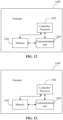
- FIG. 12 illustrates a schematic structural diagram of a terminal according to an exemplary embodiment.
- the terminal 1200 may include a communication unit 1204 and a processor 1202.
- the processor 1202 may also be a controller, which is represented as "controller/processor 1202" in FIG. 12 .
- the communication unit 1204 is configured to support the communication between the terminal and other network devices (such as a base station). Further, the terminal 1200 may further include a memory 1203, and the memory 1203 is configured to store program codes and data of the terminal 1200.
- FIG. 12 only illustrates a simplified design of the terminal 1200.
- the terminal 1200 may include any number of processors, controllers, memories, communication units, and the like, and all terminals that can implement the embodiments of the present disclosure are within the protection scope of the embodiments of the present disclosure.
- FIG. 13 illustrates a schematic structural diagram of a base station according to an exemplary embodiment.
- the base station 1300 may include a communication unit 1304 and a processor 1302.
- the processor 1302 may also be a controller, which is represented as "controller/processor 1302" in FIG. 13 .
- the communication unit 1304 is configured to support communication between the base station and other network devices (such as, a terminal, other base stations, or a gateway). Further, the base station 1300 may further include a memory 1303, and the memory 1303 is configured to store program codes and data of the base station 1300.
- FIG. 13 only illustrates a simplified design of the base station 1300.
- the base station 1300 may include any number of processors, controllers, memories, communication units, and the like, and all terminals that can implement the embodiments of the present disclosure are within the protection scope of the embodiments of the present disclosure.
- the functions described in the embodiments of the present disclosure may be implemented by hardware, software, firmware, or any combination thereof. When implemented by software, these functions can be stored in a computer-readable medium or transmitted as one or more instructions or codes on the computer-readable medium.
- the computer-readable medium includes a computer storage medium and a communication medium, where the communication medium includes any medium that facilitates the transfer of a computer program from one place to another.
- the storage medium may be any available medium that can be accessed by a general-purpose or special-purpose computer.
- the embodiments of the present disclosure also provide a computer storage medium for storing computer software instructions used for the aforementioned terminal or base station, which includes a program designed for executing the aforementioned method for cell handover.
Landscapes
- Engineering & Computer Science (AREA)
- Computer Networks & Wireless Communication (AREA)
- Signal Processing (AREA)
- Computer Security & Cryptography (AREA)
- Mobile Radio Communication Systems (AREA)
Claims (9)
- Verfahren zur Zellenübergabe, welches von einem Endgerät durchgeführt wird, wobei das Verfahren umfasst:Empfangen (301) eines Übergabebefehls und einer Zeitablaufbeziehung von einer Basisstation, wobei der Übergabebefehl dazu konfiguriert ist, das Endgerät anzuweisen, eine Übergabe an eine von zumindest zwei Zielzellen durchzuführen, und die Zeitablaufbeziehung dazu konfiguriert ist, anzuzeigen, ob zwei beliebige Zellen der zumindest zwei Zielzellen in Zeitschlitzsynchronisation miteinander sind, sodass Zeitbereichsressourcen für Synchronisationssignale für die zwei Zellen gleich sind;Durchführen (302) einer Synchronisierung mit einer ersten Zelle der zumindest zwei Zielzellen;Einleiten einer Übergabe an die erste Zelle basierend auf einem Ergebnis der Synchronisierung mit der ersten Zelle;Bestimmen, ob ein Fehlschlag der Übergabe an die erste Zelle auftritt;Bestimmen (303) einer zweiten Zelle aus den zumindest zwei Zielzellen als Reaktion auf den Fehlschlag der Übergabe an die erste Zelle, wobei sich die zweite Zelle in Zeitschlitzsynchronisation mit der ersten Zelle befindet; undEinleiten (304) einer Wiederherstellung der Verbindung mit der zweiten Zelle basierend auf dem Ergebnis der Synchronisierung mit der ersten Zelle.
- Verfahren nach Anspruch 1, wobei:die Zeitablaufbeziehung weiter dazu konfiguriert ist, anzuzeigen, ob zwei beliebige Zellen der zumindest zwei Zielzellen dieselbe Hyperrahmennummer, HFN, aufweisen, unddas Einleiten (304) der Wiederherstellung der Verbindung mit der zweiten Zelle basierend auf dem Ergebnis der Synchronisierung mit der ersten Zelle weiter umfasst:Erfassen einer HFN der ersten Zelle als Reaktion auf die Zeitablaufbeziehung, welche anzeigt, dass die HFN der ersten Zelle und eine HFN der zweiten Zelle gleich sind, wobei die HFN der ersten Zelle während eines Prozesses zum Durchführen der Synchronisierung mit der ersten Zelle erfasst wird; undDurchführen einer Verschlüsselung und eines Integritätsschutzes für eine Neukonfigurationsabschlussnachricht über die HFN der ersten Zelle, während die Neukonfigurationsabschlussnachricht an die zweite Zelle übertragen wird.
- Verfahren nach Anspruch 1, wobei das Bestimmen der zweiten Zelle aus den zumindest zwei Zielzellen weiter umfasst:Erfassen einer Menge von Kandidatenzellen basierend auf der Zeitablaufbeziehung, wobei die Menge von Kandidatenzellen eine oder mehrere Zellen der zumindest zwei Zielzellen beinhaltet, welche sich in Zeitschlitzsynchronisation mit der ersten Zelle befinden, und zu denen das Endgerät noch keine Wiederherstellung der Verbindung eingeleitet hat; undBestimmen der zweiten Zelle aus der Menge von Kandidatenzellen basierend auf einer vorbestimmten Auswahlregel, wenn die Menge von Kandidatenzellen zumindest zwei Zellen aufweist.
- Verfahren nach Anspruch 3, wobei das Bestimmen der zweiten Zelle aus der Menge von Kandidatenzellen basierend auf der vorbestimmten Auswahlregel weiter Bestimmen einer Zelle wie folgt umfasst:zufällig aus der Menge von Kandidatenzellen als die zweite Zellemit einer stärksten Signalstärke aus der Menge von Kandidatenzellen als die zweite Zelle; odermit Unterstützung eines Diensttyps als denselben wie dem, der dem Endgerät entspricht, aus der Menge von Kandidatenzellen als die zweite Zelle.
- Verfahren nach Anspruch 1, wobei das Einleiten der Wiederherstellung der Verbindung mit der zweiten Zelle basierend auf dem Ergebnis der Synchronisierung mit der ersten Zelle weiter umfasst:Durchführen einer Signalmessung an der zweiten Zelle, um ein Signalmessergebnis zu erfassen, wobei das Signalmessergebnis zumindest eines von einer Referenzsignalempfangsleistung, RSRP, oder einer Referenzsignalempfangsqualität, RSRQ, beinhaltet; undEinleiten der Wiederherstellung der Verbindung mit der zweiten Zelle basierend auf dem Ergebnis der Synchronisierung mit der ersten Zelle, wenn das Signalmessergebnis über einer vorbestimmten Messergebnisschwelle liegt.
- Verfahren zur Zellenübergabe, welches von einem Endgerät durchgeführt wird, wobei das Verfahren umfasst:Empfangen (401) eines Übergabebefehls und einer Zeitablaufbeziehung von einer Basisstation, wobei der Übergabebefehl dazu konfiguriert ist, das Endgerät anzuweisen, eine Übergabe an eine von zumindest drei Zielzellen durchzuführen, welche nachfolgend als eine dritte Zelle, eine vierte Zelle und eine fünfte Zelle bezeichnet werden, und die Zeitablaufbeziehung dazu konfiguriert ist, anzuzeigen, ob drei beliebige Zellen der zumindest drei Zielzellen in Zeitschlitzsynchronisation miteinander sind, was anzeigt, dass Zeitbereichsressourcen für Synchronisationssignale für die drei Zellen gleich sind;für jede Menge von Zellen unter den zumindest drei Zielzellen miteinander in Zeitschlitzsynchronisation, Auswählen (402) einer jeweiligen Zelle aus der Menge von Zellen als eine Synchronisationszelle;Durchführen (403) einer Synchronisierung mit jeder der ausgewählten Synchronisationszellen;Erfassen (404) eines Ergebnisses der Synchronisierung mit der vierten Zelle beim Einleiten einer Übergabe an die dritte Zelle der zumindest drei Zielzellen, wobei die vierte Zelle eine Synchronisationszelle in Zeitschlitzsynchronisation mit der dritten Zelle ist;Einleiten (405) der Übergabe an die dritte Zelle basierend auf dem Ergebnis der Synchronisierung mit der vierten Zelle;Bestimmen der fünften Zelle aus den zumindest drei Zielzellen als Reaktion auf einen Fehlschlag der Übergabe an die dritte Zelle, wobei sich die fünfte Zelle in Zeitschlitzsynchronisation mit der vierten Zelle befindet; undEinleiten einer Wiederherstellung der Verbindung mit der fünften Zelle basierend auf dem Ergebnis der Synchronisierung mit der vierten Zelle.
- Verfahren nach Anspruch 6, wobei:die Zeitablaufbeziehung weiter dazu konfiguriert ist, anzuzeigen, ob drei beliebige Zellen der zumindest drei Zielzellen dieselbe HFN haben; undwobei das Einleiten der Übergabe an die dritte Zelle basierend auf dem Ergebnis der Synchronisierung mit der vierten Zelle weiter umfasst:Erfassen einer HFN der vierten Zelle, wenn die Zeitablaufbeziehung anzeigt, dass eine HFN der dritten Zelle und die HFN der vierten Zelle gleich sind, wobei die HFN der vierten Zelle während eines Prozesses zum Durchführen von Synchronisierung mit der vierten Zelle erfasst wird; undDurchführen einer Verschlüsselung und eines Integritätsschutzes für eine Neukonfigurationsabschlussnachricht über die HFN der vierten Zelle, wenn die Neukonfigurationsabschlussnachricht an die dritte Zelle übertragen wird.
- Endgerät, umfassend:einen Prozessor; undeinen Speicher zum Speichern eines Computerprogramms, welches von dem Prozessor ausgeführt werden kann;wobei das Computerprogramm, wenn es von dem Prozessor ausgeführt wird, das Endgerät dazu veranlasst:einen Übergabebefehl und eine Zeitablaufbeziehung von einer Basisstation zu empfangen (301), wobei der Übergabebefehl dazu konfiguriert ist, das Endgerät anzuweisen, eine Übergabe an eine von zumindest zwei Zielzellen durchzuführen, und die Zeitablaufbeziehung dazu konfiguriert ist, anzuzeigen, ob zwei beliebige Zellen der zumindest zwei Zielzellen in Zeitschlitzsynchronisation miteinander sind, sodass Zeitbereichsressourcen für Synchronisationssignale für die zwei Zellen gleich sind;eine Synchronisierung mit einer ersten Zelle der zumindest zwei Zielzellen durchzuführen (302);eine Übergabe an die erste Zelle basierend auf einem Ergebnis der Synchronisierung mit der ersten Zelle einzuleiten;zu bestimmen, ob ein Fehlschlag der Übergabe an die erste Zelle auftritt;eine zweite Zelle aus den zumindest zwei Zielzellen als Reaktion auf den Fehlschlag der Übergabe an die erste Zelle zu bestimmen (303), wobei sich die zweite Zelle in Zeitschlitzsynchronisation mit der ersten Zelle befindet; undeine Wiederherstellung der Verbindung mit der zweiten Zelle basierend auf dem Ergebnis der Synchronisierung mit der ersten Zelle einzuleiten (304).
- Endgerät, umfassend:einen Prozessor; undeinen Speicher zum Speichern eines Computerprogramms, welches von dem Prozessor ausgeführt werden kann;wobei das Computerprogramm, wenn es von dem Prozessor ausgeführt wird, das Endgerät dazu veranlasst:einen Übergabebefehl und eine Zeitablaufbeziehung von einer Basisstation zu empfangen (401), wobei der Übergabebefehl dazu konfiguriert ist, das Endgerät anzuweisen, eine Übergabe an eine von zumindest drei Zielzellen durchzuführen, welche nachfolgend als eine dritte Zelle, eine vierte Zelle und eine fünfte Zelle bezeichnet werden, und die Zeitablaufbeziehung dazu konfiguriert ist, anzuzeigen, ob drei beliebige Zellen der zumindest drei Zielzellen in Zeitschlitzsynchronisation miteinander sind, was anzeigt, dass Zeitbereichsressourcen für Synchronisationssignale für die drei Zellen gleich sind;für jede Menge von Zellen in Zeitschlitzsynchronisation miteinander unter den zumindest drei Zielzellen, eine jeweilige Zelle aus der Menge von Zellen als eine Synchronisationszelle auszuwählen (402);eine Synchronisierung mit jeder der ausgewählten Synchronisationszellen durchzuführen (403);ein Ergebnis der Synchronisierung mit der vierten Zelle beim Einleiten einer Übergabe an die dritte Zelle der zumindest drei Zielzellen zu erfassen (404), wobei die vierte Zelle eine Synchronisationszelle in Zeitschlitzsynchronisation mit der dritten Zelle ist;die Übergabe an die dritte Zelle basierend auf dem Ergebnis der Synchronisierung mit der vierten Zelle einzuleiten (405);die fünfte Zelle aus den zumindest drei Zielzellen als Reaktion auf einen Fehlschlag der Übergabe an die dritte Zelle zu bestimmen, wobei sich die fünfte Zelle in Zeitschlitzsynchronisation mit der vierten Zelle befindet; undeine Wiederherstellung der Verbindung mit der fünften Zelle basierend auf dem Ergebnis der Synchronisierung mit der vierten Zelle einzuleiten.
Applications Claiming Priority (1)
| Application Number | Priority Date | Filing Date | Title |
|---|---|---|---|
| PCT/CN2018/103988 WO2020047747A1 (zh) | 2018-09-04 | 2018-09-04 | 小区切换方法、装置及可读存储介质 |
Publications (3)
| Publication Number | Publication Date |
|---|---|
| EP3846535A1 EP3846535A1 (de) | 2021-07-07 |
| EP3846535A4 EP3846535A4 (de) | 2022-04-27 |
| EP3846535B1 true EP3846535B1 (de) | 2024-11-13 |
Family
ID=65221631
Family Applications (1)
| Application Number | Title | Priority Date | Filing Date |
|---|---|---|---|
| EP18932525.1A Active EP3846535B1 (de) | 2018-09-04 | 2018-09-04 | Zellübergabeverfahren, vorrichtung und lesbares speichermedium |
Country Status (4)
| Country | Link |
|---|---|
| US (1) | US11974178B2 (de) |
| EP (1) | EP3846535B1 (de) |
| CN (1) | CN109314896B (de) |
| WO (1) | WO2020047747A1 (de) |
Families Citing this family (6)
| Publication number | Priority date | Publication date | Assignee | Title |
|---|---|---|---|---|
| KR102768755B1 (ko) * | 2018-12-14 | 2025-02-18 | 삼성전자 주식회사 | 차세대 무선 통신 시스템에서 조건부 핸드오버의 실패 타이머 운용방법 |
| WO2020155070A1 (zh) * | 2019-01-31 | 2020-08-06 | Oppo广东移动通信有限公司 | 用于切换网络设备的方法和终端设备 |
| CN117880907A (zh) * | 2019-07-30 | 2024-04-12 | 中兴通讯股份有限公司 | 用于移动性控制的无线通信方法 |
| US11924700B2 (en) * | 2020-01-10 | 2024-03-05 | Qualcomm Incorporated | L1/L2 based cell selection |
| CN113473553B (zh) * | 2020-03-31 | 2023-05-12 | 华为技术有限公司 | 通信方法及通信装置 |
| KR20240009746A (ko) * | 2022-07-14 | 2024-01-23 | 현대자동차주식회사 | 외부 기기로부터 수신된 컨텐츠 이미지 정보를 표시하는 차량 장치 및 그 방법 |
Family Cites Families (20)
| Publication number | Priority date | Publication date | Assignee | Title |
|---|---|---|---|---|
| KR100217416B1 (ko) | 1995-11-16 | 1999-09-01 | 윤종용 | 선형 증폭 장치 및 방법 |
| US7535369B2 (en) | 2006-01-20 | 2009-05-19 | Fong Gordon D | Method and apparatus for a wireless tether system |
| US8909227B2 (en) | 2006-10-03 | 2014-12-09 | Qualcomm Incorporated | Handover to any cell of a target base station in a wireless communication system |
| EP2195977B1 (de) * | 2007-10-02 | 2015-09-02 | Unwired Planet International Limited | Verfahren und vorrichtung zur sicheren übergabe in einem kommunikationsnetz |
| CN101646212B (zh) | 2008-08-06 | 2012-01-11 | 电信科学技术研究院 | 小区切换控制方法、装置和通信系统 |
| EP2205021A1 (de) * | 2008-12-31 | 2010-07-07 | Alcatel, Lucent | Datenweiterleitungsverfahren und Vorrichtung dafür |
| US10560882B2 (en) | 2012-06-08 | 2020-02-11 | Blackberry Limited | Method and apparatus for multi-rat transmission |
| US20140038605A1 (en) * | 2012-07-31 | 2014-02-06 | Firouz Behnamfar | Devices and methods for cellular communication |
| WO2014022970A1 (zh) | 2012-08-07 | 2014-02-13 | 华为技术有限公司 | 切换处理方法及基站 |
| EP2717382B1 (de) | 2012-10-05 | 2019-01-02 | Nxp B.V. | Phasenarrayantenne und zugehörige Verfahren |
| US20140335861A1 (en) | 2013-05-08 | 2014-11-13 | Nokia Siemens Networks Oy | Methods and Apparatus for Handover Management |
| CN104170503A (zh) | 2013-06-13 | 2014-11-26 | 华为技术有限公司 | 小区切换命令的发送方法及装置 |
| US9986520B2 (en) | 2013-07-22 | 2018-05-29 | Zte Wistron Telecom Ab | Method and system for cell synchronization and synchronization cell indication |
| CN105981454B (zh) * | 2014-01-26 | 2019-11-15 | Lg电子株式会社 | 在支持设备到设备通信的无线通信系统中发送同步信号和同步信道的方法及其装置 |
| WO2015180188A1 (zh) | 2014-05-30 | 2015-12-03 | 华为技术有限公司 | 同步方法、同步装置和基站 |
| CN105472670B (zh) | 2014-09-03 | 2019-03-01 | 中兴通讯股份有限公司 | 小区切换处理方法、装置、终端及基站 |
| JP2016195331A (ja) | 2015-03-31 | 2016-11-17 | 三星電子株式会社Samsung Electronics Co.,Ltd. | アレーアンテナ送受信装置及び校正値算出方法 |
| EP3316630B1 (de) | 2015-08-07 | 2022-03-30 | Huawei Technologies Co., Ltd. | Verfahren, vorrichtung und system zur zeitsynchronisation |
| CN107690163A (zh) * | 2016-08-03 | 2018-02-13 | 中兴通讯股份有限公司 | 小区切换方法及装置 |
| US10517110B2 (en) * | 2016-08-10 | 2019-12-24 | Ofinno, Llc | Cell configuration for V2X communications in a wireless network |
-
2018
- 2018-09-04 CN CN201880001252.2A patent/CN109314896B/zh active Active
- 2018-09-04 US US17/273,021 patent/US11974178B2/en active Active
- 2018-09-04 EP EP18932525.1A patent/EP3846535B1/de active Active
- 2018-09-04 WO PCT/CN2018/103988 patent/WO2020047747A1/zh not_active Ceased
Also Published As
| Publication number | Publication date |
|---|---|
| US11974178B2 (en) | 2024-04-30 |
| WO2020047747A1 (zh) | 2020-03-12 |
| CN109314896A (zh) | 2019-02-05 |
| EP3846535A4 (de) | 2022-04-27 |
| US20210321308A1 (en) | 2021-10-14 |
| EP3846535A1 (de) | 2021-07-07 |
| CN109314896B (zh) | 2021-03-02 |
Similar Documents
| Publication | Publication Date | Title |
|---|---|---|
| EP3846535B1 (de) | Zellübergabeverfahren, vorrichtung und lesbares speichermedium | |
| US11051219B2 (en) | Method and apparatus for controlling mobility for cell having small cell service area in mobile communication system | |
| US11019543B2 (en) | Methods and system for managing handover procedure in a radio access network | |
| US9955408B2 (en) | Network-assisted multi-cell device discovery protocol for device-to-device communications | |
| EP4007414A1 (de) | Datenplanungsverfahren, basisstation und system | |
| EP3432678B1 (de) | Vorrichtung und verfahren zur konfiguration eines sekundären knotens und berichterstattung in dualer konnektivität | |
| EP4456605A2 (de) | Niedrigschichtbasierte mobilitätsverwaltung | |
| US20160242224A1 (en) | Mobile terminal communication control methods, devices and related equipment | |
| JP7728463B2 (ja) | 5g nrハンドオーバ方式 | |
| US12425944B2 (en) | Method and apparatus for receiving and transmitting signals and a communication system | |
| EP3986015B1 (de) | Errichtung einer aggregierten verbindung | |
| KR20210022079A (ko) | 다운링크 신호 모니터링 및 전송 방법, 및 파라미터 구성 방법 및 장치 | |
| EP3846572B1 (de) | Direktzugriffsverfahren, datenempfangsverfahren und -vorrichtung dafür und kommunikationssystem | |
| WO2024045858A1 (zh) | 一种通信方法及装置 | |
| US20250331031A1 (en) | Communication method and communication apparatus | |
| KR20250038801A (ko) | 액세스 방법, 장치, 저장 매체 및 칩 | |
| EP4561175A1 (de) | Zellenübergabeverfahren, endgerätevorrichtung und netzwerkvorrichtung | |
| CN116112956B (zh) | 无线通信方法和设备 | |
| CN120266552A (zh) | 用于维持ta值的方法及设备 | |
| US20260075478A1 (en) | Handover method and apparatus | |
| JP7699705B2 (ja) | 端末装置、及び無線通信方法 | |
| CN120475502A (zh) | 信息处理方法、装置、设备及存储介质 |
Legal Events
| Date | Code | Title | Description |
|---|---|---|---|
| STAA | Information on the status of an ep patent application or granted ep patent |
Free format text: STATUS: THE INTERNATIONAL PUBLICATION HAS BEEN MADE |
|
| STAA | Information on the status of an ep patent application or granted ep patent |
Free format text: STATUS: REQUEST FOR EXAMINATION WAS MADE |
|
| PUAI | Public reference made under article 153(3) epc to a published international application that has entered the european phase |
Free format text: ORIGINAL CODE: 0009012 |
|
| 17P | Request for examination filed |
Effective date: 20210330 |
|
| AK | Designated contracting states |
Kind code of ref document: A1 Designated state(s): AL AT BE BG CH CY CZ DE DK EE ES FI FR GB GR HR HU IE IS IT LI LT LU LV MC MK MT NL NO PL PT RO RS SE SI SK SM TR |
|
| DAV | Request for validation of the european patent (deleted) | ||
| DAX | Request for extension of the european patent (deleted) | ||
| A4 | Supplementary search report drawn up and despatched |
Effective date: 20220328 |
|
| RIC1 | Information provided on ipc code assigned before grant |
Ipc: H04W 56/00 20090101ALI20220322BHEP Ipc: H04W 36/08 20090101ALI20220322BHEP Ipc: H04W 36/00 20090101AFI20220322BHEP |
|
| GRAP | Despatch of communication of intention to grant a patent |
Free format text: ORIGINAL CODE: EPIDOSNIGR1 |
|
| STAA | Information on the status of an ep patent application or granted ep patent |
Free format text: STATUS: GRANT OF PATENT IS INTENDED |
|
| INTG | Intention to grant announced |
Effective date: 20240819 |
|
| GRAS | Grant fee paid |
Free format text: ORIGINAL CODE: EPIDOSNIGR3 |
|
| P01 | Opt-out of the competence of the unified patent court (upc) registered |
Free format text: CASE NUMBER: APP_49368/2024 Effective date: 20240830 |
|
| GRAA | (expected) grant |
Free format text: ORIGINAL CODE: 0009210 |
|
| STAA | Information on the status of an ep patent application or granted ep patent |
Free format text: STATUS: THE PATENT HAS BEEN GRANTED |
|
| AK | Designated contracting states |
Kind code of ref document: B1 Designated state(s): AL AT BE BG CH CY CZ DE DK EE ES FI FR GB GR HR HU IE IS IT LI LT LU LV MC MK MT NL NO PL PT RO RS SE SI SK SM TR |
|
| REG | Reference to a national code |
Ref country code: GB Ref legal event code: FG4D |
|
| REG | Reference to a national code |
Ref country code: CH Ref legal event code: EP |
|
| REG | Reference to a national code |
Ref country code: DE Ref legal event code: R096 Ref document number: 602018076635 Country of ref document: DE |
|
| REG | Reference to a national code |
Ref country code: IE Ref legal event code: FG4D |
|
| REG | Reference to a national code |
Ref country code: NL Ref legal event code: FP |
|
| REG | Reference to a national code |
Ref country code: LT Ref legal event code: MG9D |
|
| PG25 | Lapsed in a contracting state [announced via postgrant information from national office to epo] |
Ref country code: IS Free format text: LAPSE BECAUSE OF FAILURE TO SUBMIT A TRANSLATION OF THE DESCRIPTION OR TO PAY THE FEE WITHIN THE PRESCRIBED TIME-LIMIT Effective date: 20250313 Ref country code: PT Free format text: LAPSE BECAUSE OF FAILURE TO SUBMIT A TRANSLATION OF THE DESCRIPTION OR TO PAY THE FEE WITHIN THE PRESCRIBED TIME-LIMIT Effective date: 20250313 Ref country code: HR Free format text: LAPSE BECAUSE OF FAILURE TO SUBMIT A TRANSLATION OF THE DESCRIPTION OR TO PAY THE FEE WITHIN THE PRESCRIBED TIME-LIMIT Effective date: 20241113 |
|
| PG25 | Lapsed in a contracting state [announced via postgrant information from national office to epo] |
Ref country code: FI Free format text: LAPSE BECAUSE OF FAILURE TO SUBMIT A TRANSLATION OF THE DESCRIPTION OR TO PAY THE FEE WITHIN THE PRESCRIBED TIME-LIMIT Effective date: 20241113 |
|
| REG | Reference to a national code |
Ref country code: AT Ref legal event code: MK05 Ref document number: 1742602 Country of ref document: AT Kind code of ref document: T Effective date: 20241113 |
|
| PG25 | Lapsed in a contracting state [announced via postgrant information from national office to epo] |
Ref country code: BG Free format text: LAPSE BECAUSE OF FAILURE TO SUBMIT A TRANSLATION OF THE DESCRIPTION OR TO PAY THE FEE WITHIN THE PRESCRIBED TIME-LIMIT Effective date: 20241113 |
|
| PG25 | Lapsed in a contracting state [announced via postgrant information from national office to epo] |
Ref country code: ES Free format text: LAPSE BECAUSE OF FAILURE TO SUBMIT A TRANSLATION OF THE DESCRIPTION OR TO PAY THE FEE WITHIN THE PRESCRIBED TIME-LIMIT Effective date: 20241113 |
|
| PG25 | Lapsed in a contracting state [announced via postgrant information from national office to epo] |
Ref country code: NO Free format text: LAPSE BECAUSE OF FAILURE TO SUBMIT A TRANSLATION OF THE DESCRIPTION OR TO PAY THE FEE WITHIN THE PRESCRIBED TIME-LIMIT Effective date: 20250213 |
|
| PG25 | Lapsed in a contracting state [announced via postgrant information from national office to epo] |
Ref country code: AT Free format text: LAPSE BECAUSE OF FAILURE TO SUBMIT A TRANSLATION OF THE DESCRIPTION OR TO PAY THE FEE WITHIN THE PRESCRIBED TIME-LIMIT Effective date: 20241113 Ref country code: LV Free format text: LAPSE BECAUSE OF FAILURE TO SUBMIT A TRANSLATION OF THE DESCRIPTION OR TO PAY THE FEE WITHIN THE PRESCRIBED TIME-LIMIT Effective date: 20241113 Ref country code: GR Free format text: LAPSE BECAUSE OF FAILURE TO SUBMIT A TRANSLATION OF THE DESCRIPTION OR TO PAY THE FEE WITHIN THE PRESCRIBED TIME-LIMIT Effective date: 20250214 |
|
| PG25 | Lapsed in a contracting state [announced via postgrant information from national office to epo] |
Ref country code: PL Free format text: LAPSE BECAUSE OF FAILURE TO SUBMIT A TRANSLATION OF THE DESCRIPTION OR TO PAY THE FEE WITHIN THE PRESCRIBED TIME-LIMIT Effective date: 20241113 |
|
| PG25 | Lapsed in a contracting state [announced via postgrant information from national office to epo] |
Ref country code: RS Free format text: LAPSE BECAUSE OF FAILURE TO SUBMIT A TRANSLATION OF THE DESCRIPTION OR TO PAY THE FEE WITHIN THE PRESCRIBED TIME-LIMIT Effective date: 20250213 |
|
| PG25 | Lapsed in a contracting state [announced via postgrant information from national office to epo] |
Ref country code: SM Free format text: LAPSE BECAUSE OF FAILURE TO SUBMIT A TRANSLATION OF THE DESCRIPTION OR TO PAY THE FEE WITHIN THE PRESCRIBED TIME-LIMIT Effective date: 20241113 |
|
| PG25 | Lapsed in a contracting state [announced via postgrant information from national office to epo] |
Ref country code: DK Free format text: LAPSE BECAUSE OF FAILURE TO SUBMIT A TRANSLATION OF THE DESCRIPTION OR TO PAY THE FEE WITHIN THE PRESCRIBED TIME-LIMIT Effective date: 20241113 |
|
| PG25 | Lapsed in a contracting state [announced via postgrant information from national office to epo] |
Ref country code: EE Free format text: LAPSE BECAUSE OF FAILURE TO SUBMIT A TRANSLATION OF THE DESCRIPTION OR TO PAY THE FEE WITHIN THE PRESCRIBED TIME-LIMIT Effective date: 20241113 |
|
| PG25 | Lapsed in a contracting state [announced via postgrant information from national office to epo] |
Ref country code: RO Free format text: LAPSE BECAUSE OF FAILURE TO SUBMIT A TRANSLATION OF THE DESCRIPTION OR TO PAY THE FEE WITHIN THE PRESCRIBED TIME-LIMIT Effective date: 20241113 |
|
| PG25 | Lapsed in a contracting state [announced via postgrant information from national office to epo] |
Ref country code: SK Free format text: LAPSE BECAUSE OF FAILURE TO SUBMIT A TRANSLATION OF THE DESCRIPTION OR TO PAY THE FEE WITHIN THE PRESCRIBED TIME-LIMIT Effective date: 20241113 |
|
| PG25 | Lapsed in a contracting state [announced via postgrant information from national office to epo] |
Ref country code: CZ Free format text: LAPSE BECAUSE OF FAILURE TO SUBMIT A TRANSLATION OF THE DESCRIPTION OR TO PAY THE FEE WITHIN THE PRESCRIBED TIME-LIMIT Effective date: 20241113 |
|
| PG25 | Lapsed in a contracting state [announced via postgrant information from national office to epo] |
Ref country code: IT Free format text: LAPSE BECAUSE OF FAILURE TO SUBMIT A TRANSLATION OF THE DESCRIPTION OR TO PAY THE FEE WITHIN THE PRESCRIBED TIME-LIMIT Effective date: 20241113 |
|
| REG | Reference to a national code |
Ref country code: DE Ref legal event code: R097 Ref document number: 602018076635 Country of ref document: DE |
|
| PG25 | Lapsed in a contracting state [announced via postgrant information from national office to epo] |
Ref country code: SE Free format text: LAPSE BECAUSE OF FAILURE TO SUBMIT A TRANSLATION OF THE DESCRIPTION OR TO PAY THE FEE WITHIN THE PRESCRIBED TIME-LIMIT Effective date: 20241113 |
|
| PLBE | No opposition filed within time limit |
Free format text: ORIGINAL CODE: 0009261 |
|
| STAA | Information on the status of an ep patent application or granted ep patent |
Free format text: STATUS: NO OPPOSITION FILED WITHIN TIME LIMIT |
|
| PGFP | Annual fee paid to national office [announced via postgrant information from national office to epo] |
Ref country code: NL Payment date: 20250918 Year of fee payment: 8 |
|
| PGFP | Annual fee paid to national office [announced via postgrant information from national office to epo] |
Ref country code: GB Payment date: 20250919 Year of fee payment: 8 |
|
| PGFP | Annual fee paid to national office [announced via postgrant information from national office to epo] |
Ref country code: FR Payment date: 20250922 Year of fee payment: 8 |
|
| 26N | No opposition filed |
Effective date: 20250814 |