EP3845351A1 - Sorted communal waste processing method - Google Patents
Sorted communal waste processing method Download PDFInfo
- Publication number
- EP3845351A1 EP3845351A1 EP20000312.7A EP20000312A EP3845351A1 EP 3845351 A1 EP3845351 A1 EP 3845351A1 EP 20000312 A EP20000312 A EP 20000312A EP 3845351 A1 EP3845351 A1 EP 3845351A1
- Authority
- EP
- European Patent Office
- Prior art keywords
- waste
- pressing
- sorted
- formatting
- mpa
- Prior art date
- Legal status (The legal status is an assumption and is not a legal conclusion. Google has not performed a legal analysis and makes no representation as to the accuracy of the status listed.)
- Granted
Links
Images
Classifications
-
- B—PERFORMING OPERATIONS; TRANSPORTING
- B27—WORKING OR PRESERVING WOOD OR SIMILAR MATERIAL; NAILING OR STAPLING MACHINES IN GENERAL
- B27N—MANUFACTURE BY DRY PROCESSES OF ARTICLES, WITH OR WITHOUT ORGANIC BINDING AGENTS, MADE FROM PARTICLES OR FIBRES CONSISTING OF WOOD OR OTHER LIGNOCELLULOSIC OR LIKE ORGANIC MATERIAL
- B27N1/00—Pretreatment of moulding material
-
- B—PERFORMING OPERATIONS; TRANSPORTING
- B09—DISPOSAL OF SOLID WASTE; RECLAMATION OF CONTAMINATED SOIL
- B09B—DISPOSAL OF SOLID WASTE NOT OTHERWISE PROVIDED FOR
- B09B3/00—Destroying solid waste or transforming solid waste into something useful or harmless
-
- B—PERFORMING OPERATIONS; TRANSPORTING
- B09—DISPOSAL OF SOLID WASTE; RECLAMATION OF CONTAMINATED SOIL
- B09B—DISPOSAL OF SOLID WASTE NOT OTHERWISE PROVIDED FOR
- B09B3/00—Destroying solid waste or transforming solid waste into something useful or harmless
- B09B3/30—Destroying solid waste or transforming solid waste into something useful or harmless involving mechanical treatment
- B09B3/32—Compressing or compacting
-
- B—PERFORMING OPERATIONS; TRANSPORTING
- B09—DISPOSAL OF SOLID WASTE; RECLAMATION OF CONTAMINATED SOIL
- B09B—DISPOSAL OF SOLID WASTE NOT OTHERWISE PROVIDED FOR
- B09B3/00—Destroying solid waste or transforming solid waste into something useful or harmless
- B09B3/30—Destroying solid waste or transforming solid waste into something useful or harmless involving mechanical treatment
- B09B3/35—Shredding, crushing or cutting
-
- B—PERFORMING OPERATIONS; TRANSPORTING
- B09—DISPOSAL OF SOLID WASTE; RECLAMATION OF CONTAMINATED SOIL
- B09B—DISPOSAL OF SOLID WASTE NOT OTHERWISE PROVIDED FOR
- B09B3/00—Destroying solid waste or transforming solid waste into something useful or harmless
- B09B3/40—Destroying solid waste or transforming solid waste into something useful or harmless involving thermal treatment, e.g. evaporation
-
- B—PERFORMING OPERATIONS; TRANSPORTING
- B27—WORKING OR PRESERVING WOOD OR SIMILAR MATERIAL; NAILING OR STAPLING MACHINES IN GENERAL
- B27N—MANUFACTURE BY DRY PROCESSES OF ARTICLES, WITH OR WITHOUT ORGANIC BINDING AGENTS, MADE FROM PARTICLES OR FIBRES CONSISTING OF WOOD OR OTHER LIGNOCELLULOSIC OR LIKE ORGANIC MATERIAL
- B27N3/00—Manufacture of substantially flat articles, e.g. boards, from particles or fibres
-
- B—PERFORMING OPERATIONS; TRANSPORTING
- B27—WORKING OR PRESERVING WOOD OR SIMILAR MATERIAL; NAILING OR STAPLING MACHINES IN GENERAL
- B27N—MANUFACTURE BY DRY PROCESSES OF ARTICLES, WITH OR WITHOUT ORGANIC BINDING AGENTS, MADE FROM PARTICLES OR FIBRES CONSISTING OF WOOD OR OTHER LIGNOCELLULOSIC OR LIKE ORGANIC MATERIAL
- B27N3/00—Manufacture of substantially flat articles, e.g. boards, from particles or fibres
- B27N3/007—Manufacture of substantially flat articles, e.g. boards, from particles or fibres and at least partly composed of recycled material
-
- B—PERFORMING OPERATIONS; TRANSPORTING
- B27—WORKING OR PRESERVING WOOD OR SIMILAR MATERIAL; NAILING OR STAPLING MACHINES IN GENERAL
- B27N—MANUFACTURE BY DRY PROCESSES OF ARTICLES, WITH OR WITHOUT ORGANIC BINDING AGENTS, MADE FROM PARTICLES OR FIBRES CONSISTING OF WOOD OR OTHER LIGNOCELLULOSIC OR LIKE ORGANIC MATERIAL
- B27N3/00—Manufacture of substantially flat articles, e.g. boards, from particles or fibres
- B27N3/02—Manufacture of substantially flat articles, e.g. boards, from particles or fibres from particles
-
- B—PERFORMING OPERATIONS; TRANSPORTING
- B27—WORKING OR PRESERVING WOOD OR SIMILAR MATERIAL; NAILING OR STAPLING MACHINES IN GENERAL
- B27N—MANUFACTURE BY DRY PROCESSES OF ARTICLES, WITH OR WITHOUT ORGANIC BINDING AGENTS, MADE FROM PARTICLES OR FIBRES CONSISTING OF WOOD OR OTHER LIGNOCELLULOSIC OR LIKE ORGANIC MATERIAL
- B27N3/00—Manufacture of substantially flat articles, e.g. boards, from particles or fibres
- B27N3/04—Manufacture of substantially flat articles, e.g. boards, from particles or fibres from fibres
-
- B—PERFORMING OPERATIONS; TRANSPORTING
- B27—WORKING OR PRESERVING WOOD OR SIMILAR MATERIAL; NAILING OR STAPLING MACHINES IN GENERAL
- B27N—MANUFACTURE BY DRY PROCESSES OF ARTICLES, WITH OR WITHOUT ORGANIC BINDING AGENTS, MADE FROM PARTICLES OR FIBRES CONSISTING OF WOOD OR OTHER LIGNOCELLULOSIC OR LIKE ORGANIC MATERIAL
- B27N3/00—Manufacture of substantially flat articles, e.g. boards, from particles or fibres
- B27N3/08—Moulding or pressing
- B27N3/18—Auxiliary operations, e.g. preheating, humidifying, cutting-off
-
- C—CHEMISTRY; METALLURGY
- C04—CEMENTS; CONCRETE; ARTIFICIAL STONE; CERAMICS; REFRACTORIES
- C04B—LIME, MAGNESIA; SLAG; CEMENTS; COMPOSITIONS THEREOF, e.g. MORTARS, CONCRETE OR LIKE BUILDING MATERIALS; ARTIFICIAL STONE; CERAMICS; REFRACTORIES; TREATMENT OF NATURAL STONE
- C04B18/00—Use of agglomerated or waste materials or refuse as fillers for mortars, concrete or artificial stone; Treatment of agglomerated or waste materials or refuse, specially adapted to enhance their filling properties in mortars, concrete or artificial stone
- C04B18/04—Waste materials; Refuse
-
- C—CHEMISTRY; METALLURGY
- C04—CEMENTS; CONCRETE; ARTIFICIAL STONE; CERAMICS; REFRACTORIES
- C04B—LIME, MAGNESIA; SLAG; CEMENTS; COMPOSITIONS THEREOF, e.g. MORTARS, CONCRETE OR LIKE BUILDING MATERIALS; ARTIFICIAL STONE; CERAMICS; REFRACTORIES; TREATMENT OF NATURAL STONE
- C04B18/00—Use of agglomerated or waste materials or refuse as fillers for mortars, concrete or artificial stone; Treatment of agglomerated or waste materials or refuse, specially adapted to enhance their filling properties in mortars, concrete or artificial stone
- C04B18/04—Waste materials; Refuse
- C04B18/18—Waste materials; Refuse organic
- C04B18/24—Vegetable refuse, e.g. rice husks, maize-ear refuse; Cellulosic materials, e.g. paper, cork
- C04B18/241—Paper, e.g. waste paper; Paper pulp
-
- C—CHEMISTRY; METALLURGY
- C04—CEMENTS; CONCRETE; ARTIFICIAL STONE; CERAMICS; REFRACTORIES
- C04B—LIME, MAGNESIA; SLAG; CEMENTS; COMPOSITIONS THEREOF, e.g. MORTARS, CONCRETE OR LIKE BUILDING MATERIALS; ARTIFICIAL STONE; CERAMICS; REFRACTORIES; TREATMENT OF NATURAL STONE
- C04B18/00—Use of agglomerated or waste materials or refuse as fillers for mortars, concrete or artificial stone; Treatment of agglomerated or waste materials or refuse, specially adapted to enhance their filling properties in mortars, concrete or artificial stone
- C04B18/04—Waste materials; Refuse
- C04B18/30—Mixed waste; Waste of undefined composition
-
- C—CHEMISTRY; METALLURGY
- C04—CEMENTS; CONCRETE; ARTIFICIAL STONE; CERAMICS; REFRACTORIES
- C04B—LIME, MAGNESIA; SLAG; CEMENTS; COMPOSITIONS THEREOF, e.g. MORTARS, CONCRETE OR LIKE BUILDING MATERIALS; ARTIFICIAL STONE; CERAMICS; REFRACTORIES; TREATMENT OF NATURAL STONE
- C04B18/00—Use of agglomerated or waste materials or refuse as fillers for mortars, concrete or artificial stone; Treatment of agglomerated or waste materials or refuse, specially adapted to enhance their filling properties in mortars, concrete or artificial stone
- C04B18/04—Waste materials; Refuse
- C04B18/30—Mixed waste; Waste of undefined composition
- C04B18/305—Municipal waste
-
- C—CHEMISTRY; METALLURGY
- C04—CEMENTS; CONCRETE; ARTIFICIAL STONE; CERAMICS; REFRACTORIES
- C04B—LIME, MAGNESIA; SLAG; CEMENTS; COMPOSITIONS THEREOF, e.g. MORTARS, CONCRETE OR LIKE BUILDING MATERIALS; ARTIFICIAL STONE; CERAMICS; REFRACTORIES; TREATMENT OF NATURAL STONE
- C04B26/00—Compositions of mortars, concrete or artificial stone, containing only organic binders, e.g. polymer or resin concrete
- C04B26/006—Waste materials as binder
-
- C—CHEMISTRY; METALLURGY
- C04—CEMENTS; CONCRETE; ARTIFICIAL STONE; CERAMICS; REFRACTORIES
- C04B—LIME, MAGNESIA; SLAG; CEMENTS; COMPOSITIONS THEREOF, e.g. MORTARS, CONCRETE OR LIKE BUILDING MATERIALS; ARTIFICIAL STONE; CERAMICS; REFRACTORIES; TREATMENT OF NATURAL STONE
- C04B30/00—Compositions for artificial stone, not containing binders
-
- B—PERFORMING OPERATIONS; TRANSPORTING
- B27—WORKING OR PRESERVING WOOD OR SIMILAR MATERIAL; NAILING OR STAPLING MACHINES IN GENERAL
- B27N—MANUFACTURE BY DRY PROCESSES OF ARTICLES, WITH OR WITHOUT ORGANIC BINDING AGENTS, MADE FROM PARTICLES OR FIBRES CONSISTING OF WOOD OR OTHER LIGNOCELLULOSIC OR LIKE ORGANIC MATERIAL
- B27N7/00—After-treatment, e.g. reducing swelling or shrinkage, surfacing; Protecting the edges of boards against access of humidity
- B27N7/005—Coating boards, e.g. with a finishing or decorating layer
-
- Y—GENERAL TAGGING OF NEW TECHNOLOGICAL DEVELOPMENTS; GENERAL TAGGING OF CROSS-SECTIONAL TECHNOLOGIES SPANNING OVER SEVERAL SECTIONS OF THE IPC; TECHNICAL SUBJECTS COVERED BY FORMER USPC CROSS-REFERENCE ART COLLECTIONS [XRACs] AND DIGESTS
- Y02—TECHNOLOGIES OR APPLICATIONS FOR MITIGATION OR ADAPTATION AGAINST CLIMATE CHANGE
- Y02W—CLIMATE CHANGE MITIGATION TECHNOLOGIES RELATED TO WASTEWATER TREATMENT OR WASTE MANAGEMENT
- Y02W30/00—Technologies for solid waste management
- Y02W30/50—Reuse, recycling or recovery technologies
- Y02W30/91—Use of waste materials as fillers for mortars or concrete
Definitions
- the present invention concerns a method of processing sorted communal waste prevailingly containing paper and plastic for production of panels or boards for use mainly in the building industry.
- EP 1323509 A1 and other patent documents reveal a known method of continual production of boards consisting of materials based on lignocelluloses, especially from wood chips and wood fibre.
- the method comprises drying of the crushed material, its levelling, together with a binder, along a continually running forming conveyor, wherein the thus formed continual mat passes through a continual belt press to be compacted and cured under pressure and heat effect.
- the material is cooled and cut to individual panels.
- the input raw material is wood waste originating in wood processing or furniture manufacturing plants, which however represent a relatively limited source of material for processing.
- the product is in addition enriched with an environmentally undesirable synthetic binder, e.g. phenol resin.
- DE 1965673 A describes a device for manufacture of a polyurethane foam mat.
- a mixture of two components, mixing of which initiates an expansion process is applied in a layer on a running base belt unwound from a coil.
- the expansion process begins the layer enters a void under an also unwinding cover belt.
- the running composite belt is heated from underneath to accelerate solidification of the foam, and thickness of the sandwich is controlled from above by a row of crosswise positioned rollers.
- Lignocelluloses especially paper with plastics, form a considerable proportion of even unsorted waste.
- sorted waste taken directly from the communal sorting containers both commodities are available directly as they have already been sorted out.
- the present invention aims at proposing an environment-friendly method of production of panels for the building industry from sorted communal waste without addition of any binder.
- the above mentioned task addresses a method of sorted communal waste processing for panels to be used in building industry according to claim 1.
- the said method comprises sorting, shredding, drying, levelling and pressing of the waste and formatting of the panel.
- LDPE low-density polyethylene
- maximum 8 wt% of admixtures such as wood, fabrics, other plastics or metals
- Preferred with regard to the pressing technology is reduction of thickness of the half-product formed by the levelled waste, placed between the base and the cover belts, by passing under an oblique surface or a roller, to 70 % of the original thickness.
- the pressure is preferably repeatedly short-term reduced in the course of the hot pressing process.
- the above described technology was developed for environment-friendly processing of specific waste by recycling for building material using physical and chemical properties of the two main components of the input material in mutual combination, in particular the ability of LDPE to form a reliable binder of dispersed lignocelluloses under certain temperature and pressure conditions.
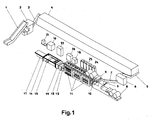
- FIG. 1 shows a schematic isometric projection of a line for sorted waste processing according to the present invention.
- a set of specific machinery was composed to form a line working in a fully automatic or semi-automatic operation mode.
- the individual parts of the line display optimised mechanical and physical features for the given waste type processing.
- the principles of functions of the individual devices are known to a person skilled in the art, however, the line as a whole represents an original technology for the given purpose.
- the technology can be classified as waste-less, as all scrap, trimmings and fragments can be returned to the manufacturing process. Also used and no longer needed products can be recycled.
- the waste is transported by a first conveyor 1 to a shredder 2 for crushing to flake-like particles able to pass though 30mm sieve holes.
- a magnetic metal separator is installed at the exit from the shredder 2.
- the crushed waste carried by a second conveyor 3 , enters a waste dryer 4, where the said waste is dried to the eventual 5wt% humidity.
- the waste may also be processed without the drying step with humidity of up to 60 %, however at the expense of productivity and product quality.
- the waste exiting the dryer is carried by a third conveyor 5 to enter a waste container 6 of an adequate capacity for feeding the pressing line.
- a fourth conveyor then transports the waste from the container 6 to a leveller/spreader 9.
- the leveller 9 spreads the waste evenly, with the required layer thickness, across the base belt unwound from a coil 8.
- the layer is subsequently covered with a cover belt unwound from another coil 8.
- the material of the base and the cover belts is paper, but alternatively fibreglass or LDPE film may be used.
- the base and the cover material becomes an integral part of the product, forming its two-side face.
- the strip of the thus formed half-product is subject to pre-pressing 10, i.e. a pass under an oblique surface, reducing the layer thickness to 70 %.
- the oblique surface may be replaced with a large-diameter cylinder, and/or with a set of small-diameter cylinders arranged in an oblique plane.
- the levelled/spread waste, together with the cover material enters a step press line 11 where it is moved by jog rollers 12.
- the press line 11 comprises three presses, the first two - hot presses heating the half-product to 190 °C and the third - cold press cooling the half-product to 40 °C by a coolant with the temperature of 10 °C.
- the working pressure is 0.8 MPa, identical in all three presses. Hot pressing is doubled for this technological step to be time synchronised with the rest of the line.
- the levelled/spread waste enters pre-pressing, together with the cover material, in the press line 11 by means of a bottom and a top sheet-metal carrier conveyors moving the processed material continually through the press line 11.
- step pressing the product is pressed in several steps, i.e. in several pressing units
- continual pressing the product is pressed in several stages, i.e. sections of a single press line, under similar prescribed physical conditions.
- the selected press arrangement in the above described step press line may vary, e.g. 1 hot and 1 cold press, 2 hot presses and 1 cold press (see the above described referred embodiment), 4 hot presses and 2 cold presses etc.
- T the pressing time
- P wt% of paper in the dry matter
- L wt% of LDPE in the dry matter.
- the summary pressing time in both hot press units amounted to about 11 minutes.
- the hot press units, or sections, must be able to release the formed vapours developing in the course of the pressing process as a result of evaporation of residual humidity from the pressed waste. That is why the pressure of the hot pressing process is repeatedly short-term leap reduced.
- the press line 11 releases a mother board, which then enters the finishing part of the technological line, performing the following procedures: control measurement 13 of the board thickness, formatting the mother board by a formatting saw 14 to the final product, shredding 15 of the side trimmings and pallet stacking by a packaging portal 16 on a packaging table 17.
- the technology further includes a hydraulic aggregate 18, a cooler 19 of the cold press, a cooler 20 of the hydraulic aggregate, a compressed air preparation compressor 21, a sawdust exhaust unit 22, a main switchboard 23 and a control panel 24.
- the size of a standard product for European markets width 1,250 mm, length 2,500 mm.
- the product length may be any, usually up to 3,000 mm, but the nature of the technology in principle permits production of boards of any length without limitation.
- the key properties of the product include high compactness, elasticity and mechanical resilience, high density, water resistance, harmlessness to health and recyclability.
- the main product application areas in the building industry include: flat and inclined roofs, house walls, house interiors and acoustic and thermal insulations.
- the technology according to the present invention processes waste hard to recycle to a final building material, or product, without use of added adhesives and/or other binders.
- the technology is waste-less, all scrap, trimmings and sawdust may be returned to the manufacturing process, as well as used and no longer needed boards which may be reprocessed into new products.
Landscapes
- Engineering & Computer Science (AREA)
- Chemical & Material Sciences (AREA)
- Environmental & Geological Engineering (AREA)
- Ceramic Engineering (AREA)
- Life Sciences & Earth Sciences (AREA)
- Organic Chemistry (AREA)
- Materials Engineering (AREA)
- Structural Engineering (AREA)
- Manufacturing & Machinery (AREA)
- Wood Science & Technology (AREA)
- Forests & Forestry (AREA)
- Civil Engineering (AREA)
- Thermal Sciences (AREA)
- Physics & Mathematics (AREA)
- Processing Of Solid Wastes (AREA)
- Dry Formation Of Fiberboard And The Like (AREA)
Abstract
Description
- The present invention concerns a method of processing sorted communal waste prevailingly containing paper and plastic for production of panels or boards for use mainly in the building industry.
-
EP 1323509 A1 and other patent documents reveal a known method of continual production of boards consisting of materials based on lignocelluloses, especially from wood chips and wood fibre. The method comprises drying of the crushed material, its levelling, together with a binder, along a continually running forming conveyor, wherein the thus formed continual mat passes through a continual belt press to be compacted and cured under pressure and heat effect. The material is cooled and cut to individual panels. The input raw material is wood waste originating in wood processing or furniture manufacturing plants, which however represent a relatively limited source of material for processing. The product is in addition enriched with an environmentally undesirable synthetic binder, e.g. phenol resin. -
DE 1965673 A describes a device for manufacture of a polyurethane foam mat. A mixture of two components, mixing of which initiates an expansion process, is applied in a layer on a running base belt unwound from a coil. When the expansion process begins the layer enters a void under an also unwinding cover belt. The running composite belt is heated from underneath to accelerate solidification of the foam, and thickness of the sandwich is controlled from above by a row of crosswise positioned rollers. - Lignocelluloses, especially paper with plastics, form a considerable proportion of even unsorted waste. As for sorted waste taken directly from the communal sorting containers, both commodities are available directly as they have already been sorted out.
- The present invention aims at proposing an environment-friendly method of production of panels for the building industry from sorted communal waste without addition of any binder.
- The above mentioned task addresses a method of sorted communal waste processing for panels to be used in building industry according to claim 1. The said method comprises sorting, shredding, drying, levelling and pressing of the waste and formatting of the panel. The sorted waste, shredded to pass through
sieve hole sizes 20 to 40 mm and dried for the eventual water content of 5 to 10 wt%, whose solid component comprises 60 to 80 wt% of lignocelluloses, e.g. paper, 20 to 40 wt% of low-density polyethylene (LDPE) and maximum 8 wt% of admixtures, such as wood, fabrics, other plastics or metals, is levelled on a running base belt without addition of any adhesive, covered with a cover belt and pressed between the base and the cover belts under a pressure ranging from 0.4 to 1 MPa and temperature of 180 °C to 210 °C, which sandwich formed in this way is subsequently cooled, again under a pressure ranging from 0.4 to 1 MPa, to the formatting temperature. - Preferred with regard to the pressing technology is reduction of thickness of the half-product formed by the levelled waste, placed between the base and the cover belts, by passing under an oblique surface or a roller, to 70 % of the original thickness.
- The pressing time in the hot press units, also depending on the layer thickness and the water content, preferably equals to T = 0.6 P + 20.4 L, with a 10% tolerance, where T is the pressing time, P is wt% of paper in the dry matter, and L is wt% of LDPE in the dry matter.
- To provide for water vapour release from the pressed sandwich the pressure is preferably repeatedly short-term reduced in the course of the hot pressing process.
- The above described technology was developed for environment-friendly processing of specific waste by recycling for building material using physical and chemical properties of the two main components of the input material in mutual combination, in particular the ability of LDPE to form a reliable binder of dispersed lignocelluloses under certain temperature and pressure conditions.
- To clarify the merits of the invention,
Fig. 1 shows a schematic isometric projection of a line for sorted waste processing according to the present invention. - To apply the waste processing method a set of specific machinery was composed to form a line working in a fully automatic or semi-automatic operation mode. The individual parts of the line display optimised mechanical and physical features for the given waste type processing. The principles of functions of the individual devices are known to a person skilled in the art, however, the line as a whole represents an original technology for the given purpose. The technology can be classified as waste-less, as all scrap, trimmings and fragments can be returned to the manufacturing process. Also used and no longer needed products can be recycled.
- In the course of trial semi-operation separated waste was processed, containing 30 wt% of water and dry matter including 65 wt% of paper, 30 wt% of LDPE and 5 wt% of other admixtures, especially plastic with properties not meeting the requirements of the technology.
- By the method according to the present invention the waste is transported by a first conveyor 1 to a shredder 2 for crushing to flake-like particles able to pass though 30mm sieve holes. A magnetic metal separator is installed at the exit from the shredder 2. The crushed waste, carried by a second conveyor 3, enters a waste dryer 4, where the said waste is dried to the eventual 5wt% humidity. The waste may also be processed without the drying step with humidity of up to 60 %, however at the expense of productivity and product quality.
- The waste exiting the dryer is carried by a
third conveyor 5 to enter a waste container 6 of an adequate capacity for feeding the pressing line. A fourth conveyor then transports the waste from the container 6 to a leveller/spreader 9. The leveller 9 spreads the waste evenly, with the required layer thickness, across the base belt unwound from a coil 8. The layer is subsequently covered with a cover belt unwound from another coil 8. The material of the base and the cover belts is paper, but alternatively fibreglass or LDPE film may be used. The base and the cover material becomes an integral part of the product, forming its two-side face. - Before entering the pressing line the strip of the thus formed half-product is subject to pre-pressing 10, i.e. a pass under an oblique surface, reducing the layer thickness to 70 %. The oblique surface may be replaced with a large-diameter cylinder, and/or with a set of small-diameter cylinders arranged in an oblique plane. Then the levelled/spread waste, together with the cover material, enters a
step press line 11 where it is moved byjog rollers 12. In the described example of a preferred embodiment thepress line 11 comprises three presses, the first two - hot presses heating the half-product to 190 °C and the third - cold press cooling the half-product to 40 °C by a coolant with the temperature of 10 °C. The working pressure is 0.8 MPa, identical in all three presses. Hot pressing is doubled for this technological step to be time synchronised with the rest of the line. - In the case of continual pressing the levelled/spread waste enters pre-pressing, together with the cover material, in the
press line 11 by means of a bottom and a top sheet-metal carrier conveyors moving the processed material continually through thepress line 11. While in the case of step pressing the product is pressed in several steps, i.e. in several pressing units, in the case of continual pressing the product is pressed in several stages, i.e. sections of a single press line, under similar prescribed physical conditions. - Depending on the required productivity, spatial conditions, or for other reasons, the selected press arrangement in the above described step press line may vary, e.g. 1 hot and 1 cold press, 2 hot presses and 1 cold press (see the above described referred embodiment), 4 hot presses and 2 cold presses etc.
- The pressing time depends on the waste composition, humidity, thickness of the pressed board, temperature of the press plates, the press compression and ambient temperature. Generally: T = 0.6 P + 20.4 L, where T is the pressing time, P is wt% of paper in the dry matter, and L is wt% of LDPE in the dry matter. In the described example of a preferred embodiment for production of 12mm thick boards of the material with the above described composition the summary pressing time in both hot press units amounted to about 11 minutes. The hot press units, or sections, must be able to release the formed vapours developing in the course of the pressing process as a result of evaporation of residual humidity from the pressed waste. That is why the pressure of the hot pressing process is repeatedly short-term leap reduced.
- When the pressing process ends the
press line 11 releases a mother board, which then enters the finishing part of the technological line, performing the following procedures:control measurement 13 of the board thickness, formatting the mother board by a formatting saw 14 to the final product, shredding 15 of the side trimmings and pallet stacking by apackaging portal 16 on a packaging table 17. - The technology further includes a
hydraulic aggregate 18, acooler 19 of the cold press, acooler 20 of the hydraulic aggregate, a compressed air preparation compressor 21, asawdust exhaust unit 22, amain switchboard 23 and acontrol panel 24. - The size of a standard product for European markets: width 1,250 mm, length 2,500 mm. The product length may be any, usually up to 3,000 mm, but the nature of the technology in principle permits production of boards of any length without limitation.
- The key properties of the product include high compactness, elasticity and mechanical resilience, high density, water resistance, harmlessness to health and recyclability. The main product application areas in the building industry include: flat and inclined roofs, house walls, house interiors and acoustic and thermal insulations.
- The technology according to the present invention processes waste hard to recycle to a final building material, or product, without use of added adhesives and/or other binders. The technology is waste-less, all scrap, trimmings and sawdust may be returned to the manufacturing process, as well as used and no longer needed boards which may be reprocessed into new products.
Claims (4)
- A method of processing of sorted communal waste for panels usable in the building industry, comprising sorting, crushing, drying, levelling/spreading and pressing of the waste and formatting of the panel, characterised in that the sorted waste, shredded to pass through sieve hole sizes 20 to 40 mm and dried for the eventual water content of 5 to 10 wt%, whose solid component comprises 60 to 80 wt% of lignocelluloses, e.g. paper, 20 to 40 wt% of low-density polyethylene (LDPE) and maximum 8 wt% of admixtures, such as wood, fabrics, other plastics or metals, is levelled on a running base belt without addition of any adhesive, covered with a cover belt and pressed between the base and the cover belts under a pressure ranging from 0.4 to 1 MPa and temperature of 180 °C to 210 °C, which sandwich formed in this way is subsequently cooled, again under a pressure ranging from 0.4 to 1 MPa, to a formatting temperature.
- The method according to claim 1, characterised in that thickness of the half-product formed by the levelled waste between the base and the cover belts, is reduced before pressing by a pass under an oblique surface or roller to 70 % of its original thickness.
- The method according to claims 1 or 2, characterised in that pressing time in the hot press units, with a 10% tolerance, equals to T = 0.6 P + 20.4 L, where T is the pressing time, P is wt% of paper in the dry matter, and L is wt% of LDPE in the dry waste.
- The method according to any of claims 1 to 3, characterised in that the pressure is repeatedly short-term reduced in the course of the hot pressing.
Applications Claiming Priority (1)
| Application Number | Priority Date | Filing Date | Title |
|---|---|---|---|
| CZ20203A CZ20203A3 (en) | 2020-01-03 | 2020-01-03 | Method of processing sorted municipal waste |
Publications (2)
| Publication Number | Publication Date |
|---|---|
| EP3845351A1 true EP3845351A1 (en) | 2021-07-07 |
| EP3845351B1 EP3845351B1 (en) | 2022-09-28 |
Family
ID=74849246
Family Applications (1)
| Application Number | Title | Priority Date | Filing Date |
|---|---|---|---|
| EP20000312.7A Active EP3845351B1 (en) | 2020-01-03 | 2020-08-27 | Sorted communal waste processing method |
Country Status (4)
| Country | Link |
|---|---|
| EP (1) | EP3845351B1 (en) |
| CZ (1) | CZ20203A3 (en) |
| ES (1) | ES2933423T3 (en) |
| PL (1) | PL3845351T3 (en) |
Cited By (3)
| Publication number | Priority date | Publication date | Assignee | Title |
|---|---|---|---|---|
| CN115739931A (en) * | 2022-11-24 | 2023-03-07 | 安徽省天助纺织科技集团股份有限公司 | Waste textile impurity removal device and impurity removal method thereof |
| WO2023065035A1 (en) * | 2021-10-21 | 2023-04-27 | Mckay Dragan Kaymen | Method of recycling furniture and/or construction waste |
| WO2024100595A1 (en) * | 2022-11-09 | 2024-05-16 | Humgremet Lda | Process for the production of sound-absorbing and heat-insulating panels starting from recovered materials from the construction field, wool and waste from leather and hide processing |
Families Citing this family (2)
| Publication number | Priority date | Publication date | Assignee | Title |
|---|---|---|---|---|
| US20240181671A1 (en) | 2021-04-30 | 2024-06-06 | Nilo Global Limited | A plastic composite product |
| ES3032583A1 (en) * | 2025-01-24 | 2025-07-21 | Univ Valencia Politecnica | Production process for chipboard panels and blocks, panels and blocks obtained by said process |
Citations (9)
| Publication number | Priority date | Publication date | Assignee | Title |
|---|---|---|---|---|
| DE1965673A1 (en) | 1969-01-08 | 1970-07-23 | Glolok Co Ltd | Method and device for producing liquid mixtures from reaction material |
| EP0262898A1 (en) | 1986-09-26 | 1988-04-06 | Howard City Paper Company | Apparatus and process for making pressboard from poly-coated paper |
| US5137668A (en) | 1989-07-21 | 1992-08-11 | Fortifiber Corporation | Method for making pressboard from poly-coated paper using relative movement of facing webs |
| US5435954A (en) * | 1993-10-08 | 1995-07-25 | Riverwood International Corporation | Method for forming articles of reinforced composite material |
| RU2103165C1 (en) * | 1994-05-20 | 1998-01-27 | Санкт-Петербургский государственный университет технологии и дизайна | Plate material |
| EP1323509A1 (en) | 2001-12-20 | 2003-07-02 | Maschinenfabrik J. Dieffenbacher GmbH & Co. | Method for continuous manufacturing of fiberboards from wood |
| EP2173549A2 (en) | 2007-02-21 | 2010-04-14 | Flexibuild S.r.o. | Building and construction element |
| WO2019094411A2 (en) | 2017-11-08 | 2019-05-16 | Continuus Material Recovery, Llc | Converting recyclable materials into manufacturing products |
| US20190360204A1 (en) * | 2014-01-21 | 2019-11-28 | Gerald Joseph Sosnowski | Construction material composition and method of forming construction materials utilizing rice hulls |
Family Cites Families (5)
| Publication number | Priority date | Publication date | Assignee | Title |
|---|---|---|---|---|
| US3718536A (en) | 1970-04-22 | 1973-02-27 | Thilmany Pulp & Paper Co | Composite board and method of manufacture |
| CN1089323C (en) * | 1999-01-22 | 2002-08-21 | 湖北汇中集团股份有限公司 | Process for treating garbage to become raw materials of building material and organic compound fertilizer |
| EP2186578A4 (en) * | 2007-07-25 | 2011-11-30 | Qihui Lian | DISPOSAL METHOD FOR RECYCLING FULLY SOLID WASTE |
| IT1396393B1 (en) * | 2009-10-28 | 2012-11-19 | Snaidero Rino S P A | PROCESS OF MANUFACTURE OF A CONSTRUCTIVE ELEMENT, CONSTRUCTION ELEMENT AND RELATIVE PRODUCTION APPARATUS. |
| MX2018005746A (en) * | 2018-05-07 | 2019-11-08 | Divier Benjamin Barreto Chavez | Integral industrial process for the low-cost conversion of municipal solid waste into a construction material suitable for human use. |
-
2020
- 2020-01-03 CZ CZ20203A patent/CZ20203A3/en unknown
- 2020-08-27 ES ES20000312T patent/ES2933423T3/en active Active
- 2020-08-27 PL PL20000312.7T patent/PL3845351T3/en unknown
- 2020-08-27 EP EP20000312.7A patent/EP3845351B1/en active Active
Patent Citations (9)
| Publication number | Priority date | Publication date | Assignee | Title |
|---|---|---|---|---|
| DE1965673A1 (en) | 1969-01-08 | 1970-07-23 | Glolok Co Ltd | Method and device for producing liquid mixtures from reaction material |
| EP0262898A1 (en) | 1986-09-26 | 1988-04-06 | Howard City Paper Company | Apparatus and process for making pressboard from poly-coated paper |
| US5137668A (en) | 1989-07-21 | 1992-08-11 | Fortifiber Corporation | Method for making pressboard from poly-coated paper using relative movement of facing webs |
| US5435954A (en) * | 1993-10-08 | 1995-07-25 | Riverwood International Corporation | Method for forming articles of reinforced composite material |
| RU2103165C1 (en) * | 1994-05-20 | 1998-01-27 | Санкт-Петербургский государственный университет технологии и дизайна | Plate material |
| EP1323509A1 (en) | 2001-12-20 | 2003-07-02 | Maschinenfabrik J. Dieffenbacher GmbH & Co. | Method for continuous manufacturing of fiberboards from wood |
| EP2173549A2 (en) | 2007-02-21 | 2010-04-14 | Flexibuild S.r.o. | Building and construction element |
| US20190360204A1 (en) * | 2014-01-21 | 2019-11-28 | Gerald Joseph Sosnowski | Construction material composition and method of forming construction materials utilizing rice hulls |
| WO2019094411A2 (en) | 2017-11-08 | 2019-05-16 | Continuus Material Recovery, Llc | Converting recyclable materials into manufacturing products |
Non-Patent Citations (3)
| Title |
|---|
| ANONYMOUS: "2017 Performance data Raw materials and sourcing", TETRA PACK INTERNATIONAL, 15 February 2019 (2019-02-15), XP055905597 |
| ANONYMOUS: "Polymers", TETRA PACK INTERNATIONAL, 11 February 2019 (2019-02-11), XP055905598, [retrieved on 20220328] |
| RAMOS DIEGO, SALVADÓ JOAN, FERRANDO FRANCESC: "High Mechanical Performance Boards Made from Fibers of Arundo donax without Added Adhesives", BIORESOURCES, vol. 12, no. 3, 1 January 2017 (2017-01-01), pages 5383 - 5394, XP055905594 |
Cited By (4)
| Publication number | Priority date | Publication date | Assignee | Title |
|---|---|---|---|---|
| WO2023065035A1 (en) * | 2021-10-21 | 2023-04-27 | Mckay Dragan Kaymen | Method of recycling furniture and/or construction waste |
| WO2024100595A1 (en) * | 2022-11-09 | 2024-05-16 | Humgremet Lda | Process for the production of sound-absorbing and heat-insulating panels starting from recovered materials from the construction field, wool and waste from leather and hide processing |
| CN115739931A (en) * | 2022-11-24 | 2023-03-07 | 安徽省天助纺织科技集团股份有限公司 | Waste textile impurity removal device and impurity removal method thereof |
| CN115739931B (en) * | 2022-11-24 | 2024-05-17 | 安徽省天助纺织科技集团股份有限公司 | Waste textile impurity removing device and impurity removing method thereof |
Also Published As
| Publication number | Publication date |
|---|---|
| CZ308706B6 (en) | 2021-03-10 |
| PL3845351T3 (en) | 2023-01-16 |
| EP3845351B1 (en) | 2022-09-28 |
| CZ20203A3 (en) | 2021-03-10 |
| ES2933423T3 (en) | 2023-02-08 |
Similar Documents
| Publication | Publication Date | Title |
|---|---|---|
| EP3845351B1 (en) | Sorted communal waste processing method | |
| US11773592B2 (en) | Carpet waste composite | |
| DE4236266A1 (en) | Method to manufacture MDF panels - uses residual/waste products, which are mixed with adhesive and added to internal layer of panels | |
| CN105751345A (en) | A method of producing oriented strand board by using eucalyptus waste veneer | |
| US5374474A (en) | Composite board and method of manufacture | |
| RS64121B1 (en) | PROCEDURE FOR PRODUCTION OF WOOD-BASED PANELS | |
| US20030150522A1 (en) | Process for producing woody composite material | |
| CA2528219A1 (en) | Plate of wood material and method for the manufacture of the plate | |
| DE3037011A1 (en) | METHOD AND DEVICE FOR CONTINUOUSLY PRODUCING A SHAPED SHAPED MATERIAL FROM FOAM PARTICLES | |
| JP2001246606A (en) | Wood molding and its manufacturing method | |
| CN216637764U (en) | Molding and conveying device | |
| JP2003305707A (en) | WOODY COMPOSITE MATERIAL AND PROCESS FOR PRODUCING THE SAME | |
| JPH0446202B2 (en) | ||
| EP0543052A1 (en) | Plant to make biodegradable and non-biodegradable products, and the relative method | |
| WO1994008766A1 (en) | Plate-like or moulded derived timber product | |
| US8628865B2 (en) | Method for producing sheets from renewable raw materials in a continuous process and sheet of renewable raw materials | |
| JP3673588B2 (en) | Manufacturing method of hard fiber board | |
| PL247252B1 (en) | Method of producing chipboards and a three-layer chipboard | |
| Gil | New cork powder particleboards with thermoplastic binding agents | |
| JPH0890521A (en) | Low density board | |
| TR2025003319A2 (en) | USAGE METHOD OF HARMFUL WASTE PAPERS IN COMPOSITE BOARD PRODUCTION | |
| JP3924196B2 (en) | Forming type and method of manufacturing laminated mat using the forming type | |
| CN121083737A (en) | Bamboo spinning regeneration plate and continuous pressing preparation process thereof | |
| WO2017207869A1 (en) | Method and apparatus for treating a starting material | |
| Sözen | Determination of Physical and Mechanical Properties of Waste Paper Boards Supported by Wood Chips and Chopped E-glass Fiber |
Legal Events
| Date | Code | Title | Description |
|---|---|---|---|
| PUAI | Public reference made under article 153(3) epc to a published international application that has entered the european phase |
Free format text: ORIGINAL CODE: 0009012 |
|
| STAA | Information on the status of an ep patent application or granted ep patent |
Free format text: STATUS: THE APPLICATION HAS BEEN PUBLISHED |
|
| AK | Designated contracting states |
Kind code of ref document: A1 Designated state(s): AL AT BE BG CH CY CZ DE DK EE ES FI FR GB GR HR HU IE IS IT LI LT LU LV MC MK MT NL NO PL PT RO RS SE SI SK SM TR |
|
| STAA | Information on the status of an ep patent application or granted ep patent |
Free format text: STATUS: REQUEST FOR EXAMINATION WAS MADE |
|
| 17P | Request for examination filed |
Effective date: 20210811 |
|
| RBV | Designated contracting states (corrected) |
Designated state(s): AL AT BE BG CH CY CZ DE DK EE ES FI FR GB GR HR HU IE IS IT LI LT LU LV MC MK MT NL NO PL PT RO RS SE SI SK SM TR |
|
| TPAC | Observations filed by third parties |
Free format text: ORIGINAL CODE: EPIDOSNTIPA |
|
| GRAP | Despatch of communication of intention to grant a patent |
Free format text: ORIGINAL CODE: EPIDOSNIGR1 |
|
| STAA | Information on the status of an ep patent application or granted ep patent |
Free format text: STATUS: GRANT OF PATENT IS INTENDED |
|
| RIC1 | Information provided on ipc code assigned before grant |
Ipc: B27N 7/00 20060101ALN20220630BHEP Ipc: B27N 3/18 20060101ALI20220630BHEP Ipc: B27N 1/00 20060101ALI20220630BHEP Ipc: B27N 3/04 20060101ALI20220630BHEP Ipc: B27N 3/02 20060101AFI20220630BHEP |
|
| RIC1 | Information provided on ipc code assigned before grant |
Ipc: B27N 7/00 20060101ALN20220704BHEP Ipc: B27N 3/18 20060101ALI20220704BHEP Ipc: B27N 1/00 20060101ALI20220704BHEP Ipc: B27N 3/04 20060101ALI20220704BHEP Ipc: B27N 3/02 20060101AFI20220704BHEP |
|
| GRAS | Grant fee paid |
Free format text: ORIGINAL CODE: EPIDOSNIGR3 |
|
| INTG | Intention to grant announced |
Effective date: 20220718 |
|
| GRAA | (expected) grant |
Free format text: ORIGINAL CODE: 0009210 |
|
| STAA | Information on the status of an ep patent application or granted ep patent |
Free format text: STATUS: THE PATENT HAS BEEN GRANTED |
|
| AK | Designated contracting states |
Kind code of ref document: B1 Designated state(s): AL AT BE BG CH CY CZ DE DK EE ES FI FR GB GR HR HU IE IS IT LI LT LU LV MC MK MT NL NO PL PT RO RS SE SI SK SM TR |
|
| REG | Reference to a national code |
Ref country code: GB Ref legal event code: FG4D |
|
| REG | Reference to a national code |
Ref country code: CH Ref legal event code: EP |
|
| REG | Reference to a national code |
Ref country code: DE Ref legal event code: R096 Ref document number: 602020005256 Country of ref document: DE |
|
| REG | Reference to a national code |
Ref country code: AT Ref legal event code: REF Ref document number: 1520960 Country of ref document: AT Kind code of ref document: T Effective date: 20221015 |
|
| REG | Reference to a national code |
Ref country code: IE Ref legal event code: FG4D |
|
| REG | Reference to a national code |
Ref country code: LT Ref legal event code: MG9D |
|
| PG25 | Lapsed in a contracting state [announced via postgrant information from national office to epo] |
Ref country code: SE Free format text: LAPSE BECAUSE OF FAILURE TO SUBMIT A TRANSLATION OF THE DESCRIPTION OR TO PAY THE FEE WITHIN THE PRESCRIBED TIME-LIMIT Effective date: 20220928 Ref country code: RS Free format text: LAPSE BECAUSE OF FAILURE TO SUBMIT A TRANSLATION OF THE DESCRIPTION OR TO PAY THE FEE WITHIN THE PRESCRIBED TIME-LIMIT Effective date: 20220928 Ref country code: NO Free format text: LAPSE BECAUSE OF FAILURE TO SUBMIT A TRANSLATION OF THE DESCRIPTION OR TO PAY THE FEE WITHIN THE PRESCRIBED TIME-LIMIT Effective date: 20221228 Ref country code: LV Free format text: LAPSE BECAUSE OF FAILURE TO SUBMIT A TRANSLATION OF THE DESCRIPTION OR TO PAY THE FEE WITHIN THE PRESCRIBED TIME-LIMIT Effective date: 20220928 Ref country code: LT Free format text: LAPSE BECAUSE OF FAILURE TO SUBMIT A TRANSLATION OF THE DESCRIPTION OR TO PAY THE FEE WITHIN THE PRESCRIBED TIME-LIMIT Effective date: 20220928 Ref country code: FI Free format text: LAPSE BECAUSE OF FAILURE TO SUBMIT A TRANSLATION OF THE DESCRIPTION OR TO PAY THE FEE WITHIN THE PRESCRIBED TIME-LIMIT Effective date: 20220928 |
|
| REG | Reference to a national code |
Ref country code: NL Ref legal event code: MP Effective date: 20220928 |
|
| REG | Reference to a national code |
Ref country code: SK Ref legal event code: T3 Ref document number: E 40943 Country of ref document: SK Ref country code: ES Ref legal event code: FG2A Ref document number: 2933423 Country of ref document: ES Kind code of ref document: T3 Effective date: 20230208 |
|
| REG | Reference to a national code |
Ref country code: AT Ref legal event code: MK05 Ref document number: 1520960 Country of ref document: AT Kind code of ref document: T Effective date: 20220928 |
|
| PG25 | Lapsed in a contracting state [announced via postgrant information from national office to epo] |
Ref country code: HR Free format text: LAPSE BECAUSE OF FAILURE TO SUBMIT A TRANSLATION OF THE DESCRIPTION OR TO PAY THE FEE WITHIN THE PRESCRIBED TIME-LIMIT Effective date: 20220928 Ref country code: GR Free format text: LAPSE BECAUSE OF FAILURE TO SUBMIT A TRANSLATION OF THE DESCRIPTION OR TO PAY THE FEE WITHIN THE PRESCRIBED TIME-LIMIT Effective date: 20221229 |
|
| PG25 | Lapsed in a contracting state [announced via postgrant information from national office to epo] |
Ref country code: SM Free format text: LAPSE BECAUSE OF FAILURE TO SUBMIT A TRANSLATION OF THE DESCRIPTION OR TO PAY THE FEE WITHIN THE PRESCRIBED TIME-LIMIT Effective date: 20220928 Ref country code: RO Free format text: LAPSE BECAUSE OF FAILURE TO SUBMIT A TRANSLATION OF THE DESCRIPTION OR TO PAY THE FEE WITHIN THE PRESCRIBED TIME-LIMIT Effective date: 20220928 Ref country code: PT Free format text: LAPSE BECAUSE OF FAILURE TO SUBMIT A TRANSLATION OF THE DESCRIPTION OR TO PAY THE FEE WITHIN THE PRESCRIBED TIME-LIMIT Effective date: 20230130 Ref country code: CZ Free format text: LAPSE BECAUSE OF FAILURE TO SUBMIT A TRANSLATION OF THE DESCRIPTION OR TO PAY THE FEE WITHIN THE PRESCRIBED TIME-LIMIT Effective date: 20220928 Ref country code: AT Free format text: LAPSE BECAUSE OF FAILURE TO SUBMIT A TRANSLATION OF THE DESCRIPTION OR TO PAY THE FEE WITHIN THE PRESCRIBED TIME-LIMIT Effective date: 20220928 |
|
| PG25 | Lapsed in a contracting state [announced via postgrant information from national office to epo] |
Ref country code: IS Free format text: LAPSE BECAUSE OF FAILURE TO SUBMIT A TRANSLATION OF THE DESCRIPTION OR TO PAY THE FEE WITHIN THE PRESCRIBED TIME-LIMIT Effective date: 20230128 Ref country code: EE Free format text: LAPSE BECAUSE OF FAILURE TO SUBMIT A TRANSLATION OF THE DESCRIPTION OR TO PAY THE FEE WITHIN THE PRESCRIBED TIME-LIMIT Effective date: 20220928 |
|
| REG | Reference to a national code |
Ref country code: DE Ref legal event code: R026 Ref document number: 602020005256 Country of ref document: DE |
|
| PG25 | Lapsed in a contracting state [announced via postgrant information from national office to epo] |
Ref country code: NL Free format text: LAPSE BECAUSE OF FAILURE TO SUBMIT A TRANSLATION OF THE DESCRIPTION OR TO PAY THE FEE WITHIN THE PRESCRIBED TIME-LIMIT Effective date: 20220928 Ref country code: AL Free format text: LAPSE BECAUSE OF FAILURE TO SUBMIT A TRANSLATION OF THE DESCRIPTION OR TO PAY THE FEE WITHIN THE PRESCRIBED TIME-LIMIT Effective date: 20220928 |
|
| PLBI | Opposition filed |
Free format text: ORIGINAL CODE: 0009260 |
|
| PLAX | Notice of opposition and request to file observation + time limit sent |
Free format text: ORIGINAL CODE: EPIDOSNOBS2 |
|
| PG25 | Lapsed in a contracting state [announced via postgrant information from national office to epo] |
Ref country code: DK Free format text: LAPSE BECAUSE OF FAILURE TO SUBMIT A TRANSLATION OF THE DESCRIPTION OR TO PAY THE FEE WITHIN THE PRESCRIBED TIME-LIMIT Effective date: 20220928 |
|
| 26 | Opposition filed |
Opponent name: FLEXIRIGHT, S.R.O. Effective date: 20230628 |
|
| PLBB | Reply of patent proprietor to notice(s) of opposition received |
Free format text: ORIGINAL CODE: EPIDOSNOBS3 |
|
| PG25 | Lapsed in a contracting state [announced via postgrant information from national office to epo] |
Ref country code: SI Free format text: LAPSE BECAUSE OF FAILURE TO SUBMIT A TRANSLATION OF THE DESCRIPTION OR TO PAY THE FEE WITHIN THE PRESCRIBED TIME-LIMIT Effective date: 20220928 |
|
| PG25 | Lapsed in a contracting state [announced via postgrant information from national office to epo] |
Ref country code: MC Free format text: LAPSE BECAUSE OF FAILURE TO SUBMIT A TRANSLATION OF THE DESCRIPTION OR TO PAY THE FEE WITHIN THE PRESCRIBED TIME-LIMIT Effective date: 20220928 |
|
| REG | Reference to a national code |
Ref country code: CH Ref legal event code: PL |
|
| PG25 | Lapsed in a contracting state [announced via postgrant information from national office to epo] |
Ref country code: MC Free format text: LAPSE BECAUSE OF FAILURE TO SUBMIT A TRANSLATION OF THE DESCRIPTION OR TO PAY THE FEE WITHIN THE PRESCRIBED TIME-LIMIT Effective date: 20220928 |
|
| PG25 | Lapsed in a contracting state [announced via postgrant information from national office to epo] |
Ref country code: LU Free format text: LAPSE BECAUSE OF NON-PAYMENT OF DUE FEES Effective date: 20230827 |
|
| PG25 | Lapsed in a contracting state [announced via postgrant information from national office to epo] |
Ref country code: LU Free format text: LAPSE BECAUSE OF NON-PAYMENT OF DUE FEES Effective date: 20230827 Ref country code: CH Free format text: LAPSE BECAUSE OF NON-PAYMENT OF DUE FEES Effective date: 20230831 |
|
| REG | Reference to a national code |
Ref country code: BE Ref legal event code: MM Effective date: 20230831 |
|
| PG25 | Lapsed in a contracting state [announced via postgrant information from national office to epo] |
Ref country code: BE Free format text: LAPSE BECAUSE OF NON-PAYMENT OF DUE FEES Effective date: 20230831 |
|
| PG25 | Lapsed in a contracting state [announced via postgrant information from national office to epo] |
Ref country code: BG Free format text: LAPSE BECAUSE OF FAILURE TO SUBMIT A TRANSLATION OF THE DESCRIPTION OR TO PAY THE FEE WITHIN THE PRESCRIBED TIME-LIMIT Effective date: 20220928 |
|
| PG25 | Lapsed in a contracting state [announced via postgrant information from national office to epo] |
Ref country code: BG Free format text: LAPSE BECAUSE OF FAILURE TO SUBMIT A TRANSLATION OF THE DESCRIPTION OR TO PAY THE FEE WITHIN THE PRESCRIBED TIME-LIMIT Effective date: 20220928 |
|
| PG25 | Lapsed in a contracting state [announced via postgrant information from national office to epo] |
Ref country code: CY Free format text: LAPSE BECAUSE OF FAILURE TO SUBMIT A TRANSLATION OF THE DESCRIPTION OR TO PAY THE FEE WITHIN THE PRESCRIBED TIME-LIMIT; INVALID AB INITIO Effective date: 20200827 |
|
| PG25 | Lapsed in a contracting state [announced via postgrant information from national office to epo] |
Ref country code: HU Free format text: LAPSE BECAUSE OF FAILURE TO SUBMIT A TRANSLATION OF THE DESCRIPTION OR TO PAY THE FEE WITHIN THE PRESCRIBED TIME-LIMIT; INVALID AB INITIO Effective date: 20200827 |
|
| PGFP | Annual fee paid to national office [announced via postgrant information from national office to epo] |
Ref country code: ES Payment date: 20250902 Year of fee payment: 6 |
|
| PGFP | Annual fee paid to national office [announced via postgrant information from national office to epo] |
Ref country code: DE Payment date: 20250729 Year of fee payment: 6 |
|
| REG | Reference to a national code |
Ref country code: DE Ref legal event code: R100 Ref document number: 602020005256 Country of ref document: DE |
|
| PGFP | Annual fee paid to national office [announced via postgrant information from national office to epo] |
Ref country code: PL Payment date: 20250729 Year of fee payment: 6 Ref country code: IT Payment date: 20250731 Year of fee payment: 6 |
|
| PGFP | Annual fee paid to national office [announced via postgrant information from national office to epo] |
Ref country code: GB Payment date: 20250822 Year of fee payment: 6 |
|
| PGFP | Annual fee paid to national office [announced via postgrant information from national office to epo] |
Ref country code: IE Payment date: 20250729 Year of fee payment: 6 |
|
| PGFP | Annual fee paid to national office [announced via postgrant information from national office to epo] |
Ref country code: SK Payment date: 20250730 Year of fee payment: 6 |
|
| PLCK | Communication despatched that opposition was rejected |
Free format text: ORIGINAL CODE: EPIDOSNREJ1 |
|
| PG25 | Lapsed in a contracting state [announced via postgrant information from national office to epo] |
Ref country code: TR Free format text: LAPSE BECAUSE OF FAILURE TO SUBMIT A TRANSLATION OF THE DESCRIPTION OR TO PAY THE FEE WITHIN THE PRESCRIBED TIME-LIMIT Effective date: 20220928 |
|
| PGFP | Annual fee paid to national office [announced via postgrant information from national office to epo] |
Ref country code: FR Payment date: 20251125 Year of fee payment: 6 |
|
| PLBN | Opposition rejected |
Free format text: ORIGINAL CODE: 0009273 |
|
| STAA | Information on the status of an ep patent application or granted ep patent |
Free format text: STATUS: OPPOSITION REJECTED |
|
| REG | Reference to a national code |
Ref country code: CH Ref legal event code: L18 Free format text: ST27 STATUS EVENT CODE: U-0-0-L10-L18 (AS PROVIDED BY THE NATIONAL OFFICE) Effective date: 20260211 |
|
| 27O | Opposition rejected |
Effective date: 20251010 |