EP3831856A1 - Oxidized cellulose, method for producing oxidized cellulose and nano-cellulose, and nano-cellulose dispersion - Google Patents
Oxidized cellulose, method for producing oxidized cellulose and nano-cellulose, and nano-cellulose dispersion Download PDFInfo
- Publication number
- EP3831856A1 EP3831856A1 EP19843439.1A EP19843439A EP3831856A1 EP 3831856 A1 EP3831856 A1 EP 3831856A1 EP 19843439 A EP19843439 A EP 19843439A EP 3831856 A1 EP3831856 A1 EP 3831856A1
- Authority
- EP
- European Patent Office
- Prior art keywords
- cellulose
- oxidized cellulose
- oxidized
- ppm
- mass
- Prior art date
- Legal status (The legal status is an assumption and is not a legal conclusion. Google has not performed a legal analysis and makes no representation as to the accuracy of the status listed.)
- Pending
Links
- 229920002201 Oxidized cellulose Polymers 0.000 title claims abstract description 91
- 229940107304 oxidized cellulose Drugs 0.000 title claims abstract description 90
- 229920002678 cellulose Polymers 0.000 title claims abstract description 44
- 239000001913 cellulose Substances 0.000 title claims abstract description 43
- 239000006185 dispersion Substances 0.000 title claims description 15
- 238000004519 manufacturing process Methods 0.000 title description 6
- 238000000034 method Methods 0.000 claims abstract description 43
- 239000002994 raw material Substances 0.000 claims abstract description 30
- 229910052801 chlorine Inorganic materials 0.000 claims abstract description 29
- ZAMOUSCENKQFHK-UHFFFAOYSA-N Chlorine atom Chemical compound [Cl] ZAMOUSCENKQFHK-UHFFFAOYSA-N 0.000 claims abstract description 28
- 229920001046 Nanocellulose Polymers 0.000 claims abstract description 28
- 239000000460 chlorine Substances 0.000 claims abstract description 28
- 150000001875 compounds Chemical class 0.000 claims abstract description 22
- 230000001590 oxidative effect Effects 0.000 claims abstract description 18
- QWPPOHNGKGFGJK-UHFFFAOYSA-N hypochlorous acid Chemical compound ClO QWPPOHNGKGFGJK-UHFFFAOYSA-N 0.000 claims abstract description 17
- 150000003839 salts Chemical class 0.000 claims abstract description 13
- 238000001228 spectrum Methods 0.000 claims abstract description 8
- 125000003178 carboxy group Chemical group [H]OC(*)=O 0.000 claims description 32
- SUKJFIGYRHOWBL-UHFFFAOYSA-N sodium hypochlorite Chemical compound [Na+].Cl[O-] SUKJFIGYRHOWBL-UHFFFAOYSA-N 0.000 claims description 27
- 239000005708 Sodium hypochlorite Substances 0.000 claims description 25
- XLYOFNOQVPJJNP-UHFFFAOYSA-N water Substances O XLYOFNOQVPJJNP-UHFFFAOYSA-N 0.000 claims description 16
- 238000004922 13C solid-state nuclear magnetic resonance spectroscopy Methods 0.000 claims description 14
- WEVYAHXRMPXWCK-UHFFFAOYSA-N Acetonitrile Chemical compound CC#N WEVYAHXRMPXWCK-UHFFFAOYSA-N 0.000 claims description 9
- -1 carbonate ester Chemical class 0.000 claims description 3
- 206010061592 cardiac fibrillation Diseases 0.000 abstract description 25
- 230000002600 fibrillogenic effect Effects 0.000 abstract description 25
- GDOPTJXRTPNYNR-UHFFFAOYSA-N methyl-cyclopentane Natural products CC1CCCC1 GDOPTJXRTPNYNR-UHFFFAOYSA-N 0.000 abstract description 11
- 238000000371 solid-state nuclear magnetic resonance spectroscopy Methods 0.000 abstract 1
- 235000010980 cellulose Nutrition 0.000 description 39
- HEMHJVSKTPXQMS-UHFFFAOYSA-M Sodium hydroxide Chemical compound [OH-].[Na+] HEMHJVSKTPXQMS-UHFFFAOYSA-M 0.000 description 18
- 239000007864 aqueous solution Substances 0.000 description 17
- 239000000047 product Substances 0.000 description 17
- 238000006243 chemical reaction Methods 0.000 description 16
- 230000000052 comparative effect Effects 0.000 description 14
- 238000007254 oxidation reaction Methods 0.000 description 11
- 239000002904 solvent Substances 0.000 description 9
- DKGAVHZHDRPRBM-UHFFFAOYSA-N Tert-Butanol Chemical compound CC(C)(C)O DKGAVHZHDRPRBM-UHFFFAOYSA-N 0.000 description 8
- 239000003054 catalyst Substances 0.000 description 8
- 239000007788 liquid Substances 0.000 description 8
- 239000000463 material Substances 0.000 description 7
- 238000005259 measurement Methods 0.000 description 7
- 239000002121 nanofiber Substances 0.000 description 7
- VEXZGXHMUGYJMC-UHFFFAOYSA-N Hydrochloric acid Chemical compound Cl VEXZGXHMUGYJMC-UHFFFAOYSA-N 0.000 description 6
- 239000007800 oxidant agent Substances 0.000 description 6
- 230000035484 reaction time Effects 0.000 description 6
- 239000000243 solution Substances 0.000 description 6
- 238000003756 stirring Methods 0.000 description 5
- MCMNRKCIXSYSNV-UHFFFAOYSA-N Zirconium dioxide Chemical compound O=[Zr]=O MCMNRKCIXSYSNV-UHFFFAOYSA-N 0.000 description 4
- WQYVRQLZKVEZGA-UHFFFAOYSA-N hypochlorite Chemical compound Cl[O-] WQYVRQLZKVEZGA-UHFFFAOYSA-N 0.000 description 4
- 239000012528 membrane Substances 0.000 description 4
- 239000004810 polytetrafluoroethylene Substances 0.000 description 4
- 229920001343 polytetrafluoroethylene Polymers 0.000 description 4
- 238000000926 separation method Methods 0.000 description 4
- 238000000967 suction filtration Methods 0.000 description 4
- ZWEHNKRNPOVVGH-UHFFFAOYSA-N 2-Butanone Chemical compound CCC(C)=O ZWEHNKRNPOVVGH-UHFFFAOYSA-N 0.000 description 3
- QTBSBXVTEAMEQO-UHFFFAOYSA-N Acetic acid Chemical compound CC(O)=O QTBSBXVTEAMEQO-UHFFFAOYSA-N 0.000 description 3
- LFQSCWFLJHTTHZ-UHFFFAOYSA-N Ethanol Chemical compound CCO LFQSCWFLJHTTHZ-UHFFFAOYSA-N 0.000 description 3
- LYCAIKOWRPUZTN-UHFFFAOYSA-N Ethylene glycol Chemical compound OCCO LYCAIKOWRPUZTN-UHFFFAOYSA-N 0.000 description 3
- OKKJLVBELUTLKV-UHFFFAOYSA-N Methanol Chemical compound OC OKKJLVBELUTLKV-UHFFFAOYSA-N 0.000 description 3
- ZMXDDKWLCZADIW-UHFFFAOYSA-N N,N-Dimethylformamide Chemical compound CN(C)C=O ZMXDDKWLCZADIW-UHFFFAOYSA-N 0.000 description 3
- 239000002253 acid Substances 0.000 description 3
- 239000013078 crystal Substances 0.000 description 3
- 125000002887 hydroxy group Chemical group [H]O* 0.000 description 3
- 238000002156 mixing Methods 0.000 description 3
- 239000003960 organic solvent Substances 0.000 description 3
- NLKNQRATVPKPDG-UHFFFAOYSA-M potassium iodide Chemical compound [K+].[I-] NLKNQRATVPKPDG-UHFFFAOYSA-M 0.000 description 3
- 239000011541 reaction mixture Substances 0.000 description 3
- 239000011347 resin Substances 0.000 description 3
- 229920005989 resin Polymers 0.000 description 3
- CSCPPACGZOOCGX-UHFFFAOYSA-N Acetone Chemical compound CC(C)=O CSCPPACGZOOCGX-UHFFFAOYSA-N 0.000 description 2
- IJGRMHOSHXDMSA-UHFFFAOYSA-N Atomic nitrogen Chemical compound N#N IJGRMHOSHXDMSA-UHFFFAOYSA-N 0.000 description 2
- XTHFKEDIFFGKHM-UHFFFAOYSA-N Dimethoxyethane Chemical compound COCCOC XTHFKEDIFFGKHM-UHFFFAOYSA-N 0.000 description 2
- IAZDPXIOMUYVGZ-UHFFFAOYSA-N Dimethylsulphoxide Chemical compound CS(C)=O IAZDPXIOMUYVGZ-UHFFFAOYSA-N 0.000 description 2
- PEDCQBHIVMGVHV-UHFFFAOYSA-N Glycerine Chemical compound OCC(O)CO PEDCQBHIVMGVHV-UHFFFAOYSA-N 0.000 description 2
- KFZMGEQAYNKOFK-UHFFFAOYSA-N Isopropanol Chemical compound CC(C)O KFZMGEQAYNKOFK-UHFFFAOYSA-N 0.000 description 2
- WYURNTSHIVDZCO-UHFFFAOYSA-N Tetrahydrofuran Chemical compound C1CCOC1 WYURNTSHIVDZCO-UHFFFAOYSA-N 0.000 description 2
- 238000009825 accumulation Methods 0.000 description 2
- 150000001298 alcohols Chemical class 0.000 description 2
- BTANRVKWQNVYAZ-UHFFFAOYSA-N butan-2-ol Chemical compound CCC(C)O BTANRVKWQNVYAZ-UHFFFAOYSA-N 0.000 description 2
- 125000001309 chloro group Chemical group Cl* 0.000 description 2
- 238000005384 cross polarization magic-angle spinning Methods 0.000 description 2
- 238000000354 decomposition reaction Methods 0.000 description 2
- 230000007423 decrease Effects 0.000 description 2
- 238000010586 diagram Methods 0.000 description 2
- 238000007865 diluting Methods 0.000 description 2
- 230000000694 effects Effects 0.000 description 2
- 150000002170 ethers Chemical class 0.000 description 2
- ZXEKIIBDNHEJCQ-UHFFFAOYSA-N isobutanol Chemical compound CC(C)CO ZXEKIIBDNHEJCQ-UHFFFAOYSA-N 0.000 description 2
- 150000002576 ketones Chemical class 0.000 description 2
- 239000002655 kraft paper Substances 0.000 description 2
- 239000000203 mixture Substances 0.000 description 2
- 238000001208 nuclear magnetic resonance pulse sequence Methods 0.000 description 2
- 230000003647 oxidation Effects 0.000 description 2
- 229920000642 polymer Polymers 0.000 description 2
- JHJLBTNAGRQEKS-UHFFFAOYSA-M sodium bromide Chemical compound [Na+].[Br-] JHJLBTNAGRQEKS-UHFFFAOYSA-M 0.000 description 2
- 239000011122 softwood Substances 0.000 description 2
- 230000001988 toxicity Effects 0.000 description 2
- 231100000419 toxicity Toxicity 0.000 description 2
- 238000010792 warming Methods 0.000 description 2
- 238000005406 washing Methods 0.000 description 2
- RYHBNJHYFVUHQT-UHFFFAOYSA-N 1,4-Dioxane Chemical compound C1COCCO1 RYHBNJHYFVUHQT-UHFFFAOYSA-N 0.000 description 1
- XNWFRZJHXBZDAG-UHFFFAOYSA-N 2-METHOXYETHANOL Chemical compound COCCO XNWFRZJHXBZDAG-UHFFFAOYSA-N 0.000 description 1
- ZCYVEMRRCGMTRW-UHFFFAOYSA-N 7553-56-2 Chemical compound [I] ZCYVEMRRCGMTRW-UHFFFAOYSA-N 0.000 description 1
- ZKQDCIXGCQPQNV-UHFFFAOYSA-N Calcium hypochlorite Chemical compound [Ca+2].Cl[O-].Cl[O-] ZKQDCIXGCQPQNV-UHFFFAOYSA-N 0.000 description 1
- OKTJSMMVPCPJKN-UHFFFAOYSA-N Carbon Chemical compound [C] OKTJSMMVPCPJKN-UHFFFAOYSA-N 0.000 description 1
- KZBUYRJDOAKODT-UHFFFAOYSA-N Chlorine Chemical compound ClCl KZBUYRJDOAKODT-UHFFFAOYSA-N 0.000 description 1
- UFHFLCQGNIYNRP-UHFFFAOYSA-N Hydrogen Chemical compound [H][H] UFHFLCQGNIYNRP-UHFFFAOYSA-N 0.000 description 1
- FXHOOIRPVKKKFG-UHFFFAOYSA-N N,N-Dimethylacetamide Chemical compound CN(C)C(C)=O FXHOOIRPVKKKFG-UHFFFAOYSA-N 0.000 description 1
- 229920002472 Starch Polymers 0.000 description 1
- 239000003513 alkali Substances 0.000 description 1
- 238000004458 analytical method Methods 0.000 description 1
- 125000004429 atom Chemical group 0.000 description 1
- KBKZYWOOZPIUJT-UHFFFAOYSA-N azane;hypochlorous acid Chemical compound N.ClO KBKZYWOOZPIUJT-UHFFFAOYSA-N 0.000 description 1
- 238000004364 calculation method Methods 0.000 description 1
- 229910052799 carbon Inorganic materials 0.000 description 1
- 150000001768 cations Chemical class 0.000 description 1
- 239000003795 chemical substances by application Substances 0.000 description 1
- 239000000470 constituent Substances 0.000 description 1
- 238000005516 engineering process Methods 0.000 description 1
- 230000007613 environmental effect Effects 0.000 description 1
- 239000000835 fiber Substances 0.000 description 1
- 235000011187 glycerol Nutrition 0.000 description 1
- 239000001257 hydrogen Substances 0.000 description 1
- 229910052739 hydrogen Inorganic materials 0.000 description 1
- 229910052740 iodine Inorganic materials 0.000 description 1
- 239000011630 iodine Substances 0.000 description 1
- 239000000178 monomer Substances 0.000 description 1
- 239000002159 nanocrystal Substances 0.000 description 1
- 238000006386 neutralization reaction Methods 0.000 description 1
- 229910052757 nitrogen Inorganic materials 0.000 description 1
- 238000000655 nuclear magnetic resonance spectrum Methods 0.000 description 1
- 125000004430 oxygen atom Chemical group O* 0.000 description 1
- 150000004686 pentahydrates Chemical class 0.000 description 1
- SATVIFGJTRRDQU-UHFFFAOYSA-N potassium hypochlorite Chemical compound [K+].Cl[O-] SATVIFGJTRRDQU-UHFFFAOYSA-N 0.000 description 1
- 239000004627 regenerated cellulose Substances 0.000 description 1
- 229910001927 ruthenium tetroxide Inorganic materials 0.000 description 1
- 239000002002 slurry Substances 0.000 description 1
- AKHNMLFCWUSKQB-UHFFFAOYSA-L sodium thiosulfate Chemical compound [Na+].[Na+].[O-]S([O-])(=O)=S AKHNMLFCWUSKQB-UHFFFAOYSA-L 0.000 description 1
- 235000019345 sodium thiosulphate Nutrition 0.000 description 1
- FHKLOBNGYGFRSF-UHFFFAOYSA-N sodium;hypochlorite;pentahydrate Chemical compound O.O.O.O.O.[Na+].Cl[O-] FHKLOBNGYGFRSF-UHFFFAOYSA-N 0.000 description 1
- 239000008107 starch Substances 0.000 description 1
- 235000019698 starch Nutrition 0.000 description 1
- 239000000126 substance Substances 0.000 description 1
- 238000006467 substitution reaction Methods 0.000 description 1
- 239000006228 supernatant Substances 0.000 description 1
- YLQBMQCUIZJEEH-UHFFFAOYSA-N tetrahydrofuran Natural products C=1C=COC=1 YLQBMQCUIZJEEH-UHFFFAOYSA-N 0.000 description 1
- 238000002834 transmittance Methods 0.000 description 1
- 238000005303 weighing Methods 0.000 description 1
Images



Classifications
-
- C—CHEMISTRY; METALLURGY
- C08—ORGANIC MACROMOLECULAR COMPOUNDS; THEIR PREPARATION OR CHEMICAL WORKING-UP; COMPOSITIONS BASED THEREON
- C08B—POLYSACCHARIDES; DERIVATIVES THEREOF
- C08B15/00—Preparation of other cellulose derivatives or modified cellulose, e.g. complexes
- C08B15/02—Oxycellulose; Hydrocellulose; Cellulosehydrate, e.g. microcrystalline cellulose
- C08B15/04—Carboxycellulose, e.g. prepared by oxidation with nitrogen dioxide
-
- C—CHEMISTRY; METALLURGY
- C08—ORGANIC MACROMOLECULAR COMPOUNDS; THEIR PREPARATION OR CHEMICAL WORKING-UP; COMPOSITIONS BASED THEREON
- C08L—COMPOSITIONS OF MACROMOLECULAR COMPOUNDS
- C08L1/00—Compositions of cellulose, modified cellulose or cellulose derivatives
- C08L1/02—Cellulose; Modified cellulose
- C08L1/04—Oxycellulose; Hydrocellulose, e.g. microcrystalline cellulose
-
- C—CHEMISTRY; METALLURGY
- C08—ORGANIC MACROMOLECULAR COMPOUNDS; THEIR PREPARATION OR CHEMICAL WORKING-UP; COMPOSITIONS BASED THEREON
- C08B—POLYSACCHARIDES; DERIVATIVES THEREOF
- C08B15/00—Preparation of other cellulose derivatives or modified cellulose, e.g. complexes
- C08B15/02—Oxycellulose; Hydrocellulose; Cellulosehydrate, e.g. microcrystalline cellulose
-
- D—TEXTILES; PAPER
- D21—PAPER-MAKING; PRODUCTION OF CELLULOSE
- D21H—PULP COMPOSITIONS; PREPARATION THEREOF NOT COVERED BY SUBCLASSES D21C OR D21D; IMPREGNATING OR COATING OF PAPER; TREATMENT OF FINISHED PAPER NOT COVERED BY CLASS B31 OR SUBCLASS D21G; PAPER NOT OTHERWISE PROVIDED FOR
- D21H11/00—Pulp or paper, comprising cellulose or lignocellulose fibres of natural origin only
- D21H11/16—Pulp or paper, comprising cellulose or lignocellulose fibres of natural origin only modified by a particular after-treatment
- D21H11/18—Highly hydrated, swollen or fibrillatable fibres
Definitions
- the present invention relates to an oxidized cellulose obtained by oxidizing a cellulose raw material, a method of producing an oxidized cellulose and a nanocellulose, and a nanocellulose dispersion. More specifically, the present invention relates to an oxidized cellulose in which hydroxy groups at a number of positions are oxidized within a specific pH range with, as an oxidant, a hypochlorous acid or salt thereof having an available chlorine concentration of from 6% by mass to 14% by mass, as well as a method of producing the oxidized cellulose.
- the present invention relates to a method of producing a nanocellulose, the method including fibrillating and nanoizing the oxidized cellulose, as well as a nanocellulose dispersion.
- Non-Patent Document 1 A method of producing nanocellulose materials, such as cellulose nanofibers, by oxidizing various cellulose raw materials has been studied.
- a method of oxidizing a cellulose raw material with sodium hypochlorite, which is an oxidant, under the presence of 2,2,6,6-tetramethyl-1-piperidin-N-oxy radical (hereinafter, referred to as TEMPO) is disclosed (Non-Patent Document 1).
- cellulose nanofibers that are produced by a method without using an N-oxyl catalyst, such as TEMPO, and that have a content of carboxyl groups of from 0.20 to 0.50 mmol/g with respect to a dry mass of the cellulose nanofibers, have an average fiber diameter of from 3 to 100 nm, and do not contain an N-oxyl compound are disclosed (Patent Document 1).
- N-oxyl catalyst such as TEMPO
- Patent Document 1 Japanese Patent Application Laid-open ( JP-A) No. 2017-193814
- Non-Patent Document 1 Cellulose Commun., 14 (2), 62 (2007 )
- N-oxyl compounds There is concern about environmental and human toxicities of N-oxyl compounds. Therefore, in the case in which the oxidized cellulose is used to prepare a cellulose nanofiber aqueous dispersion, the N-oxyl compound will be incorporated also in the dispersion. Thus, in the case in which the nanocellulose is used as a highly functional material, the N-oxyl compound present in the dispersion may have undesirable effects depending on the use thereof.
- N-oxyl compounds are very expensive materials, it cannot be said that production methods employing N-oxyl compounds are not economical.
- the method includes an oxidation step of oxidizing cellulose at a pH of from 5.0 to 9.0 in a solvent containing hypochlorous acid or sodium hypochlorite to obtain an oxidized cellulose, and a fibrillation step of fibrillating the oxidized cellulose in a solvent to obtain a cellulose nanofiber dispersion that does not contain an N-oxyl compound.
- an amount of carboxyl groups in the oxidized cellulose is as low as from 0.20 to 0.50 mmol/g, excessive mechanical fibrillation is required in the fibrillation step. Therefore, it cannot be said that the method is an efficient production method.
- an object of the present invention is to provide an oxidized cellulose, which is able to produce a nanocellulose without an N-oxyl compound such as TEMPO remaining in the nanocellulose and by an efficient method that does not require excessive mechanical fibrillation.
- an oxidized cellulose in which hydroxyl groups at a number of positions of a cellulose raw material are oxidized can be fibrillated without requiring a mechanical treatment under excessive conditions.
- the present inventors have found that, by using, as an oxidant, a hypochlorous acid or salt thereof having an available chlorine concentration of from 6% by mass to 14% by mass and adjusting the pH during the oxidation reaction in a range of from 5.0 to 14.0, the oxidized cellulose excellent in fibrillability can be produced by oxidizing a cellulose raw material without using an N-oxyl compound such as TEMPO as a catalyst.
- an N-oxyl compound such as TEMPO
- the present invention includes the following configuration.
- the oxidized cellulose of the present invention has a chemical structure different from those of conventional oxidized celluloses produced using an N-oxyl compound, the oxidized cellulose can be fibrillated without requiring excessive mechanical treatment when fibrillating the oxidized cellulose. Further, since an N-oxyl compound that is a catalyst is not used, the resulting oxidized cellulose does not contain an N-oxyl compound, which reduces the risk of toxicities to environment and human body. Furthermore, since a TEMPO compound, which is an expensive catalyst, is not used, it is an economically excellent production method.
- the oxidized cellulose of the present invention is an oxidized cellulose, a 13 C solid-state NMR spectrum of the oxidized cellulose including a number of peaks in a range of from 165 ppm to 185 ppm, and is preferably an oxidized cellulose not containing an N-oxyl compound. That an N-oxyl compound is not contained means that a content of N-oxyl compound is 3 ppm or less.
- the 13 C solid-state NMR of the oxidized cellulose in the present invention is measured under the following conditions.
- a peak in a range of from 165 ppm to 185 ppm in the 13 C solid-state NMR spectrum is a peak that is attributed to a carboxyl group (-COOH).
- a carboxyl group -COOH
- the oxidized cellulose has a structure in which a number of carbons in the structural unit of a cellulose raw material is oxidized.
- Whether there is a number of peaks or there is one peak can be determined by an area ratio of the corresponding peak(s).
- a baseline is drawn on the peak(s) in a range of from 165 ppm to 185 ppm in the NMR spectrum to determine a total area value, and the area value is then subjected to vertical division at the peak top to obtain two peak area values.
- a ratio (larger area value/smaller area value) of the two peak area values is 1.2 or more, it is considered that there is a number of peaks.
- the ratio of the peak area values is close to 1.0, and is less than 1.2 even when taking into consideration a calculation error of the area values.
- the oxidized cellulose having a structure in which a number of carbons in the constituent unit of the raw material cellulose is oxidized can be fibrillated without requiring excessive mechanical treatment during fibrillation.
- the method of producing an oxidized cellulose of the present invention is a method, including oxidizing a cellulose raw material with a hypochlorous acid or salt thereof having an available chlorine concentration of from 6% by mass to 14% by mass, while adjusting the pH in a range of from 5.0 to 14.0.
- the method will be specifically described below.
- the cellulose raw material in the present invention is not particularly limited as long as it is a material mainly containing cellulose.
- the cellulose raw material include a pulp, a natural cellulose, a regenerated cellulose, and a fine cellulose obtained by depolymerizing a cellulose raw material through mechanical treatment.
- a commercially available product such as a pulp-derived crystalline cellulose can be used directly.
- the cellulose raw material may be pretreated with an appropriate concentration of alkali for the purpose of facilitating permeation of an oxidant that is used into the raw material pulp.
- the method of producing an oxidized cellulose in the present invention is a method, including oxidizing a cellulose raw material with a hypochlorous acid or salt thereof having an available chlorine concentration of from 6% by mass to 14% by mass, while adjusting the pH in a range of from 5.0 to 14.0, to produce the oxidized cellulose.
- hypochlorous acid or salt thereof having an available chlorine concentration of from 6% by mass to 14% by mass an amount of carboxyl groups in the oxidized cellulose becomes an appropriate amount, and fibrillation of the oxidized cellulose into a nanocellulose can be easily performed.
- the pH during the reaction is preferably adjusted in a range of from 7.0 to 14.0.
- an amount of carboxyl groups in the oxidized cellulose becomes an appropriate amount, and fibrillation of the oxidized cellulose into a nanocellulose can be easily performed.
- the available chlorine concentration of a hypochlorous acid or salt thereof is well known and is defined as follows.
- Hypochlorous acid is a weak acid that exists only in a form of an aqueous solution.
- a hypochlorite is a compound in which a hydrogen of hypochlorous acid is replaced with another cation.
- sodium hypochlorite which is a hypochlorite
- an available chlorine amount in the solution is measured instead of a concentration of sodium hypochlorite itself.
- an oxidizing power of the divalent oxygen atom generated by decomposition of sodium hypochlorite corresponds to that of 2 equivalents of monovalent chlorine atoms and thus, a bonding chlorine atom of sodium hypochlorite (NaClO) has an oxidizing power that is equivalent to that of two atoms of a non-bonding chlorine (Cl 2 ). Therefore, the available chlorine is 2 ⁇ (chlorine in NaClO).
- the available chlorine concentration is measured by precisely weighing a sample, adding water, potassium iodide, and acetic acid to the sample, leaving the mixture to stand, and titrating liberated iodine with a sodium thiosulfate solution using an aqueous starch solution as an indicator.
- hypochlorous acid or salt thereof in the present invention examples include an aqueous hypochlorous acid, sodium hypochlorite, potassium hypochlorite, calcium hypochlorite, and ammonium hypochlorite.
- sodium hypochlorite is preferable from the viewpoint of ease of handling.
- Examples of the method of adjusting the available chlorine concentration of a sodium hypochlorite aqueous solution in a range of from 6% by mass to 14% by mass include a method of concentrating a sodium hypochlorite aqueous solution that has an available chlorine concentration of lower than 6% by mass, and a method of diluting a sodium hypochlorite aqueous solution that has an available chlorine concentration higher than the target concentration or dissolving a crystal of sodium hypochlorite, for example, a pentahydrate.
- the method of diluting a sodium hypochlorite aqueous solution or dissolving a crystal of sodium hypochlorite to adjust in the available chlorine concentration as an oxidant is preferable from the viewpoint of less self-decomposition, that is, less decrease in available chlorine concentration, and ease of adjustment.
- the usage amount of the sodium hypochlorite aqueous solution having an available chlorine concentration of from 6% by mass to 14% by mass used as an oxidant can be selected within a range in which the oxidation reaction is promoted.
- the method of mixing the cellulose raw material and the sodium hypochlorite aqueous solution is not particularly limited. It is preferable to add the cellulose raw material to the sodium hypochlorite aqueous solution and mix them from the viewpoint of ease of operation.
- the reaction temperature of the oxidation reaction is preferably from 15°C to 100°C, and more preferably from 20°C to 90°C.
- the pH of the reaction mixture decreases, as carboxyl groups are produced in the cellulose raw material by the oxidation reaction. In order to efficiently promote the oxidation reaction, it is necessary to adjust the pH of the reaction mixture in a range of from 5.0 to 14.0. In order to adjust the pH, an alkaline agent such as sodium hydroxide or an acid such as hydrochloric acid can be added.
- the reaction time of the oxidation reaction can be set according to degree of progress of the oxidation. For example, it is preferable that the reaction is carried out from about 15 minutes to about 50 hours.
- the reaction temperature In the case in which the pH of the reaction mixture is adjusted to 10 or more, it is preferable to set the reaction temperature to 30°C or higher and/or the reaction time to 30 minutes or longer.
- the amount of carboxyl groups in the oxidized cellulose is not particularly limited. Taking into consideration fibrillating and nanoizing the oxidized cellulose to produce a nanocellulose, the amount of carboxyl groups per gram of the oxidized cellulose is preferably from 0.20 mmol/g to 3.0 mmol/g, and more preferably from 0.55 mmol/g to 3.0 mmol/g.
- the amount of carboxyl groups in oxidized cellulose is in the range of from 0.20 mmol/g to 3.0 mmol/g, fibrillation of the oxidized cellulose into a nanocellulose can be easily performed.
- the amount is in the range of from 0.55 mmol/g to 3.0 mmol/g, fibrillation can be more easily performed.
- the amount of carboxyl groups in the oxidized cellulose can be measured by the following method.
- Pure water is added to 0.5% by mass slurry of an oxidized cellulose to achieve a volume of 60 mL, and 0.1 M aqueous hydrochloric acid is added to achieve a pH of 2.5. Then, 0.05 N sodium hydroxide aqueous solution is added dropwise, while measuring electrical conductivity until the pH reaches 11.
- the oxidized cellulose obtained by the production method of the present invention can be fibrillated and nanoized to produce a nanocellulose.
- the nanocellulose is a generic term for nanoized celluloses including cellulose nanofibers, cellulose nanocrystals, or the like.
- the fibrillation time can be shortened by carrying out weak stirring such as a stirrer in a solvent or mechanical fibrillation.
- weak stirring such as a stirrer in a solvent or mechanical fibrillation.
- the nanocellulose may be bent or broken.
- the method of the mechanical fibrillation can be selected as appropriate according to the purpose, for example, after fully washing the oxidized cellulose with a solvent.
- the method include known mixers or agitators such as a screw mixer, a paddle mixer, a dispersion mixer, a turbine mixer, a high-speed homomixer, a high-pressure homogenizer, an ultrahigh-pressure homogenizer, a bicylindrical homogenizer, an ultrasonic homogenizer, an aqueous counter collision disperser, a beater, a disk refiner, a conical refiner, a double disk refiner, a grinder, and an uniaxial or multiaxial kneader.
- mixers or agitators such as a screw mixer, a paddle mixer, a dispersion mixer, a turbine mixer, a high-speed homomixer, a high-pressure homogenizer, an ultrahigh-pressure homogenizer, a bicylindrical homogenizer, an ultrasonic homogenizer, an
- the solvent used for fibrillation is not particularly limited and can be selected as appropriate according to the purpose.
- the solvent include water, alcohols, ethers, ketones, N,N-dimethylformamide, N,N-dimethylacetamide, and dimethyl sulfoxide. These may be used singly or in combination of two or more.
- alcohols examples include methanol, ethanol, isopropanol, isobutanol, sec-butanol, tert-butanol, methyl cellosolve, ethylene glycol, and glycerin.
- ethers examples include ethylene glycol dimethyl ether, 1,4-dioxane, and tetrahydrofuran.
- ketones examples include acetone and methyl ethyl ketone.
- an organic solvent as the solvent, it becomes easy to separate the oxidized cellulose obtained in the step described above and the nanocellulose obtained by fibrillation thereof. Further, since a nanocellulose that is dispersed in the organic solvent is obtained, it becomes easy for mixing with a resin that is soluble in the organic solvent, a raw material monomer of the resin, or the like.
- nanocellulose dispersion in which the nanocellulose is dispersed in at least one selected from the group consisting of water, acetonitrile, and a carbonate ester can be used for mixing with a resin component, or the like.
- the resultant was stirred for 30 minutes using a stirrer while keeping the temperature at 30°C in the same constant-temperature water bath and adding 48% by mass sodium hydroxide to adjust the pH during the reaction at 7.0.
- the product was subjected to solid-liquid separation by suction filtration using a PTFE membrane filter having a mesh opening of 0.1 ⁇ m.
- the resulting filtered product was washed with pure water, and an amount of carboxyl groups was then measured.
- the amount of carboxyl groups was 0.62 mmol/g, and the amount of the filtered product was 0.16 g.
- Each of the oxidation reactions was performed under the same condition as in Example 1, except that each of the available chlorine concentration of the sodium hypochlorite aqueous solution, the pH during the reaction, the reaction temperature, and the reaction time was changed as shown in Table 1.
- the product was subjected to solid-liquid separation by suction filtration using a PTFE membrane filter having a mesh opening of 0.1 ⁇ m.
- the resulting filtered product was washed with pure water, and an amount of carboxyl groups was then measured.
- the amount of carboxyl groups and the amount of the filtered product are indicated in Table 1.
- Each of the oxidation reactions was performed under the same condition as in Example 1, except that each of the available chlorine concentration of the sodium hypochlorite aqueous solution, the pH during the reaction, the reaction temperature, and the reaction time was changed as shown in Table 2.
- the product was subjected to solid-liquid separation by suction filtration using a PTFE membrane filter having a mesh opening of 0.1 ⁇ m.
- the resulting filtered product was washed with pure water, and an amount of carboxyl groups was then measured.
- the amount of carboxyl groups and the amount of the filtered product are indicated in Table 2.
- a product (amount of carboxyl groups of 0.05 mmol/g) that is obtained by mechanically fibrillating a softwood pulp (NIST RM 8495, bleached kraft pulp, manufactured by SIGMA-ALDRICH) into a cotton-like material was added as a cellulose raw material.
- the product was subjected to solid-liquid separation by suction filtration using a PTFE membrane filter having a mesh opening of 0.1 ⁇ m.
- the resulting filtered product was washed with pure water, and an amount of carboxyl groups was then measured.
- the amount of carboxyl groups was 1.50 mmol/g, and the amount of the filtered product was about 1.0 g.
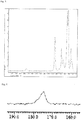
- Example 2 and Comparative Example 8 After the oxidized cellulose obtained in each of Example 2 and Comparative Example 8 was freeze-dried, the resultant was left at 23°C and 50% RH for 24 hours or longer. Then, the measurement of 13 C solid-state NMR was carried out under the following conditions. The results are shown in FIG. 3 to FIG. 7 .
- FIG. 4 and FIG. 6 are an enlarged view of a part of from 165 ppm to 185 ppm
- FIG. 7 is a diagram comparing the peak area ratio in FIG. 4 with that in FIG. 6 .
- the area value is subjected to vertical division at the peak top to obtain two peak area values, and a ratio (larger area value/smaller area value) of the two peak area values was 1.13 for Comparative Example 8 and 1.67 for Example 2.
- Example 2 and Comparative Example 8 50 g of 0.1% aqueous dispersion of the oxidized cellulose obtained in each of Example 2 and Comparative Example 8 was prepared, subjected to fibrillation by an ultra-high speed homogenizer "Physcotron” (trade name, manufactured by Microtec Co., Ltd) at 7,500 rpm for 2 minutes, and then subjected to fibrillation by an ultrasonic homogenizer "US-300E” (trade name, manufactured by NIHONSEIKI KAISHA LTD.) in 4 minute intervals until it became transparent.
- the standard of transparency was a transmittance at 660 nm of 90% or higher as subjected to UV-VIS measurement (cell length 10 mm).
Landscapes
- Chemical & Material Sciences (AREA)
- Health & Medical Sciences (AREA)
- Chemical Kinetics & Catalysis (AREA)
- Medicinal Chemistry (AREA)
- Polymers & Plastics (AREA)
- Organic Chemistry (AREA)
- Life Sciences & Earth Sciences (AREA)
- Engineering & Computer Science (AREA)
- Biochemistry (AREA)
- Materials Engineering (AREA)
- Polysaccharides And Polysaccharide Derivatives (AREA)
Abstract
Description
- The present invention relates to an oxidized cellulose obtained by oxidizing a cellulose raw material, a method of producing an oxidized cellulose and a nanocellulose, and a nanocellulose dispersion. More specifically, the present invention relates to an oxidized cellulose in which hydroxy groups at a number of positions are oxidized within a specific pH range with, as an oxidant, a hypochlorous acid or salt thereof having an available chlorine concentration of from 6% by mass to 14% by mass, as well as a method of producing the oxidized cellulose.
- Further, the present invention relates to a method of producing a nanocellulose, the method including fibrillating and nanoizing the oxidized cellulose, as well as a nanocellulose dispersion.
- A method of producing nanocellulose materials, such as cellulose nanofibers, by oxidizing various cellulose raw materials has been studied. For example, a method of oxidizing a cellulose raw material with sodium hypochlorite, which is an oxidant, under the presence of 2,2,6,6-tetramethyl-1-piperidin-N-oxy radical (hereinafter, referred to as TEMPO) is disclosed (Non-Patent Document 1).
- Further, cellulose nanofibers that are produced by a method without using an N-oxyl catalyst, such as TEMPO, and that have a content of carboxyl groups of from 0.20 to 0.50 mmol/g with respect to a dry mass of the cellulose nanofibers, have an average fiber diameter of from 3 to 100 nm, and do not contain an N-oxyl compound are disclosed (Patent Document 1).
- Patent Document 1: Japanese Patent Application Laid-open (
JP-A) No. 2017-193814 - Non-Patent Document 1: Cellulose Commun., 14 (2), 62 (2007)
- However, in the oxidized cellulose produced using, as a catalyst, an N-oxyl compound such as TEMPO in the prior art document described above, about several ppm of the N-oxyl compound remain as a nitrogen content even after well washing.
- There is concern about environmental and human toxicities of N-oxyl compounds. Therefore, in the case in which the oxidized cellulose is used to prepare a cellulose nanofiber aqueous dispersion, the N-oxyl compound will be incorporated also in the dispersion. Thus, in the case in which the nanocellulose is used as a highly functional material, the N-oxyl compound present in the dispersion may have undesirable effects depending on the use thereof.
- In addition, since N-oxyl compounds are very expensive materials, it cannot be said that production methods employing N-oxyl compounds are not economical.
- According to Patent Document 1, it is described that the method includes an oxidation step of oxidizing cellulose at a pH of from 5.0 to 9.0 in a solvent containing hypochlorous acid or sodium hypochlorite to obtain an oxidized cellulose, and a fibrillation step of fibrillating the oxidized cellulose in a solvent to obtain a cellulose nanofiber dispersion that does not contain an N-oxyl compound. However, since an amount of carboxyl groups in the oxidized cellulose is as low as from 0.20 to 0.50 mmol/g, excessive mechanical fibrillation is required in the fibrillation step. Therefore, it cannot be said that the method is an efficient production method.
- In view of the foregoing, an object of the present invention is to provide an oxidized cellulose, which is able to produce a nanocellulose without an N-oxyl compound such as TEMPO remaining in the nanocellulose and by an efficient method that does not require excessive mechanical fibrillation.
- As a result of intensive studies in order to solve the problem above, the present inventors have found that an oxidized cellulose in which hydroxyl groups at a number of positions of a cellulose raw material are oxidized can be fibrillated without requiring a mechanical treatment under excessive conditions. Further, the present inventors have found that, by using, as an oxidant, a hypochlorous acid or salt thereof having an available chlorine concentration of from 6% by mass to 14% by mass and adjusting the pH during the oxidation reaction in a range of from 5.0 to 14.0, the oxidized cellulose excellent in fibrillability can be produced by oxidizing a cellulose raw material without using an N-oxyl compound such as TEMPO as a catalyst. Thus, the present inventors have completed the present invention.
- Accordingly, the present invention includes the following configuration.
- <1> An oxidized cellulose, a 13C solid-state NMR spectrum of the oxidized cellulose including a number of peaks in a range of from 165 ppm to 185 ppm.
- <2> An oxidized cellulose, not containing an N-oxyl compound, a 13C solid-state NMR spectrum of the oxidized cellulose including a number of peaks in a range of from 165 ppm to 185 ppm.
- <3> A method of producing the oxidized cellulose according to <1> or <2>, the method including:
oxidizing a cellulose raw material with a hypochlorous acid or salt thereof having an available chlorine concentration of from 6% by mass to 14% by mass, while adjusting the pH in a range of from 5.0 to 14.0. - <4> The method of producing an oxidized cellulose according to <3>, in which the hypochlorous acid or salt thereof is sodium hypochlorite.
- <5> The method of producing an oxidized cellulose according to <3> or <4>, in which the cellulose raw material is oxidized while adjusting the pH in a range of from 7.0 to 14.0.
- <6> The method of producing an oxidized cellulose according to any one of <3> to <5>, in which a content of carboxyl groups in the oxidized cellulose is from 0.20 mmol/g to 3.0 mmol/g with respect to a dry mass of the oxidized cellulose.
- <7> A method of producing a nanocellulose, the method including fibrillating and nanoizing the oxidized cellulose according to <1> or <2>.
- <8> A nanocellulose dispersion, including the nanocellulose produced by the method according to <7> dispersed in at least one selected from the group consisting of water, acetonitrile, and a carbonate ester.
- Since the oxidized cellulose of the present invention has a chemical structure different from those of conventional oxidized celluloses produced using an N-oxyl compound, the oxidized cellulose can be fibrillated without requiring excessive mechanical treatment when fibrillating the oxidized cellulose. Further, since an N-oxyl compound that is a catalyst is not used, the resulting oxidized cellulose does not contain an N-oxyl compound, which reduces the risk of toxicities to environment and human body. Furthermore, since a TEMPO compound, which is an expensive catalyst, is not used, it is an economically excellent production method.
-
-
FIG. 1 is an image of a scanning electron microscope (SEM) after fibrillating the oxidized cellulose obtained in Example 3. -
FIG. 2 is an image of a scanning electron microscope (SEM) after fibrillating the oxidized cellulose obtained in Example 14. -
FIG. 3 is a 13C solid-state NMR of the oxidized cellulose obtained in Example 2. -
FIG. 4 is an enlarged view of a part of from 165 ppm to 185 ppm inFIG 3 . -
FIG. 5 is a 13C solid-state NMR of the oxidized cellulose produced using a TEMPO catalyst in Comparative Example 8. -
FIG. 6 is an enlarged view of a part of from 165 ppm to 185 ppm inFIG 5 . -
FIG. 7 is a diagram comparing a peak in the part of from 165 ppm to 185 ppm inFIG. 4 with that inFIG 6 . - The oxidized cellulose of the present invention is an oxidized cellulose, a 13C solid-state NMR spectrum of the oxidized cellulose including a number of peaks in a range of from 165 ppm to 185 ppm, and is preferably an oxidized cellulose not containing an N-oxyl compound. That an N-oxyl compound is not contained means that a content of N-oxyl compound is 3 ppm or less.
- The 13C solid-state NMR of the oxidized cellulose in the present invention is measured under the following conditions.
- (1) Sample tube: 4 mm diameter made of zirconia
- (2) Magnetic field strength: 9.4T (1H resonance frequency: 400 MHz)
- (3) MAS rotation speed: 15 kHz
- (4) Pulse sequence: CPMAS method
- (5) Contact time: 4 ms
- (6) Waiting time: 5 seconds
- (7) Accumulation time: 10,000 to 15,000 times
- (8) Measurement device: JNM ECA-400 (manufactured by JEOL Ltd.)
- A peak in a range of from 165 ppm to 185 ppm in the 13C solid-state NMR spectrum is a peak that is attributed to a carboxyl group (-COOH). In the case in which there is a number of the peaks, it means that the oxidized cellulose has a structure in which a number of carbons in the structural unit of a cellulose raw material is oxidized.
- Whether there is a number of peaks or there is one peak can be determined by an area ratio of the corresponding peak(s).
- Accordingly, a baseline is drawn on the peak(s) in a range of from 165 ppm to 185 ppm in the NMR spectrum to determine a total area value, and the area value is then subjected to vertical division at the peak top to obtain two peak area values. When a ratio (larger area value/smaller area value) of the two peak area values is 1.2 or more, it is considered that there is a number of peaks.
- Accordingly, in the case in which there is only one peak in a range of from 165 ppm to 185 ppm, the ratio of the peak area values is close to 1.0, and is less than 1.2 even when taking into consideration a calculation error of the area values.
- Assignment of carbon peaks in the 13C solid-state NMR spectrum is described in polymer advanced materials "One Point", separate volume "Frontier of Polymer Analysis Technology", pp. 125-126 (KYORITSU SHUPPAN CO., LTD., published on December 25, 2007) and "Encyclopedia of Cellulose", pp. 153-156 (Asakura Publishing Co., Ltd., published on November 10, 2000).
- The oxidized cellulose having a structure in which a number of carbons in the constituent unit of the raw material cellulose is oxidized can be fibrillated without requiring excessive mechanical treatment during fibrillation.
- The method of producing an oxidized cellulose of the present invention is a method, including oxidizing a cellulose raw material with a hypochlorous acid or salt thereof having an available chlorine concentration of from 6% by mass to 14% by mass, while adjusting the pH in a range of from 5.0 to 14.0. The method will be specifically described below.
- The cellulose raw material in the present invention is not particularly limited as long as it is a material mainly containing cellulose. Examples of the cellulose raw material include a pulp, a natural cellulose, a regenerated cellulose, and a fine cellulose obtained by depolymerizing a cellulose raw material through mechanical treatment. As the cellulose raw material, a commercially available product such as a pulp-derived crystalline cellulose can be used directly. The cellulose raw material may be pretreated with an appropriate concentration of alkali for the purpose of facilitating permeation of an oxidant that is used into the raw material pulp.
- The method of producing an oxidized cellulose in the present invention is a method, including oxidizing a cellulose raw material with a hypochlorous acid or salt thereof having an available chlorine concentration of from 6% by mass to 14% by mass, while adjusting the pH in a range of from 5.0 to 14.0, to produce the oxidized cellulose.
- By using the hypochlorous acid or salt thereof having an available chlorine concentration of from 6% by mass to 14% by mass, an amount of carboxyl groups in the oxidized cellulose becomes an appropriate amount, and fibrillation of the oxidized cellulose into a nanocellulose can be easily performed.
- Further, the pH during the reaction is preferably adjusted in a range of from 7.0 to 14.0. When the pH is in this range, an amount of carboxyl groups in the oxidized cellulose becomes an appropriate amount, and fibrillation of the oxidized cellulose into a nanocellulose can be easily performed.
- The available chlorine concentration of a hypochlorous acid or salt thereof is well known and is defined as follows.
- Hypochlorous acid is a weak acid that exists only in a form of an aqueous solution. A hypochlorite is a compound in which a hydrogen of hypochlorous acid is replaced with another cation.
- For example, since sodium hypochlorite, which is a hypochlorite, exists only in a solution, an available chlorine amount in the solution is measured instead of a concentration of sodium hypochlorite itself.
- With respect to the available chlorine of sodium hypochlorite, an oxidizing power of the divalent oxygen atom generated by decomposition of sodium hypochlorite corresponds to that of 2 equivalents of monovalent chlorine atoms and thus, a bonding chlorine atom of sodium hypochlorite (NaClO) has an oxidizing power that is equivalent to that of two atoms of a non-bonding chlorine (Cl2). Therefore, the available chlorine is 2 × (chlorine in NaClO).
- Specifically, the available chlorine concentration is measured by precisely weighing a sample, adding water, potassium iodide, and acetic acid to the sample, leaving the mixture to stand, and titrating liberated iodine with a sodium thiosulfate solution using an aqueous starch solution as an indicator.
- Examples of the hypochlorous acid or salt thereof in the present invention include an aqueous hypochlorous acid, sodium hypochlorite, potassium hypochlorite, calcium hypochlorite, and ammonium hypochlorite. Among these, sodium hypochlorite is preferable from the viewpoint of ease of handling.
- The production method of the present invention will be described below using sodium hypochlorite as an example of the hypochlorous acid or salt thereof.
- Examples of the method of adjusting the available chlorine concentration of a sodium hypochlorite aqueous solution in a range of from 6% by mass to 14% by mass include a method of concentrating a sodium hypochlorite aqueous solution that has an available chlorine concentration of lower than 6% by mass, and a method of diluting a sodium hypochlorite aqueous solution that has an available chlorine concentration higher than the target concentration or dissolving a crystal of sodium hypochlorite, for example, a pentahydrate. Among these, the method of diluting a sodium hypochlorite aqueous solution or dissolving a crystal of sodium hypochlorite to adjust in the available chlorine concentration as an oxidant is preferable from the viewpoint of less self-decomposition, that is, less decrease in available chlorine concentration, and ease of adjustment.
- The usage amount of the sodium hypochlorite aqueous solution having an available chlorine concentration of from 6% by mass to 14% by mass used as an oxidant can be selected within a range in which the oxidation reaction is promoted.
- The method of mixing the cellulose raw material and the sodium hypochlorite aqueous solution is not particularly limited. It is preferable to add the cellulose raw material to the sodium hypochlorite aqueous solution and mix them from the viewpoint of ease of operation.
- The reaction temperature of the oxidation reaction is preferably from 15°C to 100°C, and more preferably from 20°C to 90°C. The pH of the reaction mixture decreases, as carboxyl groups are produced in the cellulose raw material by the oxidation reaction. In order to efficiently promote the oxidation reaction, it is necessary to adjust the pH of the reaction mixture in a range of from 5.0 to 14.0. In order to adjust the pH, an alkaline agent such as sodium hydroxide or an acid such as hydrochloric acid can be added.
- The reaction time of the oxidation reaction can be set according to degree of progress of the oxidation. For example, it is preferable that the reaction is carried out from about 15 minutes to about 50 hours.
- In the case in which the pH of the reaction mixture is adjusted to 10 or more, it is preferable to set the reaction temperature to 30°C or higher and/or the reaction time to 30 minutes or longer.
- In the oxidation reaction, primary hydroxy groups in the cellulose raw material are oxidized into carboxyl groups to produce an oxidized cellulose. The amount of carboxyl groups in the oxidized cellulose is not particularly limited. Taking into consideration fibrillating and nanoizing the oxidized cellulose to produce a nanocellulose, the amount of carboxyl groups per gram of the oxidized cellulose is preferably from 0.20 mmol/g to 3.0 mmol/g, and more preferably from 0.55 mmol/g to 3.0 mmol/g.
- When the amount of carboxyl groups in oxidized cellulose is in the range of from 0.20 mmol/g to 3.0 mmol/g, fibrillation of the oxidized cellulose into a nanocellulose can be easily performed. When the amount is in the range of from 0.55 mmol/g to 3.0 mmol/g, fibrillation can be more easily performed.
- The amount of carboxyl groups in the oxidized cellulose can be measured by the following method.
- Pure water is added to 0.5% by mass slurry of an oxidized cellulose to achieve a volume of 60 mL, and 0.1 M aqueous hydrochloric acid is added to achieve a pH of 2.5. Then, 0.05 N sodium hydroxide aqueous solution is added dropwise, while measuring electrical conductivity until the pH reaches 11. The amount of carboxyl groups in the oxidized cellulose is calculated, using the following Formula, from an amount (a) of sodium hydroxide that has been consumed in a neutralization step of weak acid in which the change in electrical conductivity is slow:

- The oxidized cellulose obtained by the production method of the present invention can be fibrillated and nanoized to produce a nanocellulose. Here, the nanocellulose is a generic term for nanoized celluloses including cellulose nanofibers, cellulose nanocrystals, or the like.
- In the method of fibrillating an oxidized cellulose, the fibrillation time can be shortened by carrying out weak stirring such as a stirrer in a solvent or mechanical fibrillation. However, in the case in which mechanical fibrillation is too strong, the nanocellulose may be bent or broken.
- The method of the mechanical fibrillation can be selected as appropriate according to the purpose, for example, after fully washing the oxidized cellulose with a solvent. Examples of the method include known mixers or agitators such as a screw mixer, a paddle mixer, a dispersion mixer, a turbine mixer, a high-speed homomixer, a high-pressure homogenizer, an ultrahigh-pressure homogenizer, a bicylindrical homogenizer, an ultrasonic homogenizer, an aqueous counter collision disperser, a beater, a disk refiner, a conical refiner, a double disk refiner, a grinder, and an uniaxial or multiaxial kneader. These can be used singly or in combination of two or more for treatment in a solvent, by which it is possible to perform nanoization of the oxidized cellulose to produce the nanocellulose.
- The solvent used for fibrillation is not particularly limited and can be selected as appropriate according to the purpose. Examples of the solvent include water, alcohols, ethers, ketones, N,N-dimethylformamide, N,N-dimethylacetamide, and dimethyl sulfoxide. These may be used singly or in combination of two or more.
- Examples of the alcohols include methanol, ethanol, isopropanol, isobutanol, sec-butanol, tert-butanol, methyl cellosolve, ethylene glycol, and glycerin.
- Examples of the ethers include ethylene glycol dimethyl ether, 1,4-dioxane, and tetrahydrofuran.
- Examples of the ketones include acetone and methyl ethyl ketone.
- By selecting an organic solvent as the solvent, it becomes easy to separate the oxidized cellulose obtained in the step described above and the nanocellulose obtained by fibrillation thereof. Further, since a nanocellulose that is dispersed in the organic solvent is obtained, it becomes easy for mixing with a resin that is soluble in the organic solvent, a raw material monomer of the resin, or the like.
- Further, a nanocellulose dispersion in which the nanocellulose is dispersed in at least one selected from the group consisting of water, acetonitrile, and a carbonate ester can be used for mixing with a resin component, or the like.
- Hereinafter, the present invention will be more specifically described with reference to Examples and Comparative Examples.
- To a beaker, 30.3 g of a sodium hypochlorite pentahydrate crystal having an available chlorine concentration of 42% by mass was added, pure water was added, and the resultant was stirred to achieve an available chlorine concentration of 14% by mass. Then, 35% by mass hydrochloric acid was added thereto and stirred to prepare an aqueous solution having a pH of 7.0.
- After warming the sodium hypochlorite aqueous solution to 30°C in a constant-temperature water bath while stirring using a stirrer, 0.35 g of a product (amount of carboxyl groups of 0.05 mmol/g) that is obtained by mechanically fibrillating a softwood pulp (NIST RM 8495, bleached kraft pulp, manufactured by SIGMA-ALDRICH) into a cotton-like material was added as a cellulose raw material.
- After supplying the cellulose raw material, the resultant was stirred for 30 minutes using a stirrer while keeping the temperature at 30°C in the same constant-temperature water bath and adding 48% by mass sodium hydroxide to adjust the pH during the reaction at 7.0.
- After completion of the reaction, the product was subjected to solid-liquid separation by suction filtration using a PTFE membrane filter having a mesh opening of 0.1 µm. The resulting filtered product was washed with pure water, and an amount of carboxyl groups was then measured. The amount of carboxyl groups was 0.62 mmol/g, and the amount of the filtered product was 0.16 g.
- Each of the oxidation reactions was performed under the same condition as in Example 1, except that each of the available chlorine concentration of the sodium hypochlorite aqueous solution, the pH during the reaction, the reaction temperature, and the reaction time was changed as shown in Table 1.
- After completion of the reaction, the product was subjected to solid-liquid separation by suction filtration using a PTFE membrane filter having a mesh opening of 0.1 µm. The resulting filtered product was washed with pure water, and an amount of carboxyl groups was then measured. The amount of carboxyl groups and the amount of the filtered product are indicated in Table 1.
- 20 g of 1% by mass aqueous dispersion of the oxidized cellulose obtained in each of Examples 3 and 14 was prepared, and subjected to fibrillation for 10 minutes by an ultrasonic homogenizer "UP-400S" (manufactured by Hielscher Ultrasonics) under the conditions of CYCLE 0.5 and AMPLITUDE 50. The solution was added to a centrifuge tube, t-butanol was added thereto, and the resultant was adequately mixed and centrifuged. The operation of removing the obtained supernatant and adding t-butanol was repeated 10 times to carry out solvent substitution.
- The resulting t-butanol dispersion was freeze-dried and then steam-stained with ruthenium tetroxide for 1 hour. As a result of observation with a scanning electron microscope (SEM) (S-4800, manufactured by Hitachi High-Tech Corporation), it was confirmed that cellulose nanofibers having a width of some 10 nm were obtained. Images (at a magnification of 100,000x) of the SEM are shown in
FIG. 1 (Example 3) andFIG. 2 (Example 14), respectively.[Table 1] Example Available Chlorine Concentration (%) pH Reaction Temperature (°C) Reaction Time (min) Amount of Carboxyl Groups (mmol/g) Amount of Filtered Product (g) 1 14 7 30 30 0.62 0.16 2 14 9 30 30 2.26 0.12 3 14 11 30 30 0.31 0.29 4 14 13 30 300 0.32 0.25 5 13 5 30 30 0.55 0.16 6 13 7 30 30 0.58 0.18 7 13 9 30 30 0.96 0.21 8 7 5 30 30 0.55 0.24 9 7 11 30 150 0.25 0.33 10 7 11 30 300 0.41 0.26 11 7 11 30 500 0.55 0.21 12 7 11 50 30 0.29 0.30 13 7 11 70 30 0.55 0.23 14 6 7 30 30 0.60 0.16 15 6 9 30 30 0.58 0.33 16 6 10 30 30 0.20 0.32 - Each of the oxidation reactions was performed under the same condition as in Example 1, except that each of the available chlorine concentration of the sodium hypochlorite aqueous solution, the pH during the reaction, the reaction temperature, and the reaction time was changed as shown in Table 2.
- After completion of the reaction, the product was subjected to solid-liquid separation by suction filtration using a PTFE membrane filter having a mesh opening of 0.1 µm. The resulting filtered product was washed with pure water, and an amount of carboxyl groups was then measured. The amount of carboxyl groups and the amount of the filtered product are indicated in Table 2.
[Table 2] Comparative Example Available Chlorine Concentration (%) pH Reaction Temperature (°C) Reaction Time (min) Amount of Carboxyl Groups (mmol/g) Amount of Filtered Product (g) 1 16 4 30 30 0.12 0.24 2 6 4 30 30 0.15 0.26 3 0.4 7 30 30 0.11 0.33 4 0.4 9 30 30 0.05 0.33 5 0.4 11 30 30 0.09 0.33 6 0.4 11 30 500 0.10 0.33 7 0.4 11 70 30 0.14 0.31 - To a beaker, 0.016 g of TEMPO and 0.1 g of sodium bromide were added, pure water was added and stirred to prepare an aqueous solution, and 1.0 g of a product (amount of carboxyl groups of 0.05 mmol/g) that is obtained by mechanically fibrillating a softwood pulp (NIST RM 8495, bleached kraft pulp, manufactured by SIGMA-ALDRICH) into a cotton-like material was added as a cellulose raw material.
- After warming the aqueous solution to 25°C in a constant-temperature water bath while stirring using a stirrer, 0.1M sodium hydroxide was added thereto and stirred to prepare an aqueous solution having a pH of 10.0.
- Then, 2.58 g of a sodium hypochlorite aqueous solution having an available chlorine concentration of 13.2% by mass was added thereto, and the resultant was stirred for 120 minutes using a stirrer while keeping the temperature at 25°C in the same constant-temperature water bath and adding 0.1M sodium hydroxide to adjust the pH during the reaction at 10.0.
- After completion of the reaction, the product was subjected to solid-liquid separation by suction filtration using a PTFE membrane filter having a mesh opening of 0.1 µm. The resulting filtered product was washed with pure water, and an amount of carboxyl groups was then measured. The amount of carboxyl groups was 1.50 mmol/g, and the amount of the filtered product was about 1.0 g.
- After the oxidized cellulose obtained in each of Example 2 and Comparative Example 8 was freeze-dried, the resultant was left at 23°C and 50% RH for 24 hours or longer. Then, the measurement of 13C solid-state NMR was carried out under the following conditions. The results are shown in
FIG. 3 to FIG. 7 . - Each of
FIG. 4 andFIG. 6 is an enlarged view of a part of from 165 ppm to 185 ppm, andFIG. 7 is a diagram comparing the peak area ratio inFIG. 4 with that inFIG. 6 . - In
FIG. 7 , the area value is subjected to vertical division at the peak top to obtain two peak area values, and a ratio (larger area value/smaller area value) of the two peak area values was 1.13 for Comparative Example 8 and 1.67 for Example 2. - Therefore, it is found that, while there is one peak for Comparative Example 8 (
FIG. 6 ) that used a TEMPO catalyst, there is a number of peaks for Example 2 (FIG. 4 ) that did not use a TEMPO catalyst. -
- (1) Sample tube: 4 mm diameter made of zirconia
- (2) Magnetic field strength: 9.4T (1H resonance frequency: 400 MHz)
- (3) MAS rotation speed: 15 kHz
- (4) Pulse sequence: CPMAS method
- (5) Contact time: 4 ms
- (6) Waiting time: 5 seconds
- (7) Accumulation time: 10,000 to 15,000 times
- (8) Measurement device: JNM ECA-400 (manufactured by JEOL Ltd.)
- 20 g of 1% aqueous dispersion of the oxidized cellulose obtained in each of Examples 1 and 6, and Comparative Examples 2 and 5 was prepared, and subjected to fibrillation by an ultrasonic homogenizer "UP-400S" (manufactured by Hielscher Ultrasonics) under the conditions of CYCLE 0.5 and AMPLITUDE 50. The time until the liquid became almost transparent visually, accordingly, the time until fibrillation into nano level was achieved was measured. In addition, the same liquid was stirred using a stirrer for 12 hours to confirm whether it became visually transparent.
- When the amount of carboxyl groups was 0.55 mmol/g or more, the liquid became almost transparent within 10 minutes of ultrasonic homogenizer treatment and became almost transparent only by stirring for 12 hours. On the other hand, when the amount of carboxyl groups was 0.20 mmol/g or less, the liquid did not become transparent. Therefore, it can be said that an oxidized cellulose having an amount of carboxyl groups of 0.55 mmol/g or more is easily fibrillated.
Amount of Carboxyl Groups (mmol/g) Transparency by Ultrasonic Homogenizer Treatment Transparency by Stirring for 12 Hours Example 1 0.62 Within 10 min Transparent Example 6 0.96 Within 10 min Transparent Comparative Example 2 0.15 Not Transparent even after 30 min Not Transparent Comparative Example 5 0.09 Not Transparent even after 30 min Not Transparent - 50 g of 0.1% aqueous dispersion of the oxidized cellulose obtained in each of Example 2 and Comparative Example 8 was prepared, subjected to fibrillation by an ultra-high speed homogenizer "Physcotron" (trade name, manufactured by Microtec Co., Ltd) at 7,500 rpm for 2 minutes, and then subjected to fibrillation by an ultrasonic homogenizer "US-300E" (trade name, manufactured by NIHONSEIKI KAISHA LTD.) in 4 minute intervals until it became transparent. Here, the standard of transparency was a transmittance at 660 nm of 90% or higher as subjected to UV-VIS measurement (cell length 10 mm).
- It is found that, while the oxidized cellulose of Example 2 became transparent only by the ultra-high speed homogenizer, the oxidized cellulose of Comparative Example 8 required 8 minutes even by the ultrasonic homogenizer, which indicates that the fibrillation of Example 2 was more efficient.
Claims (8)
- An oxidized cellulose, a 13C solid-state NMR spectrum of the oxidized cellulose comprising a plurality of peaks in a range of from 165 ppm to 185 ppm.
- An oxidized cellulose, not containing an N-oxyl compound, a 13C solid-state NMR spectrum of the oxidized cellulose comprising a plurality of peaks in a range of from 165 ppm to 185 ppm.
- A method of producing the oxidized cellulose according to claim 1 or 2, the method comprising:
oxidizing a cellulose raw material with a hypochlorous acid or salt thereof having an available chlorine concentration of from 6% by mass to 14% by mass, while adjusting the pH in a range of from 5.0 to 14.0. - The method of producing an oxidized cellulose according to claim 3, wherein the hypochlorous acid or salt thereof is sodium hypochlorite.
- The method of producing an oxidized cellulose according to claim 3 or 4, wherein the cellulose raw material is oxidized while adjusting the pH in a range of from 7.0 to 14.0.
- The method of producing an oxidized cellulose according to any one of claims 3 to 5, wherein a content of carboxyl groups in the oxidized cellulose is from 0.20 mmol/g to 3.0 mmol/g with respect to a dry mass of the oxidized cellulose.
- A method of producing a nanocellulose, the method comprising fibrillating and nanoizing the oxidized cellulose according to claim 1 or 2.
- A nanocellulose dispersion, comprising the nanocellulose produced by the method according to claim 7 dispersed in at least one selected from the group consisting of water, acetonitrile, and a carbonate ester.
Applications Claiming Priority (2)
| Application Number | Priority Date | Filing Date | Title |
|---|---|---|---|
| JP2018146352 | 2018-08-03 | ||
| PCT/JP2019/030392 WO2020027307A1 (en) | 2018-08-03 | 2019-08-02 | Oxidized cellulose, method for producing oxidized cellulose and nano-cellulose, and nano-cellulose dispersion |
Publications (2)
| Publication Number | Publication Date |
|---|---|
| EP3831856A1 true EP3831856A1 (en) | 2021-06-09 |
| EP3831856A4 EP3831856A4 (en) | 2022-05-11 |
Family
ID=69232216
Family Applications (1)
| Application Number | Title | Priority Date | Filing Date |
|---|---|---|---|
| EP19843439.1A Pending EP3831856A4 (en) | 2018-08-03 | 2019-08-02 | OXIDIZED CELLULOSE, PROCESS FOR THE MANUFACTURE OF OXIDIZED CELLULOSE AND NANOCELLULOSE AND NANOCELLULOSE DISPERSION |
Country Status (5)
| Country | Link |
|---|---|
| US (1) | US11919974B2 (en) |
| EP (1) | EP3831856A4 (en) |
| JP (2) | JP7142702B2 (en) |
| CN (1) | CN112513101A (en) |
| WO (1) | WO2020027307A1 (en) |
Cited By (1)
| Publication number | Priority date | Publication date | Assignee | Title |
|---|---|---|---|---|
| US20230250197A1 (en) * | 2020-07-09 | 2023-08-10 | Toagosei Co., Ltd. | Oxidized cellulose, nanocellulose, and their dispersions |
Families Citing this family (15)
| Publication number | Priority date | Publication date | Assignee | Title |
|---|---|---|---|---|
| WO2020027307A1 (en) * | 2018-08-03 | 2020-02-06 | 東亞合成株式会社 | Oxidized cellulose, method for producing oxidized cellulose and nano-cellulose, and nano-cellulose dispersion |
| JP7705602B2 (en) * | 2020-07-09 | 2025-07-10 | 東亞合成株式会社 | Nanocellulose and its dispersion |
| EP4215550A4 (en) * | 2020-09-16 | 2024-11-13 | Toagosei Co., Ltd. | Resin composition, resin composition manufacturing method, and resin |
| WO2022102703A1 (en) | 2020-11-13 | 2022-05-19 | 東亞合成株式会社 | Method for manufacturing nanocellulose-containing composition |
| WO2022138759A1 (en) | 2020-12-24 | 2022-06-30 | 東亞合成株式会社 | Production method for oxidized cellulose and nanocellulose |
| CN116940728A (en) * | 2021-03-02 | 2023-10-24 | 东亚合成株式会社 | Adhesive composition for nonwoven fabric and nonwoven fabric |
| JPWO2022186241A1 (en) * | 2021-03-02 | 2022-09-09 | ||
| JP7746674B2 (en) * | 2021-03-26 | 2025-10-01 | 東亞合成株式会社 | Method for producing oxidized cellulose and nanocellulose, and oxidizing agent |
| JP7676877B2 (en) * | 2021-03-30 | 2025-05-15 | 東亞合成株式会社 | Binder for ceramic green sheet, composition for ceramic green sheet binder, composition for producing ceramic green sheet and method for producing same, ceramic green sheet, and method for producing multilayer ceramic capacitor |
| JP7842976B2 (en) * | 2021-04-19 | 2026-04-09 | 東亞合成株式会社 | Aqueous ink composition, method for producing the same, and recording method. |
| CN114960179B (en) * | 2021-12-06 | 2024-08-27 | 细胞生物科技有限公司 | Manufacturing method of anionic cellulose non-woven fabric and facial mask using anionic cellulose non-woven fabric |
| JPWO2024116889A1 (en) * | 2022-11-29 | 2024-06-06 | ||
| JP2024078986A (en) * | 2022-11-30 | 2024-06-11 | 日本製紙株式会社 | Method for producing oxidized cellulose and cellulose nanofibers |
| CN121399166A (en) | 2023-06-30 | 2026-01-23 | 东亚合成株式会社 | Cellulose-containing composition, process for producing the same, and viscosity adjustment method |
| WO2026094688A1 (en) * | 2024-10-30 | 2026-05-07 | 東亞合成株式会社 | Emulsifier, emulsion composition and method for producing same |
Family Cites Families (20)
| Publication number | Priority date | Publication date | Assignee | Title |
|---|---|---|---|---|
| JPS4934989A (en) * | 1972-08-07 | 1974-03-30 | ||
| JPS5843313Y2 (en) | 1975-07-10 | 1983-09-30 | 三洋電機株式会社 | remote control touch |
| JPS60222140A (en) | 1984-04-20 | 1985-11-06 | Mitsubishi Gas Chem Co Inc | pigment dispersant |
| JPS60226502A (en) * | 1984-04-24 | 1985-11-11 | Mitsubishi Gas Chem Co Inc | Preparation of dicarboxyl polysaccharide |
| US5414079A (en) * | 1993-08-03 | 1995-05-09 | Biocontrol Incorporated | Oxidized cellulose |
| JP5586833B2 (en) | 2008-02-21 | 2014-09-10 | 花王株式会社 | Resin composition |
| WO2010116826A1 (en) * | 2009-03-30 | 2010-10-14 | 日本製紙株式会社 | Process for producing cellulose nanofibers |
| US9534091B2 (en) * | 2010-03-09 | 2017-01-03 | Toppan Printing Co., Ltd. | Fine cellulose fiber dispersion liquid and manufacturing method thereof, cellulose film and laminate body |
| JP2011184648A (en) | 2010-03-11 | 2011-09-22 | Toppan Printing Co Ltd | Production method for idized cellulose |
| JP5843313B2 (en) | 2011-10-07 | 2016-01-13 | 花王株式会社 | Gel for patch and patch having the same |
| CN104169306A (en) * | 2012-03-14 | 2014-11-26 | 日本制纸株式会社 | Method for producing anionically modified cellulose nanofiber dispersion |
| JP2015113453A (en) * | 2013-12-16 | 2015-06-22 | 国立大学法人 東京大学 | Tricarboxycellulose and method for producing the same |
| JP6574601B2 (en) | 2015-04-30 | 2019-09-11 | 国立大学法人 東京大学 | Cellulose film and method for producing the same |
| JP6759542B2 (en) | 2015-09-10 | 2020-09-23 | 星光Pmc株式会社 | Cellulose microfiber dispersion liquid, method for producing cellulose microfiber dispersion liquid, and fiber composite resin |
| US20170101738A1 (en) * | 2015-10-12 | 2017-04-13 | The University Of Massachusetts | Method for preparation of cellulose nanocrystals and nanofibrils |
| JP6489379B2 (en) | 2015-11-02 | 2019-03-27 | 住友金属鉱山株式会社 | Method for quantification and separation of heavy metal elements |
| JP6872396B2 (en) * | 2016-04-13 | 2021-05-19 | 関東電化工業株式会社 | Cellulose nanofiber dispersion liquid and its manufacturing method |
| KR101851321B1 (en) | 2016-09-09 | 2018-04-23 | 한국화학연구원 | Method for manufacturing of nanocellulose using old newspaper |
| CA3060188A1 (en) * | 2017-06-16 | 2018-12-20 | Toagosei Co., Ltd. | Method for producing cellulose nanofibers |
| WO2020027307A1 (en) * | 2018-08-03 | 2020-02-06 | 東亞合成株式会社 | Oxidized cellulose, method for producing oxidized cellulose and nano-cellulose, and nano-cellulose dispersion |
-
2019
- 2019-08-02 WO PCT/JP2019/030392 patent/WO2020027307A1/en not_active Ceased
- 2019-08-02 CN CN201980050333.6A patent/CN112513101A/en active Pending
- 2019-08-02 EP EP19843439.1A patent/EP3831856A4/en active Pending
- 2019-08-02 US US17/265,035 patent/US11919974B2/en active Active
- 2019-08-02 JP JP2020534759A patent/JP7142702B2/en active Active
-
2022
- 2022-04-22 JP JP2022070919A patent/JP2022090056A/en active Pending
Cited By (1)
| Publication number | Priority date | Publication date | Assignee | Title |
|---|---|---|---|---|
| US20230250197A1 (en) * | 2020-07-09 | 2023-08-10 | Toagosei Co., Ltd. | Oxidized cellulose, nanocellulose, and their dispersions |
Also Published As
| Publication number | Publication date |
|---|---|
| US11919974B2 (en) | 2024-03-05 |
| JP2022090056A (en) | 2022-06-16 |
| CN112513101A (en) | 2021-03-16 |
| WO2020027307A1 (en) | 2020-02-06 |
| JP7142702B2 (en) | 2022-09-27 |
| JPWO2020027307A1 (en) | 2021-08-02 |
| EP3831856A4 (en) | 2022-05-11 |
| US20210301034A1 (en) | 2021-09-30 |
Similar Documents
| Publication | Publication Date | Title |
|---|---|---|
| US11919974B2 (en) | Oxidized cellulose, method of producing oxidized cellulose and nanocellulose, and nanocellulose dispersion | |
| EP3640264B1 (en) | Production method for cellulose nanofibers | |
| JP7636723B2 (en) | Oxidized cellulose, nanocellulose and their dispersions | |
| JP2026021436A (en) | Methods for producing oxidized cellulose and nanocellulose | |
| JP2025122010A (en) | Nanocellulose and its dispersion | |
| EP3375933A1 (en) | Method for dehydrating dispersion of chemically modified pulp | |
| JP7787489B2 (en) | Method for producing nanocellulose | |
| JP6944677B2 (en) | Composition | |
| JP7746674B2 (en) | Method for producing oxidized cellulose and nanocellulose, and oxidizing agent | |
| JP2023013727A (en) | Oxycellulose, nanocellulose and dispersion liquid thereof | |
| WO2022118792A1 (en) | Vinyl chloride resin composition and method for manufacturing same, and molded body | |
| JP2023072248A (en) | Adhesive composition and method for producing the same, and article | |
| JP2023084701A (en) | Oxidized cellulose dried product, oxidized cellulose dispersion, and nanocellulose |
Legal Events
| Date | Code | Title | Description |
|---|---|---|---|
| STAA | Information on the status of an ep patent application or granted ep patent |
Free format text: STATUS: THE INTERNATIONAL PUBLICATION HAS BEEN MADE |
|
| PUAI | Public reference made under article 153(3) epc to a published international application that has entered the european phase |
Free format text: ORIGINAL CODE: 0009012 |
|
| STAA | Information on the status of an ep patent application or granted ep patent |
Free format text: STATUS: REQUEST FOR EXAMINATION WAS MADE |
|
| 17P | Request for examination filed |
Effective date: 20210217 |
|
| AK | Designated contracting states |
Kind code of ref document: A1 Designated state(s): AL AT BE BG CH CY CZ DE DK EE ES FI FR GB GR HR HU IE IS IT LI LT LU LV MC MK MT NL NO PL PT RO RS SE SI SK SM TR |
|
| DAV | Request for validation of the european patent (deleted) | ||
| DAX | Request for extension of the european patent (deleted) | ||
| A4 | Supplementary search report drawn up and despatched |
Effective date: 20220412 |
|
| RIC1 | Information provided on ipc code assigned before grant |
Ipc: C08B 15/04 20060101ALI20220406BHEP Ipc: C08B 15/02 20060101AFI20220406BHEP |
|
| STAA | Information on the status of an ep patent application or granted ep patent |
Free format text: STATUS: EXAMINATION IS IN PROGRESS |
|
| 17Q | First examination report despatched |
Effective date: 20240822 |