EP3827844A1 - Combination therapies with psma ligand conjugates - Google Patents
Combination therapies with psma ligand conjugates Download PDFInfo
- Publication number
- EP3827844A1 EP3827844A1 EP20199101.5A EP20199101A EP3827844A1 EP 3827844 A1 EP3827844 A1 EP 3827844A1 EP 20199101 A EP20199101 A EP 20199101A EP 3827844 A1 EP3827844 A1 EP 3827844A1
- Authority
- EP
- European Patent Office
- Prior art keywords
- psma
- abgenix
- antibody
- ligand
- antigen
- Prior art date
- Legal status (The legal status is an assumption and is not a legal conclusion. Google has not performed a legal analysis and makes no representation as to the accuracy of the status listed.)
- Pending
Links
Images















Classifications
-
- C—CHEMISTRY; METALLURGY
- C07—ORGANIC CHEMISTRY
- C07K—PEPTIDES
- C07K16/00—Immunoglobulins [IG], e.g. monoclonal or polyclonal antibodies
- C07K16/18—Immunoglobulins [IG], e.g. monoclonal or polyclonal antibodies against material from animals or humans
- C07K16/28—Immunoglobulins [IG], e.g. monoclonal or polyclonal antibodies against material from animals or humans against receptors, cell surface antigens or cell surface determinants
- C07K16/30—Immunoglobulins [IG], e.g. monoclonal or polyclonal antibodies against material from animals or humans against receptors, cell surface antigens or cell surface determinants from tumour cells
- C07K16/3069—Reproductive system, e.g. ovaria, uterus, testes, prostate
-
- A—HUMAN NECESSITIES
- A61—MEDICAL OR VETERINARY SCIENCE; HYGIENE
- A61K—PREPARATIONS FOR MEDICAL, DENTAL OR TOILETRY PURPOSES
- A61K31/00—Medicinal preparations containing organic active ingredients
- A61K31/275—Nitriles; Isonitriles
- A61K31/277—Nitriles; Isonitriles having a ring, e.g. verapamil
-
- A—HUMAN NECESSITIES
- A61—MEDICAL OR VETERINARY SCIENCE; HYGIENE
- A61K—PREPARATIONS FOR MEDICAL, DENTAL OR TOILETRY PURPOSES
- A61K39/00—Medicinal preparations containing antigens or antibodies
- A61K39/395—Antibodies; Immunoglobulins; Immune serum, e.g. antilymphocytic serum
-
- A—HUMAN NECESSITIES
- A61—MEDICAL OR VETERINARY SCIENCE; HYGIENE
- A61K—PREPARATIONS FOR MEDICAL, DENTAL OR TOILETRY PURPOSES
- A61K47/00—Medicinal preparations characterised by the non-active ingredients used, e.g. carriers or inert additives; Targeting or modifying agents chemically bound to the active ingredient
- A61K47/50—Medicinal preparations characterised by the non-active ingredients used, e.g. carriers or inert additives; Targeting or modifying agents chemically bound to the active ingredient the non-active ingredient being chemically bound to the active ingredient, e.g. polymer-drug conjugates
- A61K47/51—Medicinal preparations characterised by the non-active ingredients used, e.g. carriers or inert additives; Targeting or modifying agents chemically bound to the active ingredient the non-active ingredient being chemically bound to the active ingredient, e.g. polymer-drug conjugates the non-active ingredient being a modifying agent
- A61K47/68—Medicinal preparations characterised by the non-active ingredients used, e.g. carriers or inert additives; Targeting or modifying agents chemically bound to the active ingredient the non-active ingredient being chemically bound to the active ingredient, e.g. polymer-drug conjugates the non-active ingredient being a modifying agent the modifying agent being an antibody, an immunoglobulin or a fragment thereof, e.g. an Fc-fragment
-
- C—CHEMISTRY; METALLURGY
- C07—ORGANIC CHEMISTRY
- C07K—PEPTIDES
- C07K2317/00—Immunoglobulins specific features
- C07K2317/70—Immunoglobulins specific features characterized by effect upon binding to a cell or to an antigen
Definitions
- the antiandrogen blocks enzyme cytochrome CYP17. In some embodiments, the antiandrogen blocks enzyme cytochrome CYP17A1.
- the PSMA-expressing cancer cells insensitive to antiandrogen therapy are re-sensitized to antiandrogen therapy after the step of contacting the PSMA-expressing cancer cells with the compound, such as an antiandrogen.
- the subject has not had prior treatment with enzalutamide or abiraterone. In some embodiments, the subject that has not had prior treatment with antiandrogens, such as enzalutamide or abiraterone, is one with metastatic castration-resistant prostate cancer. In some embodiments, the subject is any one of the subjects described herein.
- the step of contacting the PSMA-expressing cancer cells with the mTOR inhibitor and the step of contacting the PSMA-expressing cancer cells with the PSMA ligand-anticancer agent conjugate are sequential.
- the PSMA-expressing cancer cells are PSMA-expressing prostate cancer cells. In other embodiments, the PSMA-expressing cancer cells are PSMA-expressing non-prostate cancer cells. In yet other embodiments, the PSMA-expressing cancer cells are of the neovasculature of a non-prostate cancer or non-prostate tumor.
- the PSMA-expressing cancer cells comprise PSMA-expressing cancer cells insensitive to antiandrogen therapy.
- the PSMA-expressing cancer cells insensitive to antiandrogen therapy are re-sensitized to antiandrogen therapy after the step of contacting the PSMA-expressing cancer cells with the compound, such as an antiandrogen.
- the compound that increases cell surface expression of PSMA is an antiandrogen.
- the antiandrogen blocks enzyme cytochrome CYP17. In some embodiments, the antiandrogen blocks enzyme cytochrome CYP17A1.
- the step of administering the compound and the step of administering the PSMA ligand-cytotoxic agent conjugate are concurrent. In other embodiments, the step of administering the compound and the step of administering the PSMA ligand-cytotoxic agent conjugate are sequential. In some embodiments, the step of administering the compound is prior to the step of administering the PSMA ligand-cytotoxic agent conjugate.
- the PSMA-expressing cancer cells are of a subject.
- the subject has progressive metastatic castration-resistant prostate cancer.
- the subject has had prior chemotherapy with one or more taxanes.
- the subject has had prior treatment with one or more antiandrogens.
- the subject has prostate cancer that has progressed despite prior treatment, such as with one or more antiandrogens.
- the subject has prostate cancer that is starting to progress despite treatment, such as with one or more antiandrogens.
- the subject has not had prior cytotoxic chemotherapy.
- the subject has not had prior treatment with one or more antiandrogens.
- the antiandrogen is an androgen receptor antagonist. In some embodiments, the antiandrogen is abiraterone, enzalutamide, nilutamide, flutamide, bicalutamide, ARN 509, galeterone or orteronel. In some embodiments, the antiandrogen is enzalutamide or abiraterone.
- the antiandrogen is an androgen receptor antagonist. In some embodiments, the antiandrogen is abiraterone, enzalutamide, nilutamide, flutamide, bicalutamide, ARN 509, galeterone or orteronel. In some embodiments, the antiandrogen is enzalutamide or abiraterone.
- kits further comprise a pharmaceutically acceptable carrier and/or excipient.
- the anticancer or cytotoxic agent of the PSMA ligand conjugate is any one of the anticancer or cytotoxic agents provided herein.
- the agent comprises an auristatin, tubulysin,a pyrrolobenzodiazepine dimer, calicheamicin, colchicine, ispinesib, combrestatin A4, maytansinoid DM1, maytansinoid DM4, doxorubicin, or a cytotoxic radionuclide.
- the auristatin comprises monomethylauristatin norephedrine or monomethylauristatin phenylalanine.
- the method further comprises contacting the PSMA expressing cells with a compound that increases cell surface expression of PSMA.
- the compositions or kits further comprise a compound that increases cell surface expression of PSMA.
- the compound is an antiandrogen or an mTOR inhibitor.
- the antiandrogen can be any one of the antiandrogens provided herein.
- the mTOR inhibitor is any one of the mTOR inhibitors provided herein
- the PSMA-expressing cancer cells are of a subject.
- the subject can be any one of the subjects provided herein.
- compositions or kits further comprise a diluent.
- antibody AB-PG1-XG1-006 may be referred to as “AB-PG1-XG1-006,” “PG1-XG1-006,” “ XG1-006,” or “006.”
- the antibody PSMA 4.232.3 may be referred to as “PSMA 4.232.3,” “ 4.232.3,” “4.232.3,” or “4.232.” It is intended that all of the variations in the name of the antibody refer to the same antibody and not a different one.
- isolated antibody refers to an antibody that is substantially free of other antibodies having different antigenic specificities (e.g ., an isolated antibody that specifically binds to PSMA is substantially free of antibodies that specifically bind antigens other than PSMA).
- An isolated antibody that specifically binds to an epitope, isoform or variant of PSMA may, however, in some embodiments, have cross-reactivity to other related antigens, e.g., from other species (e.g., PSMA species homologs).
- an isolated antibody may, in some embodiments, be substantially free of other cellular material and/or chemicals.
- Isolated antibodies of the invention encompass various antibody isotypes, such as IgG1, IgG2, IgG3, IgG4, IgM, IgA1, IgA2, IgAsec, IgD, IgE.
- isotype refers to the antibody class (e.g., IgM or IgG1) that is encoded by heavy chain constant region genes.
- recombinant antibodies are contemplated for use as provided herein.
- a "recombinant antibody” refers to an antibody that is prepared, expressed, created or isolated by recombinant means, such as an antibody isolated from an animal (e.g., a mouse) that is transgenic for another species' immunoglobulin genes, an antibody expressed using a recombinant expression vector transfected into a host cell, an antibody isolated from a recombinant, combinatorial antibody library, or an antibody prepared, expressed, created or isolated by any other means that involves splicing of immunoglobulin gene sequences to other DNA sequences.
- monoclonal antibodies provided here may be modified to be in the form of a bispecific antibody or a multispecific antibody.
- a "bispecific antibody” includes any agent, e.g., a protein, peptide, or protein or peptide complex, that has two different binding specificities which bind to, or interact with (a) a cell surface antigen and (b) an Fc receptor on the surface of an effector cell.
- a “multispecific antibody” includes any agent, e.g., a protein, peptide, or protein or peptide complex, that has more than two different binding specificities that bind to, or interact with, (a) a cell surface antigen, (b) an Fc receptor on the surface of an effector cell, and (c) at least one other component. Accordingly, antibodies provided herein, in some embodiments, may be bispecific, trispecific, tetraspecific, or other multispecific antibodies directed to cell surface antigens, such as PSMA, and to Fc receptors on effector cells. "Bispecific antibodies” also includes diabodies.
- antibodies provided herein are human antibodies.
- “human antibodies” include antibodies having variable and constant regions derived from human germline immunoglobulin sequences. Human antibodies of the invention may include amino acid residues not encoded by human germline immunoglobulin sequences ( e.g ., mutations introduced by random or site-specific mutagenesis in vitro or by somatic mutation in vivo ).
- the term "human antibodies”, as used herein, is not intended to include antibodies in which CDR sequences derived from the germline of another mammalian species, such as a mouse have been grafted onto human framework sequences (otherwise referred to herein as "humanized antibodies”).
- Antibodies or antigen-binding fragments thereof can be selected, for example, based on the following criteria, which are not intended to be exclusive:
- PSMA antibodies and antigen-binding fragments thereof provided herein typically meet one or more, and in some instances, all of the foregoing criteria.
- tumors that can be targeted by PSMA antibodies include any tumor that expresses PSMA such as, e.g ., prostate, bladder, pancreas, lung, colon, kidney, melanomas and sarcomas.
- a tumor that expresses PSMA includes tumors with neovasculature expressing PSMA.
- a PSMA antibody, or antigen-binding fragment thereof binds to and is internalized with PSMA expressed on cells.
- a PSMA ligand conjugate comprising a PSMA antibody may be internalized with PSMA expressed on cells.
- the mechanism by which this internalization occurs is not critical to the practice of the present invention.
- the antibody or antigen-binding fragment thereof can induce internalization of PSMA.
- R1, R2, R4 and R5 are each, independently, CH 2 -Ph, (CH 2 ) 2 -SH, CH 2 -SH, (CH 2 ) 2 C(H)(NH 2 )CO 2 H, CH 2 C(H)(NH 2 )CO 2 H, CH(NH 2 )CH 2 CO 2 H, (CH 2 ) 2 C(H)(SH)CO 2 H, CH 2 -N(H)-Ph, O-CH 2 -Ph, or O-(CH 2 ) 2 -Ph, wherein each Ph may be independently substituted one or more times with OH, NH 2 , CO 2 H or SH.
- PSMA small molecule ligands in yet other embodiments, may be selected from the group consisting of: and enantiomers, stereoisomers, rotamers, tautomers, diastereomers, or racemates thereof; any of which may be further substituted with NH2, SH, OH, CO 2 H, Ci 1-6 -alkyl that is substituted with NH 2 , SH, OH or CO 2 H, or phenyl that is substituted with NH 2 , SH, OH or CO 2 H, wherein these functional groups serve as the point of covalent attachment.
- a low-molecular weight PSMA ligand may be and enantiomers, stereoisomers, rotamers, tautomers, diastereomers, or racemates thereof; wherein the NH 2 groups serve as the point of covalent attachment. Attachment may be to a linker, polymer, particle, etc.
- the PSMA small molecule ligand that comprises a molecule that is or mimics a substrate that binds the enzymatic site on PSMA includes 2-[3-(1,3-dicarboxypropyl)ureido] pentanedioic acid (DUPA).
- DUPA 2-[3-(1,3-dicarboxypropyl)ureido] pentanedioic acid
- such small molecule ligands are conjugated to a chemotherapeutic agent, such as tubulysin hydrazide (TubH).
- EC1719 is another example of a PSMA ligand conjugate that includes TubH.
- EC1069 and EC1719 can target the chemotherapy drug to PSMA receptors expressed on prostate cancer cells (Endocyte).
- Other EC1069 and EC1719 analogs linking DUPA and TubH can also target PSMA receptors expressed on prostate cancer cells.
- analogs of EC1069 and analogs of EC1719 are also contemplated herein.
- the linkers of the analogs may be peptides with D-amino-acid(s), or peptides attached with sugar moieties, amides or esters.
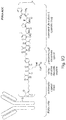
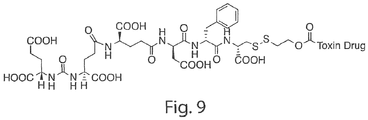
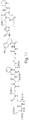
- An example of a linker is D- ⁇ -Glu D-Asp-D-Phe-D-Cys ( FIG. 9 ).
- Other linkers may be used as provided herein.
- Conjugation of one or more therapeutic agents to a PSMA ligand can include many chemical mechanisms, for instance covalent binding, affinity binding, intercalation, coordinate binding, electrostatic binding and complexation. Conjugation may also include encapsulation and is intended to refer to any mechanism by which one component may be associated with another component. Conjugation may be direct conjugation of the therapeutic agent to the PSMA ligand or it may be indirect, such as via a linker, polymer, particle etc., and it is the linker, polymer, particle, etc. to which the therapeutic agent is bound.
- Covalent binding can be achieved either by direct condensation of existing side chains or by the incorporation of external bridging molecules.
- Many bivalent or polyvalent agents are useful in coupling protein molecules to other proteins, peptides or amine functions, etc.
- the literature is replete with coupling agents such as carbodiimides, diisocyanates, glutaraldehyde, diazobenzenes, and hexamethylene diamines. This list is not intended to be exhaustive of the various coupling agents known in the art but, rather, is exemplary of the more common coupling agents.
- the agent may be fused to the PSMA ligand by genetic methods to form a hybrid immunotoxin fusion protein.
- the fusion proteins can include additional peptide sequences, such as peptide spacers that operatively attach, for example, the PSMA ligand and toxin, as long as such additional sequences do not appreciably affect the targeting or toxin activities of the fusion protein.
- the proteins in some embodiments, may be attached by a peptide linker or spacer, such as a glycine-serine spacer peptide, or a peptide hinge, as is well known in the art.
- the C-terminus of PSMA antibody can be fused to the N-terminus of the protein toxin molecule to form an immunotoxin that retains the binding properties of the PSMA antibody.
- Other fusion arrangements will be known to one of ordinary skill in the art.
- the nucleic acid encoding the fusion protein is inserted into an expression vector in accordance with standard methods, for stable expression of the fusion protein, such as in mammalian cells, such as CHO cells.
- the fusion protein can be isolated and purified from the cells or culture supernatant using standard methodology, such as a PSMA affinity column.
- anticancer agents for use as provided herein include, without limitation, cytotoxic agents, chemotherapeutic agents and agents that act on tumor neovasculature.
- Cytotoxic agents include, but are not limited to, cytotoxic radionuclides, chemical toxins and protein toxins. Cytotoxic radionuclides or radiotherapeutic isotopes include alpha-emitting isotopes such as, for example, 225 Ac, 211 At, 212 Bi, 213 Bi, 212 Pb, 224 Ra, 223 Ra.
- Cytotoxic radionuclides or radiotherapeutic isotopes include beta-emitting isotopes such as, for example, 186 Rh, 188 Rh, 177 Lu, 90 Y, 131 I, 67 Cu, 64 Cu 153 Sm, 166 Ho.
- cytotoxic radionuclides may emit Auger and/or low energy electrons and include the isotopes 123 I, 124 I, 125 I, 131 I, 75 Br, 77 Br and 18 F.
- DOTA 1,4,7,10-tetraazacyclododecane N,N',N",N''-tetraacetic acid
- DOTA a bifunctional chelating agent ( see McDevitt et al., Science 294:1537-1540, 2001 ) that can be used in a two-step method for labeling followed by conjugation.
- Chemical toxins or chemotherapeutic agents include, but are not limited to, members of the enediyne family of molecules, such as calicheamicin and esperamicin. Chemical toxins or chemotherapeutic agents can also include pyrrolobenzodiazepine (PBD) dimers (e.g., SJG-136, SG2000, SG2202, SG2285 as described in Hartley JA et al., Cancer Res.
- PBD pyrrolobenzodiazepine
- calicheamicins colchicine
- ispinesib a novel small molecule inhibitor of kinesin spindle protein
- combrestatin e.g., combrestatin A4
- maytansine derivatives such as maytansinoid DM4 ( N 2'-deacetyl- N 2'-(4-mercapto-4-methyl-1-oxopentyl)maytansine) and maytansinoid DM1 (mertansine), methotrexate, doxorubicin, melphalan, chlorambucil, ARA-C, vindesine, mitomycin C, cis-platinum, etoposide, bleomycin and/or 5-fluorouracil.
- maytansine derivatives such as maytansinoid DM4 ( N 2'-deacetyl- N 2'-(4-mercapto-4-methyl-1-oxopentyl)maytansine
- antineoplastic agents include dolastatins ( U.S. Patent Nos. 6,034,065 and 6,239,104 ) and derivatives thereof.
- Dolastatins and derivatives thereof include dolastatin 10 (dolavaline-valine-dolaisoleuine-dolaproine-dolaphenine) and the derivatives auristatin PHE (dolavaline-valine-dolaisoleuine-dolaproine-phenylalanine-methyl ester) ( Pettit, G.R. et al., Anticancer Drug Des. 13(4):243-277, 1998 ; Woyke, T. et al., Antimicrob. Agents Chemother.
- Toxins also include poisonous lectins, plant toxins such as ricin, abrin, modeccin, botulina and diphtheria toxins. Other chemotherapeutic agents are known to those skilled in the art and may be used as provided herein.
- tubulin-binding agents e.g., anti-tubulin agents
- tubulysin and derivatives thereof Kaur et al., Biochem J. 396(Pt 2):235-242, 2006
- combrestatin A4 Griggs et al., Lancet Oncol. 2:82, 2001
- angiostatin and endostatin Reviewed in Rosen, Oncologist 5:20, 2000 , incorporated by reference herein
- interferon inducible protein 10 U.S. Patent No. 5,994,292
- a PSMA antibody-drug conjugate comprises an antibody or antigen-binding fragment thereof that specifically binds PSMA and is conjugated to a dolastatin 10 derivative, in particular auristatins such as, MMAE (also referred to herein as monomethylauristatin E or monomethylauristatin norephedrine) or MMAF (also referred to herein as monomethylauristatin F or monomethylauristatin phenylalanine).
- auristatins such as, MMAE (also referred to herein as monomethylauristatin E or monomethylauristatin norephedrine) or MMAF (also referred to herein as monomethylauristatin F or monomethylauristatin phenylalanine).
- A is in which q is 1-10. Therefore, in one embodiment, the conjugate is: wherein L, Y, Z, X, W, D, n, m, q and p are as previously defined.
- Y is alanine, valine, leucine, isoleucine, methionine, phenylalanine, tryptophan or proline.
- Y is valine.
- Z is lysine, lysine protected with acetyl or formyl, arginine, arginine protected with tosyl or nitro groups, histidine, ornithine, ornithine protected with acetyl or formyl, or citrulline.
- Z is citrulline.
- Y m -Z m is valine-citrulline.
- Y m -Z m is a protein sequence which is selectively cleavable by a protease.
- X is p-aminobenzyloxycarbonyl.
- X is ⁇ -aminobutyric acid; ⁇ , ⁇ -dimethyl ⁇ -aminobutyric acid or ⁇ , ⁇ -dimethyl ⁇ -aminobutyric acid.
- W is in which T is O, S or N.
- the selectivity is at least 300, 350, 400, 450, 500, 600, 700, 800, 900, 1000, 1100, 1200, 1300, 1400, 1500, 1600, 1700, 1800, 1900, 2000, 2250, 2500, 2750, 3000, 3500, 4000, 4500, 5000, 5500, 6000, 6500, 7000, 7500, 8000, 8500, 9000, 9500, 10000, 11000, 12000, 13000, 14000, 15000, 17500, 20000 or more.
- the selectivity is between 250-500, 500-750, 750-1000, 1000-2000, 2000-5000, 5000-10000, 10000-15000 or 15000-20000.
- PSMA antibody-drug conjugates mediate PSMA-expressing cell specific killing at very low concentrations, such as at or near picomolar concentrations.
- PSMA antibody-drug conjugates in some embodiments, exhibit IC 50 s at concentrations of less than about 1 X 10 -10 M, less than about 1 X 10 -11 M, or less than about 1 X 10 -12 M. In some embodiments, an IC 50 is achieved at a concentration of less than about 1.5 X 10 -11 M. In other embodiments, PSMA antibody-drug conjugates exhibit IC 50 s of between 10-210, 40-210, 60-210 or 65-210 picomoles (pM).
- PSMA antibody-drug conjugates exhibit IC 50 s of about 10, 40, 60 or 80 pM. In still other embodiments, PSMA antibody-drug conjugates exhibit IC 50 s of about 11, 42, 60 or 83 pM.
- antiandrogens for use as provided herein include, without limitation, abiraterone (ZYTIGA®), enzalutamide (XTANDI®), nilutamide (NILANDRON®), flutamide (EULEXIN®), bicalutamide (CASODEX®), orteronel (TAK-700, Tokai Pharmaceuticals, Inc.) Potent antiandrogens such as, for example, enzalutamide, abiraterone, ARN 509 (Aragon Pharmaceuticals, Inc.) and galeterone (TOK-001 or VN/124-1, Tokai Pharmaceuticals, Inc.), which are typically used in progressive, metatstatic castration-resistant prostate cancer and which affect expression of a host of androgen-regulated molecules, such as PSMA expression.
- ZYTIGA® enzalutamide
- NILANDRON® nilutamide
- flutamide EULEXIN®
- bicalutamide bicalutamide
- the compound that increases the cell surface expression of PSMA can also be an mTOR inhibitor.
- mTOR inhibitors for use as provided herein include, without limitation, rapamycin, everolimus (AFINITOR®, ZORTRESS®) and temsirolimus (TORISEL®).
- mTOR inhibitor includes mTOR inhibitors, mTOR inhibitor analogs, and mTOR inhibitor derivatives.
- compositions for example, pharmaceutical compositions, which comprise a compound that increases cell surface expression of PSMA, a PSMA ligand conjugate, or a combination of the two.
- a composition is administered to a subject (e.g ., a mammal, such as a human).
- a composition comprising a PSMA ligand conjugate is administered to a subject and another composition comprising a compound that increases cell surface expression of PSMA is separately administered to the subject, either sequentially or concurrently.
- a composition comprising both a PSMA ligand conjugate and a compound that increases cell surface expression of PSMA is administered to a subject.
- a composition comprising a compound that increases cell surface expression of PSMA is first administered to a subject, and then a composition comprising a PSMA ligand conjugate is administered to the subject immediately after, within an hour, within a couple of hours, within a day, within 2 days, within 3 days, within 4 days, with 5 days, within 6 days, or within a week or more.
- Either composition may be administered once or more than once ( e.g ., twice, thrice, etc.)
- a compound that increases cell surface expression of PSMA refers to a compound that increases the cell surface expression of PSMA by at least 5%, at least 10%, at least 15%, at least 20%, at least 25%, at least 30%, at least 35%, at least 40%, at least 45%, at least 50%, at least 55%, at least 60%, at least 65%, at least 70%, at least 75%, at least 80%, at least 85%, at least 90%, at least 95%, at least 100%, at least 125%, at least 150%, at least 175%, at least 200% or more, relative to normal cell surface expression of a PSMA-expressing cell or relative to cell surface expression in the absence of such compound.
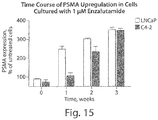
- an antiandrogen may, in some embodiments, increase the cell surface expression of PSMA on cancer cells by at least 20%, or more.
- a composition in some embodiments, includes a physiologically or pharmaceutically acceptable carrier, excipient, or stabilizer combined with a compound that increases cell surface expression of PSMA and/or aPSMA ligand conjugate.
- pharmaceutically acceptable carrier or “physiologically acceptable carrier” includes any and all salts, solvents, dispersion media, coatings, antibacterial and antifungal agents, isotonic and absorption delaying agents, and the like that are physiologically compatible.
- a salt retains the desired biological activity of the parent compound and does not impart any undesired toxicological effects (see e.g., Berge, S. M., et al. (1977) J. Pharm. Sci. 66: 1-19 ).
- Examples of such salts include acid addition salts and base addition salts.
- Acid addition salts include those derived from nontoxic inorganic acids, such as hydrochloric, nitric, phosphoric, sulfuric, hydrobromic, hydroiodic, phosphorous and the like, as well as from nontoxic organic acids such as aliphatic mono- and dicarboxylic acids, phenyl substituted alkanoic acids, hydroxy alkanoic acids, aromatic acids, aliphatic and aromatic sulfonic acids and the like.
- Base addition salts include those derived from alkaline earth metals, such as sodium, potassium, magnesium, calcium and the like, as well as from nontoxic organic amines, such as N,N'-dibenzylethylenediamine, N-methylglucamine, chloroprocaine, choline, diethanolamine, ethylenediamine, procaine and the like.
- the pharmaceutical compositions may contain suitable buffering agents, including: acetic acid in a salt; citric acid in a salt; boric acid in a salt; and phosphoric acid in a salt.
- compositions suitable for parenteral administration conveniently comprise a sterile aqueous or non-aqueous preparation of PSMA ligand conjugates and/or compounds that increase cell surface expression of PSMA (e.g ., antiandrogens, mTOR inhibitors), which is preferably isotonic with the blood of the recipient.
- PSMA e.g ., antiandrogens, mTOR inhibitors
- This preparation may be formulated according to known methods using suitable dispersing or wetting agents and suspending agents.
- the sterile injectable preparation also may be a sterile injectable solution or suspension in a non-toxic parenterally-acceptable diluent or solvent, for example, as a solution in 1,3-butane diol.
- compositions as provided herein may be administered in effective amounts.
- An "effective amount” is that amount of an active compound (e.g ., PSMA ligand conjugate and/or compound that increases cell surface expression of PSMA) that alone, or together with further doses, produces the desired response, e.g ., inhibits cell proliferation of PSMA-expressing cells and/or kills PSMA-expressing cells.
- an active compound e.g ., PSMA ligand conjugate and/or compound that increases cell surface expression of PSMA
- produces the desired response e.g ., inhibits cell proliferation of PSMA-expressing cells and/or kills PSMA-expressing cells.
- this may involve only slowing the progression of a cancer, for example, temporarily, although more preferably, it involves halting the progression of the cancer permanently. This can be monitored by routine methods.
- the desired response to treatment of cancer or other disease or condition also can be delaying the onset or even preventing the onset of the cancer or other disease or condition.
- Such effective amounts will depend, of course, on the particular condition being treated (e.g. , PSMA-expressing cancer), the severity of the condition, the individual patient parameters including age, physical condition, size and weight, the duration of the treatment, the nature of concurrent therapy (if any), the specific route of administration and like factors within the knowledge and expertise of the health practitioner. These factors are well known to those of ordinary skill in the art and can be addressed with no more than routine experimentation. It is generally preferred that a maximum dose of the individual components or combinations thereof be used, that is, the highest safe dose according to sound medical judgment. It will be understood by those of ordinary skill in the art, however, that a patient/subject may insist upon a lower dose or tolerable dose for medical reasons, psychological reasons or for virtually any other reason.
- compositions as provided herein are sterile and contain an effective amount of PSMA ligand conjugates and/or compound that increases cell surface expression of PSMA, etc. for producing the desired response in a unit of weight or volume suitable for administration to a patient/subject.
- the response can, for example, be measured by determining the physiological effects of the composition, such as regression of a tumor or decrease of disease symptoms.
- Other assays will be known to one of ordinary skill in the art and can be employed for measuring the level of the response.
- the synergistic effect provided by various combinations of PSMA ligand conjugates with compounds provided herein, such as antiandrogens or mTOR inhibitors, may result in efficacious doses which are lower than the doses required for efficacy when either component of the combination is used singly.
- the added advantage of a dose lowering effect may have the added benefit of a wider safety profile, i.e., fewer adverse side effects.
- doses of PSMA ligand conjugate and/or compound that increases cell surface expression of PSMA can range from about 10 ⁇ g/kg to about 100,000 ⁇ g/kg. Based on the composition, the dose can be delivered continuously, such as by continuous pump, or at periodic intervals. Desired time intervals of multiple doses of a particular composition can be determined without undue experimentation by one skilled in the art. Other protocols for the administration of compositions will be known to one of ordinary skill in the art, in which the dose amount, schedule of administration, sites of administration, mode of administration and the like vary from the foregoing.
- the dose of PSMA ligand administered intravenously conjugate is about 1.0 mg/kg to 2.3 mg/kg.
- the PSMA ligand conjugated is a PSMA ADC, and the PSMA ADC is provided in a dose of about 1.8 mg/kg to 2.3 mg/kg.
Landscapes
- Health & Medical Sciences (AREA)
- Chemical & Material Sciences (AREA)
- Life Sciences & Earth Sciences (AREA)
- Medicinal Chemistry (AREA)
- Immunology (AREA)
- General Health & Medical Sciences (AREA)
- Animal Behavior & Ethology (AREA)
- Epidemiology (AREA)
- Pharmacology & Pharmacy (AREA)
- Public Health (AREA)
- Veterinary Medicine (AREA)
- Organic Chemistry (AREA)
- Bioinformatics & Cheminformatics (AREA)
- Engineering & Computer Science (AREA)
- Biochemistry (AREA)
- Microbiology (AREA)
- Molecular Biology (AREA)
- Genetics & Genomics (AREA)
- Biophysics (AREA)
- Cell Biology (AREA)
- Reproductive Health (AREA)
- Pregnancy & Childbirth (AREA)
- Gynecology & Obstetrics (AREA)
- Proteomics, Peptides & Aminoacids (AREA)
- Mycology (AREA)
- Pharmaceuticals Containing Other Organic And Inorganic Compounds (AREA)
- Peptides Or Proteins (AREA)
- Medicines That Contain Protein Lipid Enzymes And Other Medicines (AREA)
- Medicinal Preparation (AREA)
- Preparation Of Compounds By Using Micro-Organisms (AREA)
- Micro-Organisms Or Cultivation Processes Thereof (AREA)
- Medicines Containing Antibodies Or Antigens For Use As Internal Diagnostic Agents (AREA)
Applications Claiming Priority (5)
| Application Number | Priority Date | Filing Date | Title |
|---|---|---|---|
| US201361893145P | 2013-10-18 | 2013-10-18 | |
| US201361903589P | 2013-11-13 | 2013-11-13 | |
| JP2013235506A JP6908964B2 (ja) | 2013-10-18 | 2013-11-13 | Psmaリガンドコンジュゲートによる併用療法 |
| EP14734570.6A EP3057614B1 (en) | 2013-10-18 | 2014-05-14 | Combination therapies with psma ligand conjugates |
| PCT/US2014/000124 WO2015057250A1 (en) | 2013-10-18 | 2014-05-14 | Combination therapies with psma ligand conjugates |
Related Parent Applications (1)
| Application Number | Title | Priority Date | Filing Date |
|---|---|---|---|
| EP14734570.6A Division EP3057614B1 (en) | 2013-10-18 | 2014-05-14 | Combination therapies with psma ligand conjugates |
Publications (1)
| Publication Number | Publication Date |
|---|---|
| EP3827844A1 true EP3827844A1 (en) | 2021-06-02 |
Family
ID=53009949
Family Applications (2)
| Application Number | Title | Priority Date | Filing Date |
|---|---|---|---|
| EP20199101.5A Pending EP3827844A1 (en) | 2013-10-18 | 2014-05-14 | Combination therapies with psma ligand conjugates |
| EP14734570.6A Active EP3057614B1 (en) | 2013-10-18 | 2014-05-14 | Combination therapies with psma ligand conjugates |
Family Applications After (1)
| Application Number | Title | Priority Date | Filing Date |
|---|---|---|---|
| EP14734570.6A Active EP3057614B1 (en) | 2013-10-18 | 2014-05-14 | Combination therapies with psma ligand conjugates |
Country Status (4)
| Country | Link |
|---|---|
| EP (2) | EP3827844A1 (https=) |
| JP (3) | JP6908964B2 (https=) |
| AU (3) | AU2014337391B2 (https=) |
| CA (2) | CA2927735C (https=) |
Cited By (1)
| Publication number | Priority date | Publication date | Assignee | Title |
|---|---|---|---|---|
| WO2025125469A1 (en) * | 2023-12-13 | 2025-06-19 | Swiss Rockets Ag | Combination therapy using psma-targeted radiopharmaceuticals and an inhibitor of pi3k, akt, and/or mtor |
Families Citing this family (10)
| Publication number | Priority date | Publication date | Assignee | Title |
|---|---|---|---|---|
| US10806806B2 (en) | 2016-06-23 | 2020-10-20 | Cornell University | Trifunctional constructs with tunable pharmacokinetics useful in imaging and anti-tumor therapies |
| GB201614162D0 (en) * | 2016-08-18 | 2016-10-05 | Polytherics Ltd | Antibodies, uses thereof and conjugates thereof |
| WO2018204477A1 (en) * | 2017-05-02 | 2018-11-08 | Cornell University | Methods and reagents for tumor targeting with greater efficacy and less toxicity |
| WO2019088176A1 (ja) * | 2017-10-31 | 2019-05-09 | 国立大学法人神戸大学 | 抗体薬物複合体効果増強剤 |
| EP4344747A3 (en) * | 2017-11-30 | 2024-07-03 | LadRx Corporation | Albumin-binding prodrugs of auristatin e derivatives |
| US20200297877A1 (en) | 2017-12-13 | 2020-09-24 | Sciencons AS | Complex comprising a psma-targeting compound linked to a lead or thorium radionuclide |
| WO2020077259A1 (en) * | 2018-10-11 | 2020-04-16 | Progenics Pharmaceuticals, Inc | Combination therapy for treating metastatic prostate cancer |
| CN119792549A (zh) * | 2021-04-23 | 2025-04-11 | 天津全和诚生物技术有限公司 | 缀合物及其制备方法和用途 |
| CN117778322B (zh) * | 2023-12-17 | 2025-02-07 | 苏州拓维生物技术有限公司 | 一种对恩杂鲁胺耐药的细胞系的筛选方法及其应用 |
| WO2025216238A1 (ja) * | 2024-04-09 | 2025-10-16 | 国立大学法人広島大学 | 薬物コンジュゲート又はその塩 |
Citations (16)
| Publication number | Priority date | Publication date | Assignee | Title |
|---|---|---|---|---|
| US5124471A (en) | 1990-03-26 | 1992-06-23 | The United States Of America As Represented By The Secretary Of The Department Of Health And Human Services | Bifunctional dtpa-type ligand |
| US5162504A (en) | 1988-06-03 | 1992-11-10 | Cytogen Corporation | Monoclonal antibodies to a new antigenic marker in epithelial prostatic cells and serum of prostatic cancer patients |
| US5756825A (en) | 1992-09-08 | 1998-05-26 | Safavy; Ahmad | Hydroxamic acid-based bifunctional chelating compounds |
| US5994292A (en) | 1995-05-31 | 1999-11-30 | The United States Of America As Represented By The Department Of Health And Human Services | Interferon-inducible protein 10 is a potent inhibitor of angiogenesis |
| US6034065A (en) | 1992-12-03 | 2000-03-07 | Arizona Board Of Regents | Elucidation and synthesis of antineoplastic tetrapeptide phenethylamides of dolastatin 10 |
| US6107090A (en) | 1996-05-06 | 2000-08-22 | Cornell Research Foundation, Inc. | Treatment and diagnosis of prostate cancer with antibodies to extracellur PSMA domains |
| US6214345B1 (en) | 1993-05-14 | 2001-04-10 | Bristol-Myers Squibb Co. | Lysosomal enzyme-cleavable antitumor drug conjugates |
| US6239104B1 (en) | 1997-02-25 | 2001-05-29 | Arizona Board Of Regents | Isolation and structural elucidation of the cytostatic linear and cyclo-depsipeptides dolastatin 16, dolastatin 17, and dolastatin 18 |
| US6649163B1 (en) | 1996-05-06 | 2003-11-18 | Cornell Research Foundation, Inc. | Treatment and diagnosis of cancer |
| US6962981B1 (en) | 1996-03-25 | 2005-11-08 | Medarex, Inc. | Monoclonal antibodies specific for the extracellular domain of prostate-specific membrane antigen |
| WO2007002222A2 (en) * | 2005-06-20 | 2007-01-04 | Psma Development Company, Llc | Psma antibody-drug conjugates |
| WO2010005723A2 (en) | 2008-06-16 | 2010-01-14 | Bind Biosciences, Inc. | Drug loaded polymeric nanoparticles and methods of making and using same |
| WO2010027513A2 (en) * | 2008-09-08 | 2010-03-11 | Psma Development Company, Llc | Methods for killing psma-expressing, taxane-resistant cancer cells |
| US8114965B2 (en) | 2001-10-23 | 2012-02-14 | Psma Development Company, Llc | Compositions of PSMA antibodies |
| US8465725B2 (en) | 2009-06-15 | 2013-06-18 | Molecular Insight Pharmaceuticlas, Inc. | Process for production of heterodimers of glutamic acid |
| US8487129B2 (en) | 2006-11-08 | 2013-07-16 | Molecular Insight Pharmaceuticals, Inc. | Heterodimers of glutamic acid |
Family Cites Families (2)
| Publication number | Priority date | Publication date | Assignee | Title |
|---|---|---|---|---|
| WO2002098897A2 (en) * | 2001-06-01 | 2002-12-12 | Cornell Research Foundation, Inc. | Modified antibodies to prostate-specific membrane antigen and uses thereof |
| US20140099257A1 (en) * | 2012-10-05 | 2014-04-10 | Cornell University | Androgen Suppression, Prostate-Specific Membrane Antigen and the Concept of Conditionally Enhanced Vulnerability |
-
2013
- 2013-11-13 JP JP2013235506A patent/JP6908964B2/ja active Active
-
2014
- 2014-05-14 CA CA2927735A patent/CA2927735C/en active Active
- 2014-05-14 EP EP20199101.5A patent/EP3827844A1/en active Pending
- 2014-05-14 CA CA3181096A patent/CA3181096A1/en active Pending
- 2014-05-14 AU AU2014337391A patent/AU2014337391B2/en active Active
- 2014-05-14 EP EP14734570.6A patent/EP3057614B1/en active Active
-
2019
- 2019-06-14 JP JP2019111139A patent/JP7716836B2/ja active Active
-
2020
- 2020-05-15 AU AU2020203191A patent/AU2020203191B2/en active Active
-
2023
- 2023-02-17 AU AU2023200926A patent/AU2023200926A1/en not_active Abandoned
- 2023-05-08 JP JP2023076905A patent/JP2023135666A/ja active Pending
Patent Citations (21)
| Publication number | Priority date | Publication date | Assignee | Title |
|---|---|---|---|---|
| US5162504A (en) | 1988-06-03 | 1992-11-10 | Cytogen Corporation | Monoclonal antibodies to a new antigenic marker in epithelial prostatic cells and serum of prostatic cancer patients |
| US5124471A (en) | 1990-03-26 | 1992-06-23 | The United States Of America As Represented By The Secretary Of The Department Of Health And Human Services | Bifunctional dtpa-type ligand |
| US5286850A (en) | 1990-03-26 | 1994-02-15 | The United States Of America As Represented By The Department Of Health And Human Services | Antibody DTPA-type ligand conjugates |
| US5434287A (en) | 1990-03-26 | 1995-07-18 | The United States Of America As Represented By The Department Of Health And Human Services | Bifunctional DTPA-type ligand |
| US5756825A (en) | 1992-09-08 | 1998-05-26 | Safavy; Ahmad | Hydroxamic acid-based bifunctional chelating compounds |
| US6034065A (en) | 1992-12-03 | 2000-03-07 | Arizona Board Of Regents | Elucidation and synthesis of antineoplastic tetrapeptide phenethylamides of dolastatin 10 |
| US6214345B1 (en) | 1993-05-14 | 2001-04-10 | Bristol-Myers Squibb Co. | Lysosomal enzyme-cleavable antitumor drug conjugates |
| US5994292A (en) | 1995-05-31 | 1999-11-30 | The United States Of America As Represented By The Department Of Health And Human Services | Interferon-inducible protein 10 is a potent inhibitor of angiogenesis |
| US6962981B1 (en) | 1996-03-25 | 2005-11-08 | Medarex, Inc. | Monoclonal antibodies specific for the extracellular domain of prostate-specific membrane antigen |
| US6649163B1 (en) | 1996-05-06 | 2003-11-18 | Cornell Research Foundation, Inc. | Treatment and diagnosis of cancer |
| US6107090A (en) | 1996-05-06 | 2000-08-22 | Cornell Research Foundation, Inc. | Treatment and diagnosis of prostate cancer with antibodies to extracellur PSMA domains |
| US6239104B1 (en) | 1997-02-25 | 2001-05-29 | Arizona Board Of Regents | Isolation and structural elucidation of the cytostatic linear and cyclo-depsipeptides dolastatin 16, dolastatin 17, and dolastatin 18 |
| US8114965B2 (en) | 2001-10-23 | 2012-02-14 | Psma Development Company, Llc | Compositions of PSMA antibodies |
| WO2007002222A2 (en) * | 2005-06-20 | 2007-01-04 | Psma Development Company, Llc | Psma antibody-drug conjugates |
| US20070160617A1 (en) | 2005-06-20 | 2007-07-12 | Psma Development Company, Llc | PSMA antibody-drug conjugates |
| US8487129B2 (en) | 2006-11-08 | 2013-07-16 | Molecular Insight Pharmaceuticals, Inc. | Heterodimers of glutamic acid |
| WO2010005723A2 (en) | 2008-06-16 | 2010-01-14 | Bind Biosciences, Inc. | Drug loaded polymeric nanoparticles and methods of making and using same |
| WO2010005721A2 (en) * | 2008-06-16 | 2010-01-14 | Bind Biosciences, Inc. | Drug loaded polymeric nanoparticles and methods of making and using same |
| WO2010027513A2 (en) * | 2008-09-08 | 2010-03-11 | Psma Development Company, Llc | Methods for killing psma-expressing, taxane-resistant cancer cells |
| US20110250216A1 (en) | 2008-09-08 | 2011-10-13 | Psma Development Company, Llc | Methods for killing psma-expressing, taxane-resistant cancer cells |
| US8465725B2 (en) | 2009-06-15 | 2013-06-18 | Molecular Insight Pharmaceuticlas, Inc. | Process for production of heterodimers of glutamic acid |
Non-Patent Citations (87)
| Title |
|---|
| "Sustained and Controlled Release Drug Delivery Systems", 1978, MARCEL DEKKER, INC. |
| BERGE, S. M. ET AL., J. PHARM. SCI., vol. 66, 1977, pages 1 - 19 |
| BIRD ET AL., SCIENCE, vol. 242, 1988, pages 423 - 426 |
| BITTING RLARMSTRONG AJ: "Targeting the PI3K/Akt/mTOR pathway in castration-resistant prostate cancer", ENDOCR RELAT CANCER, vol. 20, 2013, pages R83 - R99 |
| BLISS CI: "The toxicity of poisons applied jointly", ANN APPL BIOL, vol. 26, 1939, pages 585 - 615, XP055065740, DOI: 10.1111/j.1744-7348.1939.tb06990.x |
| CARRACEDO AMA LTERUYA-FELDSTEIN JROJO FSALMENA LALIMONTI A ET AL.: "Inhibition of mTORCl leads to MAPK pathway activation through a PI3K-dependent feedback loop in human cancer", J CLIN INVEST, vol. 118, 2008, pages 3065 - 74 |
| CARTER ET AL., PROC. NATL. ACAD. SCI. U.S.A., vol. 93, 1996, pages 749 - 753 |
| CARVER BSCHAPINSKI CWONGVIPAT JHIERONYMUS HCHEN YCHANDARLAPATY S ET AL.: "Reciprocal feedback regulation of PI3K and androgen receptor signaling in PTEN-deficient prostate cancer", CANCER CELL, vol. 19, 2011, pages 575 - 86, XP055039150, DOI: 10.1016/j.ccr.2011.04.008 |
| CERAMI EGAO JDOGRUSOZ UGROSS BESUMER SOAKSOY BA ET AL.: "The cBio cancer genomics portal: an open platform for exploring multidimensional cancer genomics data", CANCER DISCOV, vol. 2, 2012, pages 401 - 4, XP055599025, DOI: 10.1158/2159-8290.CD-12-0095 |
| CHANG SSREUTER VEHESTON WDBANDER NHGRAUER LSGAUDIN PB: "Five different anti-prostate-specific membrane antigen (PSMA) antibodies confirm PSMA expression in tumor-associated neovasculature", CANCER RES, vol. 59, 1999, pages 3192 - 8 |
| CHEN CDWELSBIE DSTRAN CBAEK SHCHEN RVESSELLA R ET AL.: "Molecular determinants of resistance to antiandrogen therapy", NAT MED, vol. 10, 2004, pages 33 - 9, XP002452801, DOI: 10.1038/nm972 |
| CLEGG NJWONGVIPAT JJOSEPH JDTRAN COUK SDILHAS A ET AL.: "ARN-509: a novel antiandrogen for prostate cancer treatment", CANCER RES, vol. 72, 2012, pages 1494 - 503, XP008166073, DOI: 10.1158/0008-5472.CAN-11-3948 |
| DANG ZCLOWIK CW: "Removal of serum factors by charcoal treatment promotes adipogenesis via a MAPK-dependent pathway", MOL CELL BIOCHEM, vol. 268, 2005, pages 159 - 67, XP019288638 |
| DARSHAN MSLOFTUS MSTHADANI-MULERO MLEVY BPESCUIN DZHOU XK ET AL.: "Taxane-induced blockade to nuclear accumulation of the androgen receptor predicts clinical responses in metastatic prostate cancer", CANCER RES, vol. 71, 2011, pages 6019 - 29, XP055386476, DOI: 10.1158/0008-5472.CAN-11-1417 |
| DEAL ET AL., J. MED. CHEM., vol. 42, 1999, pages 2988 |
| DENMEADE SR ET AL., NAT REV CANCER, vol. 2, 2002, pages 389 - 96 |
| DIPIPPO: "Antiandrogen modulation of prostate-specific membrane antigen (PSMA): Dynamics and synergy with PSMA-targeted therapy.", JOURNAL OF CLINICAL ONCOLOGY, 2013 ASCO ANNUAL MEETING ABSTRACTS., vol. 31, no. 15, E16007, 20 May 2013 (2013-05-20), pages 1, XP002729554 * |
| DORONINASVETLANA ET AL.: "Novel Linkers for Monoclonal Antibody-Mediated Delivery of Anticancer Agents", AACR, ANAHEIM, 16 April 2005 (2005-04-16) |
| EASTON JBKURMASHEVA RTHOUGHTON PJ: "IRS-1: auditing the effectiveness of mTOR inhibitors", CANCER CELL, vol. 9, 2006, pages 153 - 5 |
| EISENHAUER EA ET AL., EUR J CANCER, vol. 45, no. 2, 2009, pages 228 - 47 |
| EVANS MJSMITH-JONES PMWONGVIPAT JNAVARRO VKIM SBANDER NH ET AL.: "Noninvasive measurement of androgen receptor signaling with a positron-emitting radiopharmaceutical that targets prostate-specific membrane antigen", PROC NATL ACAD SCI USA, vol. 108, 2011, pages 9578 - 82, XP055420965, DOI: 10.1073/pnas.1106383108 |
| FANGE ET AL., DRUG NEWS & PERSPEC, vol. 8, no. 3, 1995, pages 133 - 137 |
| FERRALDESCHI RDE BONO J: "Agents that target androgen synthesis in castration-resistant prostate cancer", CANCER J, vol. 19, 2013, pages 34 - 42 |
| FOLKES AJAHMADI KALDERTON WKALIX SBAKER SJBOX G ET AL.: "The identification of 2-(l H-indazol -4-yl) -6-(4 -methanesulfonyl -pip erazin- I -ylmethyl)-4 -morpholin-4-yl -t hieno[3,2-d]pyrimidine (GDC-0941) as a potent, selective, orally bioavailable inhibitor of class I PI3 kinase for the treatment of cancer", J MED CHEM, vol. 51, 2008, pages 5522 - 32 |
| FOSS CAMEASE RCCHO SYKIM HJPOMPER MG: "GCPII imaging and cancer", CURR MED CHEM, vol. 19, 2012, pages 1346 - 59 |
| GAN LU ET AL: "Inhibition of the Androgen Receptor as a Novel Mechanism of Taxol Chemotherapy in Prostate Cancer", CANCER RESEARCH, AMERICAN ASSOCIATION FOR CANCER RESEARCH, US, vol. 69, no. 21, 1 November 2009 (2009-11-01), pages 8386 - 8394, XP009175194, ISSN: 0008-5472, DOI: 10.1158/0008-5472.CAN-09-1504 * |
| GARCIA JADANIELPOUR D: "Mammalian target of rapamycin inhibition as a therapeutic strategy in the management of urologic malignancies", MOL CANCER THER, vol. 7, 2008, pages 1347 - 54, XP055283335 |
| GOOD JAWANG FRATH OKAAN HY ET AL.: "Talapatra SK, Podgorski D, et al. Optimized S-trityl-L-cysteine-based inhibitors of kinesin spindle protein with potent in vivo antitumor activity in lung cancer xenograft models", J MED CHEM, vol. 56, 2013, pages 1878 - 93 |
| GRIGGS ET AL., LANCET ONCOL, vol. 2, 2001, pages 82 |
| GULLEY J ET AL., AM J THER, vol. 351, 2004, pages 1513 - 20 |
| HIRAI HSOOTOME HNAKATSURU YMIYAMA KTAGUCHI STSUJIOKA K ET AL.: "MK-2206, an allosteric Akt inhibitor, enhances antitumor efficacy by standard chemotherapeutic agents or molecular targeted drugs in vitro and in vivo", MOL CANCER THER, vol. 9, 2010, pages 1956 - 67, XP055074270, DOI: 10.1158/1535-7163.MCT-09-1012 |
| HOLLIGER, P. ET AL., PROC. NATL. ACAD. SCI. USA, vol. 90, 1993, pages 6444 - 6448 |
| HOROSZEWICZ ET AL., ANTICANCER RES, vol. 7, 1987, pages 927 - 935 |
| HUSTON ET AL., PROC. NATL. ACAD. SCI. USA, vol. 85, 1988, pages 5879 - 5883 |
| ISRAELI ET AL., CANCER RES, vol. 54, 1994, pages 1807 - 1811 |
| JEMAL A ET AL., CA CANCER J CLIN, vol. 55, 2005, pages 10 - 30 |
| JOSEPH JDLU NQIAN JSENSINTAFFAR JSHAO GBRIGHAM D ET AL.: "A clinically relevant androgen receptor mutation confers resistance to second-generation antiandrogens enzalutamide and ARN-509", CANCER DISCOV, vol. 3, 2013, pages 1020 - 9, XP055080859, DOI: 10.1158/2159-8290.CD-13-0226 |
| KAUR ET AL., BIOCHEM J, vol. 396, 2006, pages 235 - 242 |
| KERBEL, J. CLIN. ONCOL., vol. 19, no. 18s, 2001, pages 45s - 51s |
| KLEIN EA ET AL., UROL CLIN NORTH AM, vol. 30, 2003, pages 315 - 30 |
| KULARATNE, SA ET AL., J MED CHEM, vol. 53, 2010, pages 7767 - 7777 |
| KULARATNE, SA ET AL., MOL PHRAMACEUTICS, vol. 6, no. 3, 2009, pages 780 - 789 |
| MA DHOPF CMALEWICZ ADDONOVAN GDSENTER PDGOECKELER WF ET AL.: "Potent antitumor activity of an auristatin-conjugated, fully human monoclonal antibody to prostate-specific membrane antigen", CLIN CANCER RES, vol. 12, 2006, pages 2591 - 6, XP002623984, DOI: 10.1158/1078-0432.CCR-05-2107 |
| MAC VICAR GRHUSSAIN MH: "Emerging therapies in metastatic castration-sensitive and castration-resistant prostate cancer", CURR OPIN ONCOL, vol. 25, 2013, pages 252 - 60, XP008179516, DOI: 10.1097/CCO.0b013e32835ff161 |
| MCDEVITT ET AL., SCIENCE, vol. 294, 2001, pages 1537 - 1540 |
| MCMENAMIN MESOUNG PPERERA SKAPLAN ILODA MSELLERS WR: "Loss of PTEN expression in paraffin-embedded primary prostate cancer correlates with high Gleason score and advanced stage", CANCER RES, vol. 59, 1999, pages 4291 - 6 |
| MIYAMOTO DTLEE RJSTOTT SLTING DTWITTNER BSULMAN M ET AL.: "Androgen receptor signaling in circulating tumor cells as a marker of hormonally responsive prostate cancer", CANCER DISCOV, vol. 2, 2012, pages 995 - 1003, XP055211802, DOI: 10.1158/2159-8290.CD-12-0222 |
| MIYAMOTO H ET AL., INT J CANCER, vol. 117, no. 5, 2005, pages 866 - 72 |
| MOSTAGHEL EAPAGE STLIN DWFAZLI LCOLEMAN IMTRUE LD ET AL.: "Intraprostatic androgens and androgen-regulated gene expression persist after testosterone suppression: therapeutic implications for castration-resistant prostate cancer", CANCER RES, vol. 67, 2007, pages 5033 - 41 |
| MURPHY ET AL., ANTICANCER RES, vol. 15, 1995, pages 1473 - 1479 |
| MURPHY ET AL., PROSTATE, vol. 26, 1995, pages 164 - 168 |
| OLSON WCHESTON WDWRAJASEKARAN AK: "Clinical trials of cancer therapies targeting prostate-specific membrane antigen", REVIEWS ON RECENT CLINICAL TRIALS, vol. 2, 2007, pages 182 - 90, XP007922264, DOI: 10.2174/157488707781662724 |
| O'REILLY KEROJO FSHE QBSOLIT DMILLS GBSMITH D ET AL.: "mTOR inhibition induces upstream receptor tyrosine kinase signaling and activates Akt", CANCER RES, vol. 66, 2006, pages 1500 - 8 |
| PERNER SHOFER MDKIM RSHAH RBLI HMOLLER P ET AL.: "Prostate-specific membrane antigen expression as a predictor of prostate cancer progression", HUM PATHOL, vol. 38, 2007, pages 696 - 701, XP022028716, DOI: 10.1016/j.humpath.2006.11.012 |
| PETRYLAK DP ET AL., NEW ENGL J MED, vol. 351, 2004, pages 1513 - 20 |
| PETTIT, G.R. ET AL., ANTICANCER DRUG DES, vol. 13, no. 4, 1998, pages 243 - 277 |
| PIENTA KJABATE-SHEN CAGUS DBATTAR RMCHUNG LWGREENBERG NM ET AL.: "The current state of preclinical prostate cancer animal models", PROSTATE, vol. 68, 2008, pages 629 - 39 |
| POIJAK, R. J. ET AL., STRUCTURE, vol. 2, 1994, pages 1121 - 1123 |
| RATHKOPF DSCHER HI: "Androgen receptor antagonists in castration-resistant prostate cancer", CANCER J, vol. 19, 2013, pages 43 - 9, XP055541514, DOI: 10.1097/PPO.0b013e318282635a |
| RICHARDS JLIM ACHAY CWTAYLOR AEWINGATE ANOWAKOWSKA K ET AL.: "Interactions of abiraterone, eplerenone, and prednisolone with wild-type and mutant androgen receptor: a rationale for increasing abiraterone exposure or combining with MDV3100", CANCER RES, vol. 72, 2012, pages 2176 - 82, XP055654799, DOI: 10.1158/0008-5472.CAN-11-3980 |
| ROCHON ET AL., PROSTATE, vol. 25, 1994, pages 219 - 223 |
| ROSS JSSHEEHAN CEFISHER HAKAUFMAN RP, JR.KAUR PGRAY K ET AL.: "Correlation of primary tumor prostate-specific membrane antigen expression with disease recurrence in prostate cancer", CLIN CANCER RES, vol. 9, 2003, pages 6357 - 62, XP055232059 |
| SARBASSOV DDGUERTIN DAALI SMSABATINI DM: "Phosphorylation and regulation of Akt/PKB by the rictor-mTOR complex", SCIENCE, vol. 307, 2005, pages 1098 - 101, XP002379044, DOI: 10.1126/science.1106148 |
| SARKER DREID AHYAP TADE BONO JS: "Targeting the PI3K/AKT pathway for the treatment of prostate cancer", CLIN CANCER RES, vol. 15, 2009, pages 4799 - 805, XP055515608, DOI: 10.1158/1078-0432.CCR-08-0125 |
| SCIARRACUTIE: "Remington's Pharmaceutical Sciences", 1990, article "Aerosols", pages: 1694 - 1712 |
| SILVER DAPELLICER IFAIR WRHESTON WDCORDON-CARDO C: "Prostate-specific membrane antigen expression in normal and malignant human tissues", CLIN CANCER RES, vol. 3, 1997, pages 81 - 5, XP000941663 |
| SOIFER HSSOULEIMANIAN NWU SVOSKRESENSKIY AMCOLLAK FKCINAR B ET AL.: "Direct regulation of androgen receptor activity by potent CYP17 inhibitors in prostate cancer cells", J BIOL CHEM, vol. 287, 2012, pages 3777 - 87 |
| SQUILLACE RMMILLER DWARDWELL SDWANG FCLACKSON TRIVERA VM: "Synergistic activity of the mTOR inhibitor ridaforolimus and the antiandrogen bicalutamide in prostate cancer models", INT J ONCOL, vol. 41, 2012, pages 425 - 32 |
| THOMAS CLAMOUREUX FCRAFTER CDAVIES BRBERALIDI EFAZLI L ET AL.: "Synergistic targeting of PI3K/AKT-pathway and androgen-receptor axis significantly delays castration-resistant prostate cancer progression in vivo", MOL CANCER THER, 2013 |
| TRAN COUK SCLEGG NJCHEN YWATSON PAARORA V ET AL.: "Development of a second-generation antiandrogen for treatment of advanced prostate cancer", SCIENCE, vol. 324, no. 5928, 2009, pages 787 - 90, XP002696684, DOI: 10.1126/science.1168175 |
| VELDSCHOLTE JBERREVOETS CARIS-STALPERS CKUIPER GGJENSTER GTRAPMAN J ET AL.: "The androgen receptor in LNCaP cells contains a mutation in the ligand binding domain which affects steroid binding characteristics and response to antiandrogens", J STEROID BIOCHEM MOL BIOL, vol. 41, 1992, pages 665 - 9, XP023550112, DOI: 10.1016/0960-0760(92)90401-4 |
| VERMA SMILES DGIANNI LKROP IEWELSLAU MBASELGA J ET AL.: "Trastuzumab emtansine for HER2-positive advanced breast cancer", N ENGL J MED, vol. 367, 2012, pages 1783 - 91, XP055297991, DOI: 10.1056/NEJMoa1209124 |
| WALDMANN, SCIENCE, vol. 252, 1991, pages 1657 |
| WALLIN JJGUAN JPRIOR WWLEE LBBERRY LBELMONT LD ET AL.: "GDC-0941, a novel class I selective PI3K inhibitor, enhances the efficacy of docetaxel in human breast cancer models by increasing cell death in vitro and in vivo", CLIN CANCER RES, vol. 18, 2012, pages 3901 - 11, XP055194706, DOI: 10.1158/1078-0432.CCR-11-2088 |
| WANG XMA DOLSON WCHESTON WD: "In vitro and in vivo responses of advanced prostate tumors to PSMA ADC, an auristatin-conjugated antibody to prostate-specific membrane antigen", MOL CANCER THER, vol. 10, 2011, pages 1728 - 39, XP055138488, DOI: 10.1158/1535-7163.MCT-11-0191 |
| WANG YMIKHAILOVA MBOSE SPAN CXDEVERE WHITE RWGHOSH PM: "Regulation of androgen receptor transcriptional activity by rapamycin in prostate cancer cell proliferation and survival", ONCOGENE, vol. 27, 2008, pages 7106 - 17 |
| WARD ET AL., NATURE, vol. 341, 1989, pages 544 - 546 |
| WEILL MEDICAL COLLEGE OF CORNELL UNIVERSITY: "177Lu Radiolabeled Monoclonal Antibody HuJ591 (177Lu-J591) and Ketoconazole in Patients With Prostate Cancer - Full Text View - ClinicalTrials.gov", 10 March 2009 (2009-03-10), XP055139382, Retrieved from the Internet <URL:http://clinicaltrials.gov/ct2/show/NCT00859781?term=00859781&rank=1> [retrieved on 20140910] * |
| WEILL MEDICAL COLLEGE OF CORNELL UNIVERSITY: "Docetaxel/Prednisone Plus Fractionated 177Lu- J591 Antibody for Metastatic, Castrate-resistant Prostate Cancer - Full Text View - ClinicalTrials.gov", 5 June 2009 (2009-06-05), pages 1 - 6, XP055139381, Retrieved from the Internet <URL:http://clinicaltrials.gov/show/NCT00916123> [retrieved on 20140910] * |
| WEST LAFAYETTE ET AL: "Endocyte to Advance Development of EC1069, a PSMA-Targeted Small Molecule Drug Conjugate Therapy for Prostate Cancer Company Expects to File IND for Therapeutic Agent in 2013 Human Study of Companion Imaging Agent EC0652 Demonstrates Safety and Binding Specificity", 29 January 2013 (2013-01-29), XP055359848, Retrieved from the Internet <URL:http://files.shareholder.com/downloads/ABEA-5OM1NY/4169323026x0x631497/7C4FDCF6-95E9-44F1-90F5-7D8254E0A40B/ECYT_News_2013_1_29_General_Releases.pdf> * |
| WONG MTAN NZHA JPEALE FVYUE PFAIRBROTHER WJ ET AL.: "Navitoclax (ABT-263) reduces Bcl-x(L)-mediated chemoresistance in ovarian cancer models", MOL CANCER THER, vol. 11, 2012, pages 1026 - 35, XP055086674, DOI: 10.1158/1535-7163.MCT-11-0693 |
| WOYKE, T. ET AL., ANTIMICROB. AGENTS CHEMOTHER., vol. 45, no. 12, 2001, pages 3580 - 3584 |
| WRIGHT GL, JR.GROB BMHALEY CGROSSMAN KNEWHALL KPETRYLAK D ET AL.: "Upregulation of prostate-specific membrane antigen after androgen-deprivation therapy", UROLOGY, vol. 48, 1996, pages 326 - 34, XP002545464, DOI: 10.1016/S0090-4295(96)00184-7 |
| WU HCHSIEH JTGLEAVE MEBROWN NMPATHAK SCHUNG LW: "Derivation of androgen-independent human LNCaP prostatic cancer cell sublines: role of bone stromal cells", INT J CANCER, vol. 57, 1994, pages 406 - 12 |
| YOUNES ABARTLETT NLLEONARD JPKENNEDY DALYNCH CMSIEVERS EL ET AL.: "Brentuximab vedotin (SGN-35) for relapsed CD30-positive lymphomas", N ENGL J MED, vol. 363, 2010, pages 1812 - 21, XP002675542, DOI: 10.1056/NEJMoa1002965 |
| ZHAO LAU JLWIENTJES MG: "Comparison of methods for evaluating drug-drug interaction", FRONT BIOSCI (ELITE ED, vol. 2, 2010, pages 241 - 9 |
| ZHU MLHORBINSKI CMGARZOTTO MQIAN DZBEER TMKYPRIANOU N: "Tubulin-targeting chemotherapy impairs androgen receptor activity in prostate cancer", CANCER RES, vol. 70, no. 17, 2010, pages 7992 - 8002 |
Cited By (1)
| Publication number | Priority date | Publication date | Assignee | Title |
|---|---|---|---|---|
| WO2025125469A1 (en) * | 2023-12-13 | 2025-06-19 | Swiss Rockets Ag | Combination therapy using psma-targeted radiopharmaceuticals and an inhibitor of pi3k, akt, and/or mtor |
Also Published As
| Publication number | Publication date |
|---|---|
| JP2023135666A (ja) | 2023-09-28 |
| AU2014337391B2 (en) | 2020-06-11 |
| JP2019194209A (ja) | 2019-11-07 |
| CA2927735C (en) | 2023-02-07 |
| CA3181096A1 (en) | 2015-04-23 |
| EP3057614B1 (en) | 2020-09-30 |
| AU2014337391A1 (en) | 2016-05-05 |
| JP2015078168A (ja) | 2015-04-23 |
| JP7716836B2 (ja) | 2025-08-01 |
| AU2020203191B2 (en) | 2023-03-09 |
| CA2927735A1 (en) | 2015-04-23 |
| JP6908964B2 (ja) | 2021-07-28 |
| AU2023200926A1 (en) | 2023-03-23 |
| EP3057614A1 (en) | 2016-08-24 |
| AU2020203191A1 (en) | 2020-06-04 |
Similar Documents
| Publication | Publication Date | Title |
|---|---|---|
| AU2020203191B2 (en) | Combination therapies with psma ligand conjugates | |
| US20150110814A1 (en) | Combination therapies with psma ligand conjugates | |
| EP1912677B1 (en) | PSMA antibody-drug conjugates | |
| US20250195701A1 (en) | Using Targeted Radiotherapy (TRT) to Drive Anti-Tumor Immune Response to Immunotherapies | |
| US9242012B2 (en) | Methods for killing PSMA-expressing, taxane-resistant cancer cells | |
| Oflazoglu et al. | Potent anticarcinoma activity of the humanized anti-CD70 antibody h1F6 conjugated to the tubulin inhibitor auristatin via an uncleavable linker | |
| Ma et al. | Potent antitumor activity of an auristatin-conjugated, fully human monoclonal antibody to prostate-specific membrane antigen | |
| JP2019070021A (ja) | アウリスタチン系抗体薬物複合体とPI3K−AKT mTOR経路インヒビターの間の相乗効果 | |
| RS66103B1 (sr) | Humanizovani specifični membranski antigen prostate (psma) i konjugati lekova antitela | |
| JP2019506136A (ja) | 新規抗emr2抗体及び使用方法 | |
| CN102448497A (zh) | 在癌症治疗中的西仑吉肽的持续给药 | |
| Anderson et al. | Antibody-drug conjugates: an evolving approach for melanoma treatment | |
| ES2837927T3 (es) | Terapias de combinación con conjugados de ligando de PSMA | |
| HK1116697B (en) | Psma antibody-drug conjugates | |
| HK1159474B (en) | Compounds for killing psma-expressing, taxane- resistant cancer cells | |
| HK1170430A (en) | Continuous administration of cilengitide in cancer treatments |
Legal Events
| Date | Code | Title | Description |
|---|---|---|---|
| PUAI | Public reference made under article 153(3) epc to a published international application that has entered the european phase |
Free format text: ORIGINAL CODE: 0009012 |
|
| STAA | Information on the status of an ep patent application or granted ep patent |
Free format text: STATUS: THE APPLICATION HAS BEEN PUBLISHED |
|
| AC | Divisional application: reference to earlier application |
Ref document number: 3057614 Country of ref document: EP Kind code of ref document: P |
|
| AK | Designated contracting states |
Kind code of ref document: A1 Designated state(s): AL AT BE BG CH CY CZ DE DK EE ES FI FR GB GR HR HU IE IS IT LI LT LU LV MC MK MT NL NO PL PT RO RS SE SI SK SM TR |
|
| STAA | Information on the status of an ep patent application or granted ep patent |
Free format text: STATUS: REQUEST FOR EXAMINATION WAS MADE |
|
| 17P | Request for examination filed |
Effective date: 20211130 |
|
| RBV | Designated contracting states (corrected) |
Designated state(s): AL AT BE BG CH CY CZ DE DK EE ES FI FR GB GR HR HU IE IS IT LI LT LU LV MC MK MT NL NO PL PT RO RS SE SI SK SM TR |
|
| STAA | Information on the status of an ep patent application or granted ep patent |
Free format text: STATUS: EXAMINATION IS IN PROGRESS |
|
| 17Q | First examination report despatched |
Effective date: 20240320 |