EP3824028B1 - Kautschukzusammensetzung für reifen mit modifizierten ungesättigten ölen - Google Patents
Kautschukzusammensetzung für reifen mit modifizierten ungesättigten ölen Download PDFInfo
- Publication number
- EP3824028B1 EP3824028B1 EP19742203.3A EP19742203A EP3824028B1 EP 3824028 B1 EP3824028 B1 EP 3824028B1 EP 19742203 A EP19742203 A EP 19742203A EP 3824028 B1 EP3824028 B1 EP 3824028B1
- Authority
- EP
- European Patent Office
- Prior art keywords
- phr
- oil
- acid
- rubber composition
- rubber
- Prior art date
- Legal status (The legal status is an assumption and is not a legal conclusion. Google has not performed a legal analysis and makes no representation as to the accuracy of the status listed.)
- Active
Links
Images

Classifications
-
- C—CHEMISTRY; METALLURGY
- C08—ORGANIC MACROMOLECULAR COMPOUNDS; THEIR PREPARATION OR CHEMICAL WORKING-UP; COMPOSITIONS BASED THEREON
- C08L—COMPOSITIONS OF MACROMOLECULAR COMPOUNDS
- C08L7/00—Compositions of natural rubber
-
- B—PERFORMING OPERATIONS; TRANSPORTING
- B60—VEHICLES IN GENERAL
- B60C—VEHICLE TYRES; TYRE INFLATION; TYRE CHANGING; CONNECTING VALVES TO INFLATABLE ELASTIC BODIES IN GENERAL; DEVICES OR ARRANGEMENTS RELATED TO TYRES
- B60C1/00—Tyres characterised by the chemical composition or the physical arrangement or mixture of the composition
- B60C1/0016—Compositions of the tread
-
- C—CHEMISTRY; METALLURGY
- C08—ORGANIC MACROMOLECULAR COMPOUNDS; THEIR PREPARATION OR CHEMICAL WORKING-UP; COMPOSITIONS BASED THEREON
- C08K—Use of inorganic or non-macromolecular organic substances as compounding ingredients
- C08K3/00—Use of inorganic substances as compounding ingredients
- C08K3/02—Elements
- C08K3/04—Carbon
-
- C—CHEMISTRY; METALLURGY
- C08—ORGANIC MACROMOLECULAR COMPOUNDS; THEIR PREPARATION OR CHEMICAL WORKING-UP; COMPOSITIONS BASED THEREON
- C08K—Use of inorganic or non-macromolecular organic substances as compounding ingredients
- C08K3/00—Use of inorganic substances as compounding ingredients
- C08K3/34—Silicon-containing compounds
- C08K3/36—Silica
-
- C—CHEMISTRY; METALLURGY
- C08—ORGANIC MACROMOLECULAR COMPOUNDS; THEIR PREPARATION OR CHEMICAL WORKING-UP; COMPOSITIONS BASED THEREON
- C08K—Use of inorganic or non-macromolecular organic substances as compounding ingredients
- C08K5/00—Use of organic ingredients
- C08K5/01—Hydrocarbons
-
- C—CHEMISTRY; METALLURGY
- C08—ORGANIC MACROMOLECULAR COMPOUNDS; THEIR PREPARATION OR CHEMICAL WORKING-UP; COMPOSITIONS BASED THEREON
- C08K—Use of inorganic or non-macromolecular organic substances as compounding ingredients
- C08K5/00—Use of organic ingredients
- C08K5/04—Oxygen-containing compounds
- C08K5/15—Heterocyclic compounds having oxygen in the ring
- C08K5/151—Heterocyclic compounds having oxygen in the ring having one oxygen atom in the ring
- C08K5/1515—Three-membered rings
-
- C—CHEMISTRY; METALLURGY
- C08—ORGANIC MACROMOLECULAR COMPOUNDS; THEIR PREPARATION OR CHEMICAL WORKING-UP; COMPOSITIONS BASED THEREON
- C08K—Use of inorganic or non-macromolecular organic substances as compounding ingredients
- C08K5/00—Use of organic ingredients
- C08K5/16—Nitrogen-containing compounds
- C08K5/17—Amines; Quaternary ammonium compounds
- C08K5/18—Amines; Quaternary ammonium compounds with aromatically bound amino groups
-
- C—CHEMISTRY; METALLURGY
- C08—ORGANIC MACROMOLECULAR COMPOUNDS; THEIR PREPARATION OR CHEMICAL WORKING-UP; COMPOSITIONS BASED THEREON
- C08K—Use of inorganic or non-macromolecular organic substances as compounding ingredients
- C08K5/00—Use of organic ingredients
- C08K5/54—Silicon-containing compounds
- C08K5/548—Silicon-containing compounds containing sulfur
-
- C—CHEMISTRY; METALLURGY
- C08—ORGANIC MACROMOLECULAR COMPOUNDS; THEIR PREPARATION OR CHEMICAL WORKING-UP; COMPOSITIONS BASED THEREON
- C08L—COMPOSITIONS OF MACROMOLECULAR COMPOUNDS
- C08L9/00—Compositions of homopolymers or copolymers of conjugated diene hydrocarbons
-
- C—CHEMISTRY; METALLURGY
- C08—ORGANIC MACROMOLECULAR COMPOUNDS; THEIR PREPARATION OR CHEMICAL WORKING-UP; COMPOSITIONS BASED THEREON
- C08L—COMPOSITIONS OF MACROMOLECULAR COMPOUNDS
- C08L9/00—Compositions of homopolymers or copolymers of conjugated diene hydrocarbons
- C08L9/06—Copolymers with styrene
Definitions
- Tread rubber is one of the important portions of a pneumatic tyre which contributes enormously to the overall performance of a tyre.
- a tyre has to perform well in severe weather conditions and it has to exhibit a variety of performances such as wet grip, abrasion resistance and low rolling resistance.
- further requirements for all-season and winter tyres are required, such as retaining good performance on snow and ice.
- silica-reinforced tyre tread compounds show improvement of key tyre performance, i.e. lower rolling resistance and better wet traction while maintaining the abrasion resistance when compared to the carbon black-filled tyre compounds.
- a reduction of rolling resistance of about 20% of the silica-filled tyre rubber compared with the use of carbon black can save 3-4% of fuel.
- Process oils are generally added into the rubber compounds with high loading of fillers to improve the processability and dispersibility of fillers in the rubber matrix.
- the petroleum-based distillate aromatic extract (DAE) was conventionally used in carbon black-filled tyre compounds. Based on the report of investigation on tyre particles on the road surface by The Swedish National Chemicals Inspectorate (2003), the DAE oil contains polycyclic aromatic hydrocarbons (PAHs) in which some of them are already classified as carcinogenic substances. Thereafter, the DAE oil has been banned for the production of tyres or parts of tyres and shall not be placed on the market from 1 January 2010 according to Directive 2005/69/EC.
- the safe process oils such as treated distillate aromatic extract (TDAE), mild extracted solvate (MES) and naphthenic (NAP) oils are the alternatives.
- the plant- or vegetable-oils contain some unsaturated fatty whose double bonds could react with the curing agent and interfere the vulcanization reaction. This can be addressed by modifying the oil structure to reduce the double bond and to increase the compatibility between the oil and rubber as well as filler.
- One modification methods that is widely used for bio-oils is epoxidation.
- EP 2 340 946 A1 discloses a pneumatic tire comprising at least one component selected from the group consisting of beads, apexes, and sidewall veneers, the at least one component comprising a rubber composition, the rubber composition comprising at least one diene based elastomer, an epoxidized palm oil and less than 1 phr of stearic acid.
- EP 2 792 689 A1 discloses an oil extended functionalized styrene-butadiene copolymer wherein the functionalized styrene-butadiene copolymer comprises 15 to 50 wt.%, based on 100 wt.% of the copolymer, of repeating units based on styrene, 42 to 80 wt.%, based on 100 wt.% of the copolymer, of repeating units based on butadiene, and 5 to 43 wt.%, based on 100 wt.% of the copolymer, of units based on at least one functional monomer and wherein at least one extender oil is based on vegetable oils.
- EP 1 072 442 A1 discloses a rubber composition with excellent workability, which gives vulcanized products with high wet skid resistance, low rolling resistance and high abrasion resistance, and a tire with those excellent properties.
- the rubber composition comprising a diene-based rubber (a), silica (b) and a compatibilizer (c).
- Said compatibilizer (c) is at least one selected from among (I) Aminosilane compounds; (II) Epoxy group-containing compounds; (III)(IV) Compounds which have an amino group or a polymerizable unsaturated bond, together with a hydroxyl group, an epoxy group, an ether bond, a carboxyl group, an ester bond or a polymerizable unsaturated bond in the molecule; (V) Ether bond-containing compounds; and (VI) Carboxylates.
- EP 3 251 872 A1 discloses a vulcanizable rubber composition for use in a tread of a pneumatic tire is disclosed.
- the rubber composition comprises, based on 100 parts by weight of elastomer (phr), 100 phr of a diene based elastomer having a glass transition temperature of less than -50 °C; from 30 phr to 65 phr of a fatty acid monoester of formula (1) R 1 -O-C(O)-R 2 (1), where R 1 is selected from a C1 to a C8 linear or branched alkyl, a C1 to a C8 linear or branched alkenyl, or a C2 to a C6 linear or branched alkyl substituted with from one to five hydroxyl groups, R 2 is a C11 to a C21 alkyl or a C11 to a C21 alkenyl; less than 10 phr of a petroleum-derived oil; and from 50 to 130
- the present invention has the object of providing a cross-linkable rubber composition which may be used as a tread rubber in a tyre where petroleum-based process oils can be used in a lower amount or can be omitted entirely.
- a cross-linkable rubber composition comprises:
- the unit "phr” denotes "per hundred parts by weight of rubber”.
- modified unsaturated oils according to the invention permit the substantial or complete substitution of petrochemically-based process oils in silica-filled rubber formulations with little or no carbon black fillers without a negative change of the rubber properties as they relate to tyre treads.
- Specific properties such as tan delta values at 60 °C (equating to a lower rolling resistance) are even lowered (improved).
- epoxidized oils contain less double bonds and increased polarity they exhibit a positive effect on the vulcanization and silica-oil compatibility.
- further modification of epoxidized oil is believed to additionally help to promote the silanization reaction or to enhance hydrophobation by the oil adsorption.
- the cross-linkable rubber composition according to the invention comprises cross-linkable groups in the individual rubber components. They may be cross-linked (cured, vulcanised) by methods known to a skilled person in the rubber technology field.
- the cross-linkable rubber compositions may be sulfur-vulcanizable and/or peroxide-vulcanizable. Other vulcanization systems may also be used.
- additives can be added. Examples of usual additives are stabilizers, antioxidants, lubricants, fillers, dyes, pigments, flame retardants, conductive fibres and reinforcing fibres.
- the modified unsaturated oil according to the invention can be an epoxide of an unsaturated fatty acid triglyceride (also designated as unsaturated fat or unsaturated oil).
- unsaturated fatty acid triglyceride also designated as unsaturated fat or unsaturated oil.
- unsaturated fatty acid triglyceride also designated as unsaturated fat or unsaturated oil.
- the modified unsaturated oil may also be further modified in the sense that a molecule containing a nucleophilic group such as an OH group, an NH 2 group or an SH group reacts with the epoxidized fatty acid triglyceride.
- This reaction may be stoichiometrically complete, i.e. all epoxy groups have undergone the ring-opening addition of the nucleophilic species.
- the reaction may also be stoichiometrically incomplete, meaning that the modified unsaturated oil comprises epoxy groups and the products of the ring-opening addition.
- the filler component comprises ⁇ 0 phr to ⁇ 25 phr, preferably ⁇ 0 phr to ⁇ 10 phr, of carbon black.
- the unsaturated fatty acid triglyceride used as starting material for the modified unsaturated oil is olive oil, peanut oil, soybean oil, sesame oil, corn oil, sunflower oil, canola oil, palm oil or a mixture thereof.
- the modified unsaturated oil comprises ⁇ 1 mol-% to ⁇ 10 mol-% of epoxy groups, based on the molar amount of unsaturated fatty acid trigliceride uses as starting material in its synthesis. Preferred are ⁇ 2 mol-% to ⁇ 7 mol-%, more preferred ⁇ 3 mol-% to ⁇ 5 mol-%.
- the modified unsaturated oil is the reaction product of ⁇ 0.01 mol to ⁇ 0.1 mol of the molecule containing a nucleophilic group per 1000 g of the epoxide of an unsaturated fatty acid triglyceride.
- Preferred are ⁇ 0.02 mol to ⁇ 0.08 mol, more preferred ⁇ 0.03 mol to ⁇ 0.05 mol.
- the molecule containing a nucleophilic group is a primary aromatic amine.
- Other types of phenylenediamine, preferably p-phenylenediamine or aliphatic diamines are also suitable. These amines have the additional advantage of providing antioxidant properties.
- the invention is also directed towards a cross-linked rubber composition which is obtained by cross-linking a rubber composition according to the invention.
- the cross-linked rubber composition has a difference in storage moduli G' at 0.56% elongation and 100% elongation of ⁇ 250 kPa, the storage moduli being determined at a temperature of 100 °C and a frequency of 0.5 Hz.
- the difference in storage moduli at low and high strains, for instance G'(at 0.56%)-G'(at 100%), is called the Payne effect and can be taken as a measure for the level of filler-filler interaction within the rubber compounds.
- the Payne effect can be determined with a rubber process analyzer (RPA) using uncured compounds.
- RPA rubber process analyzer
- the difference is ⁇ 250 kPa to ⁇ 350 kPa, more preferred ⁇ 260 kPa to ⁇ 340 kPa.
- the cross-linked rubber composition has a tensile strength according to ASTM D412 of ⁇ 24 MPa.
- the modulus is ⁇ 25 MPa to ⁇ 30 MPa.
- the modulus at 100% elongation according to this testing procedure may be ⁇ 1.7 MPa to ⁇ 2.0 MPa, the modulus at 200% elongation ⁇ 4.5 MPa to ⁇ 6.0 MPa and the modulus at 300% elongation may be ⁇ 9.5 MPa to ⁇ 12.0 MPa.
- the cross-linked rubber composition has an elongation at break according to ASTM D412 of ⁇ 480%.
- the elongation at break is ⁇ 500% to ⁇ 600%, more preferred ⁇ 520% to ⁇ 580%.
- the cross-linked rubber composition has a maximum of the tan delta value (determined from DMA measurements according to ISO 4664-1, frequency 10 Hz, 0.1% dynamic strain) at ⁇ -80 °C to ⁇ -20 °C, preferably ⁇ -60 °C to ⁇ -50 °C.
- the present invention also relates to a method of preparing a tyre, comprising the steps of:
- Cure behaviors were tested using RPA at 150 °C, frequency 0.833 Hz and 2.79% strain according to ASTM D5289-95.
- Type 2 dumb-bell test specimens were prepared and then tensile properties were tested with a Zwick tensile tester Model Z1.0/TH1S (Zwick Roell Group, Ulm, Germany) at a crosshead speed of 500 mm/min according to ASTM D412.
- Dynamic mechanical properties by DMA Dynamic mechanical properties of silica-reinforced rubber compounds were characterized in tension mode using a 6x4x2 mm 3 test specimen. The test was conducted with DMA8000 (Perkin Elmer) at a frequency of 10 Hz and 0.1% strain in a temperature range of -80 to 100 °C.
- Silica-reinforced rubber tyre compounds were prepared.
- the rubber compounding formulations are NR (natural rubber; 100 phr), silica (55 phr), TESPT (bis[3-(triethoxysilyl)propyl] tetrasulfide; 5 phr), ZnO (3 phr), stearic acid (1 phr), TMQ (1,2-dihydro-2,2,4-trimethylquinoline polymer; 1 phr), process oil* (8 phr), OCT (octadecylamine; 1.0 phr), CBS (N-cyclohexyl-2-benzothiazole sulfenamide; 1.5 phr) and sulfur (1.5 phr).
- OCT octadecylamine
- DPG diphenylguanidine
- Raw NR was first masticated in an internal mixer (Brabender Plasticorder 350s) for 2 min with the mixing conditions of fill factor 0.70, initial mixer temperature setting of 100 °C and rotor speed of 60 rpm. Then, a half of silica and a half of TESPT together with a quarter of octadecylamine were added in the mixing chamber and mixed for 5 min. Subsequently, the remaining of silica and TESPT with a quarter of octadecylamine were incorporated and mixed for 5 mins prior to the addition of ZnO, stearic acid, TMQ and process oil into the rubber compounds.
- Brabender Plasticorder 350s for 2 min with the mixing conditions of fill factor 0.70, initial mixer temperature setting of 100 °C and rotor speed of 60 rpm. Then, a half of silica and a half of TESPT together with a quarter of octadecylamine were added in the mixing chamber and mixed for 5 min
- the rubber compound mixed in the internal mixer was discharged at 15 mins.
- the curing agents i.e. CBS, sulfur and remaining octadecylamine, were finally mixed into the rubber compound on a two-roll mill. Afterwards, the rubbers were cured the rubbers were cured to their respective optimum cure time (t 90 ) by using a compression press at 150 °C and 100 bar.
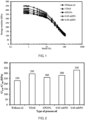
- FIG. 1 shows a reduction of the storage moduli with increasing strain of different compounds due to a breakdown of filler network and slip of polymer chains on the filler surface under dynamic deformation.
- a breakdown of filler network diminishes filler-filler interaction, allowing a better dispersion of filler in the rubber matrix.
- the difference in storage moduli at low and high strains that is, G'(at 0.56%)-G'(at 100%), the so-called Payne effect, can be taken as a measure for the level of filler-filler interaction within the rubber compounds, as shown in FIG. 2 .
- the Payne effect of the silica-filled rubber compounds is normally used to explain the degree of filler-filler interactions that are mainly caused by hydrogen bonding, leading to formation of the filler network in the rubber matrix.
- the rubber compounds with EPO3% and 0.03 mEPO show lower Payne effect than the compound with TDAE oil, but the mix with 0.04 mEPO shows higher value.
- the use of EPO and 0.03mEPO gives lower, i.e.
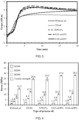
- the rubber compounds without oil shows shorter scorch time but higher cure time and slower cure rate than the ones with process oils. This means that the presence of process oil in the rubber compounds improves the cure behaviour.
- the rubber compounds with process oils show similar scorch time and cure time.
- the compounds with amine-modified EPO show shorter cure time than the mix with EPO presumably due to the presence of alkaline amine in the oil structure that helps to promote the cure reaction.
- the rubber compositions comprising of amine-modified (m-EPO) have higher cure reaction rate and higher extent of cure torque increase (M H -M L ) compared to the compound with state-of-the-art TDAE.
- the increase of cure torque indicates crosslink density within the rubber matrix.
- the inventive use of mEPO is better than without oil and with TDAE as indicated by faster cure rate and higher cure torque increase (indicative for crosslink density).
- the mechanical properties i.e. moduli at different strains, tensile strength and elongation at break, are shown in FIG. 4 and FIG. 5 .
- the presence of process oils gives a positive effect on the improvement of mechanical properties.
- the rubber compounds with process oils show higher modulus, tensile strength and elongation at break than the compound without oil.
- the silica-filled vulcanizates with m-EPO have excellent tensile strength and elongation at break compared to the compound with TDAE due to the improvement in the filler dispersion as well as the crosslink density as indicated by the cure torque difference ( FIG. 3 ) within the rubber matrix.
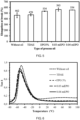
- the loss tangent or tan delta values of silica-reinforced rubber compounds with different process oils were tested by using Dynamic Mechanical Analyzer (DMA) and Rubber Process Analyzer (RPA), as shown in FIG. 6 and FIG. 7 .
- DMA Dynamic Mechanical Analyzer
- RPA Rubber Process Analyzer
- the presence of process oils causes a slight shift of the glass transition temperature towards lower value due to the increased mobility of the rubber chains, compared to the compound without oil.
- the loss tangent values at 0 and 60 °C of rubber vulcanizate are commonly used as indicative for wet grip and rolling resistance, respectively.
- the results show that the use of all process oil types gives better rolling resistance than the compound without oil with slightly inferior wet grip due to the increased in rubber elasticity.
- compositions comprising m-EPO display similar dynamic mechanical properties to the reference compound with TDAE as determined by DMA. But based on RPA tested over a range of frequencies, the use of m-EPO give lower loss tangent at 60°C compared to TDAE; a potential for lower rolling resistance tyre tread made thereof.
- the rubber compound with 0.03 mEPO shows better mechanical and dynamic mechanical properties than the compound with TDAE oil. Based on RPA tested over a range of frequencies, the use of m-EPO give lower tan delta at 60°C compared to TDAE; a potential for lower rolling resistance tyre tread made thereof.
- the use of amine modified-epoxidized palm oil as a process oil in the silica-reinforced rubber tyre compounds gives better properties when compared to the use of state-of-the-art petroleum-based TDAE oil.
- the rubber compounds with EPO3% and 0.03 mEPO show lower Payne effect than the compound with TDAE oil.
- the rubber compounds with modified oils show the enhanced cure properties, i.e. increased cure rate and higher cure torque difference, resulting in good end-use properties especially tan delta at 60 °C which is an indication for tyre rolling resistance.
- the amine-modified EPO gives overall better properties than EPO and can be a potential alternative for TDAE in order to produce rubber compositions comprising biosource component towards better sustainability.
Landscapes
- Chemical & Material Sciences (AREA)
- Health & Medical Sciences (AREA)
- Chemical Kinetics & Catalysis (AREA)
- Medicinal Chemistry (AREA)
- Polymers & Plastics (AREA)
- Organic Chemistry (AREA)
- Engineering & Computer Science (AREA)
- Mechanical Engineering (AREA)
- Compositions Of Macromolecular Compounds (AREA)
Claims (14)
- Vernetzbare Kautschukzusammensetzung, wobei die vernetzbare Kautschukzusammensetzung Folgendes umfasst:eine Kautschukkomponente aus der Gruppe Styrol-Butadien-Kautschuk (SBR), Polybutadien-Kautschuk (BR), Naturkautschuk (NR) oder einer Mischung davon; eine Füllstoffkomponente,ein Silan-Kupplungsmittel undeine Prozessölkomponente, umfassend ein ungesättigtes Fettsäuretriglycerid, wobei mindestens eine Kohlenstoff-Kohlenstoff-Doppelbindung im Molekül einer oder mehreren chemischen Reaktionen unterworfen wurde ("modifiziertes ungesättigtes Öl");dadurch gekennzeichnet, dassdie Füllstoffkomponente Siliciumdioxid umfasst,die Füllstoffkomponente ≥ 0 phr bis ≤ 25 phr Ruß umfasst, als das modifizierte ungesättigte Öl in der Prozessölkomponente:
ein Produkt der stöchiometrisch vollständigen oder teilweisen Reaktion eines Epoxids eines ungesättigten Fettsäuretriglycerids mit einem Molekül, das eine nucleophile Gruppe enthält, wobei es sich bei dem Molekül, das eine nucleophile Gruppe enthält, um ein primäres aromatisches Amin handelt, oder eine Mischung davon mit einem Epoxid eines ungesättigten Fettsäuretriglycerids verwendet wirdund die Prozessölkomponente ≥ 0 phr bis ≤ 25 phr TDAE-Öle (TDAE = Treated Distilled Aromatic Extract), MES-Öle (MES = Mild Extracted Solvate) und NAP-Öle (naphthenische Öle) umfasst,wobei die Einheit "phr" für "pro hundert Gewichtsteile Kautschuk" steht. - Kautschukzusammensetzung nach Anspruch 1, wobei es sich bei dem als Ausgangsstoff für das modifizierte ungesättigte Öl verwendeten ungesättigten Fettsäuretriglycerid um ein Glycerid von α-Linolensäure, Stearidonsäure, Eicosapentaensäure, Docosahexaensäure, Linolsäure, Linolelaidinsäure, γ-Linolensäure, Dihomo-γ-Linolensäure, Arachidonsäure, Docosatetraensäure, Palmitoleinsäure, Vaccensäure, Paullinsäure, Ölsäure, Elaidinsäure, Gondosäure, Erucasäure, Nervonsäure, Meadscher Säure oder einer Mischung davon handelt.
- Kautschukzusammensetzung nach Anspruch 1 oder 2, wobei es sich bei dem als Ausgangsstoff für das modifizierte ungesättigte Öl verwendeten ungesättigten Fettsäuretriglycerid um Olivenöl, Erdnussöl, Sojaöl, Sesamöl, Maisöl, Sonnenblumenöl, Canolaöl, Palmöl oder eine Mischung davon handelt.
- Kautschukzusammensetzung nach einem der Ansprüche 1 bis 3, wobei das modifizierte ungesättigte Öl ≥ 1 Mol-% bis ≤ 10 Mol-% Epoxidgruppen, bezogen auf die molare Menge des als Ausgangsstoff bei seiner Synthese verwendeten ungesättigten Fettsäuretriglycerids, umfasst.
- Kautschukzusammensetzung nach einem der Ansprüche 1 bis 4, wobei es sich bei dem modifizierten ungesättigten Öl um das Reaktionsprodukt von ≥ 0,01 mol bis ≤ 0,1 mol des Moleküls, das eine nucleophile Gruppe enthält, pro 1000 g des Epoxids eines ungesättigten Fettsäuretriglycerids handelt.
- Kautschukzusammensetzung nach einem der Ansprüche 1 bis 5, umfassend:a) ≥ 50 phr bis ≤ 100 phr Naturkautschuk (NR),b) ≥ 0 phr bis ≤ 50 phr Styrol-Butadien-Kautschuk (SBR), Butadien-Kautschuk (BR), Isopren-Kautschuk (IR) oder einer Mischung von mindestens zwei der oben aufgeführten Kautschuke,c) ≥ 40 phr bis ≤ 130 phr Siliciumdioxid,d) ≥ 1 phr bis ≤ 12 phr Bis[3-(triethoxysilyl)propyl]tetrasulfid (TESPT),e) ≥ 5 phr bis ≤ 20 phr von epoxidiertem Palmöl, einem Reaktionsprodukt von epoxidiertem Palmöl mit N-Phenyl-p-phenylendiamin (PPD) oder einer Mischung davon,f) ≥ 0 phr bis ≤ 10 phr Ruß,g) ≥ 0 phr bis ≤ 10 phr TDAE-Öl (TDAE = Treated Distilled Aromatic Extract), MES-Öl (MES = Mild Extracted Solvate) und naphthenische (NAP) Öle.
- Vernetzte Kautschukzusammensetzung, dadurch gekennzeichnet, dass sie durch Vernetzen einer Kautschukzusammensetzung nach einem der Ansprüche 1 bis 6 erhalten wird.
- Vernetzte Kautschukzusammensetzung nach Anspruch 7 mit einer Differenz der Speichermoduln G' bei 0,56 % Dehnung und 100 % Dehnung von ≥ 250 kPa, wobei die Speichermoduln bei einer Temperatur von 100 °C und einer Frequenz von 0,5 Hz bestimmt werden.
- Vernetzte Kautschukzusammensetzung nach Anspruch 7 oder 8 mit einer Zugfestigkeit gemäß ASTM D412 von ≥ 24 MPa.
- Vernetzte Kautschukzusammensetzung nach einem der Ansprüche 7 bis 9 mit einer Reißdehnung gemäß ASTM D412 von ≥ 480 %.
- Vernetzte Kautschukzusammensetzung nach einem der Ansprüche 7 bis 10 mit einem Maximum des tan-delta-Werts (bestimmt aus DMA-Messungen gemäß ISO 4664-1, Frequenz 10 Hz, 0,1 % dynamische Dehnung) von ≥ -80 °C bis ≤ -20 °C.
- Vernetzte Kautschukzusammensetzung nach einem der Ansprüche 7 bis 10 mit einem tan-delta-Wert bei 0 °C von ≥ 0,1 bis ≤ 0,15 (bestimmt aus DMA-Messungen gemäß ISO 4664-1, Frequenz 10 Hz, 0,1 % dynamische Dehnung) und einem tan-delta-Wert bei 60 °C von ≥ 0,05 bis ≤ 0,15 (bestimmt aus DMA-Messungen gemäß ISO 4664-1, Frequenz 10 Hz, 1 % dynamische Dehnung).
- Verfahren zur Herstellung eines Reifens, das folgende Schritte umfasst:- Bereitstellung einer Reifenanordnung, die eine vernetzbare Kautschukzusammensetzung nach einem der Ansprüche 1 bis 6 umfasst;- Vernetzen mindestens der vernetzbaren Kautschukzusammensetzung nach einem der Ansprüche 1 bis 6 in der Reifenanordnung.
- Reifen mit einer Reifenlauffläche, dadurch gekennzeichnet, dass die Reifenlauffläche eine vernetzte Kautschukzusammensetzung nach einem der Ansprüche 7 bis 12 umfasst.
Applications Claiming Priority (2)
| Application Number | Priority Date | Filing Date | Title |
|---|---|---|---|
| LU100884 | 2018-07-20 | ||
| PCT/EP2019/069573 WO2020016439A1 (en) | 2018-07-20 | 2019-07-19 | Rubber composition for tyres comprising modified unsaturated oils |
Publications (3)
| Publication Number | Publication Date |
|---|---|
| EP3824028A1 EP3824028A1 (de) | 2021-05-26 |
| EP3824028B1 true EP3824028B1 (de) | 2025-02-26 |
| EP3824028C0 EP3824028C0 (de) | 2025-02-26 |
Family
ID=63586787
Family Applications (1)
| Application Number | Title | Priority Date | Filing Date |
|---|---|---|---|
| EP19742203.3A Active EP3824028B1 (de) | 2018-07-20 | 2019-07-19 | Kautschukzusammensetzung für reifen mit modifizierten ungesättigten ölen |
Country Status (2)
| Country | Link |
|---|---|
| EP (1) | EP3824028B1 (de) |
| WO (1) | WO2020016439A1 (de) |
Families Citing this family (4)
| Publication number | Priority date | Publication date | Assignee | Title |
|---|---|---|---|---|
| EP3896125B1 (de) * | 2020-04-16 | 2024-10-02 | The Goodyear Tire & Rubber Company | Kautschukzusammensetzung und kautschukprodukt |
| US11987690B2 (en) * | 2021-01-28 | 2024-05-21 | The Goodyear Tire & Rubber Company | Fatty acid-modified vegetable oils in rubber compositions and tires |
| US11667775B2 (en) * | 2021-01-28 | 2023-06-06 | The Goodyear Tire & Rubber Company | Resin-modified vegetable oils in rubber compositions and tires |
| WO2023152766A1 (en) * | 2022-02-09 | 2023-08-17 | Tvs Srichakra Limited | Tyre tread rubber composition using coconut shell powder and method thereof |
Family Cites Families (9)
| Publication number | Priority date | Publication date | Assignee | Title |
|---|---|---|---|---|
| EP1072442B1 (de) * | 1999-07-30 | 2005-03-16 | JSR Corporation | Kautschukzusammensetzung und Reifen daraus |
| JP2009114257A (ja) * | 2007-11-02 | 2009-05-28 | Toyo Tire & Rubber Co Ltd | タイヤ用ゴム組成物及び空気入りタイヤ |
| KR20090116171A (ko) * | 2008-05-06 | 2009-11-11 | 금호타이어 주식회사 | 타이어 트레드 고무조성물 |
| KR20110072260A (ko) * | 2009-12-22 | 2011-06-29 | 한국타이어 주식회사 | 타이어 트레드용 고무 조성물 및 이를 사용하여 제조되는 공기입 타이어 |
| US20110146873A1 (en) | 2009-12-22 | 2011-06-23 | Marc Weydert | Pneumatic tire with rubber component containing epoxidized palm oil |
| JP2014118455A (ja) * | 2012-12-14 | 2014-06-30 | Sumitomo Rubber Ind Ltd | サイドウォール又はベーストレッド用ゴム組成物、及び空気入りタイヤ |
| JP2014133843A (ja) * | 2013-01-11 | 2014-07-24 | Sumitomo Rubber Ind Ltd | トレッド用ゴム組成物及び空気入りタイヤ |
| EP2792689A1 (de) * | 2013-04-18 | 2014-10-22 | LANXESS Deutschland GmbH | Ölgestrecktes funktionalisiertes Styrolbutadien-Copolymer |
| US10336889B2 (en) * | 2016-06-01 | 2019-07-02 | The Goodyear Tire & Rubber Company | Pneumatic tire |
-
2019
- 2019-07-19 EP EP19742203.3A patent/EP3824028B1/de active Active
- 2019-07-19 WO PCT/EP2019/069573 patent/WO2020016439A1/en not_active Ceased
Also Published As
| Publication number | Publication date |
|---|---|
| WO2020016439A1 (en) | 2020-01-23 |
| EP3824028A1 (de) | 2021-05-26 |
| EP3824028C0 (de) | 2025-02-26 |
Similar Documents
| Publication | Publication Date | Title |
|---|---|---|
| EP3824028B1 (de) | Kautschukzusammensetzung für reifen mit modifizierten ungesättigten ölen | |
| EP2655500B1 (de) | Derivate aus pflanzlichen ölen als extenderöle für elastomere zusammensetzungen | |
| RU2695814C9 (ru) | Улучшение сопротивления качению шин из диенового каучука посредством модифицированных силаном полибутадиенов | |
| US6191247B1 (en) | Polysiloxane composition having superior storage stability and rubber composition containing same | |
| US9926440B2 (en) | Additives for rubber compositions | |
| EP2223928A1 (de) | Funktionalisiertes Lignin, Gummi mit funktionalisiertem Lignin und Produkte mit einer derartigen Gummizusammensetzung | |
| JP6160662B2 (ja) | ゴム組成物およびそれを用いた空気入りタイヤ | |
| KR101240602B1 (ko) | 유기 실리카 함유 마스터 배치 탄성체 및 그 제조방법 | |
| US20170283593A1 (en) | Additives for rubber compositions | |
| DE69811138T2 (de) | Hydrosilyliertes kristallines Polybutadien mit hohem trans-Gehalt und Silica-Füllstoff, Reifen mit Basisschicht aus dieser Mischung und Verfahren zu dessen Herstellung | |
| ITMI20121067A1 (it) | Derivati vegetali come oli estensori e biofiller in composizioni elastomeriche. | |
| CN109679099B (zh) | 一种环氧硫化天然不饱和酚树脂及其制备方法和应用 | |
| EP3385092B1 (de) | Kautschukzusammensetzung und reifen mit lauffläche mit oxidiertem russ | |
| KR102230854B1 (ko) | 유기 실리카 함유 마스터 배치 탄성체 조성물 | |
| US6287376B1 (en) | Hydrophobic, oxidic or siliceous fillers and their use | |
| KR101376349B1 (ko) | 스티렌-부타디엔 공중합체, 그의 제조방법 및 고성능 타이어 | |
| KR20190038286A (ko) | 양 말단 변성 공액디엔계 중합체 및 이의 제조방법 | |
| KR20150017490A (ko) | 벤족사진 화합물 및 그 제조방법 | |
| KR102281110B1 (ko) | 변성 공액디엔계 중합체 및 이의 제조방법 | |
| JP7690122B2 (ja) | 車両用タイヤの製造に使用するためのゴム組成物 | |
| TW202519533A (zh) | 用於解決矽烷封端的ssbr之黏度不穩定性之矽烷 |
Legal Events
| Date | Code | Title | Description |
|---|---|---|---|
| STAA | Information on the status of an ep patent application or granted ep patent |
Free format text: STATUS: UNKNOWN |
|
| STAA | Information on the status of an ep patent application or granted ep patent |
Free format text: STATUS: THE INTERNATIONAL PUBLICATION HAS BEEN MADE |
|
| PUAI | Public reference made under article 153(3) epc to a published international application that has entered the european phase |
Free format text: ORIGINAL CODE: 0009012 |
|
| STAA | Information on the status of an ep patent application or granted ep patent |
Free format text: STATUS: REQUEST FOR EXAMINATION WAS MADE |
|
| 17P | Request for examination filed |
Effective date: 20210218 |
|
| AK | Designated contracting states |
Kind code of ref document: A1 Designated state(s): AL AT BE BG CH CY CZ DE DK EE ES FI FR GB GR HR HU IE IS IT LI LT LU LV MC MK MT NL NO PL PT RO RS SE SI SK SM TR |
|
| DAV | Request for validation of the european patent (deleted) | ||
| DAX | Request for extension of the european patent (deleted) | ||
| GRAP | Despatch of communication of intention to grant a patent |
Free format text: ORIGINAL CODE: EPIDOSNIGR1 |
|
| STAA | Information on the status of an ep patent application or granted ep patent |
Free format text: STATUS: GRANT OF PATENT IS INTENDED |
|
| INTG | Intention to grant announced |
Effective date: 20241002 |
|
| GRAS | Grant fee paid |
Free format text: ORIGINAL CODE: EPIDOSNIGR3 |
|
| GRAA | (expected) grant |
Free format text: ORIGINAL CODE: 0009210 |
|
| STAA | Information on the status of an ep patent application or granted ep patent |
Free format text: STATUS: THE PATENT HAS BEEN GRANTED |
|
| AK | Designated contracting states |
Kind code of ref document: B1 Designated state(s): AL AT BE BG CH CY CZ DE DK EE ES FI FR GB GR HR HU IE IS IT LI LT LU LV MC MK MT NL NO PL PT RO RS SE SI SK SM TR |
|
| REG | Reference to a national code |
Ref country code: GB Ref legal event code: FG4D |
|
| REG | Reference to a national code |
Ref country code: CH Ref legal event code: EP |
|
| REG | Reference to a national code |
Ref country code: DE Ref legal event code: R096 Ref document number: 602019066496 Country of ref document: DE |
|
| REG | Reference to a national code |
Ref country code: IE Ref legal event code: FG4D |
|
| U01 | Request for unitary effect filed |
Effective date: 20250313 |
|
| U07 | Unitary effect registered |
Designated state(s): AT BE BG DE DK EE FI FR IT LT LU LV MT NL PT RO SE SI Effective date: 20250321 |
|
| PG25 | Lapsed in a contracting state [announced via postgrant information from national office to epo] |
Ref country code: RS Free format text: LAPSE BECAUSE OF FAILURE TO SUBMIT A TRANSLATION OF THE DESCRIPTION OR TO PAY THE FEE WITHIN THE PRESCRIBED TIME-LIMIT Effective date: 20250526 |
|
| PG25 | Lapsed in a contracting state [announced via postgrant information from national office to epo] |
Ref country code: PL Free format text: LAPSE BECAUSE OF FAILURE TO SUBMIT A TRANSLATION OF THE DESCRIPTION OR TO PAY THE FEE WITHIN THE PRESCRIBED TIME-LIMIT Effective date: 20250226 |
|
| PG25 | Lapsed in a contracting state [announced via postgrant information from national office to epo] |
Ref country code: ES Free format text: LAPSE BECAUSE OF FAILURE TO SUBMIT A TRANSLATION OF THE DESCRIPTION OR TO PAY THE FEE WITHIN THE PRESCRIBED TIME-LIMIT Effective date: 20250226 |
|
| PG25 | Lapsed in a contracting state [announced via postgrant information from national office to epo] |
Ref country code: IS Free format text: LAPSE BECAUSE OF FAILURE TO SUBMIT A TRANSLATION OF THE DESCRIPTION OR TO PAY THE FEE WITHIN THE PRESCRIBED TIME-LIMIT Effective date: 20250626 Ref country code: NO Free format text: LAPSE BECAUSE OF FAILURE TO SUBMIT A TRANSLATION OF THE DESCRIPTION OR TO PAY THE FEE WITHIN THE PRESCRIBED TIME-LIMIT Effective date: 20250526 |
|
| PG25 | Lapsed in a contracting state [announced via postgrant information from national office to epo] |
Ref country code: HR Free format text: LAPSE BECAUSE OF FAILURE TO SUBMIT A TRANSLATION OF THE DESCRIPTION OR TO PAY THE FEE WITHIN THE PRESCRIBED TIME-LIMIT Effective date: 20250226 |
|
| PG25 | Lapsed in a contracting state [announced via postgrant information from national office to epo] |
Ref country code: GR Free format text: LAPSE BECAUSE OF FAILURE TO SUBMIT A TRANSLATION OF THE DESCRIPTION OR TO PAY THE FEE WITHIN THE PRESCRIBED TIME-LIMIT Effective date: 20250527 |
|
| U20 | Renewal fee for the european patent with unitary effect paid |
Year of fee payment: 7 Effective date: 20250707 |
|
| PG25 | Lapsed in a contracting state [announced via postgrant information from national office to epo] |
Ref country code: SM Free format text: LAPSE BECAUSE OF FAILURE TO SUBMIT A TRANSLATION OF THE DESCRIPTION OR TO PAY THE FEE WITHIN THE PRESCRIBED TIME-LIMIT Effective date: 20250226 |
|
| PG25 | Lapsed in a contracting state [announced via postgrant information from national office to epo] |
Ref country code: CZ Free format text: LAPSE BECAUSE OF FAILURE TO SUBMIT A TRANSLATION OF THE DESCRIPTION OR TO PAY THE FEE WITHIN THE PRESCRIBED TIME-LIMIT Effective date: 20250226 |
|
| PG25 | Lapsed in a contracting state [announced via postgrant information from national office to epo] |
Ref country code: SK Free format text: LAPSE BECAUSE OF FAILURE TO SUBMIT A TRANSLATION OF THE DESCRIPTION OR TO PAY THE FEE WITHIN THE PRESCRIBED TIME-LIMIT Effective date: 20250226 |
|
| PLBE | No opposition filed within time limit |
Free format text: ORIGINAL CODE: 0009261 |
|
| STAA | Information on the status of an ep patent application or granted ep patent |
Free format text: STATUS: NO OPPOSITION FILED WITHIN TIME LIMIT |
|
| REG | Reference to a national code |
Ref country code: CH Ref legal event code: L10 Free format text: ST27 STATUS EVENT CODE: U-0-0-L10-L00 (AS PROVIDED BY THE NATIONAL OFFICE) Effective date: 20260107 |
|
| 26N | No opposition filed |
Effective date: 20251127 |
|
| REG | Reference to a national code |
Ref country code: CH Ref legal event code: H13 Free format text: ST27 STATUS EVENT CODE: U-0-0-H10-H13 (AS PROVIDED BY THE NATIONAL OFFICE) Effective date: 20260224 |
|
| GBPC | Gb: european patent ceased through non-payment of renewal fee |
Effective date: 20250719 |