EP3810625B1 - Methods and compositions for the treatment of hepatitis b infection - Google Patents
Methods and compositions for the treatment of hepatitis b infection Download PDFInfo
- Publication number
- EP3810625B1 EP3810625B1 EP19799463.5A EP19799463A EP3810625B1 EP 3810625 B1 EP3810625 B1 EP 3810625B1 EP 19799463 A EP19799463 A EP 19799463A EP 3810625 B1 EP3810625 B1 EP 3810625B1
- Authority
- EP
- European Patent Office
- Prior art keywords
- hbsag
- bnp
- loop
- seq
- bio
- Prior art date
- Legal status (The legal status is an assumption and is not a legal conclusion. Google has not performed a legal analysis and makes no representation as to the accuracy of the status listed.)
- Active
Links
Images










Classifications
-
- A—HUMAN NECESSITIES
- A61—MEDICAL OR VETERINARY SCIENCE; HYGIENE
- A61K—PREPARATIONS FOR MEDICAL, DENTAL OR TOILETRY PURPOSES
- A61K39/00—Medicinal preparations containing antigens or antibodies
- A61K39/12—Viral antigens
-
- A—HUMAN NECESSITIES
- A61—MEDICAL OR VETERINARY SCIENCE; HYGIENE
- A61K—PREPARATIONS FOR MEDICAL, DENTAL OR TOILETRY PURPOSES
- A61K39/00—Medicinal preparations containing antigens or antibodies
- A61K39/12—Viral antigens
- A61K39/29—Hepatitis virus
- A61K39/292—Serum hepatitis virus, hepatitis B virus, e.g. Australia antigen
-
- A—HUMAN NECESSITIES
- A61—MEDICAL OR VETERINARY SCIENCE; HYGIENE
- A61K—PREPARATIONS FOR MEDICAL, DENTAL OR TOILETRY PURPOSES
- A61K9/00—Medicinal preparations characterised by special physical form
- A61K9/14—Particulate form, e.g. powders, Processes for size reducing of pure drugs or the resulting products, Pure drug nanoparticles
-
- A—HUMAN NECESSITIES
- A61—MEDICAL OR VETERINARY SCIENCE; HYGIENE
- A61P—SPECIFIC THERAPEUTIC ACTIVITY OF CHEMICAL COMPOUNDS OR MEDICINAL PREPARATIONS
- A61P1/00—Drugs for disorders of the alimentary tract or the digestive system
- A61P1/16—Drugs for disorders of the alimentary tract or the digestive system for liver or gallbladder disorders, e.g. hepatoprotective agents, cholagogues, litholytics
-
- A—HUMAN NECESSITIES
- A61—MEDICAL OR VETERINARY SCIENCE; HYGIENE
- A61P—SPECIFIC THERAPEUTIC ACTIVITY OF CHEMICAL COMPOUNDS OR MEDICINAL PREPARATIONS
- A61P31/00—Antiinfectives, i.e. antibiotics, antiseptics, chemotherapeutics
- A61P31/12—Antivirals
- A61P31/20—Antivirals for DNA viruses
-
- C—CHEMISTRY; METALLURGY
- C07—ORGANIC CHEMISTRY
- C07K—PEPTIDES
- C07K14/00—Peptides having more than 20 amino acids; Gastrins; Somatostatins; Melanotropins; Derivatives thereof
- C07K14/005—Peptides having more than 20 amino acids; Gastrins; Somatostatins; Melanotropins; Derivatives thereof from viruses
-
- C—CHEMISTRY; METALLURGY
- C12—BIOCHEMISTRY; BEER; SPIRITS; WINE; VINEGAR; MICROBIOLOGY; ENZYMOLOGY; MUTATION OR GENETIC ENGINEERING
- C12N—MICROORGANISMS OR ENZYMES; COMPOSITIONS THEREOF; PROPAGATING, PRESERVING, OR MAINTAINING MICROORGANISMS; MUTATION OR GENETIC ENGINEERING; CULTURE MEDIA
- C12N7/00—Viruses; Bacteriophages; Compositions thereof; Preparation or purification thereof
-
- A—HUMAN NECESSITIES
- A61—MEDICAL OR VETERINARY SCIENCE; HYGIENE
- A61K—PREPARATIONS FOR MEDICAL, DENTAL OR TOILETRY PURPOSES
- A61K39/00—Medicinal preparations containing antigens or antibodies
- A61K2039/51—Medicinal preparations containing antigens or antibodies comprising whole cells, viruses or DNA/RNA
- A61K2039/525—Virus
- A61K2039/5258—Virus-like particles
-
- A—HUMAN NECESSITIES
- A61—MEDICAL OR VETERINARY SCIENCE; HYGIENE
- A61K—PREPARATIONS FOR MEDICAL, DENTAL OR TOILETRY PURPOSES
- A61K39/00—Medicinal preparations containing antigens or antibodies
- A61K2039/60—Medicinal preparations containing antigens or antibodies characteristics by the carrier linked to the antigen
- A61K2039/6031—Proteins
-
- A—HUMAN NECESSITIES
- A61—MEDICAL OR VETERINARY SCIENCE; HYGIENE
- A61K—PREPARATIONS FOR MEDICAL, DENTAL OR TOILETRY PURPOSES
- A61K39/00—Medicinal preparations containing antigens or antibodies
- A61K2039/64—Medicinal preparations containing antigens or antibodies characterised by the architecture of the carrier-antigen complex, e.g. repetition of carrier-antigen units
-
- C—CHEMISTRY; METALLURGY
- C07—ORGANIC CHEMISTRY
- C07K—PEPTIDES
- C07K2319/00—Fusion polypeptide
-
- C—CHEMISTRY; METALLURGY
- C12—BIOCHEMISTRY; BEER; SPIRITS; WINE; VINEGAR; MICROBIOLOGY; ENZYMOLOGY; MUTATION OR GENETIC ENGINEERING
- C12N—MICROORGANISMS OR ENZYMES; COMPOSITIONS THEREOF; PROPAGATING, PRESERVING, OR MAINTAINING MICROORGANISMS; MUTATION OR GENETIC ENGINEERING; CULTURE MEDIA
- C12N2730/00—Reverse transcribing DNA viruses
- C12N2730/00011—Details
- C12N2730/10011—Hepadnaviridae
- C12N2730/10111—Orthohepadnavirus, e.g. hepatitis B virus
- C12N2730/10122—New viral proteins or individual genes, new structural or functional aspects of known viral proteins or genes
-
- C—CHEMISTRY; METALLURGY
- C12—BIOCHEMISTRY; BEER; SPIRITS; WINE; VINEGAR; MICROBIOLOGY; ENZYMOLOGY; MUTATION OR GENETIC ENGINEERING
- C12N—MICROORGANISMS OR ENZYMES; COMPOSITIONS THEREOF; PROPAGATING, PRESERVING, OR MAINTAINING MICROORGANISMS; MUTATION OR GENETIC ENGINEERING; CULTURE MEDIA
- C12N2730/00—Reverse transcribing DNA viruses
- C12N2730/00011—Details
- C12N2730/10011—Hepadnaviridae
- C12N2730/10111—Orthohepadnavirus, e.g. hepatitis B virus
- C12N2730/10123—Virus like particles [VLP]
-
- C—CHEMISTRY; METALLURGY
- C12—BIOCHEMISTRY; BEER; SPIRITS; WINE; VINEGAR; MICROBIOLOGY; ENZYMOLOGY; MUTATION OR GENETIC ENGINEERING
- C12N—MICROORGANISMS OR ENZYMES; COMPOSITIONS THEREOF; PROPAGATING, PRESERVING, OR MAINTAINING MICROORGANISMS; MUTATION OR GENETIC ENGINEERING; CULTURE MEDIA
- C12N2730/00—Reverse transcribing DNA viruses
- C12N2730/00011—Details
- C12N2730/10011—Hepadnaviridae
- C12N2730/10111—Orthohepadnavirus, e.g. hepatitis B virus
- C12N2730/10134—Use of virus or viral component as vaccine, e.g. live-attenuated or inactivated virus, VLP, viral protein
-
- C—CHEMISTRY; METALLURGY
- C12—BIOCHEMISTRY; BEER; SPIRITS; WINE; VINEGAR; MICROBIOLOGY; ENZYMOLOGY; MUTATION OR GENETIC ENGINEERING
- C12N—MICROORGANISMS OR ENZYMES; COMPOSITIONS THEREOF; PROPAGATING, PRESERVING, OR MAINTAINING MICROORGANISMS; MUTATION OR GENETIC ENGINEERING; CULTURE MEDIA
- C12N2730/00—Reverse transcribing DNA viruses
- C12N2730/00011—Details
- C12N2730/10011—Hepadnaviridae
- C12N2730/10111—Orthohepadnavirus, e.g. hepatitis B virus
- C12N2730/10171—Demonstrated in vivo effect
Definitions
- the present technology relates to compositions and compositions for use in methods for the treatment of hepatitis B infection, including chronic hepatitis B (CHB).
- CHB chronic hepatitis B
- Hepatitis B is the most common viral hepatitis, potentially life threatening, with long term complications and is one of the major public health challenges worldwide.
- vaccine is the most effective tool against hepatitis B infection. While the availability of a vaccine has reduced the number of new hepatitis B virus (HBV) infections, it does not benefit the 257 million people already chronically infected by the virus ( WHO Fact Sheet 18 July 2018 ). It is estimated that a cumulative 63 million new cases of chronic HBV infection and 17 million HBV-related deaths to occur between 2015 and 2030 ( Nayagam et al. Lancet Infectious Dis 2016 16:1399-1408 ).
- Chronic infection with hepatitis B virus leads to the clinical outcome of liver disease, including cirrhosis and hepatocellular carcinoma (HCC).
- HCC hepatitis B virus
- CHB chronic hepatitis B infection remains a global health issue ( Lozano R, et al. Lancet 2012; 380(9859):2095-128 ), contributing to more than 50% of the world's liver cancer burden.
- CHB chronic hepatitis B
- HCC hepatocellular carcinoma
- Hepatitis B complete cure is defined by the eradication of the virus and all its replicative intermediates ( Revill P, et al. Nature Reviews Gastroenterology and Hepatology, 2016, 13(4):239-248 ), which is presently considered an unrealistic outcome.
- the clinical endpoint of HBsAg loss and/or seroconversion to anti-HBs is the current goal for CHB therapy, but is rarely achieved.
- the basis for this clearance is presumably the selective pressure of an effective host antiviral (antibody driven) response.
- the innate and adaptive immune responses in patients with CHB have been shown to be compromised, characterised by suboptimal antigen presentation, exhaustion of antigen-specific T-cells and insufficient antibody production ( Wang L, et al. World J Hepatol. 2015, 7(30):2980-91 ). Accordingly, there is a need to develop additional therapeutic approaches for CHB.
- the preferred first-line treatment choices are pegylated-interferon alpha-2a (pegIFN- ⁇ ), entecavir, and tenofovir, based on their superior antiviral efficacy and/or high resistance barrier.
- pegIFN- ⁇ pegylated-interferon alpha-2a
- entecavir e.g., entecavir
- tenofovir e.g., tenofovir
- HBV surface antigen HBV surface antigen
- the infectious HBV virion is a spherical particle 42 nm in diameter consisting of an icosahedral nucleocapsid in which the viral DNA genome is packaged, and a lipoprotein envelope containing three related transmembrane proteins (HBsAg) referred to as HBsAg large (HBsAg-L), HBsAg-middle (HBsAg-M) and HBsAg-small (HBsAg-S).
- HBsAg HBsAg large
- HBsAg-M HBsAg-middle
- HBsAg-S HBsAg-small
- HBsAg-S is composed only of the S-domain consisting of 226 amino acids (aa); HBsAg-M contains an additional N-terminal extensions, the 55 amino acid preS2 domain; and HBsAg-L contains the preS2 domain and an additional 108 or 119 amino acid (genotype dependent) N-terminal extensions called the preS1 domain.
- HBsAg-S The capacity of HBsAg-S to self-assemble in the presence of lipid at the endoplasmic reticulum (ER) results in the formation of secretion competent subviral particles (VLPs), which do not contain any other HBV viral component.
- VLPs secretion competent subviral particles
- HBsAg-S VLPs are 22-25 nanometer (nm) in diameter, highly compact, and it is estimated that one particle contains approximately one hundred HBsAg-S molecules.
- HBsAg-M also forms secretion competent VLPs.
- HBsAg-L also forms VLPs which may not be fully secretion competent.
- HBsAg particle formation is an elaborate process.
- the first step in the particle formation is the cotranslational insertion of the protein into the ER membrane with a short luminal exposed N-terminal sequence, two transmembrane regions separated by a 57aa cytosolic loop, and a luminal external 70 aa domain containing the major B-cell epitopes ('a'-determinant).
- HBsAg-S VLPs represent a highly compact structure due to the large number of intra- and intermolecular disulfide bonds within and between the individual subunits.
- VLPs are tools of a leading innovative bionanotechnology vector and vaccine development, and they have a number of advantages over traditional vaccines.
- VLPs do not contain viral genetic material and represent high-density displays of viral structural proteins that efficiently trigger key parts of the immune system for B cell and/or T cell responses ( Buonaguro L. et al., (2011), Expert Rev Vaccines 10:1569-1583 ; Jennings GT and Bachmann MF. (2009) Annu Rev Pharmacol Toxicol. 2009, 49:303-326 ; Pushko P, et al., Intervirology 2013, 56:141-165 ).
- Chimeric VLPs based on the capsid proteins of e.g., HBV, human papilloma virus (HPV), as well as Q ⁇ phage have been engineered to express foreign antigenic sequences including non-pathogen associated antigens such as nicotine and angiotensin II for smoking cessation and to overcome hypertension, respectively ( Ambühl PM et al. J. Hypertension. 2007, 25:63-72 ; Buonaguro L. et al. Exp. Rev. Vaccines 2011, 10:1569-1583 ; Cornuz J. et al. PlosOne 2008, 3:e2547 ).
- HBV based HBsAg-S VLPs are composed of envelope proteins and lipid, the ER being the cellular location for assembly.
- HBsAg-S VLPs have been modified to carry foreign epitopes ( Delpeyroux F. et al. Science 1986, 233:472-475 ; Eckhart L., et al. J. Gen. Virology 1996, 77:2001-2008 ; Fomsgaard A. et al. Scand. J. Immunol. 1998, 47:289-295 ; Phogat S. et al.
- VLPs composed of HBsAg-L were developed as a delivery system for genes and drugs to human hepatocytes ( Yamada T et al. Nature Biotechnology 2003, 21:885-890 ).
- Duck hepatitis B virus envelope proteins and other hepadnaviral envelope proteins have been modified to express antigens of interest as part of VLPs.
- VLPs composed of the small envelope proteins (HBsAg-S) derived from HBV are the antigenic components of a successful protective vaccine ( Jilg W et al. Lancet ii 1984, 1174-1175 ; Zuckerman JN. J Med Virology 2006, 78:169-177 ). Nevertheless, even with the availability of a vaccine, hepatitis B still represents an enormous health problem.
- the present disclosure provides a bio-nanoparticle (BNP) (e.g., a recombinant virus-like particle antigen (VLP-Ag)) comprising a hepadnaviral envelope HBsAg-S fusion protein comprising one or more antigenic epitope repeat regions, wherein said antigenic epitope repeat regions are selected from the group consisting of antigenic epitopes expressed in the Loop 1 and Loop 2 regions of HBsAg-S domain.
- BNP bio-nanoparticle
- VLP-Ag virus-like particle antigen
- the one or more antigenic epitope repeat regions expressed in Loop 1 is defined by the amino acid sequence CX 1 TCX 2 X 3 X 4 X 5 QGX 6 SMX 7 PC, wherein X 1 is K or R, X 2 is T or M, X 3 is T or I, X 4 is P T or L, X 5 is A or V, X 6 is N or T, and X 7 is F or Y; or wherein the one or more antigenic epitope repeat regions is defined by the amino acid sequence PCX 8 TCX 9 X 10 X 11 wherein X 8 is K or R, X 9 is T or M, X 10 is T, I or S, and X 11 is P, T or L.
- the one or more antigenic epitope repeat regions expressed in Loop 2 is defined by the consensus amino acid sequence CCCTKPX 12 DGNCX 13 , wherein X 12 is T or S; and X 13 is T or S.
- the one or more antigenic epitope repeat regions is selected from the group consisting of PCKTCTTP, PCRTCTTP, CTKPTDGNC, CKTCTTPAQGNSMFPS, CTKP(T/S)TDGNC, PC(K/R)TC(T/M)TP, C(K/R)TC(T/M)T(P/T)AQG(N/T)SM(F/Y)PS, PCRTCMTTAQGTSMYPSCCCTKPSDGNC, and PCKTCTTPAQGNSMFPSCCCTKPTDGNC.
- the hepadnaviral envelope fusion protein comprises a spacer domain between the antigenic epitope repeat regions and the envelope protein.
- the present disclosure provides a nucleic acid encoding a bio-nanoparticle (e.g., VLP-Ag) of the present technology.
- the present disclosure provides an expression vector comprising the nucleic acid.
- the present disclosure provides a recombinant mRNA encoding a hepadnaviral envelope HBsAg-S fusion protein comprising one or more antigenic epitope repeat regions, wherein said antigenic epitope repeat regions are selected from the group consisting of antigenic epitopes expressed in the Loop 1 and Loop 2 regions of HBsAg-S domain.
- the one or more antigenic epitope repeat regions expressed in Loop 1 is defined by the amino acid sequence CX 1 TCX 2 X 3 X 4 X 5 QGX 6 SMX 7 PC, wherein X 1 is K or R, X 2 is T or M, X 3 is T or I, X 4 is P T or L, X 5 is A or V, X 6 is N or T, and X 7 is F or Y; or wherein the one or more antigenic epitope repeat regions is defined by the amino acid sequence PCX 8 TCX 9 X 10 X 11 wherein X 8 is K or R, X 9 is T or M, X 10 is T, I or S, and X 11 is P, T or L.
- the one or more antigenic epitope repeat regions expressed in Loop 2 is defined by the consensus amino acid sequence CCCTKPX 12 DGNCX 13 , wherein X 12 is T or S; and X 13 is T or S.
- the one or more antigenic epitope repeat regions is selected from the group consisting of PCKTCTTP, PCRTCTTP, CTKPTDGNC, CKTCTTPAQGNSMFPS, CTKP(T/S)TDGNC, PC(K/R)TC(T/M)TP, C(K/R)TC(T/M)T(P/T)AQG(N/T)SM(F/Y)PS, PCRTCMTTAQGTSMYPSCCCTKPSDGNC, and PCKTCTTPAQGNSMFPSCCCTKPTDGNC.
- the modified hepadnaviral envelope fusion protein comprises a spacer domain between the antigenic epitope repeat regions and the envelope protein.
- the present disclosure provides an expression vector comprising a recombinant mRNA of the present technology.
- the present disclosure provides a composition comprising: the bio-nanoparticle of the present disclosure or the recombinant mRNA of the present disclosure; and a pharmaceutically acceptable carrier.
- the present disclosure provides the bio-nanoparticle of the present disclosure or the recombinant mRNA of the present disclosure for use in a method of treating hepatitis B infection in a subject in need thereof, the method comprising administering to the subject the bio-nanoparticle or the recombinant mRNA.
- the present disclosure provides the bio-nanoparticle of the present disclosure or the recombinant mRNA of the present disclosure for use in a method for inducing an immune response against hepatitis B virus in a subject, the method comprising administering to the subject the bio-nanoparticle or the recombinant mRNA.
- the present disclosure provides a kit for treating hepatitis B infection in a subject in need thereof comprising the bio-nanoparticle of the present disclosure or the recombinant mRNA of the present disclosure.
- the present disclosure provides a composition comprising one or more peptides selected from the group consisting of TCTTPAQGNSMFPSC (SEQ ID NO: 17), TCTIPAQGTSMFPSC (SEQ ID NO: 18), TCTTPAQGTSMFPSC (SEQ ID NO: 19), CTKPTDGNCT (SEQ I DNO: 20), and CTKPSDGNCT (SEQ ID NO: 21), wherein the one or more peptides is cyclic and/or conjugated to a carrier protein.
- the carrier protein is keyhole limpet hemocyanin (KLH).
- the composition further comprises a pharmaceutically acceptable carrier.
- the present disclosure provides one or more peptides selected from the group consisting of TCTTPAQGNSMFPSC (SEQ ID NO: 17), TCTIPAQGTSMFPSC (SEQ ID NO: 18), TCTTPAQGTSMFPSC (SEQ ID NO: 19), CTKPTDGNCT (SEQ I DNO: 20), and CTKPSDGNCT (SEQ ID NO: 21) for use in a method of treating hepatitis B infection in a subject in need thereof, the comprising administering the one or more peptides to the subject.
- TCTTPAQGNSMFPSC SEQ ID NO: 17
- TCTIPAQGTSMFPSC SEQ ID NO: 18
- TCTTPAQGTSMFPSC SEQ ID NO: 19
- CTKPTDGNCT SEQ I DNO: 20
- CTKPSDGNCT SEQ ID NO: 21
- the one or more peptides is conjugated to a carrier protein.
- the carrier protein is keyhole limpet hemocyanin (KLH).
- the one or more peptides is cyclic.
- HBsAg loss with or without seroconversion to anti-HBsAg antibodies ("anti-HBs") whilst maintaining serum HBV DNA undetectability ( Revill P, et al. Nature Reviews Gastroenterology and Hepatology. 2016, 13(4):239-248 )).
- anti-HBs anti-HBs
- CP clearance profile
- the immunogenicity of BNPs is initially validated in normal BALB/c mice, prior to evaluation of therapeutic vaccination outcomes to drive HBsAg clearance and seroconversion in a newly developed and validated CBA Carter J (CBA/CaJ) murine model of CHB (see, e.g., Chen HH, et al. PNAS 112(7):2175-2180 (2015 )).
- CBA/CaJ CBA Carter J
- the aim of a CP-expressing BNP therapeutic vaccine when delivered to patients with CHB, is to accelerate and drive functional hepatitis B cure.
- the therapeutic function of CP-expressing BNPs can be further enhanced by hyperglycosylation modification to enhance and accelerate B cell responses and promote HBsAg seroconversion, and/or modification of the BNP delivery backbone to induce "stealth" status of the BNPs to potentially pre-existing, neutralising, but not clearing, circulating anti-HBs antibodies in CHB patients.
- a profile includes a single profile, as well as two or more profiles
- an epitope includes a single epitope, as well as two or more epitopes
- an antibody includes a single antibody, as well as two or more antibodies
- reference to “the disclosure” includes a single and multiple aspects taught by the disclosure; and so forth.
- antigen is used herein in its broadest sense to refer to a substance that is capable of reacting in and/or inducing an immune response.
- Reference to an "antigen” includes an antigenic determinant or epitope.
- antigenic determinant or “epitope” is meant that part of an antigenic molecule against which a particular immune response is directed and includes a hapten.
- hapten is a substance that can combine specificity with an antibody but cannot or only poorly induces an immune response unless bound to a carrier.
- a hapten typically comprises a single antigenic determinant or epitope.
- bio-nanoparticle refers to a virus-like particle (VLP) that has been modified to include or display one or more target insert epitopes.
- VLP virus-like particle
- bio-nanoparticle also refer to "recombinant virus-like particle antigen” or "VLP-Ag.”
- the terms "effective amount” or “therapeutically effective amount” or “pharmaceutically effective amount” refer to a quantity sufficient to achieve a desired biological, therapeutic, and/or prophylactic effect, e.g ., an amount which results in the prevention of a disease, condition and/or symptom(s) thereof.
- the amount of a composition administered to the subject will depend on the type and severity of the disease and on the characteristics of the individual, such as general health, age, sex, body weight and tolerance to the composition drugs. It will also depend on the degree, severity and type of disease or condition. The skilled artisan will be able to determine appropriate dosages depending on these and other factors.
- multiple doses are administered.
- multiple therapeutic compositions or compounds e.g ., immunogenic compositions, such as vaccines
- the term "functional cure” refers to a functional cure of CHB and is defined by loss of detectable HBsAg with or without presence of naturally occurring or introduced anti-HBsAg antibodies (also referred to herein as “anti-HBs antibodies” or “anti-HBs”), which include a population of antibodies that selectively bind to select epitopes on HBsAg, which when occupied by anti-HBs antibodies, results in clearance of HBsAg and ultimately HBV. HBV is non-detectable in a fully cured subject.
- an immunogenic composition is used herein to refer to a composition that will elicit an immune response in a mammal that has been exposed to the composition.
- an immunogenic composition includes at least one of eight CP-BNPs (e.g., BNP 1, 2, 3, 4, 5, 6, 7, 8) and/or CP epitope cyclic peptides.
- the immunogenic compositions described herein may be formulated for administration in a number of forms.
- the immunogenic compositions are prepared for intravenous, intramuscular, subcutaneous, parenteral, oral, nasal, or topical administration.
- Compositions may also be formulated for specific dosage forms.
- the immunogenic composition may be formulated as a liquid, gel, aerosol, ointment, cream, lyophilized formulation, powder, cake, tablet, or capsule.
- the immunogenic composition is formulated as a controlled release formulation, delayed release formulation, extended release formulation, pulsatile release formulation, and mixed immediate release formulation.
- the immunogenic composition is provided as a liquid.
- the immunogenic composition is provided in lyophilized form.
- infectious refers to harboring a disease or pathogen, such as a virus.
- An infection can be intentional, such as by administration of a virus or pathogen ( e.g ., by vaccination), or unintentional, such as by natural transfer of the pathogen from one organism to another, or from a contaminated surface to the organism.
- infection is induced in a model organism (e.g ., murine model) by in vivo transfection of replication-competent DNA using a hydrodynamic injection approach.
- subject and “patient” are used interchangeably and refer to an animal, for example, a member of any vertebrate species. In some embodiments, the subject is a human.
- the terms “treating” or “treatment” or “alleviation” refers to therapeutic treatment, wherein the object is to reduce, alleviate, or slow down the progression or advancement of, and/or reverse the progression of the targeted pathological condition or disorder.
- a subject is successfully "treated” for an existing and/or persisting hepatitis B infection, including chronic hepatitis B (CHB) infection if, after receiving a therapeutic amount of the compositions of the present technology, according to the methods described herein, the subject shows observable and/or measurable induction of antibodies that clear HBsAg, and/or loss of detectable HBsAg, and/or reduced levels of HBsAg and/or HBV DNA.
- CHB chronic hepatitis B
- vaccine is used herein to refer to a composition that is administered to a subject to produce or increase immunity to a particular disease.
- vaccines include a pharmaceutically acceptable adjuvant and/or a pharmaceutically acceptable carrier.
- BNP 1 or "CP-BNP 1” refers to SEQ ID NO: 1, nucleotide sequences encoding the amino acid sequence set forth in SEQ ID NO 1, such as the nucleotide sequence set forth in SEQ ID NO: 9, virus-like particles (VLPs) or bionanoparticles (BNPs) comprising SEQ ID NO: 1, immunogenic compositions comprising SEQ ID NO: 1, or a vaccine comprising SEQ ID NO: 1.
- BNP 2 or "CP-BNP 2” refers to SEQ ID NO: 2, nucleotide sequences encoding the amino acid sequence set forth in SEQ ID NO: 2, such as the nucleotide sequence set forth in SEQ ID NO: 10, VLPs or BNPs comprising SEQ ID NO: 2, immunogenic compositions comprising SEQ ID NO: 2, or a vaccine comprising SEQ ID NO: 2.
- BNP 3 or "CP-BNP 3” refers to SEQ ID NO: 3, nucleotide sequences encoding the amino acid sequence set forth in SEQ ID NO: 3, such as the nucleotide sequence set forth in SEQ ID NO: 11, VLPs or BNPs comprising SEQ ID NO: 3, immunogenic compositions comprising SEQ ID NO: 3, or a vaccine comprising SEQ ID NO: 3.
- BNP 4" or "CP-BNP 4" refers to SEQ ID NO: 4, nucleotide sequences encoding the amino acid sequence set forth in SEQ ID NO: 4, such as the nucleotide sequence set forth in SEQ ID NO: 12, VLPs or BNPs comprising SEQ ID NO: 4, immunogenic compositions comprising SEQ ID NO: 4, or a vaccine comprising SEQ ID NO: 4.
- BNP 5" or CP-BNP 5" refers to SEQ ID NO: 5, nucleotide sequences encoding the amino acid sequence set forth in SEQ ID NO: 5, such as the nucleotide sequence set forth in SEQ ID NO: 13, VLPs or BNPs comprising SEQ ID NO: 5, immunogenic compositions comprising SEQ ID NO: 5, or a vaccine comprising SEQ ID NO: 5.
- BNP 6 or "CP-BNP 6” refers to SEQ ID NO: 6, nucleotide sequences encoding the amino acid sequence set forth in SEQ ID NO: 6, such as the nucleotide sequence set forth in SEQ ID NO: 14, VLPs or BNPs comprising SEQ ID NO: 6, immunogenic compositions comprising SEQ ID NO: 6, or a vaccine comprising SEQ ID NO: 6.
- BNP 7 or "CP-BNP 7” refers to SEQ ID NO: 7, nucleotide sequences encoding the amino acid sequence set forth in SEQ ID NO: 7, such as the nucleotide sequence set forth in SEQ ID NO: 15, VLPs or BNPs comprising SEQ ID NO: 7, immunogenic compositions comprising SEQ ID NO: 7, or a vaccine comprising SEQ ID NO: 7.
- BNP 8 or "CP-BNP 8” refers to SEQ ID NO: 8, nucleotide sequences encoding the amino acid sequence set forth in SEQ ID NO: 8, such as the nucleotide sequence set forth in SEQ ID NO: 16, VLPs or BNPs comprising SEQ ID NO: 8, immunogenic compositions comprising SEQ ID NO: 8, or a vaccine comprising SEQ ID NO: 8.
- CP epitope cyclic peptide 1 refers to SEQ ID NO: 17.
- CP epitope cyclic peptide 2 refers to SEQ ID NO: 18.
- CP epitope cyclic peptide 3 refers to SEQ ID NO: 19.
- CP epitope cyclic peptide 4" refers to SEQ ID NO: 20.
- CP epitope cyclic peptide 5" refers to SEQ ID NO: 21.
- clearance antibodies the antibodies within an anti-HBs response which result in functional cure are referred to as "clearance antibodies.” These antibodies define a “clearance profile" of antibodies which target the specific HBsAg epitopes and which ultimately result in clearance of HBsAg and functional cure.
- the epitopes are referred to as “clearance epitopes” meaning once occupied by antibodies in the host subject, the subject will result or likely result in a functional cure.
- a “clearance profile” can refer to the fingerprint of non-available epitopes on HBsAg or the suite or population of an individual's antibodies which occupy these epitopes and when they do occupy the epitopes are predictive of a functional cure being achieved.
- the clearance profile of antibodies or epitopes on HBsAg represent biomarkers of the potential or likelihood that a subject on treatment will achieve a functional cure.
- Reference to a "likelihood" of a functional cure generally means that the likelihood is 100%, that is, once a clearance profile of antibodies is detected, the subject will reach a state of functional cure or, in the absence of circulating HBsAg, has achieved a functional cure.
- reference to a "likelihood" of a functional cure means at least 80% probability that a subject with a clearance profile of antibodies will achieve a functional cure.
- At least 80% means 80, 81, 82, 83, 84, 85, 86, 87, 88, 89, 90, 91, 92, 93, 94, 95, 96, 97, 98, 99 or 100%.
- the "clearance profile of epitopes" or "CP of epitopes” on HBsAg is the presence of available or non-available epitopes on HBsAg which have the potential to be occupied by the clearance antibodies.
- the clearance profile of epitopes on HBsAg comprise no epitopes available for binding, then the epitopes are deemed “non-available” and this means that the epitopes are occupied by antibodies and a functional cure will likely occur.
- a functional cure has been achieved and only the clearance profile of antibodies is present (or can be induced in an immune response following exposure to HBV).
- standardized also encompasses "normalization” of level of HBsAg or HBsAg-Ab complex and represents optimal level of HBsAg or HBsAg-Ab complex for the assay.
- a "blood-derived sample” includes serum.
- HBV-specific T cells During spontaneous resolution of acute hepatitis B infection, a coordinated interaction of HBV-specific T cells and B cells eliminate infected hepatocytes, suppress viral replication via non-cytolytic pathways, and neutralize virions through the production of virus-specific antibodies (anti-HBs).
- Chronic infection represents failure of the host immune response to control HBV replication, with spontaneous clearance of HBsAg being uncommon, and found to occur in only 1-2% of patients. This rate is not enhanced with current antiviral therapies, but a key factor associated with this spontaneous loss is a low serum level of HBsAg of ⁇ 100 IU/ml ( Tseng TC, et al.
- B-cell depleting therapies e.g ., rituximab, anti-CD 20
- Chronic hepatitis B is an infectious disease that covers five recognizable and separate phases: Phase 1 is the immune tolerant (IT) phase covering the time from infection and establishment of chronic infection to the first signs of active disease. It is typically asymptomatic (no significant liver disease) and these individuals acquired infection at birth or shortly thereafter, and they are HBeAg-positive. Phase 2 or the immune clearance (IC) phase is a disease active phase with significant progression in the person's liver disease. These patients are also HBeAg-positive. In phase 3 or the non-replicative phase (NR) there is little or no evidence of active liver disease; viruses can be identified at low level, and the person is HBeAg-negative.
- I immune tolerant
- IC immune clearance
- phase 3 or the non-replicative phase (NR) there is little or no evidence of active liver disease; viruses can be identified at low level, and the person is HBeAg-negative.
- Phase 4 is a relapse or recrudescence in liver disease activity and viral replication and this phase is also known as HBeAg-negative disease. This phase tends to eventually burn itself out and then patients often have cirrhosis.
- the final phase, phase 5, is identified as HBsAg loss and anti-HBs seroconversion. This is also recognised as the functional cure (FC) phase.
- CHB comprises at least 4 different diseases based on HBV genotypes.
- CHB can be considered under Asian CHB (genotypes B and C), European CHB (genotypes A-2 and D), African CHB (genotypes A-1 and E) and Latin American CHB (genotypes F and H) and each of these 4 groups have different ethnicities (Asian versus European/Caucasian versus African versus Latino), age of acquisition (perinatal versus early childhood versus early adult hood) and mode of transmission (mother-to-baby, child-to-child, cultural scarification, iatrogenic/parenteral and sexual), respectively. Recombination between different genotypes (e.g ., A and D, or B and C) is not uncommon.
- CHB can be further stratified on the basis of HBeAg and disease status; either HBeAg-positive or HBeAg-negative, with or without liver disease.
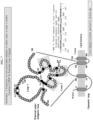
- a FC-P is associated with FC and is demonstrated by loss of epitope recognition at loop 1 and loop 2 within the external loop region, which includes the "a" determinant of HBsAg when using mAbs 5, 6, 7, and 8 (see FIGS. 1 and 2 ).
- Anti-HBs responses following a cure outcome "induce” an FC-P against reference HBsAg samples.
- vaccination using a BNP platform comprising FC-P associated epitopes (loop 1 + loop 2) generates an anti-HBs response associated with an FC-P enhancing the chance for cure.
- Measurement of the epitope profile of the envelope protein (HBsAg) of the HBV circulating in a patient's blood is a direct measure of the virus; it comprises the detection of a foreign antigen found in the patient's blood.
- the logic or argument developed in the CP is that an infected person will mount an immune response against the virus and the effects of that immune response selection pressure on the virus can be measured. The effect can be demonstrated as HBsAg epitope changes on the envelope of the virus in that person.
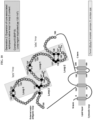
- the CP is measured across a multiplex reporting panel ( FIG. 2 ).
- the FC-P is reported against reactivity to a 4plex panel applied to a natural history cohort run at St.
- the measure of an antibody made by the patient is a direct measure of the host's response to the virus; it is also found circulating in the patient's blood.
- the logic or argument developed in the FC-P is that a person who has cured their CHB has successfully mounted an antibody response, whose effect can be measured.
- FC-P applies to the Natural History cohort of phase 4/5, HBeAg negative, genotype unrestricted, CHB patients, which is based on a 4plex reporting panel.
- HBV encodes three HBsAg proteins that form the viral envelope; small (S), middle (M) and large (L) ( Carman WF, et al. J Hepatol. 1999; 31(2):195-201 ; Seeger C, et al. Hepadnaviruses. 2013 ). All share a common 226-residue HBsAg-S domain ( Seeger C, et al. Hepadnaviruses. In "Fields Virology", 2013, 6th edition. pp. 2180-2221 ), whilstN-terminal extensions of M and L encode the PreS2 and PreS1 domains respectively.
- the HBsAg envelope proteins are key viral antigens; during infection, S, M, and L are expressed and co-packaged through the ER membrane of the host cell, for the formation of the envelope of infectious HBV particles.
- S proteins are the sole antigenic components of the hepatitis B vaccine able to induce protective antibodies mainly directed to the major antigenic 'a' determinant of the external loop region (residues 99-169).
- S proteins readily self-assemble into lipid-associated VLPs, and form the basis of the current recombinant vaccines, which are made in yeast and are not glycosylated.
- the S protein has not been crystallized but is considered a conformationally dynamic protein containing numerous cysteine and proline residues, predicted to form discrete loop domains (loop 1:aa 107-135; loop 2:aa 139-149) within the immunodominant 'a' determinant ( Stirk HJ, et al. Intervirology. 1992, 33(3):148-158 ).
- the cDNA sequence encoding the S protein is set forth in SEQ ID NO: 22.
- the cDNA sequence encoding the S protein with an AgeI restriction site and FLAG tag is set forth in SEQ ID NO: 23.
- Alterations (variants and antibody occupancy) within the 'a' determinant can modify HBsAg topology and directly influence the HBV neutralization phenotype ( Carman WF, et al. J Hepatol. 1999; 31(2):195-201 ).
- the cDNA sequence encoding the HBsAg-S protein having the amino acid sequence of SEQ ID NO: 50 is set forth in SEQ ID NO: 22.
- the cDNA sequence encoding the S protein having the amino acid sequence of SEQ ID NO: 51 is set forth in SEQ ID NO: 23.
- the HBsAg-S cDNA and amino acid sequences are provided below in Table A. Table A.
- HBsAg-S cDNA and Amino Acid Sequences cDNA encoding the small version of the hepatitis B surface antigen (SEQ ID NO: 22) Start ATG and stop codon TAA in bold
- the sequence encoding the external loop region (amino acids 100-160) is underlined cDNA encoding the small version of the hepatitis B surface antigen, with the introduced AgeI restriction site, and a cDNA sequence encoding the tag "FLAG" (SEQ ID NO: 23) Start ATG and stop codon TAA in bold FLAG-specific DNA sequence (highlighted in grey)
- the sequence encoding the external loop region (amino acids 100-160) is underlined Hepatitis B surface antigen S (HBsAg-S) protein (SEQ ID NO: 50)
- External loop region between 100 and 160 amino acid position is underlined Hepatitis B surface antigen S (HBsAg-S) protein and
- HBsAg VLPs are highly compact due to the large number of intra- and intermolecular disulphide bonds within and between the individual subunits ( Seeger C, et al. Hepadnaviruses.. In “Fields Virology", 2013, 6th edition. pp. 2180-2221 ; Mangold CM, et al. Arch Virol. 1997, 142(11):2257-2267 ), and clinical trials have established that they can be successfully modified to display inserted foreign antigenic and medically-relevant sequences as bio-nanoparticle (BNP) delivery platforms ( Beaumont E, et al. Vaccine. 2015, 33(8):973-976 ; Buonaguro L, et al. Expert Rev Vaccines.
- BNP bio-nanoparticle
- the clearance epitopes on HBsAg are those that when occupied by antibodies in a subject, the likely result is a functional cure.
- the epitopes are located on each of Loop 1 and Loop 2 of HBsAg-S.
- monoclonal antibodies mAbs
- mAb5 and 6 targets the Loop 1 epitopes.
- Two Loop 1 epitopes are screened defined by the consensus amino acid sequence:
- Another set of mAbs targets an epitope on Loop 2 defined by the consensus amino acid sequence: CCCTKPX 12 DGNCX 13 (SEQ ID NO: 26) wherein:
- the epitopes occupied are CKTCTTPAQGNSMFPSC (SEQ ID NO: 27); and/or PCKTCTTP (SEQ ID NO: 28); and CCCTKPTDGNCT (SEQ ID NO: 29).
- the epitopes occupied are CKTCTIPAQGTSMFPSC (SEQ ID NO: 30); and/or PCKTCTTP (SEQ ID NO: 28); and CCTKPSDGNCT (SEQ ID NO: 31).
- the epitopes occupied are CRTCTTPAQGTSMFPSC (SEQ ID NO: 32); and/or PCKTCTTP (SEQ ID NO: 28); and CCTKPSDGNCT (SEQ ID NO: 31).
- the disclosure of the present technology relates to the development of 8 CP-BNPs (SEQ ID NOs: 1-8) encompassing the pan-genotypic/serotypic loop 1 and loop 2 HBsAg target epitopes, alongside a control wild-type (WT) BNP.
- the BNP backbone consists of HBsAg-S envelope protein non-infectious subviral particles (virus-like particles, or VLPs, that do not contain all the components of the complete virus).
- the HBV genotype is genotype A, A1, A2, A3, A4, A5, A6, B, B1, B2, B3, B4, B5, B6, B7, B8, B9, C, C1, C2, C4, D, D2, D3, D5, E, F, G, H, or I.
- the HBV genotype is genotype D.
- the serotype is ayw or adw. In some embodiments, the serotype is ayw.
- the modification of VLPs as bio-nanoparticles (BNPs) to deliver target insert epitopes represents an active approach, which stimulates the immune system to induce a response able to treat or cure (clear) a persistent hepatitis B virus infection.
- Antibodies will be generated which are able to induce a cure of an existing and persistent hepatitis B infection.
- the CP epitope target (insert) sequences are listed in Table 1 below.
- BNPs are produced and purified (endo-free), and assessed for immunogenicity individually and in formulations that consider combinations of loop 1 and loop 2 target epitopes. The formulations analysed are listed in Table 2 below. Table 1.
- CP-BNP Formulations CP-BNP formulation Loop1 epitope retained Loop2 epitope retained Antigenic Anti-HBs CP-associated (Induced CP) 1 Y Y Y N 2 Y Y Y N 3 Y Y Y Y 4 Y Y Y N 1+3 Y Y Y Y 1+3+4 Y Y Y Y 3+4 Y Y Y Y 5 Y Y Y 6 Y Y Y Y 7 Y Y Y NT 8 Y Y Y Y 5+7 NT NT Y Y 1+4+5 Y Y Y Y WT Y Y Y N
- CP-BNP Construct Amino Acid Sequences Gene name: Construct 1 (BNP 1) (SEQ ID NO: 1) Parent (vector sequence): HBsAg small, genotype D, serotype ayw Insert via Age I restriction site Insertion: Miniloop 1 120-PCKTCTTP-127 (trimer): genotype A-specific insert, adw, (in bold) linker: GSGS (underlined and italics) FLAG-tag (underlined) Gene name: Construct 2 (BNP 2) (SEQ ID NO: 2) Parent (vector sequence): HBsAg small, genotype D, serotype ayw Insert via Age I restriction site Insertion: Miniloop 1 PCRTCTTP (trimer): genotypes B/C-specific insert, ayw (in bold) linker: GSGS (underlined and italics) FLAG-tag (underlined) Gene name: Construct 3 (BNP 3) (SEQ ID NO: 3) Parent (ve
- Loop 1 region (original ayw sequence in bold, and two additional adw loop 1 sequences, in bold and highlighted).
- Miniloop 1 120-PCKTCTTP-127 (dimer, serotype adw) followed by original 120-PCRTCMTT-127 (serotype ayw)
- Loop 2 region (enlarged font): Loop 2 original sequence 139-CTKPSDGNC-147 (ayw) (in bold) followed by adw dimer 139-CTKPTDGNC-147 (in bold and highlighted)
- Linker GSGS (underlined and italic) FLAG-tag (underlined)
- Gene sequence Construct 7 (BNP 7) (SEQ ID NO: 7)
- 121-CKTCTTPAQGNSMFPS-136 (in bold and highlighted) Loop 1 ayw, monomer.
- 121-PCRTCMTTAQGTSMYPS-136 (in bold) Start ATG and stop codon: enlarged font
- Linker GSGS (underlined and italics) FLAG-tag (underlined)
- Gene sequence Construct 8 (BNP 8) (Complete loop regions 120-147 ayw and adw present) (SEQ ID NO: 8)
- Linker GSGS (underlined and italic) FLAG-tag (underlined)
- Exemplary nucleotide sequences encoding the 8 CP-BNP amino acid constructs are provided in Table 4. Table 4.
- CP-BNP Construct Exemplary Nucleotide Sequences Gene name: Construct 1 (BNP 1) (SEQ ID NO: 9) Parent (vector sequence): HBsAg small, genotype D, serotype ayw Insert via Age I restriction site (ACCGGT) Insertion: Miniloop 1 120-PCKTCTTP-127 (trimer): genotype A-specific insert, adw (in bold) Start ATG and stop codon: enlarged font linker: GSGS (underlined and italic) FLAG-tag (underlined) Gene name: Construct 2 (BNP 2) (SEQ ID NO: 10) Parent (vector sequence): HBsAg small, genotype D, serotype ayw Insert via Age I restriction site (ACCGGT) Insertion: Miniloop 1 PCRTCTTP (trimer): genotypes B/C-specific insert
- Loop 1 region (original ayw sequence in bold, and two additional adw loop 1 sequences, in bold and highlighted).
- Miniloop 1 120-PCKTCTTP-127 (dimer, serotype adw) followed by original 120-PCRTCMTT-127 (serotype ayw)
- Loop 2 region (enlarged font): Loop 2 original sequence 139-CTKP S DGNC-147 (ayw) (in bold) followed by adw dimer 139-CTKP T DGNC-147 (in bold and highlighted)
- Start ATG and stop codon enlarged font
- Linker GSGS (underlined and italic) FLAG-tag (underlined)
- 121-CKTCTTPAQGNSMFPS-136 (in bold and highlighted) Loop 1 original ayw, monomer.
- 121- P CRTCMTTAQGTSMYPS-136 (in bold) Start ATG and stop codon: enlarged font
- Linker GSGS (underlined and italic) FLAG-tag (underlined) TT GTCTTTGGGTATACATTAAcTCGAG
- Gene sequence Construct 8 (BNP 8) (Complete loop regions 120-147 ayw and adw present) (SEQ ID NO: 16)
- Linker GSGS (underlined and italic) FLAG-tag (underlined)
- Cyclised Peptides 1 1 TCTTPAQGNSMFPSC (SEQ ID NO: 17) 2 1 TCTIPAQGTSMFPSC (SEQ ID NO: 18) 3 1 TCTTPAQGTSMFPSC (SEQ ID NO: 19) Cyclised Peptides (loop 2) 4 2 CTKPTDGNCT (SEQ ID NO: 20) 5 2 CTKPSDGNCT (SEQ ID NO: 21)
- the lead cyclic peptide vaccine is an equimolar formulation of cyclic peptides CTKPTDGNCT (SEQ ID NO: 20) and CTKPSDGNCT (SEQ ID NO: 21), conjugated to keyhole limpet hemocyanin (KLH).
- Administration of this vaccine to mice was antigenic, raising an anti-HBs Ab response consistent with a CP, indicative of "clearing" anti-HBs Ab.
- Analysis involved ELISA (to immunizing peptides, control peptides, VLP antigen), Induced CP analysis, Immunoprecipitation, and Western blot.
- the present disclosure relates to mRNA constructs for use in a method to elicit an immune response in existing and/or persistent hepatitis B, including chronic hepatitis B (CHB).
- CHB chronic hepatitis B
- the mRNA encodes for an antigenic epitope repeat region from antigenic epitopes expressed in the loop 1 and loop 2 regions of the HBsAg-S domain.
- the mRNA encodes for BNP 1, 2, 3, 4, 5, 6, 7, or 8.
- the mRNA encodes for a CP epitope cyclic peptide, such as those provided in Table 5.
- An immunogenic composition e.g ., vaccine as disclosed herein may be to be administered by any of the routes conventionally used or recommended for vaccines (e.g ., parenteral route), and may be in various forms ( e.g ., injectable liquid).
- Vaccines may be to be administered by means of a syringe or by means of a needle-free injector for intramuscular, subcutaneous, or intradermal injection.
- an "effective amount" of an immunogenic composition is one that is sufficient to achieve a desired biological effect. It is understood that, in some embodiments, the effective dosage will be dependent upon the age, sex, health, and weight of the recipient, kind of concurrent treatment, if any, frequency of treatment, and the nature of the effect wanted.
- the ranges of effective doses provided below are not intended to be limiting and represent exemplary dose ranges. Thus, in some embodiments, the dosage will be tailored to the individual subject, as is understood and determinable by one of skill in the art.
- the dosage of a CP-BNP, CP epitope cyclic peptide, or mRNA vaccine for a mammalian ( e.g ., human) adult can be from 0.01 ⁇ g to 10,000 ⁇ g, or any range or value therein. In some embodiments, the dosage can be from 0.10 ⁇ g to 10,000 ⁇ g, or any range or value therein. In some embodiments, the dosage can be from 1 ⁇ g to 10,000 ⁇ g, or any range or value therein. In some embodiments, the dosage can be from 2 ⁇ g to 10, 000 ⁇ g, or any range or value therein. In some embodiments, the dosage can be from 3 ⁇ g to 10, 000 ⁇ g, or any range or value therein.
- the dosage can be from 4 ⁇ g to 10,000 ⁇ g, or any range or value therein. In some embodiments, the dosage can be from 5 ⁇ g to 10,000 ⁇ g, or any range or value therein. In some embodiments, the dosage can be from 10 ⁇ g to 10,000 ⁇ g, or any range or value therein. In some embodiments, the dosage can be from 15 ⁇ g to 10,000 ⁇ g, or any range or value therein. In some embodiments, the dosage can be from 20 ⁇ g to 10,000 ⁇ g, or any range or value therein. In some embodiments, the dosage can be from 25 ⁇ g to 10,000 ⁇ g, or any range or value therein.
- the dosage can be from 50 ⁇ g to 10,000 ⁇ g, or any range or value therein. In some embodiments, the dosage can be from 100 ⁇ g to 10,000 ⁇ g, or any range or value therein. In some embodiments, the dosage can be from 500 ⁇ g to 10,000 ⁇ g, or any range or value therein. In some embodiments, the dosage can be from 1,000 ⁇ g to 10,000 ⁇ g, or any range or value therein. In some embodiments, the dosage can be from 5,000 ⁇ g to 10,000 ⁇ g, or any range or value therein.
- compositions or medicaments comprising the CP-BNPs, CP epitope cyclic peptides, and/or mRNA constructs of the present technology are to be administered to a subject suspected of, or already suffering from, a hepatitis B infection in an amount sufficient to cure, or at least partially arrest, the symptoms of the disease.
- the HBsAg immunoassay described herein can monitor treatment to determine if an individual will achieve a functional cure, determine if an individual has achieved a functional cure, and determine if an individual has achieved a cure through natural defence mechanisms.
- the protocol may be varied without departing from the essence of the present technology.
- the critical endpoint is the determination of the fingerprint of epitopes on HBsAg which have been occupied by an individual's antibody response. Where the fingerprint of epitopes at Loop 1 and Loop 2 has been occupied, then a functional cure can be expected. Where the antibodies which have the capacity to bind to this fingerprint are present or are indicative upon exposure to HBV but HBsAg is not detectable, then a functional cure has been achieved. At that point, treatment can cease.
- a multiplex (“Bioplex") bead-based flow cytometric platform is used to develop an HBsAg epitope assay and establish and map the HBsAg profile of epitopes which constitute the clearance profile of HBsAg epitopes ( see FIG. 2 ).
- the "clearance profile of epitopes” is a profile of epitopes targeted by an individual's antibodies. When all epitopes are bound by the antibodies generated by the individual, clearance of HBsAg can be expected.
- the assay is derived from an assay by Lim et al. (2014) Hepatology 60 (1) supplement:1623, 980A .
- the HBsAg multiplex immunoassay comprises panels of fluorescently identified beads each conjugated to a different anti-HBs antibody which binds to HBsAg, followed by a polyclonal phycoerythrin (PE)-conjugated detection antibody.
- the HBsAg multiplex panels comprise monoclonal antibodies (mAbs) directed against HBsAg external loop region including the 'a' determinant, and C-terminal domain epitopes spanning residues 99-226 of HBsAg.
- the HBsAg epitopes are categorized into the following domains (with the monoclonal antibodies that bind to those domains): N-terminal (mAb 1); Loop 1 (mAbs 5,6,10); Loop 2 (mAbs 7,8,11,12,16,17,19); Loop 1/2 combinational (mAbs 13,14,15); C-terminal (mAbs 2,3,4); and conformational (mAbs 9,18).
- the intensity of PE associated with each bead provides a sensitive measure of antibody recognition of the specific HBsAg epitope within the sample.
- the epitope profile on HBsAg in comparison to the matched HBV strain backbone has been expressed as fold change in antibody binding or epitope recognition following bioinformatics data analysis.
- the 95% CI for the normal range of variation of epitope recognition from the reference backbone has been established as +/- 0.5 fold change.
- a gain-of-epitope recognition corresponds to positive fold change (> 0.5 fold), and negative fold changes (> -0.5 fold) correspond to a loss or reduction of epitope binding.
- a depiction of the assay is shown in FIG. 1 .
- the anti-HBs mAbs utilized in the HBsAg multiplex assay were selected and sourced to provide broad coverage of epitopes with reactivity against the HBsAg antigenic and C-terminal domains (residues 99-226), covering both continuous and discontinuous epitopes, and epitope regions subject to both high variability and also conserved recognition.
- the high level of epitope coverage provided by the mAbs enabled analysis of the HBsAg profile according to the mapped epitope availability, and reported according to epitope region: N-terminal (mAb 1); Loop 1 (mAbs 5,6,10); Loop 2 (mAbs 7,8,11,12,16,17,19); Loop 1/2 combinational (mAbs 13,14,15); C-terminal (mAbs 2,3,4); and conformational (mAbs 9,18).
- HBV strains Interrogation of HBV strains (genotypes A-G) identified anti-HBs mAbs which displayed conserved epitope recognition patterns (i.e ., indicative of conserved HBsAg fingerprints across genotypes and serotypes), which were mAbs 3 and 4 (C-terminal), mAb 15 (Loop 1/2 combinational), and mAb 18 (conformational).
- the remaining anti-HBs mAbs were sensitive to variations in the HBsAg profile which are identified by altered patterns of epitope recognition between HBV strains, in comparison to the genotype A2, serotype adw2 vaccine strain.
- the HBsAg profile assay was developed and optimized using HBV A2 adw2 strain HBsAg, which forms common basis of the majority of generic HBV vaccines and thus represents a relevant baseline or backbone for comparison of HBsAg epitope recognition.
- the HBsAg source was primarily HBsAg patient sera, confirmed by HBV sequencing as wild-type A2 adw2 (compared to consensus sequences), with confirmation using recombinant wild-type A2 adw2 HBsAg from cell culture supernatant.
- HBsAg concentration of HBsAg was determined to be approximately 16 IU/well (the standardized level), with detection of HBsAg as low as 1IU/well and up to 100 IU/well.
- a sample dilution series for HBsAg was incorporated in the assay of 8, 16, and 32 IU/well, to account for any slight inaccuracy in the diagnostic determination of HBsAg concentration.
- the optimal concentration of anti-HBs mAbs labeled to beads was optimized as the mAb concentration resulting in fluorescence reactivity with the dynamic range of the instrument (15000-18000 RFU), and this was specifically/empirically determined for each mAb.
- the multiplexing of the assay was built by the sequential addition of individual anti-HBs mAbs conjugated to beads, which allowed the identification of epitope competition due to partial shared epitopes by mAbs.
- three sets of multiplex anti-HBs bead/mAbs were established, as a 4plex, 5plex, and 10plex.
- HBsAg samples were analyzed in parallel (on the same plate) with these plexes and resulting data combined to achieve a multiplex readout of the HBsAg profile ( FIG. 2 top panel).
- the assay was developed against HBsAg A2 adw2, which corresponds to the common vaccine strain of HBV, and thus reflects the HBsAg profile of epitope recognition for the multiplexed anti-HBs mAbs in the assay.
- the assay was validated for both HBsAg A2 adw2 from wild-type ex vivo sera HBsAg and recombinant HBsAg from in vitro cell culture to confirm the HBsAg profile for A2 adw2, which formed a vaccine strain background for the comparison of other HBV strains (genotypes and serotypes), which may be vaccine mismatched, and for reported HBsAg variants with potential for vaccine escape (e.g.
- the assay was further validated against HBsAg of different genotypes (A-G) and serotypes, sourced from both patient sera and recombinant supernatants, which established the HBsAg profile of each strain in comparison to the vaccine strain (A2 adw2) background.
- a reference panel of sera representative of each HBV strain was established for ongoing inclusion in the assay as control data points in study cohorts.
- FIG. 1 shows the application of the assay described in Example 1 to characterizing a clearance profile (CP)-associated with antibodies which result in a functional cure.
- the assay determines HBsAg epitope occupancy using a mAb panel wherein mAbs 5 and 6 target the consensus sequence in Loop 1 of: CX 1 TCX 2 X 3 X 4 X 5 QGX 6 SMX 7 PC (SEQ ID NO: 24) wherein:
- mAb 10 binds to another epitope Loop 1 within amino acids 120 to 127 of the consensus sequence: PCX 8 TCX 9 X 10 X 11 (SEQ ID NO: 25) wherein:
- mAbs 7, 8, 11, 12, 16 and 17 bind to an epitope within amino acids 137 to 147 of consensus sequence SEQ ID NO: 26 in Loop 2 wherein the consensus sequence is: CCCTKPX 12 DGNCX 13 (SEQ ID NO: 26) wherein:
- FIG. 2 describes an assay which detects HBsAg with occupied epitopes (top panel) and an assay which detects HBsAg complexed to anti-HBs antibodies (lower panel).
- the assays employ a multiplex immunoassay which detects occupancy of epitopes at Loop 1 (consensus sequence SEQ ID NOs: 24 and 25) and at Loop 2 (consensus sequence SEQ ID NO: 26).
- FIG. 3 and FIG. 4 are diagrammatic representations showing HBsAg clearance profile (CP) in CHB cure.
- CP HBsAg clearance profile
- FIG. 3 functional cure patients develop an antibody response that clears infection.
- FIG. 4 non-cure/non-responder patients do not carry the occupied HBsAg epitopes.
- HBsAgCP means the clearance profile of HBsAg epitopes.
- a HBsAg-non-clearance profile is referred to as HBsAg-NCP.
- Recognition by each assay mAb for HBsAg epitopes is recorded as a fold change of recognition; positive fold change relating to enhanced or improved recognition of the HBsAg epitope, unchanged or normal range epitope recognition (within +/- 0.5 fold), and reduced HBsAg epitope recognition indicated by negative fold change.
- An HBsAg CP is indicated by reduced HBsAg epitope recognition ( e.g ., due epitope occupancy) at both loop 1 and loop 2 HBsAg epitopes.
- HBsAg profile assay The multiplex anti-HBs panel assay ( FIG. 2 , top panel) on the bioplex was originally developed with the concept of diagnostic monitoring of CHB patients for HBsAg changes.
- the assay may be used in patients on nucleotide analog (NA) therapy where HBV DNA is undetectable but HBsAg remains positive, and in looking for the development of treatment resistance mutations, or vaccine escape variants.
- NA nucleotide analog
- the assay is useful for trying to understand the HBsAg profile and changes occurring during CHB disease phases, i.e ., predictive biomarkers for CHB disease.
- a cohort of patients whom achieved CHB functional cure are relevant to the CP biomarker identification and are further detailed below.
- results from the HBsAg profile assay led to the development of the CP biomarker (i.e ., recognition of HBsAg by subsets of anti-HBs Abs in the assay).
- the results from these assays provided an understanding that: (a) functional cure is related to an anti-HBs response; (b) the "clearing" anti-HBs response is specifically targeting epitopes of/within loop 1 and loop 2 specific anti-HBs Abs in the assay; (c) patients have many different anti-HBs Abs, but only those targeting these both the loop 1 and loop 2 epitopes (CP epitopes) are associated with achieving functional cure; and (d) enhanced and targeted display of these CP associated epitopes drives production of CP-associated "clearing" anti-HBs Abs.
- Natural History / Functional Cure Cohort Anti-HBs analysis performed. This study involved six patients with CHB identified in the St Vincent's study (Natural History Cohort) whom fulfilled the case definition of functional cure (FC). All six patients were off antiviral therapy and had become HBsAg undetectable and had successfully seroconverted with anti-HBs. All six Natural History Cohort patients were anti-HBs positive in their serum samples (following seroconversion), which were then analysed for the capability of that anti-HBs status to "induce" a FC-P (functional cure clearance profile; based on functional cure patients anti-HBs analysis and 4plex assay panel) when incubated with reference HBsAg ( see FIG. 1 ).
- FC-P functional cure clearance profile
- the FC-P was defined as a loss of epitope binding at both loop 1 and loop 2 in the external loop region including the "a" determinant of HBsAg, using four mAbs: mAb 5, mAb 6, mAb 7, and mAb 8: (mAb 5 and mAb 6 recognize epitopes in loop 1; mAb 7 and mAb 8 recognize epitopes in loop 2) ( see FIG. 2 , top panel).
- mAb 5 and mAb 6 recognize epitopes in loop 1; mAb 7 and mAb 8 recognize epitopes in loop 2 (see FIG. 2 , top panel).
- One of the six natural history patients had serum samples previously available which were still HBsAg-positive.
- 4plex anti-HBs Abs on the Bioplex platform the HBsAg-positive sample was epitope mapped and fulfilled the case definition of the FC-profile (FC-P).
- BNP/FC-P vaccines were prepared as either a single epitope delivery format or as multiple epitope mixtures which were administered as immunizations to mice.
- the resulting anti-HBs responses were analyzed for their ability to induce a FC-P when incubated with reference HBsAg, and FC-P were identified for BNP immunization mixtures covering both loop 1 and loop 2 epitopes.
- BNP/FC-P immunization formulations comprised constructs detailed in Table 2 .
- These vaccines tested to date comprised both loop 1 and loop 2 epitopes and resulted in the generation of FC-P associated antibody.
- HEK293-T cells grown in Dulbecco's modified Eagle's medium, DMEM (Gibco-BRL, Grand Island, NY) supplemented with GlutaMax-1 (Gibco-BRL), 10% fetal calf serum (FCS), penicillin and streptomycin (Gibco-BRL) were transfected with expression constructs using polyethylenimine (PEI) (Polysciences, Warrington, USA) or FectoPRO (PolyPlus Transfection USA).
- PEI polyethylenimine
- FectoPRO PolyPlus Transfection USA
- VLPsIBNPs which include an N-terminal Flag tag
- VLPsIBNPs which include an N-terminal Flag tag
- CSIRO anti-Flag affinity resin columns
- Fusion proteins were either competitively eluted from the anti-Flag affinity column with recombinant Flag peptide (0.4mgml; CSIRO, Australia) in PBS.
- Affinity purified VLP/BNP preparations in PBS were then peak purified by size exclusion over Superdex 200 or Superose 6 gel filtration columns (GE Healthcare).
- VLP/BNP purified preparations were tested for Endotoxin (Endosafe Test, Charles River, USA) and spin concentrated to ⁇ 1 ml using Amicon 50kDa cut-off centrifugal concentrator devises.
- the VLPsIBNPs were purified from the collected tissue culture supernatant by spin clarification using a benchtop centrifuge, then the supernatant was transferred into an ultracentrifuge tube, underlaid with a 20% sucrose cushion, and the particles pelleted by ultracentrifugation.
- VLP/BNP preparation yield purity was assessed by: i) A260/280 spectra profile using a calculated VLP extinction coefficient of 37.26; ii) quantitative HBsAg serology (Elecsys HBsAG II kit; Roche); iii) SDS-PAGE followed by Coomassie staining and Western blotting (WB) with both anti-HBs and anti-Flag detection antibodies; iv) HBsAg epitope profile assay analysis on the Bioplex platform (in-house assay); and, v) standard ELISA techniques with detection by anti-HBs antibodies (in-house assay).
- CP-BNP were analysed for HBsAg epitope profile (Bioplex platform) as individual BNP preparations and also as BNP formulations to assess loop 1 and loop 2 epitope presentation retention (i.e ., loop 1 and loop 2 epitopes are displayed or presented) as appropriate to antigenicity on delivery. As shown in FIG. 11 , CP-BNP formulations retain the epitope inserts of the present technology.
- Cyclised CP Epitope Peptides were designed to mimic the identified loop 1 and loop 2 target "clearing" epitopes within HBsAg, similar to the CP epitope inserts delivered in the CP-BNPs. Sequence variations within these epitopes exist dependant on naturally occurring HBV genotype and HBsAg serotype variations, and multiple cyclic peptides were designed based on this consideration, generating pangenotypic/pan-serotypic equimolar formulations of loop 1 or loop 2 CP epitope cyclised peptides for delivery as immunizing antigens in immunogenicity studies for the development of CP-associated "clearing" anti-HBs antibodies.
- the designed peptides were ordered for production by Mimotopes (Australia) with N-terminal free amine, C-terminal free acid, cyclised by disulphide bonds at native sequence cysteine residues. Production was to a purity of >85% by HPLC and determined by mass spectrometry profile analysis. Cyclised peptide was coupled via a glutaraldehyde linker to either KLH (keyhole limpet hemocyanin) for immunization or to BSA (bovine serum albumin) for screening assays. Exemplary cyclic peptides of the present technology are listed in Table 5 above.
- Post-fusion supernatant was screened initially by standard ELISA protocols for antibody responses specific to recombinant HBsAg (VLP) and to loop 1 and loop 2 cyclised peptides (individual peptides and pooled peptide formulations formulation). Clone supernatants were further analysed for detection of HBsAg following SDS-PAGE and Western Blot, to determine affinity for linear epitopes. The clone supernatants were analysed for the generation of anti-HBs antibody induced CP profile assay analysis on the Bioplex platform (in-house assay), with comparison to pre-incubation pangenotypic/serotypic HBsAg.
- This example demonstrates the immunogenicity of the CP-BNPs and CP epitope cyclic peptides of the present technology.
- the immunogenicity of CP-BNPs and CP-BNP formulations displaying target loop 1, loop 2, or loop 1 & 2 "clearance" epitopes were assessed by immunization of BALB/c strain mice.
- CP-BNPs 1-4 and formulations thereof were assessed in a first round BNP immunogenicity study. These will be reassessed alongside assessment of CP-BNPs 5-8 and formulations thereof in a second immunogenicity study.
- Immunogenicity study #1 incorporated CP-BNPs 1-4 and formulations as indicated in Table 2 (in comparison to WT-BNP and PBS placebo controls), whilst immunogenicity study IMM001 repeated assessment performed in the original study and additionally assessed performance of CP-BNPs 5-8 and formulations 1+3+4 and 5+7.
- Six week old BALB/c mice (up to 5 per arm) were immunised with 3 x 2ug doses of purified CP-BNP antigen at fortnightly intervals. Bleeds were taken prior to each antigen administration and then following immunisation at weekly intervals for 5 weeks. Mice were sacrificed at the final time point and terminal bleed collected.
- Sera harvested from each bleed time point was analysed to investigate the Anti-HBs antibody response to CP-BNP immunisation by: i) anti-HBs antibody titres (IU/L) using diagnostic serology tests (Elecsys Anti-HBs kit, Roche); ii) standard ELISA methodology for detection of WT-VLP or HBsAg loop1 or loop2 peptides; and, iii) Anti-HBs antibody induced CP profile assay analysis on the Bioplex platform (in-house assay).
- FIG. 13A shows the anti-HBs antibody immunogenicity response for CP-BNP preparations and formulations.
- FIG. 13B and FIG. 13C show the loop 1 and loop 2, respectively, anti-HBs antibody immunogenicity responses for the CP epitope cyclic peptides.
- FIG. 13D reports the anti-Hbs reactivity for WT-BNP, loop1 peptide and loop2 peptide antigens.
- Example 14 CP-BNPs Induce a CHB Clearance Profile
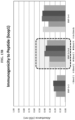
- the results shown in FIG. 14 demonstrate that the CP-BNPs of the present technology induce a clearance profile ( e.g ., loss of epitope recognition at both loop 1 and loop 2 epitopes). Accordingly, these results demonstrate that compositions comprising the CP-BNPs of the present technology are useful in methods of treating chronic hepatitis B.
- Example 15 mRNA Encoding CP-BNPs and CP Epitope Cyclic Peptides Induce a CHB Clearance Profile
- mice Six week old BALB/c mice (5 per arm) are immunized with 3 x 2ug doses of purified mRNA encoding CP-BNPs or CP epitope cyclic peptides at fortnightly intervals. Bleeds are taken prior to each antigen administration and then following immunization at weekly intervals for 5 weeks. Mice are sacrificed at the final time point and terminal bleed collected.
- Sera harvested from each bleed time point is analysed to investigate the anti-HBs antibody response to CP-BNP immunization by: i) anti-HBs antibody titres (IU/L) using diagnostic serology tests (Elecsys Anti-HBs kit, Roche); ii) standard ELISA methodology for detection of WT-VLP or HBsAg loop 1 or loop 2 peptides; and, iii) anti-HBs antibody induced CP profile assay analysis on the Bioplex platform (in-house assay).
- compositions comprising the mRNA constructs of the present technology are useful in methods of treating chronic hepatitis B.
- Example 16 CP-BNPs Reduce HBV DNA and HBsAg Levels in a Chronic Hepatitis B (CHB) Murine Model
- Plasmids containing HBsAgS-specific cDNA inserts were cloned into pCAGGS (with an N-terminal FLAG tag) and used to transfect HEK293T cells using polyethylenimine (PEI) as described previously (Longo, 2013).
- Functional HBsAgS proteins including chimeric HBsAgS proteins with inserted additional sequences assemble into secretion competent virus-like particles, bionanoparticles (BNPs).
- cell culture medium was harvested and centrifuged to remove cellular debris.
- the cell culture medium was centrifuged at high speed (ultra-centrifugation) over a 20% sucrose cushion to pellet and to partially purify the BNPs, then re-suspended in sodium chloride (NaCl)-Tris-EDTA (STE) buffer. Further purification of the BNPs was performed by ultracentrifugation using a gradient of sucrose (20 - 50%) in STE. Fractions containing VLPs were collected, pooled (as needed), buffer exchanged and concentrated in PBS (Hyakumura, 2015; Cheong, 2009; Patzer, 1986) and stored at -80°C until use. HBsAg VLPs were confirmed by ELISA or western blot as previously described.
- mice Following establishment of chronic hepatitis B (approximately week 10), groups of 6 - 8 CBA/caJ mice were treated with placebo (adjuvant control), control particles (Engerix B (marketed HBV vaccine manufactured in yeast cells), wild type BNP (WT-BNP])) or test vaccine candidates (CP-BNP 1 - 7, in various combinations at equimolar ratios with final concentrations as listed in FIGS. 15A-15C and 16A-16C ).
- the treatment schedule included a mixture of different chimeric BNPs adjuvanted with aluminum hydroxide. Three doses of vaccine were given subcutaneously with 2 weeks between doses.
- Submandibular bleeds were performed every 2 weeks out to 26 weeks post-HDI, with testing to determine serum HBV DNA load (Sitnik, 2010) and HBsAg levels (per manufacturer's recommended protocol; qHBsAg Elecsys).
- Murine CHB model results - HBV DNA levels.
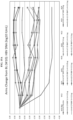
- the HBV DNA level results described below are shown in FIGS. 15A-15C .
- Placebo arm 1 did not significantly change HBV DNA levels throughout the duration of the study.
- WT-BNP was dosed at 0.05 (arm 2), 0.1 (arm 3) or 0.5 (arm 4 and 12) ⁇ g.
- the WT-BNP at 0.05 ⁇ g (arm 2) dose had no effect on HBV DNA levels, while the 0.1 (arm 3) or 0.5 (arm 4 and 12) ⁇ g doses displayed a dose dependent decrease in HBV DNA levels.
- Mean HBV DNA data Mean Values Arms W2 W4 W6 W8 W10 (BL) W12 W14 W16 W18 W20 W22 W24 W26 Arm1 Placebo 6.21 6.34 6.31 5.73 5.77 5.72 5.90 6.08 6.16 6.41 6.41 6.40 6.27 Arm2 WT BNP 0.05ug 6.01 6.18 6.11 5.66 5.89 5.61 5.80 6.16 6.29 6.36 6.49 6.48 6.02 Arm3 WT BNP 0.1ug 5.81 5.78 5.96 5.64 5.40 4.36 4.46 4.47 4.47 3.96 3.88 3.54 4.05 Arm4 +12WT BNP 0.5ug 6.07 6.07 6.14 5.71 5.82 4.62 4.43 4.34 4.04 4.04 3.89 3.88 3.92 Arm5 CP-BNP 1+3+4 0.5ug 6.01 6.14 6.19 5.65 5.71 5.43 5.20 4.59 4.28 4.88 4.35 4.27 4.37 Arm6 CP-BNP 1+4+5 0.05ug 6.23 6.35 6.35 5.83 5.64 5.75 6.06 6.13
- Mean Changes from Baseline HBV DNA data Mean Changes from Baseline (W10) Arms W10 (BL) W12 W14 W16 W18 W20 W22 W24 W26 Arm1 Placebo 0.00 -0.05 0.13 0.31 0.39 0.64 0.64 0.63 0.50 Arm2 WT BNP 0.05ug 0.00 -0.28 -0.10 0.27 0.40 0.47 0.60 0.59 0.13 Arm3 WT BNP 0.1ug 0.00 -1.04 -0.94 -0.93 -0.93 -1.44 -1.52 -1.86 -1.34 Arm4+12 WT BNP 0.5ug 0.00 -1.20 -1.39 -1.48 -1.78 -1.78 -1.93 -1.95 -1.90 Arm5 CP-BNP 1+3+4 0.5ug 0.00 -0.28 -0.51 -1.13 -1.43 -0.83 -1.36 -1.45 -1.34 Arm6 CP-BNP 1+4+5 0.05ug
- Placebo (arm 1) did not significantly change HBsAg levels throughout the duration of the study.
- WT-BNP was dosed at 0.05 (arm 2), 0.1 (arm 3) or 0.5 (arm 4 and 12) ⁇ g.
- the WT-BNP 0.05 ⁇ g (arm 2) dose had no effect on HBsAg levels, while the 0.1 (arm 3) or 0.5 (arm 4 and 12) ug doses displayed a dose dependent decrease in HBsAg levels.
- CP-BNP 1+4+5 also displayed a dose dependence decrease in HBsAg, but the lower dose of 0.05 ⁇ g (arm 6) was similar to WT-BNP at the same dose or 0.1 ⁇ g (arm 7) had higher HBsAg relative to the same dose of WT-BNP.
- Other combinations of CP-BNPs were also tested in this model and found to be less efficacious than CP-BNP 1+4+5.
- FIGS. 16A-16C are also shown in tabular format as individual, means, and mean changes from baseline in Tables 10, 11, and 12, respectively.
- Table 10 Individual HBsAg data.
- W1 0 (BL ) W1 2 W14 W1 6 W18 W2 0 W2 2 W2 4 W2 6 Arm1 Placebo 3.04 2.96 2.18 2.50 2.53 2.57 2.56 2.35 2.60 3.35 3.17 3.09 3.18 3.13 3.18 3.08 3.03 3.14 3.23 3.26 2.95 2.95 3.09 3.12 3.11 3.17 3.20 3.19 3.09 2.99 3.06 3.06 3.04 2.96 3.02 3.12 2.72 2.94 2.78 2.92 2.99 2.87 2.95 2.93 3.08 3.45 3.53 3.57 3.55 3.45 3.43 3.26 3.26 3.39 Arm2 WT BNP 0.05ug 2.83 2.96 2.88 2.89 2.93 3.00 2.87 2.92 2.98 2.66 2.76 2.82 2.68 2.40 2.41 2.27 2.13 2.29 2.38 2.04 1.95 1.82 1.90 1.77 1.82 1.66 1.
- Mean HBsAg data Mean Values Arms W2 W4 W6 W8 W10 (BL) W12 W14 W16 W18 W20 W22 W24 W26 Arm1 Placebo 3.12 3.14 3.19 3.01 3.16 3.16 2.93 3.03 3.04 3.03 2.98 2.96 3.09 Arm2 WT BNP 0.05ug 2.90 2.82 2.88 2.90 2.92 2.94 2.87 2.88 2.84 2.81 2.75 2.60 2.45 Arm3 WT BNP 0.1ug 2.69 2.44 2.63 2.67 2.54 1.70 1.75 1.54 1.50 1.00 0.96 1.52 0.86 Arm4+12 WT BNP 0.5ug 2.85 2.81 2.87 2.89 2.91 2.03 1.63 1.40 1.21 1.09 1.00 0.96 1.08 Arm5 CP-BNP 1+3+4 0.5ug 3.03 2.87 2.92 2.84 2.66 2.72 2.24 1.68 1.44 1.41 1.20 1.27 1.18 Arm6 CP-BNP 1+4+5 0.05ug 3.06 3.10 3.09 3.12 3.17 3.12 3.11
- Mean Changes from Baseline HBsAg data Mean Changes from Baseline (W10) Arms W10 (BL) W12 W14 W16 W18 W20 W22 W24 W26 Arm1 Placebo 0.00 0.00 -0.24 -0.13 -0.12 -0.13 -0.18 -0.21 -0.08 Arm2 WT BNP 0.05ug 0.00 0.02 -0.04 -0.04 -0.08 -0.11 -0.17 -0.32 -0.47 Arm3 WT BNP 0.1ug 0.00 -0.84 -0.79 -1.00 -1.04 -1.54 -1.58 -1.02 -1.69 Arm4+12 WT BNP 0.5ug 0.00 -0.88 -1.28 -1.51 -1.70 -1.82 -1.91 -1.95 -1.83 Arm5 CP-BNP 1+3+4 0.5ug 0.00 0.05 -0.43 -0.98 -1.22 -1.25 -1.46 -1
- FIGS. 15A-15C and 16A-16C demonstrate that the CP-BNPs of the present technology are effective at reducing HBV DNA viral load and HBsAg levels in a model of CHB. Accordingly, these results demonstrate that compositions comprising the CP-BNPs of the present technology are useful in methods of treating chronic hepatitis B.
- Example 17 Production of Candidate Vaccines from mRNA and Protein Expression Following Transfection of BNP-Encoding Nucleic Acids into Mammalian Cells
- pBluescript II SK(+) plasmid containing WT or BNP4 coding sequence was linearized with EcoRV-HF restriction enzyme, purified and confirmed via standard molecular biology techniques.
- the linearized plasmid was used as a template for mRNA production using an in vitro transcription kit as per the manufacturer's recommendations (Life Technologies), then purified (Life Technologies, Thermo Fisher).
- the resulting transcripts were stored at -80°C until ready for use.
- Transfections were performed using Lipofectamine MessengerMAX reagent (ThermoFisher) into HEK293T or Huh7 cells for 5 days. Then, media was collected and processed using sucrose ultracentrifugation method described above. Alternatively, cell lysates were processed using NP-40 lysis buffer and cell debris pelleted. Samples were assessed by western blot as previously described.
- HBsAg BNP expression results following transfection of BNP-encoding nucleic acids (mRNA and DNA) into mammalian cell lines.
- HBsAg BNP expression from transfection of mRNA was successfully achieved in two different cell lines (HEK293T and Huh7) as measured by Western blot analysis using an anti-HBsAg antibody ( FIGS. 17A-17B ).
- the Western blot identified multiple bands, including expected size of the monomer (WT-BNP, 24 kD; CP-BNP 4, 29 kD) and glycosylated variants (WT-BNP, 27 kD; CP-BNP 4, 32 kD).
- HBsAg was detected after transfection with a DNA construct that would express WT-BNP (with flag tag 15 and 28 kDa).
- mRNA constructs of the present technology are capable of expressing functional HBsAg-S subunits, as demonstrated by their ability to secrete into the cell culture supernatant, which is an indication for BNP formation.
- CP-BNPs of the present technology generated by RNA transfection, could be useful in compositions for the treatment of chronic hepatitis B.
Landscapes
- Health & Medical Sciences (AREA)
- Life Sciences & Earth Sciences (AREA)
- Chemical & Material Sciences (AREA)
- Virology (AREA)
- Organic Chemistry (AREA)
- General Health & Medical Sciences (AREA)
- Medicinal Chemistry (AREA)
- Engineering & Computer Science (AREA)
- Pharmacology & Pharmacy (AREA)
- Animal Behavior & Ethology (AREA)
- Public Health (AREA)
- Veterinary Medicine (AREA)
- Genetics & Genomics (AREA)
- Molecular Biology (AREA)
- Bioinformatics & Cheminformatics (AREA)
- Biotechnology (AREA)
- Microbiology (AREA)
- Biochemistry (AREA)
- Immunology (AREA)
- Communicable Diseases (AREA)
- Chemical Kinetics & Catalysis (AREA)
- Gastroenterology & Hepatology (AREA)
- Nuclear Medicine, Radiotherapy & Molecular Imaging (AREA)
- General Chemical & Material Sciences (AREA)
- Epidemiology (AREA)
- Wood Science & Technology (AREA)
- Zoology (AREA)
- Oncology (AREA)
- Mycology (AREA)
- Biophysics (AREA)
- Proteomics, Peptides & Aminoacids (AREA)
- General Engineering & Computer Science (AREA)
- Biomedical Technology (AREA)
- Peptides Or Proteins (AREA)
- Medicines That Contain Protein Lipid Enzymes And Other Medicines (AREA)
- Medicines Containing Antibodies Or Antigens For Use As Internal Diagnostic Agents (AREA)
- Medicinal Preparation (AREA)
Priority Applications (1)
| Application Number | Priority Date | Filing Date | Title |
|---|---|---|---|
| EP24166331.9A EP4389222A3 (en) | 2018-05-10 | 2019-05-09 | Methods and compositions for the treatment of hepatitis b infection |
Applications Claiming Priority (2)
| Application Number | Priority Date | Filing Date | Title |
|---|---|---|---|
| US201862669663P | 2018-05-10 | 2018-05-10 | |
| PCT/US2019/031483 WO2019217654A1 (en) | 2018-05-10 | 2019-05-09 | Methods and compositions for the treatment of hepatitis b infection |
Related Child Applications (2)
| Application Number | Title | Priority Date | Filing Date |
|---|---|---|---|
| EP24166331.9A Division-Into EP4389222A3 (en) | 2018-05-10 | 2019-05-09 | Methods and compositions for the treatment of hepatitis b infection |
| EP24166331.9A Division EP4389222A3 (en) | 2018-05-10 | 2019-05-09 | Methods and compositions for the treatment of hepatitis b infection |
Publications (3)
| Publication Number | Publication Date |
|---|---|
| EP3810625A1 EP3810625A1 (en) | 2021-04-28 |
| EP3810625A4 EP3810625A4 (en) | 2022-05-11 |
| EP3810625B1 true EP3810625B1 (en) | 2024-05-22 |
Family
ID=68466904
Family Applications (2)
| Application Number | Title | Priority Date | Filing Date |
|---|---|---|---|
| EP19799463.5A Active EP3810625B1 (en) | 2018-05-10 | 2019-05-09 | Methods and compositions for the treatment of hepatitis b infection |
| EP24166331.9A Pending EP4389222A3 (en) | 2018-05-10 | 2019-05-09 | Methods and compositions for the treatment of hepatitis b infection |
Family Applications After (1)
| Application Number | Title | Priority Date | Filing Date |
|---|---|---|---|
| EP24166331.9A Pending EP4389222A3 (en) | 2018-05-10 | 2019-05-09 | Methods and compositions for the treatment of hepatitis b infection |
Country Status (10)
| Country | Link |
|---|---|
| US (4) | US11773141B2 (https=) |
| EP (2) | EP3810625B1 (https=) |
| JP (2) | JP2021522864A (https=) |
| KR (2) | KR20250027279A (https=) |
| CN (3) | CN120571006A (https=) |
| AU (2) | AU2019267680C1 (https=) |
| CA (1) | CA3099726A1 (https=) |
| ES (1) | ES2985391T3 (https=) |
| PL (1) | PL3810625T3 (https=) |
| WO (1) | WO2019217654A1 (https=) |
Families Citing this family (1)
| Publication number | Priority date | Publication date | Assignee | Title |
|---|---|---|---|---|
| WO2025244940A1 (en) * | 2024-05-21 | 2025-11-27 | Clearb Therapeutics Ltd. | Methods and compositions for mrna- and dna-based treatment of hepatitis b infection |
Family Cites Families (7)
| Publication number | Priority date | Publication date | Assignee | Title |
|---|---|---|---|---|
| US4599231A (en) | 1984-03-09 | 1986-07-08 | Scripps Clinic And Research Foundation | Synthetic hepatitis B virus vaccine including both T cell and B cell determinants |
| US6740323B1 (en) * | 1999-11-24 | 2004-05-25 | Chiron Corporation | HBV/HCV virus-like particle |
| AUPQ912000A0 (en) | 2000-07-31 | 2000-08-24 | Crown In The Right Of The Queensland Department Of Health, The | Improved virus like particles |
| CN100381463C (zh) * | 2002-09-18 | 2008-04-16 | 中国人民解放军免疫学研究所 | 用于生产治疗用乙型肝炎疫苗或药物的免疫原及其制备方法和用途 |
| EP2292642A1 (en) | 2003-06-10 | 2011-03-09 | Opal Therapeutics Pty Ltd | Immunomodulating compositions, uses therefor and processes for their production |
| AU2015259470A1 (en) * | 2014-05-16 | 2016-11-10 | Yale University | Virus like vesicles (VLVs) based vaccines to prevent or treat chronic hepatitis B virus (HBV) infection |
| WO2017059878A1 (en) * | 2015-10-07 | 2017-04-13 | Humabs Biomed Sa | Antibodies that potently neutralize hepatitis b virus and uses thereof |
-
2019
- 2019-05-09 EP EP19799463.5A patent/EP3810625B1/en active Active
- 2019-05-09 JP JP2021513373A patent/JP2021522864A/ja active Pending
- 2019-05-09 CN CN202510720759.5A patent/CN120571006A/zh active Pending
- 2019-05-09 CA CA3099726A patent/CA3099726A1/en active Pending
- 2019-05-09 AU AU2019267680A patent/AU2019267680C1/en active Active
- 2019-05-09 US US17/053,835 patent/US11773141B2/en active Active
- 2019-05-09 ES ES19799463T patent/ES2985391T3/es active Active
- 2019-05-09 PL PL19799463.5T patent/PL3810625T3/pl unknown
- 2019-05-09 KR KR1020257005383A patent/KR20250027279A/ko active Pending
- 2019-05-09 CN CN201980046550.8A patent/CN112513063A/zh active Pending
- 2019-05-09 CN CN202410997275.0A patent/CN119113097A/zh active Pending
- 2019-05-09 WO PCT/US2019/031483 patent/WO2019217654A1/en not_active Ceased
- 2019-05-09 EP EP24166331.9A patent/EP4389222A3/en active Pending
- 2019-05-09 KR KR1020207034973A patent/KR20210010872A/ko not_active Ceased
-
2023
- 2023-08-21 US US18/452,698 patent/US12202862B2/en active Active
-
2024
- 2024-04-17 JP JP2024066590A patent/JP2024105291A/ja active Pending
- 2024-10-18 AU AU2024227453A patent/AU2024227453A1/en active Pending
- 2024-12-10 US US18/975,969 patent/US20250145669A1/en active Pending
- 2024-12-20 US US18/990,652 patent/US20250333450A1/en active Pending
Also Published As
| Publication number | Publication date |
|---|---|
| AU2019267680C1 (en) | 2025-02-27 |
| EP3810625A1 (en) | 2021-04-28 |
| JP2024105291A (ja) | 2024-08-06 |
| CN119113097A (zh) | 2024-12-13 |
| ES2985391T3 (es) | 2024-11-05 |
| AU2019267680B2 (en) | 2024-07-25 |
| KR20250027279A (ko) | 2025-02-25 |
| AU2019267680A1 (en) | 2020-11-26 |
| EP3810625A4 (en) | 2022-05-11 |
| WO2019217654A1 (en) | 2019-11-14 |
| US12202862B2 (en) | 2025-01-21 |
| US11773141B2 (en) | 2023-10-03 |
| US20250333450A1 (en) | 2025-10-30 |
| KR20210010872A (ko) | 2021-01-28 |
| JP2021522864A (ja) | 2021-09-02 |
| EP4389222A2 (en) | 2024-06-26 |
| CN112513063A (zh) | 2021-03-16 |
| EP4389222A3 (en) | 2024-08-28 |
| CA3099726A1 (en) | 2019-11-14 |
| CN120571006A (zh) | 2025-09-02 |
| US20220002349A1 (en) | 2022-01-06 |
| US20250145669A1 (en) | 2025-05-08 |
| AU2024227453A1 (en) | 2024-11-21 |
| US20240150412A1 (en) | 2024-05-09 |
| PL3810625T3 (pl) | 2025-03-03 |
Similar Documents
| Publication | Publication Date | Title |
|---|---|---|
| Sominskaya et al. | Construction and immunological evaluation of multivalent hepatitis B virus (HBV) core virus-like particles carrying HBV and HCV epitopes | |
| US11566050B2 (en) | Methods and compositions for norovirus vaccines and diagnostics | |
| US9884107B2 (en) | Immunogenic respiratory syncytial virus glycoprotein-containing VLPs and related compositions, constructs, and therapeutic methods | |
| Tang et al. | A novel linear neutralizing epitope of hepatitis E virus | |
| KR20240137110A (ko) | 오미크론 코로나바이러스 백신 구조체 및 이를 제조하고 사용하는 방법 | |
| US20250145669A1 (en) | Methods and compositions for the treatment of hepatitis b infection | |
| EP4384604A1 (en) | Vaccine antigen | |
| HK40106023A (en) | Methods and compositions for the treatment of hepatitis b infection | |
| HK40040491A (en) | Methods and compositions for the treatment of hepatitis b infection | |
| HK40040491B (en) | Methods and compositions for the treatment of hepatitis b infection | |
| WO2025244940A1 (en) | Methods and compositions for mrna- and dna-based treatment of hepatitis b infection | |
| WO2005040390A1 (en) | A recombinant vaccine using yellow fever virus as vector | |
| WO2025035187A1 (en) | Vaccine antigen | |
| WO2026030724A1 (en) | Sars-cov-2 vaccine | |
| WO2025172435A1 (en) | Hbv antigen formulation for treating hepatitis b | |
| CN104474548B (zh) | 预防和/或治疗慢性病毒感染的产品及方法 | |
| WO2025226656A1 (en) | Hepatitis b virus mrna vaccines |
Legal Events
| Date | Code | Title | Description |
|---|---|---|---|
| STAA | Information on the status of an ep patent application or granted ep patent |
Free format text: STATUS: THE INTERNATIONAL PUBLICATION HAS BEEN MADE |
|
| PUAI | Public reference made under article 153(3) epc to a published international application that has entered the european phase |
Free format text: ORIGINAL CODE: 0009012 |
|
| STAA | Information on the status of an ep patent application or granted ep patent |
Free format text: STATUS: REQUEST FOR EXAMINATION WAS MADE |
|
| 17P | Request for examination filed |
Effective date: 20201124 |
|
| AK | Designated contracting states |
Kind code of ref document: A1 Designated state(s): AL AT BE BG CH CY CZ DE DK EE ES FI FR GB GR HR HU IE IS IT LI LT LU LV MC MK MT NL NO PL PT RO RS SE SI SK SM TR |
|
| AX | Request for extension of the european patent |
Extension state: BA ME |
|
| REG | Reference to a national code |
Ref country code: HK Ref legal event code: DE Ref document number: 40040491 Country of ref document: HK |
|
| DAV | Request for validation of the european patent (deleted) | ||
| DAX | Request for extension of the european patent (deleted) | ||
| REG | Reference to a national code |
Ref country code: DE Ref legal event code: R079 Free format text: PREVIOUS MAIN CLASS: C07K0007000000 Ipc: A61K0039295000 Ref document number: 602019052651 Country of ref document: DE |
|
| A4 | Supplementary search report drawn up and despatched |
Effective date: 20220408 |
|
| RIC1 | Information provided on ipc code assigned before grant |
Ipc: A61P 31/20 20060101ALI20220404BHEP Ipc: A61P 1/16 20060101ALI20220404BHEP Ipc: C07K 19/00 20060101ALI20220404BHEP Ipc: C07K 14/02 20060101ALI20220404BHEP Ipc: C07K 17/00 20060101ALI20220404BHEP Ipc: C07K 7/64 20060101ALI20220404BHEP Ipc: C07K 7/00 20060101ALI20220404BHEP Ipc: A61K 39/295 20060101AFI20220404BHEP |
|
| GRAP | Despatch of communication of intention to grant a patent |
Free format text: ORIGINAL CODE: EPIDOSNIGR1 |
|
| STAA | Information on the status of an ep patent application or granted ep patent |
Free format text: STATUS: GRANT OF PATENT IS INTENDED |
|
| INTG | Intention to grant announced |
Effective date: 20231218 |
|
| GRAS | Grant fee paid |
Free format text: ORIGINAL CODE: EPIDOSNIGR3 |
|
| GRAA | (expected) grant |
Free format text: ORIGINAL CODE: 0009210 |
|
| STAA | Information on the status of an ep patent application or granted ep patent |
Free format text: STATUS: THE PATENT HAS BEEN GRANTED |
|
| P01 | Opt-out of the competence of the unified patent court (upc) registered |
Effective date: 20240320 |
|
| AK | Designated contracting states |
Kind code of ref document: B1 Designated state(s): AL AT BE BG CH CY CZ DE DK EE ES FI FR GB GR HR HU IE IS IT LI LT LU LV MC MK MT NL NO PL PT RO RS SE SI SK SM TR |
|
| REG | Reference to a national code |
Ref country code: GB Ref legal event code: FG4D |
|
| REG | Reference to a national code |
Ref country code: CH Ref legal event code: EP |
|
| REG | Reference to a national code |
Ref country code: DE Ref legal event code: R096 Ref document number: 602019052651 Country of ref document: DE |
|
| REG | Reference to a national code |
Ref country code: IE Ref legal event code: FG4D |
|
| RAP2 | Party data changed (patent owner data changed or rights of a patent transferred) |
Owner name: MELBOURNE HEALTH |
|
| REG | Reference to a national code |
Ref country code: GB Ref legal event code: 732E Free format text: REGISTERED BETWEEN 20240801 AND 20240807 |
|
| REG | Reference to a national code |
Ref country code: LT Ref legal event code: MG9D |
|
| REG | Reference to a national code |
Ref country code: NL Ref legal event code: MP Effective date: 20240522 |
|
| REG | Reference to a national code |
Ref country code: DE Ref legal event code: R081 Ref document number: 602019052651 Country of ref document: DE Owner name: MELBOURNE HEALTH, PARKVILLE, AU Free format text: FORMER OWNERS: CLEARB THERAPEUTICS LTD., MONACO, MC; MELBOURNE HEALTH, PARKVILLE, VICTORIA, AU |
|
| PG25 | Lapsed in a contracting state [announced via postgrant information from national office to epo] |
Ref country code: IS Free format text: LAPSE BECAUSE OF FAILURE TO SUBMIT A TRANSLATION OF THE DESCRIPTION OR TO PAY THE FEE WITHIN THE PRESCRIBED TIME-LIMIT Effective date: 20240922 |
|
| PG25 | Lapsed in a contracting state [announced via postgrant information from national office to epo] |
Ref country code: BG Free format text: LAPSE BECAUSE OF FAILURE TO SUBMIT A TRANSLATION OF THE DESCRIPTION OR TO PAY THE FEE WITHIN THE PRESCRIBED TIME-LIMIT Effective date: 20240522 |
|
| PG25 | Lapsed in a contracting state [announced via postgrant information from national office to epo] |
Ref country code: HR Free format text: LAPSE BECAUSE OF FAILURE TO SUBMIT A TRANSLATION OF THE DESCRIPTION OR TO PAY THE FEE WITHIN THE PRESCRIBED TIME-LIMIT Effective date: 20240522 Ref country code: FI Free format text: LAPSE BECAUSE OF FAILURE TO SUBMIT A TRANSLATION OF THE DESCRIPTION OR TO PAY THE FEE WITHIN THE PRESCRIBED TIME-LIMIT Effective date: 20240522 |
|
| PG25 | Lapsed in a contracting state [announced via postgrant information from national office to epo] |
Ref country code: GR Free format text: LAPSE BECAUSE OF FAILURE TO SUBMIT A TRANSLATION OF THE DESCRIPTION OR TO PAY THE FEE WITHIN THE PRESCRIBED TIME-LIMIT Effective date: 20240823 |
|
| PG25 | Lapsed in a contracting state [announced via postgrant information from national office to epo] |
Ref country code: PT Free format text: LAPSE BECAUSE OF FAILURE TO SUBMIT A TRANSLATION OF THE DESCRIPTION OR TO PAY THE FEE WITHIN THE PRESCRIBED TIME-LIMIT Effective date: 20240923 |
|
| REG | Reference to a national code |
Ref country code: AT Ref legal event code: MK05 Ref document number: 1688261 Country of ref document: AT Kind code of ref document: T Effective date: 20240522 |
|
| PG25 | Lapsed in a contracting state [announced via postgrant information from national office to epo] |
Ref country code: NL Free format text: LAPSE BECAUSE OF FAILURE TO SUBMIT A TRANSLATION OF THE DESCRIPTION OR TO PAY THE FEE WITHIN THE PRESCRIBED TIME-LIMIT Effective date: 20240522 |
|
| PG25 | Lapsed in a contracting state [announced via postgrant information from national office to epo] |
Ref country code: AT Free format text: LAPSE BECAUSE OF FAILURE TO SUBMIT A TRANSLATION OF THE DESCRIPTION OR TO PAY THE FEE WITHIN THE PRESCRIBED TIME-LIMIT Effective date: 20240522 |
|
| PG25 | Lapsed in a contracting state [announced via postgrant information from national office to epo] |
Ref country code: LV Free format text: LAPSE BECAUSE OF FAILURE TO SUBMIT A TRANSLATION OF THE DESCRIPTION OR TO PAY THE FEE WITHIN THE PRESCRIBED TIME-LIMIT Effective date: 20240522 |
|
| PG25 | Lapsed in a contracting state [announced via postgrant information from national office to epo] |
Ref country code: PT Free format text: LAPSE BECAUSE OF FAILURE TO SUBMIT A TRANSLATION OF THE DESCRIPTION OR TO PAY THE FEE WITHIN THE PRESCRIBED TIME-LIMIT Effective date: 20240923 Ref country code: NO Free format text: LAPSE BECAUSE OF FAILURE TO SUBMIT A TRANSLATION OF THE DESCRIPTION OR TO PAY THE FEE WITHIN THE PRESCRIBED TIME-LIMIT Effective date: 20240822 Ref country code: NL Free format text: LAPSE BECAUSE OF FAILURE TO SUBMIT A TRANSLATION OF THE DESCRIPTION OR TO PAY THE FEE WITHIN THE PRESCRIBED TIME-LIMIT Effective date: 20240522 Ref country code: LV Free format text: LAPSE BECAUSE OF FAILURE TO SUBMIT A TRANSLATION OF THE DESCRIPTION OR TO PAY THE FEE WITHIN THE PRESCRIBED TIME-LIMIT Effective date: 20240522 Ref country code: IS Free format text: LAPSE BECAUSE OF FAILURE TO SUBMIT A TRANSLATION OF THE DESCRIPTION OR TO PAY THE FEE WITHIN THE PRESCRIBED TIME-LIMIT Effective date: 20240922 Ref country code: HR Free format text: LAPSE BECAUSE OF FAILURE TO SUBMIT A TRANSLATION OF THE DESCRIPTION OR TO PAY THE FEE WITHIN THE PRESCRIBED TIME-LIMIT Effective date: 20240522 Ref country code: GR Free format text: LAPSE BECAUSE OF FAILURE TO SUBMIT A TRANSLATION OF THE DESCRIPTION OR TO PAY THE FEE WITHIN THE PRESCRIBED TIME-LIMIT Effective date: 20240823 Ref country code: FI Free format text: LAPSE BECAUSE OF FAILURE TO SUBMIT A TRANSLATION OF THE DESCRIPTION OR TO PAY THE FEE WITHIN THE PRESCRIBED TIME-LIMIT Effective date: 20240522 Ref country code: BG Free format text: LAPSE BECAUSE OF FAILURE TO SUBMIT A TRANSLATION OF THE DESCRIPTION OR TO PAY THE FEE WITHIN THE PRESCRIBED TIME-LIMIT Effective date: 20240522 Ref country code: AT Free format text: LAPSE BECAUSE OF FAILURE TO SUBMIT A TRANSLATION OF THE DESCRIPTION OR TO PAY THE FEE WITHIN THE PRESCRIBED TIME-LIMIT Effective date: 20240522 Ref country code: RS Free format text: LAPSE BECAUSE OF FAILURE TO SUBMIT A TRANSLATION OF THE DESCRIPTION OR TO PAY THE FEE WITHIN THE PRESCRIBED TIME-LIMIT Effective date: 20240822 |
|
| REG | Reference to a national code |
Ref country code: BE Ref legal event code: PD Owner name: MELBOURNE HEALTH; AU Free format text: DETAILS ASSIGNMENT: CHANGE OF OWNER(S), ASSIGNMENT; FORMER OWNER NAME: CLEARB THERAPEUTICS LTD. Effective date: 20240821 |
|
| REG | Reference to a national code |
Ref country code: ES Ref legal event code: FG2A Ref document number: 2985391 Country of ref document: ES Kind code of ref document: T3 Effective date: 20241105 |
|
| PG25 | Lapsed in a contracting state [announced via postgrant information from national office to epo] |
Ref country code: DK Free format text: LAPSE BECAUSE OF FAILURE TO SUBMIT A TRANSLATION OF THE DESCRIPTION OR TO PAY THE FEE WITHIN THE PRESCRIBED TIME-LIMIT Effective date: 20240522 |
|
| PG25 | Lapsed in a contracting state [announced via postgrant information from national office to epo] |
Ref country code: EE Free format text: LAPSE BECAUSE OF FAILURE TO SUBMIT A TRANSLATION OF THE DESCRIPTION OR TO PAY THE FEE WITHIN THE PRESCRIBED TIME-LIMIT Effective date: 20240522 |
|
| PG25 | Lapsed in a contracting state [announced via postgrant information from national office to epo] |
Ref country code: CZ Free format text: LAPSE BECAUSE OF FAILURE TO SUBMIT A TRANSLATION OF THE DESCRIPTION OR TO PAY THE FEE WITHIN THE PRESCRIBED TIME-LIMIT Effective date: 20240522 |
|
| PG25 | Lapsed in a contracting state [announced via postgrant information from national office to epo] |
Ref country code: SK Free format text: LAPSE BECAUSE OF FAILURE TO SUBMIT A TRANSLATION OF THE DESCRIPTION OR TO PAY THE FEE WITHIN THE PRESCRIBED TIME-LIMIT Effective date: 20240522 Ref country code: RO Free format text: LAPSE BECAUSE OF FAILURE TO SUBMIT A TRANSLATION OF THE DESCRIPTION OR TO PAY THE FEE WITHIN THE PRESCRIBED TIME-LIMIT Effective date: 20240522 |
|
| PG25 | Lapsed in a contracting state [announced via postgrant information from national office to epo] |
Ref country code: SM Free format text: LAPSE BECAUSE OF FAILURE TO SUBMIT A TRANSLATION OF THE DESCRIPTION OR TO PAY THE FEE WITHIN THE PRESCRIBED TIME-LIMIT Effective date: 20240522 |
|
| PG25 | Lapsed in a contracting state [announced via postgrant information from national office to epo] |
Ref country code: SM Free format text: LAPSE BECAUSE OF FAILURE TO SUBMIT A TRANSLATION OF THE DESCRIPTION OR TO PAY THE FEE WITHIN THE PRESCRIBED TIME-LIMIT Effective date: 20240522 Ref country code: SK Free format text: LAPSE BECAUSE OF FAILURE TO SUBMIT A TRANSLATION OF THE DESCRIPTION OR TO PAY THE FEE WITHIN THE PRESCRIBED TIME-LIMIT Effective date: 20240522 Ref country code: RO Free format text: LAPSE BECAUSE OF FAILURE TO SUBMIT A TRANSLATION OF THE DESCRIPTION OR TO PAY THE FEE WITHIN THE PRESCRIBED TIME-LIMIT Effective date: 20240522 Ref country code: EE Free format text: LAPSE BECAUSE OF FAILURE TO SUBMIT A TRANSLATION OF THE DESCRIPTION OR TO PAY THE FEE WITHIN THE PRESCRIBED TIME-LIMIT Effective date: 20240522 Ref country code: DK Free format text: LAPSE BECAUSE OF FAILURE TO SUBMIT A TRANSLATION OF THE DESCRIPTION OR TO PAY THE FEE WITHIN THE PRESCRIBED TIME-LIMIT Effective date: 20240522 Ref country code: CZ Free format text: LAPSE BECAUSE OF FAILURE TO SUBMIT A TRANSLATION OF THE DESCRIPTION OR TO PAY THE FEE WITHIN THE PRESCRIBED TIME-LIMIT Effective date: 20240522 |
|
| PG25 | Lapsed in a contracting state [announced via postgrant information from national office to epo] |
Ref country code: IT Free format text: LAPSE BECAUSE OF FAILURE TO SUBMIT A TRANSLATION OF THE DESCRIPTION OR TO PAY THE FEE WITHIN THE PRESCRIBED TIME-LIMIT Effective date: 20240522 |
|
| REG | Reference to a national code |
Ref country code: DE Ref legal event code: R097 Ref document number: 602019052651 Country of ref document: DE |
|
| PLBE | No opposition filed within time limit |
Free format text: ORIGINAL CODE: 0009261 |
|
| STAA | Information on the status of an ep patent application or granted ep patent |
Free format text: STATUS: NO OPPOSITION FILED WITHIN TIME LIMIT |
|
| PG25 | Lapsed in a contracting state [announced via postgrant information from national office to epo] |
Ref country code: SI Free format text: LAPSE BECAUSE OF FAILURE TO SUBMIT A TRANSLATION OF THE DESCRIPTION OR TO PAY THE FEE WITHIN THE PRESCRIBED TIME-LIMIT Effective date: 20240522 |
|
| 26N | No opposition filed |
Effective date: 20250225 |
|
| PGFP | Annual fee paid to national office [announced via postgrant information from national office to epo] |
Ref country code: DE Payment date: 20250423 Year of fee payment: 7 |
|
| PGFP | Annual fee paid to national office [announced via postgrant information from national office to epo] |
Ref country code: ES Payment date: 20250603 Year of fee payment: 7 |
|
| PGFP | Annual fee paid to national office [announced via postgrant information from national office to epo] |
Ref country code: BE Payment date: 20250425 Year of fee payment: 7 |
|
| PGFP | Annual fee paid to national office [announced via postgrant information from national office to epo] |
Ref country code: CH Payment date: 20250601 Year of fee payment: 7 |
|
| PG25 | Lapsed in a contracting state [announced via postgrant information from national office to epo] |
Ref country code: SE Free format text: LAPSE BECAUSE OF FAILURE TO SUBMIT A TRANSLATION OF THE DESCRIPTION OR TO PAY THE FEE WITHIN THE PRESCRIBED TIME-LIMIT Effective date: 20240522 |
|
| PG25 | Lapsed in a contracting state [announced via postgrant information from national office to epo] |
Ref country code: LU Free format text: LAPSE BECAUSE OF NON-PAYMENT OF DUE FEES Effective date: 20250509 |
|
| PG25 | Lapsed in a contracting state [announced via postgrant information from national office to epo] |
Ref country code: MC Free format text: LAPSE BECAUSE OF FAILURE TO SUBMIT A TRANSLATION OF THE DESCRIPTION OR TO PAY THE FEE WITHIN THE PRESCRIBED TIME-LIMIT Effective date: 20240522 |
|
| PGFP | Annual fee paid to national office [announced via postgrant information from national office to epo] |
Ref country code: GB Payment date: 20260324 Year of fee payment: 8 |
|
| PGFP | Annual fee paid to national office [announced via postgrant information from national office to epo] |
Ref country code: IE Payment date: 20260324 Year of fee payment: 8 |
|
| PGFP | Annual fee paid to national office [announced via postgrant information from national office to epo] |
Ref country code: FR Payment date: 20260323 Year of fee payment: 8 |
|
| PGFP | Annual fee paid to national office [announced via postgrant information from national office to epo] |
Ref country code: PL Payment date: 20260317 Year of fee payment: 8 |