EP3809127A1 - Silver-silver chloride electrode and electrical circuit - Google Patents
Silver-silver chloride electrode and electrical circuit Download PDFInfo
- Publication number
- EP3809127A1 EP3809127A1 EP19819580.2A EP19819580A EP3809127A1 EP 3809127 A1 EP3809127 A1 EP 3809127A1 EP 19819580 A EP19819580 A EP 19819580A EP 3809127 A1 EP3809127 A1 EP 3809127A1
- Authority
- EP
- European Patent Office
- Prior art keywords
- silver
- silver chloride
- powder
- electric circuit
- electrodes
- Prior art date
- Legal status (The legal status is an assumption and is not a legal conclusion. Google has not performed a legal analysis and makes no representation as to the accuracy of the status listed.)
- Granted
Links
Images



Classifications
-
- G—PHYSICS
- G01—MEASURING; TESTING
- G01N—INVESTIGATING OR ANALYSING MATERIALS BY DETERMINING THEIR CHEMICAL OR PHYSICAL PROPERTIES
- G01N27/00—Investigating or analysing materials by the use of electric, electrochemical, or magnetic means
- G01N27/26—Investigating or analysing materials by the use of electric, electrochemical, or magnetic means by investigating electrochemical variables; by using electrolysis or electrophoresis
- G01N27/28—Electrolytic cell components
- G01N27/30—Electrodes, e.g. test electrodes; Half-cells
-
- C—CHEMISTRY; METALLURGY
- C09—DYES; PAINTS; POLISHES; NATURAL RESINS; ADHESIVES; COMPOSITIONS NOT OTHERWISE PROVIDED FOR; APPLICATIONS OF MATERIALS NOT OTHERWISE PROVIDED FOR
- C09D—COATING COMPOSITIONS, e.g. PAINTS, VARNISHES OR LACQUERS; FILLING PASTES; CHEMICAL PAINT OR INK REMOVERS; INKS; CORRECTING FLUIDS; WOODSTAINS; PASTES OR SOLIDS FOR COLOURING OR PRINTING; USE OF MATERIALS THEREFOR
- C09D11/00—Inks
- C09D11/52—Electrically conductive inks
-
- G—PHYSICS
- G01—MEASURING; TESTING
- G01N—INVESTIGATING OR ANALYSING MATERIALS BY DETERMINING THEIR CHEMICAL OR PHYSICAL PROPERTIES
- G01N27/00—Investigating or analysing materials by the use of electric, electrochemical, or magnetic means
- G01N27/26—Investigating or analysing materials by the use of electric, electrochemical, or magnetic means by investigating electrochemical variables; by using electrolysis or electrophoresis
- G01N27/28—Electrolytic cell components
- G01N27/30—Electrodes, e.g. test electrodes; Half-cells
- G01N27/301—Reference electrodes
-
- G—PHYSICS
- G01—MEASURING; TESTING
- G01R—MEASURING ELECTRIC VARIABLES; MEASURING MAGNETIC VARIABLES
- G01R31/00—Arrangements for testing electric properties; Arrangements for locating electric faults; Arrangements for electrical testing characterised by what is being tested not provided for elsewhere
- G01R31/12—Testing dielectric strength or breakdown voltage ; Testing or monitoring effectiveness or level of insulation, e.g. of a cable or of an apparatus, for example using partial discharge measurements; Electrostatic testing
- G01R31/16—Construction of testing vessels; Electrodes therefor
-
- H—ELECTRICITY
- H01—ELECTRIC ELEMENTS
- H01B—CABLES; CONDUCTORS; INSULATORS; SELECTION OF MATERIALS FOR THEIR CONDUCTIVE, INSULATING OR DIELECTRIC PROPERTIES
- H01B1/00—Conductors or conductive bodies characterised by the conductive materials; Selection of materials as conductors
- H01B1/20—Conductive material dispersed in non-conductive organic material
- H01B1/22—Conductive material dispersed in non-conductive organic material the conductive material comprising metals or alloys
-
- H—ELECTRICITY
- H01—ELECTRIC ELEMENTS
- H01M—PROCESSES OR MEANS, e.g. BATTERIES, FOR THE DIRECT CONVERSION OF CHEMICAL ENERGY INTO ELECTRICAL ENERGY
- H01M4/00—Electrodes
- H01M4/02—Electrodes composed of, or comprising, active material
- H01M4/36—Selection of substances as active materials, active masses, active liquids
- H01M4/58—Selection of substances as active materials, active masses, active liquids of inorganic compounds other than oxides or hydroxides, e.g. sulfides, selenides, tellurides, halogenides or LiCoFy; of polyanionic structures, e.g. phosphates, silicates or borates
- H01M4/582—Halogenides
-
- Y—GENERAL TAGGING OF NEW TECHNOLOGICAL DEVELOPMENTS; GENERAL TAGGING OF CROSS-SECTIONAL TECHNOLOGIES SPANNING OVER SEVERAL SECTIONS OF THE IPC; TECHNICAL SUBJECTS COVERED BY FORMER USPC CROSS-REFERENCE ART COLLECTIONS [XRACs] AND DIGESTS
- Y02—TECHNOLOGIES OR APPLICATIONS FOR MITIGATION OR ADAPTATION AGAINST CLIMATE CHANGE
- Y02E—REDUCTION OF GREENHOUSE GAS [GHG] EMISSIONS, RELATED TO ENERGY GENERATION, TRANSMISSION OR DISTRIBUTION
- Y02E60/00—Enabling technologies; Technologies with a potential or indirect contribution to GHG emissions mitigation
- Y02E60/10—Energy storage using batteries
Definitions
- the present invention relates to silver-silver chloride electrodes and to electric circuits.
- Silver-silver chloride electrodes are widely used as measurement electrodes and reference electrodes for measuring minute currents in electrochemistry and electrophysiology because they are nonpolarizable, have a stable potential, and have a high charge transfer reaction rate.
- a method for producing a silver-silver chloride electrode a method is known in which silver chloride is formed by electrolysis on a surface of a silver plate or silver wire immersed in a chloride solution.
- Patent Document 1 discloses a method for producing a silver-silver chloride electrode composed of silver, silver chloride, and a heat-resistant resin are formed on a substrate in which a conductive paste obtained by dispersing silver powder, silver chloride powder, and polyimide (binder) in an organic solvent is applied on the substrate and heated (Patent Document 1). Furthermore, Patent Document 2 discloses a method in which a paste in which silver particles are dispersed in a resin material is applied to a substrate to form an electrode, and then the electrode is treated with hypochlorous acid to make a surface of the electrode silver chloride.
- the present invention provides a silver-silver chloride electrode having high adhesion to silicone rubber and capable of stably maintaining high conductivity, and provides an electric circuit having two silver-silver chloride electrodes.
- a silver-silver chloride electrode is a silver-silver chloride electrode including silver powder, silver chloride powder, silica powder, and silicone rubber as a binder in which silver powder, silver chloride powder and silica powder are dispersed.
- the current density of the current flowing through an electric circuit is equal to or greater than 0.64 ⁇ A/mm 2 after 5 minutes from the beginning of voltage application to the electric circuit when the electric circuit in which two silver-silver chloride electrodes and a phosphate buffered saline are connected in series is made up of the two silver-silver chloride electrodes and the phosphate buffered saline containing no calcium and no magnesium interposed between the two silver-silver chloride electrodes.
- An electric circuit is an electric circuit including two silver-silver chloride electrodes and a phosphate buffered saline not containing calcium or magnesium interposed between the two silver-silver chloride electrodes, the two silver-silver chloride electrodes and the phosphate buffered saline being connected in series.
- Each silver-silver chloride electrode includes silver powder, silver chloride powder, silica powder, and silicone rubber as a binder in which silver powder, silver chloride powder and silica powder are dispersed.
- the current density of the current flowing through the electric circuit is equal to or greater than 0.64 ⁇ A/mm 2 after 5 minutes from the beginning of voltage application to the electric circuit.
- the current density of the current flowing through the electric circuit is equal to or greater than 7.61 ⁇ A/mm 2 after 5 minutes from the beginning of voltage application to the electric circuit.
- the two silver-silver chloride electrodes are formed on a substrate made of silicone rubber.
- a silver-silver chloride electrode according to the embodiment contains silver powder, silver chloride powder, silica powder, and silicone rubber as a binder in which silver powder, silver chloride powder and silica powder are dispersed.
- an electric circuit in which two silver-silver chloride electrodes and a phosphate buffered saline are connected in series is made up of the two silver-silver chloride electrodes and the phosphate buffered saline containing no calcium and no magnesium interposed between the two silver-silver chloride electrodes, the current density of the current flowing through the electric circuit is equal to or greater than 0.64 ⁇ A/mm 2 after 5 minutes from the beginning of voltage application to the electric circuit.
- a method for manufacturing a silver-silver chloride electrode includes: a step of producing a paste by mixing silver powder, silver chloride powder, a dispersant, and fumed silica powder with a liquid silicone rubber binder; a step of coating the paste on a substrate made of silicone rubber; and a step of curing the paste on the substrate to form an electrode in which silver, silver chloride, and silica powder are dispersed.
- the manufacturing method includes a step of immersing the formed electrode in a sodium chloride aqueous solution.
- the step of producing a paste includes a step of producing a mixture of fumed silica powder and silver chloride powder by, first, adding fumed silica to silver chloride, pulverizing and mixing the silver chloride and the fumed silica, and a step of adding the mixture, silver powder, and a dispersant to an RTV (Room Temperature Vulcanizing) silicone rubber.
- RTV Room Temperature Vulcanizing
- Fumed silica powder functions as an aggregation inhibitor for silver chloride powder.
- silver chloride powder agglomerates.
- the fumed silica powder is a hydrophilic fumed silica powder.
- the dispersant disperses silver powder and silver chloride powder as uniformly as possible in a liquid silicone rubber binder.
- the dispersant is preferably a polyether-modified silicone surfactant having a polyether chain and a silicone chain, and/or a polyglycerin-modified silicone surfactant having a polyglycerin chain and a silicone chain.
- a surface of the substrate 1 made of silicone rubber is coated with the paste 2 by a technique such as screen printing or ink jet printing. Curing of the paste 2 results in silver-silver chloride electrodes 3 in which silver, silver chloride, and silica powder are dispersed. In other words, a plate 4 having the silver-silver chloride electrodes 3 provided on a surface is manufactured.
- the silver-silver chloride electrodes 3 are produced by immersing the silver-silver chloride electrodes in a sodium chloride aqueous solution and drying them.
- two silver-silver chloride electrodes 3 are formed on one surface of the substrate 1.
- one or three or more silver-silver chloride electrodes 3 may be formed on the substrate 1, or one or more silver-silver chloride electrodes 3 may be formed on both surfaces of the substrate 1.
- the dispersant disperses silver powder and silver chloride powder, which are conductors, in silicone rubber, which is the binder, the conductor particles within the silver-silver chloride electrode are electrically connected to one other well, so that conductivity is also improved.
- the silicone rubber contained in the silver-silver chloride electrode contains chloride ions and sodium ions derived from sodium chloride if the step of immersing in a sodium chloride aqueous solution is conducted. Therefore, it is assumed that the conductivity is improved by ions in addition to the electrical connection of the conductor particles, so that a higher conductivity can be stably maintained.
- the produced silver-silver chloride electrode 3 has high adhesion to the silicone rubber and does not easily peel off or drop off from the substrate 1. Furthermore, since the silicone rubber contained in the silver-silver chloride electrode contains chloride ions and sodium ions derived from sodium chloride, it is expected to improve durability against external forces caused by, e.g., bending of the silver-silver chloride electrode.
- the inventor manufactured multiple samples each having silver-silver chloride electrodes by the manufacturing method according to the embodiment, and tested the conductivities of these samples. For comparison, a sample (Sample 10) having silver electrodes was produced, and the conductivity of the sample was also tested.
- Fig. 2 shows the materials of these samples and details of immersion in a sodium chloride aqueous solution (salt water treatment).
- the numerical values represent parts by weight.
- the "%" in the last line (salt water treatment) indicates the concentration of sodium chloride in the sodium chloride aqueous solution as a percentage, whereas “None” in the last line indicates that the electrodes were intentionally manufactured without performing the salt water treatment.
- the "-" in the last line indicates that the salt water treatment was abandoned, and that the conductivity test was not performed.
- AEROSIL 200 which is a hydrophilic fumed silica manufactured by Nippon Aerosil Co., Ltd., Tokyo, Japan
- AEROSIL R972 which is a hydrophobic fumed silica manufactured by the same company.
- "AEROSIL R972” was used for the manufacture of Samples 2 and 7, whereas “AEROSIL 200” was used for the manufacture of Samples 1, 3-6, 8, and 9.
- "AEROSIL” is a registered trademark.
- a centrifugal mill (trade name "ZM 200”) manufactured by Retsch Co., Ltd. (currently Verder Scientific Co., Ltd.), Tokyo, Japan was used.
- Silver chloride and fumed silica were pulverized and mixed, so that the resulting particles passed through a 0.20 mm-mesh screen.
- silicone rubber as the binder, a mixture of "KE-106", an RTV silicone rubber manufactured by Shin-Etsu Chemical Co., Ltd., Tokyo, Japan and "CAT-RG", a curing catalyst manufactured by the same company, was used.
- dispersant there were prepared polyether-modified silicone surfactant, "KF-6015” manufactured by Shin-Etsu Chemical Co., Ltd., and polyglycerin-modified silicone surfactant, "KF-6106", manufactured by the same company. Equal amounts of these were used in each of the samples.
- a paste was produced by adding silver powder, the dispersant, and the mixture of fumed silica powder and silver chloride powder to the binder and mixing them.
- a paste was produced by adding silver powder and the dispersant to the binder and mixing them.
- the paste 2 was coated by screen printing at two locations on a surface of a substrate 1 made of silicone rubber containing PDMS (polydimethylsiloxane). Furthermore, the paste 2 was cured by heating at 150 degrees Celsius for 30 minutes.
- PDMS polydimethylsiloxane
- the silver-silver chloride electrodes 3 had high adhesion to the silicone rubber and did not easily peel off or drop off from the substrate 1. Furthermore, in Sample 10 manufactured for comparison, the silver electrodes 3 had high adhesion to the silicone rubber and did not easily peel off or drop off from the substrate 1. In these samples, the length L of the electrodes 3 was 30 mm, the width W thereof was 5 mm, and the interval IN therebetween was 10 mm.
- the experimental apparatus 5 has plates 4, 6, and 7 that are stacked and bonded to one another. Through-holes 6a and 6b are formed in the plate 6 immediately above the plate 4, and are overlapped with the electrodes 3, respectively. In the uppermost plate 7, a groove 7g that penetrates the plate 7 is formed. One end of the groove 7g is overlapped with the through-hole 6a of the plate 6 directly below, whereas the other end of the groove 7g is overlapped with the through-hole 6b.
- the experimental apparatus 5 is provided with a micro flow channel having the through-holes 6a and 6b and the groove 7g. Both ends of the micro flow channel are closed with the two electrodes 3. Liquid can be stored in the micro flow channel, and liquid can be introduced through the groove 7g.
- the width of the groove 7g was 1 mm, whereas the diameters of the through-holes 6a and 6b were 2 mm.
- PBS phosphate buffered saline
- the PBS used was PBS (-) without calcium or magnesium.
- a battery 8 (DC power supply) was connected to the electrodes 3 on the surface of the plate 4 via lead wires L, and a voltage of 0.3V was applied so that a DC current flowed through the electrodes 3. Variation of the electric current value was measured by an ammeter 9 for 400 seconds (6 minutes and 40 seconds) immediately after the beginning of electric current supply (voltage application).
- an electric circuit having two electrodes 3 and PBS (-) therebetween was formed in which the electrodes 3 and PBS (-) were connected in series.
- Figs. 4 and 5 show the measurement results.
- the measurement results in Figs. 4 and 5 are the first measurement results after the plates 4 were manufactured.
- Samples 4 and 5 contain hydrophilic fumed silica, and the sodium chloride concentration of the solution used in the salt water treatment is high. It is presumed that the silicone rubber contained in the silver-silver chloride electrodes in Samples 4 and 5 contain a large amount of chloride ions and sodium ions derived from sodium chloride, so that the conductivity is improved and the higher conductivity can be stably maintained by the ions.
- Sample 1 used the same materials as Sample 4, but was not subjected to the salt water treatment. In sample 1, the current value gradually decreased with time.
- Samples 3 and 6 used the same materials as Sample 5, but the sodium chloride concentration of the solution used in the salt water treatment was low for Sample 3, and Sample 6 was not subjected to the salt water treatment. In Samples 3 and 6, the current value gradually decreased and then stabilized.
- Sample 7 used the same materials as sample 5, but used hydrophobic fumed silica instead of hydrophilic fumed silica. In Sample 7, a very large current flowed immediately after the beginning of voltage application, but the current value gradually decreased and then stabilized.
- Sample 2 used the same materials as Sample 7, but was not subjected to the salt water treatment. In sample 2, the current value decreased rapidly in the initial stage and then stabilized. In Sample 2, the current flowing was smaller than that of Sample 7.
- Samples 8 and 9 used the same materials as Sample 5, but the ratio of hydrophilic fumed silica was low and the salt water treatment was not performed. In Samples 8 and 9, the current value gradually decreased and then stabilized.
- Fig. 6 shows the current value for each sample at 300 seconds (5 minutes) after the beginning of voltage application obtained from the measurement results.
- Fig. 6 shows the current density for each sample at 300 seconds (5 minutes) after the beginning of voltage application from a measurement result for universalization. The current density was obtained by dividing the current value by the cross-sectional area of the lead wires L. Since the lead wires L had a diameter of 2 mm, the cross-sectional area thereof was 3.14 mm 2 .
- Samples 1 to 3 and 6 to 9 can be used in microfluidic devices, it is preferable that the current density of the current flowing through the electric circuit be equal to or greater than 0.64 ⁇ A/mm 2 after 5 minutes from the beginning of voltage application to the electric circuit.
- the current density of the current flowing through the electric circuit be equal to or greater than 7.61 ⁇ A/mm 2 after 5 minutes from the beginning of voltage application to the electric circuit.
Landscapes
- Chemical & Material Sciences (AREA)
- Life Sciences & Earth Sciences (AREA)
- Health & Medical Sciences (AREA)
- Physics & Mathematics (AREA)
- General Physics & Mathematics (AREA)
- Chemical Kinetics & Catalysis (AREA)
- Electrochemistry (AREA)
- Analytical Chemistry (AREA)
- Biochemistry (AREA)
- General Health & Medical Sciences (AREA)
- Molecular Biology (AREA)
- Immunology (AREA)
- Pathology (AREA)
- Inorganic Chemistry (AREA)
- General Chemical & Material Sciences (AREA)
- Dispersion Chemistry (AREA)
- Materials Engineering (AREA)
- Wood Science & Technology (AREA)
- Organic Chemistry (AREA)
- Engineering & Computer Science (AREA)
- Spectroscopy & Molecular Physics (AREA)
- Conductive Materials (AREA)
- Water Treatment By Electricity Or Magnetism (AREA)
Abstract
Description
- The present invention relates to silver-silver chloride electrodes and to electric circuits.
- Silver-silver chloride electrodes are widely used as measurement electrodes and reference electrodes for measuring minute currents in electrochemistry and electrophysiology because they are nonpolarizable, have a stable potential, and have a high charge transfer reaction rate.
- As a method for producing a silver-silver chloride electrode, a method is known in which silver chloride is formed by electrolysis on a surface of a silver plate or silver wire immersed in a chloride solution.
- Furthermore, a method for producing a silver-silver chloride electrode composed of silver, silver chloride, and a heat-resistant resin are formed on a substrate is known in which a conductive paste obtained by dispersing silver powder, silver chloride powder, and polyimide (binder) in an organic solvent is applied on the substrate and heated (Patent Document 1). Furthermore,
Patent Document 2 discloses a method in which a paste in which silver particles are dispersed in a resin material is applied to a substrate to form an electrode, and then the electrode is treated with hypochlorous acid to make a surface of the electrode silver chloride. -
- Patent Document 1:
JP-A-05-142189 - Patent Document 2:
JP-A-2005-292022 - In recent years, studies using microfluidic devices has progressed in electrochemistry and electrophysiology. For example, it is conceivable to use silver-silver chloride electrodes to measure the microcurrent of fluid in a microfluidic device. In this case, a silver-silver chloride electrode that has high adhesion to silicone rubber, which is a material for a plate used in a microfluidic device, and that can stably maintain high conductivity, is desired.
- Accordingly, the present invention provides a silver-silver chloride electrode having high adhesion to silicone rubber and capable of stably maintaining high conductivity, and provides an electric circuit having two silver-silver chloride electrodes.
- A silver-silver chloride electrode according to an aspect of the present invention is a silver-silver chloride electrode including silver powder, silver chloride powder, silica powder, and silicone rubber as a binder in which silver powder, silver chloride powder and silica powder are dispersed. The current density of the current flowing through an electric circuit is equal to or greater than 0.64 µA/mm2 after 5 minutes from the beginning of voltage application to the electric circuit when the electric circuit in which two silver-silver chloride electrodes and a phosphate buffered saline are connected in series is made up of the two silver-silver chloride electrodes and the phosphate buffered saline containing no calcium and no magnesium interposed between the two silver-silver chloride electrodes.
- In this aspect, it is possible to provide a silver-silver chloride electrode that has high adhesion to silicone rubber and can stably maintain high conductivity.
- An electric circuit according to an aspect of the present invention is an electric circuit including two silver-silver chloride electrodes and a phosphate buffered saline not containing calcium or magnesium interposed between the two silver-silver chloride electrodes, the two silver-silver chloride electrodes and the phosphate buffered saline being connected in series. Each silver-silver chloride electrode includes silver powder, silver chloride powder, silica powder, and silicone rubber as a binder in which silver powder, silver chloride powder and silica powder are dispersed. The current density of the current flowing through the electric circuit is equal to or greater than 0.64 µA/mm2 after 5 minutes from the beginning of voltage application to the electric circuit.
- Preferably, the current density of the current flowing through the electric circuit is equal to or greater than 7.61 µA/mm2 after 5 minutes from the beginning of voltage application to the electric circuit.
- Preferably, the two silver-silver chloride electrodes are formed on a substrate made of silicone rubber.
-
-
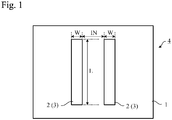
Fig. 1 is a plan view showing silver-silver chloride electrodes manufactured on a substrate; -
Fig. 2 is a table showing materials of multiple samples of silver-silver chloride electrodes; -
Fig. 3 is a schematic diagram showing an experimental apparatus for testing the conductivities of the samples; -
Fig. 4 is a graph showing the test results of the conductivities of the samples; -
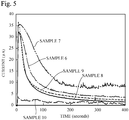
Fig. 5 is a graph showing the test results of the conductivities of the samples; and -
Fig. 6 is a table showing the test results of the conductivities of the samples. - Hereinafter, an embodiment according to the present invention will be described.
- A silver-silver chloride electrode according to the embodiment contains silver powder, silver chloride powder, silica powder, and silicone rubber as a binder in which silver powder, silver chloride powder and silica powder are dispersed. In the embodiment, when an electric circuit in which two silver-silver chloride electrodes and a phosphate buffered saline are connected in series is made up of the two silver-silver chloride electrodes and the phosphate buffered saline containing no calcium and no magnesium interposed between the two silver-silver chloride electrodes, the current density of the current flowing through the electric circuit is equal to or greater than 0.64 µA/mm2 after 5 minutes from the beginning of voltage application to the electric circuit.
- A method for manufacturing a silver-silver chloride electrode according to the embodiment includes: a step of producing a paste by mixing silver powder, silver chloride powder, a dispersant, and fumed silica powder with a liquid silicone rubber binder; a step of coating the paste on a substrate made of silicone rubber; and a step of curing the paste on the substrate to form an electrode in which silver, silver chloride, and silica powder are dispersed.
- Preferably, the manufacturing method includes a step of immersing the formed electrode in a sodium chloride aqueous solution.
- The step of producing a paste includes a step of producing a mixture of fumed silica powder and silver chloride powder by, first, adding fumed silica to silver chloride, pulverizing and mixing the silver chloride and the fumed silica, and a step of adding the mixture, silver powder, and a dispersant to an RTV (Room Temperature Vulcanizing) silicone rubber.
- Fumed silica powder functions as an aggregation inhibitor for silver chloride powder. When fumed silica is not used, silver chloride powder agglomerates. Preferably, the fumed silica powder is a hydrophilic fumed silica powder.
- The dispersant disperses silver powder and silver chloride powder as uniformly as possible in a liquid silicone rubber binder. The dispersant is preferably a polyether-modified silicone surfactant having a polyether chain and a silicone chain, and/or a polyglycerin-modified silicone surfactant having a polyglycerin chain and a silicone chain.
- In the step of coating the substrate with the paste, as shown in
Fig. 1 , a surface of thesubstrate 1 made of silicone rubber is coated with thepaste 2 by a technique such as screen printing or ink jet printing. Curing of thepaste 2 results in silver-silver chloride electrodes 3 in which silver, silver chloride, and silica powder are dispersed. In other words, aplate 4 having the silver-silver chloride electrodes 3 provided on a surface is manufactured. - Preferably, the silver-
silver chloride electrodes 3 are produced by immersing the silver-silver chloride electrodes in a sodium chloride aqueous solution and drying them. - In the illustrated embodiment, two silver-
silver chloride electrodes 3 are formed on one surface of thesubstrate 1. However, one or three or more silver-silver chloride electrodes 3 may be formed on thesubstrate 1, or one or more silver-silver chloride electrodes 3 may be formed on both surfaces of thesubstrate 1. - In accordance with the silver-silver chloride electrode produced by this production method, in a case in which hydrophilic fumed silica powder is used, it is assumed that the affinity between the surfaces of silver chloride particles and electrolytes (for example, electrolytes in a solution to be measured) is improved since the surface of each silver chloride particle is coated with hydrophilic fumed silica. Although the conductivity of silver chloride itself is low, it is considered that the conductivity is improved by coating silver chloride particles with hydrophilic fumed silica. In addition, it is assumed that since the dispersant disperses silver powder and silver chloride powder, which are conductors, in silicone rubber, which is the binder, the conductor particles within the silver-silver chloride electrode are electrically connected to one other well, so that conductivity is also improved.
- Furthermore, the silicone rubber contained in the silver-silver chloride electrode contains chloride ions and sodium ions derived from sodium chloride if the step of immersing in a sodium chloride aqueous solution is conducted. Therefore, it is assumed that the conductivity is improved by ions in addition to the electrical connection of the conductor particles, so that a higher conductivity can be stably maintained.
- In addition, by using silicone rubber as a binder, the produced silver-
silver chloride electrode 3 has high adhesion to the silicone rubber and does not easily peel off or drop off from thesubstrate 1. Furthermore, since the silicone rubber contained in the silver-silver chloride electrode contains chloride ions and sodium ions derived from sodium chloride, it is expected to improve durability against external forces caused by, e.g., bending of the silver-silver chloride electrode. - The inventor manufactured multiple samples each having silver-silver chloride electrodes by the manufacturing method according to the embodiment, and tested the conductivities of these samples. For comparison, a sample (Sample 10) having silver electrodes was produced, and the conductivity of the sample was also tested.
-
Fig. 2 shows the materials of these samples and details of immersion in a sodium chloride aqueous solution (salt water treatment). InFig. 2 , unless otherwise noted, the numerical values represent parts by weight. The "%" in the last line (salt water treatment) indicates the concentration of sodium chloride in the sodium chloride aqueous solution as a percentage, whereas "None" in the last line indicates that the electrodes were intentionally manufactured without performing the salt water treatment. The "-" in the last line indicates that the salt water treatment was abandoned, and that the conductivity test was not performed. - For Samples 1-9, in the step of producing a mixture of fumed silica powder and silver chloride powder, fumed silica was added to silver chloride, and then, silver chloride and fumed silica were pulverized and mixed by means of a centrifugal mill. For
Samples 1 to 9, the weight parts of silver chloride and fumed silica in the entire material are as shown inFig. 2 . The raw material silver chloride was produced by Inuisho Precious Metals Co., Ltd., Osaka, Japan. As the fumed silica, there were prepared "AEROSIL 200 ", which is a hydrophilic fumed silica manufactured by Nippon Aerosil Co., Ltd., Tokyo, Japan, and "AEROSIL R972" which is a hydrophobic fumed silica manufactured by the same company. "AEROSIL R972" was used for the manufacture ofSamples AEROSIL 200" was used for the manufacture ofSamples 1, 3-6, 8, and 9. "AEROSIL" is a registered trademark. For pulverization and mixing, a centrifugal mill (trade name "ZM 200") manufactured by Retsch Co., Ltd. (currently Verder Scientific Co., Ltd.), Tokyo, Japan was used. Silver chloride and fumed silica were pulverized and mixed, so that the resulting particles passed through a 0.20 mm-mesh screen. - In
samples 10 to 12, no fumed silica powder was used. The reason for not using fumed silica powder inSamples Sample 10 was that no silver chloride powder was used, and therefore, fumed silica powder as an aggregation inhibitor was unnecessary. - For silicone rubber as the binder, a mixture of "KE-106", an RTV silicone rubber manufactured by Shin-Etsu Chemical Co., Ltd., Tokyo, Japan and "CAT-RG", a curing catalyst manufactured by the same company, was used.
- As silver powder, there were prepared a flaky silver powder, "FA-2-3", manufactured by Dowa Hitech Co., Ltd., Saitama, Japan, and an irregular-shaped silver powder, "G-35" manufactured by the same company. Equal amounts of these were used in each of the samples.
- As the dispersant, there were prepared polyether-modified silicone surfactant, "KF-6015" manufactured by Shin-Etsu Chemical Co., Ltd., and polyglycerin-modified silicone surfactant, "KF-6106", manufactured by the same company. Equal amounts of these were used in each of the samples.
- For
Samples 1 to 9, a paste was produced by adding silver powder, the dispersant, and the mixture of fumed silica powder and silver chloride powder to the binder and mixing them. - For
Samples Samples Fig. 2 , the "-" in salt water treatment forSamples Samples - For
Sample 10, a paste was produced by adding silver powder and the dispersant to the binder and mixing them. - Then, for
Samples 1 to 10, as shown inFig. 1 , thepaste 2 was coated by screen printing at two locations on a surface of asubstrate 1 made of silicone rubber containing PDMS (polydimethylsiloxane). Furthermore, thepaste 2 was cured by heating at 150 degrees Celsius for 30 minutes. - For
Samples 3 to 7, and 10, except forSamples paste 2, thesubstrate 1 was immersed in a sodium chloride aqueous solution at room temperature for an hour together with the electrodes resulting from thepaste 2, and they were then dried. - In each of produced
Samples 1 to 9, the silver-silver chloride electrodes 3 had high adhesion to the silicone rubber and did not easily peel off or drop off from thesubstrate 1. Furthermore, inSample 10 manufactured for comparison, thesilver electrodes 3 had high adhesion to the silicone rubber and did not easily peel off or drop off from thesubstrate 1. In these samples, the length L of theelectrodes 3 was 30 mm, the width W thereof was 5 mm, and the interval IN therebetween was 10 mm. - Next, using each of produced
Samples 1 to 10, anexperimental apparatus 5 shown inFig. 3 was assembled. Theexperimental apparatus 5 hasplates holes plate 6 immediately above theplate 4, and are overlapped with theelectrodes 3, respectively. In theuppermost plate 7, agroove 7g that penetrates theplate 7 is formed. One end of thegroove 7g is overlapped with the through-hole 6a of theplate 6 directly below, whereas the other end of thegroove 7g is overlapped with the through-hole 6b. - Thus, the
experimental apparatus 5 is provided with a micro flow channel having the through-holes groove 7g. Both ends of the micro flow channel are closed with the twoelectrodes 3. Liquid can be stored in the micro flow channel, and liquid can be introduced through thegroove 7g. The width of thegroove 7g was 1 mm, whereas the diameters of the through-holes - PBS (phosphate buffered saline) was supplied to the micro flow channel from the
groove 7g. The PBS used was PBS (-) without calcium or magnesium. - A battery 8 (DC power supply) was connected to the
electrodes 3 on the surface of theplate 4 via lead wires L, and a voltage of 0.3V was applied so that a DC current flowed through theelectrodes 3. Variation of the electric current value was measured by anammeter 9 for 400 seconds (6 minutes and 40 seconds) immediately after the beginning of electric current supply (voltage application). - Therefore, an electric circuit having two
electrodes 3 and PBS (-) therebetween was formed in which theelectrodes 3 and PBS (-) were connected in series. -
Figs. 4 and5 show the measurement results. The measurement results inFigs. 4 and5 are the first measurement results after theplates 4 were manufactured. - As is clear from
Figs. 4 and5 , inSamples Samples Samples - As is clear from comparison of
Samples - In
Samples 1 to 3 and 6 to 9, a large current flowed immediately after the beginning of voltage application, but the current value decreased with time. -
Sample 1 used the same materials asSample 4, but was not subjected to the salt water treatment. Insample 1, the current value gradually decreased with time. -
Samples Sample 5, but the sodium chloride concentration of the solution used in the salt water treatment was low forSample 3, andSample 6 was not subjected to the salt water treatment. InSamples -
Sample 7 used the same materials assample 5, but used hydrophobic fumed silica instead of hydrophilic fumed silica. InSample 7, a very large current flowed immediately after the beginning of voltage application, but the current value gradually decreased and then stabilized. -
Sample 2 used the same materials asSample 7, but was not subjected to the salt water treatment. Insample 2, the current value decreased rapidly in the initial stage and then stabilized. InSample 2, the current flowing was smaller than that ofSample 7. -
Samples Sample 5, but the ratio of hydrophilic fumed silica was low and the salt water treatment was not performed. InSamples - In
Sample 10 having thesilver electrodes 3 manufactured for comparison, the current values were lower continuously after the beginning of voltage application than those ofSamples 1 to 9 having the silver-silver chloride electrodes 3. - From the above, it is understood that among the samples having the silver-
silver chloride electrodes 3,Samples - In microfluidic devices, from the viewpoint of shortening the measurement time, it is required that electrodes have high conductivity immediately after the beginning of voltage application. Even
Samples 1 to 3 and 6 to 9 having a large decrease in current can also be used utilizing the high conductivity, as long as the measurement is for a short time. Accordingly,Fig. 6 shows the current value for each sample at 300 seconds (5 minutes) after the beginning of voltage application obtained from the measurement results. Moreover,Fig. 6 shows the current density for each sample at 300 seconds (5 minutes) after the beginning of voltage application from a measurement result for universalization. The current density was obtained by dividing the current value by the cross-sectional area of the lead wires L. Since the lead wires L had a diameter of 2 mm, the cross-sectional area thereof was 3.14 mm2. - Since
Samples 1 to 3 and 6 to 9 can be used in microfluidic devices, it is preferable that the current density of the current flowing through the electric circuit be equal to or greater than 0.64 µA/mm2 after 5 minutes from the beginning of voltage application to the electric circuit. - In consideration of the good performance of
Samples - Although the present invention has been described above, the foregoing description is not intended to limit the present invention.
- Various modifications including omission, addition, and substitution of structural elements may be made within the scope of the present invention.
-
- 1: Substrate
- 2: Paste
- 3: Silver-Silver Chloride Electrode
- 4: Plate
- 5: Experimental Apparatus
- 6: Plate
- 7: Plate
- 6a, 6b: Through-hole
- 7g: Groove
Claims (5)
- A silver-silver chloride electrode comprising:silver powder;silver chloride powder;silica powder; andsilicone rubber as a binder in which silver powder, silver chloride powder and silica powder are dispersed,a current density of a current flowing through an electric circuit being equal to or greater than 0.64 µA/mm2 after 5 minutes from the beginning of voltage application to the electric circuit when the electric circuit in which two silver-silver chloride electrodes and a phosphate buffered saline are connected in series is made up of the two silver-silver chloride electrodes and the phosphate buffered saline containing no calcium and no magnesium interposed between the two silver-silver chloride electrodes.
- The silver-silver chloride electrode according to claim 1, wherein the current density of the current flowing through the electric circuit is equal to or greater than 7.61 µA/mm2 after 5 minutes from the beginning of voltage application to the electric circuit.
- An electric circuit comprising:two silver-silver chloride electrodes; anda phosphate buffered saline not containing calcium or magnesium interposed between the two silver-silver chloride electrodes, the two silver-silver chloride electrodes and the phosphate buffered saline being connected in series,each silver-silver chloride electrode comprising:silver powder;silver chloride powder;silica powder; andsilicone rubber as a binder in which silver powder, silver chloride powder and silica powder are dispersed,a current density of a current flowing through the electric circuit being equal to or greater than 0.64 µA/mm2 after 5 minutes from the beginning of voltage application to the electric circuit.
- The electric circuit according to claim 3, wherein the current density of the current flowing through the electric circuit is equal to or greater than 7.61 µA/mm2 after 5 minutes from the beginning of voltage application to the electric circuit.
- The electric circuit according to claim 3 or 4, wherein the two silver-silver chloride electrodes are formed on a substrate made of silicone rubber.
Applications Claiming Priority (2)
| Application Number | Priority Date | Filing Date | Title |
|---|---|---|---|
| JP2018113792 | 2018-06-14 | ||
| PCT/JP2019/023195 WO2019240147A1 (en) | 2018-06-14 | 2019-06-12 | Silver-silver chloride electrode and electrical circuit |
Publications (4)
| Publication Number | Publication Date |
|---|---|
| EP3809127A1 true EP3809127A1 (en) | 2021-04-21 |
| EP3809127A4 EP3809127A4 (en) | 2021-07-07 |
| EP3809127C0 EP3809127C0 (en) | 2024-03-06 |
| EP3809127B1 EP3809127B1 (en) | 2024-03-06 |
Family
ID=68841856
Family Applications (2)
| Application Number | Title | Priority Date | Filing Date |
|---|---|---|---|
| EP19820529.6A Active EP3809128B1 (en) | 2018-06-14 | 2019-06-07 | Method for producing silver-silver chloride electrode |
| EP19819580.2A Active EP3809127B1 (en) | 2018-06-14 | 2019-06-12 | Silver-silver chloride electrode and electrical circuit |
Family Applications Before (1)
| Application Number | Title | Priority Date | Filing Date |
|---|---|---|---|
| EP19820529.6A Active EP3809128B1 (en) | 2018-06-14 | 2019-06-07 | Method for producing silver-silver chloride electrode |
Country Status (5)
| Country | Link |
|---|---|
| US (3) | US11199519B2 (en) |
| EP (2) | EP3809128B1 (en) |
| JP (2) | JP6782389B2 (en) |
| CN (2) | CN111936846B (en) |
| WO (2) | WO2019240030A1 (en) |
Families Citing this family (2)
| Publication number | Priority date | Publication date | Assignee | Title |
|---|---|---|---|---|
| US12529134B1 (en) | 2023-01-04 | 2026-01-20 | Rhythmlink International, Llc | Methods of making silver/silver chloride electrodes by vapor deposition techniques |
| DE102023109869A1 (en) * | 2023-04-19 | 2024-10-24 | Dräger Safety AG & Co. KGaA | Electrode, composition, method for producing an electrode and electrochemical gas sensor |
Family Cites Families (33)
| Publication number | Priority date | Publication date | Assignee | Title |
|---|---|---|---|---|
| JPS5126789A (en) * | 1974-08-29 | 1976-03-05 | Richaado Sato Takuya | Gin enkagindenkyoku |
| US4324680A (en) * | 1980-08-22 | 1982-04-13 | Totoku Electric Co., Ltd. | Silver-silver chloride electrode and manufacturing method thereof |
| JPH0290052A (en) * | 1988-09-28 | 1990-03-29 | Toyobo Co Ltd | Thin film type biosensor |
| CN2055255U (en) * | 1989-08-29 | 1990-03-28 | 荣仁本 | High temp. high pressure sterilization ph sensor |
| JPH05142189A (en) | 1991-07-12 | 1993-06-08 | Terumo Corp | Silver-silver chloride electrode, its manufacture and its composition |
| US5421983A (en) * | 1993-11-12 | 1995-06-06 | E. I. Du Pont De Nemours And Company | Anion selective electrodes containing fumed silica |
| US5427096A (en) * | 1993-11-19 | 1995-06-27 | Cmc Assemblers, Inc. | Water-degradable electrode |
| JP3465370B2 (en) * | 1994-09-20 | 2003-11-10 | 凸版印刷株式会社 | Enzyme electrode |
| US5565143A (en) * | 1995-05-05 | 1996-10-15 | E. I. Du Pont De Nemours And Company | Water-based silver-silver chloride compositions |
| WO1998003431A1 (en) * | 1996-07-23 | 1998-01-29 | Medisense, Inc. | Silver chloride particles |
| US6134461A (en) | 1998-03-04 | 2000-10-17 | E. Heller & Company | Electrochemical analyte |
| TWI257410B (en) | 1999-03-25 | 2006-07-01 | Shinetsu Chemical Co | Conductive silicone rubber composition and low-resistance connector |
| JP4392106B2 (en) | 1999-04-13 | 2009-12-24 | 信越ポリマー株式会社 | Low resistance connector |
| JP4695316B2 (en) * | 1999-07-13 | 2011-06-08 | 湧永製薬株式会社 | Silver / silver chloride electrode and electrochemical biosensor using the same |
| JP2001242115A (en) * | 2000-02-29 | 2001-09-07 | Techno Medica Co Ltd | Reference electrode for electrochemical sensor |
| FR2833014B1 (en) | 2001-11-30 | 2005-07-08 | Bio Merieux | SELECTIVE PROCESS FOR DETECTION, IDENTIFICATION AND ASSESSMENT OF A DIVALENT METAL CATION IN A SAMPLE |
| US7384523B2 (en) * | 2003-07-10 | 2008-06-10 | Radiometer Medical Aps | Chloride ion selective membrane and sensor |
| JP4394917B2 (en) * | 2003-09-19 | 2010-01-06 | 独立行政法人科学技術振興機構 | Current measuring device with artificial lipid bilayer membrane |
| JP2005292022A (en) | 2004-04-02 | 2005-10-20 | Matsushita Electric Ind Co Ltd | Method for manufacturing reference electrode |
| JP2006275711A (en) * | 2005-03-29 | 2006-10-12 | Citizen Watch Co Ltd | Electrooptical sensor and its manufacturing method |
| CN100536764C (en) * | 2007-06-27 | 2009-09-09 | 武汉格林泰克科技有限公司 | Silver/silver chloride powder solid electrode and preparation method |
| US8828201B2 (en) * | 2009-07-02 | 2014-09-09 | Dexcom, Inc. | Analyte sensors and methods of manufacturing same |
| JP2013052654A (en) * | 2011-09-06 | 2013-03-21 | Seiko Epson Corp | Inkjet recording method and recording matter |
| KR101940358B1 (en) * | 2011-11-18 | 2019-01-18 | 스미토모 긴조쿠 고잔 가부시키가이샤 | Silver powder, method for producing silver powder, and conductive paste |
| US10497633B2 (en) * | 2013-02-06 | 2019-12-03 | The Board Of Trustees Of The University Of Illinois | Stretchable electronic systems with fluid containment |
| CN103192070B (en) * | 2013-04-17 | 2015-07-08 | 苏州格林泰克科技有限公司 | Silver/silver chloride electrode material, method for manufacturing same and electrode |
| US10072177B2 (en) * | 2014-11-06 | 2018-09-11 | E I Du Pont De Nemours And Company | Stretchable polymer thick film compositions for thermoplastic substrates and wearables electronics |
| JP2018533160A (en) * | 2015-08-20 | 2018-11-08 | パーカー・ハニフィン・コーポレーション | Silver-silver chloride composition and electrical device containing the same |
| JP6612984B2 (en) * | 2016-06-30 | 2019-11-27 | タツタ電線株式会社 | Silver chloride paste |
| JP6947646B2 (en) | 2016-07-06 | 2021-10-13 | Nok株式会社 | Bioelectrode and its manufacturing method |
| JP2018061778A (en) * | 2016-10-14 | 2018-04-19 | 国立大学法人群馬大学 | Conductive rubber composition for measuring biosignal, conductive member for measuring biosignal, and clothing for measuring biosignal |
| JP7018295B2 (en) | 2017-03-31 | 2022-02-10 | 住友ベークライト株式会社 | Conductive paste |
| AT520779B1 (en) * | 2017-12-21 | 2020-03-15 | Erba Tech Austria Gmbh | Reference electrode for potentiometric measurement of ion concentrations |
-
2019
- 2019-06-07 WO PCT/JP2019/022707 patent/WO2019240030A1/en not_active Ceased
- 2019-06-07 JP JP2020525521A patent/JP6782389B2/en active Active
- 2019-06-07 US US16/977,974 patent/US11199519B2/en active Active
- 2019-06-07 EP EP19820529.6A patent/EP3809128B1/en active Active
- 2019-06-07 CN CN201980023548.9A patent/CN111936846B/en active Active
- 2019-06-12 EP EP19819580.2A patent/EP3809127B1/en active Active
- 2019-06-12 JP JP2020525600A patent/JP6918237B2/en active Active
- 2019-06-12 WO PCT/JP2019/023195 patent/WO2019240147A1/en not_active Ceased
- 2019-06-12 CN CN201980026255.6A patent/CN111989564B/en active Active
- 2019-06-12 US US16/978,172 patent/US20210041389A1/en not_active Abandoned
-
2022
- 2022-12-20 US US18/085,078 patent/US20230121946A1/en not_active Abandoned
Also Published As
| Publication number | Publication date |
|---|---|
| EP3809127A4 (en) | 2021-07-07 |
| US11199519B2 (en) | 2021-12-14 |
| EP3809128B1 (en) | 2025-05-14 |
| US20230121946A1 (en) | 2023-04-20 |
| WO2019240030A1 (en) | 2019-12-19 |
| JP6782389B2 (en) | 2020-11-11 |
| CN111989564A (en) | 2020-11-24 |
| EP3809127C0 (en) | 2024-03-06 |
| CN111936846A (en) | 2020-11-13 |
| CN111936846B (en) | 2022-12-20 |
| US20210041389A1 (en) | 2021-02-11 |
| EP3809128A4 (en) | 2021-07-14 |
| US20210041390A1 (en) | 2021-02-11 |
| JPWO2019240147A1 (en) | 2021-02-18 |
| JPWO2019240030A1 (en) | 2020-12-17 |
| EP3809128C0 (en) | 2025-05-14 |
| JP6918237B2 (en) | 2021-08-11 |
| EP3809127B1 (en) | 2024-03-06 |
| WO2019240147A1 (en) | 2019-12-19 |
| CN111989564B (en) | 2023-08-15 |
| EP3809128A1 (en) | 2021-04-21 |
Similar Documents
| Publication | Publication Date | Title |
|---|---|---|
| US20230121946A1 (en) | Silver-Silver Chloride Electrode And Electrical Circuit | |
| CN109414211B (en) | Biological electrode and method of making the same | |
| Rymansaib et al. | All‐polystyrene 3D‐printed electrochemical device with embedded carbon nanofiber‐graphite‐polystyrene composite conductor | |
| KR20190130638A (en) | Silver chloride coated particles | |
| JPWO2018163881A1 (en) | Electrode for measuring biological information and method of manufacturing electrode for measuring biological information | |
| CN102925090B (en) | A kind of preparation method of conductive silver paste for electromagnetic shielding | |
| EP4075451B1 (en) | Method for producing bioelectrode | |
| US11402349B2 (en) | High capacity redox electrodes and their use in cell lysis | |
| CN111225607A (en) | Manufacturing method of bioelectrode | |
| CN101556852A (en) | Macromolecular thermistance element and manufacturing method thereof | |
| Tokonami et al. | Green electroless plating method using gold nanoparticles for conducting microbeads: application to anisotropic conductive films | |
| Felba et al. | The influence of thermal process on electrical conductivity of microstructures: Made by ink-jet painting with the use of ink containing nano sized silver particles | |
| JP2012088122A (en) | Insulation-coated probe pin and method of manufacturing the same | |
| JP5271716B2 (en) | Method for generating power and apparatus for its realization | |
| JP2017059335A (en) | Insulation film | |
| Go et al. | Galvanic dissolved oxygen sensor based from inkjet printed silver cathode and electrodeposited zinc anode | |
| Cherian | Expanding the versatility and functionality of iontronic devices | |
| CN111986833B (en) | A biomimetic liquid ionic conductor and its preparation method and application | |
| Hübert et al. | Carbon–silica sol-gel derived nanomaterials | |
| Abdulrahman et al. | Development and Analysis of Graphene-polymer Composite Flexible Electrode | |
| Boda | Screen Printed Stretchable Electronics |
Legal Events
| Date | Code | Title | Description |
|---|---|---|---|
| STAA | Information on the status of an ep patent application or granted ep patent |
Free format text: STATUS: THE INTERNATIONAL PUBLICATION HAS BEEN MADE |
|
| PUAI | Public reference made under article 153(3) epc to a published international application that has entered the european phase |
Free format text: ORIGINAL CODE: 0009012 |
|
| STAA | Information on the status of an ep patent application or granted ep patent |
Free format text: STATUS: REQUEST FOR EXAMINATION WAS MADE |
|
| 17P | Request for examination filed |
Effective date: 20200902 |
|
| AK | Designated contracting states |
Kind code of ref document: A1 Designated state(s): AL AT BE BG CH CY CZ DE DK EE ES FI FR GB GR HR HU IE IS IT LI LT LU LV MC MK MT NL NO PL PT RO RS SE SI SK SM TR |
|
| AX | Request for extension of the european patent |
Extension state: BA ME |
|
| A4 | Supplementary search report drawn up and despatched |
Effective date: 20210609 |
|
| RIC1 | Information provided on ipc code assigned before grant |
Ipc: G01N 27/30 20060101AFI20210602BHEP |
|
| DAV | Request for validation of the european patent (deleted) | ||
| DAX | Request for extension of the european patent (deleted) | ||
| STAA | Information on the status of an ep patent application or granted ep patent |
Free format text: STATUS: EXAMINATION IS IN PROGRESS |
|
| 17Q | First examination report despatched |
Effective date: 20230306 |
|
| GRAP | Despatch of communication of intention to grant a patent |
Free format text: ORIGINAL CODE: EPIDOSNIGR1 |
|
| STAA | Information on the status of an ep patent application or granted ep patent |
Free format text: STATUS: GRANT OF PATENT IS INTENDED |
|
| INTG | Intention to grant announced |
Effective date: 20230927 |
|
| GRAS | Grant fee paid |
Free format text: ORIGINAL CODE: EPIDOSNIGR3 |
|
| GRAA | (expected) grant |
Free format text: ORIGINAL CODE: 0009210 |
|
| STAA | Information on the status of an ep patent application or granted ep patent |
Free format text: STATUS: THE PATENT HAS BEEN GRANTED |
|
| AK | Designated contracting states |
Kind code of ref document: B1 Designated state(s): AL AT BE BG CH CY CZ DE DK EE ES FI FR GB GR HR HU IE IS IT LI LT LU LV MC MK MT NL NO PL PT RO RS SE SI SK SM TR |
|
| REG | Reference to a national code |
Ref country code: CH Ref legal event code: EP |
|
| REG | Reference to a national code |
Ref country code: IE Ref legal event code: FG4D |
|
| REG | Reference to a national code |
Ref country code: DE Ref legal event code: R096 Ref document number: 602019047926 Country of ref document: DE |
|
| U01 | Request for unitary effect filed |
Effective date: 20240311 |
|
| U07 | Unitary effect registered |
Designated state(s): AT BE BG DE DK EE FI FR IT LT LU LV MT NL PT SE SI Effective date: 20240319 |
|
| U20 | Renewal fee for the european patent with unitary effect paid |
Year of fee payment: 6 Effective date: 20240521 |
|
| PG25 | Lapsed in a contracting state [announced via postgrant information from national office to epo] |
Ref country code: GR Free format text: LAPSE BECAUSE OF FAILURE TO SUBMIT A TRANSLATION OF THE DESCRIPTION OR TO PAY THE FEE WITHIN THE PRESCRIBED TIME-LIMIT Effective date: 20240607 |
|
| PG25 | Lapsed in a contracting state [announced via postgrant information from national office to epo] |
Ref country code: RS Free format text: LAPSE BECAUSE OF FAILURE TO SUBMIT A TRANSLATION OF THE DESCRIPTION OR TO PAY THE FEE WITHIN THE PRESCRIBED TIME-LIMIT Effective date: 20240606 Ref country code: HR Free format text: LAPSE BECAUSE OF FAILURE TO SUBMIT A TRANSLATION OF THE DESCRIPTION OR TO PAY THE FEE WITHIN THE PRESCRIBED TIME-LIMIT Effective date: 20240306 |
|
| PG25 | Lapsed in a contracting state [announced via postgrant information from national office to epo] |
Ref country code: ES Free format text: LAPSE BECAUSE OF FAILURE TO SUBMIT A TRANSLATION OF THE DESCRIPTION OR TO PAY THE FEE WITHIN THE PRESCRIBED TIME-LIMIT Effective date: 20240306 |
|
| PG25 | Lapsed in a contracting state [announced via postgrant information from national office to epo] |
Ref country code: RS Free format text: LAPSE BECAUSE OF FAILURE TO SUBMIT A TRANSLATION OF THE DESCRIPTION OR TO PAY THE FEE WITHIN THE PRESCRIBED TIME-LIMIT Effective date: 20240606 Ref country code: NO Free format text: LAPSE BECAUSE OF FAILURE TO SUBMIT A TRANSLATION OF THE DESCRIPTION OR TO PAY THE FEE WITHIN THE PRESCRIBED TIME-LIMIT Effective date: 20240606 Ref country code: HR Free format text: LAPSE BECAUSE OF FAILURE TO SUBMIT A TRANSLATION OF THE DESCRIPTION OR TO PAY THE FEE WITHIN THE PRESCRIBED TIME-LIMIT Effective date: 20240306 Ref country code: GR Free format text: LAPSE BECAUSE OF FAILURE TO SUBMIT A TRANSLATION OF THE DESCRIPTION OR TO PAY THE FEE WITHIN THE PRESCRIBED TIME-LIMIT Effective date: 20240607 Ref country code: ES Free format text: LAPSE BECAUSE OF FAILURE TO SUBMIT A TRANSLATION OF THE DESCRIPTION OR TO PAY THE FEE WITHIN THE PRESCRIBED TIME-LIMIT Effective date: 20240306 |
|
| PG25 | Lapsed in a contracting state [announced via postgrant information from national office to epo] |
Ref country code: IS Free format text: LAPSE BECAUSE OF FAILURE TO SUBMIT A TRANSLATION OF THE DESCRIPTION OR TO PAY THE FEE WITHIN THE PRESCRIBED TIME-LIMIT Effective date: 20240706 |
|
| PG25 | Lapsed in a contracting state [announced via postgrant information from national office to epo] |
Ref country code: SM Free format text: LAPSE BECAUSE OF FAILURE TO SUBMIT A TRANSLATION OF THE DESCRIPTION OR TO PAY THE FEE WITHIN THE PRESCRIBED TIME-LIMIT Effective date: 20240306 |
|
| PG25 | Lapsed in a contracting state [announced via postgrant information from national office to epo] |
Ref country code: CZ Free format text: LAPSE BECAUSE OF FAILURE TO SUBMIT A TRANSLATION OF THE DESCRIPTION OR TO PAY THE FEE WITHIN THE PRESCRIBED TIME-LIMIT Effective date: 20240306 |
|
| PG25 | Lapsed in a contracting state [announced via postgrant information from national office to epo] |
Ref country code: PL Free format text: LAPSE BECAUSE OF FAILURE TO SUBMIT A TRANSLATION OF THE DESCRIPTION OR TO PAY THE FEE WITHIN THE PRESCRIBED TIME-LIMIT Effective date: 20240306 |
|
| PG25 | Lapsed in a contracting state [announced via postgrant information from national office to epo] |
Ref country code: SK Free format text: LAPSE BECAUSE OF FAILURE TO SUBMIT A TRANSLATION OF THE DESCRIPTION OR TO PAY THE FEE WITHIN THE PRESCRIBED TIME-LIMIT Effective date: 20240306 |
|
| PG25 | Lapsed in a contracting state [announced via postgrant information from national office to epo] |
Ref country code: SM Free format text: LAPSE BECAUSE OF FAILURE TO SUBMIT A TRANSLATION OF THE DESCRIPTION OR TO PAY THE FEE WITHIN THE PRESCRIBED TIME-LIMIT Effective date: 20240306 Ref country code: SK Free format text: LAPSE BECAUSE OF FAILURE TO SUBMIT A TRANSLATION OF THE DESCRIPTION OR TO PAY THE FEE WITHIN THE PRESCRIBED TIME-LIMIT Effective date: 20240306 Ref country code: RO Free format text: LAPSE BECAUSE OF FAILURE TO SUBMIT A TRANSLATION OF THE DESCRIPTION OR TO PAY THE FEE WITHIN THE PRESCRIBED TIME-LIMIT Effective date: 20240306 Ref country code: PL Free format text: LAPSE BECAUSE OF FAILURE TO SUBMIT A TRANSLATION OF THE DESCRIPTION OR TO PAY THE FEE WITHIN THE PRESCRIBED TIME-LIMIT Effective date: 20240306 Ref country code: IS Free format text: LAPSE BECAUSE OF FAILURE TO SUBMIT A TRANSLATION OF THE DESCRIPTION OR TO PAY THE FEE WITHIN THE PRESCRIBED TIME-LIMIT Effective date: 20240706 Ref country code: CZ Free format text: LAPSE BECAUSE OF FAILURE TO SUBMIT A TRANSLATION OF THE DESCRIPTION OR TO PAY THE FEE WITHIN THE PRESCRIBED TIME-LIMIT Effective date: 20240306 |
|
| REG | Reference to a national code |
Ref country code: DE Ref legal event code: R097 Ref document number: 602019047926 Country of ref document: DE |
|
| PLBE | No opposition filed within time limit |
Free format text: ORIGINAL CODE: 0009261 |
|
| STAA | Information on the status of an ep patent application or granted ep patent |
Free format text: STATUS: NO OPPOSITION FILED WITHIN TIME LIMIT |
|
| PG25 | Lapsed in a contracting state [announced via postgrant information from national office to epo] |
Ref country code: MC Free format text: LAPSE BECAUSE OF FAILURE TO SUBMIT A TRANSLATION OF THE DESCRIPTION OR TO PAY THE FEE WITHIN THE PRESCRIBED TIME-LIMIT Effective date: 20240306 |
|
| REG | Reference to a national code |
Ref country code: CH Ref legal event code: PL |
|
| 26N | No opposition filed |
Effective date: 20241209 |
|
| PG25 | Lapsed in a contracting state [announced via postgrant information from national office to epo] |
Ref country code: IE Free format text: LAPSE BECAUSE OF NON-PAYMENT OF DUE FEES Effective date: 20240612 |
|
| PG25 | Lapsed in a contracting state [announced via postgrant information from national office to epo] |
Ref country code: CH Free format text: LAPSE BECAUSE OF NON-PAYMENT OF DUE FEES Effective date: 20240630 |
|
| U20 | Renewal fee for the european patent with unitary effect paid |
Year of fee payment: 7 Effective date: 20250509 |
|
| PGFP | Annual fee paid to national office [announced via postgrant information from national office to epo] |
Ref country code: GB Payment date: 20250501 Year of fee payment: 7 |
|
| PG25 | Lapsed in a contracting state [announced via postgrant information from national office to epo] |
Ref country code: CY Free format text: LAPSE BECAUSE OF FAILURE TO SUBMIT A TRANSLATION OF THE DESCRIPTION OR TO PAY THE FEE WITHIN THE PRESCRIBED TIME-LIMIT; INVALID AB INITIO Effective date: 20190612 |
|
| PG25 | Lapsed in a contracting state [announced via postgrant information from national office to epo] |
Ref country code: HU Free format text: LAPSE BECAUSE OF FAILURE TO SUBMIT A TRANSLATION OF THE DESCRIPTION OR TO PAY THE FEE WITHIN THE PRESCRIBED TIME-LIMIT; INVALID AB INITIO Effective date: 20190612 |