EP3799940A1 - Three-dimensional puzzle with movable segments - Google Patents
Three-dimensional puzzle with movable segments Download PDFInfo
- Publication number
- EP3799940A1 EP3799940A1 EP19799304.1A EP19799304A EP3799940A1 EP 3799940 A1 EP3799940 A1 EP 3799940A1 EP 19799304 A EP19799304 A EP 19799304A EP 3799940 A1 EP3799940 A1 EP 3799940A1
- Authority
- EP
- European Patent Office
- Prior art keywords
- magnets
- movable
- puzzle
- elements
- sectors
- Prior art date
- Legal status (The legal status is an assumption and is not a legal conclusion. Google has not performed a legal analysis and makes no representation as to the accuracy of the status listed.)
- Granted
Links
Images












Classifications
-
- A—HUMAN NECESSITIES
- A63—SPORTS; GAMES; AMUSEMENTS
- A63F—CARD, BOARD, OR ROULETTE GAMES; INDOOR GAMES USING SMALL MOVING PLAYING BODIES; VIDEO GAMES; GAMES NOT OTHERWISE PROVIDED FOR
- A63F9/00—Games not otherwise provided for
- A63F9/06—Patience; Other games for self-amusement
- A63F9/08—Puzzles provided with elements movable in relation, i.e. movably connected, to each other
- A63F9/0826—Three-dimensional puzzles with slidable or rotatable elements or groups of elements, the main configuration remaining unchanged, e.g. Rubik's cube
- A63F9/0869—Three-dimensional puzzles with slidable or rotatable elements or groups of elements, the main configuration remaining unchanged, e.g. Rubik's cube with groups of elements rotating about at least three axes not intersecting in one point, e.g. toroidal shapes
-
- A—HUMAN NECESSITIES
- A63—SPORTS; GAMES; AMUSEMENTS
- A63F—CARD, BOARD, OR ROULETTE GAMES; INDOOR GAMES USING SMALL MOVING PLAYING BODIES; VIDEO GAMES; GAMES NOT OTHERWISE PROVIDED FOR
- A63F9/00—Games not otherwise provided for
- A63F9/06—Patience; Other games for self-amusement
- A63F9/08—Puzzles provided with elements movable in relation, i.e. movably connected, to each other
- A63F9/0826—Three-dimensional puzzles with slidable or rotatable elements or groups of elements, the main configuration remaining unchanged, e.g. Rubik's cube
- A63F9/0834—Three-dimensional puzzles with slidable or rotatable elements or groups of elements, the main configuration remaining unchanged, e.g. Rubik's cube comprising only two layers, e.g. with eight elements
-
- A—HUMAN NECESSITIES
- A63—SPORTS; GAMES; AMUSEMENTS
- A63F—CARD, BOARD, OR ROULETTE GAMES; INDOOR GAMES USING SMALL MOVING PLAYING BODIES; VIDEO GAMES; GAMES NOT OTHERWISE PROVIDED FOR
- A63F9/00—Games not otherwise provided for
- A63F9/06—Patience; Other games for self-amusement
- A63F9/08—Puzzles provided with elements movable in relation, i.e. movably connected, to each other
- A63F9/0826—Three-dimensional puzzles with slidable or rotatable elements or groups of elements, the main configuration remaining unchanged, e.g. Rubik's cube
- A63F9/0838—Three-dimensional puzzles with slidable or rotatable elements or groups of elements, the main configuration remaining unchanged, e.g. Rubik's cube with an element, e.g. invisible core, staying permanently in a central position having the function of central retaining spider and with groups of elements rotatable about at least three axes intersecting in one point
-
- A—HUMAN NECESSITIES
- A63—SPORTS; GAMES; AMUSEMENTS
- A63F—CARD, BOARD, OR ROULETTE GAMES; INDOOR GAMES USING SMALL MOVING PLAYING BODIES; VIDEO GAMES; GAMES NOT OTHERWISE PROVIDED FOR
- A63F9/00—Games not otherwise provided for
- A63F9/06—Patience; Other games for self-amusement
- A63F9/08—Puzzles provided with elements movable in relation, i.e. movably connected, to each other
- A63F9/0826—Three-dimensional puzzles with slidable or rotatable elements or groups of elements, the main configuration remaining unchanged, e.g. Rubik's cube
- A63F9/0838—Three-dimensional puzzles with slidable or rotatable elements or groups of elements, the main configuration remaining unchanged, e.g. Rubik's cube with an element, e.g. invisible core, staying permanently in a central position having the function of central retaining spider and with groups of elements rotatable about at least three axes intersecting in one point
- A63F9/0842—Three-dimensional puzzles with slidable or rotatable elements or groups of elements, the main configuration remaining unchanged, e.g. Rubik's cube with an element, e.g. invisible core, staying permanently in a central position having the function of central retaining spider and with groups of elements rotatable about at least three axes intersecting in one point each group consisting of again a central element and a plurality of additional elements rotatable about three orthogonal axes at both ends, the additional elements being rotatable about at least two axes, e.g. Rubik's cube
-
- A—HUMAN NECESSITIES
- A63—SPORTS; GAMES; AMUSEMENTS
- A63F—CARD, BOARD, OR ROULETTE GAMES; INDOOR GAMES USING SMALL MOVING PLAYING BODIES; VIDEO GAMES; GAMES NOT OTHERWISE PROVIDED FOR
- A63F9/00—Games not otherwise provided for
- A63F9/06—Patience; Other games for self-amusement
- A63F9/08—Puzzles provided with elements movable in relation, i.e. movably connected, to each other
- A63F9/0826—Three-dimensional puzzles with slidable or rotatable elements or groups of elements, the main configuration remaining unchanged, e.g. Rubik's cube
- A63F9/0861—Three-dimensional puzzles with slidable or rotatable elements or groups of elements, the main configuration remaining unchanged, e.g. Rubik's cube with elements slidably connected to neighbouring elements, e.g. with hollow interior
-
- A—HUMAN NECESSITIES
- A63—SPORTS; GAMES; AMUSEMENTS
- A63F—CARD, BOARD, OR ROULETTE GAMES; INDOOR GAMES USING SMALL MOVING PLAYING BODIES; VIDEO GAMES; GAMES NOT OTHERWISE PROVIDED FOR
- A63F9/00—Games not otherwise provided for
- A63F9/06—Patience; Other games for self-amusement
- A63F9/08—Puzzles provided with elements movable in relation, i.e. movably connected, to each other
- A63F9/0826—Three-dimensional puzzles with slidable or rotatable elements or groups of elements, the main configuration remaining unchanged, e.g. Rubik's cube
- A63F9/0865—Three-dimensional puzzles with slidable or rotatable elements or groups of elements, the main configuration remaining unchanged, e.g. Rubik's cube with a plurality of single elements rotatably connected to a central body which are characterised only by design, e.g. shape, use of colours or symbols
-
- A—HUMAN NECESSITIES
- A63—SPORTS; GAMES; AMUSEMENTS
- A63F—CARD, BOARD, OR ROULETTE GAMES; INDOOR GAMES USING SMALL MOVING PLAYING BODIES; VIDEO GAMES; GAMES NOT OTHERWISE PROVIDED FOR
- A63F9/00—Games not otherwise provided for
- A63F9/34—Games using magnetically moved or magnetically held pieces, not provided for in other subgroups of group A63F9/00
-
- A—HUMAN NECESSITIES
- A63—SPORTS; GAMES; AMUSEMENTS
- A63F—CARD, BOARD, OR ROULETTE GAMES; INDOOR GAMES USING SMALL MOVING PLAYING BODIES; VIDEO GAMES; GAMES NOT OTHERWISE PROVIDED FOR
- A63F9/00—Games not otherwise provided for
- A63F9/06—Patience; Other games for self-amusement
- A63F9/08—Puzzles provided with elements movable in relation, i.e. movably connected, to each other
- A63F9/0803—Two-dimensional puzzles with slideable or rotatable elements or groups of elements, the main configuration remaining unchanged
- A63F9/0811—Two-dimensional puzzles with slideable or rotatable elements or groups of elements, the main configuration remaining unchanged with rotatable concentric rings or discs
- A63F2009/0815—Two-dimensional puzzles with slideable or rotatable elements or groups of elements, the main configuration remaining unchanged with rotatable concentric rings or discs with rotary, stacked elements, e.g. elements with a puzzle image on a curved or cylindrical outer surface
-
- A—HUMAN NECESSITIES
- A63—SPORTS; GAMES; AMUSEMENTS
- A63F—CARD, BOARD, OR ROULETTE GAMES; INDOOR GAMES USING SMALL MOVING PLAYING BODIES; VIDEO GAMES; GAMES NOT OTHERWISE PROVIDED FOR
- A63F9/00—Games not otherwise provided for
- A63F9/06—Patience; Other games for self-amusement
- A63F9/08—Puzzles provided with elements movable in relation, i.e. movably connected, to each other
- A63F9/0826—Three-dimensional puzzles with slidable or rotatable elements or groups of elements, the main configuration remaining unchanged, e.g. Rubik's cube
- A63F9/0838—Three-dimensional puzzles with slidable or rotatable elements or groups of elements, the main configuration remaining unchanged, e.g. Rubik's cube with an element, e.g. invisible core, staying permanently in a central position having the function of central retaining spider and with groups of elements rotatable about at least three axes intersecting in one point
- A63F2009/0846—Three-dimensional puzzles with slidable or rotatable elements or groups of elements, the main configuration remaining unchanged, e.g. Rubik's cube with an element, e.g. invisible core, staying permanently in a central position having the function of central retaining spider and with groups of elements rotatable about at least three axes intersecting in one point characterised by the shape of the puzzle
-
- A—HUMAN NECESSITIES
- A63—SPORTS; GAMES; AMUSEMENTS
- A63F—CARD, BOARD, OR ROULETTE GAMES; INDOOR GAMES USING SMALL MOVING PLAYING BODIES; VIDEO GAMES; GAMES NOT OTHERWISE PROVIDED FOR
- A63F9/00—Games not otherwise provided for
- A63F9/06—Patience; Other games for self-amusement
- A63F9/08—Puzzles provided with elements movable in relation, i.e. movably connected, to each other
- A63F9/088—Puzzles with elements that are connected by straps, strings or hinges, e.g. Rubik's Magic
Definitions
- This invention is a three-dimensional puzzle with movable sectors capable of changing their relative positions and having guides that allow movable elements move or rotate, thus forming various configurations of the three-dimensional puzzle, which can be used as a learning tool or an instrument for development of manual motility and cognitive skills.
- the background of the invention includes a three-dimensional puzzle with movable sectors capable of changing their relative positions and having guides, which allow movable elements to move and form various configurations of the three-dimensional puzzle (see the Description in RF Patent NS2489191, published in 2013 ).
- the main goal of this invention is to propose a three-dimensional puzzle with movable sectors capable of changing their relative positions and having guides, which allow movable elements to move and form various configurations of the three-dimensional puzzle. This will make it possible to expand the assortment of three-dimensional puzzles with movable sectors, which is the specified technical problem.
- each magnet moves to the guide of the element, and each magnet can be situated in at least one of the two extreme positions.
- the guides in movable sectors are located so that magnets can interact with each other and vary their positions relative to the movable elements.
- magnets Due to such beneficial features, a possibility emerges to use magnets as critical features of the device itself. Specifically, multiple variants of their positions in various stationary configurations of the puzzle make the puzzle more complicated and the puzzle configurations, more diverse. A novelty is that although magnet earlier were included in a puzzle, they were used only as structural elements that connected movable sectors of the puzzle with each other. Previously, magnets have never been essential elements of the puzzle, and spatial orientation of a magnet determined by magnetic attraction and repulsion has never changed the configuration of the entire puzzle. Movements of the magnets are caused by both attraction and repulsion of individual magnets.
- Another possible version of the invention is one, where the guides are made as hollow cylinders, and magnets can move inside them. Due to this advantage, it becomes possible to make a version of the puzzle, where guides form hollow channels, inside which magnets can move.
- magnets are shaped as cylinders. Due to this feature, magnets can move in the axial direction, since now they have a preferred direction, which allows them to retain the positions of the magnetic poles in one axial direction, while letting them carry out movements.
- the magnets are placed inside decorative elements. Due to this feature, a possibility to decorate the magnets appears.
- the guides are also possible, but not necessary to shape the guides as hinges.
- One end of such a hinge is connected to the magnet, and the other, with the movable sector.
- the hinges are made so as to ensure the possibility of magnet movements relative to the pinning point of the guide on the movable sector.
- This feature makes it possible to inform the user about the configuration of the magnetic poles.
- the movable elements are permanent magnets, and the rest are made of magnetically susceptible materials.
- the movable sectors have hollows, in which movable elements are situated, and each movable element can turn in its hollow, when affected by other permanent magnets of the puzzle, as the movable sectors vary their relative positions.
- This advantageous characteristic makes it possible to use magnets and other movable elements made of magnetically susceptible materials as essential features of the device itself in the absence of guides. Multiple variants of their positions in various stationary configurations of the puzzle are ensured by their turning and interacting magnetically. This is used to increase the number of possible puzzle configurations, which makes it more complicated and versatile.
- Rotation of the magnets and the elements made of magnetically susceptible materials is ensured by both attraction and repulsion of individual magnets.
- Another possible, but not necessary version of the invention is one, where movable elements have the shape of spheres.
- Another option of realization of the invention contains movable elements shaped as cylinders or other rotation bodies.
- This advantageous feature makes it possible to achieve rotation of movable elements made as cylinders capable of rotating in place around their symmetry axes.
- the three-dimensional puzzle has movable sectors 1, which are capable of varying their relative positions.
- Movable sectors 1 have guides 2, which are connected to movable elements that change the configurations of the three-dimensional puzzle.
- the movable elements are permanent magnets 3.
- Each magnet 3 is connected to its own guide 2 and can be situated in one of the two extreme positions, 3A and 3B (see Figs. 2 and 3 ).
- Guides 2 in movable sectors 1 are located so that individual magnets can interact with each other and change their positions relative to the guide or the movable sector.
- the guides can be shaped as cylinders, as well as the magnets (independently of the guides). However, in the general case, they can have other shapes: in particular, magnets 3 can be inserted to or connected with additional movable elements, e.g., decorative movable element 4.
- each magnet 3 can be painted in two colors corresponding to its magnetic poles, to make the magnet orientation visible to the user.
- guide 2 has the shape of a hollow cylinder, in which magnets 3 can move, one such channel can contain several spherical permanent magnets 3, or no magnets.
- Such hollow cylinders can cross, when static configurations of the puzzle vary, and, when crossed, let a magnet pass from one cylinder to another, or may not cross at all.
- magnets When they move under magnetic fields, magnets can activate additional elements of the puzzle, e.g., flags, as well as perform additional functions, e.g., close electric contacts.
- movable and stationary magnets can be used simultaneously.
- movable sectors can have several guides with magnets.
- hinges connected to spherical permanent magnets 3 act as guides 2, and the positions of the magnets relative to the movable sectors are always visible to the user.
- the three-dimensional puzzle has movable sectors 1 made in such a way that they can change their relative positions.
- the movable elements set in the sectors form various configurations of the puzzle.
- At least some of the movable elements are permanent magnets 3, and the rest are made of a magnetically susceptible materials.
- Some magnets can be stationary (5), which is necessary to indicate magnetic influence on movable elements.
- Movable sectors have hollows 6, inside which the movable elements are situated, and each movable element can turn in its hollow under the action of other permanent magnets of the puzzle, as movable sectors change their relative positions.
- the movable elements can be shaped as spheres or cylinders.
- Movable elements can be connected to decorative elements (not shown in the figures).
- a part of the puzzle can be stationary (7), e.g., its central element, and all other elements move relative to this stationary part.
- Figure 24 shows the variant that contains simultaneously the movable elements, which rotate, while staying in their places in their hollows (6), thus changing their orientation, and the movable elements, which move along guides 2.
- Each movable element of magnet 10 can additionally be painted in two colors or have images marking the halves or parts of the element (usually corresponding to its magnetic pole), which lets the user tell one side of the magnet from the other.
- the magnets can touch additional parts of the puzzle (e.g., flags) and perform additional functions, e.g., close electric contacts.
- additional parts of the puzzle e.g., flags
- additional functions e.g., close electric contacts.
- movable and stationary magnets can be used simultaneously.
- Movements of the magnets are due to both attraction and repulsion of individual magnets.
- movable elements rotate under magnetic fields of the internal magnets, whose fields are oppositely directed, see Fig. 17 . This process is visualized for the user by using different colors or images on the sides of the elements.
- the known combination which is the initial and final configuration of the puzzle, is established, and the mission of the player is to create a chaotic state first by moving the sectors around, and then solve the puzzle by putting the colors or images on the elements in order.
- the "UFO” variant ( Figs. 14-17 ) of the puzzle is a cylinder divided into sectors 1 that move relative to central part 7.
- the sectors have hollows 6, in which spherical permanent magnets 10 are situated.
- the sectional view ( Fig. 15 ) shows that the central part can be situated between movable sectors as well and have hidden stationary magnets 5, which affect the orientation of spherical permanent magnets 10, when sectors 1 move.
- the "Bagel” variant of the puzzle ( Figs. 18-19 ) is a torus divided into sectors that move relative to central part 7.
- the sectors have hollows 6, in which spherical permanent magnets 10 are situated.
- the sectional view ( Fig. 15 ) shows that the central part may be situated between movable sectors as well and have hidden stationary magnets 5, which affect the orientation of spherical permanent magnets 10, when sectors 1 move.
- the "Sirius” variant of the puzzle ( Figs. 20-23 ) is a sphere divided into sectors that move relative to central part 7.
- the sectors have hollows 6, in which spherical permanent magnets 10 are situated.
- the "Ring” variant of the puzzle ( Figs. 24-25 ) is a combination of two interpenetrating cylinders (rings).
- the rings have hollows 6, in which spherical permanent magnets 10 are situated.
- the sectional view ( Fig. 25 ) shows that the movable cylinders may have hidden stationary magnets 5, which affect the orientation of spherical permanent magnets 10, when cylinders 1 move.
- the "Mayan Cycle” variant of the puzzle ( Fig. 26 ) is a disk divided into movable sectors 1.
- the sectors have hollows 6, in which spherical permanent magnets 10 are situated. Additionally, this variant contains movable magnets 3 moving inside hollows 2.
- the "Sphere” variant of the puzzle ( Fig. 27-29 ) is a sphere divided into movable sectors 1.
- the sectors have hollows 6, in which spherical magnets 10 and stationary magnets 5 are situated.
- the magnets are made as cylinders moving along guides.
- This variant is an alternative to the first two.
- the magnets are connected to levers, which serve as magnet guides.
- Fig. 12 generally view at the turning instant
- Fig. 13 schematic sectional view that shows how magnets 3 interact
- the semisectional view in Fig. 13 shows two adjacent movable elements 1 that are connected so that they can rotate around stationary center 7, and each movable elements has grooves with moving magnets 3 connected to decorative elements 4.
- magnets 3 interact and are attracted to or repulsed from each other depending on their magnetic orientation. Since they are connected to decorative elements 4, the latter move as well and the external view of the puzzle changes.
- the puzzle resembles Rubik's cube, whose geometry changes, rather than coloring.
- sixteen balls painted in two colors can rotate freely each in its own hollow. They are situated on the both sides of the puzzle, eight on each side. Their orientation is determined by eight hidden stationary magnets, two in each sector. The sectors can move in circles. Since the puzzle can rotate around the x axis and the y axis (see Fig. 14 ), the sectors can shuffle their positions, and there exists a configuration, where the painted sides of all magnets will be turned to the inside (or outside) simultaneously. In other configurations, the sides of the balls are situated chaotically.
- the player is to gather all balls according to their color (one color on the outside), which is not a simple task.
- the central part sits on a bearing fixed on the body, which allows turning the puzzle in the hands very fast holding it with two fingers on the opposite sides, like a spinner.
- Figure 15 shows the X-axial sectional view of the device via the additional Y axis
- Fig. 16 shows the X-axial sectional view of the device through spherical permanent magnets 10.
- Figure 17 represents shuffled positions of the poles of internal magnets.
- the Bagel puzzle is a ring on a disk.
- the ring and a disk consist of four parts.
- the mechanism at the center of the disk which is similar to the mechanism of 2x2x2 Rubik's cube, allows one to rotate parts of the disk around two axes.
- External sectors 1 can turn relative to the disk, which consists of internal sectors 1, as well as around two additional axes.
- movable sectors 1 can be shuffled.
- Spherical permanent magnets 10 are opposed to fixed magnets 5 and oriented under their magnetic fields.
- spherical permanent magnets 10 are not fixed in their hollows, while stationary magnets 5 have oppositely directed magnetic fields, they will occupy positions alternately facing oppositely directed magnets 5, when external movable sectors 1 are turned around the disk. As the field direction varies, different sides of spherical permanent magnets 10 will turn in their hollows 6. The opposing sides of spherical permanent magnets 10 are painted in different colors. Thus, when a player moves sectors 1 around the disk, he or she will see a changing pattern of different colors of spherical permanent magnets 10.
- Stationary magnets 5 and the painted sides of spherical permanent magnets 10 are arranged so that there is a configuration, when all spherical permanent magnets 10 on the outside are of the same color (or the opposite configuration, when all of them are of the opposite color). The mission of the player is to find one of these combinations and ignore all intermediate, mixed combinations.
- opposite sides of spherical permanent magnets 10 may be painted blue and red, or have images of open and closed eyes on them, or bear numbers on one side and no numbers, on the other.
- Internal and external magnets 5 are arranged so that at least one of their configurations corresponds to the case, where all matching sides (of the same color or bearing the same marks) spherical permanent magnets 3 look outwards. However, the indication does not correspond to the poles of the magnets, but is arranged chaotically.
- the mission of the player is first to shuffle the puzzle, e.g., to make the combination of the colors on the sides of the magnetic balls look chaotic. Then, he or she should rearrange the configuration of the balls, collecting one color on the outside, and the other, on the inside of the puzzle. Experience has shown that this is an intricate and sophisticated problem that can take much time to solve.
- the external ring contains spherical permanent magnets 10, which rotate freely in their retainers.
- the internal ring hides stationary permanent magnets 5, whose fields determines orientation of spherical permanent magnets 10 facing them.
- Each movement of the rings changes the combination of colors, because the poles of the internal magnets are oriented in different directions, and opposite sides of spheres 5 are painted differently. Since the amount of combinations is fairly small, and the structure can be rotated around one axis only, the Ring is a very simple puzzle, and the player will check all possible configurations easily and very fast. However, it is useful as a stress-relieving toy similar to a fidget spinner, which can be fidgeted with and will enchant the use constantly by new combinations of colors or images after each turn.
- This variant of the puzzle combines the principle of rotating magnetic spheres as in the second invention variant and moving magnetic cylinders, as in the first variant.
- Disk A and rings B, C, and D around it can move relative to each other around a common center.
- Magnets 5 are built into disk A and affect the positions of spherical permanent magnets 3 inside guides 2 by attracting or pushing them back depending on the current relative positions of rings A and B and relative polarities of spherical permanent magnets 3 and 5. If a magnet is moved inside ring C, it will affect spherical permanent magnet 10 turning it this way or that (opposite sides of spherical permanent magnet 10 are painted in different colors or marked with different labels/images).
- Optional minor magnet 8 directs spherical permanent magnet 10 to an intermediate position, for the sake of certainty. For example, if magnet 8 is situated too far, it does not have a sufficient effect on the orientation of spherical permanent magnet 10.
- the player's mission is to set magnets 3 in the same position and make the identically marked sides of magnets 10 look inward or outward, which is a rather sophisticated task.
- This variant of the puzzle consists of eight identical sections, which can rotate around three axes, as in 2x2x2 Rubik's cube, whose standard mechanism is used inside the puzzle.
- each section has three spherical permanent magnets 10 set on three different sides of the section.
- a fixed magnet is built into the depth of each section. Its magnetic pole is directed at the corresponding magnetic sphere in the adjacent section and determines its orientation in such a way, that the sphere turns and shows one of its sides painted a certain color or bearing a certain image (e.g., an open or closed eye).
- FIG. 29 A schematic sectional view is shown in Fig. 29 .
- the orientation of the magnetic poles of the internal magnets hidden in different sectors is different.
- the player's mission is to rearrange the orientation of all external spherical magnets in such a way that identically colored sides would be seen, i.e., order the chaotic configuration of the puzzle, which is a rather sophisticated problem.
- FIG. 30 This is a simplified version of the ninth implementation example, Mayan Cycle, where external rotating permanent magnets 10 are not used, since they are replaced with permanent fixed magnets 5.
- the player should rearrange only movable cylindrical magnets 3, which are visible, e.g., through the transparent external surface.
- the three-dimensional puzzle with movable sectors can be implemented in practice by a specialist and, when implemented, achieve the stated purpose, which makes it possible to conclude that the criterion of industrial applicability is complied with for this invention.
Landscapes
- Engineering & Computer Science (AREA)
- Multimedia (AREA)
- Toys (AREA)
Abstract
Description
- This invention is a three-dimensional puzzle with movable sectors capable of changing their relative positions and having guides that allow movable elements move or rotate, thus forming various configurations of the three-dimensional puzzle, which can be used as a learning tool or an instrument for development of manual motility and cognitive skills.
- In what follows, the term "guide" is used.
- A guide is a design feature of a movable sector, which at one of its ends connects the movable element of the puzzle and the movable sector, and on the other, limits the motion of a movable element of the puzzle, letting the element move along one line or rotate in place. A typical representative of the guide is a cylindrical or spherical depression, a groove, or a hinge.
- Currently, many versions of three-dimensional puzzles with movable sectors exist. In particular, the background of the invention includes a three-dimensional puzzle with movable sectors capable of changing their relative positions and having guides, which allow movable elements to move and form various configurations of the three-dimensional puzzle (see the Description in
RF Patent NS2489191, published in 2013 - In terms of its technical aspects, that invention is the nearest equivalent version of the claimed invention and is taken as a prototype. Thus, the device proposed in this description will be described in the language of the differences between the prototype and this invention. The technical problem addressed is that of increasing the existing assortment of puzzles having movable segments, and the technical result achieved is achievement of the said goal by the invention.
- The main goal of this invention is to propose a three-dimensional puzzle with movable sectors capable of changing their relative positions and having guides, which allow movable elements to move and form various configurations of the three-dimensional puzzle. This will make it possible to expand the assortment of three-dimensional puzzles with movable sectors, which is the specified technical problem.
- This goal is achieved by using permanent magnets as movable elements. Movements of each magnet are limited by the guide of the element, and each magnet can be situated in at least one of the two extreme positions. The guides in movable sectors are located so that magnets can interact with each other and vary their positions relative to the movable elements.
- Due to such beneficial features, a possibility emerges to use magnets as critical features of the device itself. Specifically, multiple variants of their positions in various stationary configurations of the puzzle make the puzzle more complicated and the puzzle configurations, more diverse. A novelty is that although magnet earlier were included in a puzzle, they were used only as structural elements that connected movable sectors of the puzzle with each other. Previously, magnets have never been essential elements of the puzzle, and spatial orientation of a magnet determined by magnetic attraction and repulsion has never changed the configuration of the entire puzzle. Movements of the magnets are caused by both attraction and repulsion of individual magnets.
- Another possible version of the invention is one, where the guides are made as hollow cylinders, and magnets can move inside them. Due to this advantage, it becomes possible to make a version of the puzzle, where guides form hollow channels, inside which magnets can move.
- There exists also a version of the invention, where magnets are shaped as cylinders. Due to this feature, magnets can move in the axial direction, since now they have a preferred direction, which allows them to retain the positions of the magnetic poles in one axial direction, while letting them carry out movements.
- In yet another variant of the invention, the magnets are placed inside decorative elements. Due to this feature, a possibility to decorate the magnets appears.
- It is also possible, but not necessary to shape the guides as hinges. One end of such a hinge is connected to the magnet, and the other, with the movable sector. The hinges are made so as to ensure the possibility of magnet movements relative to the pinning point of the guide on the movable sector.
- Due to this feature, it is possible to design an alternative version of the puzzle, where the magnets move outside of the puzzle body, rather than along special grooves inside the puzzle body, as they are connected to the movable sectors of the puzzle via levers, hinges, or similar structural elements.
- It is also possible to use the two-tone paint of the magnets, which corresponds to the directions of the magnetic poles.
- This feature makes it possible to inform the user about the configuration of the magnetic poles.
- Another possible version of the invention is based on magnets installed inside movable elements or having decorative elements fixed to them and moving together with the magnets.
- In another alternative realization of the invention, at least some of the movable elements are permanent magnets, and the rest are made of magnetically susceptible materials. The movable sectors have hollows, in which movable elements are situated, and each movable element can turn in its hollow, when affected by other permanent magnets of the puzzle, as the movable sectors vary their relative positions.
- This advantageous characteristic makes it possible to use magnets and other movable elements made of magnetically susceptible materials as essential features of the device itself in the absence of guides. Multiple variants of their positions in various stationary configurations of the puzzle are ensured by their turning and interacting magnetically. This is used to increase the number of possible puzzle configurations, which makes it more complicated and versatile.
- Rotation of the magnets and the elements made of magnetically susceptible materials is ensured by both attraction and repulsion of individual magnets.
- Another possible, but not necessary version of the invention is one, where movable elements have the shape of spheres.
- Due to this advantage, it becomes possible to use a simple design of movable elements shaped as spheres capable of rotating in place around their centers.
- Another option of realization of the invention contains movable elements shaped as cylinders or other rotation bodies.
- This advantageous feature makes it possible to achieve rotation of movable elements made as cylinders capable of rotating in place around their symmetry axes.
- There also exists a possible version of the invention, where movable elements are connected with decorative elements. This advantageous feature allows one to decorate magnets. Additionally, decorations can be used to inform the user about positions of magnetic poles.
- Other distinctive features and advantages of this invention appear clearly in the description, which is presented in what follows for the sake of illustration without being restrictive and refers to the figures attached, of which:
-
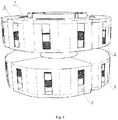
Figure 1 shows the external view of the first variant of the three-dimensional puzzle, where the guides are shaped as hollow cylinders, in which magnets can move, according to the invention as in the first independent claim; -
Figure 2 shows schematically the position of a magnet inside a hollow cylinder in one of its extreme positions, according to the invention as in the first independent claim; -
Figure 3 shows schematically the position of the magnet inside the hollow cylinder in the other of its extreme positions, according to the invention as in the first independent claim; -
Figure 4 shows a fragment of the three-dimensional puzzle in one of its variants, according to the invention as in the first independent claim; -
Figure 5 shows an alternative static external view of the three-dimensional puzzle, according to the second variant of the invention as in the first independent claim (here, magnets are installed in decorative elements and fixed to them); -
Figure 6 shows an alternative dynamic external view of the three-dimensional puzzle, according to the second variant of the invention as in the first independent claim; -
Figure 7 shows an individual movable sector of the three-dimensional puzzle, according to the second variant of the invention as in the first independent claim; with the guides, but without magnets and decorative elements, in which they are installed; -
Figure 8 shows an external view of the third variant of the three-dimensional puzzle, where the guides are made as hinges. One end of a hinge is connected to a magnet and the other, to a movable sector. The hinges are made so as let magnets move relative to the pinning point on the movable sector, according to the invention as in the first independent claim; -
Figure 9 shows one of the eight movable elements of the fourth variant of the three-dimensional puzzle shaped as a cube, where moveable magnets affect the external decorative surface via the mechanism shown inFig. 11 and move this surface to the extent of two extreme positions according to the invention as in the first independent claim; -
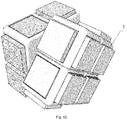
Figure 10 shows one of the eight elements of the fourth variant of the three-dimensional puzzle shown inFig. 9 , according to the invention as in the first independent claim, with external surfaces removed, and internal structures shows fractionally; -
Figure 11 shows the mechanism that translates movements from the permanent magnets moving inside guides to external decorative flat panels, which protract from and retract to the inside of the puzzle body, thus ensuring the layout of the configurations, according to the fourth variant of the invention as in the first independent claim; -
Figure 12 shows an external view of the variant of the three-dimensional puzzle in the shape of a cube, according to the fourth variant of the invention as in the first independent claim; -
Figure 13 shows the mechanism of interaction between individual elements of the puzzle on an example of two adjacent movable elements (shown by dashed lines), according to the fourth variant of the invention as in the first independent claim; -
Figure 14 shows an external view of the fifth variant of the three-dimensional puzzle, where magnets have the shape of spheres, according to the invention as in the second independent claim; -
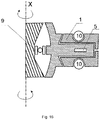
Figure 15 shows schematically a semisectional view of the fifth variant of the invention, according to the invention as in the second independent claim; -
Figure 16 shows schematically another vertical semisectional view of the fifth variant of the invention, according to the invention as in the second independent claim; -
Figure 17 shows schematically the positions of magnetic poles in one position of the fifth variant of the invention, according to the invention as in the second independent claim; -
Figure 18 shows an external view of the sixth variant of the three-dimensional puzzle, where magnets have the form of spheres, according to the invention as in the second independent claim; -
Figure 19 shows schematically a vertical semisectional view of the sixth variant of the invention, according to the invention as in the second independent claim; -
Figure 20 shows an external view of the seventh variant of the three-dimensional puzzle, where magnets have the form of spheres, according to the invention as in the second independent claim; -
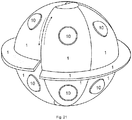
Figure 21 shows an external view of the seventh variant of the three-dimensional puzzle, where magnets have the form of spheres, in the process of shifting, according to the invention as in the second independent claim; -
Figure 22 shows the top view of the seventh variant of the three-dimensional puzzle, where magnets have the form of spheres, according to the invention as in the second independent claim; -
Figure 23 shows schematically the vertical semisectional view of the seventh variant of the invention, according to the invention as in the second independent claim; -
Figure 24 shows an external view of the eighth variant of the three-dimensional puzzle, where magnets are spherical, according to the invention as in the second independent claim; -
Figure 25 shows schematically a horizontal semisectional view of the eighth variant of the invention, according to the invention as in the second independent claim; -
Figure 26 shows schematically the design of the ninth variant of the puzzle, where magnets are shaped as cylinders, which move along grooves, and spheres, according to the invention as in a combination of the first and second independent claims; -
Figure 27 shows an external view of the tenth variant of the three-dimensional puzzle, where magnets are shaped as spheres, according to the invention as in the second independent claim; -
Figure 28 shows an external view of a sector of the tenth variant, where magnets are shaped as spheres, according to the invention as in the second independent claim; -
Figure 29 shows a vertical semisectional view of the tenth variant, where magnets are shaped as spheres, according to the invention as in the second independent claim; and -
Figure 30 shows schematically the design of the eleventh variant of the puzzle, where magnets are shaped as cylinders moving along grooves, according to the invention as in the first independent claim. - The labels in the Figures have the following meaning:
- 1 - movable sectors,
- 2 - guides,
- 3 - permanent magnets moving along guides,
- 4 - decorative movable element,
- 5 - stationary magnets,
- 6 - hollows,
- 7 - stationary part of the puzzle,
- 8 - optional minor magnet,
- 9 - bearing,
- 10 - spherical permanent magnets.
- According to the first independent claim and
Figures 1-11 , the three-dimensional puzzle hasmovable sectors 1, which are capable of varying their relative positions.Movable sectors 1 haveguides 2, which are connected to movable elements that change the configurations of the three-dimensional puzzle. The movable elements arepermanent magnets 3. Eachmagnet 3 is connected to itsown guide 2 and can be situated in one of the two extreme positions, 3A and 3B (seeFigs. 2 and 3 ). -
Guides 2 inmovable sectors 1 are located so that individual magnets can interact with each other and change their positions relative to the guide or the movable sector. - The guides can be shaped as cylinders, as well as the magnets (independently of the guides). However, in the general case, they can have other shapes: in particular,
magnets 3 can be inserted to or connected with additional movable elements, e.g., decorativemovable element 4. - Moreover, each
magnet 3 can be painted in two colors corresponding to its magnetic poles, to make the magnet orientation visible to the user. - If
guide 2 has the shape of a hollow cylinder, in whichmagnets 3 can move, one such channel can contain several sphericalpermanent magnets 3, or no magnets. Such hollow cylinders can cross, when static configurations of the puzzle vary, and, when crossed, let a magnet pass from one cylinder to another, or may not cross at all. - When they move under magnetic fields, magnets can activate additional elements of the puzzle, e.g., flags, as well as perform additional functions, e.g., close electric contacts.
- Generally speaking, movable and stationary magnets can be used simultaneously.
- Arrows show the direction of rotation of
movable sectors 1 and sphericalpermanent magnets 3. - One can see in
Fig. 4 that movable sectors can have several guides with magnets. - It is evident in
Fig. 5 that some parts of magnets or elements connected to them can go beyond the guides, i.e., the user can be informed about the position of a magnet in a hollow guide in the following ways: - movable sectors can be made of a transparent materials;
- the hollow guide can communicate with the environment, as in
Figs. 1 and4 ; - the magnet can overlap the edge of the hollow guide, when it is in one of its extreme positions, as in
Figs. 5 and6 . - In an alternative variant of the puzzle (see
Fig. 8 ), hinges connected to sphericalpermanent magnets 3 act asguides 2, and the positions of the magnets relative to the movable sectors are always visible to the user. - According to the second independent claim and
Figs. 14-30 , the three-dimensional puzzle hasmovable sectors 1 made in such a way that they can change their relative positions. The movable elements set in the sectors form various configurations of the puzzle. At least some of the movable elements arepermanent magnets 3, and the rest are made of a magnetically susceptible materials. Some magnets can be stationary (5), which is necessary to indicate magnetic influence on movable elements. - Movable sectors have
hollows 6, inside which the movable elements are situated, and each movable element can turn in its hollow under the action of other permanent magnets of the puzzle, as movable sectors change their relative positions. - The movable elements can be shaped as spheres or cylinders.
- Movable elements can be connected to decorative elements (not shown in the figures).
- A part of the puzzle can be stationary (7), e.g., its central element, and all other elements move relative to this stationary part.
-
Figure 24 shows the variant that contains simultaneously the movable elements, which rotate, while staying in their places in their hollows (6), thus changing their orientation, and the movable elements, which move along guides 2. - Each movable element of
magnet 10 can additionally be painted in two colors or have images marking the halves or parts of the element (usually corresponding to its magnetic pole), which lets the user tell one side of the magnet from the other. - As they move under magnetic fields, the magnets can touch additional parts of the puzzle (e.g., flags) and perform additional functions, e.g., close electric contacts.
- Generally speaking, movable and stationary magnets can be used simultaneously.
- The arrows in the figures show the direction of rotation of the movable sectors.
- The three-dimensional puzzle with movable sectors works as follows. Let us give a most comprehensive example of implementation of the invention bearing in mind that this example does not restrict applications of the invention.
- In the initial configuration of the three-dimensional puzzle with movable sectors, all magnets are paired off and are attracted to (or repulsed from) their counterparts. After "jumbling", i.e., chaotic repositioning, of the movable sectors, the problem is to revert the three-dimensional puzzle with movable sectors to its initial configuration.
- In the problem-solving process, as movable sectors change their positions, magnets also move in space.
- It is seen in
Fig. 1 that almost all visible magnets are attracted to each other, except those two that are in wrong positions. The task is to correct this situation by changing the positions of the movable sectors. - Movements of the magnets are due to both attraction and repulsion of individual magnets.
- In particular, there can exist various implementations of the puzzle, e.g., as in
Fig. 1 , where all magnets stay inside the puzzle and move along the channels formed by the cylindrical hollows of the guides. However, magnets can also protrude partially from the said hollows or leave them completely, as inFig. 8 . - Note that movable elements rotate under magnetic fields of the internal magnets, whose fields are oppositely directed, see
Fig. 17 . This process is visualized for the user by using different colors or images on the sides of the elements. - In this case, the known combination, which is the initial and final configuration of the puzzle, is established, and the mission of the player is to create a chaotic state first by moving the sectors around, and then solve the puzzle by putting the colors or images on the elements in order.
- The "UFO" variant (
Figs. 14-17 ) of the puzzle is a cylinder divided intosectors 1 that move relative tocentral part 7. The sectors havehollows 6, in which sphericalpermanent magnets 10 are situated. The sectional view (Fig. 15 ) shows that the central part can be situated between movable sectors as well and have hiddenstationary magnets 5, which affect the orientation of sphericalpermanent magnets 10, whensectors 1 move. - The "Bagel" variant of the puzzle (
Figs. 18-19 ) is a torus divided into sectors that move relative tocentral part 7. The sectors havehollows 6, in which sphericalpermanent magnets 10 are situated. The sectional view (Fig. 15 ) shows that the central part may be situated between movable sectors as well and have hiddenstationary magnets 5, which affect the orientation of sphericalpermanent magnets 10, whensectors 1 move. - The "Sirius" variant of the puzzle (
Figs. 20-23 ) is a sphere divided into sectors that move relative tocentral part 7. The sectors havehollows 6, in which sphericalpermanent magnets 10 are situated. - The "Ring" variant of the puzzle (
Figs. 24-25 ) is a combination of two interpenetrating cylinders (rings). The rings havehollows 6, in which sphericalpermanent magnets 10 are situated. The sectional view (Fig. 25 ) shows that the movable cylinders may have hiddenstationary magnets 5, which affect the orientation of sphericalpermanent magnets 10, whencylinders 1 move. - The "Mayan Cycle" variant of the puzzle (
Fig. 26 ) is a disk divided intomovable sectors 1. The sectors havehollows 6, in which sphericalpermanent magnets 10 are situated. Additionally, this variant containsmovable magnets 3 moving insidehollows 2. - The "Sphere" variant of the puzzle (
Fig. 27-29 ) is a sphere divided intomovable sectors 1. The sectors havehollows 6, in whichspherical magnets 10 andstationary magnets 5 are situated. - See
Figs. 1-4 . In this variant, the magnets are made as cylinders moving along guides. - See
Figs. 5-7 . This variant is similar to the first one, where magnets are made as cylinders and move along guides. - See
Fig. 8 . This variant is an alternative to the first two. The magnets are connected to levers, which serve as magnet guides. - See
Figs. 9-13 . In its appearance, this variant resembles a miniature version of Rubik's cube (2x2x2, though it can be 3x3x3, or similar options). However, its external aces protract from and retract to the inside of the cube (fragments of the faces of any shape can be used as well). Movements are translated by the movable magnets set on the internal, hidden sides of cube elements (1/8) as shown inFigs. 9 and10 . They shift external faces via mechanical transmissions (seeFig. 11 ), and the magnet polarities are chosen such that there exists a configuration, within which all planes are retracted inside or protracted outside at the same time. Within other configurations, some of them will be protracted, and the rest, retracted. Rotating elements of the puzzle around three axes, the user tries to find one of such configurations. After each turn, some planes are pulled into the puzzle body, and the rest are brought forward (seeFig. 12 (general view at the turning instant) andFig. 13 (schematic sectional view that shows howmagnets 3 interact)), thus making externaldecorative elements 4 connected tomagnets 3 go into or intomovable element 1. The semisectional view inFig. 13 shows two adjacentmovable elements 1 that are connected so that they can rotate aroundstationary center 7, and each movable elements has grooves with movingmagnets 3 connected todecorative elements 4. Asmovable elements 1 turn,magnets 3 interact and are attracted to or repulsed from each other depending on their magnetic orientation. Since they are connected todecorative elements 4, the latter move as well and the external view of the puzzle changes. Thus, the puzzle resembles Rubik's cube, whose geometry changes, rather than coloring. - See 14-17. In this variant, sixteen balls painted in two colors can rotate freely each in its own hollow. They are situated on the both sides of the puzzle, eight on each side. Their orientation is determined by eight hidden stationary magnets, two in each sector. The sectors can move in circles. Since the puzzle can rotate around the x axis and the y axis (see
Fig. 14 ), the sectors can shuffle their positions, and there exists a configuration, where the painted sides of all magnets will be turned to the inside (or outside) simultaneously. In other configurations, the sides of the balls are situated chaotically. - The player is to gather all balls according to their color (one color on the outside), which is not a simple task. To enhance the gaming perception and make the puzzle more pleasing to trifle with, the central part sits on a bearing fixed on the body, which allows turning the puzzle in the hands very fast holding it with two fingers on the opposite sides, like a spinner.
-
Figure 15 shows the X-axial sectional view of the device via the additional Y axis, andFig. 16 shows the X-axial sectional view of the device through sphericalpermanent magnets 10.Figure 17 represents shuffled positions of the poles of internal magnets. - See
Figs. 18-19 . The Bagel puzzle is a ring on a disk. The ring and a disk consist of four parts. The mechanism at the center of the disk, which is similar to the mechanism of 2x2x2 Rubik's cube, allows one to rotate parts of the disk around two axes.External sectors 1 can turn relative to the disk, which consists ofinternal sectors 1, as well as around two additional axes. Thus,movable sectors 1 can be shuffled. Sphericalpermanent magnets 10 are opposed to fixedmagnets 5 and oriented under their magnetic fields. Since sphericalpermanent magnets 10 are not fixed in their hollows, whilestationary magnets 5 have oppositely directed magnetic fields, they will occupy positions alternately facing oppositely directedmagnets 5, when externalmovable sectors 1 are turned around the disk. As the field direction varies, different sides of sphericalpermanent magnets 10 will turn in theirhollows 6. The opposing sides of sphericalpermanent magnets 10 are painted in different colors. Thus, when a player movessectors 1 around the disk, he or she will see a changing pattern of different colors of sphericalpermanent magnets 10. - The possibility to shuffle elements around additional axes makes the number of possible combinations greater.
Stationary magnets 5 and the painted sides of sphericalpermanent magnets 10 are arranged so that there is a configuration, when all sphericalpermanent magnets 10 on the outside are of the same color (or the opposite configuration, when all of them are of the opposite color). The mission of the player is to find one of these combinations and ignore all intermediate, mixed combinations. - See
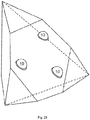
Figs. 20-23 . The idea of this puzzle variant is that allspherical magnets 10, which protrude slightly above the surface, should be turned so that only their sides painted the same color will be seen. In this variant, there are twelve balls, but there can be any number of them. They can turn, showing one side, which is painted or marked with an image. Sphericalpermanent magnets 10 rotate freely in theirhollows 6 and do not fall out.Internal magnets 5 are hidden beyond the external ones and are fixed in the internal element. The positions of their magnetic poles are always fixed. - External spherical
permanent magnets 10 move together withsectors 1 both along the equator and in the meridional direction (in this case, the puzzle splits in two, in a manner of speaking). Thus,sectors 1 can be shuffled by the player, switched from the "southern" hemisphere to the "north" and back, mixing the sequence up. - Since
external magnets 5 are fixed, and the poles are oriented in the opposite directions, built-in externalspherical magnets 10 will reverse during each movement ofsectors 1, as they are reoriented obeying the position ofinternal magnets 5. The sides of sphericalpermanent magnets 10 look differently (they are of different colors or marked with different images/labels), moving a sector will change the wayspherical magnets 10 look. - For example, opposite sides of spherical
permanent magnets 10 may be painted blue and red, or have images of open and closed eyes on them, or bear numbers on one side and no numbers, on the other. - Internal and
external magnets 5 are arranged so that at least one of their configurations corresponds to the case, where all matching sides (of the same color or bearing the same marks) sphericalpermanent magnets 3 look outwards. However, the indication does not correspond to the poles of the magnets, but is arranged chaotically. - The mission of the player is first to shuffle the puzzle, e.g., to make the combination of the colors on the sides of the magnetic balls look chaotic. Then, he or she should rearrange the configuration of the balls, collecting one color on the outside, and the other, on the inside of the puzzle. Experience has shown that this is an intricate and sophisticated problem that can take much time to solve.
- See
Figs. 24-25 . In this variant of the puzzle, two rings (cylinders) are used, which can move relative to each other. - The external ring contains spherical
permanent magnets 10, which rotate freely in their retainers. The internal ring hides stationarypermanent magnets 5, whose fields determines orientation of sphericalpermanent magnets 10 facing them. - Each movement of the rings changes the combination of colors, because the poles of the internal magnets are oriented in different directions, and opposite sides of
spheres 5 are painted differently. Since the amount of combinations is fairly small, and the structure can be rotated around one axis only, the Ring is a very simple puzzle, and the player will check all possible configurations easily and very fast. However, it is useful as a stress-relieving toy similar to a fidget spinner, which can be fidgeted with and will enchant the use constantly by new combinations of colors or images after each turn. - See
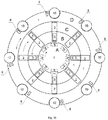
Fig. 26 . This variant of the puzzle combines the principle of rotating magnetic spheres as in the second invention variant and moving magnetic cylinders, as in the first variant. - Disk A and rings B, C, and D around it can move relative to each other around a common center.
Magnets 5 are built into disk A and affect the positions of sphericalpermanent magnets 3 insideguides 2 by attracting or pushing them back depending on the current relative positions of rings A and B and relative polarities of sphericalpermanent magnets permanent magnet 10 turning it this way or that (opposite sides of sphericalpermanent magnet 10 are painted in different colors or marked with different labels/images). - Optional
minor magnet 8 directs sphericalpermanent magnet 10 to an intermediate position, for the sake of certainty. For example, ifmagnet 8 is situated too far, it does not have a sufficient effect on the orientation of sphericalpermanent magnet 10. - The player's mission is to set
magnets 3 in the same position and make the identically marked sides ofmagnets 10 look inward or outward, which is a rather sophisticated task. - See
Figs. 27-29 . This variant of the puzzle consists of eight identical sections, which can rotate around three axes, as in 2x2x2 Rubik's cube, whose standard mechanism is used inside the puzzle. In this case, each section has three sphericalpermanent magnets 10 set on three different sides of the section. Additionally, a fixed magnet is built into the depth of each section. Its magnetic pole is directed at the corresponding magnetic sphere in the adjacent section and determines its orientation in such a way, that the sphere turns and shows one of its sides painted a certain color or bearing a certain image (e.g., an open or closed eye). - A schematic sectional view is shown in
Fig. 29 . - The orientation of the magnetic poles of the internal magnets hidden in different sectors is different. The player's mission is to rearrange the orientation of all external spherical magnets in such a way that identically colored sides would be seen, i.e., order the chaotic configuration of the puzzle, which is a rather sophisticated problem.
- See
Fig. 30 . This is a simplified version of the ninth implementation example, Mayan Cycle, where external rotatingpermanent magnets 10 are not used, since they are replaced with permanent fixedmagnets 5. The player should rearrange only movablecylindrical magnets 3, which are visible, e.g., through the transparent external surface. - The three-dimensional puzzle with movable sectors can be implemented in practice by a specialist and, when implemented, achieve the stated purpose, which makes it possible to conclude that the criterion of industrial applicability is complied with for this invention.
- In accordance with the proposed invention, a prototype of the three-dimensional puzzle with movable sectors has been manufactured.
- Tests of the prototype of the three-dimensional puzzle with movable sectors have demonstrated that:
- the puzzle allows the player to move movable sectors easily, while preventing its integrity;
- as movable sectors move around, the magnets, which are situated in hollow guides or fixed on hinges, interact and change their positions relative to the movable sector depending on their environment.
Claims (10)
- A three-dimensional puzzle with movable sectors, which can change their positions relative to each other and have guides that allow movable elements to move and form various configurations of the three-dimensional puzzle, differing in that the movable elements are manufactured as permanent magnets, and the motion of each magnet is limited by its own guide, and each magnet can be situated in at least one of the two extreme positions, and the guides in movable sectors are installed so that different magnets can interact with each other and change their positions relative to the movable elements.
- A three-dimensional puzzle according to claim 1, characterized in that the guides are shaped as hollow cylinders, inside which magnets can move.
- A three dimensional puzzle according to claim 1, characterized in that the magnets are shaped as cylinders.
- A three-dimensional puzzle according to claim 1, characterized in that the magnets are encased in decorative elements.
- A three-dimensional puzzle according to claim 1, characterized in that each guide is made as a hinge with one end connected to the magnet, and the other, to the movable sector, which hinge allow the magnets to move relative to the pinning point of the guide on the movable sector.
- A three-dimensional puzzle according to claim 1, characterized in that the magnets are encased in movable elements, or decorative elements, which move together with the magnets, are fixed on the magnets.
- A three-dimensional puzzle with movable sectors capable of changing their positions relative to each other, in which movable elements are installed that form different configurations of the three-dimensional puzzle, differing in that at least some of the movable elements are made as permanent magnets, while the other movable elements are made of magnetically susceptible materials, and the movable sectors have hollows, inside which the movable elements are installed, and each movable element can rotate in the hollow it occupies, when affected by other permanent magnets of the puzzle, as the movable sectors change their positions relative to each other.
- A three-dimensional puzzle according to claim 7, characterized in that the movable elements are shaped as spheres.
- A three-dimensional puzzle according to claim 7, characterized in that the movable elements are shaped as cylinders.
- A three-dimensional puzzle according to claim 7, characterized in that the movable elements are connected with decorative elements.
Applications Claiming Priority (3)
| Application Number | Priority Date | Filing Date | Title |
|---|---|---|---|
| RU2018117181A RU2667861C1 (en) | 2018-05-09 | 2018-05-09 | Three-dimensional puzzle with movable sectors |
| RU2019111119A RU2701264C1 (en) | 2019-04-12 | 2019-04-12 | Three-dimensional puzzle with moving sectors |
| PCT/RU2019/050058 WO2019216794A1 (en) | 2018-05-09 | 2019-05-01 | Three-dimensional puzzle with movable segments |
Publications (4)
| Publication Number | Publication Date |
|---|---|
| EP3799940A1 true EP3799940A1 (en) | 2021-04-07 |
| EP3799940A4 EP3799940A4 (en) | 2022-05-04 |
| EP3799940B1 EP3799940B1 (en) | 2024-11-13 |
| EP3799940C0 EP3799940C0 (en) | 2024-11-13 |
Family
ID=68467478
Family Applications (1)
| Application Number | Title | Priority Date | Filing Date |
|---|---|---|---|
| EP19799304.1A Active EP3799940B1 (en) | 2018-05-09 | 2019-05-01 | Three-dimensional puzzle with movable segments |
Country Status (5)
| Country | Link |
|---|---|
| US (1) | US20210106908A1 (en) |
| EP (1) | EP3799940B1 (en) |
| JP (1) | JP2021522876A (en) |
| CN (1) | CN111818977B (en) |
| WO (1) | WO2019216794A1 (en) |
Cited By (1)
| Publication number | Priority date | Publication date | Assignee | Title |
|---|---|---|---|---|
| US20220296994A1 (en) * | 2020-10-21 | 2022-09-22 | Ilya V. Osipov | Spherical 3-D puzzle with moving sectors |
Family Cites Families (13)
| Publication number | Priority date | Publication date | Assignee | Title |
|---|---|---|---|---|
| HU182323B (en) * | 1981-04-27 | 1983-12-28 | Fok Gyem Finommech Elekt | Spatial sphere toy |
| JPH0313351Y2 (en) * | 1985-11-07 | 1991-03-27 | ||
| KR920008960Y1 (en) * | 1990-03-05 | 1992-12-26 | 유지하 | 3D block fitting mechanism using cube |
| US5318302A (en) * | 1993-01-26 | 1994-06-07 | Ivan Moscovich | Magnetic puzzle |
| JPH1147435A (en) * | 1997-08-05 | 1999-02-23 | Seiko Precision Kk | Magnet puzzle device |
| KR200360263Y1 (en) * | 2004-06-02 | 2004-08-26 | (주)폴리브레인 | Puzzle block capable of maintaining its shape |
| JP4309861B2 (en) * | 2005-03-07 | 2009-08-05 | 株式会社タイトー | Game equipment |
| TW200726039A (en) * | 2005-12-29 | 2007-07-01 | xiao-ting Lu | A rotation device with magnetic force |
| ES2282051B1 (en) * | 2007-02-02 | 2008-09-16 | Educocio, S.L. | DIDACTIC GAME PIECE. |
| IT1402311B1 (en) * | 2010-10-12 | 2013-08-30 | Galli | SPHERE FOR GAME OF MANUAL SKILLS OF THE TYPE INCLUDING A VARIETY OF SLIDING ELEMENTS MANUALLY ON ITS SPHERICAL SURFACE. |
| RU2489191C2 (en) * | 2011-06-30 | 2013-08-10 | Общество С Ограниченной Ответственностью "Рашен.Ру" | Three-dimensional toy-puzzle |
| CN104784926B (en) * | 2015-05-12 | 2018-08-14 | 陈宇 | A kind of picture mosaic |
| US9409080B1 (en) * | 2015-06-02 | 2016-08-09 | Ju-Hsun Yang | Educational ball |
-
2019
- 2019-05-01 CN CN201980017555.8A patent/CN111818977B/en active Active
- 2019-05-01 JP JP2020555153A patent/JP2021522876A/en active Pending
- 2019-05-01 EP EP19799304.1A patent/EP3799940B1/en active Active
- 2019-05-01 WO PCT/RU2019/050058 patent/WO2019216794A1/en not_active Ceased
-
2020
- 2020-10-21 US US16/974,148 patent/US20210106908A1/en not_active Abandoned
Cited By (2)
| Publication number | Priority date | Publication date | Assignee | Title |
|---|---|---|---|---|
| US20220296994A1 (en) * | 2020-10-21 | 2022-09-22 | Ilya V. Osipov | Spherical 3-D puzzle with moving sectors |
| US11813541B2 (en) * | 2020-10-21 | 2023-11-14 | Ilya V. Osipov | Spherical 3-D puzzle with moving sectors |
Also Published As
| Publication number | Publication date |
|---|---|
| CN111818977B (en) | 2025-02-21 |
| CN111818977A (en) | 2020-10-23 |
| US20210106908A1 (en) | 2021-04-15 |
| WO2019216794A1 (en) | 2019-11-14 |
| JP2021522876A (en) | 2021-09-02 |
| EP3799940A4 (en) | 2022-05-04 |
| EP3799940B1 (en) | 2024-11-13 |
| EP3799940C0 (en) | 2024-11-13 |
Similar Documents
| Publication | Publication Date | Title |
|---|---|---|
| EP1833579B1 (en) | A three-dimensional puzzle or puzzle or display platform | |
| US20090127783A1 (en) | Shiftable cubic puzzle with superimposed slidable elements | |
| US7823884B2 (en) | Spherical puzzle | |
| WO1982000101A1 (en) | Toy for symbol variations | |
| EP3799940B1 (en) | Three-dimensional puzzle with movable segments | |
| WO1983001203A1 (en) | Three-dimensional geometric puzzle | |
| RU2403946C1 (en) | Volume brainteaser | |
| RU2701264C1 (en) | Three-dimensional puzzle with moving sectors | |
| RU2699846C1 (en) | Puzzle is a magnetic constructor | |
| RU2667861C1 (en) | Three-dimensional puzzle with movable sectors | |
| US11813541B2 (en) | Spherical 3-D puzzle with moving sectors | |
| US20220203220A1 (en) | 6-Directional Icosidodecahedron Rotational Puzzle | |
| KR200450701Y1 (en) | Puzzle assembly | |
| US12109502B2 (en) | Cubical 3-D magnetic puzzle with movable sectors | |
| RU2777375C2 (en) | Puzzle game | |
| KR20110104143A (en) | Surface structure of assembly magnet block | |
| RU2266148C1 (en) | Puzzle for development of operative thinking | |
| RU2781298C1 (en) | Puzzle with a magnetic system (options) | |
| KR200453929Y1 (en) | Knock-type writing instrument with play function | |
| SU1719001A1 (en) | Three-dimensional logic game | |
| RU2253496C1 (en) | Three-dimensional combination puzzle | |
| WO2023191657A1 (en) | Puzzle with magnetic system (variants) | |
| SU1755840A1 (en) | Puzzle-game sphere | |
| WO2009062294A1 (en) | Keyed access to hollow three-dimensional puzzles | |
| WO2022112826A1 (en) | Game of strategy |
Legal Events
| Date | Code | Title | Description |
|---|---|---|---|
| STAA | Information on the status of an ep patent application or granted ep patent |
Free format text: STATUS: THE INTERNATIONAL PUBLICATION HAS BEEN MADE |
|
| PUAI | Public reference made under article 153(3) epc to a published international application that has entered the european phase |
Free format text: ORIGINAL CODE: 0009012 |
|
| STAA | Information on the status of an ep patent application or granted ep patent |
Free format text: STATUS: REQUEST FOR EXAMINATION WAS MADE |
|
| 17P | Request for examination filed |
Effective date: 20201203 |
|
| AK | Designated contracting states |
Kind code of ref document: A1 Designated state(s): AL AT BE BG CH CY CZ DE DK EE ES FI FR GB GR HR HU IE IS IT LI LT LU LV MC MK MT NL NO PL PT RO RS SE SI SK SM TR |
|
| AX | Request for extension of the european patent |
Extension state: BA ME |
|
| DAV | Request for validation of the european patent (deleted) | ||
| DAX | Request for extension of the european patent (deleted) | ||
| A4 | Supplementary search report drawn up and despatched |
Effective date: 20220407 |
|
| RIC1 | Information provided on ipc code assigned before grant |
Ipc: A63F 9/34 20060101ALI20220401BHEP Ipc: A63F 9/08 20060101AFI20220401BHEP |
|
| GRAP | Despatch of communication of intention to grant a patent |
Free format text: ORIGINAL CODE: EPIDOSNIGR1 |
|
| STAA | Information on the status of an ep patent application or granted ep patent |
Free format text: STATUS: GRANT OF PATENT IS INTENDED |
|
| INTG | Intention to grant announced |
Effective date: 20240605 |
|
| GRAS | Grant fee paid |
Free format text: ORIGINAL CODE: EPIDOSNIGR3 |
|
| GRAA | (expected) grant |
Free format text: ORIGINAL CODE: 0009210 |
|
| STAA | Information on the status of an ep patent application or granted ep patent |
Free format text: STATUS: THE PATENT HAS BEEN GRANTED |
|
| AK | Designated contracting states |
Kind code of ref document: B1 Designated state(s): AL AT BE BG CH CY CZ DE DK EE ES FI FR GB GR HR HU IE IS IT LI LT LU LV MC MK MT NL NO PL PT RO RS SE SI SK SM TR |
|
| RAP3 | Party data changed (applicant data changed or rights of an application transferred) |
Owner name: OSIPOV, ILYA VIKTOROVICH |
|
| REG | Reference to a national code |
Ref country code: GB Ref legal event code: FG4D |
|
| RIN1 | Information on inventor provided before grant (corrected) |
Inventor name: OSIPOV, ILYA VIKTOROVICH |
|
| REG | Reference to a national code |
Ref country code: CH Ref legal event code: EP |
|
| REG | Reference to a national code |
Ref country code: IE Ref legal event code: FG4D |
|
| REG | Reference to a national code |
Ref country code: DE Ref legal event code: R096 Ref document number: 602019061998 Country of ref document: DE |
|
| U01 | Request for unitary effect filed |
Effective date: 20241212 |
|
| U07 | Unitary effect registered |
Designated state(s): AT BE BG DE DK EE FI FR IT LT LU LV MT NL PT RO SE SI Effective date: 20241223 |
|
| PG25 | Lapsed in a contracting state [announced via postgrant information from national office to epo] |
Ref country code: IS Free format text: LAPSE BECAUSE OF FAILURE TO SUBMIT A TRANSLATION OF THE DESCRIPTION OR TO PAY THE FEE WITHIN THE PRESCRIBED TIME-LIMIT Effective date: 20250313 Ref country code: HR Free format text: LAPSE BECAUSE OF FAILURE TO SUBMIT A TRANSLATION OF THE DESCRIPTION OR TO PAY THE FEE WITHIN THE PRESCRIBED TIME-LIMIT Effective date: 20241113 |
|
| PG25 | Lapsed in a contracting state [announced via postgrant information from national office to epo] |
Ref country code: ES Free format text: LAPSE BECAUSE OF FAILURE TO SUBMIT A TRANSLATION OF THE DESCRIPTION OR TO PAY THE FEE WITHIN THE PRESCRIBED TIME-LIMIT Effective date: 20241113 |
|
| PG25 | Lapsed in a contracting state [announced via postgrant information from national office to epo] |
Ref country code: NO Free format text: LAPSE BECAUSE OF FAILURE TO SUBMIT A TRANSLATION OF THE DESCRIPTION OR TO PAY THE FEE WITHIN THE PRESCRIBED TIME-LIMIT Effective date: 20250213 |
|
| PG25 | Lapsed in a contracting state [announced via postgrant information from national office to epo] |
Ref country code: GR Free format text: LAPSE BECAUSE OF FAILURE TO SUBMIT A TRANSLATION OF THE DESCRIPTION OR TO PAY THE FEE WITHIN THE PRESCRIBED TIME-LIMIT Effective date: 20250214 |
|
| PG25 | Lapsed in a contracting state [announced via postgrant information from national office to epo] |
Ref country code: PL Free format text: LAPSE BECAUSE OF FAILURE TO SUBMIT A TRANSLATION OF THE DESCRIPTION OR TO PAY THE FEE WITHIN THE PRESCRIBED TIME-LIMIT Effective date: 20241113 |
|
| PG25 | Lapsed in a contracting state [announced via postgrant information from national office to epo] |
Ref country code: RS Free format text: LAPSE BECAUSE OF FAILURE TO SUBMIT A TRANSLATION OF THE DESCRIPTION OR TO PAY THE FEE WITHIN THE PRESCRIBED TIME-LIMIT Effective date: 20250213 |
|
| PG25 | Lapsed in a contracting state [announced via postgrant information from national office to epo] |
Ref country code: SM Free format text: LAPSE BECAUSE OF FAILURE TO SUBMIT A TRANSLATION OF THE DESCRIPTION OR TO PAY THE FEE WITHIN THE PRESCRIBED TIME-LIMIT Effective date: 20241113 |
|
| U20 | Renewal fee for the european patent with unitary effect paid |
Year of fee payment: 7 Effective date: 20250530 |
|
| PG25 | Lapsed in a contracting state [announced via postgrant information from national office to epo] |
Ref country code: SK Free format text: LAPSE BECAUSE OF FAILURE TO SUBMIT A TRANSLATION OF THE DESCRIPTION OR TO PAY THE FEE WITHIN THE PRESCRIBED TIME-LIMIT Effective date: 20241113 |
|
| PG25 | Lapsed in a contracting state [announced via postgrant information from national office to epo] |
Ref country code: CZ Free format text: LAPSE BECAUSE OF FAILURE TO SUBMIT A TRANSLATION OF THE DESCRIPTION OR TO PAY THE FEE WITHIN THE PRESCRIBED TIME-LIMIT Effective date: 20241113 |
|
| PLBE | No opposition filed within time limit |
Free format text: ORIGINAL CODE: 0009261 |
|
| STAA | Information on the status of an ep patent application or granted ep patent |
Free format text: STATUS: NO OPPOSITION FILED WITHIN TIME LIMIT |
|
| 26N | No opposition filed |
Effective date: 20250814 |
|
| REG | Reference to a national code |
Ref country code: CH Ref legal event code: H13 Free format text: ST27 STATUS EVENT CODE: U-0-0-H10-H13 (AS PROVIDED BY THE NATIONAL OFFICE) Effective date: 20251223 |
|
| PG25 | Lapsed in a contracting state [announced via postgrant information from national office to epo] |
Ref country code: CH Free format text: LAPSE BECAUSE OF NON-PAYMENT OF DUE FEES Effective date: 20250531 |
|
| GBPC | Gb: european patent ceased through non-payment of renewal fee |
Effective date: 20250501 |
|
| PG25 | Lapsed in a contracting state [announced via postgrant information from national office to epo] |
Ref country code: MC Free format text: LAPSE BECAUSE OF FAILURE TO SUBMIT A TRANSLATION OF THE DESCRIPTION OR TO PAY THE FEE WITHIN THE PRESCRIBED TIME-LIMIT Effective date: 20241113 |
|
| PG25 | Lapsed in a contracting state [announced via postgrant information from national office to epo] |
Ref country code: GB Free format text: LAPSE BECAUSE OF NON-PAYMENT OF DUE FEES Effective date: 20250501 |
|
| PG25 | Lapsed in a contracting state [announced via postgrant information from national office to epo] |
Ref country code: IE Free format text: LAPSE BECAUSE OF NON-PAYMENT OF DUE FEES Effective date: 20250501 |