EP3794522B1 - Verfolgung der einhaltung von lebensmittelsicherheitsrisiko und -hygiene - Google Patents
Verfolgung der einhaltung von lebensmittelsicherheitsrisiko und -hygiene Download PDFInfo
- Publication number
- EP3794522B1 EP3794522B1 EP19728258.5A EP19728258A EP3794522B1 EP 3794522 B1 EP3794522 B1 EP 3794522B1 EP 19728258 A EP19728258 A EP 19728258A EP 3794522 B1 EP3794522 B1 EP 3794522B1
- Authority
- EP
- European Patent Office
- Prior art keywords
- data
- food establishment
- food
- risk
- establishment
- Prior art date
- Legal status (The legal status is an assumption and is not a legal conclusion. Google has not performed a legal analysis and makes no representation as to the accuracy of the status listed.)
- Active
Links
Images


Classifications
-
- G—PHYSICS
- G06—COMPUTING OR CALCULATING; COUNTING
- G06Q—INFORMATION AND COMMUNICATION TECHNOLOGY [ICT] SPECIALLY ADAPTED FOR ADMINISTRATIVE, COMMERCIAL, FINANCIAL, MANAGERIAL OR SUPERVISORY PURPOSES; SYSTEMS OR METHODS SPECIALLY ADAPTED FOR ADMINISTRATIVE, COMMERCIAL, FINANCIAL, MANAGERIAL OR SUPERVISORY PURPOSES, NOT OTHERWISE PROVIDED FOR
- G06Q10/00—Administration; Management
- G06Q10/06—Resources, workflows, human or project management; Enterprise or organisation planning; Enterprise or organisation modelling
-
- G—PHYSICS
- G06—COMPUTING OR CALCULATING; COUNTING
- G06Q—INFORMATION AND COMMUNICATION TECHNOLOGY [ICT] SPECIALLY ADAPTED FOR ADMINISTRATIVE, COMMERCIAL, FINANCIAL, MANAGERIAL OR SUPERVISORY PURPOSES; SYSTEMS OR METHODS SPECIALLY ADAPTED FOR ADMINISTRATIVE, COMMERCIAL, FINANCIAL, MANAGERIAL OR SUPERVISORY PURPOSES, NOT OTHERWISE PROVIDED FOR
- G06Q10/00—Administration; Management
- G06Q10/06—Resources, workflows, human or project management; Enterprise or organisation planning; Enterprise or organisation modelling
- G06Q10/063—Operations research, analysis or management
- G06Q10/0635—Risk analysis of enterprise or organisation activities
-
- G—PHYSICS
- G06—COMPUTING OR CALCULATING; COUNTING
- G06F—ELECTRIC DIGITAL DATA PROCESSING
- G06F9/00—Arrangements for program control, e.g. control units
- G06F9/06—Arrangements for program control, e.g. control units using stored programs, i.e. using an internal store of processing equipment to receive or retain programs
- G06F9/46—Multiprogramming arrangements
- G06F9/54—Interprogram communication
- G06F9/542—Event management; Broadcasting; Multicasting; Notifications
-
- G—PHYSICS
- G06—COMPUTING OR CALCULATING; COUNTING
- G06Q—INFORMATION AND COMMUNICATION TECHNOLOGY [ICT] SPECIALLY ADAPTED FOR ADMINISTRATIVE, COMMERCIAL, FINANCIAL, MANAGERIAL OR SUPERVISORY PURPOSES; SYSTEMS OR METHODS SPECIALLY ADAPTED FOR ADMINISTRATIVE, COMMERCIAL, FINANCIAL, MANAGERIAL OR SUPERVISORY PURPOSES, NOT OTHERWISE PROVIDED FOR
- G06Q10/00—Administration; Management
- G06Q10/08—Logistics, e.g. warehousing, loading or distribution; Inventory or stock management
- G06Q10/087—Inventory or stock management, e.g. order filling, procurement or balancing against orders
- G06Q10/0877—Inventory or stock management, e.g. order filling, procurement or balancing against orders by inventory control or reporting using inventory tracking or counting
- G06Q10/08774—Inventory or stock management, e.g. order filling, procurement or balancing against orders by inventory control or reporting using inventory tracking or counting using consumer inventory reporting
-
- G—PHYSICS
- G06—COMPUTING OR CALCULATING; COUNTING
- G06Q—INFORMATION AND COMMUNICATION TECHNOLOGY [ICT] SPECIALLY ADAPTED FOR ADMINISTRATIVE, COMMERCIAL, FINANCIAL, MANAGERIAL OR SUPERVISORY PURPOSES; SYSTEMS OR METHODS SPECIALLY ADAPTED FOR ADMINISTRATIVE, COMMERCIAL, FINANCIAL, MANAGERIAL OR SUPERVISORY PURPOSES, NOT OTHERWISE PROVIDED FOR
- G06Q30/00—Commerce
- G06Q30/018—Certifying business or products
-
- G—PHYSICS
- G16—INFORMATION AND COMMUNICATION TECHNOLOGY [ICT] SPECIALLY ADAPTED FOR SPECIFIC APPLICATION FIELDS
- G16H—HEALTHCARE INFORMATICS, i.e. INFORMATION AND COMMUNICATION TECHNOLOGY [ICT] SPECIALLY ADAPTED FOR THE HANDLING OR PROCESSING OF MEDICAL OR HEALTHCARE DATA
- G16H20/00—ICT specially adapted for therapies or health-improving plans, e.g. for handling prescriptions, for steering therapy or for monitoring patient compliance
- G16H20/60—ICT specially adapted for therapies or health-improving plans, e.g. for handling prescriptions, for steering therapy or for monitoring patient compliance relating to nutrition control, e.g. diets
-
- G—PHYSICS
- G16—INFORMATION AND COMMUNICATION TECHNOLOGY [ICT] SPECIALLY ADAPTED FOR SPECIFIC APPLICATION FIELDS
- G16H—HEALTHCARE INFORMATICS, i.e. INFORMATION AND COMMUNICATION TECHNOLOGY [ICT] SPECIALLY ADAPTED FOR THE HANDLING OR PROCESSING OF MEDICAL OR HEALTHCARE DATA
- G16H40/00—ICT specially adapted for the management or administration of healthcare resources or facilities; ICT specially adapted for the management or operation of medical equipment or devices
- G16H40/20—ICT specially adapted for the management or administration of healthcare resources or facilities; ICT specially adapted for the management or operation of medical equipment or devices for the management or administration of healthcare resources or facilities, e.g. managing hospital staff or surgery rooms
-
- G—PHYSICS
- G06—COMPUTING OR CALCULATING; COUNTING
- G06Q—INFORMATION AND COMMUNICATION TECHNOLOGY [ICT] SPECIALLY ADAPTED FOR ADMINISTRATIVE, COMMERCIAL, FINANCIAL, MANAGERIAL OR SUPERVISORY PURPOSES; SYSTEMS OR METHODS SPECIALLY ADAPTED FOR ADMINISTRATIVE, COMMERCIAL, FINANCIAL, MANAGERIAL OR SUPERVISORY PURPOSES, NOT OTHERWISE PROVIDED FOR
- G06Q50/00—Information and communication technology [ICT] specially adapted for implementation of business processes of specific business sectors, e.g. utilities or tourism
- G06Q50/10—Services
- G06Q50/12—Hotels or restaurants
Definitions
- This disclosure relates generally to food safety and sanitation risk and compliance systems and methods.
- Embodiments disclosed herein can analyze data from a variety of sources and output information that can provide insights into specific risk factors in a way that can facilitate targeted action to address such risk factors. As such, embodiments disclosed herein can allow a user to proactively reduce risks relating to food safety and sanitation. Furthermore, embodiments disclosed herein can allow a user to allocate finite resources to certain risk factors specific to that user that are most likely to result in the highest reduction in overall food safety and sanitation risk.
- One exemplary embodiment includes a food safety risk system.
- This system embodiment includes a server connected to a network.
- the server includes a data collection module, a database interaction module, and a predictive analysis module.
- the data collection module is configured to collect data, via the network, from one or more data sources, the data being related to food safety risk and sanitation compliance tracking of a food establishment.
- the database interaction module is configured to store, into a database, data collected by the data collection module and to retrieve data from the database.
- the predictive analysis module is configured to analyze data in the database and calculate, based on the analyzed data, a probability of the food establishment violating a health code.
- the server also includes a report generation module.
- the report generation module is configured to generate a report including the probability of the food establishment violating the health code.
- the report generator is configured to transmit the report to a client device for display.
- the probability of the food establishment violating the health code can include a predictive risk score for the food establishment.
- the probability of the food establishment violating the health code can include the predictive risk score for the food establishment and a plurality of individual risk indicators for the food establishment.
- Each of the plurality of individual risk indicators for the food establishment can provide an assessment of risk relative to other food establishments. Examples that can be included as the plurality of individual risk indicators for the food establishment include personal hygiene, cleaning and sanitation, time and temperature, and documentation. Further examples that can be included as the plurality of individual risk indicators for the food establishment include cross-contamination, pest control, date marking, and other, or miscellaneous, data.
- Another exemplary embodiment includes a method implemented on at least one server connected to a network.
- This method embodiment can include the step of collecting data, via the network, from one or more data sources, the data being related to food safety risk and sanitation compliance tracking of a food establishment.
- This method can further include the steps of storing, into a database, the collected data, retrieving data from the database, analyzing data in the database, and calculating, based on the analyzed data, a probability of the food establishment violating a health code.
- the method can include a step of generating a report including the probability of the food establishment violating the health code. This further embodiment may also include the step of transmitting the report to a client device for display.
- the probability of the food establishment violating the health code can include a predictive risk score for the food establishment.
- the probability of the food establishment violating the health code can include the predictive risk score for the food establishment and a plurality of individual risk indicators for the food establishment.
- Each of the plurality of individual risk indicators for the food establishment can provide an assessment of risk relative to other food establishments. Examples that can be included as the plurality of individual risk indicators for the food establishment include personal hygiene, cleaning and sanitation, time and temperature, and documentation. Further examples that can be included as the plurality of individual risk indicators for the food establishment include cross-contamination, pest control, date marking, and other, or miscellaneous, data.
- a further embodiment includes a non-transitory computer-readable medium including instructions.
- these instructions When executed by a computer, these instructions cause the computer to collect data, via a network, from one or more data sources, the data being related to food safety risk and sanitation compliance tracking of a food establishment.
- these instructions can further cause the computer to store, into a database, the collected data, retrieve data from the database, analyze data in the database, and calculate, based on the analyzed data, a probability of the food establishment violating a health code.
- the above instructions when executed by a computer, can further cause the computer to generate a report including the probability of the food establishment violating the health code.
- These instructions when executed by a computer, may also cause the computer to transmit the report to a client device for display.
- the instructions when executed by a computer, can cause the computer to calculate the probability of the food establishment violating the health code to include a predictive risk score for the food establishment.
- the probability of the food establishment violating the health code can be calculated to include the predictive risk score for the food establishment and a plurality of individual risk indicators for the food establishment.
- Each of the plurality of individual risk indicators for the food establishment can be calculated to provide an assessment of risk relative to other food establishments. Examples that can be calculated as the plurality of individual risk indicators for the food establishment include personal hygiene, cleaning and sanitation, time and temperature, and documentation. Further examples that can be included as the plurality of individual risk indicators for the food establishment include cross-contamination, pest control, date marking, and other, or miscellaneous, data.
- the "self-audits" are a series of questions that may relate to one or more departments/areas in a food establishment. Each question may also be associated with one or more sections of one or more health regulations relevant to the question. The answer to each question may result in zero or more "findings.” In an embodiment, the number of findings possible for a given question has no upper bound. A finding may be one of two types: a "critical” finding, which represents a health code violation that is sufficiently severe to warrant closing the food establishment, and a "recommended practice” finding, which represents a health code violation that does not warrant closing the food establishment, but which the food establishment must correct.
- a comprehensive food safety and sanitation risk and compliance system is disclosed.
- data from various sources is integrated into a database (or data store).
- the sources of data may include one or more of the following: self-audits (e.g., performed by a food establishment itself or by a third party), pest elimination services, health department inspections, dispensing equipment that monitors sanitation compliance, and various sensors within and/or near the food establishment.
- the data is analyzed to calculate a probability of a food establishment violating health codes in the future.
- Various preventative measures may then be performed in response to the calculated probability.
- Components of the system may include:
- This platform may be customized for multiple food safety market segments. Furthermore, this platform may also be customized to any enterprise that requires people in a multitude of remote sites to collect data and utilize analysis from these diverse data sources.
- FIG. 1 illustrates a system 100 for food safety risk and sanitation compliance tracking, according to an example embodiment.
- the system may include a food establishment, one or more servers, one or more data stores, one or more client devices, and one or more interconnected networks (e.g., the Internet).
- networks e.g., the Internet
- the food establishment may be a retail store, a quick serve restaurant, a restaurant, a deli, a bakery, etc.
- the food establishment may include one or more sensors, and one or more dispensers (e.g., chemical dispensers).
- the one or more sensors may include one or more of thermometers, hygrometers, barometers, etc.
- the one or more sensors may track and report one or more physical, chemical, and/or environmental conditions, such as temperature, pressure, humidity, etc.
- the one or more dispensers may track and report dispensing events, which may include the matter dispensed (e.g., a liquid chemical compound, baking soda, water, etc.), the quantity dispensed, and a timestamp of the dispensing event.
- the system may use data from the one or more dispensers to identify areas of risk and/or overuse, track labor and utility usage, and to identify and alert when critical issues occur and/or are likely to occur.
- the one or more data stores may store data from one or more sources, such as pest control data, health department inspection data, self-audit data, self-reported data, equipment care and maintenance data, etc. Incorporating multiple sources of data helps to improve the system's predictive ability and its outcome validation.
- the mobile app allows the user to enter various types of data (e.g., answers to self-audit questions). For example, the mobile app can generate and present a list of task items to be checked, such as via user input at the mobile app, in order to guide the completion of the self-audit (e.g., by the food establishment itself or by a third party). In an embodiment, the mobile app displays one or more of: data produced by one or more sensors of the food establishment, data produced by one or more self-audits and/or health department inspections, and results of analyzing the data in the database pertaining to the food establishment. In an embodiment, the client portal is integrated into the mobile app. In an embodiment, the customer self-audit/data gathering and task management tool is integrated into the mobile app.
- the system may be used to determine if the automatically collected data differs from the manually collected data. For example, if the automatically collected data significantly differs from the manually collected (e.g., self-audit or health department inspection) data, the system may send one or more alerts and/or notifications to inform one or more individuals that there may be a problem with the food establishment's sensors and/or dispensers.
- the manually collected data e.g., self-audit or health department inspection
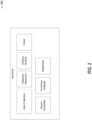
- FIG. 2 illustrates various modules that may be executed by a food safety risk and sanitation compliance tracking system, for instance at a server 200 of the system 100, according to an example embodiment.
- the one or more servers may execute one or more of the following:
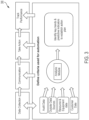
- FIG. 3 illustrates a flow of information 300 through the food safety risk and sanitation compliance tracking system 100, according to an example embodiment.
- Various data streams e.g., self-audit data, data from outside sources (e.g., health department data), resource and equipment data (e.g., from sensors and dispensers), and customer-supplied data is analyzed by the predictive analysis module.
- the predictive analysis module identifies trends and predictive indicators. The trends and predictive indicators are used to establish an action plan, which is communicated to various devices.
- the devices and/or individuals using the devices) implement the actions in the action plan, and the system tracks the implemented action plan for performance.
- the predictive analysis module assumes a correlation (e.g., a pseudo-linear relationship) between the quantity of findings resulting from a health department inspection and the probability that at least one of the findings is a "critical finding.” Because of this, the predictive analysis module may use Bayesian algorithms to calculate probabilities of health code violations.
- a correlation e.g., a pseudo-linear relationship
- each question of a self-audit may be associated with one or more sections of one or more health regulations relevant to the question.
- a self-audit question relates to personal hygiene, and relates to 4 of 5 departments in a store; thus, during any given audit of this store, there are 4 opportunities for this question to result in a finding. If only 1 finding for this question is documented, then there is a 25% (1/4) probability that the question will result in a finding for that store.
- the system gathers data for all self-audits and health inspections of a food establishment, and compares the self-audit data with the health inspection outcomes.
- the predictive analysis module may calculate, for the food establishment in question, the probability of a future inspection resulting in one or more findings.
- the predictive analysis module may use a classifier to predict probabilities of future health code violations.
- a classifier to predict probabilities of future health code violations.
- health department inspection data is aggregated and input into the classification model.
- the classification model is used to predict probabilities of future health code violations, current data from the various data streams is input into the classification model.
- a food establishment's risk factors are weighted (e.g., risk factors A, B, and C are inconsequential individually, but together, they signal a significant food safety risk.)
- Data produced by health department inspections may include (for each inspection): the date(s) of the inspection, the name(s) of the inspector(s), the beginning and ending time(s) of the inspection(s), the name of the food establishment inspected, geographical coordinates (e.g., latitude and longitude) of the food establishment inspected, a quantity of critical findings resulting from the inspection, a quantity of recommended practice findings, one or more sections of a health code related to a finding, etc.
- sanitation compliance data is integrated into the database.
- the sanitation compliance data may be generated from various sources, including chemical dispensers that communicate data related to dispensing events (e.g., type of dispensing event and timestamp).
- the chemical dispensers may communicate wirelessly.
- the system executes an algorithm that interprets the event data from the dispensers to determine compliance insights (e.g., store #1234 sanitized its floor only 20 days of the last 30 days).
- thermometers Data from sensors and dispensers may vary in importance. For example, if a coffee pot's thermometer measures a temperature that is too low, the coffee in the pot may spoil more quickly than if the temperature was within an acceptable temperature range; however, if a thermometer that measures rotisserie chickens indicates that the temperatures of a cooked rotisserie chicken is too low, the bacteria within the rotisserie chicken may not have been adequately destroyed, resulting in a possible food safety risk for a customer of the food establishment.
- some individuals have access to the system.
- the system may inform one or more individuals of the food establishment's current risk score, the conditions giving rise to the current risk score, and a list of issues that, if addressed, would result in the largest reduction to the food establishment's current risk score.
- a report can be generated that provides risk factor information relating to one or more customer stores.
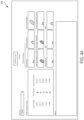
- FIG. 4A shows one embodiment of such a report.
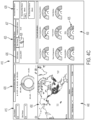
- FIGS. 4B and 4C show another embodiment of such a report, where FIG. 4B illustrates an overall customer report and FIG. 4C illustrates certain aspects of that customer report for a selected customer store.
- the food safety risk and sanitation compliance tracking system 100 can generate and display such reports at, for instance, one or more client devices.
- the predictive analysis module at the server can analyze data input into the database and calculate, based on the analyzed data, a probability of a store (e.g., food establishment) violating a health code, and the report generator module at the server can generate the report for display at one or more client devices.
- a store e.g., food establishment
- the predictive analysis module at the server can analyze data input into the database and calculate a predictive risk score and individual risk indicators for each of one or more stores, and the report generator module at the server can generate the report with the calculated predictive risk score and individual risk indicators for each of one or more stores for display at one or more client devices.
- FIG. 4A illustrates a report 400 for a food establishment, according to an example embodiment.
- a food establishment's report may include an indication whether data from one or more data streams is trending positively or negatively.
- the report may include an indication whether a food establishment's risk is increasing, decreasing, or unchanged.
- information for store #304575 is displayed.
- the "Current High Risk Scores" section of the report lists store numbers, the current risk score for each store number, and an indication whether the current risk score has increased, decreased, or remained unchanged from the previous report.
- the stores listed in a selected store's report may be associated with the selected store by geography, by organizational structure, or by some other association.
- a food establishment's report may indicate the food establishment's performance in one or more categories of a health code. In an embodiment, a food establishment's report may indicate the food establishment's performance in one or more categories of a health code relative to other food establishments belonging to the same organizational entity (e.g., brand, chain, company, division, etc.) as the food establishment.
- organizational entity e.g., brand, chain, company, division, etc.
- the food establishment's relative performance in each category is illustrated as an arc.
- the length of an arc is inversely proportional to the food establishment's relative performance in that category.
- an arc's color may indicate the food establishment's relative performance in that category.
- training programs are tailored to the risk factors identified in a food establishment's report.
- the training programs may be delivered to employees of the food establishment via its client portal.
- links to training programs may be delivered to employees of the food establishment upon a trigger condition being detected (e.g., floor not cleaned at the end of the day).
- FIG. 4B and 4C show a report 410 for a food establishment, according to another example embodiment.
- the food safety risk and sanitation compliance tracking system 100 can generate and display the report 410 at, for instance, one or more client devices.
- the report 410 includes a store selection panel 415.
- the store selection panel 415 can receive user input specifying one or more specific customer stores, and the report 410 can generate other information shown in the report 410 according to the specified one or more customer stores (e.g. food establihsments) at the store selection panel 415. In the illustrated example, "all" stores are selected at the store selection panel 415.
- the server of the system 100 can retrieve input information from the data store relating to the selected one or more stores at the store selection panel 415, process this specified information, and generate the report 410.
- the report 410 also includes a risk category display 420.
- the risk category display 420 provides a breakdown of customer stores according to the predictive risk category of these stores. As shown in the example here, the risk category display 420 breaks the customers stores into three categories that signify low, moderate, and high predictive risk. Any category of the risk category display 420 can be selected by a user and, upon such selection, the customer stores in the selected category can be displayed in the report 410. As such, the risk category display 420 can allow a user to view a subset of customer stores in isolation. For instance, a user may select the high category predictive risk stores from the risk category display 420 and the report can then display detailed information for the customer stores in the high category predictive risk. This may allow a user to selectively assess detailed information relating to an individual category of stores and devote finite resources to addressing risk in this category of stores.
- the report 410 further includes a store risk panel 425.
- the store risk panel 425 can list specific customer stores 426 and, for each specific customer store, a predictive risk score 427 and a risk change indicator 428.
- the predictive risk score 427 can be computed based on various data input into the system, as described elsewhere herein, and can represent a probability of the store (e.g., food establishment) violating a health code.
- the predictive risk score can represent the relative likelihood that the associated customer store will have more than a predetermined number of health inspection findings, if such inspection were to be currently undertaken. As such, the higher the predictive risk score, the higher the likelihood that the associated customer store would currently have more than a predetermined number of health inspection findings.
- the risk change indicator can represent a change in the predictive risk score.
- the risk change indicator can designate (e.g., using an up/down, sideways arrow and/or red, green, or neutral color) whether the predictive risk score for the associated customer store has increased, decreased, or remained constant over a preset past period of time (e.g., since the last report was run, since the last inspection, over the last month, quarter, etc.).
- the report 410 can also include a total number of customer stores 429 that have had an increase in the predictive risk score, a decrease in the predictive risk score, and that have had no change in the predictive risk score over the preset past period of time.
- the report 410 can additionally include a risk indicator panel 430.
- the risk indicator panel can include a number of individual risk indicators 435.
- Each risk indicator 435 can provide an assessment of performance in a specified food risk category for a customer store (e.g., food establishment), or grouping of customer stores if so selected.
- each individual risk indicator 435 can represent a probability of a store (e.g., food establishment) violating a health code in the corresponding category for that individual risk indicator 435.
- each risk indicator 435 can display the performance of a customer store, or grouping of customer stores if so selected, in the individual risk indicators, for instance relative to other, non-selected customer stores or relative to a predefined standard for each risk indicator.
- each risk indicator 435 is represented by an arc and accompanying a gauge, with the gauge placed at a location on the arc according to the performance for the specified risk indicator.
- the act can include distinguishable (e.g., color-coded, pattern-coded) portions along it, with each distinguishable portion corresponding to a different level of risk of incurring a finding during a health inspection of the store(s).
- the report 410 also includes an action portion 440.
- the action portion 440 can specify particular action items that a user can take to reduce the predictive risk score 428 for a specified customer store, or grouping of specified customer stores. For instance, if the personal hygiene risk indicator 435 is relatively high, the action portion 440 may specify particular action items (e.g., sensors indicate hand washing soap dispenser is being used five times an hour, but use should be increased to ten times an hour based on the number of personnel working at the store; train employees on hand washing procedure and frequency; increase the frequency of self-audits) that can be taken at the selected customer store(s) to reduce the personal hygiene risk indicator 435, and ultimately reduce the overall predictive risk score 428.
- particular action items e.g., sensors indicate hand washing soap dispenser is being used five times an hour, but use should be increased to ten times an hour based on the number of personnel working at the store; train employees on hand washing procedure and frequency; increase the frequency of self-audits
- the report 410 can generate particular action items for display in the action portion 440 based on instructions stored within the system described herein. Such instructions can, for example, include specified actions associated with each risk indicator in the report.
- the action portion can include a portion with one or more particular action items directed to the food establishment and another portion with one or more particular action items directed to someone other than the food establishment (e.g., a third party service provider).
- the report 410 can include a geographic display 450.
- the geographic display 450 can show the location of customer stores along with a relative indication (e.g., color, shape, etc.) of each displayed store's predictive risk. This can allow the report to convey whether stores in a particular risk category (e.g., high risk) are geographically concentrated, which may be useful in assessing remedies to reduce risk factors for such stores.
- FIG. 4C shows the report 410 generated for a specific store (e.g., food establishment) 426 selected by a user from the store risk panel 425.
- the specific store 426 may be displayed in isolation within the store risk panel 425.
- the specific selected store 426 has the risk change indicator 428 showing that the predictive risk score 427 has increased over the past predetermined period of time.
- the display of the total number of customer stores 429 can also be isolated to the specific selected store 426.
- two or more stores can be selected by a user from the store risk panel 425 and the specific selected two more stores can be displayed as described herein.
- Selection of the specific store 426 can cause the report 410 to generate the risk indicator panel 430 for the specific store 426.
- the risk indicator panel 430 includes individual risk indicators 435 each showing relative performance of the specific store 426 in the associated category relative to other, non-selected stores.
- the risk indicator panel 430 shows that the specific store 426 is performing at a high level of risk (e.g., risk of a finding during a health inspection), relative to non-selected stores, in the indicator categories of time and temperature, date marking, documentation, and other.
- the risk indicator panel 430 for the specific store 426 can indicate to a user that these categories can be addressed to lower the predictive risk score 427 for the specific store 426.
- selection of the specific store 426 can cause the report 410 to generate the action portion 440 for the specific store 426.
- the action portion 440 can display suggested action items for those indicator categories that will result in the greatest reduction to the predictive risk score 427.
- the action portion 440 can display suggested action items for indicator categories of time and temperature, date marking, documentation, and other-those indicator categories in which the specific store 426 is performing at a high level of risk (e.g., risk of a finding during a health inspection), relative to non-selected stores.
- the predictive risk score in FIGS. 4A-4C is shown as a numerical value.
- this numerical value can be an absolute value indicative of the likelihood that a predetermined number of findings will occur if a health inspection were to take place at the current time.
- the predictive score is shown as a percentage representing the estimated probability that a predetermined number of findings (e.g., tow, three, four, five, etc.) will occur if a health inspection were to take place at the current time.
- the inclusion of the predictive risk score 427 and the risk indicator panel 430 can allow a user to ascertain those stores and risk indicator categories, respectively, that can be addressed via action items (e.g., shown in the action portion 440) to see the greatest reduction in risk of an adverse health inspection finding.
- a variety of techniques can be used by the system to process the input data and output a predictive risk score and relative risk assessment for the various risk indicator categories.
- a number of models can be generated and run to simulate various outcomes based on the input data. For example, for each risk indicator category, a number of models can be run using the input data relating to that risk indicator category to simulate outcomes in that risk indicator category.
- results can be aggregated (e.g., averaged) to arrive at the result for each risk indicator category, and then this result can be compared to the same in that risk indicator category for all other, non-selected stores to display the risk indicator for that category.
- the predictive risk score for a store can be generated by aggregating the risk indicator categories for that store.
- the risk indicator categories for a store can be averaged to provide the predictive risk score for that store.
- risk indicator categories can be weighted in calculating this average where certain applications of the system are believed to include certain risk indicator categories that are more likely to lead to a higher risk profile for the store than other risk indicator categories.
- data relating to attributes of a store's location can be used as input data in the system.
- data input into the system for generating risk indicator categories and predictive risk scores can include data such as one or more of population in a vicinity of the location, income in the vicinity of the location, and tourist traffic in the vicinity.
- the system can send alerts to a user.
- the system's data store may include a listing of contact information associated with stores.
- the system can output an alert according to the associated contact information associated with the store(s).
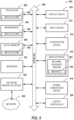
- FIG. 5 is a block diagram illustrating an example of a machine 500, upon which any one or more example embodiments may be implemented.
- the machine 500 may operate as a standalone device or may be connected (e.g., networked) to other machines.
- the machine 500 may operate in the capacity of a server machine, a client machine, or both in a client-server network environment.
- the machine 500 may act as a peer machine in a peer-to-peer (P2P) (or other distributed) network environment.
- P2P peer-to-peer
- the machine 500 may implement or include any portion of the systems, devices, or methods illustrated in FIGS.
- 1-4 may be a computer, a server, or any machine capable of executing instructions (sequential or otherwise) that specify actions to be taken by that machine.
- machine shall also be taken to include any collection of machines that individually or jointly execute a set (or multiple sets) of instructions to perform any one or more of the methodologies discussed herein, such as cloud-based computing, software as a service (SaaS), other computer cluster configurations, etc.
- Examples, as described herein, may include, or may operate by, logic or a number of components, modules, or mechanisms.
- Modules are tangible entities (e.g., hardware) capable of performing specified operations and may be configured or arranged in a certain manner.
- circuits may be arranged (e.g., internally or with respect to external entities such as other circuits) in a specified manner as a module.
- the whole or part of one or more computer systems e.g., a standalone, client or server computer system
- one or more hardware processors may be configured by firmware or software (e.g., instructions, an application portion, or an application) as a module that operates to perform specified operations.
- the software may reside on a machine-readable medium.
- the software when executed by the underlying hardware of the module, causes the hardware to perform the specified operations.
- module is understood to encompass a tangible entity, be that an entity that is physically constructed, specifically configured (e.g., hardwired), or temporarily (e.g., transitorily) configured (e.g., programmed) to operate in a specified manner or to perform part or all of any operation described herein.
- each of the modules need not be instantiated at any one moment in time.
- the modules comprise a general-purpose hardware processor configured using software
- the general-purpose hardware processor may be configured as respective different modules at different times.
- Software may accordingly configure a hardware processor, for example, to constitute a particular module at one instance of time and to constitute a different module at a different instance of time.
- Machine 500 may include a hardware processor 502 (e.g., a central processing unit (CPU), a graphics processing unit (GPU), a hardware processor core, or any combination thereof), a main memory 504 and a static memory 506, some or all of which may communicate with each other via an interlink (e.g., bus) 508.
- the machine 500 may further include a display unit 510, an alphanumeric input device 512 (e.g., a keyboard), and a user interface (UI) navigation device 514 (e.g., a mouse).
- the display unit 510, input device 512 and UI navigation device 514 may be a touch screen display.
- the machine 500 may additionally include a storage device (e.g., drive unit) 516, a signal generation device 518 (e.g., a speaker), a network interface device 520, and one or more sensors 521, such as a global positioning system (GPS) sensor, compass, accelerometer, or other sensor.
- the machine 500 may include an output controller 528, such as a serial (e.g., USB, parallel, or other wired or wireless (e.g., infrared (IR), near field communication (NFC), etc.) connection to communicate or control one or more peripheral devices (e.g., a printer, card reader, etc.)
- a serial e.g., USB, parallel, or other wired or wireless (e.g., infrared (IR), near field communication (NFC), etc.) connection to communicate or control one or more peripheral devices (e.g., a printer, card reader, etc.)
- the storage device 516 may include a machine-readable medium 522 on which is stored one or more sets of data structures or instructions 524 (e.g., software) embodying or utilized by any one or more of the techniques or functions described herein.
- the instructions 524 may also reside, completely or at least partially, within the main memory 504, within static memory 506, or within the hardware processor 502 during execution thereof by the machine 500.
- one or any combination of the hardware processor 502, the main memory 504, the static memory 506, or the storage device 516 may constitute machine-readable media.
- machine-readable medium 522 is illustrated as a single medium, the term “machine-readable medium” may include a single medium or multiple media (e.g., a centralized or distributed database, and/or associated caches and servers) configured to store the one or more instructions 524.
- machine-readable medium may include a single medium or multiple media (e.g., a centralized or distributed database, and/or associated caches and servers) configured to store the one or more instructions 524.
- machine-readable medium may include any medium that is capable of storing, encoding, or carrying instructions for execution by the machine 500 and that cause the machine 500 to perform any one or more of the techniques of the present disclosure, or that is capable of storing, encoding or carrying data structures used by or associated with such instructions.
- Non-limiting machine-readable medium examples may include solid-state memories, and optical and magnetic media. Accordingly, machine-readable media are not transitory propagating signals.
- machine-readable media may include non-volatile memory, such as semiconductor memory devices (e.g., Electrically Programmable Read-Only Memory (EPROM), Electrically Erasable Programmable Read-Only Memory (EEPROM)) and flash memory devices; magnetic disks, such as internal hard disks and removable disks; magneto-optical disks; Random Access Memory (RAM); Solid State Drives (SSD); and CD-ROM and DVD-ROM disks.
- semiconductor memory devices e.g., Electrically Programmable Read-Only Memory (EPROM), Electrically Erasable Programmable Read-Only Memory (EEPROM)
- flash memory devices e.g., Electrically Programmable Read-Only Memory (EPROM), Electrically Erasable Programmable Read-Only Memory (EEPROM)
- EPROM Electrically Programmable Read-Only Memory
- EEPROM Electrically Erasable Programmable Read-Only Memory
- flash memory devices e.g., Electrically Erasable Programmable Read-Only Memory (EEPROM)
- flash memory devices
- the instructions 524 may further be transmitted or received over a communications network 526 using a transmission medium via the network interface device 520 utilizing any one of a number of transfer protocols (e.g., frame relay, Internet protocol (IP), transmission control protocol (TCP), user datagram protocol (UDP), hypertext transfer protocol (HTTP), etc.).
- transfer protocols e.g., frame relay, Internet protocol (IP), transmission control protocol (TCP), user datagram protocol (UDP), hypertext transfer protocol (HTTP), etc.
- Example communication networks may include a local area network (LAN), a wide area network (WAN), a packet data network (e.g., the Internet), mobile telephone networks (e.g., cellular networks), Plain Old Telephone (POTS) networks, and wireless data networks (e.g., Institute of Electrical and Electronics Engineers (IEEE) 802.11 family of standards known as Wi-Fi ® , IEEE 802.16 family of standards known as WiMAX ® ), IEEE 802.15.4 family of standards, Bluetooth ® , Bluetooth ® low energy technology, ZigBee ® , peer-to-peer (P2P) networks, among others.
- LAN local area network
- WAN wide area network
- packet data network e.g., the Internet
- mobile telephone networks e.g., cellular networks
- POTS Plain Old Telephone
- wireless data networks e.g., Institute of Electrical and Electronics Engineers (IEEE) 802.11 family of standards known as Wi-Fi ® , IEEE 802.16 family
- the network interface device 520 may include one or more physical jacks (e.g., Ethernet, coaxial, or phone jacks) or one or more antennas to connect to the communications network 526.
- the network interface device 520 may include a plurality of antennas to wirelessly communicate using at least one of single-input multiple-output (SIMO), multiple-input multiple-output (MIMO), or multiple-input single-output (MISO) techniques.
- SIMO single-input multiple-output
- MIMO multiple-input multiple-output
- MISO multiple-input single-output
- transmission medium shall be taken to include any intangible medium that is capable of storing, encoding, or carrying instructions for execution by the machine 500, and includes digital or analog communications signals or other intangible medium to facilitate communication of such software.
- a sensor set may include one or more sensors, which may be of different types.
- two different sensor sets may include one or more sensors that belong to both sensor sets.
Landscapes
- Business, Economics & Management (AREA)
- Engineering & Computer Science (AREA)
- Human Resources & Organizations (AREA)
- Economics (AREA)
- Theoretical Computer Science (AREA)
- Strategic Management (AREA)
- General Business, Economics & Management (AREA)
- Physics & Mathematics (AREA)
- General Physics & Mathematics (AREA)
- Entrepreneurship & Innovation (AREA)
- Tourism & Hospitality (AREA)
- Marketing (AREA)
- Health & Medical Sciences (AREA)
- Development Economics (AREA)
- Operations Research (AREA)
- Quality & Reliability (AREA)
- General Health & Medical Sciences (AREA)
- Primary Health Care (AREA)
- Software Systems (AREA)
- Game Theory and Decision Science (AREA)
- Finance (AREA)
- Educational Administration (AREA)
- Accounting & Taxation (AREA)
- Epidemiology (AREA)
- Medical Informatics (AREA)
- Public Health (AREA)
- Multimedia (AREA)
- General Engineering & Computer Science (AREA)
- Biomedical Technology (AREA)
- Nutrition Science (AREA)
- Medical Treatment And Welfare Office Work (AREA)
- Management, Administration, Business Operations System, And Electronic Commerce (AREA)
Claims (15)
- System, umfassend:
eine oder mehrere Datenquellen, umfassend einen oder mehrere Sensoren, die sich in einer Lebensmitteleinrichtung befinden und an ein Netzwerk angeschlossen sind, wobei die eine oder mehrere Datenquellen konfiguriert sind zum:Nachverfolgen von einem oder mehreren Ereignissen in der Lebensmitteleinrichtung; undErzeugen von Daten auf Grundlage der einen oder mehreren Ereignisse in der Lebensmitteleinrichtung, wobei die Daten mit der Nachverfolgung von Lebensmittelsicherheitsrisiken und der Einhaltung von Hygienevorschriften in der Lebensmitteleinrichtung in Zusammenhang stehen, wobei die von dem einen oder den mehreren Sensoren erzeugten Daten Sensordaten umfassen; undeinen mit einem Netzwerk verbundenen Server, wobei der Server umfasst:ein Datensammelmodul, das konfiguriert ist, um die Daten über das Netzwerk von der einen oder den mehreren Datenquellen zu sammeln;ein Datenbankinteraktionsmodul, das konfiguriert ist, um vom Datensammelmodul erfasste Daten in einer Datenbank zu speichern und Daten aus der Datenbank abzurufen; undein Vorhersageanalysemodul, das zum Analysieren von Daten in der Datenbank unter Verwendung von Vorhersageanalysealgorithmen konfiguriert ist, um einen oder mehrere Trends und einen oder mehrere Vorhersageindikatoren zu identifizieren und auf Grundlage der analysierten Daten eine Wahrscheinlichkeit zu berechnen, dass eine zukünftige Inspektion zu einem Verstoß gegen eine Gesundheitsvorschrift führt. - System nach Anspruch 1, wobei die eine oder die mehreren Datenquellen ferner mindestens eines der Folgenden umfassen: einen oder mehrere Spender der Lebensmitteleinrichtung, die zum Erzeugen von Spenderdaten konfiguriert sind, Schädlingsbekämpfungsdienstleistungen, die Daten zur Schädlingsbekämpfung erzeugen, Inspektionen des Gesundheitsamts, die Inspektionsdaten des Gesundheitsamts erzeugen, einen oder mehrere Benutzer, die Selbstprüfungsdaten und/oder selbst gemeldete Daten eingeben, und Servicedienstleister, die Daten zur Gerätepflege und -wartung erzeugen.
- System nach Anspruch 1 oder 2, wobei der eine oder die mehreren Sensoren der Lebensmitteleinrichtung mindestens eines der Folgenden umfassen: Thermometer, Hygrometer und Barometer.
- System nach einem der vorstehenden Ansprüche, wobei der eine oder die mehreren Spender mindestens eines der Folgenden umfassen: Desinfektionsmittelspender und Wasserspender.
- System nach einem der vorstehenden Ansprüche, wobei der Server eine Benachrichtigung an eine oder mehrere mit der Lebensmitteleinrichtung verbundene Vorrichtungen überträgt, wenn die berechnete Wahrscheinlichkeit, dass die Lebensmitteleinrichtung eine Gesundheitsvorschrift verletzt, einen Schwellenwert überschreitet.
- System nach Anspruch 1, wobei der Server ferner umfasst:
ein Berichtsgeneratormodul, das zum Erzeugen eines Berichts konfiguriert ist, um die Wahrscheinlichkeit zu enthalten, dass die Lebensmitteleinrichtung gegen die Gesundheitsvorschriften verstößt. - System nach Anspruch 6, wobei der Berichtsgenerator konfiguriert ist, um den Bericht zur Anzeige an eine Client-Vorrichtung zu übertragen.
- System nach Anspruch 6, wobei die Wahrscheinlichkeit, dass die Lebensmitteleinrichtung gegen die Gesundheitsvorschriften verstößt, einen Vorhersage-Risikowert für die Lebensmitteleinrichtung umfasst.
- System nach Anspruch 8, wobei die Wahrscheinlichkeit, dass die Lebensmitteleinrichtung gegen die Gesundheitsvorschriften verstößt, eine Vielzahl einzelner Risikoindikatoren für die Lebensmitteleinrichtung umfasst, und wobei jeder der Vielzahl einzelner Risikoindikatoren für die Lebensmitteleinrichtung eine Risikobewertung im Vergleich zu anderen Lebensmitteleinrichtungen bereitstellt.
- System nach Anspruch 9, wobei die Vielzahl der einzelnen Risikoindikatoren für die Lebensmitteleinrichtung persönliche Hygiene, Reinigung und Hygiene, Zeit und Temperatur sowie Dokumentation umfasst.
- Verfahren, das auf mindestens einem mit einem Netzwerk verbundenen Server implementiert wird, wobei das Verfahren umfasst:Nachverfolgen eines oder mehrerer Ereignisse in einer Lebensmitteleinrichtung unter Verwendung einer oder mehrerer Datenquellen, die einen oder mehrere Sensoren umfassen, die sich in einer Lebensmitteleinrichtung befinden und mit dem Netzwerk verbunden sind;Erzeugen von Daten auf Grundlage des einen oder der mehreren Ereignissen in der Lebensmitteleinrichtung durch die eine oder die mehreren Datenquellen, wobei die Daten mit der Nachverfolgung von Lebensmittelsicherheitsrisiken und der Einhaltung von Hygienevorschriften in der Lebensmitteleinrichtung in Zusammenhang stehen, wobei die von dem einen oder den mehreren Sensoren erzeugten Daten Sensordaten umfassen;Sammeln der Daten über das Netzwerk von der einen oder den mehreren Datenquellen;Speichern der gesammelten Daten in einer Datenbank;Abrufen von Daten aus der Datenbank;Analysieren von Daten in der Datenbank mithilfe von Vorhersageanalysealgorithmen, um einen oder mehrere Trends und einen oder mehrere Vorhersageindikatoren zu identifizieren; undBerechnen einer Wahrscheinlichkeit, dass bei einer künftigen Inspektion ein Verstoß gegen die Gesundheitsvorschriften festgestellt wird, auf Grundlage der analysierten Daten.
- Verfahren nach Anspruch 11, wobei das Verfahren auf dem System eines der Ansprüche 1 bis 10 ausgeführt wird.
- Nicht-flüchtiges, computerlesbares Medium, einschließlich Anweisungen, die bei Ausführung durch einen Computer den Computer veranlassen zum:Nachverfolgen eines oder mehrerer Ereignisse in einer Lebensmitteleinrichtung unter Verwendung einer oder mehrerer Datenquellen, umfassend einen oder mehrere Sensoren, die sich in einer Lebensmitteleinrichtung befinden und mit dem Netzwerk verbunden sind;Erzeugen von Daten auf Grundlage der einen oder mehreren Ereignisse in der Lebensmitteleinrichtung durch die eine oder mehrere Datenquellen, wobei die Daten mit der Nachverfolgung von Lebensmittelsicherheitsrisiken und der Einhaltung von Hygienevorschriften in der Lebensmitteleinrichtung in Zusammenhang stehen, wobei die von dem einen oder den mehreren Sensoren erzeugten Daten Sensordaten umfassen;Sammeln der Daten über ein Netzwerk von der einen oder den mehreren Datenquellen;Speichern der gesammelten Daten in einer Datenbank;Abrufen von Daten aus der Datenbank;Analysieren von Daten in der Datenbank mithilfe von Vorhersageanalysealgorithmen, um einen oder mehrere Trends und einen oder mehrere Vorhersageindikatoren zu identifizieren; undBerechnen einer Wahrscheinlichkeit, dass bei einer künftigen Inspektion ein Verstoß gegen die Gesundheitsvorschriften festgestellt wird, auf Grundlage der analysierten Daten.
- Nicht-flüchtiges, computerlesbares Medium nach Anspruch 13, wobei die Anweisungen, wenn sie vom Computer ausgeführt werden, auf dem System nach einem der Ansprüche 1 bis 10 ausgeführt werden.
- Verwendung des Systems nach einem der Ansprüche 1 bis 10 zur Nachverfolgung von Lebensmittelsicherheitsrisiken und der Einhaltung von Hygienevorschriften.
Applications Claiming Priority (2)
| Application Number | Priority Date | Filing Date | Title |
|---|---|---|---|
| US201862672944P | 2018-05-17 | 2018-05-17 | |
| PCT/US2019/032624 WO2019222471A1 (en) | 2018-05-17 | 2019-05-16 | Food safety risk and sanitation compliance tracking |
Publications (3)
| Publication Number | Publication Date |
|---|---|
| EP3794522A1 EP3794522A1 (de) | 2021-03-24 |
| EP3794522C0 EP3794522C0 (de) | 2025-04-23 |
| EP3794522B1 true EP3794522B1 (de) | 2025-04-23 |
Family
ID=66691042
Family Applications (1)
| Application Number | Title | Priority Date | Filing Date |
|---|---|---|---|
| EP19728258.5A Active EP3794522B1 (de) | 2018-05-17 | 2019-05-16 | Verfolgung der einhaltung von lebensmittelsicherheitsrisiko und -hygiene |
Country Status (6)
| Country | Link |
|---|---|
| US (1) | US12008504B2 (de) |
| EP (1) | EP3794522B1 (de) |
| JP (2) | JP7418355B2 (de) |
| CN (1) | CN112106085A (de) |
| ES (1) | ES3029643T3 (de) |
| WO (1) | WO2019222471A1 (de) |
Families Citing this family (9)
| Publication number | Priority date | Publication date | Assignee | Title |
|---|---|---|---|---|
| EP4091119A1 (de) * | 2020-01-17 | 2022-11-23 | Ecolab USA, Inc. | Leistungsmanagementmodelle für die lebensmittelsicherheit |
| US11854369B2 (en) * | 2020-10-16 | 2023-12-26 | Allstate Insurance Company | Multi-computer processing system for compliance monitoring and control |
| DE102021111934A1 (de) * | 2021-05-07 | 2022-11-10 | Francotyp-Postalia Gmbh | System und verfahren zur rechtssicheren dokumentation von gesundheits- und sicherheitsrelevanten prozessereignissen |
| CN113762764B (zh) * | 2021-09-02 | 2024-04-12 | 南京大学 | 一种进口食品安全风险自动分级与预警系统及方法 |
| US20230096756A1 (en) * | 2021-09-24 | 2023-03-30 | Balaji SOUNDARARAJAN | Automated risk-assessment system and methods |
| CN114002395A (zh) * | 2021-10-25 | 2022-02-01 | 江苏软擎信息科技有限公司 | 食品合规性校验方法、装置、计算机设备及存储介质 |
| CN113886716B (zh) * | 2021-11-30 | 2022-04-05 | 国家食品安全风险评估中心 | 食品安全突发事件的应急处置推荐方法及系统 |
| KR102780755B1 (ko) * | 2023-11-23 | 2025-03-12 | 주식회사 펀셰어 | 식품 안전 관리 솔루션 시스템 및 그 시스템을 제어하는 제어 서버의 동작 방법 |
| US20250190322A1 (en) * | 2023-12-11 | 2025-06-12 | Optum Services (Ireland) Limited | Systems and methods for identifying missing values in data objects |
Citations (2)
| Publication number | Priority date | Publication date | Assignee | Title |
|---|---|---|---|---|
| WO2006101651A1 (en) * | 2005-03-22 | 2006-09-28 | Lawrence Kates | System and method for monitoring food |
| US20100313768A1 (en) * | 2009-06-15 | 2010-12-16 | Technology Licensing Corporation | System for facilitating food preparation |
Family Cites Families (122)
| Publication number | Priority date | Publication date | Assignee | Title |
|---|---|---|---|---|
| JPH07244527A (ja) | 1994-03-07 | 1995-09-19 | Murata Mfg Co Ltd | 作業機 |
| US5532456A (en) * | 1995-03-02 | 1996-07-02 | The Delfield Company | Temperature and humidity controllable doorless oven |
| DE19752466A1 (de) | 1996-12-04 | 1998-06-10 | Miele & Cie | Zentrale Steuer- und Überwachungseinrichtung für Haushaltgeräte |
| US5900801A (en) * | 1998-02-27 | 1999-05-04 | Food Safety Solutions Corp. | Integral master system for monitoring food service requirements for compliance at a plurality of food service establishments |
| US6505126B1 (en) * | 1998-03-25 | 2003-01-07 | Schering-Plough Corporation | Method to identify fungal genes useful as antifungal targets |
| US6116467A (en) * | 1998-12-04 | 2000-09-12 | Packaging Systems, Inc. | Beverage dispensing system |
| US7212129B2 (en) | 1999-07-21 | 2007-05-01 | Dow Agrosciences Llc | Devices, systems, and method to control pests |
| US6727818B1 (en) | 1999-10-29 | 2004-04-27 | Hill-Rom Services, Inc. | Hygiene monitoring system |
| TR200202420T2 (tr) | 2000-04-25 | 2003-02-21 | Johnson Diversey Inc. | Temizlik işlemlerinin ve makinelerinin izlenmesi için bir yöntem ve tertibat |
| SE522000C2 (sv) | 2000-08-18 | 2004-01-07 | Rutger Roseen | Förfarande och anordning för att hålla reda på lagringstiden för i ett utrymme förvarade varor |
| CA2392512A1 (en) | 2000-09-25 | 2002-04-04 | Dow Agrosciences Llc | Sensing devices, systems, and methods particularly for pest control |
| DE60039317D1 (de) | 2000-09-25 | 2008-08-07 | Dow Agrosciences Llc | Messvorrichtungen, Systeme und Verfahren insbesondere zur Schädlingsbekämpfung |
| US20020099586A1 (en) | 2000-11-22 | 2002-07-25 | National Britannia Group Ltd. | Method, system, and computer program product for risk assessment and risk management |
| WO2002091297A1 (en) | 2001-05-08 | 2002-11-14 | Hill-Rom Services, Inc. | Article locating and tracking system |
| GB0129668D0 (en) | 2001-12-12 | 2002-01-30 | Procter & Gamble | Method for cleaning a soiled article |
| GB2408607A (en) | 2002-09-27 | 2005-06-01 | Hill Rom Services Inc | Universal communications monitoring tracking and control system for a healthcare facility |
| JP4463196B2 (ja) | 2002-10-08 | 2010-05-12 | フード セキュリティ システムズ, エル.エル.シー. | 食品汚染事件の識別およびトラッキングをするための消費者リスク分散モデル |
| US8012421B2 (en) | 2003-06-24 | 2011-09-06 | Ecolab Inc. | Concentration monitor |
| JP2005031811A (ja) | 2003-07-08 | 2005-02-03 | Nippon System Development Co Ltd | 食品安全維持管理システム及び方法 |
| US20050059565A1 (en) * | 2003-09-03 | 2005-03-17 | Sutton David C. | Cleaning composition |
| GB2407016A (en) | 2003-10-14 | 2005-04-20 | Rentokil Initial Uk Ltd | Pest detection apparatus |
| US7242307B1 (en) | 2003-10-20 | 2007-07-10 | Cognetive Systems Incorporated | System for monitoring hygiene appliances |
| US20050081416A1 (en) * | 2003-10-20 | 2005-04-21 | Morris Douglas S. | Container storage system and method |
| US7056050B2 (en) | 2004-02-24 | 2006-06-06 | Avet, Ag | Advanced data controlled cleaning system |
| US7509131B2 (en) | 2004-06-29 | 2009-03-24 | Microsoft Corporation | Proximity detection using wireless signal strengths |
| US7423533B1 (en) | 2004-10-19 | 2008-09-09 | Cognetive Systems, Incorporated | System for monitoring and recording cross-contamination events |
| US7418521B2 (en) | 2004-12-07 | 2008-08-26 | Alliance Laundry Systems Llc | Controller for bridging a host computer and networked laundry machines |
| WO2006075970A1 (en) | 2005-01-13 | 2006-07-20 | Cisco Security Pte Ltd | Monitoring system and method |
| EP1698725B2 (de) | 2005-03-04 | 2011-05-04 | Electrolux Home Products Corporation N.V. | Haushaltsgeräteanordnung mit integriertem Betrieb |
| US7323991B1 (en) | 2005-05-12 | 2008-01-29 | Exavera Technologies Incorporated | System and method for locating and communicating with personnel and equipment in a facility |
| AU2006252494A1 (en) | 2005-06-02 | 2006-12-07 | Carttronics, Llc | Tracking system and method |
| US8706515B2 (en) | 2005-10-20 | 2014-04-22 | Mckesson Information Solutions Llc | Methods, systems, and apparatus for providing a notification of a message in a health care environment |
| US7411511B2 (en) | 2006-02-07 | 2008-08-12 | The Procter & Gamble Company | Interactive packaging for development of personal hygiene habits |
| ES2362738T3 (es) | 2006-02-10 | 2011-07-12 | Kieran Richard Hyland | Sistema y método para supervisar cumplimiento de normas de control de higiene. |
| US7855651B2 (en) | 2006-04-07 | 2010-12-21 | Cognetive Systems Incorporated | System for monitoring and recording hand hygiene performance |
| US7770782B2 (en) | 2006-10-13 | 2010-08-10 | Allegheny-Singer Research Institute | Method and system to monitor hand hygiene compliance |
| US7551092B1 (en) | 2006-11-15 | 2009-06-23 | Henry Kevin M | Sanitary monitoring system to monitor the hand sanitation of health care workers or other required sanitary activities |
| US8980173B2 (en) | 2007-01-29 | 2015-03-17 | Nalco Company | Systems and methods for monitoring and controlling corrosion in hot water systems |
| US8480856B2 (en) | 2007-11-19 | 2013-07-09 | Nalco Company | Fluorometric method for monitoring surface additives in a papermaking process |
| US8121545B2 (en) | 2007-12-15 | 2012-02-21 | Intel Corporation | Wireless network awareness in appliances |
| US20090216449A1 (en) | 2008-02-01 | 2009-08-27 | Erko Robert J | Passive Mapping Using a Floor Cleaning Machine |
| JP2011518580A (ja) | 2008-02-01 | 2011-06-30 | テナント カンパニー | 床の機械及びrfidタグの場内での表面の清掃 |
| WO2009132237A2 (en) | 2008-04-25 | 2009-10-29 | Btsafety Llc | System and method of providing product quality and safety |
| US8294585B2 (en) | 2008-04-29 | 2012-10-23 | Resurgent Health & Medical, Llc | Complete hand care |
| US8026822B2 (en) | 2008-09-09 | 2011-09-27 | Dow Agrosciences Llc | Networked pest control system |
| AU2014203633C1 (en) | 2008-09-09 | 2018-03-08 | Corteva Agriscience Llc | Networked pest control system |
| US8558660B2 (en) | 2008-11-19 | 2013-10-15 | Proventix Systems, Inc. | Method and apparatus for detecting and identifying device utilization |
| US20100173581A1 (en) | 2009-01-02 | 2010-07-08 | Dolan Michael J | Method and apparatus for analysis and improvement of hand hygiene practices |
| JP5744762B2 (ja) | 2009-03-02 | 2015-07-08 | ディバーシー・インコーポレーテッド | 衛生状態監視管理システム及び方法 |
| GB0906733D0 (en) | 2009-04-20 | 2009-06-03 | Elder Iain | System, apparatus and method for monitoring hygiene activity |
| CN106846154A (zh) * | 2009-04-24 | 2017-06-13 | 埃科莱布美国股份有限公司 | 通过监视化学产品的使用来管理清洁进程 |
| WO2010141689A2 (en) | 2009-06-05 | 2010-12-09 | William Chadwick Barefoot | Hygiene monitoring and control system |
| US8350706B2 (en) | 2009-06-30 | 2013-01-08 | Gojo Industries, Inc. | Hygiene compliance monitoring system |
| US11004020B2 (en) | 2009-07-01 | 2021-05-11 | Cm Systems, Llc | Food safety management system |
| US9811788B2 (en) | 2009-07-01 | 2017-11-07 | Cm Systems, Llc | Food safety management system |
| GB2472076B (en) | 2009-07-24 | 2011-08-17 | Gaist Ltd | System and method for monitoring activity of an operating device on a geographical scale |
| US9051163B2 (en) | 2009-10-06 | 2015-06-09 | Ecolab Inc. | Automatic calibration of chemical product dispense systems |
| US8717177B2 (en) | 2010-01-11 | 2014-05-06 | Gojo Industries, Inc. | Hygiene compliance monitoring system |
| WO2011137368A2 (en) * | 2010-04-30 | 2011-11-03 | Life Technologies Corporation | Systems and methods for analyzing nucleic acid sequences |
| US8427323B2 (en) | 2010-06-25 | 2013-04-23 | Pibed Limited | Monitoring system |
| US8562796B2 (en) | 2010-06-30 | 2013-10-22 | Ecolab Usa Inc. | Control system and method of use for controlling concentrations of electrolyzed water in CIP applications |
| US9618376B2 (en) | 2010-07-30 | 2017-04-11 | Ecolab Usa Inc. | Apparatus, method and system for calibrating a liquid dispensing system |
| US8742883B2 (en) | 2010-08-25 | 2014-06-03 | Ecolab Usa Inc. | Method and system for monitoring operation of a dispensing system |
| US20120089434A1 (en) | 2010-10-06 | 2012-04-12 | Schlitt John A | Method and apparatus for chemical data repository |
| US9011607B2 (en) | 2010-10-07 | 2015-04-21 | Sealed Air Corporation (Us) | Automated monitoring and control of cleaning in a production area |
| US20120098977A1 (en) | 2010-10-20 | 2012-04-26 | Grant Edward Striemer | Article Utilization |
| US8558701B2 (en) | 2010-11-08 | 2013-10-15 | Gojo Industries, Inc. | Hygiene compliance module |
| US8782922B2 (en) | 2010-11-24 | 2014-07-22 | Ecolab Usa Inc. | Dryer monitoring |
| US20120226621A1 (en) | 2011-03-03 | 2012-09-06 | Ecolab Usa Inc. | Modeling risk of foodborne illness outbreaks |
| US20120245729A1 (en) | 2011-03-24 | 2012-09-27 | Gojo Industries, Inc. | Network enabled dispenser |
| JP2012216115A (ja) | 2011-04-01 | 2012-11-08 | Life:Kk | 情報処理装置および方法、並びにプログラム |
| US10187494B2 (en) | 2011-04-26 | 2019-01-22 | Acumera, Inc. | Gateway device application development system |
| MX338665B (es) | 2011-05-20 | 2016-04-27 | Ecolab Usa Inc | Carcasa de controlador, montaje y orientacion de la misma. |
| US8744623B2 (en) | 2011-05-26 | 2014-06-03 | Ecolab Usa Inc. | Timed dispenser and audit system |
| EP2573632A1 (de) | 2011-09-20 | 2013-03-27 | Miele & Cie. KG | Verfahren zum Betrieb eines Haushaltsgeräts und zur Verwendung in einem solchen Verfahren vorgesehenes Haushaltsgerät |
| EP2573634B1 (de) | 2011-09-20 | 2014-03-26 | Miele & Cie. KG | Verfahren zum Betrieb eines Haushaltsgeräts und System mit einem solchen Haushaltsgerät |
| WO2013079601A1 (en) | 2011-12-02 | 2013-06-06 | Basf Se | Method and system for monitoring crops and/or infestation of crops with harmful organismus during storage |
| US8971932B2 (en) * | 2011-12-24 | 2015-03-03 | Secure Sigint, LLC | Secure witness or criminal participant location or position and time recording information apparatus, systemts and methods |
| US20130233796A1 (en) | 2012-03-06 | 2013-09-12 | Narasimha M. Rao | Treatment of industrial water systems |
| US20130233804A1 (en) | 2012-03-09 | 2013-09-12 | Yanjiao Xie | Application of fluorescent dyes to trace and quantify chemical dosage in industrial wastewater |
| US8931952B2 (en) | 2012-04-27 | 2015-01-13 | Par Technology Corporation | Temperature monitoring device for workflow monitoring system |
| US9970822B2 (en) | 2012-04-27 | 2018-05-15 | Par Technology Corporation | Temperature monitoring device for workflow monitoring system |
| WO2014028371A1 (en) | 2012-08-17 | 2014-02-20 | The Procter & Gamble Company | A monitoring device for monitoring cleaning activity |
| US20140121810A1 (en) * | 2012-10-29 | 2014-05-01 | Elwha Llc | Food Supply Chain Automation Food Service Information System And Method |
| US20140122519A1 (en) * | 2012-10-29 | 2014-05-01 | Elwha Llc | Food Supply Chain Automation Food Service Information Interface System And Method |
| US20140122296A1 (en) * | 2012-10-29 | 2014-05-01 | Elwha Llc | Food Supply Chain Automation Grocery Operations Interface Information System and Method |
| US20140075824A1 (en) | 2012-09-14 | 2014-03-20 | Woodstream Corporation | Wi-fi enabled insect trapping apparatus |
| US11123153B2 (en) | 2012-09-17 | 2021-09-21 | Sage Products, Llc | Method and system for ensuring and tracking hand hygiene compliance |
| US20140300477A1 (en) | 2012-09-25 | 2014-10-09 | Woodstream Corporation | Wireless notification systems and methods for electronic rodent traps |
| CN103708590A (zh) | 2012-09-29 | 2014-04-09 | 埃科莱布美国股份有限公司 | 水处理加药优化系统、水处理系统以及其方法 |
| DE102012109982B4 (de) | 2012-10-19 | 2017-07-27 | Miele & Cie. Kg | Verfahren zum Bedienen eines Haushaltsgerätes |
| US9568911B2 (en) | 2012-11-30 | 2017-02-14 | Tennant Company | Dynamic maintenance scheduling system for surface cleaning machines |
| US9181499B2 (en) | 2013-01-18 | 2015-11-10 | Ecolab Usa Inc. | Systems and methods for monitoring and controlling desalting in a crude distillation unit |
| DE102013100616A1 (de) | 2013-01-22 | 2014-07-24 | Miele & Cie. Kg | Haushaltsgerät und Verfahren zum automatischen Erhalt von Geräteinformationen zu einem Haushaltsgerät |
| US9183729B2 (en) | 2013-03-13 | 2015-11-10 | Debmed Usa Llc | Hand care reporting panel |
| US20140279603A1 (en) | 2013-03-15 | 2014-09-18 | Gojo Industries, Inc. | System for monitoring and recording hand hygiene performance |
| DE102013006494B4 (de) | 2013-04-16 | 2023-08-10 | Gwa Hygiene Gmbh | Tragbare Vorrichtung zur Verbesserung der Hygiene sowie Verfahren und System |
| US10026049B2 (en) * | 2013-05-09 | 2018-07-17 | Rockwell Automation Technologies, Inc. | Risk assessment for industrial systems using big data |
| US9712601B2 (en) | 2013-07-22 | 2017-07-18 | International Business Machines Corporation | Cloud-connectable middleware appliance |
| BR112016004980B1 (pt) | 2013-09-10 | 2020-10-06 | Basf Se | Sistema de monitoramento de pragas e método de monitoramento |
| CA2937972C (en) * | 2014-03-06 | 2022-04-12 | David Burton | Mobile data management system |
| KR20140070504A (ko) | 2014-03-06 | 2014-06-10 | 켐아이넷(주) | 기후변화에 대응하는 식품안전을 위한 데이터 마이닝 방법 |
| HK1226540A1 (zh) | 2014-03-10 | 2017-09-29 | 高爽工业公司 | 卫生合规追踪 |
| US9647888B2 (en) | 2014-05-30 | 2017-05-09 | Belkin International Inc. | Network addressable appliance interface device |
| DE102014108498B4 (de) | 2014-06-17 | 2022-03-24 | Miele & Cie. Kg | Verfahren zum Steuern eines Haushaltsgeräts sowie Haushaltsgerät |
| US10636321B2 (en) | 2014-07-02 | 2020-04-28 | Gojo Industries, Inc. | Methods and systems for improving hand hygiene |
| EP2977946A1 (de) | 2014-07-21 | 2016-01-27 | Electrolux Appliances Aktiebolag | Verfahren und System zur Bereitstellung digitaler Produktinformationen an einen Benutzer eines Küchen- oder Haushaltsgerätes |
| US9441998B2 (en) | 2014-07-21 | 2016-09-13 | Ecolab Usa Inc. | Oval gear meter |
| US20160042635A1 (en) | 2014-08-11 | 2016-02-11 | Schneider Electric Buildings, Llc | Systems and methods for monitoring hand hygiene protocol |
| WO2016034486A1 (en) | 2014-09-03 | 2016-03-10 | Electrolux Appliances Aktiebolag | Method for data communication with a domestic appliance by a mobile computer device, mobile computer device and domestic appliance |
| JP6710203B2 (ja) | 2014-11-04 | 2020-06-17 | ダウ アグロサイエンシィズ エルエルシー | 害虫/害獣防除システム及びその動作方法 |
| EP3029380A1 (de) | 2014-12-03 | 2016-06-08 | Electrolux Appliances Aktiebolag | Verfahren zur Durchführung einer Behandlung durch ein Haushaltsgerät und zur Verarbeitung von Informationen der besagten Behandlung durch eine mobile Computervorrichtung |
| EP3127059A1 (de) | 2015-04-20 | 2017-02-08 | NSF International | Computerimplementierte verfahren zur interaktiven schulung von benutzern zur durchführung von nahrungsmittelqualität- und arbeitsplatzsicherheitsaufgaben mithilfe einer kopfmontierten anzeige |
| DE102015108696A1 (de) | 2015-06-02 | 2016-12-08 | Miele & Cie. Kg | Verfahren zum Übertragen einer von einem Haushaltsgerät bereitgestellten Information an ein mobiles Endgerät, Steuergerät, Haushaltsgerät und Informationsübertragungssystem |
| US11221596B2 (en) | 2015-06-26 | 2022-01-11 | Electrolux Home Products, Inc. | Hub for managing networked household appliances |
| US20170004287A1 (en) | 2015-07-02 | 2017-01-05 | Gojo Industries, Inc. | Methods for tracking hygiene compliance |
| GB201513169D0 (en) | 2015-07-27 | 2015-09-09 | Rentokil Initial Plc | Animal pest detection method and device |
| US10460549B2 (en) | 2015-08-28 | 2019-10-29 | Gojo Industries, Inc. | Systems and methods for device usage monitoring |
| US10416687B2 (en) | 2015-10-09 | 2019-09-17 | The Procter & Gamble Company | Systems and methods for coupling the operations of a volatile composition dispenser and a smart appliance |
| DE102016101790A1 (de) | 2016-02-02 | 2017-08-03 | Illinois Tool Works Inc. | System |
| US10593188B2 (en) | 2016-04-13 | 2020-03-17 | Arian Shoari | Apparatus and methods for hygiene monitoring in restaurants and grocery superstores |
| CN106203827A (zh) | 2016-07-05 | 2016-12-07 | 杨林 | 一种食品安全风险预警系统 |
-
2019
- 2019-05-16 EP EP19728258.5A patent/EP3794522B1/de active Active
- 2019-05-16 ES ES19728258T patent/ES3029643T3/es active Active
- 2019-05-16 US US16/413,998 patent/US12008504B2/en active Active
- 2019-05-16 WO PCT/US2019/032624 patent/WO2019222471A1/en not_active Ceased
- 2019-05-16 JP JP2020564330A patent/JP7418355B2/ja active Active
- 2019-05-16 CN CN201980031127.0A patent/CN112106085A/zh active Pending
-
2024
- 2024-01-09 JP JP2024001414A patent/JP2024026662A/ja active Pending
Patent Citations (2)
| Publication number | Priority date | Publication date | Assignee | Title |
|---|---|---|---|---|
| WO2006101651A1 (en) * | 2005-03-22 | 2006-09-28 | Lawrence Kates | System and method for monitoring food |
| US20100313768A1 (en) * | 2009-06-15 | 2010-12-16 | Technology Licensing Corporation | System for facilitating food preparation |
Also Published As
| Publication number | Publication date |
|---|---|
| US12008504B2 (en) | 2024-06-11 |
| WO2019222471A1 (en) | 2019-11-21 |
| CN112106085A (zh) | 2020-12-18 |
| JP2021524618A (ja) | 2021-09-13 |
| JP2024026662A (ja) | 2024-02-28 |
| EP3794522A1 (de) | 2021-03-24 |
| EP3794522C0 (de) | 2025-04-23 |
| JP7418355B2 (ja) | 2024-01-19 |
| ES3029643T3 (en) | 2025-06-24 |
| US20190354907A1 (en) | 2019-11-21 |
Similar Documents
| Publication | Publication Date | Title |
|---|---|---|
| EP3794522B1 (de) | Verfolgung der einhaltung von lebensmittelsicherheitsrisiko und -hygiene | |
| US11617028B2 (en) | Systems and methods for sensor monitoring and sensor-related calculations | |
| Jespersen et al. | Measurement of food safety culture using survey and maturity profiling tools | |
| US20140279600A1 (en) | Automated monitoring of pest traps in a distributed work environment | |
| US20140261189A1 (en) | Automated monitoring of compliance in an egg farm based on egg counts | |
| US11449810B2 (en) | Food safety management system | |
| WO2020051213A1 (en) | Systems and methods for monitoring products and aggregating product information | |
| CN115053243A (zh) | 食品安全性能管理模型 | |
| Lee et al. | Health inspection reports as predictors of specific training needs | |
| KR20160085033A (ko) | 학습형 다중센서 재난감지 시스템과 그 방법 | |
| Focker et al. | Designing a risk-based monitoring plan for pathogens in food: A review | |
| US20220137019A1 (en) | Hyperspectral computer vision aided time series forecasting for every day best flavor | |
| CN103440560A (zh) | 一种物价采集及监管方法 | |
| Tsui et al. | Recent research and developments in temporal and spatiotemporal surveillance for public health | |
| Rai | IoT based humidity and temperature control system for smart warehouse | |
| US20230224612A1 (en) | Systems and methods for sensor monitoring and sensor-related calculations | |
| US20190236508A1 (en) | Kpi spotlight for manufacturing process | |
| Kannan et al. | Hindsight analysis of the Chicago food inspection forecasting model | |
| US20230209228A1 (en) | Systems and methods for sensor monitoring and sensor-related calculations | |
| US20230168666A1 (en) | Systems and Methods for Controlling Production | |
| World Health Organization | Quality criteria for the evaluation of climate-informed early warning systems for infectious diseases | |
| Perera | Exploring the role of AI in enhancing sustainability within New Zealand's hospitality industry: A study on knowledge, applicability, and perception in reducing food waste | |
| KR20170064574A (ko) | 급식소 식품 위해성 관리 장치 및 시스템 | |
| Talley | Modeling individual consumer food contamination progression with interventions | |
| CN120765400A (zh) | 商铺火灾险理赔预测方法和装置、电子设备及存储介质 |
Legal Events
| Date | Code | Title | Description |
|---|---|---|---|
| STAA | Information on the status of an ep patent application or granted ep patent |
Free format text: STATUS: UNKNOWN |
|
| STAA | Information on the status of an ep patent application or granted ep patent |
Free format text: STATUS: THE INTERNATIONAL PUBLICATION HAS BEEN MADE |
|
| PUAI | Public reference made under article 153(3) epc to a published international application that has entered the european phase |
Free format text: ORIGINAL CODE: 0009012 |
|
| STAA | Information on the status of an ep patent application or granted ep patent |
Free format text: STATUS: REQUEST FOR EXAMINATION WAS MADE |
|
| 17P | Request for examination filed |
Effective date: 20201112 |
|
| AK | Designated contracting states |
Kind code of ref document: A1 Designated state(s): AL AT BE BG CH CY CZ DE DK EE ES FI FR GB GR HR HU IE IS IT LI LT LU LV MC MK MT NL NO PL PT RO RS SE SI SK SM TR |
|
| AX | Request for extension of the european patent |
Extension state: BA ME |
|
| RIN1 | Information on inventor provided before grant (corrected) |
Inventor name: GRANUCCI, NICOLAS A. Inventor name: TESTA, JEFFREY L. Inventor name: SMYTH, KEVIN S. Inventor name: JOHNSON, ADAM T. Inventor name: THOMAS, TRACY A. Inventor name: WISER, DARRELL B. Inventor name: HAYES, GREGORY B. |
|
| DAV | Request for validation of the european patent (deleted) | ||
| DAX | Request for extension of the european patent (deleted) | ||
| STAA | Information on the status of an ep patent application or granted ep patent |
Free format text: STATUS: EXAMINATION IS IN PROGRESS |
|
| 17Q | First examination report despatched |
Effective date: 20240326 |
|
| GRAP | Despatch of communication of intention to grant a patent |
Free format text: ORIGINAL CODE: EPIDOSNIGR1 |
|
| STAA | Information on the status of an ep patent application or granted ep patent |
Free format text: STATUS: GRANT OF PATENT IS INTENDED |
|
| RIC1 | Information provided on ipc code assigned before grant |
Ipc: G16H 40/20 20180101ALI20241031BHEP Ipc: G16H 20/60 20180101ALI20241031BHEP Ipc: G06Q 50/12 20120101ALI20241031BHEP Ipc: G06Q 10/087 20230101ALI20241031BHEP Ipc: G06Q 10/06 20120101AFI20241031BHEP |
|
| INTG | Intention to grant announced |
Effective date: 20241118 |
|
| GRAJ | Information related to disapproval of communication of intention to grant by the applicant or resumption of examination proceedings by the epo deleted |
Free format text: ORIGINAL CODE: EPIDOSDIGR1 |
|
| GRAS | Grant fee paid |
Free format text: ORIGINAL CODE: EPIDOSNIGR3 |
|
| GRAA | (expected) grant |
Free format text: ORIGINAL CODE: 0009210 |
|
| STAA | Information on the status of an ep patent application or granted ep patent |
Free format text: STATUS: THE PATENT HAS BEEN GRANTED |
|
| AK | Designated contracting states |
Kind code of ref document: B1 Designated state(s): AL AT BE BG CH CY CZ DE DK EE ES FI FR GB GR HR HU IE IS IT LI LT LU LV MC MK MT NL NO PL PT RO RS SE SI SK SM TR |
|
| INTG | Intention to grant announced |
Effective date: 20241118 |
|
| RAP3 | Party data changed (applicant data changed or rights of an application transferred) |
Owner name: ECOLAB USA INC. |
|
| REG | Reference to a national code |
Ref country code: GB Ref legal event code: FG4D |
|
| REG | Reference to a national code |
Ref country code: CH Ref legal event code: EP |
|
| REG | Reference to a national code |
Ref country code: DE Ref legal event code: R096 Ref document number: 602019068979 Country of ref document: DE |
|
| REG | Reference to a national code |
Ref country code: IE Ref legal event code: FG4D |
|
| REG | Reference to a national code |
Ref country code: ES Ref legal event code: FG2A Ref document number: 3029643 Country of ref document: ES Kind code of ref document: T3 Effective date: 20250624 |
|
| U01 | Request for unitary effect filed |
Effective date: 20250516 |
|
| U07 | Unitary effect registered |
Designated state(s): AT BE BG DE DK EE FI FR IT LT LU LV MT NL PT RO SE SI Effective date: 20250522 |
|
| PGFP | Annual fee paid to national office [announced via postgrant information from national office to epo] |
Ref country code: ES Payment date: 20250825 Year of fee payment: 7 |
|
| PG25 | Lapsed in a contracting state [announced via postgrant information from national office to epo] |
Ref country code: GR Free format text: LAPSE BECAUSE OF FAILURE TO SUBMIT A TRANSLATION OF THE DESCRIPTION OR TO PAY THE FEE WITHIN THE PRESCRIBED TIME-LIMIT Effective date: 20250724 Ref country code: NO Free format text: LAPSE BECAUSE OF FAILURE TO SUBMIT A TRANSLATION OF THE DESCRIPTION OR TO PAY THE FEE WITHIN THE PRESCRIBED TIME-LIMIT Effective date: 20250723 |
|
| PG25 | Lapsed in a contracting state [announced via postgrant information from national office to epo] |
Ref country code: PL Free format text: LAPSE BECAUSE OF FAILURE TO SUBMIT A TRANSLATION OF THE DESCRIPTION OR TO PAY THE FEE WITHIN THE PRESCRIBED TIME-LIMIT Effective date: 20250423 |
|
| PGFP | Annual fee paid to national office [announced via postgrant information from national office to epo] |
Ref country code: GB Payment date: 20250828 Year of fee payment: 7 |
|
| PG25 | Lapsed in a contracting state [announced via postgrant information from national office to epo] |
Ref country code: HR Free format text: LAPSE BECAUSE OF FAILURE TO SUBMIT A TRANSLATION OF THE DESCRIPTION OR TO PAY THE FEE WITHIN THE PRESCRIBED TIME-LIMIT Effective date: 20250423 |
|
| PG25 | Lapsed in a contracting state [announced via postgrant information from national office to epo] |
Ref country code: RS Free format text: LAPSE BECAUSE OF FAILURE TO SUBMIT A TRANSLATION OF THE DESCRIPTION OR TO PAY THE FEE WITHIN THE PRESCRIBED TIME-LIMIT Effective date: 20250723 |
|
| PG25 | Lapsed in a contracting state [announced via postgrant information from national office to epo] |
Ref country code: IS Free format text: LAPSE BECAUSE OF FAILURE TO SUBMIT A TRANSLATION OF THE DESCRIPTION OR TO PAY THE FEE WITHIN THE PRESCRIBED TIME-LIMIT Effective date: 20250823 |
|
| U21 | Renewal fee for the european patent with unitary effect paid with additional fee |
Year of fee payment: 7 Effective date: 20251010 |
|
| REG | Reference to a national code |
Ref country code: CH Ref legal event code: H13 Free format text: ST27 STATUS EVENT CODE: U-0-0-H10-H13 (AS PROVIDED BY THE NATIONAL OFFICE) Effective date: 20251223 |
|
| PG25 | Lapsed in a contracting state [announced via postgrant information from national office to epo] |
Ref country code: SM Free format text: LAPSE BECAUSE OF FAILURE TO SUBMIT A TRANSLATION OF THE DESCRIPTION OR TO PAY THE FEE WITHIN THE PRESCRIBED TIME-LIMIT Effective date: 20250423 |
|
| PG25 | Lapsed in a contracting state [announced via postgrant information from national office to epo] |
Ref country code: CH Free format text: LAPSE BECAUSE OF NON-PAYMENT OF DUE FEES Effective date: 20250531 |
|
| PG25 | Lapsed in a contracting state [announced via postgrant information from national office to epo] |
Ref country code: CZ Free format text: LAPSE BECAUSE OF FAILURE TO SUBMIT A TRANSLATION OF THE DESCRIPTION OR TO PAY THE FEE WITHIN THE PRESCRIBED TIME-LIMIT Effective date: 20250423 |
|
| PG25 | Lapsed in a contracting state [announced via postgrant information from national office to epo] |
Ref country code: SK Free format text: LAPSE BECAUSE OF FAILURE TO SUBMIT A TRANSLATION OF THE DESCRIPTION OR TO PAY THE FEE WITHIN THE PRESCRIBED TIME-LIMIT Effective date: 20250423 |
|
| PG25 | Lapsed in a contracting state [announced via postgrant information from national office to epo] |
Ref country code: MC Free format text: LAPSE BECAUSE OF FAILURE TO SUBMIT A TRANSLATION OF THE DESCRIPTION OR TO PAY THE FEE WITHIN THE PRESCRIBED TIME-LIMIT Effective date: 20250423 |
|
| PLBE | No opposition filed within time limit |
Free format text: ORIGINAL CODE: 0009261 |
|
| STAA | Information on the status of an ep patent application or granted ep patent |
Free format text: STATUS: NO OPPOSITION FILED WITHIN TIME LIMIT |
|
| REG | Reference to a national code |
Ref country code: CH Ref legal event code: L10 Free format text: ST27 STATUS EVENT CODE: U-0-0-L10-L00 (AS PROVIDED BY THE NATIONAL OFFICE) Effective date: 20260304 |