EP3789414A1 - Multi-stage polymer composition and films made therefrom - Google Patents
Multi-stage polymer composition and films made therefrom Download PDFInfo
- Publication number
- EP3789414A1 EP3789414A1 EP20202558.1A EP20202558A EP3789414A1 EP 3789414 A1 EP3789414 A1 EP 3789414A1 EP 20202558 A EP20202558 A EP 20202558A EP 3789414 A1 EP3789414 A1 EP 3789414A1
- Authority
- EP
- European Patent Office
- Prior art keywords
- weight percent
- acrylate
- units derived
- polymer composition
- meth
- Prior art date
- Legal status (The legal status is an assumption and is not a legal conclusion. Google has not performed a legal analysis and makes no representation as to the accuracy of the status listed.)
- Granted
Links
Images
Classifications
-
- C—CHEMISTRY; METALLURGY
- C08—ORGANIC MACROMOLECULAR COMPOUNDS; THEIR PREPARATION OR CHEMICAL WORKING-UP; COMPOSITIONS BASED THEREON
- C08J—WORKING-UP; GENERAL PROCESSES OF COMPOUNDING; AFTER-TREATMENT NOT COVERED BY SUBCLASSES C08B, C08C, C08F, C08G or C08H
- C08J5/00—Manufacture of articles or shaped materials containing macromolecular substances
- C08J5/18—Manufacture of films or sheets
-
- C—CHEMISTRY; METALLURGY
- C08—ORGANIC MACROMOLECULAR COMPOUNDS; THEIR PREPARATION OR CHEMICAL WORKING-UP; COMPOSITIONS BASED THEREON
- C08F—MACROMOLECULAR COMPOUNDS OBTAINED BY REACTIONS ONLY INVOLVING CARBON-TO-CARBON UNSATURATED BONDS
- C08F265/00—Macromolecular compounds obtained by polymerising monomers on to polymers of unsaturated monocarboxylic acids or derivatives thereof as defined in group C08F20/00
- C08F265/04—Macromolecular compounds obtained by polymerising monomers on to polymers of unsaturated monocarboxylic acids or derivatives thereof as defined in group C08F20/00 on to polymers of esters
- C08F265/06—Polymerisation of acrylate or methacrylate esters on to polymers thereof
-
- C—CHEMISTRY; METALLURGY
- C08—ORGANIC MACROMOLECULAR COMPOUNDS; THEIR PREPARATION OR CHEMICAL WORKING-UP; COMPOSITIONS BASED THEREON
- C08F—MACROMOLECULAR COMPOUNDS OBTAINED BY REACTIONS ONLY INVOLVING CARBON-TO-CARBON UNSATURATED BONDS
- C08F220/00—Copolymers of compounds having one or more unsaturated aliphatic radicals, each having only one carbon-to-carbon double bond, and only one being terminated by only one carboxyl radical or a salt, anhydride ester, amide, imide or nitrile thereof
- C08F220/02—Monocarboxylic acids having less than ten carbon atoms; Derivatives thereof
- C08F220/10—Esters
-
- C—CHEMISTRY; METALLURGY
- C08—ORGANIC MACROMOLECULAR COMPOUNDS; THEIR PREPARATION OR CHEMICAL WORKING-UP; COMPOSITIONS BASED THEREON
- C08F—MACROMOLECULAR COMPOUNDS OBTAINED BY REACTIONS ONLY INVOLVING CARBON-TO-CARBON UNSATURATED BONDS
- C08F220/00—Copolymers of compounds having one or more unsaturated aliphatic radicals, each having only one carbon-to-carbon double bond, and only one being terminated by only one carboxyl radical or a salt, anhydride ester, amide, imide or nitrile thereof
- C08F220/02—Monocarboxylic acids having less than ten carbon atoms; Derivatives thereof
- C08F220/10—Esters
- C08F220/40—Esters of unsaturated alcohols, e.g. allyl (meth)acrylate
-
- C—CHEMISTRY; METALLURGY
- C08—ORGANIC MACROMOLECULAR COMPOUNDS; THEIR PREPARATION OR CHEMICAL WORKING-UP; COMPOSITIONS BASED THEREON
- C08F—MACROMOLECULAR COMPOUNDS OBTAINED BY REACTIONS ONLY INVOLVING CARBON-TO-CARBON UNSATURATED BONDS
- C08F285/00—Macromolecular compounds obtained by polymerising monomers on to preformed graft polymers
-
- C—CHEMISTRY; METALLURGY
- C08—ORGANIC MACROMOLECULAR COMPOUNDS; THEIR PREPARATION OR CHEMICAL WORKING-UP; COMPOSITIONS BASED THEREON
- C08J—WORKING-UP; GENERAL PROCESSES OF COMPOUNDING; AFTER-TREATMENT NOT COVERED BY SUBCLASSES C08B, C08C, C08F, C08G or C08H
- C08J2333/00—Characterised by the use of homopolymers or copolymers of compounds having one or more unsaturated aliphatic radicals, each having only one carbon-to-carbon double bond, and only one being terminated by only one carboxyl radical, or of salts, anhydrides, esters, amides, imides, or nitriles thereof; Derivatives of such polymers
- C08J2333/04—Characterised by the use of homopolymers or copolymers of compounds having one or more unsaturated aliphatic radicals, each having only one carbon-to-carbon double bond, and only one being terminated by only one carboxyl radical, or of salts, anhydrides, esters, amides, imides, or nitriles thereof; Derivatives of such polymers esters
- C08J2333/06—Characterised by the use of homopolymers or copolymers of compounds having one or more unsaturated aliphatic radicals, each having only one carbon-to-carbon double bond, and only one being terminated by only one carboxyl radical, or of salts, anhydrides, esters, amides, imides, or nitriles thereof; Derivatives of such polymers esters of esters containing only carbon, hydrogen, and oxygen, the oxygen atom being present only as part of the carboxyl radical
-
- C—CHEMISTRY; METALLURGY
- C08—ORGANIC MACROMOLECULAR COMPOUNDS; THEIR PREPARATION OR CHEMICAL WORKING-UP; COMPOSITIONS BASED THEREON
- C08J—WORKING-UP; GENERAL PROCESSES OF COMPOUNDING; AFTER-TREATMENT NOT COVERED BY SUBCLASSES C08B, C08C, C08F, C08G or C08H
- C08J2333/00—Characterised by the use of homopolymers or copolymers of compounds having one or more unsaturated aliphatic radicals, each having only one carbon-to-carbon double bond, and only one being terminated by only one carboxyl radical, or of salts, anhydrides, esters, amides, imides, or nitriles thereof; Derivatives of such polymers
- C08J2333/04—Characterised by the use of homopolymers or copolymers of compounds having one or more unsaturated aliphatic radicals, each having only one carbon-to-carbon double bond, and only one being terminated by only one carboxyl radical, or of salts, anhydrides, esters, amides, imides, or nitriles thereof; Derivatives of such polymers esters
- C08J2333/06—Characterised by the use of homopolymers or copolymers of compounds having one or more unsaturated aliphatic radicals, each having only one carbon-to-carbon double bond, and only one being terminated by only one carboxyl radical, or of salts, anhydrides, esters, amides, imides, or nitriles thereof; Derivatives of such polymers esters of esters containing only carbon, hydrogen, and oxygen, the oxygen atom being present only as part of the carboxyl radical
- C08J2333/08—Homopolymers or copolymers of acrylic acid esters
-
- C—CHEMISTRY; METALLURGY
- C08—ORGANIC MACROMOLECULAR COMPOUNDS; THEIR PREPARATION OR CHEMICAL WORKING-UP; COMPOSITIONS BASED THEREON
- C08J—WORKING-UP; GENERAL PROCESSES OF COMPOUNDING; AFTER-TREATMENT NOT COVERED BY SUBCLASSES C08B, C08C, C08F, C08G or C08H
- C08J2433/00—Characterised by the use of homopolymers or copolymers of compounds having one or more unsaturated aliphatic radicals, each having only one carbon-to-carbon double bond, and only one being terminated by only one carboxyl radical, or of salts, anhydrides, esters, amides, imides, or nitriles thereof; Derivatives of such polymers
- C08J2433/04—Characterised by the use of homopolymers or copolymers of compounds having one or more unsaturated aliphatic radicals, each having only one carbon-to-carbon double bond, and only one being terminated by only one carboxyl radical, or of salts, anhydrides, esters, amides, imides, or nitriles thereof; Derivatives of such polymers esters
- C08J2433/06—Characterised by the use of homopolymers or copolymers of compounds having one or more unsaturated aliphatic radicals, each having only one carbon-to-carbon double bond, and only one being terminated by only one carboxyl radical, or of salts, anhydrides, esters, amides, imides, or nitriles thereof; Derivatives of such polymers esters of esters containing only carbon, hydrogen, and oxygen, the oxygen atom being present only as part of the carboxyl radical
- C08J2433/10—Homopolymers or copolymers of methacrylic acid esters
- C08J2433/12—Homopolymers or copolymers of methyl methacrylate
-
- C—CHEMISTRY; METALLURGY
- C08—ORGANIC MACROMOLECULAR COMPOUNDS; THEIR PREPARATION OR CHEMICAL WORKING-UP; COMPOSITIONS BASED THEREON
- C08J—WORKING-UP; GENERAL PROCESSES OF COMPOUNDING; AFTER-TREATMENT NOT COVERED BY SUBCLASSES C08B, C08C, C08F, C08G or C08H
- C08J2435/00—Characterised by the use of homopolymers or copolymers of compounds having one or more unsaturated aliphatic radicals, each having only one carbon-to-carbon double bond, and at least one being terminated by a carboxyl radical, and containing at least one other carboxyl radical in the molecule, or of salts, anhydrides, esters, amides, imides or nitriles thereof; Derivatives of such polymers
- C08J2435/02—Characterised by the use of homopolymers or copolymers of esters
Definitions
- the instant invention relates to a multi-stage polymer composition and films made therefrom.
- the instant invention is a multi-stage polymer composition and films made therefrom.
- the instant invention provides a multi-stage polymer composition
- a crosslinked core which comprises greater than 95 weight percent of units derived from one or more monomers selected from the group consisting of alkyl (meth)acrylate monomers, from 0.1 to 5 weight percent of units derived from a cross-linking monomer, graft-linking monomer, or combination thereof, and wherein the crosslinked core has a Tg of from -85 to -10 °C; an intermediate region which comprises one or more intermediate layers, wherein each of the intermediate layers comprises from 93 to 100 weight percent of units derived from a one or more monomers selected from the group consisting of alkyl (meth)acrylate monomers, from 0 to 5 weight percent of units derived from a cross-linking monomer, a graft-linking monomer, or a combination thereof, optionally from 0 to 2.0 weight percent units derived from one or more chain transfer agents; wherein there is a compositional gradient between the intermediate layers such that the Tg transitions from one or more chain transfer
- the instant invention is a multi-stage polymer composition and films made therefrom.
- the crosslinked core comprises from 0.1 to 5 weight percent of units derived from a cross-linking monomer, graft-linking monomer, or combination thereof. All individual values and subranges from 0.1 to 5 weight percent are included herein and disclosed herein; for example, the amount of units derived from cross-linking monomer, graft-linking monomer, or combination thereof can be from a lower limit of 0.1, 0.7, 1.2, 1.9, 2.6, 3.1, 3.7, 4.4, or 4.9 weight percent, to an upper limit of 0.2, 0.8, 1.4,2.1, 2.7, 3.3, 3.8, 4.5 or 5 weight percent.
- the crosslinked core has a Tg of from -85 to -10 °C. All individual values and subranges from -70 to -10 °C are included herein and disclosed herein; for example, the Tg of the crosslinked core can be from a lower limit of -85, -80 -70, -60, -50, -40, -30, -20, or -15 °C to an upper limit of -75, -65, 5 5 , -45, -35, -25, -17 or -10 °C.
- Each of the intermediate layers comprises up to 100 weight percent of units derived from a one or more monomers selected from the group consisting of alkyl (meth)acrylate monomers. All individual values and subranges up to 100 weight percent are included herein and disclosed herein; for example, the amount of units derived from one or more alkyl (meth)acrylate monomers can be from a lower limit of 88.5, 89.4, 90.7, 91.8, 92.6, 93.7, 94, 94.9, 95.5, 96, 97.4, 98.1, 99.3, 99.9 or 100 weight percent.
- the amount of units derived from one or more alkyl (meth)acrylate monomers may be in the range of from 88.5 to 100 weight percent, or in the alternative, the amount of units derived from one or more alkyl (meth)acrylate monomers may be in the range of from 90.5 to 99.9 weight percent, or in the alternative, the amount of units derived from one or more alkyl (meth)acrylate monomers may be in the range of from 88.5 to 94.9 weight percent, or in the alternative, the amount of units derived from one or more alkyl (meth)acrylate monomers may be in the range of from 92.5 to 96 weight percent.
- the amount of units derived from a cross-linking monomer, a graft-linking monomer, or a combination of two or more thereof may be in the range of from 0 to 5 weight percent, or in the alternative, the amount of units derived from a cross-linking monomer, a graft-linking monomer, or a combination of two or more thereof may be in the range of from 0 to 2.5 weight percent, or in the alternative, the amount of units derived from a cross-linking monomer, a graft-linking monomer, or a combination of two or more thereof may be in the range of from 2.5 to 5 weight percent, or in the alternative, the amount of units derived from a cross-linking monomer, a graft-linking monomer, or a combination of two or more thereof may be in the range of from 2 to 4 weight percent.
- the amount of units derived from one or more chain transfer agents may be in the range of from 0 to 2.0 weight percent, or in the alternative, the amount of units derived from one or more chain transfer agents may be in the range of from 0.75 to 2.0 weight percent, or in the alternative, the amount of units derived from one or more chain transfer agents may be in the range of from 0 to 0.75 weight percent, or in the alternative, the amount of units derived from one or more chain transfer agents may be in the range of from 0.5 to 1.0 weight percent.
- the amount of units derived from one or more chain transfer agents may be in the range of from 0 to 1.5 weight percent, or in the alternative, the amount of units derived from one or more chain transfer agents may be in the range of from 0 to 0.75 weight percent, or in the alternative, the amount of units derived from one or more chain transfer agents may be in the range of from 0.75 to 1.5 weight percent, or in the alternative, the amount of units derived from one or more chain transfer agents may be in the range of from 0.3 to 1.2 weight percent.
- Weight average molecular weight is determined by size exclusion chromatography using EasiCal PS-2® polystyrene standards supplied by Polymer Laboratories.
- alkyl (meth)acrylate monomers useful in the crosslinked core, intermediate layers, and outermost layer include linear and branched alkyl (meth)acrylates wherein the alkyl group has from 1 to 12 carbon atoms.
- exemplary useful alkyl groups include butyl acrylate, ethyl hexyl acrylate, ethyl acrylate, methyl methacrylate, butyl methacrylate, and iso-octylacrylate.
- the instant invention provides a multi-stage polymer composition and films made therefrom, in accordance with any of the preceding embodiments, except that the alkyl (meth)acrylate of the outermost layer is selected from the group consisting of Cl-C8 (meth)acrylates, and combinations of two or more thereof.
- the instant invention provides a multi-stage polymer composition and films made therefrom, in accordance with any of the preceding embodiments, except that the weight average molecular weight (Mw) of the outermost layer composition is less than 100,000 g/mole All individual values and subranges of less than 100,000 g/mole are included herein and disclosed herein; for example, the molecular weight (Mw) of the outermost layer can be from an upper limit of 100,000; 80,000; 60,000; 40,000, 20,000; or 10,000 g/mole.
- the instant invention provides a multi-stage polymer composition and films made therefrom, in accordance with any of the preceding embodiments, except that the film exhibits one or more of the following properties: a modulus of 30,000 psi or less; and an elongation at break of at least 200%. All individual values and subranges from a modulus of 30,000 psi or less are included herein and disclosed herein; for example, the modulus can be from an upper limit of 30,000; 25,000, 20,000; 19,000; 18,000; or 17,000 psi.
- the instant invention provides a multi-stage polymer composition and films made therefrom, in accordance with any of the preceding embodiments, except that the film having a thickness of 300 ⁇ m or less exhibits one or more of the following properties: a haze of less than 1.5%; a yellowness index of less than 1%. All individual values and subranges of a haze of less than 1% are included herein and disclosed herein; for example, the haze can be from an upper limit of 1%, 0.9%, or 0.8%. In one embodiment, the haze of the film has a lower limit of 0.5%.
- the multi-stage polymer composition according to any one of the foregoing embodiments may be formed into sheets.
- End use applications for such sheets include, but are not limited to, glass laminates and interlayers for use in automotive windows and windshields, and for use in hurricane resistant glass windows and/or doors.
- Sheets made from the inventive polymer compositions may have any appropriate thickness. In one embodiment, the sheet is between 150 and 500 microns.
- a reactor equipped with a stirrer and condenser and blanked with nitrogen was charged with Mixture A.
- Mixture B Into the stirred reactor at 85 °C were added Mixture B, 7% of Mixture C, 1.7% of Mixture D and 10.4% of Mixture E. After an exothermic reaction took place and the reactor reached peak temperature, the heating and stirring were continued at 85 °C for 5 minutes. The remainder of Mixture C and 8.7% of Mixture D were gradually added to the reactor over 90 minutes. After the addition was complete, the reactor was kept at 85 °C for 15 minutes. 24.3% of Mixture E was added to the reactor. Mixture F and 24.3% of Mixture D were gradually added to the reactor over 90 minutes. After the addition was complete, the reactor was held at 85 °C for 15 minutes.
Landscapes
- Chemical & Material Sciences (AREA)
- Health & Medical Sciences (AREA)
- Chemical Kinetics & Catalysis (AREA)
- Medicinal Chemistry (AREA)
- Polymers & Plastics (AREA)
- Organic Chemistry (AREA)
- Engineering & Computer Science (AREA)
- Manufacturing & Machinery (AREA)
- Materials Engineering (AREA)
- Graft Or Block Polymers (AREA)
- Laminated Bodies (AREA)
- Manufacture Of Macromolecular Shaped Articles (AREA)
Abstract
Description
- The instant invention relates to a multi-stage polymer composition and films made therefrom.
- A variety of indoor and outdoor products require flexible, transparent, and weather resistant plastic resins and films. Existing commercial resins comprising fluorine-containing polymers or aliphatic thermoplastic polyurethane (TPU) deliver the performance required by such indoor and outdoor products. However, such resins are prohibitively expensive for the majority of end uses. Low cost alternative resins are available, such as polyvinylchloride (PVC) resins containing plasticizer and polyethylene resins. However, such resins also present drawbacks, such as failure to meet all of the performance requirements and/or undesirable environmental impact.
- Acrylic films made from existing resins manufactured via free radical polymerization process are generally too rigid for certain end use applications, possess high moduli and poor tear resistance. One commercial acrylic resin currently available contains block copolymers of polymethylmethacrylate (PMMA) and polybutylacrylate (PBA) and is produced by an anionic polymerization process. Such commercial resins possess excellent flexibility and whitening resistance. However, the method of producing this resin is very expensive, resulting in a resin cost which is prohibitive for many applications.
- The instant invention is a multi-stage polymer composition and films made therefrom.
- In one embodiment, the instant invention provides a multi-stage polymer composition comprising: a crosslinked core which comprises greater than 95 weight percent of units derived from one or more monomers selected from the group consisting of alkyl (meth)acrylate monomers, from 0.1 to 5 weight percent of units derived from a cross-linking monomer, graft-linking monomer, or combination thereof, and wherein the crosslinked core has a Tg of from -85 to -10 °C; an intermediate region which comprises one or more intermediate layers, wherein each of the intermediate layers comprises from 93 to 100 weight percent of units derived from a one or more monomers selected from the group consisting of alkyl (meth)acrylate monomers, from 0 to 5 weight percent of units derived from a cross-linking monomer, a graft-linking monomer, or a combination thereof, optionally from 0 to 2.0 weight percent units derived from one or more chain transfer agents; wherein there is a compositional gradient between the intermediate layers such that the Tg transitions from -30°C to 70°C over the width of the intermediate region, and an outermost layer which comprises from 98.5 to 100 weight percent units derived from one or more monomers selected from the group consisting of alkyl (meth)acrylate, styrenic monomers, and combinations, from 0 to 1.5 weight percent units derived from one or more chain transfer agents, and has a Tg of from 40 °C to 110°C.
- For the purpose of illustrating the invention, there is shown in the drawings a form that is exemplary; it being understood, however, that this invention is not limited to the precise arrangements and instrumentalities shown.
-
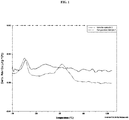
Fig. 1 is a graph of the heat capacity measured by DSC, for Inventive Example 1 and Comparative Example 1. - The instant invention is a multi-stage polymer composition and films made therefrom.
- As used herein, the term "(meth)acrylate" means acrylate or methacrylate.
- The multi-stage polymer composition according to the present invention comprises: a crosslinked core which comprises greater than 95 to 99.9 weight percent of units derived from one or more monomers selected from the group consisting of alkyl (meth)acrylate monomers, from 0.1 to 5 weight percent of units derived from a cross-linking monomer, graft-linking monomer, or combination of two or more thereof, and wherein the crosslinked core has a Tg of from -85 to -10 °C; an intermediate region which comprises one or more intermediate layers, wherein each of the intermediate layers comprises up to 100 weight percent of units derived from a one or more monomers selected from the group consisting of alkyl (meth)acrylate monomers, from 0 to 5 weight percent of units derived from a cross-linking monomer, a graft-linking monomer, or a combination of two or more thereof, optionally from 0 to 2.0 weight percent units derived from one or more chain transfer agents; wherein there is a compositional gradient between the intermediate layers such that the Tg transitions from -30°C to 70°C over the width of the intermediate region, and an outermost layer which comprises from 98.5 to 100 weight percent units derived from one or more monomers selected from the group consisting of alkyl (meth)acrylate, styrenic monomers, and combinations of two or more thereof, from 0 to 1.5 weight percent units derived from one or more chain transfer agents, and has a Tg of from 40 °C to 110 °C.
- In an alternative embodiment, the instant invention further provides a film comprising one or more embodiments of the multi-stage polymer composition.
- The crosslinked core comprises greater than 95 to 99.9 weight percent of units derived from one or more monomers selected from the group consisting of alkyl (meth)acrylate monomers. All individual values and subranges from 95 to 99.9 weight percent are included herein and disclosed herein; for example, the amount of units derived from one or more alkyl (meth)acrylate monomers can be from a lower limit of 95, 95.5, 96, 96,5, 97, 975, 98, 98.5, 99, or 99.5 weight percent to an upper limit of 95.3, 95.8, 96.3, 96.9, 97.5, 98, 98.7, 99.4 or 99.9 weight percent. For example, the amount of units derived from one or more alkyl (meth)acrylate monomers may be in the range of from 95 to 99.9 weight percent, or in the alternative, the amount of units derived from one or more alkyl (meth)acrylate monomers may be in the range of from 95 to 97.5 weight percent, or in the alternative, amount of units derived from one or more alkyl (meth)acrylate monomers may be in the range of from 97.8 to 99.9 weight percent, or in the alternative, the amount of units derived from one or more alkyl (meth)acrylate monomers may be in the range of from 96.5 to 97.9 weight percent.
- The crosslinked core comprises from 0.1 to 5 weight percent of units derived from a cross-linking monomer, graft-linking monomer, or combination thereof. All individual values and subranges from 0.1 to 5 weight percent are included herein and disclosed herein; for example, the amount of units derived from cross-linking monomer, graft-linking monomer, or combination thereof can be from a lower limit of 0.1, 0.7, 1.2, 1.9, 2.6, 3.1, 3.7, 4.4, or 4.9 weight percent, to an upper limit of 0.2, 0.8, 1.4,2.1, 2.7, 3.3, 3.8, 4.5 or 5 weight percent. For example, the amount of units derived from cross-linking monomer, graft-linking monomer, or combination thereof may be in the range of from 0.1 to 5 weight percent, or in the alternative, the amount of units derived from cross-linking monomer, graft-linking monomer, or combination thereof may be in the range of from 0.5 to 2.5 weight percent, or in the alternative, the amount of units derived from cross-linking monomer, graft-linking monomer, or combination thereof may be in the range of from 1.0 to 4.0 weight percent, or in the alternative, the amount of units derived from cross-linking monomer, graft-linking monomer, or combination thereof may be in the range of from 0.3 to 3.5 weight percent.
- The crosslinked core has a Tg of from -85 to -10 °C. All individual values and subranges from -70 to -10 °C are included herein and disclosed herein; for example, the Tg of the crosslinked core can be from a lower limit of -85, -80 -70, -60, -50, -40, -30, -20, or -15 °C to an upper limit of -75, -65, 5 5 , -45, -35, -25, -17 or -10 °C. For example, the Tg of the crosslinked core may be in the range of from -85 to -10 °C, or in the alternative, the Tg of the crosslinked core may be in the range of from -60 to -40 °C, or in the alternative, the Tg of the crosslinked core may be in the range of from -70 to -50 °C, or in the alternative, the Tg of the crosslinked core may be in the range of from - 50 to -30 °C.
- The intermediate region comprises one or more intermediate layers. All individual values and subranges from one or more intermediate layers is disclosed herein and included herein. For example, the intermediate region may comprise one, two, three, four, or five intermediate layers.
- Each of the intermediate layers comprises up to 100 weight percent of units derived from a one or more monomers selected from the group consisting of alkyl (meth)acrylate monomers. All individual values and subranges up to 100 weight percent are included herein and disclosed herein; for example, the amount of units derived from one or more alkyl (meth)acrylate monomers can be from a lower limit of 88.5, 89.4, 90.7, 91.8, 92.6, 93.7, 94, 94.9, 95.5, 96, 97.4, 98.1, 99.3, 99.9 or 100 weight percent. For example, the amount of units derived from one or more alkyl (meth)acrylate monomers may be in the range of from 88.5 to 100 weight percent, or in the alternative, the amount of units derived from one or more alkyl (meth)acrylate monomers may be in the range of from 90.5 to 99.9 weight percent, or in the alternative, the amount of units derived from one or more alkyl (meth)acrylate monomers may be in the range of from 88.5 to 94.9 weight percent, or in the alternative, the amount of units derived from one or more alkyl (meth)acrylate monomers may be in the range of from 92.5 to 96 weight percent.
- Each of the intermediate layers comprises from 0 to 5 weight percent of units derived from a cross-linking monomer, a graft-linking monomer, or a combination of two or more thereof. All individual values and subranges are disclosed herein and included herein; for example, the amount of units derived from a cross-linking monomer, a graft-linking monomer, or a combination thereof may be from a lower limit of O, 0.5, 1, 1.5, 2, 2.5, 3, 3.5, 4, or 4.5 weight percent to an upper limit of 0.2, 0.7, 1.2, 1.7, 2.5, 2.7, 3.2, 3.7, 4.2, 4.7, or 5 weight percent. For example, the amount of units derived from a cross-linking monomer, a graft-linking monomer, or a combination of two or more thereof may be in the range of from 0 to 5 weight percent, or in the alternative, the amount of units derived from a cross-linking monomer, a graft-linking monomer, or a combination of two or more thereof may be in the range of from 0 to 2.5 weight percent, or in the alternative, the amount of units derived from a cross-linking monomer, a graft-linking monomer, or a combination of two or more thereof may be in the range of from 2.5 to 5 weight percent, or in the alternative, the amount of units derived from a cross-linking monomer, a graft-linking monomer, or a combination of two or more thereof may be in the range of from 2 to 4 weight percent.
- Each of the intermediate layers optionally comprises from 0 to 2.0 weight percent units derived from one or more chain transfer agents. All individual values and subranges from 0 to 2.0 weight percent are included herein and disclosed herein; for example, the amount of units derived from one or more chain transfer agents can be from a lower limit of 0, 0.2, 0.4, 0.6, 0.8, 1.0, 1.2, 1.4, 1.6, 1.8 or 2.0 weight percent to an upper limit of 0.1, 0.3, 0.5, 0.7, 0.9, 1.1, 1.3, 1.7or 1.9 weight percent. For example, the amount of units derived from one or more chain transfer agents may be in the range of from 0 to 2.0 weight percent, or in the alternative, the amount of units derived from one or more chain transfer agents may be in the range of from 0.75 to 2.0 weight percent, or in the alternative, the amount of units derived from one or more chain transfer agents may be in the range of from 0 to 0.75 weight percent, or in the alternative, the amount of units derived from one or more chain transfer agents may be in the range of from 0.5 to 1.0 weight percent.
- There is a compositional gradient between the intermediate layers such that the Tg transitions from -30cc to 7occ over the width of the intermediate region. All individual values and subranges from -3occ to 7occ are included herein and disclosed herein; for example, the Tg can transition from a lower limit of -30, -20, -10, 0, 10,20, 30,40,50, or 60 cc to an upper limit of -25, -15, -5, 5, 15, 45, or 70 cc. For example, the Tg can transition over the range of from -30 to 70 cc, or in the alternative, the Tg can transition over the range of from -10 to 30 cc, or in the alternative, the Tg can transition over the range of from -30 to -15 cc, or in the alternative, or in the alternative, the Tg can transition over the range of from -25 to 0 cc, or in the alternative, the Tg can transition over the range of from 0 to 15 cc, or in the alternative, the Tg can transition over the range of from -15 to 55 cc, or in the alternative, the Tg can transition over the range of from 5 to 35 cc.
- Without being bound by any particular theory, it is believed that the compositional gradient is achieved by the proper selection of and manner and timing of addition of monomers during the emulsion polymerization process used to prepare the intermediate region. Specifically, a multi-stage polymerization process is used during which monomers are added in stages, rather than all at once, to the emulsion polymerization reactor (or reactor vessel), permitting an interpenetration of one layer into adjacent layers resulting in a Tg gradient over the intermediate stage. Such interpenetration as illustrated as per Inventive Example 1 in
Fig. 1 . - The outermost layer comprises from 98.5 to 100 weight percent units derived from one or more monomers selected from the group consisting of alkyl (meth)acrylate, styrenic monomers, and combinations of two or more thereof. All individual values and subranges from 98.5 to 100 weight percent are included herein and disclosed herein; for example, the amount of units derived from one or more monomers selected from the group consisting of alkyl (meth)acrylate, styrenic monomers, and combinations of two or more thereof can be from a lower limit of 98.5, 98.7, 98.9, 99.1, 99.3, 99.5, 99.7, or 99.9 weight percent to an upper limit of 98.6, 98.8, 99, 99.2, 99.4, 99.6, 99.8 or 100 weight percent. For example, the amount of units derived from one or more monomers selected from the group consisting of alkyl (meth)acrylate, styrenic monomers, and combinations of two or more thereof may be in the range of from 98.5 to 100 weight percent, or in the alternative, the amount of units derived from one or more monomers selected from the group consisting of alkyl (meth)acrylate, styrenic monomers, and combinations of two or more thereof may be in the range of from 98.5 to 100 weight percent, or in the alternative, the amount of units derived from one or more monomers selected from the group consisting of alkyl (meth)acrylate, styrenic monomers, and combinations of two or more thereof may be in the range of from 98.5 to 100 weight percent, or in the alternative, the amount of units derived from one or more monomers selected from the group consisting of alkyl (meth)acrylate, styrenic monomers, and combinations of two or more thereof may be in the range of from 98.5 to 100 weight percent, or in the alternative, the amount of units derived from one or more monomers selected from the group consisting of alkyl (meth)acrylate, styrenic monomers, and combinations of two or more thereof may be in the range of from 98.5 to 99.6 weight percent, or in the alternative, the amount of units derived from one or more monomers selected from the group consisting of alkyl (meth)acrylate, styrenic monomers, and combinations of two or more thereof may be in the range of from 96.5 to 100 weight percent.
- The outermost layer comprises from 0 to 1.5 weight percent units derived from one or more chain transfer agents. All individual values and subranges from 0 to 1.5 weight percent are included herein and disclosed herein; for example, the amount of units derived from one or more chain transfer agents can be from a lower limit of 0, 0.2, 0.4, 0.6, 0.8, 1, 1.2, or 1.4 weight percent to an upper limit of 0.1, 0.3, 0.5, 0.7, 0.9, 1.1, 1.3, or 1.5 weight percent. For example, the amount of units derived from one or more chain transfer agents may be in the range of from 0 to 1.5 weight percent, or in the alternative, the amount of units derived from one or more chain transfer agents may be in the range of from 0 to 0.75 weight percent, or in the alternative, the amount of units derived from one or more chain transfer agents may be in the range of from 0.75 to 1.5 weight percent, or in the alternative, the amount of units derived from one or more chain transfer agents may be in the range of from 0.3 to 1.2 weight percent.
- The outermost layer has a Tg of from 40 °C to 110 °C. All individual values and subranges from 50 °C to 110 °C are included herein and disclosed herein; for example, the Tg of the outermost layer can be from a lower limit of 40, 43, 45, 50, 60, 70, 80, 90, or 100 °C to an upper limit of 55, 65,75, 85, 95, 105, or 110 °C. For example, the Tg of the outermost layer may be in the range of from 40 °C to 110 °C, or in the alternative, the Tg of the outermost layer may be in the range of from 45 °C to 80 °C, or in the alternative, the Tg of the outermost layer may be in the range of from 75 °C to 110 °C, or in the alternative, the Tg of the outermost layer may be in the range of from 65 °C to 95 °C.
- "Tg" as used herein, is the glass transition temperature, of a copolymer calculated with the Fox equation [ Bulletin of the American Physical Society 1, 3 Page 123 (1956)] as follows:

- For a copolymer, w1 and w2 refer to the weight fraction of the two comonomers, based on weight of monomers charged to the reaction vessel, and Tg(1) and Tg(Z) refer to the glass transition temperatures of the two corresponding homopolymers in degrees Kelvin. For polymers containing three or more monomers, additional terms are added (wn/Tg(n>). The glass transition temperatures of homopolymers for the purposes of this invention are those reported in "Polymer Handbook", edited by J. Brandrup and E. H. Immergut, Interscience Publishers, 1966, unless that publication does not report the Tg of a particular homopolymer, in which case the Tg of the homopolymer is measured by differential scanning colorimetry (DSC).
- Weight average molecular weight (Mw) is determined by size exclusion chromatography using EasiCal PS-2® polystyrene standards supplied by Polymer Laboratories.
- The alkyl (meth)acrylate monomers useful in the crosslinked core, intermediate layers, and outermost layer include linear and branched alkyl (meth)acrylates wherein the alkyl group has from 1 to 12 carbon atoms. Exemplary useful alkyl groups include butyl acrylate, ethyl hexyl acrylate, ethyl acrylate, methyl methacrylate, butyl methacrylate, and iso-octylacrylate.
- In an alternative embodiment, the instant invention provides a multi-stage polymer composition and films made therefrom, in accordance with any of the preceding embodiments, except that the alkyl (meth)acrylate monomers of the crosslinked core are selected from the group consisting of butyl acrylate, ethyl hexyl acrylate, ethyl acrylate, methyl methacrylate, and combinations of two or more thereof.
- In an alternative embodiment, the instant invention provides a multi-stage polymer composition and films made therefrom, in accordance with any of the preceding embodiments, except that the alkyl (meth)acrylate monomers used in one or more intermediate layers are selected from the group consisting of butyl acrylate, ethyl hexyl acrylate, ethyl acrylate, methyl methacrylate, cyclohexyl methacrylate, cyclopentyl acrylate, benzyl acrylate, benzyl methacrylate and combinations of two or more thereof.
- In an alternative embodiment, the instant invention provides a multi-stage polymer composition and films made therefrom, in accordance with any of the preceding embodiments, except that the alkyl (meth)acrylate of the outermost layer is selected from the group consisting of Cl-C8 (meth)acrylates, and combinations of two or more thereof.
- In an alternative embodiment, the instant invention provides a multi-stage polymer composition and films made therefrom, in accordance with any of the preceding embodiments, except that styrenic monomers are used in the intermediate and/or outermost layers.
- In an alternative embodiment, the instant invention provides a multi-stage polymer composition and films made therefrom, in accordance with any of the preceding embodiments, except that the styrenic monomers used in the outermost layer are selected from the group consisting of styrene, a-methylstyrene, vinyl toluene, and combinations of two or more thereof.
- In an alternative embodiment, the instant invention provides a multi-stage polymer composition and films made therefrom, in accordance with any of the preceding embodiments, except that the styrenic monomers used in one or more intermediate layers are selected from the group consisting of styrene, a-methylstyrene, vinyl toluene, and combinations of two or more thereof.
- Cross-linking and/or graft-linking monomers useful in the crosslinked core and intermediate layers include, for example, butanediol di(meth)acrylate, ethylene glycol di(meth)acrylate, divinyl benzene, diethylene glycol di(meth)acrylate, diallyl maleate, allyl methacrylate, diallyl phthalate, triallyl phthalate, trimethylolpropane tri(meth)acrylate, blends thereof and combinations of two or more thereof.
- In an alternative embodiment, the instant invention provides a multi-stage polymer composition and films made therefrom, in accordance with any of the preceding embodiments, except that the cross-linking monomer of the crosslinked core is butanediol diacrylate.
- In an alternative embodiment, the instant invention provides a multi-stage polymer composition and films made therefrom, in accordance with any of the preceding embodiments, except that the graft-linking monomer of the crosslinked core is allyl methacrylate.
- In an alternative embodiment, the instant invention provides a multi-stage polymer composition and films made therefrom, in accordance with any of the preceding embodiments, except that the graft-linking monomer of the intermediate layer(s) is allyl methacrylate.
- In an alternative embodiment, the instant invention provides a multi-stage polymer composition and films made therefrom, in accordance with any of the preceding embodiments, except that the crosslinked core comprises greater than 95 weight percent units derived from a combination of butyl acrylate and butylene glycol diacrylate monomers and from 0.1 to 5 weight percent units derived from allyl methacrylate monomer.
- In an alternative embodiment, the instant invention provides a multi-stage polymer composition and films made therefrom, in accordance with any of the preceding embodiments, except that the one or more intermediate layers each comprise units derived from butyl acrylate and methyl methacrylate monomers.
- In an alternative embodiment, the instant invention provides a multi-stage polymer composition and films made therefrom, in accordance with any of the preceding embodiments, except that the outermost layer comprises greater than 95 weight percent units derived from a combination of butyl acrylate and methyl methacrylate monomers.
- In an alternative embodiment, the instant invention provides a multi-stage polymer composition, in accordance with any of the preceding embodiments, except that the core component and adjacent intermediate layer(s) component are formed by emulsion polymerization and form latex particles having a size less than 250 nm.
- "Particle size," as used herein means weight average particle size of the emulsion (co)polymer particles as measured using a Brookhaven BI-90 Particle Sizer. The particle size of the emulsion polymers used to form films of this invention may range from 30 to 250 nanometers. All individual values and subranges from 30 to 250 nm are disclosed herein and included herein; for example, the average particle size may be from a lower limit of 30,50,70, 90, 110, 130, 150, 170, 190,210, or 230 nm to an upper limit of 30, 60, 80, 100, 120, 140, 160, 180,200, 220, 240 or 250 nm. For example, the weight average particle size of the emulsion (co)polymer particles may range from 50 to 200 nanometers, or in the alternative, from 60 to 175, or in the alternative, from 90 to 175 nanometers.
- In an alternative embodiment, the instant invention provides a multi-stage polymer composition and films made therefrom, in accordance with any of the preceding embodiments, except that the weight average molecular weight (Mw) of the outermost layer composition is less than 100,000 g/mole All individual values and subranges of less than 100,000 g/mole are included herein and disclosed herein; for example, the molecular weight (Mw) of the outermost layer can be from an upper limit of 100,000; 80,000; 60,000; 40,000, 20,000; or 10,000 g/mole. For example, the molecular weight (Mw) of the outermost layer may be in the range of from 20,000 to 100,000 g/mole, or in the alternative, the molecular weight (Mw) of the outermost layer may be in the range of from 40,000 to 80,000 g/mole, or in the alternative, the molecular weight (Mw) of the outermost layer may be in the range of from 40,000 to 60,000 g/mole, or in the alternative, the molecular weight (Mw) of the outermost layer may be in the range of from 40,000 to 50,000 g/mole, or in the alternative, the molecular weight (Mw) of the outermost layer may be in the range of from 20,000 to 30,000 g/mole.
- In an alternative embodiment, the instant invention provides a multi-stage polymer composition and films made therefrom, in accordance with any of the preceding embodiments, except that the film exhibits one or more of the following properties: a modulus of 30,000 psi or less; and an elongation at break of at least 200%. All individual values and subranges from a modulus of 30,000 psi or less are included herein and disclosed herein; for example, the modulus can be from an upper limit of 30,000; 25,000, 20,000; 19,000; 18,000; or 17,000 psi. For example, the film modulus may be in the range of from 18,000 to 30,000 psi, or in the alternative, the film modulus may be in the range of from 25,000 to 30,000 psi, or in the alternative, the film modulus may be in the range of from 19,500 to 20,000 psi. All individual values and subranges from a elongation at break of at least 200% are included herein and disclosed herein; for example, the elongation at break can be from a lower limit of 200%, 190%, 180%, or 170%. In one embodiment the elongation at break of the film has a lower limit of 150%.
- In an alternative embodiment, the instant invention provides a multi-stage polymer composition and films made therefrom, in accordance with any of the preceding embodiments, except that the film having a thickness of 300 µm or less exhibits one or more of the following properties: a haze of less than 1.5%; a yellowness index of less than 1%. All individual values and subranges of a haze of less than 1% are included herein and disclosed herein; for example, the haze can be from an upper limit of 1%, 0.9%, or 0.8%. In one embodiment, the haze of the film has a lower limit of 0.5%. All individual values and subranges of a yellowness index of less than 1% are included herein and disclosed herein; for example, the yellowness index can be from an upper limit of 1%, 0.9%, or 0.8%. In one embodiment, the yellowness index of the film has a lower limit of 0.5%.
- In an alternative embodiment of the invention, the multi-stage polymer composition according to any one of the foregoing embodiments may be formed into sheets. End use applications for such sheets include, but are not limited to, glass laminates and interlayers for use in automotive windows and windshields, and for use in hurricane resistant glass windows and/or doors. Sheets made from the inventive polymer compositions may have any appropriate thickness. In one embodiment, the sheet is between 150 and 500 microns.
- In an alternative embodiment, the instant invention provides a multi-stage polymer composition and films made therefrom, in accordance with any of the preceding embodiments, except that the film further comprises one or more additives selected from the group consisting of stabilizers, and plasticizers.
- Multi-stage polymer composition and films made therefrom can also contain other ingredients that include, but are not limited to, dyes, pigments, flameproofing agents, internal and external lubricants, slip aids, impact modifiers, processing aids, blowing agents, fillers and with other additives to prevent, reduce or mask discoloration or deterioration caused by heating, aging, exposure to light or weathering.
- The multi-stage polymer composition can be processed into film and/or sheet by way of extrusion, calendaring, or injection molding.
- In yet another embodiment, the invention provides a multi-stage polymer composition consisting essentially of: a crosslinked core which comprises greater than 95 weight percent of units derived from one or more monomers selected from the group consisting of alkyl (meth)acrylate monomers, from 0.1 to 5 weight percent of units derived from a cross-linking monomer, graft-linking monomer, or combination thereof, and wherein the crosslinked core has a Tg of from -85 to - 10 °C; an intermediate region which comprises one or more intermediate layers, wherein each of the intermediate layers comprises from 88.5 to 100 weight percent of units derived from a one or more monomers selected from the group consisting of alkyl (meth)acrylate monomers, from 0 to 5 weight percent of units derived from a cross-linking monomer, a graft-linking monomer, or a combination of two or more thereof, optionally from 0 to 2.0 weight percent units derived from one or more chain transfer agents; wherein there is a compositional gradient between the intermediate layers such that the Tg transitions from -30°C to 70°C over the width of the intermediate region, and an outermost layer which comprises from 98.5 to 100 weight percent units derived from one or more monomers selected from the group consisting of alkyl (meth)acrylate, styrenic monomers, and combinations of two or more thereof, from 0 to 1.5 weight percent units derived from one or more chain transfer agents, and has a Tg of from 40 °C to 110 °C.
- In yet another embodiment, the invention provides a multi-stage polymer composition comprising: a crosslinked core which consists essentially of greater than 95 weight percent of units derived from one or more monomers selected from the group consisting of alkyl (meth)acrylate monomers, from 0.1 to 5 weight percent of units derived from a cross-linking monomer, graft-linking monomer, or combination thereof, and wherein the crosslinked core has a Tg of from -85 to - 10 °C; an intermediate region which comprises one or more intermediate layers, wherein each of the intermediate layers comprises from 88.5 to 100 weight percent of units derived from a one or more monomers selected from the group consisting of alkyl (meth)acrylate monomers, from 0 to 5 weight percent of units derived from a cross-linking monomer, a graft-linking monomer, or a combination of two or more thereof, optionally from 0 to 2.0 weight percent units derived from one or more chain transfer agents; wherein there is a compositional gradient between the intermediate layers such that the Tg transitions from -30°C to 70°C over the width of the intermediate region, and an outermost layer which comprises from 98.5 to 100 weight percent units derived from one or more monomers selected from the group consisting of alkyl (meth)acrylate, styrenic monomers, and combinations of two or more thereof, from 0 to 1.5 weight percent units derived from one or more chain transfer agents, and has a Tg of from 40 °C to 110 °C.
- In yet another embodiment, the invention provides a multi-stage polymer composition comprising: a crosslinked core which comprises greater than 95 weight percent of units derived from one or more monomers selected from the group consisting of alkyl (meth)acrylate monomers, from 0.1 to 5 weight percent of units derived from a cross-linking monomer, graft-linking monomer, or combination thereof, and wherein the crosslinked core has a Tg of from -85 to -10 °C; an intermediate region which comprises one or more intermediate layers, wherein each of the intermediate layers consists essentially of from 88.5 to 100 weight percent of units derived from a one or more monomers selected from the group consisting of alkyl (meth)acrylate monomers, from 0 to 5 weight percent of units derived from a cross-linking monomer, a graft-linking monomer, or a combination of two or more thereof, optionally from 0 to 2.0 weight percent units derived from one or more chain transfer agents; wherein there is a compositional gradient between the intermediate layers such that the Tg transitions from -30°C to 70°C over the width of the intermediate region, and an outermost layer which comprises from 98.5 to 100 weight percent units derived from one or more monomers selected from the group consisting of alkyl (meth)acrylate, styrenic monomers, and combinations of two or more thereof, from 0 to 1.5 weight percent units derived from one or more chain transfer agents, and has a Tg of from 40 °C to 110 °C.
- In yet another embodiment, the invention provides a multi-stage polymer composition comprising: a crosslinked core which comprises greater than 95 weight percent of units derived from one or more monomers selected from the group consisting of alkyl (meth)acrylate monomers, from 1.1 to 5 weight percent of units derived from a cross-linking monomer, graft-linking monomer, or combination thereof, and wherein the crosslinked core has a Tg of from -85 to -10 °C; an intermediate region which comprises one or more intermediate layers, wherein each of the intermediate layers comprises from 88.5 to 100 weight percent of units derived from a one or more monomers selected from the group consisting of alkyl (meth)acrylate monomers, from 0 to 5 weight percent of units derived from a cross-linking monomer, a graft-linking monomer, or a combination of two or more thereof, optionally from 0 to 2.0 weight percent units derived from one or more chain transfer agents; wherein there is a compositional gradient between the intermediate layers such that the Tg transitions from -30°C to 70°C over the width of the intermediate region, and an outermost layer which consists essentially of from 98.5 to 100 weight percent units derived from one or more monomers selected from the group consisting of alkyl (meth)acrylate, styrenic monomers, and combinations of two or more thereof, from 0 to 1.5 weight percent units derived from one or more chain transfer agents, and has a Tg of from 40 °C to 110 °C.
- In yet an alternative embodiment, the invention provides a sheet or film consisting essentially of one or more of the multi-stage polymer composition according to any of the foregoing embodiments.
- The following examples illustrate the present invention but are not intended to limit the scope of the invention.
- The components used in preparing Inventive Example 1 are shown in Table 1.
- A reactor equipped with a stirrer and condenser and blanked with nitrogen was charged with Mixture A. Into the stirred reactor at 85 °C were added Mixture B, 7% of Mixture C, 1.7% of Mixture D and 10.4% of Mixture E. After an exothermic reaction took place and the reactor reached peak temperature, the heating and stirring were continued at 85 °C for 5 minutes. The remainder of Mixture C and 8.7% of Mixture D were gradually added to the reactor over 90 minutes. After the addition was complete, the reactor was kept at 85 °C for 15 minutes. 24.3% of Mixture E was added to the reactor. Mixture F and 24.3% of Mixture D were gradually added to the reactor over 90 minutes. After the addition was complete, the reactor was held at 85 °C for 15 minutes. 21.9% of Mixture E was added to the reactor. Mixture G and 21.9% of Mixture D were gradually added to the reactor over 60 minutes. After the addition was complete, the reactor was held at 85 °C for 15 minutes. The remainder of Mixture E was added to the reactor. Mixture H and the remainder of Mixture D were gradually added to the reactor over 60 minutes. After the addition was complete, the reactor was held at 85 °C for 15 minutes, then cooled to ambient temperature.
Table 1 Mixture Component Parts by Web?ht A Water 385 23% Aqueous sodium dodecylbenzenesulfonate 2.5 B 0.2% Aqueous iron sulfate heptahydrate 1.21 0.5% Aqueous ethylenediaminetetracetic acid 1.02 Water 5 C Butyl acrylate 124.4 1,3-Butanediol diacrylate 1.26 Allyl methacrylate 0.63 23% Aqueous sodium dodecylbenzenesulfonate 3.9 Water 35 D 70% aqueous tert-butylhydroperoxide 0.38 Water 14.8 E Sodium hydroxymethanesulfinate hydrate 0.47 Water 23.8 F Butyl acrylate 80.9 Methyl methacrylate 43.6 Allyl methacrylate 0.63 23% Aqueous sodium dodecylbenzenesulfonate 3.8 Water 35 G Butyl acrylate 13.7 Methyl methacrylate 39.6 1-dodecanethiol 0.22 23% Aqueous sodium dodecylbenzenesulfonate 2.3 Water 13.5 H Butyl acrylate 13.7 Methyl methacrylate 39.6 1-dodecanethiol 0.92 23% Aqueous sodium dodecylbenzenesulfonate 2.3 Water 13.5 - Inventive Example 1 had an average particle size of 164 nm, a solids content of 39.3%, and a weight average molecular weight of 42,400 g/mol.
- Table 2 shows the components used in preparing Comparative Example 1. Comparative Example 1 is prepared by a 4-stage acrylic aqueous emulsion polymerization:
A reactor equipped with a stirrer and condenser and blanked with nitrogen was charged with Mixture A. Into the stirred reactor at 83 °C were added 7% of Mixture B, 1.8% of Mixture D and 11.3% of Mixture E. After an exothermic reaction took place and the reactor reached peak temperature, the heating and stirring were continued at 85 °C for 5 minutes. The remainder of Mixture B, Mixture C and 8.7% of Mixture D were gradually added to the reactor over 90 minutes. After the addition was complete, the reactor was kept at 85 °C for 15 minutes. 38.9% of Mixture E was added to the reactor. Mixture F and 9.4% of Mixture D were gradually added to the reactor over 90 minutes. After the addition was complete, the reactor was held at 85 °C for 15 minutes. 16.8% of Mixture E was added to the reactor. Mixture G and 21.5% of Mixture D were gradually added to the reactor over 60 minutes. After the addition was complete, the reactor was held at 85 °C for 15 minutes. The remainder of Mixture E was added to the reactor. Mixture H and the remainder of Mixture D were gradually added to the reactor over 60 minutes. After the addition was complete, the reactor was held at 85 °C for 15 minutes, then cooled to ambient temperature.Table 2 Mixture Component Parts by Weight A Deionized Water 387.5 23% Aqueous sodium dodecylbenzenesulfonate 2.6 B Butyl acrylate 124.4 1,3-Butanediol diacrylate 1.26 Allyl methacrylate 0.63 23% Aqueous sodium dodecylbenzenesulfonate 2.9 Water 35 C 23% Aqueous sodium dodecylbenzenesulfonate 2.82 Water 3.75 D 70% aqueous tert-butylhydroperoxide 0.35 Water 12.3 E Sodium hydroxvmethanesulfinate hydrate 0.43 Water 16.3 F Butyl acrylate 49.8 Methyl methacrylate 74.7 Allyl methacrylate 0.63 - 23% Aqueous sodium dodecylbenzenesulfonate 5.45 Water 35 G Butyl acrylate 13.7 Methyl methacrylate 39.6 1-dodecanethiol 0.22 23% Aqueous sodium dodecylbenzenesulfonate 2.3 Water 13.5 H Butyl acrylate 13.7 Methyl methacrylate 39.6 1-dodecanethiol 0.92 23% Aqueous sodium dodecylbenzenesulfonate 2.3 Water 13.5 - As can be seen in
Fig. 1 , Inventive Example 1 exhibits less distinct heat capacity peaks for the intermediate stage of the polymer composition, indicating a compositional gradient, rather than distinct intermediate layers. - The emulsion prepared from each of Inventive Example 1 and Comparative Example 1 above was freeze dried with a vacuum oven, and the resultant powder was then processed using a Collin Mill (W. H. Collin GmbH Maschienefabrik, Aichach, Germany) at 160°C for 3 minutes. After the milling was completed, the molten polymer was peeled from the metal rolls and cooled down to provide film with a thickness in the range from 190 to 250 µm.
Table 3 Film thickness Elonation@break stress@ vield Stress@break Modulus Stress whitening Units (microns) (%) (psi) (psi) (psi) Comparative Example 1 205 297 2650 2910 46200 Yes Inventive Example 1 190 321 679 1628 12160 No Table 4 Haze (%) Y Total (%) L a b YI Comparative Example 1 2.67 92.6 96.7 -0.384 1.428 2.35 Inventive Example 1 0.89 93.3 97.0 -0.066 0.508 0.89 - The term "molecular weight" as used herein refers to peak average molecular weight as determined by gel permeation chromatography (GPC) against narrow molecular weight polystyrene standards in tetrahydrofuran solvent at 25 °C using Polymer Laboratories data manipulation software.
- The volume average particle size was measured on very dilute latexes (diluted to 0.001% solids) with a BI 90 (Brookhaven Instruments, Holtsville, NY) particle size detector, utilizing Dynamic Light Scattering (15° and 90° scattering angles) and a laser light source. The signal is detected by a photodiode array and the data analyzed with a built-in correlator.
- The glass transition temperature (Tg) was measured using a differential scanning calorimetry (DSC) from TA Instruments (New Castle, Delaware, USA). Samples were tested in an aluminum pan under N2 under a rate of 20°C/min.
- Haze level of films was measured in accordance with ASTM 871-96(2010).
- The thickness of the films was measured using a micrometer.
- Optical properties were measured using a Color Quest II, from Hunter Labs. (Reston, Virginia, USA).
- The present invention may be embodied in other forms without departing from the spirit and the essential attributes thereof, and, accordingly, reference should be made to the appended claims, rather than to the foregoing specification, as indicating the scope of the invention.
Claims (15)
- A multi-stage polymer composition comprising:a crosslinked core which comprises greater than 95 weight percent of units derived from one or more monomers selected from the group consisting of alkyl (meth)acrylate monomers, from 0.1 to 5 weight percent of units derived from a cross-linking monomer, graft-linking monomer, or combination thereof, and wherein the crosslinked core has a Tg of from -85 to -10 °C;an intermediate region which comprises one or more intermediate layers, wherein each of the intermediate layers comprises from 88.5 to 100 weight percent of units derived from a one or more monomers selected from the group consisting of alkyl (meth)acrylate monomers, from 0 to 5 weight percent of units derived from a cross-linking monomer, a graft-linking monomer, or a combination of two or more thereof, optionally from 0 to 2.0 weight percent units derived from one or more chain transfer agents; wherein there is a compositional gradient between the intermediate layers such that the Tg transitions from -30°C to 70°C over the width of the intermediate region such that the compositional gradient transitions between a lower Tg and an upper Tg, wherein said lower Tg is at least -30 °C and said upper Tg is 70 °C or less over the width of the intermediate region, andan outermost layer which comprises from 98.5 to 100 weight percent units derived from one or more monomers selected from the group consisting of alkyl (meth)acrylate, styrenic monomers, and combinations of two or more thereof, from 0 to 1.5 weight percent units derived from one or more chain transfer agents, and has a Tg of from 40 °C to 110°C.
- The multi-stage polymer composition according to claim 1, wherein the outermost layer has a Tg of from 50 °C to 97 °C.
- The multi-stage polymer composition according to any one of the preceding claims, wherein the crosslinked core has a Tg of from -55 to -30 C.
- The multi-stage polymer composition according to any one of the preceding claims, wherein the cross-linking monomer of the crosslinked core, the graft-linking monomer of the crosslinked core, the cross-linking monomer of the intermediate layer(s) and the graft-linking monomer of the intermediate layer(s) are selected from the group consisting of butanediol di(meth)acrylate, ethylene glycol di(meth)acrylate, divinyl benzene, diethylene glycol di(meth)acrylate, trimethyolpropane triacrylate, butylene glycol dimethacrylate, blends thereof, and combinations of two or more thereof.
- The multi-stage polymer composition according to any one of the preceding claims, wherein the cross-linking monomer of the crosslinked core and the cross-linking monomer of the intermediate layer(s) are selected from the group consisting allyl methacrylate, diallyl maleate, blends thereof, and combinations of two or more thereof.
- The multi-stage polymer composition according to any one of the preceding claims, wherein the cross-linking monomer of the crosslinked core is butanediol diacrylate, the graft-linking monomer of the crosslinked core is allyl methacrylate and the graft-linking monomer of the intermediate layer(s) is allyl methacrylate.
- The multi-stage polymer composition according to any one of the preceding claims, wherein the alkyl (meth)acrylate monomers of the crosslinked core are selected from the group consisting of butyl acrylate, ethyl hexyl acrylate, ethyl acrylate, methyl methacrylate, and combinations of two or more thereof.
- The multi-stage polymer composition according to any one of the preceding claims, wherein the alkyl (meth)acrylate monomers of the intermediate layer(s) are selected from the group consisting of butyl acrylate, ethyl hexyl acrylate, ethyl acrylate, methyl methacrylate, cyclohexyl (meth)acrylate, cyclopentyl methacrylate, tetrahydrofurfyl methacrylate, benzyl (meth)acryale and combinations of two or more thereof.
- The multi-stage polymer composition according to any one of the preceding claims, wherein the alkyl (meth)acrylate monomers of the outermost layer are selected from the group consisting of butyl acrylate, ethyl hexyl acrylate, ethyl acrylate, methyl methacrylate, and combinations of two or more thereof.
- The multi-stage polymer composition according to any one of the preceding claims, wherein the crosslinked core comprises at least 95 weight percent units of butyl acrylate and from 0.1 to 5.0 weight percent units of a combination of butylene glycol diacrylate and allyl methacrylate. 95 weight percent units derived from a combination of butyl acrylate and butylene glycol diacrylate monomers and from 0.1 to 5 weight percent units derived from allyl methacrylate.
- The multi-stage polymer composition according to any one of the preceding claims, wherein the one or more intermediate layers each comprise units derived from butyl acrylate and methyl methacrylate.
- The multi-stage polymer composition according to any one of the preceding claims, wherein the outermost layer comprises greater than 95 weight percent units derived from a combination of butyl acrylate and methyl methacrylate monomers.
- The multi-stage polymer composition according to any one of the preceding claims are formed by emulsion polymerization, wherein the latex particles having an average particle size less than 250 nm.
- The multi-stage polymer composition according to any one of the preceding claims, wherein the weight average (Mw) molecular weight of the outermost layer composition is less than 50,000 g/mol.
- A film or sheet comprising the multi-stage polymer composition according to any one of the preceding claims.
Applications Claiming Priority (3)
| Application Number | Priority Date | Filing Date | Title |
|---|---|---|---|
| US201261694340P | 2012-08-29 | 2012-08-29 | |
| PCT/US2013/053544 WO2014035608A1 (en) | 2012-08-29 | 2013-08-05 | Multi-stage polymer composition and films made therefrom |
| EP13747628.9A EP2867266B1 (en) | 2012-08-29 | 2013-08-05 | Multi-stage polymer composition and films made therefrom |
Related Parent Applications (2)
| Application Number | Title | Priority Date | Filing Date |
|---|---|---|---|
| EP13747628.9A Division-Into EP2867266B1 (en) | 2012-08-29 | 2013-08-05 | Multi-stage polymer composition and films made therefrom |
| EP13747628.9A Division EP2867266B1 (en) | 2012-08-29 | 2013-08-05 | Multi-stage polymer composition and films made therefrom |
Publications (2)
| Publication Number | Publication Date |
|---|---|
| EP3789414A1 true EP3789414A1 (en) | 2021-03-10 |
| EP3789414B1 EP3789414B1 (en) | 2024-05-08 |
Family
ID=48949293
Family Applications (2)
| Application Number | Title | Priority Date | Filing Date |
|---|---|---|---|
| EP20202558.1A Active EP3789414B1 (en) | 2012-08-29 | 2013-08-05 | Multi-stage polymer composition and films made therefrom |
| EP13747628.9A Active EP2867266B1 (en) | 2012-08-29 | 2013-08-05 | Multi-stage polymer composition and films made therefrom |
Family Applications After (1)
| Application Number | Title | Priority Date | Filing Date |
|---|---|---|---|
| EP13747628.9A Active EP2867266B1 (en) | 2012-08-29 | 2013-08-05 | Multi-stage polymer composition and films made therefrom |
Country Status (6)
| Country | Link |
|---|---|
| US (2) | US10040915B2 (en) |
| EP (2) | EP3789414B1 (en) |
| JP (1) | JP6279579B2 (en) |
| CN (2) | CN110606923A (en) |
| BR (1) | BR112015003955B1 (en) |
| WO (1) | WO2014035608A1 (en) |
Families Citing this family (19)
| Publication number | Priority date | Publication date | Assignee | Title |
|---|---|---|---|---|
| TWI667279B (en) * | 2014-10-21 | 2019-08-01 | 美商羅門哈斯公司 | A polymer blend, a film or sheet made therefrom, articles made from the film or sheet or pipe and method of preparing a film or sheet |
| EP3344669B1 (en) | 2015-08-31 | 2021-09-29 | Rohm and Haas Company | A processing aid for foam molding, a vinyl chloride resin-based foam molding composition comprising the same and a foam molded product |
| US11655319B2 (en) | 2015-08-31 | 2023-05-23 | Rohm And Haas Company | Processing aid for foam molding, a vinyl chloride resin-based foam molding composition comprising the same and a foam molded product |
| CN108291041B (en) | 2015-12-18 | 2021-11-30 | 罗门哈斯公司 | Acrylic acid composition |
| KR102341999B1 (en) * | 2016-05-24 | 2021-12-23 | 롬 앤드 하아스 컴패니 | Multistage polymer compositions and films made therefrom |
| FR3068977B1 (en) * | 2017-07-12 | 2020-09-04 | Arkema France | COMPOSITION COMPRISING A MULTI-PHASE POLYMER AND AN ACRYLIC (METH) POLYMER, ITS PREPARATION PROCESS AND ITS USE |
| WO2019190702A1 (en) * | 2018-03-29 | 2019-10-03 | Rohm And Haas Company | Three-stage polymer particle |
| KR102731875B1 (en) * | 2018-03-29 | 2024-11-18 | 롬 앤드 하아스 컴패니 | Modified styrene-acrylonitrile |
| EP3702400B1 (en) | 2019-02-27 | 2021-04-21 | Röhm GmbH | Forgery prevention labels for high-temperature applications |
| BR112021016765A2 (en) * | 2019-03-28 | 2021-10-13 | Rohm And Haas Company | COMPOSITION AND EXTRUDED FILM |
| BR112021016759A2 (en) * | 2019-03-28 | 2021-10-19 | Rohm And Haas Company | MULTI-STAGE FLEXIBLE ACRYLIC RESIN |
| WO2020263495A1 (en) * | 2019-06-28 | 2020-12-30 | Rohm And Haas Company | Allylic functional thermoplastic additives for thermosetting polymers |
| EP3990508B1 (en) * | 2019-06-28 | 2023-08-02 | Rohm and Haas Company | Allylic functional thermoplastic additive for uv curable flexible acrylic resin clear films |
| CN115362211B (en) | 2020-04-21 | 2025-11-28 | 罗门哈斯公司 | Melt flow additives for polycarbonates and other engineering resins |
| EP4176006A1 (en) | 2020-07-01 | 2023-05-10 | Dow Global Technologies LLC | Heat and oil resistant compositions |
| EP3967491A1 (en) | 2020-09-15 | 2022-03-16 | Röhm GmbH | Heat reflective foils with improved mechanical properties and a high weathering resistance |
| EP3988294A1 (en) | 2020-10-26 | 2022-04-27 | Röhm GmbH | Laser engravable labels |
| EP4482891A1 (en) | 2022-02-22 | 2025-01-01 | Avery Dennison Corporation | Processable and printable acrylic films and articles formed therefrom |
| WO2024011446A1 (en) * | 2022-07-13 | 2024-01-18 | Rohm And Haas Company | Flexible acrylic resin-modified polyvinylidene fluoride film |
Citations (3)
| Publication number | Priority date | Publication date | Assignee | Title |
|---|---|---|---|---|
| EP0989144A1 (en) * | 1997-06-09 | 2000-03-29 | Mitsubishi Rayon Co., Ltd. | Acrylic polymer having multilayer structure and methacrylic resin composition containing the same |
| JP2004002665A (en) * | 2002-04-08 | 2004-01-08 | Mitsubishi Rayon Co Ltd | Acrylic resin molded article and method for producing the same |
| EP1582538A1 (en) * | 2003-01-10 | 2005-10-05 | Mitsubishi Rayon Co., Ltd. | Multilayer structure polymer and resin composition together with acrylic resin film material, acrylic resin laminate film, photocurable acrylic resin film or sheet, laminate film or sheet and laminate molding obtained by laminating thereof |
Family Cites Families (14)
| Publication number | Priority date | Publication date | Assignee | Title |
|---|---|---|---|---|
| JPS5936645B2 (en) * | 1975-05-06 | 1984-09-05 | 三菱レイヨン株式会社 | Method for producing multilayer polymer composition |
| JPS57151365A (en) * | 1981-03-17 | 1982-09-18 | Mitsubishi Rayon Co | Laminated structure having improved climate resisting property |
| DE3300526A1 (en) * | 1983-01-10 | 1984-07-12 | Röhm GmbH, 6100 Darmstadt | IMPACT MODIFIER |
| JPH0832751B2 (en) * | 1986-07-22 | 1996-03-29 | 旭化成工業株式会社 | Method for producing weather resistant, impact resistant acrylic resin granular composite |
| US5756573A (en) * | 1995-10-05 | 1998-05-26 | Sc Johnson Commerical Markets, Inc. | Seed polymerized latex polymer having a gradient polymeric morphology and process for preparing the same |
| CN1149260C (en) * | 1998-04-27 | 2004-05-12 | 钟渊化学工业株式会社 | Resin composition containing multilayer structure graft polymer |
| JP2000319479A (en) * | 1998-12-28 | 2000-11-21 | Taiyo Enbi Kk | Vinyl chloride polymer composition |
| KR100484722B1 (en) * | 2002-01-25 | 2005-04-20 | 주식회사 엘지화학 | Acrylic impact modifier prepared by multi-stage polymerization and method for preparing the same |
| CN100424106C (en) * | 2003-01-10 | 2008-10-08 | 三菱丽阳株式会社 | Multilayer structure polymer, and resin composition, film-like material, laminated film or sheet containing the polymer |
| JP4406304B2 (en) * | 2003-02-19 | 2010-01-27 | 三菱レイヨン株式会社 | MULTILAYER STRUCTURE POLYMER AND RESIN COMPOSITION CONTAINING THE SAME, AND Acrylic Resin Film, Acrylic Resin Laminated Film, Photocurable Acrylic Resin Film or Sheet, Laminated Film or Sheet, and Laminated Molded Product Laying These |
| US20060011617A1 (en) | 2004-07-13 | 2006-01-19 | Ricardo Covarrubias | Automated laser cutting of optical lenses |
| JP2006124640A (en) * | 2004-09-29 | 2006-05-18 | Nippon Shokubai Co Ltd | Pressure-sensitive adhesive composition |
| JP2011153291A (en) * | 2009-12-28 | 2011-08-11 | Sumitomo Chemical Co Ltd | Multilayered polymer particle |
| FR2964970B1 (en) * | 2010-09-22 | 2013-11-01 | Arkema France | NEW MODIFYING SHOCKS AND IMPROVED THERMOPLASTIC COMPOSITIONS SHOCK |
-
2013
- 2013-08-05 BR BR112015003955-3A patent/BR112015003955B1/en not_active IP Right Cessation
- 2013-08-05 US US14/418,521 patent/US10040915B2/en active Active
- 2013-08-05 CN CN201910963094.5A patent/CN110606923A/en active Pending
- 2013-08-05 EP EP20202558.1A patent/EP3789414B1/en active Active
- 2013-08-05 CN CN201380043275.7A patent/CN104854154A/en active Pending
- 2013-08-05 JP JP2015529825A patent/JP6279579B2/en active Active
- 2013-08-05 WO PCT/US2013/053544 patent/WO2014035608A1/en not_active Ceased
- 2013-08-05 EP EP13747628.9A patent/EP2867266B1/en active Active
-
2018
- 2018-06-29 US US16/022,833 patent/US20180305510A1/en not_active Abandoned
Patent Citations (3)
| Publication number | Priority date | Publication date | Assignee | Title |
|---|---|---|---|---|
| EP0989144A1 (en) * | 1997-06-09 | 2000-03-29 | Mitsubishi Rayon Co., Ltd. | Acrylic polymer having multilayer structure and methacrylic resin composition containing the same |
| JP2004002665A (en) * | 2002-04-08 | 2004-01-08 | Mitsubishi Rayon Co Ltd | Acrylic resin molded article and method for producing the same |
| EP1582538A1 (en) * | 2003-01-10 | 2005-10-05 | Mitsubishi Rayon Co., Ltd. | Multilayer structure polymer and resin composition together with acrylic resin film material, acrylic resin laminate film, photocurable acrylic resin film or sheet, laminate film or sheet and laminate molding obtained by laminating thereof |
Non-Patent Citations (2)
| Title |
|---|
| "Polymer Handbook", 1966, INTERSCIENCE PUBLISHERS |
| BULLETIN OF THE AMERICAN PHYSICAL SOCIETY, vol. 1, no. 3, 1956, pages 123 |
Also Published As
| Publication number | Publication date |
|---|---|
| US10040915B2 (en) | 2018-08-07 |
| EP2867266B1 (en) | 2021-04-14 |
| BR112015003955B1 (en) | 2021-03-09 |
| EP3789414B1 (en) | 2024-05-08 |
| JP6279579B2 (en) | 2018-02-14 |
| US20150183944A1 (en) | 2015-07-02 |
| JP2015532674A (en) | 2015-11-12 |
| BR112015003955A2 (en) | 2019-11-19 |
| WO2014035608A1 (en) | 2014-03-06 |
| CN104854154A (en) | 2015-08-19 |
| US20180305510A1 (en) | 2018-10-25 |
| EP2867266A1 (en) | 2015-05-06 |
| CN110606923A (en) | 2019-12-24 |
Similar Documents
| Publication | Publication Date | Title |
|---|---|---|
| EP3789414B1 (en) | Multi-stage polymer composition and films made therefrom | |
| US12325765B2 (en) | Hydrophobic high heat optical acrylic copolymers | |
| EP3464389B1 (en) | Multi-stage polymer composition and films made therefrom | |
| JP6370683B2 (en) | Thermoplastic resin film and method for producing the same, decorative film, laminated film, and laminated body | |
| JP2016094537A (en) | Thermoplastic resin composition and method for producing the same, molded product, and thermoplastic resin film | |
| EP2836548B1 (en) | Polycarbonate blend articles and method of producing the same | |
| KR101628429B1 (en) | High weatherable acrylic film having improved surface property and stress whitening resistibility | |
| JP2019172788A (en) | (meth)acrylic-based rubber-containing graft copolymer, and acrylic resin film comprising same | |
| US11667781B2 (en) | Polyvinyl chloride compositions containing impact modifiers and calcium carbonate | |
| JP5324023B2 (en) | Display window protection sheet | |
| EP4317324A1 (en) | Resin composition, molded body, and film | |
| CA2521583C (en) | Die-cuttable acrylic sheet | |
| EP4446381A1 (en) | High heat and high impact pmma composition | |
| JP2016094535A (en) | Thermoplastic resin composition and production method thereof, molded product, thermoplastic resin film, laminated film, and laminated product | |
| US20240294744A1 (en) | Chemical resistant pmma alloys | |
| JP2000327874A (en) | Laminated acrylic resin film and laminate | |
| EP2896500B1 (en) | Acrylic multilayered film with high weather resistance, and preparation method thereof | |
| JP2002155185A (en) | Acrylic resin composition, acrylic resin film, and laminate | |
| JP2000072894A (en) | Acrylic resin film and laminate for laminating | |
| JP2026065400A (en) | Laminate |
Legal Events
| Date | Code | Title | Description |
|---|---|---|---|
| PUAI | Public reference made under article 153(3) epc to a published international application that has entered the european phase |
Free format text: ORIGINAL CODE: 0009012 |
|
| STAA | Information on the status of an ep patent application or granted ep patent |
Free format text: STATUS: REQUEST FOR EXAMINATION WAS MADE |
|
| 17P | Request for examination filed |
Effective date: 20201019 |
|
| AC | Divisional application: reference to earlier application |
Ref document number: 2867266 Country of ref document: EP Kind code of ref document: P |
|
| AK | Designated contracting states |
Kind code of ref document: A1 Designated state(s): AL AT BE BG CH CY CZ DE DK EE ES FI FR GB GR HR HU IE IS IT LI LT LU LV MC MK MT NL NO PL PT RO RS SE SI SK SM TR |
|
| RIN1 | Information on inventor provided before grant (corrected) |
Inventor name: GUO, HAILAN Inventor name: BROAD WATER, STEVEN J. Inventor name: NELLIAPPAN, VEERA D. |
|
| RIN1 | Information on inventor provided before grant (corrected) |
Inventor name: GUO, HAILAN Inventor name: BROAD WATER, STEVEN J. Inventor name: NELLIAPPAN, VEERA D. |
|
| STAA | Information on the status of an ep patent application or granted ep patent |
Free format text: STATUS: EXAMINATION IS IN PROGRESS |
|
| 17Q | First examination report despatched |
Effective date: 20230130 |
|
| P01 | Opt-out of the competence of the unified patent court (upc) registered |
Effective date: 20230526 |
|
| GRAJ | Information related to disapproval of communication of intention to grant by the applicant or resumption of examination proceedings by the epo deleted |
Free format text: ORIGINAL CODE: EPIDOSDIGR1 |
|
| GRAP | Despatch of communication of intention to grant a patent |
Free format text: ORIGINAL CODE: EPIDOSNIGR1 |
|
| GRAP | Despatch of communication of intention to grant a patent |
Free format text: ORIGINAL CODE: EPIDOSNIGR1 |
|
| STAA | Information on the status of an ep patent application or granted ep patent |
Free format text: STATUS: GRANT OF PATENT IS INTENDED |
|
| INTG | Intention to grant announced |
Effective date: 20231201 |
|
| GRAS | Grant fee paid |
Free format text: ORIGINAL CODE: EPIDOSNIGR3 |
|
| GRAA | (expected) grant |
Free format text: ORIGINAL CODE: 0009210 |
|
| STAA | Information on the status of an ep patent application or granted ep patent |
Free format text: STATUS: THE PATENT HAS BEEN GRANTED |
|
| AC | Divisional application: reference to earlier application |
Ref document number: 2867266 Country of ref document: EP Kind code of ref document: P |
|
| AK | Designated contracting states |
Kind code of ref document: B1 Designated state(s): AL AT BE BG CH CY CZ DE DK EE ES FI FR GB GR HR HU IE IS IT LI LT LU LV MC MK MT NL NO PL PT RO RS SE SI SK SM TR |
|
| REG | Reference to a national code |
Ref country code: GB Ref legal event code: FG4D |
|
| REG | Reference to a national code |
Ref country code: CH Ref legal event code: EP |
|
| REG | Reference to a national code |
Ref country code: DE Ref legal event code: R096 Ref document number: 602013085703 Country of ref document: DE |
|
| REG | Reference to a national code |
Ref country code: IE Ref legal event code: FG4D |
|
| REG | Reference to a national code |
Ref country code: NL Ref legal event code: FP |
|
| REG | Reference to a national code |
Ref country code: LT Ref legal event code: MG9D |
|
| PG25 | Lapsed in a contracting state [announced via postgrant information from national office to epo] |
Ref country code: IS Free format text: LAPSE BECAUSE OF FAILURE TO SUBMIT A TRANSLATION OF THE DESCRIPTION OR TO PAY THE FEE WITHIN THE PRESCRIBED TIME-LIMIT Effective date: 20240908 |
|
| PG25 | Lapsed in a contracting state [announced via postgrant information from national office to epo] |
Ref country code: BG Free format text: LAPSE BECAUSE OF FAILURE TO SUBMIT A TRANSLATION OF THE DESCRIPTION OR TO PAY THE FEE WITHIN THE PRESCRIBED TIME-LIMIT Effective date: 20240508 |
|
| PG25 | Lapsed in a contracting state [announced via postgrant information from national office to epo] |
Ref country code: FI Free format text: LAPSE BECAUSE OF FAILURE TO SUBMIT A TRANSLATION OF THE DESCRIPTION OR TO PAY THE FEE WITHIN THE PRESCRIBED TIME-LIMIT Effective date: 20240508 Ref country code: HR Free format text: LAPSE BECAUSE OF FAILURE TO SUBMIT A TRANSLATION OF THE DESCRIPTION OR TO PAY THE FEE WITHIN THE PRESCRIBED TIME-LIMIT Effective date: 20240508 |
|
| PG25 | Lapsed in a contracting state [announced via postgrant information from national office to epo] |
Ref country code: GR Free format text: LAPSE BECAUSE OF FAILURE TO SUBMIT A TRANSLATION OF THE DESCRIPTION OR TO PAY THE FEE WITHIN THE PRESCRIBED TIME-LIMIT Effective date: 20240809 |
|
| PG25 | Lapsed in a contracting state [announced via postgrant information from national office to epo] |
Ref country code: PT Free format text: LAPSE BECAUSE OF FAILURE TO SUBMIT A TRANSLATION OF THE DESCRIPTION OR TO PAY THE FEE WITHIN THE PRESCRIBED TIME-LIMIT Effective date: 20240909 |
|
| REG | Reference to a national code |
Ref country code: AT Ref legal event code: MK05 Ref document number: 1684939 Country of ref document: AT Kind code of ref document: T Effective date: 20240508 |
|
| PG25 | Lapsed in a contracting state [announced via postgrant information from national office to epo] |
Ref country code: ES Free format text: LAPSE BECAUSE OF FAILURE TO SUBMIT A TRANSLATION OF THE DESCRIPTION OR TO PAY THE FEE WITHIN THE PRESCRIBED TIME-LIMIT Effective date: 20240508 |
|
| PG25 | Lapsed in a contracting state [announced via postgrant information from national office to epo] |
Ref country code: AT Free format text: LAPSE BECAUSE OF FAILURE TO SUBMIT A TRANSLATION OF THE DESCRIPTION OR TO PAY THE FEE WITHIN THE PRESCRIBED TIME-LIMIT Effective date: 20240508 |
|
| PG25 | Lapsed in a contracting state [announced via postgrant information from national office to epo] |
Ref country code: PL Free format text: LAPSE BECAUSE OF FAILURE TO SUBMIT A TRANSLATION OF THE DESCRIPTION OR TO PAY THE FEE WITHIN THE PRESCRIBED TIME-LIMIT Effective date: 20240508 |
|
| PG25 | Lapsed in a contracting state [announced via postgrant information from national office to epo] |
Ref country code: LV Free format text: LAPSE BECAUSE OF FAILURE TO SUBMIT A TRANSLATION OF THE DESCRIPTION OR TO PAY THE FEE WITHIN THE PRESCRIBED TIME-LIMIT Effective date: 20240508 |
|
| PG25 | Lapsed in a contracting state [announced via postgrant information from national office to epo] |
Ref country code: PT Free format text: LAPSE BECAUSE OF FAILURE TO SUBMIT A TRANSLATION OF THE DESCRIPTION OR TO PAY THE FEE WITHIN THE PRESCRIBED TIME-LIMIT Effective date: 20240909 Ref country code: PL Free format text: LAPSE BECAUSE OF FAILURE TO SUBMIT A TRANSLATION OF THE DESCRIPTION OR TO PAY THE FEE WITHIN THE PRESCRIBED TIME-LIMIT Effective date: 20240508 Ref country code: NO Free format text: LAPSE BECAUSE OF FAILURE TO SUBMIT A TRANSLATION OF THE DESCRIPTION OR TO PAY THE FEE WITHIN THE PRESCRIBED TIME-LIMIT Effective date: 20240808 Ref country code: LV Free format text: LAPSE BECAUSE OF FAILURE TO SUBMIT A TRANSLATION OF THE DESCRIPTION OR TO PAY THE FEE WITHIN THE PRESCRIBED TIME-LIMIT Effective date: 20240508 Ref country code: IS Free format text: LAPSE BECAUSE OF FAILURE TO SUBMIT A TRANSLATION OF THE DESCRIPTION OR TO PAY THE FEE WITHIN THE PRESCRIBED TIME-LIMIT Effective date: 20240908 Ref country code: HR Free format text: LAPSE BECAUSE OF FAILURE TO SUBMIT A TRANSLATION OF THE DESCRIPTION OR TO PAY THE FEE WITHIN THE PRESCRIBED TIME-LIMIT Effective date: 20240508 Ref country code: GR Free format text: LAPSE BECAUSE OF FAILURE TO SUBMIT A TRANSLATION OF THE DESCRIPTION OR TO PAY THE FEE WITHIN THE PRESCRIBED TIME-LIMIT Effective date: 20240809 Ref country code: FI Free format text: LAPSE BECAUSE OF FAILURE TO SUBMIT A TRANSLATION OF THE DESCRIPTION OR TO PAY THE FEE WITHIN THE PRESCRIBED TIME-LIMIT Effective date: 20240508 Ref country code: ES Free format text: LAPSE BECAUSE OF FAILURE TO SUBMIT A TRANSLATION OF THE DESCRIPTION OR TO PAY THE FEE WITHIN THE PRESCRIBED TIME-LIMIT Effective date: 20240508 Ref country code: BG Free format text: LAPSE BECAUSE OF FAILURE TO SUBMIT A TRANSLATION OF THE DESCRIPTION OR TO PAY THE FEE WITHIN THE PRESCRIBED TIME-LIMIT Effective date: 20240508 Ref country code: AT Free format text: LAPSE BECAUSE OF FAILURE TO SUBMIT A TRANSLATION OF THE DESCRIPTION OR TO PAY THE FEE WITHIN THE PRESCRIBED TIME-LIMIT Effective date: 20240508 Ref country code: RS Free format text: LAPSE BECAUSE OF FAILURE TO SUBMIT A TRANSLATION OF THE DESCRIPTION OR TO PAY THE FEE WITHIN THE PRESCRIBED TIME-LIMIT Effective date: 20240808 |
|
| PG25 | Lapsed in a contracting state [announced via postgrant information from national office to epo] |
Ref country code: DK Free format text: LAPSE BECAUSE OF FAILURE TO SUBMIT A TRANSLATION OF THE DESCRIPTION OR TO PAY THE FEE WITHIN THE PRESCRIBED TIME-LIMIT Effective date: 20240508 |
|
| PG25 | Lapsed in a contracting state [announced via postgrant information from national office to epo] |
Ref country code: EE Free format text: LAPSE BECAUSE OF FAILURE TO SUBMIT A TRANSLATION OF THE DESCRIPTION OR TO PAY THE FEE WITHIN THE PRESCRIBED TIME-LIMIT Effective date: 20240508 |
|
| PG25 | Lapsed in a contracting state [announced via postgrant information from national office to epo] |
Ref country code: CZ Free format text: LAPSE BECAUSE OF FAILURE TO SUBMIT A TRANSLATION OF THE DESCRIPTION OR TO PAY THE FEE WITHIN THE PRESCRIBED TIME-LIMIT Effective date: 20240508 |
|
| PG25 | Lapsed in a contracting state [announced via postgrant information from national office to epo] |
Ref country code: SK Free format text: LAPSE BECAUSE OF FAILURE TO SUBMIT A TRANSLATION OF THE DESCRIPTION OR TO PAY THE FEE WITHIN THE PRESCRIBED TIME-LIMIT Effective date: 20240508 Ref country code: RO Free format text: LAPSE BECAUSE OF FAILURE TO SUBMIT A TRANSLATION OF THE DESCRIPTION OR TO PAY THE FEE WITHIN THE PRESCRIBED TIME-LIMIT Effective date: 20240508 |
|
| PG25 | Lapsed in a contracting state [announced via postgrant information from national office to epo] |
Ref country code: SM Free format text: LAPSE BECAUSE OF FAILURE TO SUBMIT A TRANSLATION OF THE DESCRIPTION OR TO PAY THE FEE WITHIN THE PRESCRIBED TIME-LIMIT Effective date: 20240508 |
|
| PG25 | Lapsed in a contracting state [announced via postgrant information from national office to epo] |
Ref country code: SM Free format text: LAPSE BECAUSE OF FAILURE TO SUBMIT A TRANSLATION OF THE DESCRIPTION OR TO PAY THE FEE WITHIN THE PRESCRIBED TIME-LIMIT Effective date: 20240508 Ref country code: SK Free format text: LAPSE BECAUSE OF FAILURE TO SUBMIT A TRANSLATION OF THE DESCRIPTION OR TO PAY THE FEE WITHIN THE PRESCRIBED TIME-LIMIT Effective date: 20240508 Ref country code: RO Free format text: LAPSE BECAUSE OF FAILURE TO SUBMIT A TRANSLATION OF THE DESCRIPTION OR TO PAY THE FEE WITHIN THE PRESCRIBED TIME-LIMIT Effective date: 20240508 Ref country code: EE Free format text: LAPSE BECAUSE OF FAILURE TO SUBMIT A TRANSLATION OF THE DESCRIPTION OR TO PAY THE FEE WITHIN THE PRESCRIBED TIME-LIMIT Effective date: 20240508 Ref country code: DK Free format text: LAPSE BECAUSE OF FAILURE TO SUBMIT A TRANSLATION OF THE DESCRIPTION OR TO PAY THE FEE WITHIN THE PRESCRIBED TIME-LIMIT Effective date: 20240508 Ref country code: CZ Free format text: LAPSE BECAUSE OF FAILURE TO SUBMIT A TRANSLATION OF THE DESCRIPTION OR TO PAY THE FEE WITHIN THE PRESCRIBED TIME-LIMIT Effective date: 20240508 |
|
| PG25 | Lapsed in a contracting state [announced via postgrant information from national office to epo] |
Ref country code: IT Free format text: LAPSE BECAUSE OF FAILURE TO SUBMIT A TRANSLATION OF THE DESCRIPTION OR TO PAY THE FEE WITHIN THE PRESCRIBED TIME-LIMIT Effective date: 20240508 |
|
| REG | Reference to a national code |
Ref country code: DE Ref legal event code: R097 Ref document number: 602013085703 Country of ref document: DE |
|
| PLBE | No opposition filed within time limit |
Free format text: ORIGINAL CODE: 0009261 |
|
| STAA | Information on the status of an ep patent application or granted ep patent |
Free format text: STATUS: NO OPPOSITION FILED WITHIN TIME LIMIT |
|
| REG | Reference to a national code |
Ref country code: CH Ref legal event code: PL |
|
| 26N | No opposition filed |
Effective date: 20250211 |
|
| PG25 | Lapsed in a contracting state [announced via postgrant information from national office to epo] |
Ref country code: LU Free format text: LAPSE BECAUSE OF NON-PAYMENT OF DUE FEES Effective date: 20240805 |
|
| PG25 | Lapsed in a contracting state [announced via postgrant information from national office to epo] |
Ref country code: SI Free format text: LAPSE BECAUSE OF FAILURE TO SUBMIT A TRANSLATION OF THE DESCRIPTION OR TO PAY THE FEE WITHIN THE PRESCRIBED TIME-LIMIT Effective date: 20240508 Ref country code: MC Free format text: LAPSE BECAUSE OF FAILURE TO SUBMIT A TRANSLATION OF THE DESCRIPTION OR TO PAY THE FEE WITHIN THE PRESCRIBED TIME-LIMIT Effective date: 20240508 Ref country code: CH Free format text: LAPSE BECAUSE OF NON-PAYMENT OF DUE FEES Effective date: 20240831 |
|
| REG | Reference to a national code |
Ref country code: BE Ref legal event code: MM Effective date: 20240831 |
|
| PG25 | Lapsed in a contracting state [announced via postgrant information from national office to epo] |
Ref country code: BE Free format text: LAPSE BECAUSE OF NON-PAYMENT OF DUE FEES Effective date: 20240831 |
|
| PG25 | Lapsed in a contracting state [announced via postgrant information from national office to epo] |
Ref country code: IE Free format text: LAPSE BECAUSE OF NON-PAYMENT OF DUE FEES Effective date: 20240805 |
|
| PG25 | Lapsed in a contracting state [announced via postgrant information from national office to epo] |
Ref country code: SE Free format text: LAPSE BECAUSE OF FAILURE TO SUBMIT A TRANSLATION OF THE DESCRIPTION OR TO PAY THE FEE WITHIN THE PRESCRIBED TIME-LIMIT Effective date: 20240508 |
|
| PGFP | Annual fee paid to national office [announced via postgrant information from national office to epo] |
Ref country code: DE Payment date: 20250611 Year of fee payment: 13 |
|
| PGFP | Annual fee paid to national office [announced via postgrant information from national office to epo] |
Ref country code: TR Payment date: 20250725 Year of fee payment: 13 |
|
| PG25 | Lapsed in a contracting state [announced via postgrant information from national office to epo] |
Ref country code: CY Free format text: LAPSE BECAUSE OF FAILURE TO SUBMIT A TRANSLATION OF THE DESCRIPTION OR TO PAY THE FEE WITHIN THE PRESCRIBED TIME-LIMIT; INVALID AB INITIO Effective date: 20130805 |
|
| PG25 | Lapsed in a contracting state [announced via postgrant information from national office to epo] |
Ref country code: HU Free format text: LAPSE BECAUSE OF FAILURE TO SUBMIT A TRANSLATION OF THE DESCRIPTION OR TO PAY THE FEE WITHIN THE PRESCRIBED TIME-LIMIT; INVALID AB INITIO Effective date: 20130805 |
|
| PG25 | Lapsed in a contracting state [announced via postgrant information from national office to epo] |
Ref country code: LT Free format text: LAPSE BECAUSE OF FAILURE TO SUBMIT A TRANSLATION OF THE DESCRIPTION OR TO PAY THE FEE WITHIN THE PRESCRIBED TIME-LIMIT Effective date: 20240508 |
|
| PGFP | Annual fee paid to national office [announced via postgrant information from national office to epo] |
Ref country code: GB Payment date: 20260615 Year of fee payment: 14 |
|
| PGFP | Annual fee paid to national office [announced via postgrant information from national office to epo] |
Ref country code: NL Payment date: 20260615 Year of fee payment: 14 |
|
| PGFP | Annual fee paid to national office [announced via postgrant information from national office to epo] |
Ref country code: FR Payment date: 20260608 Year of fee payment: 14 |