EP3781425B1 - Verfahren zur rückgewinnung von energie des verbrennungsmotors beim hochschalten sowie steuergerät zur durchführung des verfahrens - Google Patents
Verfahren zur rückgewinnung von energie des verbrennungsmotors beim hochschalten sowie steuergerät zur durchführung des verfahrens Download PDFInfo
- Publication number
- EP3781425B1 EP3781425B1 EP19720371.4A EP19720371A EP3781425B1 EP 3781425 B1 EP3781425 B1 EP 3781425B1 EP 19720371 A EP19720371 A EP 19720371A EP 3781425 B1 EP3781425 B1 EP 3781425B1
- Authority
- EP
- European Patent Office
- Prior art keywords
- combustion engine
- transmission
- clutch
- sub
- torque
- Prior art date
- Legal status (The legal status is an assumption and is not a legal conclusion. Google has not performed a legal analysis and makes no representation as to the accuracy of the status listed.)
- Active
Links
Images


Classifications
-
- B—PERFORMING OPERATIONS; TRANSPORTING
- B60—VEHICLES IN GENERAL
- B60K—ARRANGEMENT OR MOUNTING OF PROPULSION UNITS OR OF TRANSMISSIONS IN VEHICLES; ARRANGEMENT OR MOUNTING OF PLURAL DIVERSE PRIME-MOVERS IN VEHICLES; AUXILIARY DRIVES FOR VEHICLES; INSTRUMENTATION OR DASHBOARDS FOR VEHICLES; ARRANGEMENTS IN CONNECTION WITH COOLING, AIR INTAKE, GAS EXHAUST OR FUEL SUPPLY OF PROPULSION UNITS IN VEHICLES
- B60K6/00—Arrangement or mounting of plural diverse prime-movers for mutual or common propulsion, e.g. hybrid propulsion systems comprising electric motors and internal combustion engines
- B60K6/20—Arrangement or mounting of plural diverse prime-movers for mutual or common propulsion, e.g. hybrid propulsion systems comprising electric motors and internal combustion engines the prime-movers consisting of electric motors and internal combustion engines, e.g. HEVs
- B60K6/42—Arrangement or mounting of plural diverse prime-movers for mutual or common propulsion, e.g. hybrid propulsion systems comprising electric motors and internal combustion engines the prime-movers consisting of electric motors and internal combustion engines, e.g. HEVs characterised by the architecture of the hybrid electric vehicle
- B60K6/48—Parallel type
-
- B—PERFORMING OPERATIONS; TRANSPORTING
- B60—VEHICLES IN GENERAL
- B60W—CONJOINT CONTROL OF VEHICLE SUB-UNITS OF DIFFERENT TYPE OR DIFFERENT FUNCTION; CONTROL SYSTEMS SPECIALLY ADAPTED FOR HYBRID VEHICLES; ROAD VEHICLE DRIVE CONTROL SYSTEMS FOR PURPOSES NOT RELATED TO THE CONTROL OF A PARTICULAR SUB-UNIT
- B60W10/00—Conjoint control of vehicle sub-units of different type or different function
- B60W10/02—Conjoint control of vehicle sub-units of different type or different function including control of driveline clutches
-
- B—PERFORMING OPERATIONS; TRANSPORTING
- B60—VEHICLES IN GENERAL
- B60W—CONJOINT CONTROL OF VEHICLE SUB-UNITS OF DIFFERENT TYPE OR DIFFERENT FUNCTION; CONTROL SYSTEMS SPECIALLY ADAPTED FOR HYBRID VEHICLES; ROAD VEHICLE DRIVE CONTROL SYSTEMS FOR PURPOSES NOT RELATED TO THE CONTROL OF A PARTICULAR SUB-UNIT
- B60W10/00—Conjoint control of vehicle sub-units of different type or different function
- B60W10/04—Conjoint control of vehicle sub-units of different type or different function including control of propulsion units
- B60W10/06—Conjoint control of vehicle sub-units of different type or different function including control of propulsion units including control of combustion engines
-
- B—PERFORMING OPERATIONS; TRANSPORTING
- B60—VEHICLES IN GENERAL
- B60W—CONJOINT CONTROL OF VEHICLE SUB-UNITS OF DIFFERENT TYPE OR DIFFERENT FUNCTION; CONTROL SYSTEMS SPECIALLY ADAPTED FOR HYBRID VEHICLES; ROAD VEHICLE DRIVE CONTROL SYSTEMS FOR PURPOSES NOT RELATED TO THE CONTROL OF A PARTICULAR SUB-UNIT
- B60W10/00—Conjoint control of vehicle sub-units of different type or different function
- B60W10/04—Conjoint control of vehicle sub-units of different type or different function including control of propulsion units
- B60W10/08—Conjoint control of vehicle sub-units of different type or different function including control of propulsion units including control of electric propulsion units, e.g. motors or generators
-
- B—PERFORMING OPERATIONS; TRANSPORTING
- B60—VEHICLES IN GENERAL
- B60W—CONJOINT CONTROL OF VEHICLE SUB-UNITS OF DIFFERENT TYPE OR DIFFERENT FUNCTION; CONTROL SYSTEMS SPECIALLY ADAPTED FOR HYBRID VEHICLES; ROAD VEHICLE DRIVE CONTROL SYSTEMS FOR PURPOSES NOT RELATED TO THE CONTROL OF A PARTICULAR SUB-UNIT
- B60W10/00—Conjoint control of vehicle sub-units of different type or different function
- B60W10/10—Conjoint control of vehicle sub-units of different type or different function including control of change-speed gearings
- B60W10/11—Stepped gearings
- B60W10/113—Stepped gearings with two input flow paths, e.g. double clutch transmission selection of one of the torque flow paths by the corresponding input clutch
-
- B—PERFORMING OPERATIONS; TRANSPORTING
- B60—VEHICLES IN GENERAL
- B60W—CONJOINT CONTROL OF VEHICLE SUB-UNITS OF DIFFERENT TYPE OR DIFFERENT FUNCTION; CONTROL SYSTEMS SPECIALLY ADAPTED FOR HYBRID VEHICLES; ROAD VEHICLE DRIVE CONTROL SYSTEMS FOR PURPOSES NOT RELATED TO THE CONTROL OF A PARTICULAR SUB-UNIT
- B60W20/00—Control systems specially adapted for hybrid vehicles
- B60W20/30—Control strategies involving selection of transmission gear ratio
-
- B—PERFORMING OPERATIONS; TRANSPORTING
- B60—VEHICLES IN GENERAL
- B60K—ARRANGEMENT OR MOUNTING OF PROPULSION UNITS OR OF TRANSMISSIONS IN VEHICLES; ARRANGEMENT OR MOUNTING OF PLURAL DIVERSE PRIME-MOVERS IN VEHICLES; AUXILIARY DRIVES FOR VEHICLES; INSTRUMENTATION OR DASHBOARDS FOR VEHICLES; ARRANGEMENTS IN CONNECTION WITH COOLING, AIR INTAKE, GAS EXHAUST OR FUEL SUPPLY OF PROPULSION UNITS IN VEHICLES
- B60K6/00—Arrangement or mounting of plural diverse prime-movers for mutual or common propulsion, e.g. hybrid propulsion systems comprising electric motors and internal combustion engines
- B60K6/20—Arrangement or mounting of plural diverse prime-movers for mutual or common propulsion, e.g. hybrid propulsion systems comprising electric motors and internal combustion engines the prime-movers consisting of electric motors and internal combustion engines, e.g. HEVs
- B60K6/42—Arrangement or mounting of plural diverse prime-movers for mutual or common propulsion, e.g. hybrid propulsion systems comprising electric motors and internal combustion engines the prime-movers consisting of electric motors and internal combustion engines, e.g. HEVs characterised by the architecture of the hybrid electric vehicle
- B60K6/48—Parallel type
- B60K2006/4816—Electric machine connected or connectable to gearbox internal shaft
-
- B—PERFORMING OPERATIONS; TRANSPORTING
- B60—VEHICLES IN GENERAL
- B60W—CONJOINT CONTROL OF VEHICLE SUB-UNITS OF DIFFERENT TYPE OR DIFFERENT FUNCTION; CONTROL SYSTEMS SPECIALLY ADAPTED FOR HYBRID VEHICLES; ROAD VEHICLE DRIVE CONTROL SYSTEMS FOR PURPOSES NOT RELATED TO THE CONTROL OF A PARTICULAR SUB-UNIT
- B60W2710/00—Output or target parameters relating to a particular sub-units
- B60W2710/06—Combustion engines, Gas turbines
- B60W2710/0644—Engine speed
-
- Y—GENERAL TAGGING OF NEW TECHNOLOGICAL DEVELOPMENTS; GENERAL TAGGING OF CROSS-SECTIONAL TECHNOLOGIES SPANNING OVER SEVERAL SECTIONS OF THE IPC; TECHNICAL SUBJECTS COVERED BY FORMER USPC CROSS-REFERENCE ART COLLECTIONS [XRACs] AND DIGESTS
- Y02—TECHNOLOGIES OR APPLICATIONS FOR MITIGATION OR ADAPTATION AGAINST CLIMATE CHANGE
- Y02T—CLIMATE CHANGE MITIGATION TECHNOLOGIES RELATED TO TRANSPORTATION
- Y02T10/00—Road transport of goods or passengers
- Y02T10/60—Other road transportation technologies with climate change mitigation effect
- Y02T10/62—Hybrid vehicles
-
- Y—GENERAL TAGGING OF NEW TECHNOLOGICAL DEVELOPMENTS; GENERAL TAGGING OF CROSS-SECTIONAL TECHNOLOGIES SPANNING OVER SEVERAL SECTIONS OF THE IPC; TECHNICAL SUBJECTS COVERED BY FORMER USPC CROSS-REFERENCE ART COLLECTIONS [XRACs] AND DIGESTS
- Y02—TECHNOLOGIES OR APPLICATIONS FOR MITIGATION OR ADAPTATION AGAINST CLIMATE CHANGE
- Y02T—CLIMATE CHANGE MITIGATION TECHNOLOGIES RELATED TO TRANSPORTATION
- Y02T10/00—Road transport of goods or passengers
- Y02T10/80—Technologies aiming to reduce greenhouse gasses emissions common to all road transportation technologies
- Y02T10/92—Energy efficient charging or discharging systems for batteries, ultracapacitors, supercapacitors or double-layer capacitors specially adapted for vehicles
Definitions
- the invention relates to a method for recovering energy from an internal combustion engine during upshifting and to a control unit designed to carry out the method.
- the dual-clutch transmission is capable of automatically engaging and shifting gears when the combustion engine is disconnected. It is thus ready for a start/stop system and an extended coasting function, in which the vehicle coasts freely when the combustion engine is disconnected.
- the electric actuators also enable easy hybridization of the transmission using an additional electric motor.
- the various hybrid powertrains offer the possibility of recovering energy contained in the vehicle during operation in a variety of ways.
- the simplest example is the recovery of energy from the vehicle's braking processes, which returns energy to the drive process with an efficiency of over 80%.
- An internal combustion engine which reduces its speed during upshifts, contains rotational energy that, until now, has simply been converted into heat without being utilized as drag loss.
- combustion is artificially impaired during upshifts by adjusting the ignition angle in order to achieve a dynamic, short-term reduction in the engine's torque. This leads to worse emissions because combustion is no longer optimal.
- the new torque output changes the speed of the combustion engine because the combustion engine is coupled to the electric machine.
- the controller controls the electric motor to reduce the engine's speed. This can be achieved by generating torque in the opposite direction of engine rotation. Because the transmission disconnects the electric motor and the differential during a shift, torque transfer between them is stopped.
- the EP 1 431 623 A1 proposes a method for controlling an electric machine of a series hybrid vehicle.
- the transmission input shaft driven by a drive shaft of the internal combustion engine, is disconnected from the drive shaft during gear shifts.
- DE 10 2010 044 618 A1 shows different upshift and downshift processes in a hybrid vehicle that runs purely on electricity.
- the combustion engine is used as a flywheel without being ignited.
- the object of the invention is to present a method for recovering energy from an internal combustion engine during the upshift process.
- the object is achieved by a method for recovering kinetic energy of an internal combustion engine by reducing the speed of the internal combustion engine during a predetermined time when shifting up a transmission in a vehicle and converting the kinetic energy of the rotation of the internal combustion engine or a drive unit into electrical energy by at least one electrical machine.
- the electric motor can be coupled to a sub-transmission in a dual-clutch transmission with a first and second sub-transmission.
- the energy of the decelerating combustion engine is recovered by applying excessive torque with the second clutch in the second sub-transmission and applying negative torque to the coupled electric motor.
- the goal is to compensate for the excess torque from the clutch as output torque.
- the process start is triggered by the request to shift up.
- the process is stopped when the combustion engine reaches its target speed.
- the problem is solved with a controller designed to carry out the method.
- the controller is an engine controller and/or a transmission controller with respective data exchange.
- FIG 4 A hybrid solution with the integration of an electric motor EM into a dual-clutch transmission is schematically shown.
- the arrangement includes a starter generator 13 as an additional electric machine.
- the solution according to the invention can be implemented both with the hybridization dual-clutch transmission alone and with the starter generator alone.
- the drivetrain 10 includes an internal combustion engine (ICE) VM connected to a starter generator 13. Furthermore, the drivetrain 10 includes a dual-clutch transmission 14, the output side of which is connected to a differential 16. The differential 16 distributes drive power to a left and a right driven wheel 18L, 18R.
- ICE internal combustion engine
- VM starter generator 13
- VM dual-clutch transmission 14
- the differential 16 distributes drive power to a left and a right driven wheel 18L, 18R.
- the dual-clutch transmission 14 includes a first friction clutch 30 and a first sub-transmission TG 1.
- the first sub-transmission TG 1 includes, for example, gear stages N, 1, 3, 5, etc., which are connected by means of schematically indicated clutches 34 can be engaged and disengaged.
- the first friction clutch 30 and the first partial transmission TG 1 form a first power transmission path 36 for transmitting power from the drive motor VM to the differential 16.
- the dual-clutch transmission 14 further includes a second friction clutch 20 and a second sub-transmission TG 2 .
- the second sub-transmission TG 2 includes, for example, the odd gear stages N, 2, 4, 6, and R, which can be engaged and disengaged by means of associated shift clutches 24.
- the second friction clutch 20 and the second sub-transmission TG 2 form a second power transmission path 26 for transmitting drive power from the drive motor VM to the differential 16.
- the drive train 10 includes an electric machine EM, which is connected to a controller 42 for control and power supply.
- the controller 42 can also include power electronics and a battery.
- the electric machine EM is permanently connected to the second sub-transmission TG 2 , for example, by means of a spur gear set or the like.
- the electric machine EM can be connected to the second sub-transmission TG 2 by means of a coupling arrangement.
- connection of the electric machine EM to the second partial transmission TG 2 which has a high gear and a reverse gear, enables electric driving in almost all operating situations.
- the drive train 10 is designed to operate in three different operating modes.
- drive power is generated solely by the drive motor, the internal combustion engine VM.
- Gear shifts occur without interrupting traction by routing drive power via one of the power transmission paths 26, 36, with a gear stage being preselected in the sub-transmission of the other power transmission path.
- a gear change then occurs by transferring the power transmission flow from one path to the other by actuating the friction clutches 20, 30 in an overlapping manner.
- This drive mode is well known in the field of dual-clutch transmissions.
- a second hybrid drive mode can be set up, in which drive power is provided by both the combustion engine VM and the electric motor EM.
- the drive powers can essentially be added together via the summing point at the input of the second sub-transmission TG 2 .
- the electric machine EM recuperates energy via the drive wheels 18 R and 18 L and the second sub-transmission TG 2 .
- the solution is described as it can be represented using a hybridized dual-clutch transmission.
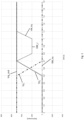
- Fig. 1 shows the upshift situation as it occurs without a special solution for energy recovery in a dual-clutch transmission.
- the two sub-transmissions of the dual-clutch transmission rotate at different speeds.
- the combustion engine VM is initially coupled, starting from time 0, to the first sub-transmission TG 1 , which thus has a torque of, for example, 500 Nm, while the second sub-transmission TG 2 contributes no torque.
- the upshift is triggered at time 0.5 s.
- the speed of the combustion engine is to be increased by the upshift.
- the first clutch 30 is opened and the second clutch 20 is closed.
- the torque of the first partial transmission TG 1 drops to zero by the time 0.7 s, while the torque of the second partial transmission TG 2 increases to the target torque.
- the torque of the combustion engine VM_trq is reduced for a specific period by changing the ignition angle, which is indicated by the curve VM_trq. This influences the air supply and the ignition angle, while the injection rate normally remains constant.
- This intervention in the ignition of the combustion engine is generally achieved by a later ignition angle, whereby the combustion engine operates in a less favorable range and consumes more fuel.
- the combustion engine is braked because it has less torque than the partial transmission TG 2 in the torque reduction range VM_r.
- the electric motor EM in the transmission makes no contribution to the resulting torque trq_out at the wheels, which is indicated by the zero line EM_trq. Furthermore, in most cases, no electric motor is present in the current state of the art.
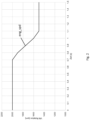
- the speed curve is shown schematically in Figure 2 shown. This graph plots the speed of the internal combustion engine eng_spd over time. At time 0.7 seconds, the torque of the internal combustion engine is reduced, as described above, and the speed of the internal combustion engine is reduced by a partial transmission.
- an electrical machine EM In order to implement the solution according to the invention, an electrical machine EM must be present.
- the combustion engine VM is initially coupled to the first sub-transmission TG 1 starting at time 0, which thus has a torque of, for example, 500 Nm, while the second sub-transmission TG 2 contributes no torque.
- the upshift is triggered again.
- the first clutch 30 is opened, the second clutch 20 is closed.
- the torque of the first sub-transmission TG 1 drops back to zero by time 0.7 s, while the torque of the second sub-transmission TG 2 increases.
- an excessive torque TG 2 _max is set with the second clutch 20, which is maintained for a certain period of time, in the example 0.2 s.
- the electric machine EM is operated with a negative torque EM_trq.
- the combustion engine is used as in Figure 2 shown, braked.
- the location of the electric motor and its connection to the gearbox are not important. The only thing that matters is that the electric motor is to operate with a negative torque and thus use the speed reduction of the combustion engine for recuperation.
- the method according to the invention is implemented in a software solution that can be included in the vehicle control system, more precisely either in an engine control system, a transmission control system or a combination of the controls.
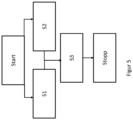
- the method according to the invention is shown schematically in the Figure 5
- the procedure begins with the "Start" block, which is triggered by the upshift request.
- an excessive torque TG 2 _max is set with the second clutch 20 of the second sub-transmission TG 2 , while in S2 the first clutch 30 is opened. At the same time, the torque of the electric machine EM_trq is set to negative.
- step S3 This state is maintained for a short time, as shown in step S3.
- time t which in the example shown is 0.2 seconds, energy is recovered via the electric machine and stored in batteries.
- the process is applicable to various hybrid configurations. It is also possible to arrange the electric motor EM on the input side in front of the transmission or to arrange the electric motor EM at the transmission output with a direct connection to the transmission output shaft.
Landscapes
- Engineering & Computer Science (AREA)
- Chemical & Material Sciences (AREA)
- Combustion & Propulsion (AREA)
- Transportation (AREA)
- Mechanical Engineering (AREA)
- Automation & Control Theory (AREA)
- Hybrid Electric Vehicles (AREA)
- Control Of Transmission Device (AREA)
Description
- Die Erfindung betrifft ein Verfahren zur Rückgewinnung von Energie eines Verbrennungsmotors beim Hochschalten sowie ein Steuergerät ausgelegt zur Durchführung des Verfahrens.
- Die auf dem Gebiet der Kraftfahrzeugtechnik besteht seit einigen Jahren ein Trend hin zu Hybridfahrzeugen, bei denen die Antriebsleistung mittels eines Verbrennungsmotors und mittels einer elektrischen Maschine bereitgestellt werden kann. Hierbei wird generell unterschieden zwischen sogenannten milden Hybrid Anwendungen, bei denen die elektrische Maschine lediglich kurzzeitig als alleinige Antriebsquelle verwendbar ist bzw. überwiegend als Boost-Antrieb eingesetzt wird. In sogenannten Range-Extender- Antriebssträngen dient eine elektrische Maschine hingegen als Hauptantriebsmotor und der Verbrennungsmotor wird zum Laden einer Batterie mitgeführt. Hinsichtlich des Layouts von solchen Antriebssträngen besteht die Möglichkeit den Verbrennungsmotor die elektrische Antriebsmaschine in Leistungsflussrichtung vor einer Kupplungsanordnung anzuordnen.
- Dieses Layout ist konstruktiv vergleichsweise einfach realisierbar, hat jedoch funktionelle Einschränkungen. In derartigen Hybrid Antriebsträngen wird als Getriebeanordnung häufig eine Planetengetriebe-Anordnung gegebenenfalls in Verbindung mit einem stufenlosen Getriebe verwendet. Besonders vorteilhaft ist jedoch die Integration eines Doppelkupplungsgetriebes in einem Hybrid-Antriebstrang, insbesondere dann, wenn die elektrische Maschine mit dem Eingang eines Teilgetriebes verbunden ist.
- Aus der
DE 10 2010 044 618 A1 ist ein Doppelkupplungsgetriebe mit nasser Doppelkupplung, elektromechanischer Betätigung des Schaltsystems und einer elektrohydraulischen Aktuatorik für die Doppelkupplung bekannt. - Mit der elektrischen Aktuatorik ist das Doppelkupplungsgetriebe in der Lage, bei abgetrenntem Verbrennungsmotor automatisch zu kuppeln und zu schalten. Es ist somit vorbereitet für ein Start/Stopp-System und eine erweiterte Segelfunktion, bei der das Fahrzeug bei abgekoppeltem Verbrennungsmotor frei rollt. Die elektrische Aktuatorik ermöglicht darüber hinaus die einfache Hybridisierung des Getriebes, durch eine zusätzliche E-Maschine.
- Durch die Verschärfung der Abgasvorschriften für Verbrennungsfahrzeuge ist es sinnvoll, jede auch kleinere Einsparungen an fossilen Brennstoffen und somit an Abgasen umzusetzen.
- Die unterschiedlichen Hybrid-Antriebstränge bieten die Möglichkeit, Energie, die das Fahrzeug ein Betrieb enthält, auf die unterschiedlichsten Art und Weise zurück zu gewinnen. Als einfachstes Beispiel ist dabei die Rückgewinnung von Energie aus den Bremsvorgängen des Fahrzeugs bekannt, die mit einem Wirkungsgrad über 80% Energie in den Antriebsprozess rückführt.
- Allerdings gibt es im Fahrzeug noch weitere Bereiche, die bezüglich einer Energierückgewinnung betrachtet werden können.
- Ein Verbrennungsmotor, der beim Hochschalten in seiner Drehzahl reduziert wird, enthält Rotationsenergie, die bisher ohne Nutzung als Schleppverlust lediglich in Wärme umgewandelt wird. Standarderweise wird beim Hochschalten die Verbrennung künstlich durch Verstellung des Zündwinkels verschlechtert, um eine dynamische, kurzzeitige Reduzierung des Moments vom Verbrennungsmotor zu erreichen. Dies führt zu schlechteren Abgaswerten, da die Verbrennung nicht mehr optimal ist.
- Aus der
US 2017 0 210 374 A1 ist ein Hybridantrieb in einer P1 Konfiguration bekannt. Anstatt die Drosselklappenstellung des Verbrennungsmotors zu steuern, steuert ein Controller die Drehmomentabgabe der elektrischen Maschine an. - Die neue Drehmomentausgabe ändert die Drehzahl des Verbrennungsmotors, da der Verbrennungsmotor mit der elektrischen Maschine gekoppelt ist.
- Während eines Hochschaltens wird die in ein Getriebe eingegebene Drehzahl verringert. Somit steuert der Controller die elektrische Maschine, um die Drehzahl des Verbrennungsmotors zu verringern. Dies kann erreicht werden, indem ein Drehmoment in umgekehrter Richtung der Motordrehung erzeugt wird. Da das Getriebe während eines Schaltvorgangs die elektrische Maschine und das Differential trennt, wird die Drehmomentübertragung dazwischen gestoppt.
- Die
EP 1 431 623 A1 schlägt ein Verfahren zum Steuern einer elektrischen Maschine eines Serienhybridfahrzeugs vor. Die Eingangswelle des Getriebes angetrieben von einer Antriebswelle des Verbrennungsmotors wird von der Antriebswelle während des Gangwechsels getrennt. Eine elektrische Maschine, die auf die Motorwelle gekoppelt ist und stellt Hilfsdrehmoment bereit. Wenn Validierungsbedingungen erfüllt sind, wird eine Energierückgewinnung während einen Gangwechsels ermöglicht. -
DE 10 2010 044 618 A1 zeigt unterschiedliche Verfahren bei Hoch- und Zurückschaltung in einem Hybridfahrzeug, das rein elektrisch fährt. Dabei wird der Verbrennungsmotor als Schwungmasse verwendet, ohne dass er gezündet ist. - Es ist Aufgabe der Erfindung, ein Verfahren zur Rückgewinnung von Energie aus einem Verbrennungsmotor während des Hochschaltvorgangs vorzustellen.
- Die Aufgabe wird gelöst mit einem Verfahren zur Rückgewinnung von kinetischer Energie eines Verbrennungsmotors durch Reduktion der Drehzahl des Verbrennungsmotors während einer vorgegeben Zeit beim Hochschalten eines Getriebes in einem Fahrzeug und Umwandlung der kinetischen Energie der Rotation des Verbrennungsmotors oder einer Antriebseinheit in elektrische Energie durch mindestens eine elektrische Maschine.
- Die elektrische Maschine ist in einem Doppelkupplungsgetriebe mit einem ersten und zweiten Teilgetriebe an einem Teilgetriebe ankoppelbar.
- Dabei wird die Energie des abbremsenden Verbrennungsmotors durch Stellen eines überhöhten Drehmoments mit der zweiten Kupplung im zweiten Teilgetriebe und dem Stellen eines negativen Drehmoments der angekoppelten elektrischen Maschine wiedergewonnen. Ziel ist, eine Kompensation der Drehmomentüberhöhung von der Kupplung als Abtriebsmoment zu kompensieren.
- Vorteilhafterweise wird der Verfahrensstart durch die Anforderung des Hochschaltens ausgelöst.
- Vorteilhafterweise wird das Verfahren gestoppt, wenn der Verbrennungsmotor seine Zieldrehzahl erreicht.
- Die Aufgabe wird gelöst mit einer Steuerung ausgelegt zur Durchführung des Verfahrens. wobei die Steuerung eine Motorsteuerung und/oder eine Getriebesteuerung mit jeweiligen Datenaustausch ist.
- Die Erfindung wird nachfolgend beispielhaft unter Bezugnahme auf die beigefügte Zeichnung beschrieben.
-
Fig. 1 und2 zeigen den zeitlichen Verlauf von Motor-Drehzahl und Drehmomenten im Stand der Technik, -
Figur 3 zeigt den zeitlichen Verlauf von Drehmomenten mit einer Ausführungsform der erfinderischen Lösung, -
Fig. 4 zeigt eine schematische Darstellung der Hybrid-Architektur in zwei unterschiedlichen Varianten, -
Figur 5 zeigt schematisch einen Verfahrensverlauf. - In
Figur 4 ist schematisch eine hybride Lösung mit der Integration eines Elektromotors EM in einem Doppelkupplungsgetriebe dargestellt. Als weitere elektrische Maschine weist die Anordnung einen Startergenerator 13 auf. - Die erfindungsgemäße Lösung lässt sich sowohl mit dem Hybridisierungs-Doppelkupplungsgetriebe allein als auch mit dem Startergenerator allein ausführen.
- Der Antriebsstrang 10 beinhaltet einen Verbrennungsmotor (VM) VM, der mit einem Startergenerator 13 verbunden ist. Ferner beinhaltet der Antriebsstrang 10 ein Doppelkupplungsgetriebe 14, dessen Abtriebsseite mit einem Differential 16 verbunden ist. Das Differential 16 verteilt Antriebsleistung auf ein linkes und ein rechtes angetriebenes Rad 18L, 18R.
- Das Doppelkupplungsgetriebe 14 beinhaltet eine erste Reibkupplung 30 sowie ein erstes Teilgetriebe TG1. Das erste Teilgetriebe TG1 beinhaltet beispielsweise Gangstufen N, 1, 3, 5, etc. die mittels schematisch angedeuteter Schaltkupplungen 34 ein- und auslegbar sind. Die erste Reibkupplung 30 und das erste Teilgetriebe TG1 bilden einen ersten Leistungsübertragungspfad 36 zur Übertragung von Leistung von dem Antriebsmotor VM zu dem Differential 16.
- Das Doppelkupplungsgetriebe 14 beinhaltet ferner eine zweite Reibkupplung 20 sowie ein zweites Teilgetriebe TG2. Das zweite Teilgetriebe TG2 beinhaltet beispielsweise die ungeraden Gangstufen N, 2, 4, 6, R, die mittels zugeordneter Schaltkupplungen 24 ein- und auslegbar sind. Die zweite Reibkupplung 20 und das zweite Teilgetriebe TG2 bilden einen zweiten Leistungsübertragungspfad 26 zur Übertragung von Antriebsleistung von dem Antriebsmotor VM zu dem Differential 16.
- Ferner beinhaltet der Antriebsstrang 10 eine elektrische Maschine EM, die mit einer Steuerung 42 zur Ansteuerung und Energieversorgung verbunden ist. Die Steuerung 42 kann auch eine Leistungselektronik sowie eine Batterie beinhalten.
- Die elektrische Maschine EM ist an das zweite Teilgetriebe TG2 fest angebunden, beispielsweise mittels eines Stirnradsatzes oder dergleichen. Alternativ hierzu kann die elektrische Maschine EM mittels einer Koppelanordnung an das zweite Teilgetriebe TG2 angebunden sein.
- Die Anbindung der elektrischen Maschine EM an das zweite Teilgetriebe TG2, das eine hohe Gangstufe und die Rückwärtsgangstufe aufweist, ermöglicht ein elektrisches Fahren in nahezu allen Betriebssituationen.
- Der Antriebsstrang 10 ist dazu ausgelegt, in drei unterschiedlichen Betriebsarten zu arbeiten. In einem konventionellen Antriebsmodus wird Antriebsleistung nur von dem Antriebsmotor, dem Verbrennungsmotor VM erzeugt. Gangwechsel erfolgen auf zugkraftunterbrechungsfreie Art und Weise, indem Antriebsleistung über einen der Leistungsübertragungspfade 26, 36 geführt wird, wobei in dem Teilgetriebe des anderen Leistungsübertragungspfades eine Gangstufe vorgewählt wird.
- Anschließend erfolgt ein Gangwechsel durch Übergabe des Leistungsübertragungsflusses von dem einen Pfad auf den anderen Pfad, indem die Reibkupplungen 20, 30 auf überschneidende Art und Weise betätigt werden. Dieser Antriebsmodus ist auf dem Gebiet der Doppelkupplungsgetriebe allgemein bekannt.
- Ferner kann ein zweiter hybridischer Antriebsmodus eingerichtet werden, bei dem Antriebsleistung sowohl von dem Verbrennungsmotor VM als auch von der elektrischen Maschine EM bereitgestellt wird. Hierbei können die Antriebsleistungen im Wesentlichen über den Summenpunkt am Eingang des zweiten Teilgetriebes TG2 addiert werden.
- Schließlich ist ein dritter Antriebsmodus möglich, bei dem nur die elektrische Maschine EM zur Erzeugung von Antriebsleistung angesteuert wird, wohingegen der Verbrennungsmotor (VM) VM stillgelegt wird.
- In diesem dritten Antriebsmodus rekuperiert die elektrische Maschine EM über die Antriebsräder 18 R und 18 L und das zweite Teilgetriebe TG2 Energie.
- In einer ersten Variante der Erfindung wird die Lösung beschrieben, wie sie unter Verwendung eines hybridisierten Doppelkupplungsgetriebes darstellbar ist.
- Dazu geht man zunächst von der Situation ohne Rekuperation aus, wie sie im Stand der Technik verwendet und in den
Figuren 1 und2 gezeigt wird. -
Fig. 1 zeigt die Situation des Hochschaltens, wie sie ohne eine besondere Lösung zur Wiedergewinnung von Energie in einem Doppelkupplungsgetriebe abläuft. Die beiden Teilgetriebe des Doppelkupplungsgetriebes drehen bei unterschiedlichen Drehzahlen. In diesem Beispiel ist der Verbrennungsmotor VM zunächst ausgehend von der Zeit 0 mit dem ersten Teilgetriebe TG1 gekoppelt, das somit ein Drehmoment, beispielhaft von 500 Nm aufweist, während das zweite Teilgetriebe TG2 kein Drehmoment beiträgt. Zum Zeitpunkt 0,5 s wird das Hochschalten ausgelöst. Die Geschwindigkeit des Verbrennungsmotors soll durch das Hochschalten reduziert werden Die erste Kupplung 30 wird geöffnet, die zweite Kupplung 20 geschlossen. Damit sinkt bis zum Zeitpunkt 0,7 s das Drehmoment des ersten Teilgetriebes TG1 auf Null ab, während das Drehmoment des zweiten Teilgetriebes TG2 auf das Zielmoment steigt. - Nach Ende der Kupplungsüberblendung wird das Drehmoment des Verbrennungsmotors VM_trq durch Änderung des Zündwinkels für eine bestimmte Zeitdauer reduziert, was mit der Kurve VM_trq angedeutet ist. Dabei wird auf die Luftzufuhr sowie auf den Zündwinkel Einfluss genommen, wobei im Normalfall die Einspritzung gleichbleibt
- Dieser Eingriff in die Zündung des Verbrennungsmotors wird im Allgemeinen durch einen späteren Zündwinkel realisiert, wobei der Verbrennungsmotor in einem für ihn ungünstigeren Bereich arbeitet und mehr Kraftstoff verbraucht.
- Der Verbrennungsmotor wird abgebremst, da er im Bereich der Drehmomentreduktion VM_r weniger Drehmoment als das Teilgetriebe TG 2 aufweist.
- Die elektrische Maschine EM im Getriebe leistet in diesem Beispiel keinerlei Beitrag zum resultierenden Drehmoment trq_out an den Rädern, was mit der Nulllinie EM_trq angedeutet ist. Meist ist zudem im Stand der Technik keine elektrische Maschine vorhanden ist.
- Der Verlauf der Drehzahl ist dabei schematisch in
Figur 2 gezeigt. In dieser Grafik ist die Geschwindigkeit des Verbrennungsmotors eng_spd über der Zeit dargestellt. Zum Zeitpunkt 0,7 Sekunden wird das Drehmoment des Verbrennungsmotors, wie bereits oben beschrieben, reduziert und die Geschwindigkeit des Verbrennungsmotors durch ein Teilgetriebe reduziert. - Der erfindungsgemäße Verlauf wird in der
Figur 3 dargestellt, dabei wird der Verbrennungsmotor überhaupt nicht mehr beeinflusst. Es wird kein Zündwinkeleingriff mehr vorgenommen. - Um die erfindungsgemäße Lösung umzusetzen, muss eine elektrische Maschine EM vorhanden sein.
- Auch in diesem Beispiel ist der Verbrennungsmotor VM zunächst ausgehend von der Zeit 0 mit dem ersten Teilgetriebe TG1 gekoppelt, das somit ein Drehmoment, beispielhaft von 500 Nm aufweist, während das zweite Teilgetriebe TG2 kein Drehmoment beiträgt. Zum Zeitpunkt 0,5 s wird wieder das Hochschalten ausgelöst. Die erste Kupplung 30 wird geöffnet, die zweite Kupplung 20 geschlossen. Damit sinkt bis zum Zeitpunkt 0,7 s das Drehmoment des ersten Teilgetriebes TG1 wieder auf Null ab, während das Drehmoment des zweiten Teilgetriebes TG2 steigt. Allerdings wird mit der zweiten Kupplung 20 ein überhöhtes Drehmoment TG2_max eingestellt, das über eine gewisse Zeitdauer, im Beispiel 0,2 s gehalten wird.
- Gleichzeitig mit dem überhöhten Drehmoment des zweiten Teilgetriebes wird die elektrische Maschine EM mit einem negativen Drehmoment EM_trq betrieben.
- Dadurch wird die kinetische Energie des Verbrennungsmotors reduziert und in elektrische Energie umgewandelt. Die elektrische Energie steht in Batterien, für einen späteren Einsatz zur Verfügung.
- Der Verbrennungsmotor wird dabei, wie in
Figur 2 dargestellt, abgebremst. - Der Einbauort der elektrischen Maschine und ihre Anbindung an das Getriebe sind dabei nicht von Bedeutung. Es geht lediglich darum, die elektrische Maschine mit einem negativen Drehmoment zu betreiben und so die Drehzahlreduzierung des Verbrennungsmotors zur Rekuperation zu verwenden.
- Die Realisierung der erfindungsgemäßen Methode erfolgt in einer Softwarelösung, die in der Fahrzeugsteuerung, genauer entweder in einer Motorsteuerung, einer Getriebesteuerung oder einer Kombination der Steuerungen enthalten sein kann.
- Das erfindungsgemäße Verfahren wird schematisch noch mal in der
Figur 5 dargestellt. Das Verfahren beginnt mit dem Block "Start", der durch die Anforderung zum Hochschalten getriggert wird. - Im Verfahrensschritt S1 wird mit der zweiten Kupplung 20 des zweiten Teilgetriebes TG2 ein überhöhtes Drehmoment TG2_max gestellt, während in S2 die erste Kupplung 30 geöffnet wird. Gleichzeitig wird das Drehmoment der elektrischen Maschine EM_trq negativ gestellt.
- Dieser Zustand wird für eine kurze Zeit aufrechterhalten, was im Schritt S3 dargestellt ist. In dieser Zeit t, die im gezeigten Beispiel 0,2 Sekunden beträgt, wird über die elektrische Maschine Energie zurückgewonnen und in Batterien gespeichert.
- Das Verfahren wird an dieser Stelle gestoppt, das überhöhte, gestellte Drehmoment der zweiten Kupplung 20 wieder auf den Zielwert gestellt und das Drehmoment der elektrischen Maschine wieder auf den Wert Null oder einen sonstigen Zielwert zurückgesetzt.
- Das Verfahren ist auf unterschiedliche Hybrid-Anordnungen anwendbar. Es ist auch eine Anordnung der elektrischen Maschine EM eingangsseitig vor dem Getriebe oder eine Anordnung der elektrischen Maschine EM am Getriebeausgang mit direkter Anbindung an der Abtriebswelle des Getriebes möglich.
-
- 10 Antriebsstrang
- 13 Startergenerator
- VM Verbrennungsmotor
- 14 Doppelkupplungsgetriebe
- 16 Differenzial
- 18 L, 18 R rechtes und linkes Rad
- 30 erste Reibungskupplung
- 34 Schaltkupplung
- 36 erster Leistungsübertragungspfad
- 20 zweite Reibkupplung
- 24 zweite Schaltkupplung
- 26 zweiter Leistungsübertragungspfad
- 42 Steuerung
- EM elektrische Maschine
- TG1 erstes Teilgetriebe
- TG2 zweites Teilgetriebe
- S1-S4 Verfahrensschritte
Claims (4)
- Verfahren zur Rückgewinnung von kinetischer Energie eines Verbrennungsmotors (VM) durch Reduktion der Drehzahl des Verbrennungsmotors (VM) während einer vorgegeben Zeit (t) beim Hochschalten eines Getriebes (14) in einem Fahrzeug und Umwandlung der kinetischen Energie der Rotation des Verbrennungsmotors (eng_spd) oder einer Antriebseinheit in elektrische Energie durch mindestens eine elektrische Maschine (EM, 13), dadurch gekennzeichnet, dass die elektrische Maschine (EM) in einem Doppelkupplungsgetriebe (14) mit einem ersten und zweiten Teilgetriebe (TG1, TG2) und einer ersten und zweiten Kupplung (20,30) an einem der Teilgetriebe (TG1, TG2) ankoppelbar ist dass die Rückgewinnung der Energie des abbremsenden Verbrennungsmotors (VM) durch Stellen eines überhöhten Drehmoments (TG2_max) mit der zweiten Kupplung (20) im zweiten Teilgetriebe (TG2) und dem Stellen eines negativen Drehmoments der angekoppelten elektrischen Maschine (EM_tq) erfolgt.
- Verfahren zur Rückgewinnung von kinetischer Energie eines Verbrennungsmotors (VM) nach Anspruch 1, dadurch gekennzeichnet, dass der Verfahrensstart (Start) durch die Anforderung des Hochschaltens ausgelöst wird.
- Verfahren zur Rückgewinnung von kinetischer Energie eines Verbrennungsmotors (VM) nach einem der vorhergehenden Ansprüche, dadurch gekennzeichnet, dass das Verfahren (Stopp) gestoppt wird, wenn der Verbrennungsmotor (VM) seine Zieldrehzahl erreicht.
- Steuerung ausgelegt zur Durchführung des Verfahrens nach den vorhergehenden Ansprüchen, wobei die Steuerung (42) eine Motorsteuerung und/oder eine Getriebesteuerung mit jeweiligen Datenaustausch ist.
Applications Claiming Priority (2)
| Application Number | Priority Date | Filing Date | Title |
|---|---|---|---|
| DE102018206130.0A DE102018206130A1 (de) | 2018-04-20 | 2018-04-20 | Verfahren zur Rückgewinnung von Energie des Verbrennungsmotors beim Hochschalten sowie Steuergerät zur Durchführung des Verfahrens |
| PCT/EP2019/058280 WO2019201591A1 (de) | 2018-04-20 | 2019-04-02 | Verfahren zur rückgewinnung von energie des verbrennungsmotors beim hochschalten sowie steuergerät zur durchführung des verfahrens |
Publications (2)
| Publication Number | Publication Date |
|---|---|
| EP3781425A1 EP3781425A1 (de) | 2021-02-24 |
| EP3781425B1 true EP3781425B1 (de) | 2025-06-11 |
Family
ID=66334349
Family Applications (1)
| Application Number | Title | Priority Date | Filing Date |
|---|---|---|---|
| EP19720371.4A Active EP3781425B1 (de) | 2018-04-20 | 2019-04-02 | Verfahren zur rückgewinnung von energie des verbrennungsmotors beim hochschalten sowie steuergerät zur durchführung des verfahrens |
Country Status (4)
| Country | Link |
|---|---|
| EP (1) | EP3781425B1 (de) |
| CN (1) | CN112004704B (de) |
| DE (1) | DE102018206130A1 (de) |
| WO (1) | WO2019201591A1 (de) |
Citations (3)
| Publication number | Priority date | Publication date | Assignee | Title |
|---|---|---|---|---|
| US20020088290A1 (en) * | 2001-01-10 | 2002-07-11 | Bowen Thomas C. | Twin clutch automated transaxle with motor/generator synchronization |
| EP1262684A1 (de) * | 2000-03-10 | 2002-12-04 | Hitachi, Ltd. | Automatikgetriebe, dynamoelektrische maschine und kraftfahrzeug |
| EP1559603A1 (de) * | 2004-01-27 | 2005-08-03 | LuK Lamellen und Kupplungsbau Beteiligungs KG | Verfahren zum Hochschalten eines Parallelschaltgetriebes |
Family Cites Families (7)
| Publication number | Priority date | Publication date | Assignee | Title |
|---|---|---|---|---|
| DE19532128A1 (de) * | 1995-08-31 | 1997-03-06 | Clouth Gummiwerke Ag | Antriebssystem, insbesondere für ein Kraftfahrzeug, und Verfahren zum Betreiben desselben |
| FR2848922B1 (fr) * | 2002-12-20 | 2005-12-09 | Recuperation d'energie lors d'un changement de rapport montant sur un vehicule hybride serie | |
| DE102010044618B4 (de) | 2010-08-27 | 2013-10-31 | Getrag Getriebe- Und Zahnradfabrik Hermann Hagenmeyer Gmbh & Cie Kg | Verfahren zum Ansteuern eines Hybrid-Antriebsstranges |
| DE102011106149A1 (de) * | 2011-06-30 | 2013-01-03 | Volkswagen Aktiengesellschaft | Verfahren zum Betrieb eines Kraftfahrzeugs |
| DE102013000838A1 (de) * | 2013-01-21 | 2014-07-24 | Getrag Getriebe- Und Zahnradfabrik Hermann Hagenmeyer Gmbh & Cie Kg | Verfahren zum Halten eines Kraftfahrzeuges an einer Steigung |
| US9956948B2 (en) * | 2016-01-25 | 2018-05-01 | Toyota Motor Engineering & Manufacturing North America, Inc. | Systems and methods for improving gear shifts |
| CN106641233B (zh) * | 2017-02-21 | 2018-09-11 | 周盈裕 | 具有磁力调矩器的双离合变速器及其控制方法 |
-
2018
- 2018-04-20 DE DE102018206130.0A patent/DE102018206130A1/de active Pending
-
2019
- 2019-04-02 WO PCT/EP2019/058280 patent/WO2019201591A1/de not_active Ceased
- 2019-04-02 EP EP19720371.4A patent/EP3781425B1/de active Active
- 2019-04-02 CN CN201980027039.3A patent/CN112004704B/zh active Active
Patent Citations (3)
| Publication number | Priority date | Publication date | Assignee | Title |
|---|---|---|---|---|
| EP1262684A1 (de) * | 2000-03-10 | 2002-12-04 | Hitachi, Ltd. | Automatikgetriebe, dynamoelektrische maschine und kraftfahrzeug |
| US20020088290A1 (en) * | 2001-01-10 | 2002-07-11 | Bowen Thomas C. | Twin clutch automated transaxle with motor/generator synchronization |
| EP1559603A1 (de) * | 2004-01-27 | 2005-08-03 | LuK Lamellen und Kupplungsbau Beteiligungs KG | Verfahren zum Hochschalten eines Parallelschaltgetriebes |
Also Published As
| Publication number | Publication date |
|---|---|
| EP3781425A1 (de) | 2021-02-24 |
| CN112004704A (zh) | 2020-11-27 |
| DE102018206130A1 (de) | 2019-10-24 |
| WO2019201591A1 (de) | 2019-10-24 |
| CN112004704B (zh) | 2023-08-15 |
Similar Documents
| Publication | Publication Date | Title |
|---|---|---|
| DE10119503B4 (de) | Verfahren zum Schalten eines Getriebes eines Hybridfahrzeugs | |
| EP2708400B1 (de) | Verfahren zum Ansteuern eines Hybridantriebsstranges | |
| DE19953587B4 (de) | Fahrzeugüberbrückungskupplungssteuerungssystem | |
| DE102008053505B4 (de) | Verfahren zur Steuerung eines Hybridantriebsstrangs eines Kraftfahrzeuges | |
| DE112010001090B4 (de) | Steuerungsvorrichtung für leistungsübertragungsvorrichtung | |
| DE112006002865T5 (de) | Steuersystem für eine Fahrzeugantriebseinheit | |
| DE102010016723A1 (de) | Hybridfahrzeug und Steuerverfahren | |
| DE102013002330A1 (de) | Verfahren zum Betreiben eines hybridisierten Doppelkupplungsgetriebe-Antriebsstanges | |
| WO2017060010A1 (de) | Verfahren und vorrichtung zum betreiben einer antriebsvorrichtung, antriebsvorrichtung | |
| DE102010028071A1 (de) | Verfahren zur Fahrsteuerung eines Kraftfahrzeugs | |
| DE112014003616T5 (de) | Hybridfahrzeug und Steuerungsverfahren für Hybridfahrzeug | |
| DE112018004616B4 (de) | Verfahren zur Steuerung eines Fahrzeugs mit einem Doppelkupplungsgetriebe, sowie Steuergerät zur Ausführung dieses Verfahrens und Fahrzeug mit einem solchen Steuergerät | |
| DE102013000838A1 (de) | Verfahren zum Halten eines Kraftfahrzeuges an einer Steigung | |
| DE102009045485A1 (de) | Verfahren zum Betreiben einer Antriebsvorrichtung, Antriebsvorrichtung | |
| DE102010022395A1 (de) | Verfahren zum Wechseln der Gangschaltstufen bei einem Hybridantriebssystem | |
| WO2006105929A1 (de) | Antriebsstrang eines fahrzeuges und verfahren zur steuerung eines antriebsstranges | |
| DE102009023499A1 (de) | Steuerung eines Hybridantriebssystems | |
| DE112013006935T5 (de) | Vorrichtung zum Steuern eines Hybridfahrzeugs | |
| DE102006054405B4 (de) | Elektrodynamisches Anfahrelement und Verfahren zum Regeln eines elektrodynamischen Anfahrelements | |
| DE102017216984A1 (de) | Verfahren zur Ansteuerung eines Stufengetriebes und eines Antriebsstranges, sowie Steuereinrichtung und Antriebsstrang | |
| DE102009057551A1 (de) | Verfahren zum Betreiben eines Antriebsstrangs in einem Kraftfahrzeug | |
| EP3556592B1 (de) | Verfahren zur rückgewinnung von energie des verbrennungsmotors sowie steuergerät zur durchführung des verfahrens | |
| DE102019220191A1 (de) | Verfahren zum Starten eines Verbrennungsmotors in einem Antriebsstrang mit hybridisiertem Doppelkupplungsgetriebe | |
| DE19758789B4 (de) | Steuervorrichtung für ein Hybridfahrzeug | |
| WO2021228665A1 (de) | Verfahren zum ansteuern eines hybridantriebsstrangs |
Legal Events
| Date | Code | Title | Description |
|---|---|---|---|
| STAA | Information on the status of an ep patent application or granted ep patent |
Free format text: STATUS: UNKNOWN |
|
| STAA | Information on the status of an ep patent application or granted ep patent |
Free format text: STATUS: THE INTERNATIONAL PUBLICATION HAS BEEN MADE |
|
| PUAI | Public reference made under article 153(3) epc to a published international application that has entered the european phase |
Free format text: ORIGINAL CODE: 0009012 |
|
| STAA | Information on the status of an ep patent application or granted ep patent |
Free format text: STATUS: REQUEST FOR EXAMINATION WAS MADE |
|
| 17P | Request for examination filed |
Effective date: 20201022 |
|
| AK | Designated contracting states |
Kind code of ref document: A1 Designated state(s): AL AT BE BG CH CY CZ DE DK EE ES FI FR GB GR HR HU IE IS IT LI LT LU LV MC MK MT NL NO PL PT RO RS SE SI SK SM TR |
|
| AX | Request for extension of the european patent |
Extension state: BA ME |
|
| RIN1 | Information on inventor provided before grant (corrected) |
Inventor name: KNOEPFLE, PHILIPP Inventor name: PROST, JACQUES |
|
| DAV | Request for validation of the european patent (deleted) | ||
| DAX | Request for extension of the european patent (deleted) | ||
| STAA | Information on the status of an ep patent application or granted ep patent |
Free format text: STATUS: EXAMINATION IS IN PROGRESS |
|
| 17Q | First examination report despatched |
Effective date: 20220608 |
|
| GRAP | Despatch of communication of intention to grant a patent |
Free format text: ORIGINAL CODE: EPIDOSNIGR1 |
|
| STAA | Information on the status of an ep patent application or granted ep patent |
Free format text: STATUS: GRANT OF PATENT IS INTENDED |
|
| INTG | Intention to grant announced |
Effective date: 20250117 |
|
| GRAS | Grant fee paid |
Free format text: ORIGINAL CODE: EPIDOSNIGR3 |
|
| GRAA | (expected) grant |
Free format text: ORIGINAL CODE: 0009210 |
|
| STAA | Information on the status of an ep patent application or granted ep patent |
Free format text: STATUS: THE PATENT HAS BEEN GRANTED |
|
| AK | Designated contracting states |
Kind code of ref document: B1 Designated state(s): AL AT BE BG CH CY CZ DE DK EE ES FI FR GB GR HR HU IE IS IT LI LT LU LV MC MK MT NL NO PL PT RO RS SE SI SK SM TR |
|
| REG | Reference to a national code |
Ref country code: GB Ref legal event code: FG4D Free format text: NOT ENGLISH |
|
| REG | Reference to a national code |
Ref country code: CH Ref legal event code: EP |
|
| REG | Reference to a national code |
Ref country code: DE Ref legal event code: R096 Ref document number: 502019013434 Country of ref document: DE |
|
| REG | Reference to a national code |
Ref country code: IE Ref legal event code: FG4D Free format text: LANGUAGE OF EP DOCUMENT: GERMAN |
|
| REG | Reference to a national code |
Ref country code: DE Ref legal event code: R081 Ref document number: 502019013434 Country of ref document: DE Owner name: MAGNA PT B.V. & CO. KGAA, DE Free format text: FORMER OWNER: MAGNA PT B.V. & CO. KG, 74199 UNTERGRUPPENBACH, DE |
|
| PG25 | Lapsed in a contracting state [announced via postgrant information from national office to epo] |
Ref country code: FI Free format text: LAPSE BECAUSE OF FAILURE TO SUBMIT A TRANSLATION OF THE DESCRIPTION OR TO PAY THE FEE WITHIN THE PRESCRIBED TIME-LIMIT Effective date: 20250611 Ref country code: ES Free format text: LAPSE BECAUSE OF FAILURE TO SUBMIT A TRANSLATION OF THE DESCRIPTION OR TO PAY THE FEE WITHIN THE PRESCRIBED TIME-LIMIT Effective date: 20250611 |
|
| REG | Reference to a national code |
Ref country code: LT Ref legal event code: MG9D |
|
| PG25 | Lapsed in a contracting state [announced via postgrant information from national office to epo] |
Ref country code: NO Free format text: LAPSE BECAUSE OF FAILURE TO SUBMIT A TRANSLATION OF THE DESCRIPTION OR TO PAY THE FEE WITHIN THE PRESCRIBED TIME-LIMIT Effective date: 20250911 Ref country code: GR Free format text: LAPSE BECAUSE OF FAILURE TO SUBMIT A TRANSLATION OF THE DESCRIPTION OR TO PAY THE FEE WITHIN THE PRESCRIBED TIME-LIMIT Effective date: 20250912 |
|
| REG | Reference to a national code |
Ref country code: NL Ref legal event code: MP Effective date: 20250611 |
|
| PG25 | Lapsed in a contracting state [announced via postgrant information from national office to epo] |
Ref country code: BG Free format text: LAPSE BECAUSE OF FAILURE TO SUBMIT A TRANSLATION OF THE DESCRIPTION OR TO PAY THE FEE WITHIN THE PRESCRIBED TIME-LIMIT Effective date: 20250611 |
|
| PG25 | Lapsed in a contracting state [announced via postgrant information from national office to epo] |
Ref country code: HR Free format text: LAPSE BECAUSE OF FAILURE TO SUBMIT A TRANSLATION OF THE DESCRIPTION OR TO PAY THE FEE WITHIN THE PRESCRIBED TIME-LIMIT Effective date: 20250611 |
|
| PG25 | Lapsed in a contracting state [announced via postgrant information from national office to epo] |
Ref country code: RS Free format text: LAPSE BECAUSE OF FAILURE TO SUBMIT A TRANSLATION OF THE DESCRIPTION OR TO PAY THE FEE WITHIN THE PRESCRIBED TIME-LIMIT Effective date: 20250911 |
|
| PG25 | Lapsed in a contracting state [announced via postgrant information from national office to epo] |
Ref country code: LV Free format text: LAPSE BECAUSE OF FAILURE TO SUBMIT A TRANSLATION OF THE DESCRIPTION OR TO PAY THE FEE WITHIN THE PRESCRIBED TIME-LIMIT Effective date: 20250611 |
|
| PG25 | Lapsed in a contracting state [announced via postgrant information from national office to epo] |
Ref country code: NL Free format text: LAPSE BECAUSE OF FAILURE TO SUBMIT A TRANSLATION OF THE DESCRIPTION OR TO PAY THE FEE WITHIN THE PRESCRIBED TIME-LIMIT Effective date: 20250611 |
|
| PG25 | Lapsed in a contracting state [announced via postgrant information from national office to epo] |
Ref country code: PT Free format text: LAPSE BECAUSE OF FAILURE TO SUBMIT A TRANSLATION OF THE DESCRIPTION OR TO PAY THE FEE WITHIN THE PRESCRIBED TIME-LIMIT Effective date: 20251013 |
|
| PG25 | Lapsed in a contracting state [announced via postgrant information from national office to epo] |
Ref country code: IS Free format text: LAPSE BECAUSE OF FAILURE TO SUBMIT A TRANSLATION OF THE DESCRIPTION OR TO PAY THE FEE WITHIN THE PRESCRIBED TIME-LIMIT Effective date: 20251011 |
|
| PG25 | Lapsed in a contracting state [announced via postgrant information from national office to epo] |
Ref country code: SM Free format text: LAPSE BECAUSE OF FAILURE TO SUBMIT A TRANSLATION OF THE DESCRIPTION OR TO PAY THE FEE WITHIN THE PRESCRIBED TIME-LIMIT Effective date: 20250611 |
|
| PG25 | Lapsed in a contracting state [announced via postgrant information from national office to epo] |
Ref country code: CZ Free format text: LAPSE BECAUSE OF FAILURE TO SUBMIT A TRANSLATION OF THE DESCRIPTION OR TO PAY THE FEE WITHIN THE PRESCRIBED TIME-LIMIT Effective date: 20250611 |
|
| PG25 | Lapsed in a contracting state [announced via postgrant information from national office to epo] |
Ref country code: PL Free format text: LAPSE BECAUSE OF FAILURE TO SUBMIT A TRANSLATION OF THE DESCRIPTION OR TO PAY THE FEE WITHIN THE PRESCRIBED TIME-LIMIT Effective date: 20250611 |
|
| PG25 | Lapsed in a contracting state [announced via postgrant information from national office to epo] |
Ref country code: EE Free format text: LAPSE BECAUSE OF FAILURE TO SUBMIT A TRANSLATION OF THE DESCRIPTION OR TO PAY THE FEE WITHIN THE PRESCRIBED TIME-LIMIT Effective date: 20250611 |
|
| PG25 | Lapsed in a contracting state [announced via postgrant information from national office to epo] |
Ref country code: RO Free format text: LAPSE BECAUSE OF FAILURE TO SUBMIT A TRANSLATION OF THE DESCRIPTION OR TO PAY THE FEE WITHIN THE PRESCRIBED TIME-LIMIT Effective date: 20250611 Ref country code: SK Free format text: LAPSE BECAUSE OF FAILURE TO SUBMIT A TRANSLATION OF THE DESCRIPTION OR TO PAY THE FEE WITHIN THE PRESCRIBED TIME-LIMIT Effective date: 20250611 |
|
| REG | Reference to a national code |
Ref country code: DE Ref legal event code: R097 Ref document number: 502019013434 Country of ref document: DE |
|
| PG25 | Lapsed in a contracting state [announced via postgrant information from national office to epo] |
Ref country code: DK Free format text: LAPSE BECAUSE OF FAILURE TO SUBMIT A TRANSLATION OF THE DESCRIPTION OR TO PAY THE FEE WITHIN THE PRESCRIBED TIME-LIMIT Effective date: 20250611 |
|
| PG25 | Lapsed in a contracting state [announced via postgrant information from national office to epo] |
Ref country code: IT Free format text: LAPSE BECAUSE OF FAILURE TO SUBMIT A TRANSLATION OF THE DESCRIPTION OR TO PAY THE FEE WITHIN THE PRESCRIBED TIME-LIMIT Effective date: 20250611 |
|
| PLBE | No opposition filed within time limit |
Free format text: ORIGINAL CODE: 0009261 |
|
| STAA | Information on the status of an ep patent application or granted ep patent |
Free format text: STATUS: NO OPPOSITION FILED WITHIN TIME LIMIT |
|
| REG | Reference to a national code |
Ref country code: CH Ref legal event code: L10 Free format text: ST27 STATUS EVENT CODE: U-0-0-L10-L00 (AS PROVIDED BY THE NATIONAL OFFICE) Effective date: 20260423 |