EP3774811B1 - Photoprotective compositions containing malassezia-derived compounds and/or chemical analogs thereof - Google Patents
Photoprotective compositions containing malassezia-derived compounds and/or chemical analogs thereof Download PDFInfo
- Publication number
- EP3774811B1 EP3774811B1 EP19721453.9A EP19721453A EP3774811B1 EP 3774811 B1 EP3774811 B1 EP 3774811B1 EP 19721453 A EP19721453 A EP 19721453A EP 3774811 B1 EP3774811 B1 EP 3774811B1
- Authority
- EP
- European Patent Office
- Prior art keywords
- compound
- hydrogen
- group
- disclosed
- subject
- Prior art date
- Legal status (The legal status is an assumption and is not a legal conclusion. Google has not performed a legal analysis and makes no representation as to the accuracy of the status listed.)
- Active
Links
Images




















































































Classifications
-
- C—CHEMISTRY; METALLURGY
- C07—ORGANIC CHEMISTRY
- C07D—HETEROCYCLIC COMPOUNDS
- C07D209/00—Heterocyclic compounds containing five-membered rings, condensed with other rings, with one nitrogen atom as the only ring hetero atom
- C07D209/02—Heterocyclic compounds containing five-membered rings, condensed with other rings, with one nitrogen atom as the only ring hetero atom condensed with one carbocyclic ring
- C07D209/04—Indoles; Hydrogenated indoles
- C07D209/08—Indoles; Hydrogenated indoles with only hydrogen atoms or radicals containing only hydrogen and carbon atoms, directly attached to carbon atoms of the hetero ring
-
- C—CHEMISTRY; METALLURGY
- C07—ORGANIC CHEMISTRY
- C07D—HETEROCYCLIC COMPOUNDS
- C07D403/00—Heterocyclic compounds containing two or more hetero rings, having nitrogen atoms as the only ring hetero atoms, not provided for by group C07D401/00
- C07D403/02—Heterocyclic compounds containing two or more hetero rings, having nitrogen atoms as the only ring hetero atoms, not provided for by group C07D401/00 containing two hetero rings
- C07D403/06—Heterocyclic compounds containing two or more hetero rings, having nitrogen atoms as the only ring hetero atoms, not provided for by group C07D401/00 containing two hetero rings linked by a carbon chain containing only aliphatic carbon atoms
-
- C—CHEMISTRY; METALLURGY
- C07—ORGANIC CHEMISTRY
- C07D—HETEROCYCLIC COMPOUNDS
- C07D209/00—Heterocyclic compounds containing five-membered rings, condensed with other rings, with one nitrogen atom as the only ring hetero atom
- C07D209/02—Heterocyclic compounds containing five-membered rings, condensed with other rings, with one nitrogen atom as the only ring hetero atom condensed with one carbocyclic ring
- C07D209/04—Indoles; Hydrogenated indoles
- C07D209/10—Indoles; Hydrogenated indoles with substituted hydrocarbon radicals attached to carbon atoms of the hetero ring
- C07D209/12—Radicals substituted by oxygen atoms
-
- A—HUMAN NECESSITIES
- A61—MEDICAL OR VETERINARY SCIENCE; HYGIENE
- A61K—PREPARATIONS FOR MEDICAL, DENTAL OR TOILETRY PURPOSES
- A61K31/00—Medicinal preparations containing organic active ingredients
- A61K31/33—Heterocyclic compounds
- A61K31/395—Heterocyclic compounds having nitrogen as a ring hetero atom, e.g. guanethidine or rifamycins
- A61K31/40—Heterocyclic compounds having nitrogen as a ring hetero atom, e.g. guanethidine or rifamycins having five-membered rings with one nitrogen as the only ring hetero atom, e.g. sulpiride, succinimide, tolmetin, buflomedil
- A61K31/403—Heterocyclic compounds having nitrogen as a ring hetero atom, e.g. guanethidine or rifamycins having five-membered rings with one nitrogen as the only ring hetero atom, e.g. sulpiride, succinimide, tolmetin, buflomedil condensed with carbocyclic rings, e.g. carbazole
- A61K31/404—Indoles, e.g. pindolol
-
- A—HUMAN NECESSITIES
- A61—MEDICAL OR VETERINARY SCIENCE; HYGIENE
- A61K—PREPARATIONS FOR MEDICAL, DENTAL OR TOILETRY PURPOSES
- A61K31/00—Medicinal preparations containing organic active ingredients
- A61K31/33—Heterocyclic compounds
- A61K31/395—Heterocyclic compounds having nitrogen as a ring hetero atom, e.g. guanethidine or rifamycins
- A61K31/40—Heterocyclic compounds having nitrogen as a ring hetero atom, e.g. guanethidine or rifamycins having five-membered rings with one nitrogen as the only ring hetero atom, e.g. sulpiride, succinimide, tolmetin, buflomedil
- A61K31/407—Heterocyclic compounds having nitrogen as a ring hetero atom, e.g. guanethidine or rifamycins having five-membered rings with one nitrogen as the only ring hetero atom, e.g. sulpiride, succinimide, tolmetin, buflomedil condensed with other heterocyclic ring systems, e.g. ketorolac, physostigmine
-
- A—HUMAN NECESSITIES
- A61—MEDICAL OR VETERINARY SCIENCE; HYGIENE
- A61K—PREPARATIONS FOR MEDICAL, DENTAL OR TOILETRY PURPOSES
- A61K31/00—Medicinal preparations containing organic active ingredients
- A61K31/33—Heterocyclic compounds
- A61K31/395—Heterocyclic compounds having nitrogen as a ring hetero atom, e.g. guanethidine or rifamycins
- A61K31/435—Heterocyclic compounds having nitrogen as a ring hetero atom, e.g. guanethidine or rifamycins having six-membered rings with one nitrogen as the only ring hetero atom
- A61K31/4353—Heterocyclic compounds having nitrogen as a ring hetero atom, e.g. guanethidine or rifamycins having six-membered rings with one nitrogen as the only ring hetero atom ortho- or peri-condensed with heterocyclic ring systems
- A61K31/437—Heterocyclic compounds having nitrogen as a ring hetero atom, e.g. guanethidine or rifamycins having six-membered rings with one nitrogen as the only ring hetero atom ortho- or peri-condensed with heterocyclic ring systems the heterocyclic ring system containing a five-membered ring having nitrogen as a ring hetero atom, e.g. indolizine, beta-carboline
-
- A—HUMAN NECESSITIES
- A61—MEDICAL OR VETERINARY SCIENCE; HYGIENE
- A61K—PREPARATIONS FOR MEDICAL, DENTAL OR TOILETRY PURPOSES
- A61K31/00—Medicinal preparations containing organic active ingredients
- A61K31/33—Heterocyclic compounds
- A61K31/395—Heterocyclic compounds having nitrogen as a ring hetero atom, e.g. guanethidine or rifamycins
- A61K31/55—Heterocyclic compounds having nitrogen as a ring hetero atom, e.g. guanethidine or rifamycins having seven-membered rings, e.g. azelastine, pentylenetetrazole
-
- A—HUMAN NECESSITIES
- A61—MEDICAL OR VETERINARY SCIENCE; HYGIENE
- A61K—PREPARATIONS FOR MEDICAL, DENTAL OR TOILETRY PURPOSES
- A61K36/00—Medicinal preparations of undetermined constitution containing material from algae, lichens, fungi or plants, or derivatives thereof, e.g. traditional herbal medicines
- A61K36/06—Fungi, e.g. yeasts
- A61K36/07—Basidiomycota, e.g. Cryptococcus
-
- A—HUMAN NECESSITIES
- A61—MEDICAL OR VETERINARY SCIENCE; HYGIENE
- A61K—PREPARATIONS FOR MEDICAL, DENTAL OR TOILETRY PURPOSES
- A61K8/00—Cosmetics or similar toiletry preparations
- A61K8/18—Cosmetics or similar toiletry preparations characterised by the composition
- A61K8/30—Cosmetics or similar toiletry preparations characterised by the composition containing organic compounds
- A61K8/49—Cosmetics or similar toiletry preparations characterised by the composition containing organic compounds containing heterocyclic compounds
- A61K8/4906—Cosmetics or similar toiletry preparations characterised by the composition containing organic compounds containing heterocyclic compounds with one nitrogen as the only hetero atom
- A61K8/4913—Cosmetics or similar toiletry preparations characterised by the composition containing organic compounds containing heterocyclic compounds with one nitrogen as the only hetero atom having five membered rings, e.g. pyrrolidone carboxylic acid
- A61K8/492—Cosmetics or similar toiletry preparations characterised by the composition containing organic compounds containing heterocyclic compounds with one nitrogen as the only hetero atom having five membered rings, e.g. pyrrolidone carboxylic acid having condensed rings, e.g. indol
-
- A—HUMAN NECESSITIES
- A61—MEDICAL OR VETERINARY SCIENCE; HYGIENE
- A61K—PREPARATIONS FOR MEDICAL, DENTAL OR TOILETRY PURPOSES
- A61K8/00—Cosmetics or similar toiletry preparations
- A61K8/18—Cosmetics or similar toiletry preparations characterised by the composition
- A61K8/30—Cosmetics or similar toiletry preparations characterised by the composition containing organic compounds
- A61K8/49—Cosmetics or similar toiletry preparations characterised by the composition containing organic compounds containing heterocyclic compounds
- A61K8/4906—Cosmetics or similar toiletry preparations characterised by the composition containing organic compounds containing heterocyclic compounds with one nitrogen as the only hetero atom
- A61K8/4926—Cosmetics or similar toiletry preparations characterised by the composition containing organic compounds containing heterocyclic compounds with one nitrogen as the only hetero atom having six membered rings
-
- A—HUMAN NECESSITIES
- A61—MEDICAL OR VETERINARY SCIENCE; HYGIENE
- A61K—PREPARATIONS FOR MEDICAL, DENTAL OR TOILETRY PURPOSES
- A61K8/00—Cosmetics or similar toiletry preparations
- A61K8/18—Cosmetics or similar toiletry preparations characterised by the composition
- A61K8/30—Cosmetics or similar toiletry preparations characterised by the composition containing organic compounds
- A61K8/49—Cosmetics or similar toiletry preparations characterised by the composition containing organic compounds containing heterocyclic compounds
- A61K8/494—Cosmetics or similar toiletry preparations characterised by the composition containing organic compounds containing heterocyclic compounds with more than one nitrogen as the only hetero atom
-
- A—HUMAN NECESSITIES
- A61—MEDICAL OR VETERINARY SCIENCE; HYGIENE
- A61K—PREPARATIONS FOR MEDICAL, DENTAL OR TOILETRY PURPOSES
- A61K8/00—Cosmetics or similar toiletry preparations
- A61K8/18—Cosmetics or similar toiletry preparations characterised by the composition
- A61K8/30—Cosmetics or similar toiletry preparations characterised by the composition containing organic compounds
- A61K8/49—Cosmetics or similar toiletry preparations characterised by the composition containing organic compounds containing heterocyclic compounds
- A61K8/4973—Cosmetics or similar toiletry preparations characterised by the composition containing organic compounds containing heterocyclic compounds with oxygen as the only hetero atom
-
- A—HUMAN NECESSITIES
- A61—MEDICAL OR VETERINARY SCIENCE; HYGIENE
- A61K—PREPARATIONS FOR MEDICAL, DENTAL OR TOILETRY PURPOSES
- A61K8/00—Cosmetics or similar toiletry preparations
- A61K8/18—Cosmetics or similar toiletry preparations characterised by the composition
- A61K8/96—Cosmetics or similar toiletry preparations characterised by the composition containing materials, or derivatives thereof of undetermined constitution
- A61K8/97—Cosmetics or similar toiletry preparations characterised by the composition containing materials, or derivatives thereof of undetermined constitution from algae, fungi, lichens or plants; from derivatives thereof
- A61K8/9728—Fungi, e.g. yeasts
-
- A—HUMAN NECESSITIES
- A61—MEDICAL OR VETERINARY SCIENCE; HYGIENE
- A61P—SPECIFIC THERAPEUTIC ACTIVITY OF CHEMICAL COMPOUNDS OR MEDICINAL PREPARATIONS
- A61P17/00—Drugs for dermatological disorders
-
- A—HUMAN NECESSITIES
- A61—MEDICAL OR VETERINARY SCIENCE; HYGIENE
- A61P—SPECIFIC THERAPEUTIC ACTIVITY OF CHEMICAL COMPOUNDS OR MEDICINAL PREPARATIONS
- A61P17/00—Drugs for dermatological disorders
- A61P17/16—Emollients or protectives, e.g. against radiation
-
- A—HUMAN NECESSITIES
- A61—MEDICAL OR VETERINARY SCIENCE; HYGIENE
- A61P—SPECIFIC THERAPEUTIC ACTIVITY OF CHEMICAL COMPOUNDS OR MEDICINAL PREPARATIONS
- A61P17/00—Drugs for dermatological disorders
- A61P17/18—Antioxidants, e.g. antiradicals
-
- A—HUMAN NECESSITIES
- A61—MEDICAL OR VETERINARY SCIENCE; HYGIENE
- A61Q—SPECIFIC USE OF COSMETICS OR SIMILAR TOILETRY PREPARATIONS
- A61Q17/00—Barrier preparations; Preparations brought into direct contact with the skin for affording protection against external influences, e.g. sunlight, X-rays or other harmful rays, corrosive materials, bacteria or insect stings
- A61Q17/04—Topical preparations for affording protection against sunlight or other radiation; Topical sun tanning preparations
-
- A—HUMAN NECESSITIES
- A61—MEDICAL OR VETERINARY SCIENCE; HYGIENE
- A61Q—SPECIFIC USE OF COSMETICS OR SIMILAR TOILETRY PREPARATIONS
- A61Q19/00—Preparations for care of the skin
- A61Q19/004—Aftersun preparations
-
- A—HUMAN NECESSITIES
- A61—MEDICAL OR VETERINARY SCIENCE; HYGIENE
- A61Q—SPECIFIC USE OF COSMETICS OR SIMILAR TOILETRY PREPARATIONS
- A61Q19/00—Preparations for care of the skin
- A61Q19/02—Preparations for care of the skin for chemically bleaching or whitening the skin
-
- C—CHEMISTRY; METALLURGY
- C07—ORGANIC CHEMISTRY
- C07D—HETEROCYCLIC COMPOUNDS
- C07D405/00—Heterocyclic compounds containing both one or more hetero rings having oxygen atoms as the only ring hetero atoms, and one or more rings having nitrogen as the only ring hetero atom
- C07D405/02—Heterocyclic compounds containing both one or more hetero rings having oxygen atoms as the only ring hetero atoms, and one or more rings having nitrogen as the only ring hetero atom containing two hetero rings
- C07D405/06—Heterocyclic compounds containing both one or more hetero rings having oxygen atoms as the only ring hetero atoms, and one or more rings having nitrogen as the only ring hetero atom containing two hetero rings linked by a carbon chain containing only aliphatic carbon atoms
-
- C—CHEMISTRY; METALLURGY
- C07—ORGANIC CHEMISTRY
- C07D—HETEROCYCLIC COMPOUNDS
- C07D471/00—Heterocyclic compounds containing nitrogen atoms as the only ring hetero atoms in the condensed system, at least one ring being a six-membered ring with one nitrogen atom, not provided for by groups C07D451/00 - C07D463/00
- C07D471/02—Heterocyclic compounds containing nitrogen atoms as the only ring hetero atoms in the condensed system, at least one ring being a six-membered ring with one nitrogen atom, not provided for by groups C07D451/00 - C07D463/00 in which the condensed system contains two hetero rings
- C07D471/04—Ortho-condensed systems
-
- C—CHEMISTRY; METALLURGY
- C07—ORGANIC CHEMISTRY
- C07D—HETEROCYCLIC COMPOUNDS
- C07D487/00—Heterocyclic compounds containing nitrogen atoms as the only ring hetero atoms in the condensed system, not provided for by groups C07D451/00 - C07D477/00
- C07D487/02—Heterocyclic compounds containing nitrogen atoms as the only ring hetero atoms in the condensed system, not provided for by groups C07D451/00 - C07D477/00 in which the condensed system contains two hetero rings
- C07D487/04—Ortho-condensed systems
-
- C—CHEMISTRY; METALLURGY
- C07—ORGANIC CHEMISTRY
- C07D—HETEROCYCLIC COMPOUNDS
- C07D491/00—Heterocyclic compounds containing in the condensed ring system both one or more rings having oxygen atoms as the only ring hetero atoms and one or more rings having nitrogen atoms as the only ring hetero atoms, not provided for by groups C07D451/00 - C07D459/00, C07D463/00, C07D477/00 or C07D489/00
- C07D491/22—Heterocyclic compounds containing in the condensed ring system both one or more rings having oxygen atoms as the only ring hetero atoms and one or more rings having nitrogen atoms as the only ring hetero atoms, not provided for by groups C07D451/00 - C07D459/00, C07D463/00, C07D477/00 or C07D489/00 in which the condensed system contains four or more hetero rings
-
- C—CHEMISTRY; METALLURGY
- C07—ORGANIC CHEMISTRY
- C07D—HETEROCYCLIC COMPOUNDS
- C07D519/00—Heterocyclic compounds containing more than one system of two or more relevant hetero rings condensed among themselves or condensed with a common carbocyclic ring system not provided for in groups C07D453/00 or C07D455/00
-
- A—HUMAN NECESSITIES
- A61—MEDICAL OR VETERINARY SCIENCE; HYGIENE
- A61K—PREPARATIONS FOR MEDICAL, DENTAL OR TOILETRY PURPOSES
- A61K2800/00—Properties of cosmetic compositions or active ingredients thereof or formulation aids used therein and process related aspects
- A61K2800/40—Chemical, physico-chemical or functional or structural properties of particular ingredients
Definitions
- the present invention relates to compounds produced by or derived from a Malassezia yeast, as well as chemical analogs thereof, having the structure of formula (I) as defined in claim 1.
- Compounds of the present invention, and compositions containing said compounds have, among other beneficial properties, photoprotective properties.
- Cosmetic methods of using the compounds and compositions of the present invention and the compounds and compositions of the present invention for use in therapeutic methods are also contemplated.
- Malassezia is a genus of lipophilic yeast commonly found in the normal flora of human skin. Malassezia is responsible for a number of skin diseases, including tinea versicolor (pityriasis versicolor), seborrheic dermatitis, and atopic dermatitis.
- the natural habitat for M. furfur is the upper epidermis. However, exposure to ultraviolet light destroys the organism in its natural habitat. Therefore, UV filtering agents may be necessary for the survival of the organism.
- Two such UV-filtering indoles produced by the organism have been identified: pityriacitrin and pityrialactone.
- Pityriacitrin first described in Mayser et al., 2002, is synthesized by M. furfur. It is a stable yellow lipophilic compound showing broad absorption in the UVA, UVB, and UVC spectrum.
- a similar compound from the genus Paracoccus has been isolated and patented as a UV protective agent. (Zhang et al., 2018).
- US 2017/260133 A1 describes compounds, compositions and methods for brightening skin which generally involve compounds produced by a Malassezia yeast, and chemical analogs thereof.
- US 2016/039754 A1 describes a method to make diindolylmethanes and indolyl/pyrrolylmethanes including the steps of contacting an ether comprising an arylpropargyl moiety and an amine-protected, substituted or unsubstituted aniline moiety with a substituted or unsubstituted indol or a substituted or unsubstituted pyrrole, in the presence of a metal-containing catalyst, for a time and at a temperature to cause an annulation/arylation cascade reaction that yields a diindolylmethane or a indolyl/pyrrolylmethane.
- the resulting compounds are effective to modulate activity of arylhydrocarbon receptors, to inhibit activity of PCSK9, and to stimulate secretion of glucagon-like peptide 1 in mammals.
- Tinea versicolor is a non-contagious skin disease caused by Malassezia overgrowth that locally alters pigmentation levels.
- Malassezia yeasts have two metabolic pathways for synthesizing melanin and tryptophan-derived indole pigments.
- Malassezin and Indirubin are tryptophan metabolites of Malassezia that may contribute to the depigmentation characteristic of Malassezia overgrowth.
- the invention disclosed herein utilizes compounds having the structure of formula (I) as defined in claim 1 produced by or derived from Malassezia yeast as the basis for safe and efficacious skin brightening and skin darkening compositions.
- Malassezin, Indirubin, and chemical analogs thereof as the basis for safe and efficacious skin brightening and skin darkening compositions are also disclosed.
- Photoprotective compositions comprising Malassezin, Indirubin, and chemical analogs thereof are also disclosed herein.
- the present invention also relates to compositions comprising the compound of the present invention, the compounds and compositions for use in therapeutic methods for brightening skin in a subject, modulating melanogenesis in a subject and modulating melanin concentration in a subject, and cosmetic methods for brightening skin in a subject and modulating melanogenesis in a subject comprising contacting the subject with the compounds and compositions.
- One embodiment of the present invention is a compound for brightening skin.
- the compound is a chemical analog of a compound having the structure of formula (I) as defined in claim 1 produced by a Malassezia yeast, or a crystalline form, hydrate, or cosmetically or pharmaceutically acceptable salt thereof.
- the compound is a chemical analog of a compound produced by a Malassezia yeast, or a crystalline form, hydrate, or cosmetically or pharmaceutically acceptable salt thereof.
- the compound is a chemical analog of a compound produced by a Malassezia yeast, or a crystalline form, hydrate, or cosmetically or pharmaceutically acceptable salt thereof.
- An additional embodiment of the present invention is a compound for modulating melanosome biogenesis.
- the compound is a chemical analog of a compound having the structure of formula (I) as defined in claim 1 produced by a Malassezia yeast, or a crystalline form, hydrate, or cosmetically or pharmaceutically acceptable salt thereof.
- Another embodiment of the present invention is a compound for modulating melanosome transfer.
- the compound is a chemical analog of a compound having the structure of formula (I) as defined in claim 1 produced by a Malassezia yeast, or a crystalline form, hydrate, or cosmetically or pharmaceutically acceptable salt thereof.
- composition comprising a Malassezia yeast and a cosmetically or pharmaceutically acceptable vehicle, diluent or carrier.
- composition comprises a compound having the structure of formula (I) as defined in claim 1 isolated or isolatable from a Malassezia yeast and a cosmetically or pharmaceutically acceptable vehicle, diluent or carrier.
- compositions comprising any of the compounds having the structure of formula (I) as defined in claim 1, including analogs, disclosed herein and a cosmetically or pharmaceutically acceptable vehicle, diluent or carrier.
- the method comprises contacting the subject with any of the compounds or compositions disclosed herein.
- Another embodiment of the present invention is a method for modulating melanocyte activity in a subject.
- the method comprises contacting the subject with any of the compounds or compositions falling in the scope of the claims disclosed herein.
- the method comprises contacting the subject with any of the compounds or compositions disclosed herein.
- An additional embodiment of the present invention is a method for improving hyperpigmentation caused by a hyperpigmentation disorder in a subject in need thereof.
- the method comprises contacting the subject with any of the compounds or compositions falling in the scope of the claims disclosed herein.
- Another embodiment of the present invention is any of the compounds or compositions falling in the scope of the claims disclosed herein for use in a therapeutic method for modulating melanin production in a subject.
- the method comprises contacting the subject with any of the compounds or compositions falling in the scope of the claims disclosed herein.
- a further embodiment of the present invention is a method for modulating melanosome biogenesis in a subject.
- the method comprises contacting the subject with any of the compounds or compositions falling in the scope of the claims disclosed herein.
- An additional embodiment of the present invention is a method for modulating melanosome transfer in a subject.
- the method comprises contacting the subject with any of the compounds or compositions falling in the scope of the claims disclosed herein.
- R1, R2, R3, R4, R5, R6, R7, R8, R9, R10, and R11 are independently selected from the group consisting of hydrogen and methyl, and at least one of R1, R2, R3, R4, R5, R6, R7, R8, R9, R10 and R11 is methyl; or a crystalline form, hydrate, or cosmetically or pharmaceutically acceptable salt thereof.
- R1, R2, R3, R4, R5, R6, R7, R8, R9, and R10 are independently selected from the group consisting of hydrogen and methyl, and at least one of R1, R2, R3, R4, R5, R6, R7, R8, R9, and R10 is methyl; or a crystalline form, hydrate, or cosmetically or pharmaceutically acceptable salt thereof.
- the compound has the structure of formula (II): wherein: R1, R2, R3, R4, R5, R6, R7, R8, R9, R10, and R11 are independently selected from the group consisting of hydrogen and methyl; or a crystalline form, hydrate, or cosmetically or pharmaceutically acceptable salt thereof.
- the compound has the structure of formula (III): wherein: R1, R2, R3, R4, R5, R6, R7, R8, R9, and R10 are independently selected from the group consisting of hydrogen and methyl; or a crystalline form, hydrate, or cosmetically or pharmaceutically acceptable salt thereof.
- the compound has the structure of formula (II): wherein: R1, R2, R3, R4, R5, R6, R7, R8, R9, R10, and R11 are independently selected from the group consisting of hydrogen and methyl; or a crystalline form, hydrate, or cosmetically or pharmaceutically acceptable salt thereof.
- the compound has the structure of formula (III): wherein: R1, R2, R3, R4, R5, R6, R7, R8, R9, and R10 are independently selected from the group consisting of hydrogen and methyl; or a crystalline form, hydrate, or cosmetically or pharmaceutically acceptable salt thereof.
- the compound has the structure of formula (II): wherein: R1, R2, R3, R4, R5, R6, R7, R8, R9, R10, and R11 are independently selected from the group consisting of hydrogen and methyl; or a crystalline form, hydrate, or cosmetically or pharmaceutically acceptable salt thereof.
- the compound has the structure of formula (III): wherein: R1, R2, R3, R4, R5, R6, R7, R8, R9, and R10 are independently selected from the group consisting of hydrogen and methyl; or a crystalline form, hydrate, or cosmetically or pharmaceutically acceptable salt thereof.
- composition comprises a compound having the structure of formula (II): wherein: R1, R2, R3, R4, R5, R6, R7, R8, R9, R10, and R11 are independently selected from the group consisting of hydrogen and methyl; or a crystalline form, hydrate, or cosmetically or pharmaceutically acceptable salt thereof, and a cosmetically or pharmaceutically acceptable vehicle, diluent or carrier.
- composition comprises a compound having the structure of formula (III): wherein: R1, R2, R3, R4, R5, R6, R7, R8, R9, and R10 are independently selected from the group consisting of hydrogen and methyl; or a crystalline form, hydrate, or cosmetically or pharmaceutically acceptable salt thereof, and a cosmetically or pharmaceutically acceptable vehicle, diluent or carrier.
- a method for brightening skin in a subject comprises: contacting the subject with a compound having the structure of formula (II): wherein: R1, R2, R3, R4, R5, R6, R7, R8, R9, R10, and R11 are independently selected from the group consisting of hydrogen and methyl; or a crystalline form, hydrate, or cosmetically or pharmaceutically acceptable salt thereof.
- a method for brightening skin in a subject comprises: contacting the subject with a compound having the structure of formula (III): wherein: R1, R2, R3, R4, R5, R6, R7, R8, R9, and R10 are independently selected from the group consisting of hydrogen and methyl; or a crystalline form, hydrate, or cosmetically or pharmaceutically acceptable salt thereof.
- a method for inducing melanocyte apoptosis in a subject comprises: contacting the subject with a compound having the structure of formula (II): wherein: R1, R2, R3, R4, R5, R6, R7, R8, R9, R10, and R11 are independently selected from the group consisting of hydrogen and methyl; or a crystalline form, hydrate, or cosmetically or pharmaceutically acceptable salt thereof.
- a method for inducing melanocyte apoptosis in a subject comprises: contacting the subject with a compound having the structure of formula (III): wherein: R1, R2, R3, R4, R5, R6, R7, R8, R9, and R10 are independently selected from the group consisting of hydrogen and methyl; or a crystalline form, hydrate, or cosmetically or pharmaceutically acceptable salt thereof.
- a method for agonizing an arylhydrocarbon receptor (AhR) in a subject comprises: contacting the subject with a compound having the structure of formula (II): wherein: R1, R2, R3, R4, R5, R6, R7, R8, R9, R10, and R11 are independently selected from the group consisting of hydrogen and methyl; or a crystalline form, hydrate, or cosmetically or pharmaceutically acceptable salt thereof.
- a method for agonizing an arylhydrocarbon receptor (AhR) in a subject comprises: contacting the subject with a compound having the structure of formula (III): wherein: R1, R2, R3, R4, R5, R6, R7, R8, R9, and R10 are independently selected from the group consisting of hydrogen and methyl; or a crystalline form, hydrate, or cosmetically or pharmaceutically acceptable salt thereof.
- the present invention is a compound.
- R 1 , R 4 , R 5 , R 6 , R 9 , and R 10 are independently selected from the group consisting of hydrogen, hydroxyl, halogen, CN, R 13 , OR 13 , OCOR 13 and -CHO;
- R 2 and R 3 are independently selected from the group consisting of hydrogen, hydroxyl, halogen, CN, R 13 , OR 13 , OCOR 13 and -CHO, or R 2 and R 3 combine to form a 5- or 6-membered heterocyclyl;
- R 7 and R 8 are independently selected from the group consisting of hydrogen, hydroxyl, halogen, CN, R 13 , OR 13 , OCOR 13 and -CHO, or R 7 and R 8 combine to form a 5- or 6-membered heterocyclyl;
- R 11 and R 12 are independently hydrogen or R 13 ; each R 13 is independently C 1-9 alkyl, C 2-9 alkenyl, or C 2-9 alkynyl; and
- R 1 , R 4 , R 5 , R 6 , R 9 , and R 10 are independently selected from the group consisting of hydrogen, hydroxyl, halogen, CN, R 13 , OR 13 , OCOR 13 and -CHO;
- R 2 and R 3 are independently selected from the group consisting of hydrogen, hydroxyl, halogen, CN, R 13 , OR 13 , OCOR 13 and -CHO, or R 2 and R 3 combine to form a 5- or 6-membered heterocyclyl;
- R 7 and R 8 are independently selected from the group consisting of hydrogen, hydroxyl, halogen, CN, R 13 , OR 13 , OCOR 13 and -CHO, or R 7 and R 8 combine to form a 5- or 6-membered heterocyclyl;
- R 11 and R 12 are independently hydrogen or R 13 ; and, each R 13 is independently C 1-9 alkyl, C 2-9 alkenyl, or
- Also disclosed is a compound for brightening skin selected from the group consisting of: and
- R 1 , R 4 , R 5 , R 6 , R 9 , and R 10 are independently selected from the group consisting of hydrogen, hydroxyl, halogen, CN, R 13 , OR 13 , OCOR 13 and -CHO;
- R 2 and R 3 are independently selected from the group consisting of hydrogen, hydroxyl, halogen, CN, R 13 , OR 13 , OCOR 13 and -CHO, or R 2 and R 3 combine to form a 5- or 6-membered heterocyclyl;
- R 7 and R 8 are independently selected from the group consisting of hydrogen, hydroxyl, halogen, CN, R 13 , OR 13 , OCOR 13 and -CHO, or R 7 and R 8 combine to form a 5- or 6-membered heterocyclyl;
- R 11 and R 12 are independently hydrogen or R 13 ; and, each R 13 is independently C 1-9 alkyl, C
- the compound is selected from the group consisting of: and
- R 1 , R 4 , R 5 , R 6 , R 9 , and R 10 are independently selected from the group consisting of hydrogen, hydroxyl, halogen, CN, R 13 , OR 13 , OCOR 13 and -CHO;
- R 2 and R 3 are independently selected from the group consisting of hydrogen, hydroxyl, halogen, CN, R 13 , OR 13 , OCOR 13 and -CHO, or R 2 and R 3 combine to form a 5- or 6-membered heterocyclyl;
- R 7 and R 8 are independently selected from the group consisting of hydrogen, hydroxyl, halogen, CN, R 13 , OR 13 , OCOR 13 and -CHO, or R 7 and R 8 combine to form a 5- or 6-membered heterocyclyl;
- R 11 and R 12 are independently hydrogen or R 13 ; and, each R 13 is independently C 1-9 alky
- a compound for modulating arylhydrocarbon receptor (AhR) activity is selected from the group consisting of: and
- R 1 , R 4 , R 5 , R 6 , R 9 , and R 10 are independently selected from the group consisting of hydrogen, hydroxyl, halogen, CN, R 13 , OR 13 , OCOR 13 and -CHO;
- R 2 and R 3 are independently selected from the group consisting of hydrogen, hydroxyl, halogen, CN, R 13 , OR 13 , OCOR 13 and -CHO, or R 2 and R 3 combine to form a 5- or 6-membered heterocyclyl;
- R 7 and R 8 are independently selected from the group consisting of hydrogen, hydroxyl, halogen, CN, R 13 , OR 13 , OCOR 13 and -CHO, or R 7 and R 8 combine to form a 5- or 6-membered heterocyclyl;
- R 11 and R 12 are independently hydrogen or R 13 ; and, each R 13 is independently C 1-9 alkyl, C 2-9 alkenyl
- the compound is selected from the group consisting of: and
- An additional embodiment of the present invention is a compound for modulating melanin concentration.
- R 1 , R 4 , R 5 , R 6 , R 9 , and R 10 are independently selected from the group consisting of hydrogen, hydroxyl, halogen, CN, R 13 , OR 13 , OCOR 13 and -CHO;
- R 2 and R 3 are independently selected from the group consisting of hydrogen, hydroxyl, halogen, CN, R 13 , OR 13 , OCOR 13 and -CHO, or R 2 and R 3 combine to form a 5- or 6-membered heterocyclyl;
- R 7 and R 8 are independently selected from the group consisting of hydrogen, hydroxyl, halogen, CN, R 13 , OR 13 , OCOR 13 and -CHO, or R 7 and R 8 combine to form a 5- or 6-membered heterocyclyl;
- R 11 and R 12 are independently hydrogen or R 13 ; and, each R 13 is independently C 1-9 alkyl, C 2-9 alkenyl
- the compound is selected from the group consisting of: and
- An additional embodiment of the present invention is a composition.
- composition comprising a compound having the structure of the following formula: wherein: R 1 , R 4 , R 5 , R 6 , R 9 , and R 10 are independently selected from the group consisting of hydrogen, hydroxyl, halogen, CN, R 13 , OR 13 , OCOR 13 and -CHO; R 2 and R 3 are independently selected from the group consisting of hydrogen, hydroxyl, halogen, CN, R 13 , OR 13 , OCOR 13 and -CHO, or R 2 and R 3 combine to form a 5- or 6-membered heterocyclyl; R 7 and R 8 are independently selected from the group consisting of hydrogen, hydroxyl, halogen, CN, R 13 , OR 13 , OCOR 13 and -CHO, or R 7 and R 8 combine to form a 5- or 6-membered heterocyclyl; R 11 and R 12 are independently hydrogen or R 13 ; and, each R 13 is independently C 1-9 alkyl, C 2-9 alkenyl, or C 2-9
- composition comprising a compound selected from the group consisting of: and
- Additional embodiments of the present invention are a cosmetic method for brightening skin in a subject and a compound for use in a therapeutic method for brightening skin.
- R 1 , R 4 , R 5 , R 6 , R 9 , and R 10 are independently selected from the group consisting of hydrogen, hydroxyl, halogen, CN, R 13 , OR 13 , OCOR 13 and -CHO;
- R 2 and R 3 are independently selected from the group consisting of hydrogen, hydroxyl, halogen, CN, R 13 , OR 13 , OCOR 13 and -CHO, or R 2 and R 3 combine to form a 5- or 6-membered heterocyclyl;
- R 7 and R 8 are independently selected from the group consisting of hydrogen, hydroxyl, halogen, CN, R 13 , OR 13 , OCOR 13 and -CHO, or R 7 and R 8 combine to form a 5- or 6-membered heterocyclyl;
- R 11 and R 12 are independently hydrogen or R 13 ; and, each R 13 is independently C 1-9
- the method comprises contacting the subject with a compound selected from the group consisting of: and
- R 1 , R 4 , R 5 , R 6 , R 9 , and R 10 are independently selected from the group consisting of hydrogen, hydroxyl, halogen, CN, R 13 , OR 13 , OCOR 13 and -CHO;
- R 2 and R 3 are independently selected from the group consisting of hydrogen, hydroxyl, halogen, CN, R 13 , OR 13 , OCOR 13 and -CHO, or R 2 and R 3 combine to form a 5- or 6-membered heterocyclyl;
- R 7 and R 8 are independently selected from the group consisting of hydrogen, hydroxyl, halogen, CN, R 13 , OR 13 , OCOR 13 and -CHO, or R 7 and R 8 combine to form a 5- or 6-membered heterocyclyl;
- R 11 and R 12 are independently hydrogen or R 13 ; and,
- the method comprises contacting the subject with a compound selected from the group consisting of: and
- a method for modulating arylhydrocarbon receptor (AhR) activity in a subject comprises contacting the subject with a compound having the structure of the following formula: wherein: R 1 , R 4 , R 5 , R 6 , R 9 , and R 10 are independently selected from the group consisting of hydrogen, hydroxyl, halogen, CN, R 13 , OR 13 , OCOR 13 and -CHO; R 2 and R 3 are independently selected from the group consisting of hydrogen, hydroxyl, halogen, CN, R 13 , OR 13 , OCOR 13 and -CHO, or R 2 and R 3 combine to form a 5- or 6-membered heterocyclyl; R 7 and R 8 are independently selected from the group consisting of hydrogen, hydroxyl, halogen, CN, R 13 , OR 13 , OCOR 13 and -CHO, or R 7 and R 8 combine to form a 5- or 6-membered heterocyclyl; R 11 and R 12 are independently hydrogen or R 13 13
- a method for modulating arylhydrocarbon receptor (AhR) activity in a subject comprises contacting the subject with a compound selected from the group consisting of: and
- Additional embodiments of the present invention are a cosmetic method for modulating melanogenesis in a subject and a compound for use in a therapeutic method for modulating melanogenesis in a subject.
- R 1 , R 4 , R 5 , R 6 , R 9 , and R 10 are independently selected from the group consisting of hydrogen, hydroxyl, halogen, CN, R 13 , OR 13 , OCOR 13 and -CHO;
- R 2 and R 3 are independently selected from the group consisting of hydrogen, hydroxyl, halogen, CN, R 13 , OR 13 , OCOR 13 and -CHO, or R 2 and R 3 combine to form a 5- or 6-membered heterocyclyl;
- R 7 and R 8 are independently selected from the group consisting of hydrogen, hydroxyl, halogen, CN, R 13 , OR 13 , OCOR 13 and -CHO, or R 7 and R 8 combine to form a 5- or 6-membered heterocyclyl;
- R 11 and R 12 are independently hydrogen or R 13 ; and, each R 13 is independently C
- An additional embodiment of the present invention is a compound for use in a therapeutic method for modulating melanin concentration in a subject.
- R 1 , R 4 , R 5 , R 6 , R 9 , and R 10 are independently selected from the group consisting of hydrogen, hydroxyl, halogen, CN, R 13 , OR 13 , OCOR 13 and -CHO;
- R 2 and R 3 are independently selected from the group consisting of hydrogen, hydroxyl, halogen, CN, R 13 , OR 13 , OCOR 13 and -CHO, or R 2 and R 3 combine to form a 5- or 6-membered heterocyclyl;
- R 7 and R 8 are independently selected from the group consisting of hydrogen, hydroxyl, halogen, CN, R 13 , OR 13 , OCOR 13 and -CHO, or R 7 and R 8 combine to form a 5- or 6-membered heterocyclyl;
- R 11 and R 12 are independently hydrogen or R 13 ; and, each R 13 is independently C
- the method comprises contacting the subject with a compound selected from the group consisting of: and
- a compound for brightening skin having a structure of the following formula: or a chemical analog, crystalline form, hydrate, or pharmaceutically or cosmetically acceptable salt thereof.
- a compound for inducing melanocyte apoptosis having a structure of the following formula: or a chemical analog, crystalline form, hydrate, or pharmaceutically or cosmetically acceptable salt thereof.
- a compound for modulating arylhydrocarbon receptor (AhR) activity having a structure of the following formula: or a chemical analog, crystalline form, hydrate, or pharmaceutically or cosmetically acceptable salt thereof.
- a compound for modulating melanin concentration having a structure of the following formula: or a chemical analog, crystalline form, hydrate, or pharmaceutically or cosmetically acceptable salt thereof.
- composition comprising a compound having a structure of the following formula: or a chemical analog, crystalline form, hydrate, or pharmaceutically or cosmetically acceptable salt thereof.
- the method comprises contacting the subject with a compound, the compound having the structure of the following formula: or a chemical analog, crystalline form, hydrate, or pharmaceutically or cosmetically acceptable salt thereof.
- the method comprises contacting the subject with a compound, the compound having the structure of the following formula: or a chemical analog, crystalline form, hydrate, or pharmaceutically or cosmetically acceptable salt thereof.
- a method for modulating arylhydrocarbon receptor (AhR) activity in a subject comprises contacting the subject with a compound, the compound having the structure of the following formula: or a chemical analog, crystalline form, hydrate, or pharmaceutically or cosmetically acceptable salt thereof.
- the method comprises contacting the subject with a compound, the compound having the structure of the following formula: or a chemical analog, crystalline form, hydrate, or pharmaceutically or cosmetically acceptable salt thereof.
- the method comprises contacting the subject with a compound, the compound having the structure of the following formula: or a chemical analog, crystalline form, hydrate, or pharmaceutically or cosmetically acceptable salt thereof.
- composition comprises one or more of the compounds falling within the scope of claim 1 listed in Table 5, or a chemical analog, crystalline form, hydrate, or pharmaceutically or cosmetically acceptable salt thereof.
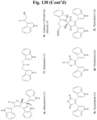
- the method comprises contacting the subject with one or more of the compounds listed in Table 5 or Fig. 130 , or a chemical analog, crystalline form, hydrate, or pharmaceutically or cosmetically acceptable salt thereof.
- a method for modulating arylhydrocarbon receptor (AhR) activity in a subject comprises contacting the subject with one or more of the compounds listed in Table 5 or Fig. 130 , or a chemical analog, crystalline form, hydrate, or pharmaceutically or cosmetically acceptable salt thereof.
- compositions of the present invention are a cosmetic method for modulating melanogenesis in a subject and a compound for use in a therapeutic method for modulating melanogenesis in a subject.
- the methods comprise contacting the subject with one or more of the compounds falling within the scope of claim 1 listed in Table 5, or a chemical analog, crystalline form, hydrate, or pharmaceutically or cosmetically acceptable salt thereof.
- Another embodiment of the present invention is a compound for use in a therapeutic method for modulating melanin concentration in a subject.
- the method comprises contacting the subject with one or more of the compounds falling within the scope of claim 1 listed in Table 5, or a chemical analog, crystalline form, hydrate, or pharmaceutically or cosmetically acceptable salt thereof.
- composition comprises one or more of the compounds falling within the scope of claim 1 listed in Table 5, or a chemical analog, crystalline form, hydrate, or pharmaceutically or cosmetically acceptable salt thereof.
- a further embodiment of the present invention is a composition for brightening skin.
- the composition comprises one or more of the compounds falling within the scope of claim 1 listed in Table 5 , or a chemical analog, crystalline form, hydrate, or pharmaceutically or cosmetically acceptable salt thereof.
- compositions for inducing melanocyte apoptosis comprising one or more of the compounds listed in Table 5 or Fig. 130 , or a chemical analog, crystalline form, hydrate, or pharmaceutically or cosmetically acceptable salt thereof.
- compositions for modulating arylhydrocarbon receptor (AhR) activity comprising one or more of the compounds listed in Table 5 or Fig. 130 , or a chemical analog, crystalline form, hydrate, or pharmaceutically or cosmetically acceptable salt thereof.
- a further embodiment of the present invention is a composition for modulating melanogenesis.
- the composition comprises one or more of the compounds listed falling within the scope of claim 1 in Table 5, or a chemical analog, crystalline form, hydrate, or pharmaceutically or cosmetically acceptable salt thereof.
- compositions for modulating melanin concentration comprises one or more of the compounds falling within the scope of claim 1 listed in Table 5, or a chemical analog, crystalline form, hydrate, or pharmaceutically or cosmetically acceptable salt thereof.
- Additional embodiments of the present invention are a cosmetic method for brightening skin in a subject and a composition for use in a therapeutic method for brightening skin.
- the methods comprise contacting the subject with the composition, the composition comprising one or more of the compounds falling within the scope of claim 1 listed in Table 5, or a chemical analog, crystalline form, hydrate, or pharmaceutically or cosmetically acceptable salt thereof.
- the method comprises contacting the subject with a composition, the composition comprising one or more of the compounds listed in Table 5 or Fig. 130 , or a chemical analog, crystalline form, hydrate, or pharmaceutically or cosmetically acceptable salt thereof.
- a method for modulating arylhydrocarbon receptor (AhR) activity in a subject comprises contacting the subject with a composition, the composition comprising one or more of the compounds listed in Table 5 or Fig. 130 , or a chemical analog, crystalline form, hydrate, or pharmaceutically or cosmetically acceptable salt thereof.
- a composition comprising one or more of the compounds listed in Table 5 or Fig. 130 , or a chemical analog, crystalline form, hydrate, or pharmaceutically or cosmetically acceptable salt thereof.
- Additional embodiments of the present invention are a cosmetic method for modulating melanogenesis in a subject and a composition for use in a therapeutic method for modulating melanogenesis in a subject.
- the methods comprise contacting the subject with the composition, the composition comprising one or more of the compounds falling within the scope of claim 1 listed in Table 5, or a chemical analog, crystalline form, hydrate, or pharmaceutically or cosmetically acceptable salt thereof.
- a further embodiment of the present invention is a composition for use in a therapeutic method for modulating melanin concentration in a subject.
- the method comprises contacting the subject with the composition, the composition comprising one or more of the compounds falling within the scope of claim 1 listed in Table 5, or a chemical analog, crystalline form, hydrate, or pharmaceutically or cosmetically acceptable salt thereof.
- composition comprising a Malassezia yeast and a cosmetically or pharmaceutically acceptable vehicle, diluent, or carrier.
- composition comprises a compound having the structure of the following formula: wherein:
- composition comprising a compound having the structure of the following formula: wherein:
- compositions comprising a compound falling within the scope of claim 1 listed in Table 5, or a chemical analog, crystalline form, hydrate, or cosmetically or pharmaceutically acceptable salt thereof, and a cosmetically or pharmaceutically acceptable vehicle, diluent, or carrier.
- An additional embodiment of the present invention is a method of treating or preventing UV-induced skin damage in a subject.
- the method comprises contacting the subject with any of the compositions disclosed herein.
- a further embodiment of the present invention is a method of treating or preventing UV-induced erythema in a subject.
- the method comprises contacting the subject with any of the compositions disclosed herein.
- Another embodiment of the present invention is a method of treating or preventing UV-induced aging of the skin in a subject.
- the method comprises contacting the subject with any of the compositions disclosed herein.
- An additional embodiment of the present invention is a method of treating or preventing sunburn in a subject.
- the method comprises contacting the subject with any of the compositions disclosed herein.
- a further embodiment of the present invention is a method of treating or preventing UV-induced hyperpigmentation in a subject.
- the method comprises contacting the subject with any of the compositions disclosed herein.
- compositions for use in a therapeutic method for brightening skin are a cosmetic method for brightening skin in a subject and a composition for use in a therapeutic method for brightening skin.
- the methods comprise contacting the subject with any of the compositions disclosed herein.
- the method comprises contacting the subject with any of the compositions disclosed herein.
- a method for modulating arylhydrocarbon receptor (AhR) activity in a subject comprises contacting the subject with any of the compositions disclosed herein.
- compositions for use in a therapeutic method for modulating melanogenesis in a subject are a cosmetic method for modulating melanogenesis in a subject and a composition for use in a therapeutic method for modulating melanogenesis in a subject.
- the methods comprise contacting the subject with any of the compositions disclosed herein.
- An additional embodiment of the present invention is a composition for use in a therapeutic method for modulating melanin concentration in a subject.
- the method comprises contacting the subject with any of the compositions disclosed herein.
- One embodiment of the present invention is a compound for brightening skin.
- the compound is a chemical analog of a compound having the structure of formula (I) as defined in claim 1 produced by a Malassezia yeast, or a crystalline form, hydrate, or cosmetically or pharmaceutically acceptable salt thereof.
- the compound is a chemical analog of a compound produced by a Malassezia yeast, or a crystalline form, hydrate, or cosmetically or pharmaceutically acceptable salt thereof.
- the compound is a chemical analog of a compound produced by a Malassezia yeast, or a crystalline form, hydrate, or cosmetically or pharmaceutically acceptable salt thereof.
- the compound is a chemical analog of a compound produced by a Malassezia yeast, or a crystalline form, hydrate, or cosmetically or pharmaceutically acceptable salt thereof.
- Another embodiment of the present invention is a compound for improving hyperpigmentation caused by a hyperpigmentation disorder.
- the compound is a chemical analog of a compound having the structure of formula (I) as defined in claim 1 produced by a Malassezia yeast, or a crystalline form, hydrate, or cosmetically or pharmaceutically acceptable salt thereof.
- a further embodiment of the present invention is a compound for modulating melanin production.
- the compound is a chemical analog of a compound having the structure of formula (I) as defined in claim 1 produced by a Malassezia yeast, or a crystalline form, hydrate, or cosmetically or pharmaceutically acceptable salt thereof.
- An additional embodiment of the present invention is a compound for modulating melanosome biogenesis.
- the compound is a chemical analog of a compound having the structure of formula (I) as defined in claim 1 produced by a Malassezia yeast, or a crystalline form, hydrate, or cosmetically or pharmaceutically acceptable salt thereof.
- Another embodiment of the present invention is a compound for modulating melanosome transfer.
- the compound is a chemical analog of a compound having the structure of formula (I) as defined in claim 1 produced by a Malassezia yeast, or a crystalline form, hydrate, or cosmetically or pharmaceutically acceptable salt thereof.
- composition comprising a Malassezia yeast and a cosmetically or pharmaceutically acceptable vehicle, diluent or carrier.
- composition comprises a compound having the structure of formula (I) as defined in claim 1 isolated or isolatable from a Malassezia yeast and a cosmetically or pharmaceutically acceptable vehicle, diluent or carrier.
- compositions comprising any of the compounds having the structure of formula (I) as defined in claim 1 disclosed herein, including analogs, and a cosmetically or pharmaceutically acceptable vehicle, diluent or carrier.
- the methods comprise contacting the subject with any of the compounds or compositions falling in the scope of the claims disclosed herein.
- the method comprises contacting the subject with any of the compounds or compositions disclosed herein.
- Another embodiment of the present invention is a method for modulating melanocyte activity in a subject.
- the method comprises contacting the subject with any of the compounds or compositions falling in the scope of the claims disclosed herein.
- a method for agonizing an arylhydrocarbon receptor comprises contacting the subject with any of the compounds or compositions disclosed herein.
- An additional embodiment of the present invention is a method for improving hyperpigmentation caused by a hyperpigmentation disorder in a subject in need thereof.
- the method comprises contacting the subject with any of the compounds or compositions falling in the scope of the claims disclosed herein.
- Another embodiment of the present invention is any of the compounds or compositions falling in the scope of the claims disclosed herein for use in a therapeutic method for modulating melanin production in a subject.
- the method comprises contacting the subject with any of the compounds or compositions falling in the scope of the claims disclosed herein.
- a further embodiment of the present invention is a method for modulating melanosome biogenesis in a subject.
- the method comprises contacting the subject with any of the compounds or compositions falling in the scope of the claims disclosed herein.
- An additional embodiment of the present invention is a method for modulating melanosome transfer in a subject.
- the method comprises contacting the subject with any of the compounds or compositions falling in the scope of the claims disclosed herein.
- R1, R2, R3, R4, R5, R6, R7, R8, R9, R10, and R11 are independently selected from the group consisting of hydrogen and methyl, and at least one of R1, R2, R3, R4, R5, R6, R7, R8, R9, R10 and R11 is methyl; or a crystalline form, hydrate, or cosmetically or pharmaceutically acceptable salt thereof.
- R1, R2, R3, R4, R5, R6, R7, R8, R9, and R10 are independently selected from the group consisting of hydrogen and methyl, and at least one of R1, R2, R3, R4, R5, R6, R7, R8, R9, and R10 is methyl; or a crystalline form, hydrate, or cosmetically or pharmaceutically acceptable salt thereof.
- the compound has the structure of formula (II): wherein: R1, R2, R3, R4, R5, R6, R7, R8, R9, R10, and R11 are independently selected from the group consisting of hydrogen and methyl; or a crystalline form, hydrate, or cosmetically or pharmaceutically acceptable salt thereof.
- the compound has the structure of formula (III): wherein: R1, R2, R3, R4, R5, R6, R7, R8, R9, and R10 are independently selected from the group consisting of hydrogen and methyl; or a crystalline form, hydrate, or cosmetically or pharmaceutically acceptable salt thereof.
- the compound has the structure of formula (II): wherein: R1, R2, R3, R4, R5, R6, R7, R8, R9, R10, and R11 are independently selected from the group consisting of hydrogen and methyl; or a crystalline form, hydrate, or cosmetically or pharmaceutically acceptable salt thereof.
- the compound has the structure of formula (III): wherein: R1, R2, R3, R4, R5, R6, R7, R8, R9, and R10 are independently selected from the group consisting of hydrogen and methyl; or a crystalline form, hydrate, or cosmetically or pharmaceutically acceptable salt thereof.
- the compound has the structure of formula (II): wherein: R1, R2, R3, R4, R5, R6, R7, R8, R9, R10, and R11 are independently selected from the group consisting of hydrogen and methyl; or a crystalline form, hydrate, or cosmetically or pharmaceutically acceptable salt thereof.
- the compound has the structure of formula (III): wherein: R1, R2, R3, R4, R5, R6, R7, R8, R9, and R10 are independently selected from the group consisting of hydrogen and methyl; or a crystalline form, hydrate, or cosmetically or pharmaceutically acceptable salt thereof.
- composition comprises a compound having the structure of formula (II) wherein: R1, R2, R3, R4, R5, R6, R7, R8, R9, R10, and R11 are independently selected from the group consisting of hydrogen and methyl; or a crystalline form, hydrate, or cosmetically or pharmaceutically acceptable salt thereof, and a cosmetically or pharmaceutically acceptable vehicle, diluent or carrier.
- composition comprises a compound having the structure of formula (III): wherein: R1, R2, R3, R4, R5, R6, R7, R8, R9, and R10 are independently selected from the group consisting of hydrogen and methyl; or a crystalline form, hydrate, or cosmetically or pharmaceutically acceptable salt thereof, and a cosmetically or pharmaceutically acceptable vehicle, diluent or carrier.
- a method for brightening skin in a subject comprises: contacting the subject with a compound having the structure of formula (II): wherein: R1, R2, R3, R4, R5, R6, R7, R8, R9, R10, and R11 are independently selected from the group consisting of hydrogen and methyl; or a crystalline form, hydrate, or cosmetically or pharmaceutically acceptable salt thereof.
- a method for brightening skin in a subject comprises: contacting the subject with a compound having the structure of formula (III): wherein: R1, R2, R3, R4, R5, R6, R7, R8, R9, and R10 are independently selected from the group consisting of hydrogen and methyl; or a crystalline form, hydrate, or cosmetically or pharmaceutically acceptable salt thereof.
- a method for inducing melanocyte apoptosis in a subject comprises: contacting the subject with a compound having the structure of formula (II): wherein: R1, R2, R3, R4, R5, R6, R7, R8, R9, R10, and R11 are independently selected from the group consisting of hydrogen and methyl; or a crystalline form, hydrate, or cosmetically or pharmaceutically acceptable salt thereof.
- a method for inducing melanocyte apoptosis in a subject comprises: contacting the subject with a compound having the structure of formula (III): wherein: R1, R2, R3, R4, R5, R6, R7, R8, R9, and R10 are independently selected from the group consisting of hydrogen and methyl; or a crystalline form, hydrate, or cosmetically or pharmaceutically acceptable salt thereof.
- a method for agonizing an arylhydrocarbon receptor (AhR) in a subject comprises: contacting the subject with a compound having the structure of formula (II): wherein: R1, R2, R3, R4, R5, R6, R7, R8, R9, R10, and R11 are independently selected from the group consisting of hydrogen and methyl; or a crystalline form, hydrate, or cosmetically or pharmaceutically acceptable salt thereof.
- a method for agonizing an arylhydrocarbon receptor (AhR) in a subject comprises: contacting the subject with a compound having the structure of formula (III): wherein: R1, R2, R3, R4, R5, R6, R7, R8, R9, and R10 are independently selected from the group consisting of hydrogen and methyl; or a crystalline form, hydrate, or cosmetically or pharmaceutically acceptable salt thereof.
- the present invention is a compound.
- the compound has the following structure: or a crystalline form, hydrate, or cosmetically or pharmaceutically acceptable salt thereof.
- X is NH
- Y is CR 5 R 6 ;
- R 5 is hydrogen, and R 6 is hydrogen, C 1-4 alkyl, C 3-6 cycloalkyl, or O-(C 1-4 alkyl); or
- At least one of R 1 , R 2 , R 3 , R 4 , R 7 , R 8 , R 9 , R 10 , and R 11 is C 1-4 alkyl.
- R 2 is C 1-4 alkyl.
- R 2 is methyl
- each of R 1 , R 2 , R 3 , R 4 , R 7 , R 8 , R 9 , R 10 , and R 11 is hydrogen.
- R 12 is CO 2 CH 3 .
- the compound is selected from the group consisting of: and
- R 1 , R 4 , R 5 , R 6 , R 9 , and R 10 are independently selected from the group consisting of hydrogen, hydroxyl, halogen, CN, R 13 , OR 13 , OCOR 13 and -CHO;
- R 2 and R 3 are independently selected from the group consisting of hydrogen, hydroxyl, halogen, CN, R 13 , OR 13 , OCOR 13 and -CHO, or R 2 and R 3 combine to form a 5- or 6-membered heterocyclyl;
- R 7 and R 8 are independently selected from the group consisting of hydrogen, hydroxyl, halogen, CN, R 13 , OR 13 , OCOR 13 and -CHO, or R 7 and R 8 combine to form a 5- or 6-membered heterocyclyl;
- R 11 and R 12 are independently hydrogen or R 13 ; each R 13 is independently C 1-9 alkyl, C 2-9 alkenyl, or C 2-9 alkynyl; and, at least
- R 1 , R 2 , R 3 , R 4 , R 5 , R 6 , R 7 , R 8 , R 9 , and R 10 being independently selected from the group consisting of hydrogen and C 1-4 alkyl.
- R 1 , R 2 , R 3 , R 4 , R 5 , R 6 , R 7 , R 8 , R 9 , and R 10 are C 1-4 alkyl, and the remaining groups are hydrogen.
- R 5 and R 10 being C 1-4 alkyl, and the other being hydrogen.
- R 1 , R 2 , R 3 , R 4 , R 6 , R 7 , R 8 , and R 9 being C 1-4 alkyl, and the remaining groups being hydrogen.
- R 11 and R 12 are each hydrogen; and one, two, three, or four of R 1 , R 2 , R 3 , R 4 , R 5 , R 6 , R 7 , R 8 , R 9 , and R 10 are methyl, and the remaining groups are hydrogen.
- An additional embodiment of the present invention is a compound for brightening skin.
- the compound has the following structure: or a crystalline form, hydrate, or cosmetically or pharmaceutically acceptable salt thereof.
- X is NH
- Y is CR 5 R 6 ;
- R 5 is hydrogen, and R 6 is hydrogen, C 1-4 alkyl, C 3-6 cycloalkyl, or O-(C 1-4 alkyl); or
- At least one of R 1 , R 2 , R 3 , R 4 , R 7 , R 8 , R 9 , R 10 , and R 11 is C 1-4 alkyl.
- R 2 is C 1-4 alkyl.
- R 2 is methyl
- each of R 1 , R 2 , R 3 , R 4 , R 7 , R 8 , R 9 , R 10 , and R 11 is hydrogen.
- R 12 is CO 2 CH 3 .
- the compound is selected from the group consisting of: and
- R 1 , R 4 , R 5 , R 6 , R 9 , and R 10 are independently selected from the group consisting of hydrogen, hydroxyl, halogen, CN, R 13 , OR 13 , OCOR 13 and -CHO;
- R 2 and R 3 are independently selected from the group consisting of hydrogen, hydroxyl, halogen, CN, R 13 , OR 13 , OCOR 13 and -CHO, or R 2 and R 3 combine to form a 5- or 6-membered heterocyclyl;
- R 7 and R 8 are independently selected from the group consisting of hydrogen, hydroxyl, halogen, CN, R 13 , OR 13 , OCOR 13 and -CHO, or R 7 and R 8 combine to form a 5- or 6-membered heterocyclyl;
- R 11 and R 12 are independently hydrogen or R 13 ; and, each R 13 is independently C 1-9 alkyl, C 2-9 alkenyl, or C 2-9
- R 1 , R 2 , R 3 , R 4 , R 5 , R 6 , R 7 , R 8 , R 9 , and R 10 being independently selected from the group consisting of hydrogen and C 1-4 alkyl.
- R 1 , R 2 , R 3 , R 4 , R 5 , R 6 , R 7 , R 8 , R 9 , and R 10 are C 1-4 alkyl, and the remaining groups are hydrogen.
- R 5 and R 10 being C 1-4 alkyl, and the other being hydrogen.
- R 1 , R 2 , R 3 , R 4 , R 6 , R 7 , R 8 , and R 9 being C 1-4 alkyl, and the remaining groups being hydrogen.
- R 11 and R 12 each being hydrogen; and one, two, three, or four of R 1 , R 2 , R 3 , R 4 , R 5 , R 6 , R 7 , R 8 , R 9 , and R 10 being methyl, and the remaining groups being hydrogen.
- R 1 , R 2 , R 3 , R 4 , R 5 , R 6 , R 7 , R 8 , R 9 , and R 10 not being hydrogen.
- Also disclosed is a compound for brightening skin selected from the group consisting of: and
- X being NH.
- Y being CR 5 R 6 ;
- R 5 being hydrogen, and
- R 6 being hydrogen, C 1-4 alkyl, C 3-6 cycloalkyl, or O-(C 1-4 alkyl); or
- R 1 , R 2 , R 3 , R 4 , R 7 , R 8 , R 9 , R 10 , and R 11 being C 1-4 alkyl.
- R 2 is C 1-4 alkyl.
- R 2 is methyl
- each of R 1 , R 2 , R 3 , R 4 , R 7 , R 8 , R 9 , R 10 , and R 11 being hydrogen.
- R 12 being -COR a or C 1-4 hydroxyalkyl; and R a being hydrogen or C 1-4 alkyl.
- R 12 is CHO, CH 2 OH, or CO 2 CH 3 .
- X being NH
- Y being CR 5 R 6
- each of R 1 , R 3 , R 4 , R 7 , R 8 , R 9 , R 10 , R 11 , and R 13 being hydrogen
- R 2 being hydrogen or C 1-4 alkyl
- R 5 being hydrogen
- R 12 being -COR a or C 1-4 hydroxyalkyl
- R a being hydrogen or C 1-4 alkyl.
- R 1 , R 4 , R 5 , R 6 , R 9 , and R 10 are independently selected from the group consisting of hydrogen, hydroxyl, halogen, CN, R 13 , OR 13 , OCOR 13 and -CHO;
- R 2 and R 3 are independently selected from the group consisting of hydrogen, hydroxyl, halogen, CN, R 13 , OR 13 , OCOR 13 and -CHO, or R 2 and R 3 combine to form a 5- or 6-membered heterocyclyl;
- R 7 and R 8 are independently selected from the group consisting of hydrogen, hydroxyl, halogen, CN, R 13 , OR 13 , OCOR 13 and -CHO, or R 7 and R 8 combine to form a 5- or 6-membered heterocyclyl;
- R 11 and R 12 are independently hydrogen or R 13 ; and, each R 13 is independently C 1-9 alkyl, C 2-9 al
- R 1 , R 2 , R 3 , R 4 , R 5 , R 6 , R 7 , R 8 , R 9 , and R 10 being independently selected from the group consisting of hydrogen and C 1-4 alkyl.
- R 1 , R 2 , R 3 , R 4 , R 5 , R 6 , R 7 , R 8 , R 9 , and R 10 are C 1-4 alkyl, and the remaining groups are hydrogen.
- R 5 and R 10 being C 1-4 alkyl, and the other being hydrogen.
- R 1 , R 2 , R 3 , R 4 , R 6 , R 7 , R 8 , and R 9 being C 1-4 alkyl, and the remaining groups being hydrogen.
- R 11 and R 12 each being hydrogen; and one, two, three, or four of R 1 , R 2 , R 3 , R 4 , R 5 , R 6 , R 7 , R 8 , R 9 , and R 10 being methyl, and the remaining groups being hydrogen.
- R 1 , R 2 , R 3 , R 4 , R 5 , R 6 , R 7 , R 8 , R 9 , and R 10 not being hydrogen.
- a compound for inducing melanocyte apoptosis selected from the group consisting of:
- X being NH.
- Y being CR 5 R 6 ;
- R 5 being hydrogen, and
- R 6 being hydrogen, C 1-4 alkyl, C 3-6 cycloalkyl, or O-(C 1-4 alkyl); or
- R 1 , R 2 , R 3 , R 4 , R 7 , R 8 , R 9 , R 10 , and R 11 being C 1-4 alkyl.
- R 2 is C 1-4 alkyl.
- R 2 is methyl
- each of R 1 , R 2 , R 3 , R 4 , R 7 , R 8 , R 9 , R 10 , and R 11 being hydrogen.
- R 12 being -COR a or C 1-4 hydroxyalkyl; and R a being hydrogen or C 1-4 alkyl.
- R 12 is CHO, CH 2 OH, or CO 2 CH 3 .
- X being NH
- Y being CR 5 R 6
- each of R 1 , R 3 , R 4 , R 7 , R 8 , R 9 , R 10 , R 11 , and R 13 being hydrogen
- R 2 being hydrogen or C 1-4 alkyl
- R 5 being hydrogen
- R 12 being -COR a or C 1-4 hydroxyalkyl
- R a being hydrogen or C 1-4 alkyl.
- R a is hydrogen
- Y being CR 5 R 6
- R 13 and R 14 both being hydrogen
- R 1 , R 4 , R 5 , R 6 , R 9 , and R 10 are independently selected from the group consisting of hydrogen, hydroxyl, halogen, CN, R 13 , OR 13 , OCOR 13 and -CHO;
- R 2 and R 3 are independently selected from the group consisting of hydrogen, hydroxyl, halogen, CN, R 13 , OR 13 , OCOR 13 and -CHO, or R 2 and R 3 combine to form a 5- or 6-membered heterocyclyl;
- R 7 and R 8 are independently selected from the group consisting of hydrogen, hydroxyl, halogen, CN, R 13 , OR 13 , OCOR 13 and -CHO, or R 7 and R 8 combine to form a 5- or 6-membered heterocyclyl;
- R 11 and R 12 are independently hydrogen or R 13 ; and, each R 13 is independently C 1-9 alkyl, C
- R 1 , R 2 , R 3 , R 4 , R 5 , R 6 , R 7 , R 8 , R 9 , and R 10 being independently selected from the group consisting of hydrogen and C 1-4 alkyl.
- R 1 , R 2 , R 3 , R 4 , R 5 , R 6 , R 7 , R 8 , R 9 , and R 10 are C 1-4 alkyl, and the remaining groups are hydrogen.
- R 5 and R 10 being C 1-4 alkyl, and the other being hydrogen.
- R 1 , R 2 , R 3 , R 4 , R 6 , R 7 , R 8 , and R 9 being C 1-4 alkyl, and the remaining groups being hydrogen.
- R 11 and R 12 each being hydrogen; and one, two, three, or four of R 1 , R 2 , R 3 , R 4 , R 5 , R 6 , R 7 , R 8 , R 9 , and R 10 being methyl, and the remaining groups being hydrogen.
- R 1 , R 2 , R 3 , R 4 , R 5 , R 6 , R 7 , R 8 , R 9 , and R 10 not being hydrogen.
- a compound for modulating arylhydrocarbon receptor (AhR) activity is selected from the group consisting of: and
- An additional embodiment of the present invention is a compound for modulating melanogenesis.
- the compound has the following structure: or a crystalline form, hydrate, or cosmetically or pharmaceutically acceptable salt thereof.
- X is NH
- Y is CR 5 R 6 ;
- R 5 is hydrogen, and R 6 is hydrogen, C 1-4 alkyl, C 3-6 cycloalkyl, or O-(C 1-4 alkyl); or
- At least one of R 1 , R 2 , R 3 , R 4 , R 7 , R 8 , R 9 , R 10 , and R 11 is C 1-4 alkyl.
- R 2 is C 1-4 alkyl.
- R 2 is methyl
- each of R 1 , R 2 , R 3 , R 4 , R 7 , R 8 , R 9 , R 10 , and R 11 is hydrogen.
- R 12 is CO 2 CH 3 .
- the compound is selected from the group consisting of: and
- R 1 , R 4 , R 5 , R 6 , R 9 , and R 10 are independently selected from the group consisting of hydrogen, hydroxyl, halogen, CN, R 13 , OR 13 , OCOR 13 and -CHO;
- R 2 and R 3 are independently selected from the group consisting of hydrogen, hydroxyl, halogen, CN, R 13 , OR 13 , OCOR 13 and -CHO, or R 2 and R 3 combine to form a 5- or 6-membered heterocyclyl;
- R 7 and R 8 are independently selected from the group consisting of hydrogen, hydroxyl, halogen, CN, R 13 , OR 13 , OCOR 13 and -CHO, or R 7 and R 8 combine to form a 5- or 6-membered heterocyclyl;
- R 11 and R 12 are independently hydrogen or R 13 ; and, each R 13 is independently C 1-9 alkyl, C 2-9 alkenyl, or C
- R 1 , R 2 , R 3 , R 4 , R 5 , R 6 , R 7 , R 8 , R 9 , and R 10 being independently selected from the group consisting of hydrogen and C 1-4 alkyl.
- R 1 , R 2 , R 3 , R 4 , R 5 , R 6 , R 7 , R 8 , R 9 , and R 10 are C 1-4 alkyl, and the remaining groups are hydrogen.
- R 5 and R 10 being C 1-4 alkyl, and the other being hydrogen.
- R 1 , R 2 , R 3 , R 4 , R 6 , R 7 , R 8 , and R 9 being C 1-4 alkyl, and the remaining groups being hydrogen.
- R 11 and R 12 each being hydrogen; and one, two, three, or four of R 1 , R 2 , R 3 , R 4 , R 5 , R 6 , R 7 , R 8 , R 9 , and R 10 being methyl, and the remaining groups being hydrogen.
- R 1 , R 2 , R 3 , R 4 , R 5 , R 6 , R 7 , R 8 , R 9 , and R 10 not being hydrogen.
- the compound is selected from the group consisting of: and
- An additional embodiment of the present invention is a compound for modulating melanin concentration.
- the compound has the following structure: or a crystalline form, hydrate, or cosmetically or pharmaceutically acceptable salt thereof.
- X is NH
- Y is CR 5 R 6 ;
- R 5 is hydrogen, and R 6 is hydrogen, C 1-4 alkyl, C 3-6 cycloalkyl, or O-(C 1-4 alkyl); or
- At least one of R 1 , R 2 , R 3 , R 4 , R 7 , R 8 , R 9 , R 10 , and R 11 is C 1-4 alkyl.
- R 2 is C 1-4 alkyl.
- R 2 is methyl
- each of R 1 , R 2 , R 3 , R 4 , R 7 , R 8 , R 9 , R 10 , and R 11 is hydrogen.
- R 12 is CO 2 CH 3 .
- the compound is selected from the group consisting of: and
- R 1 , R 4 , R 5 , R 6 , R 9 , and R 10 are independently selected from the group consisting of hydrogen, hydroxyl, halogen, CN, R 13 , OR 13 , OCOR 13 and -CHO;
- R 2 and R 3 are independently selected from the group consisting of hydrogen, hydroxyl, halogen, CN, R 13 , OR 13 , OCOR 13 and -CHO, or R 2 and R 3 combine to form a 5- or 6-membered heterocyclyl;
- R 7 and R 8 are independently selected from the group consisting of hydrogen, hydroxyl, halogen, CN, R 13 , OR 13 , OCOR 13 and -CHO, or R 7 and R 8 combine to form a 5- or 6-membered heterocyclyl;
- R 11 and R 12 are independently hydrogen or R 13 ; and, each R 13 is independently C 1-9 alkyl, C 2-9 alkenyl, or C
- R 1 , R 2 , R 3 , R 4 , R 5 , R 6 , R 7 , R 8 , R 9 , and R 10 being independently selected from the group consisting of hydrogen and C 1-4 alkyl.
- R 1 , R 2 , R 3 , R 4 , R 5 , R 6 , R 7 , R 8 , R 9 , and R 10 are C 1-4 alkyl, and the remaining groups are hydrogen.
- R 5 and R 10 being C 1-4 alkyl, and the other being hydrogen.
- R 1 , R 2 , R 3 , R 4 , R 6 , R 7 , R 8 , and R 9 being C 1-4 alkyl, and the remaining groups being hydrogen.
- R 11 and R 12 each being hydrogen; and one, two, three, or four of R 1 , R 2 , R 3 , R 4 , R 5 , R 6 , R 7 , R 8 , R 9 , and R 10 being methyl, and the remaining groups being hydrogen.
- R 1 , R 2 , R 3 , R 4 , R 5 , R 6 , R 7 , R 8 , R 9 , and R 10 not being hydrogen.
- the compound is selected from the group consisting of: and
- An additional embodiment of the present invention is a composition comprising a compound.
- the compound has the following structure: or a crystalline form, hydrate, or cosmetically or pharmaceutically acceptable salt thereof.
- X is NH
- Y is CR 5 R 6 ;
- R 5 is hydrogen, and R 6 is hydrogen, C 1-4 alkyl, C 3-6 cycloalkyl, or O-(C 1-4 alkyl); or
- At least one of R 1 , R 2 , R 3 , R 4 , R 7 , R 8 , R 9 , R 10 , and R 11 is C 1-4 alkyl.
- R 2 is C 1-4 alkyl.
- R 2 is methyl
- each of R 1 , R 2 , R 3 , R 4 , R 7 , R 8 , R 9 , R 10 , and R 11 is hydrogen.
- R 12 is CO 2 CH 3 .
- the compound is selected from the group consisting of: and
- composition comprising a compound.
- the compound has the following formula: wherein: R 1 , R 4 , R 5 , R 6 , R 9 , and R 10 are independently selected from the group consisting of hydrogen, hydroxyl, halogen, CN, R 13 , OR 13 , OCOR 13 and -CHO; R 2 and R 3 are independently selected from the group consisting of hydrogen, hydroxyl, halogen, CN, R 13 , OR 13 , OCOR 13 and -CHO, or R 2 and R 3 combine to form a 5- or 6-membered heterocyclyl; R 7 and R 8 are independently selected from the group consisting of hydrogen, hydroxyl, halogen, CN, R 13 , OR 13 , OCOR 13 and -CHO, or R 7 and R 8 combine to form a 5- or 6-membered heterocyclyl; R 11 and R 12 are independently hydrogen or R 13 ; and, each R 13 is independently C 1-9 alkyl, C 2-9 alkenyl, or C 2-9
- R 1 , R 2 , R 3 , R 4 , R 5 , R 6 , R 7 , R 8 , R 9 , and R 10 are C 1-4 alkyl, and the remaining groups are hydrogen.
- R 1 , R 2 , R 3 , R 4 , R 6 , R 7 , R 8 , and R 9 being C 1-4 alkyl, and the remaining groups being hydrogen.
- R 11 and R 12 each being hydrogen; and one, two, three, or four of R 1 , R 2 , R 3 , R 4 , R 5 , R 6 , R 7 , R 8 , R 9 , and R 10 being methyl, and the remaining groups being hydrogen.
- the compound has the following structure: or a crystalline form, hydrate, or cosmetically or pharmaceutically acceptable salt thereof.
- X is NH
- At least one of R 1 , R 2 , R 3 , R 4 , R 7 , R 8 , R 9 , R 10 , and R 11 is C 1-4 alkyl.
- R 2 is C 1-4 alkyl.
- R 2 is methyl
- each of R 1 , R 2 , R 3 , R 4 , R 7 , R 8 , R 9 , R 10 , and R 11 is hydrogen.
- R 12 is CO 2 CH 3 .
- the compound is selected from the group consisting of:
- R 1 , R 2 , R 3 , R 4 , R 5 , R 6 , R 7 , R 8 , R 9 , and R 10 being independently selected from the group consisting of hydrogen and C 1-4 alkyl.
- R 1 , R 2 , R 3 , R 4 , R 5 , R 6 , R 7 , R 8 , R 9 , and R 10 are C 1-4 alkyl, and the remaining groups are hydrogen.
- R 5 and R 10 being C 1-4 alkyl, and the other being hydrogen.
- R 1 , R 2 , R 3 , R 4 , R 6 , R 7 , R 8 , and R 9 being C 1-4 alkyl, and the remaining groups being hydrogen.
- R 11 and R 12 each being hydrogen; and one, two, three, or four of R 1 , R 2 , R 3 , R 4 , R 5 , R 6 , R 7 , R 8 , R 9 , and R 10 being methyl, and the remaining groups being hydrogen.
- the method comprises contacting the subject with a compound, the compound selected from the group consisting of: and
- X being NH.
- Y being CR 5 R 6 ;
- R 5 being hydrogen, and
- R 6 being hydrogen, C 1-4 alkyl, C 3-6 cycloalkyl, or O-(C 1-4 alkyl); or
- R 1 , R 2 , R 3 , R 4 , R 7 , R 8 , R 9 , R 10 , and R 11 being C 1-4 alkyl.
- R 2 is C 1-4 alkyl.
- R 2 is methyl
- each of R 1 , R 2 , R 3 , R 4 , R 7 , R 8 , R 9 , R 10 , and R 11 being hydrogen.
- R 12 being -COR a or C 1-4 hydroxyalkyl; and R a being hydrogen or C 1-4 alkyl.
- R 12 is CHO, CH 2 OH, or CO 2 CH 3 .
- X being NH
- R 1 , R 4 , R 5 , R 6 , R 9 , and R 10 are independently selected from the group consisting of hydrogen, hydroxyl, halogen, CN, R 13 , OR 13 , OCOR 13 and -CHO;
- R 2 and R 3 are independently selected from the group consisting of hydrogen, hydroxyl, halogen, CN, R 13 , OR 13 , OCOR 13 and -CHO, or R 2 and R 3 combine to form a 5- or 6-membered heterocyclyl;
- R 7 and R 8 are independently selected from the group consisting of hydrogen, hydroxyl, halogen, CN, R 13 , OR 13 , OCOR 13 and -CHO, or R 7 and R 8 combine to form a 5- or 6-membered heterocyclyl;
- R 11 and R 12 are independently hydrogen or R 13 ; and,
- R 1 , R 2 , R 3 , R 4 , R 5 , R 6 , R 7 , R 8 , R 9 , and R 10 being independently selected from the group consisting of hydrogen and C 1-4 alkyl.
- R 1 , R 2 , R 3 , R 4 , R 5 , R 6 , R 7 , R 8 , R 9 , and R 10 are C 1-4 alkyl, and the remaining groups are hydrogen.
- R 5 and R 10 being C 1-4 alkyl, and the other being hydrogen.
- R 1 , R 2 , R 3 , R 4 , R 6 , R 7 , R 8 , and R 9 being C 1-4 alkyl, and the remaining groups being hydrogen.
- R 11 and R 12 each being hydrogen; and one, two, three, or four of R 1 , R 2 , R 3 , R 4 , R 5 , R 6 , R 7 , R 8 , R 9 , and R 10 being methyl, and the remaining groups being hydrogen.
- the method comprises contacting the subject with a compound, the compound selected from the group consisting of: and
- X being NH.
- Y being CR 5 R 6 ;
- R 1 , R 2 , R 3 , R 4 , R 7 , R 8 , R 9 , R 10 , and R 11 being C 1-4 alkyl.
- R 2 is C 1-4 alkyl.
- R 2 is methyl
- each of R 1 , R 2 , R 3 , R 4 , R 7 , R 8 , R 9 , R 10 , and R 11 being hydrogen.
- R 12 being -COR a or C 1-4 hydroxyalkyl; and R a being hydrogen or C 1-4 alkyl.
- R 12 is CO 2 CH 3 .
- X being NH
- Y being CR 5 R 6
- each of R 1 , R 3 , R 4 , R 7 , R 8 , R 9 , R 10 , R 11 , and R 13 being hydrogen
- R 2 being hydrogen or C 1-4 alkyl
- R 5 being hydrogen
- R 12 being-COR a .
- a method for modulating arylhydrocarbon receptor (AhR) activity in a subject comprises contacting the subject with a compound, the compound having the following formula: wherein: R 1 , R 4 , R 5 , R 6 , R 9 , and R 10 are independently selected from the group consisting of hydrogen, hydroxyl, halogen, CN, R 13 , OR 13 , OCOR 13 and -CHO; R 2 and R 3 are independently selected from the group consisting of hydrogen, hydroxyl, halogen, CN, R 13 , OR 13 , OCOR 13 and -CHO, or R 2 and R 3 combine to form a 5- or 6-membered heterocyclyl; R 7 and R 8 are independently selected from the group consisting of hydrogen, hydroxyl, halogen, CN, R 13 , OR 13 , OCOR 13 and -CHO, or R 7 and R 8 combine to form a 5- or 6-membered heterocyclyl; R 11 and R 12 are independently hydrogen or R 13 13
- R 1 , R 2 , R 3 , R 4 , R 5 , R 6 , R 7 , R 8 , R 9 , and R 10 being independently selected from the group consisting of hydrogen and C 1-4 alkyl.
- R 1 , R 2 , R 3 , R 4 , R 5 , R 6 , R 7 , R 8 , R 9 , and R 10 are C 1-4 alkyl, and the remaining groups are hydrogen.
- R 5 and R 10 being C 1-4 alkyl, and the other being hydrogen.
- R 1 , R 2 , R 3 , R 4 , R 6 , R 7 , R 8 , and R 9 being C 1-4 alkyl, and the remaining groups being hydrogen.
- R 11 and R 12 each being hydrogen; and one, two, three, or four of R 1 , R 2 , R 3 , R 4 , R 5 , R 6 , R 7 , R 8 , R 9 , and R 10 being methyl, and the remaining groups being hydrogen.
- a method for modulating arylhydrocarbon receptor (AhR) activity in a subject comprises contacting the subject with a compound, the compound selected from the group consisting of: and
- Additional embodiments of the present invention are a cosmetic method for modulating melanogenesis in a subject and a compound for use in a therapeutic method for modulating melanogenesis in a subject.
- the compound has the following structure: or a crystalline form, hydrate, or cosmetically or pharmaceutically acceptable salt thereof.
- X is NH
- Y is CR 5 R 6 ;
- R 5 is hydrogen, and R 6 is hydrogen, C 1-4 alkyl, C 3-6 cycloalkyl, or O-(C 1-4 alkyl); or
- At least one of R 1 , R 2 , R 3 , R 4 , R 7 , R 8 , R 9 , R 10 , and R 11 is C 1-4 alkyl.
- R 2 is C 1-4 alkyl.
- R 2 is methyl
- each of R 1 , R 2 , R 3 , R 4 , R 7 , R 8 , R 9 , R 10 , and R 11 is hydrogen.
- R 12 is CO 2 CH 3 .
- the compound is selected from the group consisting of:
- R 1 , R 4 , R 5 , R 6 , R 9 , and R 10 are independently selected from the group consisting of hydrogen, hydroxyl, halogen, CN, R 13 , OR 13 , OCOR 13 and -CHO;
- R 2 and R 3 are independently selected from the group consisting of hydrogen, hydroxyl, halogen, CN, R 13 , OR 13 , OCOR 13 and -CHO, or R 2 and R 3 combine to form a 5- or 6-membered heterocyclyl;
- R 7 and R 8 are independently selected from the group consisting of hydrogen, hydroxyl, halogen, CN, R 13 , OR 13 , OCOR 13 and -CHO, or R 7 and R 8 combine to form a 5- or 6-membered heterocyclyl;
- R 11 and R 12 are independently hydrogen or R 13 ; and, each R 13 is independently C
- R 1 , R 2 , R 3 , R 4 , R 5 , R 6 , R 7 , R 8 , R 9 , and R 10 being independently selected from the group consisting of hydrogen and C 1-4 alkyl.
- R 1 , R 2 , R 3 , R 4 , R 5 , R 6 , R 7 , R 8 , R 9 , and R 10 are C 1-4 alkyl, and the remaining groups are hydrogen.
- R 5 and R 10 being C 1-4 alkyl, and the other being hydrogen.
- R 1 , R 2 , R 3 , R 4 , R 6 , R 7 , R 8 , and R 9 being C 1-4 alkyl, and the remaining groups being hydrogen.
- R 11 and R 12 each being hydrogen; and one, two, three, or four of R 1 , R 2 , R 3 , R 4 , R 5 , R 6 , R 7 , R 8 , R 9 , and R 10 being methyl, and the remaining groups being hydrogen.
- the method comprises contacting the subject with a compound, the compound selected from the group consisting of: and
- An additional embodiment of the present invention is a compound for use in a therapeutic method for modulating melanin concentration in a subject.
- the compound has the following structure: or a crystalline form, hydrate, or cosmetically or pharmaceutically acceptable salt thereof.
- X is NH
- Y is CR 5 R 6 ;
- R 5 is hydrogen, and R 6 is hydrogen, C 1-4 alkyl, C 3-6 cycloalkyl, or O-(C 1-4 alkyl); or
- At least one of R 1 , R 2 , R 3 , R 4 , R 7 , R 8 , R 9 , R 10 , and R 11 is C 1-4 alkyl.
- R 2 is C 1-4 alkyl.
- R 2 is methyl
- each of R 1 , R 2 , R 3 , R 4 , R 7 , R 8 , R 9 , R 10 , and R 11 is hydrogen.
- R 12 is CO 2 CH 3 .
- X is NH;
- Y is CR 5 R 6 ; each of R 1 , R 3 , R 4 , R 7 , R 8 , R 9 , R 10 , R 11 , and R 13 is hydrogen;
- R 2 is hydrogen or C 1-4 alkyl;
- R 5 is hydrogen, and
- R 12 is -COR a .
- the compound is selected from the group consisting of:
- R 1 , R 4 , R 5 , R 6 , R 9 , and R 10 are independently selected from the group consisting of hydrogen, hydroxyl, halogen, CN, R 13 , OR 13 , OCOR 13 and -CHO;
- R 2 and R 3 are independently selected from the group consisting of hydrogen, hydroxyl, halogen, CN, R 13 , OR 13 , OCOR 13 and -CHO, or R 2 and R 3 combine to form a 5- or 6-membered heterocyclyl;
- R 7 and R 8 are independently selected from the group consisting of hydrogen, hydroxyl, halogen, CN, R 13 , OR 13 , OCOR 13 and -CHO, or R 7 and R 8 combine to form a 5- or 6-membered heterocyclyl;
- R 11 and R 12 are independently hydrogen or R 13 ; and, each R 13 is independently C
- R 1 , R 2 , R 3 , R 4 , R 5 , R 6 , R 7 , R 8 , R 9 , and R 10 are C 1-4 alkyl, and the remaining groups are hydrogen.
- R 5 and R 10 being C 1-4 alkyl, and the other being hydrogen.
- R 1 , R 2 , R 3 , R 4 , R 6 , R 7 , R 8 , and R 9 being C 1-4 alkyl, and the remaining groups being hydrogen.
- R 11 and R 12 each being hydrogen; and one, two, three, or four of R 1 , R 2 , R 3 , R 4 , R 5 , R 6 , R 7 , R 8 , R 9 , and R 10 being methyl, and the remaining groups being hydrogen.
- the method comprises contacting the subject with a compound, the compound selected from the group consisting of: and
- a compound for brightening skin having a structure of the following formula: or a chemical analog, crystalline form, hydrate, or pharmaceutically or cosmetically acceptable salt thereof.
- a compound for inducing melanocyte apoptosis having a structure of the following formula: or a chemical analog, crystalline form, hydrate, or pharmaceutically or cosmetically acceptable salt thereof.
- a compound for modulating melanin concentration having a structure of the following formula: or a chemical analog, crystalline form, hydrate, or pharmaceutically or cosmetically acceptable salt thereof.
- composition comprising a compound having a structure of the following formula: or a chemical analog, crystalline form, hydrate, or pharmaceutically or cosmetically acceptable salt thereof.
- the method comprises contacting the subject with a compound, the compound having the structure of the following formula: or a chemical analog, crystalline form, hydrate, or pharmaceutically or cosmetically acceptable salt thereof.
- the method comprises contacting the subject with a compound, the compound having the structure of the following formula: or a chemical analog, crystalline form, hydrate, or pharmaceutically or cosmetically acceptable salt thereof.
- a method for modulating arylhydrocarbon receptor (AhR) activity in a subject comprises contacting the subject with a compound, the compound having the structure of the following formula: or a chemical analog, crystalline form, hydrate, or pharmaceutically or cosmetically acceptable salt thereof.
- the method comprises contacting the subject with a compound, the compound having the structure of the following formula: or a chemical analog, crystalline form, hydrate, or pharmaceutically or cosmetically acceptable salt thereof.
- the method comprises contacting the subject with a compound, the compound having the structure of the following formula: or a chemical analog, crystalline form, hydrate, or pharmaceutically or cosmetically acceptable salt thereof.
- compositions comprising one or more of the compounds falling within the scope of claim 1 listed in Table 5, or a chemical analog, crystalline form, hydrate, or pharmaceutically or cosmetically acceptable salt thereof. Also disclosed is a composition that comprises a first compound having the structure of the following formula: or a chemical analog, crystalline form, hydrate, or pharmaceutically or cosmetically acceptable salt thereof; and, a second compound having the structure of the following formula: or a chemical analog, crystalline form, hydrate, or pharmaceutically or cosmetically acceptable salt thereof.
- compositions of the present invention are a cosmetic method for brightening skin in a subject and a compound for use in a therapeutic method for brightening skin in a subject.
- the methods comprise contacting the subject with one or more of the compounds falling within the scope of claim 1 listed in Table 5, or a chemical analog, crystalline form, hydrate, or pharmaceutically or cosmetically acceptable salt thereof.
- first compound having the structure of the following formula: or a chemical analog, crystalline form, hydrate, or pharmaceutically or cosmetically acceptable salt thereof
- second compound having the structure of the following formula: or a chemical analog, crystalline form, hydrate, or pharmaceutically or cosmetically acceptable salt thereof.
- first compound having the structure of the following formula: or a chemical analog, crystalline form, hydrate, or pharmaceutically or cosmetically acceptable salt thereof
- second compound having the structure of the following formula: or a chemical analog, crystalline form, hydrate, or pharmaceutically or cosmetically acceptable salt thereof.
- a method for modulating arylhydrocarbon receptor (AhR) activity in a subject comprises contacting the subject with one or more of the compounds listed in Table 5 or Fig. 130 , or a chemical analog, crystalline form, hydrate, or pharmaceutically or cosmetically acceptable salt thereof.
- first compound having the structure of the following formula: or a chemical analog, crystalline form, hydrate, or pharmaceutically or cosmetically acceptable salt thereof
- second compound having the structure of the following formula: or a chemical analog, crystalline form, hydrate, or pharmaceutically or cosmetically acceptable salt thereof.
- compositions of the present invention are a cosmetic method for modulating melanogenesis in a subject and a compound for use in a therapeutic method for modulating melanogenesis in a subject.
- the methods comprise contacting the subject with one or more of the compounds falling within the scope of claim 1 listed in Table 5, or a chemical analog, crystalline form, hydrate, or pharmaceutically or cosmetically acceptable salt thereof.
- first compound having the structure of the following formula: or a chemical analog, crystalline form, hydrate, or pharmaceutically or cosmetically acceptable salt thereof
- second compound having the structure of the following formula: or a chemical analog, crystalline form, hydrate, or pharmaceutically or cosmetically acceptable salt thereof.
- Another embodiment of the present invention is a compound for use in a therapeutic method for modulating melanin concentration in a subject.
- the method comprises contacting the subject with one or more of the compounds falling within claim 1 listed in Table 5, or a chemical analog, crystalline form, hydrate, or pharmaceutically or cosmetically acceptable salt thereof.
- first compound having the structure of the following formula: or a chemical analog, crystalline form, hydrate, or pharmaceutically or cosmetically acceptable salt thereof
- second compound having the structure of the following formula: or a chemical analog, crystalline form, hydrate, or pharmaceutically or cosmetically acceptable salt thereof.
- composition comprises one or more of the compounds falling within the scope of claim 1 listed in Table 5, or a chemical analog, crystalline form, hydrate, or pharmaceutically or cosmetically acceptable salt thereof.
- a further embodiment of the present invention is a composition for brightening skin.
- the composition comprises one or more of the compounds falling within the scope of claim 1 listed in Table 5, or a chemical analog, crystalline form, hydrate, or pharmaceutically or cosmetically acceptable salt thereof.
- compositions for inducing melanocyte apoptosis comprising one or more of the compounds listed in Table 5 or Fig. 130 , or a chemical analog, crystalline form, hydrate, or pharmaceutically or cosmetically acceptable salt thereof.
- compositions for modulating arylhydrocarbon receptor (AhR) activity comprising one or more of the compounds listed in Table 5 or Fig. 130 , or a chemical analog, crystalline form, hydrate, or pharmaceutically or cosmetically acceptable salt thereof.
- a further embodiment of the present invention is a composition for modulating melanogenesis.
- the composition comprises one or more of the compounds falling within the scope of claim 1 listed in Table 5, or a chemical analog, crystalline form, hydrate, or pharmaceutically or cosmetically acceptable salt thereof.
- compositions for modulating melanin concentration comprises one or more of the compounds falling within the scope of claim 1 listed in Table 5, or a chemical analog, crystalline form, hydrate, or pharmaceutically or cosmetically acceptable salt thereof.
- Additional embodiments of the present invention are a cosmetic method for brightening skin in a subject and a composition for use in a therapeutic method for brightening skin in a subject.
- the methods comprise contacting the subject with the composition, the composition comprising one or more of the compounds falling within the scope of claim 1 listed in Table 5, or a chemical analog, crystalline form, hydrate, or pharmaceutically or cosmetically acceptable salt thereof.
- the method comprises contacting the subject with a composition, the composition comprising one or more of the compounds listed in Table 5 or Fig. 130 , or a chemical analog, crystalline form, hydrate, or pharmaceutically or cosmetically acceptable salt thereof.
- a method for modulating arylhydrocarbon receptor (AhR) activity in a subject comprises contacting the subject with a composition, the composition comprising one or more of the compounds listed in Table 5 or Fig. 130 , or a chemical analog, crystalline form, hydrate, or pharmaceutically or cosmetically acceptable salt thereof.
- a composition comprising one or more of the compounds listed in Table 5 or Fig. 130 , or a chemical analog, crystalline form, hydrate, or pharmaceutically or cosmetically acceptable salt thereof.
- Additional embodiments of the present invention are a cosmetic method for modulating melanogenesis in a subject and a composition for use in a therapeutic method for modulating melanogenesis in a subject.
- the methods comprise contacting the subject with the composition, the composition comprising one or more of the compounds falling within the scope of claim 1 listed in Table 5, or a chemical analog, crystalline form, hydrate, or pharmaceutically or cosmetically acceptable salt thereof.
- a further embodiment of the present invention is a composition for use in a therapeutic method for modulating melanin concentration in a subject.
- the method comprises contacting the subject with the composition, the composition comprising one or more of the compounds falling within the scope of claim 1 listed in Table 5, or a chemical analog, crystalline form, hydrate, or pharmaceutically or cosmetically acceptable salt thereof.
- composition comprises a compound having the structure of the following formula: wherein:
- composition comprising a compound having the structure of the following formula: wherein:
- compositions comprising a compound falling within the scope of claim 1 listed in Table 5, or a chemical analog, crystalline form, hydrate, or cosmetically or pharmaceutically acceptable salt thereof, and a cosmetically or pharmaceutically acceptable vehicle, diluent, or carrier.
- any of the compositions of the present invention prevent UV-induced erythema in a subject.
- any of the compositions of the present invention reduce epidermal melanin in a subject.
- any of the compositions of the present invention produce a photo-protective or UV-protective effect in a subject.
- any of the compositions of the present invention filter, absorb, or reflect UV.
- any of the compositions of the present invention prevent hyperpigmentation and/or promote hypopigmentation.
- any of the compositions of the present invention is a sunscreening agent, a photo-protective agent, and/or a UV-protective agent.
- An additional embodiment of the present invention is a method of treating or preventing UV-induced skin damage in a subject.
- the method comprises contacting the subject with any of the compositions disclosed herein.
- a further embodiment of the present invention is a method of treating or preventing UV-induced erythema in a subject.
- the method comprises contacting the subject with any of the compositions disclosed herein.
- Another embodiment of the present invention is a method of treating or preventing UV-induced aging of the skin in a subject.
- the method comprises contacting the subject with any of the compositions disclosed herein.
- An additional embodiment of the present invention is a method of treating or preventing sunburn in a subject.
- the method comprises contacting the subject with any of the compositions disclosed herein.
- a further embodiment of the present invention is a method of treating or preventing UV-induced hyperpigmentation in a subject.
- the method comprises contacting the subject with any of the compositions disclosed herein.
- compositions for use in a therapeutic method for brightening skin in a subject are a cosmetic method for brightening skin in a subject and a composition for use in a therapeutic method for brightening skin in a subject.
- the methods comprise contacting the subject with any of the compositions falling in the scope of the claims disclosed herein.
- the method comprises contacting the subject with any of the compositions disclosed herein.
- a method for modulating arylhydrocarbon receptor (AhR) activity in a subject comprises contacting the subject with any of the compositions disclosed herein.
- compositions for use in a therapeutic method for modulating melanogenesis in a subject are a cosmetic method for modulating melanogenesis in a subject and a composition for use in a therapeutic method for modulating melanogenesis in a subject.
- the method comprises contacting the subject with any of the compositions falling in the scope of the claims disclosed herein.
- An additional embodiment of the present invention is a composition for use in a therapeutic method for modulating melanin concentration in a subject.
- the method comprises contacting the subject with any of the compositions falling in the scope of the claims disclosed herein.
- the term "compound” refers to two or more atoms that are connected by one or more chemical bonds.
- chemical bonds include, but are not limited to, covalent bonds, ionic bonds, hydrogen bonds, and van der Waals interactions.
- Covalent bonds of the present invention include single, double, and triple bonds.
- Compounds of the present invention include, but are not limited to, organic molecules.
- Organic compounds/molecules of the present invention include linear, branched, and cyclic hydrocarbons with or without functional groups.
- C x-y when used in conjunction with a chemical moiety, such as, alkyl, alkenyl, alkynyl or alkoxy is meant to include groups that contain from x to y carbons in the chain.
- C x-y alkyl means substituted or unsubstituted saturated hydrocarbon groups, including straight-chain alkyl and branched-chain alkyl groups that contain from x to y carbons in the chain, including haloalkyl groups such as trifluoromethyl and 2,2,2-trifluoroethyl, and the like.
- C x-y alkenyl and C x-y alkynyl refer to substituted or unsubstituted unsaturated aliphatic groups analogous in length and possible substitution to the alkyls described above, but containing at least one double or triple bond, respectively.
- aliphatic means a group composed of carbon and hydrogen atoms that does not contain aromatic rings. Accordingly, aliphatic groups include alkyl, alkenyl, alkynyl, and carbocyclyl groups.
- alkyl means acyclic linear and branched hydrocarbon groups, e.g. "C 1 -C 20 alkyl” refers to alkyl groups having 1-20 carbons.
- An alkyl group may be linear or branched. Examples of alkyl groups include, but are not limited to, methyl, ethyl, n-propyl, isopropyl, butyl, isobutyl, sec-butyl, tert-butyl, pentyl, isopentyl tert-pentylhexyl, Isohexyl, and the like.
- Other alkyl groups will be readily apparent to those of skill in the art given the benefit of the present disclosure.
- an alkyl group may be unsubstituted or substituted with one or more substituent groups as described herein.
- an alkyl group may be substituted with one or more (e.g., 1, 2, 3, 4, 5, or 6 independently selected substituents) of halogen, -CO 2 R', -COOH, -CN, -OH, -OR', -NH 2 , -NHR', -N(R') 2 , -SR' or -SO 2 R', wherein each instance of R' independently is C 1 -C 3 alkyl.
- the alkyl is unsubstituted.
- the alkyl is substituted (e.g., with 1, 2, 3, 4, 5, or 6 substituent groups as described herein).
- hydroxyalkyl refers to an alkyl group as described herein comprising a hydroxyl (-OH) substituent and includes groups such as -CH 2 OH .
- alkenyl means any linear or branched hydrocarbon chains having one or more unsaturated carbon-carbon double bonds that may occur in any stable point along the chain, e.g. "C 2 -C 20 alkenyl” refers to an alkenyl group having 2-20 carbons.
- an alkenyl group includes prop-2-enyl, but-2-enyl, but-3-enyl, 2-methylprop-2-enyl, hex-2-enyl, hex-5-enyl, 2,3-dimethylbut-2-enyl, and the like.
- the alkenyl comprises 1, 2, or 3 carbon-carbon double bonds.
- the alkenyl comprises a single carbon-carbon double bond.
- an alkenyl group may be unsubstituted or substituted with one or more substituent groups as described herein.
- an alkenyl group may be substituted with one or more (e.g., 1, 2, 3, 4, 5, or 6 independently selected substituents) of halogen,-CO 2 R', -CN, -OH, -OR', -NH 2 , -NHR', -N(R') 2 , -SR' or-SO 2 R', wherein each instance of R' independently is C 1 -C 3 alkyl.
- the alkenyl is unsubstituted.
- the alkenyl is substituted (e.g., with 1, 2, 3, 4, 5, or 6 substituent groups as described herein).
- alkynyl means any hydrocarbon chain of either linear or branched configuration, having one or more carbon-carbon triple bonds occurring in any stable point along the chain, e.g. "C 2 -C 20 alkynyl” refers to an alkynyl group having 2-20 carbons. Examples of an alkynyl group include prop-2-ynyl, but-2-ynyl, but-3-ynyl, pent-2-ynyl, 3-methylpent-4-ynyl, hex-2-ynyl, hex-5-ynyl, and the like. In embodiments, an alkynyl comprises one carbon-carbon triple bond.
- an alkynyl group may be unsubstituted or substituted with one or more substituent groups as described herein.
- an alkynyl group may be substituted with one or more (e.g., 1, 2, 3, 4, 5, or 6 independently selected substituents) of halogen, -CO 2 R', -CN, -OH, -OR', -NH 2 , -NHR', -N(R') 2 , -SR' or -SO 2 R', wherein each instance of R' independently is C 1 -C 3 alkyl.
- the alkynyl is unsubstituted.
- the alkynyl is substituted (e.g., with 1, 2, 3, 4, 5, or 6 substituent groups as described herein).
- cycloalkyl means a nonaromatic, saturated, cyclic group, e.g. "C 3 -C 10 cycloalkyl.”
- a cycloalkyl is monocyclic.
- a cycloalkyl is polycyclic (e.g., bicyclic or tricyclic). In polycyclic cycloalkyl groups, individual rings can be fused, bridged, or spirocyclic.
- cycloalkyl groups examples include cyclopropyl, cyclobutyl, cyclopentyl, cyclohexyl, norbomanyl, bicyclo[3.2.1]octanyl, octahydro-pentalenyl, and spiro[4.5]decanyl, and the like.
- the term "cycloalkyl” may be used interchangeably with the term "carbocycle”.
- a cycloalkyl group may be unsubstituted or substituted with one or more substituent groups as described herein.
- a cycloalkyl group may be substituted with one or more (e.g., 1, 2, 3, 4, 5, or 6 independently selected substituents) of halogen, -CO 2 R', - CN, -OH, -OR', -NH 2 , -NHR', -N(R') 2 , -SR' or -SO 2 R', wherein each instance of R' independently is C 1 -C 3 alkyl.
- the cycloalkyl is unsubstituted.
- the cycloalkyl is substituted (e.g., with 1, 2, 3, 4, 5, or 6 substituent groups as described herein).
- halogen means fluorine, chlorine, bromine, or iodine.
- an "aromatic compound”, “aromatic”, or compound containing an “aromatic ring” is an aryl or a heteroaryl compound.
- aryl as used herein includes substituted or unsubstituted single-ring aromatic groups in which each atom of the ring is carbon.
- the ring is a 3- to 8-membered ring, more preferably a 6-membered ring.
- aryl also includes polycyclic ring systems having two or more cyclic rings in which two or more carbons are common to two adjoining rings wherein at least one of the rings is aromatic, e.g., the other cyclic rings can be cycloalkyls, cycloalkenyls, cycloalkynyls, aryls, heteroaryls, and/or heterocyclyls.
- Aryl groups include benzene, naphthalene, phenanthrene, phenol, aniline, and the like.
- heteroaryl includes substituted or unsubstituted aromatic single ring structures, preferably 3- to 8-membered rings, more preferably 5- to 7-membered rings, even more preferably 5- to 6-membered rings, whose ring structures include at least one heteroatom, preferably one to four heteroatoms, more preferably one or two heteroatoms.
- heteroaryl also includes polycyclic ring systems having two or more cyclic rings in which two or more carbons are common to two adjoining rings wherein at least one of the rings is heteroaromatic, e.g., the other cyclic rings can be cycloalkyls, cycloalkenyls, cycloalkynyls, aryls, heteroaryls, and/or heterocyclyls.
- Heteroaryl groups include, for example, pyrrole, furan, thiophene, indole, imidazole, oxazole, thiazole, pyrazole, pyridine, pyrazine, pyridazine, and pyrimidine, and the like. Certain compounds include at least one, preferably two, indole groups as well as at least one aldehyde group.
- substituted means moieties having at least one substituent that replaces a hydrogen atom on one or more carbons of the backbone. It will be understood that “substitution” or “substituted with” includes the implicit proviso that such substitution is in accordance with the permitted valence of the substituted atom and the substituent, and that the substitution results in a stable compound, e.g., which does not spontaneously undergo transformation such as by rearrangement, cyclization, elimination, and the like.
- the permissible substituents can be one or more and the same or different for appropriate organic compounds.
- heterocycle or “heterocyclic” means a monocyclic, bicyclic, or tricyclic ring system containing at least one heteroatom. Heteroatoms include, but are not limited to, oxygen, nitrogen, and sulfur.
- a monocyclic heterocyclic ring consists of, for example, a 3, 4, 5, 6, 7 , 8, 9, or 10-membered ring containing at least one heteroatom.
- Representative examples of monocyclic heterocyclic rings include, but are not limited to, azetidinyl, azepanyl, aziridinyl, diazepanyl, 1,3-dioxanyl, 1,3-dioxolanyl, 1,3-dithiolanyl, 1,3-dithianyl, imidazolinyl, imidazolidinyl, isothiazolinyl, isothiazolidinyl, isoxazolinyl, isoxazolidinyl, morpholinyl, oxadiazolinyl, oxadiazolidinyl, oxazolinyl, oxazolidinyl, piperazinyl, piperidinyl, pyranyl, pyrazolinyl,
- a bicyclic heterocyclic ring is, by non-limiting example, a monocyclic heterocyclic ring fused to a distal aryl ring or the monocyclic heterocyclic ring fused to a distal cycloalkyl ring or the monocyclic heterocyclic ring fused to a distal cycloalkenyl ring or the monocyclic heterocyclic ring fused to a distal monocyclic heterocyclic ring, or the monocyclic heterocyclic ring fused to a distal monocyclic heteroaryl ring.
- bicyclic heterocyclic rings include, but are not limited to, 1,3-benzodioxolyl, 1,3-benzodithiolyl, 2,3-dihydro-1,4-benzodioxinyl, 2,3-dihydro-1-benzofuranyl, 2,3-dihydro-1-benzothienyl, 2,3-dihydro-1H-indolyl, and 1,2,3,4-tetrahydroquinolinyl.
- a tricyclic heterocyclic ring is, by non-limiting example, a bicyclic heterocyclic ring fused to a phenyl group or the bicyclic heterocyclic ring fused to a cycloalkyl group or the bicyclic heterocyclic ring fused to a cycloalkenyl group or the bicyclic heterocyclic ring fused to another monocyclic heterocyclic ring.
- tricyclic heterocyclic rings include, but are not limited to, 2,3,4,4a,9,9a-hexahydro-1H-carbazolyl, 5a,6,7,8,9,9a-hexahydrodibenzo[b,d]furanyl, and 5a,6,7,8,9,9a-hexahydrodibenzo[b,d]thienyl.
- skin pigmentation modulating and grammatical variations thereof refer generally to skin brightening as well as skin darkening effects of the compounds and compositions of the present invention.
- skin brightening and grammatical variations thereof refer generally to any actual or perceived reduction in skin pigmentation. Skin brightening methods have been used to reduce pigmentation of hyperpigmented areas of skin resulting from age, sun exposure, or a hyperpigmentation disorder. Application of the compounds and compositions of the present invention to, for example, a subject's skin, can reduce pigmentation so that the skin appears lighter or whiter than before said application.
- Skin pigmentation can be assessed in a number of ways, including, but not limited to, visual assessments using, for example, the von Luschan chromatic scale, the Fitzpatrick skin typing test (Fitzpatrick et al ., 1988) and the Taylor Hyperpigmentation Scale (Taylor et al ., 2005) and reflectance spectrophotometry methods (Zonios, et al ., 2001).
- the Fitzpatrick skin typing test includes six types of skin (I-VI), and Type VI skin that becomes Type V or less has been "brightened" as the term is used herein.
- skin brightening can result due to a number of phenomena, including, but not limited to, modulation of melanocyte activity, induction of melanocyte apoptosis, or modulation of arylhydrocarbon receptor (AhR) activity, melanogenesis, melanosome biogenesis, melanosome transfer, or melanin concentration.
- arylhydrocarbon receptor AhR
- skin darkening and grammatical variations thereof refer generally to any actual or perceived increase in skin pigmentation. Skin darkening methods have been used to increase pigmentation of hypopigmented areas of skin resulting from, for example, a hypopigmentation disorder. Application of the compounds and compositions of the present invention to, for example, a subject's skin, can increase pigmentation so that the skin appears darker than before said application.
- Certain compounds of the present invention are produced by, derived from, isolated from, or isolatable from a Malassezia yeast.
- Malassezia yeasts are yeasts of the genus Malassezia and include, but are not limited to, Malassezia globosa , Malassezia restricta , Malassezia furfur, Malassezia sympodialis , Malassezia slooffiae, Malassezia obtusa , Malassezia pachydermatis , Malassezia dermatis, Malassezia japonica, Malassezia nana, Malassezia yamatoensis, Malassezia equine, Malassezia caprae , and Malassezia cuniculi.
- Malassezia yeast are part of the normal human cutaneous flora and typically produce no pathogenic effects. However, Malassezia yeast can cause a number of diseases, including, but not limited to pityriasis versicolor (both the hyperpigmented and hypopigmented varieties), seborrheic dermatitis, dandruff, atopic dermatitis, Malassezia folliculitis, psoriasis, and confluent and reticulated papillomatosis. (Gaitanis, et al ., 2013).
- the term "chemical analog” refers to a compound that is structurally related to a parent compound and contains different functional groups or substituents.
- parent compounds include malassezin and indirubin
- chemical analogs of malassezin and indirubin contain certain functional groups and substituents that are distinct from malassezin and indirubin, respectively.
- Chemical analogs of the present invention may have significant advantages over a given parent compound, including a pharmacokinetic profile suitable for cosmetic or pharmaceutical use.
- a chemical analog is generated from a parent molecule by one or more chemical reactions.
- alternative synthesis schemes that do not originate with a parent compound can be used to generate chemical analogs of the present invention.
- a compound of the present invention is produced by a Malassezia yeast if, over the course of its lifecycle, a Malassezia yeast would synthesize, secrete, accumulate, or otherwise generate the compound under appropriate growth conditions. Malassezia yeast secrete different compounds depending on what their growth media is supplemented with. (Nazzaro-Porro, et al ., 1978).
- the present invention includes any compound having the structure of formula (I) as defined in claim 1 produced by a Malassezia yeast under any growth condition.
- a compound of the present invention is derived from a Malassezia yeast if, at any time over the course of the yeast's lifecycle, the compound existed on or in the yeast.
- Malassezin is one example of a compound produced by a Malassezia yeast.
- Malassezin also known as 2-(1 H -indol-3-ylmethyl)-1 H -indole-3-carbaldehyde, is a tryptophan metabolite originally isolated from Malassezia furfur.
- Malassezin is a known agonist of the arylhydrocarbon receptor (AhR), a receptor implicated in cell growth, differentiation, and gene expression. (Wille et al., 2001). Malassezin also induces apoptosis in primary human melanocytes. (Krämer, et al., 2005). Recently, certain chemical analogs of malassezin were synthesized by Winston-McPherson and colleagues, who examined the analogs' AhR agonist activity. (Winston-McPherson, et al ., 2014).
- Indirubin is another example of a compound produced by a Malassezia yeast.
- Indirubin is a metabolite isolated from Malassezia furfur.
- Indirubin is a known agonist of the arylhydrocarbon receptor (AhR), a receptor implicated in cell growth, differentiation, and gene expression.
- AhR arylhydrocarbon receptor
- melanocyte refers to a dendritic cell of the epidermis that normally synthesizes tyrosinase and, within melanosomes, the pigment melanin.
- Melanocytes may exhibit upregulation of certain genes, including, but not limited to, one or more of the following: tyrosinase (oculocutaneous albinism IA), microphthalmia-associated transcription factor, alpha-2-macroglobulin, tyrosinase-related protein 1, solute carrier family 16, GS3955 protein, v-kit Hardy-Zuckerman 4 feline sarcoma, ocular albinism 1, Rag D protein, glycogenin 2, G-protein-coupled receptor, family C, oculocutaneous albinism II, deleted in esophageal cancer 1, melan-A, SRY-box 10, ATPase, Class V, type 10C, matrix metalloproteinase 1, latent transforming growth factor beta b,
- Melanocytes like many other cell types, undergo programmed cell death or, apoptosis.
- Melanocyte apoptosis pathways are known to those of skill in the art (Wang, et al ., 2014), and apoptosis pathways generally have been reviewed by Elmore (Elmore, 2007).
- Melanocyte apoptosis is induced, for example, by causing the activation of certain pro-apoptotic signal transduction pathways or causing the repression of certain anti-apoptotic pathways in a melanocyte.
- modulate As used herein, the terms “modulate”, “modulating”, and grammatical variations thereof refer to an adjustment of a biological activity or phenomenon to a desired level. It is envisioned that “modulation” of the present invention includes adjustments that increase or decrease the levels of the biological activity or phenomenon.
- agonist As used herein, the terms “agonist”, “agonizing”, and grammatical variations thereof refer to a molecule that triggers (e.g., initiates or promotes), partially or fully enhances, stimulates or activates one or more biological activities. Agonists of the present invention may interact with and activate a receptor, thereby militating a physiological or pharmacological response characteristic of that receptor. Agonists of the present invention include naturally occurring substances as well as synthetic substances.
- An arylhydrocarbon receptor is any arylhydrocarbon receptor that naturally exists in a subject as described herein.
- Arylhydrocarbon receptors are known to those of skill in the art. (Noakes, 2015).
- Agonists of arylhydrocarbon receptors include, but are not limited to, tryptophan-related compounds such as kynurenine, kynurenic acid, cinnabarinic acid, and 6-formylindolo [3,2-b] carbazole (FICZ).
- FACZ 6-formylindolo [3,2-b] carbazole
- Malassezin is also known as an aryl hydrocarbon receptor agonist. (Wille, et al ., 2001).
- the compounds, compositions, and methods of the present invention can be used to improve hyperpigmentation caused by a hyperpigmentation disorder by, for example, reducing the level of hyperpigmentation in areas affected by a hyperpigmentation disorder, slowing further hyperpigmentation, or preventing further hyperpigmentation from occurring.
- a hyperpigmentation disorder does not require that the desired physiologic response or outcome be achieved in each and every subject or subject population. Accordingly, a given subject or subject population may fail to respond or respond inadequately to dosing, but other subjects or subject populations may respond and, therefore, experience improvement in their hyperpigmentation disorder.
- the term "hyperpigmentation" is an actual or a perceived skin disorder of excessive dark color.
- the skin impairment can be actual, for example, attributed to age, excessive sun exposure, or a disease or condition leading to dark skin areas.
- the dark skin areas can be in the form of spots, blotches, or relatively large areas of dark color.
- the skin impairment also can be perceived, for example, a perception by an individual that his/her skin shade is too dark. The individual may have a cosmetic desire to lighten the skin shade.
- Hyperpigmentation disorders are disorders in which hyperpigmentation is the primary symptom as well as disorders in which hyperpigmentation occurs as a secondary symptom.
- Hyperpigmentation disorders of the present invention include, but are not limited to, congenital hyperpigmentation disorders and acquired hyperpigmentation disorders.
- Congenital hyperpigmentation disorders of the present invention include, but are not limited to, those involving epidermal hyperpigmentation (nevus cell nevus, Spitz nevus, and nevus spilus), dermal hyperpigmentation (blue nevus, nevus Ohta, dermal melanosis, nevus Ito, and Mongolian spot), ephelides, acropigmentation reticularis, Spitzenpigment/acropigmentation, and lentiginosis (generalized lentiginosis, LEOPARD syndrome, inherited patterned lentiginosis, Carney complex, Peutz-Jeghers syndrome, Laugier-Hunziker-Baran syndrome, and Cronkhite-Canada syndrome).
- epidermal hyperpigmentation nevus cell nevus, Spitz nevus, and nevus spilus
- dermal hyperpigmentation blue nevus, nevus Ohta, dermal melanosis, nevus Ito, and Mongolian spot
- Acquired hyperpigmentation disorders of the present invention include, but are not limited to, senile lentigines/lentigo, melasma/chloasma, Riehl's melanosis, labial melanotic macule, penile/vulvovaginal melanosis, erythromelanosis follicularis faciei Kitamura, UV-induced pigmentation (tanning and pigmentation petaloides actinica), postinflammatory pigmentation (friction melanosis and ashy dermatosis), chemical/drug-induced pigmentation (polychlorinated biphenyl, arsenic, 5-FU, bleomycin, cyclophosphamide, methotrexate, chlorpromazine, phenytoin, tetracycline, and chloroquine), pigmentary demarcation lines, and foreign material deposition (such as carotene, silver,
- Hyperpigmentation related with systemic disorders includes metabolism/enzyme disorders (hemochromatosis, Wilson's disease, Gaucher's disease, Niemann-Pick's disease, amyloidosis, ochronosis, acanthosis nigricans, and porphyria cutanea tarda), endocrine disorders (Addison's disease, Cushing syndrome, and hyperthyroidism), nutritional disorders (pellagra, vitamin B12 deficiency, folic acid deficiency, vagabond's disease, and prurigo pigmentosa), mastocytosis, collagen diseases, liver dysfunction, and kidney dysfunction.
- Hyperpigmentation can also be related with infectious diseases (measles, syphilis, and Malassezia furfur) and syndromes (von Recklinghausen's disease, Sotos syndrome, POEMS syndrome, Naegeli syndrome, Cantu syndrome, McCune-Albright syndrome, Watson syndrome, and Bloom syndrome). (Yamaguchi, et al ., 2014).
- Melanin is a naturally produced pigment that gives color to skin and hair.
- a schematic diagram of the skin is shown in Fig. 1A .
- Melanin is produced by melanocytes in organelles known as melanosomes by a process known as melanogenesis.
- a compound or composition of the present invention modulates melanin production (a/k/a melanogenesis) in a subject by, for example, modulating melanosome biogenesis and directly or indirectly inhibiting melanin synthesis at the enzymatic level.
- Stage I is characterized by pre-melanosomes, which are essentially non-pigmented vacuoles.
- pre-melanosomes develop striations on which melanin is deposited in stage III.
- Stage IV results in mature melanosomes that are rich in melanin content.
- Compounds and compositions of the present invention modulate melanosome biogenesis by inhibiting or attenuating the biological processes that normally promote any or all of these stages. (Wasmeier, et al ., 2008).
- Melanin synthesis primarily involves three enzymes: tyrosinase, tyrosinase related protein-1, and dopachrome tautomerase. Additional factors that affect intracellular trafficking of these enzymes include, but are not limited to, BLOC-1, OA1, and SLC45A2.
- the compounds and compositions of the present invention can modulate melanin production by, for example, inhibiting or attenuating the activity of any of these enzymes or factors. (Yamaguchi, et al ., 2014).
- melanosomes need to be transferred from epidermal melanocytes to skin and hair keratinocytes.
- Melanosomes originate near the nucleus of melanocytes and are transported to the periphery of melanocytes along microtubules and actin filaments.
- Compounds and compositions of the present invention modulate melanosome transfer by interfering with any of the biological processes that result in the transport of melanosomes from the perinuclear region, to the melanocyte periphery, and into adjacent keratinocytes.
- a schematic diagram of melanin synthesis, melanin transport, and melanocyte apoptosis is shown in Fig. 1B .
- Melanin concentration may be modulated by, for example, increasing or decreasing melanogenesis or promoting melanin degradation in, or elimination from, a subject.
- a compound isolated from a Malassezia yeast of the present invention necessarily exists, before isolation, in a Malassezia yeast or is produced by a Malassezia yeast. Therefore, a compound isolated from a Malassezia yeast is derived from actual yeast cells. Standard protocols for extracting compounds from cellular material are known to those of skill in the art.
- a compound isolatable from a Malassezia yeast need not be derived from actual yeast cells. Instead, synthetic reactions can be used to generate compounds produced in yeast without the involvement of actual yeast cells. Organic synthesis reactions are well known to those of skill in the art and can be used in this regard.
- epidermal melanin refers to melanin that is produced in, transported to, or otherwise found in the epidermis.
- the term “reduce” and grammatical variations thereof mean to cause a decrease in the level of a given biological phenomenon or species.
- compounds and compositions of the present invention reduce epidermal melanin in a subject, meaning that the compounds and compositions of the present invention elicit a decrease in the level of epidermal melanin in the subject.
- the term “reduce” and grammatical variations thereof can mean, for example, decreasing the level of a given phenomenon or species by at least 5%, 10%, 25%, 50%, 75%, or 100%.
- contacting and grammatical variations thereof refer to bringing two or more materials into close enough proximity that they can interact.
- a compound of the present invention can contact a melanocyte by, for example, interacting with a receptor on the surface of the melanocyte.
- a composition of the present invention can contact a human subject by, for example, being applied directly to the subject's skin.
- a "subject” means a mammalian cell, tissue, organism, or populations thereof.
- Subjects of the present invention are preferably human, including human cells, tissues, and beings, but otherwise include, primates, farm animals, domestic animals, laboratory animals, and the like.
- Some examples of agricultural animals include cows, pigs, horses, goats, and the like.
- Some examples of domestic animals include dogs, cats, and the like.
- Some examples of laboratory animals include primates, rats, mice, rabbits, guinea pigs, and the like.
- a subject "in need" of improvement in hyperpigmentation caused by a hyperpigmentation disorder includes subjects with a real or perceived need of improvement.
- the terms "treat,” “treating,” “treatment” and grammatical variations thereof mean subjecting an individual subject to a protocol, regimen, process or remedy, in which it is desired to obtain a physiologic response or outcome in that subject, e.g., a patient.
- the compounds for use in methods and compositions of the present invention may be used to slow the development of disease symptoms or delay the onset of the disease or condition, or halt the progression of disease development.
- treating does not require that the desired physiologic response or outcome be achieved in each and every subject or subject population, e.g., patient population. Accordingly, a given subject or subject population, e.g., patient population may fail to respond or respond inadequately to treatment.
- the terms “prevent,” “preventing,” “preventon,” and grammatical variations thereof mean that the compounds of the present invention are useful when administered to a patient who has not been diagnosed as possibly having the disorder or disease at the time of administration, but who would normally be expected to develop the disorder or disease or be at increased risk for the disorder or disease.
- the compounds and compositions of the invention for example, slow the development of the disorder or disease symptoms, delay the onset of the disorder or disease, or prevent the individual from developing the disorder or disease at all.
- Preventing also includes administration of the compounds of the invention to those individuals thought to be predisposed to the disorder or disease due to age, familial history, genetic or chromosomal abnormalities, and/or due to the presence of one or more biological markers for the disorder or disease.
- promote and grammatical variations thereof mean to allow, enhance, permit, facilitate, foster, encourage, induce, or otherwise help to bring about.
- the term "produce” and grammatical variations thereof mean to cause a particular result to happen, occur, or come into existence.
- the compounds and compositions of the present invention produce a photoprotective or UV-protective effect in a subject.
- erythema refers to redness of the skin. Erythema may be caused by dilation and/or irritation of the superficial capillaries.
- UV-induced erythema refers to skin redness that develops as a result of UV exposure.
- unsunburn and grammatical variations thereof refers to UV-induced erythema caused by exposure to sunlight or artificial UV sources (e.g. tanning beds).
- hyperpigmentation refers generally to an area of skin wherein the pigmentation is greater than that of an adjacent area of skin (e.g. a pigment spot, age spot, mole, and the like).
- Hyperpigmentation of the present invention includes, but is not limited to, regional hyperpigmentation by melanocytic hyperactivity, other localized hyperpigmentation by benign melanocytic hyperactivity and proliferation, disease-related hyperpigmentation, and accidental hyperpigmentations such as those due to photosensitization, genetic makeup, chemical ingestion, or other exposure (e.g. UV exposure), age, and post-lesional scarring.
- UV-induced hyperpigmentation refers to any hyperpigmentation caused by exposure to natural or artificial UV.
- hypopigmentation refers generally to an area of skin wherein the pigmentation is less than that of an adjacent area of skin.
- Hypopigmentation of the present invention includes, but is not limited to, vitiligo, depigmentation, pityriasis alba, focal hypopigmentation, post-inflammatory hypopigmentation, piebaldism, albinism, tinea versicolor, photosensitivity, leucism, hypomelanosis, atopic dermatitis, psoriasis, and the like.
- UV-induced skin damage means skin damage resulting from exposure to UV, including UVA, UVB, and UVC.
- UV-induced skin damage of the present invention includes, but is not limited to, wrinkles, hyperpigmentation, dysplasias, actinic keratosis, and skin cancers.
- UV-induced aging of the skin means skin aging resulting from exposure to UV, including UVA, UVB, and UVC.
- UV-induced skin aging of the present invention manifests itself as, for example, wrinkles, fine lines, age spots, moles, dryness, thinness, or reduced elasticity of the skin, uneven skin tone, and other reductions in skin radiance, texture, resiliency, firmness, sagginess, and clarity caused, in whole or in part, by UV exposure.
- photoprotective and grammatical variations thereof, when used to describe the effects of the compounds and compositions of the present invention, mean that the compound and compositions described herein prevent and/or mitigate damage caused by light, particularly sunlight.
- photoprotective agents of the present invention are those compounds and compositions described herein that prevent and/or mitigate damage caused by light, particularly sunlight.
- UV-protective and grammatical variations thereof, when used to describe the effects of the compounds and compositions of the present invention, mean that the compound and compositions described herein prevent and/or mitigate damage caused by ultraviolet (“UV") light.
- UV-protective agents of the present invention are those compounds and compositions described herein that prevent and/or mitigate damage caused by UV.
- Ultraviolet light of the present invention includes, for example, UVA (320-240 nm), UVB (290-320 nm), and UVC (200-290 nm).
- filter and grammatical variations thereof mean to block, reflect, absorb, or scatter UV.
- “Sunscreening agents” of the present invention include all compounds and compositions of the present invention that block, reflect, absorb, or scatter UV.
- the term "absorb” and grammatical variations thereof mean to take in UV or convert UV into heat energy.
- compounds and compositions of the present invention can absorb UV and, as a result, radiate heat energy into their surroundings.
- composition means an entity comprising one or more compounds of the present invention, as well as any entity which results, directly or indirectly, from combinations of one or more compounds of the present invention with other ingredients.
- Compositions of the present invention can be used as, for example, in vitro or in vivo research reagents.
- Compositions of the present invention can also be applied directly to the skin of a human or non-human subject for a cosmetic or pharmaceutical effect.
- compositions of the present invention comprise one or more of the compounds falling within the scope of claim 1 listed in Table 5, or a chemical analog, crystalline form, hydrate, or pharmaceutically or cosmetically acceptable salt thereof.
- a composition of the present invention may be administered in any desired and effective manner for both in vitro and in vivo applications: for oral ingestion or for parenteral or other administration in any appropriate manner such as intraperitoneal, subcutaneous, topical, intradermal, inhalation, intrapulmonary, rectal, vaginal, sublingual, intramuscular, intravenous, intraarterial, intrathecal, or intralymphatic. Further, a composition of the present invention may be administered in conjunction with other compositions. A composition of the present invention may be encapsulated or otherwise protected against gastric or other secretions, if desired.
- compositions of the invention comprise one or more active ingredients in admixture with one or more cosmetically or pharmaceutically acceptable carriers and, optionally, one or more other compounds, ingredients and/or materials. Regardless of the route of administration selected, the compounds and compositions of the present invention are formulated into cosmetically or pharmaceutically acceptable dosage forms by conventional methods known to those of skill in the art.
- Cosmetically or pharmaceutically acceptable vehicles, diluents and carriers are well known in the art and include materials suitable for contact with the tissues of humans and non-humans without undue toxicity, incompatibility, instability, irritation, allergic response and the like.
- Cosmetically or pharmaceutically acceptable vehicles, diluents and carriers include any substantially non-toxic substance conventionally usable, for example, for topical, oral, peritoneal, or subcutaneous administration of cosmetics or pharmaceuticals in which the compounds and compositions of the present invention will remain stable and bioavailable when applied, ingested, injected, or otherwise administered to a human or non-human subject.
- Cosmetically or pharmaceutically acceptable carriers suitable for topical application are known to those of skill in the art and include cosmetically or pharmaceutically acceptable liquids, creams, oils, lotions, ointments, gels, or solids, such as conventional cosmetic night creams, foundation creams, suntan lotions, sunscreens, hand lotions, make-up and make-up bases, masks and the like.
- Carriers suitable for a selected dosage form and intended route of administration are well known in the art, and acceptable carriers for a chosen dosage form and method of administration can be determined using ordinary skill in the art.
- compositions of the present invention can contain other ingredients conventional in cosmetics including perfumes, estrogen, Vitamins A, C and E, alpha-hydroxy or alpha-keto acids such as pyruvic, lactic or glycolic acids, lanolin, vaseline, aloe vera, methyl or propyl paraben, pigments and the like.
- Non-limiting cosmetically or pharmaceutically acceptable vehicles, diluents and carriers of the present invention include sugars (e.g., lactose, sucrose, mannitol, and sorbitol), starches, cellulose preparations, calcium phosphates (e.g., dicalcium phosphate, tricalcium phosphate and calcium hydrogen phosphate), sodium citrate, water, aqueous solutions ( e.g.
- saline sodium chloride injection, Ringer's injection, dextrose injection, dextrose and sodium chloride injection, lactated Ringer's injection
- alcohols e.g., ethyl alcohol, propyl alcohol, and benzyl alcohol
- polyols e.g., glycerol, propylene glycol, and polyethylene glycol
- organic esters e.g., ethyl oleate and triglycerides
- biodegradable polymers e.g., polylactide-polyglycolide, poly(orthoesters), and poly(anhydrides)
- elastomeric matrices e.g., liposomes, microspheres, oils (e.g., corn, germ, olive, castor, sesame, cottonseed, and groundnut), cocoa butter, waxes ( e.g. , suppository waxes), paraffins, silicones, talc, silic
- compositions of the invention may, optionally, contain additional ingredients and/or materials commonly used in cosmetic compositions.
- ingredients and materials are well known in the art and include, for example, (1) fillers or extenders, such as starches, lactose, sucrose, glucose, mannitol, and silicic acid; (2) binders, such as carboxymethylcellulose, alginates, gelatin, polyvinyl pyrrolidone, hydroxypropylmethyl cellulose, sucrose and acacia; (3) humectants, such as glycerol; (4) disintegrating agents, such as agar-agar, calcium carbonate, potato or tapioca starch, alginic acid, certain silicates, sodium starch glycolate, cross-linked sodium carboxymethyl cellulose and sodium carbonate; (5) solution retarding agents, such as paraffin; (6) absorption accelerators, such as quaternary ammonium compounds; (7) wetting agents, such as cetyl alcohol and glycerol monostearate; (8) absorbent
- compositions of the present invention suitable for oral administration may be in the form of capsules, cachets, pills, tablets, powders, granules, a solution or a suspension in an aqueous or non-aqueous liquid, an oil-in-water or water-in-oil liquid emulsion, an elixir or syrup, a pastille, a bolus, an electuary or a paste.
- These formulations may be prepared by methods known in the art, e.g. , by means of conventional pan-coating, mixing, granulation or lyophilization processes.
- Solid dosage forms for oral administration may be prepared, e.g., by mixing the active ingredient(s) with one or more cosmetically or pharmaceutically acceptable carriers and, optionally, one or more fillers, extenders, binders, humectants, disintegrating agents, solution retarding agents, absorption accelerators, wetting agents, absorbents, lubricants, and/or coloring agents.
- Solid compositions of a similar type may be employed as fillers in soft and hard-filled gelatin capsules using a suitable excipient.
- a tablet may be made by compression or molding, optionally with one or more accessory ingredients.
- Compressed tablets may be prepared using a suitable binder, lubricant, inert diluent, preservative, disintegrant, surface-active or dispersing agent. Molded tablets may be made by molding in a suitable machine.
- the tablets, and other solid dosage forms, such as capsules, pills and granules, may optionally be scored or prepared with coatings and shells, such as enteric coatings and other coatings well known in the cosmetic formulating art. They may also be formulated so as to provide slow or controlled release of the active ingredient therein. They may be sterilized by, for example, filtration through a bacteria-retaining filter.
- compositions may also optionally contain opacifying agents and may be of a composition such that they release the active ingredient only, or preferentially, in a certain portion of the gastrointestinal tract, optionally, in a delayed manner.
- the active ingredient can also be in microencapsulated form.
- Liquid dosage forms for oral administration include cosmetically or pharmaceutically acceptable emulsions, microemulsions, solutions, suspensions, syrups and elixirs.
- the liquid dosage forms may contain suitable inert diluents commonly used in the art.
- the oral compositions may also include adjuvants, such as wetting agents, emulsifying and suspending agents, sweetening, flavoring, coloring, perfuming and preservative agents.
- Suspensions may contain suspending agents.
- compositions of the present invention for rectal or vaginal administration may be presented as a suppository, which may be prepared by mixing one or more active ingredient(s) with one or more suitable nonirritating carriers which are solid at room temperature, but liquid at body temperature and, therefore, will melt in the rectum or vaginal cavity and release the active compound.
- suitable nonirritating carriers which are solid at room temperature, but liquid at body temperature and, therefore, will melt in the rectum or vaginal cavity and release the active compound.
- Compositions of the present invention which are suitable for vaginal administration also include pessaries, tampons, creams, gels, pastes, foams or spray formulations containing such cosmetically or pharmaceutically acceptable carriers as are known in the art to be appropriate.
- Preferred assistants originate from the group comprising preservatives, antioxidants, stabilisers, solubilisers, vitamins, colorants, odour improvers, film formers, thickeners and humectants.
- Solutions and emulsions can comprise the conventional vehicles, such as solvents, solubilisers and emulsifiers, for example water, ethanol, isopropanol, ethyl carbonate, ethyl acetate, benzyl alcohol, benzyl benzoate, propylene glycol, 1,3-butyl glycol, oils, in particular cottonseed oil, groundnut oil, maize oil, olive oil, castor oil and sesame oil, glycerol fatty acid esters, polyethylene glycols and fatty acid esters of sorbitan, or mixtures of these substances.
- solvents such as solvents, solubilisers and emulsifiers, for example water, ethanol, isopropanol, ethyl carbonate, ethyl acetate, benzyl alcohol, benzyl benzoate, propylene glycol, 1,3-butyl glycol, oils, in particular cottonseed oil, groundnut oil, maize oil,
- the emulsions may exist in various forms. Thus, they can be, for example, an emulsion or microemulsion of the water-in-oil (W/O) type or of the oil-in-water (O/W) type, or a multiple emulsion, for example of the water-in-oil-in-water (W/O/W) type.
- W/O water-in-oil
- O/W oil-in-water
- W/O/W water-in-oil-in-water
- compositions according to the invention may also be in the form of emulsifier-free, disperse preparations. They can be, for example, hydrodispersions or Pickering emulsions.
- Suspensions may comprise conventional vehicles, such as liquid diluents, for example water, ethanol or propylene glycol, suspension media, for example ethoxylated isostearyl alcohols, polyoxyethylene sorbitol esters and polyoxyethylene sorbitan esters, microcrystalline cellulose, aluminium metahydroxide, bentonite, agar-agar and tragacanth, or mixtures of these substances.
- liquid diluents for example water, ethanol or propylene glycol
- suspension media for example ethoxylated isostearyl alcohols, polyoxyethylene sorbitol esters and polyoxyethylene sorbitan esters, microcrystalline cellulose, aluminium metahydroxide, bentonite, agar-agar and tragacanth, or mixtures of these substances.
- Pastes, ointments, gels and creams may comprise conventional vehicles, for example animal and vegetable fats, waxes, paraffins, starch, tragacanth, cellulose derivatives, polyethylene glycols, silicones, bentonites, silicic acid, talc and zinc oxide, or mixtures of these substances.
- conventional vehicles for example animal and vegetable fats, waxes, paraffins, starch, tragacanth, cellulose derivatives, polyethylene glycols, silicones, bentonites, silicic acid, talc and zinc oxide, or mixtures of these substances.
- Face and body oils may comprise the conventional vehicles, such as synthetic oils, such as fatty acid esters, fatty alcohols, silicone oils, natural oils, such as vegetable oils and oily plant extracts, paraffin oils, lanolin oils, or mixtures of these substances.
- synthetic oils such as fatty acid esters, fatty alcohols, silicone oils, natural oils, such as vegetable oils and oily plant extracts, paraffin oils, lanolin oils, or mixtures of these substances.
- Sprays may comprise the conventional propellants, for example chlorofluorocarbons, propane/butane or dimethyl ether.
- compositions of the present invention suitable for parenteral administrations comprise one or more compounds in combination with one or more cosmetically or pharmaceutically acceptable sterile isotonic aqueous or non-aqueous solutions, dispersions, suspensions or emulsions, or sterile powders which may be reconstituted into sterile injectable solutions or dispersions just prior to use, which may contain suitable antioxidants, buffers, solutes which render the formulation isotonic with the blood of the intended recipient, or suspending or thickening agents.
- sterile injectable solutions or dispersions may contain suitable antioxidants, buffers, solutes which render the formulation isotonic with the blood of the intended recipient, or suspending or thickening agents.
- Proper fluidity can be maintained, for example, by the use of coating materials, by the maintenance of the required particle size in the case of dispersions, and by the use of surfactants.
- compositions may also contain suitable adjuvants, such as wetting agents, emulsifying agents and dispersing agents. It may also be desirable to include isotonic agents. In addition, prolonged absorption of the injectable cosmetic form may be brought about by the inclusion of agents which delay absorption.
- the rate of absorption of the active agent/drug then depends upon its rate of dissolution which, in turn, may depend upon crystal size and crystalline form.
- delayed absorption of a parenterally-administered composition may be accomplished by dissolving or suspending the active composition in an oil vehicle.
- injectable depot forms may be made by forming microencapsule matrices of the active ingredient in biodegradable polymers. Depending on the ratio of the active ingredient to polymer, and the nature of the particular polymer employed, the rate of active ingredient release can be controlled. Depot injectable formulations are also prepared by entrapping the drug in liposomes or microemulsions which are compatible with body tissue. The injectable materials can be sterilized for example, by filtration through a bacterial-retaining filter.
- compositions of the present invention may be presented in unit-dose or multi-dose sealed containers, for example, ampules and vials, and may be stored in a lyophilized condition requiring only the addition of the sterile liquid carrier, for example water for injection, immediately prior to use.
- sterile liquid carrier for example water for injection
- Extemporaneous injection solutions and suspensions may be prepared from sterile powders, granules and tablets of the type described above.
- crystalline form means the crystal structure of a compound.
- a compound may exist in one or more crystalline forms, which may have different structural, physical, pharmacological, or chemical characteristics. Different crystalline forms may be obtained using variations in nucleation, growth kinetics, agglomeration, and breakage. Nucleation results when the phase-transition energy barrier is overcome, thereby allowing a particle to form from a supersaturated solution.
- Crystal growth is the enlargement of crystal particles caused by deposition of the chemical compound on an existing surface of the crystal. The relative rate of nucleation and growth determine the size distribution of the crystals that are formed.
- the thermodynamic driving force for both nucleation and growth is supersaturation, which is defined as the deviation from thermodynamic equilibrium.
- Agglomeration is the formation of larger particles through two or more particles (e.g., crystals) sticking together and forming a larger crystalline structure.
- hydrate means a solid or a semi-solid form of a chemical compound containing water in a molecular complex.
- the water is generally in a stoichiometric amount with respect to the chemical compound.
- cosmetically or pharmaceutically acceptable salt refers to a derivative of the compounds disclosed herein wherein the compounds are modified by making acid or base salts thereof.
- cosmetically or pharmaceutically acceptable salts include, but are not limited to, mineral or organic acid salts of basic residues such as amines; alkali or organic salts of acidic residues such as carboxylic acids; and the like.
- such salts include salts from ammonia, L-arginine, betaine, benethamine, benzathine, calcium hydroxide, choline, deanol, diethanolamine (2,2'-iminobis(ethanol)), diethylamine, 2-(diethylamino)-ethanol, 2-aminoethanol, ethylenediamine, N-ethyl-glucamine, hydrabamine, 1H-imidazole, lysine, magnesium hydroxide, 4-(2-hydroxyethyl)-morpholine, piperazine, potassium hydroxide, 1-(2-hydroxy-ethyl)-pyrrolidine, sodium hydroxide, triethanolamine (2,2',2"-nitrilotris(ethanol)), trometh-amine, zinc hydroxide, acetic acid, 2.2-dichloro-acetic acid, adipic acid, alginic acid, ascorbic acid, L-aspartic acid, benzenesulfonic
- the cosmetically or pharmaceutically acceptable salts of the present invention can be synthesized from a compound disclosed herein which contains a basic or acidic moiety by conventional chemical methods.
- such salts can be prepared by reacting the free acid or base forms of these compounds with a sufficient amount of the appropriate base or acid in water or in an organic diluent like ether, ethyl acetate, ethanol, isopropanol, or acetonitrile, or a mixture thereof.
- compositions of the present invention may be included in cosmetic or pharmaceutical compositions for both in vitro and in vivo applications.
- compositions of the present invention including one or more compounds falling within the scope of claim 1 listed in Table 5, or a chemical analog, crystalline form, hydrate, or pharmaceutically or cosmetically acceptable salt thereof, may be co-administered to a subject to effectuate the skin pigmentation-modulating purposes of the present invention.
- compositions of the present invention may comprise one or more compounds falling within the scope of claim 1 listed in Table 5, or a chemical analog, crystalline form, hydrate, or pharmaceutically or cosmetically acceptable salt thereof.
- the compounds of the present invention as defined by claim 1 include compounds produced by Malassezia , or a chemical analog, crystalline form, hydrate, or pharmaceutically or cosmetically acceptable salt thereof. Further, it is envisioned that the compositions and methods of the present invention may involve one or more compounds produced by Malassezia, or a chemical analog, crystalline form, hydrate, or pharmaceutically or cosmetically acceptable salt thereof.
- the methods of the present invention may involve co-administering two or more compounds and/or compositions of the present invention to effectuate the skin pigmentation-modulating purposes described herein.
- Co-administered compounds and compositions of the present invention may, for example, contact a subject at substantially the same time or one after another.
- compositions of the present invention containing one or more Malassezia -derived compounds or chemical analogs thereof may demonstrate synergistic effects over component compounds alone on various efficacy criteria, including, but not limited to, mean tissue viability, melanin concentration, skin brightening, skin darkening, and modulation of melanogenesis, or melanin concentration.
- each intervening number there between with the same degree of precision is explicitly contemplated.
- the numbers 7 and 8 are contemplated in addition to 6 and 9, and for the range 6.0-7.0, the numbers 6.0, 6.1, 6.2, 6.3, 6.4, 6.5, 6.6, 6.7, 6.8, 6,9, and 7.0 are explicitly contemplated.
- Malassezin is isolated using, for example, the procedures outlined in Wille et al ., 2001. The protocol is briefly outlined below.
- a medium consisting of Tween 80 (30 mL), cycloheximide (0.5 g), chloramphenicol (0.05 g), agar (20 g), and a volume of water sufficient for a 1000 mL mixture is sterilized and mixed with 0.3% sterile filtered L-tryptophan at a concentration of 0.3 g% at 50°C. 10 mL portions are poured into 10 cm Petri dishes and the pH is adjusted to 5.5 using 0.1 M HCl.
- Malassezia furfur is swabbed on the medium described above and incubated for 14 days at 30°C.
- the contents of the Petri dish are pureed and extracted with ethyl acetate for 12 hours.
- the extract is filtered over glass wool, evaporated to dryness, and dissolved in methanol.
- the extract is then fractionated by chromatography on Sephadex LH-20 with methanol as the eluent. Further separation is accomplished with preparative thin-layer chromatography with toluene:ethyl formate:formic acid (10:5:3). Main zones are partitioned between water and ethyl acetate. Fractions are analyzed for activity of interest. Compounds from fractions of interest are isolated by HPLC.
- Malassezin is synthesized according to the protocol set forth in Wille et al ., 2001. Chemical analogs of malassezin are synthesized according to novel synthesis protocols, as well as those described in Winston-McPherson, et al ., 2014.
- Effective skin brightening compounds are evaluated using both screening protocols known to those of skill in the art and novel screening methods. For example, malassezin and chemical analogs thereof are evaluated by a tyrosinase bioassay, as described above. Other screening protocols involving both in vitro cell and in vivo tissue models are utilized, including aryl hydrocarbon receptor (AhR) binding assays.
- AhR aryl hydrocarbon receptor
- Tyrosinase bioassays are performed as described in Wille et al ., 2001. Briefly, L-DOPA is mixed with tyrosinase enzyme. Extinction is measured over 1 minute, indicating the formation of dopaquinone. Using, for example, the fractions discussed above, these fractions are dissolved in DMSO and added directly to the tyrosinase reaction, with pure DMSO as a control. Tyrosinase inhibitory activity is measured as reduced increase in extinction compared to control.
- AhR binding assays are performed according to the protocol described in, for example, Song, et al ., 2002. Briefly, human and murine AhRs are expressed in vitro using, for example, a TnT Quick-coupled Reticulocyte Lysate Systems reaction (Promega, Madison, WI). Receptor ligand binding studies utilize velocity sedimentation on sucrose gradients as described in Karchner, et al ., 1999.
- EROD ethoxyresorufin- O -deethylase
- Candidate compounds are evaluated for apoptosis-inducing activity in melanocytes.
- Human epidermal melanocytes are cultured in Medium 254 supplemented with Human Melanocyte Growth Supplement (HMGS) (Thermo-Fisher Scientific, Waltham, MA) or Dermal Cell Basal Medium (ATCC, Manassas, VA). Additional components of human melanocyte growth media can include, but are not limited to, insulin (5 ⁇ g/ml), ascorbic acid (50 ⁇ g/ml), L-glutamine (6 mM), epinephrine (1.0 ⁇ M), and calcium chloride (0.2 mM). Human melanocyte cultures are maintained at 37°C in 5% CO 2 .
- HMGS Human Melanocyte Growth Supplement
- ATCC Manassas, VA
- Additional components of human melanocyte growth media can include, but are not limited to, insulin (5 ⁇ g/ml), ascorbic acid (50 ⁇ g/ml), L-glutamine (6
- Candidate compounds are diluted in DMSO and mixed directly into melanocyte cultures. Equivalent volumes of pure DMSO are used as controls. Cytotoxicity assays known to those of skill in the art are performed according to manufacturer's instructions. Cytotoxicity assays that are used in the present invention include, but are not limited to, CellTox TM Green Cytotoxicity Assay, Apo-ONE fluorescent caspase assays, ApoTox-Glo TM assay, and Caspase-Glo ® assays (Promega, Madison, WI). Fluorescence detection is accomplished using standard FACS or microscopy assays known to those in the art, including those described in Krämer, et al ., 2005.
- Mouse xenograft models of human skin are generated according to protocols known in the art. (Black, et al ., 1985; Manning et al ., 1973; Reed, et al ., 1973; Plenat, et al ., 1992; Scott et al ., 1998; Otulakowski, et al ., 1994).
- mouse xenograft models are exposed to compounds of the present invention and changes in pigmentation are observed as compared to controls. Changes in skin pigmentation are assessed using various pigmentation scales known to those of skill in the art, including, but not limited to, the Fitzpatrick skin typing test and the Taylor Hyperpigmentation Scale. (Taylor, et al ., 2005).
- Compounds, compositions, and formulations of the present invention are applied to humans, for example, on human skin, and compared to control substances. Changes in skin pigmentation are assessed using various pigmentation scales known to those of skill in the art, including, but not limited to, the Fitzpatrick skin typing test and the Taylor Hyperpigmentation Scale.
- the compounds and compositions of the present invention will exhibit, for example, tyrosinase inhibition and AhR agonist activity comparable to malassezin.
- Compounds and compositions of the present invention are expected to exhibit, for example, more potent tyrosinase inhibition and stronger AhR agonism compared to malassezin.
- certain of the compounds and compositions of the present invention are expected to be less effective tyrosinase inhibitors and AhR agonists than malassezin.
- Such compounds, compositions, and formulations may have more favorable toxicity profiles compared to more potent compounds.
- the compounds and compositions of the present invention will induce melanocyte apoptosis and modulate melanocyte activity, melanin production, melanosome biogenesis, and/or melanosome transfer at least as potently as malassezin. It is also contemplated that certain of the compounds and compositions of the present invention will effect these biological processes less potently than malassezin. Such compounds and compositions may have more favorable toxicity profiles compared to more potent species.
- the compounds and compositions of the present invention will be at least as effective as malassezin for brightening skin and improving hyperpigmentation caused by hyperpigmentation disorders. It is further expected that the compounds and compositions of the present invention will exhibit favorable pharmacokinetic profiles in terms of, for example, half-life and absorption. Certain compounds will exhibit a longer half-life, whereas others will exhibit a shorter half-life. Similarly, certain compounds will exhibit different absorption profiles, with some compounds taking longer to be fully absorbed and others taking less time to be fully absorbed.
- Typical cell morphology after various treatments is shown in Figs. 5A-5K , 6A-6K , 7A-7K , 8A-8K , 9A-9K , 10A-10K , 11A-11K , and 12A-12K .
- the morphology of both cell lines was significantly affected by 100 ⁇ M of CV-8684 and CV-8688, as well as staurosporine treatment at 6 hours.
- CV-8685 appeared to only affect WM115 at 100 ⁇ M.
- Annexin V-FITC assay kit was purchased from Beyotime Biotechnology, RPMI 1640 medium and Dulbecco's modified Eagle medium (“DMEM”) were purchased from Gibco, fetal bovine serum (“FBS”) was purchased from Invitrogen, stabilized antibiotic antimycotic solution (100x) was purchased from Sigma, and 0.25% trypsin-EDTA (lX), phenol red was purchased from Invitrogen.
- DMEM Dulbecco's modified Eagle medium
- FBS fetal bovine serum
- 100x stabilized antibiotic antimycotic solution
- lX trypsin-EDTA
- Me Wo (ATCC ® HTB-65 TM ) and WM115 (ATCC ® CRL-1675) cells were purchased from ATCC (Manassas, VA) and maintained in the following: for MeWo: DMEM supplemented with 10% FBS; for WM115: RPMI 1640 supplemented with 10% FBS (10% FBS, 1% stabilized antibiotic anti-mycotic solution).
- PS phosphatidylserine
- Highly fluorescent annexin V conjugates provide quick and reliable detection methods for studying the extemalization of PS.
- both MeWo and WM115 cells were treated with test compounds at 10 doses starting from 100 ⁇ M with 3-fold dilution. Staurosporine was used as positive control. After 6-hour treatment, cell apoptosis was assessed using an annexin V assay. The test compounds evaluated were CV-8684, CV-8685, CV-8686, CV-8687, and CV-8688.
- cells were harvested and the cell number was determined using Countess ® cell counter. Cells were then diluted with culture medium to the desired density. 40 ⁇ L of cell suspension per well was added to the required number of wells in a 384-well plate (Corning 3712 - clear bottom plate). The final cell density was 6,000 cells / well. After plating, the plates were incubated at 37°C and 5% CO 2 overnight.
- each test compound was dissolved in DMSO to 10 mM stock. 3-fold serial dilution was performed using an EVO200 TM liquid handler (TECAN) to generate ten concentrations of test compound. 0.1% DMSO was employed as vehicle (negative) control. The compound source plate was then spun at room temperature at 1,000 RPM for 1 minute and agitated using a plate shaker for 2 minutes.
- CV-8688 markedly increased annexin V staining of MeWo cells, with an EC 50 of 908.57 nM.
- Staurosporine the positive control, greatly increased annexin V staining in both cell lines. ( Figs. 3A-3M ).
- test compounds were carried out on both MeWo and WM115 cells. Both cell types were treated with test compounds at 3 doses (100 ⁇ M, 10 ⁇ M, and 1 ⁇ M). Staurosporine was used as a positive control. After the desired treatment period (6, 24, 48, or 72 hours), apoptosis was assessed by measuring percentages of cells demonstrating annexin V binding after exposure to the test compounds. The test compounds evaluated were CV-8684, CV-8685, and CV-8688.
- Cell seeding was performed as discussed above with the following exceptions: the final cell density was 4,000 cells / well for 6-hour and 24-hour detections, whereas 2,000 cells / well were used for 48-hour and 72-hour detections. For each time point, 384-well clear bottom plates (Corning 3712) and solid white bottom plates (Corning 3570) were prepared. The plates were incubated as discussed above.
- each test compound was dissolved in DMSO to 10 mM stock. Two additional concentrations were generations by 10-fold dilution to 1 mM and 0.1 mM. Staurosporine was used as positive control and 1% DMSO was employed as vehicle (negative) control.
- the compound source plate was spun at room temperature at 1,000 RPM for 1 minute and agitated using a plate shaker for 2 minutes.
- test compound 400 nL was transferred from the compound source plate to 384-well culture plates using Echo550 liquid handler. After 6, 24, 48, and 72 hours, the plates were removed from the incubator for detections.
- CV-8684 induced apoptosis at the highest concentration tested after 6 hours of treatment on both MeWo and WM115 cells.
- CV-8685 showed the induction effect with 24 hours of treatment on WM115, whereas 48 hours of treatment appeared to elicit apoptosis in both cell types.
- CV-8688 showed the induction effect within 6 hours of treatment in a dose-dependent manner in both cell types. ( Figs. 4A-4L ).
- CellTiter-Glo ® 2.0 assay was purchased from Promega. Cell seeding, preparation of the compound source plate, and exposure of cells to test compounds were performed as described in Example 8.
- CV-8684 showed dose-dependent inhibition of cell viability in both cell lines tested, though the inhibitory effect appeared to be more potent in MeWo cells.
- CV-8685 exhibited the inhibitory effect on WM115 cell viability in a dose-dependent manner only after 24-hour treatment.
- CV-8688 inhibited viability of both cell types in a dose-dependent manner.
- Staurosporine the positive control, exerted 100% inhibition of cell viability in both cell lines after 24-hour treatment. ( Figs. 13A-13K ).
- the LDH assay quantitatively measures lactate dehydrogenase ("LDH”) released into the media from damaged cells as a biomarker for cytotoxicity and cytolysis.
- LDH lactate dehydrogenase
- CytoTox-ONE TM Homogenous Membrane Integrity Assay was purchased from Promega. Cell seeding, preparation of the compound source plate, and exposure of cells to test compounds were performed as described in Example 8.
- CV-8684 did not induce significant release in either cell line after 72-hour incubation.
- CV-8685 showed a dose-dependent induction effect on LDH release from WM115, but not MeWo, cells after 24-hour treatment.
- CV-8688 induced LDH release at the highest concentration tested. ( Figs. 14A-14L ).
- HepG2-AhR-Luc cells were purchased from Pharmaron, One-Glo Luciferase assay system was purchased from Promega, DMEM was purchased from Hyclone, and penicillin / streptomycin was purchased from Solabio.
- Culture media for stably transfected HepG2 cells was prepared by supplementing DMEM with high glucose and L-glutamine, as well as 10% FBS.
- HepG2-AhR-Luc cells were cultured in T-75 flasks at 37°C, 5% CO 2 , and 95% relative humidity. Cells were allowed to reach 80-90% confluence before detachment and splitting.
- Cultivated cells were rinsed with 5 mL PBS. PBS was aspirated away, 1.5 mL trypsin was added to the flask, and cells were incubated at 37°C for approximately 5 minutes or until the cells detached and floated. Trypsin was inactivated by adding excess serum-containing media.
- the cell suspension was transferred to a conical tube and centrifuged at 120 g for 10 minutes to pellet the cells. Cells were resuspended in seeding media at a proper density. 40 ⁇ L of cells were transferred to a 384-well culture plate (5 x 10 3 cells / well). Plates were placed in the incubator at 37°C for 24 hours.
- the plate was removed from the incubator and allowed to cool at ambient temperature. 30 ⁇ L One-Glo reagent equal to that of the culture medium was added in each well. Cells were allowed to lyse for at least 3 minutes, and then measured in a luminometer.
- Dose responses were graphed using the non-linear regression analysis in XLfit, and EC 50 values were also calculated.
- Toxicity will be determined by measuring the relative conversion of MTT (3-[4,5 - dimethylthiazol-2-yl] - 2,5 - diphenyltetrazolium bromide) in the test article-treated tissues compared to the negative/solvent control-treated tissues.
- the MelanoDerm TM Skin Model provided by MatTek Corporation (Ashland, MA) will be used in this study.
- the MelanoDerm TM tissue consists of normal, human-derived epidermal keratinocytes (NHEKs) and melanocytes (NHMs) which have been cultured to form a multilayered, highly differentiated model of the human epidermis.
- NHMs normal, human-derived epidermal keratinocytes
- NHSs melanocytes
- the NHMs within co-cultures undergo spontaneous melanogenesis leading to tissues of varying levels of pigmentation.
- the cultures are grown on cell culture inserts at the air-liquid interface, allowing for topical application of skin modulators.
- the MelanoDerm TM model exhibits in vivo-like morphological and ultrastructural characteristics.
- NHMs localized in the basal cell layer of MelanoDerm TM tissues are dendritic and spontaneously produce melanin granules which progressively populate the layers of the tissue.
- the test system may be used to screen for materials which may inhibit or stimulate the production of melanin relative to the negative controls.
- the experimental design of this study consists of the determination of the pH of the neat test article if possible (and/or dosing solution as appropriate) and a definitive assay to determine the relative tissue viability after repeated exposures.
- the MelanoDerm TM Skin Model will be exposed to the test article for a total of 7 days.
- the test article will be topically applied to the MelanoDerm TM Skin Model every 48 hours (within a timeframe of 48 ⁇ 2 hours from previous treatment).
- the toxicity of the test article will be determined by the NAD(P)H-dependent microsomal enzyme reduction of MTT (and, to a lesser extent, by the succinate dehydrogenase reduction of MTT) in control and test article-treated tissues. (Berridge et al. , 1996). Data will be presented in the form of relative survival (MTT conversion relative to the negative control).
- CMF-DPBS Free Dulbecco's Phosphate Buffered Saline
- Test articles will generally be tested neat or as directed by the Sponsor (see Protocol Attachment 1). Ten microliters (10 ⁇ L) or 25 ⁇ L of each test article will be applied directly on the tissue so as to cover the upper surface. Depending on the nature of the test article (liquids, gels, creams, foams, etc.), the use of a dosing device, mesh or other aid to allow the uniform spreading of the test article over the surface of the tissue may be necessary.
- each test article will be diluted at least 200-fold using the appropriate volume of EPI-100-LLMM (or alternate solvent as determined during the solubility testing).
- a fresh dilution in EPI-100-LLMM will be prepared for each dosing.
- the final dilution to be performed for dosing solution preparation will be determined from the solubility assessment above and documented in the study workbook.
- DMSO diluted as 0.5% (v/v) in EPI-100-LLMM will be used as vehicle control and dosed onto the tissues (10 ⁇ L and 25 ⁇ L doses) based on the same procedure used for the test articles and assay controls.
- test articles will be applied topically to the MelanoDerm TM tissue every 48 hours (within a timeframe of 48 ⁇ 2 hours from previous treatment) during a 7-day trial. Ten and 25 microliters, respectively, of each test article will be applied to each tissue. Twenty five microliters of the positive and negative controls, respectively, will be applied to each tissue.
- the pH of the neat liquid test article (and/or dosing solution as appropriate) will be determined, if possible.
- the pH will be determined using pH paper (for example, with a pH range of 0 - 14 to estimate, and/or a pH range of 5 - 10 to determine a more precise value).
- the typical pH increments on the narrower range pH paper are approximately 0.3 to 0.5 pH units.
- the maximum increment on the pH paper is 1.0 pH units.
- the definitive assay will include a negative control and a positive control.
- the MelanoDerm TM tissues designated to the assay negative control will be treated with 25 ⁇ L of sterile, deionized water. Twenty five microliters of 1% Kojic acid (prepared in sterile, deionized water and filtered at the time of preparation) will be used to dose the tissues designated to the assay positive control. The 1% Kojic acid will be stored in a tube covered with aluminum foil until used within 2 hours of preparation. The negative and positive control exposure times will be identical to those used for the test articles.
- a 1.0 mg/mL MTT solution will be prepared in MTT Addition Medium as described below. Approximately 25 ⁇ L of the test article will be added to 1 mL of the MTT solution and the mixture incubated in the dark at 37°C ⁇ 1°C for one to three hours. A negative control, 25 ⁇ L of sterile, deionized water, will be tested concurrently. If the MTT solution color turns blue/purple, the test article is presumed to have reduced the MTT. Water insoluble test materials may show direct reduction (darkening) only at the interface between the test article and the medium.
- the MTT direct reduction test for the test article(s) may have been previously performed in an independent study. In such cases, the results of the MTT direct reduction test may be used for this specific study and the initial study will be referenced.
- Tissue Exposure At least 16 hours after initiating the cultures, two MelanoDerm TM tissues (considered untreated at Day 0) will be photographed using a digital camera to aid in the visual assessment of the degree of pigmentation of the tissues at time zero of the assay. The exact procedures used to collect images of the tissues will be specified in the study workbook and report.
- the MelanoDerm TM tissues will be rinsed with CMF-DPBS, will be blotted dry on sterile absorbent paper and cleared of excess liquid.
- the MelanoDerm TM tissues will be transferred to the appropriate MTT containing wells after rinsing and processed in the MTT assay as described in the MTT Assay section.
- the tissues will be moved on a new 6-well plate containing 0.9 mL of fresh, pre-warmed EPI-100-LLMM.
- the trial will be conducted over a 7-day timeframe. Two tissues will be treated topically on the first day, and every 48 hours (within a timeframe of 48 +/- 2 hours from previous treatment) with 10 and 25 microliters, respectively, of each test article.
- the medium will be refreshed daily (within a timeframe of 24 +/- 2 hours from previous refeeding); the tissues will be moved to a new 6-well plate containing 0.9 mL of fresh, pre-warmed EPI-100-LLMM.
- Two tissues will be treated topically on the first day, and every 48 hours (within a timeframe of 48 +/- 2 hours from previous treatment) with 25 ⁇ L of positive and negative controls, respectively.
- the medium will be refreshed daily (within a timeframe of 24 +/- 2 hours from previous refeeding); the tissues will be moved to a new 6-well plate containing 0.9 mL of fresh, pre-warmed EPI-100-LLMM.
- the tissues will be incubated at 37 ⁇ 1°C in a humidified atmosphere of 5 ⁇ 1% CO2 in air (standard culture conditions) for the appropriate exposure times.
- the MelanoDerm TM tissue will be first gently rinsed three times using ⁇ 500 ⁇ L of CMF-DPBS to remove any residual test article. The tissues will then be moved to a new 6-well plate containing 0.9 mL of fresh, pre-warmed EPI-100-LLMM and dosed with the appropriate test article, negative or positive control. The tissues will be incubated at 37 ⁇ 1°C in a humidified atmosphere of 5 ⁇ 1% CO2 in air (standard culture conditions) for the appropriate exposure times. The exact rinsing procedure will be documented in the study workbook.
- the MelanoDerm TM tissues dosed with the negative or positive control, and with each test article will be photographed using a digital camera to aid in the visual assessment of the degree of pigmentation of the tissues at the end of the assay (Day 7).
- the exact procedures used to collect images of the tissues will be specified in the study workbook and report. Then, the viability of the tissues will be determined by MTT reduction as indicated below.
- MTT Assay A 10X stock of MTT prepared in PBS (filtered at time of batch preparation) will be thawed and diluted in warm MTT Addition Medium to produce the 1.0 mg/mL solution no more than two hours before use. Three hundred ⁇ L of the MTT solution will be added to each designated well of a pre-labelled 24-well plate.
- each MelanoDerm TM tissue designated for the MTT assay will be rinsed with CMF-DPBS, blotted dry on sterile absorbent paper, and cleared of excess liquid.
- the MelanoDerm TM tissues will be transferred to the appropriate MTT containing wells after rinsing.
- the 24-well plates will be incubated at standard conditions for 3 ⁇ 0.1 hours.
- the MelanoDerm TM tissues will be blotted on sterile absorbent paper, cleared of excess liquid, and transferred to a pre-labelled 24-well plate containing 2.0 mL of isopropanol in each designated well.
- the plates will be covered with parafilm and stored in the refrigerator (2-8°C) until the last exposure time is harvested. If necessary, plates may be stored overnight (or up to 24 hours after the last exposure time is harvested) in the refrigerator prior to extracting the MTT. Then the plates will be shaken for at least 2 hours at room temperature. At the end of the extraction period, the liquid within the cell culture inserts will be decanted into the well from which the cell culture insert was taken.
- the extract solution will be mixed and 200 ⁇ L transferred to the appropriate wells of 96-well plate. Two hundred ⁇ L of isopropanol will be added to the wells designated as blanks. The absorbance at 550 nm (OD550) of each well will be measured with a Molecular Devices Vmax plate reader (with AUTOMIX function on).
- test article In cases where the test article is shown to reduce MTT, only test articles that remain bound to the tissue after rinsing, resulting in a false MTT reduction signal, present a problem. To demonstrate that possible residual test article is not acting to directly reduce the MTT, a functional check is performed in the definitive assay to show that the test material is not binding to the tissue and leading to a false MTT reduction signal.
- Freeze killed tissue is prepared at IIVS by placing untreated MelanoDerm TM /EpiDerm TM (Melanoderm TM without melanocytes) tissues in the -20°C freezer at least overnight, thawing to room temperature, and then refreezing. Once killed, the tissue may be stored indefinitely in the freezer. Freeze killed tissues may be received already prepared from MatTek Corporation, and stored in the -20°C freezer until use. To test for residual test article reduction, killed tissues are treated with the test article in the normal fashion. All assay procedures will be performed in the same manner as for the viable tissue. At least one killed control treated with sterile deionized water (negative killed control) will be tested in parallel since a small amount of MTT reduction is expected from the residual NADH and associated enzymes within the killed tissue.
- the MTT reduction observed in the test article-treated viable tissue may be ascribed to the viable cells. If there is appreciable MTT reduction in the treated killed control (relative to the amount in the treated viable tissue), additional steps must be taken to account for the chemical reduction or the test article may be considered untestable in this system.
- the OD550 values from the killed controls will be analyzed as described below
- the raw absorbance data will be captured and saved as a print-file and imported into an Excel spreadsheet.
- the mean OD550 value of the blank wells will be calculated.
- the corrected mean OD550 value of the negative control(s) will be determined by subtracting the mean OD550 value of the blank wells from their mean OD550 values.
- KC killed controls
- the raw OD550 value for the negative control killed control will be subtracted from the raw OD550 values for each of the test article-treated killed controls, to determine the net OD550 values of the test article-treated killed controls.
- Net OD550 for each test article KC Raw OD550 test article KC - Raw OD550 negative control KC
- the net OD550 values represent the amount of reduced MTT due to direct reduction by test article residues at specific exposure times. In general, if the net OD550 value is greater than 0.150, the net amount of MTT reduction will be subtracted from the corrected OD550 values of the viable treated tissues to obtain a final corrected OD550 value. These final corrected OD550 values will then be used to determine the % of Control viabilities.
- Final Corrected OD550 Corrected test article OD550 viable ⁇ Net OD550 test article KC
- % viability [(Final corrected OD550 of Test Article or Positive Control) / (Corrected mean OD550 of Negative Control)] x 100
- Figs. 16A-16K Malassezin-, compound I-, and compound II-treated tissues demonstrated reduced pigmentation on day 7 of the experiment.
- Figs. 17A-17K show 15X magnification images of MelanoDerm TM samples exposed to the listed treatment.
- Compounds will be provided by Study Sponsor as Master Stock (MS) solution at the highest soluble concentration in water/PBS or DMSO.
- Phylonix AB zebrafish will be generated by natural mating or using a Mass Embryo Production System (MEPS, Aquatic Habitats). Approximately 50 zebrafish will be generated per female zebrafish. Zebrafish will be maintained at 28°C in fish water. Zebrafish will be cleaned (dead zebrafish removed) and sorted by developmental stage. Because zebrafish receive nourishment from an attached yolk sac, no feeding is required for 6 days post fertilization (dpf).
- MEPS Mass Embryo Production System
- test compound solution 4 ⁇ l of each SS will be added directly to fish water.
- 10 ⁇ l SS can be added to 10 ml/vessel of fish water.
- 40 ⁇ l of SS can be used to generate 100 ⁇ M TS. If 10 ml fish water is used, volume of SS should be increased proportionally to obtain the same final TS and DMSO concentrations.
- the solution will be incubated at 28°C for the length of time specified for each assay and visually examined daily for presence of precipitation.
- MTC Maximum Tolerable Concentration
- Phylonix wild-type AB zebrafish will be distributed into wells of 6-well microplates containing 4 ml/well fish water and DMSO at a concentration ranging from 0.1-1% depending on compound solubility.
- lethality curves will be generated by plotting % lethality vs concentration using EXCEL software. To obtain mean and SD of MTC, experiments will be performed 3 times.
- Zebrafish skin pigment cells including xanthophores, iridophores, and melanophores (melanocytes) originate from neural crest cells.
- differentiated skin pigment precursor cells express pigment at ⁇ 24 hpf.
- melanocytes which express melanin, the black pigment on the surface of the skin.
- Melanocytes initially appear as small patches of black color in the dorsal head region.
- the number of patches increase and fuse to form bands which extend to the tail region.
- mutant albino zebrafish exhibit sparse skin pigmentation.
- Compounds will be administered at 2 dpf, to assess if compounds arrest the continuous process of embryonic pigmentation, which is completed by 5 dpf. Three concentrations, MTC, 50% MTC, and 25% MTC, will be tested for each compound
- Phylonix wild-type AB zebrafish Thirty 2 dpf self-hatched Phylonix wild-type AB zebrafish will be treated with each compound concentration for 3 days. Untreated and 0.1% DMSO treated zebrafish will be used as controls. Positive control: phenylthiourea (PTU, 0.03%).
- Zebrafish will be visually examined daily using a dissecting light microscope; compound and PTU treated zebrafish will be compared to untreated and vehicle treated control zebrafish. Number of zebrafish exhibiting decreased pigmentation will be counted daily and expressed as % of test animals; a representative image will be provided. To identify optimum compound concentration and treatment time for decreased pigmentation, a kinetic curve will be generated by plotting % zebrafish exhibiting decreased skin pigmentation vs. time (dpf). Fisher's exact test will be used to determine if compound effect is significant (P ⁇ 0.05).
- Quantitate compound effect on zebrafish skin pigmentation Based on results from the visual assessment, we will use the optimum conditions (concentration, compound treatment time) to quantitate compound effect on zebrafish skin pigmentation.
- Phylonix wild-type AB zebrafish at the optimum stage determined by results from the visual assessment will be treated with optimum compound concentration. Untreated and 0.1% DMSO treated zebrafish will be used as controls. Positive control: phenylthiourea (PTU, 0.03%).
- Dorsal view image of whole zebrafish will be captured using a SPOT camera at 2X.
- Dorsal head and trunk region will be defined as region of interest (ROI) using Adobe Photoshop selection function.
- Black skin pigmentation in the ROI will be highlighted using Photoshop highlighting function.
- Total pigment signal (PS) in pixels will be determined using the Photoshop histogram function.
- Untreated and vehicle treated zebrafish are expected to exhibit similar FS to demonstrate that vehicle does not have an effect.
- PTU treated zebrafish are expected to exhibit low FS to validate the assay.
- Compound treated zebrafish will be compared with vehicle treated control zebrafish.
- mean FS for compound treated zebrafish will be compared to mean FS of vehicle treated zebrafish using Student's t test.
- Phylonix wild-type AB zebrafish Twenty 2 dpf Phylonix wild-type AB zebrafish will be treated with 0.5 and 1.5 ⁇ M compound concentration. Untreated and 0.1% DMSO treated zebrafish will be used as controls. Positive control: phenylthiourea (PTU, 0.003%).
- Dorsal view image of whole zebrafish will be captured using a SPOT camera at 2X.
- Dorsal head region will be defined as region of interest (ROI) using Adobe Photoshop selection function.
- Black skin pigmentation in the ROI will be highlighted using Photoshop highlighting function.
- Total pigment signal (PS) in pixels will be determined using the Photoshop histogram function.
- Untreated and vehicle treated zebrafish are expected to exhibit similar FS to confirm no effect of vehicle.
- PTU treated zebrafish are expected to exhibit low FS, validating the assay.
- Compound treated zebrafish will be compared with vehicle treated control zebrafish.
- mean FS for compound treated zebrafish will be compared to mean FS of vehicle treated zebrafish using Student's t test.
- FIG. 18A-18F Visual assessment results for zebrafish exposed to compound II are shown in Figs. 18A-18F and Figs. 19A-19F .
- Tested compounds were prepared at 100 ⁇ M in DMSO and culture medium. The solutions were incubated at room temperature for 2 hours and analyzed using LC-MS. The peak area was used to evaluate the compound remaining in the solvent.
- LC-MS results are shown in Figs. 23A-23J .
- the results indicate that the compounds are stable in culture medium after 2-hour incubation.
- Malassezin (CV-8684), its cyclized derivative indolo[3,2-b] carbazole (CV-8685), Compound I (CV-8686), Compound IV (CV-8687), Compound II (CV-8688), and Malassezin Precursor were synthesized according to the protocols described in U.S. Patent Application No. 15/455,932 , published as U.S. Patent Publication No. 2017/0260133 A1 .
- But-3-yn-2-ol (25 mL, 0.319 mol) dissolved in DMF (100 mL) was added to NaH (19.2 g, 0.478 mol) in DMF (100 mL) at 0°C.
- DMS (45.2 mL, 0.478 mol) was added to the reaction mixture over a period of 30 minutes and stirred at 0°C for 30 minutes.
- the reaction mixture was warmed to room temperature and stirred for 1 hr, later cooled to 10°C and acetic acid (19.2 mL, 0.319 mol) was added over a period of 10 minutes and stirred for 1 hr.
- reaction mixture was diluted with water (600 mL) and extracted with diethyl ether (400 mL). The organic layers were separated and dried over anhydrous sodium sulfate, filtered and concentrated. The desired compound was distilled off at 64-68°C to obtain 7 gm of pure compound 11 (23%yield).
- the reaction mixture was poured into saturated aqueous sodium bicarbonate (100 mL) and stirred for 1 hr. Resulting mixture was extracted with ethyl acetate (2 ⁇ 100 mL). The organic layers were combined and washed with water (100 mL), saturated NaCl (100 mL) and dried over Na 2 SO 4 . The solvent was filtered and concentrated in vacuo to give a brown solid.
- the crude compound was purified by column chromatography (0-20% ethyl acetate/hexanes).
- the result of this protocol was a composition comprising one or more of Compound C, Compound C1, and Compound C2 ("an unknown composition").
- the reaction mixture was warmed to 0°C and quenched with water (5 mL) at 0°C.
- the reaction mixture was washed with water (100 mL) and brine (100 mL) and extracted with ethyl acetate (250 mL).
- the organic layers were separated and dried over anhydrous sodium sulfate, filtered and concentrated.
- the crude reaction mixture was purified by column chromatography (0-15% ethyl acetate in hexanes). The desired fractions were pooled and concentrated to obtain 1.7 gm of pure compound 3 as an off-white solid (Yield 87%).
- n -Butyllithium (2.5M in hexane, 5.5 mL, 13.7 mmol) was added dropwise to a solution of 1-phenylsulfonylindole 2 (3.05 g, 11.9 mmol) in dry THF (75 mL) at -78°C. After stirring the solution for 1 hr at room temperature, the solution was cooled again to -78°C and 3-Formyl indole 1 (3.35 g, 13.7 mmol) in dry THF (45 mL) was added slowly. The reaction was warmed up to room temperature overnight.
- Alexa Fluor 488 Annexin V / Dead Cell Apoptosis Kit, Fetal Bovine Serum (FBS), and 0.25% Trypsin-EDTA (1x), Phenol Red were purchased from Invitrogen.
- Caspase-Glo 3/7 Assay was purchased from Promega.
- RPMI 1640 Medium and Dulbecco's Modified Eagle Medium were purchased from Gibco.
- Antibiotic Antimycotic Solution (100x) was purchased from Sigma.
- the cell lines MeWo (ATCC ® HTB-65 TM ), WM115 (ATCC ® CRL-1675) and B16F1 (ATCC ® CRL-6323) were purchased from ATCC and maintained in the following culture media: culture medium for MeWo and B16F1: DMEM supplemented with 10% FBS; culture medium for WM115: RPMI 1640 supplemented with 10% FBS.
- Cells were harvested and the cell number was determined using a Countess Cell Counter. The cells were diluted with culture medium to the desired density. The final cell density was 4,000 cells / well for 6 hr and 24 hr treatment, and 2,000 cells / well for 48 hr and 72 hr treatment.
- Annexin V assay 384-well clear-bottom plates (Corning 3712) were employed, whereas 384-well solid white-bottom plates (Corning 3570) were used for the Caspase-Glo assays. All plates were covered with a lid and placed at 37°C and 5% CO 2 overnight for cell attachment.
- Test compounds were dissolved in DMSO to 30 mM stock. 10-fold dilutions were performed to generate 3 mM and 0.3 mM concentrations. 0.9 mM Staurosporine was employed as positive control, and DMSO was employed as negative control (NC). 132.5 nL of compounds were transferred from compound source plate to 384-well cell culture plate(s) using liquid handler Echo550. After the indicated incubation time, the plates were removed from the incubator for detection.
- Annexin V assay plates were removed from the incubator and culture media was removed. Cells were washed twice with 40 uL PBS and 15 uL of pre-mixed Annexin V-FITC and Hoechst 33342 dye working solution were added per well. Plates were incubated at room temperature for 20 minutes, sealed, and centrifuged for 1 minute at 1,000 rpm to remove bubbles. Plates were read using ImageXpress Nano.
- Figs. 26A-26D Data tables containing the fold induction of Caspase 3/7 at 6, 24, 48, and 72 hours after exposure to the treatments are shown in Figs. 26A-26D . Data from a separate set of experiments is shown in Figs. 109A-127C .
- Malassezin activated Caspase 3/7 in WM115 and MeWo cells at 100 uM. Malassezin triggered the Caspase 3/7 pathway more quickly in WM115 cells than in MeWo cells, which was in line with the Annexin V staining data.
- CellTiter-Glo ® 2.0 assay was purchased from Promega.
- test compounds were prepared in 10 mM DMSO solution. Compounds were serially diluted into 12 concentrations. 40 uL of cells from a 100,000 cell/mL suspension were dispensed into each well of a 384-well plate (Corning 3570). Plates were incubated overnight at 37°C, 5% CO 2 , and 95% humidity. Test compounds were added, with DMSO as vehicle control. Plates were incubated at 37°C, 5% CO 2 , and 95% humidity for 6, 24, or 48 hours, and 40 uL of CellTiter-Glo reagent was added to the wells to assess cell viability.
- HepG2-AhR-Luc cells were purchased from Pharmaron, One-Glo Luciferase assay system was purchased from Promega, DMEM was purchased from Hyclone, and penicillin / streptomycin was purchased from Solabio.
- Culture media for stably transfected HepG2 cells was prepared by supplementing DMEM with high glucose and L-glutamine, as well as 10% FBS.
- HepG2-AhR-Luc cells were cultured in T-75 flasks at 37°C, 5% CO 2 , and 95% relative humidity. Cells were allowed to reach 80-90% confluence before detachment and splitting.
- Cultivated cells were rinsed with 5 mL PBS. PBS was aspirated away, 1.5 mL trypsin was added to the flask, and cells were incubated at 37°C for approximately 5 minutes or until the cells detached and floated. Trypsin was inactivated by adding excess serum-containing media.
- the cell suspension was transferred to a conical tube and centrifuged at 120 g for 10 minutes to pellet the cells. Cells were resuspended in seeding media at a proper density. 40 ⁇ L of cells were transferred to a 384-well culture plate (5 ⁇ 10 3 cells / well). Plates were placed in the incubator at 37°C for 24 hours.
- the plate was removed from the incubator and allowed to cool at ambient temperature. 30 ⁇ L One-Glo reagent equal to that of the culture medium was added in each well. Cells were allowed to lyse for at least 3 minutes, and then measured in a luminometer.
- Dose responses were graphed using the non-linear regression analysis in XLfit, and EC 50 values were also calculated.
- AhR activity readouts from HepG2-AhR-Luciferase assays upon exposure to various concentrations of omeprazole CV-8684 (malassezin), CV-8685 (indolo[3,2-b]carbazole), CV-8686 (compound I), an unknown composition, CV-8803 (compound K), CV-8804 (compound A), AB12508 (compound E), and CV-8688 (compound II) are shown in Figs. 36A-36B, 37A-37B , 38A-38B, 39A-39B , 40A-40B, 41A-41B , 42A-42B, 43A-43B , and 44A-44B , respectively.
- AhR activity readouts from HepG2-AhR-Luciferase assays upon exposure to various concentrations of omeprazole, TCDD, Malassezin precursor, AB11644, 3-methylcholanthrene (3-MC), AB 12976 (O52), AB17011 (Malassezia indole A), pityriacitrin, AB17151, and AB 17225 are shown in Figs. 58A-58B , 59A-59B , 60A-60B , 61A-61B , 62A-62B , 63A-63B , 64A-64B , 65A-65B , 66A-66B , and 67A-67B , respectively.
- Table 1 Compound ID EC 50 (uM) Omeprazole 21.36 CV-8684 4.19 CV-8685 6.60 CV-8686 3.17 Unknown Composition 15.72 CV-8803 13.88 CV-8804 15.70 AB 12508 15.44 CV-8688 19.86
- Table 2 Compound ID EC 50 (uM) Omeprazole 39.78 Unknown Composition 9.90 TCDD 0.0031 Compound A5 (CV-8819) 4.11 Malassezin 13.39 Compound E (AB12508) 14.24 Compound I (CV-8686) 5.45 Compound H (AB12509) 11.58 Compound II (CV-8688 13.37 Compound B (CV-8877) 13.81 Indole Carbazole (CV-8685) 15.18 Compound B10 4.29 Compound IV (CV-8687) 33.55 Omeprazole 42.29 TCDD 0.0018 Malassezin Precursor 37.28 AB11644 14.88 3-MC 4.34 AB12976
- the purpose of this study was to evaluate the potential action of the test articles as skin melanogenesis modulators in the MelanoDerm TM Skin Model after repeated exposures. Treatments were as follows: 7-days of treatment in alternate days (7TD); 7-days of treatment in alternate days followed by 7-days without treatment (recovery) (7TD+7NTD); and 14-days of treatment in alternate days (14TD).
- the study also evaluated the potential dermal irritation induced by each test article as measured by the conversion of MTT by MelanoDerm TM tissues after repeated exposures to the test articles, over the treatment periods specified in the protocol.
Landscapes
- Health & Medical Sciences (AREA)
- Chemical & Material Sciences (AREA)
- Organic Chemistry (AREA)
- Life Sciences & Earth Sciences (AREA)
- Veterinary Medicine (AREA)
- General Health & Medical Sciences (AREA)
- Public Health (AREA)
- Animal Behavior & Ethology (AREA)
- Epidemiology (AREA)
- Medicinal Chemistry (AREA)
- Pharmacology & Pharmacy (AREA)
- Dermatology (AREA)
- Birds (AREA)
- Engineering & Computer Science (AREA)
- Bioinformatics & Cheminformatics (AREA)
- Nuclear Medicine, Radiotherapy & Molecular Imaging (AREA)
- General Chemical & Material Sciences (AREA)
- Chemical Kinetics & Catalysis (AREA)
- Mycology (AREA)
- Natural Medicines & Medicinal Plants (AREA)
- Microbiology (AREA)
- Botany (AREA)
- Biotechnology (AREA)
- Medical Informatics (AREA)
- Toxicology (AREA)
- Alternative & Traditional Medicine (AREA)
- Biochemistry (AREA)
- Pharmaceuticals Containing Other Organic And Inorganic Compounds (AREA)
- Cosmetics (AREA)
- Nitrogen Condensed Heterocyclic Rings (AREA)
- Plural Heterocyclic Compounds (AREA)
- Organic Low-Molecular-Weight Compounds And Preparation Thereof (AREA)
- Indole Compounds (AREA)
- Medicines Containing Material From Animals Or Micro-Organisms (AREA)
Priority Applications (1)
| Application Number | Priority Date | Filing Date | Title |
|---|---|---|---|
| EP24220154.9A EP4545147A3 (en) | 2018-04-12 | 2019-04-12 | Photoprotective compositions containing malassezia-derived compounds and/or chemical analogs thereof |
Applications Claiming Priority (7)
| Application Number | Priority Date | Filing Date | Title |
|---|---|---|---|
| US201862656769P | 2018-04-12 | 2018-04-12 | |
| US201862668007P | 2018-05-07 | 2018-05-07 | |
| US201862685800P | 2018-06-15 | 2018-06-15 | |
| US201862686912P | 2018-06-19 | 2018-06-19 | |
| US201862722412P | 2018-08-24 | 2018-08-24 | |
| US201862742657P | 2018-10-08 | 2018-10-08 | |
| PCT/US2019/027181 WO2019200232A1 (en) | 2018-04-12 | 2019-04-12 | Photoprotective compositions containing malassezia-derived compounds and/or chemical analogs thereof |
Related Child Applications (1)
| Application Number | Title | Priority Date | Filing Date |
|---|---|---|---|
| EP24220154.9A Division EP4545147A3 (en) | 2018-04-12 | 2019-04-12 | Photoprotective compositions containing malassezia-derived compounds and/or chemical analogs thereof |
Publications (2)
| Publication Number | Publication Date |
|---|---|
| EP3774811A1 EP3774811A1 (en) | 2021-02-17 |
| EP3774811B1 true EP3774811B1 (en) | 2024-12-18 |
Family
ID=66380162
Family Applications (2)
| Application Number | Title | Priority Date | Filing Date |
|---|---|---|---|
| EP19721453.9A Active EP3774811B1 (en) | 2018-04-12 | 2019-04-12 | Photoprotective compositions containing malassezia-derived compounds and/or chemical analogs thereof |
| EP24220154.9A Pending EP4545147A3 (en) | 2018-04-12 | 2019-04-12 | Photoprotective compositions containing malassezia-derived compounds and/or chemical analogs thereof |
Family Applications After (1)
| Application Number | Title | Priority Date | Filing Date |
|---|---|---|---|
| EP24220154.9A Pending EP4545147A3 (en) | 2018-04-12 | 2019-04-12 | Photoprotective compositions containing malassezia-derived compounds and/or chemical analogs thereof |
Country Status (20)
| Country | Link |
|---|---|
| US (2) | US11220491B2 (https=) |
| EP (2) | EP3774811B1 (https=) |
| JP (2) | JP7454759B2 (https=) |
| KR (2) | KR102866533B1 (https=) |
| CN (2) | CN113015731B (https=) |
| AU (2) | AU2019251579B2 (https=) |
| BR (1) | BR112020020881A2 (https=) |
| CA (1) | CA3096866A1 (https=) |
| DK (1) | DK3774811T3 (https=) |
| ES (1) | ES3015164T3 (https=) |
| FI (1) | FI3774811T3 (https=) |
| HU (1) | HUE070519T2 (https=) |
| IL (2) | IL277940B2 (https=) |
| MX (1) | MX2020010800A (https=) |
| PH (1) | PH12020551677A1 (https=) |
| PL (1) | PL3774811T3 (https=) |
| PT (1) | PT3774811T (https=) |
| SG (1) | SG11202010077TA (https=) |
| TW (2) | TWI843963B (https=) |
| WO (1) | WO2019200232A1 (https=) |
Families Citing this family (4)
| Publication number | Priority date | Publication date | Assignee | Title |
|---|---|---|---|---|
| DK3774811T3 (da) | 2018-04-12 | 2025-03-17 | Versicolor Tech Llc | Fotobeskyttende sammensætninger indeholdende malassezia afledte forbindelser og/eller kemiske analoger deraf |
| EP3978499A1 (en) * | 2018-06-15 | 2022-04-06 | Versicolor Technologies, Llc | Photoprotective compositions containing malassezia-derived compounds and/or chemical analogs thereof |
| KR20210071963A (ko) | 2018-08-24 | 2021-06-16 | 마이클 아인지거 | 말라세지아-유래 화합물 및/또는 이의 화학적 유사체를 함유하는 광보호 조성물 |
| EA202092467A1 (ru) * | 2018-10-08 | 2021-02-12 | Майкл Айнцигер | Фотозащитные композиции, содержащие полученные из malassezia соединения и/или их химические аналоги |
Family Cites Families (14)
| Publication number | Priority date | Publication date | Assignee | Title |
|---|---|---|---|---|
| IT1317925B1 (it) * | 2000-11-03 | 2003-07-15 | Sigma Tau Ind Farmaceuti | Bis-eterocicli ad attivita' antitumorale e chemosensibilizzante. |
| TW200716198A (en) * | 2005-05-27 | 2007-05-01 | Hayashibara Biochem Lab | Agent for external application to the skin |
| EP2082736A1 (fr) | 2008-01-23 | 2009-07-29 | Jean Hilaire Saurat | Composition pharmaceutique à usage topique |
| AU2013381790A1 (en) | 2013-03-13 | 2015-10-22 | Alevere Medical Corporation | Use of indole compounds for fat reduction and skin and soft tissue tightening |
| EP2933935A1 (en) * | 2014-04-14 | 2015-10-21 | Alcatel Lucent | A method of modulating light in a telecommunication network |
| US9969686B2 (en) * | 2014-08-05 | 2018-05-15 | Wisconsin Alumni Research Foundation | Synthesis of diindolylmethanes and indolo[3,2-b]carbazoles, compounds formed thereby, and pharmaceutical compositions containing them |
| KR20160128764A (ko) | 2015-04-29 | 2016-11-08 | 주식회사 엘지생활건강 | 피부 개선용 조성물 |
| AU2017229970B2 (en) * | 2016-03-10 | 2021-10-07 | Versicolor Technologies, Llc | Malassezin and analogs thereof as skin brightening agents |
| CN106916171B (zh) * | 2017-01-11 | 2019-02-26 | 华南师范大学 | 含有吲哚并[3,2-b]咔唑结构单元的压致变色材料及其应用 |
| DK3774811T3 (da) | 2018-04-12 | 2025-03-17 | Versicolor Tech Llc | Fotobeskyttende sammensætninger indeholdende malassezia afledte forbindelser og/eller kemiske analoger deraf |
| EP3790880A1 (en) | 2018-05-07 | 2021-03-17 | Einziger, Michael | Photoprotective compositions containing malassezia-derived compounds and/or chemical analogs thereof |
| EP3978499A1 (en) * | 2018-06-15 | 2022-04-06 | Versicolor Technologies, Llc | Photoprotective compositions containing malassezia-derived compounds and/or chemical analogs thereof |
| KR20210071963A (ko) * | 2018-08-24 | 2021-06-16 | 마이클 아인지거 | 말라세지아-유래 화합물 및/또는 이의 화학적 유사체를 함유하는 광보호 조성물 |
| EA202092467A1 (ru) | 2018-10-08 | 2021-02-12 | Майкл Айнцигер | Фотозащитные композиции, содержащие полученные из malassezia соединения и/или их химические аналоги |
-
2019
- 2019-04-12 DK DK19721453.9T patent/DK3774811T3/da active
- 2019-04-12 IL IL277940A patent/IL277940B2/en unknown
- 2019-04-12 HU HUE19721453A patent/HUE070519T2/hu unknown
- 2019-04-12 AU AU2019251579A patent/AU2019251579B2/en active Active
- 2019-04-12 PL PL19721453.9T patent/PL3774811T3/pl unknown
- 2019-04-12 TW TW110133223A patent/TWI843963B/zh active
- 2019-04-12 TW TW108112943A patent/TWI742359B/zh active
- 2019-04-12 KR KR1020207032642A patent/KR102866533B1/ko active Active
- 2019-04-12 WO PCT/US2019/027181 patent/WO2019200232A1/en not_active Ceased
- 2019-04-12 PT PT197214539T patent/PT3774811T/pt unknown
- 2019-04-12 ES ES19721453T patent/ES3015164T3/es active Active
- 2019-04-12 FI FIEP19721453.9T patent/FI3774811T3/fi active
- 2019-04-12 JP JP2020555849A patent/JP7454759B2/ja active Active
- 2019-04-12 BR BR112020020881-7A patent/BR112020020881A2/pt active Search and Examination
- 2019-04-12 KR KR1020257032203A patent/KR20250148678A/ko active Pending
- 2019-04-12 IL IL313054A patent/IL313054A/en unknown
- 2019-04-12 EP EP19721453.9A patent/EP3774811B1/en active Active
- 2019-04-12 CA CA3096866A patent/CA3096866A1/en active Pending
- 2019-04-12 EP EP24220154.9A patent/EP4545147A3/en active Pending
- 2019-04-12 SG SG11202010077TA patent/SG11202010077TA/en unknown
- 2019-04-12 US US16/382,891 patent/US11220491B2/en active Active
- 2019-04-12 MX MX2020010800A patent/MX2020010800A/es unknown
- 2019-04-12 CN CN201980039661.6A patent/CN113015731B/zh active Active
- 2019-04-12 CN CN202411182430.XA patent/CN119350217A/zh active Pending
-
2020
- 2020-10-09 PH PH12020551677A patent/PH12020551677A1/en unknown
-
2021
- 2021-12-17 US US17/554,725 patent/US12497385B2/en active Active
-
2024
- 2024-02-05 JP JP2024015862A patent/JP7821824B2/ja active Active
- 2024-11-25 AU AU2024266874A patent/AU2024266874A1/en active Pending
Also Published As
Similar Documents
| Publication | Publication Date | Title |
|---|---|---|
| US20220106297A1 (en) | Photoprotective compositions containing malassezia-derived compounds and/or chemical analogs thereof | |
| EP3957639A1 (en) | Photoprotective compositions containing malassezia-derived compounds and/or chemical analogs thereof | |
| US20220110848A1 (en) | Photoprotective compositions containing malassezia-derived compounds and/or chemical analogs thereof | |
| WO2020076857A1 (en) | Photoprotective compositions containing malassezia-derived compounds and/or chemical analogs thereof | |
| EP3978499A1 (en) | Photoprotective compositions containing malassezia-derived compounds and/or chemical analogs thereof | |
| HK40125830A (en) | Photoprotective compositions containing malassezia-derived compounds and/or chemical analogs thereof | |
| HK40047593A (en) | Photoprotective compositions containing malassezia-derived compounds and/or chemical analogs thereof | |
| HK40047593B (en) | Photoprotective compositions containing malassezia-derived compounds and/or chemical analogs thereof | |
| TWI920574B (zh) | 含馬拉色菌(malassezia)衍生化合物及/或其化學相似物的防光組合物 | |
| HK40057120A (en) | Photoprotective compositions containing malassezia-derived compounds and/or chemical analogs thereof |
Legal Events
| Date | Code | Title | Description |
|---|---|---|---|
| STAA | Information on the status of an ep patent application or granted ep patent |
Free format text: STATUS: UNKNOWN |
|
| STAA | Information on the status of an ep patent application or granted ep patent |
Free format text: STATUS: THE INTERNATIONAL PUBLICATION HAS BEEN MADE |
|
| PUAI | Public reference made under article 153(3) epc to a published international application that has entered the european phase |
Free format text: ORIGINAL CODE: 0009012 |
|
| STAA | Information on the status of an ep patent application or granted ep patent |
Free format text: STATUS: REQUEST FOR EXAMINATION WAS MADE |
|
| 17P | Request for examination filed |
Effective date: 20201111 |
|
| AK | Designated contracting states |
Kind code of ref document: A1 Designated state(s): AL AT BE BG CH CY CZ DE DK EE ES FI FR GB GR HR HU IE IS IT LI LT LU LV MC MK MT NL NO PL PT RO RS SE SI SK SM TR |
|
| AX | Request for extension of the european patent |
Extension state: BA ME |
|
| DAV | Request for validation of the european patent (deleted) | ||
| DAX | Request for extension of the european patent (deleted) | ||
| RAP1 | Party data changed (applicant data changed or rights of an application transferred) |
Owner name: VERSICOLOR TECHNOLOGIES, LLC |
|
| RIN1 | Information on inventor provided before grant (corrected) |
Inventor name: EINZIGER, MICHAEL Inventor name: SIMPSON, ANN MARIE |
|
| REG | Reference to a national code |
Ref country code: HK Ref legal event code: DE Ref document number: 40047593 Country of ref document: HK |
|
| STAA | Information on the status of an ep patent application or granted ep patent |
Free format text: STATUS: EXAMINATION IS IN PROGRESS |
|
| 17Q | First examination report despatched |
Effective date: 20220309 |
|
| RIC1 | Information provided on ipc code assigned before grant |
Ipc: A61Q 17/04 20060101ALI20240606BHEP Ipc: A61K 31/404 20060101ALI20240606BHEP Ipc: A61P 17/00 20060101ALI20240606BHEP Ipc: C07D 209/12 20060101ALI20240606BHEP Ipc: A61Q 19/02 20060101ALI20240606BHEP Ipc: A61K 8/49 20060101ALI20240606BHEP Ipc: C07D 487/04 20060101AFI20240606BHEP |
|
| GRAP | Despatch of communication of intention to grant a patent |
Free format text: ORIGINAL CODE: EPIDOSNIGR1 |
|
| STAA | Information on the status of an ep patent application or granted ep patent |
Free format text: STATUS: GRANT OF PATENT IS INTENDED |
|
| INTG | Intention to grant announced |
Effective date: 20240712 |
|
| GRAS | Grant fee paid |
Free format text: ORIGINAL CODE: EPIDOSNIGR3 |
|
| GRAA | (expected) grant |
Free format text: ORIGINAL CODE: 0009210 |
|
| STAA | Information on the status of an ep patent application or granted ep patent |
Free format text: STATUS: THE PATENT HAS BEEN GRANTED |
|
| AK | Designated contracting states |
Kind code of ref document: B1 Designated state(s): AL AT BE BG CH CY CZ DE DK EE ES FI FR GB GR HR HU IE IS IT LI LT LU LV MC MK MT NL NO PL PT RO RS SE SI SK SM TR |
|
| REG | Reference to a national code |
Ref country code: CH Ref legal event code: EP |
|
| REG | Reference to a national code |
Ref country code: DE Ref legal event code: R096 Ref document number: 602019063612 Country of ref document: DE |
|
| REG | Reference to a national code |
Ref country code: IE Ref legal event code: FG4D |
|
| REG | Reference to a national code |
Ref country code: DK Ref legal event code: T3 Effective date: 20250312 |
|
| REG | Reference to a national code |
Ref country code: PT Ref legal event code: SC4A Ref document number: 3774811 Country of ref document: PT Date of ref document: 20250320 Kind code of ref document: T Free format text: AVAILABILITY OF NATIONAL TRANSLATION Effective date: 20250314 |
|
| REG | Reference to a national code |
Ref country code: FI Ref legal event code: FGE |
|
| REG | Reference to a national code |
Ref country code: NL Ref legal event code: FP |
|
| REG | Reference to a national code |
Ref country code: SE Ref legal event code: TRGR |
|
| REG | Reference to a national code |
Ref country code: LT Ref legal event code: MG9D |
|
| PG25 | Lapsed in a contracting state [announced via postgrant information from national office to epo] |
Ref country code: HR Free format text: LAPSE BECAUSE OF FAILURE TO SUBMIT A TRANSLATION OF THE DESCRIPTION OR TO PAY THE FEE WITHIN THE PRESCRIBED TIME-LIMIT Effective date: 20241218 |
|
| PG25 | Lapsed in a contracting state [announced via postgrant information from national office to epo] |
Ref country code: BG Free format text: LAPSE BECAUSE OF FAILURE TO SUBMIT A TRANSLATION OF THE DESCRIPTION OR TO PAY THE FEE WITHIN THE PRESCRIBED TIME-LIMIT Effective date: 20241218 |
|
| PG25 | Lapsed in a contracting state [announced via postgrant information from national office to epo] |
Ref country code: LV Free format text: LAPSE BECAUSE OF FAILURE TO SUBMIT A TRANSLATION OF THE DESCRIPTION OR TO PAY THE FEE WITHIN THE PRESCRIBED TIME-LIMIT Effective date: 20241218 |
|
| PG25 | Lapsed in a contracting state [announced via postgrant information from national office to epo] |
Ref country code: RS Free format text: LAPSE BECAUSE OF FAILURE TO SUBMIT A TRANSLATION OF THE DESCRIPTION OR TO PAY THE FEE WITHIN THE PRESCRIBED TIME-LIMIT Effective date: 20250318 |
|
| REG | Reference to a national code |
Ref country code: GR Ref legal event code: EP Ref document number: 20250400583 Country of ref document: GR Effective date: 20250409 Ref country code: ES Ref legal event code: FG2A Ref document number: 3015164 Country of ref document: ES Kind code of ref document: T3 Effective date: 20250429 |
|
| PGFP | Annual fee paid to national office [announced via postgrant information from national office to epo] |
Ref country code: NL Payment date: 20250425 Year of fee payment: 7 |
|
| PGFP | Annual fee paid to national office [announced via postgrant information from national office to epo] |
Ref country code: LU Payment date: 20250429 Year of fee payment: 7 |
|
| REG | Reference to a national code |
Ref country code: HU Ref legal event code: AG4A Ref document number: E070519 Country of ref document: HU |
|
| PG25 | Lapsed in a contracting state [announced via postgrant information from national office to epo] |
Ref country code: SM Free format text: LAPSE BECAUSE OF FAILURE TO SUBMIT A TRANSLATION OF THE DESCRIPTION OR TO PAY THE FEE WITHIN THE PRESCRIBED TIME-LIMIT Effective date: 20241218 |
|
| PGFP | Annual fee paid to national office [announced via postgrant information from national office to epo] |
Ref country code: MC Payment date: 20250428 Year of fee payment: 7 |
|
| PGFP | Annual fee paid to national office [announced via postgrant information from national office to epo] |
Ref country code: FI Payment date: 20250429 Year of fee payment: 7 |
|
| PGFP | Annual fee paid to national office [announced via postgrant information from national office to epo] |
Ref country code: PL Payment date: 20250425 Year of fee payment: 7 Ref country code: DE Payment date: 20250416 Year of fee payment: 7 |
|
| PGFP | Annual fee paid to national office [announced via postgrant information from national office to epo] |
Ref country code: ES Payment date: 20250508 Year of fee payment: 7 Ref country code: GB Payment date: 20250417 Year of fee payment: 7 Ref country code: DK Payment date: 20250429 Year of fee payment: 7 |
|
| PG25 | Lapsed in a contracting state [announced via postgrant information from national office to epo] |
Ref country code: IS Free format text: LAPSE BECAUSE OF FAILURE TO SUBMIT A TRANSLATION OF THE DESCRIPTION OR TO PAY THE FEE WITHIN THE PRESCRIBED TIME-LIMIT Effective date: 20250418 |
|
| PGFP | Annual fee paid to national office [announced via postgrant information from national office to epo] |
Ref country code: HU Payment date: 20250513 Year of fee payment: 7 Ref country code: NO Payment date: 20250425 Year of fee payment: 7 |
|
| PGFP | Annual fee paid to national office [announced via postgrant information from national office to epo] |
Ref country code: IT Payment date: 20250428 Year of fee payment: 7 Ref country code: BE Payment date: 20250425 Year of fee payment: 7 |
|
| PGFP | Annual fee paid to national office [announced via postgrant information from national office to epo] |
Ref country code: PT Payment date: 20250421 Year of fee payment: 7 |
|
| PG25 | Lapsed in a contracting state [announced via postgrant information from national office to epo] |
Ref country code: EE Free format text: LAPSE BECAUSE OF FAILURE TO SUBMIT A TRANSLATION OF THE DESCRIPTION OR TO PAY THE FEE WITHIN THE PRESCRIBED TIME-LIMIT Effective date: 20241218 |
|
| PGFP | Annual fee paid to national office [announced via postgrant information from national office to epo] |
Ref country code: FR Payment date: 20250422 Year of fee payment: 7 |
|
| PGFP | Annual fee paid to national office [announced via postgrant information from national office to epo] |
Ref country code: GR Payment date: 20250428 Year of fee payment: 7 |
|
| PGFP | Annual fee paid to national office [announced via postgrant information from national office to epo] |
Ref country code: CH Payment date: 20250501 Year of fee payment: 7 |
|
| PG25 | Lapsed in a contracting state [announced via postgrant information from national office to epo] |
Ref country code: RO Free format text: LAPSE BECAUSE OF FAILURE TO SUBMIT A TRANSLATION OF THE DESCRIPTION OR TO PAY THE FEE WITHIN THE PRESCRIBED TIME-LIMIT Effective date: 20241218 |
|
| PGFP | Annual fee paid to national office [announced via postgrant information from national office to epo] |
Ref country code: AT Payment date: 20250425 Year of fee payment: 7 |
|
| PG25 | Lapsed in a contracting state [announced via postgrant information from national office to epo] |
Ref country code: SK Free format text: LAPSE BECAUSE OF FAILURE TO SUBMIT A TRANSLATION OF THE DESCRIPTION OR TO PAY THE FEE WITHIN THE PRESCRIBED TIME-LIMIT Effective date: 20241218 |
|
| PGFP | Annual fee paid to national office [announced via postgrant information from national office to epo] |
Ref country code: TR Payment date: 20250417 Year of fee payment: 7 |
|
| PGFP | Annual fee paid to national office [announced via postgrant information from national office to epo] |
Ref country code: CZ Payment date: 20250428 Year of fee payment: 7 |
|
| PGFP | Annual fee paid to national office [announced via postgrant information from national office to epo] |
Ref country code: IE Payment date: 20250423 Year of fee payment: 7 |
|
| PGFP | Annual fee paid to national office [announced via postgrant information from national office to epo] |
Ref country code: SE Payment date: 20250429 Year of fee payment: 7 |
|
| REG | Reference to a national code |
Ref country code: DE Ref legal event code: R097 Ref document number: 602019063612 Country of ref document: DE |
|
| PLBE | No opposition filed within time limit |
Free format text: ORIGINAL CODE: 0009261 |
|
| STAA | Information on the status of an ep patent application or granted ep patent |
Free format text: STATUS: NO OPPOSITION FILED WITHIN TIME LIMIT |
|
| 26N | No opposition filed |
Effective date: 20250919 |