EP3759964B1 - Verfahren und system zur handhabung von roaming in zug-zu-gleisseite-drahtlosnetzwerken - Google Patents
Verfahren und system zur handhabung von roaming in zug-zu-gleisseite-drahtlosnetzwerken Download PDFInfo
- Publication number
- EP3759964B1 EP3759964B1 EP19791221.5A EP19791221A EP3759964B1 EP 3759964 B1 EP3759964 B1 EP 3759964B1 EP 19791221 A EP19791221 A EP 19791221A EP 3759964 B1 EP3759964 B1 EP 3759964B1
- Authority
- EP
- European Patent Office
- Prior art keywords
- train
- access point
- access
- access terminal
- roaming
- Prior art date
- Legal status (The legal status is an assumption and is not a legal conclusion. Google has not performed a legal analysis and makes no representation as to the accuracy of the status listed.)
- Active
Links
Images








Classifications
-
- H—ELECTRICITY
- H04—ELECTRIC COMMUNICATION TECHNIQUE
- H04W—WIRELESS COMMUNICATION NETWORKS
- H04W36/00—Hand-off or reselection arrangements
- H04W36/34—Reselection control
- H04W36/38—Reselection control by fixed network equipment
-
- H—ELECTRICITY
- H04—ELECTRIC COMMUNICATION TECHNIQUE
- H04W—WIRELESS COMMUNICATION NETWORKS
- H04W36/00—Hand-off or reselection arrangements
- H04W36/0005—Control or signalling for completing the hand-off
- H04W36/0055—Transmission or use of information for re-establishing the radio link
- H04W36/0058—Transmission of hand-off measurement information, e.g. measurement reports
-
- H—ELECTRICITY
- H04—ELECTRIC COMMUNICATION TECHNIQUE
- H04W—WIRELESS COMMUNICATION NETWORKS
- H04W36/00—Hand-off or reselection arrangements
- H04W36/0005—Control or signalling for completing the hand-off
- H04W36/0055—Transmission or use of information for re-establishing the radio link
- H04W36/0061—Transmission or use of information for re-establishing the radio link of neighbour cell information
-
- H—ELECTRICITY
- H04—ELECTRIC COMMUNICATION TECHNIQUE
- H04W—WIRELESS COMMUNICATION NETWORKS
- H04W36/00—Hand-off or reselection arrangements
- H04W36/24—Reselection being triggered by specific parameters
- H04W36/30—Reselection being triggered by specific parameters by measured or perceived connection quality data
-
- H—ELECTRICITY
- H04—ELECTRIC COMMUNICATION TECHNIQUE
- H04W—WIRELESS COMMUNICATION NETWORKS
- H04W36/00—Hand-off or reselection arrangements
- H04W36/24—Reselection being triggered by specific parameters
- H04W36/32—Reselection being triggered by specific parameters by location or mobility data, e.g. speed data
-
- H—ELECTRICITY
- H04—ELECTRIC COMMUNICATION TECHNIQUE
- H04W—WIRELESS COMMUNICATION NETWORKS
- H04W36/00—Hand-off or reselection arrangements
- H04W36/24—Reselection being triggered by specific parameters
- H04W36/32—Reselection being triggered by specific parameters by location or mobility data, e.g. speed data
- H04W36/324—Reselection being triggered by specific parameters by location or mobility data, e.g. speed data by mobility data, e.g. speed data
-
- H—ELECTRICITY
- H04—ELECTRIC COMMUNICATION TECHNIQUE
- H04W—WIRELESS COMMUNICATION NETWORKS
- H04W36/00—Hand-off or reselection arrangements
- H04W36/0005—Control or signalling for completing the hand-off
- H04W36/0083—Determination of parameters used for hand-off, e.g. generation or modification of neighbour cell lists
- H04W36/00835—Determination of neighbour cell lists
-
- H—ELECTRICITY
- H04—ELECTRIC COMMUNICATION TECHNIQUE
- H04W—WIRELESS COMMUNICATION NETWORKS
- H04W36/00—Hand-off or reselection arrangements
- H04W36/24—Reselection being triggered by specific parameters
- H04W36/30—Reselection being triggered by specific parameters by measured or perceived connection quality data
- H04W36/302—Reselection being triggered by specific parameters by measured or perceived connection quality data due to low signal strength
-
- H—ELECTRICITY
- H04—ELECTRIC COMMUNICATION TECHNIQUE
- H04W—WIRELESS COMMUNICATION NETWORKS
- H04W84/00—Network topologies
- H04W84/005—Moving wireless networks
Definitions
- the present disclosure relates to wireless communication systems, and more particularly to roaming in IEEE 802.11 networks for train-to-trackside applications.
- railcars have Faraday cage-like characteristics, which may lead to high penetration losses when the transmitting and the receiving sources are not within the same railcar, or to a high multipath fading when the transmitting and the receiving sources are within the same railcar.
- the communication established between the train access terminals and the access points deployed along the railway track can be referred to as train-to-trackside communication, and the networks thereby set up as train-to-trackside wireless networks.
- train access terminals In order to maintain Internet data sessions of passengers on a train, train access terminals must be frequently re-associated to a new access point as the train moves along the railway track.
- roaming process In IEEE 802.11 networks, the process by means of which a wireless device is re-associated from its current access point to a new one is commonly referred to as roaming process.
- This roaming process is currently driven by the train access terminal, which periodically compares the strength of the signal received from its current access point to a predefined threshold to determine if a roaming is required. Once the signal strength drops below that threshold, the train access terminal scans all the available channels with the aim of finding a new access point that provides a better signal quality and, if so, the train access terminal completes a roaming process by authenticating and associating itself to that new access point.
- the IEEE 802.11 standard provides a mechanism for fast Basic Service Set (BSS) transition between access points, which is described in the IEEE 802.11r amendment.
- BSS Basic Service Set
- Roaming processes driven by the train access terminal are not well suited for train-to-trackside applications for the following reasons. Firstly because the train access terminal may frequently roam from one access point to another and, in each roaming process, it may decide to be associated to any access point within its range based on instant values of signal strength, without taking into account the effect due to multipath fading. As a consequence, instead of choosing the next access point in its path, the train access terminal may choose to be associated with an access point with which it has been recently associated. This last would increase the number of roaming processes per time instant and, hence, the possibility of disrupting passenger data sessions. Furthermore, due to the fact that the knowledge is maintained in the train access terminal, every train access terminal must learn its new path whenever its railcar is added to a train of another railway track.
- each wireless device implements a rate control algorithm.
- This algorithm is in charge of selecting the modulation and coding scheme (MCS) at which data frames are transmitted.
- MCS modulation and coding scheme
- the rate control algorithm of each device commonly selects an initial MCS to start transmitting data. That MCS may be a randomly selected MCS, or an MCS pre-configured beforehand.
- the rate control algorithm of each wireless device changes the MCS according to the quality of the radio link between both devices. Therefore, after each roaming process, the rate control algorithm of each wireless device (i.e. train access terminal and access point) starts transmitting with an initial MCS, which may be higher or lower than the optimum MCS, and hence, train passengers might perceive a degradation in their quality of service.
- the invention described herein proposes mechanisms to solve the above mentioned problems generated in the roaming processes in train-to-trackside wireless networks. Furthermore, the teachings explained herein may be used to tackle roaming in other specific use-cases, such as vehicular mobility in roads and highways.
- the present invention relates to a system and method of handling roaming in train-to-trackside wireless networks.
- the invention is specifically designed for improving the communication between the train access terminals and the access points deployed along the railway track, i.e. the train-to-trackside part of the above described system.
- the invention allows taking optimized decisions on the best new access point to associate with the train access terminal and the appropriate instant to initiate a roaming process in train-to-trackside networks, to avoid unwanted effects, such as multipath fading or ping-pong effect.
- the invention also provides mechanisms to guarantee that the roaming process to the selected new access point (i.e. the best candidate) is effectively performed.
- the decision-making is implemented in the network infrastructure (i.e. the access points deployed along the railway track and/or a central control station), roaming processes may be constrained to be performed only towards the next access point in the path and, furthermore, the same decision may be taken no matter the train access terminal that is traveling along the railway track (unlike the prior art, where the decision is taken in the train access terminal, so that every train access terminal must learn its new path whenever its railcar is added to a train of another railway track).
- the invention also proposes mechanisms to maintain the knowledge of the rate control algorithm from one access point to another, avoiding in this way the throughput degradation of current methods.
- the method of handling roaming comprises the following steps:
- the method may also comprise the step of determining the list of candidate access points used in the evaluation of the roaming criteria, wherein the list of candidate access points is determined based on the direction of travel and the route followed by the train.
- the method may further comprise acquiring the direction of travel and the route followed by the train by accessing a train database of a data center that may be part of any of the systems of the railway operator.
- the access point currently associated with the train access terminal sends radio measurements orders to the train access terminal.
- the train access terminal upon receiving a radio measurement order or periodically after receiving the first radio measurement order from that access point, measures the signals received from access points in its range. Afterwards, the train access terminal sends these measures to that access point in a radio measurement response.
- all the access points deployed along the railway track may share a common SSID, and the method comprises sending, by the access point currently associated with the train access terminal, a radio measurement request addressed to the train access terminal and including a command to perform active scanning of the common SSID.
- the active scanning request may include an instruction to perform the scanning periodically.
- the train access terminal may be configured to repeatedly send (e.g. periodically) radio measurements to the access point currently associated with. In that case, the method may comprise repeatedly sending, by the train access terminal, radio measurements of signals received from access points in range.
- the quality metric may include computing, for each access point, the least squares regression of the instant values of the received signals strength.
- the roaming margin may be a dynamic margin M(t) that decreases over time for t>t r , where t r is the instant of time when the last roaming procedure of the train access terminal occurred.
- the method further comprises:
- the information used to determine the modulation and coding scheme may be obtained by querying the access point currently associated with the train access terminal.
- the method may comprise storing, on a global database by each access point of the train-to-trackside wireless network, information related to the quality of the radio link between the access point and the associated train access terminals; and wherein the information used to determine the modulation and coding scheme is retrieved by the next access point by accessing the global database when the roaming criteria are met.
- the method may comprise receiving, by an access point of the network, a roaming request from a train access terminal, checking if said access point corresponds to the determined next access point, and in that case accepting the roaming request by the next access point; otherwise, ignoring the roaming request.
- the system comprises a plurality of access points deployed along a railway track, and is configured to perform the steps of the method.
- the system comprises a central control station configured to evaluate compliance with the roaming criteria.
- the access point currently associated with the train access terminal is configured to evaluate compliance with the roaming criteria.
- the invention described herein may make use of the fast roaming mechanism described in the IEEE 802.11r amendment, or of any other prior-art mechanism used to re-authenticate and re-associate a wireless device from one access point to another.
- the present invention refers to a system and method of handling roaming in IEEE 802.11 train-to-trackside wireless networks.
- this type of networks includes a plurality of access points 102 (AP n , AP n+1 , AP n+2 ) deployed along a railway track 100 and one or more train access terminals 112 installed on-board (normally outside the front and back railcar) at least one train 110 moving along the railway track 100.
- Both the train access terminals 112 and the access points 102 deployed along the railway track 100 may have directional antennas with a radiation pattern 104 that covers all the area of interest with a high enough signal quality in both the downlink and the uplink.
- a radiation pattern 104 that covers all the area of interest with a high enough signal quality in both the downlink and the uplink.
- a process to roam from an access point (AP n ) to a subsequent access point (AP n+1 ) is normally initiated when the train access terminal 112 reaches the intersection 106 of adjacent radiation patterns 104.
- All the access points 102 are connected through an aggregation network 116.
- Access points may be connected to the aggregation network 116 through wired or wireless links.
- the aggregation network 116 may also include a mesh communication network among access points.
- a central data center 120 in charge of storing and processing information related to the invention described herein, may be directly connected to the aggregation network 116.
- a remote data center 130 may be remotely connected to the aggregation network 116 through the Internet 118. Both the central data center and the remote data center may be part of any of the systems of the railway operator.
- the system of the present invention may work using a distributed configuration or a centralized configuration.
- a central control station 122 is in charge of managing and coordinating the roaming of the train access terminal 112 from an access point 102 to another access point 102.
- the central control station 122 may be located in the central data center 120, in the remote data center 130, or in a different site (although there are two different central control stations 122 depicted in Fig. 1 , normally only one central control station 122 would be required).
- the central data center may comprise a train database 124 for storing information on trains 110 and train access terminals 112, such as unique identifiers of the trains and/or train access terminals, route followed by each train, graph G of access points of the network associated to the route followed by each train, direction of travel d of each train and its train access terminals, etc. This information may be used by the method of handling roaming. Again, although there are two different train databases 124 depicted, normally only one would be needed.
- the system may make use of a global database 126 for storing and sharing data among the access points 112 of the network.
- the global database 126 may be installed in the central/remote data center (120, 130) or in a different installation, as depicted in the example.
- the present invention improves the communication between the train access terminals 112 and the access points 102 deployed along the railway track 100, i.e. the train-to-trackside network.
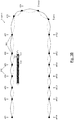
- Examples of two possible use cases are shown in Fig. 2A for a circular path across several train stations 108 (stations A, B, C and D) and Fig. 2B for a round trip path between two train stations (station A and D).
- the train access terminal 112 must frequently re-associate with other access points as it moves along the railway track 100 in order to maintain the Internet data session of the train passengers (see Fig. 1 ).
- the frequency at which a train access terminal 112 roams from the current access point to a next access point depends on the train velocity, cells size, and distance among access points.
- a graph G associated with the route followed by each train is obtained (the nodes 302 of the graph G correspond to the access points 102 along the train route).
- the graph G associated with each of the two use cases of Fig. 2 is depicted in Fig. 3 .
- Fig. 3A shows the graph G for the circular case of Fig. 2A
- Fig. 3B shows the graph G for the round trip of Fig. 2B .
- the access point currently associated to the train access terminal 112 and the direction of travel d of the train i.e., [current AP, G, d]
- the next access point in graph G, to which the train access terminal 112 should be re-associated can be determined.
- the graph G can be obtained by using any known method in graph theory.
- Signals transmitted to/by a train access terminal 112 are affected by several radio-electrical physical effects which may make signals received by a wireless device fluctuate to a greater or lesser extent.
- a direct consequence of such fluctuation of received signals is that prior-art proposals may make bad roaming decisions, especially in the border of two radio cells.
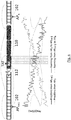
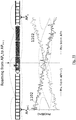
- An example is depicted in Fig. 4 , where due to fluctuations in the received signals, the train access terminal 112 performs several roaming processes between the current access point (AP n ) and the next access point (AP n+1 ). This effect is commonly known as ping-pong effect and may lead to critical throughput degradations and even to service disruptions.
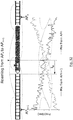
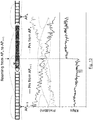
- the present invention proposes different mechanisms to deal with the ping-pong effect. Firstly, all roaming requests directed to a non-candidate access point are ignored, avoiding this way all backward roaming processes (e.g. roaming processes from AP n+1 to AP n in the example of Fig. 4 ), as well as all roaming processes directed to adjacent access points. Secondly, the present invention uses a minimum permanency time (t p ) and a margin (M(t)). The minimum permanency time (t p ) is used to ignore all the roaming requests sent by the train access terminal 112 during a determined period of time t p after the last roaming procedure (see Fig. 12 ).
- the margin (M(t)) is preferably a dynamic margin, and is used when comparing the quality of the signals received from the current access point with the quality of the signals received from all the candidate access points.
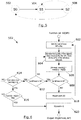
- the state diagram of the invention proposed herein is shown in Fig. 5 .
- the state diagram comprises the states S0 (502), S1 (504) and S2 (506). All the parameters used in the state diagram of the invention may be adjusted depending on the train velocity.
- the state diagram is executed for each train access terminal 112 traveling along the railway track.
- the state diagram may be executed in a distributed or a centralized way.
- the steps needed to implement the state diagram are distributed among the access points 102.
- Each step of the state diagram may be performed by one or more access points 102.
- the set of access points 102 in charge of carrying out a given step of the state diagram may vary as the train access terminal 112 moves along the railway track 100.
- information is exchanged between the access points, which may be connected through a wireless or a wired communication link.
- a central network infrastructure e.g. a central control station 122 performs the steps S0-S2 of the state diagram.
- the central control station 122 is in communication (wired or wirelessly) with all the access points 102 of the network, gathering information and sending instructions.
- the inputs for the state diagram are the access point currently associated to the train access terminal (AP i ), the graph G of the route followed by the train 110, and the direction of travel d of the train (i.e. [APi, G, d]).
- the first step is to obtain 602 the set of candidate access points N i for the train access terminal 112.
- the set of candidate access points N i is calculated by using the graph G (which can be derived from the route followed by the train) and taking into account the direction of travel d of the train.
- the list of candidate access points N i may comprise one or more access points.
- the access point (AP i ) currently associated with the train access terminal periodically monitors 604 the quality of the signals (signal quality, SQ) received by the train access terminal 112.
- the access point (AP i ) currently associated with the train access terminal 112 may periodically send radio measurement requests to the train access terminal 112 to inquire the train access terminal 112 to perform active scanning of SSID T2T .
- the train access terminal 112 Upon receiving a radio measurement request, the train access terminal 112 actively scans the corresponding frequency band and, afterwards, reports the result of such active scanning to AP i , which would store that results in a database.
- the scan results stored in a database may be processed in order to determine the quality of the signals received by the train access terminal 112 from each of the access points in its range.
- the data processing may provide a metric (SQ) per access point in range, associating a real value to the signal quality perceived by the train access terminal 112.
- SQL metric
- Some prior-art proposals use as a metric the received signal strength obtained in the last scan result.
- comparing signals quality based on instant values of the received signals strength may be a poor practice in train-to-trackside applications because the strength of the received signals may fluctuate due to multipath fading, causing the ping-pong effect of Fig. 4 (i.e., several consecutive roaming processes from AP n and AP n+1 and vice versa).
- a more advanced quality metric may be used, for instance by computing the least squares regression 1102 of the instant values of the received signals strength (see Fig. 11 ).
- the IEEE 802.11 standard provides mechanisms to inquire a train access terminal 112 to perform some predefined commands, which are described in the IEEE 802.11k amendment.
- the invention described herein may make use of the IEEE 802.11k amendment, or of any other mechanism used to command the train access terminal to perform an active scanning and report the result of such active scanning.
- the access point that provides the best quality metric (maxSQ) is determined 606 and selected as the next access point (AP next ).
- the computation in step 606 is performed on the set of signal qualities [SQ-SQ(i)], excluding the quality metric SQ(i) of the access point (AP i ) currently associated with the train access terminal, so that the selected next access point (AP next ) cannot be AP i .
- the best quality metric (maxSQ) can be obtained considering all the access points, even AP i , but if the best quality metric (SQmax) corresponds to SQ(i) the roaming is not performed. Thereafter, the following conditions or roaming criteria are checked (steps 612, 614 and 616 of Fig. 6 ):
- next access point (AP next ) is not a node of the graph G, checked in step 608, a graph repairing operation 618 may be carried out to include the new node in the graph G.
- the graph repairing operation 618 may be performed by the network administrator. Every change in the graph G must be updated in the corresponding network nodes and databases, e.g. in the central/remote data center for the centralized configuration or in the global database and the access points within the path (G) of that train access terminal for the distributed configuration. Any of the prior-art methods to repair the graph G may be used.
- a counter S1 count is initialized to 0 in step 620 and the system transitions to state S1; otherwise, the system remains periodically monitoring 604 the quality of the signals received by the train access terminal 112 until the roaming criteria are met.
- State S1 is depicted in Fig. 7 .
- the access point (AP i ) currently associated with the train access terminal 112 commands 702 the train access terminal 112 to perform a roaming (e.g., a fast roaming) from AP i to AP next .
- the IEEE 802.11 standard provides mechanisms to inquire a train access terminal to roam from one access point to another. This operation is defined in the IEEE 802.11v amendment. The present invention may make use of the IEEE 802.11v amendment, or of any other mechanism used to command a train access terminal to roam from one AP to another.
- the counter S1 count is used to count 704 how many times the system has tried to roam the train access terminal 112 from AP i to AP next .
- An alert is sent 708 to the network administrator if S1 count has surpassed 706 a maximum value (MAX_TRIES).
- MAX_TRIES maximum value
- State S2 is shown in Fig. 8 .
- a central control station 122 is in charge of accepting or ignoring the roaming requests sent by the train access terminal 112.
- each access point of the network performs this state S2 (in this case, the access points need to exchange some data among them).
- the system i.e., the central control station 122 in a centralized configuration or each access point 102 of the network in a distributed configuration
- the central control station 122 accordingly instructs the access point 102 to accept the roaming request; in a distributed structure, each access point is conveniently programmed to execute the roaming.
- the roaming request is received by another access point in the graph G, different from the next access point (AP next ), such request is ignored 812 unless the counter S1 count , checked in step 810, exceeds a maximum value (MAX_TRIES); otherwise, the next access point (AP next ) accepts 808 the roaming request.
- the system may additionally check in step 804 whether the access point AP j receiving the roaming request is included in the graph G. If the roaming request is received by an access point that is not included in the graph G, a graph repairing operation 816 is carried out to include the new node AP j in the graph G and the roaming request is ignored 812 (the new access point needs to be accepted by the network administrator).
- the system transitions to state S0. If the system remains in state S2 during a time higher than a permanency time t w , checked in step 814, the system will immediately transition to state S1 to send a new roaming command to the train access terminal 112.
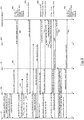
- Fig. 9 depicts an example of message transfer for the state diagram of Figs. 5 to 8 between the train access terminal 112, several access points 102 of the network (AP1, AP2, AP3) and the central control station 122 in a centralized configuration.
- the central control station 122 receives 902 an announcement of a train access terminal 112 newly connected to the network, detected by access point AP1 through an association request.
- the central control station 122 obtains the route (or a graph G corresponding to said route) and the direction of travel d of the train 110 in which the train access terminal 112 is installed (for instance by looking up a train database 124 in the central/remote data center (120, 130), which is updated by the railway operator), and updates the information 904 associated with said train access terminal 112. Knowing the access point currently associated (AP1) with the train access terminal 112, the graph G and the direction d, the central control station 122 can determine a list of candidate access points N i (in the example, the candidate is only AP2, the next access point in
- the central control station 122 instructs 906, through the access point currently associated (AP1), the train access terminal 112 to periodically scan the frequency band (e.g. by sending probe requests 910) in order to monitor 604 the quality of the signals received from all the access points 102.
- the train access terminal 112 only receives the probe response 912 from the access point AP1, which is currently associated with the train access terminal 112, since the other access points (AP2, AP3) are out of range.
- the central control station 122 then computes the quality metric for each access point according to the radio measurement report within the radio measurement response 914 sent by the train access terminal.
- the central control station 122 checks compliance with the roaming criteria, but since the criteria are not met (the train access station 112 could not find a better access point) no roaming is ordered.
- the central control station 122 commands 702 the train access terminal 112 to roam from the access point currently associated with the train access terminal 112, AP1, to the next access point, AP2.
- a wrong access point for example AP3, receives a roaming request from the train access terminal 112, the roaming request is transferred 926 to the central control station for acceptance; in this case, the central control station 122 orders the wrong access point AP3 to ignore the roaming request 812 since this access point (AP3) is not the next access point previously selected (i.e. AP2).
- the central control station 122 orders the wrong access point AP3 to ignore the roaming request 812 since this access point (AP3) is not the next access point previously selected (i.e. AP2).
- AP2 receives the roaming request from the train access terminal 112, it is remitted 932 to the central control station 122, which accepts 808 the roaming request.
- the information 904 associated to the train access terminal 112 is accordingly updated (e.g. the access point currently associated with the train access terminal 112 is now AP2).
- Fig. 10 shows, for a distributed configuration, an example of message transfer between the train access terminal 112, access points 102 of the network (AP1, AP2, AP3) and a global database 126 used by the access points 102 to store and share information 904 associated with the train access terminal 112.
- the information stored in the global database 126 may include, among other data, the access point AP i currently associated with the train access terminal 112, the graph G, the direction of travel d and the current value of the counter S1 count .
- there is no central control station 122 and the access points 102 communicate with each other by using the aggregation network.
- the access points 102 store and share information through the global database 126.
- the access point 102 Every time a train access terminal 112 is associated with an access point 102 (AP1 in the example of Fig. 10 ), the access point 102 checks whether it has no updated information 1004 of that train access terminal 112. In that case, the access point 102 queries 1006 the global database 126 to get the latest information of that train access terminal 112 (i.e. the graph G and the direction d associated with the route of that train access terminal). Afterwards, the access point 102 updates its local information 1004 related to that train access terminal 112 and shares 1008 that local information 1004 with the rests of access points 102 in G (AP2 and AP3 in the example of Fig. 10 ). Every access point 102 updates and shares its information 1004 for every newly associated train access terminal 112. Once shared that information 1004, the access point 102 starts monitoring 604 the quality of the signals received by the train access terminal from all the access points 102. The received signals quality monitoring step may be performed as explained in the example shown in Fig. 9 .
- the access point 102 currently associated with the train access terminal 112 commands 702 the train access terminal 112 to roam from the access point currently associated with the train access terminal 112, AP1, to the next access point, AP2. If a wrong access point 102, for example AP3, receives a roaming request from the train access terminal 112, that wrong access point will ignore the roaming request 812 since this access point (AP3) is not the next access point. When the correct access point, AP2, receives the roaming request from the train access terminal 112, that correct access point will accept 808 the roaming request.
- Every access 102 point in G knows which is the next access point for a train access terminal 112 because the access point currently associated with the train access terminal 112 sends an 'Update TAT Information' message 1010 to all the access points in G whenever it changes its local information 1004 for that train access terminal 112.
- the 'Update TAT Information' message 1010 includes which is the next access point for the train access terminal indicated in the TAT ID field.
- the access point 102 currently associated with the train access terminal 112 informs 1012 the rest of access points 102 in G that it is the new access point wherein the train access terminal is associated to.
- the invention described herein also proposes mechanisms to maintain, from one access point to another, the information used by the rate control algorithm, related to the quality of the radio link between the access point and the train access terminal, to decide which is the best modulation and coding scheme (MCS) to which data frames are transmitted.
- MCS modulation and coding scheme
- Current IEEE 802.11 networks do not consider mechanisms to exchange the rate control information, and hence, they are susceptible to be affected by the throughput degradation due to the operation of the rate control algorithm.
- the rate control algorithm of each device commonly selects an initial MCS to start transmitting data. That MCS may be a randomly selected MCS, or an MCS pre-configured beforehand.
- the rate control algorithm of each wireless device changes the MCS according to the quality of the radio link between both devices. Therefore, after each roaming process, the rate control algorithm of each wireless device (i.e. train access terminal 112 and access point 102) starts transmitting with an initial MCS, normally different from the optimum MCS, and hence, train passengers perceive a degradation in their quality of service. An example of this degradation is shown in Fig. 13 .
- Prior-art rate control algorithms may use different metrics to select the MCS at which data frames are transmitted. For example, some rate control algorithms use the signal-to-noise-plus-interference ratio (SNIR). However, the most common practice is to use the MCS that provides the higher chance of satisfactory frame reception (e.g. the Minstrel rate control algorithm). In order to do so, the rate control algorithm maintains a local database where it stores the probability of satisfactory frame reception for each possible MCS. This local database is herein referred to as RCDL i for the downlink communication between the access point 102 and the train access terminal 112 and RCUL for the uplink communication between the access point 102 and the train access terminal 112.
- RCDL i for the downlink communication between the access point 102 and the train access terminal 112
- RCUL for the uplink communication between the access point 102 and the train access terminal 112.
- a train access terminal 112 can only communicate with the access point to which is currently associated, and hence, its rate control algorithm only needs to maintain a local database for that access point (i.e. RCUL). Furthermore, when a train access terminal 112 stops being associated with an access point, the rate control algorithms of both wireless devices may delete the local databases associated with that communication.
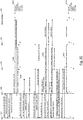
- FIG. 14 A flow diagram showing the common operation of a rate-control algorithm of the prior art is depicted in Fig. 14 for the downlink communication between an access point 102 and its associated train access terminals 112, and in Fig. 15 for the uplink communication between a train access terminal 112 and an access point 102.
- the rate control algorithm of the access point 102 firstly checks 1202 whether there is a newly associated train access terminal 112, and in that case, a new local database and a timer are initialized (1204, 1206) for that train access terminal 112. Furthermore, an initial MCS is configured 1208 to transmit data to that train access terminal 112. Otherwise, the rate control algorithm checks 1210 whether the timer associated with each of the train access terminal 112 has expired.
- the rate control algorithm Upon detecting that a timer has expired, the rate control algorithm analyzes 1212 its local database for the train access terminal TAT i associated with that timer (i.e. RCDL) in order to determine 1214 which is the new MCS used to transmit data to that train access terminal TAT i . Finally, that MCS is configured 1216 in the radio driver 1218 and the timer for that train access terminal TATi is restarted 1220.
- the radio driver 1218 may accept a different configuration for each train access terminal 112. Furthermore, it is important to note that the information stored in the local database (RCDL) is updated 1222 as the radio driver 1218 sends data frames to each train access terminal TAT i .
- the process is performed for every train access terminal i currently associated with the access point.
- the rate control algorithm of the train access terminal 112 firstly checks 1302 whether the train access terminal 112 has just associated itself with an access point 102, and in that case, it initializes 1304 its timer and its local database (RCUL). Furthermore, it sets 1306 an initial MCS in the radio driver 1308. Otherwise, the rate control algorithm checks 1310 whether its timer has expired. If this last happens, the rate control algorithm analyzes 1312 its local database (RCUL) to determine which is the new MCS with which the radio driver must transmit data to the access point. Finally, it sets 1314 the chosen MCS in the radio driver 1308. The information stored in the local database (RCUL) is updated 1316 as the radio driver 1308 sends data to the access point.
- RCUL local database
- Fig. 14 and Fig. 15 prior-art rate control algorithms neither provide mechanisms to exchange the local databases (RCDL i ) between access points, nor mechanisms to maintain the local database RCUL when the train access terminal 112 roams from one access point to another.
- the invention described herein proposes mechanisms to exchange and maintain such databases in order to avoid the throughput degradation that normally occur just after a roaming process is finished (see Fig. 13 ).
- Fig. 16 shows the flow diagram, according to an embodiment of the present invention, for the rate control algorithm associated with the downlink communication between the access point and its associated train access terminals. The steps inside the dotted contour are new when compared to the prior-art method of Fig. 14 .
- the rate control algorithm detects, in step 1202, that there is a newly associated train access terminal (TAT i ), it initializes (1204, 1206) the local database and the timer for that train access terminal TAT i (i.e. RCDL i ). Afterwards, it queries 1402 if that train access terminal TAT i comes from another access point AP j in the graph G. If the train access terminal 112 does not come from another access point in the graph G, the rate control algorithm continues with its common operation, as previously discussed in Fig. 14 .
- the rate control algorithm sends a rate control request (RC request, with a field TAT ID including the queried train access terminal, which is the train access terminal that is going to perform roaming) 1404 to the rate control algorithm of that access point AP j to obtain the local database for that train access terminal TAT i (RCDL in AP j ).
- a rate control request (RC request, with a field TAT ID including the queried train access terminal, which is the train access terminal that is going to perform roaming) 1404 to the rate control algorithm of that access point AP j to obtain the local database for that train access terminal TAT i (RCDL in AP j ).
- the corresponding rate control algorithm responds with an RC response including the queried local database RCDL i .
- the rate control algorithm copies 1406 the received database (i.e. RCDL i of AP j ) into its local database (i.e. its RCDL i ).
- the rate control algorithm analyzes 1408 the local database RCDL i to determine which would be the best MCS to transmit data frames to that train access terminal TAT i . Finally, the rate control algorithm sets 1410 the selected MCS for that train access terminal TAT i in the radio driver 1218 and continues its common operation, as previously discussed in Fig. 14 . It is important to take into account that RC requests can be sent at any time chosen by the rate control algorithm. For example, the rate control algorithm can be configured to transmit RC requests (RC Req.) just after its access point receives the reassociation request that is sent during a fast roaming process.
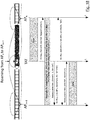
- the access point may transmit the reassociation response just after receiving the RC response in order to assure that the local database RCDL i for that train access terminal TAT i is analyzed before transmitting data frames to that train access terminal TAT i , as it is shown in the example of Fig. 18 .
- the rate control algorithm of each of the next access points in the graph G periodically sends RC requests to the access point where the train access terminal 112 is currently associated, see Fig. 19 . This way, the time needed to reassociate a train access terminal TAT i during a fast roaming (FR) process (which starts with a "FR Req.” message) may be reduced because each of the next access points in the graph G already has an updated RCDL i .
- Other realizations may include a global database 126 where the access points update and query the database associated with every train access terminal 112.
- Fig. 20 shows an example where a global database 126 is used in the example shown in Fig. 18 .
- Fig. 17 shows the flow diagram of a preferred embodiment for the rate control algorithm associated with the uplink communication between the train access terminal 112 and the access point to which is associated.
- the steps inside the dotted contour are new when compared to the prior-art method of Fig. 15 .
- the rate control algorithm continues with its common operation, as explained in Fig. 15 . Otherwise, the rate control algorithm copies 1504 the local database associated with access point AP k (i.e. RCUL k ) in the local database recently initialized for access point AP j (i.e. RCUL j ). Then, it proceeds to analyze 1506 this local database RCUL j to determine which would be the best MCS to transmit data frames to access point AP j . Finally, the rate control algorithm sets 1508 the selected MCS in the radio driver 1308 and continues the common operation described in Fig. 15 . Once the rate control algorithm has copied RCUL k into RCUL j , it may delete or temporarily maintain that RCUL k .
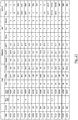
- Fig. 21 shows an example of a table containing information RCDL i and RCUL j related to the quality of the radio links between the train access terminal TAT i and the access point associated with the train access terminal.
- This information is used by rate control algorithms in IEEE802.11 networks, such as the Minstrel rate control algorithm, to determine the best modulation and coding scheme (MCS).
- MCS modulation and coding scheme
Landscapes
- Engineering & Computer Science (AREA)
- Computer Networks & Wireless Communication (AREA)
- Signal Processing (AREA)
- Mobile Radio Communication Systems (AREA)
Claims (10)
- Verfahren zur Handhabung von Roaming in einem Zug-zu-Gleisseite-Drahtlosnetzwerk, wobei das Netzwerk eine Vielzahl von Zugangspunkten (102), die entlang einer Bahnstrecke (100) eingesetzt werden, und einen oder mehrere Zugzugangsterminals (112), die an Bord von mindestens einem Zug (110) installiert sind, umfasst, wobei das Verfahren Folgendes umfasst:Bestimmen (602), durch einen Zugangspunkt (APi) der Vielzahl von Zugangspunkten (102), die aktuell mit einem Zugzugangsterminal (112) verknüpft sind, das an Bord eines Zugs (110) installiert ist, einer Liste von Kandidatenzugangspunkten (Ni) der Vielzahl von Zugangspunkten (102) für das Zugzugangsterminal (112) basierend auf der Fahrtrichtung (d) und der Route, der der Zug (110) folgt;Erhalten (604), durch den Zugangspunkt (APi), von Funkmessungen von Signalen, die von dem Zugzugangsterminal (112) von Zugangspunkten (102) des Zug-zu-Gleisseite-Drahtlosnetzwerks empfangen werden;Bestimmen (606), durch den Zugangspunkt (APi), basierend auf den erhaltenen Funkmessungen, eines nächsten Zugangspunkts (APnext), wobei der nächste Zugangspunkt (APnext) der Zugangspunkt ist, der die höchste Signalqualität (maxSQ) gemäß einer Qualitätsmetrik liefert;Auswerten, durch den Zugangspunkt (APi), der Erfüllung einer Gruppe von Roaming-Kriterien, wobei die Roaming-Kriterien Folgendes umfassen:der nächste Zugangspunkt (APnext) ist in der Liste von Kandidatenzugangspunkten (Ni) enthalten (612);die Dauer der Zeit, die seit dem letzten Roaming verstrichen ist, das von dem Zugzugangsterminal (112) durchgeführt wird, überschreitet (614) eine Mindestpermanenzdauer (tp);die höchste Signalqualität (maxSQ) überschreitet (616) die Signalqualität (SQ(i)) des Zugangspunkts (APi), der aktuell mit dem Zugzugangsterminal (112) verknüpft ist, um mindestens eine Roaming-Spanne;wenn die Roaming-Kriterien erfüllt sind, Senden, durch den Zugangspunkt (APi), eines Roaming-Befehls (702), der das Zugzugangsterminal (112) anweist, von dem Zugangspunkt (APi), der aktuell mit dem Zugzugangsterminal verknüpft ist, zu dem nächsten Zugangspunkt (APnext) zu roamen.
- Verfahren nach Anspruch 1, ferner umfassend das Erfassen, durch den Zugangspunkt (APi), der aktuell mit dem Zugzugangsterminal (112) verknüpft ist, der Fahrtrichtung (d) und der Route, der der Zug (110) folgt, durch Zugreifen auf eine Zugdatenbank (124) eines Datenzentrums (120; 130).
- Verfahren nach einem der vorherigen Ansprüche, wobei alle Zugangspunkte (102), die entlang der Bahnstrecke (100) eingesetzt werden, sich eine gemeinsame SSID teilen, und wobei das Verfahren das Senden, durch den Zugangspunkt (APi), der aktuell mit dem Zugzugangsterminal (112) verknüpft ist, einer Funkmessungsanfrage, die an das Zugzugangsterminal (112) adressiert ist und einen Befehl zum Durchführen eines aktiven Abfragens der gemeinsamen SSID beinhaltet, umfasst.
- Verfahren nach einem der Ansprüche 1 bis 2, wobei das Verfahren das wiederholte Senden, durch das Zugzugangsterminal (112), von Funkmessungen von Signalen, die von Zugangspunkten in dem Bereich des Zugzugangsterminals (112) empfangen werden, zu dem Zugangspunkt (APi), der aktuell mit dem Zugzugangsterminal (112) verknüpft ist, umfasst.
- Verfahren nach einem der vorherigen Ansprüche, wobei die Qualitätsmetrik durch den Zugangspunkt (APi), der aktuell mit dem Zugzugangsterminal (112) verknüpft ist, durch Berechnen, für jeden Zugangspunkt (102), der Regression der kleinsten Quadrate (1102) der Momentanwerte der Signalstärke, die in den Funkmessungen enthalten sind, die von dem Zugzugangsterminal (112) erhalten werden, erhalten wird.
- Verfahren nach einem der vorherigen Ansprüche, wobei die Roaming-Spanne eine dynamische Spanne M(t) ist, die im Laufe der Zeit für t>tr abnimmt, wobei tr der Zeitpunkt ist, wenn die letzte Roaming-Prozedur des Zugzugangsterminals (112) erfolgte.
- Verfahren nach einem der vorherigen Ansprüche, ferner umfassend:Erhalten, durch den nächsten Zugangspunkt (APnext), wenn die Roaming-Kriterien erfüllt sind, von Informationen (RCDLi) bezüglich der Qualität der Funkverbindung zwischen dem Zugzugangsterminal (112) und dem Zugangspunkt (APi), der aktuell mit dem Zugzugangsterminal (112) verknüpft ist;Bestimmen (1408), basierend auf den Informationen (RCDLi), eines Modulations- und Codierungsschemas zum Übertragen von Datenframes von dem nächsten Zugangspunkt (APnext) zu dem Zugzugangsterminal (112);Festlegen (1410), bei dem Funktreiber (1218) des nächsten Zugangspunkts (APnext), des ausgewählten Modulations- und Codierungsschemas für die Downlink-Kommunikation mit dem Zugzugangsterminal (112).
- Verfahren nach Anspruch 7, wobei die Informationen (RCDLi), die verwendet werden, um das Modulations- und Codierungsschema zu bestimmen, durch Abfragen des Zugangspunkts (APi), der aktuell mit dem Zugzugangsterminal (112) verknüpft ist, erhalten werden.
- Verfahren nach Anspruch 7, ferner umfassend das Speichern, in einer globalen Datenbank (126) durch jeden Zugangspunkt (102) des Zug-zu-Gleisseite-Drahtlosnetzwerks, von Informationen bezüglich der Qualität der Funkverbindung zwischen dem Zugangspunkt und den zugehörigen Zugzugangsterminals;
und wobei die Informationen (RCDLi), die verwendet werden, um das Modulations- und Codierungsschema zu bestimmen, von dem nächsten Zugangspunkt (APnext) durch Zugreifen auf die globale Datenbank (126) abgerufen werden, wenn die Roaming-Kriterien erfüllt sind. - System zur Handhabung von Roaming in einem Zug-zu-Gleisseite-Drahtlosnetzwerk umfassend einen oder mehrere Zugzugangsterminals (112), wobei das System eine Vielzahl von Zugangspunkten (102) umfasst, die entlang einer Bahnstrecke (100) eingesetzt werden, wobei die Zugangspunkte (102) einen Zugangspunkt (APi) umfassen, der aktuell mit einem Zugzugangsterminal (112) verknüpft ist, das an Bord eines Zugs (110) installiert ist, wobei der Zugangspunkt (APi), der aktuell mit dem Zugzugangsterminal (112) verknüpft ist, konfiguriert ist, um:eine Liste von Kandidatenzugangspunkten (Ni) der Vielzahl von Zugangspunkten (102) für das Zugzugangsterminal (112) basierend auf der Fahrtrichtung (d) und der Route, der der Zug (110) folgt, zu bestimmen (602);Funkmessungen von Signalen, die von dem Zugzugangsterminal (112) von Zugangspunkten (102) eines Zug-zu-Gleisseite-Drahtlosnetzwerks empfangen werden, zu erhalten (604);basierend auf den erhaltenen Funkmessungen einen nächsten Zugangspunkt (APnext) zu bestimmen (606), wobei der nächste Zugangspunkt (APnext) der Zugangspunkt ist, der die höchste Signalqualität (maxSQ) gemäß einer Qualitätsmetrik liefert;die Erfüllung einer Gruppe von Roaming-Kriterien auszuwerten, wobei die Roaming-Kriterien Folgendes umfassen:der nächste Zugangspunkt (APnext) ist in der Liste von Kandidatenzugangspunkten (Ni) enthalten (612);die Dauer der Zeit, die seit dem letzten Roaming verstrichen ist, das von dem Zugzugangsterminal (112) durchgeführt wird, überschreitet (614) eine Mindestpermanenzdauer (tp);die höchste Signalqualität (maxSQ) überschreitet (616) die Signalqualität (SQ(i)) des Zugangspunkts (APi), der aktuell mit dem Zugzugangsterminal (112) verknüpft ist, um mindestens eine Roaming-Spanne;wenn die Roaming-Kriterien erfüllt sind, Senden eines Roaming-Befehls (702), der das Zugzugangsterminal (112) anweist, von dem Zugangspunkt (APi), der aktuell mit dem Zugzugangsterminal verknüpft ist, zu dem nächsten Zugangspunkt (APnext) zu roamen.
Applications Claiming Priority (2)
| Application Number | Priority Date | Filing Date | Title |
|---|---|---|---|
| ES201930805 | 2019-09-17 | ||
| PCT/EP2019/078496 WO2020187430A1 (en) | 2019-09-17 | 2019-10-21 | A method and system for handling roaming in train-to-trackside wireless networks |
Publications (2)
| Publication Number | Publication Date |
|---|---|
| EP3759964A1 EP3759964A1 (de) | 2021-01-06 |
| EP3759964B1 true EP3759964B1 (de) | 2021-08-11 |
Family
ID=68318875
Family Applications (1)
| Application Number | Title | Priority Date | Filing Date |
|---|---|---|---|
| EP19791221.5A Active EP3759964B1 (de) | 2019-09-17 | 2019-10-21 | Verfahren und system zur handhabung von roaming in zug-zu-gleisseite-drahtlosnetzwerken |
Country Status (4)
| Country | Link |
|---|---|
| US (1) | US12096305B2 (de) |
| EP (1) | EP3759964B1 (de) |
| ES (1) | ES2898446T3 (de) |
| WO (1) | WO2020187430A1 (de) |
Families Citing this family (2)
| Publication number | Priority date | Publication date | Assignee | Title |
|---|---|---|---|---|
| US12143880B2 (en) | 2021-09-23 | 2024-11-12 | Cisco Technology, Inc. | Throughput and wireless channel interference mitigation for mobile systems |
| CN115973225B (zh) * | 2023-01-03 | 2025-02-18 | 中车株洲电力机车有限公司 | 一种轨道交通车辆重联方式的识别方法、装置及介质 |
Family Cites Families (5)
| Publication number | Priority date | Publication date | Assignee | Title |
|---|---|---|---|---|
| ATE332602T1 (de) * | 2004-05-24 | 2006-07-15 | Cit Alcatel | Drahtlose datenweiterleitung zwischen zugangspunkten für eine eisenbahn |
| US8190155B2 (en) | 2005-05-11 | 2012-05-29 | Interdigital Technology Corporation | Method and system for reselecting an access point |
| IT1390946B1 (it) | 2008-08-13 | 2011-10-27 | Thales Security Solutions & Services S P A | Sistema di comunicazione a banda larga tra uno o più centri di controllo e una o più unità mobili |
| WO2014029870A2 (en) * | 2012-08-24 | 2014-02-27 | Siemens Aktiengesellschaft | Fast switching method, system and client in wireless communication system |
| US10356681B2 (en) | 2016-09-21 | 2019-07-16 | Netgear, Inc. | Client roaming in a distributed multi-band wireless networking system |
-
2019
- 2019-10-21 EP EP19791221.5A patent/EP3759964B1/de active Active
- 2019-10-21 WO PCT/EP2019/078496 patent/WO2020187430A1/en not_active Ceased
- 2019-10-21 US US17/761,344 patent/US12096305B2/en active Active
- 2019-10-21 ES ES19791221T patent/ES2898446T3/es active Active
Also Published As
| Publication number | Publication date |
|---|---|
| WO2020187430A1 (en) | 2020-09-24 |
| US12096305B2 (en) | 2024-09-17 |
| US20220353778A1 (en) | 2022-11-03 |
| EP3759964A1 (de) | 2021-01-06 |
| ES2898446T3 (es) | 2022-03-07 |
Similar Documents
| Publication | Publication Date | Title |
|---|---|---|
| US20220078684A1 (en) | User equipment supporting conditional handovers to cells of a cellular network and a cellular network supporting conditional handovers | |
| JP6549148B2 (ja) | モバイル通信ネットワークにおけるハンドオーバを制御する方法並びに当該方法を実装した装置及びシステム | |
| JP4695656B2 (ja) | 無線通信ネットワーク内におけるチャンネル選択マネジメントのためのシステムおよび方法 | |
| EP3679744B1 (de) | Verfahren in einem zellularen telekommunikationsnetzwerk, computerprogramm, computerlesbarer datenträger und netzwerkknoten | |
| EP1601221A1 (de) | Verfahren zum nahtlosen Weiterreichen in einem drahtlosen lokalen Netzwerk | |
| US10492093B2 (en) | Method and device of sending measurement report | |
| CN112042228A (zh) | 无线通信系统中支持终端移动性的方法和装置 | |
| EP4029304B1 (de) | Dienstgüte (qos)-basierte karte der drahtlos-abdeckung | |
| CN104303546A (zh) | 优化公共运输平台上终端的切换参数设置 | |
| US12082023B2 (en) | Radio resource management in wireless networks with multiple access points | |
| US20230403674A1 (en) | Communications device and network infrastructure equipment and methods applying mobility information of infrastructure equipment | |
| US9794840B1 (en) | Systems and methods for determining access node candidates for handover of wireless devices | |
| EP3759964B1 (de) | Verfahren und system zur handhabung von roaming in zug-zu-gleisseite-drahtlosnetzwerken | |
| Mishra et al. | Novel algorithm to reduce handover failure rate in 5G networks | |
| US12526695B2 (en) | Methods and apparatuses for radio communication | |
| US20230209418A1 (en) | METHOD OF LOCATING Wi-Fi DEVICES | |
| US12507087B2 (en) | Methods and apparatus for automatically detecting and/or correcting physical cell ID (PCI) collisions | |
| KR102552869B1 (ko) | 5g 네트워크 환경에서 lte 및 nr 액세스간 트래픽 경로 제어를 위한 기구 및 방법 | |
| CN120786522A (zh) | 小区切换方法、装置、设备、存储介质及程序产品 | |
| KR101627452B1 (ko) | 차량과 액세스 포인트간 데이터 전송률 조정 방법 및 장치 | |
| EP2239983B1 (de) | Bereitstellung von drahtloser Kommunikation für Mobilstationen | |
| CN117083907A (zh) | 对提供的路由波束列表的基于传感器的确定 | |
| US20250212022A1 (en) | Inverse basic service set transition management for temporal roaming avoidance | |
| JP6622122B2 (ja) | 通信装置、制御方法、及びプログラム | |
| US20250274856A1 (en) | Inverse basic service set transition management for temporal roaming avoidance |
Legal Events
| Date | Code | Title | Description |
|---|---|---|---|
| STAA | Information on the status of an ep patent application or granted ep patent |
Free format text: STATUS: UNKNOWN |
|
| STAA | Information on the status of an ep patent application or granted ep patent |
Free format text: STATUS: THE INTERNATIONAL PUBLICATION HAS BEEN MADE |
|
| PUAI | Public reference made under article 153(3) epc to a published international application that has entered the european phase |
Free format text: ORIGINAL CODE: 0009012 |
|
| STAA | Information on the status of an ep patent application or granted ep patent |
Free format text: STATUS: REQUEST FOR EXAMINATION WAS MADE |
|
| 17P | Request for examination filed |
Effective date: 20201001 |
|
| AK | Designated contracting states |
Kind code of ref document: A1 Designated state(s): AL AT BE BG CH CY CZ DE DK EE ES FI FR GB GR HR HU IE IS IT LI LT LU LV MC MK MT NL NO PL PT RO RS SE SI SK SM TR |
|
| AX | Request for extension of the european patent |
Extension state: BA ME |
|
| STAA | Information on the status of an ep patent application or granted ep patent |
Free format text: STATUS: EXAMINATION IS IN PROGRESS |
|
| 17Q | First examination report despatched |
Effective date: 20210121 |
|
| REG | Reference to a national code |
Ref country code: DE Ref legal event code: R079 Ref document number: 602019006851 Country of ref document: DE Free format text: PREVIOUS MAIN CLASS: H04W0036080000 Ipc: H04W0036320000 |
|
| GRAP | Despatch of communication of intention to grant a patent |
Free format text: ORIGINAL CODE: EPIDOSNIGR1 |
|
| STAA | Information on the status of an ep patent application or granted ep patent |
Free format text: STATUS: GRANT OF PATENT IS INTENDED |
|
| RIC1 | Information provided on ipc code assigned before grant |
Ipc: H04W 84/00 20090101ALN20210318BHEP Ipc: H04W 36/00 20090101ALN20210318BHEP Ipc: H04W 36/38 20090101ALI20210318BHEP Ipc: H04W 36/32 20090101AFI20210318BHEP |
|
| RIC1 | Information provided on ipc code assigned before grant |
Ipc: H04W 84/00 20090101ALN20210319BHEP Ipc: H04W 36/00 20090101ALN20210319BHEP Ipc: H04W 36/38 20090101ALI20210319BHEP Ipc: H04W 36/32 20090101AFI20210319BHEP |
|
| INTG | Intention to grant announced |
Effective date: 20210409 |
|
| GRAS | Grant fee paid |
Free format text: ORIGINAL CODE: EPIDOSNIGR3 |
|
| GRAA | (expected) grant |
Free format text: ORIGINAL CODE: 0009210 |
|
| STAA | Information on the status of an ep patent application or granted ep patent |
Free format text: STATUS: THE PATENT HAS BEEN GRANTED |
|
| AK | Designated contracting states |
Kind code of ref document: B1 Designated state(s): AL AT BE BG CH CY CZ DE DK EE ES FI FR GB GR HR HU IE IS IT LI LT LU LV MC MK MT NL NO PL PT RO RS SE SI SK SM TR |
|
| DAV | Request for validation of the european patent (deleted) | ||
| DAX | Request for extension of the european patent (deleted) | ||
| REG | Reference to a national code |
Ref country code: CH Ref legal event code: EP |
|
| REG | Reference to a national code |
Ref country code: DE Ref legal event code: R096 Ref document number: 602019006851 Country of ref document: DE |
|
| REG | Reference to a national code |
Ref country code: IE Ref legal event code: FG4D Ref country code: AT Ref legal event code: REF Ref document number: 1420680 Country of ref document: AT Kind code of ref document: T Effective date: 20210915 |
|
| REG | Reference to a national code |
Ref country code: LT Ref legal event code: MG9D |
|
| REG | Reference to a national code |
Ref country code: NL Ref legal event code: MP Effective date: 20210811 |
|
| REG | Reference to a national code |
Ref country code: AT Ref legal event code: MK05 Ref document number: 1420680 Country of ref document: AT Kind code of ref document: T Effective date: 20210811 |
|
| PG25 | Lapsed in a contracting state [announced via postgrant information from national office to epo] |
Ref country code: LT Free format text: LAPSE BECAUSE OF FAILURE TO SUBMIT A TRANSLATION OF THE DESCRIPTION OR TO PAY THE FEE WITHIN THE PRESCRIBED TIME-LIMIT Effective date: 20210811 Ref country code: AT Free format text: LAPSE BECAUSE OF FAILURE TO SUBMIT A TRANSLATION OF THE DESCRIPTION OR TO PAY THE FEE WITHIN THE PRESCRIBED TIME-LIMIT Effective date: 20210811 Ref country code: BG Free format text: LAPSE BECAUSE OF FAILURE TO SUBMIT A TRANSLATION OF THE DESCRIPTION OR TO PAY THE FEE WITHIN THE PRESCRIBED TIME-LIMIT Effective date: 20211111 Ref country code: FI Free format text: LAPSE BECAUSE OF FAILURE TO SUBMIT A TRANSLATION OF THE DESCRIPTION OR TO PAY THE FEE WITHIN THE PRESCRIBED TIME-LIMIT Effective date: 20210811 Ref country code: HR Free format text: LAPSE BECAUSE OF FAILURE TO SUBMIT A TRANSLATION OF THE DESCRIPTION OR TO PAY THE FEE WITHIN THE PRESCRIBED TIME-LIMIT Effective date: 20210811 Ref country code: PT Free format text: LAPSE BECAUSE OF FAILURE TO SUBMIT A TRANSLATION OF THE DESCRIPTION OR TO PAY THE FEE WITHIN THE PRESCRIBED TIME-LIMIT Effective date: 20211213 Ref country code: NO Free format text: LAPSE BECAUSE OF FAILURE TO SUBMIT A TRANSLATION OF THE DESCRIPTION OR TO PAY THE FEE WITHIN THE PRESCRIBED TIME-LIMIT Effective date: 20211111 Ref country code: RS Free format text: LAPSE BECAUSE OF FAILURE TO SUBMIT A TRANSLATION OF THE DESCRIPTION OR TO PAY THE FEE WITHIN THE PRESCRIBED TIME-LIMIT Effective date: 20210811 Ref country code: SE Free format text: LAPSE BECAUSE OF FAILURE TO SUBMIT A TRANSLATION OF THE DESCRIPTION OR TO PAY THE FEE WITHIN THE PRESCRIBED TIME-LIMIT Effective date: 20210811 |
|
| PG25 | Lapsed in a contracting state [announced via postgrant information from national office to epo] |
Ref country code: PL Free format text: LAPSE BECAUSE OF FAILURE TO SUBMIT A TRANSLATION OF THE DESCRIPTION OR TO PAY THE FEE WITHIN THE PRESCRIBED TIME-LIMIT Effective date: 20210811 Ref country code: LV Free format text: LAPSE BECAUSE OF FAILURE TO SUBMIT A TRANSLATION OF THE DESCRIPTION OR TO PAY THE FEE WITHIN THE PRESCRIBED TIME-LIMIT Effective date: 20210811 Ref country code: GR Free format text: LAPSE BECAUSE OF FAILURE TO SUBMIT A TRANSLATION OF THE DESCRIPTION OR TO PAY THE FEE WITHIN THE PRESCRIBED TIME-LIMIT Effective date: 20211112 |
|
| REG | Reference to a national code |
Ref country code: ES Ref legal event code: FG2A Ref document number: 2898446 Country of ref document: ES Kind code of ref document: T3 Effective date: 20220307 |
|
| PG25 | Lapsed in a contracting state [announced via postgrant information from national office to epo] |
Ref country code: NL Free format text: LAPSE BECAUSE OF FAILURE TO SUBMIT A TRANSLATION OF THE DESCRIPTION OR TO PAY THE FEE WITHIN THE PRESCRIBED TIME-LIMIT Effective date: 20210811 |
|
| PG25 | Lapsed in a contracting state [announced via postgrant information from national office to epo] |
Ref country code: DK Free format text: LAPSE BECAUSE OF FAILURE TO SUBMIT A TRANSLATION OF THE DESCRIPTION OR TO PAY THE FEE WITHIN THE PRESCRIBED TIME-LIMIT Effective date: 20210811 |
|
| REG | Reference to a national code |
Ref country code: DE Ref legal event code: R097 Ref document number: 602019006851 Country of ref document: DE |
|
| PG25 | Lapsed in a contracting state [announced via postgrant information from national office to epo] |
Ref country code: SM Free format text: LAPSE BECAUSE OF FAILURE TO SUBMIT A TRANSLATION OF THE DESCRIPTION OR TO PAY THE FEE WITHIN THE PRESCRIBED TIME-LIMIT Effective date: 20210811 Ref country code: SK Free format text: LAPSE BECAUSE OF FAILURE TO SUBMIT A TRANSLATION OF THE DESCRIPTION OR TO PAY THE FEE WITHIN THE PRESCRIBED TIME-LIMIT Effective date: 20210811 Ref country code: RO Free format text: LAPSE BECAUSE OF FAILURE TO SUBMIT A TRANSLATION OF THE DESCRIPTION OR TO PAY THE FEE WITHIN THE PRESCRIBED TIME-LIMIT Effective date: 20210811 Ref country code: EE Free format text: LAPSE BECAUSE OF FAILURE TO SUBMIT A TRANSLATION OF THE DESCRIPTION OR TO PAY THE FEE WITHIN THE PRESCRIBED TIME-LIMIT Effective date: 20210811 Ref country code: CZ Free format text: LAPSE BECAUSE OF FAILURE TO SUBMIT A TRANSLATION OF THE DESCRIPTION OR TO PAY THE FEE WITHIN THE PRESCRIBED TIME-LIMIT Effective date: 20210811 Ref country code: AL Free format text: LAPSE BECAUSE OF FAILURE TO SUBMIT A TRANSLATION OF THE DESCRIPTION OR TO PAY THE FEE WITHIN THE PRESCRIBED TIME-LIMIT Effective date: 20210811 |
|
| PLBE | No opposition filed within time limit |
Free format text: ORIGINAL CODE: 0009261 |
|
| STAA | Information on the status of an ep patent application or granted ep patent |
Free format text: STATUS: NO OPPOSITION FILED WITHIN TIME LIMIT |
|
| REG | Reference to a national code |
Ref country code: BE Ref legal event code: MM Effective date: 20211031 |
|
| PG25 | Lapsed in a contracting state [announced via postgrant information from national office to epo] |
Ref country code: MC Free format text: LAPSE BECAUSE OF FAILURE TO SUBMIT A TRANSLATION OF THE DESCRIPTION OR TO PAY THE FEE WITHIN THE PRESCRIBED TIME-LIMIT Effective date: 20210811 |
|
| 26N | No opposition filed |
Effective date: 20220512 |
|
| PG25 | Lapsed in a contracting state [announced via postgrant information from national office to epo] |
Ref country code: LU Free format text: LAPSE BECAUSE OF NON-PAYMENT OF DUE FEES Effective date: 20211021 Ref country code: IT Free format text: LAPSE BECAUSE OF FAILURE TO SUBMIT A TRANSLATION OF THE DESCRIPTION OR TO PAY THE FEE WITHIN THE PRESCRIBED TIME-LIMIT Effective date: 20210811 Ref country code: BE Free format text: LAPSE BECAUSE OF NON-PAYMENT OF DUE FEES Effective date: 20211031 |
|
| PG25 | Lapsed in a contracting state [announced via postgrant information from national office to epo] |
Ref country code: IE Free format text: LAPSE BECAUSE OF NON-PAYMENT OF DUE FEES Effective date: 20211021 |
|
| REG | Reference to a national code |
Ref country code: CH Ref legal event code: PL |
|
| PG25 | Lapsed in a contracting state [announced via postgrant information from national office to epo] |
Ref country code: CY Free format text: LAPSE BECAUSE OF FAILURE TO SUBMIT A TRANSLATION OF THE DESCRIPTION OR TO PAY THE FEE WITHIN THE PRESCRIBED TIME-LIMIT Effective date: 20210811 |
|
| PG25 | Lapsed in a contracting state [announced via postgrant information from national office to epo] |
Ref country code: LI Free format text: LAPSE BECAUSE OF NON-PAYMENT OF DUE FEES Effective date: 20221031 Ref country code: HU Free format text: LAPSE BECAUSE OF FAILURE TO SUBMIT A TRANSLATION OF THE DESCRIPTION OR TO PAY THE FEE WITHIN THE PRESCRIBED TIME-LIMIT; INVALID AB INITIO Effective date: 20191021 Ref country code: CH Free format text: LAPSE BECAUSE OF NON-PAYMENT OF DUE FEES Effective date: 20221031 |
|
| PG25 | Lapsed in a contracting state [announced via postgrant information from national office to epo] |
Ref country code: SI Free format text: LAPSE BECAUSE OF FAILURE TO SUBMIT A TRANSLATION OF THE DESCRIPTION OR TO PAY THE FEE WITHIN THE PRESCRIBED TIME-LIMIT Effective date: 20210811 |
|
| PG25 | Lapsed in a contracting state [announced via postgrant information from national office to epo] |
Ref country code: MK Free format text: LAPSE BECAUSE OF FAILURE TO SUBMIT A TRANSLATION OF THE DESCRIPTION OR TO PAY THE FEE WITHIN THE PRESCRIBED TIME-LIMIT Effective date: 20210811 |
|
| PG25 | Lapsed in a contracting state [announced via postgrant information from national office to epo] |
Ref country code: TR Free format text: LAPSE BECAUSE OF FAILURE TO SUBMIT A TRANSLATION OF THE DESCRIPTION OR TO PAY THE FEE WITHIN THE PRESCRIBED TIME-LIMIT Effective date: 20210811 |
|
| PG25 | Lapsed in a contracting state [announced via postgrant information from national office to epo] |
Ref country code: MT Free format text: LAPSE BECAUSE OF FAILURE TO SUBMIT A TRANSLATION OF THE DESCRIPTION OR TO PAY THE FEE WITHIN THE PRESCRIBED TIME-LIMIT Effective date: 20210811 |
|
| PGFP | Annual fee paid to national office [announced via postgrant information from national office to epo] |
Ref country code: GB Payment date: 20250819 Year of fee payment: 7 |
|
| PGFP | Annual fee paid to national office [announced via postgrant information from national office to epo] |
Ref country code: DE Payment date: 20250827 Year of fee payment: 7 |
|
| PGFP | Annual fee paid to national office [announced via postgrant information from national office to epo] |
Ref country code: FR Payment date: 20251027 Year of fee payment: 7 |
|
| PGFP | Annual fee paid to national office [announced via postgrant information from national office to epo] |
Ref country code: ES Payment date: 20251105 Year of fee payment: 7 |